A Comprehensive Comparison of Spectroscopic Techniques for Heavy Metal Detection in Biomedical Research
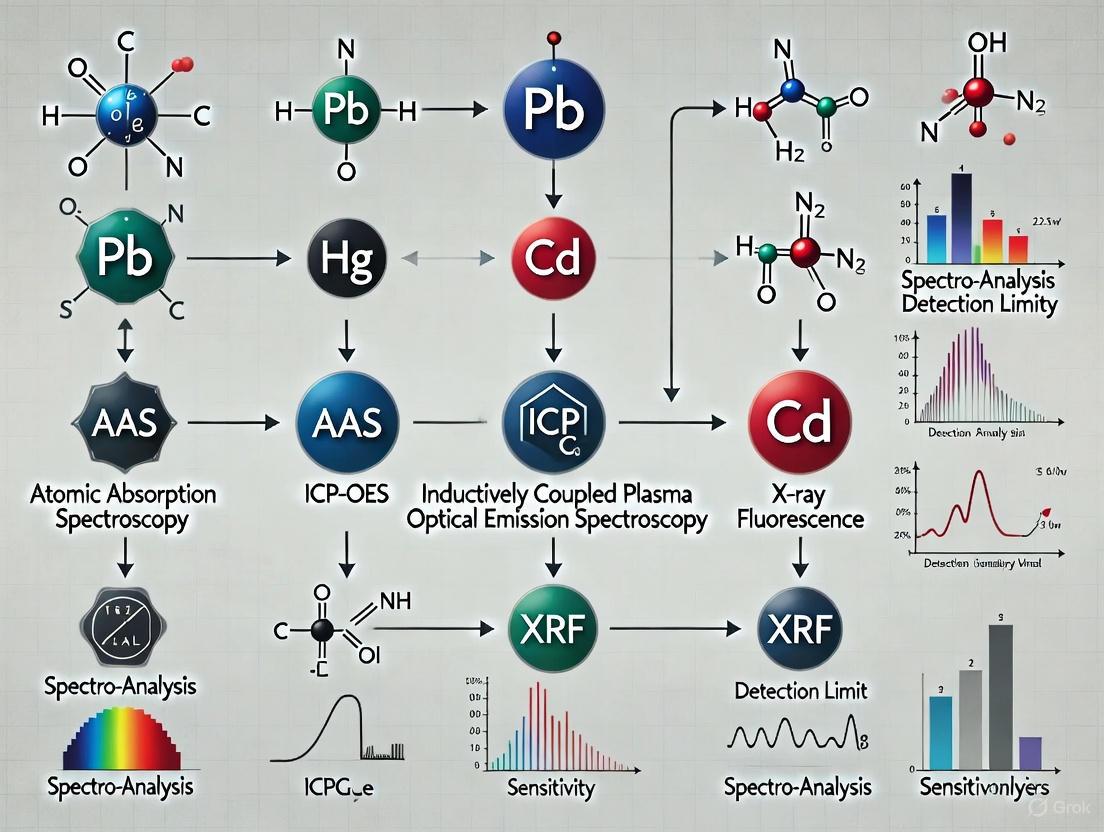
This article provides a systematic evaluation of spectroscopic techniques for heavy metal detection, addressing critical needs for pharmaceutical and clinical researchers.
A Comprehensive Comparison of Spectroscopic Techniques for Heavy Metal Detection in Biomedical Research
Abstract
This article provides a systematic evaluation of spectroscopic techniques for heavy metal detection, addressing critical needs for pharmaceutical and clinical researchers. We explore fundamental principles of major techniques including AAS, ICP-OES, ICP-MS, and emerging methods, with specific application guidance for drug development compliance. The content covers methodological optimization strategies, troubleshooting for common interference challenges, and rigorous validation protocols. By presenting comparative performance data and selection criteria tailored to pharmaceutical impurity testing, this review serves as an essential resource for professionals making informed analytical decisions in regulated environments.
Understanding Spectroscopic Fundamentals: Principles and Techniques for Heavy Metal Analysis
The Critical Need for Heavy Metal Detection in Pharmaceutical and Clinical Settings
In pharmaceutical and clinical settings, the accurate detection of heavy metals is not merely an analytical procedure but a fundamental requirement for ensuring patient safety and product quality. Heavy metals such as lead (Pb), mercury (Hg), cadmium (Cd), and arsenic (As) pose significant health risks even at trace concentrations, potentially causing neurological damage, renal dysfunction, and other serious health complications [1]. The presence of these contaminants in pharmaceutical products can originate from raw materials, manufacturing processes, or environmental sources, making rigorous testing an indispensable component of quality control and regulatory compliance [2]. This guide provides an objective comparison of current analytical techniques, evaluating their performance characteristics, applications, and limitations to inform method selection for researchers and drug development professionals.
Comparative Analysis of Spectroscopic Techniques
The selection of an appropriate analytical technique depends on multiple factors including detection limits, sample throughput, operational complexity, and cost. The following sections and comparative tables provide a detailed evaluation of predominant methods.
Established Core Techniques
Table 1: Performance Comparison of Primary Detection Techniques
| Technique | Detection Limits | Multi-Element Capability | Sample Throughput | Operational Complexity | Best Use Cases |
|---|---|---|---|---|---|
| ICP-MS | Parts per trillion (ppt) [3] | Simultaneous multi-element [3] | High [3] | High; requires skilled operators [3] | Ultra-trace analysis, regulatory compliance for toxic elements [2] [3] |
| ICP-OES | Parts per billion (ppb) [4] | Simultaneous multi-element [5] | High [3] | Moderate to High [3] | Determination of major, minor, and trace elements except chlorine [5] |
| AAS | Parts per million (ppm) [3] | Single-element [3] | Low [3] | Low; straightforward operation [3] | Routine analysis of simple matrices, cost-sensitive labs [3] |
| TXRF | Information not in search results | Provides information on most elements except light elements (P, S, Cl) [5] | Information not in search results | Information not in search results | Rapid, non-destructive determination of light elements at high concentrations [5] |
| EDXRF | Information not in search results | Suited for light elements (S, Cl, K, Ca) [5] | Rapid [5] | Non-destructive; minimal sample prep [6] | Non-destructive analysis of light elements at relatively high concentrations [5] [6] |
Inductively Coupled Plasma Mass Spectrometry (ICP-MS) is recognized for its exceptional sensitivity, capable of detecting metal concentrations in the parts per trillion (ppt) range, making it the gold standard for applications requiring ultra-trace analysis [3]. Its ability to simultaneously measure dozens of elements from a single sample and handle complex matrices is invaluable for comprehensive impurity profiling in pharmaceuticals [3]. However, this technique involves high initial investment, significant operational costs, and requires skilled personnel, which can be a constraint for some laboratories [3].
Inductively Coupled Plasma Optical Emission Spectroscopy (ICP-OES / ICP-AES) offers robust multi-element capability with detection limits in the parts per billion (ppb) range, bridging the gap between sensitivity and operational practicality [4]. It is highly effective for the determination of major, minor, and trace elements, though it is not suitable for chlorine detection [5]. While less sensitive than ICP-MS, its broader dynamic range and relatively lower operational complexity make it a workhorse for many quality control laboratories.
Atomic Absorption Spectroscopy (AAS) remains a widely used technique, particularly in laboratories with lower sample volumes or budget constraints [3]. It provides good sensitivity for many metals at parts per million (ppm) levels and is well-suited for simple matrices like purified water or standard pharmaceutical formulations [3]. Its primary limitations are single-element analysis, which reduces throughput for multi-analyte panels, and a narrower analytical range compared to ICP techniques [3].
Emerging and Complementary Techniques
Table 2: Comparison of Emerging and Specialized Techniques
| Technique | Key Feature | Application in Pharmaceutical/Clinical Context |
|---|---|---|
| Laser-Induced Plasma Spectroscopy (LIPS) | Calibration-free analysis, minimal sample prep, on-site potential [4] | Rapid screening of solid samples, spatial contamination mapping [4] |
| Electrochemical Sensors | Portable, low-cost, real-time analysis [7] | Point-of-care testing, decentralized water quality monitoring [7] |
| FTIR Spectroscopy | Identifies functional groups and metal-binding interactions [8] | Probing molecular mechanisms of metal-binding in biological systems [8] |
| Quantum Dots (QDs) | High photoluminescence, sensitivity to environmental changes [9] | Fluorescent sensing platforms for multiplexed heavy metal detection [9] |
Laser-Induced Plasma Spectroscopy (LIPS), particularly with picosecond pulses (Ps-LIPS), enables calibration-free quantification of heavy metals in solid samples with minimal preparation, offering a pathway for rapid, on-site analysis [4]. This methodology is groundbreaking for its ability to provide spatial contamination gradients, which is valuable for investigating heterogeneous samples [4].
Electrochemical Sensors, especially when integrated with IoT and deep learning algorithms, represent a growing field for decentralized testing. These sensors, such as those using gold nanoparticle-modified electrodes, can simultaneously detect multiple heavy metals like Cd²âº, Pb²âº, Cu²âº, and Hg²⺠in water samples with low detection limits (µM range) [7]. The integration of convolutional neural networks (CNN) enhances the interpretation of complex signals, improving classification accuracy for metal ion types and concentrations [7].
Fourier Transform Infrared (FTIR) Spectroscopy does not directly quantify metal concentrations but is a powerful tool for identifying functional groups involved in metal binding and understanding metal-induced biochemical alterations [8]. This provides critical insights into contamination mechanisms and toxicity profiles, often in conjunction with quantitative techniques like AAS or ICP-MS [8].
Detailed Experimental Protocols
To ensure reproducibility and provide clear methodological insights, detailed protocols for two distinct approaches are outlined below.
Protocol: ICP-MS for Multi-Element Trace Analysis
This protocol is adapted for the determination of elemental impurities in pharmaceutical-grade water.
1. Sample Preparation:
- Acquire appropriate Certified Reference Materials (CRMs) for calibration and quality control [5].
- If analyzing solid samples (e.g., plant tissues, clinical specimens), a digestion step is mandatory. Typically, 0.5 g of sample is digested with 5-10 mL of high-purity nitric acid using a microwave digestion system [10].
- After digestion, dilute the sample to a final volume with ultrapure water, ensuring the acid concentration is compatible with the ICP-MS instrument (usually 1-2% v/v nitric acid) [10].
2. Instrument Calibration and Operation:
- Calibrate the ICP-MS using a series of multi-element standard solutions prepared in the same acid matrix as the samples.
- Internal standards (e.g., Indium [In], Germanium [Ge], Rhodium [Rh]) should be added online to all samples, standards, and blanks to correct for instrumental drift and matrix effects.
- Instrument Parameters: Set the RF power, plasma gas flow, nebulizer flow, and ion lens voltages according to the manufacturer's specifications for the target elements. Data is acquired in a multi-element method, monitoring specific isotopes for each heavy metal (e.g., Pb²â°â¸, Cd¹¹¹, Asâ·âµ).
3. Data Analysis:
- Quantify elemental concentrations based on the calibration curve.
- Verify method accuracy by analyzing the CRM and ensuring recovered values fall within the certified range [5].
Protocol: Fabrication of an AuNP-Modified Electrochemical Sensor
This protocol details the creation of a low-cost sensor for multiplexed heavy metal sensing in water [7].
1. Electrode Fabrication:
- Use a discarded plastic bottle as the substrate for a three-electrode system.
- Attach a carbon thread as the working electrode, a platinum wire as the counter electrode, and a silver/silver chloride (Ag/AgCl) wire as the reference electrode.
2. Electrode Modification:
- Electrochemically deposit gold nanoparticles (AuNPs) on the surface of the carbon thread working electrode by performing electrodeposition in a solution of chloroauric acid (HAuClâ‚„).
- Characterize the modified electrode using Scanning Electron Microscopy (SEM) and Energy-Dispersive X-ray Spectroscopy (EDX) to confirm the presence and distribution of spherical AuNP structures [7].
3. Heavy Metal Detection via Differential Pulse Voltammetry (DPV):
- Prepare standard solutions of Cd²âº, Pb²âº, Cu²âº, and Hg²⺠in an HCl-KCl buffer solution (pH 2) across a concentration range of 1–100 µM.
- Perform DPV with the fabricated sensor using a voltage range of -1 V to +1 V, a scan rate of 15 mV/s, a pulse amplitude of 90 mV, and a pulse time of 25 ms.
- The peak potentials for each metal will appear at approximately -0.85 V (Cd), -0.60 V (Pb), -0.20 V (Cu), and +0.20 V (Hg). The peak current is proportional to the metal concentration [7].
4. Data Processing with Deep Learning:
- Process the complex DPV signals using a pre-trained Convolutional Neural Network (CNN) model to classify the type and concentration of heavy metal ions, enhancing the accuracy of quantification [7].
Workflow and Pathway Visualizations
ICP-MS Analysis Workflow
Sensor Development and Deployment
Essential Research Reagent Solutions
Table 3: Key Reagents and Materials for Heavy Metal Analysis
| Item | Function | Example Application |
|---|---|---|
| Certified Reference Materials (CRMs) | Method validation and quality assurance; ensures analytical accuracy [5]. | Used to assess the performance of ICP-MS, ICP-OES, and AAS methods [5]. |
| High-Purity Acids & Reagents | Sample digestion and dilution; minimizes background contamination. | Nitric acid for digesting organic matrices (e.g., plant tissues, clinical samples) [10]. |
| Multi-Element Standard Solutions | Instrument calibration for quantitative analysis. | Preparing calibration curves for ICP-OES/ICP-MS and AAS. |
| Hollow Cathode Lamps | Element-specific light source for AAS. | Required for detecting specific metals like Pb, Cd, or Hg using AAS [3]. |
| Functionalized Nanomaterials | Enhance sensitivity and selectivity of sensors. | Gold nanoparticles (AuNPs) for modifying electrochemical electrodes [7]. Quantum Dots (QDs) for fluorescent-based detection [9]. |
| Buffer Solutions | Control pH during analysis to optimize detection. | HCl-KCl buffer (pH 2) for electrochemical sensing using DPV [7]. |
The landscape of heavy metal detection in pharmaceutical and clinical environments is diverse, encompassing both well-established spectroscopic methods and promising emerging technologies. The choice between techniques like ICP-MS, ICP-OES, and AAS involves a careful balance of sensitivity, throughput, and cost. Meanwhile, advancements in electrochemical sensors, LIPS, and FTIR are continuously expanding the toolbox available to scientists, enabling faster, cheaper, and more specialized analyses. As regulatory standards tighten and the need for on-site monitoring grows, the integration of these advanced technologies with data science approaches like machine learning and IoT will play a pivotal role in safeguarding public health by ensuring the purity and safety of pharmaceutical products and clinical environments.
Atomic spectroscopy stands as a cornerstone analytical technique for the detection and quantification of heavy metals, playing a critical role in ensuring public health, environmental protection, and pharmaceutical safety. These techniques operate on the fundamental principle that atoms of metallic elements can absorb or emit light at specific characteristic wavelengths when energy is applied, allowing for precise identification and measurement. In the context of a broader thesis comparing spectroscopic techniques for heavy metal detection, this guide provides an objective analysis of the core principles, performance, and experimental protocols of key atomic spectroscopy methods. The global heavy metal testing market, which relies heavily on these techniques, is projected to grow from $4.0 billion in 2024 to $7.4 billion by 2034, driven by increasing regulatory scrutiny and technological advancements [11]. This growth underscores the importance of understanding the operational principles and comparative strengths of these indispensable analytical tools.
Core Principles of Atomic Spectroscopy
Fundamental Physical Processes
Atomic spectroscopy techniques share a common foundational process: the conversion of a sample from its natural state into free atoms (atomization), followed by the measurement of how these atoms interact with electromagnetic radiation. The process begins when a sample solution is introduced into the instrument and converted into an aerosol. This aerosol is then transported into the source region where high thermal energy (from a flame, graphite furnace, or plasma) desolvates, vaporizes, and atomizes the sample, breaking molecular bonds to create a cloud of free ground-state atoms. These ground-state atoms can then absorb light at characteristic wavelengths (Atomic Absorption Spectroscopy - AAS) or become excited to higher energy levels and subsequently emit light upon returning to lower energy states (Atomic Emission Spectroscopy - AES) [12].
The wavelength of the absorbed or emitted light is specific to each element, serving as a qualitative fingerprint, while the intensity of the absorption or emission is directly proportional to the concentration of the element in the sample, enabling quantitative analysis. The precise measurement of these interactions forms the basis for all atomic spectroscopy techniques, though the methods for atomization and signal detection vary significantly between different instrumental approaches.
From Atomization to Detection: A Unified Workflow
The following diagram illustrates the generalized workflow common to most atomic spectroscopy techniques, from sample introduction through to signal detection and data interpretation.
Key Atomic Spectroscopy Techniques
Atomic Absorption Spectroscopy (AAS)
Atomic Absorption Spectroscopy operates on the principle that ground-state atoms can absorb light of specific wavelengths corresponding to electronic transitions. A hollow cathode lamp made of the element to be analyzed provides the characteristic wavelength light, which passes through the atomized sample. The amount of light absorbed is measured by a detector and is proportional to the concentration of the element in the sample [12]. AAS is particularly valued for its significant accuracy, greater sensitivity and detection limits, as well as relatively short duration for analysis [13]. The technique typically uses either a flame or graphite furnace for atomization, with graphite furnace AAS offering lower detection limits due to more efficient atomization and longer residence time of atoms in the light path.
Inductively Coupled Plasma Techniques
Inductively Coupled Plasma (ICP) serves as a high-temperature atomization and excitation source that can be coupled with different detection systems:
ICP-Optical Emission Spectroscopy (ICP-OES): Uses a plasma (approximately 6000-10000 K) to excite atoms, which then emit light at characteristic wavelengths as they return to lower energy states. The intensity of the emitted light is measured for quantification [12]. ICP-OES can detect multiple elements simultaneously and offers a wide linear dynamic range.
ICP-Mass Spectrometry (ICP-MS): The plasma serves to generate ions rather than excited atoms. These ions are then separated and quantified based on their mass-to-charge ratio using a mass spectrometer. ICP-MS offers exceptional sensitivity, allowing for detection of metals at extremely low concentrations, ranging from sub part per billion (ppb) to sub part per trillion (ppt) for most elements [14]. It has become a preferred method in clinical laboratories for heavy metal analysis due to its low detection limit and ability to detect multiple elements simultaneously [15].
Comparative Performance Analysis
Technical Specifications and Performance Metrics
The following table provides a systematic comparison of key performance characteristics for major atomic spectroscopy techniques used in heavy metal detection:
| Parameter | AAS | ICP-OES | ICP-MS |
|---|---|---|---|
| Detection Limits | ppm to ppb range | ppb range | ppt to ppb range [14] |
| Multi-element Capability | Limited (typically single element) | Excellent | Excellent [15] |
| Sample Throughput | Moderate | High | High |
| Linear Dynamic Range | 2-3 orders of magnitude | 4-6 orders of magnitude | 7-9 orders of magnitude |
| Precision | 0.1-1% RSD | 0.2-2% RSD | 1-3% RSD |
| Capital Cost | Low | Moderate | High |
| Operational Cost | Low | Moderate | High |
| Interference Effects | Significant chemical & spectral | Moderate spectral | Minimal, but polyatomic interferences possible |
| Sample Consumption | Moderate | Low | Very low |
Experimental Validation Data
A 2019 study validating AAS for heavy metal analysis in river sediments demonstrates typical experimental protocols and performance characteristics. Researchers used an aqua regia extraction procedure (3:1 HCl/HNO3) to digest sediment samples, which were then analyzed using a Perkin Elmer AAS Model Optima 8300 [13]. The method successfully determined 12 metals of interest (Al, Mn, Ca, Cd, Cu, Fe, Cr, Ni, Co, Zn, and Pb) with appropriate accuracy and precision, confirmed through analysis of Certified Reference Material (CRM) Number 142Q (sewage sludge amended soil) [13].
For ICP-MS, experimental protocols typically involve sample dilution with acidified solutions and the use of internal standards (e.g., Indium, Germanium) to correct for matrix effects and instrument drift. In clinical settings for heavy metal testing, blood samples must be collected using specialized "trace element free" vials with royal blue caps, while lead testing requires tan top, lead-free tubes [15]. Proper sample handling is critical as metal concentrations are normally in the nano and microgram range, requiring careful consideration to prevent contamination [15].
Experimental Protocols and Methodologies
Sample Preparation Workflow
Proper sample preparation is critical across all atomic spectroscopy techniques to avoid interferences and ensure accurate results. The following diagram illustrates a generalized sample preparation workflow for heavy metal analysis in different matrices:
Specific preparation methods vary by sample type:
- Sediment/Soil Samples: Typically involve aqua regia digestion (3:1 HCl/HNO3) at approximately 80°C for 2 hours, followed by filtration and dilution to volume with 1% v/v HNO3 [13].
- Biological Samples (blood, urine): Often require direct dilution with dilute nitric acid or tetramethylammonium hydroxide, though some applications may need complete digestion with nitric acid and hydrogen peroxide [15].
- Water Samples: May be analyzed directly after acidification, though preconcentration might be necessary for ultratrace analysis.
The Scientist's Toolkit: Essential Research Reagents
| Reagent/Material | Function | Application Examples |
|---|---|---|
| Aqua Regia (3:1 HCl/HNO3) | Digest organic matrices and dissolve heavy metals | Sediment, soil, and biological sample preparation [13] |
| Trace Metal-Free Vials | Prevent sample contamination during collection and storage | Blood collection (royal blue top), urine collection [15] |
| Certified Reference Materials | Method validation and quality control | Verification of analytical accuracy [13] |
| Hollow Cathode Lamps | Source of element-specific wavelengths | AAS analysis [13] |
| Internal Standards | Correction for matrix effects and instrument drift | ICP-MS analysis (e.g., Sc, Y, In, Bi) |
| High-Purity Acids & Water | Minimize background contamination | Sample dilution and preparation for all techniques |
| 12,14-Dichlorodehydroabietic acid | 12,14-Dichlorodehydroabietic acid, CAS:65281-77-8, MF:C20H26Cl2O2, MW:369.3 g/mol | Chemical Reagent |
| Sulfogaiacol | Sulfogaiacol, CAS:7134-11-4, MF:C7H8O5S, MW:204.20 g/mol | Chemical Reagent |
Emerging Innovations and Future Directions
The field of atomic spectroscopy continues to evolve with several emerging trends. There is a growing shift towards portable testing devices that enable real-time analysis in field applications such as water and soil testing [16]. The integration of artificial intelligence and machine learning with spectroscopic data is enhancing efficiency and accuracy, with algorithms like random forest and support vector machines being applied to improve detection limits and handle complex spectral interferences [14] [17].
Additionally, nover detection techniques such as femtosecond Laser-Induced Breakdown Spectroscopy (fs-LIBS) are showing promise for environmental monitoring, with demonstrated detection limits as low as 0.0179 μg/mL for Chromium and 0.1301 μg/mL for Lead in flowing aqueous solutions [18]. These innovations are expanding the applications of atomic spectroscopy while addressing traditional limitations related to cost, complexity, and field deployment.
Atomic spectroscopy techniques remain indispensable tools for heavy metal detection across environmental, clinical, and pharmaceutical applications. While AAS provides a robust and cost-effective solution for routine single-element analysis, ICP-based techniques offer superior sensitivity, multi-element capability, and wider dynamic ranges. The choice of technique depends on specific application requirements, including detection limits needed, sample throughput, budget constraints, and expertise available. As technological advancements continue to enhance the capabilities and accessibility of these techniques, atomic spectroscopy will maintain its critical role in safeguarding public health and environmental quality through precise heavy metal monitoring.
The accurate detection and quantification of heavy metals is a critical requirement across diverse scientific fields, including environmental monitoring, pharmaceutical quality control, and biomedical research. Atomic Absorption Spectrometry (AAS), Inductively Coupled Plasma Optical Emission Spectrometry (ICP-OES), Inductively Coupled Plasma Mass Spectrometry (ICP-MS), and X-ray Fluorescence (XRF) Spectroscopy represent four principal analytical techniques for elemental analysis [6] [19]. Each method possesses distinct operational principles, advantages, and limitations, making them uniquely suited for specific applications and concentration ranges. This guide provides an objective, data-driven comparison of these techniques, framing their performance within the context of heavy metal detection research. By synthesizing experimental data and comparative studies, we aim to equip researchers, scientists, and drug development professionals with the information necessary to select the most appropriate analytical tool for their specific needs.
Atomic Absorption Spectrometry (AAS)
AAS is a well-established technique that quantifies elements by measuring the absorption of specific wavelengths of light by free ground-state atoms in a sample. The sample is typically atomized in a flame or graphite furnace. The instrument measures the amount of light absorbed at a characteristic wavelength for the target element, which is directly proportional to the concentration of that element in the sample. A primary limitation is its sequential nature, typically analyzing only one element at a time, which can hinder comprehensive multi-elemental analysis [20].
Inductively Coupled Plasma Optical Emission Spectrometry (ICP-OES)
ICP-OES utilizes a high-temperature argon plasma (approximately 6,000–10,000 K) to atomize and excite elemental species in a sample. The excited atoms or ions emit light at characteristic wavelengths as they return to lower energy states. The intensity of this emitted light is measured and correlated to the element's concentration. ICP-OES allows for simultaneous or rapid sequential multi-element analysis and offers a broader dynamic range and better tolerance for complex sample matrices compared to AAS [21] [20].
Inductively Coupled Plasma Mass Spectrometry (ICP-MS)
ICP-MS also uses a high-temperature argon plasma to generate positively charged ions from the sample. However, instead of measuring light emission, these ions are separated and quantified based on their mass-to-charge ratio by a mass spectrometer. This process provides extremely low detection limits, the ability to measure isotopes, and rapid multi-element analysis capabilities. It is, however, more susceptible to certain spectral interferences, such as polyatomic and isobaric interferences, than ICP-OES [21] [22].
X-Ray Fluorescence (XRF) Spectroscopy
XRF is a non-destructive technique where a sample is irradiated with high-energy X-rays. This excitation causes elements in the sample to emit characteristic secondary (or "fluorescent") X-rays. The energy of these emitted X-rays identifies the element, while their intensity quantifies its concentration [19] [23]. Minimal sample preparation is required for solids, making it ideal for rapid screening and field analysis using portable units [19].
Table 1: Fundamental Principles of Analytical Techniques
| Technique | Atomization/Excitation Source | Detection Principle | Sample State |
|---|---|---|---|
| AAS | Flame or Graphite Furnace | Absorption of light by atoms | Liquid |
| ICP-OES | Inductively Coupled Plasma | Emission of light by excited atoms/ions | Liquid |
| ICP-MS | Inductively Coupled Plasma | Separation and detection of ions by mass | Liquid |
| XRF | X-ray Tube or Radioisotope | Emission of characteristic X-rays | Solid or Liquid |
The following diagram illustrates the fundamental workflows for each spectroscopic technique, highlighting the key stages from sample introduction to detection.
Performance Comparison and Experimental Data
Detection Limits and Sensitivity
The detection limit is a paramount performance criterion, especially for regulatory compliance and trace analysis.
- ICP-MS offers the highest sensitivity, with detection limits typically in the parts per trillion (ppt) range [21] [19]. This makes it the gold standard for ultra-trace analysis, such as measuring toxic metals like lead and arsenic in drinking water or biological samples to meet stringent safety standards [21] [24].
- ICP-OES provides detection limits in the parts per billion (ppb) range, making it suitable for applications requiring robust multi-element analysis at higher concentrations, such as in industrial quality control and environmental monitoring of contaminated soils [21] [23].
- AAS generally has detection limits comparable to or slightly higher than ICP-OES (ppb to low ppm), though this can vary significantly with the element and the specific atomization technique (flame vs. graphite furnace) [20].
- XRF typically has the highest detection limits among the four, usually in the parts per million (ppm) range [19] [23]. While not suited for ultra-trace work, this is often sufficient for screening contaminated soils, analyzing alloys, and quality control of materials like cement and ceramics [6] [23].
Table 2: Comparison of Detection Capabilities and Key Features
| Technique | Typical Detection Limits | Multi-Element Capability | Dynamic Range |
|---|---|---|---|
| AAS | ppb - low ppm | Sequential (single element) | Limited |
| ICP-OES | ppb | Simultaneous | Broad (up to 5 orders of magnitude) |
| ICP-MS | ppt | Simultaneous | Very Broad (up to 8-9 orders of magnitude) |
| XRF | ppm | Simultaneous | Moderate |
Sample Preparation and Analysis Workflow
Sample handling protocols vary dramatically and directly impact analysis time, cost, and risk of error.
- ICP-MS and ICP-OES generally require liquid samples. Solid samples must undergo acid digestion using microwave digesters (e.g., MARS6) with reagents like nitric acid and hydrogen peroxide [22] [25]. This process is time-consuming, requires skilled personnel, and risks sample contamination or loss of volatile elements [22] [23].
- AAS also requires liquid samples, necessitating similar digestion procedures for solid materials [25].
- XRF requires minimal sample preparation. Solid samples can often be analyzed directly, sometimes simply pressed into pellets with a boric acid binder [25] [23]. This non-destructive approach allows for rapid analysis, preserves sample integrity, and enables on-site testing with portable instruments [19] [23].
Experimental Protocols from Comparative Studies
Study 1: Soil Contamination Analysis [22]
- Objective: Compare the effectiveness of XRF and ICP-MS for determining Potentially Toxic Elements (PTEs) in soil samples.
- Methodology: 50 soil samples were collected. For ICP-MS analysis, samples were digested with acid. XRF analysis was performed directly on solid samples. Statistical analyses (including correlation and Bland-Altman plots) were used to compare results.
- Key Findings: Significant differences were found for several elements (Sr, Ni, Cr, V, As, Zn). XRF consistently underestimated V compared to ICP-MS, highlighting a systematic bias. However, strong linear correlations for Ni and Cr indicated good agreement for some elements.
Study 2: Heavy Fuel Oil (HFO) Ash Analysis [6]
- Objective: Determine concentrations of V, Ni, Fe, Pb, and Zn in oil ashes and compare the performance of AAS, EDXRF, ICP-MS, and INAA.
- Methodology: Ash samples from Egyptian and Saudi Arabian power plants were collected and analyzed. Internal reference materials (IRMs) were prepared for validation.
- Key Findings: ICP-MS and EDXRF were deemed suitable for determining major elements. The study concluded that EDXRF offers advantages as a multielemental technique that is faster and requires no pretreatment.
Study 3: Analysis of Traditional Mongolian Medicines [25]
- Objective: Compare XRF and ICP-MS for analyzing heavy metals (Pb, Hg, As, Cr, etc.) in medicinal powders.
- Methodology: For XRF, powder samples were pressed into tablets with a boric acid edge. For ICP-MS, samples were digested with nitric acid and hydrogen peroxide via microwave digestion.
- Key Findings: XRF demonstrated good stability and speed with no pretreatment. The recovery rates for most elements were within 85-130%, except for Hg, which suffered from volatility issues. The method was validated as fast, accurate, and simple for quality control.
Operational Considerations and Application Suitability
Cost, Throughput, and Maintenance
The total cost of ownership and operational efficiency are critical factors in technique selection.
- Initial and Operational Cost: XRF and AAS generally have the lowest initial investment and operating costs. XRF uses minimal consumables, while AAS may require specific lamps and gases. ICP-OES is moderately expensive, and ICP-MS is the most costly both in terms of purchase price and ongoing operation, which includes high-purity gases and more frequent maintenance [19] [20].
- Sample Throughput: XRF and ICP-OES/ICP-MS offer high throughput but for different reasons. XRF provides rapid results due to minimal sample preparation [23]. ICP-OES and ICP-MS provide high analytical throughput once samples are in liquid form, analyzing multiple elements simultaneously in minutes [21]. AAS has the lowest throughput due to its sequential element-by-element analysis [20].
- Maintenance and Skill Requirements: ICP-MS systems are the most complex, requiring highly skilled operators for maintenance and troubleshooting. XRF is relatively user-friendly and suitable for use by non-expert operators, especially in field settings [19].
Table 3: Operational and Application-Based Comparison
| Technique | Initial Instrument Cost | Best-Suited Applications | Key Limitation |
|---|---|---|---|
| AAS | Low | Single-element analysis in food/water; limited scope QC | Slow sequential analysis |
| ICP-OES | Moderate | Multi-element analysis in environmental, industrial, and geological samples (ppb level) | Liquid sample requirement |
| ICP-MS | High | Ultra-trace analysis in food safety, clinical, environmental, and pharmaceutical research | High cost; complex interferences |
| XRF | Low (Portable) to Moderate (Benchtop) | Rapid screening of soils, sediments, alloys; quality control in construction materials | Higher detection limits |
Application-Specific Recommendations
- Environmental Monitoring: For ultra-trace level detection in water to meet strict regulatory limits, ICP-MS is the preferred choice [21] [24]. For rapid, on-site screening of contaminated soils and sediments to identify "hot spots," portable XRF is invaluable [22] [23].
- Pharmaceutical and Food Safety: ICP-MS is ideal for enforcing stringent regulatory limits on toxic impurities like Cd, Pb, and As in drugs and food products due to its exceptional sensitivity [21] [19].
- Industrial Quality Control and Geochemistry: ICP-OES offers a cost-effective and robust solution for analyzing materials with higher elemental concentrations, such as ores, metals, and process chemicals [21]. XRF is extensively used in mining, metal recycling, and analysis of construction materials [19].
- Clinical and Biological Research: ICP-MS is the gold standard for measuring trace metals in tissues and bodily fluids due to its low detection limits and ability to handle complex matrices [26] [24].
Essential Research Reagent Solutions
The following table details key reagents and consumables essential for implementing these analytical techniques, particularly for sample preparation.
Table 4: Key Research Reagents and Consumables
| Item | Primary Function | Common Application / Technique |
|---|---|---|
| High-Purity Nitric Acid (HNO₃) | Primary digesting agent for organic and inorganic matrices | Sample digestion for ICP-MS, ICP-OES, AAS [22] [25] |
| Hydrogen Peroxide (H₂O₂) | Oxidizing agent, aids in breaking down organic matter | Used in combination with HNO₃ in microwave digestion [25] |
| Boric Acid (H₃BO₃) | Binder and edge-forming agent for powder samples | Preparing pressed pellets for XRF analysis [25] |
| Certified Reference Materials (CRMs) | Quality control, calibration, and method validation | Essential for all quantitative techniques (AAS, ICP-OES, ICP-MS, XRF) [23] [5] |
| High-Purity Argon Gas | Sustains the plasma and acts as a carrier gas | Essential for plasma generation and operation in ICP-MS and ICP-OES [21] |
| Element-Specific Hollow Cathode Lamps | Source of characteristic wavelength light | Required for the detection of specific elements in AAS [20] |
The selection of an appropriate analytical technique for heavy metal detection is a nuanced decision that balances sensitivity, speed, cost, and specific application requirements.
- ICP-MS is the undisputed leader for ultra-trace level quantification where the highest sensitivity is required, despite its higher operational complexity and cost.
- ICP-OES serves as a powerful and robust workhorse for laboratories needing reliable multi-element data at ppb levels across diverse sample types.
- AAS remains a cost-effective option for labs with a focused need to analyze one or a few elements at a time, though its use is declining in favor of plasma-based techniques.
- XRF is unmatched for rapid, non-destructive screening of solid samples, offering exceptional efficiency for field use and quality control in industrial settings.
A complementary approach, using XRF for rapid initial screening followed by confirmatory analysis with ICP-MS or ICP-OES, often provides an optimal strategy, leveraging the strengths of each technique to achieve both high throughput and definitive, accurate results [19] [23].
In the critical field of environmental monitoring and industrial safety, the accurate detection of heavy metals is a cornerstone of protecting ecosystem and human health. The quest for rapid, precise, and field-deployable analytical techniques has driven the adoption of advanced spectroscopic methods. Among these, Laser-Induced Breakdown Spectroscopy (LIBS) and Portable X-Ray Fluorescence (pXRF) have emerged as two leading handheld technologies, each with distinct operational principles and analytical capabilities. Framed within a broader thesis on spectroscopic techniques for heavy metal detection, this guide provides an objective, data-driven comparison of LIBS and pXRF. It is structured to assist researchers, scientists, and development professionals in selecting the appropriate technology based on rigorous experimental data, detailed methodologies, and a clear understanding of performance trade-offs, particularly in the context of analyzing complex matrices like soils and aerosols.
At their core, both LIBS and XRF are techniques used to determine the elemental composition of materials. However, they achieve this through fundamentally different physical processes, which in turn dictate their applications, strengths, and limitations.
X-Ray Fluorescence (XRF) is a non-destructive analytical technique that uses a primary X-ray beam to excite atoms within a sample. When these X-rays strike an atom, they displace inner-shell electrons, creating vacancies. As the atom returns to a stable state, electrons from higher energy levels fill these vacancies, emitting secondary (fluorescent) X-rays in the process. The energy of these emitted X-rays is unique to each element, allowing for their identification, while the intensity of the signal correlates to the element's concentration [27] [28]. Portable XRF (pXRF) brings this laboratory technique into the field, enabling rapid, on-site analysis.
Laser-Induced Breakdown Spectroscopy (LIBS) operates on a different principle. It uses a highly focused, short-pulse laser to ablate a microscopic amount of material from the sample surface, creating a transient plasma. As this plasma cools, the excited atoms and ions within it emit light at characteristic wavelengths. This emitted light is then collected and dispersed by a spectrometer, and the resulting spectrum is analyzed to identify the elemental composition of the sample based on the unique wavelengths of light emitted by each element [27] [29] [28].
The following diagram illustrates the fundamental operational workflows of both techniques, highlighting the key steps from sample interaction to data analysis:
Performance Comparison: Experimental Data and Analytical Capabilities
Direct comparative studies and application-specific evaluations provide the most robust basis for understanding the performance of LIBS and pXRF. The following tables summarize key quantitative data and analytical parameters from published research.
Table 1: Quantitative Analytical Performance from Direct Technology Comparisons
| Performance Metric | LIBS Performance | pXRF Performance | Experimental Context |
|---|---|---|---|
| Limit of Detection (LoD) for Ga | 0.1% Ga (≈1000 ppm) [30] | "Low tens of ppm" (e.g., 10-30 ppm) [30] | Analysis of gallium in a plutonium surrogate matrix (Ce) [30] |
| Speed of Analysis | 1-3 seconds per analysis [28] | Several seconds to minutes per analysis [30] [28] | Varies with required precision and element; LIBS offers near-instant results [27] [28] |
| Light Element Analysis (e.g., Li, Be, B, Mg, Al, Si) | Excels; capable of detecting and quantifying [27] [28] [31] | Limited to poor performance [27] [28] | Critical for alloys in aerospace, automotive; LIBS is clearly best [27] [31] |
| Heavy Element & Trace Analysis | Struggles with some refractory metals (Cr, Zr, Mo); less sensitive for traces [28] [31] | Excellent for heavy metals and trace elements (<0.1%) [27] [28] | Preferred for stainless steel, high-temp alloys, and precise PMI [27] [31] |
Table 2: Application-Based Performance in Environmental Analysis
| Analysis Context | LIBS Application & Performance | pXRF Application & Performance | Key Study Findings |
|---|---|---|---|
| Heavy Metals in Liquid Aerosols | Quantitative analysis of Cu and Zn using RFE-PLSR model (R2 > 0.98) [32] | Not typically applied for aerosol analysis | LIBS combined with machine learning algorithms enables rapid, accurate detection in aerosols [32] |
| Metals in Contaminated Soils | Less commonly reported for field soil analysis | Strong correlation with lab-based ICP-MS for Pb, Zn; requires correction for moisture/organic matter [33] [34] [35] | pXRF provides a rapid, cost-effective screening tool; correlation coefficients of 0.8-0.93 for Pb, Zn reported [35] |
| Alloy Sorting & Scrap Metal Identification | Ideal for rapid sorting of Al, Mg, and Ti alloys based on light elements [31] | Best for stainless steel, heavy metals, and applications requiring high precision [27] [31] | LIBS is best for fast light-element sorting; XRF for precision and heavy alloys [31] |
Detailed Experimental Protocols
To ensure the reproducibility of results and a deeper understanding of the practical considerations for each technique, this section outlines standard experimental protocols cited in the literature.
Protocol for Soil Analysis using pXRF
The following methodology is adapted from studies monitoring metal pollution in soils, which involve correlating pXRF data with laboratory-standard techniques like Inductively Coupled Plasma Mass Spectrometry (ICP-MS) [33] [34] [35].
- Sample Collection: Soil samples are collected from the field using a sanitized hand trowel. A common approach involves taking sub-samples from multiple points within a defined area (e.g., a residential yard) and combining them into a single, representative composite sample [33].
- Sample Preparation (Field-Moist): For rapid screening, samples can be analyzed with minimal preparation. Vegetation and large debris are removed. The soil is often loosely homogenized and placed in a polyethylene sample bag, ensuring a consistent thickness for measurement. The pXRF analyzer is pressed directly against the outside of the bag [35].
- Sample Preparation (Lab-Based): For higher accuracy, samples are air-dried at room temperature without heat for 24 hours. The dried soil is then sieved (e.g., to pass a 2 mm mesh) to remove stones and homogenize particle size, which reduces analytical error. The prepared soil is typically presented to the analyzer in a dedicated sample cup with a thin, X-ray transparent film window [33] [34].
- Instrument Operation: The analyzer is calibrated according to the manufacturer's instructions. The probe window is placed in direct contact with the soil sample. The measurement is initiated, with a typical counting time of 30-90 seconds per spot to achieve sufficient counting statistics for heavy metals. Multiple readings per sample are recommended to account for soil heterogeneity [35].
- Data Correction: Measurements on moist or organic-rich soils require correction. A common procedure involves developing site-specific calibration models that integrate parameters like soil moisture content and organic matter content, which are measured separately, to improve the agreement between pXRF and ICP-MS results [33] [35].
Protocol for Aerosol Analysis using LIBS
This protocol is based on a recent study that developed a method for the quantitative analysis of heavy metals in liquid aerosols using LIBS combined with machine learning [32].
- Sample Collection & Chamber Setup: A custom-designed chamber is used to generate and contain a stable liquid aerosol. This chamber is critical for improving the hit efficiency and reproducibility of the LIBS plasma generation on aerosol particles compared to open-air measurements [32].
- Laser Ablation & Plasma Generation: A pulsed laser beam (e.g., a Nd:YAG laser at 1064 nm) is focused through a lens into the custom chamber, where it interacts with the aerosol particles. The high-energy laser pulse ablates the particles, generating a transient plasma [29] [32].
- Spectral Acquisition: The light emitted from the cooling plasma is collected by optical lenses or fiber optics and transmitted to a spectrometer. The spectrometer resolves the light into its constituent wavelengths, creating a characteristic emission spectrum for the elements present [29] [32].
- Spectral Screening & Data Processing: The acquired spectra are screened using advanced algorithms, such as the Light Gradient Boosting Machine (LGBM), to select the highest quality data and reduce noise [32].
- Quantification via Calibration Model: Univariate (single wavelength) or multivariate models like Partial Least Squares Regression (PLSR) are developed. The model is optimized using feature selection algorithms (e.g., Recursive Feature Elimination - RFE) to produce a final calibration model (RFE-PLSR) that converts the spectral data into quantitative elemental concentrations for metals like Cu and Zn [32].
The logical flow of this advanced LIBS protocol is visualized below:
Research Reagent and Essential Materials
Successful implementation of LIBS and pXRF methods, particularly for method development and validation, relies on a set of essential materials and reference standards.
Table 3: Essential Research Reagents and Materials for Method Validation
| Item | Function | Example in Context |
|---|---|---|
| Certified Reference Materials (CRMs) | Calibration and validation of analytical accuracy; used to check instrument performance and develop quantification models. | NIST soil standards (e.g., 2709 San Joaquin soil, 2710 Montana Soil) are used for pXRF calibration [33] [35]. |
| Custom Calibration Samples | Creating matrix-matched calibration curves for specific applications, especially when CRMs are not available. | Cerium-Gallium samples were used as a surrogate matrix for LIBS and XRF calibration in a nuclear research context [30]. |
| Microwave Digestion System & Acids | Sample preparation for benchmark laboratory analysis (e.g., ICP-MS) to which portable data is compared. | Used in soil studies with aqua regia (HCl/HNO₃) or multi-acid digestion including HF for "total" digestion [34] [35]. |
| Sample Preparation Tools | Ensuring consistent and representative presentation of samples to the analyzer, minimizing particle size and heterogeneity effects. | Sieves (e.g., 250 μm, 2 mm), sample bags, powder presses, and polyethylene film for XRF cups [33] [34]. |
| Specialized Gases & Chambers | For LIBS, controlling the atmosphere (e.g., using argon) can enhance signal; custom chambers are needed for specific sample types like aerosols. | The custom chamber for aerosol LIBS analysis significantly improved spectral hit efficiency and reproducibility [32]. |
The choice between LIBS and pXRF is not a matter of declaring one technology universally superior, but rather of selecting the right tool for a specific analytical question within heavy metal detection research. The experimental data and protocols presented herein demonstrate a clear trade-off: pXRF offers superior detection limits for heavy metals and trace elements, making it the more precise and established tool for quantitative soil analysis and heavy alloy identification. LIBS, conversely, provides unparalleled speed and a unique capability for light element analysis, positioning it as the ideal technology for rapid sorting of aluminum and magnesium alloys, and for innovative applications in challenging matrices like aerosols. Factors such as cost of ownership, safety regulations concerning X-ray radiation, and the required sample throughput further inform this decision. As both technologies continue to evolve, their integration with sophisticated data processing algorithms and their complementary use in field investigations will undoubtedly enhance our ability to conduct rapid, accurate, and high-resolution characterization of heavy metal contamination.
The analysis of elemental impurities in pharmaceuticals has undergone a fundamental transformation, moving from a nonspecific, century-old test to a modern, risk-based approach grounded in advanced spectroscopic techniques. This shift is encapsulated in the implementation of the ICH Q3D guideline and the replacement of the United States Pharmacopeia (USP) General Chapter <231> with new chapters <232> (Elemental Impurities – Limits) and <233> (Elemental Impurities – Procedures) [36] [37]. The outdated USP <231> "heavy metals" test, a colorimetric method, lacked the specificity, sensitivity, and accuracy required for modern pharmaceutical quality control [38] [37]. It could not distinguish between individual elements, suffered from volatile analyte loss (e.g., mercury) during sample preparation, and did not cover many elements of concern, such as catalyst metals [38].
The contemporary framework mandates a risk-based assessment of 24 elemental impurities across the entire product lifecycle, from raw materials and manufacturing equipment to the final container closure system [36] [37]. This requires analytical techniques capable of precise quantification at very low concentrations. This guide objectively compares the primary spectroscopic techniques—Inductively Coupled Plasma Mass Spectrometry (ICP-MS), Inductively Coupled Plasma Optical Emission Spectrometry (ICP-OES), and Atomic Absorption Spectrometry (AAS)—for compliance with these new standards, providing experimental data and protocols to inform researchers and drug development professionals.
The selection of an appropriate analytical technique is critical for successfully implementing ICH Q3D and USP <232>/<233>. The following section compares the fundamental principles, capabilities, and limitations of the three major techniques.
Inductively Coupled Plasma Mass Spectrometry (ICP-MS)
- Principle: Samples are introduced into an argon plasma that ionizes the constituent elements. The resulting ions are then separated and quantified based on their mass-to-charge ratio in a mass spectrometer [36] [38].
- Key Strengths: ICP-MS offers the lowest detection limits (parts per trillion) among the techniques discussed, making it indispensable for elements with very low Permitted Daily Exposure (PDE) limits, especially for parenteral and inhalational routes [36] [38] [39]. It enables simultaneous multi-element analysis and can handle complex sample matrices effectively when equipped with collision/reaction cell technology to remove polyatomic interferences [38].
- Regulatory Applicability: It is the preferred technique for most ICH Q3D analyses due to its superior sensitivity and is highly recommended for validating methods according to USP <233> [36] [38] [39].
Inductively Coupled Plasma Optical Emission Spectrometry (ICP-OES)
- Principle: Similar to ICP-MS, a sample is introduced into an argon plasma. However, instead of ion separation by mass, this technique measures the characteristic light emitted by excited atoms or ions at specific wavelengths [36].
- Key Strengths: ICP-OES provides good sensitivity (parts per million to parts per billion) and a wide dynamic range. It is more robust than ICP-MS for samples with high dissolved solids or complex matrices [36].
- Regulatory Applicability: It serves as a suitable and robust alternative for elements with higher PDE limits or when ICP-MS is not available. It is explicitly referenced as a valid procedure in USP <233> [36] [38].
Atomic Absorption Spectrometry (AAS)
- Principle: This technique measures the absorption of light by free atoms in a vaporized sample. Different variants include Flame AAS (FAAS) and the more sensitive Graphite Furnace AAS (GFAAS) [36].
- Key Strengths: AAS instrumentation is relatively inexpensive and simple to operate. GFAAS offers excellent sensitivity for specific trace elements [36] [8].
- Limitations: AAS is typically a single-element technique, making multi-element analysis time-consuming. It is generally less sensitive and has a narrower dynamic range than ICP-MS for most elements. Its use in modern pharmaceutical control is declining in favor of plasma-based techniques [36].
Table 1: Comparative Analysis of Spectroscopic Techniques for Elemental Impurities
| Feature | ICP-MS | ICP-OES | AAS (GFAAS) |
|---|---|---|---|
| Detection Limit | Parts per trillion (ppt) | Parts per billion (ppb) | Parts per billion (ppb) |
| Multi-element Capability | Yes, simultaneous | Yes, simultaneous | No, sequential |
| Dynamic Range | Very wide (up to 9 orders) | Wide (up to 6 orders) | Narrow (2-3 orders) |
| Sample Throughput | High | High | Low |
| Tolerance to Matrix | Moderate (with dilution/cell tech) | High | Low to Moderate |
| Capital & Operational Cost | High | Medium | Low to Medium |
| Primary Regulatory Use | Full compliance, low PDE elements | Elements with higher PDEs | Targeted analysis, limited use |
Table 2: Suitability for Detecting Key Elemental Impurities (Based on PDE Requirements)
| Element | Class (ICH Q3D) | PDE (Oral, μg/day) | ICP-MS | ICP-OES | AAS |
|---|---|---|---|---|---|
| Cadmium (Cd) | 1 | 5 | Excellent | Good | Good (GFAAS) |
| Lead (Pb) | 1 | 5 | Excellent | Good | Good (GFAAS) |
| Arsenic (As) | 1 | 15 | Excellent | Fair | Good (HGAAS)* |
| Mercury (Hg) | 1 | 5 | Excellent | Poor | Good (HGAAS)* |
| Nickel (Ni) | 2A | 230 | Excellent | Excellent | Good |
| Copper (Cu) | 3 | 3400 | Excellent | Excellent | Good |
| Palladium (Pd) | 2B | 100 | Excellent | Fair | Poor |
Note: HGAAS = Hydride Generation AAS, a specialized technique for specific elements like As and Hg.
Experimental Protocols for Method Validation
Validation according to USP <233> is required to ensure the analytical procedure is "specific, accurate, and precise" [38]. The following protocol outlines a typical validation workflow for ICP-MS, which can be adapted for ICP-OES.
Sample Preparation
For solid pharmaceutical samples (e.g., tablets, capsules, powders), closed-vessel microwave digestion is the preferred technique [38]. This approach prevents the loss of volatile elements like mercury, a known shortcoming of the old USP <231> method [38] [37].
- Procedure: Accurately weigh a representative sample (e.g., 100-500 mg) into a dedicated microwave digestion vessel. Add a mixture of high-purity nitric acid (HNO₃) and hydrochloric acid (HCl), typically resulting in a final digestate with 1% HNO₃ and 0.5% HCl [38]. The HCl is critical for stabilizing mercury and platinum group elements (PGEs) in solution [38]. Seal the vessels and digest using a controlled temperature and pressure ramp program. After cooling, quantitatively transfer the digestate to a volumetric flask and dilute to volume with high-purity water.
- Note: For liquid samples or APIs soluble in organic solvents, dilution in a suitable aqueous or organic solvent (e.g., water, dilute acid, DMSO) may be sufficient, though analyte stabilization must be verified [38].
Instrumental Analysis and Validation
- Instrumentation: An ICP-MS system equipped with a collision/reaction cell (CRC) is used. Operating the CRC in helium (He) gas mode is highly effective for eliminating widespread polyatomic interferences (e.g., ArCl⺠on Asâº) without requiring analyte-specific optimization [38].
- Validation Steps: [38]
- Specificity/Selectivity: Demonstrate that the method can unequivocally assess each target element in the presence of other sample components. The use of ICP-MS in He mode allows for the monitoring of secondary isotopes as qualifier ions for confirmation.
- Accuracy (Spike Recovery): Spike sample matrices with known concentrations of analytes at levels such as 0.5J, J, and 1.5J (where J is the target concentration limit corrected for dilution). Recovery should typically be within 70-150%, demonstrating the method's accuracy.
- Precision: Analyze multiple replicates (n≥6) of a homogenized sample spiked at the J level. The relative standard deviation (RSD) should not exceed 20% for the results to be considered precise.
- System Suitability (Drift Check): A standardization solution at a concentration of 2J is measured at the beginning and end of an analytical batch. The drift between these two measurements must not exceed 20% [38].
USP <233> Compliant Workflow: This diagram outlines the sample preparation and analysis workflow for elemental impurities, emphasizing closed-vessel digestion and interference-resistant ICP-MS analysis.
Essential Research Reagents and Materials
A successful elemental impurities testing program relies on high-purity materials and well-characterized reagents to avoid contamination and ensure accuracy.
Table 3: Essential Research Reagent Solutions for Elemental Impurities Testing
| Reagent/Material | Function/Application | Critical Notes |
|---|---|---|
| High-Purity Acids (HNO₃, HCl) | Sample digestion and dilution. | Essential for minimizing background contamination. Must be trace metal grade. |
| Single-Element ICP-MS Stock Solutions (1000 ppm) | Preparation of calibration standards and spiking solutions. | Used to create multi-element calibration curves in the same acid matrix as samples [38]. |
| Internal Standard Solution | Correction for instrument drift and matrix effects. | Elements like Scandium (Sc), Germanium (Ge), Rhodium (Rh) are added online to all samples and standards [38]. |
| Tuning Solution | Optimization of ICP-MS instrument performance. | Contains elements (e.g., Li, Y, Ce, Tl) across the mass range to ensure sensitivity and stability. |
| Certified Reference Material (CRM) | Method validation and verification of accuracy. | A material with known concentrations of elemental impurities, used for recovery studies. |
| High-Purity Water (18.2 MΩ·cm) | Preparation of all solutions and dilutions. | Required to maintain low procedural blanks. |
The modern regulatory landscape for elemental impurities, defined by ICH Q3D and USP <232>/<233>, demands highly specific, sensitive, and reliable analytical techniques. The comparative data and protocols presented in this guide demonstrate that ICP-MS is the most capable technique for comprehensive compliance, particularly for elements with stringent PDEs and for novel drugs with limited sample availability. ICP-OES serves as a robust alternative for higher-concentration impurities and routine quality control. While AAS has specific uses, its sequential nature and generally higher detection limits limit its application in broad-spectrum pharmaceutical testing. The choice of technique ultimately depends on the specific elements of concern, their PDEs, the product's route of administration, and the required throughput, all within the framework of a science-based risk assessment.
Practical Implementation: Method Selection and Application-Specific Protocols
The accurate detection of heavy metals is a critical requirement in environmental monitoring, industrial safety, and public health protection. Spectroscopic techniques form the backbone of analytical capabilities in this domain, offering varied approaches with distinct strengths and limitations for different analytical scenarios. The selection of an appropriate method depends on multiple factors including required sensitivity, sample matrix complexity, available resources, and desired throughput. This guide provides a systematic framework for matching analytical needs with suitable spectroscopic techniques, supported by experimental data and procedural details.
Heavy metal pollution represents a significant environmental challenge due to its persistence, bioaccumulation potential, and associated health risks. Metals such as lead (Pb), mercury (Hg), cadmium (Cd), arsenic (As), and chromium (Cr) can cause severe physiological damage even at low concentrations, including neurological disorders, kidney damage, and increased cancer risk [14] [10]. The detection of these metals in complex matrices like wastewater, soil, and biological tissues requires sophisticated instrumentation capable of delivering precise quantitative data amid potential interferents.
Comparative Analysis of Spectroscopic Techniques
Technical Specifications and Performance Metrics
The selection of an appropriate spectroscopic technique requires careful consideration of performance characteristics relative to analytical requirements. The following table summarizes key specifications for major heavy metal detection techniques:
Table 1: Performance Comparison of Heavy Metal Detection Techniques
| Technique | Detection Limits | Sample Throughput | Multi-element Capability | Operational Complexity | Equipment Cost |
|---|---|---|---|---|---|
| ICP-MS | sub-ppb to sub-ppt [14] | Moderate | Excellent | High | Very High |
| ICP-OES | ppb range [14] | High | Excellent | High | High |
| AAS | ppb range [10] | Low | Limited | Moderate | Moderate |
| AFS | ppb range [10] | Moderate | Limited | Moderate | Moderate |
| LA-ICP-MS | ppm-ppb range [10] | Low | Excellent | Very High | Very High |
| XRF | ppm range [10] | High | Good | Low | Moderate to High |
| UV-Vis | ppm range [40] | High | Good | Low | Low |
Applicability to Different Analytical Scenarios
Each technique offers distinct advantages for specific application contexts:
- Regulatory compliance and trace analysis: ICP-MS provides the sensitivity required for stringent regulatory limits in drinking water and food products, with detection capabilities reaching sub-part per trillion levels for many elements [14].
- High-throughput screening: XRF and UV-Vis spectroscopy offer rapid analysis with minimal sample preparation, making them suitable for initial screening and field applications [10] [40].
- Spatial distribution mapping: LA-ICP-MS and XRF enable direct elemental mapping in solid samples without destructive preparation, preserving sample integrity for additional analyses [10].
- Cost-effective routine analysis: AAS remains a reliable choice for laboratories with budget constraints that require accurate quantification of specific metals at moderate sensitivity [10].
Experimental Protocols and Methodologies
Standardized Workflow for Method Validation
Regardless of the selected technique, proper method validation ensures reliable results. The following workflow outlines essential steps for establishing robust analytical methods:
Experimental Workflow for Heavy Metal Analysis
Detailed Methodological Protocols
ICP-MS Procedure for Trace Metal Analysis
Sample Preparation:
- Digest 0.5 g solid sample or 10 mL liquid sample with 5 mL concentrated nitric acid (HNO₃) using microwave-assisted digestion at 180°C for 15 minutes [14].
- Dilute digested sample to 50 mL with deionized water (18.2 MΩ·cm).
- Add internal standards (e.g., Sc, Ge, In, Bi) to correct for instrumental drift and matrix effects.
Instrumental Parameters:
- RF Power: 1550 W
- Plasma gas flow: 15 L/min Argon
- Auxiliary gas flow: 0.9 L/min Argon
- Nebulizer gas flow: 1.05 L/min Argon
- Data acquisition: 3 points per peak, 10 sweeps per reading, 3 replicates
- Dwell time: 50 ms per isotope
Quality Control:
- Analyze method blanks with each batch to monitor contamination.
- Include certified reference materials (NIST 1640a) every 10 samples to verify accuracy.
- Spike recovery tests (85-115% acceptance) for each sample matrix type.
UV-Vis Spectrophotometry with Deep Learning Integration
Chemical Probe Preparation:
- Prepare combinatorial chemical probes specifically designed to enhance specificity for target heavy metals [40].
- Optimize probe concentration to maximize colorimetric response while minimizing background interference.
Spectral Acquisition:
- Use high-throughput automated systems to collect UV-Vis spectra (200-800 nm range).
- Generate superimposed spectra for multi-component analysis.
- Maintain consistent measurement parameters: 1 cm pathlength, 1 nm spectral resolution.
Deep Learning Processing:
- Train Transformer model on extensive spectral library of known concentrations.
- Implement end-to-end qualitative and quantitative information extraction.
- Validate model performance with independent test sets (average R² = 0.936 reported) [40].
Advanced Integration Approaches
Electrode Modification for Enhanced Electrochemical Detection
Electrochemical techniques often serve as complementary approaches to spectroscopic methods, particularly for field applications. Performance enhancements through electrode modification have shown significant promise:
Table 2: Electrode Modification Materials for Enhanced Heavy Metal Detection
| Modification Material | Target Metals | Enhancement Mechanism | Improvement Factor |
|---|---|---|---|
| Metal Oxides (TiOâ‚‚, CuO) | Pb, Cd, Hg | Increased surface area and electrocatalytic activity | 3-5x sensitivity [14] |
| Metal-Organic Frameworks (ZIF-8) | Cu, Zn, Cd | Highly porous structure with specific binding sites | 5-8x selectivity [14] |
| MXenes | Various | Excellent conductivity and surface functionalization | 4-6x response time [14] |
| Metal Nanomaterials | Multiple | High surface area-to-volume ratio | 2-3x detection limits [14] |
Sample Pretreatment Methods for Complex Matrices
Complex sample matrices often require pretreatment to minimize interference and improve detection accuracy:
- Fenton Oxidation: Uses hydrogen peroxide and iron catalysts to degrade organic interferents through generation of hydroxyl radicals [14].
- Microwave-Assisted Digestion: Rapid, controlled digestion of organic matrices using microwave energy with acid mixtures [14].
- Non-thermal Plasma Oxidation: Employ high-energy plasma to break down interfering compounds without thermal degradation of target analytes [14].
Computational Approaches and Data Analysis
Machine Learning Integration for Spectral Analysis
Advanced algorithms have become increasingly important for processing complex spectral data and mitigating interference effects:
Machine Learning Workflow for Spectral Data
Performance Metrics of Computational Models
Table 3: Performance of Algorithms in Heavy Metal Detection
| Algorithm | Application | Key Advantages | Reported Accuracy |
|---|---|---|---|
| BPNN | Hg, Cu, Pb detection [14] | Handles non-linear relationships effectively | R² > 0.90 for most metals [14] |
| SVM | Classification of pollution sources [14] | Effective with sparse or noisy data | >85% classification accuracy [14] |
| Random Forest | Complex environmental datasets [14] | Reduces overfitting, handles multiple features | R² = 0.82-0.94 [14] |
| Transformer Model | UV-Vis superimposed spectra [40] | End-to-end qualitative and quantitative analysis | Average R² = 0.936 [40] |
Essential Research Reagents and Materials
The experimental work in spectroscopic heavy metal detection relies on several critical reagents and materials:
Table 4: Essential Research Reagents for Heavy Metal Detection
| Reagent/Material | Specification | Primary Function | Application Context |
|---|---|---|---|
| High-Purity Acids | Trace metal grade HNO₃, HCl | Sample digestion and preservation | ICP-MS, ICP-OES, AAS |
| Certified Reference Materials | NIST 1640a, 1643e | Method validation and quality control | All quantitative techniques |
| Chemical Probes | Combinatorial libraries | Selective complexation with target metals | UV-Vis spectrophotometry [40] |
| Modified Electrodes | Nanomaterial-enhanced | Signal amplification and selectivity | Electrochemical sensors [14] |
| Internal Standards | Sc, Ge, Y, In, Bi | Correction for instrumental drift | ICP-MS, ICP-OES |
| Calibration Standards | Multi-element mixtures | Instrument calibration | All techniques |
The selection of appropriate spectroscopic techniques for heavy metal detection requires careful consideration of analytical needs, sample characteristics, and available resources. While traditional laboratory-based methods like ICP-MS offer exceptional sensitivity for regulatory compliance, emerging approaches combining UV-Vis spectroscopy with machine learning present promising alternatives for rapid screening and field deployment. The integration of advanced materials for electrode modification and sophisticated algorithms for data processing further expands the capabilities of these analytical platforms. By applying the framework presented in this guide, researchers can systematically match their specific analytical requirements with the most suitable methodological approach, optimizing resource allocation while ensuring data quality and reliability.
ICP-MS Protocols for Ultra-Trace Elemental Impurities in Pharmaceuticals
In modern pharmaceuticals, ensuring patient safety extends beyond a drug's biological activity to include strict control of elemental impurities. These contaminants, such as arsenic (As), cadmium (Cd), lead (Pb), and mercury (Hg), can originate from catalysts, raw materials, manufacturing equipment, or packaging. Strict global regulations, including ICH Q3D and USP 〈232〉/〈233〉, mandate the monitoring and control of these impurities at ultra-trace levels, often in the parts-per-trillion (ppt) range. Inductively Coupled Plasma Mass Spectrometry (ICP-MS) has emerged as the dominant analytical technique for this task, offering the requisite sensitivity, multi-element capability, and high throughput. This guide provides a detailed comparison of ICP-MS against other spectroscopic techniques and outlines established protocols for its application in pharmaceutical quality control, framing this within the broader context of spectroscopic techniques for heavy metal detection.
Technique Comparison: ICP-MS Versus Alternatives
The selection of an analytical technique for elemental impurities is a critical decision for any pharmaceutical laboratory. The following sections and comparison table provide an objective evaluation of the primary methods available.
Inductively Coupled Plasma Mass Spectrometry (ICP-MS)
ICP-MS combines a high-temperature argon plasma (~6000-10000 K), which atomizes and ionizes the sample, with a mass spectrometer that separates and quantifies these ions based on their mass-to-charge ratio [41]. Its key advantages for pharmaceutical analysis include ultra-trace sensitivity with detection limits extending to ppt levels, simultaneous multi-element analysis of over 70 elements in a single run, and a wide dynamic range that allows for the measurement of major and trace elements in the same sequence [41] [42]. It is the globally accepted technique for compliance with ICH Q3D [41].
Inductively Coupled Plasma Optical Emission Spectrometry (ICP-OES)
ICP-OES utilizes the same plasma source as ICP-MS but detects the characteristic light emitted by excited atoms and ions [43]. While it is a robust, multi-element technique, its detection limits are typically in the parts-per-billion (ppb) range, which may be insufficient for some ultra-trace level regulatory limits [43] [42]. It is generally considered more tolerant of samples with high total dissolved solids (TDS) compared to ICP-MS [43].
Graphite Furnace Atomic Absorption Spectrometry (GF-AAS)
GF-AAS is a single-element technique that measures the absorption of light by ground-state atoms in a heated graphite tube [42]. It offers excellent sensitivity for a single element, often at ppb to sub-ppb levels, but its lack of multi-element capability makes it time-consuming for screening multiple impurities [44] [42]. One study noted its particular suitability for analyzing samples with very high or very low concentrations of specific elements, such as cadmium [44].
Comparative Performance Table
Table 1: Comparison of Key Techniques for Elemental Impurity Analysis
| Technique | Typical Detection Limits | Multi-Element Capability | Sample Throughput | Best For |
|---|---|---|---|---|
| ICP-MS | Sub-ppt to low ppb [42] | Yes, >70 elements simultaneously [41] | High (~1-3 min/sample) [42] | Ultra-trace, multi-element regulatory testing (e.g., ICH Q3D) [41] |
| ICP-OES | ~0.1–10 ppb [42] | Yes, typically 10-20 elements [42] | High (~1-3 min/sample) [42] | Samples with high matrix content or elements with higher regulatory limits [43] |
| GF-AAS | Sub-ppb (for a single element) [42] | No | Slow | Targeted, single-element analysis where cost is a primary concern [42] |
Experimental Protocols for ICP-MS in Pharmaceuticals
A robust ICP-MS protocol is built on meticulous sample preparation, optimized instrument operation, and rigorous data validation. The following workflow and detailed methodology are compiled from established practices in the field.
Diagram 1: ICP-MS Experimental Workflow for Pharmaceutical Samples
Sample Preparation and Digestion
Proper sample preparation is the most critical step for accurate results. For solid pharmaceutical samples like Active Pharmaceutical Ingredients (APIs) or finished dosage forms, microwave-assisted acid digestion is the gold standard.
- Materials: The sample is accurately weighed (typically 0.1-0.5 g) into a digestion vessel. High-purity nitric acid (HNO₃) is the primary digestant, often with an added oxidant like hydrogen peroxide (H₂O₂) for complex matrices [25].
- Protocol: The sample and acid mixture is allowed to pre-digest at room temperature for several hours or overnight. It is then subjected to a controlled, temperature-ramped microwave digestion program. An example program involves heating to various plateaus (e.g., 110°C, 140°C, 180°C, and 210°C) with hold times at each step to ensure complete dissolution of organic material without loss of volatile analytes [25].
- Post-Digestion: After cooling, the digestate is transferred to a volumetric flask and diluted to volume with ultra-pure water. A further dilution (e.g., 10-fold or 100-fold) is often required to match the total dissolved solid content to the ICP-MS's tolerance (typically <0.2%) and to bring analyte concentrations within the instrument's linear range [43].
ICP-MS Instrumental Analysis
The prepared sample solution is introduced into the ICP-MS via a peristaltic pump.
- Nebulization & Plasma: The solution is converted into a fine aerosol by a nebulizer and transported into the argon plasma, where it is desolvated, atomized, and ionized.
- Interference Management: Polyatomic interferences (e.g., ArCl⺠on Asâº) are a significant challenge. The use of a collision/reaction cell (CRC) with helium gas is a common and effective method to control these interferences, making the method more universal and reliable [45] [41].
- Quantification: Analysis is typically performed against a calibration curve created from certified multi-element standard solutions. An Internal Standard (ISTD), such as a mixture of Scandium (Sc), Indium (In), and Bismuth (Bi), is added online to both samples and standards to correct for instrument drift and matrix suppression/enhancement effects [25].
Key Reagent Solutions
Table 2: Essential Research Reagents for ICP-MS Pharmaceutical Analysis
| Reagent/Solution | Function | Critical Notes |
|---|---|---|
| High-Purity Nitric Acid (HNO₃) | Primary digestant for organic matrices. | Must be trace metal grade to minimize background contamination. |
| Hydrogen Peroxide (Hâ‚‚Oâ‚‚) | Oxidizing agent to aid complete digestion. | Adds to digestion efficiency for complex samples. |
| Multi-Element Calibration Standards | Used to create the quantitative calibration curve. | Certified Reference Materials (CRMs) from a national body are essential for accuracy. |
| Internal Standard (ISTD) Mix | Corrects for signal drift and matrix effects. | Added in-line to all samples and standards; elements (e.g., Sc, In, Bi) should not be present in the sample. |
| Tune Solution | Optimizes instrument performance (sensitivity, resolution). | Contains elements like Li, Y, Ce, Tl at known concentrations. |
Analytical Challenges and Best Practices
Implementing a robust ICP-MS method requires addressing several potential challenges.
- Matrix Interferences: Complex drug formulations can cause signal suppression or enhancement. Solution: Using a CRC and internal standardization are highly effective. For extreme matrices, aerosol dilution via technologies like High Matrix Introduction (HMI) can be employed [45].
- Contamination Control: Achieving ppt-level detection requires an ultra-clean environment. Solution: Use cleanrooms for sample prep, high-purity reagents, and dedicated labware to prevent contamination [41].
- Maintenance and Ruggedness: High sample throughput with minimal downtime is expected in QC labs. Solution: Regular preventative maintenance of the sample introduction system (nebulizer, torch, cones) and the use of robust, low-maintenance component designs are critical for long-term stability [46].
Within the landscape of spectroscopic techniques for heavy metal detection, ICP-MS stands out as the most powerful tool for enforcing drug safety by monitoring ultra-trace elemental impurities. Its unparalleled sensitivity, multi-element speed, and compliance with global pharmacopeial standards make it the definitive technique for pharmaceutical quality control laboratories. While alternative methods like ICP-OES and GF-AAS have their place for specific, limited applications, the comprehensive capabilities of ICP-MS ensure its position as the cornerstone of modern elemental impurity testing, directly contributing to the safety and efficacy of pharmaceutical products for patients worldwide.
ICP-OES Applications for Multi-Element Analysis in Drug Raw Materials
The analysis of elemental impurities in drug raw materials is a critical component of pharmaceutical quality control, driven by stringent global regulations. The International Council for Harmonisation (ICH) Q3D guideline and the United States Pharmacopeia (USP) chapters <232> and <233> provide a risk-based framework for controlling elemental impurities in drug products and materials [47]. These regulations classify elements based on their toxicity (Class 1: As, Cd, Hg, Pb; Class 2A: Co, Ni, V) and establish permitted daily exposure limits, necessitating highly sensitive and reliable analytical techniques [48] [47]. Inductively Coupled Plasma Optical Emission Spectrometry (ICP-OES) has emerged as a powerful technique for this application, offering the multi-element analysis capabilities, robust performance, and compliance with regulatory standards required for pharmaceutical testing.
This guide objectively compares ICP-OES with alternative spectroscopic techniques—ICP Mass Spectrometry (ICP-MS) and X-ray Fluorescence (XRF)—for elemental impurity analysis in drug raw materials. We present experimental data, detailed methodologies, and technical comparisons to assist researchers, scientists, and drug development professionals in selecting and optimizing their analytical workflows.
Fundamental Principles and Instrumentation of ICP-OES
ICP-OES operates on the principle of element-specific light emission from atoms excited in a high-temperature argon plasma (~6000-8000 K). The sample is introduced as an aerosol into the plasma, where constituent elements are atomized and excited. As these excited atoms return to lower energy states, they emit photons at characteristic wavelengths. A diffraction grating separates this light, and a detector measures its intensity, which is proportional to the element's concentration [49] [50].
Modern ICP-OES instruments primarily come in two configurations:
- Sequential ICP-OES: Measures elements consecutively by varying the wavelength. It offers high resolution and is favored for analyzing complex, high-matrix samples [50].
- Simultaneous ICP-OES: Utilizes an echelle cross-disperser and semiconductor detector (e.g., CCD) to measure multiple elements at once. This configuration provides high-speed analysis (comprehensive results in minutes) and is ideal for high-throughput laboratories [50].
Key manufacturers driving innovation in the ICP-OES market include PerkinElmer (Avio 500 series), Agilent Technologies (5800 series with IntelliQuant), and Thermo Fisher Scientific (iCAP PRO series), with continuous advancements focusing on improved sensitivity, automation, and user-friendly software interfaces [50].
Experimental Protocols for Pharmaceutical Analysis by ICP-OES
Standardized Sample Preparation Methodology
Proper sample preparation is crucial for accurate ICP-OES analysis of drug raw materials. The following microwave-assisted acid digestion protocol is widely used and aligns with regulatory expectations:
- Reagents: Ultrapure concentrated nitric acid (HNO₃) is essential. In some cases, a mixture with perchloric acid (HClO₄), typically at a 5:2 ratio (HNO₃:HClO₄), may be employed, though this requires extreme caution due to perchloric acid's hazardous nature [51].
- Procedure: Accurately weigh 0.2-0.5 g of the homogenized drug raw material into specialized microwave digestion vessels. Add 5-10 mL of the appropriate acid mixture. Seal the vessels and place them in the microwave digestion system.
- Digestion Program: Ramp the temperature to 180°C ± 5°C over 15-20 minutes and hold for 20 minutes. After cooling, quantitatively transfer the digestate to a volumetric flask and dilute to volume with high-purity deionized water (18.2 MΩ·cm). A clear, particulate-free solution indicates complete digestion [47] [51].
- Quality Control: Include method blanks, replicates, and certified reference materials (CRMs) with each digestion batch to monitor contamination, precision, and accuracy.
Instrumental Analysis and Data Acquisition
- Instrument Calibration: Prepare a multi-element calibration standard series covering the expected concentration range (e.g., 0.25, 0.5, 1.0, 2.0 µg/mL) for all target elements. Include internal standards (e.g., Yttrium or Scandium) to correct for signal drift and matrix effects [47].
- ICP-OES Operation: Introduce the prepared samples into the spectrometer using a peristaltic pump. The sample is nebulized, and the resulting aerosol is transported to the argon plasma. Monitor multiple analytical wavelengths for each element to mitigate potential spectral interferences. Both axial and radial plasma viewing can be utilized to optimize the detection limit and dynamic range [52].
- Validation Parameters: Establish method detection limits (MDL), precision (typically <5% RSD), and accuracy through spike recovery experiments (acceptable range: 85-115%) [47] [52].
Table 1: Key Performance Metrics for ICP-OES in Pharmaceutical Analysis
| Parameter | Typical Performance | Regulatory Reference |
|---|---|---|
| Detection Limits | Parts-per-billion (µg/L) to parts-per-million (mg/L) range [48] | USP <233> |
| Precision (Repeatability) | Relative Standard Deviation (RSD) < 2% [52] | USP <233> |
| Spike Recovery Range | 87-111% for As, Cd, Co, Pb [47] | ICH Q3D |
| Analysis Time (Multi-Element) | Several minutes per sample [50] | - |
Performance Comparison of ICP-OES with Alternative Techniques
Comparative Analysis of ICP-OES, ICP-MS, and XRF
Choosing the appropriate technique for elemental impurity testing depends on the specific application requirements, including detection limits, sample throughput, and operational complexity.
Table 2: Technique Comparison: ICP-OES vs. ICP-MS vs. XRF
| Characteristic | ICP-OES | ICP-MS | XRF |
|---|---|---|---|
| Detection Limit Range | Parts-per-billion (ppb) to ppm [48] | Parts-per-trillion (ppt) [48] | ppm to percentage [48] |
| Sample Throughput | High | Moderate to High | Very High [48] |
| Sample Preparation | Extensive (acid digestion) [48] | Extensive (acid digestion) [48] | Minimal (often non-destructive) [48] |
| Operational Cost | Moderate | High | Low |
| Technique Complexity | Moderate | High | Low [48] |
| Suitability for APIs/Raw Materials | High (Excellent for regulated QC) | High (For ultra-trace elements) | Moderate (Good for screening) [48] [47] |
Interlaboratory Study Data and Real-World Performance
A systematic interlaboratory study provides critical insights into the real-world performance of these techniques for pharmaceutical analysis. The study involved multiple laboratories analyzing simulated drug products for Class 1 and 2A elements using standardized methodologies [47].
- ICP-MS and ICP-OES Performance: Both techniques demonstrated high reproducibility within and between laboratories for most elements, including As, Cd, Co, and Pb, with recoveries between 87% and 111%. However, mercury (Hg) and vanadium (V) presented challenges across all techniques, showing greater variability [47].
- Sample Preparation Impact: Total microwave digestion generally exhibited lower variability compared to exhaustive extraction, though both were comparable for most elements [47].
- XRF Performance: XRF spectroscopy showed good agreement with ICP-based methods and demonstrated low variability between replicate analyses within individual laboratories, highlighting its utility for rapid screening and quality control [47].
Decision Workflow for Technique Selection
The following diagram illustrates a systematic approach for selecting the appropriate analytical technique based on project requirements and sample characteristics.
The Scientist's Toolkit: Essential Research Reagents and Materials
Successful implementation of ICP-OES for pharmaceutical analysis requires specific high-purity reagents and materials to ensure accuracy and prevent contamination.
Table 3: Essential Research Reagent Solutions for ICP-OES Analysis
| Reagent/Material | Function | Key Considerations |
|---|---|---|
| Ultrapure Nitric Acid (HNO₃) | Primary digestion acid for dissolving samples and liberating metals. | Must be high-purity grade (e.g., TraceMetal Grade) to minimize blank levels [51]. |
| Multi-Element Calibration Standards | Used for instrument calibration and quantification of target elements. | Should include all relevant elements (As, Cd, Co, Hg, Ni, Pb, V) at known concentrations [47]. |
| Internal Standard Solution (e.g., Y, Sc) | Added to all samples and standards to correct for instrumental drift and matrix effects. | Element should not be present in the sample and should have similar ionization behavior to analytes. |
| Certified Reference Materials (CRMs) | Used for method validation and verification of analytical accuracy. | Should be matrix-matched to drug raw materials (e.g., NIST SRMs) [47]. |
| High-Purity Water (18.2 MΩ·cm) | Diluent for standards and digested samples. | Essential for maintaining low background signals; produced by Type I water purification systems. |
| 2,3,4,5,6-Pentafluorobenzyl chloroformate | 2,3,4,5,6-Pentafluorobenzyl chloroformate, CAS:53526-74-2, MF:C8H2ClF5O2, MW:260.54 g/mol | Chemical Reagent |
| 3-Pentanoyl-5,5-diphenylhydantoin | 3-Pentanoyl-5,5-diphenylhydantoin|CAS 22506-76-9 | 3-Pentanoyl-5,5-diphenylhydantoin is a novel chemical entity for anticonvulsant research. This product is for research use only and not for human or veterinary use. |
ICP-OES stands as a highly capable and robust technique for multi-element analysis of drug raw materials, effectively balancing analytical performance, regulatory compliance, and operational practicality. While ICP-MS offers superior sensitivity for ultra-trace analysis and XRF provides unparalleled speed for screening, ICP-OES occupies a vital middle ground. It delivers the precision, multi-element capability, and low detection limits necessary to meet ICH Q3D and USP requirements, making it an indispensable tool for pharmaceutical scientists committed to ensuring drug safety and quality. The continuous technological advancements in ICP-OES instrumentation promise even greater efficiency and ease of use, further solidifying its role in pharmaceutical quality control laboratories worldwide.
GF-AAS Methods for Specific Metal Detection in Biological Matrices
Graphite Furnace Atomic Absorption Spectrometry (GF-AAS), also known as Electrothermal AAS, is a highly sensitive analytical technique designed for detecting trace and ultra-trace levels of specific metals in complex biological matrices. Unlike flame AAS which uses a flame to atomize the sample, GF-AAS employs an electrically heated graphite tube to achieve temperatures sufficient for atomization, providing significantly enhanced sensitivity and lower detection limits. This capability makes it particularly valuable for toxicological monitoring, clinical research, and pharmaceutical quality control where precise quantification of heavy metals like lead, cadmium, chromium, and mercury is essential at concentrations as low as parts per billion (ppb) [53] [54].
The fundamental principle of GF-AAS involves a multi-step heating process where a small, precise volume of sample (typically 10-50 μL) is introduced into the graphite tube. The tube is then heated through stages of drying, ashing, and atomization. During atomization, the temperature rises rapidly to convert the analyte elements into free ground-state atoms. A light beam from a hollow cathode lamp specific to the target element passes through the tube, and the instrument measures the amount of light absorbed at the element-specific wavelength. The absorbance is directly proportional to the concentration of the element in the sample, allowing for quantitative analysis [53] [55].
For biological monitoring, GF-AAS offers distinct advantages in analyzing whole blood, serum, plasma, urine, and tissue samples. Its ability to directly analyze these complex matrices with minimal sample preparation, combined with exceptional sensitivity for toxic metals like lead and cadmium, has established GF-AAS as a reference method in clinical and toxicological laboratories worldwide [53] [54].
Comparative Analysis of GF-AAS Versus Alternative Techniques
Performance Comparison with Other Elemental Analysis Techniques
Atomic spectroscopic techniques vary significantly in their capabilities, cost, and suitability for different analytical scenarios. The table below provides a systematic comparison of GF-AAS with other commonly used techniques for metal detection in biological samples.
Table 1: Comparative Analysis of Elemental Techniques for Biological Matrices
| Parameter | GF-AAS | ICP-MS | ICP-OES | FAAS | Electrochemical Methods |
|---|---|---|---|---|---|
| Detection Limit | ~0.1-1 µg/L (ppb) for Pb, Cd [54] [55] | <0.01 µg/L (ppt range) [3] | ~1-10 µg/L (ppb) [3] | ~10-100 µg/L (ppb) [3] | ~3.3 µg/dL for Pb (LeadCare II) [54] |
| Multi-Element Capability | Single-element typically [3] | Simultaneous multi-element [3] | Simultaneous multi-element [3] | Single-element [3] | Limited, often single-element [56] [14] |
| Sample Throughput | Moderate (several minutes per element) [3] | High (dozens of elements in minutes) [3] | High (dozens of elements in minutes) [3] | High for single elements [3] | Very high (results in minutes) [56] [54] |
| Sample Volume | Small (10-50 µL) [53] | Moderate (1-5 mL typically required) | Large (1-10 mL typically required) | Large (1-10 mL typically required) | Very small (fingerstick blood possible) [54] |
| Capital Cost | Moderate [$25,000-$80,000] [3] | High [$100,000-$300,000+] [3] | High [$80,000-$200,000] | Low to Moderate [$10,000-$50,000] | Low (portable devices available) [56] |
| Matrix Tolerance | High with proper furnace programming [53] | Moderate (can require dilution) | Low to Moderate (spectral interferences) | Low (chemical interferences common) | Low to Moderate (susceptible to interference) [56] [54] |
| Precision (RSD) | Typically <5% [55] | Typically 1-3% | Typically 1-5% | Typically 0.3-1% | Variable; 5-15% reported [54] |
| Technique Principle | Absorption of element-specific light by free atoms in graphite tube [53] [3] | Measurement of mass-to-charge ratio of ionized elements in plasma [3] | Measurement of emitted light from excited elements in plasma [3] | Absorption of light by atoms in flame [3] | Electrochemical oxidation of pre-concentrated metals [56] [54] |
Advantages and Limitations in Biological Applications
GF-AAS provides several distinct advantages for metal analysis in biological matrices. Its exceptional sensitivity enables reliable detection of toxic metals at clinically relevant concentrations, which is crucial for monitoring occupational exposure or environmental toxicity [53] [54]. The technique requires minimal sample volume, making it ideal for pediatric testing or situations where sample availability is limited. GF-AAS also demonstrates excellent matrix tolerance for complex biological samples like whole blood, serum, and urine when proper temperature programming and chemical modifiers are employed [53]. The relatively moderate instrument cost and operational expenses compared to ICP techniques make GF-AAS accessible to a wider range of clinical and research laboratories [3].
However, GF-AAS faces certain limitations that researchers must consider. The technique is inherently single-element, which reduces throughput when multiple elements need analysis [3]. Method development can be time-consuming, requiring optimization of temperature programs and chemical modifiers for each new matrix-element combination. Potential spectral and matrix interferences must be carefully addressed through background correction systems and proper sample preparation [53] [55]. The graphite tubes have a finite lifetime and represent a recurring consumable cost. Additionally, the technique generally requires some sample preparation, such as dilution or acid digestion, though significantly less than many alternative methods [53].
Experimental Protocols for Biological Matrices
Direct Analysis of Whole Blood for Trace Elements
The analysis of whole blood presents particular challenges due to its complex matrix containing proteins, lipids, and various organic and inorganic components. A validated HR-CS GF-AAS (High-Resolution Continuum Source GF-AAS) method for direct determination of trace elements in whole blood has been developed with the following protocol [53]:
Sample Preparation: Whole blood samples are diluted 1:10 with a solution containing 0.1% Triton X-100 and 0.2% nitric acid. The Triton X-100 reduces surface tension and improves injection reproducibility, while nitric acid helps release protein-bound metals and stabilize the analytes [53].
Instrument Parameters: The method utilizes a high-resolution continuum source atomic absorption spectrometer equipped with a graphite furnace atomizer. The instrument settings and temperature program are optimized for each target element, with chemical modifiers (palladium and magnesium nitrate) added to stabilize volatile elements during the asking stage [53].
Temperature Program: A critical innovation in this protocol is the introduction of an air flow step (2 mL minâ»Â¹ at 450°C for 25 s) during the asking stage to more effectively remove the organic matrix without losing target analytes. This step significantly reduces graphite tube degradation and enables the use of a single tube for up to 260 firings [53].
Calibration and QC: Calibration is performed using matrix-matched standards prepared in the same diluent as samples. Quality control samples at low, medium, and high concentrations are analyzed with each batch to ensure method accuracy and precision [53].
This method has been successfully applied to the determination of selenium, chromium, manganese, cobalt, nickel, cadmium, and lead in whole blood, with detection limits suitable for clinical and toxicological monitoring [53].
Comparative Methodology: Blood Lead Analysis
A comprehensive comparison study evaluated the performance of GF-AAS versus the portable LeadCare II system based on anodic stripping voltammetry (ASV) for blood lead measurement [54]:
Sample Collection: Paired blood samples were collected from 108 children by both fingerstick (for LeadCare II analysis) and venipuncture (for GF-AAS analysis). Fingerstick samples were analyzed immediately using LeadCare II following manufacturer's specifications, while venous samples were transported in a cold chain (2-8°C) to an accredited laboratory for GF-AAS analysis [54].
GF-AAS Reference Method: The GF-AAS analysis was performed using Perkin Elmer AAnalyst 800 equipment with Zeeman background correction and automatic sampler. The method followed the MTA/MB-011/R92 standard of the Spanish National Institute for Safety and Health at Work [54].
Statistical Analysis: Results from both methods were compared using Wilcoxon's non-parametric test, Spearman's correlation, Bland-Altman analysis, and generalized linear models to evaluate influence of age and hemoglobin concentration on measured blood lead levels [54].
The study found a positive linear correlation (Rho = 0.923) between methods but identified a significant positive bias (0.94 µg/dL) for the LeadCare II system, indicating it tends to overestimate blood lead levels compared to GF-AAS, particularly at concentrations above 10 µg/dL. The research also demonstrated that age and hemoglobin concentration significantly influenced results obtained with the LeadCare II system [54].
Table 2: Blood Lead Level Comparison Between GF-AAS and LeadCare II [54]
| Statistical Parameter | GF-AAS (µg/dL) | LeadCare II (µg/dL) |
|---|---|---|
| Mean | 10.77 ± 4.18 | 11.71 ± 4.28 |
| Median | 10.44 | 11.60 |
| Interquartile Range | 7.70 - 13.30 | 8.60 - 14.60 |
| Bias (vs. GF-AAS) | Reference | +0.94 |
| Correlation (Spearman's Rho) | 0.923 |
Technological Innovations and Method Optimization
Advanced Instrumentation Development
Recent innovations in GF-AAS technology have focused on improving multi-element capabilities, automation, and sensitivity. The development of high-performance composite hollow cathode lamps (LCC-HCL) represents a significant advancement, enabling simultaneous determination of multiple elements like lead and cadmium [55]. These specialized lamps incorporate a composite cathode containing both target elements along with a copper cathode for background correction, providing stronger and more stable radiation intensity while minimizing self-absorption broadening of spectral lines [55].
The instrumental configuration for simultaneous Pb and Cd detection utilizes a dual-channel optical system with a concave grating monochromator that separates the characteristic spectral lines of Pb (217.0 nm) and Cd (228.8 nm), directing each wavelength to dedicated photomultiplier tubes. This design maintains the high sensitivity of GF-AAS while adding limited multi-element capability, though it remains restricted to 2-3 elements simultaneously compared to the dozens achievable with ICP techniques [55].
Automation represents another area of significant advancement. Integrated automated diluted acid extraction systems have been developed that combine electronic balance reading, automated acid addition, magnetic stirring with temperature control, and automated sample injection. Such systems can process up to 240 measurements in 8 hours, dramatically improving throughput and reducing manual labor requirements while maintaining analytical quality [55].
Method Optimization Strategies
Optimal GF-AAS performance for biological matrices requires careful optimization of several key parameters:
Temperature Program Optimization: The pyrolysis and atomization temperatures must be carefully optimized for each element-matrix combination. For simultaneous Pb and Cd determination in cereals, research has identified 320°C as the optimal pyrolysis temperature and 1700°C as the optimal atomization temperature, balancing sensitivity and background interference [55]. Similar matrix-specific optimization is essential for biological samples.
Chemical Modifiers: The appropriate use of chemical modifiers is critical for accurate GF-AAS analysis. Palladium and magnesium nitrate are commonly used to stabilize volatile elements like lead, cadmium, and selenium during the asking stage, preventing premature volatilization before atomization [53].
Background Correction: Advanced background correction systems, particularly Zeeman-effect correction and high-resolution continuum source background correction with mathematical algorithms, have significantly improved GF-AAS capability for analyzing complex biological matrices with high background absorbance [53] [54].
Research Reagent Solutions for GF-AAS Analysis
Successful implementation of GF-AAS methods requires specific reagents and consumables optimized for trace metal analysis. The following table details essential research reagent solutions for GF-AAS applications in biological matrices.
Table 3: Essential Research Reagents for GF-AAS Analysis of Biological Samples
| Reagent/Consumable | Function | Application Example | Technical Notes |
|---|---|---|---|
| High-Purity Nitric Acid | Sample digestion and stabilization; releases protein-bound metals | Blood, tissue digestion; sample diluent component [53] [55] | Suprapur grade or equivalent recommended to minimize blank contamination |
| Triton X-100 | Surfactant reducing surface tension; improves sample homogeneity and injection precision | Whole blood analysis (typically 0.1% concentration) [53] | Enables direct analysis of viscous biological samples |
| Palladium Modifier | Chemical modifier stabilizing volatile elements during asking stage | Prevention of Pb, Cd, Se loss during thermal pretreatment [53] | Often used combined with magnesium nitrate (1% Pd in 10% HNO₃) |
| Magnesium Nitrate Modifier | Chemical modifier improving thermal stability of analytes | Matrix modification for various heavy metals in biological samples [53] | Typically used as 1% Mg(NO₃)₂ in 1% HNO₃ |
| Matrix-Matched Calibrators | Calibration standards prepared in simulated sample matrix | Quantitative analysis of blood, urine, tissue samples [53] [54] | Essential for accurate quantification; minimizes matrix effects |
| Graphite Tubes | Electrothermal atomizer platform | Sample atomization for all GF-AAS applications [53] [55] | Platform-type tubes preferred; finite lifetime (200-400 firings) |
| Element-Specific HCL | Light source providing element-specific radiation | Detection of target elements (Pb, Cd, Cr, etc.) [55] [3] | High-performance lamps available for improved sensitivity |
| Quality Control Materials | Verification of method accuracy and precision | Method validation and routine quality assurance [54] | Certified reference materials with matrix matching patient samples |
GF-AAS Workflow and Technical Relationships
The analytical process for GF-AAS analysis of biological samples involves a systematic workflow with multiple technical considerations that influence method performance. The following diagram illustrates the key steps and their relationships.
GF-AAS Analytical Workflow for Biological Samples
The workflow demonstrates the integrated process from sample collection to result interpretation, highlighting how proper sample preparation, instrument calibration, and quality assurance interact to produce reliable analytical data. Each stage requires specific technical considerations. For sample preparation, factors like dilution factor, digestion efficiency, and chemical modification significantly impact method accuracy. During GF-AAS analysis, optimized temperature programming (drying, ashing, atomization temperatures) and background correction are essential for sensitivity and specificity. Data analysis must incorporate appropriate quality control measures including blanks, calibrators, and control materials to ensure results validity [53] [54] [55].
GF-AAS remains a robust, sensitive, and cost-effective technique for quantifying specific metals in biological matrices, offering distinct advantages for laboratories focused on targeted analysis of key toxic elements like lead, cadmium, and chromium. While newer technologies like ICP-MS provide superior multi-element capability and detection limits, GF-AAS maintains its relevance through lower operational costs, well-established methodologies, and proven reliability for clinical and toxicological applications [54] [3].
The technique's minimal sample requirement makes it particularly valuable for pediatric and small-animal studies where sample volume is limited. Recent innovations in automation, background correction, and limited multi-element capability continue to enhance GF-AAS utility in modern analytical laboratories. For researchers and clinicians requiring precise quantification of specific toxic metals in blood, urine, or tissues, GF-AAS represents an optimal balance of performance, cost, and reliability when properly validated and implemented with appropriate quality control measures [53] [54] [55].
Sample preparation is a foundational step in analytical workflows, critically influencing the accuracy, sensitivity, and reproducibility of results obtained from spectroscopic techniques for heavy metal detection [57]. The complex matrices of environmental, biological, and food samples—ranging from the high fat content of human breast milk to the organic complexity of wines—present significant analytical challenges that must be addressed prior to instrumental analysis [58] [59]. Without proper preparation, samples can cause spectral interferences, plasma instability in ICP-based techniques, and inaccurate quantitation, ultimately compromising data reliability.
Within this context, three principal strategies emerge as fundamental: digestion, which decomposes the organic matrix and liberates target analytes; dilution, which reduces matrix effects and analyte concentration to within instrumental dynamic range; and pre-concentration, which enhances detection capability for trace-level analytes [57]. The decision of whether to dilute, concentrate, or digest a sample depends on multiple factors, including the analyte concentration relative to instrument sensitivity, sample matrix complexity, required sample volume for analysis, and potential for analyte loss or degradation during processing [57]. This guide provides a comprehensive comparison of these techniques, supported by experimental data, to inform researchers developing robust analytical methods for heavy metal detection.
Comparative Analysis of Digestion Techniques
Digestion procedures are essential for destroying organic matrices in samples like plant materials, biological tissues, and food products, thereby converting target metals into soluble, analyzable forms. The completeness of digestion directly impacts analytical accuracy, as any residual matrix can cause spectral interferences or transport issues in plasma-based spectroscopy.
Dry Ashing, Microwave Digestion, and High-Pressure Asher Comparison
A study comparing digestion methods for plant material analysis by ICP techniques evaluated two procedures: a conventional approach using nitric acid and hydrogen peroxide in a water bath, and a microwave-assisted digestion with nitric acid alone [60]. The microwave digestion procedure demonstrated superior qualities for multi-element analysis, achieving comparable accuracy for most elements while being significantly less time-consuming. Both methods avoided hazardous reagents like perchloric or hydrofluoric acids, minimizing safety concerns and instrumental corrosion [60].
Research on breast milk lead analysis provides further methodological insights, comparing dry ashing, microwave digestion, and high-pressure asher (HPA) techniques [58]. Due to the challenging matrix with approximately 4% fat content, researchers implemented strict contamination control protocols and found that sample homogeneity was crucial. They achieved optimal results by sonicating samples at human body temperature (98°F/37°C) to disperse fat uniformly before aliquoting [58]. The high temperature, high pressure asher digestion was ultimately selected as the procedure of choice, enabling measurement of trace lead levels as low as 0.2 ng mLâ»Â¹ using isotope dilution ICP-MS [58].
Table 1: Comparison of Digestion Techniques for Biological Samples
| Digestion Method | Sample Type | Key Advantages | Limitations | Analytical Performance |
|---|---|---|---|---|
| Microwave-Assisted Digestion | Plant materials [60], Wines [59] | Rapid digestion, reduced reagent consumption, minimal contamination risk | Potential for incomplete digestion for some matrices | Comparable accuracy to conventional methods for most elements [60] |
| High-Pressure Asher (HPA) | Human breast milk [58] | Powerful digestion for challenging matrices, effective for trace analysis | Requires specialized equipment, more complex procedure | Enabled lead detection as low as 0.2 ng mLâ»Â¹ [58] |
| Dry Ashing | Human breast milk [58] | Simplicity, handles large sample volumes | Risk of volatile element loss, potential contamination from furnace | Evaluated but not selected as optimal method [58] |
| Conventional Hotplate | Plant materials [60] | No specialized equipment needed, proven reliability | Time-consuming (up to several days), higher reagent consumption | Suitable for wide range of elements but slower [60] |
Digestion Method Impact on Elemental Recovery
The choice of digestion method significantly impacts elemental recovery, as demonstrated in wine analysis comparing direct dilution, microwave digestion, and filtration techniques [59]. Of 43 isotopes monitored, 37 showed variation by sample preparation method, with significantly higher results for 17 isotopes in microwave-digested samples [59]. Both filtration treatments resulted in lower concentrations for 11 isotopes compared to other methods. Interestingly, microwave digestion did not compare favorably overall, with direct dilution providing the best compromise between ease of use and result accuracy and precision [59].
This study also highlighted that microwave digestion presented the greatest risk of sample contamination, evidenced by noticeably higher blank concentrations for elements including ²â·Al, â´â·Ti, âµÂ²Cr, âµâµMn, âµâ¹Co, â¶â°Ni, â¶Â³Cu, â¶â¶Zn, and ²â°â¸Pb [59]. This contamination risk emphasizes the need for rigorous blank controls when employing microwave digestion procedures.
Dilution Strategies: Balancing Simplicity and Accuracy
Dilution represents the simplest sample preparation approach, involving the reduction of analyte and matrix concentrations through addition of solvent. This technique is particularly valuable when analyzing samples whose original concentration exceeds the linear range of the analytical instrument, when the sample matrix is too complex and may interfere with analysis, or when sample viscosity needs reduction for proper instrument handling [57].
Direct Dilution Applications and Limitations
In spectroscopic heavy metal analysis, direct dilution finds extensive application across multiple domains. For HPLC and GC analysis, samples are often diluted to fall within the calibration range, as seen with environmental water samples diluted before pesticide analysis [57]. In ICP-MS, dilution helps prevent detector saturation and reduces matrix effects, with biological samples like plasma frequently diluted to minimize ion suppression [57]. For immunoassays such as ELISA, serum or plasma samples are commonly diluted to ensure analyte concentrations fall within the assay's dynamic range [57].
The wine analysis study provides compelling evidence for direct dilution approaches [59]. Following comparison of multiple preparation methods, researchers concluded that direct dilution offered the best compromise between ease of use and result accuracy/precision, despite all preparation strategies being able to differentiate the wines [59]. The study employed a 20-fold dilution in 4% ethanol and 5% HNO₃, which effectively minimized matrix effects while maintaining adequate sensitivity for most elements.
Advanced Dilution Techniques
Beyond simple manual dilution, advanced strategies have emerged to address specific analytical challenges. Gravimetric dilution offers high precision for applications demanding exceptional accuracy [57]. Automated liquid handling systems enable high-throughput applications, improving reproducibility and efficiency [57]. Intelligent auto-dilution systems, integrated with ICP-MS software, can perform flexible dilution for each sample in a batch, automatically re-analyzing samples that exhibit internal standard suppression beyond acceptable limits or have concentrations outside the calibrated range [61].
Table 2: Comparison of Dilution Techniques and Applications
| Dilution Technique | Key Features | Optimal Application Scenarios | Performance Considerations |
|---|---|---|---|
| Direct Dilution | Simple, rapid, minimal contamination risk | Samples within or near instrumental dynamic range, less complex matrices | Demonstrated best compromise of ease and accuracy for wine analysis [59] |
| Serial Dilution | Creates calibration curves, methodical concentration reduction | Preparation of standard curves, sample screening at multiple concentrations | Essential for creating quantitative calibration curves [57] |
| Gravimetric Dilution | High precision, reduced volumetric errors | Applications demanding exceptional accuracy, quality control | Superior precision compared to volumetric approaches [57] |
| Automated Liquid Handling | High-throughput, improved reproducibility | Large sample batches, routine analysis laboratories | Reduces human error, increases throughput [57] |
| Intelligent Auto-Dilution | Software-controlled, adaptive dilution factors | Variable sample matrices, unknown concentrations | Automatically re-analyses over-range samples, documents dilution factors [61] |
Pre-concentration Methods: Enhancing Detection Capability
Pre-concentration techniques address the fundamental challenge of detecting analytes present at concentrations below instrumental detection limits. By increasing the amount of analyte relative to the sample volume, pre-concentration enables measurement of trace and ultra-trace elements that would otherwise be undetectable [57].
Pre-concentration Approaches and Applications
Pre-concentration is particularly essential when analyzing environmental samples for trace-level contaminants, biological samples with naturally low metal concentrations, or any application where ultratrace detection is required. Common scenarios include analytes present at trace levels below instrument detection limits, situations where sample volume needs reduction for easier handling, and when interfering matrix components need removal [57].
The primary pre-concentration techniques include:
- Solid Phase Extraction (SPE): Frequently used to concentrate analytes from large volumes of environmental or biological samples before chromatographic or ICP analysis [57]
- Evaporation Techniques: Nitrogen blowdown evaporation and vacuum concentration are common for concentrating small molecule analytes in LC-MS/MS assays, improving detection sensitivity [57]
- Freeze-drying (Lyophilization): Effectively removes solvent while preserving analytes, particularly useful for heat-sensitive compounds [57]
- Membrane Filtration: Ultrafiltration and related techniques separate analytes based on size, concurrently concentrating the target fraction [57]
In proteomics research, protein precipitation followed by resuspension in a smaller volume effectively concentrates proteins before digestion and LC-MS/MS analysis [57]. For environmental water analysis, SPE methods efficiently concentrate trace metals from large volume samples (100-1000 mL) into much smaller elution volumes (1-10 mL), achieving concentration factors of 10-100× or higher.
Experimental Protocols and Methodologies
Detailed Digestion Protocol for Complex Matrices
The breast milk lead analysis study provides an exemplary detailed methodology for digesting challenging biological matrices [58]. Their protocol emphasizes contamination control throughout:
Sample Pre-treatment: Samples were thawed to room temperature and sonicated for 15 minutes at 37°C (body temperature) to homogenize the fat distribution. This step proved critical, as duplicate analysis differences improved from >30% to <20% with temperature-controlled sonication [58].
Clean Room Handling: All sample handling was performed in a Class 100 clean room to minimize atmospheric contamination [58].
Rigorous Cleaning Protocol: All glassware, collection bottles, plastic tubes, and transfer pipettes were pre-cleaned by soaking in 10-50% trace-metal grade HNO₃ for 24 hours, followed by rinsing with deionized water and drying under a clean hood [58].
High-Pressure Asher Digestion: 1 mL of homogenized breast milk was weighed into pre-cleaned 35 mL HPA quartz digestion vessels, spiked with 0.5 mL of 10 ng mLâ»Â¹ isotopic standard (NIST SRM 983), and 1 mL HNO₃ was added. The sealed vessels were digested in an aluminum heater block placed in an autoclave unit pressurized with nitrogen [58].
ICP-MS Analysis: Trace lead analysis was performed using isotope dilution ICP-MS, with an instrumental detection limit of 0.01 ng mLâ»Â¹ and method capability to measure levels as low as 0.2 ng mLâ»Â¹ in milk [58].
Direct Dilution Protocol for Wine Analysis
The comparative study of wine sample preparation methods provides a detailed protocol for direct dilution approaches [59]:
Diluent Preparation: Prepare a diluent containing 4% ethanol and 5% HNO₃ to approximate the wine matrix while maintaining acid stability for analytes.
Dilution Factor: Implement a 20-fold dilution factor, consistent with standard multielement methods for ICP-MS analysis recommended by the International Organization for Vine & Wine (OIV) [59].
Internal Standard Addition: Incorporate appropriate internal standards (e.g., Sc, Y, In, Bi) to account for plasma variability and matrix effects [59].
Collision/Reaction Cell Technology: Employ CRC technology to reduce spectral interferences, particularly important for ultratrace analysis of isotopes like â´â·Ti and âµÂ²Cr [59].
Quality Control: Include method blanks, duplicate samples, and spike recovery experiments (e.g., using â¶âµCu and ²â°â¶Pb stable isotope spikes) to validate method accuracy and precision [59].
Strategic Selection Guide
Decision Framework for Sample Preparation Selection
Choosing the appropriate sample preparation strategy requires systematic consideration of multiple factors. The following diagram illustrates the key decision points for selecting between digestion, dilution, and pre-concentration methods:
Performance Comparison Across Sample Types
Research across diverse sample matrices reveals how preparation method performance varies substantially by application:
Table 3: Method Performance Comparison Across Sample Types
| Sample Type | Preparation Method | Key Findings | Reference |
|---|---|---|---|
| Wines | Direct Dilution (20-fold) | Best compromise of ease, accuracy, and precision; effective with CRC technology | [59] |
| Wines | Microwave Digestion | Significantly higher results for 17 of 43 isotopes; greater contamination risk | [59] |
| Human Breast Milk | High-Pressure Asher Digestion | Most effective for challenging high-fat matrix; enabled detection to 0.2 ng mLâ»Â¹ | [58] |
| Plant Materials | Microwave-Assisted Digestion | Comparable accuracy to conventional methods with significantly reduced processing time | [60] |
| General Biological | Solid Phase Extraction | Effective pre-concentration for trace analytes from large volume samples | [57] |
The Scientist's Toolkit: Essential Research Reagent Solutions
Successful implementation of sample preparation strategies requires specific high-quality reagents and materials. The following table details essential solutions for heavy metal analysis research:
Table 4: Essential Research Reagent Solutions for Heavy Metal Analysis
| Reagent/Material | Function/Purpose | Application Notes | Citation |
|---|---|---|---|
| Trace-Metal Grade HNO₃ | Primary digestion acid; minimizes contamination | Essential for ultratrace analysis; sub-boiling distillation improves purity | [58] [61] |
| Hydrogen Peroxide (H₂O₂) | Oxidizing agent in digestions | Enhances organic matrix decomposition when combined with HNO₃ | [61] |
| Hydrochloric Acid (HCl) | Digestions and stabilization | Forms chloro complexes with Hg and PGM metals; prevents precipitation | [61] |
| Isotopic Enrichment Standards (e.g., NIST SRM 983) | Isotope dilution quantification | Enables exact matrix matching and improved precision | [58] |
| Combinatorial Chemical Probes | Enhance UV-Vis specificity in mixed systems | Improves detection in novel spectroscopy-AI approaches | [62] [40] |
| High-Purity Water (18.2 MΩ·cm) | Diluent and reagent preparation | Critical for minimizing background contamination | [61] |
| Internal Standard Solutions | Compensation for instrumental drift | Typically Sc, Y, In, Bi for ICP-MS; matrix-matched selection | [59] |
| Certified Reference Materials | Method validation and quality control | Matrix-matched materials essential for accuracy verification | [58] |
| 2-Amino-1-(3,4-dimethoxyphenyl)ethanol | 2-Amino-1-(3,4-dimethoxyphenyl)ethanol, CAS:6924-15-8, MF:C10H15NO3, MW:197.23 g/mol | Chemical Reagent | Bench Chemicals |
| 6-Anilinonaphthalene-2-sulfonate | 6-Anilinonaphthalene-2-sulfonate, CAS:20096-86-0, MF:C16H12NO3S-, MW:298.3 g/mol | Chemical Reagent | Bench Chemicals |
The comparative analysis of digestion, dilution, and pre-concentration strategies reveals that method selection must be guided by specific analytical requirements rather than universal recommendations. Digestion techniques, particularly advanced approaches like high-pressure asher and microwave-assisted systems, provide essential matrix decomposition for complex samples but require careful contamination control [58] [60]. Direct dilution offers an efficient, practical approach for many liquid samples, especially when combined with modern interference-reduction technologies like collision/reaction cells in ICP-MS [59]. Pre-concentration methods remain indispensable for ultratrace analysis, though they introduce additional processing steps and potential contamination risks [57].
The integration of artificial intelligence with novel spectroscopic approaches promises to transform sample preparation strategies, with emerging methods combining UV-Vis spectroscopy with deep learning demonstrating capability for rapid, multi-component heavy metal detection [63] [62] [40]. Regardless of technological advancements, fundamental principles of contamination control, matrix-appropriate method selection, and rigorous validation will continue to underpin successful sample preparation for heavy metal detection across research and regulatory applications.
The introduction of United States Pharmacopeia (USP) Chapters <232>, <2232>, and <233>, along with ICH Q3D guidelines, has fundamentally changed how pharmaceutical manufacturers approach elemental impurity testing. These directives require monitoring of 24 elemental impurities in pharmaceutical raw materials, drug products, and dietary supplements, with specific Permitted Daily Exposure (PDE) limits established based on toxicity and route of administration. The J-value concept, formally defined in USP Chapter <233>, provides a critical analytical framework that directly links an instrument's detection capability to these regulatory PDE limits, enabling scientists to make informed decisions about technique suitability for pharmaceutical applications.
Recent regulations on heavy metal testing have mandated that the pharmaceutical industry implement robust monitoring programs for elemental impurities in pharmaceutical raw materials, drug products, and dietary supplements [64]. These directives are formally described in the new United States Pharmacopeia (USP) Chapters <232>, <2232>, and <233>, alongside The International Conference for Harmonization (ICH) Q3D, Step 4 guideline, which explicitly recommends plasma spectrochemistry for measuring 24 elemental impurities against established Permitted Daily Exposure (PDE) limits across various drug delivery categories [64]. The transition from older, less specific heavy metals testing to modern spectroscopic techniques represents a significant advancement in ensuring drug safety, but also introduces complex analytical challenges that require sophisticated method selection frameworks.
The J-value, as defined in USP Chapter <233>, represents the PDE concentration of an element of interest after appropriate dilution to bring it within the instrument's working range following sample preparation [64]. This calculated value serves as a crucial benchmark against which analytical techniques can be evaluated for suitability. Essentially, the J-value bridges the gap between toxicological safety limits and analytical capability, providing a standardized approach for determining whether a specific technique possesses sufficient sensitivity and specificity to reliably quantify elemental impurities at required levels. For orally administered drugs with a maximum daily dosage of 10 grams, the J-value calculation begins with the PDE limit. Using lead as an example, with a PDE of 5 µg/day, this equates to 0.5 µg/g in the drug product [64]. Following sample digestion (1.0 g sample diluted to 500 mL), the J-value for lead becomes 1.0 µg/L, establishing the target detection capability needed for this application [64].
Experimental Protocols for J-Value Determination and Technique Validation
J-Value Calculation Methodology
The standard procedure for determining J-values involves a systematic approach that begins with the established PDE values and incorporates specific drug product parameters [64]:
Identify the PDE: Obtain the permitted daily exposure limit for the target element from USP Chapter <232> or ICH Q3D guidelines. For example, lead in oral medications has a PDE of 5 µg/day [64].
Account for Maximum Daily Dose: Incorporate the maximum daily dose of the drug product (typically 10 g/day for oral medications) to calculate the maximum allowable concentration in the product: Concentration in product = PDE (µg/day) ÷ Maximum Daily Dose (g/day) = 0.5 µg/g for lead [64].
Factor in Sample Preparation: Consider the sample mass used and final dilution volume. For a 1.0 g sample digested and diluted to 500 mL: Dilution Factor = 500 mL ÷ 1.0 g = 500 mL/g [64].
Calculate J-value: J-value (µg/L) = Concentration in product (µg/g) × Dilution Factor (mL/g) × (1 L/1000 mL) = 0.5 µg/g × 500 mL/g × 0.001 L/mL = 1.0 µg/L for lead [64].
The validation protocols then utilize this J-value to prepare calibration standards at 0.5J and 1.5J concentrations (0.5 µg/L and 1.5 µg/L for lead in our example) [64]. Technique suitability is demonstrated by measuring calibration drift, which must be <20% for each target element when comparing standard 1 (1.5J) before and after sample analysis [64].
Sample Preparation Protocols
Microwave Digestion for ICP-MS and ICP-OES
For precise elemental analysis requiring complete dissolution, microwave-assisted digestion provides robust sample preparation [25]:
- Sample Mass: Accurately weigh 0.1-0.2 g of homogeneous sample into digestion vessels [25].
- Acid Addition: Add 5 mL nitric acid (HNO₃) and 1 mL hydrogen peroxide (H₂O₂) to each vessel [25].
- Digestion Protocol: Program the microwave digester with a stepped temperature profile: heat for 6 min and hold for 5 min at 110°C; heat for 6 min and hold for 5 min at 140°C; heat for 6 min and hold for 5 min at 180°C; heat for 15 min and hold for 10 min at 210°C [25].
- Post-Digestion Processing: Cool vessels, transfer solutions to volumetric flasks, and dilute to volume with ultrapure water. For elements with high concentrations (e.g., iron), perform additional dilutions (1:1000) to bring within analytical range [25].
Minimal-Preparation Methods for XRF Analysis
When using X-ray fluorescence spectroscopy, significantly simpler preparation suffices [25]:
- Sample Homogenization: Grind samples to fine powder (passing 60-mesh sieve) [25].
- Pellet Preparation: Weigh approximately 4 g of powder into a pellet die using a boric acid edge pressing method [25].
- Compression: Press at 20 MPa pressure with 60-second holding time to form stable pellets of consistent diameter (typically 30 mm) [25].
Comparative Performance of Atomic Spectroscopic Techniques
Limits of Quantitation and J-Value Compliance
The fundamental relationship between a technique's Limit of Quantitation (LOQ) and the J-value determines its suitability for pharmaceutical impurity testing. The "Factor Improvement" (J-value ÷ LOQ) provides a direct metric for assessment, with values greater than 1 indicating technical capability for reliable quantification at required levels [64].
Table 1: Technique Comparison Based on LOQ and J-Value Factor Improvement for Selected Elements in Oral Drugs
| Element | PDE (µg/day) | J-value (µg/L) | Flame AAS LOQ | Factor Improvement | GFAA LOQ | Factor Improvement | ICP-OES LOQ | Factor Improvement | ICP-MS LOQ | Factor Improvement |
|---|---|---|---|---|---|---|---|---|---|---|
| Pb | 5 | 1.0 | 10 | 0.1 | 0.05 | 20.0 | 0.5 | 2.0 | 0.005 | 200.0 |
| As | 15 | 1.5 | 100 | 0.015 | 0.1 | 15.0 | 2.0 | 0.75 | 0.025 | 60.0 |
| Cd | 2 | 0.2 | 2 | 0.1 | 0.01 | 20.0 | 0.1 | 2.0 | 0.005 | 40.0 |
| Hg | 30 | 3.0 | 200 | 0.015 | 0.2 | 15.0 | 2.0 | 1.5 | 0.02 | 150.0 |
| Cu | 3000 | 300 | 10 | 30.0 | 0.05 | 6000.0 | 0.5 | 600.0 | 0.025 | 12000.0 |
| Ir | 100 | 10 | 500 | 0.02 | 0.5 | 20.0 | 2.0 | 5.0 | 0.005 | 2000.0 |
Note: LOQ values are approximated as 10×IDL (Instrument Detection Limit) based on average published data from multiple instrument manufacturers. Actual method LOQ should be determined through matrix-specific validation. Data adapted from reference [64].
The data reveal stark differences in technique capability. Flame Atomic Absorption Spectroscopy (FAAS) demonstrates Factor Improvement values close to or below 1 for many critical elements (particularly the "big four" heavy metals: Pb, As, Cd, Hg), rendering it unsuitable for comprehensive pharmaceutical testing [64]. Graphite Furnace Atomic Absorption (GFAA) shows significant improvement and would be suitable for most impurities, but its single-element nature and time-consuming analysis make it impractical for high-throughput environments [64]. Axial ICP-OES offers viable performance for many elements in oral drugs, with most Factor Improvement values exceeding 1 [64]. ICP-MS demonstrates exceptional Factor Improvement across all elements, typically one to three orders of magnitude higher than other techniques, providing substantial capability margin even for the strictest PDE limits [64].
Comprehensive Technique Comparison
Table 2: Analytical Technique Characteristics for Heavy Metal Detection
| Technique | Detection Limit Range | Multi-element Capability | Sample Throughput | Capital Cost | Operational Complexity | Suitable for Parenteral/Inhalation Drugs |
|---|---|---|---|---|---|---|
| Flame AAS | 1-100 µg/L | Single-element | Moderate | Low | Low | No |
| GFAA | 0.01-0.5 µg/L | Primarily single-element | Low | Medium | High | Limited |
| ICP-OES | 0.1-10 µg/L | Simultaneous multi-element | High | Medium-High | Medium | Limited for low PDE elements |
| ICP-MS | 0.001-0.1 µg/L | Simultaneous multi-element | High | High | High | Yes |
| VGAF/HGAF | 0.001-0.01 µg/L (for As, Hg) | Limited multi-element | Medium | Medium | Medium | Yes (for specific elements) |
| XRF | 0.1-10 mg/kg | Simultaneous multi-element | Very High | Medium | Low | No |
Note: VGAF = Vapor Generation Atomic Fluorescence; HGAF = Hydride Generation Atomic Fluorescence; XRF = X-ray Fluorescence. Data compiled from multiple references [64] [25] [65].
The comparison reveals that ICP-MS stands out as the most capable technique for comprehensive pharmaceutical testing, particularly for parenteral and inhalation drugs where PDE limits are significantly lower (often 10-100× lower than oral limits) [64]. However, for laboratories focused exclusively on oral dosage forms with less restrictive PDE limits, ICP-OES may provide a more cost-effective solution while still meeting validation requirements [64]. For specific applications such as cannabis and hemp testing, where regulations typically focus on only four elements (Pb, As, Cd, Hg), vapor generation atomic fluorescence (VGAF) presents a compelling alternative with exceptional detection limits for these specific elements at potentially lower operational costs [65].
Advanced and Emerging Detection Technologies
Electrochemical Sensing Approaches
Electrochemical sensors, particularly those utilizing voltammetry, have emerged as promising alternatives for heavy metal detection, offering advantages of portability, rapid analysis, and significantly lower costs compared to spectroscopic techniques [66] [67]. These systems typically employ modified working electrodes with specialized materials that enhance sensitivity and selectivity toward specific heavy metal ions.
Modern electrochemical approaches often utilize bismuth-based electrodes as environmentally friendly alternatives to traditional mercury electrodes, with demonstrated capability for simultaneous detection of Cd, Pb, Cu, and Zn at parts-per-billion levels [67]. Recent advancements incorporate nanoparticle-modified electrodes that exploit unique physicochemical properties including high surface-area-to-volume ratios that enhance sensor response [67]. Biomass-derived carbon materials have shown particular promise as sustainable, low-cost electrode materials with high adsorption capacity and large specific surface area conducive to heavy metal detection [66].
Performance studies of oak biomass carbon-based electrodes have demonstrated simultaneous detection of Cd²âº, Pb²âº, and Hg²⺠with detection limits potentially as low as 2.252 × 10â»Â¹Â¹ M for Pb²⺠under optimized conditions [66]. The development of portable electrochemical sensing devices compatible with disposable screen-printed electrodes further enhances the field-deployment capability of these techniques for on-site analysis [66] [67].
Spectroscopic Isotope Analysis Methods
While traditional mass spectrometry (particularly MC-ICP-MS) remains the gold standard for isotope ratio analysis with exceptional precision (≤ ±0.03‰ per atomic mass unit) and detection limits (10â»Â²â° g/mL), atomic spectrometry methods offer complementary advantages for specific isotopic analysis applications [1].
Linear spectroscopic techniques including atomic emission, atomic absorption, and laser-excited atomic fluorescence spectrometry provide simpler analytical flows with minimal sample pretreatment requirements [1]. Nonlinear methods such as saturated absorption spectrometry, four-wave mixing spectrometry, and Doppler-free two-photon spectrometry offer significantly enhanced spectral resolution that in some cases enables differentiation of isotopic shifts previously challenging with conventional approaches [1].
The detection limits of four-wave mixing spectrometry can reach 10â»Â¹â· g/mL, approaching the sensitivity range of some mass spectrometry methods while offering unique capabilities for specific applications [1]. Laser ablation-based atomic spectroscopy supports rapid, real-time, in-situ analysis under atmospheric conditions, providing advantages for field-deployable instrumentation [1].
Novel Optical Detection Methods
Emerging optical approaches exploit unique light-matter interactions for heavy metal detection. One innovative method utilizes the full scattering profile and iso-pathlength (IPL) point, where light intensity remains constant across varying scattering coefficients while absorption coefficient is fixed [68]. This phenomenon enables detection of heavy metals like ferric chloride (FeClâ‚‚) in water at concentrations of 50-100 ppm, with potential for further sensitivity optimization [68].
The IPL point serves as an intrinsic system parameter providing absolute calibration that is unaffected by absorption changes, which only reduce intensity without shifting the IPL position [68]. This characteristic makes the method particularly suitable for differentiating contamination in water samples, with advantages of simplicity, precision, and versatility for environmental monitoring applications [68].
Decision Framework for Technique Selection
Figure 1: Decision Framework for Selecting Atomic Spectroscopy Techniques Based on J-Value Calculations
The decision framework above provides a systematic approach for selecting the most appropriate analytical technique based on application-specific requirements. The process begins with calculating J-values for all target elements, then evaluates technique capability against these benchmarks through the Factor Improvement metric [64]. Additional practical considerations include sample throughput requirements, operational complexity, available expertise, and budgetary constraints [64] [65].
For laboratories with limited expertise in trace metal analysis, ICP-OES often presents a more manageable option with sufficient capability for many oral drug products, while ICP-MS requires more specialized knowledge for method development and interference management [64]. The framework also highlights scenarios where alternative techniques like GFAA or VGAF may be appropriate for targeted analysis of specific elements with stringent detection requirements [65].
Essential Research Reagent Solutions
Table 3: Key Reagents and Materials for Elemental Impurity Analysis
| Reagent/Material | Application | Function | Technical Considerations |
|---|---|---|---|
| Ultrapure Nitric Acid | Sample digestion for ICP-MS, ICP-OES, GFAA | Primary digestion acid for organic matrices | Must be high-purity grade (trace metal basis) to minimize blank contributions |
| Hydrogen Peroxide | Sample digestion | Oxidizing agent for complete digestion | Used in combination with HNO₃ for refractory materials |
| Boric Acid | XRF sample preparation | Edge pressing material for pellet formation | Provides structural stability for powder samples during analysis |
| Sodium Borohydride | VGAF/HGAA | Reducing agent for volatile hydride generation | Specific for As, Se, Sb, Bi, Hg analysis |
| ICP Multi-Element Standard Solutions | Calibration for ICP-MS, ICP-OES | Quantitative calibration reference | Certified reference materials with uncertainty traceability |
| Biomass Carbon Materials | Electrochemical sensors | Electrode modifier for enhanced sensitivity | Sustainable, high surface area materials from renewable sources |
| Bismuth Nanoparticles | Electrochemical sensors | Environmentally friendly electrode modifier | Replacement for mercury in anodic stripping voltammetry |
| Ionic Liquids | Carbon paste electrodes | Binder and conductivity enhancer | 1-octyl-3-methylimidazolium hexafluorophosphate commonly used |
Note: Reagent specifications should be appropriate for the intended technique, with higher purity requirements for more sensitive techniques like ICP-MS. Data compiled from multiple references [66] [25] [67].
J-value calculations provide an essential framework for selecting appropriate analytical techniques to meet pharmaceutical elemental impurity regulations. Through systematic comparison of technique capabilities against calculated J-values, laboratories can make informed decisions that balance analytical performance, operational practicality, and regulatory compliance. ICP-MS demonstrates clear superiority for comprehensive testing across all drug delivery routes, particularly for parenteral and inhalation products with stringent PDE limits. However, for specific applications such as oral dosage forms or targeted element analysis, alternative techniques including ICP-OES, GFAA, and VGAF may provide cost-effective solutions while maintaining regulatory compliance. Emerging technologies in electrochemical sensing and advanced spectroscopy offer promising alternatives for specific application scenarios, particularly where portability, rapid analysis, or specialized detection requirements are prioritized.
Overcoming Analytical Challenges: Interference Management and Method Enhancement
Identifying and Correcting Spectral Interferences in ICP-OES and ICP-MS
Inductively Coupled Plasma Optical Emission Spectrometry (ICP-OES) and Inductively Coupled Plasma Mass Spectrometry (ICP-MS) are powerful analytical techniques used for elemental analysis across diverse fields, including environmental monitoring, pharmaceutical development, and materials science [69]. Both techniques employ a high-temperature argon plasma (approximately 6000–10,000 K) to atomize and ionize sample constituents, but they diverge fundamentally in their detection principles, leading to distinct interference profiles and correction requirements [70] [69]. ICP-OES measures the intensity of light emitted by excited atoms or ions at characteristic wavelengths, whereas ICP-MS separates and detects ions based on their mass-to-charge ratio (m/z) [70].
The analytical performance of both techniques can be compromised by spectral interferences, which are false positive or negative signals arising from the complex sample matrix [71]. Effectively identifying and correcting for these interferences is a prerequisite for obtaining accurate and reliable data, especially when analyzing heavy metals in complex matrices at trace levels. This guide provides a detailed, objective comparison of the spectral interferences in ICP-OES and ICP-MS, supported by experimental data and proven correction methodologies.
Fundamental Principles and Origins of Spectral Interferences
Spectral interferences in ICP techniques stem from the sample matrix and plasma gas components. Their nature is intrinsically linked to the detection method of each technique.
ICP-OES: Interferences from Light
In ICP-OES, spectral interferences occur when the emission line of an analyte overlaps with an emission line from another element or a molecular species (e.g., NO, OH) in the plasma [71]. This results in an elevated background and an incorrectly high reported concentration for the analyte. The high resolution of modern optical spectrometers mitigates this, but overlaps can still happen due to the vast number of emission lines, particularly for complex samples containing elements like iron, uranium, or rare earth elements that have rich emission spectra [70] [71].
ICP-MS: Interferences from Mass
In ICP-MS, the primary spectral interference is the isobaric overlap, where an ion shares the same nominal mass-to-charge ratio as the analyte ion [70] [72]. These interfering ions can be:
- Singly-charged ions of other elements (e.g., (^{114})Sn(^+) on (^{114})Cd(^+)).
- Polyatomic (or molecular) ions, formed from combinations of atoms from the plasma gas, sample matrix, solvents, and acids [71]. For example, (^{40})Ar(^{35})Cl(^+) interferes with the only isotope of arsenic, (^{75})As(^+).
- Doubly-charged ions, where an ion with mass M and charge 2+ interferes with a singly-charged ion of mass M/2 [71].
The following diagram illustrates the fundamental detection principles and primary interference types for both techniques.
Figure 1. Fundamental detection principles and primary interference types in ICP-OES and ICP-MS.
Comparative Analysis: Interference Types and Data
The following table provides a structured, quantitative comparison of the key characteristics of interferences in ICP-OES and ICP-MS, summarizing their nature, impact, and typical scale.
Table 1: Direct Comparison of Spectral Interferences in ICP-OES and ICP-MS
| Feature | ICP-OES | ICP-MS |
|---|---|---|
| Interference Type | Spectral (emission line overlap) [71] | Isobaric (mass overlap) [70] [72] |
| Common Sources | Other elements, molecular species (e.g., NO, OH) [71] | Polyatomic ions, other elements, doubly-charged ions [71] |
| Impact on Results | Falsely high or low results [71] | Primarily false positives; false lows if incorrect correction applied [71] |
| Typical Detection Limits | Parts per billion (ppb) to parts per million (ppm) [43] [72] | Parts per trillion (ppt) [70] [43] |
| Linear Dynamic Range | Up to 6 orders of magnitude [70] | Up to 8–10 orders of magnitude [70] [73] |
| Tolerance for Total Dissolved Solids (TDS) | High (up to ~30%) [43] | Low (~0.2%), requires greater sample dilution [70] [43] |
Experimental Protocols for Identification and Correction
Robust analytical workflows require systematic approaches to manage interferences. The protocols below are considered best practices in the field.
ICP-OES: Correction Methodologies
Protocol 1: Managing Spectral Interferences in ICP-OES
- Wavelength Selection: During method development, select an analyte emission line that is free from known overlaps. Modern software provides databases of spectral lines to aid in selecting alternative, interference-free lines [71].
- Background Correction: Employ instrumental software to measure the background emission adjacent to the analyte peak and subtract it from the gross signal. The selection of background correction points is critical for accuracy [71] [72].
- Use of Internal Standards: Add an element not present in the sample (e.g., Y, In, Sc) to all samples and calibration standards. Monitoring the signal of the internal standard corrects for physical interferences and instrumental drift, improving overall accuracy [74].
- Matrix Matching: Prepare calibration standards in a matrix that closely resembles the sample (e.g., same acid type and concentration, similar levels of major components) to minimize physical and chemical interferences that can affect signal intensity [75].
ICP-MS: Correction Methodologies
Protocol 2: Managing Isobaric Interferences in ICP-MS
- Collision/Reaction Cells (CRC): This is the most powerful and common technique. A cell before the mass spectrometer is filled with a gas (e.g., He, H(2), NH(3), O(_2)). The gas either:
- Collides with polyatomic ions, causing them to lose energy (Kinetic Energy Discrimination, KED) without affecting analyte ions significantly [73].
- Reacts chemically with the interference or the analyte to shift its mass away from the original analyte mass [43] [73]. Modern instruments use Dynamic Reaction Cells (DRC) or Triple Quad (TQ) configurations for this purpose [73].
- High-Resolution Mass Spectrometry (HR-MS): Uses a magnetic sector mass analyzer to resolve interferences that differ very slightly in mass from the analyte (e.g., (^{56})Fe(^+) and (^{40})Ar(^{16})O(^+)) [72].
- Mathematical Correction: Software applies equations to subtract the contribution of an interfering species based on the measured intensity of another isotope of the interfering element. This requires precise knowledge of natural isotopic abundances and is less robust than CRC or HR-MS [71].
- Isotope Dilution: For elements with multiple isotopes, this highly accurate method involves adding a known amount of an enriched stable isotope of the analyte to the sample. It corrects for both signal suppression and recoveries, but is more complex and costly [69].
The workflow for selecting the appropriate correction strategy in ICP-MS can be visualized as follows.
Figure 2. Decision workflow for common interference correction strategies in ICP-MS.
The Scientist's Toolkit: Essential Research Reagents and Materials
Successful interference management relies on high-purity reagents and specialized materials. The following table details essential items for experiments in this field.
Table 2: Essential Research Reagents and Materials for ICP Interference Management
| Item | Function | Critical Specification |
|---|---|---|
| High-Purity Acids (HNO₃, HCl) | Sample digestion and dilution. | Trace metal grade, to minimize blank contamination [70] [72]. |
| Multi-Element Calibration Standards | Instrument calibration for quantitative analysis. | Certified reference materials (CRMs) covering analytes of interest. |
| Internal Standard Solution | Corrects for instrumental drift and matrix effects. | Contains elements (e.g., Y, In, Sc, Bi) not present in samples [74]. |
| Collision/Reaction Cell Gases | Mediates ion-molecule reactions in ICP-MS to remove polyatomic interferences. | High-purity He, H₂, NH₃, or O₂ [73]. |
| Tune Solution | Optimizes instrument performance (sensitivity, resolution, oxide levels). | Contains light, middle, and heavy mass elements (e.g., Li, Y, Ce, Tl). |
| N(6)-Methyl-3'-amino-3'-deoxyadenosine | N(6)-Methyl-3'-amino-3'-deoxyadenosine, CAS:6088-33-1, MF:C11H16N6O3, MW:280.28 g/mol | Chemical Reagent |
| 4-nitro-N'-phenylbenzohydrazide | 4-Nitro-N'-phenylbenzohydrazide|Research Chemical | High-purity 4-nitro-N'-phenylbenzohydrazide for research. A key aroylhydrazone scaffold in medicinal chemistry and drug discovery. For Research Use Only. Not for human or veterinary use. |
Choosing between ICP-OES and ICP-MS for heavy metal detection requires a clear understanding of their respective interference landscapes. ICP-OES is a robust, cost-effective choice for samples with higher levels of analytes and complex matrices, where its susceptibility to spectral overlaps can be effectively managed with background correction and internal standards [70] [43]. Conversely, ICP-MS is unparalleled for ultra-trace analysis and isotopic studies, but its superior sensitivity comes with a greater vulnerability to isobaric interferences, necessitating advanced instrumental solutions like collision/reaction cells or high-resolution systems [70] [72] [73].
The decision framework is straightforward: for routine analysis of major and minor components where cost and operational simplicity are key, ICP-OES is often sufficient. When the application demands detection at parts-per-trillion levels, requires isotopic information, or deals with elements that have very low regulatory limits, ICP-MS, despite its higher cost and complexity, is the unequivocal technique of choice. By applying the experimental protocols and correction strategies outlined in this guide, researchers can confidently mitigate spectral interferences, ensuring the generation of high-quality, reliable data for their spectroscopic research.
Matrix effects represent a pivotal challenge in analytical chemistry, particularly in the separation and quantification of analytes within complex biological and pharmaceutical samples. The sample matrix is conventionally defined as all components of a sample other than the analyte of interest [76]. When these matrix components interfere with the analytical process, thereby affecting the accuracy, precision, and reliability of results, this phenomenon is termed the "matrix effect" [76] [77]. In mass spectrometry, which has become the reference technique for bioanalysis due to its high sensitivity and selectivity, matrix effects most commonly manifest as ion suppression or enhancement [78]. This occurs when components originating from the sample matrix co-elute with the target compounds and interfere with the ionization process in the mass spectrometer, negatively impacting the accurate measurement of quantity [77].
The multifaceted nature of matrix effects is influenced by numerous factors including the specific target analyte, sample preparation protocol, matrix composition, and choice of analytical instrument [79]. This necessitates a pragmatic, multi-faceted approach when developing methods for complex matrices. Matrix effects present a formidable challenge throughout the entire analytical workflow, potentially occurring at various stages from sample preparation to final instrumental detection [79]. In biological matrices, target analytes coexist with much higher concentrations of exogenous and endogenous compounds—such as metabolites, proteins, or phospholipids—whose chemical structures often resemble the structures of the analytes themselves, creating ideal conditions for matrix interference [78]. Phospholipids have been identified as a major cause of ion suppression in the analysis of samples extracted from biological tissues or plasma [78]. Addressing matrix effects is not merely an academic exercise but a practical necessity for achieving accurate and precise measurements, which is crucial for drug development, clinical diagnostics, and regulatory compliance in the pharmaceutical industry.
Assessment and Quantification of Matrix Effects
Established Evaluation Methods
The accurate assessment of matrix effects is a critical step in any robust analytical method development. Two established methodologies have emerged as standards for this evaluation: a qualitative post-column infusion method and a quantitative post-extraction spike method [78]. The post-column infusion technique, first proposed by Bonfiglio et al. in 1999, involves the continuous infusion of the analyte into the mass spectrometer effluent post-column while injecting a blank sample extract [77]. This approach provides a visual chromatographic profile of ion suppression or enhancement regions, allowing analysts to identify retention times where matrix interference occurs [78] [80].
For quantitative assessment, the post-extraction spike method, introduced by Matuszewski et al. in 2003, provides a numerical value for the matrix effect [78] [77]. This method involves comparing the mass spectrometric response for an analyte spiked into a blank sample extract after extraction (post-extraction) with the response for the same analyte at the same concentration in a pure solvent [77]. The resulting Matrix Factor (MF) is calculated as the ratio of the analyte response in the matrix to the analyte response in the neat solution [77]. A Matrix Factor less than 1 indicates ion suppression, while a value greater than 1 signifies ion enhancement. If the signal in the matrix solution is 70% of the signal for the neat standard, this translates to 30% signal loss due to matrix effects, or an instrumental recovery of 70% [81].
Quantitative Measurement Protocol
A standardized protocol for quantifying matrix effects involves several key steps. First, appropriate matrix-matched blank samples are prepared through extraction. For instance, when analyzing pesticides in strawberries, the matrix would be an extract of organically grown strawberries [81]. Next, 900 µL of this matrix extract is spiked with 100 µL of a known concentration standard solution (e.g., 50 ppb) to create the matrix sample [81]. For comparison, a neat standard is prepared by adding 100 µL of the same standard solution to 900 µL of pure solvent [81]. Both samples are then analyzed using the developed LC-MS/MS method, and peak areas (or signal-to-noise ratios) are compared to calculate the Matrix Factor using the formula: MF = (Peak Area of analyte in matrix sample) / (Peak Area of analyte in neat standard) [81]. This quantitative approach allows for systematic comparison of different sample preparation techniques and provides a metric for method optimization.
Table 1: Strategies for Assessing Matrix Effects
| Assessment Method | Type of Information | Key Procedure | Interpretation of Results |
|---|---|---|---|
| Post-column Infusion [78] [77] | Qualitative | Continuous analyte infusion with injection of blank matrix extract | Visual identification of ion suppression/enhancement regions in the chromatogram |
| Post-extraction Spike [78] [77] [81] | Quantitative | Comparison of analyte response in matrix extract vs. pure solvent | Calculation of Matrix Factor (MF): MF<1 = suppression; MF>1 = enhancement |
Strategic Approaches for Mitigating Matrix Effects
Sample Preparation Techniques
Sample preparation remains the first line of defense against matrix effects, with several techniques offering varying degrees of effectiveness. Protein precipitation (PPT), while simple and applicable to a wide range of analytes, often results in significant ion suppression caused mainly by phospholipids [78]. The efficiency of protein precipitants varies, with acetonitrile, trichloroacetic acid (TCA), and zinc sulfate demonstrating protein precipitation efficiencies of >96%, 92%, and 91% respectively at a 2:1 ratio of precipitant to plasma [78]. To decrease phospholipid effects after PPT, the supernatant can be diluted (40-fold) with mobile phase, which is effective, easy to perform, and fast when sensitivity requirements permit [78]. Recent innovations include PPT plates packed with zirconium-coated silica materials that specifically retain phospholipids [78].
Liquid-liquid extraction (LLE) provides better selectivity than PPT by using immiscible organic solvents [78]. Adjusting the pH of the aqueous matrix to two units beyond the pKa of the analyte ensures 99% of the analyte will be uncharged, improving extraction efficiency [78]. The use of acidic or basic pH is highly recommended to prevent impurities such as phospholipids and cholesterol esters from being extracted [78]. Double LLE has been employed to improve assay selectivity, where hydrophobic endogenous interferences are first extracted by highly non-polar solvents like hexane, while the analyte remains in the sample matrix, followed by a second extraction with a moderately nonpolar solvent [78]. Salting-out assisted LLE (SALLE) is an alternative that covers a range from low to highly lipophilic molecules, though it tends to produce higher matrix effects compared to conventional LLE [78].
Solid-phase extraction (SPE) selectively preconcentrates target analytes with 10–100-fold enrichment while isolating interfering biological matrix components [78]. Different SPE polymeric phases have been evaluated, with polymeric mixed-mode strong cation exchange combining reversed-phase and ion exchange mechanisms yielding the best results for minimizing phospholipid effects [78]. The stationary phase selectivity can be significantly enhanced by employing immunosorbents and molecularly imprinted polymers (MIP) via specific molecular recognition, which reduces matrix effects [78]. Restricted-access materials (RAM) prevent large interfering molecules such as proteins and phospholipids from being retained through physical and chemical diffusion barriers [78]. Hybrid materials like RAM–MIPs perfectly combine the advantages of RAM and MIPs, improving selectivity for target small molecules while excluding endogenous compounds [78].
Chromatographic and Instrumental Strategies
Beyond sample preparation, several chromatographic and instrumental approaches can mitigate matrix effects. Improving chromatographic separation to avoid co-elution of the analyte with matrix components is highly effective [78] [80]. This can be achieved by optimizing mobile phase composition, buffer pH, and strength, or using different column chemistry to move the analyte away from interference regions [77]. Changing the type of ionization can also significantly impact matrix effects; atmospheric pressure chemical ionization (APCI) is generally less susceptible to matrix effects than electrospray ionization (ESI) [78]. In ESI, which is most susceptible to ion suppression, analytes compete with matrix components for available charge during the desolvation process [78] [80]. APCI experiences less ion suppression because ionization occurs in the gas phase where the pressure is low and a smaller amount of sample is injected [77].
The use of internal standards represents one of the most potent ways to compensate for matrix effects, with stable isotope-labeled internal standards (SIL-IS) being the gold standard [78] [80]. These compounds have almost identical elution characteristics as their non-labeled counterparts and undergo the same degree of ion suppression or enhancement, effectively normalizing the response [78]. However, they might be fallible in some cases and cannot overcome sensitivity loss due to matrix effects [78]. For non-mass spectrometric detection, the internal standard method remains effective by adding a known amount of a different compound that behaves similarly to the analyte throughout sample preparation and analysis [80].
Table 2: Comparison of Sample Preparation Techniques for Mitigating Matrix Effects
| Technique | Mechanism of Action | Advantages | Limitations | Effectiveness Against Matrix Effects |
|---|---|---|---|---|
| Protein Precipitation (PPT) [78] | Denatures and removes proteins | Simple, minimal sample loss, easily automated | Inability to concentrate analytes, significant ion suppression | Low to Moderate |
| Liquid-Liquid Extraction (LLE) [78] | Partitioning based on solubility | Good selectivity, removes phospholipids | Requires pH adjustment, emulsion formation possible | Moderate to High |
| Solid-Phase Extraction (SPE) [78] | Selective retention based on chemistry | High enrichment, removes specific interferences | More complex, cost of sorbents | High |
| Salting-Out Assisted LLE (SALLE) [78] | Phase separation induced by salt | Broad application range | Higher matrix effect than LLE | Moderate |
| Restricted-Access Materials (RAM) [78] | Size exclusion of macromolecules | Excellent for biological fluids | Limited to specific applications | Very High |
Matrix Effects in Spectroscopic Heavy Metal Analysis
While much of the literature on matrix effects focuses on chromatographic techniques, spectroscopic methods for heavy metal analysis face similar challenges. Techniques such as Inductively Coupled Plasma Mass Spectrometry (ICP-MS), Inductively Coupled Plasma Optical Emission Spectroscopy (ICP-OES), and Atomic Absorption Spectrometry (AAS) are widely used for elemental analysis but are susceptible to matrix effects that can impact accuracy [5] [82]. In the analysis of skin appendages like hair and nails, the performance of different spectroscopic methods varies significantly based on their sensitivity, precision, range of detectable elements, and sample preparation requirements [5].
Energy Dispersive X-ray Fluorescence (EDXRF) is suited for rapid, non-destructive determination of light elements present at relatively high concentrations but has limited sensitivity for trace elements [5]. Total Reflection X-ray Fluorescence (TXRF) provides information on most elements present in samples but struggles with light elements like Phosphorus (P), Sulfur (S), and Chlorine (Cl) [5]. ICP-OES and ICP-MS methods are useful for determining major, minor, and trace elements, except chlorine, offering superior sensitivity and multi-element capability [5]. The matrix effect in these techniques can arise from differences in viscosity, dissolved solids, or spectral interferences, necessitating sample preparation techniques such as dry ashing, wet digestion, microwave-assisted digestion, and ultrasonic extraction to prevent matrix interference [82].
Fourier Transform Infrared (FTIR) Spectroscopy has emerged as a cost-effective alternative for toxic metal profiling in various matrices, though it does not directly quantify metal concentrations [8]. Instead, FTIR identifies functional groups that may participate in metal binding, requiring supplementary quantification methodologies [8]. The unique advantage of FTIR lies in its ability to detect molecular interactions through characteristic absorption peaks, providing detailed chemical fingerprinting [8]. However, variables such as sample preparation, baseline corrections, and potential matrix effects can significantly affect the accuracy and reproducibility of FTIR analyses [8].
Emerging techniques like calibration-free Picosecond Laser-Induced Plasma Spectroscopy (CF-Ps-LIPS) offer promising alternatives by eliminating the need for matrix-matched standards [4]. This methodology integrates plasma diagnostics (electron density and temperature) to establish a rapid, minimally invasive tool for on-site environmental monitoring, achieving ±1% agreement with ICP-OES for heavy metals in soil samples [4]. By utilizing the Boltzmann distribution under local thermodynamic equilibrium conditions, CF-Ps-LIPS enables precise determination of contaminant elements like Cd, Zn, Fe, and Ni without extensive calibration [4].
Comparative Analysis of Analytical Techniques
Technique-Specific Matrix Effect Considerations
Different analytical techniques exhibit varying susceptibility to matrix effects, requiring specific mitigation approaches. In liquid chromatography-mass spectrometry (LC-MS/MS), matrix effects predominantly manifest as ion suppression/enhancement in the ionization source [78]. Electrospray ionization (ESI) is particularly susceptible compared to atmospheric pressure chemical ionization (APCI) due to competition for available charge during the desolvation process [78]. For gas chromatography-mass spectrometry (GC-MS), electron ionization (EI) sources are much less sensitive to ion suppression and enhancement than ESI or APCI because ionization occurs in the gas phase where the pressure is low and a smaller amount of sample is injected [77].
In spectroscopic techniques for heavy metal analysis, matrix effects differ significantly. ICP-OES has disadvantages including high cost and matrix effects, though it offers exceptional sensitivity for trace elements [4]. ICP-MS provides superior sensitivity and multi-element capability but is also susceptible to matrix effects from dissolved solids or spectral overlaps [82]. FTIR spectroscopy faces different challenges, where variables such as sample preparation, baseline corrections, and potential matrix effects can significantly affect the accuracy and reproducibility of analyses, though it offers advantages in cost-effectiveness and molecular fingerprinting [8].
The Scientist's Toolkit: Essential Research Reagents and Materials
Table 3: Essential Research Reagent Solutions for Mitigating Matrix Effects
| Reagent/Material | Function/Purpose | Application Context |
|---|---|---|
| Stable Isotope-Labeled Internal Standards [78] | Compensates for matrix effects through identical behavior to analyte | LC-MS/MS, GC-MS quantification |
| Zirconia-Coated Silica Sorbents [78] | Selective retention of phospholipids in sample preparation | SPE and PPT plates for biological samples |
| Molecularly Imprinted Polymers (MIP) [78] | Specific molecular recognition for target analytes | Selective SPE for complex matrices |
| Restricted-Access Materials (RAM) [78] | Exclusion of macromolecules while retaining small analytes | Direct injection of biological fluids |
| Hybrid Zirconia-Silica Phases [78] | Selective binding of phospholipids | SPE cleanup for plasma samples |
| Certified Reference Materials (CRMs) [5] | Method validation and quality control | All quantitative analytical methods |
| 1-(4-Hydroxyphenyl)ethane-1,2-diol | 1-(4-Hydroxyphenyl)ethane-1,2-diol, CAS:2380-75-8, MF:C8H10O3, MW:154.16 g/mol | Chemical Reagent |
| 1-Acetyl-4-(2-tolyl)thiosemicarbazide | 1-Acetyl-4-(2-tolyl)thiosemicarbazide|CAS 94267-74-0 | 1-Acetyl-4-(2-tolyl)thiosemicarbazide (CAS 94267-74-0) is a high-purity thiosemicarbazide scaffold for anticancer and antimicrobial research. For Research Use Only. Not for human or veterinary use. |
Matrix effects present a persistent challenge in the analysis of complex biological and pharmaceutical samples, requiring integrated approaches that combine sample preparation, analytical separation, and effective instrumental analysis [79]. While complete elimination of matrix effects remains elusive, strategic implementation of assessment methods and mitigation protocols enables accurate and precise quantification even in challenging matrices. The continuing evolution of sample preparation techniques toward miniaturization, development of selective new sorbent materials, and high-throughput performance with online coupling to analytical instruments represents the future direction of the field [78].
The combination of different platforms—such as PPT/LLE, PPT/SPE, PPT/SALLE, or LLE/SPE—has proven useful to decrease matrix effects beyond what any single technique can achieve [78]. Future perspectives include online coupling of miniaturized sample preparation techniques with miniaturized chromatographic devices, potentially resulting in more cost-effective, sensitive, and sustainable methods that will significantly impact pharmaceutical and clinical analyses of biofluids [78]. For heavy metal analysis, innovative approaches like calibration-free Ps-LIPS demonstrate promising alternatives to traditional techniques, potentially reducing matrix effect challenges through fundamentally different measurement principles [4].
As analytical science continues to advance, the understanding and mitigation of matrix effects will remain central to method development across diverse applications. Through systematic assessment, strategic implementation of sample preparation techniques, appropriate use of internal standards, and careful optimization of chromatographic and instrumental parameters, researchers can overcome the challenges posed by matrix effects and achieve reliable quantification even in the most complex sample matrices.
Optimizing Detection Limits Through Instrument Parameter Adjustment
In analytical chemistry, particularly in environmental monitoring and food safety, the reliable detection of heavy metals at increasingly lower concentrations is a persistent challenge. The limit of detection (LOD) is a fundamental performance characteristic that defines the lowest concentration of an analyte that can be reliably distinguished from a blank sample [83]. For researchers and drug development professionals, optimizing LOD is crucial for accurately assessing trace-level contamination, ensuring regulatory compliance, and advancing sensitive analytical methods.
This parameter is traditionally defined with specific statistical confidence, typically as the concentration that provides a signal three times the standard deviation of the background noise, corresponding to a 95% confidence level for detection [84] [83]. However, the achievable LOD for any analytical technique is not an immutable property; it is profoundly influenced by the selection and fine-tuning of instrument parameters. This guide objectively compares how parameter optimization across major spectroscopic techniques enhances detection capabilities for heavy metal analysis, providing a structured framework for method development.
Fundamental Concepts of Detection Limits
The Limit of Detection (LOD) is formally defined as the lowest true net concentration of an analyte that will lead, with high probability (1-β), to the conclusion that the analyte is present in the sample [83]. Its determination is intrinsically linked to statistical risk management, balancing false positives (Type I error, α) and false negatives (Type II error, β). A standard practice sets both α and β at 0.05, leading to the widely used formula LOD = 3.3σ₀, where σ₀ is the standard deviation of the blank measurement [83].
Closely related is the Limit of Quantification (LOQ), the lowest concentration that can be quantitatively measured with stated precision, often defined as 10σ₀ [84]. Other critical parameters include the Instrumental Limit of Detection (ILD), the minimum signal detectable by the instrument itself, and the Critical Level (LC), the signal threshold above which an observation is recognized as a detection [84] [83]. It is vital to recognize that these limits are significantly affected by the sample matrix. Research on Ag-Cu alloys demonstrated that detection limits for copper and silver varied considerably with changes in the alloy composition, underscoring the need for matrix-specific method optimization [84].
Comparative Analysis of Spectroscopic Techniques
The choice of spectroscopic technique dictates the fundamental boundaries of detection capability. A comparative study of elemental analysis in biological tissues revealed the distinct strengths of various methods. Inductively Coupled Plasma Optical Emission Spectroscopy or Mass Spectrometry (ICP-OES/ICP-MS) is useful for determining major, minor, and trace elements, though it struggles with chlorine. Energy Dispersive X-ray Fluorescence (EDXRF) is suited for rapid, non-destructive determination of light elements at high concentrations, while Total Reflection X-ray Fluorescence (TXRF) can detect most elements but is not feasible for light elements like Phosphorus (P), Sulfur (S), and Chlorine (Cl) [5].
Table 1: Technique Comparison Based on Elemental Range and Key Characteristics
| Technique | Useful Elemental Range | Key Characteristics | Sample Preparation |
|---|---|---|---|
| ICP-OES/ICP-MS | Major, minor, and trace elements (except Cl) | High sensitivity for trace metals | Extensive preparation required |
| EDXRF | Light elements (S, Cl, K, Ca) at high concentrations | Rapid, non-destructive | Minimal preparation |
| TXRF | Most elements (not feasible for P, S, Cl) | Multi-element information | Moderate preparation |
Performance Data and Achievable Detection Limits
Empirical data from recent studies highlights the dramatic improvements in LOD achievable through technological advances and parameter optimization.
Table 2: Experimental Detection Limits Achieved via Parameter Optimization
| Analytical Technique | Application Context | Key Optimized Parameters | Reported LODs | Citation |
|---|---|---|---|---|
| Portable ED-XRF | Heavy metals in plastic food packaging | Monochromatic excitation; Fundamental Parameter (FP) calibration | 0.07 - 0.25 mg/kg for Pb, Cd, As, Cr, etc. | [85] |
| ICP-OES (Historical Trend) | Potassium (K) analysis | Instrumental advancement over 30 years | Improved from 0.4 ppm to 1 ppb | [86] |
| Calibration-free Ps-LIPS | Heavy metals in soil | 170 ps laser pulses; Plasma diagnostics (Ne, Te) | Agreement with ICP-OES within ±1% for Cd, Zn, Fe, Ni | [4] |
| LIBS with ML | Cu and Zn in liquid aerosols | Custom chamber; LGBM algorithm & RFE-PLSR model | R² of 0.9876 (Cu) and 0.9820 (Zn) for quantification | [32] |
The evolution of ICP-OES performance for potassium analysis, where detection limits improved from 0.4 ppm to 1 ppb over several decades, exemplifies how instrumental advancements and better parameter control can enhance sensitivity by orders of magnitude [86]. For Laser-Induced Breakdown Spectroscopy (LIBS), coupling the technique with a custom chamber and advanced machine learning algorithms like Light Gradient Boosting Machine (LGBM) and Recursive Feature Elimination with Partial Least Squares Regression (RFE-PLSR) dramatically improved the accuracy of quantifying Copper and Zinc in liquid aerosols, yielding determination coefficients (R²) exceeding 0.98 [32].
Experimental Protocols for Parameter Optimization
Protocol for ICP-OES/MS Line Selection and Optimization
The process for ICP performance characterization provides a model for systematic parameter optimization [86]:
- Instrument Familiarization: Thoroughly review the operating manual and software, understanding key parameters and manufacturer-recommended settings.
- Wavelength/Mass Selection: Pre-select multiple analytical lines for each element based on known spectral interferences, required detection limits, and working range.
- Standard Preparation: Prepare single-element standards over the anticipated working range (e.g., 0.0, 0.1, 1, 10, 100 µg/mL for axial view ICP-OES).
- Data Acquisition and Storage: Collect and store spectra for all lines of interest from every solution. This creates a permanent spectral library for future method development.
- Spectral Interference Assessment: Construct composite spectra from single-element data to identify and confirm spectral overlaps without the ambiguity of a real sample matrix.
- Performance Verification: Confirm that the chosen parameters meet the required method detection limits and quantitation precision for the specific sample type.
A study on detecting heavy metals in plastics demonstrated that optimizing excitation source and calibration is highly effective [85]:
- Source Optimization: Employ a monochromatic excitation source instead of a polychromatic one. This reduces background noise and spectral interference.
- Calibration Model: Implement a Fundamental Parameter (FP) calibration method. This theoretically based model corrects for matrix effects without requiring a large set of physical reference standards.
- Validation: Verify the optimized method using certified reference materials or by comparison with a validated technique like ICP-MS. The reported method achieved LODs of 0.07-0.25 mg/kg and a high degree of agreement with ICP-MS results [85].
Protocol for Calibration-Free Picosecond-LIPS
The calibration-free approach for soil analysis highlights optimization of laser parameters and plasma conditions [4]:
- Laser Parameter Selection: Use ultrafast laser pulses (e.g., 170 ps) to minimize thermal ablation and plasma instability, which are common issues with traditional nanosecond lasers.
- Plasma Diagnostics: Characterize the plasma's local thermodynamic equilibrium (LTE) condition by measuring its electron density (Ne, typically 1.2–1.5 × 10¹ⷠcmâ»Â³) and temperature (Te, typically 8500–10,275 K).
- Calibration-Free Quantification: Use the Boltzmann plot method in conjunction with the measured plasma parameters to calculate elemental concentrations directly from spectral line intensities, eliminating the need for calibration curves.
Visualization of Workflows
The following diagram illustrates the logical decision process for selecting and optimizing a spectroscopic technique based on analytical requirements.
The Scientist's Toolkit: Essential Research Reagents and Materials
Successful optimization relies on high-quality materials and reagents. The following table details key items essential for experiments aimed at improving detection limits.
Table 3: Essential Research Reagents and Materials for Optimization
| Item Name | Function/Benefit | Application Context |
|---|---|---|
| Certified Reference Materials (CRMs) | Validate method accuracy and precision; assess matrix effects. | Universal for all technique validation [5] [86]. |
| Single-Element Standard Solutions | Characterize spectral interferences; establish calibration curves. | ICP-OES/MS line selection [86]. |
| System Check Standards (SCS) e.g., DFTPP | Adjust GC/MS system to match database performance; enable standardized tuning. | GC/MS system adjustment and calibration [87]. |
| Graphite Hotplate (e.g., Mars 320) | Provides uniform, corrosion-resistant heating for safe, consistent acid digestion of matrices like soil. | Sample preparation for ICP/OES and AAS [88]. |
| High-Purity Acids (HNO₃, HCl) | Digest samples to release metals into solution for analysis with minimal contamination. | Sample preparation for solution-based techniques (ICP, AAS) [88]. |
| Monochromators / Focal Crystals | Select specific excitation energies to reduce background noise and spectral overlaps. | ED-XRF with monochromatic excitation [85]. |
Optimizing detection limits is a multifaceted process that requires a deep understanding of both instrumental parameters and the underlying statistical principles. As demonstrated, strategic adjustments—such as employing monochromatic excitation in ED-XRF, utilizing ultrafast lasers and plasma diagnostics in LIPS, leveraging machine learning for data processing in LIBS, and conducting rigorous spectral interference checks in ICP-OES—can dramatically enhance analytical sensitivity.
The choice of technique is foundational, but it is the meticulous, methodical optimization of parameters that unlocks the full potential of any instrument. By adhering to structured experimental protocols, utilizing appropriate CRMs and reagents, and validating against standard methods, researchers and development scientists can reliably push the boundaries of detection, thereby advancing capabilities in environmental monitoring, pharmaceutical development, and food safety.
The accurate detection of heavy metals in environmental and biological matrices is a cornerstone of environmental monitoring, pharmaceutical quality control, and public health protection. Trace elements such as lead (Pb), cadmium (Cd), mercury (Hg), and arsenic (As) pose significant threats due to their non-biodegradable nature, environmental persistence, and bioaccumulative potential [56] [89]. These toxic elements are known to cause severe health issues, including neurodevelopmental disorders, kidney damage, respiratory failure, and cancer, even at trace concentrations [56] [89]. Traditional analytical techniques, including atomic absorption spectroscopy (AAS) and inductively coupled plasma mass spectrometry (ICP-MS), provide high sensitivity but are characterized by high operational costs, complex sample preparation requirements, and limited suitability for field-deployable analysis [56] [3].
Nanomaterial-enhanced detection platforms have emerged as transformative tools that address these limitations by significantly improving the sensitivity and selectivity of heavy metal analysis [90] [89]. The integration of nanostructured materials such as gold nanoparticles (AuNPs), carbon nanotubes (CNTs), graphene derivatives, and manganese-based nanomaterials (Mn-NPs) into sensing platforms exploits their unique physicochemical properties, including high surface-to-volume ratios, tunable surface chemistry, and exceptional catalytic capabilities [56] [90] [91]. These properties facilitate enhanced interaction with target metal ions, leading to improved detection limits, often in the parts-per-billion (ppb) to parts-per-trillion (ppt) range, while also enabling selective identification of specific metal ions in complex sample matrices [90] [91]. This guide provides a comprehensive comparison of nanomaterial-enhanced detection techniques, detailing their operational principles, experimental protocols, and performance metrics relative to conventional spectroscopic methods.
Comparative Analysis of Detection Techniques
The selection of an appropriate analytical technique depends on multiple factors, including required detection limits, sample throughput, matrix complexity, and operational constraints. The table below provides a structured comparison of conventional spectroscopic methods alongside emerging nanomaterial-enhanced approaches.
Table 1: Performance Comparison of Heavy Metal Detection Techniques
| Technique | Detection Mechanism | Typical Detection Limits | Multi-Element Capability | Key Advantages | Key Limitations |
|---|---|---|---|---|---|
| AAS [3] | Light absorption by free atoms | Parts per million (ppm) | Single element | Cost-effective; well-established technique | Limited throughput; narrow dynamic range |
| ICP-OES [3] [21] | Measurement of emitted light from plasma | Parts per billion (ppb) | Simultaneous multi-element | Broad dynamic range; handles complex matrices | Higher operational costs than AAS |
| ICP-MS [3] [21] [22] | Mass-to-charge ratio analysis of ions | Parts per trillion (ppt) | Simultaneous multi-element | Ultra-trace sensitivity; high throughput | High instrument cost; complex operation |
| XRF [22] | X-ray induced fluorescence | ppm to ppb | Simultaneous multi-element | Non-destructive; minimal sample preparation | Higher detection limits than ICP techniques |
| Electrochemical Sensors with Nanomaterials [56] [90] | Current or potential changes from redox reactions | ppb to ppt (nanomaterial-dependent) | Selective to functionalized targets | Portability; cost-effectiveness; suitable for field use | Requires electrode modification; potential fouling |
| Optical Sensors with Nanomaterials [90] [92] | Colorimetric, fluorescent, or SERS signal changes | ppb to ppt (nanomaterial-dependent) | Often single target | Rapid detection; visual readout potential | Susceptible to interference in complex matrices |
Analysis of Comparative Data
The data reveals a clear performance continuum, with ICP-MS representing the gold standard for ultra-trace multi-element analysis in laboratory settings, achieving detection limits as low as parts per trillion (ppt) [3] [21]. However, for applications requiring portability, rapid analysis, and lower costs, nanomaterial-based sensors offer a compelling alternative, with detection capabilities that can approach those of more expensive instrumental techniques [56] [90]. The sensitivity of electrochemical and optical sensors is significantly enhanced through nanomaterial integration. For instance, manganese-based nanoparticles (Mn-NPs) and composites have demonstrated detection limits in the sub-ppb range for heavy metals like lead and cadmium, rivaling the sensitivity of some instrumental techniques while offering greater potential for field deployment [91].
Experimental Protocols for Nanomaterial-Enhanced Detection
Protocol: Electrochemical Detection Using Nanomaterial-Modified Electrodes
This protocol details the fabrication of a nanomaterial-modified electrode for the voltammetric detection of heavy metals, such as lead (Pb²âº) and cadmium (Cd²âº) [56] [90].
Principle: The method leverages the enhanced electrochemical properties of nanostructured materials to amplify the Faradaic current signal generated during the reduction and oxidation (redox) of metal ions. Nanomaterials increase the electroactive surface area and can be functionalized to improve selectivity toward specific metal ions [56].
Materials and Reagents:
- Working electrode (e.g., glassy carbon electrode, GCE)
- Nanomaterials (e.g., graphene oxide (GO), multi-walled carbon nanotubes (MWCNTs), bismuth nanoparticles (BiNPs), or manganese oxide nanocomposites (MnOâ‚‚@RGO))
- Heavy metal standard solutions (e.g., Pb²âº, Cd²âº, Hg²âº)
- Supporting electrolyte (e.g., 0.1 M acetate buffer, pH 4.5)
- Binding agent (e.g., Nafion solution)
Procedure:
- Electrode Pretreatment: Polish the GCE sequentially with alumina slurries (e.g., 1.0, 0.3, and 0.05 μm) on a microcloth. Rinse thoroughly with deionized water and dry under nitrogen stream.
- Nanomaterial Dispersion: Disperse 1 mg of the selected nanomaterial (e.g., MWCNTs) in 1 mL of solvent (e.g., DMF or water) and sonicate for 30-60 minutes to form a homogeneous suspension.
- Electrode Modification: Deposit a precise volume (e.g., 5-10 μL) of the nanomaterial suspension onto the polished surface of the GCE and allow it to dry under ambient conditions or under an infrared lamp.
- Analysis via Anodic Stripping Voltammetry (ASV):
- Pre-concentration/Deposition: Immerse the modified electrode in a stirred sample solution containing the target metal ions and supporting electrolyte. Apply a negative deposition potential (e.g., -1.2 V vs. Ag/AgCl) for a fixed time (60-180 seconds) to reduce and deposit metal ions onto the electrode surface as amalgams or elemental forms.
- Stripping Scan: After a quiet time of 10-15 seconds, scan the potential in the positive direction (e.g., from -1.2 V to -0.1 V). The deposited metals are oxidized (stripped) back into solution, generating characteristic current peaks.
- Measurement: The intensity of the anodic peak current is proportional to the concentration of the corresponding metal ion in the sample solution.
Data Interpretation: The identity of the metal ion is determined by its characteristic stripping peak potential, while the concentration is quantified by measuring the peak current height or area against a calibrated standard curve [56] [91].
Protocol: Colorimetric Detection Using Gold Nanoparticles (AuNPs)
This protocol describes the colorimetric detection of heavy metals, such as mercury (Hg²âº), using functionalized gold nanoparticles (AuNPs) as optical probes [90].
Principle: The detection is based on the aggregation of AuNPs induced by specific interactions with target metal ions, resulting in a visible color change of the solution from red to blue/purple due to a shift in the surface plasmon resonance (SPR) band [90].
Materials and Reagents:
- Citrate-capped AuNPs (e.g., ~13 nm diameter)
- Heavy metal standard solutions
- Functionalization ligands (e.g., single-stranded DNA aptamers or thiol-containing molecules)
- Buffer solutions (e.g., phosphate buffer, pH 7.4)
Procedure:
- Aptamer/AuNP Probe Preparation: Functionalize citrate-capped AuNPs with thiol-modified DNA aptamers specific to the target metal ion (e.g., Hg²âº) by incubating the aptamer with the AuNP solution in an appropriate buffer for a set duration (e.g., 16-24 hours).
- Sample Incubation: Mix a known volume of the sample solution (or standard) with a fixed volume of the aptamer-AuNP probe solution. Allow the mixture to incubate at room temperature for 10-30 minutes.
- Signal Measurement:
- Visual Inspection: Observe the color change of the solution under ambient light.
- Spectrophotometric Analysis: Record the UV-Vis absorption spectrum of the solution. Measure the ratio of absorbance at the aggregated (e.g., ~650 nm) and dispersed (e.g., ~520 nm) SPR peaks (A₆₅₀/A₅₂₀).
Data Interpretation: The extent of color change and the increase in the A₆₅₀/A₅₂₀ ratio are correlated with the concentration of the target metal ion. A calibration curve can be constructed using standard solutions for quantitative analysis [90].
Signaling Pathways and Workflow Visualization
The enhanced detection mechanisms enabled by nanomaterials can be visualized through the following experimental workflows, highlighting the critical role of nanomaterials in the sensing process.
Electrochemical Sensing Workflow
Colorimetric Sensing Workflow
The Scientist's Toolkit: Essential Research Reagents and Materials
The development and implementation of nanomaterial-enhanced sensors rely on a specific set of functional materials and reagents. The table below details key components and their roles in heavy metal detection platforms.
Table 2: Essential Research Reagents for Nanomaterial-Enhanced Detection
| Reagent/Material | Function in Detection | Example Applications |
|---|---|---|
| Gold Nanoparticles (AuNPs) [90] | Colorimetric probe; signal generator via SPR shift | Visual detection of Hg²âº, Pb²⺠via aggregation assays |
| Carbon Nanotubes (MWCNTs/SWCNTs) [56] | Electrode modifier; enhances electron transfer and surface area | Electrochemical stripping analysis of Cd²âº, Pb²⺠|
| Graphene Oxide (GO) [90] [92] | Electrode modifier; high conductivity and functionalization capacity | Base material for composite electrochemical sensors |
| Manganese Nanoparticles (Mn-NPs, MnOâ‚‚) [91] | Redox-active material; catalytic properties and selective binding | MnOâ‚‚@RGO composites for electrochemical sensing |
| DNA Aptamers [90] | Biorecognition element; provides high selectivity for specific metal ions | Functionalization layer for AuNPs and electrochemical sensors |
| Bismuth Nanoparticles (BiNPs) [91] | Electrode modifier; forms amalgams with heavy metals | Environmentally friendly alternative to mercury electrodes in electroanalysis |
| Metal-Organic Frameworks (MOFs) [56] | Selective adsorbent and sensing platform; tunable porous structure | Pre-concentration and sensing of specific metal ions |
Nanomaterial-enhanced detection methods represent a significant advancement in the field of heavy metal analysis, effectively bridging the gap between laboratory-based spectroscopic techniques and the growing need for portable, sensitive, and cost-effective monitoring tools. While conventional methods like ICP-MS remain the benchmark for ultra-trace multi-element analysis in controlled laboratory settings, nanomaterial-based sensors offer unparalleled advantages for on-site testing, rapid screening, and applications where cost and portability are primary concerns [56] [3] [21]. The continuous development of novel nanomaterials with tailored surface properties and improved catalytic activities promises to further push the boundaries of detection sensitivity and selectivity. Future research directions will likely focus on enhancing the robustness and longevity of these sensors for long-term environmental monitoring, developing multiplexed platforms for simultaneous detection of multiple contaminants, and integrating these systems with digital technologies for real-time data acquisition and analysis [90] [89]. The choice between sophisticated laboratory instrumentation and innovative nanomaterial-based sensors ultimately depends on the specific analytical requirements, but the synergy between both approaches provides a comprehensive toolkit for addressing the persistent challenge of heavy metal contamination.
Addressing Polyatomic Interferences in ICP-MS with Collision/Reaction Cells
Inductively Coupled Plasma Mass Spectrometry (ICP-MS) has established itself as a preeminent technique in analytical science due to its outstanding sensitivity, accuracy, and multi-element detection capabilities at trace and ultra-trace levels. [93] However, a significant limitation of this technique stems from the formation of polyatomic ions in the plasma, which are molecular ions derived from combinations of elements present in the plasma gas, solvent, and sample matrix. [94] These interferences have the same mass-to-charge ratio as analyte ions of interest, leading to spectral overlaps that compromise analytical accuracy, particularly for elements such as arsenic, chromium, and iron in complex matrices. [95] [94]
Collision/reaction cell (CRC) technology has emerged as a powerful approach to mitigate these interferences. Located between the ion optics and mass analyzer, these cells use gas-phase reactions and collisions to selectively remove or reduce polyatomic interferences. [96] This guide provides a comprehensive comparison of different CRC operational modes, supported by experimental data, to assist researchers in selecting optimal configurations for their specific analytical challenges in heavy metal detection.
Fundamental Principles of Collision/Reaction Cells
Collision/reaction cells operate on the principle of exploiting differences in chemical reactivity and collision cross-sections between analyte ions and interfering polyatomic ions. Two primary mechanisms are employed: collision-induced dissociation using inert gases like helium, and chemical reactions using reactive gases like hydrogen or ammonia. [97] [96]
In kinetic energy discrimination (KED) with helium mode, polyatomic ions have larger collision cross-sections compared to analyte ions of the same mass. As all ions undergo multiple collisions with helium atoms, polyatomic ions lose more kinetic energy and can be effectively filtered by an energy barrier at the cell exit. [97] In reaction mode, reactive gases selectively undergo chemical reactions with polyatomic interferences, either through charge transfer, atom transfer, or adduct formation, thereby converting them into different species that no longer interfere with the target analytes. [94]
Comparative Performance of CRC Operational Modes
Interference Removal Efficiency in Complex Matrices
Experimental comparisons between no-gas, helium collision, and hydrogen reaction modes demonstrate significant differences in interference removal capabilities, particularly for complex and variable sample matrices. In a comprehensive study analyzing a mixed matrix containing 5% HNO₃, 5% HCl, 1% H₂SO₄, and 1% isopropanol, helium mode with KED effectively removed multiple polyatomic interferences across the mass range 45-80 amu under a single set of conditions. [97]
Table 1: Background Equivalent Concentration (BEC) Comparison in Different Cell Modes
| Analyte (m/z) | Major Interferences | No-Gas Mode BEC (μg/L) | H₂ Mode BEC (μg/L) | He Mode BEC (μg/L) |
|---|---|---|---|---|
| â·âµAs | ArClâº, CaCl⺠| 11,000 (in HCl) | 5,000 (CaCl⺠remains) | <10 |
| â´â·Ti | POâº, CCl⺠| 1,500 | 800 | <10 |
| âµâ¹Co | CaOâº/CaOH⺠| 900 | 450 | <10 |
| â¶â°Ni | CaOâº/CaOH⺠| 1,200 | 600 | <10 |
| â´âµSc | COâ‚‚âº, COâ‚‚H⺠| 750 (in methanol) | 400 (in methanol) | <10 |
| â¶âµCu | ArNaâº, Sâ‚‚Hâº, SOâ‚‚H⺠| 600 | 1,200 (cell-formed) | <10 |
Data adapted from McCurdy [94] and Agilent Technologies application note. [97]
For arsenic determination (m/z 75), no-gas mode showed severe interference (11,000 μg/L BEC) in HCl matrix due to ArCl⺠formation. While hydrogen mode effectively reduced ArCl⺠interference, it failed to completely remove CaCl⺠polyatomic species arising from matrices containing both calcium and chloride. In contrast, helium mode reduced both interferences to negligible levels (<10 μg/L BEC). [94] Similar patterns were observed for titanium, cobalt, nickel, and copper, with helium mode consistently providing superior interference removal across all matrices tested.
Formation of New Cell-Generated Interferences
A critical limitation of reactive gas modes is the potential creation of new interferences through reactions between the cell gas and matrix components. For â´âµSc in calcium-containing matrices, hydrogen mode significantly increased the apparent Sc concentration compared to no-gas mode due to the formation of â´â´CaH⺠ions. [94] Similarly, for â¶âµCu, hydrogen mode led to the formation of Sâ‚‚H⺠and SOâ‚‚H⺠interferences, which were absent in both no-gas and helium modes. [94] These newly formed interferences are particularly problematic in routine laboratories where sample composition is variable and unknown, as they cannot be predicted or corrected using standard interference correction equations.
Analyte Sensitivity and Detection Limits
Reactive gases can cause significant analyte signal loss due to reaction of the analyte ions with the cell gas. Hydrogen mode demonstrated substantial sensitivity loss for several elements, particularly copper, compromising detection limits. [94] Helium mode generally maintained better analyte sensitivity while effectively reducing polyatomic interferences, though some sensitivity loss occurs due to the non-discriminatory nature of collision processes.
Table 2: Method Performance for Food Analysis Using Optimized CRC Conditions
| Element | Interfering Polyatomic Ions | LOD (μg/L) | LOQ (μg/L) | Recovery (%) |
|---|---|---|---|---|
| âµÂ¹V | ³âµCl¹â¶Oâº, ³â´S¹â¶O¹H⺠| 0.05 | 0.15 | 98.5 |
| âµÂ²Cr | â´â°Ar¹²Câº, ³âµCl¹â¶O¹H⺠| 0.10 | 0.30 | 101.2 |
| âµâ¶Fe | â´â°Ar¹â¶Oâº, â´â°Ca¹â¶O⺠| 0.25 | 0.75 | 99.8 |
| âµâ¹Co | â´Â³Ca¹â¶Oâº, â´Â²Ca¹â¶O¹H⺠| 0.03 | 0.09 | 102.1 |
| â¶â°Ni | â´â´Ca¹â¶Oâº, â´Â³Ca¹â¶O¹H⺠| 0.15 | 0.45 | 97.9 |
| â·âµAs | â´â°Ar³âµClâº, â´â°Ca³âµCl⺠| 0.08 | 0.24 | 99.5 |
| â¸â°Se | â´â°Ar₂⺠| 0.20 | 0.60 | 98.7 |
Data from Todório et al. showing optimized CRC conditions for food analysis. [95]
Optimization of CRC parameters using experimental design methodology has demonstrated that excellent detection limits and recovery rates can be achieved for interfered elements in complex food matrices. [95] The quadrupole and hexapole bias voltages, nebulizer gas flow, and cell gas flow rate were identified as critical factors requiring optimization for each specific application.
Experimental Protocols for CRC Optimization
Method Development for Multielement Analysis
For laboratories analyzing variable and unknown sample matrices, a single set of helium mode conditions can provide effective interference removal for multiple analytes without requiring specific optimization for each element or matrix. [97] The general approach involves:
Instrument Setup: Utilize an ICP-MS system equipped with CRC capability, such as the Agilent 7700x or PerkinElmer NexION series. Optimize instrument parameters according to manufacturer recommendations, typically targeting <1% CeO/Ce for robust plasma conditions. [97]
Cell Condition Optimization: For helium KED mode, standard conditions of 4-5 mL/min He cell gas flow and 3-5 V energy discrimination voltage provide effective starting points. These conditions rely on good control of ion energies to permit effective separation of analytes and interferences through their differential rates of collision. [97]
Method Validation: Analyze a mixed matrix solution containing known concentrations of analytes and potential interferents. A synthetic matrix containing 5% HNO₃, 5% HCl, 1% H₂SO₄, and 1% isopropanol effectively represents common sample constituents known to produce problematic polyatomic interferences. [97]
Biological Sample Analysis Protocol
For biological samples such as whole blood and urine, a dual-mode approach combining KED and dynamic reaction cell (DRC) capabilities has demonstrated effectiveness: [98]
Sample Preparation: Dilute urine samples with acidic diluent. For whole blood, centrifuge samples and analyze the supernatant. This minimal preparation reduces introduction of contaminants while maintaining sample integrity. [98]
Parameter Optimization: Strategically tune rejection parameter a (RPa) and rejection parameter q (RPq) to selectively reject specific polyatomic interferences and attenuate intense matrix ion beams without significantly affecting analyte ions of interest. This expands the linear dynamic range, enabling simultaneous quantification of high-concentration (e.g., Fe at g/L) and trace elements (e.g., Be at μg/L) in a single injection. [98]
Mode Selection: For urine analysis, use helium KED mode to eliminate potential polyatomic interferences. For whole blood, employ DRC mode with oxygen as reaction gas to eliminate interferences on chromium (âµÂ²Cr) and nickel (â¶â°Ni) caused by iron and calcium oxides and argides. [98]
Optimization via Experimental Design
Statistical optimization of CRC parameters using experimental design methodology represents the most efficient approach for method development: [95]
Factor Identification: Critical factors typically include hexapole bias, quadrupole bias, nebulizer flow, and cell gas flow rate. [95]
Response Modeling: Measure signal-to-background ratios (SBR) for target elements and establish mathematical models relating factors to responses. A weighted average of SBR responses can be used for multielement optimization. [95]
Validation: Validate optimized methods using certified reference materials (CRMs) and real samples to ensure accuracy and robustness across different matrix types. [95]
The Scientist's Toolkit: Essential Research Reagents and Materials
Table 3: Essential Research Reagents and Materials for CRC-ICP-MS
| Item | Specification | Function/Application |
|---|---|---|
| High-Purity Helium | 99.9992% Premier Quality | Collision gas for KED mode; inert gas for non-reactive interference reduction through collision-induced dissociation. [97] |
| High-Purity Hydrogen | 99.999% | Reaction gas for removal of specific interferences through chemical reactions; effective for ArCl⺠removal on â·âµAs. [94] |
| UltraPure Acids | HNO₃, HCl (UpA UltraPure Grade) | Sample digestion and preparation; high purity minimizes introduction of elemental contaminants that could form new interferences. [97] |
| Certified Reference Materials | NCS ZC 81002b (Human Hair) | Method validation and verification of analytical accuracy for quality control procedures. [99] |
| Multielement Calibration Standards | 1000 mg/L certified solutions | Instrument calibration and quantitative analysis; essential for establishing accurate working curves. [95] [99] |
| Internal Standard Solutions | ¹â´âµSc, ¹â°Â³Rh, ²â°â¹Bi (200 μg/L) | Correction for instrument drift and matrix effects; monitors and corrects for changes in sampling efficiency and plasma conditions. [99] |
The selection of appropriate collision/reaction cell conditions depends on specific analytical requirements, sample matrices, and operational constraints. Based on comparative experimental data:
Helium KED mode is recommended for multielement analysis in variable and unknown sample matrices, as it provides effective removal of multiple interferences under a single set of conditions without creating new interferences. [97] [94]
Hydrogen reaction mode may be suitable for specific applications where single, well-characterized interferences dominate and where the formation of new cell-generated interferences can be controlled or predicted. [94]
Method optimization using experimental design approaches provides the most efficient pathway to balanced performance for multielement applications, particularly for complex matrices such as foodstuffs, biological fluids, and environmental samples. [95]
Advanced tuning parameters including RPa and RPq can significantly expand the dynamic range of ICP-MS analysis, enabling simultaneous quantification of major and trace elements in complex biological matrices such as whole blood and urine. [98]
For researchers conducting heavy metal detection in diverse sample types, helium KED mode offers the most robust and practical solution for routine multielement analysis, while reactive gas modes may be reserved for specific analytical challenges requiring specialized interference removal.
For researchers and scientists focused on heavy metal detection, maintaining data integrity throughout analytical workflows is paramount. Quality control (QC) measures form the foundation of reliable spectroscopic analysis, ensuring that results for toxic metals such as lead (Pb), mercury (Hg), arsenic (As), chromium (Cr), and cadmium (Cd) are both accurate and precise [1] [100]. These QC protocols are particularly crucial when analyzing complex matrices, including environmental samples, pharmaceuticals, and biological tissues, where even minor deviations can significantly impact interpretation and decision-making [25] [101]. This guide objectively compares the approaches and performance of various spectroscopic techniques in implementing three cornerstone QC elements: managing calibration drift, verifying precision, and demonstrating accuracy.
Calibration Drift Monitoring and Correction
Calibration drift refers to the gradual change in an instrument's response over time, leading to inaccurate results even when analyzing the same sample [102]. In spectroscopic techniques like Inductively Coupled Plasma-Mass Spectrometry (ICP-MS), drift arises from several factors, including instability in electronic circuits, deposition of dissolved solids on sampler and skimmer cones, and changes in plasma conditions [102]. This is especially problematic in long analytical sequences involving geological samples or biological tissues with moderate-to-high total dissolved solids [102]. Drift can manifest as a smooth, directional decrease in sensitivity or as a more complex, non-linear pattern affecting different analytes to varying degrees [102].
Techniques for Drift Correction
The following table compares the primary methods for monitoring and correcting calibration drift:
Table 1: Comparison of Drift Correction Techniques in Spectroscopy
| Technique | Principle | Typical Applications | Advantages | Limitations |
|---|---|---|---|---|
| Common Analyte Internal Standardization (CAIS) [102] | Uses a mathematical function to represent system changes, correcting based on differences between analyte and internal standard behavior. | ICP-MS analysis of geological samples; correcting simultaneous drift and matrix effects. | General applicability; effective for complex drift patterns; does not require similar behavior between analyte and standard. | Requires chemometric calculations. |
| Conventional Internal Standardization [103] | Uses one or more internal reference elements to correct for changes in analyte signal. | Routine ICP-MS; ICP-OES. | Simple implementation; widely used. | Requires close similarity in mass and ionization potential between analyte and standard; limited effectiveness for non-linear or mass-dependent drift. |
| Recalibration/Drift Correction Standards [102] | Periodic analysis of a standard to map and correct for sensitivity changes over time. | ICP-MS runs with large sample numbers. | Conceptually straightforward. | Ineffective for non-linear drift; increases analysis time. |
The CAIS chemometric technique has demonstrated superior performance for complex scenarios, successfully correcting for the sharp, discontinuous drifts often observed in multi-element ICP-MS analysis [102]. Its application is simple and does not require sophisticated mathematical calculations, making it suitable for routine applications [102].
Experimental Protocol: CAIS for Drift Correction in ICP-MS
Application: Correcting for drift and non-spectroscopic matrix effects during the measurement of trace elements in geological samples by ICP-MS [102].
- Instrumentation: Use an ICP-MS system (e.g., VG Fison PlasmaQuad).
- Calibration: Run a series of standard solutions containing the analytes of interest at the beginning of the sequence.
- CAIS Standard: Include a specially designed CAIS standard in the analytical sequence. This standard contains all the analytes and the internal reference element(s).
- Sample Analysis: Analyze samples and the CAIS standard in a predefined sequence (e.g., after every few samples).
- Data Processing: For each analyte, the difference between its known concentration in the CAIS standard and the value determined from the initial calibration curve is used to compute a correction factor. This factor is applied to the measured intensities in the unknown samples.
- Validation: The effectiveness of correction is evaluated by the improved accuracy and precision of repeated measurements of quality control materials over the analytical run.
The workflow for implementing this protocol is illustrated below:
Diagram 1: CAIS Drift Correction Workflow
Precision Assessment
Defining Precision Parameters
Precision, defined as the closeness of agreement between independent test results, is typically evaluated at three levels [103]:
- Repeatability (Intra-assay precision): The precision under the same operating conditions over a short time interval, determined from a minimum of nine determinations covering the specified range (e.g., three concentrations, three replicates each) [103].
- Intermediate Precision: The agreement between results within a laboratory, accounting for variations due to different days, analysts, or equipment [103].
- Reproducibility (Interlaboratory precision): The precision between different laboratories, often assessed through collaborative studies [103] [101].
Comparative Precision Data
Interlaboratory studies provide the most rigorous assessment of a method's precision. A comprehensive study of ICP-MS for heavy metals in animal feed and diagnostic specimens demonstrated its high reproducibility across multiple laboratories [101].
Table 2: Interlaboratory Precision of ICP-MS for Heavy Metal Analysis [101]
| Matrix | Analytes | Key Performance Metric | Result |
|---|---|---|---|
| Pet Food Jerky,Bovine Liver/Blood | As, Ba, Cd, Pb, Se | Horwitz Ratio (HorRat) | 0.5 - 2.0 (Acceptable range) |
| Pet Food Jerky,Bovine Liver/Blood | Hg (with microwave digestion) | Horwitz Ratio (HorRat) | Within acceptable range |
| Pet Food Jerky,Bovine Liver/Blood | Hg (with open-block digestion) | Horwitz Ratio (HorRat) | Lower reproducibility |
The Horwitz ratio (HorRat) is a normalized performance parameter indicating the acceptability of interlaboratory precision, with a value between 0.5 and 2.0 generally considered acceptable [101]. The study concluded that ICP-MS is a reproducible method for heavy metal analysis, though sample preparation methodology (e.g., microwave vs. open-block digestion) can significantly impact results for volatile elements like mercury [101].
Experimental Protocol: Determining Intermediate Precision
Application: Establishing the intermediate precision of an analytical method for heavy metal detection [103].
- Sample Preparation: Two analysts independently prepare replicate sample preparations (e.g., six at 100% of the test concentration).
- Materials: Each analyst uses their own standards, reagents, and HPLC or ICP-MS system.
- Analysis: Each analyst performs the analysis according to the validated method.
- Data Analysis:
- Calculate the % Relative Standard Deviation (%RSD) for each analyst's results.
- Compare the mean values obtained by the two analysts. The % difference should be within pre-defined acceptance criteria (e.g., < 5%).
- Perform a statistical test (e.g., Student's t-test) to determine if there is a significant difference between the mean values.
Accuracy Verification
Approaches to Demonstrating Accuracy
Accuracy is the measure of exactness, or the closeness of agreement between an accepted reference value and the value found [103]. It is typically established and reported as the percent recovery of the analyte [103]. Key approaches include:
- Analysis of Certified Reference Materials (CRMs): Comparison of results to the certified value of a standard reference material [103].
- Spiked Sample Recovery: Addition of known quantities of the analyte to the sample matrix and subsequent analysis to determine the percentage recovered [25] [101].
- Comparison with a Second, Well-Characterized Method: Verifying results against those from a different, validated analytical technique [103] [25].
Comparative Accuracy Data
The following table summarizes accuracy performance, as measured by recovery rates, for different spectroscopic techniques:
Table 3: Accuracy (Recovery) Benchmarks for Heavy Metal Techniques
| Technique | Sample Matrix | Analytes | Reported Recovery | Acceptance Criteria |
|---|---|---|---|---|
| ICP-MS [101] | Animal Feed,Bovine Tissues | As, Ba, Cd, Pb, Se | 90 - 105% | U.S. FDA Criteria Met |
| High-Sensitivity XRF [25] | Traditional Mongolian Medicines | As, Cr, Cu, Ba, Cd, Pb | 85 - 130% | - |
| High-Sensitivity XRF [25] | Traditional Mongolian Medicines | Hg | ~68.4% (Low due to volatility) | - |
For impurity quantification, accuracy is determined by spiking the drug substance or product with known amounts of impurities and comparing the measured value to the known, added amount [103]. The ICH guidelines recommend that data for accuracy be collected from a minimum of nine determinations over a minimum of three concentration levels covering the specified range [103].
The Scientist's Toolkit: Essential Research Reagents & Materials
Successful implementation of QC measures relies on specific, high-quality materials.
Table 4: Essential Research Reagents and Materials for QC in Heavy Metal Analysis
| Item | Function in QC Protocols |
|---|---|
| Certified Reference Materials (CRMs) [103] | Serves as an accepted reference material for accuracy verification and method validation. |
| Internal Standard Solutions [102] | Used for drift correction and to compensate for non-spectroscopic matrix effects (e.g., Cs, Re, or CAIS mixtures). |
| High-Purity Acids & Reagents [101] | Essential for sample preparation (e.g., digestion) to prevent contamination that would compromise accuracy and precision. |
| Calibration Standard Solutions [103] [101] | Used to establish the initial calibration curve and for periodic recalibration to monitor drift. |
| Quality Control Materials [101] | In-house or commercial control samples with known characteristics, analyzed repeatedly to monitor method performance over time. |
Robust quality control is non-negotiable in spectroscopic heavy metal analysis. Effectively managing calibration drift requires strategic use of internal standards, with advanced chemometric techniques like CAIS offering superior correction for complex scenarios. Assessing precision demands a tiered approach, evaluating repeatability, intermediate precision, and reproducibility, with interlaboratory studies providing the most rigorous validation. Finally, verifying accuracy through recovery studies using CRMs and spiked samples is fundamental to ensuring data reliability. Among the techniques compared, ICP-MS, when coupled with rigorous QC protocols like those detailed, demonstrates excellent performance, meeting stringent regulatory acceptance criteria for accuracy and precision across diverse sample matrices [101].
Technique Validation and Performance Comparison: Data-Driven Selection Criteria
In the field of heavy metal detection, the reliability of analytical data is paramount for informed decision-making in environmental monitoring, food safety, and pharmaceutical development. The validation parameters of Limit of Detection (LOD), Limit of Quantitation (LOQ), linearity, precision, and accuracy form the foundational framework for establishing the reliability and credibility of spectroscopic techniques [103] [104]. These parameters provide objective measures of method performance, allowing researchers to compare different analytical platforms and select the most appropriate technology for their specific application needs.
With increasing global concerns about heavy metal contamination and its impacts on human health, the demand for accurate, sensitive, and reproducible analytical methods has never been greater [105] [106]. This guide provides a comprehensive comparison of spectroscopic techniques for heavy metal detection, focusing on these critical validation parameters and their practical implications for researchers, scientists, and drug development professionals working in this crucial field.
Core Validation Parameters: Definitions and Methodologies
Limit of Detection (LOD) and Limit of Quantitation (LOQ)
The Limit of Detection (LOD) is defined as the lowest concentration of an analyte in a sample that can be detected, but not necessarily quantitated, under the stated operational conditions of the method. It represents a limit test that specifies whether an analyte is above or below a certain value. The Limit of Quantitation (LOQ), meanwhile, is the lowest concentration that can be quantitatively determined with acceptable precision and accuracy [103].
In practice, LOD and LOQ are determined through several approaches:
- Signal-to-Noise Ratio: Typically 3:1 for LOD and 10:1 for LOQ [103]
- Statistical Calculation: LOD/LOQ = K(SD/S), where K is a constant (3 for LOD, 10 for LOQ), SD is the standard deviation of response, and S is the slope of the calibration curve [103]
It is critical to note that determining these limits is a two-step process. Regardless of the calculation method used, an appropriate number of samples must be analyzed at the calculated limit to fully validate method performance at that concentration [103].
Linearity and Range
Linearity refers to the ability of an analytical method to obtain test results that are directly proportional to the analyte concentration within a given range. The range is the interval between the upper and lower concentrations (inclusive) that have been demonstrated to be determined with acceptable precision, accuracy, and linearity [103] [107].
According to regulatory guidelines, linearity is typically established using a minimum of five concentration levels across the specified range. The data are reported with the equation for the calibration curve, the coefficient of determination (r²), residuals, and the curve itself [103]. For heavy metal detection, the range must cover the expected concentrations found in real samples, from trace levels to upper regulatory limits.
Precision
Precision expresses the closeness of agreement between a series of measurements obtained from multiple sampling of the same homogeneous sample under prescribed conditions. Precision is evaluated at three levels [103] [104]:
- Repeatability (intra-assay precision): Results under the same operating conditions over a short time interval
- Intermediate precision: Results within-laboratory variations (different days, analysts, equipment)
- Reproducibility: Results between different laboratories
Precision is typically reported as the percent relative standard deviation (%RSD) for repeatability, while intermediate precision and reproducibility may involve statistical testing such as Student's t-test to examine differences between mean values [103].
Accuracy
Accuracy expresses the closeness of agreement between the value found and the value accepted as a true or accepted reference value. It is sometimes referred to as "trueness" [107]. Accuracy is established across the method range and measured as the percent of analyte recovered by the assay [103].
For pharmaceutical applications, guidelines recommend collecting data from a minimum of nine determinations over at least three concentration levels covering the specified range (three concentrations, three replicates each). Accuracy data should be reported as the percent recovery of the known, added amount, or as the difference between the mean and true value with confidence intervals [103].
Comparative Analysis of Spectroscopic Techniques
The following tables provide a comprehensive comparison of major spectroscopic techniques for heavy metal detection across key validation parameters and practical application factors.
Table 1: Performance comparison of spectroscopic techniques for heavy metal detection
| Technique | Typical LOD/LOQ Range | Linear Dynamic Range | Precision (%RSD) | Accuracy (% Recovery) | Key Heavy Metals Detected |
|---|---|---|---|---|---|
| ICP-MS [105] [106] [108] | LOD: 0.4-1.3 ppb (As: 1.3, Cd: 0.4, Pb: 1.2 ppb) [108] | 4-6 orders of magnitude | Typically <5% | 80-119% [106] | Pb, Cd, As, Hg, Cr, Cu, Zn, multiple elements simultaneously |
| ICP-OES | Low ppb range | 3-5 orders of magnitude | Typically 2-5% | 85-115% | Similar to ICP-MS but with higher LODs |
| AAS [105] [109] | Low ppb to high ppt with graphite furnace | 2-3 orders of magnitude | Typically 1-3% | 90-110% | Pb, Cd, As, Hg, Cr, Cu, Zn (typically single element) |
| UV-Vis Spectroscopy [105] | ppm to ppb range (highly method-dependent) | 1-2 orders of magnitude | Typically 3-8% | 85-115% | Selective metals with chromogenic reagents |
| XRF [109] | ppm range for portable systems | 2-3 orders of magnitude | Typically 3-10% | 80-110% | Pb, Cd, As, Hg, Cr, multiple elements simultaneously |
Table 2: Practical application comparison for heavy metal detection techniques
| Technique | Sample Throughput | Sample Preparation Requirements | Operational Costs | Skill Requirements | Best Suited Applications |
|---|---|---|---|---|---|
| ICP-MS [105] [106] | High (multi-element) | Moderate to extensive (typically acid digestion) [106] | High (instrumentation, gases, maintenance) | Advanced training needed | Regulatory testing, trace element analysis, research |
| ICP-OES | High (multi-element) | Moderate (typically acid digestion) | Medium to High | Advanced training needed | Environmental monitoring, industrial quality control |
| AAS [105] | Low (single element) | Moderate (often requires digestion) | Medium | Moderate training | Targeted analysis, educational settings |
| UV-Vis Spectroscopy [105] | Medium | Simple to moderate (may require derivatization) | Low | Basic to moderate training | Field testing, screening methods, educational use |
| XRF [109] | Very High (non-destructive) | Minimal (often direct analysis) | Low to Medium (instrument dependent) | Basic to moderate training | Field screening, rapid contamination assessment |
Analysis of Comparative Data
The tabulated data reveal significant differences in technical capabilities and practical implementation across spectroscopic techniques. ICP-MS demonstrates superior sensitivity with the lowest LOD/LOQ values, capable of detecting heavy metals at parts-per-trillion levels, which is essential for regulatory compliance monitoring in food and pharmaceuticals [106] [108]. This exceptional sensitivity comes with higher operational complexity and cost, necessitating advanced operator training and substantial infrastructure support.
AAS provides excellent single-element analysis capabilities with good precision and accuracy, making it suitable for applications where specific metals are of primary concern. However, its single-element approach limits throughput for multi-element studies. UV-Vis spectroscopy offers the advantages of lower cost and operational simplicity but with significantly higher detection limits, positioning it as a valuable tool for screening applications rather than definitive quantification at trace levels [105].
The emergence of portable XRF and related technologies has revolutionized field-based screening, enabling rapid, non-destructive analysis with minimal sample preparation. While traditionally having higher detection limits than laboratory-based techniques, advancements in instrumentation have improved their performance, making them invaluable for initial site assessment and screening purposes [109].
Experimental Protocols for Method Validation
Protocol for LOD and LOQ Determination
For spectroscopic techniques, the following protocol provides a standardized approach for determining LOD and LOQ:
- Prepare serial dilutions of standard solutions approaching the expected detection limit
- Analyze each dilution with a minimum of 10 replicates to establish signal and noise characteristics
- Calculate LOD and LOQ using the signal-to-noise method (3:1 for LOD, 10:1 for LOQ) or the statistical approach: LOD/LOQ = K(SD/S), where K is 3 for LOD and 10 for LOQ, SD is the standard deviation of response, and S is the slope of the calibration curve [103]
- Verify experimentally by analyzing a minimum of 6 samples at the calculated LOQ to confirm precision ≤20% RSD and accuracy of 80-120% [103]
Protocol for Linearity and Range Evaluation
- Prepare standard solutions at a minimum of 5 concentration levels across the expected range, with appropriate blank solutions [103]
- Analyze solutions in random order to minimize systematic bias
- Plot calibration curve with concentration on the x-axis and instrument response on the y-axis
- Calculate regression parameters including slope, intercept, and coefficient of determination (r²)
- Evaluate residuals to verify homoscedasticity (constant variance across the range)
- Establish range where precision ≤5% RSD, accuracy 85-115%, and linearity r² ≥0.990 are maintained [107]
Protocol for Precision Assessment
- Prepare homogeneous sample at three concentration levels (low, medium, high) covering the method range
- For repeatability: Analyze 6 replicates at each level in a single session by one analyst [103] [104]
- For intermediate precision: Different analysts prepare and analyze samples on different days using different instruments [103]
- Calculate mean, standard deviation, and %RSD for each concentration level
- Compare results using statistical tests (e.g., F-test for variances, t-test for means) for intermediate precision
Protocol for Accuracy Determination
- Prepare matrix-matched samples spiked with known concentrations of target heavy metals at three levels across the method range
- Include blank samples to determine native levels of analytes
- Analyze spiked samples using the validated method (minimum 3 replicates per level, 9 total determinations) [103]
- Calculate percent recovery: [(Found Concentration - Native Concentration) / Added Concentration] × 100
- Report mean recovery and confidence intervals for each concentration level
Workflow Visualization
Analytical Method Validation Workflow
This workflow diagram illustrates the systematic process for validating analytical methods, emphasizing the sequence of evaluating different performance parameters. The process begins with establishing detection and quantification capabilities (LOD/LOQ), followed by linearity range determination, then progressively moves to precision, accuracy, specificity, and robustness testing [103] [104]. This sequential approach ensures that fundamental parameters are established before more comprehensive method characteristics are evaluated, providing a logical framework for method validation in heavy metal detection.
Advanced Approaches and Future Directions
Emerging Technologies in Heavy Metal Detection
The field of heavy metal detection is rapidly evolving with several promising technologies enhancing traditional spectroscopic methods:
Sensor-based detection systems have emerged as viable alternatives due to their portability, rapid response, low cost, and versatility for on-site and real-time analysis [105]. These include optical sensors (fluorescence, chemiluminescence, localized surface plasmon resonance (LSPR), surface-enhanced Raman scattering (SERS)) and electrochemical sensors (voltammetry, potentiometry, amperometry, electrochemical impedance spectroscopy) [105].
Nanomaterial-enhanced detection utilizing metal-organic frameworks (MOFs), covalent organic frameworks (COFs), graphene derivatives, carbon dots (CDs), and metal nanoparticles has significantly improved sensor performance through increased surface area, tuneable pore structures, and abundant binding sites that enable efficient analyte diffusion and selective adsorption [105].
Integration of artificial intelligence with spectroscopic methods represents a cutting-edge approach. Recent research has demonstrated that deep learning models, such as convolutional neural networks (ResNet-50, Inception V1, SqueezeNet V1.1), can effectively detect multiple heavy metals simultaneously with a linear fitting coefficient exceeding 0.99 between true and predicted values [63].
Technology-Enhanced Sensing Platforms
Next-generation sensing strategies combine traditional detection mechanisms with innovative platforms:
Microfluidic systems and paper-based analytical devices (PADs) enable miniaturization of analytical processes, reducing reagent consumption and analysis time while maintaining sensitivity [105].
Smart technology integration incorporating artificial intelligence (AI), the Internet of Things (IoT), and smartphone connectivity is making environmental monitoring solutions more accessible, user-friendly, portable, and scalable [105]. These systems enable real-time data collection, remote monitoring, and enhanced decision-making capabilities for heavy metal detection across diverse applications.
Essential Research Reagent Solutions
Table 3: Essential reagents and materials for heavy metal analysis
| Reagent/Material | Function/Purpose | Application Examples |
|---|---|---|
| Certified Reference Materials (CRMs) [106] | Method validation, accuracy determination, quality control | Calibration verification, spike recovery studies |
| Ultrapure Nitric Acid (HNO₃) [106] | Sample digestion, extraction of metals from matrix | Microwave-assisted acid digestion of food/environmental samples |
| Hydrogen Peroxide (H₂O₂) [106] | Oxidizing agent for complete digestion | Combined with HNO₃ for decomposition of organic matrices |
| Metal Standard Solutions [106] | Calibration, method development, quality control | Preparation of calibration curves, spike solutions |
| Matrix-Matched Standards | Compensation for matrix effects in complex samples | Analysis of food, biological, and environmental samples |
| Buffer Solutions | pH control for extraction and separation | Optimization of metal chelation and extraction efficiency |
| Chelating Agents | Selective complexation of target metals | Pre-concentration methods, selective detection |
| Ultrapure Water [106] | Diluent, reagent preparation | All solution preparation steps to minimize contamination |
The comprehensive comparison of spectroscopic techniques for heavy metal detection reveals that each method offers distinct advantages and limitations across the critical validation parameters of LOD, LOQ, linearity, precision, and accuracy. ICP-MS stands out for ultra-trace detection capabilities with excellent multi-element capacity, while AAS provides robust single-element analysis with good precision. Less sophisticated techniques like UV-Vis spectroscopy offer practical solutions for screening applications where extreme sensitivity is not required.
The selection of an appropriate analytical technique must balance technical capabilities with practical considerations including sample throughput, operational costs, and required expertise. Furthermore, emerging technologies incorporating nanomaterials, microfluidics, and artificial intelligence are pushing the boundaries of heavy metal detection, enabling more accessible, rapid, and sophisticated analysis capabilities [105] [63].
For researchers and regulatory professionals, a thorough understanding of these validation parameters and their application across different spectroscopic platforms is essential for generating reliable data to support environmental monitoring, food safety assurance, and pharmaceutical quality control in an increasingly regulated global landscape.
The accurate detection of cadmium, a highly toxic heavy metal, is critical in diverse fields including environmental monitoring, food safety, and clinical toxicology [110]. Selecting the appropriate analytical technique is paramount for obtaining reliable data at the required sensitivity levels. This guide provides a direct performance comparison of three principal spectroscopic techniques used for cadmium detection: Inductively Coupled Plasma Optical Emission Spectrometry (ICP-OES), Inductively Coupled Plasma Mass Spectrometry (ICP-MS), and Graphite Furnace Atomic Absorption Spectrometry (GF-AAS). Understanding the distinct capabilities, limitations, and optimal application domains of each technique enables researchers and analysts to make informed decisions tailored to their specific analytical needs, sample matrices, and budgetary constraints [44] [111].
The fundamental operating principles of ICP-OES, ICP-MS, and GF-AAS differ significantly, which directly influences their analytical performance for cadmium detection.
ICP-OES utilizes a high-temperature argon plasma (6000-10000 K) to excite ground-state atoms, causing them to emit light at characteristic wavelengths. The intensity of this emitted light is measured and is proportional to the concentration of the element. For cadmium, the most sensitive analytical lines are located at 214.440 nm, 226.502 nm, and 228.802 nm [112] [113].
ICP-MS also uses an argon plasma, but operates at even higher temperatures (up to 10000 K), which not only atomizes the sample but also efficiently ionizes the atoms. These ions are then separated and quantified based on their mass-to-charge ratio (m/z). Cadmium is typically measured by its seven stable isotopes, with m/z 111 and 114 being commonly monitored to avoid potential interferences [111] [114].
GF-AAS, in contrast, is based on atomic absorption. A liquid sample is deposited into a graphite tube, which is then heated in a programmed temperature sequence to dry, pyrolyze, and finally atomize the sample. The atom cloud absorbs light from a cadmium-specific hollow-cathode lamp at a characteristic wavelength (most commonly 228.8 nm), and the amount of absorption is measured [115] [116].
The analytical workflow for each technique, from sample introduction to detection, is visualized below.
Direct Performance Comparison
A comparative study analyzing cadmium in ramie plant tissues provides direct experimental data on the performance of these three techniques [44]. The findings are summarized in the table below.
Table 1: Direct performance comparison of ICP-OES, ICP-MS, and GF-AAS for cadmium detection based on experimental data from plant tissue analysis [44].
| Performance Characteristic | ICP-OES | ICP-MS | GF-AAS |
|---|---|---|---|
| Typical Detection Limit | ~0.1-1 µg/L | ~0.001-0.01 µg/L | ~0.001-0.01 µg/L |
| Working Range | > 100 mg/kg | Wide range of concentrations | Very low (< 10 mg/kg) to very high (> 550 mg/kg) |
| Multi-element Capability | Yes, simultaneous | Yes, simultaneous | Single-element (typically) |
| Sample Throughput | High | Very High | Low |
| Tolerance to Sample Matrix | High (TDS < 2%) | Moderate (TDS < 0.2%) | Moderate |
| Precision (RSD) | < 5% | < 5% | < 5% |
| Capital and Operational Cost | Moderate | High | Low to Moderate |
The data indicates that ICP-MS is the most suitable technique for determining Cd content when considering a combination of accuracy, stability, and multi-element capability, despite its higher cost [44]. It offers superior detection limits and can handle a wide concentration range within a single run. ICP-OES is simpler, faster, and more sensitive than GF-AAS for routine analysis, but is best suited for samples with higher cadmium content [44]. GF-AAS remains a highly sensitive and cost-effective option for laboratories focused primarily on cadmium and a few other elements, especially when analyzing samples with very high or very low concentrations, though it suffers from lower sample throughput [44] [115].
Detailed Methodologies and Experimental Protocols
Sample Preparation and Digestion
For accurate analysis of solid samples (e.g., plants, soils, tissues), a robust digestion protocol is critical for all three techniques. A common and effective method is pressure-assisted wet-acid digestion.
Protocol: Pressure-Assisted Acid Digestion for Plant Tissues [44] [112]
- Drying & Grinding: Oven-dry samples at 70-80°C until constant weight. Grind to a fine powder using a blender or agate mortar.
- Weighing: Accurately weigh 0.2-0.5 g of powdered sample into a Teflon digestion vessel.
- Acid Addition: Add 6 mL of concentrated nitric acid (HNO₃, 65%) and 1 mL of hydrogen peroxide (H₂O₂, 30%) to the vessel.
- Digestion: Close the vessels and place them in a pre-heated aluminum block or microwave digestion system. Heat at 120°C for 90 minutes.
- Dilution: After cooling to room temperature, transfer the digestate to a 25 mL volumetric flask and dilute to the mark with high-purity deionized water.
- Filtration (if necessary): Filter the solution through a 0.45 µm membrane filter if particulate matter is present, though this step can be omitted with robust nebulizers [117].
Table 2: Key research reagents for sample preparation and analysis.
| Reagent / Material | Function | Technical Notes |
|---|---|---|
| Nitric Acid (HNO₃), 65% | Primary oxidizing agent for digesting organic matrices. | Use trace metal grade to minimize blank values. |
| Hydrogen Peroxide (Hâ‚‚Oâ‚‚), 30% | Auxiliary oxidant that aids in the breakdown of complex organic molecules. | |
| Palladium Nitrate / Magnesium Nitrate | Chemical modifier for GF-AAS. | Stabilizes cadmium during pyrolysis, allowing for higher pyrolysis temperatures to remove matrix. |
| Ammonium Phosphate | Chemical modifier for GF-AAS. | Reduces interference from chloride in matrices like seawater. |
| Certified Cd Standard Solution | For instrument calibration. | Used to prepare a series of standard solutions for creating a calibration curve. |
Technique-Specific Analytical Procedures
ICP-MS Analysis with Interference Management [118] [111] Cadmium determination by ICP-MS can be hampered by polyatomic interferences, particularly molybdenum oxide (MoOâº) ions. A effective procedure to mitigate this is the addition of an organic solvent.
- Instrument Setup: Use a quadrupole ICP-MS with a temperature-controlled spray chamber and concentric nebulizer.
- Interference Reduction: Add 2-5% (v/v) acetonitrile to the standard and sample solutions. This modifies the plasma conditions, significantly suppressing the formation of MoO⺠ions and enabling accurate ultra-trace level analysis of cadmium in the presence of molybdenum [118].
- Data Acquisition: Operate in peak jumping mode, monitoring multiple cadmium isotopes (e.g., 111Cd, 114Cd) for confirmation.
High-Sensitivity ICP-OES Method [117] To achieve lower detection limits that approach those required for stringent regulations, the sensitivity of ICP-OES can be enhanced.
- Nebulizer: Employ a high-efficiency nebulizer (e.g., a V-Groove type with an impact bead) to produce a finer aerosol, boosting analyte transport to the plasma.
- Matrix Matching: For complex matrices like digested plants, add 1150 ppm Carbon (as potassium hydrogen phthalate) and 600 ppm Calcium to the calibration standards to compensate for spectral and background interference from residual carbon and calcium in the samples.
- Analysis: Use an axially-viewed ICP-OES spectrometer for higher sensitivity. The method can achieve detection limits sufficient for detecting cadmium in regulated products like medical cannabis.
Automated GF-AAS for Simultaneous Cd and Pb Determination [115] Recent innovations allow for the simultaneous analysis of multiple elements by GF-AAS.
- Specialized Lamp: Use a high-performance lead-cadmium composite hollow-cathode lamp (LCC-HCL) with a copper auxiliary cathode for background correction.
- Furnace Program: A common temperature program is used for both elements: Pyrolysis at 320°C and Atomization at 1700°C.
- Automated Extraction: An automated system can be used for sample preparation, where 0.5-5% nitric acid is added to the powdered sample, oscillated for extraction, and the supernatant is automatically injected into the graphite furnace. This enables the simultaneous and automated determination of Cd and Pb in up to 240 samples in 8 hours.
The logical decision process for selecting the most appropriate technique is summarized below.
The choice between ICP-OES, ICP-MS, and GF-AAS for cadmium detection is a balance between analytical requirements, sample characteristics, and available resources. ICP-MS stands out as the most powerful and versatile technique for ultra-trace multi-element analysis where the highest sensitivity is required and cost is not the primary constraint. ICP-OES provides a robust, high-throughput, and cost-effective solution for laboratories dealing with higher concentrations of cadmium and other elements. GF-AAS remains a highly sensitive and dedicated workhorse for laboratories with a primary focus on cadmium and a few other toxic metals, offering excellent detection limits at a lower overall cost, albeit with slower throughput. By aligning the technical capabilities of each instrument with specific application needs, researchers can optimize their analytical workflows for accurate and reliable cadmium determination.
The safety screening of traditional medicines for heavy metal contaminants represents a critical analytical challenge, balancing the need for accurate, sensitive detection with the practical realities of analyzing complex organic matrices [25]. Among the available spectroscopic techniques, X-ray Fluorescence (XRF) and Inductively Coupled Plasma Mass Spectrometry (ICP-MS) have emerged as prominent but fundamentally different approaches. While ICP-MS is widely recognized for its exceptional sensitivity and precision, XRF offers distinctive advantages in speed and non-destructive analysis [22] [19]. This guide provides an objective comparison of these techniques, drawing on experimental data from recent studies, including direct applications to traditional medicine analysis, to inform researchers and drug development professionals in selecting the appropriate methodology for their specific screening requirements.
Fundamental Principles and Technical Characteristics
Basic Working Principles
X-Ray Fluorescence (XRF) is a non-destructive analytical technique that identifies and quantifies elements by measuring the characteristic secondary (fluorescent) X-rays emitted from a sample when it is excited by a primary X-ray source [19] [119]. Each element produces fluorescent X-rays at unique energy levels, allowing for simultaneous qualitative and quantitative determination of multiple heavy metals, such as lead, mercury, cadmium, and arsenic, present in the sample [19]. The technique can be implemented in two primary configurations: Energy Dispersive XRF (ED-XRF) and Wavelength Dispersive XRF (WD-XRF), with the latter typically offering superior sensitivity and resolution [119].
Inductively Coupled Plasma Mass Spectrometry (ICP-MS) is a highly sensitive destructive method that analyzes elements by ionizing a sample in a high-temperature argon plasma and then separating and detecting the resulting ions based on their mass-to-charge ratio using a mass spectrometer [22] [19]. The sample must first be converted into a liquid solution, typically through acid digestion, before it is nebulized and injected into the plasma. This technique is capable of detecting trace and ultra-trace levels of metals with exceptional precision and a wide dynamic range [22].
Comparative Technical Specifications
The following table summarizes the core technical characteristics of both techniques, highlighting their operational differences.
Table 1: Fundamental technical characteristics of XRF and ICP-MS
| Feature | XRF | ICP-MS |
|---|---|---|
| Fundamental Principle | Excitation of electrons and detection of characteristic fluorescent X-rays [19] | Atomization, ionization in plasma, and mass-to-charge separation [19] |
| Sample Preparation | Minimal; solid samples can be analyzed directly, often via pressed pellets [120] [25] | Extensive; requires sample digestion with acids to create a liquid solution [22] [19] |
| Sample State | Solids, powders, pellets, liquids [119] | Liquid solutions (after sample digestion) [19] |
| Destructive Nature | Essentially non-destructive [120] [119] | Destructive [19] |
| Elemental Range | Typically sodium (Na) to curium (Cm); best for mid- to high-Z elements [119] | Very wide elemental coverage, including lithium and lanthanides [22] |
| Analysis Speed | Rapid; results in seconds to minutes [19] | Longer process due to sample preparation and instrument run time [19] |
| Portability | Portable systems available for on-site analysis [19] | Lab-bound systems; no portable options available [19] |
Experimental Comparison and Performance Data
Direct Comparative Study on Traditional Medicines
A 2022 study provides a direct experimental comparison, analyzing heavy metals (Pb, Hg, As, Cr, Fe, Cu, Ba, Cd) in five traditional Mongolian medicines (Garidi-5, Susi-7, Yihe-12, Zadi-5, and Alatanaru-5) using both High-Sensitivity XRF and ICP-MS [25].
XRF Experimental Protocol:
- Sample Preparation: Approximately 4 g of medicine powder (passed through a 60-mesh sieve) was pressed into a pellet using a boric acid edging method at 20 MPa pressure for 60 seconds [25].
- Measurement: Analysis was performed using a high-sensitivity XRF spectrometer with multiple excitation conditions to optimally detect different elements [25].
- Quantification: The fundamental parameter (FP) method was used to convert X-ray response signals into element content values, which accounts for matrix effects by modeling the entire X-ray interaction process [25].
ICP-MS Experimental Protocol:
- Sample Digestion: Precisely 0.1 g of the sample was digested overnight with 5 mL nitric acid and 1 mL hydrogen peroxide, followed by microwave-assisted digestion with a controlled temperature ramp [25].
- Dilution: For iron determination, a two-step dilution (1:10,000) was necessary [25].
- Measurement & Calibration: Analysis was performed on an ICP-MS instrument calibrated with a series of standard solutions (0.10 to 100.0 ng/mL). An internal standard (Sc, In, Li, Bi) was used to correct for instrument drift and matrix effects [25].
Comparative Performance Metrics
The table below summarizes key performance data from the Mongolian medicine study and general technical specifications, providing a clear basis for comparison.
Table 2: Performance comparison between XRF and ICP-MS for heavy metal analysis
| Performance Metric | XRF | ICP-MS |
|---|---|---|
| Typical Detection Limits | Parts per million (ppm) range [19] [119] | Parts per trillion (ppt) range [19] |
| Limit of Quantitation (LOQ) in Medicine Study | As, Cd, Pb: <0.1 ppm; Cr, Cu, Ba, Hg: <1 ppm; Fe: 1.525 ppm [25] | Not explicitly stated, but inherently much lower than XRF |
| Precision (RSD) in Medicine Study | <4.96% for concentrations >2.0 mg/kg; 5.49-20.0% for concentrations <2.0 mg/kg [25] | Inherently high precision, though specific values not provided in the study |
| Accuracy (Recovery) in Medicine Study | 85-130% for 7 elements (lower for Hg due to volatility) [25] | Assumed to be high, though not directly reported for this study |
| Multi-Element Capability | Excellent for simultaneous analysis of multiple heavy metals [19] [25] | Excellent for simultaneous multi-element analysis with high sensitivity [22] [19] |
| Matrix Effects | Significant; require matrix-matched standards or FP method for correction [25] [121] | Minimized after complete digestion; spectral interferences managed with collision/reaction cells [22] [19] |
The study concluded that the XRF method was "fast, accurate, and simple," making it an effective method for controlling heavy metal limits in traditional medicines [25]. However, the superior sensitivity of ICP-MS makes it indispensable for detecting ultra-trace contaminants.
Analytical Workflows and Material Requirements
Visualized Analytical Workflows
The fundamental difference in sample handling between the two techniques leads to distinct analytical workflows, as illustrated below.
Essential Research Reagent Solutions
The following table details key materials and reagents required for the sample preparation and analysis protocols described in the featured Mongolian medicine study [25].
Table 3: Essential research reagents and materials for heavy metal screening
| Item | Function in Protocol | Application in Technique |
|---|---|---|
| High-Purity Nitric Acid (HNO₃) | Primary digesting agent for breaking down organic matrix in samples. | ICP-MS |
| Hydrogen Peroxide (Hâ‚‚Oâ‚‚) | Oxidizing agent used in combination with nitric acid for complete digestion. | ICP-MS |
| Boric Acid (H₃BO₃) | Used as a binding and edging agent for forming stable pellets from powder samples. | XRF |
| Certified Reference Materials | Used for calibrating the instrument and validating method accuracy. | XRF & ICP-MS |
| Internal Standard Solution (e.g., Sc, In, Bi) | Added to samples to correct for instrument drift and matrix suppression/enhancement. | ICP-MS |
| Helium Gas | Inert gas used in some XRF spectrometers to boost sensitivity for light elements. | XRF |
Application Suitability and Selection Guide
Strategic Selection for Traditional Medicine Screening
Choosing between XRF and ICP-MS depends on the specific objectives, regulatory context, and available resources of the screening program.
Select XRF for high-throughput screening and raw material control: XRF is the superior choice for rapid, non-destructive screening of raw materials and finished products in a quality control environment [120] [25]. Its minimal sample preparation allows for high throughput, making it ideal for monitoring heavy metal levels at the point of production or in resource-limited settings. When detection requirements are in the ppm range, XRF provides sufficiently accurate data with operational efficiency.
Choose ICP-MS for confirmatory analysis and ultra-trace detection: ICP-MS is the definitive technique for regulatory compliance testing and toxicological studies where ultra-trace (ppb or ppt) detection of highly toxic elements like arsenic, cadmium, and lead is mandatory [19] [25]. Its high sensitivity and accuracy are crucial for assessing compliance with strict international safety standards for medicines and health products.
Implement a complementary two-tiered approach: Many laboratories optimize their workflow by using XRF for initial, rapid screening of large sample batches. Samples that exceed predetermined action levels with XRF, or those requiring definitive results, are then forwarded for confirmatory analysis using ICP-MS [19]. This strategy balances speed and cost-effectiveness with the utmost analytical certainty.
Operational and Economic Considerations
Beyond technical performance, practical factors significantly influence the choice of technique.
Cost of Ownership: XRF instruments generally have a lower initial purchase cost and significantly lower operating expenses. They require minimal consumables (no gases or acids for most applications) and are less expensive to maintain [120] [19]. ICP-MS systems entail a high initial investment, and operational costs are high due to the continuous consumption of high-purity argon gas, acids, and other reagents, alongside more complex and costly maintenance [19].
Expertise and Infrastructure: XRF spectrometers are relatively user-friendly and can be operated with basic training, making them accessible to non-specialists [120] [19]. ICP-MS requires highly skilled technicians for operation, method development, and troubleshooting. It also necessitates a dedicated laboratory space with appropriate fume hoods for handling concentrated acids during sample digestion [22] [19].
Both XRF and ICP-MS are powerful analytical techniques with distinct roles in the safety screening of traditional medicines. XRF offers an unparalleled combination of speed, simplicity, and non-destructive analysis, making it an excellent tool for routine screening and process control where detection limits in the low ppm range are adequate. In contrast, ICP-MS remains the gold standard for sensitivity and accuracy, providing the definitive data required for regulatory submission and research into ultra-trace contaminants. The most effective screening strategy often involves leveraging the strengths of both techniques in a complementary manner, ensuring both efficient monitoring and uncompromising safety assurance in the development of traditional medicines.
The accurate detection of heavy metals is critical for safeguarding public health and the environment, given the significant threats posed by metals such as Pb, Hg, Cd, As, and Cr [14]. These contaminants originate from industrial emissions, agricultural runoff, and improper waste disposal, accumulating in ecosystems and causing serious harm, including nerve and kidney damage and increased cancer risk [14]. Selecting the appropriate analytical technique is paramount for researchers and drug development professionals who require precise, reliable, and efficient measurement data. This analysis provides a structured comparison of major spectroscopic techniques, focusing on the core trade-offs between throughput, operational expense, and analytical capabilities to inform laboratory instrument selection.
The following sections will objectively compare Atomic Absorption Spectroscopy (AAS), Inductively Coupled Plasma Optical Emission Spectrometry (ICP-OES), Inductively Coupled Plasma Mass Spectrometry (ICP-MS), and Near-Infrared (NIR) Spectroscopy. We present summarized quantitative data, detailed experimental protocols, and analytical workflows to guide decision-making for various application contexts, from routine environmental monitoring to advanced pharmaceutical research.
Comparative Data Analysis of Spectroscopic Techniques
Table 1: Key Performance Indicators for Heavy Metal Detection Techniques
| Technique | Typical Detection Limits | Analytical Throughput | Approximate Cost Factor | Key Applications |
|---|---|---|---|---|
| AAS [14] | Parts per billion (ppb) | Moderate (sequential multi-element) | Low | Environmental monitoring, food safety |
| ICP-OES [122] | ppb to tens of parts per trillion (ppt) [122] | High (simultaneous multi-element) [122] | Medium | Multi-element analysis of solutions, digested solids [122] |
| ICP-MS [14] [122] | sub-ppb to sub-part per trillion (ppt) [14] | High | High | Ultra-trace analysis, complex matrices |
| NIR Spectroscopy [123] | Varies by application and model | Very High (seconds per sample) [123] | Low to Medium | Quality control, moisture analysis [123] |
Table 2: Operational Expense and Practical Considerations
| Technique | Consumables & Maintenance | Operational Complexity | Suitability for On-Site Use |
|---|---|---|---|
| AAS | Moderate (lamps, gases) | Requires expertise | Limited |
| ICP-OES [122] | High (argon gas ~8-9 L/min, solid-state generators) [122] | Requires expertise for method development [122] | No |
| ICP-MS [122] | Very High (argon, cones, high maintenance) | High expertise required | No |
| NIR Spectroscopy [123] | Very Low (annual lamp/air filter) [123] | Low (user-friendly, automated calibration) [123] | Yes (portable models) |
The data reveals clear performance and cost gradients. ICP-MS stands out for ultra-trace detection but at the highest operational cost and complexity. ICP-OES offers a robust balance of high throughput and multi-element capability with good detection limits, making it a workhorse for many laboratories [122]. AAS remains a cost-effective option for labs with more focused analytical needs. NIR spectroscopy provides an extreme advantage in throughput and minimal maintenance, though its application may be less direct for heavy metals without appropriate calibration models [123].
Experimental Protocols and Methodologies
Protocol for Multi-Element Analysis via ICP-OES
ICP-OES is a widely used technique for multi-element analysis in environmental and pharmaceutical samples. The following protocol outlines a standard methodology for determining heavy metals in a digested water sample [122].
- Sample Preparation: Digest the aqueous sample with high-purity nitric acid to oxidize organic matter and dissolve metals. Filter the digested solution through a 0.45 µm membrane filter to remove particulate matter. Prepare a serial dilution of a multi-element standard stock solution to create a calibration curve.
- Instrument Setup: Power on the ICP-OES instrument and solid-state generator. Light the plasma and allow the system to stabilize for approximately 30 minutes. Set the argon gas flow rates according to manufacturer specifications, typically around 8-9 L/min for modern instruments [122]. Select appropriate analytical wavelengths for each target heavy metal (e.g., Cd, Pb, As, Hg).
- Data Acquisition and Spectral Overlap Correction: Introduce the calibration standards and samples into the plasma via a pneumatic nebulizer. The spectrometer collects light emission simultaneously at the chosen wavelengths using a solid-state imaging detector. Employ multiple linear regression to correct for potential spectral overlaps. This process uses equation 1, where the constants a, b, and c are determined so that the sum of the pure single-element spectra and the background spectrum best fits the sample's measured spectrum [122]. a * analyte element spectrum + b * overlap element spectrum + c * blank spectrum = Sample spectrum (Equation 1) [122]
- Data Analysis: The instrument software compares the emission intensity of the samples against the calibration curve to calculate the concentration of each heavy metal, reporting results in µg/L (ppb).
Protocol for High-Throughput Analysis via NIR Spectroscopy
NIR spectroscopy is valued for its rapid analysis and minimal sample preparation. This protocol details its use for quantitative analysis, such as in pharmaceutical quality control [123].
- Calibration Model Development (Using OMNIS Model Developer): Collect a set of representative samples with known reference values (e.g., from primary methods like HPLC). Acquire NIR spectra for all calibration samples. Input the spectral data and reference values into the OMNIS Model Developer (OMD) software. The OMD automatically generates and suggests robust calibration models, significantly simplifying this traditionally complex process [123].
- Sample Analysis: For solid samples, place the material directly into a measurement vial or a reflectance cup. For liquids, use a standard transmission vial. Load the sample into the NIR spectrometer. The acquisition time is typically rapid, around 10 seconds per sample. The instrument automatically recognizes the sample type and applies the appropriate calibration model [123].
- Data and Output: The software uses the pre-loaded calibration model to predict the desired parameters (e.g., moisture content, hydroxyl values, polymer chain length). Multiple quantitative analyses can be performed and reported simultaneously from a single spectral measurement, providing a significant throughput boost [123].
Workflow and Technique Selection Diagram
The following diagram visualizes the logical decision-making process for selecting an appropriate spectroscopic technique based on key analytical requirements and constraints.
Diagram 1: Analytical Technique Selection Workflow
This workflow assists researchers in navigating the primary cost-benefit trade-offs. The path to ICP-MS is clear for applications demanding the ultimate sensitivity, whereas ICP-OES and AAS are selected for trace-level analysis with cost being a differentiator. NIR spectroscopy is the optimal choice when speed and low operational overhead are the highest priorities.
The Scientist's Toolkit: Essential Research Reagent Solutions
Table 3: Key Reagents and Materials for Heavy Metal Detection
| Item | Function/Benefit |
|---|---|
| High-Purity Nitric Acid | Primary digesting acid for sample preparation; oxidizes organic matter and dissolves metals for analysis via ICP-OES/MS and AAS [14]. |
| Multi-Element Standard Solutions | Certified reference materials used to create calibration curves for quantitative analysis, ensuring accuracy across multiple target analytes. |
| Argon Gas | High-purity argon is essential for sustaining the plasma in both ICP-OES and ICP-MS instruments; gas consumption is a key operational cost [122]. |
| Metal Nanomaterials (e.g., TiOâ‚‚, CuO, MXene) | Used to modify electrochemical sensors to enhance sensitivity, selectivity, and catalytic properties for detecting trace heavy metals [14]. |
| Fenton's Reagent (for FO) | An advanced oxidation pretreatment method using hydrogen peroxide and a catalyst to break down interfering organic compounds in samples [14]. |
| OMNIS Model Developer (OMD) Software | Streamlines the creation of calibration models for NIR spectroscopy, automating a process traditionally seen as complex and time-consuming [123]. |
The selection of a spectroscopic technique for heavy metal detection is a balancing act between analytical performance, operational cost, and throughput requirements. ICP-MS delivers unparalleled sensitivity for the most demanding ultra-trace analyses, while ICP-OES provides a powerful and versatile solution for high-throughput, multi-element analysis at the ppb level. AAS remains a cost-effective choice for labs with defined elemental targets, and NIR spectroscopy offers unparalleled speed and minimal maintenance for quality control applications where rapid, non-destructive analysis is key.
Future developments point toward greater automation, intelligence, and miniaturization. The integration of machine learning algorithms, such as support vector machines and random forests, is already improving the accuracy and robustness of data analysis [14]. Furthermore, the concept of "intelligent" self-diagnosing instruments that can automatically identify and correct for issues like spectral overlaps represents the next frontier in simplifying operation and improving data reliability [122].
The United States Pharmacopeia (USP) General Chapter <232> establishes strict limits for elemental impurities in pharmaceutical products, replacing the century-old, non-specific "heavy metals" test (USP <231>) with modern, precise analytical procedures outlined in USP <233> [38]. This transition demands that pharmaceutical manufacturers and testing laboratories implement robust analytical techniques capable of accurately quantifying specific elemental impurities at low concentrations to ensure product safety and regulatory compliance. This case study provides a comparative analysis of spectroscopic techniques—Inductively Coupled Plasma Mass Spectrometry (ICP-MS), High-Sensitivity X-Ray Fluorescence (XRF) Spectroscopy, and Atomic Absorption Spectrometry (AAS)—for assessing compliance with USP <232>. We evaluate these methods based on detection capabilities, sample throughput, operational requirements, and suitability for various pharmaceutical sample types, supported by experimental data and detailed methodologies.
Regulatory Framework and Analytical Targets
USP <232> defines Permissible Daily Exposure (PDE) limits for elemental impurities based on the route of administration (oral, parenteral, or inhalational), reflecting varying toxicity concerns [124]. The regulation categorizes elements of primary concern, focusing on highly toxic metals like Pb, Hg, Cd, and As, while also including other elements such as catalyst residues (e.g., Pt, Pd, Ru, Rh, Os, Ir) and additional metals like V, Cr, Ni, Mo, Mn, and Cu [124] [38].
Table 1: Selected USP <232> Permissible Daily Exposure (PDE) Limits
| Element | Oral PDE (µg/day) | Parenteral PDE (µg/day) | Inhalational PDE (µg/day) |
|---|---|---|---|
| Cadmium (Cd) | 5 | 0.5 | 0.5 |
| Lead (Pb) | 10 | 1.0 | 1 |
| Mercury (Hg) | 15 | 1.5 | 1.5 |
| Arsenic (As) | 15 | 1.5 | 1.5 |
| Nickel (Ni) | 250 | 25 | 25 |
| Copper (Cu) | 2500 | 250 | 250 |
Source: [124]
The complexity of modern pharmaceutical samples—including raw materials, active pharmaceutical ingredients (APIs), excipients, and final drug products—necessitates analytical techniques that can handle diverse matrices while achieving the low detection limits required to verify compliance with these strict PDEs [38].
Techniques for Heavy Metal Detection
Inductively Coupled Plasma Mass Spectrometry (ICP-MS)
Principles and Workflow: ICP-MS operates by introducing a liquid sample into a high-temperature argon plasma (~6000-10000 K), where atoms are atomized and ionized. These ions are then separated based on their mass-to-charge ratio in a mass spectrometer and quantified [125] [38]. Sample introduction typically involves nebulization to form an aerosol, with certain instruments featuring Peltier-cooled spray chambers as recommended in USP <233> [38]. For solid samples, closed-vessel microwave digestion using a mixture of nitric acid and hydrochloric acid is the preferred preparation method to ensure complete dissolution and stabilize volatile elements like mercury and platinum group elements [38].
Key Capabilities:
- Multi-element Analysis: Simultaneous quantification of all USP <232> elements in a single run [38]
- Exceptional Sensitivity: Method Detection Limits (MDLs) typically in the parts-per-trillion (ppt) range, far exceeding regulatory requirements [38]
- Wide Dynamic Range: Capable of measuring concentrations across several orders of magnitude [10]
- Interference Management: Modern ICP-MS systems utilize collision-reaction cells (e.g., helium mode) to effectively eliminate polyatomic interferences such as ArCl⺠on Asâº, which is critical for accurate arsenic quantification [38]
High-Sensitivity X-Ray Fluorescence (XRF) Spectroscopy
Principles and Workflow: XRF spectroscopy functions by irradiating a solid sample with primary X-rays, which causes the ejection of inner-shell electrons from constituent atoms. As outer-shell electrons fill these vacancies, characteristic secondary (fluorescent) X-rays are emitted with energies specific to each element, enabling qualitative and quantitative analysis [25]. Sample preparation for XRF is notably straightforward, often requiring only powder homogenization and pressing into pellets using a boric acid edge pressing method, without the need for acid digestion [25].
Key Capabilities:
- Non-destructive Analysis: Preserves sample integrity for additional testing [25]
- Minimal Sample Preparation: Eliminates complex digestion procedures and associated contamination risks [25]
- Rapid Analysis: Provides quick screening capabilities for quality control [25]
- Direct Solid Analysis: Suitable for various pharmaceutical forms including powders, tablets, and finished products [25]
Atomic Absorption Spectrometry (AAS)
Principles and Workflow: AAS relies on the measurement of light absorption at specific wavelengths by free atoms in the gaseous state. When ground-state atoms absorb light from a element-specific hollow cathode lamp, the attenuation of light intensity is proportional to the concentration of the element in the sample [10]. Sample preparation typically involves acid digestion followed by appropriate dilution, similar to ICP-MS, but without the requirement for hydrochloric acid stabilization for most elements.
Key Capabilities:
- Established Methodology: Well-characterized and validated procedures [10]
- Element-Specific Analysis: Reduced susceptibility to spectral interferences [10]
- Cost-Effectiveness: Lower initial investment and operational costs compared to ICP-MS [1]
Comparative Experimental Data
Performance Metrics for USP <232> Compliance
Table 2: Technical Comparison of Analytical Techniques for USP <232> Elements
| Parameter | ICP-MS | High-Sensitivity XRF | AAS |
|---|---|---|---|
| Detection Limits | ppt to ppb range [38] | ~0.1-1.5 ppm for most elements [25] | ppb range [10] |
| Multi-element Capability | Full panel simultaneously [38] | Simultaneous multi-element [25] | Single element only [10] |
| Sample Throughput | High (all elements in single run) | Very High (minimal preparation) | Low (sequential element analysis) |
| Sample Preparation | Extensive (digestion required) | Minimal (direct solid analysis) [25] | Extensive (digestion required) |
| Destructive/Nondestructive | Destructive | Nondestructive [25] | Destructive |
| Precision (RSD) | <20% CV at LLOQ [125] | <5% RSD (>2 mg/kg) [25] | Variable, typically <10% |
Accuracy and Recovery Data
Experimental data from comparative studies demonstrates the performance characteristics of these techniques. In an analysis of traditional Mongolian medicines, XRF spectroscopy demonstrated recovery rates of 85-130% for seven out of eight elements, with only mercury showing lower recovery (68.4%) due to volatility issues [25]. XRF precision data showed relative standard deviation (RSD) values below 4.96% for elemental concentrations above 2.0 mg/kg, though precision decreased (5.49-20.0% RSD) at lower concentrations near the method's quantitation limits [25].
For ICP-MS, method validation studies consistently demonstrate accuracy within ±15% of reference values and imprecision of less than 20% coefficient of variation (CV) at the lowest limit of quantification for all elements in the panel [125]. The exceptional sensitivity of ICP-MS is evidenced by method detection limits significantly below the J-value (control limit corrected for dilution), with typical values of 0.1 ng/mL or lower for critical elements like cadmium, easily meeting the requirement for detection at 0.5J concentrations [38].
Experimental Protocols
ICP-MS Method for Comprehensive USP <232> Compliance Testing
Sample Preparation Protocol:
- Digestion: Accurately weigh ~0.1g of sample and add 5 mL nitric acid and 1 mL hydrogen peroxide. Allow to soak overnight before microwave digestion using a stepped temperature program (110°C for 5 min, 140°C for 5 min, 180°C for 5 min, 210°C for 10 min) [25] [38]
- Stabilization: Dilute digested samples with a solution containing 1% HNO₃ and 0.5% HCl to stabilize mercury and platinum group elements [38]
- Internal Standards: Incorporate iridium (Ir) as internal standard in the diluent solution, along with gold (Au), 0.05% Triton X-100, and 1% nitric acid [125]
Instrumental Parameters:
- RF Power: 1550 W [125]
- Sample Uptake Rate: 0.4 mL/min [125]
- Spray Chamber Temperature: Peltier-cooled (2°C) [125]
- Collision/Reaction Gas: Helium mode with flow rate of 4-5 mL/min for polyatomic interference removal [125] [38]
- Acquisition Mode: Combination of quantitative and rapid scanning with both primary and qualifier isotopes monitored for unequivocal identification [38]
Validation Procedure:
- System Suitability: Analyze standardization solution at 2J concentration before and after sample batch; drift must not exceed 20% [38]
- Accuracy Verification: Spike recovery tests at 0.5J, J, and 1.5J concentrations with acceptance criteria of ±15% for accuracy [38]
- Continuing Calibration Verification: Analyze continuing calibration blank (CCB) and continuing calibration verification (CCV) standards every 20 samples [38]
XRF Screening Method for Rapid Compliance Assessment
Sample Preparation:
- Homogenization: Grind samples to fine powder (passing 60 mesh sieve) [25]
- Pellet Formation: Press approximately 4g of powder using boric acid edge pressing method at 20 MPa for 60 seconds to form 30mm diameter pellets [25]
Instrumental Parameters:
- Multiple Excitation Conditions: Utilize varying excitation energies (e.g., 15 kV, 30 kV, 50 kV) with optimized currents and filters for different element groups [25]
- Fundamental Parameters (FP) Approach: Apply software-based correction using comprehensive database of X-ray interaction parameters to convert response signals to element concentrations [25]
Method Validation:
- Precision Testing: Analyze replicate samples (n=6) across expected concentration ranges [25]
- Limit of Quantitation (LOQ): Establish for each element based on signal-to-noise characteristics (e.g., <0.1 ppm for As, Cd, Pb; <1 ppm for Cr, Cu, Ba, Hg) [25]
- Accuracy Assessment: Standard addition method with recovery targets of 85-115% for most elements [25]
Strategic Implementation Framework
Technique Selection Guide
The decision pathway for selecting appropriate analytical techniques depends on multiple factors:
When to Prioritize ICP-MS:
- Comprehensive Testing: Requirement for full USP <232> compliance validation across all elements [38]
- Ultra-trace Analysis: Need for quantification at concentrations below 1 ppb, particularly for parenteral and inhalational products [38]
- Complex Matrices: Samples requiring interference management through collision-reaction cell technology [38]
- High-throughput Needs: Laboratories processing large sample volumes requiring multi-element analysis in single runs [125]
When XRF is Optimal:
- Routine Screening: High-volume quality control environments where rapid results are prioritized [25]
- Minimal Sample Preparation: Need to avoid extensive digestion procedures and associated contamination risks [25]
- Non-destructive Testing: Requirement for sample preservation for additional analyses [25]
- Solid Dosage Forms: Direct analysis of tablets, capsules, and powdered ingredients [25]
AAS Applications:
- Limited Element Panels: Facilities monitoring only a subset of USP <232> elements [10]
- Budget Constraints: Situations with limited capital investment capability [1]
- Established Methods: Laboratories with existing AAS infrastructure and expertise [10]
Hybrid Implementation Strategy
A complementary approach leveraging both XRF and ICP-MS provides optimal resource utilization:
- Primary Screening: Deploy XRF for rapid analysis of raw materials and in-process samples, identifying potential compliance issues early in the manufacturing process [25]
- Confirmatory Testing: Utilize ICP-MS for definitive quantification of samples near regulatory limits and for final product release testing [38]
- Method Validation: Employ ICP-MS as the reference method for validating and correlating XRF screening results [25] [38]
Essential Research Reagent Solutions
Table 3: Key Reagents and Materials for USP <232> Compliance Testing
| Reagent/Material | Function | Application Notes |
|---|---|---|
| High-Purity Acids (HNO₃, HCl) | Sample digestion and dilution | Essential for minimizing background contamination; HCl concentration of 0.5% stabilizes Hg and PGEs [38] |
| Multi-element Calibration Standards | Instrument calibration | Should include all USP <232> elements in compatible forms; prepared in 1% HNO₃ + 0.5% HCl matrix [38] |
| Internal Standard Mix (Ir, Au) | Correction for matrix effects and instrument drift | Added to all samples, standards, and blanks; typically included in diluent solution [125] |
| Reference Materials | Method validation and quality control | Certified pharmaceutical materials with known elemental concentrations [38] |
| Collision/Reaction Gases (He) | Polyatomic interference removal | Enables accurate quantification of problematic elements like As and Cr [38] |
| Boric Acid | XRF sample pellet binding agent | Used in edge pressing method for sample preparation; high purity required [25] |
This multi-technique assessment demonstrates that both ICP-MS and high-sensitivity XRF spectroscopy offer viable pathways to USP Chapter <232> compliance, with distinct advantages for specific applications. ICP-MS remains the gold standard for comprehensive regulatory testing, offering unparalleled sensitivity, multi-element capability, and robust interference management that satisfies the strictest requirements of USP <232> for all drug product types [38]. High-sensitivity XRF emerges as a powerful complementary technique for rapid, non-destructive screening of solid pharmaceutical forms, significantly reducing analysis time and simplifying sample preparation workflows [25].
The optimal compliance strategy incorporates a tiered approach that leverages the strengths of both techniques: XRF for high-throughput screening during quality control processes and ICP-MS for definitive quantification and method validation. This integrated framework ensures both operational efficiency and regulatory compliance while maintaining the flexibility to address diverse analytical needs across the pharmaceutical product lifecycle. As analytical technologies continue to evolve, the complementary relationship between plasma-based mass spectrometry and advanced X-ray fluorescence methods will further enhance the pharmaceutical industry's ability to ensure product safety through accurate elemental impurity quantification.
The accurate detection and quantification of heavy metals are critical pursuits in environmental science, public health, and industrial compliance. Metals such as cadmium (Cd), lead (Pb), arsenic (As), and mercury (Hg) pose severe threats even at trace concentrations due to their bioaccumulative nature and toxicity [126] [127]. Spectroscopic techniques form the backbone of heavy metal analysis, yet each method possesses distinct strengths and limitations across different elemental classes. This guide provides an objective comparison of predominant spectroscopic techniques, evaluating their performance metrics for key heavy metals to inform method selection for research and regulatory applications. The comparison is framed within the broader context of analytical chemistry's pursuit of lower detection limits, higher selectivity, and greater operational efficiency in heavy metal detection.
The persistent and non-biodegradable nature of heavy metals necessitates detection capabilities in the parts per billion (ppb) range to meet regulatory standards [89]. For instance, the U.S. Environmental Protection Agency mandates maximum contaminant levels of 15 ppb for lead, 2 ppb for mercury, 5 ppb for cadmium, 10 ppb for arsenic, and 100 ppb for chromium in drinking water [89]. Meeting these stringent requirements demands sophisticated instrumentation and optimized methodologies, which are explored herein.
Experimental Protocols for Heavy Metal Detection
Density Functional Theory (DFT) in Probe Design
Computational studies utilizing Density Functional Theory have emerged as powerful tools for predicting the efficacy of molecular probes before synthesis and experimental validation [126] [127]. The standard protocol involves:
- Software and Method: Employing Gaussian 16 quantum computational chemistry software with the B3LYP functional within DFT [126] [127].
- Basis Sets: Using the 6-311G* basis set for light atoms (C, O, H, N) and the LanL2MB basis set for heavy metal ions (Hg, Cd, Pb, Cr, As) [126] [127].
- Solvation Model: Performing geometric optimizations with the SMD solvation model to simulate aqueous or dimethyl sulfoxide (DMSO) environments [127].
- Analysis: Calculating key parameters including structural optimizations, natural charge distributions, Wiberg bond orders, frontier molecular orbital energy levels, and UV-Vis absorption spectra [126].
- Validation: Conducting vibrational frequency analysis on optimized geometries to confirm the absence of imaginary frequencies, ensuring true energy minima have been located [126] [127].
This protocol has demonstrated high consistency with experimental results, particularly for quinoline-derived molecular probes capturing "five toxic" heavy metal ions [127].
Fluorescence Spectroscopy with Molecular Probes
Fluorescence-based detection relies on specific changes in fluorescence signals upon binding between designed molecular probes and target metal ions [126] [127]. A typical experimental workflow involves:
- Probe Preparation: Dissolving quinoline-based probes (e.g., 2-((2-(hydroxymethyl)quinolin-8-yl)oxy)-N-(quinolin-8-yl)acetamide) in appropriate solvents such as water or DMSO [127].
- Sample Introduction: Adding aliquots of heavy metal ion solutions to the probe solution.
- Spectral Acquisition: Measuring fluorescence emission spectra using a spectrofluorometer (e.g., Edinburgh Instruments FS5 or Horiba Veloci A-TEEM systems) before and after metal ion addition [128].
- Parameter Monitoring: Recording changes in fluorescence intensity, Stokes shift, and quantum yield upon complex formation [126] [129].
- Data Analysis: Calculating binding constants, detection limits, and quantifying selectivity through competitive experiments with other metal ions.
The rigidity and large conjugated system of quinoline derivatives make them particularly effective fluorophores for metal ion detection [126] [127].
Anodic Stripping Voltammetry (ASV)
Electrochemical techniques like ASV offer high sensitivity for trace metal analysis [130]. A standard protocol includes:
- Electrode Preparation: Modifying working electrodes with nanomaterials such as graphene or metal nanoparticles to enhance surface area and sensitivity [130].
- Sample Preparation: Acidifying water samples to dissolve particulate metals and convert them to ionic forms.
- Deposition Step: Applying a negative potential to reduce and pre-concentrate metal ions onto the electrode surface as amalgams for a specified time (e.g., 30-300 seconds) with constant stirring.
- Stripping Step: Scanning the potential positively (e.g., from -1.2 V to +0.2 V) using square wave or differential pulse waveforms to oxidize the deposited metals back into solution.
- Peak Analysis: Identifying metals based on characteristic peak potentials and quantifying concentrations through calibration curves of peak current versus concentration [130].
Advanced ASV methods can achieve detection limits in the ppb range for Pb, Cd, and Hg by leveraging the enhanced properties of nanomaterial-modified electrodes [130].
Comparative Performance Metrics of Spectroscopic Techniques
The selection of an appropriate analytical technique depends on multiple factors including target elements, required detection limits, sample matrix, and available resources. The table below summarizes key performance metrics for major spectroscopic techniques when applied to different heavy metal classes.
Table 1: Performance Metrics of Spectroscopic Techniques for Heavy Metal Detection
| Technique | Target Elements | Detection Limit | Key Advantages | Key Limitations |
|---|---|---|---|---|
| Atomic Absorption Spectroscopy (AAS) | Cd, Pb, Hg, As [89] | ~ppb range [89] | High sensitivity, well-established methods [89] | Sample pretreatment requirements, matrix effects [127] |
| Inductively Coupled Plasma Mass Spectrometry (ICP-MS) | Cd, Pb, As, Hg, Pt [128] [89] | <1 ppb (ppt for some elements) [89] | Exceptional sensitivity, multi-element capability [89] | High cost, maintenance requirements, skilled operation needed [127] |
| Molecular Fluorescence Spectroscopy | Pb, Hg, Cr, Cd, As (via probes) [126] [127] | ~10â»â¸ mol/L (probe-dependent) [127] | High sensitivity, real-time monitoring potential, cost-effective [126] [127] | Requires specific probe design, potential interference [126] |
| UV-Vis Absorption Spectroscopy | Metal ions via chromogenic probes [129] | Varies with probe affinity | Instrument simplicity, cost-effectiveness [129] | Generally lower sensitivity vs. fluorescence [129] |
| Anodic Stripping Voltammetry (ASV) | Pb, Cd, Hg [130] | ppb to ppt range [130] | Portability, high sensitivity, cost-effectiveness [130] | Electrode fouling, requires skilled operation [130] |
| X-ray Fluorescence (XRF) | Broad elemental range [127] | ppm range [127] | Non-destructive, minimal sample prep [127] | Matrix effects, lower sensitivity vs. lab techniques [127] |
Element-Specific Performance Considerations
- Lead (Pb): ASV demonstrates particularly strong performance for lead detection, achieving detection limits in the low ppb range with relatively simple instrumentation [130]. Fluorescence probes using quinoline derivatives have also shown effective complexation with Pb ions, resulting in measurable fluorescence enhancements [126] [127].
- Mercury (Hg): ICP-MS offers exceptional sensitivity for mercury speciation. Fluorescence probes have shown capacity for Hg capture, with DFT calculations predicting stable complex formation and fluorescence signal changes [126].
- Arsenic (As): ICP-MS is the preferred method for trace arsenic analysis due to its low detection limits. Computational studies indicate that arsenic forms highly stable, planar complexes with quinoline-based probes, producing significant fluorescence enhancement in aqueous solutions [127].
- Cadmium (Cd): AAS and ICP-MS provide reliable Cd detection. Fluorescence probes have demonstrated excellent selectivity for Cd with minimal interference from anions [127].
- Platinum (Pt): While less emphasized in the search results for environmental toxicity, ICP-MS is the standard technique for platinum group metal analysis, particularly in pharmaceutical and material science contexts [128].
Research Reagent Solutions for Heavy Metal Detection
The effectiveness of spectroscopic detection often depends on the reagents and materials employed. The following table details essential research reagents and their functions in heavy metal analysis.
Table 2: Essential Research Reagents and Materials for Heavy Metal Detection
| Reagent/Material | Function/Application | Examples/Specifications |
|---|---|---|
| Quinoline-Based Molecular Probes | Fluorescent recognition of metal ions [126] [127] | 2-((2-(hydroxymethyl)quinolin-8-yl)oxy)-N-(quinolin-8-yl)acetamide; contains N heteroatoms for coordination [127] |
| Nanomaterial-Modified Electrodes | Enhance sensitivity in electrochemical sensors [130] [89] | Graphene-modified electrodes, sensors with metal nanoparticles [130] |
| High-Purity Solvents | Sample preparation, probe dissolution [127] | DMSO (for solubility, thermal stability), ultrapure water (e.g., from Milli-Q systems) [128] [127] |
| Atomic Spectroscopy Standards | Calibration for AAS, ICP-MS [89] | Certified reference materials for target metals (e.g., Cd, Pb, As, Hg) |
| Functionalized Nanomaterials | Adsorptive removal and preconcentration [89] | Cellulosic materials, chitin with grafted hydroxyl, thiol, or amino groups [89] |
| Buffer Systems | pH control for optimal probe-metal binding | Phosphate buffer for maintaining physiological or environmental pH conditions [127] |
Workflow and Signaling Pathways
The fundamental processes underlying spectroscopic detection of heavy metals involve both electronic transitions in atoms and molecules and the specific workflow followed during analysis. The following diagrams illustrate these core concepts.
Experimental Workflow for Heavy Metal Analysis
The generalized workflow for spectroscopic heavy metal analysis encompasses sample preparation, measurement, and data interpretation stages, with specific pathways varying by technique.
Molecular Detection Mechanism
For molecular spectroscopy techniques like fluorescence, the detection mechanism hinges on photophysical processes that occur when a probe molecule interacts with light and a target metal ion. This can be visualized through a Jablonski diagram, which maps energy transitions, and includes the specific effect of chelation with a metal ion.
The comparative analysis of spectroscopic techniques reveals a landscape defined by trade-offs between sensitivity, selectivity, cost, and operational complexity. For laboratory-based analysis requiring ultimate sensitivity and multi-element capability, ICP-MS remains the gold standard, particularly for elements like As and Pt and for achieving detection limits well below regulatory thresholds [128] [89]. However, for field deployment and routine monitoring, electrochemical methods like ASV and fluorescence-based techniques offer compelling advantages in terms of portability, cost-effectiveness, and rapid analysis [126] [130].
The emergence of sophisticated molecular probes, designed and optimized through computational approaches like DFT, is enhancing the specificity and sensitivity of optical methods [126] [127]. Concurrently, the integration of nanomaterials into both spectroscopic and electrochemical sensors continues to push detection limits lower while improving selectivity [130] [89]. The choice of an optimal technique ultimately depends on the specific analytical requirements, including the target elemental classes, required detection limits, sample matrix, and available resources. This comparison guide provides a foundational framework for researchers and professionals to make informed decisions in selecting appropriate spectroscopic methods for their heavy metal detection needs.
Conclusion
This comprehensive analysis demonstrates that technique selection for heavy metal detection must balance sensitivity requirements, sample throughput, operational complexity, and regulatory compliance. ICP-MS emerges as the most versatile technique for comprehensive elemental impurity testing across all pharmaceutical categories, particularly for parenteral and inhalation products with stringent PDE limits. However, ICP-OES provides a cost-effective alternative for many oral dosage forms, while GF-AAS remains valuable for specific single-element applications. Future directions will likely focus on increased automation, miniaturization for point-of-care testing, enhanced interference correction algorithms, and further integration of machine learning for data analysis. The convergence of spectroscopic techniques with computational methods and nanomaterials promises to address current limitations in detection specificity and sensitivity, ultimately advancing patient safety in pharmaceutical development and clinical practice.
References
- 1. Spectroscopic methods for isotope analysis of heavy metal ... [https://www.sciencedirect.com/science/article/abs/pii/S0584854723001271]
- 2. Applied Analytical Methods for Detecting Heavy Metals in ... [https://pubmed.ncbi.nlm.nih.gov/34328385/]
- 3. Atomic Absorption Spectroscopy (AAS) vs. Inductively ... [https://www.labmanager.com/atomic-absorption-spectroscopy-aas-vs-inductively-coupled-plasma-icp-spectroscopy-which-elemental-analysis-technique-is-right-for-your-lab-33663]
- 4. Calibration-free picosecond LIPS for quantifying heavy ... [https://www.nature.com/articles/s41598-025-04395-5]
- 5. Evaluation of the Quantitative Performance of Different ... [https://www.sciencedirect.com/science/article/pii/S0946672X25001646]
- 6. Comparison of AAS, EDXRF, ICP-MS and INAA ... [https://www.sciencedirect.com/science/article/abs/pii/S0026265X16300200]
- 7. IoT integrated and deep learning assisted electrochemical ... [https://www.nature.com/articles/s41545-025-00441-x]
- 8. Emerging roles of FTIR spectroscopy in toxic metal profiling [https://foodsafetyandrisk.biomedcentral.com/articles/10.1186/s40550-025-00119-9]
- 9. Recent progress on multiplexed detection strategies of ... [https://www.sciencedirect.com/science/article/abs/pii/S2214158824000205]
- 10. Research progress of the detection and analysis methods of ... [https://pmc.ncbi.nlm.nih.gov/articles/PMC10867983/]
- 11. Heavy Metal Testing Market Analysis and Forecast to 2034 [https://www.globalinsightservices.com/reports/heavy-metal-testing-market/]
- 12. Innovations in Heavy Metal Detection Technologies [https://www.boquwater.com/a-innovations-in-heavy-metal-detection-technologies.html]
- 13. Validation of the Atomic Absorption Spectroscopy (AAS) for ... [http://article.sapub.org/10.5923.j.aac.20190902.01.html]
- 14. Recent Developments in Heavy Metals Detection [https://www.mdpi.com/2075-4701/15/1/80]
- 15. Heavy Metals - StatPearls - NCBI Bookshelf [https://www.ncbi.nlm.nih.gov/books/NBK557806/]
- 16. Heavy Metal Testing Market Strategies and Forecast 2031 [https://www.theinsightpartners.com/reports/heavy-metal-testing-market]
- 17. Data Augmentation and Machine Learning for Heavy Metal ... [https://www.mdpi.com/2227-9717/13/6/1688]
- 18. Sensitivity, precision, and accuracy of fs-LIBS for heavy ... [https://opg.optica.org/abstract.cfm?uri=ol-49-11-3106]
- 19. XRF vs. ICP-MS for Heavy Metal Detection [https://www.drawellanalytical.com/xrf-vs-icp-ms-for-heavy-metal-detection-choosing-the-suitable-method/]
- 20. Atomic Absorption Spectrometry vs. ICP-OES [https://conquerscientific.com/atomic-absorption-spectrometry-vs-icp-oes-weighing-the-disadvantages/]
- 21. Comparative Analysis of Detection Sensitivity in Heavy ... [https://aelabgroup.com/icp-ms-vs-icp-oes/]
- 22. Comparative Evaluation of Inductively Coupled Plasma Mass ... [https://pmc.ncbi.nlm.nih.gov/articles/PMC12030935/]
- 23. Rapid screening of heavy metals and trace elements in ... [https://pmc.ncbi.nlm.nih.gov/articles/PMC4386753/]
- 24. Heavy Metals Testing Market Size, Share and Analysis [https://www.skyquestt.com/report/heavy-metals-testing-market]
- 25. Comparative Study of Heavy Metals Analysis in Mongolian ... [https://www.spectroscopyonline.com/view/comparative-study-of-heavy-metals-analysis-in-mongolian-medicines-based-on-high-sensitivity-x-ray-fluorescence-spectroscopy-and-icp-ms]
- 26. Comparison between inductively coupled plasma-mass ... [https://www.sciencedirect.com/science/article/pii/S2773050625000205]
- 27. XRF vs. LIBS vs. OES: Comprehensive Guide to Choosing ... [https://verichek.net/xrf-vs-libs-vs-oes-metal-analysis-guide.html]
- 28. Handheld LIBS vs. XRF: 7 Main Differences [https://www.sweetfishmedia.com/blog/handheld-libs-vs-xrf]
- 29. 便æºå¼æ¿€å…‰è¯±å¯¼å‡»ç©¿å…‰è°±æœ€æ–°ç ”究进展 [https://chineseoptics.net.cn/cn/article/doi/10.37188/CO.2020-0093]
- 30. Analytical comparisons of handheld LIBS and XRF devices ... [https://pubs.rsc.org/en/content/articlelanding/2022/ja/d1ja00404b]
- 31. LIBS vs XRF: comparing handheld scrap analyzers [https://www.recyclingproductnews.com/article/27966/libs-vs-xrf-comparing-handheld-scrap-analyzers]
- 32. Spectral screening-assisted LIBS for quantitative analysis of ... [https://pubs.rsc.org/en/content/articlehtml/2025/ja/d5ja00118h]
- 33. A comparison of field portable X-ray fluorescence (FP XRF) ... [https://pmc.ncbi.nlm.nih.gov/articles/PMC10802746/]
- 34. Monitoring metal pollution in soils using portable-XRF and ... [https://www.sciencedirect.com/science/article/abs/pii/S004896971832254X]
- 35. A general framework and practical procedure for improving ... [https://www.nature.com/articles/s41598-021-85045-4]
- 36. Elemental Impurities Testing in Pharmaceuticals (ICH Q3D ... [https://contractlaboratory.com/elemental-impurities-testing-in-pharmaceuticals-ich-q3d-guidelines/]
- 37. USP Eliminates Heavy Metals Testing [https://cptclabs.com/usp-heavy-metals-testing/]
- 38. Validating ICP-MS for the Analysis of Elemental Impurities ... [https://www.spectroscopyonline.com/view/validating-icp-ms-analysis-elemental-impurities-according-draft-usp-general-chapters-and]
- 39. Heavy Metals Testing, Elemental Impurities - ICH Q3D [https://www.lucideon.com/testing-characterisation/microbiology-pharma-testing/heavy-metals-testing-ich-q3d]
- 40. A multi-component heavy method using UV-Vis... metal detection [https://pubmed.ncbi.nlm.nih.gov/40664080/]
- 41. ICP-MS in Pharmaceuticals: Its Critical Role in Drug Safety [https://aelabgroup.com/icp-ms-in-pharmaceuticals-its-critical-role-in-drug-safety/]
- 42. Trace Element Analysis: Choosing the Right Technique for ... [https://www.sepscience.com/trace-element-analysis-choosing-the-right-technique-for-your-application-12130]
- 43. Comparison of ICP-OES and ICP-MS for Trace Element ... [https://www.thermofisher.com/us/en/home/industrial/environmental/environmental-learning-center/contaminant-analysis-information/metal-analysis/comparison-icp-oes-icp-ms-trace-element-analysis.html]
- 44. A comparative study of different methods for the determination ... [https://pmc.ncbi.nlm.nih.gov/articles/PMC10390602/]
- 45. Parameters to Consider When Evaluating ICP-MS ... [https://www.spectroscopyonline.com/view/parameters-consider-when-evaluating-icp-ms-configurations-and-performance]
- 46. Best Practices for Optimizing ICP-MS Analytical Methodology [https://www.spectroscopyonline.com/view/best-practices-for-optimizing-icp-ms-analytical-methodology-impact-of-the-evolving-application-landscape]
- 47. The Product Quality Research Institute elemental impurity ... [https://www.sciencedirect.com/science/article/pii/S2773050625000187]
- 48. Comparing ICP-MS, ICP-OES and XRF techniques for ... [https://www.malvernpanalytical.com/en/learn/knowledge-center/insights/comparing-icp-ms-icp-oes-xrf-elemental-impurity-testing-pharmaceuticals]
- 49. Inductively Coupled Plasma Optical Emission ... [https://www.archivemarketresearch.com/reports/inductively-coupled-plasma-optical-emission-spectroscopy-icp-oes-equipment-450175]
- 50. Future of the Global ICP-OES Spectrometer Market ... [https://maiaresearch.com/Press_Release/1861795.html]
- 51. Identification and quantification of selected heavy metals ... [https://pubmed.ncbi.nlm.nih.gov/39930105/]
- 52. Monitoring Phytoremediation through ICP-OES - SciX 2025 [https://scix2025.eventscribe.net/ajaxcalls/PresentationInfo.asp?PresentationID=1676365]
- 53. Optimization of high-resolution continuum source graphite ... [https://www.sciencedirect.com/science/article/abs/pii/S0039914016310281]
- 54. Leadcare® II Comparison with Graphite Furnace Atomic ... [https://link.springer.com/article/10.1007/s12291-022-01050-y]
- 55. Rapid, Simultaneous, and Automatic Determination of ... [https://www.mdpi.com/1420-3049/27/23/8571]
- 56. Recent Trends in Electrochemical Methods for Real-Time ... [https://www.sciencedirect.com/science/article/abs/pii/S2451910325001085]
- 57. Sample Preparation Techniques for Analytical Methods [https://blog.organomation.com/blog/concentration-vs.-dilution-sample-preparation-techniques-for-analytical-methods]
- 58. Comparison of digestion procedures and methods for ... [https://pmc.ncbi.nlm.nih.gov/articles/PMC4010228/]
- 59. Comparison of Dilution, Filtration, and Microwave ... [https://pmc.ncbi.nlm.nih.gov/articles/PMC6151594/]
- 60. Comparison of two digestion methods for elemental ... [https://www.sciencedirect.com/science/article/abs/pii/S0003267098006357]
- 61. Key Steps to Create a Sample Preparation Strategy for ... [https://www.spectroscopyonline.com/view/key-steps-to-create-a-sample-preparation-strategy-for-inductively-coupled-plasma-icp-or-icp-mass-spectrometry-icp-ms-analysis]
- 62. A multi-component heavy metal detection method using UV ... [https://www.sciencedirect.com/science/article/abs/pii/S030438942502103X]
- 63. A novel spectroscopy-deep learning approach for aqueous ... [https://pubs.rsc.org/en/content/articlelanding/2025/ay/d4ay01200c]
- 64. Choosing the Right Atomic Spectroscopic Technique for ... [https://www.spectroscopyonline.com/view/choosing-right-atomic-spectroscopic-technique-measuring-elemental-impurities-pharmaceuticals-j-value]
- 65. Measuring Heavy Metals in Cannabis: What Atomic ... [https://www.cannabissciencetech.com/view/measuring-heavy-metals-in-cannabis-what-atomic-spectroscopic-technique-is-right-for-your-laboratory]
- 66. Performance comparison of simultaneo us detection Heavy ... [https://www.sciencedirect.com/science/article/abs/pii/S0026265X22005392]
- 67. New Prospects in the Electroanalysis of Heavy Metal Ions ... [https://pmc.ncbi.nlm.nih.gov/articles/PMC10366748/]
- 68. Optical Method for Detection and Classification of Heavy ... [https://pmc.ncbi.nlm.nih.gov/articles/PMC10870376/]
- 69. Heavy Metal Analysis with ICP-OES and ICP-MS [https://www.linkedin.com/pulse/heavy-metal-analysis-icp-oes-icp-ms-from-history-future-pradeep-rnbgc]
- 70. ICP-MS or ICP-OES: What's the difference? [https://gentechscientific.com/icp-ms-vs-icp-oes/]
- 71. Interferences Explained, ICP-OES Part 2 [https://www.spectroscopyonline.com/view/interferences-explained-icp-oes-part-2]
- 72. ICP-OES vs. ICP-MS: Selecting the Right Method [https://aelabgroup.com/icp-oes-vs-icp-ms-selecting-the-right-method/]
- 73. Inductively Coupled Plasma Mass Spectrometry (ICP-MS) [https://www.eag.com/techniques/mass-spec/inductively-coupled-plasma-icp-ms/]
- 74. Determination of metals in wine by ICP-OES: Comparative ... [https://www.sciencedirect.com/science/article/pii/S0889157525011470]
- 75. Optimizing ICP-OES and ICP-MS Workflows for Battery ... [https://www.spectroscopyonline.com/view/optimizing-icp-oes-and-icp-ms-workflows-for-battery-chemical-processing]
- 76. Matrix Effect - an overview [https://www.sciencedirect.com/topics/engineering/matrix-effect]
- 77. | PPT Matrix Effect [https://www.slideshare.net/slideshow/matrix-effect-7614914/7614914]
- 78. Innovations and Strategies of Sample Preparation Techniques to... [https://www.chromatographyonline.com/view/innovations-and-strategies-of-sample-preparation-techniques-to-reduce-matrix-effects-during-lc-ms-ms-bioanalysis]
- 79. demystified: Matrix for resolving challenges in... effects Strategies [https://pubmed.ncbi.nlm.nih.gov/37897324/]
- 80. Matrix Effects on Quantitation in Liquid Chromatography [https://www.chromatographyonline.com/view/matrix-effects-on-quantitation-in-liquid-chromatography-sources-and-solutions]
- 81. What is matrix effect and how is it quantified? [https://sciex.com/support/knowledge-base-articles/what-is-matrix-effect-how-to-quantify-it_en_us]
- 82. Application of spectroscopic techniques in heavy metal ... [https://cjs.sljol.info/articles/10.4038/cjs.v54i2.8573]
- 83. The Limit of Detection [https://www.chromatographyonline.com/view/limit-detection]
- 84. Validation of analytical methods and detection limits in ... [https://www.sciencedirect.com/science/article/abs/pii/S0969806X24009745]
- 85. Rapid and Portable Detection of Heavy Metals in Plastic Food ... [https://www.at-spectrosc.com/as/article/abstract/2025143]
- 86. Linearity and Detection Limits [https://www.inorganicventures.com/icp-guide/linearity-and-detection-limits]
- 87. Determination of Detection Limits and Quantitation ... [https://pmc.ncbi.nlm.nih.gov/articles/PMC4803648/]
- 88. Efficient Matrix Digestion for Accurate Trace Heavy Metals ... [https://www.sterlitech.com/blog/post/efficient-matrix-digestion-for-accurate-trace-heavy-metals-detection?srsltid=AfmBOor6yUaSNIcI-_fcnu6AF0nLehuZPyVbMXKMBsB9b7CTqUlyk_zx]
- 89. Nanomaterials for the removal and detection of heavy metals [https://pubs.rsc.org/en/content/articlehtml/2025/en/d4en01041h]
- 90. Nanomaterial-based sensors for heavy metal ions analysis [https://www.sciencedirect.com/science/article/abs/pii/S0026265X25028590]
- 91. Manganese Nanoparticles for Heavy Metal Detection vs. ... [https://www.mdpi.com/2227-9040/13/8/313]
- 92. Nanobiomaterials-enabled sensors for heavy metal ... [https://www.sciencedirect.com/science/article/pii/S2590123025017657]
- 93. A REVIEW OF INDUCTIVELY COUPLED PLASMA MASS ... [https://ijcr.info/index.php/journal/article/view/321]
- 94. Comparing Collision–Reaction Cell Modes for the ... [https://www.chromatographyonline.com/view/comparing-collision-reaction-cell-modes-measurement-interfered-analytes-complex-matrices]
- 95. Optimisation of ICP-MS collision/reaction cell conditions for ... [https://www.sciencedirect.com/science/article/abs/pii/S0039914011007272]
- 96. Understanding and Mitigating Polyatomic Ion Interference ... [https://eureka.patsnap.com/report-understanding-and-mitigating-polyatomic-ion-interference-in-icp-ms]
- 97. Optimizing Performance for a Collision/Reaction Cell ICP ... [https://www.spectroscopyonline.com/view/optimizing-performance-collisionreaction-cell-icp-ms-system-operating-helium-collision-mode]
- 98. Simultaneous Multi-Element Determination in Whole Blood ... [https://www.sciencedirect.com/science/article/abs/pii/S0003269725001800]
- 99. Inductively coupled plasma-mass spectrometry (ICP-MS) ... [https://link.springer.com/article/10.1007/s11082-023-06166-w]
- 100. A review on various electrochemical techniques for heavy ... [https://pubmed.ncbi.nlm.nih.gov/28340464/]
- 101. Interlaboratory comparison of heavy metal testing in animal ... [https://pmc.ncbi.nlm.nih.gov/articles/PMC7081506/]
- 102. Simultaneous correction for drift and non-spectroscopic ... [https://www.sciencedirect.com/science/article/abs/pii/S0584854703000958]
- 103. Analytical Method Validation: Back to Basics, Part II [https://www.chromatographyonline.com/view/analytical-method-validation-back-basics-part-ii]
- 104. What are the differences and key steps in Analytical ... [https://resources.eirgenix.com/blog/method_dev_qual_validation]
- 105. Future prospects, challenges and opportunities in detecting ... [https://www.sciencedirect.com/science/article/abs/pii/S2214714425010645]
- 106. Risk Assessment and Determination of Heavy Metals in ... [https://pmc.ncbi.nlm.nih.gov/articles/PMC8870816/]
- 107. The 6 Key Aspects of Analytical Method Validation [https://www.elementlabsolutions.com/uk/chromatography-blog/post/6-key-aspects-of-analytical-method-validation]
- 108. Testing for heavy metals in food and food ingredients [https://supplychain.edf.org/resources/testing-for-heavy-metals-in-food-and-food-ingredients/]
- 109. Heavy Metals Analysis Devices 2025-2033 Trends [https://www.datainsightsmarket.com/reports/heavy-metals-analysis-devices-78675]
- 110. From contamination to detection: The growing threat of ... [https://www.sciencedirect.com/science/article/pii/S2405844025000933]
- 111. Inductively Coupled Plasma Mass Spectrometry: Introduction ... [https://pmc.ncbi.nlm.nih.gov/articles/PMC6719745/]
- 112. An Inductively Coupled Plasma Optical Emission ... [https://www.mdpi.com/2076-3417/12/2/534]
- 113. Recent Advances in the Determination of Major and Trace ... [https://pmc.ncbi.nlm.nih.gov/articles/PMC11243047/]
- 114. Comparison of three different ICP-MS instruments in the ... [https://pubs.rsc.org/en/content/articlelanding/2002/ja/b202452g]
- 115. Rapid, Simultaneous, and Automatic Determination of ... [https://pmc.ncbi.nlm.nih.gov/articles/PMC9740317/]
- 116. An in-depth review of analytical methods for cadmium ... [https://link.springer.com/article/10.1007/s44371-024-00060-4]
- 117. ICP-OES as a Viable Alternative to ICP-MS for Trace Analysis [https://www.spectroscopyonline.com/view/icp-oes-as-a-viable-alternative-to-icp-ms-for-trace-analysis-meeting-the-detection-limits-challenge]
- 118. Determination of cadmium by inductively coupled plasma ... [https://www.sciencedirect.com/science/article/abs/pii/S0003267001010960]
- 119. What XRF Can and Can't Analyze: A Guide for Beginners [https://rigaku.com/products/xrf-spectrometers/learning/blog/what-xrf-can-and-cannot-analyze-a-guide-for-beginners]
- 120. Advantages of XRF in comparison with ICP and AAS [https://www.malvernpanalytical.com/en/learn/knowledge-center/articles/ar20180202comparisonxrfwithicpaas]
- 121. Compare ICP-OES and XRF for Determination of Metal ... [https://www.inorganicventures.com/advice/compare-icp-oes-and-xrf-for-determination-of-metal-composition-in-catalyst-powder-samples]
- 122. ICP-OES Capabilities, Developments, Limitations, and Any ... [https://www.spectroscopyonline.com/view/icp-oes-capabilities-developments-limitations-and-any-potential-challengers]
- 123. Boost Operational Productivity with Rapid and Reliable ... [https://www.labmanager.com/boost-operational-productivity-with-rapid-and-reliable-nir-spectroscopic-analysis-33025]
- 124. General observations regarding USP 232 [https://www.inorganicventures.com/guides-and-papers/general-observations-regarding-usp-232]
- 125. Method validation for a multi-element panel in serum by ... [https://pubmed.ncbi.nlm.nih.gov/32407718/]
- 126. Analysis of heavy metal ions (Pb, Hg, Cr, Cd, As) capture & ... [https://www.nature.com/articles/s41598-025-94856-8]
- 127. Investigating the heavy metal (Hg, Cd, Pb, Cr, As) binding ... [https://pmc.ncbi.nlm.nih.gov/articles/PMC12450989/]
- 128. 2025 Review of Spectroscopic Instrumentation [https://www.spectroscopyonline.com/view/2025-review-of-spectroscopic-instrumentation]
- 129. Important Spectroscopic Techniques and Examples [https://andor.oxinst.com/learning/view/article/fundamentals-of-spectroscopy-history-explanations-and-applications]
- 130. A review article on: Voltammetric detection of lead, mercury ... [https://www.sciencedirect.com/science/article/pii/S1388248125001353]