Advanced Strategies for Surface Plasmon Resonance (SPR) Sensitivity Improvement: From Novel Materials to AI-Driven Optimization
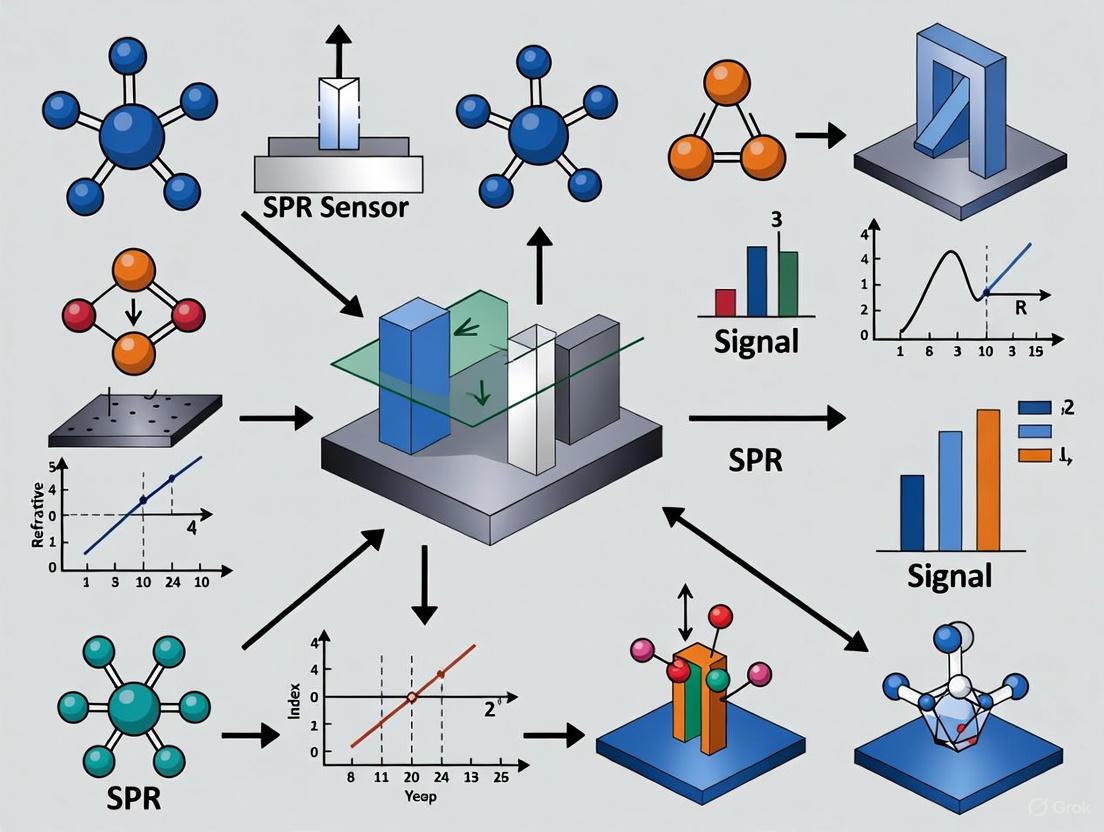
This article provides a comprehensive overview of cutting-edge techniques for enhancing Surface Plasmon Resonance (SPR) biosensor sensitivity, a critical factor for researchers, scientists, and drug development professionals.
Advanced Strategies for Surface Plasmon Resonance (SPR) Sensitivity Improvement: From Novel Materials to AI-Driven Optimization
Abstract
This article provides a comprehensive overview of cutting-edge techniques for enhancing Surface Plasmon Resonance (SPR) biosensor sensitivity, a critical factor for researchers, scientists, and drug development professionals. It explores the foundational principles of SPR and key sensitivity metrics, delves into advanced methodologies including novel 2D materials, photonic crystal fiber (PCF) designs, and AI-driven optimization. The content offers practical troubleshooting guidance for common experimental challenges and presents a comparative analysis of recent, high-performance sensor configurations validated for applications like cancer detection and pathogen identification. By synthesizing foundational knowledge with the latest research breakthroughs, this resource serves as a vital guide for developing next-generation, high-sensitivity SPR biosensors.
Understanding SPR Fundamentals and Key Metrics for Sensitivity Enhancement
Core Principles of Surface Plasmon Resonance and Evanescent Field Interaction
Surface Plasmon Resonance (SPR) is a powerful, label-free optical technique used for the real-time analysis of biomolecular interactions [1]. When plane-polarized light hits a metal film under conditions of total internal reflection, it can generate an evanescent field that propagates at the interface between the metal and a dielectric medium, such as a buffer solution [1] [2]. The core principle of SPR sensing relies on the fact that this phenomenon is exquisitely sensitive to changes in the refractive index at the metal surface. When molecules bind to a ligand immobilized on this surface, the local refractive index changes, leading to a measurable shift in the SPR signal [1] [3].
The evanescent field is a non-propagating electromagnetic field that arises during total internal reflection [4] [5]. Its electric field amplitude decays exponentially with distance from the interface, typically extending only a few hundred nanometers into the lower-index medium [6]. This confinement of the evanescent field is crucial for SPR, as it ensures that the sensing mechanism is highly surface-specific, primarily interacting with molecules bound to the sensor surface rather than those free in solution [1]. A key hallmark of a pure evanescent field is that there is no net flow of electromagnetic energy into the medium where it decays, a fact confirmed by a time-averaged Poynting vector of zero in that direction [4].
Core Physical Principles
Total Internal Reflection and the Evanescent Wave
The foundation of SPR is total internal reflection (TIR). TIR occurs when light traveling through an optically dense medium (e.g., glass) meets an interface with a less dense medium (e.g., water or air) at an angle greater than the so-called critical angle [1]. While the incident wave is entirely reflected, an electromagnetic field, known as the evanescent wave, penetrates a short distance into the rarer medium [6] [5].
The properties of this evanescent wave are defined by two key equations. The electric field amplitude ( E ) at a distance ( x ) from the interface is given by: [ E = E0 \exp(-x/dp) ] where ( E0 ) is the field at the interface, and ( dp ) is the penetration depth [6]. This depth, typically on the order of the wavelength of light, dictates how far the field extends and is calculated as: [ dp = \frac{\lambda}{2\pi n1 \sqrt{\sin^2\theta - (n2/n1)^2}} ] where ( \lambda ) is the wavelength of light in a vacuum, ( \theta ) is the angle of incidence, and ( n1 ) and ( n2 ) are the refractive indices of the denser and rarer media, respectively (( n1 > n2 )) [6].
Surface Plasmons and Resonance
Surface plasmons are collective oscillations of free electrons at the surface of a conductor, such as a thin gold film [3]. For SPR to occur, these plasmons must be excited by the evanescent field. This requires energy and momentum matching, which is achieved by using p-polarized light and a coupling mechanism like a prism [3]. The momentum of the incident light is increased by passing it through the high-index prism, allowing it to couple to the surface plasmons [3] [5].
At a specific combination of angle and wavelength—the resonance condition—energy is transferred from the incident light to the surface plasmons, causing a sharp dip in the intensity of the reflected light [1]. The exact resonance condition is extremely sensitive to the refractive index within the evanescent field, making it a powerful probe for detecting molecular adsorption and binding events on the metal surface [3].
Table 1: Key Characteristics of the Evanescent Field and Surface Plasmons
| Characteristic | Evanescent Field | Surface Plasmons |
|---|---|---|
| Nature | Non-propagating electromagnetic field | Collective oscillations of electrons at a metal surface |
| Generation | Total internal reflection at a dielectric interface | Coupling of light energy to a metal-dielectric interface |
| Field Profile | Exponentially decaying with distance from interface | Confined to the metal surface |
| Energy Transport | No net energy flow in the decay direction | Energy is dissipated as heat in the metal |
| Primary Role in SPR | Probe the local refractive index | Transduce refractive index change into a measurable optical signal |
Standard Experimental Configurations
Two primary prism configurations are used to excite surface plasmons:
- Kretschmann Configuration: This is the most commonly used setup in practical applications [3]. A thin metal film (e.g., 50 nm gold) is directly deposited onto the prism base. The evanescent wave generated by TIR in the prism penetrates through the metal film and excites surface plasmons at the outer interface between the metal and the sample solution [3].
- Otto Configuration: In this setup, the metal film is separated from the prism by a small gap [3]. The evanescent wave from the prism traverses this gap to excite the surface plasmons on the metal film. This configuration is less common for biosensing.
The following diagram illustrates the core components and the process of SPR in the Kretschmann configuration.
Figure 1: SPR excitation in the Kretschmann configuration shows the key components and energy transfer.
Techniques for Improving SPR Sensitivity
Enhancing the sensitivity of SPR sensors is a major focus of research, enabling the detection of smaller molecules and lower analyte concentrations. Recent advancements include material science and innovative fiber optic designs.
Functional Overlayers and Material Enhancements
A prominent method involves depositing a thin, high-index overlayer on the metal film. A 2025 experimental study demonstrated that coating a gold film with Indium Tin Oxide (ITO) significantly boosts sensitivity [7]. The research showed that sensitivity increases with ITO thickness up to an optimal point, beyond which the resonance dip broadens, reducing detection accuracy.
Table 2: Performance of ITO-Enhanced POF SPR Sensors (Refractive Index Range: 1.33-1.37 RIU)
| Sensor Configuration | Sensitivity (nm/RIU) | Figure of Merit (RIUâ»Â¹) | Resolution (RIU) | Reference |
|---|---|---|---|---|
| Gold (40 nm) only | 1,328 | Not Specified | Not Specified | [7] |
| Gold (40 nm) + ITO (25 nm) | 2,258 | 10.13 | 2.74 × 10â»â´ | [7] |
| Sensitivity Enhancement | ~70% Increase | - | - | [7] |
This approach simplifies fabrication as it can be applied to a simple cladding-etched fiber without complex side-polishing, enhancing robustness while providing a large interaction area [7].
Fiber Optic Geometries and Grating Structures
Optical fibers can replace prisms to create miniaturized, portable SPR systems [6] [7]. Sensitivity is enhanced by modifying the fiber to increase the interaction between the guided light and the analyte.
Key fiber-based sensitivity enhancement techniques include:
- Fiber Tapering: Stretching a fiber to create a narrow waist, which increases the fractional power of the light in the evanescent field.
- Cladding Removal: Chemically etching or mechanically polishing the fiber cladding to access the evanescent field.
- Specialized Grating Structures: Fabricating periodic structures within the fiber core, such as:
- Fiber Bragg Gratings (FBG): Reflect a specific wavelength.
- Tilted Fiber Bragg Gratings (TFBG): Efficiently couple light from the core to cladding modes, providing highly sensitive measurements [6].
The workflow for developing and characterizing a high-sensitivity fiber SPR sensor is summarized below.
Figure 2: Key fabrication steps for creating a high-sensitivity POF SPR sensor.
Application Notes and Experimental Protocols
Ligand Immobilization and Experimental Workflow
A typical SPR experiment involves immobilizing one interactant (the ligand) on the sensor chip and flowing the other (analyte) over the surface in solution [1] [2]. The binding response is monitored in real-time as a sensorgram, a plot of response (in Resonance Units, RU) versus time [1].
Protocol: General Steps for an SPR Binding Kinetics Experiment
- Sensor Chip Selection: Choose an appropriate sensor chip. Common types include dextran (CM5), planar, streptavidin, and NTA chips [8].
- System Preparation: Prime the microfluidic system with running buffer to establish a stable baseline [1].
- Ligand Immobilization: Immobilize the ligand onto the sensor surface. This can be achieved via:
- Covalent Coupling: Using amine, thiol, or aldehyde chemistry.
- Capture Coupling: Utilizing high-affinity capture systems like streptavidin-biotin or antibody-Fc tags [1].
- Analyte Binding (Association): Inject a concentration series of the analyte over the ligand surface and a reference surface. The binding causes an increase in the SPR signal [1].
- Dissociation: Replace the analyte solution with buffer. The decrease in signal as the analyte dissociates is monitored [1].
- Surface Regeneration (Optional): Inject a regeneration solution (e.g., low pH or high salt) to remove bound analyte without damaging the immobilized ligand, preparing the surface for a new cycle [8] [1].
Data Interpretation and Kinetic Analysis
The sensorgram provides rich information on the interaction:
- Association Phase: The rate of signal increase is used to determine the association rate constant (( k_a )).
- Dissociation Phase: The rate of signal decrease is used to determine the dissociation rate constant (( k_d )).
- Equilibrium Analysis: The response at steady-state for each analyte concentration can be used to calculate the equilibrium dissociation constant (( KD )), a measure of affinity, where ( KD = kd / ka ) [1] [3].
The Scientist's Toolkit: Essential Research Reagents and Materials
Successful SPR experimentation relies on a suite of specialized consumables and reagents.
Table 3: Essential Materials for SPR Experiments
| Item | Function and Description | Examples / Notes |
|---|---|---|
| Sensor Chips | Solid supports with a gold film and specialized coatings for ligand attachment. | Dextran (CM5), Planar, Streptavidin, NTA chips [8] [2]. |
| Running Buffer | The solution used to hydrate the system and dissolve analytes; must contain a detergent to minimize non-specific binding. | HBS-EP (0.01 M HEPES, 0.15 M NaCl, 3 mM EDTA, 0.05% v/v Surfactant P20) is common; detergent (e.g., 0.05% Tween 20) is critical [2]. |
| Immobilization Reagents | Chemicals for activating the sensor surface and covalently coupling the ligand. | N-ethyl-N'-(3-dimethylaminopropyl)carbodiimide (EDC), N-hydroxysuccinimide (NHS) for amine coupling [2]. |
| Regeneration Solutions | Solutions that disrupt the ligand-analyte interaction, restoring the baseline without denaturing the ligand. | Acidic (e.g., 10 mM Glycine-HCl, pH 1.5-2.5), Basic (e.g., 10-50 mM NaOH), or High Salt solutions [8] [1]. |
| Analysis Software | Specialized software for quantifying kinetic rate constants and affinity from sensorgram data. | Integrated with instruments like Biacore T200; used for global fitting of data [2]. |
| ML336 | ML336, MF:C19H21N5O3, MW:367.4 g/mol | Chemical Reagent |
| PF-4800567 | PF-4800567, CAS:1188296-52-7, MF:C17H18ClN5O2, MW:359.8 g/mol | Chemical Reagent |
The interaction between the evanescent field and surface plasmons forms the foundational principle of SPR technology. Ongoing research continues to push the boundaries of sensitivity through innovative materials like ITO overlayers and advanced fiber optic geometries. The availability of robust protocols and a wide array of specialized reagents makes SPR an indispensable tool in modern bioscience. Its label-free, real-time capability to quantify biomolecular interactions ensures its continued critical role in drug discovery, diagnostics, and life sciences research.
The quantitative evaluation of surface plasmon resonance (SPR) biosensors relies on four fundamental performance metrics that collectively determine their effectiveness in detecting molecular interactions: sensitivity, figure of merit (FOM), resolution, and full width at half maximum (FWHM). These parameters are intrinsically linked and provide critical insights into a sensor's ability to detect minute refractive index changes with precision and accuracy.
Sensitivity quantifies the sensor's response to changes in the refractive index at the sensing interface, while FWHM represents the spectral width of the resonance curve at half its maximum depth. The FOM is a composite parameter calculated as the ratio of sensitivity to FWHM, providing a comprehensive measure of overall sensor performance. Resolution defines the smallest detectable refractive index change, representing the sensor's detection limit. For researchers and drug development professionals, optimizing these parameters is essential for developing biosensors capable of detecting low-abundance biomarkers, monitoring drug-target interactions with high precision, and performing therapeutic drug monitoring.
Recent advances in SPR technology, including novel nanostructures, two-dimensional materials, and algorithmic optimization approaches, have significantly enhanced these performance metrics, pushing detection limits toward single-molecule levels. This document provides a structured analysis of these metrics, supported by experimental data and detailed protocols, to guide the development and implementation of high-performance SPR systems in biomedical research.
Quantitative Comparison of SPR Sensor Performance
The table below summarizes representative performance metrics achieved by various SPR sensor configurations reported in recent literature, demonstrating the significant enhancements possible through material and design innovations.
Table 1: Performance Metrics of Advanced SPR Sensor Configurations
| Sensor Configuration | Sensitivity | FOM (RIUâ»Â¹) | Resolution (RIU) | FWHM | Detection Range/Application |
|---|---|---|---|---|---|
| Bowtie-shaped PCF SPR [9] | 143,000 nm/RIU | 2,600 | 6.99×10â»â· | N/R | Refractive index: 1.32-1.44 |
| PVP/Au Optical Fiber SPR [10] | 11,580 nm/RIU | 628.74 | N/R | 96.5 nm/RIU | Refractive index: 1.39-1.45 |
| ZnO/Ag/Si₃N₄/WS₂ Architecture [11] | 342.14 deg/RIU | 124.86 | N/R | N/R | Blood cancer cell detection |
| Algorithm-Optimized SPR [12] | 230.22% improvement | 110.94% improvement | 54 ag/mL (0.36 aM) | N/R | Mouse IgG detection |
Abbreviations: N/R: Not explicitly reported; PCF: Photonic crystal fiber; PVP: Polyvinylpyrrolidone
The data reveals how specific design strategies enhance particular performance aspects. The bowtie-shaped photonic crystal fiber (PCF) SPR sensor achieves exceptional wavelength sensitivity through its unique geometry that strengthens light-matter interaction [9]. Conversely, the PVP/Au-coated optical fiber sensor demonstrates that incorporating high-refractive-index polymers can significantly improve both sensitivity and FOM by deepening the resonance dip and narrowing the FWHM [10]. The algorithmic optimization approach highlights that simultaneous multi-parameter optimization can deliver comprehensive performance enhancements across all key metrics [12].
Experimental Protocols for Performance Validation
Refractive Index Sensitivity Measurement Protocol
Purpose: To quantitatively characterize the sensitivity of an SPR biosensor to changes in the refractive index of the analyte medium.
Materials Required:
- SPR sensor system with optical interrogation capability
- Series of calibrated refractive index solutions (e.g., glycerol-water mixtures, sodium chloride solutions)
- Flow cell or immersion chamber compatible with the sensor
- Temperature control system (±0.1°C stability)
- Data acquisition software
Procedure:
- Initialize the SPR instrument and allow sufficient warm-up time for light source and electronics stabilization.
- Establish a stable baseline using deionized water or the lowest refractive index solution.
- For wavelength-interrogation systems:
- Record the resonance wavelength shift for each standard solution
- Plot resonance wavelength versus refractive index
- Calculate sensitivity as the slope of the linear regression fit (nm/RIU)
- For angular-interrogation systems:
- Record the resonance angle shift for each standard solution
- Plot resonance angle versus refractive index
- Calculate sensitivity as the slope of the linear regression fit (deg/RIU)
- Perform triplicate measurements for each refractive index standard to establish statistical significance.
Data Analysis: The sensitivity (S) is calculated using the formula: [ S = \frac{\Delta \lambda}{\Delta n} \quad \text{or} \quad S = \frac{\Delta \theta}{\Delta n} ] where Δλ is the resonance wavelength shift, Δθ is the resonance angle shift, and Δn is the refractive index change.
FWHM and FOM Characterization Protocol
Purpose: To determine the full width at half maximum of the SPR resonance dip and calculate the figure of merit.
Materials Required:
- SPR sensor with spectral or angular scanning capability
- Analytic solution with known refractive index
- Data processing software capable of curve fitting
Procedure:
- Acquire a high-resolution SPR spectrum or angular scan using a stable reference solution.
- Identify the minimum reflectivity point (resonance depth).
- Locate the two points on either side of the resonance where the reflectivity equals half of the maximum depth.
- Calculate FWHM as the spectral or angular separation between these two points.
- For wavelength-interrogation systems, FWHM is expressed in nanometers; for angular-interrogation, in degrees.
- Calculate FOM using the previously determined sensitivity and FWHM: [ \text{FOM} = \frac{S}{\text{FWHM}} ]
Validation: Repeat measurements should yield FWHM variations of less than 5%, confirming system stability and measurement reliability.
Performance Enhancement Strategies and Mechanisms
Material-Based Enhancement Approaches
The strategic incorporation of specialized materials has proven highly effective for improving SPR sensor performance. The use of high-refractive-index polymers like polyvinylpyrrolidone (PVP) creates a heterogeneous-core structure that enhances the evanescent field interaction, leading to simultaneous improvement in both sensitivity (11,580 nm/RIU) and FOM (628.74 RIUâ»Â¹) [10]. Similarly, two-dimensional materials such as tungsten disulfide (WSâ‚‚) when incorporated into multilayer architectures (e.g., BK7/ZnO/Ag/Si₃Nâ‚„/WSâ‚‚) significantly boost field confinement, achieving sensitivity of 342.14 deg/RIU for cancer cell detection [11].
The bowtie-shaped photonic crystal fiber design employs a 30-nm gold layer and strategically arranged air holes of different diameters to achieve exceptional wavelength sensitivity (143,000 nm/RIU) and FOM (2,600) [9]. This design enhances light propagation toward the plasmonic material while maintaining practical fabricability through optimized pitch parameters.
Algorithm-Assisted Optimization Approaches
Recent advances incorporate computational optimization to simultaneously enhance multiple performance parameters. The multi-objective particle swarm optimization (PSO) algorithm synchronously optimizes critical design parameters including incident angle, chromium adhesion layer thickness, and gold film thickness [12]. This approach has demonstrated remarkable improvements of 230.22% in sensitivity, 110.94% in FOM, and 90.85% in depth-quality factor (DFOM), enabling ultrasensitive detection of mouse IgG down to 54 ag/mL (0.36 aM) [12].
Table 2: Research Reagent Solutions for SPR Performance Enhancement
| Material/Category | Specific Examples | Function in SPR Enhancement |
|---|---|---|
| 2D Materials | WSâ‚‚, MoSâ‚‚, WSeâ‚‚ | Enhance evanescent field strength through high surface-to-volume ratio and strong light-matter interactions [11] |
| High-RI Polymers | Polyvinylpyrrolidone (PVP) | Increase resonance strength and deepen resonance dip, improving both sensitivity and FOM [10] |
| Plasmonic Metals | Gold, Silver | Generate surface plasmons; thickness optimization critical for performance [9] [12] |
| Adhesion Layers | Chromium | Improve metal film adhesion to substrate; thickness affects overall sensitivity [12] |
| Dielectric Spacers | ZnO, Si₃N₄ | Optimize distance between metal layer and sensing medium for field enhancement [11] |
Schematic Representations of Optimization Strategies
Material-Enhanced SPR Mechanism
Diagram 1: Material-enhanced SPR sensor architecture for performance improvement.
Algorithmic Optimization Workflow
Diagram 2: Algorithmic optimization workflow for SPR performance enhancement.
The systematic optimization of essential performance metrics—sensitivity, FOM, resolution, and FWHM—is fundamental to advancing SPR biosensor technology for pharmaceutical and clinical applications. As demonstrated by the documented cases, both material innovations and computational approaches can dramatically enhance these parameters, enabling detection capabilities approaching single-molecule levels. The integration of two-dimensional materials, high-refractive-index polymers, and sophisticated optimization algorithms represents a powerful strategy for developing next-generation biosensors. These advancements will continue to push the boundaries of molecular detection, providing researchers and drug development professionals with increasingly powerful tools for biomarker discovery, drug-target interaction analysis, and therapeutic monitoring.
Surface Plasmon Resonance (SPR) and Localized Surface Plasmon Resonance (LSPR) technologies have revolutionized label-free detection methods in biomedical diagnostics, environmental monitoring, and pharmaceutical development. These optical phenomena occur when incident light excites collective oscillations of free electrons at the interface between a metal and dielectric medium, generating evanescent fields that are exquisitely sensitive to minute changes in the local environment [13]. The performance of SPR-based sensors is fundamentally governed by the selection of plasmonic materials, whose electronic structure determines key operational parameters including resonance frequency, field enhancement capabilities, and charge transfer efficiency [14]. Among the various materials investigated, gold, silver, and copper have emerged as the most significant noble metals for practical SPR applications due to their favorable optical properties and material characteristics.
The development of plasmonic sensing traces back to 1957 when Ritchie first predicted the existence of surface plasmon waves, with experimental demonstrations following in the late 1960s on silver films and diffraction gratings [14]. The field expanded significantly after the first observation of Surface-Enhanced Raman Spectroscopy (SERS) in 1974 on roughened silver electrodes, which marked the beginning of a comprehensive family of surface enhancement techniques [14]. Today, SPR biosensors have evolved into sophisticated platforms capable of detecting analytes at single-molecule levels under specific conditions, forming the basis of modern diagnostic techniques including SHERLOCK, DETECTR, and SERS-CRISPR [14]. The critical importance of material selection has intensified with the expanding applications of SPR technology, driving rigorous comparative studies of gold, silver, and copper to optimize sensor performance across diverse operating conditions.
Fundamental Properties of Plasmonic Materials
The performance of plasmonic materials in SPR sensing is governed by their intrinsic electronic structure and resulting dielectric function. Surface plasmons are collective oscillations of free electrons at metal-dielectric interfaces, which can propagate along the surface as surface plasmon polaritons (SPPs) or remain confined as localized surface plasmons (LSPs) in nanoparticles [13]. The resonance condition depends critically on the complex permittivity of the metal, which exhibits large negative values in the real part and minimal dielectric losses in the imaginary part at optical frequencies [14].
The plasmonic behavior of metals stems from their ability to support coherent electron oscillations when excited by electromagnetic radiation. Noble metals like gold, silver, and copper possess high electron densities and distinct interband transition thresholds that define their spectral operating windows [14]. The dielectric function of these metals follows a frequency-dependent behavior described by Drude-Lorentz models, incorporating both free-electron contributions and interband transitions [15] [16]. This complex dielectric response directly influences the localization and propagation of surface plasmons, determining critical sensor parameters including sensitivity, resonance sharpness, and operating wavelength range.
Material selection for SPR applications requires balancing multiple optical and material properties. The ideal plasmonic material should exhibit strong negative real permittivity, low optical losses, chemical stability, and compatibility with functionalization chemistry. Additionally, practical considerations including fabrication ease, cost, and integration with photonic structures further influence material selection for specific sensing applications [17] [7]. Understanding these fundamental properties provides the foundation for rational design of SPR sensors with optimized performance characteristics.
Comparative Analysis of Gold, Silver, and Copper
Material Properties and Performance Metrics
Table 1: Comparative Properties of Primary Plasmonic Materials
| Property | Gold (Au) | Silver (Ag) | Copper (Cu) |
|---|---|---|---|
| Plasmonic Frequency Range | Visible to Near-IR | Visible | Visible |
| Sensitivity Performance | High (Up to 143,000 nm/RIU in optimized structures) [16] | Higher theoretical sensitivity than Au [17] | Moderate |
| Chemical Stability | Excellent (resistant to oxidation) [17] | Poor (requires protective layers) [17] | Poor (prone to oxidation) [16] |
| Fabrication Considerations | Reliable thin-film deposition [17]; Excellent bioconjugation chemistry [17] | Uniform deposition challenging [16]; Tarnishing issues [17] | Requires graphene coating to prevent oxidation [16] |
| Biocompatibility | High | Moderate | Low |
| Cost | High | Moderate | Low |
| Typical Applications | High-precision biosensors [17] [16]; Medical diagnostics [13] | High-sensitivity applications where stability is addressed [17] | Cost-sensitive applications with protective coatings [16] |
Detailed Performance Analysis
Gold stands as the most widely utilized plasmonic material, particularly for biological sensing applications, due to its exceptional chemical stability and reliable performance. Gold's surface chemistry allows for straightforward functionalization with thiol-based ligands, enabling robust bioconjugation for specific target detection [17]. This combination of optical properties and chemical robustness makes gold the preferred choice for applications requiring long-term stability and reproducible results. Recent demonstrations include bowtie-shaped PCF sensors achieving remarkable sensitivity of 143,000 nm/RIU and photonic crystal fiber biosensors optimized with machine learning approaches reaching 125,000 nm/RIU [16] [18] [19].
Silver exhibits superior plasmonic characteristics in theory, with stronger field enhancement and lower ohmic losses compared to gold [17]. These properties translate to potentially higher sensitivity and sharper resonance peaks, making silver attractive for applications demanding ultimate performance. Sensors utilizing silver substrates demonstrate higher theoretical sensitivity compared to gold-based counterparts [17]. However, silver's significant limitation lies in its poor chemical stability – it readily tarnishes in air and aqueous environments, requiring protective passivation layers that complicate fabrication and can degrade performance [17]. This susceptibility to oxidation has limited silver's practical implementation despite its attractive optical properties.
Copper offers a cost-effective alternative to precious metals like gold and silver, with plasmonic properties that theoretically approach those of silver. However, copper's high susceptibility to oxidation presents a fundamental challenge for practical implementation [16]. When exposed to ambient conditions, copper surfaces rapidly form oxide layers that severely degrade plasmonic performance. To address this limitation, researchers have investigated protective strategies including graphene coatings that shield copper from oxidation while maintaining optical accessibility [16]. Such approaches enable copper utilization in cost-sensitive applications where extreme sensitivity is not required.
Table 2: Experimental Performance Metrics in SPR Biosensing Applications
| Material | Sensor Configuration | Maximum Wavelength Sensitivity (nm/RIU) | Amplitude Sensitivity (RIUâ»Â¹) | Figure of Merit (RIUâ»Â¹) | Reference |
|---|---|---|---|---|---|
| Gold | Bowtie-shaped PCF SPR | 143,000 | 6,242 | 2,600 | [16] |
| Gold | D-shaped PCF with TiOâ‚‚ | 42,000 | -1,862.72 | 1,393.13 | [17] |
| Gold | Machine learning-optimized PCF | 125,000 | -1,422.34 | 2,112.15 | [18] [19] |
| Silver | D-shaped PCF with TiOâ‚‚ | 30,000 | N/R | N/R | [17] |
| Copper | Graphene-protected | 2,000 | N/R | N/R | [16] |
Experimental Protocols for Plasmonic Material Characterization
Protocol: Fabry-Pérot Resonance Method for Dispersion Characterization
Objective: To accurately characterize the plasmonic dispersion relation and efficiency of metal films using Fabry-Pérot resonances in extraordinary optical transmission (EOT) structures.
Principle: This method reconstructs the plasmon dispersion relation from transmission spectra peaks obtained from plasmonic gratings with systematically varied unit cell sizes. Each grating serves as a discrete probe in momentum space, with Fabry-Pérot resonances localized within subwavelength apertures providing the fundamental data for dispersion mapping [15].
Materials and Equipment:
- Plasmonic grating samples with varying periodicities
- Tunable laser source (visible to NIR range)
- Transmission spectroscopy setup
- FEM and FDTD simulation software
- Perfectly Matched Layer (PML) boundary conditions
Procedure:
- Sample Fabrication: Prepare free-standing metallic slabs perforated with periodic air apertures forming subwavelength FP resonators. Maintain identical superstrate and substrate media (air) to eliminate impedance mismatch.
- Optical Measurements: Perform normal incidence transmission measurements using TM-polarized illumination to excite transverse magnetic modes while suppressing TE modes.
- Spectral Acquisition: Collect transmission spectra for each grating variant, identifying resonance peaks corresponding to Fabry-Pérot modes.
- Modal Analysis: Implement non-Hermitian modal decomposition using Finite Element Method (FEM) to elucidate eigenstates of the plasmonic system and quantify modal hybridization.
- FDTD Validation: Corroborate FEM results with Finite-Difference Time-Domain (FDTD) simulations using broadband pulse excitation from multiple randomly distributed point sources.
- Dispersion Reconstruction: Track FP resonance shifts across discrete in-plane momenta to map the plasmon dispersion relation using a composite rectifying factor that accounts for material properties and geometry [15].
Data Analysis:
- Calculate the energy localization ratio (Θ) to quantify spatial distribution of electromagnetic energy
- Extract resonant frequencies and associated field distributions from power spectral density via Fast Fourier Transform
- Reconstruct dispersion curves from resonance frequencies of Fabry-Pérot modes, scaled by geometry-dependent correction factors
Protocol: Sensitivity Measurement for SPR Biosensors
Objective: To quantitatively evaluate the wavelength and amplitude sensitivity of SPR biosensors utilizing different plasmonic materials.
Principle: SPR sensors detect minute refractive index changes through resonance condition shifts. When the propagation constant of surface plasmon polaritons matches the wavevector of incident polarized light, resonance occurs, resulting in characteristic absorption or loss peaks. As analyte RI changes, the phase-matching condition shifts, enabling detection [13] [16].
Materials and Equipment:
- SPR sensor platform (prism, optical fiber, or PCF-based)
- Polarized light source
- Spectrometer or angular interrogation system
- Reference analytes with known refractive indices
- Flow cell or analyte delivery system
- Metal deposition equipment (sputter coater, evaporator)
Procedure:
- Sensor Fabrication: a. For optical fiber sensors: Etch cladding or create D-shaped structure to access evanescent field b. Deposit plasmonic metal film (40-50 nm thickness optimal for gold) using sputter coating with thickness monitoring c. For enhanced stability: Apply protective layers (TiOâ‚‚, ITO, graphene) as needed d. Functionalize surface with appropriate biorecognition elements
Experimental Setup: a. Connect light source and spectrometer to sensor platform b. Implement flow system for analyte delivery c. Establish temperature control if required for precise measurements
Measurement Sequence: a. Record reference spectrum in air or reference buffer b. Measure background spectrum with light source off c. Introduce analytes with varying refractive indices d. Collect transmission spectra for each analyte e. Calculate normalized SPR transmission spectrum by dividing the difference between sample and background spectra by the difference between reference and background spectra [7]
Data Collection: a. Record resonance wavelength shifts (for wavelength interrogation) b. Measure reflectance/intensity changes (for amplitude interrogation) c. Repeat measurements for statistical significance
Data Analysis:
- Plot resonance wavelength versus refractive index for wavelength sensitivity (Sλ = Δλ/Δn)
- Calculate amplitude sensitivity using SA = (1/T(λ)) × (ΔT(λ)/Δn) where T(λ) is transmission
- Determine sensor resolution (minimum detectable RI change)
- Compute figure of merit (FOM = S/FWHM) where FWHM is full width at half maximum [16]
Advanced Material Configurations and Hybrid Approaches
Enhanced Structures for Performance Improvement
Recent advances in plasmonic sensing have focused on hybrid material systems that combine the advantages of multiple materials while mitigating their individual limitations. These approaches include:
Gold-Based Hybrid Structures: The combination of gold with high-index dielectric materials has demonstrated significant sensitivity enhancements. For instance, D-shaped photonic crystal fiber sensors with gold-TiOâ‚‚ layers achieve improved performance through enhanced evanescent field interaction and optimized coupling between core modes and surface plasmon polaritons [17]. Similarly, the addition of indium tin oxide (ITO) overlayers to gold films in polymer optical fiber sensors has shown 70% sensitivity enhancement compared to gold-only configurations, reaching 2258 nm/RIU with optimal ITO thickness of 25 nm [7].
Silver Stabilization Strategies: To address silver's oxidation issues, researchers have developed protective coating strategies using dielectric materials like TiOâ‚‚ [17]. These approaches maintain silver's superior plasmonic properties while providing necessary environmental protection. Additionally, bimetallic structures combining silver with more stable metals offer compromised solutions with tunable optical properties.
Copper Protection Methods: Graphene layers have been successfully implemented to prevent copper oxidation while maintaining optical accessibility for plasmonic excitation [16]. Two-dimensional materials like transition metal dichalcogenides (TMDCs) and MXenes have also shown promise as protective layers and sensitivity enhancers for copper-based plasmonic sensors [13] [17].
The Scientist's Toolkit: Essential Research Reagent Solutions
Table 3: Key Research Reagents and Materials for Plasmonic Sensor Development
| Material/Reagent | Function | Application Notes |
|---|---|---|
| Gold (Au) Target | Primary plasmonic layer | High purity (99.99%) for sputtering; enables reliable thin-film deposition with excellent bioconjugation chemistry [17] |
| Silver (Ag) Target | High-sensitivity plasmonic layer | Requires protective coatings (TiOâ‚‚) due to tarnishing; offers higher theoretical sensitivity than gold [17] |
| ITO Powder/Target | High-index overlayer | Enhances sensitivity when deposited over gold; optimal thickness ~25 nm [7] |
| TiOâ‚‚ Nanoparticles | Protective layer and sensitivity enhancer | Applied over silver or gold layers; increases refractive index sensitivity [17] |
| Graphene Oxide | Protective monolayer and charge transfer mediator | Prevents oxidation of copper and silver surfaces; enhances SERS signals [16] |
| Thiol-PEG Compounds | Surface functionalization | Enable biomolecule conjugation to gold surfaces; create anti-fouling layers |
| Silane Coupling Agents | Surface modification | Functionalize oxide surfaces (ITO, TiOâ‚‚) for biomolecule immobilization |
| PF-5006739 | PF-5006739, CAS:1293395-67-1, MF:C22H22FN7O, MW:419.5 g/mol | Chemical Reagent |
| (3S,4R)-PF-6683324 | (3S,4R)-PF-6683324, MF:C24H23F4N5O4, MW:521.5 g/mol | Chemical Reagent |
Visualizing Plasmonic Sensor Configurations and Experimental Workflows
Diagram Title: Plasmonic Sensor Development Workflow
Diagram Title: SPR Sensing Fundamental Principle
The critical role of plasmonic materials in SPR sensitivity improvement is unequivocal, with gold, silver, and copper each offering distinct advantages and limitations for specific sensing applications. Gold remains the preferred choice for most biological sensing scenarios due to its exceptional chemical stability, well-established surface chemistry, and reliable performance across diverse operating conditions. Silver offers superior theoretical sensitivity and field enhancement capabilities but requires careful environmental protection to mitigate oxidation issues. Copper presents a cost-effective alternative for appropriate applications when implemented with suitable protective strategies.
Future developments in plasmonic sensing will likely focus on advanced hybrid materials that combine the advantages of multiple material systems while addressing their individual limitations. The integration of two-dimensional materials like graphene, TMDCs, and MXenes with traditional plasmonic metals shows particular promise for next-generation sensors with enhanced sensitivity and environmental stability [13] [17]. Additionally, machine learning-driven design optimization is emerging as a powerful approach for rapidly developing high-performance sensor geometries tailored to specific application requirements [18] [19].
As SPR technologies continue evolving toward point-of-care diagnostics and miniaturized platforms, the rational selection and engineering of plasmonic materials will remain fundamental to achieving the sensitivity, specificity, and reliability demanded by modern sensing applications across biomedical, environmental, and security domains.
Photonic crystal fiber-based surface plasmon resonance (PCF-SPR) sensors represent a advanced sensing technology that combines the unique light-guiding properties of photonic crystal fibers with the high sensitivity of surface plasmon resonance. Unlike conventional optical fibers, PCFs contain a periodic arrangement of air holes running along their length, which allows for precise control over optical properties such as dispersion, birefringence, and confinement loss [18]. When integrated with SPR technology, these sensors enable highly sensitive, label-free, and real-time detection of biological and chemical analytes by monitoring changes in the local refractive index [20].
The fundamental operating principle of PCF-SPR sensors relies on the coupling between the core-guided mode in the PCF and surface plasmon polariton (SPP) modes excited at a metal-dielectric interface. When phase-matching conditions are met between these modes, resonance occurs, resulting in a sharp loss peak in the transmission spectrum. Any alteration in the refractive index of the analyte surrounding the sensor shifts this resonance condition, enabling precise detection of molecular binding events [20] [21]. This mechanism has positioned PCF-SPR sensors as powerful tools across diverse fields including medical diagnostics, environmental monitoring, food safety, and pharmaceutical inspection [20] [17].
Key PCF-SPR Configurations and Performance Analysis
Recent advances in PCF-SPR technology have led to the development of numerous sensor configurations, each offering distinct advantages for specific applications. The structural design profoundly influences key performance metrics including sensitivity, detection range, and fabrication feasibility.
Common Configurations and Characteristics
Table 1: Comparison of Key PCF-SPR Sensor Configurations
| Configuration Type | Key Features | Sensitivity Range | RI Detection Range | Primary Applications |
|---|---|---|---|---|
| D-Shaped [17] | Polished flat surface for easy plasmonic layer deposition; often uses Au/TiOâ‚‚ layers | Up to 42,000 nm/RIU [17] | 1.30 - 1.40 [17] | Multi-cancer cell detection, biomedical diagnostics |
| Dual-Channel/Dual-Core [22] [23] | Multiple sensing channels; simultaneous multi-analyte detection | 10,000 - 14,500 nm/RIU [22] [23] | 1.36 - 1.41 [22] | Biomedical analysis, environmental monitoring |
| Bowtie-Shaped [16] | Combines internal and external sensing; enhanced light confinement | Up to 143,000 nm/RIU [16] | 1.32 - 1.44 [16] | Biological and chemical sensing |
| Open Channel [20] | Analyte-filled air holes; increased interaction with guided modes | Varies by specific design | Varies by specific design | Chemical and biological detection |
| Concave/Microgroove [21] | Polished upper section with microgroove; reduces core-analyte distance | 3,700 - 5,100 nm/RIU [21] | 1.19 - 1.40 [21] | Medical testing, environmental monitoring |
Performance Metrics Analysis
Table 2: Detailed Performance Metrics of Recent PCF-SPR Sensors
| Sensor Description | Max. Wavelength Sensitivity (nm/RIU) | Amplitude Sensitivity (RIUâ»Â¹) | Figure of Merit (RIUâ»Â¹) | Resolution (RIU) | Plasmonic Materials |
|---|---|---|---|---|---|
| Bowtie-Shaped PCF [16] | 143,000 | 6,242 | 2,600 | 6.99×10â»â· | Gold |
| ML-Optimized Design [18] | 125,000 | -1,422.34 | 2,112.15 | 8.00×10â»â· | Gold |
| D-Shaped with Au/TiOâ‚‚ [17] | 42,000 | -1,862.72 | 1,393.13 | - | Gold, TiOâ‚‚ |
| Dual-Polarization [22] | 14,500 (Upper), 13,600 (Right) | - | - | ~7.00×10â»â¶ | Gold, Silver, TiOâ‚‚ |
| Concave with MoSâ‚‚/Au [21] | 5,100 | - | 29.14 | 1.96×10â»âµ | MoSâ‚‚, Gold |
| Taguchi-Optimized Dual-Core [23] | 10,000 | 235,882 | - | - | Silver, TiOâ‚‚ |
Experimental Protocols
Protocol 1: Numerical Analysis of PCF-SPR Sensors Using Finite Element Method
Purpose: To simulate and analyze the performance of a PCF-SPR sensor using computational methods. Background: The finite element method (FEM) is widely employed for modeling light propagation, plasmonic resonance behavior, and sensor response in PCF-SPR structures [20] [22].
Materials and Software:
- COMSOL Multiphysics (v5.4 or newer) with RF Module
- High-performance computing workstation
- Perfectly matched layer (PML) boundary conditions
Procedure:
- Geometry Construction: Create the PCF cross-section geometry using the software's drawing tools. Define air holes in a periodic arrangement (typically hexagonal) with specified pitch (Λ) and hole diameters (d1, d2, d3) [16].
- Material Definition: Assign material properties:
- Mesh Generation: Apply triangular mesh elements with finer discretization at metal-dielectric interfaces where field gradients are steepest. Ensure element quality exceeds 0.7 [16].
- Boundary Conditions: Implement PML as the outermost layer to absorb scattered radiation [22] [21].
- Mode Analysis: Solve for eigenmodes in the wavelength range of interest (typically 0.5-2.0 μm). Identify fundamental core mode and surface plasmon polariton (SPP) modes.
- Loss Calculation: Compute confinement loss using the formula: αloss = (8.686 × 2π/λ) × Im(neff) × 10ⴠ(dB/cm) [21].
- Parameter Extraction: Determine resonance wavelength, sensitivity, and figure of merit from loss spectra.
Troubleshooting Tips:
- For convergence issues, refine mesh density at critical interfaces
- Verify material models are appropriate for the wavelength range
- Ensure PML thickness is sufficient to prevent back-reflections
Protocol 2: Fabrication of D-Shaped PCF-SPR Sensors
Purpose: To fabricate a D-shaped PCF-SPR sensor with Au/TiOâ‚‚ layers for cancer cell detection. Background: D-shaped configurations simplify metal deposition by providing a flat, polished surface that positions the metal layer closer to the fiber core, enhancing coupling efficiency [17].
Materials:
- Photonic crystal fiber (silica-based)
- Polishing papers (various grit sizes)
- Gold and titanium dioxide sputtering targets
- Optical adhesive
- Precision polishing jig
- Surface plasmon resonance setup (light source, polarizer, spectrometer)
Procedure:
- Fiber Preparation: Cut PCF to desired length (typically 1-2 cm). Carefully strip protective coating if present.
- Side-Polishing: Mount PCF securely in polishing jig. Progressively polish using decreasing abrasive sizes (15 μm to 0.3 μm) until the core is nearly exposed. Monitor polishing depth using microscopic inspection [17].
- Surface Cleaning: Use oxygen plasma treatment to remove organic contaminants and activate the silica surface.
- Metal Deposition:
- Employ magnetron sputtering to deposit a thin gold film (typically 30-50 nm)
- Maintain deposition rate at 0.1-0.3 Ã…/s for uniform coverage
- For TiOâ‚‚ coating, use reactive sputtering in argon-oxygen atmosphere [17]
- Quality Assessment: Characterize film thickness and uniformity using atomic force microscopy or surface profilometry.
- Sensor Integration: Mount fabricated sensor in flow cell system with precision alignment for optical characterization.
Safety Considerations:
- Follow standard laboratory safety protocols for sputtering systems
- Use appropriate personal protective equipment when handling chemicals
- Implement proper ventilation during deposition processes
Protocol 3: Multi-Analyte Detection Using Dual-Channel PCF-SPR Sensors
Purpose: To simultaneously detect two different analytes using a dual-channel PCF-SPR sensor. Background: Dual-channel sensors utilize different plasmonic materials (e.g., gold and silver) and polarization directions to enable simultaneous detection of multiple parameters [22].
Materials:
- Dual-channel PCF-SPR sensor [22]
- Tunable laser source (visible to near-infrared)
- Programmable syringe pumps for analyte delivery
- Optical spectrum analyzer
- Polarization controller
Procedure:
- Sensor Characterization: Initially characterize sensor response using reference analytes with known refractive indices.
- Experimental Setup:
- Connect tunable laser source to sensor input via single-mode fiber
- Implement polarization controller to select appropriate polarization states for each channel
- Connect sensor output to optical spectrum analyzer
- Integrate microfluidic delivery systems for both analytes [22]
- Baseline Measurement: Record loss spectra with reference solutions in both channels.
- Analyte Introduction: Simultaneously introduce test analytes into their respective channels using programmable pumps.
- Data Acquisition: Monitor resonance wavelength shifts in real-time for both channels simultaneously.
- Data Analysis:
- Calculate wavelength sensitivity for each channel: Sλ = Δλ/Δn (nm/RIU)
- Determine sensor resolution: R = Δn × (Δλmin/Δλshift)
- Assess cross-talk between channels by analyzing interference effects
Validation Method:
- Compare results with standard analytical methods for target analytes
- Perform reproducibility tests with multiple sensor samples
Signaling Pathways and Workflow Visualization
PCF-SPR Sensor Working Principle and Signal Transduction
Diagram 1: PCF-SPR Signal Transduction Pathway. This workflow illustrates the sequential process from light introduction to detection signal generation in PCF-SPR sensors.
Multi-Channel PCF-SPR Sensing Workflow
Diagram 2: Dual-Channel PCF-SPR Sensing Workflow. This diagram shows the parallel processing of two analytes using different sensing channels and polarization states in multi-analyte detection systems.
The Scientist's Toolkit: Essential Research Reagents and Materials
Table 3: Key Research Reagent Solutions for PCF-SPR Sensor Development
| Material/Reagent | Function | Application Notes | Key References |
|---|---|---|---|
| Gold (Au) | Primary plasmonic material; provides strong SPR response and chemical stability | Optimal thickness: 30-50 nm; deposited via sputtering or thermal evaporation | [17] [23] |
| Silver (Ag) | Alternative plasmonic material; higher sensitivity but requires protection from oxidation | Often used with protective layers (TiOâ‚‚); enhances sensitivity in specific wavelength ranges | [22] [23] |
| Titanium Dioxide (TiOâ‚‚) | Protective layer; enhances sensitivity by generating surface electrons | Prevents oxidation of silver; improves coupling between core mode and SPP mode | [22] [17] [23] |
| Molybdenum Disulfide (MoSâ‚‚) | 2D transition metal dichalcogenide; enhances SPR excitation | Higher optical absorption than graphene; improves wavelength sensitivity | [21] |
| Silica (SiOâ‚‚) | Background material for PCF; provides mechanical support and optical guidance | Refractive index follows Sellmeier equation; compatible with fiber drawing processes | [22] [21] |
| Specific Recognition Elements | Enable selective analyte binding | Antibodies, aptamers, molecularly imprinted polymers for targeted detection | [20] |
| PIK-293 | PIK-293, CAS:900185-01-5, MF:C22H19N7O, MW:397.4 g/mol | Chemical Reagent | Bench Chemicals |
| PLX51107 | PLX51107, CAS:1627929-55-8, MF:C26H22N4O3, MW:438.5 g/mol | Chemical Reagent | Bench Chemicals |
Emerging Trends and Future Perspectives
The field of PCF-SPR sensing continues to evolve with several promising directions. The integration of machine learning and artificial intelligence represents a paradigm shift in sensor optimization and data analysis. ML algorithms can predict optical properties, optimize design parameters, and enhance detection accuracy, significantly reducing computational costs and development time [20] [18]. Explainable AI methods, particularly Shapley Additive exPlanations (SHAP), provide insights into how different design parameters influence sensor performance, enabling more targeted optimization strategies [18].
Material innovation remains a crucial frontier, with continued exploration of two-dimensional materials beyond graphene, including MXenes and transition metal dichalcogenides (TMDCs) [20] [21]. These materials offer enhanced sensitivity and stability compared to conventional plasmonic materials. Additionally, the development of multi-functional sensors capable of simultaneous detection of multiple parameters addresses the growing need for comprehensive analytical platforms in complex biological and environmental samples [22].
Despite significant progress, challenges remain in standardization, fabrication scalability, and implementation in real-world settings. Future research will likely focus on addressing these limitations while further enhancing sensitivity and specificity through synergistic combinations of novel materials, advanced computational methods, and innovative structural designs [20].
Novel Materials, Structural Designs, and AI for Next-Generation SPR Sensors
Surface Plasmon Resonance (SPR) biosensing technology has fundamentally transformed analytical biochemistry and diagnostic applications by enabling label-free, real-time detection of biomolecular interactions. The sensing principle relies on exciting collective electron oscillations (surface plasmons) at a metal-dielectric interface, typically using the Kretschmann configuration where a thin metallic film is deposited on a prism. When the energy and momentum of incident light match those required to excite surface plasmons, a sharp dip in reflectance occurs at a specific resonance angle. This resonance condition is exquisitely sensitive to refractive index changes at the sensor surface, allowing detection of binding events without fluorescent or radioactive labeling [24] [25].
Despite their success, conventional SPR biosensors using single metal layers face limitations in sensitivity, especially for detecting low-molecular-weight analytes and low-abundance biomarkers. Two-dimensional (2D) nanomaterials have emerged as powerful enhancers for SPR platforms due to their extraordinary properties, including atomically thin structures, exceptionally high surface-to-volume ratios, and unique optical characteristics that strengthen light-matter interactions. These materials enhance sensor performance through several mechanisms: increased adsorption of target biomolecules, enhanced electromagnetic field confinement at the sensing interface, and protection of reactive metallic layers from oxidation [25] [26].
This Application Note provides a comprehensive technical overview of three prominent 2D materials—graphene, MXene, and black phosphorus (BP)—for boosting SPR biosensor performance. We present structured quantitative comparisons, detailed experimental protocols for fabricating and characterizing 2D material-enhanced SPR sensors, and practical guidance for researchers and drug development professionals implementing these advanced sensing platforms.
Material Properties and Enhancement Mechanisms
Graphene
Graphene, a single layer of sp²-hybridized carbon atoms arranged in a hexagonal lattice, enhances SPR biosensors through its exceptionally high surface area (~2630 m²/g) that provides extensive probe immobilization capacity. When deposited on noble metal surfaces, graphene functions as a dielectric spacer that amplifies local field intensities while protecting the metal from oxidation. Its biocompatibility and versatile functionalization chemistry through both covalent and non-covalent mechanisms further enhance its utility in biosensing applications. The material's enhanced adsorption characteristics for various biomolecules significantly improve sensitivity for targets that produce minimal refractive index perturbations [24] [27].
MXenes
MXenes, a rapidly growing family of two-dimensional transition metal carbides, nitrides, and carbonitrides, exhibit metallic Drude behavior with high carrier density and abundant surface terminations (-O, -OH, -F) that allow fine tuning of permittivity. These surface functional groups provide abundant sites for biomolecule immobilization without complex pre-functionalization steps. Ti₃C₂Tₓ MXene, the most widely studied variant, demonstrates exceptionally high electrical conductivity and hydrophilic surfaces that promote biomolecular interactions. When incorporated into SPR platforms, MXene sheets intensify near-field confinement without severe damping, increasing both sensitivity and detection precision [28] [26].
Black Phosphorus (BP)
Black phosphorus possesses a puckered honeycomb structure with strong in-plane anisotropy and a layer-dependent direct bandgap that differentiates it from other 2D materials. BP exhibits remarkable optical properties including a high refractive index (n ≈ 3.5) that significantly enhances phase matching conditions for surface plasmon excitation. The material's saturable absorption properties and high carrier mobility make it particularly suitable for biophotonics sensing applications. Unlike other 2D materials, BP maintains stability when exposed to air, making it highly suitable for SPR biosensor applications requiring consistent performance. Its anisotropic optical response enables pronounced electromagnetic field confinement at sensor interfaces [24] [29] [30].
Table 1: Comparative Properties of 2D Materials for SPR Enhancement
| Material | Key Properties | Enhancement Mechanism | Functionalization Chemistry |
|---|---|---|---|
| Graphene | High surface area (2630 m²/g), excellent electrical conductivity, biocompatibility | Field amplification, molecular enrichment | π-π stacking, covalent bonding with oxygen-containing groups |
| MXene | Metallic conductivity, hydrophilic surface, tunable surface terminations | Strong field confinement, high biomolecule loading | Direct coordination to -OH, -O, -F groups |
| Black Phosphorus | Anisotropic optical response, layer-dependent bandgap, high refractive index (~3.5) | Strong light-matter interaction, enhanced phase matching | Covalent functionalization via phosphorus atoms |
Performance Analysis and Quantitative Comparisons
Sensitivity Enhancements with Individual 2D Materials
The integration of 2D materials consistently demonstrates substantial improvements in SPR sensor sensitivity, defined as the resonance angle shift per refractive index unit (RIU). Graphene-modified SPR sensors show a 25% sensitivity enhancement with 10 graphene layers compared to conventional gold-only sensors, achieving sensitivities of approximately 159-200°/RIU depending on the underlying metal and excitation wavelength [27]. Monolayer graphene on silver substrates achieves particularly high performance due to graphene's protective effect against silver oxidation while enhancing electromagnetic field confinement.
MXene-based SPR configurations exhibit exceptional performance, with Ti₃C₂Tₓ MXene layers on copper films demonstrating sensitivity up to 312°/RIU for breast cancer biomarker detection, more than doubling the response of dielectric-only stacks. This enhancement stems from MXene's high electrical conductivity and fully functionalized surface that promotes biomolecular interactions while intensifying surface charge oscillations [28].
Black phosphorus consistently delivers the highest sensitivity enhancements among 2D materials due to its exceptionally high refractive index. BP-based SPR sensors achieve sensitivities of 181°/RIU for 5nm BP layers on silver films, with optimized hybrid structures reaching 464.4°/RIU for early-stage malaria detection and up to 466°/RIU in specialized waveguide configurations. The anisotropic properties of BP enable tunable sensor responses based on crystal orientation, offering an additional dimension for performance optimization [29] [30] [31].
Hybrid Structures and Synergistic Effects
Heterostructures combining multiple 2D materials leverage complementary properties to achieve performance beyond individual materials. Graphene-BP heterostructures exploit graphene's high surface area and BP's anisotropic optical response, enabling pronounced electromagnetic field confinement at the sensor interface. Optimized five-layer configurations (BK7/Ag/graphene/BP/analyte) achieve sensitivity of 300°/RIU at n = 1.35 RIU with a figure of merit of 45.455 RIUâ»Â¹ and detection limit of 0.018 RIU, surpassing single-material architectures [24].
MXene-TMDC hybrid structures represent another high-performance configuration, with Au/WS₂/Au/monolayer Ti₃C₂Tₓ MXene structures achieving 198°/RIU sensitivity in aqueous solutions—a 41.43% enhancement over conventional Au-based SPR sensors. The TMDC layer enhances light absorption while MXene provides superior biomolecular loading capacity, creating a synergistic effect that boosts overall sensor response [26].
Table 2: Performance Comparison of 2D Material-Enhanced SPR Biosensors
| Sensor Configuration | Sensitivity (°/RIU) | Figure of Merit (RIUâ»Â¹) | Detection Limit (RIU) | Application Reference |
|---|---|---|---|---|
| Conventional Au | 137-159 | - | - | Baseline [27] [26] |
| Ag/10-layer Graphene | 200 | - | - | General biosensing [27] |
| Cu/MXene (Sysâ‚„) | 312 | 48-58 | 2.0×10â»âµ | Cancer detection [28] |
| Ag/BP (5nm) | 181 | - | - | Biochemical sensing [29] |
| Ag/SN/BP/ssDNA | 464.4 | - | - | Malaria diagnosis [31] |
| Ag/Graphene/BP | 300 | 45.46 | 0.018 | Low-RI detection [24] |
| Au/WSâ‚‚/Au/MXene | 198 | - | - | Aqueous sensing [26] |
| Cu/BP | 348.07 | - | - | CEA detection [32] |
| Cu/Graphene | 314.32 | - | - | CEA detection [32] |
Key Performance Metrics and Analysis
Beyond sensitivity, 2D materials significantly improve other critical sensor parameters. The full width at half maximum (FWHM) of the resonance dip determines detection accuracy (DA = Δθ/FWHM), with sharper resonance curves enabling more precise angle tracking. BP- and MXene-based sensors consistently demonstrate superior quality factors (QF = SRI/FWHM) ranging from 30-58 RIUâ»Â¹, compared to approximately 25 RIUâ»Â¹ for conventional gold sensors. The figure of merit (FoM = SRI×(1-Rmin)/FWHM) provides a comprehensive performance indicator that balances sensitivity against signal sharpness and depth, with hybrid 2D material structures achieving FoM values exceeding 45 RIUâ»Â¹ [28] [30].
The limit of detection (LoD = Δn/Δθ × 0.005°) represents the smallest measurable refractive index change, with MXene and BP-enhanced sensors achieving LoDs as low as 2.0×10â»âµ RIU, sufficient to resolve minute refractive index increments (Δn = 0.014-0.024 RIU) associated with early-stage cancer biomarkers in biofluids. This exceptional resolution enables detection of low-abundance biomarkers at clinically relevant concentrations [28].
Experimental Protocols and Methodologies
Sensor Fabrication and 2D Material Integration
BK7 Prism Functionalization Protocol
- Begin with rigorous cleaning of BK7 glass prisms using piranha solution (30% Hâ‚‚Oâ‚‚:Hâ‚‚SOâ‚„, 3:7 v/v) for 10 minutes with periodic shaking to remove surface contaminants and air bubbles
- Rinse thoroughly with ultrapure water and dry under nitrogen flow
- For graphene transfer: Deposit 40-65nm silver films using electron-beam evaporation or sputtering under ultra-high vacuum conditions, optionally with chromium or titanium adhesion layers
- Transfer monolayer graphene (CVD-grown or commercial) onto silver surface using wet transfer or stamping techniques
- Remove residual polymers from transfer process through appropriate solvent treatment and thermal annealing
MXene Integration Method
- Synthesize Ti₃C₂Tₓ MXene via selective etching of Al from Ti₃AlC₂ MAX phase using HF or LiF/HCl solutions
- Centrifuge and collect multilayer MXene suspension, followed by intercalation and delamination to produce single-layer flakes
- Deposit copper film (40-45nm) on prism surface as plasmonic layer
- Apply silicon nitride spacer layer (5-7nm) using chemical vapor deposition or sputtering
- Deposit MXene sheets via spin-coating (2000-3000 rpm for 30-60s) or immersion methods to achieve uniform monolayer coverage
Black Phosphorus Transfer Protocol
- Mechanically exfoliate BP crystals onto PDMS stamps or purchase commercial BP films
- Optimize BP thickness (typically 1-8nm) through optical contrast identification
- Precisely align and transfer BP layers onto sensor surface using dry transfer systems at controlled temperature (80-100°C) and pressure conditions
- Immediately encapsulate BP with protective dielectric layer (e.g., Al₂O₃) to prevent ambient degradation while maintaining optical accessibility
Surface Functionalization for Specific Applications
DNA and RNA Detection Functionalization
- Activate graphene or MXene surface carboxyl groups using EDC/NHS chemistry (0.4M EDC/0.1M NHS in MES buffer, pH 6.0) for 30 minutes
- Immerse sensor in ssDNA probe solution (1-10μM in PBS, pH 7.4) for 2-4 hours to form amide bonds
- Quench unreacted sites with 1M ethanolamine-HCl (pH 8.5) for 15 minutes
- Validate functionalization by measuring resonance angle shift (>0.2° indicates successful probe immobilization)
Protein and Antibody Immobilization Protocol
- Treat BP or graphene surface with oxygen plasma (50W, 30s) to enhance surface hydrophilicity
- Incubate with protein A/G solution (50μg/mL in acetate buffer, pH 5.0) for 1 hour to facilitate oriented antibody immobilization
- Block non-specific binding sites with 1% BSA or casein in PBS for 30 minutes
- Apply specific antibodies (10-100μg/mL in PBS) for target capture, optimizing concentration for maximal binding response
Virus Detection Setup (PRRSV Model)
- Functionalize GO-modified sensor with CY polypeptide (NHâ‚‚-CCYHWWSWPSYTQSS-COOH) via EDC/NHS chemistry
- Establish baseline resonance in phosphate-buffered saline for 15 minutes
- Inject virus samples (multiplicity of infection 0.2-1.7) in culture medium containing 10% serum
- Monitor resonance angle shift in real-time, with linear response indicating specific virus capture [33]
Diagram 1: SPR Sensor Fabrication Workflow
Measurement, Data Analysis, and Machine Learning Integration
SPR Measurement and Performance Characterization
Angular Interrogation Protocol
- Employ TM-polarized monochromatic light source (λ = 633nm standard)
- Mount functionalized sensor in Kretschmann configuration with index-matching fluid
- Scan incident angle range of 50-80° with 0.001° resolution using precision rotation stage
- Record reflectance spectra at 1Hz acquisition rate to track dynamic binding events
- Determine resonance angle (θSPR) by locating reflectance minimum through Lorentzian fitting
- Calculate sensitivity (S = ΔθSPR/Δn) using analyte solutions with known refractive indices (typically 1.33-1.38 RIU range)
Performance Metric Calculation
- Extract full width at half maximum (FWHM) from reflectance curves
- Compute detection accuracy: DA = Δθ/FWHM
- Determine quality factor: QF = SRI/FWHM
- Calculate figure of merit: FoM = SRI×(1-Rmin)/FWHM
- Establish limit of detection: LoD = (Δn/Δθ) × 0.005°
- For comprehensive assessment: CSF = SRI×(Rmax-Rmin)/FWHM [28] [31]
Machine Learning for Sensor Optimization and Prediction
Advanced machine learning techniques significantly enhance SPR sensor design and data analysis. K-nearest neighbors (KNN) regression demonstrates excellent reliability for predicting sensor behavior, yielding R² values between 92-100% and mean absolute errors of 0.005-0.012 RIU when trained on electromagnetic simulation data. Genetic algorithms (GA) efficiently optimize complex multilayer structures by simultaneously tuning metal thickness and 2D material layer numbers to maximize sensitivity at specific wavelengths. Explainable AI (XAI) approaches, including SHAP analysis, identify analyte refractive index and wavelength as the most influential factors governing sensor performance, providing physical insights for rational design [24] [27].
Diagram 2: Machine Learning Integration
The Scientist's Toolkit: Essential Research Reagents and Materials
Table 3: Essential Research Reagents and Materials for 2D Material-Enhanced SPR
| Category | Specific Items | Function/Purpose | Technical Specifications |
|---|---|---|---|
| Substrate Materials | BK7 glass prisms | Optical coupling element | n = 1.5151 @ 633nm [24] |
| CaFâ‚‚ prisms | High-index coupling | Alternative to BK7 [30] | |
| Plasmonic Metals | Silver (Ag) target | High-sensitivity plasmonic layer | 40-65nm thickness, 99.99% purity [24] |
| Copper (Cu) target | Cost-effective alternative | 40-47nm thickness with protective layers [28] | |
| 2D Materials | CVD graphene films | Enhanced field confinement | Monolayer, 0.34nm thickness [27] |
| Ti₃C₂Tₓ MXene flakes | High biomolecule loading | Monolayer, 0.993nm thickness [26] | |
| Black phosphorus crystals | Anisotropic response | 1-8nm thickness, encapsulated [29] | |
| Functionalization | Cysteamine hydrochloride | Surface linker molecule | 100mM in ethanol, 12h incubation [33] |
| EDC/NHS kit | Carboxyl group activation | 0.4M EDC/0.1M NHS in MES buffer [33] | |
| ssDNA probes | Specific target capture | 1-10μM in PBS, sequence-dependent [31] | |
| Blocking Agents | Bovine serum albumin | Non-specific binding reduction | 1% in PBS, 30min incubation [33] |
| Ethanolamine-HCl | Quenching unreacted sites | 1M, pH 8.5, 15min treatment [33] | |
| QCA570 | QCA570, MF:C39H33N7O4S, MW:695.8 g/mol | Chemical Reagent | Bench Chemicals |
| ILK-IN-3 | ILK-IN-3, CAS:866409-68-9, MF:C10H12N6O, MW:232.25 | Chemical Reagent | Bench Chemicals |
The integration of two-dimensional materials represents a paradigm shift in surface plasmon resonance biosensing, enabling unprecedented sensitivity and detection capabilities for clinical diagnostics and drug development applications. Graphene, MXene, and black phosphorus each offer unique advantages, with graphene providing exceptional surface area and protection, MXene delivering high conductivity and facile functionalization, and black phosphorus contributing anisotropic properties and strong light-matter interactions.
Hybrid heterostructures that combine multiple 2D materials demonstrate synergistic effects that surpass individual material performance, with graphene-BP configurations achieving 300°/RIU sensitivity and MXene-TMDC structures showing 41.43% enhancement over conventional sensors. The incorporation of machine learning for sensor optimization and data analysis further enhances the capability to design application-specific sensors with maximized performance.
As SPR biosensing advances toward point-of-care applications, 2D materials will play an increasingly critical role in balancing high sensitivity with practical requirements for stability, reproducibility, and multiplexed detection. Future developments will likely focus on optimizing fabrication protocols for large-scale production, enhancing material stability under physiological conditions, and creating standardized functionalization approaches for specific clinical targets.
This document provides detailed application notes and experimental protocols for two advanced surface plasmon resonance (SPR) sensor configurations: the bowtie photonic crystal fiber (PCF) and thin-film bimetallic layers. These structures represent significant advancements in the pursuit of higher sensitivity, specificity, and practicality for refractive index (RI) sensing in medical diagnostics, drug development, and environmental monitoring. The notes include performance benchmarks, step-by-step fabrication and simulation procedures, and essential reagent solutions to facilitate implementation by researchers and scientists.
Application Note 1: Bowtie Photonic Crystal Fiber (PCF)-SPR Sensor
The optimized bowtie PCF-SPR sensor demonstrates exceptional performance across a broad refractive index range, making it suitable for detecting diverse biological and chemical analytes [16] [34]. Its key quantitative performance metrics are summarized in the table below.
Table 1: Performance Metrics of the Bowtie PCF-SPR Sensor
| Performance Parameter | Value | Conditions / Notes |
|---|---|---|
| Wavelength Sensitivity (WS) | 143,000 nm/RIU | Maximum achieved sensitivity [16] [34]. |
| Amplitude Sensitivity (AS) | 6,242 RIUâ»Â¹ | Maximum achieved sensitivity [16]. |
| Figure of Merit (FOM) | 2,600 RIUâ»Â¹ | Indicates superior overall performance [16]. |
| Sensor Resolution | 6.99 × 10â»â· RIU | Minimum detectable refractive index change [16]. |
| Refractive Index Range | 1.32 - 1.44 | Effective sensing range for analytes [16]. |
| Pitch (Λ) | 9.0 µm | Larger pitch simplifies fabrication [16]. |
| Gold Layer Thickness | 30 nm | Optimized plasmonic layer [16]. |
Experimental Protocol: Design and Simulation
Objective: To model, simulate, and analyze the performance of a bowtie PCF-SPR sensor using COMSOL Multiphysics software.
Workflow Overview:
Detailed Procedures:
Step 1: Define Geometry and Materials
- Create a 2D cross-section of the PCF with a hexagonal array of three layers of air holes [16].
- Implement the bowtie configuration by removing the central air hole and strategically placing air holes of different diameters (d₠= 0.65Λ, d₂ = 0.34Λ, d₃ = 0.85Λ) to enhance light propagation to the plasmonic material [16].
- Introduce a central open channel and coat it with a 30 nm gold layer as the plasmonic material [16].
Step 2: Mesh Generation
Step 3: Specify Material Properties
- Silica (SiOâ‚‚): Use as the base fiber material. Its refractive index can be defined using a built-in model in COMSOL (e.g., the Sellmeier equation) [16] [20].
- Gold: Model the complex permittivity of the 30 nm gold layer using the Drude-Lorentz model to accurately represent its plasmonic behavior in simulations [16].
- Analyte: Assign a user-defined refractive index within the range of 1.32 to 1.44 to the sensing channel [16].
Step 4: Run Mode Analysis and Post-Processing
- Perform a mode analysis study to find the effective index of the core-guided mode and the surface plasmon polariton (SPP) mode [16] [18].
- Calculate the confinement loss (α) using the formula: α = (40Ï€ / (ln(10)λ)) × Im(neff) × 10â¶, where Im(neff) is the imaginary part of the effective mode index and λ is the wavelength [16] [18].
- Identify the resonance wavelength (λ_res) from the peak of the confinement loss spectrum [16].
- Compute performance metrics as follows:
Research Reagent Solutions
Table 2: Essential Materials for Bowtie PCF-SPR Sensor
| Material / Solution | Function / Role | Specifications / Notes |
|---|---|---|
| Silica (SiOâ‚‚) | Base substrate for the photonic crystal fiber. | Standard material for PCF fabrication; optical properties defined by Sellmeier equation [16] [20]. |
| Gold (Au) Target | Plasmonic material layer. | High chemical stability and strong plasmonic resonance; thermal evaporation for a 30 nm layer [16] [18]. |
| Analyte Solutions | Samples for detection and characterization. | Refractive index range of 1.32 to 1.44 (e.g., aqueous solutions, biomolecules) [16]. |
| COMSOL Multiphysics | Finite Element Method (FEM) simulation software. | Platform for modeling light propagation, plasmonic resonance, and sensor performance [16] [20]. |
Application Note 2: Bimetallic Layer SPR Sensor
Bimetallic configurations combine the advantages of different metals, such as the high sensitivity of silver and the chemical stability of gold, to enhance SPR sensor performance. Integration with 2D materials like Metal Halide Perovskites (MHPs) or Black Phosphorus (BP) further boosts sensitivity and selectivity [35] [36].
Table 3: Performance Comparison of Bimetallic SPR Sensors with Enhancers
| Sensor Configuration | Sensitivity (°/RIU) | Quality Factor (RIUâ»Â¹) | Notes |
|---|---|---|---|
| Cu/Ag + CsSnI₃ (MHP) | 460 | 109.48 | Highest sensitivity; MHP thickness optimized to 8 nm [35]. |
| Ag/Au + BP | 240 | 34.7 | Includes TiOâ‚‚/SiOâ‚‚ bi-layer for light screening [36]. |
| Ag/Au (Baseline) | 147 | Not Specified | 130.8% improvement over Ag/Cu configuration [35]. |
| Au/MXene/Graphene | 163.63 | 17.52 | Used for carcinoembryonic antigen (CEA) detection [37]. |
Experimental Protocol: Kretschmann Configuration Setup
Objective: To construct and characterize a bimetallic SPR biosensor in the Kretschmann configuration, enhanced with 2D materials.
Workflow Overview:
Detailed Procedures:
Step 1: Substrate and Layer Preparation
- Clean a BK7 prism (or other coupling prism) thoroughly using standard solvents and plasma treatment to ensure a clean, hydroxylated surface [36] [37].
- Step 2: Thin-Film Deposition
- Option A (with oxide layers): Deposit a TiOâ‚‚/SiOâ‚‚ bi-layer onto the prism using techniques like physical vapor deposition (PVD) or atomic layer deposition (ALD). This acts as an adhesion layer and enhances light screening [36].
- Option B (direct deposition): Directly deposit the bimetallic layers onto the prism.
- Step 3: Deposit Bimetallic Layer
- Step 4: Transfer 2D Material Coating
- Step 5: Functionalize Sensing Surface
Step 6: Optical Setup and Data Acquisition
- Assemble the Kretschmann configuration. Use a polarized (TM) laser source at 633 nm [36] [37].
- Mount the sensor chip on a high-precision goniometer. Flow the analyte solution over the sensor surface using a microfluidic pump [20] [37].
- Measure the intensity of the reflected light as a function of the incident angle (θ) to obtain the SPR reflectance curve [36].
Step 7: Performance Characterization
- For different analyte refractive indices, record the shift in the resonance angle (Δθ_res).
- Calculate Angular Sensitivity as S = Δθres / Δna (°/RIU) [36] [37].
- Determine the Minimum Detectable Shift based on the signal-to-noise ratio of your system.
- Calculate the Quality Factor (QF) or Figure of Merit (FOM) as QF = S / FWHM, where FWHM is the angular width of the resonance dip [35] [36].
Research Reagent Solutions
Table 4: Essential Materials for Bimetallic Layer SPR Sensor
| Material / Solution | Function / Role | Specifications / Notes |
|---|---|---|
| BK7 Prism | Optical coupling component. | High refractive index glass for efficient excitation of surface plasmons [36] [37]. |
| Silver (Ag) & Gold (Au) | Bimetallic plasmonic film. | Ag provides sharp resonance; Au offers chemical stability. Typical thickness: 20-50 nm combined [35] [36]. |
| Metal Halide Perovskites (e.g., CsSnI₃) | Sensitivity-enhancing 2D material. | Excellent optical properties; thickness optimized at ~8 nm [35]. |
| Black Phosphorus (BP) | Sensitivity-enhancing 2D material. | Improves analyte adsorption and detection range [36]. |
| MXene (Ti₃C₂Tₓ) / Graphene | Sensitivity-enhancing 2D stack. | High surface area for biomolecule interaction; enhances charge transfer [37]. |
| Glucose Oxidase / Antibodies | Biorecognition element. | Provides high selectivity for target analytes like glucose or CEA [35] [37]. |
| Analyte Solutions (e.g., Urine, Serum) | Test medium for biosensing. | For clinical validation; RI changes correlate with analyte concentration [36] [37]. |
The bowtie PCF and bimetallic layer configurations represent two powerful and complementary paths for enhancing SPR sensitivity. The bowtie PCF excels with its extremely high wavelength sensitivity and FOM, ideal for direct refractive index sensing in a flexible fiber platform. The bimetallic configuration, particularly when enhanced with 2D materials like perovskites or MXene, offers superior angular sensitivity and is highly amenable to functionalization for specific biosensing applications in a prism-based setup. The protocols and data provided herein serve as a foundational toolkit for researchers aiming to implement these advanced plasmonic structures in drug development, clinical diagnostics, and chemical sensing.
Machine Learning and Explainable AI for Rapid Sensor Design and Parameter Optimization
The design of high-performance optical sensors, particularly Surface Plasmon Resonance (SPR) and Photonic Crystal Fiber-based SPR (PCF-SPR) biosensors, has traditionally relied on computationally intensive numerical simulations and iterative experimental prototyping. This process is often slow, costly, and limited in its ability to navigate complex multi-parameter design spaces. Machine Learning (ML) and Explainable AI (XAI) are now transforming this paradigm by enabling rapid, data-driven optimization and providing unprecedented insights into the relationships between design parameters and sensor performance [18] [38].
The integration of these advanced computational techniques allows researchers to accelerate the development of sensors with enhanced sensitivity, specificity, and overall performance for applications ranging from medical diagnostics to environmental monitoring [13]. This document outlines the core principles, detailed protocols, and key resources for implementing ML and XAI in the context of SPR sensitivity improvement, providing a practical toolkit for researchers and scientists.
Core ML and XAI Approaches for Sensor Optimization
The application of ML and XAI in sensor design encompasses several powerful techniques, each suited to different aspects of the optimization workflow. The following table summarizes the primary methods and their specific roles in enhancing SPR sensor development.
Table 1: Key ML and XAI Techniques for SPR Sensor Optimization
| Technique | Primary Role in Sensor Optimization | Key Advantages |
|---|---|---|
| Random Forest (RF) / Gradient Boosting (GB) | Regression-based prediction of sensor performance metrics (e.g., effective index, confinement loss, sensitivity) from design parameters [18]. | High predictive accuracy, handles non-linear relationships, robust to overfitting. |
| SHAP (SHapley Additive exPlanations) | Identifies and quantifies the contribution of each design parameter (e.g., wavelength, gold thickness, pitch) to the model's output, enabling interpretable design rules [18] [39]. | Model-agnostic, provides both local and global explanations, grounded in game theory. |
| LIME (Local Interpretable Model-agnostic Explanations) | Explains individual predictions by approximating the complex model locally with an interpretable one [39]. | Useful for debugging specific design points and understanding model trustworthiness for a single instance. |
| ANN (Artificial Neural Networks) | Modeling highly complex, non-linear relationships between a large number of sensor parameters and its optical properties [18]. | High capacity for learning complex patterns, suitable for very large datasets. |
The SHAP Framework for Explainable Design
SHAP is a particularly valuable XAI technique as it assigns each input feature an importance value for a given prediction. In sensor design, this translates to a clear quantification of how parameters like analyte refractive index, gold layer thickness, or pitch distance influence predicted sensitivity and loss [18] [39]. Analysis has revealed that wavelength, analyte refractive index, gold thickness, and pitch are among the most critical factors influencing PCF-SPR sensor performance [18]. This allows researchers to move beyond "black box" models and understand the "why" behind a design suggestion, facilitating informed parameter adjustment.
Performance Data and Comparative Analysis
ML-driven approaches have facilitated the development of SPR sensors with state-of-the-art performance. The following table compiles key quantitative metrics reported in recent studies, demonstrating the effectiveness of this approach.
Table 2: Performance Metrics of ML-Optimized SPR/PCF-SPR Biosensors
| Sensor Configuration | Refractive Index (RI) Range | Wavelength Sensitivity (nm/RIU) | Amplitude Sensitivity (RIUâ»Â¹) | Figure of Merit (FOM) | Resolution (RIU) | Source |
|---|---|---|---|---|---|---|
| PCF-SPR (Simple Design) | 1.31 - 1.42 | 125,000 | -1422.34 | 2112.15 | 8.00 × 10â»â· | [18] |
| PCF-SPR (Dual-Core, Au-Coated) | 1.31 - 1.40 | 9,000 | -1141.93 | 290.32 | 1.11 × 10â»âµ | [38] |
| D-Shaped PCF (Au/TiOâ‚‚) | 1.30 - 1.40 | 42,000 | -1862.72 | 1393.13 | N/R | [17] |
| POF-SPR (Au/ITO Overlayer) | 1.33 - 1.37 | 2,258 | N/R | 10.13 | 2.74 × 10â»â´ | [7] |
| SPR (SiO₂/Cu/BaTiO₃) | 1.33 - 1.335 | N/R (Angular) | N/R | N/R | N/R | [40] |
N/R: Not Reported in the search results.
The data shows that ML-optimized PCF-SPR sensors can achieve exceptionally high wavelength sensitivity and FOM, which are critical for detecting minute changes in refractive index, such as those caused by low-concentration biomarkers or specific cancer cells [18] [17].
Experimental Protocols
This section provides detailed, step-by-step methodologies for implementing an ML- and XAI-driven workflow for SPR sensor optimization.
Protocol 1: ML-Driven Predictive Modeling for PCF-SPR Biosensors
This protocol describes the process of creating ML models to predict sensor performance, thereby reducing reliance on repetitive simulations [18] [38].
Dataset Generation via Simulation:
- Tool: Use COMSOL Multiphysics or similar Finite Element Method (FEM) software.
- Design of Experiments (DoE): Define a range for key structural parameters (e.g., pitch, air hole diameter, gold layer thickness, analyte RI).
- Simulation: Run simulations across the parameter space to compute target optical properties: effective refractive index (
Neff), confinement loss (CL), amplitude sensitivity (SA), and wavelength sensitivity (Sλ). - Data Compilation: Assemble a dataset where each row represents a unique parameter combination and the corresponding performance metrics [18].
Data Preprocessing and Model Training:
- Partitioning: Split the dataset into training (e.g., 80%) and testing (e.g., 20%) subsets.
- Algorithm Selection: Employ ML regression algorithms such as Random Forest (RF), Gradient Boosting (GB), Extreme Gradient Boosting (XGB), and Artificial Neural Networks (ANNs).
- Training: Train the models on the training set to learn the mapping from input parameters to output metrics.
Model Validation and Performance Assessment:
- Prediction: Use the trained models to predict sensor performance on the held-out test set.
- Evaluation: Quantify model accuracy using metrics like R-squared (R²), Mean Absolute Error (MAE), and Mean Squared Error (MSE). Studies have reported high predictive accuracy for
Neff,CL, andSAusing these methods [18] [38].
Diagram 1: ML-Driven Sensor Optimization Workflow.
Protocol 2: Explainable AI Analysis for Design Insight
This protocol uses XAI to interpret ML models and extract actionable design principles [18] [39].
Model Interpretation with SHAP:
- Framework: Apply the SHAP library (e.g., in Python) to the trained ML models.
- Global Explanation: Calculate SHAP values for the entire dataset to generate summary plots. These plots reveal which input features (e.g.,
wavelength,analyte RI,gold thickness) have the largest impact on overall sensor performance [18].
Design Rule Extraction:
- Analysis: Interpret the SHAP summary plots to rank parameters by importance. For instance, analysis may show that
wavelengthandanalyte RIare the most influential factors, followed bygold thicknessandpitch[18]. - Insight: This quantifies the marginal effect of each parameter, guiding which levers to adjust for maximum performance gain.
- Analysis: Interpret the SHAP summary plots to rank parameters by importance. For instance, analysis may show that
Local Explanation for Specific Designs:
- Tool: Use SHAP force plots or waterfall plots.
- Action: Input a specific sensor configuration into the model. The plot will decompose the prediction, showing how each parameter value pushes the final predicted sensitivity higher or lower than the baseline average. This is invaluable for debugging and refining specific designs.
Diagram 2: XAI Workflow for Design Insight.
Protocol 3: Experimental Validation for Cancer Detection
This protocol outlines the steps for experimentally validating an optimized SPR biosensor using cancer cells as analytes [41] [17].
Sensor Fabrication:
- Substrate: Prepare a D-shaped PCF or cladding-etched polymer optical fiber (POF).
- Plasmonic Coating: Deposit optimized layers of plasmonic and enhancing materials (e.g., 40 nm Gold followed by a 25 nm ITO overlayer, or a Gold/TiOâ‚‚ stack) using precise sputter coating with real-time thickness monitoring [7] [17].
Analyte Preparation:
- Samples: Prepare solutions containing cancer cells (e.g., Jurkat - blood cancer, HeLa - cervical cancer, Basal - skin cancer) and corresponding healthy cells.
- Refractive Index Link: The detection principle is based on measuring changes in the local refractive index caused by the presence of cancer cell cytoplasm, which differs in protein concentration from healthy cells [41] [17].
Optical Characterization:
- Setup: Connect the sensor between a broadband halogen light source and a spectrometer.
- Measurement: Flow analyte solutions over the sensor surface and record the transmission spectrum for each.
- Data Acquisition: Note the shift in the resonance wavelength dip for each sample relative to the healthy control or a reference solution [7].
Performance Calculation:
- Sensitivity: Calculate wavelength sensitivity as
Sλ = Δλ_peak / Δn, whereΔλ_peakis the resonance wavelength shift andΔnis the difference in refractive index between the sample and reference. - Validation: Compare the experimentally obtained sensitivity, FOM, and resolution with the values predicted by the ML model to validate the optimization workflow.
- Sensitivity: Calculate wavelength sensitivity as
The Scientist's Toolkit: Research Reagent Solutions
The following table lists essential materials and their functions for developing and testing high-sensitivity SPR biosensors.
Table 3: Essential Research Reagents and Materials for SPR Biosensing
| Material / Component | Function in Sensor Development | Application Example |
|---|---|---|
| Gold (Au) Nanoparticles / Thin Film | Plasmonic material; generates surface plasmons for signal transduction. High chemical stability and biocompatibility [18] [13] [17]. | Standard plasmonic layer in PCF-SPR and LSPR sensors. |
| Indium Tin Oxide (ITO) | High-index overlayer; enhances the local electromagnetic field and significantly increases sensitivity [7]. | Used as an overlayer on Au in POF-SPR sensors. |
| Titanium Dioxide (TiOâ‚‚) | High-index dielectric coating; improves coupling and protects the metal layer, boosting sensitivity and stability [17]. | Combined with Au in D-shaped PCF-SPR sensors. |
| Photonic Crystal Fiber (PCF) | Sensor platform; provides flexible design of optical properties via air hole geometry, enabling efficient light-plasmon coupling [18] [38]. | Base structure for internal or external metal coating in PCF-SPR sensors. |
| Transition Metal Dichalcogenides (TMDCs) like WSâ‚‚, MoSâ‚‚ | 2D material enhancer; increases surface-to-volume ratio and enhances the field confinement, improving sensitivity [41]. | Used as a nano-scale coating to detect cancer cells (e.g., Jurkat, HeLa). |
| Silicon Dioxide (SiOâ‚‚) | Adhesion and protective layer; enhances sensor stability and can be used to fine-tune the RI profile [40]. | Used as a layer between prism/metal or metal/analyte. |
| Barium Titanate (BaTiO₃) | High-refractive-index ferroelectric material; enhances the electromagnetic field at the interface, leading to improved sensitivity [40]. | Used in prism-based SPR configurations for cancer cell detection. |
| Rifalazil | Rifalazil, CAS:129791-92-0, MF:C51H64N4O13, MW:941.1 g/mol | Chemical Reagent |
| RIPK2-IN-2 | RIPK2-IN-2, MF:C21H28N4O4S, MW:432.5 g/mol | Chemical Reagent |
Surface Plasmon Resonance (SPR) biosensors have become indispensable analytical tools in drug development and clinical diagnostics, enabling real-time, label-free analysis of biomolecular interactions. The core principle of SPR sensing relies on tracking changes in the refractive index at the interface between a metal film and a dielectric medium, which occurs when target molecules bind to the sensor surface. The performance of an SPR biosensor is predominantly determined by its sensitivity, a key parameter defining the minimum detectable change in refractive index, commonly expressed in nm/RIU (refractive index unit) or deg/RIU. For researchers and scientists working on improving SPR technology, the optimization of complex sensor structures—comprising multiple material layers with specific thicknesses—presents a significant multi-objective challenge. This complexity arises from the need to balance often conflicting performance metrics, including not only sensitivity but also the Figure of Merit (FOM), detection accuracy, and overall signal-to-noise ratio.
Algorithm-assisted optimization strategies, particularly Particle Swarm Optimization (PSO) and its multi-objective variants, have emerged as powerful computational tools to navigate this complex design space efficiently. Unlike traditional trial-and-error experimental approaches, these algorithms can systematically explore vast parameter combinations to identify optimal sensor configurations that maximize sensitivity while maintaining other critical performance characteristics. The integration of these computational methods with empirical validation has accelerated the development of next-generation SPR biosensors with enhanced capabilities for pharmaceutical research and diagnostic applications. This protocol outlines the practical implementation of these algorithms specifically for SPR sensitivity enhancement, providing researchers with a structured framework for applying these advanced optimization techniques in experimental biosensor development.
Core Optimization Algorithms and Principles
Multi-Objective Particle Swarm Optimization (MOPSO)
Multi-Objective Particle Swarm Optimization extends the classical PSO algorithm to handle problems with multiple conflicting objectives. In the context of SPR sensor design, standard PSO, introduced by Eberhart and Kennedy in 1995, simulates the social behavior of bird flocking to solve single-objective optimization problems. The algorithm maintains a population of particles, each representing a potential solution, that fly through the search space updating their positions based on their own experience and the experience of neighboring particles. For SPR optimization, each particle typically represents a specific sensor configuration with parameters such as material layer thicknesses and ordering.
The transition from single-objective to multi-objective optimization requires specialized mechanisms to handle multiple performance criteria simultaneously. A recent advanced implementation, the FAMOPSO algorithm, integrates a fireworks algorithm (FA) to enhance population diversity and introduces a size-double archiving mechanism to maintain both convergence and diversity [42]. This dual-archive system employs a larger archive to store diverse non-dominated solutions and a smaller archive to preserve elite solutions, effectively balancing exploration and exploitation during the optimization process. The algorithm further incorporates adaptive grid techniques and shift-based density estimation (SDE) to manage archive maintenance, preventing premature convergence that often plagues traditional optimization approaches when dealing with complex, multi-modal objective landscapes inherent in SPR sensor design [42].
For SPR sensitivity optimization, MOPSO algorithms must address two primary challenges: selecting appropriate leaders (global best and personal best solutions) from non-dominated alternatives and maintaining a diverse set of solutions along the Pareto front. Leader selection strategies often employ density-based metrics such as crowding distance to prioritize solutions in sparser regions of the objective space, thereby ensuring uniform coverage of the Pareto front. The personal best (pbest) selection, frequently overlooked in basic implementations, can be enhanced through information fusion techniques that enable knowledge sharing between particles, improving both convergence speed and solution quality [42].
Surrogate-Assisted Optimization Approaches
Complex SPR sensor optimization often involves computationally expensive simulations using finite element method (FEM) tools such as COMSOL Multiphysics. To address this computational burden, surrogate-assisted optimization approaches have gained significant traction. These methods construct approximate models of the expensive simulation processes, enabling rapid exploration of the design space while reserving computational resources for promising regions.
The Sparse Gaussian Process (SGP) regression model has demonstrated particular effectiveness for SPR optimization problems, overcoming the computational limitations of standard Gaussian Process models when handling large datasets [43]. When combined with MOPSO in an Adaptive Grid-based Multi-Objective Particle Swarm Optimization (AG-MOPSO) framework, this approach partitions the optimization problem into multiple regions and optimizes particles within each region independently, significantly improving both accuracy and convergence speed [43]. For deployment optimization problems such as sensor placement, a Matrix-based Assisted Surrogate-Aided MOPSO (MASA-MOPSO) algorithm further enhances performance by incorporating spatially-aware crowding distance calculations that consider both objective space performance and physical layout optimality [44].
Table 1: Key Multi-Objective Optimization Algorithms for SPR Sensor Design
| Algorithm | Core Mechanism | SPR Application Benefits | Limitations |
|---|---|---|---|
| FAMOPSO [42] | Fireworks algorithm integration with double archiving | Enhanced diversity prevention of premature convergence | Increased parameter tuning complexity |
| AG-MOPSO-GPS [43] | SGP surrogate model with adaptive grid partitioning | Reduced computational cost for complex simulations | Model accuracy dependent on training data quality |
| MASA-MOPSO [44] | Gaussian-smoothed coverage model with spatial crowding | Optimal for sensor placement and layout optimization | Specialized for deployment scenarios |
| SSMAF [45] | Sequential single-objective search assistance | Effective corner solution identification for PF approximation | Potential resource consumption in many-objective problems |
Application to SPR Sensitivity Enhancement
SPR Biosensor Structure Optimization
The application of multi-objective optimization algorithms to SPR biosensor design has demonstrated remarkable success in enhancing sensitivity metrics beyond conventional design approaches. A representative study employed a configuration comprising BK7/ZnO/Ag/Si3N4/WS2/sensing medium for cancer cell detection, achieving an exceptional sensitivity of 342.14 deg/RIU with a FOM of 124.86 RIU(^{-1}) for blood cancer (Jurkat) detection [11]. This performance significantly outperformed conventional SPR designs without optimized material layering, highlighting the value of algorithm-driven structural optimization.
Another investigation explored a SiO2/Cu/BaTiO3 layered structure, where optimization algorithms determined optimal thickness parameters for each layer [40]. The study reported sensitivity enhancements of approximately 20-30% compared to non-optimized control structures, while simultaneously improving the FOM by optimizing the full width at half maximum (FWHM) of the resonance dip. The integration of transition metal dichalcogenides (TMDCs) such as MoS2, WS2, and WSe2 as supplementary layers has further expanded the parameter space for optimization, with each material combination presenting unique trade-offs between sensitivity, FOM, and detection accuracy that benefit from multi-objective algorithmic exploration [11].
Recent research has also validated the experimental implementation of algorithm-optimized designs. A POF SPR sensor incorporating a 40nm gold layer with a 25nm ITO overlayer demonstrated a refractive index sensitivity of 2258 nm/RIU, representing a 70% enhancement compared to a sensor with gold coating alone [7]. This experimental confirmation underscores the practical value of algorithm-assisted design in developing high-performance SPR biosensors for pharmaceutical applications.
Table 2: Algorithm-Optimized SPR Sensor Configurations and Performance Metrics
| Sensor Structure | Optimization Method | Sensitivity | FOM | Application |
|---|---|---|---|---|
| BK7/ZnO/Ag/Si3N4/WS2 [11] | FEM with parametric optimization | 342.14 deg/RIU | 124.86 RIU(^{-1}) | Blood cancer detection |
| SiO2/Cu/BaTiO3 [40] | Thickness optimization | 412.14 deg/RIU | 42.15 RIU(^{-1}) | Cancer cell detection |
| POF/Au/ITO (25nm) [7] | Experimental parameter optimization | 2258 nm/RIU | 10.13 RIU(^{-1}) | Refractive index sensing |
| Ag/Si/BP/BiFeO3 [40] | Multi-objective optimization | 459.28 deg/RIU | 98.25 RIU(^{-1}) | Pathogen detection |
Workflow for SPR Sensor Optimization
Diagram 1: Algorithm-assisted optimization workflow for SPR biosensor design, integrating multi-objective optimization with experimental validation.
Experimental Protocols and Methodologies
SPR Sensor Fabrication Protocol
Objective: To fabricate a sensitivity-enhanced SPR biosensor with an ITO overlayer based on algorithm-optimized parameters.
Materials and Equipment:
- Multimode polymer optical fiber (POF, core diameter: 486 µm, cladding diameter: 500 µm)
- Dimethyl Sulfoxide (for cladding etching)
- Gold (Au) target (for sputter coating)
- Indium Tin Oxide (ITO) target (for sputter coating)
- Sputter coater (Q150T Plus, Quorum) with quartz crystal thickness monitor
- Halogen light source (HL-2000, Ocean Optics)
- Spectrometer (HR2000+, Ocean Optics)
- Glucose solutions (RI range: 1.33-1.37)
- Abbe refractometer
Procedure:
- Fiber Preparation: Cut a 50 cm length of POF and mount it in an aluminum holder with a 10 mm opening to expose the cladding.
- Cladding Etching: Apply Dimethyl Sulfoxide to the exposed section for 5 minutes to completely remove the cladding without affecting the PMMA core.
- Metal Deposition: Place the etched fiber in the sputter coater and deposit a 40 nm gold layer under the following conditions:
- Rotation speed: 70 rad/s
- Vacuum: 5×10(^{-3}) mbar
- Sputter current: 20 mA
- ITO Overlayer Deposition: Without breaking vacuum, deposit a 25 nm ITO layer using:
- Rotation speed: 70 rad/s
- Sputter current: 100 mA
- Connectorization: Attach SMA connectors to both fiber ends and polish for optimal light coupling.
- Experimental Characterization: Connect the fabricated sensor to the light source and spectrometer. Measure transmission spectra for glucose solutions with different refractive indices (1.33-1.37 RIU) to validate sensitivity enhancement.
Validation Metrics: Calculate sensitivity from the linear fit of SPR wavelength versus refractive index (expected: ~2258 nm/RIU). Determine FOM by dividing sensitivity by the full width at half maximum of the resonance dip [7].
MOPSO Implementation for SPR Optimization
Objective: To implement the FAMOPSO algorithm for optimizing multilayer SPR sensor designs.
Computational Environment:
- MATLAB R2023a or Python 3.10+
- COMSOL Multiphysics 6.1 (for FEM simulations)
- Hardware: Workstation with ≥32GB RAM, multi-core processor
Algorithm Parameters:
- Population size: 100-200 particles
- Maximum iterations: 200-500
- Inertia weight: 0.4-0.9 (adaptive)
- Cognitive and social parameters: c1 = c2 = 1.5-2.0
- Archive size: 50-100 non-dominated solutions
- Grid size for adaptive segmentation: 10-30 divisions per objective
Implementation Steps:
- Problem Formulation:
- Define decision variables: layer thicknesses (10-100 nm), material selection (discrete)
- Define objectives: maximize sensitivity, maximize FOM, minimize FWHM
- Define constraints: total thickness < 500 nm, physical realizability
Initialization:
- Initialize particle positions randomly within bounds
- Initialize particle velocities to zero
- Initialize empty external archive
FEM Evaluation:
- For each particle, implement the corresponding multilayer structure in COMSOL
- Calculate TM-polarized reflectivity using the transfer matrix method
- Extract SPR dip parameters (angle/wavelength, depth, FWHM)
Fitness Evaluation:
- Calculate sensitivity from SPR shift versus refractive index change
- Compute FOM as sensitivity divided by FWHM
- Evaluate constraint violations
Archive Update:
- Apply non-dominated sorting to current population and archive
- Calculate crowding distances for diversity maintenance
- Implement adaptive grid mechanism for archive management
Leader Selection:
- Select global best (gbest) from least crowded archive regions
- Implement fireworks algorithm when gbest diversity is low
Particle Update:
- Update velocities using PSO equation with adaptive parameters
- Update positions with boundary control
- Apply mutation operator to maintain diversity
Termination Check:
- Stop if maximum iterations reached or Pareto front convergence stabilizes
- Output non-dominated solutions from archive
Validation: Compare algorithm-optimized designs with literature results for standard SPR structures. Perform fabrication and experimental testing of top-ranked solutions.
The Scientist's Toolkit: Research Reagent Solutions
Table 3: Essential Materials for SPR Biosensor Development and Optimization
| Material/Reagent | Function in SPR Development | Application Example |
|---|---|---|
| Gold (Au) targets | Plasmonic metal layer providing the primary SPR effect | Standard 40-50nm films for fundamental SPR generation [7] |
| Silver (Ag) targets | Alternative plasmonic material with sharper resonance | Enhanced field confinement in bimetallic configurations [40] |
| ITO sputtering targets | High-refractive-index overlayer for field enhancement | 25nm ITO films increasing sensitivity by 70% [7] |
| Transition Metal Dichalcogenides (WS2, MoS2) | 2D materials enhancing light-matter interaction | Sensitivity improvement to 342.14 deg/RIU in cancer detection [11] |
| BaTiO3 sources | High-dielectric-constant perovskite material | Field enhancement in SiO2/Cu/BaTiO3 structures [40] |
| SiO2 deposition materials | Protective layer and optical spacer | Improved stability and sensitivity in hybrid structures [40] |
| Dimethyl Sulfoxide | Cladding etching agent for optical fibers | Selective cladding removal in POF-based SPR sensors [7] |
| Glucose solutions | Calibration standards for refractive index sensitivity | Determination of sensitivity (nm/RIU or deg/RIU) [7] |
| RK-33 | RK-33, MF:C23H20N6O3, MW:428.4 g/mol | Chemical Reagent |
| RMC-4550 | RMC-4550, CAS:2172651-73-7, MF:C21H26Cl2N4O2, MW:437.4 g/mol | Chemical Reagent |
Algorithm-assisted optimization using particle swarm and multi-objective strategies has revolutionized the design process for high-sensitivity SPR biosensors. The integration of MOPSO variants with surrogate modeling techniques has enabled researchers to efficiently navigate complex, multi-dimensional parameter spaces, resulting in sensor designs with significantly enhanced performance metrics. The experimental validation of algorithm-optimized structures, particularly those incorporating high-refractive-index overlayers and 2D materials, has demonstrated sensitivity improvements of 70% or more compared to conventional designs [7] [11].
Future developments in this field will likely focus on the integration of machine learning techniques with multi-objective optimization for more efficient design space exploration, the application of these methodologies to emerging SPR platforms including localized SPR and hybrid configurations, and the development of real-time optimization algorithms capable of adapting sensor parameters during experimental operation. As these computational techniques continue to mature alongside advancements in nanofabrication capabilities, researchers can anticipate accelerated development of ultra-sensitive SPR platforms capable of addressing challenging detection scenarios in pharmaceutical research and clinical diagnostics.
Practical Troubleshooting and Optimization for Robust SPR Assays
Mitigating Non-Specific Binding through Surface Chemistry and Buffer Optimization
Non-specific binding (NSB) represents a significant challenge in Surface Plasmon Resonance (SPR) experiments, where analyte molecules interact with the sensor surface through mechanisms other than the specific biological interaction of interest [46]. This phenomenon can lead to inaccurate data interpretation, erroneous kinetic calculations, and reduced assay sensitivity [46] [47]. NSB typically arises from molecular forces such as hydrophobic interactions, hydrogen bonding, Van der Waals interactions, and charge-based interactions between the analyte and the sensor surface [46] [48].
The mitigation of NSB requires a systematic approach combining surface chemistry optimization with buffer condition adjustments. This application note provides detailed protocols and strategies for researchers, scientists, and drug development professionals to effectively reduce NSB, thereby improving the quality and reliability of SPR data within the broader context of SPR sensitivity improvement techniques.
Surface Chemistry Optimization
Sensor Chip Selection and Functionalization
The choice of sensor chip and its surface chemistry fundamentally influences NSB propensity. Different chip types are designed to minimize unwanted interactions through specialized surface properties:
- CM5 Dextran Chips: For carboxymethyl dextran chips, adding 1 mg/ml of carboxymethyl dextran to the running buffer can help reduce NSB [49].
- Planar COOH PEG Chips: For planar COOH sensor chips with polyethylene glycol (PEG), adding 1 mg/ml PEG to the running buffer is recommended [49].
- Specialized Coatings: Surface coatings like silicon and titanium dioxides offer improved hydrophilicity, providing a suitable platform for lipid vesicle fusion and biomembrane analysis while reducing NSB [50].
Surface Blocking Strategies
After ligand immobilization, remaining active sites on the sensor surface must be blocked to prevent non-specific adsorption:
- BSA Blocking: Bovine serum albumin (BSA) at concentrations of 0.5-2 mg/ml can be used to occupy remaining active sites [49]. As a globular protein with varying charge densities, BSA surrounds analytes to shield them from non-specific protein-protein interactions and interactions with charged surfaces [46].
- Alternative Blockers: Casein or ethanolamine can serve as effective blocking agents [51] [49]. For positively charged analytes, blocking the sensor chip with ethylenediamine instead of ethanolamine after amine coupling reduces the negative charge of the sensor surface, thereby decreasing electrostatic NSB [49].
- Reference Surface Optimization: Coupling a compound that does not bind to your analyte on the reference channel provides a specific means to account for and subtract NSB signals [49].
Buffer Composition Optimization
Buffer optimization represents a powerful strategy for minimizing NSB by altering the electrostatic and hydrophobic interaction landscape.
pH Adjustment
The pH of the running buffer significantly impacts NSB by dictating the overall charge of biomolecules [46] [48]. The optimal pH depends on the isoelectric point (pI) of the proteins involved:
- Principle: If the analyte is positively charged at a given pH and the sensor surface is negatively charged, non-specific charge interactions will occur [46] [48].
- Strategy: Adjust the buffer pH to fall within the isoelectric point range of the protein, where it carries a predicted neutral overall charge [46] [48].
- Consideration: Extreme pH conditions might completely eliminate NSB but could denature biomolecules, so balance is essential [48].
Additives for NSB Reduction
Table 1: Buffer Additives for Reducing Non-Specific Binding
| Additive | Concentration Range | Mechanism of Action | Primary Application |
|---|---|---|---|
| NaCl [46] [49] | 50-500 mM | Shielding effect on charged molecules; disrupts electrostatic interactions | Charge-based NSB |
| Tween-20 [46] [49] | 0.005%-0.1% | Disrupts hydrophobic interactions | Hydrophobicity-based NSB |
| BSA [46] [49] | 0.1%-1% (0.5-2 mg/ml) | Protein blocker; shields analyte from non-specific interactions | General protein NSB prevention |
| Carboxymethyl Dextran [49] | 1 mg/ml | Occupies non-specific binding sites on dextran surfaces | NSB on dextran-based chips |
Comprehensive Buffer Optimization Protocol
Objective: Systematically identify optimal buffer conditions to minimize NSB while preserving biological activity.
Materials:
- SPR instrument with appropriate sensor chip
- Running buffer (e.g., PBS or HEPES)
- Stock solutions of additives (NaCl, Tween-20, BSA)
- Analyte and ligand samples
- Regeneration solution (e.g., 10 mM HCl for carboxyl sensors)
Procedure:
Preliminary NSB Assessment:
Systematic Additive Screening:
- Prepare running buffers containing individual additives at their lowest recommended concentrations.
- Flow analyte solutions prepared in these buffers over both bare and ligand-functionalized surfaces.
- Measure NSB response (on bare surface) and specific binding response (on functionalized surface).
Combination Optimization:
- Based on initial results, prepare buffers containing combinations of effective additives.
- Test these combinations using the same approach as in step 2.
Concentration Titration:
- For the most promising additive(s), perform concentration titrations to identify the minimal effective concentration.
Validation:
- Validate optimized buffer conditions with full kinetic measurements across a range of analyte concentrations.
- Ensure that specific binding signals are significantly greater than any remaining NSB [48].
Experimental Design & Workflow
The following diagram illustrates the systematic decision process for mitigating non-specific binding in SPR experiments:
Figure 1: Systematic approach to identify and mitigate non-specific binding in SPR experiments.
Preconcentration for Immobilization Optimization
Preconcentration Principle and Protocol
Preconcentration is a covalent immobilization technique that enhances ligand density on the sensor surface by exploiting electrostatic attraction before covalent coupling [52].
Principle: By adjusting the pH of the immobilization buffer below the isoelectric point (pI) of the protein ligand, the ligand acquires a net positive charge while the activated carboxyl sensor surface remains negatively charged. This charge difference drives electrostatic accumulation of the ligand at the sensor surface, resulting in much higher immobilization densities [52].
Materials:
- SPR instrument with carboxyl sensor chip
- Amine Coupling Kit
- Ligand protein solution (5-25 μg/mL)
- Acetate buffers at different pH values (pH 4.0, 4.5, 5.0, 5.5)
- Regeneration solution (10 mM HCl)
Procedure:
Sensor Chip Preparation:
- Load a carboxyl sensor chip without prior activation to allow for surface regeneration and reuse.
pH Scouting:
- Prepare ligand solutions at identical concentrations (5-25 μg/mL) in each acetate buffer.
- Inject each ligand solution through separate channels at 10 μL/min.
- Regenerate the sensor surface between injections with 10 mM HCl at 100 μL/min.
Optimal Condition Identification:
- Plot the response curves for each buffer pH.
- Select the optimal immobilization buffer as the one with the highest pH that produced a large signal increase [52].
Table 2: Example Preconcentration Results for IgG Immobilization
| Buffer pH | Signal Increase (RU) | Suitability Assessment |
|---|---|---|
| 4.0 | Low | Suboptimal - insufficient preconcentration |
| 4.5 | Moderate | Acceptable preconcentration |
| 5.0 | High | Good preconcentration |
| 5.5 | High | Good preconcentration |
| 6.0 | High | Optimal - highest pH with strong signal |
Research Reagent Solutions
Table 3: Essential Reagents for NSB Mitigation in SPR Experiments
| Reagent | Function | Application Notes |
|---|---|---|
| Carboxyl Sensor Chips [52] | Covalent immobilization surface | Enable preconcentration; compatible with amine coupling chemistry |
| BSA [46] [49] | Protein blocking agent | Shields from non-specific interactions; use at 0.5-2 mg/ml |
| Tween-20 [46] [49] | Non-ionic surfactant | Reduces hydrophobic interactions; effective at 0.005%-0.1% |
| NaCl [46] [48] | Ionic strength modifier | Shields charge interactions; effective at 50-500 mM |
| Acetate Buffers [52] | pH scouting and preconcentration | Enable optimization of immobilization conditions; typically pH 4.0-5.5 |
| Ethylenediamine [49] | Surface charge modifier | Alternative to ethanolamine for blocking; reduces negative surface charge |
Effective mitigation of non-specific binding through strategic surface chemistry and buffer optimization is fundamental to obtaining high-quality, reliable SPR data. The methods outlined in this application note provide researchers with a systematic approach to address NSB challenges, thereby enhancing the sensitivity and accuracy of biomolecular interaction analysis. By implementing these protocols, scientists can significantly improve the performance of SPR experiments in various applications, from basic research to drug discovery and diagnostic development.
Resolving Low Signal Intensity and Poor Reproducibility Issues
Surface Plasmon Resonance (SPR) is a powerful, label-free technique for real-time biomolecular interaction analysis. However, researchers frequently encounter two critical challenges that can compromise data quality: low signal intensity and poor reproducibility [51]. These issues can stem from various factors, including suboptimal experimental design, inadequate surface chemistry, and improper sample handling. This application note provides detailed protocols and strategic guidance to systematically address these challenges, enabling researchers to achieve robust and reliable SPR data for drug discovery and development applications.
Understanding the Core Problems
Low Signal Intensity
Low signal intensity in SPR experiments manifests as weak binding responses, complicating data interpretation and kinetic analysis. This issue primarily arises from insufficient ligand density on the sensor chip, poor immobilization efficiency, weak binding interactions, or suboptimal analyte concentration [51]. The signal is directly proportional to the mass concentration at the sensor surface, making proper surface design and molecular attachment critical for signal generation.
Poor Reproducibility
Poor reproducibility refers to inconsistent results across replicate experiments, making reliable data interpretation and conclusion drawing difficult. This problem often originates from variations in sensor chip handling, inconsistent ligand immobilization protocols, fluctuating environmental conditions, or inadequate surface regeneration [51]. Reproducibility is fundamental for generating scientifically valid results, particularly in pharmaceutical development where decisions are based on binding affinity and kinetic parameters.
Strategic Approaches for Signal Enhancement
Ligand Immobilization Optimization
The foundation of a successful SPR experiment lies in effective ligand immobilization. To optimize ligand density, perform immobilization level titrations, testing different ligand concentrations to identify the optimal surface density that maximizes signal without causing steric hindrance [51]. For covalent immobilization, adjust the pH of activation and coupling buffers to improve attachment efficiency. The pH should be approximately 1.0 unit below the isoelectric point (pI) of the protein ligand to ensure a positive charge for efficient coupling to negatively charged carboxylated surfaces [53].
Consider utilizing high-sensitivity sensor chips such as CM7, which offers higher carboxylated dextran density compared to standard CM5 chips, thereby increasing immobilization capacity, particularly for small molecules and low molecular weight analytes [53]. For capturing histidine-tagged proteins, NTA sensor chips provide controlled orientation, while SA streptavidin chips are ideal for biotinylated ligands [54].
Analyte Condition Optimization
Proper analyte preparation is crucial for reliable signal detection. For kinetic analysis, prepare a minimum of 3-5 analyte concentrations spanning 0.1 to 10 times the expected KD value [54]. This concentration range ensures even spacing of binding curves in the sensorgram. If the KD is unknown, begin with low nM concentrations and incrementally increase until a binding response is observed.
Employ serial dilution methods to minimize pipetting errors and ensure concentration accuracy. For interactions reaching steady state rapidly, perform affinity analysis using 8-10 analyte concentrations to obtain sufficient data for plotting response versus concentration curves [54].
Table 1: Sensor Chip Selection Guide for Signal Enhancement
| Sensor Chip Type | Surface Characteristics | Optimal Applications | Impact on Signal |
|---|---|---|---|
| CM7 | High carboxylation dextran matrix | Small molecules, fragments | High immobilization capacity |
| CM5 | Standard carboxylated dextran | Most protein applications | Versatile, reliable performance |
| SA | Pre-immobilized streptavidin | Biotinylated ligands | Controlled orientation, reduced NSB |
| NTA | Nitrilotriacetic acid | His-tagged proteins | Directed immobilization |
| C1 | Flat carboxymethylated surface | Cells, viruses | Reduced steric hindrance for large analytes |
| L1 | Lipophilic dextran | Liposomes, membrane proteins | Intact lipid bilayer capture |
Experimental Protocols for Enhanced Reproducibility
Sensor Surface Activation and Preparation
Consistent surface preparation is fundamental to experimental reproducibility. Follow this standardized protocol for surface activation:
- Surface Cleaning: Clean the gold sensor surface using oxygen plasma treatment for 2-5 minutes or immerse in fresh piranha solution (3:1 Hâ‚‚SOâ‚„:Hâ‚‚Oâ‚‚) for 1-2 minutes, followed by thorough rinsing with deionized water [55]. Note: Piranha solution is highly aggressive and requires appropriate safety precautions.
- Self-Assembled Monolayer (SAM) Formation: Immerse the cleaned sensor chip in 1 mM solution of appropriate alkanethiols (e.g., 11-mercaptoundecanoic acid for carboxyl functionality) in ethanol for 12-24 hours to form a consistent SAM [55].
- Surface Characterization: Verify SAM quality and uniformity through contact angle measurements or ellipsometry before proceeding with ligand immobilization.
Controlled Ligand Immobilization Protocol
For consistent ligand attachment with optimal orientation and activity:
- Ligand Purity Assessment: Analyze ligand purity (>95% recommended) using SDS-PAGE or HPLC before immobilization [51].
- pH Scouting: Dilute the ligand in buffers at different pH values (typically 4.0-5.5 for carboxylated surfaces) to identify optimal immobilization conditions [53].
- Surface Activation: Inject a 1:1 mixture of 0.4 M EDC and 0.1 M NHS over the SAM-functionalized surface for 7-10 minutes to activate carboxyl groups [55].
- Ligand Coupling: Inject the ligand solution (10-50 µg/mL in appropriate pH buffer) over the activated surface until desired immobilization level is achieved.
- Surface Blocking: Deactivate remaining active esters by injecting 1 M ethanolamine hydrochloride (pH 8.5) for 7-10 minutes [55].
- Surface Washing: Perform 2-3 regeneration cycles with appropriate buffer to remove non-covalently attached ligand.
Regeneration Scouting Protocol
Develop an effective regeneration strategy to maintain ligand activity across multiple binding cycles:
- Start Mild: Begin regeneration scouting with mild conditions such as low pH buffer (10 mM glycine-HCl, pH 2.0-3.0) or high pH buffer (10 mM glycine-NaOH, pH 8.5-9.5) [54].
- Progressive Intensity: If mild conditions fail, progressively increase stringency by adding salts (1-2 M NaCl) or mild detergents (0.05% Tween 20).
- Contact Time Optimization: Use short contact times (15-30 seconds) with high flow rates (100-150 µL/min) to minimize ligand damage [54].
- Activity Validation: Include a positive control analyte injection after regeneration to verify maintained ligand functionality.
- Documentation: Record the exact regeneration solution and conditions for consistent application across experiments.
Table 2: Troubleshooting Common SPR Issues
| Problem | Possible Causes | Solutions | Preventive Measures |
|---|---|---|---|
| Consistently Low Signal | Insufficient ligand density, low analyte concentration, mass transport limitations | Optimize immobilization level, increase analyte concentration, use higher flow rates | Perform immobilization scouting, validate analyte activity |
| Baseline Drift | Buffer mismatch, temperature fluctuations, improper surface regeneration | Match running and sample buffer composition, maintain constant temperature, optimize regeneration | Degas buffers, use instrument temperature control, validate regeneration |
| Non-Specific Binding | Charge interactions, hydrophobic surfaces, contaminated samples | Adjust buffer pH/ionic strength, add non-ionic surfactants, improve sample purity | Include control flow cells, use blocking additives |
| Irreproducible Kinetics | Variable ligand activity, incomplete regeneration, air bubbles | Standardize immobilization, validate regeneration, degas buffers | Implement quality control steps, maintain consistent procedures |
Advanced Signal Enhancement Techniques
Nanomaterial-Enhanced SPR Sensing
Incorporating nanomaterials can significantly boost SPR signals through various enhancement mechanisms. Two-dimensional materials such as graphene, transition metal dichalcogenides (e.g., MoSâ‚‚), and black phosphorus can enhance the electric field at the sensor surface, improving sensitivity [20]. These materials can be deposited on conventional gold films through techniques such as chemical vapor deposition or spin-coating.
Functionalized nanoparticles, including gold nanostructures and magnetic nanoparticles, provide additional plasmonic coupling effects and mass enhancement [55]. These can be conjugated with detection elements and used in sandwich assay formats. Metal-organic frameworks (MOMs) offer high surface area and functionalization capability, increasing loading capacity for target molecules [13].
Machine Learning-Enhanced Data Analysis
Advanced computational methods can extract more information from SPR data, improving measurement precision. Deep learning approaches, particularly convolutional neural networks (CNN), can accurately locate plasmonic dip positions even in noisy signals [56]. These methods have demonstrated measurement precision of 4.23 × 10â»â¶ RIU, surpassing conventional polynomial curve fitting (7.03 × 10â»â¶ RIU) [56].
Machine learning algorithms can also enable better noise reduction, predictive modeling, and automated data analysis, particularly in complex matrices [20]. Implementation of these techniques requires appropriate training datasets, which can be generated through simulation or experimental calibration.
The Researcher's Toolkit: Essential Materials and Reagents
Table 3: Key Research Reagent Solutions for SPR Optimization
| Reagent/Material | Function | Application Notes |
|---|---|---|
| CM5 Sensor Chip | Standard dextran matrix for covalent immobilization | Versatile for most protein ligands; good starting point for method development |
| EDC/NHS Chemistry | Crosslinker system for activating carboxyl groups | Fresh preparation recommended; avoid multiple freeze-thaw cycles |
| Ethanolamine HCl | Blocking agent for deactivating excess reactive groups | Use at pH 8.5 for efficient quenching of NHS esters |
| HBS-EP Buffer | Running buffer with minimized nonspecific binding | Contains carboxymethyl dextran with EDTA and surfactant; ideal for most applications |
| Tween 20 | Non-ionic surfactant for reducing NSB | Use at 0.005-0.01% concentration; higher concentrations may disrupt some interactions |
| Glycine-HCl Buffer | Regeneration solution for acidic conditions | Effective for antibody-antigen interactions; start with pH 2.5 and adjust as needed |
| Sodium Hydroxide | Strong regeneration solution | Use at 10-50 mM for robust interactions; monitor ligand stability carefully |
| RO4929097 | 2,2-dimethyl-N-[(7S)-6-oxo-5,7-dihydrobenzo[d][1]benzazepin-7-yl]-N'-(2,2,3,3,3-pentafluoropropyl)propanediamide | High-purity 2,2-dimethyl-N-[(7S)-6-oxo-5,7-dihydrobenzo[d][1]benzazepin-7-yl]-N'-(2,2,3,3,3-pentafluoropropyl)propanediamide for research. For Research Use Only. Not for human or veterinary use. |
| RPR203494 | RPR203494, MF:C26H29FN6O4, MW:508.5 g/mol | Chemical Reagent |
Workflow and Strategic Implementation
The following workflow diagram illustrates the systematic approach to resolving SPR signal and reproducibility issues:
Resolving low signal intensity and poor reproducibility in SPR biosensing requires a systematic approach addressing multiple experimental parameters. Key considerations include optimizing ligand immobilization density and orientation, selecting appropriate sensor chip chemistry, controlling analyte conditions, implementing robust surface regeneration protocols, and minimizing non-specific binding. Advanced approaches incorporating nanomaterials and machine learning algorithms offer additional pathways for sensitivity enhancement. By adhering to the detailed protocols and strategic guidance provided in this application note, researchers can significantly improve SPR data quality, enabling more reliable biomolecular interaction analysis in drug discovery and development applications.
Strategies for Effective Sensor Chip Regeneration and Baseline Stabilization
Within the framework of improving Surface Plasmon Resonance (SPR) sensitivity, maintaining sensor chip performance over multiple analysis cycles is paramount. Effective sensor chip regeneration and baseline stabilization are critical techniques that directly impact the accuracy, reproducibility, and cost-efficiency of biosensing experiments [51]. Regeneration involves the removal of bound analyte from the immobilized ligand on the sensor surface without causing irreversible damage, allowing the same chip to be reused for numerous binding experiments [51]. Concurrently, a stable baseline is a prerequisite for obtaining reliable kinetic data, as drift can obscure true binding signals and lead to erroneous interpretation of biomolecular interactions [51]. This application note details standardized protocols and strategic approaches to master these essential procedures, thereby supporting the broader goal of enhanced SPR sensitivity and robustness.
Core Principles of Regeneration and Baseline Stability
The Critical Link to Sensor Performance
The processes of regeneration and baseline stabilization are intrinsically linked to the fundamental performance metrics of an SPR biosensor. A successfully regenerated surface returns to its original baseline response level, confirming the complete dissociation of the analyte and the integrity of the immobilized ligand [51]. Baseline drift, a gradual shift in the sensor signal over time, can be caused by various factors, including inefficient regeneration, buffer incompatibility, temperature fluctuations, or a gradual loss of ligand activity [51]. In the context of sensitivity improvement, a stable baseline with low noise is essential for confidently detecting small changes in refractive index, which is the cornerstone of measuring weak interactions or low-abundance analytes.
Strategic Approaches to Sensor Chip Regeneration
Regeneration Solution Selection
Choosing the correct regeneration solution is an empirical process that depends on the specific ligand-analyte pair. The goal is to use the mildest effective conditions that fully dissociate the complex without denaturing the immobilized ligand. The following table summarizes common categories of regeneration solutions and their typical applications.
Table 1: Common Regeneration Solutions and Their Applications
| Solution Type | Examples | Common Applications | Key Considerations |
|---|---|---|---|
| Acidic | Glycine-HCl (pH 1.5-3.0), Citric acid, Phosphoric acid | Antibody-antigen complexes, Protein A/G capture | Can protonate key residues; may denature sensitive proteins. |
| Basic | Sodium hydroxide (1-100 mM), Glycine-NaOH (pH 8.5-11.0) | High-affinity antibody interactions, some protein-small molecule complexes | Can disrupt hydrophobic and ionic interactions; may hydrolyze esters or affect glycosylation. |
| Chaotropic | Magnesium chloride (1-4 M), Guanidine HCl, Potassium thiocyanate | DNA-protein complexes, high-affinity multimers | Disrupts hydrogen bonding and hydrophobic interactions; can be harsh on protein structure. |
| Surfactant- based | SDS (0.005-0.5%), Tween-20 | Hydrophobic interactions, non-specific binding | Effective for removing lipidated proteins or aggregates; requires thorough washing to prevent residual coating. |
Development of a Robust Regeneration Protocol
A systematic approach is required to develop and optimize a regeneration protocol.
- Scouting Experiment: Inject a series of different regeneration solutions (e.g., Glycine pH 2.0, pH 2.5, pH 3.0; 10-50 mM NaOH; 1-3 M MgClâ‚‚) across individual flow cells for a short contact time (e.g., 15-30 seconds).
- Efficiency Assessment: Monitor the sensorgram to see if the response unit (RU) returns to the original baseline after regeneration. A return to within ±1-2 RU is ideal.
- Stability Assessment: Perform 5-10 consecutive binding and regeneration cycles with the same analyte. A stable baseline and consistent binding level (e.g., <5% loss of binding capacity) indicate a successful protocol [51].
- Specificity Check: Ensure that the regeneration step does not cause a significant bulk shift or non-specific response in a reference flow cell.
Immobilization Chemistry and its Impact on Regeneration
The choice of immobilization strategy influences regeneration resilience. Covalent immobilization (e.g., amine coupling on a CM5 chip) typically yields a stable surface that can withstand multiple regeneration cycles [51]. In contrast, reversible capture methods (e.g., His-tag on NTA chips) may be more sensitive to harsh regeneration conditions, potentially stripping the capturing ligand (e.g., Ni²âº) from the surface [57]. For such surfaces, gentler elution conditions or the use of more stable capture systems like "switchavidin" are recommended [57].
Protocols for Baseline Stabilization
Pre-Experimental Conditioning and Stabilization
A well-prepared sensor chip is the first step toward a stable baseline.
- Sensor Chip Pre-Conditioning: New or stored sensor chips should be preconditioned with several short injections (e.g., 1-2 minutes) of a mild regeneration buffer or the running buffer to be used in the experiment. This "equilibrates" the surface and removes any loosely bound contaminants [51].
- Ligand Immobilization Quality Control: After immobilization, perform a "blank" injection of running buffer to observe the baseline stability. A stable baseline post-immobilization indicates a properly prepared surface.
- Systemic Stabilization: Maintain a constant temperature and ensure all buffers are thoroughly degassed to prevent the formation of air bubbles, which cause significant baseline spikes and drift.
Addressing Drift During Experiments
If baseline drift occurs during an experiment, a systematic troubleshooting approach is necessary.
- Check Buffer Compatibility: Ensure all samples and running buffers are identical in composition (pH, salt, DMSO percentage). Even minor differences can cause significant bulk refractive index shifts [51].
- Inspect for Surface Contamination: Inefficient regeneration can lead to a buildup of residual analyte or aggregates, causing a gradual upward drift of the baseline. Applying a more stringent regeneration step or cleaning the surface with a designed "strip" buffer can resolve this [51].
- Instrument Calibration: Persistent drift across different chips and experiments may indicate an instrument requiring service or calibration [51].
The following workflow outlines a systematic procedure for establishing a stable baseline and effective regeneration.
The Scientist's Toolkit: Essential Reagents and Materials
Table 2: Key Research Reagent Solutions for Regeneration and Stabilization
| Item | Function | Example Use Case |
|---|---|---|
| CM5 Sensor Chip | Gold surface with a carboxymethylated dextran matrix for covalent immobilization. | General-purpose protein/antibody immobilization via amine coupling. |
| NTA Sensor Chip | Surface coated with nitrilotriacetic acid for capturing His-tagged proteins. | Reversible capture of recombinant proteins; requires gentle regeneration. |
| SA Sensor Chip | Surface coated with streptavidin for capturing biotinylated ligands. | Highly stable capture of biotinylated DNA, RNA, or proteins. |
| Glycine-HCl Buffer | Low-pH regeneration solution. | Disrupting antibody-antigen interactions. |
| Sodium Hydroxide | High-pH regeneration solution. | Eluting tightly bound proteins or cleaning surfaces. |
| HBS-EP+ Buffer | Standard running buffer (HEPES, saline, EDTA, surfactant). | Maintains sample and surface stability while minimizing non-specific binding. |
| Tween-20 | Non-ionic surfactant additive. | Reducing non-specific binding in samples and buffers. |
| RU-301 | RU-301, MF:C21H19F3N4O4S, MW:480.5 g/mol | Chemical Reagent |
Mastering sensor chip regeneration and baseline stabilization is not merely a procedural task but a fundamental component of achieving high-quality, reproducible SPR data. By implementing the systematic protocols and strategic considerations outlined in this document—from empirical regeneration scouting to rigorous pre-experimental conditioning—researchers can significantly enhance the reliability and longevity of their SPR assays. These practices directly contribute to the overarching objective of improving SPR sensitivity by ensuring that the biosensor platform operates at its maximum potential, enabling the accurate detection of even the most subtle biomolecular interactions.
Optimizing Immobilization Density and Flow Conditions for Kinetic Analysis
Within the broader research on Surface Plasmon Resonance (SPR) sensitivity improvement techniques, optimizing the conditions for kinetic analysis is paramount for obtaining accurate, high-quality data. Two of the most critical factors influencing data quality are the immobilization density of the ligand on the sensor surface and the flow conditions used during analyte injection [55] [58]. Improper management of either can lead to artifacts such as mass transport limitation, rebinding events, and steric hindrance, which distort the apparent kinetic rate constants (ka and kd) and affinity (KD) [55]. This application note provides detailed protocols and structured data to guide researchers in systematically optimizing these parameters for reliable kinetic analysis in drug development and biological research.
The Impact of Immobilization Density on Kinetic Data
The level of ligand immobilized on the sensor surface directly impacts the observed binding signals and the accuracy of the derived kinetic constants.
Key Considerations and Artifacts
- High Immobilization Levels: Can lead to mass transport limitation, where the rate of analyte binding is limited by its diffusion to the surface rather than by the intrinsic interaction kinetics. This results in an underestimation of the association rate constant (ka). It can also promote analyte rebinding, where a dissociated analyte molecule immediately rebinds to a nearby ligand, causing an underestimation of the dissociation rate constant (kd) [55].
- Low Immobilization Levels: May yield a binding signal too low for accurate fitting, increasing the signal-to-noise ratio and reducing confidence in the derived constants.
Quantitative Guidance for Immobilization
Table 1: Recommended Immobilization Density Ranges for Various Analyte Types
| Analyte Type | Recommended Ligand Density (RU) | Rationale |
|---|---|---|
| Small Molecules (<500 Da) | 50 - 500 RU | Higher densities improve signal for low-mass analytes but require careful validation to avoid mass transport. |
| Medium-sized Proteins (e.g., Antibodies) | 5,000 - 10,000 RU | A common range that balances good signal with minimized risk of artifacts for standard kinetic studies [58]. |
| Large Particles (e.g., Viruses, Vesicles) | < 1,000 RU | Low density is critical to minimize steric hindrance and avidity effects. |
Optimizing Flow Conditions for Reliable Kinetics
The flow rate and stability of sample delivery are crucial for defining the interaction environment and ensuring data quality.
Role of Flow Rate
- High Flow Rates: Reduce the thickness of the diffusion layer at the sensor surface, thereby minimizing mass transport effects. They also allow for more precise determination of fast association rates.
- Low Flow Rates: Can exacerbate mass transport limitation. However, they conserve precious analyte samples.
Quantitative Guidance for Flow Rates
Table 2: Optimization of Flow Rate Parameters
| Parameter | Typical Range | Impact on Kinetic Analysis |
|---|---|---|
| Standard Flow Rate | 20 - 50 µL/min | A balance between minimizing mass transport and conserving sample [58]. |
| High Flow Rate (for fast kinetics) | 75 - 100 µL/min | Used to challenge the system and rule out mass transport limitation. |
| Contact Time (for association) | 120 - 600 s | Varies with affinity; longer times are needed for slower associations. |
| Dissociation Time | 300 - 1800 s | Varies with off-rate; longer times are needed for very stable complexes. |
Modern SPR systems, such as those employing Hydrodynamic Isolation (HI) technology, use continuous flow microfluidics to present small, discrete fluid volumes to the sensor surface with high reproducibility, which is essential for accurate kinetic measurements [58].
Experimental Protocol: A Systematic Optimization Workflow
This protocol provides a step-by-step guide for establishing optimal immobilization and flow conditions for a new ligand-analyte interaction.
Preliminary Surface Preparation
- Surface Activation: Clean and activate the gold sensor chip. Common methods include:
- Piranha mixture (Hâ‚‚SOâ‚„/Hâ‚‚Oâ‚‚): Effective but can damage the gold morphology with repeated use.
- Oâ‚‚-plasma etching: Provides a smoother, uniformly cleaned surface and is suitable for multiple activations [55].
- Linker Immobilization: Create a functionalized surface using a self-assembled monolayer (SAM) of alkanethiols. 11-mercaptoundecanoic acid (11-MUA) is widely used for its hydrophilic nature and terminal carboxyl group, which can be activated for ligand coupling [55].
Immobilization Density Scouting
- Setup: Prepare multiple flow cells or sensor spots with the same ligand.
- Variable Coupling: Immobilize the ligand at a range of densities (e.g., low: 2,000 RU, medium: 5,000 RU, high: 12,000 RU) by varying the contact time with the activation reagents (EDC/NHS) and the ligand concentration.
- Blocking: Deactivate any remaining active esters with an injection of 1M ethanolamine.
Flow Rate Scouting and Kinetic Experiment
- Analyte Injection: For each immobilization level, inject a fixed concentration of analyte over the surface using a series of flow rates (e.g., 10, 30, 50, and 75 µL/min).
- Data Collection: Monitor the association and dissociation phases in real-time to generate sensorgrams for each condition [58].
Data Analysis for Optimization
- Assess for Mass Transport: Fit the data from the flow rate series to a 1:1 Langmuir binding model and a model that includes a mass transport component. If the calculated ka increases significantly with higher flow rates, or if the model with mass transport provides a superior fit, mass transport limitation is present. The optimal immobilization level is the highest density that does not show flow rate-dependent ka values.
- Evaluate Stoichiometry: Check that the binding capacity (Rmax) scales linearly with the ligand density, as expected for a 1:1 interaction. Non-linear scaling may indicate steric hindrance or avidity at high densities.
Workflow Visualization
Systematic Optimization Workflow
The Scientist's Toolkit: Essential Research Reagents
Table 3: Key Reagent Solutions for SPR Kinetic Studies
| Reagent / Material | Function / Explanation |
|---|---|
| Gold Sensor Chips (e.g., CMS) | The foundational substrate for SPR analysis; gold's chemical stability and suitability for thiol chemistry make it the preferred choice [55]. |
| Alkanethiol Linkers (e.g., 11-MUA) | Form a self-assembled monolayer (SAM) on the gold surface, providing functional groups (e.g., -COOH) for subsequent ligand immobilization [55]. |
| Coupling Reagents (EDC/NHS) | Activate carboxyl groups on the SAM to form reactive NHS esters for efficient covalent coupling of amine-containing ligands [55]. |
| Amine Coupling Kit | A commercial kit typically containing EDC, NHS, and a deactivation agent like ethanolamine, providing a standardized protocol for ligand immobilization [58]. |
| Regeneration Solutions (e.g., Glycine pH 1.5-3.0) | Solutions used to remove bound analyte from the immobilized ligand without damaging the ligand, allowing for surface re-use. |
| HBS-EP+ Running Buffer | A standard buffer (HEPES with EDTA and a surfactant like Polysorbate 20) that provides a stable pH and minimizes non-specific binding. |
| Hydrodynamic Isolation (HI) Microfluidics | A proprietary technology that enables precise and reproducible delivery of small sample volumes to discrete sensor spots, crucial for high-throughput kinetic analysis [58]. |
Addressing Sample Quality, Analyte Concentration, and Buffer Compatibility
Surface Plasmon Resonance (SPR) is a powerful, label-free biophysical technique used to study real-time biomolecular interactions. However, the reliability and sensitivity of SPR data are profoundly influenced by pre-experimental factors, chiefly sample quality, analyte concentration, and buffer compatibility. Within the broader context of optimizing SPR sensitivity, addressing these foundational elements is not merely a preliminary step but a critical determinant of success. Impurities, suboptimal concentrations, or incompatible buffer systems can lead to artifacts, inaccurate kinetics, and compromised data, ultimately hindering the technique's potential for highly sensitive detection [59] [51]. This application note provides detailed protocols and structured guidelines to ensure these variables are meticulously controlled, thereby enhancing the sensitivity, accuracy, and reproducibility of SPR assays.
Core Principles and Impact on SPR Sensitivity
The fundamental principle of SPR involves measuring changes in the refractive index at a sensor surface. Any factor that non-specifically alters this interface or interferes with the propagation of the plasmon wave can dampen the true signal. Sample impurities can cause non-specific binding (NSB) or baseline drift, inappropriate analyte concentrations can lead to mass transport limitations or weak signals, and buffer mismatches can induce significant bulk refractive index (RI) shifts [54] [51]. These effects mask the specific binding signal, reduce the signal-to-noise ratio, and lower the overall sensitivity of the assay, making detection of weak interactions or low-abundance analytes challenging.
Experimental Protocols and Optimization Strategies
Ensuring Sample Quality and Purity
The quality of the ligand and analyte is paramount. Poor quality proteins, aggregates, or unfolded molecules can lead to noisy signals, curious-looking sensorgrams, and over- or underestimation of kinetic values [59].
Detailed Protocol for Sample Quality Control:
- Purity Assessment: For both ligand and analyte, aim for >95% purity as determined by SDS-PAGE. This is especially critical for the analyte, as impurities can directly interfere with binding measurements [59].
- Advanced Characterization: Utilize Size Exclusion Chromatography with Multi-Angle Light Scattering (SEC-MALS) to confirm both protein purity and conformation of size under non-reducing conditions. This provides an extra level of confidence in protein quality [59].
- Functional Validation: Confirm bioactivity before the SPR experiment. High-purity protein becomes meaningless if it is not functional. Use a relevant bioactivity assay specific to the molecule being studied [59].
- Source and Tagging: Be aware of the protein source, as species-specific post-translational modifications (e.g., glycosylation) can affect function. Note the position and type of any affinity tags (e.g., His-tag, AviTag) for planning immobilization strategies [59].
Table 1: Sample Quality Requirements and Assessment Methods
| Sample Component | Recommended Purity | Key Assessment Methods | Impact of Poor Quality |
|---|---|---|---|
| Ligand (for amine coupling) | >95% [59] | SDS-PAGE, SEC-MALS | Low immobilization efficiency, reduced activity |
| Analyte | >95% [59] | SDS-PAGE, SEC-MALS | Non-specific binding, inaccurate kinetics & concentration |
| General Protein | Functional confirmation | Bioactivity Assay | Meaningless binding data |
Optimizing Analyte Concentration
Accurate kinetic and affinity constants depend on a properly prepared dilution series of the analyte. The goal is to achieve a set of sensorgrams that are evenly spaced and provide a full binding isotherm.
Detailed Protocol for Analyte Dilution Series:
- Determine Concentration Range: For kinetics analysis, use a minimum of 3, and ideally 5, analyte concentrations spanning from 0.1 to 10 times the expected KD value. If the KD is unknown, start with a low nM concentration and increase until a binding response is observed [54].
- Preparation Method: To minimize pipetting errors, opt for a serial dilution approach when preparing the concentration series [54].
- Affinity Analysis: For interactions where steady state is reached very quickly, full kinetics may not be obtainable. In this case, perform an affinity analysis by obtaining a single experimental data point from 8 to 10 analyte concentrations. This provides sufficient data to plot the average response versus concentration from which the KD can be determined [54].
- Validation: If the calculated KD value is higher than half of the highest analyte concentration sampled, repeat the experiment with higher analyte concentrations [54].
Achieving Buffer Compatibility
Even minor differences between the running buffer and the analyte sample buffer can cause a bulk RI shift, creating a large, rapid response change at the start and end of the injection that can complicate data analysis [54].
Detailed Protocol for Buffer Matching and Optimization:
- Buffer Matching: The running buffer and the analyte buffer must be identical. Prepare a single, large volume of buffer and use it for both the running buffer and for preparing all analyte samples [54] [51].
- Additive Management: If excipients (e.g., sucrose, glycerol, histidine) are necessary to stabilize the protein, they must be present in both the running buffer and analyte sample. Be aware that some cyclics like sucrose and trehalose are known to absorb in the spectrum used by SPR systems [59].
- Mitigating Non-Specific Binding (NSB): Incorporate additives into the running buffer to minimize NSB. Common strategies include [54] [51]:
- Non-ionic surfactants (e.g., Tween 20 at 0.005-0.05% v/v) to disrupt hydrophobic interactions.
- Protein blocking agents (e.g., BSA at 0.1-1 mg/mL) to shield charged surfaces (note: do not use during ligand immobilization).
- Salt (NaCl) to shield charge-based interactions (concentration must be optimized).
- pH Adjustment: Adjust the pH of the running buffer to the isoelectric point (pI) of your protein to neutralize its overall charge and reduce NSB with an oppositely charged sensor surface [54].
Table 2: Common Buffer Additives for Troubleshooting
| Additive | Typical Concentration | Primary Function | Considerations |
|---|---|---|---|
| Tween 20 | 0.005 - 0.05% (v/v) [51] | Reduce hydrophobic NSB | Use high-purity grade |
| BSA | 0.1 - 1 mg/mL [54] | Block charged surfaces | Do not use in immobilization |
| NaCl | 0.15 - 1 M [54] | Shield charge-based interactions | Can affect some protein interactions |
| Ethanolamine | 1.0 M, pH 8.5 [51] | Block unused activated groups | Standard post-coupling step |
The Scientist's Toolkit: Research Reagent Solutions
The following table details essential materials and their functions for successful SPR assay development.
Table 3: Key Research Reagent Solutions for SPR Assays
| Reagent / Material | Function / Application | Key Considerations |
|---|---|---|
| CM5 Sensor Chip | Carboxymethylated dextran surface for covalent coupling via amine groups. | Versatile; high capacity; may require optimization to minimize NSB. |
| NTA Sensor Chip | Captures His-tagged ligands via chelated nickel ions. | Requires a His-tagged ligand; gentle regeneration possible. |
| SA Sensor Chip | Coated with streptavidin for capturing biotinylated ligands. | Excellent for oriented immobilization; high affinity. |
| HBS-EP Buffer | Common running buffer (HEPES, NaCl, EDTA, Surfactant P20). | Standard buffer; surfactant helps minimize NSB. |
| EDC/NHS Chemistry | Crosslinkers for activating carboxyl groups on sensor surfaces. | Standard for covalent amine coupling. |
| Glycine-HCl (pH 1.5-3.0) | Regeneration solution for disrupting protein-protein interactions. | Harsh; test for ligand stability. |
| NaOH / SDS | Regeneration solutions for removing tightly bound analytes. | Varying harshness; requires scouting. |
| Phosphate Buffered Saline (PBS) | Isotonic running buffer for biological interactions. | Lacks surfactant; may require additive to prevent NSB. |
Integrated Workflow for Sample Preparation
The following diagram illustrates the logical workflow for preparing SPR samples, integrating the protocols for sample quality, buffer compatibility, and analyte concentration.
Figure 1. A logical workflow for the integrated preparation of SPR samples, covering quality control, buffer optimization, and analyte dilution.
Meticulous attention to sample quality, analyte concentration, and buffer compatibility forms the bedrock of sensitive and reliable SPR data. By implementing the detailed protocols and guidelines outlined in this application note—rigorous sample characterization, precise serial dilution of analytes, and exact buffer matching with strategic use of additives—researchers can significantly reduce experimental noise and artifacts. This systematic approach directly enhances the sensitivity of SPR biosensors, enabling the detection of weaker interactions and lower analyte concentrations. Ultimately, mastering these fundamentals is a prerequisite for successfully applying more advanced SPR sensitivity improvement techniques, such as the integration of novel 2D materials [11] [17] or machine learning optimization [18] [60], in drug development and basic research.
Performance Validation and Comparative Analysis of State-of-the-Art SPR Sensors
Surface Plasmon Resonance (SPR) biosensors have become indispensable tools in biochemical sensing and drug development, enabling real-time, label-free detection of biomolecular interactions. The performance of these sensors, particularly their sensitivity, is paramount for applications such as early disease diagnosis and the detection of low-concentration analytes. This document outlines Application Notes and Protocols for the theoretical and experimental validation of SPR sensors, focusing on the synergistic use of the Transfer Matrix Method (TMM), Finite Element Method (FEM), and COMSOL Multiphysics simulations. Framed within a broader thesis on SPR sensitivity improvement, these protocols are designed to provide researchers and scientists with a robust framework for designing, optimizing, and validating high-performance SPR biosensors.
Theoretical Modeling Approaches
The design and optimization of SPR sensors heavily rely on computational models to predict performance before costly fabrication. The following table summarizes the core characteristics of the primary modeling methods discussed in this document.
Table 1: Key Theoretical Modeling Methods for SPR Biosensor Development
| Method | Key Principle | Primary Application in SPR | Notable Advantages | Reported Performance (from literature) |
|---|---|---|---|---|
| Transfer Matrix Method (TMM) | Analyzes light propagation through multilayer structures using a matrix formulation for each layer. [61] | Calculating reflectance curves (angle/wavelength), sensitivity, FWHM, and FoM. [61] [40] | Fast computation for planar layers; suitable for rapid initial optimization. [61] | Au-Ag alloy sensor: Sensitivity 342°/RIU, FoM 53.12/RIU. [61] |
| Finite Element Method (FEM) | Solves Maxwell's equations by discretizing complex geometries into small elements. | Modeling non-planar structures (e.g., gratings), field distribution, and complex boundary conditions. [62] [63] | Handles complex 3D geometries and material properties; provides detailed field visualization. [62] [63] | Used to analyze electric field distribution in sensor with ZnO/Ag/Si3N4/WS2. [11] |
| Finite Difference Time Domain (FDTD) | Solves time-dependent Maxwell's equations on a discrete spatial grid. | Analyzing light-matter interactions in complex nanostructures and transient phenomena. | Provides direct time-domain response, useful for pulsed sources. | MXene/Graphene sensor: Sensitivity 163.63 °/RIU, FOM 17.52 RIUâ»Â¹. [37] |
The Transfer Matrix Method (TMM): Protocol
TMM is a foundational analytical technique for modeling the optical response of multilayer thin-film structures, such as those used in prism-coupled SPR sensors.
2.1.1 Application Note: SPR-Soft The standalone software SPR-Soft exemplifies a TMM-based implementation for biosensor simulation and optimization. [61] Its capabilities include:
- Real-time Visualization: Live adjustment of input parameters with immediate updates to reflectivity curves (angle or wavelength).[ [61]]
- Automated Metric Calculation: Direct computation of critical performance parameters, including sensitivity, Full Width at Half Maximum (FWHM), Detection Accuracy (DA), and Figure of Merit (FoM).[ [61]]
- Dataset Generation: Includes a module to generate datasets for machine learning-based design applications.[ [61]]
2.1.2 Protocol: TMM Implementation for a 5-Layer SPR Sensor This protocol outlines the steps to model a typical SPR sensor configuration (e.g., Prism/Metal/Dielectric/Sensing Medium) using TMM. [40]
Diagram: TMM-Based SPR Sensor Analysis Workflow
Materials & Setup:
- Software: MATLAB or an equivalent computational platform with scripting capabilities. Alternatively, specialized software like SPR-Soft can be used. [61] [40]
- Sensor Parameters: Pre-defined multilayer stack structure (e.g., BK7 prism/Ag or Au/SiOâ‚‚ or adhesion layer/Sensing medium).[ [40]]
- Optical Constants: Wavelength-dependent complex refractive indices for all materials involved.[ [40]]
Procedure:
- Define the Structure: Specify the order of layers, their thicknesses (
d), and their complex refractive indices (n,k) at the operating wavelength. [40] - Set Incident Light: Define the wavelength (
λ) and the range of incident angles (θ) for angular interrogation. - Calculate Layer Matrices: For each layer
iand at each angleθ, compute the characteristic transfer matrixM_i, which depends onn_i,d_i,λ, andθ. - Compute System Matrix: Multiply the individual matrices to obtain the total system transfer matrix:
M_total = M_1 * M_2 * ... * M_N. - Derive Reflectance: From the elements of
M_total, calculate the reflection coefficientr_pfor p-polarized light and then the reflectanceR_p = |r_p|². - Generate Curve: Plot
R_pas a function of the incident angleθto obtain the SPR reflectance curve. - Locate Resonance: Identify the resonance angle
θ_RESwhere the reflectance is at its minimum. - Performance Analysis:
- Sensitivity (S): Change in resonance angle per unit change in refractive index of the sensing medium (
S = Δθ_RES / Δn, units: °/RIU).[ [40] [11]] - Full Width at Half Maximum (FWHM): The angular width of the resonance dip at half its depth (units: °).[ [61]]
- Figure of Merit (FoM): Defined as
FoM = Sensitivity / FWHM(units: RIUâ»Â¹).[ [61] [37]]
- Sensitivity (S): Change in resonance angle per unit change in refractive index of the sensing medium (
Finite Element Method (FEM) with COMSOL Multiphysics: Protocol
FEM is powerful for modeling complex SPR sensor geometries beyond planar layers, such as grating-coupled sensors or those with non-uniform field distributions.
2.2.1 Application Note: Grating-Based SPR Sensor A study optimized a gold grating-based SPR sensor for wearable stress monitoring using the Wave Optics Module in COMSOL. [63] Key steps included:
- Unit Cell Modeling: A single grating unit cell was simulated with Floquet periodicity conditions applied to the boundaries.[ [63]]
- Material Definition: The Brendel-Bormann model from the COMSOL Material Library was used for the gold grating to accurately capture its optical properties.[ [63]]
- Mesh Resolution: A built-in, extremely fine, physics-controlled mesh was applied to ensure result accuracy around the grating features.[ [63]]
2.2.2 Protocol: FEM Model Setup for an SPR Biosensor in COMSOL
Diagram: FEM Simulation Workflow in COMSOL
Materials & Setup:
- Software: COMSOL Multiphysics with the Wave Optics or RF Module. [63]
- Hardware: A computer with sufficient RAM and processing power, as 3D FEM simulations are computationally intensive. [64]
Procedure:
- Choose Physics: Select the appropriate electromagnetic waves interface (e.g., "Electromagnetic Waves, Frequency Domain").
- Build Geometry: Create the 2D or 3D model of the sensor. For periodic structures, a single unit cell is sufficient. [63]
- Assign Materials: Select materials from the built-in library or define custom materials with precise complex permittivity data. For metals like gold and silver, use dispersion models (e.g., Brendel-Bormann) for accuracy across wavelengths. [63]
- Define Physics Boundaries:
- Periodic Conditions: Use "Floquet periodicity" for grating couplers. [63]
- Ports: Set "Periodic Ports" or "Input/Output Ports" to excite the structure and calculate reflectance.
- Perfectly Matched Layers (PMLs): Apply to truncate computational domains and absorb outgoing waves without reflections.
- Mesh the Model: Use a physics-controlled mesh, opting for "finer" or "extremely fine" settings. For critical areas like metal-dielectric interfaces, apply custom mesh refinement to resolve field gradients. [63]
- Solver Configuration: Set up a frequency-domain parametric sweep over the incident angle or wavelength to generate the SPR curve.
- Run Simulation: Execute the model.
- Post-Processing:
- Extract the reflectance (
S11parameter or similar) to plot the SPR curve. - Visualize the electric field norm (
ewfd.normE) to confirm the excitation and confinement of surface plasmons. - Calculate performance metrics (Sensitivity, FoM) as described in the TMM protocol.
- Extract the reflectance (
Advanced Optimization and Experimental Validation
Advanced Optimization Techniques
Beyond parametric sweeps, advanced algorithmic optimization can significantly enhance sensor performance.
Application Note: Multi-Objective Optimization for Single-Molecule Detection A 2025 study employed a multi-objective particle swarm optimization (MOPSO) strategy to push SPR biosensors towards single-molecule detection. [60] The approach simultaneously enhanced sensitivity, FoM, and depth of the resonant dip. The k-means clustering method was then used to identify robust design parameters from the optimized set, mitigating the effects of fabrication imperfections. [60] This strategy led to a 230.22% improvement in sensitivity and a bulk refractive index sensitivity of 24,482.86 nm/RIU, demonstrating the power of algorithmic optimization. [60]
Protocol for Experimental Validation
The ultimate validation of any simulation is its correlation with experimental data. The following protocol outlines this critical process.
Diagram: Simulation and Experimental Validation Workflow
Materials & Reagents:
- Fabricated Sensor Chip: Based on the optimized design (e.g., Au film with functional layers on a prism or optical fiber).
- SPR Instrument: Commercial SPR spectrometer or custom-built angular/wavelength interrogation setup.
- Analytes: Target biomolecules (e.g., mouse IgG, cancer biomarkers) in known concentrations and a buffer solution for dilution and baseline. [60] [11]
- Data Acquisition System: For recording sensor responses (e.g., photodetectors, spectrometers).
Procedure:
- Prototype Fabrication: Fabricate the SPR sensor chip using physical vapor deposition (e.g., sputtering for metal layers) and other thin-film coating techniques for 2D material transfer or oxide deposition.
- Benchmarking Setup: Assemble the experimental setup in the Kretschmann configuration if using a prism. Connect the light source, detector, and flow system for liquid samples.
- Baseline Measurement: Flow a pure buffer solution over the sensor surface and record the SPR curve to establish the initial resonance angle or wavelength.
- Analyte Introduction: Introduce the analyte solution at a specific concentration. Monitor the sensor response in real-time until a stable signal is reached, indicating binding saturation.
- Regeneration: Use a regeneration solution (e.g., low pH buffer) to remove the bound analyte from the surface, allowing for a new measurement cycle.
- Data Collection & Analysis:
- Record the shift in the resonance signal (
ΔθorΔλ) for different analyte concentrations. - Plot the response (shift) versus concentration to determine the sensor's dynamic range and limit of detection (LOD).
- Calculate the experimental sensitivity based on the measured shifts for known refractive index changes of the sensing medium.
- Record the shift in the resonance signal (
- Comparison with Simulation: Compare the experimentally obtained sensitivity, FoM, and other metrics with the values predicted by the TMM and FEM models. A successful validation is indicated by a low relative error (e.g., ~1.8% as reported in one study comparing FEM and test bench data). [62]
- Model Refinement: If discrepancies exist, refine the simulation models. This may involve adjusting layer thicknesses, accounting for surface roughness, or using more accurate material properties in the models.
The Scientist's Toolkit: Research Reagent Solutions
Table 2: Essential Materials for SPR Biosensor Development and Validation
| Category | Item / Material | Function in SPR Sensor Development | Example Use-Case |
|---|---|---|---|
| Substrate & Coupling | BK7 Prism | Optical coupling element in Kretschmann configuration for exciting surface plasmons. [40] [37] | Used in most conventional and advanced SPR sensor designs. [40] [11] [37] |
| Plasmonic Materials | Gold (Au) Film | Most common plasmonic material; provides a sharp resonance and excellent chemical stability. [40] [37] | Standard metal layer; used in sensor for CEA detection with MXene/Graphene. [37] |
| Silver (Ag) Film | Alternative plasmonic material; can produce sharper resonance and higher sensitivity than Au, but less chemically stable. [40] | Used in alloy with Au for optimized performance (342°/RIU sensitivity). [61] | |
| Enhancing & Protective Layers | Silicon Dioxide (SiOâ‚‚) | Protective layer that can also enhance sensitivity and provide a platform for further functionalization. [40] | Used as a layer between prism and Cu metal to enhance sensitivity. [40] |
| 2D Materials (Graphene, MXene, TMDCs like WSâ‚‚) | Enhance the electric field, increase surface area for biomolecule adsorption, and protect the metal layer from oxidation. [11] [37] | WSâ‚‚ used to achieve high sensitivity (342.14 deg/RIU) for blood cancer detection. [11] MXene/Graphene combination for advanced CEA detection. [37] | |
| High-Index Materials | Barium Titanate (BaTiO₃) | Ferroelectric ceramic with a high refractive index; used to significantly increase sensor sensitivity. [40] | In a SiO₂/Cu/BaTiO₃ structure for detection of cancer cells. [40] |
| Experimental Analytes | Mouse IgG | A standard immunoglobulin protein used as a model analyte to validate biosensor performance and sensitivity. [60] | Used to validate an optimized SPR sensor with a LOD of 54 ag/mL. [60] |
| Cancer Biomarkers (HeLa, Jurkat, Basal cells, CEA) | Specific biological targets used to demonstrate the clinical relevance and detection capability of the biosensor. [40] [11] [37] | Detection of cervical (HeLa), blood (Jurkat), and skin (Basal) cancer cells. [40] [11] |
The integration of TMM for rapid multilayer optimization and FEM/COMSOL for detailed modeling of complex geometries provides a powerful computational toolkit for advancing SPR biosensor technology. When coupled with rigorous experimental validation protocols, these methods form a closed-loop design and verification cycle essential for achieving robust, high-sensitivity sensors. The adoption of advanced techniques like multi-objective optimization further accelerates this process, pushing the boundaries towards ultra-sensitive detection for transformative applications in medical diagnostics and drug development.
This case study examines the design, optimization, and performance of high-sensitivity Surface Plasmon Resonance (SPR) biosensors for detecting Mycobacterium tuberculosis (MTB). Early and accurate tuberculosis diagnosis remains challenging with conventional methods, creating an urgent need for rapid, label-free biosensing technologies. Recent advances in multilayer nanomaterial architectures and machine learning integration have significantly enhanced SPR sensor performance, achieving angular sensitivities exceeding 600 deg/RIU. This application note provides detailed protocols and performance comparisons to guide researchers in developing next-generation SPR biosensors for tuberculosis detection within broader SPR sensitivity improvement research.
Tuberculosis continues to be a leading global health challenge, causing approximately 1.6 million fatalities in 2022 alongside 10.6 million new cases worldwide [65]. The limitations of current diagnostic methods—including poor sensitivity of sputum smear microscopy (≈70%), prolonged culture turnaround (2-8 weeks), and high cost/equipment needs of molecular tests like Xpert MTB/RIF—highlight the critical need for improved detection technologies [66]. SPR biosensors have emerged as promising solutions, enabling label-free, real-time detection with high sensitivity and potential for point-of-care deployment [13] [65].
This case study explores recent breakthroughs in SPR biosensor configurations for tuberculosis detection, focusing on sensitivity enhancement through innovative material combinations, structural optimizations, and computational approaches. The documented performance metrics and methodologies provide valuable insights for researchers investigating sensitivity improvement techniques in SPR biosensing platforms.
Performance Comparison of SPR Biosensor Architectures
Recent research has demonstrated several optimized SPR configurations specifically designed for MTB detection. The table below summarizes the performance characteristics of these leading sensor architectures:
Table 1: Performance Comparison of SPR Biosensor Configurations for MTB Detection
| Sensor Configuration | Sensitivity (deg/RIU) | Figure of Merit (RIUâ»Â¹) | Quality Factor (RIUâ»Â¹) | Detection Accuracy (degâ»Â¹) | Ref. |
|---|---|---|---|---|---|
| CaFâ‚‚/TiOâ‚‚/Ag/TiOâ‚‚/Black Phosphorus | 654 | 176.9 | N/R | N/R | [67] |
| CaFâ‚‚/SiOâ‚‚/Ag/AlON/BP | 615.33 | 1206.3 | 275.29 | 0.50 | [68] |
| ZnO/Ag/BaTiO₃/MoS₂ | 525 | N/R | N/R | N/R | [66] |
| BK7/Ag/WSâ‚‚/Graphene (with ML) | 300 | 38 | N/R | N/R | [65] |
Abbreviation: N/R - Not reported in the cited study
These configurations employ various sensitivity enhancement strategies, including two-dimensional (2D) materials integration (e.g., transition metal dichalcogenides, black phosphorus), optimized adhesion layers, and hybrid dielectric structures. The differential evolution algorithm-optimized design [67] currently achieves the highest reported angular sensitivity at 654 deg/RIU, while the AlON/BP-integrated sensor [68] demonstrates an exceptional figure of merit of 1206.3 RIUâ»Â¹.
Experimental Protocols
Sensor Fabrication and Optimization Protocol
Objective: Fabricate and optimize a multilayer SPR biosensor for sensitive detection of MTB biomarkers.
Materials:
- Prism substrate (CaFâ‚‚ or BK7)
- Metal deposition sources (Ag, Au)
- 2D materials (WSâ‚‚, MoSâ‚‚, graphene, black phosphorus)
- Dielectric layers (ZnO, BaTiO₃, AlON, SiO₂, TiO₂)
- Microfluidic flow cell system
- SPR instrumentation setup
Procedure:
Substrate Preparation:
- Clean prism substrate (CaFâ‚‚ or BK7) using standard piranha solution treatment
- Rinse thoroughly with deionized water and dry under nitrogen stream
Multilayer Deposition:
- Deposit adhesion layer (e.g., ZnO, 10nm) using RF magnetron sputtering
- Deposit silver layer (40-50nm) via electron beam evaporation at 0.3Ã…/s
- Apply dielectric interlayer (BaTiO₃, 1.5nm) using atomic layer deposition
- Transfer 2D material (WSâ‚‚, MoSâ‚‚, or BP) via deterministic transfer method
- Apply functionalization layer (graphene, 0.34nm) using chemical vapor deposition
Sensor Characterization:
- Mount fabricated sensor in Kretschmann configuration
- Characterize layer thickness using spectroscopic ellipsometry
- Verify material quality using Raman spectroscopy
- Establish baseline SPR response using buffer solution
Performance Optimization:
- Vary individual layer thicknesses systematically
- Monitor reflectance minima shifts versus refractive index changes
- Calculate sensitivity using formula: S = Δθ/Δn (deg/RIU)
- Optimize for maximum sensitivity and minimum full width at half maximum
Sensor Fabrication Workflow
Numerical Simulation Protocol Using Transfer Matrix Method
Objective: Model and predict SPR biosensor performance using computational methods.
Materials:
- COMSOL Multiphysics or similar FEM software
- Custom transfer matrix method (TMM) code (MATLAB, Python)
- Refractive index data for all sensor materials
Procedure:
Model Setup:
- Define multilayer structure with precise thickness parameters
- Input wavelength-dependent refractive indices for all materials
- Set incident light wavelength to 633nm
- Define sensing medium refractive index range (1.30-1.38)
TMM Implementation:
- Calculate characteristic matrices for each layer
- Compute total system transfer matrix
- Derive reflectance (R) as function of incident angle (θ)
- Identify resonance angle (θ_SPR) at minimum reflectance
Performance Calculation:
- Calculate sensitivity: S = ΔθSPR/Δns (deg/RIU)
- Determine detection accuracy: DA = Δθ_FWHMâ»Â¹
- Compute figure of merit: FOM = S/FWHM
- Calculate quality factor: QF = S/Δθ_FWHM
Validation:
- Compare TMM results with finite element method (FEM) simulations
- Verify electric field enhancement at interfaces
- Correlate simulated performance with experimental data
Machine Learning-Enhanced Analysis Protocol
Objective: Implement machine learning algorithms to enhance SPR data analysis and prediction.
Materials:
- XGBoost library (Python)
- Dataset of SPR resonance angles and corresponding refractive indices
- Computational resources for model training
Procedure:
Data Preparation:
- Collect SPR angle measurements across refractive index range
- Split data into training (70%), validation (15%), and test (15%) sets
- Normalize features to zero mean and unit variance
Model Training:
- Initialize XGBoost regressor with default parameters
- Set objective function to "reg:squarederror"
- Train model on training dataset with early stopping
- Validate performance on validation set
Model Optimization:
- Conduct hyperparameter tuning via grid search
- Optimize learning rate (0.01-0.3), max depth (3-10), and subsample ratio (0.6-1.0)
- Select model with lowest mean squared error on validation set
Performance Evaluation:
- Calculate coefficient of determination (R²) on test set
- Determine mean absolute error in resonance angle prediction
- Verify prediction accuracy against experimental measurements
The Scientist's Toolkit: Research Reagent Solutions
Table 2: Essential Materials for High-Sensitivity SPR Biosensor Development
| Material Category | Specific Examples | Function in SPR Biosensor | Key Properties |
|---|---|---|---|
| Prism Materials | CaFâ‚‚, BK7 | Optical coupling substrate | Low RI (CaFâ‚‚: 1.4329), high transparency |
| Plasmonic Metals | Ag, Au | Generate surface plasmons | High conductivity, sharp resonance |
| Adhesion Layers | ZnO, Si₃N₄ | Improve layer adhesion, enhance field | High refractive index, optical transparency |
| Dielectric Interlayers | BaTiO₃, AlON, TiO₂ | Enhance sensitivity, protect metal layer | High dielectric constant, low loss |
| 2D Materials | WSâ‚‚, MoSâ‚‚, Graphene, Black Phosphorus | Enhance light-matter interaction, provide binding sites | High surface area, tunable bandgap |
| Optimization Algorithms | Differential Evolution, XGBoost | Optimize layer parameters, predict performance | Global optimization capability, high accuracy |
Technological Implications and Future Perspectives
The integration of advanced nanomaterials with computational optimization represents a paradigm shift in SPR biosensor design. The exceptional sensitivity (654 deg/RIU) and detection metrics achieved through these approaches demonstrate significant progress toward clinically viable TB detection platforms [67] [68]. Future development should address fabrication scalability, long-term stability, and clinical validation to translate these technological advances into practical diagnostic solutions.
Machine learning integration represents a particularly promising direction, with XGBoost algorithms successfully predicting resonance behavior and potentially enabling real-time adaptive sensing [65]. Further research should explore automated optimization frameworks combining finite element analysis, transfer matrix modeling, and machine learning to accelerate sensor design cycles and maximize performance metrics.
Integrated SPR Sensor Development Approach
The documented protocols and performance benchmarks provide researchers with comprehensive methodologies for developing high-sensitivity SPR biosensors, contributing valuable insights to the broader field of plasmonic sensitivity enhancement and point-of-care diagnostic technology.
Comparative Analysis of SPR Sensors for Cancer Cell Biomarker Detection
Surface Plasmon Resonance (SPR) biosensing has emerged as a powerful, label-free technology for the highly sensitive and real-time detection of cancer biomarkers. The clinical imperative for such technology is clear: early and accurate cancer diagnosis significantly improves patient survival rates and treatment outcomes [69] [70]. SPR sensors function by transducing minute refractive index (RI) changes at a metal-dielectric interface—changes caused by the binding of biomolecules such as proteins, nucleic acids, or entire cells—into a quantifiable optical signal [69] [71]. This capability is particularly valuable for detecting cancer-derived biomarkers like circulating tumor cells, extracellular vesicles (EVs), and specific proteins including carcinoembryonic antigen (CEA) and human epidermal growth factor receptor 2 (HER2) [71] [70].
The core of SPR performance lies in its configuration and material composition. Recent research has focused intensely on enhancing sensor performance by integrating novel materials and optimizing structural designs. The introduction of two-dimensional (2D) materials such as graphene, MXene, transition metal dichalcogenides (TMDCs) like MoSâ‚‚ and WSâ‚‚, and black phosphorus (BP) has led to significant improvements in sensitivity and specificity [11] [69] [72]. These materials enhance the local electromagnetic field and provide a large surface area for efficient biomolecular adsorption [69] [72]. Furthermore, advanced configurations like Photonic Crystal Fiber (PCF)-SPR and the use of metasurfaces have pushed the boundaries of sensitivity and miniaturization, opening doors for point-of-care diagnostic applications [18] [73] [74].
This comparative analysis provides a detailed examination of current, high-performance SPR sensor architectures for cancer detection. It presents structured quantitative comparisons, detailed experimental protocols, and visual workflows to serve as a comprehensive resource for researchers and clinicians working to translate these advanced biosensing technologies from the laboratory to the clinic.
Performance Comparison of Advanced SPR Sensor Architectures
The performance of an SPR biosensor is typically evaluated using several key metrics: sensitivity (the shift in resonance signal per unit change in refractive index, in °/RIU or nm/RIU), Figure of Merit (FOM) (a composite metric considering sensitivity and resonance curve width), quality factor (QF), and detection accuracy (DA) [69] [75]. The optimal choice of materials and layered structure profoundly impacts these parameters.
Table 1: Performance Comparison of Prism-Based Kretschmann SPR Sensors for Cancer Detection
| Sensor Configuration (BK7 Prism/.../Sensing Medium) | Target Cancer/Cell Line | Sensitivity (°/RIU) | Figure of Merit (FOM, RIUâ»Â¹) | Key Features |
|---|---|---|---|---|
| ZnO/Ag/Si₃N₄/WS₂ [11] | Blood Cancer (Jurkat) | 342.14 | 124.86 | High overall sensitivity; superior electric field confinement. |
| BaTiO₃/Ag/BP [69] | Breast (MCF-7, MDA-MB-231), Cervical (HeLa) | 312.00 | Not Specified | High RI dielectric (BaTiO₃) enhances field confinement; BP offers high surface reactivity. |
| Cu/Si₃N₄/MXene (Sys₄) [75] | Breast (Type 2) | 312.00 | 48-58 (QF) | Low-cost copper platform; MXene intensifies surface charge oscillations. |
| Au/Graphene/Al₂O₃/MXene [72] | General (CEA Biomarker) | 163.63 | 17.52 | Excellent for specific biomarker (CEA) detection; good biocompatibility. |
| Ag/Ni/Al₂O₃/BlueP/WSe₂ [11] | Chemical/Biomedical | 298.55 | Not Specified | Nickel layer improves chemical stability. |
Table 2: Performance of Photonic Crystal Fiber (PCF) and Metasurface-Based SPR Sensors
| Sensor Architecture | Target | Wavelength Sensitivity (nm/RIU) | Amplitude Sensitivity (RIUâ»Â¹) | FOM (RIUâ»Â¹) |
|---|---|---|---|---|
| Circular-lattice PCF with Au/Vâ‚‚Oâ‚… [74] | Adrenal Gland (PC12) | 103,571 | Not Specified | 306.42 |
| Optimized PCF-SPR (ML-based) [18] | Broadband Analyte | 125,000 | -1,422.34 | 2,112.15 |
| D-shaped PCF [74] | Breast Cancer | 18,000 | Not Specified | Not Specified |
| Graphene-Gold Metasurface [73] | Early-Stage Breast Cancer | 929 (GHz/RIU) | Not Specified | 18.57 |
The data reveals that PCF-based sensors generally achieve orders-of-magnitude higher wavelength sensitivity than traditional prism-based sensors [18] [74]. This is attributed to the superior light-analyte interaction within the microstructured fiber. Among prism configurations, those incorporating 2D materials like WSâ‚‚, BP, and MXene consistently outperform conventional metal-only designs, demonstrating the critical role of these materials in performance enhancement [11] [69] [75].
The Scientist's Toolkit: Essential Research Reagents and Materials
The construction and functionalization of high-sensitivity SPR sensors require a carefully selected set of materials.
Table 3: Key Research Reagent Solutions for SPR Biosensor Fabrication
| Material/Reagent | Function in SPR Sensor | Key Properties |
|---|---|---|
| Gold (Au) | Primary plasmonic metal layer. | High chemical stability, strong plasmonic response, biocompatible, easily functionalized [69] [72]. |
| Silver (Ag) | Alternative plasmonic metal layer. | Narrower resonance curves and higher intrinsic sensitivity than gold, but prone to oxidation [69]. |
| Graphene | 2D enhancement layer. | Large surface area (~2630 m²/g), high carrier mobility, enhances biomolecule adsorption via π-π stacking [72]. |
| MXene (Ti₃C₂Tₓ) | 2D enhancement layer. | Metallic conductivity, hydrophilic surface functional groups (-O, -OH, -F), strong biomolecular adsorption [75] [72]. |
| Transition Metal Dichalcogenides (TMDCs: WSâ‚‚, MoSâ‚‚) | 2D enhancement layer. | Layer-dependent bandgap, high surface-to-volume ratio, enhances light-matter interaction [11]. |
| Black Phosphorus (BP) | 2D enhancement layer. | Direct layer-dependent bandgap, high carrier mobility, puckered structure with high surface reactivity [69]. |
| Barium Titanate (BaTiO₃) | High-refractive-index dielectric spacer. | High permittivity, enhances electric field confinement, reduces FWHM [69]. |
| Silicon Nitride (Si₃N₄) | Dielectric spacer/protective layer. | High RI, chemical stability, mechanical hardness, sharpens resonance dip [11] [75]. |
| Specific Antibodies & Aptamers | Biorecognition elements. | Immobilized on sensor surface to provide high specificity for target cancer biomarkers (e.g., anti-HER2, anti-CEA) [71] [70]. |
Experimental Protocols for Sensor Fabrication and Characterization
Protocol 1: Fabrication of a Multilayer Kretschmann Configuration Sensor (e.g., BK7/BaTiO₃/Ag/BP)
Principle: This protocol outlines the construction of a high-performance, multilayer SPR sensor using sequential thin-film deposition and 2D material transfer techniques [69].
Materials:
- BK7 prism (cleaned and plasma-treated)
- Sputtering targets: Silver (Ag), Barium Titanate (BaTiO₃)
- Black Phosphorus (BP) crystal
- Polymer (e.g., PMMA) and chemical solvents (acetone, isopropanol)
- Spin coater, sputtering system, transfer stage
Procedure:
- Substrate Preparation: Clean a BK7 prism using oxygen plasma treatment to ensure a pristine, hydrophilic surface.
- Dielectric Layer Deposition: Deposit a thin film (e.g., 10-50 nm) of BaTiO₃ onto the prism using RF magnetron sputtering. Optimize the power and pressure to achieve a uniform, dense layer [69].
- Metal Layer Deposition: Deposit a silver layer (optimal thickness ~45-50 nm) on top of the BaTiO₃ layer using DC magnetron sputtering. Control the deposition rate to manage film morphology and minimize ohmic losses [69].
- 2D Material Transfer: a. BP Exfoliation: Mechanically exfoliate a few-layer BP flake from a bulk crystal onto a SiOâ‚‚/Si substrate. b. PMMA Support: Spin-coat a layer of poly(methyl methacrylate) (PMMA) over the exfoliated BP. c. Wet Transfer: Etch the underlying SiOâ‚‚ layer with a suitable etchant (e.g., KOH solution) to release the PMMA/BP stack. Carefully transfer and align this stack onto the Ag layer. d. PMMA Removal: Dissolve the PMMA support layer by immersing the sensor in acetone, followed by rinsing with isopropanol and drying under a nitrogen stream [69].
- Quality Control: Characterize the final sensor structure using atomic force microscopy (AFM) to verify layer thickness and Raman spectroscopy to confirm the integrity of the BP layer.
Protocol 2: Functionalization for Specific Cancer Biomarker Detection (e.g., Carcinoembryonic Antigen - CEA)
Principle: This protocol describes the surface biofunctionalization of a fabricated SPR sensor (e.g., an Au/Graphene/MXene sensor) for the specific, label-free detection of a protein biomarker like CEA [72].
Materials:
- Fabricated SPR sensor chip
- EDC/NHS crosslinking reagents
- Phosphate Buffered Saline (PBS), pH 7.4
- Ethanolamine hydrochloride solution
- Anti-CEA monoclonal antibody
- Bovine Serum Albumin (BSA)
Procedure:
- Surface Activation: Place the SPR sensor chip in the instrument flow cell. Inject a fresh mixture of 0.4 M EDC and 0.1 M NHS in water for 7-10 minutes to activate carboxyl groups on the MXene/graphene surface.
- Antibody Immobilization: Dilute the anti-CEA antibody to a concentration of 50 µg/mL in sodium acetate buffer (pH 5.0). Inject the antibody solution over the activated surface for 20-30 minutes, allowing covalent amide bond formation.
- Surface Blocking: Inject a 1 M ethanolamine hydrochloride solution (pH 8.5) for 5-10 minutes to deactivate and block any remaining activated ester groups, minimizing non-specific binding.
- Baseline Stabilization: Switch the flow to running buffer (e.g., PBS, pH 7.4) until a stable baseline is achieved.
- Analyte Detection & Regeneration: a. Inject the sample (e.g., serum spiked with CEA) over the functionalized surface for a set association time. b. Switch back to running buffer to monitor the dissociation phase. c. Regenerate the surface for the next cycle by injecting a 10 mM glycine-HCl buffer (pH 2.0) for 30-60 seconds without damaging the immobilized antibody [72].
- Data Analysis: The sensorgram (a plot of response vs. time) is analyzed. The shift in the resonance angle is proportional to the mass of bound CEA, allowing for quantitative analysis of the biomarker concentration in the sample.
Protocol 3: Numerical Optimization Using Machine Learning
Principle: This protocol utilizes a multi-objective Particle Swarm Optimization (PSO) algorithm to simultaneously optimize multiple design parameters (e.g., incident angle, metal layer thickness) and performance metrics (sensitivity, FOM) of an SPR biosensor, significantly accelerating the design process [76] [18].
Materials:
- Computational environment (e.g., MATLAB, Python)
- Initial sensor design parameters and their constraints
- Dataset of performance metrics from simulations or experiments
Procedure:
- Define Objective Functions: Establish the key performance metrics to be optimized as objective functions: Sensitivity (S), Figure of Merit (FOM), and Depth of Resonant Dip (DRD) [76].
- Set Design Parameters and Bounds: Identify the design variables to be optimized (e.g., incident angle, chromium adhesive layer thickness, gold film thickness) and define their feasible ranges [76].
- Initialize PSO: Create an initial population of particles with random positions (representing design parameter sets) and velocities within the defined search space.
- Iterative Evaluation and Update: a. Fitness Evaluation: For each particle, calculate the values of the multi-objective fitness function (e.g., a weighted sum of S, FOM, and DRD) using a transfer matrix method or data from an ML model [76] [18]. b. Update Personal and Global Bests: Compare each particle's current fitness with its personal best (pbest) and the swarm's global best (gbest). Update pbest and gbest accordingly. c. Update Velocity and Position: Adjust each particle's velocity and position based on its pbest and the gbest, guiding the swarm toward the optimal regions of the design space [76].
- Termination and Validation: Repeat Step 4 until a termination criterion is met (e.g., maximum iterations or convergence). Validate the final optimized parameters using rigorous electromagnetic simulations (FDTD, FEM) [18].
Workflow and Signaling Pathways
The following diagrams illustrate the core experimental workflow for SPR sensor development and a simplified representation of the biomolecular detection mechanism.
SPR Sensor Development Workflow
Diagram 1: Comprehensive SPR sensor development and optimization workflow.
Biomolecular Detection Mechanism
Diagram 2: Schematic of the SPR biomolecular detection signaling mechanism.
This comparative analysis underscores the rapid advancement in SPR biosensor technology for cancer detection. The integration of 2D materials like graphene, MXene, TMDCs, and black phosphorus into both conventional Kretschmann and innovative PCF-based architectures has yielded remarkable gains in sensitivity, specificity, and miniaturization [11] [69] [18]. The adoption of machine learning and algorithmic optimization marks a paradigm shift, enabling the efficient exploration of complex design spaces to achieve performance metrics that were previously unattainable [76] [18].
Looking forward, the trajectory of SPR biosensing points toward multifunctional, multiplexed platforms capable of simultaneously detecting a panel of cancer biomarkers from minute sample volumes [71]. The integration of AI will extend beyond design optimization to intelligent data analysis, enhancing diagnostic accuracy in complex biological matrices like blood serum [71] [18]. The primary challenge remains the seamless translation of these high-performance laboratory sensors into robust, cost-effective, and user-friendly platforms for clinical and point-of-care settings. Overcoming hurdles related to fabrication reproducibility, long-term stability of 2D materials (especially BP), and effective surface regeneration will be critical for their widespread adoption. As these technological and translational barriers are addressed, SPR biosensors are poised to become indispensable tools in the global effort to combat cancer through early and precise diagnosis.
Surface Plasmon Resonance (SPR) biosensors have established themselves as a cornerstone technology for label-free, real-time analysis of biomolecular interactions. The relentless pursuit of higher sensitivity and superior resolution in applications ranging from early disease diagnosis to environmental monitoring has driven innovation beyond conventional sensor designs. A primary frontier in this advancement is the strategic development and integration of novel material stacks. These stacks, comprising combinations of plasmonic metals, dielectrics, and two-dimensional (2D) materials, are engineered to precisely control the evanescent field and enhance the interaction with target analytes. This application note provides a systematic benchmark of recently reported material stacks, quantifying their performance through the key metrics of Sensitivity and Figure of Merit (FOM). Furthermore, it delineates detailed experimental protocols for replicating these advanced sensor architectures and offers a curated toolkit of essential research reagents.
Performance Benchmarking of Advanced Material Stacks
The strategic combination of materials in a multilayer stack is pivotal for enhancing SPR sensor performance. The incorporation of dielectric spacers and 2D materials can significantly concentrate the electromagnetic field at the sensing interface, leading to remarkable improvements in sensitivity and FOM. The following tables benchmark the performance of recently reported material configurations for biosensing and gas sensing applications.
Table 1: Performance Benchmark of Material Stacks for Biosensing (Cancer Cell & Biomarker Detection)
| Sensor Configuration (Material Stack) | Sensitivity | Figure of Merit (FOM) | Detection Target (Refractive Index Range) | Citation |
|---|---|---|---|---|
| BK7/ZnO/Ag/Si₃Nâ‚„/WSâ‚‚ /Sensing Medium | 342.14 deg/RIU | 124.86 RIUâ»Â¹ | Blood Cancer (Jurkat) Cells [11] | |
| D-shaped PCF / Au / TiOâ‚‚ / Sensing Medium | 42,000 nm/RIU | 1393.128 RIUâ»Â¹ | Multiple Cancer Cells (RI: 1.3-1.4) [17] | |
| BK7 / Ag (50 nm) / Si₃Nâ‚„ (7 nm) / WSâ‚‚ (Monolayer) | 167 °/RIU | 56.9 RIUâ»Â¹ | HIV-DNA Hybridization [77] | |
| BK7 / Ag / Si₃N₄ (10 nm) / WS₂ (Monolayer) | 201 °/RIU | N/R | HIV-DNA Hybridization [77] | |
| Hexagonal PCF (External Au) / Sensing Medium | 36,000 nm/RIU | 257.14 RIUâ»Â¹ | Broad RI Sensing (1.395-1.420) [78] | |
| Twin-Core D-shaped PCF / Au / Sensing Medium | 9,000 nm/RIU | 900 RIUâ»Â¹ | Broad RI Sensing (1.28-1.42) [79] |
Table 2: Performance Benchmark of Material Stacks for Gas Sensing
| Sensor Configuration (Material Stack) | Sensitivity | Figure of Merit (FOM) | Detection Target | Citation |
|---|---|---|---|---|
| NAF Glass Prism / ITO / Ag / Si / Graphene | 220 °/RIU | N/R | Hazardous Gases (Propane, Methane, Ammonia) [80] | |
| BK7 Prism / Ag / TiO₂ / Graphene | 134.079 °/RIU | N/R | Methane Gas [80] | |
| BK7 Prism / Au / Bi | 112.5 °/RIU | N/R | Broad Gas Sensing [80] | |
| Prism / Ag / MgFâ‚‚ | 60.4 °/RIU | N/R | Butane (Câ‚„Hâ‚â‚€) Gas [80] |
Experimental Protocols for Key Material Stack Implementations
Reproducing the high-performance benchmarks for SPR sensors requires meticulous attention to experimental design, fabrication, and data analysis. The following protocols provide detailed methodologies for implementing two distinct, high-performing material stacks.
Protocol: Enhanced Biosensing with Ag/Si₃N₄/WS₂ Stack for DNA Hybridization
This protocol outlines the procedure for fabricating and characterizing a prism-based SPR biosensor with a Ag/Si₃N₄/WS₂ stack for the label-free detection of HIV-DNA hybridization, achieving high angular sensitivity [77].
1. Sensor Chip Fabrication: - Substrate Preparation: Begin with a clean BK7 glass prism. Subject it to a standard piranha cleaning sequence (a 3:1 mixture of concentrated sulfuric acid (H₂SO₄) and hydrogen peroxide (H₂O₂)) to ensure a pristine, hydroxylated surface. Caution: Piranha solution is highly corrosive and must be handled with appropriate PPE. - Metal Deposition: Deposit a 50 nm thick film of silver (Ag) directly onto the prism surface using electron-beam evaporation at a controlled rate of 0.1 Å/s under high vacuum. The Ag layer serves as the primary plasmonic material. - Dielectric Spacer Deposition: Deposit a 7 nm layer of silicon nitride (Si₃N₄) atop the Ag layer using plasma-enhanced chemical vapor deposition (PECVD). This layer acts as an impedance-matching spacer, pushing the evanescent field towards the sensing interface and protecting the Ag from oxidation. - 2D Material Transfer: Transfer a monolayer of WS₂ onto the Si₃N₄ surface using a deterministic dry transfer method. This 2D material enhances the field confinement at the surface and provides a platform for probe immobilization. - Biofunctionalization: Immerse the fabricated sensor chip in a solution of 1 µM thiolated single-stranded DNA (ssDNA) probes complementary to the target HIV-DNA sequence in PBS buffer for 12 hours. This allows for the self-assembly of a probe monolayer on the WS₂ surface via chemisorption.
2. SPR Measurement Setup (Kretschmann Configuration): - Optical Alignment: Mount the biofunctionalized sensor chip onto a prism coupler with index-matching oil. Employ a p-polarized He-Ne laser (wavelength, λ = 633 nm) as the light source. - Fluidics System: Connect a microfluidic flow cell to the sensor surface using tubing. Use a programmable syringe pump to maintain a constant buffer (e.g., Phosphate Buffered Saline - PBS) flow rate of 10-50 µL/min. - Data Acquisition: Use a goniometer or a CCD detector to monitor the intensity of reflected light as a function of the incident angle (θ). Record the angular spectrum in real-time.
3. Data Acquisition and Analysis: - Baseline Acquisition: Flow PBS buffer over the sensor surface to establish a stable baseline resonance angle (θ₀). - Sample Injection: Introduce the solution containing the target HIV-DNA sequence over the sensor surface. - Real-Time Monitoring: Observe the shift in the resonance angle (Δθ) in real-time as the DNA hybridization occurs on the sensor surface. - Quantification: Calculate the sensitivity of the sensor using the formula: ( S = \Deltaθ / \Delta n ), where (\Delta n) is the change in refractive index caused by the binding event. The FOM can be calculated as ( FOM = S / FWHM ), where FWHM is the full width at half maximum of the resonance curve [77].
Protocol: High-Sensitivity Cancer Detection with D-shaped PCF / Au / TiOâ‚‚ Stack
This protocol details the numerical design and experimental characterization of a D-shaped Photonic Crystal Fiber (PCF) SPR biosensor with an Au/TiOâ‚‚ stack for multi-cancer cell detection [17].
1. Sensor Fabrication: - Fiber Preform: Start with a silica-based PCF preform with a tailored air-hole lattice structure. - D-Shaping: Polish the PCF to a flat D-shaped geometry to create a platform for depositing a uniform plasmonic layer. The polishing process must be precisely controlled to achieve the desired distance between the fiber core and the polished surface. - Plasmonic Layer Deposition: Sequentially deposit a ~40 nm gold (Au) film followed by an optimized layer of titanium dioxide (TiOâ‚‚) onto the polished flat surface of the PCF using a sputtering coating system. The Au layer generates the surface plasmons, while the TiOâ‚‚ layer enhances the sensitivity and protects the Au. - Microfluidic Integration: Attach a microfluidic channel over the coated sensing region to facilitate the controlled delivery and removal of analyte solutions.
2. Experimental Setup and Optical Interrogation: - Light Source and Polarization: Use a tunable laser source (e.g., covering visible to near-infrared range, 600-1600 nm) connected to the input end of the sensor fiber. Pass the light through an optical polarizer to ensure p-polarized light is launched into the PCF, as SPR is polarization-dependent. - Analyte Delivery: Use a programmable pump to circulate different cancer cell suspensions (e.g., Basal, HeLa, Jurkat) or their cytoplasmic extracts through the microfluidic channel. The refractive index of the cytoplasm, which changes with protein concentration, serves as the sensing signal [17]. - Signal Detection: Connect the output end of the PCF sensor to an Optical Spectrum Analyzer (OSA) to measure the transmitted spectrum.
3. Data Processing and Performance Calculation: - Resonance Wavelength Identification: For each analyte, identify the resonance wavelength (λᵣₑₛ) from the transmission spectrum, which is characterized by a pronounced loss dip. - Sensitivity Calculation: Calculate the Wavelength Sensitivity (WS) as ( WS = \Delta λᵣₑₛ / \Delta n ) (nm/RIU), where (\Delta λᵣₑₛ) is the shift in resonance wavelength for a given refractive index change (\Delta n) of the analyte [17]. - Amplitude Sensitivity and FOM: Derive the Amplitude Sensitivity (AS) as ( AS = (1 - T(λ)/Tâ‚€(λ)) / \Delta n ) (RIUâ»Â¹), where T(λ) and Tâ‚€(λ) are the transmission spectra with and without the analyte. Calculate the FOM as ( FOM = WS / FWHM ) (RIUâ»Â¹), where FWHM is the spectral width of the resonance dip.
The Scientist's Toolkit: Essential Research Reagents and Materials
Successful implementation of high-performance SPR sensors relies on a suite of specialized materials and reagents. The following table catalogs the key components referenced in the benchmarked studies.
Table 3: Key Research Reagent Solutions for Advanced SPR Sensing
| Material / Reagent | Function in SPR Sensor | Key Characteristics & Examples |
|---|---|---|
| Plasmonic Metals | Generates surface plasmon waves upon light excitation. | Gold (Au): Excellent chemical stability and biocompatibility [17] [79]. Silver (Ag): Sharper resonance peaks but prone to oxidation [77]. |
| Dielectric Spacers (e.g., Si₃N₄, ZnO, TiO₂) | Serves as an impedance-matching layer between metal and analyte, enhancing field confinement and sensitivity. | Si₃N₄: Intermediate refractive index, pushes evanescent field toward sensing interface [11] [77]. TiO₂: High refractive index, used to boost sensitivity in PCF sensors [17]. |
| 2D Materials (e.g., WS₂, MoS₂, Graphene) | Enhances surface field intensity and provides a high-surface-area platform for biomolecule attachment. | WS₂/MoS₂ (TMDCs): High in-plane refractive index, excellent for biosensing [11] [77]. Graphene: Efficient fluorescence quenching and strong biomolecule adsorption via π-π stacking [80]. |
| Probe Molecules | Provides specificity by binding to the target analyte. | Thiolated ssDNA: For nucleic acid detection [77]. Antibodies & Aptamers: For protein and cell detection [20] [81]. |
| Buffer Solutions | Maintains a stable chemical and pH environment for biomolecular interactions. | Phosphate Buffered Saline (PBS): Standard for most biological assays. Others include HEPES and Tris-based buffers. |
Visualizing SPR Sensor Configurations and Workflows
The core principles and experimental procedures for SPR sensing can be effectively summarized through the following workflow diagrams.
Diagram 1: A comparative workflow illustrating the fundamental operational principles of the two primary SPR sensor configurations discussed: the Kretschmann prism setup and the D-shaped Photonic Crystal Fiber (PCF) setup, alongside the general fabrication and functionalization process.
Diagram 2: The conceptual workflow of an imaging-based Differential Guided-Mode Resonance (dGMR) sensor, which utilizes a thickness-modulated chip to translate refractive index changes into spatial pattern shifts, enabling ultra-high sensitivity [82].
Surface Plasmon Resonance (SPR) biosensing has established itself as a cornerstone technology for label-free, real-time analysis of biomolecular interactions. The relentless pursuit of higher sensitivity has driven the field toward an ambitious frontier: single-molecule detection (SMD). Achieving this goal represents a paradigm shift, enabling researchers to observe stochastic molecular events, transient intermediates, and heterogeneities that are obscured in ensemble-averaged measurements. Recent breakthroughs in plasmonic materials, sensor architectures, and detection methodologies have dramatically pushed detection limits, with some advanced platforms now reporting sensitivities in the zeptomolar (10−21 M) range [83]. This progression beyond conventional SPR's limitations unlocks transformative applications across drug development, diagnostics, and fundamental biology, allowing scientists to probe molecular mechanisms with unprecedented clarity. This Application Note details the principles, experimental protocols, and material innovations underpinning these advances, providing researchers with a framework for implementing ultra-sensitive SPR methodologies.
Fundamental Principles & Key Enhancement Strategies
The fundamental working principle of SPR involves exciting charge density oscillations (surface plasmons) at a metal-dielectric interface using polarized light. Molecular binding events alter the local refractive index, shifting the resonance condition [84]. However, detecting a single molecule requires overcoming an inherently weak signal. The following strategies have proven critical for enhancing sensitivity to the single-molecule level.
- Field Confinement with Nanostructures: Moving from continuous metal films to nanostructures (e.g., nanoparticles, nanoantennas) creates localized surface plasmon resonances (LSPR). These structures confine electromagnetic fields to extremely small volumes, dramatically increasing the light-matter interaction strength and sensitivity to single binding events [85] [84].
- Signal Amplification with High-Index Materials: Integrating materials with a high refractive index, such as transition metal dichalcogenides (TMDCs), silicon nitride (Si3N4), or metal oxides (e.g., ZnO, BaTiO3), adjacent to the plasmonic metal layer enhances the local field and increases the optical response per unit of refractive index change [11] [40].
- Interferometric Detection: Techniques like interference scattering microscopy (iSCAT) leverage the interference between light scattered from a single molecule and a reference wave. This method can detect single proteins by converting weak scattering signals into measurable intensity changes, functioning as an optical analog of mass spectrometry [85].
The logical relationship between the challenge of single-molecule detection and the strategies employed to overcome it is summarized in the diagram below.
Performance Comparison of Advanced SPR Sensor Configurations
Recent research has explored numerous material combinations and sensor geometries to optimize performance. The following table synthesizes key quantitative findings from recent studies, highlighting configurations that achieve the highest sensitivity for different analytes.
Table 1: Performance Comparison of Advanced SPR Sensor Configurations
| Sensor Configuration | Target Analyte / Application | Reported Sensitivity | Key Enhancement Material(s) | Reference |
|---|---|---|---|---|
| BK7/ZnO/Ag/Si3N4/WS2 | Blood Cancer (Jurkat) Cells | 342.14 deg/RIU | WS2 (TMDC) | [11] |
| BK7/SiO2/Cu/BaTiO3 | Skin Cancer (Basal) Cells | 321.9 deg/RIU | BaTiO3, SiO2 | [40] |
| POF/Au/ITO (25 nm) | Bulk Refractive Index (1.33-1.37 RIU) | 2258 nm/RIU | ITO Overlayer | [7] |
| Plasmonic Grating with Au | Dopamine Detection | ~10-13 M (LOD) | Nanostructured Au | [84] |
| MP-SPR with Plasmonic Assay | General Biomolecular Assay | 10 zeptomolar (LOD) | Proprietary Amplification | [83] |
Table Abbreviations: RIU (Refractive Index Unit), LOD (Limit of Detection), POF (Polymer Optical Fiber), ITO (Indium Tin Oxide), TMDC (Transition Metal Dichalcogenide).
The data demonstrates that 2D materials like WS2 and high-permittivity perovskites like BaTiO3 are highly effective for sensitivity enhancement in prism-based sensors. Alternatively, nanostructuring and novel assay designs can achieve ultra-low concentration detection limits by drastically enhancing the signal from individual binding events.
Experimental Protocol: Implementing an Ultra-Sensitive SPR Assay
This protocol outlines the key steps for conducting a single-molecule level SPR experiment, from surface functionalization to data analysis, integrating best practices for maximizing sensitivity.
4.1 Sensor Surface Functionalization
- Sensor Chip Selection: Choose a sensor chip compatible with your instrument and functionalization chemistry. Gold chips are standard for most applications.
- Surface Cleaning: Clean the gold surface with a piranha solution (3:1 H2SO4:H2O2) or oxygen plasma to remove organic contaminants. (CAUTION: Piranha solution is highly corrosive and must be handled with extreme care.)
- Self-Assembled Monolayer (SAM) Formation: Immerse the sensor chip in a 1 mM solution of a suitable thiolated molecule (e.g., carboxylated alkanethiol) for 12-24 hours to form a dense, ordered SAM.
- Surface Activation: Activate the carboxyl groups by injecting a fresh mixture of N-ethyl-N'-(3-dimethylaminopropyl)carbodiimide (EDC) and N-hydroxysuccinimide (NHS) for 7-10 minutes.
- Ligand Immobilization: Dilute the ligand (e.g., an antibody) in an immobilization buffer (typically low ionic strength, pH 4.5-5.5). Inject over the activated surface until the desired immobilization level is achieved. A low immobilization density is often beneficial for single-molecule studies to minimize mass transport effects and steric hindrance.
- Surface Blocking: Deactivate remaining active esters by injecting 1 M ethanolamine-HCl (pH 8.5) for 5-7 minutes to minimize non-specific binding.
4.2 Analyte Binding and Data Acquisition
- Sample Preparation: Serially dilute the analyte in running buffer (e.g., HBS-EP+). For single-molecule studies, prepare a dilution series extending to sub-picomolar concentrations. It is critical to use ultrapure, filtered buffers to reduce noise.
- System Equilibration: Flow running buffer over the sensor surface at a constant temperature until a stable baseline is achieved.
- Analyte Injection: Program the instrument to inject analyte samples using a multi-cycle kinetics method. Include a zero-concentration (buffer) sample for double-referencing. Use longer association and dissociation phases for low-concentration analytes.
- Surface Regeneration (Optional): If the ligand-analyte complex is stable, a regeneration solution (e.g., 10 mM Glycine-HCl, pH 2.0) may be used to remove bound analyte and regenerate the surface for the next cycle. Test regeneration solutions for compatibility with your ligand.
The workflow for this protocol is visualized below.
4.3 Data Analysis for Single-Molecule Resolution
- Preprocessing: Perform standard preprocessing steps, including baseline subtraction, solvent correction, and reference cell subtraction to remove bulk refractive index effects and instrument drift [86].
- Noise Reduction: Apply digital filtering (e.g., Savitzky-Golay) to reduce high-frequency noise without distorting the sensorgram.
- Binding Event Identification: For single-molecule traces, use a thresholding algorithm or step-detection method (e.g, hidden Markov model) to identify discrete binding and dissociation events, which appear as quantized steps in the response signal.
- Kinetic Analysis: For ensemble measurements at ultra-low concentrations, fit the processed sensorgrams to appropriate binding models (e.g., 1:1 Langmuir binding) using global fitting analysis across all concentrations. Software platforms like Genedata Screener provide a unified environment for this complex analysis [86].
The Scientist's Toolkit: Essential Reagents and Materials
Successful implementation of ultra-sensitive SPR assays relies on a carefully selected set of reagents and materials.
Table 2: Research Reagent Solutions for Ultra-Sensitive SPR
| Item Category | Specific Examples | Function & Importance in Ultra-Sensitive Detection |
|---|---|---|
| Plasmonic Materials | Gold (Au), Silver (Ag) Nanoparticles, Nanostructured Substrates | Forms the core of the SPR phenomenon; nanostructures enhance local fields for single-molecule sensitivity [85] [84]. |
| Enhancing 2D Materials & Oxides | WS2, MoS2, Graphene, ITO, BaTiO3, SiO2, ZnO | High refractive index materials placed near the metal surface to amplify the optical signal and improve sensitivity [7] [11] [40]. |
| Surface Chemistry Reagents | Carboxylated Alkanethiols, EDC, NHS, Ethanolamine-HCl | Enables covalent and oriented immobilization of ligands, creating a well-defined, low-noise sensor surface critical for detecting small signals [87]. |
| Buffers & Additives | HBS-EP+ Buffer, BSA, Surfactants (e.g., Tween 20) | Maintains sample and system stability; additives like BSA are crucial for blocking surfaces to minimize non-specific binding, a major source of background noise [87]. |
| Software & Analysis Tools | Genedata Screener SPR Module, COMSOL Multiphysics | Provides unified platforms for data processing, kinetic fitting, and sensor simulation, essential for interpreting complex, low-signal data [86]. |
Emerging Trends and Future Directions
The field of ultra-sensitive SPR is rapidly evolving, driven by several key trends. The integration of artificial intelligence (AI) and machine learning (ML) is revolutionizing data analysis by enabling advanced noise reduction, predictive modeling of binding events, and automated interpretation of complex sensorgrams from complex mixtures [20]. Furthermore, the development of hybrid sensor architectures that combine plasmonics with other transduction mechanisms (e.g., photonic crystals, electrochemical sensing) creates multimodal platforms that provide complementary information and enhance overall reliability [88] [84]. Finally, there is a strong push toward miniaturization and point-of-care (POC) applications. Innovations in portable, fiber-optic SPR (POF-SPR, PCF-SPR) systems and the use of cost-effective components like polymer optical fibers are making zeptomolar-level detection feasible outside centralized laboratories for decentralized diagnostics and environmental monitoring [7] [20].
Conclusion
The pursuit of enhanced SPR sensitivity is a multi-faceted endeavor, successfully advanced through the synergistic combination of novel materials, innovative PCF designs, and sophisticated AI-driven optimization. The integration of 2D materials and high-index dielectrics has led to remarkable gains in sensitivity and FOM, while ML and algorithmic approaches have dramatically accelerated the design cycle. When combined with robust experimental troubleshooting, these strategies enable the development of biosensors with unprecedented performance, as validated in applications ranging from infectious disease diagnostics to cancer detection. The future of SPR sensing lies in the continued refinement of these hybrid approaches, paving the way for label-free, real-time detection of ultra-low abundance biomarkers, which will fundamentally transform personalized medicine, point-of-care testing, and drug discovery.
References
- 1. An Introduction to Surface Plasmon Resonance [https://www.jacksonimmuno.com/secondary-antibody-resource/immuno-techniques/an-introduction-to-surface-plasmon-resonance/]
- 2. Surface Plasmon Resonance (SPR) [https://cmi.hms.harvard.edu/surface-plasmon-resonance]
- 3. Surface plasmon resonance [https://en.wikipedia.org/wiki/Surface_plasmon_resonance]
- 4. Evanescent field [https://en.wikipedia.org/wiki/Evanescent_field]
- 5. Evanescent Waves [https://www.rp-photonics.com/evanescent_waves.html]
- 6. Evanescent - an overview | ScienceDirect Topics [https://www.sciencedirect.com/topics/engineering/evanescent]
- 7. Sensitivity Enhancement of Polymer Optical Fiber Surface ... [https://www.mdpi.com/1424-8220/25/6/1863]
- 8. Method Development Notes | AMETEK Reichert Technologies ... [https://www.reichertspr.com/applications/method-development-notes]
- 9. A highly optimized and sensitive bowtie shape-based SPR ... [https://pmc.ncbi.nlm.nih.gov/articles/PMC11664424/]
- 10. Polymer enhanced sensitivity and figure of merit SPR ... [https://www.sciencedirect.com/science/article/abs/pii/S0924424724008343]
- 11. On the sensing performance improvement in SPR ... [https://www.nature.com/articles/s41598-025-14131-8]
- 12. 基于算法辅助的SPRä¼ æ„Ÿå™¨å¤šç›®æ ‡ä¼˜åŒ–å®žçŽ°å•åˆ†å检测 [https://www.ebiotrade.com/newsf/2025-8/20250806082352463.htm]
- 13. Advancements in surface plasmon resonance sensors for real ... [https://pubs.rsc.org/en/content/articlehtml/2025/tc/d4tc04890c]
- 14. Review of the Current State of Optical Characterization and ... [https://pmc.ncbi.nlm.nih.gov/articles/PMC12566746/]
- 15. Towards Reliable Characterization of Materials' Plasmonic ... [https://arxiv.org/html/2508.00521v2]
- 16. A highly optimized and sensitive bowtie shape-based SPR ... [https://pubs.rsc.org/en/content/articlehtml/2025/na/d4na00812j]
- 17. Advanced SPR biosensor with optimized gold-TiO2 D ... [https://www.nature.com/articles/s41598-025-24697-y]
- 18. Design optimization of high-sensitivity PCF-SPR biosensor ... [https://journals.plos.org/plosone/article?id=10.1371/journal.pone.0330944]
- 19. Design optimization of high-sensitivity PCF-SPR biosensor ... [https://pubmed.ncbi.nlm.nih.gov/40953064/]
- 20. Advances in PCF-SPR sensors: a comprehensive review of ... [https://www.sciencedirect.com/science/article/abs/pii/S0263224125025850]
- 21. SPR Sensor Based on a Concave Photonic Crystal Fiber ... [https://pmc.ncbi.nlm.nih.gov/articles/PMC10456035/]
- 22. Analysis of a photonic crystal fiber SPR sensor based on ... [https://opg.optica.org/ome/abstract.cfm?uri=ome-15-3-541]
- 23. Optimizing PCF-SPR sensor design through Taguchi ... [https://www.nature.com/articles/s41598-024-55817-9]
- 24. Enhanced surface plasmon resonance biosensor with ... [https://journals.plos.org/plosone/article?id=10.1371/journal.pone.0332356]
- 25. State-of-the-art strategies of surface plasmon resonance ... [https://www.sciencedirect.com/science/article/abs/pii/S0010854524004958]
- 26. High Sensitivity Surface Plasmon Resonance Sensor ... [https://www.mdpi.com/2079-4991/9/2/165]
- 27. Sensitivity Improvement of a Surface Plasmon Resonance ... [https://pmc.ncbi.nlm.nih.gov/articles/PMC7249196/]
- 28. A novel Mxene-SPR-based sensor for sensing different types ... [https://pmc.ncbi.nlm.nih.gov/articles/PMC12364876/]
- 29. Sensitivity enhancement by using few-layer black ... [https://www.sciencedirect.com/science/article/abs/pii/S0925400517307190]
- 30. A theoretical approach for a new design of an ultrasensitive ... [https://pmc.ncbi.nlm.nih.gov/articles/PMC10227845/]
- 31. Black Phosphorous-Based Surface Plasmon Resonance ... [https://www.mdpi.com/1424-8220/25/7/2068]
- 32. Performance Evaluation of Black Phosphorus and ... [https://www.mdpi.com/2304-6732/12/11/1105]
- 33. Graphene Oxide-Sensitized Surface Plasmon Resonance ... [https://pmc.ncbi.nlm.nih.gov/articles/PMC9229610/]
- 34. A highly optimized and sensitive bowtie shape-based SPR ... [https://pubs.rsc.org/en/content/articlelanding/2025/na/d4na00812j]
- 35. A high-performance yet cost-effective Cu/Ag bimetallic SPR ... [https://www.sciencedirect.com/science/article/pii/S2214180425001503]
- 36. Nanosensors Based on Bimetallic Plasmonic Layer and ... [https://www.mdpi.com/1424-8220/24/15/5058]
- 37. Ultra-sensitive surface plasmon resonance sensor ... [https://www.nature.com/articles/s41598-025-97853-z]
- 38. Advanced PCF-SPR biosensor design and performance ... [https://www.sciencedirect.com/science/article/abs/pii/S0030402625001792]
- 39. 8 Powerful Explainable AI Examples to Master in 2025 [https://datanizant.com/explainable-ai-examples/]
- 40. Enhanced sensitivity and figure of merit in surface plasmon ... [https://www.sciencedirect.com/science/article/abs/pii/S0026265X25006964]
- 41. On the sensing performance improvement in SPR ... [https://pubmed.ncbi.nlm.nih.gov/40760096/]
- 42. Multi-objective Particle Swarm Optimization with Integrated ... [https://link.springer.com/article/10.1007/s44196-024-00722-2]
- 43. An effective surrogate model assisted algorithm for multi ... [https://www.frontiersin.org/journals/energy-research/articles/10.3389/fenrg.2023.1239332/full]
- 44. A matrix-assisted surrogate particle swarm optimization ... [https://www.sciencedirect.com/science/article/abs/pii/S0957417425035419]
- 45. A single-objective Sequential Search Assistance-based ... [https://www.sciencedirect.com/science/article/abs/pii/S2210650225000744]
- 46. 4 Ways to Reduce Non - Specific in Binding Experiments SPR [https://nicoyalife.com/blog/4-ways-reduce-non-specific-binding-spr/]
- 47. Understanding and Controlling Non - Specific in Binding ... SPR [https://www.amerigoscientific.com/resource-understanding-and-controlling-non-specific-binding-in-spr-experiments.html]
- 48. 4 Ways To Reduce Non - specific in... | Technology Networks Binding [https://www.technologynetworks.com/drug-discovery/news/4-ways-to-reduce-nonspecific-binding-in-surface-plasmon-resonance-experiments-184611]
- 49. Reducing Non - Specific Binding [https://www.reichertspr.com/insights/blog-posts/reducing-non-specific-binding]
- 50. Sensitivity Comparison of Surface Plasmon Resonance ... [https://pmc.ncbi.nlm.nih.gov/articles/PMC3111218/]
- 51. Troubleshooting and Optimization Tips for SPR Experiments [https://www.creative-proteomics.com/resource/troubleshooting-optimization-tips-for-spr-experiments.htm]
- 52. How Preconcentration can save your Protein Samples in ... [https://nicoyalife.com/blog/spr-tips/save-protein-samples-preconcentration-surface-plasmon-resonance/]
- 53. Principle and Protocol of Surface Plasmon Resonance (SPR) [https://www.creativebiomart.net/resource/principle-protocol-principle-and-protocol-of-surface-plasmon-resonance-spr-361.htm]
- 54. Top 10 tips for high quality SPR data | SPR Guide [https://nicoyalife.com/blog/spr-tips/top-10-tips-for-high-quality-spr-data/]
- 55. Strategies for Surface Design in Surface Plasmon ... [https://pmc.ncbi.nlm.nih.gov/articles/PMC10136606/]
- 56. Measurement precision enhancement of surface plasmon ... [https://www.nature.com/articles/s41598-022-06065-2]
- 57. Regenerable Biosensors for Small-Molecule Kinetic Characterization Using SPR - ScienceDirect [https://www.sciencedirect.com/science/article/pii/S2472555222067077]
- 58. Surface Plasmon Resonance for high-throughput analysis [https://www.bruker.com/en/products-and-solutions/surface-plasmon-resonance.html]
- 59. SPR assay key considerations [https://rouken.bio/scientific-resources/technical-presentations/ensuring-high-quality-proteins-for-accurate-spr-assays-key-considerations]
- 60. Algorithm assisted comprehensive optimization of SPR ... [https://pubmed.ncbi.nlm.nih.gov/40812130]
- 61. Development of a Standalone Software Application for the ... [https://www.sciencedirect.com/science/article/pii/S2666351125000270]
- 62. Comparison of FEM simulation with analytic and prototype ... [https://www.comsol.it/paper/comparison-of-fem-simulation-with-analytic-and-prototype-data-of-an-axial-flux-synchronous-machine-135282]
- 63. Optimization of a surface plasmon resonance sensor ... [http://www.comsol.com/paper/optimization-of-a-surface-plasmon-resonance-sensor-for-continuous-stress-monitoring-145951?setlang=1]
- 64. Comparative modeling of composite defects using ... [https://link.springer.com/article/10.1007/s00707-025-04296-8]
- 65. Machine learning-enhanced surface plasmon resonance ... [https://www.sciencedirect.com/science/article/abs/pii/S0026265X25027456]
- 66. Highly sensitive ZnO/Ag/BaTiO 3 /MoS 2 hybrid structure- ... [https://opg.optica.org/optcon/fulltext.cfm?uri=optcon-3-3-495]
- 67. Optimized design of a surface plasmon resonance ... [https://pubmed.ncbi.nlm.nih.gov/41186760/]
- 68. Surface plasmon resonance-based biosensor for accurate ... [https://pubmed.ncbi.nlm.nih.gov/41186778/]
- 69. A high-performance BaTiO3/Ag/BP-based plasmonic ... [https://www.sciencedirect.com/science/article/abs/pii/S0924424725009276]
- 70. Surface Plasmon Resonance (SPR) Sensor for Cancer ... [https://www.mdpi.com/2079-6374/13/3/396]
- 71. Advancing cancer diagnosis through surface plasmon ... [https://www.sciencedirect.com/science/article/abs/pii/S0165993625001669]
- 72. Ultra-sensitive surface plasmon resonance sensor integrating ... [https://pmc.ncbi.nlm.nih.gov/articles/PMC12009283/]
- 73. High-sensitivity surface plasmon resonance biosensor with ... [https://www.frontiersin.org/journals/physics/articles/10.3389/fphy.2025.1659054/full]
- 74. Optimized Single-Core PCF-Based SPR Biosensor for ... [https://arxiv.org/html/2510.17283v1]
- 75. A novel Mxene-SPR-based sensor for sensing different ... [https://www.frontiersin.org/journals/medicine/articles/10.3389/fmed.2025.1608424/full]
- 76. Algorithm assisted comprehensive optimization of SPR ... [https://www.sciencedirect.com/science/article/abs/pii/S0956566325007225]
- 77. Numerical analysis of WS2/Si3N4 for improved SPR-based ... [https://pmc.ncbi.nlm.nih.gov/articles/PMC12310735/]
- 78. Highly sensitive gold-coated surface plasmon resonance ... [https://www.sciencedirect.com/science/article/pii/S266695012200013X]
- 79. Numerical Analysis of Highly Sensitive Twin-Core, Gold ... - PMC [https://pmc.ncbi.nlm.nih.gov/articles/PMC10255725/]
- 80. Design and performance analysis of an ITO-Si-graphene ... [https://www.sciencedirect.com/science/article/abs/pii/S0925963525004145]
- 81. Optimizing Performance for Exosome Detection Applications [https://www.mdpi.com/2079-6374/14/6/307]
- 82. Ultrasensitive imaging-based sensor unlocked by ... [https://www.nature.com/articles/s41467-025-60947-3]
- 83. SPResso talks 12.03.2025 - How surface plasmon ... [https://bionavis.com/article/spresso-talks-12-03-2025-how-surface-plasmon-resonance-can-reach-single-molecule-detection-at-10-zeptomolar/]
- 84. Single-Molecule Detection Technologies: Advances in ... [https://pmc.ncbi.nlm.nih.gov/articles/PMC12564833/]
- 85. Label-free single-molecule optical detection | npj Biosensing [https://www.nature.com/articles/s44328-025-00048-9]
- 86. Unified Software Solution for Efficient SPR Data Analysis in ... [https://pmc.ncbi.nlm.nih.gov/articles/PMC5302086/]
- 87. Surface Plasmon Resonance Protocol & Troubleshooting [https://www.creativebiolabs.net/surface-plasmon-resonance.htm]
- 88. Next-generation photonic sensors for single-molecule ... [https://www.sciencedirect.com/science/article/pii/S2709472325000486]