Antibody Titration for Optimal Assay Performance: A Complete Guide for Researchers
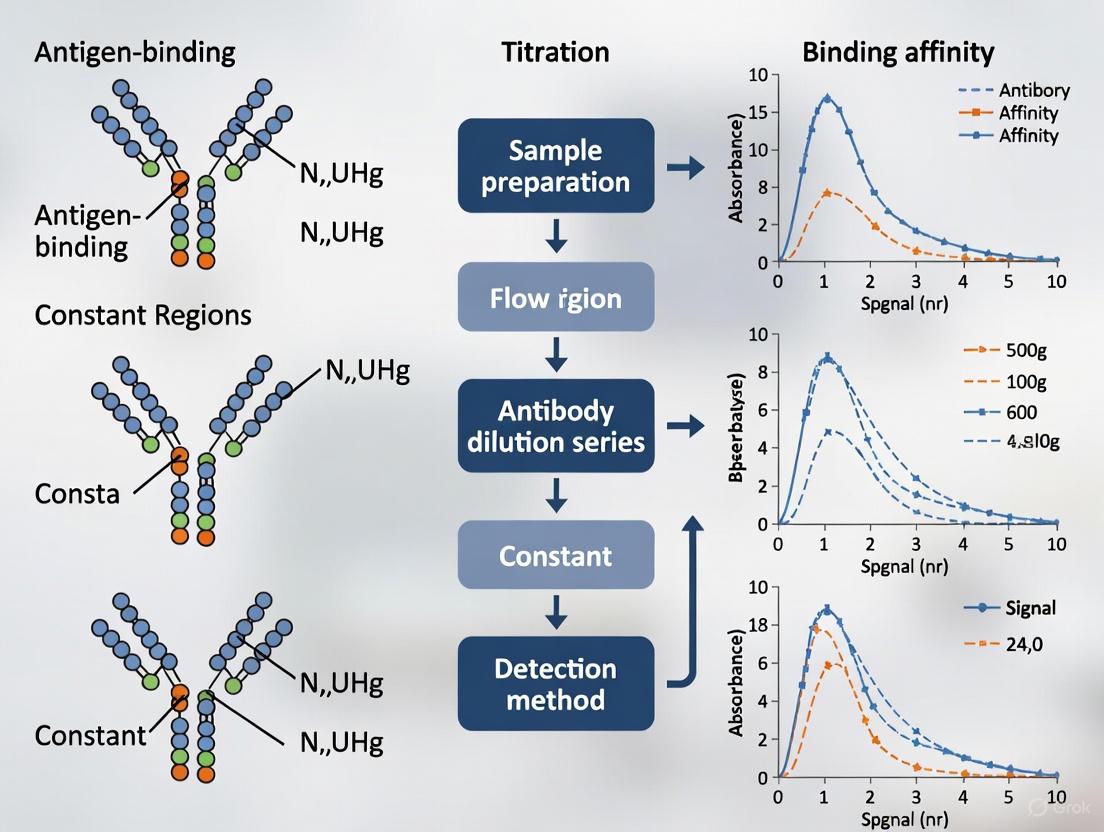
This article provides a comprehensive guide for researchers and drug development professionals on optimizing antibody concentration through titration, a critical step for ensuring assay reproducibility and data quality.
Antibody Titration for Optimal Assay Performance: A Complete Guide for Researchers
Abstract
This article provides a comprehensive guide for researchers and drug development professionals on optimizing antibody concentration through titration, a critical step for ensuring assay reproducibility and data quality. It covers the foundational principles of why titration is essential to overcome the reproducibility crisis, details step-by-step methodological protocols for flow cytometry and other applications, offers extensive troubleshooting for common issues like high background and weak signal, and discusses advanced validation techniques and comparative analyses of different normalization methods. By synthesizing current best practices and emerging computational tools, this guide serves as a vital resource for achieving precise and reliable experimental results in biomedical research.
Why Antibody Titration is Foundational to Reproducible Science
The Reproducibility Crisis and the Role of Antibody Validation
Understanding the Reproducibility Crisis
What is the antibody reproducibility crisis, and why does it matter?
The reproducibility crisis in biomedical science is significantly driven by inconsistent antibody performance. Antibodies are essential tools, but many are not consistent or do not work as described, leading to wasted resources and low-quality science [1]. A core problem is that antibodies are "incredibly finicky research reagents, with considerable lot-to-lot variability," making their authenticity difficult to track and validate [1]. This has resulted in widespread reports of researchers failing to replicate findings or having to retract publications [1].
What are the main causes?
The crisis stems from several key factors:
- Poor Antibody Characterization: Many antibodies are not adequately validated for their intended applications [1].
- Lot-to-Lot Variability: Performance can shift significantly between different production batches of the same antibody, forcing researchers to re-optimize assays repeatedly [1].
- Inadequate Reporting: A lack of proper identification of antibodies in scientific literature, occurring in an estimated 20% to 50% of the time, exacerbates the problem [1].
- Misleading Validation Data: For example, an antibody validated using recombinant protein might show an intense band, creating unrealistic expectations for its performance on low-abundance endogenous targets if the datasheet is not read carefully [2].
Core Principles of Antibody Validation
What does proper antibody validation entail?
Validation confirms that an antibody is specific, sensitive, and reproducible for a specific application. The International Working Group for Antibody Validation (IWGAV) has recommended key pillars for validation [1]. The following table outlines the core strategies:
| Validation Strategy | Core Principle | Key Consideration |
|---|---|---|
| Genetic Strategies | Confirming loss of signal in KO cells or tissues. | Considered a gold standard for confirming specificity. |
| Orthogonal Methods | Comparing protein detection results with a different, non-antibody-based method (e.g., RNA in situ hybridization). | Validates the antibody's expected staining pattern. |
| Independent Antibody Validation | Using two or more independent antibodies that recognize different epitopes on the same target. | Corroboration of results increases confidence. |
| Biochemical Verification | Ensuring the antibody detects the correct protein based on its biochemical properties (e.g., size). | Can be misleading if relying solely on overexpressed recombinant protein [2]. |
| Biophysical Characterization | Using methods like mass spectrometry to confirm the antibody's identity, purity, and aggregation state. | Creates an "antibody fingerprint" for batch-to-batch consistency [1]. |
How can I use RNA in situ hybridization for validation?
RNAscope in situ hybridization (ISH) serves as a powerful orthogonal method to validate immunohistochemistry (IHC) results. It can:
- Provide High Data Quality: One researcher reported testing 13 different antibodies without trustworthy results before turning to RNAscope ISH, which saved the project [3].
- Offer a Clear Path for Difficult Targets: For proteins with no available or poorly performing antibodies, designing a probe for the mRNA can accelerate research [3].
Optimizing Antibody Concentration Through Titration
Why is titration research critical for optimization?
Titration is fundamental to finding the optimal antibody concentration that provides a strong specific signal with minimal background. Using an antibody at an inappropriate concentration is a direct path to non-reproducible results. As one expert notes, assay conditions often require re-titration with new antibody batches, a process that halts research and consumes time [1].
What is the best method for titration?
The checkerboard titration is a highly efficient approach for immunoassays like ELISA, as it allows you to optimize two variables—such as antibody concentration and sample concentration—simultaneously [4] [5]. The workflow for this method is outlined below.
A step-by-step protocol for checkerboard titration
- Plate Setup: Prepare a 96-well microplate. Titrate your coating antibody or antigen across the columns in a series of doubling dilutions. Simultaneously, titrate your detection antibody down the rows in another series of doubling dilutions [4].
- Incubation and Washes: Follow your standard ELISA protocol for incubation, blocking, and washing steps [4].
- Signal Development: Add substrate to develop the colorimetric or chemiluminescent signal.
- Data Analysis: Measure the signal and calculate the signal-to-noise ratio for each well (the signal from a positive well divided by the signal from a negative control well). The optimal concentrations are those that yield the highest signal-to-noise ratio [5].
Troubleshooting Common Experimental Issues
What are some common problems and their solutions?
Here is a guide to frequent issues across key applications, framed within the context of improper antibody concentration or validation.
Western Blot Troubleshooting
| Problem | Possible Cause Related to Antibody/Antigen | Solution |
|---|---|---|
| No Signal | Antibody concentration too low; target not present. | Increase antibody concentration; run a positive control [6]. |
| High Background | Antibody concentration too high. | Titrate antibody to find optimal dilution; increase washing [6]. |
| Multiple Bands | Antibody is not specific; binds to unrelated proteins. | Use KO control to confirm specificity; check antibody datasheet for known isoforms [6] [2]. |
Immunohistochemistry (IHC) / Immunocytochemistry (ICC) Troubleshooting
| Problem | Possible Cause Related to Antibody/Antigen | Solution |
|---|---|---|
| Weak or No Staining | Epitope masked by fixation; insufficient antibody concentration. | Optimize antigen retrieval method; increase antibody concentration or incubation time [7]. |
| High Background | Non-specific antibody binding; concentration too high. | Improve blocking; titrate down primary antibody; use a secondary antibody pre-adsorbed against the sample species [7]. |
| Nonspecific Staining | Antibody cross-reactivity; inadequate blocking. | Validate antibody specificity with KO control; increase blocking time [7]. |
Flow Cytometry Troubleshooting
| Problem | Possible Cause Related to Antibody/Antigen | Solution |
|---|---|---|
| No Signal / Weak Intensity | Insufficient antibody; intracellular target not accessible. | Increase antibody concentration; ensure proper permeabilization for intracellular targets [6]. |
| High Fluorescence Intensity | Antibody concentration too high. | Reduce the amount of antibody added to each sample [6]. |
| High Background / High % Positive Cells | Gain set too high; excess antibody. | Adjust flow cytometer settings; decrease antibody concentration [6]. |
Advanced Validation and Best Practices
How can I implement long-term solutions in my lab?
- Demand Rigorous Validation: Before purchase, carefully analyze the antibody datasheet for application-specific validation data, especially genetic or orthogonal validation [2] [8].
- Use Recombinant Antibodies: When possible, choose recombinant antibodies. They are produced from a specific genetic sequence, eliminating the cell-line drift and lot-to-lot variability inherent in traditional hybridoma-produced antibodies [1].
- Employ Robust Controls: Always include the following controls to ensure your assay is performing correctly [4]:
- Positive Control: A sample with a known amount of the target to confirm the assay works.
- Negative Control: A sample lacking the target (e.g., KO cell line) to assess non-specific binding.
- Secondary Antibody Control: A sample with no primary antibody to check for secondary antibody specificity.
The Scientist's Toolkit: Essential Research Reagent Solutions
| Item | Function |
|---|---|
| KO Cell Lines or Tissues | Gold-standard control for confirming antibody specificity via genetic strategies. |
| Recombinant Antibodies | Provide superior batch-to-batch consistency due to production from a defined DNA sequence [1]. |
| RNAscope ISH Assays | A powerful orthogonal method using in situ hybridization to validate IHC antibody results [3]. |
| Phosphatase-treated Lysates | Essential for validating phosphospecific antibodies by confirming loss of signal upon treatment [8]. |
| Pre-adsorbed Secondary Antibodies | Secondary antibodies that have been adsorbed against immunoglobulins of multiple species to reduce cross-reactivity and lower background [7]. |
By understanding the root causes of the reproducibility crisis and implementing rigorous antibody validation and titration protocols, researchers can generate more reliable, trustworthy, and reproducible data.
Core Concepts: The Critical Role of Antibody Titration
What is antibody titration and why is it a cornerstone of reliable research?
Antibody titration is the systematic process of determining the optimal concentration of an antibody to use in a specific assay. It is a critical optimization step to ensure that your experimental results are both sensitive and specific. The core principle is to find the antibody dilution that provides the best possible signal-to-noise ratio, which means a strong, specific signal from your target with minimal background interference [9] [10].
How do under-titration and over-titration lead to dramatically different experimental failures?
The consequences of incorrect antibody concentration are not merely a matter of weak signals; they represent two distinct pathways to experimental failure that can severely compromise data interpretation:
- Under-Titration (Too Little Antibody): When the antibody concentration is too low, there are insufficient antibody molecules to bind to all the target antigens present. This can cause a genuinely positive cell population to appear negative or dim, leading to false-negative results and a significant underestimation of your target population [9].
- Over-Titration (Too Much Antibody): At excessively high concentrations, antibodies begin to bind to low-affinity, off-target sites they would normally ignore. This non-specific binding creates a high background signal, which can make negative populations appear positive, resulting in false-positive results [9] [10]. This phenomenon is a major driver of the well-documented "reproducibility crisis" in biomedical research [9].
The table below summarizes the key pitfalls and their impacts on data quality.
| Pitfall | Impact on Signal | Impact on Background | Final Consequence |
|---|---|---|---|
| Under-Titration | Signal is too weak or lost [9] | Background may be low | False Negatives: Positive populations are masked or missed [9] |
| Over-Titration | Signal may saturate | High background due to non-specific binding [9] [10] | False Positives: Negative populations appear positive [9] |
The Pathway to False Results: This diagram illustrates how incorrect antibody concentrations lead to distinct false data pathways.
Troubleshooting Guides
FAQ: My flow cytometry data shows high background. Is over-titration the cause?
Yes, over-titration is a primary cause of high background in flow cytometry. When too much antibody is used, it binds non-specifically to low-affinity targets and Fc receptors on cells, increasing the signal in your negative population [10] [11]. To confirm and resolve this:
- Troubleshooting Steps:
- Perform an Antibody Titration: Re-titrate the problematic antibody to find the concentration that maximizes the Stain Index (which accounts for both signal and background), not just the brightest signal [9] [10].
- Implement Blocking: Use Fc receptor blocking reagents and protein blockers (e.g., BSA or serum) to reduce non-specific binding [11].
- Review Controls: Ensure your fluorescence-minus-one (FMO) and isotype controls are properly set up to distinguish specific signal from background [11].
- Preventative Measure: Always titrate antibodies under the same conditions (cell type, staining buffer, incubation time) as your final experiment [9].
FAQ: I can't detect my target protein by immunohistochemistry (IHC). Could under-titration be the problem?
Absolutely. Under-titration is a common reason for weak or absent staining in IHC [12]. If the primary antibody concentration is too low or the incubation time is too short, the signal will be undetectable.
- Troubleshooting Steps:
- Increase Antibody Concentration: Perform a titration experiment to determine the optimal antibody dilution for your specific tissue and fixation conditions [12].
- Optimize Antigen Retrieval: The epitope recognized by your antibody might be masked due to fixation. Optimize antigen retrieval conditions to expose the target [12].
- Validate Antibody Specificity: Confirm that your antibody is compatible with IHC and recognizes the target in its native, fixed state [12].
- Additional Check: Verify that the protein of interest is expressed in your tissue sample using alternative methods or databases [12].
FAQ: My ELISA results are inconsistent with high background. How can I address this?
High background in ELISA is frequently caused by non-specific binding, cross-reactivity, or suboptimal reagent concentrations, all of which are related to a lack of proper optimization [13].
- Troubleshooting Steps:
- * Titrate All Antibodies:* Titrate both your capture and detection antibodies to find concentrations that minimize background while maintaining a strong specific signal [13].
- Improve Blocking: Use effective blocking buffers (e.g., those containing BSA, serum, or specialized commercial blockers) to cover non-specific binding sites on the plate and sample proteins [13].
- Check for Cross-Reactivity: Ensure your antibodies are highly specific for the target analyte to prevent binding to similar molecules [13].
- Optimize Washing: Inadequate washing is a common culprit. Ensure thorough and consistent washing between all steps to remove unbound reagents [13].
Experimental Protocols & Data
Standard Protocol: Antibody Titration for Flow Cytometry
This protocol provides a robust method for establishing the optimal antibody concentration for flow cytometry applications [9].
Materials:
- Antibody of interest, labeled with a fluorochrome
- Staining buffer (e.g., phosphate-buffered saline with 1% bovine serum albumin)
- Cell suspension (1–5 × 10^6 cells/mL) containing a mix of positive and negative cells
- Centrifuge, flow cytometer, and round-bottom tubes
Method:
- Prepare Serial Dilutions: Label 7 tubes. Add 50 µL of staining buffer to each. Add 50 µL of your stock antibody (e.g., at 4x the manufacturer's recommendation) to the first tube, mix well, and serially transfer 50 µL to the next tube, repeating until tube 7. Discard 50 µL from tube 7 [9].
- Stain Cells: Add 100 µL of the cell suspension to all tubes. Mix well and incubate for 30 minutes in the dark (or as per your standard protocol) [9].
- Wash and Resuspend: Wash the cells three times by adding 2 mL of staining buffer and centrifuging at 300 x g for 5 minutes. After the final wash, remove the supernatant and resuspend the cell pellet in 200 µL of staining buffer [9].
- Acquire and Analyze Data: Run the samples on a flow cytometer. For each dilution, identify the positive and negative populations and record the median fluorescence intensity (MFI) of both.
Data Analysis and Interpretation:
- Calculate the Stain Index (SI): For each antibody dilution, calculate the Stain Index using the formula:
SI = (Medpos - Medneg) / (2 * SDneg), whereMedposis the MFI of the positive population, andMednegandSDnegare the median and standard deviation of the negative population, respectively [10]. - Plot the Titration Curve: Create a graph plotting the Stain Index against the antibody concentration (or dilution).
- Determine Optimal Concentration: The optimal antibody concentration is the one that yields the maximum Stain Index [9] [10]. On the curve, this is the "peak" before the SI starts to decrease at higher concentrations due to increasing background.
Titration Workflow: The four key steps for performing an antibody titration experiment.
Comparative Data Across Techniques
The optimal antibody concentration is highly dependent on the sensitivity of the detection method used. The following table, adapted from a study comparing immunocytochemistry methods, illustrates how the required antibody concentration changes dramatically with different techniques [14].
| Immunocytochemistry Method | Relative Primary Antibody Concentration for Optimal Staining | Relative Sensitivity |
|---|---|---|
| Direct Tagged Secondary Antibody | 20- to 100-fold higher | Least sensitive |
| ABC–Streptavidin Fluorescence | 10- to 30-fold higher | ~3x more sensitive than direct method |
| TSA-Amplified Fluorescence | 2-fold higher | Most sensitive fluorescence method |
| ABC–NiDAB (Immunoperoxidase) | 1 (baseline) | Most sensitive; 100-200x more sensitive than direct fluorescence |
The Scientist's Toolkit: Essential Reagents & Solutions
The following table lists key materials and reagents critical for successful antibody titration and troubleshooting common pitfalls.
| Tool/Reagent | Function/Purpose | Application Notes |
|---|---|---|
| Staining Buffer (PBS + 1% BSA) | Provides an isotonic solution for staining while using protein (BSA) to block non-specific binding [9]. | A universal base for flow cytometry and other immunoassays. |
| Fc Receptor Blocking Reagent | Blocks Fc receptors on immune cells to prevent antibody binding that is not antigen-specific [11]. | Critical for staining immune cells to reduce background (false positives). |
| Viability Dye | Distinguishes live from dead cells; dead cells bind antibodies non-specifically [10]. | Use before antibody staining to exclude a common source of false positives. |
| Specialized Blocking Buffers | Complex mixtures designed to block non-specific binding sites on assay plates and sample proteins in ELISA [13]. | Essential for reducing high background in solid-phase assays like ELISA. |
| Reference Control Antibodies | Well-characterized antibodies (positive and negative controls) used to validate assay performance [15]. | Crucial for verifying that your experimental setup is working. |
| BX-320 | BX-320, CAS:702676-93-5, MF:C23H31BrN8O3, MW:547.4 g/mol | Chemical Reagent |
| Picfeltarraenin IB | Picfeltarraenin IB, MF:C42H64O14, MW:792.9 g/mol | Chemical Reagent |
Stain Index, Signal-to-Noise Ratio, and Optimal Dilution
Frequently Asked Questions
What is Stain Index and why is it important?
The Stain Index (SI) is a metric used primarily in flow cytometry to determine the relative brightness of a fluorochrome and its ability to distinguish a positive signal from background. It is calculated by taking the difference between the median fluorescence intensity (MFI) of the positive and negative cell populations, divided by the spread of the negative population [16].
Stain Index = (Median Positive - Median Negative) / (Standard Deviation Negative * 2) [16]
This formula makes the Stain Index a superior statistic for comparing fluorophores because it accounts for both the separation between the positive and negative peaks and the spread of the negative population. A higher Stain Index indicates better resolution between positive and negative signals, which is crucial for accurately identifying cell populations, especially those expressing low levels of a marker [16] [17].
How does Signal-to-Noise Ratio differ from Stain Index?
While both metrics assess assay sensitivity, the Signal-to-Noise Ratio (S/N) is a simpler calculation: the median fluorescence intensity (MFI) of the positive cells divided by the MFI of the negative cells [17].
The key difference is that the Stain Index incorporates the variance (standard deviation) of the negative population, while the S/N does not. The diagram below illustrates two scenarios with the same S/N but different Stain Indices due to the width of the negative peak. The Stain Index provides a better measure of population resolution because a wider negative peak can make it harder to distinguish a dim positive signal [17].
Why is determining the optimal antibody dilution critical?
Using the correct antibody concentration is fundamental for generating reliable, reproducible data in assays like flow cytometry and immunohistochemistry (IHC) [18] [19].
- Too little antibody can lead to a weak signal, making a positive population appear negative and resulting in suboptimal data resolution and high variability [18] [19].
- Too much antibody can cause non-specific binding, high background staining, detector overloading, and increased spillover in flow cytometry, potentially making a negative population appear positive [18] [19].
The optimal antibody concentration is defined by the point of maximum Stain Index, which ensures the best possible separation between the positive signal and background noise [18]. This concentration must be determined empirically through titration for each specific antibody, sample type, and staining protocol [19].
Experimental Protocol: Antibody Titration for Flow Cytometry
The following is a detailed methodology for titrating a fluorochrome-conjugated antibody for flow cytometry analysis to find its optimal dilution [18] [19].
Research Reagent Solutions
| Item | Function |
|---|---|
| Antibody of Interest | The fluorochrome-conjugated antibody to be titrated. |
| Staining Buffer (PBS with 1% BSA) | Provides an isotonic solution for washing and staining cells; BSA reduces non-specific binding. |
| Cell Suspension | A sample containing a mix of cells that are positive and negative for the target antigen (e.g., PBMCs). |
| V-bottom 96-well Plates | Ideal for efficient staining and washing of cells with minimal loss. |
| Centrifuge with Plate Adapters | For pelleting cells during wash steps. |
| Multichannel Pipette | Enables rapid and consistent processing of multiple titration points. |
| Flow Cytometer | Instrument for acquiring and analyzing the stained samples. |
Step-by-Step Procedure
Prepare Antibody Serial Dilutions:
- Label a series of 8-12 tubes or wells in a 96-well plate [19].
- Add an appropriate volume of staining buffer to all wells.
- Prepare the first dilution of the antibody. It is recommended to start at double the manufacturer's recommended volume/test or at a concentration of 1000 ng/test [19].
- Perform a 2-fold serial dilution across the plate. Using a multichannel pipette, mix the solution well before transferring half of the volume to the next well. Continue this process, discarding the excess volume from the final well [18] [19].
Add Cells:
- Prepare a single-cell suspension at a concentration of 1–5 × 10ⶠcells/mL. The cells should be prepared (e.g., fixed, permeabilized) as they will be for the final experiment [18].
- Add a consistent volume of cell suspension (e.g., 100 µL containing 1–5 × 10ⵠcells) to each antibody dilution well. Ensure the final staining volume is consistent across all wells [18] [19].
Stain and Wash Cells:
- Incubate the cells with the antibody for the recommended time and temperature (e.g., 30 minutes at room temperature in the dark) [18].
- Wash the cells by adding 2 mL of staining buffer, centrifuging for 5 minutes at 300-400 × g, and carefully decanting the supernatant. Repeat this wash step three times [18].
- After the final wash, resuspend the cell pellets in a fixed volume of staining buffer for acquisition on the flow cytometer [18].
Data Analysis and Interpretation
- Acquire data on a flow cytometer for all titration points.
- For each dilution, record the Median Fluorescence Intensity (MFI) of both the positive and negative cell populations, and the Standard Deviation (SD) of the negative population [16].
- Calculate the Stain Index for each antibody dilution using the formula [16].
- Plot the Stain Index values against the antibody concentration (or dilution factor). The optimal antibody concentration is the one that yields the maximum Stain Index [18]. The workflow and decision process for this analysis is summarized below.
Troubleshooting Guide
Problem: Poor or No Staining in IHC/Flow Cytometry
| Possible Cause | Solution |
|---|---|
| Insufficient antibody concentration | Perform antibody titration; use a higher antibody concentration or incubate for a longer time (e.g., overnight at 4°C) [20] [21]. |
| Inadequate antigen retrieval (IHC) | Optimize the antigen unmasking method. Using a microwave oven or pressure cooker for heat-induced epitope retrieval (HIER) is often preferred over a water bath [20]. |
| Antibody incompatibility | Ensure the primary antibody is validated for your specific application (e.g., IHC, flow cytometry) and that the secondary antibody is raised against the species of the primary antibody [21]. |
| Sample or reagent degradation | Use freshly prepared tissue sections for IHC [20] [21]. Store all antibodies according to the manufacturer's instructions and avoid repeated freeze-thaw cycles [21]. |
Problem: High Background Staining
| Possible Cause | Solution |
|---|---|
| Primary antibody concentration is too high | Titrate the antibody to find the optimal concentration. A lower concentration often reduces non-specific binding [20] [21]. |
| Insufficient blocking | Increase the blocking incubation period or change the blocking reagent (e.g., use normal serum or BSA) [20] [21]. |
| Endogenous enzyme activity (IHC) | Quench endogenous peroxidase activity with a 3% Hâ‚‚Oâ‚‚ solution or phosphatase activity with levamisole prior to primary antibody incubation [20] [21]. |
| Inadequate washing | Wash slides or cells thoroughly 3 times for 5 minutes after primary and secondary antibody incubations [20]. |
Frequently Asked Questions (FAQs)
Antibody Performance and Titration
Why is antibody titration necessary even when using vendor-recommended concentrations? Vendor recommendations are based on standard assay conditions that often differ from your specific experimental setup. Titration determines the optimal antibody concentration that provides the brightest specific signal with the lowest background for your unique combination of cell type, fixation method, and staining protocol. Using a predetermined concentration can lead to false-positive or false-negative results; proper titration saves reagents and improves data quality [10] [18].
How do fixation and permeabilization specifically affect antibody binding? Fixation and permeabilization can significantly alter the cellular environment and antigen availability. Fixation, particularly with cross-linking aldehydes like formaldehyde, can mask or destroy epitopes, potentially reducing antibody binding. Permeabilization exposes a wider range of intracellular epitopes, which can increase non-specific antibody binding and background noise if not properly blocked [22] [23] [12].
Does the type of cell sample affect how I should titrate my antibodies? Yes, significantly. Different cell types express varying levels of Fc receptors, which can cause non-specific binding. Their autofluorescence profiles and intrinsic antigen density also differ. An antibody titrated on one cell type (e.g., PBMCs) may not be optimal for another (e.g., a cultured cell line). Always titrate antibodies using the same cell type and preparation method as your final experiment [23] [18].
Fixation and Permeabilization
What is the impact of fixation on transcriptomic data in multi-omics experiments? In single-cell multi-omics, fixation and permeabilization are necessary for intracellular protein detection but can negatively impact RNA data. One study found that these steps negatively impacted the detection of the whole transcriptome, allowing only about 60% of the transcriptomic signature of immune stimulation to be detected. However, a modified fixation/permeabilization method was recommended for combined measurements, as it resulted in lower transcriptomic loss [22].
Can fixation itself be optimized to better preserve cellular structures? Yes. Research shows that a fast formaldehyde-based fixation method, especially when combined with membrane permeabilization, can effectively preserve cellular ultrastructure. This pre-stabilization uncouples cellular dynamics from the staining process, allowing for better control and reduced distortion of the spatial proteome during subsequent steps [24].
Troubleshooting Guides
Problem: Weak or No Signal
| Potential Cause | Solution |
|---|---|
| Low Antigen Availability | Perform antigen retrieval (e.g., heat-induced epitope retrieval for IHC) [12]. |
| Antibody Concentration Too Low | Increase antibody concentration and/or perform a titration experiment to find the optimal dilution [12]. |
| Over-fixation / Epitope Masking | Optimize fixation conditions; reduce fixation time; try alternative fixatives [12]. |
| Ineffective Permeabilization | Validate permeabilization reagent concentration and incubation time; ensure it is appropriate for your target [23]. |
Problem: High Background Signal
| Potential Cause | Solution |
|---|---|
| Insufficient Blocking | Use a more concentrated blocking solution; increase blocking time; use normal serum from the secondary antibody host species [23] [12]. |
| Antibody Concentration Too High | Decrease antibody concentration; perform titration to find the concentration with the best stain index [18] [12]. |
| Non-specific Fc Receptor Binding | Include an Fc receptor blocking step using normal serum or a commercial blocking reagent [23]. |
| Inadequate Washing | Increase the number and/or volume of washes; add a mild detergent like Tween-20 to wash buffers [25] [12]. |
Problem: Poor Reproducibility Between Experiments
| Potential Cause | Solution |
|---|---|
| Inconsistent Antibody Staining | Titrate all antibodies under the exact same conditions (buffer, time, temperature) as your final experiment [10] [18]. |
| Variability in Fixation | Standardize fixation protocol (concentration, time, temperature) across all samples; fix tissues as soon as possible after collection [12]. |
| Degraded Reagents | Prepare fresh buffers for each assay; aliquot antibodies to avoid repeated freeze-thaw cycles [25]. |
| Uneven Coating or Staining | Ensure all solutions are thoroughly mixed; use calibrated pipettes; seal plates to prevent evaporation [25]. |
Impact of Fixation and Stimulation on Cell Capture
The following table summarizes quantitative data from a single-cell multi-omics study, showing how experimental conditions like stimulation and fixation affect the number of cells captured and qualified for sequencing. The data highlights the cell loss that can occur due to these processing steps [22].
| Experimental Condition | Captured Cells (HiSeq) | Qualified Cells (HiSeq) | Cell Loss (%) |
|---|---|---|---|
| Unstimulated | 128 | 113 | 11.7% |
| Stimulated | 193 | 183 | 5.2% |
| Unstimulated + Fixation | 59 | 54 | 8.5% |
| Stimulated + Fixation | 82 | 78 | 4.9% |
| Unstimulated + Fix/Perm Method 1 | 91 | 87 | 4.4% |
| Stimulated + Fix/Perm Method 1 | 39 | Information Missing | Information Missing |
Detailed Experimental Protocols
Protocol 1: Antibody Titration for Flow Cytometry
This protocol establishes the optimal concentration of an antibody for flow cytometry by calculating the stain index, which balances signal and noise [18].
Materials:
- Antibody of interest, fluorochrome-conjugated
- Cell suspension (1–5 × 10ⶠcells/mL) containing positive and negative populations
- Staining buffer (PBS with 1% BSA)
- Round-bottom tubes
- Flow cytometer
Method:
- Prepare serial dilutions: Label 7 tubes. Add 50 µL of staining buffer to each. Add 50 µL of the antibody (at 4x the manufacturer's recommended concentration) to tube 1. Mix and transfer 50 µL to tube 2. Continue this serial dilution to tube 7, discarding 50 µL from the last tube.
- Stain cells: Add 100 µL of cell suspension to all tubes. Mix well.
- Incubate: incubate for 30 minutes at room temperature in the dark.
- Wash: Add 2 mL of staining buffer to each tube. Centrifuge for 5 minutes at 300 × g, 4 °C. Remove supernatant. Repeat wash twice.
- Resuspend and acquire: Resuspend cells in 200 µL of staining buffer. Acquire data on a flow cytometer.
- Analyze: For each dilution, identify the positive and negative cell populations. Calculate the Stain Index (SI) using the formula: SI = (Median MFI of Positive Population - Median MFI of Negative Population) / (2 × Standard Deviation of Negative Population).
- Plot and determine optimum: Plot the SI against the antibody dilution. The optimal concentration is at the peak of the titration curve.
Protocol 2: Blocking for High-Parameter Intracellular Staining
This protocol reduces non-specific background for intracellular staining by implementing a blocking step after permeabilization [23].
Materials:
- Normal serum (e.g., rat, mouse - matched to the host species of your antibodies)
- Tandem stabilizer
- FACS buffer
- Permeabilization buffer (e.g., BD Perm/Wash)
Method:
- Fix and permeabilize cells according to your standard protocol.
- Prepare blocking solution: Create a solution containing normal serum and tandem stabilizer diluted in FACS buffer.
- Block: Resuspend the fixed and permeabilized cell pellet in the blocking solution.
- Incubate: incubate for 15 minutes at room temperature in the dark.
- Stain: Without washing, add the intracellular antibody master mix directly to the cells and proceed with the staining incubation.
Workflow and Signaling Diagrams
Antibody Titration and Validation Workflow
Experimental Variables Impacting Antibody Performance
The Scientist's Toolkit: Key Research Reagent Solutions
| Reagent / Material | Function / Explanation |
|---|---|
| Normal Serum | Used in blocking to reduce non-specific binding via Fc receptors. Should be from the same species as the staining antibodies [23]. |
| Tandem Stabilizer | A commercial additive that prevents the degradation of tandem fluorophores, which can cause erroneous signal spillover [23]. |
| Brilliant Stain Buffer | Contains polyethylene glycol (PEG) that mitigates dye-dye interactions between polymer-based "Brilliant" fluorophores, reducing non-specific binding [23]. |
| Formaldehyde / PFA | A fast-acting crosslinking fixative that preserves cellular ultrastructure by stabilizing protein interactions. Commonly used at 2-4% [22] [24]. |
| Triton X-100 / Saponin | Detergents used for permeabilization. They create pores in lipid bilayers, allowing antibodies to access intracellular targets [24]. |
| Staining Buffer (with BSA) | A protein-based buffer used to wash and resuspend cells. BSA helps minimize non-specific antibody binding to cell surfaces [18]. |
| Lactose octaacetate | Lactose octaacetate, MF:C28H38O19, MW:678.6 g/mol |
| Methyl(2-methylsilylethyl)silane | Methyl(2-methylsilylethyl)silane|High-Purity |
A Step-by-Step Protocol for Antibody Titration in Flow Cytometry
FAQs: Core Concepts and Controls
Q1: Why is it essential to have both positive and negative cell populations in a titration experiment? A positive control confirms your antibody can detect the target antigen, while a negative control (such as unstained cells or an isotype control) establishes the background fluorescence level. The optimal antibody concentration is the one that provides the highest signal-to-noise ratio or staining index, effectively distinguishing the positive population from the negative. Without both, you cannot accurately determine this ratio and may use an antibody concentration that is too high (increasing background) or too low (diminishing signal) [26].
Q2: What types of negative controls should I use? Several types of negative controls are critical for accurate data interpretation:
- Unstained Cells: Cells processed identically but without the addition of any antibody. This establishes the level of cellular autofluorescence [27] [28].
- Isotype Control: Cells stained with an antibody that has the same immunoglobulin isotype and fluorochrome as your test antibody but with no specificity for the target antigen. This helps identify non-specific antibody binding [27] [29].
- Fluorescence Minus One (FMO) Control: In multicolor panels, this is a tube stained with all antibodies except one. It is used to set the boundary for positive staining in that specific channel, accounting for spillover fluorescence from the other colors [28].
Q3: My target antigen has very low expression. How can I ensure a good positive signal for titration? For weakly expressed targets, always pair them with the brightest fluorochrome available (e.g., PE) to maximize detection. Using a dim fluorochrome (e.g., FITC) on a low-density target can result in a poor or absent signal. Furthermore, consider using compensation beads as a positive control instead of cells, especially if the positive cell population is small or has low antigen density. The beads can be stained with your antibody to provide a uniformly bright positive population for accurate compensation and titration [28].
Q4: What are the consequences of using an incorrect antibody concentration? Using an antibody concentration that is too high leads to high non-specific binding, increased background fluorescence, and wasted reagents. Using a concentration that is too low results in a weak or absent specific signal, failing to saturate all antigen binding sites. Both scenarios reduce the resolution and reliability of your experiment [26] [30].
Troubleshooting Guide
| Problem | Possible Causes | Recommended Solutions |
|---|---|---|
| Weak or No Signal | Low antigen expression; Inadequate fixation/permeabilization (intracellular targets); Old/degraded antibodies; Incorrect laser/PMT settings [29] [30]. | Use brighter fluorochrome for low-density targets [29]; Titrate antibody to find optimal concentration [26] [30]; Include a positive control with known antigen expression [30]; Verify instrument settings and laser alignment [30]. |
| High Background / Non-Specific Staining | Antibody concentration too high; Non-specific Fc receptor binding; Presence of dead cells; Incomplete washing [29] [30]. | Titrate antibody to lower concentration [30]; Block cells with BSA, Fc receptor block, or normal serum [29]; Use a viability dye to exclude dead cells [28] [29]; Increase number of wash steps [29]. |
| No Distinct Positive Population | Insufficient positive cells; Antibody does not recognize the target antigen; Over-compensation in multicolor panels [30]. | Add unstained cells to sample to better visualize background if positive cells are rare [26]; Confirm antibody-host species compatibility [30]; Use FMO controls to correctly set positive gates [28]. |
| Unexpected Double Population | Presence of cell doublets/clumps; Two distinct cell populations express the target [30]. | Gently pipette or filter sample to create a single-cell suspension before staining and running [30]; Check expected expression patterns for your cell sample [30]. |
Experimental Protocol: Antibody Titration for Optimal Concentration
This protocol outlines the serial dilution of a directly labeled antibody to determine the concentration that provides the best separation between positive and negative cell populations [27].
Key Reagents:
- Antibody of interest (centrifuged at 15,000 x g to remove aggregates)
- Cell suspension with a known mix of positive and negative cells
- Staining buffer (e.g., PBS with 2% BSA)
- Phosphate Buffered Saline (PBS)
- Normal IgG for blocking
- Flow cytometry tubes
Methodology:
- Prepare Antibody Dilutions: Create a series of six 2-fold serial dilutions of your antibody stock in PBS. For example, start with 10 µl of stock antibody + 20 µl PBS. For the next tube, add 10 µl of the previous dilution to 20 µl of PBS, and so on [27].
- Prepare Cells: Resuspend your cell sample at a concentration of 5-10 x 10ⶠcells/ml in staining buffer containing 200 µg/ml normal IgG for Fc receptor blocking. Aliquot 50 µl of cells into each flow cytometry tube [27].
- Stain Cells: Add 10 µl of each antibody dilution to its own tube of cells. Also prepare unstained cells (autofluorescence control) and an isotype control tube [27].
- Incubate and Wash: Mix the tubes gently and incubate on ice for 15-45 minutes in the dark. Add 2 ml of cold wash buffer, centrifuge, and aspirate the supernatant. Repeat the wash step [27].
- Resuspend and Analyze: Resuspend the cell pellets in a protein-free buffer and analyze on the flow cytometer [27].
Data Analysis: For each antibody dilution, record the Mean Fluorescence Intensity (MFI) of both the positive and negative cell populations. Calculate either the Signal-to-Noise Ratio (SNR) or the Staining Index (SI) [26].
- Signal-to-Noise Ratio (SNR): = MFI (Positive Population) / MFI (Negative Population)
- Staining Index (SI): = [MFI (Positive) - MFI (Negative)] / (2 x Standard Deviation of Negative)
The optimal antibody titer is the one that yields the highest SNR or SI value [26].
The Scientist's Toolkit: Essential Research Reagent Solutions
| Reagent / Material | Function in Cell Preparation & Titration |
|---|---|
| Positive Control Cells/Beads | Provides a brightly stained population to set PMT voltages, calculate compensation, and determine the specific signal during titration. Essential for low-abundance targets [28]. |
| Compensation Beads | Uniform particles that bind antibodies, providing consistent negative and bright positive populations for every fluorochrome. Critical for accurate spillover compensation in multicolor panels [28]. |
| Fc Receptor Blocking Solution | Reduces non-specific antibody binding by blocking Fc receptors on cells, thereby lowering background staining in both positive and negative populations [29]. |
| Viability Dye | Distinguishes live from dead cells. Dead cells are highly autofluorescent and bind antibodies non-specifically; excluding them from analysis is crucial for clean data [28] [29]. |
| Brilliant Stain Buffer | Prevents non-specific interactions and fluorescence quenching between polymer-based dyes (e.g., Brilliant Violet, Super Bright) when used in the same staining panel [28]. |
| Isotype Control | An antibody with irrelevant specificity but the same isotype and fluorochrome as the primary antibody. Serves as a critical negative control for gating and identifying non-specific binding [27] [29]. |
| Axillaridine A | Axillaridine A, MF:C30H42N2O2, MW:462.7 g/mol |
| Corydamine | Corydamine, MF:C20H18N2O4, MW:350.4 g/mol |
Serial dilution is a foundational technique in laboratories, crucial for optimizing antibody concentration through titration research. This guide provides detailed workflows and troubleshooting advice to help researchers achieve precise and reproducible results in drug development.
The Serial Dilution Workflow
The following diagram illustrates the complete serial dilution process, from initial preparation to final incubation.
Step-by-Step Protocol for Serial Dilution
Preparation Phase
- Work Area Preparation: Clean and disinfect your work area with 70% ethanol. Ensure all equipment is sterile [31].
- Tube Labeling: Label each dilution tube with the corresponding dilution factor (e.g., 10â»Â¹, 10â»Â², 10â»Â³, etc.) and date [32] [31].
- Diluent Preparation: Use an appropriate diluent such as sterile saline, phosphate-buffered saline (PBS), or culture medium [33] [31].
Dilution Phase
- Initial Sample Preparation: Vortex the bacterial sample or mix the antibody solution thoroughly to ensure even distribution [31].
- First Dilution (10â»Â¹): Transfer 1 mL of the sample into 9 mL of diluent. Mix thoroughly by vortexing or pipetting [32] [31].
- Subsequent Dilutions:
Antibody Titration Specific Steps
For antibody titration, the process follows the same principle but with smaller volumes:
- Prepare a series of tubes with appropriate diluent [34].
- Begin with the stock antibody solution.
- Perform serial dilutions by transferring consistent volumes from one tube to the next [34].
- Mix each dilution thoroughly before moving to the next [35].
Incubation and Analysis
- Plating: For microbial work, transfer 0.1 mL of selected dilutions onto agar plates and spread evenly [31].
- Incubation: Secure plates and incubate at the optimal temperature for the organism [31].
- Analysis: After incubation, count colonies or analyze antibody binding to determine optimal concentrations [35] [31].
Research Reagent Solutions
| Reagent/Equipment | Function in Serial Dilution |
|---|---|
| Sterile Dilution Tubes | Contain diluent and successive dilutions [31] |
| Sterile Pipettes/Micropipettes | Accurate measurement and transfer of liquids [33] [31] |
| Sterile Saline or Buffer | Serves as diluent to maintain cell/antibody viability [31] |
| Vortex Mixer | Ensures homogeneous mixing at each dilution step [33] [31] |
| Agar Plates | Solid medium for plating microbial dilutions [31] |
| FC Block | Reduces non-specific antibody binding in flow cytometry [34] |
| Brilliant Stain Buffer | Prevents dye-dye interactions in flow cytometry panels [23] [36] |
Troubleshooting Common Serial Dilution Issues
Inconsistent Results Between Replicates
Problem: Significant variation between technical replicates suggests pipetting inconsistency [33]. Solution:
- Calibrate pipettes regularly and use proper pipetting technique [33].
- Use the same pipette and operator for all dilutions when possible.
- Avoid pipetting very small volumes (<1 μL) which can lead to inaccuracies [33].
Contamination in Higher Dilutions
Problem: Unexpected colony growth in negative controls or higher dilutions [31]. Solution:
- Maintain strict aseptic technique throughout the process.
- Work in a laminar flow hood or near a Bunsen burner [31].
- Use fresh, sterile pipette tips for each transfer [33].
Non-Linear Dilution Series
Problem: Results don't follow expected dilution patterns. Solution:
- Ensure thorough mixing at each dilution step before transfer [35] [33].
- Verify that diluent and sample volumes are precise [31].
- Check that the stock solution is properly homogenized before starting [31].
Poor Antibody Staining Results
Problem: Suboptimal signal-to-noise ratio in antibody titration. Solution:
- Include FC receptor blocking steps to reduce non-specific binding [23] [34].
- Use appropriate buffer additives like Brilliant Stain Buffer for polymer dyes [23] [36].
- Ensure antibody concentrations are within the optimal detection range [36].
Frequently Asked Questions
What is the difference between 2-fold and 10-fold serial dilutions?
- 10-fold dilutions (1 mL sample + 9 mL diluent) are used when you need to cover a wide concentration range quickly, such as for microbial enumeration [35].
- 2-fold dilutions (equal volumes of sample and diluent) provide higher precision for determining exact concentrations, such as minimum inhibitory concentration (MIC) testing [35].
How do I calculate the final dilution factor? The final dilution factor is calculated by multiplying the dilution factors of each step. For example, a 7-step 10-fold serial dilution would have a final dilution factor of 10â· (10,000,000) [35].
What dilution range should I use for antibody titration? For antibody titration, start with the manufacturer's recommended concentration and create a series of 2-fold dilutions to determine the optimal staining concentration with the best signal-to-noise ratio [36] [34].
Why are my higher dilutions showing inconsistent results? Higher dilutions are most affected by pipetting errors as these accumulate through the series [35]. Ensure proper technique and consider using larger volumes for higher dilutions to minimize error impact.
How can I improve reproducibility in my serial dilutions?
- Document all dilution steps, volumes transferred, and dilution factors accurately [33].
- Standardize cell numbers to reduce batch effects [23].
- Use multichannel pipettes for high-throughput work to improve consistency [23].
Best Practices for Serial Dilution in Antibody Titration Research
- Plan Your Dilution Series: Before starting, decide on dilution factors and the number of dilutions needed based on your experimental goals [33].
- Maintain Aseptic Technique: For microbial work, always use sterile equipment and proper technique to prevent contamination [31].
- Thorough Mixing: After each dilution step, mix contents thoroughly to ensure uniform distribution [35] [33].
- Accurate Documentation: Record all dilution steps, volumes, and dilution factors for reproducibility [33].
- Include Controls: Always include appropriate positive and negative controls in your experimental design [34].
By following these detailed protocols and troubleshooting guidelines, researchers can optimize their serial dilution techniques for more reliable and reproducible results in antibody titration and broader drug development applications.
Troubleshooting Guides
Frequently Asked Questions
Q1: What are the most critical steps to ensure reproducibility in multiplex immunofluorescence (mIF) staining? A robust mIF workflow requires rigorous tissue quality controls, a balanced multiplex assay staining format, standardized staining and imaging protocols, and validation for both internal and external reproducibility [37]. Key steps include proper antibody selection and optimization, use of appropriate controls, and minimizing variables in pre-analytic, analytic, and post-analytic stages [37].
Q2: My flow cytometry data shows high background fluorescence. What could be the cause? High background often stems from non-specific antibody binding, insufficient washing, or the presence of dead cells [38] [39]. Fc receptor-mediated binding is a common cause, which can be blocked using Fc receptor blocking reagents or normal serum [38] [40]. Other causes include excessive antibody concentration, cell autofluorescence, or poor compensation [39].
Q3: In my ELISA, I'm getting a weak or no signal even though I know the analyte is present. How can I troubleshoot this? Begin by verifying that all reagents are within expiration dates and were prepared correctly [41]. Check that the standard was handled properly and that buffers are not contaminated [42]. Ensure the plate was not allowed to dry out during incubations and that the substrate solution was fresh and prepared immediately before use [42] [43]. Increasing primary or secondary antibody concentration or extending incubation times may also help [43].
Troubleshooting Common Assay Problems
Flow Cytometry Troubleshooting
| Problem | Possible Causes | Recommended Solutions |
|---|---|---|
| Weak or No Signal | Inadequate fixation/permeabilization [38].Target not induced or expressed [38].Dim fluorochrome on low-density target [39].Incorrect laser/PMT settings [38]. | Titrate antibodies and optimize fixation/permeabilization protocol [39].Use brightest fluorochrome for lowest density targets [38].Verify instrument configuration matches fluorochrome [39]. |
| High Background | Non-specific Fc receptor binding [38] [39].Too much antibody [38].Presence of dead cells [38].Insufficient washing [39]. | Use Fc receptor block (e.g., serum, anti-CD16/32) [40].Titrate antibody to optimal concentration [38].Use a viability dye (e.g., PI, 7-AAD) to gate out dead cells [38] [39].Increase wash number, duration, or volume [39]. |
| Poor Resolution of Cell Cycle Phases | High flow rate on cytometer [38].Insufficient staining with DNA dye [38]. | Use the lowest flow rate setting to reduce CVs [38].Resuspend pellet directly in PI/RNase solution and incubate >10 min [38]. |
ELISA Troubleshooting
| Problem | Possible Causes | Recommended Solutions |
|---|---|---|
| High Background | Insufficient washing [41].Plate over-developed [42].Concentration of detection antibody too high [42].Non-specific antibody binding [43]. | Increase number and/or duration of washes [41].Stop reaction promptly with stop solution [43].Titrate detection antibody to optimal dilution [42].Ensure adequate blocking step with protein (e.g., BSA, serum) [43]. |
| Weak or No Signal | Reagents added in wrong order or prepared incorrectly [41].Standard degraded [42].Capture antibody did not bind plate [41].Buffer contains sodium azide (inhibits HRP) [42]. | Repeat assay, check calculations and preparation [41].Use fresh standard vial [42].Use validated ELISA plates (not tissue culture plates) [41].Use azide-free buffers or wash thoroughly [42]. |
| Poor Precision (High Well-to-Well Variation) | Inconsistent pipetting [42].Insufficient or uneven washing [41].Plate allowed to dry out [42].Reagents not mixed well before addition [42]. | Calibrate pipettes and use proper technique [43].Check automated plate washer for clogged ports [41].Keep plate covered during incubations [42].Mix all reagents and samples thoroughly before use [42]. |
Multiplex Immunofluorescence (mIF) Troubleshooting
| Problem | Possible Causes | Recommended Solutions |
|---|---|---|
| Poor Reproducibility | Pre-analytic variables (fixation, storage) [37].Lot-to-lot antibody variability [37].Inadequate antibody validation [37]. | Standardize and automate staining protocols where possible [37].Use monoclonal or recombinant antibodies for higher consistency [37].Use rigorous tissue controls for antibody validation [37]. |
| High Background or Non-specific Staining | Suboptimal antibody concentration [37].Incompatible panel design [37].Inadequate epitope retrieval [44]. | Optimize antibody dilution for each specific clone [37].Select antibodies from different host species for multiplex panels [37].Consider glycerol-enhanced HIER (G-HIER) for improved antigen retrieval on membrane slides [44]. |
Detailed Experimental Protocols
Protocol 1: Dot Blot for Rapid Antibody Concentration Optimization
This quicker alternative to full Western blots helps determine the optimal primary and secondary antibody concentrations [45].
Materials:
- Nitrocellulose Membrane
- Blocking Buffer (e.g., PBS with 5% non-fat dry milk)
- Primary Antibody (various dilutions)
- Secondary Antibody (various dilutions, HRP-conjugated)
- Wash Buffer (e.g., PBS with 0.1% Tween-20)
- Substrate Working Solution (e.g., Chromogenic or Chemiluminescent)
Methodology:
- Prepare Samples: Create a range of dilutions for your protein sample and your primary antibody.
- Prepare Membrane: Cut a nitrocellulose membrane into 1 cm strips. Each strip will be used to test one or two primary antibody dilutions.
- Dot Protein: Dot the protein samples onto the membrane strips in minimal volume. For volumes over 5 µL, dot multiple times on the same spot, allowing it to dry completely between applications. Let the membrane dry for 10-15 minutes.
- Block: Soak the membrane in blocking buffer for 1-2 hours at room temperature on an orbital shaker.
- Primary Antibody Incubation: Apply the different primary antibody dilutions to the respective membrane strips. Incubate for 1 hour on an orbital shaker.
- Wash: Wash the membrane strips thoroughly with wash buffer.
- Secondary Antibody Incubation: Apply the different secondary antibody dilutions to the strips. Incubate for 1 hour on a shaker.
- Wash: Wash the membrane strips again thoroughly.
- Detect: Prepare the substrate working solution and incubate with the nitrocellulose strips for ~5 minutes, or until color develops (for chromogenic substrates). Image the membrane.
- Analysis: The optimal protein and antibody concentrations will yield dark, clear dots with minimal background [45].
Protocol 2: "Dish Soap Protocol" for Simultaneous Transcription Factor and Fluorescent Protein Detection in Flow Cytometry
This protocol uses a custom, low-cost fixation and permeabilization buffer to overcome the classic trade-off between efficient nuclear staining and fluorescent protein (e.g., GFP) retention [46].
Materials:
- FACS Buffer (PBS with 2.5% FBS and 2 mM EDTA) [46]
- Fixative: 2% Formaldehyde with 0.05% Fairy dish soap and 0.5% Tween-20 [46]
- Permeabilization Buffer: PBS with 0.05% Fairy dish soap [46]
- Fc Receptor Block
- Primary and Secondary Antibodies
Methodology:
- Surface Staining: Perform surface staining as you normally would. Count cells, block Fc receptors, stain with surface marker antibodies, and wash.
- Fixation: Centrifuge the cells (400-600 x g, 5 min), discard the supernatant, and resuspend the cell pellet in 200 µl of the fixative. Incubate for 30 minutes at room temperature in the dark (perform in a fume hood).
- Wash: Centrifuge (600 x g, 5 min) and remove the supernatant. Dispose of formaldehyde waste appropriately.
- Permeabilization and Block: Resuspend the cell pellet in 100 µl of permeabilization buffer. Incubate for 15-30 minutes at room temperature. Fc receptor blocking can be repeated at this stage by adding the block to the perm buffer.
- Wash: Wash the cells twice in FACS buffer.
- Intracellular Staining: Stain with antibodies against intracellular targets (e.g., transcription factors) overnight in FACS buffer at 4°C. The protocol notes that additional permeabilization is not necessary [46].
- Final Wash and Acquisition: Wash the cells twice in FACS buffer and acquire data on a flow cytometer [46].
Standardized Workflow Visualization
The Scientist's Toolkit: Essential Research Reagent Solutions
| Item | Function & Rationale |
|---|---|
| Fc Receptor Block | Blocks Fc receptors on immune cells (e.g., monocytes) to prevent non-specific antibody binding, a major cause of high background in flow cytometry and other assays [38] [40]. |
| Fixable Viability Dyes | Distinguish live from dead cells in fixed samples. Dead cells bind antibodies non-specifically; gating them out is critical for clean data [38] [39]. |
| Methanol-Free Formaldehyde | A crosslinking fixative preferred for intracellular staining, as it prevents loss of intracellular proteins due to premature permeabilization before crosslinking is complete [38]. |
| Mild Detergents (Saponin) | Creates pores in membranes without dissolving them, ideal for staining cytoplasmic antigens and preserving fluorescent proteins [46] [40]. |
| Harsh Detergents (Triton X-100) | Dissolves nuclear and cellular membranes, providing access to nuclear and cytoskeletal antigens for antibody staining [40]. |
| BSA or Serum-Based Blocking Buffers | Used in ELISA and other immunoassays to coat unused protein-binding sites on plates or membranes, preventing non-specific attachment of detection antibodies [42] [43]. |
| Tween-20 in Wash Buffers | A mild detergent added to wash buffers (e.g., PBS-T) to help dislodge non-specifically bound antibodies and reduce background across all immunoassays [42] [43]. |
| Naringenin trimethyl ether | Naringenin trimethyl ether, MF:C18H18O5, MW:314.3 g/mol |
| Methyl Rosmarinate | Methyl Rosmarinate, CAS:99353-00-1, MF:C19H18O8, MW:374.3 g/mol |
Frequently Asked Questions (FAQs)
1. Why is antibody titration necessary, and why can't I just use the vendor-recommended concentration? Vendor-recommended concentrations are a good starting point but are determined under the vendor's specific conditions, which are likely different from your actual assay. Titrating the antibody yourself ensures optimization for your specific cell types, staining protocol, and instrument, maximizing the signal-to-noise ratio for your experiment [10] [18]. Using a non-optimal concentration can lead to false-negative or false-positive results, wasting precious samples and time [18].
2. What is the Stain Index (SI), and why is it used to find the optimal concentration? The Stain Index is a calculated metric that quantifies the separation between a positive signal and background noise. A higher SI indicates better resolution [10] [47]. The optimal antibody concentration is identified as the point on the titration curve that gives the highest SI, ensuring the brightest specific signal with the lowest possible background [10] [19].
3. My titration curve has no clear plateau. What does this mean? A titration curve without a clear saturation plateau often indicates that the antibody has low affinity for its target [18]. In this case, the optimal antibody concentration can be difficult to determine, and the experiment may be prone to both false-negative and false-positive results. You may need to select a different antibody clone or reagent.
4. Do I need to re-titrate an antibody if I change a part of my protocol? Yes. Any change to critical assay conditions—such as the cell type, staining volume, incubation time or temperature, fixation method, or the flow cytometer itself—can alter the optimal antibody concentration. To ensure consistent, high-quality results, you should re-titrate antibodies whenever your staining protocol changes [10] [19].
5. How many dilution points are needed for a reliable titration? While there is no universal standard, an informal survey suggests that many researchers use at least 5 dilution points [47]. The key is to use enough serial dilutions to confidently identify the peak of the Stain Index curve and the plateau of the median fluorescence intensity (MFI) [47]. A typical titration may use 8-12 points [19].
Troubleshooting Guides
Problem: Poor Separation Between Positive and Negative Populations
Potential Causes and Solutions:
- Cause: Antibody concentration is too high, leading to increased non-specific binding and background noise.
- Solution: Perform a titration experiment. The calculated optimal concentration is often lower than the vendor's recommendation, which reduces background and saves reagent [10].
- Cause: Inadequate Fc receptor blocking, leading to non-specific antibody binding.
- Solution: Include an Fc receptor blocking step prior to antibody staining, especially when working with innate immune cells like monocytes [19].
- Cause: The staining index was not calculated or used to determine the optimal concentration.
Problem: High Signal Variability Between Experimental Repeats
Potential Causes and Solutions:
- Cause: Antibody is not used at a saturating concentration, making the signal sensitive to small variations in staining conditions.
- Solution: For experiments comparing biomarker expression between samples using MFI, ensure the antibody is used at a saturating concentration. If a fluorophore-conjugated antibody does not saturate on its own, a novel "spike-in" method with unlabelled antibody of the same clone can be used to achieve saturation [48].
- Cause: Incorrect scaling up from the titration reaction.
- Solution: Remember that antibody titration is most influenced by concentration and volume, not cell number. If you stain the same number of cells in a larger volume, you will need more antibody. However, staining more cells in the same volume typically does not require a proportional increase in antibody [10].
Experimental Protocols & Data Presentation
Standard Protocol for Antibody Titration
This protocol is adapted for a 96-well plate format and can be scaled to the number of antibodies being tested [19].
1. Prepare Antibody Serial Dilutions:
- Label a V-bottom 96-well plate for each antibody.
- Add 150 µL of staining buffer to all wells except the first.
- Prepare the first (highest) concentration of antibody in the first well. For antibodies with a known concentration (e.g., µg/mL), a starting point of 1000 ng/test is recommended. For those described by µL/test, start at double the recommended volume [19].
- Perform 2-fold serial dilutions across the plate. Using a multichannel pipette, mix the solution in the first column and transfer 150 µL to the next column. Repeat this process for all columns, discarding 150 µL from the final well [19].
2. Stain Cells:
- Prepare a single cell suspension (e.g., PBMCs) at a concentration of 2 × 10^6 cells/mL in staining buffer [19].
- Add 100 µL of the cell suspension (containing 2 × 10^5 cells) to each well of the titration plate. The final staining volume will be 250 µL.
- Pipette to mix and incubate for 20 minutes at room temperature in the dark (or according to your specific staining protocol).
- Centrifuge the plate at 400 × g for 5 minutes, decant the supernatant, and blot on a paper towel.
- Resuspend the cells in 200 µL of staining buffer and repeat the wash step twice.
- Resuspend the final pellet in an appropriate volume of buffer for acquisition on your flow cytometer [19].
Data Analysis: Calculating the Stain Index and Plotting the Curve
After acquiring the data on your flow cytometer, follow these steps to construct the titration curve.
1. Gating and Data Export:
- Gate on your population of interest (e.g., single, live cells) and then identify the positive and negative populations for your marker.
- For each dilution, record the Median Fluorescence Intensity (MFI) of both the positive population (Medpos) and the negative population (Medneg).
- Also record the 84th percentile of the negative population (84%neg). This value represents the right-side spread of the negative curve, which is a measure of background noise [10].
2. Calculate the Stain Index (SI):
Use the following formula for each antibody dilution [10]:
SI = (Medpos - Medneg) / (2 × 84%neg)
Some sources use a slightly different denominator. The key is to be consistent within your own analysis.
3. Construct the Titration Curve:
- Create a plot with the antibody concentration (or dilution factor) on the x-axis and the calculated Stain Index on the y-axis.
- The optimal antibody concentration is identified as the point that yields the maximum Stain Index [10] [47].
The diagram below illustrates the logical workflow for titration data analysis.
The following table summarizes the key metrics you will collect and calculate during the titration analysis.
Table 1: Key Metrics for Titration Curve Construction
| Antibody Concentration | MFI (Positive) | MFI (Negative) | 84th %ile (Negative) | Calculated Stain Index |
|---|---|---|---|---|
| e.g., 1:50 | Recorded Value | Recorded Value | Recorded Value | Calculated Value |
| e.g., 1:100 | Recorded Value | Recorded Value | Recorded Value | Calculated Value |
| e.g., 1:200 | Recorded Value | Recorded Value | Recorded Value | Calculated Value |
| e.g., 1:400 | Recorded Value | Recorded Value | Recorded Value | Calculated Value |
| e.g., 1:800 | Recorded Value | Recorded Value | Recorded Value | Calculated Value |
| e.g., 1:1600 | Recorded Value | Recorded Value | Recorded Value | Calculated Value |
The diagram below summarizes the interpretation of the titration curve once it is plotted.
The Scientist's Toolkit
Table 2: Essential Research Reagent Solutions for Antibody Titration
| Item | Function / Explanation |
|---|---|
| Flow Staining Buffer (e.g., PBS with 1% BSA) | Provides an isotonic environment for cells and antibodies. The protein (BSA) helps block non-specific binding sites to reduce background [19] [18]. |
| V-bottom 96-well Plates | Ideal format for efficient staining and washing of multiple samples simultaneously via centrifugation [19]. |
| Multichannel Pipette | Critical for accurately and efficiently performing serial dilutions and handling reagents across multiple wells [19]. |
| Cell Preparation | A suspension of cells known to contain both positive and negative populations for the marker of interest. PBMCs are a common choice [19] [18]. |
| Viability Dye | Recommended for inclusion in the titration to exclude dead cells, which can increase background noise and data variability [10] [47]. |
| Fc Receptor Blocking Reagent | Used prior to staining to prevent antibodies from binding non-specifically to Fc receptors on certain immune cells, thereby reducing background [19]. |
| 1,3,5-Tricaffeoylquinic acid | 1,3,5-Tricaffeoylquinic Acid|High-Purity Reference Standard |
| Camaric acid | Camaric acid, MF:C35H52O6, MW:568.8 g/mol |
Troubleshooting Common Titration Problems: From Weak Signal to High Background
FAQs on Antibody-Related Signal Failure
How do antibody age and improper storage lead to weak signal?
Antibody degradation is a primary cause of diminished fluorescence. Over time, and with improper handling, antibodies can lose their ability to bind their target effectively.
- Repeated Freeze-Thaw Cycles: Multiple freeze-thaw cycles can cause antibody aggregation and degradation. Antibodies should be aliquoted in small, single-use volumes (e.g., 10 µL) and stored at –20°C or –80°C to avoid this issue [49].
- Time and Temperature Stress: Experimental data has shown that prolonged storage, especially over years, can have a pronounced impact on fluorescence intensity, as observed in studies with CD25-PE and CD8-APC antibodies [50].
- Light Exposure: Fluorophores are light-sensitive. Antibodies conjugated to fluorescent dyes must be stored in the dark, with vials wrapped in foil, to prevent photobleaching [51] [52]. Incubations and sample storage should also be done in the dark.
What are the signs that my target is inaccessible?
Target inaccessibility, often called "epitope masking," prevents the antibody from binding even if the target protein is present.
- Over-fixation: Excessive incubation with aldehyde-based fixatives like formaldehyde can cross-link proteins and obscure the epitope [49].
- Insufficient Permeabilization: If the cell membrane is not adequately made permeable, large antibody molecules cannot enter the cell to reach intracellular targets [53] [49].
- Epitope Conformation: The process of fixing and preparing samples can sometimes alter the three-dimensional structure of the protein, hiding the epitope recognized by the antibody [54].
My antibody is new and stored correctly, but I still get no signal. What now?
If antibody integrity is confirmed, the issue likely lies elsewhere in the experimental workflow.
- Antibody Incompatibility: Ensure the secondary antibody is raised against the host species of the primary antibody (e.g., an anti-mouse secondary for a mouse primary antibody) [53] [49].
- Insufficient Antibody Concentration: The primary antibody concentration may be too dilute to detect the target, especially if it is low-abundance. A titration experiment is crucial to find the optimal dilution [53] [51].
- Protein Not Present or Not Induced: Verify that your target protein is expressed in your experimental cell line and that it has been properly induced [51] [49].
Troubleshooting Guide: Weak or No Signal
The following table summarizes the primary causes and solutions for weak or absent fluorescence signals, with a focus on antibody and target-related factors.
Table 1: Troubleshooting Weak or No Fluorescence Signal
| Potential Cause | Recommended Solution | Experimental Tip |
|---|---|---|
| Antibody Degradation (Age/Storage) | Aliquot antibodies to minimize freeze-thaw cycles; store at recommended temperature in the dark [49] [50]. | Use a positive control antibody known to be functional to rule out general protocol failure. |
| Incorrect Antibody Concentration | Perform an antibody titration experiment to determine the optimal signal-to-noise ratio [53] [49]. | For Cell Signaling Technology antibodies, incubate primary antibody at 4°C overnight for optimal results [51]. |
| Target Inaccessibility | Optimize fixation and permeabilization conditions. For aldehyde-fixed samples, consider an antigen retrieval step (e.g., incubation in a pre-heated urea buffer at 95°C for 10 min) [49]. | If possible, test different fixatives or avoid over-fixation. |
| Incompatible Antibody Pair | Confirm secondary antibody is specific for the host species of the primary antibody [53] [55]. | Use validated "matched pairs" or check product datasheets for confirmed compatibility. |
| Low Abundance Target | Increase signal amplification by using polyclonal antibodies (bind multiple epitopes) or specialized amplification systems like biotin-streptavidin or tyramide signal amplification (TSA) [53] [55]. | Indirect immunofluorescence (using a secondary antibody) provides inherent signal amplification over direct methods [55]. |
Experimental Protocols for Verification
Protocol 1: Antibody Titration for Optimal Concentration
A key thesis of this resource is that optimizing antibody concentration through titration is fundamental. This protocol helps diagnose issues related to both weak signal and high background.
- Prepare a Dilution Series: Dilute your primary antibody in a suitable buffer (e.g., PBS with 1% BSA) to create a series of concentrations. A typical starting range is 2-3 dilutions above and below the manufacturer's recommended concentration.
- Apply to Test Samples: Apply each dilution to identical, control samples that are known to express your target protein.
- Process in Parallel: Complete the entire immunofluorescence protocol (blocking, primary, washing, secondary, mounting) on all samples simultaneously to ensure consistent conditions.
- Image and Analyze: Image all samples using identical microscope settings (exposure time, gain, laser power). The optimal dilution provides the strongest specific signal with the lowest background [53] [49].
Protocol 2: Verifying Target Accessibility with Antigen Retrieval
This protocol is used when you suspect the epitope has been masked during fixation.
- After fixation and permeabilization, incubate the samples in an antigen retrieval buffer (e.g., 100 mM Tris, 5% (w/v) urea, pH 9.5).
- Pre-heat the buffer to 95°C before adding the samples.
- Incubate at 95°C for 10 minutes.
- Cool and Wash: Remove the samples and allow them to cool to room temperature, then wash three times in PBS before proceeding with the blocking and antibody incubation steps [49].
Diagnostic Workflow and Reagent Solutions
The following diagram illustrates a logical workflow for diagnosing the root cause of a weak or absent fluorescence signal, focusing on the key areas of antibody integrity and target accessibility.
Diagnosing Weak Fluorescence Signal
Table 2: Research Reagent Solutions for Signal Optimization
| Reagent / Material | Function in Experiment | Key Considerations |
|---|---|---|
| Aliquoted Antibodies | Prevents loss of activity from repeated freeze-thaw cycles; ensures consistent reagent quality [49] [50]. | Store small (e.g., 10 µL) single-use aliquots at -20°C or -80°C. |
| Anti-Fade Mounting Medium | Presves fluorescence signal during microscopy by reducing photobleaching [51]. | Use for all samples, especially when imaging requires long exposure times. |
| Antigen Retrieval Buffer | Unmasks epitopes that have been obscured by aldehyde-based fixation, restoring antibody binding [49]. | Typically requires a heat-induced step (95°C) for effectiveness. |
| Signal Amplification Kits | Increases detection sensitivity for low-abundance targets by attaching multiple fluorophores per antibody [55]. | Examples: Tyramide Signal Amplification (TSA) or biotin-streptavidin systems. |
| Validated Matched Pair | Pre-compatible primary and secondary antibodies guaranteed to work together, eliminating incompatibility issues [54] [55]. | Essential for setting up new assays or multiplexing. |
This guide addresses the common challenges of high background and non-specific staining in flow cytometry, providing targeted troubleshooting and best practices framed within the essential context of antibody titration research.
Troubleshooting Guide: High Background and Non-Specific Staining
The table below outlines frequent issues and their evidence-based solutions.
| Possible Cause | Recommended Solution | Key Experimental Consideration |
|---|---|---|
| Excess Antibody Concentration [56] [57] | Perform antibody titration to determine optimal concentration for maximal signal-to-noise ratio [58] [59]. | Test a series of dilutions (e.g., 1/5x, 1x, 2x) on control cells; optimal concentration provides brightest specific signal with lowest background [58]. |
| Fc Receptor-Mediated Binding [23] [57] | Implement a dedicated Fc blocking step prior to antibody staining [40] [60]. | Use species-appropriate reagents: normal sera, purified IgG, or anti-CD16/CD32 antibodies [23] [40]. Incubate 15-30 minutes on ice or at room temperature [60]. |
| Insufficient Washing [56] | Adequately wash cells after each antibody incubation step to remove unbound antibodies [56]. | Typically 2-3 washes with 200 µL of cold FACS buffer (PBS with 0.5-1% BSA or 1-10% FBS) [40] [60]. |
| Low Viability / Dead Cells [56] [57] | Include a viability dye (e.g., 7-AAD, DAPI) to identify and gate out dead cells during analysis [40] [56]. | Use a viability dye with an emission spectrum that does not overlap with your staining panel [40]. |
| Low Protein in Buffers [57] [61] | Add protein to buffers to reduce non-specific antibody binding to cells and tubes. | Use FACS Buffer containing 0.5-1% BSA or 1-10% Fetal Bovine/Calf Serum (FBS/FCS) [40] [60] [61]. |
Optimized Experimental Protocols
Basic Protocol: Surface Staining with Integrated Blocking and Titration
This protocol provides a generalized, optimized workflow for surface staining [23].
Materials:
Procedure:
- Prepare Cells: Dispense 0.5-1x10^6 cells into a V-bottom 96-well plate. Centrifuge (300 x g, 5 min) and discard supernatant [23] [40].
- Block Fc Receptors: Resuspend cell pellet in 20 µL of blocking solution. Incubate for 15 minutes at room temperature in the dark [23].
- Stain with Titrated Antibodies: Add 100 µL of your pre-mixed, titrated antibody cocktail directly to the blocking solution without washing. Mix by pipetting. Incubate for 30-60 minutes at room temperature or 4°C in the dark [23] [60].
- Wash Cells: Add 120-200 µL of FACS buffer to each well. Centrifuge (300 x g, 5 min) and discard supernatant. Repeat this wash step a total of 2-3 times [23] [56].
- Resuspend and Acquire: Resuspend the final cell pellet in FACS buffer for immediate acquisition on the flow cytometer [23].
Core Protocol: Antibody Titration for Optimal Concentration
Titration is critical for defining the antibody concentration that gives the best signal-to-background ratio, minimizing non-specific binding [58] [59].
- Experimental Workflow:
- Key Reagent: The antibody being titrated, and cells known to express the target antigen (positive control) and not express it (negative control) [59].
- Detailed Methodology:
- Prepare Dilutions: Using the vendor's recommended concentration as a starting point (1x), prepare a series of antibody dilutions in FACS buffer (e.g., 0.04x, 0.2x, 1x, 2x) [58].
- Stain Cells: Label separate aliquots of your positive and negative control cells with each antibody dilution, following a standard staining protocol.
- Acquire and Analyze Data: Run all samples on the flow cytometer. For each dilution, record the Mean Fluorescence Intensity (MFI) of the positive population and the negative population.
- Calculate and Select: For each dilution, calculate the Signal-to-Noise Ratio (SNR) as
MFI_positive / MFI_negative. The optimal staining concentration is the one that yields the highest SNR [59].
The Scientist's Toolkit: Research Reagent Solutions
Essential reagents for effective blocking and washing.
| Reagent | Function & Rationale |
|---|---|
| Normal Serum (e.g., Rat, Mouse) | A common Fc blocking reagent. Contains a mix of immunoglobulins that bind to and saturate Fc receptors on cells, preventing subsequent non-specific binding of staining antibodies [23]. |
| Anti-CD16/CD32 Antibodies | Specific Fc block for mouse cells. Monoclonal antibodies that directly block the common low-affinity Fcγ receptors (CD16 and CD32) [40]. |
| FACS Buffer (PBS + BSA/FBS) | A washing and resuspension buffer. The protein component (BSA or FBS) occupies non-specific binding sites on cells and plastic, reducing background staining [57] [61]. |
| Sodium Azide | An optional preservative added to buffers (0.1%) and antibody stocks to prevent microbial growth. Caution: Highly toxic; omit if cells are required for functional assays post-staining [23] [60]. |
| Tandem Dye Stabilizer | A buffer additive that prevents the degradation of tandem dyes (e.g., Brilliant Violet 421), a process that can cause erroneous signal and high background in other channels [23]. |
| Sanggenol A | Sanggenol A, MF:C25H28O6, MW:424.5 g/mol |
Frequently Asked Questions (FAQs)
Q1: What is the most critical first step if I encounter high background staining?
The most critical and effective first step is to titrate your antibodies. Using an excess of antibody is a primary cause of non-specific binding to low-affinity targets, and titration identifies the concentration that maximizes your specific signal while minimizing this background [56] [57].
Q2: My cells express high levels of Fc receptors. Is normal serum sufficient for blocking?
While normal serum is effective for many applications, for cells with very high Fc receptor expression (e.g., macrophages, monocytes), a more specific block using purified anti-CD16/CD32 antibodies may be more effective. These directly target and occupy the specific Fc receptors, often providing superior blocking efficiency [40].
Q3: How does antibody titration relate to and improve Fc receptor blocking?
Titration and Fc blocking are complementary strategies. Fc blocking addresses a specific biological cause of non-specific binding. Antibody titration addresses a technical cause (excess reagent) and enhances the effectiveness of your Fc block; even with Fc receptors blocked, using too much antibody can lead to off-target binding. Titration ensures you are not overwhelming the blocking capacity of your system [23] [58].
Q4: Why is it necessary to include protein (BSA/FBS) in my wash buffer?
Cells have a natural tendency to stick to surfaces, including the proteins that antibodies are made of. Including BSA or FBS in your buffers acts as a "carrier protein" that saturates these non-specific sticky sites on cells and the sample tube. This prevents your valuable staining antibodies from being trapped non-specifically, thereby lowering background fluorescence [57] [61].
Mechanisms of Blocking and Staining
Fc receptor blocking prevents non-specific antibody binding through competitive inhibition.
Addressing Suboptimal Fixation and Permeabilization for Intracellular Targets
A Technical Support Center for Flow Cytometry
This technical support center addresses common challenges in intracellular flow cytometry, providing targeted solutions to enhance the accuracy and reproducibility of your data, with a specific focus on the critical role of antibody titration.
FAQs & Troubleshooting Guides
FAQ 1: Why is my intracellular staining signal weak or absent, even after antibody titration confirmed a good concentration?
Weak or absent signal is a common issue that can often be traced to sample preparation or the fixation and permeabilization (Fix/Perm) process itself.
- Possible Cause: The fixation and/or permeabilization method is incompatible with your target antigen, rendering it inaccessible to the antibody [62].
- Solution:
- Review Antigen Location: For soluble cytoplasmic antigens or those near the plasma membrane, mild cell-penetrating treatments without fixation may be sufficient. For intranuclear targets (e.g., transcription factors), harsher permeabilization is required [62] [46].
- Re-optimize Fix/Perm: Test different Fix/Perm buffers. Commercial kits are often optimized for specific antigen classes. A novel, cost-effective "Dish Soap Protocol" using a dishwashing detergent-based buffer (e.g., Fairy, Dawn) has been shown to effectively balance the requirements for simultaneous detection of transcription factors and fluorescent proteins like GFP [46].
FAQ 2: My fluorescent protein signal (e.g., GFP) is destroyed during intracellular staining. How can I preserve it?
The chemical treatments required for intracellular staining are often destructive to naturally fluorescent proteins.
- Possible Cause: Standard permeabilization buffers, particularly methanol-based ones, physically destroy or chemically alter fluorescent proteins [63] [46].
- Solution:
- Use a Gentler Buffer: The "Dish Soap Protocol," which uses a low concentration of dish detergent in the permeabilization buffer, has been demonstrated to better preserve fluorescent protein signals while still allowing antibody access [46].
- Employ a Multi-Pass Technique: A novel technique using laser particles for optical barcoding allows you to measure the fragile fluorescent protein signal from live cells first, then fix and permeabilize the cells for intracellular staining. The data from both passes are combined for a complete picture, avoiding exposure of the fluorescent protein to destructive chemicals [63].
FAQ 3: I get high background staining during intracellular staining. Could this be related to my titrated antibody concentration?
While high antibody concentration is a primary cause, other factors can contribute to background.
- Possible Cause: Non-specific antibody binding to off-target sites, exacerbated by the increased complexity of the intracellular environment after permeabilization [23] [62].
- Solution:
- Verify Titration: Ensure you are using the optimal concentration determined by titration. High background is a classic sign of antibody excess [62].
- Include a Blocking Step: After permeabilization, add an incubation step with a blocking solution containing normal serum from the same species as your staining antibodies. This blocks charged sites and other non-specific interactors [23].
- Increase Washes: Thoroughly wash cells after staining to remove unbound antibodies that may be trapped within the permeabilized cell structure [62].
FAQ 4: My cell scatter profiles are abnormal after fixation and permeabilization. What went wrong?
The fixation process is meant to preserve cell structure, but suboptimal conditions can damage cells.
- Possible Cause: Over-fixation, using the wrong fixative concentration, or overly vigorous sample handling (e.g., high-speed centrifugation, vortexing) can lyse or distort cells [62].
- Solution:
- Standardize Protocol: Adhere strictly to recommended fixation times and formaldehyde concentrations (e.g., 2-4% for 30 minutes is common). Avoid over-fixing [62] [46].
- Gentle Handling: Do not centrifuge cells at high speeds or vortex them vigorously after fixation, as they become more fragile [62].
- Filter Cells: Pass the sample through a cell strainer before acquisition to remove aggregated debris [62].
Comparison of Fixation and Permeabilization Methods
The choice of Fix/Perm method involves trade-offs. The table below summarizes the performance of common approaches for key applications.
Table 1: Performance of Different Fixation/Permeabilization Methods for Intracellular Targets
| Method / Buffer Type | Transcription Factor Staining (e.g., Foxp3) | Fluorescent Protein Retention (e.g., GFP) | Intracellular Cytokine Staining | Epitope Retention for Surface Markers | Key Considerations |
|---|---|---|---|---|---|
| Standard Commercial Foxp3 Kit | Strong | Poor to Negligible [46] | Good | Variable (post-fix staining) | Often requires pre-fixation surface staining. |
| 2% Formaldehyde only | Weak / Inconsistent [46] | Moderate [46] | Good | Good (stain pre-fix) | Simple but inadequate for many nuclear targets [46]. |
| Methanol-based | Good for some targets | Poor [63] | Not Recommended | Poor (destructive) [63] | Harsh, damages many epitopes and fluorescent proteins. |
| "Dish Soap Protocol" | Strong [46] | Good Retention [46] | Good [46] | Good (stain pre-fix) [46] | Low-cost, balanced performance for multiple targets [46]. |
Experimental Protocol: A Balanced Fixation and Permeabilization Workflow
This protocol, adapted from the "Dish Soap Protocol," is designed to simultaneously support the detection of transcription factors, cytokines, and fluorescent proteins, which are often compromised in standard protocols [46].
Materials & Reagents:
- FACS Buffer (PBS with 0.5-1% BSA or FBS and 2mM EDTA) [23] [46]
- Fixative: 2% Formaldehyde with 0.05% Dish Soap (e.g., Fairy, Dawn) and 0.5% Tween-20 [46]
- Permeabilization Buffer: PBS with 0.05% Dish Soap [46]
- Blocking Solution: Normal serum from the host species of your staining antibodies [23]
- Titrated antibody cocktails for surface and intracellular targets
Procedure:
- Surface Staining: Perform surface staining with your titrated antibodies as usual. Wash cells with FACS buffer [46].
- Fixation: Centrifuge and resuspend the cell pellet in 200 µL of fixative. Incubate for 30 minutes at room temperature in the dark (in a fume hood) [46].
- Wash: Centrifuge and carefully remove the supernatant. Dispose of formaldehyde waste appropriately.
- Permeabilization and Blocking: Resuspend the cell pellet in 100 µL of permeabilization buffer. To block non-specific binding, include normal serum in this buffer. Incubate for 15-30 minutes at room temperature [46].
- Intracellular Staining: Add your titrated intracellular antibody cocktail directly to the permeabilized cells. Incubate overnight at 4°C for optimal results [46].
- Wash and Acquire: Wash cells twice with FACS buffer to remove unbound antibody. Resuspend in FACS buffer and acquire data on your flow cytometer [46].
The Scientist's Toolkit: Essential Research Reagents
Table 2: Key Reagents for Optimized Intracellular Staining
| Reagent | Function | Example & Notes |
|---|---|---|
| Normal Serum | Blocks non-specific binding to Fc receptors and other charged molecules [23]. | Use serum from the same species as your staining antibodies (e.g., Rat serum for mouse cells stained with rat antibodies) [23]. |
| Fc Receptor Block | Specifically blocks Fc receptors to reduce antibody background binding [23]. | Purified anti-CD16/32 for mouse cells. Can be used in conjunction with serum. |
| Brilliant Stain Buffer | Prevents dye-dye interactions between polymer-based fluorophores (e.g., Brilliant Violet dyes) [23]. | Essential for panels containing these dyes. The PEG in the buffer also reduces other non-specific binding [23]. |
| Tandem Stabilizer | Prevents the breakdown of tandem fluorophores (e.g., PE-Cy7), which can cause erroneous signal spillover [23]. | Should be added to staining mixes and sample storage buffer [23]. |
| Dishwashing Detergent | Acts as a surfactant for effective permeabilization of cellular membranes. | "Fairy" or "Dawn" original variants have been validated in protocols. It is a key component of the balanced Fix/Perm buffer [46]. |
Advanced Workflow: Multi-Pass Flow Cytometry for Fragile Markers
For targets that are extremely sensitive to fixation, such as fluorescent proteins or certain surface epitopes destroyed by methanol, a sequential "multi-pass" workflow is a powerful solution [63]. This method uses optical barcoding to measure the same cells multiple times.
Diagram 1: Multi-pass cytometry workflow.
This innovative approach decouples the measurement of sensitive markers from destructive sample processing, enabling accurate quantification of previously incompatible markers within the same cell [63].
Key Takeaways for Optimal Intracellular Staining
Successful intracellular staining relies on a holistic approach that goes beyond antibody titration. Key considerations include:
- Antibody Titration is Foundational: It establishes the optimal signal-to-noise ratio for your specific assay conditions and is the first step in troubleshooting high background or weak signal.
- Fix/Perm is a Critical Variable: The choice of buffers directly impacts epitope accessibility, fluorescent protein integrity, and final data quality. There is no universal buffer, so selection must be target-aware.
- Blocking is Non-Negotiable: The permeabilized intracellular environment is rich with non-specific binding sites. Blocking with serum is essential for achieving clean, specific signals.
- Innovative Protocols Offer New Solutions: Recently developed methods, such as the dish soap-based buffer and multi-pass cytometry, provide powerful new tools to overcome long-standing technical barriers in complex assays.
Laser Alignment System Troubleshooting
Q: What are the common causes of poor repeatability in laser shaft alignment measurements, and how can I fix them?
Poor repeatability, meaning inconsistent results between consecutive measurements, is often traced to mechanical instability or improper measurement technique [64].
- Loose Components: Ensure all brackets and measurement units are tightly fastened to the shafts to prevent any slipping or rocking during rotation [64].
- Component Interference: Verify that the measurement unit assembly does not rub against or strike any stationary object while you take a sweep measurement [64].
- Coupling Backlash: Minimize the effects of play in the coupling. Using a measurement mode with "Active Situational Intelligence" can automatically detect and remove backlash-induced bad data from the calculations [65].
- Incorrect Rotation: When using the sweep function, rotate the shafts in one direction only. Never reverse direction during measurement [64].
- Initial Misalignment: Severe initial misalignment can sometimes cause the laser to fall outside the sensor's detection range. Using a system with a "Freeze Frame" feature can help capture the initial position and guide corrections [65].
Q: The alignment system suggests corrections, but after making them, the machines are still misaligned. Why?
If the machinery does not respond to the corrections displayed by the system, the issue often lies in the data input or external stresses on the machine [64].
- Incorrect Dimensions: The alignment system relies on accurate input of machine dimensions (e.g., distance between feet) to calculate correct move amounts. Double-check all entered values [64].
- Coupling Strain: A coupled and misaligned shaft can be bent or under stress, giving false readings. For the most accurate measurement, perform alignment with the coupling disconnected using an "uncoupled PASS mode" if available [65].
- Soft Foot: This condition occurs when one or more feet of a machine do not make proper contact with the baseplate, hindering adjustment attempts. Check and correct soft foot before final alignment [64].
PMT Voltage Optimization for Flow Cytometry
Q: Why is it critical to optimize PMT voltage in flow cytometry?
Photomultiplier tube (PMT) voltage controls the amplification of the fluorescence signal. Proper optimization is essential for high-quality data [66] [67].
- Too Low Voltage: Dim signals have a high data spread and are not well-resolved from the background noise [66].
- Too High Voltage: Bright signals can exceed the detector's linear range, causing loss of accurate data, and may not improve the separation between negative and positive populations [66] [67].
- Optimal Voltage: The separation between negative and positive populations is maximized, and all signals remain within the linear detection range [66]. This minimizes day-to-day variation and ensures consistent sensitivity [67].
Q: What is the methodology for performing a voltage titration (voltration)?
The following protocol is used to determine the Minimum Voltage Requirement (MVR) for each PMT detector.
Experimental Protocol: PMT Voltage Optimization
- Preparation: Obtain a bright, stained biological sample (e.g., stained lymphocytes) or brightly fluorescent antibody-capture beads. You will use this sample to test each detector [67].
- Setup: For each fluorescent channel (detector) you wish to optimize, set up a plot to measure the fluorescence intensity.
- Data Acquisition: Run your sample at a series of increasing PMT voltage settings (e.g., from 50 mV to 650 mV in 50 mV increments) [67]. Ensure you collect sufficient data (e.g., 10,000 events) at each voltage.
- Calculation: For each voltage setting, calculate a parameter that quantifies the separation between the negative and positive populations. The Staining Index (SI) is a commonly used metric [67].
- Formula:
SI = (Median_Positive - Median_Negative) / (2 × SD_Negative)[67] - MedianPositive: The median fluorescence intensity of the stained population.
- MedianNegative: The median fluorescence intensity of the unstained or negative population.
- SD_Negative: The standard deviation of the unstained or negative population.
- Formula:
- Analysis: Plot the calculated Staining Index value against the corresponding PMT voltage for each channel. The MVR is the voltage at which the SI value plateaus, providing excellent separation without pushing bright signals off-scale [67].
The table below summarizes the MVR findings for a BL1 (FITC) detector using different samples and calculation methods on an Attune NxT flow cytometer [67].
| Sample Composition | Staining Index | Alternative Staining Index | Voltration Index |
|---|---|---|---|
| Antibody-Capture Beads | 400 mV | 400 mV | 400 mV |
| Lymphocytes | 425 mV | 450 mV | 450 mV |
| Beads & Lymphocytes | 450 mV | 450 mV | 450 mV |
The following workflow outlines the key decision points in the PMT optimization process:
Fluorochrome Compatibility in Multicolor Panels
Q: What are the key rules for selecting fluorochromes in a multicolor panel to minimize errors?
Poor fluorochrome selection can lead to spectral overlap (bleed-through), making it difficult to distinguish individual antigens, especially when targets are co-localized [68].
- Check Microscope Compatibility: Use spectra viewers to ensure the fluorochromes' excitation and emission wavelengths are optimally excited and detected by your microscope's lasers and filter sets. A fluorochrome is not suitable if your instrument lacks the correct laser or filter to detect it [68].
- Match Brightness to Antigen Abundance: Associate the brightest fluorochromes with the least abundant antigens, and vice versa. Fluorochrome brightness is proportional to its extinction coefficient (ε). For example, DyLight 350 (ε 15,000) is dim, while DyLight 650 (ε 250,000) is bright [68].
- Avoid Sensitive Fluorochromes: Do not select fluorochromes that are highly sensitive to photobleaching (e.g., FITC, PE) or alcohols in protocols where these factors are present. Consider more photostable dyes like Alexa Fluor or DyLight, and use anti-fade reagents if needed [68].
- Minimize Spectral Overlap: Select fluorochromes with minimal spectral overlap to reduce bleed-through into adjacent detector channels. Also, avoid fluorochromes that overlap with the emission spectra of autofluorescence in your samples [68].
The logic for building an effective multicolor panel can be summarized as follows:
The Scientist's Toolkit: Research Reagent Solutions
The following table details key materials and reagents used in the experiments and methodologies discussed in this guide.
| Item | Function | Application Example |
|---|---|---|
| Laser Shaft Alignment System | Measures and guides the correction of misalignment between rotating machine shafts. | Used to align motor and pump shafts, reducing bearing wear and energy consumption [64] [65]. |
| Loop Calibrator | Simulates and measures the 4-20 mA signal in instrumentation loops for testing and calibration [69]. | Troubleshooting and verifying the accuracy of sensors and transmitters in a control system [69]. |
| Photomultiplier Tube (PMT) | A highly sensitive detector that amplifies faint light signals into measurable electrical currents [67]. | Detecting fluorescence from cells and particles in a flow cytometer [66] [67]. |
| Antibody-Capture Beads | Uniform microspheres coated with antibodies that bind to fluorescent antibody conjugates. | Used as a stable and consistent sample for PMT voltage optimization and instrument performance tracking [67]. |
| Fluorophore-Labeled Antibodies | Antibodies conjugated to fluorescent dyes used to detect specific antigens on or in cells. | The primary reagents for detecting biomarker expression in flow cytometry and immunofluorescence [68] [58]. |
| Oligonucleotide-Tagged Antibodies | Antibodies conjugated to unique DNA barcodes instead of fluorophores. | Enables simultaneous measurement of surface protein expression and transcriptomes in single-cell sequencing (CITE-Seq) [58]. |
Validation Strategies and Comparative Analysis of Titration Methods
FAQs on Antibody Validation Controls
1. Why is knockout validation considered the gold standard for confirming antibody specificity?
Knockout (KO) validation provides the most rigorous assessment of antibody specificity by using cell lines genetically engineered to lack the target protein. When an antibody is highly specific, there should be no signal in the KO condition compared to the wild-type control. Any signal detected in the KO sample indicates non-specific binding or cross-reactivity. CRISPR-Cas9 has become the preferred method for generating these knockout cell lines due to its efficiency, flexibility, and specificity [70].
2. What are the practical challenges in implementing knockout controls, and how can they be addressed?
Creating knockout cell lines in-house via CRISPR gene editing can demand significant time and resources, with a simple knockout cell line taking upwards of 13 weeks from reagent design to clone validation [71]. This process can be streamlined by using commercially available ready-made knockout cell lines. Furthermore, to ensure results are not due to off-target effects of the gene editing, it is recommended to study multiple clones and use the parental wild-type cell line as an ideal control [71].
3. Beyond knockout, what other methods are used in a comprehensive antibody validation strategy?
A robust validation strategy often includes multiple approaches:
- Use of positive and negative cell lines: Biologically relevant cell lines known to express or not express the target are used to confirm signal and specificity [72] [73].
- Pathway modulation: Treating cells with pathway-specific inhibitors, activators, or phosphatases (for phospho-specific antibodies) can demonstrate expected changes in the antibody signal [72].
- Orthogonal testing: Comparing results from different analytical techniques (e.g., flow cytometry vs. immunofluorescence) can confirm specificity, as a valid antibody should show consistent performance across platforms [72].
- Biophysical characterization: Techniques like liquid chromatography-mass spectrometry (LC-MS) are used to confirm antibody sequence identity and integrity, ensuring batch-to-batch consistency [73].
4. How does antibody validation fit into the broader context of titration and concentration optimization?
Titration is a critical part of application-specific validation. The optimal antibody concentration is one that provides the best signal-to-noise ratio (S/N). Using excessive antibody concentration can increase background noise and non-specific binding, while too little can diminish the specific signal. Research has shown that for many antibodies, the recommended concentration is optimal, but for others, staining quality can improve with a higher concentration or remain effective at a significantly lower concentration, highlighting the need for empirical testing [58].
Troubleshooting Guides
Issue: High Background or Non-Specific Staining in Flow Cytometry
Potential Causes and Solutions:
- Cause 1: Fc receptor-mediated binding. Fc receptors on immune cells can bind antibodies non-specifically.
- Solution: Implement an Fc blocking step. Incubate cells with a blocking solution containing normal serum from the same species as the staining antibodies (e.g., rat serum for mouse samples stained with rat antibodies) for 15 minutes at room temperature before adding staining antibodies [23].
- Cause 2: Insufficient blocking or inappropriate buffer.
- Solution: Use a comprehensive blocking buffer. A recommended recipe includes [23]:
- Mouse serum (1:3.3 dilution)
- Rat serum (1:3.3 dilution)
- Tandem stabilizer (1:1000 dilution)
- Sodium azide (1:100 dilution, optional for short-term use)
- Remaining volume: FACS buffer
- Solution: Use a comprehensive blocking buffer. A recommended recipe includes [23]:
- Cause 3: Antibody concentration is too high.
- Solution: Titrate the antibody. Test a series of dilutions (e.g., 2x, 1x, 1/5x, 1/25x of the recommended concentration) to identify the dilution that provides the best S/N [58].
Issue: Lack of Signal or Weak Signal in Immunofluorescence/IHC
Potential Causes and Solutions:
- Cause 1: Antibody is not specific for the target in the application.
- Cause 2: The fixation or permeabilization process has destroyed the epitope.
- Solution: Optimize fixation and antigen retrieval conditions. Refer to the vendor's datasheet for recommended protocols, as these can vary significantly by antibody and target [73].
- Cause 3: Antibody concentration is too low.
- Solution: Titrate the antibody. A concentration that is too low will not provide a detectable signal. Systematic titration can help find the optimal concentration [58].
Key Experimental Protocols and Data
Protocol: Surface Staining for Flow Cytometry with Integrated Blocking
This protocol provides an optimized approach for reducing non-specific interactions in high-parameter flow cytometry [23].
Materials:
- Mouse serum (e.g., Thermo Fisher, cat. no. 10410)
- Rat serum (e.g., Thermo Fisher, cat. no. 10710C)
- Tandem stabilizer (e.g., BioLegend, cat. no. 421802)
- Brilliant Stain Buffer (e.g., BD Biosciences, cat. no. 566385)
- FACS buffer (PBS with BSA and optional sodium azide)
- V-bottom 96-well plates
- Centrifuge and multichannel pipettes
Workflow: The following diagram illustrates the integrated staining protocol.
A systematic titration of 188 CITE-Seq antibodies on human PBMCs provides a quantitative resource for concentration optimization [58]. The table below summarizes the key findings.
Table 1: Effect of Antibody Concentration on Detection in CITE-Seq
| Antibody Concentration | Number of Detectable Antigens (out of 188) | Performance Summary |
|---|---|---|
| 2x (Double) | 124 (66%) | No increase in detectable antigens vs. 1x, but significantly higher antigen counts per cell. |
| 1x (Recommended) | 124 (66%) | Optimal for identifying major cell types. Average of 30-50 antigens detectable per cell. |
| 0.2x (One-Fifth) | 116 (62%) | Reduced detection of some major cell types (e.g., only 44% of classical monocytes identified). |
| 0.04x (One-Twenty-Fifth) | 64 (34%) | Largely failed to detect major cell types; most antigens not detectable. |
Conclusion: While the recommended concentration was generally optimal, 7 antibodies showed improved staining at double the concentration, and 41 antibodies (33 at 1/5x and 8 at 1/25x) still performed well at lower concentrations, underscoring the value of titration for cost-saving and optimization [58].
Protocol: Confirming Specificity with Knockout Cell Lines
The workflow for validating an antibody using knockout cell lines typically involves a side-by-side comparison of wild-type and knockout cells.
The Scientist's Toolkit: Essential Research Reagent Solutions
Table 2: Key Reagents for Antibody Validation and Titration Experiments
| Reagent / Solution | Function / Purpose | Example Use Case |
|---|---|---|
| CRISPR-edited Knockout (KO) Cell Lines | Serves as a definitive negative control to confirm antibody specificity by lacking the target protein [71] [70]. | Used in Western blot (WB) or immunofluorescence (IF) to ensure no off-target signal is present. |
| Wild-Type (WT) Parental Cell Lines | The paired positive control that expresses the target protein, ideally in the same genetic background as the KO [71]. | Run alongside the KO cell line to demonstrate a specific signal is lost only when the gene is knocked out. |
| Fc Receptor Blocking Solution | Reduces non-specific antibody binding to Fc receptors on immune cells, lowering background noise [23]. | Essential for flow cytometry staining of immune cells (e.g., PBMCs) before adding conjugated antibodies. |
| Tandem Dye Stabilizer | Prevents the breakdown of fluorescent tandem dyes, which can cause erroneous signal misassignment [23]. | Added to antibody cocktails and sample buffer during flow cytometry to maintain dye integrity. |
| Brilliant Stain Buffer | Contains compounds that minimize dye-dye interactions between certain polymer-based fluorophores (e.g., Brilliant Violet dyes) [23]. | Used in surface staining master mixes for high-parameter flow cytometry to reduce spreading error. |
| Normal Sera (e.g., Rat, Mouse) | Used as a component of blocking buffers to saturate non-specific binding sites on cells or tissues. | Choosing serum from the host species of the primary antibodies improves blocking efficiency [23]. |
Core Principles of Antibody Titration
Why is antibody titration critical across assay platforms?
Antibody titration is a fundamental process for optimizing reagent performance in both plate-based (e.g., PRNT) and single-cell (e.g., CITE-seq) assays. The core principle is to identify the antibody concentration that provides the maximum specific signal with the minimum background noise, quantified by the Stain Index (SI) [18] [10]. Using incorrect concentrations can lead to false negatives (low concentration) or false positives and high background (high concentration) [18]. Vendor-recommended dilutions serve as a starting point, but optimal concentrations must be determined under specific experimental conditions due to variables like cell type, staining duration, and temperature [10].
Experimental Protocols for Titration
Flow Cytometry-Based Titration Protocol
This protocol is essential for optimizing CITE-seq antibodies and other flow cytometry applications [18] [74].
- Materials Required: Antibody of interest, phosphate-buffered saline (PBS) with 1% bovine serum albumin (BSA), a cell suspension (1–5 × 10ⶠcells/mL) containing both positive and negative populations for the target epitope, and round-bottom tubes [18].
- Procedure:
- Prepare serial dilutions: Label nine tubes. Add 50 µL of staining buffer to each. Add 50 µL of antibody (at 4x the manufacturer's recommended concentration) to tube 1. Mix and perform a serial dilution by transferring 50 µL from tube 1 to tube 2, and so on, until tube 7. Discard 50 µL from tube 7. Tubes 8 and 9 serve as autofluorescence and negative controls [18].
- Stain cells: Add 100 µL of cell suspension to all tubes. Incubate for 30 minutes in the dark (or as required for your antibody).
- Wash cells: Add 2 mL of staining buffer to each tube, centrifuge at 300 x g for 5 minutes, and discard the supernatant. Repeat twice.
- Acquire data: Resuspend cells in 200 µL of staining buffer and acquire data on a flow cytometer [18].
- Data Analysis: For each dilution, identify the positive and negative cell populations. Calculate the Stain Index (SI) using the formula: SI = (Median MFI of positive population - Median MFI of negative population) / (2 × Standard Deviation of the negative population). The optimal antibody concentration is the one that yields the highest SI [10].
PRNT (Plaque Reduction Neutralization Test) Protocol
The PRNT measures the titer of neutralizing antibodies in a serum sample against a specific virus [75] [76].
- Materials Required: Serum samples, known virus stock, susceptible cell line (e.g., Vero cells), cell culture medium, semi-solid overlay (e.g., agarose or methylcellulose), COâ‚‚ incubator, and biosafety cabinet [75].
- Procedure:
- Serum Dilution: Prepare a series of two-fold serial dilutions of the serum sample in a microtiter plate (e.g., starting from 1:10) [75].
- Virus-Serum Incubation: Add an equal volume of a standardized virus stock (containing ~50-100 plaque-forming units) to each serum dilution. Incubate the virus-serum mixture to allow antibodies to neutralize the virus [75] [76].
- Cell Inoculation: Prepare a monolayer of susceptible cells. Remove the growth medium and inoculate the cell monolayer with the virus-serum mixture.
- Overlay and Incubation: After virus adsorption, cover the cells with a nutrient-containing semi-solid overlay to restrict virus spread. Incubate the plate for several days to allow plaque development [75].
- Plaque Counting and Analysis: Count the number of plaques (areas of cell destruction) in each well. The PRNTâ‚…â‚€ titer is the serum dilution that reduces the plaque count by 50% compared to the virus-only control wells [76].
Comparative Troubleshooting Guides
Table 1: Common Assay Problems and Solutions
| Problem | Possible Cause | Solution |
|---|---|---|
| High Background (CITE-seq/Flow Cytometry) | Antibody concentration too high [18]. | Titrate antibody to find optimal concentration that maximizes Stain Index [18] [10]. |
| Weak or No Signal (CITE-seq/Flow Cytometry) | Antibody concentration too low [18]; epitope damaged by enzymatic digestion [74]. | Re-titrate antibody [18]; validate antibody clone resistance to tissue digestion enzymes [74]. |
| Weak or No Signal (ELISA) | Insufficient detector antibody; incorrect reagent dilutions [77] [41]. | Follow optimized kit protocols; check pipetting accuracy and prepare fresh dilutions [77]. |
| High Background (ELISA) | Insufficient washing; plate sealers reused [77] [41]. | Follow recommended washing procedures; use fresh plate sealers for each incubation step [77]. |
| Poor Replicate Data | Insufficient washing; uneven coating (ELISA); low cell viability (CITE-seq) [77] [26]. | Ensure consistent washing; use fresh sealers; include viability dye in flow/CITE-seq staining [77] [10]. |
| Loss of Cell Population Detection (CITE-seq) | Antibody concentration reduced below functional level [58]. | For critical markers, use at least the manufacturer's recommended concentration; avoid excessive dilution [58]. |
Table 2: Impact of Antibody Concentration on CITE-seq Performance
This table summarizes quantitative data from a study titrating 124 antibodies on human PBMCs, demonstrating the effect of concentration on antigen detection [58].
| Antibody Concentration | % of Antigens Detectable (vs. 1x) | Average Number of Antigens Detected per Cell (Range across types) | Impact on Major Cell Type Identification |
|---|---|---|---|
| 2x | No significant increase | ~30-50 (Significantly higher in most types) | Excellent (99% ± 12% correctly identified) |
| 1x (Recommended) | 124 (66% of 188 tested) | ~30-50 | Optimal (Baseline, 100%) |
| 1/5x (0.2x) | 116 (61.7%) | Significantly lower | Suboptimal (44%-81% correctly identified) |
| 1/25x (0.04x) | 64 (34%) | Significantly lower | Poor (24%-63% correctly identified) |
Frequently Asked Questions (FAQs)
Can I use the same antibody titration for different cell types?
No. Antigen density and the cellular microenvironment can vary significantly between cell types. An antibody concentration optimized for peripheral blood mononuclear cells (PBMCs) may not be optimal for enzymatically digested tissue like pancreatic islets. It is critical to titrate antibodies using the specific cell type or tissue that will be used in your final experiment [74] [10].
How does enzymatic tissue digestion affect CITE-seq antibody binding?
Enzymatic digestion used to create single-cell suspensions can cleave or damage specific cell surface epitopes. Studies have shown that markers like CD4, CD8a, CD25, and PD-1 are particularly sensitive [74]. This effect is clone-specific. If a critical marker is sensitive to digestion, testing an alternative antibody clone that recognizes a different epitope on the same protein may be necessary.
The vendor provides a recommended dilution. Why should I titrate?
Vendor recommendations are a useful starting point but are often determined under idealized conditions that may not match your specific experimental setup (e.g., cell type, staining volume, or instrumentation) [10]. Titration ensures you are using the optimal amount of antibody for your unique context, which improves data quality, reduces non-specific background, and can save money by preventing overuse of expensive reagents [18] [10].
What is the key difference between optimizing antibodies for PRNT versus CITE-seq?
The fundamental difference lies in what is being titrated and measured. In PRNT, you are titrating the serum sample itself to determine the concentration (titer) of neutralizing antibodies that block viral infection, with readout being plaque counts [75] [76]. In CITE-seq, you are titrating the detection antibodies used as reagents to find their optimal concentration for staining cell surface proteins, with the readout being protein-derived sequencing tags (ADT) and transcriptomes [58] [74].
The Scientist's Toolkit: Key Research Reagent Solutions
Table 3: Essential Reagents for Featured Assays
| Reagent / Material | Function | Application Note |
|---|---|---|
| Oligonucleotide-Tagged Antibodies | Enable simultaneous detection of surface proteins and transcriptomes in single cells. | Must be titrated for CITE-seq; performance does not always correlate with flow cytometry validation [58] [74]. |
| Semi-Solid Overlay (Methylcellulose/Agarose) | Restricts viral spread in cell culture, allowing discrete plaque formation. | A critical component for the PRNT assay [75]. |
| Collagenase-Based Digestion Cocktail | Dissociates solid tissues into single-cell suspensions for analysis. | Can cleave specific surface epitopes; requires validation of antibody clones [74]. |
| Staining Buffer (PBS + 1% BSA) | Provides a protein-rich medium to reduce non-specific antibody binding during staining. | Used in both flow cytometry and CITE-seq protocols to minimize background [18]. |
| Susceptible Cell Line (e.g., Vero cells) | Supports viral replication and plaque formation for neutralization assays. | Cell choice in PRNT is virus-dependent; cells must form a uniform monolayer [75]. |
Experimental Workflow and Decision Pathways
CITE-seq Antibody Optimization
PRNT Assay Workflow
Troubleshooting Guides and FAQs
This section addresses common technical challenges researchers face when using ADTnorm in CITE-seq data analysis, particularly within antibody titration studies.
Frequently Asked Questions
Q1: What is the primary function of ADTnorm and how does it benefit titration research? ADTnorm is a normalization and integration method specifically designed for Antibody-Derived Tag (ADT) abundance in CITE-seq data. It employs a non-parametric strategy to remove batch effects through strategic peak identification and alignment, effectively simulating a scenario where all data comes from the same experiment with equivalent background and antibody staining quality [78] [79]. For titration research, this enables more accurate assessment of how different antibody concentrations affect staining quality and signal detection.
Q2: When should I use the positive_peak parameter and how does it work?
The positive_peak parameter is crucial when you have prior knowledge about a sample's cell type composition. For example, if a dataset contains only T cells (like the Buus 2021 T cell dataset), the single CD3 peak should be aligned to positive peaks of other samples. This parameter ensures proper alignment by specifying that uni-modal peaks should be treated as positive populations [80] [81]. This is particularly valuable in titration studies where you're testing antibody performance on specific cell populations.
Q3: What's the difference between bimodal_marker and trimodal_marker parameters?
bimodal_marker: Specifies ADT markers likely to have two peaks based on prior knowledge (e.g., CD19)trimodal_marker: Specifies ADT markers that tend to have three peaks (e.g., CD4, CD45RA) [80] [81]
Proper specification helps ADTnorm accurately detect peak patterns, which is essential when evaluating antibody staining quality across different concentrations in titration experiments.
Q4: How can I resolve the "Initial slope not negative" error? This error may occur when using default parameters with specific datasets [82]. Solutions include:
- Ensuring adequate cell numbers per sample (aim for >100 cells)
- Checking that the
bimodal_markerandtrimodal_markerparameters are correctly specified for your data - Adjusting bandwidth parameters if discrete negative peaks are observed
- Using the interactive Shiny application to manually tune landmarks for problematic markers
Common Error Resolution Table
| Error/Issue | Possible Causes | Solutions |
|---|---|---|
| "Initial slope not negative" | Insufficient cells; incorrect peak parameters [82] | Increase sample size; specify bimodal/trimodal markers; adjust bandwidth |
| Poor peak detection | Suboptimal bandwidth; discrete negative peaks | Increase "Bandwidth for Density Visualization"; use bw_smallest_adjustments parameter |
| Skewed normalized data | Incorrect landmark alignment | Use positive_peak parameter; manually adjust landmarks via Shiny app |
| Low auto-gating accuracy | Poor staining quality; complex subsets | Check stain quality score; verify gating rules for specific cell types [79] |
Experimental Protocols for Titration Research
Protocol 1: Basic ADTnorm Implementation for Titration Data
Purpose: Normalize CITE-seq data from antibody titration experiments to enable cross-concentration comparisons.
Materials:
- Raw ADT count matrix (
cell_x_adt) - Cell feature matrix (
cell_x_feature) - R installation with ADTnorm package
Methodology:
- Install ADTnorm:
Prepare Input Data:
- Format ADT counts as data frame with cells as rows and ADT markers as columns
- Create feature data frame with:
sample: Sample name (e.g., different antibody concentrations)batch: Batch information (e.g., experimental runs)- Additional metadata (cell type, status, etc.) [81]
Run Basic Normalization:
Output Analysis:
- Normalized ADT matrix for downstream analysis
- Density plots visualizing peak detection and alignment
- RDS files containing landmark locations [80]
Protocol 2: Stain Quality Assessment for Titration Optimization
Purpose: Evaluate antibody staining quality across different concentrations using ADTnorm's built-in metrics.
Methodology:
- Process Data Across Concentrations:
- Run ADTnorm separately for each antibody concentration
- Use consistent parameters across all runs
Calculate Stain Quality Scores:
- ADTnorm provides a stain quality score inspired by fluorescent stain index [79]
- Low scores indicate poor signal-to-noise separation
Compare Normalized Distributions:
- Examine aligned density plots across concentrations
- Identify concentrations with optimal peak separation
- Select concentrations that maintain biological variation while minimizing technical noise
Validate with Auto-Gating:
- Use ADTnorm's automated threshold-gating functionality
- Compare cell type annotation accuracy across concentrations
- Correlate with known cell type proportions if available [79]
ADTnorm Workflow and Data Relationships
ADTnorm Normalization Workflow
Peak Alignment in Titration Experiments
Research Reagent Solutions for CITE-seq Titration Studies
Essential Materials for ADTnorm Experiments
| Reagent/Resource | Function | Application in Titration Research |
|---|---|---|
| CITE-seq Antibody Panels | Target surface proteins for multiplexed detection | Systematic concentration testing across markers |
| Oligonucleotide-Tagged Antibodies | Antibody-derived tags (ADTs) for sequencing | Varying concentrations to optimize signal-to-noise |
| Cell Suspensions (PBMCs, tissue) | Biological material for staining optimization | Consistent cell source across concentration tests |
| ADTnorm R Package | Normalization and batch effect removal [80] [81] | Standardized comparison across antibody concentrations |
| Benchmark Datasets (13 public) | Method validation and performance comparison [78] [83] | Reference distributions for quality assessment |
| Interactive Shiny GUI | Manual landmark adjustment [80] | Fine-tuning for problematic markers in titration series |
ADTnorm Parameter Guide for Titration Studies
| Parameter | Recommended Setting | Rationale for Titration Research |
|---|---|---|
marker_to_process |
Specific markers tested in titration | Focus analysis on relevant targets |
trimodal_marker |
CD4, CD45RA, other trimodal markers [81] | Ensure proper detection of complex distributions |
positive_peak |
Samples with known restricted cell types | Maintain biological accuracy in normalization |
save_fig |
TRUE | Visual documentation of concentration effects |
brewer_palettes |
"Dark2" or other distinct palettes | Clear visualization of multiple concentrations |
multi_sample_per_batch |
TRUE for within-experiment comparisons | Proper handling of technical replicates |
Performance Metrics and Validation
Benchmarking Results for Method Selection
ADTnorm has been extensively benchmarked against 14 existing methods across 13 public CITE-seq datasets [78] [79]. The following table summarizes key performance metrics relevant to titration research:
| Method Category | Methods Compared | Batch Effect Removal | Cell-type Separation | Titration Application |
|---|---|---|---|---|
| Scaling Methods | Arcsinh, CLR, logCPM, Arcsinh+CLR | Moderate | Variable | Limited for cross-concentration comparison |
| Batch Correction Tools | Harmony, fastMNN, CytofRUV | Variable | Sensitivity to composition [79] | Risk of biological artifacts |
| CITE-seq Specific | DSB, decontPro, totalVI, sciPENN | Focused on background removal | May obscure negative peaks | Alters essential background signal |
| ADTnorm | Default and Customized | Optimal | Best Performance [78] | Preserves biological variation |
Stain Quality Assessment Metrics
For titration optimization, ADTnorm provides quantitative assessment through:
- Stain Quality Score: Inspired by fluorescent stain index, identifies markers with poor signal-to-noise separation [79]
- Auto-gating Accuracy: Evaluates automated cell type annotation performance (typically 80-100% for most cell types) [79]
- Landmark Alignment: Visual and quantitative assessment of peak alignment across samples
These metrics enable data-driven selection of optimal antibody concentrations that maximize signal detection while maintaining biological relevance and minimizing technical batch effects.
Technical Support & Troubleshooting Hub
This resource addresses common challenges in antibody-based applications, providing targeted guidance to ensure reliable and reproducible results in your research.
Frequently Asked Questions
What does "lot-to-lot reproducibility" mean for an antibody, and why is it a problem? Lot-to-lot reproducibility refers to the consistency of an antibody's performance between different manufacturing batches (or "lots"). Variations can occur because antibodies are biological reagents, and even minor changes in the production process can alter their affinity, specificity, or concentration. A lack of reproducibility can lead to inconsistent data, failed experiments, and wasted resources, directly impacting the reliability of your research [19] [84].
My antibody works in western blot but not in immunofluorescence (IF). Why? Detection of a specific band in western blot does not guarantee that the antibody will perform specifically in IF [84]. This discrepancy often arises because the techniques target different antigen states: western blot typically uses denatured proteins, while IF requires the antibody to recognize the protein in its native, properly folded state within a cellular context. The fixation and permeabilization steps in IF can also mask or destroy the epitope that the antibody recognizes [85] [84].
How do I determine the correct antibody concentration for a new application? The optimal concentration must be determined empirically through a process called titration [19] [85]. This involves testing a range of antibody dilutions to find the concentration that provides the strongest specific signal with the lowest background. Using an incorrect concentration is a common source of failure; too little antibody yields a weak signal, while too much can increase background noise and cause non-specific binding [19].
What are the consequences of not performing antibody titration?
- Suboptimal Resolution: A weak signal can lead to an underestimation of cells expressing a marker or failure to detect the target altogether [19].
- Non-Specific Binding: Excess antibody can bind to off-target sites, creating false-positive signals and misleading data [19] [85].
- Resource Misuse: Using more antibody than necessary wastes precious and costly reagents [19].
- Signal Overload: In flow cytometry, too much antibody can cause detector overloading and increase spillover, compromising data quality across multiple channels [19].
Troubleshooting Guides
Problem: High Background Staining in Immunofluorescence
| Potential Cause | Solution |
|---|---|
| Insufficient blocking | Ensure your blocking serum is from a different species than the host of the primary antibody. Use 1-5% BSA or serum for 1 hour at room temperature [86]. |
| Primary antibody concentration too high | Perform a titration experiment to find the optimal dilution. For a monoclonal antibody, a common starting range is 5-25 µg/mL [85]. |
| Inadequate washing | After primary antibody incubation, perform extensive washing to remove unbound antibody [86]. |
| Antibody aggregation | Centrifuge the antibody vial briefly before dilution to remove aggregates. |
Problem: Inconsistent Results Between Antibody Lots
| Step | Action |
|---|---|
| 1. Verification | When you receive a new lot, run a parallel experiment comparing it to the old lot using the same sample and protocol. |
| 2. Re-titration | Always re-titrate a new antibody lot. The optimal concentration (in µg/mL) may differ even if the recommended dilution (e.g., 1:1000) is the same [19]. |
| 3. Check Documentation | Review the Certificate of Analysis (CoA) from the manufacturer for lot-specific information [19]. |
| 4. Contact Support | Reputable manufacturers test new lots for performance equivalence. If a problem exists, their technical support can provide guidance and potential replacements [84]. |
Problem: Weak or No Signal
| Potential Cause | Investigation & Resolution |
|---|---|
| Incorrect antibody concentration | This is the most likely cause. Perform a titration curve, testing a range of concentrations higher and lower than the recommended dilution [19] [85]. |
| Antibody inactivation | Avoid multiple freeze-thaw cycles. For long-term storage, aliquot antibodies and store at -20°C in a non-frost-free freezer [87]. |
| Incompatible fixation/permeabilization | The method may have destroyed the epitope. If you used aldehyde fixation (e.g., PFA), try an organic solvent (e.g., methanol) instead, or vice-versa [86]. |
| Target not expressed | Verify that your positive control sample expresses the target antigen. |
Experimental Protocols & Data
Standard Protocol: Antibody Titration for Flow Cytometry
The following table outlines a generalized method for titrating a flow cytometry antibody, based on established best practices [19].
| Step | Parameter | Details & Considerations |
|---|---|---|
| 1 | Determine Stock Concentration | Find the antibody concentration (µg/mL or µg/test) on the product sheet or Certificate of Analysis (CoA) [19]. |
| 2 | Prepare Dilutions | In a 96-well plate, perform 2-fold serial dilutions in staining buffer. For antibodies sold by µg/mL, a starting point of 1000 ng/test is recommended. Prepare 8-12 points for a full curve [19]. |
| 3 | Cell Staining | Add a consistent number of cells (e.g., 2 x 10^5) to each well. Include a negative control (no antibody) and an Fc receptor blocking step if needed [19]. |
| 4 | Incubation | Incubate for 20 min at room temperature in the dark, following your specific staining protocol. |
| 5 | Wash & Acquire | Wash cells, resuspend in buffer, and acquire data on a flow cytometer. |
| 6 | Analysis | For each dilution, plot the Stain Index (SI) or Signal-to-Background ratio. The optimal titer is the concentration that provides the highest SI before the signal plateaus [19]. |
Stain Index Calculation: Stain Index (SI) = (Median Positive - Median Negative) / (2 × SD of Negative) The concentration that yields the highest Stain Index is considered optimal. [19]
Quantitative Data: Antibody Concentration Ranges
The table below summarizes typical starting concentrations for primary antibodies in Immunohistochemistry (IHC) and Immunocytochemistry (ICC) [85].
| Antibody Type | Application | Starting Concentration | Incubation Conditions |
|---|---|---|---|
| Monoclonal | Tissue (IHC) | 5 - 25 µg/mL | Overnight at 4°C [85] |
| Monoclonal | Cells (ICC) | 5 - 25 µg/mL | 1 hour at room temperature [85] |
| Polyclonal (Affinity Purified) | Tissue (IHC) | 1.7 - 15 µg/mL | Overnight at 4°C [85] |
| Polyclonal (Affinity Purified) | Cells (ICC) | 1.7 - 15 µg/mL | 1 hour at room temperature [85] |
The Scientist's Toolkit: Research Reagent Solutions
| Item | Function & Importance |
|---|---|
| Monoclonal Antibody | A homogeneous antibody population that binds with high specificity to a single epitope. Ideal for detecting specific protein isoforms or post-translational modifications. Vulnerable to epitope masking by fixation [85]. |
| Polyclonal Antibody | A mixture of antibodies that recognize multiple epitopes on the same target. Often more sensitive and less susceptible to issues caused by changes in protein conformation. Requires affinity purification to reduce background [85]. |
| Bovine Serum Albumin (BSA) | A common protein used in blocking buffers (1-5%) to cover non-specific binding sites on cells or tissue, thereby reducing background staining [86]. |
| Paraformaldehyde (PFA) | An aldehyde fixative (typically 2-4%) that chemically cross-links proteins, preserving cellular architecture. Suitable for membrane-bound and cytoskeletal antigens. May require a permeabilization step [86]. |
| Methanol | An organic solvent fixative that precipitates proteins. It permeabilizes cells simultaneously, so no separate permeabilization step is needed. Can be better for some monoclonal antibodies targeting internal epitopes [86]. |
| Triton X-100 | A strong non-ionic detergent used for permeabilization (e.g., 0.1-0.2%) after aldehyde fixation. It allows antibodies to access intracellular targets by dissolving cell membranes [86]. |
| Secondary Antibody (Conjugated) | An antibody that binds to the primary antibody, carrying a fluorophore or enzyme for detection. Must be raised against the host species of the primary antibody. Critical for signal amplification in indirect methods [87]. |
| DAPI | A nuclear counterstain (0.1-1 µg/mL) that binds to DNA. It helps identify cellular landmarks, confirms cell density, and allows for the assessment of nuclear morphology [86]. |
Workflow Visualization
Antibody Validation Workflow
Lot-to-Lot Comparison Logic
Conclusion
Antibody titration is not merely an optional optimization step but a fundamental requirement for rigorous and reproducible biomedical research. By establishing foundational principles, applying meticulous protocols, proactively troubleshooting, and employing robust validation, researchers can generate high-quality, reliable data. The future of antibody-based assays lies in the adoption of standardized titration practices, enhanced by emerging computational normalization tools like ADTnorm for complex data integration. Widespread implementation of these strategies is crucial for advancing drug development, improving diagnostic accuracy, and ultimately building a more reliable foundation for scientific discovery.
References
- 1. How to put an end to the antibody reproducibility crisis [https://www.nature.com/articles/d42473-024-00060-z]
- 2. Antibody validation strategies, interview with experts [https://www.agrisera.com/en/blogg/agrisera-blog/2025/05/08/antibody-validation-strategies-interview-with-experts.html]
- 3. Antibody Validation & Challenges [https://acdbio.com/science/applications/research-solutions/antibody-validation-and-challenges]
- 4. ELISA Guide; Part 3: ELISA Optimization [https://www.jacksonimmuno.com/secondary-antibody-resource/immuno-techniques/elisa-guide-part-3-elisa-optimization/]
- 5. Optimize ELISA Assays with Checkerboard Titration ... [https://www.bosterbio.com/blog/post/how-to-use-checkerboard-titration-to-optimize-your-elisa-immunoassays?srsltid=AfmBOopNfWs58flEE5srDW8ZTpbg_LZpdTnCVf8PM9n-XKTYlqMVu5Xs]
- 6. Antibody basics training Part 4: troubleshooting [https://go.myabcam.com/antibody-basics-training-part-4?elqTrackId=f09542b33cab497596a3b1ced3116acf&elq=00000000000000000000000000000000&elqaid=1952&elqat=2&elqCampaignId=&elqak=8AF5B5EC67E5D8038A39F5D04B312C84AB8779AED0F3B1C0DA87BA1BA3437B9834C7]
- 7. IHC Troubleshooting Guide | Common Issues & Fixes [https://www.bosterbio.com/protocol-and-troubleshooting/ihc-troubleshooting?srsltid=AfmBOoquGpfN1EWv78k2_0y20SLpLuPsy170qRqWJ6xWJkQMe-OdH1Yh]
- 8. Antibody Validation Standards | PhosphoSolutions [https://www.antibodiesinc.com/pages/validation-standards?srsltid=AfmBOoopVxkjFHLMMP1j0TcS6o9eIXvdJj7it_uBHV3SkZv-U6_U7xJ2]
- 9. Why is it Important to Consider Antibody Titration ... [https://www.bdbiosciences.com/ja-jp/learn/science-thought-leadership/blogs/why-antibody-titration]
- 10. Importance of Antibody Titration in Flow cytometry [https://bitesizebio.com/22374/importance-of-antibody-titration-in-flow-cytometry/]
- 11. Optimization | Cytometry [https://cytometry.mlsascp.com/optimization.html]
- 12. Immunohistochemistry Troubleshooting [https://www.antibodies.com/applications/immunohistochemistry/ihc-troubleshooting]
- 13. What Causes High Background in ELISA Tests? [https://shop.surmodics.com/elisa-test-results-high-background-causes]
- 14. The Importance of Titrating Antibodies for ... [https://pmc.ncbi.nlm.nih.gov/articles/PMC4985043/]
- 15. How a Faulty Bax Antibody May Cost Researchers Millions [https://blog.cellsignal.com/watch-your-bax]
- 16. What is “Stain Index†and how do I calculate it with FCS ... [https://denovosoftware.com/faq/kb-what-is-stain-index-and-how-do-i-calculate-it-with-fcs-express/]
- 17. Flow Cytometry Panel Design: The Basics [https://www.thermofisher.com/us/en/home/references/newsletters-and-journals/bioprobes-journal-of-cell-biology-applications/bioprobes-71/bioprobes-71-flow-cytometry-panel-design.html]
- 18. Why is it Important to Consider Antibody Titration ... [https://www.bdbiosciences.com/en-us/learn/science-thought-leadership/blogs/why-antibody-titration1]
- 19. The Power of Reagent Titration in Flow Cytometry - PMC [https://pmc.ncbi.nlm.nih.gov/articles/PMC11506663/]
- 20. Immunohistochemistry (IHC) Troubleshooting Guide & the ... [https://www.cellsignal.com/learn-and-support/troubleshooting/ihc-troubleshooting-guide?srsltid=AfmBOop2EALZMgLOLjgffyBJYxFp7d8x_BsBZdRha7VU5bAcTsOMA0P3]
- 21. IHC Troubleshooting Guide | Common Issues & Fixes [https://www.bosterbio.com/protocol-and-troubleshooting/ihc-troubleshooting?srsltid=AfmBOooGy0o5o-TZSm1du87IfIcLZ_PSDwtafFLQSmVmzTxelmIwsujM]
- 22. Assessing the Influence of Selected Permeabilization ... [https://pmc.ncbi.nlm.nih.gov/articles/PMC11843891/]
- 23. Optimization of the Blocking and Signal Preservation ... [https://pmc.ncbi.nlm.nih.gov/articles/PMC12462741/]
- 24. Cell fixation improves performance of in situ crosslinking ... [https://www.nature.com/articles/s41467-024-52844-y]
- 25. ELISA Guide; Part 4: Troubleshooting [https://www.jacksonimmuno.com/secondary-antibody-resource/immuno-techniques/elisa-guide-part-4-troubleshooting/]
- 26. Flow Cytometry Antibody Titration Protocol [https://www.fn-test.com/news/product-news/flow-cytometry-antibody-titration-protocol/]
- 27. Antibody Titration - Protocols - Flow Cytometry [https://sites.medschool.ucsd.edu/research/moores/shared-resources/flow-cytometry/protocols/Pages/antibody-titration.aspx]
- 28. Sample Preparation for Analysis | Flow Cytometry [https://flowcytometry.medicine.uiowa.edu/analysis-vs-cell-sorting-whats-difference/sample-preparation-analysis]
- 29. Flow Cytometry Troubleshooting Guide [https://www.cellsignal.com/learn-and-support/troubleshooting/flow-cytometry-troubleshooting-guide?srsltid=AfmBOooCb1sal97h-rlttYaWfdEr78T5MLlrLCM9vSjJxyyx9F5GX9iu]
- 30. Troubleshooting Flow Cytometry [https://www.hycultbiotech.com/flow-cytometry/troubleshooting/]
- 31. SOP For Serial Dilution and Plating [https://gmpplastic.com/blogs/useful-articles-on-lab-supplies-faq-section/sop-for-serial-dilution-and-plating?srsltid=AfmBOooLZXXbxdS-WARXdEaa_oOaq7RRsA1VUkA2n0kddcL9R1owN63K]
- 32. Serial dilution – ANACC Methods and Materials [https://research.csiro.au/anaccmethods/culture-handling/microalgal-isolation-techniques/serial-dilution/]
- 33. Serial Dilution Protocol [https://bpsbioscience.com/serial-dilution-protocol]
- 34. Titration of Antibody Protocol | Flow Cytometry Core | ECU [https://medicine.ecu.edu/flow-core/titration-of-antibody-protocol/]
- 35. How to do serial dilutions (including calculations) | INTEGRA [https://www.integra-biosciences.com/united-states/en/blog/article/how-do-serial-dilutions-including-calculations]
- 36. 7 Tips for Optimizing Your Flow Cytometry Experiments [https://www.bdbiosciences.com/en-us/learn/science-thought-leadership/blogs/optimizing-tips-flow-cytometry-experiments]
- 37. Best Practices for Technical Reproducibility Assessment of ... [https://pmc.ncbi.nlm.nih.gov/articles/PMC8438151/]
- 38. Flow Cytometry Troubleshooting Guide [https://www.cellsignal.com/learn-and-support/troubleshooting/flow-cytometry-troubleshooting-guide?srsltid=AfmBOopDuhjgTJaY3IhVsSjxNeIwwFYnK_wsqDMePv-t7B054mS1tYLZ]
- 39. Flow Cytometry Troubleshooting Guide [https://www.bio-techne.com/applications/flow-cytometry/flow-cytometry-troubleshooting-guide]
- 40. Flow Cytometry Protocol | Abcam [https://www.abcam.com/en-us/technical-resources/protocols/flow-cytometry-for-intracellular-and-extracellular-targets]
- 41. Troubleshooting Guide: ELISA [https://www.rndsystems.com/resources/troubleshooting-guide-elisa-development]
- 42. Troubleshooting ELISA [https://www.hycultbiotech.com/elisa-test/troubleshooting/]
- 43. Elisa Troubleshooting | MyBioSource Learning Center [https://www.mybiosource.com/learn/elisa-troubleshooting/]
- 44. A Standardized and Reproducible Workflow for Membrane ... [https://www.sciencedirect.com/science/article/pii/S1535947623001548]
- 45. Western Blotting Antibody Concentration Optimization [https://www.bosterbio.com/protocol-and-troubleshooting/western-blotting-optimization/antibody-concentration?srsltid=AfmBOoorNESbGGkDznl-Kr5xA0Avz-_xhJWfiyfSODvfZkm8uQFFjvgc]
- 46. Introducing the Dish Soap Protocol: A Unified Approach for ... [https://pmc.ncbi.nlm.nih.gov/articles/PMC12447862/]
- 47. Optimal Antibody Concentration For Your Flow Cytometry ... [https://expertcytometry.com/experimental-optimization-i-determining-the-optimal-antibody-concentration/]
- 48. A Workflow to Achieve Saturation of Fluorophore ... [https://pubmed.ncbi.nlm.nih.gov/40298242/]
- 49. ICC/IF Troubleshooting [https://www.antibodies.com/applications/immunofluorescence/immunofluorescence-troubleshooting]
- 50. The Stability of Fluorescence-conjugated Antibodies under ... [https://honors.libraries.psu.edu/catalog/26655]
- 51. Immunofluorescence (IF) Troubleshooting Guide [https://www.cellsignal.com/learn-and-support/troubleshooting/if-troubleshooting-guide?srsltid=AfmBOoo4ImaDNpJtdM9-FND-b3gEMbr4aCjh3l7pA41ofIgkMMsUEBjb]
- 52. Difficulty in obtaining signal for ELISA [https://www.abcam.com/en-us/technical-resources/troubleshooting/signal-problems-elisa]
- 53. Immunofluorescence Troubleshooting - St John's Laboratory Ltd [https://stjohnslabs.com/blog/immunofluorescence-troubleshooting]
- 54. Factors Affecting Signal Generation in ELISA [https://www.thermofisher.com/us/en/home/life-science/protein-biology/protein-biology-learning-center/protein-biology-resource-library/pierce-protein-methods/overview-elisa/factors-affecting-ELISA-signal.html]
- 55. Immunolabeling | Thermo Fisher Scientific - US [https://www.thermofisher.com/us/en/home/life-science/cell-analysis/cell-analysis-learning-center/molecular-probes-school-of-fluorescence/imaging-basics/labeling-your-samples/immunolabeling.html]
- 56. Troubleshooting Flow Cytometry Issues [https://www.bosterbio.com/protocol-and-troubleshooting/flow-cytometry-troubleshooting?srsltid=AfmBOopqaJl95Q6WMpG9TggBVs_baY_6FdBQAvcKBMWUxVudFruldutJ]
- 57. What causes non-specific antibody binding and how can it ... [https://www.cytometry.org/web/q_view.php?id=153&filter=Analysis%20Techniques]
- 58. Titration of 124 antibodies using CITE-Seq on human PBMCs [https://www.nature.com/articles/s41598-022-24371-7]
- 59. Sample Preparation Tips for Accurate Flow Cytometry ... [https://www.labx.com/resources/sample-preparation-tips-for-accurate-flow-cytometry-results/5521]
- 60. FACS Cell Surface staining Protocol - Flow Cytometry [https://wp.uthscsa.edu/flow-cytometry/resource/facs-cell-surface-staining-protocol/]
- 61. 5 Recipes for Flow Cytometry Buffers [https://fluorofinder.com/flow-cytometry-buffers/]
- 62. Intracellular Staining for Flow Cytometry Protocol ... [https://www.creativebiolabs.net/intracellular-staining-for-flow-cytometry.htm]
- 63. Overcoming fixation and permeabilization challenges in ... [https://pmc.ncbi.nlm.nih.gov/articles/PMC11343140/]
- 64. Laser shaft alignment troubleshooting [https://easylaser.com/en-us/about-easy-laser/blog/laser-shaft-alignment-troubleshooting]
- 65. What to do if you're not getting what you expect from your ... [https://www.pruftechnik.com/what-to-do-if-youre-not-getting-what-you-expect-from-your-laser-alignment-system/]
- 66. PMT Voltage Optimization | McGovern Medical School [https://med.uth.edu/imm/flow-cytometry-services/protocols-and-guidelines/pmt-voltage-optimization/]
- 67. Evaluation of Different Techniques for PMT Optimization ... [https://www.thermofisher.com/us/en/home/references/newsletters-and-journals/bioprobes-journal-of-cell-biology-applications/bioprobes-78/photomultiplier-tube-pmt-optimization-attune-nxt-flow-cytometer.html]
- 68. How to Choose Fluorochromes in Multicolor ICC/IF [https://www.bio-techne.com/resources/blogs/rules-for-selection-of-fluorochromes-in-multicolor-icc-if]
- 69. Instrumentation Technician Troubleshooting - electrical [https://bin95.com/articles/electrical/instrumentation-technician-troubleshooting.htm]
- 70. Antibody Applications and Validation [https://www.antibodies.com/antibody-basics/applications-validation]
- 71. Top tips for getting started with antibody validation using ... [https://www.revvity.com/blog/top-tips-getting-started-antibody-validation-using-cell-lines]
- 72. Antibody Validation for Flow Cytometry [https://www.cellsignal.com/about-us/our-approach-process/antibody-validation-flow-cytometry?srsltid=AfmBOorWBmN97TnLI08so_M5NQuY0BOlV9LL_MObCWpRIEc3FYDFV1ms]
- 73. How we validate our recombinant antibodies [https://www.abcam.com/en-us/stories/articles/how-we-validate-our-recombinant-antibodies]
- 74. Strategies for optimizing CITE-seq for human islets and ... [https://www.frontiersin.org/journals/immunology/articles/10.3389/fimmu.2023.1107582/full]
- 75. Plaque Reduction Neutralization Test (PRNT) Protocol [https://neutab.creative-biolabs.com/plaque-reduction-neutralization-test-prnt-protocol.htm]
- 76. Plaque Reduction Neutralization Tests (PRNT) and the ... [https://www.bioagilytix.com/blog/plaque-reduction-neutralization-tests-prnt-and-the-development-of-new-antiviral-drugs/]
- 77. ELISA Troubleshooting Guide [https://www.thermofisher.com/us/en/home/life-science/protein-biology/protein-biology-learning-center/protein-biology-resource-library/pierce-protein-methods/overview-elisa/elisa-troubleshooting-guide.html]
- 78. ADTnorm: robust integration of single-cell protein ... [https://www.nature.com/articles/s41467-025-61023-6]
- 79. ADTnorm: Robust Integration of Single-cell Protein ... [https://pmc.ncbi.nlm.nih.gov/articles/PMC11261982/]
- 80. yezhengSTAT/ADTnorm [https://github.com/yezhengSTAT/ADTnorm]
- 81. ADTnorm Tutorial [https://yezhengstat.github.io/ADTnorm/articles/ADTnorm-tutorial.html]
- 82. Error in lnsrch_morph · Issue #16 · yezhengSTAT/ADTnorm [https://github.com/yezhengSTAT/ADTnorm/issues/16]
- 83. Processed Data for Manuscript "ADTnorm [https://zenodo.org/records/15477967]
- 84. The Questions to Ask Before Starting Your Next IF Experiment [https://blog.cellsignal.com/if-validation]
- 85. Primary Antibody Selection & Optimization [https://www.rndsystems.com/resources/protocols/primary-antibody-selection-optimization]
- 86. 9 Tips to optimize your IF experiments [https://www.ptglab.com/news/blog/9-tips-to-optimize-your-if-experiments/?srsltid=AfmBOorSAKH4peX_fApJ51HxAvo3Ish9rRS5yuywNKCf2oYEeKxiQT2V]
- 87. Antibodies Support—Getting Started [https://www.thermofisher.com/us/en/home/technical-resources/technical-reference-library/antibodies-immunoassays-support-center/antibodies-support/antibodies-support-getting-started.html]