NIR Spectroscopy for Food Authentication: Field Applications, Challenges, and Future Directions
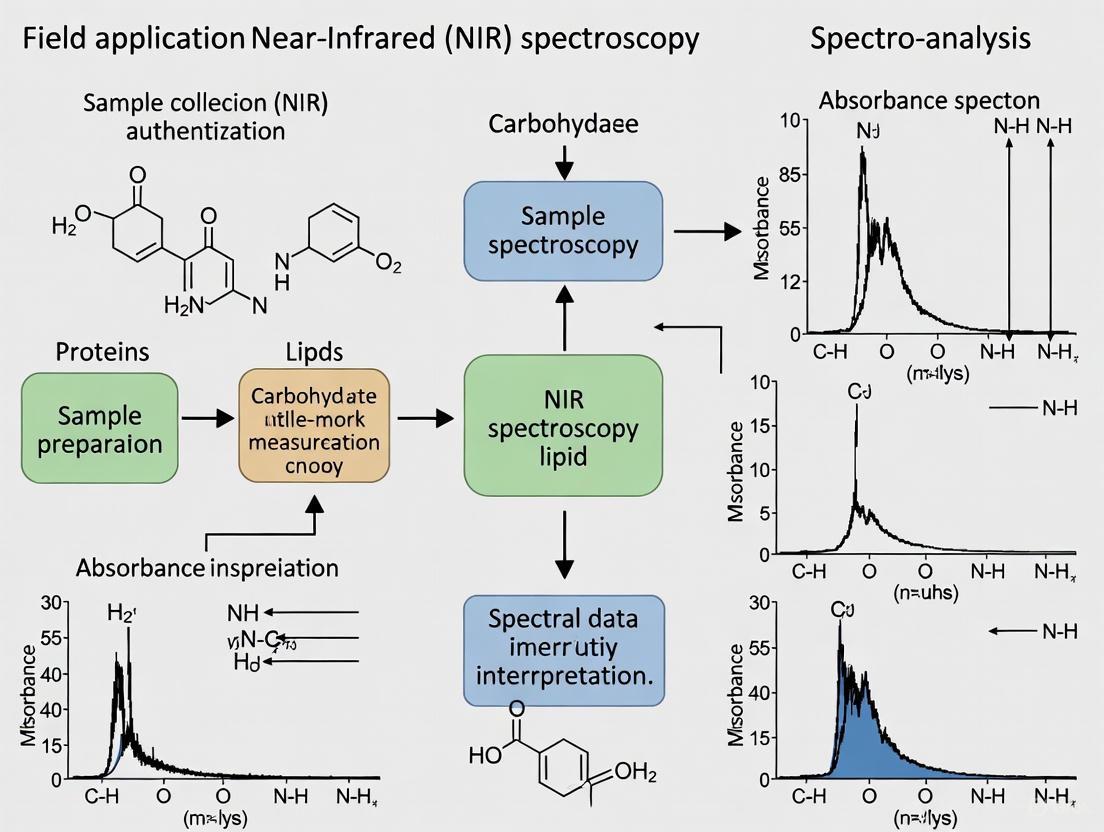
This article provides a comprehensive overview of the field application of Near-Infrared (NIR) spectroscopy for food authentication, tailored for researchers and industry professionals.
NIR Spectroscopy for Food Authentication: Field Applications, Challenges, and Future Directions
Abstract
This article provides a comprehensive overview of the field application of Near-Infrared (NIR) spectroscopy for food authentication, tailored for researchers and industry professionals. It explores the foundational principles of NIR technology and its advantages for non-destructive, rapid analysis. The scope extends to methodological applications across key food sectors—including nuts, spices, and powdered foods—detailing the integration of chemometrics and portable devices. The content also addresses critical troubleshooting aspects, such as mitigating moisture interference and spectral complexity, and offers a comparative validation against traditional techniques. By synthesizing current advancements and persistent challenges, this review outlines a path forward for integrating NIR spectroscopy into robust food quality control and safety systems.
The Principles and Promise of NIR Spectroscopy in Food Analysis
Near-Infrared (NIR) spectroscopy has emerged as a cornerstone analytical technique for non-destructive food authentication, capable of verifying geographical origin, production methods, and detecting economic adulteration. Its operational principle rests on probing the fundamental molecular vibrations of chemical bonds within a food matrix when irradiated with NIR light. The resulting complex, information-rich absorption pattern constitutes a spectral fingerprint that is unique to the sample's chemical composition. This application note details the core principles linking molecular vibrations to spectral fingerprints and provides standardized protocols for researchers deploying NIR spectroscopy in field-based food authentication research. The integration of robust chemometrics is emphasized as essential for deconvoluting the subtle spectral patterns that authenticate food products and safeguard against fraud.
Core Principles: From Molecular Vibrations to Spectral Fingerprints
The Physical Basis of NIR Spectroscopy
NIR spectroscopy operates within the electromagnetic spectrum range of 780–2500 nm (wavenumbers 12,500–3800 cmâ»Â¹). This region is characterized by the absorption of light energy causing molecular bonds to vibrate through overtone and combination bands of fundamental mid-infrared vibrations [1] [2].
When a molecule is exposed to NIR radiation, it absorbs energy at specific wavelengths corresponding to the natural vibrational frequency of its chemical bonds. The energy absorbed is a function of the bond's mass and strength, following Hooke's law for a simple harmonic oscillator. The technique is particularly sensitive to bonds involving hydrogen, such as C-H, O-H, and N-H groups, which are abundant in major food constituents like water, fats, proteins, and carbohydrates [1] [3]. The broad, overlapping absorption bands resulting from these vibrations form a unique spectral signature for any given biological material.
The Concept of Spectral Fingerprints
A spectral fingerprint is a distinctive, multi-variable pattern of absorbance values across the NIR range that collectively characterizes the unique physicochemical profile of a food sample [3]. Unlike targeted analytical methods that seek a single marker compound, the fingerprinting approach uses the entire spectrum, or informative regions thereof, for authentication.
The position and intensity of absorption bands in the fingerprint are directly determined by the sample's chemical composition:
- Bands around 1450 and 1940 nm are predominantly associated with O-H stretching and bending vibrations from water [4].
- The region from 1700–1800 nm features C-H stretching vibrations first overtones, prominent from oils and fats [1].
- Bands near 1980, 2060, and 2180 nm are combination bands associated with C-H and C-O bonds in carbohydrates [4].
- The 1500–1800 nm and 2000–2500 nm regions contain N-H combination bands and C-H stretching second overtones related to protein content [1].
Variations in a food's origin, processing, or adulteration alter its molecular composition, thereby producing detectable changes in its NIR spectral fingerprint, even in the absence of a single, identifiable "marker" [5] [6].
Experimental Protocols for Food Authentication
Protocol 1: Sample Preparation and Spectral Acquisition
This protocol is designed for the authentication of powdered or homogenized food samples (e.g., flour, powdered milk, ground nuts) using a portable NIR spectrometer with a diffuse reflectance probe.
- Objective: To acquire high-quality, reproducible NIR spectra that accurately reflect the sample's chemical composition for subsequent model development.
- Materials: Portable NIR spectrometer with diffuse reflectance probe, sample cups, analytical balance, temperature-controlled environment (±2 °C).
- Procedure:
- Sample Homogenization: Grind solid samples to a consistent particle size (e.g., < 500 µm). For liquids, ensure homogeneity. Inhomogeneity and air bubbles are major sources of spectral variance and must be minimized [4] [2].
- Temperature Equilibration: Allow samples to equilibrate to a constant temperature (e.g., 25 °C) for at least 30 minutes prior to analysis, as NIR spectra are temperature-sensitive [4].
- Instrument Warm-up and Calibration: Power on the spectrometer and allow it to stabilize for the manufacturer-recommended time. Perform a background calibration (using a Spectralon or ceramic standard) and a dark current correction.
- Spectral Acquisition: Fill a clean sample cup consistently, avoiding density gradients. Acquire spectra in reflectance mode. A minimum of 32 scans per spectrum is recommended to improve the signal-to-noise ratio [1]. Record triplicate spectra from different sub-sampling points for representative data.
- Data Logging: Label spectra clearly with a unique sample ID and link to all relevant metadata (e.g., origin, date, reference chemistry values).
Protocol 2: Data Preprocessing and Chemometric Modeling
This protocol outlines the standard workflow for transforming raw spectral data into a validated classification or regression model for authentication.
- Objective: To preprocess spectral data to remove non-chemical artifacts and develop a robust chemometric model for predicting food authenticity.
- Software Requirements: Chemometric software package (e.g., PLS_Toolbox, The Unscrambler, or open-source alternatives in R/Python).
- Procedure:
- Data Preprocessing: Load the raw absorbance spectra and apply preprocessing techniques to enhance chemical signals.
- Scatter Correction: Apply Standard Normal Variate (SNV) or Multiplicative Scatter Correction (MSC) to correct for light scattering effects due to particle size differences [4] [2].
- Smoothing and Derivatives: Apply a Savitzky-Golay filter (e.g., 2nd order polynomial, 11-15 point window) to calculate first or second derivatives. This corrects baseline offsets and resolves overlapping peaks [2].
- Exploratory Analysis: Perform Principal Component Analysis (PCA) on the preprocessed data to visualize natural sample clustering, identify outliers, and understand the major sources of spectral variance [4] [5].
- Model Development:
- For Classification (e.g., origin, organic/conventional): Use Partial Least Squares-Discriminant Analysis (PLS-DA) or Soft Independent Modelling of Class Analogy (SIMCA). Split data into training (e.g., 70%) and test sets (e.g., 30%) [5].
- For Quantification (e.g., adulterant level): Use Partial Least Squares Regression (PLSR) to correlate spectral data with reference method values (e.g., HPLC) [4].
- Model Validation: Validate models using an external test set or cross-validation (e.g., Venetian blinds, 10-fold). Report key performance metrics: for classification, sensitivity, specificity, and accuracy; for regression, coefficient of determination (R²), Root Mean Square Error of Prediction (RMSEP), and Residual Predictive Deviation (RPD) [2].
- Data Preprocessing: Load the raw absorbance spectra and apply preprocessing techniques to enhance chemical signals.
The following workflow diagram illustrates the complete experimental pathway from sample to validated result.
Application Data in Food Authentication
NIR spectroscopy, combined with chemometrics, has been successfully applied to authenticate a wide range of food products. The table below summarizes key findings from recent research, demonstrating the technique's versatility.
Table 1: Summary of NIR Spectroscopy Applications in Food Authentication
| Food Matrix | Authentication Target | Chemometric Method(s) | Performance Summary | Reference |
|---|---|---|---|---|
| Salted Anchovies | Geographical Origin (Morocco, Spain, Tunisia, Croatia) | OPLS-DA | High sensitivity, specificity, and accuracy in discriminating origin based on lipid/protein patterns. | [5] |
| Honey | Adulteration with Syrups & Botanical Origin | PLSR, PCA, LDA | Detection of adulteration at 5-10% levels; >90% classification accuracy for botanical origin. | [4] |
| Almonds | Adulteration with Bitter Almonds | Classification Models | Excellent capability for discrimination between commercial sweet and bitter almond kernels. | [7] |
| Pork | Lipid Oxidation Monitoring | CNN with HSI | Successful evaluation of oxidative spoilage, demonstrating synergy of AI with NIR. | [1] |
| Poultry Meat | Added Water and Retaining Agents | PCA | Clear separation in PCA scores plot between authentic and adulterated samples. | [6] |
The Scientist's Toolkit: Essential Reagents and Materials
Successful implementation of NIR-based authentication requires specific materials and computational tools. The following table details essential components of the research toolkit.
Table 2: Essential Research Reagent Solutions and Materials for NIR Authentication
| Item Name | Function / Application | Technical Notes |
|---|---|---|
| Portable NIR Spectrometer | Core device for spectral acquisition in the field or at-line. | Prefer models with InGaAs detectors for range 1100-2500 nm. Key for real-time monitoring [8]. |
| Spectralon Reference Standard | Provides a background/reference spectrum with ~99% diffuse reflectance for instrument calibration. | Critical for ensuring consistent and accurate absorbance measurements across sessions. |
| Chemometrics Software | For spectral preprocessing, exploratory analysis, and model development (PLS, PCA, SVM, etc.). | Essential for interpreting complex spectral data; platforms include commercial (e.g., The Unscrambler) and open-source (e.g., R, Python with scikit-learn) options [2]. |
| Reference Data | Results from primary analytical methods (e.g., HPLC, GC-MS) used for chemometric model calibration. | The accuracy of the NIR model is directly dependent on the quality of the reference data [4] [2]. |
| Temperature Control Chamber | Maintains consistent sample temperature during analysis. | Mitigates spectral variance induced by temperature fluctuations, improving model robustness [4]. |
| GS-443902 trisodium | GS-443902 trisodium, MF:C12H13N5Na3O13P3, MW:597.15 g/mol | Chemical Reagent |
| EZM0414 TFA | SETD2-IN-1 TFA|Potent SETD2 Inhibitor|For Research Use | SETD2-IN-1 TFA is a potent, selective, orally bioactive SETD2 inhibitor for cancer research. This product is for research use only, not for human use. |
The fundamental relationships between molecular bonds, their vibrations, and their resulting positions in the NIR spectrum are visualized below.
Rapid, Non-Destructive, and High-Throughput Analysis
Near-Infrared (NIR) spectroscopy has emerged as a cornerstone analytical technique for modern food authentication research, particularly in field applications where traditional laboratory methods are impractical. Operating in the 780–2500 nm wavelength range of the electromagnetic spectrum, NIR spectroscopy measures molecular overtone and combination vibrations primarily from C-H, O-H, and N-H bonds present in organic compounds [2] [9]. This technology provides researchers with a powerful tool for rapid, non-destructive, and high-throughput analysis of food composition, authenticity, and quality parameters without requiring extensive sample preparation or chemical reagents [4] [9]. The integration of NIR spectroscopy with advanced chemometrics and machine learning algorithms has significantly enhanced its capability to handle complex food matrices, making it indispensable for addressing growing concerns about food fraud, adulteration, and mislabeling in global supply chains [10] [11].
For field applications in food authentication research, NIR spectroscopy offers distinct advantages over traditional destructive methods such as HPLC and GC-MS, which are time-consuming, require skilled operation, and destroy samples in the process [2] [4]. The non-destructive nature of NIR analysis preserves sample integrity, allowing for longitudinal studies and further analysis using complementary techniques. Furthermore, the development of portable and handheld NIR devices has revolutionized field applications, enabling real-time authentication at various points along the food supply chain—from production and processing to retail and regulatory inspection [12] [1]. This technical note outlines detailed protocols and applications that demonstrate how NIR spectroscopy delivers rapid, non-destructive, and high-throughput analysis specifically tailored for food authentication research in field settings.
Key Advantages and Quantitative Performance
The fundamental advantages of NIR spectroscopy align perfectly with the requirements of field-based food authentication research. These benefits are not merely theoretical but demonstrate quantifiable performance across diverse food matrices, as established by recent research and practical applications.
Table 1: Core Advantages of NIR Spectroscopy for Field-Based Food Authentication
| Advantage | Technical Basis | Research Impact |
|---|---|---|
| Rapid Analysis | Real-time measurements (seconds); Minimal sample preparation [2] [9] | High-frequency sampling; Immediate decision-making in the field |
| Non-Destructive | Photon interaction with sample (absorption, reflection, transmission); No chemical alteration [10] [13] | Sample preservation; Longitudinal studies; Further analysis with other techniques |
| High-Throughput | Automated sampling; Integration with conveyor systems; Rapid spectral acquisition [10] [12] | Large-scale screening; Comprehensive supply chain monitoring |
| Green Technology | No chemical reagents; Minimal waste generation; Low energy consumption [10] [2] | Environmentally sustainable research practices; Safe field deployment |
| Versatile Deployment | Portable, handheld, and benchtop configurations; Online, inline, at-line, and offline operation [12] [1] | Adaptability to diverse field conditions and research objectives |
The non-destructive nature of NIR spectroscopy stems from its physical principle of measuring how near-infrared light interacts with a sample through reflectance or transmission without altering its chemical composition [10] [9]. This photon-matter interaction, primarily with hydrogen-containing functional groups, generates a unique spectral fingerprint for each sample while preserving sample integrity. This is particularly valuable for authentication studies involving high-value food products or when sample preservation is necessary for regulatory or further analytical purposes.
High-throughput capability is achieved through rapid spectral acquisition (typically seconds per sample) and the potential for automation, allowing researchers to analyze hundreds of samples per day with minimal manual intervention [12]. This efficiency is further enhanced by the minimal sample preparation requirements, eliminating time-consuming steps such as extraction, derivatization, or purification that are common in conventional analytical techniques.
Table 2: Quantitative Performance of NIR Spectroscopy in Food Authentication Applications
| Food Matrix | Authentication Parameter | Performance Metrics | Reference |
|---|---|---|---|
| Honey | Adulteration with sugar syrups | >90% classification accuracy; Detection at 5-10% adulteration levels [4] | |
| Milk | Geographical origin traceability | 97.33% classification accuracy using FDLDA-KNN classifier [11] | |
| Sorghum Grain | Protein content prediction | R² = 0.87 using handheld MicroNIR [12] | |
| Flaxseeds | Germinability prediction | R² = 0.78-0.82 using Vis-NIR HSI [12] | |
| Plums | Maturity classification | 100% accuracy using FT-NIR with discriminant analysis [12] | |
| Mackerel | Freshness (TVB-N prediction) | 91% accuracy using SWIR HSI [12] | |
| Peanut Oil | Adulteration quantification | R² > 0.9311; RMSECV < 4.43 [11] | |
| Fava Bean Bread | Protein content classification | >99% accuracy using HSI [12] |
The quantitative performance data in Table 2 demonstrates that NIR spectroscopy achieves sufficiently high accuracy for most field authentication applications. The technique consistently delivers classification accuracies exceeding 90% for various authentication parameters across diverse food matrices, with particularly strong performance in detecting adulteration, verifying geographical origin, and classifying quality parameters [12] [4] [11]. While NIR is considered a secondary analytical technique that relies on reference methods for calibration, the prediction models for key compositional parameters typically achieve R² values above 0.85, even with portable instruments, making them highly reliable for field-based screening applications [2] [12].
Experimental Protocols for Food Authentication
Protocol 1: Authentication of Honey and Detection of Adulteration
Purpose: To rapidly authenticate honey botanical origin and detect adulteration with sugar syrups using portable NIR spectroscopy.
Background: Honey is susceptible to economically motivated adulteration through the addition of inexpensive sugar syrups, compromising its quality and authenticity. Traditional methods like stable isotope analysis are destructive and laboratory-bound. This protocol utilizes NIR spectroscopy for non-destructive, rapid screening in field settings [4].
Materials and Reagents:
- Pure honey samples of declared botanical origins (e.g., acacia, clover, manuka)
- Suspected adulterated honey samples
- Portable NIR spectrometer with reflectance probe (e.g., Viavi MicroNIR OnSite-W)
- Quartz cuvettes or transflectance cells with path length of 1-2 mm
- Temperature control bath (25°C)
- Magnetic stirrer for sample homogenization
- Reference standards for validation (if available)
Procedure:
- Sample Preparation:
- Pre-condition all honey samples to 25°C in a temperature-controlled bath to minimize spectral variance due to temperature differences.
- If crystallized, gently warm the honey containers in a water bath at ≤40°C until crystals dissolve, then cool to 25°C.
- Mix samples thoroughly using a magnetic stirrer to ensure homogeneity and eliminate air bubbles.
Spectral Acquisition:
- Initialize the portable NIR spectrometer according to manufacturer specifications.
- Configure spectral acquisition parameters: 1000-2500 nm range, 8 cmâ»Â¹ resolution, 32 scans per spectrum.
- For each sample, fill a transflectance cell and acquire spectra in triplicate.
- Include background scans every 30 minutes during analysis sessions.
Data Preprocessing:
- Apply Standard Normal Variate (SNV) transformation to remove scattering effects.
- Process spectra using Savitzky-Golay first derivative (2nd polynomial, 15-point window) to enhance spectral features.
- Employ Multiplicative Scatter Correction (MSC) if necessary for path length variations.
Chemometric Analysis:
- For botanical origin authentication:
- Utilize Principal Component Analysis (PCA) for exploratory data analysis and outlier detection.
- Develop a classification model using Linear Discriminant Analysis (LDA) with cross-validation.
- For adulteration detection:
- Construct a Partial Least Squares Regression (PLSR) model correlating spectral data with reference adulteration percentages.
- Validate models using leave-one-out cross-validation or an independent test set.
- For botanical origin authentication:
Interpretation:
- Botanical origin is confirmed when samples cluster with reference groups in PCA/LDA space.
- Adulteration is detected when predicted values exceed established thresholds (typically 5-10% for sugar syrups).
Troubleshooting Tips:
- If classification accuracy is low, ensure sample temperature is consistent throughout analysis.
- High spectral noise may indicate insufficient mixing or air bubbles in samples.
- Model transfer between instruments may require standardization techniques such as Piecewise Direct Standardization (PDS).
Protocol 2: Geographical Origin Verification of Liquid Foods
Purpose: To verify the geographical origin of liquid foods (milk, oils) using handheld NIR spectrometers combined with machine learning algorithms.
Background: Geographical origin is a key authentication parameter that influences the economic value of many food products. This protocol outlines a procedure for rapid, non-destructive verification of geographical origin in field settings, applicable to various liquid food matrices [11] [1].
Materials and Reagents:
- Liquid food samples (milk, edible oils) with verified geographical origins
- Handheld NIR spectrometer (e.g., with InGaAs detector)
- Transmission flow cells or disposable cuvettes
- Temperature recording device
- GPS device for recording sampling locations
- Reference databases for geographical authentication
Procedure:
- Sample Collection and Logging:
- Collect samples directly from production sites where possible.
- Record precise geographical coordinates using GPS.
- Document sampling date, time, and temperature conditions.
Spectral Collection:
- Calibrate the handheld NIR spectrometer using manufacturer-provided standards.
- Use transmission mode with appropriate path length (0.5-2 mm for liquids).
- Acquire triplicate spectra for each sample across 800-2500 nm range.
- Randomize sample analysis order to minimize systematic bias.
Data Preprocessing:
- Apply Savitzky-Golay smoothing (2nd polynomial, 11-point window).
- Use SNV normalization to correct for path length differences.
- Employ Sequential Preprocessing through Orthogonalization (SPORT) if dealing with multiple instruments.
Feature Selection and Modeling:
- Implement Competitive Adaptive Reweighted Sampling (CARS) to identify informative wavelengths.
- Apply Successive Projections Algorithm (SPA) for variable selection.
- Develop classification models using:
- Fuzzy Direct Linear Discriminant Analysis (FDLDA)
- Support Vector Machine (SVM)
- Convolutional Neural Networks (CNN) for complex pattern recognition
Validation:
- Validate models using external validation sets from different harvest periods.
- Calculate classification accuracy, sensitivity, and specificity.
- Establish confidence thresholds for origin verification.
Field Application Notes:
- For consistent results, maintain stable ambient temperature during analysis.
- Establish a reference spectral library specific to geographical origins of interest.
- Regular instrument validation with control samples is critical for reliable field measurements.
Research Reagent Solutions and Essential Materials
Table 3: Essential Research Reagents and Materials for NIR-Based Food Authentication
| Item | Specification | Application/Function |
|---|---|---|
| Portable NIR Spectrometer | Wavelength range: 800-2500 nm; Detector: InGaAs; Resolution: <10 nm | Field-deployable spectral acquisition for on-site authentication [12] [1] |
| Reference Standards | Certified composition/authenticity; Traceable to national standards | Calibration validation and method verification [4] |
| Chemometrics Software | PCA, PLS-R, LDA, SVM algorithms; Cross-validation capabilities | Spectral data processing, model development, and classification [2] [11] |
| Temperature Control Unit | ±0.5°C accuracy; Portable design | Sample temperature stabilization for spectral reproducibility [4] |
| Sample Presentation Accessories | Quartz cuvettes (1-10 mm path length); Fiber optic reflection probes | Standardized light interaction with diverse sample types [2] [9] |
| Spectral Validation Sets | Geographically diverse samples; Documented provenance | Model testing and transferability assessment [14] [11] |
Workflow Visualization
NIR Food Authentication Workflow
Technical Considerations and Implementation Challenges
While NIR spectroscopy offers significant advantages for field applications in food authentication, researchers must address several technical considerations to ensure reliable results. Model transferability remains a challenge, as calibration models developed on one instrument may not perform optimally on another due to variations in spectral resolution, detector sensitivity, or environmental conditions [14]. This issue can be mitigated through standardization techniques such as Piecewise Direct Standardization (PDS) and by developing models using instruments from the same manufacturer with consistent specifications [4].
The development of robust chemometric models requires large and diverse sample sets that adequately represent natural variability in authentic and adulterated products. For geographical authentication, this means collecting representative samples across multiple harvest seasons and production regions to build models resilient to seasonal and environmental variations [11]. Researchers should prioritize establishing comprehensive spectral libraries specific to their authentication questions, as model performance directly correlates with the quality and representativeness of the calibration dataset [14] [11].
Environmental factors such as temperature fluctuations, humidity, and ambient light can significantly impact spectral measurements in field settings. Temperature control during analysis is particularly critical, as temperature variations can cause peak shifts and intensity changes in NIR spectra [4]. Portable temperature control units and consistent sample preconditioning protocols help minimize these effects. Additionally, researchers should document environmental conditions during spectral acquisition to identify potential confounding factors during data analysis.
Despite these challenges, the integration of artificial intelligence and machine learning approaches continues to enhance the capabilities of NIR spectroscopy for food authentication. Deep learning algorithms such as Convolutional Neural Networks (CNNs) can automatically extract relevant features from complex spectral data, potentially reducing the need for manual preprocessing and wavelength selection [11] [1]. As these technologies mature and portable instruments become more sophisticated, NIR spectroscopy is poised to become an even more powerful tool for rapid, non-destructive, and high-throughput food authentication in field research applications.
Near-infrared (NIR) spectroscopy (780–2500 nm) has emerged as a cornerstone technique for food authentication, enabling rapid, non-destructive analysis of compositional traits and fraud detection. By measuring overtone and combination vibrations of C–H, O–H, and N–H bonds, NIR captures molecular-level data that form unique "fingerprints" for food products [4] [3]. Its integration with chemometrics—multivariate statistical tools like PCA (principal component analysis) and PLSR (partial least squares regression)—transforms spectral data into actionable insights for quality control, regulatory compliance, and supply chain transparency [4] [15]. This application note details experimental protocols, data interpretation frameworks, and technical specifications for implementing NIR in food authentication research.
Key Application Fields and Quantitative Capabilities
NIR spectroscopy addresses diverse authentication challenges, from quantifying core components to detecting adulterants. The following table summarizes its performance across major food categories:
Table 1: Quantitative and Qualitative Applications of NIR in Food Authentication
| Application Field | Analyte/Parameter | Performance Metrics | References |
|---|---|---|---|
| Honey Authentication | Sugar content (glucose, fructose) | R² > 0.95 via PLSR | [4] |
| Adulteration (corn syrup) | Detection at 5–10% levels; >90% classification accuracy with PCA-LDA | [4] | |
| Botanical origin | Distinct clustering via PCA/SIMCA | [4] | |
| Animal Products | Species fraud (meat) | Spectral differentiation of horse, cattle, pork | [15] [16] |
| Fat/protein/moisture in cheese | Compliance with standards (e.g., mozzarella: ≤52% moisture) | [16] | |
| Grains and Cereals | Protein in wheat | Accurate prediction in whole/ground grains | [17] |
| Mycotoxins (e.g., DON in wheat) | Non-destructive identification | [18] | |
| Oils and Beverages | Olive oil adulteration | Detection via phenolic compound analysis | [16] |
| Wine grading | Alcohol, pH, and phenol quantification | [16] |
Experimental Protocols for Food Authentication
Protocol 1: Honey Adulteration Detection
Objective: Identify syrup adulteration and verify botanical origin. Materials:
- Benchtop/portable NIR spectrometer (e.g., with InGaAs detector for 1100–2500 nm)
- Temperature-controlled sample cell (~25°C)
- Reference honey samples (authentic and adulterated)
Procedure:
- Sample Preparation:
- Heat honey to 40°C to dissolve crystals, then cool to 25°C.
- Ensure homogeneity (no bubbles) for transmission/transflectance measurements.
Spectral Acquisition:
- Wavelength range: 1000–2500 nm; resolution: 4–16 cmâ»Â¹.
- Collect triplicate spectra per sample.
Data Preprocessing:
- Apply Standard Normal Variate (SNV) or Savitzky–Golay derivatives to reduce scattering.
- Use multiplicative scatter correction (MSC) for baseline alignment.
Model Development:
- Quantification (PLSR): Correlate spectral data with reference lab values (e.g., sugar content via HPLC).
- Classification (PCA-LDA): Build models to distinguish pure vs. adulterated samples.
Validation:
- Use cross-validation; report RMSEP (root mean square error of prediction) and R².
- For adulteration, validate with external sample sets containing 5–20% syrups.
Pitfalls: Overfitting—limit PLSR latent variables; control temperature to avoid spectral drift [4].
Protocol 2: Meat Species Identification
Objective: Discriminate species in fresh, frozen, or processed meat. Materials:
- Portable NIR device (e.g., Felix Instruments F-750)
- Grinding apparatus (for homogenized samples)
- Reference meat samples (e.g., beef, horse, pork)
Procedure:
- Sample Preparation:
- Homogenize cuts to ensure consistent fat-protein distribution.
- For processed products (e.g., sausages), grind to uniform particle size.
Spectral Collection:
- Use reflectance mode; scan 10–15 positions per sample.
- Wavelength range: 780–2500 nm.
Data Analysis:
- Preprocess with SNV and first derivatives.
- Apply SIMCA or PCA to cluster spectra by species.
- Use PLSR to quantify adulterant percentages (e.g., soya in beef).
Validation:
Notes: Spectral libraries must account for processing-induced variations (e.g., freezing alters water-band features) [16].
Diagram 1: NIR Food Authentication Workflow
The Scientist's Toolkit: Essential Research Reagents and Equipment
Table 2: Key Materials and Instruments for NIR Authentication
| Item | Function | Examples/Specifications |
|---|---|---|
| NIR Spectrometer | Spectral acquisition | Portable (e.g., Felix F-750) for field use; Benchtop (e.g., with InGaAs detector) for lab analysis |
| Reference Databases | Model calibration | Food fingerprint libraries (e.g., botanical origins, species spectra) |
| Chemometric Software | Data processing | PCA, PLSR, LDA algorithms (e.g., in MATLAB, R, or proprietary suites) |
| Sample Handling Tools | Preparation consistency | Temperature-controlled cells, grinding mills, reflectance probes |
| Validation Kits | Model verification | Certified reference materials (e.g., predefined adulterant mixtures) |
| AST5902 trimesylate | AST5902 trimesylate, MF:C30H41F3N8O11S3, MW:842.9 g/mol | Chemical Reagent |
| AS1810722 | AS1810722, MF:C25H25F2N7O, MW:477.5 g/mol | Chemical Reagent |
Advanced Approaches and Data Integration
- Data Fusion: Combine NIR with complementary techniques (e.g., Raman or MIR) to overcome inherent limitations. For instance, NIR's broad water absorption bands can be supplemented with Raman's sensitivity to non-polar bonds (C=C, C≡C) [19] [3].
- Portable Systems: Handheld NIR devices enable in-field screening, though they require calibration transfer protocols (e.g., piecewise direct standardization) to align with lab-grade instruments [4] [16].
- AI Enhancements: Machine learning (e.g., CNN-LSTM models) automates feature extraction from complex spectra, improving prediction robustness for heterogeneous samples [3] [18].
Diagram 2: Data Analysis and Integration Pathway
NIR spectroscopy, supported by rigorous protocols and chemometrics, provides a versatile platform for food authentication. From quantifying key components in honey and meat to detecting sophisticated fraud, its non-destructive nature and adaptability to portable formats make it indispensable for modern food labs. Future advancements will focus on AI-driven spectral interpretation, standardized validation frameworks, and miniaturized devices for real-time supply chain monitoring [3] [18]. By adhering to the methodologies outlined herein, researchers can ensure accuracy, reproducibility, and compliance in food authentication workflows.
Food fraud represents a significant and persistent challenge to the global food industry, encompassing deliberate actions such as adulteration, dilution, and mislabeling for economic gain. The economic impact is staggering, with estimated annual losses of approximately $40 billion worldwide, affecting about 16,000 tons of food and beverages [20]. Beyond financial consequences, food fraud poses substantial public health risks, ranging from immediate allergic reactions to chronic health issues like neurotoxicity from adulterated spices [20]. Historical incidents, such as the 2008 melamine-contaminated powdered milk scandal that affected 300,000 infants, underscore the catastrophic potential of these practices [20]. This application note examines the current food fraud landscape, emphasizing the economic and safety drivers that necessitate robust authentication technologies, with a specific focus on the field application of Near-Infrared (NIR) spectroscopy.
The Food Fraud Landscape: Key Drivers
Economic Drivers
Food fraud is primarily economically motivated, with fraudulent practices cutting across numerous product categories. High-value products are particularly vulnerable; olive oil, fish, organic foods, milk, grains, honey, maple syrup, coffee, tea, spices, and wine represent the most at-risk categories [21]. The incentives for fraud are multifaceted, including the potential for substantial illicit profits through practices such as substituting premium ingredients with inferior or counterfeit alternatives. For instance, extra virgin olive oil is frequently targeted, often being blended with cheaper vegetable oils like sunflower, corn, palm, and rapeseed oils yet sold as pure olive oil [21]. These activities not only result in direct financial losses for industry and consumers but also erode brand integrity and consumer trust, the restoration of which requires significant investment.
Safety and Public Health Drivers
The safety implications of food fraud are profound and directly impact public health. Adulterants can introduce unintended and hazardous substances into the food supply. Risks include:
- Allergenic Hazards: The presence of undeclared allergens, such as peanut or walnut shells in adulterated cinnamon, can trigger severe allergic reactions [20].
- Toxicological Hazards: Adulteration with non-food substances like melamine or heavy metals can lead to chronic toxicity, organ damage, and, in severe cases, death [20].
- Nutritional Deficiencies: Fraudulent products often fail to deliver the expected nutritional value, potentially leading to public health issues related to malnutrition or deficiency [21].
Regulatory and Social Drivers
The regulatory landscape is evolving to combat food fraud. In the United States, the Food and Drug Administration (FDA) has implemented the Food Defense program and the Mitigation Strategies to Protect Food Against Intentional Adulteration rule [21]. Similarly, in the European Union, the establishment of the EU Food Fraud Network in 2013 has led to more structured cooperation, with honey being a recent focus for enhanced regulatory controls [22]. Beyond regulations, there is growing emphasis on addressing social vulnerability within food supply chains. This involves considering how power imbalances and inequitable risk distribution can make certain actors, such as small-scale beekeepers, more susceptible to the impacts of fraud [22]. Consequently, authentication technologies are not merely analytical tools but are integral to promoting supply chain transparency, fair trade, and social equity.
NIR Spectroscopy as an Authentication Tool
Fundamental Principles
Near-Infrared (NIR) spectroscopy is an analytical technique that measures the interaction of matter with electromagnetic radiation in the 780–2500 nm wavelength range [11]. This region captures overtone and combination vibrations of fundamental molecular bonds, primarily C-H, O-H, and N-H, which are characteristic of organic compounds [20]. The resulting spectra provide a unique "fingerprint" of the sample's chemical composition, enabling both qualitative identification and quantitative analysis [3]. The technique is non-destructive, requires minimal sample preparation, and is capable of rapid analysis, making it ideally suited for in-line, at-line, and field-based authentication [11] [4].
Advantages Over Traditional Methods
Traditional methods for food authentication, such as High-Performance Liquid Chromatography (HPLC), Gas Chromatography-Mass Spectrometry (GC-MS), and DNA-based techniques, are highly accurate but possess significant limitations for routine screening. These include being time-consuming, destructive, requiring specialized laboratories and personnel, and incurring high operational costs [4] [20]. In contrast, NIR spectroscopy offers a rapid, non-destructive, and often portable alternative that can be deployed directly in the field or at various points in the supply chain, providing real-time or near-real-time results for decision-making [3].
Table 1: Comparison of Food Authentication Methods
| Method | Analysis Speed | Sample Preparation | Destructive | Cost | Portability |
|---|---|---|---|---|---|
| NIR Spectroscopy | Very Fast (seconds) | Minimal | No | Low (after initial investment) | High (portable devices available) |
| HPLC/GC-MS | Slow (hours) | Extensive | Yes | High | Low |
| DNA Analysis | Slow (hours-days) | Moderate | Yes | High | Low |
| Classical Wet Chemistry | Slow (hours) | Extensive | Yes | Moderate | Low |
Experimental Protocols for NIR-Based Authentication
The following protocols detail the application of NIR spectroscopy for food authentication, adaptable for both benchtop and portable instruments.
Protocol 1: General Workflow for Food Powder Authentication
This protocol is designed for detecting adulteration in powdered foods (e.g., spices, milk powder, flour).
1. Sample Preparation:
- Homogenization: Ensure the powder is thoroughly mixed to a consistent particle size. For some applications, grinding and sieving to a specific particle size range (e.g., < 250 µm) is recommended to reduce spectral scatter [20].
- Conditioning: Allow samples to equilibrate to a consistent ambient temperature (e.g., 20–25 °C) and humidity to minimize spectral variance [20].
2. Spectral Acquisition:
- Instrument Setup: Use a benchtop or portable NIR spectrometer. For powdered samples, Diffuse Reflectance is the standard acquisition mode [20].
- Calibration: Perform instrument calibration using a certified white reference (e.g., Spectralon) and a dark current measurement prior to sample analysis [23].
- Measurement Parameters: Collect spectra in the range of 780–2500 nm. A resolution of 4–16 cmâ»Â¹ is typical. Average 32–64 scans per spectrum to improve the signal-to-noise ratio [23].
- Replication: Acquire a minimum of three replicate spectra from different sub-samples of the same homogeneous batch to assess reproducibility [23].
3. Data Preprocessing: Apply mathematical treatments to raw spectra to remove physical artifacts and enhance chemical information. Common techniques, often used in combination, include:
- Savitzky-Golay (SG) Smoothing: Reduces high-frequency noise [20].
- Standard Normal Variate (SNV): Corrects for scattering effects due to particle size differences [4] [20].
- Detrending (DET): Removes baseline curvature [20].
- First or Second Derivative (Savitzky-Golay): Enhances resolution of overlapping peaks and removes baseline offsets [4].
4. Chemometric Modeling and Analysis:
- Qualitative Analysis (Authentication/Classification):
- Use Principal Component Analysis (PCA) for exploratory data analysis to identify natural clusters and outliers [4].
- Employ classification models like Linear Discriminant Analysis (LDA), Support Vector Machine (SVM), or Soft Independent Modeling of Class Analogy (SIMCA) to differentiate authentic from adulterated samples or to classify by botanical/geographical origin [11] [4].
- Quantitative Analysis (Level of Adulteration):
5. Model Validation:
- Validate models using cross-validation (e.g., leave-one-out or k-fold) and an external validation set not used in model development.
- Evaluate performance using Root Mean Square Error of Calibration (RMSEC), Root Mean Square Error of Prediction (RMSEP), and the coefficient of determination (R²) [4] [23].
The following workflow diagram illustrates the key steps in this protocol:
Protocol 2: Authentication of Liquid Foods (Honey)
This protocol is specific to liquid matrices like honey, which are susceptible to adulteration with sugar syrups.
1. Sample Preparation:
- Liquefaction: If crystallized, gently warm the honey in a water bath at 40°C until crystals dissolve, then mix thoroughly. Avoid overheating to prevent the formation of 5-Hydroxymethylfurfural (5-HMF) [4].
- Degassing: Allow the honey to stand or gently stir to remove air bubbles introduced during mixing, as bubbles can cause light scattering [4].
- Temperature Equilibration: Bring all samples to a consistent temperature (e.g., 25°C) before measurement [4].
2. Spectral Acquisition:
- Instrument Setup: Utilize a transmission or transflectance cell with a fixed pathlength (e.g., 1 mm). Alternatively, a fiber optic probe can be used for direct measurement [4].
- Measurement: Acquire spectra in the 1000–2500 nm range. The number of scans and resolution can be aligned with Protocol 1.
3. Data Preprocessing & Modeling:
- Follow the preprocessing steps outlined in Protocol 1. SNV is particularly useful for correcting path length variations in liquid samples.
- For quantitative prediction of adulterants (e.g., corn syrup) or quality parameters (e.g., moisture, 5-HMF, sugar profiles), use PLSR calibrated against reference laboratory data (e.g., from HPLC or refractometry) [4].
Table 2: Key Honey Quality Parameters Measurable by NIR [4]
| Parameter | Significance for Authentication | Common NIR Prediction Accuracy (R²) |
|---|---|---|
| Sugar Content (Glucose/Fructose) | Detects dilution with sugar syrups | > 0.95 |
| Moisture Content | Indicator of quality and fermentation risk | > 0.90 |
| 5-HMF | Marker for overheating or aging | Varies with model |
| Proline | Amino acid linked to natural origin | Varies with model |
The Scientist's Toolkit: Essential Reagents and Materials
Table 3: Key Research Reagent Solutions for NIR-Based Authentication
| Item | Function/Application | Technical Specifications |
|---|---|---|
| Certified White Reference (e.g., Spectralon) | Calibrates the spectrometer's reflectance baseline before measurement. | >99% Reflectance across NIR range [23]. |
| Chemometrics Software | Used for spectral preprocessing, model development (PCA, PLSR, etc.), and validation. | Includes algorithms like SNV, Savitzky-Golay, PLS, SVM [11] [20]. |
| Reference Materials | Authentic, well-characterized samples for building and validating calibration models. | Certified for specific parameters (e.g., protein, fat, geographic origin) [24]. |
| Quartz Cuvettes / Transflectance Cells | Holds liquid samples (honey, oil, milk) for transmission/transflectance measurements. | Pathlength: 0.5 - 5 mm; Quartz for optimal NIR transmission [4]. |
| Portable NIR Spectrometer | Enables on-site, in-field screening at various points in the supply chain. | Wavelength range: 900-1700 nm or wider; InGaAs detector [4] [20]. |
| (R)-M8891 | (R)-M8891, MF:C20H17F2N3O3, MW:385.4 g/mol | Chemical Reagent |
| (3S,4S)-A2-32-01 | (3S,4S)-A2-32-01, MF:C19H27NO2, MW:301.4 g/mol | Chemical Reagent |
The economic and public health imperatives driven by food fraud create an urgent need for effective, rapid, and deployable authentication technologies. NIR spectroscopy, particularly when enhanced with chemometrics, meets this need by providing a powerful tool for verifying food authenticity directly in the field. Its non-destructive nature, speed, and growing portability make it an indispensable asset for researchers and industry professionals dedicated to ensuring food safety, protecting brand integrity, and promoting transparency throughout the global food supply chain.
Implementing NIR for Food Authentication: From Benchtop to Field
Food fraud, particularly concerning high-value agricultural products like nuts, represents a significant global challenge, resulting in an estimated $40 billion in annual economic losses and posing substantial risks to public health and consumer trust [20]. Nut fraud typically manifests in two forms: economic adulteration, where nuts are adulterated with lower-cost substances such as other nuts, shells, or starches, and misrepresentation of geographical origin, where the premium value associated with a specific growing region is fraudulently claimed for lower-quality products. Near-infrared (NIR) spectroscopy has emerged as a powerful, rapid, and non-destructive analytical technique ideally suited for field-based food authentication research. This Application Note provides detailed protocols for using NIR spectroscopy, coupled with advanced chemometrics, to detect adulterants and verify the geographical origin of nuts, supporting the broader thesis of deploying robust, on-site authentication systems.
Technical Principles: NIR Spectroscopy for Nut Authentication
NIR spectroscopy operates on the principle of measuring the absorption of light in the 780–2500 nm wavelength range due to molecular vibrations, primarily from bonds in C–H, O–H, and N–H functional groups [20] [11]. These vibrations create a unique "fingerprint" that reflects the chemical composition of a sample. For nut matrices, which are rich in fats (C-H), proteins (N-H), and water (O-H), NIR spectra contain a wealth of compositional information.
The technique offers key advantages for field application:
- Non-Destructive: Analysis preserves the sample integrity.
- Rapid: Results can be obtained in seconds to minutes.
- Minimal Sample Preparation: Often requires only grinding into a coarse or fine powder to ensure consistent particle size and packing density, which minimizes light scattering effects [20].
- Portability: Modern portable NIR spectrometers (e.g., 900–1700 nm range) enable on-site analysis at farms, processing facilities, or border checkpoints [20] [25].
A primary limitation is its indirect nature; NIR requires robust chemometric models—the application of mathematical and statistical methods to chemical data—to correlate spectral data with the property of interest (e.g., adulterant concentration or origin) [11]. The general workflow, from sample preparation to result interpretation, is outlined below.
Application Note 1: Detecting Adulteration in Nut Flours and Powders
Experimental Objective
To rapidly and non-destructively identify and quantify common adulterants (e.g., almond shell in almond flour, peanut in walnut powder, or starches in protein powders) in nut-based powders using a portable NIR spectrometer combined with chemometric models.
Detailed Protocol
Step 1: Sample Preparation and Spectral Acquisition
- Grinding: Homogenize nut samples and potential adulterants using a laboratory-grade mill. Standardize the particle size (e.g., pass through a 500 μm sieve) to reduce spectral variability [20].
- Sample Set Creation: Create calibration samples by mixing pure nut powder with known concentrations of the adulterant (e.g., 0-40% w/w in 5% increments). Ensure a representative number of replicates (e.g., n=5 per concentration level).
- Environmental Control: Perform NIR measurements in a stable environment (approx. 25 °C) to minimize instrumental drift [25].
- Data Collection: Using a portable NIR spectrometer (e.g., 900-1700 nm), collect spectral data from each sample. For each sample, take multiple readings (e.g., 3-5 scans) and average them to improve the signal-to-noise ratio. Ensure the probe is in consistent contact with the sample surface [25].
Step 2: Spectral Preprocessing
Raw NIR spectra are affected by physical light scattering and noise. Preprocessing is critical to enhance chemical information [20].
- Savitzky-Golay (SG) Smoothing: Apply with a window size of 11 points and a 2nd or 3rd-order polynomial to reduce high-frequency noise [25].
- Standard Normal Variate (SNV) or Multiplicative Scatter Correction (MSC): Use to correct for baseline shifts and scattering effects caused by particle size differences [20] [26].
- Derivatives (1st or 2nd): Apply Savitzky-Golay 1st or 2nd derivatives to resolve overlapping peaks and remove baseline variations [20] [26].
Step 3: Model Development and Validation
Two primary modeling approaches are used:
- For Quantification (PLS-R): Use Partial Least Squares Regression (PLS-R) to build a model that predicts the concentration of the adulterant. The model correlates the preprocessed spectral data (X-matrix) with the known adulterant concentrations (Y-matrix) [27].
- For Classification (PLS-DA or SVM): Use Partial Least Squares Discriminant Analysis (PLS-DA) or Support Vector Machine (SVM) to classify samples as "pure" or "adulterated" [27] [26].
Validation: Always validate models using an independent set of samples not used in model calibration. Employ k-fold cross-validation (e.g., 5-fold) during model development to avoid overfitting and to robustly assess performance [25].
Performance Data and Expected Outcomes
Table 1: Exemplary performance metrics for NIR-based detection of food adulteration, as reported in recent literature. These demonstrate the potential of the technique when applied to nut matrices.
| Food Matrix | Adulterant | Chemometric Model | Performance Metrics | Source |
|---|---|---|---|---|
| Honey | Six sugar syrups | PLS-DA & PLS-R | Classification: 100% accuracy; Quantification: R² > 0.98 | [27] |
| Powdered Foods | Various | Spectroscopy & Chemometrics | Detection accuracy > 90% for many powdered dairy, spices, and cereals | [20] |
| Tartary Buckwheat | Common Buckwheat | SVR (Support Vector Regression) | Flavonoid prediction: R²p = 0.98; Protein prediction: R²p = 0.92 | [28] |
Application Note 2: Verifying the Geographical Origin of Nuts
Experimental Objective
To distinguish the geographical origin of nut samples (e.g., pistachios from Iran vs. the USA, or almonds from California vs. Spain) based on subtle differences in their chemical profiles revealed by NIR spectroscopy.
Detailed Protocol
Step 1: Sample Sourcing and Spectral Library
- Sample Collection: Obtain authentic nut samples (e.g., 80-100 per region) from well-documented growing regions. The number of samples is critical for model robustness [25].
- Spectral Acquisition: Follow the same rigorous spectral acquisition protocol as described in Application Note 1, Section 3.2, ensuring consistency across all samples.
Step 2: Feature Extraction and Dimensionality Reduction
NIR data is high-dimensional. Feature extraction is essential to highlight spectral features most relevant to geographical discrimination.
- Principal Component Analysis (PCA): An unsupervised method used for initial exploration to identify natural clustering of samples by origin and to detect outliers [26].
- Uncorrelated Discriminant Transform (UDT): A powerful supervised feature extraction method that projects data into a new space where classes (origins) are well-separated while ensuring the features are uncorrelated. It has been shown to outperform methods like DPCA and FST in some studies [25].
Step 3: Classification Modeling
Apply advanced classifiers to the extracted features:
- k-Nearest Neighbors (KNN): A simple, effective classifier that can achieve high accuracy, as demonstrated in kimchi origin authentication [26].
- XGBoost (eXtreme Gradient Boosting): A powerful ensemble method that builds multiple decision trees sequentially, correcting the errors of previous ones. It is highly effective for complex, non-linear data and has achieved 100% classification accuracy for black bean origin when combined with UDT [25].
- Support Vector Machine (SVM): Effective for finding the optimal boundary (hyperplane) to separate classes in high-dimensional space [25] [26].
The logical sequence for building a robust origin verification model is depicted below.
Performance Data and Expected Outcomes
Table 2: Exemplary performance of NIR spectroscopy coupled with machine learning for determining the geographical origin of various foodstuffs.
| Food Matrix | Geographical Origins | Feature Extraction / Classifier | Performance Metrics | Source |
|---|---|---|---|---|
| Black Beans | 5 regions in China | UDT + XGBoost | 100% Classification Accuracy | [25] |
| Black Beans | 5 regions in China | UDT + KNN/SVM | 96.25% Classification Accuracy | [25] |
| Kimchi | Domestic vs. Imported | FT-NIR + KNN | Accurate classification, superior performance | [26] |
| Milk | Various | FDLDA-KNN | 97.33% Classification Accuracy | [11] |
The Scientist's Toolkit: Research Reagent Solutions
Table 3: Essential materials, reagents, and software for implementing NIR-based authentication protocols.
| Item Category | Specific Examples / Functions | Key Application in Protocol |
|---|---|---|
| Portable NIR Spectrometer | NIR-M-F1-C (900-1700 nm); Must have a high signal-to-noise ratio (e.g., >6000:1) and wavelength accuracy (±1 nm). | Primary instrument for non-destructive spectral acquisition in the field and lab. [25] |
| Sample Preparation Equipment | Laboratory mill, sieves (e.g., 500 μm), moisture analyzer. | Homogenization and particle size standardization to minimize spectral scatter. [20] |
| Chemometric Software | Python (scikit-learn, XGBoost libraries), MATLAB, R, PLS_Toolbox. | Platform for spectral preprocessing, feature extraction, and model development/validation. [25] |
| Spectral Preprocessing Algorithms | Savitzky-Golay (SG), Standard Normal Variate (SNV), Derivatives. | Correct for physical effects (scatter, baseline) and enhance chemical signal in raw spectra. [20] [26] |
| Feature Extraction Methods | Uncorrelated Discriminant Transform (UDT), Principal Component Analysis (PCA). | Reduce data dimensionality and highlight features most relevant for discrimination. [25] |
| Classification & Regression Models | XGBoost, k-NN, SVM, PLS-DA, PLS-R. | Perform the final task of classifying origin or quantifying adulterant concentration. [25] [28] [26] |
| dCBP-1 | dCBP-1, MF:C51H63F2N11O10, MW:1028.1 g/mol | Chemical Reagent |
| limertinib | limertinib, MF:C29H32ClN7O2, MW:546.1 g/mol | Chemical Reagent |
The integration of portable NIR spectroscopy with advanced chemometric models presents a formidable solution for combating nut fraud. The protocols outlined herein for detecting adulteration and verifying geographical origin are robust, rapid, and suitable for deployment in field settings. This approach empowers researchers, regulatory bodies, and industry stakeholders to safeguard the integrity of the global nut supply chain, protect consumer health, and ensure economic fairness. Future research directions will focus on the development of self-adaptive models, larger shared spectral libraries, and the deeper integration of these systems into digital traceability platforms for real-time, on-site authentication [20] [3].
The global spice trade, a multi-billion dollar industry, faces significant challenges related to authenticity and geographic origin fraud. Economically motivated adulteration and mislabeling not only undermine consumer trust but also pose potential health risks and economic losses. Traditional analytical methods, while accurate, are often destructive, time-consuming, and require laboratory settings, making them unsuitable for rapid screening throughout the supply chain. Near-Infrared (NIR) spectroscopy has emerged as a powerful, non-destructive analytical technique capable of addressing these challenges through rapid, on-site authentication. This application note details protocols and methodologies for implementing NIR spectroscopy in spice authentication, framed within broader research on field applications of NIR for food authentication.
Theoretical Foundations of NIR Spectroscopy
Near-Infrared spectroscopy operates in the electromagnetic radiation range of 780–2500 nm (800–2500 nm, or 12,500–3800 cmâ»Â¹), measuring molecular overtone and combination vibrations primarily associated with C-H, O-H, and N-H bonds [2] [16] [4]. These chemical bonds are abundant in organic compounds, making NIR spectroscopy particularly suitable for analyzing complex biological matrices like spices. When NIR radiation interacts with a sample, the resulting absorption, reflection, and transmission patterns create a unique spectral fingerprint that reflects its chemical composition [16]. This fingerprint enables both qualitative discrimination between samples and quantitative prediction of chemical constituents.
The NIR spectrum consists of broad, overlapping peaks, necessitating advanced chemometric techniques for interpretation [2] [4]. Spectra acquisition can occur via different methods: diffuse reflection is typically used for solid samples (e.g., powdered spices), where photons penetrate a few millimeters into the sample, while transmission and transflectance techniques are applied to liquids or colloidal samples [2]. For solid spices, the diffuse reflection method is most applicable, though particle size and homogeneity must be carefully controlled to minimize detrimental scattering phenomena [2].
Experimental Design and Protocols
Sample Preparation Techniques
Proper sample preparation is critical for obtaining reproducible NIR spectra. Based on comparative studies of nuts and similar matrices, the following techniques are recommended for spice authentication:
Table 1: Comparison of Sample Preparation Methods for Spice Authentication
| Preparation Method | Processing Time | Sample Amount | Reproducibility | Classification Accuracy | Best Use Cases |
|---|---|---|---|---|---|
| Whole Spices | Minimal (minutes) | Entire spice pod/seed | Lower | Moderate | Initial screening, quality control |
| Bisected Spices | Low (<30 min) | Half seeds | Moderate | Good | Internal composition analysis |
| Ground Spices | High (30-60 min) | 5-10g homogenized powder | High | Very Good | Standard authentication protocols |
| Freeze-Dried & Ground | Highest (24-72 hours) | 5-10g dried powder | Highest | Excellent | Research studies, reference methods |
Based on systematic comparisons for geographical origin determination of almonds, freeze-drying combined with grinding emerged as the most reliable preparation technique despite higher time investment, as it removes interfering water bands and improves spectral reproducibility [29]. For routine analysis, finely ground homogeneous powder provides an optimal balance between preparation effort and analytical performance.
Spectral Acquisition Parameters
The following protocol outlines standardized parameters for spice analysis using Fourier Transform Near-Infrared (FT-NIR) spectroscopy:
Instrument Calibration:
- Perform daily calibration using certified white reference standards and dark current measurements [23]
- Validate calibration using control samples with known spectral properties
Spectral Acquisition:
- Spectral Range: 780–2500 nm (12,500–4,000 cmâ»Â¹) for comprehensive molecular information [2] [23]
- Resolution: 4–16 cmâ»Â¹; higher resolution for complex spice mixtures [4]
- Scan Number: 32–64 scans per spectrum to improve signal-to-noise ratio [23]
- Measurement Mode: Diffuse reflectance for powdered spices; interactance for whole spices
- Replication: Minimum three replicate spectra per sample from different sub-samples [23]
Environmental Controls:
- Maintain consistent temperature (20–25°C) and humidity (30–60%) during analysis [23]
- Allow samples to equilibrate to room temperature before measurement
Chemometric Analysis and Model Development
NIR spectral data requires multivariate analysis for meaningful interpretation. The following workflow outlines the standard approach:
Data Preprocessing: Apply mathematical treatments to reduce scattering effects and enhance spectral features:
- Multiplicative Scatter Correction (MSC) or Standard Normal Variate (SNV) to correct for light scattering effects [2] [4]
- Savitzky-Golay derivatives (first or second derivative) to resolve overlapping peaks and remove baseline offsets [2]
- Detrending to eliminate non-linear baseline drift
Exploratory Analysis:
- Principal Component Analysis (PCA) for unsupervised pattern recognition and outlier detection [2] [4]
- Cluster Analysis (CA) to identify natural groupings in the data
Model Development:
- Classification Models: Use Support Vector Machines (SVM), Linear Discriminant Analysis (LDA), or Soft Independent Modeling of Class Analogy (SIMCA) for geographical origin discrimination [4] [29]
- Regression Models: Apply Partial Least Squares Regression (PLSR) or Principal Component Regression (PCR) for quantitative analysis of adulterants [2] [4]
Model Validation:
- Employ cross-validation (e.g., leave-one-out or k-fold) to assess model robustness [4]
- Use external validation sets not included in model calibration
- Evaluate using metrics including sensitivity, specificity, precision, and accuracy [2]
Performance Metrics and Validation
Quantitative Assessment of NIR Performance
Table 2: Performance Metrics for NIR Authentication of Various Food Matrices
| Food Matrix | Authentication Target | Chemometric Method | Accuracy/R² | LOD/LOQ | Reference |
|---|---|---|---|---|---|
| Protein Powders | Melamine adulteration | PLSR | R²P = 0.96 | LOD ≈ 0.1% | [30] |
| Honey | Adulterant detection | PLS-DA | 100% classification | N/A | [27] |
| Honey | Sugar quantification | PLSR | R² > 0.95 | N/A | [4] |
| Almonds | Geographical origin | SVM | High classification | N/A | [29] |
| Fast Food | Protein content | PLSR | No significant difference from reference | N/A | [23] |
For spice authentication, expected performance metrics should meet or exceed these benchmarks, with classification accuracy >90% for geographical origin discrimination and R² > 0.90 for quantification of major adulterants.
Validation Against Reference Methods
NIR spectroscopy serves as a secondary analytical technique whose accuracy depends on reference methods [2]. Validation should include:
- Comparison with standard methods (e.g., HPLC for chemical markers, DNA analysis for botanical identification)
- Statistical tests (e.g., paired t-tests, ANOVA) to evaluate differences between NIR predictions and reference values [23]
- Assessment of repeatability and reproducibility through replicate analyses
Studies have demonstrated excellent agreement between NIR and classical methods for major components including protein, fat, and carbohydrates, though components like sugars and dietary fiber may show systematic deviations [23].
Implementation Considerations
The Researcher's Toolkit: Essential Materials and Reagents
Table 3: Essential Research Reagent Solutions for Spice Authentication
| Item | Specifications | Function | Application Notes |
|---|---|---|---|
| FT-NIR Spectrometer | Spectral range: 780-2500 nm, Resolution: 4-16 cmâ»Â¹ | Spectral acquisition | Benchtop for lab, portable for field use |
| Reference Standards | Certified white reference (e.g., Spectralon) | Instrument calibration | Essential for measurement reproducibility |
| Grinding Apparatus | Analytical mill with temperature control | Sample homogenization | Controlled particle size (≤250 μm) |
| Sieving Equipment | Standardized sieve series (e.g., 60-80 mesh) | Particle size control | Improves spectral reproducibility |
| Freeze-Dryer | Temperature: -50°C, Pressure: <0.1 mbar | Water removal | Eliminates water interference in spectra |
| Chemometric Software | PCA, PLSR, SVM capabilities | Data analysis | MATLAB, R, Python, or commercial packages |
| Sample Cells | Quartz cuvettes, reflective plates | Sample presentation | Pathlength optimization for spice matrices |
| PF-05381941 | PF-05381941, MF:C27H26N6O2, MW:466.5 g/mol | Chemical Reagent | Bench Chemicals |
| LY3509754 | LY3509754, MF:C24H27F5N8O4, MW:586.5 g/mol | Chemical Reagent | Bench Chemicals |
Practical Challenges and Mitigation Strategies
- Sample Heterogeneity: Implement rigorous grinding and mixing protocols; increase replicate measurements
- Moisture Interference: Control storage conditions or implement freeze-drying for sensitive applications [29]
- Model Transferability: Use calibration transfer techniques (e.g., Piecewise Direct Standardization) when applying models across different instruments [4]
- Environmental Effects: Standardize temperature during analysis or incorporate temperature correction algorithms
NIR spectroscopy, coupled with appropriate chemometric tools, offers a powerful, non-destructive approach for authenticating spices and verifying their geographic origin. The protocols outlined in this application note provide researchers with a standardized framework for implementing this technology in both laboratory and field settings. As the spice trade continues to globalize, such rapid authentication methods will become increasingly vital for protecting consumers, ensuring fair trade practices, and maintaining the integrity of this valuable agricultural sector. Future developments in portable NIR devices, advanced machine learning algorithms, and data fusion techniques will further enhance the capabilities of this technology for spice authentication.
The authentication of powdered foods is a critical challenge within the global food supply chain. High-value powdered products, including dairy, cereals, and dietary supplements, are particularly vulnerable to economically motivated adulteration due to their high commercial value and physical form, which facilitates fraudulent practices [20]. Such adulteration poses significant economic and public health risks, including allergic reactions, chronic toxicity, and in historical cases like the 2008 melamine scandal, catastrophic health outcomes [20]. Traditional analytical methods, such as high-performance liquid chromatography (HPLC) or polymerase chain reaction (PCR), while accurate, are destructive, time-consuming, and require specialized laboratory settings and personnel [20] [31].
Near-infrared (NIR) spectroscopy has emerged as a rapid, non-destructive, and cost-effective alternative for the detection of adulterants in powdered foods. This technique, which operates on the principle of molecular overtone and combination vibrations of C–H, O–H, and N–H bonds, is highly suitable for industrial quality control and on-site screening [20] [11] [3]. When combined with chemometrics—the application of mathematical and statistical methods to chemical data—NIR spectroscopy enables robust qualitative and quantitative analysis of food authenticity [20] [11]. This document provides detailed application notes and experimental protocols for researchers and scientists on the application of NIR spectroscopy for authenticating powdered dairy, cereals, and dietary supplements, framed within a thesis on the field application of NIR for food authentication research.
Technical Principles and Instrumentation
Fundamentals of NIR Spectroscopy
NIR spectroscopy operates in the electromagnetic spectrum region of 780–2500 nm (wavenumber range of approximately 12,820 cmâ»Â¹ to 4000 cmâ»Â¹) [11] [4]. It measures the absorption of radiation resulting from the overtone and combination vibrations of hydrogen-containing functional groups, primarily C–H, O–H, and N–H bonds, which are fundamental constituents of organic molecules [20] [11] [3]. The absorption of light at specific wavelengths follows the Beer-Lambert law, where absorbance is proportional to the concentration of the absorbing species and the path length [20] [30]. These absorption patterns create a unique "fingerprint" for a material, allowing for the identification and quantification of its chemical composition [11] [3].
For powdered foods, the diffuse reflectance mode is most commonly employed. In this mode, light penetrates the powder particles, and the reflected (scattered) light is collected and measured. The resulting spectrum contains complex information about the molecular composition of the sample, which can be used to identify deviations caused by adulterants [20].
Instrumentation Types: Benchtop vs. Portable/Hyphenated Systems
A significant advancement in NIR technology is the development of portable and handheld devices, enabling real-time, on-site analysis at various points in the food supply chain [20] [31].
| Feature | Benchtop Spectrometers | Portable/Handheld Spectrometers |
|---|---|---|
| Primary Use | Laboratory-based, high-precision analysis | On-site, rapid screening in the field/facility |
| Technology Examples | Fourier Transform (FT-NIR), Grating-based [30] | MEMS (Micro-Electro-Mechanical System) [30] [31], DLP-based [32] |
| Typical Performance | Higher signal-to-noise ratio, broader spectral range, superior for quantifying low-concentration adulterants [30] | Slightly lower predictive accuracy but highly effective for classification and screening [30] [31] |
| Advantages | High accuracy and reproducibility; suitable for building robust calibration models [20] | Portability, cost-effectiveness, enables decentralized testing and real-time decision-making [20] [31] |
| Limitations | High cost, not portable, requires sample presentation to the lab | Slightly lower sensitivity; spectra can be affected by environmental factors and operator handling [30] |
Core Experimental Protocols
This section outlines a standardized workflow for developing a NIR-based method to detect and quantify adulterants in powdered foods.
Sample Preparation and Spectral Acquisition
Objective: To ensure spectral data is reproducible and representative of the sample's chemical composition.
Materials:
- Pure, authentic powdered food matrix (e.g., pure whey protein, grape seed extract, coriander powder).
- Known adulterants (e.g., melamine, urea, pea protein, pine bark extract, sawdust) [30] [32] [33].
- Laboratory balance, mortar and pestle or mill, and sample cells (e.g., glass vials, Petri dishes, or cups with a quartz window).
- NIR spectrometer (benchtop or portable).
Protocol:
- Sample Preparation: For consistency, standardize the particle size of all samples (pure and adulterated) by milling or grinding and sieving to a uniform particle size (e.g., < 250 µm) [20]. This minimizes light scattering effects caused by particle size variability.
- Adulterated Sample Creation: Create a calibration set by accurately mixing the pure matrix with one or more adulterants at multiple concentration levels. For example, adulterate whey protein with melamine at 0.1% to 10% (w/w) or grape seed extract with pine bark extract from 0.5% to 13% [30] [32]. Ensure homogeneous mixing.
- Spectral Acquisition:
- Allow the instrument to warm up for the recommended time (e.g., 10 minutes) [31].
- Collect a background reference spectrum (e.g., using a Spectralon standard with 99% reflectance) [31].
- Fill the sample cell uniformly with the powder, ensuring a consistent and reproducible packing density for each measurement.
- Acquire spectra in diffuse reflectance mode. For each sample, collect multiple spectra (e.g., 3–5) from different spots or by rotating the sample cup, and average them to improve the signal-to-noise ratio [31].
- Record spectra over the full operational range of the instrument (e.g., 1000–2500 nm) [4].
Spectral Data Preprocessing
Objective: To remove non-chemical, physical sources of spectral variation (e.g., light scattering, baseline offset, noise) to enhance the chemical information.
Protocol:
- Smoothing: Apply the Savitzky-Golay (SG) filter to reduce high-frequency noise without significantly distorting the signal [20] [33].
- Scatter Correction: Use Standard Normal Variate (SNV) or Multiplicative Scatter Correction (MSC) to correct for additive and multiplicative scattering effects caused by particle size and packing differences [20] [4].
- Derivative Processing: Calculate the first (FD) or second derivative (SD) of the spectra using the Savitzky-Golay algorithm. This helps to remove baseline offsets, resolve overlapping peaks, and enhance small spectral features [20] [4].
Table 2: Common Spectral Preprocessing Techniques and Their Purposes [20] [4].
| Technique | Main Purpose | Effect on Spectrum |
|---|---|---|
| Savitzky-Golay (SG) | Smoothing | Reduces high-frequency noise |
| Standard Normal Variate (SNV) | Scatter correction | Corrects for multiplicative and additive scattering effects |
| Multiplicative Scatter Correction (MSC) | Scatter correction | Corrects for multiplicative and additive scattering effects |
| First Derivative (FD) | Baseline removal & feature enhancement | Removes constant baseline offset; highlights slopes |
| Second Derivative (SD) | Baseline removal & peak resolution | Removes constant and linear baseline offsets; resolves overlapping peaks |
The following diagram illustrates the complete workflow from sample preparation to model evaluation.
Chemometric Modeling and Validation
Objective: To develop mathematical models that correlate spectral data with the identity or concentration of adulterants.
Protocol:
- Data Splitting: Split the preprocessed spectral data and reference values into a calibration/training set (e.g., 70-80% of samples) and an independent validation/test set (e.g., 20-30%). The test set must not be used in model building.
- Quantitative Model (for predicting concentration):
- Use Partial Least Squares Regression (PLSR). PLSR is the most common method for quantifying adulterant levels [30] [32] [4].
- The model correlates the spectral matrix (X) with the concentration of the adulterant (Y).
- Determine the optimal number of latent variables (LVs) to avoid overfitting, typically using cross-validation on the calibration set.
- Qualitative Model (for classification):
- Use Principal Component Analysis (PCA) for exploratory data analysis to identify natural clustering of samples (e.g., pure vs. adulterated) [4] [3].
- Follow with a classification algorithm like Linear Discriminant Analysis (LDA) or Support Vector Machine (SVM) to build a predictive classification model based on the principal components (PCs) or spectral features [11] [4].
- Model Validation:
- Internal Validation: Use cross-validation (e.g., leave-one-out or k-fold) on the calibration set to optimize model parameters and prevent overfitting.
- External Validation: Apply the final model to the independent test set to evaluate its real-world performance.
- Performance Metrics:
- For regression (PLSR): Report the coefficient of determination for prediction (R²P) and the Root Mean Square Error of Prediction (RMSEP). Calculate the Limit of Detection (LOD) and Limit of Quantification (LOQ) [30].
- For classification (LDA/SVM): Report the classification (prediction) accuracy, sensitivity, and specificity [31].
Application Notes for Specific Powdered Matrices
Protein Powders (Dairy and Plant-Based)
Common Adulterants: Melamine, urea, taurine, glycine, and cheaper protein sources (e.g., pea protein in whey) [30].
Protocol Specifics: Studies show that NIR can detect potent nitrogen-rich adulterants like melamine and urea at concentrations as low as 0.1% [30]. PLSR models built from benchtop NIR data have achieved R²P values up to 0.96 for predicting these adulterants in whey, beef, and pea protein powders [30]. It is feasible to acquire spectra through low-density polyethylene (LDPE) packaging, which is highly relevant for non-invasive quality control in production and storage facilities [30].
Dietary Supplements (Botanical Extracts)
Common Adulterants: Cheaper, chemically similar extracts (e.g., peanut skin extract (PSE) or pine bark extract (PBE) in grape seed extract (GSE)) [32].
Protocol Specifics: Due to the high chemical similarity between GSE and its adulterants, non-targeted fingerprinting approaches are essential. Research demonstrates that NIR with PLSR can quantitatively predict the concentration of PBE and green tea extract (GTE) in GSE with high accuracy (R²P ≥ 0.99, RMSEP ≤ 0.27%) using benchtop instruments, with handheld devices yielding comparable results [32]. This makes NIR a powerful tool for verifying label claims and detecting the absence of declared valuable additives.
Spices and Cereals
Common Adulterants: Non-edible substances like sawdust in coriander powder [33], or cheaper grains and offal in cereals [20].
Protocol Specifics: Machine learning-assisted spectroscopy (FT-IR in this case, but the chemometric principles are analogous to NIR) has been successfully applied. Artificial Neural Networks (ANN) have shown superior performance in predicting subtle levels of sawdust adulteration in coriander powder, capturing non-linear relationships with R² values exceeding 0.96 in validation [33]. This highlights the potential of advanced machine learning models for complex authentication tasks.
Table 3: Performance Summary of NIR Spectroscopy for Detecting Adulterants in Various Powdered Foods.
| Powdered Matrix | Common Adulterant(s) | Chemometric Technique | Reported Performance |
|---|---|---|---|
| Whey/Beef/Pea Protein | Melamine, Urea | PLSR | R²P: 0.96; LOD: ~0.1% [30] |
| Grape Seed Extract | Pine Bark Extract (PBE) | PLSR, SVR | R²P: 0.99; RMSEP: 0.27% [32] |
| Oregano | Sumac, Myrtle, Olive leaves | SIMCA, LDA | >90% correct prediction for authentic and adulterant samples [31] |
| Coriander Powder | Sawdust | ANN (with FT-IR) | R²: >0.96 [33] |
The Scientist's Toolkit: Essential Reagents and Materials
Table 4: Key Research Reagent Solutions and Materials for NIR-Based Authentication.
| Item | Function/Application |
|---|---|
| Pure Reference Materials | Authentic, verified samples of the powdered food matrix (e.g., GSE, whey protein) to serve as a baseline for model development. |
| Certified Adulterants | High-purity chemical adulterants (e.g., melamine, urea) or botanical adulterants (e.g., PBE, sawdust) for creating calibrated adulteration levels. |
| Spectralon or similar standard | A white reference standard with >99% reflectance for collecting background spectra, essential for instrument calibration before measurement. |
| Quartz Sample Cells/Cups | For holding powdered samples during analysis. Quartz is transparent in the NIR region and does not interfere with spectral acquisition. |
| Micro-mill and Sieves | For standardizing particle size to reduce physical variability in spectra, a critical step in sample preparation. |
| Chemometric Software | Software (e.g., SIMCA, MATLAB, PLS_Toolbox, or open-source R/Python) for spectral preprocessing, model development, and validation. |
| Ganoderic Acid J | Ganoderic Acid J, MF:C30H42O7, MW:514.6 g/mol |
| RS 09 TFA | RS 09 TFA, MF:C33H50F3N9O11, MW:805.8 g/mol |
Visualization of Data Analysis and Model Building Logic
The following diagram outlines the logical process of building and validating chemometric models, which is central to the NIR authentication method.
This document has outlined comprehensive application notes and protocols for using NIR spectroscopy coupled with chemometrics for the authentication of powdered foods. The strength of this approach lies in its synergy of rapid, non-destructive spectral analysis with powerful multivariate data modeling. As demonstrated, the technique is highly effective for detecting and quantifying a wide range of adulterants in sensitive matrices like protein powders, dietary supplements, and spices.
Future perspectives in this field point towards the increased integration of artificial intelligence and deep learning for enhanced model accuracy and self-adaptation [20] [3]. Furthermore, the miniaturization of NIR devices and the development of robust model transfer protocols between different instruments will continue to democratize this technology, making sophisticated food authentication accessible throughout the entire supply chain, from the manufacturing facility to the port of entry and the retail environment [20] [31] [3]. This aligns perfectly with the goals of modern food safety frameworks and the growing demand for supply chain transparency.
The Role of Portable NIR Devices for On-Site, Real-Time Analysis
The demand for rapid, non-destructive analytical techniques in food authentication has intensified with growing concerns over food fraud, adulteration, and supply chain transparency. Portable Near-Infrared (NIR) spectroscopy has emerged as a transformative technology that enables real-time, on-site analysis across diverse food matrices. Unlike traditional analytical methods such as High-Performance Liquid Chromatography (HPLC) or gas chromatography–mass spectrometry (GC–MS), which are destructive, time-consuming, and laboratory-bound, portable NIR devices offer rapid, reagent-free analysis while preserving sample integrity [4] [1]. This capability is particularly valuable for field-based research and quality control in the food supply chain, where immediate decision-making is crucial.
The operational principle of NIR spectroscopy is based on measuring molecular overtone and combination vibrations in the spectral region of 780–2500 nm, primarily involving C-H, O-H, and N-H bonds that are abundant in food components [4] [2]. These vibrational signatures provide a comprehensive fingerprint of the sample's chemical composition. When combined with chemometric modeling, portable NIR devices can simultaneously quantify multiple quality parameters (e.g., sugar content, moisture, protein) and authenticate botanical/geographical origin while detecting adulterants [4] [3]. The miniaturization of NIR instrumentation without significant sacrifice of analytical performance has positioned this technology as a cornerstone for field application in food authentication research [1] [20].
Principles and Instrumentation of Portable NIR Spectroscopy
Fundamental Operating Principles
Portable NIR spectrometers operate on the same fundamental principle as their benchtop counterparts but are optimized for field deployment. The technology measures the absorption of near-infrared light by organic molecules, particularly focusing on overtone and combination bands of fundamental molecular vibrations. The primary chemical bonds detected in food analysis include C-H, O-H, and N-H bonds, which are characteristic of major food components including carbohydrates, proteins, lipids, and water [2] [20]. The resulting spectra contain broad, overlapping absorption bands that require sophisticated chemometric tools for interpretation.
The analytical process follows the Beer-Lambert law, where absorbance is proportional to both concentration and optical path length [20]. For solid and powdered food samples, diffuse reflectance is the predominant measurement mode, while liquids may be analyzed using transmission or transflectance cells [2]. The miniaturization of key components—including light sources (often light-emitting diodes or micro-electromechanical systems), optical elements, and detectors (typically InGaAs for the 1100–2500 nm range)—has enabled the development of handheld devices that maintain robust analytical performance while offering unprecedented operational flexibility [1] [2].
Comparison of Portable vs. Benchtop NIR Systems
Table 1: Comparison of Portable and Benchtop NIR Systems for Food Authentication
| Feature | Portable NIR Systems | Benchtop NIR Systems |
|---|---|---|
| Spectral Range | Typically 900-1700 nm [27] [20] | Full 780-2500 nm [4] |
| Analysis Mode | Diffuse reflectance most common [20] | Reflectance, transmission, transflectance, ATR [2] |
| Primary Applications | Field screening, supply chain verification, rapid quality control [1] | Laboratory reference analysis, method development, research [4] |
| Analysis Performance | High classification accuracy (>90%), slightly higher prediction errors [1] | Excellent accuracy (R² > 0.95), lower prediction errors [4] |
| Sample Throughput | Rapid (seconds to minutes per sample) [27] | Moderate to fast (minutes per sample) [4] |
| Cost Considerations | Lower initial investment, minimal operating costs [20] | Higher capital cost, requires controlled environment [2] |
Application Notes: Food Authentication Using Portable NIR
Honey Authenticity and Adulteration Detection
Honey authentication represents a prominent application of portable NIR technology due to the high incidence of economically motivated adulteration in this product. Portable NIR devices successfully detect common adulterants including corn syrup, invert sugar, and sucrose added to pure honey, with detection limits reported as low as 5-10% adulteration levels [4]. A particularly innovative approach combines NIR spectroscopy with aquaphotomics—analyzing water's spectral behavior as a sensitive probe for detecting adulterants [27].
In a 2025 study, researchers analyzed over 160 Indian honey samples using a portable NIR spectrometer (900-1700 nm range). Adulterated samples containing glucose, fructose, sucrose, high-fructose corn syrup, maltose, and invert sugar were correctly classified with 100% accuracy using partial least squares discriminant analysis (PLS-DA) models. Quantitative analysis using partial least squares regression (PLSR) achieved exceptional predictive performance with R² values > 0.98 and low root mean square errors [27]. The study identified specific water matrix coordinates (WAMACs) through aquaphotomics that served as sensitive fingerprints of adulteration, reflecting changes in the hydrogen bonding network of honey when adulterants are present [27].
Botanical and Geographical Origin Verification
Portable NIR devices have demonstrated remarkable capability in verifying the botanical and geographical origin of various food products, addressing critical traceability challenges in the food supply chain. Spectral patterns, when analyzed via appropriate chemometric tools, can differentiate honeys from different floral sources (e.g., acacia vs. clover) and countries of origin [4]. Similar approaches have been successfully applied to diverse food matrices including green tea varieties, milk origin authentication, and discrimination of red jujube varieties [1].
In practical applications, portable NIR spectrometers combined with fuzzy improved linear discriminant analysis correctly classified green tea varieties with high accuracy [1]. Another study utilized fuzzy uncorrelated discriminant transformation with portable NIR for rapid authentication of milk origin, enabling effective traceability in dairy systems [1]. The discrimination power stems from the sensitivity of NIR spectroscopy to subtle compositional differences influenced by growing conditions, soil composition, and botanical variety, which collectively create unique spectral fingerprints detectable despite the portability constraints of the instrumentation.
Analysis of Powdered Food Products
Powdered foods represent a particularly challenging matrix for authentication due to their susceptibility to fraudulent practices and physical characteristics that complicate analysis. Portable NIR spectroscopy has emerged as a valuable tool for detecting adulterants in powdered spices, dairy products, protein supplements, and flour products [20]. Common adulteration scenarios include addition of low-cost compounds like starches to protein supplements, substitution of premium ingredients with by-products (e.g., ground nutshells in cinnamon), and contamination with hazardous substances such as heavy metals or pesticide residues [20].
Studies have demonstrated that portable NIR devices achieve over 90% classification accuracy for detecting adulterants in powdered dairy products and spices when coupled with appropriate chemometric models [20]. The technique's effectiveness with powdered matrices stems from the diffuse reflectance measurement mode, which provides comprehensive chemical information despite the challenging physical form. For optimal performance, researchers must control moisture content and standardize particle size through grinding or sieving, as these factors significantly influence spectral quality and model robustness [20].
Freshness and Quality Assessment
Portable NIR devices enable real-time monitoring of food freshness parameters across diverse product categories including meat, seafood, eggs, fruits, and vegetables [1]. These applications leverage the technology's sensitivity to chemical changes associated with quality deterioration, such as lipid oxidation, protein degradation, and microbial growth. The non-destructive nature allows repeated measurements on the same sample, facilitating kinetic studies of quality changes throughout storage and distribution.
Notable applications include the use of handheld NIR spectrometers to classify Angus beef steaks by aging status with over 90% accuracy and predict storage duration with strong reliability [1]. Similarly, portable NIR combined with deep learning algorithms successfully monitored egg freshness with prediction accuracies exceeding 90% [1]. For seafood, infrared spectroscopy has effectively tracked spoilage progression in rainbow trout during cold storage, providing a rapid screening tool for quality assessment [1]. These applications demonstrate how portable NIR technology transitions freshness evaluation from subjective visual assessment to objective, data-driven decision making directly at point-of-need.
Experimental Protocols
General Workflow for Portable NIR Analysis
The following workflow diagram illustrates the generalized protocol for food authentication using portable NIR devices:
Detailed Protocol: Honey Adulteration Detection
Objective: To detect and quantify adulterants in honey using portable NIR spectroscopy with aquaphotomics approach [27].
Materials and Equipment:
- Portable NIR spectrometer (900-1700 nm range)
- Pure honey samples (verified by reference methods)
- Potential adulterants (glucose syrup, high-fructose corn syrup, sucrose, etc.)
- Temperature control chamber (maintained at 25°C)
- Quartz cuvettes or transflectance cells with appropriate path length
- Data analysis software with chemometric capabilities
Sample Preparation Protocol:
- Temperature Equilibration: Condition all honey samples at 25°C for at least 2 hours to minimize spectral variance due to temperature fluctuations [4].
- Homogenization: Mix samples thoroughly to eliminate air bubbles and crystals that could cause light scattering artifacts.
- Adulterated Sample Preparation: For calibration models, prepare adulterated samples by mixing pure honey with specific adulterants at known concentrations (typically 5-40% adulteration levels).
- Sample Presentation: Transfer homogeneous samples to measurement cells ensuring consistent path length and surface characteristics.
Spectral Acquisition Parameters:
- Spectral Range: 900-1700 nm [27]
- Resolution: 8-16 cmâ»Â¹ [4]
- Number of Scans: 64 scans per measurement (co-added to improve signal-to-noise ratio) [34]
- Measurement Mode: Transflectance with appropriate path length [2]
- Background Reference: Collect reference spectrum before each sample or at regular intervals
Data Preprocessing Steps:
- Apply Savitzky-Golay smoothing to reduce high-frequency noise [20]
- Use Standard Normal Variate (SNV) or Multiplicative Scatter Correction (MSC) to minimize scattering effects [4] [2]
- Calculate first or second derivatives (Savitzky-Golay) to enhance spectral features and remove baseline offsets [4] [2]
- For aquaphotomics approach: Focus on specific water absorption bands (WAMACs) as sensitive indicators of adulteration [27]
Chemometric Modeling:
- Exploratory Analysis: Perform Principal Component Analysis (PCA) to identify natural clustering and outliers
- Classification Modeling: Develop PLS-DA models to distinguish pure vs. adulterated honey
- Quantitative Modeling: Establish PLSR models to predict adulteration levels
- Model Validation: Use cross-validation and external validation sets to assess performance metrics (RMSEC, RMSEP, R²) [4]
Protocol for Powdered Food Authentication
Objective: To authenticate powdered food products (spices, flours, protein powders) and detect adulterants using portable NIR spectroscopy [20].
Sample Preparation Considerations:
- Particle Size Standardization: Grind samples to uniform particle size and sieve through appropriate mesh (e.g., 0.5-1.0 mm) [20]
- Moisture Control: Condition samples in controlled humidity environment or account for moisture variation in models [20]
- Packaging Considerations: For inline applications, ensure consistent packaging material and thickness when measuring through packaging
Measurement Optimization:
- Ensure consistent powder compaction and surface topography
- Utilize sample rotation or multiple measurements per sample to account for heterogeneity
- Maintain consistent measurement geometry and pressure for reflective measurements
The Scientist's Toolkit: Essential Research Reagents and Materials
Table 2: Essential Research Reagents and Materials for Portable NIR Food Authentication
| Item | Specification | Application Purpose |
|---|---|---|
| Portable NIR Spectrometer | 900-1700 nm range, InGaAs detector, fiber optic probe [1] [27] | Field-deployable spectral acquisition |
| Reference Materials | Certified pure food samples, verified by reference methods [4] | Model calibration and validation |
| Temperature Control Chamber | ±0.5°C stability, 20-40°C range [4] | Sample temperature equilibration |
| Sample Presentation Accessories | Quartz cuvettes (various path lengths), glass vials, reflective plates [2] | Consistent spectral measurement conditions |
| Chemometrics Software | PCA, PLSR, PLS-DA, SVM algorithms [4] [20] | Spectral data processing and model development |
| Sample Preparation Tools | Laboratory mill, standard sieves, moisture analyzer [20] | Particle size standardization and characterization |
| Norbergenin | Norbergenin, MF:C13H14O9, MW:314.24 g/mol | Chemical Reagent |
| Relamorelin TFA | Relamorelin TFA, MF:C45H51F3N8O7S, MW:905.0 g/mol | Chemical Reagent |
Data Analysis and Chemometric Modeling
Spectral Preprocessing Techniques
The complex nature of NIR spectra necessitates sophisticated preprocessing to extract meaningful information. The following table summarizes common preprocessing techniques and their applications:
Table 3: Spectral Preprocessing Techniques for Portable NIR Data Analysis
| Technique | Primary Function | Typical Application |
|---|---|---|
| Savitzky-Golay Smoothing | Reduces high-frequency noise | All sample types, especially powders [20] |
| Standard Normal Variate (SNV) | Corrects scattering variations | Powdered foods, heterogeneous samples [2] [20] |
| Multiplicative Scatter Correction (MSC) | Removes additive and multiplicative scattering effects | Solid and powdered samples [2] |
| First Derivative (FD) | Eliminates baseline shifts, enhances resolution | Highlighting subtle spectral features [2] |
| Second Derivative (SD) | Improves band separation, removes baseline | Complex mixtures with overlapping peaks [2] |
| Detrending | Removes linear baseline trends | Samples with varying particle sizes [20] |
Chemometric Modeling Approaches
The development of robust chemometric models is essential for successful food authentication using portable NIR devices. The selection of appropriate modeling approaches depends on the specific analytical objective:
Qualitative Models (Classification):
- Principal Component Analysis (PCA): Unsupervised pattern recognition for exploring natural clustering and identifying outliers [4]
- Linear Discriminant Analysis (LDA): Supervised classification to maximize separation between predefined groups [4]
- Partial Least Squares Discriminant Analysis (PLS-DA): Supervised classification particularly effective for collinear spectral data [27]
- Support Vector Machines (SVM): Non-linear classification algorithm suitable for complex separation boundaries [2] [20]
Quantitative Models (Regression):
- Partial Least Squares Regression (PLSR): Most widely used regression method for correlating spectral data with reference values [4] [34]
- Principal Component Regression (PCR): Alternative regression approach using principal components as predictors [34]
- Support Vector Regression (SVR): Non-linear regression method for challenging predictive applications [1]
Emerging Approaches:
- Convolutional Neural Networks (CNNs): Deep learning approach for automatic feature extraction from spectral data [1]
- Aquaphotomics: Specialized approach focusing on water molecular networks as sensitive biomarkers [27]
The following diagram illustrates the chemometric modeling workflow from raw spectra to validated model:
Portable NIR devices have established themselves as powerful tools for on-site, real-time food authentication, addressing critical needs for rapid screening and quality control throughout the food supply chain. Their non-destructive nature, minimal sample preparation requirements, and rapid analysis capabilities make them ideally suited for field applications where immediate decision-making is essential. When coupled with appropriate chemometric models, these devices achieve classification accuracies exceeding 90% and quantitative predictions with R² values > 0.95 for key food quality parameters [4] [1] [27].
The integration of portable NIR technology with emerging approaches such as aquaphotomics, deep learning algorithms, and hybrid sensing strategies further enhances its analytical capabilities [1] [27]. Future developments in miniaturization, battery technology, and wireless connectivity will continue to expand the application scope of these devices, potentially enabling fully automated quality monitoring throughout the food supply chain. As the technology evolves, standardized validation protocols and calibration transfer methodologies will be essential for ensuring reliable performance across different instruments and environments [20]. For researchers focused on field application of NIR for food authentication, portable devices represent not merely a convenient alternative to laboratory instrumentation, but rather a transformative technology that enables entirely new approaches to supply chain transparency and food quality assurance.
The modern food industry faces persistent challenges related to authenticity, adulteration, and quality control, necessitating advanced analytical solutions for verification and testing of food components. Food authentication has emerged as a critical process to ensure that products match label specifications and comply with consumer protection laws and relevant standards [35]. In this context, chemometrics—the application of statistical and mathematical methods to chemical data—has become indispensable for interpreting complex analytical signals and developing robust authentication models [36]. The integration of chemometrics with instrumental techniques like Near-Infrared (NIR) spectroscopy enables researchers to extract meaningful information from complex food matrices, transforming spectral data into actionable insights for quality control and fraud detection [2].
The fundamental challenge in food authentication stems from the inherent complexity of food matrices and the sophisticated nature of economically motivated adulteration. Traditional univariate analytical approaches often fail to capture the multivariate relationships within food systems, limiting their effectiveness for authentication purposes [36]. Chemometrics provides a powerful framework for handling this complexity through multivariate data analysis, allowing researchers to identify patterns, classify samples, and quantify constituents even in the presence of interfering compounds [2]. This capability is particularly valuable for NIR spectroscopy, where overlapping absorption bands and subtle spectral variations require advanced statistical tools for interpretation [4].
Theoretical Framework of Key Chemometric Techniques
Principal Component Analysis (PCA)
Principal Component Analysis (PCA) serves as an unsupervised pattern recognition technique primarily used for exploratory data analysis and dimensionality reduction. PCA operates by transforming the original variables into a new set of orthogonal variables called principal components (PCs), which are linear combinations of the original variables and capture the maximum variance in the data [2]. This transformation allows for visualization of sample clustering, identification of outliers, and detection of natural patterns within multivariate datasets without prior knowledge of sample classifications [37].
In practical terms, PCA reduces the dimensionality of spectral data by projecting it into a new coordinate system where the first principal component (PC1) captures the greatest variance in the data, the second component (PC2) captures the next greatest variance orthogonal to PC1, and so on. The resulting scores plot visualizes the relationships between samples, while the loadings plot reveals which variables (wavelengths) contribute most significantly to the observed patterns [4]. This capability makes PCA particularly valuable for initial data exploration, quality control, and identifying inherent groupings in spectroscopic data for food authentication applications [15].
Partial Least Squares Regression (PLSR)
Partial Least Squares Regression (PLSR) represents a supervised multivariate calibration technique that models relationships between independent variables (X-block, typically spectral data) and dependent variables (Y-block, reference analytical values) [38]. Unlike PCA, which focuses solely on variance in the X-block, PLSR identifies components that maximize covariance between the X and Y blocks, making it particularly effective for prediction modeling in analytical chemistry [2].
The mathematical foundation of PLSR involves simultaneous decomposition of both X and Y matrices while maintaining a correlation structure between them. This approach is especially advantageous for NIR spectroscopic data, where the number of variables (wavelengths) often exceeds the number of samples and where variables are typically collinear [38]. PLSR has demonstrated exceptional performance in quantifying food constituents and detecting adulteration, with successful applications including prediction of sugar and moisture content in honey (R² > 0.95) [4] and quantification of anti-caking agents in grated hard cheeses [35].
Machine Learning Integration
The integration of machine learning (ML) algorithms represents a significant advancement in chemometric modeling for food authentication. ML encompasses both traditional algorithms and deep learning approaches that can automatically extract relevant features from complex data and model nonlinear relationships [37]. While traditional chemometric methods like PLSR assume linear relationships, ML algorithms can capture more complex patterns, potentially improving model performance for challenging authentication tasks [39].
Deep Learning (DL), a subset of machine learning based on deep neural networks, has shown particular promise for handling complex data structures such as spectral fingerprints and images [37]. Convolutional Neural Networks (CNN) can automatically extract hierarchical features from raw spectral data or hyperspectral images, reducing the need for manual feature engineering [40]. The enhanced capability of ML and DL to process large volumes of multivariate data has facilitated the development of rapid, non-destructive, and on-site authentication tools for various food matrices [39].
Table 1: Comparison of Core Chemometric Techniques
| Technique | Type | Primary Function | Key Advantages | Common Applications in Food Authentication |
|---|---|---|---|---|
| PCA | Unsupervised | Dimensionality reduction, exploratory analysis | Identifies natural clustering, detects outliers, visualizes data structure | Screening spectral data, identifying sample patterns, quality control [2] |
| PLSR | Supervised | Multivariate calibration, prediction | Maximizes covariance between X and Y blocks, handles collinear variables | Quantifying constituents (sugar, moisture, adulterants) [4] [38] |
| DD-SIMCA | Supervised | One-class classification | Independently characterizes target class without adulterant information | Verification of PDO status, authenticity confirmation [35] |
| Machine Learning | Supervised/Unsupervised | Pattern recognition, prediction | Handles nonlinear relationships, automatic feature extraction | Botanical/geographical origin discrimination, complex adulteration detection [39] [37] |
Experimental Protocols and Workflows
Sample Preparation and Spectral Acquisition
Proper sample preparation is fundamental for obtaining reliable NIR spectra and building robust chemometric models. For liquid samples like honey, minimal preparation is required beyond ensuring homogeneity and temperature equilibration (~25°C) to minimize spectral variance [4]. Solid samples such as grated cheese require particular attention to particle size distribution, as excessive diversity can cause detrimental scattering phenomena [35]. For diffuse reflectance measurements, consistent particle dispersion is crucial, while transmission measurements for liquids require optimization of optical path length (typically 0.5-2 mm) to balance signal intensity and saturation [2].
Spectral acquisition parameters must be carefully controlled to ensure data quality. For NIR spectroscopy, recommended settings include spectral range of 1000-2500 nm, resolution of 4-16 cmâ»Â¹, and use of appropriate detectors (InGaAs for 1100-2500 nm) [4]. To account for sample heterogeneity, especially in colloidal systems, spectra should be collected while rotating samples to provide an "average" spectral image [2]. For grated cheese authentication, researchers have successfully employed FT-NIR spectroscopy with a reflectance fiber optic probe, collecting spectra in triplicate from each sample to ensure representativeness [35].
Data Preprocessing Workflow
Raw spectral data invariably contains artifacts and non-chemical variances that must be addressed before model development. A standardized preprocessing workflow significantly enhances model performance and robustness:
- Scatter Correction: Apply Multiplicative Scatter Correction (MSC) or Standard Normal Variate (SNV) to remove additive and multiplicative effects caused by light scattering in diffuse reflectance spectroscopy [2].
- Smoothing: Implement the Savitzky-Golay algorithm to reduce high-frequency noise while preserving spectral features [2].
- Derivatization: Calculate first or second derivatives using Savitzky-Golay to enhance resolution of overlapping peaks and remove baseline offsets [2].
- Combined Approaches: Utilize synergistic combinations like FD + SNV or SD + SNV to address both scattering and resolution limitations [2].
For grated cheese authentication, Visconti et al. employed SNV followed by first-derivative Savitzky-Golay preprocessing (5-point window, first-order polynomial) to enhance spectral features while reducing scatter effects [35]. In honey authentication, Biswas and Chaudhari successfully applied similar preprocessing to achieve high-precision quantification of sugar content [4].
Model Development and Validation
Robust model development requires careful attention to experimental design, variable selection, and validation strategies. The following protocol outlines a systematic approach:
Experimental Design: Implement D-optimal design to select representative calibration samples covering the anticipated range of analyte concentrations and temperature variations, thereby minimizing the number of samples required without compromising model performance [38].
Model Training: For PCA, determine the optimal number of principal components using cross-validation and scree plots. For PLSR, select latent variables based on minimization of root mean squared error of cross-validation (RMSECV) while avoiding overfitting [38]. For grated cheese authentication, PLSR models for quantifying microcellulose and silicon dioxide were developed using leave-one-out cross-validation [35].
Model Validation: Employ independent validation sets or k-fold cross-validation to assess model performance. Calculate key metrics including root mean squared error of calibration (RMSEC), prediction (RMSEP), and coefficient of determination (R²) for regression models [35] [38]. For classification models, compute sensitivity, specificity, precision, and accuracy using confusion matrices [2].
Table 2: Performance Metrics for Chemometric Model Validation
| Metric | Formula | Interpretation | Application Context |
|---|---|---|---|
| RMSEC | $\sqrt{\frac{\sum{i=1}^{n}(\hat{y}i - y_i)^2}{n}}$ | Measures model fit to calibration data | PLSR model development [38] |
| RMSEP | $\sqrt{\frac{\sum{i=1}^{m}(\hat{y}i - y_i)^2}{m}}$ | Assesses prediction error on new samples | Model validation [38] |
| R² | $1 - \frac{\sum{i=1}^{n}(yi - \hat{y}i)^2}{\sum{i=1}^{n}(y_i - \bar{y})^2}$ | Proportion of variance explained by model | Quantification models [4] |
| Sensitivity | $\frac{TP}{TP + FN}$ | Ability to correctly identify positive cases | Adulteration detection [2] |
| Specificity | $\frac{TN}{TN + FP}$ | Ability to correctly identify negative cases | Authenticity confirmation [2] |
| Accuracy | $\frac{TP + TN}{TP + TN + FP + FN}$ | Overall correctness of classification | Multi-class authentication [2] |
Application Notes for Food Authentication Research
Protocol: Detection of Adulterants in Grated Hard Cheeses
Grated hard cheeses represent a high-risk category for economically motivated adulteration through excessive anti-caking agents or incorporation of non-permitted substances [35]. The following protocol details the application of NIR spectroscopy combined with chemometrics for authentication:
Materials and Reagents:
- FT-NIR spectrometer with reflectance fiber optic probe
- Grated cheese samples (authentic and potentially adulterated)
- Microcellulose and silicon dioxide (for calibration models)
- Non-permitted substances: wheat flour, wheat semolina, sawdust (for adulteration detection)
Experimental Procedure:
- Sample Preparation: Prepare authentic cheese samples and adulterate with microcellulose (0.5-8%), silicon dioxide (0.1-3%), wheat flour, wheat semolina, and sawdust (1-10%).
- Spectral Acquisition: Collect NIR spectra in triplicate from 1000-2500 nm using a reflectance probe, ensuring consistent contact pressure and sample presentation.
- Data Preprocessing: Apply SNV followed by first-derivative Savitzky-Golay (5-point window, first-order polynomial) to reduce scattering effects and enhance spectral features.
- Exploratory Analysis: Perform PCA on preprocessed spectra to identify natural clustering and detect outliers.
- One-Class Classification: Develop DD-SIMCA models using authentic cheese samples only to create a class model for pure cheese, enabling detection of any deviation from authenticity.
- Quantification: Build PLSR models for microcellulose and silicon dioxide using cross-validation and external validation sets.
- Validation: Assess model performance using sensitivity, specificity, and classification accuracy for DD-SIMCA; RMSEC, RMSEP, and R² for PLSR models.
Key Findings: This approach has demonstrated excellent classification results, with DD-SIMCA correctly authenticating pure cheese samples and detecting adulterations even at low levels (2-3%) [35]. PLSR models enabled accurate quantification of anti-caking agents, providing both authentication and quantitative analysis capabilities.
Protocol: Botanical and Geographical Origin Authentication of Honey
Honey authentication requires methods to verify botanical and geographical origin while detecting common adulterants like sugar syrups [4]. The following protocol utilizes NIR spectroscopy combined with chemometrics:
Materials and Reagents:
- NIR spectrometer with transmission cell or transflectance probe
- Honey samples of known botanical and geographical origin
- Reference samples for calibration (sugar, moisture, 5-HMF, proline)
- Adulterants: corn syrup, rice syrup, invert sugar
Experimental Procedure:
- Sample Preparation: Liquefy crystallized honey by warming at 40°C in a water bath, then mix thoroughly to ensure homogeneity. Equilibrate to 25°C before analysis.
- Spectral Acquisition: Collect spectra in transmission or transflectance mode across 1000-2500 nm range using appropriate path length (0.5-2 mm) to optimize signal intensity.
- Data Preprocessing: Apply MSC or SNV followed by first or second derivatives to minimize light scattering effects and enhance subtle spectral features.
- Quantitative Analysis: Develop PLSR models to predict key quality parameters (glucose, fructose, moisture, 5-HMF) using reference analytical data for calibration.
- Classification Modeling: Employ PCA-LDA or SIMCA to differentiate botanical origins (e.g., acacia vs. clover) and geographical origins based on spectral patterns.
- Adulteration Detection: Build classification models (PCA-LDA, SVM) to distinguish pure honey from samples adulterated with syrups, even at low levels (5-10%).
- Model Validation: Use cross-validation and external validation sets, reporting accuracy, sensitivity, and specificity for classification models; RMSEC, RMSEP, and R² for quantitative models.
Performance Expectations: Well-developed models can achieve classification accuracy exceeding 90% for botanical origin discrimination and quantitative predictions with R² > 0.95 for sugar and moisture content [4].
Advanced Integration of Machine Learning
Machine Learning Algorithms for Food Authentication
The integration of machine learning with traditional chemometrics has expanded the capabilities of food authentication systems. Several ML algorithms have demonstrated particular effectiveness:
Support Vector Machines (SVM) excel in handling high-dimensional data and finding optimal boundaries between classes, making them valuable for geographical origin discrimination and adulteration detection [37]. SVMs can effectively manage nonlinear relationships through kernel functions, often outperforming linear methods for complex authentication tasks.
Random Forests (RF) operate by constructing multiple decision trees and aggregating their predictions, providing robust performance even with noisy data and multiple classes [37]. RF inherently performs feature selection, identifying the most discriminative wavelengths in spectral data.
Convolutional Neural Networks (CNN) represent a deep learning approach particularly suited for analyzing hyperspectral images and raw spectral data [40]. CNNs can automatically extract relevant features without manual engineering, learning hierarchical representations directly from data.
One-Class Classifiers including One-Class Partial Least Squares (OC-PLS) and Data-Driven Soft Independent Modeling of Class Analogy (DD-SIMCA) are specifically designed for authenticity verification when only target class samples are available [35]. These methods model the target class distribution and flag samples that deviate significantly as potential adulterants.
Protocol: Elemental Analysis with Machine Learning for Food Traceability
Elemental composition provides a powerful basis for food traceability, as geographical variations in soil and water impart distinct elemental fingerprints to food products [39]. Combining elemental analysis with machine learning enables robust authentication:
Materials and Reagents:
- ICP-MS or ICP-OES system for elemental analysis
- Food samples of known geographical origin
- Certified reference materials for quality control
- Ultrapure nitric acid for sample digestion
Experimental Procedure:
- Sample Digestion: Digest samples (0.5 g) with concentrated nitric acid using microwave-assisted digestion for complete mineralization.
- Elemental Analysis: Analyze digests using ICP-MS/ICP-OES to quantify multiple elements (e.g., Li, B, Na, Mg, Al, K, Ca, V, Cr, Mn, Fe, Co, Ni, Cu, Zn, As, Se, Rb, Sr, Mo, Cd, Cs, Ba, Pb).
- Data Preprocessing: Normalize elemental concentrations, apply log-transformation if necessary, and standardize data to equal variance.
- Feature Selection: Use random forests or PCA to identify the most discriminative elements for geographical discrimination.
- Model Development: Train machine learning classifiers (SVM, RF, LDA) using k-fold cross-validation to distinguish geographical origins.
- Model Interpretation: Analyze feature importance to identify elements with the greatest discriminative power, potentially linking them to geological characteristics of regions.
- Validation: Assess model performance using independent sample sets from different harvest years to evaluate temporal robustness.
Performance Expectations: Well-optimized models can achieve classification accuracy exceeding 90% for geographical origin discrimination, with specific elements (typically Sr, Rb, Ba, and rare earth elements) providing the strongest discriminative power [39].
Table 3: Essential Research Reagent Solutions for Chemometric Food Authentication
| Reagent/Material | Specification | Primary Function | Application Examples |
|---|---|---|---|
| Microcellulose | Analytical standard, Biopack (Buenos Aires, Argentina) | Calibration standard for anti-caking agent quantification | Grated cheese authentication [35] |
| Silicon Dioxide | Analytical standard, Merck (Buenos Aires, Argentina) | Calibration standard for additive quantification | Quantification in grated cheeses [35] |
| Common Adulterants | Food-grade wheat flour, wheat semolina, sawdust | Model adulterants for authentication studies | Simulation of economic adulteration [35] |
| Certified Reference Materials | NIST, FAPAS, or other certified standards | Quality control and method validation | Elemental analysis calibration [39] |
| Ultrapure Nitric Acid | Trace metal grade, < 5 ppt impurities | Sample digestion for elemental analysis | ICP-MS/ICP-OES sample preparation [39] |
| NIR Calibration Standards | Certified wavelength and absorbance standards | Instrument performance verification | NIR spectrometer validation [4] |
The integration of chemometric techniques with analytical instrumentation represents a paradigm shift in food authentication research. PCA provides foundational exploratory capability, PLSR enables robust quantitative analysis, and machine learning algorithms extend these capabilities to complex classification tasks and nonlinear relationships. The protocols outlined in this article provide researchers with standardized methodologies for implementing these techniques in practical food authentication scenarios.
Future developments in chemometrics will likely focus on deeper integration of artificial intelligence, development of transfer learning approaches for model sharing between instruments and laboratories, and implementation of real-time authentication systems within food production facilities [37]. Additionally, the combination of multiple analytical techniques (spectroscopy, elemental analysis, isotopic analysis) with data fusion chemometric strategies will provide even more robust authentication systems capable of detecting increasingly sophisticated adulteration practices [39] [41]. As these technologies continue to evolve, chemometrics will remain essential for transforming complex analytical data into actionable intelligence for food authentication, quality control, and regulatory enforcement.
Overcoming Practical Challenges in NIR Implementation
Addressing Spectral Complexity and Overlapping Signals
In the field of food authentication, Near-Infrared (NIR) spectroscopy is a powerful, non-destructive analytical technique. However, its effectiveness is challenged by inherent spectral complexity and overlapping signals. The NIR region (780–2500 nm) captures broad, weak overtone and combination bands of fundamental molecular vibrations, primarily from C-H, O-H, and N-H bonds [4]. These signals often overlap, creating complex spectra where distinguishing individual chemical components is difficult. For food authentication—such as verifying honey purity or meat origin—this complexity can obscure the subtle spectral fingerprints that differentiate authentic products from adulterated ones. Overcoming this challenge is not merely a data processing exercise; it is fundamental to deploying reliable, robust NIR methods for field-based food authentication research.
Key Chemometric Techniques for Deconvolution
Chemometrics applies statistical and mathematical models to extract meaningful chemical information from complex spectral data. The following techniques are essential for addressing spectral overlap.
Spectral Preprocessing
Preprocessing corrects for non-chemical spectral variations, enhancing the underlying chemical signals.
- Standard Normal Variate (SNV) and Multiplicative Scatter Correction (MSC): These techniques compensate for additive and multiplicative scattering effects caused by physical sample properties like particle size or surface roughness, which can dominate and obscure chemical information [4] [20].
- Savitzky-Golay Derivatives: First and second derivatives of spectra are powerful for removing baseline shifts and enhancing the resolution of overlapping peaks, making subtle spectral features more apparent [4] [20].
Dimensionality Reduction and Feature Selection
These methods simplify the high-dimensional data space of NIR spectra.
- Principal Component Analysis (PCA): An unsupervised technique that transforms the original spectral variables into a new set of uncorrelated variables called Principal Components (PCs). This reduces dimensionality and helps visualize natural clustering of samples (e.g., pure vs. adulterated) based on their dominant spectral variances [4] [42].
- Partial Least Squares (PLS) Regression: A supervised method that identifies latent variables in the spectral data that have the maximum covariance with the property of interest (e.g., concentration of an adulterant). PLS is particularly powerful for building quantitative predictive models from complex data [4].
Classification and Modeling
These algorithms build the final models for authentication.
- Linear Discriminant Analysis (LDA) and Partial Least Squares-Discriminant Analysis (PLS-DA): These are used to find a linear combination of features that best separates different classes of samples, such as honey from different botanical origins or meat from different feeding regimens [4] [43].
- Soft Independent Modeling of Class Analogy (SIMCA): A class-modeling technique that builds a separate PCA model for each class. New samples are checked for similarity to these class models, making it highly suitable for authenticity problems where the focus is on verifying one "target" class (e.g., pure honey) against all other non-conforming samples [4] [42].
Table 1: Summary of Key Chemometric Techniques and Their Functions
| Technique Category | Specific Method | Primary Function | Common Application in Food Authentication |
|---|---|---|---|
| Preprocessing | SNV / MSC | Corrects light scattering effects | Standardizing spectra of powdered foods or honey [20] |
| Savitzky-Golay Derivatives | Removes baseline drift, enhances resolution | Resolving overlapping sugar and water bands in honey [4] | |
| Dimensionality Reduction | Principal Component Analysis (PCA) | Exploratory data analysis, outlier detection | Visualizing clustering of samples by geographical origin [4] |
| Partial Least Squares (PLS) | Quantifies properties from spectra | Predicting sugar or moisture content in honey [4] | |
| Classification/Modeling | PLS-Discriminant Analysis (PLS-DA) | Classifies samples into predefined categories | Discriminating grass-fed from grain-fed beef [43] |
| SIMCA | Verifies if a sample belongs to a specific class | Authenticating high-quality honey vs. all other samples [42] |
Experimental Protocol for Honey Authentication
This protocol provides a detailed workflow for using NIR spectroscopy and chemometrics to authenticate honey, a food product highly susceptible to adulteration.
Sample Preparation and Spectral Acquisition
- Sample Preparation: Ensure honey samples are liquid and homogeneous. Warm gently if crystallized, then mix thoroughly to eliminate air bubbles. For highest reproducibility, equilibrate samples to a constant temperature (e.g., 25 °C) before analysis [4].
- Spectral Acquisition:
- Instrument: Use a benchtop FT-NIR spectrometer (e.g., 1000–2500 nm) with an InGaAs detector or a portable short-wave NIR (SW-NIR) device (e.g., 740–1070 nm) for field application [42].
- Mode: Acquire spectra in transflectance mode using a cell with a fixed path length (e.g., 2 mm) or via a fiber-optic probe for in-line measurement [4] [42].
- Settings: Collect triplicate spectra per sample to account for instrumental noise. For benchtop instruments, a resolution of 4–16 cmâ»Â¹ is typical [4].
Data Preprocessing and Model Building
- Data Preprocessing: Apply preprocessing algorithms to the raw absorbance spectra to minimize non-chemical variances.
- Model Building:
- For Quantification (e.g., Adulterant Level): Use Partial Least Squares Regression (PLSR). Correlate the preprocessed spectra with reference values for the adulterant (e.g., % corn syrup) obtained from standard methods like HPLC.
- For Classification (e.g., Pure/Adulterated): Use PLS-DA or SIMCA. For PLS-DA, assign classes (e.g., 0 for pure, 1 for adulterated) and build a discriminant model. For SIMCA, build a PCA model using only the spectra of authentic honey samples [4] [42].
Model Validation
- Data Splitting: Split the sample set into a calibration/training set (e.g., 70-80%) and an external validation/test set (e.g., 20-30%).
- Performance Metrics:
- For PLSR, report Root Mean Square Error of Calibration (RMSEC) and Prediction (RMSEP), and the coefficient of determination (R²) [4].
- For classification models (PLS-DA, SIMCA), report classification accuracy and sensitivity/specificity on the external test set. A study on lime juice achieved 94% accuracy using PLS-DA [42].
Workflow Diagram
The following diagram illustrates the logical flow of the experimental protocol, from sample preparation to a validated authentication model.
NIR Authentication Workflow
The Scientist's Toolkit
Table 2: Essential Research Reagent Solutions and Materials
| Item | Function/Application | Key Considerations |
|---|---|---|
| FT-NIR Spectrometer | Benchtop instrument for high-resolution spectral acquisition in the 1000-2500 nm range. | Provides high signal-to-noise ratio; essential for building foundational calibration models [42]. |
| Portable SW-NIR Spectrometer | Field-deployable device for on-site screening (e.g., 740-1070 nm range). | Enables rapid, in-situ measurements at various points in the supply chain; ideal for field application [42] [20]. |
| Quartz Cuvette / Transflectance Cell | Holds liquid or semi-solid samples (e.g., honey) for spectral measurement. | Path length (e.g., 2 mm) must be standardized for reproducible results [4] [42]. |
| Chemometric Software | Platform for spectral preprocessing, model development, and validation (e.g., MATLAB, PLS_Toolbox, Python with scikit-learn). | Must support a wide range of algorithms (MSC, SNV, PCA, PLS, PLS-DA, SIMCA) [4] [44]. |
| Reference Analytical Standards | Pure chemical standards (e.g., glucose syrup, citric acid) used to create adulterated samples for model calibration. | Required for establishing a reliable ground-truth dataset for supervised learning models like PLSR [42]. |
| BAY-8400 | BAY-8400, MF:C21H17F2N5O, MW:393.4 g/mol | Chemical Reagent |
| MRTX1133 | MRTX1133, CAS:2621928-55-8, MF:C33H31F3N6O2, MW:600.6 g/mol | Chemical Reagent |
Performance and Applications
The integration of NIR spectroscopy with chemometrics has proven highly effective in real-world food authentication tasks. The table below summarizes demonstrated performance metrics from recent research.
Table 3: Quantitative Performance of NIR in Food Authentication
| Food Product | Authentication Target | Chemometric Model | Reported Performance | Source |
|---|---|---|---|---|
| Honey | Detection of sugar syrup adulteration (5-10% levels) | PCA with LDA | Over 90% classification accuracy [4] | |
| Lime Juice | Discrimination of genuine vs. citric acid-adulterated | PLS-DA & SIMCA | 94% accuracy (PLS-DA), 94.5% overall performance (SIMCA) with portable NIR [42] | |
| Beef | Authentication of feeding system (grass, barley, corn) | PLS-DA | 100% classification accuracy for fat and intact meat samples [43] | |
| Honey | Quantification of sugar and moisture content | PLSR | High accuracy (R² > 0.95) matching reference methods [4] |
Addressing the challenges of spectral complexity and overlapping signals is paramount for the successful field application of NIR in food authentication research. A systematic approach combining rigorous sample preparation, judicious spectral preprocessing, and the application of robust chemometric models like PLS-DA and SIMCA, transforms these complex spectra into powerful tools for ensuring food integrity. The protocols and techniques outlined provide a reliable framework for researchers to detect adulteration, verify origins, and ultimately build trust in the global food supply chain.
Mitigating Water Interference in High-Moisture Products
Near-infrared (NIR) spectroscopy has emerged as a powerful, rapid, and non-destructive analytical technique for food authentication and quality control [9]. However, the analysis of high-moisture food products presents a significant challenge due to the strong absorption characteristics of water in the NIR region [45]. Water dominates the NIR spectra of aqueous samples, exhibiting broad absorption bands that can mask the spectral signatures of other constituents, thereby reducing the sensitivity and accuracy of quantitative models [45] [46]. This application note details practical strategies and experimental protocols to mitigate water interference, leveraging both traditional chemometric approaches and the emerging framework of aquaphotomics, wherein water's spectral response is transformed from a source of interference into a sensitive diagnostic probe [27] [46].
Understanding Water's NIR Signature and Associated Challenges
Water is a strong absorber of infrared radiation, and in samples with high water content (>80%), the NIR spectrum is dominated by its signature [45]. The primary absorption bands for water in the NIR region are associated with O-H bond vibrations and are influenced by the hydrogen-bonding network within the sample.
Key Water Absorption Bands:
- ≈1450 nm & ≈1940 nm: These are the two most prominent peaks, assigned to the first overtone of O-H stretching and a combination of O-H stretching and H-O-H deformation, respectively [4] [45].
- ≈1200 nm & ≈980 nm: These are weaker bands, corresponding to the second and third overtones of O-H stretching [47].
The major challenge lies in the fact that these intense, broad water bands can obscure the weaker signals from other chemically important bonds (e.g., C-H, C-O, N-H), limiting the detection of components present at low concentrations (<0.1%) [45] [48]. Furthermore, the NIR spectrum of water is highly sensitive to temperature fluctuations, which can alter hydrogen bonding and cause significant spectral baseline shifts, complicating model development and transfer [45].
Strategic Approaches to Mitigate Water Interference
A multi-faceted strategy is required to effectively manage water's influence in NIR analysis. The following table summarizes the core approaches.
Table 1: Strategic Approaches for Mitigating Water Interference in NIR Analysis
| Approach Category | Specific Method | Primary Function | Key Considerations |
|---|---|---|---|
| Sample Handling & Control | Temperature Stabilization | Minimizes spectral drift caused by temperature-sensitive hydrogen bonding [45]. | Essential for reproducibility; samples should be equilibrated to a consistent temperature (e.g., 25°C) [4]. |
| Homogenization & Bubble Removal | Ensures consistent light penetration and scattering [4]. | Critical for liquids and semi-solids; air bubbles and crystals act as scattering centers. | |
| Spectral Preprocessing | Multiplicative Scatter Correction (MSC) / Standard Normal Variate (SNV) | Corrects for additive and multiplicative scattering effects caused by particle size and surface irregularities [4] [2]. | Highly effective for solid and powdered samples. |
| Derivatives (Savitzky-Golay) | Resolves overlapping peaks, removes baseline offsets, and enhances spectral features [4] [45] [2]. | Note: Increases high-frequency noise; smoothing parameters must be optimized. | |
| Advanced Data Analysis | Aquaphotomics | Utilizes water's spectral pattern (WASP) as a biomarker, turning interference into information [27] [46]. | Identifies specific Water Matrix Coordinates (WAMACs) that are sensitive to the sample's biochemical milieu. |
| Robust Chemometric Modeling (PCA, PLS-DA, PLSR) | Extracts meaningful information from complex, overlapping spectral data [4] [2]. | Preprocessing is a prerequisite; validation is critical to avoid overfitting. |
The logical workflow for applying these strategies progresses from physical sample preparation to computational analysis, as illustrated below.
Experimental Protocols
Protocol 1: Standard NIR Analysis with Chemometric Preprocessing
This protocol is designed for the quantification of constituents or the detection of adulterants in high-moisture products like honey, dairy, or fruits, where water interference must be minimized.
1. Sample Preparation:
- Homogenization: Ensure samples are thoroughly mixed to a consistent texture. For honey, warm slightly (≤ 40°C) to dissolve crystals and remove air bubbles [4].
- Temperature Equilibration: Allow all samples to equilibrate to a controlled room temperature (e.g., 25 ± 1°C) in a stable environment for at least 2 hours before analysis [4] [45].
- Cell Loading: For transmission measurements, use a quartz cuvette with a fixed path length (e.g., 1-2 mm). Ensure no air bubbles are trapped. For diffuse reflectance, present a uniform surface to the spectrometer.
2. Spectral Acquisition:
- Instrumentation: Use a benchtop or portable NIR spectrometer. For moisture-rich applications, an InGaAs detector is suitable for the 1100–2500 nm range [4].
- Parameters: Collect spectra over the 900–2500 nm range. Acquire an average of 32–64 scans per spectrum to improve the signal-to-noise ratio. Include a background (air or an empty cell) scan regularly [4].
3. Data Preprocessing:
- Apply Standard Normal Variate (SNV) or Multiplicative Scatter Correction (MSC) to correct for light scattering effects [4] [2].
- Follow with a Savitzky-Golay first or second derivative (e.g., 2nd-order polynomial, 15–21-point window) to eliminate baseline offsets and resolve overlapping peaks [4] [2].
4. Chemometric Modeling & Validation:
- Quantification (e.g., sugar content): Use Partial Least Squares Regression (PLSR). Correlate the preprocessed spectra with reference laboratory data (e.g., from HPLC). Validate the model using cross-validation and an external validation set. Evaluate with Root Mean Square Error of Prediction (RMSEP) and coefficient of determination (R²) [4].
- Classification (e.g., pure vs. adulterated): Use Principal Component Analysis (PCA) for exploratory analysis followed by PLS-Discriminant Analysis (PLS-DA) or Support Vector Machines (SVM). Assess model performance with accuracy, sensitivity, and specificity [2] [47].
Protocol 2: Aquaphotomics Workflow for Authentication
This protocol uses water as a molecular mirror to detect subtle changes in the aqueous matrix, ideal for authenticating botanical origin or detecting minor adulteration.
1. Sample Preparation & Spectral Acquisition:
- Follow the same sample preparation and acquisition steps as in Protocol 1, but ensure a specific focus on the 1300–1600 nm region, which contains the first overtone of O-H stretching and is highly informative for water structure [27] [46].
2. Aquaphotomics Analysis:
- Define Water Matrix Coordinates (WAMACs): Identify specific wavelengths within the acquired spectra where water absorbance patterns are most sensitive to changes. Common WAMACs include 1390 nm (free water), 1440 nm, and 1460 nm (strongly hydrogen-bonded water) [27] [46].
- Calculate Water Spectral Pattern (WASP): For each sample, compute the normalized absorbance values at the predefined WAMACs to create a unique spectral fingerprint [46].
- Create Aquagrams: Visualize the WASP using a radar chart (aquagram). Plot the normalized absorbance at each WAMAC to compare different sample groups (e.g., pure vs. adulterated honey) intuitively [27] [46].
3. Model Development:
- Use the absorbance data from the WAMACs as input variables for classification models like PLS-DA or Quadratic Discriminant Analysis (QDA). This approach has demonstrated classification accuracies exceeding 90% in distinguishing adulterated honey and other food products [27] [46].
Performance Data and Applications
The following table compiles quantitative performance data from recent studies utilizing these mitigation strategies for food authentication.
Table 2: Performance of NIR Methods in Authenticating High-Moisture Foods
| Food Product | Analytical Target | Method & Strategy | Key Performance Metrics | Reference |
|---|---|---|---|---|
| Honey | Detection of multiple adulterants (e.g., glucose syrup, invert sugar) | NIR (900-1700 nm) with Aquaphotomics (WAMACs) & PLS-DA | 100% classification accuracy; Quantification R² > 0.98 | [27] |
| Honey | Quantification of sugar and moisture content | NIR with PLSR | R² > 0.95 for prediction of glucose, fructose, and moisture | [4] |
| Human Plasma | Screening for Esophageal Squamous Cell Carcinoma (ESCC) | NIR Aquaphotomics (1300-1600 nm) & PLS-DA | 95.12% accuracy, 97.10% sensitivity | [46] |
| Maize | Detection of aflatoxin contamination | Vis-NIRS with Aquaphotomics & PCA-LDA | 92-100% classification accuracy; PLSR R²CV = 0.99 | [46] |
| Gastrodia elata (FMHS) | Origin identification | Portable NIR with Boosting-PLS-DA | Significant improvement in external validation accuracy vs. PLS-DA | [47] |
The Scientist's Toolkit
Table 3: Essential Reagents and Materials for NIR Analysis of High-Moisture Foods
| Item | Function / Application |
|---|---|
| Portable or Benchtop NIR Spectrometer (InGaAs detector recommended) | Core instrument for spectral acquisition in the 900-2500 nm range. Portable devices enable on-site analysis [4] [48]. |
| Temperature-Controlled Sample Chamber | Maintains consistent sample temperature to prevent spectral drift due to hydrogen bonding changes [45]. |
| Quartz Cuvettes (various path lengths, e.g., 1-2 mm) | Holds liquid samples for transmission measurements; quartz is transparent in the NIR region. |
| Software for Chemometric Analysis (e.g., with PLSR, PCA, PLS-DA algorithms) | Essential for spectral preprocessing, model development, and validation [4] [2]. |
| Reference Materials & Certified Standards | Used for instrument calibration and validation of chemometric models. |
| Centrifuge | For preparing biofluid samples (e.g., plasma, milk) by removing particulate matter [46]. |
The workflow for the aquaphotomics approach, which repurposes the water signal into a diagnostic tool, is detailed in the following diagram.
Near-infrared (NIR) spectroscopy has emerged as a powerful, rapid, and non-destructive analytical technique for food authentication and quality control [20] [49]. However, NIR spectra of food matrices, particularly powdered or granular forms, are inherently complex and susceptible to various physical and environmental interferences. These include light scattering effects from particle size variations, baseline shifts from moisture, and surface irregularities, which can obscure meaningful chemical information [20] [48]. Consequently, spectral preprocessing is an indispensable step to correct these non-chemical artifacts, enhance signal-to-noise ratio, and facilitate the development of robust chemometric models [2] [49]. This document details the application notes and experimental protocols for three fundamental preprocessing techniques—Standard Normal Variate (SNV), Multiplicative Scatter Correction (MSC), and Spectral Derivatives—within the context of field applications for food authentication research.
Core Principles and Mathematical Foundations
The efficacy of NIR spectroscopy for on-site food authentication hinges on the application of precise preprocessing methods to mitigate physical and spectral interferences. Table 1 summarizes the primary purpose, mechanism, and key considerations for SNV, MSC, and derivative techniques.
Table 1: Core Preprocessing Techniques for NIR Spectral Analysis
| Technique | Main Purpose | Mechanism of Action | Key Considerations |
|---|---|---|---|
| Standard Normal Variate (SNV) | Correction of multiplicative scattering and baseline shifts [2]. | Centers and scales each individual spectrum by subtracting its mean and dividing by its standard deviation [20] [50]. | Applied sample-wise; effective for path length variations and particle size effects [20]. |
| Multiplicative Scatter Correction (MSC) | Removal of additive and multiplicative scattering effects [2]. | Linearizes each spectrum to an "ideal" reference spectrum (often the mean spectrum) by regression [20] [11]. | Model-based; performance can depend on the choice of reference spectrum [20]. |
| Spectral Derivatives (FD, SD) | Highlighting subtle spectral features; removing baseline drift [20]. | First Derivative (FD) removes constant baseline offset. Second Derivative (SD) removes both offset and linear slope, resolving overlapping peaks [20] [2]. | Increases high-frequency noise; requires subsequent smoothing (e.g., Savitzky-Golay) [20] [11]. |
Quantitative Performance Comparison
The impact of these preprocessing techniques on model performance is substantial. Research on food matrices demonstrates that proper preprocessing can significantly improve the accuracy of qualitative and quantitative analyses. Table 2 presents empirical results from recent studies.
Table 2: Impact of Preprocessing on Model Performance in Food Analysis
| Food Matrix | Analytical Task | Preprocessing Method | Model Performance | Source |
|---|---|---|---|---|
| Oat Grains | Quantification of protein content | MSC + CARS* | R²p = 0.853, RMSEP = 1.142 | [50] |
| Oat Grains | Quantification of total starch | SD + SPA* | R²p = 0.768, RMSEP = 2.057 | [50] |
| Chicken Fillets | Authentication (Fresh vs. Thawed) | SG Smoothing + SNV | Improved classification accuracy in ML models | [51] |
| Grape Seed Extract | Quantitative evaluation of adulterants | Savitzky-Golay Smoothing | High predictive accuracy (R²p ~0.99) for benchtop NIR | [32] |
| Buckwheat | Prediction of flavonoid content | Combination of 9 preprocessing methods | SVR model achieved R²p = 0.9811 | [28] |
*CARS: Competitive Adaptive Reweighted Sampling; SPA: Successive Projections Algorithm (feature selection methods).
Experimental Protocols
Workflow for Spectral Preprocessing
The following workflow, illustrated in Diagram 1, outlines a standard procedure for applying preprocessing techniques to NIR spectral data in food authentication studies.
Diagram 1: Spectral Preprocessing and Modeling Workflow
Protocol 1: Standard Normal Variate (SNV)
Application: Correcting for scattering effects due to particle size and surface roughness in powdered foods (e.g., spices, flour, protein powders) and granular materials [20] [50].
Procedure:
- Data Preparation: Obtain the raw NIR spectral matrix (e.g., from a portable NeoSpectra Scanner or benchtop FT-NIR), where rows represent samples and columns represent wavelengths [50].
- Mean Calculation: For each individual spectrum, calculate the mean absorbance value across all wavelengths.
- Equation: ( \text{Mean}i = \frac{1}{n} \sum{j=1}^{n} A{ij} ), where ( A{ij} ) is the absorbance of sample i at wavelength j, and n is the number of wavelengths.
- Standard Deviation Calculation: For the same spectrum, calculate the standard deviation of the absorbance values.
- Equation: ( \text{SD}i = \sqrt{\frac{1}{n-1} \sum{j=1}^{n} (A{ij} - \text{Mean}i)^2} )
- Transformation: Center and scale the spectrum by subtracting the mean and dividing by the standard deviation for each wavelength point.
- Equation: ( A{ij(\text{SNV})} = \frac{A{ij} - \text{Mean}i}{\text{SD}i} )
- Validation: The processed spectra should show reduced baseline variations. Model performance should be checked using cross-validation [20] [50].
Protocol 2: Multiplicative Scatter Correction (MSC)
Application: Ideal for solid and powdered samples like dairy powders, grains, and dietary supplements to remove both additive and multiplicative scattering [20] [11].
Procedure:
- Reference Selection: Calculate the average spectrum from all samples in the dataset to serve as the reference spectrum.
- Linear Regression: For each sample spectrum ( Ai ), perform a linear regression against the reference spectrum ( A{\text{ref}} ) across all wavelengths.
- Equation: ( Ai = mi \cdot A{\text{ref}} + bi ), where ( mi ) (slope) and ( bi ) (intercept) are coefficients for sample i.
- Correction: Apply the calculated coefficients to correct the original spectrum.
- Equation: ( A{i(\text{MSC})} = \frac{Ai - bi}{mi} )
- Output: The corrected spectrum ( A_{i(\text{MSC})} ) will be aligned with the reference spectrum, having minimized scattering effects.
Protocol 3: Savitzky-Golay Smoothing and Derivatives
Application: Enhancing resolution of overlapping peaks and removing baseline drift in complex matrices like liquid foods (oils, milk) and botanical extracts [20] [11] [32].
Procedure:
- Parameter Selection: Choose the window size (number of data points, must be odd) and polynomial order (typically 2 or 3). A common starting point is an 11-point window with a 2nd-order polynomial [20].
- Smoothing (Optional but Recommended): Apply the Savitzky-Golay filter to smooth the spectrum and reduce high-frequency noise before derivation.
- First Derivative (FD): Calculates the local slope, effectively removing constant baseline offsets.
- The Savitzky-Golay algorithm performs a local polynomial regression to directly compute the derivative values, minimizing noise amplification.
- Second Derivative (SD): Calculates the rate of change of the slope, removing both constant and linear baseline drifts and resolving overlapping peaks.
- Note: Second derivatives are more effective for peak resolution but amplify noise more than first derivatives, making the initial smoothing step critical [20].
- Combination with Other Techniques: Derivatives are often combined with SNV or MSC (e.g., SNV+FD) for comprehensive preprocessing [2].
The Scientist's Toolkit
Table 3: Essential Research Reagent Solutions and Materials for NIR-based Food Authentication
| Item / Reagent | Function / Application | Example & Notes |
|---|---|---|
| Portable NIR Spectrometer | On-site spectral acquisition for field-deployable food authentication. | NeoSpectra Scanner (1350-2500 nm) [50], NIR1700 (900-1700 nm) [28]. Benchtop instruments provide higher resolution [32]. |
| Reference Standards | For calibration and validation of NIR models using primary analytical methods. | Megazyme kits for β-glucan/starch [50], reagents for Kjeldahl protein analysis [50], HPLC-grade standards for specific compounds (e.g., flavonoids) [32]. |
| Sample Preparation Equipment | Ensuring consistent particle size and homogeneity to minimize scattering. | Laboratory mills (e.g., Huachen multifunctional pulverizer) [50], sieves with standardized mesh sizes, moisture controllers [20]. |
| Chemometric Software | For spectral preprocessing, feature selection, and model development. | MATLAB with PLS_Toolbox [50], Python (Scikit-learn, NumPy) [51], Unscrambler, CAMO software. |
| Data Preprocessing Algorithms | Correcting spectral artifacts as detailed in this document. | Standard Normal Variate (SNV), Multiplicative Scatter Correction (MSC), Savitzky-Golay Derivatives [20] [2] [50]. |
| Feature Selection Algorithms | Identifying the most informative wavelengths to improve model robustness. | Competitive Adaptive Reweighted Sampling (CARS), Successive Projections Algorithm (SPA) [50]. |
The integration of robust preprocessing techniques—SNV, MSC, and derivatives—is fundamental to unlocking the full potential of NIR spectroscopy for rapid, on-site food authentication. By systematically addressing spectral noise and non-chemical variances, these methods significantly enhance the reliability and accuracy of chemometric models. The provided application notes and detailed protocols offer a practical framework for researchers to implement these techniques effectively, thereby advancing the use of NIR spectroscopy in ensuring food integrity and safety from the field to the laboratory.
{# The Limitations of Portable Spectrometers and Calibration Transfer Issues}
The adoption of portable Near-Infrared (NIR) and other vibrational spectrometers for food authentication represents a significant shift from traditional laboratory analysis to rapid, on-site screening. These instruments are increasingly recognized for their speed, cost-effectiveness, and environmental friendliness, enabling researchers to capture unique molecular "fingerprints" of food products directly in the field [52]. This capability is crucial for verifying authenticity, detecting fraud, and tracing the origin of foodstuffs.
However, the transition from controlled laboratory environments to real-world field conditions introduces a set of complex challenges. The core limitations of portable spectrometers are intrinsically linked to the problem of calibration transfer—the process of successfully applying a predictive model developed on one instrument (a master) to another instrument (a slave) or to the same instrument under different measurement conditions [53]. The failure to adequately address these issues can severely compromise the reliability and scalability of field-based food authentication research.
Key Limitations of Portable Spectrometers
Portable spectrometers exhibit several inherent technical constraints when compared to their benchtop counterparts. These limitations directly impact the quality of spectral data and the subsequent reliability of analytical models. The table below summarizes the primary challenges.
Table 1: Key Limitations of Portable Spectrometers in Food Authentication
| Challenge | Specific Technical Issues | Impact on Food Authentication |
|---|---|---|
| Spectral Performance | Lower resolution and signal-to-noise ratio; reduced reproducibility [52]. | Decreased ability to detect subtle spectral features of low-level adulterants. |
| Spectral Complexity | Broad, overlapping absorption bands from food matrices (e.g., fats, proteins, water) [52]. | Obscures the weak signals from minor constituents, complicating quantification. |
| Environmental Sensitivity | Susceptibility to fluctuations in temperature, humidity, and sample presentation (e.g., particle size, texture) [52] [53]. | Introduces significant spectral variance and baseline shifts, compromising precision. |
| Fluorescence Interference | Particularly in Raman spectroscopy, where pigments in colored foods produce strong background fluorescence [52] [3]. | Can overwhelm the weak Raman signal, requiring advanced techniques like SERS to mitigate. |
These limitations mean that spectral data collected on a portable device often contain systematic biases and errors compared to data from a high-fidelity benchtop instrument. Consequently, a robust chemometric model developed on a master benchtop spectrometer may perform poorly when applied directly to spectra from a portable slave instrument, a phenomenon known as model degradation [54] [53].
Core Calibration Transfer Issues and Quantitative Impact
Calibration transfer is not merely a technical formality but a central research problem for deploying NIR spectroscopy in the field. The differences in system configuration, spectral response characteristics, and environmental conditions between instruments lead to spectral inconsistencies that must be corrected [52] [54].
Table 2: Core Issues and Consequences in Calibration Transfer
| Calibration Transfer Issue | Description | Reported Quantitative Impact |
|---|---|---|
| Instrumental Variation | Systematic spectral differences between master and slave devices due to unique optical components and detectors [54]. | Model accuracy can drop significantly without transfer; methods like SST can restore accuracy to >94% [54]. |
| Variation in Measurement Conditions | Spectral shifts caused by changes in temperature, sample orientation, or physical state (e.g., solid vs. liquid) [53]. | Temperature fluctuations can cause pronounced spectral variations, more severe than those from instrument changes [53]. |
| Model Degradation & Overfitting | A model trained on one instrument's data becomes invalid for another. Over-complex models fail to generalize [52] [4]. | Deep learning models are susceptible to overfitting without large, diverse datasets for training [52]. |
| Standard Dependency | Many traditional transfer methods require a set of standardized samples to be measured on all instruments, which is costly and logistically challenging [53]. | Standard-based methods are considered the "gold norm" but are restrictive, time-consuming, and costly for real-life applications [53]. |
Experimental Protocols for Addressing Challenges
To ensure reliable results, researchers must implement rigorous protocols focused on data preprocessing, model transfer, and validation. The following workflows provide detailed methodologies for key procedures.
Protocol 1: Standardized Workflow for Data Acquisition and Preprocessing
This protocol outlines the essential steps for collecting consistent and high-quality spectral data from portable spectrometers, which is the foundation for any successful calibration transfer.
Diagram 1: Data Acquisition and Preprocessing Workflow
Procedure:
- Instrument Warm-Up and Calibration: Power on the portable spectrometer and allow it to warm up for the time specified in the manufacturer's manual to ensure optical stability. Perform a background scan and any internal calibration routines as directed.
- Environmental Stabilization: Equilibrate all samples to a consistent temperature prior to measurement. For liquid foods like honey, a temperature of 25°C is recommended to ensure reproducibility [4]. Record ambient temperature and humidity.
- Sample Preparation and Presentation:
- Liquids (e.g., oil, milk): Ensure samples are well-homogenized. Use a consistent transmission or transflectance cell with a fixed path length. For viscous liquids like honey, mix thoroughly to avoid air bubbles and crystals [4].
- Solids (e.g., ground meat, powdered spices): Use a consistent grinding and sieving protocol to control particle size. Pack samples uniformly in a sample cup for diffuse reflectance measurements.
- Spectral Acquisition: Collect spectra in the appropriate mode for the sample. For each sample, acquire multiple scans (e.g., 32-64) and average them to improve the signal-to-noise ratio. Ensure the instrument's spectral range and resolution are documented.
- Data Preprocessing: Export the averaged spectra and apply preprocessing techniques using chemometric software (e.g., Python with Scikit-learn, R, or commercial packages).
- Scatter Correction: Apply Multiplicative Scatter Correction (MSC) or Standard Normal Variate (SNV) to correct for light scattering effects caused by variations in particle size and path length [2] [4].
- Smoothing and Derivatives: Use the Savitzky-Golay algorithm to smooth the data and calculate first or second derivatives. This helps to remove baseline shifts, enhance spectral features, and resolve overlapping peaks [2] [4].
Protocol 2: Model Transfer and Validation using Piecewise Direct Standardization (PDS)
This protocol details the application of a standard-based calibration transfer method, PDS, which is highly effective for correcting spectral differences between instruments.
Diagram 2: Calibration Transfer with PDS Workflow
Procedure:
- Transfer Set Selection: Select a small set of transfer standards. These should be 15-20 representative samples that span the full chemical and physical variation expected in future unknown samples (e.g., for meat authentication, samples with varying fat and protein content) [53].
- Spectral Acquisition on Master and Slave Instruments: Measure the spectra of the transfer set on the master benchtop instrument under controlled conditions. Then, measure the exact same samples on the portable slave instrument(s), ensuring consistent sample presentation.
- PDS Model Development: Using chemometric software, develop the PDS model. PDS operates on the principle that the spectrum at a given wavelength on the slave instrument can be predicted from a window of neighboring wavelengths on the master instrument. A local multivariate regression (e.g., PLS) is built for each wavelength point on the slave instrument, mapping it to a segment of the master instrument's spectrum [54] [53].
- Transformation of Slave Spectra: Once the PDS model is built, it is used as a transformation filter. All future spectra collected on the slave portable instrument are passed through this filter to make them appear as if they were collected on the master instrument.
- Model Application and Validation: Apply the original calibration model (e.g., a PLS regression or classification model developed on the master instrument) directly to the PDS-transformed slave spectra. Use an independent validation set of samples, not used in the transfer set, to test the model's predictive performance.
- Performance Evaluation: Calculate key performance metrics such as Root Mean Square Error of Prediction (RMSEP) and the Coefficient of Determination (R²) for quantitative models, or classification accuracy for qualitative models [2] [54]. The success of the transfer is evidenced by a performance that closely matches that of the model on the master instrument.
The Scientist's Toolkit: Research Reagent Solutions
The following table lists essential materials, algorithms, and software components required for effective research into portable spectrometry and calibration transfer.
Table 3: Essential Research Toolkit for Method Development
| Category / Item | Specific Examples | Function & Application |
|---|---|---|
| Portable Spectrometers | Viavi MicroNIR OnSite-W; Handheld HSI systems [54] [55] | The core hardware for field deployment; platforms for data acquisition. |
| Chemometric Software | PLS_Toolbox (MATLAB); Unscrambler; Python (Scikit-learn, SciPy) | Environment for data preprocessing, model development, and applying transfer algorithms. |
| Calibration Transfer Algorithms | PDS; SST; Spectral Space Transformation (SST) [54] [53] | Core mathematical techniques for correcting instrumental differences and enabling model sharing. |
| Standard Reference Materials | Stable, homogeneous samples (e.g., ceramic tiles, polymer disks); chemical standards. | Used to create a transfer set for standard-based calibration transfer methods like PDS. |
| Machine Learning Libraries | Python: TensorFlow, PyTorch; Convolutional Neural Networks (CNNs) [52] | For developing advanced, non-linear models and exploring deep learning transfer techniques like fine-tuning. |
| Data Preprocessing Tools | Savitzky-Golay Filter; MSC; SNV; Derivative Functions [2] [4] | Essential software functions for "cleaning" raw spectral data and enhancing features before modeling. |
The limitations of portable spectrometers and the associated challenges of calibration transfer represent significant but surmountable hurdles in food authentication research. A methodical approach that combines rigorous, standardized data acquisition protocols with advanced chemometric strategies for model transfer is paramount. By implementing the detailed experimental protocols for preprocessing and PDS outlined in this document, researchers can significantly enhance the robustness, reliability, and field-readiness of their analytical models. The ongoing development of standard-free transfer methods and the integration of AI promise to further streamline this process, ultimately strengthening the integrity of the global food supply chain through dependable, on-site verification.
Near-infrared (NIR) spectroscopy has emerged as a powerful, non-destructive analytical technique for food authentication, valued for its rapid analysis and minimal environmental impact [2] [56]. However, its practical application, particularly in field research, is significantly challenged by sample complexity. Physical factors including particle size, texture, and temperature introduce substantial spectral variability that can compromise analytical accuracy and model robustness if not properly managed [57] [58] [52]. This application note synthesizes current research to provide detailed protocols for mitigating these effects, ensuring the reliability of NIR spectroscopy in food authentication research.
Key Experimental Findings on Physical Interferents
Quantitative Impact of Physical Factors on NIR Predictive Performance
Table 1: Summary of Key Experimental Findings on Physical Interferents
| Physical Factor | Experimental System | Key Finding | Impact on Model Performance | Citation |
|---|---|---|---|---|
| Particle Size | 113 Sorghum accessions (4 size fractions) | Smaller particle sizes generally provided better PLSR model performance. | Best model for moisture (600-850 µm): R=0.85, RPD=2.2. Performance varied by analyte. [57] | |
| Temperature | Chlorophyll in leaves (10, 20, 25°C) | Temperature significantly affects model precision; 10°C provided the best results. | Poor calibration/validation precision at 25°C. [58] | |
| Particle Size & Texture | Milk powder functionality | NIR spectra reflect physical properties; scattering effects from diverse particle dispersion are detrimental. | PLS models predicted properties with 88-90% accuracy after managing scatter. [59] [2] | |
| Sample Homogeneity | Liquid foods (milk, oils) | Homogeneity is crucial for transmission measurements; scattering occurs in non-homogeneous samples. | Reliable quantification (e.g., R² > 0.95 for honey sugars) requires homogeneity. [11] [4] |
Experimental Protocols for Mitigating Physical Effects
Protocol 1: Managing Particle Size and Scattering Effects
Principle: Particle size influences light penetration and scattering, causing baseline shifts and non-linear spectral effects [57] [2]. This protocol standardizes sample presentation for solid powders.
Materials:
- Representative sample (>100g)
- Analytical mill (e.g., knife or cyclone mill)
- Sieve set (e.g., 250 µm, 600 µm, 850 µm screens)
- Sample cups or cells for NIR spectrometer
- NIR spectrometer (benchtop or portable)
Procedure:
- Sample Preparation: For dry, solid samples (e.g., grains, powders), uniformly dry to less than 15% moisture to minimize water interference and facilitate grinding.
- Grinding: Comminute the entire sample using an analytical mill. Record the mill type and grinding duration to ensure reproducibility.
- Sieving: Pass the ground material through a stack of sieves to separate into defined size fractions (e.g., <250 µm, 250-600 µm, 600-850 µm, >850 µm). Weigh each fraction.
- Model Development: Scan each size fraction in triplicate using diffuse reflectance mode. Develop separate PLSR calibration models for each target constituent (e.g., glucan, lignin, protein) against reference data for each size fraction.
- Optimal Size Selection: Compare model performance metrics (e.g., R², RMSEP, RPD) across size fractions to identify the optimal particle size range for each analyte. For general use, the fraction yielding the highest RPD and lowest RMSEP for the most analytes should be selected as the standard.
- Routine Analysis: For subsequent analyses, grind and sieve all samples to the identified optimal particle size range.
Data Preprocessing: Apply scatter correction techniques to the spectra, such as Multiplicative Scatter Correction (MSC) or Standard Normal Variate (SNV), to minimize residual scattering effects [2] [4].
Protocol 2: Controlling and Correcting for Temperature Variation
Principle: Temperature alters molecular vibration energies and hydrogen bonding, leading to measurable spectral shifts, particularly in regions associated with water (e.g., ~1450 nm, ~1900 nm) [58] [4].
Materials:
- Temperature-controlled sample cell or water bath
- Precision thermometer
- Insulated sample cups (for field use)
- NIR spectrometer
Procedure:
- Temperature Equilibration: Prior to measurement, temper liquid or semi-solid samples in a controlled environment. For laboratory analysis, use a temperature-controlled sample cell. For field analysis, use insulated cups to minimize drift. A common standardization temperature is 25°C [4].
- Spectral Acquisition: Acquire spectra immediately after equilibration. For kinetics studies, monitor and record the sample temperature continuously throughout spectral acquisition.
- Model Development with Temperature Compensation:
- Direct Approach: Develop calibration models using spectra collected at a single, tightly controlled temperature.
- Robust Approach: Build models using spectra collected from samples at a range of expected temperatures (e.g., 15°C, 20°C, 25°C, 30°C). This creates a more adaptable model but may require more latent variables in PLSR.
- Validation: Always validate the final model using an external set of samples measured at a temperature not included in the calibration set.
Data Preprocessing: Utilize derivative preprocessing (e.g., Savitzky-Golay first or second derivative) to suppress baseline offsets induced by temperature [2].
Protocol 3: Ensuring Sample Homogeneity for Liquids and Colloids
Principle: Inhomogeneity in liquids (e.g., suspended solids, phase separation) causes light scattering, leading to spectral noise and non-representative measurements [11] [2].
Materials:
- Magnetic stirrer or vortex mixer
- Transmission or transflectance cell with defined path length (0.5 mm - 2 mm)
- Syringe with filter (if necessary)
Procedure:
- Homogenization: Mix liquid samples thoroughly immediately before analysis. Use a magnetic stirrer for large volumes or a vortex mixer for small vials. For colloids or suspensions, ensure a consistent mixing protocol (speed and duration).
- Air Bubble Removal: Allow mixed samples to stand briefly or centrifuge to remove entrapped air bubbles, which scatter light significantly.
- Cell Selection: Use a transmission cell with an appropriate path length. For highly viscous or scattering liquids (e.g., honey, milk), a transflectance cell is preferred as it combines transmission and reflection principles, providing a more "average" image of the sample [2].
- Averaged Spectral Acquisition: If the sample cannot be perfectly homogenized, collect multiple spectra while rotating the sample cup or from different spots and average them.
Visualizing Workflows and Mitigation Strategies
Experimental Workflow for Managing Sample Complexity
Strategy Framework for Mitigating Physical Effects
The Scientist's Toolkit: Essential Research Reagent Solutions
Table 2: Key Materials and Tools for Managing Sample Complexity in NIR Analysis
| Item | Function/Application | Key Considerations |
|---|---|---|
| Analytical Mill | Standardizes particle size reduction of solid samples. | Knife mills are general purpose; impact mills preserve composition. |
| Test Sieve Set | Fractions ground material into defined size ranges. | ISO 3310 standards; mesh sizes should be selected based on sample. |
| Temperature-Controlled Sample Cell | Maintains consistent sample temperature during scanning. | Critical for liquids & high-moisture samples; Peltier elements common. |
| Insulated Sample Cups | Minimizes temperature drift in field applications. | Reduces need for environmental control in portable NIR use. |
| Transflectance Cell | Analyzes viscous or colloidal samples (honey, milk). | Combines transmission & reflection; ideal for "problematic" colloids. [2] |
| MSC / SNV Algorithms | Corrects for light scattering from particles & texture. | MSC is model-based; SNV is sample-based. Standard in chemometric software. [2] [4] |
| Savitzky-Golay Derivatives | Preprocessing method to remove baseline shifts. | Effective for temperature-induced baseline drift. Increases noise if over-applied. [2] |
Assessing NIR Performance: Validation, Metrics, and Technique Comparison
Model Validation: Cross-Validation and Independent Test Sets
In the field of Near-Infrared (NIR) spectroscopy for food authentication, the development of robust chemometric models is paramount. However, a model's performance on the data used for its creation (calibration) is an insufficient measure of its true predictive capability. Proper model validation is the critical process that assesses how well a model will perform on future, unknown samples, ensuring its reliability for real-world application [60]. Without rigorous validation, models risk being overfitted—performing well on calibration data but failing miserably in practical use. This document outlines definitive protocols for the two primary validation strategies used in NIR spectroscopy: cross-validation and external validation with an independent test set. Adherence to these protocols ensures that models deployed for food authentication—such as detecting adulterants in minced beef [61], verifying the geographical origin of honey [4], or authenticating halal meat [62]—provide accurate, reliable, and trustworthy results.
Core Concepts and Validation Strategies
The Imperative of Model Validation
NIR spectroscopy is a secondary analytical technique that relies on mathematical models to correlate spectral data with reference values for properties of interest (e.g., adulterant concentration, geographic origin) [2]. The validation process evaluates the model's generalizability, which is its ability to make accurate predictions on data not used during the calibration phase. This is essential for several reasons:
- Preventing Overfitting: It identifies models that have memorized the noise and specific characteristics of the calibration set instead of learning the underlying, generalizable relationship.
- Estimating Prediction Error: It provides a realistic estimate of the error one can expect when the model is used in practice.
- Building Scientific Confidence: A rigorously validated model provides greater assurance for its use in quality control, regulatory decisions, and scientific research [60].
Comparison of Cross-Validation and Independent Test Sets
The choice between cross-validation and an independent test set depends on the available data and the specific goal of the validation. The key characteristics of each method are summarized in Table 1.
Table 1: Comparison of Cross-Validation and Independent Test Set Strategies
| Feature | Cross-Validation (e.g., k-Fold) | Independent Test Set |
|---|---|---|
| Primary Purpose | Model optimization and internal performance estimation [60] | Final, unbiased evaluation of the selected model [60] |
| Data Usage | The entire dataset is used for both training and validation, but in a rotated manner. | The dataset is split once into separate calibration and test sets. |
| Advantages | Maximizes data use; ideal for smaller datasets. | Provides a less biased estimate of performance on new data. |
| Limitations | Can yield over-optimistic estimates if data is not independent; computationally intensive. | Reduces data available for model building. |
| Ideal Application Stage | During model tuning and selection. | Final model assessment before deployment. |
Experimental Protocols
This section provides a detailed, step-by-step protocol for implementing both validation methods in the context of NIR-based food authentication.
Protocol for k-Fold Cross-Validation
Cross-validation is typically employed during the model calibration phase to optimize parameters and select the best-performing model.
1. Sample Preparation and Spectral Acquisition:
- Prepare a representative set of samples (e.g., pure and adulterated minced beef at varying concentrations [61]).
- Acquire NIR spectra for all samples using standardized procedures, ensuring consistent sample presentation, temperature, and instrument settings [4].
2. Data Preprocessing:
- Apply necessary spectral preprocessing techniques to minimize physical and instrumental artifacts. Common methods include:
3. Data Splitting for k-Fold Cross-Validation:
- Randomly partition the entire calibration dataset into k subsets (or "folds") of approximately equal size. A common choice is k=10 [60].
- Iterate k times. In each iteration:
- Reserve one fold as the temporary validation set.
- Use the remaining k-1 folds as the training set.
- Build the model (e.g., a Partial Least Squares Regression (PLSR) model) using only the training set data.
- Use the model to predict the values for the samples in the temporary validation set and calculate the prediction error.
4. Performance Metrics Calculation:
- After all k iterations, combine the predictions from all folds to calculate overall cross-validation performance metrics, such as:
- Root Mean Square Error of Cross-Validation (RMSECV)
- Coefficient of Determination of Cross-Validation (R²cv)
5. Model Optimization:
- Use the RMSECV and R²cv values to compare different preprocessing methods or to tune model parameters (e.g., the number of latent variables in a PLSR model). The combination that yields the lowest RMSECV is typically selected.
Protocol for External Validation with an Independent Test Set
This protocol is for the final evaluation of a model that has already been developed and optimized.
1. Initial Dataset Division:
- Before any model development, split the entire available dataset into two distinct sets:
- Calibration Set (~60-70% of data): Used for model training and optimization via cross-validation.
- Independent Test Set (~30-40% of data): Held out and used only for the final evaluation [60]. This set must be representative of the population and contain samples with known reference values.
2. Model Development:
- Develop the final model using the entire calibration set, applying the optimal preprocessing and parameters identified through cross-validation.
3. Final Model Evaluation:
- Use the finalized model to predict the properties of the samples in the independent test set.
- Calculate performance metrics based only on the test set predictions:
- Root Mean Square Error of Prediction (RMSEP)
- Coefficient of Determination of Prediction (R²p)
- Standard Error of Prediction (SEP) [61]
4. Interpretation:
- The RMSEP and R²p provide an unbiased estimate of how the model will perform on future, unknown samples. For example, a study on minced beef adulteration reported an R²p of 0.96 and SEP of 5.39% for pork detection, demonstrating a robust, validated model [61].
The workflow for both validation strategies is illustrated below.
Performance Metrics and Data Interpretation
Key Metrics for Quantitative Models
For quantitative models (e.g., predicting the percentage of an adulterant), the following metrics are essential for evaluating model performance during validation. Table 2 summarizes their definitions and ideal characteristics.
Table 2: Key Performance Metrics for Quantitative NIR Models
| Metric | Definition | Interpretation |
|---|---|---|
| R² (Coefficient of Determination) | The proportion of variance in the reference data explained by the model. | Closer to 1.00 indicates a better fit. An R²p > 0.90 is often considered excellent for food applications [61] [23]. |
| RMSE (Root Mean Square Error) | The standard deviation of the prediction residuals (differences between predicted and measured values). | Lower values indicate higher prediction accuracy. RMSEP should be close to RMSECV for a robust model. |
| SEP (Standard Error of Prediction) | An estimate of the prediction error for the independent test set, similar to RMSEP [61]. | Used to report the precision of the predictions on new samples (e.g., ± % w/w). |
Metrics for Qualitative and Classification Models
For qualitative models (e.g., authentic vs. adulterated), performance is assessed using a confusion matrix and derived metrics [2]. The core components of the confusion matrix are:
- True Positive (TP): Adulterated samples correctly identified.
- True Negative (TN): Authentic samples correctly identified.
- False Positive (FP): Authentic samples incorrectly flagged as adulterated.
- False Negative (FN): Adulterated samples incorrectly identified as authentic.
From these, the following critical metrics are calculated:
- Accuracy = (TP + TN) / (TP + TN + FP + FN): The overall correctness of the model.
- Sensitivity (or Recall) = TP / (TP + FN): The model's ability to correctly identify adulterated samples.
- Specificity = TN / (TN + FP): The model's ability to correctly identify authentic samples.
- Precision = TP / (TP + FP): The reliability of a positive classification.
In food authentication, high sensitivity is often paramount to ensure adulterated products are reliably caught.
The Scientist's Toolkit
Successful implementation of NIR model validation requires a suite of reagents, software, and analytical tools. Table 3 details the essential components of the researcher's toolkit.
Table 3: Essential Research Reagent Solutions and Materials for NIR Model Validation
| Item Category | Specific Examples / Functions | Critical Role in Validation |
|---|---|---|
| Reference Materials | High-quality, well-characterized pure and adulterated samples (e.g., minced beef with known pork percentages [61], pure honey [4]). | Provides the ground truth (reference values) essential for training and, crucially, for validating model predictions. |
| Chemometric Software | PLS Toolbox (Eigenvector), SIMCA, The Unscrambler, or open-source packages in R/Python (e.g., scikit-learn, pls). | Provides algorithms for PLSR, PCA, cross-validation, and calculation of RMSEP/R²p. Enables model optimization. |
| Spectral Preprocessing Tools | Algorithms for Savitzky-Golay smoothing, SNV, MSC, and derivatives [11] [2] [4]. | Standardizes spectral data by removing physical artifacts, ensuring models are built on chemically relevant information. |
| NIR Spectrometer | Benchtop (e.g., Bruker Tango [23]) or portable devices with appropriate detectors (InGaAs). | Generates the primary spectral data used for model building. Instrument stability is key for reproducible validation results. |
| Validation Metrics Calculator | Custom scripts or software functions to compute RMSEP, R²p, Sensitivity, Specificity, etc. | Objectively quantifies model performance during the final independent test set validation. |
The rigorous validation of chemometric models is not an optional step but a fundamental requirement for the credible application of NIR spectroscopy in food authentication research. The parallel use of cross-validation for robust model development and an independent test set for final, unbiased evaluation provides the most defensible assessment of a model's predictive power. By adhering to the detailed protocols and performance metrics outlined in this document, researchers can ensure their models for detecting adulteration in meat [61] [62], verifying honey authenticity [4], or profiling fast-food nutrition [23] are reliable, trustworthy, and ready for real-world field application.
In the field of Near-Infrared (NIR) spectroscopy for food authentication, the reliability of any analytical model is paramount. For researchers deploying this technology in field applications, quantifying model performance is not merely an academic exercise but a critical step in ensuring accurate, reliable, and actionable results. Predictive models, whether used for quantifying chemical constituents or classifying samples based on geographic or botanical origin, must be validated using a robust set of performance metrics. These metrics collectively describe a model's accuracy, precision, and its ability to correctly classify authentic and adulterated samples.
The foundation of these metrics often lies in the comparison between the values predicted by the NIR-based model and the values obtained from reference analytical methods, which serve as the ground truth [2] [4]. The selection and interpretation of these metrics are crucial for evaluating the practical utility of a model in a real-world setting, such as screening for honey adulteration at a port of entry or verifying the provenance of coffee beans at a processing facility [4] [63]. This document details the key performance metrics—R², RMSEP, Sensitivity, and Specificity—within the context of field applications, providing protocols for their calculation and interpretation to support rigorous scientific research.
Defining the Key Performance Metrics
R² (Coefficient of Determination)
R², or the coefficient of determination, is a measure of the proportion of variance in the reference data that is explained by the predictive model. It indicates the strength of the linear relationship between the predicted values and the actual values from the reference method [4]. An R² value close to 1.0 indicates that the model accounts for nearly all the variability in the response variable, while a lower value suggests poorer explanatory power.
RMSEP (Root Mean Square Error of Prediction)
RMSEP stands for Root Mean Square Error of Prediction. It quantifies the average difference between the values predicted by the model and the actual values measured by the reference method [4]. Unlike R², which is a relative measure, RMSEP is an absolute measure of model accuracy and is expressed in the same units as the original data. A lower RMSEP indicates higher predictive accuracy.
Sensitivity
Sensitivity is a critical metric for classification models, particularly in authentication and adulteration detection. It measures a model's ability to correctly identify positive samples. In the context of food authentication, a "positive" could be an adulterated sample or a sample from a specific geographic origin [64]. It is calculated as the proportion of actual positives that are correctly identified.
Specificity
Specificity complements sensitivity by measuring a model's ability to correctly identify negative samples. For example, it would represent the model's performance in correctly classifying pure or authentic samples [64]. It is calculated as the proportion of actual negatives that are correctly identified.
Table 1: Summary of Key Performance Metrics for NIR Calibration Models
| Metric | Definition | Interpretation | Ideal Value | Application Context |
|---|---|---|---|---|
| R² | Proportion of variance in reference data explained by the model. | Strength of the linear relationship. | Close to 1.0 | Quantitative analysis (e.g., predicting sugar content). |
| RMSEP | Root mean square error of prediction. | Average prediction error in original units. | Close to 0 | Quantitative analysis; indicates absolute accuracy. |
| Sensitivity | Ability to correctly identify true positive samples. | Power to detect the target condition (e.g., adulteration). | 100% | Qualitative/Classification analysis (e.g., adulterant detection). |
| Specificity | Ability to correctly identify true negative samples. | Power to confirm the absence of the target condition. | 100% | Qualitative/Classification analysis (e.g., origin verification). |
Experimental Protocols for Metric Evaluation
Protocol for Quantitative Model Validation (R² and RMSEP)
This protocol outlines the steps for validating a quantitative NIR model, such as one developed to predict the moisture content of honey or the protein content in milk.
1. Sample Set Preparation:
- Select a representative validation set of 20-30% of the total available samples, which were not used in the model calibration (training) process [4].
- Ensure the validation set covers the entire concentration range of the constituent of interest (e.g., moisture from 15% to 20%).
- For all samples in this set, obtain reference values using the standard analytical method (e.g., refractometer for honey moisture, Kjeldahl for protein) [2].
2. Spectral Acquisition:
- Acquire NIR spectra of all validation samples using the standardized procedure. For liquid honey, this may involve using a transmission cell with a fixed path length (e.g., 1 mm) and ensuring the sample is temperature-equilibrated (e.g., 25°C) to minimize spectral variance [4].
3. Prediction and Data Collection:
- Input the spectra of the validation set into the calibrated quantitative model (e.g., a Partial Least Squares Regression (PLSR) model) to obtain predicted values for the constituent.
- Record the predicted value and the reference value for each sample in a table.
4. Calculation of R² and RMSEP:
- R² Calculation: Perform a linear regression of the predicted values (y-axis) against the reference values (x-axis). The R² value is the square of the correlation coefficient (R) from this regression [4].
- RMSEP Calculation: Calculate using the formula: ( RMSEP = \sqrt{\frac{\sum{i=1}^{n}(y{i,pred} - y{i,ref})^2}{n}} ) where ( y{i,pred} ) is the predicted value, ( y_{i,ref} ) is the reference value, and ( n ) is the number of samples in the validation set [4].
Protocol for Classification Model Validation (Sensitivity and Specificity)
This protocol is for validating a classification model, such as one designed to distinguish pure coffee from adulterated coffee.
1. Sample Set Preparation:
- Prepare a validation set with a known class membership (e.g., 30 pure coffee samples and 30 adulterated coffee samples) that was not used to train the model.
- The class of each sample must be definitively known through reference methods.
2. Spectral Acquisition and Prediction:
- Acquire NIR spectra for all validation samples under consistent conditions.
- Input the spectra into the classification model (e.g., Linear Discriminant Analysis (LDA) or SIMCA) to obtain a predicted class for each sample [4].
3. Construction of a Confusion Matrix:
- Tally the results into a confusion matrix, which cross-tabulates the actual classes against the predicted classes.
Table 2: Example Confusion Matrix for Coffee Adulteration Detection
| Predicted Class | |||
|---|---|---|---|
| Pure | Adulterated | ||
| Actual Class | Pure | True Negatives (TN) = 28 | False Positives (FP) = 2 |
| Adulterated | False Negatives (FN) = 1 | True Positives (TP) = 29 |
4. Calculation of Sensitivity and Specificity:
- Sensitivity: Use the formula ( \text{Sensitivity} = \frac{TP}{TP + FN} ). In the example: ( \frac{29}{29 + 1} = 0.967 ) or 96.7% [64].
- Specificity: Use the formula ( \text{Specificity} = \frac{TN}{TN + FP} ). In the example: ( \frac{28}{28 + 2} = 0.933 ) or 93.3% [64].
The following workflow diagram illustrates the complete process of metric evaluation for a classification model.
The Scientist's Toolkit: Research Reagent Solutions
Table 3: Essential Materials and Software for NIR-Based Food Authentication Research
| Item / Reagent | Function / Application | Example & Notes |
|---|---|---|
| Reference Materials | Provides ground truth for model calibration/validation. | Certified standards for target analytes (e.g., pure glucose/fructose for honey sugar models). Pure, authenticated food samples for building classification libraries. |
| Chemometrics Software | Data pre-processing, model development, and calculation of performance metrics. | PLS_Toolbox (Eigenvector), The Unscrambler (AspenTech), or open-source packages in R/Python (e.g., caret, scikit-learn). |
| NIR Spectrometer | Acquires spectral fingerprints from food samples. | Benchtop (e.g., Foss NIRSystems) for lab calibration; Portable/handheld (e.g., via MEMS/InGaAs) for field use [63] [65]. |
| Standardized Sample Cells | Presents samples to the spectrometer in a consistent and reproducible manner. | Quartz cuvettes for liquid transmission; Rotating cups for homogeneous powders; Fiber optic probes for non-contact measurement. |
| Data Pre-processing Algorithms | Removes physical artifacts and enhances chemical signals in spectra. | Multiplicative Scatter Correction (MSC), Standard Normal Variate (SNV), Savitzky-Golay Derivatives [2] [66] [65]. |
Interpreting Metrics in Tandem: A Practical Guide for Researchers
Interpreting these metrics in isolation can be misleading. A holistic view is essential for a true assessment of model performance.
- High R² but High RMSEP: A model can have a high R², indicating a strong linear trend, but also a high RMSEP, meaning its predictions are consistently off by a large margin. This can happen if the model is biased. Always check both metrics together.
- Sensitivity-Specificity Trade-off: There is often a trade-off between sensitivity and specificity. Increasing a model's sensitivity to catch all adulterated samples might slightly increase the false positive rate (lower specificity), meaning some authentic samples could be incorrectly flagged [64]. The acceptable balance depends on the application's goal: an adulteration screening test might prioritize high sensitivity, while an origin certification might require extremely high specificity.
- Impact of Prevalence: The predictive values of a test (Positive Predictive Value) are influenced by the prevalence of the condition in the population being tested. A model with high sensitivity and specificity will have a lower PPV if it is used to screen a population where adulteration is very rare [64]. Therefore, models should be validated on sample sets that reflect the expected prevalence in the target environment.
The relationship between a model's predictive outcome and the true state of nature is summarized in the following diagram.
In the ongoing effort to combat food fraud, which is estimated to account for 5 to 25% of all globally reported food safety incidents, the selection of appropriate analytical techniques is paramount for researchers and food development professionals [67]. Food authentication ensures that products comply with label claims and regulatory standards, protecting both economic interests and public health. The complexity of modern supply chains and the proliferation of premium food products have increased the need for robust, reliable, and efficient analytical methods [68] [67].
Near-Infrared (NIR) spectroscopy has emerged as a powerful tool for rapid, non-destructive analysis, challenging traditional workhorses like High-Performance Liquid Chromatography (HPLC) and Polymerase Chain Reaction (PCR). This application note provides a structured comparison of these techniques, detailing their principles, applications, and practical implementation to guide researchers in selecting the optimal method for specific food authentication scenarios within field-based research frameworks.
Principles and Comparative Analysis
Fundamental Technical Principles
Near-Infrared (NIR) Spectroscopy operates in the electromagnetic spectrum range of 780–2500 nm. It measures molecular overtone and combination vibrations, primarily from bonds involving hydrogen (C-H, O-H, N-H). As a secondary analytical technique, it requires chemometric models to correlate spectral data with reference values for qualitative and quantitative analysis [4] [11] [2]. Its non-destructive nature allows for direct analysis of solids and liquids with minimal sample preparation.
High-Performance Liquid Chromatography (HPLC) is a targeted separation technique that identifies and quantifies specific analytes based on their interaction with a stationary phase and a liquid mobile phase under high pressure. It is destructive, requiring sample dissolution and extraction, but provides highly specific and sensitive quantification of target compounds, such as sugars in fruits or fatty acids in oils [69].
Polymerase Chain Reaction (PCR) is a molecular biology technique that amplifies specific DNA sequences exponentially. It is highly specific for species authentication, particularly in meat and seafood products, by targeting nuclear or mitochondrial DNA markers. Real-time PCR also enables quantification. However, it is destructive, requires specific reagents and primers, and its effectiveness can be limited in highly processed foods where DNA is degraded [70].
Comparative Technique Profiles
Table 1: Comparative Analysis of NIR, HPLC, and PCR for Food Authentication
| Parameter | NIR Spectroscopy | HPLC | PCR |
|---|---|---|---|
| Principle | Measurement of overtone/vibration of C-H, O-H, N-H bonds [2] | Separation based on chemical affinity, detection of target analytes [69] | Amplification of targeted DNA sequences [70] |
| Analysis Type | Untargeted (can be targeted with specific models) [67] | Targeted [67] | Targeted [67] |
| Analysis Speed | Very rapid (seconds to minutes) [4] | Slow (minutes to hours) [20] | Moderate to slow (hours) [70] |
| Sample Preparation | Minimal or none [11] [2] | Extensive (extraction, derivation, filtration) [20] | Moderate (DNA extraction, purification) [70] |
| Destructiveness | Non-destructive [11] [2] | Destructive [20] | Destructive [70] |
| Primary Application in Food Auth. | Quantification of constituents (sugars, moisture), botanical/geographical origin, detection of adulteration [4] [2] | Quantification of specific compounds (e.g., sugars, organic acids, mycotoxins) [69] [70] | Species identification and quantification in meat, seafood, and GMOs [70] |
| Sensitivity | Lower sensitivity; struggles with analytes <0.1% [20] | High sensitivity (ppm/ppb levels) [70] | Very high sensitivity (detection of trace DNA) [70] |
| Cost per Analysis | Low (after initial investment) | High (reagents, solvents, columns) | Moderate to High (reagents, kits) |
| Mobility | High (portable devices available) [20] | Low (laboratory-bound) | Low to Moderate (portable thermocyclers emerging) |
| Key Strength | Speed, non-destructiveness, suitability for online monitoring | High accuracy and sensitivity for target compounds | High specificity and sensitivity for species identification |
| Key Limitation | Relies on reference methods and models; lower sensitivity | Slow, destructive, requires skilled operators, high cost | Limited to DNA-containing samples; ineffective for unknown adulterants [20] |
Experimental Protocols
Protocol for NIR Spectroscopy in Honey Authentication
1. Objective: To rapidly detect syrup adulteration and quantify key quality parameters (moisture, sugar content) in honey using NIR spectroscopy coupled with chemometrics [4].
2. Materials and Reagents:
- Pure honey samples (for calibration model)
- Suspect honey samples
- Adulterants (e.g., glucose syrup, corn syrup)
- Benchtop or portable NIR spectrometer (e.g., with InGaAs detector)
- Temperature-controlled sample cell (e.g., transflectance cell with 1-2 mm path length)
3. Procedure:
- Sample Preparation: Ensure honey samples are well-mixed and free of air bubbles or crystals. For liquid analysis, equilibrate samples to a constant temperature (e.g., 25°C) to ensure spectral reproducibility [4].
- Spectral Acquisition: Load the sample into the temperature-controlled transflectance cell. Acquire NIR spectra in the range of 1000–2500 nm. Collect multiple scans per sample and average them to improve the signal-to-noise ratio.
- Spectral Preprocessing: Process raw spectra to remove physical noise and enhance chemical information.
- Model Development (Chemometrics):
- For Quantification (e.g., sugar content): Use Partial Least Squares Regression (PLSR). Correlate the preprocessed spectral data with reference values obtained from standard methods (e.g., HPLC for sugar content, refractometry for moisture) [4] [69].
- For Adulteration Detection (Qualitative): Use Principal Component Analysis (PCA) for exploratory data analysis to identify natural clustering. Then, apply Linear Discriminant Analysis (LDA) or Soft Independent Modeling of Class Analogy (SIMCA) to classify samples as "pure" or "adulterated" [4].
- Validation: Validate the model using an independent set of samples not included in the calibration. Evaluate model performance using Root Mean Square Error of Prediction (RMSEP) and the correlation coefficient (R²) for quantitative models, and classification accuracy for qualitative models [4].
Figure 1: Workflow for NIR-based honey authentication.
Protocol for HPLC for Sugar Profiling in Fruits
1. Objective: To accurately quantify the concentrations of individual sugars (glucose, fructose, sucrose) in intact apple fruit using HPLC as a reference method [69].
2. Materials and Reagents:
- Apple fruit samples
- HPLC system with refractive index (RI) detector or mass spectrometry (MS)
- Analytical column (e.g., NH2-based column for sugar separation)
- HPLC-grade solvents: Acetonitrile and Water
- Sugar standards: Glucose, Fructose, Sucrose of high purity
- Syringe filters (0.45 µm)
3. Procedure:
- Sample Preparation: Homogenize the apple fruit. Precisely weigh a sub-sample and extract sugars using a suitable solvent (e.g., 80% ethanol). Centrifuge the extract, collect the supernatant, and evaporate it to dryness. Reconstitute the residue in the mobile phase and filter through a 0.45 µm syringe filter before injection [69].
- HPLC Instrumental Conditions:
- Column: Rezex RHM-Monosaccharide Column or equivalent
- Mobile Phase: Deionized water
- Flow Rate: 0.6 mL/min
- Column Temperature: 80°C
- Detector: Refractive Index (RI) detector
- Injection Volume: 20 µL
- Quantification: Create a calibration curve by running a series of standard solutions with known concentrations of glucose, fructose, and sucrose. Inject the prepared sample extracts and quantify the sugar content by comparing the peak areas of the samples to the calibration curve [69].
Protocol for PCR for Meat Species Authentication
1. Objective: To identify and quantify the presence of a specific meat species (e.g., roe deer) in raw meat mixtures using real-time PCR [70].
2. Materials and Reagents:
- Meat sample
- DNA extraction kit (e.g., DNeasy Mericon Food Kit or equivalent)
- TaqMan real-time PCR master mix
- Species-specific primers and fluorescently labeled TaqMan probe (e.g., targeting the lactoferrin gene for roe deer)
- Real-time PCR instrument
- Nuclease-free water
3. Procedure:
- DNA Extraction: Extract total genomic DNA from the meat sample using a commercial kit, following the manufacturer's protocol. Quantify the DNA concentration and assess purity using a spectrophotometer.
- Real-time PCR Setup:
- Prepare the PCR reaction mix containing master mix, forward and reverse primers, TaqMan probe, and the extracted DNA template.
- Run the reaction in a real-time PCR instrument with the following typical cycling conditions: initial denaturation at 95°C for 10 min, followed by 40 cycles of 95°C for 15 sec (denaturation) and 60°C for 1 min (annealing/extension).
- Data Analysis: The PCR instrument records fluorescence during each cycle. The cycle threshold (Cq) is determined for each sample. For qualitative identification, a sample is considered positive if the Cq value is below a predetermined threshold. For quantification, a standard curve is generated using DNA from meat mixtures with known percentages of the target species, allowing for the estimation of the target's percentage in unknown samples [70].
The Scientist's Toolkit
Table 2: Essential Research Reagent Solutions for Food Authentication
| Item | Function/Application | Example Use Case |
|---|---|---|
| NIR Spectrometer | Measures absorption of NIR light by organic compounds in the sample for rapid, non-destructive analysis [2]. | Quantifying sugar and moisture in honey; detecting adulteration in powdered spices [4] [20]. |
| Chemometric Software | Provides algorithms for multivariate data analysis (e.g., PCA, PLSR) to extract meaningful information from complex NIR spectra [4] [11]. | Developing calibration models to predict composition or classify samples based on origin or authenticity. |
| HPLC System with MS detector | Separates, identifies, and quantifies individual chemical compounds in a complex mixture with high sensitivity and specificity [70]. | Profiling sugars in fruits; identifying triacylglycerol biomarkers in milk for dietary verification [69] [70]. |
| DNA Extraction Kit | Isolates and purifies genomic DNA from complex food matrices for subsequent molecular analysis [70]. | Extracting DNA from meat products for species identification via PCR. |
| Species-specific Primers & Probes | Designed to bind and amplify unique DNA sequences of a target species in PCR assays [70]. | Detecting and quantifying roe deer in meat mixtures using a TaqMan real-time PCR assay [70]. |
The choice between NIR, HPLC, and PCR is not a matter of identifying a single superior technique but of selecting the most fit-for-purpose tool. HPLC remains the "gold standard" for sensitive and accurate quantification of specific analytes. PCR is unparalleled for definitive species identification in biological materials. NIR spectroscopy offers a rapid, non-destructive, and versatile platform for both quantitative and qualitative analysis, making it ideal for high-throughput screening and in-line monitoring, despite its reliance on robust calibration models and lower sensitivity versus targeted methods [71].
The future of food authentication lies in the strategic integration of these techniques. For instance, NIR can serve as a primary screen to identify suspicious samples, which are then confirmed with the high specificity of HPLC or PCR. Furthermore, the ongoing development of portable NIR devices and more powerful chemometric models continues to expand its applicability for field-deployable solutions, bringing sophisticated analytical capabilities directly to the point of need in the food supply chain [20] [67].
Comparative Analysis of Vibrational Spectroscopic Techniques
Table 1: Technical comparison of NIR, MIR, and Raman spectroscopy
| Feature | Near-Infrared (NIR) Spectroscopy | Mid-Infrared (MIR) Spectroscopy | Raman Spectroscopy |
|---|---|---|---|
| Spectral Range | 780–2500 nm (12,820–4,000 cmâ»Â¹) [4] [11] | 2500–25000 nm (4,000–400 cmâ»Â¹) [72] [14] | Typically uses visible, NIR, or near-UV lasers [72] |
| Molecular Transitions | Overtone and combination bands of C-H, O-H, N-H [4] [2] [56] | Fundamental molecular vibrations [72] | Inelastic scattering; vibrational transitions based on polarizability change [72] |
| Information Depth | High penetration; suitable for bulk analysis [4] [13] | Limited surface penetration (micrometers) [72] | Varies with wavelength; surface to bulk analysis possible [72] |
| Sample Preparation | Minimal; direct analysis of solids/liquids common [4] [20] | Often requires preparation (e.g., ATR crystal, KBr pellets) [72] | Minimal; can be done through glass/plastic packaging [72] |
| Primary Strengths | Rapid, non-destructive, suited for online/field use [4] [20] [13] | Highly specific; rich structural information [72] | Excellent for symmetric bonds/crystals; low water interference [72] |
| Primary Limitations | Indirect method; requires chemometrics; weak signals [4] [20] [11] | Strong water absorption; sample preparation can be complex [72] | Fluorescence interference; can damage samples with laser [72] |
| Typical Food Authentication Use | Quantification, origin/adulteration classification [4] [73] | Compound identification, structural analysis [72] | Detection of crystalline compounds, pigments, additives [72] |
Experimental Protocol: Honey Authentication Using NIR Spectroscopy
Scope and Application
This protocol details the use of NIR spectroscopy for the rapid, non-destructive authentication of honey, specifically targeting the quantification of key quality parameters (sugar profile, moisture, 5-HMF, proline) and the detection of adulteration with commercial syrups (e.g., corn, rice) at levels as low as 5-10% [4] [73]. The method supports classification based on botanical and geographical origin [4].
Experimental Workflow
The following diagram outlines the end-to-end workflow for honey authentication using NIR spectroscopy.
Materials and Reagents
Table 2: Essential research reagents and materials
| Item | Function/Justification | Specification |
|---|---|---|
| Pure Honey Samples | For model calibration and as reference material. | Certified for botanical/geographical origin; purity verified via reference methods (HPLC, isotope analysis) [4] [73]. |
| Adulterant Substances | To create adulterated samples for calibration models. | Common adulterants like corn syrup, rice syrup, invert sugar [4]. |
| Quartz Cuvette or Flow Cell | Holds liquid honey sample for spectral measurement. | Pathlength 0.5-2 mm; suitable for transmission/transflectance measurements [2] [56]. |
| NIR Instrument | Generates and detects NIR light to produce spectra. | Benchtop or portable spectrometer with InGaAs detector (1100-2500 nm); temperature-stabilized [4]. |
| Chemometrics Software | For preprocessing spectra and building calibration/classification models. | Capable of PCA, PLSR, LDA, SVM; allows for cross-validation [4] [20] [56]. |
Step-by-Step Procedure
Sample Preparation
- Liquefaction: If crystals are present, gently warm the honey sample in a water bath at ≤ 40°C until fully liquefied [4].
- Homogenization: Stir the sample thoroughly to ensure uniformity and remove air bubbles introduced during stirring [4].
- Temperature Equilibration: Allow the sample to equilibrate to a consistent temperature (recommended: 25°C) in a controlled environment to minimize spectral variance due to temperature fluctuations [4].
Spectral Acquisition
- Instrument Setup: Power on the NIR spectrometer and allow it to warm up as per manufacturer's instructions. Configure the software to acquire spectra over the 1000-2500 nm range [4].
- Background Measurement: Collect a background (reference) spectrum using an empty clean cell or a standard reference material.
- Sample Loading: Transfer the prepared honey sample into a quartz cuvette or flow cell, ensuring no air bubbles are trapped in the light path.
- Data Collection: Acquire the sample spectrum. For improved signal-to-noise ratio, average multiple scans (e.g., 32 or 64 scans) [4]. Repeat the process for all calibration and validation samples.
Data Preprocessing
- Apply preprocessing techniques to the raw spectra to reduce noise and correct for light scattering. Common methods include [4] [2] [20]:
- Standard Normal Variate (SNV): Corrects for multiplicative scattering effects.
- Multiplicative Scatter Correction (MSC): Another method for scatter correction.
- Savitzky-Golay Smoothing and Derivatives: Apply a first or second derivative (e.g., with a 5-point window) to remove baseline offsets and enhance spectral features.
Chemometric Modeling and Validation
- Quantitative Model (PLSR) for Composition:
- Use Partial Least Squares Regression (PLSR) to correlate preprocessed spectra with reference data for parameters like sugar content, moisture, and 5-HMF [4] [73].
- Use a separate set of samples not included in the model building for external validation.
- Evaluate model performance using Root Mean Square Error of Prediction (RMSEP) and the coefficient of determination (R²). High-quality models for sugar and moisture can achieve R² > 0.95 [4].
- Qualitative Model (PCA-LDA) for Adulteration and Origin:
- Use Principal Component Analysis (PCA) to reduce the dimensionality of the spectral data and identify natural clustering patterns [4].
- Follow with Linear Discriminant Analysis (LDA) to maximize the separation between predefined classes (e.g., pure vs. adulterated; acacia vs. clover honey) [4].
- Validate the classification model using cross-validation and report performance metrics such as sensitivity, specificity, and accuracy, which can exceed 90% for adulteration detection [4] [2].
Troubleshooting and Best Practices
- Overfitting Models: Avoid using too many latent variables in PLSR. Use cross-validation to determine the optimal number [4].
- Sample Homogeneity: Ensure honey is well-mixed and free of crystals or bubbles, as heterogeneity leads to unreliable spectra [4].
- Temperature Sensitivity: Maintain a stable sample temperature during analysis, as NIR spectra are temperature-sensitive [4].
- Model Transferability: When using different instruments, apply calibration transfer techniques like Piecewise Direct Standardization (PDS) to maintain model performance [4].
The Growing Role of AI and Deep Learning in Enhancing Accuracy
Near-Infrared (NIR) spectroscopy has emerged as a cornerstone technology for non-destructive food authentication. While traditional chemometrics have enabled basic qualitative and quantitative analysis, the integration of artificial intelligence (AI) and deep learning (DL) is now dramatically enhancing the accuracy, robustness, and scope of these applications. This evolution addresses critical challenges in food fraud detection, such as identifying subtle adulteration patterns and verifying geographical and botanical origins with unprecedented precision. Framed within field application research, this document details how AI-driven NIR methodologies are transitioning from laboratory settings to become powerful, reliable tools for in-line and on-site analysis, thereby strengthening the global food supply chain.
The AI-NIR Synergy: From Spectral Data to Actionable Insights
NIR spectroscopy operates in the electromagnetic region of 780–2500 nm, measuring overtone and combination vibrations of fundamental molecular bonds, primarily C-H, O-H, and N-H [4] [2]. These interactions generate complex spectral fingerprints that are rich in chemical information but are characterized by broad, overlapping peaks, making direct interpretation difficult [11].
Traditional chemometric methods like Principal Component Analysis (PCA) and Partial Least Squares Regression (PLSR) have been the workhorses for extracting meaningful information from these spectra [4] [2]. However, they often rely on manual feature engineering and can struggle with the high-dimensional, non-linear relationships present in spectral data, especially from complex food matrices.
AI and deep learning circumvent these limitations by automatically learning hierarchical feature representations directly from raw or preprocessed spectral data [74]. Convolutional Neural Networks (CNNs) can treat spectra as one-dimensional images, identifying local patterns and abstract features that are indiscernible to traditional methods. This capability is transformative for applications requiring high accuracy in complex classification and quantification tasks, such as detecting adulterants at low concentrations or distinguishing between highly similar food varieties [74] [20].
Table 1: Comparative Performance of Traditional Chemometrics vs. AI/DL Models in Food Authentication
| Food Matrix | Authentication Task | Traditional Model (Accuracy/Precision) | AI/DL Model (Accuracy/Precision) | Key AI Technique |
|---|---|---|---|---|
| Edible Oil [75] | Quantification of Antioxidant (BHT) | PLSR (Baseline for comparison) | R² = 0.9953, RMSEP = 1.2035 [75] | 1D-Convolutional Autoencoder (1D-CAE) |
| Liquid Foods [11] | Geographical Origin Tracing | Support Vector Machine (SVM): 97.08% [11] | Convolutional Neural Network (CNN): 97.92% [11] | CNN on NIR Spectra |
| Milk [11] | Geographical Origin Classification | (Baseline for comparison) | Fuzzy DLD-KNN: 97.33% [11] | Fuzzy Direct LDA with K-Nearest Neighbor |
| Powdered Foods [20] | Adulterant Detection in Various Powders | PCA, PLS (Qualitative performance) | Deep Learning Models: >90% accuracy [20] | Deep Learning (unspecified architecture) |
Detailed Experimental Protocols for AI-Enhanced NIR Analysis
The following protocols provide a standardized framework for implementing AI-driven NIR authentication, adaptable to various food matrices.
Protocol 2.1: Detection of Adulteration in Powdered Food Matrices
This protocol outlines the procedure for using a portable NIR spectrometer and a 1D-CNN to detect and quantify adulterants in high-value powders like milk powder or spices.
1. Sample Preparation and Spectral Acquisition
- Equipment: Portable NIR spectrometer (e.g., 900-1700 nm range), sample cups, temperature control chamber.
- Sample Preparation: Prepare authentic and adulterated samples across a expected range (e.g., 0-30% adulteration). Grind all samples to a uniform particle size (e.g., < 250 µm) to minimize light scattering effects [20]. For each sample, collect multiple spectra from different positions to account for heterogeneity.
- Spectral Acquisition: Use diffuse reflectance mode. Set spectrometer parameters: 4-16 cmâ»Â¹ resolution, 32-64 scans per spectrum. Maintain a consistent sample temperature (e.g., 25 °C) [4].
2. Data Preprocessing and Dataset Splitting
- Preprocessing: Apply Standard Normal Variate (SNV) or Multiplicative Scatter Correction (MSC) to correct for scattering [20]. Follow with Savitzky-Golay smoothing (e.g., 1st derivative, 5-point window) to enhance spectral features and reduce noise [4].
- Data Splitting: Randomly split the preprocessed spectral data and reference values into three sets:
- Training Set (70%): For model training.
- Validation Set (15%): For hyperparameter tuning and preventing overfitting.
- Test Set (15%): For final, unbiased evaluation of model performance.
3. Model Training with 1D-CNN
- Model Architecture:
- Input Layer: Accepts preprocessed spectral data (e.g., 1 x 1500 dimensions).
- Convolutional Layers: Two to three layers with small kernel sizes (e.g., 3-5), ReLU activation, and increasing filters (e.g., 32, 64, 128) to extract hierarchical features.
- Pooling Layers: Max-pooling (size 2) after each convolutional layer for dimensionality reduction.
- Fully Connected Layers: One or two dense layers to compile features for the final output.
- Output Layer: Sigmoid activation for classification (pure/adulterated) or linear activation for regression (quantification).
- Training:
- Use the Training Set for model fitting.
- Use the Validation Set for early stopping (halts training when validation performance stops improving).
- Optimizer: Adam. Loss Function: Binary Cross-Entropy (classification) or Mean Squared Error (regression).
4. Model Validation and Reporting
- Performance Metrics:
- Validation: The use of an independent Test Set, never used during training or validation, is critical for assessing real-world performance [20].
Protocol 2.2: Botanical Origin Identification of Honey Using a Convolutional Autoencoder
This protocol uses an autoencoder for efficient feature compression before a final classification model, ideal for managing the high dimensionality of NIR data.
1. Spectral Acquisition and Preprocessing
- Follow the sample preparation and acquisition steps from Protocol 2.1. For honey, ensure samples are well-mixed and free of crystals or air bubbles. Use a transmission or transflectance cell [4].
- Preprocessing: Apply MSC and a 1st derivative (Savitzky-Golay) [4].
2. Feature Learning with 1D-Convolutional Autoencoder (1D-CAE)
- Objective: The 1D-CAE learns to compress the input spectrum into a low-dimensional latent space representation (the "encoded features") and then reconstruct it. This process forces the model to identify the most salient features in the data [75].
- Architecture:
- Encoder: Convolutional layers (similar to the 1D-CNN) that progressively downsample the input.
- Latent Space: A bottleneck layer containing the compressed feature vector.
- Decoder: Transposed convolutional layers that attempt to reconstruct the original input from the latent space.
- Training: Train the 1D-CAE in an unsupervised manner using only the Training Set spectra, minimizing the reconstruction loss (e.g., Mean Squared Error).
3. Classification Model Training
- Feature Extraction: Use the trained encoder to transform the Training, Validation, and Test Sets into their corresponding latent space feature vectors.
- Classifier Training: Train a standard classifier (e.g., Support Vector Machine - SVM or a simple Fully Connected Network) using the latent features of the Training Set and their corresponding botanical origin labels.
4. Model Evaluation
- Use the classifier to predict the botanical origin of the Test Set based on their latent features.
- Report the Classification Accuracy and a confusion matrix to visualize performance across different botanical classes.
Workflow Visualization: AI-Enhanced NIR Analysis
The following diagram illustrates the integrated workflow of NIR spectroscopy and AI for food authentication, detailing the data flow from sample to result.
The Scientist's Toolkit: Essential Research Reagents & Solutions
Table 2: Key Research Reagents and Solutions for AI-NIR Food Authentication
| Item / Solution | Function / Role | Application Notes |
|---|---|---|
| Certified Reference Materials (CRMs) | Provides ground truth for model calibration and validation; essential for supervised learning. | Use matrix-matched CRMs for accurate calibration transfer between instruments [20]. |
| Chemical Adulterant Standards | Used to spike authentic samples for creating training datasets for adulteration detection models. | Examples: Glucose syrup for honey; melamine for milk powder; Sudan Red for oils [74] [20]. |
| Data Preprocessing Algorithms (SNV, MSC, Savitzky-Golay) | "Cleans" raw spectral data by removing scatter effects, baseline drift, and high-frequency noise. | SNV/MSC correct for scattering; Derivatives resolve overlapping peaks and remove baseline [4] [20]. |
| Deep Learning Framework (TensorFlow, PyTorch) | Provides the programming environment for building, training, and validating custom AI models like 1D-CNNs. | Enables customization of model architecture for specific food matrices and authentication tasks [74]. |
| Portable NIR Spectrometer | Enables on-site, in-field spectral data collection for real-time analysis and model deployment. | Crucial for building robust models that are insensitive to environmental variations [11] [20]. |
Conclusion
NIR spectroscopy has firmly established itself as a powerful, versatile tool for food authentication, effectively balancing speed, cost, and non-destructiveness for field applications. Its success hinges on the synergistic combination of advanced hardware, robust chemometric models, and portable technology that brings the lab to the sample. However, challenges such as spectral complexity, moisture interference, and the need for reliable calibration transfer remain active areas of research. The future of NIR in food authentication is intrinsically linked to technological convergence; the miniaturization of devices, the refinement of AI and deep learning algorithms, and the development of self-adaptive models promise to further overcome existing barriers. These advancements will not only enhance the integrity of the global food supply chain but also establish a paradigm for rapid, on-site analytical techniques with significant implications for quality control and safety assurance beyond the food industry.
References
- 1. A Comprehensive Review of Non-Destructive Monitoring of Food Freshness and Safety Using NIR Spectroscopy and Biosensors: Challenges and Opportunities [https://www.mdpi.com/2227-9040/13/11/393]
- 2. The Role of Near-Infrared Spectroscopy in Food Quality ... [https://pmc.ncbi.nlm.nih.gov/articles/PMC11544831/]
- 3. Non-Invasive Food Authentication Using Vibrational ... [https://www.mdpi.com/2076-3417/15/11/5948]
- 4. Near-Infrared Spectroscopy for Honey Authentication [https://www.spectroscopyonline.com/view/near-infrared-spectroscopy-for-honey-authentication-a-practical-mini-tutorial-for-food-quality-labs]
- 5. Near infrared spectral fingerprinting: A tool against origin- ... [https://www.sciencedirect.com/science/article/abs/pii/S0956713520306940]
- 6. Near Infrared: Food fraud and NIRS [https://www.newfoodmagazine.com/article/13200/food-fraud-and-nirs/]
- 7. NIR Sensing Technologies for the Detection of Fraud in ... [https://pmc.ncbi.nlm.nih.gov/articles/PMC11172355/]
- 8. Handheld NIR spectroscopy for real-time on-site food ... [https://pubmed.ncbi.nlm.nih.gov/40850704/]
- 9. Understanding near-infrared (NIR) spectroscopy in food ... [https://www.newfoodmagazine.com/article/249425/near-infrared-spectroscopy-food-analysis/]
- 10. New Study Says NIR is Key to Sustainability in Food Analysis [https://www.spectroscopyonline.com/view/new-study-says-nir-is-key-to-sustainability-in-food-analysis]
- 11. Research progress on the application of near-infrared ... [https://bjbas.springeropen.com/articles/10.1186/s43088-025-00660-8]
- 12. Recent Applications of Near-Infrared Spectroscopy in Food ... [https://www.mdpi.com/2304-8158/13/16/2633]
- 13. Advances in NIR Spectroscopy for Root Crops [https://felixinstruments.com/blog/advances-in-nir-spectroscopy-for-root-crops/]
- 14. Spectroscopy in food and agriculture: A critical review of ... [https://www.sciencedirect.com/science/article/abs/pii/S2949824425003040]
- 15. Spectroscopic techniques for authentication of animal origin ... [https://pmc.ncbi.nlm.nih.gov/articles/PMC9531581/]
- 16. Applications of NIRS in Food Authentication [https://felixinstruments.com/blog/application-of-nirs-in-food-authentication/]
- 17. ä½ çš„é¥®é£Ÿä¸Žè¿‘çº¢å¤–å…‰è°±åˆ†æžæŠ€æœ¯æ¯æ¯ç›¸å…³ [https://www.horiba.com/chn/spectroscopy-matters/your-diet-depends-on-near-infrared-spectroscopy/]
- 18. 综述:近红外光谱快速分æžæŠ€æœ¯çš„åº”ç”¨ç ”ç©¶è¿›å±• [https://www.eet-china.com/mp/a367662.html]
- 19. 光谱数æ®èžåˆæŠ€æœ¯åœ¨é£Ÿå“检测ä¸çš„åº”ç”¨ç ”ç©¶è¿›å±• [https://www.spgykj.com/cn/article/id/122e3747-5289-4223-a8ee-1e85a702a55a]
- 20. Detection of Adulterants in Powdered Foods Using Near ... [https://pmc.ncbi.nlm.nih.gov/articles/PMC12470096/]
- 21. Understanding Food Fraud, Food Defense, Authenticity ... [https://www.eurofinsus.com/food-testing/resources/understanding-food-fraud-food-defense-authenticity-and-adulteration-of-foods/]
- 22. Integrating social vulnerability into food fraud ... [https://www.sciencedirect.com/science/article/pii/S0306919225001599]
- 23. Comparative Evaluation of Near-Infrared Spectroscopy and ... [https://www.foodandnutritionjournal.org/volume13number3/comparative-evaluation-of-near-infrared-spectroscopy-and-classical-reference-methods-for-nutritional-analysis-of-fast-food-products/]
- 24. Understanding NIR Standardization in the Food Industry [https://iqx.net/blog/understanding-nir-standardization-in-the-food-industry]
- 25. Combining UDT with XGBoost to identify the geographical ... [https://pmc.ncbi.nlm.nih.gov/articles/PMC12271794/]
- 26. Rapid determination of the geographical origin of kimchi by ... [https://www.nature.com/articles/s41598-024-74662-4]
- 27. Scientists Use Water and Light to Uncover Honey ... [https://www.spectroscopyonline.com/view/scientists-use-water-and-light-to-uncover-honey-adulteration]
- 28. New NIR-Based Technique Promises Rapid, Accurate ... [https://www.spectroscopyonline.com/view/new-nir-based-technique-promises-rapid-accurate-analysis-of-flavonoid-and-protein-content-in-buckwheat]
- 29. Comparison of different sample preparation techniques for ... [https://www.sciencedirect.com/science/article/abs/pii/S0956713520302188]
- 30. Comparison of Multiple NIR Spectrometers for Detecting ... [https://pmc.ncbi.nlm.nih.gov/articles/PMC10892823/]
- 31. A rapid food chain approach for authenticity screening [https://pmc.ncbi.nlm.nih.gov/articles/PMC7430240/]
- 32. Comparison of Multiple NIR Instruments for the Quantitative ... [https://www.mdpi.com/2304-8158/13/24/4164]
- 33. Machine Learning and FT-IR Spectroscopy Team Up to ... [https://www.spectroscopyonline.com/view/machine-learning-and-ft-ir-spectroscopy-team-up-to-detect-sawdust-adulteration-in-coriander-powder]
- 34. Near infrared spectroscopy (NIRS) data analysis for a rapid ... [https://www.sciencedirect.com/science/article/pii/S2352340920301050]
- 35. Authentication of grated hard cheeses and quantification of ... [https://www.sciencedirect.com/science/article/abs/pii/S0958694624001559]
- 36. A Theoretical Framework on the Use of Chemometric in Food ... [https://pmc.ncbi.nlm.nih.gov/articles/PMC6560398/]
- 37. The Journey of Artificial Intelligence in Food Authentication [https://pmc.ncbi.nlm.nih.gov/articles/PMC12110883/]
- 38. Partial Least Squares, Experimental Design, and Near ... - PMC [https://pmc.ncbi.nlm.nih.gov/articles/PMC10096128/]
- 39. Enhanced food authenticity control using machine learning ... [https://www.sciencedirect.com/science/article/abs/pii/S0963996924014005]
- 40. Review – Non-Destructive, Machine-Learning-Enabled, ... [https://www.foodauthenticity.global/blog/review-non-destructive-machine-learning-enabled-authentication-of]
- 41. Enhancing food authentication screening through the ... [https://www.sciencedirect.com/science/article/abs/pii/S0924224424001560]
- 42. Comparison of Portable and Benchtop Near-Infrared ... [https://pmc.ncbi.nlm.nih.gov/articles/PMC10024328/]
- 43. Verifying Meat Origins Using Visible and Near-Infrared ... [https://www.spectroscopyonline.com/view/verifying-meat-origins-using-visible-and-near-infrared-spectroscopy]
- 44. A Review of Machine Learning for Near-Infrared Spectroscopy [https://pmc.ncbi.nlm.nih.gov/articles/PMC9784128/]
- 45. Analysis of water in food by near infrared spectroscopy [https://www.sciencedirect.com/science/article/abs/pii/S0308814602005836]
- 46. Mini-Tutorial on NIR Aquaphotomics for Rapid, Non- ... [https://www.spectroscopyonline.com/view/mini-tutorial-on-nir-aquaphotomics-for-rapid-non-destructive-biofluid-and-food-analysis]
- 47. A Novel Pattern Recognition Method for Non-Destructive ... [https://pmc.ncbi.nlm.nih.gov/articles/PMC12430102/]
- 48. Detection of Adulterants in Powdered Foods Using Near- ... [https://www.mdpi.com/2304-8158/14/18/3195]
- 49. Miniaturized NIR Spectroscopy in Food Analysis and ... [https://www.mdpi.com/2304-8158/11/10/1465]
- 50. A Nondestructive Detection Method for the Muti-Quality ... [https://pmc.ncbi.nlm.nih.gov/articles/PMC11592883/]
- 51. Portable and efficient chicken authentication [https://www.sciencedirect.com/science/article/abs/pii/S2949824425003350]
- 52. The Remaining Challenges in Using Vibrational ... [https://www.spectroscopyonline.com/view/the-remaining-challenges-in-using-vibrational-spectroscopy-for-food-authentication]
- 53. Broadening the scope of food quality control: A calibration ... [https://www.sciencedirect.com/science/article/abs/pii/S0956713524006169]
- 54. Meat species authentication using portable hyperspectral ... [https://pmc.ncbi.nlm.nih.gov/articles/PMC11999835/]
- 55. Recent Applications of Near-Infrared Spectroscopy in Food ... [https://pmc.ncbi.nlm.nih.gov/articles/PMC11353993/]
- 56. The Role of Near-Infrared Spectroscopy in Food Quality ... [https://www.mdpi.com/2304-8158/13/21/3501]
- 57. Influence of particle size on NIR spectroscopic ... [https://www.sciencedirect.com/science/article/pii/S2211715624007124]
- 58. [Study on the influence of temperature on near infrared ... [https://pubmed.ncbi.nlm.nih.gov/18844150/]
- 59. The Ability of Near Infrared (NIR) Spectroscopy to Predict ... [https://pmc.ncbi.nlm.nih.gov/articles/PMC8623772/]
- 60. Alternative data mining/machine learning methods for the ... [https://www.sciencedirect.com/science/article/abs/pii/S0963996919302145]
- 61. Robust linear and non-linear models of NIR spectroscopy for detection and quantification of adulterants in fresh and frozen-thawed minced beef - PubMed [https://pubmed.ncbi.nlm.nih.gov/23040181/]
- 62. Advancing Halal Food Authentication with Raman and NIR ... [https://www.spectroscopyonline.com/view/advancing-halal-food-authentication-with-raman-and-nir-spectroscopy]
- 63. Performance Optimization of a Developed Near-Infrared ... [https://www.mdpi.com/1420-3049/27/23/8208]
- 64. Sensitivity, Specificity, and Predictive Values: Foundations, ... [https://pmc.ncbi.nlm.nih.gov/articles/PMC5701930/]
- 65. Miniaturized NIR spectroscopy and chemometrics: A smart ... [https://www.frontiersin.org/journals/analytical-science/articles/10.3389/frans.2023.1118590/full]
- 66. Optimisation of vibrational spectroscopy instruments and ... [https://www.maxapress.com/article/doi/10.48130/fia-0024-0004]
- 67. Food Authenticity Testing Part 1: The Role of Analysis [https://www.ifst.org/resources/information-statements/food-authenticity-testing-part-1-role-analysis]
- 68. Adulteration detection technologies used for halal/kosher food products: an overview - PMC [https://pmc.ncbi.nlm.nih.gov/articles/PMC9020560/]
- 69. Comparison of the HPLC method and FT-NIR analysis for ... [https://pubmed.ncbi.nlm.nih.gov/16608193/]
- 70. Techniques for Food Authentication: Trends and Emerging ... [https://pmc.ncbi.nlm.nih.gov/articles/PMC10048066/]
- 71. A comparative study between Near-Infrared (NIR ... [https://journals.plos.org/plosone/article?id=10.1371/journal.pone.0319523]
- 72. A review of vibrational spectroscopic techniques for the ... [https://www.sciencedirect.com/science/article/abs/pii/S092422441500196X]
- 73. Exploring the role of NIR spectroscopy in quantifying and ... [https://pubmed.ncbi.nlm.nih.gov/38364494/]
- 74. Deep Learning-Enhanced Spectroscopic Technologies for ... [https://pmc.ncbi.nlm.nih.gov/articles/PMC12248972/]
- 75. New Study on Edible Oil Analysis Integrates FT-NIR and ... [https://www.spectroscopyonline.com/view/new-study-on-edible-oil-analysis-integrates-ft-nir-and-machine-learning]