Strategies to Identify, Troubleshoot, and Overcome Non-Specific Binding in SPR Experiments
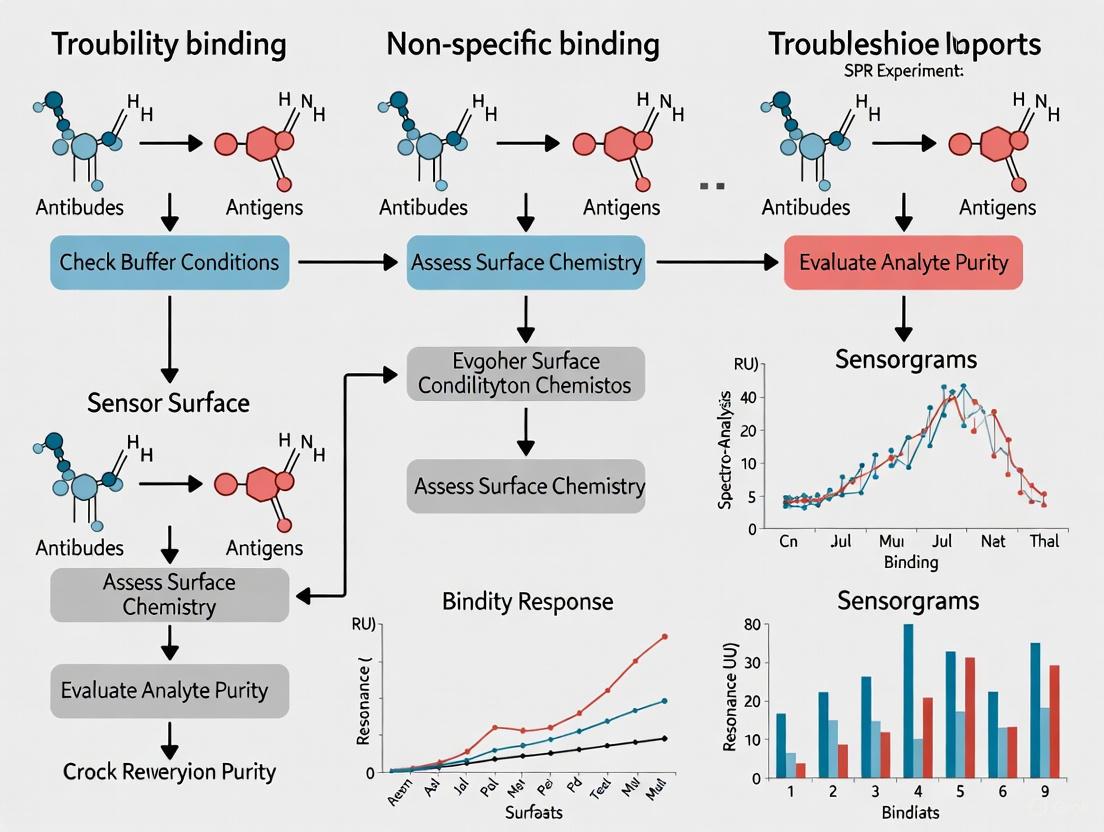
This article provides a comprehensive guide for researchers and drug development professionals tackling non-specific binding (NSB) in Surface Plasmon Resonance (SPR) experiments.
Strategies to Identify, Troubleshoot, and Overcome Non-Specific Binding in SPR Experiments
Abstract
This article provides a comprehensive guide for researchers and drug development professionals tackling non-specific binding (NSB) in Surface Plasmon Resonance (SPR) experiments. It covers the foundational principles of NSB, explores advanced methodological and immobilization strategies to minimize its occurrence, details systematic troubleshooting and optimization protocols, and discusses validation techniques to ensure data integrity. By synthesizing current best practices and emerging trends, this resource aims to empower scientists to produce highly reliable, publication-quality kinetic and affinity data, thereby accelerating discoveries in biomolecular interaction analysis and therapeutic development.
Understanding Non-Specific Binding: From Core Concepts to Impact on Data Quality
Defining Non-Specific vs. Specific Binding in SPR
FAQs on Non-Specific Binding
1. What is the fundamental difference between specific and non-specific binding in SPR?
Specific binding refers to the desired, specific molecular interaction between the immobilized ligand and the analyte in solution. This interaction is typically characterized by defined kinetics (association and dissociation phases) and saturability [1] [2]. Non-specific binding (NSB) occurs when the analyte interacts with the sensor surface or the immobilized ligand at unintended, non-target sites. These interactions are often driven by non-specific molecular forces such as hydrophobic interactions, hydrogen bonding, or electrostatic (charge-based) attractions, rather than a specific biological recognition event [1] [2]. NSB can inflate the measured response units (RU), leading to erroneous kinetic data and incorrect conclusions about the interaction [1].
2. How can I quickly test if my experiment has significant non-specific binding?
A simple preliminary test is to run your analyte over a bare sensor surface without any immobilized ligand [1] [3]. If you observe a significant binding response, non-specific binding is present. Another method is to use the reference channel on your SPR instrument. The response on the sample channel contains signal from specific binding, non-specific binding, and bulk refractive index shift. In contrast, the response on the reference channel (which should be coated with an irrelevant molecule or a blank surface) contains only non-specific binding and bulk shift [4]. If the response on the reference channel is greater than about a third of the sample channel response, you should take steps to reduce the NSB [4].
3. What are the most common causes of non-specific binding?
The primary causes can be categorized as follows:
- Charge-Based Interactions: A positively charged analyte will often bind non-specifically to a negatively charged sensor surface (e.g., a carboxylated dextran chip) [1] [3].
- Hydrophobic Interactions: Hydrophobic patches on your analyte can interact with the sensor surface [1].
- Surface and Immobilization Issues: The nature of the sensor surface itself or the chemistry used to immobilize the ligand can expose sites prone to non-specific adsorption [1] [2].
- Sample Impurities: Contaminants or aggregates in your sample can adhere to the sensor surface [2].
4. My regeneration step isn't working. Could non-specific binding be the cause?
Yes, they are often related. If your regeneration step does not completely remove bound analyte, it can cause carryover effects and baseline drift, which may be due to very strong non-specific binding [5]. Successful regeneration requires a solution that disrupts the specific ligand-analyte interaction without damaging the ligand. However, the same solution might be ineffective against strongly adhered non-specifically bound analyte. Optimizing your regeneration conditions (e.g., using acidic, basic, or high-salt solutions) is crucial, and reducing NSB at the source will make regeneration more effective [6] [3].
Troubleshooting Guide: Resolving Non-Specific Binding
Follow the systematic workflow below to identify and mitigate non-specific binding in your SPR experiments.
Quantitative Solutions for Non-Specific Binding
The table below summarizes key buffer additives and their typical working concentrations to combat different types of NSB.
Table 1: Common Reagents to Reduce Non-Specific Binding
| Reagent / Strategy | Typical Working Concentration / Range | Primary Function & Mechanism | Considerations |
|---|---|---|---|
| Bovine Serum Albumin (BSA) [1] [3] [4] | 0.5 - 2 mg/mL [4] (often 1% [1]) | Protein blocker; shields molecules from non-specific interactions by occupying charged/hydrophobic sites on surfaces and tubing [1]. | Use during analyte runs only, not during ligand immobilization, to avoid coating the sensor chip [3]. |
| Tween 20 (surfactant) [1] [3] [4] | 0.005% - 0.1% [4] | Disrupts hydrophobic interactions; mild non-ionic detergent reduces adsorption [1] [3]. | Low concentrations are effective; higher concentrations may interfere with some protein functions. |
| Sodium Chloride (NaCl) [1] [3] [4] | Up to 500 mM [4] (e.g., 200 mM [1]) | Reduces charge-based interactions; high ionic strength shields charged groups on the analyte and surface [1]. | Can affect the stability of some electrostatic-dependent specific interactions. |
| Ethylenediamine (post-coupling) [4] | As a blocking agent after amine coupling | Blocks negative charge on carboxylated sensor chips; alternative to ethanolamine for reducing charge-based NSB with positive analytes [4]. | Specifically useful for positively charged analytes on standard carboxymethyl dextran chips. |
| Sensor Chip Dextran [4] | 1 mg/mL added to running buffer | For dextran chips; saturates the dextran matrix to prevent analyte from getting stuck non-specifically [4]. | Chip-specific strategy. |
Detailed Experimental Protocols
Protocol 1: Diagnostic Test for Non-Specific Binding
This protocol helps you determine the level of NSB in your system before running a full binding experiment [1] [3].
- Prepare Surfaces: Use a sensor chip with at least two flow cells. Leave one flow cell bare (underivatized) or deactivated. A second flow cell can be immobilized with your ligand as per your standard procedure.
- Prepare Analyte: Use the highest concentration of your analyte from your planned dilution series.
- Run the Experiment: Inject the high-concentration analyte over both the bare surface and the ligand-immobilized surface using your standard running buffer.
- Analyze the Data:
- Interpretation: If the NSB response is more than ~30% of the specific signal, you should implement the strategies listed in Table 1 and the workflow above before proceeding [4].
Protocol 2: Scouting for Optimal Regeneration Conditions
Incomplete regeneration can lead to carryover of both specific and non-specifically bound analyte, corrupting subsequent data points [5]. This protocol helps find a solution that fully cleans the surface.
- Immobilize Ligand: Immobilize your ligand on the sensor chip.
- Bind Analyte: Inject a single, medium concentration of analyte to achieve a robust binding level.
- Scout Regenerants: After the dissociation phase, inject a short pulse (e.g., 15-60 seconds) of a candidate regeneration solution. Start with mild conditions and progress to harsher ones if needed [3]. Common solutions include:
- Assess Regeneration: The goal is to return the signal to the baseline level before analyte injection. Monitor the stability of the baseline after regeneration; a drifting baseline can indicate incomplete regeneration or surface damage [5].
- Check Ligand Activity: Inject a known positive control analyte to ensure the regeneration step did not denature or strip the ligand from the surface. A stable binding response over multiple cycles confirms successful regeneration [3].
The Scientist's Toolkit: Key Research Reagent Solutions
Table 2: Essential Materials for SPR Experiments Focused on Minimizing NSB
| Item | Function in SPR | Key Consideration for NSB |
|---|---|---|
| CM5 / Carboxyl Sensor Chip | Standard chip for covalent amine coupling of proteins/ligands. | The negatively charged dextran matrix can cause NSB with positively charged analytes [3] [4]. |
| NTA Sensor Chip | Captures His-tagged proteins via nickel chelation, allowing for oriented immobilization. | Can reduce NSB by improving ligand orientation, but the metal chelate itself can sometimes cause NSB. |
| Planar / C1 Sensor Chip | Sensor with a flat, low-swelling hydrogel surface. | Can reduce NSB from analytes that penetrate the 3D matrix of dextran chips [4]. |
| BSA (Bovine Serum Albumin) | Versatile blocking agent for proteins. | Use as a buffer additive after ligand immobilization to block NSB sites in the system [3]. |
| Tween 20 | Non-ionic surfactant to disrupt hydrophobic NSB. | Effective at very low concentrations; also prevents analyte loss to tubing and vials [1]. |
| Ethylenediamine | Blocking agent for carboxyl chips. | Provides a more neutral charge than the standard ethanolamine, better reducing NSB for positive analytes [4]. |
| Glycine-HCl (pH 2.0-3.0) | Common acidic regeneration solution. | Effective for disrupting antibody-antigen interactions; harsh conditions may inactivate some ligands [6]. |
| (R)-MDL-101146 | (R)-MDL-101146, CAS:163660-53-5, MF:C29H37F5N4O6, MW:632.6 g/mol | Chemical Reagent |
| SAR405838 | SAR405838, CAS:1303607-60-4, MF:C29H34Cl2FN3O3, MW:562.5 g/mol | Chemical Reagent |
Frequently Asked Questions (FAQs)
Q1: What are the primary molecular forces responsible for Non-Specific Binding (NSB) in SPR experiments? NSB is primarily driven by three fundamental molecular forces: hydrophobic interactions, electrostatic (charge-based) interactions, and Van der Waals forces [1]. These forces cause the analyte to interact with non-target sites on the sensor surface or the immobilized ligand itself, rather than with the specific binding pocket, which can inflate the response signal and lead to erroneous kinetic data [1].
Q2: How can I experimentally determine which force is causing NSB in my assay? You can identify the dominant force by conducting a series of preliminary tests. A simple test involves running your analyte over a bare sensor surface without any immobilized ligand to confirm the presence of NSB [1] [3]. Based on the results, you can hypothesize the cause and test specific additives:
- If you suspect electrostatic interactions, try increasing the salt concentration (e.g., NaCl) to shield the charges [1] [3].
- If you suspect hydrophobic interactions, add a non-ionic surfactant like Tween 20 to disrupt them [1] [3].
- Using a protein blocker like BSA can help shield the analyte from various non-specific interactions with the surface and tubing [1] [3]. Observing which additive reduces the NSB signal can pinpoint the main contributing force.
Q3: My protein has a high isoelectric point (pI). How can I reduce charge-based NSB? For a positively charged analyte (high pI), it will readily interact with a negatively charged sensor surface [1]. To mitigate this:
- Adjust your buffer pH: Set the pH of your running buffer to the isoelectric point (pI) of your protein, where it has a neutral overall charge, or to a pH that neutralizes the surface charge [1] [3].
- Block the surface charge: If using amine coupling, block the sensor chip with ethylenediamine instead of ethanolamine after immobilization. Ethylenediamine provides a primary amine that leaves a less negative surface, reducing attraction to your positively charged analyte [7].
- Increase salt concentration: Adding salts like NaCl to your buffer can produce a shielding effect, reducing charge-based interactions [1].
Q4: Can changing my sensor chip chemistry help with NSB? Yes, selecting an appropriate sensor chip is a fundamental strategy. If you are experiencing significant NSB, consider switching to a sensor chip with a different surface chemistry [8] [6]. For instance, if you are using a negatively charged carboxyl or NTA sensor and your analyte is also negatively charged, you may see repulsion instead of binding. Conversely, a positively charged analyte will have strong NSB on this surface. In such cases, switching to a neutral or positively charged surface, or using a planar chip instead of a dextran-based chip, can significantly reduce NSB [3] [7].
Troubleshooting Guide: Identifying and Resolving NSB
Step 1: Confirm the Presence of NSB
Before troubleshooting, confirm that NSB is affecting your data.
- Method: Immobilize your ligand on one flow cell. Use a second flow cell as a reference, which should be activated and blocked but without ligand immobilized [6]. Inject a high concentration of your analyte and observe the binding response on both the ligand and reference surfaces.
- Interpretation: A significant binding response on the reference surface indicates NSB [3]. If the NSB signal is less than 10% of your specific binding signal, you may be able to correct your data by subtracting the reference signal. If it is higher, you need to mitigate it [3].
Step 2: Identify the Dominant Molecular Force
The table below summarizes the characteristics and initial tests for different NSB types.
Table 1: Identifying the Molecular Forces Behind Non-Specific Binding
| Molecular Force | Common Manifestation | Preliminary Diagnostic Test |
|---|---|---|
| Electrostatic Interactions | Strong NSB with oppositely charged surfaces or molecules [1]. | Add 150-200 mM NaCl to the running buffer. A reduction in NSB confirms charge involvement [1]. |
| Hydrophobic Interactions | NSB due to non-polar regions on the analyte or surface [1]. | Add a non-ionic surfactant (e.g., 0.005%-0.1% Tween 20) to disrupt hydrophobic forces [1] [7]. |
| Van der Waals / General Adsorption | General, non-specific adhesion to the sensor surface or tubing. | Add a blocking agent like 0.5-1 mg/mL BSA to surround and shield the analyte [1] [7]. |
Step 3: Apply Targeted Solutions
Once you have identified the likely cause, apply the solutions detailed in the table below.
Table 2: Targeted Solutions for Different Types of Non-Specific Binding
| Root Cause | Recommended Solution | Example & Mechanism |
|---|---|---|
| Electrostatic Interactions | - Adjust buffer pH to protein's pI [1] [3].- Increase ionic strength with salts [1] [3].- Use ethylenediamine for blocking [7]. | Example: Addition of 200 mM NaCl to running buffer significantly reduced NSB of rabbit IgG on a negatively charged surface [1].Mechanism: The ions in the salt shield the charged groups on the analyte and sensor surface, preventing their attraction. |
| Hydrophobic Interactions | - Add non-ionic surfactants [1] [3].- Change to a more hydrophilic sensor chip [7]. | Example: Using Tween 20 at concentrations as low as 0.005% [7].Mechanism: Surfactants coat hydrophobic patches, making them less available for non-specific interactions. |
| General Adsorption & Surface Effects | - Add protein blockers (BSA, casein) [8] [3].- Use additives like carboxymethyl dextran or PEG [7]. | Example: Using 1% BSA in the buffer and sample solution [1] [3].Mechanism: These agents adsorb to non-specific sites on the surface and tubing, preventing your analyte from doing so. |
Experimental Protocol: A Standard Workflow to Mitigate NSB
The following diagram illustrates a logical workflow for diagnosing and addressing NSB in an SPR experiment.
Title: NSB Troubleshooting Workflow
Detailed Protocol Steps:
- Preliminary NSB Test: Prepare a sensor chip where at least one flow cell has no ligand immobilized (a bare surface). Inject your highest analyte concentration over this surface. The observed binding response is your baseline NSB level [1] [3].
- Assessment: Compare the NSB response to the specific binding response on your ligand-immobilized surface. If NSB is less than 10%, you can subtract it during data processing. If it is higher, proceed to mitigation [3].
- Diagnose the Force: Systematically test different buffer additives to diagnose the dominant force.
- Begin by supplementing your running buffer with 150-200 mM NaCl. If NSB decreases, electrostatic forces are a key contributor [1].
- If salt has little effect, try adding 0.005% Tween 20. An improvement indicates significant hydrophobic interactions [1] [7].
- As a broad-spectrum initial approach, 1% BSA can be added to shield the analyte from various surface interactions [1].
- Re-test and Iterate: After applying a solution, repeat the preliminary NSB test to check for improvement. You may need to combine strategies (e.g., a slightly higher salt concentration with a low amount of surfactant) for optimal results.
- Final Validation: Once NSB is minimized, run a full analyte concentration series over your specific ligand surface to collect kinetic data.
Research Reagent Solutions
The table below lists key reagents used to combat NSB, along with their functions and typical working concentrations.
Table 3: Essential Reagents for Mitigating Non-Specific Binding
| Reagent | Function & Mechanism | Typical Working Concentration |
|---|---|---|
| Sodium Chloride (NaCl) | Reduces charge-based NSB by shielding electrostatic interactions between charged residues on the analyte and the sensor surface [1] [3]. | 150 - 500 mM [1] [7]. |
| Tween 20 | A non-ionic surfactant that disrupts hydrophobic interactions by coating hydrophobic patches on the analyte or surface [1] [3]. | 0.005% - 0.1% [1] [7]. |
| Bovine Serum Albumin (BSA) | A protein blocking agent that adsorbs to non-specific sites on the sensor surface and tubing, shielding the analyte from non-target interactions [1] [3]. | 0.5 - 2 mg/mL (or ~0.05% - 0.2%) [1] [7]. |
| Ethylenediamine | An alternative to ethanolamine for blocking after amine coupling. It leaves a less negative (more neutral) surface charge, reducing NSB with positively charged analytes [7]. | Used as a 1 M solution, pH 8.5 [7]. |
| Carboxymethyl Dextran | When added to the buffer, it can saturate dextran-based sensor surfaces, preventing analyte adsorption through competitive occupation of non-specific sites [7]. | 1 mg/mL [7]. |
Surface Plasmon Resonance (SPR) is a powerful, label-free technique for studying biomolecular interactions, but its performance is often compromised by non-specific binding (NSB), a long-standing challenge that can lead to erroneous data and false conclusions [9] [10]. This guide helps you identify and troubleshoot the common sources of NSB in your experiments.
FAQ: The Top Questions on Non-Specific Binding
What is non-specific binding (NSB) in SPR? NSB occurs when molecules in your sample (the analyte) interact with the sensor surface or non-target molecules without any specific recognition, leading to a false signal that inflates the response units (RU) and compromises kinetic data [9] [1].
How can I quickly check if my experiment has NSB? A simple preliminary test is to run your analyte over a bare sensor surface or a reference channel that lacks the immobilized ligand. A significant response on this surface indicates NSB that needs to be addressed [1] [4].
My sensorgram is noisy and the baseline is drifting. Is this NSB? Not necessarily. Noisy signals and baseline drift can have other causes, such as sample impurities (e.g., protein aggregates) or buffer incompatibility [11] [8]. However, these factors can also contribute to or exacerbate NSB, so a thorough investigation is recommended.
The Core Culprits of NSB and Their Solutions
The table below summarizes the primary causes of NSB and the corresponding strategies to mitigate them.
Table 1: Common Culprits of Non-Specific Binding and Mitigation Strategies
| Culprit Category | Specific Cause | Mechanism | Solution |
|---|---|---|---|
| Sensor Surface Chemistry | Hydrophilic -OH terminated surfaces | Significant NSB signal observed with liposomes [12] | Use -CH₃ or -COOH terminated surfaces [12] |
| Negatively charged carboxymethyl dextran | Attracts positively charged analytes [13] | Switch to short-chain thiols or planar surfaces [4] [13] | |
| Sample Composition | Impurities (aggregates, denatured proteins) | Cause noisy signals and curious sensorgrams [11] | Purify sample to >95% purity; use SEC-MALS for QC [11] |
| Inactive or denatured protein | Loss of specific binding function [11] | Source proteins with verified bioactivity [11] | |
| Buffer Conditions | Incorrect pH | Analyte carries a net positive charge, interacting with a negative surface [1] | Adjust buffer pH to the isoelectric point of the analyte [1] |
| Low ionic strength | Insufficient shielding of charged molecules [1] | Increase salt concentration (e.g., up to 200-500 mM NaCl) [1] [4] | |
| Hydrophobic interactions | Non-polar interactions with the surface [1] | Add non-ionic surfactants (e.g., Tween-20 at 0.005%-0.1%) [1] [4] |
Quantitative Impact of Surface Chemistry
The choice of sensor surface chemistry has a direct and quantifiable impact on the level of NSB. The following table summarizes experimental data from a study using liposomes, showing how different surface terminations affect the SPR signal.
Table 2: Quantifying NSB: SPR Signal Change vs. Sensor Surface Chemistry
| Sensor Surface Termination | SPR Signal Change at 100 μM Phospholipid (mRIU) | Interpretation |
|---|---|---|
| -COOH (on sensor) paired with -COOH (on liposome) | ~1 mRIU | NSB almost completely eliminated [12] |
| -CH₃ | Minimal (performance similar to -COOH) | NSB significantly minimized [12] |
| -OH | ~4 mRIU | Significant NSB observed [12] |
Experimental Protocols for Minimizing NSB
Protocol 1: Systematic Optimization of Buffer Conditions
This protocol is a first-line strategy for reducing NSB caused by electrostatic and hydrophobic interactions [1].
- Prepare Stock Solutions: Prepare a 1M NaCl stock solution for ionic strength adjustment, a 10% (v/v) stock of a non-ionic surfactant like Tween 20, and a 1-10% (w/v) stock of a blocking agent like Bovine Serum Albumin (BSA).
- Baseline Test: Run your analyte over a bare sensor surface or reference channel to establish the baseline NSB level.
- Adjust Ionic Strength: If NSB is suspected to be charge-based, add NaCl to the running buffer and sample, testing a range from 50 mM up to 500 mM [1] [4]. Monitor for a reduction in the reference channel signal.
- Add Surfactant: If hydrophobic interactions are suspected, introduce Tween 20 to a final concentration between 0.005% and 0.1% to both the running buffer and sample [1] [4].
- Use a Blocking Agent: Add BSA at a concentration of 0.5 to 2 mg/ml to block remaining non-specific sites on the sensor surface [9] [4]. Note that this is added to the buffer, not the sample.
- Iterate and Combine: You may need to combine strategies (e.g., a moderate salt concentration with a low level of surfactant) for optimal results. Always verify that your specific binding signal remains strong.
Protocol 2: Advanced Surface Selection and Control Experiments
This protocol uses strategic surface selection and experimental design to account for NSB, which is particularly useful in complex media like serum [14].
- Select the Right Surface: Based on the data in Table 2, choose a sensor chip with a surface chemistry that minimizes NSB for your system, such as a planar COOH or CH₃ terminated chip over an OH-terminated one [12] [4].
- Employ a Multi-Channel Strategy:
- Channel 1 (Ligand Channel): Immobilize your target ligand.
- Channel 2 (Reference Channel): Prepare a surface that mimics the ligand channel but lacks specific activity. This can be achieved by immobilizing an irrelevant protein, using a chemical block (e.g., ethanolamine), or, for capture assays, capturing a non-cognate target structurally similar to your ligand [14].
- Run Simultaneous Measurements: Inject your sample over both channels simultaneously.
- Subtract the Signal: During data analysis, subtract the response from the reference channel (non-specific signal) from the response in the ligand channel (specific + non-specific signal) to obtain the true specific binding signal [4].
This workflow for advanced surface selection and control experiments ensures that non-specific signals are effectively identified and accounted for.
The Scientist's Toolkit: Key Research Reagent Solutions
Table 3: Essential Reagents for Troubleshooting NSB in SPR
| Reagent / Material | Function / Purpose | Key Considerations |
|---|---|---|
| BSA (Bovine Serum Albumin) | Protein-based blocking agent that covers non-specific binding sites on the sensor surface [9] [4]. | Typically used at 0.5-2 mg/ml. Ensure it does not interfere with the specific interaction [1] [4]. |
| Tween 20 | Non-ionic surfactant that disrupts hydrophobic interactions [1]. | Use at low concentrations (0.005%-0.1%). Higher concentrations may denature proteins [1] [4]. |
| NaCl | Salt used to shield electrostatic interactions by increasing ionic strength [1]. | Test a range from 50 mM to 500 mM. Can be combined with other additives [1] [4]. |
| Carboxyl-terminated (-COOH) Sensor Chip | Sensor surface chemistry that minimizes NSB, especially when paired with negatively charged analytes [12]. | A planar COOH chip is an alternative to dextran-based chips if NSB is high [4]. |
| Ethanolamine | Small molecule used to deactivate and block remaining active ester groups after amine coupling [8]. | A standard step in immobilization protocols that also reduces charge-based NSB [8]. |
| NHS ester of 16-mercaptohexadecanoic acid | Short-chain thiol for creating self-assembled monolayers (SAMs) that drastically reduce NSB from complex media [13]. | Offers lower NSB compared to traditional carboxymethyl dextran surfaces [13]. |
| Wf-516 | Wf-516, CAS:310392-93-9, MF:C25H26Cl3N3O4, MW:538.8 g/mol | Chemical Reagent |
| MIR96-IN-1 | MIR96-IN-1, MF:C33H48N8O2, MW:588.8 g/mol | Chemical Reagent |
Frequently Asked Questions
What is Non-Specific Binding (NSB) in SPR? In SPR experiments, non-specific binding (NSB) occurs when the analyte interacts with the sensor surface or other non-target sites, rather than specifically with the immobilized ligand [1]. These unintended interactions are typically driven by non-covalent molecular forces such as hydrophobic interactions, hydrogen bonding, or ionic (charge-based) attractions [1] [15].
Why is NSB a critical problem for data interpretation? NSB is not just a minor nuisance; it directly compromises the integrity of your kinetic data. It inflates the measured response units (RU), leading to an overestimation of binding levels [1]. This results in erroneous calculations of affinity (KD) and kinetic rate constants (ka and kd) [3]. Essentially, the reported parameters reflect a combination of specific and non-specific events, making them unreliable.
What are the real-world consequences of NSB? In practical terms, NSB can cause:
- Low recovery of your analyte, making it seem like your sample has disappeared [16].
- High variability between sample replicates, ruining the reproducibility of your assay [16].
- Poor sensitivity, which can mask weak but biologically important interactions and limit the dynamic range of your assay [16].
How can I quickly test if my experiment has NSB? A simple preliminary test is to run a high concentration of your analyte over a bare sensor surface (a flow cell with no immobilized ligand) [3] [1]. Any significant response change indicates that NSB is present and must be addressed before collecting final data.
Can't I just subtract the NSB signal during data analysis? While reference channel subtraction can correct for some NSB, this is not always perfect [3]. If the NSB signal accounts for less than 10% of your total signal, subtraction can be a valid correction [3] [1]. However, for higher levels of NSB, the underlying kinetic constants are often already skewed. The best practice is to actively minimize NSB through experimental optimization rather than relying solely on data correction [3].
Troubleshooting Guide: Identifying and Solving NSB
Step 1: Diagnose the Type of NSB
The most effective mitigation strategy depends on the primary cause of your non-specific binding. The diagram below outlines a logical workflow for diagnosing and addressing NSB based on experimental observations.
Step 2: Apply Targeted Solutions
Once you have a hypothesis for the type of NSB, employ the specific strategies detailed in the table below. These methods work by altering the chemical environment to disrupt the forces causing non-specific interactions.
| Strategy | Mechanism of Action | Example Protocol | Key Considerations |
|---|---|---|---|
| Adjust Buffer pH [1] [15] | Alters the net charge of proteins to reduce charge-based attraction to the sensor surface. | Prepare running buffer with a pH closer to the isoelectric point (pI) of your analyte, where its net charge is neutral. | Extreme pH may denature your biomolecule. Test a range of ±1 pH unit from the initial condition. |
| Increase Salt Concentration [1] [15] | Shields charged groups on both the analyte and sensor surface, disrupting ionic interactions. | Add 150-200 mM NaCl to both the running buffer and analyte samples [15]. | Very high salt concentrations may cause protein precipitation or salting-out effects. |
| Add Non-Ionic Surfactants [3] [1] | Disrupts hydrophobic interactions by coating hydrophobic surfaces and analyte regions. | Add Tween 20 to buffers at a low concentration (e.g., 0.05% v/v). | Surfactants can be difficult to flush from the system and may interfere with some detection methods. |
| Use Protein Blocking Additives [3] [1] | Coats the sensor surface and tubing with an inert protein (e.g., BSA) to block adsorption sites. | Add 1% Bovine Serum Albumin (BSA) to your buffer and sample solutions. | Adds complexity to the sample and may not be compatible with all downstream analyses, like LC-MS [17]. |
Experimental Protocol: Systematic NSB Testing and Optimization
This protocol provides a detailed methodology to diagnose NSB and test the effectiveness of mitigation strategies.
Objective: To confirm the presence of NSB and identify the optimal buffer condition to minimize it.
Materials:
- SPR instrument.
- Bare sensor chip (e.g., carboxymethyl dextran chip without immobilized ligand).
- Purified analyte at a high concentration (e.g., 10x expected KD).
- Running buffer.
- Test buffers with different additives (see table above).
Procedure:
- Establish a Baseline: Prime the SPR system with your standard running buffer.
- Initial NSB Test: Inject your analyte at a high concentration over the bare sensor surface using the standard running buffer. Observe the response.
- Result: A significant response (RU) indicates NSB is present.
- Test Mitigation Buffers: Repeat the injection with the same analyte concentration, but now using a series of running buffers that contain different additives.
- Example series: Standard buffer, buffer + 200 mM NaCl, buffer + 0.05% Tween 20, buffer + 1% BSA.
- Analyze Results: Compare the response levels from each injection. The condition that yields the lowest response on the bare sensor chip is the most effective at reducing NSB.
- Validate on Ligand Surface: Once an optimal buffer is identified, immobilize your ligand and run a full analyte concentration series. The sensorgrams should show cleaner association and dissociation phases, and the resulting data should fit better to a 1:1 binding model.
The Scientist's Toolkit: Key Research Reagent Solutions
Having the right reagents is crucial for designing a robust SPR experiment and combating NSB. The following table lists essential materials and their functions.
| Item | Function in SPR Experiment | Key Consideration |
|---|---|---|
| CM5 Sensor Chip [18] | A versatile chip with a carboxymethylated dextran matrix for covalent immobilization of ligands via amine coupling. | The standard choice for many applications, but the negatively charged dextran can contribute to charge-based NSB. |
| NTA Sensor Chip [3] [18] | For capturing His-tagged ligands, providing a uniform orientation. | Requires a ligand with a 6x-His tag. The surface may need stabilization after capture. |
| SA Sensor Chip [8] | For capturing biotinylated ligands with high affinity and defined orientation. | Requires a biotinylated ligand. |
| HEPES Buffered Saline (HBS) [18] | A common running buffer that provides physiological pH and ionic strength. | A good starting point for many protein interaction studies. |
| Bovine Serum Albumin (BSA) [3] [1] | A blocking agent used to coat surfaces and prevent NSB of proteinaceous analytes. | Can complicate data if it binds to the ligand; not suitable for all detection methods [17]. |
| Tween 20 [3] [1] | A non-ionic detergent used to reduce hydrophobic interactions and prevent analyte loss to tubing and containers. | Use at low concentrations (0.01-0.05%) to avoid damaging proteins or creating bubbles. |
| EDC/NHS Chemistry [8] [18] | The standard crosslinking chemistry for covalent immobilization of ligands on carboxylated surfaces (e.g., CM5). | Can lead to heterogeneous ligand orientation if the protein has multiple lysine residues. |
| ML204 hydrochloride | ML204 hydrochloride, CAS:2070015-10-8, MF:C15H19ClN2, MW:262.78 g/mol | Chemical Reagent |
| SR9186 | SR9186, CAS:1361414-26-7, MF:C28H19F3N6O3, MW:544.49 | Chemical Reagent |
Proactive Design: Methodological Choices to Suppress Non-Specific Binding
FAQs: Core Principles and Selection
Q1: What is the primary function of a sensor chip in an SPR experiment? The sensor chip is the core of the SPR system. It provides a stable, functionalized surface to immobilize a ligand (e.g., a protein, antibody, or nucleic acid). When an analyte in solution binds to this ligand, it causes a change in the refractive index on the sensor surface, which is detected in real-time as a shift in the resonance angle. The chip's surface chemistry is designed to facilitate this immobilization while minimizing non-specific binding (NSB) to ensure accurate data [19] [20].
Q2: How does the choice of sensor chip directly impact non-specific binding? Non-specific binding occurs when analytes interact with the sensor surface itself rather than the target ligand, leading to false-positive signals and skewed data. The immobilization matrix on the sensor chip (e.g., dextran, SAM, or lipid layer) is designed to be hydrophilic and bio-inert, which reduces these unwanted hydrophobic or electrostatic interactions. Selecting a chip with the appropriate surface chemistry for your specific ligand and analyte is the first and most critical step in mitigating NSB [19] [20] [5].
Q3: When should I use a dextran-based sensor chip? Dextran-based chips (e.g., CM5) are versatile and widely used. Their 3D hydrogel structure provides a high surface area for ligand immobilization, making them ideal for studying interactions involving small molecules and proteins. However, this 3D structure can sometimes lead to steric hindrance for very large analytes, such as viruses or whole cells, potentially trapping analytes and contributing to NSB [21] [19].
Q4: What are the advantages of a Self-Assembled Monolayer (SAM) chip? SAMs, typically formed from alkanethiols on a gold surface, create a flat, two-dimensional (2D) surface. This planar geometry is better suited for studying interactions between large molecules, such as large proteins, virus particles, or whole cells, as it minimizes steric crowding. Mixed SAMs can be engineered with specific terminal groups (e.g., carboxyl, hydroxyl) to optimize ligand attachment and reduce NSB [21] [22].
Q5: For which applications are lipid-based sensor chips essential? Lipid-based chips (e.g., L1 and HPA) are designed to mimic biological membranes. The L1 chip captures intact liposomes or membrane vesicles within a dextran matrix, while the HPA chip supports the formation of a single lipid monolayer on a hydrophobic surface. These are indispensable for studying membrane-protein interactions, lipid-protein binding, and the function of membrane-embedded receptors in a near-physiological environment [20] [23] [24].
Troubleshooting Guides
Troubleshooting Non-Specific Binding (NSB)
| Symptom | Potential Cause | Solution |
|---|---|---|
| High binding signal in the reference channel or on a bare surface. | Analyte is interacting non-specifically with the sensor chip surface. | - Add blocking agents like BSA (0.1-1%) to the running buffer [6] [3] [5].- Supplement buffer with non-ionic surfactants (e.g., Tween 20) to disrupt hydrophobic interactions [3].- Increase salt concentration (e.g., NaCl) to shield charge-based interactions [3]. |
| Signal increases linearly during association without curvature. | Mass transport limitation; analyte diffusion to the surface is slower than its binding rate. | - Increase the flow rate during analyte injection [3] [5].- Reduce the ligand density on the sensor chip to slow the capture rate [3]. |
| Inconsistent binding responses and high background. | The surface charge of the chip is attracting the analyte oppositely. | - Adjust the buffer pH to match the isoelectric point (pI) of your protein analyte to neutralize its charge [3].- Switch to a sensor chip with a lower charge density (e.g., from CM5 to CM4) [24]. |
| NSB persists despite buffer optimization. | Incompatible sensor chip chemistry for the ligand-analyte pair. | - Switch the immobilization chemistry. If using covalent amine coupling, try a capture method (e.g., NTA for His-tagged proteins) to improve orientation and reduce denaturation [6] [19]. |
Troubleshooting Sensor Chip Regeneration
| Symptom | Potential Cause | Solution |
|---|---|---|
| Incomplete dissociation; baseline does not return to original level. | The regeneration solution is too mild or the contact time is too short. | - Optimize regeneration scouting: Start with mild conditions (e.g., low salt, mild pH) and progressively increase strength [3].- Use short, high-flow rate pulses (e.g., 100 µL/min) of regeneration buffer [3].- Test alternative solutions: 10 mM glycine pH 2.0, 10 mM NaOH, or 2 M NaCl [6]. |
| Ligand activity drops after regeneration. | The regeneration solution is too harsh and damages the immobilized ligand. | - Use a milder regeneration buffer. Adding 10% glycerol can help stabilize the ligand [6].- For capture chips, be prepared to re-immobilize the ligand after each regeneration cycle [3]. |
| Gradual decay of binding capacity over multiple cycles. | Cumulative damage to the sensor chip surface or ligand. | - Ensure the regeneration solution is compatible with the sensor chip surface chemistry (e.g., avoid detergents on L1 or HPA chips) [23].- Follow manufacturer guidelines for surface maintenance and storage [5]. |
Comparative Data and Experimental Protocols
Sensor Chip Comparison Table
The following table summarizes the key characteristics of the three main sensor chip types to guide your selection.
| Feature | Dextran Polymer (e.g., CM5) | Self-Assembled Monolayer (SAM) | Lipid Structures (e.g., L1, HPA) |
|---|---|---|---|
| Surface Geometry | 3D hydrogel matrix (~100-200 nm thick) [19] | Flat, 2D monolayer [22] | L1: 3D dextran with lipophilic groups; HPA: 2D lipid monolayer [23] [24] |
| Ideal For | Small molecules, protein-protein interactions, high ligand density [19] [20] | Large analytes (viruses, cells), reduced steric hindrance [21] [22] | Membrane proteins, lipid-protein interactions, mimicking cell membranes [20] [23] |
| Common Immobilization | Covalent coupling (amine, thiol) [19] | Covalent coupling to terminal groups [21] | Hydrophobic capture of liposomes (L1) or lipid monolayer fusion (HPA) [23] [24] |
| NSB Considerations | Hydrophilic matrix reduces NSB; can trap large molecules [19] [20] | Can be engineered with mixed SAMs to minimize NSB [21] | Full lipid coverage is critical to block the hydrophobic surface and prevent NSB [23] |
| Key Advantage | High binding capacity due to 3D structure. | Planar surface ideal for large binding partners. | Provides a native-like membrane environment. |
Essential Research Reagent Solutions
| Reagent | Function in SPR Experiments |
|---|---|
| BSA (Bovine Serum Albumin) | A common blocking agent added to running buffers (typically at 1%) to coat the sensor surface and minimize non-specific protein adsorption [6] [3]. |
| Tween 20 | A non-ionic surfactant used at low concentrations in buffers to disrupt hydrophobic interactions that cause NSB [3]. |
| EDC/NHS | Cross-linking reagents used for covalent amine coupling on carboxylated surfaces (e.g., CM5 chips) to activate the surface for ligand attachment [21]. |
| Octyl-glucoside | A detergent used to prepare and clean hydrophobic HPA sensor chips before lipid monolayer formation [23]. |
| NaOH (e.g., 10-100 mM) | A common, harsh regeneration solution used to strip bound analyte from the ligand surface. Concentration must be optimized to avoid ligand denaturation [6] [23]. |
| Glycine-HCl (e.g., 10 mM, pH 2.0) | A common, mild acidic regeneration solution used to disrupt protein-protein interactions without permanently damaging the ligand [6]. |
Workflow Diagram: Strategic Chip Selection
The following diagram outlines a logical workflow for selecting the appropriate sensor chip based on your experimental goals.
Experimental Protocol: Coating an HPA Chip with a Lipid Monolayer
This protocol details the steps for creating a lipid monolayer on an HPA sensor chip, a critical process for membrane interaction studies [23].
The choice of immobilization technique in Surface Plasmon Resonance (SPR) is a critical foundational step that directly influences the reliability and interpretability of your binding data. The primary challenge in many SPR experiments is non-specific binding (NSB), which can artificially inflate response signals and lead to erroneous kinetic calculations [1]. A significant contributor to NSB is suboptimal ligand orientation on the sensor surface.
When a ligand is immobilized randomly, its active binding site may become obstructed or altered. This not only reduces the specific signal from your target interaction but can also increase the relative contribution of non-specific interactions with other parts of the sensor surface or the ligand itself [25] [6]. Therefore, selecting an immobilization strategy that promotes correct orientation is not merely a matter of efficiency—it is a primary strategy for troubleshooting and mitigating NSB.
This guide compares two principal immobilization philosophies—Direct Covalent Coupling and Affinity Capture—focusing on their practical implementation, their inherent advantages and limitations for controlling orientation, and their direct impact on the success of your experiments within a broader research context focused on minimizing NSB.
Technical Deep Dive: Method Comparison and Selection Criteria
The following table provides a comparative overview of the two major immobilization techniques to guide your initial selection.
Table 1: Comparison of Immobilization Techniques for Optimal Orientation
| Feature | Direct Covalent Coupling | Affinity Capture |
|---|---|---|
| Core Principle | Irreversible, covalent attachment of the ligand to the sensor surface via chemical reactions [26]. | Non-covalent, reversible attachment using a high-affinity intermediate molecule [25] [26]. |
| Typical Methods | Amine, Thiol, and Aldehyde coupling chemistries [25]. | Streptavidin-Biotin, His-Tag-NTA, Antibody-Antigen (e.g., Protein A for IgG) [25] [26]. |
| Control over Orientation | Low to None. Coupling occurs randomly via common functional groups (e.g., lysine amines), which can block active sites [25] [6]. | High. The capture mechanism directs a specific, uniform orientation, presenting the ligand optimally [25] [26]. |
| Impact on Ligand Activity | Risk of activity loss due to random coupling, harsh pH during immobilization (e.g., low pH for amine coupling), or the blocking step [25] [6]. | Generally preserves activity as the ligand is not chemically modified and is often captured in its native conformation [25]. |
| Surface Stability | High. Covalent bonds create a stable surface that can withstand stringent regeneration conditions [26]. | Moderate. Stability depends on the affinity of the capture pair; ligands can dissociate over time or during regeneration [25] [26]. |
| Best Suited For | Robust ligands without sensitive orientation requirements; when maximum surface stability is critical [25]. | Ligands with specific tags (His, biotin); antibodies (via Protein A); when orientation is crucial to preserve function [25] [26]. |
Workflow Visualization of Immobilization Techniques
The following diagrams illustrate the key procedural and logical steps involved in each method.
Troubleshooting Guide: FAQs and Solutions
Q1: My data shows a high response signal, but my negative controls are also high, suggesting significant non-specific binding. Could my immobilization method be the cause?
Yes, this is a classic symptom. Random orientation from direct covalent coupling can be a primary contributor. When ligands are immobilized haphazardly, hydrophobic or charged regions that are normally buried can become exposed to the solution, promoting non-specific interactions with the analyte or other components [1] [6].
- Solution A (Switch Technique): Transition from amine coupling to an affinity capture method. For instance, if your ligand is an antibody, using a Protein A sensor kit ensures it is captured via its Fc region, presenting the antigen-binding domains uniformly away from the surface and reducing non-productive interactions [26].
- Solution B (Optimize Covalent Coupling): If you must use covalent coupling, consider targeted chemistry. For antibodies, digest them to generate Fab' fragments with free thiol groups, which can then be directionally immobilized using thiol coupling chemistry [25].
- Solution C (Buffer Additives): As an adjunct to changing immobilization, incorporate buffer additives to mitigate existing NSB. This includes using non-ionic surfactants like Tween 20 (e.g., 0.05%) to disrupt hydrophobic interactions, or adding BSA (e.g., 1%) to block non-specific sites [1] [8].
Q2: I am using an NTA sensor chip to capture his-tagged ligand, but my baseline drifts downward during analyte injection, suggesting my ligand is dissociating. How can I improve stability?
This indicates that the affinity of the NTA-His-tag interaction is not sufficient to withstand the flow conditions or the interaction with the analyte, a known limitation of this method [25] [26].
- Solution A (Increase Stability): Supplement your running buffer with a low concentration of a non-chelating metal ion like NiCl₂ (e.g., 1-10 µM). This can help stabilize the NTA-metal-His-tag complex without promoting non-specific binding.
- Solution B (Control Density): Ensure you have not overloaded the surface with the his-tagged ligand. A very high density can lead to steric crowding, weakening the individual capture bonds and making them more prone to dissociation.
- Solution C (Alternative Method): If stability cannot be achieved, consider a more stable capture system. For his-tagged proteins, a capture antibody specific to the tag can be covalently immobilized, providing a stronger hold. Alternatively, if feasible, biotinylate the ligand and use a streptavidin-biotin system, which has one of the highest known affinities [25] [26].
Q3: After covalent immobilization, I suspect my ligand has lost its biological activity. How can I confirm this and prevent it in the future?
Loss of activity can occur if the coupling process targets amino acids critical for the binding function or if the low pH incubation during amine coupling denatures the ligand [25] [6].
- Confirmation Test: Perform an activity assay in solution if possible. Alternatively, inject a known binding partner at a high concentration over the immobilized surface. A complete lack of binding, combined with a successful immobilization (high RU), strongly suggests deactivation.
- Prevention Strategy: Shift to an affinity capture system that does not require harsh chemical treatment or pH shifts. If covalent coupling is necessary, use a method that targets a specific site on the ligand away from the active site, such as thiol coupling after introducing a unique cysteine residue [25].
The Scientist's Toolkit: Essential Reagents and Materials
Table 2: Key Research Reagent Solutions for Immobilization
| Item | Primary Function | Application Notes |
|---|---|---|
| Carboxyl Sensor Chip (CM5) | The standard surface for covalent amine coupling via EDC/NHS chemistry [26]. | A versatile first choice for many ligands. Be mindful of random orientation. |
| NTA Sensor Chip | Captures ligands featuring a polyhistidine tag (His-tag) [26]. | Excellent for purified his-tagged proteins. Allows surface regeneration with EDTA. Ligand leaching can be an issue. |
| Protein A Sensor Kit | Directionally captures antibodies via their Fc region [26]. | The preferred method for IgG-based antibodies to ensure optimal antigen binding site presentation. |
| Biotin-Streptavidin Sensor | Captures any biotinylated ligand with very high affinity [25] [26]. | Requires ligand biotinylation but offers extremely stable immobilization and controlled orientation. |
| EDC/NHS Activation Kit | Activates carboxyl groups on the sensor surface for covalent coupling to ligand amines [26]. | Essential for standard covalent immobilization on carboxyl chips. |
| BSA (Bovine Serum Albumin) | A blocking agent used to coat unused reactive sites on the sensor surface after immobilization [1]. | Critical for reducing NSB. Typically used at 0.1-1% concentration. |
| Tween 20 | A non-ionic surfactant added to running buffers to minimize hydrophobic interactions [1] [8]. | Very effective at reducing NSB. Common working concentration is 0.05% (v/v). |
| ML399 | ML399, MF:C27H28FN3O2, MW:445.5 g/mol | Chemical Reagent |
| MT 63-78 | MT 63-78, MF:C21H14N2O2, MW:326.3 g/mol | Chemical Reagent |
Decision Pathway for Technique Selection
Use this logical flowchart to determine the most appropriate immobilization strategy for your specific ligand and experimental goals.
Frequently Asked Questions (FAQs)
1. What is non-specific binding (NSB) in SPR, and why is it a particular concern for cell-based assays? In SPR, non-specific binding (NSB) occurs when the analyte interacts with the sensor surface or other non-target molecules, not through the specific, biologically relevant interaction you are trying to study [1]. This produces a false signal that inflates the response units (RU), leading to inaccurate kinetic data [1]. In cell-based SPR, where the ligand is a membrane protein in its native lipid environment, the risk of NSB is heightened. The complex cellular surface presents a multitude of potential non-specific interaction sites, and the detergents or lipids necessary to keep membrane proteins stable can further promote NSB [27] [28].
2. My baseline is unstable and drifting. What could be the cause? Baseline drift can stem from several sources [5]. A common cause is improper buffer preparation; ensure your buffer is freshly prepared, properly degassed to eliminate bubbles, and filtered [27] [5]. Other causes include leaks in the fluidic system, a contaminated sensor surface, or buffer mismatches between your sample and running buffer [8] [5]. Always ensure your analyte is in the same buffer as your running buffer (e.g., through dialysis) to minimize bulk refractive index shifts [27].
3. I see no signal change when I inject my analyte. What should I check? A lack of signal can be frustrating. Please investigate the following areas [5]:
- Ligand Activity: Confirm that your immobilized membrane protein is still active and properly folded. Inactivity can occur if the binding pocket is blocked due to the orientation during immobilization [6].
- Ligand Density: Check the immobilization level; it may be too low to produce a detectable signal [5].
- Analyte Concentration: Verify that your analyte concentration is sufficient for detection [8] [5].
- Flow Rate: Adjust the flow rate, as a rate that is too high might not allow sufficient time for binding [8].
4. How can I effectively regenerate my sensor chip when working with delicate membrane proteins? Successful regeneration removes the bound analyte while keeping the ligand (your membrane protein) intact and active. Because the optimal conditions are highly system-dependent, you must test different solutions [6]. Common regeneration agents include:
- Acidic solutions: 10 mM glycine (pH 2.0) or 10 mM phosphoric acid [6].
- Basic solutions: 10 mM sodium hydroxide (NaOH) [6].
- High salt solutions: 2 M sodium chloride (NaCl) [6]. To help stabilize delicate targets during regeneration, you can add 10% glycerol to the solution [6].
Troubleshooting Guide
Problem: High Non-Specific Binding
NSB occurs when your analyte binds to the sensor surface itself rather than specifically to your target ligand. This is a primary source of error in SPR data [1] [4].
Solutions:
- Optimize Buffer Composition: The simplest and most effective first step is to modify your running buffer with additives that shield or block non-specific interactions. The table below summarizes common solutions.
- Adjust Buffer pH: The pH dictates the charge of your biomolecules. If your analyte is positively charged and NSB is occurring, it may be interacting with a negatively charged sensor surface. Adjusting the pH to the isoelectric point (pI) of your analyte can neutralize it and reduce these interactions [1].
- Use a Different Sensor Chip: If you are using a dextran-based chip (e.g., CM5) and see high NSB, switching to a planar chip (e.g., C1) can help. Conversely, the dextran matrix of a CM5 chip can itself help passivate the surface against some forms of NSB, which might be preferable for nanoparticle analytes [29].
- Include a Proper Reference Channel: Always use a reference cell that is similarly treated but lacks your specific ligand. The response from this channel, which contains only NSB and bulk shift, can be subtracted from your sample channel data [27] [4].
Problem: Low Signal Intensity
A weak binding signal makes it difficult to obtain reliable kinetic data.
Solutions:
- Optimize Ligand Immobilization Density: A density that is too low will produce a weak signal, while one that is too high can cause steric hindrance. Perform immobilization level tests to find the optimal density for your system [8].
- Improve Immobilization Efficiency: Ensure your ligand is properly oriented and active. For his-tagged membrane proteins, using an NTA chip provides a standardized capture method. For other proteins, consider different coupling chemistries (e.g., thiol coupling) if amine coupling obstructs the active site [6].
- Increase Analyte Concentration: If feasible, increase the concentration of your analyte. Be mindful that too high a concentration can lead to other issues, like mass transport limitation [8].
- Use High-Sensitivity Chips: Consider using sensor chips designed for enhanced sensitivity, especially if you are working with low-abundance membrane protein targets [8].
Problem: Poor Reproducibility
Inconsistent data between replicate experiments undermines the reliability of your results.
Solutions:
- Standardize Immobilization: Ensure your ligand immobilization procedure is highly consistent in terms of time, temperature, and pH [8].
- Use Control Samples: Always include negative controls (e.g., an irrelevant ligand or a non-binding analyte) to validate the specificity of your interaction and control for variability [8].
- Ensure Sample Quality: Protein aggregates or impurities are a major source of inconsistency. Always purify your proteins and remove aggregates immediately before the experiment, using methods like gel filtration or ultracentrifugation [27] [8] [5].
- Monitor Environmental Factors: Perform experiments in a controlled environment, as temperature fluctuations can impact both the instrument and the biomolecular interactions [8].
The following workflow diagram summarizes the key steps in troubleshooting an SPR experiment, from identifying the symptom to applying targeted solutions.
The Scientist's Toolkit: Key Research Reagent Solutions
Successful cell-based SPR experiments require careful selection of reagents and materials. The following table details essential items for immobilizing membrane proteins and optimizing assays to minimize non-specific binding.
Table: Essential Reagents for Membrane Protein SPR Assays
| Item | Function & Rationale |
|---|---|
| NTA Sensor Chip [27] | A sensor chip functionalized with nitrilotriacetic acid (NTA) is ideal for capturing his-tagged membrane proteins, a common purification strategy. This allows for a standardized and oriented immobilization [27]. |
| Mild Detergents (e.g., DDM) [27] | Detergents like n-Dodecyl β-D-maltoside (DDM) are essential for extracting and solubilizing membrane proteins from the lipid bilayer while keeping them stable and functional in solution [27]. |
| BSA [1] [4] | Used as a blocking agent in the buffer (0.5-2 mg/mL) to occupy non-specific binding sites on the sensor chip surface and fluidics, effectively reducing background noise [1] [4]. |
| Tween 20 [1] [4] | A non-ionic surfactant added to the running buffer (0.005%-0.1%) to disrupt hydrophobic interactions that are a major cause of NSB [1] [4]. |
| Nickel Solution (e.g., NiClâ‚‚) [27] | Required to charge the NTA chip before his-tagged protein capture. A typical concentration is 0.5 mM in running buffer [27]. |
| Regeneration Solutions [6] | Solutions like 350 mM EDTA (to strip his-tagged proteins and Ni²⺠from the NTA chip), 10-100 mM HCl, or 0.25% SDS are used to clean the sensor surface between binding cycles or for final stripping [27] [6]. |
| Mutant IDH1-IN-1 | Mutant IDH1-IN-1, MF:C30H31FN4O2, MW:498.6 g/mol |
The Role of Surface Pre-Conditioning and Ligand Density Control in Minimizing NSB
Troubleshooting Guide: FAQs on Surface Pre-Conditioning and Ligand Density
1. What is baseline drift and how can surface pre-conditioning help?
Baseline drift, where the sensor's baseline signal gradually shifts over time, is often a sign of a not optimally equilibrated sensor surface [30]. Pre-conditioning the chip with several cycles of buffer flow stabilizes the surface and removes any contaminants [8]. It is sometimes necessary to run the flow buffer overnight to achieve full equilibration [30].
2. How does ligand density affect non-specific binding (NSB)?
Using a lower ligand density is generally recommended to avoid analyte depletion and can help minimize mass transport effects [3]. Furthermore, a surface that is too densely packed with ligand can increase the potential for non-specific interactions. If NSB is observed and you are using a negatively charged sensor, one strategy is to immobilize the more negatively charged molecule as the ligand to reduce charge-based NSB [3].
3. My analyte is positively charged and attracted to the dextran surface. How can I pre-condition the surface to prevent this?
For a positively charged analyte, you can modify the standard amine-coupling protocol. After ligand immobilization, instead of using ethanolamine for deactivation, block the sensor chip with ethylenediamine [4]. This compound adds a primary amine group, reducing the negative charge of the sensor surface and thus decreasing the potential for electrostatic, non-specific binding.
4. What are the signs of an inadequately pre-conditioned surface?
Signs include significant baseline drift at the start of your experiment and sudden spikes or shifts at the beginning of an analyte injection, which can also point to carry-over from a poorly washed system [30]. A well-conditioned surface should exhibit a stable baseline with minimal drift.
5. How can I experimentally determine the optimal ligand density for my experiment?
Aim for a lower ligand density initially to avoid mass transport limitations and potential steric hindrance [3]. For preliminary experiments, you can immobilize the ligand at a higher density if low surface activity is suspected and readjust later. The optimal density is one that provides a strong specific signal while minimizing NSB and mass transport effects. You can perform a ligand dilution series to find a density that gives a good signal-to-noise ratio for your analyte [8].
Research Reagent Solutions for Surface Pre-Conditioning and NSB Control
The following table details key reagents used to prepare sensor surfaces and manage ligand immobilization to minimize Non-Specific Binding.
| Reagent/Material | Function in Pre-Conditioning/NSB Control | Typical Usage/Concentration |
|---|---|---|
| Running Buffer | Equilibrates the sensor surface and hydrodynamics; its composition (pH, salts) is critical for stabilizing the baseline and minimizing charge-based NSB [30] [8]. | Varies by system; often HBS-EP or PBS. Must be matched with analyte buffer to avoid bulk shift [3]. |
| Regeneration Buffers | Strips bound analyte from the immobilized ligand between analysis cycles, restoring the surface for the next injection without damaging ligand activity [3]. | Acidic (e.g., 10 mM glycine pH 2.0), basic (e.g., 10 mM NaOH), high salt (e.g., 2 M NaCl). Must be optimized for each interaction [6] [3]. |
| Ethylenediamine | A blocking agent used after amine coupling to neutralize negative surface charges, thereby reducing NSB from positively charged analytes [4]. | Used as an alternative to the standard ethanolamine deactivation solution [4]. |
| Bovine Serum Albumin (BSA) | A protein additive used to block remaining active sites on the sensor surface, shielding the analyte from non-specific interactions [1] [3]. | 0.5 - 2 mg/ml (or ~0.1%) added to running buffer and sample solution during analyte runs [1] [4] [3]. |
| Non-Ionic Surfactants (e.g., Tween 20) | Disrupts hydrophobic interactions between the analyte and the sensor surface or immobilized ligand, a common cause of NSB [1] [3]. | 0.005% - 0.1% in running buffer [1] [4]. |
| NaCl | Shields charged molecules via its ions, reducing electrostatic-based NSB between the analyte and the sensor surface [1] [3]. | Up to 500 mM in running buffer; concentration requires optimization [1] [4]. |
Experimental Protocols for Surface Preparation
Protocol 1: Standard Surface Pre-Conditioning and Equilibration
This protocol aims to stabilize the sensor chip surface and fluidics to achieve a stable baseline before ligand immobilization or sample injection.
- Install Sensor Chip: Place the chosen sensor chip into the instrument according to the manufacturer's instructions.
- Initial Prime: Prime the entire microfluidic system with your chosen, filtered, and degassed running buffer.
- Surface Pre-Conditioning: Initiate a flow of running buffer over the sensor surface. For a new or stored chip, perform several injections of a mild regeneration solution (e.g., a short pulse of 10 mM glycine, pH 2.0, or 10 mM NaOH) to clean and condition the surface [8].
- Baseline Equilibration: Continue flowing running buffer over the surface until a stable baseline is achieved. This may require running the buffer for an extended period, sometimes even overnight, to fully equilibrate the system [30].
- Baseline Stability Check: Monitor the baseline signal for drift. A stable baseline (drift of < 1-2 RU per minute) indicates a well-conditioned system ready for ligand immobilization.
Protocol 2: Optimizing Ligand Immobilization Density
This protocol provides a method to find an appropriate ligand density that provides a strong signal while minimizing artifacts.
- Select Immobilization Method: Choose a suitable covalent (e.g., amine coupling) or capture (e.g., His-NTA, antibody capture) method based on your ligand's properties [3].
- Prepare Ligand Dilutions: Prepare a series of ligand solutions at different concentrations. For amine coupling, use a low-pH immobilization buffer (e.g., pH 4.0-5.5) if the ligand is a protein.
- Scouting Immobilization Levels: For each ligand concentration, perform a short injection (1-5 minutes) over an activated surface (for covalent coupling) or a capture surface.
- Measure Response: Record the final immobilization level in Response Units (RU). Aim for a range of densities. A lower density is generally preferred to avoid mass transport limitations [3].
- Test with Analyte: Test each immobilized surface with a mid-range concentration of your analyte. Evaluate the binding response for characteristics of mass transport (a linear association phase) [3] and check a reference surface for NSB.
- Select Optimal Density: Choose the ligand density that yields a strong, specific binding signal with a curved association phase, minimal NSB, and good reproducibility.
Surface Pre-Conditioning and Ligand Density Workflow
The following diagram illustrates the logical workflow and decision points for using surface pre-conditioning and ligand density control to minimize Non-Specific Binding (NSB) in SPR experiments.
A Step-by-Step Troubleshooting Playbook for Non-Specific Binding
This technical support guide focuses on the critical role of buffer optimization in troubleshooting non-specific binding (NSB) in Surface Plasmon Resonance (SPR) experiments. Non-specific binding, where analytes interact with the sensor surface or ligand through unintended forces, is a major challenge that can skew kinetic data and lead to erroneous conclusions in biomolecular interaction studies [1] [31]. Properly optimized buffer conditions are among the most effective strategies to minimize these artifacts, ensuring the collection of reliable, high-quality data for researchers and drug development professionals [8] [3]. The following FAQs and guides address the most common buffer-related issues encountered during SPR experiments.
Troubleshooting Guides & FAQs
FAQ: What is non-specific binding and how does it affect my SPR data?
Non-specific binding (NSB) occurs when your analyte interacts with the sensor chip surface or the immobilized ligand through means other than the specific, biologically relevant interaction you intend to study [1] [31]. This can include hydrophobic interactions, hydrogen bonding, or electrostatic (charge-based) attractions [1]. The consequence is an inflated response signal (RU), which leads to inaccurate calculations of affinity (KD) and kinetic rate constants (ka and kd) [1] [3]. Effectively managing NSB is therefore essential for data integrity.
FAQ: How can I quickly test if my experiment has non-specific binding?
A simple preliminary test is to inject your highest concentration of analyte over a bare sensor surface (a channel with no immobilized ligand) or over a surface coated with an irrelevant protein, such as BSA [6] [3]. A significant binding response on this reference surface indicates that NSB is present and must be addressed before proceeding with your main experiment [3].
Troubleshooting Guide: My SPR data shows significant non-specific binding. How can I optimize my buffer to fix this?
The table below summarizes the core buffer parameters you can adjust to mitigate non-specific binding.
Table 1: Buffer Optimization Strategies to Combat Non-Specific Binding
| Buffer Parameter | Mechanism of Action | Recommended Starting Points | Key Considerations |
|---|---|---|---|
| Adjust Buffer pH | Modifies the net charge of proteins to reduce electrostatic interactions with the charged sensor surface [1] [3]. | Adjust pH to the isoelectric point (pI) of your analyte to neutralize its charge [1]. | Know the pI of your ligand and analyte. A positively charged analyte will bind to a negatively charged dextran surface [1]. |
| Increase Ionic Strength | High salt concentrations shield charged groups on proteins and the surface, disrupting charge-based interactions [1] [3]. | Supplement running buffer with 150-500 mM NaCl [1] [4]. | Very high salt may destabilize some proteins or even promote hydrophobic binding [8]. |
| Add Non-Ionic Surfactants | Disrupts hydrophobic interactions by acting as a mild detergent [1] [3]. | Add Tween-20 to running buffer at a concentration of 0.005% - 0.1% [4]. | Also prevents analyte loss to tubing and vials [1]. |
| Use Protein Blocking Additives | Acts as a sacrificial protein to occupy non-specific binding sites on the surface and in the flow system [1] [4]. | Add BSA to running buffer and sample solution at 0.1 - 2 mg/mL [1] [4]. | Do not use during ligand immobilization, as it will coat the sensor chip [3]. |
Experimental Protocol: Systematic Buffer Scouting for NSB Reduction
The following workflow provides a methodology for empirically determining the optimal buffer conditions to minimize NSB for your specific experimental system.
- Baseline Establishment: Begin by running your analyte over a bare sensor surface (or your actual ligand surface) using your standard running buffer. This establishes your baseline level of NSB [3].
- Systematic Additive Screening: Prepare a series of running buffers, each incorporating one of the additives from Table 1 (e.g., Buffer A + 0.05% Tween-20, Buffer B + 1 mg/mL BSA, Buffer C + 200 mM NaCl).
- Test and Compare: Inject the same high concentration of analyte over the test surface using each of the new buffers. Monitor the response level on a reference surface (without ligand).
- Evaluate and Combine: Identify the buffer condition that yields the greatest reduction in NSB signal without affecting the specific binding signal. If NSB persists, consider combining additives (e.g., 0.01% Tween-20 + 100 mM NaCl).
- Validate Specific Binding: Once a condition is found that minimizes the reference signal, perform a full concentration series of the analyte over the ligand surface to confirm that the specific binding signal and expected kinetics are preserved.
This systematic approach to buffer scouting is summarized in the following workflow diagram:
FAQ: My sensorgram has a large, square-shaped signal that appears immediately at injection. Is this non-specific binding?
This "square" shape is typically a bulk shift (or solvent effect), not non-specific binding [3]. It is caused by a difference in refractive index between your running buffer and the buffer in your analyte sample. While reference subtraction can help, the best solution is to precisely match the composition of your running buffer and analyte buffer, or to dialyze your analyte into the running buffer [3].
The Scientist's Toolkit: Key Research Reagent Solutions
The table below details essential reagents used in SPR buffer optimization to reduce non-specific binding.
Table 2: Essential Reagents for SPR Buffer Optimization
| Reagent | Primary Function in SPR | Key Usage Notes |
|---|---|---|
| BSA (Bovine Serum Albumin) | Protein blocking additive; occupies non-specific sites on the sensor surface and fluidics [1] [4]. | Use at 0.1-2 mg/mL in running and sample buffers during analyte runs only [1] [4]. |
| Tween-20 | Non-ionic surfactant; disrupts hydrophobic interactions [1] [3]. | Effective at very low concentrations (0.005%-0.1%). Mild and generally does not denature proteins [4]. |
| Sodium Chloride (NaCl) | Salt used to increase ionic strength; shields charged groups to reduce electrostatic NSB [1] [3]. | Commonly used from 150 mM up to 500 mM. Titrate to find a level that reduces NSB without impacting specific binding [1] [4]. |
| Carboxymethyl Dextran | Polymer additive; can be used to block specific surfaces by occupying the dextran matrix [4]. | Add at 1 mg/mL to running buffer when using carboxymethyl dextran chips (e.g., CM5) [4]. |
| Ethylenediamine | Blocking agent; used after amine coupling to cap the sensor surface. Reduces negative charge more effectively than ethanolamine [4]. | Particularly useful when analyzing a positively charged analyte to reduce electrostatic attraction to the surface [4]. |
FAQs: Addressing Common Challenges with Blocking Agents
Q1: What is the primary cause of non-specific binding (NSB) in SPR experiments, and how do blocking agents help? Non-specific binding is caused by undesirable molecular forces—such as hydrophobic interactions, hydrogen bonding, and Van der Waals interactions—between the analyte and the sensor surface. These interactions can inflate response units (RU), leading to erroneous kinetic data [1]. Blocking agents work by occupying these non-specific sites on the sensor surface. Proteins like BSA and casein create a protective shield around the analyte, while surfactants like Tween 20 disrupt hydrophobic interactions [1] [32].
Q2: My data shows high NSB even after using Tween 20. What alternatives can I try? While Tween 20 is a common surfactant, some experimental systems, particularly ELISA, have documented high NSB when using it as a primary blocking agent [32] [33]. In these cases, replacing Tween 20 with a non-reactive protein like casein in the antibody diluent and wash buffers can be more effective. One study found that casein outperformed both BSA and gelatin in reducing high NSB encountered with low-titre antisera [32] [33].
Q3: How can I reduce charge-based non-specific interactions for a positively charged analyte? For a positively charged analyte, NSB often occurs with negatively charged sensor surfaces [1] [4]. You can:
- Adjust buffer pH: Modify your running buffer to a pH near the isoelectric point (pI) of your analyte, where it carries a neutral net charge [1].
- Increase ionic strength: Add salts like NaCl (commonly up to 500 mM) to your buffer. The ions produce a shielding effect, reducing charge-based interactions [1] [4] [34].
- Modify the sensor surface: After amine coupling, block the sensor chip with ethylenediamine instead of ethanolamine. This leaves a less negatively charged surface, reducing electrostatic attraction to a positive analyte [4].
Q4: Are there any stability or compatibility concerns when using Tween 20? Yes, Tween 20 is not stable to autoclaving. Autoclaving can cause it to precipitate, forming yellow-orange clumps, which renders the solution ineffective and potentially introduces contaminants [35]. Tween 20 solutions should be filter-sterilized instead of autoclaved.
Troubleshooting Guide: Optimizing Your Blocking Strategy
This guide outlines a systematic approach to diagnosing and resolving NSB issues related to blocking agents and surfactants.
Problem: Persistent High Non-Specific Binding After Initial Blocking
Issue Identified: Your initial attempts to reduce NSB, perhaps with a standard concentration of a blocking agent, have been insufficient. The sensorgram shows a high response on the reference channel.
Step 1: Verify and Characterize NSB Confirm that the response on your reference channel is more than about a third of the response on your sample channel [4]. Inject your analyte over a bare or deactivated (e.g., ethanolamine-blocked) sensor surface to quantify the level of NSB [1] [34].
Step 2: Select and Apply an Advanced Strategy Based on the characterization in the flowchart above, proceed with one or more of the following strategies:
For Suspected Hydrophobic Interactions: Introduce a non-ionic surfactant like Tween 20 to your running buffer. Effective concentrations typically range from 0.005% to 0.1% [4] [34]. This mild detergent disrupts hydrophobic interactions without denaturing most proteins.
For Suspected Charge-Based Interactions:
- Increase Shielding: Supplement your buffer with NaCl. Concentrations from 150 mM up to 500 mM can effectively shield charges and reduce electrostatic NSB [1] [4] [34].
- Neutralize Surface: If your analyte is positively charged, block the sensor chip with ethylenediamine instead of ethanolamine after amine coupling. This provides a less negatively charged surface [4].
For Complex or Persistent NSB:
- Use a High-Efficiency Protein Block: Add Bovine Serum Albumin (BSA) at 0.5 to 2 mg/mL to occupy remaining hydrophobic and charged sites on the surface [4].
- Substitute with Casein: If Tween 20 and BSA are ineffective, replace them with casein as your primary blocking agent. Historical data shows casein can be more effective than BSA or gelatin in certain solid-phase assays [32] [33].
Step 3: Evaluate and Iterate Re-test your analyte over the reference surface after implementing the new strategy. If NSB is still unacceptably high, consider combining strategies (e.g., using a protein blocker and a surfactant simultaneously) or exploring alternative sensor chips with different surface chemistries (e.g., planar instead of dextran) [4] [6].
Experimental Protocols: Detailed Methodologies
Protocol 1: Systematic Optimization of Buffer Additives to Minimize NSB
This protocol provides a step-by-step method for empirically determining the optimal buffer conditions to suppress NSB.
1. Principle By testing a matrix of different additives and concentrations, you can identify the condition that minimizes the response on a reference flow cell without adversely affecting the specific binding signal on the ligand-immobilized flow cell.
2. Reagents and Materials
- Running Buffer (e.g., HBS-EP or PBS)
- Stock solutions: 10% Tween 20, 5 M NaCl, 10-50 mg/mL BSA, Casein solution
- Purified analyte at a high concentration (e.g., 1 µM)
- Prepared SPR sensor chip with at least one ligand-immobilized channel and one blank/reference channel
3. Procedure
- Step 1: Baseline Measurement. Using standard running buffer, inject a high concentration of your analyte over both the reference and ligand surfaces. Record the response levels. This is your baseline NSB.
- Step 2: Additive Screening. Prepare a series of running buffers supplemented with single additives. A typical screening matrix is shown in the table below.
- Step 3: Sequential Injection. For each test buffer, inject the same concentration of analyte over both surfaces.
- Step 4: Data Analysis. For each condition, calculate the net specific response:
(Response on Ligand Channel) - (Response on Reference Channel). The optimal condition maximizes the net specific response and minimizes the reference channel response.
4. Expected Results You should observe a significant reduction in the reference channel response with effective additives. The table below summarizes a hypothetical optimization for a charged, hydrophobic analyte.
| Additive | Concentration | Response on Reference (RU) | Net Specific Response (RU) | Conclusion |
|---|---|---|---|---|
| None (Baseline) | - | 130 | 500 | High NSB |
| Tween 20 | 0.05% | 90 | 510 | Partial reduction |
| NaCl | 150 mM | 65 | 550 | Good reduction of charge NSB |
| BSA | 1 mg/mL | 75 | 520 | Good reduction |
| NaCl + Tween 20 | 150 mM + 0.05% | 30 | 580 | Best overall reduction |
Table 1: Example data from an additive optimization screen. The combination of NaCl and Tween 20 provides the most effective suppression of NSB.
Protocol 2: Direct Comparison of Protein Blocking Agents (BSA vs. Casein)
1. Principle This protocol directly compares the efficacy of different protein-based blocking agents when surfactant-based blocking is insufficient.
2. Procedure
- Step 1: Surface Preparation. Immobilize your ligand on the sensor chip using your standard method. Ensure a dedicated reference flow cell is activated and deactivated with ethanolamine.
- Step 2: Prepare Blocking Solutions. Create two separate running buffers: one supplemented with 1 mg/mL BSA and another with a 1% casein solution. The casein buffer may require the addition of an anti-microbial agent like Thimerosal for stability [32].
- Step 3: Equilibrate and Test. Equilibrate the system with the BSA-containing buffer. Inject your analyte and record responses on both channels. Regenerate the surface thoroughly. Switch to the casein-containing buffer, re-equilibrate, and repeat the analyte injection.
- Step 4: Compare NSB. Compare the response on the reference channel between the BSA and casein conditions. The agent yielding the lower reference signal is more effective for your specific system.
Research Reagent Solutions
The following table details key reagents used for troubleshooting non-specific binding in SPR.
| Reagent | Primary Function | Typical Working Concentration | Key Considerations |
|---|---|---|---|
| BSA | Protein blocking agent; occupies hydrophobic and charged sites on the sensor surface. | 0.5 - 2 mg/mL [4] | A versatile, general-purpose blocker. Can sometimes contribute to NSB itself [34]. |
| Casein | Protein blocking agent; effective at covering a wide range of non-specific sites. | ~1% (w/v) [32] | Can be more effective than BSA or gelatin in some systems [32] [33]. May require an anti-microbial preservative [32]. |
| Tween 20 | Non-ionic surfactant; disrupts hydrophobic interactions. | 0.005% - 0.1% [4] [34] | Filter-sterilize; do not autoclave [35]. Can be ineffective or even problematic as a primary blocker in ELISAs [32]. |
| Sodium Chloride (NaCl) | Salt; shields charged groups to reduce electrostatic interactions. | 50 - 500 mM [1] [4] | Effective for charge-based NSB. Start with 150 mM and titrate upwards [34]. |
| Carboxymethyl Dextran | Surface mimic; used with dextran chips to saturate non-specific sites. | 0.1 - 1 mg/mL [4] | Useful when NSB is specific to the dextran matrix of the sensor chip. |
Table 2: Essential reagents for reducing non-specific binding in SPR experiments.
Signaling Pathways and Workflows
The following diagram illustrates the decision-making workflow for selecting the appropriate blocking strategy based on the physicochemical properties of your analyte and the observed NSB.
FAQs and Troubleshooting Guides
This guide addresses common challenges in Surface Plasmon Resonance (SPR) experiments, providing targeted solutions to optimize key parameters and minimize non-specific binding (NSB).
FAQ: How do flow rate, temperature, and contact time influence non-specific binding?
These parameters critically impact data quality by controlling how the analyte interacts with the sensor surface. An optimized flow rate ensures efficient analyte delivery and can help wash away weakly bound molecules, reducing NSB. Temperature affects the stability of both specific and non-specific interactions; multi-temperature experiments can help delineate them. Contact time directly influences binding saturation; excessive contact time can allow more time for non-specific interactions to occur, inflating the signal.
Troubleshooting Guide: Common SPR Issues and Solutions
| Issue | Possible Causes | Recommended Solutions |
|---|---|---|
| High Non-Specific Binding | Hydrophobic/charge-based interactions; suboptimal buffer; inadequate surface blocking [1] [6] [36]. | Adjust buffer pH to analyte's isoelectric point; add surfactants (e.g., 0.005-0.01% Tween 20) or protein blockers (e.g., 1% BSA); increase salt concentration (e.g., 150-200 mM NaCl) [1] [8] [6]. |
| Baseline Drift or Instability | Buffer not degassed; air bubbles in system; temperature fluctuations; surface regeneration issues [8] [5]. | Degas buffer thoroughly; check fluidic system for leaks; perform experiments in a temperature-stable environment; ensure proper surface regeneration [5]. |
| Weak or No Signal | Low ligand density; low analyte concentration; analyte or ligand inactivity [8] [6]. | Optimize ligand immobilization density; increase analyte concentration if feasible; verify ligand/analyte activity; try alternative coupling chemistries [8] [6]. |
| Poor Reproducibility | Inconsistent surface immobilization; sample precipitation; instrument calibration issues [8] [5]. | Standardize immobilization protocol; check sample stability and clarity; ensure consistent sample handling; calibrate instrument [8] [5]. |
| Signal Saturation | Analyte concentration too high; ligand density too high; contact time too long [8] [5]. | Reduce analyte concentration or injection time; lower ligand density; increase flow rate [8] [5]. |
Experimental Protocols and Optimization Strategies
Protocol 1: Systematic Optimization of Flow Rate and Contact Time
Objective: To determine the flow rate and contact time that minimize mass transport limitations and non-specific binding.
- Initial Setup: Immobilize the ligand on an appropriate sensor chip. Use a standardized running buffer.
- Flow Rate Test: Inject a fixed, intermediate concentration of analyte using the same contact time but with varying flow rates (e.g., 10, 30, 50, 70 µL/min).
- Data Analysis: Plot the maximum response (RU) versus flow rate. A response that increases with flow rate suggests mass transport limitation. Select a flow rate where the response becomes independent of the flow rate for kinetic analysis [8] [5].
- Contact Time Test: At the optimized flow rate, inject the analyte at a fixed concentration with varying contact times (e.g., 60, 120, 180, 240 seconds).
- Final Optimization: The goal is to find a combination that yields a strong, specific signal without reaching complete saturation too quickly, which can complicate kinetic analysis [8].
Protocol 2: Multi-Temperature Experiments for Enhanced Specificity
Objective: To exploit the different thermodynamic properties of specific and non-specific binding to improve data analysis, particularly for complex mixtures [37].
- Preparation: Prepare your analyte mixtures and running buffers as usual.
- Experimental Run: Perform binding experiments at multiple temperatures (e.g., 12°C, 16°C, 20°C, and 24°C as used in one study). Ensure the instrument and fluids are equilibrated at each temperature [37].
- Data Processing: Analyze the sensorgrams collected at different temperatures. Specific interactions often display characteristic changes in kinetics (association and dissociation rates) with temperature, which can be modeled using the Van't Hoff and Eyring equations.
- Analysis: This approach provides robust identification of kinetic parameters for individual components in a mixture with fewer required experimental mixtures, as the temperature variation provides additional data dimensions [37].
Data Presentation
Table 1: Quantitative Effects of Buffer Additives on Non-Specific Binding
This table summarizes common buffer additives and their typical working concentrations for mitigating different types of NSB.
| Additive | Primary Function | Recommended Concentration | Effect on NSB (Example) |
|---|---|---|---|
| BSA | Protein blocker; shields analyte from charged surfaces and tubing [1] [38]. | 0.1% - 1% [1] | Can reduce BSA binding to a well-coated surface to <100 RU [38]. |
| Tween 20 | Non-ionic surfactant; disrupts hydrophobic interactions [1] [8]. | 0.005% - 0.01% (v/v) | Prevents analyte binding to tubing and container walls [1]. |
| NaCl | Shields charge-based interactions; increases ionic strength [1]. | 150 - 500 mM | 200 mM NaCl shown to significantly reduce NSB of charged rabbit IgG [1]. |
Workflow and Relationship Diagrams
Experimental Parameter Optimization Logic
The Scientist's Toolkit: Key Research Reagent Solutions
| Item | Function in SPR Experiment |
|---|---|
| CM5 Sensor Chip | A carboxymethylated dextran chip commonly used for covalent immobilization of proteins via amine coupling [37]. |
| L1 Sensor Chip | A sensor chip with hydrophobic groups designed to capture intact lipid vesicles, ideal for studying lipid-protein interactions [38]. |
| HBS-EP Buffer | A standard running buffer (HEPES Buffered Saline with EDTA and surfactant Polysorbate 20) that provides a consistent chemical environment and helps reduce NSB [37]. |
| EDC/NHS Chemistry | A cross-linking chemistry (N-ethyl-N'-(3-dimethylaminopropyl) carbodiimide / N-hydroxysuccinimide) used to activate carboxyl groups on the sensor chip for covalent ligand immobilization [37]. |
| Regeneration Solutions | Low pH (e.g., 10 mM Glycine, pH 2.0), high pH (e.g., 10 mM NaOH), or high salt (e.g., 2 M NaCl) solutions used to remove bound analyte from the immobilized ligand without damaging it [6]. |
FAQ: How do sample contaminants lead to non-specific binding (NSB) in SPR?
Sample contaminants are a primary cause of NSB in Surface Plasmon Resonance experiments. The main mechanisms are:
- Protein Aggregates: Impurities or partially denatured proteins can self-associate into large colloidal assemblies that adsorb non-specifically to the sensor surface or immobilized ligand, leading to false positive signals. These aggregates inhibit target proteins through nonspecific enzyme-aggregate adsorption [39].
- Charge-Based Interactions: Contaminating molecules with strong positive or negative charges can interact electrostatically with oppositely charged groups on the sensor surface, particularly with common carboxymethylated dextran surfaces which carry negative charges [1] [3].
- Hydrophobic Interactions: Hydrophobic contaminants or exposed hydrophobic patches on improperly folded proteins can associate with hydrophobic regions on the sensor surface or ligand, creating substantial NSB that interferes with accurate kinetic measurements [1] [40].
FAQ: What purification strategies effectively eliminate contaminant-driven NSB?
Implementing rigorous purification protocols is essential for minimizing NSB. The following strategies have proven effective:
- Size-Exclusion Chromatography (SEC): Effectively removes protein aggregates and fragmented molecules that contribute to NSB. SEC separates molecules based on size, eliminating high molecular weight aggregates that cause nonspecific adsorption [5].
- Ion-Exchange Chromatography: Reduces charge-based NSB by removing highly charged contaminants and ensuring sample homogeneity. This is particularly important when your target molecule has a charge profile similar to common contaminants [40].
- Affinity Chromatography: Utilizing tags such as His-tag or GST-tag provides high-purity samples with proper folding, significantly reducing NSB from misfolded proteins or contaminants [8] [3].
For all purification methods, always verify sample quality using analytical techniques such as dynamic light scattering (DLS) to detect aggregates, and SDS-PAGE to confirm purity before proceeding with SPR experiments [39].
Experimental Protocol: Sample Quality Assessment for SPR
This protocol provides a systematic approach to evaluate sample quality before SPR experiments, helping researchers identify and eliminate common contaminants that drive NSB.
Materials Required
- Purified ligand and analyte samples
- Appropriate running buffer
- Dynamic Light Scattering (DLS) instrument
- SDS-PAGE gel electrophoresis system
- Analytical size-exclusion chromatography system
Procedure
Pre-SPR Sample Analysis:
- Perform Dynamic Light Scattering (DLS) on both ligand and analyte samples to detect the presence of sub-micrometer aggregates. The critical aggregation concentration (CAC) should be determined, with typical aggregates ranging from 90-600 nm in diameter [39].
- Conduct SDS-PAGE under reducing and non-reducing conditions to check for purity and the presence of protein fragments or contaminating proteins [41].
- Run analytical size-exclusion chromatography to identify high molecular weight species that may not be detected by DLS [29].
NSB Pre-Screening Assay:
- Immobilize your ligand on the sensor chip according to standard protocols [41].
- Inject your highest concentration analyte sample over a bare sensor surface with no immobilized ligand to establish the baseline NSB level [1] [3].
- If significant NSB is detected (>10% of your expected specific signal), implement additional purification steps before proceeding with full SPR analysis [3].
Buffer Compatibility Check:
- Ensure identical composition between your running buffer and sample buffer to avoid bulk refractive index shifts [3].
- Confirm that buffer additives used for purification (salts, detergents) are compatible with SPR running conditions and do not contribute to NSB.
Table 1: Sample Quality Benchmarks for SPR Experiments
| Parameter | Acceptable Range | Measurement Technique | Impact on NSB |
|---|---|---|---|
| Aggregate Content | <5% of total sample | Dynamic Light Scattering | High molecular weight aggregates significantly increase NSB |
| Purity Level | >95% | SDS-PAGE densitometry | Impurities contribute to charge-based and hydrophobic NSB |
| Critical Aggregation Concentration | >10x working concentration | NMR or DLS titration | Prevents aggregate formation during experiment |
| Endotoxin Level | <0.1 EU/μg for sensitive applications | LAL assay | Endotoxins can cause NSB through charge interactions |
Troubleshooting Guide: Contaminant-Driven NSB Issues
Table 2: Troubleshooting Contaminant-Driven Non-Specific Binding
| Problem | Possible Cause | Solution | Validation Method |
|---|---|---|---|
| High NSB on reference surface | Protein aggregates in sample | Implement size-exclusion chromatography or high-speed centrifugation | DLS showing reduction in high molecular weight species |
| Drifting baseline | Slowly dissociating contaminants | Improve sample purity via affinity chromatography; optimize regeneration conditions | Stable baseline after regeneration; consistent replicate data |
| Inconsistent binding curves between replicates | Heterogeneous sample with varying contaminant levels | Standardize purification protocol; include additional polishing step | SDS-PAGE showing consistent purity across preparations |
| Abnormally high response signals | Contaminants binding in addition to specific interaction | Use protein blocking additives (BSA); increase salt concentration | Signal reduction with specific blockers but not non-specific blockers |
| Bell-shaped dose-response curves | Competitive aggregation sequestering active analyte | Work below critical aggregation concentration; add non-ionic detergents | Linear dose-response after additive implementation |
The Scientist's Toolkit: Essential Reagents for Managing NSB
Table 3: Research Reagent Solutions for Contaminant Management
| Reagent | Function in NSB Reduction | Typical Working Concentration | Mechanism of Action |
|---|---|---|---|
| Bovine Serum Albumin (BSA) | Protein blocking additive | 0.1-1% | Shields molecules from non-specific interactions; occupies charged sites on surface [1] [3] |
| Tween-20 | Non-ionic surfactant | 0.005-0.01% | Disrupts hydrophobic interactions between contaminants and sensor surface [1] [3] |
| Sodium Chloride (NaCl) | Ionic strength modifier | 50-200 mM | Shields charged proteins from interacting with charged surfaces [1] |
| Ethanolamine | Surface blocking agent | 1.0 M, pH 8.5 | Deactivates unreacted groups on sensor surface after ligand immobilization [8] |
| Polyethylene Glycol (PEG) | Macromolecular crowding agent | Varies by molecular weight | Reduces NSB through volume exclusion effects [6] [41] |
Visualization: Sample Quality Assurance Workflow
Sample Quality Assurance Workflow - This diagram outlines the sequential process for ensuring sample quality before SPR experiments, emphasizing the iterative nature of purification and quality control until NSB is minimized.
Visualization: Mechanisms of Contaminant-Driven NSB
Mechanisms of Contaminant-Driven NSB - This diagram illustrates the three primary mechanisms through which sample contaminants cause non-specific binding in SPR experiments, along with corresponding solution strategies for each mechanism.
Data Validation and Emerging Techniques: Ensuring Specificity and Confidence
What is the primary function of a reference surface in an SPR experiment?
The primary function of a reference surface is to correct for non-specific binding (NSB) and bulk refractive index effects, enabling the accurate measurement of the specific binding interaction between your analyte and ligand [4] [42]. The measured response on the sample channel is the sum of the specific binding, any non-specific binding, and the bulk refractive index shift. The response on the reference channel, however, comes solely from non-specific binding and any bulk refractive index shift [4]. By subtracting the reference signal, you isolate the response resulting only from the specific interaction of interest.
How do I select and prepare an appropriate reference surface?
Selecting the right reference surface is critical for effective data correction. The table below summarizes the common types and their applications.
Table 1: Types of Reference Surfaces in SPR
| Reference Surface Type | Description | Best Used For | Key Considerations |
|---|---|---|---|
| Unmodified (Native) Surface [42] | A sensor chip that has been activated and then immediately deactivated without coupling a ligand. | Preliminary testing to assess basic NSB of your analyte to the surface chemistry. | May not accurately reflect the properties of a ligand-coupled surface, leading to volume exclusion effects [42]. |
| Non-Reactive Protein Surface [6] [42] | Immobilized with a protein that does not specifically bind your analyte (e.g., BSA, an irrelevant IgG). | Creating a surface that closely mimics the chemical environment of your ligand surface. | Choose the protein carefully; BSA, for instance, can bind many molecules and may not be inert [42]. |
| Ligand-Specific Reference | A surface with an immobilized form of your ligand that is known to be inactive or has a mutated binding site. | Systems where the analyte may have low-level affinity for the ligand's scaffold or structure. | Requires the availability of a suitable inactive analog of your ligand. |
A recommended workflow for testing your reference surface is to inject the highest concentration of your analyte over different surfaces: a native surface, a deactivated surface, and a surface with your chosen reference protein [42]. The ideal reference surface will show minimal binding in these tests. Furthermore, for carboxylated dextran chips, it is often beneficial to immobilize an amount of reference protein that matches the response units (RU) of your ligand surface to ensure similar volume exclusion properties [42].
What constitutes a well-designed negative control experiment?
A well-designed negative control experiment verifies that the observed binding signal is specific. Key types of negative controls include:
- Analyte Controls: Inject your analyte over a reference surface that lacks the specific ligand. Any significant response indicates NSB that must be addressed [3] [43].
- Ligand Activity Controls: Use a mutated or inactive form of your ligand. A lack of binding to this surface confirms that the interaction on your active surface is specific to the functional binding site [6].
- Competitive Inhibition Controls: Pre-incubate your analyte with a known inhibitor or a soluble form of the ligand before injection. A significantly reduced binding response confirms the specificity of the interaction [43].
Why might I get a negative binding response after reference subtraction, and how can I troubleshoot it?
A negative response after reference subtraction indicates that the signal on your reference channel is larger than the signal on your sample channel. This can arise from several experimental conditions [42]:
- Buffer Mismatch: A difference in composition (e.g., salt, DMSO, glycerol) between your running buffer and analyte sample buffer can cause a bulk shift. A low ionic strength analyte solution will typically yield a negative jump [42].
- Non-Specific Reference Interaction: Your analyte may be binding more strongly to the reference surface than to your ligand surface [42].
- Solution: Optimize your buffer conditions by adding detergents (e.g., Tween-20), increasing salt concentration (e.g., 250 mM NaCl), or adding blocking agents like BSA (0.1–1 mg/ml) to the running buffer to suppress NSB [4] [42]. Consider using a different, more inert protein for your reference surface [42].
- Volume Exclusion Effects: Differences in ligand density between the sample and reference surfaces can cause the sensor matrix to swell or shrink differently when the analyte buffer is injected, leading to negative signals after subtraction [42].
The following diagram illustrates the logical troubleshooting steps for a negative binding response.
What are the essential reagents for establishing effective controls?
The table below lists key reagents used to minimize non-specific binding and establish robust controls.
Table 2: Research Reagent Solutions for SPR Controls
| Reagent | Function | Example Usage & Concentration |
|---|---|---|
| Bovine Serum Albumin (BSA) [4] [42] | Blocking agent to occupy non-specific binding sites on the sensor surface. | Add at 0.1 - 2 mg/ml to running buffer to reduce NSB [4] [43]. |
| Carboxymethyl (CM) Dextran [4] [42] | Blocks non-specific interactions with the dextran matrix of the sensor chip. | Add at 0.1 - 1 mg/ml to the flow buffer [42]. |
| Non-Ionic Surfactants (Tween-20) [4] [3] | Reduces hydrophobic interactions between the analyte and sensor surface. | Use at 0.005% to 0.1% in running buffer or sample [4]. |
| Salts (NaCl) [4] [3] | Shields charge-based interactions by increasing ionic strength. | Use up to 500 mM in running buffer to reduce NSB of charged molecules [4]. |
| Ethanolamine [5] [6] | Standard agent for deactivating remaining activated ester groups after amine coupling. | Standard solution (e.g., 1 M, pH 8.5) used in immobilization protocols. |
| Ethylenediamine [4] | Alternative blocking agent that provides a neutral charge to the surface. | Use instead of ethanolamine to block the surface after amine coupling when analyzing positively charged analytes [4]. |
What is a detailed protocol for testing reference surface suitability?
Objective: To empirically determine the best reference surface for a given ligand-analyte system by quantifying non-specific binding.
Materials:
- SPR instrument and sensor chip.
- Running buffer.
- Analyte at the highest concentration to be used in the experiment.
- Ligand for immobilization.
- Candidates for reference protein (e.g., BSA, irrelevant IgG).
- Solutions for surface activation, deactivation, and regeneration.
Method:
- Surface Preparation: Prepare a sensor chip with multiple flow cells.
- Leave one flow cell as a native (unmodified) surface.
- Prepare a second flow cell by activating and then deactivating it (a deactivated surface).
- Immobilize your chosen ligand in a third flow cell.
- In a fourth flow cell, immobilize your candidate reference protein (e.g., BSA). Aim for a density similar to your ligand surface [42].
- Baseline Establishment: Flow running buffer over all surfaces until a stable baseline is achieved.
- Analyte Injection: Inject the highest concentration of your analyte over all four surfaces using the same kinetic parameters (flow rate, contact time, dissociation time).
- Data Collection and Analysis: Record the sensorgrams and compare the responses.
- A good reference surface (e.g., the BSA surface) will show little to no binding, similar to the native and deactivated surfaces.
- A poor reference surface will show significant binding, indicating it is not inert to your analyte.
- Selection: Choose the surface that provides the lowest non-specific binding while most closely matching the chemical properties of your ligand surface. If the raw response on your chosen reference channel is more than a third of the sample channel response, the NSB contribution is too high and should be reduced further [4].
FAQs: Understanding and Diagnosing Binding Events in SPR
Q1: What are the primary visual characteristics that distinguish a specific binding sensorgram from a non-specific one?
A specific binding sensorgram typically exhibits dose-dependency, characteristic kinetic phases, and complete dissociation upon regeneration [29]. The binding response increases with higher analyte concentrations, and the curves for different concentrations do not overlap, showing clear separation in both the association and dissociation phases [8]. The association is binding-rate limited, and dissociation follows a predictable, often single-exponential, decay when the analyte injection stops [29]. In contrast, non-specific binding (NSB) often lacks a clear dose-response relationship; sensorgrams for different concentrations may overlay poorly or be inconsistent [5]. The dissociation phase for NSB is frequently slow and incomplete, indicating that the analyte is stuck to the surface and is not easily removed by buffer flow alone [6] [5].
Q2: Why do I get a negative binding signal in my sensorgram, and what does it mean?
A negative response after reference subtraction generally indicates that the signal on your reference surface is higher than on your active ligand channel [42]. This can be caused by several experimental factors:
- Buffer Mismatch: Differences in salt content, DMSO, or other additives between your sample and running buffer can cause a shift in the baseline. A low ionic strength analyte solution, for example, will give a negative jump compared to a higher ionic strength flow buffer [42].
- Volume Exclusion: The immobilized ligand occupies space within the sensor chip matrix (e.g., dextran). Different ligand densities between channels can cause the matrix to swell or shrink differently when the buffer changes, leading to negative responses after reference subtraction [42].
- Non-specific Reference Interaction: Your analyte may be binding more strongly to the chemistry on your reference surface (e.g., an ethanolamine-blocked surface) than to your specific ligand [42].
- Genuine Interaction: In rare cases, real molecular interactions can produce negative responses due to conformational changes in the immobilized ligand that reduce the local refractive index upon analyte binding [42].
Q3: My sensorgram shows a high response, but the dissociation is minimal. Is this specific binding?
Not necessarily. While some high-affinity interactions have slow dissociation, a complete lack of dissociation is often a red flag for non-specific binding or aggregation on the sensor surface [5]. Specific binding, even if high-affinity, will typically show some degree of dissociation over time. A failure to dissociate often means the analyte is stuck to the surface through hydrophobic or strong charge-based interactions rather than a specific biological interaction. This can be tested with more stringent regeneration conditions, but if the surface cannot be regenerated without damaging the ligand, it strongly points to NSB [6].
Q4: How can I prove that my observed binding signal is specific?
A robust SPR experiment includes multiple controls to validate specificity:
- Use a Well-Designed Reference Surface: This is critical. The reference should account for all signal except the specific interaction [42].
- Run a Competitive Inhibition Assay: Pre-incubate your analyte with a known inhibitor or unlabeled ligand in solution. If the binding signal to the immobilized ligand is significantly reduced, it confirms specificity [18].
- Use a Ligand with a Point Mutation: If possible, immobilize a mutated version of your ligand that is known to lack binding function. A loss of signal with the mutant confirms the specificity of the wild-type interaction.
- Analyze the Kinetics: Specific interactions typically yield kinetic data (ka and kd) that can be fitted to standard binding models (e.g., 1:1 Langmuir) with low residual noise, resulting in a meaningful affinity constant (KD) [8] [29].
Troubleshooting Guide: Resolving Non-Specific Binding
Baseline Issues
| Problem | Possible Cause | Solution |
|---|---|---|
| Baseline Drift [5] | Improperly degassed buffer introducing air bubbles; leaks in the fluidic system; contaminated buffer. | Degas buffer thoroughly before use; check fluidic system for leaks and secure all connections; use fresh, filtered buffer. |
| Noisy/Unstable Baseline [5] | Instrument in an unstable environment (temperature, vibrations); electrical noise; contaminated sensor surface. | Place instrument in a stable environment with minimal fluctuations; ensure proper grounding; clean or regenerate the sensor chip. |
Signal Issues
| Problem | Possible Cause | Solution |
|---|---|---|
| No Signal Change [5] | Analyte concentration too low; ligand immobilization level too low; inactive ligand or analyte. | Increase analyte concentration; optimize ligand immobilization density; check bioactivity of proteins. |
| Weak Signal [8] [5] | Low ligand density; low analyte concentration; poor immobilization orientation. | Increase ligand immobilization level; increase analyte concentration; use a site-specific immobilization strategy (e.g., His-tag capture). |
| Signal Saturation [5] | Analyte concentration too high; ligand density too high. | Reduce analyte concentration or injection time; optimize to achieve a lower ligand density on the sensor chip. |
| Non-Specific Binding (NSB) [6] [1] [5] | Hydrophobic or charge-based interactions with the sensor surface; poor surface blocking. | Add surfactants (e.g., Tween-20), increase salt concentration, or use blocking agents (e.g., BSA) in the running buffer; optimize the regeneration step. |
| Carryover Effects [5] | Incomplete regeneration between analyte injections. | Optimize regeneration conditions (harsher pH, ionic strength, additives); increase regeneration flow rate or time. |
| Negative Binding Signals [42] | Buffer mismatch; volume exclusion effects; NSB to the reference surface. | Dialyze analyte into running buffer; use a reference surface with matched ligand properties; add blank injections for double referencing. |
Table: Reagents and Solutions for Troubleshooting NSB
| Reagent/Solution | Function | Example Usage & Concentration |
|---|---|---|
| BSA (Bovine Serum Albumin) [1] | Protein-based blocking agent that shields the analyte from non-specific interactions with charged or hydrophobic surfaces. | Typically used at 0.1 - 1 mg/ml (often ~1%) in running buffer and sample solution. |
| Tween 20 [1] | Non-ionic surfactant that disrupts hydrophobic interactions between the analyte and sensor surface. | Used at low concentrations (e.g., 0.01% - 0.05%) in running buffer. |
| NaCl [1] | Salt used to shield charge-based interactions by reducing the electrostatic attraction between charged molecules and the surface. | Concentration can be varied (e.g., adding 150-250 mM) to find the optimal level for reducing NSB. |
| CM-Dextran [42] | Additive used to saturate and block non-specific binding sites on dextran-based sensor chips, particularly for small molecules. | Used at 0.1 - 1 mg/ml in the flow buffer. |
| Glycine (Low pH) [18] [6] | Common regeneration buffer that disrupts interactions by protonation at low pH, effectively removing bound analyte. | Often used at 10 mM, pH 2.0. Test for ligand stability. |
| Sodium Hydroxide (NaOH) [6] | Basic regeneration buffer that disrupts interactions by deprotonation at high pH. | Often used at 10-50 mM concentrations. |
Experimental Protocols for Diagnosing Binding
Protocol 1: Systematic Buffer Optimization to Minimize NSB
This protocol provides a step-by-step method for identifying running buffer conditions that minimize non-specific binding.
1. Prepare Analyte and Ligand:
- Dilute your analyte to a medium concentration (e.g., the expected KD) in your standard running buffer.
- Immobilize your ligand on a suitable sensor chip (e.g., CM5). Prepare a reference surface appropriately.
2. Establish a Baseline for NSB:
- Inject your analyte over both the ligand and reference surfaces using your standard buffer.
- Observe the level of binding and the shape of the sensorgram. This is your "NSB baseline."
3. Test Additives Systematically:
- Test 1: Increase Ionic Strength. Prepare running buffer with an additional 150-250 mM NaCl. Inject the same analyte concentration and compare the sensorgram to the baseline. A reduction in signal indicates NSB was due to charge interactions [1].
- Test 2: Add a Surfactant. Prepare running buffer with 0.01% Tween 20. Inject the analyte. A reduction in signal indicates NSB was due to hydrophobic interactions [1].
- Test 3: Add a Blocking Agent. Prepare running buffer with 0.1-1 mg/ml BSA. Inject the analyte. A reduction in signal indicates general protein-based NSB [1].
- Note: Test these additives one at a time and then in combination if necessary. Always ensure the additives are compatible with your ligand's stability.
4. Validate with a Titration Series:
- Once you identify a promising buffer condition, perform a full analyte concentration series.
- The resulting sensorgrams should show clean, dose-dependent binding with good dissociation characteristics, confirming that specific binding is retained while NSB is suppressed.
Protocol 2: Validating Your Reference Surface
A poorly chosen reference surface is a major source of misleading data, including negative curves. This protocol helps test its suitability.
1. Prepare Dedicated Sensor Chip Surfaces:
- Create a multi-channel sensor chip with at least three different surfaces:
- Surface A: Native, unmodified surface (e.g., a carboxylated dextran chip without any treatment).
- Surface B: Deactivated surface (e.g., activated with NHS/EDC and then blocked with ethanolamine).
- Surface C: A surface with a non-related protein immobilized (e.g., BSA or an irrelevant IgG) at a density similar to your target ligand [42].
2. Inject and Analyze:
- Inject your analyte at the highest concentration you plan to use over all three surfaces.
- Interpretation: The ideal reference surface is one that shows the least binding. If your analyte binds significantly to Surface B (the deactivated surface), your standard reference is inadequate. Surface C (non-related protein) should be chosen if it shows lower binding than Surface B and matches the chemical properties of your ligand surface better [42].
Diagnostic Workflow for SPR Binding Curves
The following diagram illustrates a logical decision-making process for diagnosing your SPR sensorgrams.
Utilizing Affinity Distribution Analysis to Quantify Surface Heterogeneity
A technical guide for resolving data inconsistencies in SPR experiments
This technical support center provides solutions for researchers tackling a common yet complex issue in Surface Plasmon Resonance (SPR) studies: inaccurate data caused by surface heterogeneity. The following guides and FAQs will help you diagnose problems and apply advanced analytical solutions.
Why does my SPR data not fit a simple 1:1 binding model, even with highly purified proteins?
This is a frequent observation in SPR biosensing, and it is often the first indicator of surface heterogeneity. Even when using highly purified proteins for immobilization, the resulting experimental data often deviates from the ideal binding progress of a simple one-to-one interaction [44].
- Underlying Cause: An ensemble of proteins that is uniform in solution frequently becomes functionally heterogeneous once immobilized on a sensor surface [45]. This means that the surface binding sites are not all identical.
- Sources of Heterogeneity:
- Varied Protein Orientation: Random chemical immobilization can leave binding sites partially inaccessible or altered [46].
- Local Microenvironments: Surface rugosity, variable chemical crosslinking, and a non-uniform density distribution of polymeric linkers (like dextran) can create a range of local environments that modulate the protein's interaction potential [44] [45].
- Conformational Change: Immobilization can cause slight conformational changes in a protein, leading to a spectrum of binding affinities across the surface [1].
Affinity Distribution Analysis is a computational tool designed to diagnose this exact problem by quantifying the diversity of binding sites on your sensor surface.
How can Affinity Distribution Analysis resolve the issue of heterogeneous surface sites?
Traditional SPR data analysis assumes a single, uniform class of binding sites. When this model fails, Affinity Distribution Analysis provides a more powerful and realistic alternative.
- Core Principle: This method models the experimental binding signal as a superposition of signals from a quasi-continuous distribution of independent binding sites, each with its own association rate constant (
k_on), dissociation rate constant (k_off), and equilibrium dissociation constant (K_D) [44] [45]. It does not assume a fixed number of discrete site classes. - Computational Foundation: The total measured signal,
s(tot), is described by a Fredholm integral equation [44]:s(tot) = ∑ [ P(k_off,i, K_D,i) * s_i(k_off,i, K_D,i, c, t) ]whereP(k_off,i, K_D,i)represents the population of surface sites with specific kinetic constants, ands_iis the signal from that specific site class [44]. - Bayesian Regularization: To ensure a stable and meaningful result from this ill-posed calculation, the analysis uses regularization. A Bayesian approach can be employed which starts with the prior expectation that the surface sites are uniform (a delta function). The resulting distribution shows the narrowest possible range of heterogeneity required to fit your experimental data, highlighting only the essential features [45].
The following diagram illustrates the core analytical workflow of this method.
What is the detailed experimental protocol for conducting this analysis?
To perform a successful Affinity Distribution Analysis, your underlying SPR experiment must be carefully designed to provide high-quality, information-rich data.
Step 1: Immobilize the Ligand
- Ligand Immobilization: Immobilize your protein of interest (the ligand) onto a suitable sensor chip (e.g., CM5, CM3, or C1) using standard chemistries like amine coupling [46].
- Consider Density: Note that the total surface density of immobilized sites can impact the observed functional distribution. Higher density may selectively enhance subpopulations of sites or cause steric hindrance [45].
- Reference Surface: Always use an appropriate reference channel (e.g., a deactivated surface or a surface with an irrelevant ligand) to account for bulk shift and non-specific binding [6].
Step 2: Collect Kinetic Binding Data
- Analyte Concentrations: Inject the soluble analyte over the ligand surface at a range of concentrations (typically at least 5-8), spanning from below to above the expected
K_D[44]. - Association Phase: For each concentration, monitor the association phase for a sufficient duration to approach steady-state binding.
- Dissociation Phase: Likewise, monitor the dissociation phase long enough to observe significant curvature in the dissociation trace [45].
- Regeneration: If possible, regenerate the surface between analyte injections without damaging the ligand. Account for any minor loss of activity over cycles using a decay factor in the model [44].
Step 3: Computational Data Analysis
- Input Data: Feed the set of kinetic traces (association and dissociation at all concentrations) into the distribution analysis software.
- Parameter Grid: The software will discretize the
k_offandK_Dspace into a grid (e.g., 3-4 divisions per decade) [44]. - Fitting and Regularization: The software will compute the most parsimonious distribution of site populations
P(k_off, K_D)that fits your experimental data within a statistical confidence level, using Tikhonov or Bayesian regularization [45].
How do I differentiate between mass transport limitation and genuine surface heterogeneity?
Both phenomena can cause deviations from simple binding kinetics, but they can be distinguished. Affinity Distribution Analysis can be extended with a compartment model to account for mass transport [44].
- Compartment Model: This expanded model introduces a transport rate constant (
k_tr) that describes the diffusion of analyte from the bulk solution to a hypothetical compartment near the sensor surface. The model can then simultaneously estimate thek_trand the distribution of chemical binding constants [44]. - Limitation: The compartment model is a first-order approximation. It works well under moderate mass transport limitation but may break down under strong transport-limited conditions, where spatial gradients form within the sensing volume [44].
The table below summarizes the key parameters obtained from a comprehensive analysis.
| Parameter | Description | How it's Obtained |
|---|---|---|
P(k_off, K_D) |
The two-dimensional distribution of site populations. | Deconvolved from the set of binding progress curves using regularization [44] [45]. |
k_tr |
An effective transport rate constant (in sâ»Â¹). | Estimated alongside the binding distribution in the expanded compartment model [44]. |
Major Peak K_D |
The equilibrium constant of the most populous site class. | Identified from the maximum in the P(k_off, K_D) distribution; presumed to best reflect native binding [46]. |
What are the key reagent and material solutions for optimizing my surface?
The choice of sensor surface and immobilization chemistry directly influences the degree of heterogeneity. The following table lists key materials and their roles in creating a more uniform surface.
| Research Reagent / Material | Function in Experiment |
|---|---|
| CM5 Sensor Chip | A carboxymethyl dextran matrix (~100-200 nm) that provides a hydrophilic environment and high immobilization capacity [46]. |
| CM3 Sensor Chip | A shorter carboxymethyl dextran matrix (~30% capacity of CM5) that can reduce mass transport effects and alter the distribution of sites [46]. |
| C1 Sensor Chip | A flat carboxylated surface with no polymer matrix, eliminating potential heterogeneity from the dextran layer [46]. |
| Streptavidin (SA) Sensor Chip | Allows for capture of biotinylated ligands, often enabling better orientation and more uniform binding sites compared to random amine coupling [8] [6]. |
| Bovine Serum Albumin (BSA) | A blocking agent used to coat unused surface sites, significantly reducing non-specific binding (typically at 0.5-2 mg/ml) [1] [4]. |
| Tween 20 | A non-ionic surfactant added to running buffer (0.005%-0.1%) to disrupt hydrophobic interactions that cause non-specific binding [1] [4]. |
Frequently Asked Questions
How reproducible are the calculated affinity distributions?
The distributions of binding parameters obtained through this method have been shown to be highly reproducible across experiments, confirming that they reflect real properties of the surface and are not merely artifacts of noise [45].
Can this analysis tell me if my immobilization strategy is effective?
Yes. This analysis is an excellent tool for comparing immobilization strategies. For example, a surface prepared with site-specific biotin capture will typically show a tighter, more monodisperse distribution of binding sites compared to a surface prepared with random amine coupling, which often reveals broader heterogeneity or multiple subpopulations [46].
What if my data is severely affected by mass transport?
The standard compartment model is an approximation. In a strongly transport-limited regime, this model reaches its limits, and the analysis may not reliably extract chemical rate constants. In such cases, experimental parameters (e.g., lower ligand density, higher flow rate) should be adjusted to move the system out of the transport-limited regime [44].
Troubleshooting Guides & FAQs
Frequently Asked Questions
Q1: What are the primary sources of non-specific binding (NSB) in SPR experiments, and how can I identify them? NSB primarily arises from charge-based interactions, hydrophobic interactions, or the presence of sample impurities [1] [47]. You can identify NSB by running a control experiment where the analyte is injected over a bare sensor surface or a reference surface without the specific ligand immobilized. A significant response on this reference channel (typically more than a third of the response on the sample channel) indicates problematic NSB [4].
Q2: My sensorgram shows a large, square-shaped shift right at the start and end of injection. What is this, and how can I fix it? This is a "bulk shift" or "solvent effect," caused by a difference in the refractive index between your running buffer and the analyte solution [3]. While reference subtraction can partially correct this, the best strategy is to closely match the buffer compositions. Ensure the analyte is dissolved in or dialyzed into the running buffer. For components that cannot be omitted (like DMSO), use a reference surface for subtraction and consider system calibration for high-precision work [48] [3].
Q3: My baseline is unstable and drifting. What could be the cause? Baseline drift is often a sign of an improperly equilibrated sensor surface or buffer issues [30] [5]. To resolve this, ensure your buffer is properly degassed to remove micro-bubbles and that the fluidic system is leak-free. It may be necessary to let the buffer flow over the sensor surface for an extended period (even overnight) to achieve full equilibration. Also, verify that your instrument is in a stable environment with minimal temperature fluctuations [30] [5].
Q4: How can I tell if my binding data is affected by mass transport limitations? Mass transport limitation occurs when the rate of analyte diffusing to the sensor surface is slower than its rate of binding [3]. A key indicator is a sensorgram with a linear, non-curving association phase. You can confirm it by running the same experiment at different flow rates. If the observed association rate (ka) increases with higher flow rates, your system is likely mass transport limited. To mitigate this, reduce the ligand density on the sensor chip or increase the flow rate [3].
Q5: The regeneration step does not fully remove the bound analyte. How can I optimize it? Incomplete regeneration leads to carryover effects and inaccurate data. Optimize by scouting different regeneration buffers, starting with mild conditions and progressively increasing intensity [3]. Use short contact times at high flow rates (100-150 µL/min) to minimize potential ligand damage. A well-optimized regeneration step should completely remove the analyte while preserving the ligand's activity for multiple cycles [5] [3].
Troubleshooting Non-Specific Binding (NSB)
The following workflow outlines a systematic approach for diagnosing and resolving Non-Specific Binding in SPR experiments.
Strategies for Resolving NSB
Once you've identified the likely cause of NSB through the diagnostic workflow, employ the following targeted solutions.
1. For Charge-Based Interactions
- Increase salt concentration: Adding salts like NaCl (up to 250-500 mM) can shield electrostatic attractions [1] [4].
- Adjust buffer pH: Modify the pH of your running buffer to the isoelectric point (pI) of your analyte, neutralizing its overall charge [1] [3].
- Neutralize the surface: After ligand coupling, block the sensor chip with ethylenediamine instead of the standard ethanolamine to reduce the negative charge of a carboxylated surface [4].
2. For Hydrophobic Interactions
- Add non-ionic surfactants: Detergents like Tween 20 (0.005% - 0.1%) can disrupt hydrophobic interactions without denaturing most proteins [1] [4].
- Use protein blockers: Adding Bovine Serum Albumin (BSA) at 0.1-1% or casein can block hydrophobic sites on the surface [1] [47] [8].
3. For Sample Impurities or General Surface Issues
- Improve sample preparation: Purify your analyte using centrifugation, dialysis, or size-exclusion chromatography to remove aggregates and contaminants [47].
- Change sensor chip chemistry: If using a dextran chip, switching to a planar surface or one with different functional groups can reduce NSB [4].
- Add dextran or PEG: For dextran chips, adding CM-dextran (0.1–10 mg/ml) to the buffer can help. For planar COOH chips with PEG, adding 1 mg/ml PEG is recommended [48] [4].
Buffer and Additive Optimization Table
The table below summarizes common buffer additives and conditions used to suppress non-specific binding. Always test these conditions for compatibility with your specific biomolecules to avoid denaturation.
| Additive/Condition | Typical Concentration Range | Primary Mechanism of Action | Key Considerations |
|---|---|---|---|
| NaCl [1] [48] | 150 - 500 mM | Shields charge-based interactions by increasing ionic strength. | High concentrations may salt out or precipitate some proteins. |
| Tween 20 [1] [4] | 0.005% - 0.1% | Disrupts hydrophobic interactions (non-ionic surfactant). | Use high-purity grades; can form micelles at high concentrations. |
| Bovine Serum Albumin (BSA) [1] [4] | 0.1% - 0.5% ( ~0.5-2 mg/ml) | Blocks exposed hydrophobic/charged sites on the surface and tubing. | Add to running buffer during analyte runs only, not during immobilization [3]. |
| CM-Dextran [48] [4] | 0.1 - 10 mg/ml | Competes for non-specific binding sites on dextran sensor chips. | Specific to dextran-based surfaces. |
| pH Adjustment [1] [3] | Varies by protein pI | Neutralizes the net charge of the analyte to reduce electrostatic attraction. | Requires knowledge of the analyte's isoelectric point (pI). |
The Scientist's Toolkit: Essential Research Reagents
| Item | Function in SPR Experiment |
|---|---|
| CM5 Sensor Chip [8] [3] | A carboxymethylated dextran matrix for covalent immobilization of ligands via amine, thiol, or other chemistries. A versatile, general-purpose chip. |
| NTA Sensor Chip [8] [3] | For capturing His-tagged proteins via nickel complexes, allowing for oriented immobilization and easy surface regeneration. |
| SA Sensor Chip [8] | Coated with streptavidin for capturing biotinylated ligands, providing a stable and specific non-covalent immobilization method. |
| HEPES Buffered Saline (HBS-EP) [48] | A common running buffer (e.g., 10 mM HEPES, 150 mM NaCl, 3 mM EDTA, 0.01% Surfactant P20). Provides a physiologically relevant pH and ionic strength. |
| EDC / NHS Chemistry [8] | Cross-linking reagents used for activating carboxyl groups on the sensor chip surface for covalent ligand immobilization. |
| Ethanolamine [8] | Used to deactivate and block remaining active ester groups on the sensor surface after ligand immobilization, reducing NSB. |
| Regeneration Buffers [3] | Solutions (e.g., low pH glycine, high salt, mild detergent) used to break analyte-ligand bonds and reset the sensor surface between analysis cycles. |
The Role of SPR Validation in an Integrated Workflow
SPR is uniquely positioned to complement endpoint assays and other biosensor techniques by providing real-time, label-free kinetic data. The following diagram illustrates how SPR validation integrates with and enhances other methods.
How SPR Complements Other Techniques:
- Beyond Yes/No: From Endpoint Assays to Kinetics: Techniques like ELISA confirm binding but only at a single timepoint. SPR validation provides real-time monitoring, revealing the association (kâ‚â‚™) and dissociation (kâ‚’ff) rates [49]. This is critical for drug development, where a slow dissociation (long residence time) often correlates with better in vivo efficacy.
- Beyond Mass: From QCM to Specificity: Biosensors like Quartz Crystal Microbalance (QCM) are highly sensitive to mass changes, including bound water. SPR is more sensitive to the refractive index, which is closely tied to the mass of the biomolecules themselves. By validating a QCM result with SPR, researchers can confirm that the signal is due to a specific interaction rather than a non-specific mass adsorption or viscosity change [49].
- A Direct Path to Quantitative Validation: The real-time, label-free nature of SPR allows it to serve as a primary validation tool. It directly measures the affinity (KD) and kinetics of an interaction without interference from labels that can sterically hinder binding or alter functionality [49]. This provides a robust, quantitative benchmark for validating hits identified in other high-throughput but less quantitative screens.
Conclusion
Effectively troubleshooting non-specific binding is not a single step but an integrated process spanning experimental design, execution, and data analysis. A foundational understanding of NSB's causes, combined with proactive methodological choices like optimized surface chemistry and immobilization, forms the first line of defense. When NSB occurs, a systematic troubleshooting approach—focusing on buffer composition, blocking agents, and sample purity—is essential for recovery. Finally, rigorous validation through controls and advanced kinetic analysis is critical for certifying data credibility. As SPR continues to evolve, particularly in challenging areas like GPCR analysis and cell-based biosensing, the principles of managing NSB will remain fundamental to generating accurate, reproducible data that drives confident decision-making in basic research and clinical drug development.
References
- 1. 4 Ways to Reduce Non-Specific Binding in SPR Experiments [https://nicoyalife.com/blog/4-ways-reduce-non-specific-binding-spr/]
- 2. Understanding and Controlling Non-Specific Binding in ... [https://www.amerigoscientific.com/resource-understanding-and-controlling-non-specific-binding-in-spr-experiments.html?srsltid=AfmBOopZ97p9uu0Acyj7Gxf9qcN_fyN_vtEQC811Vp3TI9S1pLcLjzzK]
- 3. Top 10 tips for high quality SPR data | SPR Guide [https://nicoyalife.com/blog/spr-tips/top-10-tips-for-high-quality-spr-data/]
- 4. Reducing Non-Specific Binding - Surface Plasmon Resonance [https://www.reichertspr.com/insights/blog-posts/reducing-non-specific-binding]
- 5. Surface Plasmon Resonance (SPR) Troubleshooting Guide [https://knowledge.kactusbio.com/trouble-shooting-guide-for-surface-plasmon-resonance-spr]
- 6. Surface Plasmon Resonance Troubleshooting - SPR ... [https://bitesizebio.com/31665/spr-instrument-troubleshooting-surface-plasmon-resonance-assay-technology/]
- 7. Biggest Challenges Encountered When Doing SPR Experiments [https://www.drugdiscoverytrends.com/biggest-challenges-encountered-when-doing-spr-experiments/]
- 8. Troubleshooting and Optimization Tips for SPR Experiments [https://www.creative-proteomics.com/resource/troubleshooting-optimization-tips-for-spr-experiments.htm]
- 9. Understanding and Controlling Non-Specific Binding in ... [https://www.amerigoscientific.com/resource-understanding-and-controlling-non-specific-binding-in-spr-experiments.html?srsltid=AfmBOooa_tF2CEdP4GBPzg493OlEzTMeFqWw1cTlkuPRyaNsTufkRmDT]
- 10. Quantification of single protein binding kinetics in complex ... [https://pmc.ncbi.nlm.nih.gov/articles/PMC8046548/]
- 11. SPR assay key considerations [https://rouken.bio/scientific-resources/technical-presentations/ensuring-high-quality-proteins-for-accurate-spr-assays-key-considerations]
- 12. Investigating non-specific binding to chemically ... [https://pubs.rsc.org/en/content/articlelanding/2016/an/c6an00820h]
- 13. Reduction of nonspecific protein binding on surface plasmon ... [https://pubmed.ncbi.nlm.nih.gov/17086391/]
- 14. Overcoming non-specific binding to measure the active ... [https://www.sciencedirect.com/science/article/abs/pii/S0956566318304433]
- 15. 4 Ways To Reduce Non-specific Binding in Surface ... [https://www.technologynetworks.com/drug-discovery/news/4-ways-to-reduce-nonspecific-binding-in-surface-plasmon-resonance-experiments-184611]
- 16. Overcoming Nsb: Boosting Recovery and Sensitivity? [https://www.waters.com/blog/where-did-my-sample-go/?srsltid=AfmBOooB2VKshuk9lK_NFN-06m6eQv_dO8CTdPu_5PlzsTJUh3hcrCPx]
- 17. Lost samples: NSB and impact of blocking agents [https://www.waters.com/blog/lost-samples-in-the-container-non-specific-binding-and-the-impact-of-blocking-agents/?srsltid=AfmBOopa3UmjGRU5Aw6QarWR0wlerTZaJ3-Q8gD1omJGXqbFzRcteZLS]
- 18. Use of Surface Plasmon Resonance (SPR) to Determine ... [https://pmc.ncbi.nlm.nih.gov/articles/PMC8489108/]
- 19. Explained: Sensor Chips for Surface Plasmon Resonance ... [https://bitesizebio.com/34644/biosensor-chips-surface-plasmon-resonance/]
- 20. Choosing the Right Biacore Sensor Chips for Your SPR ... [https://www.creative-proteomics.com/resource/choosing-biacore-sensor-chips.htm]
- 21. Strategies for Surface Design in Surface Plasmon ... [https://pmc.ncbi.nlm.nih.gov/articles/PMC10136606/]
- 22. Molecular self assembly of mixed comb-like dextran ... [https://www.sciencedirect.com/science/article/abs/pii/S0144861714005980]
- 23. Sensor chip HPA - hydrofobic surface [https://www.sprpages.nl/sensor-chips/biacore/hpa]
- 24. SPR Chip Selection for Various Applications [https://www.creative-biostructure.com/spr-chip-selection.htm?srsltid=AfmBOoodax_oSf5FNhCe1Lqy1JHsBAGKtEt4SnsiOhGVDfPl28U-3vq2]
- 25. Immobilization theory [https://www.sprpages.nl/immobilization/theory]
- 26. Surface Plasmon Resonance Sensors: A Guide for Scientists [https://nicoyalife.com/blog/spr-sensor-guide/]
- 27. Real Time Measurements of Membrane Protein:Receptor ... [https://pmc.ncbi.nlm.nih.gov/articles/PMC4354417/]
- 28. Surface plasmon resonance spectroscopy for ... [https://www.sciencedirect.com/science/article/pii/S0005273613001466]
- 29. Surface plasmon resonance as a high throughput method ... [https://pmc.ncbi.nlm.nih.gov/articles/PMC4656072/]
- 30. Troubleshooting [https://www.sprpages.nl/troubleshooting]
- 31. Understanding and Controlling Non-Specific Binding in ... [https://www.amerigoscientific.com/resource-understanding-and-controlling-non-specific-binding-in-spr-experiments.html?srsltid=AfmBOoramF8nYvO3m1-alqPEui-KN8xGJ6MU4nWDGFZHY8pPkjCSy3q4]
- 32. Methods for Reducing Non-Specific Antibody Binding in ... [https://pubmed.ncbi.nlm.nih.gov/4078319/]
- 33. Methods for reducing non-specific antibody binding in ... [https://www.sciencedirect.com/science/article/pii/0022175985901504]
- 34. Non-specific binding [https://www.sprpages.nl/forum/general-discussion/75-non-specific-binding]
- 35. Tween 20 precipitate after autoclaving - FlyTrapCare Forums [https://www.flytrapcare.com/phpBB3/tween-20-precipitate-after-autoclaving-t36895.html]
- 36. Understanding and Controlling Non-Specific Binding in ... [https://www.amerigoscientific.com/resource-understanding-and-controlling-non-specific-binding-in-spr-experiments.html?srsltid=AfmBOoq-_V89GVjWY5qO3Tt2IR-cZRBs1sthMS8OXcx5Z2SAtaugD1ST]
- 37. Multi-temperature experiments to ease analysis of ... [https://www.nature.com/articles/s41598-022-18450-y]
- 38. Surface plasmon resonance: a useful technique for cell ... [https://pmc.ncbi.nlm.nih.gov/articles/PMC3608497/]
- 39. Mechanisms of Specific versus Nonspecific Interactions of ... [https://pmc.ncbi.nlm.nih.gov/articles/PMC7255057/]
- 40. Understanding and Controlling Non-Specific Binding in ... [https://www.amerigoscientific.com/resource-understanding-and-controlling-non-specific-binding-in-spr-experiments.html?srsltid=AfmBOoriUNNJY1nvntvSZDOUMAl6WZFziJBF7f--qPZp_LCLnKSXPN0B]
- 41. Surface Plasmon Resonance Protocol & Troubleshooting - Creative Biolabs [https://www.creativebiolabs.net/surface-plasmon-resonance.htm]
- 42. Negative curves [https://www.sprpages.nl/troubleshooting/negative-curves]
- 43. Understanding and Controlling Non-Specific Binding in ... [https://www.amerigoscientific.com/resource-understanding-and-controlling-non-specific-binding-in-spr-experiments.html?srsltid=AfmBOorAbb5x-_r6ZCJdSxspXfAJkzxpgMW-2UMG9KUxLvwj2RjNs2xk]
- 44. Probing the Functional Heterogeneity of Surface Binding ... [https://pmc.ncbi.nlm.nih.gov/articles/PMC1796841/]
- 45. Bayesian Analysis of Heterogeneity in the Distribution ... [https://pmc.ncbi.nlm.nih.gov/articles/PMC2574969/]
- 46. A comparison of binding surfaces for SPR biosensing ... [https://www.sciencedirect.com/science/article/abs/pii/S1046202312003088]
- 47. Understanding and Controlling Non-Specific Binding in ... [https://www.amerigoscientific.com/resource-understanding-and-controlling-non-specific-binding-in-spr-experiments.html?srsltid=AfmBOoreBe7TyT-bvsT9K70hzvGM47R1zU-vtNfIYABeVgNQYJ2VwMTX]
- 48. Experiments [https://www.sprpages.nl/experiments]
- 49. Surface Plasmon Resonance: A Versatile Technique for ... [https://pmc.ncbi.nlm.nih.gov/articles/PMC4481982/]