Troubleshooting High Background Noise in Spectroscopic Analysis: A Complete Guide for Biomedical Researchers
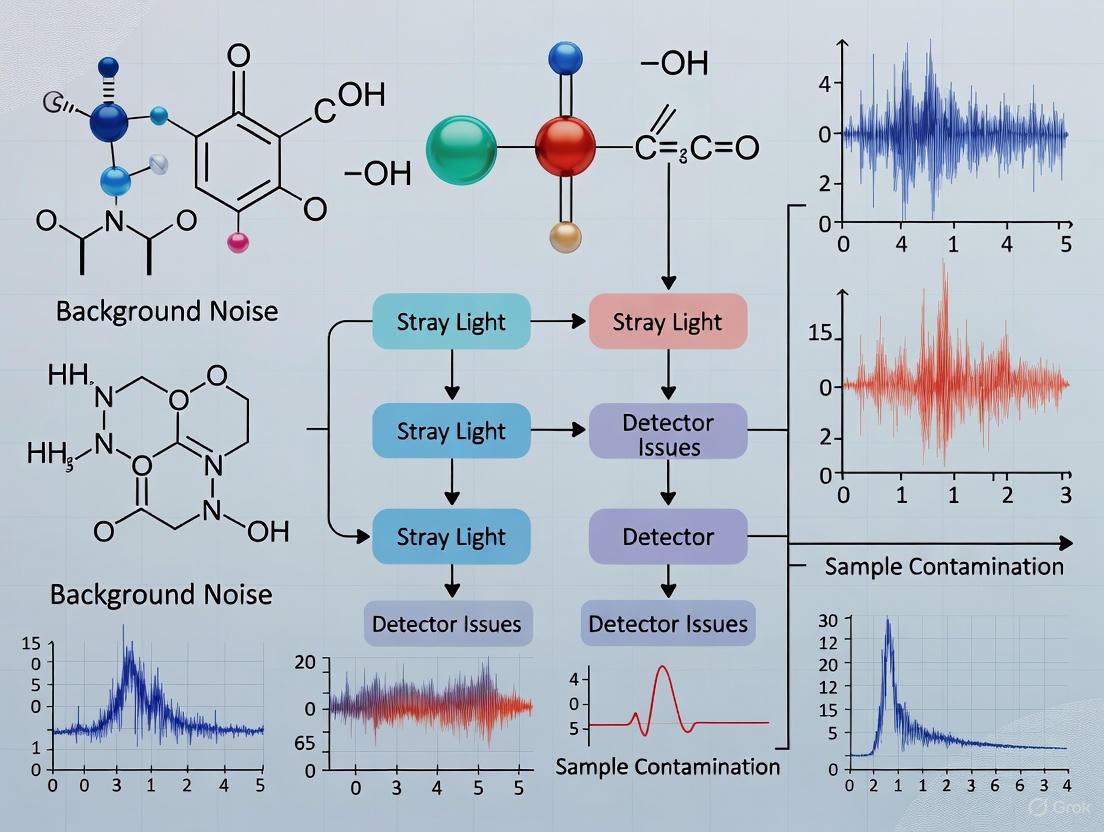
This comprehensive guide addresses the critical challenge of background noise in spectroscopic analysis, a key limitation in biomedical research and drug development.
Troubleshooting High Background Noise in Spectroscopic Analysis: A Complete Guide for Biomedical Researchers
Abstract
This comprehensive guide addresses the critical challenge of background noise in spectroscopic analysis, a key limitation in biomedical research and drug development. Covering both foundational principles and advanced applications, we explore the origins of noise from instrumental and sample sources, evaluate traditional and cutting-edge noise reduction methodologies including wavelet transforms and AI-based approaches, provide systematic troubleshooting protocols for common laboratory scenarios, and establish rigorous validation frameworks for detection limit determination and method comparison. Designed for researchers and analytical scientists, this resource provides practical strategies to enhance signal fidelity, improve detection capabilities, and generate more reliable spectroscopic data in complex biological matrices.
Understanding Spectroscopic Noise: Sources, Types, and Impact on Data Quality
In analytical spectroscopy, "noise" refers to any unwanted signal fluctuation that obscures the true analytical data. It is a critical concept that extends far beyond simple background interference, fundamentally determining the sensitivity, accuracy, and detection limits of your measurements. Understanding its sources and characteristics is the first step in effective troubleshooting.
Noise originates from various sources within the instrument, the sample, and the external environment [1]. It primarily reduces the Signal-to-Noise Ratio (SNR), which is a key metric for data quality [2]. A low SNR makes it difficult to distinguish the true signal from random fluctuations, compromising the reliability of your results [1].
The table below categorizes common types of noise encountered in spectroscopic systems, their origins, and their impact on your data [1].
Table 1: Common Types of Noise in Spectroscopy
| Noise Type | Primary Origin | Key Characteristics & Impact |
|---|---|---|
| Shot Noise | Detector & electronics; uneven electron emission [1]. | Related to current/light intensity; fundamental limit for strong signals [2] [1]. |
| Readout Noise | Readout circuit instability & quantization errors [1]. | Fixed, signal-independent noise; limits performance at very low signals [2]. |
| Dark Noise | Stray light & thermal excitation in detector [2] [1]. | Measurable signal without light; increases with integration time & temperature [2]. |
| Electronic Noise | Amplifiers, A/D converters, electronic components [1]. | Generated by instrument electronics; can be reduced with low-noise components [1]. |
| Fixed Pattern Noise (FPN) | Pixel-to-pixel variation in detector [1]. | Consistent spatial pattern; corrected via calibration with reference images [1]. |
| Baseline Noise/Drift | Instrument instability & environmental factors [1]. | Baseline fluctuations; affects accuracy, especially for low-concentration samples [1]. |
Signal-to-Noise Ratio (SNR) and Detection Limits
The Signal-to-Noise Ratio (SNR) quantifies data quality. A higher SNR indicates a clearer, more reliable signal [2]. The total measured signal includes contributions from the light (signal), dark current, and a baseline offset [2]. Therefore, the extracted signal is calculated as: ( s = m{\text{light}} - m{\text{dark}} ) [2].
The overall noise is a combination of all noise sources [2]: ( n{\text{total}} = \sqrt{n{\text{phot}}^2 + n{\text{dark}}^2 + n{\text{base}}^2 + n_{\text{read}}^2} )
The SNR determines the effectiveness of your measurements and is defined differently depending on which noise source is dominant [2]:
- Shot-Noise Limited Regime (High Signal): ( \text{SNR} = \sqrt{QN} ). This is the ideal scenario, where SNR increases with the square root of the number of photons.
- Read-Noise Limited Regime (Very Low Signal): ( \text{SNR} = \frac{\alpha QN}{n_{\text{read}}} ). Here, SNR increases linearly with signal, and read noise is the limiting factor.
Table 2: Performance Comparison of Common Spectroscopic Detectors [2]
| Detector | Technology | Pixel Size (µm) | Full Well Depth (ke-) | Read Noise (counts) | Maximum SNR |
|---|---|---|---|---|---|
| Hamamatsu S10420 | CCD | 14 x 896 | 300 | 16 | 475 |
| Hamamatsu S11156-01 | CCD | 14 x 1000 | 200 | 21 | 390 |
| Hamamatsu S11639 | CMOS | 14 x 200 | 80 | 26 | 360 |
| Sony ILX511B | CCD | 14 x 200 | 63 | 53 | 215 |
Troubleshooting FAQs: Resolving High Background Noise
Q1: My baseline is noisy and unstable. What are the first things I should check? A1: Begin with these fundamental checks:
- Control the Environment: Ensure ambient temperature and humidity are stable, as fluctuations can cause significant baseline drift [1].
- Check Gas Purity: For techniques like GC-MS, use high-quality, pure carrier gases to minimize background contamination [1].
- Inspect Sample Introduction: For ICP-MS, ensure sample introduction components (e.g., nebulizers) are clean and not clogged, and consider matrix composition effects [3].
- Subtract a Dark Spectrum: Always acquire and subtract a "dark" reference spectrum (measured without illumination) to account for dark current and electronic offset [2].
Q2: My signal is weak, and the data is very noisy, even with long integration times. How can I improve this? A2: This is typical of read-noise-limited conditions.
- Optimize Detector Gain: Use the detector's highest gain setting (highest sensitivity) to maximize the signal for weak light conditions [2].
- Reduce Readout Speed: If your instrument allows, a slower readout speed typically lowers readout noise [2].
- Consider Signal Averaging: Acquire and average multiple spectra. While this increases measurement time, it can improve SNR by reducing random noise [4].
- Cool Your Detector: Cooling the detector (e.g., using a Peltier cooler or liquid nitrogen) dramatically reduces dark current, which is crucial for long integration times [2].
Q3: I work with mass spectrometry (e.g., Orbitrap), and noise is biasing my multivariate analysis. What can I do? A3: Noise in MS is often heteroscedastic (varying with signal intensity), which biases statistical models.
- Apply Advanced Scaling: Use specialized scaling methods like the Weighted Sum of Rician (WSoR) distributions, designed for Orbitrap data, to reduce the undue influence of noise in techniques like Principal Component Analysis (PCA) [5].
- Understand Noise Structure: Recognize that at low signals, detector noise and data censoring dominate; at intermediate signals, ion counting (Poisson) noise is key [5].
Q4: The noise calculation methods in my protocol seem subjective and inconsistent. Is there a more robust approach? A4: Yes, traditional SNR-based detection limits can be problematic, especially in ultra-low-noise systems like modern MS where background noise can be nearly zero [6].
- Use Statistical Methods: For a more rigorous estimate of Instrument Detection Limits (IDL), perform replicate injections (n≥7) of a standard near the expected detection limit. Calculate the standard deviation (STD) and use the formula: ( \text{IDL} = (t{\alpha}) \times (\text{STD}) ), where ( t{\alpha} ) is the one-sided Student's t-value for n-1 degrees of freedom at a 99% confidence level [6].
Experimental Protocol: Characterizing and Minimizing Noise
This workflow provides a systematic approach to diagnose and mitigate noise issues in spectroscopic experiments. The process is summarized in the diagram below.
Step-by-Step Methodology:
Acquire a Dark Reference Spectrum:
- Procedure: Block the light path to the detector or use a blank sample. Acquire a spectrum using the same integration time and instrument settings as your sample measurement.
- Purpose: This measures the combined contribution of the baseline offset and dark current. Subtract this spectrum from all subsequent sample measurements to isolate the light-derived signal [2].
Characterize SNR vs. Signal Intensity:
- Procedure: Measure a series of spectra from a stable light source at varying intensity levels (e.g., using neutral density filters). For each intensity, calculate the mean signal and the standard deviation (noise) for a specific wavelength. Plot SNR versus signal on a double-logarithmic plot [2].
- Purpose: The slope of the curve identifies the dominant noise regime. A slope of ~0.5 indicates shot-noise limitation, while a slope of ~1 indicates read-noise limitation [2].
Implement Noise-Specific Mitigation Strategies:
- Based on your diagnosis from Step 2, apply the targeted strategies outlined in the workflow diagram and detailed in the Troubleshooting FAQs section.
The Scientist's Toolkit: Key Reagent Solutions
Table 3: Essential Materials for Noise Troubleshooting
| Item / Reagent | Function in Noise Management |
|---|---|
| High-Purity Carrier Gases | Minimizes background chemical noise in GC-MS and ICP-MS by reducing impurities [1]. |
| Stable Isotope-Labeled Standards | Acts as an internal standard in MS to correct for signal drift and matrix-induced noise [6]. |
| Certified Reference Materials | Validates method accuracy and helps distinguish between analyte signal and background interference [3]. |
| Optical Filters & Beam Dumps | Reduces stray light and scattered light noise within the spectrometer optical path [1]. |
| Cooling Systems for Detectors | Significantly reduces dark current and its associated shot noise, crucial for long exposures [2]. |
| Low-Noise Electronic Components | Found in high-quality spectrometers to minimize inherent electronic and readout noise [1]. |
| Aurachin C | Aurachin C | Cytochrome bd Oxidase Inhibitor | RUO |
| Glidobactin B | Glidobactin B | Potent Proteasome Inhibitor | RUO |
What is the impact of noise on my spectroscopic data? Noise directly compromises the accuracy, precision, and detection limits of your analytical measurements. In spectroscopic analysis, it manifests as a fluctuating baseline (instability) or an elevated background signal, which can obscure weak analyte signals and lead to inaccurate quantification [7]. Effectively troubleshooting these issues requires a systematic approach to classify and identify the source of the noise.
This guide classifies noise sources into three primary categories to streamline your troubleshooting process:
- Instrumental Noise: Originates from the analytical instrument's components and physics.
- Environmental Noise: Arises from external electrical or acoustic interference.
- Sample-Derived Noise: Caused by the sample's properties or its preparation.
The following sections provide detailed FAQs and troubleshooting guides for each category.
Instrumental Noise
My Flame Ionization Detector (FID) shows high background and noise. What should I do? High background or noise in an FID is a common issue often linked to gas purity, contamination, or component failure. A logical troubleshooting procedure is recommended [8]:
- Eliminate the Column: Disconnect and cap the column from the FID. If the noise subsides, the issue is likely contaminated carrier gas or excessive column bleed [8].
- Check Gas Flows: Use a flow meter to verify hydrogen, air, and makeup gas flows are set correctly. Optimal signal-to-noise is often achieved at a ~1:1 ratio of Hâ‚‚ to the combined column and makeup gas flow [8].
- Measure Leakage Current: With the flame off and the detector at operating temperature, the background signal should be low (e.g., 2-3 pA) and stable. A higher or unstable signal suggests a contaminated, loose, or deformed interconnect spring or contaminated PTFE insulators [8].
- Clean the FID: Perform maintenance by cleaning or replacing the FID jet, collector, and inspect for corrosion [8].
- Bake Out the Detector: Bake the detector at a high temperature (e.g., 350 °C) to remove condensed sample contaminants [8].
Table 1: Troubleshooting High Background in FID Detectors
| Observation | Potential Cause | Recommended Action |
|---|---|---|
| High background (>20 pA) | Contaminated gas supplies (carrier, Hâ‚‚, air) | Check gas purity; install or replace gas traps [8]. |
| Noisy, unstable baseline | Partially plugged FID jet; contaminated detector interior | Clean or replace the FID jet assembly; perform full FID cleaning [8]. |
| Extremely high signal output (>500,000 pA) | Short circuit from a bent/damaged FID interconnect spring | Cool and power off the GC; inspect and replace the spring [8]. |
| Periodic cycling baseline | Defective gas compressor or regulator; faulty electronics | Check gas supply regulation; contact technical support [8]. |
How can I diagnose electrical noise in my instrument? Electrical noise can often be identified using spectrum analysis. This process plots the frequency components of a signal, where noise appears as distinct spikes within the instrument's operational bandwidth [9]. To diagnose:
- Use built-in or external software to generate a spectrum plot.
- Identify any sharp peaks or an elevated noise floor within the operational frequency range.
- Common sources include switching power supplies, improper grounding, or electromagnetic interference from nearby equipment [9].
A modern approach to instrumental noise uses "Noise Learning." How does it work? Noise Learning (NL) is a deep learning method that statistically learns the intrinsic noise pattern of a specific instrument. Unlike conventional methods, it does not require large, pre-existing datasets of sample data. Instead, it uses a physics-based model to generate clean spectra and trains a neural network to recognize and subtract the instrument's unique noise signature from measured data. This instrument-dependent approach has been shown to improve the Signal-to-Noise Ratio (SNR) of Raman spectra by approximately 10-fold [10].
Diagram: Noise Learning (NL) Workflow for Instrumental Denoising
Environmental Noise
What are the common sources of environmental noise in a laboratory? Environmental noise primarily includes acoustic noise from equipment and people, and electrical noise from power lines and other devices. In urban areas, common external sources are road, rail, and air traffic, which generate broadband noise [11]. Inside the lab, noise can come from engines, pumps, compressors, and HVAC systems, which introduce vibrations and broad-spectrum interference [9].
How can I identify and reduce electrical noise affecting my instrumentation? Identifying the source is key, as electrical noise cannot be filtered out during post-processing [9].
- Check Power Supplies: Switching power supplies are common culprits. Look for periodic spikes in a spectrum analysis that align with switching activity [9].
- Verify Grounding: Ensure the instrument is properly grounded. In some cases, a grounding plate must be in direct contact with a conducting medium like seawater [9].
- Locate Electromagnetic Interference: Nearby radios, sonar, acoustic modems, or other transmitting devices can emit interfering signals. Physically relocate or shield your instrument from these sources [9].
- Inspect Cabling: Ensure all cables and connectors are properly shielded and grounded [9].
Sample-Derived Noise
My sample preparation is causing high background. How can I fix this? Inadequate sample preparation is a leading cause of analytical errors [12]. The solution depends on your technique:
- For XRF: Ensure samples have a flat, homogeneous surface. Grind particles to the appropriate size (typically <75 μm) and create pressed pellets or fused beads to ensure uniform density and minimize scattering [12].
- For ICP-MS: Solid samples must be completely dissolved. Use accurate dilutions and filter samples (e.g., 0.45 μm or 0.2 μm) to remove particles that could clog the nebulizer. Use high-purity acids to prevent contamination [12].
- For FT-IR & UV-Vis: Select a solvent that does not absorb strongly in the analytical region of interest. For FT-IR, deuterated solvents are often used. Ensure sample concentration is optimized to avoid detector saturation or poor SNR [12].
Table 2: Troubleshooting Sample-Derived Noise in Spectroscopic Techniques
| Technique | Common Sample Issues | Preparation Solution |
|---|---|---|
| XRF | Rough surface; heterogeneous particle size; mineralogical effects | Grind to <75 μm; create uniform pellets; use fusion for refractory materials [12]. |
| ICP-MS | Incomplete dissolution; high solid content; contamination | Use total digestion; perform accurate dilution; filter; use high-purity reagents [12]. |
| FT-IR | Solvent absorption bands; scattering from rough surfaces | Use deuterated or IR-transparent solvents; grind with KBr for pellet formation [12]. |
| HPLC/FLD | High background from mobile phase; sample solvent too strong | Use high-purity solvents; degas mobile phase; dissolve sample in starting mobile phase [13]. |
I see unexpected peaks and broadening in my HPLC analysis. Could this be sample-derived? Yes. Several symptoms in HPLC chromatograms can be traced back to the sample:
- Peak Tailing: Can be caused by basic compounds interacting with silanol groups on the stationary phase. Use high-purity silica columns or competing bases like triethylamine in the mobile phase [13].
- Peak Fronting: Often due to a blocked frit or channels in the column. Replace the pre-column frit or the analytical column. Can also be caused by column overload—reduce the amount of sample injected [13].
- Unexpected Broad Peaks: Can result from the sample being dissolved in a solvent stronger than the mobile phase. Always try to dissolve samples in the starting mobile phase composition [13].
The Scientist's Toolkit: Essential Research Reagents & Materials
Table 3: Key Reagents and Materials for Noise Reduction
| Item | Function in Noise Troubleshooting |
|---|---|
| Gas Purification Traps | Removes moisture, oxygen, and hydrocarbons from carrier and detector gases, minimizing high FID background and contamination [8]. |
| High-Purity Solvents | Reduces high background signal in HPLC/UV-Vis by minimizing interfering UV-absorbing impurities [13] [12]. |
| Bonders (e.g., KBr, Cellulose) | Creates homogeneous, transparent pellets for XRF and FT-IR, minimizing light scattering and ensuring representative analysis [12]. |
| Lithium Tetraborate Flux | Used in fusion techniques for XRF to fully dissolve refractory samples, eliminating particle size and mineralogical effects for accurate quantitative analysis [12]. |
| Deuterated Solvents (e.g., CDCl₃) | Provides minimal interfering absorption bands in FT-IR analysis, allowing for clear observation of analyte signals [12]. |
| Internal Standards | Added to samples in ICP-MS to compensate for matrix effects and instrument drift, improving quantitative accuracy and precision [12]. |
| 5-Bromo-6-chloro-1H-indol-3-yl acetate | 5-Bromo-6-chloro-1H-indol-3-yl acetate | RUO |
| Orysastrobin | Orysastrobin | Fungicide for Plant Pathology Research |
Advanced Protocols & Data Analysis
Detailed Protocol: Cleaning an FID to Reduce High Background and Noise Tools Required: Torx T20 screwdriver, new septum, ferrule, and column nut [8].
- Safety First: Allow the FID to cool to at least 50°C before starting [8].
- Disassemble: Remove the detector cap and the collector assembly. Take care not to touch the interconnect spring with bare hands, as oils can cause current leakage [8].
- Clean Components: Remove the jet and clean it with a suitable solvent (e.g., methanol). Soak and sonicate the collector and the insulator. Inspect the brass castle nut for rust or corrosion and replace if dirty [8].
- Reassemble: Reinstall all components, ensuring the interconnect spring is correctly seated in its channel and is not deformed. Ensure all fittings are tight to prevent mechanical noise [8].
- Bake Out: Reconnect gas lines, set the detector temperature to 350°C (with no gas flows), and bake out for 1-2 hours to remove residual contaminants [8].
- Re-establish Flows & Ignite: Set gas flows to recommended levels (e.g., Hâ‚‚: 30-40 mL/min, Air: 300-400 mL/min) and reignite the flame [8].
Detailed Protocol: Automated Noise Source Identification using Acoustic Array Purpose: To automatically identify and assess the contribution of individual environmental noise sources to the total sound pressure level [11].
- Setup: Deploy a 4-channel microphone array (or acoustic camera) coupled with a Class 1 sound level meter at the measurement point [11].
- Data Acquisition: Simultaneously capture sound signals from all microphones at a high sampling rate (e.g., 192 kHz) over a representative time period [11].
- Source Localization: Process the signals using a beamforming algorithm like Delay-and-Sum (DAS) or Average Square Difference Function (ASDF). This calculates the Direction of Arrival (DOA) of sound events [11].
- Spatial Filtering: Combine the DOA data with the instantaneous sound pressure level to create an "immission directivity" plot, which shows the direction and strength of noise sources over time [11].
- Classification: Apply unsupervised machine learning algorithms to the spatial and acoustic features (e.g., psychoacoustic parameters) to automatically classify and quantify the contribution of different noise sources (e.g., traffic, machinery) to the total measured level [11].
Diagram: Automated Environmental Noise Assessment Workflow
FAQs: Understanding Core Noise Concepts
What is the fundamental difference between shot noise and read noise? Shot noise originates from the inherent, random fluctuation in the arrival rate of photons at the detector. Even a perfectly stable light source will exhibit this variability, and it follows a Poisson distribution where the noise equals the square root of the signal. In contrast, read noise is produced by the camera's own electronics during the process of converting the accumulated charge in each pixel into a digital number. The key distinction is that shot noise depends on the signal level, while read noise is a fixed value, independent of both the signal strength and exposure time [14] [15].
Why is my spectroscopic data noisy even with very short exposure times or in complete darkness? In low-signal or very short-exposure scenarios, read noise is often the dominant factor. Since it is a fixed amount of noise added during the readout of each pixel, its impact is most pronounced when the photo-generated signal is weak. Furthermore, even in darkness, a small electric current known as dark current flows through the detector. The random generation of electrons that constitute this current also produces shot noise, contributing to the overall noise floor of your measurement [14] [16].
How does fixed-pattern noise differ from other temporal noise sources? Shot, read, and dark current noise are temporal, meaning they vary randomly from one readout to the next. Fixed-pattern noise (FPN) is a spatial noise; it is a static, repeatable pattern across the sensor. FPN has two main components: Photo Response Non-Uniformity (PRNU), which is the variation in how different pixels respond to the same amount of light, and Dark Signal Non-Uniformity (DSNU), which is the variation in the dark current output of individual pixels [14] [17].
When is my measurement considered "shot-noise limited," and why is this desirable? A measurement is shot-noise limited when the photon shot noise is the largest contributor to the total noise. This typically occurs when you have a strong, clean signal. This is considered the ideal regime because it represents the fundamental physical limit of detection. In this state, the Signal-to-Noise Ratio (SNR) increases with the square root of the signal. Achieving this involves using high-quality detectors and ensuring your signal is sufficiently strong to dwarf the read noise and dark current [2] [15].
Troubleshooting Guides
Guide 1: Diagnosing High Background Noise
Problem: Consistently high background noise is obscuring weak spectral features. Step-by-Step Investigation:
- Perform a Dark Measurement: Acquire a spectrum with the light source blocked or the shutter closed, using your standard integration time. A high signal in this dark measurement indicates significant dark current.
- Check for Fixed Patterns: If the dark measurement shows a structured pattern (e.g., stripes, columns) rather than random noise, your system is affected by fixed-pattern noise [17] [18].
- Analyze Signal Dependence: Collect data at different illumination levels. If the noise increases proportionally with the square root of the signal, your system is likely shot-noise limited, and you need a stronger signal. If the noise level remains fairly constant across signal levels, read noise is the dominant source [2].
- Verify Calibration Protocols: Ensure that standard calibration procedures, such as regular dark frame and flat field acquisitions, are being performed correctly. In Raman spectroscopy, skipping wavelength calibration can cause systematic drifts to be misinterpreted as sample-related changes [19].
Guide 2: Mitigating Fixed-Pattern Noise (FPN) in Imaging Spectrometry
Fixed-pattern noise can be particularly stubborn as it requires processing to remove. The following workflow outlines several algorithmic correction methods.
Detailed Correction Methods:
- Median Projection FPN Correction (mFPNc): This is a simple and fast method where the median value of each column (or row) is calculated and then subtracted from every pixel in that corresponding column. This effectively removes a common offset but may not handle more complex patterns [17].
- Column Projection FPN Correction (cpFPNc): A more advanced heuristic method. It creates a binary mask to exclude pixels containing actual sample signal (e.g., from particles) before calculating the column-wise mean. This produces a cleaner FPN signature for subtraction, preserving sample data [17].
- FFT Fixed Pattern Noise Correction (fFPNc): This technique separates image structures from column-wise patterns in the frequency domain. By using iterative filtering in both spectral and spatial domains, it can effectively remove stripe non-uniformity while preserving image information [17].
Guide 3: Optimizing Signal-to-Noise Ratio (SNR) in Detector-Limited Experiments
The total noise in a measurement is the combination of all independent noise sources. The goal is to maximize the signal relative to this total noise.
Total Noise Calculation:
Total Noise = √(Shot Noise² + Read Noise² + Dark Current Noise²) [2]
Optimization Strategy:
- Maximize Signal: Increase integration time or illumination intensity until just below the sensor's saturation point. This helps enter the shot-noise limited regime [2] [15].
- Minimize Read Noise: Use a camera with low read noise and, if available, select a slower readout speed on the camera, which often reduces read noise [20] [2].
- Suppress Dark Current: Cool the detector. For every 6-7°C reduction in temperature, dark current is typically halved. Use short integration times if cooling is not an option [2].
- Leverage Calibration: Faithfully subtract dark frames to remove the mean dark current offset and use flat-field correction to account for PRNU [14] [17].
Quantitative Data & Detector Comparison
The performance of different detector technologies can be directly compared using their key parameters. The following table summarizes specifications and measured performance for several common detectors used in spectroscopy.
Table 1: Technical Specifications and Measured SNR of Common Spectroscopic Detectors [2]
| Detector | Technology | Pixel Size (µm) | Full Well Capacity (k e-) | Read Noise (counts) | Maximum SNR |
|---|---|---|---|---|---|
| S10420 | CCD | 14 x 896 | 300 | 16 | 475 |
| S11156-01 | CCD | 14 x 1000 | 200 | 21 | 390 |
| S11639 | CMOS | 14 x 200 | 80 | 26 | 360 |
| Sony ILX511B | CCD | 14 x 200 | 63 | 53 | 215 |
The relationship between signal level and SNR for any detector follows a predictable pattern, which can be visualized on a log-log scale. The following diagram illustrates this universal SNR curve, showing the transition from read-noise dominance at low signals to shot-noise dominance at high signals.
Table 2: Dominant Noise Source and Mitigation Strategies
| Dominant Noise Source | Signal-to-Noise Ratio (SNR) | Recommended Mitigation Strategy |
|---|---|---|
| Read Noise | SNR ∠Signal | Use a lower-read-noise camera; slow down readout speed; bin pixels; increase signal to become shot-noise limited [20] [2]. |
| Shot Noise | SNR ∠√(Signal) | Increase integration time or light intensity; this is the ideal regime and represents the fundamental detection limit [2] [15]. |
| Dark Current | SNR ∠Signal / √(Dark Current) | Cool the detector; use shorter integration times; subtract dark frames [2] [16]. |
Experimental Protocols
Protocol: Measuring Camera Read Noise
Objective: To determine the read noise of a camera system in electrons. Background: Read noise is a fixed value added by the camera's electronics during readout. This protocol uses the standard deviation of a series of bias frames to calculate it.
Materials:
- Camera under test
- Stable power supply
- Light-tight enclosure
Procedure:
- Ensure the camera is in a light-tight environment.
- Set the integration time to the shortest possible value (effectively zero).
- Capture a series of at least 50 consecutive bias frames.
- Select a region of interest (ROI) away from obvious defects.
- For one of the frames in the series, calculate the standard deviation of the pixel values in the ROI. This value, in Analog-to-Digital Units (ADUs), is the temporal read noise.
- To convert this to electrons, divide the standard deviation in ADU by the system's conversion gain (in e-/ADU). The conversion gain can often be found in the camera's specification sheet or measured via the photon transfer technique [2] [15].
Protocol: Establishing a Routine for Fixed-Pattern Noise Correction
Objective: To acquire the necessary calibration frames to remove fixed-pattern noise from scientific images. Background: FPN correction requires a reference pattern that is subtracted from your data. This is achieved through dark and flat-field frames.
Materials:
- Scientific camera
- Uniform, stable light source (for flat fields)
Procedure:
- Acquire Dark Frames:
- Block all light to the camera sensor.
- Use the same exposure time and temperature as your scientific experiments.
- Capture a master dark frame by taking the median of 10-50 individual dark frames. This master dark contains the combined DSNU and the average dark current.
- Acquire Flat Fields:
- Illuminate the sensor with a uniform light source. A defocused screen or an integrating sphere is ideal.
- Adjust the exposure time so the average signal level is between 30% and 70% of the full well capacity (avoid saturation).
- Capture a master flat field by taking the median of 10-50 individual flat frames.
- Apply Correction:
The Scientist's Toolkit
Table 3: Essential Research Reagent Solutions for Noise Troubleshooting
| Item | Function in Noise Management |
|---|---|
| Cooled CCD/CMOS Detector | Integrated thermoelectric cooling dramatically reduces dark current, a critical step for long-exposure measurements [2]. |
| Uniform Light Source / Integrating Sphere | Provides even illumination essential for acquiring high-quality flat fields to correct for Photo Response Non-Uniformity (PRNU) [17]. |
| Wavenumber Standard (e.g., 4-acetamidophenol) | A reference material with known, sharp peaks used to calibrate the wavenumber axis of a Raman spectrometer, preventing systematic drift from being misinterpreted as noise [19]. |
| Light-Tight Enclosure | A simple but vital tool for accurately characterizing camera-specific noise sources like dark current and read noise without contamination from stray light [2]. |
| Jietacin A | Jietacin A | Anticancer Natural Product | RUO |
| Chamigrenol | Chamigrenol | Natural Sesquiterpenoid | For Research |
Frequently Asked Questions (FAQs)
1. What are the primary sources of sample-induced noise in fluorescence spectroscopy? Sample-induced noise primarily arises from three sources: fluorescence background from native fluorophores or impurities in the sample buffer; scattering effects (Rayleigh and Raman scattering) caused by the interaction of light with the sample matrix; and matrix interferences where components of the sample matrix alter the detector's response to the target analyte, leading to signal suppression or enhancement [21] [22] [23].
2. How does light scattering affect a fluorescence measurement? Light scattering can significantly increase the background noise, reducing the signal-to-noise ratio. Rayleigh scattering occurs at the same wavelength as the excitation light and can overwhelm the detector if not properly filtered. Raman scattering occurs at a shifted wavelength and can be mistaken for or overlap with the desired fluorescence signal, leading to inaccurate readings [21] [23].
3. What is meant by 'matrix effect' in quantitative analysis? The matrix effect refers to the phenomenon where components of the sample, other than the analyte, alter the detector's response. In liquid chromatography, this can cause ionization suppression or enhancement in mass spectrometric detection, fluorescence quenching, or effects on aerosol-based detectors. This compromises quantitative accuracy because the same analyte concentration yields different signals in different matrices [22].
4. What are some practical strategies to mitigate matrix interference? Effective strategies include:
- Sample Preparation: Techniques like dilution, filtration, centrifugation, and buffer exchange can reduce the concentration of interfering components [24].
- Internal Standard Method: Using a known amount of a structurally similar internal standard (e.g., a stable isotope-labeled compound) can correct for variations in detector response and sample preparation [22].
- Matrix-Matched Calibration: Creating standard curves using standards diluted in the same matrix as the experimental samples accounts for matrix effects during calibration [24].
5. Can these noise issues be overcome with instrumentation alone? While instrumental features like dual monochromators and optical filters are crucial for suppressing stray light and scattered excitation light [21] [23], instrumentation alone is often insufficient. Computational and algorithmic approaches are increasingly important. For example, the RNP (robust non-negative principal matrix factorization) algorithm integrates robust feature extraction to separate meaningful fluorescence signals from noisy speckles and background interference in scattering tissue environments [25].
Troubleshooting Guides
Guide 1: Diagnosing and Correcting High Fluorescence Background
A high background signal can obscure the target fluorescence, reducing sensitivity and quantitative accuracy.
Symptoms:
- Elevated signal in blank or control samples.
- Poor signal-to-noise ratio.
- Unstable or drifting baseline.
Potential Causes and Solutions:
| Cause | Description | Solution |
|---|---|---|
| Impure Solvents/Buffers | Fluorescent impurities in reagents. | Use high-purity solvents (e.g., HPLC grade) and check blanks [21]. |
| Dirty Cuvettes | Contaminants on the surface of the sample holder. | Thoroughly clean cuvettes with appropriate solvents. |
| Sample Autofluorescence | Native fluorophores in the sample (e.g., proteins with tryptophan). | Use optical filters to isolate target emission; consider a red-shifted fluorescent dye [21] [23]. |
| Scattered Excitation Light | Rayleigh scatter entering the detector. | Ensure proper alignment and use high-quality emission filters or a double monochromator [23]. |
Experimental Protocol: Blank Subtraction and System Validation
- Prepare a Blank: Create a sample containing all components except the target fluorophore.
- Acquire Blank Spectrum: Measure the fluorescence emission spectrum of the blank under the exact same conditions (excitation wavelength, slit widths, etc.) as your experimental samples.
- Subtract the Spectrum: Use software to subtract the blank spectrum from the sample spectrum.
- Validate: Regularly run blanks to ensure the background level has not changed due to reagent lot variations or cuvette contamination.
Guide 2: Managing Scattering Effects in Dense or Turbid Samples
Samples like biological tissues or colloidal suspensions scatter light, degrading image quality and spectral fidelity.
Symptoms:
- Broadened or distorted peaks.
- Significant signal loss with increasing sample depth or concentration.
- The appearance of peaks at unexpected wavelengths (Raman scatter).
Quantitative Comparison of Scattering Mitigation Techniques
| Technique | Principle | Best for | Limitations |
|---|---|---|---|
| Time-Gating [26] | Separates single-scattered signal from multiple-scattering noise based on flight time. | Label-free reflectance imaging; obtaining high resolution in thick samples. | Requires pulsed laser and fast detection; complex instrumentation. |
| Computational Correction (e.g., RNP) [25] | Algorithmically decomposes speckled images to extract sparse features from a noisy, low-rank background. | Fluorescence microscopy in scattering tissues; large field of view imaging. | Requires capturing multiple speckle images; computational processing time. |
| Optical Sectioning (Confocal) [26] | Uses a pinhole to reject out-of-focus light. | Rejecting scattered light from outside the focal plane. | Signal loss; aberrations can spread signals away from the pinhole. |
| Polarization Discrimination | Uses a polarizer in the detection path to reject depolarized scattered light. | Differentiating between single and multiple scattering events. | Less effective for highly scattering media. |
Experimental Protocol: Implementing RNP for Scattering Imaging The RNP framework enables fluorescence imaging through scattering media on a standard epi-fluorescence microscope [25].
- Setup: Incorporate a motorized rotating diffuser into the excitation path of a wide-field fluorescence microscope to produce random speckle illumination.
- Data Acquisition: Capture a sequence of raw fluorescence images through the scattering medium under different random speckle illuminations.
- Algorithmic Processing: Process the image stack through the RNP algorithm:
- Preprocessing: Apply Fourier domain filtering to enhance contrast and remove noise.
- Decomposition: Use robust principal-component analysis (RPCA) to decompose each image (Ik) into a sparse feature component (Sk) and a low-rank background component (Lk), such that Ik = Sk + Lk. This enhances speckle contrast.
- Dimension Reduction: Apply non-negative matrix factorization (NMF) to the sparse features to assign speckle patterns to their corresponding emitters and reconstruct the final image.
Guide 3: Overcoming Matrix Interferences in Quantitative Assays
Matrix effects can lead to inaccurate quantification, particularly in complex samples like serum or tissue homogenates.
Symptoms:
- Inconsistent calibration curves when using different sample matrices.
- Low spike recovery rates.
- Signal suppression or enhancement observed in post-column infusion experiments [22].
Practical Solutions for Mitigating Matrix Effects
| Solution | Approach | Key Considerations |
|---|---|---|
| Sample Dilution | Diluting the sample with a compatible buffer to reduce interference concentration [24]. | Must not dilute analyte below the limit of quantification (LOQ). |
| Solid-Phase Extraction (SPE) | Selectively extracting the analyte from the interfering matrix. | Adds time and cost; requires method development. |
| Internal Standard (IS) | Adding a known quantity of a similar, but distinguishable, compound to correct for variable detector response [22]. | Ideal IS is a stable isotope-labeled version of the analyte. |
| Matrix-Matched Calibration | Preparing standards in a matrix similar to the sample [24]. | Can be difficult to obtain a true "blank" matrix. |
| Standard Addition | Adding known amounts of analyte directly to the sample. | Labor-intensive; best suited for a small number of samples. |
Experimental Protocol: Post-Column Infusion for Diagnosing Matrix Effects This experiment helps visualize where in the chromatogram matrix suppression or enhancement occurs [22].
- Setup: Connect an infusion pump containing a dilute solution of your analyte to a T-union between the LC column outlet and the mass spectrometer inlet. The analyte is thus continuously introduced into the effluent.
- Run a Blank Matrix Injection: Inject a sample of the blank matrix (e.g., stripped serum, buffer) onto the LC column and start the gradient method.
- Observe the Signal: Monitor the signal of the infused analyte. A constant signal indicates no matrix effect. A dip or rise in the signal indicates regions where co-eluting matrix components are causing ion suppression or enhancement, respectively.
- Interpretation: The resulting chromatogram pinpoints retention times where method development should focus to improve separation and mitigate the interference.
The Scientist's Toolkit: Key Reagent Solutions
This table lists essential materials and reagents used to combat sample-induced noise.
| Item | Function & Application |
|---|---|
| High-Purity Solvents | Minimize fluorescent background from impurities in blanks and samples [21]. |
| Stable Isotope-Labeled Internal Standard | Corrects for analyte loss during preparation and matrix effects during detection, ensuring quantitative accuracy [22]. |
| Blocking Agents (e.g., BSA) | In immunoassays, these proteins reduce nonspecific binding of antibodies to surfaces or sample components, mitigating one form of matrix interference [24]. |
| Buffer Exchange Columns | Rapidly desalt samples or transfer them into an assay-compatible buffer, removing interfering salts or small molecules [24]. |
| Optical Filters & Monochromators | Isolate the fluorescence emission light from the much stronger excitation light, critical for suppressing Rayleigh scatter [21] [23]. |
| Utibapril | Utibapril | ACE Inhibitor | Research Chemical |
| Carbazomycin D | Carbazomycin D | Antibacterial Agent | For Research |
Experimental Workflow and Relationships
The following diagram illustrates the logical workflow for diagnosing and addressing the three main types of sample-induced noise.
The Critical Relationship Between Signal-to-Noise Ratio and Detection Limits
FAQs: Understanding Signal-to-Noise Ratio and Detection Limits
What are the official definitions for LOD and LOQ based on Signal-to-Noise Ratio (S/N)?
According to the ICH Q2(R1) guideline, the Limit of Detection (LOD) and Limit of Quantification (LOQ) can be determined directly from the signal-to-noise ratio [27]. The following table summarizes these definitions, noting that an upcoming revision (Q2(R2)) will formalize the LOD requirement to a 3:1 ratio.
| Term | Definition | Signal-to-Noise Ratio (S/N) | Regulatory Context |
|---|---|---|---|
| Limit of Detection (LOD) | The minimum concentration at which an analyte can be reliably detected. | 2:1 to 3:1 (3:1 will be mandatory per ICH Q2(R2)) | ICH Q2(R1) |
| Limit of Quantification (LOQ) | The minimum concentration at which an analyte can be reliably quantified. | 10:1 | ICH Q2(R1) |
In practice, for challenging real-life samples and analytical conditions, scientists often employ stricter S/N ratios: 3:1 to 10:1 for LOD and 10:1 to 20:1 for LOQ [27].
How is the Signal-to-Noise Ratio calculated, and why are there different values reported?
There are two common methods for calculating the S/N, which leads to reported values differing by a factor of two [28].
- Standard Calculation:
S/N = Signal (S) / Noise (N)- The signal (S) is measured from the middle of the baseline noise to the top of the peak.
- The noise (N) is the peak-to-peak baseline noise measured over a representative section of the baseline [28].
- Pharmacopoeia (USP/EP) Calculation:
S/N = 2H / h- Here,
His the signal height, andhis the peak-to-peak noise. This method considers only half the noise band, resulting in an S/N value that is twice that of the standard calculation [28].
- Here,
It is critical to know which calculation your data system employs and to maintain consistency when comparing results or validating methods against regulatory standards.
What is the practical impact of a low Signal-to-Noise Ratio on my data?
A low S/N ratio directly compromises data quality and can lead to two significant problems [27]:
- Failure to Detect Analytes: If the analyte signal is not sufficiently distinguishable from the baseline noise, the substance may not be detected at all, leading to false negatives [27].
- Inaccurate Quantification: Even if a peak is detected, a low S/N makes it difficult for the data system to accurately integrate the peak's area and height, resulting in imprecise and unreliable quantitative results [29].
Troubleshooting Guide: Resolving Excessive Background Noise
Excessive background noise reduces the S/N ratio, thereby raising your practical detection limits. The following workflow provides a systematic approach to isolate and resolve the source of contamination.
Step 1: Run a Blank and Isolate the Problem
Begin by injecting a pure solvent or mobile phase blank. Observe the baseline noise and any ghost peaks. This helps determine if the noise originates from the analytical system itself or is introduced by the sample preparation process [29] [30]. Consistently high background across the run or varying noise after the instrument sits idle often points to system contamination [29].
Step 2: Isolate the LC Flow Path (Liquid Chromatography)
To determine if the noise source is before or after the column, replace the analytical column with a zero-dead-volume union and run the method again [30]. If the high noise persists, the problem is in the LC system (injector, pump, detector). If the noise is significantly reduced, the column is likely contaminated or degraded.
Step 3: Inspect and Replace Consumables
Many common noise issues are resolved by replacing consumables that have reached the end of their lifespan.
| Component | Potential Issue | Solution |
|---|---|---|
| Mobile Phase/Solvents | Contaminants, microbial growth, or dissolved air [30]. | Use fresh, high-quality HPLC-grade solvents. Filter water. Ensure the degasser is functioning. |
| Inlet Septum (GC) | Septum bleed or degradation at high inlet temperatures [29] [31]. | Replace with a high-quality, low-bleed septum appropriate for your temperature. |
| Inlet Liner (GC) / Guard Column (HPLC) | Active sites accumulating non-volatile residues or sample decomposition products [29] [31]. | Clean or replace the liner/guard column. |
| Gas Filters (GC) | Contaminated filter introducing impurities into the carrier gas [29]. | Check the indicator (if available) and replace the filter according to the maintenance schedule. |
Step 4: Perform Active Cleaning
If contamination is suspected in the inlet or column, active cleaning procedures are necessary.
- For GC Inlets: A rigorous cleaning technique involves flushing the injection port with high volumes of pre-heated carrier gas (up to 350°C), purging contaminants out through the septum purge and split vent lines. This method has been shown to reduce GC background by over 99% [31].
- For GC Columns: If the column is contaminated, a controlled bake-out (1-2 hours) at the maximum allowable isothermal temperature can help. Caution: Do not exceed the manufacturer's recommended maximum temperature limit, as this will permanently damage the column [29].
- For HPLC Systems: Flush the entire system thoroughly with strong solvents (e.g., high percentage of acetonitrile or methanol) without the column attached to remove accumulated contaminants from the flow path.
Step 5: Verify Detector and Electronics
If the previous steps do not resolve the issue, the detector itself may be the source.
- Detector Lamps (HPLC/UV): A deteriorating UV lamp will show reduced intensity and increased electronic noise. Review the lamp's usage hours and replace it if necessary [30].
- Detector Flow Cell (HPLC/UV): A contaminated flow cell can cause noise and spurious peaks. Follow manufacturer guidelines for cleaning.
- Detector Parameters: Incorrect detector gas flow rates (in GC) can contribute to noise. Verify that all flow rates are within the manufacturer's recommended specifications [29].
The Scientist's Toolkit: Key Reagent and Material Solutions
Using high-purity reagents and appropriate consumables is fundamental to minimizing background noise.
| Item | Function | Considerations for Noise Reduction |
|---|---|---|
| HPLC-Grade Solvents | Mobile phase components. | Use high-purity grades to minimize UV-absorbing contaminants, especially at low wavelengths [30]. |
| High-Purity Gases (GC) | Carrier, detector, and purge gases. | Use high-purity grades (e.g., 99.999%) and ensure gas filters/traps are fresh to prevent introduction of hydrocarbons, water, and oxygen [29]. |
| Low-Bleed Septa (GC) | Seals the inlet. | "Thermogreen" or similar low-bleed septa significantly reduce siloxane background peaks [31]. |
| Deactivated Inlet Liners (GC) | Vaporization chamber for samples. | Choose a liner design appropriate for your injection mode and volume to minimize sample contact with active sites [31]. |
| In-line Solvent Filters | Placed in solvent reservoirs. | Prevent particulates from the solvent bottles from entering the HPLC pump and check valves [30]. |
| Guard Column | Protects the analytical column. | Traps contaminants and particulate matter that would otherwise foul the more expensive analytical column, preserving peak shape and reducing background [30]. |
| Elbanizine | Elbanizine | High-Purity Research Compound | Supplier | Elbanizine for research. Explore its applications in neuroscience. For Research Use Only. Not for human or veterinary diagnostic or therapeutic use. |
| Rubitecan | Rubitecan, CAS:104195-61-1, MF:C20H15N3O6, MW:393.3 g/mol | Chemical Reagent |
Advanced Strategies: Optimizing Signal-to-Noise in Data Acquisition and Processing
Beyond instrumental troubleshooting, S/N can be enhanced through method optimization and intelligent data processing.
Data Smoothing and Filtering
Mathematical filters can be applied to reduce baseline noise, but they must be used judiciously to avoid distorting the data.
- Time Constant (Electronic Filter): Many detectors use an electronic time constant (or response time) to smooth the signal. While a higher value reduces noise, it can also over-smooth the data, broadening peaks and potentially smoothing small analyte peaks into the baseline until they are no longer detectable [27].
- Post-Acquisition Processing: Applying filters like Gaussian convolution, Savitsky-Golay smoothing, or Fourier transform after data acquisition is often safer. Since the raw data is preserved, you can adjust parameters or revert changes without permanent data loss [27]. The Wavelet transform is a powerful advanced technique that can both reduce noise and help resolve smaller peaks from the shoulders of larger ones [27].
Optimizing Spectral Data Collection
In techniques that collect spectra across a chromatographic peak (e.g., LC-MS), summing all spectra across the entire peak duration is not ideal for maximizing S/N. Research shows that to achieve the best S/N in the summed spectrum, you should only include spectra whose relative abundance is above 38% of the peak maximum. Including weaker signals from the peak's leading and trailing edges often decreases the overall S/N [32].
Frequently Asked Questions
1. What are the common types of noise in spectroscopic measurements? Several types of noise can affect spectral data, including:
- Baseline Noise (Drift): Fluctuations in the baseline when no sample is present, caused by the instrument or method, affecting accuracy and stability, especially for low-concentration samples [1].
- Dark Noise: Stray light from the spectrometer's internal optical system and detector, which reduces the signal-to-noise ratio [1].
- Electronic Noise: Generated by electronic components like amplifiers and A/D converters [1].
- Shot Noise: Caused by the uneven emission of electrons from detectors [1].
- Chemical Noise: Background signals from residual chemicals, such as inorganic salts in the sample matrix [33].
2. How does noise specifically impact quantitative analysis? Noise degrades analytical accuracy in several key ways [1]:
- It reduces the Signal-to-Noise Ratio (SNR), making it difficult to distinguish the true analyte signal from background noise.
- It leads to poor baseline stability, complicating the accurate integration and quantification of spectral peaks.
- It can decrease the effective resolution of the spectrum, causing blurring in the frequency domain and reducing the accuracy of results.
3. What is the relationship between spectral resolution and noise? The optimal spectral resolution for quantitative analysis can depend on the characteristics of the target analyte. Research on Open-Path FTIR has shown that [34]:
- Gases with narrow spectral features (narrow Full Width at Half Maximum, or FWHM), like ethylene (Câ‚‚Hâ‚„), are often quantified more effectively at higher spectral resolutions (e.g., 1 cmâ»Â¹).
- Gases with broad spectral features (broad FWHM), like propane (C₃H₈), can be quantified effectively at lower resolutions (e.g., 16 cmâ»Â¹), where the standard deviation of concentration results is lower.
Troubleshooting Guides
| Symptom | Potential Cause | Corrective Action |
|---|---|---|
| General baseline drift & instability [1] | Fluctuations in ambient temperature/humidity; unstable instrument electronics. | Optimize laboratory environmental controls; allow sufficient instrument warm-up time; use high-quality, stable carrier gases [1]. |
| Elevated baseline across the entire spectrum [33] [1] | High chemical noise from sample matrix (e.g., salts); scattered light noise from optical components. | Purify the sample to remove interferents; ensure optical components are clean and properly aligned [1]. |
| Consistent spurious peaks at fixed positions [1] | Fixed Pattern Noise (FPN) from the detector. | Perform a dark noise measurement and subtract it from subsequent sample measurements during data processing [1]. |
Guide 2: Methodologies for Noise Reduction and Baseline Correction
Protocol A: Sequential Layer Deduction for Baseline Determination (Mass Spectrometry) This practical approach separates baseline drift from the chemical noise level [33].
Determine Baseline Drift:
- Obtain a mass spectrum in profile mode and generate a full list of spectral data points [33].
- Calculate the number of peaks (N) in the spectrum. For a unit resolution spectrum with a peak width of 0.7 Th, N = total data points × 0.07 [33].
- Sort all intensity data in ascending order and average the N lowest intensities. This average is the baseline drift [33].
- Subtract this value from every raw data point to create a baseline drift-deducted dataset (Data Set 0) [33].
Determine Noise Level via Transition Layer:
- Iteratively deduct "layers" from Data Set 0. For each iteration (M), average the N lowest intensities from Data Set M-1 and deduct this value to create Data Set M [33].
- The thickness of these deducted layers will initially be small but will show an accelerated increase at a specific iteration. This is the transition layer, which marks the boundary between noise and signal [33].
- The noise level is the sum of the thicknesses of all layers deducted from the first layer up to and including the transition layer [33].
- Deduct the total noise level from Data Set 0 to obtain a spectrum corrected for both baseline drift and noise [33].
Protocol B: Convolutional Denoising Autoencoder (CDAE) for Raman Spectroscopy This deep learning approach effectively reduces noise while preserving Raman peak integrity [35].
- Model Architecture: The CDAE uses convolutional and pooling layers in the encoder to extract features and eliminate noise. The decoder uses convolutional and upsampling layers to reconstruct the denoised output. A key feature is the addition of two extra convolutional layers at the bottleneck to enhance feature learning without excessive compression [35].
- Training: The model is trained using corrupted spectral data (input) and the original clean data (target output). A Mean Square Error (MSE) loss function is used to minimize the difference between the predicted and original spectra [35].
- Application: The trained model can take a noisy Raman spectrum as input and output a denoised spectrum, successfully retrieving Raman signals free from noise while maintaining peak shapes and intensities [35].
Quantitative Data on Noise and Resolution Impact
The table below summarizes experimental data on how spectral resolution affects quantification precision for gases with different spectral profiles, using a Nonlinear Least Squares (NLLS) method [34].
| Gas Analyte | Spectral FWHM Characteristic | Optimal Spectral Resolution | Standard Deviation of Concentration | Allan Deviation |
|---|---|---|---|---|
| Ethylene (Câ‚‚Hâ‚„) | Narrow | 1 cmâ»Â¹ | 0.492 | 0.256 |
| Propane (C₃H₈) | Broad | 16 cmâ»Â¹ | 0.661 | 0.015 |
The Scientist's Toolkit: Essential Research Reagents & Materials
| Item | Function in Experiment |
|---|---|
| High-Purity Inert Gases (e.g., Nâ‚‚) | Used to obtain ideal background/reference spectra by creating an environment free of the target analyte [34]. |
| Internal Standards (for Mass Spectrometry) | Known compounds added to the sample for accurate quantification through direct comparison of ion intensities, which requires proper baseline correction [33]. |
| High-Quality Solvents & Salts | To prepare purified samples and calibrants, minimizing chemical noise introduced by the sample matrix [33] [1]. |
| 2-Methylestra-4,9-dien-3-one-17-ol | 2-Methylestra-4,9-dien-3-one-17-ol | High Purity RUO |
| Kibdelin C2 | Kibdelin C2, CAS:105997-85-1, MF:C83H88Cl4N8O29, MW:1803.4 g/mol |
Experimental Workflow and Signaling Pathways
The following diagram illustrates the logical workflow for diagnosing and mitigating high background noise, incorporating both traditional and machine-learning approaches.
Key Experimental Protocols Cited
1. Protocol for Synthetic Background Spectrum in OP-FTIR [34]
- Purpose: To generate a reliable background spectrum for quantitative analysis when directly measuring a background without the target gas is impossible.
- Method:
- Perform moving average filtering on the measured spectral data (S) to create a smoothed spectrum (S1).
- Construct a new spectrum (S0) by replacing all values in S that are less than their corresponding values in S1 with the values from S1.
- Repeat this process iteratively on S0 until a pre-set number of iterations is completed. The final S1 is the synthetic background spectrum.
2. Protocol for Convolutional Autoencoder for Baseline Correction (CAE+ Model) [35]
- Purpose: To perform baseline correction without the parameter dependence of traditional algorithms.
- Method:
- The model is based on a convolutional autoencoder but uses the original spectral data as input, not corrupted data.
- The encoder compresses the input spectrum to extract its features.
- A key component is a comparison function applied after the decoder, which is specifically designed for effective baseline correction.
- The model is trained to capture and remove the baseline features from the input spectrum.
Advanced Noise Reduction Techniques: From Traditional Methods to AI-Driven Solutions
FAQs on Signal Averaging and Noise Reduction
What is signal averaging and how does it improve my data? Signal averaging is a method used to increase the signal-to-noise ratio (SNR) by combining multiple repetitions of a periodic signal that are in phase. The signal, being coherent, adds constructively, while random noise tends to cancel out. Theoretically, this provides a SNR improvement proportional to the square root of the number of repetitions (N). For example, averaging 100 signal repetitions improves the SNR by a factor of 10 [36] [37].
What are the fundamental assumptions for successful signal averaging? The technique typically relies on four key assumptions [36]:
- The signal and noise are uncorrelated.
- The timing of the signal is known.
- A consistent signal component exists across repeated measurements.
- The noise is random with a mean of zero. Violations of these assumptions can reduce the effectiveness of the averaging process.
Why is my averaged signal distorted or attenuated? Distortion often stems from trigger jitter, which is the instability in the timing signal used to align each repetition. When waveforms are not perfectly aligned, the averaging process blurs the signal, particularly affecting high-frequency components [38]. The impact of trigger jitter is a frequency-dependent roll-off in the amplitude of your averaged signal [38].
Is there a limit to how much I can average? Yes, the effectiveness of signal averaging is finite. Instrumental instabilities, such as thermal drift or source power fluctuations, eventually prevent further noise reduction. The Allan variance is a metric used to analyze instrument stability and determine the optimal averaging time for a given setup. Beyond this time, further averaging does not improve the SNR [39].
My signal is very weak and gets lost even after averaging. What are my options? For signals with very low initial SNR (around 1), advanced post-processing techniques like wavelet denoising can be highly effective. Methods such as Noise Elimination and Reduction via Denoising (NERD) can separate noise from the signal in the wavelet domain and have been shown to improve SNR by up to three orders of magnitude, successfully retrieving weak spectroscopic signals that averaging alone cannot resolve [40].
Troubleshooting Guide: Common Signal Averaging Problems
| Problem & Symptoms | Potential Cause | Diagnostic Steps | Corrective Actions |
|---|---|---|---|
| High Background/Noise in Averaged Signal | Insufficient number of averages (N). | Check SNR improvement against the √N rule. | Increase the number of signal repetitions averaged [36]. |
| Non-random, structured noise (e.g., 50/60 Hz interference). | Visually inspect individual traces for repeating noise patterns. | Use a notch filter to remove AC power line interference [37]. | |
| Distorted or Attenuated Signal After Averaging | Excessive trigger jitter causing misalignment. | Measure the standard deviation of your trigger timing. | Use a high-stability, low-jitter trigger source [38]. |
| Improper signal alignment during averaging. | Check the alignment fiducial point (e.g., the point of maximum correlation). | Implement sub-sample alignment algorithms or cross-correlation for precise alignment [37] [38]. | |
| No Further SNR Improvement Despite Averaging | Instrumental drift (thermal, mechanical, or source power). | Perform an Allan variance analysis to find the optimal averaging time [39]. | Reduce drift sources; limit averaging time to the stability-determined optimum [39]. |
| Signal morphology changes over time. | Compare the waveform of the first and last acquisitions in the average. | Reduce the number of averages or use a classifying marker to average only similar signal classes [37] [38]. |
Advanced Methodologies and Protocols
1. Protocol: Determining the Limits of Signal Averaging Using Allan Variance This protocol helps you find the maximum useful averaging time for your experimental setup, preventing wasted time and helping you understand the fundamental limits of your instrument [39].
- Principle: The Allan variance measures the stability of a signal over different time scales. It identifies the point at which the instrument's own drift starts to dominate over random noise.
- Procedure:
- With no target sample, collect a long, continuous data stream from your detector (e.g., spectrometer).
- Calculate the Allan variance (σ²(τ)) for the dataset over a range of averaging times (τ). Many scientific computing libraries (e.g., Python's
allantools) can perform this calculation. - Plot the Allan deviation (σ(τ)) against the averaging time on a log-log plot.
- Interpretation: The curve will typically decrease initially (showing noise reduction) and then reach a minimum before increasing (showing the influence of drift). The averaging time (Ï„) at the minimum of the Allan deviation curve is your optimal averaging time.
2. Protocol: Signal Averaging Test for Spectrometer Validation This test verifies that your signal averaging system is functioning correctly and quantifies its performance [36].
- Procedure:
- Obtain a series of replicate scan-to-scan spectra.
- Average different numbers of scans (e.g., 1, 4, 16, 64, 256).
- For each averaged spectrum, calculate the photometric noise level (e.g., the standard deviation in a flat region of the spectrum).
- Expected Result: The noise level should be reduced by a factor of approximately 1/√N. For instance, averaging 16 scans should reduce the noise to about one-quarter of the single-scan noise level. A failure occurs when the measured noise is more than twice the expected value [36].
3. Methodology: Wavelet Denoising for Weak Signal Extraction When signal averaging is insufficient, wavelet denoising can recover very weak signals.
- Workflow: The NERD method follows a structured process [40]:
- Transform: The noisy signal is transformed into the discrete wavelet domain, decomposing it into different frequency sub-bands (detail components).
- Noise Thresholding: Wavelet coefficients with magnitudes below a statistically determined threshold are eliminated, as they are considered noise.
- Signal Identification & Windowing: To recover weak signal coefficients that were eliminated in the previous step, "windows" in the signal domain are identified from the low-frequency components. Within these windows, coefficients in higher frequency bands are restored.
- Inverse Transform: The processed wavelet coefficients are transformed back to the signal domain, yielding the denoised signal.
The following diagram illustrates this workflow:
The Scientist's Toolkit: Essential Research Reagent Solutions
The following table lists key parameters, their functions, and strategic considerations for optimizing signal averaging experiments.
| Item/Parameter | Primary Function | Strategic Consideration |
|---|---|---|
| Number of Averages (N) | Directly controls theoretical SNR improvement (√N). | Balance the law of diminishing returns with total acquisition time and system stability. |
| Trigger Source | Provides the timing reference for aligning repetitive signals. | A low-jitter, dedicated external trigger is superior to software-based triggers from the signal itself [38]. |
| Allan Variance | A diagnostic metric to determine the stability-limited optimal averaging time. | Use it to characterize your instrument and avoid futile averaging beyond the system's intrinsic stability [39]. |
| Alignment Fiducial | The specific point in each signal repetition used for alignment. | The point of maximum cross-correlation is more robust against noise than a simple threshold-based peak detection [37]. |
| Wavelet Denoising | A post-processing technique to extract signals from noise when averaging is insufficient. | Particularly powerful for recovering very weak signals (SNR ~1) and preserving sharp, localized features [40]. |
| Classifying Marker | An external signal that categorizes data segments for conditional averaging. | Enables separate averaging of different signal types (e.g., "good" vs. "bad" events), preventing morphological blurring [38]. |
| Glidobactin A | Glidobactin A | Potent Proteasome Inhibitor | RUO | Glidobactin A is a potent natural proteasome inhibitor for cancer & cell biology research. For Research Use Only. Not for human or veterinary use. |
| Cefuroxime | Cefuroxime | Second-Generation Cephalosporin | RUO | High-purity Cefuroxime for antibiotic resistance research. For Research Use Only. Not for human or veterinary diagnostic or therapeutic use. |
Frequently Asked Questions (FAQs)
Q1: My spectroscopic signal is still noisy after applying a Fourier filter. Why is a Wavelet transform potentially a better method?
The key difference lies in how the two methods localize information. The Fourier Transform is excellent for identifying frequencies but loses all time information; a small frequency change affects the entire Fourier domain, making it impossible to know where a particular signal occurred. In contrast, wavelet functions are localized both in frequency (or scale) and in time. This means that after a Wavelet Transform, you retain both time and frequency information, allowing you to remove noise from specific regions of your signal without affecting the entire dataset [41] [42]. This makes wavelets particularly superior for processing non-stationary signals or signals with abrupt changes, which are common in spectroscopic analysis [43].
Q2: How do I choose the right wavelet function (e.g., Daubechies, Symlet) for my spectroscopic data?
There is no single "best" wavelet for all scenarios, but the choice is critical. The general principle is to select a wavelet whose shape closely resembles the features you wish to preserve in your signal [42].
The table below summarizes common wavelet families and their typical applications in spectroscopy:
| Wavelet Family | Key Characteristics | Common Use Cases in Spectroscopy |
|---|---|---|
| Daubechies (dbN) | Orthogonal, compact support, asymmetric [41] [44] | A widely used default choice; effective for denoising a broad range of spectral signals [45] [46] |
| Symlets (symN) | Nearly symmetric, orthogonal [44] | Designed to have higher symmetry than Daubechies, which can be beneficial for reducing signal distortion [42] |
| Coiflets (coifN) | More symmetric than Daubechies, with scaling functions that also have vanishing moments [44] | Useful when improved symmetry is desired for feature preservation [41] |
| Biorthogonal Spline (biorNr.Nd) | Symmetric, linear phase, offers perfect reconstruction [44] | Excellent for tasks requiring precise signal reconstruction; used in medical imaging and JPEG2000 [44] |
A practical approach is to test a few (e.g., db4, db8, sym8) and evaluate the output based on the signal-to-noise ratio (SNR) improvement and the preservation of critical peaks [42].
Q3: What is the difference between hard, soft, and improved thresholding, and which should I use?
The threshold function determines how the wavelet coefficients are modified to suppress noise.
| Threshold Type | Function Principle | Pros & Cons |
|---|---|---|
| Hard Threshold | Sets all coefficients with an absolute value below the threshold (λ) to zero; leaves others unchanged [44] | Pro: Better preservation of sharp features like peaks [47]. Con: Can cause artificial "jitter" or discontinuities in the reconstructed signal [43] [47] |
| Soft Threshold | Sets coefficients below λ to zero and shrinks other coefficients towards zero by λ [44] | Pro: Yields a smoother output [47]. Con: Can lead to an oversmoothing effect and loss of peak amplitude [48] [47] |
| Improved Threshold | A dynamic function that aims to combine the advantages of hard and soft thresholding, often by introducing a variable correction factor [48] [47] | Pro: Adapts to the noise level and signal structure, offering a better balance between noise removal and signal preservation [48] [47]. Con: More complex to implement. |
For spectroscopic signals where preserving the amplitude and shape of peaks is critical, an improved adaptive threshold strategy is often recommended over traditional hard or soft thresholding [48].
Q4: How do I determine the optimal decomposition level and threshold value for my experiment?
Selecting these parameters is a crucial step for effective denoising.
- Decomposition Level: If the level is too low, noise will not be separated effectively. If it is too high, the useful signal will be compressed and distorted, leading to information loss [43]. A method based on entropy analysis of the wavelet coefficients has been proposed to select the optimal level objectively [43]. A practical rule of thumb is that the maximum useful level can be calculated as ( \log_2(N) ), where ( N ) is the number of data points in your signal [46].
- Threshold Value: The universal threshold, often called the VisuShrink method, is a common starting point and is defined as ( \lambda = \sigma \sqrt{2 \log(N)} ), where ( \sigma ) is the noise standard deviation and ( N ) is the signal length [43] [47]. The noise standard deviation ( \sigma ) can be robustly estimated from the median of the absolute deviation of the finest detail coefficients: ( \sigma = \frac{{\text{median}(|Cd_{j,k}|)}}{0.6745} ) [47]. For better results, use level-dependent thresholds [43].
Experimental Protocols
Protocol 1: Basic Wavelet Denoising of a Spectrum using Python
This protocol provides a step-by-step guide for denoising a one-dimensional spectral signal using the PyWavelets library.
Import Libraries.
Decompose the Signal. Perform a multilevel wavelet decomposition on your input spectrum
X.The
coeffsvariable is a list containing the approximation coefficients at the highest level followed by the detail coefficients from the finest to the coarsest level [45].Apply Thresholding. Create a copy of the coefficients and apply a threshold. A simple soft threshold can be implemented as follows:
Reconstruct the Signal. Use the thresholded coefficients to reconstruct the denoised signal.
Protocol 2: Advanced Denoising with an Improved Threshold Strategy
For applications requiring higher precision, such as Tunable Diode Laser Absorption Spectroscopy (TDLAS) or Laser-Induced Breakdown Spectroscopy (LIBS), an improved threshold strategy can be implemented [48] [43].
- Follow Steps 1 and 2 from the basic protocol.
- Implement an Improved Threshold Function. This function creates a smoother transition between the hard and soft threshold behaviors [48].
- Apply the Improved Threshold. Use the function from the previous step on the detail coefficients. The parameter
alphacan be tuned, wherealpha=0gives a soft threshold and a largeralphamakes it harder [48]. - Reconstruct the Signal as in Step 4 of the basic protocol.
Workflow Visualization
The following diagram illustrates the logical workflow of a standard wavelet denoising process.
Wavelet Denoising Logical Workflow
The Scientist's Toolkit: Essential Research Reagents & Software
The following table details key computational "reagents" and tools essential for implementing wavelet denoising in spectroscopic research.
| Item / Software | Function / Purpose | Example / Note | ||
|---|---|---|---|---|
| PyWavelets (Python) | A comprehensive open-source library for Discrete Wavelet Transform (DWT), Stationary Wavelet Transform (SWT), and more [45] | The primary library used in the experimental protocols above. | ||
| SciKit-Image (Python) | Image processing library that includes a ready-to-use denoise_wavelet function for 1D signals and 2D images [45] |
Useful for quick implementation without manually handling coefficients. | ||
| MATLAB Wavelet Toolbox | A commercial toolbox with GUI apps and command-line functions for wavelet analysis and denoising [42] | Includes the Wavelet Signal Denoiser app for interactive analysis. | ||
| Daubechies Wavelets (dbN) | A family of orthogonal wavelets with compact support; a common default choice [41] [45] | db4, db8 are frequently used; higher 'N' implies smoother wavelets. |
||
| Symlets (symN) | Nearly symmetric wavelets from the Daubechies family, designed for higher symmetry [42] [44] | sym8 is a popular alternative to db8 to reduce signal distortion. |
||
| Universal Threshold | A standard global threshold rule for initial experiments [43] [47] | ( \lambda = \hat{\sigma} \sqrt{2 \log(N)} ) | ||
| Median Absolute Deviation (MAD) | A robust method for estimating the noise standard deviation (σ) from the data itself [47] | ( \hat{\sigma} = \frac{{\text{median}( | Cd_{j,k} | )}}{0.6745} ) |
| Mifepristone methochloride | Mifepristone methochloride | High Purity | RUO | Mifepristone methochloride: a potent steroid antagonist for biochemical research. For Research Use Only. Not for human or veterinary use. | ||
| Butenafine | Butenafine | High-Purity Antifungal Reagent | RUO | Butenafine is a benzylamine antifungal for research use only (RUO). Explore its potent mechanism of action against dermatophytes & fungi. |
FAQs and Troubleshooting Guides
Understanding the Core Concepts
What is spectral leakage and why is it a primary cause of high background noise in my spectrum?
Spectral leakage occurs when the energy from a genuine frequency component in your signal "leaks" into adjacent frequencies in the Fourier spectrum, presenting as elevated background noise [49]. This happens because the Fast Fourier Transform (FFT) operates under the assumption that the input signal is periodic [50]. In spectroscopic analysis, the measured time-domain signal is often finite and rarely starts and ends at the same amplitude and phase. This creates a discontinuity when the FFT attempts to repeat the signal, generating spurious amplitudes across a wide range of frequencies instead of a clean, narrow peak [50] [51]. This leakage manifests as a high noise floor, which can obscure weak signals and reduce the clarity of your results.
How does applying a window function reduce spectral leakage?
A window function is a mathematical function that is zero-valued outside a chosen interval and typically symmetric, approaching a maximum in the middle and tapering away from the center [52]. By multiplying your time-domain signal by this window function before performing the FFT, you force the signal to start and end at zero amplitude [49]. This process, called windowing, eliminates the sharp discontinuities at the boundaries of the sampled data segment [50]. The tapered shape of the window reduces the abrupt transitions that cause leakage, thereby concentrating the energy of frequency components and suppressing the sidelobes that contribute to the background noise [51].
What is the trade-off involved in using a window function?
The primary trade-off is between spectral leakage reduction and frequency smearing (also related to main lobe width) [51]. Windowing reduces leakage by tapering the signal, but this very act distorts the original signal shape [49]. In the frequency domain, this often results in the main lobe of a frequency component becoming wider (smearing) [50] [51]. This means two closely spaced frequencies may become harder to distinguish (worse frequency resolution) even as the leakage into distant frequencies is reduced [50]. An improvement in one parameter almost always costs a degradation in the other [51].
Selecting and Applying Window Functions
I need to measure the exact amplitude of a spectral peak. Which window should I use?
For exact amplitude measurement, the flat top window is the optimal choice as it exhibits the best amplitude accuracy [50]. While it has a very wide main lobe, which is detrimental for frequency resolution, it is specifically designed to minimize amplitude errors in the frequency domain, making it ideal for tasks like calibration or determining the precise power of a known frequency component.
I am analyzing two closely spaced spectral peaks. Which window will help me resolve them?
To resolve closely spaced frequencies, you need a window with a narrow main lobe width [50]. Among common windows, the Rectangular window has the narrowest main lobe and is ideal if your signal length contains an exact integer number of cycles for all components, as it introduces no distortion [50]. However, this is rare in practice. The Hanning (also called Hann) and Hamming windows offer a good practical compromise [50] [49]. The Hamming window, in particular, has a slightly narrower main lobe than the Hanning and maybe preferable for distinguishing closely spaced signals, provided its higher first sidelobe is acceptable for your noise floor [50].
When should I consider using a Blackman window?
The Blackman window should be used when sidelobe attenuation is more critical than having the narrowest possible main lobe [50]. It provides a superior sidelobe roll-off rate and lower sidelobe height compared to the Hanning and Hamming windows [50]. This makes it excellent for identifying weak signals that are located near a much stronger one, or when you need to detect low-level signals in the presence of a high noise floor, as it more effectively suppresses leakage from large peaks that can mask smaller ones.
Quantitative Comparison of Common Window Functions
The following table summarizes the key characteristics of popular window functions to guide your selection. A lower Equivalent Noise Bandwidth (ENBW) means less noise is introduced, and a higher Sidelobe Roll-off Rate indicates faster attenuation of leakage [50].
Table 1: Characteristics of Common Window Functions
| Window Function | Main Lobe Width | Highest Sidelobe Level (dB) | Sidelobe Roll-off Rate (dB/octave) | Equivalent Noise Bandwidth (Bins) | Recommended Use Case |
|---|---|---|---|---|---|
| Rectangular | Narrowest | -13 | -6 | 1.00 | Transient analysis; exact integer cycles [50] |
| Bartlett (Triangular) | Wide | -25 | -12 | 1.33 | Moderate leakage reduction [51] |
| Hanning (Hann) | Wide | -31 | -18 | 1.50 | General purpose, good balance [50] [49] |
| Hamming | Wide | -41 | -6 | 1.36 | Closely spaced frequencies (better sidelobe height) [50] |
| Blackman | Widest | -57 | -18 | 1.73 | Locating weak signals near strong ones [50] |
Advanced Troubleshooting
I've applied a window, but my background noise is still too high. What else can I do?
Increasing your FFT size can significantly improve the situation. A larger FFT provides greater frequency resolution, meaning the window's spectral leakage and smearing effects will be distributed across a finer grid of frequency bins, resulting in a lower perceived noise floor in any given bin [51]. Furthermore, ensure you are using a window appropriate for your task; if you are dealing with a high dynamic range, a window with higher sidelobe suppression like the Blackman is necessary [50].
I am using a Short-Time Fourier Transform (STFT). How does windowing affect my analysis?
In STFT, the conflict between time and frequency resolution is central [51]. A shorter window provides better time resolution (you can pinpoint when a frequency occurs) but poorer frequency resolution due to a wider main lobe. A longer window improves frequency resolution but blurs time localization [51]. The choice of window adds another layer: a window with strong leakage suppression (e.g., Blackman) is good for analyzing the frequency content within each short segment, while a window with a narrower main lobe (e.g., Hamming) might be better for tracking how frequencies evolve over time [50] [51].
Experimental Protocols for Noise Reduction
Protocol 1: Systematic Window Function Selection for Spectral Clarity
Objective: To methodically select a window function that minimizes spectral leakage and background noise for a given spectroscopic signal.
Materials:
- Signal acquisition system (e.g., spectrometer, ADC)
- Data analysis software (e.g., Python with SciPy, MATLAB)
- The sample under test
Methodology:
- Data Acquisition: Collect a representative time-domain signal from your sample.
- Initial FFT: Compute the FFT of the raw signal (equivalent to using a Rectangular window) to establish a baseline spectrum. Note the general noise floor and the sharpness of peaks.
- Apply Test Windows: Apply a suite of standard window functions to the same time-domain signal. This should include, at a minimum: Hanning, Hamming, Blackman, and Flat Top.
- Compute Windowed FFTs: Perform the FFT on each windowed signal.
- Comparative Analysis:
- For Amplitude Accuracy: If measuring exact peak amplitude is the goal, compare the results from the Flat Top window to the known or expected value. The Flat Top should provide the most accurate reading [50].
- For Frequency Resolution: If distinguishing closely spaced peaks is the goal, overlay the spectra from the Hanning and Hamming windows. The window that resolves the two distinct peaks with the deepest valley between them is superior for this application [50].
- For Sidelobe Suppression: If identifying weak signals near a strong peak is the goal, examine the spectrum from the Blackman window. The area adjacent to strong peaks should show a lower noise floor, potentially revealing previously masked weak signals [50].
- Selection: Based on the analysis in step 5, select the window function that best meets the specific objective of your experiment.
Visual Workflow:
Protocol 2: Optimizing FFT Size to Mitigate Spectral Leakage
Objective: To determine the optimal FFT size that minimizes the impact of spectral leakage while balancing computational efficiency.
Materials:
- A windowed time-domain signal (from Protocol 1)
- Data analysis software capable of performing FFTs of different sizes
Methodology:
- Preparation: Select a time-domain signal and apply your chosen window function from Protocol 1.
- Define FFT Sizes: Choose a sequence of FFT sizes (N). These should be powers of two for computational efficiency (e.g., 256, 512, 1024, 2048, 4096). The sizes should cover a range from smaller than the original data length (requiring truncation) to larger (requiring zero-padding).
- Compute Spectra: For each FFT size N, compute the FFT of the signal. If N is larger than the signal length, zero-pad the signal before the FFT.
- Analysis:
- Resolution: Observe the frequency spacing (Δf = Fs/N) between bins. As N increases, Δf decreases, providing finer frequency resolution [51].
- Leakage Concentration: Note how the main lobe and sidelobes of a dominant frequency component change. With a larger N, the energy from leakage is distributed across more, narrower bins, which can make the sidelobes appear sharper but also lower in amplitude per bin, improving the signal-to-noise ratio [51].
- Optimization: Select the smallest FFT size that provides the frequency resolution and leakage suppression necessary for your analysis to conserve computational resources. Alternatively, if signal clarity is paramount and processing power is available, use the largest practical FFT size.
The Scientist's Toolkit: Research Reagent Solutions
Table 2: Essential Digital "Reagents" for Frequency Domain Analysis
| Item Name | Function / Purpose | Technical Specifications / Notes |
|---|---|---|
| Hanning (Hann) Window | General-purpose leakage reduction. The recommended default for many audio and vibration applications [49]. | Provides a good balance between main lobe width and sidelobe suppression. Spectral leakage is significantly reduced compared to a rectangular window [51]. |
| Flat Top Window | High-fidelity amplitude measurement. | Optimized for maximum amplitude accuracy at the expense of frequency resolution. Use for calibration and power measurement [50]. |
| Blackman Window | High-dynamic-range analysis. | Excellent for identifying weak signals masked by the sidelobes of a strong, nearby signal due to its superior sidelobe suppression [50]. |
| Hamming Window | Resolving closely spaced frequencies. | Similar to Hanning but with a slightly narrower main lobe and lower first sidelobe, beneficial for frequency discrimination [50]. |
| FFT Zero-Padding | Frequency spectrum interpolation. | Increasing the FFT size by adding zeros to the end of the time-domain signal increases the number of frequency bins, providing a smoother-looking spectrum without acquiring more data. |
| Short-Time FT (STFT) | Time-frequency analysis of non-stationary signals. | Breaks a long signal into short, sequential segments (each with a window) to see how the frequency content changes over time [49] [51]. |
| Jietacin B | Jietacin B | Antifungal Research Compound | Jietacin B is a potent antifungal agent for microbiology research. For Research Use Only. Not for human or veterinary diagnostic or therapeutic use. |
| Ecabet | Ecabet | Sodium Salt | For Research Use Only | Ecabet sodium salt for GI research. Investigates gastric ulcer & gastritis mechanisms. For Research Use Only. Not for human or veterinary use. |
Frequently Asked Questions (FAQs)
Q1: What is intensity-based thresholding and why is it critical for MS/MS and Raman data analysis? Intensity-based thresholding is a data processing technique that sets a minimum signal intensity cutoff to distinguish genuine spectral peaks from background noise. This is crucial because the weak nature of Raman scattering (approximately 1 in 10^7 photons) and the complexity of MS/MS data make them highly susceptible to interference from fluorescence, detector noise, and cosmic rays [53] [54]. Implementing optimal cutoff values directly enhances signal-to-noise ratio (SNR), reduces false positives in feature detection, and is a prerequisite for accurate qualitative and quantitative analysis, such as identifying the cellular tipping point in inflammatory responses or correctly detecting metabolites [55] [56].
Q2: How can I determine the optimal cutoff value for my Raman spectroscopy experiment? Optimal cutoff determination is often empirical and depends on your sample and instrument. A common strategy involves:
- Calculating Signal-to-Noise Ratio (S/N): Measure the peak intensity of a known, stable Raman band (e.g., the 1003 cmâ»Â¹ phenylalanine band in biological samples) and divide it by the standard deviation of a noise-only region of the spectrum. A minimum S/N of 3 is often used as a starting threshold for peak identification [56].
- Using Synthetic Data: Benchmark your threshold using software that can generate synthetic data with known true positive peaks. For instance, the MassCube framework was optimized this way, achieving 96.4% accuracy in peak detection by tuning parameters against a dataset of 220,000 simulated MS signals [56].
- Leveraging Algorithms: Implement algorithms that automate this process. For example, the "BubbleFill" baseline removal algorithm in the Open Raman Processing Library (ORPL) reduces the risk of over- or under-fitting, which directly impacts effective thresholding [57].
Q3: What are the consequences of setting an intensity threshold too high or too low? Setting an incorrect threshold leads to significant analytical errors:
- Threshold Too High: Genuine but low-intensity peaks from trace components or low-concentration samples are incorrectly filtered out as noise. This results in false negatives, loss of critical information, and an incomplete spectral profile. In a biological context, this could mean missing key biomarkers indicative of a disease state or cellular transition [55].
- Threshold Too Low: Background noise and instrumental artifacts are mistaken for real spectral features. This leads to false positives, cluttered spectra, and inaccurate downstream analysis (e.g., concentration quantification or compound identification). In MS data, this can severely hamper metabolite detection and annotation accuracy [56].
Q4: Can machine learning assist with intensity-based thresholding? Yes, machine learning (ML) and deep learning are transformative for this task. Unlike traditional fixed thresholds, ML models can learn to adaptively distinguish signal from noise based on spectral patterns.
- Convolutional Neural Networks (CNNs) can extract complex features from spectra for robust analysis, even with significant background interference [58] [59].
- Deep learning-based denoising algorithms can learn nonlinear mappings from noisy to noise-free spectra, effectively performing intelligent thresholding and significantly improving SNR for applications like ultrafast imaging or trace molecule detection [53].
Troubleshooting Guides
Issue 1: High Fluorescence Background in Raman Measurements
Problem: A broad, sloping fluorescence baseline overwhelms the weaker Raman peaks, making intensity thresholding and peak identification difficult.
Investigation & Resolution:
- Confirm the Source: Is the fluorescence from the sample itself or from contaminants? Ensure your sample and substrate are clean. For biological samples, fluorescence is often intrinsic.
- Pre-Processing with Baseline Correction:
- Apply a baseline correction algorithm before attempting intensity thresholding.
- Recommended Protocol: Utilize the open-source "BubbleFill" algorithm in the ORPL package. It is a morphological technique that provides increased adaptability to complex baseline shapes compared to standard methods like iModPoly, reducing the risk of signal distortion [57].
- Workflow:
- Acquire raw spectra.
- Perform cosmic ray removal (e.g., using ORPL's
crfilter_single()function) [57]. - Apply the BubbleFill algorithm to isolate and subtract the fluorescent baseline.
- Now, apply your intensity-based thresholding method on the baseline-corrected spectrum.
- Consider Hardware Solutions: If possible, use a longer excitation wavelength (e.g., 785 nm or 830 nm instead of 532 nm) to reduce fluorescence excitation. Techniques like Shifted-Excitation Raman Difference Spectroscopy (SERDS) can also directly isolate the Raman signal from the fluorescence background [57] [54].
Issue 2: Excessive Noise in MS/MS Feature Detection
Problem: Software reports thousands of features, many of which are false positives from noise, making compound identification unreliable.
Investigation & Resolution:
- Benchmark Your Software: Use a tool like MassCube, which is systematically benchmarked for accuracy. It employs a signal-clustering strategy with Gaussian-filter assisted edge detection for peak detection, achieving 100% signal coverage while minimizing false positives [56].
- Optimize Peak Detection Parameters: The key is balancing sensitivity and robustness. MassCube's performance was optimized by tuning two parameters against a synthetic dataset:
- Sigma (σ) in Gaussian Filter: Controls noise tolerance. A value of 1.2 was found optimal.
- Peak Prominence Ratio: Determines sensitivity to local minima. A value of 0.1 was found optimal [56].
- Implement a Rigorous Workflow:
- Protocol for MassCube: After peak detection, use its integrated modules for adduct and in-source fragment (ISF) grouping. Then, annotate compounds using both identity and fuzzy searches (e.g., Flash Entropy Search) to ensure only genuine compounds are reported [56].
Issue 3: Identifying Critical Transition Points in Time-Series Spectral Data
Problem: It is challenging to determine the precise tipping point when a biological system undergoes a state transition (e.g., from healthy to inflamed) based on spectral changes.
Investigation & Resolution:
- Collect Time-Series Data: Continuously collect Raman spectra at regular intervals from the initial to the final state (e.g., every 2 hours for 24 hours on LPS-stimulated macrophages) [55].
- Apply Multivariate and Dynamical Analysis:
- Protocol:
- Step 1 (Qualitative Change): Use Partial Least Squares (PLS) analysis or Principal Component Analysis-Linear Discriminant Analysis (PCA-LDA) to model the differences between the initial and final states. Project the time-series data into this model to see when the classification changes [55].
- Step 2 (Identify Tipping Point): Perform a Dynamical Network Biomarker (DNB) analysis on the time-series spectral data. The DNB theory identifies the critical transition state by looking for a group of Raman shifts (a DNB candidate group) that simultaneously exhibit:
- A sharp increase in standard deviation (SD).
- A sharp increase in correlation coefficient (CC) within the group.
- A decrease in correlation with molecules outside the group.
- The time point where the DNB score (SD * CC) peaks is the tipping point [55].
- Example Finding: In an inflammation model, both PLS/PCA-LDA and DNB analysis identified 14 hours after LPS stimulation as the critical tipping point, with tryptophan highlighted as a key biomarker [55].
- Protocol:
Experimental Protocols
Protocol 1: Baseline Correction and Thresholding for Raman Spectra
This protocol uses the open-source ORPL package to prepare data for intensity-based thresholding [57].
- Truncation: Remove the spectral region at the beginning of the signal affected by the high-pass filter's cutoff (e.g., first 50 camera pixels).
- Cosmic Ray Removal:
- For a single accumulation: Use ORPL's
crfilter_single()function, which calculates the numerical derivative of the spectrum, identifies artifacts with an adaptive threshold, and removes them via interpolation. - For multiple accumulations: Use the
crfilter_multiple()function, which identifies and rejects pixels where intensity exceeds the median value by a set number of standard deviations across accumulations.
- For a single accumulation: Use ORPL's
- Background Removal: Subtract the dark background signal (acquired with the laser off) from the accumulation(s).
- Combine Accumulations: Average the cleaned-up accumulations to improve SNR.
- Y-axis Calibration: Correct for the instrument's spectral response using a calibration standard like NIST SRM 2241.
- Baseline Removal (Critical Step): Apply the BubbleFill algorithm to subtract the fluorescent baseline. This algorithm is less reliant on expert knowledge and reduces fitting errors.
- Intensity Thresholding: On the processed spectrum, set an intensity cutoff based on a pre-determined S/N ratio (e.g., S/N=3) to identify valid peaks for further analysis.
Protocol 2: Optimized MS/MS Feature Detection with MassCube
This protocol details how to use MassCube for accurate feature detection, which inherently applies sophisticated intensity and shape thresholding [56].
- Data Import: Import raw MS data files into MassCube.
- Feature Detection:
- The software constructs mass traces by clustering MS1 signals based on mass resolution settings.
- It then segments features using a Gaussian filter-assisted edge detection algorithm (with recommended parameters σ=1.2, prominence ratio=0.1) to distinguish true chromatographic peaks from noise and separate isomeric compounds.
- Key differentiator: MassCube uses the raw data for final peak area and height calculations, using smoothing only for edge detection to avoid introducing bias.
- Peak Grouping: Group detected features for adducts and in-source fragments (ISFs).
- Compound Annotation: Annotate compounds using integrated tools like Flash Entropy Search for both identity and fuzzy MS/MS matching.
- Quality Control: Export the final data table with comprehensive chromatographic metadata for quality assurance.
Data Presentation
The following table summarizes key quantitative benchmarks for data processing software and algorithms, relevant for setting performance expectations in intensity-based thresholding tasks.
| Software/Algorithm | Key Metric | Performance Outcome | Application Context |
|---|---|---|---|
| MassCube [56] | Peak Detection Accuracy | 96.4% accuracy on synthetic data | MS/MS feature detection |
| MassCube [56] | Processing Speed | 64 min for 105 GB data; 8-24x faster than peers | Handling large-scale MS data |
| RS-MLP Framework [58] | Concentration Prediction | Average RMSE < 0.473% | Quantitative Raman analysis of chemical agent simulants |
| RS-MLP Framework [58] | Component Identification | 100% recognition rate | Qualitative Raman analysis of mixtures |
| DNB Analysis [55] | Tipping Point Identification | Identified at 14 hours in inflammatory cell model | Time-series Raman spectral analysis |
The Scientist's Toolkit
This table lists essential computational tools and reagents cited in the troubleshooting guides.
| Item Name | Function / Explanation | Example Use Case |
|---|---|---|
| ORPL (Open Raman Processing Library) [57] | An open-source Python package for standardized Raman data pre-processing. | Implements the BubbleFill algorithm for superior baseline removal. |
| MassCube [56] | An open-source Python framework for accurate and fast MS data processing. | Outperforms MS-DIAL, MZmine3, and XCMS in feature detection speed and accuracy. |
| RAW 264.7 Cells [55] | A mouse macrophage cell line used for in vitro studies of inflammation. | Modeling cellular inflammatory responses for Raman-based tipping point analysis. |
| Lipopolysaccharide (LPS) [55] | A potent stimulator of inflammatory responses in immune cells like macrophages. | Used to induce a state transition in cells for time-series spectroscopic studies. |
| NIST SRM 2241 [57] | A standard reference material for Raman spectroscopy. | Used for y-axis (intensity) calibration of Raman spectrometers. |
| Sophoraisoflavone A | Sophoraisoflavone A, MF:C20H16O6, MW:352.3 g/mol | Chemical Reagent |
| Tebufelone | Tebufelone | Cyclooxygenase Inhibitor | | Tebufelone is a dual COX/LOX inhibitor for inflammation & oncology research. For Research Use Only. Not for human or veterinary diagnostic or therapeutic use. |
Workflow Visualization
The diagram below illustrates the logical workflow for troubleshooting high background noise, integrating the solutions and protocols detailed in this guide.
Troubleshooting High Background Noise
Novel AI and Deep Learning Approaches for Automated Noise Reduction in NMR and Other Spectroscopies
FAQs: AI for Spectroscopic Noise Reduction
Q1: What is the fundamental principle behind using deep learning for noise reduction in NMR spectroscopy?
Deep learning protocols for NMR noise reduction utilize lightweight neural networks trained to distinguish desired spectral signals from noise artifacts. These networks are often trained using physics-driven synthetic NMR data, learning to effectively reduce noises and spurious signals while recovering weak peaks that are drowned in severe noise. This implementation provides considerable signal-to-noise ratio (SNR) improvement in the frequency domain without requiring longer acquisition times [60].
Q2: Can AI-based denoising methods introduce bias into my quantitative NMR results?
Yes, this is a recognized consideration. Some deep learning-based denoising techniques, while producing visually appealing spectra, can lead to substantially biased estimates in quantitative evaluations. Research has shown that although denoising appears successful as judged by mean squared errors, it may not help quantitative evaluations and can bypass the fundamental constraints defined by Cramér-Rao lower bounds for single datasets unless additional prior knowledge is incorporated [61].
Q3: Are these AI models generalizable across different types of NMR experiments and samples?
Certain developed lightweight deep learning network models demonstrate generality for both one-dimensional and multi-dimensional NMR spectroscopy and can be exploited on diverse chemical samples. This broad applicability makes them suitable for use across chemistry, biology, materials, and life sciences [60].
Q4: How does AI-based noise reduction compare to traditional signal averaging for improving SNR?
Traditional signal averaging improves SNR proportionally to the square root of the number of scans, requiring significantly longer acquisition times for substantial improvements. In contrast, AI-based denoising can achieve similar noise reduction outcomes without the extensive time investment, potentially reducing acquisition time by orders of magnitude while preserving intrinsic spectral information [62] [63].
Q5: What automated NMR analysis systems integrate AI for complete structure elucidation?
Systems like DP4-AI provide fully automated processing and assignment of raw 13C and 1H NMR data integrated into computational organic molecule structure elucidation workflows. This system allows for completely automated structure elucidation starting from a molecular structure with undefined stereochemistry, achieving a 60-fold increase in processing speed and near-elimination of the need for scientist time for NMR assignment [64].
Troubleshooting Guides
Issue 1: Poor Signal-to-Noise Ratio in NMR Spectra
Problem: Spectra exhibit high background noise, obscuring weak peaks and reducing analytical accuracy.
Solution:
- AI Approach: Implement a lightweight deep learning protocol for noise reduction
- Experimental Protocol:
- Generate or acquire physics-driven synthetic NMR data for training
- Train the deep learning network on synthetic data to learn noise characteristics
- Apply the trained model to experimental data for noise reduction
- Validate results against known standards or through comparative analysis
- Verification: Check that the denoising process recovers known weak peaks without introducing artificial signals [60]
Issue 2: Incorrect Peak Identification After AI Denoising
Problem: The denoising algorithm mistakenly identifies noise artifacts as genuine peaks or removes weak but real signals.
Solution:
- Root Cause: Inadequate training data or improper model parameters
- Resolution Steps:
- Expand training dataset to include more diverse spectral features
- Implement robust peak picking using objective model selection
- Utilize algorithms for matching calculated NMR shifts to peaks in noisy experimental data
- Apply Bayesian Information Criterion to avoid overfitting [64]
- Prevention: Use hybrid methods combining signal classification with entropy-based objective functions for more reliable processing [64]
Issue 3: Bias in Quantitative Measurements After Denoising
Problem: Denoised spectra show systematic errors in quantitative analysis compared to traditional methods.
Solution:
- Diagnosis: Compare results with traditional fitting models and quantification methods
- Corrective Actions:
- Apply adapted fit quality scoring to evaluate denoising performance
- Use traditional model fitting as validation for AI-denised results
- Ensure the denoising method preserves quantitative relationships in the data
- Implement parameter restrictions or relations as prior knowledge to maintain quantitative accuracy [61]
Issue 4: Inadequate Denoising for Multidimensional Spectral Data
Problem: Standard denoising methods perform poorly on complex multidimensional experiments.
Solution:
- AI Methodology: Employ deep learning-based statistical noise reduction specifically designed for multidimensional spectral data
- Implementation:
- Utilize neural networks trained on multidimensional spectral datasets
- Ensure the network preserves intrinsic information while removing statistical noise
- Validate performance using second-derivative and line shape analysis
- Apply to data taken with significantly reduced acquisition time [63]
Experimental Protocols & Data Presentation
Standardized Sensitivity Measurement Protocol
Table 1: Acquisition Parameters for 1H Sensitivity Testing
| Parameter | Specification |
|---|---|
| Sample | 1% ethylbenzene in CDCl3 + 0.1% TMS |
| Experiment protocol | 1D proton (pulse-acquire) |
| Pulse flip angle | 90 degrees |
| Acquisition time | > 1 s |
| Relaxation delay | > 60 s |
| Number of scans | 1 |
| Line broadening | 1.0 Hz exponential |
Table 2: AI Denoising Performance Metrics
| Metric | Traditional Method | AI-Enhanced Method |
|---|---|---|
| Processing speed | Baseline | 60-fold increase [64] |
| Acquisition time required | 100% | ~1% (2 orders less) [63] |
| Scientist time required | Significant | Near-elimination [64] |
| Weak peak recovery | Limited | Substantial improvement [60] |
DP4-AI Automated Analysis Workflow
AI-Assisted Structural Elucidation Workflow
Deep Learning Noise Reduction Process
Deep Learning Noise Reduction Methodology
The Scientist's Toolkit: Research Reagent Solutions
Table 3: Essential Materials for AI-Enhanced NMR Experiments
| Item | Function | Application Note |
|---|---|---|
| 1% ethylbenzene in CDCl3 + 0.1% TMS | Standardized sample for sensitivity measurement | Certified reference material for consistent SNR evaluation [62] |
| Deuterated solvents with deuterium lock | Field frequency stabilization | Enables long acquisition times; essential for reference spectra collection [65] |
| High-frequency NMR tubes (≥500MHz) | Sample containment for high-resolution NMR | Critical for achieving good shimming and resolution [65] |
| Physics-driven synthetic NMR data | Training dataset for AI models | Enables network learning without extensive experimental data collection [60] |
| DP4-AI software package | Automated NMR processing and assignment | Open-source tool for high-throughput analysis [64] |
What is the fundamental difference between single-pixel and multi-pixel SNR calculations in Raman spectroscopy?
Single-pixel calculations consider only the intensity of the center pixel of a Raman band, while multi-pixel calculations use information from multiple pixels across the entire Raman band. Multi-pixel methods typically report 1.2 to over 2-fold larger SNR values for the same Raman feature compared to single-pixel methods, significantly improving detection limits [66].
Why should I consider multi-pixel approaches for my Raman experiments?
Multi-pixel detection algorithms leverage spatial information across multiple detector pixels to significantly enhance signal-to-noise ratio (SNR) in Raman spectroscopy. By utilizing the full bandwidth of Raman signals rather than just peak intensities, these methods provide superior detection sensitivity and more reliable statistical significance for weak spectral features [66]. This is particularly valuable for detecting trace analytes, analyzing biological samples with inherent fluorescence, or working with low-powered excitation sources where signal is limited.
Technical Comparison: SNR Calculation Methods
Table 1: Comparison of Raman SNR Calculation Methodologies
| Method Type | Signal Measurement Basis | Noise Calculation | Reported SNR Improvement | Best Use Cases |
|---|---|---|---|---|
| Single-Pixel | Intensity of center pixel of Raman band | Standard deviation of signal measurement | Baseline (1x) | Strong signals, well-defined isolated peaks |
| Multi-Pixel Area | Integrated area under multiple pixels of Raman band | Standard deviation of area measurements | ~1.2-2x larger than single-pixel | Broad spectral features, quantitative analysis |
| Multi-Pixel Fitting | Parameters from fitted function to Raman band | Standard deviation of fitted parameters | ~1.2-2x larger than single-pixel | Overlapping peaks, complex spectra |
Table 2: Quantitative Performance Comparison of SNR Methods from SHERLOC Instrument Data [66]
| SNR Calculation Method | Average SNR for 800 cmâ»Â¹ Si-O Band | False Positive Rate at SNR≥3 | Detection Sensitivity | Limit of Detection Impact |
|---|---|---|---|---|
| Single-Pixel | 2.93 (below LOD) | Higher | Lower | Poor - misses significant features |
| Multi-Pixel Area | ~4.00-4.50 (above LOD) | Lower | Higher | Improved - detects true signals |
| Multi-Pixel Fitting | ~4.00-4.50 (above LOD) | Lower | Higher | Improved - detects true signals |
Experimental Protocols
Protocol 1: Implementing Multi-Pixel Area Method for Raman SNR Enhancement
Principle: This method calculates SNR using the integrated area under multiple pixels covering the entire Raman band rather than just the peak center pixel [66].
Materials:
- Raman spectrometer with CCD or CMOS detector
- Standard reference sample (silicon wafer recommended)
- Data processing software (Python, MATLAB, or proprietary spectrometer software)
Procedure:
- Acquire Raman spectra of your sample using appropriate instrument parameters (laser power, integration time, spectral resolution).
- Identify the Raman band of interest and determine its full width at half maximum (FWHM).
- Select multiple pixels covering the entire bandwidth of the Raman feature (typically 5-15 pixels depending on spectral resolution).
- Calculate the integrated area (S) under the Raman band by summing intensities across all selected pixels.
- Determine the standard deviation (σs) of this area measurement using repeated measurements or adjacent baseline regions.
- Compute SNR using the standard formula: SNR = S/σs [66].
Validation: Test the method with a silicon standard (characteristic peak at 520 cmâ»Â¹) to verify the expected SNR improvement compared to single-pixel methods.
Protocol 2: Multi-Pixel Fitting Method for Complex Raman Spectra
Principle: This approach fits a mathematical function (e.g., Gaussian, Lorentzian, Voigt profile) to multiple pixels of the Raman band and uses fitted parameters for SNR calculation [66].
Procedure:
- Collect Raman spectra with sufficient spectral resolution to resolve the feature of interest.
- Select the spectral region containing the Raman band and adjacent baseline.
- Choose an appropriate fitting function based on the spectral characteristics (Gaussian for most Raman bands).
- Perform curve fitting using least-squares regression to optimize function parameters (amplitude, center, width).
- Extract the signal magnitude (S) from the fitted function parameters (typically amplitude or area).
- Calculate noise (σs) as the standard deviation of the residual differences between measured data and fitted function.
- Compute SNR as the ratio S/σs.
Advantage: This method performs particularly well with overlapping Raman features where simple area integration might be compromised.
Troubleshooting FAQs
Why does my multi-pixel SNR calculation show unexpectedly low values despite strong Raman signals?
Potential Causes and Solutions:
Excessive spectral resolution: If spectral resolution is too high, Raman signals become spread over too many pixels, increasing read noise contribution without signal benefit. Solution: Optimize spectral resolution to 4-10 cmâ»Â¹, which is typically sufficient for Raman applications while minimizing pixel read noise [67].
Inappropriate baseline selection: Incorrect baseline definition can incorporate noise from unrelated spectral regions. Solution: Use adaptive baseline correction methods like airPLS algorithm, which automatically determines baseline regions without user bias [68].
Detector saturation: If strong signals saturate detector pixels, accurate area calculations become impossible. Solution: Reduce laser power or integration time until no pixels reach maximum intensity values.
How can I distinguish true Raman signals from noise in low-SNR conditions when using multi-pixel methods?
Validation Approach:
Statistical significance testing: For multi-pixel methods, SNR≥3 is the standard statistical threshold for detection limit [66]. Features below this value have high probability of being noise.
Spectral shape analysis: True Raman features exhibit characteristic symmetric band shapes (Gaussian/Lorentzian) across multiple pixels, while noise is typically random and asymmetric.
Temporal stability: Acquire multiple sequential spectra - true Raman signals maintain consistent pixel-to-pixel relationships, while noise patterns fluctuate randomly.
Laser power dependence: True Raman signals scale linearly with laser power, while noise features show no consistent power relationship.
Table 3: Raman Noise Sources and Mitigation Strategies
| Noise Source | Effect on Multi-Pixel Detection | Mitigation Strategies |
|---|---|---|
| Read Noise | Adds constant noise to each pixel, limits weak signal detection | Use deeply cooled CCD detectors, bin pixels spatially or spectrally [67] |
| Dark Current | Temperature-dependent, creates random electrons indistinguishable from signal | Deep cooling of detector (-60°C to -80°C), shorter integration times [67] |
| Shot Noise | Fundamental limitation from quantum nature of light, proportional to √signal | Increase laser power (without sample damage), longer integration times [69] |
| Fluorescence Background | Creates varying baseline across multiple pixels, reduces SNR | Use wavelength-shifted lasers, employ background subtraction algorithms [68] |
| Cosmic Rays | Creates sharp spikes across multiple pixels, disrupts area calculations | Implement spike removal algorithms, acquire multiple exposures [68] |
Advanced Implementation
How can I optimize my spectrometer specifically for multi-pixel detection?
Optical Configuration Considerations:
Spectral resolution balancing: Configure spectrometer resolution to match natural Raman bandwidths (typically 4-10 cmâ»Â¹). Higher resolution spreads signal over more pixels without benefit, increasing read noise contribution [67].
Detector selection: Deeply cooled CCD detectors typically outperform CMOS for low-light Raman due to lower dark current and read noise. However, modern CMOS systems can provide adequate performance for many applications [67].
Signal collection efficiency: Maximize light throughput with high numerical aperture objectives, high-throughput spectrometers, and efficient collection optics. The solid angle of collection (Ω) directly impacts Raman intensity according to: Ii = kΩ(∂σ/∂Ω)nilI0, where Ii is Raman scattering intensity [70].
What computational approaches improve multi-pixel SNR calculations?
Algorithmic Enhancements:
Adaptive baseline correction: Implement algorithms like airPLS (adaptive iterative reweighted Penalized Least Squares) for robust background subtraction without user intervention [68].
Spatial-spectral processing: For Raman imaging, apply spatial-spectral total variation (SSTV) methods that leverage both spatial and spectral correlations to distinguish signal from noise [71].
Principal component analysis: Use PCA to separate signal and noise components based on their different statistical distributions across multiple pixels [72].
Research Reagent Solutions
Table 4: Essential Materials for Multi-Pixel Raman Experiments
| Item | Function | Application Notes |
|---|---|---|
| Silicon Wafer | Reference standard for SNR validation | Provides sharp peak at 520 cmâ»Â¹ for method calibration |
| Polystyrene Beads | Spatial resolution and system performance testing | Used for validating spatial imaging capabilities |
| Deep-Cooled CCD Detector | Low-noise signal detection | Essential for reducing dark current in long exposures [67] |
| Multiple-Reflection Cavity | Signal enhancement for gas detection | Increases effective interaction length and excitation intensity [70] |
| High-Pass Filters | Rayleigh rejection | Critical for removing laser scatter while transmitting Raman signals [70] |
| Background-Free Substrates | Minimize fluorescence interference | Quartz, calcium fluoride, or aluminum substrates for low-background measurements |
Workflow Visualization
Case Study: Montpezat Target Analysis
Background: Analysis of a potential organic carbon feature observed by SHERLOC on sol 0349 in the Montpezat target demonstrated the practical significance of multi-pixel methods [66].
Results:
- Single-pixel methods calculated SNR = 2.93 (below limit of detection)
- Multi-pixel methods calculated SNR = 4.00-4.50 (well above LOD threshold)
Implication: This case study demonstrates how multi-pixel algorithms can reveal statistically significant features that would be dismissed as noise using traditional single-pixel approaches, potentially leading to important scientific discoveries that would otherwise be missed [66].
Multi-pixel detection algorithms represent a significant advancement in Raman spectroscopy sensitivity by strategically leveraging spatial information across multiple detector pixels. By implementing the protocols, troubleshooting guides, and optimization strategies outlined in this technical guide, researchers can substantially improve their detection limits and reliability of Raman measurements, particularly for challenging applications with weak signals or high background interference.
Practical Troubleshooting Protocols: Systematic Approaches for Laboratory Scenarios
#1: What are the most common categories of noise in spectroscopic analysis?
In spectroscopic analysis, noise can be broadly classified into several categories based on its origin. Understanding these is the first step in effective troubleshooting. The table below summarizes the primary noise sources, their characteristics, and initial mitigation strategies.
Table 1: Common Noise Sources in Spectroscopic Analysis
| Noise Category | Origin / Cause | Key Characteristics | Initial Mitigation Steps |
|---|---|---|---|
| Source-Limited Noise [5] | Random ion generation process (e.g., in mass spectrometry). | Follows a Poisson distribution; standard deviation varies with the square root of the signal intensity. | Increase analyte concentration or laser power (if sample tolerance allows). |
| Detector-Limited Noise [67] [5] | Thermal noise in preamplifiers and readout electronics. | Additive White Gaussian Noise (AWGN); independent of signal strength. | Deeply cool the detector (e.g., CCD), optimize amplifier settings. |
| Fluctuation (1/f) Noise [5] | Flicker noise in electronic components. | Noise power is inversely proportional to frequency; dominant at low frequencies/high masses. | Use modulation techniques to shift signal to higher frequencies. |
| Background Fluorescence [67] | Sample impurities or the sample itself. | Appears as a broad, sloping baseline that can swamp the Raman signal. | Purify samples, use photobleaching, or employ SERS/TERS techniques [67]. |
| Power Modulation Noise [73] | Instability in the light source (e.g., laser current modulation). | Correlated with the modulation frequency of the source. | Implement power stabilization circuits and correction algorithms [73]. |
#2: How do I systematically diagnose the dominant noise source in my spectra?
Follow this step-by-step diagnostic workflow to isolate the primary contributor to noise in your data.
Diagnostic Workflow: A Detailed Protocol
Characterize the Noise Profile: Begin by visually inspecting your spectrum.
- If the noise appears as a random, high-frequency fluctuation superimposed on your signal peaks, proceed to Step 2.
- If the noise is structured, such as a broad, sloping baseline hump, this strongly indicates sample-induced interference like fluorescence. Mitigation involves sample purification techniques or using advanced methods like Surface-Enhanced Raman Spectroscopy (SERS) [67].
Correlate Noise Magnitude with Signal Intensity: Analyze the relationship between the noise level and the intensity of your signal peaks.
- If the noise magnitude increases with the signal intensity, the dominant source is likely source-limited or shot noise [5]. This is fundamental to the signal generation process.
- If the noise magnitude is relatively constant across the spectrum, independent of signal strength, the noise is likely detector-limited [5]. Proceed to Step 4.
Analyze Signal Dependence Quantitatively: For source-limited noise, the standard deviation (σ) of the noise is proportional to the square root of the signal intensity (S), following a Poisson distribution (σ ∠√S) [5]. You can verify this by plotting noise level against signal level for multiple peaks of different intensities.
Check the Instrument Baseline: Perform a measurement with all experimental conditions identical, but without the sample (or without the beam/ion source).
- If the high noise level persists, the origin is internal electronic noise from the instrument's detectors or amplifiers (Detector-Limited and Fluctuation noise) [67] [5].
- If the baseline is clean and quiet, revisit the sample preparation and introduction system, as the noise is introduced only when the sample is being analyzed.
#3: What advanced computational methods can suppress noise in post-processing?
When hardware optimizations are insufficient, several computational techniques can enhance signal-to-noise ratio (SNR). The choice of method depends on your data type and noise characteristics.
Table 2: Advanced Computational Noise Suppression Methods
| Method | Principle | Best For | Experimental Protocol / Implementation |
|---|---|---|---|
| Principal Component Analysis (PCA) [74] | Projects data onto a lower-dimensional "principal subspace" that captures most signal variance, discarding low-variance components dominated by noise. | Signals with high-frequency, random noise; often used as a pre-processing step for other algorithms [74]. | 1. Organize spectral data into a matrix (rows=spectra, columns=variables e.g., wavelength).2. Center the data by subtracting the mean of each variable.3. Perform eigenvalue decomposition on the covariance matrix.4. Retain only the top k principal components that explain >95% of cumulative variance for signal reconstruction. |
| Block-PCA [74] | A variant of PCA that operates on contiguous blocks of a signal's transform (e.g., STFT), providing localized noise suppression. | Noisy signals in moderate to high-noise scenarios (low input SNR), particularly for speech/audio enhancement [74]. *(Note: Concept can be adapted for spectral data.)_ | 1. Compute the Short-Time Fourier Transform (STFT) of the 1D signal.2. Apply standard PCA to small, overlapping blocks of the STFT magnitude spectrum.3. Reconstruct the noise-suppressed STFT from the block approximations.4. Perform the inverse STFT to obtain the denoised signal. |
| Weighted Sum of Rician (WSoR) [5] | A generative model that accounts for the specific non-uniform (heteroscedastic) noise structure in Orbitrap MS data, reducing bias in multivariate analysis. | Orbitrap mass spectrometry data and other FT-based instruments where noise is a mix of source-limited and detector-limited types [5]. | 1. Model the mass spectral data using a weighted sum of Rician distributions to represent the statistical distribution of signal and noise.2. Use this model to rescale the data, ensuring that low-intensity peaks (often chemically important) are not buried by the variance of high-intensity peaks. |
| Composite Differential Method [73] | Uses a power correction quotient and differential signal processing to suppress common-mode power noise from unstable light sources. | Spectroscopic systems with dual-path light and significant laser power modulation noise (PMN) and modulation harmonic noise (MHN) [73]. | 1. Split light into probe and reference paths.2. Acquire signals from both paths simultaneously under the same modulation.3. Calculate a power correction quotient from the reference path to correct the probe signal.4. Process the corrected signal to extract the third harmonic component for effective frequency stabilization and noise suppression [73]. |
#4: What is a key experimental setup for mitigating laser source noise?
The following diagram and protocol detail a proven method for suppressing intensity noise in laser-based spectroscopy.
Experimental Protocol: Composite Differential Method for Laser Noise Suppression [73]
- Objective: To suppress power modulation noise (PMN) and modulation harmonic noise (MHN) in a laser frequency stabilization system based on molecular absorption spectra.
- Key Components:
- Laser Source: A semiconductor laser diode (e.g., 633 nm, 20 mW).
- Stabilized Environment: Dual thermoelectric coolers (TECs) for the laser chip, an iodine cell at constant temperature (e.g., 70°C), and a high-stability current source.
- Optical Path: An optical isolator, a 1x2 coupler to split the beam, a polarization beam splitter (PBS) to create probe and reference paths, and photodetectors (PDs).
- Signal Processing: A high-speed acquisition card (e.g., 10 MSa/s) and an FPGA for real-time processing.
- Step-by-Step Procedure:
- Modulation: Modulate the laser injection current with a sinusoidal wave (e.g., 10 kHz) to enable derivative spectroscopy.
- Beam Splitting: Divert a small portion (e.g., 1%) of the laser light to the frequency stabilization subsystem. Split this beam further into probe and reference paths using a PBS and wave plates.
- Signal Acquisition: Direct the probe light through the absorption cell (iodine vapor) and onto a PD. Direct the reference light onto a separate PD. Acquire both signals simultaneously.
- Algorithmic Processing: In the FPGA/software, apply the composite differential algorithm.
- Use the reference signal to compute a power correction quotient.
- Apply this quotient to the probe signal to correct for common-mode power noise.
- Process the corrected signal to extract the third-harmonic component, which is used for the frequency-locking error signal.
- Closed-Loop Feedback: Feed the processed error signal to a PLC, which sends commands to the laser's TEC and current source actuators to compensate for wavelength drift, completing the noise-suppression loop.
#5: What are the essential research reagents and materials for these experiments?
Table 3: Research Reagent Solutions for Spectroscopic Noise Troubleshooting
| Item | Function / Role in Noise Diagnosis | Example / Specification |
|---|---|---|
| Stable Reference Samples | Provides a known, clean signal to baseline instrument performance and distinguish instrument noise from sample-induced noise. | Crystalline silicon wafer (for Raman), pure silver sample (for SIMS/OrbiSIMS) [67] [5]. |
| Absorption Cell Gas | Serves as a stable frequency reference for laser stabilization systems, mitigating frequency and power jitter noise at the source. | Iodine vapor cell [73]. |
| Deeply Cooled Detectors | Minimizes dark current shot noise, a key detector-limited noise source, especially crucial for long acquisition times [67]. | Charge-Coupled Device (CCD) cooled to -60°C or lower [67]. |
| High-NA Objectives | Increases photon collection efficiency, thereby improving the signal and the signal-to-noise ratio for a given acquisition time [67]. | Microscope objective lens (e.g., Olympus MPlanFL N, 50×, 0.8 NA) [67]. |
| Polarization Optics | Enables control of light polarization for creating differential paths in noise cancellation algorithms and techniques like saturation spectroscopy. | Half-wave plate (HWP), Polarizing Beam Splitter (PBS) [73]. |
Troubleshooting Guides
FAQ: Why is there high background in my LC-MS/MS analysis after system maintenance?
A common source of high background, particularly for lower mass ions, is the introduction of contaminants during routine maintenance.
- Primary Cause: Residual cleaning agents, contaminants from maintenance procedures, or changes in instrument settings can introduce interfering substances. Phospholipids are a major class of endogenous compounds causing significant matrix effects (ion suppression) in LC-MS/MS analysis [75].
- Troubleshooting Steps:
- Verify Instrument Settings: Ensure ion source temperature, ionization mode, and gas flows are correctly set for your application [76].
- Check for Contamination: Inspect sample vials, syringes, and other equipment for cleanliness. Check mobile phases and solvents for impurities [76].
- Run a Blank: Before analyzing samples, run a blank to detect any system contamination [76].
- Perform System Flushing: Flush the HPLC system with a mixture of H2O:MeOH:ACN:IPA:formic acid (25:25:25:25:1) to remove residual contaminants. Use a short isocratic method and inject this mixture multiple times [76].
- Identify the Source: Determine if the background is from the LC or MS side by connecting the MS to another HPLC system, if available [76].
FAQ: How can I reduce matrix effects from phospholipids in LC-MS/MS bioanalysis?
Matrix effects, particularly ion suppression caused by phospholipids, are a major challenge in LC-MS/MS. The sample preparation technique is the most effective way to address this [77] [75].
The table below compares common sample preparation techniques and their effectiveness against phospholipids.
| Technique | How it Works | Effectiveness Against Phospholipids | Key Considerations |
|---|---|---|---|
| Protein Precipitation (PPT) | Uses organic solvents (e.g., acetonitrile) or acids to precipitate and remove proteins [77] [75]. | Low. Removes proteins but not phospholipids, which remain in the supernatant and cause significant ion suppression [75]. | - Advantages: Simple, fast, minimal sample loss [77].- Disadvantages: Cannot concentrate analytes; high ion suppression [77]. |
| Liquid-Liquid Extraction (LLE) | Uses immiscible organic solvents to partition analytes away from the aqueous matrix [77]. | Moderate. Phospholipids can co-extract with analytes due to their hydrophobic tails. Efficiency can be improved with pH control or double LLE [77] [75]. | - Adjust pH to keep analytes uncharged.- Use solvent mixtures or a double LLE for better selectivity [77]. |
| Solid-Phase Extraction (SPE) | Uses a sorbent to selectively retain analytes or interfering compounds [77]. | High (with selective phases). Polymeric mixed-mode phases can selectively retain phospholipids. Restricted-access materials (RAM) prevent large molecules from being retained [77]. | - Offers high selectivity and can be automated.- HybridSPE is a novel technique that combines precipitation with selective SPE to remove phospholipids effectively [75]. |
FAQ: What are the common causes of high background in fluorescence microscopy?
In fluorescence microscopy, a high background or poor signal-to-noise ratio can stem from various artifacts introduced during sample preparation or image acquisition [78].
- Sample Preparation Issues:
- Autofluorescence from Fixation: Aldehyde-based fixatives like glutaraldehyde can cause strong autofluorescence. Use paraformaldehyde instead [79].
- Incomplete Permeabilization or Blocking: This can lead to non-specific antibody binding, causing high background. Optimize concentrations and times for detergents (e.g., Triton X-100) and blocking agents (e.g., BSA or serum) [79].
- Air Bubbles or Crushed Samples: Air bubbles distort light, and crushing a 3D sample can cause breakage and background issues [78].
- Acquisition Issues:
- Ambient Light: Room lights can add unspecific illumination, increasing background noise. Always turn off lights or tent the microscope with black fabric [78].
- Photobleaching: The photochemical destruction of fluorophores reduces signal over time. Use anti-fade mounting media for fixed samples and lower illumination power [78].
- Bleed-Through (Spectral Crosstalk): This occurs when the emission of one fluorophore is detected in the channel of another. Use fluorophores with well-separated spectra and appropriate emission filters [78].
FAQ: Why are my FT-IR or UV-Vis spectra noisy or distorted?
For optical spectroscopy, the quality of the spectrum is highly dependent on the sample itself and the instrument's condition.
- For FT-IR:
- Dirty ATR Crystal: A contaminated crystal is a common cause of strange peaks or a distorted baseline. Clean the crystal and take a fresh background scan [80].
- Instrument Vibration: FT-IR spectrometers are sensitive to physical disturbances from nearby equipment, which can introduce false features. Ensure the instrument is on a stable, vibration-free surface [80].
- Incorrect Data Processing: Using absorbance units for diffuse reflection data can distort spectra. Convert to Kubelka-Munk units for a more accurate representation [80].
- For UV-Vis:
- Instrument Calibration: You must calibrate the spectrometer in Absorbance or %T mode every time you use it [81].
- Solvent Selection: The solvent must be transparent at the wavelengths you are measuring. Ensure you are using a high-purity solvent appropriate for the spectral range [12].
- Sample Concentration: Absorbance readings become unstable and non-linear at values above 1.0. Ensure your analyte's absorbance falls between 0.1 and 1.0 for reliable data. If it's too high, dilute the sample [81].
Essential Experimental Protocols
Protocol: HybridSPE for Phospholipid Removal in Plasma
This protocol is adapted from strategies to reduce matrix effects [77] [75].
Principle: HybridSPE combines the simplicity of protein precipitation with the selectivity of solid-phase extraction to specifically remove phospholipids from biological samples.
Materials:
- HybridSPE cartridge (e.g., containing zirconia-coated silica)
- Plasma sample
- Protein precipitant (e.g., acetonitrile)
- Vortex mixer
- Centrifuge
- Collection tubes
Procedure:
- Protein Precipitation: Add your plasma sample (e.g., 100 µL) to a tube containing a volume of acetonitrile (e.g., 300 µL). Vortex mix for 1-2 minutes.
- Load and Filter: Load the mixture onto the HybridSPE cartridge. The precipitated proteins will be retained by a physical filter.
- Phospholipid Removal: As the supernatant passes through the sorbent, the phospholipids are selectively bound by the zirconia-coated silica, while your analytes pass through.
- Collect Eluent: Collect the cleaned eluent (containing your analytes) in a clean tube.
- Evaporate and Reconstitute: Evaporate the solvent under a gentle stream of nitrogen and reconstitute the sample in a mobile phase compatible with your LC-MS/MS analysis.
Protocol: Minimizing Autofluorescence in Fixed Cell Samples
This protocol is based on best practices for sample preparation for microscopy [79] [78].
Principle: To preserve cell morphology while minimizing autofluorescence introduced by fixation and to block non-specific binding sites for antibodies.
Materials:
- Cultured cells
- Phosphate-Buffered Saline (PBS)
- 4% Paraformaldehyde (PFA) in PBS
- Permeabilization/Blocking Solution: e.g., PBS with 0.1% Triton X-100 and 5% normal serum from the secondary antibody host species.
- Primary and secondary antibodies
Procedure:
- Fixation: Aspirate culture media and wash cells with PBS. Fix cells with 4% PFA for 10 minutes at room temperature. Avoid glutaraldehyde.
- Wash: Wash cells 2-3 times with PBS to remove all PFA.
- Permeabilization and Blocking: Incubate cells with permeabilization/blocking solution for 30-60 minutes at room temperature. This allows antibodies to enter the cell and blocks sites of non-specific binding.
- Antibody Incubation: Incubate with primary antibody diluted in blocking solution, followed by thorough washes. Then incubate with fluorescently-labeled secondary antibody diluted in blocking solution.
- Mounting: Use an anti-fade mounting medium (e.g., ProLong, Vectashield, SlowFade) to preserve fluorescence and reduce photobleaching during observation [79] [78].
Visual Workflows
Diagram: LC-MS/MS Matrix Effect Troubleshooting
Diagram: Fluorescence Microscopy Background Troubleshooting
The Scientist's Toolkit: Research Reagent Solutions
| Reagent / Material | Function | Key Considerations |
|---|---|---|
| HybridSPE Cartridges | Selectively removes phospholipids from biological samples after protein precipitation, reducing LC-MS/MS matrix effects [75]. | Contains zirconia-coated silica for specific phospholipid binding. |
| Anti-fade Mounting Medium (e.g., ProLong, Vectashield) | Preserves fluorescence signal in fixed samples by scavenging free radicals, reducing photobleaching during microscopy [79] [78]. | Essential for quantitative imaging. Some media can slightly reduce initial brightness. |
| Stable Isotope-Labeled Internal Standard (SIL-IS) | Compensates for matrix effects and instrument drift in LC-MS/MS quantification [77]. | Ideal because it co-elutes with the analyte and undergoes identical ion suppression. |
| Deuterated Solvents (e.g., CDCl₃) | Used in FT-IR and NMR for sample preparation; minimizes solvent absorption bands that can overlap with analyte signals [12]. | Provides transparency in key spectral regions. Health and safety guidelines should be followed. |
| Restricted-Access Materials (RAM) | SPE sorbents that exclude large molecules (proteins, phospholipids) while retaining small analyte molecules, simplifying bioanalysis [77]. | Combines size exclusion with selective retention. |
FAQs: Addressing High Background Noise in Spectroscopic Systems
Q1: How does detector cooling reduce thermal noise, and when is it most critical? Detector cooling mitigates thermal noise, which is caused by the random motion of electrons within the detector itself. This "dark" signal is not caused by light and introduces uncertainty into measurements. Cooling the detector dramatically reduces this dark signal and its associated noise, which is essential for detecting very low light levels. The need is most critical in near-infrared (NIR) spectroscopy and for any low-light applications, as the energy threshold for thermal noise decreases with longer wavelengths. A temperature drop of just 7 °C can cut thermal noise in half in CCD-type detectors [82].
Q2: What are the symptoms and consequences of poor optical alignment? Poor optical alignment, where the lens does not correctly focus on the light source, leads to an inadequate amount of light reaching the detector. Since spectrometers measure light intensity, this results in highly inaccurate readings or a significant loss of signal intensity. The consequence is a poor signal-to-noise ratio and unreliable analytical results [83].
Q3: What common electronic issues cause 50/60 Hz noise and baseline instability? The most common causes of 50/60 Hz noise and baseline drift are grounding problems and electromagnetic interference (EMI). A floating ground or poor ground connection can cause large-amplitude, wide-band noise across all channels. Additionally, ground loops, where different pieces of equipment have a difference in ground potential, can create a persistent hum at the AC power line frequency. EMI from sources like overhead lighting (especially fluorescent ballasts), power supplies, computer equipment, and mobile communications devices can also introduce significant noise and instability [84] [85].
Q4: My baseline is noisy and I'm seeing phantom peaks in GC-MS. Where should I start troubleshooting? Start by checking your gas supply and sample introduction system. Contaminated gas or a dirty inlet liner are frequent culprits [29]. For phantom peaks, ensure you are using high-purity, HPLC-grade solvents and that your inlet septum is not degraded [30]. Also, verify that your method's noise threshold (e.g., in Agilent ChemStation) is not set to zero, as this will capture excessive background noise; a value of 150 is often a good starting point [86].
Troubleshooting Guides
Guide 1: Mitigating Thermal Noise through Detector Cooling and Signal Processing
Thermal noise is an inherent challenge in spectroscopic detectors, but its impact can be minimized through hardware and software strategies.
- Understanding the Noise Source: Thermal noise stems from the random motion of electrons in the detector, generating a signal even in the absence of light. This "dark noise" is highly temperature-dependent [82].
- Hardware Solution: Detector Cooling
- Action: Use a spectrometer with a thermoelectrically cooled detector for applications requiring high sensitivity and low limits of detection, such as measuring trace analytes in NIR or low-light Raman spectroscopy [82].
- Protocol: For already cooled detectors, ensure the cooling system is functioning correctly by monitoring the detector's temperature readout. Allow sufficient time for the detector to reach its set temperature before beginning sensitive measurements.
- Software Solution: Signal Averaging
- Action: Increase the "Scans to Average" setting in your instrument software. This technique averages multiple sequential measurements, reducing random noise [82].
- Protocol: In OceanView software, for example, adjust the averaging setting. The noise level decreases by the square root of the number of averages. Balance the need for reduced noise with measurement time, as more averages increase the total acquisition time [82].
- Software Solution: Boxcar Smoothing
- Action: Apply "boxcar averaging" to smooth the spectrum by averaging the signal from neighboring pixels. This reduces pixel-to-pixel variation without sacrificing significant spectral resolution if used appropriately [82].
- Protocol: Set the "Boxcar width" parameter. A width of 2-5 is often effective. Avoid excessive boxcar width, as it can degrade spectral resolution. The number of pixels averaged is calculated as
2 * Boxcar Width + 1[82].
Table 1: Signal Averaging Impact on Noise Reduction
| Number of Spectra Averaged | Relative Noise Reduction Factor |
|---|---|
| 1 | 1.0 (Baseline) |
| 4 | 2.0 |
| 16 | 4.0 |
| 100 | 10.0 |
Guide 2: Correcting Optical Alignment and Cleaning for Signal Loss
A clean and well-aligned optical path is fundamental for maximizing signal intensity and stability.
- Understanding the Problem: Dirty optical windows or misaligned lenses cause signal loss, leading to instrumental drift, poor analysis readings, and an increased need for recalibration [83].
- Action 1: Clean Optical Windows
- Symptoms: Gradual drift in analysis results and poor signal intensity.
- Protocol: Regularly clean the two critical windows: the window in front of the fiber optic cable and the window in the direct light pipe. Use appropriate solvents and lint-free wipes as specified by the manufacturer. Establish a scheduled maintenance routine to prevent contamination build-up [83].
- Action 2: Verify Lens Alignment on Probes
- Symptoms: Consistently low or highly inaccurate readings, as if the instrument is "not seeing" the sample properly.
- Protocol: Train operators to perform basic lens alignment checks as part of routine maintenance. This is typically an easy task. Operators should also be able to recognize when a lens is damaged and needs replacement [83].
- Action 3: Maximize Signal-to-Noise Ratio
- Action: Increase the total signal collected to improve the Signal-to-Noise Ratio (SNR). SNR improves with the square root of the signal counts [82].
- Protocol:
- Increase the light source output, if possible.
- Use a larger diameter optical fiber to capture more light.
- Optimize the detector integration time to use the full dynamic range without saturation.
- Use spectral filters to limit the incoming light to the wavelength region of interest, concentrating the signal where it matters most [82].
Guide 3: Electronic Stabilization for Reduced Interference and Drift
Electronic noise can often be identified and resolved through systematic troubleshooting of the instrument's environment and connections.
- Understanding the Problem: Electrical noise from grounding issues, EMI, and contaminated utilities can cause everything from high-frequency noise to slow baseline drifts, compromising data integrity [84] [85].
- Action 1: Establish a Proper Ground
- Symptom: Large-amplitude, wide-band noise, often with a strong 50/60 Hz component, across all channels.
- Protocol: Check all ground connections for breaks or loose wires. Ensure the subject ground (if applicable) is secure. Use a continuity tester to verify a stable, low-impedance path to ground. Have all equipment plugged into the same power outlet to avoid ground loops [85].
- Action 2: Identify and Eliminate EMI Sources
- Symptom: Intermittent high-frequency noise, or sustained noise at specific frequencies (e.g., 120 Hz from power supplies).
- Protocol:
- Turn off overhead lights, especially fluorescent ones, to test for 50/60 Hz noise [85].
- Move the instrument away from power conduits, transformers, and active electronics like computers [85].
- Use shielded cables and keep them as short as possible. Avoid looping excess cable [85].
- Switch off cell phones and Wi-Fi routers near the instrument [84] [85].
- Action 3: Ensure Pure Gas and Solvent Supplies
- Symptom: High baseline noise, pulsations, or phantom peaks in chromatography-coupled techniques (e.g., GC-MS, HPLC).
- Protocol: Use high-purity, HPLC-grade solvents. Employ an inlet filter on solvent lines. Check the degasser is functioning, as dissolved air can cause pulsations. Replace contaminated gas filters and check gas cylinder quality [29] [30].
Guide 4: System-Specific Checks for Vacuum and Sample Integrity
Some noise and instability issues are specific to the operational requirements of certain spectrometers.
- Action 1: Maintain the Vacuum Pump (OES)
- Symptom: Constantly low readings for carbon, phosphorus, and sulfur; pump is hot, loud, or leaking oil.
- Protocol: The vacuum pump in an Optical Emission Spectrometer (OES) is critical for purging the optic chamber so low wavelengths can pass through. A malfunctioning pump introduces atmosphere, causing low-wavelength elements to lose intensity. Monitor pump performance and service immediately if oil leaks or abnormal noises occur [83].
- Action 2: Ensure Proper Sample Preparation and Probe Contact
- Symptom: Inconsistent or unstable results; a burn that looks white or milky; loud sounds and bright light escaping during metal analysis.
- Protocol:
- For contaminated samples: Use a new grinding pad to remove plating or coatings. Do not quench samples in water or oil, and avoid touching samples with bare hands [83].
- For poor probe contact: Increase argon flow, use seals for convex shapes, or consult a technician to custom-build a pistol head for irregular surfaces [83].
Research Reagent and Essential Materials Toolkit
Table 2: Key Consumables for Noise Mitigation and System Maintenance
| Item | Function |
|---|---|
| High-Purity Argon Gas | Prevents contamination and unstable burns in OES and other inert-atmosphere spectroscopies [83]. |
| HPLC-Grade Solvents | Minimizes baseline noise and phantom peaks in liquid- and gas-chromatography-coupled systems [30]. |
| Lint-Free Wipes | For cleaning optical windows without introducing scratches or fibers [83]. |
| Appropriate Septa & Inlet Liners | Prevents septum bleed and sample decomposition in the inlet, a common source of GC-MS noise [29]. |
| Certified Reference Materials | Verifies instrument calibration and performance after maintenance or when noise issues are suspected [87]. |
| High-Quality Gas Filters | Removes contaminants and moisture from gas lines, protecting sensitive instrument components [29]. |
Troubleshooting Guide: High Background Noise in Spectroscopic Analysis
High background noise can significantly compromise data quality. The guide below outlines common symptoms, their potential causes, and corrective actions.
| Symptom | Potential Cause | Corrective Action |
|---|---|---|
| General poor sensitivity and high multiplier gain during auto-tune [88] | Contaminated ion source [88] | Perform a thorough cleaning of the mass spectrometer source [88]. |
| Specific sensitivity loss at high masses (e.g., m/z 502) after source cleaning [89] [90] | Residual abrasive powder (alumina) or improper reassembly [90] | Re-clean source, ensuring all alumina is removed by extensive sonication in DI water and high-quality solvents. Visually inspect for any remaining powder [90]. |
| Loss of sensitivity, erratic spray pattern, poor stability [91] | Blocked or worn nebulizer [91] | Inspect nebulizer tip for blockages. Clean by applying backpressure or immersing in an appropriate acid/solvent. Replace if worn [91]. |
| Drifting signal intensity, degradation in short-term stability [91] | Worn or stretched peristaltic pump tubing [91] | Replace peristaltic pump tubing. For high workloads, tubing may need replacement every 1-2 days [91]. |
| Spectral baseline shifts, slopes, or scattering effects [92] | Sample heterogeneity, instrument drift, or ATR crystal contamination [92] | Apply data preprocessing techniques like baseline correction, Standard Normal Variate (SNV), or derivative treatments to the spectral data [92]. |
Frequently Asked Questions (FAQs)
How often should I clean my GC-MS or ICP-MS ion source?
There is no fixed schedule; cleaning should be performed based on performance symptoms. These include poor sensitivity, a specific loss of sensitivity at high masses, or the requirement for an unusually high multiplier (electron multiplier) gain during an auto-tune procedure [88].
Why is my high-mass sensitivity worse after cleaning the GC-MS source?
A drop in high-mass sensitivity (like the 502 m/z ion) immediately after cleaning is often traced to microscopic contamination of the source with alumina ((Al2O3)) polishing powder. This powder can be difficult to remove entirely and may interfere with ion focusing. The problem often diminishes over time as the contaminant is burned off. To prevent this, ensure extensive sonication in DI water and high-quality solvents after using alumina, and use lint-free gloves and cloths during handling [90].
What is the proper method for cleaning a mass spectrometer source?
A comprehensive cleaning process involves several critical stages [88]:
- Disassembly: Carefully remove the source from the instrument. Take digital photographs during disassembly to aid reassembly. Place metal parts for abrasive cleaning in one container and delicate parts (ceramics, insulators, polymers) in another.
- Cleaning Metal Parts: Polish stainless steel parts with motorized buffing tools (like a Dremel) with a fine polishing compound or by hand with abrasive cloths to a mirror finish. This removes contaminants and smooths out microscopic scratches that can trap future contamination.
- Cleaning Delicate Parts: Ceramic insulators can be sandblasted or solvent-washed. Polymers like Vespel and O-rings should only be cleaned with solvents. Gold-plated parts should not be abrasively cleaned; use only solvents [88].
- Washing & Drying: After abrasive cleaning, all parts must be washed sequentially with solvents (e.g., methanol, acetone) in an ultrasonic bath to remove any polishing residue, followed by a complete bake-out to dry thoroughly [88].
- Reassembly & Testing: Reassemble the source carefully using your photos for reference. After reinstalling and pumping down the system, perform a tune test to verify performance.
My nebulizer seems blocked. What should I do?
First, visually inspect the aerosol by aspirating water; an erratic spray pattern indicates a blockage. To clear it, you can apply backpressure with an argon line or immerse the nebulizer in an appropriate acid or solvent. An ultrasonic bath can aid dissolution, but check with the manufacturer first. Never use wires to probe the nebulizer tip, as this can cause permanent damage [91].
How can I improve the Signal-to-Noise Ratio (SNR) in my Raman data?
The method of calculating SNR can impact your reported Limit of Detection (LOD). Single-pixel methods, which use only the intensity of the center pixel of a Raman band, can underestimate SNR. Multi-pixel methods, which use the band area or a fitted function across the entire band, typically provide a ~1.2 to 2-fold or greater SNR for the same feature, thereby improving the LOD. Using multi-pixel methods can reveal statistically significant signals that single-pixel methods might miss [66].
The Scientist's Toolkit: Essential Maintenance Items
The table below lists key consumables and reagents necessary for the maintenance tasks discussed.
| Item | Function |
|---|---|
| Peristaltic Pump Tubing | Delivers sample to the nebulizer. A consumable item that requires frequent replacement to maintain stable sample flow [91]. |
| Digital Thermoelectric Flow Meter | A diagnostic tool placed inline to measure the actual sample uptake rate, helping to identify issues with blocked nebulizers or worn pump tubing [91]. |
| Lint-Free Gloths & Gloves | Used during all disassembly and reassembly operations to prevent fingerprints and contamination of sensitive parts [88]. |
| Polishing Rouge/Abrasive Compound | Used with motorized tools or abrasive cloths to polish metal source parts to a mirror finish, removing contamination and scratches [88]. |
| High-Purity Solvents (e.g., Methanol, Acetone) | Used for ultrasonic washing of source parts after abrasive cleaning to remove all polishing residues [88]. |
| Alumina (Aluminum Oxide) Powder | A fine abrasive used for scrubbing certain source parts to remove tenacious deposits. Must be thoroughly removed afterward [90]. |
Preventative Maintenance Schedule
Adhering to a regular maintenance schedule is crucial for preventing unexpected downtime and data quality issues. The following table provides a general guideline.
| Component | Maintenance Activity | Frequency |
|---|---|---|
| Sample Introduction | ||
| Peristaltic Pump Tubing | Inspect condition and replace if worn or stretched [91]. | Every few days (daily for high workloads) [91]. |
| Nebulizer | Visually inspect aerosol pattern; check for blockages and O-ring damage [91]. | Every 1-2 weeks [91]. |
| Spray Chamber & Drain | Clean to remove matrix deposits [91]. | As needed, depending on sample matrix [91]. |
| Ion Source | ||
| GC-MS or ICP-MS Source | Clean based on performance symptoms (sensitivity loss, high EM gain) [88]. | As needed (no fixed schedule) [88]. |
| System-Wide | ||
| Roughing Pumps | Check and change oil [91]. | As recommended by manufacturer [91]. |
| Air/Water Filters | Inspect and clean or replace [91]. | As recommended by manufacturer [91]. |
Experimental Protocol: Source Cleaning and Performance Verification
This detailed methodology outlines the steps for cleaning a mass spectrometer source, a critical procedure for troubleshooting high background noise and sensitivity loss [88].
Disassembly and Documentation
- Safety First: Ensure all power to the mass spectrometer is off and the vacuum system is fully vented to atmospheric pressure [88].
- Photographic Documentation: Before disconnection, take digital photographs of the source from multiple angles, paying close attention to electrical wire connections and the orientation of parts and magnets [88].
- Systematic Disassembly: Disconnect electrical leads and carefully remove screws. Place disassembled metal parts in one beaker and delicate components (ceramics, insulators, polymers) in another [88].
Component-Specific Cleaning Procedures
- Metal Parts (Stainless Steel): Polish all parts using a motorized tool (e.g., Dremel) with a felt buffing wheel and fine polishing compound. The goal is to achieve a bright, mirror finish free of scratches and carbon residues [88].
- Ceramic Insulators: Clean by sandblasting with glass beads, acid washing, or solvent cleaning, followed by a high-temperature bake-out [88].
- Vespel Insulators, O-Rings, and Gold-Plated Parts: Clean only with solvents (e.g., sequential ultrasonic baths in methylene chloride, acetone, and methanol). Do not use any abrasive methods. Follow with a low-temperature bake-out to dry [88].
Post-Cleaning Washing and Reassembly
- Ultrasonic Washing: After polishing, all metal parts must undergo sequential ultrasonic washing in solvents to remove any residual polishing compound [88].
- Bake-Out and Drying: All components must be completely dry before reassembly. Perform a low-temperature bake-out to ensure no solvent or moisture remains [88].
- Reassembly: Using the pre-disassembly photographs, carefully reassemble the source. Ensure all insulators and components are correctly seated and all electrical connections are secure [88].
Performance Verification
- After reinstallation and pump-down, execute the instrument's auto-tuning procedure.
- Compare the new tune report with one from before cleaning. Key metrics to check include Electron Multiplier (EM) voltage (should decrease), absolute abundances for low/medium masses (should increase), and the relative abundance of high-mass ions (e.g., 502 m/z), which should meet laboratory requirements [89] [90].
Workflow Diagram: Troubleshooting High Background Noise
The diagram below outlines a logical workflow for diagnosing and resolving issues related to high background noise, integrating both instrumental maintenance and data processing solutions.
FAQs: Addressing Common Environmental Noise Issues
What are the most common environmental factors that cause high background noise?
The most common environmental factors leading to high background noise in spectroscopic and analytical measurements are temperature fluctuations, mechanical vibration, and electromagnetic interference (EMI). These factors can introduce signal instability, baseline drift, and random fluctuations, obscuring genuine chemical information [93] [87].
- Temperature Fluctuations: Can cause dimensional changes in materials and shift the electrical properties of components, leading to measurement errors and baseline drift [93].
- Mechanical Vibration: From nearby machinery, traffic, or building infrastructure can cause erroneous readings, particularly in sensitive instruments like spectrometers and precision balances [93] [94].
- Electromagnetic Interference (EMI): Generated by nearby electronic devices, power lines, or radio frequency signals, EMI can cause signal distortion and inaccurate results in electronic instruments [93].
How can I quickly determine if environmental noise is affecting my spectra?
Perform a "five-minute quick assessment" by examining your blank and reference standards [87].
- Run a fresh blank: Acquire a blank spectrum under your standard conditions. If the blank itself shows baseline drift or high noise, the issue is likely instrumental or environmental [87].
- Check reference peaks: Verify the position and shape of known peaks from a reference standard. Shifts or broadening can indicate temperature or vibration issues [87].
- Monitor baseline stability: Observe the baseline for instability or drift, which is a key indicator of environmental interference [87].
My baseline is unstable and drifting. Where should I start troubleshooting?
Begin by differentiating between instrumental and environmental causes.
- If the blank spectrum is stable, the source of drift is likely sample-related (e.g., contamination or matrix effects) [87].
- If the blank spectrum also drifts, the problem is instrumental or environmental. Check for temperature stability in the lab, ensure optical components have reached thermal equilibrium (a common issue in UV-Vis), and investigate sources of mechanical vibration that could misalign interferometers in FTIR instruments [87].
Troubleshooting Guides
Troubleshooting Temperature-Related Noise
Temperature fluctuations are a primary cause of baseline instability and signal drift in sensitive measurements.
Table: Troubleshooting Temperature-Related Issues
| Symptom | Possible Cause | Corrective Action |
|---|---|---|
| Baseline drift over time | Lab temperature not stable; instrument not at thermal equilibrium | Maintain a constant lab temperature (ideal 20±2°C); allow lamps/sources sufficient warm-up time [87] [94]. |
| Unstable peak intensities | Thermal expansion/contraction of internal components | Use temperature-controlled chambers or enclosures for the instrument [93]. |
| Shifts in peak position | Temperature-induced changes in detector or optical path | Implement thermal compensation techniques in calibration; use instruments with internal temperature regulation [93]. |
Experimental Protocol: Monitoring Laboratory Thermal Stability
- Placement: Install a calibrated data-logging thermometer near the analytical instrument.
- Data Collection: Record temperatures at regular intervals (e.g., every 5 minutes) over a typical operational period (e.g., 24 hours).
- Analysis: Correlate temperature data with instrument performance metrics (e.g., baseline noise). This can identify drift caused by HVAC cycles or heat from other lab equipment [94].
Troubleshooting Vibration-Related Noise
Vibration is a physical environmental factor that can significantly impact the accuracy of sensitive measurements [93].
Table: Quantitative Impact of Vibration Monitoring in Industry (2025)
| Metric | Impact of Predictive Vibration Monitoring |
|---|---|
| Reduction in Downtime | 25-45% [95] |
| Decrease in Maintenance Costs | 25-30% [95] |
| Reduction in Equipment Breakdowns | 70-75% [95] |
Corrective Actions:
- Isolation: Place instruments on dedicated anti-vibration tables or pneumatic isolation platforms. For cement plants and heavy industrial settings, wireless vibration sensors are used for predictive maintenance to prevent failures [93] [96] [94].
- Placement: Install instruments away from obvious vibration sources like centrifuges, refrigerators, fume hoods, and heavy machinery [94].
- Structural Considerations: Use solid concrete platforms and ensure the instrument is level on a stable surface [94].
Troubleshooting Electromagnetic Interference (EMI)
EMI can cause random signal spikes and elevated baseline noise in electronic instruments [93].
Table: Troubleshooting Electromagnetic Interference (EMI)
| Symptom | Possible Cause | Corrective Action |
|---|---|---|
| Random spikes in the signal | EMI from switching of high-power devices (e.g., microwaves, autoclaves) | Power the instrument from a dedicated line; use ferrite clamps on cables [93] [94]. |
| Consistently high, noisy baseline | Proximity to wireless devices (walkie-talkies, mobile phones) or continuous EMI sources | Keep a distance from such devices; use instruments with electromagnetic shielding or add a shielding enclosure/Faraday cage [93] [94]. |
| Signal distortion | Improper cable shielding or grounding | Use high-quality, properly shielded cables and ensure all instrumentation is correctly grounded [93]. |
The Scientist's Toolkit: Essential Research Reagent Solutions
Table: Key Materials for Environmental Control and Noise Troubleshooting
| Item | Function |
|---|---|
| Anti-vibration Table/Platform | Physically dampens external vibrations from floors and buildings, preventing transmission to sensitive instruments [93] [94]. |
| Temperature & Humidity Data Logger | Monitors and logs environmental conditions to correlate ambient changes with instrument performance issues [94]. |
| Faraday Cage / EMI Shielding | Encloses equipment to block external electromagnetic fields, reducing electromagnetic interference [93]. |
| Standard Reference Materials | Certified materials used to verify instrument calibration, performance, and detection limits after environmental controls are implemented [66] [87]. |
| High-Purity Calibration Gases/Gas Filters | Ensures the carrier and detector gases in techniques like GC-MS are free of contaminants that can contribute to background noise [29]. |
| Sealed Enclosures | Protects instruments from airborne dust and corrosive gases, which can affect electrical contacts and optical surfaces [96]. |
Workflow: Systematic Diagnosis of High Background Noise
The following workflow provides a logical path for diagnosing the source of high background noise, starting with the most common and easily addressed issues.
Workflow: Systematic Environmental Control Strategy
For long-term stability, a proactive and systematic approach to environmental control is recommended.
FAQ: Troubleshooting High Background Noise
What are the most common sources of high background noise in spectroscopic drug analysis?
High background noise can originate from multiple sources, which can be categorized as follows:
- Instrument-Related Noise: This includes electronic noise from amplifiers and A/D converters, stray light within the spectrometer's optical system, and baseline drift from instrumental instability [1]. An aging UV lamp in an HPLC detector is a common culprit for increased noise and sporadic spikes [97].
- Sample & Consumable-Related Noise: Contamination of injection port liners and degradation of septa in GC systems are major sources. For example, GC septa can bleed siloxanes (m/z 207, 281, 267, 355), contributing to background signals [31]. In LC, impurities in solvents or samples can also elevate the baseline [27].
- Environmental & Method-Related Noise: This encompasses background radiation, mechanical vibrations, and improper mobile phase mixing in HPLC [1] [97]. In Raman spectroscopy, sample fluorescence and Raman scattering generated within the optical fibers of a probe can swamp the desired signal [98].
How does background noise directly impact the detection of drug compounds and impurities?
Background noise fundamentally determines the limit of detection (LOD) and limit of quantitation (LOQ) for your method [27].
- Signal-to-Noise Ratio (SNR) is Key: The smallest detectable signal must be distinguishable from the baseline noise. According to ICH guidelines, an SNR of 3:1 is generally acceptable for estimating the LOD, while an SNR of 10:1 is required for the LOQ [27].
- Reduced Sensitivity: High background noise decreases the SNR, making it difficult or impossible to detect and quantify low-concentration impurities and degradation products in pharmaceuticals, which is critical for quality control [27].
What advanced computational methods can help reduce background noise without losing data?
Several algorithms can be applied to raw data to suppress noise while preserving the analytical signal.
- Savitsky-Golay Smoothing: A common filtering method that smooths the data by fitting successive sub-sets of adjacent data points with a low-degree polynomial. The Chromeleon CDS software uses an adaptive version of this in its Cobra peak detection algorithm [27].
- Wavelet Transform Techniques: Methods like the Empirical Wavelet Transform (EWT) are effective at separating high-frequency noise from the underlying signal [99]. The NECTAR algorithm for mass spectrometry also uses wavelet correction to address systematic chemical noise [100].
- Baseline Correction Algorithms: Algorithms like airPLS (adaptive iteratively reweighted Penalized Least Squares) are designed to correct for baseline drift that can result from instrument vibration or temperature changes, and are adaptable to nonlinear data [99].
- Fourier Transform: Used extensively in techniques like FTIR and Orbitrap mass spectrometry, it can also be applied for noise reduction in spectral data [27].
Experimental Protocols for Background Reduction
Protocol 1: Systematic GC Injection Port Cleaning and Conditioning
A study focused on eliminating memory peaks and GC background noise established a rigorous cleaning protocol [31].
Objective: To reduce GC background signals by over 99% by removing contaminants that condense in the cooler areas of the injection port [31].
Materials:
- Short Path Thermal Desorption System (or equivalent means to pre-heat carrier gas)
- High-purity carrier gas
- Replacement GC septa (e.g., Low-bleed type like Thermogreen)
- Cleaned or new injection port liner
Method:
- Install Cleaning Apparatus: Attach a thermal desorption system or a similar setup that can pre-heat the carrier gas to the GC injection port. This system must be capable of delivering carrier gas heated to up to 350°C [31].
- Flush with Hot Gas: Pre-heat the carrier gas to a high temperature (e.g., 300-350°C) and flush the GC injection port for a defined period, typically 5-10 minutes [31].
- Purse Contaminants: Direct the high-volume, hot carrier gas to flow out through both the septum purge line and the split vent line. This actively removes volatilized contaminants from the entire injection port assembly [31].
- Re-assemble with Clean Components: After the cleaning cycle, replace the septum with a new, low-bleed septum and install a cleaned or new injection port liner to prevent re-contamination [31].
Protocol 2: Time-Gated Raman Spectroscopy for Fluorescence and Fiber Background Suppression
Time-resolved Raman spectroscopy uses the timing of photon arrival to separate the instantaneous Raman signal from delayed fluorescence and fiber-induced background [98].
Objective: To acquire clean Raman spectra from drug compounds by suppressing overwhelming fluorescence and optical fiber background.
Materials:
- Pulsed laser source (e.g., 775 nm, 70 ps pulse width)
- Time-resolved CMOS SPAD (Single-Photon Avalanche Diode) line sensor
- Time-Correlated Single Photon Counting (TCSPC) electronics
- Multimode optical fiber probe (if applicable)
- Dichroic mirror and longpass filters
Method:
- Pulsed Excitation: Illuminate the sample with a short-pulsed laser. Raman scattering occurs instantaneously, while fluorescence emission occurs on a picosecond to nanosecond timescale [98].
- Time-Resolved Detection: The SPAD sensor, synchronized with the laser, records a histogram of photon arrival times for each wavelength channel. This creates a 2D dataset of intensity versus wavelength and time [98].
- Apply Time Gating: In data processing, select a narrow time window (e.g., 200 ps) that aligns with the arrival of the instantaneous Raman photons. Discard all photons arriving outside this window, which are predominantly from fluorescence [98].
- Reconstruct Signal: Sum the counts within the selected time gate across all wavelengths to generate a final Raman spectrum with dramatically reduced fluorescence background. This method also separates the sample's Raman signal from the Raman signal generated within the core of an optical fiber [98].
Data Presentation
Table 1: Common Noise Types and Their Characteristics in Spectroscopic Analysis
| Noise Type | Primary Origin | Impact on Signal | Mitigation Strategies |
|---|---|---|---|
| Baseline Noise/Drift [1] [97] | Instrument instability, temperature fluctuations, contaminated GC inlet [31] [1] | Reduces SNR, affects peak integration and quantification [27] | Instrument maintenance, mobile phase degassing, use of airPLS algorithm [99] [97] |
| Chemical Noise [100] | Systematic, sinusoidal signals, often from column bleed or solvents | Can obscure peaks of interest, increases baseline | Wavelet correction algorithms (e.g., in NECTAR), proper column conditioning [100] |
| Electronic Noise [1] | Detector electronics, amplifiers, A/D converters | High-frequency random fluctuations superimposed on signal | Use of low-noise components, optimized circuit design, electronic filters (time constant) [1] [27] |
| Fluorescence Background [98] | Sample matrix (common in biologicals) | Can completely swamp weak Raman signals, drastically reducing SNR | Time-gated detection, shifted excitation Raman difference spectroscopy [98] |
| Shot Noise [1] | Fundamental quantum noise from uneven photon/electron emission | Inherent randomness; magnitude proportional to signal intensity | Increased signal acquisition (longer integration times, higher power) [1] |
Table 2: Comparison of Computational Techniques for Background Correction
| Algorithm | Principle | Best Suited For | Advantages | Limitations |
|---|---|---|---|---|
| Savitsky-Golay [27] | Local polynomial smoothing | General high-frequency noise reduction in chromatograms & spectra | Simple, fast, preserves signal shape (peak height/width) well | Can broaden sharp peaks if parameters are not optimized |
| EWT-ASG + airPLS [99] | Empirical Wavelet Transform for noise reduction + adaptive baseline fitting | Overlapped UV absorption spectra with drifting baselines | Handles both high-frequency noise and non-linear baseline drift effectively | More complex implementation and parameter selection |
| Wavelet Transform [100] | Decomposes signal into different frequency components | Isolating and removing chemical noise in MS data | Multi-resolution analysis, good for separating signal and noise with different frequencies | Requires selection of a mother wavelet and thresholding method |
| Fourier Transform [27] | Converts signal to frequency domain to filter noise | FTIR, Orbitrap MS, and periodic noise | Extremely powerful for frequency-based filtering, foundational for many instruments | Processing raw data can be computationally intensive |
| Time-Gating [98] | Temporal separation of signals based on photon arrival time | Raman spectroscopy with fluorescence interference | Physically rejects fluorescence background rather than mathematically subtracting it | Requires specialized, expensive pulsed laser and detector systems |
Signaling Pathways and Workflows
Troubleshooting High Background Noise
The Scientist's Toolkit: Research Reagent Solutions
Table 3: Essential Materials for Minimizing Background Noise
| Item | Function | Application Note |
|---|---|---|
| Low-Bleed GC Septa (e.g., Thermogreen) [31] | Minimizes introduction of siloxane contaminants (m/z 207, 281, etc.) that contribute to background noise. | Condition according to manufacturer's instructions before use. One of the lowest-bleed septa available. |
| Narrow I.D. GLT Liners [31] | Reduces sample condensation and contamination in the GC injection port by providing better heat transfer. | Ideal for thermal desorption and headspace techniques. Less suitable for large-volume liquid injections. |
| High-Purity Solvents & Buffers [97] | Reduces UV-absorbing impurities that cause baseline noise and drift, especially at lower wavelengths (<220 nm). | Use LC-MS grade solvents. Avoid buffers with high UV cut-offs (e.g., citrate) at low wavelengths. |
| Post-market Static Mixer [97] | Ensures thorough mixing of mobile phases in HPLC, eliminating noise caused by slight compositional fluctuations. | Adds extra column volume; balance noise reduction against potential peak broadening in UHPLC. |
| Time-Gated SPAD Sensor [98] | Enables temporal rejection of fluorescence and fiber-background in Raman spectroscopy, drastically improving SNR. | Requires a pulsed laser and TCSPC electronics. Allows use of simpler fiber probe designs. |
Method Validation and Performance Assessment: Ensuring Reliability in Analytical Results
Establishing Standardized Protocols for Detection Limit Determination
For researchers and scientists in drug development, establishing the detection limit of an analytical method is a critical step in ensuring data credibility. This process is intrinsically linked to the management of background noise, as this noise directly influences an instrument's ability to distinguish a true analyte signal. This guide provides standardized protocols and troubleshooting procedures to accurately determine detection limits and resolve the high background noise that often plagues spectroscopic and chromatographic analyses.
Core Concepts and Definitions
What are the key metrics for detection capability?
Three primary metrics are used to characterize the lowest concentration of an analyte that an analytical method can reliably detect and quantify. Their formal definitions and calculation methods are summarized in the table below.
Table 1: Key Metrics for Detection and Quantitation Limits
| Parameter | Definition | Sample Type | Standard Calculation [101] |
|---|---|---|---|
| Limit of Blank (LoB) | The highest apparent analyte concentration expected from a blank sample. | Sample containing no analyte (e.g., zero calibrator). | LoB = meanblank + 1.645(SDblank) |
| Limit of Detection (LoD) | The lowest analyte concentration reliably distinguished from the LoB. | Sample with a low, known concentration of analyte. | LoD = LoB + 1.645(SDlow concentration sample) |
| Limit of Quantitation (LoQ) | The lowest concentration at which the analyte can be quantified with defined bias and imprecision. | Sample at or above the LoD concentration. | LoQ ≥ LoD |
The relationship between these parameters is hierarchical. The LoB establishes the threshold for signal presence. The LoD, which is greater than the LoB, is the level at which detection is statistically feasible. The LoQ, which can be equivalent to or much higher than the LoD, is the level where precise and accurate quantification begins [101].
What is the relationship between background noise and detection limits?
Background noise is the random or systematic fluctuation in the analytical signal when no analyte is present. It is the fundamental source of the "blank" signal variation described in Table 1. The standard deviation (SD) of this noise is a direct component in the calculations for both LoB and LoD. Consequently, high or unstable background noise increases the standard deviation, which in turn elevates the calculated LoB and LoD, degrading the overall sensitivity and detection capability of your method [101].
The following diagram illustrates the statistical relationship between the blank signal, a low-concentration sample, and the derived limits, showing how noise affects the distributions.
Troubleshooting High Background Noise
High background noise is a common issue that compromises detection limits. A systematic approach is required to diagnose and resolve the root cause.
Systematic Troubleshooting Workflow
Adopt this logical workflow to efficiently identify the source of noise.
Technique-Specific Noise Diagnostics
Different analytical techniques have common, technique-specific sources of noise. The following table outlines these issues and their solutions.
Table 2: Technique-Specific Troubleshooting for Background Noise
| Technique | Common Noise/Background Issues | Recommended Corrective Actions |
|---|---|---|
| General HPLC-UV/Vis | - Solvent contamination (especially water) [30]- Air bubbles from malfunctioning degasser [30]- Pump pulsations or faulty check valves [30]- Dirty or degraded column [30]- Old detector lamp or contaminated flow cell [30] | - Use HPLC-grade solvents and inlet filters [30].- Verify degasser function and prime lines [30].- Service pump, replace seals/check valves yearly [30].- Replace column with a union to diagnose; if noise drops, replace column [30].- Replace aging lamp; clean optics and flow cell [30]. |
| FTIR Spectroscopy | - Instrument vibrations from external sources [80]- Dirty ATR crystal [80]- Interference from atmospheric water vapor (COâ‚‚) [87] | - Isolate spectrometer from pumps and lab activity [80].- Clean crystal and collect a fresh background scan [80].- Ensure proper purging and check sample compartment seals [87]. |
| Raman Spectroscopy | - Strong fluorescence background [87]- Insufficient laser power or poor sample focus [87]- Thermal degradation of sample [87] | - Use NIR excitation or employ photobleaching protocols [87].- Optimize laser power and carefully focus on the sample [87].- Reduce laser power or use a rotating sample stage [87]. |
| LC-MS | - Contamination introduced during maintenance [76]- Broad mass background from residual detergents [76] | - After maintenance, flush system extensively with a solvent mixture (e.g., Hâ‚‚O:MeOH:ACN:IPA:formic acid) [76].- Run full scan in positive and negative mode to identify contaminants; flush MS [76]. |
Standard Operating Protocols
Protocol 1: Determination of LoB and LoD
This protocol is based on the CLSI EP17 guideline [101].
1. Experimental Design:
- Samples:
- Instrumentation: Perform over multiple days and, if possible, with different reagent lots to capture real-world variability.
2. Procedure:
- Analyze the 20 blank replicates following the complete analytical procedure.
- Analyze the 20 low-concentration sample replicates.
- Record the measured concentration value for each replicate.
3. Data Analysis and Calculations:
- For the blank replicates, calculate the mean and standard deviation (SDblank).
- Calculate the LoB: LoB = meanblank + 1.645(SDblank). This assumes a one-sided 95% confidence interval under a Gaussian distribution [101].
- For the low-concentration sample replicates, calculate the mean and standard deviation (SDlow conc).
- Calculate the LoD: LoD = LoB + 1.645(SDlow conc) [101].
4. Verification:
- Prepare and analyze a sample at the calculated LoD concentration. Over multiple measurements, no more than 5% of the values should fall below the LoB. If this criterion is not met, the LoD must be re-estimated at a slightly higher concentration [101].
Protocol 2: EPA Method Detection Limit (MDL) Procedure
The US EPA's MDL procedure (Revision 2) is a robust regulatory framework [102].
1. Experimental Design:
- Samples: Analyze at least 7 spiked samples and 7 method blanks per instrument, spread over at least three batches in a single quarter. The spike concentration should be 1-5 times the estimated MDL [102].
- Data Collection: This is an ongoing process. For annual MDL verification, use data from the last 2 years, or the last 6 months (or 50 most recent blanks) for high-volume analyses [102].
2. Procedure:
- Analyze the spiked samples and method blanks with routine analytical batches throughout the year.
- Record the measured concentration for each spiked sample and method blank.
3. Data Analysis and Calculations:
- MDLS (from Spikes): Calculate the standard deviation (SDS) of the results from the spiked samples. MDLS = t(n-1, 1-α=0.99) × SDS, where t is the Student's t-value for a 99% confidence level [102].
- MDLb (from Blanks): If blanks show detectable analyte levels, calculate the standard deviation (SDb) of the blank results. MDLb = t(n-1, 1-α=0.99) × SDb [102].
- Final MDL: The Method Detection Limit is the higher of MDLS or MDLb [102].
The Scientist's Toolkit: Essential Research Reagents and Materials
Table 3: Key Reagents and Materials for Detection Limit Studies
| Item | Function | Critical Notes |
|---|---|---|
| HPLC-Grade Water | Mobile phase component and solvent for blanks. | The most common source of solvent contamination. Use high-grade quality and inline filters [30]. |
| HPLC-Grade Organic Solvents | Mobile phase components. | Ensure low UV cutoff and purity. Can be a source of noise and ghost peaks [30]. |
| Certified Reference Material | For preparing accurate spiked samples for LoD/MDL studies. | Essential for establishing true concentration and method accuracy [102]. |
| Blank Matrix | The analyte-free base for preparing blanks and spiked samples. | Must be commutable with real patient/sample specimens to ensure relevance [101]. |
| System Suitability Standard | Verifies instrument performance before data collection. | Critical for ensuring that the system is fit-for-purpose at the start of the experiment. |
| Sodium Nitrite / Potassium Chloride | For wavelength accuracy and stray light evaluation in UV-Vis. | Used at 340 nm and 200 nm, respectively, to check spectrometer performance [87]. |
Frequently Asked Questions (FAQs)
Q1: Our LC-MS background is very high immediately after preventative maintenance. What could be the cause? This is a common frustration. The high background, especially at lower masses, is often due to contamination introduced during the maintenance process, such as residual cleaning agents or fingerprints. It can also stem from the instrument's need to re-stabilize after being opened. A recommended protocol is to perform an extensive flush of the entire system (HPLC and MS) with a strong solvent mixture (e.g., Hâ‚‚O:MeOH:ACN:IPA:formic acid in a 25:25:25:25:1 ratio) with several hundred injections before reconnecting to the MS source [76].
Q2: What is the difference between LoD and the "signal-to-noise ratio of 3" often used in chromatography? The LoD is a statistically derived parameter that accounts for both the variability of the blank (LoB) and a low-concentration sample, controlling for both false positives and false negatives [101] [103]. The S/N=3 approach is a practical, quicker estimate commonly used in chromatography. It defines the LoD as the concentration that produces a signal three times the height of the baseline noise. While this is a valid and accepted approach, particularly in pharmaceutical analysis, it is less statistically rigorous than the full LoD procedure [103].
Q3: According to the EPA procedure, can a single high blank result ruin our MDL calculation? Not necessarily. The EPA MDL procedure (Revision 2) has safeguards. If you have a large number of blank results (e.g., 100 or more), the highest result is automatically excluded when calculating the 99% confidence limit. Furthermore, any blank result associated with a documented gross failure (e.g., instrument malfunction, cracked vial) can be legitimately excluded from the calculation [102].
Q4: Why is our baseline so noisy when using a methanol-containing mobile phase at low UV wavelengths? This is a normal phenomenon, not necessarily a fault. Methanol (MeOH) has a UV cutoff around 201 nm. When using wavelengths below 220 nm with MeOH in the mobile phase, the inherent absorbance of the solvent increases, which decreases the light reaching the detector's photodiodes. This reduction in light throughput naturally leads to an increase in baseline noise [30].
Troubleshooting Guide: Addressing High Background Noise in Spectroscopic Analysis
This guide provides targeted solutions for researchers encountering excessive noise that obscures critical spectral data.
FAQ 1: My spectrum shows a consistently drifting baseline. What could be causing this and how can I fix it?
A drifting baseline, appearing as a continuous upward or downward trend, is a common issue that introduces systematic errors in peak integration and intensity measurements [87].
Potential Causes:
- Instrument-Related: Deuterium or tungsten lamps in UV-Vis spectrometers failing to reach thermal equilibrium can cause intensity fluctuations. In FT-IR, thermal expansion or mechanical misalignment of the interferometer is a common culprit [87].
- Environment-Related: Subtle influences like air conditioning cycles or vibrations from adjacent equipment can disturb optical components [87].
- Sample-Related: Sample matrix effects or contamination introduced during preparation can also cause drift [87].
Troubleshooting Protocol:
- Run a Fresh Blank: Record a blank spectrum under identical conditions. If the blank shows similar drift, the issue is likely instrumental. If the blank is stable, the problem is sample-related [87].
- Instrument & Environment Check:
FAQ 2: The signal-to-noise ratio in my FT-IR data is unacceptably poor, obscuring characteristic peaks. What steps should I take?
High noise levels, appearing as random fluctuations, reduce analytical precision and can obscure features like C–O stretching vibrations near 1100 cmâ»Â¹ [87].
Potential Causes: Electronic interference from nearby equipment, temperature fluctuations, mechanical vibrations, inadequate purging, or a contaminated ATR crystal [92] [87].
Troubleshooting Protocol:
- Initial Quick Assessment (5 minutes): Examine blank stability and check baseline noise levels on a known standard [87].
- Systematic Deep Dive (20 minutes):
- Sample Preparation: Ensure samples are properly dried, as water causes characteristic absorption features near 3400 cmâ»Â¹ and 1640 cmâ»Â¹ [87].
- Instrument Parameters: Optimize signal parameters like integration time and detector gain to improve the signal-to-noise ratio [87].
- Optical Path: Inspect for contamination and ensure proper alignment.
- Purging: Verify that the purge gas is functioning correctly to eliminate spectral contributions from atmospheric gases [92].
FAQ 3: I am missing expected peaks in my spectrum. What is the most likely cause?
This occurs when expected signals, based on theory or prior data, fail to appear, either progressively or abruptly [87].
Potential Causes: Detector malfunction or aging, inconsistent sample preparation (e.g., concentration too low, lack of homogeneity), or insufficient source power (e.g., laser power in Raman spectroscopy) [87].
Troubleshooting Protocol:
- Verify Instrument Calibration: Use certified reference compounds to check wavelength and intensity calibration [87].
- Check Sample Integrity: Re-examine preparation procedures, verify concentration, and ensure sample homogeneity.
- Inspect Source and Detector: For Raman, ensure laser power is adequate. For all systems, check detector performance for signs of aging or failure [87].
Comparative Analysis: Noise Reduction Techniques
The following table summarizes the core characteristics of traditional and advanced computational noise reduction methods.
Table 1: Comparison of Traditional and Advanced Noise Reduction Techniques
| Feature | Traditional Methods | Advanced Computational Methods |
|---|---|---|
| Core Principle | Fixed algorithms based on mathematical filtering and spatial processing [104] [105]. | AI and Deep Learning models trained on large datasets to intelligently separate signal from noise [106] [107]. |
| Primary Technologies | - Mean/Median/Wiener Filters [104]- Spatial Filtering (Beamforming) [105]- Active Noise Cancellation (ANC) [106] | - Convolutional Recurrent Networks (CRNs) [106]- Transformer-based Architectures [106]- Selective Noise Cancellation (SNC) [106] |
| Best For | Stationary, predictable noise types (e.g., hum, steady-state background) [106]. | Non-stationary, complex noise environments (e.g., overlapping speech, random impulses) [106] [107]. |
| Key Advantage | Computationally inexpensive, well-understood, predictable performance in controlled conditions [104]. | High performance in real-world, dynamic environments; context-aware processing [106] [107]. |
| Key Limitation | Struggles with non-linear and non-stationary noise; can degrade the target signal [106] [107]. | High computational cost for training; requires large, representative datasets [106]. |
| Example Efficacy | ANC effective primarily for low-frequency sounds below 1 kHz [106]. | Recent deep learning models achieve up to 18.3 dB SI-SDR improvement on noisy-reverberant benchmarks [106]. |
Experimental Protocol: Data Preprocessing for FT-IR ATR Analysis
The workflow below outlines a systematic protocol for preprocessing FT-IR ATR spectral data to minimize noise and extract genuine molecular features [92].
Detailed Methodology: [92]
- Baseline Correction: Remove background drifts caused by reflection and refraction effects inherent to ATR optics. Algorithms like polynomial fitting or "rubber-band" are used to fit and subtract the baseline.
- Scatter Correction: Correct multiplicative scaling and background effects due to particle-size variations or light scattering. Common methods are Standard Normal Variate (SNV) or Multiplicative Scatter Correction (MSC).
- Normalization: Adjust all spectra to a common intensity scale to compensate for differences in sample quantity or pathlength. This is typically done by dividing by the most intense peak (peak normalization) or the total absorbance area (area normalization).
- Derivative Treatment: Apply first or second-order derivatives to further remove baseline effects and enhance spectral resolution by separating overlapping peaks.
The Scientist's Toolkit: Essential Research Reagents & Materials
Table 2: Key Materials and Solutions for Noise Reduction Experiments
| Item | Function/Brief Explanation |
|---|---|
| Certified Reference Materials | Used for instrument calibration and validation to ensure spectral accuracy and identify instrumental drift [87]. |
| High-Purity Purge Gas (e.g., Nâ‚‚) | Essential for FT-IR to purge the optical path of atmospheric COâ‚‚ and water vapor, which contribute significant background noise [92] [87]. |
| Sodium Nitrite & Potassium Chloride | Standard solutions used in UV-Vis spectroscopy for stray light evaluation at 340 nm and 200 nm, respectively [87]. |
| Noisy Speech & Audio Datasets | Critical for training and validating AI-based noise reduction models; must mirror production conditions with diverse noise types and SNRs [106] [107]. |
| Foam & Composite Materials | Used as passive noise suppression components in consumer electronics and automotive applications due to excellent sound absorption and vibration-damping properties [108]. |
Frequently Asked Questions (FAQs)
Q1: What are the most common causes of low signal-to-noise ratio (SNR) in fluorescence spectroscopy? A low SNR is often caused by instrumental and experimental factors. Key contributors include:
- Insufficient Light Throughput: Using excitation/emission slit widths that are too narrow can drastically reduce the signal intensity.
- Detector Limitations: The type of photomultiplier tube (PMT) and whether it is cooled can significantly impact the background noise (dark counts). Cooled detectors generally provide a lower noise floor [109].
- Stray Light and Contamination: A dirty or contaminated crystal in an Attenuated Total Reflection (ATR) accessory can introduce significant noise and strange spectral artifacts [80].
- Instrument Vibration: FT-IR and other sensitive spectrometers can pick up vibrations from nearby equipment, introducing false features into the spectrum [80].
Q2: How can I distinguish between a false positive and a false negative in my analytical results?
- A False Positive (Type I Error) occurs when your test indicates a signal or compound is present (a positive result) when it is actually absent. This can raise unnecessary alarms [110].
- A False Negative (Type II Error) occurs when your test fails to detect a signal or compound that is actually present (a negative result). This is often more dangerous as it can lead to undetected contamination [110]. The balance between these two errors is often influenced by your method's sensitivity and the sample concentration. Concentrating a sample may reduce false negatives but increase false positives, and vice-versa [110].
Q3: What is the "water Raman test" and why is it used for sensitivity validation? The water Raman test is an industry-standard method to determine the relative sensitivity of a spectrofluorometer. It involves measuring the Raman scattering band of pure water, typically by exciting at 350 nm and measuring the emission peak at 397 nm. It is preferred for instrument comparisons because ultrapure water is readily available, stable, and provides a relatively weak signal, offering a robust test of an instrument's capability across its wavelength range [109].
Q4: My FT-IR baseline is distorted and has negative peaks. What should I check? This is a common problem often linked to accessory cleanliness and data processing.
- Dirty ATR Crystal: Contamination on the crystal surface is a primary cause of negative absorbance peaks. Cleaning the crystal and collecting a fresh background scan usually resolves this [80].
- Incorrect Data Processing: For certain techniques like diffuse reflection, processing data in absorbance units can distort the spectrum. Converting to the appropriate units, such as Kubelka-Munk, provides a more accurate representation [80].
The Scientist's Toolkit: Essential Research Reagents & Materials
The following table lists key materials and their functions for experiments focused on SNR and method validation [109].
| Item | Function in Experiment |
|---|---|
| Ultrapure Water | Used in the standard Water Raman test to validate spectrofluorometer sensitivity. It provides a stable, weak, and universally available signal. |
| Quinine Sulfate / Fluorescein | Fluorescent molecules historically used for instrument sensitivity testing via detection limit measurements. |
| Optical Filters | Placed in the excitation or emission path to reduce stray light and improve the SNR by blocking unwanted wavelengths. |
| Standard Reference Materials (e.g., NIST traces) | Used for instrument calibration and method validation to ensure accuracy and quantify recovery rates. |
Signal-to-Noise Ratio (SNR) Calculation Methods
There is no single "correct" way to calculate SNR, and different methods are suited to different detector types. Ensuring you use the same method for all comparisons is critical for a fair evaluation [109]. The following table summarizes two common approaches.
Table 1: Common SNR Calculation Formulas in Spectroscopy
| Method | Formula | Best Suited For | Key Considerations |
|---|---|---|---|
| FSD (First Standard Deviation) or SQRT | Photon counting detectors [109] | Assumes noise follows Poisson statistics. Simple to calculate from a single spectrum. | |
| RMS (Root Mean Square) | Analog detectors [109] | Requires a separate experiment (e.g., a kinetic scan) to measure the RMS noise over time. |
Experimental Protocol: Water Raman Test for Spectrofluorometer Sensitivity
This protocol outlines the standard method for determining the SNR of a spectrofluorometer, a key validation metric [109].
Objective: To acquire the Raman spectrum of pure water and calculate the Signal-to-Noise Ratio to assess and compare instrument sensitivity.
Materials and Equipment:
- Spectrofluorometer
- Cuvette suitable for UV measurements
- Ultrapure water (Milli-Q grade or equivalent)
Step-by-Step Procedure:
- Instrument Setup: Turn on the instrument and allow the lamp to warm up for the manufacturer's recommended time (typically 15-30 minutes) to stabilize.
- Parameter Configuration: Set the instrument parameters as follows:
- Excitation Wavelength: 350 nm
- Emission Scan Range: 365 nm to 450 nm
- Excitation Slit Width: 5 nm
- Emission Slit Width: 5 nm
- Integration Time: 1 second per data point
- Data Interval: 0.5 nm
- Background Scan: Fill the cuvette with ultrapure water, place it in the sample compartment, and run an emission scan with the above parameters.
- Data Acquisition: The resulting spectrum will show the Raman scatter peak of water centered at approximately 397 nm.
- Data Analysis:
- Identify the Peak Signal intensity at the maximum of the Raman peak (~397 nm).
- Identify the Background Signal intensity in a region with no Raman signal (e.g., at 450 nm).
- Calculate the SNR using one of the formulas in Table 1. For example, using the FSD method:
- SNR = (Signal at 397nm - Signal at 450nm) / √(Signal at 450nm)
Troubleshooting Notes:
- If the SNR is lower than expected, first verify that all slits are clean and correctly aligned.
- Ensure the cuvette is clean and free of scratches.
- Confirm the PMT voltage is within the linear range and not saturated.
Understanding and Controlling False Positives and Negatives
Managing the trade-off between false positives and false negatives is a core aspect of analytical method validation [110].
Table 2: Strategies to Reduce Analytical Errors
| Strategy | How it Reduces False Positives | How it Reduces False Negatives |
|---|---|---|
| Improve Your Method | Optimizes selectivity, reducing the chance of a non-target compound triggering a positive signal [110]. | Lowers the Limit of Detection (LOD), making the method more sensitive to the true presence of the target [110]. |
| Use Multiple Analytical Techniques | A secondary method can be used to confirm a positive result, catching initial false positives [110]. | A different technique may detect the compound that the first method missed due to its specific "blind spots" [110]. |
| Understand LOD/LOQ | Prevents misinterpreting noise near the detection limit as a true positive [110]. | Ensures the sample concentration is within the method's reliable detection range, avoiding missed detections [110]. |
| Optimize Sample Preparation | Reduces interference from sample matrix components that could be misidentified as the target [110]. | Techniques like concentration can bring analyte levels above the LOD [110]. |
Advanced Recovery and Spectral Processing Methods
When standard optimization is insufficient, advanced computational methods can help recover signals from noisy data.
Spectral Recovery Using Prior Datasets: For techniques with inherently weak signals like Raman spectroscopy, a spectral recovery method based on prior datasets can be highly effective. This approach leverages the fact that a clean Raman spectral dataset is a low-rank matrix, meaning the spectra are highly correlated and can be represented by a few fundamental spectral shapes (endmembers) [111].
Workflow:
- A prior dataset of clean, high-SNR reference spectra is established.
- A new, noisy measured spectrum is considered a combination of this low-rank clean signal and random noise.
- An algorithm estimates the low-rank component of the noisy measurement, effectively filtering out the noise by projecting the data onto the space defined by the prior dataset.
- This process recovers a high-fidelity spectrum that coincides well with what a standard spectrum would look like, significantly improving the accuracy of subsequent quantitative analysis [111].
Frequently Asked Questions (FAQs)
What are the common sources of high background noise in these techniques?
- Raman Spectroscopy: The primary source is a strong fluorescence background from the sample, which can be orders of magnitude more intense than the Raman signal itself. Other sources include cosmic rays and fixed pattern noise [19].
- NMR Spectroscopy: A significant source is t1 noise, which appears as random spurious streaks in the indirect dimension of 2D spectra like NOESY. This is often caused by instrumental instabilities or semi-random signal modulations during acquisition [112].
- ICP-MS: Background noise originates from several sources, including polyatomic spectral interferences from the plasma gas and sample matrix, detector electronic noise, and contamination from the sample introduction system or previous samples [113] [114] [115].
- MS/MS (LC-MS): Contamination introduced during preventative maintenance, such as residual cleaning agents or contamination of the ion source components, is a common cause. This often manifests as high background for lower masses that can persist [76].
How can the order of data processing steps affect my Raman spectral quality? The sequence of data processing algorithms in a Raman data pipeline is critical. A frequent mistake is performing spectral normalization before background correction for fluorescence. This encodes the intense fluorescence background into the normalization constant, which can bias all subsequent models and analysis. Baseline correction must always be performed before normalization [19].
My GC-/LC-MS background noise increased right after preventative maintenance. What should I check? This is a common frustration. After maintenance, you should [76]:
- Verify Instrument Settings: Ensure ion source temperature, gas flows, and MS parameters are correctly set.
- Check for Contamination: Inspect the sample introduction pathway for residual cleaning agents or contaminants. Run a blank to simulate analysis conditions.
- System Flushing: Flush the system extensively with a multi-solvent mixture (e.g., H2O:MeOH:ACN:IPA with a modifier) to remove contaminants introduced during servicing.
Troubleshooting Guides
Raman Spectroscopy: Guide to Minimizing Fluorescence Background and t1 Noise
High background in Raman spectra severely downgrades the signal-to-noise ratio, obscuring weak but characteristic peaks.
- Problem: Excessive fluorescence background and t1 noise.
- Solution: Adhere to a rigorous data analysis pipeline and avoid common processing mistakes.
Step-by-Step Correction Protocol:
- Cosmic Ray Removal: Begin processing by identifying and removing sharp, single-point spikes caused by high-energy cosmic particles [19].
- Wavenumber & Intensity Calibration: Use a known standard (e.g., 4-acetamidophenol) to calibrate the wavenumber axis, correcting for instrumental drifts. Perform intensity calibration to correct for the spectral transfer function of optical components [19].
- Baseline Correction: Apply a baseline correction algorithm (e.g., adaptive iteratively reweighted penalized least squares - airPLS) to model and subtract the broad fluorescence background. Optimize parameters via a grid search using spectral markers, not final model performance, to prevent overfitting [19] [35].
- Spectral Normalization: Crucially, this step must come after baseline correction. Normalize the spectrum to a standard vector or an internal standard to make spectra comparable [19].
- Advanced Denoising: Consider modern deep learning approaches like Convolutional Denoising Autoencoders (CDAE), which are effective at reducing noise while preserving the intensity and shape of sharp Raman peaks [35].
Common Pitfalls to Avoid:
- Over-optimized Preprocessing: Optimizing preprocessing parameters directly against the final model performance can lead to overfitting and overestimated performance. Use spectral features as the merit for optimization [19].
- Ignoring Independent Replicates: For machine learning models, ensure you have sufficient independent biological replicates (e.g., 3-5 for cell studies) to avoid model evaluation errors and information leakage [19].
Nuclear Magnetic Resonance (NMR): Suppressing t1 Noise in 2D Spectra
t1 noise appears as random or semi-random spurious streaks along the indirect (F1) dimension of 2D spectra, which can easily bury weak cross-peaks essential for structure determination [112].
- Problem: Prominent t1 noise streaks in 2D NOESY spectra.
- Solution: Utilize a co-addition acquisition method to leverage the semi-random nature of the noise.
Detailed Experimental Protocol for t1 Noise Suppression: This method is particularly effective for spectra like NOESY that have strong diagonal signals [112].
- Sample Preparation: Use a standard sample, such as 5 mM lysozyme in 90% H2O / 10% D2O.
- Instrument Setup:
- Use a standard NOESY pulse program (e.g.,
noesygpph19on Bruker spectrometers). - Set parameters: NOE mixing time (100 ms), relaxation delay (1.8 s), and sweep width (~16 ppm for both dimensions).
- Ensure stable sample temperature control and allow the sample to equilibrate in the magnet for at least 20 minutes before acquisition.
- Use a standard NOESY pulse program (e.g.,
- Data Acquisition - Co-addition Scheme:
- Instead of one long acquisition with many scans (e.g., 64 scans), acquire multiple independent datasets with the minimum number of scans required for phase cycling (e.g., 8 datasets, each with 8 scans).
- The total experimental time and resolution will be identical to the conventional single-dataset method.
- Data Processing:
- Sum the raw time-domain data (FIDs) from all the independently acquired datasets.
- Process the summed data using a standard procedure: apply a window function (e.g., cosine-bell square), zero-filling, Fourier transformation, and phase correction.
Rationale: The t1 noise from strong signals varies semi-randomly between independent acquisitions and does not constructively co-add. In contrast, the true NMR signals add coherently. Co-adding multiple minimal-scan datasets therefore significantly reduces the relative level of t1 noise compared to a conventional acquisition [112].
Inductively Coupled Plasma Mass Spectrometry (ICP-MS): Enhancing Signal-to-Background Ratio
The detection limit in ICP-MS is directly governed by sensitivity and background noise, as defined by the equation: Detection Limit = (3 × σbl) / Sensitivity, where σbl is the standard deviation of the blank [113].
- Problem: High background noise limiting detection capabilities for ultra-trace elements.
- Solution: A multi-faceted approach targeting sample introduction, plasma conditions, and interference management.
Troubleshooting and Optimization Workflow:
- Identify Noise Source:
- Spectral Noise: Caused by polyatomic interferences (e.g., ArO+ on Fe+). Use collision/reaction cell (CRC) technology with gases like He or H2 to remove them [114] [115].
- Non-Spectral Noise: Includes detector electronic noise and continuous background from the plasma. This is minimized by optimizing the instrument and using high-purity reagents [113].
- Optimize Plasma and Interface:
- Address Sample Introduction:
- Upgrade Instrumentation:
- For the most challenging matrices and interferences, triple-quadrupole ICP-MS (ICP-MS/MS) can be highly effective. The first quadrupole can be set to remove the entire matrix, allowing the collision/reaction cell to work more efficiently before the second quadrupole performs the final mass analysis [114].
MS/MS (Liquid Chromatography-Mass Spectrometry): Resolving High Background After Maintenance
A sudden increase in background, especially after instrument maintenance, points to contamination introduced during the procedure [76].
- Problem: Elevated background for low molecular weight compounds after preventative maintenance (PM).
- Solution: A thorough cleaning and diagnostic procedure to remove contaminants.
Step-by-Step Diagnostic and Resolution Protocol:
- Flush the HPLC Flow Path:
- Prepare a flushing mixture of H2O:MeOH:ACN:IPA:formic acid (25:25:25:25:1) and place it in the mobile phase reservoirs.
- Replace your analytical column with a union connector or a short, sacrificial capillary.
- Inject the flushing mixture repeatedly (e.g., 200 injections) using a short isocratic method, diverting the flow to waste, not into the MS [76].
- Reconnect and Test with MS:
- Reconnect your standard mobile phases and analytical column to the MS.
- Perform a test run with a blank and a standard. Monitor the background level.
- Isolate the Contamination Source:
- If the background persists, determine if the issue originates from the LC or the MS itself.
- Connect a long tubing from a different, clean HPLC system to the MS inlet. If the background is lower, the contamination is in your original LC flow path and requires further flushing [76].
- If no other HPLC is available, continue flushing the MS with mobile phase until the background slowly returns to normal.
- Inspect and Clean Components:
Quantitative Data on Background and Sensitivity
Table 1: Theoretical ICP-MS Detection Limit Dependence on Sensitivity and Background [113]
| Sensitivity (cps/ng/L) | Blank Contamination (ng/L) | Background Noise (σ_bl) | Theoretical Detection Limit (ng/L) |
|---|---|---|---|
| 10 | 1.0 | 14.1 | 4.2 |
| 100 | 1.0 | 14.1 | 0.4 |
| 1000 | 1.0 | 31.6 | 0.09 |
| 10 | 0.01 | 10.0 | 3.0 |
| 100 | 0.01 | 10.0 | 0.3 |
| 1000 | 0.01 | 31.6 | 0.09 |
Table 2: NMR t1 Noise Reduction via Co-addition Method [112]
| Acquisition Scheme | Number of Scans per t1 | Number of Datasets | Total Scans | Relative t1 Noise Level |
|---|---|---|---|---|
| Conventional | 64 | 1 | 64 | High |
| Co-addition | 8 | 8 | 64 | Significantly Reduced |
Key Research Reagent Solutions
Table 3: Essential Reagents for Background Troubleshooting
| Reagent/Material | Technique | Function |
|---|---|---|
| 4-Acetamidophenol | Raman Spectroscopy | Acts as a wavenumber standard for accurate calibration of the Raman shift axis, correcting for instrumental drifts [19]. |
| High-Purity Solvents (e.g., MeOH, ACN, IPA) | MS/MS, ICP-MS | Used for extensive post-maintenance flushing of LC and sample introduction systems to remove contaminants introduced during servicing [76]. |
| Collision/Reaction Gases (e.g., He, Hâ‚‚) | ICP-MS | Used in collision/reaction cells to eliminate polyatomic spectral interferences through kinetic energy discrimination or chemical reactions, thereby reducing background [114] [115]. |
| Isotopic Internal Standards | ICP-MS | Corrects for signal drift and matrix-induced suppression/enhancement during analysis, improving accuracy and precision [3]. |
| DSS (4,4-dimethyl-4-silapentane-1-sulfonic acid) | NMR | Chemical shift reference compound used for frequency calibration and drift tests to ensure spectral accuracy and stability [112]. |
Troubleshooting Workflow Visualizations
Troubleshooting Guides and FAQs
FAQ: Why is there a high background after preventative maintenance on my LC-MS?
Answer: A high background signal following preventative maintenance is a common but frustrating issue. It is frequently caused by residual cleaning agents, contaminants introduced during the procedure, or a temporary imbalance in the system that needs to re-stabilize [76].
Common sources and solutions include:
- LC System Contamination: Residual solvents or cleaning agents in the HPLC flow path can leach out over time. A specific cleaning procedure can help expedite this process [76].
- MS Source Contamination: The ion source or other MS optics may have been handled or cleaned with materials that leave traces, requiring a burn-in period [76].
- Carryover from New Parts: New seals, liners, or other replaced components can have manufacturing residues that need to be flushed out [29].
FAQ: How can I determine if high background noise is from my GC or my MS?
Answer: Isolating the source of contamination is a critical first step. Follow this systematic approach:
- Perform a Condensation Test: This test, recommended by instrument manufacturers, helps determine if the sample introduction system (GC) is the source of contamination [29].
- Disconnect the Column: For a more direct test, disconnect the analytical column from the mass spectrometer and run your method. If the high background persists, the issue is likely within the MS itself (e.g., a contaminated ion source). If the noise disappears, the issue is in the GC or the column [76].
- Check Gas and Supplies: Verify the purity of your gas supply and check that gas filters are not contaminated, as these are common culprits for sudden noise issues [29].
FAQ: My MRMs are noisy. Should I run a full scan to investigate?
Answer: It depends on the nature of the problem.
- If your MRMs are sensitive and not noisy, running a full scan may not be necessary and could reveal contaminants that are irrelevant to your targeted analysis [76].
- If you are experiencing high background in your MRMs, then running both positive and negative full scans is a highly recommended next step. This helps evaluate the background and identify the specific ions causing the interference, which is crucial for diagnosing the contamination source [76].
Troubleshooting Guide: Resolving High Background in Spectrometers
This guide provides a systematic methodology for diagnosing and resolving excessive background noise.
Experimental Protocol: Systematic Contamination Diagnosis
- Objective: To methodically identify and eliminate the source of high background noise in a coupled chromatography-mass spectrometry system.
- Principle: The process involves sequentially isolating different sections of the instrument (sample preparation, introduction, separation, and detection) to pinpoint the contamination source.
Workflow for Troubleshooting High Background Noise
The following diagram outlines the logical decision-making process for diagnosing high background noise.
Detailed Methodologies:
Initial System Flush (Post-Maintenance Cleaning Protocol):
- Application: Use after any preventative maintenance or to address generalized contamination in the LC system [76].
- Procedure: a. Prepare a flushing mixture of Hâ‚‚O:MeOH:ACN:IPA:formic acid in a 25:25:25:25:1 ratio. b. Replace your standard mobile phases with this flushing mixture. c. Install a short, inexpensive guard column if needed, but ensure the tubing after the column is NOT connected to the MS to prevent contaminating the detector. d. Program and run a short isocratic method for at least 200 injections to thoroughly clean the LC flow path [76]. e. Replace with your normal mobile phases and re-check system background.
LC-MS/MS Source and Gas Supply Check:
- Application: For ongoing or sudden background issues, particularly in GC-MS and LC-MS systems [29] [116].
- Procedure: a. Check Gas Supply: Note if the problem coincided with a new gas cylinder. If so, replace the cylinder and thoroughly flush the gas lines [29]. b. Inspect and Replace Consumables: Check the inlet liner (GC), septum, and gold seals. Replace if dirty or if a high number of injections have been performed. Use high-quality parts rated for your inlet temperature [29]. c. Bake-Out Inlet/Column (GC): Perform a bake-out of the GC inlet and, if applicable, the column, being careful not to exceed the maximum temperature limit of the column [29]. d. Leak Check: Perform a leak check on the detector, especially for MS, ECD, or TCD systems [29].
The Scientist's Toolkit: Key Research Reagent Solutions
The following table details essential materials and reagents used in the troubleshooting protocols featured above.
| Item | Function & Application |
|---|---|
| Flushing Mixture (H2O:MeOH:ACN:IPA:Formic Acid) | A multi-solvent cleaning cocktail used to flush and purge contaminated LC fluidic paths. The combination of solvents helps dissolve a wide range of contaminants [76]. |
| High-Purity Gas Supply (Helium, Nitrogen) | Carrier and collision gases for GC-MS and LC-MS. Contaminated or low-purity gas is a common source of high baseline noise and must be checked routinely [29]. |
| High-Quality Septa & Inlet Liners | GC inlet consumables that vaporize the sample. Low-quality or degraded septa and dirty liners are a primary source of background ghost peaks and septum bleed [29]. |
| Certified Solvents & Mobile Phases | MS-grade or HPLC-grade solvents for mobile phase preparation. Impurities in solvents directly contribute to system background and ion suppression [76]. |
Cost vs. Performance Considerations in Instrumentation
When evaluating spectrometer classes, the initial purchase price is only one component of the total investment. Understanding the Total Cost of Ownership (TCO) is crucial for a realistic performance-to-cost analysis.
Summary of Mass Spectrometer Cost Ranges [117]:
| System Class | Price Range | Typical Analyzer Types | Best-Use Context & Performance Notes |
|---|---|---|---|
| Entry-Level | $50,000 - $150,000 | Quadrupole (QMS) | Cost-effective for routine targeted analysis in environmental or quality control labs. Offers reliable performance for defined applications without high-resolution capabilities. |
| Mid-Range | $150,000 - $500,000 | Triple Quadrupole (QqQ), Time-of-Flight (TOF) | Balances cost with higher sensitivity and speed. Ideal for quantitative targeted analysis (QqQ) in pharmaceuticals/clinical labs or faster full-scan screening (TOF). |
| High-End | $500,000 - $1.5M+ | Orbitrap, FT-ICR, high-res TOF | Provides unparalleled resolution and mass accuracy for untargeted discovery in proteomics and metabolomics. Justified for labs pushing boundaries of analytical science. |
Hidden Costs of Instrument Ownership: Beyond the sticker price, labs must budget for several recurring and often overlooked expenses [117]:
- Service Contracts & Maintenance: Annual costs range from $10,000 to over $50,000, covering repairs, preventative maintenance, and software updates [117].
- Consumables & Reagents: Regular replacement of parts like ionization sources, vacuum pump oil, capillaries, and calibration standards adds significant ongoing operational costs [117].
- Software & Data Analysis: Advanced software licenses for data processing and specialized spectral libraries often require annual fees, which can cost thousands of dollars per year [117].
- Staff & Training: The cost of hiring a dedicated chemist or training an existing employee can range from $45,000 to $65,000+ in salary, plus $3,000 to $7,000 for initial technical training [117].
Core Concepts: Understanding Noise in Analytical Systems
What is background noise and why is it a critical parameter in spectroscopic analysis?
Background noise refers to the unwanted, statistically fluctuating signals that are superimposed on the genuine measurement signal from your sample. In spectroscopy, it originates from various sources, including the instrument itself, the external environment, and the data acquisition system [1]. It is a critical parameter because it directly determines the Limit of Detection (LOD) and Limit of Quantification (LOQ) of your method. If the signal of a substance cannot be reliably distinguished from the baseline noise, the substance may go undetected or be inaccurately quantified [27].
What are the primary types of noise encountered in spectrometers?
Understanding the origin of noise is the first step in troubleshooting. The table below summarizes common noise types and their sources [1].
Table 1: Common Types of Noise in Spectroscopic Systems
| Noise Type | Primary Source | Impact on Analysis |
|---|---|---|
| Baseline Noise/Drift | Instrument instability or method conditions (e.g., temperature, carrier gas). | Affects accuracy and stability, especially for low-concentration samples. |
| Dark Noise | Stray light from the spectrometer's internal optical system and detector. | Reduces the Signal-to-Noise Ratio (SNR) by interfering with the true spectral signal. |
| Electronic Noise | Amplifiers, A/D converters, and other electronic components. | Introduces random fluctuations that obscure the measurement signal. |
| Shot Noise | Uneven emission of electrons from detectors. | Its magnitude is related to current/light intensity but can be mitigated by increasing signal strength. |
| Fixed Pattern Noise (FPN) | Inherent unevenness between pixels in a digital image sensor. | Affects spectral uniformity and accuracy, appearing as consistent deviations at fixed positions. |
How are Signal-to-Noise Ratio (SNR), LOD, and LOQ defined and calculated?
The relationship between signal, noise, and method performance is standardized. The following workflow outlines the logical process from measurement to determining detection limits, which are defined by accepted guidelines like the ICH Q2(R1) [27].
Systematic Troubleshooting: A Guide to Diagnosing High Background Noise
My baseline is noisy and unstable. What is a systematic approach to diagnose the cause?
A structured diagnostic tree is essential for efficient troubleshooting. Follow this logical pathway to identify and address the root cause of high background noise [1] [118] [19].
What are the best practices for routine noise assessment to prevent issues?
Incorporating noise assessment into daily quality control (QC) procedures is fundamental to a robust analytical framework. Key practices include [119] [19]:
- Establish a QC Protocol: Regularly measure a standard reference material or a blank sample to monitor baseline noise and SNR. Track these values over time using a control chart to detect instrument performance drift.
- Calibration is Non-Negotiable: Perform wavelength and intensity calibration according to the manufacturer's schedule. For Raman spectroscopy, measure a wavenumber standard (e.g., 4-acetamidophenol) to correct for systematic drifts [19].
- Standardize Preprocessing Order: Maintain a consistent order in your data processing pipeline. A common and critical mistake is performing spectral normalization before background correction, which can bias your data. Always correct the baseline first [19].
- Strategic Measurement Location: For area monitoring, select measurement points that are representative of typical conditions, considering factors like distance from sources, shielding, and operational hours [119].
Experimental Protocols & Technical Solutions
What is a detailed methodology for noise reduction in UV absorption spectra?
Advanced algorithms can effectively separate noise from signal. The following protocol, adapted from research on UV spectral analysis of SOâ‚‚ and NO, details a robust method [99]:
- Principle: Combine Empirical Wavelet Transform - Adaptive Smoothing Gaussian (EWT-ASG) filtering for high-frequency noise with an asymmetric least squares (airPLS) algorithm for baseline correction.
- Procedure:
- Spectral Acquisition: Collect the sample absorption spectrum (I(λ)) and a background spectrum (I₀(λ)) using a defined optical path length (L).
- Calculate Optical Density: Apply the Lambert-Beer law to calculate the absorbance (DOD):
DOD = -ln(I(λ)/I₀(λ)). - Noise Reduction (EWT-ASG): Apply the EWT-ASG algorithm to the DOD to suppress high-frequency random noise without significantly distorting the signal shape.
- Background Correction (airPLS): Apply the airPLS algorithm to the filtered spectrum to subtract the low-frequency, drifting baseline caused by instrument effects or scattering.
- Quantification: Use the processed, clean DOD for concentration retrieval, for example, by integrating the area under the DOD curve and comparing it to a calibration model.
What practical hardware and setup solutions can reduce measurement noise?
Beyond software, physical setup is critical. The table below lists key solutions and their functions [118].
Table 2: Research Reagent Solutions: Hardware and Setup for Noise Reduction
| Solution / Material | Function / Explanation |
|---|---|
| Proper Shielding & Cabling | Uses shielded cables to protect signals from capacitive and inductive coupling from nearby motors or power lines. |
| Isolated Measurement Devices | Electrically separates the signal source from the data acquisition (DAQ) ground, breaking ground loops and rejecting high common-mode voltages. |
| Windshields (for area mics) | Reduces wind-induced noise during outdoor or ventilated-area measurements, ensuring accurate readings [120]. |
| 4-20 mA Current Loops | Used for long-distance sensor signals (e.g., pressure, flow). Current signals are inherently more immune to noise and voltage drops than voltage signals [118]. |
| Low-Noise Electronic Components | Utilizing amplifiers and detectors with lower inherent electronic and shot noise specifications [1]. |
Frequently Asked Questions (FAQs)
What is the difference between a Sound Level Meter (SLM) and a Noise Dosimeter, and when should I use each?
The choice depends on what you need to measure [120] [121]:
- Sound Level Meter (SLM): Takes instantaneous noise level measurements at a specific location. It is ideal for mapping noise in an area, identifying loud sources, and assessing stationary worker exposures. For industrial hygiene, a Type 2 SLM (or more accurate) is required [121].
- Noise Dosimeter: Worn by a mobile worker, it measures personal time-weighted average (TWA) noise exposure over an entire work shift. It is the preferred instrument when workers move through areas with varying noise levels [120] [121].
I am applying a smoothing filter, but now I'm losing small peaks. What should I do?
You are likely over-smoothing the data [27] [19].
- Solution: Reduce the aggressiveness of the filter (e.g., use a smaller time constant or a narrower smoothing window).
- Best Practice: If possible, always apply smoothing filters as a post-processing step on preserved raw data, rather than during data acquisition. This allows you to undo the filtering and try alternative algorithms (e.g., Gaussian convolution, Savitsky-Golay, Fourier transform) without data loss [27].
My model performance is excellent during development but fails with new data. Could noise preprocessing be the cause?
Yes, this is a common mistake known as over-optimized preprocessing or information leakage [19].
- Cause: If the parameters for your noise reduction and baseline correction algorithms are optimized using the entire dataset (including the test set), information about the test set "leaks" into the model training.
- Solution: Ensure complete independence of your data subsets. Preprocessing parameters must be determined only from the training data and then applied to the validation and test sets. Use a "replicate-out" cross-validation strategy to prevent overestimation of model performance [19].
Conclusion
Effective management of spectroscopic noise requires an integrated approach combining fundamental understanding of noise sources, implementation of advanced computational and instrumental techniques, systematic troubleshooting protocols, and rigorous validation frameworks. The evolution from traditional signal averaging to sophisticated wavelet transforms and AI-driven denoising represents a paradigm shift in our ability to extract meaningful information from noisy data, potentially improving SNR by orders of magnitude. For biomedical researchers, these advancements translate to enhanced detection of low-abundance biomarkers, more reliable drug compound characterization, and improved analytical accuracy in complex biological matrices. Future directions will likely see increased integration of machine learning for real-time noise suppression, development of standardized validation protocols across techniques, and creation of intelligent spectroscopic systems that automatically optimize acquisition parameters based on noise characteristics. By adopting these comprehensive strategies, researchers can significantly advance the quality and reliability of spectroscopic data in drug development and clinical research applications.
References
- 1. News - What is noise in spectrometer? [https://www.jinsptech.com/news/what-is-noise-in-spectrometer/]
- 2. Noise in detectors for spectroscopy [https://ibsen.com/resources/detector-resources/noise-in-detectors/]
- 3. Best Practices for Optimizing ICP-MS Analytical Methodology [https://www.spectroscopyonline.com/view/best-practices-for-optimizing-icp-ms-analytical-methodology-impact-of-the-evolving-application-landscape]
- 4. Measurements with noise: Bayesian optimization for co ... [https://pubs.rsc.org/en/content/articlehtml/2025/dd/d4dd00391h]
- 5. Orbitrap noise structure and method for noise unbiased ... [https://www.nature.com/articles/s41467-025-61542-2]
- 6. Why Use Signal-To-Noise As a Measure of MS ... [https://www.chromatographyonline.com/view/why-use-signal-noise-measure-ms-performance-when-it-often-meaningless-0]
- 7. The Effects of Instumental Noise on Spectrophotometric ... [https://chem.libretexts.org/Courses/Providence_College/CHM_331_Advanced_Analytical_Chemistry_1/08%3A_An_Introduction_to_Ultraviolet-Visible_Absorption_Spectrometry/8.03%3A_The_Effects_of_Instumental_Noise_on_Spectrophotometric_Analyses]
- 8. Troubleshooting FID Noise and High Background - Articles [https://community.agilent.com/knowledge/gc-portal/kmp/gc-articles/kp192.troubleshooting-fid-noise-and-high-background]
- 9. How to identify and reduce electrical noise using spectrum ... [https://support.nortekgroup.com/hc/en-us/articles/20026131925532-How-to-identify-and-reduce-electrical-noise-using-spectrum-analysis]
- 10. Noise learning of instruments for high-contrast, high-resolution ... [https://pmc.ncbi.nlm.nih.gov/articles/PMC10810791/]
- 11. Automated identification and assessment of environmental ... [https://pmc.ncbi.nlm.nih.gov/articles/PMC9852937/]
- 12. Spectroscopic Sample Preparation: Techniques for ... [https://www.metkon.com/spectroscopic-sample-preparation/]
- 13. HPLC Troubleshooting Guide [https://www.thermofisher.com/us/en/home/industrial/chromatography/chromatography-learning-center/high-performance-liquid-chromatography-hplc-support/hplc-troubleshooting.html]
- 14. Astrophotography: A Gentle Introduction to Noise [https://skyandtelescope.org/astronomy-blogs/imaging-foundations-richard-wright/astrophotography-gentle-introduction-noise/]
- 15. Read noise versus shot noise – what is the difference and ... [https://www.adimec.com/read-noise-versus-shot-noise-what-is-the-difference-and-when-does-it-matter/]
- 16. Dark current (physics) [https://en.wikipedia.org/wiki/Dark_current_(physics)]
- 17. Tutorial for the correction of the fixed pattern noise in iSCAT ... [https://piscat.readthedocs.io/Tutorial3/Tutorial3.html]
- 18. Reference spectrum extraction and fixed-pattern noise ... [https://pmc.ncbi.nlm.nih.gov/articles/PMC3100290/]
- 19. Errors and Mistakes to Avoid when Analyzing Raman Spectra [https://www.spectroscopyonline.com/view/errors-and-mistakes-to-avoid-when-analyzing-raman-spectra]
- 20. Understanding Read Noise in sCMOS Cameras [https://andor.oxinst.com/learning/view/article/understanding-read-noise-in-scmos-cameras]
- 21. Fluorescence spectroscopy [https://en.wikipedia.org/wiki/Fluorescence_spectroscopy]
- 22. Matrix Effects on Quantitation in Liquid Chromatography [https://www.chromatographyonline.com/view/matrix-effects-on-quantitation-in-liquid-chromatography-sources-and-solutions]
- 23. Fluorescence Spectroscopy [https://www.rp-photonics.com/fluorescence_spectroscopy.html]
- 24. What is Matrix Interference and How Does It Affect Testing? [https://www.arborassays.com/what-is-matrix-interference/?srsltid=AfmBOopz1aeIELqOQ6vS9k-_ibN-fpP-hy0kAKklLjQgA5QS5lBAmtLN]
- 25. Fluorescence microscopy through scattering media with ... [https://pmc.ncbi.nlm.nih.gov/articles/PMC12146666/]
- 26. Laser scanning reflection-matrix microscopy for aberration ... [https://www.nature.com/articles/s41467-020-19550-x]
- 27. Why Signal-to-Noise Ratio Determines Limit of Detection [https://www.thermofisher.com/blog/analyteguru/hplc-troubleshooting-tips-why-signal-to-noise-ratio-determines/]
- 28. How to Determine Signal-to-Noise Ratio. Part 3 [https://www.sepscience.com/hplc-solutions-124-how-to-determine-signal-to-noise-ratio-part-3-6957]
- 29. Excessive Background Noise in GC - Articles - GC Portal [https://community.agilent.com/knowledge/gc-portal/kmp/gc-articles/kp532.excessive-background-noise-in-gc]
- 30. HPLC Repair Services: Common Causes of Baseline Noise [https://www.theoverbrookgroup.com/blog/hplc-repair-services-common-causes-of-baseline-noise]
- 31. Elimination of Memory Peaks and GC Background Noise [https://www.sisweb.com/index/referenc/tip12.htm]
- 32. Optimizing Spectroscopic Signal-to-Noise Ratio in Analysis ... [https://pubmed.ncbi.nlm.nih.gov/21662924/]
- 33. A practical approach for determination of mass spectral ... [https://pmc.ncbi.nlm.nih.gov/articles/PMC3285461/]
- 34. The Effect of Spectral Resolution on the Quantification ... [https://www.mdpi.com/2304-6732/10/4/475]
- 35. Denoising and Baseline Correction Methods for Raman ... [https://pmc.ncbi.nlm.nih.gov/articles/PMC11125329/]
- 36. Signal Averaging - an overview [https://www.sciencedirect.com/topics/engineering/signal-averaging]
- 37. Signal Averaging - an overview | ScienceDirect Topics [https://www.sciencedirect.com/topics/computer-science/signal-averaging]
- 38. Real-Time Signal Averaging - Guzik [https://www.guzik.com/product/real-time-signal-averaging-with-external-trigger/]
- 39. The limits of signal averaging in atmospheric trace-gas ... [https://link.springer.com/article/10.1007/BF00425997]
- 40. Extraction of Weak Spectroscopic Signals with High Fidelity [https://pmc.ncbi.nlm.nih.gov/articles/PMC8317606/]
- 41. Applications of Wavelet Transform in Spectroscopic Studies [https://www.sciencedirect.com/science/article/abs/pii/S0922348700800362]
- 42. Intro. to Signal Processing:Wavelets and wavelet denoising [https://terpconnect.umd.edu/~toh/spectrum/wavelets.html]
- 43. A method for improving wavelet threshold denoising in ... [https://www.sciencedirect.com/science/article/abs/pii/S0584854715000634]
- 44. Comparative study of Wavelet transform and Fourier ... [https://arxiv.org/html/2509.26608v1]
- 45. Wavelet denoising of spectra [https://nirpyresearch.com/wavelet-denoising-spectra/]
- 46. Spectral Wavelet-feature Analysis and Classification ... [https://pmc.ncbi.nlm.nih.gov/articles/PMC8969585/]
- 47. Investigation of microseismic signal denoising using an ... [https://www.nature.com/articles/s41598-022-26576-2]
- 48. Wavelet denoising based on improved threshold strategy ... [https://www.sciencedirect.com/science/article/abs/pii/S1350449525005122]
- 49. 6.4. Spectral leakage and windowing [https://brianmcfee.net/dstbook-site/content/ch06-dft-properties/Leakage.html]
- 50. Windowing - Fundamentals of Signal Processing - VRU [https://vru.vibrationresearch.com/lesson/windowing-process-data/]
- 51. Windowing & the FFT - A Guide for the Perplexed [https://www.linkedin.com/pulse/windowing-functions-fft-guide-perplexed-mark-newman-mhh4f]
- 52. Window function [https://en.wikipedia.org/wiki/Window_function]
- 53. Recent progress and applications of Raman spectrum ... [https://www.sciencedirect.com/science/article/abs/pii/S0165993624000608]
- 54. How to Reduce Background Noise in Raman Spectroscopy [https://eureka.patsnap.com/report-how-to-reduce-background-noise-in-raman-spectroscopy]
- 55. Identification of the Cellular Tipping Point in ... [https://pmc.ncbi.nlm.nih.gov/articles/PMC11858581/]
- 56. MassCube improves accuracy for metabolomics data ... [https://pmc.ncbi.nlm.nih.gov/articles/PMC12216001/]
- 57. Open-sourced Raman spectroscopy data processing ... [https://www.spiedigitallibrary.org/journals/journal-of-biomedical-optics/volume-28/issue-02/025002/Open-sourced-Raman-spectroscopy-data-processing-package-implementing-a-baseline/10.1117/1.JBO.28.2.025002.full]
- 58. A Raman spectroscopy algorithm based on convolutional ... [https://pubs.rsc.org/en/content/articlehtml/2025/an/d5an00075k]
- 59. Machine learning empowered coherent Raman imaging ... [https://www.nature.com/articles/s44172-025-00345-1]
- 60. Noise reduction of nuclear magnetic resonance ... [https://www.sciencedirect.com/science/article/abs/pii/S1000681824000171]
- 61. Denoising single MR spectra by deep learning: Miracle or ... [https://pubmed.ncbi.nlm.nih.gov/37332185/]
- 62. How to Evaluate a Benchtop NMR Instrument's Technical ... [https://magritek.com/2019/07/04/how-to-evaluate-a-benchtop-nmr-instruments-technical-performance-part-3-1h-sensitivity/]
- 63. Deep learning-based statistical noise reduction for ... [https://arxiv.org/abs/2107.00844]
- 64. DP4-AI automated NMR data analysis [https://pmc.ncbi.nlm.nih.gov/articles/PMC8152620/]
- 65. Troubleshooting | Department of Chemistry and Biochemistry [https://chem.umd.edu/research/core-facilities/biomolecular-nmr/user-guide/troubleshooting]
- 66. Improving spectroscopic detection limits with multi-pixel ... [https://www.sciencedirect.com/science/article/abs/pii/S0003267025004660]
- 67. Noise Sources and Requirements for Confocal Raman ... [https://pmc.ncbi.nlm.nih.gov/articles/PMC8348363/]
- 68. 去除光谱污染物以改善对拉曼æˆåƒæ•°æ®åˆ†æžçš„方法-æ料测试-科å¦æŒ‡å—é’ˆ [https://www.shiyanjia.com/knowledge/articleinfo-6822.html]
- 69. 图åƒä¿¡å™ªæ¯”计算-åšæˆåƒçš„ä½ ä¸èƒ½ä¸äº†è§£çš„真相5 转载 [https://blog.csdn.net/lz0499/article/details/140934208]
- 70. High-Sensitivity and In Situ Multi-Component Detection of ... [https://www.mdpi.com/1424-8220/24/17/5825]
- 71. ã€å›¾åƒåŽ»å™ªã€‘基于空间光谱总å˜åŒ–å‡å°‘高光谱图åƒçš„æ··åˆå™ªå£° ... [https://blog.csdn.net/weixin_46039719/article/details/149592378]
- 72. 高光谱图åƒæ•°æ®æ€Žä¹ˆé™å™ªä¸Žæå–? [http://www.sinespec.cn/news/865.html]
- 73. Intensity Noise Suppression in Photonic Detector Systems ... [https://www.mdpi.com/1424-8220/25/22/6932]
- 74. Speech Enhancement Framework with Noise Suppression ... [https://www.mdpi.com/2624-599X/4/2/27]
- 75. HybridSPE: A novel technique to reduce phospholipid ... [https://pmc.ncbi.nlm.nih.gov/articles/PMC3523520/]
- 76. High background after preventative maintenance [http://www.chromforum.org/viewtopic.php?t=104464]
- 77. Innovations and Strategies of Sample Preparation ... [https://www.chromatographyonline.com/view/innovations-and-strategies-of-sample-preparation-techniques-to-reduce-matrix-effects-during-lc-ms-ms-bioanalysis]
- 78. Learn To Minimize Artifacts In Fluorescence Microscopy [https://expertcytometry.com/artifacts-in-fluorescence-microscopy-and-how-to-minimize-them/]
- 79. Sample preparation | Cell Sciences Imaging Facility (CSIF) [https://microscopy.stanford.edu/guides/light-microscopy/sample-preparation]
- 80. FT-IR Troubleshooting Guide: How to Solve Common ... [https://www.spectroscopyonline.com/view/ftir-troubleshooting-guide-how-to-solve-common-problems-in-infrared-spectroscopy]
- 81. UV-VIS Spectrophotometer Troubleshooting and FAQs [https://www.vernier.com/til/3044?srsltid=AfmBOopOHlkg23i0HeDESmqZ7-eyj9QlyZN9pYy8rQQQuuSfSsadVHpf]
- 82. Tech Note: Noise in Spectrometers [https://www.gmp.ch/spectroscopy-applications/tech-note-noise-in-spectrometers]
- 83. Troubleshooting Common Spectrometer Issues [https://verichek.net/troubleshooting-common-spectrometer-issues.html]
- 84. Electronic stability and noise reduction in Doppler ... [https://www.sciencedirect.com/science/article/abs/pii/S0169433202001265]
- 85. Causes of Noise in Electrophysiological Recordings [https://plexon.com/blog-post/causes-of-noise-in-electrophysiological-recordings/]
- 86. Reducing background noise from gc-ms graphs [http://www.chromforum.org/viewtopic.php?t=87114]
- 87. How to Troubleshoot a Spectrum That Looks Wrong [https://www.azooptics.com/Article.aspx?ArticleID=2811]
- 88. MS Tip: Mass Spectrometer Source Cleaning Procedures [https://www.sisweb.com/referenc/tips/msclean.htm]
- 89. GC/MS 5977A Source Cleaning, 502 down after cleaning [https://community.agilent.com/technical/gcms/f/gcms-forum/7784/gc-ms-5977a-source-cleaning-502-down-after-cleaning]
- 90. High mass sensitivety loss after GC-MS Source cleaning [http://www.chromforum.org/viewtopic.php?t=19040]
- 91. The Importance of Routine Maintenance in ICP-MS [https://www.spectroscopyonline.com/view/the-importance-of-routine-maintenance-in-icp-ms]
- 92. Mini-Tutorial: Cleaning Up the Spectrum Using ... [https://www.spectroscopyonline.com/view/mini-tutorial-cleaning-up-the-spectrum-using-preprocessing-strategies-for-ft-ir-atr-analysis]
- 93. The Impact of Environmental Conditions on Calibration [https://ips-us.com/the-impact-of-environmental-conditions-on-calibration/]
- 94. Anti-Interference: Key Strategies for Precision Weighing in ... [https://www.bdscales.com/new/b5ec59ad688b728200004a317aa7ad45]
- 95. The State of Vibration Monitoring in 2025 - Factory AI [https://f7i.ai/blog/the-state-of-vibration-monitoring-in-2025]
- 96. What is a Cement Plant Equipment Condition Monitoring System [https://www.fjinno.net/cement-plant-equipment-condition-monitoring-temperature-vibration-solutions-2025/]
- 97. The LCGC Blog: HPLC Diagnostic Skills–Noisy Baselines | LCGC International [https://www.chromatographyonline.com/view/lcgc-blog-hplc-diagnostic-skills-noisy-baselines]
- 98. Time-resolved Raman spectroscopy using a CMOS SPAD ... [https://pmc.ncbi.nlm.nih.gov/articles/PMC12265467/]
- 99. Noise reduction and background correction of overlapped ... [https://www.sciencedirect.com/science/article/abs/pii/S0030401825004389]
- 100. NECTAR: A New Algorithm for Characterizing and Correcting ... [https://pmc.ncbi.nlm.nih.gov/articles/PMC10623552/]
- 101. Limit of Blank, Limit of Detection and Limit of Quantitation - PMC [https://pmc.ncbi.nlm.nih.gov/articles/PMC2556583/]
- 102. Method Detection Limit - Frequent Questions | US EPA [https://www.epa.gov/cwa-methods/method-detection-limit-frequent-questions]
- 103. The Limit of Detection | LCGC International [https://www.chromatographyonline.com/view/limit-detection]
- 104. A Comparative Study of Various Noise Removal ... [https://www.rroij.com/open-access/a-comparative-study-of-various-noise-removal-techniques-using-filters.php?aid=86972]
- 105. Efficacy and Effectiveness of Advanced Hearing Aid ... [https://pmc.ncbi.nlm.nih.gov/articles/PMC6491270/]
- 106. Deep Learning Approaches to Selective Noise Cancellation [https://arxiv.org/html/2507.07043v2]
- 107. Noise-Robust Speech Recognition: Methods & Best Practices [https://deepgram.com/learn/noise-robust-speech-recognition-methods-best-practices]
- 108. Noise Suppression Components Market Size 2025 to 2034 [https://www.precedenceresearch.com/noise-suppression-components-market]
- 109. How to Calculate Signal to Noise Ratio [https://www.horiba.com/usa/scientific/technologies/fluorescence-spectroscopy/how-to-calculate-signal-to-noise-ratio/]
- 110. How to Avoid False Positives and False Negatives in ... [https://www.acdlabs.com/blog/how-to-avoid-false-positives-and-false-negatives-in-analytical-chemistry/]
- 111. A spectral recovery method for Raman spectroscopy ... [https://www.sciencedirect.com/science/article/abs/pii/S1386142519308959]
- 112. A Simple Method for NMR t1 Noise Suppression - PMC [https://pmc.ncbi.nlm.nih.gov/articles/PMC5336490/]
- 113. ICP-MS: When Sensitivity Does Matter [https://www.spectroscopyonline.com/view/icp-ms-when-sensitivity-does-matter]
- 114. Tackling Unresolved Problems in ICP-MS [https://www.spectroscopyonline.com/view/tackling-unresolved-problems-icp-ms]
- 115. ICP-MS Sensitivity vs Background Noise [https://eureka.patsnap.com/report-icp-ms-sensitivity-vs-background-noise-improving-detection]
- 116. Mass Spec contamination issue - High background - WKB3420 [https://support.waters.com/KB_Inst/Mass_Spectrometry/WKB3420_Mass_Spec_contamination_issue_-_High_background]
- 117. Mass Spectrometer Costs: How Much Should You Budget? [https://www.excedr.com/blog/mass-spectrometer-pricing-guide]
- 118. Five Tips to Reduce Measurement Noise [https://www.ni.com/en/shop/data-acquisition/five-tips-to-reduce-measurement-noise.html?srsltid=AfmBOoqLYgEZMUmAESoGYMBcNuvBpjVDDLDdIdVoXlKGDlNDEJUe1wkk]
- 119. What are the best practices for noise exposure assessments [https://sbnsoftware.com/blog/what-are-the-best-practices-for-noise-exposure-assessments/]
- 120. Measurement of Workplace Noise [https://www.ccohs.ca/oshanswers/phys_agents/noise/noise_measurement.html]
- 121. Methods for Evaluating Noise Exposures [https://ohsonline.com/articles/2023/11/08/methods-for-evaluating-noise-exposures.aspx]