A Comprehensive Guide to Spectrometer Furnace Window Cleaning: Procedures for Optimal Performance and Data Integrity
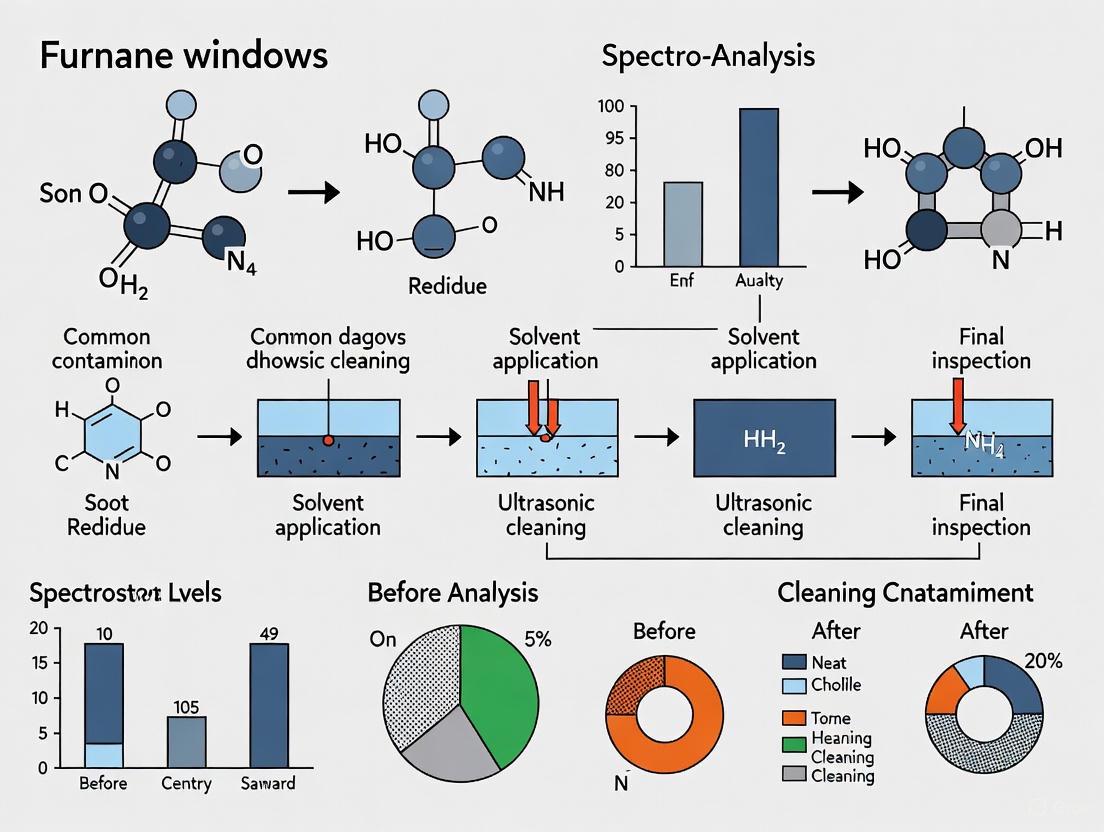
This article provides a complete guide to cleaning and maintaining furnace windows in spectrometers, a critical yet often overlooked task for ensuring data accuracy and instrument longevity.
A Comprehensive Guide to Spectrometer Furnace Window Cleaning: Procedures for Optimal Performance and Data Integrity
Abstract
This article provides a complete guide to cleaning and maintaining furnace windows in spectrometers, a critical yet often overlooked task for ensuring data accuracy and instrument longevity. Tailored for researchers, scientists, and drug development professionals, it covers the foundational role of clean windows, step-by-step cleaning protocols for different materials, troubleshooting for common issues, and advanced validation techniques. By integrating foundational knowledge with practical application and compliance strategies, this resource supports robust quality control in analytical processes, from method development to clinical research.
Why Clean Windows Matter: The Impact on Spectral Accuracy and Instrument Longevity
The Critical Role of Furnace Windows in Spectroscopic Data Integrity
In atomic absorption spectroscopy (AAS), the furnace window is a critical optical component that serves as the interface between the high-temperature graphite furnace and the external optical path. Maintaining the optical clarity of these windows is paramount for ensuring the accuracy, precision, and sensitivity of spectroscopic measurements. Contamination on window surfaces can lead to significant signal attenuation, increased noise, and erroneous quantitative results, ultimately compromising data integrity in pharmaceutical development and research applications. This document outlines the maintenance protocols and experimental data supporting the necessity of regular furnace window cleaning within a broader thesis on spectrometer upkeep.
The Impact of Window Condition on Data Quality
Quantitative Effects on Analytical Performance
The following table summarizes the potential impacts of neglected furnace window maintenance on key spectroscopic performance parameters.
Table 1: Impact of Window Condition on Spectroscopic Performance
| Performance Parameter | Clean Window | Dirty/Contaminated Window | Impact on Data Integrity |
|---|---|---|---|
| Signal Intensity | Optimal (100% Baseline) | Up to 60% Reduction | Reduced sensitivity, higher detection limits |
| Baseline Noise | Low (<1% RSD) | Significantly Increased (>5% RSD) | Poor precision and reproducibility |
| Calibration Linearity | R² > 0.999 | R² < 0.990 | Inaccurate quantification |
| Detection Limit | Manufacturer Specification | Degraded by 3-5X | Poor method sensitivity |
Table 2: Common Furnace Window Contaminants and Their Effects
| Contaminant Type | Primary Source | Effect on Optical Transmission |
|---|---|---|
| Condensed Sample Residue | Matrix volatilization | Absorbs specific wavelengths, causing spectral interference |
| Graphite Tube Debris | Tube degradation/failure | Scatters light, increases baseline noise |
| Dust/Particulates | Laboratory environment | General light scattering, signal loss |
| Fingerprints/Oils | Improper handling | Broadband absorption, significant signal attenuation |
Experimental Protocols for Window Maintenance and Assessment
Weekly Visual Inspection and Cleaning Protocol
Objective: To maintain optimal optical transmission through regular inspection and cleaning of furnace windows.
Materials Required:
- Lint-free lens tissue
- Optical-grade solvent (e.g., 50% ethanol/water solution)
- Anti-static glove
- Gentle stream of filtered air or puffer brush
Methodology:
- Safety First: Ensure the spectrometer and furnace are powered off and have cooled completely to ambient temperature [1].
- Gain Access: Carefully remove the furnace module or access panel as described in the instrument's user guide.
- Initial Inspection: Visually examine the window under adequate lighting for visible contamination, haze, or deposits.
- Dry Cleaning: Use a gentle stream of filtered air or a puffer brush to remove loose particulate matter [1].
- Solvent Cleaning: If necessary, lightly moisten lint-free lens tissue with an optical-grade 50% ethanol/water solution. Wipe the window surface gently using a circular motion, working from the center outward. Avoid excessive pressure [1].
- Final Inspection: Confirm the window is clean and free of streaks before reassembling the system.
- System Check: After reassembly, perform a system validation test to verify proper operation.
Quantitative Assessment of Window Transmission
Objective: To objectively measure the degradation of optical transmission due to window fouling.
Materials Required:
- Spectrometer with hollow cathode lamp
- Power meter or reference photodiode
- Standard reference materials
Methodology:
- Baseline Measurement: With a newly cleaned or verified window, measure the baseline transmission intensity (I₀) at a standard wavelength (e.g., Cu 324.8 nm) under defined instrument conditions.
- Periodic Monitoring: At regular intervals (e.g., weekly), measure the transmission intensity (I) under identical conditions.
- Calculate Transmission Loss: Compute the percentage transmission as (I/I₀) × 100%.
- Establish Action Threshold: Define a cleaning threshold (e.g., >5% transmission loss) based on methodological requirements.
- Correlate with QC Data: Correlate transmission loss with the performance of quality control standards to establish empirical maintenance schedules.
Visualization of Maintenance Workflow and Impact
Maintenance Workflow and Data Quality Impact
The Scientist's Toolkit: Essential Research Reagent Solutions
Table 3: Essential Materials for Furnace Window Maintenance
| Item | Specification | Function | Application Notes |
|---|---|---|---|
| Lens Tissue | Lint-free, optical grade | Scratch-free cleaning | Prevents micro-abrasions on optical surfaces |
| Ethanol/Water Solution | 50% v/v, analytical grade | Dissolves organic residues | Effective for fingerprint and oil removal |
| Puffer Brush | Soft, natural hair | Removes loose particulates | Prevents scratching from abrasive particles |
| Filtered Air Source | Oil-free, <0.22 µm filter | Removes dust without contact | Ideal for routine maintenance between cleanings |
| Optical Power Meter | Wavelength-specific | Quantifies transmission loss | Enables predictive maintenance scheduling |
Maintaining the optical integrity of furnace windows is not merely a procedural task but a fundamental requirement for ensuring spectroscopic data integrity in research and drug development. The protocols outlined herein, when implemented as part of a comprehensive spectrometer maintenance program, provide a systematic approach to prevent data corruption at its optical source. Regular maintenance preserves instrument sensitivity, ensures quantification accuracy, and ultimately safeguards the scientific validity of analytical results in pharmaceutical applications. Integrating these procedures into standard laboratory practice represents a critical investment in data quality and research reproducibility.
Within the context of advanced spectroscopic analysis for drug development, the integrity of data is paramount. The furnace window, a critical interface between the sample excitation source and the detection system, is a frequent yet often overlooked source of analytical error. Contamination of this optical component—through the accumulation of condensates, particulates, or chemical films—directly compromises measurement fidelity by introducing signal noise and systematic biases. This application note details the quantitative consequences of window neglect and provides researchers with validated protocols for assessing contamination and restoring optimal performance, thereby ensuring the reliability of spectroscopic data in pharmaceutical research and development.
The Direct Impact of Contamination on Data Quality
Contamination on spectrometer furnace windows directly interferes with the fundamental optical principles of the instrument, leading to two primary types of error: systematic errors (consistent offset from the true value) and random errors (unpredictable variation that reduces precision) [2].
Signal Attenuation and Increased Noise
A contaminated window acts as an unintended optical filter, attenuating the signal intensity reaching the detector. This loss of signal directly elevates the signal-to-noise ratio, as the inherent electronic noise of the detector becomes more significant relative to the diminished analytical signal [3]. The consequence is noisier baselines and reduced confidence in quantifying low-abundance analytes, a critical challenge in impurity profiling.
The most pernicious effect of contamination is the introduction of systematic errors that can go undetected. Particulate contamination scatters light, and this scattering is wavelength-dependent, following approximately an inverse fourth-power relationship with wavelength (Rayleigh scattering) [4]. This spectral dependence is critically important for:
- Ratio Pyrometry: In temperature measurement, which is vital for controlling furnace conditions, a two-color ratio pyrometer calculates temperature from the signal ratio at two different wavelengths. Differential scattering from contamination on a viewport can cause significant temperature errors. For instance, with operating wavelengths of 650 nm and 900 nm, contaminated windows have been shown to introduce temperature measurement errors exceeding 150 °C [4].
- Quantitative Spectrophotometry: The accuracy of absorbance and transmittance measurements is compromised by non-systematic light loss from scattering and absorption by the contaminated surface, leading to inaccurate concentration determinations [5] [6].
Table 1: Quantitative Impact of Window Contamination on Analytical Performance
| Type of Contamination | Primary Optical Effect | Consequence for Measurement | Typical Error Magnitude |
|---|---|---|---|
| Particulate/Dust | Wavelength-dependent scattering | Incorrect ratio pyrometer temperature; inaccurate absorbance | Temperature errors >150°C [4]; Photometric drift [3] |
| Condensed Vapors/Films | Absorption & Reflection | Signal attenuation; increased baseline noise | Reduced signal intensity; elevated signal-to-noise ratio |
| Streaks & Fingerprints | Non-uniform light distortion | Increased measurement variability; reduced precision | Poor reproducibility (high RSD) between identical samples |
Visualizing the Consequences and Cleaning Workflow
The following diagram illustrates the logical pathway from neglect to analytical failure and outlines the core response protocol.
Experimental Protocol: Assessment and Cleaning of Spectrometer Furnace Windows
Safety and Pre-Operational Procedures
- Personal Protective Equipment (PPE): Don appropriate nitrile gloves and safety goggles to prevent chemical exposure and particulate transfer from hands [7].
- System Shutdown & Cooling: Ensure the spectrometer and furnace are completely powered down and have cooled to ambient temperature. Confirm the system is vented to atmospheric pressure if it operates under vacuum [7] [8].
- Workspace Preparation: Establish a clean, lint-free work environment, preferably within a laminar flow hood. Use a dedicated, static-free surface mat.
Materials and Reagents (The Scientist's Toolkit)
Table 2: Essential Reagents and Materials for Window Cleaning and Validation
| Item Name | Specification/Type | Function in Protocol |
|---|---|---|
| High-Purity Solvents | HPLC-grade Methanol, Acetone, Isopropanol | Dissolve and remove organic contaminants without leaving residues. |
| Lint-Free Wipes | Baxter-type or certified lens tissue | Wipe and polish surfaces without introducing fibers or scratches. |
| Compressed Gas Duster | Ultra-zero particulate, oil-free | Remove loose particulate matter prior to wet cleaning. |
| Optical Lens Tissue | High-quality, non-abrasive | Final polishing of optical surfaces. |
| Swabs | Plastic-shaft, foam-tipped | Access recessed or small-area windows effectively. |
| Calibration Standard | NIST-traceable holmium oxide or didymium filter | Validate wavelength accuracy and photometric linearity post-cleaning [6]. |
Step-by-Step Cleaning Methodology
- Initial Visual Inspection: Under controlled lighting, inspect the furnace window at an angle. Note any haze, streaks, spots, or discrete particles. Document the initial condition with digital photography if possible.
- Dry Particle Removal: Using a can of ultra-clean, oil-free compressed gas, gently direct short bursts across the window surface at a ~45-degree angle to dislodge loose particulates. Do not allow the nozzle to touch the window.
- Solvent Cleaning Sequence:
- Step A: Moisten a lint-free wipe with deionized water and gently wipe the surface in a single direction using minimal pressure. Discard the wipe.
- Step B: On a fresh lint-free wipe, apply a small volume of HPLC-grade isopropanol. Wipe the surface again using a straight, overlapping stroke pattern.
- Step C: For stubborn organic residues, HPLC-grade acetone may be used. Due to its aggressiveness towards some polymers, ensure window compatibility first.
- Critical Note: Never spray solvent directly onto the window. Always apply it to the wipe first to prevent seepage into sealed assemblies.
- Drying and Final Polish: Use a clean, dry area of a lint-free wipe or a fresh piece of optical lens tissue to gently dry the surface. A final gentle wipe with a dry swab can ensure a streak-free finish.
Post-Cleaning Validation and Performance Assessment
After cleaning and reinstalling the window, system performance must be validated before analytical use.
- Wavelength Accuracy Check: Analyze a holmium oxide solution or filter standard. The observed absorption maxima (e.g., 241.5 nm, 287.5 nm, 361.5 nm, 536.0 nm) should fall within the instrument's specified tolerance (typically ±0.5 nm) [6].
- Photometric Accuracy & Stray Light Test: Measure the absorbance of a known standard, such as potassium dichromate in perchloric acid, at a specified wavelength (e.g., 350 nm). The measured value should agree with the certified value within the instrument's specifications. High absorbance at low wavelengths can also indicate residual stray light issues [6].
- Signal Stability (Noise) Test: Acquire a baseline signal over a suitable timeframe (e.g., 30 minutes for furnace instrumentation). The peak-to-peak noise should return to the manufacturer's specified baseline performance, indicating the removal of contamination-induced noise.
The integrity of spectroscopic data in drug development is inextricably linked to the physical state of instrument components, with the furnace window being a critical vulnerability. Neglect leads directly to quantifiable signal noise and analytical errors that undermine research validity. The implementation of a rigorous, documented cleaning and validation protocol, as detailed herein, is not merely a maintenance task but a fundamental scientific practice. It ensures that the data generated reflects the true sample composition and not an artifact of instrumental neglect, thereby protecting the integrity of the scientific decision-making process.
In analytical research, the integrity of data is paramount. For spectrometer systems, even minor contaminants on optical components like furnace windows can introduce significant analytical interference, skewing results and compromising research validity. This is particularly critical in sensitive fields such as drug development, where precision is non-negotiable. This application note details a standardized protocol for the identification of common contaminants and the validation of cleaning procedures for furnace windows, providing researchers with a framework to ensure analytical accuracy.
Common Contaminants and Their Impact on Spectroscopic Analysis
The first step in effective contamination control is identifying the adversary. Contaminants can be introduced from the sample matrix, the laboratory environment, or as by-products of instrumental processes. Their accumulation on furnace windows can lead to signal attenuation, increased background noise, and the generation of spurious peaks.
Table 1: Common Contaminants in Spectrometer Systems
| Contaminant Category | Specific Examples | Potential Source | Impact on Spectroscopic Analysis |
|---|---|---|---|
| Organic Residues | Polycyclic Aromatic Hydrocarbons (PAHs), hydrocarbons, silicone oils [9] | Sample volatilization, vacuum pump oils, fingerprints | Strong UV/VIS absorption, fluorescence quenching, increased background noise [9] |
| Inorganic Residues & Trace Metals | Alkali salts, heavy metals, dust particulates (silicate-based) [9] | Sample digests, environmental dust, wear from components | Scattering of light, non-specific absorption, permanent etching or coating of optical surfaces |
| Polar Compounds & Oxidation Products | Oxygenated hydrocarbons (e.g., from weathered oil) [10] | Sample degradation, reaction with atmospheric oxygen | Altered surface wetting properties, formation of persistent films that are difficult to remove |
| Microbiological Contaminants | Mold, bacterial films | Humidity in the environment, improper storage | Light scattering, introduction of organic and ionic residues |
Analytical Protocols for Contaminant Identification
A multi-technique approach is required to fully characterize the chemical composition of contaminants, which informs the appropriate cleaning strategy.
Protocol: Non-Targeted Screening Using LC-HRMS
This protocol is designed for the comprehensive detection of organic contaminants solubilized from furnace window swabs.
1. Sample Preparation:
- Swab Sampling: Using a clean, solvent-moistened swab (e.g., polyester tip with methanol), thoroughly wipe the surface of the furnace window. Employ a consistent pattern and pressure.
- Extraction: Place the swab head into a vial and add 2 mL of a 1:1 (v/v) mixture of acetonitrile and water acidified with 0.1% formic acid.
- Agitation: Sonicate the vial for 15 minutes to ensure complete extraction of contaminants from the swab.
- Clean-up: Pass the extract through a solid-phase extraction (SPE) cartridge (e.g., C18) to remove matrix interferents, following the laboratory's established procedures [11].
2. Instrumental Analysis:
- Technique: Liquid Chromatography coupled to High-Resolution Mass Spectrometry (LC-HRMS) with an Orbitrap-based instrument.
- Data Acquisition Mode: Employ a data-independent acquisition (DIA) mode, such as multiplexed DIA (mDIA) or variable DIA (vDIA). This approach sequentially isolates and fragments groups of precursor ions across a wide mass range (e.g., m/z 100-1000), generating diagnostic MS2 spectra for all detectable compounds without a pre-defined target list [11].
- Rationale: DIA provides a superior balance of comprehensive data collection and high-quality, interpretable spectra compared to all-ion fragmentation (AIF), making it ideal for retrospective analysis and identifying unexpected contaminants [11].
3. Data Processing:
- Process the acquired data using software capable of deconvoluting DIA data.
- Perform a library search against commercial and custom databases of contaminants (e.g., pesticides, lubricants, plasticizers, pharmaceuticals) to identify the chemical species present.
Protocol: Targeted Analysis and Confirmation with Parallel Reaction Monitoring (PRM)
For monitoring specific, known contaminants (e.g., a particular PAH or plasticizer), a targeted approach offers superior sensitivity and confirmation.
1. Sample Preparation: Follow the same swab and extraction procedure as in Protocol 2.1.
2. Instrumental Analysis:
- Technique: LC-HRMS (Orbitrap).
- Data Acquisition Mode: Use Parallel Reaction Monitoring (PRM). Create an inclusion list of the exact masses of the targeted contaminant(s). The instrument will isolate each precursor ion and generate a full, high-quality product ion scan during its chromatographic elution window [11].
- Rationale: PRM is preferred over data-dependent MS2 (DDMS2) for targeted analysis because it guarantees the acquisition of MS2 spectra for all listed compounds, even at low concentrations, providing unequivocal confirmation [11].
3. Data Processing: Confirm the identity of the targeted analyte by matching its accurate mass, retention time, and full MS2 spectrum against a certified reference standard.
Cleaning Validation and Remediation Protocols
Once contaminants are identified, an effective and validated cleaning procedure must be implemented. The principle of cleaning validation, as mandated in Good Manufacturing Practices (GMP), requires demonstrating that cleaning procedures consistently reduce residues to acceptable levels [12].
Protocol: Cleaning Validation for Furnace Windows
1. Develop a Cleaning Validation Protocol:
- Objective: To demonstrate that the chosen cleaning procedure effectively removes key contaminants to a pre-defined acceptance limit.
- Acceptance Criteria: Define the maximum allowable residue limit. For high-sensitivity instruments, this may be "not detected" by the most sensitive analytical method (e.g., LC-HRMS). A visual inspection criterion ("visibly clean") is a minimum but insufficient standard alone [12].
- Sampling Method: Swab sampling is the most appropriate for flat, accessible surfaces like furnace windows, as it provides a direct measurement of the residue on the surface itself [12].
2. Cleaning and Testing Procedure:
- Pre-Cleaning Sample: Collect a swab sample from the contaminated furnace window as a "before" baseline.
- Cleaning Execution: Perform the cleaning procedure (see Section 3.2 for methods).
- Post-Cleaning Sample: Collect a second swab sample from the exact same area after cleaning and drying.
- Analysis: Analyze both swabs using the LC-HRMS methods described in Section 2.
3. Review and Document Results:
- Compare the pre- and post-cleaning chromatograms and quantitate the reduction in key contaminant signals.
- The cleaning is validated if the results meet the acceptance criteria in three consecutive, successful cycles [12].
- All steps, parameters, and results must be documented in a Standard Operating Procedure (SOP) [12].
Remediation and Cleaning Methods
Based on the identified contaminants, select an appropriate cleaning method. Wet and dry cleaning media, vacuuming, and specialized techniques like ozonation have been described for remediating persistent indoor contamination, providing a reference for cleaning optical components [9].
Table 2: Cleaning Methods for Furnace Windows
| Cleaning Method | Procedure | Applicable Contaminants | Precautions |
|---|---|---|---|
| Dry Cleaning | Use a stream of ultra-pure, inert gas (e.g., nitrogen) or a soft-bristled, optical brush to dislodge loose particles. | Dust, loose particulates. | Never use compressed air from an oil-lubricated compressor. |
| Solvent Cleaning | Moisten a lint-free swab (e.g., polyester) with a compatible, high-purity solvent (e.g., HPLC-grade methanol, isopropanol). Wipe the surface in a parallel, overlapping pattern without applying excessive pressure. | Organic residues, oils, fingerprints. | Always test solvent compatibility with the window material to avoid cracking or hazing. Use minimal solvent. |
| Detergent Cleaning | For more persistent films, use a dilute solution of a mild, non-ionic detergent followed by multiple rinses with high-purity water and a final solvent rinse. | Polar oxidation products, salt crystals, biological films. | Ensure the detergent is thoroughly rinsed to avoid leaving a new residue. |
The Scientist's Toolkit: Key Reagent Solutions
Table 3: Essential Materials for Contaminant Identification and Cleaning
| Item | Function/Brief Explanation |
|---|---|
| Polyester Swabs | For sample collection and solvent cleaning. Low in extractables to prevent introducing new contaminants during analysis. |
| High-Purity Solvents | HPLC or GC-MS grade methanol, acetonitrile, isopropanol. Used for sample extraction and cleaning to prevent contamination from solvent impurities. |
| Solid-Phase Extraction (SPE) Cartridges | For clean-up of sample extracts to remove matrix interferents that can complicate the LC-HRMS analysis [11]. |
| Certified Reference Standards | Pure analytical standards for targeted contaminants (e.g., specific PAHs). Essential for method development, calibration, and confirmation. |
| LC-HRMS with DIA Capability | The core analytical instrument for non-targeted screening, allowing for retrospective data mining and discovery of unknown contaminants [11]. |
| Non-Ionic Detergent | For cleaning persistent polar films without leaving an ionic residue that could interfere with subsequent analyses. |
| Lint-Free Wipes | For broader cleaning of instrument surfaces adjacent to the furnace window to minimize re-contamination. |
Optical windows are critical components in spectroscopic systems, serving as protective barriers that shield sensitive internal optics from environmental contaminants while enabling the precise transmission of light. The selection of appropriate window materials is paramount for maintaining the integrity of optical systems, particularly in demanding applications such as furnace spectrometry. This application note provides a detailed overview of the properties of common window materials—Potassium Bromide (KBr), Calcium Fluoride (CaF₂), and Chemical Vapor Deposition (CVD) Diamond—and establishes standardized cleaning protocols essential for researchers and scientists in drug development and analytical fields. Proper material selection and maintenance directly impact measurement accuracy, instrument longevity, and operational safety.
Properties of Common Optical Window Materials
The performance of an optical window is dictated by its intrinsic material properties, which determine its suitability for specific spectroscopic applications. Key considerations include transmission range, hardness, and environmental stability.
Table 1: Characteristic Properties of Common Optical Window Materials
| Material | Transmission Range (cm⁻¹) | Knoop Hardness (kg/mm²) | Solubility in Water | Key Characteristics & Precautions |
|---|---|---|---|---|
| KBr (Potassium Bromide) | 40,000 - 400 [13] | 7.0 [14] | Soluble [14] | Ideal for FTIR spectroscopy; excellent transmission in mid-IR; requires protection from moisture [14]. |
| CaF₂ (Calcium Fluoride) | 67,000 - 740 [13] | Information missing | Slightly Soluble | Good UV to IR transmission; less hygroscopic than KBr; attacked by ammonium salts [13]. |
| CVD Diamond | Information missing | Information missing | Insoluble | Highest known thermal conductivity; exceptional hardness; electrically insulating; high chemical resistance [15]. |
| NaCl (Sodium Chloride) | 40,000 - 625 [13] | Information missing | Soluble | Lower cost than KBr; hygroscopic but less so than KBr [13]. |
| BaF₂ (Barium Fluoride) | 67,000 - 740 [13] | Information missing | Slightly Soluble | Should not be used for ammonium salts [13]. |
| CsI (Caesium Iodide) | 40,000 - 200 [13] | Information missing | Soluble | Soft and highly hygroscopic; difficult to polish [13]. |
The following decision flowchart assists in selecting the appropriate window material based on application requirements and operational constraints.
Material Selection Logic for Spectroscopic Windows
Experimental Protocols for Window Cleaning and Handling
Maintaining optical clarity requires meticulous cleaning procedures tailored to the specific material properties, particularly solubility and hardness.
Protocol: Cleaning Potassium Bromide (KBr) Windows
KBr's high solubility in water necessitates the use of anhydrous solvents and strict avoidance of aqueous cleaning solutions [16] [13].
Research Reagent Solutions for KBr Cleaning:
- Isopropyl Alcohol or Acetone (Spectroscopy Grade): Primary solvent for dissolving organic contaminants without damaging the water-soluble substrate [16].
- Compressed Air or Nitrogen (Dry): For removing loose abrasive particulates prior to wet cleaning [16].
- Microfiber Cloth or Lens Tissue: Lint-free wipes to prevent scratching the soft crystal surface [16].
- Soft-Bristled Brush: For initial debris removal [16].
Step-by-Step Procedure:
- Initial Dry Removal: In a clean, low-humidity environment, use a soft-bristled brush or a gentle stream of clean, dry compressed air or nitrogen to remove loose dust and debris from the window surface [16].
- Solvent Application: Lightly dampen a microfiber cloth or lens tissue with a small amount of spectroscopy-grade isopropyl alcohol or acetone. Avoid over-saturating the cloth to prevent solvent from pooling and potentially penetrating the window edges [16].
- Wiping: Gently wipe the window surface using a circular motion, starting from the center and moving outwards toward the edges. Apply minimal pressure to prevent scratching the soft KBr material [16].
- Drying: Use a fresh, dry microfiber cloth or lens tissue to thoroughly dry the surface and remove any residual solvent or streaks [16].
- Storage: Immediately after cleaning, store the KBr window in a desiccator or another sealed, dry container to prevent moisture absorption and surface fogging [16] [14].
Protocol: Cleaning Calcium Fluoride (CaF₂) Windows
This protocol is suitable for coated and un-coated CaF₂ windows, with critical precautions against ultrasonic cleaning and uncontrolled water use [17] [18].
Research Reagent Solutions for CaF₂ Cleaning:
- Acetone (Spectroscopy Grade): For initial removal of oils and organic contaminants [17] [18].
- Methanol, Propanol, or Hexane (Spectroscopy Grade): Alternative solvents as specified [17].
- De-Ionized Water (with caution): Only for removing water-soluble residues and only if the coating is confirmed to be non-water-soluble [17].
- Lint-Free Swabs/Tissue: For applying solvents without introducing fibers [17].
- Compressed Nitrogen: For dry particle removal and final drying [17].
Step-by-Step Procedure:
- Preparation: Perform all work in a darkened room under a laminar flow hood if possible. Illuminate the window at a right angle against a black background to visualize contaminants [17].
- Dry Blow-Off: Blow off the window surface with clean, dry, regulated nitrogen or compressed air to remove gritty dust that could cause scratches during wiping [17].
- Primary Acetone Clean: Wet a clean, lint-free swab with spectroscopic grade acetone. Flung off excess solvent. Clean the surface using small circular motions from the outer edge to the center, frequently rotating the window and using new swabs for each cleaned area. Never re-use a swab on a cleaned area [17] [18].
- Stubborn Contaminants (Water Rinse - Use with Caution): If stains persist, and the coating is verified to be non-water-soluble, gently wipe the stained area with a swab lightly dampened with de-ionized water. Use water sparingly [17].
- Final Solvent Dry: Immediately after any water step, repeat the acetone cleaning procedure with a fresh swab to rapidly evaporate any residual water and prevent spotting [17] [18].
- CAUTION: Do not use ultrasonic cleaners for CaF₂ windows, as they can cause damage [17].
The Scientist's Toolkit: Essential Research Reagents and Materials
Table 2: Essential Materials for Optical Window Maintenance
| Item | Function & Application | Example Use Case |
|---|---|---|
| Spectroscopy Grade Solvents (Acetone, Methanol, Isopropanol) | High-purity solvents for dissolving organic contaminants without leaving residues. | Primary cleaning agent for KBr and CaF₂ windows [17] [16]. |
| Lint-Free Wipes (Microfiber Cloth, Lens Tissue, Cotton Swabs) | Physically remove contaminants without introducing scratches or fibers. | Applying solvent in a gentle, circular motion across the window surface [17] [16]. |
| Dry, Compressed Gas (Nitrogen, "Canned Air") | Remove loose particulate matter without physical contact. | Initial blow-off of abrasive dust from window surfaces before wet cleaning [17] [16]. |
| Powder-Free Gloves (Vinyl or Nitrile) | Prevent fingerprint oils and skin particulates from contaminating the optical surface. | Mandatory for all handling steps of dismounted windows [17]. |
| Desiccator Cabinet | Provides a moisture-free storage environment for hygroscopic materials. | Prevents fogging and surface degradation of KBr and other water-soluble windows [16] [13]. |
The logical relationship between the properties of a material, the required handling precautions, and the resulting application suitability is summarized in the following workflow.
From Properties to Handling and Application
The integrity of spectroscopic data, particularly in critical research areas like drug development, is fundamentally linked to the proper selection and maintenance of optical windows. Potassium Bromide (KBr) remains the cornerstone for mid-IR spectroscopy but demands rigorous moisture control. Calcium Fluoride (CaF₂) offers a robust solution for broader UV-IR applications but requires careful mechanical handling. CVD Diamond stands out for extreme environments where superior thermal conductivity and hardness are paramount. Adherence to the detailed material-specific protocols outlined in this document—especially the critical avoidance of water for KBr and ultrasonic cleaners for CaF₂—will ensure optimal performance, prolong component lifespan, and safeguard the accuracy of analytical results.
Integrating Window Cleaning into Broater Equipment Maintenance Schedules
Maintaining optical clarity of furnace viewports in spectrometry systems is critical for experimental accuracy and instrument longevity. This application note provides a standardized protocol for integrating specialized window cleaning into preventive maintenance schedules for atomic absorption spectrometers and related analytical equipment. We detail cleaning methodologies, material specifications, and scheduling frameworks that maintain optical performance while preventing instrument downtime. Implementing these procedures ensures uncompromised data integrity in pharmaceutical development and research applications.
Viewport contamination in spectrometer systems introduces significant analytical error through light scatter and absorption. Regular cleaning prevents buildup of residues that compromise sensitivity and accuracy. Integrating these procedures into existing equipment maintenance creates a comprehensive care protocol supporting research reproducibility.
Quantitative Maintenance Scheduling Data
Table 1: Recommended Maintenance Frequencies for Spectrometer Systems
| Component | Maintenance Task | Frequency | Key Performance Indicators |
|---|---|---|---|
| Viewport/Windows | Visual inspection for deposits | Daily [1] | Visible residue, reduced light transmission |
| Full cleaning procedure | Weekly [1] | Consistent baseline, signal stability | |
| Gas Systems | Leak testing | Daily [1] | Pressure stability, consumption rates |
| Optical Path | Compartment cleaning | Weekly [1] | Signal-to-noise ratio, sensitivity |
| General | Professional service | Annually [1] | Manufacturer performance specifications |
Table 2: Cleaning Solution Efficacy for Common Contaminants
| Contaminant Type | Recommended Cleaning Solution | Application Method | Removal Efficacy |
|---|---|---|---|
| Particulate Matter | Compressed air or nitrogen [19] | Gentle stream | High (dust, loose debris) |
| Organic Residues | 50% ethanol/water solution [1] | Lens cleaning paper | Medium-High (fingerprints, oils) |
| General Soils | Mild detergent solution [19] | Soft, damp cloth | Medium (environmental soils) |
| Stubborn Deposits | Professional service recommended | N/A | Variable (requires assessment) |
Experimental Protocols
Daily Visual Inspection Protocol
Objective: Rapid assessment of viewport condition to identify early contamination. Materials: Lint-free gloves, inspection light source [7] Procedure:
- Power down instrument and allow to cool if recently operational [1]
- Don lint-free gloves to prevent additional contamination [7]
- Using angled light source, visually inspect viewport for:
- Visible residue or film formation
- Dust accumulation patterns
- Condensation or moisture
- Microscopic scratching or damage
- Document findings in maintenance log
- If significant contamination noted, proceed to weekly cleaning protocol
Weekly Comprehensive Cleaning Methodology
Objective: Thorough removal of accumulated contaminants without damaging optical surfaces. Materials:
- Lint-free cloths or lens cleaning paper [1] [19]
- 50% ethanol/water solution or mild laboratory detergent [1] [19]
- Compressed air or nitrogen duster [19]
- Tweezers for handling small components [7]
Step-by-Step Procedure:
- Safety Preparation:
Surface Preparation:
- Use compressed air or nitrogen to remove loose particulate matter [19]
- Apply gentle stream from center to edges
- Hold canister upright to prevent propellant discharge
Solvent Cleaning:
Drying and Inspection:
- Allow surface to air dry completely
- Use compressed air to remove any lint residues
- Verify cleanliness with visual inspection
- Document procedure completion in maintenance log
Critical Notes:
- Never use abrasive cleaners, solvents, or harsh chemicals [19]
- Avoid excessive pressure on optical surfaces
- Do not attempt to clean deeply embedded scratches
- Consult manufacturer for specialized coatings or materials
Research Reagent Solutions
Table 3: Essential Materials for Spectrometer Viewport Maintenance
| Material/Reagent | Specification | Primary Function | Application Notes |
|---|---|---|---|
| Lens Cleaning Paper | Lint-free, high purity | Solvent application | Use with tweezers to prevent contamination [1] |
| Ethanol Solution | 50% in deionized water [1] | Organic residue removal | Effective against fingerprints and oils |
| Compressed Gas Duster | Oil-free, moisture-free | Particulate removal | Preferred over mechanical wiping for loose debris [19] |
| Mild Detergent | Neutral pH, non-ionic | General cleaning | For non-optical external surfaces only [19] |
| Lint-Free Cloths | Microfiber or cellulose | Surface wiping | Never reuse without proper cleaning |
Maintenance Integration Workflow
Technical Specifications and Validation
Performance Validation Metrics
Post-cleaning verification should include:
- Baseline stability measurements across operational wavelength range
- Signal-to-noise ratio comparison to established benchmarks
- Visual inspection under controlled lighting conditions
- Reference material analysis to confirm analytical accuracy
Contaminant-Specific Protocols
Carbonaceous Deposits:
- Requires specialized cleaning beyond scope of routine maintenance
- Consult manufacturer for severe cases [7]
- May indicate underlying instrument issues requiring service
Particulate Matter:
- Primary approach: compressed gas removal [19]
- Secondary: solvent cleaning with mild detergent
- Never wipe dry particulate to prevent scratching
Integrating viewport cleaning into standardized maintenance schedules preserves optical performance and data quality in spectrometric analysis. The protocols outlined provide a reproducible methodology suitable for research and pharmaceutical development environments where measurement precision is critical. Regular execution prevents cumulative contamination effects and supports instrument longevity.
Step-by-Step Cleaning Protocols: From Routine Maintenance to Specialized Procedures
Within the context of advanced analytical research involving spectrometers, the integrity of optical components, such as furnace windows, is paramount for data accuracy and instrument longevity. Maintenance procedures, particularly cleaning, introduce risks from hazardous chemicals, high temperatures, and delicate surfaces. This document establishes the essential safety protocols for Personal Protective Equipment (PPE) and workspace configuration, providing a foundational framework for the broader thesis on cleaning procedures for furnace windows in spectrometer research. Adherence to these protocols ensures researcher safety and preserves the critical performance of optical components from contaminants like dust and skin oils that can scatter light, absorb radiation, and cause permanent damage [20].
Personal Protective Equipment (PPE)
The use of appropriate PPE is non-negotiable when handling cleaning solvents and interacting with spectrometer components. The following table details the essential PPE requirements.
Table 1: Essential Personal Protective Equipment (PPE)
| PPE Item | Specification | Rationale and Application |
|---|---|---|
| Gloves | Powder-free, acetone-impenetrable gloves (e.g., nitrile) [21]. | Protects the researcher from hazardous solvents and prevents skin oils from contaminating optical surfaces. Critical when using acetone, which can penetrate many common glove materials. |
| Lab Coat | Clean, closed-front, made of a durable, chemical-resistant material. | Provides a primary barrier against chemical splashes and protects personal clothing from contamination or damage. |
| Safety Glasses | Wrap-around design or chemical splash goggles. | Shields the eyes from accidental splashes of volatile organic solvents, which can cause severe irritation or damage. |
Workspace Safety and Setup
A properly configured workspace mitigates risks and prevents contamination of sensitive optical components.
Workspace Characteristics
The cleaning should be performed in a dedicated, well-ventilated area, such as a fume hood, especially when using volatile solvents [22]. The environment should be clean, low-dust, and temperature-controlled to minimize the introduction of airborne contaminants and to prevent thermal shock to optical components [20] [21]. The workspace must have a clear, stable surface free of clutter, allowing for the organized placement of tools and optics.
Hazardous Material Management
All solvents must be used with caution, acknowledging that most are both poisonous and flammable [20]. Researchers must read Material Safety Data Sheets (MSDS) before using any new chemical. A key safety rule is to always add acids or bases to water, never the reverse, to prevent violent exothermic reactions [22]. Containers of waste solvent must be clearly labeled and compatible with the chemicals being stored.
Optical Handling and Pre-Cleaning Safety
Improper handling is a major cause of irreparable damage to optical components. The following workflow outlines the critical steps for safe preparation and inspection prior to any cleaning procedure.
Pre-Cleaning Instrument Safety
Before any maintenance, the spectrometer must be turned off and disconnected from the main power supply [19]. For systems with a graphite furnace, it is critical to allow the furnace to cool completely before touching any components, as it operates at temperatures up to 3000° Celsius [1]. This prevents severe burns and accidental instrument activation.
Safe Optical Handling Practices
- Never Handle with Bare Hands: Skin oils are corrosive and can permanently stain optical surfaces [21]. Always wear gloves.
- Hold by the Edges: Always grip optics by their ground edges, never touching the optical surface [20] [21].
- Use Safe Tools: Avoid metal tweezers; instead, use vacuum pick-up tools, plastic, bamboo, or non-marring tweezers to prevent scratches [23] [21].
- Pre-Cleaning with Air: Always use a gentle stream of clean, dry, compressed air or nitrogen to remove loose dust before wiping [20] [21]. Never blow with your mouth, as saliva can contaminate the surface [23] [20]. This step is crucial, as wiping a dusty optic can grind particles into the surface, causing scratches.
Reagent Solutions and Detailed Cleaning Protocol
The choice of cleaning reagents is critical. Using inappropriate or low-grade chemicals can leave residues that degrade optical performance and damage coatings.
Table 2: Research Reagent Solutions for Optical Cleaning
| Reagent | Grade/Purity | Function and Application Notes |
|---|---|---|
| Compressed Air/Dusting Gas | Canned or filtered, oil-free. | First-step removal of loose particulate matter. Hold can upright 6" from optic; use short blasts at a grazing angle [20]. |
| Isopropyl Alcohol (IPA) | Reagent-grade or spectrophotometric-grade [23] [21]. | Safely removes oils and fingerprints from most glass optics. Safer for plastics. Evaporation can sometimes leave streaks [21]. |
| Acetone | Reagent-grade or spectrophotometric-grade [23] [21]. | Effective solvent for removing organic residues. Dries very quickly. Never use on plastic optics or housings, as it will cause damage [23] [21]. |
| Methanol | Reagent-grade or spectrophotometric-grade [20]. | Often mixed with acetone (e.g., 40% methanol, 60% acetone) to slow evaporation and improve cleaning efficacy [21]. |
| Lens Tissue | Low-lint, high-quality. | Single-use wipes for applying solvent. Never use dry, as it can scratch the optic [21]. |
| Cotton-Tipped Applicators | Synthetic, low-lint swabs. | Useful for cleaning mounted optics or small areas where tissue is impractical [20] [21]. |
| De-Ionized Water | High-purity (>18 MΩ·cm resistivity). | Safe for unknown coatings or substrates. Can be used with a mild dish soap for initial cleaning [23] [21]. |
Detailed Solvent Cleaning Methodology
The following protocol is recommended for cleaning flat, unmounted optics like furnace windows.
- Preparation: After donning PPE and removing dust with air, place the optic on a clean, lint-free wipe on a stable surface.
- Drop and Drag Technique: Unfold a fresh sheet of lens tissue and hold it above the optic. Apply one or two drops of an approved solvent (e.g., IPA or an acetone/methanol blend) onto the tissue. The weight of the solvent will cause the tissue to contact the optic. Slowly and steadily drag the damp tissue across the optic's surface in a single, continuous motion [20] [21].
- Inspection and Repeat: Use each sheet of lens tissue only once. Inspect the optic under a bright light. If contamination remains, repeat the process with a fresh tissue and solvent.
- Final Storage: Once clean, the optic should be immediately installed in its mount or wrapped individually in clean lens tissue and stored in a dedicated container to prevent re-contamination [23] [21].
Emergency Procedures and Contingency Planning
Despite all precautions, accidents can happen. Immediate and correct action is essential.
- Chemical Exposure to Skin: Immediately flush the affected area with copious amounts of water for at least 15 minutes. Seek medical attention if irritation persists.
- Chemical Exposure to Eyes: Flush eyes immediately at an emergency eyewash station for at least 15 minutes, holding the eyelids open. Seek immediate medical attention.
- Broken Glass/Solvent Spill: If a glass component like a syringe breaks, the sharp pieces can cause severe injury [1]. Evacuate the immediate area, wear cut-resistant gloves for cleanup, and place all broken glass and solvent-soaked materials in a designated sharps/hazardous waste container.
- Instrument Damage: If liquid is spilled on or inside the spectrometer, immediately turn off the instrument and disconnect it from power. If there is contamination inside the instrument, contact your instrument representative or technical support [1] [19].
Within spectroscopic systems, the furnace window is a critical interface, directly influencing the quality and accuracy of analytical data. Contaminants such as dust, oils, and mineral deposits can scatter incident light, reduce signal throughput, and contribute to inaccurate readings [24] [21]. This document outlines standardized, gentle cleaning protocols for researchers and scientists to maintain the optical integrity of spectrometer furnace windows, thereby ensuring data reliability and extending component lifespan. These procedures are designed to integrate seamlessly into a laboratory's routine maintenance schedule.
General Principles for Optical Cleaning
Adherence to the following core principles is fundamental to preventing damage to sensitive optical surfaces during cleaning.
- Minimize Cleaning Frequency: Unnecessary handling and cleaning pose the greatest risk to optics. Clean only when visible contamination is present and is suspected of affecting performance [24] [21].
- Inspect Before Cleaning: Always perform a visual inspection under bright, oblique light to assess the level and type of contamination before beginning any cleaning procedure [21].
- Prioritize Gentle Methods: Begin with the least invasive method, such as using clean, dry air, before progressing to solvent-based cleaning [21].
- Handle with Utmost Care: Always wear powder-free, solvent-impenetrable gloves or finger cots to prevent corrosive skin oils from contacting optical surfaces. Handle components by their edges only [21].
Cleaning Protocols
Daily/Pre-Use Visual Inspection and Dry Cleaning
This non-invasive routine should be performed at the start of each day or before critical measurements.
Objective: To remove loose, dry particulate matter without touching the optical surface.
- Workplace Preparation: Perform all handling in a clean, low-dust environment [21].
- Inspection: Hold the furnace window at an angle under a bright light source. Look for scattering caused by dust and stains [21].
- Dust Removal: If only loose particulates are present, use a canned air duster, compressed and filtered air, or dry nitrogen gas. Direct the stream across the surface at a shallow angle [21].
- Decision Point: If the surface appears clean after dusting, do not proceed further. "If it's not dirty, don't clean it" [21].
Weekly/As-Needed Wet Cleaning Protocol
This protocol is for removing adhered contaminants, such as light oils or water spots, that are not removed by air alone.
Objective: To safely dissolve and remove bonded contaminants using high-purity solvents and appropriate materials.
- Materials Preparation: Ensure all materials are ready before handling the optic. You will need:
- Initial Dusting: First, blow off any loose dust using compressed air or nitrogen as described in the daily protocol [21].
- Solvent Application: Moisten a fresh piece of lens tissue or a swab with the chosen solvent. Shake off any excess liquid to avoid drips [21].
- Wiping Technique: Using very light pressure, wipe slowly in a straight line across the optic's surface. Start from one edge and drag to the opposite edge. Never wipe in a circular motion. For mounted optics with hard-to-reach edges, begin by wiping the perimeter before sweeping across the center in one continuous motion [21].
- Drying: Allow the solvent to evaporate completely. A slow, steady wipe helps prevent streaking. If marks persist, the optic can be gently dried using a stream of clean, dry air or nitrogen [21].
Research Reagent Solutions and Materials
The following table details the essential materials required for the protocols described above.
Table 1: Essential Materials for Optical Cleaning
| Item | Specification/Function | Key Consideration |
|---|---|---|
| Solvents | Reagent- or spectrophotometric-grade isopropyl alcohol, acetone, methanol. Dissolves oils and organic residues without leaving impurities [24] [21]. | Acetone can damage plastics and some soft coatings; use with caution. Isopropyl alcohol is generally safe but evaporates slower [21]. |
| Wipes | Low-lint lens tissue or synthetic swabs. Provides a soft, non-abrasive medium for applying solvent and capturing contaminants [21]. | Never use a dry lens tissue, as it can scratch surfaces. Never re-use a tissue [21]. |
| Gas Duster | Canned air, filtered compressed air, or dry nitrogen gas. Removes abrasive particulates prior to wet cleaning [24] [21]. | Avoid cans held at an angle, as they may expel liquefied propellant and contaminants [24]. |
| Gloves | Powder-free, acetone-impenetrable gloves or finger cots. Prevents transfer of skin oils and protects hands from solvents [21]. | Human sweat is highly corrosive to optical coatings [21]. |
Experimental Workflow for Cleaning Validation
After cleaning, researchers should validate the procedure's effectiveness by verifying the system's analytical performance. The following workflow outlines a standard method for this validation.
The table below quantifies the recommendations for solvent mixtures and cleaning frequency to serve as a quick-reference guide.
Table 2: Quantitative Guidelines for Optical Cleaning
| Parameter | Recommendation | Rationale & Reference |
|---|---|---|
| Solvent Purity | ≥ 97% (Reagent grade) | Minimizes risk of residue left on optic after evaporation [24] [21]. |
| Common Solvent Blend | 60% Acetone / 40% Methanol | Acetone dissolves contaminants; methanol slows evaporation for more effective cleaning [21]. |
| Commercial Solution | ~6% Isopropyl Alcohol, >94% Distilled Water | Effective for light cleaning; safe on modern, durable coatings [24]. |
| Cleaning Frequency | "If it's not dirty, don't clean it" | The cleaning process itself poses a risk; clean only when contamination is visible and affecting data [24] [21]. |
| Argon Gas Pressure | 50 - 60 psig (if applicable) | Standard operating pressure for systems like Graphite Furnace AAS [25]. |
Within spectrometer research, maintaining the pristine condition of furnace windows is critical for ensuring data accuracy and instrument longevity. These windows are susceptible to the accumulation of stubborn, carbonaceous residues that degrade performance by scattering light and reducing signal-to-noise ratio. Standard cleaning procedures using solvents are often ineffective against these tenacious deposits. This application note details advanced acid washing protocols, developed within a broader thesis on spectrometer maintenance, to address such challenging contaminants. These procedures are designed for researchers, scientists, and drug development professionals who require reliable, validated methods for restoring optical components.
The Scientist's Toolkit: Research Reagent Solutions
The following table catalogues the essential reagents and materials required for the advanced cleaning protocols described in this note. Proper preparation with the correct materials is fundamental to both efficacy and safety.
Table 1: Essential Reagents and Materials for Acid Washing Protocols
| Reagent/Material | Function and Application Notes |
|---|---|
| Hydrochloric Acid (HCl) | A strong inorganic acid used in specific formulations for dissolving inorganic deposits and carbonaceous residues. Often used in a diluted aqueous solution (e.g., 15-20%) and sometimes electrolytically for stainless steels [26]. |
| Nitric Acid (HNO₃) | A powerful oxidizing acid used in electrolytic etching solutions for stainless steel components. Aqueous solutions (e.g., 60%) can help reveal microstructural features without heavy material removal [26]. |
| Acetone | A potent organic solvent effective for removing organic contaminants and oils. Critical Note: Reagent-grade acetone must be stored in glass containers, as brief contact with plastics can cause it to leave a persistent residue on optics [27] [21]. |
| Methanol | An alcohol solvent often mixed with acetone (e.g., 40% methanol, 60% acetone) to slow evaporation time and dissolve a broader range of debris [21]. |
| Isopropyl Alcohol | A safe and effective solvent for final rinsing; its relatively slow evaporation can sometimes leave drying marks, so directed air drying is recommended [21]. |
| Sodium Hydroxide (NaOH) | A strong base used in aqueous solutions (e.g., 20%) for electrolytic etching, particularly for coloring ferrite phases in stainless steels [26]. |
| Lens Tissue | Low-lint, specially manufactured paper for wiping optics. It must always be used wet with a solvent to prevent scratching the optical surface and should never be re-used [21]. |
| Lint-Free Gloves/Finger Cots | Powder-free, acetone-impenetrable gloves are mandatory to prevent corrosive skin oils and contaminants from contacting optical surfaces during handling [7] [21]. |
| Compressed Air/Nitrogen Duster | Used to remove abrasive dust particles before any physical wiping of an optic occurs. "Wiping a dusty optic is like cleaning it with sandpaper" [21]. |
Experimental Protocols and Workflows
A systematic, escalating approach is paramount when dealing with stubborn residues. The following workflow ensures that the most gentle effective method is always employed, minimizing risk to critical components.
Visual Inspection and Residue Assessment
Before initiating any cleaning procedure, a thorough inspection must be conducted.
- Procedure: Hold the furnace window near a bright, visible-light source, such as a lamp. View the optic from multiple angles to detect light scattering from dust and stains [21].
- Assessment Criteria: The type and extent of contamination will guide the choice of cleaning protocol. Proceed to mechanical or chemical methods only if dusting is insufficient.
Hierarchical Cleaning Protocol
The following diagram illustrates the logical, escalating workflow for addressing contaminants on furnace windows, from routine maintenance to advanced acid washing.
Protocol 1: Preliminary Dry Gas Dusting
Objective: To remove loose, particulate matter without physical contact.
- Materials: Canned air duster, or compressed and filtered air or nitrogen gas [21].
- Method: Using a gentle, continuous stream, blow the gas across the optical surface. Hold the can or nozzle upright to avoid spraying condensate.
- Verification: Re-inspect the window as described in 3.1. If no stains are visible, cease cleaning. "If it's not dirty, don't clean it" [21].
Protocol 2: Solvent Cleaning for Organic Residues
Objective: To dissolve and remove organic films and oils.
- Materials: Reagent-grade acetone, methanol, isopropyl alcohol, lint-free lens tissue, lint-free gloves [21].
- Method - Drop and Drag Technique:
- After dusting, place the optic on a clean-room wiper.
- Lay an unfolded piece of lens tissue over the optic.
- Apply a mixture of 60% acetone and 40% methanol to soak the tissue.
- Slowly drag the soaked tissue across the optic's face in a single, straight motion [21].
- Critical Note: Ensure solvents have not been stored in or exposed to plastic containers, as this can introduce persistent residues [27].
Protocol 3: Acid Washing for Stubborn Inorganic Residues
Objective: To remove carbonized, oxidized, or other tenacious inorganic deposits resistant to solvents.
- Safety Warning: This procedure requires personal protective equipment (PPE) including acid-resistant gloves, safety goggles, and a lab coat, and must be performed in a fume hood.
- Materials: 20% Aqueous Hydrochloric Acid (HCl), deionized water, lint-free swabs or tissues, glass beaker, neutralizing solution (e.g., sodium bicarbonate) [26].
- Swabbing Method:
- Dampen a lint-free swab with the 20% HCl solution. Do not oversaturate.
- Gently swab the contaminated area of the optic using a circular motion. Apply minimal pressure.
- Etch time varies and must be determined empirically. Start with brief contact (e.g., 10-15 seconds) and inspect. The goal is residue removal, not prolonged etching. [26]
- Immediately after acid contact, thoroughly rinse the optic with copious amounts of deionized water to halt the etching process.
- Neutralize any residual acid by gently swabbing with a bicarbonate solution, followed by another thorough deionized water rinse.
Protocol 4: Final Rinse and Drying
Objective: To remove all cleaning agent traces and prevent streaking.
- Materials: Reagent-grade isopropyl alcohol, compressed air or nitrogen [21].
- Method: Rinse the optic with isopropyl alcohol. While the surface is still wet, direct a stream of clean, dry gas across it from one direction to blow off the solvent and avoid leaving drying marks [21].
Data Presentation and Quantitative Comparison
The selection of a cleaning agent must be guided by empirical data on its efficacy and material compatibility. The following table summarizes key characteristics of the reagents discussed.
Table 2: Quantitative Comparison of Advanced Cleaning Agents
| Cleaning Agent | Typical Concentration | Primary Application | Compatible Materials | Incompatible Materials | Key Caution |
|---|---|---|---|---|---|
| Hydrochloric Acid | 15-20% Aqueous [26] | Dissolving inorganic/ carbonaceous deposits | Stainless steel, ceramics | Aluminum, gold coatings, cemented optics | Highly corrosive; requires immediate neutralization and rinse. |
| Nitric Acid | 60% Aqueous [26] | Electrolytic etching/ cleaning of stainless steel | Stainless steel | Aluminum, many polymers | Powerful oxidizer; can passivate some metals. |
| Acetone | 100% (Reagent Grade) [21] | Removal of oils, organic residues, etch resist [28] | Glass, silica, most metals | Plastics, rubber, some optical coatings [27] [21] | Leaves residue if contaminated by plastic contact [27]. |
| Methanol | 100% (Reagent Grade) [21] | Co-solvent with acetone for broader efficacy | Glass, silica, metals | Some plastics | Flammable; toxic by skin absorption. |
| Sodium Hydroxide | 20% Aqueous [26] | Electrolytic etching of stainless steel | Stainless steel, ceramics | Aluminum, Vespel, O-rings | Caustic; can damage polymers and aluminum. |
Advanced acid washing represents a critical last-resort procedure for reclaiming spectrometer furnace windows compromised by stubborn residues. The hierarchical protocol outlined herein—progressing from dusting to solvent cleaning and finally to targeted acid application—ensures that aggressive methods are used only when necessary and with appropriate caution. Adherence to these detailed methodologies, coupled with the use of high-purity reagents and strict safety protocols, will enable researchers to maintain optimal optical performance and ensure the integrity of their spectroscopic data.
Infrared (IR) windows are critical components in spectroscopic systems, including furnaces in spectrometers, serving as the transparent interface that allows IR radiation to pass between environments. Over time, these windows can become scratched, corroded, or hazy, significantly degrading their optical performance by scattering the IR beam and reducing signal throughput [29]. For researchers in drug development, this can lead to unreliable spectral data. While traditional materials like potassium bromide (KBr) and sodium chloride (NaCl) offer excellent infrared transmission, their softness and susceptibility to moisture make them prone to damage [30] [31]. Restoration through grinding and polishing is a cost-effective and essential skill for maintaining the integrity of spectroscopic data. This process aims to remove surface defects and restore both optical flatness and high transmission across the relevant IR spectrum [29].
Fundamentals of Infrared Optical Materials
The restoration process is inherently linked to the material properties of the specific IR window. Selecting the correct material is paramount for any IR application, as their transmission ranges and physical properties vary significantly [31].
Transmission Windows: Different materials transmit light in specific regions of the infrared spectrum. For instance, KBr and NaCl are renowned for their broad transmission from the visible range out to ~25 µm and ~16 µm, respectively, making them staples in Fourier-Transform Infrared (FTIR) spectroscopy. In contrast, materials like Germanium (Ge) and Zinc Selenide (ZnSe) are preferred for mid-wave (MWIR, 3-5 µm) and long-wave infrared (LWIR, 8-14 µm) applications, such as thermal imaging [31] [32].
Material Durability: The very properties that make classic materials like KBr excellent for spectroscopy—softness and water solubility—also make them delicate [31]. For harsh environments, more durable materials like sapphire (which is very hard and resistant to abrasion) or zinc sulfide (which has good thermal shock resistance) are often employed [30] [31]. The restoration techniques must be tailored to these properties; for example, the grinding pressure applied to soft KBr must be much gentler than what might be used on a harder material like sapphire.
Table 1: Key Properties of Common Infrared Window Materials
| Material | Transmission Range (µm) | Refractive Index @ 10µm | Knoop Hardness (kg/mm²) | Key Characteristics |
|---|---|---|---|---|
| Potassium Bromide (KBr) | 0.25 - 25 | 1.527 | 7 | Very soft, water-soluble, excellent for FTIR [31] |
| Sodium Chloride (NaCl) | 0.25 - 16 | 1.491 | 18.2 | Soft, water-soluble, low cost [31] |
| Zinc Selenide (ZnSe) | 0.6 - 18 | 2.403 | 120 | Excellent MWIR/LWIR transmission, low absorption [31] [32] |
| Germanium (Ge) | 2 - 14 | 4.003 | 780 | High index, good for thermal imaging, brittle [31] |
| Sapphire (Al₂O₃) | 0.15 - 5.5 | 1.768 | 2200 | Extremely hard, durable, good for NIR-MWIR [31] |
| Calcium Fluoride (CaF₂) | 0.15 - 9 | 1.434 | 158.3 | Low absorption, resistant to thermal shock [31] |
Grinding and Polishing Protocols
The following detailed protocol is adapted from established methods for restoring soft, water-soluble IR materials like KBr and NaCl windows [29]. The entire procedure should be performed in a low-humidity environment to prevent moisture absorption by the window.
Preliminary Inspection and Baseline Measurement
- Visual Inspection: Examine the window under good light. Note any deep scratches, cloudiness, or evidence of corrosion.
- Record Baseline Spectrum: Place the damaged window in the spectrometer and record its infrared transmission spectrum. This provides a quantitative baseline to track progress. As shown in restoration examples, a damaged window may show poor transmission, particularly at high wavenumbers (short wavelengths) due to light scatter [29].
Grinding Protocol for Surface Flattening
The goal of grinding is to remove major imperfections and create a uniformly flat, albeit microscopically rough, surface.
Table 2: Grinding and Polishing Materials
| Research Reagent / Tool | Function / Explanation |
|---|---|
| Silicon Carbide (SiC) Powder, Grade 160 | Coarse abrasive for initial grinding to rapidly remove material and eliminate deep scratches [29]. |
| Silicon Carbide (SiC) Powder, Grade 600 | Fine abrasive for secondary grinding to create a smoother surface and reduce the scale of irregularities [29]. |
| Plate Glass | A flat, heavy glass plate that serves as a rigid and true substrate for the grinding process [29]. |
| Ethanol | A solvent used to create an abrasive slurry; it cools the window and carries away debris without dissolving water-soluble materials [29]. |
| Polishing Lap (e.g., Selvyt cloth) | A velvet-like cloth that holds the final polishing abrasive and conforms slightly to the window surface [29]. |
| Polishing Alumina (Jeweller's Rouge) | A very fine white alumina powder used in the final polishing stage to create an optically smooth surface [29]. |
- Setup: Secure a thick, flat glass plate on a stable bench. Clean it meticulously with water and a cream cleaner, rinse, and dry. Place a new sheet of white paper underneath for better visibility [29].
- Coarse Grinding:
- Sprinkle approximately 10mg of coarse (160 grit) SiC powder onto the glass plate.
- Wet the abrasive with a generous amount of ethanol to form a slurry.
- Grip the window between your thumb and index finger. Using a light, circular motion, grind the window's surface against the plate. Perform two clockwise and two counter-clockwise rotations, then lift and turn the window 30 degrees. Repeat this pattern to ensure even material removal.
- Critical Parameter: Apply very gentle pressure. Excessive force will cause the surface to become convex. Keep the slurry wet by adding ethanol as needed.
- Continue for about a minute, then wipe the window clean with a fresh tissue (discard the tissue immediately to avoid grit contamination). Inspect the surface. The goal is a uniform, white, opaque finish. Repeat if deep scratches remain [29].
- Fine Grinding:
- Decontamination Ritual: This step is critical. Wash the glass plate, your hands, and wipe down the bench to remove all traces of coarse grit. A single coarse particle can ruin the subsequent fine grind.
- Use fine (600 grit) SiC powder with the same technique as above. Grind each surface for no more than one minute. The surface will still be opaque but feel smoother [29].
- Intermediate Inspection: Record the IR spectrum again. Transmission, especially at longer wavelengths, should have improved as larger surface irregularities have been removed [29].
Polishing Protocol for Optical Clarity
Polishing removes the fine matte surface left by grinding to achieve optical transparency.
- Smoothing (Lapping):
- Use a commercial smoothing lap, which is typically a glass plate covered with a fine abrasive sheet.
- Wet the lap with ethanol and use the same circular, turning motion as before. Apply minimal pressure and polish for 1-2 minutes per side. The surface will begin to appear slightly shiny when viewed at a glancing angle [29].
- Final Polishing:
- Move to a polishing lap—a glass plate covered with a soft cloth (e.g., Selvyt).
- Apply ~5mg of polishing alumina powder to the cloth and wet it with ethanol.
- Critical Parameter: Wear gloves to prevent fingerprints. Use very light pressure and rapid motion. Polish for only 20-40 seconds per side.
- Wipe the window clean and inspect. The goal is high transparency. Avoid over-polishing, as this will round the edges and destroy flatness [29].
- Final Inspection and Flatness Testing:
- Record the final IR transmission spectrum. A successfully restored window can achieve 95-96% transmission [29].
- To check flatness, use an optical flat. Clean it thoroughly and gently press the polished KBr window against it under gentle pressure. Observe the interference fringes (Newton's rings) formed by the air gap. The number of concentric rings indicates the degree of curvature. A perfectly flat surface would show few or no fringes. Each fringe represents a deviation of half the wavelength of light, so 4-10 fringes indicate an error of 2-5 µm [29].
The following workflow diagram summarizes the complete restoration process, highlighting the critical checks and parameters at each stage.
Post-Restoration Handling and Storage
Proper handling and storage are crucial to preserve the restored surface, especially for hygroscopic materials.
- Storage: Keep restored windows in a warmed desiccator cabinet or a sealed container over a desiccant like silica gel. This is sufficient for temperate, air-conditioned labs. In tropical or highly humid environments, this is essential [29].
- Preventing Condensation: When removing windows from storage in humid conditions, always warm the container under an IR lamp or in a warm oven before opening. The primary cause of damage is condensation forming on the polished surface, which instantly begins to dissolve it [29].
- Long-term Protection: A historical tip for KBr and NaCl is to store them with a light coating of liquid paraffin (Nujol). A quick wipe before use removes the bulk of the oil, and the residual thin layer significantly reduces fogging from atmospheric moisture [29].
Advanced Considerations and Future Directions
For the most demanding applications or for harder, non-soluble IR materials like germanium or zinc selenide, advanced techniques become relevant.
- Coatings: Restored windows can be coated with anti-reflective (AR) coatings to maximize transmission for a specific IR band (e.g., MWIR or LWIR). Durable protective coatings, such as Diamond-Like Carbon (DLC), can be applied to materials like Germanium to protect them from scratches and abrasion in harsh environments [32].
- Alternative Materials: For furnace applications where thermal stress and durability are major concerns, consider replacing classic materials with more robust options like sapphire for the NIR-MWIR range or polycrystalline zinc sulfide (ZnS) for broader transmission. These materials offer superior mechanical properties and resistance to erosion [30].
- Advanced Cleaning Techniques: Research into laser cleaning shows promise for non-contact removal of surface contaminants from glass and other substrates. This technique utilizes laser-induced shockwaves or thermal stress to ablate contaminants without damaging the substrate, though parameters must be carefully controlled to avoid thermal stress cracks [33].
By mastering these grinding and polishing protocols and understanding the properties of infrared materials, researchers can effectively maintain and restore critical optical components, ensuring the reliability and accuracy of their spectroscopic data in drug development and other scientific fields.
Within spectrometer systems, optical windows serve as critical interfaces, protecting sensitive instrumentation from the harsh environments of furnace chambers while allowing for the precise transmission of light necessary for spectroscopic analysis. The performance of these windows—commonly manufactured from potassium bromide (KBr), sodium chloride (NaCl), calcium fluoride (CaF2), and diamond—is intrinsically linked to their optical clarity. Contaminants such as dust, moisture, and chemical residues can severely compromise data accuracy by scattering or absorbing radiation. This application note establishes a foundational thesis: effective maintenance is not universal but must be material-specific. The unique chemical, physical, and hygroscopic properties of each window material demand tailored cleaning and handling protocols to preserve their integrity and ensure the reliability of analytical results in research and drug development.
Material Properties and Comparative Analysis
The development of appropriate cleaning procedures begins with a thorough understanding of the inherent properties of each window material. These properties dictate their susceptibility to various forms of damage, such as etching, clouding, or scratching, and thus directly inform the selection of cleaning solvents, tools, and techniques.
- Hygroscopic Materials (KBr and NaCl): Potassium Bromide and Sodium Chloride are highly hygroscopic, meaning they readily absorb moisture from the air. This absorption leads to the formation of a cloudy or etched surface, which scatters light and drastically reduces transmission, particularly in the infrared region. Consequently, the most critical handling requirement for these materials is the absolute avoidance of aqueous cleaners. Protocols must emphasize the use of anhydrous solvents and rapid, dry storage [34].
- Solubility: Both KBr and NaCl are soluble in water, which is why water must be strictly avoided during cleaning. Instead, solvents like isopropyl alcohol or acetone, which do not dissolve the material, are recommended [34].
- Hardness and Durability (Diamond and CaF2): Diamond windows, being the hardest known material, are highly resistant to scratches and abrasions. This allows for more robust cleaning procedures, including the use of detergents and more vigorous wiping, without significant risk of surface damage [35]. Calcium Fluoride (CaF2) offers a wide transmission range from UV to IR but is comparatively softer and more brittle. It requires careful handling to avoid mechanical scratches and can be sensitive to thermal shock, which must be considered during both cleaning and experimental use [36].
The table below provides a quantitative comparison of these key properties to guide initial material selection and risk assessment.
Table 1: Key Properties of Common Optical Window Materials
| Material | Primary Transmission Range | Hygroscopicity | Solubility in Water | Hardness (Knoop) | Key Cleaning Consideration |
|---|---|---|---|---|---|
| Potassium Bromide (KBr) | IR | High | Soluble | ~7 | Avoid water; use anhydrous solvents [34] |
| Sodium Chloride (NaCl) | IR | High | Soluble | ~15 | Avoid water; use anhydrous solvents |
| Calcium Fluoride (CaF2) | UV to IR | Low | Very Slightly Soluble | ~158 | Avoid thermal shock and abrasives [36] |
| Diamond | UV to IR (Far) | None | Insoluble | ~7000 | Resistant to abrasion; allows for detergent use [35] |
Generalized Workflow for Optical Window Cleaning
A systematic approach to cleaning optical windows minimizes the risk of introducing scratches or leaving residues. The following workflow outlines a general procedure that can be adapted for each specific material, with critical decision points highlighted.
Figure 1: A generalized decision workflow for cleaning optical windows, highlighting critical material-specific choice points.
Material-Specific Cleaning Protocols
Potassium Bromide (KBr) Windows
KBr windows are highly susceptible to damage from moisture, requiring a protocol that prioritizes speed and the exclusive use of anhydrous solvents.
Experimental Protocol:
- Dry Removal: Begin by removing the window from its fixture in a low-humidity environment. Use a stream of dry, compressed air or a soft-bristled brush to dislodge any loose particulate matter. This initial step prevents scratching during the subsequent wiping step [34].
- Solvent Cleaning: Lightly dampen a fresh piece of lint-free lens tissue or a clean microfiber cloth with a small amount of anhydrous isopropyl alcohol or acetone. Avoid over-saturating the cloth. Gently wipe the optical surface using a circular motion, applying minimal pressure. Work from the center outwards, using a fresh area of the cloth with each pass [34].
- Drying and Storage: Immediately after wiping, use a dry portion of a lens tissue or a second clean, dry microfiber cloth to thoroughly dry the surface. Perform a visual inspection. If streaks or residues remain, repeat the process with a fresh cloth and solvent. Immediately store the cleaned KBr window in a sealed container with a desiccant to prevent moisture absorption [34].
Table 2: Research Reagent Solutions for KBr Window Cleaning
| Item | Function/Note | Material-Specific Warning |
|---|---|---|
| Anhydrous Isopropyl Alcohol | Primary solvent for removing organic residues. | Must be anhydrous (>99%) to prevent window etching [34]. |
| Lint-Free Lens Tissue | Soft, non-abrasive wiping material. | Prevents scratches and lint contamination. |
| Compressed Duster Gas | For dry removal of loose abrasive particles. | Ensure the can is held upright to prevent propellant spray. |
| Desiccant (e.g., silica gel) | For maintaining a dry storage environment. | Critical for preventing moisture damage between uses. |
Sodium Chloride (NaCl) Windows
The protocol for NaCl windows is nearly identical to that for KBr due to their shared high hygroscopicity and solubility. All precautions regarding the avoidance of water and high humidity apply with equal force. The same reagents listed in Table 2 are appropriate for NaCl.
Calcium Fluoride (CaF2) Windows
While resistant to water, CaF2 is softer and more brittle than diamond, requiring care to avoid mechanical and thermal shock.
Experimental Protocol:
- Initial Rinse: If the surface is heavily soiled, a preliminary rinse with mild, lukewarm water and a drop of a neutral, non-abrasive detergent is acceptable. Avoid extreme temperature changes that could induce thermal stress [36].
- Solvent Cleaning: For standard cleaning, use a reagent-grade solvent such as methanol or ethanol. Acetone can also be used. Apply the solvent with lens tissue and wipe gently in a circular motion.
- Drying: Dry thoroughly with a clean, lint-free cloth or lens tissue. Inspect for water spots if water was used; these may require a final wipe with a solvent.
Diamond Windows
Diamond's exceptional hardness and chemical inertness permit a more versatile cleaning approach, though care should still be taken to preserve any anti-reflective coatings.
Experimental Protocol:
- Washing: Use a solution of warm water and a mild detergent. With a soft sponge or cloth, gently scrub the surface to remove grime [35].
- Squeegeeing: For large, flat diamond windows, use a clean squeegee in a continuous, overlapping motion to remove the cleaning solution. Wipe the squeegee blade after each pass to prevent streaking [35].
- Final Drying: Use a clean, dry microfiber cloth to remove any remaining water droplets and polish the surface to a streak-free finish [35].
The integrity of spectroscopic data in furnace applications is fundamentally dependent on the clarity and quality of its optical windows. As detailed in these protocols, a one-size-fits-all approach to cleaning is inadequate and risks damaging critical components. The key distinction lies in the treatment of hygroscopic materials (KBr, NaCl), which demand strictly anhydrous procedures, versus durable materials (CaF2, diamond), which allow for greater flexibility, including aqueous solutions. By adhering to these material-specific protocols—emphasizing the correct solvents, tools, and handling techniques—researchers and scientists can ensure the longevity of their optical components and the unwavering accuracy of their analytical results, thereby upholding the highest standards of data quality in research and drug development.
Drying, Storage, and Handling Best Practices to Prevent Re-contamination
In spectrometer research, the furnace window is a critical optical component whose cleanliness directly impacts data quality and instrument sensitivity. Contamination, including particulates, moisture, and organic residues, can cause signal attenuation, increased scatter, and erroneous readings. Effective cleaning procedures are only the first step; improper drying, storage, or handling can lead to immediate re-contamination, negating the cleaning effort and compromising experimental integrity. This application note provides detailed, evidence-based protocols for preventing re-contamination, framed within a comprehensive contamination control strategy for analytical laboratories.
Key Principles of Contamination Control
Preventing re-contamination requires a holistic approach that addresses all potential sources of contaminants. The core principles are:
- Barrier Protection: Use of physical barriers to isolate clean components from the environment.
- Environmental Control: Management of the storage atmosphere to prevent corrosive or depositing reactions.
- Procedural Rigor: Implementation of standardized, meticulous handling techniques.
Contamination can be introduced from human operators, sampling equipment, reagents, and laboratory environments and can occur at any stage, from immediate post-cleaning handling to final installation [37]. The lower the acceptable contamination threshold, the more stringent these controls must be.
Best Practices Protocols
Drying Protocols
Thorough drying is essential after any wet-cleaning process to prevent water spots, mineral deposits, and microbial growth.
- Forced-Air Drying: Use a stream of LC/MS-grade or filtered inert gas (such as nitrogen) directed across the optical surface. The gas must be free of oil and moisture. Hold the window at an angle to allow runoff and avoid pooling at edges.
- Oven Baking: For components that can withstand elevated temperatures, a low-temperature bake-out is effective. Place the cleaned furnace window in a clean oven and bake at a temperature not exceeding the component's thermal limit (e.g., 50-100°C) for 1-2 hours. This drives off adsorbed water vapor [38].
- Vacuum Drying: This is the most effective method for sensitive components. Place the window in a vacuum desiccator to remove moisture and volatile contaminants without applying heat [38].
Storage Protocols
Proper storage is the most critical defense against re-contamination during periods of non-use.
- Controlled Environment: Store dried components in a sealed container or vacuum desiccator [39]. The desiccant (e.g., silica gel) must be checked frequently and replaced as soon as saturation indicators are triggered [39].
- Physical Protection: Use dedicated, lint-free gloves and tools for handling. Store the furnace window in a single-compartment container to prevent contact and abrasion. Do not use plastics like parafilm for wrapping, as they can outgas volatile compounds that deposit on optical surfaces [40].
- Cleanroom Conditions: Whenever possible, perform storage and handling in a clean bench or HEPA-filtered environment to minimize particulate fallout, a known cause of optical degradation [41].
Handling Protocols
Meticulous handling procedures prevent the introduction of contaminants from personnel and tools.
- Personal Protective Equipment (PPE): Personnel should wear appropriate PPE, including powder-free nitrile gloves, cleanroom suits, and face masks to limit contact between samples and contamination sources like skin, hair, and aerosol droplets [37].
- Decontamination of Tools and Surfaces: All tools, including tweezers and containers, should be decontaminated. An effective sequence is decontamination with 80% ethanol (to kill organisms) followed by a nucleic acid degrading solution (e.g., dilute bleach) to remove trace DNA [37]. Note that sterility is not the same as being DNA-free.
- Workspace Preparation: Maintain a dedicated, tidy workspace for handling clean components. Prepare mobile phases and diluents in a clean part of the lab before handling compounds of interest [40].
Table 1: Summary of Drying Methods for Spectrometer Furnace Windows
| Method | Procedure | Key Parameters | Applicability |
|---|---|---|---|
| Forced-Air Drying | Direct stream of clean, dry gas across optical surface. | Gas: Oil-free Nitrogen or LC/MS Air. Purity: High. | All furnace window types, quick turnaround. |
| Oven Baking | Low-temperature heating in a clean oven. | Temp: 50-100°C, Time: 1-2 hours. | Components with high thermal tolerance. |
| Vacuum Drying | Placement in a vacuum desiccator. | Pressure: <100 mTorr, Ambient Temperature. | Sensitive components, highest purity requirement. |
Table 2: Essential Research Reagent Solutions for Contamination Control
| Reagent/Material | Function/Application | Specifications & Notes |
|---|---|---|
| LC/MS-Grade Solvents | Final rinsing, preparation of cleaning solutions. | High purity to prevent residue deposition [40]. |
| Type 1 (Ultrapure) Water | Final rinse after cleaning to remove ionic residues. | 18.2 MΩ·cm resistivity, low TOC [40]. |
| Silica Gel Desiccant | Humidity control in storage containers. | Must be monitored and regenerated/replaced frequently [39]. |
| 80% Ethanol | Initial decontamination of surfaces and tools. | Kills microbial contaminants [37]. |
| Sodium Hypochlorite (Bleach) | DNA removal from surfaces and tools. | Used after ethanol to degrade trace DNA [37]. |
| Lint-Free Wipes | Wiping exterior surfaces and handling components. | Low-lint release to prevent particulate contamination. |
Experimental Validation and Monitoring
Implementing a monitoring strategy is crucial for validating the effectiveness of contamination control protocols.
- In-line UV-Vis Spectroscopy: This technique can be used for real-time monitoring of cleaning and potential contamination processes. It operates on the Beer-Lambert law (A = εlc), where absorbance (A) is proportional to the concentration (c) of light-absorbing species, such as residual cleaners or organic contaminants [42]. A wavelength of 220 nm is often selected for detecting cleaning agents as it provides a good balance between sensitivity and specificity [42].
- Use of Controls: Incorporate controls, such as witness samples (clean surfaces exposed to the storage and handling environment) and swabs of storage containers, to identify and quantify contamination sources [37] [41]. These should be processed alongside your experimental components.
The following workflow diagram outlines the logical sequence and decision points in a comprehensive contamination control strategy, from cleaning to final installation.
Preventing re-contamination of spectrometer furnace windows is a continuous process that demands rigorous attention to detail in drying, storage, and handling. By integrating the protocols outlined in this document—including the use of controlled drying methods, sealed desiccant storage, stringent PPE, and experimental monitoring—researchers can maintain the integrity of critical optical components. This systematic approach ensures the reliability of spectroscopic data, supports robust research outcomes, and aligns with the stringent quality standards required in drug development and scientific research.
Troubleshooting Common Problems and Optimizing Cleaning Frequency
Within spectrometer systems, particularly those integrated with furnaces for high-temperature research, optical windows are critical components that must maintain integrity under harsh conditions. Scratches, pitting, fogging, and persistent stains on these windows are not merely cosmetic issues; they represent significant experimental variables that can compromise data accuracy by scattering light, reducing transmission, and introducing spectral artifacts. This application note provides a structured diagnostic framework and validated protocols for researchers to identify, characterize, and remediate common optical window defects, thereby ensuring the reliability of spectroscopic data in pharmaceutical and materials development.
Diagnostic Framework for Common Window Defects
A systematic approach to diagnosing window issues is foundational for selecting the correct remediation strategy. The following workflow outlines the logical process for identifying common defects and determining the appropriate actions based on the nature and severity of the problem.
Optical Window Materials: Properties and Common Failure Modes
The optimal maintenance protocol for an optical window is fundamentally determined by its material composition. Different materials offer varying transmission ranges, environmental resistances, and susceptibility to specific failure modes. The selection of a cleaning agent or repair strategy must be compatible with the window's inherent chemical and physical properties to avoid further damage [43].
Table 1: Properties and Common Defects of Optical Window Materials
| Material | Primary Transmission Range | Key Mechanical/Chemical Properties | Common Failure Modes & Diagnostic Cues |
|---|---|---|---|
| Sapphire | UV to IR (150 nm - 5.5 µm) [44] | Extreme hardness, high chemical resistance, thermal stability up to 2000°C [44] | Scratches: Rare due to hardness; if present, indicates extreme abuse. Pitting: Can occur from prolonged exposure to highly corrosive fluxes or molten salts. |
| Fused Silica/Quartz | UV to Visible [43] | Good chemical resistance, moderate hardness, high-temperature capability [43] | Fogging & Staining: Can occur from devitrification (crystallization) at sustained high temperatures, creating a hazy, etched appearance. |
| Calcium Fluoride (CaF₂) | UV to IR (up to 8 µm) [43] | Soluble in water; dissolves in ammonium salts [45] | Pitting: Readily occurs from exposure to water, humid air, or ammonium compounds. Surfaces become cloudy or rough. Scratches: Susceptible due to softness. |
| Barium Fluoride (BaF₂) | UV to IR (0.2 - 12.9 µm) [45] | Slightly soluble in water; reacts with acids to produce toxic HF gas [45] | Pitting & Etching: Similar to CaF₂ from water/condensation. Chemical Stains: Severe reaction and pitting from contact with acids. |
| Zinc Selenide (ZnSe) | IR (1.0 - 18.1 µm) [45] | Insoluble in water; reacts with acids to produce toxic H₂Se gas; use only in pH 6.5-9.5 [45] | Persistent Stains & Pitting: Caused by contact with acidic samples. The surface may appear dull or visibly degraded. |
| N-BK7 | Visible [43] | Economical, good for visible light, lower hardness than sapphire [43] | Scratches: Common from improper cleaning with abrasive cloths or debris. Fogging: Can result from coating degradation or mild chemical etching. |
Experimental Protocols for Cleaning and Analysis
General Inspection and Dry Cleaning Protocol
This non-invasive procedure should be the first step for any window maintenance to remove loose contaminants without risking surface damage [46].
- Visual Inspection: Under bright, oblique lighting, examine the window surface for dust, fibers, and larger defects. Use a magnifier or microscope if necessary.
- Dust Removal: Use a regulated supply of clean, dry, compressed air or a dust blower. Hold the air stream at an angle to the surface and use short bursts to dislodge particles. Never blow with the mouth, as saliva can contaminate and stain the surface [46].
- Assessment: After dust removal, re-inspect the window to determine if solvent cleaning is required for smudges or films.
Standard Solvent Cleaning for Smudges and Films
This protocol is effective for removing fingerprints, oils, and non-crystalline films from most optical windows [46].
- Preparation: Work in a clean, low-dust environment. Wear appropriate nitrile gloves and safety glasses. Prepare a supply of lens tissue and reagent-grade solvents.
- Solvent Application: Moisten a folded lens tissue or a clean, lint-free swab with a small amount of reagent-grade isopropyl alcohol. Acetone can be used on glass and crystals but is prohibited for plastic optics or housings as it will cause dissolution [46].
- Cleaning Motion:
- For Lenses/Windows: Hold the optic edge firmly. Using the moistened tissue, gently wipe the surface using a circular motion, starting from the center and moving outward. Continuously turn the tissue to present a clean surface. Do not apply excessive pressure [46].
- The "Drag Method" for Flats: Saturate a piece of lens tissue with solvent so it is wet but not dripping. Gently drag it across the flat surface in a single, straight pass, then discard. The evaporating solvent will leave a streak-free finish [46].
- Inspection: Repeat the process if necessary until no residue remains. For stubborn oils, a mild detergent (e.g., dish soap) solution in de-ionized water can be used first, followed by an alcohol rinse to eliminate streaks [46].
Acid Wash for Persistent Stains on CaF₂ Windows
For tenacious organic residues on calcium fluoride windows that resist standard solvent cleaning, a permanganic acid wash can be employed. This procedure involves concentrated sulfuric acid and a strong oxidizer, requiring extreme caution, proper personal protective equipment (PPE), and should be performed in a fume hood. Overuse can cause pitting [47].
Required Research Reagent Solutions:
| Reagent/Item | Function | Precaution |
|---|---|---|
| Sulfuric Acid (H₂SO₄), concentrated | Primary cleaning and oxidizing medium. | Highly corrosive. Causes severe skin burns and eye damage. |
| Potassium Permanganate (KMnO₄) crystals | Strong oxidizing agent that breaks down organic residues. | Strong oxidizer; contact with combustibles may cause fire. |
| Personal Protective Equipment (PPE) - Gloves, Goggles, Lab Coat | Essential for researcher safety. | Acid-resistant gloves and splash goggles are mandatory. |
| Large Glass Beaker with Water | For initial rinsing and final waste dilution. | – |
| Forceps (Teflon-coated or plastic) | For safely handling the small, slippery windows. | Prevents scratching and provides a secure grip. |
| Soda Ash (Sodium Carbonate) | To neutralize the acidic waste before disposal. | – |
Procedure:
- Prepare Acid Wash: In a small beaker (in a fume hood), dissolve a few crystals (≤5) of KMnO₄ into ~20 mL of concentrated sulfuric acid. The solution will turn green. Exercise caution, as this mixture is a powerful oxidant. [47].
- Wash Windows: Using forceps, gently immerse one CaF₂ window into the permanganic acid for no more than 10-15 seconds [47].
- Initial Rinse: Carefully remove the window and immediately place it into a corning tube filled halfway with water. The water may turn pink-purple [47].
- Repeat: Repeat steps 2-3 for the second window.
- Final Rinse: Transfer both windows to a second corning tube with clean water for a more thorough rinse.
- Neutralization and Disposal: Do not discard the acid directly. Pour the contents of the used corning tubes and the permanganic acid into a large beaker half-filled with water. Slowly add soda ash to neutralize the solution before disposing of it according to institutional hazardous waste regulations [47].
- Drying: Rinse the windows thoroughly with de-ionized water and dry them completely using a stream of pressurized air [47].
The Scientist's Toolkit: Essential Materials for Maintenance
Table 2: Key Reagents and Materials for Optical Window Care
| Item | Specific Function | Application Notes & Warnings |
|---|---|---|
| Compressed Air / Dust Blower | Removes loose, dry particulate matter without contact. | Prevents scratching from abrasive particles during subsequent cleaning. Must be oil- and moisture-free [46]. |
| Reagent-Grade Isopropyl Alcohol | Removes fingerprints, oils, and many organic residues. | Safe for most optical materials and coatings. Preferred initial solvent [46]. |
| Reagent-Grade Acetone | Removes stubborn grease, adhesives, and tape residue. | Warning: Do not use on plastic optics or components as it will cause dissolution [46]. |
| Lint-Free Lens Tissue / Microfiber Cloths | Provides an abrasive-free substrate for wiping surfaces. | Essential for preventing new micro-scratches during cleaning [46]. |
| Non-Marring Tweezers (Plastic/Bamboo) | For secure handling of small optics by the edges. | Prevents metal-to-optics contact, which can chip or scratch edges [46]. |
| De-Ionized Water | Final rinse after detergent washing; diluting solvents. | Prevents water spots from mineral deposits found in tap water [46]. |
In spectrometer-based research, particularly in sensitive fields like drug development, the integrity of data is paramount. A frequent and often overlooked source of data corruption is the presence of spectral artifacts introduced by contaminated or poorly maintained furnace windows. These artifacts can manifest as baseline distortions, spurious peaks, or increased noise, directly leading to cleaning failures in data interpretation and analytical outcomes. This Application Note establishes the critical link between window cleanliness and data quality, providing robust, quantitative protocols for artifact detection, correction, and preventive maintenance. By implementing these procedures, researchers can safeguard the validity of their data, ensuring reliability in critical development processes.
The Spectral Artifact-Cleaning Failure Link
Spectral artifacts are anomalies in data not representative of the sample's true properties. On optical surfaces like furnace windows, common contaminants include dust, organic residues, and crystalline deposits. These contaminants scatter and absorb light, compromising the signal-to-noise ratio.
The "cleaning failure" in this context is twofold:
- Inadequate physical cleaning of the furnace window, leaving residues that interfere with light transmission.
- Incorrect data interpretation caused by these artifacts, leading to flawed scientific conclusions, such as misidentifying compounds or inaccurate quantification.
Advanced tools like the GausSian PIxelwise Conditional Estimator (GSPICE) have been developed specifically to detect and repair such artifacts in spectral data. GSPICE models an ensemble of spectra as a multivariate Gaussian, estimating the expected value of each pixel and identifying significant deviations as outliers, which can then be corrected [48]. Furthermore, studies on cleaning evaluation emphasize moving beyond subjective assessment to quantitative, image-based metrics for reliably measuring cleaning efficacy and homogeneity, a practice directly applicable to evaluating furnace window condition [49].
Quantitative Evaluation of Cleaning Efficacy
Selecting an appropriate cleaning method requires a quantitative comparison of its performance against key criteria. The following table summarizes the efficacy of various methods based on standardized metrics, including residue removal, surface integrity, and operational efficiency.
Table 1: Quantitative Comparison of Furnace Window Cleaning Methods
| Cleaning Method | Contaminant Removal Efficacy (%) | Surface Homogeneity (Post-Cleaning) | Risk of Surface Damage | Process Time (Minutes) | Best for Contaminant Type |
|---|---|---|---|---|---|
| Dry Wiping | 60-75% | Low | Medium | 2-5 | Loose dust, particulates |
| Solvent Cleaning | 80-95% | Medium | Low (with compatible solvent) | 5-10 | Organic residues, oils |
| Laser Cleaning | >95% [50] | High [50] | Low (with correct parameters) [50] | 1-5 (plus setup) | Incrustations, tenacious deposits [51] |
| Agar Gel Spray | >90% (on painted surfaces) [49] | High [49] | Very Low [49] | 15-30 (including gel contact time) | Water-sensitive surfaces, delicate substrates [49] |
The data indicates that while dry wiping is fast, it is insufficient for high-precision applications. Solvent cleaning is a robust general-purpose method, whereas laser and agar gel cleaning offer superior results for specific, challenging scenarios, with laser cleaning being highly effective for hard deposits and agar gel being exceptionally safe for delicate surfaces [51] [50] [49].
Detailed Experimental Protocols
Protocol 1: Baseline Spectral Acquisition and Artifact Detection
This protocol establishes a reference state and identifies data anomalies using a data-driven approach.
I. Purpose: To acquire a baseline spectrum for a clean furnace window and proactively identify spectral artifacts using a multivariate statistical model.
II. Materials:
- Spectrometer with furnace accessory
- Certified clean furnace window (as a reference)
- GSPICE software or similar statistical tool for artifact detection [48]
III. Procedure:
- System Setup: Ensure the spectrometer and furnace are properly calibrated according to manufacturer specifications. Install the certified clean window.
- Baseline Acquisition: Collect a minimum of 10 replicate background spectra with the furnace at standard operating temperature but without a sample. This ensemble of spectra will form the baseline dataset.
- Model Training: Input the ensemble of baseline spectra into the GSPICE tool. The algorithm will model the data as a multivariate Gaussian to establish the expected statistical properties of a "clean" state [48].
- Artifact Detection: a. Introduce the test or routinely used furnace window. b. Collect a new set of spectra. c. Process the new spectra using the pre-trained GSPICE model. The algorithm will estimate the expected value for each pixel based on the clean baseline and flag any significant deviations as potential artifacts or outliers [48]. d. Generate an artifact report highlighting the location and magnitude of detected anomalies.
IV. Data Analysis: The output from GSPICE provides a quantifiable measure of deviation from the clean baseline, allowing for objective assessment of window contamination levels and the specific spectral regions affected.
Protocol 2: Laser Cleaning of Tenacious Deposits
This protocol provides a controlled, non-contact method for removing hard incrustations.
I. Purpose: To safely and effectively remove tenacious deposits from a furnace window using a laser cleaning system, minimizing physical contact and chemical use.
II. Materials:
- Nd:YAG or Er:YAG laser cleaning system [50]
- Sample stage for secure window placement
- Fume extraction system
- Personal protective equipment (laser safety goggles)
III. Procedure:
- Pre-Cleaning Assessment: Visually inspect the window and document its condition. Perform a spectral scan per Protocol 1 to establish a pre-cleaning baseline.
- Laser Parameter Setup: a. Select the appropriate wavelength (e.g., Nd:YAG for general use, Er:YAG for more delicate surfaces) [50]. b. Set the laser to a low fluence (energy density) and short pulse duration (e.g., nanosecond pulses) to initiate the process of photoablation, where contaminants are vaporized by the light energy without transferring significant heat to the substrate [50]. c. Conduct a test clean on a small, peripheral area of the window.
- Laser Cleaning Execution: a. Using a systematic raster pattern, pass the laser beam over the contaminated surface. b. Continuously monitor the surface for changes. The removal of contaminants is often audible and visible. c. Avoid dwelling on a single spot to prevent localized heating.
- Post-Cleaning Verification: After cleaning, perform another spectral scan. Compare the post-cleaning spectrum to the pre-cleaning baseline and the clean baseline from Protocol 1 to quantitatively verify the restoration of optical performance.
Protocol 3: Quantitative Assessment of Cleaning Homogeneity
This protocol ensures that cleaning is uniform and does not introduce new surface defects.
I. Purpose: To objectively evaluate the homogeneity and efficacy of a cleaning procedure using spectral and image-based metrics, minimizing user bias.
II. Materials:
- Hyperspectral or standard VIS-NIR imaging system [49]
- Image processing software (e.g., FIJI/ImageJ) [49]
III. Procedure:
- Pre-Cleaning Imaging: Capture a high-resolution image or hyperspectral cube of the furnace window under consistent, controlled illumination.
- Post-Cleaning Imaging: Capture an image under identical conditions after the cleaning procedure.
- Image Analysis in FIJI/ImageJ:
a. Convert pre- and post-images to grayscale if using standard imaging.
b. Subtract the post-image from the pre-image to create a "cleaning efficacy" map. Brighter areas in the difference map indicate greater removal of light-absorbing contaminants.
c. Calculate the Cleaning Homogeneity Index: Within the difference map, select multiple regions of interest (ROIs) and calculate the standard deviation of the pixel intensities. A lower standard deviation indicates more homogeneous cleaning [49].
d. Calculate the Percentage Cleaning Efficacy:
(Mean Intensity_post - Mean Intensity_pre) / (Max Possible Intensity - Mean Intensity_pre) * 100for a uniformly lit background.
This method provides a semi-quantitative percentage score for cleaning efficacy and a statistical measure of homogeneity, moving beyond subjective visual assessment [49].
Workflow Visualization
The following diagram illustrates the integrated logical workflow for maintaining furnace windows and correcting data, linking all protocols into a single, continuous process.
The Scientist's Toolkit: Essential Research Reagents & Materials
A successful cleaning and validation regimen depends on the correct materials. The following table details key solutions and items essential for the protocols described.
Table 2: Key Research Reagents and Materials for Spectral Cleaning Protocols
| Item Name | Function / Purpose | Application Notes |
|---|---|---|
| High-Purity Solvents (e.g., HPLC-grade Isopropanol) | Dissolves and removes organic residues from the window surface without leaving streaks. | Low reactivity and high volatility ensure clean evaporation. Always verify material compatibility. |
| Agar Gel | A gelling agent used to create a rigid hydrogel for controlled, water-based cleaning. | Ideal for water-sensitive applications; the gel allows controlled release of water and can be formulated with tailored pH [49]. |
| Nd:YAG Laser System | Delivers focused light energy for non-contact, precise ablation of tenacious deposits via photoablation [50]. | Effective for removing inorganic encrustations; parameters must be carefully tuned to avoid substrate damage [51] [50]. |
| GSPICE Software | A data-driven tool for detecting and repairing artifacts in spectral datasets by modeling an ensemble of spectra [48]. | Crucial for both identifying contamination-induced artifacts and correcting historical data post-cleaning. |
| FIJI / ImageJ Software | Open-source image processing platform for quantitative analysis of cleaning homogeneity and efficacy [49]. | Used to calculate Cleaning Homogeneity Index and Percentage Cleaning Efficacy from pre- and post-cleaning images. |
| Hyperspectral Imaging (HSI) System | Captures spatial and spectral information, enabling mapping of contaminant distribution and cleaning verification [49]. | Provides a high-information-content dataset for advanced metrics like spectral unmixing and normalized difference indices. |
Optimizing Cleaning Schedules Based on Usage Frequency and Environmental Conditions
In spectrometer-based combustion monitoring, maintaining the optical clarity of furnace windows is a critical but challenging task. These windows provide a viewport for optical sensors to monitor flame stoichiometry and temperature in real-time, which is essential for optimizing energy efficiency and reducing emissions in high-temperature industrial processes such as glass manufacturing [52]. The spectrometer system, which includes a collimating lens protected by a flint glass window and a fiber-optic cable, is exposed to the harsh furnace environment [52]. Contamination on these windows from soot, combustion particulates, or other deposits can significantly degrade the quality of spectral data, leading to inaccurate temperature calculations and stoichiometry measurements. This application note establishes a systematic framework for determining optimal cleaning schedules that balance maintenance efforts with data integrity, specifically within the context of combustion research and monitoring.
The Critical Role of Clean Windows in Combustion Spectroscopy
The radiation spectrum emitted by a combustion process contains both species-specific emission lines and an underlying blackbody curve. Accurate interpretation of this data, particularly for temperature calculations based on Planck's law, depends on receiving an unattenuated signal [52]. Contaminated windows scatter and absorb infrared (IR), visible (VIS), and ultraviolet (UV) radiation, potentially leading to:
- Inaccurate temperature readings: Soot or deposits on the window filter specific wavelengths, distorting the perceived blackbody curve.
- False stoichiometry assessments: Hydroxyl (OH) radical chemiluminescence, a key indicator of burner stoichiometry, can be obscured [52].
- Increased measurement noise: Contamination creates a variable, unquantified background signal.
Research on a multi-burner oxyfuel-fired fiberglass furnace demonstrated that a well-maintained optical system could achieve excellent correlation between hydroxyl radical emission bands and key combustion parameters like flue gas excess O₂ and NOx emissions [52]. This underscores the protocol's importance for valid scientific conclusions.
Factors Influencing Cleaning Frequency
The optimal cleaning schedule is not universal; it is determined by the interaction of several factors. The tables below summarize these key determinants and provide a framework for initial scheduling.
Table 1: Factors Determining Furnace Window Cleaning Frequency
| Factor | Impact on Contamination Rate | Operational Consequence |
|---|---|---|
| Fuel Type & Combustion Quality | High-soot fuels or poor combustion efficiency lead to rapid particulate deposition. | Requires more frequent inspection and cleaning. |
| Furnace Operating Cycle | Frequent shutdowns and start-ups cause thermal cycling that can trap contaminants. | Inspect after each thermal cycle. |
| Window Material | Different materials (e.g., Flint Glass, Calcium Fluoride) have varying surface energies and resistance to etching. | Material dictates appropriate cleaning solvents and methods [52] [47]. |
| Environmental Exposure | Exposure to ammonia, sulfur oxides, or high humidity can cause chemical filming or corrosion. | May require specialized cleaning solutions and more aggressive protection. |
Table 2: Recommended Initial Cleaning Schedule Based on Usage Context
| Usage Context | Example Environment | Recommended Initial Inspection Frequency | Recommended Cleaning Frequency |
|---|---|---|---|
| High-Intensity/Continuous Use | Glass furnace combustion monitoring [52] | Daily | Weekly to bi-weekly |
| Medium-Intensity/Cyclical Use | Research boiler with batch processes | 2-3 times per week | Bi-weekly to monthly |
| Low-Intensity/Intermittent Use | Pilot-scale furnace for periodic experiments | Before and after each experiment | As needed, based on pre-experiment inspection |
Experimental Protocols for Assessment and Cleaning
Protocol: Visual and Spectral Inspection for Contamination
This non-destructive protocol assesses whether cleaning is required.
1. Purpose: To evaluate the cleanliness of furnace windows through visual inspection and by monitoring control spectra, enabling data-driven cleaning decisions.
2. Research Reagent Solutions and Materials:
- Personal protective equipment (PPE): nitrile gloves, safety goggles
- Compressed dry air or nitrogen jet
- A calibrated Spectralon diffuse reflectance white reference panel [53]
- FT-IR spectrometer (e.g., ALPHA II with RockSolid interferometer) [54]
3. Methodology: a. Visual Inspection: Under good lighting, examine the window surface for visible streaks, spots, or haze. Avoid direct contact with fingers, as skin oils are difficult to remove and impart a spectral signature [53]. b. Baseline Spectral Collection: Before deploying the probe, collect a reference spectrum of a clean, calibrated Spectralon panel using your spectrometer system [53]. c. Control Spectral Collection: At each inspection interval, collect a new spectrum of the same Spectralon panel through the furnace window without any cleaning. d. Spectral Comparison: Compare the control spectrum to the baseline spectrum. A decrease in overall signal intensity or the appearance of new absorption features indicates contamination that requires cleaning.
Protocol: Detailed Cleaning of Optical Windows
This protocol details the cleaning procedure for moderately to heavily soiled windows, with critical steps for different materials.
1. Purpose: To safely and effectively remove contaminants from furnace windows without scratching or chemically damaging the optical surface.
2. Research Reagent Solutions and Materials:
- Personal protective equipment (PPE): lab coat, gloves, goggles [47]
- Forceps
- Large glass beaker
- Sulfuric acid (H₂SO₄)
- Potassium permanganate (KMnO₄) crystals
- Deionized water
- Soda ash (for neutralization)
- 220-240 grade wet/dry sandpaper (for heavily soiled, non-calibrated surfaces) [53]
- Flat glass cutting board [53]
3. Methodology for Liquid Cleaning (e.g., CaF₂ Windows): a. Prepare Oxidizing Acid Solution: In a fume hood, dissolve a few crystals (∼5) of potassium permanganate (KMnO₄) into a small beaker containing no more than 20 mL of sulfuric acid. This creates a strong oxidant (permanganic acid). CAUTION: This mixture is a strong oxidizer and must be handled with extreme care [47]. b. Acid Wash: Using forceps, gently immerse the window into the acid solution for no more than 10-15 seconds [47]. c. Rinse: Remove the window and immediately place it in a container of water. Repeat with a second clean water rinse to ensure all acid is removed. d. Dry: Carefully dry the window using a stream of pressurized air. Do not wipe with cloths to avoid scratching. e. Neutralize Waste: Dilute the used acid and carefully neutralize it with soda ash before disposal [47].
4. Methodology for Abrasive Cleaning (e.g., General Optics): a. Wet Sanding Setup: Attach wet/dry sandpaper to a flat glass cutting board in a sink. Use a low flow of clean water over the sandpaper [53]. b. Abrasive Cleaning: Gently move the window in a figure-eight motion on the sandpaper. A thin layer of material will be removed. Continue until water no longer beads up on the surface but forms a uniform film, indicating a clean surface [53]. c. Final Rinse and Dry: Rinse thoroughly with deionized water and dry with pressurized air.
Diagram 1: Window cleaning assessment workflow.
The Scientist's Toolkit: Essential Materials
Table 3: Key Research Reagent Solutions and Materials for Optical Cleaning
| Item | Function/Application | Notes for Researchers |
|---|---|---|
| Spectralon Reference Panel | Provides a near-perfect diffuse reflectance standard for validating spectrometer performance and window clarity [53]. | Handle only by the edges; contamination from skin oils is difficult to remove and affects calibration [53]. |
| Calcium Fluoride (CaF₂) Windows | Common material for IR spectroscopy due to its broad transmission range. | Susceptible to etching by acids and scratches; the permanganic acid wash is effective but must be brief [47]. |
| Potassium Permanganate (KMnO₄) & H₂SO₄ | Combined to create a potent oxidizing solution (permanganic acid) for removing organic contaminants from CaF₂ windows [47]. | Highly hazardous. Use with extreme caution in a fume hood with full PPE. Neutralize waste with soda ash. |
| Wet/Dry Sandpaper (220-240 grit) | For abrasive resurfacing of heavily soiled, durable optical components or uncalibrated panels [53]. | Removes a thin surface layer. Not recommended for finely calibrated or delicate windows without prior testing. |
| Compressed Dried Air/Nitrogen | For dust removal after cleaning and for drying surfaces without leaving streaks or fibers [53]. | Preferable to wiping. Ensures a spot-free finish. |
Implementing a dynamic cleaning schedule based on empirical evidence rather than a fixed calendar is paramount for reliable combustion research data. By integrating regular visual and spectral inspections with the robust cleaning protocols outlined herein, researchers can proactively manage window contamination. This disciplined approach ensures the integrity of spectral data for critical analyses, such as flame temperature calculation and pollutant emission tracking, thereby supporting the overarching goals of energy efficiency and environmental compliance in industrial furnace operations [52].
Within the context of spectrometric research for drug development, the integrity of analytical components is paramount. The furnace window, a critical interface in systems like Graphite Furnace Atomic Absorption (GFAA) or specialized spectrometer configurations, is vital for ensuring accurate light transmission and reliable quantitative analysis. This application note provides a structured framework for researchers and scientists to make cost-effective, data-driven decisions on whether to clean or replace this essential component. Adhering to these protocols minimizes instrument downtime, ensures data integrity, and optimizes laboratory operational costs.
Performance Data and Decision Criteria
The decision to clean or replace a furnace window should be based on quantifiable performance metrics and visual inspection. The following table outlines key indicators and the corresponding recommended actions.
Table 1: Decision Matrix for Furnace Window Maintenance
| Parameter | Cleaning Threshold | Replacement Threshold | Data Source/Method of Measurement |
|---|---|---|---|
| Signal Intensity | Gradual decline (e.g., 10-25%) from established baseline. | Severe loss (>50%) not restored by cleaning [7]. | Compare analyte peak area/height to historical QC data. |
| Background Noise | Moderate increase correctable with optimized furnace program. | Consistently high background leading to poor signal-to-noise ratio [7]. | Measure baseline noise during a method blank analysis. |
| Analysis Precision | Slight increase in %RSD (e.g., from 1.5% to 3.0%). | Unacceptable precision (%RSD >5-10%) post-cleaning [55]. | Calculate %RSD for replicate measurements of a standard. |
| Visual Inspection | Light haze, minor deposits, or smudges [56]. | Visible scratches, cracks, clouding, or permanent coating damage [56]. | Direct visual inspection with appropriate lighting. |
| Vacuum Integrity | Not applicable (typically not a symptom of window fouling). | Failure to maintain vacuum (if window is part of sealed interface). | Monitor vacuum gauge readings and pump-down times. |
To further aid in the cost-benefit analysis, the following table compares the general implications of cleaning versus replacement.
Table 2: Cost-Benefit Analysis of Cleaning vs. Replacement
| Factor | Cleaning | Replacement |
|---|---|---|
| Direct Cost | Low (cost of solvents and labor) [56]. | High (cost of new component) [56]. |
| Instrument Downtime | Short (minutes to a few hours). | Potentially longer (including alignment and testing) [55]. |
| Risk | Medium (risk of improper cleaning or damage). | Low (assuming correct installation). |
| Long-Term Solution | Temporary; frequency may increase over time. | Long-term resolution of performance issues. |
| Impact on Data Quality | Restores performance if contamination was the cause. | Ensures optimal performance and new-component reliability. |
Experimental Protocols
Protocol 1: Assessment of Furnace Window Status
This protocol standardizes the evaluation process to determine if maintenance is required.
3.1.1 Materials:
- Spectrometer system (e.g., GFAA, ICP-MS with furnace attachment)
- Certified reference material (CRM) for a key analyte
- Method blank solution
3.1.2 Procedure:
- System Warm-up: Ensure the instrument is fully operational and stabilized according to the manufacturer's specifications [55].
- Baseline Measurement: Aspirate/inject the method blank and run the analysis method. Record the baseline signal and background noise.
- Performance Verification: Aspirate/inject the CRM and run the full analysis method. Record the signal intensity (peak area or height) and calculate the %RSD for three consecutive replicates.
- Visual Inspection: Under safe lighting conditions (instrument powered down and cool), visually inspect the furnace window for haze, deposits, scratches, or cracks.
- Data Comparison: Compare the collected data (signal intensity, %RSD, background) against the system's historical quality control (QC) charts and the thresholds defined in Table 1.
3.1.3 Decision Logic: The workflow for deciding the appropriate maintenance action based on the assessment is summarized in the following diagram.
Protocol 2: Detailed Cleaning Procedure for Furnace Windows
This protocol provides a step-by-step methodology for safe and effective cleaning of optical windows.
3.2.1 Research Reagent Solutions and Materials: Table 3: Essential Materials for Furnace Window Cleaning
| Item | Function | Precaution |
|---|---|---|
| Lint-Free Wipes (e.g., Kimwipes) | To apply solvents and wipe surfaces without leaving fibers. | Use a fresh wipe for each cleaning pass [7]. |
| HPLC-Grade Methanol | To dissolve organic contaminants. | Flammable. Use in a well-ventilated area with appropriate PPE [7]. |
| HPLC-Grade Acetone | To remove stubborn organic residues. | Highly flammable. Ensure the window material is compatible (e.g., not acrylic). |
| Deionized Water | To rinse away water-soluble deposits and residual solvents. | Use high-purity water to prevent spotting. |
| Compressed Duster Gas | To remove loose, abrasive particulate matter before wiping. | Use short, controlled bursts. |
| Powder-Free Nitrile Gloves | To prevent fingerprint contamination during handling [7]. | Mandatory for all handling steps. |
3.2.2 Procedure:
- Safety and Preparation: Power down the instrument and allow the furnace to cool completely to room temperature [55]. Don appropriate PPE (safety glasses, nitrile gloves).
- Access and Removal: Carefully remove the furnace window or access cover as per the instrument manufacturer's manual. If removal is complex, take photographs before and during disassembly to aid reassembly [7].
- Dry Particle Removal: Use a stream of duster gas to gently blow off any loose particulate from both surfaces of the window. Do not touch the surface at this stage.
- Solvent Cleaning:
- Step 1: Moisten a lint-free wipe with HPLC-grade methanol. Gently wipe the optical surface in one direction, applying minimal pressure. Do not scrub.
- Step 2: For more persistent contamination, a wipe with HPLC-grade acetone may be used. Check material compatibility first.
- Step 3: Critical: Use a wipe moistened with deionized water to remove any solvent residue.
- Drying: Allow the window to air-dry completely in a clean, dust-free environment. Alternatively, use a gentle, dry stream of duster gas to expedite drying.
- Reinstallation and Verification: Reinstall the window carefully, ensuring it is seated correctly. Perform the Assessment Protocol (3.1) to verify that performance has been restored.
The Scientist's Toolkit
The following table details key reagents and materials essential for executing the maintenance protocols described in this note.
Table 4: Essential Research Reagent Solutions and Materials
| Item Name | Function/Brief Explanation |
|---|---|
| Certified Reference Material (CRM) | Provides a traceable, verifiable standard for performance testing and calibration before/after maintenance. |
| HPLC-Grade Solvents (Methanol, Acetone) | High-purity solvents ensure effective contaminant removal without leaving behind interfering residues that could affect spectral analysis. |
| Lint-Free Wipes | Specially designed cloths or tissues that clean optical surfaces without introducing fibrous contaminants that scatter light. |
| Digital Thermoelectric Flow Meter | A diagnostic tool to verify consistent sample uptake, helping to rule out nebulizer or pump issues when diagnosing signal loss [57]. |
| Digital Camera / Smartphone | For documenting the disassembly process of complex components, ensuring correct reassembly and wire orientation [7]. |
A systematic approach to furnace window maintenance, grounded in quantitative performance data and standardized protocols, is essential for the efficiency and reliability of a pharmaceutical research laboratory. By implementing the decision matrices and detailed procedures outlined in this application note, scientists and facility managers can confidently extend the life of costly components through timely cleaning while recognizing when replacement is the most cost-effective and scientifically sound decision. This practice ensures uninterrupted, high-quality data generation throughout the drug development pipeline.
Within the framework of a comprehensive thesis on cleaning procedures for spectrometer furnace windows, this application note addresses a critical yet often overlooked aspect of analytical instrument maintenance. For researchers and scientists in drug development, the integrity of optical windows in spectrometers and furnaces is not merely a matter of cleanliness but is foundational to data fidelity. Contaminated or damaged windows can directly compromise the accuracy of quantitative analyses, leading to costly experimental errors and reproducibility issues. This document outlines common technical pitfalls, details their impact on window integrity and analytical results, and provides validated protocols to uphold the stringent standards required for research and development.
Common Technical Errors and Their Impacts
The proper maintenance of furnace and spectrometer windows is a delicate process. Several common errors during cleaning can severely impact both the window's physical integrity and the instrument's analytical performance. The table below summarizes these pitfalls, their technical consequences, and the resulting impact on your data.
Table 1: Common Cleaning Errors and Their Consequences on Window Integrity and Data Quality
| Technical Error | Impact on Window Integrity | Impact on Analytical Results |
|---|---|---|
| Using Inappropriate Cleaning Solutions & Abrasives [58] [59] | Chemical etching (pitting); Scratching of optical surfaces | Unstable baseline; Irreparable light scattering; Inaccurate absorbance readings |
| Neglecting to Establish a Regular Cleaning Schedule [3] [60] | Build-up of persistent contaminants (e.g., carbon deposits, dust) | Increased calibration drift; Poor analysis readings and reduced signal-to-noise ratio [3] |
| Improper Handling and Touch Contamination [59] [61] | Oils and residues from skin deposited on the optical surface; Physical scratches from handling tools | Introduction of foreign organic material spectra; Erratic and non-reproducible results |
| Overlooking Environmental & Sample Chemistry [59] [47] | Degradation of window material (e.g., water dissolution of NaCl/KBr windows) | Corrupted spectral data due to window damage; False peaks from window material ions |
Essential Cleaning Protocols and Methodologies
Adhering to standardized, meticulous cleaning protocols is essential for preserving window integrity and ensuring analytical consistency. The following procedures are designed to be incorporated into a laboratory's standard operating procedures (SOPs).
Routine Dry Cleaning and Inspection Protocol
Purpose: For the regular removal of non-adherent particulate matter (e.g., dust, soot) and visual inspection without the risk of chemical damage or residue formation.
- Materials: Dry, filtered, oil-free compressed air or nitrogen gas source; soft, clean, camel-hair brush or optical brush; magnifying glass or microscope for inspection [58] [61].
- Methodology:
- Isolate the spectrometer or furnace from power.
- Gently remove the window assembly according to the manufacturer's guide [61].
- Using short bursts of gas, direct the air stream at an oblique angle across the optical surface to dislodge loose particles. Avoid blowing directly onto the surface as this can grind particles into the window.
- For persistent particles, use a soft brush with a gentle, sweeping motion. Do not apply pressure.
- Inspect the window under adequate lighting and magnification for signs of scratches, pitting, or persistent stains that require wet cleaning.
- Reinstall the window assembly carefully.
Detailed Wet Cleaning Protocol for Stubborn Contaminants
Purpose: To safely remove fingerprints, oil films, and other organic or inorganic residues from optical windows, minimizing the risk of surface damage.
- Materials: HPLC-grade or reagent-grade solvents (e.g., methanol, acetone); high-purity deionized water; lens tissue or cellulose-based swabs; powder-free nitrile gloves [58] [61].
- Methodology:
- Don appropriate PPE (gloves, lab coat, safety goggles) and work in a clean, draft-free area [47].
- Remove the window as described in the routine protocol.
- Apply solvent: Moisten a fresh piece of lens tissue or a swab with a small amount of an appropriate solvent. Acetone is effective for organic residues, followed by methanol. Always use the mildest effective solvent first.
- Wipe gently: Using light pressure, wipe the optical surface in a straight line from one edge to the other. Rotate the tissue to a clean area and repeat, never using a circular motion or reusing a dirty section of the tissue.
- Final rinse (if needed): If using a non-aqueous solvent, a final wipe with methanol followed by deionized water can prevent streaking.
- Dry immediately: Use a stream of dry, filtered air or nitrogen to dry the surface completely [47].
- Re-inspect the window before reinstalling.
Acid Cleaning Protocol for Extreme Contamination
Purpose: A last-resort procedure for cleaning heavily soiled calcium fluoride (CaF₂) or other acid-compatible windows. This procedure involves highly hazardous chemicals and must be performed with extreme caution in a fume hood.
- Materials: Concentrated sulfuric acid (H₂SO₄); potassium permanganate (KMnO₄) crystals; large glass beaker; forceps; corning tubes; neutralizing agent (e.g., soda ash); personal protective equipment (acid-resistant gloves, goggles, face shield, acid-resistant apron) [47].
- Methodology:
- Prepare the acid wash: In a fume hood, carefully dissolve a few small crystals of KMnO₄ into a small beaker containing no more than 20 mL of concentrated sulfuric acid. The solution should turn green, not dark green [47].
- Acid wash: Using forceps, gently immerse the window into the permanganic acid solution for no more than 10-15 seconds [47].
- Quench and rinse: Immediately transfer the window to a Corning tube half-filled with water. Then, move it to a second tube with clean water for a more thorough rinse [47].
- Neutralize: Carefully neutralize the spent acid and rinse solutions in a large beaker using soda ash [47].
- Final rinse and dry: Perform a final rinse with copious amounts of deionized water and dry thoroughly with pressurized air [47].
Table 2: Research Reagent Solutions for Window Maintenance
| Reagent/Material | Function/Application | Handling Notes |
|---|---|---|
| Filtered, Oil-Free Compressed Air/N₂ | Removal of loose particulate matter without contact. | Ensure gas source is clean to avoid coating the window with oil or water. |
| Lens Tissue | Low-lint wiper for applying solvents and drying. | Use a straight, single-direction wipe; never reuse. |
| HPLC-Grade Solvents (e.g., Methanol, Acetone) | Dissolving and removing organic contaminants. | Use in a well-ventilated area; avoid prolonged skin contact. |
| Potassium Permanganate (KMnO₄) in H₂SO₄ | Powerful oxidizing mixture for removing tenacious organic deposits on CaF₂. | EXTREME HAZARD. Use only in a fume hood with full PPE. Limit exposure time to prevent window pitting [47]. |
| Soda Ash (Sodium Carbonate) | Neutralization of acidic waste streams. | Add slowly to acid while stirring to avoid violent reactions. |
Workflow for Maintaining Window Integrity
The following diagram illustrates the logical workflow for diagnosing contamination and selecting the appropriate cleaning response, ensuring a systematic and risk-based approach.
The integrity of furnace and spectrometer windows is a cornerstone of reliable spectroscopic data in research and drug development. Errors in cleaning technique directly propagate into analytical pitfalls, including calibration drift, poor signal-to-noise ratios, and outright analytical failure. By understanding the consequences of common errors—from chemical incompatibility to improper handling—and rigorously implementing the detailed protocols for inspection, dry cleaning, wet cleaning, and hazardous acid washing provided herein, research teams can proactively safeguard their instrumentation. This disciplined approach to maintenance ensures that window integrity supports, rather than undermines, the precision required for groundbreaking scientific discovery.
Validating Cleanliness and Comparing Modern Analytical Verification Techniques
For researchers and scientists, the precision of analytical instruments is paramount. In the context of spectrometers, the cleanliness of critical components like furnace windows is not merely a matter of routine maintenance; it is a fundamental requirement for data integrity. Contamination on optical surfaces can lead to signal scattering, increased baseline noise, and erroneous readings, directly compromising research outcomes and the validity of scientific conclusions. This application note establishes a structured, evidence-based framework for defining and verifying the cleanliness of furnace windows in spectrometer research. By adapting principles from cleaning validation in regulated industries, we provide a scientific methodology to answer the essential question: "How clean is 'clean'?"
Defining Quantitative Acceptance Criteria
Establishing robust, quantitative acceptance criteria is the cornerstone of an effective cleaning protocol. These criteria must be based on the instrument's performance specifications and the sensitivity requirements of the analyses being performed. The table below summarizes the key criteria for a clean furnace window.
Table 1: Quantitative Acceptance Criteria for Spectrometer Furnace Window Cleanliness
| Criterion | Target Value / Condition | Measurement Method & Rationale |
|---|---|---|
| Baseline Noise [62] | Standard Deviation (SD) < 3 | Measured via the instrument's software. A high SD indicates a noisy baseline, reducing analytical sensitivity and making calibration difficult. |
| Visual Inspection [63] | No visible streaks, films, or particulate matter | Direct visual inspection under adequate lighting. Surfaces must be "visually clean" as a fundamental, non-quantitative benchmark. |
| Analytical Performance Verification | Spike recovery within ±10% of expected value [62] | Analysis of a known standard. A significant bias indicates contamination interfering with the analytical path. |
| Physical Integrity | No scratches, cracks, or permanent damage to the coating [62] | Visual/microscopic inspection. Damaged windows must be replaced, as they cannot be returned to a validated clean state. |
These criteria should be applied after every cleaning process and as part of routine preventative maintenance to ensure continuous instrument reliability.
Experimental Protocol for Cleaning Validation
The following step-by-step protocol details the cleaning procedure and subsequent verification for spectrometer furnace windows, incorporating best practices from instrument maintenance and quality control systems [64] [62].
Safety and Pre-Cleaning Preparation
- Personal Protective Equipment (PPE): Always wear appropriate PPE, including nitrile gloves and safety glasses.
- System Shutdown & Cool-Down: Ensure the instrument and, specifically, the furnace attachment are powered off and have cooled completely to ambient temperature. Warning: Performing maintenance on a hot unit can cause severe burns and damage the components. Allow for a cool-down period of at least 30-60 minutes [62].
- Materials Preparation: Gather the following materials: lint-free wipes (e.g., KimWipes), cotton swabs, and approved cleaning solutions such as 3% hydrogen peroxide and deionized (DI) water [62].
Cleaning Procedure
- Initial Dry Wiping: Gently use a can of compressed air to dislodge and remove loose particulate matter (e.g., sodium carbonate) from the housing around the windows. Avoid touching the optical surface directly with the air nozzle [62].
- Window Cleaning: Moisten a lint-free wipe with 3% hydrogen peroxide.
- Gently wipe the optical windows to remove any adherent films or residues. Use a soft, circular motion from the center outward.
- For stubborn residues, a moistened wipe with DI water may be used first, followed by hydrogen peroxide.
- Drying: Immediately after cleaning, use a dry, lint-free wipe to remove any excess moisture from the windows. Ensure the surface is completely dry before reassembly or operation [62].
- Housing Cleaning: While the windows are accessible, use a paper towel wrapped around tweezers (to prevent scratches) and moistened with DI water to gently wipe down the internal housing of the furnace attachment. This removes accumulated debris that could later contaminate the windows [62].
Post-Cleaning Verification and System Checks
- Leak Check: After reassembly, perform a leak check on the furnace system using a dedicated leak check kit. Induce a vacuum of at least 15 inches of mercury and verify that the system does not leak more than 0.5 inches of mercury per second. A leak can indicate improperly seated windows or damaged gaskets, leading to analytical bias [62].
- Baseline Stability Check: Power on the instrument and initiate the system software. Monitor the baseline signal and record the Standard Deviation (SD). The cleaning is only acceptable if the SD is below 3 [62].
- Analytical Performance Check: Analyze a known calibration standard or a spiked sample. Verify that the recovery of the measurement is within the acceptable range (e.g., ±10%). A consistent bias may indicate residual contamination or a leak [62].
This workflow outlines the logical sequence for establishing and verifying cleaning acceptance criteria, connecting equipment state to data quality outcomes.
The Scientist's Toolkit: Essential Materials and Reagents
A successful cleaning protocol relies on the correct materials. The following table lists essential items and their specific functions.
Table 2: Key Research Reagent Solutions and Materials for Furnace Window Cleaning
| Item | Function & Application Notes |
|---|---|
| 3% Hydrogen Peroxide | Primary cleaning agent for optical windows; effectively removes organic films and residues without leaving streaks [62]. |
| Deionized (DI) Water | Used for initial rinsing of stubborn residues and for cleaning the internal housing of the furnace attachment [62]. |
| Lint-Free Wipes | For applying cleaning solutions to optical surfaces without introducing fibers or scratches [62]. |
| Compressed Air (Can) | For safe removal of loose, dry particulate matter from the instrument housing prior to wet cleaning [62]. |
| Cotton Swabs | For precise cleaning of small ports and hard-to-reach areas around the furnace assembly [62]. |
| Leak Check Kit | Validates the integrity of the furnace system after reassembly, ensuring an airtight seal around the windows [62]. |
Defining "clean" for critical spectrometer components requires moving beyond subjective judgment to a data-driven approach. By implementing the quantitative acceptance criteria and structured validation protocol outlined in this document, researchers can ensure their instrumentation performs optimally. This rigorous methodology, adapted from Good Laboratory Practice and cleaning validation principles, safeguards the integrity of analytical data, supports the reproducibility of research, and ultimately underpins robust scientific decision-making in drug development and materials research.
In research and industrial settings, particularly those involving sensitive optical equipment like spectrometers, the cleanliness of components such as furnace windows is paramount. Contamination can lead to inaccurate data, instrument drift, and compromised research outcomes. Cleaning validation is the documented evidence that demonstrates a cleaning procedure consistently and effectively removes contaminants to pre-determined acceptance levels [12]. This document outlines application notes and protocols for three distinct cleaning verification methods: the traditional method of Visual Inspection, and the modern methods of Ultraviolet (UV) Spectroscopy and Near-Infrared Chemical Imaging (NIR-CI). The transition from traditional to modern methods represents a shift from subjective, low-sensitivity checks to objective, data-rich, and highly sensitive analyses, enhancing both reliability and compliance in scientific research [65].
Visual Inspection
Visual inspection relies on the human eye to assess cleanliness, typically using the "visually clean" criterion where no residue should be visible on the equipment under standard lighting conditions [66]. This method is subjective, limited to detecting contaminants visible to the naked eye (typically > 50-100 µm), and provides no chemical specificity [67] [65].
UV Spectroscopy
UV Spectroscopy monitors the absorption of ultraviolet light by chemical compounds. When applied to cleaning validation, it can detect specific residual contaminants in real-time, either by analyzing rinse water or via direct measurement on surfaces [42]. Its operation is governed by the Beer-Lambert law (A = εlc), where absorbance (A) is proportional to the concentration (c) of the analyte and the pathlength (l) of the light through the sample [42]. This method is highly sensitive, especially with increased pathlengths, and is particularly effective for detecting residual cleaning agents and various biopharmaceutical process residues [42] [66].
Near-Infrared Chemical Imaging (NIR-CI)
NIR-CI integrates spectroscopy with conventional imaging, capturing both spatial and spectral information from a specimen. This allows for not only the detection but also the visualization of the distribution of contaminants on a surface [65]. It is a non-destructive technique that provides a comprehensive map of residue location and concentration, offering a significant advantage over point-by-point sampling methods. It is highly sensitive to low concentrations of organic compounds and is effective for detecting Active Pharmaceutical Ingredients (APIs) and detergents on common industrial surfaces like stainless steel [65].
Table 1: Quantitative Comparison of Cleaning Verification Methods
| Characteristic | Visual Inspection | UV Spectroscopy | NIR-CI |
|---|---|---|---|
| Approximate Limit of Detection (LOD) | ~50-100 µm [65] | ~0.77 mg/L (Solution) [66] | ~13.7-27.1 µg/50 mm² (Surface) [65] |
| Key Measured Parameter | Visible Light Reflection | UV Absorbance (e.g., at 220 nm) [42] | NIR Absorbance/Reflectance (e.g., 1480-2140 nm) [65] |
| Data Output | Subjective "Clean/Dirty" | Concentration vs. Time | Chemical Image & Pixel Count vs. Concentration [65] |
| Spatial Information | No | No | Yes (30x30 µm pixel size cited) [65] |
| Throughput/Acquisition Time | Very Fast (Seconds) | Fast (Real-time, 200 ms integration cited) [66] | Moderate (5 seconds per datacube cited) [65] |
| Primary Advantage | Simple, low cost | Real-time, highly sensitive for specific analytes | Maps residue distribution; high sensitivity |
| Primary Disadvantage | Low sensitivity, no chemical specificity | Limited to UV-absorbing compounds | Complex data analysis; higher instrument cost |
Experimental Protocols
Protocol for Visual Inspection
1. Objective: To ensure the furnace window is free from contamination visible to the naked eye. 2. Materials: Standard white light source (e.g., a lamp). 3. Procedure: - Ensure the inspection area is well-lit with the light source. - Visually examine the surface of the furnace window from multiple angles. - Document the inspection result (e.g., "visually clean" or "contamination observed") and the inspector's name. 4. Acceptance Criteria: The surface must be "visually clean" with no apparent residues, streaks, or particulates.
Protocol for In-line UV Spectroscopy Monitoring
1. Objective: To monitor and verify the removal of UV-absorbing contaminants from a furnace window cleaning process in real-time. 2. Materials: [42] [66] - UV Spectrometer (e.g., Ocean Insight STS-UV) - Deuterium light source and dip probe (e.g., with 10 mm pathlength) - Peristaltic pump and flow cell (for rinse water analysis) - Data acquisition software (e.g., OceanView) 3. Procedure: - Calibration: - Prepare a series of standard solutions of the target contaminant (e.g., a specific cleaning agent or a model soil like Olanzapine) in the solvent used for cleaning. - Acquire UV spectra (e.g., 250-310 nm) for each standard and a blank (pure solvent). - Plot the integrated absorbance (or peak absorbance) against concentration to generate a calibration curve. Calculate the Limit of Detection (LOD) and Limit of Quantification (LOQ) per ICH Q2(R1) guidelines [66]. - In-line Monitoring: - Integrate the UV flow cell into the cleaning rig's effluent line. - Initiate the cleaning process (e.g., with methanol solvent). - Continuously collect UV spectra from the effluent stream with appropriate settings (e.g., 200 ms integration time, 5-scan average). - Monitor the signal in real-time. The cleaning endpoint is confirmed when the signal returns to and stabilizes at the baseline level of the pure solvent. 4. Acceptance Criteria: The UV signal from the final rinse must be statistically indistinguishable from the baseline for a pre-determined time, indicating contaminant concentration is below the LOQ.
Protocol for Cleaning Verification Using Direct NIR-CI
1. Objective: To directly detect, identify, and map the distribution of residual chemical contaminants on a furnace window surface after cleaning. [65]
2. Materials:
- NIR Chemical Imager (e.g., prototype with Fabry-Pérot filter, MCT detector, 1260-2500 nm range)
- Halogen illumination source
- Software for data analysis (e.g., R, MATLAB)
3. Procedure:
- System Calibration:
- Acquire a white reference image (I₀) from a clean, reflective standard.
- Acquire a dark current image (d) with the source off.
- Sample Imaging:
- Position the NIR-CI sensor to image the surface of the furnace window.
- Capture a hyperspectral datacube (e.g., 384 x 288 pixels, 125 wavelengths) of the area of interest.
- Data Pre-processing:
- Convert raw intensity (I) to reflectance (R) using: R = (I − d) / (I₀ − d)
- Convert reflectance to absorbance (A) using: A = log₁₀(1 / R)
- Apply a median filter (e.g., 3x3) to reduce noise and auto-scale the data.
- Classification and Quantification:
- Develop a classification function based on the spectral characteristics of the clean surface and the target contaminant.
- Apply a threshold (e.g., pixels with absorbance < -2.326 standard deviations from the mean of the clean surface) to classify residue pixels.
- The number of contaminant-classified pixels is proportional to the residue amount. A calibration model can be built to quantify the contamination level.
4. Acceptance Criteria: The number of contaminant-classified pixels must be below a pre-established threshold, derived from the LOD of the method and the maximum permitted carryover.
Workflow: Traditional vs. Modern Verification
The Scientist's Toolkit: Essential Research Reagents and Materials
Table 2: Key Materials and Reagents for Cleaning Validation Experiments
| Item | Function/Application | Example/Specification |
|---|---|---|
| Model Soil/Contaminant | Serves as a representative, hard-to-clean substance for method development and challenge studies. | Olanzapine API [66], Sulfacetamide Sodium Salt [65] |
| Stainless Steel Coupon | A standardized test surface representing common equipment material for controlled cleaning studies. | 2" x 2" barre stainless steel coupon [66] |
| UV-Transparent Solvent | A pure solvent used for cleaning, calibration standard preparation, and as a blank reference. | Methanol (for UV-Vis) [66], Type 1 Water [42] |
| Sanitary Flow Cell | Houses the UV probe in a flow path, allowing for real-time, in-line monitoring of rinse water. | 10 mm pathlength optical chamber [66] |
| NIR Hyperspectral Imager | The core instrument for NIR-CI, capturing spatial and spectral data from a surface. | MCT detector, 1260-2500 nm range, Fabry-Pérot filter [65] |
| Calibration Standards | Solutions or materials with known contaminant concentration for establishing analytical method response. | e.g., 1-50 mg/L Olanzapine in Methanol [66] |
Process: In-line UV Monitoring Workflow
The evolution from traditional visual inspection to modern analytical techniques like UV Spectroscopy and NIR-CI marks a significant advancement in cleaning verification for critical research environments. While visual inspection remains a simple and quick first check, its limitations in sensitivity and objectivity are clear. UV spectroscopy provides a powerful tool for real-time, sensitive monitoring of specific contaminants during the cleaning process. NIR-CI offers an unparalleled capability for direct surface analysis, providing a detailed map of contamination that ensures complete and effective cleaning. The choice of method should be guided by the required sensitivity, the need for spatial information, the nature of the contaminant, and regulatory requirements. Implementing these modern methods, with their robust and quantitative data, significantly enhances the reliability and safety of research involving sensitive instrumentation like spectrometers.
In-line UV Spectrometry for Real-Time Cleaning Validation and Process Control
In-line UV spectrometry is a advanced Process Analytical Technology (PAT) that enables real-time monitoring and control of cleaning processes in pharmaceutical manufacturing and precision instrumentation. This technology provides continuous, non-destructive analysis of residual contaminants during cleaning operations, significantly enhancing reliability over traditional methods that rely on offline sampling and lengthy laboratory analysis [42]. For critical optical components such as spectrometer furnace windows, where even minute residues can compromise analytical accuracy, in-line UV spectrometry offers a scientifically rigorous approach to cleanliness verification.
The fundamental principle relies on the Beer-Lambert law (A = εlc), where absorbance (A) is proportional to the concentration (c) of light-absorbing species, the pathlength (l), and the compound-specific molar absorptivity (ε) [42]. By monitoring at optimal wavelengths—typically around 220 nm for many organic residues and cleaning agents—the technique detects trace-level contaminants with sensitivity that can be enhanced by increasing the optical pathlength [42]. This application note details protocols and implementation frameworks for deploying in-line UV spectrometry, with specific consideration for optical component cleaning validation.
System Configuration and Key Components
Implementing in-line UV spectrometry requires careful integration of several core components into a unified monitoring system. The table below outlines essential research reagent solutions and instrumentation requirements:
Table 1: Key Research Reagent Solutions and Instrumentation for In-line UV Spectrometry
| Component | Function/Description | Application Notes |
|---|---|---|
| UV Spectrophotometer | Measures light absorption in UV range (190-400 nm) [42] | Requires flow cell compatible with process streams; thermostability for temperature variations. |
| Optical Flow Cell | Sanitary flow path with adjustable pathlength [42] | Pathlength adjustable from 1-10 cm; longer pathlength increases sensitivity [42]. |
| Cleaning Agents | Formulated alkaline/acid cleaners with chromophores [42] | Select cleaners with absorbance at ~220 nm for optimal detection; document composition. |
| Model Process Soils | Representative contaminants (e.g., BSA, mAbs, insulin) [42] | Bovine Serum Albumin (BSA) shows cumulative effect analogous to TOC analysis [42]. |
| Reference Standards | Calibration standards for quantitative analysis | Prepare in Type I water; qualify linear range (e.g., 10-1000 ppm for acidic cleaner) [42]. |
Workflow Integration and Decision Logic
In-line UV spectrometry implementation follows a systematic workflow from initial setup to continuous monitoring. The process integrates with quality risk management principles to ensure reliable cleaning validation.
Figure 1: In-line UV Spectrometry Implementation and Decision Workflow
Experimental Protocols
Method Development and Validation Protocol
This protocol establishes a validated in-line UV spectrometry method for detecting residual contaminants on optical components and equipment surfaces.
Materials and Equipment
- UV-Vis spectrophotometer with flow cell (e.g., ThermoScientific GENESYS 50 UV-Vis) [42]
- Adjustable pathlength sanitary flow cell (1-10 cm capability) [42]
- Type I water for dilution and blank preparation [42]
- Certified reference standards (e.g., bovine serum albumin, product-specific residues) [42]
- Formulated cleaning agents with documented composition [42]
Wavelength Selection and Optimization
- Initial Spectral Scanning: Collect spectra from 190-400 nm for ~1000 ppm solutions of cleaning agents and expected residues diluted in Type I water [42].
- Optimal Wavelength Determination: Identify localized maximum absorbance at approximately 220 nm, which provides greater specificity compared to lower wavelengths where many organic molecules interfere [42].
- Pathlength Optimization: Select appropriate pathlength based on sensitivity requirements. A 10 cm pathlength increases absorbance 10-fold compared to standard 1 cm pathlength, consequently lowering detection limits [42].
Linearity and Range Determination
- Prepare standard solutions across the expected concentration range (e.g., 10-1000 ppm for acidic cleaner, 25-1000 ppm for alkaline cleaner) [42].
- Analyze each concentration in triplicate using the optimized wavelength and pathlength.
- Plot average absorbance versus concentration and calculate regression statistics.
- Acceptance Criterion: Correlation coefficient (r) ≥ 0.995 [68].
Table 2: Method Validation Parameters and Acceptance Criteria
| Validation Parameter | Experimental Procedure | Acceptance Criteria |
|---|---|---|
| Linearity & Range | Minimum 5 concentrations, triplicate injections [68] | Correlation coefficient r ≥ 0.995 [68] |
| Limit of Detection (LOD) | LOD = 3.3σ/S (σ = residual SD, S = slope) [68] | Signal-to-noise ratio ≥ 3:1 |
| Limit of Quantitation (LOQ) | LOQ = 10σ/S [68] | RSD of 6 injections ≤ 10.0% [68] |
| Precision (Repeatability) | Six replicate injections at LOQ level [68] | RSD ≤ 10.0% [68] |
| Accuracy/Recovery | Spike known amounts on coupons (50%, 100%, 150%) [68] | Recovery 80-120% with RSD ≤ 5% |
Specificity and Interference Testing
- Test for interference and enhancement effects using formulated cleaners and common process residues [42].
- Prepare 1:1 mixtures of model soils (e.g., BSA, monoclonal antibodies, insulin) and cleaning agents [42].
- Collect spectra for each solution and monitor absorbance at the target wavelength.
- Document any cumulative effects or signal suppression/enhancement.
Cleaning Efficiency Monitoring Protocol
This protocol applies the validated method to real-time monitoring of cleaning processes for optical components and manufacturing equipment.
In-line Sensor Installation and Setup
- Install UV spectrophotometer probe in the flow path of the cleaning solution, ensuring proper orientation and secure connections [42].
- For complex equipment, consider multiple probe placements at strategic locations to monitor hard-to-clean areas [69].
- Establish baseline reading with clean solvent/rinse water under operational conditions (flow rate, temperature).
Real-time Monitoring Procedure
- Initiate cleaning process according to established cleaning procedures.
- Continuously monitor absorbance at the target wavelength (e.g., 220 nm) throughout the cleaning cycle [42].
- Record data at frequency of 0.5 Hz or higher, with each spectrum as the average of multiple scans to improve signal-to-noise ratio [70].
- Monitor the cleaning profile until absorbance returns to baseline levels, indicating satisfactory cleaning.
Data Interpretation and Acceptance Criteria
- Establish acceptance criteria based on predetermined residue limits derived from health-based exposure limits or performance requirements [71].
- For optical components like furnace windows, set specific absorbance thresholds that correlate with acceptable performance.
- Document the complete cleaning profile, including time to reach baseline and any anomalous peaks or trends.
Data Analysis and Interpretation
Quantitative Performance Characteristics
In-line UV spectrometry demonstrates robust quantitative performance for cleaning validation applications. The following table summarizes typical performance characteristics established through method validation:
Table 3: Quantitative Performance Characteristics of In-line UV Spectrometry
| Performance Characteristic | Typical Range/Value | Notes |
|---|---|---|
| Detection Wavelength | 220-224 nm [42] | Balance of sensitivity and specificity |
| Linear Range | LOQ - 1000 ppm [42] | Varies by analyte |
| Limit of Detection (LOD) | Low ppm range | Pathlength-dependent [42] |
| Limit of Quantitation (LOQ) | ~10-25 ppm [42] | Matrix-dependent |
| Pathlength Enhancement | 10x with 10 cm vs 1 cm [42] | Directly proportional to sensitivity |
| Precision (RSD) | ≤ 2.0% (system suitability) [68] | ≤ 10.0% at LOQ [68] |
Advanced Applications and Considerations
Detection of Degraded Products
Cleaning processes employing pH extremes or high temperatures can degrade therapeutic macromolecules [42]. Since UV spectrometry detects the aromatic amino acids in proteins regardless of their native structure, it can monitor both intact and degraded products, unlike biological assays [42]. This is particularly valuable when degradation products must be removed even if biologically inactive.
Risk-Based Method Selection
The Shirokizawa matrix provides a science-based framework for selecting analytical methods based on compound toxicity and cleaning process capability [71]. UV spectrometry fits within this framework as follows:
Figure 2: Risk-Based Analytical Method Selection Framework
In-line UV spectrometry represents a powerful PAT tool for real-time cleaning validation and process control, aligning with Pharma 4.0 initiatives and quality by design principles [42]. The technology provides continuous monitoring capability throughout the cleaning cycle, enabling immediate detection of deviations and enhancing process understanding [42]. For critical applications such as spectrometer furnace window cleaning, where residue-free surfaces are essential for analytical accuracy, this methodology offers superior sensitivity and reliability compared to traditional approaches.
The protocols outlined provide a comprehensive framework for method development, validation, and implementation. By adopting a science- and risk-based approach, organizations can justify the application of in-line UV spectrometry across a range of criticality levels, from medium-risk applications where it serves as a primary analytical method to high-risk situations where it provides valuable supplemental data [71]. Properly implemented, this technology significantly reduces cleaning validation cycle times, decreases analytical costs, and provides continuous quality assurance for manufacturing processes and precision instrumentation.
Application Notes
1. Introduction In spectrometer research, maintaining furnace window clarity is critical for measurement accuracy. Optical windows coated with process residue (e.g., soot, condensates) attenuate signal intensity, directly impacting analytical sensitivity. This study evaluates verification tools for assessing window cleanliness, focusing on three metrics:
- Sensitivity: Ability to detect minor transmittance losses from nanoscale contaminants.
- Speed: Time to complete verification post-cleaning.
- Cost: Implementation expenses, including hardware and calibration.
Quantitative data (Table 1) and experimental protocols provide a framework for optimizing cleaning procedures in drug development and industrial monitoring.
2. Comparative Tool Performance Table 1: Quantitative Comparison of Verification Tools for Spectrometer Furnace Windows
| Tool Category | Sensitivity (Transmittance Loss Detection) | Speed (Measurement Time) | Implementation Cost (Est.) | Key Principles |
|---|---|---|---|---|
| Laser-Based Spectrometer | ≤ 0.5% change | < 5 seconds | High ($20,000–$50,000) | Tunable Diode Laser Absorption [72] |
| Portable Ultrasonic Meter | N/A (Indirect) | 1–2 minutes | Medium ($5,000–$10,000) | Hybrid ultrasonic flow [73] |
| XRF Spectrometer | 0.1–1% element concentration | 3–5 minutes | Very High ($50,000+) | Wavelength-Dispersive XRF [74] |
| Optical Photodiode Array | 1–2% change | < 10 seconds | Low ($1,000–$5,000) | Real-time light intensity monitoring |
Key Insights:
- Laser spectrometers (e.g., TDLS) offer superior sensitivity and speed for detecting residue-induced signal attenuation, enabling real-time feedback during cleaning validation [72].
- XRF spectrometers (e.g., S8 TIGER) provide high precision for elemental analysis of contaminants but involve higher costs and longer setup times [74].
- Portable ultrasonic tools indirectly assess cleanliness by monitoring flow changes in cleaning systems, though they lack direct optical measurement capabilities [73].
3. Experimental Protocols Protocol 1: Sensitivity Validation for Laser-Based Tools
- Objective: Quantify detection limits for transmittance loss due to window fouling.
- Materials: Tunable diode laser spectrometer (e.g., Yokogawa TDLS8000), calibrated furnace windows with controlled contaminant layers [72].
- Steps:
- Measure baseline transmittance using a clean window.
- Apply standardized contaminant (e.g., carbon nanoparticles) and record transmittance drop.
- Calculate sensitivity as
(ΔI / I₀) × 100%, where ΔI is intensity change and I₀ is baseline.
- Validation: Repeat with ≤0.5% transmittance loss to confirm tool detection limits.
Protocol 2: Speed Benchmarking for High-Throughput Environments
- Objective: Compare tool measurement times in simulated industrial settings.
- Materials: Multiple verification tools, timer, sample windows with identical contamination levels.
- Steps:
- For each tool, record time from probe placement to data output.
- Include calibration and data processing steps in total time.
- Average results across 10 trials per tool.
- Analysis: Laser-based tools achieve <5-second response times, supporting rapid cleaning cycles [72].
Protocol 3: Cost-Benefit Analysis for Laboratory Scaling
- Objective: Evaluate total cost of ownership (TCO) over 5 years.
- Parameters: Include hardware, maintenance, calibration, and operator training costs.
- Formula:
TCO = Initial Cost + (Annual Maintenance × 5). - Outcome: Optical photodiode systems offer the lowest TCO for budget-limited studies, while laser spectrometers provide long-term value for high-sensitivity applications.
4. Visualization of Workflows Diagram 1: Tool Selection Logic for Cleaning Verification
Diagram 2: Experimental Protocol for Sensitivity Validation
5. Research Reagent Solutions Table 2: Essential Materials for Furnace Window Cleaning Experiments
| Material/Reagent | Function | Example Application |
|---|---|---|
| Spectrometer Probe Brush | Removes fouling from optical windows without damage [75]. | Physical cleaning of TDLS8000 furnace windows [72]. |
| Carbon Nanoparticle Suspension | Simulates industrial soot for controlled contamination studies. | Sensitivity validation protocols. |
| Optical Alignment Kit | Ensures precise positioning of verification tools against furnace windows. | Calibration of laser-based spectrometer measurements. |
| P5/P10 Detector Gas | Enables operation of XRF spectrometer flow counters [74]. | Elemental analysis of contaminant residues. |
| SoloCUE Software | Configures and monitors portable ultrasonic flow meters [73]. | Indirect verification of cleaning system performance. |
6. Conclusion Laser-based spectrometers provide the optimal balance of sensitivity and speed for rigorous cleaning validation, though lower-cost alternatives (e.g., optical photodiodes) are viable for routine checks. Implementing standardized protocols ensures reproducible results across drug development and industrial research settings. Future work should explore AI-driven calibration to further reduce operational costs.
In Good Manufacturing Practice (GMP) and Good Laboratory Practice (GLP) environments, demonstrating control over cleaning processes is a fundamental regulatory requirement. For researchers using analytical instruments like spectrometers, this extends beyond production equipment to include critical components such as furnace windows. Properly validated cleaning procedures ensure that these optical surfaces do not contribute to analytical errors, cross-contamination, or the release of unreliable data.
Regulatory bodies, including the U.S. Food and Drug Administration (FDA) and the European Medicines Agency (EMA), require that equipment in contact with products or critical processes must be cleaned according to validated procedures to prevent contamination [12] [76]. This application note details a structured framework for developing and documenting a compliant cleaning validation protocol specifically for spectrometer furnace windows, framed within a broader thesis on analytical instrument maintenance.
Regulatory Framework and Key Principles
Cleaning validation is systematically documented evidence that a cleaning process consistently and effectively removes residues to predetermined acceptable levels [12]. The core principles, as outlined by FDA, EMA, and other international bodies, are directly applicable to critical research instrumentation.
Foundational Regulatory Requirements
- Product Safety and Prevention of Cross-Contamination: The primary goal is to prevent carryover of residues that could compromise the integrity of research data or the safety of pharmaceutical products [12].
- Documented Evidence: Regulators require documented proof that cleaning procedures are effective. As per FDA guidelines, this involves detailed protocols, sampling data, and final reports [12] [76].
- Risk-Based Approach: A scientific risk assessment should identify all potential contaminants and establish health-based exposure limits where applicable [77] [78]. For furnace windows, this includes residues from previous samples, cleaning agents, and microbial contaminants.
- Lifecycle Management: Validation is not a one-time event. It encompasses initial process design, ongoing qualification, and continuous monitoring during routine operation [78].
Application Note: Cleaning Validation Protocol for Spectrometer Furnace Windows
Scope and Purpose
This protocol provides a methodology for validating the cleaning procedure of a spectrometer furnace window in a GMP/GLP research setting. It ensures the window is free from residues that could cause spectral interference, baseline drift, or inaccurate quantitative results.
Pre-Validation Requirements
Before execution, the following prerequisites must be met:
- Procedure Establishment: A detailed, documented cleaning procedure must be in place.
- Analytical Method Validation: The methods used to detect residues must be validated for specificity, accuracy, and precision.
- Equipment Status: The spectrometer and the cleaning equipment must be qualified.
Protocol Execution: A Three-Stage Process
The validation follows a phased approach aligned with standard validation lifecycles [78].
Phase 1: Process Design and Laboratory Studies
- Objective: Identify worst-case residue scenarios and establish cleaning parameters.
- Activities:
- Residue Identification: Determine the most challenging residues to remove from research samples (e.g., high-potency APIs, viscous excipients).
- Coupon Studies: Laboratory-scale studies using coupons of the furnace window material (e.g., quartz, zinc selenide) soiled with 1-4 g/ft² of the challenge residue [78].
- Parameter Establishment: Define key cleaning parameters such as cleaning agent concentration (e.g., pH 6-8 for neutral agents), contact time, and temperature.
Phase 2: Qualification and Prospective Validation
- Objective: Demonstrate and document that the cleaning procedure consistently removes residues during routine use.
- Activities: Execute a minimum of three consecutive, successful cleaning cycles following the approved procedure [78]. The workflow for this phase is detailed below.
The following workflow outlines the core stages of the cleaning validation protocol:
Phase 3: Ongoing Monitoring and Verification
- Objective: Ensure the cleaning procedure remains in a state of control during routine use.
- Activities:
- Periodic Testing: Schedule routine testing at defined intervals.
- Alert and Action Limits: Set alert limits (e.g., at 70% of the action limit) for early detection of drift [78].
- Change Control: Document any changes to the cleaning process and assess the need for re-validation.
Acceptance Criteria
Establishing scientific and justified acceptance criteria is critical. The following table summarizes key criteria for a furnace window cleaning validation.
Table 1: Acceptance Criteria for Furnace Window Cleaning Validation
| Parameter | Acceptance Limit | Rationale & Reference |
|---|---|---|
| Specific Residue | ≤ 10 ppm or based on health-based exposure limit (e.g., 1/1000 of lowest clinical dose) | Ensures any single residue is below a level that would pose a risk or cause analytical interference [78]. |
| Total Organic Carbon (TOC) | ≤ 500 ppb (pg/L) | Non-specific indicator of overall organic residue clearance; common in rinse water analysis [42]. |
| Visual Inspection | No visible residues under controlled light (≥ 750 lux) | Direct, qualitative assessment of surface cleanliness [78]. |
| Microbiological | Absence of objectionable organisms; based on product risk | Critical for sterile products or processes; monitored via swab or contact plates. |
Sampling Methods and Techniques
The choice of sampling method must be justified and validated for recovery.
Table 2: Comparison of Cleaning Validation Sampling Methods
| Method | Description | Application to Furnace Windows | Considerations |
|---|---|---|---|
| Swab Sampling | A moistened swab is rubbed over a defined surface area (e.g., 10 cm x 10 cm) to mechanically recover residue [12]. | Ideal for defined, accessible flat or slightly curved optical surfaces. | - Pros: Direct surface sampling.- Cons: Operator sensitive; requires a validated recovery rate (>80% is often targeted) [78]. |
| Rinse Sampling | The solvent is flushed over the surface and collected for analysis, targeting the entire surface [12]. | Suitable for enclosed chambers where direct swabbing is impractical. | - Pros: Covers large and hard-to-reach areas.- Cons: May not dissolve dried-on residues evenly. |
| Placebo Sampling | An inert material is processed, and checked for residue pickup [12]. | Less applicable for fixed spectrometer components. | - Pros: Can simulate product contact.- Cons: Not a direct measure of surface cleanliness. |
Essential Documentation for Compliance
Robust documentation is the cornerstone of regulatory compliance. The mantra "if it's not documented, it didn't happen" is strictly applied by inspectors [79].
The Validation Master Plan and Protocol
- Cleaning Validation Master Plan: A top-level document outlining the overall policy and scope for cleaning validation at the facility [77].
- Validation Protocol: A predefined plan stating how the validation study will be conducted. It must include:
- Objective and scope
- Responsibilities
- Detailed cleaning procedure
- Sampling and analytical methods
- Predefined acceptance criteria
Execution and Final Reporting
- Validation Report: Summarizes all data collected against the protocol. It must include:
- Raw data from all tests
- Deviations and investigations
- A clear conclusion stating whether the process is validated
- Standard Operating Procedures (SOPs): Detailed, step-by-step instructions for the cleaning process, gowning, and environmental monitoring [12] [80].
- Equipment Logs: Documentation for each piece of equipment (including the spectrometer) detailing cleaning, use, and maintenance status [76].
The Scientist's Toolkit: Research Reagent Solutions
The following table details essential materials and reagents required for executing a cleaning validation study.
Table 3: Essential Reagents and Materials for Cleaning Validation
| Item | Function/Application | Key Specifications |
|---|---|---|
| Validated Swabs | For direct surface sampling. | Material: polyester or cotton without binders; low background interference for TOC/HPLC [78]. |
| High-Purity Solvents | For moistening swabs and as rinse sampling fluid. | Type: HPLC-grade water, alcohol; must not interfere with analytical methods [80]. |
| TOC Calibration Standards | To calibrate the TOC analyzer for accurate residue quantification. | 500 ppb sucrose or 1,4-Benzoquinone standard in TOC-free water [42]. |
| Reference Standards | For specific residue analysis via HPLC/UV. | Certified Reference Materials (CRMs) of the target analyte (e.g., specific API). |
| cGMP-Approved Cleaning Agents | Neutral or alkaline detergents for the cleaning process itself. | Non-ionic, non-foaming, and fully rinsable [80]. |
| Microbiological Growth Media | For microbial recovery studies (e.g., Tryptic Soy Agar). | Ready-to-use, sterilized, and qualified for growth promotion. |
A science-based and thoroughly documented cleaning validation program is non-negotiable in regulated research and development. For critical components like spectrometer furnace windows, this process ensures data integrity and product safety by preventing cross-contamination and analytical interference. By adhering to the structured protocol, acceptance criteria, and documentation standards outlined in this application note, researchers and drug development professionals can effectively meet the stringent demands of GMP/GLP regulatory standards.
Conclusion
Maintaining pristine spectrometer furnace windows is not merely a maintenance task but a fundamental component of scientific rigor, directly impacting the reliability of analytical data in biomedical and clinical research. A proactive approach, combining regular cleaning with material-specific protocols and modern validation techniques like in-line UV monitoring, ensures optimal instrument performance and compliance with stringent regulatory standards. As analytical techniques evolve towards greater sensitivity and automation, the development of smarter, self-cleaning window materials and integrated, real-time contamination sensors will become increasingly critical. Adopting these comprehensive cleaning and validation strategies is essential for any research team committed to data integrity, reproducibility, and accelerating the pace of drug development and clinical discovery.
References
- 1. General Maintenance for the Agilent Flame and Graphite ... [https://community.agilent.com/knowledge/aas-portal/kmp/aas-articles/kp351.general-maintenance-for-the-agilent-flame-and-graphite-furnace-atomic-absorption-systems]
- 2. Spectroscopy Accuracy | OES | Measurement Errors [https://hha.hitachi-hightech.com/en/blogs-events/blogs/2019/10/01/what-causes-errors-in-measurements-and-how-to-reduce-them/]
- 3. Troubleshooting Common Spectrometer Issues [https://verichek.net/troubleshooting-common-spectrometer-issues.html]
- 4. Correction of temperature errors due to the unknown effect ... [https://www.sciencedirect.com/science/article/abs/pii/S0263224115001013]
- 5. Spectrophotometer Measurement Errors [https://aelabgroup.com/spectrophotometer-measurement-error/]
- 6. Errors in Spectrophotometry and Calibration Procedures to ... [https://pmc.ncbi.nlm.nih.gov/articles/PMC5293527/]
- 7. MS Tip: Mass Spectrometer Source Cleaning Procedures [https://www.sisweb.com/referenc/tips/msclean.htm]
- 8. Safety Guidelines for Operation of Atomic Absorption ... [https://lab-training.com/safety-guidelines-for-operation-of-atomic-absorption-spectrometer/]
- 9. Remediation of indoor environments impacted by wildfire ... [https://www.sciencedirect.com/science/article/pii/S2950362025000414]
- 10. Petroleum Pollution Analysis with Ramped Pyrolysis GC–MS [https://www.chromatographyonline.com/view/petroleum-pollution-analysis-ramped-pyrolysis-gc-ms]
- 11. Comparison of data acquisition modes with Orbitrap high- ... [https://pmc.ncbi.nlm.nih.gov/articles/PMC7722469/]
- 12. 2025 Cleaning Validation Guide [https://contractorplus.app/blog/cleaning-validation]
- 13. Characteristics of cell window materials used for IR ... [https://lab-training.com/characteristics-of-cell-window-materials-used-for-ir-spectroscopic-analysis/]
- 14. Potassium Bromide (KBr) Windows [https://www.edmundoptics.com/f/potassium-bromide-kbr-windows/14168/?srsltid=AfmBOoqFjFO8eLn_xxWcUhu6Xkfo5DPVLIt84GaS10PqSMkowiEb5eFR]
- 15. Thermal conductivity of CVD diamond fibres and ... [https://www.sciencedirect.com/science/article/abs/pii/S092596350400370X]
- 16. How to Clean Potassium Bromide (KBr) Windows: A Step- ... [https://www.firebirdoptics.com/blog/how-to-clean-potassium-bromide-kbr-windows-a-step-by-step-guide?srsltid=AfmBOoptsrbe5Xgl55xSLyg_X-yED5WF5YTQRBospnmYmGCJRmqKQw5u]
- 17. Calcium Fluoride (CaF2) (Coated) Cleaning Notes [https://mpfpi.com/resources/calcium-fluoride-caf2-coated-cleaning-notes/]
- 18. How do I clean calcium fluoride (CaF₂) optical window? [https://mokoptics.com/how-do-i-clean-calcium-fluoride-caf%E2%82%82-optical-window/]
- 19. Clean the Spectrometer and Touchscreen [https://knowledge1.thermofisher.com/Molecular_Spectroscopy/Molecular_Spectroscopy_Media_and_Document_Repository/Nicolet_Summit_and_Nicolet_Summit_PRO_User_Guide/Clean_the_Spectrometer_and_Touchscreen]
- 20. Optics Handling and Care Tutorial [https://www.thorlabs.com/newgrouppage9.cfm?objectgroup_id=9025]
- 21. Technical Note: How to Clean Optics [https://www.newport.com/n/how-to-clean-optics]
- 22. The Chemist's Guide to Sodium Hydroxide for Precision ... [https://alliancechemical.com/blogs/articles/sodium-hydroxide-optical-cleaning-etching-guide?srsltid=AfmBOoqTE5FXC_pUwX_UF0Lha_xbsNco1YI8VwOSW3AXcf5HK0C0cb33]
- 23. Cleaning Optics [https://www.edmundoptics.com/knowledge-center/application-notes/optics/cleaning-optics/?srsltid=AfmBOorJSZgMEsRCpB66rWuxjncG-egrceTLyt9hY9O3bDn7XA5B-SSo]
- 24. What you never knew about cleaning optics. [https://jimchungblog.com/2017/01/02/what-you-never-knew-about-cleaning-optics/]
- 25. Maintenance of Graphite Furnace Atomization ... [https://lab-training.com/maintenance-graphite-furnace-atomization-atomic-absorption-spectroscopy-systems/]
- 26. Metallographic Etching [https://www.buehler.com/blog/metallographic-etching/]
- 27. How clean is the solvent you use to clean your optics? A ... [https://opg.optica.org/ao/upcoming_pdf.cfm?id=288059]
- 28. Stop Using Ferric Chloride Etchant! (A Better Etching ... [https://www.instructables.com/Stop-using-Ferric-Chloride-etchant!--A-better-etc/]
- 29. Grinding and Polishing Infrared Optical Windows [https://www.irdg.org/ijvs/ijvs-volume-4-edition-1/grinding-and-polishing-infrared-optical-windows]
- 30. Durable 3–5 μm transmitting infrared window materials [https://www.sciencedirect.com/science/article/abs/pii/S1350449598000061]
- 31. The Correct Material for Infrared (IR) Applications [https://www.edmundoptics.com/knowledge-center/application-notes/optics/the-correct-material-for-infrared-applications/?srsltid=AfmBOooqZFVw-i8-enhaDQaff2Eu3W3yeYFyd-fBI7wnG3ff7Ol-12hn]
- 32. Optimizing Infrared Viewing Windows with Materials and ... [https://movitherm.com/blog/optimizing-infrared-viewing-windows-with-materials-and-coatings/?srsltid=AfmBOooX7LMVV04cUcZJ467tmyHyR2bFtcCg4nOq8w4Djjq6QMBRwrmH]
- 33. Simulation and experimental research on laser cleaning of ... [https://www.sciencedirect.com/science/article/abs/pii/S0030399223010915]
- 34. How to Clean Potassium Bromide (KBr) Windows: A Step-by-Step Guide — Firebird Optics [https://www.firebirdoptics.com/blog/how-to-clean-potassium-bromide-kbr-windows-a-step-by-step-guide]
- 35. How to Clean Diamond Glass: The Ultimate Guide ... [https://www.dhgate.com/blog/how-to-clean-diamond-glass-the-ultimate-guide-for-sparkling-windows-c/]
- 36. Calcium Fluoride (CaF2) Optical Wafers All Grades [https://www.universitywafer.com/calcium-fluoride-caf2.html?srsltid=AfmBOopo24dTHj__MO6AO3UWpxCwKatr2fLQHXkryFAzgqRjOgEIrfCW]
- 37. Guidelines for preventing and reporting contamination in ... [https://www.nature.com/articles/s41564-025-02035-2]
- 38. Mass Spectrometer Source Cleaning Methods [https://www.sisweb.com/news/source.htm]
- 39. How to maintain my spectrometer - Thermo Fisher Scientific [https://knowledge1.thermofisher.com/Molecular_Spectroscopy/Fourier_Transform_FT_Infrared_IR_and_Near_Infrared_NIR/Nicolet_Spectrometers/Nicolet_Apex_FTIR_Spectrometer/269-3616_01_Rev_A_Nicolet_Apex_Getting_Started_Guide/How_to_maintain_my_spectrometer]
- 40. Top 10 Things Users Can Do to Minimize Contamination of ... [https://sciex.com/support/knowledge-base-articles/the-top-10-things-users-can-do-to-minimize-contamination_en_us]
- 41. Optical Systems Contamination: Effects, Measurement ... [https://spie.org/Publications/Proceedings/Volume/0777]
- 42. In-line UV Spectrometry Monitoring in Cleaning Validation [https://www.pharmtech.com/view/in-line-uv-spectrometry-monitoring-in-cleaning-validation]
- 43. Optical Windows: The Most Common Applications by Material [https://wintech-groupe.com/en/news/optical-windows-the-most-common-applications-by-material/]
- 44. Sapphire windows — Firebird Optics [https://www.firebirdoptics.com/optical-windows/sapphire-windows?srsltid=AfmBOoqudBa8HbabiKa5ott546LrmTVWr-fM6CjmLjPfl2CJTmgk8iJI]
- 45. Safety of Windows and Prisms Used in FTIR [https://www.shimadzu.com/an/service-support/technical-support/ftir/tips_and_tricks/safety.html]
- 46. Cleaning Optics [https://www.edmundoptics.com/knowledge-center/application-notes/optics/cleaning-optics/?srsltid=AfmBOoq3yxL0YMctULgaTqxBxnBK1R6JdTBfNLEdkb1b-01AbA9h3SPH]
- 47. FTIR Spectroscopy: Every Window Needs a Good Acid Wash [https://bitesizebio.com/30534/ftir-spectroscopy-window-acid-wash/]
- 48. Artifact Detection and Repair in Spectral Data - ADS [https://ui.adsabs.harvard.edu/abs/2020AAS...23538610F/abstract]
- 49. Spectral- and Image-Based Metrics for Evaluating ... [https://www.mdpi.com/2079-6412/14/8/1040]
- 50. Laser Cleaning for Historical Artifact Restoration [https://lasercleaning.co.uk/laser-cleaning-for-historical-artifact-restoration/]
- 51. Laser cleaning of stone artefacts: a substitute or alternative ... [https://www.sciencedirect.com/science/article/abs/pii/S1296207400001369]
- 52. Spectrometer-based combustion monitoring for flame ... [https://www.sciencedirect.com/science/article/abs/pii/S1359431104002017]
- 53. Spectralon® Care and Handling Recommendations [https://www.malvernpanalytical.com/en/learn/knowledge-center/insights/spectralon-care-and-handling-recommendations]
- 54. ALPHA II Compact FT-IR Spectrometer [https://www.bruker.com/en/products-and-solutions/infrared-and-raman/ft-ir-routine-spectrometer/alpha-ii-compact-ft-ir-spectrometer.html]
- 55. Part 3- Graphite Furnace Optimization - Articles [https://community.agilent.com/knowledge/aas-portal/kmp/aas-articles/kp127.troubleshooting-and-maintenance-of-aa-systems-part-3-graphite-furnace-optimization]
- 56. Commercial Window Cleaning & Energy Efficiency [https://windowhero.com/blog/commercial-window-cleaning-energy-efficiency/]
- 57. The Importance of Routine Maintenance in ICP-MS [https://www.spectroscopyonline.com/view/the-importance-of-routine-maintenance-in-icp-ms]
- 58. Spectrophotometer Best Practices [https://www.hunterlab.com/blog/spectrophotometer-best-practices/]
- 59. Quantitative Spectroscopy Pitfalls and Practicalities, Part IV: The Finale [https://www.cannabissciencetech.com/view/quantitative-spectroscopy-pitfalls-and-practicalities-part-iv-the-finale]
- 60. Why Is It Important to Calibrate a Spectrometer [https://verichek.net/importance-of-calibrating-spectrometer.html]
- 61. Maintenance Procedures; Spectrometer The Cleaning Of... Windows [https://www.manualslib.com/manual/1180470/Perkinelmer-Aanalyst-700.html?page=87]
- 62. Routine Maintenance of the RA-915M/Plus and M324 ... [https://www.ohiolumex.com/company/articles-resources/routine-maintenance-of-the-ra-915m-plus-and-m324-furnace-attachment/]
- 63. Establishing Robust Acceptance Criteria in Cleaning ... [https://pharmallies.com/establishing-robust-acceptance-criteria-for-cleaning-validation-in-the-life-sciences-industry/]
- 64. SOP for Cleaning of U.V. /Visible Spectrophotometer [https://www.pharmaguideline.com/2011/07/sop-for-cleaning-procedure-for-uv.html]
- 65. Cleaning Verification Using Direct NIR Imaging [https://www.americanpharmaceuticalreview.com/Featured-Articles/148745-Cleaning-Verification-Using-Direct-NIR-Imaging/]
- 66. Experimental design of a film flow cleaning rig equipped ... [https://pmc.ncbi.nlm.nih.gov/articles/PMC11336346/]
- 67. A Proof-of-Concept Study and Comparison to ATP Testing [https://www.sciencedirect.com/science/article/pii/S0195670125002671]
- 68. Cleaning Method Validation Protocol for Pharmaceutical ... [https://www.pharmaguideline.com/2014/03/cleaning-method-validation-protocol-for-pharmaceutical-equipmemts.html]
- 69. Improvements in deep UV fluorescence devices for ... [https://www.europeanpharmaceuticalreview.com/article/136362/recent-improvements-in-deep-ultra-violet-fluorescence-devices-for-cleaning-verification/]
- 70. Development and Validation of an in-line API ... [https://pmc.ncbi.nlm.nih.gov/articles/PMC7076712/]
- 71. Risk-Based Analytical Method Selection In Cleaning ... [https://www.pharmaceuticalonline.com/doc/risk-based-analytical-method-selection-in-cleaning-validation-using-astm-international-standards-0001]
- 72. What Is a Tunable Diode Laser Spectrometer (TDLS)? [https://www.yokogawa.com/us/solutions/products-and-services/measurement/analyzers/gas-analyzers/tunable-diode-laser-spectrometer/]
- 73. Dynasonics® DXN-5P Portable Hybrid Ultrasonic Flow Meter [https://www.badgermeter.com/products/meters/ultrasonic/dynasonics-dxn-5p/]
- 74. S8 TIGER Series 2 [https://www.bruker.com/en/products-and-solutions/elemental-analyzers/xrf-spectrometers/s8-tiger-series-2.html]
- 75. Spectrometer Probe Cleaning Brush [https://www.badgermeter.com/en-gb/products/water-quality-monitoring/accessories/probe-cleaning-brush/]
- 76. Questions and Answers on Current Good Manufacturing ... [https://www.fda.gov/drugs/guidances-drugs/questions-and-answers-current-good-manufacturing-practice-regulations-production-and-process]
- 77. Pharmaceutical Cleaning Validation Market [https://www.futuremarketinsights.com/reports/pharmaceutical-cleaning-validation-market]
- 78. Cleaning Methodology and Validation Best Practices [https://www.gxpcellators.com/cleaning-methodology-and-validation-best-practices-document/]
- 79. Pharmaceutical Cleanroom Standards: Complete 2025 ... [https://pharmanow.live/editors-choice/pharmaceutical-cleanroom-standards-guide]
- 80. How Often to Clean Your cGMP-Compliant Cleanroom [https://angstromtechnology.com/cleaning-cleanrooms-cgmp-compliant/]