Advanced LC-MS Methods for Detecting Emerging Contaminants in Wastewater: From Method Development to Troubleshooting
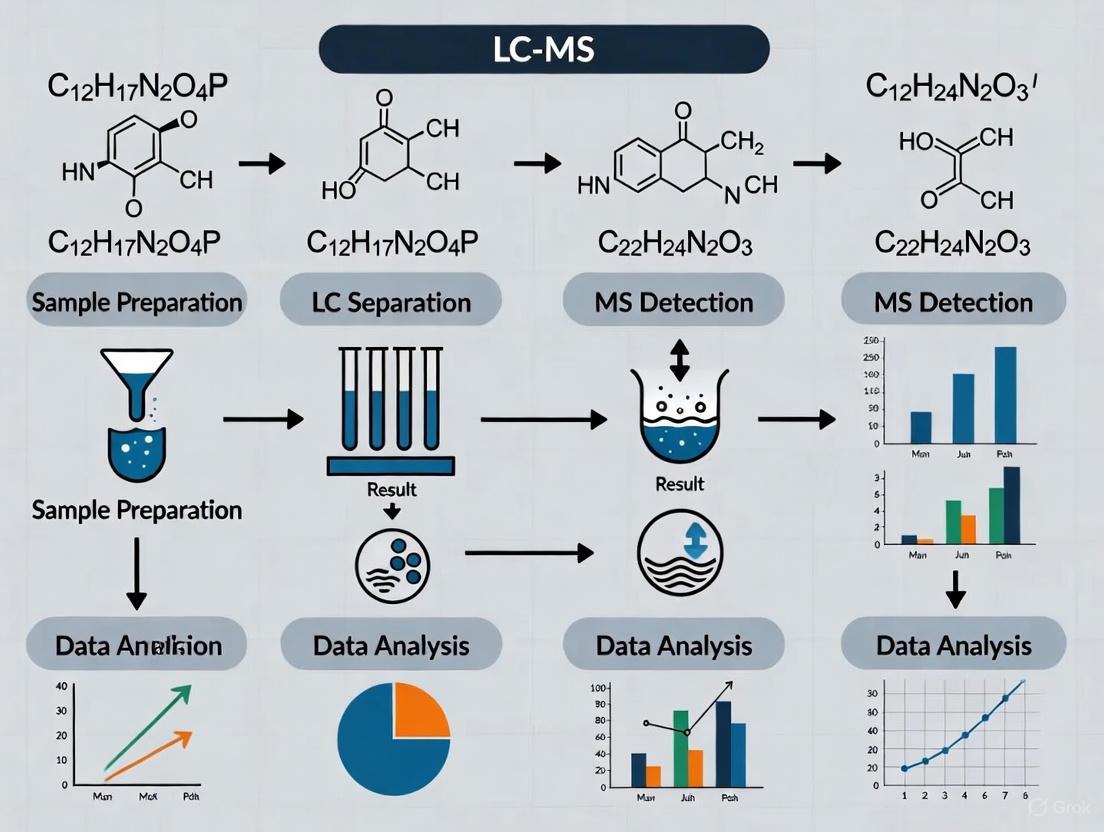
This article provides a comprehensive guide for researchers and scientists developing and applying Liquid Chromatography-Mass Spectrometry (LC-MS) methods for analyzing emerging contaminants (ECs) in wastewater.
Advanced LC-MS Methods for Detecting Emerging Contaminants in Wastewater: From Method Development to Troubleshooting
Abstract
This article provides a comprehensive guide for researchers and scientists developing and applying Liquid Chromatography-Mass Spectrometry (LC-MS) methods for analyzing emerging contaminants (ECs) in wastewater. It covers the foundational knowledge of persistent and mobile organic contaminants, detailed methodological approaches using advanced techniques like Design of Experiments (DoE) for robust method development, practical troubleshooting strategies for common LC-MS challenges in complex matrices, and essential validation protocols to ensure data reliability and comparability with other techniques. By integrating current research and practical insights, this resource supports the development of sensitive, selective, and reliable analytical methods essential for environmental monitoring and public health protection.
Understanding the Target: A Guide to Emerging Contaminants in Wastewater
Emerging contaminants (ECs) are substances detected in the environment for which no regulations currently exist, posing potential risks to human and ecological health due to their pseudo-persistence and unknown long-term effects [1]. These compounds originate from diverse sources including agricultural runoff, industrial effluent, domestic sewage, and hospital waste, ultimately entering aquatic ecosystems where conventional wastewater treatment plants provide only partial removal [2] [3]. The broad spectrum of ECs encompasses thousands of chemical substances categorized into multiple classes, with pharmaceuticals and personal care products (PPCPs), per- and polyfluoroalkyl substances (PFAS), and endocrine-disrupting chemicals (EDCs) representing three of the most significant groups from monitoring and regulatory perspectives [1] [3].
The analytical challenge in monitoring these contaminants stems from their typically low environmental concentrations (ng/L to μg/L), diverse physicochemical properties, and the complexity of environmental matrices in which they reside [1] [4]. Liquid chromatography coupled with tandem mass spectrometry (LC-MS/MS) has emerged as the predominant analytical technique for EC determination, offering the sensitivity, selectivity, and versatility required to detect these compounds at trace levels in complex environmental samples [2] [1] [5]. This application note details standardized methodologies for the comprehensive analysis of PPCPs, PFAS, and EDCs within wastewater research contexts, providing researchers with validated protocols for reliable contaminant monitoring and quantification.
Classes of Emerging Contaminants and Their Prevalence
Pharmaceutical and Personal Care Products (PPCPs)
PPCPs comprise a vast group of compounds including prescription and over-the-counter pharmaceuticals, cosmetics, fragrances, and their metabolic transformation products. These contaminants enter wastewater systems primarily through human excretion and bathing activities, as well as through improper disposal of unused medications [3]. Monitoring studies have detected numerous PPCPs in wastewater influents and effluents worldwide, with certain compounds demonstrating remarkable persistence through conventional treatment processes.
A recent study screening 156 target analytes in South African wastewaters found 120 could be satisfactorily determined, with 71 and 73 compounds detected and quantified in influent and effluent samples respectively [6]. Concentrations in the influents ranged from
Table 1: Prevalence of Selected PPCPs in Wastewater and Receiving Waters
| Compound | Classification | Influent (μg L⁻¹) | Effluent (μg L⁻¹) | River Water (μg L⁻¹) |
|---|---|---|---|---|
| Ibuprofen | Analgesic | 14.2 | 1.03 | 3.19-4.14 |
| Caffeine | Stimulant | 8.68 | - | 1.42-2.98 |
| Paracetamol | Analgesic | 4.79 | - | - |
| Estradiol | Hormone | 1.02 | 2.45 | - |
| Efavirenz | Pharmaceutical | - | 0.58 | - |
| Paraxanthine | Metabolite | - | - | 0.798-1.22 |
Per- and Polyfluoroalkyl Substances (PFAS)
PFAS represent a group of manufactured chemicals characterized by their persistence, bioaccumulation potential, and associated human health risks [7]. These compounds have been utilized since the 1940s in various industrial applications and consumer products due to their oil- and water-repellent properties [7]. The exceptional environmental persistence of PFAS arises from their strong carbon-fluorine bonds, enabling them to resist degradation under typical environmental conditions and conventional treatment processes.
Human exposure pathways for PFAS include contaminated drinking water, food products, household dust, and occupational settings [7]. Epidemiological studies have associated PFAS exposure with numerous adverse health outcomes including reproductive and developmental effects, increased cancer risk, immune system suppression, and metabolic disruptions [7]. The environmental ubiquity and health concerns surrounding PFAS have prompted rigorous analytical monitoring requirements, with LC-MS/MS representing the primary analytical technique for their detection at trace concentrations.
Table 2: Common PFAS Compounds and Their Primary Sources
| PFAS Compound | Primary Environmental Sources | Key Health Concerns |
|---|---|---|
| PFOA | Industrial production, consumer products | Testicular/kidney cancer, thyroid disease, ulcerative colitis |
| PFOS | Fire-fighting foam, stain-resistant coatings | Thyroid disorders, increased cholesterol, immune effects |
| Other PFAS | Food packaging, water-repellent fabrics, cosmetics | Varying based on specific compound structure |
Endocrine Disrupting Chemicals (EDCs)
EDCs comprise natural and synthetic compounds that interfere with the normal function of the endocrine system by mimicking, blocking, or altering the synthesis and metabolism of natural hormones [2]. These contaminants can produce adverse effects at exceptionally low concentrations (as low as 0.1 ng·L−1), necessitating highly sensitive analytical methods for their reliable detection [2]. The diverse nature of EDCs includes categories such as natural and synthetic hormones, personal care products, pesticides, surfactants, flame retardants, plasticizers, and industrial chemicals [2].
EDCs can produce a spectrum of biological effects including decreased fertility, reproductive abnormalities, increased cancer incidence, and developmental disruptions in both wildlife and humans [2]. Wastewater treatment plants represent major contributors to environmental EDC loads, as conventional treatment processes achieve only partial removal, resulting in effluent discharge to receiving waters and subsequent ecosystem exposure [2]. The lipophilic nature of many EDCs further complicates their environmental management, as they tend to accumulate in sewage sludge which may subsequently be applied to agricultural lands as fertilizer, creating potential secondary exposure pathways [2].
Analytical Approaches for Emerging Contaminant Analysis
Sample Preparation and Extraction
Solid phase extraction (SPE) represents the most widely utilized technique for environmental sample preparation prior to LC-MS/MS analysis, providing effective pre-concentration of target analytes and removal of matrix interferents [1]. Hydrophilic-lipophilic-balanced (HLB) polymers have demonstrated particular efficacy for multi-class contaminant monitoring, exhibiting complementary extraction mechanisms suitable for compounds spanning a broad polarity range [6] [1].
A recent method development study achieved recovery rates of 72-114% for five ECs with diverse physicochemical properties (diclofenac, ciprofloxacin, 17α-ethynylestradiol, terbutryn, and diuron) using Oasis HLB SPE cartridges [1]. The optimized protocol employed 60 mg, 3 mL cartridge configurations with methanol and methyl tert-butyl ether as elution solvents, demonstrating the technique's applicability to simultaneous extraction of contaminants from different classes [1]. For broad-spectrum analysis, alternative sorbents including C18 and polymeric phases may be employed depending on specific analyte characteristics, though HLB materials generally provide superior performance for the diverse chemical properties typical of EC mixtures.
Liquid Chromatography Separation
Chromatographic separation of EC mixtures presents significant challenges due to the broad polarity range and diverse chemical functionalities exhibited by these compounds. Recent method development efforts have employed pentafluorophenyl (PFP) stationary phases, which provide multiple interaction mechanisms including enhanced retention of halogen-containing analytes through π-π interactions and dipole-dipole bonding [4]. This characteristic makes PFP columns particularly suitable for PFAS analysis while maintaining effective separation for PPCPs and EDCs.
Experimental design (DoE) approaches have proven superior to traditional univariate optimization for chromatographic method development, enabling efficient investigation of parameter interactions and identification of truly optimal conditions [4]. A recent study employing a Face-Centered Design successfully optimized separation for 40 organic micro-contaminants with wide polarity ranges, establishing two chromatographic runs (for positive and negative electrospray ionization modes) enabling complete analysis in 29 minutes [4]. Critical parameters for optimization include mobile phase composition, flow rate, column temperature, and gradient profile, all of which significantly impact resolution, peak shape, and analysis time.
Mass Spectrometric Detection
Triple quadrupole (QqQ) mass spectrometers operating in selected reaction monitoring (SRM) mode represent the current benchmark for targeted quantification of ECs, providing exceptional sensitivity and selectivity in complex environmental matrices [2] [3]. The SRM approach monitors specific precursor-to-product ion transitions for each analyte, effectively minimizing chemical noise and enhancing detection capabilities at trace concentration levels.
High-resolution accurate-mass (HRAM) instruments, particularly Orbitrap technology, offer powerful alternatives for non-targeted screening and identification of unknown ECs [3]. These systems provide full-spectrum data acquisition with mass accuracies typically below 5 ppm, enabling elemental composition assignment and structural elucidation of previously unidentified contaminants [3]. The complementary strengths of QqQ and HRAM platforms make them ideally suited for comprehensive monitoring programs incorporating both quantitative targeted analysis and qualitative suspect screening components.
Table 3: Comparison of Mass Spectrometry Platforms for EC Analysis
| Platform | Key Strengths | Optimal Applications | Typical LOQs |
|---|---|---|---|
| Triple Quadrupole (QqQ) | High sensitivity, excellent quantification, wide dynamic range | Targeted analysis, regulatory compliance monitoring | ng/L range |
| High-Resolution Accurate-Mass (Orbitrap) | Untargeted screening, retrospective analysis, structural elucidation | Discovery studies, metabolite identification, unknown detection | Low ng/L range |
| Q-TOF | Fast acquisition, accurate mass measurements | Suspect screening, transformation product identification | ng/L range |
Standardized LC-MS/MS Protocol for Multi-Class Contaminant Analysis
Sample Collection and Preservation
Water samples should be collected in pre-cleaned amber glass containers, with sodium thiosulfate added to quench residual chlorine if present. Samples must be maintained at 4°C during transport and storage, with extraction recommended within 48 hours of collection. For extended storage, preserve samples at -20°C to prevent microbial degradation of target analytes. Inclusion of field blanks and duplicate samples is essential for quality control, with performance criteria established for precision (RSD < 20%) and accuracy (70-120% recovery for surrogate standards) [8] [1].
Solid Phase Extraction Procedure
The following protocol is adapted from validated methods for multi-class contaminant analysis in aqueous matrices [6] [1]:
SPE Cartridge Preparation: Condition Oasis HLB cartridges (60 mg, 3 mL) with 5 mL methanol followed by 5 mL reagent water at a flow rate of approximately 5 mL/min. Do not allow sorbent to dry completely before sample loading.
Sample Loading: Adjust sample pH to 7.0 ± 0.5 if analyzing broad-spectrum contaminants. Pass 250-1000 mL water sample through the cartridge at a controlled flow rate of 5-10 mL/min. Sample volume should be optimized based on expected contaminant concentrations and matrix complexity.
Cartridge Washing: After sample loading, wash with 5 mL of 5% methanol in reagent water to remove interfering polar compounds. Allow cartridge to run dry after washing step.
Analyte Elution: Elute target compounds with 2 × 5 mL portions of methanol, followed by 2 × 5 mL portions of methyl tert-butyl ether. Collect eluate in a calibrated evaporation tube.
Extract Concentration: Evaporate combined eluates to near dryness under a gentle nitrogen stream at 35°C. Reconstitute residue in 1.0 mL of methanol/water (50:50, v/v) containing appropriate internal standards. Vortex mix for 30 seconds and transfer to autosampler vials for analysis.
Instrumental Analysis Parameters
Chromatographic Conditions:
- Column: Pentafluorophenyl (PFP) core-shell column (100 × 2.1 mm, 2.6 μm)
- Mobile Phase A: Water with 0.1% formic acid
- Mobile Phase B: Methanol with 0.1% formic acid
- Gradient Program: 5% B (0-1 min), 5-95% B (1-20 min), 95% B (20-25 min), 95-5% B (25-26 min), 5% B (26-29 min)
- Flow Rate: 0.3 mL/min
- Column Temperature: 40°C
- Injection Volume: 10 μL
Mass Spectrometric Conditions:
- Ionization Source: Electrospray ionization (ESI) in positive and negative polarity switching mode
- Drying Gas Temperature: 300°C
- Drying Gas Flow: 11 L/min
- Nebulizer Pressure: 15 psi
- Capillary Voltage: 3500 V (positive), 3000 V (negative)
Data acquisition should employ dynamic selected reaction monitoring (dSRM) with optimized compound-specific parameters including fragmentor voltage, collision energy, and preferred transition ions for each target analyte. A minimum of two SRM transitions per compound is recommended for confirmatory analysis, with ion ratio tolerances established at ±30% relative to reference standards [9] [4].
Quality Assurance and Method Validation
Comprehensive method validation is essential for generating reliable analytical data, particularly at the trace concentrations typical for ECs in environmental matrices. Key validation parameters should include linearity, accuracy, precision, limits of detection and quantification, matrix effects, and extraction efficiency [9].
Series validation represents an ongoing process that monitors method performance throughout the analytical lifecycle, with predefined acceptance criteria for each batch [9]. Essential quality control elements include:
- Calibration Standards: Matrix-matched calibration curves spanning the expected concentration range, with a minimum of five non-zero calibrators including the lower and upper limits of quantification [9].
- System Suitability Test: Evaluation of sensitivity, retention time stability, and peak shape prior to sample analysis.
- Quality Control Samples: Analysis of blank spikes, duplicate samples, and continuing calibration verification at minimum frequency of 5-10% of total samples.
- Internal Standards: Use of stable isotope-labeled analogs for each target compound class to correct for matrix effects and recovery variations.
Acceptance criteria for series validation should include calibration curve coefficients of determination (R²) > 0.990, back-calculated calibrator concentrations within ±15% of target values (±20% at LLoQ), and quality control sample recoveries within 70-120% of expected values [9].
Diagram 1: Analytical workflow for emerging contaminant analysis in water samples
The Scientist's Toolkit: Essential Research Reagents and Materials
Table 4: Essential Research Reagents and Materials for EC Analysis
| Item | Specifications | Application/Function |
|---|---|---|
| SPE Cartridges | Oasis HLB (60 mg, 3 mL) | Simultaneous extraction of hydrophilic/lipophilic compounds [6] [1] |
| LC Column | Pentafluorophenyl (PFP) core-shell (100 × 2.1 mm, 2.6 μm) | Multi-mechanism separation of diverse EC classes [4] |
| Mass Spectrometer | Triple quadrupole with ESI source | Sensitive and selective quantification of target analytes [2] [1] |
| Internal Standards | Stable isotope-labeled analogs (e.g., Diclofenac-d4, Ciprofloxacin-d8) | Correction for matrix effects and recovery variations [1] [9] |
| Mobile Phase Additives | Formic acid, ammonium acetate | Enhanced ionization efficiency in ESI source [4] |
| Extraction Solvents | HPLC-grade methanol, methyl tert-butyl ether | Efficient elution of broad-spectrum contaminants [1] |
The comprehensive analysis of emerging contaminants spanning PPCPs, PFAS, and EDCs requires robust analytical methods capable of detecting diverse chemical structures at trace concentrations in complex environmental matrices. The LC-MS/MS protocols detailed in this application note provide researchers with validated approaches for reliable monitoring of these contaminants, incorporating quality assurance measures essential for data credibility. As regulatory scrutiny of emerging contaminants intensifies globally, standardized methodologies such as those described herein will play an increasingly critical role in environmental monitoring programs, exposure assessment studies, and treatment efficiency evaluations. The continued refinement of these methods, particularly through incorporation of high-resolution mass spectrometry for non-targeted analysis, will further enhance our capacity to identify and quantify the expanding universe of contaminants of emerging concern.
Why Wastewater is a Critical Matrix for EC Monitoring
Wastewater is a critical matrix for monitoring emerging contaminants (ECs) because it provides a composite sample of chemical substances used by communities, originating from various sources such as municipal discharges, industrial effluents, agricultural runoff, and improperly disposed domestic solid waste [10]. The analysis of wastewater offers a powerful approach for identifying the types and quantities of ECs present in a population, providing a comprehensive snapshot of chemical consumption and release patterns [10]. These contaminants, which include pharmaceuticals, personal care products, endocrine disruptors, antibiotics, manufactured nanomaterials, and microplastics, are increasingly detected in soil and water samples, posing potential risks to both the environment and human health [10].
Within the context of a broader thesis on LC-MS methods for emerging contaminants research, wastewater presents a complex but information-rich medium. Liquid Chromatography-Mass Spectrometry (LC-MS) has become an indispensable tool for detecting and quantifying these contaminants, which are often present at trace concentrations amidst a complex matrix of interfering substances [10]. Without specific removal in wastewater treatment processes, ECs can persist through treatment and enter receiving waters as trace pollutants, creating a pathway for environmental contamination and potential human exposure [10]. This application note details why wastewater is a critical monitoring matrix and provides established protocols for its analysis.
The Critical Role of Wastewater Monitoring
Early Detection and Source Tracking
Monitoring wastewater provides an early warning system for detecting emerging contaminants before they become widespread environmental problems [10]. Changes in wastewater composition can signal the introduction of new industrial chemicals, changes in consumption patterns of pharmaceuticals, or the failure of pollution control measures. For instance, electrical conductivity (EC) serves as a preliminary screening tool; while it cannot identify specific pollutants, it indicates the total concentration of dissolved ionic solids and signals significant changes in water quality that warrant further investigation [11] [12]. Elevated conductivity levels can indicate the presence of inorganic pollutants from events like combined sewer overflows, which introduce compounds such as chloride, phosphate, and nitrate [13].
Assessment of Treatment Efficiency
Wastewater treatment plants (WWTPs) represent critical control points for managing contaminant release into the environment. However, conventional WWTP processes achieve only moderate removal efficiencies for many ECs. For example, removal rates for Liquid Crystal Monomers (LCMs) are approximately 84%, with fluorinated LCMs (F-LCMs) often persisting through treatment [14]. Advanced treatment techniques such as UV/peroxydisulfate (UV/PDS) have shown promising results for specific contaminant classes, with removal rates of 77–84% for LCMs with biphenyl and ethoxy groups [14]. Monitoring the influent and effluent of treatment plants using LC-MS methods is therefore essential for evaluating treatment efficacy and guiding process improvements.
Comprehensive Exposure Assessment
Wastewater analysis provides a non-intrusive method for assessing community-wide exposure to various chemicals. Through the analysis of wastewater samples, researchers can track patterns in pharmaceutical consumption, exposure to industrial chemicals, and the prevalence of substances of abuse. Humans are exposed to ECs through multiple pathways, including absorption (e.g., from products like soaps and toothpaste), ingestion (e.g., via drinking water, medications, and food), and inhalation (e.g., through aerosols and dust) [10]. Wastewater integrates these exposure pathways, reflecting the cumulative chemical footprint of a population.
Table 1: Classes of Emerging Contaminants of Concern in Wastewater
| Contaminant Class | Examples | Primary Sources | Concerns |
|---|---|---|---|
| Pharmaceuticals | Antibiotics, analgesics, antidepressants | Human and veterinary use, improper disposal | Antibiotic resistance, endocrine disruption |
| Liquid Crystal Monomers (LCMs) | Fluorinated LCMs (F-LCMs), Cyanated LCMs (CN-LCMs) | Electronic waste (LCDs), industrial discharges | Persistence, bioaccumulation, toxicity to aquatic organisms [14] |
| Personal Care Products | Fragrances, UV filters, antimicrobials | Household wastewater, bathing, swimming | Endocrine disruption, bioaccumulation |
| Industrial Chemicals | PFAS, plasticizers, flame retardants | Industrial discharges, consumer products | Persistence, toxicity, widespread environmental distribution |
Analytical Approaches: LC-MS Method Development
Sample Preparation Techniques
Preparing samples for EC analysis in wastewater requires specialized techniques to isolate and concentrate these substances before LC-MS analysis due to their low concentrations and matrix complexity [10]. The critical sample preparation steps include:
- Solid-Phase Extraction (SPE): This is the most widely used technique for pre-concentrating ECs from wastewater samples. SPE selectively retains target analytes while removing interfering matrix components. The choice of sorbent (e.g., C18, hydrophilic-lipophilic balance, mixed-mode) should be optimized for the target ECs [10].
- Microextraction Techniques: Methods such as solid-phase microextraction (SPME) and liquid-phase microextraction (LPME) offer advantages of minimal solvent use and the ability to analyze small sample volumes [10].
- Automated On-Site Preconcentration: Emerging systems enable preliminary concentration of samples at the point of collection, which is particularly valuable for unstable analytes [10].
Proper sample preparation is crucial as it directly governs the sensitivity, reproducibility, and overall reliability of subsequent LC-MS results [10].
Liquid Chromatography Separation
Reverse-phase liquid chromatography using C18 or C8 columns is typically employed for separating ECs in wastewater. The method should be optimized to resolve complex mixtures of ECs with diverse physicochemical properties. Key considerations include:
- Mobile Phase Composition: Gradient elution with water and organic modifiers (typically methanol or acetonitrile), often with additives such as formic acid or ammonium acetate to control ionization.
- Column Selection: Sub-2μm particle columns provide superior resolution for complex wastewater samples but require UHPLC systems operating at high pressures.
Table 2: LC-MS Instrumentation Parameters for EC Analysis in Wastewater
| Parameter | Setting/Recommendation | Notes |
|---|---|---|
| Chromatography | Reverse-phase C18 column (e.g., 100 × 2.1 mm, 1.7-1.8 μm) | Suitable for most ECs; provides good retention and separation |
| Mobile Phase | Water (A) and methanol or acetonitrile (B), both with 0.1% formic acid | Gradient elution from 5% to 95% B over 10-20 minutes |
| Flow Rate | 0.2-0.4 mL/min | Optimize for column dimensions and LC system pressure limits |
| Ion Source | Electrospray Ionization (ESI) | Most common for ECs; can operate in positive and negative mode |
| Mass Analyzer | Triple Quadrupole (QqQ) or High-Resolution Mass Spectrometer (HRMS) | QqQ for targeted analysis; HRMS for suspect screening and non-target analysis |
Mass Spectrometric Detection
Mass spectrometry provides the specificity and sensitivity required for detecting ECs at trace concentrations in complex wastewater matrices:
- Triple Quadrupole (QqQ) Mass Spectrometry: Operated in Multiple Reaction Monitoring (MRM) mode, QqQ instruments offer high sensitivity for targeted analysis of known ECs, with detection limits often in the ng/L range [10].
- High-Resolution Mass Spectrometry (HRMS): Instruments such as Q-TOF or Orbitrap enable suspect screening and non-target analysis, which is particularly valuable for identifying previously unknown ECs and their transformation products [10].
Diagram 1: LC-MS Workflow for EC Analysis
Complementary Monitoring Techniques
Conductivity as a Screening Tool
Electrical conductivity (EC) measurements provide a rapid, inexpensive screening method that complements targeted LC-MS analysis. EC measures how many dissolved substances, chemicals, and minerals are in the water, expressed in microsiemens per centimeter (μS/cm) [11]. While EC cannot identify specific ECs, it serves as an important indicator of overall water quality and the presence of dissolved ionic solids [11] [12].
In wastewater treatment facilities, changes in electrical conductivity indicate that pollutants are present in the water [11]. Although measuring EC cannot identify the specific type of pollutant, it will signal that there is a problem requiring further investigation with advanced techniques like LC-MS [11]. Conductivity sensors work by measuring the electrical current flow between electrodes in a probe, providing a conductance value that reflects the total concentration of ions in the liquid [11].
Table 3: Typical Electrical Conductivity Ranges for Different Water Types
| Water Type | Electrical Conductivity (μS/cm) |
|---|---|
| Distilled Water | 0.5-3 |
| Tap Water | 50-800 |
| Potable Water (US) | 30-1500 |
| Freshwater Streams | 100-2000 |
| Industrial Wastewater | 10,000 |
| Seawater | 55,000 |
Advanced Monitoring Systems
Sensor fusion technology combines information from multiple sensors to provide a more comprehensive understanding of wastewater quality. For example, one system incorporates UV/Vis spectrometry and turbidimetry to monitor chemical oxygen demand (COD), total suspended solids (TSS), and oil and grease (O&G) [15]. These systems can be enhanced with machine learning algorithms such as Boosting-IPW-PLS to handle noise and information imbalance in the fused sensor data [15].
The Scientist's Toolkit: Essential Research Reagents and Materials
Table 4: Essential Materials for EC Analysis in Wastewater
| Item | Function | Application Notes |
|---|---|---|
| LC-MS Grade Solvents (methanol, acetonitrile, water) | Mobile phase components for LC-MS analysis | High purity essential to minimize background interference and ion suppression |
| Solid-Phase Extraction Cartridges (HLB, C18, mixed-mode) | Pre-concentration and cleanup of samples prior to LC-MS analysis | Selection depends on target EC polarity; HLB cartridges suitable for wide polarity range |
| Internal Standards (isotope-labeled analogs of target ECs) | Quantification and correction for matrix effects and recovery variations | Essential for accurate quantification; should be added at beginning of sample preparation |
| Conductivity Sensor | Preliminary screening and continuous monitoring of dissolved ion content | Four-electrode sensors recommended for wastewater to minimize polarization effects [12] |
| Reference Standards (authentic EC standards) | Method development, calibration, and identification | Necessary for both targeted quantification and method validation |
Experimental Protocol: Comprehensive Wastewater Analysis for ECs
Sample Collection and Preservation
- Collection: Collect 24-hour composite wastewater samples (influent and effluent) from treatment plants using automated refrigerated samplers. For source-specific data, collect grab samples from industrial discharge points, hospital effluents, or residential areas.
- Preservation: Immediately after collection, adjust sample pH to approximately 3 using hydrochloric acid or sulfuric acid to inhibit microbial degradation of target ECs. Add sodium azide (0.1% w/v) as a bacteriostatic agent.
- Storage: Store samples at 4°C and process within 24 hours of collection. For longer storage, freeze at -20°C in amber glass containers to prevent photodegradation.
Sample Preparation and Extraction
- Filtration: Filter samples through 0.7μm glass fiber filters to remove suspended solids that may interfere with analysis.
- Internal Standard Addition: Add appropriate isotope-labeled internal standards (e.g., ^13^C- or ^2^H-labeled analogs of target ECs) to correct for matrix effects and variable extraction efficiency.
- Solid-Phase Extraction:
- Condition SPE cartridges (e.g., Oasis HLB, 200mg) with 5mL methanol followed by 5mL acidified water (pH 3).
- Load samples at a flow rate of 5-10mL/min.
- Wash cartridges with 5mL of 5% methanol in acidified water.
- Elute analytes with 2×4mL of methanol into collection tubes.
- Concentration and Reconstitution: Evaporate eluents to dryness under a gentle nitrogen stream at 40°C. Reconstitute in 1mL of initial mobile phase composition for LC-MS analysis.
LC-MS Analysis
- Chromatographic Conditions:
- Column: C18 column (100mm × 2.1mm, 1.8μm)
- Mobile Phase: (A) 0.1% formic acid in water; (B) 0.1% formic acid in acetonitrile
- Gradient: 5% B to 95% B over 15 minutes, hold for 3 minutes, re-equilibrate
- Flow Rate: 0.3mL/min
- Injection Volume: 10μL
- Mass Spectrometric Detection:
- Ionization: Electrospray ionization (ESI) in positive and negative switching mode
- Source Temperature: 150°C
- Desolvation Temperature: 500°C
- Data Acquisition: MRM mode for targeted analysis; full scan (m/z 50-1000) for suspect screening
Diagram 2: Integrated Monitoring Strategy
Wastewater represents a critical matrix for monitoring emerging contaminants due to its comprehensive reflection of chemical substances used in society. The integration of rapid screening tools like conductivity measurements with highly specific LC-MS分析方法 provides a powerful approach for detecting, quantifying, and tracking ECs through wastewater treatment systems. As the landscape of emerging contaminants continues to evolve with the introduction of new chemical substances, wastewater monitoring will remain an essential component of environmental and public health protection. The protocols outlined in this application note provide a foundation for robust wastewater analysis that can be adapted to address emerging analytical challenges in this critical field.
The analysis of emerging contaminants (ECs) in wastewater represents a significant challenge for environmental scientists. These pollutants, including pharmaceuticals, personal care products, and pesticides, are characterized by their high polarity, environmental persistence, and high mobility in aquatic systems [16]. Their chemical properties allow them to bypass conventional wastewater treatment processes and migrate into water sources, posing potential risks to ecosystems and human health [16]. This application note details an optimized analytical workflow based on QuEChERS extraction and liquid chromatography-tandem mass spectrometry (LC-MS/MS) for the reliable determination of trace-level ECs in complex wastewater matrices, providing researchers with a validated framework for environmental monitoring.
Experimental Protocol
Materials and Reagents
- Analytical Standards: Prepare individual stock solutions (1 mg/mL) in appropriate solvents (e.g., methanol, acetonitrile) for all target analytes (e.g., pesticides, artificial sweeteners, pharmaceuticals, stimulants) [16]. Store at -20°C.
- Internal Standards: Use stable isotope-labeled analogs of target analytes where available.
- Solvents: LC-MS grade water, acetonitrile, and methanol.
- Buffers: Ammonium acetate, acetic acid, formic acid.
- SPE Cartridges: Various stationary phases (e.g., C18, mixed-mode) may be evaluated for sample concentration [16].
Sample Preparation: Optimized QuEChERS Method
The following protocol, adapted from current research, is optimized for complex biological and environmental matrices with high protein (10-18%) and lipid (2-10%) content [17].
- Homogenization: Pre-treat wastewater samples by filtration (e.g., 0.45 µm glass fiber filter) to remove particulate matter.
- Extraction: Weigh 2.0 ± 0.1 g of homogenized sample into a 50 mL centrifuge tube. Add 10 mL of acetonitrile and appropriate internal standards. Vortex vigorously for 1 minute.
- Salting Out: Add a commercial QuEChERS salt mixture (e.g., containing MgSO4, NaCl). Shake immediately and vigorously for 1 minute.
- Centrifugation: Centrifuge at ≥ 4000 rpm for 5 minutes to achieve phase separation.
- Clean-up: Transfer 1 mL of the upper acetonitrile layer to a dispersive SPE (d-SPE) tube containing cleanup sorbents (e.g., PSA, C18). Vortex for 30 seconds.
- Final Preparation: Centrifuge the d-SPE tube. Transfer the supernatant to an autosampler vial for LC-MS/MS analysis.
LC-MS/MS Analysis
Chromatographic Conditions [16]:
- Column: Zwitterionic phosphorylcholine HILIC column (e.g., ZIC-cHILIC, 150 x 2.1 mm, 3 µm).
- Mobile Phase: (A) 95:5 Water/Acetonitrile with 10 mM Ammonium Acetate (pH ~5), (B) Acetonitrile.
- Gradient: Optimize via DoE. Example: 90% B to 70% B over 10 minutes, hold, then re-equilibrate.
- Flow Rate: 0.3 mL/min.
- Column Temperature: 30°C.
- Injection Volume: 5 µL.
Mass Spectrometric Conditions:
- Ionization: Electrospray Ionization (ESI), positive/negative switching mode.
- Detection: Multiple Reaction Monitoring (MRTM).
- Source Temperature: 150°C.
- Desolvation Temperature: 500°C.
- Cone Gas Flow: 50 L/hr.
- Desolvation Gas Flow: 1000 L/hr.
Method Validation
The optimized method was validated for specificity, linearity, accuracy (recovery), precision (RSD), and matrix effects [17] [16]. Key performance data for a set of 18 emerging contaminants are summarized in Table 1.
Table 1: Method Validation Data for the Analysis of Emerging Contaminants
| Analyte Class | Number of Analytes | Mean Recovery (%) | Recovery Range (%) | Matrix Effect (%) | Precision (RSD, %) |
|---|---|---|---|---|---|
| Pesticides | Varies | 46 - 123 | 46 - 123 | 62 - 103 | < 10 [16] |
| Pharmaceuticals | Varies | 46 - 123 | 46 - 123 | 62 - 103 | < 10 [16] |
| Artificial Sweeteners | Varies | 46 - 123 | 46 - 123 | 62 - 103 | < 10 [16] |
| Stimulants | Varies | 46 - 123 | 46 - 123 | 62 - 103 | < 10 [16] |
| Various ECs | 18 | - | 46 - 123 | 62 - 103 | - [17] |
Results and Discussion
Optimization via Experimental Design
A multivariate Design of Experiments (DoE) approach was critical for method optimization. A Plackett-Burman design was first used for screening to identify the most influential factors (e.g., buffer type and concentration, gradient time, temperature) [17]. Subsequently, a Doehlert design was employed to construct quadratic models for response optimization, balancing retention time, peak area, and column efficiency [17]. This chemometric approach efficiently uncovered significant interactions between chromatographic variables that would be difficult to detect using traditional one-variable-at-a-time methods [16].
Key findings from the optimization study [16]:
- Ammonium acetate/acetic acid buffer led to the highest retention times and efficiency, likely due to its strong kosmotropic effect.
- A high organic solvent percentage at the start of separation significantly influenced retention.
- Salt concentration impacted sensitivity, favoring minimal use as a phase modifier.
- Lower flow rates and extended gradient times improved separation and efficiency.
Analytical Workflow
The complete analytical procedure from sample preparation to data analysis is visualized below.
Figure 1: Overall Analytical Workflow for ECs in Wastewater.
HILIC Retention Mechanism Optimization
The retention mechanism in HILIC is complex, involving partitioning, adsorption, and electrostatic interactions. The following diagram illustrates the key factors and their optimization process.
Figure 2: HILIC Method Optimization Strategy.
The Scientist's Toolkit
Table 2: Essential Research Reagent Solutions for LC-MS Analysis of ECs
| Item | Function / Application |
|---|---|
| Zwitterionic HILIC Column | Separation of highly polar, ionic, and ionizable compounds that are poorly retained in reversed-phase LC [16]. |
| QuEChERS Extraction Kits | Efficient extraction and clean-up for complex matrices with high protein and lipid content; minimizes matrix interferences [17]. |
| Ammonium Acetate Buffer | A volatile buffer that provides ionic strength and pH control; its kosmotropic properties enhance retention in HILIC methods [16]. |
| Stable Isotope-Labeled Internal Standards | Corrects for matrix effects and losses during sample preparation, improving quantitative accuracy. |
| Solid Phase Extraction (SPE) Cartridges | Pre-concentration and further clean-up of samples prior to LC-MS analysis to improve detection limits [16]. |
This application note presents a robust and validated workflow for determining persistent, mobile emerging contaminants in wastewater. The integration of an optimized QuEChERS extraction with a chemometrically-guided HILIC-MS/MS method effectively addresses the challenges posed by trace-level analytes in a complex matrix. The method demonstrates acceptable recoveries (46-123%) and minimal matrix effects (62-103%) for a wide range of ECs, making it a reliable tool for environmental monitoring and compliance with evolving regulatory standards [17]. The systematic approach to optimization, as detailed herein, provides a template for researchers to adapt and refine methods for their specific contaminant panels.
The Role of LC-MS as a Core Analytical Technique for EC Detection
Emerging contaminants (ECs), including pharmaceuticals, personal care products, pesticides, and industrial chemicals, are increasingly detected in global water systems at trace concentrations (ng/L to µg/L) [1]. Their presence in wastewater, even at low levels, poses potential risks to aquatic ecosystems and human health, driving the need for robust analytical methods for their identification and quantification [18]. Liquid Chromatography coupled with Tandem Mass Spectrometry (LC-MS/MS) has emerged as the cornerstone technique for the simultaneous determination of multiclass ECs due to its high sensitivity, specificity, and ability to analyze thermally labile and non-volatile compounds without the need for extensive derivatization [18] [1]. This application note details optimized protocols and data handling strategies for the analysis of ECs in wastewater, supporting ongoing research and method development in environmental monitoring.
Experimental Protocols
Materials and Reagents
- Target Analytes: Method development should focus on ECs from diverse classes. Examples include Diclofenac (anti-inflammatory), Ciprofloxacin (antibiotic), 17α-ethynylestradiol - EE2 (hormone), Terbutryn (herbicide), and Diuron (pesticide) [1].
- Internal Standards: Deuterated isotope-labeled compounds for each analyte (e.g., Diclofenac-d4, Ciprofloxacin-d8, EE2-d4, Diuron-d6, Terbutryn-d5) are essential for accurate quantification [1].
- Solvents: High-purity, LC-MS grade solvents, including methanol, acetonitrile, and water.
- Solid Phase Extraction (SPE): Oasis HLB cartridges (60 mg, 3 mL) are commonly used for the simultaneous extraction of compounds with a wide range of polarities [1].
Sample Preparation: Solid Phase Extraction (SPE)
The following optimized SPE procedure is recommended for the simultaneous extraction of multiple EC classes from aqueous samples [1]:
- Sample Pre-conditioning: Acidify water samples (e.g., 1 L) to pH ~2-3.
- SPE Cartridge Conditioning: Condition the Oasis HLB cartridge sequentially with 5-10 mL of methanol (or ethyl acetate) followed by 5-10 mL of ultrapure water (acidified to pH 2).
- Sample Loading: Load the acidified water sample onto the conditioned cartridge at a controlled flow rate of 5-10 mL/min.
- Cartridge Washing: After sample loading, wash the cartridge with 5-10 mL of ultrapure water (acidified to pH 2) to remove interfering salts and polar matrix components.
- Analyte Elution: Elute the target analytes with 5-10 mL of an organic solvent such as methanol or ethyl acetate into a collection tube.
- Concentration and Reconstitution: Evaporate the eluent to complete dryness under a gentle stream of nitrogen. Reconstitute the dry extract in 1 mL of a methanol/water mixture (e.g., 50:50, v/v) compatible with the LC-MS/MS initial mobile phase conditions.
- Analysis: Inject the reconstituted extract into the LC-MS/MS system.
LC-MS/MS Analysis
Chromatography:
- System: Ultra High-Performance Liquid Chromatography (UHPLC).
- Column: C18 column (e.g., 100 mm x 2.1 mm, 1.8 µm particle size).
- Mobile Phase: (A) Water and (B) Acetonitrile, both containing 0.1% formic acid.
- Gradient: Use a linear gradient from 10% B to 90% B over 10-15 minutes.
- Flow Rate: 0.3 mL/min.
- Injection Volume: 5-10 µL.
Mass Spectrometry:
- Ionization: Electrospray Ionization (ESI), operating in both positive and negative polarity switching modes to cover a broad range of compounds [18].
- Analysis Mode: Multiple Reaction Monitoring (MRM). Two specific ion transitions (precursor ion → product ion) should be monitored per analyte for confirmatory quantitative analysis [18].
- Operation Parameters: Optimize ion source parameters (nebulizer gas, heating gas, interface temperature, etc.) and collision energies for each compound to achieve maximum sensitivity.
The following workflow diagram summarizes the key steps from sample preparation to data analysis:
Results and Data Presentation
Analytical Performance Data
The described SPE-LC-MS/MS method provides robust performance for the simultaneous analysis of ECs. The table below summarizes typical validation data for selected compounds [1].
Table 1: Analytical performance of the SPE-LC-MS/MS method for selected emerging contaminants.
| Analyte | Class | LOD (ng/L) | LOQ (ng/L) | Recovery (%) |
|---|---|---|---|---|
| Ciprofloxacin | Antibiotic | 5 | 10 | 72 - 114 |
| Diuron | Herbicide | 5 | 10 | 72 - 114 |
| Terbutryn | Herbicide | 5 | 10 | 72 - 114 |
| Diclofenac | Anti-inflammatory | 5 | 10 | 72 - 114 |
| 17α-Ethynylestradiol (EE2) | Hormone | 25 | 50 | 72 - 114 |
Advanced Screening Strategies
Beyond targeted analysis, LC-MS enables sophisticated screening approaches for identifying unknown transformation products (TPs). A comprehensive strategy combines three levels of analysis [19]:
- Target Analysis: Quantification of known analytes using reference standards.
- Suspected-Target Screening: Identification of suspected compounds (e.g., TPs predicted via theoretical pathway) without reference standards by leveraging accurate mass and fragmentation libraries.
- Non-Target Screening: Discovery of unknown compounds through differential analysis between samples and blanks, followed by structure elucidation using high-resolution MS data.
The following diagram illustrates the integrated data handling strategy for comprehensive contaminant analysis:
The Scientist's Toolkit
Table 2: Essential research reagents and materials for LC-MS analysis of emerging contaminants.
| Item | Function / Application |
|---|---|
| Oasis HLB SPE Cartridge | A reversed-phase polymer sorbent for the broad-spectrum extraction of acidic, basic, and neutral compounds from water samples. [1] |
| Deuterated Internal Standards | Isotope-labeled analogs of target analytes used to correct for matrix effects and losses during sample preparation, improving quantitative accuracy. [1] |
| LC-MS Grade Solvents | High-purity methanol, acetonitrile, and water used for mobile phase preparation and sample reconstitution to minimize background noise and ion suppression. |
| UHPLC C18 Column | A chromatographic column with sub-2µm particles providing high-efficiency separation of complex mixtures of ECs prior to mass spectrometric detection. |
| Analytical Standards | High-purity (>97%) certified reference materials of target ECs for instrument calibration, method development, and quantification. [1] |
Building a Robust Method: From Sample Prep to Separation
The analysis of emerging contaminants in wastewater, such as pharmaceuticals, personal care products, and endocrine-disrupting chemicals, presents significant analytical challenges due to their low concentrations (ng/L to μg/L) and complex matrix interferences. Solid-phase extraction (SPE) has emerged as a fundamental sample preparation technique that effectively addresses these challenges by isolating, purifying, and concentrating target analytes from complex wastewater matrices prior to liquid chromatography-mass spectrometry (LC-MS) analysis. SPE serves as a critical sample preparation step that enhances sensitivity, improves data quality, and protects LC-MS instrumentation from matrix-related damage. For researchers developing LC-MS methods for emerging contaminants, selecting and optimizing appropriate SPE strategies is paramount for achieving accurate, reproducible results at environmentally relevant concentrations.
The fundamental principle of SPE involves utilizing a solid stationary phase to selectively retain analytes of interest from a liquid sample as it passes through a cartridge or disk. Subsequent washing steps remove interfering compounds, followed by elution with a stronger solvent that releases the purified and concentrated analytes for analysis. This process achieves multiple objectives simultaneously: removal of matrix components that can interfere with chromatographic separation or cause ion suppression/enhancement in MS detection; concentration of trace-level contaminants to achieve detectable levels; and transfer of analytes into a solvent compatible with the LC-MS system. For wastewater analysis, these functions are particularly crucial given the high organic load and potential for significant matrix effects.
SPE Sorbent Selection and Method Optimization
Sorbent Chemistry and Selection Guidelines
Choosing the appropriate SPE sorbent is arguably the most critical decision in method development, as it directly impacts analyte recovery, matrix cleanup, and overall method sensitivity. The selection should be guided by the physicochemical properties of the target analytes (polarity, ionization characteristics, functional groups) and the specific wastewater matrix composition.
Table 1: SPE Sorbent Selection Guide for Wastewater Analysis
| Sorbent Type | Mechanism of Interaction | Applicable Analytes | Typical Recovery (%) | Key References |
|---|---|---|---|---|
| HLB (Hydrophilic-Lipophilic Balanced) | Reverse phase + weak cation exchange | Broad spectrum: acidic, basic, neutral compounds | 50-120% for most pharmaceuticals | [20] [21] |
| HR-X | Generic polymeric reversed-phase | Diverse micropollutants with wide polarity range | Optimal for >600 chemicals in mixture | [20] |
| Strong Cation Exchange (SCX) | Cation exchange + reversed phase | Basic compounds (e.g., β-blockers, antidepressants) | ~98% for basic drugs | [22] |
| C18 | Reversed phase (non-polar) | Non-polar to moderately polar compounds | Variable for polar compounds | [23] |
| Mixed-mode (e.g., PSA+C18) | Multiple mechanisms (ionic, hydrophobic) | Simultaneous extraction of diverse compound classes | >70% for broad contaminant panel | [24] |
| Anion Exchange (MAX) | Anion exchange | Acidic compounds (e.g., NSAIDs, some UV filters) | Optimal for selective extraction | [25] |
Hydrophilic-lipophilic balanced (HLB) sorbents have gained prominence in wastewater analysis due to their ability to retain a wide spectrum of compounds with varying polarities. A recent comprehensive study evaluating SPE sorbents for micropollutant enrichment prior to bioanalytical assessment identified HLB as particularly effective for both generic extraction of diverse contaminants and selective extraction of estrogenic compounds [20]. The study demonstrated that HLB at pH 3 provided optimal recovery of estrogenic chemicals and estrogenic activity, while HLB at pH 7 showed excellent performance for broad-spectrum micropollutant extraction [20]. For laboratories seeking to implement a single sorbent for multiple applications, HLB represents a versatile choice that balances comprehensive chemical coverage with effective matrix cleanup.
For basic pharmaceuticals, strong cation exchange (SCX) sorbents offer distinct advantages. A systematic SPE optimization study demonstrated that SCX sorbents provided near-quantitative recoveries (approximately 98%) for basic drugs like atenolol, even when employing strong organic washes (100% methanol) that effectively removed phospholipids and other endogenous materials responsible for ion suppression in LC-MS analysis [22]. The preference for SCX sorbents stems from their ability to efficiently wash out proteinaceous and endogenous components while retaining basic analytes through ionic interactions, ultimately yielding cleaner extracts with insignificant ion suppression and enhanced detection limits.
Critical Parameters in SPE Optimization
Successful implementation of SPE for wastewater analysis requires systematic optimization of multiple parameters that collectively influence analyte recovery and matrix effects. Both univariate and multivariate approaches can be employed, with response surface methodology (RSM) offering efficiency in evaluating interacting factors.
Table 2: Key SPE Optimization Parameters and Their Impact on Analytical Performance
| Parameter | Impact on SPE Performance | Recommended Optimization Approach |
|---|---|---|
| Sample pH | Controls ionization state of analytes and thus retention on sorbent | Test pH 3, 5, 7, 9 for ionizable compounds; adjust to suppress ionization for better retention on reversed-phase sorbents |
| Sorbent Mass | Determines extraction capacity and breakthrough volume | 60-500 mg depending on analyte concentration and sample volume; higher for contaminated wastewater |
| Sample Volume | Affects preconcentration factor and potential breakthrough | Typically 100-1000 mL for wastewater; balance between sensitivity and practical processing time |
| Loading Flow Rate | Influences retention efficiency and analysis time | 2-10 mL/min; slower rates improve retention of poorly extracted compounds |
| Wash Solvent Composition | Removes interferents without eluting target analytes | 5-40% organic in water; optimize stringency to balance cleanliness and recovery |
| Elution Solvent | Must effectively disrupt analyte-sorbent interactions | Typically 50-100% organic; often with modifiers (acid/base); multiple small volumes improve efficiency |
| Elution Volume | Determines final concentration factor | 2-10 mL typically; minimize while ensuring complete elution |
Multivariate optimization approaches have demonstrated particular effectiveness in SPE method development. One study employing a full factorial design followed by response surface methodology successfully optimized sample pH, sample flow rate (SFR), and eluent flow rate (EFR) for the extraction of UV-filters from wastewater samples [25]. This approach systematically evaluated interactions between parameters that would be difficult to identify using one-variable-at-a-time experimentation, ultimately establishing optimal conditions that maximized recovery while minimizing experimental runs and analysis time.
The recent development of pH-stable LC columns has enabled direct injection of high-pH SPE eluents (e.g., 5% ammonium hydroxide in methanol), eliminating the need for time-consuming evaporation and reconstitution steps [22]. This approach provides dramatic savings in analysis time (approximately 2.5-3.0 hours for a 96-well plate) while eliminating analyte losses that can occur during evaporation, particularly for problematic compounds like isoniazid and indomethacin [22].
Experimental Protocols
Generic Protocol for Multi-residue Pharmaceutical Analysis in Wastewater
This protocol outlines a comprehensive SPE procedure for the simultaneous extraction of 89 pharmaceuticals belonging to more than 20 therapeutic classes from wastewater matrices, adapted from a validated method with reported recoveries of 50-120% for most compounds and method detection limits ranging from 1.06 ng/L to 211 ng/L [26].
Materials and Reagents:
- SPE sorbent: Hydrophilic-lipophilic balanced (HLB) polymer cartridges (500 mg, 6 mL)
- Solvents: LC-MS grade methanol, acetonitrile, water, formic acid (≥99%), ammonium formate
- Equipment: Vacuum manifold system, pH meter, calibrated pipettes
- Samples: Wastewater influent/effluent filtered through 0.7 μm glass fiber filters
Procedure:
- Sample Pretreatment: Centrifuge wastewater samples at 4000 × g for 10 minutes. Filter supernatant through 0.7 μm MN-GF-1 glass fiber filters. Adjust filtrate pH to 7.0 ± 0.5 using dilute NaOH or HCl.
- SPE Cartridge Conditioning: Condition HLB cartridges with 6 mL methanol followed by 6 mL LC-MS grade water at a flow rate of approximately 5 mL/min. Do not allow sorbent to dry completely.
- Sample Loading: Load 100-500 mL of pretreated wastewater sample onto conditioned cartridges at a controlled flow rate of 5-10 mL/min using vacuum manifold.
- Cartridge Washing: Wash cartridges with 6 mL of 5% methanol in water to remove weakly retained interferents. Apply full vacuum for 5 minutes to dry cartridges completely.
- Analyte Elution: Elute retained analytes with 2 × 4 mL methanol into collection tubes. Alternatively, for basic drugs, elute with 2 × 4 mL of 5% ammonium hydroxide in methanol for direct injection onto pH-stable columns [22].
- Sample Reconstitution: If required, evaporate eluents to near-dryness under gentle nitrogen stream at 40°C. Reconstitute in 500 μL initial mobile phase composition (typically 95:5 water:methanol with 0.1% formic acid). Vortex for 30 seconds and transfer to LC-MS vials.
Method Notes: For comprehensive multi-residue analysis, the LC-MS/MS method should be optimized for both positive and negative ionization modes. In positive mode, use methanol-0.01% v/v formic acid as mobile phase; in negative mode, use methanol-acetonitrile-1 mM ammonium formate [26]. Chromatographic separation is achieved on an Atlantis T3 (100 mm × 2.1 mm, 3 μm) column with gradient elution.
Online SPE-LC-MS/MS Protocol for High-Throughput Analysis
Online SPE coupling provides significant advantages for routine analysis of large sample batches, reducing manual handling and improving reproducibility. This protocol for pharmaceutical determination in wastewater achieves a complete analysis cycle of 15 minutes per sample with minimal sample volume requirements (0.9 mL) [27].
Materials and Reagents:
- Online SPE system configured with switching valve
- SPE cartridges: Suitable for online configuration (e.g., HLB, 20 × 2.1 mm, 15-25 μm)
- Solvents: LC-MS grade water, methanol, acetonitrile, ammonium bicarbonate, formic acid
- Equipment: Binary LC pump, autosampler with cooling, tandem mass spectrometer
Procedure:
- System Configuration: Install and connect the online SPE cartridge in the switching valve configuration according to manufacturer instructions. The system should allow independent conditioning of the SPE cartridge while the analytical column is equilibrating.
- Mobile Phase Preparation: Prepare mobile phase A: 5 mM ammonium bicarbonate (pH 10.0) in water; mobile phase B: acetonitrile. For acidic separation, alternative mobile phases can be 0.1% formic acid in water (A) and 0.1% formic acid in acetonitrile (B).
- Sample Preparation: Centrifuge wastewater samples at 10,000 × g for 10 minutes. Filter through 0.2 μm nylon filters. Transfer 0.9 mL to LC vials.
- Online SPE-LC-MS/MS Program:
- Loading Phase (0-1.5 min): Load sample onto SPE cartridge with aqueous mobile phase at 0.5 mL/min. Divert effluent to waste.
- Elution Phase (1.5-3.0 min): Switch valve to back-flush elute analytes from SPE cartridge to analytical column with organic gradient.
- Separation Phase (3.0-12.0 min): Run analytical gradient from 10% to 75% organic phase over 9 minutes.
- Re-equilibration (12.0-15.0 min): Re-equilibrate both SPE and analytical columns for next injection.
- MS Detection: Operate MS in multiple reaction monitoring (MRM) mode with electrospray ionization in both positive and negative polarity switching mode. Optimize compound-specific parameters for each target pharmaceutical.
Method Notes: This online approach demonstrated satisfactory performance for antineoplastics, antidepressants, and renin inhibitors with recovery values of 78.4-111.4%, intraday precision of 1.6-7.8 RSD%, and limits of detection of 1.30-10.6 ng/L [27]. The method significantly reduces sample preparation time and solvent consumption compared to offline approaches.
Figure 1: Comprehensive SPE Workflow for Wastewater Analysis Prior to LC-MS
The Scientist's Toolkit: Essential Research Reagents and Materials
Table 3: Essential Research Reagents and Materials for SPE of Wastewater
| Item | Specification | Application Function |
|---|---|---|
| HLB SPE Cartridges | 60-500 mg, 1-6 mL capacity | Broad-spectrum extraction of pharmaceuticals, UV filters, emerging contaminants |
| Strong Cation Exchange (SCX) Cartridges | 100-500 mg, 3-6 mL capacity | Selective extraction of basic drugs (β-blockers, antidepressants) |
| Mixed-mode Sorbents | Combination polymers (PSA+C18) | Simultaneous extraction of diverse compound classes with varying properties |
| Formic Acid | LC-MS grade, ≥99% purity | Mobile phase additive for positive ionization mode; eluent modifier |
| Ammonium Formate/Hydroxide | LC-MS grade, 10M solution | Mobile phase buffer for negative ionization mode; eluent for basic compounds |
| Methanol/Acetonitrile | LC-MS grade, low background | Extraction solvents; mobile phase components |
| Ammonium Acetate/Bicarbonate | LC-MS grade, ≥99% | Mobile phase buffers for specific pH requirements |
| Vacuum Manifold | 12-24 positions, adjustable pressure | Simultaneous processing of multiple samples |
| pH-Stable C18 Columns | 50-100 mm × 2.1 mm, 1.7-3 μm | Chromatographic separation compatible with direct injection of SPE eluents |
Applications in Wastewater Research
SPE methodologies have been successfully applied to monitor diverse classes of emerging contaminants in various wastewater matrices, demonstrating their critical role in environmental exposure assessment.
For antibiotic resistance monitoring, a recent study developed an SPE-LC-MS/MS method for World Health Organization AWaRe Reserve antibiotics in hospital wastewater across Poland [21]. Through systematic evaluation of 26 different extraction procedures, the optimized method achieved recoveries of 31.5-103.7% for eight Reserve antibiotics, detecting these critical drugs in all 16 tested hospital effluents at concentrations ranging from 1.89 ng/L to 22.49 μg/L [21]. This comprehensive monitoring approach provides valuable data for understanding the environmental dissemination of antimicrobial resistance.
In the assessment of endocrine-disrupting compounds, SPE has proven invaluable for enriching estrogenic chemicals prior to bioanalytical assessment. A recent guidance paper established standardized SPE procedures specifically designed for effect-based methods, recommending HRX sorbent at pH 7 for generic extraction of diverse micropollutants and HLB sorbent at pH 3 for selective extraction of estrogenic chemicals [20]. This methodological advancement supports more accurate risk assessment of endocrine-disrupting compounds in wastewater-impacted environments.
The analysis of personal care products like UV filters has also benefited from optimized SPE approaches. A multivariate-assisted SPE procedure enabled simultaneous preconcentration of benzophenone and sulisobenzone from wastewater with impressive sensitivity (LODs: 0.15-0.28 μg/L) and high preconcentration factors (50-55) [25]. The successful application of this method to real wastewater samples, detecting target UV filters at concentrations of 6.83-85.67 μg/L, demonstrates the practical utility of well-designed SPE protocols for emerging contaminant monitoring.
Solid-phase extraction remains an indispensable sample preparation technique in the LC-MS analysis of emerging contaminants in complex wastewater matrices. The continued development of sorbent chemistries, optimization strategies, and automated online approaches has significantly enhanced our ability to monitor trace-level pollutants with the sensitivity and specificity required for meaningful environmental assessment. As regulatory scrutiny of emerging contaminants intensifies and analytical requirements become more demanding, robust SPE methodologies will continue to play a fundamental role in advancing our understanding of contaminant occurrence, fate, and effects in wastewater systems. The protocols and guidelines presented herein provide researchers with practical frameworks for implementing effective SPE strategies within comprehensive LC-MS methods for wastewater analysis.
The analysis of emerging contaminants (ECs) in wastewater presents a significant analytical challenge due to the diverse physicochemical properties and typically low concentrations of these compounds. The selection of an appropriate chromatographic stationary phase is a critical step in developing a robust Liquid Chromatography-Mass Spectrometry (LC-MS) method for multi-residue analysis. This application note provides a detailed comparison of three principal chromatography modes—Reversed-Phase Liquid Chromatography (RPLC), Hydrophilic Interaction Liquid Chromatography (HILIC), and Pentafluorophenyl (PFP) phases—within the context of developing an LC-MS method for emerging contaminants in wastewater. Based on current research, we present structured protocols to guide scientists in column selection and method development to address the broad spectrum of polarities encountered in environmental water analysis.
Technical Background and Comparison
The core challenge in analyzing ECs stems from their wide polarity range, which often spans several orders of magnitude in terms of logD (distribution coefficient). RPLC, typically with C18 stationary phases, is the workhorse of LC-MS methods but often fails to adequately retain highly polar compounds, which elute near the void volume [28]. HILIC addresses this gap by providing a complementary mode that enhances the retention of polar and hydrophilic compounds that are poorly retained in RPLC [29] [30]. PFP phases offer a unique alternative, functioning in a reversed-phase mode while providing multiple interaction mechanisms—including hydrophobic, π-π, dipole-dipole, and charge-transfer interactions—due to the electron-deficient pentafluorophenyl ring [31] [32] [4]. This often results in different selectivity compared to alkyl phases and a superior ability to separate structural isomers and isobars.
Table 1: Comparison of Chromatographic Phases for LC-MS Analysis of Emerging Contaminants
| Parameter | Reversed-Phase (e.g., C18) | HILIC | PFP Phase |
|---|---|---|---|
| Primary Mechanism | Hydrophobic partitioning | Partitioning into water-rich layer & surface adsorption [29] | Hydrophobic, π-π, dipole-dipole, charge-transfer [31] |
| Retention Order | Retains hydrophobic compounds | Retains hydrophilic/polar compounds [30] | Retains compounds with halogen atoms, aromatic rings; offers unique selectivity [4] |
| Mobile Phase | Water + organic (MeOH/ACN), often with buffers | High organic (≥60-95% ACN) + aqueous buffer [29] | Similar to RPLC; water + organic with buffers |
| Ideal for Compound LogD | logD > 0 [28] | logD < 0 (polar compounds) [28] | Broad range, including isomers/isobars [32] |
| Key Strengths | Broadly applicable, robust, high reproducibility | Excellent for polar analytes, MS-compatible, high sensitivity [29] | Separation of critical pairs (e.g., 3-/15-AcDON [31], Leu/Ile [32]) |
| Common Applications | General purpose; most pharmaceuticals, pesticides, UV filters [4] | Carbohydrates, amino acids, polar drugs, metabolites [30] | Complex matrices, isomeric separations, metabolomics [32] [4] |
A recent comparative study of chromatographic platforms for water analysis conclusively demonstrated that no single method can comprehensively cover the entire spectrum of environmentally relevant compounds [28]. The study found that while RPLC covered approximately 90% of compounds with logD > 0, its coverage dropped significantly for very polar compounds (logD < 0). The combination of RPLC with a complementary technique like HILIC increased the overall coverage to 94% of the 127 tested compounds, underscoring the value of orthogonal methods for comprehensive non-target screening [28].
Experimental Protocols
Protocol 1: Orthogonal Screening for Broad Contaminant Coverage
This protocol uses a two-pronged approach to achieve maximum coverage of emerging contaminants with a wide range of polarities.
Principle: Employ two orthogonal separation mechanisms—RPLC and HILIC—in parallel to ensure retention and detection of both hydrophobic and hydrophilic analytes in a single sample, as their combination covers up to 94% of a broad chemical space [28].
Materials:
- LC-MS/MS System: Triple quadrupole or high-resolution mass spectrometer with electrospray ionization (ESI) source.
- Columns:
- Reagents: LC-MS grade water, acetonitrile (ACN), methanol (MeOH). Ammonium acetate or formate for volatile buffer.
Procedure:
- Sample Preparation: Pre-concentrate water samples via Solid-Phase Extraction (SPE) using a hydrophilic-lipophilic balanced (HLB) sorbent. Elute and reconstitute in a solvent compatible with both injection methods (e.g., initial mobile phase conditions for each method) [4].
- RPLC-MS/MS Method:
- Mobile Phase: (A) Water with 0.1% Formic Acid, (B) Methanol with 0.1% Formic Acid.
- Gradient: 5% B to 95% B over 10-15 minutes.
- Flow Rate: 0.3-0.4 mL/min.
- Column Temperature: 40-50°C.
- Injection Volume: 5-10 µL.
- HILIC-MS/MS Method:
- Mobile Phase: (A) 95% ACN with 5-20 mM Ammonium Acetate, (B) 50% ACN with 5-20 mM Ammonium Acetate.
- Gradient: 0% B to 40-60% B over 10-15 minutes.
- Flow Rate: 0.3-0.4 mL/min.
- Column Temperature: 30-40°C.
- Injection Volume: 2-5 µL (Note: HILIC is sensitive to injection solvent strength; ensure it is ≥80% organic).
- MS Detection: Use scheduled Multiple Reaction Monitoring (MRM) for targeted analysis or data-dependent acquisition (DDA) for suspect screening in both positive and negative ESI modes.
Protocol 2: Single-Method Approach Using a PFP Stationary Phase
For a more streamlined workflow targeting a specific, structurally diverse set of contaminants, a PFP column can be used as a single, versatile solution.
Principle: The PFP phase's multiple interaction mechanisms provide unique selectivity that can separate a broad spectrum of analytes—from hydrophilic to lipophilic—in a single chromatographic run, avoiding the need for two separate methods [32] [4].
Materials:
- LC-MS/MS System: As in Protocol 1.
- Column: Core-shell PFP column (e.g., 100 mm x 2.1 mm, 2.6-2.7 µm) [4].
- Reagents: LC-MS grade water, acetonitrile, and formic or acetic acid.
Procedure:
- Sample Preparation: As in Protocol 1. Reconstitute the dried extract in 50:50 water/ACN.
- Method Optimization via Design of Experiments (DoE): To efficiently optimize critical parameters, implement a Face-Centered Design (FCD) [4].
- Factors: Flow rate (e.g., 0.2-0.4 mL/min) and Column Temperature (e.g., 30-50°C).
- Responses: Retention time and Peak width.
- Use statistical software to build a response surface model and identify the optimal conditions that minimize analysis time while maintaining resolution.
- PFP-LC-MS/MS Method:
- Mobile Phase: (A) Water with 0.1% Formic Acid, (B) ACN.
- Gradient: Optimize from high aqueous to high organic. Example: 5% B to 95% B over 10-15 minutes.
- Flow Rate & Temperature: Use values derived from DoE optimization (e.g., 0.3 mL/min, 40°C) [4].
- Injection Volume: 5 µL.
- MS Detection: Configure as in Protocol 1.
Workflow and Decision Pathway
The following workflow diagram outlines the systematic approach to column selection for the analysis of emerging contaminants in wastewater.
Diagram 1: Method Selection Workflow
The Scientist's Toolkit: Essential Research Reagents and Materials
Table 2: Key Reagents and Materials for LC-MS Analysis of Emerging Contaminants
| Item | Function / Application | Key Considerations |
|---|---|---|
| HLB SPE Cartridges | Sample pre-concentration and clean-up for broad-spectrum contaminants [4]. | Ideal for non-target analysis; retains hydrophilic to lipophilic compounds. |
| LC-MS Grade Solvents | Mobile phase preparation and sample reconstitution. | Minimizes background noise and ion suppression in MS. |
| Volatile Buffers (e.g., Ammonium Acetate/Formate) | Mobile phase additive for pH and ionic strength control. | Essential for HILIC; must be volatile for MS compatibility [29]. |
| PFP Analytical Column (core-shell, 100-150 mm x 2.1 mm) | Versatile separation phase for single-method analysis [4]. | Provides unique selectivity for complex mixtures and isomers. |
| C18 and HILIC Columns | Orthogonal separation phases for comprehensive coverage [28]. | Using both column types is necessary for >90% analyte coverage. |
| Stable Isotope-Labeled Internal Standards | Normalization for quantification accuracy. | Corrects for matrix effects and losses during sample prep [32]. |
The effective LC-MS analysis of emerging contaminants in wastewater hinges on a rational selection of chromatographic phases. RPLC with C18 remains a robust and widely applicable choice, but its limitations with highly polar analytes necessitate complementary approaches. HILIC effectively fills this gap for polar compounds, while PFP phases offer a versatile single-column solution with unique selectivity, particularly beneficial for separating structurally similar compounds and critical pairs. For the most comprehensive non-target screening, an orthogonal strategy combining RPLC and HILIC is recommended. The protocols and decision framework provided herein serve as a practical guide for researchers to develop sensitive, reliable, and encompassing methods for environmental monitoring.
Leveraging Design of Experiments (DoE) for Multivariate Method Optimization
In the context of developing a robust Liquid Chromatography-Mass Spectrometry (LC-MS/MS) method for emerging contaminants in wastewater, resources are finite, instruments are not perfect, and the real world is complicated. The primary goal of experimental design is to rationalize decisions and manage trade-offs to achieve the best possible outcome from a welldesigned experiment that is "sufficiently powered and one in which technical artifacts and biological features that may systematically affect measurements are balanced, randomized or controlled" [33]. For an analytical scientist, this means developing a method that is precise, accurate, and reliable while minimizing the number of experimental runs required. This is particularly critical in wastewater analysis where sample matrices are complex and target analytes, such as pharmaceuticals, are often present at trace concentrations [34] [35].
The traditional approach to method optimization involves changing one variable at a time (OVAT). This method is inefficient and fails to reveal interactions between variables. In contrast, a DoE approach systematically varies all relevant factors simultaneously, allowing for the efficient identification of optimal conditions and the quantification of interaction effects between parameters. This is essential for LC-MS/MS methods, where factors like mobile phase composition, gradient profile, and source temperature can have interdependent effects on chromatographic separation and ionization efficiency [34].
Core Principles of DoE for LC-MS/MS Optimization
A fundamental concept in DoE is the partitioning of experimental error into two distinct types: bias and noise [33].
- Noise: This type of error "averages out" with sufficient replication. In LC-MS/MS terms, this could be random fluctuations in detector response. Noise is easily recognized from replicates and is reduced by increasing the number of measurements.
- Bias: This is a systematic error that remains and becomes more apparent with more replication. An example in analytical chemistry could be an incorrectly calibrated mass spectrometer or a consistent matrix suppression effect. Bias is more difficult to deal with as it requires a quantitative model to measure and adjust for it [33].
The goal of a well-designed experiment is to minimize bias through careful planning and to quantify noise through adequate replication, thereby ensuring that the observed effects are truly due to the factors being studied and not to confounding variables.
Sequential DoE and the "Dailies" Principle
A powerful strategy is to not wait until all experimental runs are finished before analyzing the data. A sequential approach, akin to a film director viewing "dailies," allows for intermediate data analysis to track unexpected sources of variation and adjust the protocol accordingly [33]. This is analogous to adaptive sampling strategies used in metamodeling, where initial experimental results inform the selection of subsequent sample points to efficiently refine a model [36]. In practice for LC-MS method development, this could mean:
- Starting with a screening design (e.g., a Plackett-Burman design) to identify the most influential factors from a large set of candidates.
- Using the results to inform a more detailed response surface methodology (RSM) design (e.g., a Central Composite Design) for the critical factors to model curvature and find the optimum.
- Finally, conducting a robustness test using a small experimental design to verify that the method remains stable under small, deliberate variations in the critical factors.
Application to LC-MS/MS Method Development for Wastewater Analysis
Defining the Analytical Problem and Objective
The analysis of emerging contaminants, such as pharmaceutical residues in wastewater, presents specific challenges. These include complex sample matrices, low analyte concentrations, and the need for high sensitivity and selectivity [34]. The objective of the DoE is to optimize an LC-MS/MS method to simultaneously determine multiple target analytes with high recovery, minimal matrix effects, and a short run time.
Table 1: Key Target Analytes and Their Properties in Wastewater Research [34]
| Analytic Name | Abbreviation | Class | Relevance in Wastewater |
|---|---|---|---|
| Carbamazepine | CARBA | Antiepileptic | Persistent in aquatic environments, used as a tracer for wastewater contamination. |
| Ciprofloxacin | CIPRO | Antibiotic | Contributes to the development of antimicrobial resistance in the environment. |
| Sulfamethoxazole | SULFA | Antibiotic | Frequently detected in surface and wastewater; a marker for antibiotic pollution. |
| Trimethoprim | TRIM | Antibiotic | Often used in combination with sulfamethoxazole; another key antibiotic pollutant. |
| Ketoprofen | KETO | NSAID | Representative of non-steroidal anti-inflammatory drugs found in wastewater. |
| Paracetamol | PARA | Analgesic | Common over-the-counter drug with high consumption rates. |
Selecting Factors and Responses
The first step is to identify the critical factors to be optimized and the corresponding responses that define method performance.
- Key Factors (Input Variables): These are the instrument and method parameters that can be varied. For an LC-MS/MS method, typical factors include:
- Mobile phase composition (e.g., ratio of water to acetonitrile, concentration of formic acid).
- Gradient profile (e.g., gradient time, slope).
- Column temperature.
- Flow rate.
- MS source parameters (e.g., desolvation temperature, cone voltage, collision energy).
- Key Responses (Output Variables): These are the metrics used to evaluate method performance. For each analyte, relevant responses include:
- Peak Area: To maximize signal and thus sensitivity.
- Peak Shape (e.g., asymmetry factor): To ensure good chromatographic resolution.
- Signal-to-Noise Ratio: A direct measure of detectability.
- Retention Time: To ensure stable and predictable elution.
- Matrix Effect: To quantify ionization suppression/enhancement, a critical parameter in ESI-MS [34].
An Example Experimental Workflow
The following diagram illustrates a sequential DoE workflow for LC-MS/MS method optimization.
Detailed Protocol: DoE for Optimizing Solid Phase Extraction (SPE) and LC-MS/MS Analysis
This protocol provides a detailed methodology for applying DoE to optimize the sample preparation and LC-MS/MS analysis of seven pharmaceutical residues in wastewater, based on published research [34].
Research Reagent Solutions and Materials
Table 2: Essential Materials for SPE and LC-MS/MS Analysis of Pharmaceuticals [34]
| Item | Function and Specification |
|---|---|
| Oasis Mix-Mode Cation Exchange (MCX) Cartridge | For solid phase extraction; provides mixed-mode (cation exchange and reversed-phase) retention for improved clean-up of complex wastewater samples. |
| Isotopically Labelled Internal Standards (e.g., SULFA-13C6, OFLO-D3, PARA-D4) | To correct for analyte loss during sample preparation and matrix effects during MS analysis, thereby improving accuracy and precision. |
| LC-MS Grade Solvents (MeCN, MeOH, Water) | To minimize background noise and contamination in highly sensitive mass spectrometric detection. |
| Formic Acid (FA) and Ammonium Hydroxide | For pH adjustment of samples and preparation of elution solvents to control analyte retention and elution during SPE. |
| Syringe Filters (0.2 µm pore size) | For final filtration of reconstituted extracts prior to injection into the UPLC system to prevent column and instrument clogging. |
Step-by-Step Procedure
Step 1: Sample Preparation and Solid Phase Extraction (SPE)
- Collection and Filtration: Collect wastewater samples (e.g., 200 mL). Filter through glass microfiber filters (e.g., GF/F Whatman, ϕ ≤ 0.7 µm) to eliminate suspended matters [34].
- Internal Standard Addition: Spike the filtered sample with isotopically labelled internal standards (e.g., final concentration 50 ng mL⁻¹) and allow to equilibrate for one hour [34].
- SPE Conditioning: Condition an Oasis MCX cartridge (3 cc, 60 mg) with 3 mL of MeOH, followed by 2 × 3 mL of acidified water (pH 3.0 adjusted with 2 M formic acid) [34].
- Sample Loading: Adjust the 200 mL sample to pH 3 with 2 M formic acid. Load onto the conditioned SPE cartridge at a flow rate of 12–15 mL min⁻¹ [34].
- Washing: Wash the cartridge with 3 mL of acidified water (pH 3.0) to remove interfering compounds [34].
- Elution: Elute the target analytes with 5 × 1 mL of a mixture of MeOH/2M NH₄OH (90/10; v/v). Combine the eluates [34].
- Concentration and Reconstitution: Evaporate the combined eluate to dryness under a gentle nitrogen stream. Reconstitute the dry residue in 1 mL of H₂O/MeCN (95/5; v/v) and filter through a 0.2 µm syringe filter [34].
Step 2: Designing the DoE for LC-MS/MS Optimization
- Factor Selection: Choose critical LC-MS/MS factors for optimization. For a screening design, this could include:
- Factor A: % of organic solvent (MeCN) at the start of the gradient.
- Factor B: Gradient time.
- Factor C: Formic acid concentration in the mobile phase.
- Factor D: Column temperature.
- Experimental Design: Use a statistical software package to generate a design matrix. A two-level fractional factorial design is suitable for screening. For 4 factors, a resolution IV design would require only 8 experimental runs, allowing for the estimation of main effects clear of two-factor interactions.
- Randomization: Randomize the order of the experimental runs to minimize the effect of confounding variables and bias.
- Execution: Perform the LC-MS/MS analysis according to the randomized design matrix. The UPLC-ESI-MS/MS system should be operated in Multiple Reaction Monitoring (MRM) mode for specificity [34].
Step 3: Data Analysis and Model Fitting
- Response Measurement: For each experimental run, record the responses for all target analytes (e.g., peak area, signal-to-noise ratio, retention time).
- Statistical Analysis: Input the data into the statistical software. Perform an analysis of variance (ANOVA) to identify which factors have a statistically significant effect on the responses.
- Model Building: Build a linear or quadratic regression model for each critical response. The model will have the form:
Response = β₀ + β₁A + β₂B + β₃C + β₄D + β₁₂AB + ... - Optimization: Use the software's optimization function (e.g., desirability function) to find the factor settings that simultaneously maximize peak areas and signal-to-noise ratios for all analytes, potentially within a constrained total run time.
Step 4: Method Validation
Once the optimum conditions are identified, validate the method by assessing its linearity, limit of detection (LOD), limit of quantification (LOQ), precision, accuracy, and matrix effect as per the reported study, which achieved recoveries of 55-115% and detection limits as low as 0.005 µg L⁻¹ for surface water [34].
Advanced DoE: Adaptive Sampling for Metamodeling
For complex systems with computationally expensive or time-consuming simulations, advanced adaptive sampling strategies can be employed. These strategies, also known as active learning, sequentially select new sample points based on information from previous iterations to refine a predictive model (metamodel) of the system [36]. The Kriging metamodeling technique (Gaussian process regression) is particularly useful as it provides both a prediction and an estimate of prediction variance at any point in the design space [36].
An effective adaptive sampling approach balances three components:
- Local Exploitation: Guides sampling towards regions with large prediction errors, ensuring the model is accurate in complex areas of the response surface [36].
- Global Exploration: Ensures that the entire design space is sampled to avoid missing undiscovered optimal regions, often using distance-based criteria [36].
- Trade-off Strategy: Dynamically balances local exploitation and global exploration. A fixed balance rule is often non-optimal; adaptive strategies that use error information from previous iterations are more effective [36].
This approach mirrors the sequential "dailies" principle in analytical chemistry, where initial results guide subsequent, more focused experiments to efficiently converge on an optimal method.
Leveraging Design of Experiments provides a powerful, systematic framework for the multivariate optimization of LC-MS/MS methods in challenging applications like the determination of emerging contaminants in wastewater. By moving beyond the inefficient one-variable-at-a-time approach, DoE enables researchers to not only find optimal method conditions with fewer experiments but also to gain a deeper understanding of the interaction between critical method parameters. This leads to the development of more robust, reliable, and efficient analytical methods, which is fundamental for generating high-quality data in environmental and drug development research.
The analysis of emerging contaminants in wastewater presents a significant analytical challenge due to the complex matrix and the need to detect compounds at trace concentrations. Liquid chromatography-tandem mass spectrometry (LC-MS/MS) operated in Multiple Reaction Monitoring (MRM) mode has become the cornerstone technique for this application, combining the separation power of LC with the exceptional sensitivity and selectivity of triple quadrupole mass spectrometry [37] [38]. The reliability of the results, however, is critically dependent on the optimal configuration of MRM transitions, which dictates the method's specificity and sensitivity.
This application note details a systematic protocol for developing and optimizing MRM transitions, framed within the context of a broader thesis on LC-MS methods for emerging contaminants in wastewater research. We provide actionable strategies to maximize analytical performance, supported by specific examples from wastewater analysis of pharmaceuticals, illicit drugs, and per- and polyfluoroalkyl substances (PFAS) [39] [37] [38].
Core Principles of MRM Optimization
The MRM technique isolates a specific precursor ion in the first quadrupole (Q1), fragments it in the second (Q2), and monitors one or more characteristic product ions in the third quadrupole (Q3). This two-stage mass selection provides a powerful filter against chemical noise, enabling highly specific and sensitive detection in complex samples like wastewater [40] [41].
- Specificity is achieved by selecting a unique precursor-product ion pair for the analyte that minimizes interference from co-eluting matrix components.
- Sensitivity is maximized by optimizing instrument parameters to generate the most abundant and stable product ion signal.
The process involves two key stages: the selection of appropriate transitions and the optimization of instrument parameters to enhance the signal for those transitions.
Workflow for MRM Method Development
The following workflow provides a step-by-step guide for establishing a robust MRM method. This process is foundational for applications ranging from the targeted analysis of specific contaminants to more exploratory lipidomics screening [40].
Diagram 1: MRM Method Development Workflow.
Step-by-Step Protocol
Step 1: Precursor Ion Selection
- Procedure: Begin by infusing a pure standard of the analyte (typically at 100-1000 ng/mL) directly into the mass spectrometer. Acquire a full scan or Q1 MS scan in both positive and negative electrospray ionization (ESI) modes to identify the most abundant precursor ion ([M+H]⁺, [M-H]⁻, [M+Na]⁺, etc.) [41].
- Example: For venlafaxine and O-desmethylvenlafaxine (ODV), the [M+H]⁺ ions are selected as the precursor ions for further optimization [41].
Step 2: Product Ion Scan and Transition Selection
- Procedure: Using the identified precursor ion, perform a product ion scan. Fragment the precursor by ramping the collision energy (CE) to generate a spectrum of product ions. Select the 2-3 most abundant and unique product ions for each analyte. The most intense transition serves as the quantifier, and the second serves as the qualifier for confirmatory purposes [40] [41].
- Example: In the analysis of 18 synthetic amphetamine drugs, specific ion transitions were established for each compound to ensure unambiguous identification in the complex wastewater matrix [37].
Step 3: Optimization of Mass Spectrometer Parameters
- Procedure: For each precursor-product ion transition, systematically optimize parameters to maximize signal intensity.
- Collision Energy (CE): This is the most critical parameter. Use the instrument's software to perform a CE sweep (e.g., 5-50 eV) and identify the value that yields the highest intensity for the product ion.
- Cone Voltage (CV) or Declustering Potential (DP): Optimize this voltage to maximize the transmission of the precursor ion into the collision cell.
- Example: A study quantifying venlafaxine and ODV meticulously optimized these parameters to achieve the required sensitivity in rabbit plasma, a approach directly transferable to wastewater analysis [41].
Step 4: Liquid Chromatography Optimization
- Procedure: Develop a chromatographic method that provides adequate separation of analytes from each other and from matrix interferences. Optimize the column chemistry, mobile phase composition (e.g., acetonitrile/methanol with buffers like ammonium acetate or formic acid), and gradient profile to achieve sharp, symmetric peaks [37] [38].
- Example: For PFAS analysis in sludge, an Avantor ACE PFAS Delay column was used to separate 28 PFAS compounds, while a UPLC BEH C18 column provided resolution for 18 amphetamines in a 12-minute runtime [37] [38].
Application in Wastewater Analysis
Optimized MRM methods are critical for detecting emerging contaminants in wastewater, where matrices are complex and concentrations are low. The following table summarizes quantitative performance data from recent studies, illustrating the sensitivity achievable with well-optimized MRM methods.
Table 1: Performance Data of Optimized LC-MRM-MS/MS Methods for Emerging Contaminants
| Analyte Class | Specific Analytes | Matrix | Retention Time (min) | LOQ | Precision (RSD%) | Citation |
|---|---|---|---|---|---|---|
| Synthetic Amphetamines (18 compounds) | e.g., MDMA, MDPV, Butylone | Untreated Wastewater | < 12 min total run | 0.033 - 9.9 µg/L | RSD < 11.8% | [37] |
| Antidepressants & Metabolites | Venlafaxine (VEN), O-desmethylvenlafaxine (ODV) | Rabbit Plasma (model for bioanalysis) | Method specific | Meets FDA validation | Meets FDA validation | [41] |
| Per- and Polyfluoroalkyl Substances (PFAS) (28 compounds) | e.g., PFOA, PFOS, PFHxS | Dehydrated Sewage Sludge | Method specific | < 0.02 µg/g (dry weight) for most | RSD < 15% | [38] |
| Environmental Metabolomics | Amino acids, Carnitines, Lipids | Damselfly Larvae (effluent exposure) | GC/LC-MS methods | Metabolite-specific | Significant changes observed | [39] |
The high sensitivity indicated by the low LOQs in Table 1 is a direct result of effective MRM optimization, which is essential for detecting the subtle biological changes in organisms exposed to wastewater effluent, as seen in damselfly larvae [39].
The Scientist's Toolkit: Essential Research Reagents and Materials
A robust MRM method relies on high-quality materials and reagents. The following table lists key items used in the featured studies.
Table 2: Essential Research Reagent Solutions for LC-MRM-MS/MS
| Item | Function / Application | Specific Example from Research |
|---|---|---|
| LC-MS Grade Solvents (Methanol, Acetonitrile, Water) | Mobile phase components; minimize background noise and ion suppression. | Used in all cited methods for mobile phase preparation [37] [41] [38]. |
| Mobile Phase Additives (Ammonium acetate, Formic acid, Acetic acid) | Promote ionization and control pH for improved chromatographic separation and signal. | 0.5 mM ammonium acetate with 0.025% acetic acid [37]. |
| Stable Isotope-Labeled Internal Standards (e.g., ¹³C, ²H) | Correct for matrix effects and losses during sample preparation; ensure quantification accuracy. | ¹³C₈-PFOA used for PFAS quantification in sludge [38]. |
| Solid-Phase Extraction (SPE) Sorbents (e.g., Oasis MCX, WAX, C18) | Clean-up and pre-concentrate analytes from complex wastewater matrices. | Oasis MCX LP 96 Well Plate for amphetamines [37]. Ferrite/sodium sulfate for PFAS [38]. |
| Analytical Reference Standards | Method development, optimization, and calibration. | Certified PFAS standard solutions (e.g., EPA Method 533 Native Analyte PDS) [38]. |
Advanced Considerations: From Targeted to Exploratory Analysis
While MRM is typically a targeted technique, its principles can be extended for exploratory analysis. The MRM-profiling workflow uses broad, untargeted MRM scans based on predicted transitions for specific compound classes (e.g., lipids) to rapidly screen samples. Detected features can then be validated with more elaborate LC-MS/MS methods [40]. This two-step approach is a powerful strategy for discovering unknown contaminants or metabolic changes in wastewater exposure studies [39] [42].
The experimental design for a comprehensive wastewater study, incorporating both exposure and advanced analytical techniques, is visualized below.
Diagram 2: Experimental Workflow for Wastewater Contaminant Analysis.
The comprehensive monitoring of emerging contaminants (ECs) in wastewater is a critical challenge in modern environmental science. These contaminants, which include pharmaceuticals, personal care products, pesticides, and industrial chemicals, exhibit diverse chemical properties and wide polarity ranges, making their simultaneous analysis particularly difficult [43]. The persistence and mobility of these compounds in aquatic systems allow them to bypass conventional wastewater treatment processes, posing significant risks to ecosystem integrity and human health [16]. This case study examines the application of an optimized liquid chromatography-mass spectrometry (LC-MS) methodology for the simultaneous determination of hydrophilic and lipophilic emerging contaminants in reclaimed wastewater, addressing key analytical challenges through innovative sample preparation, chromatographic separation, and data analysis techniques.
A significant advancement in this field is the development of the "PAW" (Partition of Aqueous Waste) process, which enables the characterization of lipophilicity for organic contaminants in complex mixtures without prior identification of individual analytes [44]. This approach, combined with improved sampling and extraction techniques, allows researchers to classify contaminants by families of lipophilicity, providing crucial information about their potential environmental behavior, bioaccumulation, and toxicity [44].
Experimental Protocols
Sample Collection and Preservation
Effective monitoring of emerging contaminants begins with representative sample collection using advanced techniques that ensure analyte integrity:
Passive Sampling with HECAMs: Deploy Hydrophilic-Lipophilic Balance Sorbent-Embedded Cellulose Acetate Membranes (HECAMs) in a Continuous Flow Integrative Sampling Device (CFISD) for 7-day monitoring periods. This method provides estimated equilibrium partition ratios exceeding 10⁴ for most chemicals, enabling low detection limits and time-weighted average concentration measurements [45].
Automated Solid-Phase Extraction (SPE): Process wastewater and seawater samples using automated SPE systems for high-throughput analysis. This approach demonstrates recovery values ranging from 74.7% to 109% with relative standard deviation values ≤20.5% for most analytes [46].
Sample Preparation and Extraction Methods
Proper sample preparation is crucial for extracting both hydrophilic and lipophilic compounds from complex wastewater matrices:
One-Phase Extraction with MMC System: For comprehensive lipidomics and contaminant analysis, employ a one-phase extraction system using MeOH/MTBE/CHCl₃ (1.33:1:1, v/v/v) solvent mixture. This method demonstrates superior performance for extracting moderate to highly apolar species while maintaining technical simplicity suitable for automated analysis [47].
- Mix 75 μL of sample with 500 μL of MMC solvent mixture
- Vortex for 20 seconds followed by incubation on a shaker at 900 rpm for 1 hour at 22°C
- Pellet particulate matter by centrifugation at 17,500 RCF for 10 minutes at 20°C
- Collect and dry supernatant in a vacuum centrifuge for 1 hour at 30°C
- Reconstitute extracted lipids in 50 μL CHCl₃/MeOH/H₂O (60:30:4.5, v/v/v)
Solid Phase Extraction (SPE) for Polar Compounds: Utilize zwitterionic stationary phases or polymer-based cartridges for highly acidic samples. Pass samples through octadecyl (C-18) silica-based stationary phases, with eluents concentrated to dryness and diluted with 50:50 methanol/water before MS analysis [48].
Liquid-Liquid Extraction (LLE): For specific analytes like testosterone, add methyl-tert-butyl-ether as the organic solvent, followed by vortexing. Remove and transfer the supernatant to a heating block for evaporation, then reconstitute the residue with 50:50 methanol:water solution containing ammonium acetate and formic acid [48].
LC-MS Analysis Parameters
The core analytical methodology employs sophisticated separation and detection techniques:
Chromatographic Separation: Utilize a zwitterionic phosphorylcholine hydrophilic interaction liquid chromatography (HILIC) column (ZIC-cHILIC) for polar compound separation. Employ an ammonium acetate/acetic acid buffer system with a high organic solvent percentage (acetonitrile) at the start of separation to strengthen water interactions with the polar stationary phase and prolong retention [16].
Mass Spectrometric Detection: Perform analysis using ultra-high-performance liquid chromatography coupled to tandem mass spectrometry (UHPLC-MS/MS) with electrospray ionization (ESI) or atmospheric pressure chemical ionization (APCI). Optimize instrument parameters for the specific mass analyzers to achieve limits of quantification as low as 23 ng·L⁻¹ [46] [48].
Experimental Design Optimization: Implement fractional factorial design (FFD) with 2⁶⁻² experiments to systematically investigate the interplay between partitioning, adsorption, and electrostatic interactions. Analyze results using principal component analysis (PCA) and ANOVA simultaneous component analysis (ASCA) to identify optimal chromatographic conditions [16].
Table 1: Optimized LC-MS Parameters for Broad-Spectrum Contaminant Analysis
| Parameter | Configuration | Purpose/Rationale |
|---|---|---|
| Column Chemistry | Zwitterionic phosphorylcholine HILIC (ZIC-cHILIC) | Effective separation of complex mixtures containing hydrophilic, ionic, or ionizable compounds [16] |
| Mobile Phase Buffer | Ammonium acetate/acetic acid | Provides highest retention times and efficiency due to strong kosmotropic effect and thicker hydration sphere formation [16] |
| Gradient | High organic solvent percentage at start | Creates more hydrophobic mobile phase, strengthening water interactions with polar stationary phase [16] |
| Flow Rate | Lower flow rates | Improves separation and efficiency for polar compounds [16] |
| Detection | UHPLC-MS/MS with ESI/APCI | Enables limits of quantification as low as 23 ng·L⁻¹ for trace-level contaminants [46] |
Lipophilicity Assessment Using PAW Process
Implement the innovative PAW process to characterize lipophilicity distributions of unknown organic contaminants in complex mixtures:
Perform sequential partition equilibria between hydrated octan-1-ol (pre-equilibrated with water for 48 hours) and aqueous phases at controlled pH [44].
Utilize detectors with sensitivities independent of solutes (e.g., Total Organic Carbon analysis) for quantitative lipophilicity histogram generation [44].
Classify contaminants by families of lipophilicity according to log D values, representing the distribution as a histogram without prior analyte identification [44].
Results and Data Analysis
Contaminant Detection and Quantification
Application of the optimized methodology to urban reclaimed water samples demonstrated its effectiveness for broad-spectrum contaminant monitoring:
Wide Polarity Range: The method successfully detected contaminants across an extensive polarity range (1.11 < log Kₒw < 9.49), encompassing both highly hydrophilic and strongly lipophilic compounds [45].
Multiple Contaminant Classes: In a 7-day deployment using HECAMs, thirty emerging pollutants were detected in reclaimed water for landscape irrigation, indicating incomplete removal during wastewater treatment processes [45].
Concentration Variations: Quantified concentrations spanned several orders of magnitude, from 0.03 ng·L⁻¹ (pendimethalin) to 3,394 ng·L⁻¹ (dibutyl phthalate), highlighting the method's wide dynamic range [45].
Table 2: Quantitative Results for Emerging Contaminants in Water Samples
| Analyte Category | Number of Compounds Detected | Concentration Range | Sample Matrix | Recovery Efficiency |
|---|---|---|---|---|
| Diverse New Pollutants | 30 | 0.03 ng·L⁻¹ - 3,394 ng·L⁻¹ | Urban reclaimed water | Not specified [45] |
| Organic Contaminants of Emerging Concern | 11 (out of 15 targeted) | Up to 2340 ± 107 ng·L⁻¹ | Wastewater | 74.7% - 109% [46] |
| Polar PMOCs | 11 | Linear range with RSD <10% | Reclaimed water | 49% - 100% for majority [16] |
Method Performance Metrics
The optimized methods demonstrated excellent performance characteristics for environmental monitoring:
Extraction Efficiency: The one-phase MMC extraction system displayed the highest similarity to pooled extracts representing the complete lipidome, with better extraction efficiencies for moderate and highly apolar lipid species compared to traditional two-phase systems (Folch, Bligh and Dyer, and MTBE) [47].
Reproducibility: For the HILIC method, relative standard deviation (RSD) values below 10% were achieved for all analytes, indicating high method precision [16].
Linearity: Matrix-matched calibration showed good linearity with determination coefficients ≥0.990, while accounting for significant matrix-induced signal suppression observed in most analytes [46].
Lipophilicity Distribution Profiling
Application of the PAW process to complex mixtures demonstrated its utility for environmental fate assessment:
Successful classification of organic contaminants into lipophilicity families (hydrophilic, amphipolar, and lipophilic) without prior identification [44].
Capability to monitor changes in lipophilicity distributions resulting from degradation processes or treatment interventions [44].
Provision of quantitative parameters (log D values) correlating with environmental behavior of contaminants, including bioaccumulation potential and toxicity [44].
The Scientist's Toolkit
Table 3: Essential Research Reagent Solutions for Broad-Spectrum Contaminant Analysis
| Reagent/Material | Function/Application | Key Characteristics |
|---|---|---|
| HECAMs (Hydrophilic-Lipophilic Balance Sorbent-Embedded Cellulose Acetate Membranes) | Passive sampling of diverse pollutants in water [45] | High sensitivity; estimated equilibrium partition ratios >10⁴ for most chemicals; enables 7-day monitoring |
| Zwitterionic Phosphorylcholine HILIC Column | Chromatographic separation of polar compounds [16] | Contains both positively and negatively charged functional groups; interacts with analytes of different chemical properties |
| MMC Solvent System (MeOH/MTBE/CHCl₃) | One-phase extraction for comprehensive lipidomics [47] | Ratio 1.33:1:1 (v/v/v); superior for moderate to highly apolar species; simplified procedure |
| Ammonium Acetate/Acetic Acid Buffer | Mobile phase additive for HILIC separation [16] | Strong kosmotropic effect; promotes thick hydration sphere formation; enhances retention times |
| Octan-1-ol (hydrated) | Organic phase for PAW process lipophilicity assessment [44] | Pre-equilibrated with water for 48h; hydration state ~3.87% in mass; standard for partition coefficients |
Workflow and Pathway Visualizations
Comprehensive Analytical Workflow
The following diagram illustrates the integrated workflow for broad-spectrum contaminant analysis, from sample collection to data interpretation:
PAW Process Mechanism
The PAW (Partition of Aqueous Waste) process enables lipophilicity characterization without analyte identification through sequential partitioning:
Discussion
Analytical Advantages and Applications
The integrated methodology presented in this case study offers significant advantages for environmental monitoring of emerging contaminants. The combination of advanced sampling techniques like HECAMs with comprehensive extraction and chromatographic separation enables researchers to overcome traditional limitations in analyzing contaminants with wide polarity ranges [45]. The HILIC-based separation provides an effective solution for polar compounds that are poorly retained in reversed-phase liquid chromatography, while the one-phase extraction system simplifies sample preparation while maintaining high extraction efficiency for diverse contaminant classes [16] [47].
The PAW process represents a paradigm shift in preliminary contaminant assessment, allowing researchers to characterize lipophilic properties of organic compounds in complex mixtures without prior knowledge or identification of specific analytes [44]. This approach is particularly valuable for screening unknown contaminants and assessing changes in contaminant profiles resulting from degradation processes or treatment interventions. The lipophilicity distributions obtained through this process provide crucial information about the environmental behavior of contaminant mixtures, including their bioaccumulation potential, toxicity, and retention in various environmental compartments [44].
Methodological Challenges and Limitations
Despite its significant advantages, the comprehensive methodology presents certain challenges that researchers should consider:
Column Conditioning: The ZIC-cHILIC column requires extended conditioning times compared to traditional C18 columns, potentially affecting method productivity and retention time reproducibility [16].
Matrix Effects: Significant signal suppression was observed in most analytes due to matrix effects, necessitating matrix-matched calibration for proper quantification [46].
Detection Limitations: While the PAW process is innovative, potential bias may occur if detection sensitivity varies with different analytes, highlighting the importance of detectors with solute-independent sensitivities [44].
Method Optimization Complexity: The fractional factorial design and chemometric analysis, while highly effective, require sophisticated experimental design and data processing capabilities [16].
Future Research Directions
The field of broad-spectrum contaminant analysis continues to evolve with several promising research directions:
Integration of Untargeted Approaches: Future methodologies will increasingly incorporate untargeted analysis based on spectroscopic fingerprinting for initial screening of sample quality, as exemplified by the EXWASTER project [16].
Advanced Material Development: Research continues into improved SPE cartridges with different stationary phases for enhanced concentration of emerging contaminants from complex matrices [16].
Hybrid MS Systems and AI Integration: Technological advances including hybrid MS systems and artificial intelligence are paving the way for more efficient environmental monitoring and predictive modeling of contaminant behavior [43].
High-Throughput Automation: Simplified one-phase extraction systems coupled with automated sampling and analysis platforms will enable higher throughput screening of emerging contaminants in wastewater [47].
In conclusion, this case study demonstrates that the integration of advanced sampling techniques, optimized HILIC separation, and innovative lipophilicity assessment methods provides a powerful framework for comprehensive analysis of hydrophilic and lipophilic contaminants in wastewater. These methodologies enable researchers to address the complex challenges associated with emerging contaminant monitoring, ultimately supporting more effective water quality management and environmental protection strategies.
Solving Real-World Problems: LC-MS Troubleshooting for Complex Matrices
Identifying and Mitigating Ion Suppression Caused by Matrix Effects
Ion suppression is a manifestation of matrix effects in liquid chromatography-mass spectrometry (LC-MS) where co-eluting substances from a sample matrix reduce the ionization efficiency of target analytes [49] [50]. This phenomenon represents a significant challenge in quantitative analysis, particularly for emerging contaminants in wastewater, where complex sample matrices can severely compromise detection capability, precision, and accuracy [49] [51]. Ion suppression occurs regardless of the sensitivity or selectivity of the mass analyzer used, affecting even tandem mass spectrometry (MS/MS) methods because the interference happens during the initial ionization process before mass analysis [49]. For researchers monitoring trace levels of pharmaceuticals, pesticides, and other emerging contaminants in wastewater, understanding and addressing ion suppression is essential for generating reliable data that can inform environmental risk assessments and regulatory decisions [52] [1] [53].
Mechanisms of Ion Suppression
The mechanisms underlying ion suppression vary depending on the ionization technique employed, with electrospray ionization (ESI) being particularly susceptible compared to atmospheric pressure chemical ionization (APCI) [49] [50] [54].
Ion Suppression in Electrospray Ionization (ESI)
In ESI, multiple mechanisms can contribute to ion suppression phenomena. The competition for charge theory suggests that in multicomponent samples at high concentrations, analytes compete for limited excess charge available on ESI droplets, with more surface-active or basic compounds potentially outcompeting others [49] [50]. This competition can lead to saturation effects, particularly when the total concentration of ions exceeds approximately 10⁻⁵ M [49]. Physical property alterations represent another mechanism, where high concentrations of interfering compounds increase the viscosity and surface tension of droplets, reducing solvent evaporation and the ability of analytes to reach the gas phase [49] [50]. Additionally, the presence of non-volatile materials can decrease droplet formation efficiency through coprecipitation with analytes or by preventing droplets from reaching the critical radius required for gas-phase ion emission [49] [50] [55].
Ion Suppression in Atmospheric Pressure Chemical Ionization (APCI)
APCI typically exhibits less pronounced ion suppression compared to ESI due to fundamental differences in the ionization mechanism [49] [50] [54]. In APCI, neutral analytes are transferred to the gas phase through vaporization in a heated gas stream, eliminating competition for space at droplet surfaces [49]. The maximum number of ions formed by gas-phase ionization is also much higher, as reagent ions are redundantly formed, reducing concerns about charge saturation [49]. However, APCI can still experience ion suppression through alternative mechanisms, primarily through changes in colligative properties during evaporation or solid formation when non-volatile sample components coprecipitate with analytes [49] [50].
Experimental Protocols for Detecting Ion Suppression
Post-Column Infusion Method
The post-column infusion technique provides a comprehensive assessment of ion suppression throughout the chromatographic separation, revealing where in the chromatogram matrix interferences occur [49] [51]. The experimental workflow involves the following steps:
Standard Solution Preparation: Prepare a solution containing the target analyte(s) of interest at a concentration that provides a consistent signal response.
Syringe Pump Setup: Load the standard solution into a syringe pump and connect it to the LC effluent stream post-column using a tee union.
Blank Matrix Injection: Inject a blank sample extract (e.g., wastewater matrix without target analytes) into the LC system while continuously infusing the standard solution.
Signal Monitoring: Monitor the detector response throughout the chromatographic run. A stable signal indicates no matrix effects, while signal depression indicates regions of ion suppression corresponding to the elution of matrix components [49] [51].
This method effectively maps the chromatographic regions affected by ion suppression, enabling method development efforts to focus on resolving analytes from these problematic regions [49].
Post-Extraction Spiking Method
The post-extraction addition technique provides a quantitative measure of the extent of ion suppression for specific analytes [49] [50] [51]. The protocol involves:
Prepare Three Sets of Samples:
- Set A (Neat Standards): Prepare calibration standards in pure mobile phase at known concentrations.
- Set B (Post-Extraction Spiked): Extract blank matrix samples (e.g., wastewater) using the normal preparation protocol, then spike with the same concentrations of analytes as Set A after extraction.
- Set C (Pre-Extraction Spiked): Spike blank matrix samples before extraction to assess both recovery and matrix effects.
LC-MS/MS Analysis: Analyze all three sets using the same instrumental conditions.
Calculate Ion Suppression:
- Compare the peak responses of Set B (post-extraction spiked) with Set A (neat standards).
- The ion suppression percentage can be calculated as:
[1 - (Peak Area Set B / Peak Area Set A)] × 100[49] [51]. - Compare Set C with Set B to distinguish signal loss due to sample preparation recovery versus true ion suppression.
Table 1: Advantages and Limitations of Ion Suppression Assessment Methods
| Method | Advantages | Limitations |
|---|---|---|
| Post-Column Infusion | Identifies chromatographic locations of suppression; Provides visual representation of problem areas | Does not quantify suppression for specific analytes; Requires additional equipment (syringe pump) |
| Post-Extraction Spiking | Quantifies exact suppression for each analyte; No special equipment required | Does not identify retention times of suppressing compounds; More labor-intensive sample preparation |
Strategies for Mitigating Ion Suppression
Sample Preparation Techniques
Effective sample preparation is the first line of defense against ion suppression, aiming to remove interfering matrix components while maintaining adequate recovery of target analytes [49] [50] [56].
Solid-Phase Extraction (SPE): SPE is widely employed for wastewater samples, with Oasis HLB cartridges being particularly popular for multi-residue methods due to their hydrophilic-lipophilic balanced polymeric sorbent [52] [1]. For example, in monitoring 40 contaminants of emerging concern in water and soil, SPE effectively reduced matrix interferences, achieving reasonable recoveries and precision values [52].
Liquid-Liquid Extraction (LLE): LLE can selectively separate analytes from polar matrix interferents, particularly effective for non-polar to moderately polar compounds [50].
Protein Precipitation: While simple and rapid, protein precipitation alone may be insufficient for complex wastewater matrices as it primarily removes proteins but not other interfering compounds [50].
Enhanced Cleanup: Additional cleanup steps, such as dispersive solid-phase extraction (d-SPE) with primary secondary amine (PSA) or C18 sorbents, can further remove phospholipids and other interferents that contribute to ion suppression [55] [56].
Chromatographic Optimization
Chromatographic separation represents a powerful approach to mitigate ion suppression by temporally separating analytes from matrix interferents [49] [50] [54].
Improved Resolution: Extending run times, altering gradient profiles, or using longer columns can enhance separation between analytes and matrix components [49] [54].
Column Chemistry Selection: Different stationary phases (C18, phenyl, pentafluorophenyl, HILIC) can alter selectivity and shift analyte retention away from regions of ion suppression [54] [57].
Ultra-High-Performance Liquid Chromatography (UHPLC): UHPLC systems with sub-2μm particles provide superior resolution and efficiency, potentially separating analytes from co-eluting interferents more effectively [54] [53].
Recent applications in wastewater monitoring have demonstrated successful chromatographic optimization. For instance, a green UHPLC-MS/MS method for pharmaceutical monitoring achieved a short analysis time of 10 minutes while maintaining adequate separation to minimize matrix effects [53].
Internal Standardization
When complete elimination of ion suppression is not feasible, internal standards provide a means to compensate for its effects [50] [55] [57].
Stable Isotope-Labeled Internal Standards (SIL-IS): These are the gold standard for quantitative compensation, as they possess nearly identical chemical properties to the analytes and experience similar ion suppression effects [50] [55]. The internal standard should be added as early as possible in the sample preparation process.
Isotopic Ratio Outlier Analysis (IROA): Recent advances in non-targeted metabolomics have led to workflows using stable isotope-labeled internal standard libraries with companion algorithms that measure and correct for ion suppression across diverse analytical conditions [57]. This approach has demonstrated effectiveness even with ion suppression exceeding 90% for some analytes [57].
Table 2: Comparison of Ion Suppression Mitigation Strategies
| Strategy | Effectiveness | Implementation Complexity | Cost Considerations |
|---|---|---|---|
| SPE | High | Moderate | Medium (cost of cartridges) |
| LLE | Moderate to High | Moderate | Low (solvent costs) |
| Chromatographic Optimization | High | Moderate to High | Low to Medium (method development time) |
| SIL-IS | High for specific analytes | Low (once standards acquired) | High (cost of labeled standards) |
| Switching Ionization Modes | Variable | High | Low |
Additional Technical Approaches
Dilution of Samples: Simple sample dilution can reduce the concentration of interfering components below the threshold that causes significant suppression, though this may also reduce analyte signals below detection limits for trace-level contaminants [50] [54].
Modifying Ionization Techniques: Switching from ESI to APCI can reduce susceptibility to ion suppression for many compounds, as APCI is less affected by matrix components that typically suppress ESI response [49] [54]. Alternatively, negative ionization mode may experience less suppression than positive mode due to fewer interfering compounds ionizing in negative mode [49].
Flow Rate Reduction: Employing microflow or nanoscale LC with reduced flow rates produces smaller initial droplet diameters in ESI, resulting in lower concentrations of salts in the final droplets and potentially reduced suppression [50] [54] [56].
The Scientist's Toolkit: Essential Research Reagents and Materials
Table 3: Key Research Reagent Solutions for Ion Suppression Mitigation
| Item | Function | Application Notes |
|---|---|---|
| Oasis HLB SPE Cartridges | Extraction of diverse analytes; phospholipid removal | Hydrophilic-lipophilic balanced polymer; suitable for broad polarity range [52] [1] |
| Stable Isotope-Labeled Internal Standards | Compensation of ion suppression during quantification | Should be structurally identical to analytes with isotopic labels (²H, ¹³C, ¹⁵N); added before extraction [50] [57] |
| UHPLC Columns (C18, HILIC, etc.) | High-resolution separation of analytes from interferents | Sub-2μm particles provide superior resolution; different chemistries alter selectivity [54] [53] [57] |
| Ammonium Formate/Acetate Buffers | Volatile mobile phase additives | Improve chromatography without causing ion suppression; compatible with MS detection [52] [56] |
| IROA Internal Standard Kits | Comprehensive ion suppression correction in metabolomics | Library of standards for non-targeted workflows; enables algorithmic correction [57] |
Workflow Diagrams
Ion Suppression Mitigation Workflow
Ion Suppression Mechanisms in ESI vs. APCI
Ion suppression caused by matrix effects remains a significant challenge in LC-MS analysis of emerging contaminants in wastewater, but systematic approaches to its identification and mitigation can lead to robust analytical methods. Through careful assessment using post-column infusion or post-extraction spiking protocols, researchers can identify the presence and extent of ion suppression. Implementing strategic countermeasures—including optimized sample preparation, chromatographic separation, and appropriate internal standardization—enables reliable quantification even in complex wastewater matrices. As analytical technologies advance, particularly in the realm of isotope-labeled internal standards and computational correction approaches, the scientific community is better equipped than ever to overcome this persistent analytical obstacle, ensuring the generation of high-quality data for environmental monitoring and regulatory decision-making.
Liquid chromatography-mass spectrometry (LC-MS) has become an indispensable technique for the identification and quantification of contaminants of emerging concern (CECs) in complex wastewater matrices. However, analysts frequently encounter chromatographic challenges—including erratic baselines, peak tailing, and peak splitting—that compromise data integrity, method sensitivity, and reproducibility. These issues are particularly pronounced in environmental samples due to the high burden of interfering substances. This application note provides a systematic, symptom-based diagnostic guide and detailed protocols for troubleshooting these common anomalies within the context of wastewater analysis for CECs, enabling researchers to restore robust method performance.
The development and application of LC-MS methods for persistent and mobile organic contaminants (PMOCs) in wastewater are critical for environmental monitoring [16]. These analytes, which include pesticides, pharmaceuticals, and artificial sweeteners, exhibit high polarity and environmental persistence, making their separation analytically challenging. The complexity of the wastewater matrix often leads to chromatographic degradation over time. A well-behaved LC-MS method should exhibit stable baselines and symmetrical peaks; deviations from this are often the first indicator of underlying issues that can degrade resolution, reduce quantitative accuracy, and increase detection limits [58]. This document outlines a structured approach to diagnose and rectify these problems, ensuring the generation of reliable data for drug development and environmental research.
Symptom Diagnosis and Troubleshooting Protocols
This section details the common chromatographic symptoms, their root causes, and validated corrective protocols.
Erratic or Noisy Baseline
An unstable baseline can manifest as high-frequency noise, regular fluctuations, or overall drift, often interfering with accurate peak integration and detection.
Diagnosis and Solutions:
Symptom: Random, high-frequency noise.
- Cause & Solution: This is frequently caused by air bubbles in the detector flow cell or a failing UV lamp [59]. Purging the flow cell according to the manufacturer's instructions and replacing an aged lamp typically resolves the issue. For MS detectors, ensure the probe is clean and properly positioned.
Symptom: Regular, cyclical fluctuations.
- Cause & Solution: This pattern often points to pump-related issues, such as a failing piston seal or check valve [59]. Performing routine maintenance—including replacing seals, purging check valves, and ensuring mobile phase degassers are functioning—is the recommended corrective action.
Symptom: Sustained high baseline or overall drift.
- Cause & Solution: This can result from a significant change in ambient temperature affecting the column or detector, or from a contaminated system [59]. Using a column oven to maintain a stable temperature and performing a comprehensive system cleaning with appropriate solvents are effective strategies. Contamination can also originate from the sample itself; therefore, reviewing and optimizing sample preparation for wastewater samples is crucial.
Peak Tailing
Peak tailing is characterized by an asymmetrical peak where the latter half is broader than the front. It is quantified by the tailing factor (TF) or asymmetry factor (As), with values ≤1.5 generally considered acceptable [58]. Tailing compromises resolution and detection limits.
Diagnosis and Solutions:
Symptom: Tailing for one or a few specific analytes.
- Cause 1: Secondary Interaction with Column. Active sites (e.g., free silanols) on the stationary phase can interact with ionizable analytes. Solution: Add a buffer (5-10 mM, such as ammonium acetate or formate) to the mobile phase to block these active sites. Ensure both aqueous and organic mobile phase components are buffered equally [59].
- Cause 2: Column Overload. Injecting too much mass of a particular analyte can saturate the column's binding sites. Solution: Dilute the sample or reduce the injection volume. The acceptable injection volume is dependent on column diameter, as outlined in Table 1 [59].
- Cause 3: Matrix Interference. Co-extracted matrix components from wastewater can compete for active sites. Solution: Improve sample clean-up by using selective solid-phase extraction (SPE) cartridges or filter sample extracts before injection [59].
Symptom: Tailing for all peaks in the chromatogram.
- Cause & Solution: This typically indicates a problem at the column inlet, such as a voided bed, or a contaminated guard/analytical column [58]. Replacing the guard column is the first step. If the problem persists, flushing and regenerating the analytical column or replacing it is necessary.
Table 1: Guidelines for Maximum Injection Volumes Based on Column Internal Diameter (ID) [59]
| Column ID (mm) | Column Length (mm) | Maximum Injection Volume (µL) |
|---|---|---|
| 2.1 | 30 - 100 | 1 - 3 |
| 3.0 - 3.2 | 50 - 150 | 2 - 12 |
| 4.6 | 50 - 250 | 8 - 40 |
Peak Splitting and Fronting
Peak splitting appears as a single analyte peak with two or more maxima, while fronting occurs when the peak's front is broader than its tail.
Diagnosis and Solutions:
Symptom: Peak Splitting.
- Cause 1: Solvent Incompatibility. The sample solvent has a stronger eluting strength than the initial mobile phase composition. Solution: Dilute or reconstitute the sample in a solvent that matches, or is weaker than, the starting mobile phase [59].
- Cause 2: Column Degradation. A severely deteriorated column bed can cause channeling. Solution: Replace the analytical column.
Symptom: Peak Fronting.
- Cause 1: Solvent Incompatibility. Similar to splitting, this can occur if the sample solvent is too strong, particularly for early-eluting peaks [59]. The solution is the same: match the sample and mobile phase solvents.
- Cause 2: Column Overload. Injecting too much sample mass. Solution: Dilute the sample or reduce the injection volume, referring to Table 1 [59].
The following workflow provides a systematic path for diagnosing these common issues:
Experimental Protocol: LC-MS Analysis of CECs in Wastewater
This protocol is adapted from optimized methods for determining polar PMOCs in wastewater using a HILIC-MS approach [16].
Materials and Reagents
- LC-MS System: UHPLC system coupled to a triple quadrupole or high-resolution mass spectrometer.
- Analytical Column: Zwitterionic phosphorylcholine HILIC column (e.g., 150 mm x 2.1 mm, 1.7 µm) [16].
- Mobile Phase: (A) 95:5 v/v Acetonitrile/Water with 10 mM Ammonium Acetate (pH ~5.0); (B) 50:50 v/v Acetonitrile/Water with 10 mM Ammonium Acetate.
- Chemicals: LC-MS grade water, acetonitrile, ammonium acetate, acetic acid.
- Standards: Analytical standards for target CECs (e.g., pharmaceuticals, pesticides, sweeteners).
- Sample Preparation: Solid Phase Extraction (SPE) system and cartridges (e.g., mixed-mode Oasis HLB or similar).
Detailed Stepwise Procedure
Sample Preparation (SPE):
- Condition the SPE cartridge with 5 mL methanol followed by 5 mL LC-MS grade water.
- Load a known volume of filtered (0.45 µm) wastewater sample (e.g., 100 mL) onto the cartridge at a steady flow rate of 5-10 mL/min.
- Wash the cartridge with 5 mL of 5% methanol in water to remove weakly retained interferences.
- Elute the target analytes with 2 x 5 mL of methanol into a clean collection tube.
- Evaporate the eluent to complete dryness under a gentle stream of nitrogen.
- Reconstitute the dry residue in 200 µL of the initial mobile phase (95:5 ACN/Ammonium Acetate buffer) for LC-MS analysis. This step is critical to prevent peak splitting and fronting [59].
LC-MS Analysis:
- Column Temperature: Maintain at 30 °C.
- Injection Volume: 5 µL (adjust based on column dimensions and sensitivity requirements).
- Gradient Program:
- 0-2 min: 100% A
- 2-15 min: 100% A to 60% A
- 15-16 min: 60% A to 100% A
- 16-20 min: 100% A (column re-equilibration)
- Flow Rate: 0.3 mL/min.
- MS Detection: Operate in electrospray ionization (ESI) positive or negative mode, optimized for the target PMOCs. Use Multiple Reaction Monitoring (MRM) for quantification.
System Suitability Test:
- Prior to sample analysis, inject a standard mixture of all target analytes.
- Critically evaluate the chromatogram for retention time stability, baseline noise, and peak shape (TF < 1.5). The method is deemed suitable only if these criteria are met [58].
The Scientist's Toolkit: Research Reagent Solutions
The following table lists essential materials and their functions for robust LC-MS analysis of CECs in wastewater.
Table 2: Essential Research Reagents and Materials for LC-MS Analysis of CECs [60] [16] [59]
| Item | Function / Rationale |
|---|---|
| Ammonium Acetate / Formate Buffer | A volatile buffer salt essential for controlling mobile phase pH and ionic strength. It suppresses undesirable silanol interactions on the stationary phase, reducing peak tailing for ionizable analytes, and is compatible with MS detection. |
| LC-MS Grade Solvents (ACN, MeOH) | High-purity solvents minimize baseline noise and prevent contamination of the MS ion source, which is critical for achieving low detection limits. |
| Zwitterionic HILIC Column | A phosphorylcholine stationary phase ideal for separating highly polar PMOCs that are poorly retained in reversed-phase LC, providing an orthogonal separation mechanism [16]. |
| Mixed-Mode SPE Cartridges | Used for sample clean-up and pre-concentration; removes a wide range of matrix interferents from complex wastewater, protecting the analytical column and reducing ionization suppression in the MS. |
| Guard Column | A small cartridge containing the same phase as the analytical column, placed before it. It acts as a sacrificial component, trapping particulate matter and strongly retained contaminants, thereby extending the life of the more expensive analytical column. |
Managing System Contamination and Restoring Chromatographic Performance
In the analysis of emerging contaminants in wastewater using LC-MS, maintaining system integrity is paramount. The complex and often dirty nature of wastewater samples makes chromatographic systems highly susceptible to contamination, leading to loss of resolution, pressure fluctuations, and reduced sensitivity [61]. This application note details a comprehensive strategy for managing contamination and restoring chromatographic performance, framed within ongoing research on an LC-MS method for multi-residue analysis of pharmaceuticals, personal care products (PPCPs), and pesticides in water matrices [61]. A proactive contamination control strategy, combining prevention with systematic restoration protocols, is essential for generating reliable, high-quality data and ensuring the longevity of valuable analytical instrumentation.
Contamination Control Strategy
A holistic Contamination Control Strategy (CCS) is the first line of defense in protecting your LC-MS system. This strategy should be proactive and comprehensive, focusing on preventing contaminants from entering and adversely affecting the system [62].
Understanding the common sources of contamination allows for targeted preventive measures. The major sources include:
- Particulate Matter: Inherent to wastewater samples, particulates can accumulate and clog system frits, guard columns, and the analytical column itself, leading to increased backpressure [63] [64].
- Matrix Components: Non-volsalite salts, humic acids, and organic matter in wastewater can co-elute with analytes, causing ion suppression in the MS source and coating the analytical column [61].
- Chemical Contaminants: Incompatible solvents or buffer salts from previous methods can precipitate within the system, while residual compounds from highly concentrated samples can foul the column [63].
- Microbiological Growth: If mobile phases or system parts are stored improperly, microbial growth can occur, introducing contaminants [65].
Pillars of Contamination Control
A successful CCS, as outlined in regulatory guidance, rests on three interrelated pillars [62]:
- Prevention: The most effective form of control. This involves using filtered and degassed mobile phases, incorporating guard columns to protect the analytical column, and ensuring samples are properly prepared (e.g., filtration, extraction) to reduce matrix load [65] [61]. Equipment and processes should be designed to minimize contamination from personnel, materials, and the environment [62].
- Remediation: This is the reaction to a contamination event. It involves systematic procedures to decontaminate the system, such as the column restoration protocols detailed in Section 3, and other system cleaning routines [62].
- Monitoring and Continuous Improvement: Critical contamination control parameters, such as system backpressure and chromatographic peak shape, should be monitored consistently [62]. Tracking these performance indicators over time helps detect early signs of contamination and assesses the effectiveness of the CCS, facilitating continual improvement.
Table 1: Common Contamination Types and Control Methods in LC-MS Wastewater Analysis
| Contamination Type | Primary Source | Observed Symptom | Preventive Action | Remediation Action |
|---|---|---|---|---|
| Particulate Matter | Unfiltered samples/mobile phases | Increased backpressure, clogged frits | Use 0.2 µm filters on samples and solvents; use guard column [65] | Reverse-flush column; replace guard column and inlet frit |
| Non-Volatile Matrix | Wastewater salts, humic acids | Peak broadening, loss of resolution, ion suppression | Sample clean-up (e.g., SPE); dilution; robust sample preparation [61] | Flush column with strong solvents; use a column cleaning sequence |
| Strongly Retained Analytes | Sample overloading, complex matrix | Peak splitting, ghost peaks, changing retention times | Reduce injection volume; optimize sample load [63] | Flush with strong solvent (e.g., 100% methanol or acetonitrile) |
| Buffer Salts | Precipitation of phosphate buffers | Very high pressure, system blockage | Flush system with water after using buffers; avoid switching between miscible phases [65] | Flush with copious amounts of water (≥5 column volumes) |
Column Restoration Protocols
When preventive measures are insufficient and performance deteriorates—evidenced by peak shape distortion, increased backpressure, or appearance of ghost peaks—targeted restoration procedures are required [63]. A column can often be restored if it is fouled but not physically damaged or beyond its useful life.
General Restoration Workflow
The following diagram outlines the logical decision-making process for diagnosing contamination and selecting the appropriate restoration pathway.
Detailed Restoration Procedures by Column Type
The following protocols should be executed at a flow rate of 1.0 mL/min for standard analytical columns (e.g., 250 x 4.6 mm), unless otherwise specified. Always ensure solvent miscibility to prevent precipitation [65].
Reversed-Phase Columns (C18, C8, C4)
For reversed-phase columns fouled by organic contaminants, a sequential solvent wash is effective [63] [65].
- Flush with 10-20 column volumes of the following sequence:
- Water
- Acetonitrile
- Isopropanol
- Heptane
- Isopropanol
- Acetonitrile
- Re-equilibrate with 10-20 column volumes of the starting mobile phase.
- Alternative General Wash: For many C18-type columns, flushing with 5-10 column volumes of a 40:40:20 mixture of Acetonitrile:Isopropanol:Water can effectively restore performance [65].
Ion-Exchange Columns (SAX, SCX, WAX, WCX)
For columns used in ion-exchange mode, a protocol to remove ionic contaminants is necessary [63].
- Flush with 20 column volumes of 500 mM phosphate buffer (pH 7).
- Flush with 10 column volumes of 10% acetic acid.
- Flush with 5 column volumes of water.
- Flush with 10 column volumes of phosphate buffer (pH 7).
- Flush with 5 column volumes of water.
- Flush with 10 column volumes of methanol.
- Flush with 10 column volumes of water.
- Re-equilibrate with the starting mobile phase.
Columns for Biomolecular Analysis (Proteins/Peptides)
Specific restoration is needed for columns fouled by biomolecules [63].
- Flush with 20 volumes of mobile phase without buffer.
- Flush with 0.1% Trifluoroacetic Acid (TFA) in water.
- Flush with 0.1% TFA in acetonitrile/isopropanol (1:2).
- Re-equilibrate with the mobile phase to be used.
Performance Validation
After any restoration procedure, it is critical to validate the column's performance before analyzing valuable samples [63]. Inject a standard mixture of known analytes and verify key chromatographic parameters:
- Height Equivalent to a Theoretical Plate (HETP): A measure of column efficiency.
- Asymmetry Factor (As): A measure of peak tailing or fronting.
- Retention Time: Should be reproducible and consistent with historical data.
Application in Wastewater Analysis: An LC-MS/MS Case Study
The principles of contamination control and system restoration are directly applicable to the demanding analysis of emerging contaminants in wastewater.
Experimental Context
A recent study demonstrated a direct-injection LC-MS/MS method for over 190 PPCPs and pesticides in various water matrices, including surface water [61]. This approach, while increasing productivity, places a significant burden on the chromatographic system, making a robust CCS essential.
LC Conditions:
- Column: ACQUITY Premier HSS T3 (1.8 µm, 2.1 x 100 mm) [61]
- Mobile Phase A: 0.01% acetic acid in water [61]
- Mobile Phase B: 0.01% acetic acid in 50:50 v/v methanol:acetonitrile [61]
- Flow Rate: 0.500 mL/min [61]
- Injection Volume: 20 µL [61]
- Column Temperature: 45 °C [61]
MS Conditions:
- System: Xevo TQ Absolute Tandem Quadrupole Mass Spectrometer [61]
- Ionization: Electrospray Ionization (ESI), fast polarity switching [61]
- Capillary Voltage: ±0.5 kV [61]
- Desolvation Temperature: 550 °C [61]
Contamination Management in Practice
The cited study highlights several practical aspects of contamination control:
- Sample Preparation: All water samples were acidified with acetic acid to a final concentration of 0.01% to improve peak shape for certain compounds and were stored refrigerated prior to analysis [61].
- System Configuration: A 50 µL extension loop was installed between the injector and the column to facilitate thorough mixing of the sample with the mobile phase, thereby improving the peak shape of early-eluting compounds [61].
- Performance Monitoring: The method demonstrated stable retention times (RSD < 3.2%) and good peak shapes across numerous injections of complex river water samples, indicating effective management of matrix effects [61].
The Scientist's Toolkit: Essential Research Reagents & Materials
Table 2: Key Research Reagent Solutions for LC-MS Analysis of Emerging Contaminants
| Item | Function / Purpose |
|---|---|
| ACQUITY Premier HSS T3 Column | A reversed-phase UPLC column designed for high retention of polar analytes, crucial for the diverse chemical classes in PPCP and pesticide analysis [61]. |
| Guard Column | A small, disposable cartridge placed before the analytical column to trap particulate matter and impurities, significantly extending the analytical column's life [65]. |
| 0.01% Acetic Acid (in Water & Organic Solvent) | A common mobile phase additive that aids in protonation/deprotonation of analytes, improving ionization efficiency and chromatographic peak shape in ESI-MS [61]. |
| High-Purity Acetonitrile & Methanol | Primary organic solvents for reversed-phase LC-MS mobile phases. Their high purity is essential to minimize background noise and prevent source contamination. |
| Matrix-Matched Calibration Standards | Standards prepared in a clean, matrix-like solution (e.g., bottled mineral water) to correct for analyte suppression or enhancement effects in the mass spectrometer (matrix effects) [61]. |
| Column Restoration Solvents (Isopropanol, Heptane) | Strong solvents used in specific sequences to flush and remove strongly retained hydrophobic contaminants from the chromatographic column [63] [65]. |
Effective management of system contamination and the ability to restore chromatographic performance are foundational to successful, long-term LC-MS analysis of emerging contaminants in wastewater. By implementing a holistic Contamination Control Strategy that emphasizes prevention, and by having proven restoration protocols readily available, laboratories can maintain data quality, maximize instrument uptime, and ensure the integrity of their research outcomes. The methodologies outlined here, contextualized within a modern direct-injection LC-MS/MS workflow, provide a practical framework for scientists to safeguard their analytical systems against the challenges posed by complex environmental matrices.
Optimizing Sensitivity and Addressing Signal Loss
The accurate determination of emerging contaminants (ECs) in wastewater is paramount for environmental risk assessment. These substances, including pharmaceuticals, pesticides, and endocrine disruptors, are typically present in aquatic environments at trace concentrations (ng/L to µg/L), posing a significant challenge for analytical detection [1]. Liquid Chromatography-Tandem Mass Spectrometry (LC-MS/MS) has emerged as the preferred technique for such multi-residue analysis due to its superior selectivity, sensitivity, and broad applicability [66] [1]. However, the complexity of wastewater matrices often leads to signal suppression or enhancement, known as matrix effects, which can compromise data quality and method robustness [66]. This application note provides a detailed framework for optimizing LC-MS/MS sensitivity and systematically addressing the root causes of signal loss, specifically within the context of a research thesis focused on ECs in wastewater.
Core Principles of LC-MS/MS Sensitivity
In mass spectrometry, sensitivity is fundamentally governed by the signal-to-noise ratio (S/N), which directly determines the method's limit of detection (LOD) [66]. For LC-MS/MS, sensitivity is a function of two key efficiencies:
- Ionization Efficiency: The effectiveness of producing gas-phase ions from analytes in solution.
- Transmission Efficiency: The ability to transfer these ions from the atmospheric pressure source to the high-vacuum region of the mass analyzer [66].
Optimization efforts must therefore focus on maximizing both ion production and ion transmission into the detector.
Ionization and Signal Loss Mechanisms in ESI
Electrospray Ionization (ESI), the most common LC-MS interface for EC analysis, is particularly susceptible to matrix effects. In ESI, ionization occurs competitively at the droplet surface. Co-eluting matrix components from the wastewater sample can compete with target analytes for charge (protons in positive mode) or space at the droplet surface, leading to signal suppression. They can also form adducts, reducing the abundance of the target precursor ion [66]. Alternative techniques like Atmospheric Pressure Chemical Ionization (APCI), where ionization occurs in the gas phase after complete solvent evaporation, can sometimes mitigate these effects for thermally stable, semi-volatile compounds [66].
Practical Strategies for Sensitivity Optimization
MS Source and Interface Optimization
The optimization of the ESI source parameters is critical for enhancing sensitivity. The following parameters should be systematically investigated using a standard solution of target ECs in the intended LC mobile phase and at the planned flow rate.
Table 1: Key ESI Source Parameters for Optimization
| Parameter | Influence on Sensitivity | Optimization Guideline |
|---|---|---|
| Capillary Voltage | Affects electrospray stability and initial droplet formation; incorrect settings lead to poor reproducibility [66]. | Dependent on analytes, eluent, and flow rate. Must be tuned for stable spray. |
| Nebulizing Gas | Constrains droplet size and aids in spray formation [66]. | Increase for higher flow rates or highly aqueous mobile phases. |
| Desolvation Temperature | Critical for solvent evaporation and production of gas-phase ions [66]. | Increase to improve desolvation, but avoid thermal degradation of labile compounds (e.g., emamectin benzoate degrades >500°C) [66]. |
| Drying Gas Flow | Aids in desolvation of the LC eluent [66]. | Optimize for efficient solvent removal. |
| Source Geometry | The position of the capillary tip relative to the sampling orifice affects ion plume density and transmission [66]. | Place tip closer to orifice at low flow rates; further away at high flow rates to allow for complete desolvation. |
A practical optimization method involves injecting a standard solution and altering one parameter stepwise with each injection. An example is shown in Figure 2 of the source material, where a 20% increase in response for methamidophos was achieved by increasing the desolvation temperature from 400 °C to 550 °C, while emamectin B1a benzoate experienced complete signal loss beyond 500 °C [66]. Such optimization can yield sensitivity gains of two- to threefold [66].
LC Method Condition Optimization
The choice of LC conditions is integral to ionization efficiency.
- Mobile Phase Composition: The use of volatile additives, such as ammonium acetate and formic acid, is essential for MS compatibility. The organic solvent modifier (e.g., methanol vs. acetonitrile) and additive concentration can significantly influence analyte response and chromatographic peak shape [66].
- Flow Rate and Column Dimensions: Lower flow rates (e.g., 0.2-0.5 mL/min) and smaller internal diameter columns promote more efficient ionization in ESI by generating smaller initial droplets that desolvate more easily, leading to a denser ion plume and improved transmission into the MS [66].
Sample Preparation: A Critical Step for Wastewater
Sample pretreatment is non-negotiable for complex wastewater matrices. Removing non-target components minimizes matrix interferences and improves the S/N ratio for the analytes of interest [66]. Solid Phase Extraction (SPE) is the most widely used technique for this purpose, offering simultaneous extraction, clean-up, and pre-concentration of target ECs [1].
Table 2: Example Performance of an Optimized SPE-LC-MS/MS Method for Multi-class ECs in Water
| Emerging Contaminant | Class | Recovery Rate (%) | Limit of Detection (LOD) | Limit of Quantification (LOQ) |
|---|---|---|---|---|
| Ciprofloxacin (CIP) | Antibiotic | 72 - 114 | 5 µg/L | 10 ng/L |
| Diuron (DIU) | Herbicide | 72 - 114 | 5 µg/L | 10 ng/L |
| Terbutryn (TER) | Herbicide | 72 - 114 | 5 µg/L | 10 ng/L |
| Diclofenac (DIC) | Anti-inflammatory | 72 - 114 | 5 µg/L | 10 ng/L |
| 17α-ethynylestradiol (EE2) | Steroid Hormone | 72 - 114 | 25 µg/L | 50 ng/L |
Data adapted from a study developing a simultaneous detection method for ECs with distinct physicochemical properties [1]. The high recovery rates demonstrate the effectiveness of the optimized SPE protocol.
Experimental Protocol: SPE-LC-MS/MS for Emerging Contaminants
This protocol outlines a generalized method for the determination of multiple classes of ECs in wastewater, based on established approaches [1] [67].
Materials and Reagents (The Scientist's Toolkit)
Table 3: Essential Research Reagent Solutions and Materials
| Item | Function / Description | Example |
|---|---|---|
| SPE Cartridges | Extraction, clean-up, and pre-concentration of analytes from aqueous samples. | Oasis HLB (60 mg, 3 mL) [1]. |
| Internal Standards | Deuterium-labeled analogs of target analytes; corrects for matrix effects and losses during sample preparation. | Diclofenac-d4, Ciprofloxacin-d8, Diuron-d6, etc. [1]. |
| LC-MS Grade Solvents | High-purity solvents for mobile phase and sample reconstitution to minimize background noise. | Methanol, Acetonitrile, Water. |
| Volatile Additives | MS-compatible buffers and pH modifiers for the mobile phase. | Ammonium acetate, Formic Acid [66]. |
| Standard Compounds | High-purity (>97%) authentic analytical standards for calibration and quantification. | Diclofenac sodium salt, Terbutryn, Ciprofloxacin, etc. [1]. |
Detailed Step-by-Step Procedure
1. Sample Collection and Preservation:
- Collect wastewater samples in pre-cleaned glass containers.
- Preserve samples immediately after collection (e.g., acidification for some analytes, cooling to 4°C) and filter through 0.45-µm glass fiber filters to remove particulate matter.
2. Solid Phase Extraction (SPE):
- Conditioning: Condition the Oasis HLB cartridge sequentially with 5 mL of methanol followed by 5 mL of reagent water (pH-adjusted if necessary).
- Loading: Load a known volume of the filtered water sample (e.g., 100-500 mL) onto the cartridge at a steady flow rate of 5-10 mL/min.
- Washing: Wash the cartridge with 5 mL of a mild aqueous wash solution (e.g., 5% methanol in water) to remove weakly retained interferences.
- Drying: Dry the SPE cartridge under vacuum for 10-20 minutes to remove residual water.
- Elution: Elute the target analytes with 2 x 5 mL of a strong organic solvent (e.g., methanol, acetonitrile, or methyl tert-butyl ether).
3. Extract Post-Processing:
- Evaporate the eluate to dryness under a gentle stream of nitrogen at 40°C.
- Reconstitute the dry residue in 100-500 µL of initial mobile phase composition (e.g., 5% methanol/95% water).
- Vortex-mix thoroughly and transfer to an LC vial for analysis.
4. LC-MS/MS Analysis:
- Chromatography: Utilize a reversed-phase C18 column (e.g., 100 mm x 2.1 mm, 3 µm) with a gradient elution. Mobile Phase A: Water with 2 mM ammonium acetate and 0.1% formic acid; Mobile Phase B: Methanol with 2 mM ammonium acetate and 0.1% formic acid. Run a gradient from 5% B to 100% B over 10-15 minutes [66].
- Mass Spectrometry: Operate the mass spectrometer in Multiple Reaction Monitoring (MRM) mode for highest sensitivity and selectivity. Optimize MS parameters (as detailed in Section 3.1) for each target compound. The polarity (ESI+ or ESI-) must be selected to match the analytes; basic compounds are typically analyzed in positive mode [M+H]+, while acidic compounds are analyzed in negative mode [M-H]- [66].
Troubleshooting Signal Loss and Matrix Effects
Signal loss in LC-MS/MS analysis of wastewater can be attributed to several factors. The following workflow provides a logical pathway for diagnosing and addressing this critical issue.
The relationships and troubleshooting pathways for addressing signal loss are further detailed below:
- Confirm MS Source Performance: If signal loss is observed in a neat standard solution injected directly into the MS, the issue lies with the instrument source or detector. Re-optimize source parameters (Table 1) and ensure the instrument is properly calibrated [66].
- Diagnose Matrix Effects: If the signal for a standard is strong when injected directly but weak when spiked into a pre-extracted matrix sample and carried through the entire sample preparation process, signal suppression from co-extracted matrix components is the likely cause. This is a common challenge in wastewater analysis [66].
- Identify Sample Preparation Losses: If the signal is low in a spiked sample but matrix effects are ruled out, the analytes may be being lost during the sample preparation process (e.g., inefficient extraction, degradation during evaporation, or incomplete reconstitution). The extraction protocol should be reviewed and validated with appropriate internal standards.
The primary strategies for mitigating matrix effects, as identified in the diagnostic workflow, include:
- Improved Sample Clean-up: Optimizing the SPE washing step to remove interfering compounds more selectively without eluting the targets [1].
- Isotope-Labeled Internal Standards (IS): Using deuterated analogs for each target analyte is the most effective way to correct for matrix effects and preparation losses. The IS experiences nearly identical suppression as the native compound, allowing for accurate quantification [1].
- Alternative Ionization: Switching from ESI to APCI can reduce matrix effects, as ionization occurs in the gas phase rather than in the liquid droplet [66].
Optimizing sensitivity and mitigating signal loss in LC-MS/MS analysis of emerging contaminants in wastewater requires a holistic and systematic approach. Key to success is the integration of robust sample preparation, such as optimized SPE, with finely tuned LC and MS parameters. By understanding the mechanisms of ionization and matrix effects, and by employing the troubleshooting strategies and detailed protocols outlined in this document, researchers can develop reliable, sensitive, and robust methods capable of detecting trace-level contaminants in complex environmental matrices. This enables more accurate environmental monitoring and risk assessment, which is the ultimate goal of the broader research thesis.
Preventative Maintenance and System Suitability Checks
The reliable identification and quantification of contaminants of emerging concern (CECs) in wastewater, such as pharmaceuticals, personal care products, and liquid crystal monomers (LCMs), is critical for environmental and public health risk assessment [68] [69] [70]. Liquid Chromatography coupled with Tandem Mass Spectrometry (LC-MS/MS) is a cornerstone technique in this field due to its high sensitivity and selectivity [68]. However, the complexity of wastewater matrices and the trace-level concentrations of CECs demand rigorous quality assurance. This document details essential preventative maintenance and system suitability checks to ensure the integrity and reliability of LC-MS data in wastewater research.
Preventative Maintenance Schedule for LC-MS Systems
A proactive maintenance schedule is fundamental to prevent instrument downtime and ensure data quality. The following table outlines key activities and their recommended frequencies.
Table 1: Preventative Maintenance Schedule for LC-MS/MS Systems in Wastewater Analysis
| Component | Maintenance Activity | Frequency | Key Reagents & Tools | Purpose & Goal |
|---|---|---|---|---|
| LC Solvent Lines & Reservoirs | Replace mobile phases; flush with compatible solvents. | Daily | HPLC-grade water, acetonitrile, methanol [68]. | Prevent microbial growth and particulate contamination. |
| LC Pump | Check for pressure fluctuations and leaks; purge and prime system. | Daily | Degassed mobile phases. | Ensure consistent flow rate and composition. |
| Autosampler | Flush needle and seal wash; check for carryover. | Weekly | Isopropanol/water seal wash; dilute acid/base for needle wash. | Minimize cross-contamination between samples. |
| Analytical Column | Flush and store per manufacturer's instructions; check system pressure. | After each batch/Weekly | Column-specific storage solvent (e.g., high MeOH/ACN). | Preserve column lifetime and chromatographic performance. |
| MS Ion Source | Clean and inspect orifice, spray shield, and cones. | 1-2 Weeks (or as needed) | LC-MS grade methanol, water; sonication bath; non-abrasive tools. | Maintain optimal ionization efficiency and sensitivity. |
| Vacuum System | Check foreline and turbo pump oil; monitor vacuum levels. | Quarterly/As recommended | Manufacturer-specified pump oils. | Ensure proper instrument operation and ion transmission. |
| Mass Calibration | Perform mass accuracy and resolution calibration. | Weekly/Monthly | Manufacturer-supplied calibration solution. | Guarantee accurate mass assignment and peak identification. |
System Suitability Testing Protocol
System suitability tests (SSTs) verify that the total analytical system is suitable for its intended purpose on the day of analysis. For CEC analysis, SSTs should be performed at the beginning of each sequence.
Experimental Protocol for SST
Materials:
- SST Standard Solution: A mixture of 5-10 representative CECs from different classes (e.g., an antibiotic, an analgesic, a lipid regulator, an LCM) prepared in the starting mobile phase [68].
- Mobile Phases: LC-MS grade water and acetonitrile or methanol, each modified with 0.1% formic acid or ammonium acetate, as required by the method [68].
- LC-MS/MS System: Configured with the specified analytical column (e.g., C18, 100 mm x 2.1 mm, 1.8 µm).
Procedure:
- Equilibration: Allow the LC system to equilibrate for at least 10-15 column volumes or until a stable baseline is achieved.
- Injection: Inject the SST standard solution a minimum of five (5) times.
- Data Acquisition: Acquire data in Multiple Reaction Monitoring (MRM) mode for the target CECs.
- Data Analysis: Calculate the following parameters for each analyte from the replicate injections.
Table 2: System Suitability Criteria for Targeted Analysis of CECs
| Parameter | Calculation Method | Acceptance Criterion | Justification |
|---|---|---|---|
| Retention Time Stability | %RSD of RT from replicates | ≤ 0.5% RSD | Confirms chromatographic stability. |
| Peak Area Precision | %RSD of peak areas from replicates | ≤ 15% RSD (≤ 20% at LLOQ) | Ensures quantitative reproducibility [68]. |
| Chromatographic Peak Shape | Asymmetry factor (As) at 10% peak height | 0.8 - 1.8 | Indicates column performance and lack of secondary interactions. |
| Signal-to-Noise Ratio (S/N) | Peak height / background noise level | ≥ 10 for the lowest calibrator | Verifies adequate sensitivity for trace-level detection [68]. |
| Mass Accuracy | (Measured m/z - Theoretical m/z) / Theoretical m/z | ≤ 5 ppm | Confirms correct analyte identification by the mass analyzer. |
Workflow for LC-MS Method Application in Wastewater Research
The following diagram illustrates the logical workflow from sample preparation to data interpretation, highlighting the critical role of preventative maintenance and system suitability checks.
The Scientist's Toolkit: Key Research Reagent Solutions
Successful analysis requires high-purity reagents and well-characterized standards to minimize background interference and ensure accurate quantification.
Table 3: Essential Research Reagents for LC-MS Analysis of CECs
| Reagent / Material | Specification / Function | Application Note |
|---|---|---|
| LC-MS Grade Water | Ultra-pure (18.2 MΩ·cm), low organic content. | Serves as the base for mobile phases and standards to minimize chemical noise [68]. |
| LC-MS Grade Solvents | High-purity acetonitrile, methanol. | Primary organic modifiers for reversed-phase LC separation [68]. |
| Mobile Phase Additives | Formic acid, ammonium acetate, acetic acid. | Modifies pH to enhance analyte ionization in positive or negative ESI mode [68]. |
| Solid Phase Extraction (SPE) Cartridges | Hydrophilic-Lipophilic Balanced (HLB) polymers. | Pre-concentrates target CECs and removes matrix components from wastewater samples [68]. |
| Native Analytic Standards | Certified reference materials of target CECs. | Used for instrument calibration, quantification, and preparation of quality control samples [68]. |
| Internal Standards | Stable isotope-labeled (SIL) analogs of target CECs. | Corrects for matrix effects and losses during sample preparation, improving data accuracy [68]. |
| System Suitability Mix | A cocktail of CECs spanning a range of polarities and masses. | Verifies chromatographic and mass spectrometric performance before sample batch analysis. |
Troubleshooting Common LC-MS Issues in Complex Matrices
Wastewater matrices can cause significant analytical challenges. The following diagram provides a logical decision tree for diagnosing and addressing common problems.
Ensuring Data Reliability: Method Validation and Technique Comparison
The comprehensive monitoring of emerging contaminants (ECs) in wastewater is critical for environmental and public health protection, requiring highly reliable analytical methods. Liquid chromatography-tandem mass spectrometry (LC-MS/MS) has emerged as the gold standard for this application, combining exceptional sensitivity with superior selectivity [71] [53]. The technique's performance must be rigorously demonstrated through the validation of key parameters—sensitivity, accuracy, precision, and specificity—to ensure data credibility for regulatory decision-making, pollution assessment, and research applications [72]. This application note details the experimental protocols and acceptance criteria for these fundamental validation parameters within the context of a broader thesis on developing an LC-MS/MS method for multiclass emerging contaminants in wastewater.
Experimental Protocol and Reagents
Research Reagent Solutions
The following table catalogues the essential materials and reagents required for the sample preparation, extraction, and analysis of emerging contaminants in wastewater.
Table 1: Essential Research Reagents and Materials for LC-MS/MS Analysis of Emerging Contaminants
| Item | Function/Purpose | Exemplary Specifications |
|---|---|---|
| Oasis HLB SPE | Solid-phase extraction sorbent for pre-concentrating analytes and cleaning up complex wastewater samples [73]. | 60 mg, 3 mL cartridge or 96-well plate format. |
| LC-MS Grade Solvents | Mobile phase components and sample reconstitution; high purity minimizes background noise and ion suppression. | Methanol, Acetonitrile, Water [71] [73]. |
| Acid Additives | Mobile phase modifiers to improve chromatographic peak shape and analyte ionization in positive ESI mode. | Formic Acid (0.1%), Ammonium Fluoride (0.2 mM) [71] [73]. |
| Analytical Standards | Target analyte and internal standard references for quantification and monitoring of analytical performance. | ≥98% purity; Isotopically-labelled internal standards recommended [71] [4]. |
| Analytical Column | Core component for chromatographic separation of analytes, reducing matrix effects and isobaric interferences. | Accucore aQ or BEH C18, 100-150 mm L, 2.1 mm ID, sub-3µm particles [71] [73]. |
Sample Preparation and Extraction
The sample preparation protocol is adapted from established online and offline SPE workflows [71] [73].
- Sample Collection and Preservation: Collect 24-hour composite wastewater samples (influent and effluent) in pre-cleaned glass bottles. Acidify samples to pH ~2 immediately after collection and store at 4°C until extraction, typically within 48 hours.
- Sample Pre-treatment: Centrifuge or filter a 1-5 mL aliquot of the wastewater sample to remove suspended particulate matter.
- Solid-Phase Extraction (SPE): a. Conditioning: Condition the Oasis HLB SPE sorbent sequentially with 3 mL of methanol and 3 mL of acidified LC-MS grade water (pH ~2 with formic acid). b. Loading: Load the clarified sample onto the cartridge at a steady flow rate of 3-5 mL/min. c. Washing: Wash the cartridge with 3 mL of a 5% methanol solution in water to remove weakly retained matrix components. d. Elution: Elute the target analytes with 2 x 3 mL of a solvent mixture such as ethyl acetate and n-hexane, or methanol [73]. e. Evaporation and Reconstitution: Gently evaporate the eluate to dryness under a stream of nitrogen. Reconstitute the dry residue in 0.5 mL of an initial mobile phase composition (e.g., 95:5 water/methanol) and vortex mix thoroughly before LC-MS/MS analysis.
Instrumental Analysis
The instrumental method is optimized for high-throughput analysis of a broad spectrum of contaminants [71] [73].
Liquid Chromatography (LC):
- System: UHPLC system (e.g., ACQUITY UPLC I-Class Plus or equivalent).
- Column: ACQUITY Premier BEH C18 Column (100 mm x 2.1 mm, 1.7 µm).
- Temperature: 65°C.
- Mobile Phase: A) 0.2 mM ammonium fluoride in water; B) Methanol.
- Gradient Program: 5% B (0-1 min) to 100% B (8-10 min), followed by re-equilibration.
- Flow Rate: 0.3 mL/min.
- Injection Volume: 10 µL.
Mass Spectrometry (MS/MS):
- System: Triple quadrupole mass spectrometer (e.g., Xevo TQ-XS or TSQ Quantiva).
- Ionization Mode: Heated Electrospray Ionization (H-ESI) or Atmospheric Pressure Chemical Ionization (APCI), with positive/negative polarity switching.
- Source Parameters: Capillary voltage: 0.8-3.5 kV; Source temperature: 150°C; Desolvation temperature: 550°C.
- Data Acquisition: Multiple Reaction Monitoring (MRM). Two specific transitions are monitored per analyte for quantification and confirmation.
Diagram 1: LC-MS/MS method development and validation workflow for emerging contaminants in wastewater.
Key Validation Parameters: Protocols and Data
Sensitivity
Sensitivity defines the lowest amount of an analyte that can be reliably detected and quantified, characterized by the Limit of Detection (LOD) and Limit of Quantification (LOQ).
- Experimental Protocol: Spiked blank wastewater matrix samples are prepared at progressively lower concentrations. The LOD is determined as the concentration yielding a signal-to-noise ratio (S/N) of 3:1. The LOQ is determined as the lowest concentration on the calibration curve that can be quantified with acceptable accuracy (70-120%) and precision (RSD ≤ 20%) [71] [53].
- Exemplary Data: In a study profiling 74 pharmaceuticals, the median LOQ achieved using targeted MS/MS was 0.54 ng/L, demonstrating exceptional sensitivity for trace-level analysis [71]. Another method for carbamazepine, caffeine, and ibuprofen reported LOQs of 300, 1000, and 600 ng/L, respectively [53].
Table 2: Exemplary Sensitivity Data for Selected Emerging Contaminants
| Analyte Class | Example Compound | Limit of Quantification (LOQ) | Matrix | Citation |
|---|---|---|---|---|
| Pharmaceuticals | Mixed (Median of 74) | 0.54 ng/L | Wastewater | [71] |
| Anticonvulsant | Carbamazepine | 300 ng/L | Water/Wastewater | [53] |
| Stimulant | Caffeine | 1000 ng/L | Water/Wastewater | [53] |
| NSAID | Ibuprofen | 600 ng/L | Water/Wastewater | [53] |
| Steroidal Hormones | Various (27) | 0.2 - 40 µg/L | Untreated Wastewater | [73] |
Accuracy
Accuracy describes the closeness of agreement between the measured value and a known reference value, typically assessed through recovery experiments.
- Experimental Protocol: Prepare replicate samples (n ≥ 5) of a blank wastewater matrix spiked with known concentrations of the target analytes at low, medium, and high levels across the calibration range. The accuracy is expressed as the percentage recovery: (Measured Concentration / Spiked Concentration) × 100% [73].
- Exemplary Data: A study on 27 steroidal hormones demonstrated method accuracy with trueness (recovery) ranging between 74% and 103% [73]. For the 74-pharmaceutical panel, targeted MS/MS showed a median trueness of 101% [71].
Precision
Precision describes the closeness of agreement between a series of measurements obtained from multiple sampling of the same homogeneous sample under prescribed conditions. It is reported as the Relative Standard Deviation (RSD) of replicate measurements.
- Experimental Protocol:
- Repeatability (Intra-day Precision): Analyze at least five replicates of the spiked QC samples at each level (low, medium, high) within a single analytical run.
- Intermediate Precision (Inter-day Precision): Analyze the same spiked QC samples over at least three different days or by a different analyst.
- Exemplary Data: The steroidal hormone method exhibited excellent precision, with both repeatability and within-laboratory reproducibility RSD values below 13% [73]. The green UHPLC-MS/MS method for three pharmaceuticals also reported precision with RSD < 5.0% [53].
Table 3: Summary of Accuracy and Precision Acceptance Criteria and Data
| Validation Parameter | Experimental Approach | Typical Acceptance Criteria | Exemplary Performance |
|---|---|---|---|
| Accuracy | Spike and recovery in blank matrix at 3 levels. | 70-120% Recovery; RSD < 20% (at LOQ) | 74 - 103% Recovery for steroidal hormones [73] |
| Precision (Repeatability) | Analysis of n ≥ 5 replicates in one batch. | RSD < 15-20% | RSD < 13% for steroidal hormones [73]; RSD < 5% for pharmaceuticals [53] |
| Precision (Intermediate) | Analysis of replicates over n ≥ 3 different days. | RSD < 20-25% | Within-lab RSD < 13% for steroidal hormones [73] |
Specificity
Specificity is the ability of the method to unequivocally assess the analyte in the presence of other components, such as impurities, degradants, or matrix.
- Experimental Protocol:
- Analyze blank samples from at least six different sources of the wastewater matrix to demonstrate the absence of interfering signals at the retention times of the target analytes and their internal standards [72].
- Spike the blank matrix with the target analytes at the LOQ to confirm that the quantification is not affected.
- For LC-MS/MS, monitor at least two MRM transitions per analyte and calculate their ion ratio to confirm identity. Specificity is ensured by the combination of chromatographic retention time and the unique precursor-product ion pairs [72].
- In complex analyses, specificity should be checked by injecting known impurities and degradation products individually and in a mixture with the analytes to rule out cross-signal contributions [72].
- Exemplary Data: The intrinsic specificity of LC-MS/MS using MRM is well-established. However, for ultra-trace analysis of genotoxic impurities like nitrosamines, additional cross-signal contribution experiments are recommended to ensure signal integrity and rule out isobaric interferences [72].
Diagram 2: Specificity challenges in LC-MS/MS analysis and corresponding mitigation strategies for complex wastewater matrices.
This application note provides a detailed framework for validating the key parameters of an LC-MS/MS method designed for the analysis of emerging contaminants in wastewater. The synthesized experimental protocols and exemplary data from recent studies demonstrate that with rigorous validation—achieving sensitivity at ng/L or sub-ng/L levels, accuracy within 70-120% recovery, precision of RSD < 15%, and demonstrated specificity—researchers can generate highly reliable and defensible data. This foundation is essential for advancing research on the occurrence, fate, and risk of emerging contaminants in the aquatic environment.
Assessing Extraction Recovery and Matrix Effects Systematically
In the analysis of emerging contaminants (ECs) in wastewater using liquid chromatography-tandem mass spectrometry (LC-MS/MS), the accuracy of quantitative results is critically dependent on effectively assessing and mitigating two key analytical parameters: extraction recovery and matrix effects [74] [75]. Matrix effects, defined as the alteration of analyte ionization efficiency by co-eluting compounds from the sample matrix, can cause significant signal suppression or enhancement, directly impacting method accuracy, precision, and sensitivity [74] [75]. Simultaneously, extraction recovery, which measures the efficiency of an analyte's extraction from a complex matrix, must be sufficient to ensure detectable concentrations, particularly for ECs typically present at trace (ng/L to µg/L) levels [1] [71]. For research forming a broader thesis on LC-MS method development for ECs in wastewater, a systematic approach to evaluating these parameters is not merely beneficial—it is essential for generating reliable, defensible scientific data [74] [71].
This application note provides a standardized protocol for the concurrent assessment of extraction recovery and matrix effects within a single, efficient experiment. The outlined strategy is based on established methodologies [74] [75] and is tailored specifically for the challenges of multi-residue analysis of diverse ECs in complex wastewater matrices.
Theoretical Background
The Impact of Matrix Effects in LC-MS/MS
In LC-MS/MS with electrospray ionization (ESI), matrix effects occur when co-eluting compounds from the sample matrix interfere with the ionization process of the target analyte [75]. These interferents, which can include salts, organic polymers, metabolites, and other ionizable species, compete for charge and access to the droplet surface during spray formation, leading to either ion suppression or, less commonly, ion enhancement [74] [75]. The consequences are profound, affecting the method's detection capability, the linearity of the calibration curve, and the accuracy and precision of quantification [75]. Matrix effects are notoriously variable, being compound-specific, matrix-dependent, and influenced by sample preparation protocols and chromatographic conditions [74] [71]. For example, the analysis of wastewater effluent will exhibit a different matrix effect profile compared to influent wastewater or surface water [71].
The Necessity of Monitoring Extraction Recovery
Extraction recovery quantifies the efficiency of the sample preparation process, representing the percentage of an analyte successfully extracted from the original matrix [74]. For ECs in water matrices, solid-phase extraction (SPE) is the most widely used pre-concentration and clean-up technique [1] [4]. High and consistent recovery is crucial for achieving low limits of quantification, especially given the low environmental concentrations of most ECs. Recovery can be influenced by the analyte's physicochemical properties, the sorbent chemistry of the SPE cartridge, the elution solvent, and the specific matrix composition [1]. A systematic assessment ensures that the method is capable of isolating the analytes of interest effectively from the complex wastewater background.
Systematic Assessment Strategy
A robust strategy for evaluating these parameters involves a single experiment with three sets of samples, adapted from the approaches of Matuszewski et al. and contemporary guidelines [74]. This design allows for the calculation of absolute and relative matrix effects, recovery, and overall process efficiency.
Experimental Design and Sample Sets
The experiment requires preparing three distinct sets of samples using a minimum of six different lots of the blank matrix (e.g., wastewater from different sources or dates) to account for biological and environmental variability [74]. The following table outlines the preparation and purpose of each sample set.
Table 1: Experimental Sample Sets for Assessing Recovery and Matrix Effects
| Sample Set | Description | Purpose |
|---|---|---|
| Set 1: Neat Solution | Analyte spiked into pure mobile phase or solvent. | Represents the ideal signal response without matrix or extraction. |
| Set 2: Post-Extraction Spiked Matrix | Blank matrix extracted, then analyte spiked into the final extract. | Measures the Matrix Effect (ME) by comparing signal to Set 1. |
| Set 3: Pre-Extraction Spiked Matrix | Analyte spiked into blank matrix prior to the entire extraction process. | Measures the Process Efficiency (PE), combining effects of recovery and matrix. |
Calculation of Key Parameters
The peak areas (A) obtained from the LC-MS/MS analysis of the three sample sets are used to calculate the following key parameters for each analyte:
- Matrix Effect (ME):
ME (%) = (A_Set2 / A_Set1) × 100%- ME > 100% indicates ion enhancement; ME < 100% indicates ion suppression.
- Extraction Recovery (RE):
RE (%) = (A_Set3 / A_Set2) × 100%- This measures the efficiency of the sample preparation workflow.
- Process Efficiency (PE):
PE (%) = (A_Set3 / A_Set1) × 100%orPE (%) = (ME × RE) / 100%- This reflects the overall method performance, incorporating both recovery and matrix effects.
The use of a stable isotope-labeled internal standard (SIL-IS) for each analyte is the gold standard for compensating for matrix effects [75]. The above calculations should also be performed using analyte-to-internal standard peak area ratios to determine the IS-normalized Matrix Factor (MF), which indicates how effectively the internal standard corrects for variability [74].
Figure 1: A workflow diagram for the systematic assessment of extraction recovery and matrix effects, illustrating the preparation of three key sample sets, their analysis, and subsequent data calculation.
Detailed Experimental Protocol
Materials and Reagents
Table 2: Research Reagent Solutions and Essential Materials
| Item | Function / Purpose | Example Specifications / Notes |
|---|---|---|
| Analytical Standards | Target analytes for quantification. | ≥95% purity; prepare separate stock solutions for calibrators (CAL) and quality control (QC) [76]. |
| Stable Isotope-Labeled Internal Standards (SIL-IS) | Corrects for variability in sample prep and ionization; ideal for compensating matrix effects [75]. | Deuterated or 13C-labeled analogs of target analytes. |
| LC-MS Grade Solvents | Mobile phase and sample reconstitution; minimizes background noise and ion suppression. | Methanol, Acetonitrile, Water [1] [71]. |
| Volatile Additives | Mobile phase modifiers to improve chromatography and ionization. | Formic Acid, Ammonium Formate, Ammonium Acetate (0.1% typical) [71] [4]. |
| Solid-Phase Extraction (SPE) Cartridges | Sample pre-concentration and clean-up. | Oasis HLB or similar hydrophilic-lipophilic balanced sorbents are widely used for multi-class ECs [1]. |
| Blank Matrix | Fundamental for preparing calibration standards and assessment sets. | Pooled wastewater (influent/effluent) from multiple sources and dates to represent population variability [74]. |
Step-by-Step Procedure
Step 1: Preparation of Solutions Prepare stock solutions of individual analytical standards and internal standards in appropriate solvents (e.g., methanol). Combine to create mixed working standard solutions at desired concentrations for spiking. Ensure all solutions are stored at recommended temperatures (e.g., -20 °C) [76].
Step 2: Collection of Blank Matrix Procure at least six independent lots of blank wastewater matrix. For influent wastewater, this should represent different days and, if possible, different treatment plants. Pooled matrices should be thoroughly characterized and confirmed to be free of the target analytes or have negligible background levels.
Step 3: Preparation of Sample Sets For each of the six matrix lots, prepare the following sets in triplicate at low and high concentrations within the calibration range [74].
- Set 1 (Neat Solution): Spike a known volume of the working standard solution and internal standard into a neat solvent (e.g., initial mobile phase composition).
- Set 2 (Post-Extraction Spiked Matrix):
- Take an aliquot of the blank matrix through the entire sample preparation protocol (e.g., SPE).
- After the final extract is obtained and just before LC-MS/MS analysis, spike it with the same amount of working standard and internal standard as in Set 1.
- Set 3 (Pre-Extraction Spiked Matrix):
- Spike the working standard and internal standard directly into an aliquot of the blank matrix.
- Take this spiked matrix through the entire sample preparation protocol.
Step 4: LC-MS/MS Analysis Analyze all sample sets (Sets 1, 2, and 3) in a single batch using the validated LC-MS/MS method. The chromatographic conditions should be optimized to separate analytes from potential interferences, thereby reducing matrix effects [75] [4].
Step 5: Data Analysis
- Record the peak areas for each analyte and internal standard in all samples.
- Calculate the absolute and IS-normalized Matrix Effect (ME), Recovery (RE), and Process Efficiency (PE) for each matrix lot and concentration level using the formulas in Section 3.2.
- Assess the precision of these parameters across the different matrix lots by calculating the coefficient of variation (%CV). A %CV < 15% is generally acceptable, indicating consistent performance across different matrices [74].
Data Interpretation and Mitigation Strategies
Acceptance Criteria
While acceptance criteria can be project-specific, general guidelines derived from bioanalytical method validation can be applied [74]:
- Extraction Recovery: Should be consistent, precise, and ideally within 70-120%.
- Matrix Effect: The IS-normalized Matrix Factor should have a %CV < 15% across different matrix lots. A significant deviation of the absolute ME from 100% indicates ionization interference, but it can be acceptable if corrected effectively by a SIL-IS.
- Process Efficiency: Reflects the overall success of the method; higher values are desirable.
Troubleshooting and Mitigation of Issues
Table 3: Common Issues and Recommended Mitigation Strategies
| Issue Identified | Potential Causes | Recommended Mitigation Strategies |
|---|---|---|
| Low Recovery | Inefficient extraction, poor analyte elution, or analyte degradation. | Optimize SPE protocol (sorbent, wash solvents, elution solvent); check pH adjustment for ionizable compounds; reduce holding times [1]. |
| Significant Ion Suppression/Enhancement | Co-elution of matrix components with the analyte. | Improve chromatographic separation (longer run times, different column chemistry, gradient optimization) [75] [4]; enhance sample clean-up; use SIL-IS [75]. |
| High Variability in ME/RE across Matrix Lots | Inconsistent sample matrices or inadequate internal standard correction. | Ensure the SIL-IS co-elutes perfectly with the analyte; if no SIL-IS is available, consider standard addition or a co-eluting structural analog [75]; increase sample clean-up. |
Figure 2: A troubleshooting guide mapping common analytical issues, such as low recovery and significant matrix effects, to their recommended mitigation strategies.
For thesis research focused on developing and validating robust LC-MS/MS methods for emerging contaminants in wastewater, a systematic and integrated assessment of extraction recovery and matrix effects is non-negotiable. The protocol detailed in this application note, utilizing a three-set experiment with multiple matrix lots, provides a comprehensive framework for quantifying these critical parameters. This rigorous approach not only ensures the reliability and accuracy of analytical data but also strengthens the scientific foundation of the research, enabling meaningful environmental risk assessments and contributing to the development of future regulatory standards for contaminants of emerging concern.
The accurate quantification of trace-level analytes in complex matrices is a cornerstone of environmental science, clinical chemistry, and pharmaceutical development. For researchers analyzing emerging contaminants (ECs) in wastewater, the choice of analytical technique is paramount. This application note provides a detailed comparison between Liquid Chromatography-Tandem Mass Spectrometry (LC-MS/MS) and various immunoassay techniques, framing the discussion within the context of wastewater research. LC-MS/MS is increasingly regarded as the "gold standard" due to its superior specificity and sensitivity, whereas immunoassays offer advantages in throughput and operational simplicity. The following sections present experimental data, detailed protocols, and analytical workflows to guide researchers in selecting and implementing the most appropriate method for their specific applications related to emerging contaminants.
Comparative Performance Data
The fundamental differences in the operating principles of LC-MS/MS and immunoassays directly translate to variations in their analytical performance. The following tables summarize key comparative findings from recent studies.
Table 1: General Method Comparison for Analyte Measurement
| Analyte Class | Sample Type | Key Finding | Reference |
|---|---|---|---|
| Immunosuppressive Drugs (CsA, TAC) | Whole Blood | CMIA immunoassay showed proportional positive bias (overestimation) compared to LC-MS/MS, attributed to metabolite cross-reactivity. [77] | |
| Urinary Free Cortisol | Human Urine | Four new direct immunoassays showed strong correlation with LC-MS/MS (Spearman r = 0.950-0.998) but with a proportional positive bias. [78] | |
| Serum Androstenedione | Human Serum | LC-MS/MS showed agreement with RIA but not with ELISA (r² = 0.3712 vs. 0.1033), demonstrating better selectivity. [79] | |
| Salivary Sex Hormones | Human Saliva | LC-MS/MS was superior; ELISA showed poor performance for estradiol and progesterone, with testosterone being the most valid. [80] |
Table 2: Quantitative Performance Characteristics of an LC-MS/MS Method for Immunosuppressive Drugs in Blood [77]
| Analyte | Intra-Assay CV (%) | Inter-Assay CV (%) | Carry-over (%) |
|---|---|---|---|
| Cyclosporine A (CsA) | ≤ 3.6 | ≤ 3.5 | ≤ 0.3 |
| Tacrolimus (TAC) | ≤ 4.5 | ≤ 6.2 | ≤ 0.3 |
| Sirolimus (SIR) | ≤ 5.3 | ≤ 5.0 | ≤ 0.3 |
| Everolimus (EVE) | ≤ 5.7 | ≤ 5.8 | ≤ 0.3 |
Experimental Protocols
Protocol 1: LC-MS/MS Analysis of Emerging Contaminants in Wastewater
This protocol is adapted from a study optimizing the determination of persistent and mobile organic contaminants (PMOCs) in wastewater using a zwitterionic phosphorylcholine HILIC column. [16]
1. Sample Preparation (Solid Phase Extraction - SPE):
- Materials: Wastewater sample, suitable SPE cartridges (e.g., reversed-phase or mixed-mode), methanol, acetonitrile, high-purity water.
- Procedure: Condition the SPE cartridge with methanol followed by water. Load a known volume of filtered wastewater sample. Wash with a mild solvent to remove impurities. Elute the target PMOCs with a stronger solvent (e.g., methanol or acetonitrile). Evaporate the eluent to dryness under a gentle stream of nitrogen and reconstitute in a mobile phase-compatible solvent for LC-MS/MS analysis. [16]
2. Instrumental Analysis (HILIC-LC-MS/MS):
- Materials: LC system coupled to a tandem mass spectrometer, ZIC-cHILIC column (zwitterionic phosphorylcholine stationary phase), ammonium acetate, acetic acid, acetonitrile, high-purity water. [16]
- Chromatographic Conditions:
- Column: ZIC-cHILIC
- Mobile Phase A: Ammonium acetate/acetic acid buffer in water
- Mobile Phase B: Acetonitrile
- Gradient: Optimized gradient starting with a high percentage of B (~90-95%)
- Flow Rate: Lower flow rates (e.g., 0.2-0.4 mL/min) improve separation efficiency.
- Column Temperature: Controlled (e.g., 30-40°C)
- Injection Volume: 1-10 µL
- Mass Spectrometric Conditions:
- Ionization: Electrospray Ionization (ESI), positive or negative mode, depending on the analyte
- Detection: Multiple Reaction Monitoring (MRM)
- Key Parameters: Optimize declustering potential and collision energy for each target compound.
3. Data Processing:
- Use analyte-specific MRM transitions for identification and quantification.
- Employ internal standards for precise quantification.
- The method demonstrated recoveries of 49–100% for a majority of PMOCs with a relative standard deviation (RSD) below 10% for all analytes. [16]
Protocol 2: Immunoassay for Urinary Free Cortisol
This protocol summarizes the procedure for a direct, extraction-free chemiluminescence immunoassay as compared to LC-MS/MS. [78]
1. Sample Preparation:
- Materials: 24-hour urine collection, manufacturer-provided calibrators and quality controls.
- Procedure: Centrifuge the urine sample to remove particulates. For the direct immunoassay, the supernatant can be used directly without extraction. For platforms requiring dilution, use the manufacturer's specified diluent (e.g., phosphate-buffered saline). [78]
2. Immunoassay Analysis:
- Materials: Automated immunoassay analyzer (e.g., Autobio A6200, Mindray CL-1200i, Snibe MAGLUMI X8, or Roche 8000 e801) and corresponding reagent kits. [78]
- Procedure: The assay is performed strictly according to the manufacturer's instructions. The general principle for competitive assays involves:
- Incubating the urine sample with a cortisol-specific antibody and a labeled cortisol analog (e.g., chemiluminescent).
- The cortisol in the sample competes with the labeled analog for binding sites on the antibody.
- The amount of labeled analog that binds to the antibody is inversely proportional to the concentration of cortisol in the sample.
- The signal is measured, and the concentration is calculated from a calibration curve.
Analytical Workflows and Decision Pathways
The following diagrams illustrate the generalized workflows for the two techniques and a logical path for method selection.
Diagram 1: Comparative Core Workflows of LC-MS/MS and Immunoassay.
Diagram 2: Analytical Method Selection Decision Pathway.
The Scientist's Toolkit: Essential Research Reagents and Materials
Table 3: Key Reagent Solutions for LC-MS/MS and Immunoassay Development
| Item | Function | Application Notes |
|---|---|---|
| Zwitterionic HILIC Column | Separates highly polar and ionic compounds in LC-MS/MS. | Essential for analyzing persistent and mobile organic contaminants (PMOCs) in wastewater, which are poorly retained by standard C18 columns. [16] |
| Stable Isotope-Labeled Internal Standards | Compensates for matrix effects and losses during sample preparation in LC-MS/MS. | Crucial for achieving high accuracy and precision (e.g., 13C2, d4-Cyclosporine A). [77] |
| Specific Antibodies | Binds to the target analyte with high affinity in an immunoassay. | Monoclonal antibodies offer high specificity; polyclonal antibodies can offer higher affinity but may have cross-reactivity. [81] |
| Chemiluminescent Labels | Generates a measurable light signal proportional to the amount of bound analyte in an immunoassay. | Provides high sensitivity, enabling low detection limits without the need for radioactive materials. [78] |
| Molecularly Imprinted Polymers | Synthetic polymers with specific cavities for a target molecule. | Can be used as antibody mimics in chromatographic assays or solid-phase extraction for sample clean-up. [81] |
The comparative data and protocols presented herein unequivocally establish LC-MS/MS as the gold standard for analytical quantification where high specificity, sensitivity, and accuracy are non-negotiable. This is particularly true for the analysis of emerging contaminants in wastewater, where complex matrices and structurally similar compounds can severely compromise immunoassay performance through cross-reactivity and matrix effects. [77] [82] While modern immunoassays have improved and offer valuable advantages in high-throughput settings, their results, especially for critical applications, should be interpreted with an understanding of their potential for positive bias. The choice between these techniques should be guided by a clear-eyed assessment of the analytical requirements, weighing factors such as the required specificity, throughput, cost, and available infrastructure, as outlined in the provided decision pathway.
Ensuring Reproducibility and Long-Term Method Robustness
Reproducibility and long-term robustness are fundamental pillars of reliable liquid chromatography-tandem mass spectrometry (LC-MS/MS) methods for monitoring emerging contaminants (ECs) in wastewater. The complex and variable nature of wastewater matrices poses significant challenges, demanding rigorous methodological strategies to ensure data accuracy and reliability over time and across different laboratories. This application note details evidence-based protocols and practices to fortify analytical workflows, drawing from recent advancements in environmental LC-MS/MS analysis. We provide a structured framework encompassing systematic validation, standardized sample preparation, instrumental analysis, and continuous performance monitoring to achieve sustained method robustness in wastewater-based epidemiology and environmental surveillance.
Systematic Method Validation & Quality Control
Establishing a comprehensive validation protocol is the first critical step in ensuring a method's inherent robustness before its application to routine analysis.
Key Validation Parameters: A method's fitness-for-purpose must be quantitatively demonstrated through specific parameters. Trueness, indicating systematic error, should be assessed through recovery experiments, with optimal methods achieving recovery rates between 74% and 103% for steroidal hormones in wastewater [83]. Precision, quantifying random error, should be evaluated as both repeatability (intra-day) and within-laboratory reproducibility (inter-day). High-quality methods report relative standard deviations (RSDs) for these measures at less than 13% for complex multiclass analyses [83] and even below 5.0% for specific pharmaceutical compounds [53]. The limit of quantification (LOQ) must be established to confirm adequate sensitivity for monitoring trace-level contaminants, with modern methods achieving LOQs in the low ng/L to µg/L range for various ECs in aqueous matrices [53] [1].
Implementation of Quality Controls: Incorporating quality control (QC) samples during routine analysis is essential for ongoing verification of data quality. Analytical batches should include:
- Procedure Blanks: To identify and correct for contamination from solvents, reagents, or equipment [38].
- Matrix-Matched Calibrants: To compensate for matrix effects that can suppress or enhance analyte ionization [21].
- Replicate QC Samples: Spiked at low and high concentrations within the calibration curve to monitor precision and trueness throughout the analytical sequence [83].
Table 1: Key Validation Parameters for LC-MS/MS Methods of Emerging Contaminants
| Validation Parameter | Target Performance Criteria | Example from Literature |
|---|---|---|
| Trueness (Recovery) | 70-120% | 74-103% for 27 steroidal hormones [83] |
| Precision (RSD) | <15% (preferably <10%) | <13% RSD for within-lab reproducibility [83]; <5% for pharmaceuticals [53] |
| Limit of Quantification (LOQ) | Sufficient for environmental levels | 0.2-600 µg/L for hormones [83]; 300-1000 ng/L for pharmaceuticals [53] |
| Linearity (R²) | ≥ 0.990 | 0.9996 for PCP-Na detection [84] |
| Specificity | No interference at analyte retention times | Achieved via MRM transitions and chromatographic separation [83] [1] |
Figure 1: Workflow for Systematic LC-MS/MS Method Validation. This diagram outlines the sequential steps for establishing key performance parameters to ensure method robustness before routine use.
Robust Sample Preparation Protocols
Standardized and efficient sample preparation is critical for minimizing variability and mitigating matrix effects, which are primary obstacles to reproducibility in wastewater analysis.
Solid-Phase Extraction (SPE) Workflow
SPE is the most widely used technique for pre-concentrating ECs and cleaning up complex wastewater samples [1]. An optimized protocol ensures consistent analyte recovery.
Protocol: Automated SPE for Multiclass Contaminants This protocol is adapted from methods used for pharmaceuticals, pesticides, and steroidal hormones [83] [84] [21].
- Sample Pre-treatment: Centrifuge and filter wastewater samples through 0.7 µm glass fiber filters to remove suspended solids [21]. Acidify or adjust pH as required for target analytes (e.g., acidify with 0.1% formic acid for Oasis HLB sorbents) [83].
- SPE Cartridge Conditioning: Sequentially condition the Oasis HLB cartridge (60 mg, 3 mL or 500 mg, 6 mL) with 4 mL of methanol followed by 4 mL of LC-MS grade water [84]. Maintain the flow rate at 5-10 mL/min without letting the sorbent dry out.
- Sample Loading: Load the pre-treated sample (e.g., 5-100 mL, depending on required sensitivity) onto the cartridge at a steady flow rate of 5-10 mL/min.
- Washing: Remove matrix interferences by washing the cartridge with 4 mL of water followed by 4 mL of methanol. Some methods include a rinse with 3 mL of 2% formic acid in a methanol-water solution for further cleanup [84].
- Elution: Elute target analytes into a clean collection tube using 4 mL of 4% formic acid in methanol [84] or optimized solvent mixtures like ethyl acetate/n-hexane for non-polar compounds [83].
- Reconstitution: Evaporate the eluent to near dryness under a gentle stream of nitrogen at 40°C. Reconstitute the dry residue in 1 mL of an initial mobile phase mixture (e.g., water/methanol, 20:80, v/v) compatible with the LC-MS/MS analysis [38]. Filter through a 0.22 µm polypropylene syringe filter before injection.
Mitigation of Matrix Effects
Matrix effects (ion suppression or enhancement) are a major challenge in LC-MS/MS. The following strategies are critical for robustness:
- Stable Isotope-Labeled Internal Standards (SIL-IS): Use a SIL-IS for each analyte or class of analytes. They correct for losses during sample preparation and variations in ionization efficiency, significantly improving data quality [38] [84] [85]. The SIL-IS should be added to the sample before the extraction begins.
- Efficient Cleanup: The washing steps in SPE are designed to remove salts, humic acids, and other matrix components that co-elute and cause ion suppression [38].
- Matrix-Matched Calibration: Prepare calibration standards in a screened blank wastewater matrix that is similar to the sample matrix. This corrects for the remaining matrix effects that the internal standard does not fully compensate for [83] [21].
Instrumental Analysis & Data Management
Consistency in LC-MS/MS operation and data processing is a cornerstone of long-term reproducibility.
Chromatographic Separation: Utilizing columns with stable chemistry, such as the ACQUITY Premier BEH C18, provides good peak shape and stable retention times for diverse ECs, which is vital for reliable quantification [83]. The column temperature should be maintained at a consistent setting (e.g., 40-65°C). Employing a delay column before the injector can trap background contaminants from the mobile phase and system, reducing noise and background interference [38].
Mass Spectrometric Detection: Operate the mass spectrometer in multiple reaction monitoring (MRM) mode for optimal sensitivity and selectivity. Monitor at least two transitions per analyte: one for quantification and another for qualification (ion ratio). The use of atmospheric pressure chemical ionization can be beneficial for certain compound classes like steroidal hormones, offering an alternative to electrospray ionization and potentially different matrix effects [83].
System Suitability Tests: Before each analytical batch, run a system suitability test containing a mid-level calibration standard. Criteria for acceptance include stable retention time (RSD < 1%), peak area response, and correct qualifier-to-quantifier ion ratios.
Table 2: Key Research Reagent Solutions for Robust SPE-LC-MS/MS Analysis
| Reagent / Material | Function | Example from Literature |
|---|---|---|
| Oasis HLB SPE Cartridge | Broad-spectrum extraction of acidic, basic, and neutral compounds | Used for antibiotics, hormones, and multiclass ECs [83] [21] [1] |
| Stable Isotope-Labeled Internal Standards | Corrects for matrix effects & preparation losses; improves accuracy | Essential for PFAS, PCP-Na, and pharmaceutical analysis [38] [84] [85] |
| ACQUITY Premier BEH C18 Column | Provides stable retention times and good peak shape; reduces analyte interaction | Used for separation of 27 steroidal hormones [83] |
| Ammonium Acetate / Formate Buffers | Volatile mobile phase additives for improved chromatographic separation and ionization | Used in mobile phases for PFAS and pharmaceutical analysis [38] [84] [53] |
| PFAS/Delay Column | Traces background contaminants from mobile phases and system, reducing noise | Critical for sensitive PFAS analysis to avoid background contamination [38] |
Protocols for Long-Term Monitoring & Contamination Control
Sustaining method performance over weeks, months, and years requires proactive monitoring and control strategies.
Protocol: Establishing a Long-Term Performance Monitoring Program
- Quality Control Charts: Create and maintain control charts for key system suitability and QC metrics (e.g., retention time, peak area of IS, recovery of QC samples). Plot the data from each batch over time to visualize trends and identify deviations from the established performance baseline.
- Regular Column Maintenance: Implement a stringent column cleaning and flushing regimen as per the manufacturer's instructions. Use a dedicated purge and wash solvent (e.g., a mixture of acetonitrile, methanol, isopropanol, and water with 0.1% formic acid) to remove strongly retained matrix components from the LC system and column [83].
- Control of Laboratory Contamination: Vigilantly avoid contamination. Use PFAS-free or pre-screened solvents and reagents. Use polypropylene vials and filters instead of PTFE for PFAS analysis [38]. Include procedure blanks in every batch to monitor for contamination from laboratory environment, solvents, or consumables.
Figure 2: Contamination Control Pathway for Sensitive LC-MS/MS Analysis. This diagram maps common sources of contamination, their impacts on data quality, and corresponding strategies for mitigation.
Conclusion
The development and application of robust LC-MS methods are paramount for accurately monitoring the diverse and expanding universe of emerging contaminants in wastewater. By integrating a foundational understanding of ECs with systematic method development using tools like DoE, laboratories can create highly sensitive and specific analytical procedures. Success, however, hinges on the ability to effectively troubleshoot matrix-related challenges like ion suppression and to rigorously validate methods to ensure data integrity. Future directions will involve extending analytical panels to include more novel biomarkers, developing high-throughput multiplexed assays, and establishing standardized protocols to support global monitoring efforts and informed regulatory decisions for protecting water resources and public health.
References
- 1. Development of LC–MS/MS Method for the Simultaneous ... [https://link.springer.com/article/10.1007/s11270-024-07342-8]
- 2. Analytical Methodologies for the Determination of Endocrine ... [https://pmc.ncbi.nlm.nih.gov/articles/PMC3662172/]
- 3. Emerging Contaminants Analysis [https://www.thermofisher.com/us/en/home/industrial/environmental/environmental-learning-center/contaminant-analysis-information/emerging-contaminants-analysis.html]
- 4. Development of an Efficient HPLC-MS/MS Method for the ... [https://www.mdpi.com/2297-8739/12/10/257]
- 5. Methods for the analysis of endocrine disrupting chemicals ... [https://www.sciencedirect.com/science/article/pii/S0013935121019174]
- 6. Occurrence of pharmaceutical and personal care products ... [https://www.sciencedirect.com/science/article/pii/S2405665020300214]
- 7. Our Current Understanding of the Human Health and ... [https://www.epa.gov/pfas/our-current-understanding-human-health-and-environmental-risks-pfas]
- 8. CWA Analytical Methods: Contaminants of Emerging ... [https://www.epa.gov/cwa-methods/cwa-analytical-methods-contaminants-emerging-concern]
- 9. A suggested standard for validation of LC-MS/MS based ... [https://pmc.ncbi.nlm.nih.gov/articles/PMC8600988/]
- 10. Trends in monitoring of emerging contaminants: Advances ... [https://www.sciencedirect.com/science/article/abs/pii/S2352485525003494]
- 11. The Importance Of Electrical Conductivity Of Wastewater [https://atlas-scientific.com/blog/electrical-conductivity-of-wastewater/?srsltid=AfmBOor6zvno2jd2F13sI2uSU5YZEFBSyQROaHu6U5eXjPpQk5xbu-xd]
- 12. Understanding Water Electrical Conductivity Sensors [https://www.rikasensor.com/a-understanding-water-electrical-conductivity-sensors-importance-in-water-treatment.html]
- 13. Conductivity in Water, Salinity and Specific ... [https://www.ysi.com/parameters/conductivity?srsltid=AfmBOornTWlV_6rEtTGJEMghIGW18i5V1YWXaSBG8F4WYBdQhp2SrL3S]
- 14. Liquid Crystal Monomers (LCMs) of Emerging Concern [https://link.springer.com/article/10.1007/s40726-025-00377-3]
- 15. Wastewater quality monitoring system using sensor fusion ... [https://www.sciencedirect.com/science/article/abs/pii/S0043135411007779]
- 16. Determining Organic Contaminants in Wastewater with LC - MS [https://www.chromatographyonline.com/view/determining-organic-contaminants-in-wastewater-with-lc-ms]
- 17. An optimal QuEChERS method for the determination of Emerging ... [https://pubmed.ncbi.nlm.nih.gov/40349822/]
- 18. Mass spectrometry for environmental and wastewater monitoring | Spectroscopy Europe/World [https://www.spectroscopyeurope.com/article/mass-spectrometry-environmental-and-wastewater-monitoring]
- 19. LC-MS screening techniques for wastewater analysis and analytical data handling strategies: Sartans and their transformation products as an example - PubMed [https://pubmed.ncbi.nlm.nih.gov/26246044/]
- 20. A guidance for the enrichment of micropollutants from wastewater by... [https://enveurope.springeropen.com/articles/10.1186/s12302-024-00990-x]
- 21. Development SPE-LC-MS/MS method for determination of ... [https://www.nature.com/articles/s41598-025-04951-z]
- 22. A Simplified Approach to Optimize SPE Method ... [https://www.spectroscopyonline.com/view/simplified-approach-optimize-spe-method-development-downstream-lc-ms-analysis-allowing-100-organic-0]
- 23. LC-MS Sample Preparation: Techniques & Challenges [https://opentrons.com/applications/lc-ms-sample-preparation?srsltid=AfmBOopTIdTcmPKTyyuZfv68aV2jQYg6kSeTdYCwK3RVQNyS1RzxFGap]
- 24. High-Throughput Solid Phase Extraction for Targeted and ... [https://pmc.ncbi.nlm.nih.gov/articles/PMC11948174/]
- 25. Multivariate-Assisted Solid Procedure... | IntechOpen Phase Extraction [https://www.intechopen.com/chapters/61111]
- 26. Multianalyte method for the determination of pharmaceuticals in... [https://pubmed.ncbi.nlm.nih.gov/25855153/]
- 27. A Fully Automated Online SPE-LC-MS/MS Method for the ... [https://pmc.ncbi.nlm.nih.gov/articles/PMC8955396/]
- 28. Not One Method to Rule Them All: A Comparative Study of ... [https://pubmed.ncbi.nlm.nih.gov/41198048/]
- 29. Applications of Hydrophilic Interaction Chromatography in ... [https://www.mdpi.com/1420-3049/30/17/3567]
- 30. ( Hydrophilic )—a powerful... interaction liquid chromatography HILIC [https://link.springer.com/article/10.1007/s00216-011-5308-5]
- 31. The Impact of Superficially Porous Particles and New ... [https://www.chromatographyonline.com/view/impact-superficially-porous-particles-and-new-stationary-phase-chemistries-lc-ms-determination-myc-0]
- 32. Streamlined pentafluorophenylpropyl column liquid ... [https://pmc.ncbi.nlm.nih.gov/articles/PMC3007600/]
- 33. 13 Design of High Throughput Experiments and their Analyses [https://www.huber.embl.de/msmb/13-chap.html]
- 34. Determination of Pharmaceutical Residues by UPLC-MS ... [https://pmc.ncbi.nlm.nih.gov/articles/PMC7811430/]
- 35. Analytical key issues and challenges in the LC-MS ... [https://www.sciencedirect.com/science/article/pii/S0003267022013101]
- 36. An adaptive sampling approach for Kriging metamodeling ... [https://www.sciencedirect.com/science/article/abs/pii/S009813541730234X]
- 37. High Throughput Determination of Emerging Synthetic ... [https://www.waters.com/nextgen/ch/fr/library/application-notes/2025/high-throughput-determination-of-emerging-synthetic-amphetamine-drugs-in-untreated-wastewater-using-spe-lc-ms-ms.html?srsltid=AfmBOor7jtex2-dYPheY1m7fshOxfQ0xpJMZuWSmYg8Q482TWmceS_VZ]
- 38. Robust LC–MS/MS Methodology for Low-Level PFAS in ... [https://www.mdpi.com/2673-4532/6/4/49]
- 39. Wastewater effluent affects behaviour and metabolomic ... [https://www.nature.com/articles/s41598-022-10805-9]
- 40. Step-by-Step Approach to Build Multiple Reaction ... [https://pmc.ncbi.nlm.nih.gov/articles/PMC10332339/]
- 41. Multiple-reaction monitoring (MRM) LC–MS/ ... [https://www.nature.com/articles/s41598-022-13389-6]
- 42. Metabolomic Studies for the Evaluation of Toxicity Induced by ... [https://pmc.ncbi.nlm.nih.gov/articles/PMC8402193/]
- 43. Environmental Applications of Mass Spectrometry for ... [https://pubmed.ncbi.nlm.nih.gov/39860232/]
- 44. “P AW ” a smart analytical process assessing lipophilicity of ... [https://www.sciencedirect.com/science/article/abs/pii/S000326702400672X]
- 45. Highly sensitive passive sampling of new pollutants in ... [https://pubmed.ncbi.nlm.nih.gov/38692257/]
- 46. Evaluation of the presence of emerging contaminants in ... [https://www.sciencedirect.com/science/article/pii/S2772391724000653]
- 47. One- vs two-phase extraction: re-evaluation of sample ... [https://pmc.ncbi.nlm.nih.gov/articles/PMC6096717/]
- 48. LC-MS Sample Preparation [https://www.thermofisher.com/us/en/home/industrial/mass-spectrometry/mass-spectrometry-learning-center/liquid-chromatography-mass-spectrometry-lc-ms-information/lc-ms-sample-preparation.html]
- 49. Ion Suppression: A Major Concern in Mass Spectrometry [https://www.chromatographyonline.com/view/ion-suppression-major-concern-mass-spectrometry]
- 50. Ion suppression in liquid chromatography–mass ... [https://en.wikipedia.org/wiki/Ion_suppression_in_liquid_chromatography%E2%80%93mass_spectrometry]
- 51. Review matrix effects: the Achilles heel of quantitative high ... [https://www.sciencedirect.com/science/article/pii/S0009912004003364]
- 52. Analytical method to monitor contaminants of emerging ... [https://www.sciencedirect.com/science/article/abs/pii/S0021967322002047]
- 53. Development and validation of a green/blue UHPLC-MS ... [https://www.nature.com/articles/s41598-025-15614-4]
- 54. Signal suppression/enhancement in high-performance ... [https://www.sciencedirect.com/science/article/abs/pii/S0021967309017397]
- 55. What are Matrix Effect in Liquid Chromatography Mass ... [https://www.nebiolab.com/what-are-matrix-effect-in-liquid-chromatography-mass-spectrometry/]
- 56. Optimizing LC‑MS/MS Sensitivity: Strategies to Overcome ... [https://biotech-spain.com/en/articles/optimizing-lc-ms-ms-sensitivity-strategies-to-overcome-ion-suppression-and-boost-robustness-in-bioanalysis/]
- 57. Ion suppression correction and normalization for non-targeted ... [https://pmc.ncbi.nlm.nih.gov/articles/PMC11794426/]
- 58. Troubleshooting Basics, Part IV: Peak Shape Problems [https://www.chromatographyonline.com/view/troubleshooting-basics-part-iv-peak-shape-problems]
- 59. Effective LC Troubleshooting: Symptom-Based Strategies ... [https://www.restek.com/articles/effective-lc-troubleshooting-symptom-based-strategies-and-solutions?srsltid=AfmBOoo6t8Z6JBk3y_xMn9b9LHTu2uoVj_KB7kxL8EnP18vwfbe7OSaS]
- 60. Water Quality Monitoring Parameters [https://www.badgermeter.com/water-quality-parameters/]
- 61. Multi-Residue Analysis of Pharmaceuticals, Personal Care ... [https://www.waters.com/nextgen/ee/en/library/application-notes/2025/multi-residue-analysis-of-pharmaceuticals-personal-care-products-ppcps-and-pesticides-in-water-by-direct-injection-using-lc-msms.html?srsltid=AfmBOorVX8dhr9P8YvyDmqCRojVc4mzYsgYACGYja2qXuyXxG4fWV8Oj]
- 62. Contamination Control Strategies: A Path for Quality & Safety [https://www.pda.org/pda-letter-portal/home/full-article/contamination-control-strategies-a-path-for-quality-safety]
- 63. Restoration of HPLC Column Performance [https://lab-training.com/restoration-hplc-column-performance/]
- 64. Contamination control [https://en.wikipedia.org/wiki/Contamination_control]
- 65. How do I restore my HPLC column? | Knowledge Center [https://www.hamiltoncompany.com/knowledge-base/faq/how-do-i-restore-my-hplc-column?srsltid=AfmBOoo4BeOUmzom5eawgeRuXAQW57cumlImUMg0TEDZyW5fWpMLbXri]
- 66. LC–MS Sensitivity: Practical Strategies to Boost Your ... [https://www.chromatographyonline.com/view/lc-ms-sensitivity-practical-strategies-boost-your-signal-and-lower-your-noise]
- 67. Methods for Water Research [https://www.epa.gov/water-research/methods-water-research]
- 68. Ecotoxicological and human health risk assessment [https://www.sciencedirect.com/science/article/abs/pii/S0048969725000683]
- 69. Liquid Crystal Monomers as Emerging Contaminants [https://pmc.ncbi.nlm.nih.gov/articles/PMC12538329/]
- 70. A comprehensive review of emerging environmental ... [https://link.springer.com/article/10.1007/s44274-025-00259-x]
- 71. Evaluation of targeted and high-resolution mass ... [https://pmc.ncbi.nlm.nih.gov/articles/PMC12538075/]
- 72. Analytical Procedures and Validation_Specificity ... [https://nitrosamines.usp.org/t/analytical-procedures-and-validation-specificity-parameter-requirment/13578]
- 73. High Throughput Solid Phase Extraction and LC-MS ... [https://www.waters.com/nextgen/si/en/library/application-notes/2025/high-throughput-solid-phase-extraction-and-lc-msms-determination-of-27-multiclass-synthetic-and-natural-steroidal-hormones-and-sterols-in-untreated-wastewater-samples-using-apci.html?srsltid=AfmBOoqVlg5JQov0iS3QpqTpFIzDflMYOk7OqCM5O7CzSlgaI9-cSmD-]
- 74. Systematic Assessment of Matrix Effect, Recovery, and ... [https://pmc.ncbi.nlm.nih.gov/articles/PMC12613129/]
- 75. Strategies for the Detection and Elimination of Matrix ... [https://www.chromatographyonline.com/view/strategies-detection-and-elimination-matrix-effects-quantitative-lc-ms-analysis]
- 76. Development and Validation of a Rapid LC–MS/MS Method ... [https://pmc.ncbi.nlm.nih.gov/articles/PMC12280840/]
- 77. Comparison of LC-MS/MS and chemiluminescent immunoassays for immunosuppressive drugs reveals organ dependent variation in blood cyclosporine a concentrations - ScienceDirect [https://www.sciencedirect.com/science/article/abs/pii/S0009898120302059]
- 78. Comparative evaluation of four new immunoassays and LC ... [https://pmc.ncbi.nlm.nih.gov/articles/PMC12205834/]
- 79. Comparison of Immunoassay and Liquid Chromatography-Tandem Mass Spectrometry Methods in the Measurement of Serum Androstenedione Levels - PubMed [https://pubmed.ncbi.nlm.nih.gov/29479885/]
- 80. Comparing immunoassay and mass spectrometry ... [https://www.sciencedirect.com/science/article/pii/S0306453025001027]
- 81. Chromatographic immunoassays: strategies and recent ... [https://pmc.ncbi.nlm.nih.gov/articles/PMC4820777/]
- 82. Understanding emerging contaminants in water and ... [https://www.sciencedirect.com/science/article/pii/S2772416625001664]
- 83. High Throughput Solid Phase Extraction and LC-MS ... [https://www.waters.com/nextgen/si/en/library/application-notes/2025/high-throughput-solid-phase-extraction-and-lc-msms-determination-of-27-multiclass-synthetic-and-natural-steroidal-hormones-and-sterols-in-untreated-wastewater-samples-using-apci.html?srsltid=AfmBOoq5Ha5kjBq0VfbuYTmtpWjWg3S9YeTMmbMwNsAJDX8tPIyGHNDs]
- 84. Development and validation of an LC-MS/MS method for the ... [https://pmc.ncbi.nlm.nih.gov/articles/PMC11565629/]
- 85. Mitigating matrix effects in oil and gas wastewater analysis [https://pubs.rsc.org/en/content/articlehtml/2025/em/d4em00716f]