Advanced Spectroscopic Techniques for Environmental Monitoring: Applications in Pharmaceutical Research and Drug Development
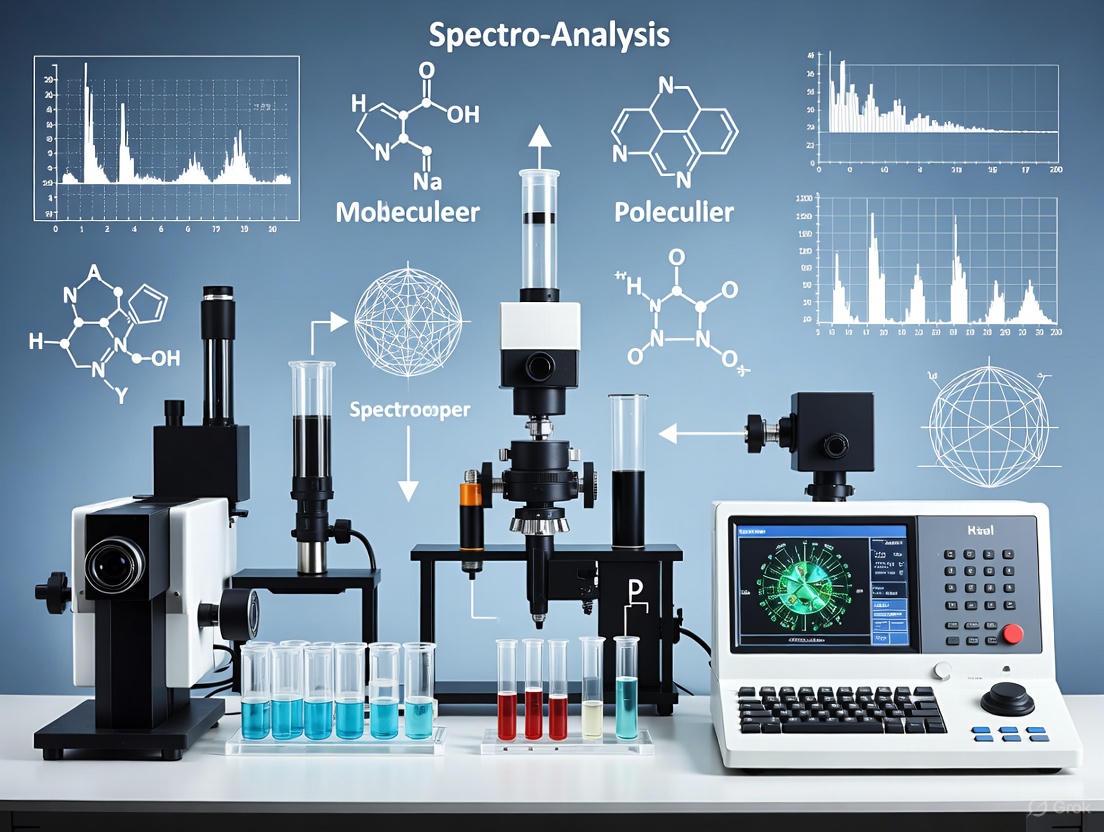
This comprehensive review explores the pivotal role of spectroscopic techniques in modern environmental monitoring, with special emphasis on applications relevant to pharmaceutical researchers and drug development professionals.
Advanced Spectroscopic Techniques for Environmental Monitoring: Applications in Pharmaceutical Research and Drug Development
Abstract
This comprehensive review explores the pivotal role of spectroscopic techniques in modern environmental monitoring, with special emphasis on applications relevant to pharmaceutical researchers and drug development professionals. The article covers foundational principles of atomic, vibrational, molecular, electronic, and X-ray spectroscopy, detailing their specific methodologies for detecting contaminants in air, water, and soil matrices. It examines cutting-edge applications from trace element analysis to nanoplastic detection and process analytical technology, while addressing critical troubleshooting considerations for matrix effects and validation challenges. Through comparative analysis of technique performance characteristics, this resource provides essential guidance for selecting appropriate spectroscopic methods to ensure environmental quality in pharmaceutical manufacturing and research contexts.
Fundamental Principles and Evolving Landscape of Spectroscopic Environmental Analysis
Core Principles of Light-Matter Interactions in Environmental Sampling
Spectroscopy comprises a diverse array of analytical techniques that quantify how light interacts with matter, providing powerful tools for environmental analysis [1]. These methods measure light absorption, emission, or scattering to reveal detailed insights into the molecular and atomic characteristics of environmental samples, including water, soil, air, and biological materials [1] [2]. The fundamental principle governing these interactions is quantified by the equation ΔE = hν, where ΔE represents the energy difference between quantum states, h is Planck's constant, and ν is the frequency of the electromagnetic radiation [3]. This energy relationship forms the theoretical foundation for all spectroscopic measurements in environmental monitoring.
The interaction between light and matter manifests through several key phenomena that are harnessed for analytical purposes. When light strikes a material, it may be absorbed, promoting electrons to higher energy states or increasing molecular vibrational energy [2]. Alternatively, light may be emitted as excited electrons return to ground state, or scattered through various mechanisms including Rayleigh, Raman, and Mie scattering effects [1] [4]. The specific interaction depends on both the sample properties and the wavelength of incident light, creating unique spectral signatures that serve as molecular fingerprints for identification and quantification of environmental contaminants [2] [3].
Fundamental Light-Matter Interaction Mechanisms
Absorption Processes
Absorption spectroscopy measures the amount of light a sample absorbs at specific wavelengths, with the absorption spectrum providing characteristic information about the electronic structure of molecules [2]. In Ultraviolet-Visible (UV-Vis) spectroscopy, molecules absorb light, causing electrons to transition to higher energy states [1] [5]. The resulting absorption spectrum enables determination of substance concentration in solution through the Beer-Lambert law [1]. Environmental scientists employ UV-Vis spectroscopy to measure dissolved organic matter in water and quantify specific pollutants like polycyclic aromatic hydrocarbons (PAHs) [3] [6].
Infrared (IR) spectroscopy utilizes infrared light to excite molecular vibrations rather than electronic transitions [1] [5]. When infrared light passes through a sample, different molecular bonds absorb specific frequencies, causing the molecules to vibrate [1]. The resulting absorption spectrum serves as a molecular fingerprint, with different functional groups in organic compounds producing characteristic absorption patterns [1]. Fourier Transform Infrared (FT-IR) spectroscopy is particularly valuable for identifying chemical bonds and functional groups within environmental contaminants [6].
Emission and Scattering Processes
Emission spectroscopy involves exciting a sample with an energy source and measuring the light emitted as the sample returns to a lower energy state [2]. The resulting emission spectrum reveals characteristic wavelengths corresponding to specific electronic transitions in atoms or molecules [2]. Techniques like inductively coupled plasma optical emission spectroscopy (ICP-OES) are extensively used for trace elemental analysis in environmental samples, providing high sensitivity and precision for detecting potentially toxic elements (PTEs) [6].
Raman spectroscopy relies on inelastic scattering of light, where the energy shift between incident and scattered photons provides information about molecular vibrations [1]. When monochromatic light interacts with a sample, a small fraction undergoes Raman scattering with shifted wavelengths due to energy transfer between light and molecular vibrations [1]. This technique is particularly valuable for analyzing aqueous environmental samples since water produces a weak Raman signal, minimizing interference [5]. Surface-enhanced Raman spectroscopy (SERS) significantly improves sensitivity through specialized substrates, enabling detection of environmental pollutants at extremely low concentrations [6].
Table 1: Fundamental Light-Matter Interaction Mechanisms in Environmental Spectroscopy
| Interaction Type | Physical Principle | Environmental Applications | Representative Techniques |
|---|---|---|---|
| Absorption | Measurement of light removed by sample | Quantifying dissolved organic matter in water; identifying functional groups in soil organic matter | UV-Vis, FT-IR, NIR |
| Emission | Measurement of light emitted from excited sample | Trace elemental analysis in water and soil; detecting potentially toxic elements | ICP-OES, ICP-MS, Atomic Emission |
| Elastic Scattering | Light scattered with same energy | Turbidity measurements in water; particle characterization | Rayleigh Scattering, Nephelometry |
| Inelastic Scattering | Light scattered with modified energy | Molecular identification in aqueous environments; microplastic detection | Raman, SERS |
Advanced Spectroscopic Techniques for Environmental Analysis
Vibrational Spectroscopy Methods
Vibrational spectroscopic techniques have emerged as powerful tools for environmental monitoring, particularly for complex analytical challenges. Fourier Transform Infrared (FT-IR) spectroscopy and Raman spectroscopy have demonstrated novel capabilities for detecting microfibers and microplastics within minute concentrations from diverse environmental samples [7]. These techniques can identify major micropollutants including polyethylene, polypropylene, nylon 6, polystyrene, and polyethylene terephthalate, which represent significant challenges in terrestrial and marine environments [7]. The complementary nature of these methods—with FT-IR measuring infrared light absorption and Raman measuring light scattering—provides a comprehensive approach for characterizing synthetic microfibers and other persistent pollutants [7] [5].
Recent advancements in surface-enhanced Raman spectroscopy (SERS) have addressed sensitivity limitations in conventional Raman techniques. Researchers have developed innovative substrates such as gold clusters anchored on reduced graphene oxide (Au clusters@rGO) that combine chemical enhancement with electromagnetic enhancement, achieving ultrahigh enhancement factors of 3.5 × 10⁷ [6]. This significant improvement enables detection of environmental pollutants at previously unattainable concentrations, though challenges remain regarding matrix effects from natural organic matter (NOM) in environmental samples [6].
Elemental and Isotopic Analysis Techniques
Inductively coupled plasma mass spectrometry (ICP-MS) represents one of the most sensitive techniques for trace elemental analysis in environmental samples [6]. This method has advanced significantly, with ICP-MS/MS now demonstrating dominant capabilities in air quality analysis, particularly for measuring tyre-wear particle emissions, halogenated volatile organics, and single particles containing various elements and contaminants [6]. The development of single-cell ICP-MS has further enhanced capabilities for evaluating cellular elemental composition, providing crucial insights into nanoparticle toxicity at the cellular level [6].
X-ray spectroscopy techniques, including X-ray fluorescence (XRF) and X-ray diffraction (XRD), provide non-destructive approaches for elemental analysis and crystalline structure identification [6]. Portable XRF (pXRF) and portable XRD (pXRD) instruments enable rapid in-situ screening for elemental contaminants in field conditions [6]. Recent innovations combine both technologies in integrated instruments (XRD-XRF) that facilitate simultaneous chemical and mineralogical characterization of environmental samples, significantly enhancing field analysis capabilities for mineral prospecting and contamination assessment [6].
Table 2: Advanced Spectroscopic Techniques for Environmental Monitoring
| Technique | Principle | Detection Limits | Primary Environmental Applications |
|---|---|---|---|
| ICP-MS/MS | Ionization of elements with mass separation | parts-per-trillion (ppt) to parts-per-quadrillion (ppq) | Trace metal analysis in water; single-particle air pollution studies |
| SERS | Enhanced Raman scattering from nanostructured surfaces | Single-molecule detection (theoretical) | Pesticide detection in water; nanoplastic identification; dye pollutants |
| FT-IR | Molecular bond absorption of IR radiation | Varies with compound (typically ppm) | Microplastic identification; soil organic matter characterization |
| pXRF/XRD | X-ray fluorescence and diffraction | ~100 ppm for most elements | Field screening of metal contaminants; soil mineralogy; mining impacts |
| LIBS | Plasma emission from laser ablation | ppm range for most elements | Rapid soil profiling; mineral prospecting; industrial contaminant screening |
Experimental Protocols for Environmental Sampling
Protocol: FT-IR Analysis of Microplastics in Water Samples
Principle: This protocol utilizes Fourier Transform Infrared spectroscopy to identify and characterize synthetic microfibers and plastic particles in environmental water samples based on their characteristic infrared absorption spectra [7].
Materials and Reagents:
- FT-IR spectrometer with attenuated total reflectance (ATR) accessory
- Vacuum filtration apparatus
- Anodisc filters (0.2 μm pore size)
- Potassium bromide (KBr), spectroscopic grade
- Deionized water
- Forceps, non-metallic
- Desiccator
Procedure:
- Collect water samples (1-2 L) in clean glass containers, avoiding plastic contamination.
- Vacuum-filter samples through Anodisc filters to concentrate particulate matter.
- Carefully transfer filters to desiccator for 24 hours to ensure complete drying.
- Prepare background spectrum using clean KBr pellet.
- Place dried filter on ATR crystal and apply consistent pressure.
- Acquire spectra in the range of 4000-400 cm⁻¹ with 4 cm⁻¹ resolution.
- Average 64 scans to improve signal-to-noise ratio.
- Process spectra using library matching algorithms (e.g., NOAA NIST library) for polymer identification.
- Document characteristic absorption bands: polyethylene (2915, 2848, 1465, 717 cm⁻¹), polypropylene (2950, 2917, 2839, 1457, 1376 cm⁻¹), polystyrene (3025, 2920, 1601, 1493, 1452 cm⁻¹).
Quality Control:
- Include procedural blanks with each batch to monitor contamination.
- Analyze certified reference materials when available.
- Validate identification through multiple characteristic peaks, not single bands.
Protocol: ICP-MS Analysis of Trace Metals in Soil
Principle: This method describes the quantitative determination of potentially toxic elements (PTEs) in soil samples using inductively coupled plasma mass spectrometry, following microwave-assisted acid digestion [6].
Materials and Reagents:
- ICP-MS instrument with collision/reaction cell
- Microwave digestion system
- Teflon digestion vessels
- Ultrapure nitric acid (69%)
- Hydrogen peroxide (30%)
- Multi-element calibration standards
- Certified reference materials (NIST 2710a, 2711a)
- Rhodium or indium internal standard
Procedure:
- Homogenize soil samples and sieve through 2-mm mesh.
- Dry at 40°C until constant weight is achieved.
- Precisely weigh 0.5 g of dried soil into Teflon digestion vessels.
- Add 9 mL HNO₃ and 3 mL H₂O₂ to each vessel.
- Perform microwave digestion using stepped program: ramp to 95°C (10 min), hold at 95°C (10 min), ramp to 180°C (15 min), hold at 180°C (15 min).
- Cool vessels, transfer digestates to volumetric flasks, and dilute to 50 mL with deionized water.
- Prepare calibration standards (0, 1, 10, 100, 500 μg/L) in 2% HNO₃ matrix.
- Add internal standard to all samples and standards (final concentration 10 μg/L).
- Analyze by ICP-MS using appropriate collision/reaction gases to minimize polyatomic interferences.
- Calculate element concentrations using internal standard calibration.
Quality Control:
- Include method blanks with each digestion batch.
- Analyze certified reference materials with each batch (acceptance criteria: 85-115% recovery for most elements).
- Monitor internal standard intensity for signal drift correction.
- Use duplicate samples to assess precision (target RSD < 10%).
Instrumentation and Research Reagent Solutions
The implementation of spectroscopic methods for environmental sampling requires specialized instrumentation and reagents designed for specific analytical challenges. Understanding the available tools and their optimal applications is essential for method development and validation.
Table 3: Essential Research Reagent Solutions for Environmental Spectroscopy
| Reagent/Material | Function | Application Examples |
|---|---|---|
| Anodisc Filters | Retention of microplastic particles during filtration | Concentration of microfibers from water samples for FT-IR analysis |
| Magnetic Nanoparticles | Preconcentration of target analytes | Sensitivity enhancement for trace metal detection in FAAS and ICP-MS |
| Gold Cluster@rGO Substrates | SERS-active material for signal enhancement | Ultrasensitive detection of pesticide residues and organic pollutants |
| Certified Reference Materials | Quality control and method validation | Verification of analytical accuracy for soil and water analysis (NIST standards) |
| Chemometric Software | Multivariate data processing and pattern recognition | Interpretation of complex NIR and Raman spectra from environmental samples |
Spectroscopic instrumentation for environmental applications ranges from benchtop laboratory systems to field-portable devices. Spectrophotometers measure the interaction between light and matter, consisting of a light source, monochromator or filter, sample holder, and detector [3]. Advanced configurations include Fourier-transform instruments that simultaneously measure a broad range of wavelengths, enhancing resolution and speed of spectral data collection [2]. For elemental analysis, inductively coupled plasma systems coupled with optical emission spectroscopy or mass spectrometry provide exceptional sensitivity for multi-element determination [6].
The development of portable field instruments has transformed environmental monitoring by enabling real-time, on-site analysis. Portable XRF, LIBS, and Raman spectrometers allow rapid screening of contaminated sites without the need for sample transport and preservation [6]. Recent innovations combine multiple techniques in integrated instruments, such as the ID2B system that performs simultaneous XRD-XRF analysis for comprehensive chemical and mineralogical characterization in field conditions [6].
Spectroscopic techniques provide powerful, often non-destructive approaches for analyzing environmental samples across various matrices. The core principles of light-matter interactions—including absorption, emission, and scattering phenomena—form the foundation for method selection and development in environmental monitoring applications. Recent advancements in techniques such as SERS, single-cell ICP-MS, and portable XRD-XRF instruments continue to expand analytical capabilities, enabling detection of emerging contaminants at increasingly lower concentrations with greater specificity.
The experimental protocols and technical resources outlined in this document provide a framework for implementing spectroscopic methods in environmental research and monitoring programs. As environmental challenges evolve, continued refinement of these analytical approaches will be essential for understanding contaminant fate, transport, and effects in complex environmental systems. The integration of advanced data processing techniques, including machine learning and chemometric analysis, with traditional spectroscopic methods represents a promising direction for future development in environmental analytical chemistry.
Diagrams
This application note provides a comprehensive overview of key spectroscopic techniques employed in environmental monitoring. Designed for researchers and scientists, it details the operational principles, standard methodologies, and specific applications of atomic, molecular, vibrational, and X-ray spectroscopic methods for detecting and quantifying pollutants in various environmental matrices. The document includes structured protocols, performance data comparisons, and workflow visualizations to support the implementation of these techniques in research and regulatory contexts, framed within the broader thesis of advancing environmental analytical science.
Environmental monitoring necessitates precise and reliable analytical techniques to detect contaminants at trace levels in complex matrices such as water, soil, and air. Spectroscopic techniques, which study the interaction between matter and electromagnetic radiation, provide the sensitivity, specificity, and versatility required for this task [8]. The unique spectral signatures of atoms and molecules allow for the identification and quantification of pollutants, including emerging contaminants, heavy metals, and synthetic microfibers [8] [7]. This document delineates the essential spectroscopic techniques—categorized as atomic, vibrational, molecular, and X-ray methods—within the framework of environmental monitoring, providing detailed application notes and standardized protocols to guide researchers and drug development professionals in their analytical endeavors.
The selection of an appropriate spectroscopic technique is contingent upon the analyte's physical and chemical properties, the required sensitivity, and the sample matrix [9]. Mass spectrometry (MS), particularly when coupled with chromatographic systems, is pivotal for detecting trace-level organic contaminants like pharmaceuticals and pesticides [9] [10]. Vibrational spectroscopy, including Fourier Transform Infrared (FTIR) and Raman spectroscopy, excels in identifying molecular structures and is effectively employed for analyzing synthetic microfibers and other polymeric pollutants [7]. X-ray fluorescence (XRF) spectrometry is a non-destructive technique ideal for the qualitative and quantitative analysis of elemental contaminants, especially heavy metals in soil and air particulates [11] [12] [13].
The table below summarizes the core characteristics and environmental applications of these primary techniques.
Table 1: Core Spectroscopic Techniques for Environmental Monitoring
| Technique | Core Principle | Typical Environmental Analytes | Detection Limits | Key Environmental Matrices |
|---|---|---|---|---|
| GC-MS / LC-MS | Separation followed by mass-based detection and identification [10]. | Pharmaceuticals, pesticides, industrial chemicals, emerging contaminants [9]. | Parts-per-trillion (ng L–1) to parts-per-billion (µg L–1) [10]. | Wastewater, surface water, soil [9] [10]. |
| FTIR & Raman Spectroscopy | Detection of vibrational energy levels and molecular fingerprinting [7]. | Synthetic microfibers (e.g., PE, PP, PET), organic pollutants [7]. | Varies; capable of detecting microfibers in minute concentrations [7]. | Marine water, freshwater, soil, air particulates [7]. |
| XRF Spectrometry | Measurement of characteristic X-rays emitted from atoms after excitation [12]. | Heavy metals (Pb, As, Cd), inorganic contaminants [12] [13]. | Parts-per-million (mg kg–1); lower with TXRF [12] [13]. | Soil, sediments, air particulate filters [11] [12]. |
Detailed Techniques and Protocols
Mass Spectrometry (MS) for Trace Organic Analysis
3.1.1 Principle and Application Mass spectrometry coupled with gas or liquid chromatography (GC-MS, LC-MS) is a cornerstone for analyzing organic emerging contaminants. Its high sensitivity and selectivity enable the determination of pollutants at trace concentrations in complex wastewater samples [10]. The choice between GC-MS and LC-MS is governed by the analyte's volatility, polarity, and thermal stability [9]. GC-MS is suitable for volatile and semi-volatile compounds (e.g., PAHs, certain pesticides), while LC-MS is preferred for non-volatile, thermally labile, and polar compounds (e.g., pharmaceuticals, personal care products) [9] [10].
3.1.2 Protocol: LC-MS/MS Analysis of Pharmaceuticals in Wastewater
- Sample Preparation: Collect wastewater samples in clean glass containers. Adjust pH to 7.0 and filter through a 0.45 µm glass fiber filter to remove suspended particulates. Perform solid-phase extraction (SPE) using hydrophilic-lipophilic balanced (HLB) cartridges for analyte extraction and concentration. Elute with methanol followed by a methanol/acetonitrile mixture. Gently evaporate the eluent to dryness under a nitrogen stream and reconstitute in a 90:10 (v/v) water/methanol mixture for analysis [10].
- Instrumental Setup:
- Chromatography: Utilize an UHPLC system with a C18 reversed-phase column (2.1 mm x 100 mm, 1.7 µm particle size). Maintain a column temperature of 40°C. Employ a binary mobile phase gradient: (A) water with 0.1% formic acid and (B) methanol with 0.1% formic acid. Set a flow rate of 0.3 mL/min [10].
- Ionization: Use an Electrospray Ionization (ESI) source in positive or negative mode, depending on the target analytes. Optimize source parameters: capillary voltage, desolvation temperature, and desolvation gas flow [10].
- Mass Analysis: Operate a triple quadrupole (TQ) mass spectrometer in Multiple Reaction Monitoring (MRM) mode. For each analyte, optimize the precursor ion, product ion, and collision energy. Use a minimum of two MRM transitions per analyte for confirmatory analysis [10].
- Data Analysis: Quantify target analytes using an external calibration curve of certified standards. Confirm compound identity by matching the retention time and the ion ratio of the two MRM transitions with those of the calibration standard [10].
Vibrational Spectroscopy for Microfiber Identification
3.2.1 Principle and Application Vibrational spectroscopic techniques, namely FTIR and Raman spectroscopy, are critical for the rapid and accurate identification of synthetic microfiber pollutants in environmental samples. These techniques analyze the unique vibrational signatures of chemical bonds, providing a molecular "fingerprint" that allows for the differentiation between polymer types such as polyethylene (PE), polypropylene (PP), and polyethylene terephthalate (PET) [7].
3.2.2 Protocol: FTIR Analysis of Microfibers from Water Samples
- Sample Preparation: Filter a known volume of water through a silicon or aluminum oxide filter. Manually collect microfibers from the filter under a stereo microscope using clean tweezers. For micro-ATR (Attenuated Total Reflectance) FTIR, place the isolated fiber directly onto the ATR crystal and apply gentle pressure to ensure good optical contact [7].
- Instrumental Setup:
- Use an FTIR spectrometer equipped with a mercury-cadmium-telluride (MCT) detector.
- Configure the ATR accessory with a diamond or germanium crystal.
- Set the spectral range to 4000 - 650 cm⁻¹, resolution to 4 cm⁻¹, and accumulate 64 scans per spectrum [7].
- Data Analysis: Process the raw spectrum by applying ATR correction and a baseline correction algorithm. Identify the polymer type by matching the acquired spectrum against a reference spectral library of known polymers (e.g., commercial or in-house libraries). Key absorption bands for identification include: C-H stretching (~2900 cm⁻¹) for polyolefins, and C=O stretching (~1700 cm⁻¹) for polyesters [7].
X-ray Fluorescence (XRF) Spectrometry for Heavy Metal Detection
3.3.1 Principle and Application XRF spectrometry is a non-destructive technique used for the elemental analysis of environmental samples. When a sample is irradiated with X-rays, inner-shell electrons are ejected; as outer-shell electrons fill the vacancies, they emit characteristic fluorescent X-rays. The energy of these X-rays identifies the element, and their intensity quantifies its concentration [12] [13]. It is widely used for screening heavy metals like lead and arsenic in soil and sediments [12].
3.3.2 Protocol: Heavy Metal Screening in Soil using EDXRF
- Sample Preparation: Air-dry the soil sample and grind it to a fine, homogeneous powder using a ceramic mortar and pestle. Press the powder into a pellet using a hydraulic press with a binding agent at a typical pressure of 15-20 tons for 1-2 minutes to ensure a smooth, uniform surface [12].
- Instrumental Setup:
- Utilize an Energy-Dispersive XRF (EDXRF) spectrometer.
- Set the X-ray tube excitation conditions (voltage and current) optimized for the target elements (e.g., 40-50 kV for heavy metals like Pb). The analysis is typically performed under a vacuum or helium purge to enhance the detection of light elements.
- Set the live time for measurement to 100-300 seconds to achieve adequate counting statistics [12].
- Data Analysis: The instrument software automatically identifies elements based on peak energies and quantifies concentrations using a fundamental parameters method or an empirical calibration curve developed from certified reference materials (CRMs). Report results for elements such as Pb, As, and Cd in mg kg⁻¹ [12] [13].
Workflow and Signaling Pathways
The generalized workflow for environmental monitoring using spectroscopy involves a logical progression from sample collection to data interpretation, with the choice of technique being directed by the analytical question.
Environmental Analysis Workflow
The Scientist's Toolkit: Research Reagent Solutions
Successful environmental analysis relies on high-purity reagents and consumables. The following table details essential items for the protocols described.
Table 2: Essential Research Reagents and Materials for Spectroscopic Environmental Analysis
| Item | Function/Application | Technical Notes |
|---|---|---|
| HLB Solid-Phase Extraction Cartridges | Extraction and concentration of diverse organic pollutants from water samples for LC-MS analysis. | Retains a wide polarity range of analytes; requires conditioning with methanol and water prior to sample loading [10]. |
| Certified Reference Materials (CRMs) | Calibration and quality control for quantitative analysis, particularly in XRF and MS. | Provides metrological traceability; essential for validating analytical methods. Should match the sample matrix (e.g., soil, sediment) [12]. |
| UHPLC-grade Solvents (Methanol, Acetonitrile) | Mobile phase components for LC-MS. | High purity minimizes background noise and prevents instrument contamination and detector suppression [10]. |
| Derivatization Reagents | Chemical modification of polar compounds for GC-MS analysis. | Techniques like silylation improve volatility and thermal stability of analytes that are otherwise unsuitable for GC [10]. |
| Polymer Spectral Libraries | Reference databases for identifying unknown microplastics via FTIR or Raman spectroscopy. | Must contain high-quality spectra of pure polymers for reliable library matching and polymer identification [7]. |
Recent Technological Advancements and Emerging Capabilities
The field of environmental monitoring is undergoing a rapid transformation, driven by significant technological advancements in spectroscopic techniques. The integration of artificial intelligence, the development of highly sensitive portable instruments, and the combination of complementary analytical methods are pushing the boundaries of what is possible in detecting, identifying, and quantifying environmental pollutants. These innovations are enabling researchers and drug development professionals to address complex analytical challenges with unprecedented speed, accuracy, and depth, from tracking toxic elements in complex waste streams to monitoring trace gases in the atmosphere. This article details the latest capabilities and provides structured application notes and experimental protocols to facilitate the adoption of these cutting-edge techniques in environmental research.
Advanced Spectroscopic Techniques and Applications
Recent breakthroughs have enhanced the sensitivity, selectivity, and practicality of spectroscopic methods for environmental analysis.
AI-Enhanced Raman Spectroscopy for Plastic Identification
Principle: Raman spectroscopy leverages the inelastic scattering of monochromatic light to provide a molecular fingerprint of a sample. The integration of machine learning (ML) transforms this technique from qualitative identification to a powerful classification tool for complex mixtures [14].
Advanced Capability: A recent study demonstrated the use of Raman spectroscopy combined with machine learning algorithms—specifically discriminant analysis (DA) and support vector machine (SVM)—to identify and sort plastics from waste electrical and electronic equipment (WEEE) [14]. This approach achieved up to 80% classification purity for key plastics like polystyrene (PS) and acrylonitrile butadiene styrene (ABS) [14]. By optimizing laser settings, the method proved effective on real-world samples, offering a scalable solution to boost recycling rates and support global plastics circularity [14].
Application Note: This protocol is particularly valuable for pharmaceutical companies analyzing plastic packaging materials and for environmental scientists characterizing microplastic pollution.
Micro-PIXE Spectroscopy for Source Apportionment
Principle: Micro-particle-induced X-ray emission (micro-PIXE) spectroscopy uses a focused ion beam to excite a sample, causing it to emit characteristic X-rays that are used for elemental analysis and mapping [14].
Advanced Capability: This technique's power lies in its high-resolution elemental mapping capability, which is instrumental for environmental forensics. Research utilized micro-PIXE to analyze particulate matter (PM) from diverse urban locations, such as markets and university hostels in Old Delhi [14]. The analysis revealed distinct elemental compositions that were tied to specific pollution sources, including coal plants, traffic emissions, and biomass burning [14]. This provides critical data for targeted air quality mitigation strategies.
Application Note: The non-destructive and highly sensitive nature of micro-PIXE makes it suitable for analyzing limited or irreplaceable environmental samples, such as archived air filters or rare geological specimens.
Laser-Induced Breakdown Spectroscopy (LIBS) for Rapid Elemental Analysis
Principle: LIBS is a type of atomic emission spectroscopy that uses a high-powered laser pulse to create a micro-plasma on the sample surface. The analysis of the emitted light spectrum provides information on the sample's elemental composition [15].
Advanced Capability: LIBS offers rapid, multi-element analysis with minimal sample preparation, making it ideal for field deployment [15]. It has been successfully applied to analyze soil, water, and aerosol samples for heavy metals and other contaminants [15]. Its speed and portability represent a significant advancement over traditional lab-based techniques.
Application Note: LIBS is highly suitable for rapid screening and mapping of contaminated sites, allowing for real-time decision-making during field campaigns.
Cavity Ring-Down Spectroscopy (CRDS) for Trace Gas Detection
Principle: CRDS is a highly sensitive absorption technique that measures the decay rate of light (ring-down time) within a high-finesse optical cavity. The presence of an absorbing gas decreases the ring-down time, allowing for precise quantification [15].
Advanced Capability: CRDS achieves exceptional sensitivity and selectivity for trace gases, enabling real-time monitoring of greenhouse gases (e.g., CO₂, CH₄) and air pollutants (e.g., NOₓ, SO₂) at low concentrations, even in complex gas mixtures [15].
Application Note: CRDS is the gold standard for high-precision atmospheric monitoring and is essential for climate change research and verifying compliance with air quality regulations.
Fourier Transform Infrared (FTIR) Spectroscopy for Molecular Speciation
Principle: FTIR spectroscopy measures the absorption of various infrared light wavelengths by a sample, which corresponds to the excitation of molecular vibrations. This provides information on functional groups and molecular structures [16].
Advanced Capability: FTIR is a powerful tool for identifying organic materials and polymer compounds. Its specificity allows for computerized data searches against reference libraries to identify unknown materials based on their unique "fingerprint" region (1500-400 cm⁻¹) [16]. A recent application involved using FTIR to develop cleaner coal use by analyzing functional group changes and mineral content in coal samples from Mongolia [14].
Application Note: FTIR is indispensable for identifying unknown organic contaminants in environmental samples and for studying the chemical transformation of materials under environmental stress.
Table 1: Comparison of Advanced Spectroscopic Techniques for Environmental Monitoring
| Technique | Measured Parameter | Typical Applications | Key Advantages | Limitations |
|---|---|---|---|---|
| AI-Enhanced Raman | Molecular vibrations | Plastic identification in e-waste, microplastic analysis | High specificity with ML classification; minimal sample prep | Can be affected by fluorescence; requires model training |
| Micro-PIXE | Elemental composition | Source apportionment of particulate matter, forensic analysis | High-resolution spatial mapping; multi-element; non-destructive | Requires ion accelerator facility; not for light elements |
| LIBS | Elemental composition | Soil screening, water analysis, aerosol detection | Very rapid; minimal sample prep; portable systems available | Matrix effects can interfere; less sensitive than other techniques |
| CRDS | Gas absorption | Trace gas monitoring (GHGs, pollutants) | Exceptional sensitivity and selectivity; real-time data | Typically targets specific gases; high instrument cost |
| FTIR | Molecular functional groups | Polymer identification, soil organic matter analysis | Broad molecular identification; library matching | Sample preparation can be complex for solids; water interference |
Experimental Protocols
Protocol: Identification of Plastics in E-Waste using AI-Enhanced Raman Spectroscopy
1.0 Objective: To identify and classify specific plastic polymers from a mixed e-waste sample using Raman spectroscopy and machine learning algorithms to achieve high classification purity.
2.0 Materials and Reagents
- Sample: Mixed plastic waste from waste electrical and electronic equipment (WEEE) [14].
- Standards: Pure polymer pellets or flakes for calibration (e.g., Polystyrene (PS), Acrylonitrile Butadiene Styrene (ABS), Polyethylene Terephthalate (PET)) [14].
- Equipment: Raman spectrometer equipped with a laser source (e.g., 785 nm), microscope, and motorized stage [14].
- Software: Spectral acquisition software; machine learning software/platform (e.g., Python with scikit-learn for DA and SVM algorithms) [14].
3.0 Methodology 3.1 Sample Preparation:
- Manually sort the e-waste stream and isolate plastic components.
- Clean the plastic surfaces with isopropanol to remove dirt and labels.
- For each plastic piece, create a thin section or flat surface suitable for analysis under the microscope.
3.2 Instrument Calibration and Data Acquisition:
- Calibrate the Raman spectrometer using a silicon wafer standard prior to analysis.
- Optimize laser power and integration time to obtain high signal-to-noise spectra while avoiding sample degradation [14].
- Collect Raman spectra from multiple points on each sample to account for heterogeneity.
- For each polymer standard, collect a library of reference spectra.
3.3 Machine Learning Analysis:
- Preprocess all spectra (e.g., baseline correction, normalization, Savitzky–Golay smoothing) [14].
- Extract features from the preprocessed spectra.
- Train the discriminant analysis (DA) and support vector machine (SVM) models using the reference spectral library [14].
- Validate the model performance using a separate test set of spectra.
- Apply the trained model to classify the unknown e-waste plastic spectra.
4.0 Data Analysis and Interpretation
- The output will be a classification for each measured spectrum (e.g., PS, ABS).
- Calculate the classification purity as the percentage of spectra correctly assigned to each polymer type against known standards. The benchmark for success is achieving up to 80% classification purity for key polymers like PS and ABS [14].
Protocol: Elemental Analysis and Source Apportionment of Air Particulates using Micro-PIXE
1.0 Objective: To determine the elemental composition of particulate matter (PM) and map the spatial distribution of elements to identify potential pollution sources.
2.0 Materials and Reagents
- Sample: Particulate matter collected on air filter substrates (e.g., Teflon, polycarbonate) [14].
- Standards: Thin-film certified reference materials for elemental quantification.
- Equipment: Micro-PIXE spectrometer system (including ion accelerator, focusing optics, and X-ray detector) and GeoPIXE software or equivalent for data analysis [14].
3.0 Methodology 3.1 Sample Preparation:
- Collect PM on appropriate filters using a standardized air sampler.
- Securely mount a section of the filter on a PIXE sample holder.
- If necessary, coat the sample with a thin conductive layer (e.g., carbon) to prevent charging.
3.2 Data Acquisition:
- Place the sample in the vacuum chamber of the micro-PIXE instrument.
- Use a focused proton beam (typically 2-3 MeV) to raster over the sample surface [14].
- Collect the emitted X-rays using a silicon drift detector (SDT).
- Acquire spectral data for multiple fields of view to ensure representative analysis.
3.3 Data Analysis:
- Use software (e.g., GeoPIXE) to deconvolute the complex X-ray spectra and extract net peak areas for each element [14].
- Generate quantitative elemental concentration maps.
- Employ statistical analysis (e.g., Principal Component Analysis - PCA) on the elemental data to cluster samples and identify common pollution sources [14].
4.0 Data Analysis and Interpretation
- Correlate the elemental signatures (e.g., high V/Ni ratio for fuel oil combustion; high Si, Al, K for crustal dust) with known source profiles.
- The spatial correlation of elements on the filter can provide visual evidence of co-located pollutants from mixed sources.
The Scientist's Toolkit: Essential Research Reagents and Materials
Table 2: Key Research Reagent Solutions for Spectroscopic Environmental Analysis
| Item | Function/Application | Technical Notes |
|---|---|---|
| Ionic Liquids (e.g., [Bmim]Cl⁻) | Solvent for cleaner coal extraction and processing [14]. | Acts as an environmentally friendly alternative to traditional solvents; enhances hydrogen bonding in bituminous coal [14]. |
| Corn Straw Biochar | Used in soil remediation to control dissolved organic matter (DOM) and cadmium bioavailability [14]. | Aging treatments (e.g., UV) affect DOM release; humic acid content influences heavy metal immobilization [14]. |
| Certified Reference Materials (CRMs) | Calibration and quality control for elemental and molecular analysis [14]. | Essential for quantitative micro-PIXE, LIBS, and other techniques; must match sample matrix. |
| Functionalized Silica Gels | Stationary phase in Size-Exclusion Chromatography (SEC) for polymer molecular weight analysis [16]. | Pore size determines separation range; used with solvents like THF for polymer analysis [16]. |
| Chemometric Software Packages | For multivariate analysis of complex spectral data (e.g., from FTIR, Raman) [14]. | Enables techniques like Parallel Factor Analysis (PARAFAC) for fluorescence data and machine learning model development [14]. |
Workflow and Signaling Pathways
The following workflow diagram illustrates the integrated process of selecting and applying advanced spectroscopic techniques for a comprehensive environmental monitoring study.
Spectroscopic Methodologies for Targeted Environmental Contaminant Analysis
Within the framework of environmental monitoring research, the accurate determination of trace elements in air and water is paramount for assessing pollution levels, ensuring public health, and enforcing regulatory standards. Inductively Coupled Plasma Mass Spectrometry (ICP-MS) and Inductively Coupled Plasma Optical Emission Spectroscopy (ICP-OES) stand as two cornerstone analytical techniques for these applications [6]. While both techniques utilize a high-temperature argon plasma to atomize and excite or ionize sample constituents, their detection mechanisms and consequent capabilities differ significantly, making them suited for complementary applications [17] [18]. This application note provides a detailed comparison of these techniques, with a specific focus on the emerging role of ICP-MS/MS, and outlines standardized protocols for their use in analyzing air and water samples within a rigorous research context.
Technical Comparison and Selection Guide
Choosing between ICP-OES and ICP-MS is a critical step that depends on the specific requirements of the analysis, including detection limits, sample matrix, regulatory methods, and budget.
ICP-OES operates by measuring the characteristic wavelengths of light emitted by excited atoms or ions in the plasma. It is a robust, high-throughput technique ideal for measuring elements at parts-per-billion (ppb) to percent (%) concentrations and is more tolerant of samples with high total dissolved solids (TDS) [17] [19].
ICP-MS, in contrast, detects the ions themselves based on their mass-to-charge ratio (m/z). Its primary advantage is exceptional sensitivity, with detection limits extending to parts-per-trillion (ppt) levels, a wide dynamic range, and the capability for isotopic analysis [17] [20]. However, it is more susceptible to spectral interferences from polyatomic ions and typically has higher operational costs and complexity [17] [21]. Tandem ICP-MS (ICP-MS/MS) enhances this capability by using a first mass filter to select a target ion, a reaction/collision cell to remove interferences, and a second mass filter for precise detection, making it particularly powerful for complex matrices [6].
The following table provides a structured comparison to guide instrument selection.
Table 1: Comparative Overview of ICP-OES and ICP-MS for Environmental Analysis
| Parameter | ICP-OES | ICP-MS |
|---|---|---|
| Fundamental Principle | Measurement of emitted light (photons) [19] | Measurement of ion mass-to-charge ratio (m/z) [20] |
| Typical Detection Limits | Parts-per-billion (ppb) range [17] [18] | Parts-per-trillion (ppt) range [17] [18] |
| Dynamic Range | Wide (up to 4-6 orders of magnitude) [17] | Very wide (up to 8-9 orders of magnitude) [17] |
| Tolerance for High TDS | High (up to ~30%) [17] | Low (~0.2%); often requires sample dilution [17] |
| Isotopic Analysis | Not possible | Possible and routine [20] |
| Spectral Interferences | Less complex, manageable with high-resolution optics [19] | Polyatomic ions are a major concern; addressed with CRC or MS/MS [20] [22] |
| Operational Cost & Skill | Lower cost, simpler operation [21] | Higher cost, requires specialist operators [21] |
| Key Regulatory Methods (U.S. EPA) | 200.5, 200.7, 6010 [17] [22] | 200.8, 6020 [17] [22] |
Applications in Air and Water Analysis
Water Analysis
Regulatory compliance for water in the U.S. is primarily driven by the Safe Drinking Water Act (SDWA) and the Clean Water Act (CWA) [22]. ICP-MS is often the preferred technique for drinking water analysis because regulatory limits for toxic elements like arsenic, lead, and mercury are frequently at sub-ppb levels, which is at or beyond the practical detection limits of ICP-OES [22]. For example, the arsenic maximum contaminant level (MCL) of 10 ppb led to the withdrawal of ICP-OES as an approved method for this analyte in drinking water compliance [22]. ICP-MS, especially when equipped with collision-reaction cell (CRC) or MS/MS technology, can reliably measure these elements at the required levels, even in complex matrices like seawater or wastewater where polyatomic interferences (e.g., ArCl⁺ on As⁺) are present [23] [22]. Furthermore, ICP-MS enables high-throughput, fully automated analysis of hundreds of samples, as demonstrated by workflows compliant with EPA Method 200.8 [23].
ICP-OES remains a powerful and efficient tool for the analysis of wastewater, surface water, and other environmental waters where elemental concentrations are higher, and for the determination of major elements (e.g., Na, K, Ca, Mg) [17] [24]. It is robust, can handle high-TDS samples like brines with minimal dilution, and is fully approved for use in compliance monitoring under the NPDES program of the CWA [22] [24]. Methods such as EPA 200.7 can be executed with short analysis times (e.g., under 3 minutes per sample), providing high laboratory throughput for a wide range of elements [23].
Air Analysis
The application of ICP techniques to air monitoring is an advancing field. ICP-MS, particularly when coupled with laser ablation (LA-ICP-MS) or other direct sampling techniques, is increasingly used for the analysis of particulate matter (PM), tyre-wear particles, and other airborne contaminants [6]. A key research advancement involves the use of unmanned aerial vehicles (UAVs) for airborne particulate sampling, with subsequent analysis via ICP-MS/MS [6]. This technique provides dominance in air quality analysis due to its ultra-low detection limits and ability to perform single-particle analysis, which can reveal the elemental composition of individual particles in a heterogeneous sample [6].
ICP-OES is also applied in air analysis for workplace monitoring, measuring elements in samples like fly ash, coal ash, and dust [24]. However, for the detection of trace metals at very low concentrations in ambient air, ICP-MS and ICP-MS/MS offer superior sensitivity.
Table 2: Typical Application Scenarios for ICP-OES and ICP-MS in Environmental Monitoring
| Sample Matrix | Target Analytes | Recommended Technique | Application Note |
|---|---|---|---|
| Drinking Water | As, Pb, Hg, Se, Cd at <1 ppb | ICP-MS / ICP-MS/MS | Necessary for compliance with low MCLs; CRC/MS/MS removes ArCl⁺ interference on As [22]. |
| Wastewater/Seawater | Multiple trace metals, high TDS | ICP-OES | Superior robustness for high-matrix samples; may require ICP-MS for ultra-trace contaminants [23] [17]. |
| Ambient Air / PM | Trace metals in particulate matter | ICP-MS / ICP-MS/MS | Coupled with laser ablation or UAV sampling; enables single-particle analysis [6]. |
| Workplace Air | Metals in fly ash, dust | ICP-OES | Suitable for analysis where element concentrations are not at ultra-trace levels [24]. |
| Rare Earth Elements (REEs) | La, Ce, Nd, etc., in water or soil | ICP-MS / High-resolution ICP-OES | ICP-MS provides lower detection limits; high-resolution ICP-OES is required to resolve rich spectral lines [23] [24]. |
Experimental Protocols
Protocol A: Determination of Trace Metals in Drinking Water by ICP-MS (EPA Method 200.8)
1. Principle: Water samples are introduced via an automated sampling system into the ICP. The formed ions are separated by mass and quantified against a calibrated curve. An intelligent autodilution system can automate reruns of samples outside the calibration range [23].
2. Reagents & Solutions:
- Nitric Acid (HNO₃), Trace Metal Grade: For sample preservation and preparation of all solutions.
- Hydrochloric Acid (HCl), Trace Metal Grade: Required to stabilize silver in solution [22].
- Multi-element Calibration Standards: Prepared in a matrix of 0.8% (v/v) HNO₃ and 0.4% (v/v) HCl.
- Internal Standard Solution: A mixed solution containing isotopically enriched ⁶Li, Sc, In, Tb, and Bi (e.g., 50 ppb) is added on-line to all samples and standards [22].
- Gold (Au) Solution (100 ppb): Added to all solutions, including wash solution, to stabilize mercury and prevent memory effects [22].
3. Instrumental Parameters (Example):
- ICP-MS Instrument: Thermo Scientific iCAP RQ ICP-MS or equivalent.
- Nebulizer: Quartz, concentric type.
- Spray Chamber: Quartz, cyclonic.
- RF Power: 1550 W.
- Nebulizer Gas Flow: ~1.0 L/min.
- Sample Uptake Rate: ~0.4 mL/min.
- Data Acquisition: Spectrum analysis for 21 elements; total analysis time ~66 seconds per sample [23].
4. Procedure:
- Sample Preparation: Acidity samples to a pH <2 with ultrapure HNO₃ upon collection. Pre-filter if suspended solids are present.
- Calibration: Perform a four-point calibration (e.g., blank, 1, 10, 100 ppb). Verify calibration with an independently prepared Quality Control Standard (QCS).
- Analysis: Analyze samples, blanks, and continuing calibration verification (CCV) standards every 10-20 samples. The internal standard is continuously monitored to correct for signal drift and matrix suppression.
- Quality Control: Adhere to all QC checks specified in EPA 200.8, including initial and ongoing calibration precision, internal standard recovery, and method detection limit studies [22].
The workflow for this protocol is systematic and can be visualized as follows:
Protocol B: High-Throughput Analysis of Wastewater by ICP-OES (EPA Method 200.7)
1. Principle: Samples are nebulized into an argon plasma, and the characteristic emission lines of excited elements are measured. The intensity of this emission is proportional to the concentration of the element [19].
2. Reagents & Solutions:
- Nitric Acid (HNO₃), Trace Metal Grade.
- Hydrochloric Acid (HCl), Trace Metal Grade.
- Calibration Standards: Prepared in a matrix matching the sample (e.g., 2% HCl / 2% HNO₃).
- Internal Standard Solution: Yttrium (Y) at 5 ppm is commonly used [22].
3. Instrumental Parameters (Example):
- ICP-OES Instrument: Thermo Scientific iCAP 7400 ICP-OES Duo or equivalent.
- Nebulizer: Glass concentric.
- Spray Chamber: Glass cyclonic.
- RF Power: 1150 W.
- Plasma View: Radial for high matrix samples; dual (axial/radial) for a wide concentration range.
- Sample Uptake Rate: ~1.5 mL/min.
- Analysis Time: ~2.5 minutes per sample [23].
4. Procedure:
- Sample Preparation: Homogenize and acidify samples. For wastewater with high solids, hot-block digestion may be required prior to analysis.
- Calibration: Calibrate with a blank and a single or multi-level standard. Validate with a QCS.
- Analysis: Introduce samples. The software automatically selects optimal plasma viewing modes and applies interference corrections.
- Quality Control: Monitor and meet QC criteria for initial and continuing calibration verification, internal standard recovery, and laboratory control samples [23] [22].
The corresponding workflow is outlined below:
The Scientist's Toolkit: Essential Research Reagent Solutions
The following table details key reagents and materials required for reliable trace element analysis, emphasizing the need for high-purity materials to prevent contamination.
Table 3: Essential Reagents and Materials for ICP-OES and ICP-MS Analysis
| Item Name | Function / Purpose | Critical Purity/Specification |
|---|---|---|
| High-Purity Acids (HNO₃, HCl) | Sample preservation, digestion, and preparation of calibration standards. | Trace Metal Grade or higher to minimize blank contamination [22]. |
| Multi-Element Calibration Standards | Instrument calibration and quantitation of target analytes. | Certified Reference Materials (CRMs) from accredited suppliers (e.g., NIST) [20]. |
| Internal Standard Solution | Corrects for signal drift and matrix effects during analysis. | A mix of non-interfering elements not present in the sample (e.g., Sc, Y, In, Bi, Tb) [22]. |
| Tuning/Calibration Solution | Optimizing instrument performance for sensitivity, resolution, and mass calibration. | Contains elements covering a wide mass range (e.g., Li, Y, Ce, Tl) at a known concentration. |
| Certified Reference Materials (CRMs) | Validation of the entire analytical method, from digestion to analysis. | Matrix-matched CRMs (e.g., river water, sludge, soil) with certified values for target elements. |
| Gold (Au) Chloride Solution | Stabilizer for mercury; prevents adsorption and memory effect in the sample introduction system. | 100 ppb in 1-5% HCl, added to all samples, standards, and blanks for Hg analysis [22]. |
| High-Purity Argon Gas | Sustains the inductively coupled plasma and acts as the carrier gas. | Ultra-high purity (99.998% or better) to ensure stable plasma and reduce spectral noise. |
Molecular imaging and pollutant fingerprinting are critical for assessing environmental health and enforcing regulatory compliance. Spectroscopic techniques like Raman spectroscopy, Surface-Enhanced Raman Scattering (SERS), and Fourier-Transform Infrared (FTIR) spectroscopy have emerged as powerful tools for the non-destructive, sensitive, and precise identification of environmental contaminants [25] [26]. These methods provide unique molecular "fingerprints" that enable the detection and characterization of pollutants ranging from pesticides and heavy metals to persistent organic toxins [27] [28] [29]. This article details application notes and experimental protocols for employing these techniques within an environmental monitoring framework, providing a practical resource for researchers and scientists.
Fundamental Principles
- Raman Spectroscopy: This technique is based on the inelastic scattering of monochromatic light, typically from a laser. The resulting spectrum provides a vibrational fingerprint of the sample's molecules, allowing for identification and characterization [25].
- Surface-Enhanced Raman Scattering (SERS): SERS dramatically enhances the Raman signal (by factors of up to 10^10^ or more) by adsorbing target molecules onto specially prepared nanostructured metal surfaces, such as gold or silver nanoparticles. This enables the detection of trace-level analytes [30] [28].
- Fourier-Transform Infrared (FTIR) Spectroscopy: FTIR measures the absorption of infrared light by a sample. Different chemical bonds vibrate at characteristic frequencies, producing an absorption spectrum that serves as a molecular fingerprint. It is particularly useful for identifying functional groups and organic compounds [26].
Comparative Technique Profiles
Table 1: Comparative analysis of spectroscopic techniques for environmental monitoring.
| Feature | Raman Spectroscopy | Surface-Enhanced Raman Scattering (SERS) | Fourier-Transform Infrared (FTIR) Spectroscopy |
|---|---|---|---|
| Primary Principle | Inelastic light scattering | Signal-enhanced Raman scattering | Infrared light absorption |
| Key Strength | Minimal sample preparation; good for aqueous samples | Ultra-high sensitivity (single molecule possible); trace analysis | Strong sensitivity for polar bonds; functional group identification |
| Typical Detection Limit | Micromolar (µM) range | Picomolar (pM) to femtomolar (fM) range [27] | Microgram (µg) range |
| Sample Preparation | Minimal | Requires SERS substrate (e.g., Au/Ag NPs) | Can require drying or pellet formation (KBr) |
| Sensitivity to Water | Low (advantageous) | Low (advantageous) | High (can interfere) |
| Primary Environmental Applications | Initial material identification, microplastic analysis | Detection of heavy metals, pesticides, persistent toxic substances [27] [28] | Toxic metal profiling in food, organic pollutant analysis [26] |
Application Notes
Pesticide Detection in Food Safety Using Raman and SERS
The excessive use of pesticides in agriculture necessitates robust monitoring techniques. A 2025 study created a unique Raman fingerprint library for 14 pesticides, including Metalaxyl, Chlorpyrifos, and Thiamethoxam, using a custom-built 785 nm Raman instrument [31]. This wavelength was particularly effective for reducing fluorescence and achieving clearer spectra compared to 532 nm excitation. The study achieved high-accuracy classification of these pesticides by employing machine learning techniques, specifically a Random Forest Classifier, demonstrating the power of combining spectroscopy with advanced data analysis for food safety applications [31].
Heavy Metal Detection in Water Using SERS
Heavy metals like mercury, lead, and cadmium pose significant environmental and public health risks. SERS has proven highly effective in detecting these ions at ultralow concentrations. For instance, a SERS-based quartz crystal microbalance nanosensor has been developed capable of detecting mercury (II) ions at concentrations as low as 0.21 × 10⁻⁷ M [32]. Selectivity is often achieved by functionalizing SERS substrates (e.g., with target-specific ligands or biomolecules) that selectively bind to specific metal ions, thereby allowing their identification in complex mixtures like industrial wastewater [28].
Toxic Metal Profiling in Food Using FTIR
FTIR spectroscopy is a valuable tool for monitoring toxic metal contamination in food products. It does not directly quantify metal concentrations but identifies changes in functional groups and molecular structures that occur when metals bind to biological components in food matrices [26]. This indirect profiling, especially when combined with chemometric models, allows researchers to assess metal-induced biochemical alterations and contamination levels in items like fruits, vegetables, and grains, ensuring compliance with international food safety standards [26].
Industrial Pollutant Transfer Tracking via Water Fingerprinting
A innovative study tracked the transfer of polluting industries from coastal Eastern China to inland regions by analyzing the "fingerprint" of pollutants in water sources [29]. By applying evolutionary tree analysis to the compositional data of water pollutants, researchers identified four distinct episodes of industrial transfer. The presence of specific index compounds, such as polychlorinated biphenyls (PCBs) and polybrominated diphenyl ethers (PBDEs), pointed to the transfer of electronics and E-waste recycling industries, while plasticizers and sulfonamide compounds indicated the transfer of plastics and biomedical industries, respectively [29].
Table 2: Quantitative performance of spectroscopic techniques for detecting selected environmental pollutants.
| Pollutant Category | Example Compound(s) | Technique | Achieved Detection Limit | Matrix |
|---|---|---|---|---|
| Pesticides | Metalaxyl, Chlorpyrifos [31] | Raman Spectroscopy (785 nm) | Not specified (successful fingerprinting) | Reference samples on silicon wafer |
| Heavy Metals | Mercury (II) ions [32] | SERS | 0.21 × 10⁻⁷ M | Water (using a nanosensor) |
| Industrial Tracers | PCBs, PBDEs, Plasticizers [29] | Chromatography & Mass Spectrometry (for fingerprint component ID) | Component of a multi-analyte fingerprint | Surface Water |
| Toxic Metals in Food | Cadmium, Lead [26] | FTIR (with chemometrics) | Functional group identification | Food matrices (e.g., grains, vegetables) |
Experimental Protocols
Protocol: SERS-Based Detection of Pesticides
This protocol outlines the procedure for detecting and classifying pesticide residues using SERS combined with machine learning, based on the methodology described by Sahin et al. (2022) and detailed in [31].
Research Reagent Solutions
Table 3: Essential reagents and materials for SERS-based pesticide detection.
| Item Name | Function / Description |
|---|---|
| Gold or Silver Nanoparticles | The active SERS substrate that provides plasmonic signal enhancement. |
| Pesticide Reference Standards | High-purity analytical standards for building spectral libraries. |
| Silicon Wafer Substrate | A standard, low-background surface for depositing samples for analysis [31]. |
| Solvents (e.g., Acetonitrile) | High-purity solvents for dissolving and diluting pesticide standards. |
Detailed Workflow
- Substrate Preparation: Fabricate or acquire a reliable SERS-active substrate. This could be a colloidal suspension of gold nanoparticles (e.g., ~60 nm diameter) or a solid substrate coated with a nanostructured metal film [30] [28].
- Sample Preparation: Prepare serial dilutions of the target pesticide standards in a suitable solvent. For solid analysis, a small volume of the solution can be drop-cast onto the SERS substrate and allowed to dry [31].
- SERS Measurement: Place the prepared sample under the Raman microscope. Acquire spectra using a 785 nm or 532 nm laser excitation, depending on the target analyte. The 785 nm laser is generally preferred for reducing fluorescence [31]. Use a low laser power to prevent sample degradation and integrate over multiple acquisitions to improve the signal-to-noise ratio.
- Data Pre-processing: Process the raw spectral data. This includes smoothing to reduce noise, subtracting the baseline to correct for background fluorescence, and normalizing the spectra to enable comparative analysis.
- Machine Learning Classification: Input the pre-processed spectral data into a machine learning model, such as a Random Forest Classifier or Support Vector Machine (SVM), which has been trained on a library of known pesticide spectra [31]. The model will then classify the unknown sample based on its spectral features.
Protocol: FTIR Spectroscopy for Profiling Metal Binding in Food
This protocol describes the use of FTIR to detect molecular changes associated with toxic metal binding in food samples, based on approaches reviewed in [26].
Research Reagent Solutions
Table 4: Essential reagents and materials for FTIR analysis of food samples.
| Item Name | Function / Description |
|---|---|
| Potassium Bromide (KBr) | Used to create transparent pellets for transmission mode FTIR analysis. |
| Food Sample | The matrix of interest (e.g., grain powder, vegetable leaf). |
| Hydraulic Press | Equipment used to compress the KBr and sample mixture into a pellet. |
Detailed Workflow
- Sample Preparation:
- For solid foods: Grind the food sample (e.g., a grain of rice or a leaf of spinach) into a fine, homogeneous powder using a mortar and pestle.
- For KBr Pellet Method: Mix ~1 mg of the powdered sample with 100-200 mg of dry KBr powder. Press the mixture under high pressure in a hydraulic press to form a transparent pellet [26].
- Instrument Calibration: Perform a background spectrum scan with a clean KBr pellet or an empty chamber to establish a baseline.
- Spectral Acquisition: Place the sample pellet in the FTIR spectrometer. Acquire the absorption spectrum in the mid-infrared range (typically 4000-400 cm⁻¹) with a sufficient number of scans (e.g., 32-64) to ensure a good signal-to-noise ratio.
- Spectral Analysis: Identify key absorption bands corresponding to functional groups (e.g., O-H, N-H, C=O, C-O). Compare the spectra of contaminated samples with control samples to identify peak shifts, intensity changes, or the appearance/disappearance of bands, which indicate metal-biomolecule interactions [26].
- Chemometric Modeling: Use multivariate statistical methods like Principal Component Analysis (PCA) to classify samples based on their spectral profiles and identify subtle patterns correlated with metal contamination levels.
Future Perspectives
The field of spectroscopic environmental monitoring is rapidly advancing. Key future trends include:
- Miniaturization and Field Deployment: The development of portable and handheld Raman/SERS spectrometers is enabling real-time, on-site detection of pollutants, moving analysis away from centralized laboratories [33].
- Integration of Artificial Intelligence (AI): Machine learning and AI are becoming indispensable for processing complex spectral datasets, enabling automated identification, classification, and even prediction of pollutant sources and behaviors with high accuracy [31] [33].
- Advanced Substrate Engineering: Research into novel SERS substrates, including semiconductor-based nano-photocatalysts and hybrid metal-organic frameworks (MOFs), aims to provide higher enhancement factors, better reproducibility, and additional functionalities like photocatalytic self-cleaning [30] [28].
Field-deployable spectroscopic instruments have transformed environmental monitoring by moving the laboratory directly to the sample, enabling rapid, on-site analysis for informed decision-making [34]. These portable and handheld tools provide specific, actionable information to operators working outside traditional laboratory settings, with well-defined value propositions for a range of field applications [34]. The global portable spectrometer market, valued at $1,675.7 million in 2020, is projected to reach $4,065.7 million by 2030, registering a compound annual growth rate of 9.1% [34]. This growth is fueled by advancements that have transformed bulky laboratory instruments into compact, portable, and even wearable devices [34].
For environmental monitoring, three technologies have proven particularly transformative: portable X-ray fluorescence (XRF) for elemental analysis, laser-induced breakdown spectroscopy (LIBS) for light element detection, and handheld near-infrared (NIR) spectroscopy for molecular characterization. These techniques enable researchers to conduct rapid, non-destructive analysis of contaminated soils, waters, and other environmental samples without the need for extensive sample preparation or transport to centralized laboratories [35] [36]. The integration of these tools into environmental assessment protocols represents a significant advancement in how we characterize and monitor contaminated sites worldwide.
Technology Fundamentals
Portable X-Ray Fluorescence (pXRF) is a non-destructive analytical technique that uses X-ray excitation to induce fluorescence in elements, allowing for rapid, in-field determination of elemental composition in solid, liquid, or powder samples with minimal sample preparation [35]. pXRF instruments typically contain a low-power X-ray tube (2W-5W) and a silicon drift detector (SDD) or Si-PIN detector, capable of measuring elements from magnesium to uranium depending on the specific configuration and calibration modes [37]. These analyzers are particularly valuable for environmental applications such as soil contamination assessment, heavy metal detection, and monitoring of regulated elements like lead and arsenic [37] [36].
Laser-Induced Breakdown Spectroscopy (LIBS) employs a high-energy laser pulse (typically 1064 nm) to ablate a small amount of material from the sample surface, creating a microplasma whose characteristic atomic emissions are analyzed to determine elemental composition [38]. LIBS technology excels at detecting light elements that are challenging for XRF, including carbon, lithium, beryllium, and boron, making it complementary to XRF for comprehensive elemental analysis [38] [37]. The spot size for LIBS analysis is significantly smaller (approximately 50 µm) than XRF, allowing for more precise spatial resolution [37].
Handheld Near-Infrared (NIR) Spectroscopy measures molecular vibrations, particularly C-H, O-H, and N-H bonds, in the 350-2500 nm wavelength range to provide information about organic functional groups and molecular composition [34] [38]. Unlike XRF and LIBS, which provide elemental information, NIR spectroscopy characterizes molecular structure and is therefore ideal for identifying organic contaminants, petroleum products, and assessing soil organic matter in environmental samples [38] [36]. Modern handheld NIR instruments are compact, user-friendly, and provide rapid, non-destructive analysis of materials in the field [38].
Comparative Technical Specifications
Table 1: Technical comparison of portable XRF, LIBS, and NIR systems
| Parameter | Portable XRF | Handheld LIBS | Handheld NIR |
|---|---|---|---|
| Technology Basis | X-ray fluorescence | Laser-induced plasma spectroscopy | Molecular overtone and combination vibrations |
| Analytical Information | Elemental composition | Elemental composition | Molecular functional groups |
| Elemental Range | Mg-U (magnesium to uranium) [37] | C, Al, Si, Ti, V, Cr, Mn, Fe, Co, Ni, Cu, Nb, Mo, W [37] | N/A (molecular technique) |
| Key Environmental Applications | Soil contamination, heavy metals, mining exploration [37] [36] | Light element analysis, soil characterization [38] | Organic contaminants, soil organic matter, moisture content [36] |
| Spot Size | 3-8 mm [37] | ~50 µm [37] | Varies by instrument |
| Measurement Time | 10-30 seconds | 1-10 seconds | Seconds to minutes |
| Sample Preparation | Minimal | Minimal to none | Minimal |
| Detection Limits | ppm range for most elements | ppm to ppb range for many elements | Percentage to ppm range |
| Key Strengths | Excellent for heavy metals; proven field technology | Light element detection; small spot size | Organic compound identification; rapid analysis |
Table 2: Application strengths across environmental monitoring scenarios
| Environmental Application | XRF | LIBS | NIR |
|---|---|---|---|
| Heavy Metal Contamination | Excellent [36] | Good | Limited |
| Petroleum Hydrocarbon Spills | Limited | Fair | Excellent |
| Soil Organic Carbon Assessment | Not Applicable | Fair | Excellent [36] |
| Mining Impact Assessment | Excellent [37] | Good | Good |
| Landfill Leachate Characterization | Good | Good | Excellent |
| Industrial Site Remediation | Excellent | Good | Good |
| Water Quality Screening | Limited (requires preconcentration) | Limited (requires preconcentration) | Good (for organic constituents) |
Experimental Protocols for Environmental Monitoring
Integrated Soil Contamination Assessment
Objective: To comprehensively characterize metal and organic contamination at a suspected contaminated site using complementary field-deployable spectroscopic techniques.
Materials and Equipment:
- Portable XRF analyzer (e.g., SciAps X-Series, Niton XL5 Plus) [38] [37]
- Handheld LIBS analyzer (e.g., SciAps Z-Series) [38]
- Handheld NIR spectrometer (e.g., SciAps ReveNIR, ASD Range) [38]
- GPS unit for georeferencing
- Sample bags and containers
- Sieve (2 mm mesh) for sample preparation
- Portable tablet with data integration software
Sample Collection Protocol:
- Establish a sampling grid using adaptive sampling strategies based on initial field screening [36].
- Collect soil samples from each grid point at consistent depths (e.g., 0-15 cm for surface contamination).
- For each sample, collect three subsamples within a 30 cm radius to account for micro-scale heterogeneity.
- Record GPS coordinates for each sampling point and document site conditions.
Sample Preparation Protocol:
- Air-dry soil samples at ambient temperature for 24 hours.
- Gently break up aggregates without grinding to avoid altering mineral structures.
- Sieve samples through a 2 mm mesh to remove stones and debris.
- Split each sample into three portions for XRF, LIBS, and NIR analyses respectively.
- For XRF and LIBS analysis, present a flat, compact surface using the instrument's sample cup or a leveling tool.
- For NIR analysis, ensure consistent packing in measurement containers.
Measurement Protocol - XRF Analysis:
- Calibrate the XRF instrument using manufacturer-provided standards and verify with a check standard.
- Select the "Soils" or "Geochemistry" mode optimized for environmental samples [37].
- Place the instrument window firmly against the soil sample surface.
- Acquire measurements for 30-60 seconds to ensure adequate counting statistics for trace elements.
- Record elemental concentrations for key contaminants (As, Pb, Cd, Cr, Cu, Zn, Ni) and note measurement uncertainties.
- Perform quality control checks every 10 samples using a certified reference material.
Measurement Protocol - LIBS Analysis:
- Configure the LIBS instrument for soil analysis, focusing on light elements complementing XRF data.
- Position the instrument at 1-2 mm from the soil surface as per manufacturer specifications.
- Fire 3-5 laser bursts at different locations on the sample and use average spectrum.
- Record data for elements of interest, particularly light elements not detectable by XRF.
- Utilize the small spot size to assess heterogeneity within the sample.
Measurement Protocol - NIR Analysis:
- Allow the NIR spectrometer to stabilize and perform background calibration.
- Fill the sample cup consistently, avoiding compression artifacts.
- Collect spectra in the 350-2500 nm range with adequate spectral averaging [38].
- Apply pre-processing algorithms (SNV, detrending, derivatives) to minimize scattering effects.
- Use multivariate calibration models to predict organic contaminant concentrations and soil properties.
Data Integration and Analysis:
- Compile all georeferenced data into a spatial database.
- Apply geostatistical methods (kriging, co-kriging) to create contamination distribution maps.
- Use multivariate statistics to identify correlations between elemental and organic contaminants.
- Generate integrated risk assessment maps combining all analytical data.
Water Quality Screening Protocol
Objective: To screen water samples for metal contamination and organic pollutants using field-deployable spectroscopic techniques with appropriate sample preparation.
Materials and Equipment:
- Portable XRF analyzer with liquid analysis capability
- Handheld NIR spectrometer
- Vacuum filtration system with 0.45 µm membranes
- Filter papers for preconcentration
- Evaporation dishes
- Water sampling bottles (HDPE)
- pH and conductivity meter
Sample Collection and Preparation:
- Collect water samples in pre-cleaned HDPE bottles, avoiding headspace.
- Measure and record in-situ parameters (pH, conductivity, temperature) at time of collection.
- For XRF analysis of trace metals, preconcentrate water samples by:
- Filtering 100 mL through 0.45 µm membrane
- Depositing residue on filter paper in uniform layer
- Air-drying or using low-temperature drying (≤60°C)
- For NIR analysis, scan both original and concentrated samples.
Analysis Protocol:
- Analyze prepared filter samples using XRF in "water" or "thin sample" mode.
- Perform NIR scans of liquid samples in transmission or transflection mode.
- Use field test kits for calibration validation of specific parameters.
- Apply chemometric models to NIR spectra for prediction of organic contaminants.
Essential Research Reagents and Materials
Table 3: Essential research reagents and materials for field-deployable spectroscopy
| Item | Specification | Application/Function |
|---|---|---|
| XRF Calibration Standards | Certified reference materials matched to sample matrix (soil, water, etc.) | Instrument calibration and quality assurance [37] |
| LIBS Calibration Standards | Certified pellets with known light element concentrations | Quantification of elements like Li, Be, B, C [38] |
| NIR Calibration Models | Multivariate calibration sets for specific environmental contaminants | Prediction of organic compounds and soil properties [36] |
| Sample Cups | Polypropylene with XRF film windows (mylar, polypropylene) | Hold powdered samples for XRF analysis [35] |
| Filter Membranes | 0.45 µm pore size, cellulose or polycarbonate | Preconcentration of water samples for trace metal analysis |
| Sieving Equipment | Stainless steel sieve, 2 mm aperture | Standardize soil particle size for reproducible analysis [36] |
| GPS Unit | High-precision (<3 m accuracy) | Georeferencing of sample locations for spatial mapping [36] |
| Portable Computer | Tablet with data integration software | Field data management, visualization, and analysis |
Data Integration and Analysis Framework
The true power of field-deployable spectroscopic solutions emerges when data from multiple techniques are integrated within a spatial analysis framework. This approach enables researchers to develop comprehensive contaminant distribution models that inform remediation decisions.
Spatial Data Integration:
- Utilize GPS coordinates to create georeferenced databases combining XRF (elemental), LIBS (light element), and NIR (molecular) data [36].
- Apply geographic information systems (GIS) to visualize multi-parameter contamination patterns.
- Implement spatial interpolation techniques (kriging, inverse distance weighting) to predict contaminant levels at unsampled locations.
Multivariate Statistical Analysis:
- Employ principal component analysis (PCA) to identify correlations between different contaminant types.
- Use cluster analysis to delineate areas with similar contamination profiles.
- Develop partial least squares (PLS) regression models to predict difficult-to-measure parameters from spectral data.
Synergistic Data Interpretation: The combination of elemental data from XRF/LIRS with molecular information from NIR provides unprecedented insights into contamination sources and behavior. For example:
- XRF identifies heavy metal hotspots while NIR characterizes concurrent organic contamination.
- LIBS detection of light elements complements XRF data for comprehensive elemental assessment.
- Correlation between specific elemental and molecular patterns can reveal common contamination sources.
Field-deployable XRF, LIBS, and NIR systems represent a paradigm shift in environmental monitoring, moving analytical capabilities from centralized laboratories directly to field sites. Each technology offers unique strengths—XRF for heavy metals, LIBS for light elements, and NIR for organic contaminants—but their integration provides the most comprehensive approach for environmental assessment.
The protocols outlined in this document enable researchers to implement these technologies effectively, with appropriate attention to sample preparation, measurement parameters, and data integration. As these technologies continue to evolve, becoming smaller, more sensitive, and more connected through IoT frameworks, their impact on environmental monitoring will only increase [34]. The future points toward increasingly ubiquitous miniature and portable spectrometers that will fundamentally transform how we assess and protect our environment.
Single-Particle and Single-Cell Analysis for Nanotoxicology Assessment
Understanding the intricate interactions between engineered nanoparticles and biological systems is paramount for assessing their potential toxicological impacts on human health and the environment. These nano-bio interactions are complex and exhibit substantial heterogeneity, driven by variations in both nanoparticle properties and the diverse nature of cellular populations [39]. Traditional population-averaged, batch-mode analytical techniques often obscure this heterogeneity, failing to reveal the full distribution of interactions and potentially missing critical sub-populations of cells that are highly susceptible or resistant to nanoparticle effects [39]. Within the broader context of environmental monitoring using spectroscopic techniques, the application of high-resolution analysis methods becomes crucial for tracing the fate, transport, and biological consequences of nanomaterials released into ecosystems. This document provides detailed application notes and protocols for advanced analytical methods that enable researchers to dissect these complex interactions at the single-particle and single-cell level, thereby providing a more accurate and comprehensive framework for nanotoxicology assessment.
Core Analytical Techniques and Workflows
The transition from bulk analysis to single-entity resolution is facilitated by several high-throughput, continual-flow technologies. The following workflow illustrates the integrated analytical pathway for single-cell nanotoxicology assessment, from sample preparation to data analysis.
High-Throughput Single-Cell Analysis Techniques
The following table summarizes the key continual-flow techniques used for the high-throughput analysis of nano-bio interactions at the single-cell level, as highlighted in recent research.
Table 1: High-Throughput Techniques for Single-Cell Analysis of Nano-Bio Interactions [39]
| Analytical Technique | Key Measurable Parameters | Nanoparticle Types Analyzed (from literature) | Notable Methodological Features |
|---|---|---|---|
| Conventional Flow Cytometry | - Light scattering (size/granularity)- Fluorescence intensity (uptake)- Cell phenotype (via surface markers) | Silver (10-100 nm), Gold nanospheres/rods (26-100 nm), TiO₂, SiO₂, CeO₂, ZnO, Polystyrene nanoparticles (40-200 nm), Polymeric nanoparticles, Virus-like particles [39] | - Allows for cell sorting (FACS)- Label-free quantification via light scattering [39]- Use of red-shifted lasers for enhanced signal from metal nanoparticles [39] |
| Imaging Flow Cytometry | - Fluorescence intensity- Spatial localization of nanoparticles within single cells- High-resolution cell images | SiO₂ (50 nm), Polymeric nanoparticles (~50 nm), Extracellular Vesicles (~104-130 nm) [39] | - Evaluation of nanoparticle internalization (e.g., at different temperatures) [39]- Discrimination between single and coincidental events [39] |
| Inductively Coupled Plasma Mass Spectrometry (ICP-MS) | - Precise quantification of trace elemental composition- Mass of metal-based nanoparticles per cell | Not explicitly listed, but implied for metal/metalloid nanoparticles [39] | - Extremely high sensitivity for metal detection- Requires cells to be introduced into a high-temperature plasma [39] |
| Mass Cytometry (CyTOF) | - Simultaneous measurement of >40 cellular parameters- Quantification of metal-tagged antibodies and metal-containing nanoparticles | Implied for lanthanide-tagged probes and metal-based nanoparticles [39] | - Combines flow cytometry with mass spectrometry [39]- Minimal background signal from cellular autofluorescence [39] |
Detailed Experimental Protocol: Flow Cytometry for Nanoparticle Uptake and Toxicity
This protocol details the steps for using flow cytometry to quantify the uptake of fluorescently labeled nanoparticles and their subsequent cytotoxic effects in a cell population.
I. Materials and Reagents
- Cells: Adherent or suspension cell line relevant to the study (e.g., RAW264.7, HeLa, A549) [39].
- Nanoparticles: Fluorescently-labeled nanoparticles of interest (e.g., polystyrene, polymeric, or silica nanoparticles) [39].
- Cell Culture Medium: Appropriate complete medium (e.g., DMEM, RPMI-1640) supplemented with serum.
- Staining Buffer: Phosphate-buffered saline (PBS) containing 1-5% fetal bovine serum (FBS).
- Viability Stain: Propidium Iodide (PI, 1-2 µg/mL) or similar membrane-impermeant dye.
- Trypsin-EDTA: For dissociating adherent cells.
- Fixative: 4% paraformaldehyde (PFA) in PBS (if fixed samples are required).
- Equipment: Flow cytometer equipped with lasers and filters appropriate for the fluorescent labels used.
II. Procedure
- Cell Seeding and Incubation: Seed cells in a multi-well plate at an appropriate density (e.g., 2.5 x 10^5 cells/mL) and allow them to adhere overnight in a humidified incubator at 37°C and 5% CO₂.
- Nanoparticle Exposure: Prepare serial dilutions of the nanoparticle stock in pre-warmed complete medium. Replace the medium on the cells with the nanoparticle-containing medium. Include a negative control (cells with medium only) and a positive control for cytotoxicity (e.g., cells treated with 70% ethanol). Incubate for the desired exposure time (e.g., 4, 24, 48 hours).
- Cell Harvesting:
- For suspension cells: Transfer cells to a centrifuge tube.
- For adherent cells: Gently rinse with PBS, then trypsinize until cells detach. Neutralize trypsin with complete medium and transfer to a centrifuge tube.
- Cell Staining and Washing:
- Centrifuge cells at 300 x g for 5 minutes. Carefully aspirate the supernatant.
- Resuspend the cell pellet in 1-2 mL of staining buffer and centrifuge again. Repeat this wash step once more to remove uninternalized nanoparticles.
- Resuspend the cell pellet in staining buffer containing the viability stain (e.g., PI).
- Optional: For intracellular staining or if analysis cannot be performed immediately, fix cells by resuspending in 4% PFA for 20 minutes on ice, followed by two washes with staining buffer.
- Flow Cytometric Analysis:
- Pass the cell suspension through a cell strainer (e.g., 35-70 µm nylon mesh) to remove clumps.
- Acquire data on the flow cytometer. Collect a minimum of 10,000 events per sample.
- Key Gating Strategy:
- Gate on cells based on forward scatter (FSC-A) vs. side scatter (SSC-A) to exclude debris.
- Perform doublet exclusion by gating on FSC-Area vs. FSC-Height.
- Analyze the single-cell population for fluorescence intensity in the channel corresponding to the nanoparticle label (measures uptake).
- Analyze the same population in the channel for the viability stain (measures cytotoxicity).
III. Data Analysis
- Uptake Quantification: The median fluorescence intensity (MFI) of the nanoparticle channel in the treated sample, compared to the negative control, provides a relative measure of nanoparticle association/uptake per cell.
- Cytotoxicity Assessment: The percentage of cells positive for the viability stain (e.g., PI-positive) indicates the proportion of dead/dying cells in the population.
The Scientist's Toolkit: Essential Research Reagents and Materials
Table 2: Key Research Reagent Solutions for Single-Cell Nanotoxicology
| Item | Function/Application |
|---|---|
| Fluorescently-Labeled Nanoparticles | Enable tracking and quantification of nanoparticle uptake and distribution at the single-cell level using flow cytometry or microscopy [39]. Examples include polystyrene, silica, and polymeric nanoparticles. |
| Metal Isotope-Tagged Antibodies | Used in mass cytometry (CyTOF) for multiplexed analysis of cell surface and intracellular markers to determine cell phenotype and functional state simultaneously with nanoparticle content [39]. |
| Cell Viability Stains (e.g., Propidium Iodide) | Membrane-impermeant dyes used to distinguish live cells from dead cells during flow cytometric analysis, a crucial parameter in toxicological assessment. |
| Lanthanide-Labeled Nanoparticles | Serve as a primary tag for nanoparticles in mass cytometry applications, allowing for precise, background-free quantification of nanoparticle association with cells [39]. |
| ICP-MS Calibration Standards | Certified reference materials with known concentrations of specific elements, essential for accurate quantification of metal-based nanoparticle mass in single-cell ICP-MS workflows. |
Data Presentation and Analysis
The power of single-cell analysis lies in its ability to resolve population heterogeneity. The following diagram conceptualizes how data from these techniques can be integrated and interpreted to build a comprehensive picture of nano-bio interactions.
Quantitative Data from Recent Studies
To illustrate the practical application of these techniques, the following table consolidates exemplary quantitative data from selected studies utilizing flow cytometry for analyzing nano-bio interactions.
Table 3: Exemplary Quantitative Data from Single-Cell Nanotoxicology Studies [39]
| Cell Line / System | Nanoparticle Type & Size | Key Quantitative Finding (via Flow Cytometry) | Implied Toxicological Insight |
|---|---|---|---|
| ARPE-19 human epithelial cells [39] | Silver (10, 50, 75 nm) | Analysis of nanoparticle cell uptake based on the combination of light scattering and far-red fluorescence. | Uptake is dependent on nanoparticle size. |
| MDA-MB-231 human breast cancer cells [39] | Gold nanospheres (26 nm), Gold nanorods (67 nm x 33 nm) | Use of more red-shifted excitation lasers enhanced the optical signal from the metallic nanoparticles. | Improved detection sensitivity for non-fluorescent metal nanoparticles. |
| HeLa human cervical cancer cells [39] | Gold (40, 60, 80, 100 nm) | Label-free quantification of various concentrations of nanoparticles within cells based on light scattering. | Enables study of unmodified nanoparticles, avoiding potential artifacts from fluorescent labeling. |
| Freshwater algae (R. subcapitata, etc.) [39] | TiO₂, SiO₂, CeO₂, ZnO (various sizes, e.g., ~41.5 nm for ZnO) | Detection and quantification of nanoparticle uptake in microalgae populations. | Informs ecotoxicological risk assessment of nanomaterials in aquatic environments. |
| A549 human pulmonary cancer cells [39] | Ultrasmall nanoparticles (2 nm) | Detection of nanoparticle (<5 nm) interactions with cells, often challenging for conventional flow cytometry. | Allows investigation of a critically important but technically challenging size class. |
The adoption of single-particle and single-cell analysis represents a paradigm shift in nanotoxicology, moving beyond population averages to uncover the true diversity of nano-bio interactions. Techniques such as advanced flow cytometry and mass cytometry, framed within the rigorous demands of environmental monitoring spectroscopy, provide the resolution necessary to link specific nanoparticle properties to distinct biological outcomes in individual cells. The protocols and data presentation frameworks outlined here offer researchers a practical foundation for designing robust toxicological assessments. By implementing these detailed methodologies, scientists and drug development professionals can generate more predictive and mechanistically rich data, ultimately guiding the development of safer nanomaterial-based products and contributing to a more comprehensive understanding of their environmental impact.
Real-time Bioprocess Monitoring with Raman Spectroscopy for Pharmaceutical Manufacturing
The adoption of Process Analytical Technology (PAT) represents a fundamental shift in pharmaceutical manufacturing, moving away from traditional offline quality testing toward building quality directly into the production process through real-time monitoring and control [40] [41]. Raman spectroscopy, a vibrational spectroscopy technique based on inelastic scattering of photons, has emerged as a powerful PAT tool for biopharmaceutical manufacturing due to its molecular specificity, minimal sample preparation requirements, and suitability for in-line analysis [42] [41]. This application note details the implementation of Raman spectroscopy for real-time bioprocess monitoring, providing structured protocols and analytical frameworks that align with regulatory encouragement of PAT and Quality by Design (QbD) principles [40] [43].
The relevance of these pharmaceutical applications extends to broader environmental monitoring research using spectroscopic techniques. The same fundamental principles that make Raman spectroscopy effective for monitoring critical process parameters in bioreactors also apply to environmental sample analysis, including water quality assessment and pollutant detection [15] [44]. This technological synergy enables researchers to leverage advanced spectroscopic methods across diverse fields, from controlled manufacturing environments to complex ecological systems.
Raman Spectroscopy Principles and Advantages
Raman spectroscopy analyzes molecular vibrations based on the inelastic scattering of monochromatic light, typically from a laser source. When photons interact with molecules, most are elastically scattered (Rayleigh scatter), but approximately 1 in 10^7 photons undergo energy shifts corresponding to molecular vibrational frequencies, producing a unique "molecular fingerprint" for the sample [40]. These energy shifts, known as Raman shifts, are measured as spectra that provide detailed information about chemical composition, molecular structure, and concentration [42].
Table: Key Advantages of Raman Spectroscopy for Bioprocess Monitoring
| Advantage | Description | Application Impact |
|---|---|---|
| Non-destructive Analysis | Preserves sample integrity; enables continuous monitoring | Allows real-time measurement without disrupting process |
| Minimal Sample Preparation | No labeling or extensive preparation required | Reduces analysis time and potential contamination risk |
| Water Compatibility | Weak Raman scattering from water molecules | Ideal for aqueous biological systems without interference |
| High Molecular Specificity | Provides detailed chemical fingerprint information | Enables discrimination between similar compounds |
| In-line Probe Capability | Fiber optic probes can be sterilized and inserted directly into bioreactors | Provides real-time data for immediate process control |
Compared to other vibrational spectroscopy techniques like Near-Infrared (NIR) and Fourier-Transform Infrared (FTIR) spectroscopy, Raman offers superior performance in aqueous systems and provides more distinct spectral features for biological molecules [40]. While NIR absorption spectroscopy has complementary strengths, Raman's scattering-based mechanism with different selection rules makes it particularly effective for monitoring protein structure, metabolite concentrations, and cellular components in complex bioreactor environments [43].
Quantitative Raman Spectroscopy Market and Applications
The market for real-time bioprocess Raman analyzers demonstrates significant growth and adoption across the pharmaceutical industry. Current market valuations and projections reflect this expanding implementation of Raman technology for bioprocess monitoring and control.
Table: Real-time Bioprocess Raman Analyzer Market Data and Projections
| Metric | Value | Timeframe | Significance |
|---|---|---|---|
| Market Value (2025) | USD 22.1 million | 2025 | Established base for specialized analytical instruments |
| Projected Market Value | USD 35.3 million | 2035 | Demonstrates sustained growth trajectory |
| Compound Annual Growth Rate (CAGR) | 4.8% | 2025-2035 | Consistent adoption across pharmaceutical sector |
| Instruments Segment Share | 75% | 2025 | Dominance of hardware in product type category |
| Bioprocess Analysis Application Share | 69% | 2025 | Primary use case for real-time monitoring |
This market growth is fueled by several factors, including increasing biopharmaceutical manufacturing complexity, regulatory compliance requirements, and expanding PAT adoption [45]. The instruments segment, comprising Raman analyzers and specialized probes, dominates the market due to the critical need for robust hardware components capable of continuous spectroscopic analysis in bioprocessing environments. Regionally, China leads in projected growth with a CAGR of 6.0%, followed by India at 5.8%, reflecting the global expansion of biopharmaceutical manufacturing capabilities and analytical technology adoption [45].
Application Protocols
Upstream Bioprocess Monitoring
Objective: Real-time monitoring of critical process parameters in mammalian cell culture bioreactors to optimize cell growth, nutrient availability, and product formation.
Materials and Equipment:
- Raman spectrometer with 785 nm or 830 nm laser excitation [41]
- Sterilizable immersion probe with temperature rating suitable for bioreactor operation
- Bioreactor with appropriate probe ports
- Calibration standards for glucose, lactate, and amino acids
- Multivariate analysis software (PLS-R, PCA capabilities)
Procedure:
- Probe Installation and Calibration
- Install sterilized Raman probe through bioreactor port, ensuring proper immersion depth
- Load pre-developed Partial Least Squares Regression (PLS-R) calibration models for critical analytes (glucose, lactate, glutamate, ammonia) [42] [40]
- Verify model performance with standard solutions before process initiation
Data Collection and Processing
- Collect Raman spectra continuously or at set intervals (typically 10-20 minutes)
- Employ preprocessing algorithms: Savitzky-Golay smoothing, standard normal variate normalization, and derivative spectroscopy to minimize fluorescence background [40]
- Process spectra through multivariate models to determine analyte concentrations
Process Control Implementation
- Monitor key parameters: cell viability, nutrient consumption, metabolite production, and growth kinetics [42]
- Implement feed adjustments based on real-time nutrient data
- Detect process deviations early and initiate corrective actions to maintain optimal conditions
Downstream Protein Quantification and Quality Control
Objective: Real-time monitoring of protein concentration and quality attributes during purification processes.
Materials and Equipment:
- Raman spectrometer with flow cell attachment
- Protein standards for calibration
- Purification system (chromatography, filtration)
- Multivariate analysis software
Procedure:
- System Configuration
- Install flow cell in purification stream post-column or pre-filtration
- Establish calibration model using protein standards of known concentration and purity [42]
Continuous Monitoring
Process Integration
- Use real-time data to optimize pooling decisions
- Monitor for product-related impurities and aggregation
- Document quality attributes for lot release testing
Hot Melt Extrusion Monitoring
Objective: Real-time monitoring of API concentration and polymorphic form during hot melt extrusion processes.
Materials and Equipment:
- Raman spectrometer with high-temperature probe
- Twin-screw extruder with probe port in heated die
- API-polymer blends for calibration
- HPLC system for reference analysis [43]
Procedure:
- Experimental Setup
- Position Raman probe in extruder die zone
- Prepare API-polymer blends at known concentrations (0%, 10%, 25%, 50%) [43]
- Collect Raman spectra every 20 seconds during extrusion
Model Development and Validation
- Build PLS-R models using Raman spectra and reference HPLC data
- Validate model accuracy (typical RMSEC ~0.5%, RMSEP ~1.4%) [43]
- Monitor for polymorphic transitions using spectral fingerprint regions
Process Monitoring
- Track API concentration in real-time during extrusion
- Confirm amorphous form maintenance throughout processing
- Detect API-polymer interactions through spectral changes
The Scientist's Toolkit
Table: Essential Research Reagent Solutions for Raman Bioprocess Monitoring
| Item | Function | Application Notes |
|---|---|---|
| Sterilizable Raman Probes | In-situ spectral collection in bioreactors | Must withstand steam-in-place sterilization; 785 nm optimal for biological fluids [41] |
| PLS-R Calibration Models | Quantitative analysis of process analytes | Require representative calibration sets; validate with reference methods [43] |
| Multivariate Analysis Software | Spectral processing and model development | Essential for extracting meaningful information from complex spectral data [40] |
| BioProcess Raman Analyzers | Integrated systems for bioprocess monitoring | Specialized configurations for different manufacturing scales [45] |
| Reference Analyte Standards | Model calibration and validation | Certified standards for glucose, lactate, amino acids, protein concentrations [42] |
Implementation Framework
Regulatory Compliance and Quality by Design
Implementing Raman spectroscopy within a PAT framework supports regulatory compliance through enhanced process understanding and control. Regulatory agencies including the FDA and EMA strongly encourage PAT implementation as part of QbD initiatives [40] [43]. The International Conference on Harmonization (ICH) Q8, Q9, Q10, and Q11 guidelines provide strategic guidance for developing control strategies that leverage real-time monitoring to ensure consistent product quality [41].
Data Analysis and Multivariate Modeling
Effective implementation of Raman spectroscopy requires robust multivariate data analysis to transform spectral data into actionable process information. Two primary approaches are employed:
- Univariate Analysis: Utilizes specific Raman band features (area, intensity, width) for quantification when analyzing isolated components with distinct spectral features [41]
- Multivariate Analysis: Essential for complex biological systems; includes Principal Component Analysis (PCA) for pattern recognition and Partial Least Squares Regression (PLS-R) for quantitative modeling of multiple analytes simultaneously [40] [43]
The integration of artificial intelligence and machine learning with spectroscopic data represents an emerging trend that enhances monitoring accuracy, enables predictive process control, and facilitates more efficient data processing [15] [44]. These computational advances continue to expand the capabilities of Raman spectroscopy for both pharmaceutical and environmental monitoring applications.
Raman spectroscopy has established itself as a powerful PAT tool for real-time bioprocess monitoring in pharmaceutical manufacturing, enabling improved process control, enhanced product quality, and reduced manufacturing failures. The protocols and applications detailed in this document provide a framework for successful implementation across upstream and downstream processing operations. The demonstrated success of Raman spectroscopy in controlled manufacturing environments also highlights its potential for broader environmental monitoring applications, where similar principles of real-time spectroscopic analysis can address challenges in pollution detection, water quality assessment, and ecosystem health monitoring. As spectroscopic technologies continue to advance alongside computational methods, the integration of Raman-based monitoring promises to deliver enhanced process understanding and control across diverse scientific and industrial fields.
Overcoming Analytical Challenges and Enhancing Spectroscopic Performance
Surface-Enhanced Raman Spectroscopy (SERS) has emerged as a powerful analytical technique for environmental monitoring, offering single-molecule-level detection sensitivity and unique molecular fingerprint recognition capabilities [46]. However, the application of SERS in complex environmental samples is significantly challenged by matrix effects, particularly interference from Natural Organic Matter (NOM) [47] [48]. NOM, a ubiquitous component in natural waters and soil extracts, can adversely affect SERS analysis through non-specific adsorption to plasmonic surfaces, competition for hotspot regions, and induction of secondary interfacial processes that alter enhancement factors [49]. This application note provides a comprehensive framework of advanced protocols and enrichment strategies designed to mitigate NOM interference, enabling highly sensitive and accurate SERS analysis in environmentally relevant matrices.
Theoretical Background: SERS Enhancement and NOM Interference Mechanisms
The exceptional sensitivity of SERS originates from two primary enhancement mechanisms: the electromagnetic mechanism (EM), which arises from localized surface plasmon resonance (LSPR) on metallic nanostructures, and the chemical mechanism (CM), which involves charge transfer between the analyte and substrate [46]. The electromagnetic enhancement can yield signal intensification factors of 10^8-10^12, while chemical enhancement typically contributes factors of 10-10^3 [46].
NOM interferes with both enhancement pathways through multiple mechanisms:
- Competitive Adsorption: NOM components compete with target analytes for adsorption sites on limited hotspot regions [48]
- Surface Passivation: NOM adsorption forms a molecular layer that physically separates target analytes from enhanced electromagnetic fields [47]
- Optical Interference: Fluorescent components in NOM can generate background signals that obscure characteristic Raman fingerprints [46]
- Altered Enhancement Factors: NOM can modify the dielectric environment and plasmonic properties of SERS substrates [49]
The matrix effect (ME) can be quantified using the formula: ME = 100 × (A(extract)/A(standard)) - 100 where values significantly deviating from zero indicate suppression (negative values) or enhancement (positive values) due to matrix components [50].
Advanced Enrichment Strategies to Overcome NOM Interference
Chemical Enrichment Approaches
Table 1: Chemical Enrichment Strategies for NOM Mitigation
| Strategy | Mechanism | Target Analytes | NOM Reduction Efficiency |
|---|---|---|---|
| Acetonitrile-Mediated Microextraction [47] | Dipole interaction disruption of hydration layer; molecular concentration | Drug molecules, organic contaminants | >90% in simulated urine/serma |
| Chiral Molecular Imprinting [51] | Inspector Recognition Mechanism (IRM) with selective cavity filling | Chiral compounds, amino acids, monosaccharides | Near-absolute enantiomeric discrimination |
| Functionalized Composite Substrates [46] | Integration with MOFs, graphene for selective adsorption | Pesticides, heavy metals, toxins | 80-95% depending on NOM composition |
Physical and Force Field Enrichment Approaches
Magnetic Separation Platforms: FCAA-Ag core-shell nanocomposites with magnetic properties enable physical separation of target-analyte complexes from NOM-rich matrices through application of external magnetic fields [47]. This approach combines extraction and enrichment into a single step, significantly reducing NOM co-extraction.
Macroscopic Force Field Applications: Integration of dielectrophoresis, acoustofluidics, or optofluidics with SERS substrates creates force fields that selectively concentrate target analytes while excluding NOM components based on differences in size, charge, and polarizability [48].
Experimental Protocols for NOM Mitigation in SERS Analysis
Protocol 1: Acetonitrile-Driven Microextraction and Hotspot Enrichment
This protocol adapts the magnetic coupled organic SERS platform originally developed for drug molecules [47] to environmental analysis with NOM interference.
Materials and Reagents:
- FCAA-Ag core-shell nanocomposite substrate (synthesized via seed deposition)
- HPLC-grade acetonitrile
- Magnetic separation apparatus
- NOM-containing environmental samples (surface water, groundwater)
- Target analyte standards
Procedure:
- Sample Pretreatment: Add acetonitrile to environmental samples at 1:1 (v/v) ratio, vortex for 30 seconds
- Incubation: Incubate the mixture at room temperature for 5 minutes to allow acetonitrile-mediated disruption of NOM-substrate interactions
- Extraction: Introduce FCAA-Ag magnetic substrate (10 μL suspension per mL sample), mix thoroughly
- Enrichment: Apply external magnetic field for 2 minutes to concentrate substrate-analyte complexes
- Washing: Resuspend collected substrate in pure acetonitrile (200 μL) to remove residual NOM
- SERS Analysis: Deposit final concentrate onto SERS-compatible surface for Raman measurement
Validation: The method demonstrates >90% reduction in NOM interference compared to direct SERS analysis, with detection limits reaching ng/L for priority pollutants in NOM-rich matrices [47].
Protocol 2: Inspector Recognition Mechanism for Chiral Contaminants
This protocol implements the chiral molecular imprinting-based SERS detection strategy [51] for enantioselective analysis in NOM-containing environments.
Materials and Reagents:
- Chiral imprinted polydopamine (PDA) coated SERS tags
- Inspector molecules (linear shape aminothiols, e.g., 6-amino-1-hexanethiol)
- Phosphate buffer (10 mM, pH 7.4)
- Washing buffer (deionized water with 0.1% acetic acid)
Procedure:
- Substrate Preparation: Immerse chiral imprinted PDA-SERS platform in environmental sample (1 mL)
- Incubation: Allow chiral recognition to proceed for 15 minutes with gentle agitation
- Washing: Rinse substrate with phosphate buffer to remove non-specifically bound NOM and wrong enantiomers
- Inspector Introduction: Introduce inspector molecule solution (100 μM in buffer) for 5 minutes
- Signal Measurement: Record SERS spectra, noting signal decrease proportional to specifically bound enantiomers
- Quantification: Calculate enantiomeric concentration based on inspector-induced signal modulation
Validation: The IRM achieves absolute enantiomeric discrimination with enantioselectivity values >10 and LODs of ng/L for chiral pesticides in NOM-rich environmental samples [51].
Diagram 1: Acetonitrile-mediated workflow for NOM mitigation.
The Scientist's Toolkit: Essential Research Reagents and Materials
Table 2: Key Research Reagents and Materials for NOM-Resistant SERS Analysis
| Item | Function/Purpose | Example Specifications |
|---|---|---|
| FCAA-Ag Core-Shell Nanocomposites [47] | Magnetic SERS substrate with integrated extraction/enrichment | Core: Fe₃O₄@C, Shell: Multilayer Ag; 50-80 nm diameter |
| Chiral Imprinted Polydopamine Platforms [51] | Enantioselective recognition and NOM exclusion | PDA thickness: 5-15 nm; Cavity size: target-dependent |
| Acetonitrile (HPLC Grade) [47] | Disruption of hydration layers; molecular concentrator | Purity: ≥99.9%; Water content: ≤0.01% |
| Aminothiol Inspector Molecules [51] | IRM implementation for chiral discrimination | 6-amino-1-hexanethiol; Concentration: 100 μM in buffer |
| Portable Raman Spectrometers [52] | Field-deployable SERS analysis | Laser: 532-785 nm; Resolution: 4-8 cm⁻¹; Weight: <2 kg |
| Microfluidic-SERS Integration Chips [53] | Automated sample processing and NOM separation | Channel width: 50-200 μm; Flow rate: 1-10 μL/min |
Data Analysis and Artificial Intelligence Integration
Advanced data processing is essential for extracting meaningful analytical information from SERS spectra affected by residual NOM interference. Artificial intelligence (AI) algorithms, particularly convolutional neural networks (CNNs) and multivariate curve resolution (MCR), enable rapid identification of target analyte spectral fingerprints within complex NOM-containing matrices [47] [49].
Spectral Preprocessing Workflow:
- Background Subtraction: Remove fluorescent baselines using asymmetric least squares algorithms
- NOM Signature Library Matching: Compare residual matrix signals against NOM reference spectra
- AI-Based Pattern Recognition: Employ trained neural networks to distinguish analyte-specific peaks from NOM-derived features
- Quantitative Modeling: Build partial least squares (PLS) regression models correlating processed SERS intensities with analyte concentrations
The integration of AI has demonstrated >95% accuracy in discriminating target analytes despite significant NOM background in environmental samples [47].
Diagram 2: AI-enhanced data analysis for NOM-affected spectra.
Validation and Application to Complex Environmental Matrices
Rigorous validation of SERS methods for NOM-containing matrices requires assessment of both NOM suppression efficiency and analytical performance. The developed protocols have been tested using simulated and authentic environmental samples with varying NOM complexity [47] [51].
Table 3: Method Performance in NOM-Rich Environmental Matrices
| Parameter | Acetonitrile-Mediated Protocol | Inspector Recognition Protocol | Direct SERS Analysis |
|---|---|---|---|
| LOD (ng/L) | 0.5-5 | 0.1-2 | 50-500 |
| Matrix Effect (%) | -5 to +8 | -2 to +5 | -80 to +150 |
| Recovery (%) | 92-105 | 94-108 | 20-180 |
| Reproducibility (%RSD) | 6-12 | 5-10 | 25-60 |
| NOM Suppression | >90% | >95% | Not applicable |
Application to authentic surface water samples (NOM concentration: 5-15 mg/L as DOC) demonstrates reliable detection of emerging contaminants including pharmaceuticals, personal care products, and pesticides at environmentally relevant concentrations (ng/L-μg/L) [47] [51] [46].
Future Perspectives and Concluding Remarks
The integration of advanced enrichment strategies with SERS technology represents a paradigm shift in addressing the longstanding challenge of NOM interference in environmental analysis. Future developments will focus on multiplexed analysis platforms combining multiple enrichment mechanisms, next-generation smart substrates with adaptive selectivity, and enhanced field-deployable systems with integrated AI capabilities [48] [49]. The ongoing miniaturization of Raman instrumentation and development of cost-effective substrate manufacturing methods will further accelerate the translation of these protocols from research laboratories to routine environmental monitoring applications [52]. As SERS technology continues to evolve, the systematic approach to matrix effect mitigation outlined in this application note will enable researchers to unlock the full potential of SERS for comprehensive environmental analysis in even the most complex NOM-rich matrices.
Validation Strategies and Certified Reference Material Limitations
Within the framework of advanced research into environmental monitoring using spectroscopic techniques, the implementation of robust validation strategies and the informed use of Certified Reference Materials (CRMs) are foundational to data quality and regulatory compliance. Spectroscopic methods, including inductively coupled plasma mass spectrometry (ICP-MS), laser-induced breakdown spectroscopy (LIBS), and Fourier-transform infrared spectroscopy (FTIR), provide critical data on pollutant identity and concentration in complex environmental matrices [54] [55] [15]. This document outlines formal protocols for method validation, examines the critical limitations of CRMs with mitigation strategies, and provides a practical experimental workflow to guide researchers and scientists in ensuring the accuracy and reliability of their analytical results.
Validation Strategies for Spectroscopic Methods
Method validation demonstrates that an analytical procedure is suitable for its intended purpose. For quantitative spectroscopic analysis of environmental contaminants, key performance characteristics must be established [56].
Table 1: Key Validation Parameters and Acceptance Criteria for Spectroscopic Methods
| Validation Parameter | Definition & Protocol | Typical Acceptance Criteria |
|---|---|---|
| Detection Limit (LOD) | The lowest concentration that can be reliably detected. Protocol: Analyze ≥7 blank matrices, calculate standard deviation (σ), LOD = 3.3σ/S (S = calibration curve slope). | Signal-to-noise ratio ≥ 3:1 [56]. |
| Quantification Limit (LOQ) | The lowest concentration that can be quantified with acceptable precision and accuracy. Protocol: LOQ = 10σ/S, or the lowest point on the calibration curve yielding ≤20% RSD. | Signal-to-noise ratio ≥ 10:1; Precision RSD ≤ 20% [56]. |
| Linearity & Range | The ability to obtain results directly proportional to analyte concentration within a given range. Protocol: Prepare ≥5 concentration levels from LOQ to upper range limit, analyze in triplicate, perform linear regression. | Correlation coefficient (r) ≥ 0.995 [56]. |
| Accuracy | The closeness of agreement between a test result and the accepted reference value. Protocol: Spike blank matrix with analytes at low, mid, and high concentrations; analyze and calculate % recovery. | Recovery of 70-120% (matrix-dependent) [56]. |
| Precision | The closeness of agreement between a series of measurements. Protocol: Intra-day: Analyze n≥5 replicates at low, mid, high concentrations in one day. Inter-day: Analyze n≥3 replicates over ≥3 different days. | Relative Standard Deviation (RSD) ≤ 15-20% [56]. |
Detailed Protocol: Accuracy and Precision Assessment via Spike-and-Recovery
This protocol is applicable to techniques like ICP-MS and ICP-OES for trace metal analysis in water samples.
Materials:
- Analytical balance (0.1 mg sensitivity)
- ICP-MS or ICP-OES instrument
- High-purity nitric acid
- Deionized water (18 MΩ·cm)
- Single- and multi-element stock standard solutions (e.g., TraceCERT [57])
- Representative blank environmental matrix (e.g., pristine surface water)
Procedure:
- Sample Preparation: Filter the blank water sample through a 0.45 μm membrane filter.
- Spiking:
- Pipette 50 mL of the filtered blank sample into each of twelve 100 mL volumetric flasks.
- Spike four flasks each with a low (e.g., 10x LOQ), mid (e.g., mid-range), and high (e.g., 80% of upper calibration limit) concentration of the target analyte(s) from the stock standard.
- Bring all flasks to volume with deionized water.
- Analysis:
- Analyze the twelve spiked samples in a randomized sequence alongside a calibration curve.
- For intra-day precision, perform all analyses in a single run.
- For inter-day precision, repeat the analysis of the spiked samples (freshly prepared each day) on three separate days.
- Calculations:
- Accuracy (% Recovery):
% Recovery = (Measured Concentration in Spiked Sample / Theoretical Spiked Concentration) × 100 - Precision (Relative Standard Deviation - RSD):
% RSD = (Standard Deviation / Mean) × 100for the replicates at each concentration level.
- Accuracy (% Recovery):
Certified Reference Materials: Applications and Limitations
Certified Reference Materials (CRMs) are homogeneous, stable materials with one or more property values certified by a metrologically valid procedure [58]. They are essential for calibrating instruments, validating methods, and assigning values to in-house materials.
CRMs are available in various forms and from several authoritative sources.
- Standard Reference Materials (SRMs): A trademarked category of CRMs issued by the National Institute of Standards and Technology (NIST), which are certified for specific properties and are metrologically traceable [58].
- Commercial CRMs: Produced by commercial entities like Sigma-Aldrich (e.g., Cerilliant, TraceCERT) in accordance with ISO 17034 and characterized per ISO/IEC 17025 [57].
- Environmental Matrix CRMs: These are real-world samples (e.g., contaminated soil, river sediment) with certified concentrations of specific pollutants, crucial for validating the entire analytical process from sample preparation to analysis [57].
Critical Limitations and Mitigation Strategies
Despite their importance, CRMs have inherent limitations that analysts must address.
Table 2: Common Limitations of Certified Reference Materials and Mitigation Strategies
| Limitation | Description | Mitigation Strategy |
|---|---|---|
| Matrix Mismatch | The CRM's matrix (e.g., soil type, organic content) does not match the routine test samples, potentially causing analytical bias. | Source CRMs with matrices as similar as possible to real samples. Use multiple, different CRMs to assess method robustness across matrices [56]. |
| Limited Availability | Specific analyte-matrix combinations for novel or rare contaminants may not be available. | Use the "spike-and-recovery" method with a blank matrix. Employ a standard addition method to counteract matrix effects [56]. |
| Cost and Stability | CRMs, especially complex matrix materials, can be expensive and have a limited shelf life. | Practice proper storage as per the certificate. Use a primary CRM to validate and assign values to a larger batch of in-house secondary reference material. |
| Uncertainty and Certified Values | Certified values have an associated uncertainty and may be provided as "information values" or "non-certified values" with lower confidence. | Always consult the certificate for the uncertainty of certified values and the status of other values (e.g., NIST Non-Certified Values are best estimates not meeting full certification criteria) [58]. Use CRMs with uncertainties fit for your intended purpose. |
| Homogeneity | While a requirement, inhomogeneity can exist at the sub-sampling scale, particularly for solid materials. | Adhere strictly to the minimum sample intake specified on the certificate to ensure the sub-sample is representative. |
Integrated Experimental Workflow for Method Validation
The following diagram and protocol describe an integrated workflow for validating a spectroscopic method using CRMs.
Diagram 1: Method validation with CRM workflow.
Protocol: Using a Soil CRM for ICP-MS Method Validation
Objective: To validate an ICP-MS method for the quantification of trace heavy metals (e.g., Pb, Cd, As) in soil samples using a NIST SRM or equivalent environmental matrix CRM.
Materials:
- ICP-MS instrument
- Microwave digestion system
- NIST SRM 2711 (Montana II Soil) or similar CRM [59]
- High-purity nitric acid and hydrogen peroxide
- Single-element stock standards for calibration
Procedure:
- Sample Digestion:
- Accurately weigh ~0.25 g of the CRM (record weight exactly) into a clean microwave digestion vessel.
- Add 9 mL of concentrated HNO₃ and 3 mL of 30% H₂O₂.
- Carry out digestion using a validated temperature program (e.g., ramp to 180°C over 20 min, hold for 15 min).
- After cooling, quantitatively transfer the digestate to a 50 mL volumetric flask and dilute to volume with deionized water. Perform appropriate dilutions prior to analysis to remain within the linear range of the ICP-MS.
- Analysis:
- Analyze the digested CRM solution alongside a calibration curve and a procedural blank.
- Perform a minimum of three replicate digestions and analyses of the CRM.
- Validation Assessment:
- Calculate the mean measured concentration for each target metal.
- Determine the percent recovery relative to the certified value:
% Recovery = (Mean Measured Concentration / Certified Value) × 100. - Compare the % recovery to pre-defined acceptance criteria (e.g., 85-115%).
- Evaluate precision by calculating the % RSD of the replicate measurements.
The Scientist's Toolkit: Key Research Reagent Solutions
Table 3: Essential Research Materials for Spectroscopic Environmental Analysis
| Item | Function & Application |
|---|---|
| NIST SRMs | Highest-order CRMs for instrument calibration, method validation, and ensuring metrological traceability in environmental analysis (e.g., trace metals in water, PAHs in sediment) [58]. |
| TraceCERT CRM | Commercial CRMs (Sigma-Aldrich) for ICP-MS and AAS, providing certified single- and multi-element standard solutions for calibration and quality control [57]. |
| Environmental Matrix CRMs | Real-world matrix CRMs (e.g., contaminated soil, plant tissue) used to validate the entire analytical method, from sample digestion/digestion to final spectroscopic measurement [57]. |
| Liquid Sampling-Atmospheric Pressure Glow Discharge (LS-APGD) | A low-cost, versatile microplasma source that can be used as an alternative ionization source for optical emission or mass spectrometry, suitable for field-deployable instrumentation [60]. |
| Eichrom Pre-packed Cartridges | Separation cartridges used for isolating specific elements (e.g., uranium, plutonium) from complex matrices to reduce interferences in ICP-MS/MS analysis for nuclear environmental monitoring [60]. |
| Portable/Hyperspectral Sensors | Field-deployable devices (e.g., portable LIBS, XRF, hyperspectral imagers) for rapid, on-site screening and mapping of contaminants in soil, water, and air [55] [61]. |
Green Chemistry Approaches for Sample Preconcentration and Preparation
The application of Green Chemistry principles to analytical science has revolutionized sample preparation, shifting methodologies toward minimal environmental impact, enhanced safety, and reduced waste generation. Green Analytical Chemistry (GAC) aims to increase operator safety, decrease energy consumption, properly manage wastes, and minimize or even eliminate the use of hazardous chemicals by replacing them with benign alternatives wherever practical [62]. Sample preparation, being a crucial and often resource-intensive step in analytical procedures, has been a major focus for innovation. The overarching goals are to provide a representative, homogenous sample free of interferences while drastically cutting the consumption of hazardous organic solvents and energy [62]. This framework is particularly vital in environmental monitoring, where the scale of analysis necessitates sustainable practices.
The drive toward greener methodologies has been accelerated by the development of assessment tools that quantify the environmental friendliness of analytical techniques. Metrics such as the Analytical Greenness Metric for Sample Preparation (AGREEprep) and the Green Analytical Procedure Index (GAPI) provide scientists with standardized criteria to evaluate and improve their methods based on factors like solvent consumption, energy requirements, and waste production [63]. These tools facilitate the comparison of sustainability across different methods, encouraging the adoption of practices that align with the principles of sustainable development by meeting current analytical needs without compromising the ability of future generations to meet their own needs [62].
Green Sample Preparation and Preconcentration Techniques
Microextraction Techniques
Microextraction techniques represent a cornerstone of green sample preparation, achieving significant reductions in solvent usage while maintaining high extraction efficiency.
Solid-Phase Microextraction (SPME), introduced in the early 1990s, utilizes a fiber coated with a thin layer of extracting phase to adsorb analytes directly from samples or headspace. A notable green application developed by Riahi-Zanjani and colleagues employed SPME for morphine preconcentration in urine samples using a fiber functionalized with tobacco extract-coated carbon nanotubes. This method achieved a detection limit of 0.25 ng/mL and allowed for solvent-free analysis, with the fiber being reusable up to 30 times without significant efficiency loss [64]. The protocol involves coating a polypropylene hollow fiber with the functionalized nanotubes, inserting it into the sample with sonication for 5 minutes, followed by a brief wash before analysis [64].
Liquid-Phase Microextraction (LPME) encompasses several modalities including single-drop microextraction (SDME), hollow-fiber liquid-phase microextraction (HF-LPME), and dispersive liquid-liquid microextraction (DLLME). These techniques utilize minimal volumes of extraction solvents, often in the microliter range, providing excellent preconcentration factors while eliminating the large solvent volumes associated with traditional liquid-liquid extraction [65]. The automation of these techniques using standard instrumental autosamplers and 96-well plate systems has further enhanced their reproducibility and green credentials by reducing manual operations and potential errors [65].
Advanced Solid-Phase Extraction Approaches
Innovations in solid-phase extraction have focused on miniaturization and the development of novel, selective sorbents to improve efficiency and reduce environmental impact.
The QuEChERS (Quick, Easy, Cheap, Effective, Rugged, and Safe) method has gained widespread adoption, particularly in pesticide residue analysis. This procedure involves two main steps: solvent extraction using acetonitrile with salting-out, followed by sample clean-up using dispersive solid-phase extraction (d-SPE) to remove matrix interferences [62]. QuEChERS utilizes notably smaller volumes of organic solvents compared to traditional extraction procedures, aligning it with green chemistry principles [62].
Dispersive Solid-Phase Extraction (d-SPE) and its magnetic variant (Magnetic DSPE) have further simplified sample preparation. In these approaches, the sorbent material is dispersed throughout the sample solution, increasing the contact surface area and improving extraction kinetics. The magnetic version utilizes sorbents with magnetic properties, allowing for easy retrieval using an external magnet without the need for centrifugation or filtration [63].
Table 1: Comparison of Green Sample Preparation Techniques
| Technique | Principle | Solvent Volume | Key Advantages | Typical Applications |
|---|---|---|---|---|
| SPME | Partitioning of analytes to a coated fiber | None to minimal | Solvent-free, reusable fibers, easily automated | Volatile and semi-volatile compounds in environmental, biological samples |
| DLLME | Formation of fine droplets of extractant in sample solution | <100 μL | High enrichment factors, rapid operation | Organic pollutants in water, pharmaceuticals in biological fluids |
| QuEChERS | Solvent extraction followed by dispersive SPE clean-up | Reduced volumes | Fast, effective for complex matrices, high throughput | Pesticide residues in food, pharmaceuticals in biological matrices |
| Magnetic SPE | Dispersion of magnetic sorbents with subsequent magnetic retrieval | Minimal | No centrifugation/filtration needed, fast separation | Trace metals, organic contaminants in environmental samples |
Novel Materials in Green Extraction
The development of advanced functional materials has dramatically improved the selectivity and efficiency of green extraction techniques, enabling analysis at trace levels in complex environmental matrices.
Molecularly Imprinted Polymers (MIPs) are synthetic polymers with tailor-made recognition sites complementary to the target analyte in shape, size, and functional groups. They offer high selectivity and stability, making them ideal for extracting specific analytes from complex samples like environmental waters, soil, and biological fluids [63]. Their application in molecularly imprinted solid-phase extraction (MISPE) provides an environmentally friendly alternative to traditional sorbents with limited selectivity.
Metal-Organic Frameworks (MOFs) are crystalline porous materials consisting of metal ions or clusters connected by organic linkers. Their exceptionally high surface areas, tunable pore sizes, and selective adsorption capacities make them promising for the extraction and preconcentration of various compounds, including environmental contaminants [63]. MOFs can be incorporated into SPME fibers, stir bars, or used as d-SPE sorbents.
Conductive Polymers (CPs), such as polypyrrole and polyaniline, offer versatility in extraction applications due to their multiple interaction capabilities including electrostatic, π-π, and hydrogen bonding. Their compatibility with electrochemical control further enhances their utility in electrochemically controlled solid-phase microextraction (EC-SPME) [63].
Table 2: Advanced Materials for Green Sample Preparation
| Material | Key Properties | Extraction Techniques | Environmental Applications |
|---|---|---|---|
| Molecularly Imprinted Polymers (MIPs) | High selectivity, chemical stability, predictable structure | MISPE, MIP-coated SPME, stir bars | Selective extraction of pesticides, pharmaceuticals, endocrine disruptors from water and soil |
| Metal-Organic Frameworks (MOFs) | Ultra-high surface area, tunable porosity, designable functionality | d-SPE, MSPE, SPME coating | Preconcentration of heavy metals, organic pollutants, gases |
| Conductive Polymers (CPs) | Multiple interaction mechanisms, electrochemical activity | EC-SPME, d-SPE | Extraction of ionic compounds, pharmaceuticals, phenolic compounds |
| Carbon Nanotubes (Functionalized) | High surface area, modifiable surface chemistry | SPE, d-SPE, SPME | Preconcentration of heavy metals, organic pollutants from water |
Detailed Experimental Protocols
Protocol: SPME with Functionalized CNTs for Morphine Preconcentration
This protocol details the procedure for determining morphine in urine samples using a green, solvent-free microextraction method with carbon nanotubes functionalized with tobacco extract [64].
Research Reagent Solutions and Essential Materials:
- Carbon nanotubes (CNTs): Raw material for fiber coating providing high surface area
- Tobacco leaves: Source of natural extracts for green functionalization
- N,N-Dimethylformamide (DMF): Solvent for functionalization process
- Sodium nitrite (NaNO₂): Catalyst for functionalization reaction
- Polypropylene hollow fiber (600 μm ID): Porous support for the SPME device
- Acetone and 1-octanol: Solvents for hollow fiber preparation
- Morphine standard solution (1000 ng/mL): Analytical standard for calibration
- Sodium acetate buffer (0.01 M, pH 4): Mobile phase component for HPLC
- Water/methanol (80/20): Washing solution for fiber cleanup
Procedure:
- Functionalization of CNTs:
- Dissolve 20 mg of carboxylated CNTs and 5 mg of lyophilized tobacco extract in 10 mL DMF
- Sonicate the mixture for 1 hour at 60°C
- Add 10 mg sodium nitrite and continue sonication for 12 hours
- Filter the resulting material through a 0.45 μm PTFE membrane and wash twice with deionized water
- Dry overnight at 50°C under vacuum
SPME Fiber Preparation:
- Clean hollow fibers by sonication in acetone for 5 minutes
- Transfer to 1-octanol and sonicate for 20 minutes
- Add the functionalized nanomaterial to the solution and sonicate for 6 hours at 45°C to coat the fiber
- Dry the coated fibers before use
Microextraction Process:
- Adjust urine sample pH to approximately 6 using buffer solutions
- Insert the SPME fiber into the sample solution
- Sonicate for 5 minutes at 40°C for optimal extraction
- Remove fiber and wash with 200 μL of water/methanol (80:20) by sonication for 2 minutes
HPLC Analysis:
- Use C18 column (10 × 250 mm) with isocratic elution
- Mobile phase: acetonitrile-sodium acetate (10:90, v/v; 0.01 M sodium acetate buffer, pH 4)
- Flow rate: 0.6 mL/min with UV detection at 285 nm
- Retention time for morphine: 4.3-5 minutes
Optimization Notes: The method achieves a limit of detection of 0.25 ng/mL and limit of quantification of 0.825 ng/mL with 89% recovery at the LOQ. The fiber demonstrates optimal performance at pH 6 and 40°C with extraction time of 5 minutes. The presence of salts like NaCl and CaCl₂ reduces extraction efficiency and should be minimized [64].
Protocol: QuEChERS for Multi-Residue Analysis in Environmental Samples
The QuEChERS method provides a streamlined approach for extracting multiple analytes from complex solid or semi-solid environmental samples such as soil, sediment, or biosolids.
Research Reagent Solutions and Essential Materials:
- Acetonitrile (ACN): Primary extraction solvent
- Anhydrous magnesium sulfate (MgSO₄): Desiccant for water removal
- Sodium chloride (NaCl): Salt for partitioning
- Buffer salts (e.g., citrate buffers): For pH control of base-sensitive analytes
- d-SPE sorbents: Primary Secondary Amine (PSA) for pigment removal, C18 for lipid removal, graphitized carbon black (GCB) for pigment planar molecules
Procedure:
- Sample Homogenization:
- Grind and mix environmental sample to ensure representativeness
- Weigh 10-15 g of sample into a 50 mL centrifuge tube
Extraction:
- Add 10 mL acetonitrile and shake vigorously for 1 minute
- Add salt mixture (4 g MgSO₄, 1 g NaCl, and optional buffer salts)
- Shake immediately and vigorously for 1-3 minutes to prevent clumping
- Centrifuge at >3000 RCF for 5 minutes
Clean-up (d-SPE):
- Transfer aliquot (e.g., 1 mL) of the upper acetonitrile layer to a d-SPE tube containing clean-up sorbents (e.g., 150 mg MgSO₄, 25 mg PSA)
- Shake vigorously for 30 seconds
- Centrifuge for 1-2 minutes
- Filter supernatant for analysis
Method Notes: The original unbuffered method works well for many applications, but buffered versions (citrate or acetate) improve stability of pH-sensitive compounds. The choice of d-SPE sorbents should be optimized based on the sample matrix and target analytes [62].
Integration with Spectroscopic Analysis in Environmental Monitoring
Green sample preparation methods serve as critical front-end techniques for spectroscopic analysis in environmental monitoring, enabling sensitive and selective detection of contaminants at trace levels.
Coupling with Mass Spectrometry: Techniques like SPME and QuEChERS efficiently interface with GC-MS and LC-MS systems for the determination of organic pollutants. The minimal solvent usage in these preparation methods reduces source contamination and maintenance requirements in mass spectrometers while providing clean extracts that minimize matrix effects [62] [63].
Atomic Spectroscopy Applications: For trace metal analysis in environmental samples like seawater, green preconcentration methods utilizing advanced materials such as functionalized CNTs or magnetic nanoparticles significantly improve detection limits for techniques like ICP-MS, ICP-OES, and AAS. These approaches enable the measurement of trace metal levels while minimizing the use of toxic chelating agents and organic solvents [66].
Vibrational Spectroscopy Interfaces: SPME fibers can directly interface with Raman spectroscopy, allowing for direct transfer of concentrated analytes to the spectroscopic system. Similarly, extracts from QuEChERS or microextraction procedures can be analyzed using FT-IR or NMR spectroscopy for structural identification and quantification [67].
The workflow diagram below illustrates how green sample preparation techniques integrate with spectroscopic analysis in environmental monitoring:
Workflow Integrating Green Sample Preparation with Spectroscopic Analysis
Emerging Trends and Future Perspectives
The field of green sample preparation continues to evolve with several promising trends enhancing its application in environmental monitoring.
Automation and High-Throughput Approaches: The integration of green microextraction techniques with automated systems using robotic autosamplers, fluidic techniques, and 96-well plate formats significantly improves reproducibility while reducing manual intervention and operator exposure to hazardous samples [65]. This automation trend aligns with the principles of Green Analytical Chemistry by enhancing method robustness and throughput.
Advanced Material Development: Research continues to focus on novel sorbents with enhanced selectivity and sustainability. Natural polymers like cellulose and chitin, along with functionalized biopolymers, offer renewable and biodegradable alternatives to synthetic sorbents [63]. Similarly, the design of materials with multiple extraction mechanisms (e.g., mixed-mode sorbents) expands the applicability of green methods to a wider range of analytes.
On-Site and In-Situ Preparation: The development of portable sample preparation devices that can be deployed directly in the field minimizes the need for sample transport and preservation, improving data accuracy by analyzing samples in their native state [63]. Techniques like in-situ SPME and miniaturized extraction devices enable real-time environmental monitoring with minimal sample disturbance.
Integration with Advanced Detection Systems: Green sample preparation methods are increasingly coupled with innovative spectroscopic techniques such as ultra-broadband coherent open-path spectroscopy (COPS) for multi-gas monitoring in complex environments like wastewater treatment plants [68]. These integrated systems provide comprehensive emission profiles with high temporal resolution while maintaining minimal environmental footprint through reduced reagent consumption and waste generation.
The ongoing convergence of green chemistry principles with technological innovations in materials science, automation, and spectroscopic detection promises to further enhance the sustainability and effectiveness of environmental monitoring programs, supporting global efforts toward environmental protection and sustainable development.
Advanced Chemometrics and Machine Learning for Spectral Data Processing
The integration of advanced chemometrics and machine learning (ML) with spectroscopic techniques is revolutionizing environmental monitoring. This paradigm shift enables researchers to transform complex, multivariate spectral data into actionable insights for tracking pollutants, assessing ecosystem health, and ensuring compliance with environmental regulations [69]. Artificial intelligence (AI), particularly its subfields of machine learning and deep learning (DL), automates feature extraction, manages nonlinear relationships, and enhances the predictive accuracy of models built from spectroscopic data [70] [69]. This document provides detailed application notes and experimental protocols for applying these advanced data processing techniques within environmental research contexts, such as water quality analysis, vegetation health monitoring, and pesticide detection.
Core Concepts and Definitions
Artificial Intelligence (AI) is the engineering of systems capable of producing intelligent outputs, such as predictions or decisions, based on human-defined objectives. In chemometrics, AI encompasses a wide range of techniques, including rule-based systems and genetic algorithms, not just neural networks [69] [71].
Machine Learning (ML), a subfield of AI, develops models that learn from data without explicit programming. These algorithms identify structures in data and improve their analytical performance over time with more examples [69].
Deep Learning (DL) is a specialized subset of ML that employs multi-layered neural networks for hierarchical feature extraction. Common architectures include Convolutional Neural Networks (CNNs) and Recurrent Neural Networks (RNNs), which are highly effective for analyzing complex spectral and hyperspectral image data [69].
Generative AI (GenAI) extends deep learning by enabling models to create new data, such as synthetic spectra, based on learned distributions. This is particularly useful for augmenting datasets to improve model robustness [69].
ML methods are generally categorized into three paradigms, as summarized in the table below.
Table 1: Machine Learning Paradigms in Chemometrics
| Paradigm | Description | Common Algorithms | Typical Spectroscopic Applications |
|---|---|---|---|
| Supervised Learning | Models are trained on labeled data to perform regression or classification tasks. | PLS, SVM, Random Forest, XGBoost | Quantitative analyte prediction, sample authentication, quality grading [69]. |
| Unsupervised Learning | Algorithms discover latent structures in unlabeled data. | PCA, Clustering, Manifold Learning | Exploratory spectral analysis, outlier detection, identifying natural sample groupings [69]. |
| Reinforcement Learning | Algorithms learn optimal actions by maximizing rewards in dynamic environments. | Various agent-based models | Adaptive calibration and autonomous spectral optimization (emerging application) [69]. |
Key Algorithms and Their Quantitative Performance
The selection of an appropriate algorithm is critical and depends on the specific analytical task, data structure, and desired balance between accuracy and interpretability. The following section and table detail core algorithms and their documented performance in various applications.
Table 2: Key Machine Learning Algorithms for Spectral Data Processing
| Algorithm | Type | Key Advantages | Reported Performance in Applications |
|---|---|---|---|
| Partial Least Squares (PLS) | Linear Regression | Efficient for collinear data, well-established. | Foundation for multivariate calibration; performance often surpassed by non-linear methods for complex datasets [69]. |
| Random Forest (RF) | Ensemble Learning | Robust against noise/overfitting, provides feature importance. | 96.2% accuracy in classifying trademark and geographical origin of fruit spirits using FT-Raman [70]. |
| Convolutional Neural Network (CNN) | Deep Learning | Automates feature extraction, reduces preprocessing needs. | 96% accuracy on preprocessed data vs. 89% for PLS in classifying vibrational spectroscopy data [70]. |
| Support Vector Machine (SVM) | Supervised Learning | Effective in high-dimensional spaces, good for non-linear data. | Widely applied to food authenticity, pharmaceutical QC, and disease diagnosis based on spectral patterns [69]. |
| Multivariate Curve Resolution-Alternating Least Squares (MCR-ALS) | Multivariate Resolution | Handles complex mixtures, provides pure component profiles. | Recovery of 98–102% for multi-analyte determination in ophthalmic preparations using UV-spectrophotometry [72]. |
Experimental Protocols
Protocol 4.1: Machine Learning Workflow for Environmental Sample Classification
This protocol outlines the steps for using Raman or NIR spectroscopy with machine learning to classify environmental samples, such as detecting microplastics or pesticides.
4.1.1 Sample Preparation and Spectral Acquisition
- Samples: Collect representative environmental samples (e.g., water, soil, vegetation).
- Standards: Prepare known standards for model training.
- Instrumentation: Use a Raman or NIR spectrometer. For example, a custom-built 785 nm Raman instrument has been successfully used for pesticide fingerprinting [73].
- Acquisition: Acquire spectra from all samples and standards. For Raman, parameters may include a spectral range (e.g., 200–2000 cm⁻¹) and multiple acquisitions per sample to account for heterogeneity.
4.1.2 Data Preprocessing Preprocessing is essential to remove non-chemical spectral variances.
- Noise Filtering: Apply algorithms like Savitzky-Golay smoothing or use fuzzy controllers for automation [70].
- Baseline Correction: Use genetic algorithms to optimize baseline removal [70].
- Scatter Correction: Apply Standard Normal Variate (SNV) or Multiplicative Scatter Correction (MSC) [70].
- Normalization: Normalize spectra to a standard unit vector or a specific peak to minimize intensity variations.
4.1.3 Model Training and Validation
- Data Splitting: Avoid random partitioning. Instead, use a strategic design like the D-optimal design generated by MATLAB's
candexchalgorithm to create a validation set that covers the entire experimental space, ensuring an unbiased model evaluation [72]. - Algorithm Selection: For classification, start with Random Forest or SVM. For complex data, consider CNNs [73] [69].
- Training: Train the model using the training set. For Random Forest, optimize parameters like the number of trees and tree depth.
- Validation: Use the independent, D-optimal validation set to test the model's predictive accuracy. Report metrics such as classification accuracy, precision, recall, and Area Under the Curve (AUC) of the Receiver Operating Characteristic (ROC) curve [70].
Protocol 4.2: Hyperspectral Imaging for Vegetation and Water Quality Monitoring
This protocol describes the use of hyperspectral imaging (HSI) for large-scale environmental monitoring.
4.2.1 Data Collection
- Platforms: Use satellites for large-area overviews, UAVs (drones) for detailed regional coverage, or land-based systems for root-level or very high-resolution analysis [74].
- Sensor Specifications: Utilize a hyperspectral imager that captures many contiguous spectral bands (e.g., 30 or more). The spectral resolution should be sufficient to distinguish key features, for instance, in the visible and near-infrared (NIR) regions for vegetation [74].
4.2.2 Hypercube Processing and Analysis
- Data Format: HSI data forms a 3D "hypercube" (x, y spatial dimensions and λ spectral dimension) [74].
- Spectral Unmixing: Identify and quantify constituent materials (endmembers) within mixed pixels using techniques like Spectral Angle Mapper (SAM) or Linear Spectral Unmixing [75].
- Spectral Indices: Calculate indices like the Normalized Difference Vegetation Index (NDVI) to monitor vegetation health or custom indices for specific water quality parameters (e.g., chlorophyll, turbidity) [75] [74].
- Machine Learning Classification: Apply ML algorithms (e.g., Random Forest, CNNs) to the hypercube for land cover classification, disease detection in crops, or mapping of pollutants in water bodies [73] [74].
The Scientist's Toolkit: Essential Research Reagents and Materials
Table 3: Key Research Reagent Solutions and Materials
| Item | Function / Role | Application Example |
|---|---|---|
| Certified Reference Standards | Provide certified pure materials for accurate model calibration and validation. | Pharmaceutical-grade LAT, NET, BEN for quantifying novel anti-glaucoma drugs [72]. |
| Green Solvents (e.g., Ethanol) | Dissolve analytes while adhering to Green Analytical Chemistry (GAC) principles; reduces toxic waste. | Used as a primary solvent in sustainable UV-spectrophotometric methods [72]. |
| Artificial Aqueous Humour | Simulates biological matrix conditions for method development in bioanalytical or environmental toxicology studies. | Testing analytical methods for drug quantification in simulated biological fluids [72]. |
| Hyperspectral Imaging (HSI) Systems | Capture spatial and spectral data simultaneously for detailed material identification and mapping. | Monitoring vegetation health, water quality, and land use from airborne or satellite platforms [74]. |
| D-optimal Experimental Design | A statistical method for selecting optimal validation samples, ensuring robust model evaluation and minimizing overfitting. | Overcoming limitations of random data splitting in machine learning chemometric methods [72]. |
Advanced Data Processing and Signaling Pathways
The transformation of raw spectral data into chemical insights involves a structured pipeline. The following diagram illustrates the key stages, from data acquisition to the final application, highlighting the role of AI and chemometrics.
Optimizing Sensitivity and Reproducibility in Substrate-Enhanced Techniques
Within the framework of environmental monitoring, the demand for analytical techniques that are both highly sensitive and reproducible is paramount. Substrate-enhanced spectroscopic methods, particularly Surface-Enhanced Raman Spectroscopy (SERS), have emerged as powerful tools for the detection and quantification of environmental pollutants, offering the potential for rapid, on-site analysis with minimal sample preparation [76]. SERS functions by amplifying the inherently weak Raman scattering signal of molecules adsorbed onto specially engineered nanostructured surfaces, primarily through plasmonic effects [77] [78]. This application note provides a detailed overview of the principles behind these techniques and offers standardized protocols designed to maximize analytical performance for environmental applications, focusing on the detection of trace-level contaminants such as heavy metals, pharmaceuticals, and pesticides.
Core Principles and Enhancement Mechanisms
The exceptional sensitivity of SERS originates from two primary enhancement mechanisms: electromagnetic and chemical enhancement.
- Electromagnetic Enhancement (EM): This is the dominant mechanism, responsible for signal amplification factors of up to 10⁸–10¹² [79]. It arises from the Localized Surface Plasmon Resonance (LSPR) of conduction electrons in noble metal nanostructures (typically gold or silver) when excited by incident light [77]. This resonance generates intensely amplified electromagnetic fields in nanoscale gaps, sharp tips, and crevices known as "hot spots" [80]. The Raman signal of a molecule located within such a hot spot is dramatically enhanced.
- Chemical Enhancement (CE): This mechanism provides a lesser but significant contribution (approximately 10–100-fold) [77]. It involves charge transfer between the analyte molecule and the substrate surface, which alters the molecular polarizability and increases Raman scattering efficiency [78]. This effect is highly dependent on the specific chemical interaction between the analyte and the substrate material.
The synergy of these mechanisms enables SERS to achieve single-molecule detection under ideal conditions [77]. The following diagram illustrates the core SERS process and its underlying mechanisms.
Key Substrate Technologies and Optimization Strategies
The performance of SERS-based detection is fundamentally governed by the properties of the substrate. Recent advancements have focused on developing substrates with high density and uniformity of hot spots.
Substrate Architectures: 2D vs. 3D
The evolution from two-dimensional (2D) to three-dimensional (3D) substrates represents a significant leap in SERS technology [79].
- 2D SERS Substrates: These traditional substrates consist of metal nanoparticles or patterned nanostructures on a flat surface. While they offer relatively simple fabrication, their hot spots are confined to a single plane, limiting the total enhancement volume and analyte interaction capacity [79]. This often results in moderate enhancement factors (10⁵–10⁷) and can lead to issues with signal reproducibility [79].
- 3D SERS Substrates: These substrates extend the plasmonic architecture into the third dimension, using structures such as vertically aligned nanowires, dendritic frameworks, porous aerogels, and core-shell nanospheres [79]. The 3D geometry provides a vastly increased surface area and a higher density of hot spots distributed throughout a volume, rather than just on a surface. This leads to superior performance, including:
- Higher Enhancement Factors (EFs): Routinely exceeding 10⁸ [79].
- Improved Reproducibility: More uniform signal readouts across the substrate surface.
- Enhanced Analyte Accessibility: Porous structures facilitate better diffusion and capture of target molecules from complex environmental samples like water or soil extracts [79].
Table 1: Comparison of 2D and 3D SERS Substrates for Environmental Sensing
| Feature | 2D Substrates | 3D Substrates |
|---|---|---|
| Hot Spot Distribution | Planar, confined to surface | Volumetric, throughout the structure |
| Typical Enhancement Factor (EF) | 10⁵ – 10⁷ | > 10⁸ |
| Analyte Diffusion & Capture | Limited | Enhanced by porous pathways |
| Signal Reproducibility | Lower due to hot spot heterogeneity | Higher due to dense, uniform hot spots |
| Fabrication Complexity | Lower (e.g., lithography, drop-casting) | Higher (e.g., templating, freeze-drying, 3D printing) |
| Suitability for Complex Matrices | Moderate | High |
Fabrication Techniques and Hot Spot Engineering
The method of substrate fabrication directly controls the critical parameters of hot spot density, uniformity, and accessibility.
- Top-Down Approaches: Methods like electron-beam lithography (EBL) offer precise control over the size, shape, and arrangement of nanostructures, enabling the creation of highly reproducible substrates with regular hot spot patterns [77]. However, these techniques are often costly, low-throughput, and face challenges in creating sub-nanometer gaps that yield the highest EM fields [77].
- Bottom-Up Approaches: These involve the self-assembly or colloidal synthesis of nanoparticles (e.g., citrate-reduced silver colloids). They are more cost-effective and suitable for large-scale production [77]. A key advancement is the synthesis of gold clusters anchored on reduced graphene oxide (Au clusters@rGO), which combines the electromagnetic enhancement of gold with the chemical enhancement of graphene, achieving an ultrahigh enhancement factor of 3.5 × 10⁷ [6]. The main challenge with bottom-up methods is ensuring consistent reproducibility and precise positioning of analytes in the hot spots [77].
- Hybrid and Functionalized Substrates: To improve selectivity towards specific environmental pollutants, substrates can be functionalized with molecular recognition elements. For instance, aptamers or antibodies can be immobilized on the substrate surface to selectively capture target analytes like heavy metals or pharmaceuticals, reducing interference from the complex environmental matrix [76] [80].
Experimental Protocols
Protocol: SERS-Based Detection of Pesticides in Water Samples
This protocol details a method for detecting pesticide residues (e.g., phosmet, thiabendazole) on apple skins, adapted and optimized for water analysis [76].
1. Principle Pesticides in a water sample are captured and concentrated on a SERS-active substrate. Upon irradiation with a laser, the characteristic Raman fingerprint of the pesticide is significantly enhanced, allowing for its identification and quantification.
2. Materials and Reagents Table 2: Research Reagent Solutions for SERS Pesticide Detection
| Item | Function / Description | Notes |
|---|---|---|
| SERS Substrate | Silver nanoparticles (AgNPs) immobilized on a solid support (e.g., UF membrane) or Au clusters@rGO. | Provides the enhanced electromagnetic field for signal amplification [6] [76]. |
| Internal Standard | A compound with a known, unique Raman peak not overlapping with the analyte. | Corrects for instrumental fluctuations and variations in laser focus. |
| Solvents | HPLC-grade methanol, ethanol, deionized water. | For sample preparation and substrate cleaning. |
| Standard Solutions | Certified reference materials of target pesticides. | For calibration curve construction. |
| Raman Spectrometer | Instrument equipped with a suitable laser (e.g., 785 nm). | 785 nm laser reduces fluorescence from biological samples. |
3. Procedure The workflow for SERS-based pesticide detection is methodically outlined below.
4. Critical Parameters for Optimization
- Laser Wavelength and Power: Must be optimized to match the LSPR of the substrate and avoid photodecomposition of the analyte.
- Substrate Homogeneity: The uniformity of the nanoparticle coating is critical for reproducible measurements. Using commercially available substrates with good batch-to-batch consistency is recommended.
- Sample Deposition and Drying: The "coffee-ring" effect can cause analytes to concentrate at the edges of the droplet, leading to inconsistent signals. Using a controlled deposition system or additives can mitigate this.
Protocol: Heavy Metal Detection using Functionalized SERS Substrates
This protocol describes a method for the sensitive and selective detection of mercury (Hg²⁺) ions in water, utilizing a functionalized magnetic SERS substrate [76].
1. Principle A SERS biosensor is constructed with a magnetic core (e.g., CoFe₂O₄) coated with a silver shell (Ag) and functionalized with DNA aptamers specific to Hg²⁺. The magnetic property allows for easy separation and concentration from complex samples. Upon binding Hg²⁺, the SERS signal changes, enabling detection.
2. Materials and Reagents
- SERS Biosensor: CoFe₂O₄@Ag nanoparticles functionalized with Hg²⁺-specific DNA aptamers [76].
- Buffer Solutions: Phosphate Buffered Saline (PBS) for washing and dilution.
- Neodymium Magnet: For particle separation.
3. Procedure
- Sample Incubation: Mix the water sample with the functionalized CoFe₂O₄@Ag nanoparticles. Incubate for 15-20 minutes to allow Hg²⁺ binding.
- Magnetic Separation: Place the tube on a magnet to separate the nanoparticles from the solution. Carefully discard the supernatant.
- Washing: Resuspend the nanoparticle pellet in PBS buffer and repeat the magnetic separation to remove unbound contaminants.
- SERS Measurement: Re-suspend the concentrated nanoparticles in a small volume of water and spot onto a slide for SERS analysis. Measure the SERS signal.
- Quantification: The intensity of the characteristic SERS peak of the aptamer or the shift upon Hg²⁺ binding is correlated to the Hg²⁺ concentration using a pre-established calibration curve.
Advanced Applications and Data Analysis
Applications in Environmental Monitoring
SERS has been successfully applied to detect a wide range of environmental pollutants at low concentrations:
- Heavy Metals: Detection of Hg²⁺, Pb²⁺, and Cd²⁺ using functionalized substrates, with limits of detection (LOD) reaching pico-molar levels [76].
- Pharmaceuticals and Endocrine Disruptors: Analysis of hormones like 17β-estradiol in water bodies [76].
- Pesticides: Detection of various classes of insecticides and herbicides on food surfaces and in water [76] [80].
- Per- and Polyfluoroalkyl Substances (PFAS): An emerging application for detecting these persistent organic pollutants [76].
Leveraging Artificial Intelligence for Data Analysis
The complexity of SERS spectra from real-world environmental samples often necessitates advanced data analysis tools. Artificial Intelligence (AI) and Deep Learning are increasingly being integrated into SERS workflows to overcome challenges related to non-linear signal enhancement, spectral fluctuations, and strong background interference [80].
- Spectral Preprocessing: AI models can effectively denoise spectra and correct baselines.
- Qualitative and Quantitative Analysis: Deep learning models can be trained to identify specific pollutants from complex spectral fingerprints and perform accurate concentration prediction, even in the presence of overlapping peaks from matrix components [80].
Optimizing the sensitivity and reproducibility of substrate-enhanced techniques like SERS is a multi-faceted endeavor. Key strategies include the adoption of 3D substrate architectures to maximize hot spot density, the careful selection and functionalization of substrates for specific analytes, and the standardization of experimental protocols to minimize variability. The integration of artificial intelligence for spectral analysis further promises to unlock the full potential of SERS, transforming it from a laboratory technique into a robust, reliable tool for environmental monitoring and assessment. By adhering to the principles and protocols outlined in this document, researchers can significantly advance the application of these powerful techniques in safeguarding environmental health.
Comparative Performance Assessment and Validation Frameworks for Spectroscopic Methods
The accurate detection and quantification of analytes in complex environmental samples is a cornerstone of effective environmental monitoring. Selecting an appropriate analytical technique requires a careful balance of performance metrics, primarily sensitivity and specificity, against practical operational constraints. This application note provides a structured framework for researchers and scientists to evaluate and select spectroscopic techniques based on these critical parameters. The guidance is framed within the context of a broader thesis on advancing environmental monitoring, focusing on the practical application of spectroscopic methods to detect pollutants, pathogens, and other analytes of interest with high reliability. We summarize key performance data for prevalent techniques, detail standardized protocols for their application, and provide visual aids to guide the selection process, thereby supporting the development of robust and efficient environmental monitoring strategies.
Core Concepts: Sensitivity and Specificity
In analytical chemistry and method validation, sensitivity and specificity are fundamental metrics for evaluating the performance of a technique, derived from the analysis of a confusion matrix in a binary classification context (e.g., detecting the presence or absence of a pollutant) [81] [82].
Sensitivity, also known as the true positive rate or recall, measures a method's ability to correctly identify the presence of an analyte. It is calculated as the ratio of true positives to all actual positive samples: Sensitivity = TP / (TP + FN), where TP is True Positive and FN is False Negative [81] [82]. A highly sensitive method minimizes false negatives, which is crucial when failing to detect a contaminant has serious consequences.
Specificity, or the true negative rate, measures a method's ability to correctly identify the absence of an analyte. It is calculated as the ratio of true negatives to all actual negative samples: Specificity = TN / (TN + FP), where TN is True Negative and FP is False Positive [81] [82]. A highly specific method minimizes false positives, preventing unnecessary actions based on incorrect detections.
The concepts of surface sensitivity and specificity are also critical in surface analysis techniques like X-ray Photoelectron Spectroscopy (XPS), where the goal is to distinguish signals originating from the surface layer from those emanating from the bulk material [83].
Technique Performance Comparison
The selection of a spectroscopic technique is a trade-off between its inherent sensitivity and specificity for a given analyte and the operational demands of the monitoring campaign. The following table summarizes these aspects for several key techniques used in environmental analysis.
Table 1: Sensitivity, Specificity, and Operational Requirements of Spectroscopic Techniques for Environmental Monitoring
| Technique | Typical Analytes | Reported Sensitivity/ Detection Limit | Source of Specificity | Key Operational Requirements |
|---|---|---|---|---|
| ICP-MS | Trace metals, elements | Single-cell analysis; Trace elemental analysis [6] | Elemental mass-to-charge ratio [6] | Laboratory setting; Skilled operator; Sample digestion; High-purity gases [6] |
| ICP-OES | Potentially Toxic Elements (e.g., Al, Cr, Mn, Fe, Co, Ni, Cu, Zn, Cd, Pb) | Ultratrace elemental concentrations; Applied to tea leaves for PTE analysis [6] | Element-specific emission lines [6] | Laboratory setting; Liquid sample introduction; Multi-element calibration standards [6] |
| Surface-Enhanced Raman Spectroscopy (SERS) | Organic pollutants, dyes, pathogens, nanoplastics | E. coli/S. typhimurium: <8 - 27 CFU/mL [84];Nanoplastics: Low concentrations [6];Enhancement factor up to 3.5×10⁷ [6] | Molecular "fingerprint" vibration [6] [84] | Preparation of plasmonic substrate (e.g., AgNPs, Au clusters@rGO); Portable systems possible [6] [84] |
| Coherent Open-Path Spectroscopy (COPS) | CH₄, CO₂, N₂O, NH₃, CO, H₂O | High sensitivity for multiple gases simultaneously; Real-time concentration tracking [68] | Ultra-broadband mid-infrared absorption (2-11.5 µm) [68] | Field-deployable; Pathlength calibration; Requires clear optical path [68] |
| Fluorescence Spectroscopy | Natural Organic Matter (NOM), organic contaminants | Used to track NOM properties and behaviors [85] | Emission spectra from light-absorbing/emitting functional groups [85] | Laboratory or field; Can be packaged as a sensor (chemosensor) [6] |
Experimental Protocols
Protocol: Pathogen Detection using Surface-Enhanced Raman Spectroscopy (SERS)
This protocol details the detection and identification of foodborne pathogens like Escherichia coli and Salmonella typhimurium using a SERS biosensor, achieving high sensitivity and specificity [84].
1. Key Research Reagent Solutions Table 2: Essential Reagents for SERS-based Pathogen Detection
| Reagent/Material | Function | Specification/Example |
|---|---|---|
| Gold Nanorods (GNRs) or Gold Nanoparticles | SERS-active substrate | Provides electromagnetic field enhancement for signal amplification. |
| Oligonucleotide Aptamers | Recognition element | Binds specifically to target pathogens, conferring specificity. |
| Raman Reporter Molecule | Signal generator | A compound adsorbed on the metal surface that yields a strong, unique SERS signal. |
| Magnetic Nanoparticles | Sample preparation | Coated with antibodies for capture and concentration of target pathogens. |
| Phosphate Buffered Saline (PBS) | Buffer | Provides a stable pH and ionic strength environment for biochemical reactions. |
2. Procedure 1. SERS Tag Preparation: Functionalize gold nanorods (GNRs) with oligonucleotide aptamers specific to the target pathogens and a Raman reporter molecule (e.g., malachite green) to form the SERS tag [84]. 2. Capture Probe Preparation: Modify magnetic nanoparticles with antibodies specific to the same target pathogens [84]. 3. Sample Incubation and Separation: Mix the SERS tags and magnetic capture probes with the liquid sample (e.g., food extract). Incubate to allow the formation of a pathogen-capture probe-SERS tag complex. Separate this complex from the solution using a magnetic field [84]. 4. Washing: Wash the captured complex with PBS buffer to remove unbound SERS tags and reduce background signal. 5. SERS Measurement: Re-suspend the magnetic complex in a small volume of water and spot it onto a substrate for analysis. Acquire SERS spectra using a Raman spectrometer with a laser excitation source (e.g., 785 nm). The characteristic Raman signature of the reporter molecule confirms the presence of the target pathogen. 6. Data Analysis: Employ machine learning algorithms (e.g., k-nearest neighbors, convolutional neural networks) to classify the SERS spectra and identify the pathogen species with high accuracy [84].
3. Workflow Visualization
Protocol: Multi-Gas Monitoring using Coherent Open-Path Spectroscopy (COPS)
This protocol describes the application of a novel COPS system for real-time, simultaneous monitoring of multiple greenhouse gases (e.g., CH₄, CO₂, N₂O) above an aeration tank at a wastewater treatment plant [68].
1. Key Research Reagent Solutions Table 3: Essential Components for COPS-based Gas Monitoring
| Component | Function |
|---|---|
| Ultra-Broadband Mid-IR Source | Generates light across a wide spectral range (2-11.5 µm) to probe multiple gas absorption features simultaneously. |
| Transceiver Telescope | Collimates the light source for the open-path transmission and collects the light after it passes through the air. |
| Spectrometer | Disperses the collected light to resolve the absorption spectrum. |
| Detection System | Measures the intensity of the spectrally dispersed light. |
| Chemometric Software | Analyzes the complex absorption spectrum to quantify the concentration of individual gases. |
2. Procedure 1. System Setup: Deploy the COPS system on one side of the area to be monitored (e.g., perpendicular to an aeration tank). Position a retro-reflector on the opposite side to return the light beam to the transceiver. The total optical path length is twice the distance between the transceiver and the reflector [68]. 2. Alignment and Calibration: Pre-align the system and perform calibration measurements, potentially using certified gas cells or by comparison with traditional point analyzers to validate performance [68]. 3. Continuous Measurement: Initiate continuous operation. The ultra-broadband IR source emits light, which travels to the retro-reflector and back, absorbing specific wavelengths characteristic of the target gases present in the air column. 4. Spectral Acquisition and Analysis: The returned light is collected and analyzed by the spectrometer. The concentration of each gas is determined based on the Beer-Lambert law, using the unique absorption fingerprints of each molecule within the 2-11.5 µm range [68]. 5. Data Correlation and Reporting: Correlate gas concentration data with plant operational parameters (e.g., aeration cycle timing) to identify emission patterns. Report concentrations with high temporal resolution [68].
3. Workflow Visualization
Technique Selection Framework
Choosing the optimal technique requires a systematic evaluation of the analytical problem against technique capabilities. The following decision diagram outlines the logical selection process based on the nature of the analyte and the monitoring requirements.
This framework, supported by the quantitative data and detailed protocols provided, empowers researchers to make informed decisions, thereby enhancing the accuracy, efficiency, and overall success of environmental monitoring projects.
This case study provides a comprehensive comparison of four principal analytical techniques—Flame Atomic Absorption Spectroscopy (F-AAS), Graphite Furnace Atomic Absorption Spectroscopy (GF-AAS), Inductively Coupled Plasma Optical Emission Spectroscopy (ICP-OES), and Inductively Coupled Plasma Mass Spectrometry (ICP-MS)—for determining elemental composition in biological tissues. Framed within environmental monitoring research, the study evaluates these methods based on detection limits, precision, accuracy, and operational considerations. Detailed experimental protocols and data are presented to guide researchers and drug development professionals in selecting the optimal analytical approach for specific research objectives, particularly in assessing environmental impacts on biological systems.
Elemental analysis of biological tissues is a critical component of environmental monitoring research, providing insights into bioaccumulation, nutrient cycling, and toxicant exposure [15] [86]. The complex matrix of biological samples—including soft tissues, hard tissues, and bodily fluids—presents significant analytical challenges, necessitating sophisticated instrumental techniques for reliable quantification of major, minor, and trace elements [86]. Understanding the capabilities and limitations of available analytical technologies is therefore essential for designing effective environmental health studies.
This case study examines four established techniques—F-AAS, GF-AAS, ICP-OES, and ICP-MS—in the context of analyzing biological tissues for environmental monitoring purposes. The fundamental role of elements in physiological and pathological processes makes elemental analysis increasingly important for understanding environmental exposures and their health impacts [86]. Each technique offers distinct advantages and limitations that must be considered during measurement planning and validation.
Fundamental Principles
Atomic Absorption Spectroscopy (AAS): Based on the phenomenon where ground state electrons absorb light energy at specific wavelengths to reach an excited state. The amount of energy absorbed is proportional to the concentration of the element in the atomized sample. Two main variants are Flame AAS (F-AAS) and Graphite Furnace AAS (GF-AAS), which differ primarily in their atomization methods [87] [86].
Inductively Coupled Plasma Optical Emission Spectroscopy (ICP-OES): Utilizes an argon plasma torch at temperatures of 6000-8000 K to atomize, ionize, and excite sample elements. As excited electrons return to ground state, they emit characteristic wavelengths of light, with intensity proportional to element concentration [87].
Inductively Coupled Plasma Mass Spectrometry (ICP-MS): Similar plasma source to ICP-OES, but instead of measuring emitted light, the resulting ions are separated and detected by a mass spectrometer according to their mass-to-charge ratio, providing exceptional sensitivity [87] [86].
Comparative Performance Metrics
The selection of an appropriate analytical technique depends heavily on project requirements including detection limits, sample throughput, and multi-element capabilities. The table below summarizes key performance parameters for the four techniques.
Table 1: Comparison of Analytical Techniques for Elemental Analysis in Biological Tissues
| Technique | Typical Detection Limits | Measurement Range | Precision | Multi-element Capability | Analysis Speed |
|---|---|---|---|---|---|
| F-AAS | ~100 ppb (μg/L) range [87] | Few hundred ppb to few hundred ppm [87] | Moderate [86] | Single element [87] [86] | Rapid (minutes per element) [87] |
| GF-AAS | Mid ppt (ng/L) range [87] | Mid ppt to few hundred ppb [87] | High with proper modifiers [86] | Single element [87] [86] | Slow (several minutes per element) [87] |
| ICP-OES | High ppt to low ppb [87] [86] | High ppt to mid % range [87] | High [86] | Multi-element (simultaneous) [87] [86] | Fast (all elements in single replicate) [87] |
| ICP-MS | ppq (pg/L) to low ppt [87] [86] | Few ppq to few hundred ppm [87] | Very High [86] | Multi-element (simultaneous) [87] [86] | Very Fast (all elements in single replicate) [87] |
Table 2: Operational Considerations for Analytical Techniques
| Technique | Sample Volume Requirements | Sample Preparation Complexity | Instrument Cost | Best Suited Applications |
|---|---|---|---|---|
| F-AAS | Moderate (mL) [86] | Low to Moderate [86] | Low [87] | Single-element analysis at ppm levels [88] [86] |
| GF-AAS | Low (μL) [86] | High (often requires modifiers) [86] | Moderate [87] | Trace element analysis in limited samples [86] |
| ICP-OES | Moderate (mL) [86] | Moderate [86] | High [87] | Multi-element analysis at ppb-ppm levels [88] [86] |
| ICP-MS | Low (μL to mL) [86] | Moderate to High [86] | Very High [87] | Ultra-trace multi-element analysis [88] [86] |
Experimental Protocols
Sample Collection and Preparation
Proper sample handling is critical for accurate elemental analysis of biological tissues:
Collection: Use trace-element-free containers. For human tissues, common samples include organ biopsies, hair, nails, and bone [86]. Animal tissues should be collected using ceramic blades to avoid metal contamination [86].
Storage: Store at -80°C until processing to prevent elemental leaching or contamination [86].
Digestion: Weigh 0.1-0.5 g of tissue into microwave digestion vessels. Add 5-10 mL of high-purity nitric acid. Digest using a stepped temperature program (ramp to 180°C over 20 minutes, hold for 15 minutes). Cool, transfer to volumetric flask, and dilute to volume with ultra-pure water [86].
Quality Control: Include method blanks, certified reference materials (CRMs), and duplicates with each batch of samples to ensure accuracy and precision [86].
Technique-Specific Methodologies
Flame Atomic Absorption Spectroscopy (F-AAS) Protocol
Instrument Setup: Install appropriate hollow cathode lamp (HCL) or electrodeless discharge lamp (EDL) for target element. Allow 15-30 minutes for lamp stabilization [87].
Calibration: Prepare minimum of 3 standard solutions bracketing expected sample concentrations. Include blank for zero adjustment [87].
Atomization: Employ air-acetylene flame (for most elements) or nitrous oxide-acetylene flame (for refractory elements). Nebulize sample into flame using pneumatic nebulizer [87].
Measurement: Aspirate standards and samples, measuring absorbance at characteristic wavelength. Use peak height or area mode for quantification [87].
Quality Assurance: Recalibrate every 10-15 samples. Check continuing calibration verification (CCV) standard every 10 samples [86].
Graphite Furnace AAS (GF-AAS) Protocol
Instrument Setup: Install appropriate lamp as for F-AAS. Program temperature steps: drying (100-150°C), pyrolysis (300-1500°C, element-dependent), atomization (1500-2500°C), and cleaning [87] [86].
Chemical Modification: Add matrix modifiers (e.g., palladium nitrate, magnesium nitrate) to samples and standards to reduce interferences [86]. For example, use potassium dichromate for Al determination in phosphorus-rich tissues [86].
Calibration: Prepare standards in matrix-matched solutions. Use 20-50 μL injections [87].
Measurement: Inject samples into graphite tube, run temperature program, and measure peak area of atomic absorption [87].
Background Correction: Utilize Zeeman or deuterium background correction to compensate for non-specific absorption [86].
ICP-OES Protocol
Instrument Setup: Light plasma and allow 30-60 minutes for stabilization. Optimize torch position, gas flows, and RF power for maximum signal-to-noise [87].
Calibration: Prepare multi-element standard solutions covering all analytes of interest. Include internal standard (e.g., Y, Sc, or In) to correct for drift [87].
Sample Introduction: Use peristaltic pump to deliver sample at 1-2 mL/min through pneumatic nebulizer and spray chamber [87].
Measurement: Acquire data in axial or radial view mode, selecting appropriate emission lines for each element to avoid spectral interferences [87].
Quantification: Use intensity ratios (analyte/internal standard) versus concentration for calibration [87].
ICP-MS Protocol
Instrument Setup: Optimize ion lenses, torch position, and gas flows using tuning solution to maximize sensitivity while minimizing oxides (CeO+/Ce+ < 3%) and doubly charged ions (Ba++/Ba+ < 3%) [87].
Calibration: Prepare multi-element standards in dilute acid matrix. Use internal standards (e.g., Li, Sc, Ge, Rh, In, Lu, Bi) covering entire mass range [87].
Sample Introduction: Use peristaltic pump with micro-flow nebulizer or autosampler with injection loop for small volumes [87].
Measurement: Acquire data in peak hopping or scanning mode, with appropriate dwell times (50-500 ms) per mass [87].
Interference Correction: Use collision/reaction cell technology or mathematical corrections for polyatomic interferences [87].
Workflow and Decision Pathways
The following workflow diagrams illustrate the experimental process and technique selection criteria for elemental analysis of biological tissues.
Experimental Workflow for Tissue Elemental Analysis
Technique Selection Algorithm
Essential Research Reagents and Materials
The following table details key reagents and materials essential for conducting elemental analysis of biological tissues, along with their specific functions in the analytical process.
Table 3: Essential Research Reagents and Materials for Elemental Analysis
| Reagent/Material | Function | Technical Specifications | Application Notes |
|---|---|---|---|
| High-Purity Nitric Acid | Sample digestion and extraction | Trace metal grade, < 1 ppb total impurities | Primary digesting agent for organic matrices; removes proteins and lipids [86] |
| Hollow Cathode Lamps | Radiation source for AAS | Element-specific, 50-100 mA operating current | Required for AAS measurements; need separate lamp for each element [87] |
| Graphite Tubes | Electrothermal atomizer for GF-AAS | Pyrolytically coated, 20-50 µL capacity | Subject to wear; require regular replacement; platform types improve accuracy [87] |
| Matrix Modifiers | Interference reduction in GF-AAS | Pd(NO₃)₂, Mg(NO₃)₂, NH₄H₂PO₄ | Stabilize volatile analytes during pyrolysis step; reduce background interference [86] |
| ICP Multi-element Standards | Instrument calibration | Certified reference materials, acidified (1-5% HNO₃) | Used for preparing calibration curves; should be matrix-matched to samples [87] |
| Argon Gas | Plasma generation and nebulization | High purity (99.995% minimum) | Sustains ICP; purity critical for signal stability and detection limits [87] |
| Certified Reference Materials | Quality control | NIST, SERONORM tissue materials | Verify method accuracy and precision; should mimic sample matrix [86] |
Applications in Environmental Monitoring
Elemental analysis of biological tissues provides critical data for environmental monitoring in several key areas:
Biomonitoring: Human tissues (hair, nails, blood) serve as biomarkers for environmental exposure to toxic elements like lead, cadmium, and arsenic [86]. For example, Khlifi et al. used AAS to measure elevated levels of As, Cd, Cr, and Ni in head and neck cancer tissues, suggesting environmental exposure links [86].
Ecosystem Health Assessment: Animal tissues, particularly from species at different trophic levels, help assess ecosystem contamination and bioaccumulation patterns [86]. The analysis of organ tissues from wildlife can reveal geographical patterns of environmental pollution.
Agricultural Safety: Analysis of plant and animal tissues used for human consumption ensures compliance with safety standards and identifies potential contamination from agricultural or industrial sources [86].
Advanced spectroscopic techniques like Laser-Induced Breakdown Spectroscopy (LIBS) and Cavity Ring-Down Spectroscopy (CRDS) are emerging as valuable tools for environmental analysis, offering capabilities for rapid field deployment and highly sensitive trace gas detection, respectively [15].
This multi-technique comparison demonstrates that method selection for elemental analysis in biological tissues must align with specific research objectives within environmental monitoring. F-AAS remains suitable for limited-budget projects targeting few elements at moderate detection levels. GF-AAS provides enhanced sensitivity for trace elements when sample volume is limited. ICP-OES offers robust multi-element capability for routine environmental monitoring, while ICP-MS delivers the superior sensitivity and detection limits required for comprehensive ultratrace analysis. Proper sample preparation, method validation, and quality control are essential across all techniques to generate reliable data for environmental health assessment.
Validation Metrics for Food Authentication and Geographic Origin Tracing
Food authentication and geographic origin tracing have become critical components of food safety regulation and quality control in global supply chains. The proliferation of fraudulent practices, including mislabeling and adulteration, threatens consumer trust, public health, and economic stability. This document establishes application notes and experimental protocols for validating analytical methods used in food authentication, with particular emphasis on spectroscopic techniques and their application within environmental monitoring research frameworks. The convergence of advanced spectroscopy with chemometrics and artificial intelligence has transformed food authentication from simple compositional analysis to sophisticated geographical traceability systems capable of verifying product provenance with remarkable accuracy. These developments align with broader environmental monitoring objectives by establishing links between agricultural products and their cultivation environments through natural molecular fingerprints.
Spectroscopic Techniques in Food Authentication
Spectroscopic techniques have emerged as powerful tools for food authentication due to their rapid, non-destructive nature and compatibility with complex sample matrices. These methods capture unique molecular "fingerprints" that can differentiate authentic from adulterated products and verify geographical origins [89]. The table below summarizes the primary spectroscopic techniques employed in food authentication research.
Table 1: Spectroscopic Techniques for Food Authentication
| Technique | Working Principle | Applications in Food Authentication | Strengths | Limitations |
|---|---|---|---|---|
| Isotope Ratio Mass Spectrometry (IRMS) | Measures natural variations in stable isotope ratios of elements (C, N, O, H) [90] | Geographical origin verification; organic vs conventional farming discrimination [90] | High precision for origin tracing; reflects environmental conditions | Destructive; requires specialized equipment; complex sample preparation |
| Raman Spectroscopy | Measures energy transfer from molecular vibrations based on polarizability changes [91] | Adulteration detection in dairy, beverages, honey; species fraud in meat and fish [91] | Non-destructive; minimal sample preparation; suitable for aqueous solutions | Fluorescence interference; complex data analysis requiring skilled technicians [91] |
| Near-Infrared (NIR) Spectroscopy | Measures absorption of electromagnetic waves (780-2500 nm) [91] | Freshness, shelf-life, authenticity of seafood; evaluation of meat products [91] | Low cost; rapid measurement; non-destructive; suitable for online analysis | Low efficiency for certain food analyses; overlapping spectral bands [91] |
| Mid-Infrared (MIR) Spectroscopy | Measures fundamental molecular vibrations | Geographical origin discrimination; authentication of dairy products | Sharp absorption peaks; high resolution; updated instruments require minimal sample preparation | Strong water absorption can obscure signals in high-moisture products [89] |
| Nuclear Magnetic Resonance (NMR) | Measures absorption and emission of energy in radiofrequency range [91] | Unveils sophisticated frauds; addresses geographical source; identifies authentication markers [91] | Powerful characterization; no special sample preparation; efficiently traces fraudulent labeling | Poor resolution with paramagnetic metals in foods; unsuitable for non-homogenous samples [91] |
| Laser-Induced Breakdown Spectroscopy (LIBS) | Measures light emission from laser-generated plasma [91] | Detects adulteration; determines geographical origin [91] | Concurrent multi-elemental analysis; minimal sample preparation | Lower reproducibility; limited detection for trace elements [91] |
Technique Selection Considerations
Choosing appropriate spectroscopic techniques requires careful consideration of analytical objectives, sample characteristics, and available resources. For geographical origin tracing, IRMS provides exceptional precision due to its sensitivity to environmental factors that influence isotopic fractionation [90]. For rapid screening of adulterants, NIR and Raman spectroscopy offer non-destructive analysis with minimal sample preparation [91]. Increasingly, researchers employ complementary techniques in multi-method approaches to overcome individual limitations and enhance discrimination capability [92].
Validation Metrics and Performance Assessment
Core Validation Parameters
Robust method validation requires multiple performance metrics to ensure analytical reliability. The following table outlines key validation parameters and their target values for food authentication methods.
Table 2: Validation Metrics for Food Authentication Methods
| Validation Metric | Definition | Target Values | Application Context |
|---|---|---|---|
| Accuracy | Degree of agreement between measured and reference values | >95% classification accuracy [92] [93] | Geographical origin discrimination; adulteration detection |
| Precision | Repeatability and reproducibility of measurements | <5% error rate in blinded tests [92] | Method transfer between laboratories; instrument calibration |
| Sensitivity | Ability to detect true positives | >97% for target analytes [94] | Detection of low-level adulterants; marker compound identification |
| Specificity | Ability to detect true negatives | >95% for non-target compounds [94] | Discrimination between similar food products; variety authentication |
| Resolution | Minimum detectable difference between samples | Capable of distinguishing neighboring geographical regions [93] | Differentiation of closely related origins; detection of minor adulteration |
| Robustness | Resistance to intentional variations in method parameters | Maintain >90% accuracy across instruments [89] | Field deployment; transfer between laboratory environments |
Advanced Validation Frameworks
Beyond traditional metrics, modern food authentication incorporates advanced validation frameworks addressing real-world complexities. For AI-driven models, explainable AI (XAI) techniques like SHapley Additive exPlanations (SHAP) provide interpretability by identifying features most influential to predictions [95] [94]. In one study, SHAP analysis revealed Na, V, Ba, Sb, Cu, Ti, Mn, %N, amylose, and amylose-to-amylopectin ratio as the most significant variables for geographical authentication of Euryales Semen, with the model achieving 97.67% accuracy [94].
Data fusion strategies represent another validation advancement, where combining multiple techniques significantly enhances discrimination capability. In rice authentication, data fusion of Raman and mid-IR spectroscopy achieved 97.8% identification accuracy, 4.5% higher than either technique alone [93]. Similarly, combining IRMS, MIRS, and NIRS discriminated milk geographical origin with less than 5% error [92].
Experimental Protocols
Comprehensive Workflow for Geographical Origin Authentication
The following diagram illustrates the integrated workflow for geographical origin authentication of food products, incorporating spectroscopic analysis and data validation:
Geographical Origin Authentication Workflow
Detailed Methodologies
Protocol 1: IRMS for Geographical Origin Determination
Principle: Isotope Ratio Mass Spectrometry (IRMS) exploits natural variations in stable isotope ratios of bio-elements (C, N, O, H, S) that reflect geographical conditions and agricultural practices [90].
Materials:
- Isotope ratio mass spectrometer
- Elemental analyzer for sample combustion
- High-precision microbalance (±0.001 mg)
- Tin capsules for solid samples
- Certified reference materials (USGS, IAEA)
Procedure:
- Sample Preparation: Homogenize samples to fine powder using cryogenic grinding. For milk and dairy products, freeze-dry and lipid extraction may be required [92].
- Weighing: Precisely weigh 0.5-1.0 mg samples into tin capsules.
- Combustion: Flash combust samples at 1800°C in elemental analyzer.
- Gas Purification: Pass resulting gases through chemical traps to remove interferences.
- Isotopic Analysis: Introduce purified CO₂, N₂, SO₂, or H₂ gases into IRMS for isotope ratio determination.
- Data Normalization: Normalize raw δ-values using two-point calibration with certified reference materials.
Validation Parameters:
- Analytical precision: <0.1‰ for δ¹³C, <0.2‰ for δ¹⁵N
- Measurement uncertainty: <0.3‰ for all light elements
- Sample throughput: 20-40 samples per run with duplicate analysis
Protocol 2: Raman and Mid-IR Spectroscopy with Data Fusion
Principle: Combined Raman and mid-IR spectroscopy with data fusion enhances discrimination capability by capturing complementary molecular vibration information [93].
Materials:
- Raman spectrometer (785 nm laser, 450 mW power)
- FT-IR spectrometer with ATR accessory
- Grinding mill with 0.6 mm sieve
- MATLAB with PLS_Toolbox or Python with scikit-learn
Procedure:
- Sample Preparation: Process grains according to standardized protocols (e.g., GB/T 1354-2018 for rice). Grind 20g samples for 2 minutes, sieve through 100-140 mesh sieves [93].
- Raman Acquisition:
- Parameters: 785 nm laser, 450 mW power, -85°C CCD temperature
- Spectral range: 250-2339 cm⁻¹, resolution: 1 cm⁻¹
- Acquisition: 3 scans per spectrum, 4s accumulation, 5 replicates
- Mid-IR Acquisition:
- Parameters: Spectral range 525-4000 cm⁻¹, resolution: 0.4821 cm⁻¹
- Acquisition: 32 scans per spectrum, 3 replicates
- Data Preprocessing:
- Denoise using wden wavelet function
- Apply multiplicative scatter correction
- Normalize using mapminmax function
- Outlier Elimination: Apply relative standard deviation (RSD) analysis and hierarchical clustering analysis (HCA) to identify spectral outliers [93].
- Data Fusion: Combine preprocessed Raman and mid-IR spectra using low-level data fusion approach.
- Model Development: Build support vector machine (SVM) model with radial basis function (RBF), optimizing Gamma and C parameters (10⁻⁵ to 10⁵ range) via grid search.
Validation Parameters:
- Model accuracy: >95% for geographical origin classification
- Data fusion improvement: >4% accuracy increase over single techniques
- Cross-validation: k-fold (k=5 or 10) with external validation set
The Scientist's Toolkit: Essential Research Reagent Solutions
Table 3: Essential Research Reagents and Materials for Food Authentication
| Item | Function | Application Examples | Technical Specifications |
|---|---|---|---|
| Certified Isotopic Reference Materials | Calibration and quality control for IRMS | Normalization of δ¹³C, δ¹⁵N, δ²H, δ¹⁸O values [90] | USGS-40, USGS-41, IAEA-600 with certified δ-values |
| ATR Crystals (Diamond, ZnSe) | Internal reflection element for FT-IR | Solid and liquid sample analysis without preparation [93] | Diamond: durable, broad range; ZnSe: higher sensitivity but chemically vulnerable |
| Raman Stable Substrates | Low-background sample presentation | Minimizing fluorescence interference in Raman spectroscopy [93] | Quartz glass slides (2mm thickness), aluminum-coated slides |
| Chemometric Software Packages | Data preprocessing, modeling, and validation | Development of classification and regression models [96] | MATLAB with PLS_Toolbox, Python with scikit-learn, The Unscrambler |
| Portable Spectrometer Systems | Field deployment and rapid screening | On-site authentication at production facilities and markets [89] | Handheld NIR (900-1700nm), portable Raman (785nm laser) |
| Cryogenic Grinding Mills | Sample homogenization without heat degradation | Creating uniform powders for reproducible spectral analysis [93] | Liquid nitrogen cooling, programmable grinding time (0.5-5min) |
| Hyperspectral Imaging Systems | Spatial and spectral analysis integration | Mapping component distribution in complex food matrices [91] | 400-1000nm or 900-1700nm spectral range, spatial resolution <10μm |
The validation framework presented herein establishes rigorous metrics and protocols for food authentication and geographic origin tracing using spectroscopic techniques. As food supply chains grow increasingly globalized, these methodologies provide essential tools for verifying product authenticity, protecting consumers, and ensuring fair trade practices. The integration of multiple analytical techniques with advanced chemometrics and explainable AI represents the current state-of-the-art, overcoming limitations inherent in single-method approaches. Future developments will likely focus on miniaturized spectroscopic devices, AI-enhanced spectral interpretation, and standardized validation protocols that enable seamless transfer of methods between laboratories and regulatory bodies.
Benchmarking Portable vs Laboratory-grade Instrument Performance
Environmental monitoring increasingly relies on spectroscopic techniques for the rapid, accurate detection of pollutants and the characterization of environmental samples. A significant trend in this field is the growing use of portable spectrometers for on-site analysis, which offers advantages in speed and logistical convenience. However, the analytical performance of these portable instruments must be rigorously benchmarked against established laboratory-grade systems to ensure data quality and reliability. This application note provides a structured framework for comparing portable and benchtop instruments, drawing upon recent comparative studies and emphasizing protocols for calibration transfer and drift compensation critical for environmental applications.
Performance Benchmarking: Quantitative Data Comparison
The following tables summarize key performance metrics from recent studies comparing portable and laboratory-grade instruments across various spectroscopic techniques.
Table 1: Performance Comparison of NIR Spectrometers for Biomass Analysis [97]
| Instrument Model | Type | Wavelength Range (nm) | RMSECV (Root Mean Square Error of Cross-Validation) | R²_cv (Cross-Validation) |
|---|---|---|---|---|
| Foss XDS | Laboratory | 400-2500 | Benchmark | Benchmark |
| Foss XDS (Truncated) | Laboratory | 900-1700 | Not Significantly Different | Not Significantly Different |
| TI NIRSCAN Nano EVM | Portable | 900-1700 | Not Significantly Different from Truncated Foss | Not Significantly Different from Truncated Foss |
| InnoSpectra NIR-M-R2 | Portable | 900-1700 | Not Significantly Different from Truncated Foss | Not Significantly Different from Truncated Foss |
Note: The study found that when the laboratory spectrometer's wavelength range was truncated to match the portable units, the prediction models for biomass constituents were not statistically significantly different (p=0.05). [97]
Table 2: Performance Comparison of MIR Spectrometers for Soil Analysis [98]
| Instrument & Configuration | Spectral Technique | Performance for Soil Property Prediction (PLS Calibrations) |
|---|---|---|
| Bruker Tensor 27 (Bench-top) | Directional Hemispherical Reflectance (DHR) | Highest Accuracy |
| Bruker Tensor 27 (Bench-top) | Diffuse Reflectance (DRIFT) | Lower Accuracy than DHR |
| Agilent 4300 Handheld (Portable) | Diffuse Reflectance (DRIFT) | As good as or slightly better than Bruker DRIFT |
Note: The portable MIR instrument performed comparably to the benchtop system when the same DRIFT measurement technique was used, though the best overall data came from the benchtop system equipped with an integrating sphere (DHR). [98]
Table 3: Performance Specifications of a Portable Trace Gas Analyzer [99]
| Parameter | Specification | Value/Comment |
|---|---|---|
| Analyte | N₂O | - |
| Measurement Technique | Optical Feedback – Cavity Enhanced Absorption Spectroscopy (OF-CEAS) | - |
| Precision (1σ) | 0.20 ppb at 330 ppb | With 5-second averaging |
| Maximum Drift | < 1 ppb per 24-hour period | Demonstrates high stability |
| Response Time (T₁₀-T₉₀) | ≤ 2 seconds | From 0 to 330 ppb |
Experimental Protocols for Instrument Comparison
To ensure reproducible and scientifically valid benchmarking, the following detailed protocols should be adopted.
Protocol for Spectral Performance and Predictive Ability Benchmarking
This protocol is adapted from studies comparing spectrometers for solid sample analysis (e.g., biomass, soil). [97] [98]
Sample Preparation:
- Sample Set: Select a large set (e.g., n=270) of well-characterized samples that are representative of the intended application and cover the expected concentration ranges of the constituents of interest. [97]
- Replication: Prepare and scan all samples in duplicate or triplicate, repositioning the sample between scans to assess reproducibility. [97]
Instrument Configuration:
- Standardization: For reflectance measurements, use a standardized white reference (e.g., Labsphere calibrated diffuse reflectance target) for all portable instruments. Laboratory instruments may use an internal reference. [97]
- Warm-up: Enable spectrometer lamps and allow the system to stabilize for at least 30 minutes prior to data collection. [97]
- Settings: Maintain consistent data acquisition parameters (spectral range, resolution, number of co-added scans, integration time) across instruments where possible.
Data Acquisition:
- Collect spectra from all samples using both the portable and laboratory-grade instruments in a randomized order to avoid systematic bias.
Chemometric Modeling and Validation:
- Model Development: Develop predictive models for key sample constituents using a consistent multivariate algorithm, such as Partial Least Squares (PLS-2) regression. [97]
- Validation: Employ a rigorous validation method like "leave-one-out" cross-validation or repeated k-fold cross-validation to calculate performance metrics (e.g., RMSECV, R²_cv). [97] [98]
- Statistical Comparison: Use statistical tests (e.g., t-tests) to determine if the performance metrics of models built from portable and benchtop instrument data are significantly different. [97]
Protocol for Calibration Transfer and Drift Compensation
This protocol is critical for maintaining the long-term performance of portable spectrometers and ensuring data consistency, especially for gas analyzers and sensor arrays. [100] [101]
Drift Assessment:
- Baseline Measurement: Periodically measure a stable reference standard (e.g., pure argon for MS, buffer solutions for pH sensors) over an extended period (e.g., bi-weekly for 12 months) to characterize instrumental drift. [101]
Calibration Transfer Strategy:
- Standardization Subset: Select a reduced set of standard samples (as few as 3-10) measured on both the original (lab) and the new (portable) instrument, or under both old and new conditions. [100]
- Model Transformation: Establish a mathematical relationship (e.g., using Direct Standardization (DS), Piecewise Direct Standardization (PDS), or Tikhonov regularization) between the two instrument responses using the standardization subset. [100]
- Model Application: Apply this transformation to correct new data from the portable instrument, allowing the use of the original laboratory-grade calibration model. [100]
Continuous Monitoring:
The following workflow diagram illustrates the key steps in this process:
Diagram 1: Calibration Transfer and Drift Compensation Workflow
The Scientist's Toolkit: Essential Research Reagents & Materials
Table 4: Key Materials for Reliable Spectroscopic Environmental Analysis [100] [97] [98]
| Item | Function & Importance |
|---|---|
| Well-Characterized Sample Set | A large set of samples with reference analyte values is fundamental for developing and validating robust calibration models. The representativeness of this set directly impacts model performance. [97] |
| Certified Reference Materials (CRMs) & Standards | Stable, certified materials (e.g., pure gases, buffer solutions) are used for instrument standardization, daily quality control, and quantifying instrumental drift over time. [101] [102] |
| Calibrated Diffuse Reflectance Target | An external white reference standard (e.g., from Labsphere) is critical for calibrating the reflectance response of portable spectrometers, ensuring consistency and accuracy across instruments. [97] |
| Standardization Subset | A small, stable subset of samples measured across all instruments or conditions. It enables the calculation of a calibration transfer function, maintaining prediction accuracy without full recalibration. [100] |
Rigorous benchmarking demonstrates that modern portable spectrometers can achieve performance comparable to laboratory-grade systems, particularly when their operational constraints, such as limited wavelength range, are accounted for. The critical factors for success include the use of a representative calibration set, standardized measurement protocols, and robust chemometric modeling. For long-term deployment in environmental monitoring, implementing a systematic strategy for calibration transfer and drift compensation is not merely beneficial but essential for ensuring the generation of reliable, audit-traceable data outside the controlled laboratory environment.
The complexity of environmental samples and the need for precise, reliable data demand analytical strategies that transcend the capabilities of any single technique. Integrated spectroscopic approaches provide a powerful solution, combining the strengths of complementary methods to deliver a more comprehensive analytical picture. This protocol details the principles and procedures for synergistically combining Laser-Induced Breakdown Spectroscopy (LIBS) with Raman spectroscopy, and Cavity Ring-Down Spectroscopy (CRDS) with Dual-Comb Spectroscopy (DCS). These hybrid strategies effectively overcome individual technique limitations, enabling simultaneous elemental and molecular analysis, and significantly enhancing detection sensitivity and specificity for trace gas monitoring [15] [103]. By implementing these protocols, researchers can address complex challenges in environmental monitoring, drug development, and material characterization with greater confidence and analytical power.
Combined LIBS and Raman Spectroscopy for Solid Sample Analysis
Principle and Rationale
The combination of LIBS and Raman spectroscopy provides a complete picture of a sample's composition by integrating elemental analysis (LIBS) with molecular speciation (Raman). LIBS uses a high-powered laser pulse to create a micro-plasma, whose emission spectrum reveals the sample's elemental makeup [15]. Raman spectroscopy, in contrast, relies on inelastic scattering of light to probe molecular vibrations, providing detailed information on functional groups, crystal structure, and molecular bonds. This hybrid approach is exceptionally valuable for analyzing complex environmental solids like soils, sediments, and particulates, where both the presence of heavy metals and their chemical form (e.g., speciation, oxidation state) are critical for assessing toxicity, mobility, and bioavailability.
Experimental Protocol
Materials and Reagents
- Sample Substrates: Aluminum foil, glass slides, or quartz discs for powder mounting.
- Calibration Standards: Certified Reference Materials (CRMs) for relevant elements (e.g., NIST soil standards) and molecular compounds.
- Cleaning Solvents: High-purity isopropanol and deionized water for substrate cleaning.
- Safety Equipment: Laser safety goggles, lab coat, gloves, and a fume hood for powder handling.
Instrumentation and Workflow
The following workflow outlines the sequential and co-localized analysis of a single sample spot using LIBS and Raman spectroscopy.
Procedure:
- Sample Preparation: For solid samples like soil, homogenize and sieve (< 100 µm). For powders, press onto a clean, adhesive substrate or place directly on a microscope slide. Ensure a flat surface for optimal laser focus.
- Instrument Setup: Load the sample into the integrated LIBS-Raman chamber. Purge the LIBS compartment with an inert gas (e.g., Argon) to enhance plasma intensity and stability.
- LIBS Analysis:
- Focus the high-energy pulsed laser (e.g., Nd:YAG, 1064 nm) onto the sample surface.
- Set the spectrometer to capture the full atomic emission spectrum (typically 200-900 nm).
- Fire the laser for a set number of pulses (e.g., 10-50) per spot, averaging the spectra to improve signal-to-noise ratio.
- Raman Analysis:
- On the exact same sample spot, switch the instrument optics to the Raman laser (typically a lower-power, continuous-wave laser at 532 nm or 785 nm).
- Adjust the spectrometer and filter to collect the Raman scattered light.
- Acquire the spectrum with an appropriate integration time (e.g., 1-10 seconds) to obtain a clear signal without inducing sample damage.
- Data Collection: Repeat steps 3 and 4 on multiple spots across the sample to account for heterogeneity.
Data Analysis and Chemometrics
- Preprocessing: Perform baseline correction and normalization on both LIBS and Raman spectra [104].
- Qualitative Analysis: Identify elements from characteristic LIBS emission lines. Identify molecular compounds and functional groups from their Raman shift peaks.
- Quantitative Analysis: Use multivariate calibration methods like Partial Least Squares (PLS) Regression to build models that predict element concentrations from LIBS data, using CRMs for calibration [104].
- Data Fusion: Employ Multivariate Curve Resolution (MCR) or Principal Component Analysis (PCA) to correlate elemental and molecular patterns from the two techniques, uncovering relationships between contaminant metals and host mineral phases or organic matter [104].
Combined CRDS and Dual-Comb Spectroscopy for Trace Gas Monitoring
Principle and Rationale
This hybrid approach is designed for ultra-sensitive, specific, and broad-spectrum gas analysis. Cavity Ring-Down Spectroscopy (CRDS) is a highly sensitive technique that measures the decay rate of light within a high-finesse optical cavity. The presence of trace gas absorbers shortens the ring-down time, allowing for precise quantification at parts-per-trillion (ppt) to parts-per-billion (ppb) levels [15]. Dual-Comb Spectroscopy (DCS) uses two optical frequency combs to provide broadband, high-resolution spectral measurements without moving parts, enabling the simultaneous detection of numerous gas species with high specificity and speed [103]. Integrating the two creates a powerful system where CRDS acts as a highly sensitive monitor for a target gas, while DCS provides a comprehensive, fingerprint-level identification of complex gas mixtures, resolving interferences and validating the CRDS measurement.
Experimental Protocol
Materials and Reagents
- Gas Standards: Certified calibration gas mixtures in a balanced matrix (e.g., N₂ or air) for target analytes (e.g., CH₄, CO₂, N₂O, VOCs).
- Carrier Gases: High-purity zero air or nitrogen for system purging and dilution.
- Sampling Equipment: Chemically inert sampling lines (e.g., SilcoNert), particulate filters (0.2 µm), mass flow controllers.
- Field Deployment Gear: For open-path configurations, robust optical mounts, weatherproof enclosures, and power supplies.
Instrumentation and Workflow
This protocol describes a setup where sampled air is characterized by DCS before being directed to a CRDS sensor for ultra-sensitive quantification.
Procedure:
- System Calibration:
- Calibrate the CRDS instrument by introducing a certified standard gas of known concentration and verifying the ring-down time measurement.
- Calibrate the DCS wavelength scale using a known gas reference cell (e.g., acetylene).
- Sample Introduction:
- For in-situ measurements, draw ambient air through a particulate filter and into the combined system using a pump. For open-path DCS, the atmosphere itself serves as the sample cell over a path of hundreds of meters to kilometers [103].
- Pre-condition the air stream to a stable temperature and pressure if required.
- Simultaneous Measurement:
- The DCS system continuously acquires broadband spectra at high speed (up to 10 Hz), identifying and semi-quantifying all absorbing species within its spectral range (e.g., 3.1-3.5 µm for methane and ethane) [103].
- A portion of the gas stream is simultaneously directed into the CRDS cavity. The CRDS laser is tuned to a specific, strong absorption line of the target gas (e.g., methane at 6026.2 cm⁻¹). The system continuously measures the ring-down time, which is directly converted to gas concentration with high precision [15].
- Data Logging: Log concentration data from the CRDS and full spectral data from the DCS with synchronized timestamps.
Data Analysis and Performance
- CRDS Analysis: The gas concentration
[c]is calculated from the ring-down timeτin the presence of the absorber and the empty-cavity ring-down timeτ₀using the equation:1/τ = 1/τ₀ + αc, whereαis the absorption coefficient of the target gas [15]. - DCS Analysis: The recorded RF comb signal is Fourier-transformed to obtain an optical absorption spectrum. This spectrum is fitted against databases (e.g., HITRAN) using algorithms like Classical Least Squares (CLS) to identify and quantify multiple gases simultaneously [104].
- Data Correlation: Use the multi-species context from DCS to confirm that the absorption line measured by CRDS is not suffering from spectral interference from other gases, thereby validating the CRDS data.
Key Data and Performance Metrics
Table 1: Comparison of Standalone and Integrated Spectroscopic Techniques
| Technique / Combination | Key Analytical Information | Typical Detection Limit | Analysis Speed | Key Applications |
|---|---|---|---|---|
| LIBS (Standalone) | Elemental composition | ppm range for metals [15] | Seconds (Rapid) | Soil screening, metal contamination [15] |
| Raman (Standalone) | Molecular structure, bonding | ~1% (highly variable) | Seconds to Minutes | Mineral identification, polymer analysis |
| LIBS + Raman | Simultaneous elemental & molecular data | ppm (elements), ~1% (molecules) | < 5 minutes per spot | Speciation of contaminants, complex mineralogy |
| CRDS (Standalone) | Trace gas concentration | ppt - ppb [15] | Seconds (Real-time) | Greenhouse gas monitoring (CH₄, CO₂) [15] |
| DCS (Standalone) | Multi-gas broadband spectra | ppq - ppt [103] | Milliseconds (Ultra-fast) | Complex mixture analysis, emission source attribution [103] |
| CRDS + DCS | Validated, interference-free quantification | ppt - ppb (with high certainty) | Real-time | Precision emission tracking, atmospheric chemistry studies |
Table 2: Essential Research Reagent Solutions and Materials
| Item | Function / Application | Example Specifications |
|---|---|---|
| Certified Reference Materials (CRMs) | Calibration and validation of LIBS/Raman for solid samples | NIST soil standards, e.g., SRM 2711a (Montana II Soil) |
| Certified Calibration Gases | Calibration of CRDS and DCS for gas analysis | 5 ppm CH₄ in air, ±2% certified accuracy |
| Inert Sampling Lines | Prevent surface adsorption/desorption of reactive gases during sampling | SilcoNert or Sulfinert treated stainless steel tubing |
| Optical Frequency Combs | Core component of DCS for precise frequency ruler | Erbium-doped fiber combs, ~100 MHz repetition rate [103] |
| High-Finesse Optical Cavity | Core component of CRDS for long effective pathlength | Mirrors with reflectivity >99.99%, pathlength enhancement ~20 km [15] |
| Chemometric Software | Data preprocessing, multivariate calibration, and data fusion | PLS Toolbox, The Unscrambler; custom scripts in MATLAB/Python [104] |
The integration of complementary spectroscopic techniques represents a paradigm shift in analytical science, moving beyond the limitations of single-method analyses. The protocols outlined here for LIBS-Raman and CRDS-DCS combinations provide robust frameworks for obtaining deeply comprehensive data from complex environmental samples. By leveraging the synergies between these advanced methods, researchers and drug development professionals can achieve unprecedented levels of detail in both solid and gas-phase analysis, leading to more accurate environmental assessments, refined chemical processes, and a greater fundamental understanding of complex systems. The future of spectroscopic analysis lies in such smart, integrated approaches, powered by advanced chemometrics.
Conclusion
Spectroscopic techniques have evolved into indispensable tools for environmental monitoring within the pharmaceutical and biomedical research sectors, offering unprecedented capabilities for detecting contaminants from macro to single-particle levels. The integration of advanced methods like ICP-MS/MS, SERS, and portable spectroscopy enables comprehensive environmental quality assessment crucial for ensuring drug safety and manufacturing compliance. Future directions will likely focus on further miniaturization of instrumentation for field deployment, enhanced computational approaches for data analysis, and development of standardized validation protocols. The growing emphasis on real-time monitoring and hyperspectral imaging presents significant opportunities for advancing environmental surveillance in pharmaceutical research, ultimately contributing to more sustainable manufacturing practices and enhanced public health protection. As spectroscopic technologies continue to converge with artificial intelligence and automation, their transformative impact on environmental pharmaceutical sciences is poised to accelerate dramatically.
References
- 1. Methods and Use in Soil Organic Spectroscopic & Carbon... Matter [https://www.linkedin.com/pulse/spectroscopic-methods-use-soil-organic-matter-carbon-measurement-das-o4orc]
- 2. What Is Spectroscopy & How Is It Used in the Lab? [https://www.excedr.com/blog/what-is-spectroscopy]
- 3. in Spectroscopy Chemistry Environmental [https://www.numberanalytics.com/blog/ultimate-guide-spectroscopy-environmental-chemistry]
- 4. Light interaction with matter [https://www.biolinscientific.com/blog/light-interaction-with-matter]
- 5. The Essentials of Analytical Spectroscopy: Theory and Applications | Spectroscopy Online [https://www.spectroscopyonline.com/view/the-essentials-of-analytical-spectroscopy-theory-and-applications]
- 6. A Brief Review of the Latest Spectroscopic Research in... [https://www.spectroscopyonline.com/view/a-brief-review-of-the-latest-spectroscopic-research-in-environmental-analysis]
- 7. Detection of Environmental Microfiber Pollutants through Vibrational... [https://pubmed.ncbi.nlm.nih.gov/36370114/]
- 8. in Spectroscopy Environmental Monitoring [https://www.numberanalytics.com/blog/ultimate-guide-spectroscopy-environmental-monitoring]
- 9. Environmental Applications of Mass Spectrometry for Emerging Contaminants [https://www.mdpi.com/1420-3049/30/2/364]
- 10. Mass spectrometry for environmental and wastewater monitoring | Spectroscopy Europe/World [https://www.spectroscopyeurope.com/article/mass-spectrometry-environmental-and-wastewater-monitoring]
- 11. X-ray fluorescence spectrometry for environmental analysis: Basic principles, instrumentation, applications and recent trends - ScienceDirect [https://www.sciencedirect.com/science/article/pii/S0045653522014990]
- 12. Environmental Monitoring - X-ray Fluorescence - Advancing Materials [https://www.thermofisher.com/blog/materials/x-ray-fluorescence-for-environmental-monitoring/]
- 13. X-Ray Vision for Environmental Health: Advanced Spectroscopic Techniques in Heavy Metal Assessment | SpringerLink [https://link.springer.com/chapter/10.1007/978-3-031-89729-0_17]
- 14. Earth Day 2025 : The Latest in Environmental Analysis [https://www.spectroscopyonline.com/view/earth-day-2025-the-latest-in-environmental-analysis]
- 15. Advanced Spectroscopy Techniques [https://www.numberanalytics.com/blog/advanced-spectroscopy-techniques-environmental-monitoring]
- 16. sciencedirect.com/topics/materials-science/ spectroscopy - technique [https://www.sciencedirect.com/topics/materials-science/spectroscopy-technique]
- 17. Comparison of ICP-OES and ICP-MS for Trace Element Analysis | Thermo Fisher Scientific - US [https://www.thermofisher.com/us/en/home/industrial/environmental/environmental-learning-center/contaminant-analysis-information/metal-analysis/comparison-icp-oes-icp-ms-trace-element-analysis.html]
- 18. - ICP vs OES - ICP | Technology Networks MS [https://www.technologynetworks.com/analysis/infographics/icp-oes-vs-icp-ms-328162]
- 19. - ICP Explained: OES , Setup and... | Technology Networks Applications [https://www.technologynetworks.com/analysis/articles/icp-oes-icp-chemistry-icp-oes-analysis-strengths-and-limitations-342265]
- 20. Inductively coupled plasma mass spectrometry - Wikipedia [https://en.wikipedia.org/wiki/Inductively_coupled_plasma_mass_spectrometry]
- 21. and Selection of Comparison - ICP and OES - ICP Technologies MS [https://universallab.org/blog/comparison_and_selection_of_icp_technologies]
- 22. ICP Source Spectrometry Techniques in Regulated Water Analysis | Spectroscopy Online [https://www.spectroscopyonline.com/view/icp-source-spectrometry-techniques-regulated-water-analysis]
- 23. Metal Contaminants | Thermo Fisher Scientific - EC [https://www.thermofisher.com/ec/en/home/industrial/environmental/environmental-contaminant-analysis/metal-contaminants.html]
- 24. The most common domains of applications for ICP - OES - HORIBA [https://www.horiba.com/int/scientific/technologies/inductively-coupled-plasma-optical-emission-spectroscopy-icp-oes/applications-for-icp-oes/]
- 25. How is Raman Used in Spectroscopy Science? Environmental [https://www.azocleantech.com/article.aspx?ArticleID=873]
- 26. Emerging roles of FTIR spectroscopy in toxic metal profiling: innovations for food safety monitoring | Food Safety and Risk | Full Text [https://foodsafetyandrisk.biomedcentral.com/articles/10.1186/s40550-025-00119-9]
- 27. Shining a light on environmental science: Recent advances in SERS... [https://pubmed.ncbi.nlm.nih.gov/39855797/]
- 28. - Surface Spectroscopy: An Effective... Enhanced Raman Scattering [https://link.springer.com/article/10.1007/s11468-024-02438-7]
- 29. Water pollutant fingerprinting tracks recent industrial transfer from coastal to inland China: A case study | Scientific Reports [https://www.nature.com/articles/srep01031]
- 30. The emerging role of semiconductor nano-photocatalysts in... [https://pubs.rsc.org/en/content/articlelanding/2025/na/d5na00597c]
- 31. Comprehensive Raman Fingerprinting and Machine Learning-Based Classification of 14 Pesticides Using a 785 nm Custom Raman Instrument - PMC [https://pmc.ncbi.nlm.nih.gov/articles/PMC11940532/]
- 32. 10 Applications of Surface Enhanced Raman in Science Spectroscopy [https://blog.jmscience.com/10-applications-of-surface-enhanced-raman-spectroscopy-in-science/]
- 33. in Raman : Where the Future is Heading Spectroscopy 2025 [https://www.linkedin.com/pulse/raman-spectroscopy-2025-where-future-heading-technos-instruments-hxowc]
- 34. Portable and Wearable Spectrometers in Our Future | Spectroscopy Online [https://www.spectroscopyonline.com/view/portable-and-wearable-spectrometers-in-our-future]
- 35. X-ray Fluorescence Portable Papers - Academia.edu Research [https://www.academia.edu/Documents/in/Portable_X-ray_Fluorescence]
- 36. Potential of integrated field spectroscopy and spatial analysis for enhanced assessment of soil contamination: A prospective review - ScienceDirect [https://www.sciencedirect.com/science/article/pii/S0016706114004224]
- 37. and Handheld Analyzer... | Thermo Fisher Scientific - US XRF LIBS [https://www.thermofisher.com/us/en/home/industrial/spectroscopy-elemental-isotope-analysis/portable-analysis-material-id/portable-xrf-analyzer-selection-guide.html]
- 38. Portable Handheld Spectrometers | Malvern Panalytical [https://www.malvernpanalytical.com/en/products/category/handheld-spectrometers]
- 39. High-Throughput Single - Cell of Nanoparticle-Cell... Analysis [https://pmc.ncbi.nlm.nih.gov/articles/PMC10373476/]
- 40. The role of Raman spectroscopy in biopharmaceuticals from development to manufacturing - PMC [https://pmc.ncbi.nlm.nih.gov/articles/PMC8724084/]
- 41. Raman spectroscopy as a process analytical technology for pharmaceutical manufacturing and bioprocessing - PMC [https://www.ncbi.nlm.nih.gov/pmc/articles/PMC5233728/]
- 42. Application of Raman as Process Analytical... Spectroscopy [https://www.thermofisher.com/blog/behindthebench/application-of-raman-spectroscopy-as-process-analytical-technology-pat-in-biopharmaceutical-manufacturing/]
- 43. for Raman Hot Melt Extrusion Monitoring Pharmaceutical [https://www.news-medical.net/news/20250910/Real-time-Raman-monitoring-for-pharmaceutical-hot-melt-extrusion.aspx]
- 44. Frontiers | Advances of Spectroscopy and Artificial Intelligence in... [https://www.frontiersin.org/research-topics/42591/advances-of-spectroscopy-and-artificial-intelligence-in-environmental-monitoring-and-remote-sensing]
- 45. - Real Analyzer Market Growth time -2035 Bioprocess Raman 2025 [https://www.futuremarketinsights.com/reports/real-time-bioprocess-raman-analyzer-market]
- 46. Research Progress of Surface - Enhanced ... Raman Scattering [https://www.mdpi.com/2304-6732/12/8/809]
- 47. A magnetic coupled organic platform integrating... SERS [https://pubmed.ncbi.nlm.nih.gov/40945109/]
- 48. Enrichment strategies in surface - enhanced ... Raman scattering [https://www.oejournal.org/oes/article/cstr/32246.14.oes.2025.250015]
- 49. Surface-enhanced Raman scattering on nanomaterials for cancer and pathogens diagnosis [https://www.sciopen.com/article/10.26599/NR.2025.94907096]
- 50. Matrix (chemical analysis) - Wikipedia [https://en.wikipedia.org/wiki/Matrix_(chemical_analysis)]
- 51. Chiral molecular imprinting-based SERS ... | Nature Communications [https://www.nature.com/articles/s41467-022-33448-w?error=cookies_not_supported&code=16a4a5e4-c3fb-4383-99ed-b7635ce951fd]
- 52. How Surface - Enhanced Spectroscopy (SERS) Substrate... Raman [https://www.linkedin.com/pulse/how-surface-enhanced-raman-spectroscopy-sers-jrlnf]
- 53. Current Trends in In Vitro Diagnostics Using Surface-Enhanced Raman Scattering in Translational Biomedical Research - PMC [https://pmc.ncbi.nlm.nih.gov/articles/PMC12109636/]
- 54. Journal of Analytical & Bioanalytical Techniques - Spectroscopys Role... [https://www.omicsonline.org/open-access/spectroscopys-role-in-environmental-monitoring-and-analysis-127235.html]
- 55. in Spectroscopic analysis | Fiveable techniques environmental [https://fiveable.me/spectroscopy/unit-15/spectroscopic-techniques-environmental-analysis/study-guide/9IA3iAFBHOmqbOkV]
- 56. Analytical Environmental | Techniques Chemistry... Environmental [https://www.hyperwriteai.com/guides/environmental-analytical-techniques-study-guide]
- 57. Certified Reference Materials [https://www.sigmaaldrich.com/US/en/products/analytical-chemistry/reference-materials/certified-reference-materials]
- 58. SRM Definitions | NIST [https://www.nist.gov/srm/srm-definitions]
- 59. Standard Reference Materials | NIST [https://www.nist.gov/srm]
- 60. The 2025 Emerging Leader in Atomic Spectroscopy Award | Spectroscopy Online [https://www.spectroscopyonline.com/view/the-2025-emerging-leader-in-atomic-spectroscopy-award]
- 61. Recent Advances in Spectroscopic Techniques for Mineral ... [https://www.intechopen.com/online-first/1217431]
- 62. Green Approaches to Sample Preparation Based on Extraction Techniques - PMC [https://pmc.ncbi.nlm.nih.gov/articles/PMC7180442/]
- 63. Recent Trends in the Development of Green Analytical Sample Preparation Methods Using Advanced Materials - PMC [https://pmc.ncbi.nlm.nih.gov/articles/PMC12106946/]
- 64. of morphine in urine Preconcentration using a sample and... green [https://www.degruyterbrill.com/document/doi/10.1515/gps-2019-0023/html]
- 65. Green microextraction methodologies for sample preparations - ScienceDirect [https://www.sciencedirect.com/science/article/pii/S2772577422000222]
- 66. Latest approaches on green methods for... chemistry preconcentration [https://pubmed.ncbi.nlm.nih.gov/25532056/]
- 67. Breaking Down the Latest Environmental Research in Spectroscopy [https://www.spectroscopyonline.com/view/breaking-down-the-latest-environmental-research-in-spectroscopy]
- 68. New spectroscopic method enhances greenhouse gas monitoring in wastewater treatment | EurekAlert! [https://www.eurekalert.org/news-releases/1081881]
- 69. Recent Research in Chemometrics and AI for Spectroscopy, Part I: Foundations, Definitions, and the Integration of Artificial Intelligence in Chemometric Analysis | Spectroscopy Online [https://www.spectroscopyonline.com/view/recent-research-in-chemometrics-and-ai-for-spectroscopy-part-i-foundations-definitions-and-the-integration-of-artificial-intelligence-in-chemometric-analysis]
- 70. Artificial Intelligence in Analytical Spectroscopy, Part II: Examples in Spectroscopy | Spectroscopy Online [https://www.spectroscopyonline.com/view/artificial-intelligence-in-analytical-spectroscopy-part-ii-examples-in-spectroscopy]
- 71. AI, Deep Learning, and Machine Learning in the Dynamic World of Spectroscopy [https://www.spectroscopyonline.com/view/ai-deep-learning-and-machine-learning-in-the-dynamic-world-of-spectroscopy]
- 72. D-optimal candexch algorithm-enhanced machine ... learning [https://bmcchem.biomedcentral.com/articles/10.1186/s13065-025-01572-5]
- 73. Spectroscopy Mini-Tutorials: NIR, Raman... | Spectroscopy Online [https://www.spectroscopyonline.com/view/spectroscopy-mini-tutorials-nir-raman-o-ptir-and-chemometrics-for-food-environmental-and-biomedical-analysis]
- 74. Hyperspectral Data is Transforming Environmental Monitoring [https://www.livingoptics.com/hyperspectral-data-transforming-environmental-monitoring/]
- 75. Mastering Spectral Resolution for Environmental Insights [https://www.numberanalytics.com/blog/mastering-spectral-resolution-environmental-insights]
- 76. Surface Enhanced Raman Spectroscopy in environmental analysis, monitoring and assessment - ScienceDirect [https://www.sciencedirect.com/science/article/abs/pii/S0048969720311128]
- 77. Advancements in SERS: Revolutionizing Biomedical Analysis and... [https://www.ntno.org/v09p0216.htm]
- 78. Surface- enhanced Raman... | Nature Reviews Methods Primers [https://www.nature.com/articles/s43586-021-00083-6?error=cookies_not_supported&code=e97c7921-82d8-42a7-847a-76324d6dd00e]
- 79. Three-Dimensional SERS Substrates: Architectures, Hot Spot Engineering, and Biosensing Applications [https://www.mdpi.com/2079-6374/15/9/555]
- 80. Emerging trends in SERS-based veterinary drug detection... [https://www.nature.com/articles/s41538-025-00393-z?error=cookies_not_supported&code=54839377-4c27-4b8b-bbda-45c125f87286]
- 81. Precision, Recall, Sensitivity and Specificity [https://iq.opengenus.org/precision-recall-sensitivity-specificity/]
- 82. and Sensitivity : Mastering the Key... - DEV Community Specificity [https://dev.to/__abdessamadtouzani__/sensitivity-and-specificity-mastering-the-key-classification-metrics-37de]
- 83. 5.1: Surface Sensitivity and Surface Specificity - Chemistry LibreTexts [https://chem.libretexts.org/Bookshelves/Physical_and_Theoretical_Chemistry_Textbook_Maps/Surface_Science_(Nix)/05:_Surface_Analytical_Techniques/5.01:_Surface_Sensitivity_and_Surface_Specificity]
- 84. Recent Progress in Spectroscopic Methods for the Detection of Foodborne Pathogenic Bacteria - PMC [https://pmc.ncbi.nlm.nih.gov/articles/PMC9599795/]
- 85. Advances in the characterization and monitoring of natural organic matter using spectroscopic approaches - PubMed [https://pubmed.ncbi.nlm.nih.gov/33360618/]
- 86. The assessment of the usability of selected instrumental techniques ... [https://www.nature.com/articles/s41598-021-82179-3?error=cookies_not_supported&code=773a83de-4b47-4a3e-a7a5-ef4c29425cce]
- 87. of Comparison Techniques and the... Atomic Spectroscopy [https://csanalytical.com/comparison-atomic-spectroscopy-techniques-advantages-icp-ms-vs-aa-icp-oes/]
- 88. Evaluation of methods for trace-element determination with emphasis on their usability in the clinical routine laboratory - PubMed [https://pubmed.ncbi.nlm.nih.gov/17558890/]
- 89. The Remaining Challenges in Using Vibrational Spectroscopy for Food Authentication | Spectroscopy Online [https://www.spectroscopyonline.com/view/the-remaining-challenges-in-using-vibrational-spectroscopy-for-food-authentication]
- 90. The Role of Isotope Ratio Mass Spectrometry in Food ... Authentication [https://www.linkedin.com/pulse/role-isotope-ratio-mass-spectrometry-food-origin-tracing-tuzi-vtzaf]
- 91. Spectroscopic techniques for authentication of animal origin foods - PMC [https://pmc.ncbi.nlm.nih.gov/articles/PMC9531581/]
- 92. Multi-method Approach to Trace the Geographical Origin of Alpine Milk: a Case Study of Tyrol Region | Food Analytical Methods [https://link.springer.com/article/10.1007/s12161-015-0308-2]
- 93. Enhanced Raman and Mid-Infrared Spectroscopic Discrimination of Geographical Origin of Rice by Data Mining and Data Fusion [https://www.spectroscopyonline.com/view/enhanced-raman-and-mid-infrared-spectroscopic-geographical-origin-of-rice]
- 94. Interpretable AI-driven multidimensional chemical fingerprints for... [https://www.nature.com/articles/s41538-025-00510-y?error=cookies_not_supported&code=71efa69e-6f33-4001-922c-73a0e75fb56b]
- 95. Recent Research in Chemometrics and AI for Spectroscopy, Part II: Emerging Applications, Explainable AI, and Future Trends | Spectroscopy Online [https://www.spectroscopyonline.com/view/recent-research-in-chemometrics-and-ai-for-spectroscopy-part-ii-emerging-applications-explainable-ai-and-future-trends]
- 96. Current Application of Advancing Spectroscopy in Techniques ... Food [https://pubmed.ncbi.nlm.nih.gov/37509845/]
- 97. A Performance of Low-Cost Near-Infrared... Comparison [https://link.springer.com/article/10.1007/s12155-020-10135-6]
- 98. of Comparison and Bench-Top Spectrometers for... Portable [https://www.mdpi.com/1424-8220/18/4/993]
- 99. LI-7820 N2O/H2O Trace Gas Analyzer | LI-COR Environmental [https://www.licor.com/products/trace-gas/LI-7820?CountryCode=ASM]
- 100. Calibration Update and Drift Correction for Electronic Noses and Tongues - PMC [https://pmc.ncbi.nlm.nih.gov/articles/PMC6167416/]
- 101. Calibration transfer strategy to compensate for instrumental drift in portable quadrupole mass spectrometers - PubMed [https://pubmed.ncbi.nlm.nih.gov/17920391/]
- 102. A high-precision ratiometric fluorosensor for pH: implementing time-dependent non-linear calibration protocols for drift compensation - PubMed [https://pubmed.ncbi.nlm.nih.gov/18068772/]
- 103. Precision Sensing of Trace Gases with Dual-Comb Technology [https://www.azooptics.com/Article.aspx?ArticleID=2771]
- 104. A Survey of Chemometric Methods Used in... | Spectroscopy Online [https://www.spectroscopyonline.com/view/a-survey-of-chemometric-methods-used-in-spectroscopy]