Beyond the Spectrum: How FTIR Spectroscopy is Revolutionizing Modern Forensic and Drug Analysis
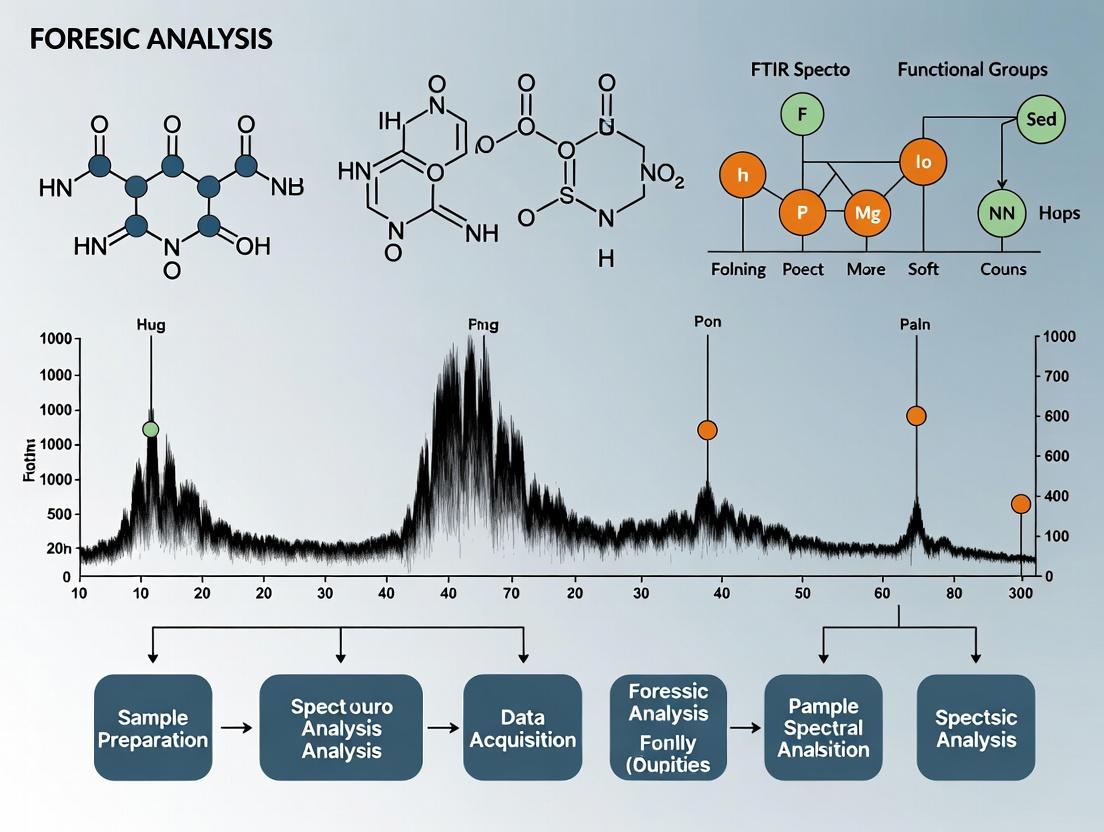
This comprehensive article explores the pivotal role of Fourier Transform Infrared (FTIR) Spectroscopy in forensic science and drug development.
Beyond the Spectrum: How FTIR Spectroscopy is Revolutionizing Modern Forensic and Drug Analysis
Abstract
This comprehensive article explores the pivotal role of Fourier Transform Infrared (FTIR) Spectroscopy in forensic science and drug development. Beginning with the foundational principles of molecular fingerprinting, it details advanced methodological applications for evidence analysis, from illicit drug identification to trace material characterization. The guide provides practical troubleshooting strategies for common analytical challenges and optimization techniques for enhanced sensitivity and reproducibility. Furthermore, it validates FTIR's efficacy through comparative analysis with techniques like Raman spectroscopy and GC-MS, highlighting its unique advantages in non-destructive, rapid screening. Designed for researchers, forensic scientists, and drug development professionals, this resource synthesizes current practices and future directions, positioning FTIR as an indispensable tool in the analytical arsenal.
Decoding the Molecular Fingerprint: FTIR Fundamentals for Forensic Analysis
This application note details the core principles and experimental protocols for Fourier Transform Infrared (FTIR) spectroscopy, framed within a broader thesis on its forensic applications. The thesis posits that FTIR, due to its specificity, non-destructiveness, and speed, is a foundational analytical technique in modern forensic science, particularly in drug identification, trace evidence analysis, and material characterization. This document provides the methodological underpinning for that thesis, detailing how photon-matter interactions generate spectra that serve as chemical fingerprints.
Core Principle: Photon-Matter Interaction
FTIR spectroscopy operates on the principle that molecules absorb specific frequencies of infrared light corresponding to the energies of their vibrational modes. When IR radiation (typically 4000-400 cm⁻¹) interacts with a sample, bonds stretch, bend, and rotate at characteristic frequencies. Absorption occurs when the photon's energy matches the energy difference between two vibrational states. The resulting spectrum is a plot of transmittance or absorbance versus wavenumber, providing a unique molecular "fingerprint."
Experimental Protocols
Protocol 3.1: Attenuated Total Reflectance (ATR)-FTIR Analysis of an Unknown Powder (Forensic Drug Screening)
Objective: To rapidly identify the chemical composition of an unknown powder suspected to be an illicit substance.
Materials & Reagents: See "The Scientist's Toolkit" (Section 7).
Methodology:
- Instrument Calibration: Perform a background scan with a clean ATR crystal.
- Sample Preparation: Place a small amount of the unknown powder directly onto the ATR crystal. Use the pressure clamp to ensure firm, uniform contact.
- Data Acquisition: Acquire spectrum over the range 4000-600 cm⁻¹ with the following parameters:
- Resolution: 4 cm⁻¹
- Scans per spectrum: 32
- Apodization: Happ-Genzel
- Post-processing: Apply atmospheric suppression (for CO₂ and H₂O vapor) and ATR correction (if not automated).
- Interpretation: Compare the sample spectrum against a validated spectral library (e.g., SWGDRUG or instrument vendor library) using correlation algorithms.
Critical Parameters: Consistent pressure on the ATR crystal is essential for reproducible absorbance intensity.
Protocol 3.2: Transmission FTIR of Polymer Trace Evidence
Objective: To identify the polymer type of a fiber or plastic fragment recovered from a crime scene.
Methodology:
- Sample Preparation (KBr Pellet Method):
- Dry approximately 1 mg of the finely shredded sample with 200 mg of spectroscopic-grade potassium bromide (KBr).
- Mix thoroughly in a mortar and pestle.
- Load the mixture into a pellet die and apply 8-10 tons of pressure under vacuum for 2-3 minutes to form a transparent pellet.
- Data Acquisition: Place the pellet in the transmission holder. Acquire spectrum (4000-400 cm⁻¹) with parameters as in Protocol 3.1.
- Analysis: Identify key functional group bands (e.g., C=O stretch in polyesters, C-O-C stretch in polyethers) and match the overall spectrum to polymer references.
Table 1: Characteristic Infrared Absorption Bands for Common Functional Groups in Forensic Analysis
| Functional Group | Bond Type | Approximate Wavenumber (cm⁻¹) | Vibration Mode | Forensic Relevance Example |
|---|---|---|---|---|
| Hydroxyl | O-H | 3200-3600 (broad) | Stretch | Alcohols (e.g., in cutting agents) |
| Amine | N-H | 3300-3500 (medium) | Stretch | Primary amines (e.g., in amphetamines) |
| Carbonyl | C=O | 1650-1750 (strong) | Stretch | Ketones (e.g., in ketamine), esters |
| Alkene | C=C | 1600-1680 (variable) | Stretch | Unsaturated compounds |
| Nitro | N=O | 1500-1600 & 1300-1400 (strong) | Asymmetric & Symmetric Stretch | Explosives (e.g., TNT, PETN) |
| Methyl | C-H | ~2970 & ~2880 (strong) | Asymmetric & Symmetric Stretch | Organic material identification |
| Methylene | C-H | ~2930 & ~2850 (strong) | Asymmetric & Symmetric Stretch | Organic material identification |
Table 2: Performance Metrics of FTIR in Forensic Drug Analysis (Compiled from Recent Literature)
| Parameter | Typical Value/Range | Notes |
|---|---|---|
| Limit of Detection (ATR) | ~1-5% w/w (for mixtures) | Highly compound-dependent |
| Spectral Resolution | 1 cm⁻¹, 4 cm⁻¹, 8 cm⁻¹ | 4 cm⁻¹ standard for screening |
| Analysis Time (per sample) | 1-3 minutes | Includes sample prep & acquisition |
| Library Search Match Score (for ID) | >85% (Similarity Index) | Requires validation for legal defensibility |
| Reproducibility (Peak Position) | ± 1-2 cm⁻¹ | With proper calibration |
Visualized Workflows and Pathways
Diagram 1: FTIR Instrument Workflow (45 chars)
Diagram 2: Photon Absorption & Vibration (52 chars)
Application in Broader Forensic Thesis
Within the thesis framework, these protocols and principles are applied to specific forensic questions:
- Drug Development/Pharmaceutical Forensics: Differentiating polymorphs of active pharmaceutical ingredients (APIs) and detecting counterfeit medications.
- Trace Evidence: Identifying fibers, paints, polymers, and adhesives. Micro-ATR accessories allow analysis of single fibers.
- Toxicology: Rapid screening for certain toxic compounds in residues.
- Questioned Documents: Analysis of ink and paper composition.
The thesis further explores advanced chemometric techniques (e.g., PCA, PLS-DA) applied to FTIR spectra for mixture deconvolution and quantitative analysis in complex forensic matrices.
The Scientist's Toolkit
Table 3: Essential Research Reagent Solutions & Materials for FTIR Forensic Analysis
| Item | Function/Brief Explanation | Example/Notes |
|---|---|---|
| ATR Crystal (Diamond, ZnSe, Ge) | Enables direct solid/liquid analysis via evanescent wave. Diamond is durable for hard materials; ZnSe offers a good balance for general use. | Single-reflection diamond/ZnSe composite is common. |
| Potassium Bromide (KBr) | Spectroscopically pure salt used to create transparent pellets for transmission analysis of solids. | Must be kept dry in a desiccator to avoid water absorption. |
| Pellet Die & Hydraulic Press | Apparatus to press KBr and sample mixture into a transparent pellet under high pressure. | Typical pressure: 8-10 tons. |
| Infrared Spectral Libraries | Curated databases of reference spectra for compound identification via search/match algorithms. | SWGDRUG library, commercial vendor libraries (e.g., Hummel, Aldrich). |
| Background Reference Material | A non-absorbing material for background/baseline scans. For ATR, a clean crystal; for transmission, air or empty cell. | Critical for accurate single-beam spectra. |
| ATR Cleaning Kit | Solvents (e.g., methanol, isopropanol) and soft wipes for cleaning the crystal between samples to prevent cross-contamination. | Essential for maintaining quantitative accuracy. |
| Microscope Attachment (μ-FTIR) | Allows for the analysis of microscopic samples (e.g., single fiber, particle) by focusing IR beam onto a tiny area. | Key for trace evidence analysis. |
| Validation Standards | Certified reference materials (CRMs) for instrument performance qualification and method validation. | e.g., Polystyrene film standard for wavelength calibration. |
Within the broader thesis on Fourier transform infrared (FTIR) spectroscopy forensic applications, this document details the critical spectral regions that serve as definitive evidence for functional groups in forensic analysis. The identification of specific molecular vibrations provides a chemical fingerprint for materials encountered in forensic casework, including illicit drugs, explosives, paints, fibers, and polymers. These application notes provide protocols for standard analysis and data interpretation.
Key Spectral Regions and Functional Group Assignments
The following table summarizes the primary mid-infrared spectral regions used in forensic analysis, their corresponding functional groups, and their significance as evidence.
Table 1: Key Forensic FTIR Spectral Regions and Assignments
| Spectral Region (cm⁻¹) | Vibration Type | Functional Group / Molecule | Forensic Significance & Example Evidence |
|---|---|---|---|
| 3700-3100 | O-H, N-H Stretch | Alcohols, phenols, carboxylic acids, amines, amides | Identification of adulterants in drugs, explosives (nitroamines), body fluid traces. |
| 3100-2800 | C-H Stretch | Alkanes, alkenes, aromatics | Characterization of hydrocarbon-based materials: paints, lubricants, polymers, packaging tapes. |
| 2400-2000 | X≡X, X≡Y Stretch | Cyanides (-C≡N), azides (-N₃), thiocyanates (-S-C≡N) | Signature of chemical warfare agents, certain explosives, and synthetic routes for illicit drugs. |
| 1850-1650 | C=O Stretch | Esters, ketones, aldehydes, carboxylic acids, amides | Key region for polymer identification (paint binders, fibers), plasticizers, and drug precursors (e.g., acetic anhydride in heroin synthesis). |
| 1670-1500 | C=C, C=N, N=O Stretch; N-H Bend | Alkenes, aromatics, nitro compounds, amides | Identification of explosive nitro-aromatics (TNT, RDX), drug alkaloids, and dye pigments in inks/fibers. |
| 1550-1200 | N-O Asymmetric Stretch, C-H Bend | Nitrates (NO₂), nitro compounds (NO₂), methyl groups | Definitive for nitrate-based explosives (PETN, NG), and plastic identification (PE, PP). |
| 1300-900 | C-O, C-C, C-N Stretch; P=O Stretch | Alcohols, ethers, esters, organophosphates, carbohydrates | Analysis of cellulose-based materials (paper, cotton), organophosphate pesticides (poisoning cases), and phosphate esters in fire retardants. |
| 900-650 | C-H "oop" Bend, C-Cl Stretch | Aromatic substitution patterns, chloro-compounds | Fingerprint for discriminating substituted aromatics (drug isomers, explosive derivatives) and identifying PVC polymers. |
Detailed Experimental Protocols
Protocol 3.1: Standard Attenuated Total Reflectance (ATR)-FTIR Analysis of Trace Evidence
Application: Direct analysis of paints, fibers, polymers, drug residues, and biological stains. Workflow: See Diagram 1.
Materials & Methodology:
- Instrument Preparation: Power on the FTIR spectrometer and allow the source and detector to stabilize (approx. 15-30 min). Clean the ATR crystal (diamond or ZnSe) with isopropanol-moistened lint-free wipe, then with dry wipe. Perform a background scan with a clean crystal.
- Sample Presentation: For solid materials (fiber, paint chip, powder), place the sample directly onto the ATR crystal. Use a pressure clamp to ensure firm, uniform contact.
- Data Acquisition: Acquire spectrum over 4000-650 cm⁻¹ range. Set parameters: 32 co-added scans, 4 cm⁻¹ resolution. For trace samples, increase scans to 64 or 128.
- Post-collection: Clean crystal thoroughly between samples. Compare sample spectrum against validated library (e.g., SWGDRUG, commercial polymer libraries) using correlation algorithms.
Protocol 3.2: Micro-Spectroscopy for Microscopic Evidence
Application: Analysis of single fibers, small paint layers, particulate matter, or inclusions within a matrix. Workflow: See Diagram 2.
Materials & Methodology:
- Sample Isolation: Using fine tweezers or a micro-manipulator under a stereo microscope, isolate the particle of interest and place it on a reflective slide (low-E, MirrIR) or directly onto a micro-ATR stage.
- Aperture Alignment: Switch spectrometer to microscope mode. Using visible light, locate the particle. Adjust the adjustable aperture to isolate and frame the specific region of interest (ROI), minimizing background signal.
- Spectral Mapping (Optional): For heterogeneous samples, define a grid over the ROI. Set parameters for mapping (step size, number of points). Acquire spectra at each point to create a chemical distribution map.
- Analysis: Process map data using chemometric tools (Principal Component Analysis - PCA) to identify and separate chemical components within the sample.
Protocol 3.3: Gas Chromatography-FTIR (GC-FTIR) for Volatile Mixtures
Application: Identification of volatile components in complex forensic mixtures (e.g., fire debris, ignitable liquids, drug cutting agents). Workflow: See Diagram 3.
Materials & Methodology:
- Interface Configuration: Connect the GC capillary column outlet to a heated light pipe interface or cryogenic trapping module of the FTIR.
- Chromatographic Separation: Use a standard non-polar GC column (e.g., DB-5MS). Inject sample (1 µL split/splitless). Set oven ramp appropriate for target volatiles (e.g., 40°C to 300°C at 10°C/min).
- Real-Time Detection: The FTIR continuously collects spectra (e.g., 8 cm⁻¹ resolution, 2 scans/sec) as eluents enter the gas cell. The system generates a chemicalogram (total functional group response vs. time).
- Data Interpretation: Interrogate spectra at retention time maxima. Search vapor-phase IR libraries. The combined GC retention index and functional group data provide high-confidence identification.
Visualizations
Diagram 1: ATR-FTIR Trace Evidence Workflow
Diagram 2: Micro-FTIR Analysis Workflow
Diagram 3: GC-FTIR Analysis Workflow
The Scientist's Toolkit: Essential Research Reagents & Materials
Table 2: Key Research Reagent Solutions for Forensic FTIR
| Item / Reagent | Function & Forensic Application |
|---|---|
| ATR Cleaning Kit | Isopropanol and lint-free wipes for crystal decontamination between samples to prevent cross-contamination, critical for trace evidence. |
| Micro-ATR Diamond Tip | Durable, chemically inert crystal for high-pressure contact with hard, small, or abrasive samples (e.g., mineral fillers in paint, soil particles). |
| Low-E (MirrIR) Slides | Glass slides with a reflective coating for analyzing micro-samples in reflection mode, optimal for single fibers or tissue sections. |
| Infrared Spectral Libraries | Validated databases (e.g., SWGDRUG, Hummel Polymer, Aldrich Vapor Phase). Essential for automated matching and identification of unknown materials. |
| Pressure Calibration Device | Ensures consistent, optimal pressure on the ATR crystal for reproducible peak intensities and reliable quantitative comparisons. |
| Background Reference Material | Certified material (e.g., polished gold mirror, certified polymer film) for verifying instrument performance and background subtraction accuracy. |
| KBr or HDPE Powder | For preparing pressed pellets of powdered samples (traditional transmission analysis), useful for bulk drug analysis or reference standard preparation. |
| Sealed Demountable Liquid Cells | With CaF₂ or KBr windows for analyzing liquid evidence (e.g., ignitable liquids, solvent residues) in transmission mode at controlled pathlengths. |
Within the broader thesis on Fourier Transform Infrared Spectroscopy (FTIR) forensic applications, the integrity of analytical results is predicated on meticulous sample handling. Forensic evidence, by its nature, is often non-homogeneous, contaminated, and of limited quantity. This application note details the essential protocols for preparing diverse forensic sample types—including controlled substances, fibers, paints, and polymers—for FTIR analysis to ensure reproducible, court-defensible spectra.
Effective sample preparation for FTIR in forensic science aims to maximize the signal-to-noise ratio while preserving the chemical integrity of the evidence. Key considerations include particle size, sample thickness, and substrate compatibility. The following table summarizes critical parameters for common forensic evidence types.
Table 1: Optimal FTIR Sample Preparation Parameters for Forensic Evidence Types
| Evidence Type | Preferred Preparation Method | Optimal Particle Size (µm) | Recommended Sample Amount (µg) | Key Spectral Range for Identification (cm⁻¹) |
|---|---|---|---|---|
| Powdered Drugs (e.g., Cocaine) | KBr Pellet / ATR | < 5 | 50 - 200 | 1800-400 (Fingerprint Region) |
| Synthetic Fibers | Micro-ATR / Compression Cell | N/A (direct contact) | Single Fiber | 3500-2700, 1800-400 |
| Paint Chips | Micro-ATR Cross-section | N/A | Fragment (~100 µm) | 3500-2700, 1800-600 |
| Adhesive Tapes | ATR (sticky side) / Solvent Extraction | N/A | ~1 cm² | 2800-2700 (Binder), 1300-1100 (Backing) |
| Biological Stains (on fabric) | Dry-Scratch / Solvent Extraction | < 10 | ~500 | Amide I & II (1700-1500) |
| Polymers & Plastics | Hot Press Film / ATR | Melt-formed | Varies | 1500-600 (Polymer backbone) |
| Inks | Solvent Extraction onto Si wafer | Solution dried to film | Sub-microliter | Functional group specific (e.g., 2250 cm⁻¹ for CN) |
Experimental Protocols
Protocol 3.1: Micro-ATR Analysis of a Single Synthetic Fiber
- Objective: To obtain a chemically representative FTIR spectrum from a single fiber evidence item without destructive preparation.
- Materials: FTIR spectrometer equipped with a micro-ATR accessory (diamond or germanium crystal), calibrated torque arm, fine-tipped tweezers, optical microscope, acetone (for crystal cleaning).
- Procedure:
- Clean the ATR crystal thoroughly with solvent and a lint-free wipe. Perform a background scan with a clean crystal.
- Using clean tweezers, place the single fiber across the ATR crystal.
- Under microscope view, lower the pressure applicator until full optical contact is achieved. Apply consistent, firm pressure using the calibrated torque arm (typically 100-150 in-lbs for diamond crystals).
- Collect spectrum (4 cm⁻¹ resolution, 64-128 scans).
- Lift the probe, retrieve the fiber, and store it appropriately for re-analysis if needed.
- Clean the crystal immediately after analysis.
Protocol 3.2: Potassium Bromide (KBr) Pellet Method for Trace Powdered Substances
- Objective: To prepare a homogeneous, transparent pellet for transmission FTIR analysis of milligram-scale powdered evidence.
- Materials: FTIR-grade potassium bromide (KBr), agate mortar and pestle, 13-mm pellet die set, hydraulic press (capable of ~10 tons), vacuum pump, fine spatula.
- Procedure:
- Dry approximately 100 mg of KBr in a desiccator or oven (110°C) for 1 hour.
- Using a clean spatula, transfer 1-2% (w/w) of the forensic powder sample (approx. 1-2 mg) to the mortar. Add 100 mg of dry KBr.
- Grind the mixture vigorously for 60-90 seconds to achieve a fine, homogeneous powder (<5 µm).
- Transfer the mixture to a clean pellet die. Assemble the die and connect it to a vacuum pump to remove air and moisture.
- Apply a pressure of 8-10 tons for 2-3 minutes in the hydraulic press.
- Carefully eject the transparent pellet and mount it in a pellet holder.
- Acquire the spectrum against a pure KBr pellet background.
Protocol 3.3: Non-Destructive Analysis of a Multi-Layer Paint Chip
- Objective: To stratigraphically analyze the layers of a paint chip without embedding or destructive cross-sectioning.
- Materials: FTIR spectrometer with ATR accessory, sharp surgical scalpel, stereomicroscope, soft embedding medium (e.g., Paraffin).
- Procedure:
- Stabilize the paint chip, cross-section facing up, in a soft embedding medium under a stereomicroscope.
- Using a scalpel, carefully "microtome" or scrape the surface of a single layer to expose a fresh, flat surface.
- Place the chip with the exposed target layer facing down onto the ATR crystal.
- Apply firm, even pressure to ensure good contact.
- Collect the spectrum.
- Repeat steps 2-5 for each subsequent layer, documenting the sequence.
Visualization of Workflows
FTIR Forensic Sample Handling Decision Workflow
FTIR Sampling Techniques: Factor Comparison Diagram
The Scientist's Toolkit: Research Reagent Solutions & Essential Materials
Table 2: Essential Materials for Forensic FTIR Sample Preparation
| Item/Category | Specific Example/Product | Function in Forensic FTIR Prep |
|---|---|---|
| ATR Crystals | Diamond (Type IIA), Germanium, Zinc Selenide (ZnSe) | Provides robust, chemically inert surface for direct contact measurement with minimal sample prep. Diamond is preferred for hard materials (fibers, polymers), Ge for high refractive index samples. |
| Pellet Press Kits | 13 mm Stainless Steel Evacuable Die & Hydraulic Press (10+ ton) | Creates transparent KBr pellets for transmission analysis, essential for homogenizing and analyzing trace powders. |
| Infrared-Transparent Salts | FTIR-grade Potassium Bromide (KBr), Potassium Chloride (KCl) | Matrix material for creating pellets; must be scrupulously dry and free of IR absorptions. |
| Micro-sampling Tools | Agate Mortar & Pestle, Stainless Steel Scalpels & Needle Probes, Micro-spatulas | For dividing evidence, scraping layers (paint), and transferring micro-gram quantities without contamination. |
| Cleaning Solvents | HPLC/FTIR-grade Acetone, Methanol, Isopropanol | For cleaning ATR crystals, dies, and tools between samples to prevent cross-contamination. Must leave no residue. |
| Substrates for Deposition | Mirrored Polished Silicon Wafers, Low-E Glass Slides | Provide a non-interfering, reflective background for analyzing solvent-extracted residues (inks, oils) via reflectance. |
| Optical Accessories | Micro-ATR Imaging Attachment, Beam Condenser | Enables analysis of single fibers, small particles (<100 µm), and mapping of heterogeneous samples. |
| Reference Libraries | Commercial FTIR Spectral Databases (e.g., KnowItAll, IRUG), In-house Custom Libraries | Critical for automated searching and identification of unknown spectra against known standards (drugs, polymers, fibers). |
Within the framework of a broader thesis on Fourier Transform Infrared (FTIR) spectroscopy forensic applications, this document details the core operational advantages that render FTIR indispensable in modern forensic laboratories. The technique's rapid analysis, non-destructive nature, and minimal sample preparation requirements directly address the critical needs of forensic workflows, from drug identification to trace evidence analysis, while preserving material for subsequent confirmatory testing.
Table 1: Comparative Analysis of Forensic Techniques for Drug Identification
| Parameter | FTIR Spectroscopy | GC-MS | Colorimetric Tests |
|---|---|---|---|
| Analysis Time | 1-5 minutes per sample | 15-30 minutes per sample | 1-2 minutes per sample |
| Sample Preparation | Minimal (often none) | Extensive (derivatization, dilution) | Minimal (reagent addition) |
| Destructiveness | Non-destructive | Destructive | Destructive |
| Sample Amount | µg range required | ng-µg range required | mg range required |
| Information Provided | Molecular fingerprint, functional groups | Molecular weight, fragmentation pattern | Presumptive class identification |
| Quantitative Capability | Semi-quantitative (with calibration) | Fully quantitative | No |
Table 2: FTIR Analysis Times for Common Forensic Evidence Types
| Evidence Type | Typical Preparation | Average Spectral Acquisition Time | Total Analysis Time (incl. library search) |
|---|---|---|---|
| Powdered Drug (neat) | None (direct ATR) | 30 seconds | < 2 minutes |
| Polymeric Trace (fiber) | Flatten on crystal | 60 seconds | ~3 minutes |
| Paint Chip | Cross-section on crystal | 90 seconds | ~4 minutes |
| Ink on Paper | Micro-ATR, no extraction | 120 seconds | ~5 minutes |
Experimental Protocols
Protocol 3.1: Direct ATR-FTIR Analysis of Suspected Illicit Powders
Objective: To rapidly identify the molecular composition of an unknown powder with minimal sample preparation. Materials: FTIR spectrometer with ATR accessory (diamond or ZnSe crystal), flat-ended plunger or press, laboratory wipes, solvent (e.g., methanol). Procedure:
- Background Collection: Clean the ATR crystal thoroughly with solvent and a lint-free wipe. Acquire a background spectrum with a clean crystal.
- Sample Application: Gently sprinkle a small amount (µg scale) of the powdered sample onto the ATR crystal.
- Sample Compression: Lower the spectrometer's anvil or use a flat-ended tool to ensure uniform, intimate contact between the sample and the crystal.
- Spectral Acquisition: Acquire the sample spectrum (4 cm⁻¹ resolution, 32 scans).
- Data Analysis: Perform atmospheric correction. Search the acquired spectrum against a validated forensic spectral library (e.g., SWGDRUG or in-house). A match quality (Hit Quality Index) >85% is typically considered a strong presumptive identification.
- Post-Analysis: Carefully remove the sample, recover if needed for further testing, and clean the crystal.
Protocol 3.2: Non-Destructive Analysis of Multi-Layer Paint Chips
Objective: To characterize the layer structure of a paint chip without sectioning or extraction. Materials: FTIR microscope with ATR objective, motorized X-Y stage, fine tweezers. Procedure:
- Sample Mounting: Secure the paint chip on a microscope slide, cross-section facing upward.
- Visual Inspection: Use the microscope's visible light to locate a region of interest showing distinct layers.
- Point-and-Shoot ATR: a. Bring the ATR crystal (e.g., germanium) into contact with the topmost layer. b. Acquire spectrum (4 cm⁻¹ resolution, 128 scans for signal enhancement). c. Retract the crystal, move the stage to align with the next layer, and repeat.
- Mapping (Optional): For detailed spatial distribution, define a raster grid across the layer interface and perform an automated chemical map based on a specific absorbance band (e.g., carbonyl for binders).
- Reporting: Compile spectra from each layer and conduct library searches to identify binder type (e.g., alkyd, acrylic) and pigments (e.g., TiO₂, CaCO₃).
Visualizations
Title: FTIR Forensic Workflow: Speed & Preservation
Title: Attribute Comparison of Forensic Techniques
The Scientist's Toolkit: Key Research Reagent Solutions
Table 3: Essential Materials for Forensic FTIR Analysis
| Item | Function & Rationale |
|---|---|
| Diamond ATR Crystal | Provides a durable, chemically inert surface for direct solid and liquid analysis with excellent infrared throughput. Resists scratches from hard samples. |
| Germanium ATR Objective (Microscope) | High refractive index for superior spatial resolution in micro-FTIR, critical for analyzing small, heterogeneous trace evidence. |
| Certified Forensic Spectral Libraries (e.g., SWGDRUG, CDC) | Validated reference databases for reliable presumptive identification of drugs, excipients, polymers, and other materials. |
| Background Reference Material (e.g., IR-grade KBr pellet) | Used to verify instrument performance and wavelength accuracy during quality control checks. |
| Optical Cleaning Kit (Lint-free wipes, HPLC-grade methanol, acetone) | Essential for maintaining crystal clarity and preventing spectral contamination from previous analyses. |
| Pressure Applicator/Anvil | Ensures consistent, high-pressure contact between sample and ATR crystal, improving spectral quality and reproducibility. |
| Infrared Transparent Substrates (e.g., MirrIR slides) | Allow for non-contact transmission analysis of samples that are too thick for ATR or require no physical contact. |
From Crime Scene to Lab Bench: Practical FTIR Applications in Forensics and Pharma
Within the context of forensic applications research, Fourier Transform Infrared (FTIR) spectroscopy has emerged as a critical tool for the rapid, non-destructive identification and profiling of Novel Psychoactive Substances (NPS). The NPS market, characterized by rapid structural evolution to circumvent legislation, presents a significant analytical challenge. FTIR spectroscopy provides a complementary technique to GC-MS and LC-HRMS by offering detailed molecular fingerprinting based on vibrational transitions, enabling the detection of specific functional groups and isomeric differentiation crucial for NPS identification.
Application Notes: FTIR Spectroscopy for NPS Analysis
Key Advantages and Limitations
Advantages:
- Rapid Analysis: Sample-to-result time under 5 minutes for solid samples.
- Minimal Sample Preparation: Often requires only homogenization and pelletization with KBr.
- Non-Destructive: Preserves sample for subsequent confirmatory analysis.
- High Specificity for Functional Groups: Excellent for identifying carbonyls, amines, and aromatic rings common in NPS.
- Portable Instrumentation: Enables on-site screening at borders and laboratories.
Limitations:
- Lower Sensitivity: Compared to mass spectrometry, typically in the microgram range.
- Matrix Interference: Complex mixtures can obscure target compound spectra.
- Inability to Differentiate Some Isomers: Requires hyphenation with chromatography or complementary spectroscopic techniques for full structural elucidation.
Current NPS Classes Amenable to FTIR Profiling
The following table summarizes major NPS classes and their characteristic IR absorption bands.
Table 1: Characteristic FTIR Absorption Bands of Major NPS Classes
| NPS Class | Example Compounds | Characteristic IR Absorption Bands (cm⁻¹) | Forensic Identification Challenge |
|---|---|---|---|
| Synthetic Cathinones | Mephedrone, α-PVP | 1650-1690 (C=O stretch), 2250-2400 (N⁺-H stretch, broad), 3200-3400 (N-H stretch, salt) | Differentiation of positional ring substituents. |
| Synthetic Cannabinoids | 5F-MDMB-PICA, ADB-BUTINACA | 1650-1750 (amide C=O), 1100-1300 (C-F stretch), 1500-1600 (aromatic C=C) | High potency, complex ester/amide linkages. |
| Synthetic Opioids | Fentanyl, Nitazenes | 1640-1690 (amide I), 1500-1550 (amide II), 1250-1350 (N=O stretch for nitazenes) | Trace detection, isomeric fentanyl analogs. |
| Tryptamines | 4-AcO-DMT, 5-MeO-DIPT | 3250-3500 (N-H indole), 1640-1680 (amide C=O for esters), 2800-3000 (C-H stretch) | Differentiation of alkyl chain length on amine. |
| Phenethylamines | 2C-B, 25I-NBOMe | 1200-1280 (asymmetric C-O-C stretch), 1500-1600 (aromatic), 2800-3000 (C-H alkoxy) | Distinguishing bromo-, iodo- substituents. |
Experimental Protocols
Protocol A: Solid Sample Analysis via KBr Pellet Method
This is the standard method for analyzing pure or predominately single-component NPS powders.
Materials:
- FTIR Spectrometer (e.g., Agilent Cary 630, PerkinElmer Spectrum Two)
- Hydraulic Pellet Press
- Infrared-grade Potassium Bromide (KBr)
- Agate Mortar and Pestle
- Vacuum Desiccator
- Analytical Balance (±0.01 mg)
Procedure:
- Dry Ingredients: Dry approximately 200 mg of KBr and 1-2 mg of the unknown NPS sample in a vacuum desiccator for 24 hours to remove adsorbed water.
- Homogenize: Using the agate mortar and pestle, thoroughly grind the KBr to a fine powder. Add the dried sample and mix rigorously for 2-3 minutes to achieve a homogeneous mixture (~0.5-1% sample concentration).
- Pellet Formation: Transfer the mixture to a 13 mm die set. Apply a pressure of 8-10 tons under vacuum for 2-3 minutes to form a transparent pellet.
- Background Acquisition: Place a pure KBr pellet in the spectrometer sample holder. Acquire a background spectrum across the 4000-400 cm⁻¹ range with 4 cm⁻¹ resolution and 32 scans.
- Sample Acquisition: Replace the background pellet with the sample pellet. Acquire the sample spectrum using identical instrument parameters.
- Data Processing: Subtract the background spectrum from the sample spectrum. Apply atmospheric suppression (CO₂, H₂O) and baseline correction algorithms using the instrument software.
Protocol B: Attenuated Total Reflectance (ATR) Analysis for Rapid Screening
Used for fast, non-destructive analysis of tablets, plant material, or powders without preparation.
Materials:
- FTIR Spectrometer with ATR accessory (Diamond or ZnSe crystal)
- Pressure Clamp or Anvil
- Solvent (e.g., Methanol) and Lint-free Wipes
Procedure:
- Clean Crystal: Clean the ATR crystal with an appropriate solvent and dry thoroughly.
- Background Acquisition: Acquire a background spectrum with a clean crystal (no sample) using parameters: 4000-650 cm⁻¹, 4 cm⁻¹ resolution, 16 scans.
- Sample Loading: Place a small amount of the sample (e.g., tablet fragment, powder) directly onto the crystal. Use the pressure clamp to ensure good optical contact.
- Sample Acquisition: Acquire the sample spectrum with the same parameters as the background.
- Data Processing: Perform automatic background subtraction. Apply ATR correction (compensates for depth of penetration variation with wavelength) and baseline correction.
Protocol C: Spectral Library Matching and Differential Analysis
For identifying unknowns and detecting novel analogs.
Procedure:
- Library Search: Process the corrected sample spectrum (from Protocol A or B). Perform a spectral search against a commercial forensic IR library (e.g., SWGDRUG, STJapan NPS) and an in-house library of known NPS. Use correlation algorithms (e.g., Euclidean distance, first derivative correlation).
- Hit Quality Assessment: Any match with a correlation score (HQI) below 90% should be flagged as a potential novel analog or mixture.
- Functional Group Analysis: Manually inspect the spectrum for the presence/absence of key functional group bands (refer to Table 1).
- Differential Analysis: If a suspected analog of a known compound (e.g., a new fentanyl derivative), subtract the reference spectrum of the known compound from the sample spectrum. Analyze the residual spectrum for new peaks indicative of added/modified functional groups (e.g., bromine substitution, new amide bond).
Visualizations
Workflow for NPS Identification via FTIR
FTIR Complementary Role in Forensic Workflow
The Scientist's Toolkit: Key Research Reagent Solutions
Table 2: Essential Materials for FTIR-Based NPS Analysis
| Item | Function in NPS Analysis | Example / Specification |
|---|---|---|
| Infrared-grade KBr | Matrix for preparing transparent pellets for transmission FTIR; must be free of spectral impurities. | Sigma-Aldrich 221864, FTIR grade, ≥99% trace metals basis. |
| Diamond ATR Crystal | Robust, chemically inert internal reflection element for direct solid/liquid analysis with minimal prep. | Type IIA diamond, single bounce, 1 mm² sampling area. |
| FTIR Spectral Libraries | Curated databases for rapid automated identification of known NPS and precursors. | SWGDRUG IR Library, STJapan NPS FTIR Library, In-house custom library. |
| Hydraulic Pellet Press | Applies high, uniform pressure to KBr/sample mixtures to form pellets for transmission analysis. | 13 mm die set, capable of 10 tons, with vacuum capability. |
| Spectroscopic Calibration Standards | Verifies wavelength accuracy and photometric linearity of the FTIR instrument. | Polystyrene film, rare earth oxide glasses (NIST-traceable). |
| Desiccator with Desiccant | Removes atmospheric moisture from KBr and samples to prevent spectral interference from water. | Silica gel or phosphorus pentoxide. |
| ATR Cleaning Kit | Solvents and wipes for removing sample residue from ATR crystal to prevent cross-contamination. | HPLC-grade methanol, acetone, and lint-free optical wipes. |
Within the broader thesis on Fourier Transform Infrared Spectroscopy (FT-IR) forensic applications, the analysis of trace evidence represents a cornerstone. FT-IR provides a non-destructive, rapid, and highly specific chemical fingerprint for complex organic and inorganic mixtures. For polymers, paints, fibers, and adhesives—materials ubiquitous in crime scenes—FT-IR enables the discrimination of sub-milligram samples, linking evidence to sources or excluding potential matches. This document outlines contemporary application notes and detailed protocols for these evidence types.
Table 1: Characteristic FT-IR Absorption Bands for Common Trace Evidence Polymers
| Polymer Class (Example) | Key Functional Groups | Characteristic FT-IR Peaks (cm⁻¹) | Forensic Significance |
|---|---|---|---|
| Polyester (PET, Fiber) | C=O (ester), C-O | ~1715 (s), ~1240, ~1090 | Differentiates from nylon; identifies clothing/carpet fibers. |
| Polyamide (Nylon 6,6, Fiber) | N-H, C=O (amide) | ~3300 (broad), ~1640 (amide I), ~1540 (amide II) | Distinguishes nylon types; common in textiles, ropes. |
| Acrylic (PMMA, Paint Binder) | C=O (ester), C-O-C | ~1730, ~1150-1240 | Identifies automotive/architectural paint layers. |
| Polyvinyl Acetate (PVA, Adhesive) | C=O (ester), -O-CO-CH₃ | ~1740, ~1240, ~1020 | Common in white glues and paint formulations. |
| Epoxy (Adhesive/Coating) | Aromatic rings, C-O-C, -OH | ~1510, ~1240 (aryl-alkyl ether), ~830 | High-performance adhesives, paint primers. |
| Polyolefin (PE/PP, Tape Backing) | -CH₂-, -CH₃ | ~2920, ~2850, ~1470, ~1375 | Inert; identified by absence of strong polar bands. |
Table 2: Quantitative Discrimination Metrics for Automotive Paint Layers via FT-IR-Microscopy
| Analysis Parameter | Typical Value / Result | Interpretation for Discrimination |
|---|---|---|
| Spectral Match Score (to Library) | >95% (Hit Quality Index) | Suggests common manufacturer/chemistry. |
| Number of Distinct Layers | 3-5 layers per sample | Layer sequence is highly specific. |
| Pigment/Band Ratio (e.g., TiO₂ @ ~700 cm⁻¹ vs. C=O) | Variable by layer (0.1 to 2.5) | Provides objective, quantitative comparison between samples. |
| Spatial Resolution (ATR Crystal) | 50 - 100 µm | Enables analysis of individual layers <10µm thick. |
Experimental Protocols
Protocol 3.1: Non-Destructive ATR-FT-IR Analysis of Multilayer Paint Chips Objective: To obtain chemical spectra from individual layers of a paint chip without cross-contamination. Materials: FT-IR spectrometer with microscope and germanium (Ge) or diamond ATR crystal, fine tweezers, micromanipulator. Procedure:
- Sample Mounting: Secure the paint chip edge-on in a compression cell or using tacky putty to expose the layer cross-section.
- Microscopic Examination: Use the visible light microscope to locate and focus on a region of interest within a single layer.
- ATR Contact: Lower the ATR crystal onto the selected layer using controlled pressure. Ensure good optical contact.
- Spectral Acquisition: Collect background spectrum from clean crystal. Acquire sample spectrum (64 scans, 4 cm⁻¹ resolution).
- Sequential Analysis: Retract crystal, move stage to adjacent layer, repeat steps 3-4 for each layer.
- Data Analysis: Compare layer spectra to commercial forensic libraries (e.g., IRUG, KnowItAll) and calculate match scores.
Protocol 3.2: Fibers and Adhesive Tapes: Transmission FT-IR with Diamond Anvil Cell (DAC) Objective: To analyze single fibers or minute adhesive residues. Materials: DAC, FT-IR spectrometer with IR microscope and MCT detector, surgical blade. Procedure:
- Sample Preparation (Fiber): Place a single fiber (~1-2 mm) on a KBr window. Flatten gently with the second window of the DAC.
- Sample Preparation (Adhesive): Use a blade to scrape a microgram of adhesive from tape backing onto the window.
- Cell Closure: Assemble the DAC, applying uniform pressure to create a thin, transparent film.
- Background Collection: Collect a background spectrum through a clean area of the cell.
- Spectral Acquisition: Move the sample into the beam path. Acquire spectrum (128 scans, 4 cm⁻¹ resolution).
- Clean-up: Disassemble DAC and clean windows with appropriate solvent (e.g., CH₂Cl₂).
Visualizations
Title: FT-IR Workflow for Trace Evidence Analysis
Title: Py-GC-IR/MS for Complex Polymer Analysis
The Scientist's Toolkit: Research Reagent Solutions & Materials
Table 3: Essential Materials for FT-IR Trace Evidence Analysis
| Item | Function & Forensic Relevance |
|---|---|
| Germanium (Ge) ATR Crystal | High refractive index for excellent contact with hard polymers/paints; chemically inert. |
| Diamond Anvil Cell (DAC) | Creates a transmission path for single fibers/tiny scraps; diamonds are durable and IR-transparent. |
| Micro-compression Cell | Holds paint chips edge-on for layer-by-layer ATR analysis without embedding. |
| KnowItAll or IRUG Library | Commercial spectral databases for polymers, fibers, paints, and adhesives. |
| MCT (HgCdTe) Detector | Liquid N₂-cooled detector for high sensitivity in microscope systems, crucial for micrograms samples. |
| Pyrolysis-GC-IR Interface | Decomposes intractable polymers (e.g., cross-linked paints, rubber) into volatile fragments for gas-phase IR analysis. |
| KBr or BaF₂ Windows | IR-transparent windows for preparing transmission samples of liquid adhesives or extracts. |
| Hyperspectral FT-IR Imaging System | Enables chemical mapping of heterogeneous samples (e.g., contaminated fibers, layered composites). |
This document constitutes a detailed experimental protocol and application note within a broader research thesis focused on expanding the forensic applications of Fourier Transform Infrared (FTIR) spectroscopy. The specific aim is to provide validated, step-by-step methodologies for the non-destructive identification of counterfeit pharmaceutical formulations through active pharmaceutical ingredient (API) verification and comprehensive excipient analysis.
Table 1: Characteristic FTIR Absorption Bands for Common Pharmaceutical Excipients
| Excipient (Class) | Primary Functional Group | Wavenumber Range (cm⁻¹) | Peak Intensity | Common Role in Formulation |
|---|---|---|---|---|
| Microcrystalline Cellulose (Binder) | O-H stretch | 3200 - 3600 | Strong, Broad | Tablet binding, bulk |
| Lactose Monohydrate (Filler) | O-H stretch, C-O stretch | 3200 - 3600, 1000 - 1100 | Strong, Strong | Diluent/filler |
| Magnesium Stearate (Lubricant) | COO⁻ symmetric stretch | 1550 - 1650, ~2900 | Medium, Weak | Powder flow, tablet release |
| Croscarmellose Sodium (Disintegrant) | COO⁻ asymmetric stretch | 1600 - 1615 | Strong | Swelling agent for disintegration |
| Povidone (Binder) | C=O stretch (amide) | ~1660 - 1690 | Strong | Soluble binder, film former |
| Titanium Dioxide (Opacifier) | Ti-O lattice vibrations | < 800 | Broad, Weak | Coating pigment, UV protection |
Table 2: Spectral Mismatch Indicators for Suspected Counterfeit Tablets vs. Reference
| Spectral Discrepancy Type | Possible Forensic Interpretation | Suggested Confirmatory Test |
|---|---|---|
| Absence of API-specific peak (e.g., C=O at 1700-1750 cm⁻¹) | API omitted or substituted | HPLC-MS for API quantification |
| Unexpected strong peak at ~2900 cm⁻¹ (C-H stretch) | Excess binder or presence of adulterant (e.g., starch) | Microscopy, DSC |
| Shift in API peak position (>5 cm⁻¹) | Polymorphic form difference or salt form mismatch | XRPD |
| Presence of peaks at 1500-1600 & 700-900 cm⁻¹ | Potential inorganic filler adulterant (e.g., chalk, talc) | EDX, Ashing test |
| Poor spectral reproducibility across tablet surface | Non-uniform mixing, poor manufacturing quality control | Raman mapping |
Experimental Protocols
Protocol 3.1: Attenuated Total Reflectance (ATR)-FTIR Analysis of Solid Dosage Forms
Objective: To perform a rapid, non-destructive surface analysis of a tablet or capsule contents to identify API and major excipients. Materials: FTIR spectrometer with ATR accessory (diamond or ZnSe crystal), calibrated force applicator, soft tissue, analytical grade ethanol, reference standards (API and excipients). Method:
- Instrument Calibration: Perform background scan with clean ATR crystal. Validate wavenumber accuracy using polystyrene standard film (peak at 1601.4 cm⁻¹).
- Sample Preparation: a. For intact tablets: Gently wipe surface with ethanol-moistened tissue to remove potential coating. Allow to dry. b. For capsules: Empty contents into mortar. Gently powder without excessive pressure to avoid polymorphic conversion.
- Data Acquisition: a. Place sample directly onto ATR crystal. Apply consistent pressure via the instrument's torque arm. b. Acquire spectrum over range 4000 - 650 cm⁻¹, 32 scans, resolution 4 cm⁻¹. c. Repeat on at least three different points/tablets from the same batch.
- Data Analysis: a. Process spectra: atmospheric suppression, baseline correction, vector normalization. b. Compare sample spectrum to in-house library of API and common excipient references. c. Use second-derivative spectroscopy (Savitzky-Golay, 13-point window) to resolve overlapping bands. d. For quantitative estimation of API, prepare calibration curve using known API-excipient mixtures and measure peak area/height of a unique API band.
Protocol 3.2: FTIR Microscopy for Heterogeneity Assessment and Contaminant Identification
Objective: To map the distribution of components within a suspect formulation and identify microscopic contaminants. Materials: FTIR microscope coupled to spectrometer, motorized stage, liquid nitrogen-cooled MCT detector, low-E glass slides, micro-compression cell. Method:
- Sample Mounting: Create a thin cross-section of the tablet using a microtome or gently crush a small amount onto a Low-E slide.
- Area Selection: Use visible light image to select an area of interest (~500 x 500 µm).
- Spectral Mapping: a. Set spatial resolution to 10-25 µm. b. Define mapping grid. c. Acquire spectra at each point (16 scans, 8 cm⁻¹ resolution).
- Data Processing: a. Generate chemical images based on integrating specific peak areas (e.g., API peak at 1670 cm⁻¹, lubricant peak at 1575 cm⁻¹). b. Use cluster analysis (e.g., K-means) to auto-classify spectral types present.
Visualizations: Experimental Workflows
Diagram Title: FTIR Forensic Workflow for Counterfeit Drugs
Diagram Title: FTIR Spectrometer Simplified Path
The Scientist's Toolkit: Key Research Reagent Solutions
Table 3: Essential Materials for FTIR Pharmaceutical Forensics
| Item | Function/Benefit | Key Specification/Note |
|---|---|---|
| Diamond ATR Crystal | Provides durability for direct solid sample analysis. Chemically inert. | Type IIa diamond; ensure clean surface with ethanol/isopropanol. |
| ZnSe ATR Crystal | Alternative to diamond for softer materials; wider spectral range than Ge. | Softer than diamond; avoid scratching with hard particles. |
| Polystyrene Film Standard | Validates instrument wavelength accuracy and resolution. | Certified peak at 1601.4 cm⁻¹ ± 0.2 cm⁻¹. |
| Microtome (Cryostat) | Prepares thin, uniform cross-sections of tablets for microscopy. | Use stainless steel blades to avoid contamination. |
| Low-E (IR Reflective) Slides | Substrate for FTIR microscopy; minimizes background interference. | Kevley Technologies MirrIR slides or equivalent. |
| Certified Reference Standards | Pure API and excipient materials for library creation and calibration. | USP/Ph. Eur. reference standards or sourced from verified manufacturer. |
| Spectral Search Software | Enables automated matching against commercial & custom libraries. | Must use appropriate search algorithms (e.g., correlation, Euclidean distance). |
| Hydraulic Press & KBr | For traditional pellet preparation if ATR is unsuitable (e.g., dark tablet). | Use spectroscopic grade KBr; apply 8-10 tons pressure. |
This document details advanced protocols for Fourier Transform Infrared (FTIR) microscopy and imaging, framed within a thesis investigating forensic applications of FTIR spectroscopy. The analysis of heterogeneous trace evidence—such as drug formulations, multi-layer paints, polymer laminates, and biological tissues—requires spatially resolved chemical mapping. Traditional bulk FTIR fails to resolve this micro-heterogeneity. FTIR microspectroscopy, particularly in imaging mode, bridges this gap by providing molecular-specific maps, enabling forensic scientists to correlate physical structure with chemical composition for conclusive evidence.
A live search confirms the pivotal role of FTIR imaging in modern analytical forensics. Key advancements focus on improving spatial resolution, speed, and data handling.
- Focal Plane Array (FPA) Detectors: Enable simultaneous collection of thousands of spectra from a large sample area, drastically reducing acquisition time for high-resolution maps.
- Attenuated Total Reflection (ATR) Imaging: Uses a germanium crystal to achieve spatial resolution beyond the diffraction limit (~1-3 µm), crucial for sub-cellular or fine particulate analysis.
- Synchrotron-Based FTIR: Provides brilliant IR light, enabling high signal-to-noise ratio spectra at diffraction-limited resolution (3-10 µm), ideal for examining minute sample features.
- Data Fusion & Chemometrics: Integration of machine learning algorithms (e.g., Principal Component Analysis - PCA, Cluster Analysis) for automated classification of complex spectral datasets from heterogeneous samples.
Table 1: Comparison of FTIR Imaging Modalities for Forensic Analysis
| Modality | Spatial Resolution | Approx. Time for 1 mm² Map | Key Forensic Advantage | Primary Limitation |
|---|---|---|---|---|
| Transmission/Reflection | ~5-20 µm | 30-60 min (Mapping) | Non-contact; good for thin sections. | Requires sample preparation; diffraction limit. |
| ATR Imaging | ~1-3 µm | 10-20 min (FPA) | Highest spatial resolution; minimal scattering. | Crystal contact required; small field of view. |
| FPA Imaging | ~5-40 µm | 0.5-2 min (FPA) | Rapid large-area screening. | Lower per-pixel SNR; expensive detector. |
| Synchrotron IR | ~3-10 µm | 15-30 min (Mapping) | Brilliance enables high SNR at diffraction limit. | Limited access to facility. |
Detailed Application Notes & Protocols
Protocol: ATR-FTIR Imaging of a Heterogeneous Suspect Drug Tablet
Objective: To chemically map the distribution of active pharmaceutical ingredient (API), cutting agents, and binders in a suspect counterfeit tablet.
Materials & Reagent Solutions:
- Microtome/Cryostat: For preparing thin, flat cross-sections (~5-10 µm thick).
- Diamond ATR Imaging Crystal: High-refractive index, durable material for internal reflection.
- FTIR Microscope with FPA Detector: Equipped with a 64x64 or 128x128 pixel array.
- Pressure Applicator: Ensures uniform, reproducible contact between sample and crystal.
- Purge Gas System (Dry Air/N₂): Minimizes spectral interference from atmospheric CO₂ and H₂O vapor.
- Spectral Library Database: Commercial or custom-built library of reference spectra for APIs (e.g., fentanyl, methamphetamine) and common excipients (e.g., lactose, magnesium stearate).
Procedure:
- Sample Preparation: Using a microtome, prepare a thin cross-section of the tablet. Mount the section on a standard glass slide.
- Instrument Setup: Place the slide on the microscope stage. Engage the ATR crystal onto the sample using a consistent pressure. Initiate dry air purge for at least 10 minutes.
- Acquisition Parameters:
- Spectral Range: 4000 - 900 cm⁻¹
- Resolution: 4 cm⁻¹
- Co-adds: 32 scans per pixel (for acceptable SNR)
- Define imaging area to encompass the tablet cross-section.
- Data Collection: Acquire hyperspectral image cube using the FPA detector.
- Spectral Processing: Apply atmospheric correction (H₂O/CO₂) and vector normalization to all spectra in the dataset.
- Chemical Mapping: Use characteristic absorbance bands (e.g., 1650 cm⁻¹ for amine groups in APIs) to generate univariate distribution maps. Employ multivariate techniques (PCA) to separate components with overlapping bands.
- Validation: Compare pixel spectra from distinct regions against the reference spectral library for positive identification.
Diagram Title: ATR-FTIR Imaging Workflow for Drug Tablets
Protocol: Reflection FTIR Imaging of Multi-Layer Paint Chips
Objective: To perform non-destructive layer-by-layer chemical analysis of automotive paint chips for forensic comparison.
Materials & Reagent Solutions:
- FTIR Microscope with Reflective Objective: Typically a 15x or 36x cassegrain objective.
- Motorized X-Y Stage: For automated mapping of large areas.
- High-Sensitivity MCT Detector: For single-point mapping when high spectral quality is prioritized over speed.
- Low-Pressure Sample Holder: To flatten the paint chip without embedding.
- Kramers-Kronig Correction Algorithm: Essential for processing reflection data from stratified layers to obtain correct absorbance-like spectra.
Procedure:
- Sample Mounting: Secure the paint chip on a low-pressure holder or a glass slide with a clean, rigid backing.
- Optical Examination: Use visible light to identify and mark regions of interest (ROIs) and layer boundaries.
- Mapping Setup: Define a grid over the ROI, ensuring the step size (e.g., 10 µm) is less than the feature size.
- Acquisition Parameters:
- Spectral Range: 4000 - 700 cm⁻¹
- Resolution: 8 cm⁻¹
- Co-adds: 128 scans per point
- Aperture size: 20 µm x 20 µm
- Data Collection: Run automated stage mapping.
- Data Processing: Apply Kramers-Kronig transformation to all reflection spectra. Perform baseline correction.
- Layer Profiling: Extract average spectra from each distinct layer (primer, basecoat, clearcoat). Use second derivative spectroscopy to resolve overlapping peaks from polymers (acrylics, polyurethanes) and pigments (TiO₂, SiO₂).
- Comparative Analysis: Overlay and correlate spectra from questioned and known samples using correlation algorithms.
The Scientist's Toolkit: Essential Research Reagents & Materials
Table 2: Key Reagent Solutions & Materials for FTIR Microscopy of Heterogeneous Forensic Samples
| Item | Function & Forensic Relevance |
|---|---|
| Low-E (Infrared Reflective) Slides | Microscope slides that provide a reflective background for transmission measurements, enhancing spectral quality of thin sections. |
| Diamond Anvil Cell | A device to apply high pressure to flatten or compress a small, irregular sample (e.g., a single fiber) for transmission analysis. |
| Index-Matching Fluids (e.g., Glycerin) | Applied to reduce light scattering at sample edges in transmission mode, improving spectral clarity. |
| Micro-ATR Crystals (Ge, ZnSe, Diamond) | Enable high-resolution point analysis on specific sample features prior to full imaging. |
| Cryogenic Embedding Media (OCT Compound) | For stabilizing biological or wet samples (e.g., drug-laden hair) for cryo-sectioning without chemical interference in the IR region. |
| Certified Reference Materials (CRMs) | Pure substances (APIs, polymers) with validated spectra, critical for building defensible, court-admissible spectral libraries. |
| Silicon Wafer Substrates | Provide a flat, IR-transparent, and non-interfering substrate for depositing and analyzing loose powders or particulates. |
Diagram Title: FTIR Imaging Data Analysis Pathway
Within the broader thesis on Fourier transform infrared spectroscopy (FTIR) forensic applications research, this document presents a series of detailed application notes and protocols. It demonstrates how curated FTIR spectral databases are pivotal in solving complex, real-world problems, bridging the gap between analytical data and actionable conclusions in forensic science, pharmaceutical development, and regulatory compliance.
Application Note 1: Rapid Identification of Novel Psychoactive Substances (NPS)
Background: The proliferation of NPS ("legal highs") challenges traditional forensic workflows. This protocol leverages an FTIR spectral database for the rapid, non-destructive identification of unknown street drugs, supporting the thesis that FTIR is a first-line tool in forensic substance analysis.
Experimental Protocol: Direct Analysis of Seized Powders
- Sample Preparation: Under a fume hood, a minute quantity (~0.5 mg) of the seized powder is placed onto the center of the diamond crystal of an Attenuated Total Reflectance (ATR) accessory.
- Compression: The sampling arm is lowered to ensure uniform, high-pressure contact between the sample and the crystal.
- Spectral Acquisition: Using an FTIR spectrometer (e.g., 4 cm⁻¹ resolution, 32 scans), the infrared spectrum is collected across the 4000-600 cm⁻¹ range.
- Database Search: The unknown spectrum is pre-processed (baseline correction, ATR correction) and searched against a commercial forensic spectral database (e.g., "Illicit Drugs Library" or a custom-built NPS library) using correlation algorithms.
- Validation: The top five matches are reviewed based on hit quality index (HQI) and visual spectral comparison. A confirmatory analysis (e.g., GC-MS) is performed for novel compounds with low HQI.
Results & Data: Performance metrics from a recent inter-laboratory study.
Table 1: Performance of FTIR Database for NPS Identification
| Database Library Size (NPS Compounds) | Average Search Time (s) | Correct Identification Rate (HQI >85%) | Required Confirmatory Analysis Rate |
|---|---|---|---|
| ~1,200 spectra | 12 ± 3 | 94% | 6% |
Title: FTIR Database Workflow for NPS Identification
Application Note 2: Counterfeit Pharmaceutical Tablet Analysis
Background: Counterfeit drugs pose significant public health risks. This protocol details a non-destructive method to compare the active pharmaceutical ingredient (API) and excipient profile of a suspect tablet against a reference database, a key forensic application for supply chain integrity.
Experimental Protocol: Tablet Surface and Cross-Section Mapping
- Visual Inspection: Document physical characteristics (logo, color, size).
- Surface Analysis: Place the intact tablet on the ATR crystal. Apply pressure and collect spectra from at least three different surface points.
- Cross-Section Analysis: Using a clean blade, carefully section the tablet. Analyze the interior core material via ATR-FTIR.
- Reference Comparison: Search all collected spectra against a validated database of API (e.g., sildenafil, atorvastatin) and common excipient (e.g., microcrystalline cellulose, magnesium stearate) reference spectra.
- Semi-Quantitative Assessment: Use peak height ratios of characteristic API bands (e.g., C=O stretch at ~1700 cm⁻¹) to excipient bands to estimate relative API concentration vs. reference.
Results & Data: Findings from a batch analysis of suspected counterfeit antihypertensive medications.
Table 2: FTIR Analysis of Suspect Tablets vs. Reference
| Sample Lot | API Match (HQI) | Excipient Profile Consistency | Suspected Discrepancy | Outcome |
|---|---|---|---|---|
| A | 99% | High | None | Authentic |
| B | 95% | Low | Wrong binder | Counterfeit |
| C | 12% | Very Low | Wrong API & filler | Counterfeit |
Title: Counterfeit Pharmaceutical Analysis Protocol
The Scientist's Toolkit: Key Research Reagent Solutions
Table 3: Essential Materials for FTIR Forensic Database Studies
| Item | Function & Rationale |
|---|---|
| Diamond ATR Crystal | Robust, chemically inert accessory for direct solid/liquid analysis with minimal sample prep. |
| Validated Forensic Spectral Database | Curated library of illicit drugs, excipients, polymers, and common materials for reliable identification. |
| Background Reference Material (e.g., KBr) | For collecting a reference background spectrum to subtract instrumental and environmental effects. |
| Certified Reference Materials (CRMs) | Pure analytical standards of APIs and controlled substances for database expansion and method validation. |
| Optical Cleaning Kit (Isopropanol, wipes) | For decontaminating the ATR crystal between samples to prevent cross-contamination. |
| Micro-sampling Tools (Spatulas, blades) | For handling trace evidence and preparing cross-sections of tablets or composite materials. |
Application Note 3: Microplastic Particle Characterization in Environmental Forensics
Background: Tracing microplastic pollution requires polymer identification. This protocol uses an FTIR microscope coupled with a polymer spectral database to characterize particles filtered from environmental samples.
Experimental Protocol: Micro-FTIR Mapping of Filter Traces
- Sample Filtration: Environmental water is vacuum-filtered through a gold-coated or aluminum filter membrane (0.45 µm pore size).
- Microscopy: The filter is placed under the FTIR microscope. Visually identify particles >20 µm using transmitted or reflected light.
- Spectral Mapping: Define an area of interest and perform an automated mapping run (e.g., 25x25 µm aperture, 8 cm⁻¹ resolution).
- Database Identification: Each pixel's spectrum is automatically searched against a polymer database (e.g., polyethylene, polypropylene, polystyrene, PET).
- Chemical Imaging: Generate false-color maps based on search results to visualize spatial distribution of polymer types.
Results & Data: Summary of particle analysis from urban river samples.
Table 4: Microplastic Polymer Identification via FTIR Imaging
| Polymer Type | Characteristic IR Band (cm⁻¹) | % Relative Abundance Found | Common Source |
|---|---|---|---|
| Polyethylene (PE) | 2915, 2848, 1472 | 42% | Bags, packaging |
| Polypropylene (PP) | 2950, 2917, 1376 | 28% | Textiles, containers |
| Polystyrene (PS) | 3026, 1601, 1493 | 15% | Foam, utensils |
| Polyethylene terephthalate (PET) | 1715, 1245, 1090 | 10% | Bottles, fibers |
Title: Microplastic Analysis by FTIR Microscope & DB
Sharpening the Signal: Troubleshooting and Optimizing FTIR for Reliable Results
1. Introduction within a Forensic FTIR Research Thesis
Fourier Transform Infrared (FTIR) spectroscopy is a cornerstone technique in forensic science for the rapid, non-destructive identification of unknown materials, including illicit drugs, polymers, fibers, and paints. A broader thesis on its forensic applications must rigorously address methodological robustness. While spectral libraries are extensive, the analytical value of a measurement is fundamentally determined by sample preparation quality. Three pervasive, inter-related pitfalls—excessive sample thickness, residual moisture, and fluorescence—can distort spectra, leading to false negatives, misidentification, or unreliable quantitation. This application note provides targeted protocols and data to overcome these challenges, ensuring the integrity of forensic spectroscopic data.
2. Quantitative Impact of Pitfalls: Data Summary
Table 1: Spectral Distortion Effects from Common Sample Preparation Pitfalls
| Pitfall | Primary Spectral Manifestation | Quantitative Impact on Band at ~3300 cm⁻¹ (O-H stretch) | Risk in Forensic Context |
|---|---|---|---|
| Excessive Thickness | Total Absorption (Saturation) of strong bands, non-linear intensity. | Absorbance > 1.2 leads to peak broadening & flattening; true band ratio is lost. | Misidentification of polymer type; incorrect drug salt form assignment. |
| Residual Moisture | Broad O-H stretch (~3400 cm⁻¹), H-O-H bend (~1640 cm⁻¹). | Can contribute > 0.5 Abs units, obscuring analyte NH/OH stretches. | False positive for compounds with OH groups; interference in cocaine HCl ID. |
| Fluorescence | Elevated, sloping baseline, often increasing towards lower wavenumbers. | Baseline offset can be 10-20% of total signal, distorting peak heights/areas. | Reduced S/N ratio; failure of library matching for trace components. |
Table 2: Efficacy of Mitigation Protocols (Representative Data)
| Mitigation Strategy | Target Pitfall | Protocol | Resulting Improvement (Typical) |
|---|---|---|---|
| Hydraulic Press & Microscope | Excessive Thickness | Produce KBr pellet with 1-2 mg sample/100 mg KBr, <1 mm thick. | 95% of key bands maintained at 0.3 < Abs < 1.0. |
| Vacuum Oven Drying | Residual Moisture | Dry at 40°C under <10 mmHg for 24 hrs for solids. | Reduction of H-O-H bend peak area by >90%. |
| ATR-FTIR | Moisture, Thickness | Direct pressure-contact measurement on crystal. | Minimizes preparation, but requires clean, flat surface. |
| FTIR with NIR Laser | Fluorescence | Use 1064 nm excitation source instead of Vis laser. | Fluorescence background reduced by 70-100%. |
| Solvent Washing & Drying | Moisture, Fluorescing Impurities | Wash solid with volatile solvent (e.g., cyclohexane), then dry. | Reduces both moisture and fluorescent contaminants. |
3. Experimental Protocols
Protocol 3.1: Optimized KBr Pellet Preparation for Controlled Thickness Objective: To prepare a transmission FTIR sample with uniform, optimal absorbance. Materials: FTIR-grade potassium bromide (KBr), hydraulic pellet press, die set, agate mortar and pestle, fine spatula, vacuum die. Procedure:
- Dry Materials: Dry approximately 100 mg KBr and 1-2 mg of forensic sample in a vacuum oven at 40°C for 1 hour.
- Mix & Grind: Place dried KBr and sample in agate mortar. Grind gently to a fine, uniform powder (≤ 2 µm particle size).
- *Load Die: Transfer mixture to a clean die set. Distribute evenly.
- *Evacuate & Press: Place die under vacuum for 2 minutes to remove air and residual moisture. Apply 8-10 tons of pressure for 2-3 minutes.
- *Recover Pellet: Carefully remove the clear, thin pellet (ideal thickness 0.5-1 mm) and mount in pellet holder. Validation: Collect background with pure KBr pellet. Sample spectrum should have highest peak absorbance between 0.3 and 1.0 AU.
Protocol 3.2: Dehydration Protocol for Hygroscopic Forensic Samples (e.g., Drug Salts) Objective: To remove adsorbed water without degrading the analyte. Materials: Vacuum oven, desiccator, phosphorus pentoxide (P₂O₅) or silica gel, moisture-sensitive sample. Procedure:
- *Preparation: Place fresh desiccant in the vacuum oven and desiccator.
- *Loading: Spread sample thinly in a glass vial or weighing boat.
- *Drying Cycle: Place sample in vacuum oven. Apply vacuum (<10 mmHg) and set temperature to 40°C. Dry for 24 hours.
- *Storage: Immediately transfer dried sample to a desiccator containing P₂O₅ until FTIR analysis. Note: For heat-labile compounds, use room-temperature vacuum desiccation for 48-72 hours.
Protocol 3.3: Fluorescence Mitigation via NIR-FTIR/Raman Objective: Obtain FT-Raman spectrum with minimal fluorescent background. Materials: FTIR spectrometer equipped with 1064 nm Nd:YAG laser, liquid N₂-cooled Ge detector, powder sample holder. Procedure:
- *Instrument Setup: Ensure laser is aligned and power is set to 200-400 mW at sample.
- *Loading: Pack dried sample into a standard powder cup.
- *Data Acquisition: Collect background scan. Acquire sample spectrum with 64-256 scans at 4 cm⁻¹ resolution.
- *Post-processing: Apply a concave rubberband or polynomial baseline correction if a minor sloping background persists. Advantage: 1064 nm excitation minimizes electronic excitation that causes fluorescence in many organic impurities and dyes.
4. Visualizations
Title: FTIR Forensic Analysis Workflow with Pitfall Mitigation
Title: Logical Chain from Sample Pitfall to Forensic Risk
5. The Scientist's Toolkit: Key Research Reagent Solutions
Table 3: Essential Materials for Forensic FTIR Sample Preparation
| Item | Function & Rationale |
|---|---|
| FTIR-grade KBr (Powder & Pellets) | Hygroscopic window material; forms transparent pellets for transmission analysis, allowing precise sample dilution. |
| Hydraulic Pellet Press & Die Set | Applies controlled, high pressure to create uniform, thin KBr pellets, directly combating thickness issues. |
| Attenuated Total Reflectance (ATR) Crystal (Diamond/ZnSe) | Enables direct, minimal-preparation analysis of solids/liquids; pressure clamp ensures good contact, reducing thickness concerns. |
| Phosphorus Pentoxide (P₂O₅) | Powerful desiccant for creating moisture-free environments in ovens and desiccators. |
| Agate Mortar & Pestle | Chemically inert, hard tool for grinding samples without contamination, ensuring homogeneous mixing with KBr. |
| Volatile Organic Solvents (HPLC-grade Cyclohexane, Acetone) | For washing surface impurities and fluorescing compounds from samples; high volatility aids subsequent drying. |
| Vacuum Oven | Provides controlled, low-temperature dehydration of heat-sensitive forensic samples. |
| 1064 nm Nd:YAG Laser Source | Excitation for NIR-FTIR/Raman, bypassing electronic transitions that cause fluorescence in visible lasers. |
Application Notes
Within forensic research utilizing Fourier Transform Infrared (FTIR) spectroscopy, the integrity of spectral data is paramount for conclusive material identification, such as in drug analysis or trace evidence characterization. This document details the identification and mitigation of three prevalent spectral artifacts: atmospheric gas absorptions (CO₂ and H₂O) and poor Attenuated Total Reflectance (ATR) contact. Uncorrected, these artifacts distort key spectral regions, leading to misidentification and compromising the validity of a forensic thesis reliant on spectral databases.
Atmospheric Gas Artifacts (CO₂ and H₂O)
The infrared beam path in an FTIR spectrometer, if not properly purged, interacts with atmospheric CO₂ and water vapor. These gases exhibit strong, sharp absorptions that can obscure or be mistaken for sample peaks.
- CO₂ Artifacts: Primary doublet (~2360 cm⁻¹) and a broader band (~667 cm⁻¹). Critical in the forensic analysis of polymers and inorganic compounds.
- H₂O Vapor Artifacts: A complex rotational-vibrational band in the 1900-1300 cm⁻¹ region and a broad feature around 3900-3500 cm⁻¹. This directly interferes with the carbonyl (C=O) and amine (N-H) regions, essential for drug identification.
ATR Contact Artifact
In ATR sampling, inadequate physical contact between the sample and the crystal (e.g., due to hardness, granularity, or curvature) results in distorted band intensities, particularly in the lower wavenumber region (< 1000 cm⁻¹). This artifact falsely alters the "fingerprint" region, critical for definitive forensic substance matching.
Table 1: Characteristic Spectral Artifact Signatures
| Artifact | Spectral Region (cm⁻¹) | Band Shape | Potential Forensic Misinterpretation |
|---|---|---|---|
| Atmospheric CO₂ | 2361-2333 & 667-667 | Sharp doublet / sharp singlet | Inorganic carbonates, atmospheric contamination marker. |
| Water Vapor (Rotational) | 1900-1300 | Series of sharp, rotating lines | Can obscure C=O, C-N, and aromatic peaks in drugs/explosives. |
| Poor ATR Contact | < 1000 | Severe intensity loss & distortion | False negative in fingerprint region matching for polymers, dyes, fillers. |
Table 2: Recommended Correction Protocol Efficacy
| Correction Method | Target Artifact | Approximate Time | Success Metric |
|---|---|---|---|
| Dry Air Purge (30 min) | CO₂, H₂O Vapor | 30-60 min | >95% reduction in 2300 cm⁻¹ & 1700 cm⁻¹ band depths. |
| Background Subtraction | Residual H₂O/CO₂ | Immediate | Visual elimination of sharp rotational lines. |
| ATR Pressure Check | Poor Contact | < 1 min | Recovery of fingerprint region intensity (e.g., 700 cm⁻¹ band). |
Experimental Protocols
Protocol 1: Identification and Purging of Atmospheric Interferences
- Setup: Do not insert a sample. Ensure the spectrometer's sample compartment is closed.
- Collect Background: Acquire a single-beam background spectrum with the empty ATR crystal or empty sample holder at desired resolution (typically 4 or 8 cm⁻¹).
- Collect "Sample": Immediately acquire a single-beam sample spectrum under identical conditions. This represents the empty beam path.
- Analyze: Convert to absorbance. Visually inspect regions in Table 1. Prominent peaks indicate poor purge.
- Corrective Action: Activate or verify the instrument's dry air or N₂ purge system. Allow purging for a minimum of 30 minutes (or per manufacturer spec).
- Verification: Repeat steps 2-4. Absence of sharp CO₂/H₂O peaks confirms successful purge.
Protocol 2: ATR Contact Quality Assessment and Correction
- Initial Measurement: Place the forensic sample (e.g., pill fragment, fiber) on the ATR crystal. Apply the pressure clamp.
- Collect Spectrum: Acquire the sample spectrum.
- Diagnostic Check: Visually inspect the 2000-400 cm⁻¹ region. Compare the relative intensity of a high-frequency band (e.g., C=O ~1700 cm⁻¹) to a low-frequency band (e.g., C-C ~700 cm⁻¹). A severely diminished low-frequency band indicates poor contact.
- Corrective Action:
- For compliant samples: Increase the clamping force incrementally and recollect until low-frequency band intensities stabilize.
- For powders: Use a compact anvil or a flat-tipped tool to compress the powder onto the crystal.
- For hard/irregular samples: Consider alternative sampling (e.g., compression cell, micro-ATR accessory).
- Validation: The corrected spectrum should show consistent relative band ratios across the entire range.
Protocol 3: Software-Based Artifact Subtraction (Post-Collection) For residual, uncorrectable vapor bands after purging.
- Obtain Vapor Reference: Under identical instrumental conditions (resolution, scans), collect a high-quality absorbance spectrum of the empty beam path with residual vapor present.
- Load Sample Spectrum: Load the artifact-affected sample spectrum into the subtraction routine.
- Subtract: Use the software's spectral subtraction function. Scale the vapor reference spectrum until the sharp rotational lines in the sample spectrum are minimized, taking care not to over-subtract and create negative peaks.
- Verification: The subtracted spectrum should have a flat baseline in the 1900-1700 cm⁻¹ region.
Visualization of Workflows
Title: Spectral Artifact Identification and Correction Decision Tree
Title: ATR Contact Quality Assurance Workflow
The Scientist's Toolkit: Essential Research Reagents & Materials
Table 3: Key Materials for Artifact Management in FTIR Forensics
| Item | Function & Rationale |
|---|---|
| High-Purity Dry Air or N₂ Purge System | Displaces H₂O and CO₂ from the optical path. Essential for maintaining a stable, artifact-free baseline. |
| Desiccant (e.g., Indicating Drierite) | Used in desiccant chambers of purge systems to dry purge gas, enhancing vapor removal efficiency. |
| ATR Crystal Cleaning Kit (Solvents, Wipes) | Isopropanol, methanol, and lint-free wipes for removing residual sample to prevent cross-contamination and ensure good crystal contact. |
| Powder Compression Anvil | A flat, polished tool for compressing powdered forensic samples against the ATR crystal to improve contact for granular materials. |
| Background Reference Material (e.g., Clean ATR Crystal) | A clean, dry crystal surface is used to collect the single-beam background, establishing the system's response for ratioing. |
| Spectral Subtraction Software | Algorithmic tools within FTIR software to mathematically subtract residual atmospheric vapor spectra from sample data. |
This application note exists within a broader thesis research program focused on advancing Fourier Transform Infrared (FTIR) spectroscopy for forensic applications, specifically the identification and quantification of trace evidence, illicit drugs, and controlled substance analogs. The core thesis posits that systematic optimization of instrumental parameters—resolution, number of scans, and apodization function—is critical to achieving the sensitivity and specificity required for legally defensible forensic analysis. This document provides detailed protocols and data to empirically determine optimal settings for challenging, low-concentration forensic samples.
Core Parameter Theory and Forensic Impact
Resolution: Defined as the minimum wavenumber separation at which two spectral bands can be distinguished (cm⁻¹). Higher resolution (e.g., 4 cm⁻¹ → 2 cm⁻¹) reveals more spectral detail but increases noise and acquisition time. For forensic mixtures (e.g., cutting agents in drugs), higher resolution is often essential.
Number of Scans: The signal-to-noise ratio (SNR) improves with the square root of the number of co-added scans (√N). Forensic analysis of trace materials demands high SNR, but practical time constraints exist.
Apodization: The mathematical function applied to the interferogram to reduce truncation artifacts ("sidelobes") and manage the trade-off between resolution and SNR. The choice of function directly shapes the spectral line.
Experimental Protocols
Protocol 3.1: Systematic Parameter Optimization for Trace Drug Residue
Objective: To determine the optimal combination of resolution, scans, and apodization for identifying a sub-microgram residue of fentanyl analog on a non-porous surface using Attenuated Total Reflectance (ATR)-FTIR.
Materials & Pre-Analysis:
- FTIR Spectrometer with ATR accessory (diamond crystal).
- Background reference: Clean ATR crystal.
- Sample: Certified reference material of fentanyl HCl, serially diluted and deposited on the ATR crystal to simulate a 0.5 µg residue.
- Software: Instrument control and spectral analysis suite.
Method:
- Condition the system: Allow spectrometer to purge with dry air or nitrogen for at least 30 minutes to minimize atmospheric CO₂ and H₂O vapor interference.
- Acquire background spectrum: Using a mid-range parameter set (8 cm⁻¹ resolution, 32 scans, Happ-Genzel apodization). Clean the ATR crystal thoroughly before every measurement.
- Define parameter matrix:
- Resolution: 16 cm⁻¹, 8 cm⁻¹, 4 cm⁻¹, 2 cm⁻¹.
- Scans: 16, 32, 64, 128.
- Apodization: Boxcar (none), Happ-Genzel, Blackman-Harris 3-Term.
- Acquire sample spectra: For each resolution setting, run a sequence of scans (16 to 128). Repeat the entire scan sequence for each apodization function. Maintain consistent sample positioning.
- Data Processing: For all spectra, apply automatic baseline correction and vector normalization within a consistent spectral range (e.g., 1800-600 cm⁻¹).
- Analysis: Calculate the Signal-to-Noise Ratio (SNR) for a key diagnostic peak (e.g., ~1650 cm⁻¹, amide C=O stretch). Measure peak height divided by the RMS noise in a featureless region (e.g., 2000-1900 cm⁻¹). Record the full width at half maximum (FWHM) of a sharp peak to assess resolution impact.
Protocol 3.2: Validation on Complex Forensic Mixture
Objective: To validate optimized parameters from Protocol 3.1 on a complex, real-world sample: a seized tablet containing caffeine, acetaminophen, and a trace synthetic cannabinoid (e.g., 5F-MDMB-PICA).
Method:
- Prepare a homogenized powder from a sub-section of the tablet.
- Using the top three parameter sets identified in Protocol 3.1, acquire FTIR spectra of the mixture.
- Employ spectral search and subtraction techniques. First, identify and subtract the dominant components (caffeine, acetaminophen) using a pure reference library.
- Analyze the residual spectrum for signatures of the synthetic cannabinoid.
- Compare the clarity of the residual spectral features and the confidence of library matching (Hit Quality Index) across the different parameter sets.
Data Presentation
Table 1: SNR and Acquisition Time for a Fentanyl Analog Diagnostic Peak (1650 cm⁻¹)
| Resolution (cm⁻¹) | Scans | Apodization Function | SNR | Approx. Time (s) |
|---|---|---|---|---|
| 16 | 16 | Happ-Genzel | 8:1 | 15 |
| 8 | 32 | Happ-Genzel | 25:1 | 30 |
| 4 | 64 | Happ-Genzel | 45:1 | 90 |
| 4 | 128 | Blackman-Harris | 82:1 | 180 |
| 2 | 128 | Blackman-Harris | 80:1 | 360 |
| 2 | 64 | Happ-Genzel | 38:1 | 180 |
Table 2: Recommended Parameter Sets for Specific Forensic Tasks
| Forensic Application | Primary Goal | Recommended Parameters | Rationale |
|---|---|---|---|
| Screening of Bulk Powders | High-throughput ID | 8 cm⁻¹, 32 scans, Happ-Genzel | Optimal balance of speed and sufficient spectral detail. |
| Trace Residue Analysis | Maximize Sensitivity | 4 cm⁻¹, 128 scans, Blackman-Harris | Maximizes SNR, suppresses sidelobes from weak bands. |
| Analysis of Complex Mixtures | Resolve Overlapping Peaks | 2-4 cm⁻¹, 64-128 scans, Boxcar/Happ-Genzel | Maximizes resolution for spectral subtraction; Boxcar preserves lineshape but increases noise. |
| Polymer/Trace Fiber Comparison | Minute Spectral Differences | 4 cm⁻¹, 64 scans, Happ-Genzel | Consistent, moderate settings for reliable library matching. |
Visualizations
Title: FTIR Parameter Optimization Workflow for Forensic Samples
Title: FTIR Parameter Trade-Offs and Their Analytical Outcomes
The Scientist's Toolkit: Research Reagent Solutions
Table 3: Essential Materials for FTIR Forensic Method Development
| Item | Function in Optimization Protocols |
|---|---|
| Certified Reference Materials (CRMs) of Drugs & Excipients | Provides legally defensible, pure spectra for library building, subtraction, and calibration. Essential for testing sensitivity. |
| ATR Crystal Cleaning Kit (Solvents & Pads) | Ensures no cross-contamination between samples, critical for trace analysis. Isopropanol and methanol are commonly used. |
| Infrared Spectral Libraries (Forensic-Focused) | Commercial or custom libraries for identification of drugs, polymers, fibers, and explosives after parameter optimization. |
| Dry Air/Nitrogen Purge System | Minimizes spectral interference from atmospheric water vapor and CO₂, crucial for baseline stability in low-SNR conditions. |
| Spectrum Quality Metrics Software | Tools to quantitatively calculate SNR, FWHM, and perform automated spectral subtraction—key for objective parameter comparison. |
| Micro-sampling Accessories (e.g., Diamond Anvil Cells) | For preparing homogeneous samples of tiny, heterogeneous forensic exhibits (e.g., a single fiber or particle). |
Within forensic applications of Fourier transform infrared (FTIR) spectroscopy, the accurate identification and quantification of illicit drugs, polymers, and trace evidence demand robust data processing techniques. Raw spectral data is obscured by instrumental artifacts, scattering effects, and complex sample matrices. This document details advanced preprocessing protocols (baseline correction and derivatives) and multivariate analysis methods essential for extracting forensically relevant chemical information, forming a critical computational foundation for thesis research in this field.
Baseline Correction: Protocols and Application Notes
Purpose: To remove additive, non-chemical baseline shifts caused by light scattering, particle size effects, or instrumental drift, isolating the absorbance features related to molecular vibrations.
Protocol 1.1: Iterative Polynomial Fitting (e.g., Modified Polynomial Fit)
- Input: Raw absorbance spectrum (vector: A_raw(ν̃), where ν̃ is wavenumber).
- Initialization: Define polynomial order (typically 2nd or 3rd). Identify all data points as belonging to the spectrum initially.
- Iteration: a. Fit a polynomial P(ν̃) of defined order to the current set of "spectral" points. b. Calculate the difference: D(ν̃) = A_raw(ν̃) - P(ν̃). c. Identify points where A_raw(ν̃) > P(ν̃) + kσ (where σ is standard deviation of D, and k is a sensitivity factor, often 1-3). These are "real" spectral peaks. d. Exclude these peak points from the next polynomial fit. e. Repeat steps a-d until the set of excluded points stabilizes (no change between iterations).
- Output: The final polynomial P_final(ν̃) is the baseline. Corrected spectrum: A_corrected(ν̃) = A_raw(ν̃) - P_final(ν̃).
Protocol 1.2: Asymmetric Least Squares (AsLS)
- Input: Raw absorbance spectrum A_raw(ν̃).
- Parameter Selection: Set asymmetry parameter p (0.001-0.1 for typical baselines) and smoothness parameter λ (10²-10⁹). Higher λ yields a smoother baseline.
- Weighting: Initialize weights w(ν̃) = 1 for all points.
- Iteration: a. Solve the weighted least-squares problem to find the baseline z that minimizes: Σ w_i(A_raw,i - z_i)² + λ Σ (Δ²z_i)², where Δ² is the second difference. b. Update weights: w_i = p if A_raw,i > z_i, else w_i = 1-p. c. Repeat until convergence (change in z < threshold).
- Output: Baseline vector z. Corrected spectrum: A_corrected(ν̃) = A_raw(ν̃) - z(ν̃).
Table 1.1: Comparison of Baseline Correction Methods
| Method | Key Parameters | Best For | Forensic Application Example |
|---|---|---|---|
| Iterative Polynomial | Polynomial order, sensitivity k | Simple, smooth baselines. | Correcting broad offset in ATR-FTIR spectra of bulk powders. |
| Asymmetric Least Squares (AsLS) | Asymmetry p, smoothness λ | Complex, variable baselines. | Removing scattering effects in diffuse reflectance spectra of street drug mixtures. |
| Morphological (TopHat) | Structuring element width | Sharp, peak-dense spectra. | Baseline correction for high-resolution spectra of synthetic cannabinoids. |
Spectral Derivatives: Protocols and Application Notes
Purpose: To enhance resolution of overlapping peaks, suppress baseline offsets, and identify inflection points for peak-picking.
Protocol 2.1: Savitzky-Golay Derivative
- Input: Baseline-corrected spectrum A(ν̃).
- Parameter Selection:
- Window Size (Points): Must be odd. Larger windows increase smoothing. Rule of thumb: window width ~2x FWHM of narrowest peak.
- Polynomial Order: Typically 2 or 3. Must be less than window size.
- Derivative Order: 1 (first derivative) or 2 (second derivative).
- Calculation: For each point i, a polynomial is fitted to n points in the moving window centered at i. The derivative of the polynomial at i is computed analytically.
- Output: Derivative spectrum dA/dν̃ or d²A/dν̃².
Table 1.2: Impact of Derivative Order on Spectral Features
| Feature Type | Original Spectrum | First Derivative | Second Derivative |
|---|---|---|---|
| Constant Baseline | Unchanged | Zero | Zero |
| Sloping Baseline | Unchanged | Constant Offset | Zero |
| Gaussian Peak | Maximum at center | Zero-crossing at center | Negative minimum at center |
| Peak Overlap | May appear as a single broad peak | May reveal shoulders | Enhanced separation of components |
Multivariate Analysis for Classification and Quantification
Protocol 3.1: Principal Component Analysis (PCA) for Exploratory Analysis
- Input: Preprocessed spectral matrix X (m samples × n wavenumbers).
- Mean-Centering: Subtract the mean spectrum (column-wise mean of X) from each spectrum.
- Decomposition: Perform singular value decomposition (SVD) on the centered matrix: X = U S Vᵀ.
- V (loadings): Describes spectral directions (Principal Components, PCs) of maximum variance.
- U S (scores): Projects each sample onto the PCs, defining its location in the new coordinate system.
- Output: Score plots (e.g., PC1 vs. PC2) to visualize sample clustering and outliers. Loading plots to interpret which spectral regions contribute to clustering.
Protocol 3.2: Partial Least Squares - Discriminant Analysis (PLS-DA) for Classification
- Input: Spectral matrix X and class label vector y (e.g., 1 for cocaine, 0 for adulterant).
- Latent Variable (LV) Extraction: PLS finds LVs that maximize covariance between X and y.
- Model Training: A regression model y = X b + e is built on the LVs, where b is the regression vector.
- Prediction: For a new spectrum xnew, the model calculates a predicted *ypred* value. A threshold (e.g., 0.5) is applied to assign class membership.
- Validation: Critical for forensic defensibility. Use an independent test set or repeated cross-validation to report sensitivity, specificity, and accuracy.
Protocol 3.3: Partial Least Squares (PLS) Regression for Quantification
- Input: Spectral matrix X and reference concentration vector c (from GC-MS, e.g.).
- Calibration: PLS finds LVs describing X that are most predictive of c. A regression model c = X b + e is established.
- Model Validation: Use cross-validation to determine the optimal number of LVs to avoid overfitting. Report Root Mean Square Error of Cross-Validation (RMSECV) and coefficient of determination (R²).
- Prediction: Concentration of an unknown is predicted via cunknown = xunknown b.
Table 1.3: Multivariate Model Performance Metrics (Hypothetical Forensic Dataset)
| Model | Target | Samples (Cal/Val) | Key Metric | Result | Interpretation |
|---|---|---|---|---|---|
| PCA | Heroin vs. Fentanyl | 50 / N/A | Explained Variance (PC1+PC2) | 92% | Excellent spectral separation between classes. |
| PLS-DA | Methamphetamine Purity | 80 / 20 | Classification Accuracy | 97.5% | High-confidence discrimination of high vs. low purity batches. |
| PLS Regression | Cocaine HCl % in mixture | 60 / 20 | RMSEP / R²p | 1.8% / 0.985 | Precise quantitative determination in complex mixtures. |
The Scientist's Toolkit: Research Reagent Solutions
Table 2: Essential Materials for FTIR Forensic Data Processing
| Item | Function/Application |
|---|---|
| MATLAB with PLS_Toolbox | Industry-standard environment for implementing custom baseline algorithms, Savitzky-Golay derivatives, and advanced multivariate modeling (PLS-DA, PCA). |
| Python (SciPy, scikit-learn, ALS) | Open-source platform for data processing. scipy.signal.savgol_filter for derivatives, sklearn.decomposition.PCA for multivariate analysis. |
| OPUS / Spectrum QUANT | Commercial FTIR software suites offering automated, validated preprocessing (baseline, derivatives) and quant methods, ensuring forensic defensibility. |
| NIST Mass Spectral Library & IR Database | Reference libraries for spectral matching and validation of model assignments, crucial for expert testimony. |
| Certified Reference Materials (CRMs) | Pure drug standards from accredited suppliers (e.g., Cerilliant) for building calibrated, quantitative PLS models. |
Workflow and Conceptual Diagrams
Title: FTIR Forensic Data Processing Workflow
Title: Derivative Resolution of Overlapping Peaks
Title: PLS-DA Conceptual Model
Within a broader thesis on Fourier transform infrared (FTIR) spectroscopy forensic applications research, ensuring the reproducibility of spectroscopic data is foundational. This document details the Application Notes and Protocols essential for calibration and quality control (QC) in a forensic drug analysis laboratory, where FTIR is employed for the definitive identification of controlled substances. Adherence to these protocols guarantees data integrity, method robustness, and defensibility in legal proceedings.
Calibration Protocols for FTIR Spectroscopy
Wavenumber Calibration Protocol
Objective: To verify and correct the accuracy of the wavenumber axis of the FTIR spectrometer. Protocol:
- Obtain a certified polystyrene film standard (e.g., NIST SRM 1921 or equivalent).
- Acquire a background spectrum of the empty sample compartment.
- Place the polystyrene film in the beam path.
- Acquire a sample spectrum at the same resolution used for routine analysis (typically 4 cm⁻¹).
- Analyze the acquired spectrum. The characteristic polystyrene peaks must fall within the accepted tolerance limits of their certified positions (see Table 1).
- If deviations exceed tolerance, execute the instrument's internal wavenumber calibration routine as per the manufacturer's instructions. Frequency: Weekly and after any major instrument maintenance or relocation.
Photometric (Intensity) Calibration Protocol
Objective: To ensure the accuracy and linearity of the spectral intensity (absorbance/transmittance) response. Protocol:
- Use a set of certified neutral density filters or a step filter with known, traceable transmittance values.
- Acquire a background spectrum.
- Sequentially measure each filter.
- Calculate the percentage transmittance at specified wavenumbers from the measured spectra.
- Compare measured values against the certified values. The deviation must not exceed the specified limits (see Table 1). Frequency: Quarterly, or as recommended by the instrument manufacturer.
Table 1: FTIR Calibration Tolerances
| Calibration Type | Standard Used | Key Peak / Parameter | Certified Value | Acceptable Tolerance |
|---|---|---|---|---|
| Wavenumber | Polystyrene Film | Peak 1 (Aromatic C-H stretch) | 3027.1 cm⁻¹ | ± 0.5 cm⁻¹ |
| Wavenumber | Polystyrene Film | Peak 2 (C-H stretch) | 2850.7 cm⁻¹ | ± 0.5 cm⁻¹ |
| Wavenumber | Polystyrene Film | Peak 3 (C=C ring stretch) | 1601.4 cm⁻¹ | ± 0.5 cm⁻¹ |
| Photometric | Neutral Density Filter Set | Transmittance at 1500 cm⁻¹ | 10%, 30%, 70% | ± 1% Absolute |
Quality Control Procedures for Forensic Drug Analysis
Daily System Suitability Check
Objective: To verify the overall performance of the FTIR system prior to sample analysis. Protocol:
- Background Check: Acquire a fresh background spectrum. The resulting single-beam spectrum should show a smooth profile with no intense, sharp spikes indicative of contamination.
- QC Standard Analysis: Analyze a stable, in-house QC standard (e.g., a characterized sample of cocaine hydrochloride or methamphetamine HCl pressed into a KBr pellet or measured via ATR). The acquired spectrum must match the reference spectrum in the laboratory's validated library, with a correlation score exceeding the minimum threshold (e.g., ≥ 0.95).
- Signal-to-Noise (S/N) Verification: Using the instrument software, measure the peak-to-peak noise in a region of zero absorbance (e.g., 2200-2000 cm⁻¹) and the absorbance of a key peak in the QC standard. Calculate the S/N ratio. It must exceed the minimum specification for the instrument (typically > 500:1 for the strongest peak).
Reference Library Management and Validation
Objective: To maintain a reliable spectral library for the definitive identification of unknown substances. Protocol:
- Library Creation: Build libraries using pure, authenticated standards. Each entry must include metadata (e.g., chemical name, form, source, date, analyst).
- Library Cross-Validation: Periodically challenge the library by analyzing standards "blind" and verifying the top hit is correct with a high correlation score.
- Update Log: Maintain a change log for any additions or modifications to the spectral library. Frequency: Library validation should be performed annually.
Sample Analysis Workflow for Solid Drug Identification (ATR-FTIR)
Title: ATR-FTIR Forensic Drug Analysis Workflow
The Scientist's Toolkit: Essential Research Reagent Solutions
Table 2: Key Materials for FTIR Forensic Analysis
| Item | Function & Brief Explanation |
|---|---|
| Certified Polystyrene Film | Primary standard for wavenumber calibration. Provides sharp, well-characterized peaks for axis verification. |
| Neutral Density Filter Set | Traceable standards for photometric calibration, verifying the instrument's intensity/transmittance accuracy. |
| ATR Crystal (Diamond/ZnSe) | Sampling accessory for solid and liquid analysis. Provides minimal sample prep, high reproducibility, and easy cleaning. |
| Spectroscopic Grade Potassium Bromide (KBr) | For preparing pellets of solid samples when transmission mode is required for specific analyses. |
| In-House QC Drug Standard | A characterized, pure substance (e.g., caffeine, cocaine HCl) used daily to validate system performance and library search reliability. |
| High-Purity Solvents (Methanol, Acetone) | For cleaning the ATR crystal and sampling accessories between analyses to prevent cross-contamination. |
| Validated Spectral Library | A curated collection of reference spectra from authenticated standards, essential for definitive compound identification via spectral matching. |
Data Integrity and Reproducibility Framework
Title: Pillars of Reproducible Forensic FTIR Data
FTIR in the Analytical Hierarchy: Validation, Comparison, and Complementary Techniques
Within the broader thesis on Fourier transform infrared (FTIR) spectroscopy for forensic applications, establishing a defensible validation framework is paramount. For forensic admissibility, typically governed by legal precedents such as Daubert or Frye, alignment with internationally recognized standards like those from ISO (International Organization for Standardization) and ASTM International provides the scientific rigor required. This document outlines application notes and protocols for validating FTIR methods in forensic drug analysis, ensuring results are reliable, reproducible, and legally admissible.
Key standards providing the foundation for forensic analytical validation include:
- ISO/IEC 17025:2017 (General requirements for the competence of testing and calibration laboratories).
- ASTM E2329-17 (Standard Practice for Identification of Seized Drugs).
- ASTM E2548-16 (Standard Guide for Sampling Seized Drugs for Qualitative and Quantitative Analysis).
- ISO 21083:2018 (Guidelines for the validation of qualitative and quantitative methods in forensic toxicology).
The following tables summarize typical validation parameters and their acceptance criteria for a forensic FTIR method, as derived from current standards and research.
Table 1: Validation Parameters for Qualitative FTIR Analysis
| Parameter | Definition | ISO/ASTM Recommended Criteria | Typical FTIR Method Outcome |
|---|---|---|---|
| Specificity/Selectivity | Ability to distinguish target analyte from interferents. | No false positives/negatives with common diluents/adulterants. | ≥99% correct identification in blinded studies. |
| Limit of Identification (LOI) | Lowest concentration at which identity can be established. | Must be established for the method. | Varies by drug; e.g., ~1-5% w/w for mixtures. |
| Precision (Repeatability) | Agreement under identical, short-term conditions. | Consistent spectral match score (e.g., >0.95) for replicates. | RSD of match scores <2% (n=10). |
| Robustness | Insensitivity to deliberate, small operational changes. | Method withstands minor variations in pressure, scan number, etc. | Successful identification across all tested variations. |
| Library Suitability | Comprehensiveness and purity of reference spectral library. | Library must be verified, characterized, and relevant. | Library contains ≥50 verified reference spectra for common drugs. |
Table 2: Validation Parameters for Quantitative FTIR Analysis (e.g., Purity Estimation)
| Parameter | Definition | Acceptance Criteria | Example Data (Cocaine HCl) |
|---|---|---|---|
| Working Range | Concentration interval where method is valid. | Typically 1-100% w/w for drug purity. | 5-95% w/w. |
| Accuracy/Bias | Closeness to accepted reference value. | Bias ≤ ±5% of reference value. | Mean bias +1.2% across range. |
| Precision (Repeatability) | Within-lab, same-operator variability. | RSD ≤ 3%. | RSD = 1.8% (n=6, at 50% w/w). |
| Intermediate Precision | Within-lab variability over time/different operators. | RSD ≤ 5%. | RSD = 3.5% (n=18, over 3 days). |
| Calibration Linearity | Ability to obtain results proportional to concentration. | Correlation coefficient (R²) ≥ 0.995. | R² = 0.998 for peak height ratio. |
| Limit of Quantitation (LOQ) | Lowest concentration quantified with acceptable accuracy and precision. | Signal-to-noise ratio ≥10:1; Precision RSD ≤10%. | ~2% w/w. |
Experimental Protocols
Protocol 4.1: Method Validation for Qualitative Identification
Title: Validation of FTIR for Seized Drug Identification per ASTM E2329. Objective: To establish specificity, limit of identification, and repeatability. Materials: FTIR spectrometer with ATR accessory, validated spectral library, certified reference materials (CRMs) of target drugs (e.g., cocaine, fentanyl, methamphetamine), common diluents (caffeine, procaine, sugars), and adulterants. Procedure:
- Instrument Qualification: Perform daily performance check using a polystyrene standard to verify wavelength accuracy and resolution.
- Specificity Testing:
- Prepare individual spectra for each CRM (n=3 replicates each).
- Prepare binary mixtures of each drug with each diluent at 1:1 and 9:1 (drug:diluent) ratios.
- Acquire spectra (e.g., 16 scans, 4 cm⁻¹ resolution).
- Search all spectra against the validated library. The system must correctly identify the drug component in all mixtures without false positives from diluents.
- Limit of Identification (LOI):
- Prepare serial dilutions of a drug CRM with a common diluent (e.g., caffeine) from 50% w/w down to 0.5% w/w.
- Analyze each concentration in triplicate.
- The LOI is the lowest concentration where all replicates produce a correct library match with a match score above the validated threshold (e.g., ≥0.95).
- Repeatability:
- Analyze a homogeneous control sample (e.g., 30% drug in mixture) ten times in sequence.
- Calculate the relative standard deviation (RSD) of the library match scores.
Protocol 4.2: Method Validation for Quantitative Purity Estimation
Title: Validation of FTIR-ATR for Drug Purity Quantitation per ISO 17025. Objective: To establish linearity, accuracy, precision, and LOQ. Materials: Drug CRM, inert diuent (e.g., microcrystalline cellulose), analytical balance. Procedure:
- Calibration Curve Preparation:
- Precisely prepare gravimetric standard mixtures of drug CRM in diluent across the working range (e.g., 5%, 25%, 50%, 75%, 95% w/w). Perform each in triplicate.
- Spectral Acquisition & Feature Selection:
- Acquire spectra for all calibration standards.
- Select a characteristic, isolated absorption band for the drug (e.g., carbonyl stretch). Select a baseline region.
- Measure peak height or area using consistent baseline points.
- Linearity & LOQ Assessment:
- Plot normalized peak metric (y-axis) against known concentration (x-axis). Perform linear regression.
- Assess R² and residual plots.
- The LOQ is determined by analyzing progressively lower concentrations and identifying the lowest level that yields an RSD ≤10% for peak measurement and a bias ≤±10% against the gravimetric value.
- Accuracy & Precision (Tiered):
- Repeatability: Analyze six independently prepared replicates of a mid-range validation standard (e.g., 50% w/w) in one session. Calculate mean, bias, and RSD.
- Intermediate Precision: Repeat the repeatability test over three different days, with two different analysts. Calculate overall mean and RSD.
Visualized Workflows & Relationships
Title: FTIR Forensic Validation Workflow
Title: FTIR Forensic Analysis Decision Path
The Scientist's Toolkit: Research Reagent Solutions
Table 3: Essential Materials for Forensic FTIR Validation
| Item | Function in Validation | Example Product/Specification |
|---|---|---|
| Certified Reference Materials (CRMs) | Provides ground truth for accuracy, specificity, and calibration. Must be traceable to national standards. | Cerilliant or NIST SRM drug standards (e.g., Cocaine HCl, Fentanyl Citrate). |
| Validated Spectral Library | Core resource for qualitative identification. Must be curated, verified, and fit-for-purpose. | SWGDRUG IR Library or commercially available forensic drug libraries. |
| ATR Crystal Cleaner & Solvents | Maintains instrument response and prevents cross-contamination between samples. | Isopropyl alcohol (IPA), methanol, and specialized crystal polishing kits. |
| Performance Check Standard | Verifies instrumental wavelength accuracy and photometric reproducibility daily. | Polystyrene film standard (e.g., peak at 1601.4 cm⁻¹). |
| Inert Diluent for Mixtures | Used for preparing quantitative calibration standards and testing LOI/LOQ. | Infrared-grade Potassium Bromide (KBr) or microcrystalline cellulose. |
| Homogenization Tools | Ensures sample representativeness, critical for reproducible sub-sampling. | Glass or agate mortar and pestle, ball mill. |
| Documentation System | Required for ISO 17025 compliance to record procedures, data, and results for audit trail. | Electronic Laboratory Notebook (ELN) or controlled paper forms. |
This application note is framed within a doctoral thesis investigating the expansion of FTIR spectroscopic applications in forensic science. While FTIR is a cornerstone technique for chemical identification, its limitations in aqueous environments and for fluorescent or darkly colored materials necessitate a comparative analysis with complementary vibrational spectroscopy techniques. Raman spectroscopy, which measures inelastic light scattering rather than absorption, provides this critical counterpoint. This document presents a head-to-head comparison of FTIR and Raman spectroscopy, detailing specific protocols for forensic material analysis to guide researchers and drug development professionals in technique selection.
Quantitative Comparison of FTIR and Raman Spectroscopy
Table 1: Core Technical and Performance Specifications
| Parameter | FTIR Spectroscopy | Raman Spectroscopy |
|---|---|---|
| Underlying Principle | Absorption of infrared light. | Inelastic scattering of monochromatic light. |
| Typical Source | Globar (thermal), Laser (for FTIR in NIR/MIR). | Laser (Vis, NIR, UV). |
| Key Measured Unit | Wavenumber (cm⁻¹). | Raman Shift (cm⁻¹). |
| Spectral Range | Typically 4000 - 400 cm⁻¹ (MIR). | Typically 3500 - 50 cm⁻¹. |
| Sample Preparation | Often required (KBr pellets, ATR crystal contact). | Minimal; can analyze through glass/plastic. |
| Spatial Resolution | ~10-20 µm (micro-ATR). | < 1 µm (confocal microscopy). |
| Water Compatibility | Poor (strong IR absorption). | Excellent (weak Raman scatterer). |
| Key Forensic Strengths | Excellent for organic polymers, paints, fibers. Fast, high-throughput. | Excellent for inorganic pigments, explosives, drugs in matrixes. Non-destructive, minimal prep. |
| Primary Limitations | Surface-sensitive in ATR mode. Sample contact often required. | Fluorescence interference. Sample heating risk. Lower signal intensity. |
Table 2: Forensic Application Suitability Matrix
| Forensic Material | Preferred Technique (General) | Rationale & Key Spectral Marker |
|---|---|---|
| Synthetic Fibers (Polyester) | FTIR | Strong, characteristic C=O ester stretch (~1710 cm⁻¹) and C-O-C stretches. |
| Automotive Paint Layers | Complementary | FTIR: binder identification (acrylic, alkyd). Raman: pigment ID (TiO₂, organic pigments). |
| Illicit Drugs (Tablet) | Raman (often) | Can analyze through packaging; minimal fluorescence for many drugs (e.g., cocaine ~1730 cm⁻¹ C=O). |
| Explosives (RDX, TNT) | Raman | Strong signatures for nitro groups (~1350, ~1550 cm⁻¹); safe stand-off analysis possible. |
| Inks & Toners | Complementary | FTIR: resin/binder. Raman: specific pigment/dye ("fingerprint" region). |
| Biological Traces | FTIR (ATR) | Good for dried bodily fluids, tissue; rapid screening. |
| Counterfeit Pharmaceuticals | FTIR (NIR/ATR) | Fast, non-destructive API and excipient verification in production. |
Experimental Protocols
Protocol 1: FTIR-ATR Analysis of an Unknown Synthetic Polymer (Fiber or Paint Chip)
- Objective: Identify the primary polymer composition.
- Materials: See "Scientist's Toolkit" below.
- Procedure:
- Background Collection: Place the cleaned ATR crystal in the sample chamber. Collect a background spectrum (32 scans, 4 cm⁻¹ resolution).
- Sample Preparation: Place the unknown material directly onto the ATR crystal. Apply consistent, firm pressure using the anvil to ensure optimal crystal contact.
- Spectral Acquisition: Acquire the sample spectrum (32-64 scans, 4 cm⁻¹ resolution).
- Post-Processing: Perform atmospheric suppression (CO₂/H₂O) and baseline correction on the absorbance spectrum.
- Analysis: Compare the sample spectrum to a commercial polymer library (e.g., Hummel, Sadtler) using correlation algorithms.
Protocol 2: Confocal Raman Microscopy Analysis of a Multi-Layered Paint Sample
- Objective: Identify pigments in individual layers without cross-contamination.
- Materials: See "Scientist's Toolkit" below.
- Procedure:
- Sample Mounting: Secure the paint cross-section on a microscope slide.
- System Setup: Select the appropriate laser wavelength (e.g., 785 nm to minimize fluorescence). Calibrate the spectrometer using a silicon standard (peak at 520.7 cm⁻¹).
- Focusing: Use the microscope to locate the region of interest on a specific layer. Switch to confocal mode and optimize focus for maximum signal.
- Spectral Acquisition: Set acquisition parameters (e.g., 10s exposure, 3 accumulations, 600 gr/mm grating). Acquire spectrum.
- Post-Processing: Apply cosmic ray removal and vector normalization.
- Mapping (Optional): Define an area across layers, set a step size (e.g., 1 µm), and perform an automated spectral map to visualize component distribution.
Visualization: Experimental Workflow & Logical Decision Tree
Title: Decision Tree for FTIR vs. Raman Selection
Title: FTIR and Raman Core Experimental Workflows
The Scientist's Toolkit: Key Research Reagent Solutions & Materials
Table 3: Essential Materials for Comparative Spectroscopy
| Item | Function in Forensic Analysis | Example/Note |
|---|---|---|
| ATR Crystal (Diamond/ZnSe) | Enables FTIR sampling with minimal preparation; diamond is durable, ZnSe offers wider spectral range. | Key component of FTIR-ATR accessories. |
| KBr Powder (FTIR Grade) | For creating pressed pellets of powdered samples, a traditional FTIR transmission method. | Must be kept dry in a desiccator. |
| Silicon Wafer Standard | Essential for daily wavelength/ intensity calibration of Raman spectrometers. | Primary peak at 520.7 cm⁻¹. |
| 785 nm Diode Laser | Common Raman laser source; minimizes fluorescence for many forensic samples (drugs, pigments). | NIR laser. |
| Metallurgical Microscope Objective | For Raman microscopy; high numerical aperture for spatial resolution, but no cover slip correction. | e.g., 50x or 100x LWD objective. |
| Spectral Polymer Libraries | Commercial databases for automated identification of unknown polymers, fibers, and paints via FTIR. | e.g., Hummel, Sadtler. |
| Neutral Density Filters | Attenuates laser power in Raman to prevent thermal decomposition of sensitive samples (e.g., explosives). | Crucial for safe analysis. |
Within the broader thesis on Fourier Transform Infrared (FTIR) spectroscopy for forensic applications, this document addresses a core challenge: FTIR provides rapid functional group analysis and chemical fingerprinting but lacks definitive selectivity for complex mixtures or unambiguous identification of isomers. This application note details confirmatory analysis workflows that synergistically combine the rapid screening power of FTIR with the high-resolution separation and identification capabilities of Gas Chromatography-Mass Spectrometry (GC-MS) and Liquid Chromatography-Mass Spectrometry (LC-MS). This multi-instrument approach is critical in forensic drug analysis, pharmaceutical impurity profiling, and environmental contaminant identification, where legal and scientific rigor demand unequivocal confirmation.
Application Note 1: Forensic Drug Analysis Workflow
This protocol is designed for the analysis of seized drug materials, where initial FTIR screening is followed by confirmatory analysis to identify specific alkaloids, cutting agents, and isomeric substances.
Experimental Protocol:
- FTIR Screening:
- Sample Prep: For solids, use the attenuated total reflectance (ATR) accessory. Lightly press a few grains of the powdered sample onto the ATR crystal. For liquids, apply a small drop directly.
- Acquisition: Acquire spectrum from 4000 to 600 cm⁻¹ at 4 cm⁻¹ resolution, 32 scans.
- Analysis: Compare the obtained spectrum against validated libraries (e.g., UNODC or in-house forensic libraries). Identify major functional groups (amine, carbonyl, aromatic rings) and note the presence of common cutting agents (e.g., sugars, caffeine).
GC-MS Confirmatory Analysis:
- Sample Derivatization (if needed): For compounds with polar functional groups (e.g., cannabinoids, amphetamines), derivatize with 50 µL of BSTFA + 1% TMCS at 70°C for 20 minutes.
- Instrument Parameters:
- Column: 30 m x 0.25 mm ID, 0.25 µm film thickness, 5% phenyl polysiloxane.
- Inlet: 250°C, splitless mode.
- Oven Program: 80°C (hold 2 min), ramp 20°C/min to 300°C (hold 10 min).
- Carrier Gas: Helium, constant flow 1.2 mL/min.
- MS Interface: 280°C.
- Ion Source: EI at 70 eV, 230°C.
- Acquisition Mode: Full scan (m/z 40-500).
LC-MS/MS for Non-Volatile or Thermally Labile Components:
- Sample Prep: Extract 1 mg of sample in 1 mL of methanol, sonicate for 10 minutes, and filter through a 0.22 µm PTFE syringe filter.
- Instrument Parameters:
- Column: C18 column (100 x 2.1 mm, 1.7 µm).
- Mobile Phase: (A) 0.1% Formic acid in water, (B) 0.1% Formic acid in acetonitrile.
- Gradient: 5% B to 95% B over 12 minutes.
- Flow Rate: 0.3 mL/min.
- Ionization: ESI positive/negative mode switching.
- MS/MS: Targeted MRM transitions for suspected compounds based on FTIR/GC-MS clues.
Quantitative Data Summary: Table 1: Comparative Data from Analysis of a Simulated Seized Powder
| Analytic Technique | Target Compound Identified | Key Metric/Result | Role in Workflow |
|---|---|---|---|
| FTIR-ATR | Major component: Cocaine HCl | Spectrum match >95% to library | Rapid presumptive ID, detects cocaine salt form |
| FTIR-ATR | Cutting agent: Lactose | Characteristic O-H, C-O stretches | Identifies bulk diluent |
| GC-MS (EI) | Cocaine base (from in-inlet derivatization) | Retention Index: 2150; MS Match: 91% (NIST) | Confirmatory ID, distinguishes from other tropanes |
| GC-MS (EI) | Lidocaine (common adulterant) | Retention Index: 1955; MS Match: 94% | Identifies active cutting agent |
| LC-MS/MS (ESI+) | Trace Benzoylecgonine (impurity) | MRM Transition: 290→168; Conc.: 0.1% w/w | Detects hydrolysis product, indicates age/processing |
Research Reagent Solutions & Essential Materials:
- ATR Crystal (Diamond/ZnSe): Provides minimal sample prep surface for FTIR measurement.
- BSTFA + 1% TMCS: Silylation derivatizing agent for GC-MS, improves volatility of polar compounds.
- NIST/UNODC Mass Spectral Libraries: Reference databases for compound identification via GC-MS.
- Certified Reference Materials (CRMs): Pure analyte standards for method calibration and confirmation in GC-MS/LC-MS.
- PTFE Syringe Filters (0.22 µm): For particulate removal prior to LC-MS analysis, prevents column damage.
- C18 UHPLC Column: Provides high-efficiency separation of complex mixtures for LC-MS.
Application Note 2: Pharmaceutical Impurity Profiling
This protocol is for identifying unknown impurities or degradation products in drug formulations, where FTIR detects gross changes in formulation, and hyphenated techniques identify trace components.
Experimental Protocol:
- FTIR Microspectroscopy of Formulation:
- Sample Prep: Use a knife to obtain a thin cross-section of a tablet, or compress a small amount of capsule contents into a pellet with KBr (if needed).
- Acquisition: Use an FTIR microscope with ATR objective or transmission mode. Map an area of interest (e.g., discolored spot). Spatial resolution: ~10-20 µm.
- Analysis: Subtract the spectrum of the pure active pharmaceutical ingredient (API) from the formulation spectrum to reveal impurity signatures.
LC-MS with Fraction Collection for Impurity Isolation:
- Sample Prep: Dissolve formulation in suitable solvent, centrifuge, and dilute to concentration within linear range of UV detector.
- Instrument Parameters:
- HPLC Conditions: Optimized preparative-scale method to separate impurity peak from main API.
- Detection: UV-Vis at λ-max of impurity (inferred from FTIR chromophores) and API.
- Process: Trigger fraction collector based on UV signal to isolate the impurity peak. Dry down fraction under nitrogen.
Off-line FTIR and MS Analysis of Isolated Impurity:
- FTIR of Isolate: Re-dissolve dried fraction in minimal solvent and deposit on a reflective substrate for micro-ATR analysis.
- High-Resolution MS: Analyze the same fraction via direct infusion on a Q-TOF or Orbitrap MS to obtain exact mass and proposed formula.
Quantitative Data Summary: Table 2: Data from Analysis of a Degraded Tablet Formulation
| Analytic Technique | Target/Objective | Key Metric/Result | Information Gained |
|---|---|---|---|
| FTIR Microscope | Map heterogeneity in tablet | New carbonyl peak (1715 cm⁻¹) in specific region | Localizes oxidative degradation product |
| LC-UV (Prep Scale) | Isolate impurity peak | Retention Time: 8.7 min (vs. API at 10.2 min) | Collects pure impurity for orthogonal analysis |
| Off-line micro-ATR | Functional group analysis of isolate | Strong C=O, conjugated C=C stretches | Suggests α,β-unsaturated ketone structure |
| HRMS (ESI-) | Molecular formula of isolate | [M-H]⁻ = 329.0928 Da; Formula: C₁₇H₁₄O₇ | Confirms formula, consistent with oxidative dimer |
| NMR (Post-MS) | Definitive structure elucidation | 2D NMR correlations | Final confirmatory structure assignment |
Research Reagent Solutions & Essential Materials:
- FTIR Microscope with ATR Objective: Enables spatially resolved chemical imaging of formulations.
- Preparative HPLC System with Fraction Collector: Isolates sufficient quantity of impurity for offline analysis.
- KBr for Pellet Preparation: Creates transparent matrices for transmission FTIR of solid samples.
- High-Resolution Mass Spectrometer (Q-TOF/Orbitrap): Provides exact mass for definitive formula assignment of unknowns.
- Deuterated Solvents (e.g., DMSO-d₆, CDCl₃): For subsequent NMR analysis of isolated fractions.
Visualizations
Title: Confirmatory Analysis Decision Workflow
Title: Impurity Isolation & ID Workflow
Within the broader thesis of advancing Fourier transform infrared spectroscopy (FTIR) for forensic applications, a critical frontier is its evolution from a qualitative screening tool to a robust quantitative analytical technique. This transition is pivotal for drug development, forensic quantification of controlled substances, and materials characterization, where precise concentration data is legally and scientifically mandated. This application note details the protocols, validation parameters, and experimental designs enabling quantitative FTIR analysis.
Core Principles of Quantitative FTIR
Quantitative FTIR relies on the Beer-Lambert law, where absorbance (A) at a specific wavenumber is proportional to the concentration (c) of the analyte: A = ε * b * c. Successful quantification requires meticulous control of instrumental parameters, sample preparation, and data processing to ensure linearity, accuracy, and precision.
Protocol 1: Quantitative Analysis of Pharmaceutical API in Tablet Formulations
Objective
To determine the concentration of Acetylsalicylic Acid (ASA) in a powdered tablet blend using a validated FTIR method with an internal standard.
Experimental Workflow
Diagram 1: FTIR Quantitative Analysis Workflow
Detailed Methodology
1. Materials & Reagents:
- FTIR Spectrometer with DTGS or MCT detector.
- Hydraulic Press (10-15 ton capacity).
- Infrared-grade Potassium Bromide (KBr).
- Acetylsalicylic Acid (ASA) reference standard (>99% purity).
- Potassium Thiocyanate (KSCN) as internal standard.
- Analytical balance (0.1 mg sensitivity).
- Agate mortar and pestle.
2. Preparation of Calibration Standards:
- Prepare a master mixture of KBr with 1.0% w/w KSCN.
- Accurately weigh and mix varying amounts of ASA standard (e.g., 0.5%, 1.0%, 2.0%, 3.0%, 4.0% w/w) with a constant amount of the KBr/KSCN mixture.
- Grind each mixture finely and homogenously for 3 minutes.
3. Pellet Formation:
- Transfer ~1 mg of each standard mixture into a 13 mm die.
- Press under vacuum at 10 tons for 2 minutes to form a clear pellet.
4. Spectral Acquisition:
- Acquire spectra in transmission mode.
- Resolution: 4 cm⁻¹.
- Scans: 32 per sample.
- Spectral Range: 4000-400 cm⁻¹.
5. Data Processing:
- Perform baseline correction.
- Measure the peak height of ASA carbonyl stretch (~1750 cm⁻¹) and the KSCN CN stretch peak (~2050 cm⁻¹).
- Calculate the peak height ratio (ASA/KSCN) for each standard.
6. Calibration & Validation:
- Plot peak height ratio against ASA concentration (% w/w).
- Perform linear regression. The model must meet validation criteria.
Key Validation Data
Table 1: Method Validation Parameters for ASA Quantification
| Parameter | Result | Acceptance Criteria |
|---|---|---|
| Linear Range | 0.5 - 4.0 % w/w | N/A |
| Correlation (R²) | 0.9987 | ≥ 0.995 |
| LOD | 0.15 % w/w | - |
| LOQ | 0.45 % w/w | - |
| Repeatability (RSD%, n=6) | 1.8% | ≤ 2.0% |
| Intermediate Precision (RSD%) | 2.3% | ≤ 3.0% |
| Accuracy (% Recovery) | 98.5 - 101.2% | 98-102% |
Protocol 2: Quantification of Biofuel Blends (Biodiesel in Diesel)
Objective
Rapid quantification of Fatty Acid Methyl Ester (FAME) biodiesel content in conventional diesel fuel using ATR-FTIR.
Experimental Workflow & Signal Processing
Diagram 2: Univariate vs. Multivariate Quantitative Pathways
Detailed Methodology
1. Materials & Instrumentation:
- FTIR Spectrometer with single-bounce or multi-bounce ATR accessory (Diamond or ZnSe crystal).
- Certified diesel and FAME standards.
- Volumetric flasks for blend preparation.
2. Preparation of Calibration Set:
- Prepare biodiesel-diesel blends spanning 0-100% v/v FAME in 5% increments.
- Mix thoroughly before analysis.
3. Spectral Acquisition:
- Clean ATR crystal with suitable solvent between runs.
- Apply sample to crystal, ensure full contact.
- Resolution: 4 cm⁻¹.
- Scans: 16.
- Collect triplicate spectra per blend.
4. Data Processing & Model Building:
- Univariate Method: Apply 2nd derivative to the region around the ester C=O stretch (1745 cm⁻¹). Measure the peak intensity. Create a univariate calibration curve.
- Multivariate Method (PLS): Use full or selected spectral regions (e.g., 1800-700 cm⁻¹). Pre-process spectra (SNV, 1st or 2nd derivative). Use cross-validation to build a Partial Least Squares (PLS) regression model.
Key Performance Data
Table 2: Comparison of Quantitative Approaches for B5-B100 Blends
| Method | Spectral Pre-treatment | Calibration Range (% FAME) | RMSEC | RMSEP | R² | RPD |
|---|---|---|---|---|---|---|
| Univariate (Peak Height) | Baseline Correction | 0-100 | 2.8 | 3.5 | 0.985 | 5.1 |
| Univariate (2nd Derivative) | 2nd Derivative (Savitzky-Golay) | 0-100 | 1.2 | 1.7 | 0.997 | 10.5 |
| Multivariate (PLS) | SNV + 1st Derivative | 0-100 | 0.5 | 0.8 | 0.999 | 22.3 |
RMSEC: Root Mean Square Error of Calibration; RMSEP: Root Mean Square Error of Prediction; RPD: Ratio of Performance to Deviation.
The Scientist's Toolkit: Key Research Reagent Solutions
Table 3: Essential Materials for Quantitative FTIR
| Item | Function & Rationale |
|---|---|
| Infrared-Grade Potassium Bromide (KBr) | Matrix for transmission pellet formation. Must be dry and spectrally pure to minimize scattering and interference. |
| Internal Standards (e.g., KSCN, CaCO₃) | Added at constant concentration to correct for variations in pellet thickness, homogeneity, and instrument fluctuation. |
| ATR Crystals (Diamond, ZnSe, Ge) | Enable direct liquid/solid sampling. Material choice balances durability, refractive index, and spectral range. |
| Certified Reference Materials (CRMs) | Provide traceable calibration standards for method development and validation, ensuring accuracy. |
| Hydraulic Pellet Press | Creates consistent, transparent KBr pellets for transmission measurements, critical for pathlength reproducibility. |
| Spectroscopic Accessories (Diffuse Reflectance, Transmission Cells) | Standardize sampling geometry for solids, liquids, and gases, reducing measurement variability. |
| Chemometrics Software | Enables multivariate calibration (PLS, PCR), spectral pre-processing, and model validation for complex mixtures. |
Critical Considerations for Quantitative FTIR
- Sample Preparation Reproducibility: This is the largest source of error. Rigorous standardization of grinding, mixing, and pelletizing/ATR contact is non-negotiable.
- Spectral Pre-processing: Techniques like derivatives, MSC, or SNV are often essential to remove baseline shifts and enhance analyte-specific spectral features.
- Choice of Calibration Model: For simple mixtures, univariate models suffice. For complex, overlapping spectra (e.g., plant extracts, polymers), multivariate chemometrics (PLS) is required.
- Comprehensive Validation: Quantitative methods must be validated per ICH or equivalent guidelines for linearity, LOD/LOQ, precision, accuracy, and robustness.
FTIR spectroscopy successfully transitions beyond qualitative screening when underpinned by rigorous protocols incorporating internal standards, multivariate calibration, and systematic validation. For forensic research and drug development, this quantitative potential allows for the rapid, non-destructive determination of drug potency, blend composition, and material purity with precision meeting regulatory standards, solidifying FTIR's role as a versatile quantitative tool.
Within a broader thesis on Fourier-transform infrared (FTIR) spectroscopy forensic applications, this document provides detailed application notes and protocols. FTIR is a mainstay in forensic laboratories for the rapid, non-destructive identification of unknown materials, including illicit drugs, explosives, paints, and polymers. Its evidential weight in court hinges on rigorous, standardized protocols that define its discriminatory power and limitations, particularly when used as a screening or complementary technique.
Core Quantitative Data: FTIR Performance Metrics
The following table summarizes key quantitative performance data for forensic FTIR analysis, based on current literature and standard operating procedures.
Table 1: Quantitative Performance Metrics for Forensic FTIR Analysis
| Metric | Typical Range/Value | Description & Forensic Implication |
|---|---|---|
| Spectral Resolution | 4 cm⁻¹ to 8 cm⁻¹ (routine), 1 cm⁻¹ (high-res) | Defines ability to distinguish closely spaced peaks. Higher resolution aids in differentiating complex mixtures. |
| Signal-to-Noise Ratio (SNR) | >10,000:1 (for peak-to-peak) | Critical for detecting minor components in a mixture. Low SNR reduces identification confidence. |
| Wavenumber Accuracy | ±0.01 cm⁻¹ with He-Ne laser calibration | Essential for reproducible library searches. Drift can lead to false exclusions. |
| Library Search Hit Quality Index (HQI) | >85% (Strong match), 70-85% (Tentative, requires verification) | Numerical score from spectral correlation. Court presentations require defined threshold values. |
| Limit of Detection (LOD) | Varies by compound; ~1-5% w/w for mixtures | Defines the minimum concentration for reliable identification. A key limitation for trace analysis. |
| Reproducibility (Peak Intensity) | RSD of 1-5% | Measures precision of sample preparation and instrument response. |
Detailed Experimental Protocols
Protocol 3.1: Non-Destructive ATR-FTIR Analysis of Suspected Drug Exhibits
- Objective: To obtain a chemical fingerprint of a suspected solid drug sample without altering the evidence.
- Principle: Attenuated Total Reflectance (ATR) allows direct analysis of solids and liquids by measuring the infrared spectrum of a sample in contact with a crystal.
- Materials: FTIR spectrometer with ATR accessory (diamond or ZnSe crystal), laboratory wipes, solvent (e.g., methanol), pellet press, KBr (for reference spectra).
- Procedure:
- Instrument Preparation: Power on spectrometer and software. Allow laser and source to stabilize (approx. 15-30 mins). Clean the ATR crystal thoroughly with solvent and dry.
- Background Collection: Collect a background spectrum with a clean ATR crystal.
- Sample Analysis: Place a small, representative portion of the solid sample directly onto the ATR crystal. Apply consistent pressure via the instrument's anvil to ensure good contact.
- Spectral Acquisition: Acquire spectrum over 4000-600 cm⁻¹ range at 4 cm⁻¹ resolution, co-adding 32 scans.
- Post-processing: Apply atmospheric correction (for CO₂/H₂O vapor) and ATR correction (if required).
- Library Search: Compare corrected spectrum against a validated forensic spectral library (e.g., SWGDRUG or in-house).
- Clean-up: Remove sample and clean crystal thoroughly with solvent.
Protocol 3.2: FTIR Analysis of Fibers via Potassium Bromide (KBr) Pellet Method
- Objective: To prepare a homogeneous, transparent disk for transmission FTIR analysis of trace fibrous evidence.
- Principle: Dispersing a micro-sample in an IR-transparent salt (KBr) minimizes scattering and allows transmission measurement.
- Materials: Hydraulic pellet press, die set, KBr (spectroscopic grade), agate mortar and pestle, fine tweezers.
- Procedure:
- Sample Preparation: Using tweezers, place 1-2 mm of fiber into an agate mortar. Add approximately 100-200 mg of dry KBr.
- Grinding: Grind vigorously for 60-90 seconds to achieve a fine, homogeneous mixture.
- Pellet Formation: Transfer mixture to a die set. Place under hydraulic press and apply 8-10 tons of pressure for 2-3 minutes.
- Analysis: Remove the transparent pellet, mount in a pellet holder, and acquire transmission spectrum in the FTIR.
- Background: Acquire a background spectrum using a clean KBr pellet.
Visualized Workflows and Relationships
FTIR Analysis Decision Workflow
FTIR Instrument Signal Pathway
The Scientist's Toolkit: Key Research Reagent Solutions
Table 2: Essential Materials for Forensic FTIR Analysis
| Item | Function in Forensic FTIR |
|---|---|
| Diamond/ZnSe ATR Crystal | Provides robust, chemically resistant surface for non-destructive contact analysis of diverse evidence types (solids, liquids, pastes). |
| Spectroscopic Grade KBr | Infrared-transparent matrix for creating homogeneous pellets for transmission analysis of trace particulates or fibers. |
| Hydraulic Pellet Press & Die Set | Apparatus to apply high pressure (8-10 tons) to KBr/sample mixture to form transparent disks for transmission FTIR. |
| Validated Spectral Libraries (e.g., SWGDRUG) | Curated databases of reference spectra for illicit drugs, precursors, cutting agents, and common materials, essential for compound identification. |
| ATR Correction Software | Algorithm that corrects for the depth of penetration variation with wavelength in ATR spectra, enabling direct comparison to transmission library spectra. |
| NIST Traceable Polystyrene Film | Calibration standard for verifying wavenumber accuracy and resolution of the FTIR instrument, critical for quality control and court defensibility. |
Conclusion
FTIR spectroscopy stands as a cornerstone of modern forensic and pharmaceutical analysis, offering a unique blend of rapid, non-destructive screening and rich molecular information. From establishing foundational chemical fingerprints to solving complex evidentiary puzzles, its applications are vast and critical. While challenges in sensitivity and complex mixture deconvolution exist, ongoing optimization of methodologies and data processing, coupled with its integration into complementary analytical workflows, continuously expands its utility. The future of FTIR in these fields points toward greater automation, portable and handheld devices for field deployment, and the integration of artificial intelligence for rapid database matching and anomaly detection in novel drug formulations. For researchers and professionals, mastering FTIR is not just about operating an instrument; it is about developing a critical, evidence-based perspective essential for advancing both forensic science and secure drug development.