Emission Spectra in Qualitative Chemical Analysis: Principles, Applications, and Innovations for Biomedical Research
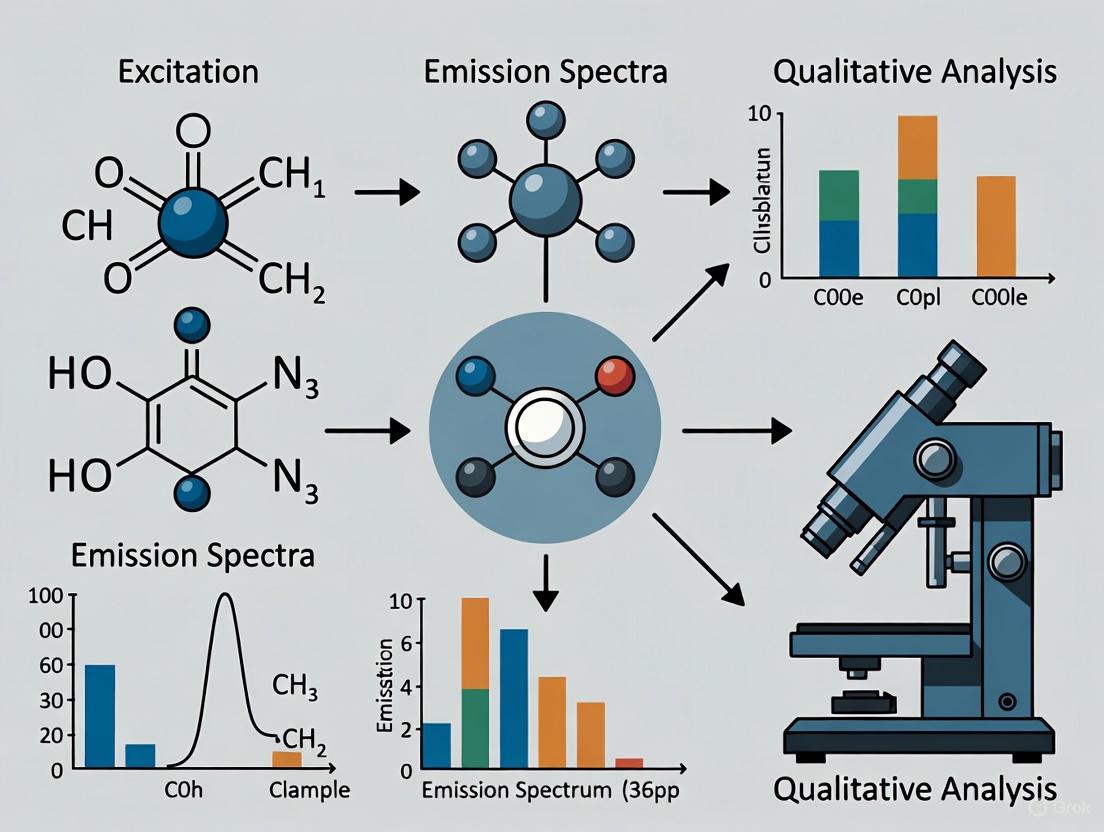
This article provides a comprehensive overview of the critical role emission spectroscopy plays in qualitative chemical analysis, particularly for researchers and professionals in drug development.
Emission Spectra in Qualitative Chemical Analysis: Principles, Applications, and Innovations for Biomedical Research
Abstract
This article provides a comprehensive overview of the critical role emission spectroscopy plays in qualitative chemical analysis, particularly for researchers and professionals in drug development. It explores the fundamental principles of light-matter interactions that enable elemental and molecular fingerprinting, details cutting-edge methodologies like LIBS imaging and ICP-OES being applied in pharmaceutical quality control and nuclear medicine, addresses key challenges in signal optimization and data processing, and validates techniques against regulatory standards. By synthesizing foundational knowledge with current applications and future trends, this review serves as an essential guide for leveraging emission spectroscopy to advance biomedical research and clinical diagnostics.
The Fundamentals of Emission Spectroscopy: How Light-Matter Interaction Enables Chemical Identification
Theoretical Foundations of Atomic Emission
Atomic emission spectroscopy (AES) is a powerful analytical technique used to determine the elemental composition of a sample. The core principle resides in the quantized nature of atomic energy levels and the interaction between matter and electromagnetic radiation [1] [2].
When atoms absorb energy, their electrons are promoted from the ground state (the lowest energy state) to a higher-energy excited state [2]. This excited state is unstable. Consequently, the electrons spontaneously return to a lower energy level, releasing the excess energy in the form of a photon [1]. The energy of this emitted photon is precisely equal to the energy difference between the two electronic states involved in the transition, as described by the formula: ( E_{\text{photon}} = h\nu ), where ( h ) is Planck's constant and ( \nu ) is the frequency of the photon [1].
The wavelength (or frequency) of the emitted light is characteristic of the specific electronic transition within a given element. Since every element has a unique electronic structure, it also possesses a unique set of possible energy transitions. This results in a distinctive atomic emission spectrum—a pattern of discrete spectral lines that serves as a "fingerprint" for the element [1] [2]. Analysis of this emitted light allows for the identification and quantification of elements in a sample of unknown composition, forming the basis for qualitative chemical analysis [1].
Modern Instrumentation and Technological Advances
The field of spectroscopic instrumentation is dynamic, with continuous innovations enhancing sensitivity, resolution, and application scope. A review of products introduced from 2024 to 2025 highlights key trends, particularly the divergence between laboratory and field-portable instrumentation [3].
Table 1: Advanced Spectroscopic Instrumentation (2024-2025)
| Technology | Instrument Example | Key Features | Target Applications |
|---|---|---|---|
| Inductively Coupled Plasma AES (ICP-AES) | Multi-collector ICP-MS [3] | High-resolution, multi-collector capability to resolve isotopes from interferences; flexible analysis customization [3] | High-precision elemental and isotopic analysis [3] [4] |
| Molecular Fluorescence | FS5 v2 Spectrofluorometer (Edinburgh Instruments) [3] | Increased performance and capabilities for detailed fluorescence analysis [3] | Photochemistry and photophysics research [3] |
| Molecular Fluorescence | Veloci A-TEEM Biopharma Analyzer (Horiba) [3] | Simultaneous Absorbance, Transmittance, and Excitation-Emission Matrix (A-TEEM) data collection [3] | Biopharmaceutical analysis (e.g., monoclonal antibodies, vaccine characterization) [3] |
| Quantum Cascade Laser (QCL) Microscopy | LUMOS II ILIM (Bruker) [3] | QCL-based imaging from 1800-950 cm⁻¹; fast image acquisition (4.5 mm²/s); reduces speckle via spatial coherence reduction [3] | High-resolution chemical imaging in materials science [3] |
| Quantum Cascade Laser (QCL) Microscopy | ProteinMentor (Protein Dynamic Solutions) [3] | QCL-based system (1800-1000 cm⁻¹) designed specifically for proteins [3] | Biopharmaceuticals: protein impurity ID, stability, deamidation monitoring [3] |
| Handheld/Raman | TaticID-1064ST (Metrohm) [3] | Handheld device with on-board camera, note-taking, and analysis guidance [3] | Hazardous materials identification and documentation by response teams [3] |
| Microwave Spectroscopy | Broadband Chirped Pulse System (BrightSpec) [3] | First commercial broadband chirped pulse microwave spectrometer [3] | Unambiguous determination of molecular structure and configuration in the gas phase [3] |
A significant market trend is the growing demand for elemental analysis in environmental testing, biotechnology, and clinical applications, propelling the adoption of techniques like ICP-AES [4]. The market is also characterized by innovation in automation, miniaturization for portability, and the expansion of applications into new areas such as food safety and pharmaceutical analysis [3] [4].
Experimental Methodology and Workflows
The practical application of atomic emission spectroscopy involves a sequence of critical steps to convert a sample into a measurable atomic emission signal.
Experimental Protocol: Flame Atomic Emission Spectroscopy
This is a foundational method for elemental analysis, particularly for alkali and alkaline earth metals [5].
- Sample Preparation: The solid or liquid sample is dissolved in a suitable solvent, typically an aqueous acid or solvent, to create a homogeneous solution [4].
- Nebulization: The sample solution is drawn into the burner and dispersed as a fine aerosol or spray using a nebulizer [1].
- Desolvation and Atomization: The aerosol is introduced into the flame. The solvent first evaporates, leaving behind finely divided solid particles. These particles then move to the hottest region of the flame, where they vaporize and dissociate into free, gaseous ground-state atoms [1].
- Excitation: In the flame, collisions with thermal energy cause a fraction of the gaseous atoms to become excited, promoting their electrons to higher energy levels [1] [2].
- Emission and Detection: The excited atoms spontaneously decay to lower energy states, emitting photons at characteristic wavelengths [2]. The emitted light is collected and passed through a monochromator, which separates the wavelengths. A detector then measures the intensity of the specific spectral line(s) of interest [1].
- Quantification: The intensity of the emitted light at a specific wavelength is proportional to the concentration of the corresponding element in the sample. Quantification is achieved by comparing the signal intensity to those from a series of standard solutions of known concentration [1].
The Scientist's Toolkit: Key Research Reagent Solutions
Table 2: Essential Materials for Atomic Emission Spectroscopy
| Item/Reagent | Function |
|---|---|
| High-Purity Gases (e.g., Acetylene, Nitrous Oxide) | Serves as fuel and oxidant to generate a high-temperature flame for atomization and excitation in flame AES [1]. |
| Certified Reference Materials | Standard solutions with known elemental concentrations used for instrument calibration and quality assurance to ensure analytical accuracy [1]. |
| Ultrapure Water | Used for sample preparation, dilution, and cleaning to prevent contamination from trace elements found in tap or deionized water [3]. |
| High-Purity Acids (e.g., HNO₃, HCl) | Used for sample digestion and dissolution to bring solid samples into solution for analysis [4]. |
| ICP Torches | The core component in ICP-AES where argon plasma is sustained, providing a high-temperature (6000-10000 K) source for efficient atomization and excitation [4]. |
Signaling Pathways and Analytical Workflows
The following diagram illustrates the core logical process from sample introduction to data interpretation in atomic emission spectroscopy.
The Critical Role in Qualitative Chemical Analysis
The unique "fingerprint" nature of atomic emission spectra makes AES an indispensable tool in qualitative chemical analysis research. The technique's power lies in its ability to definitively identify elements based on their characteristic spectral lines [1]. This application has profound implications across numerous scientific disciplines.
In astronomical spectroscopy, the emission (and absorption) spectra of distant stars are analyzed to determine their elemental composition, providing crucial information about the universe's makeup and the nucleosynthesis processes within stars [1] [6]. In environmental and clinical fields, AES is used to detect and quantify trace metals and other elements in complex samples like water, soil, and biological tissues [4]. The historical significance of AES is also notable; the observation that the dark Fraunhofer lines in the solar spectrum coincided with emission lines of known elements led to the groundbreaking conclusion that these lines were caused by absorption in the sun's atmosphere, revealing the composition of the sun itself [1].
The ongoing technological advancements, including the development of more sensitive, portable, and automated instruments, continue to expand the role of emission spectroscopy in research. These innovations enable faster analysis, lower detection limits, and the ability to perform sophisticated chemical analysis directly in the field, thereby solidifying the technique's central role in modern analytical chemistry [3] [4].
The electromagnetic (EM) spectrum represents the entire range of electromagnetic radiation, classified by wavelength and frequency. In chemical analysis, the interaction between matter and specific regions of this spectrum provides a powerful foundation for identifying and quantifying substances. The core principle underlying this analytical approach is that atoms and molecules absorb or emit specific wavelengths of energy, creating characteristic signals that serve as molecular fingerprints [7].
When electromagnetic radiation interacts with matter, it can excite molecules to higher energy states. The measurement of this energy absorption or emission forms the basis of spectroscopic techniques that are indispensable across scientific disciplines, from pharmaceutical development to environmental monitoring [7]. This whitepaper examines the major regions of the electromagnetic spectrum utilized in qualitative chemical analysis, with particular emphasis on their operating principles, applications, and methodological considerations for researchers.
Fundamental Regions of the Spectrum for Chemical Analysis
High-Energy Regions: X-Rays and Ultraviolet
X-rays, with wavelengths of approximately 0.01 to 10 nanometers, possess sufficient energy to excite inner-shell electrons in atoms. This excitation enables elemental identification and is particularly valuable for determining atomic structures in crystallography and analyzing inorganic compounds [7].
Ultraviolet (UV) radiation (10-400 nm) promotes valence electrons to higher energy orbitals, making it especially sensitive to conjugated systems and double bonds in organic molecules. UV spectroscopy provides critical information about electronic transitions and is routinely employed for quantifying nucleic acids, proteins, and pharmaceuticals with chromophores [7].
The Infrared Region: Molecular Fingerprinting
The infrared region (approximately 700 nm to 1 mm) is particularly significant for molecular identification. Within this region, the mid-infrared portion (approximately 2.5-25 μm) is often called the "fingerprint region" because it provides unique absorption patterns specific to individual compounds [7]. When IR radiation interacts with a molecule, the energy absorbed corresponds to specific molecular vibrations, including stretching and bending motions of chemical bonds [8].
Fourier Transform Infrared (FTIR) spectroscopy has become the dominant methodology in this region, offering significant advantages through its application of interferometry. FTIR provides the Jacquinot advantage (higher energy throughput), Fellget's advantage (simultaneous measurement of all frequencies), and Connes' advantage (superior wavelength accuracy) [8]. These technical benefits make FTIR exceptionally suitable for analyzing complex biological samples, as demonstrated by its application in wheat proteome studies where it successfully quantified protein secondary structures and concentrations across different varieties [9].
Microwave and Radio Wave Regions
Microwaves (1 mm to 1 m) are primarily associated with rotational transitions in molecules and are utilized in rotational spectroscopy for studying gas-phase molecules. Meanwhile, radio waves form the basis for Nuclear Magnetic Resonance (NMR) spectroscopy, which exploits the magnetic properties of atomic nuclei to determine molecular structure and dynamics [10].
Table 1: Analytical Regions of the Electromagnetic Spectrum
| Spectral Region | Wavelength Range | Energy Transitions | Primary Applications |
|---|---|---|---|
| X-rays | 0.01-10 nm | Inner-shell electrons | Elemental analysis, crystallography |
| Ultraviolet (UV) | 10-400 nm | Valence electrons | Quantitative analysis of chromophores |
| Visible | 400-700 nm | Valence electrons | Colorimetry, spectrophotometry |
| Near-IR (NIR) | 700 nm-2.5 μm | Overtone & combination vibrations | Process monitoring, food analysis |
| Mid-IR (MIR) | 2.5-25 μm | Fundamental vibrations | Molecular fingerprinting, structure elucidation |
| Microwave | 1 mm-1 m | Molecular rotations | Rotational spectroscopy |
| Radio Waves | 1 m-100 km | Nuclear spin | NMR spectroscopy |
Complementary Vibrational Spectroscopy Techniques
Mid-Infrared (MIR) and Near-Infrared (NIR) Spectroscopy
While both MIR and NIR spectroscopy measure molecular vibrations, they target different types of transitions. MIR spectroscopy probes fundamental vibrations of chemical bonds, producing sharp, well-defined peaks that are highly specific for functional group identification [8]. In contrast, NIR spectroscopy measures overtones and combination bands of CH, NH, and OH vibrations, which are approximately 10-100 times weaker than fundamental absorptions [8].
The practical implication of this difference is that NIR can penetrate deeper into samples and requires minimal sample preparation, making it ideal for process monitoring and analysis of intact samples. However, NIR spectra exhibit broad, overlapping bands that require sophisticated multivariate analysis for interpretation [8]. MIR provides more detailed structural information but often requires specific sampling techniques, particularly for strongly absorbing materials.
Raman Spectroscopy: A Complementary Approach
Raman spectroscopy measures inelastic scattering of monochromatic light, typically from a laser in the visible or near-infrared range [11]. Unlike infrared absorption, Raman activity requires a change in molecular polarizability during vibration rather than a permanent dipole moment [8]. This fundamental difference in selection rules makes Raman and IR complementary techniques—vibrations that are strong in one are often weak in the other, particularly for symmetric vibrations and bonds without permanent dipole moments [11].
Recent innovations have significantly advanced Raman capabilities for quantitative analysis. The multi-laser-power calibration (MLPC) method enables accurate quantification using a single calibration solution by varying applied laser power, reducing reagent use and chemical waste while maintaining analytical precision [12]. This development has proven particularly valuable for distinguishing specific nitrogen species (ammonium, nitrate, urea) and phosphorus forms (phosphate vs. phosphite) in agricultural and environmental samples [12].
Table 2: Comparison of Vibrational Spectroscopy Techniques
| Parameter | Mid-IR (MIR) | Near-IR (NIR) | Raman |
|---|---|---|---|
| Physical Process | Absorption | Absorption | Inelastic scattering |
| Spectral Range | 4000-400 cm⁻¹ | 12500-4000 cm⁻¹ | Dependent on laser |
| Sample Preparation | Often required | Minimal | Minimal |
| Water Compatibility | Poor (strong absorber) | Good | Excellent |
| Information Content | High (fundamentals) | Lower (overtones) | Complementary to MIR |
| Quantitative Capability | Good (ATR-FTIR) | Excellent (with chemometrics) | Good (with MLPC) |
Methodological Framework and Experimental Protocols
Attenuated Total Reflectance Mid-Infrared (ATR-MIR) Analysis of Wheat Proteins
Principle: ATR-MIR spectroscopy enables direct analysis of protein secondary structures in complex biological samples by measuring absorption in the mid-infrared region, particularly the amide I and II bands [9].
Materials and Reagents:
- Spectrometer: FTIR spectrometer with ATR accessory
- Protein Fractions: Albumin, globulin, gliadin, glutenin extracts
- Reference Materials: Potassium bromide (KBr) for background
- Software: Multivariate analysis package (ASCA, PCA)
Experimental Workflow:
- Sample Preparation: Isolate wheat protein fractions using sequential extraction protocol
- Instrument Calibration: Collect background spectrum with clean ATR crystal
- Spectral Acquisition: Apply samples directly to ATR crystal; measure 4000-400 cm⁻¹ range
- Secondary Structure Analysis: Deconvolute amide I region (1600-1700 cm⁻¹) to quantify α-helix, β-sheet, β-turn components
- Statistical Validation: Apply ANOVA simultaneous component analysis (ASCA) to confirm significance of spectral differences
Key Findings: Albumin and globulin fractions showed predominant α-helix structures (57.8% and 45.9%, respectively), while gliadins contained 38.3% β-turn and 36.9% α-helix, and glutenins predominantly exhibited β-turn structures (44.8%) [9]. Quantitative analysis revealed protein concentration ranges from 1.7-3.6 g/100g for albumins to 4.0-5.4 g/100g for gliadins, demonstrating the method's utility for comprehensive proteome analysis [9].
Principle: This method combines excitation-emission matrix fluorescence with a two-dimensional convolutional neural network (2DCNN) for quantitative analysis of complex mixtures, specifically diesel emulsified oil content in marine environments [13].
Materials and Reagents:
- Spectrometer: FLS1000 spectrometer with temperature control
- Software: Python with TensorFlow/Keras for AR-2DCNN implementation
- Calibration Standards: Diesel emulsified oil samples (0.1-100 mg/L)
- Chemometric Tools: Partial least squares regression (PLSR) with contribution rate analysis
Protocol:
- Sample Presentation: Prepare homogeneous emulsified oil suspensions
- EEM Acquisition: Collect fluorescence spectra across excitation (200-500 nm) and emission (250-550 nm) ranges
- Feature Extraction: Implement attention mechanism and regularization in 2DCNN architecture
- Model Validation: Compare AR-2DCNN + CR-PLSR performance against traditional methods (ResNet-50, ConvNeXt)
- Quantitative Prediction: Apply optimized model to predict oil content in unknown samples
This approach demonstrated superior performance for emulsified oil quantification, highlighting the growing integration of artificial intelligence with spectroscopic methods [13].
The Modern Spectroscopic Toolkit: Advanced Reagents and Materials
Contemporary spectroscopic analysis relies on specialized reagents and materials optimized for specific techniques and applications.
Table 3: Essential Research Reagent Solutions for Spectroscopic Analysis
| Reagent/Material | Technical Function | Application Context |
|---|---|---|
| ATR Crystals (diamond, ZnSe) | Internal reflection element for sample interface | FTIR spectroscopy of liquids, pastes, solids |
| Extended InGaAs Detectors | NIR light detection to 2.5 μm | NIR spectroscopic analysis |
| Calibration Standards | Quantitative reference materials | MLPC-Raman quantification |
| Multivariate Calibration Sets | Chemometric model development | NIR and MIR quantitative analysis |
| FT-Raman Lasers (Nd:YAG, 1064 nm) | Excitation source minimizing fluorescence | FT-Raman spectroscopy |
Integration of Artificial Intelligence in Spectral Analysis
The field of spectroscopy is undergoing a transformation through the integration of artificial intelligence (AI) and chemometrics. Classical methods like principal component analysis (PCA) and partial least squares (PLS) regression remain fundamental but are now complemented by advanced AI frameworks that automate feature extraction, nonlinear calibration, and data fusion [14].
Machine Learning (ML) algorithms excel at identifying structure in spectroscopic data without explicit programming, improving analytical performance as they process more data. Key ML paradigms include:
- Supervised Learning: Trained on labeled data for regression or classification (e.g., PLS, support vector machines, Random Forest)
- Unsupervised Learning: Discovers latent structures in unlabeled data (e.g., PCA, clustering)
- Deep Learning: Employs multi-layered neural networks for hierarchical feature extraction [14]
Specific algorithms finding increasing application in spectroscopy include Random Forest for spectral classification with strong generalization capability; Support Vector Machines (SVM) for optimal separation of classes in high-dimensional spectral space; and Convolutional Neural Networks (CNNs) for automated feature extraction from complex spectral data [14]. The integration of Explainable AI (XAI) frameworks addresses the interpretability challenge of complex models, helping researchers identify diagnostically significant wavelength regions and maintain chemical insight [14].
Workflow Visualization
Spectroscopy Analysis Workflow
Molecular Interactions with EM Spectrum
Electromagnetic spectrum analysis provides an indispensable toolkit for qualitative and quantitative chemical analysis across scientific disciplines. From high-energy X-rays to radio waves, each spectral region offers unique insights into molecular structure and composition. The continuing evolution of these techniques—particularly through integration with artificial intelligence and advanced chemometrics—ensures their growing relevance in research and industrial applications.
The complementary nature of different spectroscopic methods allows researchers to select optimal approaches for specific analytical challenges. As methodological innovations like MLPC-Raman and ATR-FTIR demonstrate, ongoing technical refinements continue to enhance the precision, efficiency, and applicability of electromagnetic techniques for decoding molecular information across the spectrum.
Emission spectroscopy stands as a cornerstone technique in qualitative chemical analysis, enabling researchers to identify elements and compounds based on their unique electromagnetic signatures. The fundamental principle underpinning this methodology is that when atoms or molecules absorb energy, their electrons transition to excited states; upon returning to lower energy states, they emit photons at characteristic wavelengths that serve as unique identifiers [15] [16]. This technical guide examines the core distinctions between atomic and molecular emission phenomena, with particular emphasis on their characteristic lines and fingerprint regions—concepts fundamental to their application in research and industry.
Within the context of a broader thesis on the role of emission spectra in qualitative chemical analysis research, understanding the dichotomy between atomic and molecular emission patterns becomes paramount. Atomic emission manifests as discrete, sharp spectral lines resulting from electronic transitions between well-defined energy levels in isolated atoms [15] [17]. In contrast, molecular emission produces broad, complex bands arising from the combined effects of electronic, vibrational, and rotational transitions [18]. These distinctive signatures provide researchers across pharmaceutical development, environmental monitoring, and materials science with powerful tools for substance identification and characterization.
Fundamental Principles of Emission Spectroscopy
Atomic Emission Mechanisms
Atomic emission occurs when a valence electron in a higher-energy atomic orbital returns to a lower-energy atomic orbital, emitting a photon with energy corresponding to the difference between these discrete energy levels [17]. The energy of emitted photons is precisely determined by the quantum mechanical structure of the atom, following the relationship E = hc/λ, where h is Planck's constant, c is the speed of light, and λ is the wavelength of the emitted radiation [15]. Each element possesses a unique electronic configuration and therefore exhibits a characteristic emission spectrum that serves as its "fingerprint" for identification purposes [16].
The intensity of an atomic emission line, Ie, is quantitatively described by the equation Ie = kN, where k is a constant accounting for transition efficiency and N represents the number of atoms populating the excited state [17]. For systems in thermal equilibrium, the population of excited states follows the Boltzmann distribution, establishing a direct relationship between emission intensity and elemental concentration that forms the basis for quantitative analysis [17].
Molecular Emission Mechanisms
Molecular emission spectra exhibit considerably greater complexity than atomic spectra due to the involvement of multiple energy transitions types. Unlike atoms, molecules possess three distinct categories of energy states: electronic, vibrational, and rotational. The total energy of a molecule can be approximated as the sum of these components: Etotal = Eelectronic + Evibrational + Erotational [18].
When molecules undergo electronic transitions, they simultaneously experience vibrational and rotational transitions, resulting in emission bands comprising numerous closely-spaced lines rather than discrete lines [18]. These broad, structured bands create characteristic patterns that serve as molecular fingerprints, particularly in the infrared region where vibrational transitions dominate [18]. The specific wavelengths absorbed or emitted depend on factors including bond strength, atomic masses, and molecular geometry, with different functional groups displaying distinct absorption peaks within defined wavelength regions [18].
Characteristic Spectral Features: Comparative Analysis
Atomic Spectral Lines
Atomic emission spectra consist of sharp, well-defined lines at discrete wavelengths corresponding to electronic transitions between quantized energy levels. For example, hydrogen atoms emit at precisely 410 nm (violet), 434 nm (blue), 486 nm (blue-green), and 656 nm (red) in the visible spectrum [16]. These discrete lines correspond to electrons transitioning between different orbital energy levels, with the shortest wavelength (410 nm) representing the highest-energy transition [16].
The nomenclature for atomic spectral lines often includes Fraunhofer designations for strong visible lines (such as the K-line for singly-ionized calcium at 393.366 nm) or Roman numerals indicating ionization state (Cu I for neutral copper, Cu II for singly-ionized) [15]. The spectral lines' exact positions remain largely unaffected by chemical environment, making atomic emission particularly valuable for elemental identification regardless of molecular composition [15].
Molecular Fingerprint Regions
Molecular spectra feature in characteristic "fingerprint regions" where absorption and emission patterns provide unique identifiers for specific compounds. In infrared spectroscopy, for example, the region between approximately 500 cm⁻¹ to 1500 cm⁻¹ contains complex vibrational patterns highly specific to individual molecules [18]. Unlike atomic lines, these molecular fingerprints arise from the combined contributions of multiple vibrational modes, bond rotations, and molecular symmetries.
The fingerprint region enables unambiguous identification of molecular species, including complex pharmaceuticals and organic compounds. For instance, the presence of specific functional groups like hydroxyl, carbonyl, or amine groups produces characteristic emissions that facilitate structural elucidation [18]. This region is particularly valuable for distinguishing between structurally similar compounds or confirming molecular identity in quality control applications.
Table 1: Comparative Features of Atomic and Molecular Emission Spectra
| Characteristic | Atomic Emission | Molecular Emission |
|---|---|---|
| Spectral Appearance | Discrete, sharp lines | Broad, structured bands |
| Origin | Electronic transitions between atomic orbitals | Combined electronic, vibrational, and rotational transitions |
| Spectral Complexity | Relatively simple, element-specific | Complex, compound-specific |
| Identifying Features | Characteristic line patterns | Fingerprint regions |
| Primary Analytical Use | Elemental identification and quantification | Molecular identification and structural analysis |
| Influencing Factors | Nuclear charge, electron configuration | Molecular structure, functional groups, bond strengths |
Instrumentation and Methodological Approaches
Atomic Emission Spectroscopy Techniques
Atomic emission spectroscopy (AES) employs various excitation sources to atomize and excite samples, with the choice of source significantly influencing analytical performance. Flame AES utilizes combustion flames to excite atoms, particularly effective for alkali metals and other easily-excited elements [19] [17]. Inductively coupled plasma (ICP) sources operate at substantially higher temperatures (6000-10000 K), providing superior atomization efficiency and excitation capability for a wider range of elements [19] [17]. Spark and arc techniques serve primarily for solid conductive samples, especially in metallurgical applications [19].
Modern advancements in AES instrumentation include multi-collector ICP-MS systems designed for enhanced flexibility and high-resolution isotope analysis, capable of resolving isotopes from their interferences [3]. These developments support increasingly sophisticated applications in environmental monitoring, clinical analysis, and pharmaceutical research where precise elemental quantification is required [4].
Molecular Spectroscopy Techniques
Molecular emission analysis employs diverse spectroscopic techniques targeting different regions of the electromagnetic spectrum. Infrared spectroscopy measures vibrational transitions, providing detailed information about functional groups and molecular structure [18]. Fluorescence spectroscopy, including advanced implementations such as A-TEEM (Absorbance-Transmittance and Excitation-Emission Matrix), offers enhanced sensitivity for characterizing complex biological molecules like monoclonal antibodies and vaccines [3].
Recent innovations include quantum cascade laser (QCL) based microscopy systems such as the LUMOS II, which generates infrared images in transmission or reflection modes at rapid acquisition rates of 4.5 mm² per second [3]. Specialized instruments like the ProteinMentor system specifically address the needs of biopharmaceutical research, enabling protein impurity identification, stability assessment, and deamidation process monitoring [3].
Experimental Protocols for Emission Analysis
Atomic Emission Spectroscopy Protocol
Sample Preparation:
- For liquid samples: Introduce via nebulizer to create fine aerosol [19] [17]
- For solid samples: Use spark or arc ablation, or laser vaporization for introduction into excitation source [19]
- Conduct appropriate dilution to remain within instrumental linear range [17]
Instrument Calibration:
- Prepare standard solutions with known concentrations of target elements
- Establish calibration curve by measuring emission intensities at characteristic wavelengths
- Verify calibration with certified reference materials [19]
Measurement Procedure:
- Introduce sample into excitation source (flame, plasma, spark, or arc)
- Monitor emission intensity at element-specific wavelengths
- Record spectrum across relevant wavelength range for qualitative analysis [19] [17]
Data Analysis:
- Identify elements present based on characteristic emission lines
- Quantify concentration using measured intensity and calibration curve [17]
- Apply correction for spectral interferences when necessary
Molecular Emission Spectroscopy Protocol
Sample Preparation:
- Prepare appropriate sample form (solid, liquid, or gas) compatible with technique
- For IR spectroscopy: Use KBr pellets for solids, solution cells for liquids
- Ensure optimal sample thickness/pathlength for measurable signal without saturation [18]
Instrument Configuration:
- Select appropriate spectral range (e.g., mid-IR: 4000-400 cm⁻¹ for fingerprint region)
- Choose suitable detector and source based on analytical requirements
- Optimize resolution settings based on sample complexity [3] [18]
Data Collection:
- Collect background spectrum for reference
- Acquire sample spectrum under identical conditions
- For fluorescence: Scan excitation and emission wavelengths to generate EEM plots [3]
Spectral Interpretation:
- Identify characteristic band patterns in fingerprint region
- Assign vibrational modes to specific functional groups
- Compare with reference spectra for compound identification [18]
Research Reagents and Essential Materials
Table 2: Essential Research Reagents and Materials for Emission Spectroscopy
| Reagent/Material | Function/Application | Technical Specifications |
|---|---|---|
| High-Purity Gases (Argon, Nitrogen) | Plasma generation and nebulization in ICP-AES | High purity (≥99.995%) to minimize spectral interference |
| Certified Reference Materials | Instrument calibration and method validation | Traceable to national standards with certified element concentrations |
| Ultrapure Water Systems | Sample preparation and dilution | Resistivity ≥18.2 MΩ·cm at 25°C to prevent contamination |
| KBr Powder (IR Grade) | Preparation of pellets for IR spectroscopy | Spectral grade, dry, for transparent pellets in fingerprint region analysis |
| Solvents (HPLC Grade) | Sample dissolution and extraction | Low UV cutoff, minimal fluorescent impurities |
| Deuterated Lamps | Wavelength calibration in UV-Vis instruments | Provides sharp emission lines for accurate wavelength verification |
Advanced Applications in Pharmaceutical Research
Emission spectroscopy techniques provide critical analytical capabilities throughout drug development pipelines. Atomic emission methods, particularly ICP-AES, enable precise quantification of metal catalysts and detection of elemental impurities in active pharmaceutical ingredients (APIs) to comply with regulatory requirements [4] [20]. The technique's multi-element capability and wide linear dynamic range make it indispensable for pharmaceutical quality control [19].
Molecular emission spectroscopy facilitates drug characterization and interaction studies. Infrared and Raman spectroscopy reveal structural information about APIs, polymorph forms, and formulation components [3] [18]. Recent advances in protein-specific spectroscopic systems allow researchers to monitor protein stability, identify degradation products, and study drug-biomolecule interactions without extensive sample preparation [3] [20].
Emerging techniques including X-ray emission spectroscopy (XES) offer enhanced capabilities for studying metal-containing pharmaceuticals, providing element-selective probes of local electronic structure and ligand environments [20] [21]. These methods support investigations of catalytic mechanisms, redox processes, and metal speciation in pharmaceutical systems with minimal sample preparation [20].
Current Trends and Future Perspectives
The field of emission spectroscopy continues evolving through technological innovations and expanding applications. Notable trends include the development of miniaturized and portable instruments enabling field-based analysis across environmental, agricultural, and pharmaceutical domains [3] [4]. Automation and high-throughput systems address growing demands for efficiency in drug discovery and quality control environments [3].
Advanced detection systems incorporating focal plane array detectors and quantum cascade lasers enhance spatial resolution and acquisition speeds for spectroscopic imaging [3]. The integration of multivariate analysis and machine learning algorithms with spectral data facilitates more sophisticated pattern recognition in complex samples [3].
The growing emphasis on product quality and safety continues to drive spectroscopic innovation, particularly in regulated industries. Atomic and molecular emission techniques remain foundational to chemical analysis research, with their distinctive capabilities complementing each other in comprehensive material characterization strategies. As instrumental sensitivity and resolution improve, emission spectroscopy applications continue expanding into new domains including nanomaterial characterization, single-cell analysis, and real-time process monitoring.
Diagram 1: Comparative workflows for atomic and molecular emission analysis showing divergent pathways from sample preparation to spectral interpretation.
Modern spectrometers are indispensable instruments in chemical analysis, enabling researchers to decipher the elemental fingerprint of matter through its emission spectra. This technical guide deconstructs the core components of optical spectrometers, detailing the fundamental principles and engineering trade-offs inherent in their design. Framed within the context of qualitative chemical analysis, this whitepaper provides an in-depth examination of how these instruments measure the unique emission lines generated by excited atoms, allowing scientists to identify substances with high specificity. The discussion is supported by structured data tables, experimental protocols, and visualizations of the instrumental workflow, providing a comprehensive resource for researchers and drug development professionals engaged in analytical spectroscopy.
Emission spectrometry is a powerful method for the spectroscopic analysis of sample materials, based on the fundamental principle that excited atoms and ions emit light at characteristic wavelengths [6]. When an atom absorbs energy, its electrons are promoted to higher energy orbits. As these electrons relax back to their ground state, they release photons of specific energies, corresponding to precise wavelengths of light [22]. This collection of wavelengths, known as the emission spectrum, serves as a unique fingerprint for each chemical element, enabling its identification [6].
The foundation of this analytical method dates back to the 17th century with Isaac Newton's light dispersion experiments, but it was the work of Bunsen and Kirchhoff in the 19th century that established the direct link between characteristic spectral lines and specific elements [22]. Qualitative chemical analysis by emission spectra leverages these discrete, element-specific lines to identify the atomic composition of a sample without necessarily quantifying the amounts present [23]. This technique is particularly valuable for its sensitivity and ability to detect multiple elements simultaneously, making it crucial in fields ranging from biomedical research to astrophysics and materials science [6].
Core Components of an Optical Spectrometer
While various spectrometer types exist (e.g., mass, NMR), the optical spectrometer is the most common platform for emission spectroscopy. Its fundamental purpose is to take light generated by a sample, separate it into its constituent wavelengths, and measure the intensity of each [24]. Achieving this requires several key components working in concert, each with distinct design considerations and trade-offs.
Entrance Slit
The optical pathway begins at the entrance slit, which performs the critical function of defining the incoming light beam [24].
- Function: Controls the amount and geometry of light entering the spectrometer system.
- Design Trade-off: A wide slit allows more light to enter, enhancing the system's ability to measure faint sources but reducing the maximum achievable spectral resolution. Conversely, a narrow slit increases spectral resolution at the expense of signal intensity [24].
- Typical Specifications: In compact devices, the slit width is often fixed (e.g., 25 μm), while larger laboratory spectrometers may feature adjustable slits to accommodate varying experimental needs [24].
Table 1: Performance Trade-offs of Entrance Slit Width
| Slit Width | Signal Intensity | Spectral Resolution | Ideal Use Case |
|---|---|---|---|
| Narrow | Lower | Higher | Analysis of bright sources requiring fine detail |
| Wide | Higher | Lower | Analysis of faint light sources or rapid measurements |
Dispersive Element: Diffraction Grating or Prism
The heart of the wavelength separation process is the dispersive element, which spatially spreads the light based on its wavelength [24].
- Diffraction Grating: This is the most common component, typically featuring a surface with many parallel, closely spaced grooves. The grating operates on the principle of constructive interference, described by the grating equation: ( m\lambda = d(\sin\thetam - \sin\thetai) ) where ( d ) is the grating spacing, ( \thetam ) is the diffraction angle, ( \thetai ) is the angle of incidence, ( \lambda ) is the wavelength, and ( m ) is the diffraction order [24].
- Grating Specifications: Gratings are characterized by their groove density (grooves per mm). A higher groove density (smaller ( d )) spreads light over a larger angular range, providing higher resolution but covering a smaller wavelength range per detector segment and reducing signal strength [24].
- Prisms: While less common due to higher cost and generally lower resolution, prisms disperse light via refraction, bending different wavelengths by different amounts [24].
Table 2: Comparison of Dispersive Elements
| Feature | Diffraction Grating | Prism |
|---|---|---|
| Dispersion Principle | Constructive interference | Refraction |
| Resolution | Typically higher | Typically lower |
| Cost | Generally lower | Generally higher |
| Light Efficiency | Can be high with optimized coatings | Dependent on material transmittance |
| Spectral Range | Can be very broad | Limited by material absorption |
Detector
The detector translates the optical signal into an electrical one for quantification. Modern optical spectrometers predominantly use Charge-Coupled Devices (CCDs), which are arrays of light-sensitive pixels [24] [6].
- Function: Each pixel corresponds to a specific wavelength band, and it generates an electrical signal proportional to the intensity of the light falling upon it [24].
- Key Characteristics: CCDs are favored for their high dynamic range and uniform pixel response, allowing for precise intensity measurements across the spectrum [24].
- Noise Reduction: To minimize thermal noise (dark current), CCD detectors in scientific-grade instruments are often cooled [24].
Routing Optics and System Configuration
The routing optics, which can be a system of mirrors or lenses, guide the light through the instrument from the slit to the grating and finally onto the detector [24].
- Mirrors vs. Lenses: Curved mirrors are generally preferred over lenses because they introduce fewer chromatic and spatial image aberrations [24].
- Optical Configurations: Several established configurations exist, such as the Czerny-Turner and Fastie-Ebert designs, each with relative advantages and disadvantages concerning optical aberrations, stray light rejection, and physical size [24].
Additional Components: Higher-Order Filters
Instruments with a wide spectral detection range may require higher-order filters. These are necessary because a diffraction grating can produce multiple overlapping spectra (different orders, ( m )) for a single input of white light. A filter blocks these higher-order spectra from reaching the detector, ensuring that the detected signal corresponds only to the desired wavelength range [24].
Experimental Protocol: Qualitative Analysis Using Emission Spectra
The following protocol outlines a general methodology for identifying elements in a solid sample using an optical emission spectrometer with an electrical excitation source.
Sample Preparation
- Solid Samples: For conductive metals, the sample may be used directly as an electrode. For non-conductive powders (e.g., soils, ceramics), mix the sample homogenously with a high-purity graphite powder and pack it into a graphite electrode cup.
- Liquid Samples: Aspirate the liquid directly into the excitation source if using an inductively coupled plasma (ICP) system. Alternatively, deposit a known volume onto a graphite electrode and dry under an infrared lamp.
- Blanks: Prepare a procedural blank containing all reagents and materials except the analyte to track potential contamination.
Instrument Calibration and Setup
- Wavelength Calibration: Introduce a light source with known emission lines (e.g., a mercury-argon lamp) into the spectrometer. Record the pixel positions of these known lines to create a wavelength-pixel calibration curve.
- Source Conditioning: Ignite the plasma or arc source and allow it to stabilize for the time recommended by the manufacturer (typically 10-30 minutes). Pre-burn any solid electrodes to remove surface contaminants.
- Acquisition Parameters: Set the integration time and detector gain to ensure a strong signal without saturating the detector pixels.
Data Acquisition
- Sample Introduction: Position the electrode or initiate the liquid aspiration to introduce the sample into the excitation source.
- Excitation: The sample is vaporized, atomized, and excited within the high-energy source (e.g., plasma, arc, or spark). The excited atoms and ions will emit light at their characteristic wavelengths.
- Spectral Collection: The emitted light is collected, dispersed by the grating, and recorded by the CCD detector, generating a plot of intensity versus wavelength.
Data Analysis and Qualitative Identification
- Peak Identification: Analyze the acquired spectrum to identify the positions (wavelengths) of all significant emission peaks.
- Database Matching: Compare the identified wavelengths against a database of known elemental emission lines (e.g., the NIST Atomic Spectra Database).
- Validation: Confirm the presence of an element by identifying multiple, non-interfered lines for that element within the spectrum. The relative intensities of these lines should be consistent with their known transition probabilities.
Figure 1: Experimental workflow for qualitative analysis using emission spectra.
The Scientist's Toolkit: Essential Research Reagent Solutions
The following table details key reagents and materials essential for conducting emission spectrometric analysis, particularly for sample preparation and calibration.
Table 3: Essential Research Reagents and Materials for Emission Spectrometry
| Item Name | Function & Application |
|---|---|
| High-Purity Graphite Powder | Serves as a conductive matrix for diluting and packing non-conductive solid samples (e.g., soils, ceramics) for electrode analysis. |
| Graphite Electrodes | Act as the support and conductor for solid samples during arc/spark excitation. Available in various shapes (cups, rods) for different sample types. |
| Mercury-Argon Calibration Lamp | Provides sharp, well-defined atomic emission lines at known wavelengths for accurate spectrometer wavelength calibration. |
| Certified Reference Materials (CRMs) | Samples with known and certified elemental compositions. Used for method validation and verifying the accuracy of qualitative identification. |
| High-Purity Acids (e.g., HNO₃, HCl) | Used for sample digestion and dissolution to prepare liquid samples for analysis, particularly in ICP-OES. |
| Ultrapure Water | Used for diluting samples, preparing blanks, and rinsing the sample introduction system to prevent cross-contamination. |
The power of modern spectrometers for qualitative chemical analysis is built upon the precise integration of their core components—the entrance slit, diffraction grating, detector, and routing optics. Each component introduces specific performance trade-offs between resolution, sensitivity, and spectral range that researchers must balance for their specific applications. By harnessing the fundamental principles of atomic physics, whereby each element emits light at a unique set of wavelengths, these instruments transform light into definitive chemical information. The rigorous experimental protocols and specialized reagents outlined in this guide ensure that the unique emission spectra of elements can be accurately captured and interpreted, solidifying emission spectrometry's role as a cornerstone technique in research and analytical laboratories worldwide.
Within the framework of research on the role of emission spectra in qualitative chemical analysis, the interpretation of the analytical signal is paramount. Qualitative analysis fundamentally involves identifying the chemical species present in a sample, and emission spectra provide a rich source of information for this purpose. The unique spectral patterns emitted by elements and molecules—their "spectral fingerprints"—serve as the primary basis for identification. This guide details the core spectral patterns used in qualitative analysis, the experimental protocols for acquiring high-quality data, and the advanced techniques that leverage these patterns for material characterization, with a specific focus on the insights that can be gleaned from X-ray, atomic, and molecular emission spectra.
Core Spectral Patterns and Their Analytical Significance
The identification of chemical species relies on recognizing specific, reproducible features within an emission spectrum. These patterns are direct consequences of the electronic structure and chemical environment of the emitting atom or molecule. The table below summarizes the key spectral features and their analytical significance in qualitative analysis.
Table 1: Key Spectral Patterns for Qualitative Chemical Analysis
| Spectral Feature | Spectral Origin | Analytical Significance in Qualitative Analysis | Typical Technique Examples |
|---|---|---|---|
| Spectral Line Energy/Position | Electronic transitions between quantized energy levels of an atom or ion. | Uniquely identifies elements; the most fundamental qualitative measurement. | ICP-OES, Atomic Emission Spectroscopy (AES) |
| Chemical Shift | Changes in the core energy levels of an atom due to its chemical bonding and oxidation state. | Identifies the oxidation state and local chemical environment (e.g., Fe²⁺ vs. Fe³⁺). | XES, XPS |
| Satellite Lines (e.g., Kβ', Kβ₂,₅) | Transitions involving electron orbitals involved in chemical bonding or from multi-electron processes. | Provides information on ligand identity and coordination chemistry. | High-Resolution XES |
| Line Shape & Width | Lifetime broadening, instrumental effects, and chemical environment. | Can indicate specific chemical states or phases, particularly when measured with high resolution. | XES, NMR |
| Vibrational Fine Structure | Vibrational energy levels superimposed on electronic transitions. | Provides a molecular "fingerprint" for identifying specific compounds and functional groups. | Raman Spectroscopy, FT-IR |
As evidenced in recent studies, these patterns are crucial for advanced material characterization. For instance, in X-ray Emission Spectroscopy (XES), the Kβ' satellite structure for elements between magnesium (Z=12) and chlorine (Z=17) exhibits an energy shift that correlates with the atomic number of the ligand atoms, allowing for ligand identification. Furthermore, the intensity ratio of the Kβ₂,₅ to Kβ₁,₃ satellite structures in elements from calcium (Z=20) to iron (Z=26) serves as a reliable indicator of the emitter's valence state [25].
Experimental Protocols for Spectral Analysis
Accurate interpretation of spectral patterns is contingent upon high-quality data acquisition. The following section outlines detailed methodologies for two critical spectroscopic approaches.
Protocol 1: Chemical Speciation Using High-Resolution X-Ray Emission Spectroscopy (XES)
This protocol is designed for determining chemical speciation—identifying specific oxidation states and chemical compounds—in solid materials using a laboratory-scale wavelength-dispersive X-ray spectrometer [25].
- Objective: To extract chemical speciation information (e.g., oxidation state, ligand identity) from the high-resolution Kα and Kβ fluorescence spectra of elements ranging from carbon (Z=6) to manganese (Z=25).
- Materials and Equipment:
- Wavelength-Dispersive XRF Spectrometer: Equipped with a Rhodium (Rh) anode X-ray tube.
- Crystal Analyzer: Suitable for the energy range of interest (e.g., LiF 200 for transition metals).
- Sample Preparation Tools: Pellet press for creating homogeneous solid samples, if applicable.
- Procedure:
- Sample Preparation: For solid powders, homogenize the material and press into a pellet without binding agents if possible to avoid contamination. The sample surface should be flat and representative of the bulk material.
- Spectrometer Optimization:
- Select Analytical Line: Choose the Kα or Kβ emission line group for the element of interest.
- Adjust Beam Optics: Select the appropriate mask size (e.g., 5 mm to 34 mm diameter) to define the target area and optimize intensity and resolution [25].
- Tune the Crystal Analyzer: Precisely set the Bragg angle for the crystal to maximize the intensity and resolution of the emission lines under investigation. This may involve fine-adjustments to the spectrometer's geometry.
- Data Acquisition:
- Set the X-ray tube to operate at optimal power (e.g., 50 kV, 1 kW max).
- Perform a wavelength scan across the spectral region of interest, including the main Kα or Kβ lines and their satellite regions.
- Use sufficient counting time per step to ensure a high signal-to-noise ratio, which is critical for resolving subtle spectral features.
- Data Interpretation:
- Identify Peak Shifts: Compare the centroid energy of the main emission lines (e.g., Kα₁, Kβ₁,₃) with those measured from standard compounds of known oxidation state.
- Analyze Satellite Structures: For 3d transition metals, measure the energy difference between the Kβ₁,₃ main line and the Kβ' satellite to infer ligand atomic number. Calculate the intensity ratio of the Kβ₂,₅ to Kβ₁,₃ features to determine the valence of the emitting atom [25].
Protocol 2: Signal Processing for Power Spectrum Estimation
This protocol, common in various forms of spectroscopy and signal processing, outlines the steps for transforming a time-domain signal into a frequency-domain power spectrum to identify constituent frequencies, which is analogous to identifying specific emission lines [26].
- Objective: To estimate the power distribution across different frequency components of a digitized signal, revealing periodicities and dominant frequencies.
- Materials and Equipment:
- Digitized Signal: A signal acquired through an analog-to-digital converter (ADC) with a known sampling frequency.
- Spectral Analysis Software: Capable of performing Fast Fourier Transform (FFT) with windowing and averaging functions.
- Procedure:
- Signal Preparation: Ensure the signal is digitized at a sampling frequency ( fₛ ) at least twice the highest frequency component of interest (Nyquist criterion).
- Define FFT Parameters:
- Segment Length: Choose a number of samples that is a power of two (e.g., 1024, 2048) for the FFT algorithm. This determines the frequency resolution; more samples yield higher resolution.
- Windowing: Apply a windowing function (e.g., Hamming window) to each data segment to taper the edges and minimize "spectral leakage" artifacts [26].
- Spectral Estimation:
- Averaging: To reduce the uncertainty in the power estimate, average the power spectra from multiple, successive FFT episodes.
- Overlap: Employ an overlap (typically 50%) between successive segments to recover the data lost from windowing and improve the efficiency of averaging [26].
- Output and Analysis:
- Generate a plot of power (or its logarithm) versus frequency.
- Identify dominant frequency components by locating peaks in the power spectrum. The frequency of a peak indicates a periodic component in the original signal, and its power indicates the strength of that component.
Visualization of Workflows
The following diagrams illustrate the logical workflows for the two core methodologies described above.
XES Chemical Speciation Workflow
Spectral Estimation & Analysis Workflow
The Scientist's Toolkit: Essential Reagents and Materials
The following table catalogs key reagents, standards, and materials essential for conducting rigorous qualitative analysis via emission spectroscopy.
Table 2: Essential Research Reagent Solutions and Materials
| Item Name | Function/Application | Critical Notes for Use |
|---|---|---|
| Certified Standard Reference Materials (SRMs) | Calibration of spectrometer energy scale and quantitative validation of methods. | Use matrix-matched standards (e.g., NIST reference materials) for accurate results in solid sample analysis [25] [27]. |
| High-Purity Cellulose/Boric Acid | Binding agent for preparing powder pellets in XRF/XES analysis. | Must be spectroscopically pure to avoid introducing trace element contaminants that generate interfering spectral lines. |
| Molecularly Imprinted Polymers (MIPs) | Selective pre-concentration of target analytes in complex matrices for SERS detection. | Enhances sensitivity and mitigates matrix interference by providing specific binding sites for target molecules [27]. |
| Internal Standard Solutions (e.g., Yttrium, Scandium) | Added to liquid samples to correct for instrumental drift and variations in sample introduction efficiency in ICP techniques. | The element chosen should not be present in the sample and should have similar spectroscopic behavior to the analytes. |
| Microfluidic Chips with Trapping Zones | Platform for integrating cell capture, enrichment, and Raman-based detection of pathogens. | Enables point-of-care testing; trapping methods can be optical, electrical, mechanical, or acoustic [27]. |
| Calibration Gas Mixtures | Establishing and verifying the wavelength scale in optical emission spectrometers. | Required for initial instrument calibration and periodic performance checks. |
Advanced Methodologies and Cutting-Edge Applications in Biomedical Research and Pharma
Laser-Induced Breakdown Spectroscopy (LIBS) is an advanced atomic emission spectrochemical technique capable of stand-off and in-situ detection of solid, liquid, gaseous, and colloidal specimens [28]. The core principle of LIBS involves using high-energy laser pulses to ablate a minute amount of material and generate a transient microplasma. The collected light from this plasma is dispersed and detected, yielding an emission spectrum where the wavelengths of characteristic spectral lines provide fingerprint signatures for element identification, and their intensities relate to element concentrations [28] [29]. Elemental mapping by LIBS extends this fundamental capability to two-dimensional spatial analysis, allowing for the visualization of elemental distribution across a sample surface. This is achieved by performing a series of sequential LIBS measurements at predefined points on a raster grid, subsequently converting the intensity of a specific elemental emission line at each point into a pixel in a false-color map [29]. This technique has gained significant traction due to its rapid analysis capability, minimal sample preparation requirements, and capacity to detect both light and heavy elements with micrometer-scale spatial resolution [30] [31].
Technical Foundations of LIBS Imaging
Core Physical Principles
The LIBS process initiates when a focused high-power laser pulse reaches the sample surface, causing ablation and plasma formation. Within this laser-induced plasma, the ablated material is atomized and excited. As the plasma cools, the excited atoms and ions emit element-specific radiation during their relaxation to lower energy states. The relationship between spectral line intensity and elemental concentration is governed by the fundamental LIBS equation, which can be simplified for practical use as [32]:
I = X Y (g_k A_{ki} C / U(T)) K(a,x) e^{-E_k / kT}
where:
- I is the measured line intensity.
- C is the concentration of the emitting species.
- g_k is the statistical weight of the upper level.
- A_{ki} is the transition probability.
- U(T) is the partition function.
- E_k is the energy of the upper level.
- T is the plasma temperature.
- X, Y, K(a,x) are experimental factors related to plasma geometry, collection efficiency, and self-absorption [32].
For accurate qualitative and quantitative analysis, researchers often rely on databases such as the NIST Atomic Spectra Database (ASD), which provides a dedicated LIBS interface for simulating spectra based on plasma composition, electron temperature, density, and spectral resolution [33].
Critical Instrumentation Components
The performance of LIBS imaging systems depends critically on several key components, each with specific technical requirements to achieve high-quality elemental maps.
Table 1: Essential Instrumentation for LIBS Elemental Mapping
| Component | Technical Specifications | Function in Imaging |
|---|---|---|
| Laser Source | Nd:YAG (e.g., 1064 nm, 266 nm), 4 ns pulse width, 9 mJ-100 mJ energy, 1-100 Hz repetition rate [28] [30] | Generates plasma via ablation; repetition rate dictates mapping speed. |
| Spectrometer | Multiple channels (e.g., 240-340 nm, 340-540 nm, 540-850 nm), resolution ~0.07 nm [28] [30] | Disperses collected plasma light into constituent wavelengths. |
| Detector | CMOS, ICCD, or CCD; ICCD offers gating for temporal resolution [31] | Captures emission spectra at each ablation point; type affects spatial resolution. |
| Translation Stage | Micrometer precision, computer-controlled [29] | Moves sample or laser beam to create a predefined measurement grid. |
| Data Acquisition System | Hyperspectral data cube handling (x, y, λ) [29] | Compiles individual spectra into a spatially resolved 3D data cube for mapping. |
Experimental Workflow for LIBS Mapping
The following diagram illustrates the generalized end-to-end workflow for creating quantitative elemental maps using LIBS, incorporating steps for sample preparation, data acquisition, processing, and calibration.
Sample Preparation Protocols
Proper sample preparation is critical for obtaining reliable LIBS mapping results, particularly for heterogeneous or soft materials.
- Solid Geological Materials: Powders are often pressed into pellets using a standardized compression molding process to create a uniform, flat surface for analysis and to reduce variability in plasma temperature [28] [32].
- Biological Tissues: Thin sections (e.g., 30 µm thickness) are prepared using a cryogenic cutting device at temperatures like -70 °C. The sections are then deposited onto carrier materials such as silicon wafers, which provide optimal properties. A gentle vacuum may be applied to remove some water content [30].
- Engineered Materials: Surrogate TRISO fuel particles, for example, can be analyzed directly, with the primary requirement being precise positioning to enable cross-sectional layer analysis [31].
Data Acquisition Parameters
Detailed acquisition parameters are essential for replicating experiments. The following protocols are derived from recent studies.
Table 2: Exemplary Experimental Protocols from Recent LIBS Studies
| Application | Laser & Ablation Parameters | Spectral Acquisition | Spatial Resolution |
|---|---|---|---|
| Multi-distance Geochemical Analysis [28] | Nd:YAG, 1064 nm, 9 mJ, 1-3 Hz, Gate delay: 0 µs, Gate width: 1 ms | Three channels: 240-340 nm, 340-540 nm, 540-850 nm | Varying distances (2.0 m to 5.0 m) |
| Biological Tissue Mapping [30] | Nd:YAG, 266 nm, Ablation gas: Argon (1.0 L/min) | Range: 190-1040 nm, Resolution: 0.07 nm | Micrometer-range (cellular level) |
| TRISO Fuel Particle Analysis [31] | Not specified in snippet | Detectors: CMOS and ICCD | CMOS: 4 µm, ICCD: 2 µm |
Data Processing and Quantitative Calibration
Converting raw spectral data into quantitative elemental maps requires robust data processing and calibration strategies.
- Spectral Preprocessing: Raw spectra must undergo dark background subtraction, wavelength calibration, ineffective pixel masking, spectrometer channel splicing, and background baseline removal [28].
- Normalization: To account for pulse-to-pulse laser energy fluctuations and matrix effects, signal normalization is often applied. A common method uses the intensity of a ubiquitous element line, such as the C I 247.8 nm spectral line in organic tissues [30].
- Quantitative Calibration: Achieving accurate quantification requires matrix-matched external calibration. A powerful methodology involves pixel-by-pixel automatic matrix recognition (e.g., using Linear Discriminant Analysis - LDA) on the LIBS hyperspectral data set to identify different tissue types or material phases. A specific, pre-recorded calibration curve is then applied to each pixel based on its identified matrix [30]. This approach has demonstrated high accuracy (98% for distinguishing grey and white matter in swine brain) and yields concentration maps that agree with reference methods like ICP-OES [30].
Advanced Data Analysis and Machine Learning
Handling Analytical Challenges: The Distance Effect
In practical applications like Mars exploration, the LIBS detection distance can vary significantly, inducing the "distance effect." This effect alters laser spot size, plasma conditions, and light collection efficiency, leading to considerable spectral profile discrepancies even for the same sample [28]. Traditional mitigation strategies involve element-specific distance correction functions, which are laborious [28].
A modern approach bypasses correction by directly analyzing multi-distance mixed spectra using machine learning. A Deep Convolutional Neural Network (CNN) can be trained to classify geochemical samples directly from multi-distance LIBS spectra. Performance is further enhanced by employing a spectral sample weight optimization strategy during CNN training, which tailors a specific weight for each training sample based on its detection distance. On an eight-distance LIBS dataset, this method achieved a 92.06% testing accuracy, an improvement of 8.45 percentage points over a standard CNN with equal sample weighting [28].
The following diagram illustrates the architecture and workflow of this advanced CNN model for handling multi-distance LIBS data.
Key Reagents and Materials for LIBS Research
Table 3: Essential Research Reagent Solutions and Materials
| Item | Function/Application | Exemplary Details |
|---|---|---|
| Certified Reference Materials (CRMs) | Calibration and validation of quantitative analysis | Chinese national reference materials (GBW series) [28]; OREAS Geological Samples [32] |
| Silicon Wafers | Carrier substrate for thin-sectioned samples (e.g., tissues) | Provides inert, flat surface for analysis [30] |
| Ablation Gas (e.g., Argon) | Enhances plasma emission intensity and stability | Used at flow rate of 1.0 L/min in biological LIBS [30] |
| Acids for Digestion (HNO₃, H₂O₂) | Sample preparation for reference analysis (e.g., ICP-OES) | Used for acid digestion of tissue samples for reference concentration measurements [30] |
| Calibration Standards | Creating matrix-matched calibration curves | ICP Multi-element standard solutions, used for external calibration [30] |
Applications and Case Studies
LIBS imaging has demonstrated remarkable versatility across diverse scientific fields.
- Planetary Exploration: LIBS instruments (ChemCam, SuperCam, MarSCoDe) onboard Mars rovers perform remote classification of Martian surface materials. Advanced machine learning models are crucial for interpreting spectra obtained at varying distances [28].
- Biological Tissue Analysis: LIBS enables quantitative mapping of essential elements (Na, K, Mg) in tissues. The distribution of these elements in swine brain grey and white matter, as revealed by LIBS, agreed with literature values and reference ICP-OES measurements, but the actual concentration distribution was often quite different from what was suggested by the raw LIBS signal intensity map, highlighting the necessity of quantitative conversion [30].
- Nuclear Material Characterization: LIBS mapping rapidly analyzes the spatial dimensions and layer thicknesses of complex engineered materials, such as surrogate TRISO fuel particles. A novel image analysis tool measured ZrO₂ layer thicknesses with a 3.7% relative difference compared to SEM-EDS but with a 95% reduction in measurement time [31].
- Environmental Microplastic Analysis: LIBS is employed for the direct analysis of pristine and environmentally aged microplastics, detecting heavy metals and additives using a PCA-based approach for classification and mapping [34].
Laser-Induced Breakdown Spectroscopy has firmly established itself as a powerful and rapid technique for elemental imaging and mapping. Its minimal sample preparation, capability for both light and heavy element detection, and micrometer-scale spatial resolution make it indispensable in fields ranging from planetary science to biology and materials engineering. The ongoing integration of advanced machine learning methods, such as deep convolutional neural networks with optimized training strategies, is effectively overcoming traditional challenges like the distance effect, pushing the boundaries of quantitative analysis. Furthermore, robust calibration protocols involving matrix recognition and matrix-matched standards are transforming qualitative intensity maps into accurate quantitative concentration distributions. As instrumentation advances and data analysis techniques grow more sophisticated, the role of LIBS-based elemental mapping in qualitative and quantitative chemical analysis research is poised for continued expansion and innovation.
Inductively Coupled Plasma Optical Emission Spectroscopy (ICP-OES) and Inductively Coupled Plasma Mass Spectrometry (ICP-MS) represent two of the most powerful analytical techniques for elemental determination, both fundamentally rooted in the principles of atomic emission. These techniques have revolutionized trace element analysis across diverse scientific disciplines, from environmental monitoring to pharmaceutical development. At their core, both methods utilize an argon plasma torch reaching temperatures of approximately 9,000-10,000K to atomize and excite sample components [35] [36]. The measurement of electromagnetic radiation emitted as excited electrons return to ground state provides the theoretical foundation for qualitative identification and quantitative measurement of elemental composition [36].
This technical guide examines the principles, capabilities, and applications of ICP-OES and ICP-MS, with particular emphasis on their role in advancing emission spectrometry for chemical analysis research. The exceptional sensitivity, multi-element capability, and wide dynamic range of these techniques have established them as indispensable tools for researchers requiring precise elemental characterization at concentrations ranging from major components to ultra-trace levels.
Fundamental Principles and Instrumentation
ICP-OES: Spectroscopic Detection of Photon Emissions
In ICP-OES, the sample is introduced as an aerosol into the high-temperature argon plasma, where it undergoes desiccation, vaporization, and dissociation into atoms that are subsequently excited to higher energy states [37] [36]. As these excited atoms and ions return to ground state, they emit photons at characteristic wavelengths. The emitted light is resolved by a diffraction grating and detected, with intensity proportional to elemental concentration [35] [36]. This wavelength-specific emission enables simultaneous multi-element analysis, with modern instruments capable of measuring up to 70 elements in a single analysis [38] [35].
ICP-MS: Mass-to-Charge Ratio Determination
ICP-MS similarly employs the argon plasma for sample atomization and ionization, but subsequently separates and detects the resulting ions based on their mass-to-charge ratios (m/z) using a mass spectrometer [39]. This fundamental difference in detection principle provides ICP-MS with significantly lower detection limits, typically in the parts-per-trillion range, compared to parts-per-billion for ICP-OES [39]. The technique also provides isotopic information, which is invaluable for tracer studies and geochemical analysis [37].
Table 1: Fundamental comparison of ICP-OES and ICP-MS techniques
| Parameter | ICP-OES | ICP-MS |
|---|---|---|
| Detection Principle | Measurement of photon emissions at characteristic wavelengths [39] | Measurement of mass-to-charge ratio of ions [39] |
| Detection Limits | Parts-per-billion (ppb) range [39] | Parts-per-trillion (ppt) range [39] |
| Linear Dynamic Range | Up to 6 orders of magnitude [39] | Up to 8-9 orders of magnitude [39] |
| Isotopic Analysis | Not available | Available [39] |
| Elemental Coverage | Most elements (73+) [39] | Largest number of elements (82+) [39] |
| Analysis Speed | 1-60 elements per minute [39] | Full elemental analysis in less than 1 minute [39] |
| Primary Applications | Routine multi-element analysis at higher concentrations [39] | Trace and ultra-trace element analysis [39] |
Analytical Performance and Technical Specifications
Detection Capabilities and Sensitivity
The superior sensitivity of ICP-MS stems from its fundamental detection principles, where the relationship between sensitivity and detection limits is mathematically defined by the equation: detection limit = (3 × σbl)/sensitivity, where σbl represents the standard deviation of the blank expressed in counts per second [40]. This relationship demonstrates that higher sensitivity directly improves detection limits, particularly when background contamination is minimized [40].
Table 2: Analytical performance characteristics for elemental analysis
| Performance Characteristic | ICP-OES | ICP-MS |
|---|---|---|
| Typical Detection Limits | ~1-100 ppb [39] | ~0.001-0.1 ppb (ppt) [39] |
| Precision (% RSD) | 0.5-2% [41] | 1-3% [41] |
| Sample Throughput | High (simultaneous multi-element) [37] | Very high (rapid sequential multi-element) [39] |
| Spectral Interferences | Moderate (overlapping emission lines) [39] | Moderate (isobaric and polyatomic) [39] |
| Matrix Tolerance | High (TDS up to 10-30%) [39] | Moderate (TDS typically <0.1-0.2%) [39] |
Technique Selection Guidelines
The choice between ICP-OES and ICP-MS depends on specific analytical requirements. ICP-OES is generally preferred for samples with higher elemental concentrations (>100 ppb), complex matrices, and when operational cost is a primary consideration [39]. ICP-MS is indispensable for ultra-trace analysis, isotopic measurements, and when the widest dynamic range is required [39]. For nuclear material characterization and isotope ratio analysis, as demonstrated in the award-winning research of Benjamin T. Manard, ICP-MS coupled with laser ablation provides unparalleled capabilities for nuclear safeguards and forensic applications [42].
Experimental Protocols and Methodologies
Sample Preparation Requirements
Both ICP-OES and ICP-MS typically require sample digestion to transform solid samples into liquid form for analysis. Microwave-assisted acid digestion has emerged as a highly effective approach, utilizing combinations of HNO₃, HCl, HF, or H₂O₂ at temperatures up to 200°C under pressure [36] [41]. For example, the analysis of palladium and platinum in automotive catalysts employs optimized microwave digestion using HNO₃:HCl mixtures, followed by dilution and analysis [41].
A critical step in sample preparation involves filtration through 0.45 μm, 0.22 μm, or 0.1 μm filters to remove undissolved particulates that could clog nebulizers or introduce inaccuracies [36]. Polypropylene filters are preferred over glass fiber due to their minimal adsorption and contamination potential [36]. For trace element analysis, stringent contamination control is essential, requiring high-purity reagents, acid-washed labware, and controlled laboratory environments [40] [36].
Instrument Optimization and Calibration
ICP-OES optimization focuses on plasma viewing configuration (axial or radial), nebulizer gas flow, and pump rates to maximize signal-to-noise ratios while minimizing interferences [36]. Wavelength selection is critical to avoid spectral overlaps, with methods typically monitoring multiple wavelengths for each element [41]. For instance, palladium analysis may utilize 340.458 nm and 363.470 nm lines, while platinum employs 265.945 nm and 214.423 nm lines [41].
ICP-MS optimization involves tuning ion lenses, resolving potential polyatomic interferences, and ensuring optimal detector performance across the mass range. For challenging matrices, collision/reaction cell technology can effectively remove polyatomic interferences [40]. Internal standardization (e.g., using Sc, Y, In, or Bi) corrects for instrumental drift and matrix effects in both techniques [36].
Applications in Research and Industry
Nuclear Materials and Forensic Analysis
ICP techniques have revolutionized nuclear material characterization, as exemplified by Benjamin T. Manard's award-winning research on uranium particle analysis. The tandem application of laser ablation ICP-MS with laser-induced breakdown spectroscopy (LIBS) enables precise nuclear material characterization for safeguards and forensic applications [42]. Advanced separation methods using Eichrom pre-packed cartridges allow precise isotopic analysis of uranium, plutonium, and other actinides in nuclear graphite at ultra-trace levels [42].
Environmental Monitoring
Comparative studies of atmospheric fine particles (PM₂.₅) demonstrate the complementary nature of ICP techniques with other analytical methods. ICP-OES provides accurate quantification of major and trace elements at relatively higher concentrations, while ICP-MS detects elements at sub-ppb levels [43]. Similar approaches apply to soil analysis, where ICP-MS achieves detection limits up to 100 times lower than XRF for potentially toxic elements like As, Cd, and Pb [44].
Critical Materials and Industrial Applications
The analysis of critical minerals (e.g., copper, gallium, rare earth elements) is essential for renewable energy and circular economy applications [38]. ICP-OES provides rapid, multi-element analysis with minimal interferences, while ICP-MS offers the sensitivity required for ultratrace impurity detection in high-purity materials [38]. In the automotive sector, ICP techniques quantify precious metals (Pd, Pt, Rh) in catalysts for recycling and recovery operations, with detection limits suitable for ppm-level determinations [41].
The Scientist's Toolkit: Essential Research Reagents and Materials
Table 3: Essential research reagents and materials for ICP analysis
| Reagent/Material | Grade/Specifications | Primary Function |
|---|---|---|
| Nitric Acid (HNO₃) | Trace metal grade, 65% (w/w) [36] [41] | Primary digestion acid for organic matrices; oxidizing properties minimize insoluble salt formation [36] |
| Hydrochloric Acid (HCl) | Trace metal grade, 37% (w/w) [36] [41] | Complementary digestion acid; enhances dissolution of some minerals and metals [36] |
| Hydrofluoric Acid (HF) | High purity, with appropriate safety protocols [36] | Dissolution of silicate-based matrices; requires specialized HF-resistant sample introduction systems [36] |
| Internal Standards | High-purity single element solutions (Sc, Y, In, Bi) [41] | Correction for instrumental drift and matrix effects; should be absent in samples and have similar ionization characteristics to analytes [36] |
| Calibration Standards | Certified multi-element solutions or single-element stocks [41] | Instrument calibration; should be matrix-matched to samples when possible [36] |
| Ultrapure Water | 18 MΩ·cm resistance [41] | Sample dilution and preparation; minimizes introduction of contaminants [36] |
| Polypropylene Filters | 0.45 μm, 0.22 μm, or 0.1 μm pore sizes [36] | Removal of undissolved particles post-digestion; prevents nebulizer and torch clogging [36] |
Advanced Methodologies and Future Perspectives
The continuing evolution of ICP techniques includes innovative sampling approaches such as laser ablation, which enables direct solid sampling without extensive digestion [42]. Liquid sampling-atmospheric pressure glow discharge (LS-APGD) microplasmas offer alternative ionization with lower operational costs than conventional ICP systems [42]. Hyphenated techniques coupling chromatography (HPLC, IC) with ICP-MS provide powerful speciation capabilities for elements like arsenic, chromium, and selenium, whose toxicity depends on chemical form [37].
Future developments will likely focus on reducing instrument size and operational costs, improving interference removal capabilities, and enhancing data processing algorithms. The integration of machine learning and artificial intelligence for data analysis and method optimization represents a promising frontier in ICP spectroscopy [36]. As the 50th anniversary of ICP-OES approaches, these techniques continue to evolve, maintaining their essential role in analytical chemistry and emission spectroscopy research [36].
In the field of qualitative chemical analysis, the emission spectra of radioactive decay serve as fundamental fingerprints for the identification and quantification of elements. This principle is critically applied in nuclear medicine for the quality assessment of radiometals, where the precise characterization of gamma and X-ray emissions ensures the safety and efficacy of diagnostic and therapeutic agents. Copper-67 (67Cu) exemplifies this approach, as its quality control (QC) relies heavily on the measurement of its distinct emission spectrum [45] [46]. As an emerging therapeutic radionuclide, 67Cu possesses ideal physical decay properties for targeted radionuclide therapy (TRT) and companion single-photon emission computed tomography (SPECT) imaging. Its quality control presents a significant analytical challenge, necessitating robust, validated methodologies to determine critical parameters such as radionuclidic purity (RNP) and chemical purity [46]. This guide details the advanced spectroscopic techniques and protocols essential for confirming the identity and purity of 67Cu, framing them within the broader thesis that emission spectra are indispensable tools for definitive qualitative analysis in modern chemical research.
Fundamental Properties of Copper-67 and its Theranostic Pair
Copper-67 has gained prominence as a promising thermostic radionuclide due to its simultaneous emissions of beta-minus (β−) radiation for therapy and gamma (γ) rays for imaging [45]. Its physical characteristics make it particularly suitable for treating small tumors while minimizing damage to surrounding healthy tissue [46].
- Decay Properties: 67Cu decays with a half-life of 61.83 hours (approximately 2.58 days), which is compatible with the pharmacokinetics of various targeting vectors, including monoclonal antibodies [45]. It emits β− particles with a mean energy of 141 keV, which is slightly higher than that of the clinically established Lutetium-177 (177Lu). Additionally, it emits gamma photons with energies of 184.6 keV (48.7% abundance) and 91.3 keV, which are well-suited for SPECT imaging [45] [46].
- The Theranostic Pair: 67Cu forms a true theranostic pair with copper-64 (64Cu), a positron emitter used for positron emission tomography (PET) imaging. A significant advantage of this pair is that both isotopes share identical chemical properties. This allows for the use of a single chelator system in radiopharmaceutical design, enabling preclinical biodistribution and dosimetry studies performed with 64Cu to be directly extrapolated for therapeutic applications of 67Cu [46].
Table 1: Decay Characteristics of Copper-67 and its Diagnostic Counterpart
| Isotope | Half-Life | Decay Mode | Mean β− Energy (keV) | Principal γ-ray Energy (keV) [Intensity %] | Primary Application |
|---|---|---|---|---|---|
| 67Cu | 61.83 h | β− (100%) | 141 | 184.577 (48.7%) | Targeted Radionuclide Therapy & SPECT Imaging |
| 64Cu | 12.70 h | β+ (17.6%), EC (43.9%), β− (38.5%) | - | 1345.77 (0.475%) | PET Imaging (Theranostic Diagnostic Pair) |
Analytical Techniques for Quality Assessment
The quality control of 67Cu hinges on two principal analytical techniques that leverage atomic and nuclear emissions: High-Purity Germanium (HPGe) γ-Spectrometry for radionuclidic purity and Inductively Coupled Plasma Optical Emission Spectroscopy (ICP-OES) for chemical purity.
Radionuclidic Purity Assessment via HPGe γ-Spectrometry
Principle: Radionuclidic purity (RNP) is defined as the percentage of the total radioactivity attributable to the desired radionuclide. HPGe γ-spectrometry is a high-resolution technique used to identify and quantify 67Cu and any radioactive impurities by measuring their characteristic γ-ray emissions [46].
Methodology and Validation:
- Spectral Deconvolution: A primary challenge in 67Cu analysis is the spectral interference from co-produced impurities like Gallium-67 (67Ga), which shares similar γ-emission lines. Accurate quantification requires advanced spectral deconvolution techniques, such as least-squared residuals fitting, to resolve these overlapping peaks [46].
- Validation Parameters: To meet International Conference on Harmonization (ICH) guidelines and pharmacopoeial standards, the method must be validated for specificity (ability to discriminate 67Cu from impurities), accuracy, and precision [46]. For 67Cu produced via the 70Zn(p,α)67Cu reaction, common radionuclidic impurities include 67Ga, 66Ga, and 69mZn [46].
- Acceptance Criterion: High-quality 67Cu should achieve an RNP greater than 99.5% [46].
Chemical Purity and Molar Activity via ICP-OES
Principle: Chemical purity assessment involves quantifying non-radioactive (stable) metal impurities that can compete with the radiometal during the radiolabeling process, thereby reducing the efficiency and specific activity of the final radiopharmaceutical. ICP-OES determines the concentration of these elements by measuring their characteristic optical emissions when excited in a high-temperature plasma [46].
Methodology and Validation:
- Analysis: The 67Cu sample is analyzed using a calibrated ICP-OES system. Elements such as zinc (Zn), iron (Fe), nickel (Ni), aluminum (Al), and calcium (Ca) are typically monitored due to their potential origins from the target material, reagents, or processing equipment [46].
- Matrix Effects: Validation studies must account for matrix effects, which can interfere with accurate quantification for some elements like Al and Ca. Excluding these affected elements from the molar activity calculation may be necessary for congruence with other methods like DOTA-titration [46].
- Key Parameter - Molar Activity (Am): This is a critical quality attribute calculated from the ICP-OES data. It is defined as the activity of 67Cu per mole of total copper (stable + radioactive). High molar activity is essential for developing high-specific-activity radiopharmaceuticals. Recent production runs have reported apparent molar activities reaching 5–35% of the theoretical maximum [47].
Table 2: Key Quality Control Methods for Copper-67
| Parameter | Analytical Technique | Principle | Measured Impurities | Target Specification |
|---|---|---|---|---|
| Radionuclidic Purity (RNP) | HPGe γ-Spectrometry | Measurement of characteristic γ-ray emissions | 67Ga, 66Ga, 69mZn, 65Zn | > 99.5% [46] |
| Chemical Purity / Molar Activity (A~m~) | ICP-OES | Measurement of element-specific optical emissions from plasma-excited atoms | Zn, Fe, Ni, Al, Ca, Cu (stable) | High A~m~; Impurities at µg/L levels [46] |
Production and impurity profiling of 67Cu
The quality of 67Cu is intrinsically linked to its production method. The primary route using compact cyclotrons is the 70Zn(p,α)67Cu nuclear reaction [47]. This low-energy reaction suffers from a relatively low cross-section and is complicated by the low melting point of zinc, which limits the beam current that can be applied to the target [47].
The use of highly enriched 70Zn target material (e.g., >97%) is mandatory to minimize the co-production of other copper radionuclides [45]. However, the co-production of 64Cu cannot be entirely avoided when using higher proton energies or alternative zinc isotopes [45]. Other significant radionuclidic impurities include:
- 67Ga: Produced via the 70Zn(p,α)67Cu reaction, it has a half-life of 3.26 days and creates spectral interference during γ-spectrometry [46].
- 69mZn: A metastable state of zinc-69 with a half-life of 13.76 hours, produced from the target material [47].
The following workflow diagram illustrates the production and quality control process for 67Cu, highlighting the critical points where emission spectroscopy is applied.
The Scientist's Toolkit: Essential Reagents and Materials
The production and quality control of 67Cu require specialized materials and reagents to ensure a high-quality product compliant with regulatory standards.
Table 3: Essential Research Reagents and Materials for 67Cu Production and QC
| Item | Function | Application Note |
|---|---|---|
| Enriched 70Zn | Target material for proton irradiation | High isotopic enrichment (>97%) is critical to minimize co-production of radionuclidic impurities [47]. |
| AG-1x8 Anion Exchange Resin | Solid-phase extraction medium for radiochemical separation | Used in the purification process to isolate 67Cu from the dissolved zinc target matrix [47]. |
| TK201/TK221 Resins | Chelating ion-exchange resins for specific metal separation | Employed in cartridge formats for the selective separation and purification of radiocopper from other metal ions [47]. |
| TraceCERT Multi-Element Standard | Certified Reference Material (CRM) for ICP-OES calibration | Essential for achieving accurate and traceable quantification of metallic impurities, prepared according to ISO/IEC 17025 [46]. |
| High-Purity Acids (HCl, HNO₃) | Dissolution and sample preparation | "Traceselect" or similar high-purity grades are required to avoid introduction of external metal contaminants [46]. |
| Electroplating Setup | Target preparation | Used to deposit enriched 70Zn onto a backing material (e.g., silver) to create a robust target for cyclotron irradiation [47]. |
The rigorous quality control of radiometals like 67Cu is a critical pillar supporting their translation from research curiosities to clinical therapeutics. As detailed in this guide, methodologies rooted in the analysis of emission spectra—specifically HPGe γ-spectrometry and ICP-OES—provide the definitive data required to ensure radionuclidic and chemical purity. The successful implementation of these validated analytical protocols, applied within a robust production framework, guarantees that 67Cu meets the stringent standards of modern nuclear medicine. This process stands as a powerful testament to the indispensable role of emission spectroscopy in qualitative chemical analysis, enabling researchers and drug development professionals to confidently characterize complex materials and advance the field of targeted radiopharmaceutical therapy.
Emission spectroscopy has established itself as a cornerstone analytical technique throughout the pharmaceutical manufacturing lifecycle. These techniques leverage the fundamental principle that when atoms or molecules become energetically excited, they emit electromagnetic radiation at characteristic wavelengths as electrons return to lower energy states. The resulting emission spectra serve as unique elemental fingerprints, providing a powerful tool for qualitative chemical analysis [48]. In the rigorously controlled pharmaceutical industry, where product safety and efficacy are paramount, emission spectroscopy provides the critical analytical capabilities needed to verify material identity, monitor process parameters, and ensure final product quality.
The application of these techniques spans the entire pharmaceutical workflow, from initial raw material verification to final product release. Atomic emission spectroscopy (AES) and optical emission spectroscopy (OES) deliver precise elemental composition data critical for detecting metallic impurities in active pharmaceutical ingredients (APIs) and excipients [4] [49]. Meanwhile, molecular spectroscopic techniques including Fourier-transform near-infrared (FT-NIR) and Raman spectroscopy provide rapid, non-destructive verification of raw materials and real-time monitoring of drug formulation processes [50] [51] [52]. Recent advances in X-ray emission spectroscopy (XES) further extend these capabilities to probing local atomic structures and metal speciation in complex drug compounds [20].
The pharmaceutical industry's increasing adoption of Process Analytical Technology (PAT) frameworks has positioned emission spectroscopy as an enabling technology for quality-by-design manufacturing. Modern emission spectrometers can be integrated directly into manufacturing streams, providing real-time analytical data that allows for immediate process adjustments rather than relying solely on end-product testing [51] [53]. This paradigm shift toward continuous monitoring and control represents the future of pharmaceutical manufacturing, with emission spectroscopy playing a central role in ensuring product quality while improving manufacturing efficiency.
Fundamental Principles of Emission Spectroscopies
Atomic and Optical Emission Spectroscopies
Atomic and optical emission spectroscopies operate on the principle that when free atoms in the gaseous state are sufficiently excited, their electrons transition to higher energy orbitals. As these excited electrons return to lower energy states, they emit photons of specific wavelengths characteristic of the electronic energy level differences for that element. The resulting atomic emission spectrum consists of discrete spectral lines that serve as a unique fingerprint for each element, enabling both qualitative identification and quantitative determination [48].
The excitation sources vary by technique and application requirements. Inductively coupled plasma (ICP) sources produce temperatures of 6000-10,000 K, efficiently atomizing samples and exciting a wide range of elements simultaneously with exceptionally low detection limits [4] [49]. Arc/spark sources are particularly valuable for direct solid sample analysis of metals and alloys, while flame sources offer a simpler alternative for routine analysis of easily excitable elements [4]. The choice between these excitation sources depends on the specific analytical requirements, including detection limits, sample throughput, and the types of samples being analyzed.
The relationship between emitted photon energy and the resulting spectral characteristics is mathematically defined by fundamental principles. The energy of each emitted photon is given by E = hc/λ, where h is Planck's constant, c is the speed of light, and λ is the wavelength. This inverse relationship between energy and wavelength means that elements with higher energy transitions emit at shorter wavelengths [48]. The intensity of emission lines correlates directly with the concentration of the emitting atoms, forming the basis for quantitative analysis in techniques such as ICP-OES.
Molecular Emission Spectroscopies
Molecular emission techniques, including fluorescence, Raman, and NIR spectroscopy, probe molecular rather than atomic characteristics. In fluorescence spectroscopy, molecules excited by specific wavelength radiation emit light at longer wavelengths as they return to ground state, providing information about molecular structure and environment [51]. Raman spectroscopy measures inelastically scattered light that provides a vibrational fingerprint of molecular bonds and symmetry [50] [53]. NIR spectroscopy detects overtones and combinations of fundamental molecular vibrations, particularly those involving C-H, O-H, and N-H bonds, making it exceptionally useful for analyzing pharmaceutical raw materials and finished products [52].
These molecular techniques are particularly valuable for pharmaceutical applications because they require minimal sample preparation, are generally non-destructive, and can be adapted for both laboratory and process environments. NIR and Raman spectroscopies can analyze samples directly through transparent packaging such as glass vials or plastic blister packs, significantly streamlining analytical workflows in quality control laboratories [50] [52]. Furthermore, the ability to interface these techniques with fiber optic probes enables remote sampling and real-time process monitoring during pharmaceutical manufacturing operations [51] [53].
Table 1: Comparison of Emission Spectroscopy Techniques Used in Pharmaceutical Analysis
| Technique | Primary Application in Pharma | Detection Capabilities | Sample Requirements |
|---|---|---|---|
| ICP-OES | Elemental impurities in APIs & excipients | ppm to ppb for metals | Liquid solutions, dissolved solids |
| Arc/Spark OES | Metal alloy verification in equipment | Major and minor elements | Solid conducting samples |
| FT-NIR | Raw material identity testing | Molecular functional groups | Minimal preparation, through packaging |
| Raman | In-line process monitoring, polymorph identification | Molecular structure, crystallinity | Minimal preparation, through packaging |
| XES | Local atomic structure, metal speciation in proteins | Oxidation states, coordination | Solids, liquids, concentrated solutions |
Analytical Workflows and Experimental Protocols
Raw Material Verification Using FT-NIR Spectroscopy
The verification of incoming raw materials represents the first critical application of emission spectroscopy in the pharmaceutical manufacturing workflow. FT-NIR spectroscopy has emerged as the preferred technique for this application due to its rapid analysis time, minimal sample preparation requirements, and non-destructive nature [52]. The standard workflow for raw material identification follows a systematic process that ensures accurate material verification while complying with regulatory requirements.
The analytical protocol begins with spectral library creation using authenticated reference materials. For each raw material, multiple lots from different suppliers are analyzed to capture natural variation. Spectra are collected using an NIR reflectance module, typically averaging 32 scans at 8 cm⁻¹ resolution across the 4000-10000 cm⁻¹ range [52]. The resulting reference spectra are stored in a secure library with appropriate metadata including material source, lot number, and expiration date. For method development, two primary algorithmic approaches are employed based on material complexity. For chemically distinct materials, a correlation algorithm calculates the similarity between test and reference spectra, with a perfect match scoring 1.0 and typically requiring a threshold of ≥0.98 for material acceptance [52]. For closely related materials such as different grades of the same excipient, Soft Independent Modeling of Class Analogy (SIMCA) provides enhanced discrimination capability by modeling both within-class variation and between-class differences [52] [54].
Table 2: Method Parameters for FT-NIR Raw Material Verification
| Parameter | Settings for Routine Identification | Settings for Grade Discrimination |
|---|---|---|
| Spectral Range | 4000-10000 cm⁻¹ | 4000-10000 cm⁻¹ |
| Resolution | 8 cm⁻¹ | 8 cm⁻¹ |
| Number of Scans | 32 | 64 |
| Algorithm | Correlation | SIMCA |
| Acceptance Threshold | ≥0.98 correlation | ≥95% confidence in class membership |
| Sample Presentation | Glass vial or Petri dish | Glass vial with repacking |
The following workflow diagram illustrates the complete FT-NIR raw material verification process:
In-line Process Monitoring Using Raman Spectroscopy
Raman spectroscopy has emerged as a powerful technique for real-time monitoring of critical process parameters during pharmaceutical manufacturing, particularly in the context of biopharmaceutical production [53]. The implementation follows a structured approach encompassing calibration development, spectral acquisition, and multivariate modeling to monitor product quality attributes such as protein aggregation and fragmentation during downstream processing.
The calibration protocol employs an automated mixing strategy to generate comprehensive training datasets. For affinity chromatography monitoring, fractions collected during elution are systematically blended using liquid handling robotics to create intermediate concentration points, substantially expanding the calibration set without additional analytical testing [53]. This approach typically generates 169 calibration points from 25 original fractions, each characterized by reference analytical measurements for critical quality attributes including aggregate content, fragment levels, and product concentration. Spectral preprocessing employs a optimized pipeline featuring a high-pass digital Butterworth filter (order=2) followed by sapphire peak (418 cm⁻¹) maximum normalization to minimize spectral distortions caused by varying flow rates [53]. This preprocessing reduces flow rate-induced spectral variations by 19-fold, decreasing the average error in normalized Raman spectra from 0.019 to 0.001.
For multivariate modeling, multiple regression approaches are evaluated including convolutional neural networks (CNN), support vector regressors (SVR), and partial least squares (PLS) regression. Optimal models demonstrate high predictive accuracy for critical quality attributes, with CNN approaches achieving R² values of 0.91 for aggregate content prediction [53]. The complete experimental workflow for in-line Raman monitoring is illustrated below:
Advanced Applications and Emerging Trends
X-ray Spectroscopy for Structural Elucidation
X-ray absorption (XAS) and emission spectroscopy (XES) represent advanced techniques gaining traction in pharmaceutical research for probing local atomic structure and electronic properties [20]. These synchrotron-based methods provide element-specific information that complements conventional techniques, particularly for studying metal-containing pharmaceuticals and protein-metal complexes. XAS techniques, including X-ray absorption near-edge structure (XANES) and extended X-ray absorption fine structure (EXAFS), enable precise determination of oxidation states, coordination chemistry, and local geometry around specific elements without long-range order requirements [20].
These techniques offer distinctive advantages for pharmaceutical applications, including sensitivity to trace metal impurities in complex formulations and the ability to study both crystalline and amorphous materials without special sample preparation. The element selectivity of XAS/XES allows researchers to investigate specific elements of interest while effectively ignoring the complex pharmaceutical matrix, making these techniques particularly valuable for studying metal-based drugs and metalloprotein interactions [20]. Additionally, the high penetration depth of X-rays facilitates studies of samples in various physical states—solids, liquids, and gases—enabling in situ and operando experiments that monitor structural changes during processing or administration.
Narrow Emission Spectrum Materials for Display and Sensing
Recent fundamental research has explored molecular design strategies to narrow the emission spectra of organic luminescent materials, with potential implications for pharmaceutical analysis and sensing applications [55]. Studies on indolocarbazole (IDCz) derivative systems demonstrate that expanding the π-conjugated plane while strategically incorporating heteroatoms can significantly suppress vibronic coupling, reducing the full width at half maximum (FWHM) of emission spectra from 44 nm to 10 nm [55]. This narrowing effect results from two complementary mechanisms: reduced charge variation on individual benzene rings during electronic transitions and dilution of vibronic coupling across an extended conjugated system.
These material design principles have significance beyond display technologies for pharmaceutical analysis. Materials with narrowed emission spectra could enhance the specificity of fluorescence-based detection systems used in process analytical technology (PAT) applications, potentially improving the discrimination of structurally similar compounds during manufacturing. The fundamental insights from these studies into the relationship between molecular structure and emission characteristics may inform the development of advanced fluorescent probes for monitoring pharmaceutical processes with greater specificity and sensitivity.
Market Trends and Implementation Considerations
The global market for emission spectroscopy technologies in pharmaceutical applications continues to expand, driven by increasing regulatory requirements for product quality and the industry-wide adoption of quality-by-design principles. The optical emission spectroscopy market specifically is projected to grow from USD 739.74 million in 2024 to over USD 1,222.70 million by 2032, representing a compound annual growth rate (CAGR) of 5.9% [49]. This growth is fueled by several key factors, including the expanding applications in semiconductor manufacturing for pharmaceutical diagnostics, increased adoption in electric vehicle battery production and recycling, and the ongoing miniaturization of electronic components used in analytical instrumentation [49].
Regional implementation patterns show North America and Europe currently dominating the market due to their established pharmaceutical manufacturing bases and stringent regulatory environments. However, the Asia-Pacific region is anticipated to experience the most rapid growth, propelled by increasing investments in healthcare infrastructure and pharmaceutical manufacturing capacity in countries such as China and India [4]. The distribution of technique utilization continues to evolve, with inductively coupled plasma (ICP) products showing the fastest growth rate due to their superior sensitivity, multi-element capabilities, and low detection limits, while arc/spark systems maintain the largest revenue share based on their established role in metal analysis for pharmaceutical equipment and manufacturing systems [49].
Table 3: Regional Market Trends for Emission Spectroscopy in Pharma Applications
| Region | Market Position | Key Growth Drivers | Projected CAGR (2025-2032) |
|---|---|---|---|
| North America | Current market leader | Stringent regulatory standards, established biopharma sector | ~5.5% |
| Europe | Significant market share | Strong generics manufacturing, PAT implementation | ~5.2% |
| Asia Pacific | Fastest growing region | Healthcare infrastructure investment, API manufacturing | >7.0% |
| Latin America | Emerging market | Growing domestic pharmaceutical production | ~4.8% |
| Middle East & Africa | Developing market | Increasing local pharmaceutical manufacturing | ~4.5% |
Implementation of emission spectroscopy technologies in pharmaceutical environments requires careful consideration of several practical factors. The initial investment for ICP-OES instrumentation can be substantial, potentially presenting barriers for small and medium-sized enterprises [49]. Additionally, effective utilization of these techniques requires skilled operators who can optimize complex processes to ensure consistent product quality and regulatory compliance. Service and maintenance considerations, including calibration, preventive maintenance, and technical support, represent ongoing requirements that significantly impact the total cost of ownership and operational reliability [50] [49]. Leading instrumentation providers have responded to these challenges by developing comprehensive service concepts such as LabScape maintenance agreements that provide customers with support throughout the instrument lifecycle, from initial installation through routine operation [50].
The Scientist's Toolkit: Essential Research Reagents and Materials
Successful implementation of emission spectroscopy methods in pharmaceutical research and quality control requires access to specialized reagents, reference materials, and analytical tools. The following table details essential components of the emission spectroscopy toolkit for pharmaceutical applications:
Table 4: Essential Research Reagent Solutions for Pharmaceutical Emission Spectroscopy
| Reagent/Material | Function in Analysis | Application Examples | Critical Specifications |
|---|---|---|---|
| Certified Reference Materials | Calibration and method validation | Elemental standards for ICP-OES, pharmaceutical secondary standards | Purity certification, traceability to NIST |
| NIR Validation Kits | Performance verification of NIR systems | Polystyrene wavelength standards, reflectance standards | Certified wavelength values, reflectance properties |
| Pharmaceutical Spectral Libraries | Raw material identification | FT-NIR and Raman spectral databases for excipients and APIs | Number of spectra (1300+), material diversity |
| Specialized Gas Supplies | Instrument operation | High-purity argon for ICP sources, nitrogen for instrument purging | Purity grade (≥99.995%), consistent supply |
| Sample Presentation Accessories | Standardized measurement | Glass vials for NIR, quartz cuvettes for UV-Vis, sampling probes | Transmission properties, chemical compatibility |
| Chemometrics Software | Data analysis and modeling | SIMCA, PLS-DA, multivariate calibration | Algorithm selection, regulatory compliance (21 CFR Part 11) |
| Validation Software Suites | Method development and validation | Protocol generation, data management, reporting | Audit trail functionality, electronic signatures |
Emission spectroscopy technologies provide an indispensable analytical foundation throughout the pharmaceutical development and manufacturing lifecycle. From initial raw material identity confirmation using FT-NIR spectroscopy to real-time process monitoring with Raman techniques and elemental impurity analysis via ICP-OES, these methods deliver the critical analytical data required to ensure drug safety, efficacy, and quality. The continuing evolution of emission spectroscopy—including advanced synchrotron-based X-ray techniques and materials with narrowed emission characteristics—promises to further expand pharmaceutical analytical capabilities.
The pharmaceutical industry's ongoing transition toward continuous manufacturing and real-time release testing will increasingly rely on the capabilities offered by modern emission spectroscopy. The integration of these analytical techniques with automated sampling systems, advanced chemometric modeling, and comprehensive data management platforms represents the future of pharmaceutical quality assurance. As emission technologies continue to advance in sensitivity, speed, and accessibility, their role in pharmaceutical research, development, and manufacturing will further expand, solidifying their position as essential tools for ensuring product quality in an evolving regulatory landscape.
Emission spectroscopy continues to redefine its central role in qualitative chemical analysis research through remarkable technological innovations. Two techniques at the forefront of this evolution are Handheld Laser-Induced Breakdown Spectroscopy (LIBS) and Laser Ablation Tandem Methods. These approaches leverage the fundamental principles of atomic emission spectra while introducing unprecedented capabilities for rapid, in-situ material characterization. Handheld LIBS instruments represent a paradigm shift toward field-deployable elemental analysis, transforming how researchers conduct environmental monitoring, forensic investigations, and industrial quality control. Simultaneously, tandem methodologies that combine LIBS with Laser Ablation Inductively Coupled Plasma Mass Spectrometry (LA-ICP-MS) provide complementary atomic and ionic spectral information from a single micro-sampling event, creating a more comprehensive analytical profile. Within the context of emission spectra research, these techniques demonstrate how traditional spectral analysis principles can be enhanced through portability, complementary data fusion, and micro-spatial resolution, offering researchers powerful tools for addressing complex analytical challenges in pharmaceutical development, nuclear forensics, and environmental science.
Core Principles and Technical Foundations
Handheld LIBS Technology
Laser-Induced Breakdown Spectroscopy operates by focusing a pulsed laser onto a sample surface to create a microplasma. This plasma excites sample atoms, which subsequently emit element-specific photons during relaxation. The handheld LIBS spectrometer collects this emission light, disperses it via a diffraction grating, and detects the resulting spectrum to identify elemental composition based on characteristic emission lines [56] [57]. The miniaturization of this technology into field-deployable instruments has required innovations in laser design, spectrometer configuration, and power management, while maintaining the technique's inherent advantages for rapid analysis of light elements (e.g., H, Li, Be, B, C, N, O) that are challenging for other field-portable techniques like X-ray fluorescence (XRF) [58].
Recent handheld LIBS instruments incorporate low-power (typically <10 mJ) diode-pumped solid-state lasers operating at 1064 nm or their frequency-multiplied variants. The detection systems utilize compact Czerny-Turner or Paschen-Runge spectrometers with CCD or CMOS detectors, covering spectral ranges from 190 nm to 900 nm with resolutions of 0.1-0.3 nm FWHM [57]. These technical specifications enable the detection of most elements in the periodic table, with performance parameters suitable for qualitative screening and semi-quantitative analysis across diverse sample matrices.
Laser Ablation Tandem Methods
Tandem LIBS/LA-ICP-MS represents a powerful hybrid approach that combines the atomic emission spectroscopy of LIBS with the mass spectrometry of LA-ICP-MS from a single ablation event [59] [60]. In this configuration, a laser ablation system generates aerosol particles from the sample, which are then split or sequentially analyzed by both techniques. The LIBS component provides immediate emission spectral data for major and minor elements, including light elements and matrix components, while the LA-ICP-MS system offers exceptional sensitivity (parts-per-billion to parts-per-trillion) for trace elements and isotopic information [60].
The analytical synergy of this tandem approach is particularly valuable for heterogeneous materials or samples available only in limited quantities. As both techniques utilize the same laser-generated aerosol, their signals are inherently correlated, enabling sophisticated data fusion approaches. LIBS emission data can serve to normalize ICP-MS signals for matrix effects, improve quantification accuracy, and provide complementary information about elemental composition and sample heterogeneity [59]. This tandem methodology exemplifies how emission spectroscopy integrates with mass spectrometry to create a more comprehensive analytical platform for complex research applications.
Methodologies and Experimental Protocols
Tandem LIBS/LA-ICP-MS for Forensic Analysis
The application of tandem LIBS/LA-ICP-MS to forensic evidence analysis, specifically for characterizing solder alloys from post-blast investigations, demonstrates a well-optimized methodology [59]. The experimental workflow involves specific instrumentation parameters and calibration strategies that ensure reliable qualitative and quantitative results.
Table 1: Instrumental Parameters for Tandem LIBS/LA-ICP-MS Analysis of Solder Alloys
| Parameter | LIBS Configuration | LA-ICP-MS Configuration |
|---|---|---|
| Laser Source | Nd:YAG, 213 nm, <7 ns pulse duration | Same laser as LIBS |
| Laser Energy | ~1.8 mJ per pulse | ~1.8 mJ per pulse |
| Spot Size | 100 μm | 100 μm |
| Repetition Rate | 20 Hz | 20 Hz |
| Ablation Pattern | Straight line, 751 shots | Straight line, 751 shots |
| Spectrometer | Czerny-Turner, 2400 lines/mm | Quadrupole ICP-MS |
| Spectral Range | 420 ± 25 nm (centered) | Monitored isotopes: Ag, As, Bi, Cd, Cu, In, Ni, Pb, Sb |
| Gate Delay/Width | 0.1 μs / 2.0 μs | N/A |
| Carrier Gas | Argon, 0.7 L/min | Argon, 0.7 L/min |
The analytical protocol employs a "one-standard calibration" technique that requires only a single matrix-matched certified reference material (CRM) for quantitative analysis [59]. This approach, adapted from Longerich et al., normalizes sensitivity to the specific mass of sample ablated, effectively compensating for matrix effects and laser energy fluctuations. Lead naturally present in the samples serves as an internal standard to correct for signal drift and ablation yield variations. For qualitative screening, LIBS alone rapidly differentiates between lead-tin and lead-free solder alloys based on the presence or absence of characteristic Pb emission lines at 405.78 nm, enabling rapid triage of evidence samples before comprehensive analysis.
Handheld LIBS for Nuclear Material Characterization
Handheld LIBS systems have been successfully deployed for rapid screening of nuclear materials, particularly for identifying rare earth elements in uranium oxide matrices [42] [57]. The experimental methodology involves specific approaches to ensure safety and analytical reliability in nuclear facility environments.
Table 2: Handheld LIBS Methodology for Nuclear Material Analysis
| Analysis Phase | Procedure | Purpose |
|---|---|---|
| Sample Preparation | Uranium oxide powders pressed into pellets or analyzed directly | Minimize material handling and analyst exposure |
| Instrument Calibration | Analysis of NIST SRM 610 and 612 glass reference materials | Verify analytical performance and detection capabilities |
| Qualitative Screening | Rapid identification of Eu, Nd, Yb emission lines in UO~2~ matrix | Determine if further analysis is required |
| Semi-quantitative Analysis | Use of univariate calibration curves with matrix-matched standards | Estimate rare earth element concentrations at sub-percent levels |
| Data Interpretation | Spectral line identification with peak ratio calculations | Compensate for matrix effects and laser fluctuations |
The handheld LIBS approach enables rapid on-site detection of rare earth elements at sub-percent levels (preliminary detection limits in the hundredths-of-a-percent range), providing crucial information for nuclear safeguards and material characterization [42]. This methodology significantly reduces analyst exposure to radioactive materials while delivering rapid results that inform subsequent analytical decisions.
Applications and Research Innovations
Forensic Science and Security
Tandem LIBS/LA-ICP-MS has emerged as a powerful tool for forensic applications, particularly in the analysis of evidence from improvised explosive devices (IEDs) [59]. The technique enables both elemental quantification and statistical discrimination of solder alloys recovered from post-blast scenes. By determining nine major (alloying metals) and trace elements (impurities or additives) in lead-free solders, the method establishes chemical concordance between questioned evidence and known materials. The integration of Principal Component Analysis (PCA) models with spectral and mass spectrometric data creates visual discrimination models that can differentiate solders from the same manufacturer based on subtle compositional variations. This application demonstrates how emission spectroscopy, when combined with multivariate statistics, can address association challenges in forensic investigations beyond what either technique could accomplish independently.
Nuclear Forensics and Safeguards
Handheld LIBS and laboratory-based tandem methods play increasingly important roles in nuclear material characterization for security applications [42]. Manard's research at Oak Ridge National Laboratory has demonstrated the value of LIBS for rapid analysis of rare earth elements in uranium oxide matrices, providing crucial data for nuclear safeguards with minimal analyst exposure. Meanwhile, tandem LA-ICP-MS/LIBS approaches have advanced uranium particle analysis for nuclear forensics, enabling both elemental and isotopic characterization with minimal sample consumption. These techniques provide complementary information: LIBS offers rapid screening and major element composition, while LA-ICP-MS delivers isotopic ratios and trace element profiles essential for determining material origin and history. The integration of these approaches creates a powerful toolkit for nuclear security organizations requiring both field-deployable screening and laboratory-based confirmatory analysis.
Environmental Analysis
Laser ablation-based techniques are increasingly applied to environmental challenges, particularly microplastic analysis [61]. Tandem LIBS and LA-ICP-MS enable comprehensive characterization of microplastic particles, providing information about both the polymer matrix (via LIBS detection of C, H, N, O) and associated adsorbed contaminants or additives (via LA-ICP-MS trace metal analysis). This combined approach facilitates understanding of microplastic aging, contaminant transport potential, and environmental impact. The spatial resolution capabilities of these techniques enable mapping of contaminant distribution across microplastic surfaces, providing insights into adsorption/desorption processes and potential bioavailability of associated toxins.
Biological and Pharmaceutical Research
Tandem LIBS/LA-ICP-MS methodologies are advancing elemental bioimaging applications in pharmaceutical research and development [60]. Recent innovations enable mapping of both endogenous elements and pharmaceutical compounds in biological tissues, with spatial resolution approaching the cellular level. The technique's capability to detect light elements (H, C, N, O) via LIBS provides contextual information about tissue morphology, while LA-ICP-MS simultaneously quantifies trace metals and metallodrug distributions at physiologically relevant concentrations. This approach is particularly valuable for understanding drug distribution, metabolism, and metal homeostasis in disease states, offering insights that can inform drug delivery system design and therapeutic optimization.
Quantitative Performance and Market Trends
Analytical Performance Metrics
The complementary analytical characteristics of handheld LIBS and tandem methods make them suitable for different but overlapping applications in chemical analysis research.
Table 3: Performance Comparison of Handheld LIBS and Tandem Methods
| Performance Parameter | Handheld LIBS | Tandem LIBS/LA-ICP-MS |
|---|---|---|
| Detection Limits | ppm to % range | ppb to ppm range (LA-ICP-MS) |
| Precision | 1-10% RSD | 0.5-5% RSD (LA-ICP-MS) |
| Accuracy | Matrix-dependent, semi-quantitative | Quantitative with appropriate calibration |
| Spatial Resolution | 50-100 μm | 10-100 μm |
| Analysis Speed | Seconds per analysis | Minutes per analysis (including both techniques) |
| Elements Covered | All elements, best for light elements | Essentially all elements, including isotopes |
| Sample Throughput | High (field screening) | Moderate (laboratory analysis) |
| Sample Consumption | Minimal (ng-pg per pulse) | Minimal (ng-pg per pulse) |
Market Growth and Adoption Trends
The handheld LIBS analyzer market demonstrates robust growth, reflecting increasing adoption across research and industrial applications. Current market analysis projects growth from approximately $125 million in 2025 to significant expansion by 2033, with a Compound Annual Growth Rate (CAGR) of 6.7% during the forecast period [56] [57]. This growth trajectory underscores the technique's expanding role in field-based elemental analysis. The mining and metallurgy sector represents the largest application segment (approximately 40% of market share), driven by needs for rapid ore grade control and material identification [57] [58]. The pharmaceutical industry represents the fastest-growing segment in terms of revenue, attributed to increasing quality control requirements and regulatory compliance in drug development [56].
Geographically, North America and Europe currently dominate market share, while the Asia-Pacific region demonstrates the most rapid growth, fueled by expanding industrialization and investment in analytical infrastructure [56] [57]. The continuing miniaturization of components, improvements in analytical performance, and integration with digital technologies (including artificial intelligence and cloud-based data management) are expected to further drive adoption across diverse research and industrial sectors.
Essential Research Reagent Solutions
Successful implementation of handheld LIBS and laser ablation tandem methods requires specific research materials and calibration standards tailored to particular application domains.
Table 4: Essential Research Reagents and Materials for LIBS and Tandem Methods
| Reagent/Material | Function | Application Examples |
|---|---|---|
| Certified Reference Materials (CRMs) | Quantitative calibration and method validation | NIST SRM 610, 612 for glass; metal alloy CRMs for solder analysis [59] |
| Matrix-Matched Pellets | Preparation of powdered samples for analysis | Uranium oxide pellets spiked with rare earth elements [42] |
| Electropolished Substrates | Background reduction for swipe sample analysis | Metal substrates for nuclear safeguard samples [42] |
| Microfluidic Chips | Minimal-volume sample introduction for trace analysis | 100-μL or 20-μL solid-phase microextraction columns [42] |
| Specialized Resins | Elemental separation and pre-concentration | Eichrom TEVA, UTEVA resins for actinide separation [42] |
| Liquid Sampling-APGD Solutions | Method development for liquid sample analysis | 1 M HNO~3~ solution as electrolytic liquid cathode [42] |
Handheld LIBS and laser ablation tandem methods represent significant advancements in emission spectroscopy for qualitative chemical analysis research. These techniques leverage the fundamental principles of atomic emission while introducing new capabilities for field deployment, micro-spatial resolution, and complementary multi-technique analysis. The continuing evolution of these methodologies—driven by instrumental refinements, novel calibration approaches, and expanding application domains—ensures their growing importance across diverse research fields including pharmaceutical development, nuclear forensics, environmental science, and materials characterization. As the technical performance of these approaches continues to improve while instruments become increasingly portable and accessible, their role in addressing complex analytical challenges will undoubtedly expand, further establishing emission spectroscopy as a cornerstone technique in modern chemical analysis research.
Overcoming Analytical Challenges: Signal Optimization, Data Processing, and Method Enhancement
Addressing Spectral Interferences and Matrix Effects
Within qualitative chemical analysis research, emission spectrometry techniques, such as laser-induced breakdown spectroscopy (LIBS) and inductively coupled plasma optical emission spectroscopy (ICP-OES), play a fundamental role in deciphering sample composition. The foundation of this analysis is the unique emission spectrum generated by each element when its atoms or ions are excited. However, the fidelity of this data is frequently compromised by spectral interferences and matrix effects, which can skew results and lead to inaccurate qualitative and quantitative conclusions [62] [63]. These phenomena represent a significant challenge, as they obscure the true emission signal of the analyte. This guide provides an in-depth examination of the origins and manifestations of these interferences and offers researchers detailed, actionable methodologies for their detection and correction, thereby strengthening the role of emission spectra in reliable chemical analysis.
Fundamental Principles and Types of Interferences
Spectral Interferences (Line Overlaps)
Spectral line overlaps occur when emission lines from two or more different elements are too close to be resolved by the spectrometer's detection system [63]. The resolution capability of the instrument is a critical factor; for instance, a Paschen-Runge OES system with a 0.75-m focal length and a 3600 grooves/mm grating might achieve a resolution of about 0.01 nm, whereas an energy-dispersive X-ray fluorescence (EDXRF) spectrometer typically has a resolution of about 150 eV (full-width at half-maximum of the 5.9-keV manganese Kα line) [63]. When an overlap occurs, the measured intensity for the analyte at a specific wavelength is artificially elevated because it includes signal from the interfering element. This invariably leads to a positive bias in the calculated analyte concentration if left uncorrected [63].
Table 1: Common Examples of Spectral Line Overlaps
| Technique | Analyte Line | Interferent Line | Nature of Interference |
|---|---|---|---|
| OES | C I 193.07 nm | Al II 193.1 nm | Critical for carbon analysis in aluminum-containing steels [63] |
| OES | Zn I 213.86 nm | Cu II 213.59 nm | Interference on a sensitive zinc line [63] |
| XRF | Mn Kα (5.90 keV) | Cr Kβ (5.95 keV) | Classic "Z and Z-1" interference [63] |
| XRF | As Kα (10.54 keV) | Pb Lα (10.55 keV) | L-line/K-line overlap [63] |
| XRF | S Kα (2.31 keV) | Pb Mα (2.34 keV) | M-line/K-line overlap [63] |
Matrix Effects
Matrix effects refer to changes in the analyte signal caused by the overall composition of the sample, rather than a direct spectral overlap. These effects alter the slope of the calibration curve and can be either suppressive or enhancing [63]. The underlying mechanisms differ between techniques:
- In OES/ICP-MS: Effects are often caused by physical or chemical interactions in the plasma or sample introduction system. For example, the presence of chromium in steel can suppress the carbon signal, potentially due to the formation of stable chromium carbides [63]. Similarly, the viscosity or surface tension of the sample matrix can affect nebulization and transport efficiency.
- In XRF: Effects are primarily physical, driven by absorption and enhancement. Matrix elements can absorb incoming primary X-rays before they reach the analyte, or absorb the analyte's characteristic X-rays on their way to the detector. Conversely, matrix elements can emit their own X-rays that are energetic enough to further excite analyte atoms, thereby enhancing the measured signal [63]. For instance, in a soil sample containing iron, copper X-rays may be absorbed by iron, while chromium X-rays may be enhanced by iron.
Detection and Assessment Methodologies
Detecting Spectral Interferences
The first line of defense is a thorough examination of high-resolution spectra from samples and high-purity standards. Visual inspection can reveal shoulders on peaks or unexpected peaks in blank samples. Software tools that compare unknown spectra against comprehensive atomic databases (e.g., NIST) are invaluable for identifying potential interferents [62]. Analyzing a sample containing a high concentration of the suspected interferent while the analyte is absent can confirm the overlap and help quantify its contribution.
Assessing Matrix Effects
Several established experimental protocols exist for detecting and quantifying matrix effects.
Post-Extraction Spike Method: This quantitative method involves comparing the signal response of an analyte spiked into a neat mobile phase versus the same amount spiked into a blank matrix extract that has already undergone sample preparation.
- Prepare a calibration standard in a pure solvent or mobile phase.
- Take a aliquot of a processed blank matrix (e.g., a digested sample with no analyte) and spike it with the same concentration of analyte.
- Measure the signal intensity for both solutions.
- The matrix effect (ME) is calculated as:
ME (%) = (Signal in Spiked Matrix / Signal in Neat Solution) × 100%. A value of 100% indicates no matrix effect, <100% indicates suppression, and >100% indicates enhancement. A major limitation is the requirement for a truly blank matrix, which is unavailable for endogenous analytes [64].
Post-Column Infusion Method: This qualitative method is excellent for identifying regions of ionization suppression/enhancement in a chromatographic run.
- A solution of the analyte is continuously infused via a T-connector into the HPLC eluent flowing into the MS detector.
- A blank matrix extract is injected onto the column and the chromatographic method is run.
- The signal for the infused analyte is monitored over time. A dip in the baseline indicates a region where co-eluting matrix components cause ionization suppression; a rise indicates enhancement [64].
- The analytical method can then be re-developed to shift the analyte's retention time away from these problematic regions.
Correction Strategies and Experimental Protocols
Mathematical Corrections for Spectral Interferences
The fundamental equation for correcting a spectral line overlap for one interferent is derived from the fact that the measured intensity is the sum of the analyte and interferent contributions [63]:
Corrected Intensity (I_i,corrected) = Uncorrected Intensity (I_i) – h × Concentration of Interfering Element (C_j) [63]
Here, h is an empirically determined correction factor. This corrected intensity is then used in the calibration function:
C_i = A_0 + A_1 × (I_i - h × C_j) [63]
For multiple interferences, the equation expands to a summation:
C_i = A_0 + A_1 × (I_i - Σ(h_ij × C_j)) where the sum is over all j interfering elements [63].
Experimental Protocol for Determining Correction Factor h:
- Select Standards: Obtain a set of at least three certified reference materials (CRMs) that have a constant, known concentration of your analyte (
C_i) but varying, known concentrations of the suspected interfering element (C_j). The analyte concentration should be low to moderate. - Acquire Intensities: Measure the net intensity (
I_i) of the analyte's spectral line in each CRM. - Plot and Calculate: Plot the uncorrected intensity
I_iagainst the concentration of the interferentC_j. The slope of the resulting line is the correction factorh. - Validate: Apply the correction to a different, validation CRM and check the accuracy of the calculated
C_i.
Mitigation of Matrix Effects
- Sample Preparation: Robust cleanup procedures (e.g., solid-phase extraction, liquid-liquid extraction) can remove many interfering matrix components, thereby reducing the effect [64].
- Chromatographic Separation: Modifying the chromatographic method (mobile phase composition, gradient, column type) to shift the analyte's retention time away from regions of ionization suppression/enhancement identified by post-column infusion is a highly effective strategy [64].
- Sample Dilution: Simply diluting the sample can reduce the concentration of matrix components below the threshold where they cause significant effects. This is only feasible when the analyte concentration is high enough to remain detectable after dilution [64].
Calibration Techniques to Correct for Matrix Effects
When matrix effects cannot be eliminated, their impact can be corrected through calibration.
Stable Isotope-Labeled Internal Standards (SIL-IS): This is considered the gold standard, particularly in LC-MS. A stable isotope-labeled version of the analyte (e.g.,
Creatinine-d3for creatinine analysis) is added to the sample at the beginning of preparation [64]. This internal standard co-elutes with the analyte and experiences nearly identical matrix-induced ionization suppression/enhancement. The analyte-to-internal standard response ratio is therefore constant, correcting for the effect. The primary limitation is the cost and commercial availability for some analytes [64].Standard Addition Method: This method is ideal for complex and variable matrices, especially when a blank matrix is unavailable or SIL-IS are not an option.
- Split the sample into several equal aliquots (typically 4 or 5).
- Spike all but one aliquot with increasing known amounts of the analyte standard.
- Analyze all aliquots and plot the measured signal (or peak area) against the amount of analyte added.
- Fit a linear regression to the data points. The absolute value of the x-intercept (where signal = 0) is the concentration of the analyte in the original sample.
Structural Analogue Internal Standards: If a SIL-IS is unavailable, a co-eluting structural analogue can sometimes be used as a cheaper alternative, though its effectiveness at matching the analyte's behavior is lower [64].
Table 2: Key Research Reagent Solutions for Interference Management
| Reagent / Material | Function / Explanation | Application Context |
|---|---|---|
| Certified Reference Materials (CRMs) | Provides a known matrix and composition for accurate calibration and determination of correction factors. | Essential for all quantitative spectrometry; used in OES, XRF, ICP-MS [63]. |
| Stable Isotope-Labeled Analytes | Serves as an ideal internal standard, correcting for matrix effects and recovery losses during sample preparation. | Primarily used in LC-MS and ICP-MS for quantitative bioanalysis [64]. |
| High-Purity Acids & Solvents | Used for sample digestion, dilution, and mobile phase preparation to minimize background contamination. | Critical for all sample preparation workflows (e.g., HNO₃ for metal digestion) [64]. |
| Solid-Phase Extraction (SPE) Cartridges | Selectively removes interfering matrix components and pre-concentrates the analyte. | Used in LC-MS and ICP-MS to clean up biological/environmental samples [64]. |
| Chromatographic Resins & Columns | Provides separation of analytes from each other and from matrix interferences. | UTEVA, TEVA resins for actinide separation; C18 columns for reversed-phase LC [42]. |
Advanced & Integrated Approaches
The fusion of multiple analytical techniques is a powerful trend for overcoming limitations. A prominent example is the combination of Laser Ablation (LA) with ICP-MS and Laser-Induced Breakdown Spectroscopy (LIBS) [42]. In this tandem configuration, a single laser ablation event can be used to simultaneously provide elemental composition via LIBS and isotopic information via ICP-MS, offering a more complete characterization of complex materials like uranium particles for nuclear safeguards [42].
Furthermore, advanced data preprocessing techniques are essential for handling the complex spectra generated by these techniques. Workflows often include:
- Data Dimensionality Reduction: Using methods like Principal Component Analysis (PCA) to identify key patterns and reduce dataset complexity [62].
- Baseline Correction: Removing background drift using polynomial fitting or least squares methods [62].
- Noise Removal: Improving the signal-to-noise ratio with algorithms like smooth filtering or wavelet transforms [62].
- Standardization: Normalizing data to a common scale (e.g., zero mean and unit variance) to improve analyzability [62].
These computational methods, combined with robust experimental design, form the foundation of modern, high-fidelity emission spectral analysis.
Diagram 1: Interference correction workflow.
Enhancing Signal-to-Noise Ratio and Spatial Resolution in Imaging
In the field of qualitative chemical analysis, the precise identification of elements and compounds fundamentally relies on the interpretation of emission spectra. The integrity of this spectral data is directly governed by two core parameters in the imaging and spectroscopic acquisition process: the signal-to-noise ratio (SNR) and spatial resolution. A high SNR is essential for distinguishing faint spectral signatures from background interference, thereby improving the detection limits and reliability of analytical results [65]. Similarly, enhanced spatial resolution allows researchers to perform more precise localization of chemical species within heterogeneous samples, which is particularly crucial in materials science, pharmaceutical development, and biological imaging [65] [66].
The pursuit of optimal SNR and resolution represents a significant technical challenge, as these parameters are often in tension with factors such as acquisition speed, sample dosage, and instrumental complexity. This guide synthesizes current methodologies for enhancing both SNR and spatial resolution, with a specific focus on their application within emission spectroscopy and its pivotal role in qualitative chemical analysis. The techniques discussed herein provide a framework for researchers to obtain higher-fidelity data, enabling more accurate compound identification and characterization.
Fundamental Concepts and Quantitative Relationships
Defining Signal-to-Noise Ratio (SNR) and Spatial Resolution
Signal-to-Noise Ratio (SNR) is a quantitative measure that compares the level of a desired signal to the level of background noise. It is paramount in analytical instrumentation because it directly impacts the quality, interpretability, and detection limits of the acquired data [65]. In the context of emission spectra for chemical analysis, a low SNR can obscure characteristic spectral peaks, leading to misidentification or an inability to detect trace components. Spatial Resolution refers to the smallest distance between two distinct points in a sample that can still be discerned as separate features in the resulting image. In spectroscopic imaging, high spatial resolution is necessary to map chemical distributions accurately across a sample, which is vital for understanding material homogeneity, pharmaceutical tablet coatings, or cellular drug uptake [66].
Key Parameters and Their Interplay
The relationship between SNR, spatial resolution, and other experimental factors is complex. Optimizing one parameter can often adversely affect another. For instance, increasing spatial resolution typically requires focusing on a smaller area or volume, which can reduce the total signal collected and thus lower the SNR. Furthermore, in techniques like X-ray computed tomography, a critical trade-off exists between spatial resolution, SNR, and the radiation dose delivered to the sample [66]. The following table summarizes the core relationships between these key parameters based on theoretical and experimental studies in propagation-based phase-contrast imaging [66].
Table 1: Key Parameters Affecting Image Quality in Analytical Imaging
| Parameter | Impact on SNR | Impact on Spatial Resolution | Qualitative Effect on Spectral Analysis |
|---|---|---|---|
| Radiation Dose/Beam Current | Higher dose increases signal, improving SNR [66] | Generally minor direct impact | Enables detection of fainter spectral lines; reduces uncertainty in quantitative analysis. |
| Detector Type (e.g., Photon-Counting vs. Energy-Integrating) | Photon-counting detectors can offer superior SNR by rejecting noise [66] | High-resolution detectors preserve finer spatial details. | Provides cleaner spectra with better-defined peaks, leading to more accurate qualitative identification. |
| Exposure/Integration Time | Longer integration time increases total signal, improving SNR | Longer time can reduce motion blur, potentially improving effective resolution. | Reveals weaker emission signals; crucial for analyzing low-concentration analytes. |
| Sample Preparation & Thickness | Thicker samples can attenuate signal, reducing SNR | Scattering in thick samples can degrade spatial resolution. | Can introduce self-absorption effects in emission spectra, altering relative peak intensities. |
| Optical System & Propagation Distance | Specific setups (e.g., PBI) can enhance contrast, effectively improving SNR [66] | Propagation distance and optics define the theoretical resolution limit. | Determines the spatial scale at which chemically distinct features can be resolved and analyzed. |
Methodologies for Enhancement
Enhancement strategies can be broadly categorized into hardware-based (instrumental) and software-based (computational) approaches. A synergistic application of both is often required to achieve optimal results.
Hardware and Instrumental Optimizations
Hardware optimizations focus on improving the physical components of the imaging or spectroscopy system to maximize signal capture and minimize noise generation at the source.
- Source Optimization: Using brighter, more stable, and monochromatic sources significantly increases the initial signal. In scanning electron microscopy (SEM), for instance, proper alignment and selection of the electron beam current are fundamental [65]. Similarly, in phase-contrast X-ray imaging, the use of monochromatic synchrotron radiation provides a high-quality input beam [66].
- Detector Selection: The choice of detector is critical. Advanced detectors, such as photon-counting detectors, offer inherent noise suppression and can be cooled to reduce dark current, thereby enhancing SNR [66]. The use of high-resolution focal plane array detectors, as seen in quantum cascade laser (QCL)-based microscopy systems like the LUMOS II, allows for rapid and high-fidelity chemical imaging [3].
- Optical Path and Environment: Maintaining a clean and stable optical path is essential. For Fourier-transform infrared (FT-IR) spectroscopy, Bruker's Vertex NEO platform incorporates a vacuum optical path to remove atmospheric absorptions (e.g., from CO₂ and H₂O), which constitute a significant source of spectral "noise" and interference [3].
- Spatial Resolution Techniques: Employing techniques like propagation-based phase-contrast imaging (PBI) can enhance the visibility of edges and interfaces, providing a boost to effective spatial resolution without increasing radiation dose [66].
Software and Computational Processing
Once data is acquired, computational methods can be applied to further enhance SNR and extract meaningful spatial information.
- Digital Filtering: Algorithms such as Gaussian filters, median filters, and Wiener filters are routinely used to suppress high-frequency random noise in images and spectral data sets while preserving important structural information.
- Image Averaging and Frame Stacking: This simple yet powerful technique involves acquiring multiple frames of the same field of view and averaging them. Since noise is random, it averages toward zero, while the coherent signal reinforces itself, leading to a net gain in SNR proportional to the square root of the number of frames averaged.
- Deconvolution: This is a more advanced computational method used to reverse optical blurring and improve spatial resolution. It requires a precise model of the system's point spread function (PSF). By iteratively applying a deconvolution algorithm, the image sharpness can be significantly enhanced, helping to resolve finer spatial features.
- Machine Learning and Neural Networks: Emerging deep learning models, particularly convolutional neural networks (CNNs), are highly effective at denoising and super-resolution tasks. These models can be trained on pairs of low-quality and high-quality images to learn a mapping function that can dramatically enhance new, noisy data. FPGA-based neural networks, like the Moku Neural Network, are now being embedded directly into instrumentation for real-time processing [3].
Experimental Protocols for SNR and Resolution Assessment
To ensure reproducible and validated results, standardized experimental protocols are necessary. The following provides a general framework for a key experiment in this domain.
Protocol: Quantitative Assessment of SNR and Spatial Resolution in Phase-Contrast Tomography
This protocol is adapted from methodologies used in synchrotron-based PB-CT studies of biological tissues, which are directly relevant to biomedical and pharmaceutical research [66].
1. Objective: To quantitatively determine the relationship between radiation dose, spatial resolution, and SNR in a three-dimensional imaging modality and to identify the acquisition parameters that maximize a defined quality metric.
2. Materials and Reagents: Table 2: Essential Research Reagent Solutions and Materials
| Item | Function/Application |
|---|---|
| Standard Resolution Test Target | A sample with known, fine-scale features (e.g., a sharp edge, line patterns) for quantifying the modulation transfer function (MTF) and spatial resolution. |
| Homogeneous Reference Sample | A uniform sample of known composition (e.g., a plastic or water phantom) for measuring noise power spectra (NPS) and calculating SNR. |
| Biological Tissue Sample (e.g., breast tissue) | The sample of interest for applying the optimized parameters in a real-world context [66]. |
| Energy-Integrating and Photon-Counting Detectors | To compare the performance of different detector technologies on the final image quality [66]. |
| Paganin's Method (Homogeneous Transport of Intensity Equation) | The analytical model used for phase retrieval and quantitative image analysis in PBI [66]. |
3. Methodology: 1. Sample Mounting and Alignment: Secure the resolution test target and the homogeneous reference sample in the beam path. Precisely align the samples to ensure normal incidence to the X-ray beam. 2. Data Acquisition Series: Acquire projection images (or sinograms for CT) at a series of different radiation doses. This is typically achieved by varying the exposure time or the beam flux. This must be done for both detector types if performing a comparative study. 3. Phase Retrieval and Reconstruction: Apply Paganin's method for phase retrieval to all acquired projection images [66]. Subsequently, reconstruct the three-dimensional volumes using a standard filtered back-projection algorithm (or similar) to create the PB-CT datasets. 4. Spatial Resolution Calculation: From the images of the resolution test target, calculate the Modulation Transfer Function (MTF). The spatial resolution is typically reported as the value where the MTF falls to 10% or 20% of its low-frequency value. 5. SNR Calculation: In a region of interest (ROI) within the homogeneous reference sample, calculate the SNR. This is defined as SNR = μ / σ, where μ is the mean pixel value (signal) and σ is the standard deviation of the pixel values (noise) within the ROI. 6. Quality Metric Application: Calculate the Biomedical X-ray Imaging Quality Characteristic (as defined in the literature [66]) for each set of acquisition parameters. This metric synthesizes SNR, spatial resolution, and radiation dose into a single figure of merit.
4. Data Analysis: 1. Plot the relationships between radiation dose and SNR, and between radiation dose and spatial resolution. 2. Create a final plot showing the biomedical imaging quality metric as a function of radiation dose for each detector type. 3. The optimal operating point is the set of parameters that maximizes the quality metric, providing the best compromise between high SNR, high spatial resolution, and low sample dose.
Data Presentation and Quantitative Analysis
Effective data visualization is critical for interpreting the complex relationships between SNR, resolution, and experimental parameters. Quantitative data should be summarized in clearly structured tables for easy comparison and insight generation [67].
Table 3: Hypothetical Experimental Results from PB-CT Study Comparing Detectors [66]
| Detector Type | Radiation Dose (mGy) | Measured SNR | Spatial Resolution (μm) [MTF@10%] | Biomedical Quality Metric (a.u.) |
|---|---|---|---|---|
| Energy-Integrating | 10 | 5.2 | 25 | 0.45 |
| Photon-Counting | 10 | 8.1 | 22 | 0.78 |
| Energy-Integrating | 20 | 7.5 | 24 | 0.62 |
| Photon-Counting | 20 | 11.3 | 21 | 1.05 |
| Energy-Integrating | 30 | 9.1 | 23 | 0.71 |
| Photon-Counting | 30 | 13.8 | 20 | 1.15 |
Integration with Qualitative Chemical Analysis
The enhancements in SNR and spatial resolution directly translate to superior performance in qualitative chemical analysis based on emission spectra. For example, in atomic emission spectroscopy (AES), a higher SNR allows for the definitive identification of trace elements by making their characteristic emission lines more distinguishable from the spectral background [4]. Furthermore, the integration of advanced microscopy techniques, such as QCL-based infrared microscopy, enables hyperspectral imaging where a full spectrum is collected at every pixel in an image [3]. The high spatial resolution ensures that spectra are collected from chemically pure domains within a complex mixture, such as a pharmaceutical tablet containing the active ingredient and excipients, or a biological sample with localized drug crystals. This prevents spectral averaging from multiple components, which can complicate identification. The resulting high-fidelity, spatially-resolved chemical maps are invaluable for assessing product stability, homogeneity, and for identifying impurities in drug development [3].
The continuous improvement of signal-to-noise ratio and spatial resolution is a cornerstone of advanced analytical imaging. As demonstrated, a combined strategy leveraging both state-of-the-art hardware—such as photon-counting detectors and vacuum optical systems—and sophisticated computational algorithms—including machine learning and advanced deconvolution—is essential for pushing the boundaries of what is detectable and resolvable. For researchers in drug development and qualitative chemical analysis, mastering these enhancement techniques is not merely a technical exercise; it is a fundamental requirement for generating reliable, high-quality data. This, in turn, enables the confident identification of chemical species, even at low concentrations and within complex, heterogeneous samples, thereby accelerating scientific discovery and ensuring product quality and safety. The ongoing trends in automation, miniaturization, and the development of specialized instruments like the ProteinMentor for the biopharmaceutical industry promise to make these powerful techniques more accessible and impactful than ever before [3] [4].
Emission spectroscopy provides an ideal method for qualitative analysis, as each atomic species has its own unique line spectrum characterized by the wavelength and intensity distribution of its spectral lines [68]. However, the analytical value of these spectral fingerprints is entirely dependent on signal quality. Spectroscopic techniques are indispensable for material characterization, yet their weak signals remain highly prone to interference from environmental noise, instrumental artifacts, sample impurities, scattering effects, and radiation-based distortions (e.g., fluorescence and cosmic rays) [69] [70]. These perturbations not only significantly degrade measurement accuracy but also impair machine learning–based spectral analysis by introducing artifacts and biasing feature extraction [69].
The field is undergoing a transformative shift driven by three key innovations: context-aware adaptive processing, physics-constrained data fusion, and intelligent spectral enhancement [69] [70]. These cutting-edge approaches enable unprecedented detection sensitivity achieving sub-ppm levels while maintaining >99% classification accuracy, with transformative applications spanning pharmaceutical quality control, environmental monitoring, and remote sensing diagnostics [69] [70]. This technical guide examines the core algorithms, experimental protocols, and implementation frameworks for advanced baseline correction and noise removal, contextualized within emission spectroscopic analysis.
Theoretical Foundations: Emission Spectra and Signal Distortions
Emission Spectroscopy in Chemical Analysis
In emission spectrochemical analysis, elements are identified primarily by their characteristic wavelength patterns, though relative intensity distribution provides valuable verification [68]. Approximately 70 elements are easily identified by spectral methods, with gases and few nonmetals presenting greater challenges due to their sensitive lines lying in the short ultraviolet spectrum region [68]. The fundamental process involves initial excitation of analyte atoms or molecules by an external energy source (flame, spark, arc, or radiation), followed by measurement of the emitted radiation as electrons return to lower energy states [71].
Spectral signals comprise three fundamental components: (1) target peaks containing physicochemical information, (2) background interference, and (3) stochastic noise [70]. At the quantum level, spectroscopic signals arise from electron/phonon transitions, manifesting as either emission or absorption spectra [70]. The critical distortions affecting emission spectra include:
- Baseline Drifts: Low-frequency variations caused by instrumental artifacts, scattering effects, or fluorescence backgrounds that obscure true spectral features [69] [70].
- High-Frequency Noise: Stochastic perturbations from detector readout errors, environmental fluctuations, or electronic component limitations [72] [70].
- Cosmic Ray Artifacts: Sharp, high-intensity spikes caused by high-energy radiation, particularly problematic in Raman and gamma-ray spectroscopy [70].
Table 1: Common Spectral Artifacts and Their Characteristics
| Artifact Type | Frequency Domain | Primary Sources | Impact on Analysis |
|---|---|---|---|
| Baseline Drift | Low-frequency (0-100 cm⁻¹) | Scattering effects, fluorescence, instrumental drift | Obscures true peak positions and intensities; impedes quantification |
| High-Frequency Noise | Broadband | Detector readout, electronic components, environmental fluctuations | Reduces signal-to-noise ratio; masks weak spectral features |
| Cosmic Ray Spikes | Isolated high-intensity spikes | High-energy radiation particles | Creates false peaks; corrupts multivariate analysis |
| Fluorescence Background | Broad, varying frequency | Sample impurities, molecular fluorescence | Swamps weak Raman signals; creates sloping baselines |
Baseline Correction Methodologies
Traditional Algorithms and Workflows
Baseline correction is a critical preprocessing step that removes low-frequency background signals without distorting authentic spectral features [73]. The adaptive iterative reweighted penalized least-squares (airPLS) method is widely used due to its simplicity and efficiency, but its effectiveness is often hindered by challenges such as baseline smoothness, parameter sensitivity, and inconsistent performance under complex spectral conditions [73].
The fundamental airPLS algorithm predicts baselines by iteratively optimizing a loss function balancing fidelity (ensuring the predicted baseline approximates the observed spectrum) and smoothness (penalizing rapid baseline fluctuations) [73]. The algorithm employs three key parameters: λ (penalizing smoothness), τ (convergence tolerance), and p (smoothness order) [73]. With default parameters (λ = 100, τ = 0.001, p = 1), significant limitations emerge including nonsmooth piecewise linear baselines, substantial errors in broad peak regions, and difficulties with complex spectral regions [73].
Advanced Machine Learning Approaches
To address traditional algorithm limitations, researchers have developed optimized airPLS algorithm (OP-airPLS) that systematically fine-tunes key parameters using adaptive grid search methods [73]. This approach can be enhanced further with machine learning models that predict optimal parameters through spectral shape recognition [73]. When evaluated on a dataset of 6000 simulated spectra representing 12 spectral shapes, OP-airPLS achieved a percentage improvement (PI) of 96 ± 2%, with maximum improvement reducing mean absolute error (MAE) from 0.103 to 5.55 × 10⁻⁴ (PI = 99.46 ± 0.06%) [73].
For interference data, such as spatial heterodyne Raman spectroscopy, novel deep learning approaches like the interference data denoising network (InDNet) integrate local multi-scale convolutional modules with Transformer-based global information extraction [72]. These networks employ multi-dimensional gradient-consistent regularization as loss functions to guide training direction, effectively reducing noise while enhancing weak signal extraction [72].
Table 2: Performance Comparison of Baseline Correction Methods
| Method | Core Mechanism | Accuracy (MAE Reduction) | Computational Load | Optimal Application Context |
|---|---|---|---|---|
| Polynomial Fitting | Empirical polynomial fitting | Moderate | Low | Simple, smooth baselines |
| airPLS (Default) | Iteratively reweighted penalized least squares | Low to Moderate | Medium | General purpose baseline correction |
| OP-airPLS | Adaptive grid search parameter optimization | High (96 ± 2% PI) | High | Complex baselines with known true baseline |
| ML-airPLS (PCA-RF) | Machine learning prediction of optimal parameters | High (90 ± 10% PI) | Low (0.038 s/spectrum) | High-throughput processing |
| Morphological Operations | Erosion/dilation with structural elements | Moderate | Low to Medium | Pharmaceutical PCA workflows |
| InDNet (Deep Learning) | Multi-scale CNN + Transformer architecture | Very High | Very High | Spatial heterodyne interference data |
Experimental Protocol: Baseline Correction Using OP-airPLS
Purpose: To implement optimized baseline correction for emission spectra using the OP-airPLS algorithm with adaptive parameter selection.
Materials and Software:
- Python 3.11.5 with NumPy, Pandas, SciPy, and Scikit-learn libraries
- Spectral data set (simulated or measured emission spectra)
- Workstation with adequate computational resources (64 GB RAM recommended)
Procedure:
- Data Preparation: Load spectral data set, ensuring known true baselines for optimization phase.
- Algorithm Initialization: Set initial parameters (λ₀, τ₀) = (100, 0.001) for first spectrum in each shape group.
- Adaptive Grid Search:
- Define parameter search ranges: λ ∈ [10², 10⁷], τ ∈ [10⁻⁶, 10⁻¹]
- Implement progressive grid refinement around best-performing combinations
- Compute MAE between predicted and true baselines for each parameter combination
- Convergence Testing: Continue refinement until MAE improvement <5% across 5 consecutive steps.
- Parameter Application: Apply optimized (λ, τ) parameters with p=2 to entire spectral group.
- Validation: Calculate percentage improvement (PI) using formula: PI(%) = |MAEOP - MAEDP| / MAEDP × 100% where MAEDP uses default parameters and MAE_OP uses optimized parameters [73].
Technical Notes: For subsequent spectra within the same shape group, initialize (λ₀, τ₀) with optimized parameters from previous spectrum to leverage spectral similarity [73].
Noise Removal Techniques
Conventional Denoising Approaches
Noise removal aims to suppress stochastic perturbations while preserving legitimate spectral features. Conventional approaches include:
- Savitzky-Golay (S-G) Filtering: A moving window polynomial smoothing technique that preserves higher-order moments of peak shapes [70].
- Wavelet Transform (WT): Multi-scale analysis that separates signal components across frequency bands, particularly effective for cosmic ray removal [70].
- Wiener Filtering: Statistical approach that minimizes mean square error between estimated and true signal [72].
- Morphological Operations: Erosion and dilation with structural elements to maintain geometric integrity of spectral peaks and troughs [70].
Each method presents distinct trade-offs between noise suppression efficacy and feature preservation, with performance highly dependent on appropriate parameter selection [72] [70].
Deep Learning Frameworks for Spectral Denoising
Recent advances in deep learning have revolutionized spectral denoising by enabling end-to-end processing without manual parameter tuning. The InDNet architecture exemplifies this approach with several innovative components [72]:
- Local Multi-scale Convolutional Module: Extracts features at multiple spatial resolutions to handle both fine and coarse spectral structures.
- Transformer-Based Global Information Extraction: Captures long-range dependencies across the spectral range.
- Multi-Row Merging Strategy: Reduces network parameters while achieving data smoothing for interference data.
- Multi-Dimensional Gradient-Consistent Regularization: Custom loss function that preserves spectral derivative information during training.
When applied to spatial heterodyne Raman spectroscopic data, this approach demonstrates superior performance compared to traditional methods like BM3D and wavelet transforms, particularly in preserving weak spectral features while aggressively removing noise [72].
Experimental Protocol: Interference Data Denoising with InDNet
Purpose: To implement deep learning-based denoising for interference data using the InDNet architecture.
Materials and Software:
- Simulated or measured interference data set
- Python with deep learning framework (PyTorch or TensorFlow)
- GPU acceleration (recommended for training)
Procedure:
- Data Set Preparation:
- For simulated data: Generate interferograms using mathematical models of Raman signals with added noise and baseline variations [72].
- For real data: Acquire spatial heterodyne interferograms with appropriate calibration.
- Network Architecture Configuration:
- Implement local multi-scale convolutional module with parallel convolution paths (kernel sizes 3, 5, 7)
- Integrate Transformer encoder layers for global context capture
- Apply multi-row merging strategy for parameter reduction
- Loss Function Definition:
- Combine mean square error (MSE) with multi-dimensional gradient-consistent regularization: Ltotal = LMSE + β × LMGR
- where LMGR ensures consistency between gradients of input and output spectra [72].
- Network Training:
- Train using Adam optimizer with learning rate 0.001
- Implement early stopping based on validation loss
- Employ data augmentation with spectral shifts and noise variations
- Performance Validation:
- Compare results at both interferometric and spectral levels
- Evaluate signal-to-noise ratio improvement
- Assess preservation of characteristic peak information
Technical Notes: The multi-row merging strategy is particularly crucial for handling the high spectral resolution characteristics of spatial heterodyne interference data while maintaining computational efficiency [72].
Table 3: Research Reagent Solutions for Spectral Preprocessing
| Resource Category | Specific Tools/Software | Primary Function | Application Context |
|---|---|---|---|
| Programming Frameworks | Python 3.11+ with NumPy, SciPy, Scikit-learn | Algorithm implementation and numerical computation | General spectral processing, machine learning approaches |
| Deep Learning Libraries | PyTorch, TensorFlow | Neural network implementation and training | InDNet and other deep learning architectures |
| Specialized Algorithms | airPLS, OP-airPLS, Morphological Operations | Baseline correction and noise removal | Raman spectroscopy, emission spectral analysis |
| Spectral Data Sets | NIST Spectral Libraries, Simulated Data Sets | Method validation and benchmarking | Algorithm development and performance testing |
| Visualization Tools | Matplotlib, Plotly | Results visualization and quality assessment | All stages of preprocessing workflow |
| Performance Metrics | MAE, PI, SNR calculations | Quantitative assessment of preprocessing efficacy | Method comparison and optimization |
Advanced data preprocessing through sophisticated baseline correction and noise removal techniques is fundamental to unlocking the full analytical potential of emission spectroscopy in qualitative chemical analysis. The ongoing transformation from traditional iterative algorithms toward context-aware adaptive processing and deep learning frameworks represents a paradigm shift in spectroscopic data analysis [69] [73] [70]. These advances enable researchers to extract meaningful chemical information from increasingly complex samples with unprecedented sensitivity and reliability, directly supporting critical applications in pharmaceutical development, environmental monitoring, and materials characterization.
As spectroscopic techniques continue to evolve toward higher sensitivity and miniaturization, intelligent preprocessing algorithms that automatically adapt to varying signal characteristics will become increasingly essential. The integration of physical constraints into machine learning models and the development of specialized network architectures for spectroscopic data promise to further bridge the gap between raw signal acquisition and chemically meaningful information [72] [70].
Emission spectra have long served as a cornerstone for qualitative chemical analysis, providing unique fingerprints for identifying substances and characterizing molecular structures. The advent of machine learning (ML) has revolutionized this field, transforming spectroscopic practice from classical linear methods to sophisticated nonlinear modeling capable of extracting subtle chemical information previously inaccessible through manual interpretation. This technical guide examines the evolving role of machine learning in spectral analysis, framing this progression within contemporary research on emission spectra for qualitative chemical analysis.
The integration of ML with spectroscopy represents a paradigm shift in analytical chemistry, enabling data-driven pattern recognition, automated feature discovery, and enhanced predictive modeling of chemical properties [14]. As spectroscopic techniques generate increasingly complex multivariate datasets, often containing thousands of correlated wavelength intensities, traditional chemometric methods are being supplemented and in some cases superseded by ML algorithms that can navigate these high-dimensional spaces with remarkable efficiency [14]. This transition is particularly relevant for drug development professionals and researchers seeking to leverage spectral data for material characterization, quality control, and fundamental chemical analysis.
The Evolution of Spectral Analysis: From Classical Chemometrics to Machine Learning
Foundations: Traditional Chemometric Methods
Classical chemometrics has relied heavily on linear methods for dimensionality reduction and multivariate calibration. Principal Component Analysis (PCA) remains a fundamental technique for exploratory data analysis, identifying latent variables that capture maximum variance in spectral datasets [14]. For quantitative modeling, Partial Least Squares (PLS) regression has formed the backbone of calibration methodologies, establishing linear relationships between spectral variables and target analyte concentrations or properties [14].
These traditional methods operate under assumptions of linearity, homoscedasticity, and independence among predictors—conditions often violated by collinear and noisy spectral data [14]. While they provide interpretable models and remain widely used, their limitations in handling nonlinear relationships and automated feature extraction have motivated the integration of machine learning approaches.
The Machine Learning Revolution in Spectroscopy
Machine learning has strengthened theoretical computational spectroscopy by enabling computationally efficient predictions of electronic properties, expanding libraries of synthetic data, and facilitating high-throughput screening [74]. The application of ML ranges from predicting spectra based on molecular structures to automating the interpretation of experimental spectra for compound identification [74].
Three primary ML paradigms are employed in spectral analysis:
- Supervised Learning: Models trained on labeled data to perform regression (e.g., concentration prediction) or classification (e.g., material identification) tasks [14]
- Unsupervised Learning: Algorithms that discover latent structures in unlabeled data, commonly used for exploratory spectral analysis and outlier detection [14]
- Reinforcement Learning: Less common in spectroscopy but emerging for adaptive calibration and autonomous spectral optimization [14]
Table 1: Comparison of Machine Learning Approaches for Spectral Analysis
| Method | Primary Use Cases | Advantages | Limitations |
|---|---|---|---|
| PCA | Dimensionality reduction, outlier detection | Simple implementation, preserves variance | Limited to linear relationships |
| PLS Regression | Quantitative calibration, concentration prediction | Handles collinear predictors, robust | Assumes linear response |
| Random Forest | Classification, regression, feature importance | Robust to noise, handles nonlinearities | Less interpretable than linear models |
| Support Vector Machines | Classification, nonlinear regression | Effective with limited samples, handles nonlinearity | Sensitive to parameter tuning |
| Neural Networks | Complex pattern recognition, quantitative analysis | Automates feature extraction, models complex relationships | Requires large datasets, computationally intensive |
Core Machine Learning Methodologies for Spectral Analysis
Preprocessing: Foundation for Effective ML
Spectral measurements are inherently prone to interference from environmental noise, instrumental artifacts, sample impurities, scattering effects, and radiation-based distortions such as fluorescence and cosmic rays [69]. These perturbations significantly degrade measurement accuracy and impair ML-based spectral analysis by introducing artifacts and biasing feature extraction [69]. Effective preprocessing is therefore essential before applying ML algorithms.
Critical spectral preprocessing methods include:
- Cosmic ray removal for eliminating spurious spikes in spectral data
- Baseline correction to account for background interference
- Scattering correction for normalizing path length variations
- Normalization to standardize spectral intensity
- Filtering and smoothing to reduce high-frequency noise
- Spectral derivatives (Savitzky-Golay) to enhance peak resolution [69]
The field is undergoing a transformative shift driven by three key innovations: context-aware adaptive processing, physics-constrained data fusion, and intelligent spectral enhancement [69]. These cutting-edge approaches enable unprecedented detection sensitivity achieving sub-ppm levels while maintaining >99% classification accuracy [69].
Key Machine Learning Algorithms
Traditional Machine Learning Methods
Random Forest (RF) is an ensemble learning method that constructs multiple decision trees using bootstrap-resampled spectral subsets and randomly selected wavelength features [14]. Each tree votes on the outcome, with the ensemble majority defining the final prediction. In spectroscopy, RF offers strong generalization capability, reduced overfitting, and robustness against spectral noise, baseline shifts, and collinearity [14]. RF models output feature importance rankings, helping spectroscopists identify diagnostic wavelengths for selective and accurate predictive modeling [14].
Support Vector Machines (SVM) find the optimal decision boundary (hyperplane) separating classes or predicting quantitative values in high-dimensional spectral space [14]. For classification, SVM seeks the hyperplane that maximizes the margin between the nearest data points of different classes (support vectors), providing robust discrimination even with noisy, overlapping, or nonlinear spectral data [14]. Through kernel functions (linear, polynomial, or radial basis function), SVM can transform spectral data into higher-dimensional feature spaces, enabling nonlinear classification or regression.
Extreme Gradient Boosting (XGBoost) is an advanced boosting algorithm that builds an ensemble of decision trees sequentially, with each new tree focusing on correcting the residual errors of prior trees [14]. XGBoost includes regularization, parallel computation, and optimized gradient descent, offering high computational efficiency and predictive accuracy [14]. In spectroscopy, XGBoost excels in complex, nonlinear relationships typical of pharmaceutical composition and environmental analysis, often achieving state-of-the-art performance in both regression and classification tasks [14].
Deep Learning Approaches
Neural Networks (NNs) and Deep Neural Networks (DNNs) represent a significant advancement in spectral analysis capability. These computational models, inspired by the structure of the human brain, consist of interconnected layers of "neurons" that learn nonlinear relationships between spectral inputs and target outputs [14]. In spectroscopy, simple feed-forward NNs can approximate complex, nonlinear calibration functions, while DNNs—with many hidden layers—can automatically extract hierarchical spectral features from raw or minimally preprocessed data [14].
Specialized neural architectures have emerged for spectral analysis:
- Convolutional Neural Networks (CNNs) learn localized spectral features useful for vibrational band analysis or imaging spectroscopy [14]
- Recurrent Neural Networks (RNNs) and Transformers capture sequential dependencies across wavelengths or time-resolved spectra [14]
In chemometrics, DNNs often outperform traditional linear methods (like PLS) when dealing with nonlinearities, scattering effects, or complex mixtures [14]. However, they require significant training data, regularization, and interpretability tools (e.g., SHAP, Grad-CAM, or spectral sensitivity maps) to ensure reliable physical insight [14].
Experimental Protocols and Applications
Case Study: Analyzing Protein Structural Changes in Nanoparticle Corona
Understanding how protein structure evolves when nanoparticles are introduced into biological solutions is essential for evaluating the safety and toxicity of nanotechnology [75]. However, the influence of nanoparticle properties on protein conformation is not well understood. The following experimental protocol demonstrates how ML can address this challenge by analyzing multi-component spectral data.
Diagram: ML Workflow for Protein-Nanoparticle Interaction Analysis
Materials and Equipment
- Nanoparticles: Hydrophobic carbon or hydrophilic silicon dioxide nanoparticles [75]
- Protein Solution: Fibrinogen at physiological concentrations [75]
- Spectroscopic Instruments:
- UV Resonance Raman spectrometer
- Circular Dichroism spectrometer
- UV absorbance spectrometer [75]
- Computational Resources: ML implementation platform (e.g., Python with scikit-learn, TensorFlow)
Methodology
Sample Preparation: Introduce nanoparticles into fibrinogen solution at physiological concentrations. Maintain appropriate buffer conditions and temperature control throughout the experiment [75].
Spectral Data Acquisition:
- Collect UV Resonance Raman spectra to assess molecular vibrations and protein secondary structure
- Acquire Circular Dichroism spectra to evaluate protein folding and secondary structure elements
- Measure UV absorbance to monitor conformational changes and aggregation state [75]
- Perform measurements across temperature gradients to capture thermal dependence of structural changes
Machine Learning Implementation:
- Apply unsupervised ML methods to handle multi-component spectral data without predefined labels
- Utilize dimensionality reduction techniques to manage high-dimensional spectral space
- Implement simultaneous handling of spectral data from various sources (Raman, CD, UV absorbance) [75]
- The ML approach should overcome challenges associated with the curse of dimensionality [75]
Data Analysis:
- Extract quantitative information on protein structural changes upon adsorption to nanoparticles
- Compare temperature dependence of protein structure between hydrophobic carbon and hydrophilic silicon dioxide nanoparticles
- Correlate nanoparticle properties with protein conformational changes [75]
Table 2: Research Reagent Solutions for Spectral Analysis
| Reagent/Material | Specifications | Function in Analysis |
|---|---|---|
| Barium Ores | Particle size <74 μm, containing carbonate, sulfate, and silicate phases [76] | Target for chemical phase analysis using XRF spectroscopy |
| Acetic Acid Solution | 5-10% (v/v) in water [76] | Selective dissolution of barium carbonate phase |
| Hydrochloric Acid Solution | 10% (v/v) in water [76] | Selective dissolution of barium silicate phase |
| XRF Mixed Flux | m(Li₂B₄O₇):m(LiBO₂):m(LiF) = 45:10:5, high purity [76] | Sample fusion for barium sulfate analysis by XRF |
| Silicon Dioxide | High-purity spectroscopic grade, calcined at 1000°C [76] | Diluent for fusion mixture in XRF analysis |
Case Study: Chemical Phase Analysis of Barium in Ores
The accurate determination of phase states of barium carbonate, barium silicate, and barium sulfate in ores is crucial for advancing research on barium ore mineralization and improving beneficiation and smelting processes [76]. This case study demonstrates the integration of chemical separation with X-ray fluorescence spectrometry (XRF) for continuous and precise phase determination.
Materials and Equipment
- Instruments: X-ray fluorescence spectrometer (e.g., PANalytical Axios) with rhodium target X-ray tube, operated at 4.0 kW, maximum voltage 60 kV, and maximum current 120 mA [76]
- Reagents: High-purity acetic acid (5-10%), hydrochloric acid (10%), specialized XRF mixed flux, lithium bromide solution, ammonium nitrate solution [76]
- Sample Preparation Equipment: High-temperature furnace with silicon-carbon rod configuration, platinum-gold crucibles, high-frequency fusion machine [76]
Methodology
Barium Carbonate Determination:
- Treat 0.3000 g of powdered sample (<74 μm) with 10 ml of 5% acetic acid
- Dissolve in boiling water bath for 30 minutes, then cool and dilute to 50 ml with water
- Filter through slow filter paper, wash residue 6-8 times with water
- Transfer 300 μL of filtrate to specialized XRF filter paper, air dry at room temperature
- Analyze by XRF for barium carbonate content [76]
Barium Silicate Determination:
- Transfer residue from previous step to ceramic crucible, heat gradually to 450°C in furnace
- After 30 minutes, increase temperature to 650°C for additional 30 minutes
- Transfer content to plastic beaker, add 20 ml of 10% hydrochloric acid
- Dissolve in boiling water bath for 30 minutes, cool and adjust volume to 25 ml
- Filter, prepare XRF sample as above, and analyze for barium silicate [76]
Barium Sulfate Determination:
- After separating carbonate and silicate phases, wrap precipitate and transfer to ceramic crucible
- Heat in furnace at 450°C for 30 minutes, then 650°C for 30 minutes
- After cooling, add silicon dioxide to reach 0.3000 g total weight
- Add 6.0000 g XRF mixed flux, 6 drops saturated lithium bromide, 3 drops saturated ammonium nitrate
- Fuse in platinum-gold crucible using high-frequency fusion machine
- Pour molten mixture into preheated mold, cool, and analyze by XRF [76]
Advanced Applications and Future Directions
Material Intelligence and Autonomous Discovery
Machine learning is transforming material research and development, driving a fundamental shift from experience-driven approaches to data-driven frameworks [77]. ML enables performance-optimized design through inverse design systems and generative models, efficient sustainable synthesis via closed-loop autonomous systems, and advanced representation techniques that proactively tackle key challenges of complex structures [77]. These ML-driven advancements are unlocking practical applications in key fields such as energy, biomedicine, environmental remediation, and structural engineering [77].
In the specific context of spectral analysis, ML-powered techniques facilitate:
- Automated structure prediction from spectroscopic data
- High-throughput screening of material compositions
- Real-time monitoring of chemical processes
- Anomaly detection in industrial quality control
Explainable AI for Enhanced Trust and Interpretability
The opacity of complex AI systems poses significant challenges to trust and acceptance, particularly in scientific applications where understanding the basis for decisions is as important as the decisions themselves [78]. This has led to growing interest in Explainable AI (XAI), which aims to make AI systems more transparent and interpretable by providing understandable explanations for their decisions and actions [78].
Approaches to XAI in spectral analysis include:
- Deriving equivalent symbolic models from neural networks
- Feature importance analysis to identify diagnostically significant spectral regions
- Attention mechanisms in deep learning models to highlight relevant spectral features
- Decision tree extraction from complex models to create interpretable rule-based systems [78]
Diagram: Explainable AI Framework for Spectral Analysis
Multi-Sensor Data Fusion and Integration
The proliferation of diverse spectroscopic techniques has created opportunities—and challenges—for integrating data from multiple sources. Recent research demonstrates that fusing data from different sensor types can yield improved diagnostic accuracy compared to individual sensors [79]. For example, one study showed that integrating pressure, photoelectric, and ultrasonic sensors using a composite kernel learning approach yielded diagnostic accuracy of 91.6% for diabetes and 89.7% for arteriosclerosis, outperforming individual sensors [79].
ML approaches for spectral data fusion include:
- Early fusion: Combining raw data from multiple sensors before feature extraction
- Intermediate fusion: Integrating feature-level representations from different modalities
- Late fusion: Combining decisions or predictions from sensor-specific models
- Cross-modal learning: Transferring knowledge between different spectroscopic techniques
The integration of machine learning with spectral analysis has fundamentally transformed the role of emission spectra in qualitative chemical analysis research. The progression from PCA to neural networks represents more than just technical advancement—it constitutes a fundamental shift in how we extract chemical information from spectral data. While classical methods remain vital for foundational understanding and interpretable models, ML approaches enable the extraction of subtle, complex patterns that would otherwise remain hidden in high-dimensional spectral spaces.
For researchers, scientists, and drug development professionals, these advancements translate to enhanced capability for material characterization, improved accuracy in compound identification, and accelerated discovery cycles through high-throughput screening. The future of spectral analysis lies in intelligent systems that combine the pattern recognition power of connectionist approaches with the interpretability of symbolic AI, creating transparent, trustworthy analytical tools that enhance both discovery and understanding.
As ML continues to evolve in spectroscopic applications, key areas for future development include more effective data fusion strategies, enhanced model interpretability, adaptive learning systems that improve with experience, and autonomous discovery platforms that can guide experimental design. These advances will further solidify the role of machine learning as an indispensable tool in the modern spectroscopist's arsenal, driving innovation across chemical analysis, materials science, and pharmaceutical development.
Emission spectroscopy serves as a cornerstone technique in qualitative chemical analysis, enabling researchers to determine elemental composition by measuring the characteristic electromagnetic radiation emitted by atoms or molecules transitioning from excited states to lower energy states. The analytical utility of emission spectra stems from their unique specificity—each element produces a distinctive spectral fingerprint—and their exceptional sensitivity, capable of detecting trace components even within complex sample matrices [80]. This technical guide examines current methodologies for optimizing sample introduction and managing complex matrices within emission spectroscopy, with particular emphasis on applications in pharmaceutical research and drug development where analytical precision is paramount.
The challenges inherent in analyzing complex matrices span multiple dimensions, including spectral interference from concomitant species, signal suppression or enhancement effects, physical matrix heterogeneity, and the ubiquitous presence of background noise that obscures analytical signals [81] [82]. In pharmaceutical contexts, these challenges manifest distinctly when analyzing active pharmaceutical ingredients (APIs) in biological fluids, excipient compatibility in formulations, or catalyst residues in synthetic intermediates. This guide provides detailed protocols and data-driven optimization strategies to address these challenges, with the overarching goal of enhancing analytical accuracy, reproducibility, and detection sensitivity in emission spectroscopic analysis.
Fundamental Principles of Emission Spectroscopy
Physical Basis of Emission Spectra
Emission spectroscopy operates on the fundamental principle that when atoms or molecules absorb external energy, their electrons transition to unstable excited states. Subsequent relaxation to ground states results in the emission of photons with energies precisely corresponding to the electronic energy differences within the species. These discrete emissions create characteristic line spectra for atoms and band spectra for molecules, providing the theoretical foundation for qualitative identification and quantitative measurement [80].
The analytical process encompasses three critical stages: (1) sample atomization/excitation through thermal, electrical, or optical energy input; (2) spectral dispersion based on wavelength; and (3) detection and quantification of emission intensities. In Laser-Induced Breakdown Spectroscopy (LIBS), for instance, a high-energy pulsed laser serves as the excitation source, generating a transient microplasma that vaporizes and excites sample material, while the resulting emission spectra are captured temporally and spectrally resolved to determine elemental composition [81].
Technical Considerations for Complex Matrices
Complex matrices introduce specific analytical complications that directly impact emission spectral quality and interpretation. Spectral interference represents a primary challenge, occurring when emission lines from different elements overlap spectrally, necessitating either high-resolution instrumentation or mathematical correction techniques. Matrix effects alter emission intensity through physical processes that modify plasma characteristics, including changes in vaporization efficiency, plasma temperature, or background emission continuum [81].
Physical heterogeneity in solid samples creates significant signal variance due to uneven particle distribution, inconsistent laser-sample coupling, or microstructural variations. Background emissions from molecular species or continuous radiation elevate baseline noise, thereby reducing signal-to-noise ratios and compromising detection limits, particularly for trace elements [81] [82]. Understanding these fundamental challenges enables the development of effective optimization strategies for sample introduction and handling protocols.
Solid Sample Handling Techniques
Solid samples present unique challenges for emission spectroscopy due to their inherent heterogeneity and variable physical properties. Optimized protocols for solid sample analysis must address these factors to ensure representative sampling and consistent signal generation.
Table 1: Solid Sample Preparation Methods for Emission Spectroscopy
| Method | Protocol Description | Optimal Applications | Key Advantages | Limitations |
|---|---|---|---|---|
| Direct Laser Ablation | Laser focused directly onto sample surface without pretreatment | Metallic alloys, geological specimens, manufactured materials | Minimal sample preparation, preserves sample integrity | Susceptible to heterogeneity effects, requires homogeneous surfaces |
| Pelletization | Powder mixing with binding agent (e.g., KBr) followed by hydraulic pressing | Pharmaceutical powders, ceramic materials, soil samples | Improved homogeneity, enhanced reproducibility | Potential contamination from binders, dilution effects |
| Liquid Suspension Deposition | Sample suspension in solvent followed by deposition and drying on substrate | Nanomaterials, biological tissues, environmental particulates | Suitable for non-cohesive powders, controllable sample density | Possible solute migration during drying, ring formation effects |
For LIBS analysis of metallic samples, the pelletization method has demonstrated particular effectiveness. Experimental protocols involve thoroughly mixing 100mg of homogenized powder with 200mg of high-purity cellulose binder, followed by compression under 10 tons of hydraulic pressure for 60 seconds to form coherent pellets. This methodology reduces relative standard deviation (RSD) of emission signals by 35-60% compared to direct ablation of powdered samples, significantly improving analytical precision [81].
Liquid sample analysis requires specialized introduction systems to efficiently transport analyte into the excitation region while maintaining stability and minimizing interferences.
Table 2: Liquid Sample Introduction Systems for Emission Spectroscopy
| System Type | Operating Principle | Flow Rate Range | Optimal Applications | Critical Parameters |
|---|---|---|---|---|
| Nebulization | Liquid pneumatically transformed into fine aerosol | 0.5-2.0 mL/min | Aqueous solutions, pharmaceutical formulations | Gas pressure, solution viscosity, surface tension |
| Electrothermal Vaporization | Sample deposited on resistive filament for controlled heating | 5-50 μL discrete volumes | Biological fluids, limited volume samples | Heating ramp rate, atmosphere composition |
| Flow Injection Analysis | Discrete sample plug introduction into carrier stream | 50-500 μL injection volume | High-salinity solutions, standard addition methods | Injection volume, carrier composition, mixing efficiency |
Advanced flow injection analysis (FIA) systems represent particularly effective approaches for handling complex liquid matrices. These systems enable automated standard addition methods, in-line dilution protocols, and matrix separation techniques, substantially reducing interferences in high-salinity pharmaceutical streams. When coupled with LIBS detection, FIA systems achieve typical sample throughput of 60-120 analyses per hour with RSD values below 5% for major elements, making them exceptionally suitable for high-throughput pharmaceutical quality control applications [81].
Gaseous and Aerosol Sampling Methods
Gas phase analysis requires specialized sampling interfaces to effectively introduce gaseous analytes into excitation regions while maintaining temporal resolution.
For hypersonic impulse testing facilities, researchers have developed ultra-high-speed intensified optical emission spectroscopy systems capable of capturing spatially, spectrally, and temporally resolved data at frame rates exceeding 100 kHz. These systems employ high-speed image intensifiers coupled with spectrographs to detect transient species in radiating flows, with test times typically ranging from 3-200 μs. The critical innovation lies in the synchronized intensifier gating that enables microsecond-scale temporal resolution, allowing researchers to track dynamic chemical processes in real-time [80].
Handling Complex Matrices: Advanced Methodologies
Spectral Denoising and Signal Processing
Complex matrices frequently generate significant spectral noise that obscures analytical signals, necessitating advanced mathematical processing techniques. The Blind-Spot Spectral Denoising Network (BSSDN) represents a recent innovation in self-supervised deep learning approaches that effectively addresses this challenge without requiring clean reference data for training [81].
The BSSDN architecture employs a unique central-blind-spot convolution (1D CBS-Conv) mechanism that randomly masks specific spectral points during training, forcing the network to infer true values from surrounding unmasked regions. This methodology operates on two fundamental statistical assumptions: (1) the analytical signal demonstrates significant inter-band correlations, while (2) noise components remain conditionally independent across bands. Experimental validation using stainless steel reference materials demonstrated that BSSDN reduces signal RSD by 40-65% compared to raw spectral data, while maintaining the integrity of minor and trace element emissions [81].
Implementation protocols involve training the network exclusively on raw noisy spectral inputs, applying a local masking strategy that obscures 15-25% of spectral channels randomly during each training epoch. The model dynamically learns denoising representations through approximately 1000 training iterations, achieving optimal performance without explicit noise modeling or clean target spectra requirements.
Multivariate Calibration and Quantitative Analysis
Traditional univariate calibration methods frequently prove inadequate for complex matrices due to pervasive spectral interferences. Kolmogorov-Arnold Networks (KANs) offer a transformative alternative based on the Kolmogorov-Arnold representation theorem, which mathematically establishes that any continuous multivariate function can be represented as finite compositions of univariate functions [81].
The KANs architecture replaces fixed activation functions with learnable adaptive functions and substitutes linear weights with parametric spline functions. This approach provides distinct advantages for processing emission spectra, including: (1) dynamic adjustment of nonlinear mappings to accommodate spectral complexity; (2) localized noise suppression through B-spline interpolation; and (3) effective mitigation of dimensionality challenges through functional decomposition. In comparative studies analyzing certified stainless steel reference materials, KANs achieved 20-30% improvement in prediction accuracy for minor elements compared to conventional multilayer perceptron (MLP) models, while reducing computational requirements by approximately 40% through efficient hyperparameter optimization via Bayesian methods [81].
Active Optimization for Method Development
The DANTE (Deep Active Optimization with Neural-Surrogate-Guided Tree Exploration) framework represents a cutting-edge approach for optimizing complex analytical methods with minimal experimental iterations. This methodology combines deep neural networks as surrogate models with a modified tree search algorithm guided by data-driven upper confidence bounds (DUCB) [83].
The DANTE pipeline implements conditional selection and local backpropagation mechanisms to efficiently navigate high-dimensional parameter spaces while avoiding local optima. In application to analytical method development, DANTE has demonstrated the ability to optimize systems with up to 2,000 parameters using only 200-500 initial data points, outperforming traditional Bayesian optimization by identifying superior solutions with 10-20% improvement in benchmark metrics. For emission spectroscopic applications, this approach enables simultaneous optimization of laser energy, gate delay, acquisition timing, and spectral processing parameters in a unified framework, substantially reducing method development time and resource requirements [83].
Experimental Protocols for Specific Applications
Pharmaceutical Raw Material Verification Protocol
Pharmaceutical raw material analysis requires rigorous methodology to detect elemental impurities per regulatory guidelines. LIBS spectroscopy provides rapid, multi-elemental capability suitable for this application.
Materials and Equipment:
- LIBS spectrometer with Nd:YAG laser (1064 nm, 10 ns pulse width)
- Pharmaceutical test material (100-500 mg)
- Hydraulic pellet press with 10-ton capacity
- High-purity cellulose binder material
- Certified reference materials matching matrix composition
Procedure:
- Sample Preparation: Accurately weigh 100mg of homogenized pharmaceutical powder and mix thoroughly with 200mg cellulose binder using agate mortar and pestle for 5 minutes. Transfer mixture to die set and compress at 10 tons for 60 seconds to form coherent pellet.
Instrument Calibration: Establish analytical calibration using certified reference materials with matching matrix composition. Acquire 30 spectra from different positions on each reference pellet using laser energy of 80 mJ, gate delay of 1.2 μs, and gate width of 2.0 μs.
Data Acquisition: Mount sample pellet on XYZ translation stage. Acquire emission spectra using 10 laser pulses per location (discarding first 2 pulses to remove surface contamination), with 10 different locations per pellet to ensure representative sampling.
Data Processing: Apply vector normalization to spectral data. Process using partial least squares regression model built from calibration set. Report element concentrations as mean ± standard deviation of 10 sampling locations.
Validation: Method validation should include determination of detection limits (typically 1-10 ppm for most elements), precision (RSD < 8%), and accuracy (85-115% recovery for spiked samples) [81].
Biological Fluid Analysis Protocol
Elemental analysis in biological matrices requires specialized sample preparation to manage organic constituents and enhance detection sensitivity.
Materials and Equipment:
- Electrothermal vaporization sample introduction system
- Microwave digestion system with temperature control
- Ultrapure nitric acid and hydrogen peroxide
- Blood, serum, or urine samples
- Internal standard solution (e.g., Yttrium or Indium)
Procedure:
- Sample Digestion: Accurately pipette 1.0 mL of biological fluid into microwave digestion vessel. Add 3.0 mL ultrapure nitric acid and 1.0 mL hydrogen peroxide. Digest using ramped temperature program: 10°C/min to 95°C, hold for 10 minutes; 5°C/min to 165°C, hold for 20 minutes.
Post-Digestion Processing: Cool samples to room temperature, then dilute to 10.0 mL with deionized water. Add internal standard to final concentration of 100 ppb.
Instrument Optimization: Optimize electrothermal vaporization program with drying step (95°C, 30s), pyrolysis step (350°C, 20s), and vaporization step (2200°C, 5s). Interface continuously with LIBS plasma.
Data Acquisition: Acquire time-resolved spectra during vaporization step using 0.1 μs gate delay and 1.0 μs gate width. Accumulate 50 spectra per sample with 20 Hz laser repetition rate.
Quantification: Use standard addition method with at least 3 concentration levels to correct for matrix effects. Normalize signals using internal standard.
Validation: Method validation should include spike recovery tests (90-110%), precision evaluation (RSD < 10%), and comparison with certified reference materials when available [81].
Visualization of Analytical Workflows
Emission Spectroscopy Workflow for Complex Matrices
Research Reagent Solutions and Essential Materials
Table 3: Essential Research Reagents for Emission Spectroscopy
| Reagent/Material | Specification | Primary Function | Application Notes |
|---|---|---|---|
| 6-Aza-2-thiothymine (ATT) | ≥98% purity | Ionic matrix for MALDI-TOF MS | Enhances oligonucleotide ionization; use with 1-methylimidazole for optimal results [84] |
| 3-Hydroxypicolinic Acid (3-HPA) | ≥99.0% purity | Matrix for oligonucleotide analysis | Performance varies significantly with solvent composition and additives [84] |
| Diammonium Hydrogen Citrate (DAC) | ≥99.0% purity | Additive for matrix solutions | Suppresses alkali metal adduct formation in oligonucleotide analysis [84] |
| High-Purity Cellulose | Trace element certified | Binder for pellet preparation | Minimal elemental contamination; optimal at 2:1 binder:sample ratio [81] |
| Ultrapure Nitric Acid | Trace metal grade | Digestion reagent for biological matrices | Essential for minimizing background elemental contamination [81] |
| Certified Reference Materials | Matrix-matched | Calibration and quality control | Critical for accurate quantification; must match sample composition [81] |
| Polycyclic Aromatic Hydrocarbon Mixtures | CRM47940 standard | Fluorescence interference studies | Contains 32 PAHs for method development and interference characterization [82] |
Optimizing sample introduction and handling complex matrices represents a continual challenge in emission spectroscopy, with significant implications for analytical accuracy in pharmaceutical research and drug development. The methodologies detailed in this technical guide—including advanced sample preparation techniques, innovative signal processing algorithms like BSSDN and KANs, and systematic optimization approaches such as DANTE—provide researchers with comprehensive tools to enhance analytical performance.
Future developments in emission spectroscopy will likely focus on increased integration of machine learning algorithms for real-time spectral interpretation, miniaturized instrumentation for point-of-analysis testing, and enhanced hyphenated techniques combining multiple spectroscopic methods. Additionally, the growing emphasis on green analytical chemistry will drive innovations in minimal-waste sample introduction systems and reduced reagent consumption protocols. Through continued methodological refinement and technological innovation, emission spectroscopy will maintain its essential role in qualitative chemical analysis across diverse application domains, from pharmaceutical quality control to environmental monitoring and clinical diagnostics.
Technique Validation and Comparative Analysis: Ensuring Accuracy and Selecting the Right Tool
The development of safe and effective pharmaceuticals relies on robust analytical methods that provide accurate, reliable, and reproducible data. Within the pharmaceutical industry, the validation of these analytical procedures is not merely a scientific best practice but a regulatory imperative governed by two pivotal frameworks: the International Council for Harmonisation (ICH) guidelines and current Good Manufacturing Practices (cGMP). These frameworks ensure that analytical methods are fit for their intended purpose, from drug development and quality control to stability testing of commercial drug substances and products.
The ICH Q2(R2) guideline, titled "Validation of Analytical Procedures," provides the foundational framework for these activities [85]. It offers a comprehensive discussion of the elements to consider during validation and provides recommendations on how to derive and evaluate various validation tests. This guideline applies to new or revised analytical procedures used for release and stability testing of commercial drug substances and products, encompassing both chemical and biological/biotechnological entities [85]. When framed within the context of qualitative chemical analysis research, particularly techniques utilizing emission spectra, these validation principles ensure the scientific rigor and regulatory acceptability of the methodologies employed.
Emission spectroscopy techniques, which form the basis of this discussion, include methods such as atomic emission spectroscopy and laser-induced breakdown spectroscopy (LIBS). These techniques exploit the principle that when atoms or molecules are excited, they emit light at characteristic wavelengths, creating a unique "fingerprint" that can be used for qualitative and quantitative analysis [62] [4]. The growing importance of these techniques in pharmaceutical analysis is evident from market analyses anticipating significant expansion in the atomic emission spectroscopy sector, driven by increasing demand for elemental analysis across various industries [4].
Fundamental Principles of Emission Spectra in Chemical Analysis
Physical Basis of Emission Spectra
Emission spectroscopy is founded on the fundamental principle that when atoms or molecules absorb energy, their electrons are promoted to higher energy states. As these excited electrons return to lower energy levels or their ground state, they emit photons of specific energies corresponding to the energy difference between these levels. The collection of these emitted wavelengths constitutes the emission spectrum, which serves as a unique identifier for the element or molecule from which it originated [86]. This phenomenon is described by the relationship E = hc/λ, where E is the energy difference between electronic states, h is Planck's constant, c is the speed of light, and λ is the wavelength of the emitted photon.
The Stokes Shift, a key principle in fluorescence, describes the difference in the wavelength of maximum absorption and the wavelength of maximum emission [86]. This shift occurs due to energy loss between absorption and emission, primarily through vibrational relaxation. The greater the Stokes shift, the more effectively the excitation light can be separated from the emitted fluorescence, enhancing detection sensitivity. This principle is critically important in techniques such as Fluorescence Resonance Energy Transfer (FRET), which measures the efficiency of non-radiative energy transfer between donor and acceptor fluorophores when they are in close proximity [87].
Key Spectroscopic Techniques and Their Characteristics
Several emission-based spectroscopic techniques have become indispensable in pharmaceutical analysis, each with unique advantages and applications. The table below summarizes the key characteristics of these prominent techniques:
Table 1: Comparison of Emission-Based Spectroscopic Techniques
| Technique | Fundamental Principle | Key Applications in Pharma | Excitation Source |
|---|---|---|---|
| Atomic Emission Spectroscopy (AES) | Elemental composition analysis via wavelength measurement of light from excited atoms [4]. | Elemental impurity testing, raw material characterization. | Flame, spark, arc, or inductively coupled plasma [4]. |
| Laser-Induced Breakdown Spectroscopy (LIBS) | Analysis of spectral lines from laser-generated plasma for elemental mapping [62]. | Distribution analysis of elements in formulations, API characterization. | High-energy pulsed laser [62]. |
| X-Ray Emission Spectroscopy (XES) | Analysis of electronic structure via X-ray fluorescence from core-level electron transitions [20]. | Metal speciation in protein complexes, catalyst analysis. | High-energy X-rays (typically synchrotron) [20]. |
| Fluorescence Spectroscopy | Measurement of emitted light after electrons return to ground state from photoexcitation [86]. | Biomolecular interaction studies, high-throughput screening. | Laser or monochromatic light [88]. |
These techniques share a common reliance on the analysis of emitted radiation but differ in their excitation mechanisms, detectable elements, and specific application suitability. For instance, LIBS technology is recognized for its rapid, in-situ, and micro-invasive capabilities, enabling simultaneous multi-element detection with relatively simple operation [62]. In contrast, X-ray emission spectroscopy offers element selectivity, allowing the analysis of specific elements without matrix interference, and is highly sensitive to chemical state and coordination geometry [20].
ICH Regulatory Framework for Analytical Method Validation
Core Principles of ICH Q2(R2)
The ICH Q2(R2) guideline provides the central framework for validating analytical procedures used in pharmaceutical product registration [85]. This document outlines the specific validation characteristics that must be evaluated to demonstrate that an analytical procedure is suitable for its intended purpose. The guideline is directed toward the most common purposes of analytical procedures, including assay/potency, purity, impurity testing, identity confirmation, and other quantitative or qualitative measurements [85].
Adherence to ICH Q2(R2) ensures that analytical methods produce reliable and reproducible results that can be mutually accepted by regulatory authorities across ICH member regions. This harmonization is crucial for global drug development and commercialization, as it prevents redundant method validation studies and facilitates consistent product quality assessment. The guideline emphasizes a risk-based approach, where the extent of validation should be commensurate with the criticality of the method and its stage in the product lifecycle.
Validation Characteristics and Their Definitions
The ICH Q2(R2) guideline defines multiple validation characteristics that must be considered based on the type of analytical procedure. The table below delineates these key characteristics and their relevance to emission spectroscopy techniques:
Table 2: ICH Q2(R2) Validation Characteristics for Emission Spectroscopy Methods
| Validation Characteristic | Definition | Relevance to Emission Spectroscopy |
|---|---|---|
| Accuracy | The closeness of agreement between the accepted reference value and the value found [85]. | Verified using certified reference materials; demonstrates method correctness for elemental quantification. |
| Precision | The closeness of agreement between a series of measurements [85]. | Assessed via repeated measurements of homogeneous samples; critical for spectral reproducibility. |
| Specificity | The ability to assess the analyte unequivocally in the presence of other components [85]. | Confirmed by analyzing samples with and without potential interferents; leverages unique emission lines. |
| Detection Limit (LOD) | The lowest amount of analyte that can be detected, but not necessarily quantified [85]. | Determined from the signal-to-noise ratio of blank measurements; establishes method sensitivity. |
| Quantitation Limit (LOQ) | The lowest amount of analyte that can be quantified with acceptable precision and accuracy [85]. | Established using the signal-to-noise ratio or a calibrated curve; essential for trace impurity analysis. |
| Linearity | The ability to obtain test results proportional to analyte concentration within a given range [85]. | Demonstrated by analyzing samples across the claimed range; confirms detector response relationship. |
| Range | The interval between the upper and lower concentrations with suitable precision, accuracy, and linearity [85]. | Validated to encompass all intended application concentrations; ensures method applicability. |
| Robustness | The measure of method reliability during deliberate variations in method parameters [85]. | Evaluated by modifying instrumental parameters (e.g., laser energy, detector settings); ensures method resilience. |
For emission spectroscopy techniques, these validation parameters must be carefully established through controlled experiments that reflect the intended analytical application. For instance, in LIBS imaging, factors such as laser energy stability, sample homogeneity, and spectral preprocessing algorithms can significantly impact the validation outcomes [62]. Similarly, in fluorescence-based techniques used for high-throughput screening, parameters such as fluorophore stability, photobleaching effects, and interference from compounds must be considered during method validation [87] [88].
cGMP Requirements for Analytical Methods
Integration of cGMP Principles
While ICH guidelines provide the technical framework for method validation, current Good Manufacturing Practices (cGMP) establish the overarching quality system requirements that govern pharmaceutical production and control. The cGMP regulations (e.g., 21 CFR 211 for the United States) mandate that all analytical methods used in assessing drug quality must be properly validated, documented, and controlled throughout their lifecycle. These requirements ensure that methods are consistently applied and maintained in a state of control.
Key cGMP requirements for analytical methods include comprehensive documentation through established protocols and reports, rigorous equipment qualification (Installation Qualification, Operational Qualification, Performance Qualification), analytical instrument calibration and maintenance, proper sample management procedures, and investigation of out-of-specification results. These elements collectively ensure that analytical data generated is reliable, traceable, and defensible.
Alignment with Quality by Design (QbD) Principles
Modern cGMP implementation increasingly emphasizes Quality by Design (QbD) principles, which involve building quality into the analytical method rather than merely testing for it. This approach, reinforced by the recent ICH E6(R3) guideline for Good Clinical Practice, encourages a proactive design of quality into clinical trials and drug development planning [89] [90]. For analytical methods, this means:
- Defining the Analytical Target Profile (ATP) that outlines the method performance requirements
- Identifying Critical Method Parameters (CMPs) that affect method performance
- Establishing a method operable design region where method performance is robust
- Implementing continuous monitoring and method performance verification
This QbD approach aligns with the risk-based quality management emphasized in recent regulatory updates, including ICH E6(R3), which encourages a proportionate approach focused on factors critical to quality [90]. For emission spectroscopy methods, this might involve identifying critical parameters such as excitation source stability, detector sensitivity, spectral resolution, and environmental conditions that could impact method performance.
Validation of Emission Spectroscopy Methods: A Practical Framework
Experimental Design and Protocol Development
The validation of emission spectroscopy methods requires a systematic approach that addresses both the general validation characteristics and technique-specific considerations. A comprehensive validation protocol should include:
- Objective and Scope: Clearly define the intended purpose of the method, including the analyte(s), matrix, and required performance characteristics.
- Materials and Instrumentation: Specify the instrument model, configuration, software version, reference standards, and reagents. For LIBS, this includes laser specifications (wavelength, pulse energy, duration) and detector characteristics [62].
- Experimental Design: Detail the experimental approach for evaluating each validation characteristic, including number of replicates, concentration levels, and statistical methods.
- Acceptance Criteria: Predefine scientifically justified acceptance criteria for each validation parameter.
- Data Analysis Procedures: Specify the algorithms, spectral processing methods, and statistical approaches for data interpretation.
For emission spectroscopy techniques, particular attention must be paid to sample preparation, as matrix effects can significantly influence emission characteristics. Methods must be validated using representative samples that mimic the actual test articles, including any potential interferents.
Reagent and Material Considerations
The validation of emission spectroscopy methods requires specific reagents and materials that ensure method reliability. The table below outlines essential research reagent solutions and their functions:
Table 3: Essential Research Reagent Solutions for Emission Spectroscopy Validation
| Reagent/Material | Function in Validation | Application Examples |
|---|---|---|
| Certified Reference Materials | Provide traceable standards for accuracy determination, calibration verification, and quality control. | NIST-traceable elemental standards for AES; pharmaceutical secondary standards for API analysis. |
| High-Purity Solvents | Serve as blank matrices, sample diluents; minimize background interference in spectral analysis. | Spectral-grade organic solvents; high-purity acids for sample digestion in elemental analysis. |
| Stable Fluorophores | Enable sensitivity, precision, and linearity assessment in fluorescence-based spectroscopic methods. | Fluorescein, Rhodamine, Alexa Fluor dyes for method validation in fluorescence spectroscopy [87]. |
| Sample Introduction Systems | Ensure consistent and reproducible sample presentation to the analytical instrument. | Nebulizers for ICP-AES; laser ablation cells for LIBS; flow cells for fluorescence detectors [62] [4]. |
| Quality Control Materials | Monitor method performance over time; demonstrate ongoing method robustness and reliability. | In-house prepared quality control samples with known characteristics; proficiency testing materials. |
The selection of appropriate reagents and materials is critical for establishing a sound validation foundation. Certified reference materials provide the metrological traceability required for regulatory acceptance, while high-purity reagents minimize interference that could compromise validation results. Furthermore, the stability of these materials throughout the validation process must be verified to ensure data integrity.
Case Study: Validation of a LIBS Method for Elemental Impurity Testing
Method Development and Optimization
Laser-Induced Breakdown Spectroscopy (LIBS) has emerged as a powerful technique for elemental mapping and impurity analysis in pharmaceutical products [62]. The validation of a LIBS method for elemental impurity testing according to ICH Q2(R2) and cGMP requirements involves multiple stages, beginning with method development and optimization. Key parameters requiring optimization include:
- Laser energy and focus to ensure consistent plasma generation
- Timing parameters (delay time, gate width) for optimal signal-to-noise ratio
- Spectral preprocessing methods for background correction and peak identification
- Calibration model development using appropriate chemometric approaches
In LIBS imaging systems, the crater formed by laser ablation is considered the point or pixel of imaging, with spatial resolution determined by the ablative crater diameter and the distance between adjacent ablation points [62]. This spatial resolution must be considered during method validation, as it impacts the representativeness of the analysis for heterogeneous samples.
Validation Experiments and Data Analysis
The validation of a LIBS method for elemental impurity testing would encompass the evaluation of all relevant characteristics outlined in Table 2, with specific considerations for the technique's unique attributes. The workflow for such validation can be visualized as follows:
Diagram 1: LIBS Method Validation Workflow
For the specificity assessment, the method must be able to distinguish the analyte emission lines from potential spectral interferences from the sample matrix or other elements. This is particularly important for LIBS, as the technique produces rich spectra with multiple emission lines for each element [62]. Specificity can be demonstrated by analyzing blank samples, samples with potential interferents, and samples containing the target analyte.
The linearity and range of the method are established by analyzing calibration standards at multiple concentration levels across the claimed operating range. In LIBS, the calibration model may involve univariate approaches (using specific emission lines) or multivariate methods that consider multiple spectral features [62]. The accuracy of the method is typically validated through spike recovery experiments, where known amounts of the target analyte are added to the sample matrix and the measured values are compared to the expected values.
Precision evaluation encompasses both repeatability (intra-assay precision) and intermediate precision (inter-day, inter-analyst, inter-instrument variation). For LIBS imaging, this includes assessing the reproducibility of the chemical composition images generated through the point scanning method [62]. The detection and quantitation limits (LOD and LOQ) are determined based on the signal-to-noise ratio or using statistical approaches applied to the calibration curve.
Finally, robustness is evaluated by deliberately introducing small variations in method parameters, such as laser energy, focusing conditions, or sample presentation, to determine their impact on method performance. This is particularly important for emission spectroscopy techniques, which may be sensitive to slight instrumental fluctuations.
Advanced Applications: Emission Spectra in Modern Pharmaceutical Analysis
High-Throughput Screening and Biomolecular Interaction Analysis
Emission spectroscopy techniques, particularly fluorescence-based methods, have revolutionized drug discovery processes through their application in high-throughput screening (HTS) and biomolecular interaction analysis [88]. Techniques such as Fluorescence Resonance Energy Transfer (FRET) and Fluorescence Polarization (FP) provide unparalleled sensitivity and specificity for identifying potential drug candidates and understanding their mechanisms of action [87].
FRET-based assays measure the efficiency of non-radiative energy transfer between donor and acceptor fluorophores when they are in close proximity (typically 10-100 Å) [87]. The FRET efficiency varies inversely with the sixth power of the distance between the fluorophores, making it exquisitely sensitive to small changes in distance [87]. This property makes FRET ideal for studying intermolecular interactions, conformational changes, and enzymatic activities. The validation of such methods requires special consideration of factors such as fluorophore selection, spectral overlap, and orientation factors.
Chemical Composition Imaging and Mapping
LIBS chemical composition imaging has emerged as a powerful tool for visualizing the spatial distribution of elements in pharmaceutical samples [62]. This technique generates two- and three-dimensional images through a point scanning method, creating a data cube with both positional information (x, y) and spectral information (λ) [62]. Such imaging capabilities are invaluable for investigating drug distribution in formulations, identifying contamination hotspots, and studying heterogeneity in solid dosage forms.
The validation of LIBS imaging methods introduces additional considerations beyond traditional spectroscopic techniques, particularly regarding spatial resolution, image registration, and data processing algorithms. The relationship between spatial resolution and data acquisition time presents a fundamental trade-off, as higher resolution requires more data points per unit area, consequently increasing collection time [62]. Recent advances in LIBS imaging have focused on signal optimization, resolution improvement, and integration with other analytical technologies [62].
The validation of analytical procedures based on emission spectroscopy requires a systematic approach that integrates the technical requirements of ICH Q2(R2) with the quality system expectations of cGMP. As spectroscopic technologies continue to evolve, with advancements in areas such as laser-based fluorescence [88] and X-ray emission spectroscopy [20], validation frameworks must adapt to address new capabilities and applications while maintaining scientific rigor and regulatory compliance.
A successful validation strategy begins with clear definition of the analytical target profile, incorporates risk-based assessment of critical method parameters, and employs statistically sound experimental designs to demonstrate method performance. For emission spectroscopy techniques specifically, special attention must be paid to instrument qualification, sample representation, and data processing algorithms, as these factors significantly impact the reliability of the generated data.
By implementing robust validation frameworks that align with both ICH guidelines and cGMP requirements, pharmaceutical researchers and quality control professionals can ensure that emission spectroscopy methods generate data of the highest quality, supporting the development and manufacture of safe and effective pharmaceutical products. As the regulatory landscape continues to evolve, with initiatives such as ICH E6(R3) emphasizing risk-proportionate approaches and quality by design [89] [90], the integration of validation principles throughout the analytical method lifecycle becomes increasingly essential for success in pharmaceutical development and manufacturing.
Elemental analysis is a cornerstone of modern scientific research, providing critical data across diverse fields from drug development to materials science. The role of emission spectra in qualitative chemical analysis is fundamental, as it allows for the identification of elements based on their unique electromagnetic signatures [91]. Among the most powerful techniques leveraging this principle are Laser-Induced Breakdown Spectroscopy (LIBS), X-Ray Fluorescence (XRF), Laser Ablation Inductively Coupled Plasma Mass Spectrometry (LA-ICP-MS), and Scanning Electron Microscopy with Energy-Dispersive X-ray Spectroscopy (SEM-EDS).
Each technique offers distinct capabilities and limitations based on its underlying physical mechanisms. LIBS analyzes optical emission from laser-generated plasma, while XRF detects characteristic X-rays emitted from samples excited by an X-ray source [91]. LA-ICP-MS couples laser ablation with mass spectrometry to detect ions, and SEM-EDS uses electron beams to excite X-ray emissions for elemental characterization [91]. This whitepaper provides an in-depth technical comparison of these four analytical techniques, focusing on their operational principles, performance metrics, and optimal applications within research contexts, particularly for scientific professionals engaged in drug development and materials characterization.
Fundamental Principles and Emission Spectra
The analyzed techniques operate on different physical principles, which directly influence their analytical capabilities, the type of emission spectra they generate, and their suitability for specific research applications.
Laser-Induced Breakdown Spectroscopy (LIBS)
LIBS utilizes a high-energy pulsed laser focused onto a sample surface, creating a microplasma through ablation. The laser pulse heats the sample, causing melting, evaporation, and plasma formation. As the plasma cools, the excited atoms and ions relax to lower energy states, emitting characteristic electromagnetic radiation [91] [62]. This radiation is dispersed spectroscopically, and the detected wavelengths identify specific elements, while intensity correlates with concentration [92]. LIBS can detect all elements in the periodic table, including light elements like hydrogen, carbon, nitrogen, and oxygen [91] [62].
X-Ray Fluorescence (XRF)
XRF operates by irradiating a sample with high-energy X-rays, which eject inner-shell electrons from constituent atoms. As outer-shell electrons transition to fill these vacancies, they emit characteristic fluorescent X-rays with energies specific to each element [91]. The technique measures these emissions to provide qualitative and quantitative elemental information. Micro-XRF (µXRF) enhances spatial resolution for detailed mapping applications [93].
Laser Ablation Inductively Coupled Plasma Mass Spectrometry (LA-ICP-MS)
LA-ICP-MS combines laser ablation sampling with inductively coupled plasma mass spectrometry. A pulsed laser ablates material from the sample surface, generating fine aerosol particles transported by carrier gas into an argon ICP. The high-temperature plasma atomizes and ionizes the sample, and the resulting ions are separated and quantified by a mass spectrometer based on their mass-to-charge ratio (m/z) [91] [94]. This technique provides exceptional sensitivity and detection limits.
Scanning Electron Microscopy with Energy-Dispersive X-ray Spectroscopy (SEM-EDS)
SEM-EDS uses a focused electron beam to scan the sample surface, generating various signals including secondary electrons for topological imaging and characteristic X-rays for elemental analysis. The EDS detector collects these X-rays, and their energies identify specific elements present in the sample [91]. While primarily used for semi-quantitative analysis, it provides excellent spatial resolution for microstructural characterization.
Comprehensive Performance Comparison
The analytical performance of these techniques varies significantly across key parameters, influencing their suitability for specific research applications. The following tables provide a detailed comparison of their capabilities and operational characteristics.
Table 1: Analytical Performance and Technical Specifications
| Feature | LA-ICP-MS | LIBS | XRF | SEM-EDS | TEM-EDS |
|---|---|---|---|---|---|
| Full Name | Laser Ablation Inductively Coupled Plasma Mass Spectrometry | Laser-Induced Breakdown Spectroscopy | X-ray Fluorescence | Scanning Electron Microscopy with Energy-Dispersive X-ray | Transmission Electron Microscopy with Energy-Dispersive X-ray |
| Spatial Resolution | 5–100 µm [91] | ~10–100 µm [91] | ~0.05–100 µm [91] | ~1 µm [91] | <20 nm [91] |
| Detection Limit (LOD) | µg/kg (ppb) range [91] [92] | mg/kg (ppm) range [91] [92] | mg/kg (ppm) range [91] | Tenths of weight % [91] | Tenths of weight % [91] |
| Quantification | Yes [91] | Yes [91] | Yes [91] | Semi-quantitative [91] | Semi-quantitative [91] |
| Sample Destruction | Semi-non-destructive [91] | Non-/minimally destructive [91] | No [91] | No [91] | No [91] |
| Light Element Detection | Limited [91] | Yes (H, C, N, O, F detectable) [91] [95] | Limited [91] | Limited [91] | Limited [91] |
| Analysis Speed | Minutes to hours (mapping) [91] | Seconds to minutes [91] [96] | Seconds to minutes [91] | Minutes per point or map [91] | Long (due to preparation and imaging) [91] |
Table 2: Sample Requirements and Practical Applications
| Parameter | LA-ICP-MS | LIBS | XRF | SEM-EDS |
|---|---|---|---|---|
| Suitable Sample State | Solid (flat and polished) [91] | Solid (minimal preparation) [91] [62] | Solid (minimal preparation) [91] | Solid (degreased and dried) [91] |
| Sample Preparation Complexity | Medium (polishing, standards) [91] | Low (clean surface) [91] [62] | Low (minimal preparation) [91] | Medium (mounting, coating with Au/C) [91] |
| Key Strengths | Excellent LOD, isotopic analysis, high sensitivity for traces [91] [95] | Rapid analysis, light elements, portability, in-line sensing [62] [92] | Non-destructive, bulk analysis, easy operation [91] [62] | High spatial resolution, morphological context [91] |
| Primary Limitations | High cost, complex operation, matrix effects [91] [62] | Matrix effects, spectral interference, lower sensitivity [91] [92] | Poor light element detection, limited sensitivity [62] | Poor LOD, semi-quantitative, vacuum required [91] [96] |
| Typical Applications | Geochemical dating, trace element mapping, forensic analysis [96] [94] | Industrial in-line sensing, cultural heritage, biological tissue [91] [62] [92] | Material classification, alloy verification, environmental screening [93] [97] | Failure analysis, material characterization, inclusion identification [93] |
Experimental Protocols and Methodologies
Protocol for LIBS Analysis of Industrial Materials and Biological Tissues
LIBS is increasingly applied for elemental imaging in industrial and biomedical research. The following protocol outlines a standardized approach for LIBS analysis:
Sample Preparation: For solid materials, ensure a clean, flat surface. For biological tissues, cryo-sectioning may be employed to obtain thin sections. Minimal preparation is a key advantage [91] [92]. Mount the sample securely in the ablation chamber.
Instrument Calibration: Utilize matrix-matched certified reference materials (CRMs) when available for quantitative analysis. For rapid classification or semi-quantitative work, calibration-free LIBS (CF-LIBS) approaches may be used [92].
Laser Ablation Parameters: Typical nanosecond lasers (e.g., Nd:YAG at 1064 nm or 213 nm) are used. Set laser fluence (typically 1-100 J/cm²) to optimize ablation and plasma generation without excessive damage [92]. Gate delay and width must be optimized to collect plasma emission when it has cooled sufficiently to minimize continuum background [92].
Data Acquisition: Perform point-by-point scanning for elemental mapping. The spatial resolution is determined by laser spot size (10-100 µm). Each laser pulse generates a spectrum [62]. For the analysis of particles in technical cleanliness or alloy particles, LIBS provides fast and reliable quantitative data comparable to μXRF and SEM-EDX [93].
Data Processing: Process raw spectra through preprocessing steps: baseline correction, noise removal (e.g., using wavelet transforms), and normalization [62]. Employ multivariate analysis (e.g., Principal Component Analysis - PCA) for material classification or identification of spectral patterns [62].
Protocol for Multi-Technique Analysis of Cultural Heritage Materials
The analysis of complex materials like Hellenistic tableware often benefits from a combined analytical approach using LIBS and LA-ICP-MS:
Sample Selection and Preparation: Extract a small fragment (if micro-destructive analysis is permitted). Clean the sample in an ultrasonic bath with a solvent like Isopropanol to remove surface contaminants [94]. Mount the sample to ensure the analytical surface is flat and level within the ablation cell.
Tandem LA-ICP-MS and LIBS Analysis: Use an instrument platform capable of simultaneous or sequential LA-ICP-MS and LIBS analysis (e.g., Applied Spectra J200 Tandem system) [95] [94].
- LIBS Analysis: Perform first to obtain rapid elemental distribution maps of major and minor constituents (e.g., Si, Al, Fe, Ca, Mg, K, Na). This helps identify regions of interest for more detailed trace element analysis [94].
- LA-ICP-MS Analysis: Focus on specific areas identified by LIBS to obtain high-sensitivity trace element data (e.g., Rb, Sr, Y, Zr, Nb, REEs) and isotopic ratios for provenance studies [94]. Use a laser spot size appropriate for the features of interest (e.g., 5-100 µm).
Data Correlation: Correlate LIBS and LA-ICP-MS data sets to understand the relationship between the composition of surface treatments (slips) and the ceramic body paste. This reveals information on clay selection and processing techniques [94].
Validation: Where possible, validate results using other techniques such as SEM-EDS on polished cross-sections to provide microstructural context [94].
Research Reagent Solutions and Essential Materials
Table 3: Essential Research Materials and Reagents
| Item Name | Function / Application | Technical Specification / Purpose |
|---|---|---|
| Certified Reference Materials (CRMs) | Calibration and validation for quantitative analysis [92] | Matrix-matched to sample material (e.g., NIST standards for alloys, synthetic glass standards for glass analysis) [96] [92] |
| Conductive Coatings | Sample preparation for SEM-EDS | Thin layers of Gold (Au), Gold/Palladium (Au/Pd), or Carbon (C) to prevent charging on non-conductive samples [91] |
| Embedding Resins | Sample preparation for cross-section analysis | Epoxy or acrylic resins for mounting fragile or irregular samples for polishing and SEM/LIBS analysis [94] |
| Ultrapure Acids & Solvents | Sample cleaning and preparation | Isopropanol for ultrasonic cleaning [94]; High-purity acids (HNO₃, HCl) for digestion or equipment cleaning |
| Carrier Gases | Plasma generation and aerosol transport | High-purity Argon and Helium for plasma formation (LIBS) and aerosol transport (LA-ICP-MS) [91] [92] |
The selection of an appropriate elemental analysis technique depends critically on specific research objectives, sample characteristics, and required performance metrics. LA-ICP-MS offers unparalleled sensitivity and detection limits for trace element and isotopic analysis, making it ideal for demanding applications in geochemistry and biomedicine [91]. LIBS provides rapid, multi-element capability with minimal sample preparation, strengths particularly valuable for industrial in-line sensing, light element detection, and cultural heritage analysis [62] [92]. XRF serves as a robust, non-destructive tool for bulk material composition screening [91], while SEM-EDS excels in providing high-spatial-resolution elemental data within critical morphological context [91].
The fundamental role of emission spectra bridges these techniques, forming the analytical core for LIBS and XRF. Advances in instrumentation, such as tandem LA-LIBS-ICP-MS systems, highlight a growing trend toward hybrid approaches that leverage the complementary strengths of multiple techniques [95] [94]. For researchers in drug development and materials science, understanding these comparative performance characteristics is essential for selecting the optimal methodology, designing robust experimental protocols, and accurately interpreting complex analytical data to drive scientific innovation.
The development of radiometals for diagnostic and therapeutic applications represents a significant advancement in nuclear medicine, enabling more personalized treatment approaches and theranostic strategies. Within this field, Copper-67 (67Cu) has garnered considerable attention for its ideal physical properties, including a half-life of 2.6 days, β⁻-emissions with a mean energy of 141 keV for effective therapy of small tumors, and gamma photons suitable for SPECT imaging [46]. However, the transition of novel radionuclides like 67Cu from preclinical research to clinical applications necessitates compliance with rigorous regulatory requirements, particularly concerning quality assessment [46]. The International Conference on Harmonization (ICH) guidelines mandate that analytical methods be validated for accuracy, precision, specificity, linearity, and sensitivity to ensure the safety and efficacy of radiopharmaceuticals [46].
Inductively Coupled Plasma Optical Emission Spectroscopy (ICP-OES) has emerged as a powerful analytical technique for the quality assessment of radiopharmaceuticals, particularly for determining chemical purity and quantifying metallic impurities. This case study examines the validation and application of ICP-OES methodology for quality assessment of 67Cu produced via the 70Zn(p,α)67Cu nuclear reaction, framed within the broader context of emission spectroscopy's role in qualitative chemical analysis research. The fundamental principle of ICP-OES involves using a high-temperature argon plasma (approximately 9000 K) to atomize, ionize, and thermally excite sample elements. As these excited atoms and ions return to lower energy states, they emit element-specific light at characteristic wavelengths, which is then dispersed and measured by an optical emission spectrometer [98] [99]. The intensity of this emitted radiation correlates directly with elemental concentration, enabling precise quantification [98].
Principles of Emission Spectra in Chemical Analysis
Emission spectroscopy forms the theoretical foundation for ICP-OES, leveraging the unique electromagnetic spectra emitted by excited atoms or ions to identify and quantify elemental composition. When atoms or ions in the plasma absorb thermal energy, their electrons transition to higher energy states. As these electrons return to ground state, they emit photons at wavelengths characteristic of specific electronic transitions, creating a unique "fingerprint" for each element [98]. The relationship between emitted light intensity and elemental concentration follows established spectroscopic principles, allowing for both qualitative identification and quantitative analysis.
The following diagram illustrates the fundamental principle of emission spectroscopy and its implementation in ICP-OES instrumentation:
For radiopharmaceutical quality assessment, emission spectroscopy provides several distinct advantages. The technique enables simultaneous multi-element analysis with detection limits typically in the parts per billion range for most elements, allowing comprehensive impurity profiling [99]. ICP-OES offers a wide dynamic range spanning several orders of magnitude, facilitating the quantification of both major components and trace impurities without requiring sample dilution [98] [99]. Furthermore, the element-specific nature of emission spectra ensures high selectivity, particularly when using high-resolution spectrometers capable of distinguishing closely spaced emission lines [98].
Methodology for ICP-OES Validation
Instrumentation and Operating Conditions
The validation of ICP-OES for 67Cu quality assessment was conducted using an iCAP 7000 Plus series ICP-OES (Thermo Scientific) with carefully optimized operating parameters [46]. The instrument was calibrated using TraceCERT Multielement standard solution and TraceCERT Sn certified reference materials (CRM) produced and certified according to ISO/IEC 17025 and ISO 17034 (Sigma-Aldrich) [46]. Calibration standards were prepared in a concentration range from 2.5 to 20 µg/L for Ag, Ca, Co, Cu, Fe, Mg, and Zn; 12.5-100 µg/L for Al, Cr, Ni, and Sn; and 25-200 µg/L for Pb [46]. All calibration solutions were prepared using 1% HNO₃ as a diluent, which also served as blank and zero-point standard [46].
Sample Preparation
67Cu was produced via the 70Zn(p,α)67Cu nuclear reaction using a PETtrace 860 model cyclotron with beam currents ranging from 60 to 80 µA [46]. The enriched zinc target (70Zn at 98% purity) was electroplated on a high-purity (99.9%) silver backing and processed post-irradiation using HCl (6 M) followed by chromatographic purification employing a combination of CU-resin and TK200 resin (Triskem International) [46]. For ICP-OES analysis, solid samples typically require complete dissolution or digestion using a combination of acids in a closed microwave system to retain potentially volatile analyte species [99]. The resulting sample solution is then nebulized into the core of the inductively coupled argon plasma for analysis [99].
Validation Parameters
The validation protocol addressed key parameters specified in ICH guidelines, including accuracy, precision, specificity, linearity, and sensitivity [46]. Method accuracy was demonstrated through recovery studies using certified reference materials, while precision was evaluated through repeatability (intra-day) and intermediate precision (inter-day) experiments. Specificity was assessed by analyzing potential spectral interferences from the complex radiopharmaceutical matrix, and linearity was established across the calibrated concentration ranges for each element [46]. Sensitivity was determined through the calculation of limit of detection (LOD) and limit of quantification (LOQ) for each target element.
Table 1: ICP-OES Calibration Parameters for Elemental Impurity Assessment
| Element Group | Concentration Range (µg/L) | Elements Included | Calibration Standard |
|---|---|---|---|
| Group 1 | 2.5 - 20 | Ag, Ca, Co, Cu, Fe, Mg, Zn | TraceCERT Multielement |
| Group 2 | 12.5 - 100 | Al, Cr, Ni, Sn | TraceCERT Multielement |
| Group 3 | 25 - 200 | Pb | TraceCERT Multielement |
| Specialized | Specific range | Sn | TraceCERT Sn |
Experimental Results and Discussion
Validation Outcomes
The validation study demonstrated that ICP-OES methodology met acceptance criteria for most elements analyzed [46]. However, notable matrix effects were observed for Al and Ca, highlighting the importance of matrix-matched calibration or standard addition methods for accurate quantification of these elements [46]. The apparent molar activity (AMA) calculated by ICP-OES showed congruence with DOTA-titration-based effective molar activity when Al and Ca were excluded from calculations [46]. This finding underscores the critical consideration of matrix effects in emission spectroscopy analysis and the need for careful method development when applying ICP-OES to complex radiopharmaceutical matrices.
The precision of the methodology was evidenced by excellent repeatability, with standard deviations 62.84% lower when using weighted least squares (WLS) regression compared to ordinary least squares (OLS) for calibration [100]. This enhancement in precision is particularly valuable for radiopharmaceutical quality control, where reliable quantification of trace metal impurities is essential for ensuring product safety and efficacy.
Assessment of Chemical Purity
Chemical purity assessment of 67Cu products revealed the presence of various metallic impurities originating from target materials, reagents, and processing equipment [46]. The ICP-OES methodology successfully quantified these impurities at concentrations relevant to radiopharmaceutical quality specifications. The ability to perform multi-element analysis in a single analytical run significantly enhanced throughput efficiency, a critical advantage given the relatively short half-life (2.6 days) of 67Cu [46].
Table 2: ICP-OES Performance Characteristics for Radiopharmaceutical Quality Assessment
| Validation Parameter | Performance Demonstration | Significance in Quality Control |
|---|---|---|
| Accuracy | Recovery within acceptance criteria for most elements | Ensures reliable impurity quantification |
| Precision | RSD significantly improved with WLS calibration | Enhances measurement reliability |
| Specificity | Matrix effects observed for Al and Ca | Highlights need for matrix considerations |
| Linearity | Established over calibrated ranges | Enables quantification of variable impurity levels |
| Sensitivity | LOD/LOQ suitable for impurity control | Detects clinically relevant impurity levels |
Methodological Challenges and Solutions
The application of ICP-OES to radiopharmaceutical analysis presents several technical challenges. Spectral interferences can occur when emission lines of different elements overlap, particularly in complex matrices [99]. This challenge can be mitigated through the use of high-resolution spectrometers and careful selection of analytical wavelengths [98]. Matrix-related effects were observed for Al and Ca in the 67Cu analysis, necessitating specific methodological adaptations for these elements [46]. The requirement for sample dissolution introduces potential sources of contamination or analyte loss, emphasizing the need for rigorous sample preparation protocols and cleanroom conditions [99].
Uncertainty evaluation for Cd concentration in sphalerite by ICP-OES demonstrated that the Monte Carlo Method (MCM) provided a more realistic approximation of measurement distribution compared to the traditional Guide to the Expression of Uncertainty in Measurement (GUM) approach, with GUM expanded uncertainty deviating by up to 57.43% compared to MCM [100]. This finding has significant implications for uncertainty estimation in radiopharmaceutical analysis, where accurate measurement certainty is critical for regulatory compliance.
The Scientist's Toolkit: Essential Research Reagents and Materials
The implementation of validated ICP-OES methodology for radiopharmaceutical quality assessment requires specific high-quality reagents and materials to ensure accurate and reliable results:
Table 3: Essential Research Reagents and Materials for ICP-OES Analysis of Radiopharmaceuticals
| Item | Specification | Function in Analysis |
|---|---|---|
| Certified Reference Materials | TraceCERT Multielement, ISO/IEC 17025 and ISO 17034 certified | Calibration standard for accurate quantification |
| High-Purity Water | Milli-Q grade (>18 MΩ·cm resistivity) | Sample preparation and dilution to minimize background contamination |
| Acid Digestants | High-purity or Traceselect grade | Sample dissolution and stabilization |
| Enriched Target Material | 98% enriched 70Zn | Production of 67Cu via nuclear reaction |
| Chromatographic Resins | CU-resin and TK200 resin | Purification of 67Cu from target material and impurities |
| Calibration Standards | Multi-element solutions at specified concentration ranges | Instrument calibration for all target elements |
Integrated Quality Control Framework
The validated ICP-OES methodology forms part of a comprehensive quality control framework for 67Cu, complemented by γ-spectrometry for assessment of radionuclidic purity [46]. High-purity germanium (HPGe) γ-spectrometry was shown to enable accurate discrimination and quantification of co-produced radionuclides (67Ga, 66Ga, 69mZn) from 67Cu at 99.5% radionuclidic purity [46]. The integration of these analytical techniques provides a robust quality assessment protocol that addresses both chemical and radionuclidic purity requirements for clinical translation of 67Cu-based radiopharmaceuticals.
The following workflow illustrates the integrated quality control process for 67Cu from production to final quality assessment:
The validation of ICP-OES methodology for quality assessment of 67Cu represents a significant advancement in the analytical framework supporting novel radiopharmaceutical development. Emission spectroscopy through ICP-OES provides a robust, sensitive, and specific approach for quantifying metallic impurities that could compromise radiopharmaceutical safety and efficacy. The successful validation of this methodology addresses critical regulatory requirements for clinical translation of 67Cu and establishes a template for quality assessment of other emerging radiometals.
The integration of ICP-OES within a comprehensive quality control system, complemented by γ-spectrometry for radionuclidic purity assessment, creates a robust analytical platform that supports the growing field of targeted radionuclide therapy. As radiopharmaceuticals continue to evolve in complexity and therapeutic application, emission spectroscopy will remain an indispensable tool in the quality assessment arsenal, ensuring that these powerful medical agents meet the stringent standards required for clinical use.
In the realm of qualitative chemical analysis research, emission spectroscopy stands as a powerful technique for identifying substances based on their characteristic electromagnetic radiation patterns. When atoms or molecules transition from excited energy states to lower energy states, they emit light at wavelengths unique to their electronic structure, creating a distinctive spectral fingerprint [101]. The analytical value of these emissions hinges critically on three fundamental figures of merit: sensitivity, detection limits, and specificity. This guide examines these parameters within the context of emission spectral analysis, providing researchers and drug development professionals with a technical framework for evaluating and optimizing analytical methods. The reliability of qualitative analysis fundamentally depends on rigorously establishing these metrics to ensure confident material identification and classification [102].
Fundamental Figures of Merit in Emission Spectroscopy
Defining the Core Parameters
In analytical chemistry, particularly in spectroscopy, figures of merit quantitatively describe an method's performance capabilities. For emission spectral analysis, the most critical parameters are:
Sensitivity: In the context of emission spectroscopy, sensitivity refers to the ability of a technique to produce a strong emission signal for a given amount of analyte. As detailed by Kaiser, sensitivity is closely tied to the signal-to-background ratio in emission measurements, where a more sensitive technique generates more intense characteristic emission lines relative to the continuous background radiation [103]. High sensitivity enables the detection and identification of minor components in a sample.
Detection Limit: Also called the limit of detection (LOD), this represents the lowest amount or concentration of an analyte that can be reliably detected by the analytical method. The International Union of Pure and Applied Chemistry (IUPAC) defines LOD as the concentration that gives a signal significantly different from the blank signal [104]. In practical emission spectroscopy, this translates to the minimum number of atoms or molecules required to produce an emission signal distinguishable from instrumental noise.
Specificity: This figure of merit describes the method's ability to correctly identify a specific analyte based on its emission spectrum without interference from other components in the sample matrix [105]. In qualitative analysis, specificity ensures that the observed emission lines can be unequivocally assigned to a particular element or molecular species, which is crucial for accurate material identification.
Table 1: Key Figures of Merit in Emission Spectrochemical Analysis
| Figure of Merit | Technical Definition | Role in Qualitative Analysis | Primary Influencing Factors |
|---|---|---|---|
| Sensitivity | Signal intensity per unit concentration | Determines visibility of spectral features for minor components | Excitation efficiency, detector response, optical throughput |
| Detection Limit | Lowest detectable analyte quantity | Defines the threshold for presence/absence decisions | Background noise, signal strength, instrumental stability |
| Specificity | Ability to distinguish target analyte | Ensures correct identification from complex spectra | Spectral resolution, line overlap, matrix effects |
Methodologies for Determination
Assessing Detection and Quantification Limits
The process of determining LOD and LOQ (Limit of Quantification) has evolved significantly, with current guidelines offering multiple approaches:
Classical Calibration Curve Method: This traditional approach involves analyzing multiple samples with known low concentrations of the analyte and establishing a calibration curve. The LOD is typically calculated as 3.3 times the standard deviation of the response divided by the slope of the calibration curve, while LOQ is calculated as 10 times the same ratio [104].
Uncertainty Profile Approach: This innovative graphical method, introduced by Saffaj et al., is based on tolerance intervals and measurement uncertainty. The approach involves computing β-content tolerance intervals (β-TI) that contain a specified proportion β of the population with a specified degree of confidence γ. The method is considered valid when uncertainty limits assessed from tolerance intervals are fully included within the acceptability limits [104].
The uncertainty profile construction follows this calculation:
- Compute tolerance intervals: (\stackrel{-}{Y}\pm {k}{tol}{\widehat{\sigma }}{m})
- Assess measurement uncertainty: (u\left(Y\right)=\frac{U-L}{2t\left(\nu \right)})
- Build uncertainty profile: (\left|\stackrel{-}{Y}\pm ku\left(Y\right)\right|<\lambda)
Comparative studies have shown that the classical strategy based on statistical concepts often provides underestimated values of LOD and LOQ, while graphical tools like uncertainty profiles offer more realistic assessments [104].
Evaluating Specificity and Sensitivity
In analytical method validation, specificity is demonstrated by showing that the emission spectrum of an analyte remains consistent and identifiable in the presence of potential interferents that might be expected in sample matrices. This is particularly important in pharmaceutical applications where excipients or degradation products could obscure target analytes [105].
Method sensitivity in emission spectroscopy is influenced by multiple instrumental factors including the efficiency of the excitation source (flame, plasma, spark, or laser), the optical throughput of the spectrometer, and the detector sensitivity [101]. Optimizing these parameters enhances the signal-to-noise ratio, which directly improves both sensitivity and detection limits.
Advanced Applications in Emission Spectroscopic Techniques
Case Study: Flame-Assisted LIBS for Trace Metal Detection
Laser-Induced Breakdown Spectroscopy (LIBS) represents a powerful emission technique where a high-power laser pulse generates a microplasma on the sample surface, exciting the constituent elements that then emit characteristic radiation. A recent study demonstrates how enhancement methods can dramatically improve figures of merit:
Researchers developed a flame-assisted LIBS technique for detecting trace lead in water solutions. By combining LIBS with a flame source and employing a dry droplet pretreatment method, they achieved remarkable enhancement in analytical performance [106]. The plasma temperature and electron number density were calculated to understand the enhancement mechanism, leading to significantly improved detection capabilities.
Table 2: Performance Enhancement in Flame-Assisted LIBS for Pb Detection
| Parameter | Conventional LIBS | Flame-Assisted LIBS | Enhancement Factor |
|---|---|---|---|
| LOD for Pb | 15.120 ng mL−1 | 0.741 ng mL−1 | 20-fold improvement |
| Calibration R² | 0.987 | 0.999 | Improved linearity |
| Key Mechanism | Laser excitation only | Combined laser-flame excitation | Enhanced plasma temperature and electron density |
The 20-fold improvement in detection limits demonstrates how method modification can dramatically enhance the practical application of emission spectroscopy for trace analysis, which is particularly relevant in environmental monitoring and pharmaceutical quality control where impurity detection at ultra-trace levels is critical [106].
Material Identification Using Spark Optical Emission Spectrometry
Spark Optical Emission Spectrometry (Spark OES) exemplifies the application of emission spectroscopy for qualitative material identification in industrial settings. The technique utilizes pulsed spark discharges to vaporize, atomize, and excite material from a metallic sample surface [107].
The analytical strengths of Spark OES for material identification include:
- High specificity due to the characteristic emission spectra of each element, allowing unambiguous identification of alloy components [107]
- Excellent sensitivity with detection limits reaching approximately 50 μg/g (ppm) for many elements, enabling detection of minor alloying elements and impurities [107]
- Practical detection limits significantly lower than techniques like EDX, particularly for light elements such as carbon and nitrogen in steel [107]
The method's specificity is enhanced through comprehensive material databases containing international standards, allowing measured emission spectra to be accurately matched to known material compositions [107].
Experimental Protocols for Method Validation
Protocol for Flame-Assisted LIBS Analysis
The following detailed methodology outlines the experimental procedure used in the flame-assisted LIBS study for trace metal detection [106]:
Sample Pretreatment (Dry Droplet Method):
- Prepare aqueous solutions containing the target analyte (e.g., Pb) at varying concentrations
- Deposit precise volumes (typically 1-10 μL) onto a suitable substrate
- Allow to dry completely, concentrating the analyte in a small, defined area
Flame-Assisted LIBS Measurement:
- Introduce the sample into a controlled flame environment (e.g., acetylene-air or acetylene-nitrous oxide)
- Focus high-power laser pulses (typically Nd:YAG at 1064 nm) onto the sample surface to generate plasma
- Maintain stable flame conditions to enhance plasma excitation and extend plasma lifetime
Spectral Acquisition and Analysis:
- Collect emission spectra using a spectrometer with adequate resolution (typically 0.1 nm or better)
- Measure characteristic emission lines for the target elements (e.g., Pb at 405.78 nm)
- Compare signal intensities with and without flame assistance to quantify enhancement
Calculation of Figures of Merit:
- Construct calibration curves using series of standard concentrations
- Calculate LOD as 3.3σ/S, where σ is the standard deviation of the blank and S is the slope of the calibration curve
- Determine precision through repeated measurements (typically n ≥ 10) and calculate relative standard deviation
Protocol for Specificity Assessment in Analytical Methods
The determination of specificity between two analytical platforms (e.g., Cobas 6800 vs. rRT-PCR) follows this general approach [105]:
Sample Collection and Preparation:
- Collect representative samples (e.g., nasopharyngeal swabs in viral transport medium for clinical analysis)
- Divide samples for parallel testing by different methods/platforms
Parallel Analysis:
- Analyze all samples using both methods/method platforms under comparison
- Follow standardized protocols for each method, including appropriate controls
- Record all relevant parameters (e.g., cycle threshold values in PCR methods)
Statistical Evaluation:
- Calculate overall agreement percentage between methods
- Determine positive and negative percentage agreement
- Compute Cohen's κ coefficient to measure agreement beyond chance
- Analyze discordant results to identify potential causes (e.g., different detection limits, primer specificity)
Interpretation:
- κ values of 0.76-1.00 indicate strong agreement between methods
- Significant differences in detection rates may reflect varying sensitivity or specificity
- Discordant results require investigation to determine true analyte status
Experimental Workflow for Enhanced LIBS
The Scientist's Toolkit: Essential Research Reagents and Materials
Successful emission spectral analysis requires carefully selected materials and reagents optimized for the specific analytical technique and application:
Table 3: Essential Research Reagent Solutions for Emission Spectroscopy
| Reagent/Material | Function in Analysis | Application Example | Technical Considerations |
|---|---|---|---|
| High-Purity Calibration Standards | Establishing quantitative calibration curves | Spark OES alloy analysis | Traceable certification, matrix-matched to samples |
| Ultrapure Acids & Solvents | Sample digestion and preparation | Trace metal analysis in pharma products | Low blank levels, minimal elemental contamination |
| Specialized Substrates | Sample support for analysis | Dry droplet method in LIBS | Low elemental background, thermal stability |
| Spectroscopic Buffers | Modifying sample matrix | ICP-AES analysis | Minimize spectral interferences, enhance sensitivity |
| Quality Control Materials | Method verification and validation | Ongoing performance monitoring | Certified reference materials, stable composition |
| Plasma Gases (High Purity) | Sustaining excitation source | ICP-OES, LIBS, Spark OES | Consistent plasma characteristics, minimal impurities |
The rigorous evaluation of sensitivity, detection limits, and specificity forms the foundation of reliable qualitative analysis using emission spectroscopy. As demonstrated through techniques ranging from flame-assisted LIBS to spark OES, strategic methodological enhancements can dramatically improve these figures of merit, expanding the capabilities of emission spectral analysis. The continuing development of excitation sources, detection systems, and chemometric approaches promises further advances in these critical parameters, strengthening the role of emission spectroscopy in research and industrial applications, particularly in pharmaceutical development where material identification and impurity detection are paramount. By systematically applying the validation protocols and assessment methodologies outlined in this guide, researchers can ensure their analytical methods produce trustworthy, defensible results capable of withstanding scientific and regulatory scrutiny.
In the field of qualitative chemical analysis, understanding the composition and properties of matter is fundamental. Analytical techniques provide the language for this understanding, answering two core questions: "What is in a sample?" (qualitative analysis) and "How much is there?" (quantitative analysis) [108]. Within this framework, emission spectra play a crucial role in qualitative identification. When atoms or molecules are excited, they emit light at characteristic wavelengths; this unique fingerprint allows researchers to identify specific elements or compounds present in a sample [109] [110]. The precision of these techniques is paramount, as it directly impacts data integrity, which is critical for applications ranging from ensuring pharmaceutical drug safety to verifying the purity of drinking water [108].
This guide provides a structured approach for researchers and drug development professionals to select the most appropriate analytical methodology based on specific analytical needs, with a particular emphasis on the role of emission spectroscopy and related techniques.
Core Analytical Techniques and Selection Criteria
Essential Analytical Techniques
Modern laboratories rely on a suite of core techniques, each with specific strengths [108].
Gas Chromatography (GC): A powerful separation technique for volatile and semi-volatile compounds. A gaseous sample is carried by a mobile gas phase through a column containing a stationary phase. Components interact with the stationary phase at different rates, leading to separation. It is widely used in environmental testing for volatile organic compounds (VOCs) and in the food and petroleum industries. When coupled with a mass spectrometer (GC-MS), it becomes a powerful tool for definitive compound identification [108].
High-Performance Liquid Chromatography (HPLC): The workhorse for separating, identifying, and quantifying components in a liquid mixture. Ideal for non-volatile and thermally unstable compounds like proteins and pharmaceuticals. It operates by pumping a liquid solvent (mobile phase) through a column packed with a solid adsorbent (stationary phase), causing sample components to elute at different times for detection. It is a cornerstone in pharmaceutical quality control, environmental analysis of pesticides, and food science [108].
Mass Spectrometry (MS): This technique measures the mass-to-charge ratio of ions, providing unparalleled information for identifying unknown compounds, quantifying known substances, and elucidating molecular structures. It is rarely used alone; its true power is realized when coupled with a separation method like GC or LC (as GC-MS or LC-MS), allowing for the separation of a complex mixture followed by the definitive identification of each component [108].
Spectroscopy: A family of techniques that study the interaction between matter and electromagnetic radiation.
- UV-Vis Spectroscopy: Measures the absorption of ultraviolet and visible light, primarily used for the quantitative analysis of compounds in solution and for purity checks [108].
- FTIR Spectroscopy: Provides information about a molecule’s chemical bonds and functional groups by measuring the absorption of infrared light, serving as a rapid tool for identifying and characterizing compounds [108].
- Nuclear Magnetic Resonance (NMR) Spectroscopy: A powerful tool for determining the detailed molecular structure of organic compounds by mapping the carbon-hydrogen framework [108].
- X-ray Emission Spectroscopy (XES): The Kβ XES spectrum of transition metals is rich with electronic and structural information due to strong exchange interactions with the metal's valence shell, which is crucial for understanding their spin and oxidation states [110].
Key Selection Criteria for Analytical Methods
Selecting an analytical method requires balancing multiple design criteria to ensure the chosen technique is fit for purpose [111].
Accuracy: This refers to how closely a result agrees with the "true" or expected value. It can be expressed as an absolute or percentage relative error. Total analysis techniques like gravimetry and titrimetry often yield more accurate results because mass and volume can be measured with high accuracy, and the proportionality constant (kA) is known exactly through stoichiometry [111].
Precision: A measure of the variability in results when a sample is analyzed multiple times. Closer agreement between individual analyses indicates higher precision. It is crucial to understand that precision does not imply accuracy; a method can be precise (repeatable) but inaccurate [111].
Sensitivity: The ability of a method to distinguish between two different amounts of analyte. Sensitivity is equivalent to the proportionality constant, kA, in the fundamental analytical equation S = kA * CA, where S is the signal and CA is the analyte concentration. It is often confused with a method's detection limit [111].
Selectivity: The degree to which a method can determine a particular analyte in a mixture without interference from other components in the sample. A highly selective method produces a signal that is specific to the analyte of interest.
Robustness and Ruggedness: Robustness is the resistance of an analytical method to small, deliberate variations in method parameters. Ruggedness refers to the reproducibility of results under normal, real-world operating conditions, such as between different instruments, operators, or laboratories.
Other critical considerations include the scale of operation, required analysis time, availability of equipment, and cost [111].
Technical Comparison and Data Presentation
Quantitative Comparison of Analytical Techniques
Table 1: Comparison of Key Analytical Techniques
| Technique | Primary Analytical Use | Typical Sensitivity | Key Application in Drug Development | Selectivity Considerations |
|---|---|---|---|---|
| Gas Chromatography (GC) | Separation & analysis of volatile compounds | High (ppt-ppb) | Residual solvent analysis, purity testing | Excellent for volatiles; requires derivativeization for polar compounds. |
| HPLC | Separation & analysis of non-volatile compounds | High (ppb) | Potency assay, impurity profiling, stability testing | High; can be fine-tuned with column and mobile phase selection. |
| Mass Spectrometry (MS) | Identification & quantification of compounds | Very High (ppt-ppb) | Metabolite identification, biomarker discovery | Exceptional; provides definitive identification via mass fingerprint. |
| UV-Vis Spectroscopy | Quantitative analysis in solution | Moderate (ppm) | Protein concentration (Bradford assay), dissolution testing | Low; susceptible to interference from other chromophores. |
| FTIR Spectroscopy | Identification of functional groups | Moderate (%) | Raw material identification, polymorph screening | High for specific bonds; provides structural fingerprints. |
| NMR Spectroscopy | Elucidation of molecular structure | Low-Moderate (%) | Structural confirmation of APIs, impurity structure elucidation | Exceptional for isomer differentiation; definitive for structure. |
| X-ray Emission (XES) | Electronic & oxidation state analysis | N/A (bulk technique) | Characterizing metal-containing active sites in biologics | High for specific metal oxidation states and spin states [110]. |
Advanced Methodologies in Emission Spectroscopy
Recent advancements in emission spectroscopy leverage computational and artificial intelligence methods to extract deeper information from spectral data.
Kβ XES Analysis Using Bayesian Optimization: For transition metal Kβ XES, the spectrum is treated using ligand-field multiplet theory, a semi-empirical approach that uses parameters to account for various effects in XES. A key challenge is determining the optimal values for these parameters. A novel methodology applies Bayesian optimization to ligand-field theory to find these values. This algorithm has been tested on Mn, Co, and Ni oxides, demonstrating significantly improved accuracy. It can find optimal values for up to four parameters and visualize their individual and interdependent impacts on the spectral shape, enhancing the understanding of transition metal properties [110].
Narrowing Emission Spectra via Molecular Design: Research into the structure-property relationship of narrowed emission spectra has been conducted using indolocarbazole (IDCz) model compounds. By gradually chemically locking the benzene ring to adjust the π-conjugated plane size, experiments showed that with an increasing π-conjugated plane, both the 0-1 and 0-2 vibronic peaks are significantly suppressed, leading to a gradual narrowing of the emission spectrum. Theoretical calculations reveal that the vibronic coupling weakens as the π-conjugated plane increases, due to a significant reduction in the number of involved vibration modes. This work provides molecular-level guidance for designing high-color-purity luminescent materials, which can be critical for sensitive detection methods [109].
Experimental Protocols and Workflows
Generalized Workflow for Analytical Technique Selection
The following workflow outlines a logical decision process for selecting an appropriate analytical technique based on the analytical need. The diagram is generated using DOT language with the specified color palette, ensuring high contrast for text and elements.
Diagram 1: Analytical Technique Selection Workflow
Detailed Experimental Protocol: Kβ XES Analysis Using Bayesian Optimization
This protocol details the advanced methodology for analyzing Kβ X-ray emission spectra, which is critical for probing the electronic structure of transition metals in catalytic or biologically relevant compounds [110].
1. Objective: To determine the electronic and structural parameters (e.g., ligand field strength, exchange interaction) of transition metal centers in a sample by analyzing the Kβ X-ray emission spectrum using Bayesian optimization.
2. Materials and Equipment:
- Synchrotron Radiation Source: Provides the high-energy X-rays needed to excite the 1s core electrons of the transition metal.
- X-ray Emission Spectrometer: A high-resolution spectrometer equipped with crystal analyzers (e.g., Johann-type) to disperse and detect the emitted Kβ fluorescence.
- Sample Environment: Sample holder appropriate for solid powders (e.g., Mn, Co, Ni oxides) or a liquid cell for solutions, often maintained under controlled temperature or atmosphere.
- Computing Hardware/Software: Workstation capable of running computational chemistry software for ligand-field multiplet calculations and the Bayesian optimization algorithm.
3. Procedure: 1. Sample Preparation: Homogeneously pack the solid sample powder into a suitable X-ray sample holder. Ensure a uniform surface to minimize scattering and self-absorption effects. For solution samples, use a cell with X-ray transparent windows. 2. Data Collection: - Align the sample in the X-ray beam at the synchrotron facility. - Set the incident X-ray energy above the K-edge of the target transition metal (e.g., ~6550 eV for Mn, ~7709 eV for Co). - Collect the Kβ emission spectrum by scanning the emission spectrometer across the energy range of the Kβ lines (typically ~6460-6490 eV for Mn Kβ₁,₃ and ~6475-6520 eV for the Kβ' satellite region). - Ensure adequate counting statistics by optimizing measurement time per point and total scan duration. 3. Theoretical Framework Setup: - Define the initial parameter space for the ligand-field multiplet model. Key parameters typically include 10Dq (ligand field strength), the Racah parameters B and C (representing electron-electron repulsion), and the charge transfer energy (Δ). - Establish a cost function, typically the sum of squared differences (χ²) between the experimental spectrum and the theoretically calculated spectrum. 4. Bayesian Optimization Execution: - Initialize the algorithm with a set of prior distributions for the model parameters. - The algorithm will iteratively: a. Build a Surrogate Model: Use a Gaussian process to model the cost function based on the current set of evaluations. b. Select Next Parameters: Choose the next set of parameter values to evaluate by maximizing an acquisition function (e.g., Expected Improvement) that balances exploration of uncertain regions and exploitation of known promising regions. c. Evaluate and Update: Run the ligand-field multiplet calculation with the selected parameters, compute the cost function, and update the surrogate model with the new result. - Continue the optimization until convergence is achieved, i.e., when the cost function reaches a predefined minimum threshold or a maximum number of iterations is completed. 5. Validation and Analysis: - Visually compare the final optimized theoretical spectrum with the experimental data to ensure a good fit across all spectral features. - Analyze the optimized parameter values to draw conclusions about the metal's oxidation state, spin state, and local coordination geometry. - Utilize the visualization tools of the algorithm to analyze the individual impact of each parameter on the spectral shape and identify any parameter dependencies.
The Scientist's Toolkit: Essential Research Reagents and Materials
Table 2: Key Research Reagents and Materials for Featured Experiments
| Item Name | Function/Description | Application Context |
|---|---|---|
| Indolocarbazole (IDCz) Model Compounds | Tunable organic chromophores with adjustable π-conjugated plane size used to study structure-emission property relationships [109]. | Molecular design of high-color-purity luminescent materials; fundamental studies on narrowing emission spectra. |
| Transition Metal Oxides (e.g., MnO, Co₃O₄, NiO) | Standard reference materials with well-characterized electronic structures and oxidation states. | Testing and validation of X-ray Emission Spectroscopy (XES) analysis methodologies, including Bayesian optimization algorithms [110]. |
| Ligand-Field Multiplet Calculation Software | Specialized computational software that implements semi-empirical theory to simulate XES spectra based on input parameters (e.g., 10Dq, B, C) [110]. | Theoretical modeling and interpretation of experimental XES data to extract electronic parameters. |
| Bayesian Optimization Algorithm | An AI-driven optimization algorithm that efficiently navigates complex parameter spaces to find the values that best fit experimental data. | Automated, accurate determination of parameters for ligand-field theory in XES analysis, replacing manual trial-and-error [110]. |
| Chromatography Columns (GC & HPLC) | The stationary phase contained within a column where chemical separation occurs based on differential partitioning. | Core component for all GC and HPLC analyses for separating mixture components before detection [108]. |
| Certified Reference Materials (CRMs) | Samples with a certified concentration or property traceable to an international standard. | Essential for method validation, calibration of instruments, and ensuring the accuracy and traceability of analytical results [108] [111]. |
| Deuterated Solvents (e.g., CDCl₃, D₂O) | Solvents in which hydrogen atoms are replaced by deuterium, producing minimal interference in the NMR frequency region. | Used for preparing samples for NMR spectroscopy to provide a lock signal and avoid solvent proton signals obscuring the sample spectrum [108]. |
Conclusion
Emission spectroscopy remains a cornerstone of qualitative chemical analysis, with its power continually enhanced by technological advancements such as LIBS chemical imaging and validated ICP-OES methodologies for pharmaceutical applications. The integration of machine learning for data processing and the development of more portable, automated systems are addressing traditional limitations and opening new frontiers for real-time, in-situ analysis. For biomedical and clinical research, these advancements translate to more robust quality control for novel therapeutics like radiometals, enhanced capabilities for biomolecular characterization, and faster, more accurate diagnostic tools. As emission techniques continue to evolve alongside computational analytics, their role in driving innovation in drug development and personalized medicine will only expand, solidifying their status as indispensable tools for modern scientific discovery.
References
- 1. Emission spectrum [https://en.wikipedia.org/wiki/Emission_spectrum]
- 2. 5.5: Atomic Emission Spectra [https://chem.libretexts.org/Bookshelves/Introductory_Chemistry/Introductory_Chemistry_(CK-12)/05%3A_Electrons_in_Atoms/5.05%3A_Atomic_Emission_Spectra]
- 3. 2025 Review of Spectroscopic Instrumentation [https://www.spectroscopyonline.com/view/2025-review-of-spectroscopic-instrumentation]
- 4. Atomic Emission Spectroscopy 2025 Trends and Forecasts ... [https://www.archivemarketresearch.com/reports/atomic-emission-spectroscopy-48930]
- 5. 10: Spectroscopic Methods [https://chem.libretexts.org/Bookshelves/Analytical_Chemistry/Analytical_Chemistry_2.1_(Harvey)/10%3A_Spectroscopic_Methods]
- 6. Understanding Spectrometry and Spectroscopy [https://www.atascientific.com.au/spectrometry/]
- 7. Electromagnetic spectrum analysis | Research Starters [https://www.ebsco.com/research-starters/chemistry/electromagnetic-spectrum-analysis]
- 8. Analytical Vibrational Spectroscopy - NIR, IR, and Raman [https://www.spectroscopyonline.com/view/analytical-vibrational-spectroscopy-nir-ir-and-raman]
- 9. Mid-Infrared Spectroscopy for the Qualitative and ... [https://chemrxiv.org/engage/chemrxiv/article-details/689a00be728bf9025e047fdb]
- 10. 9.5: The Electromagnetic Spectrum- Application Notes [https://chem.libretexts.org/Courses/Madera_Community_College/Concepts_of_Physical_Science/09%3A_Electromagnetic_Radiation_and_Optics/9.05%3A_The_Electromagnetic_Spectrum-_Application_Notes]
- 11. Raman vs. Infrared Spectroscopy: A Comparative Analysis ... [https://www.azonano.com/article.aspx?ArticleID=6785]
- 12. New York State Department of Health, Wadsworth Center [https://www.wadsworth.org/news/wadsworth-center-researcher-co-develops-innovative-calibration-method-quantitative-raman]
- 13. Application of excitation-emission fluorescence ... [https://pubs.rsc.org/en/content/articlelanding/2025/ay/d5ay01065a]
- 14. Recent Research in Chemometrics and AI for ... [https://www.spectroscopyonline.com/view/recent-research-in-chemometrics-and-ai-for-spectroscopy-part-i-foundations-definitions-and-the-integration-of-artificial-intelligence-in-chemometric-analysis]
- 15. Spectral line [https://en.wikipedia.org/wiki/Spectral_line]
- 16. Spectroscopy 101 – How Absorption and Emission Spectra ... [https://science.nasa.gov/mission/webb/science-overview/science-explainers/spectroscopy-101-how-absorption-and-emission-spectra-work/]
- 17. 10.7: Atomic Emission Spectroscopy [https://chem.libretexts.org/Bookshelves/Analytical_Chemistry/Analytical_Chemistry_2.1_(Harvey)/10%3A_Spectroscopic_Methods/10.07%3A_Atomic_Emission_Spectroscopy]
- 18. Infrared Spectroscopy [https://chem.libretexts.org/Bookshelves/Physical_and_Theoretical_Chemistry_Textbook_Maps/Supplemental_Modules_(Physical_and_Theoretical_Chemistry)/Spectroscopy/Vibrational_Spectroscopy/Infrared_Spectroscopy/Infrared_Spectroscopy]
- 19. Atomic emission spectroscopy [https://en.wikipedia.org/wiki/Atomic_emission_spectroscopy]
- 20. X-Ray Absorption and Emission Spectroscopy in ... [https://www.mdpi.com/2076-3417/15/19/10784]
- 21. Improved Instrumentation and Application of X-ray Emission ... [https://digital.lib.washington.edu/researchworks/items/42bef23b-ff41-4968-8213-15ed837eba10/full]
- 22. ICP-OES Principle | Fundamentals of ICP-OES Analysis [https://www.spectro.com/icp-oes-principle]
- 23. Foundations and Methods of Chemical Analysis by the ... [https://www.nature.com/articles/131420d0]
- 24. How Does a Spectrometer Work? Principles Explained [https://www.ossila.com/pages/spectrometer-working-principles]
- 25. X-ray emission spectroscopy optimization for chemical ... [https://www.sciencedirect.com/science/article/abs/pii/S0584854718300788]
- 26. Spectral Analysis [https://www.st-andrews.ac.uk/~wjh/dataview/tutorials/sonogram.html]
- 27. A Review of the Latest Spectroscopic Research in Food ... [https://www.spectroscopyonline.com/view/latest-spectroscopic-research-in-food-and-beverage-analysis]
- 28. A multi-distance laser-induced breakdown spectroscopy ... [https://www.nature.com/articles/s41598-025-24644-x]
- 29. Methodology and applications of elemental mapping by ... [https://www.sciencedirect.com/science/article/pii/S0003267020312605]
- 30. Quantitative elemental mapping of biological tissues by ... [https://www.nature.com/articles/s41598-023-37258-y]
- 31. Rapid spatial analysis of surrogate TRISO fuel particles ... [https://pubs.rsc.org/en/content/articlelanding/2025/ja/d4ja00471j]
- 32. Tutorial 2: LIBS Analysis with a Spreadsheet [https://libs-info.com/tutorial/2/]
- 33. NIST: Atomic Spectra Database - LIBS Interface Help File [https://physics.nist.gov/PhysRefData/ASD/Html/libshelp.html]
- 34. Laser-induced breakdown spectroscopy for direct analysis ... [https://www.sciencedirect.com/science/article/abs/pii/S0584854725002381]
- 35. ICP-OES and ICP-MS Detection Limit Guidance [https://www.eag.com/app-note/icp-oes-and-icp-ms-detection-limit-guidance/]
- 36. How ICP-OES changed the face of trace element analysis [https://www.sciencedirect.com/science/article/abs/pii/S0048969723058692]
- 37. Inductively Coupled Plasma Optical Emission Spectroscopy [https://www.sciencedirect.com/topics/engineering/inductively-coupled-plasma-optical-emission-spectroscopy]
- 38. Characterizing complex solutions with inductively coupled ... [https://www.nature.com/articles/s44359-025-00104-7]
- 39. ICP-MS or ICP-OES: What's the difference? [https://gentechscientific.com/icp-ms-vs-icp-oes/]
- 40. ICP-MS: When Sensitivity Does Matter [https://www.spectroscopyonline.com/view/icp-ms-when-sensitivity-does-matter]
- 41. Performance Parameters of Inductively Coupled Plasma ... [https://www.mdpi.com/1996-1944/13/22/5136]
- 42. The 2025 Emerging Leader in Atomic Spectroscopy Award [https://www.spectroscopyonline.com/view/the-2025-emerging-leader-in-atomic-spectroscopy-award]
- 43. A statistic comparison of multi-element analysis of low ... [https://www.sciencedirect.com/science/article/abs/pii/S1001074221003387]
- 44. Comparative Evaluation of Inductively Coupled Plasma Mass ... [https://pmc.ncbi.nlm.nih.gov/articles/PMC12030935/]
- 45. 67Cu Production Capabilities: A Mini Review - PMC [https://pmc.ncbi.nlm.nih.gov/articles/PMC8912090/]
- 46. Validation of ICP-OES and γ-spectrometry methodologies ... [https://link.springer.com/article/10.1007/s10967-025-10270-4]
- 47. From bench to batch: scaling up copper-67 production via .. ... [https://www.degruyterbrill.com/document/doi/10.1515/ract-2025-0083/html?srsltid=AfmBOoo8BNuUpiXutWYtAwrYK9hWELfRpaLor2g53xgCIxf7NVMlFUfH]
- 48. and Energy Levels (1.3.1) | IB DP Emission HL... Spectra Chemistry [https://www.tutorchase.com/notes/ib/chemistry-2025-hl/1-3-1-emission-spectra-and-energy-levels]
- 49. Optical Emission Spectroscopy Market Size [https://www.consegicbusinessintelligence.com/optical-emission-spectroscopy-market]
- 50. Raw Materials Analysis [https://www.bruker.com/en/applications/pharma/drug-manufacturing/raw_materials_analysis.html]
- 51. The Role of Spectroscopy in Modern Pharmaceutical Industry [https://www.simsonpharma.com/us/blog-details/the-role-of-spectroscopy-in-modern-pharmaceutical-industry]
- 52. Verification of Pharmaceutical Raw Materials Using FT-NIR ... [https://www.spectroscopyonline.com/view/verification-pharmaceutical-raw-materials-using-ft-nir-spectroscopy]
- 53. In-line product quality monitoring during biopharmaceutical ... [https://pmc.ncbi.nlm.nih.gov/articles/PMC10251777/]
- 54. Spectroscopic Qualitative Analysis Methods for ... [https://www.americanpharmaceuticalreview.com/Featured-Articles/36930-Spectroscopic-Qualitative-Analysis-Methods-for-Pharmaceutical-Development-and-Manufacturing/]
- 55. Narrowing emission based on indolocarbazole molecular... spectra [https://pubs.rsc.org/en/content/articlehtml/2025/sc/d5sc06069a]
- 56. The Handheld LIBS Analyzers Market's comprehensive ... [https://www.linkedin.com/pulse/handheld-libs-analyzers-markets-comprehensive-1f13e]
- 57. Handheld LIBS Spectrometer 2025-2033 Trends [https://www.marketreportanalytics.com/reports/handheld-libs-spectrometer-17904]
- 58. Handheld LIBS Spectrometer 2025-2033 Trends [https://www.archivemarketresearch.com/reports/handheld-libs-spectrometer-439988]
- 59. Laser‐induced breakdown spectroscopy/laser ablation ... [https://pmc.ncbi.nlm.nih.gov/articles/PMC12046102/]
- 60. Tandem LIBS and LA-ICP-MS for Biological Samples [https://appliedspectra.com/technical-webinar-tandem-libs-biological-samples.html]
- 61. Laser ablation-based techniques for microplastic analysis [https://pubs.rsc.org/en/content/articlelanding/2025/ja/d5ja00141b]
- 62. Recent advances in chemical composition imaging operation ... [https://pubs.rsc.org/en/content/articlehtml/2025/ja/d4ja00314d]
- 63. Interelement Corrections in Spectrochemistry | Spectroscopy Online [https://www.spectroscopyonline.com/view/interelement-corrections-spectrochemistry]
- 64. Strategies for the Detection and Elimination of Matrix in... Effects [https://www.chromatographyonline.com/view/strategies-detection-and-elimination-matrix-effects-quantitative-lc-ms-analysis]
- 65. Signal-to-Noise Ratio in Scanning Electron Microscopy [https://arxiv.org/abs/2510.07886]
- 66. Signal-to-noise and spatial resolution in in-line imaging. 2. ... [https://pubmed.ncbi.nlm.nih.gov/41071639/]
- 67. Top 6 Visualizations for Quantitative Data Analysis Methods [https://chartexpo.com/blog/quantitative-data-analysis-methods]
- 68. and Semiquantitative Arc-Spark Qualitative ... | SpringerLink Emission [https://link.springer.com/chapter/10.1007/978-1-4684-0811-9_7]
- 69. A review on spectral data preprocessing techniques for ... [https://www.sciencedirect.com/science/article/pii/S258900422501020X]
- 70. A review on spectral data preprocessing techniques for ... [https://pmc.ncbi.nlm.nih.gov/articles/PMC12221524/]
- 71. - Chemical , Radiation, Spectroscopy | Britannica analysis Emission [https://www.britannica.com/science/chemical-analysis/Emitted-radiation]
- 72. Interference data denoising and baseline correction via a ... [https://www.sciencedirect.com/science/article/abs/pii/S0030399225014409]
- 73. Beyond Traditional airPLS: Improved Baseline Removal in ... [https://pmc.ncbi.nlm.nih.gov/articles/PMC12367207/]
- 74. Machine learning spectroscopy to advance computation ... [https://pmc.ncbi.nlm.nih.gov/articles/PMC12590498/]
- 75. A machine learning tool to analyse spectroscopic changes ... [https://www.sciencedirect.com/science/article/pii/S0141813025086520]
- 76. Chemical phases analysis of Barium in Ores by X-ray ... [https://journals.plos.org/plosone/article?id=10.1371/journal.pone.0326959]
- 77. Machine learning-driven material intelligence research and ... [https://www.sciopen.com/article/10.26599/NR.2025.94908095]
- 78. Deriving equivalent symbol-based decision models from ... [https://www.frontiersin.org/journals/artificial-intelligence/articles/10.3389/frai.2025.1618149/full]
- 79. Quantitative comparison of the performance of acoustic ... [https://www.nature.com/articles/s41598-025-98488-w]
- 80. An intensified ultra-high-speed optical emission ... [https://link.springer.com/article/10.1007/s00348-025-03999-x]
- 81. Laser Spectral Enhancement and Analysis based on Blind- ... [https://www.sciencedirect.com/science/article/abs/pii/S0039914025012974]
- 82. A Proposal for the Origin of the Near-Ubiquitous ... [https://www.spectroscopyonline.com/view/a-proposal-for-the-origin-of-the-near-ubiquitous-fluorescence-in-raman-spectra]
- 83. Deep active optimization for complex systems [https://www.nature.com/articles/s43588-025-00858-x]
- 84. Optimization of MALDI Matrices and Their Preparation for ... [https://pmc.ncbi.nlm.nih.gov/articles/PMC12059521/]
- 85. ICH Q2(R2) Validation of analytical procedures [https://www.ema.europa.eu/en/ich-q2r2-validation-analytical-procedures-scientific-guideline]
- 86. Excitation and Emission Spectra in Flow Cytometry [https://nanocellect.com/blog/taking-a-closer-look-at-excitation-and-emission-spectra-in-flow-cytometry/]
- 87. Target-based drug discovery: Applications of fluorescence ... [https://pmc.ncbi.nlm.nih.gov/articles/PMC10788520/]
- 88. Application of Laser-based Fluorescence in Drug Discovery [https://lifesciences.danaher.com/us/en/products/microplate-readers/topics/application-laser-based-fluorescence-drug-discovery.html]
- 89. ICH E6(R3) Explained: A Guide to the 2025 GCP Update [https://intuitionlabs.ai/articles/ich-e6-r3-gcp-guidelines-2025]
- 90. ICH GCP E6 has arrived: Are we ready? - PMC [https://pmc.ncbi.nlm.nih.gov/articles/PMC12591519/]
- 91. Modern Bioimaging Techniques for Elemental Tissue ... [https://pmc.ncbi.nlm.nih.gov/articles/PMC12251343/]
- 92. Review of Element Analysis of Industrial Materials by In- ... [https://www.mdpi.com/2076-3417/11/19/9274]
- 93. LIBS as a fast and reliable alternative to µXRF and SEM ... [https://www.sciencedirect.com/science/article/pii/S0026265X24018940]
- 94. Application of LIBS and LA-ICP-MS analysis to Hellenistic ... [https://link.springer.com/article/10.1140/epjp/s13360-024-05558-5]
- 95. Applied Spectra and Agilent Technologies are pleased to ... [https://appliedspectra.com/applied-spectra-and-agilent-technologies-are-pleased-to-announce-a-joint-technical-webinar-on-la-icp-ms-and-tandem-la-libs.html]
- 96. Elemental Analysis of Glass by SEM-EDS, uXRF, LIBS and LA ... [https://nij.ojp.gov/library/publications/elemental-analysis-glass-sem-eds-uxrf-libs-and-la-icp-ms]
- 97. Analysis of Paint Samples [https://www.crime-scene-investigator.net/application-of-laser-induced-breakdown-spectroscopy-to-forensic-science-analysis-of-paint-samples.html]
- 98. ICP-OES & ICP-AES Spectrometers [https://www.spectro.com/products/icp-oes-aes-spectrometers]
- 99. Inductively Coupled Plasma (ICP-OES) Services [https://www.eag.com/techniques/spectroscopy/inductively-coupled-plasma-icp-oes/]
- 100. Uncertainty evaluation of Cd concentration in sphalerite by ICP - OES ... [https://pubs.rsc.org/en/content/articlelanding/2025/ay/d5ay01492a/unauth]
- 101. Spectrochemical analysis | Chemistry, Atomic Absorption & ... [https://www.britannica.com/science/spectrochemical-analysis]
- 102. Chemometrics and qualitative analysis have a vibrant ... [https://www.sciencedirect.com/science/article/abs/pii/S0165993615000886]
- 103. , Sensitivity , Precision and Accuracy in... | SpringerLink Detection Limit [https://link.springer.com/chapter/10.1007/978-1-349-01008-0_2]
- 104. Comparison of approaches for assessing detection and ... [https://www.nature.com/articles/s41598-024-83474-5]
- 105. Comparative analysis of specificity and sensitivity between ... [https://link.springer.com/article/10.1007/s00203-022-03118-y]
- 106. Enhanced emission from flame-assisted LIBS for... spectra [https://pubs.rsc.org/en/content/articlelanding/2025/ja/d4ja00294f]
- 107. Material identification of metals using F-OES [https://sgs-institut-fresenius.de/en/material-failure-analysis/measuring-and-analysis-methods/material-analytics/spark-optical-emission-spectrometry]
- 108. Analytical Techniques Every Lab Should Master [https://www.labmanager.com/analytical-techniques-every-lab-should-master-a-comprehensive-guide-34237]
- 109. Narrowing emission based on indolocarbazole molecular... spectra [https://pubs.rsc.org/en/content/articlelanding/2025/sc/d5sc06069a]
- 110. X-ray Spectroscopy Special Interest Group (SIG) - Kβ X-ray Emission ... [https://www.aps.anl.gov/APS-Events/2025-05-14/x-ray-spectroscopy-special-interest-group-sig-kb-x-ray-emission-spectra]
- 111. 3.4: Selecting an Analytical Method [https://chem.libretexts.org/Bookshelves/Analytical_Chemistry/Analytical_Chemistry_2.1_(Harvey)/03%3A__The_Vocabulary_of_Analytical_Chemistry/3.04%3A_Selecting_an_Analytical_Method]