Green Spectroscopic Analysis of APIs: Sustainable Methodologies for Modern Pharmaceutical Development
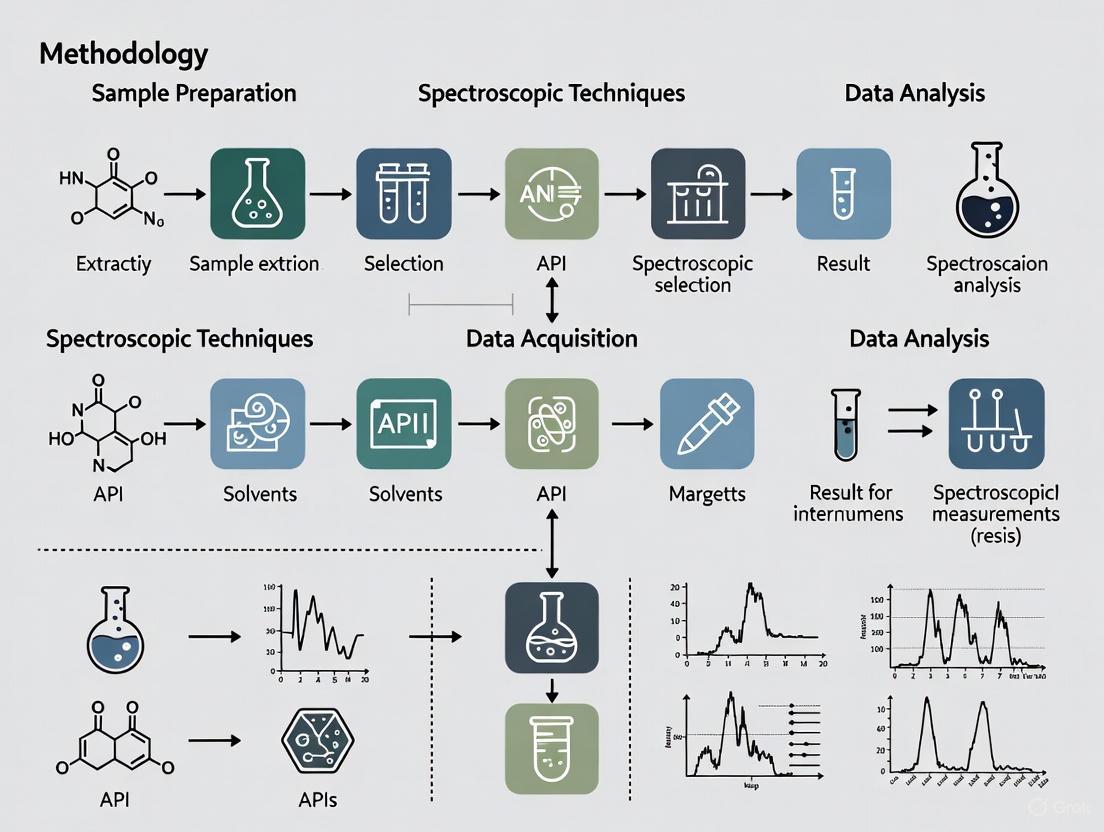
This article provides a comprehensive overview of green spectroscopic methodologies for the analysis of Active Pharmaceutical Ingredients (APIs), addressing the pharmaceutical industry's need for sustainable, efficient, and compliant analytical techniques.
Green Spectroscopic Analysis of APIs: Sustainable Methodologies for Modern Pharmaceutical Development
Abstract
This article provides a comprehensive overview of green spectroscopic methodologies for the analysis of Active Pharmaceutical Ingredients (APIs), addressing the pharmaceutical industry's need for sustainable, efficient, and compliant analytical techniques. It explores the foundational principles of Green Analytical Chemistry (GAC) and their application across UV-Vis, NIR, MIR, and FT-IR spectroscopy. The content details practical method development, including chemometric modeling with PLS and advanced algorithms, in-line Process Analytical Technology (PAT) applications for real-time monitoring, and strategies for troubleshooting common spectral issues. A significant focus is placed on validation according to ICH guidelines and a comparative analysis of greenness using modern metric tools like AGREE, AES, and RGB models. Designed for researchers, scientists, and drug development professionals, this guide bridges the gap between analytical performance, regulatory requirements, and environmental responsibility.
Principles and Core Concepts of Green Spectroscopy in Pharma
Green Spectrometry represents a fundamental shift in analytical science, applying spectroscopic techniques with a pronounced emphasis on environmental responsibility and sustainability [1]. It is an environmentally conscious methodology within analytical chemistry that aims to mitigate the detrimental effects of analytical techniques on the natural environment and human health [2]. This approach emerges from the broader framework of Green Analytical Chemistry (GAC), which seeks to minimize the environmental footprint of analytical methods by reducing or eliminating dangerous solvents, reagents, and other materials while maintaining rigorous analytical performance [3] [4].
The driving force behind Green Spectrometry is a recognition that traditional analytical methods, while powerful, often involve significant consumption of chemicals, energy, and generate substantial waste [1]. In pharmaceutical analysis, where analytical procedures are employed at multiple stages from quality assurance of starting materials to finished product testing and stability studies, the cumulative environmental impact can be substantial [5]. Green Spectrometry addresses these concerns through a systematic application of green chemistry principles, focusing on miniaturization, reduced resource consumption, and inherently safer methodologies that maintain analytical precision and accuracy while dramatically lowering ecological impact [1] [4].
Core Principles of Green Spectrometry
The practice of Green Spectrometry is guided by several foundational principles derived from green chemistry but specifically adapted to spectroscopic analysis of active pharmaceutical ingredients (APIs).
Reduced Sample and Reagent Consumption
A fundamental principle involves minimizing the quantities of samples and chemical reagents required for analysis [1]. This approach directly translates to reduced waste generation and lower analytical costs. Techniques that enable this principle include micro-spectrometry and microvolume approaches that require only microliters of sample instead of milliliters traditionally used [1]. In practice, this manifests through miniaturized equipment, solvent-free methods, and direct analysis techniques that eliminate or drastically reduce sample preparation steps. For instance, the pressed pellet technique in FT-IR spectroscopy allows sample analysis without toxic solvents, significantly reducing chemical consumption compared to liquid chromatography methods [4].
Energy Efficiency Optimization
Spectroscopic instruments can consume considerable power, making energy optimization a crucial consideration [1]. Green Spectrometry encourages the use of energy-efficient instruments, optimization of measurement parameters to reduce analysis time, and adoption of techniques that inherently require less energy [1]. This principle extends to considering the total energy footprint of analytical procedures, including ancillary equipment such as ovens, chillers, and data processing systems. The development of portable spectrometers that typically have lower power requirements than their benchtop counterparts represents one advancement in this area [1].
Waste Minimization and Prevention
Rather than focusing solely on proper waste disposal, Green Spectrometry emphasizes waste prevention at the source [1]. This proactive approach involves developing methods that generate minimal waste through direct analysis techniques, reusable materials, and recovery systems for solvents and reagents [1]. The principle also encourages the design of methods that allow for sample reuse or that generate waste streams that are more easily treated or recycled. In pharmaceutical analysis, this might involve methods that eliminate derivatization steps or that use minimal quantities of green solvents [5].
Safer Solvents and Auxiliaries
Many conventional spectroscopic methods rely on hazardous solvents, creating potential risks for laboratory personnel and environmental burdens upon disposal [1]. Green Spectrometry promotes the substitution of hazardous solvents with less toxic or bio-based alternatives [1]. Preferred solvents include water, ethanol, acetone, and supercritical carbon dioxide, which offer reduced toxicity and environmental persistence compared to traditional organic solvents [1] [5]. The principle extends beyond solvents to include all auxiliary substances used in spectroscopic analysis, including calibration standards, matrix modifiers, and separation media.
Inherently Safer Analysis
Overall, Green Spectrometry strives for inherently safer analytical chemistry by choosing methods that reduce potential for accidents, exposure to hazardous substances, and generation of dangerous waste streams [1]. This includes selecting spectroscopic techniques that require minimal sample manipulation, avoid high temperatures or pressures where possible, and utilize reagents with favorable safety profiles. FT-IR spectroscopy exemplifies this principle through its non-destructive nature and minimal sample preparation requirements [4].
Table 1: Core Principles of Green Spectrometry and Their Implementation
| Principle | Key Objectives | Implementation Examples |
|---|---|---|
| Reduced Consumption | Minimize sample and reagent volumes; Reduce waste generation | Micro-spectrometry; Solvent-free extraction; Direct analysis |
| Energy Efficiency | Lower power consumption; Optimize analysis time | Portable instruments; Method parameter optimization; Energy-efficient hardware |
| Waste Prevention | Eliminate waste at source; Enable recycling | Direct analysis; Reusable materials; Solvent recovery systems |
| Safer Solvents | Replace hazardous chemicals; Use renewable resources | Water/ethanol-based systems; Bio-based solvents; Supercritical CO₂ |
| Inherently Safer Analysis | Reduce hazards; Minimize exposure risks | Non-destructive methods; Minimal sample preparation; Benign reagents |
Quantitative Greenness Assessment Metrics
The evaluation of method greenness has evolved from qualitative assessments to sophisticated quantitative metrics that provide comprehensive environmental profiling of analytical procedures [3].
Established Greenness Assessment Tools
Multiple metric systems have been developed to evaluate the environmental performance of analytical methods, each with specific strengths and applications in spectroscopic method assessment.
NEMI (National Environmental Methods Index) was one of the first green assessment tools, using a simple pictogram with four criteria: whether reagents are persistent, toxic, corrosive, or whether waste generation exceeds 50g per sample [3]. While user-friendly, its binary pass/fail approach and limited scope restricted its utility for comprehensive method evaluation [3].
GAPI (Green Analytical Procedure Index) provides a more comprehensive visual assessment using a five-part color-coded pictogram that evaluates the entire analytical process from sample collection to final detection [3]. This tool allows visual identification of high-impact stages within a method, though it lacks an overall numerical score and can involve subjective color assignments [3].
AGREE (Analytical Greenness Metric) represents a significant advancement by providing both a unified circular pictogram and a numerical score between 0 and 1, based on the 12 principles of GAC [3]. This tool enhances interpretability and facilitates direct method comparisons, though it may not fully account for pre-analytical processes [3].
AES (Analytical Eco-Scale) applies penalty points to non-green attributes which are subtracted from a base score of 100 [3]. The resulting score enables direct comparison between methods but relies on expert judgment in assigning penalties and lacks a visual component [3].
Recent Advances in Greenness Metrics
The field continues to evolve with new metrics addressing specific limitations of earlier tools:
AGREEprep focuses specifically on evaluating the environmental impact of sample preparation, often the most resource-intensive step in analytical workflows [3]. It provides both visual and quantitative outputs but must be used alongside broader tools for complete method evaluation [3].
MoGAPI (Modified GAPI) retains the pictographic approach of GAPI while introducing cumulative scoring systems to improve comparability and clarity [4]. Recent applications in pharmaceutical analysis have demonstrated its utility for evaluating FT-IR methods [4].
AGSA (Analytical Green Star Analysis) uses a star-shaped diagram to represent performance across multiple green criteria including reagent toxicity, waste generation, energy use, and solvent consumption [3]. The total area of the star offers direct visual comparison between methods [3].
CaFRI (Carbon Footprint Reduction Index) addresses growing climate concerns by estimating and encouraging reduction of carbon emissions associated with analytical procedures [3]. This tool aligns analytical chemistry with broader environmental targets by considering the carbon footprint of different methodological stages [3].
Table 2: Greenness Assessment Metrics for Spectroscopic Methods
| Metric | Scoring System | Key Advantages | Limitations |
|---|---|---|---|
| NEMI | Binary pictogram (pass/fail) | Simple; User-friendly | Limited scope; No gradation of greenness |
| AES | Penalty points from 100 | Quantitative score; Method comparison | Subjective penalties; No visualization |
| GAPI | Color-coded pictogram | Visualizes entire process; Comprehensive | No overall score; Some subjectivity |
| AGREE | 0-1 score + circular pictogram | Comprehensive; User-friendly; Quantitative | Limited pre-analytical assessment |
| AGREEprep | 0-1 score + pictogram | Sample preparation focus; Quantitative | Narrow scope (preparation only) |
| MoGAPI | Numerical score + pictogram | Combines GAPI visuals with scoring | Emerging method; Limited adoption |
| AGSA | Star area + numerical score | Multi-criteria; Visual comparison | Complex calculation |
| CaFRI | Carbon reduction score | Climate impact focus; Lifecycle perspective | New method; Limited validation |
Experimental Protocol: Green FT-IR Spectroscopic Quantification of APIs
The following detailed protocol demonstrates the application of Green Spectrometry principles to the simultaneous quantification of amlodipine besylate (AML) and telmisartan (TEL) in pharmaceutical formulations using FT-IR spectroscopy [4].
Principle
This method utilizes Fourier Transform Infrared (FT-IR) spectroscopy for the simultaneous quantification of two antihypertensive drugs in combined dosage forms without using organic solvents. The method is based on measuring the area under the curve (AUC) of specific absorption peaks for each drug after conversion of transmittance spectra to absorbance spectra [4].
Experimental Workflow
Materials and Reagents
Table 3: Research Reagent Solutions and Essential Materials
| Item | Specification | Function | Green Characteristics |
|---|---|---|---|
| Potassium Bromide (KBr) | FT-IR grade, 99.9% purity | Matrix for pellet preparation; Non-absorbing in mid-IR | Low toxicity; Reusable; Minimal environmental impact |
| Standard AML | Pharmaceutical secondary standard | Calibration reference | Precise quantification enables minimal material usage |
| Standard TEL | Pharmaceutical secondary standard | Calibration reference | Enables trace analysis reducing overall chemical consumption |
| FT-IR Spectrometer | With DTGS detector | Spectral acquisition | Energy-efficient modern instrumentation |
| Hydraulic Press | 10-15 ton capacity | Pellet preparation | Reusable equipment; Minimal energy requirements |
| Mortar and Pestle | Agate material | Sample homogenization | Reusable; No disposable consumables |
Step-by-Step Procedure
Standard Preparation
- Primary Standard Solutions: Accurately weigh 10 mg each of AML and TEL reference standards using an analytical balance.
- KBr Mixture: Combine 1 mg of each drug standard with 100 mg of dry KBr powder in an agate mortar.
- Homogenization: Grind the mixture thoroughly for 5 minutes to ensure uniform distribution and particle size reduction (<5 µm).
- Pellet Formation: Transfer approximately 50 mg of the homogenized mixture to a 7mm die set and compress under 10-ton pressure for 2 minutes under vacuum to form a transparent pellet.
Sample Preparation
- Tablet Powder Preparation: Weigh and finely powder not less than 20 tablets using a mortar and pestle.
- Sample Extraction: Accurately weigh powder equivalent to 10 mg of combined APIs and mix with 100 mg KBr.
- Homogenization: Follow the same grinding procedure as for standards (Section 4.4.1, Step 3).
- Pellet Formation: Prepare pellets as described in Section 4.4.1, Step 4.
Instrumental Analysis
- Instrument Calibration: Background spectrum collection using pure KBr pellet.
- Spectral Acquisition:
- Scan range: 4000-400 cm⁻¹
- Resolution: 4 cm⁻¹
- Scans: 16 per spectrum
- Data Collection: Record transmittance spectra for all standards and samples.
- Data Conversion: Convert transmittance spectra to absorbance using instrument software.
Data Analysis
- Peak Selection: Identify characteristic peaks for each API - AML at 1206 cm⁻¹ (R-O-R stretching) and TEL at 863 cm⁻¹ (C-H out-of-plane bending) [4].
- Area Calculation: Measure area under curve (AUC) for selected peaks using Origin Pro software or equivalent.
- Calibration Curve: Plot AUC against concentration (%w/w) for each drug in the range of 0.2-1.2% w/w.
- Quantification: Determine sample concentrations using linear regression equations from calibration curves.
Method Validation
The method should be validated according to ICH guidelines including [4]:
- Specificity: Verify no interference from excipients at selected wave numbers.
- Linearity: Establish linear range with correlation coefficient (r²) >0.999.
- Precision: Evaluate repeatability (intra-day) and intermediate precision (inter-day) with RSD <2%.
- Accuracy: Conduct recovery studies at 80%, 100%, 120% levels with acceptable recovery of 98-102%.
- LOD/LOQ: Determine limits of detection and quantification demonstrating method sensitivity.
Greenness Evaluation and Comparative Analysis
Application of Greenness Metrics
The green FT-IR method for simultaneous quantification of AML and TEL was evaluated using multiple assessment tools, demonstrating its superior environmental profile compared to conventional HPLC methods [4].
Table 4: Comparative Greenness Assessment of FT-IR vs. HPLC Method
| Assessment Metric | FT-IR Method Score | HPLC Method Score | Key Advantages of FT-IR Method |
|---|---|---|---|
| MoGAPI | 89/100 | 45/100 | Higher scores in solvent usage, waste generation, energy consumption |
| AGREEprep | 0.8/1.0 | 0.4/1.0 | Superior sample preparation profile with minimal reagents |
| RGB Model | 87.2/100 | 52.5/100 | Balanced performance across all greenness dimensions |
| NEMI Pictogram | 4/4 green fields | 1/4 green fields | Meets all criteria for green solvents, low waste, and safety |
| Carbon Footprint | ~60% reduction | Baseline | Lower energy and solvent-related emissions |
Environmental Impact Analysis
The green FT-IR method demonstrates significant environmental advantages across multiple impact categories:
Solvent Elimination: Complete avoidance of organic solvents represents the most substantial green achievement, eliminating procurement, handling, storage, and disposal concerns associated with toxic solvents like acetonitrile and methanol typically used in HPLC methods [4].
Waste Minimization: The method generates minimal solid waste (primarily KBr, which can be recycled), contrasting sharply with HPLC methods that produce hundreds of milliliters of solvent waste per day of operation [4].
Energy Efficiency: FT-IR spectroscopy typically requires less energy than HPLC systems, which need significant power for pump operation, column heating, and detector systems. The elimination of lengthy separation steps further reduces energy consumption per analysis [1].
Operator Safety: The method eliminates exposure risks associated with organic solvent handling and reduces potential for accidents due to the simple procedural steps and benign materials [1].
Implementation in Pharmaceutical Research
Strategic Adoption Framework
Successful implementation of Green Spectrometry in pharmaceutical research requires a systematic approach:
Method Selection Criteria: Prioritize spectroscopic techniques based on their inherent green characteristics. FT-IR, NIR, and Raman spectroscopy typically offer greener profiles than methods requiring extensive sample preparation or hazardous solvents [1].
Technology Integration: Incorporate portable spectrometers for at-line analysis to reduce sample transport and enable real-time decision making [1]. Modern compact instruments provide analytical performance comparable to benchtop systems with significantly reduced footprint and energy requirements.
Workflow Optimization: Re-engineer analytical procedures to maximize green principles while maintaining data quality. This includes implementing direct analysis approaches, reducing procedural steps, and selecting benign reagents [4].
Green Spectrometry Applications in API Analysis
ATR-FTIR for Solid Dosage Forms: Attenuated Total Reflectance FT-IR enables direct analysis of tablets and powders without sample preparation, completely eliminating solvent use [1]. This approach has been successfully applied to quantification of APIs in various pharmaceutical formulations with minimal method development time.
Raman Spectroscopy for Process Monitoring: The minimal sample preparation requirements and ability to use fiber optic probes for in-situ analysis make Raman spectroscopy particularly suitable for green monitoring of pharmaceutical processes and reactions [1].
NIR for Raw Material Identification: Near-infrared spectroscopy provides rapid, non-destructive identification and quantification of APIs and excipients with minimal or no sample preparation, significantly reducing analytical time and resource consumption compared to traditional methods [1].
The implementation of Green Spectrometry principles through the specific methodologies and assessment frameworks detailed in this document enables pharmaceutical researchers to significantly reduce the environmental impact of analytical operations while maintaining the rigorous data quality required for drug development and quality control.
The Twelve Principles of Green Analytical Chemistry (GAC) and Their Practical Implications
Green Analytical Chemistry (GAC) has emerged as a fundamental discipline that integrates the principles of green chemistry into analytical methodologies, aiming to minimize the environmental impact of chemical analysis while maintaining high standards of accuracy and precision [6]. Originating in 2000 as an extension of green chemistry, GAC specifically addresses analytical chemistry techniques and procedures to decrease or eliminate dangerous solvents, reagents, and other materials while providing rapid and energy-saving methodologies that maintain essential validation parameters [3]. This approach represents a significant shift in how analytical challenges are approached, striving for environmental benignity without compromising analytical performance.
The foundation of GAC lies in the 12 principles of green chemistry established by Paul Anastas and John Warner, which provide a comprehensive framework for designing environmentally benign chemical processes [7] [8]. These principles emphasize waste prevention, atom economy, reducing hazardous chemicals, and using renewable raw materials, all of which are highly relevant to analytical chemistry practices [9]. The pharmaceutical industry, in particular, has embraced GAC to foster environmentally safer analytical methods, driven by both regulatory requirements and corporate sustainability goals [7] [10]. As environmental regulations tighten and industries shift towards greener practices, GAC equips chemists with the knowledge to create methods that are not only efficient but also environmentally responsible [6].
The Twelve Principles of Green Analytical Chemistry
The Twelve Principles of Green Chemistry provide a foundational framework for designing chemical processes and products that prioritize environmental and human health [9]. When applied to analytical techniques, these principles drive the development of methodologies that are safer, more efficient, and environmentally benign. The table below summarizes these principles and their specific implications for analytical chemistry.
Table 1: The Twelve Principles of Green Chemistry and Their Analytical Implications
| Principle | Core Concept | Analytical Chemistry Implications |
|---|---|---|
| 1. Prevention | Prevent waste rather than treat or clean up after formation | Design analytical methods that minimize or eliminate waste generation from sample preparation to final analysis [11] [8] |
| 2. Atom Economy | Maximize incorporation of all materials into final product | Optimize synthetic methods used in analytical chemistry to maximize product incorporation; though less directly applicable, it informs reaction choices in derivatization [11] [7] |
| 3. Less Hazardous Chemical Syntheses | Design synthetic methods using/generating substances with minimal toxicity | Select reagents and derivatizing agents with lower toxicity for sample preparation and analysis [11] [8] |
| 4. Designing Safer Chemicals | Design chemical products to preserve efficacy while reducing toxicity | Develop new reagents, derivatizing agents, and solvents that maintain analytical performance with reduced toxicity [11] |
| 5. Safer Solvents and Auxiliaries | Minimize use of auxiliary substances or use innocuous ones | Replace hazardous solvents with safer alternatives like water, ionic liquids, or bio-based solvents [9] [8] |
| 6. Design for Energy Efficiency | Recognize and minimize energy requirements of chemical processes | Employ energy-efficient techniques like ultrasound-assisted extraction and microwave-assisted processes [9] [8] |
| 7. Use of Renewable Feedstocks | Use renewable rather than depleting feedstocks | Utilize solvents and reagents derived from renewable resources in analytical procedures [9] [8] |
| 8. Reduce Derivatives | Minimize or avoid unnecessary derivatization | Avoid derivatization steps in analytical procedures unless absolutely necessary for detection or separation [8] |
| 9. Catalysis | Prefer catalytic reagents over stoichiometric reagents | Use catalytic rather than stoichiometric reagents in sample preparation and analytical reactions [9] [8] |
| 10. Design for Degradation | Design chemical products to break down into innocuous degradation products | Use reagents and solvents that biodegrade into non-hazardous substances after disposal [8] |
| 11. Real-time Analysis for Pollution Prevention | Develop analytical methodologies for real-time, in-process monitoring | Implement process analytical technology (PAT) for real-time monitoring to prevent hazardous substance formation [8] |
| 12. Inherently Safer Chemistry for Accident Prevention | Choose substances and forms to minimize accident potential | Select reagents and solvents with higher safety margins to minimize risks of explosions, fires, or releases [8] |
Greenness Assessment Tools and Metrics
The evaluation of analytical methods' environmental impact is crucial for implementing GAC principles effectively. Several assessment tools have been developed to quantify and compare the greenness of analytical procedures, enabling researchers to make informed decisions about method selection and optimization [3].
Evolution of Greenness Assessment Metrics
The field of GAC has witnessed significant evolution in assessment tools, progressing from basic binary indicators to comprehensive multi-criteria evaluation systems. The National Environmental Methods Index (NEMI) was an early tool that used a simple pictogram indicating whether a method complied with four basic environmental criteria [3]. While user-friendly, its binary structure limited its ability to distinguish degrees of greenness. Subsequent tools like the Analytical Method Volume Intensity (AMVI) focused specifically on solvent and reagent consumption in HPLC methods but overlooked other important factors like toxicity and energy usage [3].
The development of the Analytical Eco-Scale introduced a scoring system that assigns penalty points to non-green attributes, which are subtracted from a base score of 100, allowing for direct comparison between methods [3]. This was followed by the Green Analytical Procedure Index (GAPI), which offers a more comprehensive and visually intuitive approach by assessing the entire analytical process from sample collection through preparation to final detection using a five-part, color-coded pictogram [6] [3].
A significant advancement came with the Analytical Greenness (AGREE) metric, which is based on all 12 principles of GAC and provides both a unified circular pictogram and a numerical score between 0 and 1 [12] [3]. More recently, specialized tools have emerged, including AGREEprep for evaluating sample preparation procedures, Carbon Footprint Reduction Index (CaFRI) for estimating carbon emissions, and Analytical Green Star Analysis (AGSA) that uses a star-shaped diagram for multi-criteria assessment [12] [3].
Table 2: Comparison of Major Greenness Assessment Tools for Analytical Methods
| Assessment Tool | Type of Output | Key Parameters Evaluated | Strengths | Limitations |
|---|---|---|---|---|
| NEMI | Binary pictogram | Persistence, bioaccumulation, toxicity, waste generation | Simple, user-friendly | Limited discrimination, lacks comprehensiveness [3] |
| Analytical Eco-Scale | Numerical score (0-100) | Reagent amount and hazard, energy consumption, waste | Facilitates direct comparison | Relies on expert judgment, lacks visual component [3] |
| GAPI | Color-coded pictogram | Entire analytical process from sampling to detection | Comprehensive, visually intuitive | No overall score, somewhat subjective [3] |
| AGREE | Pictogram + numerical score (0-1) | All 12 GAC principles | Comprehensive, user-friendly interface | Doesn't fully account for pre-analytical processes [12] [3] |
| AGREEprep | Pictogram + numerical score | Sample preparation-specific parameters | Specialized for sample preparation | Must be used with broader tools for full method evaluation [12] |
| AGSA | Star diagram + numerical score | Reagent toxicity, waste, energy, solvent consumption | Intuitive visualization, integrated scoring | Newer tool with less established track record [3] |
White Analytical Chemistry: An Integrated Approach
A significant development in the field is the concept of White Analytical Chemistry (WAC), which presents a holistic approach that balances environmental, practical, and analytical considerations [12] [5]. WAC integrates three color-coded dimensions: the green component (environmental sustainability), the red component (analytical performance and functionality), and the blue component (methodological practicality) [12] [3]. This model acknowledges that a truly excellent analytical method must excel in all three dimensions simultaneously, creating a "white" combination of sustainability, analytical quality, and practical utility [5].
Diagram 1: White Analytical Chemistry (WAC) Integrated Model
Practical Implementation in Pharmaceutical Analysis
Green Spectroscopic Methods for API Analysis
The application of GAC principles to spectroscopic analysis of active pharmaceutical ingredients (APIs) has yielded significant advancements in sustainability without compromising analytical performance. UV spectrophotometric methods have been particularly successful in implementing green principles for pharmaceutical analysis [13]. Recent research has demonstrated the development of green UV spectrophotometric techniques for the simultaneous determination of ternary drug combinations containing Aceclofenac, Paracetamol, and Tramadol in pain reliever formulations [13].
These methods utilize advanced mathematical approaches such as the double divisor ratio spectra method (DDRSM) and area under the curve (AUC) calculations to accurately determine component concentrations without requiring extensive sample preparation or hazardous solvents [13]. The greenness assessment of these methodologies using metric tools confirmed their environmental sustainability while maintaining accuracy, precision, and reliability for pharmaceutical quality control [13].
Green Sample Preparation Techniques
Sample preparation is often the most resource-intensive and waste-generating step in analytical procedures, making it a primary target for green improvements. Ultrasound-assisted extraction (UAE) has emerged as a powerful green technique that significantly reduces extraction times, solvent consumption, and energy requirements compared to conventional methods [12]. A case study evaluating the determination of Mn and Fe in beef samples using UAE demonstrated that the method required only 10 minutes without harsh extractants or external heating, using only diluted acids [12].
Other innovative green sample preparation approaches include:
- Microwave-assisted extraction: Reduces extraction time and solvent volume through efficient energy transfer
- Solid-phase microextraction (SPME): Eliminates solvents entirely in some applications
- Switchable solvents: Allow for recycling and reuse of extraction solvents
- Miniaturized techniques: Dramatically reduce reagent consumption and waste generation
Table 3: Green Sample Preparation Techniques for Pharmaceutical Analysis
| Technique | Mechanism | Green Benefits | Pharmaceutical Applications |
|---|---|---|---|
| Ultrasound-Assisted Extraction (UAE) | Cavitation disrupts sample matrix | Reduced time (e.g., 10 min), minimal solvent, no heating [12] | Herbal medicines, solid dosage forms [12] |
| Microwave-Assisted Extraction | Efficient dielectric heating | Faster extraction, reduced solvent volume | Natural products, APIs from matrices [9] |
| Solid-Phase Microextraction | Sorption onto coated fiber | Solvent-free, minimal waste | Volatile impurities, residual solvents [9] |
| Switchable Solvents | CO₂-triggered polarity changes | Recyclable, reduced consumption | Extraction of acidic/basic pharmaceuticals [6] |
| Miniaturized LED | Reduced scale of operations | 90% less solvent, minimal waste [3] | All sample types, limited sample availability |
Experimental Protocol: Green Ultrasound-Assisted Extraction for Metal Analysis in Biological Samples
The following protocol outlines a specific green analytical method for metal determination in biological samples, demonstrating the practical application of GAC principles:
Objective: To determine manganese (Mn) and iron (Fe) in beef samples using ultrasound-assisted extraction followed by microwave-induced plasma atomic emission spectroscopy (MP AES) [12].
Principles Applied: Waste prevention (minimal waste generation), safer solvents (diluted acids), design for energy efficiency (ultrasound assistance) [12].
Materials and Equipment:
- Ultrasound bath with temperature control
- Microwave-induced plasma atomic emission spectrometer (MP AES)
- Nitric acid (trace metal grade)
- Hydrogen peroxide (30%, analytical grade)
- Deionized water
- Certified reference materials for quality control
Procedure:
- Sample Preparation: Homogenize 0.5 g of beef sample accurately weighed into a 50 mL extraction vessel.
- Green Extraction: Add 5 mL of diluted nitric acid (2% v/v) and 1 mL of hydrogen peroxide to the sample.
- Ultrasound-Assisted Extraction: Place the vessel in an ultrasound bath maintained at room temperature. Extract for 10 minutes at 40 kHz frequency.
- Separation: Centrifuge the extract at 4000 rpm for 5 minutes to separate particulate matter.
- Dilution: Transfer the supernatant to a 10 mL volumetric flask and dilute to volume with deionized water.
- Analysis: Introduce the sample to the MP AES system for simultaneous determination of Mn and Fe.
- Quantification: Use matrix-matched calibration standards for accurate quantification.
Method Validation:
- Linear calibration curves for Mn and Fe in the range of 0.01-1.0 mg/L
- Recovery studies using certified reference materials (85-105%)
- Precision expressed as RSD < 5%
- Limit of detection: 0.005 mg/L for both elements
Greenness Assessment: Evaluation using AGREEprep demonstrated a high greenness score for the sample preparation procedure, primarily due to minimal reagent consumption, avoidance of harsh chemicals, short extraction time, and energy efficiency [12].
Successful implementation of GAC requires access to appropriate tools, reagents, and methodologies. The following toolkit provides essential resources for researchers developing green spectroscopic methods for API analysis.
Table 4: Essential Research Reagent Solutions for Green Analytical Chemistry
| Tool/Resource | Function | Green Alternative | Application Context |
|---|---|---|---|
| AGREE Software | Comprehensive greenness assessment | Free downloadable tool evaluating all 12 GAC principles [6] | Method development and optimization [12] [6] |
| Green Solvent Selection Guide | Solvent replacement | Ranks solvents based on health, safety, environment [11] | HPLC mobile phase, extraction solvents [11] |
| Ionic Liquids | Alternative solvents | Low volatility, tunable properties, recyclable | Extraction, separation, analytical reactions [9] |
| Bio-Based Solvents | Renewable solvents | Derived from biomass (e.g., 2-methyltetrahydrofuran) [11] | Sample preparation, chromatography [9] |
| Switchable Solvents | Smart solvents | CO₂-triggered polarity switching for recycling [6] | Extraction and purification processes [6] |
| Water as Solvent | Benign replacement | Non-toxic, non-flammable, readily available | Suitable for many extraction and analytical processes [9] |
| Supercritical CO₂ | Alternative solvent | Non-toxic, easily removed, tunable solvation | Extraction, chromatography (SFC) [9] |
The adoption of Green Analytical Chemistry principles represents a paradigm shift in pharmaceutical analysis, moving toward sustainable practices that reduce environmental impact while maintaining analytical excellence. The twelve principles of GAC provide a comprehensive framework for developing spectroscopic and other analytical methods that minimize waste, reduce energy consumption, and prioritize safety [8]. The emergence of assessment tools like AGREE, GAPI, and AGREEprep enables quantitative evaluation of method greenness, while the White Analytical Chemistry model offers a holistic approach balancing environmental, analytical, and practical considerations [12] [5] [3].
Future developments in GAC are likely to focus on several key areas. The integration of artificial intelligence and machine learning will enable more efficient optimization of green methods and prediction of method environmental impact [9] [7]. The continued development of green solvent alternatives and their application in pharmaceutical analysis will further reduce the environmental footprint of analytical methods [9]. Additionally, the harmonization of greenness assessment metrics will facilitate more consistent evaluation and comparison of analytical methods across different laboratories and sectors [3].
For researchers working on spectroscopic analysis of APIs, embracing GAC principles not only contributes to environmental sustainability but also often results in more efficient, cost-effective, and safer analytical procedures. The practical protocols and tools outlined in this article provide a foundation for implementing these principles in both research and quality control settings, supporting the pharmaceutical industry's transition toward more sustainable practices.
The principles of Green Analytical Chemistry (GAC) are transforming pharmaceutical analysis by promoting environmentally sustainable laboratory practices. This application note provides a comprehensive overview of green spectroscopic techniques—UV-Vis, NIR, MIR, and FT-IR—framed within a broader thesis on methodological approaches for green spectroscopic analysis of active pharmaceutical ingredients (APIs). These non-destructive, solvent-free techniques minimize waste generation, reduce energy consumption, and eliminate toxic reagents while maintaining high analytical precision and accuracy. We detail experimental protocols, application-specific case studies, and greenness assessment metrics to guide researchers and drug development professionals in implementing these sustainable methodologies for API identification, quantification, and process monitoring in alignment with regulatory initiatives such as Process Analytical Technology (PAT).
The pharmaceutical industry is increasingly adopting Green Analytical Chemistry (GAC) principles to reduce the environmental impact of analytical methods while maintaining rigorous performance standards [5]. Traditional chromatographic methods for API analysis often require substantial quantities of organic solvents, lengthy analysis times, and complex sample preparation, generating significant chemical waste [4] [14]. Vibrational spectroscopic techniques offer compelling green alternatives by typically requiring minimal or no sample preparation, eliminating solvent consumption, and providing rapid, non-destructive analysis capabilities [5].
The transition to green spectroscopy supports the Process Analytical Technology (PAT) framework initiated by the US Food and Drug Administration, which encourages innovative approaches to enhance pharmaceutical manufacturing understanding and control [15]. This application note explores four key spectroscopic techniques—UV-Vis, NIR, MIR, and FT-IR—within the context of green API analysis, providing detailed protocols, application examples, and comparative assessment to facilitate their adoption in research and quality control environments.
Technique Principles and Green Characteristics
Fundamental Principles
UV-Vis Spectroscopy measures electronic transitions in molecules when exposed to ultraviolet (200-400 nm) and visible (400-800 nm) light, resulting in characteristic absorption spectra [16]. The technique is widely used for quantitative analysis of APIs due to its simplicity, robustness, and compliance with pharmacopeial standards [16].
Near-Infrared (NIR) Spectroscopy utilizes the spectral range from 800 to 2500 nm (12,500-4,000 cm⁻¹) to measure overtone and combination bands of fundamental molecular vibrations [17]. These weak absorption characteristics enable direct analysis of solid and liquid samples without dilution or preparation [18].
Mid-Infrared (MIR) Spectroscopy probes the fundamental vibrational modes of molecules in the 4000-400 cm⁻¹ range (2.5-25 μm), providing unique molecular "fingerprints" for precise identification and quantification [19] [15]. Fourier Transform Infrared (FT-IR) spectroscopy enhances MIR capabilities through interferometric measurement and Fourier transformation, yielding superior spectral resolution and signal-to-noise ratios [19] [17].
Greenness Assessment
The greenness of these spectroscopic techniques can be evaluated using multiple metric systems:
- AGREEprep and MoGAPI tools provide comprehensive assessment of environmental impact [4]
- White Analytical Chemistry (WAC) framework balances ecological factors with analytical performance and practical utility [5]
- RGB model offers simplified greenness scoring on a 0-100 scale [4]
These assessment tools consistently demonstrate the superior greenness profiles of spectroscopic methods compared to traditional chromatographic approaches due to their minimal solvent consumption, reduced waste generation, and lower energy requirements [4] [5].
Table 1: Greenness Assessment of Spectroscopic Techniques
| Technique | Solvent Consumption | Waste Generation | Energy Requirements | Sample Preparation |
|---|---|---|---|---|
| UV-Vis | Low to moderate | Low to moderate | Low | Minimal |
| NIR | None | None | Low | None |
| MIR | None | None | Low to moderate | Minimal |
| FT-IR | None | None | Moderate | Minimal |
Application Notes
UV-Vis Spectroscopy in Pharmaceutical Analysis
UV-Vis spectroscopy serves as a well-established technique for pharmaceutical quality control, particularly for dissolution testing, impurity quantification, and content uniformity assessment [16]. Its compliance with United States Pharmacopeia (USP) and European Pharmacopoeia (EP) monographs makes it particularly valuable for regulated environments.
Representative Case Study: Ibuprofen analysis according to USP and EP monographs demonstrates UV-Vis application for chemical identity confirmation and purity assessment using validated methodologies [16]. The technique provides rapid results with minimal method development, though it typically requires sample dissolution, which moderately reduces its greenness profile compared to solvent-free techniques.
NIR Spectroscopy for Process Monitoring
NIR spectroscopy excels as a PAT tool for real-time monitoring of pharmaceutical manufacturing processes, including blend uniformity, drying, and granulation [14] [18]. The technique's ability to analyze samples through glass and packaging materials enables non-destructive testing of final products.
Representative Case Study: Quantitative analysis of dexketoprofen in powder blends and coated tablets demonstrates NIR's capability for API determination across multiple production steps [14]. The method achieved prediction errors of 1.01% for granulated samples and 1.63% for tablets, comparable to reference chromatographic methods but with significantly reduced analysis time and no solvent consumption [14].
MIR and FT-IR for API Identification
MIR spectroscopy provides definitive structural elucidation through fingerprint region analysis (4000-400 cm⁻¹), enabling unambiguous API identification [19] [20]. FT-IR enhances these capabilities with improved sensitivity and resolution.
Representative Case Study: API identification in commercial antihistamine tablets using FT-IR with Attenuated Total Reflection (ATR) accessory successfully identified fexofenadine hydrochloride in Allevia, cetirizine dihydrochloride in Piriteze, and loratadine in Tesco Health products [20]. Characteristic carbonyl stretching vibrations in the 1600-1800 cm⁻¹ region provided distinct identification markers for each API [20].
Advanced MIR Techniques
Quantum Cascade Laser (QCL) technology represents an advanced MIR approach with enhanced sensitivity and specificity for pharmaceutical analysis [15]. The high brightness of QCL sources enables diffuse reflectance measurements with superior signal-to-noise ratios compared to conventional FT-IR.
Representative Case Study: Ibuprofen quantification in powder blends and tablets using QCL spectroscopy demonstrated accurate analysis across a concentration range of 0-21% (w/w) with high sensitivity (0.05% w/w) and repeatability (2.7% w/w) [15]. This approach shows particular promise for content uniformity and blend uniformity assessment in PAT applications.
Table 2: Comparative Analysis of Green Spectroscopic Techniques for API Analysis
| Technique | Primary Applications | Green Advantages | Limitations | Greenness Score (RGB) |
|---|---|---|---|---|
| UV-Vis | Quantitative analysis, dissolution testing, impurity profiling | Rapid analysis, compliance with pharmacopeial standards | Often requires solvents for dissolution | 75.2 [5] |
| NIR | Process monitoring, raw material ID, content uniformity | Non-destructive, no sample preparation, through-package analysis | Weak absorption signals require chemometrics | 87.2 [4] |
| FT-IR | API identification, polymorph screening, quality control | Specific molecular fingerprints, minimal sample preparation | Sample thickness limitations for transmission | 89.0 [4] |
| MIR (QCL) | High-sensitivity quantification, blend uniformity | High specificity, low detection limits, minimal sample preparation | Higher instrument cost, specialized equipment | Information missing |
Experimental Protocols
Green FT-IR Protocol for API Identification in Antihistamine Tablets
This protocol outlines a solvent-free method for identifying APIs in solid dosage forms using FT-IR spectroscopy with ATR accessory [20].
4.1.1 Research Reagent Solutions
Table 3: Essential Materials for FT-IR API Identification
| Material/Equipment | Specifications | Function/Purpose |
|---|---|---|
| FT-IR Spectrometer | Edinburgh Instruments IA30 or equivalent | Spectral acquisition |
| ATR Accessory | Diamond crystal | Sample presentation without preparation |
| Analytical Balance | 0.1 mg precision | Sample weighing (if needed) |
| Solid Dosage Forms | Tablets, capsules | Analysis samples |
| Spectral Library | KnowItAll or equivalent | API identification reference |
4.1.2 Procedure
Sample Preparation:
- Gently grind a representative portion of the tablet into a fine powder using an agate mortar and pestle.
- Apply minimal pressure to avoid altering crystal morphology.
Spectrum Acquisition:
- Place a small amount of powder directly onto the ATR crystal.
- Apply consistent pressure using the instrument's anvil to ensure proper crystal contact.
- Collect spectra using the following parameters:
- Spectral range: 4000-400 cm⁻¹
- Resolution: 4 cm⁻¹
- Scans: 32
- Apodization: Happ-Genzel
Data Analysis:
- Process spectra using atmospheric suppression and baseline correction algorithms.
- Compare sample spectrum against reference spectral library.
- Identify characteristic absorption bands for API confirmation (e.g., C=O stretch ~1700 cm⁻¹, C-N stretch ~1300 cm⁻¹) [20].
Figure 1: FT-IR API Identification Workflow
Green NIR Protocol for API Quantification in Powder Blends
This protocol describes a non-destructive method for quantifying API content in pharmaceutical powder blends using NIR spectroscopy and multivariate calibration [14].
4.2.1 Research Reagent Solutions
Table 4: Essential Materials for NIR API Quantification
| Material/Equipment | Specifications | Function/Purpose |
|---|---|---|
| FT-NIR Spectrometer | Antaris II or equivalent | Spectral acquisition in reflectance mode |
| Powder Blends | Varying API concentrations (75-120 mg/g) | Calibration and validation samples |
| Quartz Sample Cup | Standard size for spectrometer | Consistent sample presentation |
| Multivariate Software | Unscrambler v. 9.2 or equivalent | Chemometric modeling |
4.2.2 Procedure
Calibration Set Preparation:
- Prepare laboratory samples with API concentrations spanning the expected range (75-120 mg/g).
- Include production samples to incorporate process variability.
- Mix samples thoroughly using a Turbula shaker until spectral stabilization.
Spectrum Acquisition:
- Place powder samples in a quartz cell under consistent packing pressure.
- Collect reflectance spectra using the following parameters:
- Wavenumber range: 1100-2498 nm
- Scans: 32 per spectrum
- Resolution: 2 nm
- Record triplicate spectra with sample turnover between measurements.
Multivariate Model Development:
- Apply spectral pretreatments: Standard Normal Variate (SNV) and second derivatives (Savitzky-Golay, 11-point window).
- Develop Partial Least Squares (PLS) calibration models using cross-validation.
- Select optimal factors based on minimum Prediction Residual Error Sum of Squares (PRESS).
- Validate models using external validation sets.
Figure 2: NIR API Quantification Workflow
Green UV-Vis Protocol for Simultaneous API Quantification
This protocol describes an environmentally friendly UV-Vis method for simultaneous quantification of multiple APIs in pharmaceutical formulations [4].
4.3.1 Research Reagent Solutions
Table 5: Essential Materials for UV-Vis API Quantification
| Material/Equipment | Specifications | Function/Purpose |
|---|---|---|
| UV-Vis Spectrophotometer | GENESYS or Evolution series | Absorbance measurement |
| Potassium Bromide | FT-IR grade | Pellet preparation (solid samples) |
| Quartz Cuvettes | 1 cm path length | Sample containment for liquids |
| Analytical Software | Origin Pro or equivalent | Data processing and calibration |
4.3.2 Procedure
Sample Preparation (Solid Dosage Forms):
- For solid samples, prepare pellets using potassium bromide pressed pellet technique.
- For liquid samples, direct analysis without dilution is possible.
Spectrum Acquisition:
- Collect transmission spectra of standards and samples.
- Convert transmittance to absorbance spectra.
- Identify characteristic absorption peaks for each API.
Quantitative Analysis:
- Measure area under curve (AUC) for selected characteristic peaks.
- Construct calibration curves plotting AUC against concentration (%w/w).
- Validate method following ICH guidelines for specificity, linearity, precision, and accuracy.
Greenness Assessment Protocol
Comprehensive Methodology Evaluation
Assess the environmental impact of spectroscopic methods using multiple greenness assessment tools [4] [5]:
MoGAPI (Modified Green Analytical Procedure Index) Evaluation:
- Assess 10 parameters including sample preparation, reagents, and waste.
- Calculate total score (higher values indicate greener methods).
AGREEprep (Analytical Greenness for Sample Preparation) Assessment:
- Evaluate sample preparation environmental impact across multiple criteria.
- Generate score on 0-1 scale (closer to 1 indicates greener method).
RGB (Red-Green-Blue) Model Application:
- Calculate overall greenness score (0-100 scale).
- Compare with reference methods (e.g., HPLC).
White Analytical Chemistry (WAC) Implementation:
- Balance analytical criteria (red), ecological criteria (green), and practical criteria (blue).
- Achieve whiteness when all three aspects are optimized.
Greenness Comparison Data
Table 6: Greenness Assessment Scores for Spectroscopic Methods
| Analytical Method | MoGAPI Score | AGREEprep Score | RGB Score | Overall Greenness |
|---|---|---|---|---|
| FT-IR Spectroscopy | 89 [4] | 0.8 [4] | 87.2 [4] | Excellent |
| NIR Spectroscopy | Information missing | Information missing | Information missing | Excellent |
| UV-Vis Spectroscopy | Information missing | Information missing | 75.2 [5] | Very Good |
| Reference HPLC Method | Information missing | Information missing | 62.5 [4] | Moderate |
Green spectroscopic techniques—UV-Vis, NIR, MIR, and FT-IR—offer environmentally sustainable alternatives to traditional chromatographic methods for API analysis while maintaining rigorous analytical performance. These approaches align with GAC principles by minimizing solvent consumption, reducing waste generation, and enabling non-destructive analysis. The detailed protocols and case studies presented in this application note demonstrate practical implementation strategies for pharmaceutical research and quality control environments. As spectroscopic technologies continue to advance with innovations such as QCL and hyperspectral imaging, their application in green pharmaceutical analysis will expand, further enhancing sustainability in drug development and manufacturing processes.
In the field of analytical chemistry, particularly in the green spectroscopic analysis of active pharmaceutical ingredients (APIs), the adoption of standardized greenness assessment tools is crucial for evaluating the environmental impact of methodologies. The principles of Green Analytical Chemistry (GAC) have driven the development of several metric tools designed to quantify the sustainability, safety, and eco-friendliness of analytical procedures [21]. Among these, the National Environmental Methods Index (NEMI), Analytical Eco-Scale (AES), and the Analytical GREEnness (AGREE) metric have emerged as foundational tools. These metrics help researchers and drug development professionals make informed decisions by providing standardized, quantitative, and visual assessments of method greenness, aligning analytical practices with the 12 principles of GAC [22]. Their application ensures that the development of new spectroscopic methods for API analysis not only maintains analytical rigor but also minimizes environmental impact by reducing hazardous waste, energy consumption, and the use of toxic solvents [4] [23].
The following table summarizes the core attributes of the three key greenness assessment tools, providing a baseline for their comparison and application.
Table 1: Comparison of Key Greenness Assessment Tools
| Metric Tool | Primary Focus | Assessment Output | Number of Criteria | Key Strengths | Reported Limitations |
|---|---|---|---|---|---|
| NEMI [21] | Environmental impact & safety | Pictogram (4 quadrants) | 4 | Simple, quick visualization | Binary assessment; limited criteria |
| Analytical Eco-Scale (AES) [22] | Overall environmental impact | Quantitative score | Not specified in results | Provides a total score for easy comparison | Lacks visual representation |
| AGREE [21] [22] | Alignment with 12 GAC Principles | Score (0-1) & colored pictogram | 10 | Comprehensive, user-friendly software, visual and numerical output | Less resistant to user bias |
Detailed Tool Protocols and Applications
AGREE (Analytical GREEnness Metric) Protocol
The AGREE metric is a modern, comprehensive tool explicitly structured around the 12 principles of Green Analytical Chemistry [22]. It is designed to provide a holistic greenness assessment.
Experimental Protocol for AGREE:
- Software Access: Utilize the open-source AGREE software, typically available online.
- Data Input: For each of the 12 principles, input the required methodological data. This includes, but is not limited to:
- Amount and toxicity of solvents/reagents used.
- Energy consumption of the instrumentation.
- Waste generation and its management.
- Health and safety hazards for the operator.
- Throughput and degree of automation.
- Weight Assignment (Optional): Assign relative weights to each criterion based on the assessment's goal. Default weights can be used if no specific priority is required [21].
- Calculation and Visualization: The software automatically calculates an overall score between 0 and 1 and generates a circular pictogram. The pictogram is divided into 12 sections, each corresponding to one GAC principle, with colors ranging from red (poor) to green (excellent) to represent the performance in each category [22].
Application Example: A green FT-IR method for quantifying antihypertensive drugs in tablets was evaluated using AGREEprep (a derivative for sample preparation). The method, which used a solventless pressed pellet technique, achieved a high score of 0.8, visually confirming its excellent greenness profile [4].
NEMI (National Environmental Methods Index) Protocol
NEMI is one of the earlier and simpler green assessment tools. Its evaluation is based on four primary environmental and safety criteria [21].
Experimental Protocol for NEMI:
- Data Collection: Gather the following information from the analytical method:
- Persistence: Whether any chemical used is "persistent" (P) and/or "bioaccumulative" (B) as listed in the US Environmental Protection Agency's Toxic Release Inventory (TRI).
- Hazardousness: Whether any reagent is listed on the TRI as "hazardous".
- Corrosivity: Whether the pH of the waste solution is ≤2 or ≥12.
- Waste Amount: Whether the total waste generated per sample is >50 g.
- Pictogram Generation: A pictogram with four quadrants is used. A quadrant is filled with green only if the method meets the green criterion for that category (i.e., it is not persistent, not hazardous, not corrosive, and generates ≤50 g of waste) [21].
Application Example: A method that uses a small volume of a mildly acidic, non-hazardous solvent and generates 30 g of waste would have all four quadrants colored green. If the same method used a TRI-listed hazardous solvent, the "hazardous" quadrant would be left blank.
Analytical Eco-Scale (AES) Protocol
The Analytical Eco-Scale is a semi-quantitative tool that calculates a total score by penalizing an ideal baseline of 100 points for each element of the method that is not environmentally ideal [22].
Experimental Protocol for Analytical Eco-Scale:
- Establish Baseline: Start with a perfect score of 100.
- Assign Penalty Points: Subtract points for each parameter based on its environmental impact. Penalties are assigned for:
- Reagents: Amount, toxicity (e.g., based on GHS hazard statements), and disposal cost.
- Energy Consumption: The type and amount of energy used by the instrument.
- Occupational Hazards: The required personal protective equipment (PPE) indicates a higher hazard and incurs a penalty.
- Waste: The quantity and treatment requirements.
- Calculate Final Score: The final score is calculated as:
AES Score = 100 - Total Penalty Points. - Interpret Results: An AES score >75 is considered excellent green analysis, a score >50 is acceptable, and a score <50 is inadequate [22].
Advanced Considerations and Emerging Tools
While NEMI, AES, and AGREE are foundational, the field of green metrics is continuously evolving. Key considerations for advanced application include:
- Weighting of Criteria: The overall result of an assessment can be critically dependent on the weights applied to each criterion. Some tools like AGREE allow users to adjust weights, offering flexibility to reflect specific analytical goals, though default weights are often used [21].
- Tool Limitations: Simpler tools like NEMI provide a quick visual but lack granularity due to their binary (yes/no) assessment for each criterion [21]. AES provides a quantitative score but lacks a visual component [22].
- Emerging Tools: Newer metrics have been developed to address the limitations of earlier ones. The Analytical Green Star Area (AGSA), for example, integrates built-in scoring, method classification, and a visual star-shaped diagram while being explicitly aligned with the 12 principles of GAC [22]. Other models like the Multi-color Assessment (MA) tool and the Need–Quality–Sustainability (NQS) index offer unified evaluation of a method's greenness, practicality, performance, and innovation [23].
The Scientist's Toolkit: Essential Reagents and Materials
Table 2: Key Research Reagents and Materials for Green Spectroscopic Analysis
| Item | Function in Green Analysis | Example & Green Rationale |
|---|---|---|
| Potassium Bromide (KBr) | Matrix for preparing solid pellets in FT-IR spectroscopy [4]. | Enables solventless analysis of solid APIs, eliminating hazardous solvent waste. |
| Ethanol-Water Mixtures | Green solvent for UV-spectrophotometric analysis [23]. | Replaces toxic organic solvents like acetonitrile or methanol; biodegradable and less hazardous. |
| Chemometric Software | For multivariate calibration and data resolution (e.g., PLS, MCR-ALS) [23]. | Resolves overlapping spectra without requiring complex, resource-intensive separation steps. |
| Fourier Transform Infrared (FT-IR) Spectrometer | Instrument for vibrational spectroscopic analysis [4]. | Requires minimal energy, no solvents, and allows for rapid, precise quantification of APIs. |
Workflow for Green Method Development and Assessment
The following diagram illustrates a logical workflow for developing and assessing a green spectroscopic method, integrating the discussed metric tools.
Green Method Assessment Workflow
The AGREE, AES, and NEMI metrics provide a structured and multi-faceted approach for quantifying the environmental friendliness of analytical methods, which is indispensable for modern research on the spectroscopic analysis of APIs. While each tool has its strengths—from the simplicity of NEMI to the comprehensiveness of AGREE—their combined or selective application empowers scientists to make informed, sustainable choices. The ongoing development of more refined tools like AGSA and NQS ensures that the field of analytical chemistry continues to advance towards greater sustainability without compromising the quality and reliability of scientific data.
The Role of Green Spectroscopy in Regulatory Frameworks and PAT Initiatives
Process Analytical Technology (PAT) has emerged as a fundamental pillar in the pharmaceutical industry, helping industrial processes become more efficient, sustainable, safer, and reliable for more than two decades [24]. The framework, as outlined by regulatory bodies, encompasses tools for design, analysis, and control of manufacturing processes through timely measurements of critical quality attributes [25]. Simultaneously, the principles of Green Analytical Chemistry (GAC) have gained significant traction, focusing on reducing the environmental impact of analytical methods by minimizing hazardous waste, energy consumption, and the use of toxic solvents [26].
Green spectroscopy represents the convergence of these two domains, utilizing vibrational and fluorescence spectroscopic techniques that align with GAC principles while supporting PAT initiatives for real-time monitoring and control. This integration is particularly crucial given that many official standard methods still rely on resource-intensive, outdated techniques, with 67% of evaluated methods scoring below 0.2 on the AGREEprep scale (where 1 represents the highest possible score) [27]. The pharmaceutical industry is now actively seeking greener alternatives to reduce its environmental footprint, with over 60 known instances of pharmaceutical entities implementing green chemistry in research and manufacturing [28].
Theoretical Framework and Synergies
The Twelve Principles of Green Analytical Chemistry
The foundation of green spectroscopy lies in the adaptation of Warner and Anastas's twelve principles of green chemistry to analytical practices [26]. These principles have been specifically tailored to analytical chemistry, emphasizing the need for direct analytical techniques that eliminate or significantly reduce sample preparation stages, thus minimizing solvent consumption and waste generation. The principles prioritize methods that are inherently safer, more energy-efficient, and capable of providing real-time data for process control [26] [28].
PAT Initiatives and Regulatory Drivers
The PAT framework, as promoted by regulatory agencies including the FDA and embodied in initiatives like Quality by Design (QbD), encourages real-time monitoring of critical process parameters to ensure final product quality [24] [25]. This alignment with green spectroscopy is natural, as many spectroscopic techniques used in PAT (e.g., NIR, MIR, Raman) are inherently greener than traditional chromatographic methods, requiring little to no solvent consumption and enabling non-invasive measurements [24] [4].
European regulations, particularly the European Green Deal and REACH, are creating additional drivers for adopting green spectroscopy within PAT frameworks. These regulations push for carbon neutrality by 2050 and impose stricter controls on hazardous substances, making the environmental profile of analytical methods a regulatory consideration alongside traditional performance metrics [28] [29].
Complementary Relationship
The relationship between green spectroscopy and PAT is fundamentally synergistic, as illustrated below:
This synergy creates a powerful framework for developing analytical methods that simultaneously address regulatory requirements for process understanding and control while advancing sustainability goals in pharmaceutical manufacturing.
Green Spectroscopic Techniques in PAT
Comparative Analysis of Techniques
Various spectroscopic techniques offer distinct advantages and limitations for pharmaceutical analysis within PAT frameworks. The table below provides a comparative assessment of the most commonly employed green spectroscopic methods:
Table 1: Comparison of Green Spectroscopic Techniques in PAT Applications
| Technique | Greenness Advantages | PAT Applications | Limitations | Regulatory Acceptance |
|---|---|---|---|---|
| FT-IR [4] | Solvent-free analysis (KBr pellets); Minimal waste generation; Low energy requirements | API quantification in formulations; Polymorph identification; Reaction monitoring | Limited sensitivity for low-concentration analytes; Spectral overlap in complex mixtures | Well-established in pharmacopoeias; Suitable for real-time release |
| NIR [24] [25] | Non-invasive measurements; No sample preparation; Through-container analysis possible | Content uniformity; Blend homogeneity; Moisture analysis; Solvent recovery monitoring | Complex chemometrics required; Limited to bulk analysis; Lower specificity than MIR | Widely referenced in PAT guidance; Extensive pharmacopoeia references |
| Raman [25] [30] | Minimal sample preparation; Water-compatible; Fiber optic probe capability | Crystallization monitoring; Bioprocess monitoring; Polymorph characterization | Fluorescence interference; Potential sample damage at high laser power | Growing regulatory acceptance; Included in modern pharmacopoeias |
| Fluorescence [30] | High sensitivity; Low sample volume; Minimal waste generation | Bioprocess monitoring; Protein quantification; Cell culture monitoring | Limited to fluorescent compounds; Background interference | Emerging in PAT applications; Particularly for biologics |
Greenness Assessment Metrics for Spectroscopic Methods
The evaluation of analytical method greenness has been standardized through several metric tools, enabling objective comparison between conventional and green spectroscopic methods:
Table 2: Greenness Assessment Metrics for Analytical Methods [26] [31]
| Metric Tool | Scoring System | Assessment Criteria | Output Type | Application in Spectroscopy |
|---|---|---|---|---|
| AGREE [31] | 0-1 (1 = greenest) | 12 principles of GAC; Weighted calculation | Pictorial with overall score | Comprehensive method evaluation |
| AGREEprep [27] | 0-1 (1 = greenest) | 10 sample preparation criteria | Pictorial with overall score | Sample preparation steps in spectroscopy |
| NEMI [31] | 4-quadrant pictogram | Persistence, bioaccumulation, toxicity, waste | Qualitative pictogram | Quick visual assessment |
| GAPI [26] | 5-step pictogram | Entire method lifecycle from sampling to waste | Semi-quantitative pictogram | Detailed environmental impact |
| Analytical Eco-Scale [31] | Numerical score (ideal = 100) | Penalty points for hazardous reagents/energy | Quantitative score | Direct comparison between methods |
Application Note: Green FT-IR Spectroscopy for API Quantification
Experimental Protocol
Scope and Application
This protocol describes a green FT-IR spectroscopic method for simultaneous quantification of amlodipine besylate (AML) and telmisartan (TEL) in pharmaceutical tablet formulations, eliminating the use of hazardous solvents while maintaining compliance with PAT requirements for real-time analysis [4].
Principle
The method follows the pressed pellet technique using potassium bromide (KBr). Quantitative analysis is based on the Beer-Lambert law, where the area under the absorption curve in specific infrared regions correlates with API concentration [4].
Materials and Equipment
Table 3: Research Reagent Solutions and Essential Materials
| Item | Specification | Function | Greenness Consideration |
|---|---|---|---|
| FT-IR Spectrometer | Fourier-transform type with DLATGS detector | Spectral acquisition | Energy-efficient modern instruments preferred |
| Hydraulic Press | Capable of 10-15 tons pressure | KBr pellet preparation | Reusable equipment minimizes waste |
| Potassium Bromide (KBr) | FT-IR grade, 99.9% purity | Matrix for pellet preparation | Minimal waste generation; recyclable |
| Standard API | USP/EP reference standards | Calibration curve construction | Minimal quantities required |
| Tablet Formulations | Marketed combination products | Sample analysis | Direct analysis without destructive pretreatment |
Detailed Methodology
Step 1: Instrument Calibration and Setup
- Configure FT-IR spectrometer with the following parameters: resolution of 4 cm⁻¹, scanning range of 4000-400 cm⁻¹, and 32 scans per measurement [4].
- Ensure environmental controls (humidity <40%) as KBr is hygroscopic.
Step 2: Preparation of Standard Calibration Curve
- Prepare standard mixtures of AML and TEL in the range of 0.2-1.2% w/w in KBr matrix [4].
- For each standard, accurately weigh 200 mg KBr and appropriate API quantities, mix geometrically, and grind to uniform particle size.
- Transfer approximately 150 mg of the mixture to a 13 mm die set and compress at 10 tons for 2 minutes to form transparent pellets.
- Acquire spectra and convert transmittance to absorbance. Measure area under curve (AUC) for AML at 1206 cm⁻¹ (R-O-R stretching) and TEL at 863 cm⁻¹ (C-H out-of-plane bending) [4].
- Construct calibration curves plotting AUC against concentration for both APIs.
Step 3: Sample Preparation and Analysis
- Grind representative tablet samples to fine powder using a mortar and pestle.
- Weigh powder equivalent to average tablet weight and mix with KBr (1:100 ratio).
- Prepare pellets following the same procedure as standards.
- Acquire spectra and measure AUC at characteristic wavelengths.
- Calculate API concentrations using the established calibration equations.
Step 4: Method Validation
- Validate the method according to ICH Q2(R2) guidelines for specificity, linearity, accuracy, precision, LOD, LOQ, and robustness [4].
- Assess specificity by comparing sample spectra with placebo formulations to confirm absence of interference.
Step 5: Greenness Assessment
- Evaluate method greenness using AGREEprep, Analytical Eco-Scale, and GAPI metrics [4] [31].
- Compare results with conventional HPLC methods to demonstrate environmental advantages.
Workflow Visualization
The complete experimental workflow for green FT-IR analysis within a PAT framework is illustrated below:
Results and Discussion
The developed green FT-IR method demonstrates excellent analytical performance while significantly reducing environmental impact compared to conventional chromatographic methods. Validation results show linearity in the range of 0.2-1.2% w/w for both APIs, with LOD values of 0.009359% w/w for AML and 0.008241% w/w for TEL [4]. The method achieved AGREEprep and Analytical Eco-Scale scores significantly higher than reported HPLC methods, confirming its superior greenness profile [4].
When implemented within a PAT framework, this method enables real-time release of pharmaceutical products with minimal solvent consumption and waste generation. The elimination of hazardous solvents like acetonitrile and methanol commonly used in HPLC analysis reduces environmental impact while maintaining regulatory compliance [4] [31].
Implementation Strategies in Regulatory Frameworks
Integration with Quality by Design (QbD)
The successful implementation of green spectroscopy within PAT initiatives requires alignment with QbD principles. This involves identifying critical quality attributes (CQAs) measurable by spectroscopic methods and establishing design spaces for method operation [25]. For instance, in the FT-IR method described, critical parameters include pellet thickness, compression force, and grinding time, which must be controlled to ensure method robustness.
Regulatory Submission Considerations
When proposing green spectroscopic methods for regulatory submissions, the following elements should be addressed:
- Method Validation Data: Comprehensive validation following ICH Q2(R2) guidelines, demonstrating equivalence or superiority to compendial methods [4] [31].
- Greenness Assessment: Quantitative evaluation using standardized metrics (AGREE, GAPI, NEMI) to objectively demonstrate environmental benefits [26] [31].
- PAT Integration Strategy: Description of how the method will be implemented for real-time monitoring and control, including data management systems and control strategies [24] [25].
- Comparative Analysis: Statistical comparison (t-test, F-test) with reference methods to demonstrate equivalent or superior performance [4] [32].
Overcoming Implementation Barriers
The transition to green spectroscopic methods faces several challenges, including regulatory inertia and the conservative nature of pharmaceutical analysis. A recent study revealed that 86% of standard methods for environmental analysis of organic compounds scored below 0.2 on the AGREEprep scale, highlighting the urgent need for modernizing official methods [27]. To address this:
- Engage regulatory agencies early in method development through pre-submission meetings
- Develop comprehensive comparability protocols demonstrating equivalence to compendial methods
- Implement phased validation strategies starting with in-process controls before expanding to final product testing
- Provide training on green chemistry principles and spectroscopic applications for regulatory reviewers
Green spectroscopy represents a paradigm shift in pharmaceutical analysis, offering a sustainable alternative to traditional methods while aligning perfectly with PAT initiatives for real-time monitoring and control. The integration of solvent-free spectroscopic techniques like FT-IR, NIR, and Raman into regulatory frameworks addresses the growing demand for environmentally conscious pharmaceutical manufacturing without compromising product quality or patient safety.
The future of green spectroscopy in PAT will likely be shaped by several key developments, including the increased adoption of multi-analyze spectroscopic sensors, the integration of artificial intelligence for advanced data processing, and the development of standardized greenness assessment protocols specifically tailored to spectroscopic methods [24] [30]. Furthermore, regulatory harmonization of green chemistry principles, particularly through initiatives like the European Green Deal, will accelerate the adoption of these sustainable technologies across the global pharmaceutical industry [28] [29].
As the pharmaceutical industry continues its transition toward greener manufacturing practices, the synergy between green spectroscopy and PAT will play an increasingly vital role in achieving sustainability targets while maintaining regulatory compliance and product quality. The methodologies and protocols outlined in this application note provide a framework for researchers and pharmaceutical developers to implement these principles in both development and manufacturing settings.
Developing and Implementing Green Spectroscopic Methods
Sample preparation is a crucial step in the analytical procedures for Active Pharmaceutical Ingredients (APIs), determining the reliability, accuracy, and reproducibility of subsequent spectroscopic analyses. Traditional sample preparation methods often involve substantial consumption of hazardous organic solvents, generating significant waste and posing environmental and operator safety concerns. The paradigm is shifting toward green analytical chemistry (GAC), which prioritizes the reduction or elimination of hazardous substances, minimizes energy consumption, and enhances operational safety [33]. Within the context of a thesis on green spectroscopic analysis of APIs, this document outlines detailed application notes and protocols for implementing solvent-free techniques and waste minimization strategies, aligning with the core principles of sustainability without compromising analytical performance.
The drive for sustainability in pharmaceutical analysis is not merely an ethical choice but a practical response to growing regulatory and economic pressures. Conventional sample preparation can account for a significant portion of the environmental footprint of an analytical method due to solvent waste and high energy demands [33] [34]. Green sample preparation addresses this by focusing on miniaturization, automation, and simplification of extraction procedures. Techniques that eliminate or drastically reduce solvent use are particularly valuable, as they mitigate waste disposal issues, reduce costs, and improve safety for laboratory personnel [33]. This approach is integral to a comprehensive green methodology, ensuring that the initial stages of sample handling support the overall goal of sustainable API research and development.
Principles and Key Concepts of Green Sample Preparation
The foundation of green sample preparation is built upon the 12 Principles of Green Chemistry and their specific application to analytical science, known as Green Analytical Chemistry (GAC) [33]. A primary goal is to replace traditional solvent-intensive methods with solvent-free or solvent-minimized alternatives. Furthermore, the concept of direct analysis, where samples are analyzed with minimal or no preparation, is considered the most environmentally friendly approach, though it is often not feasible for complex matrices like API formulations or biological samples containing APIs [33].
When extraction is necessary, the guiding principles include:
- Miniaturization: Scaling down procedures to use smaller sample sizes, less reagent volume, and generate less waste. This is a cornerstone of modern green sample preparation [33] [35].
- Automation: Employing automated systems to enhance reproducibility, reduce manual labor, and frequently lower solvent consumption.
- Energy Efficiency: Optimizing methods to operate at ambient temperatures or with lower energy input.
- Waste Valorization: Implementing circular economy practices where by-products from one process are repurposed, thereby minimizing net waste generation [34].
These principles collectively contribute to a reduced environmental impact quotient for analytical methods. The success of implementing these principles is measurable using standardized green assessment tools such as the Analytical Greenness Calculator (AGREE), AGREEprep, and the Complex Green Analytical Procedure Index (ComplexGAPI), which provide semi-quantitative scores for the sustainability of an analytical method [35].
Application Notes: Solvent-Free Techniques
Headspace Solid-Phase Microextraction (HS-SPME)
Application Note 1: Analysis of Volatile Impurities in an API using HS-SPME
Objective: To identify and quantify volatile organic compound (VOC) impurities and residual solvents in a solid API sample using a solvent-free, miniaturized HS-SPME method coupled with gas chromatography-mass spectrometry (GC-MS).
Background: Residual solvents are a critical quality attribute in API manufacturing. Traditional liquid-liquid extraction requires large volumes of organic solvents. HS-SPME eliminates solvent use by concentrating analytes onto a coated fiber directly from the sample headspace [35].
Key Advantages:
- Solvent-Free Operation: Completely eliminates the use of organic solvents for extraction.
- Miniaturization: Requires only a small sample amount (e.g., 0.20 g) [35].
- High Sensitivity: Pre-concentration on the fiber allows for detection of trace-level analytes.
- Automation Compatibility: Easily integrated with autosamplers for high-throughput analysis.
Experimental Protocol:
- Materials:
- API sample (solid powder).
- SPME fiber (e.g., Divinylbenzene/Carboxen/Polydimethylsiloxane (DVB/CAR/PDMS) for a broad analyte range).
- GC-MS system equipped with an SPME inlet.
- Small-volume headspace vials (e.g., 10-20 mL).
- Procedure:
- Sample Preparation: Precisely weigh 0.20 g of the API into a headspace vial and seal immediately [35].
- Equilibration: Place the vial in a heated autosampler tray and incubate for 10-15 minutes at an optimized temperature (e.g., 60-80°C) to allow volatiles to partition into the headspace.
- Extraction: Automatically expose the SPME fiber to the vial headspace for a defined extraction time (e.g., 30-45 minutes) while maintaining temperature.
- Desorption: Retract the fiber and immediately transfer it to the GC inlet for thermal desorption (e.g., 250°C for 5 minutes) to release analytes onto the chromatographic column.
- Chromatographic Analysis: Perform GC-MS separation and detection using a method optimized for the target VOCs.
- Green Metrics: This method scored highly on AGREE and AGREEprep assessments, with strengths in waste minimization, safety, and sample throughput [35].
Direct Analysis and Minimal Pretreatment
Application Note 2: Direct Spectroscopic Analysis of API Polymorphs
Objective: To identify and characterize polymorphic forms of an API using solid-state vibrational spectroscopy with minimal sample preparation.
Background: Polymorphism can significantly impact the bioavailability and stability of an API. Traditional methods for polymorph screening may require dissolution and recrystallization, involving solvents. Direct spectroscopic techniques provide a rapid, non-destructive, and solvent-free alternative [36] [37].
Key Advantages:
- No Sample Preparation: Analyses can often be performed on the API powder as-is.
- Non-Destructive: The sample is preserved for subsequent analysis.
- High-Throughput: Enables rapid screening of multiple samples.
Experimental Protocol:
- Materials:
- Pure API powder samples.
- Fourier-Transform Infrared (FT-IR) or Raman spectrometer.
- Attenuated Total Reflection (ATR) accessory for FT-IR.
- Procedure:
- Sample Presentation: For ATR-FTIR, place a small amount of the API powder directly onto the ATR crystal and apply consistent pressure to ensure good contact.
- Spectral Acquisition: Collect the infrared spectrum over a suitable wavenumber range (e.g., 4000-600 cm⁻¹). For Raman spectroscopy, focus the laser on the powder and collect the scattered light.
- Data Analysis: Use chemometric tools like Principal Component Analysis (PCA) to differentiate spectral fingerprints of various polymorphs and identify the crystalline form present [36].
- Green Metrics: This approach aligns with the highest green principles by eliminating solvents, reagents, and waste generation, requiring only the energy to power the spectrometer [33].
Quantitative Comparison of Green Sample Preparation Techniques
The following tables summarize the quantitative and environmental characteristics of various green sample preparation techniques relevant to API analysis.
Table 1: Quantitative Comparison of Solvent-Free Sample Preparation Techniques
| Technique | Typical Sample Mass | Solvent Volume Consumed | Analysis Time per Sample | Key Measurable Output |
|---|---|---|---|---|
| HS-SPME [35] | 0.20 g | 0 mL | ~45-60 min (Extraction + GC) | AGREEprep score > 0.75 |
| Direct Analysis (ATR-FTIR) | 10-100 mg | 0 mL | 1-5 min | PCA model fit (e.g., KMO > 0.8) [36] |
| QuEChERS [33] | 1-15 g | ~10 mL acetonitrile | 20-40 min | Recovery rates of 70-120% for target analytes |
Table 2: Waste and Energy Profile of Analytical Techniques
| Technique | Estimated Chemical Waste per Sample | Energy Consumption | Waste Minimization Strategy |
|---|---|---|---|
| HS-SPME-GC-QTOF-MS [35] | < 1 g (non-hazardous fiber) | High (~1.5 kWh/sample) | Solvent-free microextraction |
| Traditional Liquid-Liquid Extraction | 50-250 mL (hazardous solvent waste) | Moderate (heating/mixing) | Not applicable (baseline) |
| Solid Phase Extraction (SPE) [33] | 10-100 mL (elution solvent) | Low | Miniaturization (e.g., µ-SPE) |
Experimental Protocols
Detailed Protocol: HS-SPME for API Volatile Profiling
This protocol is adapted from a method developed for biogenic VOCs but is directly applicable to analyzing volatiles in APIs [35].
Protocol Title: Solvent-Free Headspace SPME for the Analysis of Volatile Impurities in a Solid API.
Step-by-Step Workflow:
Instrument Setup and Calibration:
- Ensure the GC-MS system and SPME autosampler are operational.
- Condition a new DVB/CAR/PDMS fiber according to manufacturer specifications in a GC inlet.
- Tune and calibrate the MS according to standard procedures.
Sample Preparation (0.20 g Weighing):
- Tare an empty 20 mL headspace vial.
- Using an analytical balance, accurately weigh 0.20 g ± 0.005 g of the homogeneous API powder into the vial.
- Immediately cap the vial with a PTFE/silicone septum cap to ensure a tight seal.
Headspace Equilibration:
- Place the sealed vial in the autosampler tray.
- The autosampler program should incubate the vial at 70°C for 10 minutes with no agitation to allow volatile compounds to equilibrate between the sample and the headspace.
SPME Extraction:
- Following equilibration, the autosampler syringe needle should pierce the vial septum and expose the SPME fiber to the headspace.
- Maintain the vial temperature at 70°C and extract for 40 minutes.
Thermal Desorption in GC Inlet:
- After extraction, retract the fiber into the needle and withdraw it from the vial.
- Immediately insert the needle into the heated GC injection port (set to 250°C).
- Expose the fiber in the inlet for 5.0 minutes in splitless mode to ensure complete transfer of analytes onto the GC column.
GC-QTOF-MS Analysis:
- Initiate the GC temperature program and start data acquisition.
- Use a mid-polarity column (e.g., 30 m × 0.25 mm ID, 0.25 µm film).
- Temperature program: 40°C (hold 2 min), ramp at 10°C/min to 280°C (hold 5 min).
- Operate the QTOF-MS in full-scan mode (e.g., m/z 40-350) for untargeted profiling.
Diagram 1: HS-SPME Experimental Workflow for API Analysis.
The Scientist's Toolkit: Research Reagent Solutions
Table 3: Essential Materials for Solvent-Free Sample Preparation
| Item | Function/Application | Specific Example |
|---|---|---|
| SPME Fibers | Solvent-free extraction and concentration of volatile/semi-volatile analytes from headspace or by direct immersion. | DVB/CAR/PDMS fiber for a wide range of VOCs [35]. |
| ATR-FTIR Accessory | Enables direct, non-destructive solid and liquid sample analysis by measuring infrared absorption with minimal preparation. | Diamond/ZnSe crystal for robust, high-throughput API polymorph screening. |
| Chemometric Software | Analyzes complex multivariate data from spectroscopic techniques for classification, quantification, and pattern recognition. | Software packages for Principal Component Analysis (PCA) and Hierarchical Clustering (HCA) [36] [35]. |
| Green Assessment Tools | Quantitatively evaluates and scores the environmental friendliness of an analytical method. | AGREEprep calculator for sample preparation steps [35]. |
Integration within a Green API Research Methodology
Integrating solvent-free sample preparation into a broader thesis on green spectroscopic analysis of APIs creates a cohesive and sustainable methodology from sample receipt to data acquisition. These sample preparation techniques are the critical first link in a green analytical chain. When combined with direct spectroscopic techniques like Near-Infrared (NIR) or Raman spectroscopy, which themselves require minimal sample preparation, the overall environmental footprint of the analytical process is drastically reduced [36] [37].
The principles of green chemistry extend beyond the laboratory bench to the entire API manufacturing process. The pharmaceutical industry is increasingly adopting sustainable innovations, such as biocatalysis, which can reduce solvent consumption and reaction times by over 40% in API synthesis [34]. The analytical methods used for quality control and research should reflect this same commitment to sustainability. By adopting the protocols outlined in this document, researchers contribute to a circular economy in pharmaceutical sciences, minimizing waste, reducing reliance on hazardous chemicals, and promoting safer working environments, all while generating high-quality, reliable data essential for drug development.
The adoption of green analytical chemistry principles in pharmaceutical quality control is driving the shift from traditional, solvent-intensive methods to more sustainable techniques. Fourier Transform Infrared (FT-IR) spectroscopy has emerged as a powerful, versatile tool for the simultaneous quantification of Active Pharmaceutical Ingredients (APIs) in combined dosage forms. This application note details the use of FT-IR spectroscopy for the simultaneous analysis of amlodipine besylate (AML) and telmisartan (TEL), an antihypertensive combination, aligning with the principles of green analytical chemistry by eliminating toxic solvents and reducing hazardous waste generation [4].
The technique leverages the distinctive vibrational fingerprints of each molecule in the mid-IR region (4000–400 cm⁻¹), allowing for their individual quantification in complex mixtures without prior separation. This approach offers significant advantages over traditional chromatographic methods, including rapid analysis, minimal sample preparation, and the absence of extensive organic solvent use, making it an environmentally friendly and economically viable alternative for routine analysis in industrial settings [4] [38].
Principle and Key Advantages
The quantitative application of FT-IR spectroscopy is based on the Beer-Lambert law, which states that the absorbance of infrared light at a specific wavenumber is proportional to the concentration of the absorbing analyte in the sample [4] [39]. For simultaneous assay, unique, non-overlapping absorption bands for each API are selected. The area under the curve (AUC) for these characteristic peaks is measured and correlated with concentration via a calibration model [4].
The key advantages of this approach include:
- Green Solventless Operation: The pressed pellet technique using potassium bromide (KBr) requires no toxic solvents, supporting the principles of green analytical chemistry [4].
- Rapid Analysis and High Throughput: Method development and sample analysis are faster compared to HPLC, enabling quick screening and quality verification [4] [40].
- Cost-Effectiveness: Eliminates costs associated with purchasing, disposing, and storing HPLC-grade solvents [4] [38].
- Non-Destructive Technique: Samples can be recovered after analysis for further testing if required [41].
Detailed Experimental Protocol
Materials and Instrumentation
Table 1: Research Reagent Solutions and Essential Materials
| Item Name | Function/Explanation |
|---|---|
| FT-IR Spectrometer | Instrument equipped with a deuterated triglycine sulfate (DTGS) detector for accurate spectral acquisition [4] [38]. |
| Potassium Bromide (KBr) | IR-spectroscopic grade; used as an inert matrix to prepare transparent pellets for analysis [4]. |
| Hydraulic Pellet Press | Applies high pressure to create uniform KBr pellets containing the sample [4]. |
| Standard API Substances | High-purity amlodipine besylate and telmisartan for preparation of calibration standards [4]. |
Sample Preparation Protocol
- Standard Preparation: Prepare a series of standard mixtures of AML and TEL in KBr. The concentration range should typically be 0.2–1.2% w/w for each API to ensure the absorbance remains within the linear range of the detector [4].
- Pellet Formation: Accurately weigh 1-2 mg of the standard mixture (APIs + excipients) and mix thoroughly with approximately 100-200 mg of dry KBr in a mortar and pestle. Transfer the homogeneous mixture to a pellet die and compress under a vacuum at a pressure of 7-10 tons for 1-2 minutes to form a transparent pellet [4].
- Sample Preparation: Finely powder not less than 20 tablets. Weigh a portion of the powder equivalent to the average tablet weight and extract the APIs using a suitable solvent such as methanol to separate them from insoluble excipients. Evaporate the solvent and mix the residue with KBr to prepare the test pellet as described in Step 2 [4].
Instrumental Analysis and Data Processing
- Background Scan: Acquire a background spectrum with a pure KBr pellet before analyzing each sample [4] [38].
- Spectral Acquisition: Place the prepared sample pellet in the spectrometer path. Record the transmittance spectrum in the mid-IR region (4000–400 cm⁻¹) with a resolution of 4 cm⁻¹, accumulating 32 scans to ensure a high signal-to-noise ratio [4] [38].
- Data Transformation: Convert the obtained transmittance spectra into absorbance spectra using the instrument's software (e.g., OMNIC) [4] [39].
- Peak Selection and Integration: Identify characteristic, non-overlapping peaks for each API. For AML and TEL, the peaks at 1206 cm⁻¹ (R-O-R stretching) and 863 cm⁻¹ (C-H out-of-plane bending of the aromatic benzimidazole ring), respectively, are used [4]. Use the software to determine the Area Under the Curve (AUC) for each selected peak.
The following workflow diagram illustrates the complete experimental procedure:
Results and Data Analysis
Method Validation
The developed FT-IR method was validated as per ICH Q2(R1) guidelines. The following table summarizes the key validation parameters obtained for the simultaneous quantification of AML and TEL [4].
Table 2: Summary of Method Validation Parameters for AML and TEL
| Validation Parameter | Amlodipine Besylate (AML) | Telmisartan (TEL) |
|---|---|---|
| Selected Wavenumber | 1206 cm⁻¹ | 863 cm⁻¹ |
| Linearity Range | 0.2 – 1.2 % w/w | 0.2 – 1.2 % w/w |
| Limit of Detection (LOD) | 0.0094 % w/w | 0.0082 % w/w |
| Limit of Quantification (LOQ) | 0.0284 % w/w | 0.0250 % w/w |
| Accuracy (% Recovery) | Meets ICH criteria | Meets ICH criteria |
| Precision (% RSD) | < 2% | < 2% |
Greenness Assessment
The greenness of the proposed FT-IR method was evaluated using modern metric tools and compared with a reported HPLC method. The results conclusively demonstrate the environmental superiority of the FT-IR technique [4].
Table 3: Greenness Assessment Comparison
| Analytical Method | MoGAPI Score (Higher is Greener) | AGREE prep Score (Closer to 1 is Greener) | RGB Model Score (Higher is Greener) |
|---|---|---|---|
| Proposed FT-IR Method | 89 | 0.8 | 87.2 |
| Reported HPLC Method | Data not provided in source | Data not provided in source | Data not provided in source |
Discussion
The successful application of FT-IR spectroscopy for the simultaneous quantification of AML and TEL underscores its analytical robustness and environmental friendliness. The method validation data confirms that it is specific, linear, accurate, and precise over the specified range, with LOD and LOQ values indicating high sensitivity [4].
The greenness assessment using MoGAPI, AGREE prep, and the RGB model provides a quantitative measure of the method's environmental sustainability. The high scores secured by the FT-IR method highlight its significant advantage over conventional HPLC, which typically consumes large volumes of organic solvents, generating substantial hazardous waste [4]. Furthermore, statistical comparison (t-test and F-test at 95% confidence interval) of the results with a reference HPLC method showed no significant difference, confirming the method's suitability for its intended purpose without compromising analytical performance [4] [39].
This protocol can be adapted for other drug combinations, such as amlodipine with atorvastatin or various hypoglycemic drugs (e.g., metformin with vildagliptin, glimepiride, or pioglitazone), by identifying their unique characteristic infrared absorption bands [39] [38].
This application note establishes FT-IR spectroscopy as a reliable, fast, and eco-friendly alternative for the simultaneous quantification of multiple APIs in pharmaceutical formulations. The detailed protocol for the analysis of amlodipine and telmisartan demonstrates that the method aligns perfectly with the tenets of green analytical chemistry by eliminating solvent use and reducing waste. Its excellent validation parameters and high greenness scores make it a compelling choice for routine quality control in the pharmaceutical industry, contributing to more sustainable manufacturing and testing practices.
The integration of chemometrics with analytical spectroscopy represents a transformative approach in modern pharmaceutical analysis, particularly for the simultaneous quantification of multiple active pharmaceutical ingredients (APIs) and their related impurities. Traditional chromatographic methods, while highly effective, often involve significant solvent consumption, extended analysis times, and substantial equipment costs [42]. The combination of Partial Least Squares (PLS) regression with nature-inspired optimization algorithms like the Firefly Algorithm (FA) offers a powerful alternative that aligns with Green Analytical Chemistry (GAC) and White Analytical Chemistry (WAC) principles [42]. This protocol details the application of FA-optimized PLS modeling for enhanced analytical method development within environmentally sustainable frameworks.
The Scientist's Toolkit: Essential Research Reagents and Materials
Table 1: Key research reagents, materials, and software solutions for implementing FA-PLS methodologies.
| Item Category | Specific Examples | Function/Purpose |
|---|---|---|
| Chemical Standards | Bisoprolol fumarate, Amlodipine besylate, 4-hydroxybenzaldehyde impurity [42]; Propranolol, Rosuvastatin, Valsartan [43]; Paracetamol, Chlorpheniramine maleate, Caffeine, Ascorbic acid [44] | High-purity reference materials for calibration model development and validation. |
| Solvents | Ethanol, Water, Methanol [42] [43] [44] | Green solvent choices for sample preparation and mobile phases, minimizing environmental impact. |
| Instrumentation | Shimadzu UV-1800 Spectrophotometer [42] [43] [23]; HPTLC system (Camag) [42] | Generation of spectral or chromatographic data for multivariate analysis. |
| Software | MATLAB with PLS Toolbox [42] [44]; PLS Toolbox v2.0 [42] | Core computational environment for developing, optimizing, and validating chemometric models. |
Experimental Workflow for FA-PLS Modeling
The following diagram outlines the generalized experimental workflow for developing a Firefly Algorithm-optimized PLS model, integrating steps from various cited applications.
Detailed Protocols for Key Experiments
Protocol 1: FA-PLS Model Development for UV-Spectrophotometric Analysis
This protocol is adapted from methods used for the simultaneous determination of cardiovascular drugs [43] and other API mixtures [44] [23].
Materials and Instrument Setup
- Analytical Standards: Prepare primary reference standards of the target APIs (e.g., Propranolol, Rosuvastatin, Valsartan) with purities >98% [43].
- Solvent System: Use distilled water or eco-friendly solvent mixtures like water:ethanol (1:1, v/v) [23] for dissolution.
- Instrumentation: Double-beam UV-Vis spectrophotometer (e.g., Shimadzu UV-1800) equipped with 1 cm quartz cells.
- Software: MATLAB with PLS Toolbox and Neural Network Toolbox for advanced modeling [43] [44].
Calibration and Validation Set Design
- Experimental Design: Employ a multivariate design (e.g., 3 factors at 5 levels) to create a calibration set of 25 mixtures covering the expected concentration ranges of each analyte [43] [44].
- Concentration Ranges: Ensure concentrations fall within the linear dynamic range of the spectrophotometer (e.g., 2-10 µg/mL) [43].
- Validation Set: Construct an independent validation set using a central composite design or via the Hammersley Sequence Sampling (HSS) technique to ensure uniform concentration space coverage and eliminate sampling bias [42]. A set of 20 mixtures is typical.
Spectral Data Acquisition and Pre-processing
- Spectral Collection: Record UV absorption spectra of all calibration and validation samples over a defined wavelength range (e.g., 200-400 nm) using a fast scan mode with a 1.0 nm slit width and 0.1-0.5 nm interval [42] [43].
- Data Pre-processing: Mean-center the spectral data before model construction to enhance model stability and performance [44].
Firefly Algorithm Optimization and Final Model Build
- Initial PLS Model: Develop a full-spectrum PLS model using the calibration set. Use leave-one-out cross-validation to determine the optimal number of latent variables (LVs) that minimizes the prediction error [44].
- FA Variable Selection: Implement the Firefly Algorithm to identify the most informative wavelengths. The FA is a metaheuristic algorithm that mimics the flashing behavior of fireflies to find optimal solutions [42] [45].
- Objective Function: Configure the FA to minimize the root mean square error of cross-validation (RMSECV).
- Parameters: Set FA parameters such as population size, maximum generation number, and light absorption coefficient.
- Output: The algorithm selects a subset of wavelengths ("brightest fireflies") that contribute most significantly to the predictive model [42] [43].
- Final FA-PLS Model: Construct the final PLS regression model using only the wavelength variables selected by the FA. Validate this model using the independent validation set [46].
Protocol 2: Green HPTLC-Densitometry with Chemometric Support
This protocol is adapted from the dual-platform analysis of bisoprolol fumarate, amlodipine, and a mutagenic impurity [42].
Chromatographic Conditions
- Stationary Phase: Silica gel 60 F₂₅₄ HPTLC plates (10 x 10 cm, 0.2 mm thickness).
- Mobile Phase: Prepare an eco-friendly mixture, such as ethyl acetate-ethanol in a 7:3 (v/v) ratio [42].
- Chromatographic Development: Use an automated development chamber with 25 min saturation time. Develop the plate to a distance of 80 mm under controlled conditions (25 ± 0.5 °C, 40 ± 2% relative humidity).
- Sample Application: Apply samples as 8 mm bands using an automated applicator (e.g., Camag Linomat 5) with a 100 µL syringe.
Densitometric Analysis and Data Export
- Scanning: Scan the developed plate using a TLC scanner in reflectance-absorbance mode with a deuterium lamp. Use an 8 x 0.1 mm slit dimension and a scanning speed of 100 nm/s.
- Data Extraction: Export the peak areas (or peak heights) of all analytes from the chromatograms for subsequent chemometric analysis. The HPTLC method should achieve baseline separation with Rf values of approximately 0.29 ± 0.02 for an impurity, 0.72 ± 0.01, and 0.83 ± 0.01 for the APIs [42].
Chemometric Modeling of HPTLC Data
- Data Matrix: Construct a data matrix where rows represent samples and columns represent the chromatographic peak areas/heights of the different analytes.
- Model Development: Use the peak data to build a PLS or FA-PLS model that correlates the chromatographic response with analyte concentration, following principles similar to those in Section 4.1. This is particularly useful for correcting any residual co-elution or for modeling non-linear responses [42].
Performance Data and Sustainability Assessment
Table 2: Comparative analytical performance of FA-PLS versus conventional PLS in published applications.
| Application Context | Algorithm | Key Performance Metrics | LOD/LOQ Values | Figures of Merit |
|---|---|---|---|---|
| Olmesartan & Rosuvastatin\n(Synchronous Fluorescence) [46] | FA-PLS | LVs: 2, Recovery: 99.87 ± 1.02% & 99.68 ± 0.56% | In ng/mL range | RRMSEP: 1.34 & 1.40, Improved Accuracy |
| Conventional PLS | LVs: 4 | - | Higher RRMSEP | |
| Soil Metal Analysis (NIR) [45] | FFiPLS | RPD > 2 for Al, Fe, Ti | - | Outperformed iPLS, iSPA-PLS |
| Propranolol, Rosuvastatin, Valsartan (UV/ANN) [43] | FA-ANN | Simpler models, Improved predictive performance | - | Lower RRMSEP vs. full-spectrum ANN |
| Bisoprolol, Amlodipine, Impurity (HPTLC) [42] | HPTLC-Densitometry | Correlation coeff. ≥ 0.9995, Precision RSD ≤ 2% | LOD: 3.56–20.52 ng/band | - |
Greenness and Sustainability Assessment
A comprehensive evaluation using multiple tools is essential for establishing the method's environmental friendliness.
- Assessment Tools: Utilize the Analytical GREEnness (AGREE) metric, Blue Applicability Grade Index (BAGI), NQS (Need-Quality-Sustainability) index, and others [42] [43] [47].
- Typical Scores: Well-designed FA-PLS methods report high scores, for example: AGREE (0.75), BAGI (75.0) [46], and overall sustainability scores of 82-83% via the NQS index, demonstrating alignment with UN Sustainable Development Goals (SDGs) like SDG 3 (Good Health), SDG 9 (Industry and Innovation), and SDG 12 (Responsible Consumption) [42].
- Carbon Footprint: The minimal solvent and energy consumption can result in a very low carbon footprint, reported to be as low as 0.021 kg CO₂ per sample for FA-PLS spectrophotometry [42].
Troubleshooting and Technical Notes
- Overfitting: If the FA-PLS model performs well on calibration data but poorly on validation data, it may be overfitted. Counter this by increasing the validation set size using HSS, simplifying the FA model by reducing the number of selected variables, or adjusting FA parameters [42].
- Poor Model Robustness: Ensure the calibration set encompasses all expected variance in real samples (e.g., from different pharmaceutical formulations). Incorporate a suitable experimental design that covers a wide concentration range and includes potential matrix effects [43] [44].
- Spectral Overlap: While FA-PLS is excellent for handling overlapping signals, extreme overlap can remain challenging. Combining this approach with other signal pre-processing techniques (e.g., derivative spectroscopy) can further enhance resolution [44] [23].
Fluidized Bed Granulation (FBG) is a fundamental unit operation in pharmaceutical manufacturing for oral solid dosage forms, integrating mixing, granulation, and drying into a single, closed process to produce granules with superior flowability, compressibility, and content uniformity [48]. The U.S. Food and Drug Administration's Process Analytical Technology (PAT) initiative advocates for real-time monitoring and control of Critical Process Parameters (CPPs) to ensure consistent Critical Quality Attributes (CQAs) of the final product [48] [14]. Near-Infrared (NIR) spectroscopy has emerged as a powerful, green PAT tool for FBG, enabling non-destructive, rapid analysis without extensive sample preparation or organic solvent use [49] [50].
Framed within green spectroscopic principles, NIR spectroscopy aligns with the goals of minimizing waste, enhancing energy efficiency, and promoting safer analytical practices. It replaces traditional, time-consuming methods like High-Performance Liquid Chromatography (HPLC) for content uniformity testing, thereby reducing the consumption of solvents and reagents and accelerating analytical procedures [14] [49] [50]. This application note details protocols for implementing in-line NIR to monitor key CQAs—granule size and Active Pharmaceutical Ingredient (API) content—during FBG, supporting robust and sustainable pharmaceutical development.
Monitoring Granule Size and Distribution
The control of granule particle size distribution (PSD) is critical as it directly influences downstream processes, including powder flow, tablet compression, and final drug dissolution performance [51] [52]. In-line NIR spectroscopy allows for real-time prediction of granule PSD, facilitating endpoint determination and ensuring batch-to-batch consistency.
Table 1: Summary of NIR-based Granule Size Prediction Models
| Model Objective | Spectral Preprocessing | Chemometric Model | Prediction Performance | Key Process Parameters Integrated | Citation |
|---|---|---|---|---|---|
| Predict mean granule diameter | Information not available | Partial Least Squares Regression (PLSR) | Prediction error of 11.8 μm | Not integrated | [51] |
| Predict endpoint particle sizes (Dv10, Dv50, Dv90) | Standard Normal Variate (SNV), Continuous Wavelet Transform (CWT) | PLS (NIR only) | RMSEP range reported in literature: 70.4 μm to 97 μm | Not integrated | [52] |
| Predict endpoint particle sizes (Dv10, Dv50, Dv90) | SNV, CWT | Merged-PLS (NIR + Process Parameters) | Improved RMSEP for all size fractions vs. NIR-only model | Inlet air temperature, airflow rate, product temperature, spray rate, atomization pressure | [52] |
Detailed Experimental Protocol
Protocol 1: In-line Monitoring of Granule Size via NIR with Merged-PLS Modeling
This protocol outlines the procedure for developing a robust model to predict granule PSD by integrating NIR spectra with fluidized bed process parameters [52].
Materials and Equipment:
- Fluidized Bed Granulator (e.g., ConsiGma-1)
- In-line NIR spectrometer equipped with a reflectance probe
- Real-time particle size analyzer (e.g., Eyecon) for reference measurements
- Materials: Lactose Monohydrate, Microcrystalline Cellulose (MCC), API, Binder (e.g., Polyvinylpyrrolidone)
Methodology:
- Experimental Setup: Install the NIR probe in the fluidized bed chamber to ensure direct contact with the moving granule bed. Interface the NIR spectrometer and the granulator's control system for synchronized data acquisition.
- Data Collection:
- Spectral Data: Collect NIR spectra (e.g., 1100–2200 nm) continuously throughout multiple batch runs, including granulation and drying phases. Average 32 scans per spectrum to improve the signal-to-noise ratio [14].
- Process Data: Simultaneously record time-series process parameters, including inlet air temperature and flow rate, product temperature, spray rate, and atomization pressure.
- Reference Data: Use an in-line image analyzer (e.g., Eyecon) to provide reference PSD data (Dv10, Dv50, Dv90) for model calibration.
- Data Preprocessing: Apply preprocessing techniques to the raw NIR spectra. SNV is effective for correcting baseline drift caused by particle size and optical path variations, while CWT can enhance spectral resolution [48] [52].
- Model Development: Construct a Merged-PLS model. The independent variable matrix (X) should combine the preprocessed NIR spectra and the recorded process parameters. The dependent variable (Y) is the reference PSD data. The model is expressed as ( Y = XB + E ), where B is the regression coefficient vector and E is the residual error [52].
- Model Validation: Validate the model using an independent test set of batches not included in the calibration. Evaluate performance using the Root Mean Square Error of Prediction (RMSEP).
The following workflow diagrams the lifecycle of a PAT method from development through to industrial application, highlighting the role of model maintenance.
Quantifying API Content Uniformity
Ensuring uniform API distribution is crucial for dosage form efficacy and safety. Good granule physical attributes do not guarantee content uniformity, making direct API monitoring essential [48]. NIR spectroscopy, combined with advanced chemometric models, provides a non-destructive alternative to HPLC for real-time quantification.
Table 2: Summary of NIR-based API Content Quantification Methods
| Analytical Method | Calibration Sample Preparation | Spectral Preprocessing | Chemometric Model | Prediction Performance | Citation |
|---|---|---|---|---|---|
| Quantitative PLS | Laboratory-prepared overdosed/underdosed samples from milled production tablets | Second Derivative (Savitzky-Golay) | PLS1 | Error of prediction: 1.01% (granules), 1.63% (coated tablets) | [14] |
| EIOT (Extended Iterative Optimization Technology) | Laboratory batches with API concentration range 75-125% of nominal | SNV, CWT | EIOT (Calibration-free/minimal approach) | Provided same or better performance compared to PLS | [48] |
Detailed Experimental Protocol
Protocol 2: Quantitative Analysis of API in Granules and Coated Tablets using PLS
This protocol describes a laboratory-friendly approach for developing a PLS calibration model to quantify API in different production steps [14].
Materials and Equipment:
- NIR spectrophotometer (e.g., Foss NIRSystems 5000) with a rapid content analyzer module.
- Turbula shaker or similar mixer.
- Production batches of granules and coated tablets.
- Pure API and excipient mixtures.
Methodology:
- Calibration Set Preparation: To create a calibration set with sufficient API variability, use a strategy that minimizes time and cost.
- Mill production tablets with nominal API content into a homogeneous powder.
- Prepare overdosed samples by adding accurately weighed pure API to the powdered tablets.
- Prepare underdosed samples by adding a mixture of excipients (in the same proportions as the formulation) to the powdered tablets.
- Mix all samples in a shaker until spectral changes are no longer apparent, indicating homogeneity.
- The final calibration set should span a wide API range (e.g., 75–120 mg/g) [14].
- Reference Method Analysis: Analyze all calibration samples using a validated reference method (e.g., UV-Vis or HPLC) to obtain the reference API concentration [14].
- Spectral Acquisition:
- For granules: Place aliquots in a quartz cell and record reflectance spectra in triplicate with turnover between measurements. Use the average spectrum for modeling.
- For intact coated tablets: Place each tablet on the quartz window and record spectra from both sides. Use the average spectrum of the two sides [14].
- Spectral Preprocessing and Modeling:
- Calculate the second derivative of the spectra using the Savitzky-Golay algorithm (e.g., 11-point window, second-order polynomial) to minimize baseline offsets and enhance spectral features.
- Develop a PLS1 calibration model using the derivative spectra and the reference API values. The optimal number of latent variables is determined by the number of factors that minimizes the Prediction Residual Error Sum of Squares (PRESS) in cross-validation [14].
- Method Validation: Validate the model according to ICH guidelines, assessing accuracy (e.g., % RSEP) and specificity using an independent test set [14].
- Calibration Set Preparation: To create a calibration set with sufficient API variability, use a strategy that minimizes time and cost.
The Scientist's Toolkit: Essential Research Reagents and Materials
Successful implementation of NIR-PAT methods relies on carefully selected materials and reagents that represent formulation and process variability.
Table 3: Key Research Reagents and Materials for NIR-PAT Development
| Material/Reagent | Function in Protocol | Specific Example(s) | Citation |
|---|---|---|---|
| Microcrystalline Cellulose (MCC) | Major diluent/excipient, comprising a large portion of the blend; influences granule growth and compaction. | Vivapur 101; SH-CG1 | [51] [48] |
| Lactose Monohydrate | Common filler/diluent, provides bulk and can influence granule properties. | Granulac 200; Pharmatose 200 M | [51] [48] [53] |
| Active Pharmaceutical Ingredient (API) | The active substance to be quantified and monitored for uniformity. | Acetaminophen; Nifedipine; Ethenzamide; Dexketoprofen trometamol | [51] [48] [14] |
| Binder Solution | Promotes particle agglomeration during granulation; formulation and viscosity affect drug distribution. | Hydroxypropyl methyl cellulose (HPMC); Polyvinylpyrrolidone (PVP); Hydroxypropyl cellulose (HPC) | [48] [53] [52] |
| Disintegrant | Added to facilitate tablet breakup after ingestion. | Sodium Croscarmellose (Ac-Di-Sol); Low-substituted hydroxypropyl cellulose (L-HPC) | [51] [53] |
| Calibration Samples | Laboratory-prepared samples with varied API/excipient ratios to build robust chemometric models. | Overdosed/Underdosed samples from milled production tablets | [14] |
Integrated Process Monitoring and Control
The true power of PAT is realized when NIR data is fused with other process data for comprehensive monitoring and control. Multivariate Statistical Process Control (MSPC) uses models built from process data and NIR spectra collected under Normal Operation Conditions (NOC) to detect process deviations and quality defects in real-time [53]. Furthermore, the PAT model lifecycle does not end at deployment. Continuous monitoring is essential, and models require maintenance and occasional redevelopment to address new sources of variability, such as changes in raw material properties or equipment transfer, ensuring long-term accuracy and reliability [54]. The following diagram illustrates this continuous improvement cycle.
The demand for robust, green analytical methods in pharmaceutical analysis has catalyzed the adoption of spectroscopic techniques like Mid-Infrared (MIR) and Near-Infrared (NIR) spectroscopy. Individually, these techniques provide valuable chemical information but may lack comprehensive predictive power for complex samples like Active Pharmaceutical Ingredients (APIs). Data fusion, which integrates data from multiple analytical sources, has emerged as a powerful strategy to enhance model accuracy and robustness by providing a more complete chemical profile of the sample [55]. This protocol details the application of data fusion for MIR and NIR spectroscopy within a framework that prioritizes the principles of Green Analytical Chemistry (GAC), enabling improved analytical outcomes without compromising environmental safety [5] [4].
Experimental Protocols
Materials and Instrumentation
Research Reagent Solutions and Essential Materials
Table 1: Key Research Reagents and Materials
| Item Name | Function/Description |
|---|---|
| Potassium Bromide (KBr) | High-purity grade; used as a non-toxic matrix for preparing pellets for FT-MIR analysis, supporting green chemistry principles [4]. |
| Pharmaceutical Powder | The API or finished drug product under investigation (e.g., a combination of Amlodipine and Telmisartan) [4]. |
| Fourier Transform-MIR Spectrometer | Instrument for collecting mid-infrared spectral data; typically equipped with a deuterated triglycine sulfate (DTGS) detector. |
| NIR Spectrometer | Instrument for collecting near-infrared spectral data; often equipped with a lead sulfide (PbS) detector for the NIR region. |
| Hydraulic Press | Used to create uniform, transparent pellets for FT-MIR transmission analysis under high pressure. |
Detailed Methodological Workflow
Sample Preparation Protocol
For FT-MIR analysis using the pressed pellet technique:
- Trituration: Gently triturate approximately 1-2 mg of the pure API or formulated drug powder with 100-200 mg of dry potassium bromide (KBr) in an agate mortar to ensure a homogeneous mixture [4].
- Pellet Formation: Transfer the mixture to a hydraulic press and apply a pressure of 8-10 tons for 1-2 minutes to form a transparent pellet. The compression time can be slightly modified for robustness testing [4].
- NIR Preparation: For NIR analysis, the sample (powder or intact tablet) can typically be analyzed directly without any preparation, reflecting its non-destructive and green nature [55].
Spectral Data Acquisition
- FT-MIR Parameters:
- Spectral Range: 4000 to 650 cm⁻¹
- Resolution: 4 cm⁻¹
- Number of Scans: 32 scans per spectrum to achieve a high signal-to-noise ratio.
- NIR Parameters:
- Spectral Range: 4000 to 10000 cm⁻¹ (or 2500 to 1000 nm)
- Resolution: 8-16 cm⁻¹
- Number of Scans: 32-64 scans per spectrum.
Data Fusion Strategy and Chemometric Analysis
The core of the multi-platform approach involves combining the data from MIR and NIR spectroscopies. The following workflow outlines the process from data pre-processing to final model evaluation, incorporating different data fusion levels.
Data Pre-processing
Before fusion, pre-process both MIR and NIR spectra to remove physical artifacts and enhance chemical information. Common techniques include:
- Standard Normal Variate (SNV): Corrects for scatter and path-length effects.
- Multiplicative Scatter Correction (MSC): Another method for scatter correction.
- Savitzky-Golay Derivatives (1st or 2nd order): Used to resolve overlapping peaks and remove baseline offsets.
Data Fusion Levels
- Low-Level Fusion: Concatenate the full pre-processed MIR and NIR spectral data vectors into a single, combined data matrix. This approach retains all original data but can result in a high-dimensional dataset that requires powerful computation [55].
- Mid-Level Fusion: Extract features from each data block separately (e.g., using Principal Component Analysis (PCA) scores or selecting important variables), then concatenate the selected features into a new, fused dataset. This reduces data dimensionality while preserving the most relevant information from each technique [55].
- High-Level Fusion: Build separate classification models (e.g., PLS-DA or RF) for the MIR and NIR data. The final prediction is made by combining the outputs (e.g., class probabilities or votes) from these independent models. This method has been shown to achieve high accuracy, in some cases up to 100% for geographical origin traceability [55].
Model Building and Validation
- Algorithms: Use Partial Least Squares-Discriminant Analysis (PLS-DA) or Random Forest (RF) to build classification models on the fused data [55].
- Variable Selection: Apply feature selection algorithms like Recursive Feature Elimination (RFE) or Boruta on the fused data to identify the most informative variables and optimize model performance [55].
- Validation: Validate models using cross-validation and an external test set. Report standard validation metrics such as accuracy, sensitivity, and specificity.
Results and Data Presentation
Representative Spectral Features and Validation Data
Table 2: Characteristic Spectral Bands for API Analysis and Method Validation Data
| Spectroscopic Technique | Characteristic Bands (cm⁻¹) | Assignment / Vibration Mode | Quantitative Performance (Example) |
|---|---|---|---|
| FT-MIR | 1743 cm⁻¹ | C=O stretching (e.g., esters, carboxyl groups) [55] | LOD: 0.0094 %w/w [4] |
| 1653 cm⁻¹ | C=C stretching, H-O-H bending (water) [55] | LOQ: 0.0284 %w/w [4] | |
| 1206 cm⁻¹ | R-O-R stretching (e.g., Amlodipine) [4] | Linearity: 0.2-1.2 %w/w (R² > 0.99) [4] | |
| 1020-1078 cm⁻¹ | C-C, C-O stretching (saccharides, glycosides) [55] | ||
| NIR | 8347, 6950, 5686 cm⁻¹ | C-H, N-H, O-H stretching overtones/combinations [55] | Precision (RSD): < 2% [4] |
| 863 cm⁻¹ | C-H out-of-plane bending (aromatic rings, e.g., Telmisartan) [4] |
Comparison of Fusion Strategies
Table 3: Comparison of Data Fusion Levels for Classification Accuracy
| Data Fusion Strategy | Description | Typical Chemometric Workflow | Reported Advantage / Performance |
|---|---|---|---|
| Low-Level | Direct concatenation of raw/pre-processed spectra. | PLS-DA, RF on the full, combined dataset. | Utilizes all data but can be computationally intensive [55]. |
| Mid-Level | Fusion of extracted features (e.g., PCA scores). | Feature selection (RFE, Boruta) → PLS-DA/RF. | Effective dimensionality reduction; improves model interpretability [55]. |
| High-Level | Fusion of predictions from separate models. | Build separate PLS-DA/RF models → fuse outputs. | Can achieve high accuracy (e.g., 100% classification) [55]. |
Greenness Assessment
The developed FT-IR method is aligned with the principles of Green Analytical Chemistry (GAC). The pressed pellet technique using KBr eliminates the need for hazardous organic solvents, significantly reducing waste generation and environmental impact [4]. The method's greenness can be quantitatively evaluated using modern metric tools, yielding high scores such as a MoGAPI score of 89 and an AGREE prep score of 0.8, confirming its environmental friendliness compared to traditional solvent-intensive methods like HPLC [4]. The NIR technique, often requiring no sample preparation, further enhances the green credentials of this multi-platform approach [55]. The relationship between the analytical method and its greenness profile can be visualized as follows.
Overcoming Challenges in Green Spectroscopic Analysis
The adoption of green analytical chemistry principles in pharmaceutical analysis necessitates techniques that minimize solvent use, waste generation, and energy consumption. Vibrational spectroscopic techniques, particularly Fourier Transform Infrared (FT-IR) spectroscopy, have emerged as powerful green alternatives to traditional chromatographic methods for analyzing Active Pharmaceutical Ingredients (APIs). These techniques are invaluable for material characterization, yet their weak signals remain highly prone to interference from environmental noise, instrumental artifacts, sample impurities, scattering effects, and radiation-based distortions. These perturbations not only significantly degrade measurement accuracy but also impair machine learning–based spectral analysis by introducing artifacts and biasing feature extraction [56] [57].
Within the framework of green analytical chemistry, spectral preprocessing serves as a critical bridge between raw spectral acquisition and meaningful chemometric modeling. It transforms raw, interference-laden spectra into reliable analytical data without requiring additional chemical reagents or generating waste, thereby aligning with the core principles of green chemistry. Proper preprocessing ensures that spectral data reflect true compositional differences rather than artifacts from sample presentation or instrument drift, enabling spectroscopic methods to achieve unprecedented detection sensitivity at sub-ppm levels while maintaining >99% classification accuracy [57] [58].
Core Preprocessing Challenges and Techniques
Fundamental Challenges in Spectral Analysis
Spectral analysis consistently faces challenges from both intrinsic signal limitations and extrinsic perturbations that undermine quantification accuracy. In the context of pharmaceutical analysis, these challenges include:
- Baseline variations (offsets, slopes, or curvature) caused by reflection and refraction effects inherent to optical systems [58]
- Spectral noise arising from scattering, sample variation, optical alignment, detector instability, or environmental factors [58]
- Intensity variations caused by differing sampling presentation or pathlength, particularly in powder blends [15]
- Spectral overlap between analyte and background components in complex pharmaceutical formulations [58]
- Scattering effects from particle size variations in powder formulations, which create multiplicative scaling effects [56]
Hierarchy-Aware Preprocessing Framework
A systematic approach to spectral preprocessing follows a logical hierarchy that progressively addresses different types of interference [59]:
- Localized Artifact Removal: Targeting cosmic rays and spike noise
- Baseline Correction: Addressing low-frequency drift suppression
- Scattering Correction: Correcting multiplicative effects
- Intensity Normalization: Mitigating systematic errors
- Noise Filtering and Smoothing: Reducing stochastic noise
- Feature Enhancement: Applying spectral derivatives to resolve overlapping peaks
- Advanced Information Mining: Utilizing techniques like 3D correlation analysis
The following workflow diagram illustrates the logical sequence of these preprocessing steps:
Spectral Preprocessing Workflow
Quantitative Comparison of Preprocessing Techniques
Table 1: Performance Characteristics of Common Preprocessing Methods
| Category | Method | Core Mechanism | Advantages | Disadvantages | Optimal Application Context |
|---|---|---|---|---|---|
| Baseline Correction | Piecewise Polynomial Fitting (PPF) | Segmented polynomial fitting with iterative refinement | Adaptive & fast; handles complex baselines | Sensitive to segment boundaries; risk of over/underfitting | High-accuracy analysis of complex samples like soil or pharmaceuticals [59] |
| Baseline Correction | Morphological Operations (MOM) | Erosion/dilation with structural element | Maintains spectral peaks/troughs (geometric integrity) | Structural element width must match peak dimensions | Pharma PCA workflows requiring classification-ready data [59] |
| Scatter Correction | Multiplicative Scatter Correction (MSC) | Linear regression toward reference spectrum | Corrects multiplicative and additive effects | Requires representative reference spectrum | Powder blends with particle size variations [58] |
| Scatter Correction | Standard Normal Variate (SNV) | Individual spectrum standardization | No reference required; simple implementation | Assumes normal distribution of residuals | Samples with pathlength variations [58] |
| Smoothing | Savitzky-Golay Filter | Polynomial convolution within moving window | Preserves higher moments of signal shape (peak width) | Requires optimization of window size and polynomial order | General purpose smoothing without peak distortion [59] |
| Feature Enhancement | Spectral Derivatives (1st/2nd) | Finite differences to emphasize sharp features | Removes baseline effects; enhances resolution of overlapping peaks | Amplifies high-frequency noise | Resolving overlapping peaks in complex mixtures [58] |
Application Notes: Green FT-IR Analysis of APIs
Case Study: Simultaneous Quantification of Antihypertensive Drugs
A recent green analytical method was developed for the simultaneous quantification of amlodipine besylate (AML) and telmisartan (TEL) in bulk and tablet formulations using FT-IR spectroscopy [4]. This approach exemplifies how proper preprocessing enables the replacement of traditional solvent-intensive HPLC methods with environmentally friendly alternatives.
The method employed a pressed pellet technique using potassium bromide without toxic solvents, significantly reducing waste generation. Key preprocessing steps included:
- Conversion of transmittance to absorbance spectra to comply with Beer-Lambert law requirements for quantitative analysis
- Baseline correction to eliminate instrumental offsets and drifts
- Peak area integration for the characteristic AML band at 1206 cm⁻¹ (R-O-R stretching) and TEL band at 863 cm⁻¹ (C-H out-of-plane bending of aromatic benzimidazole ring)
The preprocessing pipeline enabled direct quantification without chemical separation, achieving a linear range of 0.2 to 1.2% w/w for both APIs. The greenness of this methodology was quantitatively assessed using modern green metric tools, resulting in a MoGAPI score of 89, AGREE prep score of 0.8, and RGB score of 87.2, confirming its superior environmental credentials compared to reported HPLC methods [4].
Case Study: Ibuprofen Quantification in Powder Blends Using QCL Spectroscopy
Quantum cascade laser (QCL) spectroscopy in the mid-infrared region provides another example of green pharmaceutical analysis enabled by sophisticated preprocessing [15]. A study focusing on ibuprofen (IBU) quantification in powder blends and tablets developed partial least squares (PLS) models based on QCL spectra collected in the 990-1600 cm⁻¹ range.
The critical preprocessing challenges addressed included:
- Pathlength variations in diffuse reflectance measurements from powder heterogeneity
- Baseline shifts due to instrumental factors and sampling presentation
- Spectral overlapping of API and excipient signatures in complex formulations
Multiple preprocessing approaches were systematically evaluated, including normalization, scatter correction, and derivative techniques, to optimize the PLS model performance. The final method achieved an analytical sensitivity equivalent to 0.05% (w/w) API in the formulation, with high repeatability (2.7% w/w) and reproducibility (5.4% w/w), demonstrating sufficient robustness for process analytical technology (PAT) applications in pharmaceutical manufacturing [15].
Experimental Protocols
Comprehensive Protocol for FT-IR Spectral Preprocessing
Table 2: Essential Materials for Green FT-IR Pharmaceutical Analysis
| Material/Reagent | Specifications | Function in Analysis | Green Attributes |
|---|---|---|---|
| Potassium Bromide (KBr) | Infrared grade, low moisture content | Matrix for pressed pellet preparation; transparent to IR radiation | Minimal quantity required; reusable with proper technique |
| Pharmaceutical Powder | Homogeneous, finely ground | Sample for analysis (API, excipient, or formulation) | No solvent consumption; minimal waste generation |
| Pellet Die | Stainless steel, 13 mm diameter | Creates uniform pellets for transmission measurements | Reusable equipment; no disposable components |
| Hydraulic Press | Capable of 8-10 tons pressure | Compresses KBr and sample into transparent pellets | Energy efficient; long operational lifetime |
Procedure:
Sample Preparation
- Homogeneously mix 1-2 mg of finely ground pharmaceutical powder with 200 mg of dry KBr using an agate mortar and pestle.
- Transfer the mixture to a pellet die and compress at 8-10 tons for 2-3 minutes under vacuum to form a transparent pellet.
Spectral Acquisition
- Collect background spectrum using a pure KBr pellet.
- Acquire sample spectra in transmittance mode with the following typical parameters: 4 cm⁻¹ resolution, 32 scans, 4000-400 cm⁻¹ spectral range.
- Maintain consistent environmental conditions (temperature, humidity) throughout analysis.
Preprocessing Sequence
- Convert transmittance to absorbance: Apply Beer-Lambert transformation (A = -log₁₀T) to all spectra [4].
- Cosmic ray removal: Apply moving average filter or nearest neighbor comparison to eliminate spike noise [59].
- Baseline correction: Use piecewise polynomial fitting or morphological operations to remove nonlinear baselines [59] [58].
- Scatter correction: Apply Standard Normal Variate (SNV) transformation to correct for multiplicative light scattering effects [58].
- Normalization: Apply vector normalization to standardize spectral intensity across samples.
- Smoothing: Implement Savitzky-Golay filtering (2nd polynomial order, 11-15 point window) to improve signal-to-noise ratio without significant peak distortion.
Quantitative Analysis
- Identify characteristic, non-overlapping absorption bands for each API.
- Integrate peak areas following baseline correction.
- Construct calibration curves using peak area versus concentration.
- Validate method according to ICH guidelines for specificity, linearity, accuracy, and precision [4].
Advanced Protocol: Extended Multiplicative Signal Correction (EMSC) for Complex Matrices
For particularly challenging samples with strong background interference or complex matrices, Extended Multiplicative Signal Correction (EMSC) provides a sophisticated preprocessing alternative:
Procedure:
- Digital Dewaxing: Apply EMSC to neutralize paraffin spectrum in IR spectra of embedded samples [60].
- Outlier Elimination: Automatically identify and exclude spectral outliers based on model residuals.
- Scattering Correction: Model and remove scattering effects in FT-IR spectra.
- Normalization: Standardize spectra to common intensity scale.
This correction method can be implemented using in-house algorithms written in MATLAB or Python, and is particularly valuable for complex pharmaceutical formulations with multiple interfering components [60].
Integration with Chemometric Analysis
Preprocessing for Machine Learning Applications
The relationship between preprocessing and subsequent chemometric analysis is crucial in green spectroscopic methods. Proper preprocessing ensures that machine learning algorithms interpret chemically relevant variations rather than analytical artifacts:
From Preprocessing to Chemometric Analysis
The effectiveness of this approach was demonstrated in a study where spectral unmixing served as a preprocessing step for Support Vector Machine (SVM)-based material identification. The study found that using reconstructed spectra from unmixing provided the best overall performance and classification maps, highlighting how targeted preprocessing directly enhances machine learning outcomes [61].
Greenness Assessment of Preprocessed Spectroscopic Methods
The environmental advantages of properly preprocessed spectroscopic methods can be quantitatively evaluated using established green metrics tools:
- MoGAPI (Modified Green Analytical Procedure Index): Provides a comprehensive assessment of method greenness across multiple parameters [4]
- AGREE prep (Analytical Greenness for Sample Preparation): Specifically evaluates the environmental impact of sample preparation procedures [4]
- RGB (Red-Green-Blue) model: Offers a balanced assessment considering analytical, ecological, and practical factors [4] [5]
These assessment tools consistently demonstrate that properly implemented spectroscopic methods with appropriate preprocessing achieve superior greenness profiles compared to traditional chromatographic approaches, while maintaining equivalent or superior analytical performance [4] [5].
Spectral preprocessing represents an essential component of modern green pharmaceutical analysis, enabling vibrational spectroscopic techniques to replace solvent-intensive traditional methods without compromising analytical performance. By systematically addressing noise, baseline drift, and scattering effects through a hierarchy-aware framework, preprocessing transforms raw spectral data into chemically meaningful information. The protocols and application notes presented herein provide researchers with practical guidance for implementing these techniques, supporting the ongoing transformation of pharmaceutical analysis toward more sustainable and environmentally friendly practices. As the field advances, context-aware adaptive processing, physics-constrained data fusion, and intelligent spectral enhancement promise to further expand the capabilities of green spectroscopic methods for API analysis [56].
Variable Selection and Model Optimization with Genetic and Firefly Algorithms
In the pharmaceutical industry, the analysis of Active Pharmaceutical Ingredients (APIs) requires precise, efficient, and environmentally friendly methodologies. Green Analytical Chemistry principles advocate for methods that minimize hazardous waste, reduce energy consumption, and prioritize operator safety [62]. Infrared spectroscopy has emerged as a cornerstone technique in this paradigm, being fast, cost-effective, accurate, and nondestructive compared to traditional methods like High-Performance Liquid Chromatography (HPLC), which consumes significant solvents and time [62].
The challenge with spectroscopic data, particularly from complex matrices like plant-based medicines and supplements, lies in the high-dimensionality of the data. A single Fourier transform near-infrared (NIR) spectrum can contain over 1,500 variables (wavenumbers) [63]. Many of these variables contain redundant information, noise, or are uninformative for predicting specific API concentrations. Variable selection addresses this by identifying the most relevant spectral regions, leading to simpler, more robust, and more interpretable models while aligning with green chemistry principles through computational efficiency [63].
This application note details protocols for employing Genetic Algorithms (GAs) and Firefly Algorithms (FAs)—two powerful nature-inspired metaheuristics—for variable selection in the spectroscopic analysis of APIs.
Algorithm Fundamentals
Firefly Algorithm (FA)
The Firefly Algorithm is a nature-inspired metaheuristic optimization algorithm proposed by Yang in 2008 [64] [65]. It is based on the flashing patterns and behavior of tropical fireflies, where their bioluminescent flashes primarily function as a signal system to attract mates or potential prey [65].
The algorithm is built on three idealized rules [66] [65]:
- All fireflies are unisex, so one firefly is attracted to others regardless of their sex.
- Attractiveness is proportional to brightness. For any two fireflies, the less bright one will move toward the brighter one. Attractiveness decreases as distance increases. If no brighter firefly is found, movement is random.
- The brightness of a firefly is determined by the landscape of the objective function (e.g., for a maximization problem, brightness can be proportional to the value of the objective function).
The core mathematical formulation involves:
- Light Intensity ((I)) and Attractiveness ((\beta)): [ I(r) = I0 e^{-\gamma r^{2}} \quad \text{and} \quad \beta(r) = \beta0 e^{-\gamma r^{2}} ] where (I0) and (\beta0) are the original light intensity and attractiveness at (r=0), (\gamma) is the light absorption coefficient, and (r) is the distance between two fireflies [66] [65]. The attractiveness can also be modeled using other monotonically decreasing functions, such as (\beta = \frac{\beta_0}{1 + \gamma r^2}) for computational efficiency [65].
- Distance and Movement: The distance between fireflies (i) and (j) at positions (xi) and (xj) is typically the Cartesian distance [66]. The movement of firefly (i) attracted to a brighter firefly (j) is given by: [ xi^{t+1} = xi^{t} + \beta0 e^{-\gamma r{ij}^{2}}(xj^{t} - xi^{t}) + \alpha \epsiloni^{t} ] The second term accounts for attraction, while the third term introduces randomization with a randomization parameter (\alpha) and a random vector (\epsiloni) [66] [65]. To improve convergence, the randomization parameter (\alpha) can be reduced over iterations using a formula such as (\alpha = \alpha_0 \theta^t), where (\theta) is a cooling constant [65].
Genetic Algorithm (GA)
The Genetic Algorithm is a population-based evolutionary algorithm inspired by the process of natural selection. Its core components include [67]:
- Individuals and Population: Each potential solution (a set of selected variables) is an "individual," and a collection of individuals forms a "population."
- Fitness Function: A function that evaluates how "good" a solution is (e.g., the prediction error of a model built using the selected variables).
- Selection, Crossover, and Mutation:
- Selection: Chooses fitter individuals to create offspring.
- Crossover: Combines parts of two parent individuals to form new offspring.
- Mutation: Randomly alters some genes in an individual to introduce diversity.
In the context of wavelength selection for spectroscopy, GA is often used as a wrapper-type variable selection method, where it searches for a subset of wavelengths that minimizes the prediction error of a calibration model like Partial Least Squares (PLS) [67].
Comparative Analysis of Algorithms
Table 1: Comparison of Genetic and Firefly Algorithms for Variable Selection
| Feature | Genetic Algorithm (GA) | Firefly Algorithm (FA) |
|---|---|---|
| Core Inspiration | Darwinian evolution, natural selection [67] | Bioluminescent social behavior of fireflies [65] |
| Key Operators | Selection, Crossover, Mutation [67] | Attraction, Random Movement [66] [65] |
| Typical Encoding | Binary (e.g., 1=select wavelength, 0=exclude) [67] | Continuous or Binary (position can map to selection) |
| Parameter Sensitivity | Moderately sensitive (crossover/mutation rates, selection pressure) [67] | Sensitive to light absorption coefficient ((\gamma)) and randomization parameter ((\alpha)) [66] [65] |
| Exploration vs. Exploitation | Balanced via selection and mutation [67] | Strong exploitation via attraction; exploration via randomization [65] |
| Primary Application in Spectroscopy | Wavelength (variable) selection for PLS, MLR, etc. [67] | Wavelength selection, model parameter optimization [64] |
Table 2: Key Parameters and Their Influence on Algorithm Performance
| Algorithm | Parameter | Typical Setting/Range | Effect on Optimization |
|---|---|---|---|
| Both | Population Size | 15 - 50 | A larger size improves global search but increases computation time. |
| GA | Crossover Rate | 0.6 - 0.9 | Controls the generation of new solutions from parents. |
| Mutation Rate | 0.001 - 0.01 | Introduces diversity; too high can disrupt convergence. | |
| FA | Attractiveness ((\beta_0)) | 1 [66] [65] | The attractiveness at zero distance. |
| Light Absorption ((\gamma)) | 0.1 - 10 [65] | Critical for convergence speed. A low value leads to slow convergence, while a very high value makes the algorithm resemble a random search [66] [65]. | |
| Randomization ((\alpha)) | 0 - 1 [65], often decreasing | Controls the degree of random walk. Decreasing it over time improves final convergence. |
Experimental Protocols
Workflow for Spectroscopic Variable Selection
The following diagram illustrates the general workflow for applying optimization algorithms to spectroscopic variable selection, from data preparation to final model deployment.
Protocol 1: Variable Selection using the Firefly Algorithm
Principle: Fireflies represent potential subsets of variables. Their brightness is inversely related to the prediction error (e.g., RMSECV) of a model built with that subset. Brighter fireflies attract others, leading the swarm toward optimal variable combinations [66] [65].
Procedure:
- Spectral Preprocessing: Preprocess the spectral data matrix (X) (samples × wavelengths) and reference concentration vector (y). Apply techniques like Standard Normal Variate (SNV) or Multiplicative Scatter Correction (MSC) and derivatives to minimize scattering and enhance spectral features [62] [68]. The table below summarizes common techniques.
- Algorithm Initialization:
- Define the objective function, e.g.,
Fitness = 1 / (1 + RMSECV). - Set parameters: number of fireflies ((n=20-40)), maximum generations ((t{max}=100)), (\beta0=1), initial (\alpha=0.5), and (\gamma). A good initial estimate for (\gamma) is (1 / L^2), where (L) is the average scale of the problem across dimensions [66] [65].
- Randomly initialize the population of fireflies. Each firefly's position can be a continuous vector or a binary string representing selected/excluded variables.
- Define the objective function, e.g.,
- Iteration Loop:
- For each firefly (i), evaluate its fitness (brightness) by building a PLS model on the variables it represents and calculating the RMSECV.
- For each firefly (i), compare it with all other fireflies (j). If (j) is brighter, calculate the attractiveness (\beta) and update the position of (i) using the movement formula.
- Reduce the randomization parameter (\alpha), for example, by (\alpha = \alpha \times 0.97) each generation.
- Rank the fireflies and find the global best.
- Termination and Validation: After reaching (t_{max}), use the variable subset from the brightest firefly to build the final PLS model. Validate its performance on an independent test set using metrics like Root Mean Square Error of Prediction (RMSEP) and Coefficient of Determination (R²) [68].
Protocol 2: Variable Selection using the Genetic Algorithm
Principle: A population of potential variable subsets evolves over generations. Fitter individuals (better variable subsets) are selected and recombined, applying occasional mutations to explore the search space [67].
Procedure:
- Spectral Preprocessing: As in Protocol 1.
- Algorithm Initialization:
- Define the objective function (e.g., minimize RMSECV).
- Set parameters: population size ((n=20-50)), maximum generations, crossover rate ((0.8)), and mutation rate ((0.01)).
- Initialize a population of binary chromosomes. The chromosome length equals the number of spectral variables, with '1' indicating selection and '0' indicating exclusion.
- Iteration Loop:
- Evaluation: Calculate the fitness (e.g., 1 / (1 + RMSECV)) for each chromosome by building a PLS model on its selected variables.
- Selection: Use a method like tournament selection to choose parents for reproduction.
- Crossover: Perform crossover on selected parent pairs with a given probability to create offspring.
- Mutation: Flip bits in the offspring with a low probability.
- Replace the old population with the new one.
- Termination and Validation: After convergence or maximum generations, use the best chromosome's variable subset to build and validate the final model.
The Scientist's Toolkit
Table 3: Essential Research Reagents and Computational Tools
| Item/Software | Function/Description | Example Use in Protocol |
|---|---|---|
| FT-NIR Spectrometer | Instrument for acquiring near-infrared spectral data from samples. | Generates the primary spectral data matrix ((X)) for analysis. |
| Python with scikit-learn | A programming language with a rich ecosystem for machine learning and chemometrics. | Implementing the FA/GA optimization loops and PLS model building. |
| Chemometrics Libraries | Specialized software tools (e.g., PLS, preprocessing functions). | Used for critical operations like SNV, derivative calculation, and PLS regression. |
| Reference Standards | Certified materials with known API concentrations. | Used to build the reference concentration vector ((y)) for calibration. |
| Variable Selection Algorithms (GA/FA) | The core optimization code for selecting informative wavelengths. | Executed to find the optimal variable subset that minimizes model error. |
Integrated Workflow for Green API Analysis
The following diagram synthesizes the key steps of the spectroscopic analysis, highlighting the role of variable selection algorithms within the broader context of a green analytical methodology.
Integrating Genetic and Firefly Algorithms into the spectroscopic analysis of APIs provides a powerful strategy for developing robust, precise, and parsimonious calibration models. By focusing on the most informative spectral variables, these algorithms directly contribute to the goals of Green Analytical Chemistry—they enhance model performance, reduce computational complexity, and support the use of cleaner analytical techniques like FT-NIR spectroscopy. The protocols outlined herein offer researchers a clear pathway to implement these advanced optimization techniques, thereby accelerating drug development and quality control processes while adhering to sustainable principles.
Addressing Matrix Effects and Excipient Interference in Complex Formulations
Matrix effects and excipient interference represent significant analytical challenges in the spectroscopic and chromatographic analysis of active pharmaceutical ingredients (APIs) within complex formulations. These effects can adversely impact method accuracy, sensitivity, and reliability by altering the analytical signal. Within the framework of green analytical chemistry, addressing these challenges requires strategies that not only ensure analytical integrity but also minimize environmental impact through reduced solvent consumption, energy efficiency, and waste minimization [29] [9].
The principles of green chemistry advocate for innovative approaches that incorporate safer solvents, energy-efficient techniques, and miniaturized systems to mitigate these interferences while maintaining analytical performance [9]. This application note provides detailed protocols and data-driven strategies for addressing matrix-related challenges in pharmaceutical analysis, aligned with sustainability objectives.
Background and Theoretical Framework
Understanding Matrix Effects
Matrix effects (MEs) occur when components of a sample matrix alter the analytical response of the target analyte, leading to signal suppression or enhancement. As noted in multi-residue pesticide analysis, MEs "affect important method parameters, including the limit of detection (LOD), the limit of quantification (LOQ), linearity, accuracy, and precision" [69]. In pharmaceutical analysis, excipients and formulation components can similarly interfere with API quantification.
Green Analytical Chemistry Framework
Green Analytical Chemistry (GAC) integrates the 12 principles of green chemistry into analytical methodologies, emphasizing waste prevention, safer solvents, and energy efficiency [9]. The transition toward circular analytical chemistry further extends these principles by promoting resource efficiency and collaboration across stakeholders [29]. When addressing matrix effects, green principles guide the selection of environmentally benign strategies that reduce the overall ecological footprint of analytical methods.
Experimental Protocols
Protocol 1: Comprehensive Assessment of Matrix Effects
Objective: To quantitatively evaluate matrix effects for APIs in complex formulations using green principles.
Materials and Reagents:
- API reference standards
- Pharmaceutical formulation samples
- Green solvents (ethanol, water, supercritical CO₂) [49] [9]
- Appropriate columns (e.g., narrow-bore columns for reduced solvent consumption) [49]
Procedure:
- Prepare matrix-matched standards by spiking blank formulation matrices (without API) with known concentrations of API reference standards.
- Prepare solvent standards in pure mobile phase at identical concentrations.
- Analyze both sets using the optimized chromatographic or spectroscopic method.
- Calculate matrix effect (ME) using the formula: [ ME (\%) = \left( \frac{\text{Peak area of matrix-matched standard}}{\text{Peak area of solvent standard}} - 1 \right) \times 100]
- Interpret results: ME < -10% indicates signal suppression; ME > +10% indicates signal enhancement; ME between -10% and +10% indicates negligible matrix effects.
Green Considerations:
- Utilize miniaturized sample preparation techniques to reduce solvent consumption [29].
- Employ automated systems to improve efficiency and reduce resource use [29].
Protocol 2: Green Sample Preparation for Elemental Impurity Analysis
Objective: To compare exhaustive extraction versus total digestion for elemental impurity analysis while minimizing environmental impact.
Materials and Reagents:
- Hydrofluoric acid or fluoroboric acid (for total digestion)
- Dilute nitric acid (for exhaustive extraction)
- Specialized safety equipment for handling hazardous acids [70]
Procedure:
- Total Digestion Method:
- Use hydrofluoric or fluoroboric acid for complete digestion of all matrix components.
- Implement specialized safety protocols due to the hazardous nature of these acids.
- Note: This method "may provide a more uniform and aggressive digestion approach that mitigates noise and matrix effects" but requires specialized equipment and training [70].
Exhaustive Extraction Method:
- Use less aggressive extraction procedures with suitable solvents.
- Optimize extraction conditions to achieve recovery comparable to total digestion.
Analyze samples from both preparation methods using ICP-MS or XRF spectroscopy.
- Compare results based on variability, accuracy, and alignment with regulatory guidelines [70].
Green Considerations:
- Exhaustive extraction typically uses less hazardous chemicals and generates less waste compared to total digestion.
- The choice should balance analytical requirements with environmental and safety considerations.
Data Presentation and Analysis
Quantitative Assessment of Matrix Effects
Table 1: Matrix Effects Across Different Analytical Techniques and Matrices
| Matrix Category | Number of Pesticides Affected (MRM Scan) | Number of Pesticides Affected (IDA Mode) | Primary Interference Type |
|---|---|---|---|
| Bay Leaf | 42 | 33 | Signal Suppression |
| Ginger | 42 | 33 | Signal Suppression |
| Rosemary | 42 | 33 | Signal Suppression |
| Sichuan Pepper | 42 | 33 | Signal Suppression |
| Cilantro | 42 | 33 | Signal Suppression |
| Garlic Sprout | 42 | 33 | Signal Suppression |
Data adapted from a study on matrix effects in multi-residue pesticide analysis, which found that certain matrices consistently caused signal suppression across multiple pesticides [69]. This approach can be analogously applied to pharmaceutical matrices to identify problematic excipients.
Greenness Assessment of Analytical Methods
Table 2: Greenness Evaluation of HPLC Method for Antiviral Analysis Using Multiple Metrics
| Assessment Tool | Score | Interpretation | Key Green Features |
|---|---|---|---|
| AGREE | 0.70 | Good environmental performance | Strategic solvent selection |
| AGREEprep | 0.59 | Moderate greenness | Minimal sample preparation |
| MoGAPI | 70% | Favorable | Reduced resource consumption |
| BAGI | 82.5 | Excellent | Practical implementation |
| CACI | 79 | Good | Overall greenness |
Data sourced from a developed RP-HPLC method for simultaneous determination of five COVID-19 antiviral drugs [71]. The multi-tool assessment provides a comprehensive evaluation of the method's environmental performance.
Mitigation Strategies Aligned with Green Chemistry
Analytical Technique Selection
High-Resolution Mass Spectrometry: A study comparing mass spectrometry techniques found that "a simultaneous weakening of MEs on 24 pesticides in 32 different matrices was achieved using the time-of-flight-mass spectrometry (TOF-MS) scan under the information-dependent acquisition (IDA) mode of high-resolution mass spectrometry (HR-MS), compared to multiple reaction monitoring (MRM) scanning by tandem mass spectrometry (MS/MS)" [69]. This suggests that advanced instrumentation can mitigate matrix effects while maintaining analytical performance.
Green Chromatographic Techniques:
- Ultra-High Performance Liquid Chromatography (UHPLC): Provides "80% reduction in solvent usage while still achieving a similar or higher degree of separation efficiency" compared to conventional HPLC [49].
- Narrow-bore columns: Columns with internal diameters ≤2.1 mm can reduce mobile phase consumption by up to 90% without compromising chromatographic performance [49].
- Elevated temperature liquid chromatography: By reducing mobile phase viscosity, high column temperatures enable faster separations with less solvent consumption [49].
Green Sample Preparation Techniques
Microextraction Methods: Miniaturized extraction techniques significantly reduce solvent consumption and waste generation while effectively isolating analytes from complex matrices [29].
Alternative Solvents:
- Supercritical Fluid Chromatography (SFC): Uses supercritical CO₂ as the primary mobile phase, "significantly reducing organic solvents while providing selective selectivity" [49].
- Ionic liquids: Serve as green solvent alternatives in extraction processes and as mobile phase additives [49] [9].
- Aqueous mobile phases: Replace organic solvents with water-based systems where analytically feasible [49].
Automation and Integration: Automated systems "save time, lower the consumption of reagents and solvents, and consequently reduce waste generation" while minimizing human exposure to hazardous chemicals [29].
Visual Workflows and Strategies
Systematic Approach to Addressing Matrix Effects
Systematic Approach to Matrix Effects
The Scientist's Toolkit: Essential Research Reagents and Materials
Table 3: Key Research Reagent Solutions for Addressing Matrix Effects
| Reagent/Material | Function | Green Considerations |
|---|---|---|
| Supercritical CO₂ | Primary mobile phase in SFC; replacement for organic solvents | Significantly reduces organic solvent use; non-toxic [49] |
| Ionic Liquids | Green solvents for extraction; mobile phase additives | Low volatility; recyclable; replace hazardous solvents [49] [9] |
| Bio-based Solvents | Alternative to petroleum-derived solvents | Renewable feedstocks; biodegradable [9] |
| Molecularly Imprinted Polymers (MIPs) | Selective solid-phase extraction sorbents | Enhance selectivity; reduce matrix effects; reusable [49] |
| Narrow-bore Columns (≤2.1 mm ID) | Chromatographic separation | Reduce mobile phase consumption by up to 90% [49] |
| Ethanol/Methanol | Replacement for acetonitrile in mobile phases | Less hazardous; biodegradable alternatives [49] |
Addressing matrix effects and excipient interference in complex formulations requires a multifaceted approach that integrates advanced analytical techniques with the principles of green chemistry. The protocols and data presented herein demonstrate that effective mitigation of matrix effects can be achieved while simultaneously reducing environmental impact through solvent reduction, energy efficiency, and waste minimization. The framework of green analytical chemistry provides a constructive paradigm for developing robust, sustainable analytical methods that maintain high standards of accuracy and precision while aligning with broader environmental objectives. As the field advances, the integration of life cycle assessment and circular economy principles will further enhance the sustainability of pharmaceutical analysis methods [29] [9].
The development of robust solid dosage forms necessitates a comprehensive understanding of all potential sources of variation that could impact the drug's performance, stability, and manufacturability. A significant, yet often challenging-to-control source of this variability originates from the physical properties of powdered materials comprising the formulation. Variations in particle characteristics, stemming from both active pharmaceutical ingredient (API) and excipient sources, can directly influence critical quality attributes including content uniformity, dissolution, and stability.
Within the context of green analytical chemistry, there is a growing imperative to develop methodologies that are not only effective but also environmentally sustainable. Modern spectroscopic techniques, combined with chemometric analysis, offer powerful, non-destructive, and solvent-free alternatives to traditional chromatographic methods for characterizing and controlling physical variability. This application note details protocols for assessing key physical properties of powders and provides strategies to mitigate their variability, thereby ensuring the robustness of solid dosage forms while aligning with the principles of green analytical chemistry.
The physical variability in powder blends can be traced to several fundamental material properties. A thorough characterization of these properties is the first step in developing a robust formulation process.
Primary Factors Affecting Powder Flow and Variability
The flowability of a powder is a critical derived property that determines its processing behavior. It is influenced by a complex interplay of several factors, as summarized in the table below.
Table 1: Key Parameters Affecting Powder Flowability and their Impact [72] [73]
| Parameter | Impact on Powder Flowability |
|---|---|
| Particle Size & Distribution | Smaller particles have a larger surface area, increasing cohesive forces and leading to poorer flow. A wider size distribution can promote segregation. |
| Particle Morphology | Spherical particles typically flow best. Irregular, needle-like, or plate-like shapes increase inter-particle friction and mechanical interlocking, hindering flow. |
| Moisture Content | Environmental humidity can promote liquid bridge formation between particles, increasing cohesion and negatively impacting flow. |
| Surface Texture | Rough surfaces increase friction and inter-particle adhesion, reducing flowability compared to smooth surfaces. |
| Cohesiveness | Fine, highly cohesive materials can cause clumping, leading to erratic flow and challenges in maintaining content uniformity. |
For fine, dry particles, van der Waals forces are the dominant cohesive force. When these forces significantly exceed the particle's weight, the powder becomes cohesive and flows as aggregates rather than individual particles [72]. Environmental factors such as temperature and humidity can exacerbate these issues, particularly for hygroscopic or temperature-sensitive materials [72] [74].
The Role of Excipient Variability
Excipients constitute the bulk of a solid dosage form, and their variability is a major contributor to overall product variability. This variability can manifest in several ways [75] [74]:
- Chemical Impurities: Excipients may contain impurities like peroxides (e.g., in povidone or crospovidone) or reducing sugars (e.g., in lactose) that can induce API degradation via oxidation or Maillard reactions.
- Physical Property Variation: Differences in particle size, shape, density, and surface area between excipient batches can alter blend uniformity and compaction behavior.
- Hygroscopicity: The tendency of some excipients to absorb moisture from the environment can compromise API stability and negatively impact powder flow.
A deep understanding of excipient variability through close collaboration with suppliers and rigorous raw material testing is essential to define a suitable regulatory design space and ensure product stability throughout its commercial lifecycle [75].
Green Analytical Techniques for Physical Characterization
Adhering to Green Analytical Chemistry (GAC) principles, the following non-destructive, solvent-free spectroscopic techniques are ideal for monitoring physical variability.
Vibrational Spectroscopy and Chemometrics
Fourier-Transform Infrared (FT-IR) and Raman spectroscopy are powerful tools for the qualitative and quantitative analysis of solid forms. Their utility in green analysis is paramount as they typically require minimal sample preparation and no solvents.
Table 2: Green Spectroscopic Methods for Quantitative Analysis in Solid Dosage Forms
| Method | Green Principle Addressed | Application Example | Protocol Summary |
|---|---|---|---|
| FT-IR Spectroscopy | Solvent-free, minimal waste, fast analysis | Simultaneous quantification of Amlodipine and Telmisartan in tablets [4] | Prepare KBr pellets containing the sample. Convert transmittance spectra to absorbance. Use peak area at specific wavelengths (e.g., 1206 cm⁻¹ for AML, 863 cm⁻¹ for TEL) for calibration. |
| Raman Spectroscopy | Non-destructive, no sample preparation, water-compatible | Quantification of Azithromycin API in presence of excipients [76] | Acquire Raman spectra of powder blends. Use chemometric models (PLS-R) to correlate spectral features with API concentration, even with varying excipient levels. |
| Chemometric-Assisted UV-Spectrophotometry | Reduces solvent consumption via multi-analyte detection | Simultaneous determination of Favipiravir, Cefixime, and Moxifloxacin in formulations and plasma [77] | Acquire UV spectra of multi-component mixtures. Develop Partial Least Squares (PLS) or Genetic Algorithm (GA) models to resolve overlapping spectra without physical separation. |
The greenness of these methods can be formally evaluated using metrics like the Modified Green Analytical Procedure Index (MoGAPI), Analytical GREEnness (AGREE) tool, and the Red-Green-Blue (RGB) model, which provide scores affirming their environmental superiority over traditional methods like HPLC [5] [4].
Data Preprocessing for Enhanced Analysis
Spectroscopic data is considered "big data" and is often subject to noise and complex interactions. Preprocessing is a crucial step to extract meaningful information and build reliable calibration models [78].
Common statistical preprocessing techniques include:
- Standard Normal Variate (SNV) / Z-Score: Transforms data to have a mean of zero and a standard deviation of one.
- Min-Max Normalization (MMN): Scales all data to a fixed range, typically [0, 1]. These techniques help accentuate spectral features (peaks and valleys), reduce noise, and improve the performance of subsequent multivariate statistical and classification analyses [78].
Experimental Protocols
Protocol 1: Quantitative API Analysis in Tablets using Green FT-IR
Principle: This method uses the direct correlation between the absorption of infrared light at a specific wavelength and the concentration of the absorbing analyte, as per the Beer-Lambert law, without the use of harmful solvents [4].
Procedure:
- Standard Preparation: Weigh accurately 2-12 mg of API standard (e.g., Amlodipine besylate). Mix thoroughly with 200 mg of dried potassium bromide (KBr) powder. Press the mixture into a transparent pellet using a hydraulic press.
- Sample Preparation: Finely powder not less than 10 tablets. Weigh a portion of the powder equivalent to about 10 mg of API. Follow the same KBr pellet preparation as for the standard.
- Instrumental Analysis: Place the pellet in the FT-IR spectrometer and record the transmittance spectrum across a suitable range (e.g., 4000-400 cm⁻¹). Convert the transmittance spectrum to an absorbance spectrum.
- Calibration: For each standard, measure the Area Under the Curve (AUC) for a characteristic, non-interfering absorption band (e.g., R-O-R stretching at ~1206 cm⁻¹ for AML). Construct a calibration curve by plotting AUC against the standard concentration (% w/w).
- Quantification: Analyze the sample pellet, measure the AUC at the same wavelength, and determine the API concentration from the calibration curve.
Protocol 2: Monitoring API-Excipient Homogeneity with Raman Spectroscopy and Chemometrics
Principle: Raman spectroscopy provides a unique molecular fingerprint. Combined with Partial Least Squares Regression (PLS-R), it can quantitatively model the relationship between spectral data and API concentration in a complex mixture [76].
Procedure:
- Calibration Set Preparation: Prepare a series of powder blends with known, varying concentrations of the API and excipients that match the final formulation. Ensure the total weight is constant.
- Spectral Acquisition: Using a Raman spectrometer, acquire the spectrum for each calibration blend. Ensure consistent laser power, integration time, and number of accumulations for all measurements.
- Model Development: Input the spectral data and known API concentrations into chemometric software. Use a suitable algorithm like PLS-R to build a calibration model. Validate the model using an independent set of validation samples not used in the model building.
- Content Uniformity Testing: For production batches, collect Raman spectra from multiple points in the powder blend or from individual tablets. Use the pre-developed PLS-R model to predict the API concentration at each point, thereby assessing blend homogeneity.
The Scientist's Toolkit: Essential Research Reagents and Materials
Table 3: Key Materials for Robust Solid Dosage Form Development and Analysis
| Item | Function / Rationale | Green & Practical Considerations |
|---|---|---|
| Particle-Engineered Mannitol (e.g., Parteck M) | A directly compressible filler with high surface area and good compressibility/flow. Ideal for moisture-sensitive APIs as it avoids wet granulation [74]. | Enables direct compression, a dry and energy-efficient process compared to wet granulation. |
| Colloidal Silicon Dioxide | A glidant that reduces inter-particle friction and improves powder flowability by adhering to particle surfaces [73]. | Used in small quantities to improve process efficiency and reduce weight variation, minimizing waste. |
| Potassium Bromide (KBr), Infrared Grade | Used for preparing pellets for FT-IR transmission analysis. It is transparent to IR radiation [4]. | While the method is solvent-free, KBr disposal should be considered. The minimal waste generated is a key green advantage. |
| Chemometric Software (e.g., with PLS Toolbox) | For developing multivariate calibration models that resolve overlapping spectral signals from multiple components [77] [76]. | Reduces the need for multiple analytical runs and extensive solvent use, aligning with Green Analytical Chemistry principles. |
Strategic Workflow for Mitigating Physical Variability
The following diagram illustrates a comprehensive, green chemistry-aligned strategy for managing physical variability from development through commercial production.
Proactively managing the physical variability of powders is fundamental to developing robust and high-quality solid dosage forms. By integrating a deep understanding of material properties with modern, green analytical techniques like FT-IR and Raman spectroscopy—buttressed by chemometrics—scientists can effectively control critical quality attributes. This approach not only ensures product performance and patient safety but also aligns with sustainable development principles by minimizing solvent consumption and waste generation throughout the analytical process. Adopting these methodologies fosters a more efficient, environmentally conscious pathway in pharmaceutical development and manufacturing.
Diagnostics and Maintenance of Multivariate Models for Long-Term Reliability
The adoption of green spectroscopic analysis, such as UV-Vis and ATR-FTIR spectroscopy, represents a paradigm shift in pharmaceutical quality control, replacing traditional chromatographic methods that consume large volumes of toxic solvents [79] [80]. These sustainable approaches rely on multivariate calibration models including Partial Least Squares (PLS), Principal Component Regression (PCR), and Artificial Neural Networks (ANN) to extract meaningful information from complex spectral data [80]. However, the long-term reliability of these chemometric models is not guaranteed—they face performance degradation from instrumental drift, environmental fluctuations, and changes in raw material properties [81].
Ensuring analytical methods remain green, accurate, and precise throughout their lifecycle requires systematic diagnostic and maintenance protocols. This application note establishes a comprehensive framework for monitoring multivariate model health and implementing corrective actions, thereby supporting the pharmaceutical industry's transition toward sustainable analytical practices aligned with Analytical Quality by Design (AQbD) principles and Green Analytical Chemistry (GAC) [79] [81].
Foundational Concepts and Quantitative Performance Benchmarks
Multivariate models transform spectral data into predictions of critical quality attributes, such as API concentration. Different models offer varying strengths for handling spectral complexity.
Table 1: Comparison of Common Multivariate Models in Green Spectroscopy
| Model Type | Key Features | Reported Accuracy (Example) | Suitability for Spectral Data |
|---|---|---|---|
| PLS (Partial Least Squares) | Models relationship between spectra & concentrations; handles collinearity [80]. | R² >0.99 for API quantification [81]. | Excellent for linear relationships. |
| PCR (Principal Component Regression) | Uses principal components to reduce noise and model data [80]. | High accuracy for quaternary mixtures [80]. | Good for linear relationships, noise reduction. |
| ANN (Artificial Neural Networks) | Models complex non-linear relationships; requires more data [80]. | Outperformed linear models for complex mixtures [80]. | Superior for non-linear, complex spectra. |
| CNN-LSTM (Hybrid Deep Learning) | Captures spatial and temporal patterns in complex data sequences [82]. | 96.1% accuracy, 95.2% F1-score in industrial PdM [82]. | High potential for complex, time-series sensor data. |
Regular performance assessment against defined benchmarks is crucial for diagnostics. The following table outlines key metrics and their acceptable thresholds derived from established guidelines.
Table 2: Key Performance Metrics and Acceptance Criteria for Model Diagnostics
| Performance Metric | Calculation/Description | Target Acceptance Criteria | Diagnostic Significance |
|---|---|---|---|
| Accuracy (Trueness) | Closeness of mean predictions to true value [81]. | ±5% of known value for API content [81]. | Indicates systematic bias or calibration drift. |
| Precision (Repeatability) | Agreement under identical conditions [81]. | RSD < 2% for pharmaceutical assays. | Suggests instrument noise or method instability. |
| Root Mean Square Error (RMSE) | √[Σ(Predicted - Actual)² / N] [80]. | Model-specific; monitor for increases. | Measures overall prediction error. |
| Number of Latent Variables (LVs) | Optimal complexity in PLS/PCR [80]. | Determined via cross-validation. | Too few: underfitting; Too many: overfitting. |
| Greenness Score (AGREE) | Comprehensive environmental impact assessment [79]. | >0.75 (on 0-1 scale) for green methods [79]. | Ensures sustained environmental compliance. |
Diagnostic Framework and Maintenance Protocols
A proactive, scheduled approach to model diagnostics is essential for maintaining reliability. The workflow below integrates routine checks, diagnostic tests, and maintenance actions.
Diagnostic Triggers and Root Cause Analysis
Initiate a diagnostic investigation when control charts or accuracy profiles show significant deviations, such as:
- Consecutive outliers where predictions exceed ±5% of the true value for API content [81].
- Sustained bias or a progressive trend in residuals, indicating potential instrumental drift or changes in sample matrix.
- Unexplained increase in the Root Mean Square Error of Prediction (RMSEP) [80].
The diagnostic toolbox for root cause analysis includes:
- Residual Analysis: Plotting residuals (predicted vs. actual) to identify non-random patterns suggesting model inadequacy.
- PCA on New Spectra: Projecting new spectra onto the model's original Principal Component space to detect spectral outliers or new sources of variation [80].
- Variable Importance in Projection (VIP): Identifying which spectral wavelengths contribute most to the observed drift.
Corrective Maintenance Strategies
Based on the root cause identified, execute the appropriate corrective action:
For Signal Drift (e.g., Lamp Intensity): Apply signal correction algorithms (e.g., Standard Normal Variate, Multiplicative Scatter Correction) to preprocess new spectra, realigning them with the calibration set.
For Minor Matrix Changes: Perform model updating. Sparingly add a few representative new samples to the original calibration set and refit the model. This is often sufficient to capture minor, permanent changes in the process.
For Major Process Changes or Severe Degradation: Complete model recalibration is necessary. This involves designing a new, representative calibration set that encompasses the updated process space and building a new model from scratch, followed by full validation.
Experimental Protocol: Model Performance Verification and Diagnostics
This protocol details the quarterly verification of a PLS model used for in-line API quantification via UV-Vis spectroscopy during Hot Melt Extrusion (HME) [81].
Scope and Application
This procedure verifies the ongoing performance of a multivariate PLS model predicting API concentration (10-20% w/w) in a polymer matrix during a continuous HME process, ensuring it meets the Analytical Target Profile (ATP).
Materials and Equipment
- Spectrophotometer: UV-Vis system with in-line transmittance probes (e.g., Inspectro X, ColVisTec) [81].
- Reference Materials: Certified standards of API and polymer.
- Calibration Standards: 5 independent validation samples (covering 10, 12.5, 15, 17.5, 20% w/w API) prepared gravimetrically with known concentrations.
- Software: MATLAB with PLS Toolbox or equivalent for model prediction and statistical analysis [80].
Step-by-Step Procedure
System Qualification:
- Ensure the spectrophotometer and probes are clean and calibrated according to manufacturer specifications.
- Collect a background/reference spectrum with the die empty at the standard process temperature (e.g., 140°C) [81].
Data Acquisition for Verification Set:
- Process each of the 5 pre-prepared calibration standards through the HME system under standard operating conditions (e.g., barrel temp: 130-140°C, screw speed: 200 rpm, feed rate: 7 g/min) [81].
- Collect UV-Vis transmittance spectra in the range of 230-816 nm for a minimum of 3 replicates per standard during stable processing conditions.
Model Prediction and Analysis:
- Apply the established spectral pre-processing (e.g., mean-centering) to the new verification spectra.
- Use the existing PLS model to predict the API concentration for each replicate.
Performance Calculation:
- For each validation level, calculate the % Recovery as (Mean Predicted Concentration / Known Concentration) × 100.
- Calculate the Root Mean Square Error of Prediction (RMSEP) across all samples.
- Construct an Accuracy Profile by plotting the 95% β-expectation tolerance limits for each concentration level against the ±5% acceptance limits [81].
Diagnostic Decision:
- Pass Criterion: The tolerance limits of the accuracy profile for all concentration levels fall entirely within the ±5% acceptance limits [81].
- Fail Criterion: If any tolerance limit exceeds ±5%, the diagnostic investigation protocol (Section 3.1) must be initiated.
The Scientist's Toolkit: Essential Research Reagents and Solutions
Table 3: Key Reagents and Software for Multivariate Model Maintenance
| Item Name | Specification / Type | Critical Function in Maintenance |
|---|---|---|
| Certified API Reference Standard | >99.5% purity, traceable certification | Serves as the primary standard for preparing verification samples to ensure trueness. |
| High-Purity Polymer Excipient | Pharmaceutical grade, consistent lot-to-lot | Provides a consistent matrix for preparing calibration and verification standards. |
| Green Solvent (e.g., Methanol) | HPLC grade, low UV absorbance | Used for dissolving standards and cleaning probes; minimal environmental impact [80]. |
| Stable Control Material | Homogeneous, stable blend of API/polymer | Acts as a system suitability test sample for daily or weekly performance checks. |
| Chemometric Software | MATLAB with PLS Toolbox, MCR-ALS Toolbox | Encomes model prediction, statistical validation, and advanced diagnostics like residual analysis [80]. |
| AGREE Calculator Software | Open-source AGREE metric software | Quantitatively assesses and monitors the greenness of the analytical method [79]. |
Long-term reliability is not an inherent property of multivariate models but a consequence of rigorous, scheduled diagnostics and proactive maintenance. The framework and protocols detailed herein enable scientists to uphold the accuracy and precision of green spectroscopic methods, ensuring they remain fit-for-purpose throughout their lifecycle. By integrating these practices with AQbD principles and greenness metrics, pharmaceutical development and quality control laboratories can fully realize the dual benefit of sustainability and reliability in their analytical operations.
Validating Methods and Comparing Greenness with Traditional Techniques
Within the paradigm of green analytical chemistry, the validation of spectroscopic methods is paramount to ensuring that environmentally sustainable techniques do not compromise data quality or regulatory compliance. The International Council for Harmonisation (ICH) Q2(R2) guideline, entitled "Validation of Analytical Procedures," provides the foundational framework for demonstrating that an analytical procedure is suitable for its intended purpose [83]. This application note delineates the core principles of Accuracy, Precision, and Specificity as defined by ICH Q2(R2), placing specific emphasis on their application within green spectroscopic analysis of Active Pharmaceutical Ingredients (APIs). The guidance aligns with a modern, lifecycle approach to analytical procedures, as reinforced by ICH Q14, ensuring methods are not only validated but also robust and sustainable throughout their use [84] [85].
Core Principles and Regulatory Context
The ICH Q2(R2) guideline outlines key validation characteristics for analytical procedures, with the specific parameters to be validated dependent on the procedure's intended use [83]. For quantitative tests of APIs, such as assay and impurity content, Accuracy, Precision, and Specificity are considered fundamental validation parameters.
The evolution from a prescriptive, "check-the-box" approach to a science- and risk-based framework is a cornerstone of the updated ICH Q2(R2) and ICH Q14 guidelines [85]. This shift emphasizes building quality into the method from the beginning, starting with an Analytical Target Profile (ATP)—a prospective summary of the method's required performance characteristics [85]. This is particularly relevant for green spectroscopic methods, where the ATP must balance analytical performance with environmental sustainability goals.
Application in Green Spectroscopic Analysis
Green spectroscopic techniques, such as FT-IR, Raman, and NIR spectroscopy, align with green analytical chemistry (GAC) principles by minimizing or eliminating solvent use, reducing waste generation, and lowering energy consumption [49] [5]. Their non-destructive nature further enhances their green credentials [49]. When validating these methods, the assessment of Accuracy, Precision, and Specificity must be tailored to their unique characteristics.
Specificity
Definition: The ability to assess the analyte unequivocally in the presence of components that may be expected to be present, such as impurities, degradation products, or excipients [84] [85].
Protocol for Green FT-IR Spectroscopy: A practical protocol for demonstrating specificity in a solvent-less FT-IR method for simultaneous API quantification, as referenced in a study of amlodipine and telmisartan, is outlined below [4].
- Sample Preparation: Prepare individual standards of the API(s), common pharmaceutical excipients (e.g., microcrystalline cellulose, magnesium stearate, starch), and a mixture of all excipients (placebo). Use the pressed pellet technique with potassium bromide to adhere to green principles [4].
- Spectral Acquisition: Obtain the absorbance spectra (converted from transmittance) of the API, each excipient, the placebo blend, and the synthetic mixture of APIs with excipients.
- Data Analysis: Superimpose the obtained spectra. The method is considered specific if the absorption band selected for quantifying the API:
- Is symmetrical and produces a strong peak.
- Shows no interference (e.g., baseline overlap) from the peaks of the other API or excipients.
- In the cited study, peaks at 1206 cm⁻¹ for amlodipine and 863 cm⁻¹ for telmisartan were found to be unaffected by the other components, confirming specificity [4].
Accuracy
Definition: The closeness of agreement between a test result and the accepted reference value [83] [84]. It is typically expressed as percent recovery.
Protocol for Recovery Studies using FT-IR:
- Sample Matrix Preparation: Use a placebo matrix (blend of excipients) from which the API has been omitted.
- Spiking: Prepare samples by spiking the placebo with the API at three concentration levels covering the specified range (e.g., 80%, 100%, and 120% of the target concentration), with multiple replicates (n=3) at each level.
- Analysis and Calculation: Analyze the prepared samples using the developed FT-IR method. The percent recovery for each level is calculated as:
- Recovery (%) = (Measured Concentration / Spiked Concentration) × 100
- Interpretation: The mean recovery at each level should be within the predefined acceptance criteria (e.g., 98-102%). Data from a model study is presented in [4].
Table 1: Exemplary Accuracy (Recovery) Data for an API from a Model FT-IR Study
| Spiked Level (%) | Amount Added (mg) | Amount Found (mg) | Recovery (%) | Mean Recovery (%) |
|---|---|---|---|---|
| 80 | 8.0 | 7.95 | 99.4 | 99.5 |
| 80 | 8.0 | 7.96 | 99.5 | |
| 80 | 8.0 | 7.95 | 99.4 | |
| 100 | 10.0 | 10.02 | 100.2 | 100.1 |
| 100 | 10.0 | 10.01 | 100.1 | |
| 100 | 10.0 | 10.01 | 100.1 | |
| 120 | 12.0 | 11.94 | 99.5 | 99.6 |
| 120 | 12.0 | 11.95 | 99.6 | |
| 120 | 12.0 | 11.95 | 99.6 |
Precision
Definition: The closeness of agreement between a series of measurements obtained from multiple sampling of the same homogeneous sample under the prescribed conditions [83]. Precision is considered at three levels: repeatability, intermediate precision, and reproducibility.
Protocol for Precision Assessment:
- Repeatability (Intra-day Precision):
- Prepare six independent samples of the same homogeneous sample at 100% of the test concentration.
- Analyze all six samples on the same day, using the same instrument and analyst.
- Calculate the %Relative Standard Deviation (%RSD) of the results. An %RSD of ≤ 2% is often acceptable for assay methods [84].
- Intermediate Precision (Inter-day Precision):
- To demonstrate precision under variations within a laboratory.
- Repeat the repeatability experiment on a different day, using a different analyst and/or a different instrument of the same type.
- The combined data from both days (e.g., 12 results) is used to calculate the overall %RSD, which should meet the predefined criteria.
Table 2: Exemplary Precision Data for an API from a Model FT-IR Study
| Precision Type | n | Mean Assay (%) | Standard Deviation | %RSD |
|---|---|---|---|---|
| Repeatability | 6 | 99.8 | 0.45 | 0.45 |
| Intermediate Precision | 12 | 99.5 | 0.52 | 0.52 |
Experimental Workflow and Signaling Pathways
The following workflow integrates the validation parameters into a coherent process for developing and validating a green spectroscopic method, incorporating the ATP concept from ICH Q14.
Diagram 1: Lifecycle workflow for green method validation.
The relationship between the core validation parameters and the evidence they provide for the overall method validity can be conceptualized as follows:
Diagram 2: Interrelationship of core validation parameters.
The Scientist's Toolkit: Research Reagent Solutions
The following table details essential materials and their functions for implementing validation protocols for green spectroscopic methods, as exemplified by FT-IR analysis.
Table 3: Essential Materials for Green Spectroscopic Method Validation
| Item | Function/Description | Green/Safety Considerations |
|---|---|---|
| FT-IR Spectrometer | Instrument for acquiring infrared absorption spectra; enables quantitative analysis via the Beer-Lambert law [4]. | Energy-efficient models preferred; eliminates need for hazardous solvents. |
| Potassium Bromide (KBr) | High-purity salt used for preparing pressed pellets for solid sample analysis [4]. | Enables solvent-less sample preparation, drastically reducing waste. |
| Hydraulic Press | Equipment used to create transparent KBr pellets under high pressure for transmission FT-IR. | Reusable equipment, minimizing consumable waste. |
| Reference Standards | Highly purified characterized samples of the API(s) for preparing calibration standards and determining accuracy [84]. | Essential for establishing method truthfulness. |
| Placebo Matrix | A mixture of all inactive ingredients (excipients) present in the final pharmaceutical dosage form. | Critical for specificity testing and accurate recovery studies without using the active drug unnecessarily. |
| Greenness Assessment Tools | Software or metrics (e.g., AGREE, MoGAPI, RGB) to quantitatively evaluate the environmental friendliness of the method [4] [5]. | Provides objective data on the method's sustainability profile. |
The paradigm of modern analytical chemistry is increasingly shaped by the principles of Green Analytical Chemistry (GAC), which advocate for the reduction of hazardous waste, minimization of energy consumption, and the use of safer solvents [5]. Within the pharmaceutical industry, where analytical methods are employed extensively from quality control to stability testing, this shift towards sustainable practices is particularly relevant. This application note provides a comparative greenness profiling of spectroscopic and chromatographic techniques used in Active Pharmaceutical Ingredient (API) analysis, offering structured protocols and quantitative metrics to guide researchers and drug development professionals in selecting environmentally conscious methodologies without compromising analytical performance.
Theoretical Framework: Greenness Assessment Tools
The objective evaluation of an analytical method's environmental impact requires robust, standardized metrics. Several greenness assessment tools have been developed, each providing a unique perspective on the ecological footprint of analytical procedures.
- AGREE (Analytical GREEnness): A comprehensive tool that uses a 0-1 scoring scale, evaluating methods against all 12 principles of GAC. Scores closer to 1 indicate superior greenness [86] [31].
- Analytical Eco-Scale (AES): A penalty-points-based system where a higher final score (closer to 100) signifies a greener method. Points are deducted for hazardous reagents, energy consumption, and waste generation [31].
- GAPI (Green Analytical Procedure Index) & MoGAPI: Pictorial tools that provide a multi-criteria visualization of a method's environmental impact across its entire lifecycle, from sample collection to final determination [86] [4].
- NEMI (National Environmental Method Index): A qualitative tool that uses a simple pictogram to indicate whether a method meets basic green criteria regarding Persistence, Bioaccumulation, Toxicity, and Waste generation [31].
- ChlorTox Scale: Focuses specifically on the toxicity and volume of solvents used, with particular attention to chlorinated solvents [86] [31].
- RGB Model & White Analytical Chemistry (WAC): An advanced model that expands the concept of greenness to include analytical performance (red) and practical/economic feasibility (blue). The harmony of these three pillars (Red, Green, Blue) results in a "white" method, representing an ideal balance [4] [5].
Table 1: Summary of Key Greenness Assessment Tools
| Assessment Tool | Type of Output | Key Parameters Assessed | Interpretation (Ideal) |
|---|---|---|---|
| AGREE | Numerical Score (0-1) | All 12 principles of GAC | Closer to 1.0 |
| Analytical Eco-Scale (AES) | Numerical Score (0-100) | Reagent toxicity, energy, waste | Closer to 100 |
| GAPI / MoGAPI | Pictorial ( colored segments) | Sample collection, preparation, reagents, instrumentation | More green segments |
| NEMI | Pictorial (quadrant diagram) | PBT, waste quantity | All four quadrants green |
| ChlorTox Scale | Numerical & Pictorial | Toxicity and volume of chlorinated solvents | Lower score, no red zone |
| RGB / WAC | Numerical Score (0-100) & Pictorial | Analytical quality, ecological impact, practical/economic cost | Higher score, "white" method |
Greenness Profiling of Spectroscopic Techniques
Spectroscopic methods are inherently aligned with green principles due to their minimal sample preparation, reduced solvent consumption, and rapid analysis times.
Case Study: FT-IR Spectroscopic Quantification of Antihypertensive Drugs
A seminal 2025 study developed and validated a green Fourier-Transform Infrared (FT-IR) method for the simultaneous quantification of Amlodipine (AML) and Telmisartan (TEL) in bulk and tablet formulations [4].
Experimental Protocol:
- Instrumentation: FT-IR Spectrophotometer with a deuterated triglycine sulfate (DTGS) detector. Potassium bromide (KBr) for pellet preparation.
- Sample Preparation (Pressed Pellet Technique):
- Weighing: Accurately weigh 1-2 mg of the standard or sample powder (AML, TEL, or their mixture).
- Mixing: Mix thoroughly with 100-200 mg of dry, spectroscopic-grade KBr.
- Pelletization: Transfer the mixture to a die and compress under a hydraulic press at ~10 tons of pressure for 2-3 minutes to form a transparent pellet.
- Analysis: Insert the pellet into the FT-IR sample holder and acquire the transmission spectrum in the range of 4000-400 cm⁻¹.
- Quantitative Analysis: The absorbance spectra were derived from the transmittance spectra. The area under the curve (AUC) for the characteristic peaks of AML (1206 cm⁻¹, R-O-R stretching) and TEL (863 cm⁻¹, C-H out-of-plane bending) was correlated with concentration using the Beer-Lambert law [4].
- Validation: The method was validated as per ICH guidelines, demonstrating excellent linearity (0.2-1.2 %w/w), precision (RSD < 2%), and low LOD/LOQ (e.g., LOD for AML was 0.009359 %w/w) [4].
Greenness Profile: The greenness of this FT-IR method was evaluated using multiple metrics and compared against a reported HPLC method [4]:
- MoGAPI Score: 89/100 (indicating a low environmental impact profile).
- AGREE prep Score: 0.8/1.0 (for sample preparation).
- RGB Score: 87.2/100, signifying a high degree of whiteness and an excellent balance between analytical quality and greenness.
The method's exceptional greenness stems from its solventless operation (eliminating toxic solvent waste), minimal sample consumption, and negligible energy requirement compared to chromatographic systems.
Near-Infrared (NIR) Spectroscopy for API Quantification
NIR spectroscopy exemplifies a non-destructive, high-speed PAT (Process Analytical Technology) tool. A 2024 study showcased the use of time-stretch NIR transmission spectroscopy to quantify API content in pharmaceutical tablets within milliseconds, enabling real-time process monitoring with virtually no waste [87]. Another application used reflectance NIR with Partial Least Squares (PLS) calibration to quantify an API in granules and coated tablets, providing a rapid, non-destructive alternative to time-consuming HPLC methods for in-process control [14].
Greenness Profiling of Chromatographic Techniques
Chromatographic methods, while highly effective for separations, often face greenness challenges due to their high solvent consumption. However, recent advancements focus on mitigating these impacts.
Case Study: Reversed-Phase HPTLC for Antidiabetic Drug Analysis
A 2024 study developed a green Reversed-Phase High-Performance Thin-Layer Chromatography (RP-HPTLC) method for the determination of Ertugliflozin (ERZ) in tablets and compared it with a traditional Normal-Phase (NP)-HPTLC method [31].
Experimental Protocol:
- Instrumentation: HPTLC system with automatic sample applicator, twin-trough development chamber, and TLC scanner.
- Chromatographic Conditions:
- NP-HPTLC: Stationary phase: Silica gel 60 NP-18F254S plates. Mobile phase: Chloroform/Methanol (85:15, v/v).
- RP-HPTLC: Stationary phase: RP-18F254S plates. Mobile phase: Ethanol-Water (80:20, v/v).
- Procedure:
- Sample Application: Apply standard and sample solutions as 6-mm bands onto the HPTLC plate.
- Chromatographic Development: Develop the plate in a twin-trough chamber pre-saturated with mobile phase vapor for 20 minutes. The migration distance is 80 mm.
- Densitometric Analysis: After development and drying, scan the plate at 199 nm. The retardation factor (Rf) for ERZ was ~0.29 in NP and ~0.68 in RP systems.
- Quantification: Construct a calibration curve of peak area vs. concentration.
Greenness Profile: The greenness of both HPTLC methods was evaluated, with the RP method demonstrating clear superiority [31]:
- AGREE Score: The RP-HPTLC method achieved a significantly higher score than the NP method, which used the more toxic chloroform.
- NEMI Pictogram: The RP method (using ethanol-water) displayed a fully green pictogram, while the NP method (using chloroform) did not.
- Analytical Eco-Scale: The RP method secured a higher score (lower penalty points) due to the use of ethanol, a safer, bio-based solvent.
- ChlorTox Scale: The RP method, by eliminating chlorinated solvents, achieved a far superior score.
Advances in Liquid Chromatography
The greening of HPLC involves strategies such as using smaller particle columns for faster run times, substituting toxic acetonitrile with greener solvents like ethanol or methanol in the mobile phase, and developing methods with reduced flow rates [88] [5]. A comparative study on chromatographic methods for Cilnidipine highlighted the value of applying multiple greenness assessment tools (GAPI, AGREE, AES) to guide the selection of the most sustainable option [86].
Comparative Analysis & Discussion
The following table provides a consolidated, quantitative comparison of the greenness profiles of the discussed techniques.
Table 2: Comparative Greenness Profile of Analytical Methods for API Analysis
| Analytical Method | Key Reagents/Solvents | Greenness Score (AGREE/100) | Greenness Score (AES/100) | Key Advantages | Key Limitations |
|---|---|---|---|---|---|
| FT-IR [4] | KBr (non-toxic) | ~80 (Est. from MoGAPI) | High (Solventless) | Solventless, rapid, minimal waste | Limited to IR-active compounds; may struggle with complex mixtures |
| NIR [14] [87] | None (non-destructive) | >80 (Inferred) | ~100 (Inferred) | Non-destructive, ultra-fast, ideal for PAT | Requires robust chemometric models |
| RP-HPTLC [31] | Ethanol, Water | >70 (Reported as superior) | High (Reported as superior) | Low solvent use per sample, ethanol is green | Limited plate length for separation |
| NP-HPTLC [31] | Chloroform, Methanol | <50 (Reported as inferior) | Moderate (Chloroform is toxic) | Good for non-polar compounds | Use of hazardous chlorinated solvents |
| Traditional HPLC [86] [4] | Acetonitrile, Buffer salts | Lower than FT-IR/RP-HPTLC | Lower (High solvent waste) | High resolving power, versatile | High solvent consumption and waste generation |
The data unequivocally demonstrates that modern spectroscopic techniques (FT-IR, NIR) and greener chromatographic approaches (RP-HPTLC) offer significantly improved environmental profiles over traditional methods. The choice between spectroscopy and chromatography ultimately depends on the analytical problem. Spectroscopy excels in rapid, non-destructive, and in-line analysis, while chromatography remains indispensable for complex separations, impurity profiling, and stability-indicating assays [88]. The emerging concept of White Analytical Chemistry (WAC), which balances the Red (analytical performance), Green (ecological impact), and Blue (practical/economic cost) aspects, provides a holistic framework for method selection, advocating for techniques that are not just green, but also analytically sound and practically feasible [5].
The Scientist's Toolkit: Essential Research Reagents & Materials
Table 3: Key Research Reagent Solutions for Green API Analysis
| Item | Function/Application | Green & Practical Considerations |
|---|---|---|
| Potassium Bromide (KBr) | Matrix for preparing solid pellets in FT-IR analysis. | Non-toxic, allows for solventless sample preparation. Requires careful handling to avoid moisture absorption. |
| Spectroscopic-Grade Ethanol | Green mobile phase component in RP-HPTLC and LC. | Bio-derived, low toxicity, and biodegradable. A direct replacement for more hazardous solvents like acetonitrile. |
| HPTLC Plates (RP-18F254s) | Stationary phase for reversed-phase planar chromatography. | Enables the use of aqueous-organic mobile phases. Lower solvent consumption per sample than column chromatography. |
| Deuterated Solvents (e.g., D₂O) | Solvent for NMR spectroscopy. | Allows for non-destructive analysis and provides rich structural information. Can often be recovered and recycled. |
| PLS Calibration Software | For building multivariate models in NIR/IR spectroscopy. | Essential for transforming spectroscopic data into quantitative results, enabling non-destructive PAT applications. |
Workflow & Decision Pathway Diagram
The following diagram illustrates a logical workflow for selecting and evaluating analytical methods based on greenness and performance criteria.
Method Selection Workflow
The drive towards sustainable pharmaceutical analysis is both an ecological imperative and an opportunity for enhanced efficiency. This greenness profiling demonstrates that spectroscopic techniques like FT-IR and NIR often provide the most environmentally benign solutions for quantitative API analysis, particularly when paired with robust chemometric models. When separation is required, chromatographic methods can be "greened" through strategic choices, such as adopting HPTLC over HPLC or replacing toxic solvents with safer alternatives like ethanol. The consistent application of multi-faceted assessment tools like AGREE and the White Analytical Chemistry model is critical for making informed, balanced decisions. By adopting these principles and protocols, researchers and drug development professionals can significantly reduce the environmental footprint of their analytical activities while maintaining the highest standards of quality and performance.
Within pharmaceutical analysis, the adoption of Green Analytical Chemistry (GAC) principles is essential for developing sustainable methods that reduce environmental impact without compromising analytical performance [89]. This case study evaluates the environmental friendliness of two analytical techniques for the simultaneous determination of statin active pharmaceutical ingredients (APIs)—a novel UV spectrophotometric method with multivariate calibration (UV-PLS) and a conventional High-Performance Liquid Chromatography (HPLC) method. The assessment is quantitatively performed using the AGREE (Analytical GREEnness Metric Approach) software, which provides a comprehensive score based on the 12 principles of GAC. The comparison demonstrates a clear pathway for laboratories to enhance the sustainability of their analytical procedures in API research.
Experimental Design and Methodologies
This study focuses on the simultaneous determination of three statin drugs: rosuvastatin (ROS), pravastatin (PRA), and atorvastatin (ATV). The core of the investigation is a head-to-head comparison of a green spectroscopic technique and a more traditional chromatographic method.
Green UV-PLS with Firefly Algorithm (FFA)
The UV-PLS method leverages the native UV spectral fingerprints of the statins for quantification [90].
- Instrumentation: A standard double-beam UV-Visible spectrophotometer was used for spectral acquisition.
- Chemicals & Reagents: Methanol and purified water were the primary solvents. Stock solutions of ROS, PRA, and ATV were prepared in methanol.
- Calibration Set: A 25-sample synthetic calibration set was constructed using a partial factorial design to ensure a representative distribution of concentrations and mixture compositions [90].
- Multivariate Calibration & Optimization: Partial Least Squares (PLS) regression was employed to model the relationship between the spectral data and the concentration of each statin. The model was significantly enhanced by integrating the Firefly Algorithm (FFA) for intelligent variable selection. FFA-PLS simplified the model, reducing the required latent variables and selecting a minimal number of optimal wavelengths, thereby improving prediction accuracy and robustness [90].
- Validation: The method was validated in accordance with ICH guidelines, demonstrating accuracy, precision, and selectivity. Application to commercial pharmaceutical samples yielded mean recoveries between 99.23% and 99.90% with relative standard deviations (RSD%) below 2% [90].
Eco-Friendly HPLC-UV Method
The compared HPLC method was developed with explicit goals to reduce environmental impact [89].
- Instrumentation: An Alliance 2695 HPLC system equipped with a quaternary gradient pump, auto-sampler, and photodiode array detector was used.
- Chromatographic Conditions:
- Column: Symmetry C18 column (100 × 4.6 mm, 3.5 µm).
- Mobile Phase: A gradient mixture of ethanol and 0.1% ortho-phosphoric acid (OPA) in water (pH adjusted to 2.16). The use of ethanol, a renewable and less toxic solvent, is a key green feature [89] [91].
- Flow Rate: 1.0 mL/min.
- Detection: Wavelengths of 246 nm and 264 nm were used for ATV and cholecalciferol in a related study, illustrating typical detection settings [89].
- Column Temperature: 40 °C.
- Injection Volume: 20 µL.
- Run Time: <10 minutes, contributing to lower solvent consumption [89].
- Sample Preparation: Tablet powder was dissolved in methanol, sonicated, filtered, and injected, demonstrating a simple and low-solvent sample preparation workflow [89].
The following workflow diagram illustrates the key stages of the two analytical methods and their subsequent greenness assessment.
Results & Discussion
Analytical Performance Comparison
Both methods demonstrated compliance with ICH validation guidelines, proving suitable for the quantitative analysis of statins in pharmaceuticals. The key analytical figures of merit are summarized in the table below.
Table 1: Comparison of Analytical Performance for UV-PLS and HPLC Methods
| Parameter | UV-PLS-FFA Method [90] | HPLC-UV Method [90] [89] |
|---|---|---|
| Analytes | ROS, PRA, ATV | ROS, PRA, ATV / ATV, Vitamin D3 |
| Key Feature | Firefly Algorithm for variable selection | Ethanol-based mobile phase |
| Linearity | Validated per ICH | Validated per ICH |
| Accuracy (Mean Recovery) | 99.23% - 99.90% | 98.8% - 101.7% (Reported for a similar statin method) |
| Precision (RSD%) | < 2% | < 2.7% |
| Relative RMSEP* | 1.04% - 1.68% (FFA-PLS) | 2.77% - 3.20% (Conventional PLS) |
| Analysis Time | ~N/A (Rapid spectral acquisition) | < 10 minutes |
Relative Root Mean Square Error of Prediction; a lower value indicates superior predictive ability. The FFA-PLS model showed a clear advantage over a standard PLS model used as a benchmark [90].
AGREE Metric: Greenness Comparison
The AGREE metric tool evaluates an analytical method against the 12 principles of GAC, generating a score from 0 (least green) to 1 (most green) via a circular pictogram [90] [89]. The following diagram visualizes the AGREE assessment framework and its core inputs for this case study.
The application of the AGREE metric to the two case study methods yielded the following results:
- UV-PLS-FFA Method Score: 0.78 [90]. The high score is attributed to several factors: minimal reagent consumption (primarily methanol for dissolution), very low waste generation per analysis, reduced energy requirements compared to HPLC, and a streamlined, operator-safe procedure.
- HPLC-UV Method Score: 0.64 [90]. While this method incorporated green modifications like using ethanol instead of acetonitrile, its score was lowered by higher solvent consumption over the run time, the generation of a larger volume of liquid waste, and greater energy demands from the instrumentation.
This quantitative comparison conclusively shows that the UV-PLS-FFA approach offers a more environmentally sustainable profile while maintaining, and in this case even exceeding, the predictive accuracy of the chromatographic method.
The Scientist's Toolkit: Research Reagent Solutions
The following table details key materials and their functions in developing and implementing the featured green UV-PLS method.
Table 2: Essential Research Reagents and Materials for UV-PLS Method Development
| Item | Function / Rationale | Green & Practical Considerations |
|---|---|---|
| UV-Vis Spectrophotometer | Acquisition of spectral fingerprints for multivariate analysis. | Standard equipment in most QC labs; low energy consumption. |
| Methanol | Primary solvent for preparing standard and sample solutions. | Preferable to more toxic solvents; easily biodegradable. |
| Purified Water | Diluent and solvent for aqueous solutions. | Benign, non-toxic, and inexpensive. |
| PLS/FFA Software | Algorithm for multivariate calibration and intelligent wavelength selection. | Reduces chemical usage by optimizing the method digitally. |
| Microplate Reader (Potential Alternative) | Enables high-throughput analysis of micro-volume samples [92]. | Dramatically reduces solvent consumption (to µL) and waste. |
This case study demonstrates that the greenness of analytical methods for API analysis can be objectively quantified. The UV-PLS method enhanced with the Firefly Algorithm achieved a superior AGREE score (0.78) compared to the eco-designed HPLC method (0.64), establishing it as a more sustainable alternative for the simultaneous determination of statins. Its advantages are rooted in its minimal reagent consumption, reduced waste generation, and excellent predictive accuracy. For pharmaceutical research and quality control laboratories committed to adopting the principles of Green Analytical Chemistry, the integration of spectroscopic techniques with advanced chemometric models like FFA-PLS presents a viable and impactful strategy.
Within the paradigm of Green Analytical Chemistry (GAC), the development and validation of new, environmentally sustainable methods for the analysis of Active Pharmaceutical Ingredients (APIs) necessitates robust statistical protocols to demonstrate their equivalence to established reference methods. Traditional significance tests, designed to detect differences, are insufficient for proving that a novel green method provides functionally equivalent results to a standard procedure [93]. This application note details the implementation of equivalence testing frameworks using t-tests and F-tests, providing researchers with structured protocols to statistically validate that new green methodologies are not significantly different from reference methods in a practically meaningful sense, thereby facilitating their adoption in regulatory and quality control environments [93].
Theoretical Foundation of Equivalence Testing
The Null Hypothesis of Equivalence
Equivalence testing fundamentally inverts the logic of traditional null hypothesis significance testing (NHST). Instead of testing the hypothesis that two means are different, it tests the hypothesis that they are similar within a pre-specified, practically meaningful margin, known as the equivalence interval or equivalence bound (Δ) [94] [95].
- Traditional NHST:
- H₀: μ₁ - μ₂ = 0 (The means are not different.)
- H₁: μ₁ - μ₂ ≠ 0 (The means are different.)
- Equivalence Test (TOST):
- H₀: μ₁ - μ₂ ≤ -Δ or μ₁ - μ₂ ≥ Δ (The difference is practically meaningful.)
- H₁: -Δ < μ₁ - μ₂ < Δ (The difference is practically negligible.)
A rejection of the null hypothesis (H₀) in the equivalence test provides statistical evidence that the difference between the two methods is less than the chosen equivalence bound [93]. For analyses of variance (ANOVA), equivalence testing can be applied to omnibus F-tests. The hypotheses are framed in terms of effect size, such as partial eta-squared (η²ₚ) [96]:
- H₀: η²ₚ ≥ Δ (The effect is meaningfully large.)
- H₁: η²ₚ < Δ (The effect is practically equivalent to zero.)
Defining the Equivalence Bound (Δ)
The equivalence bound (Δ) is not a statistical construct but a substantive, context-dependent judgment [95]. It represents the smallest difference in results that would be considered scientifically or clinically relevant. This margin must be defined a priori based on:
- Regulatory guidance and pharmacopeial standards [93].
- Knowledge of the product's clinical performance and safety profile [93].
- Risk assessment, where higher risks require tighter (smaller) equivalence bounds [93].
- Historical data and the performance of the reference method.
Table 1: Example Risk-Based Acceptance Criteria for Equivalence Bounds
| Risk Level | Typical Acceptance Criterion (as % of tolerance or specification) | Example Context |
|---|---|---|
| High | 5-10% | Critical quality attributes, potency |
| Medium | 11-25% | Physicochemical parameters like pH |
| Low | 26-50% | Non-critical excipient content |
Experimental Protocols
Protocol for Equivalence Testing using Two One-Sided t-tests (TOST)
The TOST procedure is the most common method for demonstrating the equivalence of two means, such as the results obtained from a new green method versus a reference method [93].
Workflow Overview:
TOST Experimental Procedure
Define the Equivalence Bound (Δ): Justify and set the upper (Δ) and lower (-Δ) practical limits for the difference between method results. For a medium-risk parameter like assay content, this might be ±1.5% of the label claim [93].
Sample Preparation and Analysis:
- Analyze a statistically justified number of samples (e.g., n=15-30) using both the new green analytical method and the validated reference method [93]. The sample size should be determined via a power analysis to ensure a high probability (e.g., 80-90%) of demonstrating equivalence if it truly exists.
- The samples should be homogeneous and representative of the typical API or formulation.
Data Collection and Calculation:
- Record the result for each sample from each method.
- For each sample pair, calculate the difference:
Difference = (Result from Green Method) - (Result from Reference Method).
Statistical Calculation (Two One-Sided t-Tests):
- Test 1: Check if the mean difference is significantly greater than the lower practical limit (-Δ).
- H₀: μ_diff ≤ -Δ
- t₁ = (MeanDifference - (-Δ)) / (SDdiff / √n)
- p₁ = p-value for t₁ with df = n-1
- Test 2: Check if the mean difference is significantly less than the upper practical limit (Δ).
- H₀: μ_diff ≥ Δ
- t₂ = (Δ - MeanDifference) / (SDdiff / √n)
- p₂ = p-value for t₂ with df = n-1
- Where
Mean_Differenceis the average of all individual differences, andSD_diffis their standard deviation.
- Test 1: Check if the mean difference is significantly greater than the lower practical limit (-Δ).
Decision Rule:
- If both p₁ < 0.05 and p₂ < 0.05, reject the combined null hypothesis and conclude that the mean difference is statistically equivalent to zero within the bounds of ±Δ.
- If one or both p-values are ≥ 0.05, equivalence cannot be concluded.
Protocol for Equivalence Testing using F-tests
This protocol is used when comparing the overall variances or model effects between methods, such as in a method transfer scenario or when comparing the stability profiles (slopes) of two methods [96] [93].
Workflow Overview:
F-test Experimental Procedure
Define the Equivalence Bound (Δ): Set a bound for a standardized effect size metric, such as partial eta-squared (η²ₚ). For example, one might decide that any η²ₚ < 0.15 represents a negligible effect of changing analytical methods [96].
Perform the Analysis:
- Conduct an ANOVA or obtain the F-statistic from a regression model comparing the groups or methods. For instance, an ANOVA could be run with 'Analytical Method' as a fixed effect.
Statistical Calculation:
- Extract the F-statistic, numerator degrees of freedom (df₁), and denominator degrees of freedom (df₂) from the ANOVA results.
- Calculate the observed partial eta-squared (η²ₚ) as:
η²ₚ = (SS_effect) / (SS_effect + SS_error) - Calculate the non-centrality parameter (λ) based on the equivalence bound:
λ_eq = (Δ / (1 - Δ)) * (df₁ + df₂ + 1) - The p-value for the equivalence test (
p_equ) is calculated from the cumulative distribution function of the non-central F distribution:p_equ = p_F(F; df₁, df₂, λ_eq)[96].
Decision Rule:
- If p_equ < 0.05, reject the null hypothesis and conclude that the effect size (e.g., the variance explained by the method difference) is statistically smaller than the equivalence bound (Δ), and is thus practically equivalent to zero.
- If p_equ ≥ 0.05, the effect cannot be considered practically equivalent to zero.
Application in Green Analytical Chemistry
The drive towards sustainable practices, such as using solventless FT-IR methods [4] or green UV-spectrophotometry with eco-friendly solvents [23], creates a pressing need for robust equivalence testing. When a novel, green method is developed, it must be shown to be comparable to existing standard methods to gain regulatory and industry acceptance.
A recent study developed a green, solventless FT-IR method for the simultaneous quantification of amlodipine and telmisartan in tablets. The results obtained were statistically compared to a reported HPLC method using a traditional t-test and F-test. The calculated t- and F-values were found to be less than their respective critical values, leading to the conclusion that there was no significant difference between the proposed green method and the reference HPLC method in terms of both accuracy and precision [4]. This application demonstrates the utility of these statistical tests in validating green analytical methodologies.
Table 2: Key Reagents and Materials for Green Spectroscopic Analysis
| Research Reagent/Material | Function in Analysis | Green/Sustainable Consideration |
|---|---|---|
| Potassium Bromide (KBr) | Matrix for preparing solid pellets in FT-IR spectroscopy [4] | Eliminates need for toxic organic solvents. |
| Ethanol-Water Mixture | Green solvent system for UV-spectrophotometry [23] | Replaces hazardous, petroleum-derived solvents like acetonitrile or methanol. |
| Reference Standards (APIs) | Used for calibration and method validation. | Sourced from certified suppliers; minimal waste generation through accurate weighing. |
Implementation and Reporting
Software Implementation
Statistical analysis can be performed using software like R. The TOSTER package provides dedicated functions for equivalence testing with F-tests (equ_ftest(), equ_anova()) [96], while the marginaleffects package can be used for a wide range of equivalence tests on model parameters and predictions [94] [95]. When using these tools, it is critical to ensure that the confidence levels for intervals match the tests being performed; for example, a 90% confidence interval corresponds to a size-5% TOST equivalence test [95].
Reporting Results
A complete report on statistical equivalency should include:
- A clear justification for the selected equivalence bound (Δ).
- The results of both traditional significance tests and equivalence tests.
- Confidence intervals for the difference in means or the effect size.
- The final statistical conclusion and its practical interpretation in the context of method validation and green analytical chemistry goals.
This application note provides a structured framework for the development and validation of green spectroscopic methods in Active Pharmaceutical Ingredient (API) research. It outlines a systematic approach for selecting and justifying analytical methods based on quantitative green metric scores, aligned with Quality-by-Design (QbD) principles and regulatory guidelines [97]. The protocols support the integration of sustainability assessments into routine analytical workflows, enabling researchers to minimize environmental impact while maintaining data integrity, product quality, and regulatory compliance.
The pharmaceutical industry faces increasing pressure to adopt sustainable practices without compromising product quality or patient safety. For API research, this entails integrating green chemistry principles into analytical method development [97]. Green metric scores provide a quantitative basis for evaluating the environmental impact of spectroscopic methods, guiding scientists toward more sustainable choices while ensuring method robustness.
The Role of QbD in Green Analytical Chemistry
The QbD framework, as outlined in ICH Q8, Q9, and Q10, provides a systematic foundation for developing environmentally conscious analytical methods [97]. By identifying Critical Method Attributes (CMAs) and Critical Process Parameters (CPPs) early, researchers can design methods that are both analytically sound and environmentally sustainable. A well-defined Quality Target Method Profile (QTMP) establishes desired method characteristics, including sustainability targets [97].
Core Green Metric Principles for API Analysis
Defining Green Metric Scores
Green metric scores are quantitative measurements that evaluate analytical methods based on their environmental impact, safety, and efficiency [98]. These scores enable objective comparison between methods and tracking of sustainability improvements over time. For API spectroscopy, key metrics include solvent consumption, energy usage, waste generation, and operator safety considerations.
Table 1: Core Green Metrics for Spectroscopic API Analysis
| Metric Category | Specific Measurement | Data Type | Target Value |
|---|---|---|---|
| Solvent Impact | Total solvent volume per analysis (mL) | Continuous Ratio [98] | Minimize |
| Green solvent percentage (%) | Continuous Ratio [98] | Maximize | |
| Energy Consumption | Analysis time (minutes) | Continuous Ratio [98] | Minimize |
| Instrument power requirement (kWh) | Continuous Ratio [98] | Minimize | |
| Waste Generation | Total waste produced per analysis (g) | Continuous Ratio [98] | Minimize |
| Recyclability percentage (%) | Continuous Ratio [98] | Maximize | |
| Safety Considerations | Operator hazard exposure index | Discrete [98] | Minimize |
Method Classification Framework
Spectroscopic methods can be categorized based on their inherent environmental impact profiles:
- High-Impact Methods: Traditional techniques with high solvent consumption and energy usage
- Medium-Impact Methods: Optimized techniques with partial green chemistry implementation
- Low-Impact Methods: Advanced techniques designed with sustainability as a primary criterion
Quantitative Tools for Green Metric Evaluation
Statistical Analysis Foundations
Robust evaluation of green metrics requires appropriate statistical analysis of quantitative data [98]. Descriptive statistics (mean, median, standard deviation) characterize central tendencies and variability, while inferential statistics (ANOVA, regression analysis) identify significant relationships between method parameters and environmental impact [99] [100].
Table 2: Analytical Tools for Green Metric Assessment
| Tool Category | Specific Tools | Application in Green Metrics |
|---|---|---|
| Statistical Analysis | ANOVA, Regression Analysis [99] | Comparing method performance, Identifying critical parameters |
| Process Optimization | Design of Experiments (DoE) [97] | Systematic method optimization |
| Data Management | R, Python, SPSS [99] | Processing large sustainability datasets |
| Process Control | Process Analytical Technology (PAT) [97] | Real-time monitoring of method parameters |
Experimental Design for Method Comparison
A structured experimental approach ensures reliable green metric evaluation:
- Define Comparison Parameters: Identify key variables for assessment (solvent type, volume, energy requirements)
- Establish Control Method: Include traditional method as baseline
- Implement Randomized Testing: Minimize systematic bias
- Collect Comprehensive Data: Include all relevant environmental factors
- Apply Statistical Analysis: Determine significant differences using appropriate tests [100]
Experimental Protocols
Protocol 1: Green Metric Assessment for Spectroscopic Methods
Objective
Quantitatively evaluate and compare green metric scores for multiple spectroscopic methods used in API analysis.
Materials and Equipment
- Spectroscopic Instruments: HPLC with UV detection, UHPLC, Near-Infrared (NIR) spectrometer
- Solvent Systems: Acetonitrile, methanol, water, ethanol, ethyl acetate
- Data Analysis Software: Statistical package (e.g., SPSS, R) [99]
- Safety Equipment: Appropriate personal protective equipment
Procedure
- Method Identification: Select at least three spectroscopic methods for comparison
- Parameter Definition: For each method, document:
- Solvent types and volumes
- Analysis duration
- Energy consumption measurements
- Waste generation quantities
- Data Collection: Execute each method in triplicate, recording all relevant metrics
- Score Calculation: Apply green metric algorithm to generate comparative scores
- Statistical Analysis: Perform ANOVA to identify significant differences [99] [100]
- Validation: Verify that green methods maintain analytical performance
Data Analysis
Calculate composite green metric score using the formula: Green Score = Σ(Parameter Weight × Parameter Rating)
Protocol 2: Method Optimization Using DoE
Objective
Systematically optimize spectroscopic method parameters to enhance green metric scores while maintaining analytical performance.
Procedure
- Critical Parameter Identification: Use risk assessment (e.g., FMECA) to identify parameters affecting both analytical and green performance [97]
- Experimental Design: Create response surface methodology (RSM) design
- Data Collection: Execute experiments according to DoE matrix
- Model Development: Create mathematical models linking parameters to outcomes
- Design Space Establishment: Define multidimensional region where method meets all criteria [97]
- Control Strategy: Implement monitoring for critical parameters
The Scientist's Toolkit: Essential Research Reagents and Solutions
Table 3: Key Research Reagent Solutions for Green API Spectroscopy
| Reagent/Solution | Function | Green Considerations |
|---|---|---|
| Ethanol-Water Mixtures | Alternative mobile phase | Renewable, biodegradable |
| Supercritical CO₂ | Extraction solvent | Non-toxic, easily removed |
| Hydrophobic Interaction Solvents | API purification | Reduced waste generation |
| Immobilized Enzymes | Biocatalysis | Renewable, selective |
| Aqueous Reaction Media | Solvent for reactions | Replaces hazardous organic solvents |
Implementation Workflow and Decision Pathways
The following diagram illustrates the systematic approach for selecting and justifying spectroscopic methods based on green metric scores:
Data Management and Statistical Analysis
Data Quality Assurance
Effective green metric evaluation requires robust data management practices [101]. Implement standardized data collection procedures, ensuring all personnel follow consistent measurement protocols. Utilize electronic laboratory notebooks for accurate record-keeping and version control.
Advanced Statistical Approaches
For complex method comparisons, employ multivariate statistical techniques:
- Principal Component Analysis (PCA): Identify patterns in method performance data
- Multiple Regression Analysis: Model relationships between multiple parameters and green metrics
- Cluster Analysis: Group methods with similar environmental impact profiles [99]
Regulatory and Compliance Considerations
Documentation Requirements
Justifying method selection based on green metrics requires comprehensive documentation [101]. Maintain detailed records of:
- Method Development History: Evolution of green considerations
- Risk Assessments: Systematic evaluation of parameters
- Experimental Data: Raw and processed green metric data
- Statistical Analysis: Results of comparative assessments
- Validation Reports: Demonstrating maintained analytical performance
Integration with Quality Systems
Incorporate green metric assessments into existing quality systems through:
- Standard Operating Procedures (SOPs): Formalize green assessment protocols
- Change Control Procedures: Evaluate environmental impact of method changes
- Training Programs: Educate personnel on green chemistry principles [97]
This application note provides a comprehensive framework for interpreting green metric scores in API spectroscopic analysis. By implementing these protocols, researchers can make informed, justifiable decisions regarding method selection that balance analytical performance with environmental responsibility. The structured approach ensures regulatory compliance while advancing sustainability goals in pharmaceutical development.
Conclusion
Green spectroscopic analysis represents a paradigm shift in pharmaceutical quality control, successfully aligning high analytical performance with pressing environmental sustainability goals. The integration of techniques like FT-IR and NIR spectroscopy, powered by advanced chemometrics, offers a solvent-minimizing, waste-reducing alternative to traditional methods without compromising accuracy or regulatory compliance. The systematic application of greenness assessment tools provides a transparent and quantifiable means to validate the ecological advantages of these methods. Future directions will be shaped by the adoption of intelligent, adaptive processing algorithms, the expansion of real-time PAT applications in continuous manufacturing, and the growing imperative for whiteness assessment—balancing analytical quality, practicality, and greenness. For biomedical and clinical research, these advancements promise not only greener laboratories but also more rapid, cost-effective, and robust pathways for drug development and quality assurance.
References
- 1. Green Spectrometry → Term [https://energy.sustainability-directory.com/term/green-spectrometry/]
- 2. Green metrics and green analytical applications [https://www.sciencedirect.com/science/article/pii/S2772577424000685]
- 3. Assessing the Environmental Impact of Analytical Methods [https://www.chromatographyonline.com/view/the-green-component-assessing-the-environmental-impact-of-analytical-methods]
- 4. Green vibrational spectroscopic approach for simultaneous ... [https://www.nature.com/articles/s41598-025-97485-3]
- 5. Insights on ecological spectroscopic techniques recently ... [https://www.sciencedirect.com/science/article/abs/pii/S0165993623005228]
- 6. Green analytical chemistry: integrating sustainability into ... [https://pmc.ncbi.nlm.nih.gov/articles/PMC11772533/]
- 7. Principles of green chemistry: building a sustainable future [https://link.springer.com/article/10.1007/s44371-025-00152-9]
- 8. Principles of Green Chemistry [https://greenchemistry.yale.edu/about/principles-green-chemistry]
- 9. Green Analytical Chemistry—Recent Innovations [https://www.mdpi.com/2673-4532/6/1/10]
- 10. Quality by Design and Green Analytical Chemistry [https://www.biotech-asia.org/vol22no2/quality-by-design-and-green-analytical-chemistry-a-review-of-novel-approaches-to-chromatographic-method-development/]
- 11. 12 Principles of Green Chemistry | Sustainability Global [https://sustainabilityglobal.org/12-principles-of-green-chemistry/]
- 12. Should we think about green or white analytical chemistry ... [https://www.sciencedirect.com/science/article/pii/S2405844023081756]
- 13. Green analytical chemistry-based spectrophotometric ... [https://fjps.springeropen.com/articles/10.1186/s43094-024-00648-8]
- 14. API Determination by NIR Spectroscopy Across ... [https://pmc.ncbi.nlm.nih.gov/articles/PMC2628264/]
- 15. API Content and Blend Uniformity Using Quantum Cascade ... [https://pmc.ncbi.nlm.nih.gov/articles/PMC8309115/]
- 16. UV-Vis Spectrophotometer Applications [https://www.thermofisher.com/us/en/home/industrial/spectroscopy-elemental-isotope-analysis/molecular-spectroscopy/uv-vis-spectrophotometry/applications.html]
- 17. Near- Infrared Guide & FTIR Tips | Shimadzu Spectroscopy [https://www.shimadzu.com/an/service-support/technical-support/ftir/tips_and_tricks/nir1.html]
- 18. Near-Infrared Spectroscopy Applications [https://www.thermofisher.com/us/en/home/industrial/spectroscopy-elemental-isotope-analysis/molecular-spectroscopy/near-infrared-spectroscopy/applications.html]
- 19. Mid-infrared Spectroscopy and Its Applications in ... [https://www.sciencedirect.com/science/article/abs/pii/S0006291X25016067]
- 20. API Identification Using FTIR Spectroscopy [https://edinburghanalytical.com/resource/api-identification-using-ftir-spectroscopy/]
- 21. A Perspective on Current and Future Metric Tools - PMC [https://pmc.ncbi.nlm.nih.gov/articles/PMC12590457/]
- 22. Analytical Green Star Area (AGSA) as a new tool to assess ... [https://www.sciencedirect.com/science/article/pii/S2352554125001494]
- 23. Sustainable UV–spectrophotometric analysis of meloxicam ... [https://www.sciencedirect.com/science/article/abs/pii/S0026265X25033892]
- 24. Becoming fully circular facilitated by PAT [https://link.springer.com/article/10.1007/s00216-025-05977-y]
- 25. Enhancing manufacturing with process analytical ... [https://www.bruker.com/pt/news-and-events/webinars/2025/enhancing-manufacturing-with-process-analytical-technology-pat-in-2025.html]
- 26. Overview of sixteen green analytical chemistry metrics for ... [https://www.sciencedirect.com/science/article/abs/pii/S0165993623002984]
- 27. Greenness assessment of 174 CEN, ISO, and ... [https://www.sciencedirect.com/science/article/pii/S2772582025000336]
- 28. Scaling up green chemistry principles for pharma ... [https://pharmaceuticalmanufacturer.media/pharmaceutical-industry-insights/latest-pharmaceutical-manufacturing-industry-insights/scaling-up-green-chemistry-principles-for-pharma-manufacturi/]
- 29. HPLC 2025 Preview: The Road To Sustainable Analytical ... [https://www.chromatographyonline.com/view/hplc-2025-preview-the-road-to-sustainable-analytical-chemistry]
- 30. Spectroscopic Advances in Real Time Monitoring of ... [https://www.mdpi.com/2813-446X/3/2/12]
- 31. Comparing the Greenness and Validation Metrics of ... [https://pmc.ncbi.nlm.nih.gov/articles/PMC11137692/]
- 32. A Quick Comparison of Experimental Results [https://www.chemedx.org/blog/quick-comparison-experimental-results]
- 33. Green Approaches to Sample Preparation Based on ... [https://pmc.ncbi.nlm.nih.gov/articles/PMC7180442/]
- 34. How Sustainable Innovation in API Manufacturing in 2025 [https://dolphinpharma.com/how-sustainable-innovation-in-api-manufacturing/]
- 35. A Sustainable Approach to Green Sample Preparation and ... [https://www.chromatographyonline.com/view/a-sustainable-approach-to-green-sample-preparation-and-analytical-performance-using-hs-spme-gc-qtof-ms]
- 36. Nondestructive optical and spectroscopic techniques ... [https://www.sciencedirect.com/science/article/abs/pii/S0165993625000639]
- 37. Spectroscopic Identification Methods → Term [https://fashion.sustainability-directory.com/term/spectroscopic-identification-methods/]
- 38. Applications of Fourier transform infrared spectroscopic ... [https://www.sciencedirect.com/science/article/abs/pii/S1386142519300770]
- 39. A New method for simultaneous qualitative and ... [https://www.sciencedirect.com/science/article/pii/S2405844023013968]
- 40. How FTIR Enhances API Quantification in Drug Formulations [https://www.news-medical.net/whitepaper/20250305/How-FTIR-enhances-API-quantification-in-drug-formulations.aspx]
- 41. First derivative ATR-FTIR spectroscopic method as a green ... [https://pmc.ncbi.nlm.nih.gov/articles/PMC7096217/]
- 42. Dual-platform integration of HPTLC and firefly algorithm ... [https://pmc.ncbi.nlm.nih.gov/articles/PMC12345108/]
- 43. UV-Vis spectroscopy coupled with firefly algorithm ... [https://www.nature.com/articles/s41598-025-89187-7]
- 44. Application of smart chemometric models for spectra ... [https://pmc.ncbi.nlm.nih.gov/articles/PMC10909257/]
- 45. Comparison between Variable-Selection Algorithms in PLS ... [https://www.mdpi.com/1420-3049/28/19/6959]
- 46. Firefly Algorithm-PLS for Synchronous Fluorescence ... [https://pubmed.ncbi.nlm.nih.gov/40801073/]
- 47. Evaluation of green and practical analytical techniques for ... [https://www.sciencedirect.com/science/article/pii/S0026265X25029649]
- 48. Method development and validation of a near-infrared ... [https://www.sciencedirect.com/science/article/abs/pii/S1386142522002268]
- 49. Advances in Green Analytical Techniques for Impurity ... [https://jyoungpharm.org/10.5530/jyp.20250075]
- 50. Safeguarding product quality in drug manufacturing with ... [https://galaxy-scientific.com/ensuring-product-integrity-drug-manufacturing-nir-spectroscopy/]
- 51. Predicting granule size via in-line NIR spectroscopy during ... [https://www.pharmaexcipients.com/news/predicting-granule-size/]
- 52. Merging Real-Time NIR and Process Parameter ... - PMC [https://pmc.ncbi.nlm.nih.gov/articles/PMC12196058/]
- 53. Quality and process-performance monitoring in the ... [https://www.sciencedirect.com/science/article/abs/pii/S0921883125002961]
- 54. Process Analytical Technology (PAT) Model Lifecycle ... [https://www.spectroscopyonline.com/view/process-analytical-technology-pat-model-lifecycle-management]
- 55. Data Fusion of Fourier Transform Mid-Infrared (MIR) and Near ... [https://pmc.ncbi.nlm.nih.gov/articles/PMC6680555/]
- 56. A review on spectral data preprocessing techniques for ... [https://www.sciencedirect.com/science/article/pii/S258900422501020X]
- 57. A review on spectral data preprocessing techniques for ... [https://pubmed.ncbi.nlm.nih.gov/40606754/]
- 58. Mini-Tutorial: Cleaning Up the Spectrum Using ... [https://www.spectroscopyonline.com/view//view/mini-tutorial-cleaning-up-the-spectrum-using-preprocessing-strategies-for-ft-ir-atr-analysis]
- 59. A review on spectral data preprocessing techniques for ... [https://pmc.ncbi.nlm.nih.gov/articles/PMC12221524/]
- 60. 3.4. Spectral Data Preprocessing [https://bio-protocol.org/exchange/minidetail?id=8573434&type=30]
- 61. Spectral unmixing as a preprocessing step for SVM-based ... [https://www.nature.com/articles/s40494-025-02029-7]
- 62. Infrared spectroscopy technique for quantification of compounds in... [https://pmc.ncbi.nlm.nih.gov/articles/PMC7832193/]
- 63. 光谱数据解析中的变量筛选方法 [https://www.opticsjournal.net/Articles/OJ7cd33adec1010ba8/FullText]
- 64. 萤火虫算法的改进及其应用研究 - 学术- 百度 [https://xueshu.baidu.com/usercenter/paper/show?paperid=875e594937bda29687670d4b65c91a07]
- 65. 萤火虫算法 [https://vlight.me/2018/06/12/Firefly-Algorithms/]
- 66. 群体智能优化算法之萤火虫算法(Firefly Algorithm,FA) [https://blog.csdn.net/hba646333407/article/details/104798762]
- 67. python-基于ChatGPT4+Python近红外光谱数据分析及机器学习 ... [http://www.yxfzedu.com/article/8049]
- 68. PLSR for Spectroscopists [https://www.numberanalytics.com/blog/plsr-for-spectroscopists]
- 69. Impact of Matrix Species and Mass Spectrometry on ... [https://www.mdpi.com/2304-8158/12/6/1226]
- 70. What Preparation Method is Better for Elemental Impurity ... [https://www.spectroscopyonline.com/view/what-preparation-method-is-better-for-elemental-impurity-analysis-exhaustive-extraction-or-total-digestion-]
- 71. Development and validation of a RP-HPLC method for ... [https://www.nature.com/articles/s41598-025-09904-0]
- 72. A concise summary of powder processing methodologies for ... [https://pmc.ncbi.nlm.nih.gov/articles/PMC10245010/]
- 73. Solid Dosage Manufacturing Series, Part 2: Flowability in ... [https://techceuticals.com/blog/post/solid-dosage-manufacturing-series-pt-2-flowability-in-solid-dosage-manufacturing]
- 74. Active Pharmaceutical Ingredient (API) Stability in Solid ... [https://www.sigmaaldrich.com/US/en/technical-documents/technical-article/pharmaceutical-and-biopharmaceutical-manufacturing/solid-formulation-strategies/api-stability-solid-dose-formulation?srsltid=AfmBOoowE01DnRffHVx8SSkV9uXWIk8tzBSXvpXSDJw-h9eGTv3P9hpM]
- 75. Understanding the impact of excipient variability on oral ... [https://www.sciencedirect.com/science/article/pii/S0022354925004757]
- 76. Qualitative and Quantitative Analysis of Azithromycin as ... [https://pmc.ncbi.nlm.nih.gov/articles/PMC10552109/]
- 77. Green chemometric-assisted UV-spectrophotometric methods ... [https://pmc.ncbi.nlm.nih.gov/articles/PMC10996251/]
- 78. A Comparison of Common Statistical Techniques ... [https://irispublishers.com/amme/fulltext/A-Comparison-of-Common-Statistical-Technique-%20for-Spectroscopic-Data-Preprocessing.ID.000510.php]
- 79. A simple, fast and green method for API gravity, density ... [https://www.sciencedirect.com/science/article/abs/pii/S0026265X24004600]
- 80. Application of smart chemometric models for spectra ... [https://bmcchem.biomedcentral.com/articles/10.1186/s13065-024-01148-9]
- 81. Development and Validation of an in-line API ... [https://www.mdpi.com/1999-4923/12/2/150]
- 82. Comparison of deep learning models for predictive ... [https://www.nature.com/articles/s41598-025-08515-z]
- 83. ICH Q2(R2) Validation of analytical procedures [https://www.ema.europa.eu/en/ich-q2r2-validation-analytical-procedures-scientific-guideline]
- 84. ICH Guidelines for Analytical Method Validation Explained [https://amsbiopharma.com/ich-guidelines-analytical-method/]
- 85. ICH and FDA Guidelines for Analytical Method Validation [https://www.labmanager.com/ich-and-fda-guidelines-for-analytical-method-validation-34252]
- 86. A comparative greenness assessment of chromatographic ... [https://www.sciencedirect.com/science/article/pii/S2772577424000211]
- 87. Quantification of API content in pharmaceutical tablets ... [https://www.sciencedirect.com/science/article/pii/S0731708524004126]
- 88. Choices of chromatographic methods as stability indicating ... [https://pmc.ncbi.nlm.nih.gov/articles/PMC8027279/]
- 89. Development and validation of an eco-friendly HPLC–UV ... [https://pmc.ncbi.nlm.nih.gov/articles/PMC10283262/]
- 90. A green and sustainable UV spectrophotometric approach ... [https://pubmed.ncbi.nlm.nih.gov/40326317/]
- 91. Green analytical method development for statin analysis [https://www.sciencedirect.com/science/article/abs/pii/S0021967314019980]
- 92. One-Step Microwell Plate-Based Spectrofluorimetric Assay ... [https://www.mdpi.com/1420-3049/28/6/2808]
- 93. Equivalence Testing for Comparability [https://www.biopharminternational.com/view/equivalence-testing-comparability]
- 94. 4 Hypothesis and equivalence tests – Model to Meaning [https://marginaleffects.com/chapters/hypothesis.html]
- 95. Equivalence Tests Using {marginaleffects} [https://www.carlislerainey.com/blog/2023-08-18-equivalence-tests/]
- 96. Equivalence Testing for F-tests • TOSTER [https://aaroncaldwell.us/TOSTERpkg/articles/the_ftestTOSTER.html]
- 97. Key Considerations for API Process Development and ... [https://www.evotec.com/sciencepool/key-considerations-for-api-process-development-and-optimization]
- 98. Types & Examples of Quantitative Data [https://www.fullstory.com/blog/quantitative-data-examples-types/]
- 99. Top Quantitative Analysis Tools 2025: Unlock Data Insights [https://airbyte.com/top-etl-tools-for-sources/top-quantitative-analysis-tools-unlock-data-insights]
- 100. AI-driven Quantitative Data Analysis for ... [https://powerdrill.ai/blog/ai-driven-quantitative-data-analysis-for-research]
- 101. Recommended format for a 'research protocol' [https://www.who.int/groups/research-ethics-review-committee/recommended-format-for-a-research-protocol]