Handheld XRF Spectrometry for Cigarette Ash Analysis: A Revolutionary Forensic Tool for Biomedical Research
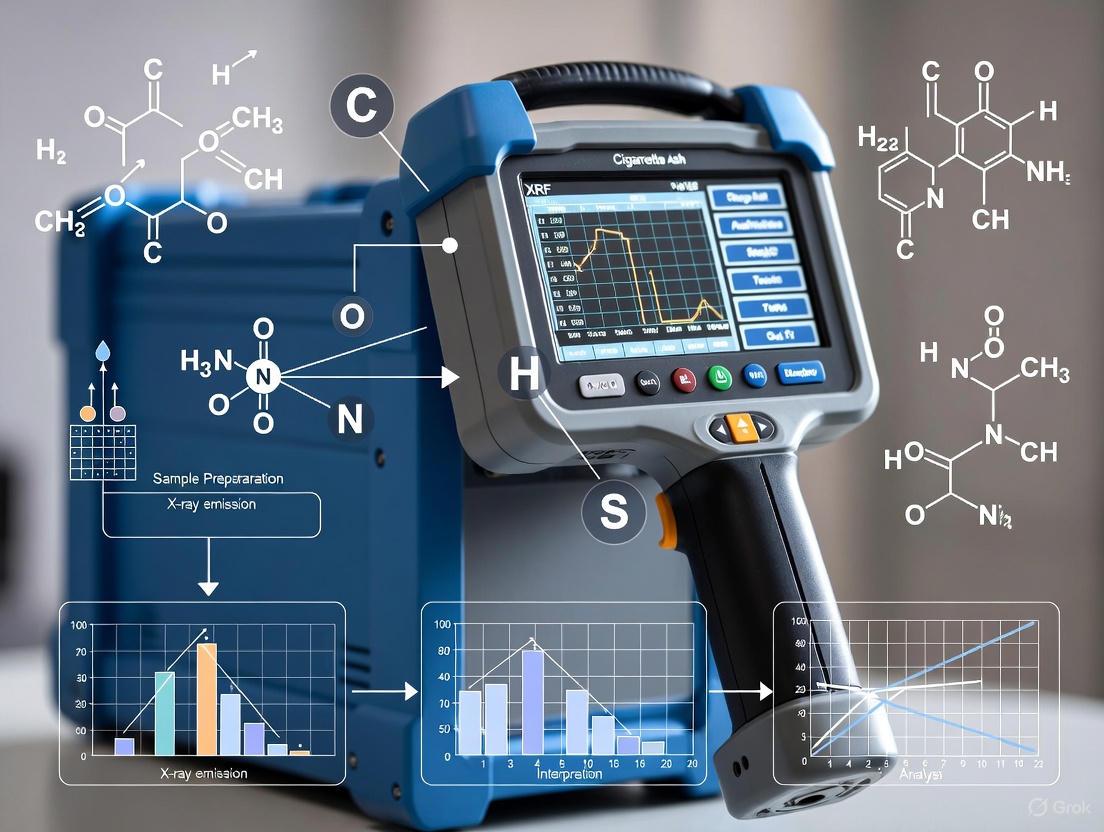
This article explores the groundbreaking application of handheld X-ray fluorescence (HHXRF) spectrometry for analyzing cigarette ash, a novel forensic methodology with significant implications for biomedical and clinical research.
Handheld XRF Spectrometry for Cigarette Ash Analysis: A Revolutionary Forensic Tool for Biomedical Research
Abstract
This article explores the groundbreaking application of handheld X-ray fluorescence (HHXRF) spectrometry for analyzing cigarette ash, a novel forensic methodology with significant implications for biomedical and clinical research. We examine the foundational principles of HHXRF technology, detailed methodologies for elemental characterization of inorganic components in ash, optimization techniques for enhanced accuracy, and validation through statistical analysis. Designed for researchers, scientists, and drug development professionals, this comprehensive review demonstrates how non-destructive, on-site HHXRF analysis can discriminate between tobacco brands based on elemental fingerprints, offering a rapid, cost-effective tool for forensic investigations and material verification.
Understanding HHXRF Technology and Its Forensic Potential in Cigarette Ash Analysis
Core Principles of Handheld XRF Spectrometry
Handheld X-ray Fluorescence (HHXRF) spectrometry is an advanced, non-destructive analytical technique used for elemental analysis. Within forensic science, it provides rapid, on-site identification and discrimination of materials based on their inorganic elemental composition. This technology is particularly valuable for analyzing evidence such as cigarette ash, where preserving sample integrity is crucial for subsequent analyses like DNA testing. The capability to perform non-destructive, in-situ measurements minimizes sample contamination and loss, making HHXRF an indispensable tool for modern forensic investigations [1] [2].
Core Analytical Principles
The fundamental principle of HHXRF spectrometry is based on the emission of characteristic secondary X-rays from a material that has been excited by a primary X-ray source. When the primary X-rays strike the sample, they eject electrons from the inner shells of the constituent atoms. As these atoms return to a stable state, electrons from higher energy levels fall into the vacancies, emitting fluorescent X-rays in the process. The energy of these emitted X-rays is characteristic of the specific elements present, allowing for qualitative identification, while the intensity of the emission correlates with the concentration of the element, enabling quantitative analysis [1] [3].
This technique is capable of simultaneously detecting a wide range of elements, from magnesium (Mg) to uranium (U), depending on the instrument configuration. The non-destructive nature of the analysis means that the sample remains intact and available for further testing, which is a critical advantage in forensic evidence handling [1].
Application in Cigarette Ash Analysis: Experimental Protocol
The following section details a standardized protocol for the forensic analysis of cigarette ash using HHXRF, based on established methodologies [2] [3].
Materials and Equipment
Table 1: Essential Research Reagent Solutions and Materials
| Item | Specification/Function |
|---|---|
| HHXRF Spectrometer | Oxford Instruments X-MET7500 or equivalent; performs the elemental analysis. |
| Smoking Apparatus | Borgwaldt RM1/Plus or equivalent; provides standardized, machine-based smoking. |
| Sample Containers | Plastic cylinder boxes; hold ash samples for analysis without contamination. |
| Certified Reference Materials | Instrument-specific standards; ensure accurate spectrometer calibration. |
| Statistical Software | IBM SPSS Statistics or equivalent; processes and analyzes quantitative data. |
Sample Collection and Preparation
- Brand Identification: Conduct a survey to identify the most prevalent cigarette brands in the relevant geographical area [2] [3].
- Sample Generation: Smoke cigarettes using a machine-based smoking apparatus to ensure consistent and reproducible puff volume, duration, and frequency. This eliminates human smoking pattern variability [3].
- Ash Collection: Carefully collect the resulting ash from each cigarette and place it into a dedicated, clean plastic cylinder box. Avoid any cross-contamination between samples from different brands [2].
- Replication: To ensure statistical robustness, a minimum of five cigarettes per brand should be smoked, with each individual ash sample measured multiple times (e.g., five replicates) [3].
Instrumental Analysis
- Calibration: Calibrate the HHXRF spectrometer using certified reference materials appropriate for the expected elemental range in ash [2].
- Measurement: Place the sample container directly in the instrument's measurement window. The analysis is performed directly through the container, preserving the sample's pristine state.
- Data Acquisition: Operate the spectrometer according to manufacturer guidelines. A typical analysis measures the concentrations of key elements including Al, Ca, Cl, Cu, Fe, K, Mn, P, Rb, S, Si, Sr, Ti, and Zn [2] [3]. These elements are often found in the highest concentrations and provide the most robust data for discrimination.
Data Analysis and Interpretation
- Data Processing: Calculate the average concentration and standard deviation for each element from the replicate measurements.
- Statistical Analysis:
- Perform a one-way ANOVA test followed by a post-hoc test (e.g., Tukey's HSD) to identify statistically significant differences in elemental concentrations both within the same brand and between different brands [2].
- Employ hierarchical cluster analysis to classify and discriminate the various tobacco brands based on their unique elemental profiles [2].
The diagram below illustrates the complete experimental workflow.
Key Analytical Findings in Cigarette Ash Analysis
Research has demonstrated that HHXRF is highly effective in discriminating tobacco brands based on the inorganic elemental fingerprint of their ash. The following table summarizes typical findings from such analyses.
Table 2: Quantitative Elemental Concentration Ranges in Cigarette Ash and Their Statistical Significance
| Element | Role in Discrimination | Concentration Variability | Key Finding |
|---|---|---|---|
| Al, Cl, Fe, Si | High discriminators | High variability between brands | Elements with the most variable concentrations are critical for distinguishing brands [3]. |
| P, S, Cl, K, Ca | Micronutrient indicators | Significant intra-brand variability | These plant micronutrients can vary within the same brand but do not nullify inter-brand differences [3]. |
| Rb, Sr, Ti, Mn | Trace discriminators | Consistent patterns | Minor and trace elements are crucial for clustering and discriminating different cigarette brands [1]. |
The relationship between elements and their role in the analytical process can be visualized as follows:
Advantages and Forensic Value
The application of HHXRF in the forensic analysis of cigarette ash offers several distinct advantages:
- Non-Destructive Analysis: The sample remains physically and chemically intact after measurement, preserving it for subsequent analyses such as DNA extraction from the cigarette butt [1] [3].
- On-Site Capability: The portability of handheld spectrometers allows for rapid, in-field screening and analysis, which can provide immediate investigative leads without the delay of laboratory processing [1] [2].
- Cost-Effectiveness and Speed: HHXRF provides rapid, multi-element analysis without the need for extensive sample preparation, reducing both time and cost per sample compared to traditional lab-based techniques [3].
- Robust Discrimination: Despite inherent natural variations, the elemental profile of cigarette ash is sufficiently distinct between brands to allow for reliable discrimination through statistical methods, making it a valuable tool for linking evidence to a potential source [2] [3].
Why Cigarette Ash? The Forensic Significance of Elemental Composition
Cigarette ash, often overlooked at a crime scene, has emerged as a powerful form of trace evidence that can provide crucial investigative leads. When traditional evidence like DNA is degraded, contaminated, or unavailable, the elemental fingerprint of cigarette ash can offer a complementary pathway for linking suspects, victims, and locations. The inorganic composition of ash remains stable over time and under various environmental conditions, making it particularly valuable for forensic applications. This application note explores the scientific foundation for using handheld X-ray fluorescence (HHXRF) spectrometry to analyze cigarette ash, detailing the methodologies, statistical treatments, and interpretive frameworks necessary for robust forensic analysis.
The significance of this approach lies in its ability to discriminate between tobacco brands based on their unique elemental signatures. These signatures arise from numerous factors including soil composition where the tobacco was grown, agricultural practices, manufacturing processes, and additives incorporated during production [4]. Recent research demonstrates that handheld XRF technology can effectively characterize these inorganic profiles, providing law enforcement with a rapid, non-destructive analytical method that can be deployed directly at crime scenes, thus minimizing evidence contamination and handling errors [2] [5].
Technical Foundation: Elemental Composition of Cigarette Ash
Origin of Elemental Signatures
The elemental composition of cigarette ash derives from multiple sources throughout the tobacco lifecycle. Natural accumulation occurs as tobacco plants absorb elements from the soil and water during growth, resulting in characteristic patterns of essential plant nutrients and trace metals [4]. Anthropogenic additions during manufacturing include additives, flavorings, and processing aids that contribute specific inorganic components. Finally, post-production contamination can occur from environmental exposure or handling, though these elements typically appear in lower concentrations.
The combustion process during smoking concentrates the non-volatile inorganic constituents of the tobacco leaf, creating an ash residue with an amplified elemental signature compared to the original plant material. Research has identified fourteen elements consistently present in cigarette ash at concentrations sufficient for forensic discrimination: aluminum (Al), calcium (Ca), chlorine (Cl), copper (Cu), iron (Fe), potassium (K), manganese (Mn), phosphorus (P), rubidium (Rb), sulfur (S), silicon (Si), strontium (Sr), titanium (Ti), and zinc (Zn) [2] [4]. Among these, Al, Cl, Fe, and Si typically show the greatest variability between brands, making them particularly discriminative for classification.
XRF Fundamentals for Ash Analysis
X-ray fluorescence (XRF) spectrometry operates on the principle that when a sample is irradiated with high-energy X-rays, inner-shell electrons are ejected from atoms, creating electron vacancies. When outer-shell electrons fill these vacancies, they emit characteristic fluorescent X-rays with energies specific to each element [6]. The intensity of these emissions correlates with element concentration, enabling quantitative analysis.
The fundamental parameters approach to XRF calibration establishes a theoretical relationship between measured X-ray intensities and elemental concentrations based on first principles of X-ray physics [7]. This approach accounts for primary fluorescence (direct excitation by the source), secondary fluorescence (excitation by X-rays from other elements in the sample), and matrix effects (absorption and enhancement of X-rays by the sample itself). For cigarette ash analysis, which represents a complex inorganic matrix, this theoretical foundation ensures accurate quantification across diverse elemental concentrations and sample conditions.
Experimental Protocol for HHXRF Analysis of Cigarette Ash
Sample Collection and Preparation
Table 1: Essential Research Reagent Solutions and Materials
| Item | Specification | Function in Analysis |
|---|---|---|
| HHXRF Spectrometer | Oxford Instruments X-MET7500 or equivalent | Elemental analysis via X-ray fluorescence |
| Smoking Apparatus | Borgwaldt RM1/Plus peristaltic pump | Standardized smoking simulation |
| Sample Containers | Plastic cylinder boxes (XRF-free) | Hold ash during analysis without contamination |
| Certified Reference Materials | Matrix-matched to plant ash | Quality assurance and calibration verification |
| Cleaning Supplies | Methanol, lint-free wipes | Decontamination of equipment between samples |
| Calibration Standards | Instrument-specific | Daily performance validation |
Proper sample collection is critical for maintaining analytical integrity. At crime scenes, cigarette ash should be photographed in situ before collection using clean, static-free tools. Multiple sub-samples from different locations within the ash deposit should be collected to account for potential heterogeneity. Samples must be stored in XRF-certified containers to prevent contamination from the container itself affecting the elemental analysis.
For laboratory reference samples, cigarettes should be smoked using a mechanized smoking machine that simulates human smoking patterns with consistent puff volume, duration, and frequency [2] [4]. This standardization is crucial for generating comparable data across different samples and analysts. The resulting ash should be homogenized using a ceramic or plastic mortar and pestle to create a consistent analytical substrate, though individual flakes can also be analyzed directly to preserve their physical structure.
Instrumental Analysis Parameters
Table 2: Optimal HHXRF Parameters for Cigarette Ash Analysis
| Parameter | Setting | Rationale |
|---|---|---|
| Voltage | 45 kV | Optimized for mid-Z element excitation |
| Current | Automatically optimized by instrument | Balances signal intensity and resolution |
| Measurement Time | 30-60 seconds per spot | Sufficient for trace element detection |
| Beam Filter | Low-energy filter | Enhances light element detection |
| Analysis Mode | Soil/Geochemical mode | Best for complex inorganic matrices |
| Spot Size | 3-8 mm diameter | Representative sampling area |
| Replicate Measurements | 5 per sample | Accounts for material heterogeneity |
The HHXRF spectrometer must be calibrated daily using manufacturer-supplied standards to ensure analytical precision. For quantitative work, matrix-matched calibration standards should be used, though the fundamental parameters approach can provide reliable semi-quantitative results without perfect matrix matching [7] [6]. The analysis should be conducted in a controlled environment with stable temperature and humidity to minimize instrumental drift.
Each ash sample should be analyzed with multiple replicate measurements to account for potential heterogeneity within the sample. Research indicates that five replicates per sample provides an optimal balance between analytical robustness and practical time constraints [2]. For comparative analyses, all samples should be analyzed using the same instrument and operator to eliminate inter-instrument variability.
Data Analysis and Statistical Treatment
Elemental Concentration Data
Table 3: Representative Elemental Concentrations in Cigarette Ash (ppm)
| Element | Brand A | Brand B | Brand C | Brand D | Brand E |
|---|---|---|---|---|---|
| Aluminum (Al) | 1452 ± 210 | 892 ± 135 | 2103 ± 298 | 756 ± 98 | 1834 ± 245 |
| Calcium (Ca) | 85320 ± 3200 | 92350 ± 2850 | 78450 ± 2950 | 102350 ± 4100 | 81200 ± 3050 |
| Chlorine (Cl) | 12540 ± 850 | 8560 ± 620 | 15230 ± 920 | 6840 ± 520 | 14210 ± 880 |
| Potassium (K) | 105230 ± 5250 | 112540 ± 4890 | 98740 ± 4520 | 121350 ± 5640 | 93420 ± 4210 |
| Iron (Fe) | 685 ± 95 | 425 ± 68 | 892 ± 112 | 345 ± 52 | 765 ± 98 |
| Silicon (Si) | 2345 ± 285 | 1568 ± 195 | 2987 ± 325 | 1245 ± 165 | 2765 ± 295 |
| Strontium (Sr) | 45 ± 8 | 68 ± 9 | 52 ± 8 | 79 ± 10 | 48 ± 7 |
| Zinc (Zn) | 125 ± 18 | 89 ± 12 | 156 ± 20 | 75 ± 10 | 142 ± 19 |
Elemental concentration data should be compiled in a structured database with complete metadata including brand information, production date, geographical source, and analysis conditions. The data shown in Table 3 represents realistic concentration ranges based on published studies of cigarette ash composition [2] [4]. Calcium and potassium typically appear in the highest concentrations, as they are essential plant nutrients, while trace metals like strontium and zinc appear at lower levels but often show distinctive patterns between brands.
Quality control measures must include replicate analysis to determine measurement precision, analysis of certified reference materials to establish accuracy, and periodic blank analysis to monitor contamination. Data should be evaluated for normality using tests such as Kolmogorov-Smirnov before selecting appropriate statistical methods for further analysis [2].
Multivariate Statistical Analysis
The high-dimensional nature of elemental data requires multivariate statistical techniques to extract meaningful patterns. Principal Component Analysis (PCA) is typically employed as an initial exploratory technique to visualize natural clustering of samples based on their elemental composition and identify potential outliers [8]. This unsupervised method reduces the dimensionality of the data while preserving the maximum amount of variance, allowing analysts to observe whether samples from the same brand naturally cluster together.
For classification purposes, supervised methods such as Partial Least Squares-Discriminant Analysis (PLS-DA) have demonstrated excellent performance in brand discrimination based on cigarette ash composition [8]. This technique maximizes the separation between predefined classes (brands) while modeling the relationship between elemental concentrations and brand identity. Research has shown that PLS-DA models can achieve high sensitivity and specificity for brand classification, with varying smoking parameters (puff volume, frequency) having minimal impact on classification accuracy [8].
Additionally, one-way ANOVA with post-hoc testing (such as Tukey's HSD) should be performed to identify elements with statistically significant concentration differences between brands [2]. This information helps identify the most discriminative elements for inclusion in classification models. Hierarchical cluster analysis can further visualize the relationships between brands based on the similarity of their elemental profiles.
Forensic Interpretation and Reporting
Evidentiary Significance Assessment
The forensic interpretation of cigarette ash analysis requires a probabilistic framework to articulate the evidentiary significance of analytical findings. When an unknown ash sample from a crime scene matches a reference sample from a suspect's brand, the significance depends on the discriminatory power of the method and the population frequency of that particular brand or elemental signature.
Analysts should calculate likelihood ratios to quantitatively express the strength of evidence. The likelihood ratio compares the probability of the observed elemental profile under two competing propositions: (1) the ash originated from the same brand as the reference sample, and (2) the ash originated from a different, randomly selected brand. Values greater than 1 support the first proposition, with higher values indicating stronger evidence. Research indicates that elemental profiling of cigarette ash can achieve likelihood ratios sufficient for meaningful evidentiary weight when comprehensive reference databases are available [2] [5].
Case Application Scenarios
Cigarette ash analysis provides the greatest investigative value in several specific scenarios. Scene linkage occurs when chemically similar ash is found at multiple crime scenes, suggesting a common source or perpetrator. Brand identification can help place a suspect at a scene when the ash matches cigarettes in their possession, or alternatively exclude them if the signatures differ. Activity inference is possible when the specific location and distribution of ash deposits provide information about behaviors and sequences of events.
A particularly powerful application involves associative evidence through transfer, where ash may be transferred between a crime scene and a suspect's clothing, vehicle, or belongings. The analysis of such transferred particles can establish connections even when other evidence is absent. In all cases, the analysis should be reported with clear statements about methodological limitations, confidence estimates, and the underlying statistical basis for interpretations.
Quality Assurance and Method Validation
Robust quality assurance protocols are essential for maintaining the analytical integrity of forensic ash analysis. Method validation should establish key performance characteristics including precision (repeatability and reproducibility), accuracy (through analysis of certified reference materials), sensitivity (detection limits for key elements), specificity (discrimination of similar brands), and robustness (performance under varying analytical conditions).
Blind proficiency testing should be conducted regularly to monitor analyst performance and detect potential biases. The entire analytical process—from sample collection through data interpretation—should be documented in detail to ensure method traceability and facilitate technical review. All statistical models used for classification must be validated using independent test sets not used during model development, with performance metrics including sensitivity, specificity, and overall accuracy clearly reported.
Laboratories implementing this methodology should establish and maintain comprehensive reference databases of cigarette brand elemental signatures, regularly updated to account for product changes and new market entries. This database should include metadata on production dates, geographical distribution, and observed lot-to-lot variability to support robust statistical interpretation and evidentiary assessment.
Within the framework of broader research on handheld X-ray fluorescence (HHXRF) spectrometry for forensic science, the analysis of cigarette ash presents a significant application for non-destructive, on-site elemental profiling. Tobacco ash, often recovered from crime scenes, retains the inorganic elemental signature of the original tobacco product, providing a potential means to link evidence to a specific brand or origin. This application note details the key elements—from aluminum (Al) to zinc (Zn)—targeted in such analyses and provides standardized protocols for researchers and forensic professionals. The capability to differentiate tobacco brands based on their ash's elemental concentration using HHXRF offers a rapid and reliable tool for forensic investigations [2] [4].
Key Elements in Tobacco Ash
The elemental composition of cigarette ash serves as a distinctive fingerprint for brand differentiation. HHXRF spectrometry targets a range of elements, from lighter elements like aluminum to heavier trace metals like zinc. The presence and concentration of these elements are influenced by factors such as soil composition where the tobacco was cultivated, agricultural practices, and manufacturing additives [4] [9].
Table 1: Key Elements Targeted in Tobacco Ash Analysis via HHXRF
| Element | Symbol | Typical Concentration Range | Significance & Notes |
|---|---|---|---|
| Aluminum | Al | Variable | One of the elements with the most variable concentration between brands [4]. |
| Calcium | Ca | High | A major component, often found in high concentrations alongside potassium [9]. |
| Chlorine | Cl | Variable | An element with significant variability between brands [4]. |
| Copper | Cu | Trace | Part of the trace elemental profile used for discrimination. |
| Iron | Fe | Variable | An element with significant variability between brands [4]. |
| Potassium | K | High (e.g., ~50% as K₂O) | A macronutrient and one of the most abundant elements in tobacco ash [9] [10]. |
| Magnesium | Mg | Present (e.g., ~10% as MgO) | A significant component, as identified in related tobacco waste ash studies [10]. |
| Manganese | Mn | Trace | A trace element used in the discriminatory analysis. |
| Phosphorus | P | Trace | A plant micronutrient that can show variability within brands [4]. |
| Rubidium | Rb | Trace | A trace element included in the robust analytical profile. |
| Sulfur | S | Trace | A plant micronutrient that can show variability within brands [4]. |
| Silicon | Si | Variable | An element with significant variability between brands [4]. |
| Strontium | Sr | Trace | A trace element used for brand discrimination. |
| Titanium | Ti | Trace | A trace element included in the analysis. |
| Zinc | Zn | Trace | A trace element that completes the analytical profile from Al to Zn. |
Note: The "High" concentration designation is qualitative, based on reported data from techniques like WDXRF, which identified K and Ca as having the highest mass percentages in tobacco ash [9].
Table 2: Experimental Reagents and Materials
| Item | Function/Description |
|---|---|
| Handheld XRF Spectrometer | e.g., Oxford Instruments X-MET7500; performs non-destructive, on-site elemental analysis [2] [4]. |
| Cigarette Sampling Kit | Includes equipment for the controlled smoking of cigarettes (e.g., Borgwaldt RM1/Plus) and sterile collection tools for ash [4]. |
| Sample Containers | Pre-cleaned plastic cylinder boxes or similar for holding ash during analysis to minimize contamination and sample loss [2]. |
| Certified Reference Materials | Used for calibration and validation of the HHXRF spectrometer to ensure analytical accuracy [2]. |
| Statistical Analysis Software | e.g., IBM SPSS Statistics; used for multivariate analysis including ANOVA, cluster analysis, and discriminant analysis [2] [4] [11]. |
Experimental Protocol for HHXRF Analysis of Cigarette Ash
Sample Collection and Preparation
- Brand Selection: Identify the most relevant tobacco brands for the investigation through market research or case-specific information.
- Controlled Smoking: Use a smoking machine (e.g., Borgwaldt RM1/Plus) to smoke cigarettes under standardized conditions. This ensures consistency in the ash produced across different samples [4].
- Ash Collection: Carefully collect the resulting ash from each cigarette. A minimum of five cigarettes per brand should be analyzed to account for intra-brand variability.
- Sample Presentation: Place the collected ash into a clean, plastic cylinder box or a specialized sample cup. The goal is to present a uniform surface to the X-ray beam without any chemical preparation that would alter the sample's integrity [2] [4].
Instrumental Analysis with HHXRF
- Instrument Calibration: Power on the HHXRF spectrometer and allow it to initialize. Ensure the instrument is calibrated using certified reference materials appropriate for the matrix and elements of interest [2].
- Parameter Setting: Select or create a method optimized for the analysis of light to mid-Z elements (Al to Zn). The instrument used in the foundational study was an Oxford Instruments X-MET7500 [4].
- Measurement: Place the spectrometer's window directly onto or in close proximity to the sample container. Acquire spectra for each ash sample. The established protocol involves taking five replicate measurements per individual cigarette ash sample to ensure data robustness [2] [4].
- Data Collection: The spectrometer will provide quantitative data for the targeted elements, typically in parts per million (ppm) or as a percentage.
Data Analysis and Statistical Treatment
- Data Compilation: Compile the elemental concentration data from all replicate measurements into a single database.
- Statistical Analysis: Import the data into statistical software such as IBM SPSS Statistics.
- Perform Descriptive Statistics: Calculate average concentrations and standard deviations for each element within and across brands.
- Conduct One-way ANOVA: This test identifies if there are statistically significant differences in the mean concentrations of elements between the different tobacco brands.
- Apply Post-hoc Testing: Use Tukey's HSD test following ANOVA to determine which specific brands differ from each other [2].
- Employ Multivariate Analysis: Use hierarchical cluster analysis (HCA) to group brands based on the similarity of their elemental profiles. This can visually demonstrate the discriminatory power of the technique [2] [4]. Furthermore, discriminant analysis can be used to build a classification model to predict the brand of an unknown ash sample with high accuracy [11].
Workflow Visualization
The following diagram illustrates the complete experimental workflow from sample collection to data interpretation.
Critical Methodological Considerations
- Non-Destructive Nature: A primary advantage of HHXRF is its ability to analyze evidence without consumption or alteration, preserving the sample for subsequent analyses, such as DNA testing [2] [4].
- On-Site Capability: The portability of HHXRF spectrometers allows for preliminary analysis directly at a crime scene, enabling investigators to make rapid, informed decisions [12].
- Surface Geometry Effects: The accuracy of quantitative XRF can be influenced by surface irregularities. While less of a concern for powdered ash presented in a container, this is a critical factor when analyzing irregular objects. The relative uncertainty for minor elements can be 5–10% or higher due to shape effects, which must be considered during data interpretation [13].
- Intra-Brand Variability: While HHXRF can discriminate between brands, researchers must acknowledge inherent variability. Elements like P, S, Cl, K, and Ca, which are plant micronutrients, can vary between production batches. Robust sampling (analyzing multiple cigarettes per brand) and statistical treatment are essential to ensure that inter-brand differences remain distinguishable from intra-brand variations [4].
The analysis of key elements from aluminum to zinc in tobacco ash via handheld XRF spectrometry represents a powerful, non-destructive tool for forensic science. The detailed protocols for sample handling, instrumental analysis, and statistical validation provide a reliable framework for researchers and law enforcement professionals. By focusing on the specific elemental profile of ash, this method adds a valuable layer of forensic intelligence, capable of generating compelling evidence to support criminal investigations.
Within the framework of a broader thesis on handheld X-ray fluorescence (HHXRF) spectrometry for cigarette ash analysis, this document details the specific application notes and experimental protocols that leverage the core advantages of the technology: its non-destructive nature and capability for on-site analysis. Traditional elemental analysis techniques, such as Inductively Coupled Plasma (ICP) spectroscopy or Atomic Absorption Spectroscopy (AAS), require sample digestion, generate chemical waste, and are confined to laboratory settings [14]. In contrast, HHXRF offers a rapid, non-destructive, and on-site alternative, making it particularly valuable for forensic investigations where sample preservation and rapid, in-situ analysis are critical [1] [2]. This application note outlines how these advantages are realized in the context of discriminating tobacco brands based on their ash's elemental fingerprint.
Key Advantages in Practice
Non-Destructive Analysis
The non-destructive nature of HHXRF analysis is paramount in forensic science, where evidence must often be preserved for subsequent analyses, such as DNA testing [5].
- Sample Integrity: The low-power X-ray tubes used in HHXRF do not produce enough photons or heat to damage the sample or alter its structure [14]. The same cigarette ash sample analyzed by HHXRF can later be analyzed using other techniques for further investigation.
- No Sample Preparation: HHXRF analyzes solids directly without the need for dilution, digestion, or other destructive preparation steps [14]. This avoids the potential for inaccuracies caused by incomplete dissolution, large dilutions, or contamination during transfer between vessels [14].
- Small Sample Sizes: The analysis can be carried out on very small sample quantities, a common scenario with evidence recovered from crime scenes [1].
On-Site Analysis
The portability of HHXRF spectrometers transforms the analytical process by moving the laboratory to the evidence.
- In-Situ Measurement: Equipment like the Oxford Instruments X-MET7500 can be used directly at a crime scene or in a police lab, allowing for immediate elemental characterization [4] [2].
- Minimized Contamination and Sample Loss: On-site analysis eliminates the need for transport and additional handling, thereby reducing the risks of sample contamination, loss, or degradation [1] [4].
- Rapid, High-Throughput Analysis: HHXRF provides fast results, enabling a large number of samples to be screened quickly, which is crucial for generating leads in time-sensitive investigations [15].
Experimental Protocol: HHXRF Analysis of Cigarette Ash
The following protocol is adapted from the methodology employed by Senra et al. in their study on the forensic analysis of cigarette ash [4] [2].
The diagram below illustrates the end-to-end workflow for the non-destructive, on-site analysis of cigarette ash using HHXRF.
Detailed Methodology
Objective: To discriminate between different tobacco brands based on the inorganic elemental concentration of their cigarette ash using a handheld XRF spectrometer.
Materials and Reagents: Table 1: Research Reagent Solutions and Essential Materials
| Item | Function/Description |
|---|---|
| HHXRF Spectrometer (e.g., Oxford Instruments X-MET7500) | Portable instrument for non-destructive elemental analysis on-site [4] [2]. |
| Cigarette Samples | Multiple brands under investigation. A minimum of 5 cigarettes per brand is recommended for statistical robustness [4]. |
| Plastic Cylinder Box | A standardized container to hold the cigarette ash during analysis to ensure consistent geometry and measurement conditions. |
| Certified Reference Materials (CRMs) | Materials with known elemental concentrations used for quality control and instrument calibration to ensure analytical accuracy [14]. |
| Borgwaldt RM1/Plus Smoking Machine | Specialized equipment to standardize the smoking process, ensuring consistent ash generation across all samples (optional but recommended for protocol standardization) [4]. |
Procedure:
Sample Collection and Preparation:
- Smoke cigarettes using a standardized machine (e.g., Borgwaldt RM1/Plus) to ensure consistent ash generation [4].
- Carefully collect the resulting ash from individual cigarettes.
- Transfer the ash into a clean plastic cylinder box without any chemical treatment or pressing.
Instrument Setup and Calibration:
- Power on the HHXRF spectrometer. The instrument is typically pre-calibrated by the manufacturer.
- Verify instrument performance using certified reference materials (CRMs) that are matrix-matched to ash, if available [14].
- Ensure the instrument's settings are optimized for the detection of mid-Z and low-Z elements commonly found in cigarette ash.
On-Site Measurement:
- Place the spectrometer's detector window directly over the plastic cylinder containing the ash sample.
- Initiate the measurement. The analysis time can vary but typically takes a few minutes per sample.
- For robust data, perform multiple replicate measurements (e.g., five measurements per cigarette ash sample) [4] [2].
- The spectrometer will automatically collect the XRF spectrum, which includes the energy and intensity of the characteristic X-rays emitted by the elements in the ash.
Data Acquisition and Processing:
- The HHXRF software processes the spectrum, identifying elements based on their characteristic peak energies (e.g., Kα and Kβ lines) [16].
- The software uses fundamental parameters or empirical calibrations to convert peak intensities into semi-quantitative or quantitative elemental concentrations (in parts per million, ppm) [17].
- Export the concentration data for the elements of interest for statistical analysis. The elements frequently targeted in cigarette ash include Al, Ca, Cl, Cu, Fe, K, Mn, P, Rb, S, Si, Sr, Ti, and Zn [4] [2].
Data Presentation and Interpretation
The following table summarizes example quantitative data from a hypothetical study, illustrating the type of inter-brand variability that makes discrimination possible. The data is presented in parts per million (ppm).
Table 2: Example Elemental Concentration Data (in ppm) for Discrimination of Tobacco Brands
| Tobacco Brand | Calcium (Ca) | Potassium (K) | Phosphorus (P) | Sulfur (S) | Chlorine (Cl) | Iron (Fe) |
|---|---|---|---|---|---|---|
| Brand A | 105,500 ± 5,200 | 48,200 ± 3,100 | 9,800 ± 850 | 8,550 ± 720 | 5,200 ± 600 | 1,250 ± 150 |
| Brand B | 87,200 ± 4,800 | 62,500 ± 2,900 | 7,250 ± 650 | 6,850 ± 580 | 7,850 ± 710 | 2,100 ± 180 |
| Brand C | 121,800 ± 6,500 | 41,300 ± 2,500 | 11,500 ± 920 | 9,950 ± 810 | 3,950 ± 550 | 850 ± 120 |
| Brand D | 92,100 ± 5,100 | 58,100 ± 3,200 | 8,100 ± 740 | 7,150 ± 630 | 6,500 ± 680 | 1,750 ± 160 |
Statistical Analysis:
- The exported concentration data should be analyzed using statistical software (e.g., IBM SPSS Statistics) [4] [2].
- Perform a one-way Analysis of Variance (ANOVA) test followed by a post-hoc test (e.g., Tukey's HSD) to identify which elements show statistically significant concentration differences between brands.
- Employ hierarchical cluster analysis to group brands based on the similarity of their elemental profiles. This analysis can visually demonstrate the clustering of samples from the same brand and the separation of different brands, confirming the discrimination power of the technique [4].
The implementation of HHXRF for cigarette ash analysis, as detailed in these application notes and protocols, provides researchers and forensic professionals with a powerful tool that fundamentally outperforms traditional methods in key aspects. The non-destructive nature of the analysis preserves evidence for further tests, while the on-site capability delivers rapid, actionable intelligence with minimal risk of sample contamination or loss. By following the standardized workflow and data interpretation guidelines outlined herein, scientists can reliably discriminate between tobacco brands, thereby adding a robust and efficient chemical profiling technique to the forensic toolkit.
Current Market Landscape and Technological Adoption Trends
Handheld X-ray fluorescence (HHXRF) spectrometry has emerged as a powerful analytical technique for forensic science, particularly in the analysis of inorganic evidence. This application note details its specific use in the discrimination of tobacco brands through cigarette ash analysis, a novel approach developed to provide rapid, non-destructive evidence linking suspects or witnesses to crime scenes. The technology enables on-site analysis with minimal sample preparation, offering a significant advantage over traditional laboratory-based methods [1] [2]. This document provides a detailed experimental protocol and reviews the current technological landscape, underscoring the growing adoption of HHXRF for forensic geochemistry and materials analysis.
Key Research Reagent Solutions and Essential Materials
The following table catalogues the essential equipment and materials required to replicate the established methodology for cigarette ash analysis using HHXRF.
Table 1: Essential Materials and Research Reagents for HHXRF Cigarette Ash Analysis
| Item Name | Function/Application | Specifications/Notes |
|---|---|---|
| HHXRF Spectrometer | Performs non-destructive, multi-element analysis of ash samples. | Oxford Instruments X-MET7500 model used in foundational studies [2] [4]. |
| Mechanical Smoking Device | Simulates standardized human smoking to generate consistent ash samples. | Borgwaldt RM1/Plus model ensures reproducible sampling [4]. |
| Certified Reference Materials (CRMs) | Calibrates the HHXRF spectrometer to ensure analytical accuracy [2]. | Materials with certified elemental concentrations. |
| Plastic Cylinder Sample Box | Holds the cigarette ash during analysis to prevent contamination and sample loss [2]. | -- |
| Statistical Analysis Software | Processes and analyzes the acquired elemental concentration data. | IBM SPSS Statistics used for ANOVA and cluster analysis [2] [4]. |
Detailed Experimental Protocol for Cigarette Ash Analysis
This section outlines a step-by-step protocol derived from validated research methods for the forensic analysis of cigarette ash.
Sample Collection and Preparation
- Brand Identification: Conduct a preliminary survey to identify the most prevalent tobacco brands in the relevant geographical area. In the foundational study, 10 popular brands from Portugal were selected [2] [4].
- Sample Acquisition: Purchase multiple packs from each identified brand. Assign an anonymous code (e.g., B1 to B10) to each brand for blind analysis.
- Controlled Smoking: Use a mechanical smoking device to smoke cigarettes under standardized conditions. This ensures that the ash composition is consistent and comparable across tests.
- Ash Collection: Carefully collect the resulting ash from each cigarette and place it into a dedicated plastic cylinder box for analysis. To ensure statistical robustness, analyze five cigarettes per brand, with each cigarette's ash measured five times, resulting in 275 total analyses for 11 packs [4].
Instrumental Analysis via HHXRF
- Instrument Calibration: Prior to analysis, calibrate the HHXRF spectrometer using certified reference materials (CRMs) to ensure precise and accurate quantitative results [2].
- Measurement Parameters: Position the HHXRF spectrometer probe directly above the sample contained in the plastic cylinder. The analysis is non-destructive and typically takes 30-60 seconds per measurement.
- Elemental Target List: The key elements quantified in the ash include Aluminum (Al), Calcium (Ca), Chlorine (Cl), Copper (Cu), Iron (Fe), Potassium (K), Manganese (Mn), Phosphorus (P), Rubidium (Rb), Sulfur (S), Silicon (Si), Strontium (Sr), Titanium (Ti), and Zinc (Zn). These elements were chosen for their high concentrations and discriminatory power [2] [4].
Data Processing and Statistical Analysis
- Data Compilation: Compile the elemental concentration data (in parts per million, ppm) obtained from the HHXRF for all replicate measurements.
- Statistical Analysis: Import the data into statistical software such as IBM SPSS Statistics.
- Perform a one-way ANOVA test followed by a post-hoc test (e.g., Tukey's HSD) to identify significant differences in elemental concentrations both within the same brand and between different brands [2].
- Employ hierarchical cluster classification to group the tobacco brands based on the similarities in their elemental profiles. Standardize the values before clustering to minimize scale effects [2].
The workflow below summarizes the experimental process.
Quantitative Data and Findings
The application of HHXRF to cigarette ash reveals distinct elemental profiles that serve as unique fingerprints for different tobacco brands. The following table summarizes the concentration ranges and discriminatory significance of key elements identified in the research.
Table 2: Key Elemental Concentrations and Their Discriminatory Power in Cigarette Ash
| Element | Role/Origin in Tobacco | Concentration Trend & Discriminatory Notes |
|---|---|---|
| Iron (Fe) | -- | One of the most abundant elements; shows high variability between brands [18] [4]. |
| Calcium (Ca) | -- | Major element with significant concentration differences among brands [4]. |
| Potassium (K) | Plant micronutrient | High concentration, but can vary within brands due to agricultural factors [4]. |
| Chlorine (Cl) | -- | An element with highly variable concentration, useful for discrimination [4]. |
| Sulfur (S) | -- | An element with highly variable concentration, useful for discrimination [4]. |
| Manganese (Mn) | -- | Present in significant amounts; identified as a paramagnetic component in tobacco [18]. |
| Copper (Cu) | -- | Trace element quantified in the analysis [2]. |
| Zinc (Zn) | -- | Trace element quantified in the analysis [2]. |
| Strontium (Sr) | -- | Trace element quantified in the analysis [2]. |
| Rubidium (Rb) | -- | Trace element quantified in the analysis [2]. |
Technological Adoption and Advanced Data Analysis
The adoption of HHXRF in forensic science is driven by its portability, speed, and non-destructive nature. A major trend in the broader XRF field is the integration of machine learning (ML) and artificial intelligence (AI) to handle complex spectral data. While traditionally used for painting analysis, these advanced computational methods are highly applicable to forensic evidence. Deep learning models, trained on hundreds of thousands of synthetic spectra, can rapidly deconvolute XRF data with superior accuracy and eliminate artifacts common in traditional analysis methods [19]. This represents the next frontier for HHXRF, promising enhanced pattern recognition in elemental profiles for even more precise evidence discrimination.
The diagram below shows the evolution from raw data to validated results.
Practical Protocols: Implementing HHXRF for Cigarette Ash Characterization
Step-by-Step Sample Preparation and Collection Protocol
This application note details a standardized protocol for the preparation and analysis of cigarette ash using Handheld X-Ray Fluorescence (HHXRF) spectrometry. This non-destructive technique provides a rapid, cost-effective method for the inorganic elemental characterization of cigarette ash, creating a valuable tool for forensic investigations [2] [4]. The methodology outlined herein was developed to support research aiming to discriminate between different tobacco brands based on the unique elemental signatures of their ash, thereby enabling the linking of evidence found at a crime scene to a specific brand [2].
Principles of Handheld X-Ray Fluorescence (HHXRF)
X-ray fluorescence spectrometry is an elemental analysis technique that identifies and quantifies elements present in a sample. When a sample is illuminated by an intense X-ray beam (the incident beam), atoms within the sample become excited and emit secondary (or fluorescent) X-rays [20]. The energy of these emitted photons is characteristic of specific electron transitions within the atoms, allowing for the identification of the elements present [21]. The intensity of the emitted energy is proportional to the abundance of the element in the sample [20].
HHXRF spectrometers are energy-dispersive (ED) instruments that capture the entire polychromatic spectrum from the sample with a detector capable of registering the energy of each incident photon [21] [22]. The technique is considered non-destructive, as the interaction of X-rays with the analyzed material occurs at the atomic level and does not cause physical damage to the sample [22].
Experimental Workflow
The following section outlines the complete workflow for the collection, preparation, and analysis of cigarette ash samples. The process is designed to ensure analytical consistency and minimize contamination.
Materials and Equipment
Successful analysis requires the use of specific reagents, equipment, and instrumentation. The following tables catalog the essential items for this protocol.
Table 1: Research Reagent and Consumable Solutions
| Item | Specification / Function |
|---|---|
| Cigarette Samples | Purchased from commercial retail sources. A survey of the target population is recommended to identify the most relevant brands for study [2]. |
| Plastic Cylinder Box | A specialized container for holding the ash sample during XRF analysis to ensure consistency and prevent contamination [2]. |
| Certified Reference Materials (CRMs) | Used for the calibration and validation of the HHXRF spectrometer to ensure analytical accuracy [2]. |
Table 2: Essential Laboratory Equipment and Instrumentation
| Item | Specification / Function |
|---|---|
| HHXRF Spectrometer | Model: Oxford Instruments X-MET7500, or equivalent. This is the primary analytical instrument for non-destructive elemental analysis [2] [4]. |
| Linear Smoking Machine | Model: Borgwaldt RM1/Plus. This equipment provides a standardized and reproducible method for smoking cigarettes and collecting ash, eliminating human smoking variables [4]. |
| Statistical Software | IBM SPSS Statistics, or equivalent. Used for advanced statistical analysis of the acquired elemental concentration data [2] [4]. |
Detailed Step-by-Step Protocol
Brand Identification and Sample Procurement
- Conduct a Survey: Perform a survey within the target geographical region (e.g., Portugal) to identify the most smoked tobacco brands and models among the relevant demographic (e.g., ages 18-55) [2] [4].
- Procurement: Based on the survey results, purchase the top brands from retail stores. For quality control, purchase an additional pack of the most smoked brand from the same store to test for intra-brand consistency [4].
- Blinding: Assign a unique alphanumeric code (e.g., B1, B2, B3... B10) to each brand and model to ensure the analysis is performed blind [4].
Sample Collection
- Utilize Smoking Machine: Employ a linear smoking machine (e.g., Borgwaldt RM1/Plus) to smoke the cigarettes. This ensures that all cigarettes are smoked under identical, controlled conditions, which is critical for reproducibility [4].
- Replicate Sampling: For each brand, a minimum of five cigarettes per pack should be smoked to obtain a representative sample [2] [4].
- Ash Recovery: Carefully collect the resulting ash from the smoking machine after each cigarette is smoked.
Sample Preparation
- Transfer Ash: Place the collected ash from a single cigarette into a dedicated plastic cylinder box designed for XRF analysis [2].
- Minimize Contamination: Use clean, non-reactive tools for the ash transfer to prevent cross-contamination between samples and introduction of external contaminants.
- No Further Processing: Note that the ash is analyzed as-is; no grinding, pressing, or chemical treatment is required, underscoring the non-destructive nature of HHXRF [2] [22].
HHXRF Instrument Setup and Analysis
- Instrument Choice: Use a calibrated HHXRF spectrometer, such as the Oxford Instruments X-MET7500 [2].
- Analytical Elements: Configure the instrument to detect the following 14 elements, which are typically found in the highest concentrations in cigarette ash and allow for robust statistical comparison: Aluminum (Al), Calcium (Ca), Chlorine (Cl), Copper (Cu), Iron (Fe), Potassium (K), Manganese (Mn), Phosphorus (P), Rubidium (Rb), Sulfur (S), Silicon (Si), Strontium (Sr), Titanium (Ti), and Zinc (Zn) [2] [4].
- Data Acquisition: For each ash sample (one cigarette's ash), perform five replicate measurements. The spectrometer will provide the elemental concentration for each element in parts per million (ppm) [2].
- On-Site Advantage: The handheld nature of the instrument allows for analysis to be conducted on-site, which minimizes sample loss and the risk of contamination during transport [2] [4].
Data Analysis and Statistical Treatment
- Data Compilation: Compile the raw concentration data from all replicate measurements.
- Statistical Analysis: Use statistical software (e.g., IBM SPSS Statistics) for data processing. The following steps are recommended [2]:
- Calculate average concentrations and standard deviations for each element across the replicates.
- Perform a normality test (e.g., Kolmogorov-Smirnov) on the data.
- Conduct a one-way ANOVA test followed by a post-hoc test (e.g., Tukey's HSD) to identify significant differences in elemental concentrations both within a single brand and between different brands.
- Employ hierarchical cluster classification to determine if the distinct brands can be discriminated based on their composite elemental profiles.
Table 3: Example of Elemental Concentration Data Output (in ppm)
| Element | Brand B1 (Mean ± SD) | Brand B2 (Mean ± SD) | Brand B3 (Mean ± SD) |
|---|---|---|---|
| Calcium (Ca) | 45,200 ± 1,150 | 38,500 ± 980 | 51,750 ± 1,230 |
| Potassium (K) | 39,800 ± 1,020 | 43,150 ± 1,100 | 35,400 ± 890 |
| Chlorine (Cl) | 32,450 ± 840 | 28,750 ± 730 | 30,150 ± 780 |
| Sulfur (S) | 15,300 ± 420 | 12,900 ± 350 | 17,850 ± 460 |
| Phosphorus (P) | 8,750 ± 230 | 7,450 ± 190 | 9,900 ± 260 |
| Silicon (Si) | 4,200 ± 130 | 5,550 ± 160 | 3,800 ± 110 |
| ... (Al, Fe, Zn, etc.) | ... | ... | ... |
Key Experimental Considerations
- Critical Parameters: The most critical parameters for success are consistent sample collection via a smoking machine and a sufficient number of biological replicates (cigarettes) and technical replicates (XRF measurements) to ensure statistical power [2] [4].
- Troubleshooting: If statistical analysis shows poor discrimination between brands, ensure that the elements with the most variable concentrations (e.g., Al, Cl, Fe, Si) are being effectively measured and that the sample size is adequate [4].
- Quality Control: The use of Certified Reference Materials (CRMs) during instrument calibration is essential for ensuring quantitative accuracy. Furthermore, the analysis of a duplicate pack from the same brand serves as an internal control for method precision [2] [4].
- Safety Notes: Handheld XRF analyzers are designed with safety features that shield the operator from radiation. However, all manufacturer safety protocols must be strictly followed. The instrument should only be operated in the direction of the sample, and safety interlocks must never be bypassed [22].
Handheld X-ray fluorescence (HHXRF) spectrometry has emerged as a powerful tool for forensic science, providing rapid, non-destructive elemental analysis of diverse materials. This application note details the configuration and implementation of the Oxford Instruments X-MET7500 HHXRF spectrometer for the discrimination of tobacco brands through cigarette ash analysis, a methodology developed for forensic investigations. The non-destructive nature of HHXRF analysis preserves evidence integrity while enabling on-site measurement to minimize contamination and sample loss [1] [2]. This document outlines the complete experimental protocol, instrumental parameters, and data analysis procedures to support researchers in replicating and validating this forensic application.
The Scientist's Toolkit: Essential Research Reagent Solutions
The following table details the essential materials and equipment required to implement the cigarette ash analysis protocol.
Table 1: Key Research Reagent Solutions and Essential Materials
| Item Name | Function/Application | Specifications/Notes |
|---|---|---|
| Oxford Instruments X-MET7500 HHXRF | Primary analytical instrument for elemental quantification | Equipped with silicon drift detector (SDD); capable of measuring light elements (Mg to S) without helium or vacuum [23] [24]. |
| Borgwaldt RM1/Plus Smoking Machine | Standardized cigarette smoking apparatus | Ensures consistent and reproducible ash generation across all samples [4]. |
| Certified Reference Materials | Calibration and validation of HHXRF measurements | Used to calibrate the spectrometer for accurate quantitative analysis [2]. |
| Plastic Cylinder Boxes | Sample holding for ash during XRF analysis | Provides a consistent geometry for measurement, improving data reliability [2]. |
| SPSS Statistics Software | Statistical analysis of elemental concentration data | Used for ANOVA, Tukey's post-hoc tests, and hierarchical cluster analysis [2] [4]. |
Experimental Protocol and Workflow
The following diagram illustrates the end-to-end workflow for the forensic analysis of cigarette ash using the X-MET7500 HHXRF.
Sample Selection and Preparation
- Brand Identification: Conduct a market survey to identify the most commonly smoked tobacco brands in the target region. The referenced study identified 10 prevalent brands in Portugal [2] [4].
- Sample Procurement: Purchase multiple packs of the identified brands from the same retail source to ensure consistency. For quality control, purchase an additional pack of the most smoked brand from the same store for comparison [4].
- Standardized Smoking Procedure: Use a calibrated smoking machine (e.g., Borgwaldt RM1/Plus) to smoke cigarettes under controlled conditions. This ensures that ash generation is consistent and reproducible for all samples, a critical step for reliable analytical results [4].
- Ash Collection: Collect the resulting ash from each cigarette and place it into a dedicated plastic cylinder box for analysis. This creates a uniform sample presentation geometry to the HHXRF instrument [2].
HHXRF Instrument Configuration and Data Acquisition
The Oxford Instruments X-MET7500 must be configured appropriately to achieve optimal results.
- Instrument Calibration: Calibrate the spectrometer using certified reference materials before analyzing the ash samples to ensure quantitative accuracy [2].
- Key Analytical Elements: The method focuses on detecting and quantifying 14 key elements found in the highest concentrations in cigarette ash: Al, Ca, Cl, Cu, Fe, K, Mn, P, Rb, S, Si, Sr, Ti, and Zn [2] [4]. These elements provide the most robust data for statistical discrimination.
- Measurement Replication: Perform five replicate measurements for each individual cigarette ash sample to account for instrumental variability and ensure data precision [2]. The referenced study involved 275 total analyses [2].
Table 2: Key Elements Analyzed for Brand Discrimination
| Element | Role/Forensic Significance | Concentration Trends |
|---|---|---|
| Calcium (Ca), Potassium (K) | Plant micronutrients | Show significant variability among cigarettes of the same brand [4]. |
| Phosphorus (P), Sulfur (S) | Plant micronutrients | Show significant variability among cigarettes of the same brand [4]. |
| Aluminum (Al), Chlorine (Cl) | - | Among the elements with the most variable concentrations [4]. |
| Iron (Fe), Silicon (Si) | - | Among the elements with the most variable concentrations [4]. |
| Rubidium (Rb), Strontium (Sr) | Trace elements | Can be significant for clustering and discriminating different brands [1]. |
Data Analysis and Statistical Treatment
The powerful statistical analysis of the elemental concentration data is crucial for successful brand discrimination.
- Data Preparation: Calculate the average concentration and standard deviation for each of the 14 elements across the replicate measurements [2].
- Normality Testing: Perform a normality test (e.g., Kolmogorov-Smirnov) on the dataset to confirm its suitability for parametric statistical methods [2].
- Analysis of Variance (ANOVA): Conduct a one-way ANOVA test to identify statistically significant differences in the mean concentrations of each element across the different tobacco brands [2].
- Post-hoc Testing: Apply Tukey's post-hoc test following a significant ANOVA result to determine which specific brand pairs show statistically significant differences in their elemental profiles [2].
- Multivariate Analysis: Employ hierarchical cluster classification to group the tobacco brands based on the similarities in their elemental profiles. Using standardized values for this analysis is critical to reduce the effects of different concentration scales [2].
The Oxford Instruments X-MET7500 HHX spectrometer, configured and applied as outlined in this protocol, provides a reliable and effective method for discriminating between tobacco brands based on the elemental fingerprint of their ash. The non-destructive nature of the analysis preserves material for further forensic tests, such as DNA analysis, while the capability for on-site measurement reduces the risks of evidence contamination or loss [1] [5]. This application demonstrates the significant potential of HHXRF technology as a valuable tool in modern forensic investigations, enabling rapid and cost-effective evidence analysis with laboratory-grade results.
Optimal Measurement Parameters and Analytical Conditions
Within forensic science, the ability to analyze trace evidence non-destructively on-site represents a significant advancement. Handheld X-ray fluorescence (HHXRF) spectrometry has emerged as a powerful technique for elemental analysis of various materials. This document details specific application protocols, developed within a broader thesis on field-deployable analytical techniques, for using HHXRF to analyze cigarette ash. This method provides law enforcement and forensic researchers with a rapid, cost-effective tool for discriminating between tobacco brands based on their inorganic elemental signatures, offering potential links between suspects and crime scenes.
Experimental Protocols
The following protocol is adapted from a study by researchers at the University of Porto, which successfully utilized HHXRF to differentiate ten prevalent tobacco brands based on their ash composition [2].
Materials and Reagents
- HHXRF Spectrometer: Oxford Instruments X-MET7500 handheld XRF spectrometer. Its non-destructive nature is critical for preserving evidence and allowing for subsequent analyses [2].
- Cigarette Samples: Commercial cigarettes from the target brands.
- Sample Containers: Clean, disposable plastic cylinder boxes for holding ash during analysis to prevent cross-contamination [2].
- Certified Reference Materials (CRMs): Used for calibrating the HHXRF spectrometer to ensure analytical accuracy [2].
Sample Preparation Protocol
- Smoking and Ash Collection: Smoke each cigarette using a standardized machine or protocol to ensure consistency. Collect the resulting ash in its entirety.
- Transfer: Carefully transfer the collected ash into a clean, labeled plastic cylinder box. Ensure the ash is evenly distributed at the bottom of the container.
- Replication: Prepare a minimum of five replicate samples for each tobacco brand to account for variability and ensure statistical robustness [2].
HHXRF Measurement Parameters
The analytical conditions are crucial for obtaining reliable data. The key parameters used in the reference study are summarized below.
- Instrument: Oxford Instruments X-MET7500 HHXRF [2].
- Detection Range: Optimized for a comprehensive analysis of elements from aluminum to zinc.
- Measurement Mode: The instrument was operated in a mode suitable for the analysis of loose powders and similar materials.
- Measurement Time: The study conducted multiple replicate measurements per sample, resulting in a total of 275 analyses across all brands [2].
Data Analysis and Statistical Treatment
After data acquisition, a rigorous statistical analysis is necessary to extract meaningful differences between brands.
- Data Compilation: Compile the elemental concentration data (in parts per million, ppm) from the HHXRF for all samples and replicates.
- Descriptive Statistics: Calculate average concentrations and standard deviations for each element within each brand.
- Normality Test: Perform a normality test (e.g., Kolmogorov-Smirnov) on the data to confirm its suitability for parametric statistical tests [2].
- Analysis of Variance (ANOVA): Conduct a one-way ANOVA test to identify statistically significant differences in elemental concentrations among the different brands [2].
- Post-hoc Analysis: Perform Tukey's post-hoc test following a significant ANOVA result to determine which specific brands differ from each other [2].
- Cluster Analysis: Employ hierarchical cluster classification to determine if the distinct brands can be discriminated based on their complete elemental profiles. Using standardized values for this analysis reduces scale effects and improves clustering [2].
Key Parameters and Data
Optimal HHXRF Parameters for Cigarette Ash Analysis
Table 1: Summary of key experimental parameters for HHXRF analysis of cigarette ash.
| Parameter Category | Specific Setting / Requirement | Purpose / Rationale |
|---|---|---|
| Instrumentation | Oxford Instruments X-MET7500 HHXRF | Provides non-destructive, on-site elemental analysis [2]. |
| Sample Presentation | Contained in plastic cylinder box | Prevents contamination and sample loss; ensures consistent geometry [2]. |
| Calibration | Certified Reference Materials (CRMs) | Ensures accuracy and reliability of quantitative elemental concentrations [2]. |
| Replication | 5 replicates per sample | Accounts for sample heterogeneity and ensures statistical robustness [2]. |
| Total Analyses | 275 analyses (for 10 brands) | Provides a substantial dataset for robust statistical comparison [2]. |
| Detection Range | Optimized for Al, Ca, Cl, Cu, Fe, K, Mn, P, Rb, S, Si, Sr, Ti, Zn | Targets elements found in the highest concentrations in cigarette ash [2]. |
Elements of Interest and Statistical Outcomes
Table 2: Elements analyzed and the subsequent data treatment for brand discrimination.
| Aspect | Details |
|---|---|
| Elements Analyzed | Aluminum (Al), Calcium (Ca), Chlorine (Cl), Copper (Cu), Iron (Fe), Potassium (K), Manganese (Mn), Phosphorus (P), Rubidium (Rb), Sulfur (S), Silicon (Si), Strontium (Sr), Titanium (Ti), Zinc (Zn) [2]. |
| Statistical Tests | Descriptive Statistics, Normality Test (Kolmogorov-Smirnov), One-way ANOVA, Tukey's Post-hoc Test [2]. |
| Multivariate Analysis | Hierarchical Cluster Classification (using standardized values) [2]. |
| Key Finding | HHXRF analysis coupled with statistical treatment successfully differentiated between the 10 tobacco brands based on the elemental profile of their ash [2]. |
The Scientist's Toolkit
Table 3: Essential research reagents and materials for HHXRF analysis of cigarette ash.
| Item | Function / Application |
|---|---|
| Handheld XRF Spectrometer | The core analytical instrument used for non-destructive, on-site elemental analysis of the cigarette ash samples [2]. |
| Certified Reference Materials (CRMs) | Calibration standards used to ensure the accuracy and precision of the elemental concentration data obtained from the HHXRF [2]. |
| Plastic Cylinder Boxes | Disposable sample containers that hold the ash during analysis, minimizing the risk of cross-contamination between samples [2]. |
| Statistical Software Suite | Software such as IBM SPSS Statistics, used to perform the complex statistical analyses (ANOVA, cluster analysis) required to discriminate between brands [2]. |
Workflow and Signaling Pathways
The following diagram illustrates the complete experimental and analytical workflow, from sample collection to final brand discrimination.
Experimental Workflow for HHXRF Ash Analysis
Within the framework of a broader thesis on the application of handheld X-ray fluorescence (HHXRF) spectrometry for cigarette ash analysis, the integrity of the entire research endeavor hinges on the robustness of elemental data collection. This phase transforms the portable instrument from a simple analyzer into a powerful scientific tool capable of discriminating between tobacco brands for forensic evidence [5] [2]. The non-destructive nature of HHXRF allows for analysis on minimal sample material without contamination, but this advantage is only fully realized with a rigorous approach to spectral acquisition and replication [1]. This document details the standardized protocols and best practices essential for generating reliable, reproducible quantitative data concerning the elemental composition of cigarette ash.
The process of X-ray fluorescence involves exciting atoms in a sample with primary X-rays, causing them to emit secondary (fluorescent) X-rays that are characteristic of their elemental composition [25]. The energy of these emitted X-rays identifies the element, while their intensity relates to its concentration [26]. However, the obtained spectrum is susceptible to statistical noise and instrumental variability. Replicate measurements are, therefore, not merely repetitive; they are a fundamental statistical necessity to average out this variability, improve precision, and provide a reliable estimate of measurement uncertainty [26]. The following sections provide detailed methodologies for executing these critical procedures.
Experimental Protocols
Sample Preparation and Instrument Setup
Proper sample preparation is crucial in XRF analysis as it significantly impacts the accuracy and reliability of the results by influencing the depth from which the fluorescence radiation is collected [26].
- Sample Collection: For cigarette ash analysis, the entire ash from a single smoked cigarette should be collected. As per the referenced study, the ash is transferred to a clean, specialized XRF plastic cylinder box to ensure consistency and minimize external contamination [2].
- Sample Presentation: The goal is to present a homogeneous and representative surface to the analyzer. The ash should be gently tamped down to create a uniform surface, minimizing air gaps and surface roughness that can scatter X-rays and affect quantitative results.
- Instrument Calibration: The HHXRF spectrometer must be calibrated using certified reference materials (CRMs) that are matrix-matched to light, powdery materials like ash where possible [2]. This calibration should be verified at the beginning of each analysis session.
- Instrument Settings:
- Excitation Voltage/Current: Optimize the tube voltage (kV) and current (µA) to efficiently excite the target elements. Lighter elements require lower energies, while heavier elements need higher energies for excitation [25] [26].
- Filter Selection: Use built-in primary beam filters to monochromatic the excitation source or reduce background scatter from the tube anode, thereby improving the signal-to-noise ratio for specific elements of interest [26].
- Atmosphere: For the detection of light elements (typically below magnesium, Mg), a helium purge or vacuum is required, as air absorbs their low-energy fluorescent X-rays [16]. For the elements common in cigarette ash (e.g., K, Ca, Fe), an air atmosphere is sufficient.
Protocol for Spectral Acquisition and Replication
A standardized protocol for spectral acquisition ensures that every measurement is comparable. The following methodology is adapted from a published study on cigarette ash analysis [2].
- Stabilization: Allow the HHXRF spectrometer to stabilize in the operating environment for the manufacturer-recommended time to ensure thermal and electronic consistency.
- Positioning: Place the sample cup containing the cigarette ash securely in the instrument's test stand, or position the handheld unit's nose cone consistently and firmly against the sample surface to minimize distance variation.
- Measurement Definition:
- Acquisition Time: Set a live time of 30-60 seconds per measurement. Longer measurement times improve counting statistics, yielding better precision and lower limits of detection [26].
- Region of Interest (ROI): Define the spectral ROIs for the key elements identified in cigarette ash, which may include Al, Ca, Cl, Cu, Fe, K, Mn, P, Rb, S, Si, Sr, Ti, and Zn [2].
- Replicate Measurements: Conduct a minimum of five replicate measurements on each individual ash sample [2]. These replicates should be performed by lifting and repositioning the instrument between measurements to account for potential micro-heterogeneity in the ash.
- Data Recording: For each spectral acquisition, record the full spectrum (energy versus counts per second) and the quantified concentrations (in parts per million, ppm) for all detected elements, as calculated by the instrument's software.
Table 1: Key Spectral Acquisition Parameters for Cigarette Ash Analysis
| Parameter | Recommended Setting | Rationale & Consideration |
|---|---|---|
| Live Time | 30-60 seconds | Balances throughput with required precision; longer times reduce statistical error [26]. |
| Number of Replicates | 5 per sample [2] | Provides data for statistical analysis of variance (e.g., ANOVA) and robust average. |
| Detector Type | Silicon Drift Detector (SDD) | Provides superior energy resolution and high count rate capability, resolving overlaps between elements like Pb and Bi [26] [16]. |
| Anode Material | Rhodium (Rh) or Gold (Au) | Au anodes allow higher tube voltages (e.g., 55 kV), improving excitation of heavier elements [27]. |
| Detection Range | Typically Na to U | Covers all elements of interest in cigarette ash; light elements may require vacuum/helium purge [25] [27]. |
Data Analysis and Quality Assurance
Processing Spectral Data
Following acquisition, raw spectral data must be processed to extract meaningful quantitative information.
- Spectral Deconvolution: The instrument's software uses algorithms to deconvolute the complex spectrum, separating overlapping peaks from different elements and accounting for background radiation, which includes Bremsstrahlung and scattered source peaks (e.g., Rayleigh and Compton peaks) [26] [16].
- Quantitative Calculation: Concentrations are calculated from peak intensities using fundamental parameter (FP) methods or empirical calibrations. The matrix effects (absorption and enhancement) must be corrected for accurate quantification [26].
- Statistical Summarization: For the replicate measurements, calculate the average concentration and standard deviation for each element detected in a sample. The average provides the best estimate of the true concentration, while the standard deviation quantifies the measurement precision.
Quality Control and Validation
Robust quality control measures are essential to ensure data validity and avoid common pitfalls associated with pXRF usage [27].
- Quality Control Samples: Analyze a known certified reference material (CRM) or a laboratory-controlled standard sample at regular intervals (e.g., after every 10 samples) to monitor instrumental drift and verify calibration.
- Data Normality Check: Before proceeding with advanced statistical brand discrimination, perform a normality test (e.g., Kolmogorov-Smirnov) on the replicate concentration data to confirm its suitability for parametric statistical analysis [2].
- Control Charts: Maintain control charts for key elements in the QC samples to track the stability and precision of the measurement system over time.
Table 2: Essential Research Reagent Solutions and Materials
| Item | Function in HHXRF Analysis of Cigarette Ash |
|---|---|
| HHXRF Spectrometer | Portable instrument for non-destructive, on-site elemental analysis. Key components are an X-ray tube, SDD detector, and onboard computer for spectral deconvolution [2] [26]. |
| Certified Reference Materials (CRMs) | Matrix-matched standards used for instrument calibration and validation of analytical accuracy, ensuring quantitative results are traceable [2] [27]. |
| Specialized Sample Cups | Pre-formed plastic containers used to hold cigarette ash, providing a consistent geometry and depth for analysis, which is critical for reproducible results [2]. |
| XRF Film | Thin, ultra-polypropylene film used to seal sample cups, preventing cross-contamination and loss of fine powder while being highly transparent to X-rays. |
Workflow Visualization
The following diagram illustrates the logical workflow for data collection, from sample preparation to the final validated dataset, integrating the protocols described above.
Data Collection and Validation Workflow
The quality assurance feedback loop is a critical component of this process. The following diagram details the steps to take if a measurement fails a quality control check, ensuring data integrity.
Quality Assurance Feedback Loop
In forensic science, establishing a tangible link between a suspect and a crime scene is paramount for building compelling evidence. The analysis of microtraces—often overlooked materials transferred during the commission of a crime—provides a powerful means to create these connections. Cigarette ash, a frequently encountered material at crime scenes, can now be systematically analyzed using Handheld X-ray Fluorescence (HHXRF) spectrometry to discriminate between tobacco brands based on their unique elemental fingerprints [2] [5]. This advancement offers forensic investigators a rapid, non-destructive method for obtaining elemental composition data directly at the crime scene, preserving the integrity of the evidence for subsequent analyses such as DNA testing [2].
This application note details the protocols and analytical frameworks for implementing HHXRF in forensic casework focused on cigarette ash. The methodology leverages the inherent geochemical variations in tobacco plants, influenced by soil composition, agricultural practices, and manufacturing processes, which are preserved in the ash's inorganic elemental profile [4]. By providing a standardized approach for sample handling, data acquisition, and statistical interpretation, this document aims to equip forensic professionals with a reliable tool for strengthening investigative outcomes.
Technical Background: HHXRF Spectrometry
X-ray Fluorescence (XRF) is an analytical technique that determines the elemental composition of materials. When a sample is irradiated with high-energy X-rays, the atoms within the sample become excited and emit secondary (or fluorescent) X-rays at energies characteristic of the elements present [28] [29]. An HHXRF spectrometer detects these energies and intensities, providing both qualitative and quantitative information about the sample's composition [30].
A significant advantage of HHXRF in forensic contexts is its non-destructive nature, allowing evidence to be preserved for further analysis [29]. Modern handheld instruments can detect elements typically from sodium (Na) to uranium (U), though they perform best for mid- to high-atomic-number elements [28]. For cigarette ash, the elements of interest often include aluminum (Al), calcium (Ca), chlorine (Cl), potassium (K), phosphorus (P), sulfur (S), and several first-row transition metals [2] [4].
It is critical to recognize the technique's limitations. HHXRF generally cannot analyze elements lighter than sodium (e.g., hydrogen, carbon, nitrogen, oxygen), which are the primary constituents of organic matter [28] [16]. It also cannot distinguish between different oxidation states of an element or provide isotopic information [28]. Furthermore, the analysis is primarily a surface technique, with a penetration depth of only a few millimeters [28].
Experimental Protocol for Cigarette Ash Analysis
Safety Precautions
- Radiation Safety: HHXRF analyzers produce X-rays and are regulated devices. Always follow local radiation safety regulations and operate the instrument according to the manufacturer's guidelines [31].
- Personal Protective Equipment (PPE): Wear disposable gloves and a lab coat during sample collection and handling to prevent contamination.
Materials and Equipment
Table 1: Essential Materials and Equipment for HHXRF Ash Analysis
| Item | Specification/Function |
|---|---|
| HHXRF Spectrometer | e.g., Oxford Instruments X-MET8000 series. Must be capable of light element detection (Mg to U) [2]. |
| Sample Containers | Pre-cleaned plastic cylinder boxes or XRF-certified disposable sample cups with prolene film [2] [31]. |
| Smoking Apparatus | Borgwaldt RM1/Plus or similar machine for standardized, controlled smoking to ensure consistent ash collection [2] [4]. |
| Certified Reference Materials (CRMs) | Matrix-matched standards for quality assurance and calibration verification [31]. |
| Data Analysis Software | Instrument manufacturer's software and statistical packages (e.g., IBM SPSS Statistics, R) [2]. |
Sample Collection and Preparation Workflow
The following diagram outlines the critical steps for preparing cigarette ash samples for HHXRF analysis.
Key Steps Explained:
- Evidence Collection at Scene: Ash is carefully collected from the crime scene using clean tweezers and placed into pre-labeled, non-reactive containers to prevent contamination and sample loss [2].
- Laboratory Standardization (Reference Samples): To build a reference database, cigarettes from known brands are smoked using a machine that standardizes puff volume, duration, and frequency. This ensures the ash collected is consistent and reproducible [2] [4].
- Sample Presentation: The ash is transferred to a standardized sample container, ensuring a flat and uniform surface. This is critical for obtaining consistent X-ray excitation and detection, minimizing measurement variability [2] [28].
HHXRF Measurement and Data Acquisition
Table 2: Example HHXRF Instrument Parameters for Cigarette Ash Analysis
| Parameter | Setting | Rationale |
|---|---|---|
| Voltage & Current | 40-50 kV, Auto-current | Optimizes excitation for mid-Z elements (K, Ca, Fe) and high-Z trace metals (Rb, Sr, Zn) [2]. |
| Measurement Time | 60-120 seconds per spot | Balances signal-to-noise ratio for trace elements with practical analysis time [2] [31]. |
| Atmosphere | Air (or vacuum for light elements) | Air is sufficient for elements heavier than Al. Vacuum can improve sensitivity for lighter elements like Al, P, S [28]. |
| Beam Filter | Standard or low-beam filter | Reduces background continuum for better detection of trace elements. |
| Replicates | 3-5 measurements per sample | Accounts for potential micro-heterogeneity within the ash sample [2]. |
Quality Assurance/Quality Control (QA/QC):
- Calibration: Verify instrument performance daily using a certified reference material (CRM) with a matrix similar to cigarette ash [31].
- Blanks and Duplicates: Include analytical blanks (empty container) and sample duplicates in every batch to monitor contamination and precision [31].
Data Analysis and Interpretation
Statistical Workflow for Brand Discrimination
After data acquisition, a multi-step statistical process is employed to objectively discriminate between tobacco brands.
Key Analytical Steps:
- Data Pre-processing and Descriptive Statistics: Calculate the average concentration and standard deviation for each element from the replicate measurements [2].
- Hypothesis Testing: Use a one-way Analysis of Variance (ANOVA) to determine if there are statistically significant differences in the mean elemental concentrations between the various brands. If the ANOVA is significant, a post-hoc test (e.g., Tukey's HSD) is performed to identify which specific brands are different from each other [2].
- Pattern Recognition: Apply unsupervised learning techniques like hierarchical cluster analysis (HCA). HCA groups brands based on the similarity of their elemental profiles, visually representing these relationships in a dendrogram [2]. This technique can successfully cluster cigarettes from the same brand together and separate them from other brands, demonstrating that intra-brand variation is smaller than inter-brand differences [2] [4].
Representative Data and Expected Outcomes
The following tables present synthesized data based on published studies to illustrate typical results.
Table 3: Example Elemental Concentration Ranges in Cigarette Ash (in parts per million, ppm)
| Element | Brand A (Mean ± SD) | Brand B (Mean ± SD) | Brand C (Mean ± SD) |
|---|---|---|---|
| Potassium (K) | 145,200 ± 8,500 | 98,750 ± 6,200 | 165,500 ± 9,800 |
| Calcium (Ca) | 112,500 ± 7,300 | 156,800 ± 10,100 | 89,400 ± 5,900 |
| Chlorine (Cl) | 45,600 ± 4,100 | 28,900 ± 3,200 | 62,300 ± 5,800 |
| Sulfur (S) | 32,100 ± 2,900 | 25,400 ± 2,500 | 18,700 ± 1,900 |
| Phosphorus (P) | 15,800 ± 1,800 | 9,500 ± 1,100 | 22,100 ± 2,400 |
| Iron (Fe) | 1,250 ± 210 | 2,890 ± 450 | 850 ± 150 |
| Zinc (Zn) | 450 ± 85 | 320 ± 65 | 680 ± 110 |
| Strontium (Sr) | 95 ± 22 | 155 ± 30 | 65 ± 18 |
Table 4: Results of Statistical Analysis (p-values from ANOVA and Post-hoc Comparison)
| Element | ANOVA p-value | Significantly Different Brand Pairs (p < 0.05) |
|---|---|---|
| K | < 0.001 | A-B, A-C, B-C |
| Ca | < 0.001 | A-B, A-C, B-C |
| Cl | < 0.001 | A-B, A-C, B-C |
| Fe | < 0.001 | A-B, A-C, B-C |
| P | 0.003 | A-B, B-C |
| Zn | 0.125 | None |
As shown in Table 4, elements like K, Ca, Cl, and Fe are powerful discriminators, showing significant differences across all brand pairs. In contrast, an element like Zn may not be a significant discriminator in all cases. This underscores the importance of multi-element profiling rather than relying on a single elemental marker [2].
Case Assessment and Reporting
In a forensic context, the analytical findings must be presented with clarity and within a balanced framework. A likelihood ratio approach is recommended to objectively evaluate the strength of the evidence. The fundamental question is: "What is the probability of observing this elemental profile if the ash came from the same brand as the reference (prosecution proposition) versus if it came from a different, random brand (defense proposition)?" [2].
The report should include:
- A description of the submitted evidence and reference samples.
- A summary of the methodology, including instrument parameters and statistical tests.
- The results of the analysis, including tables and figures (e.g., cluster dendrograms) as appropriate.
- An interpretation of the findings, stating the degree to which the evidence supports the proposition of a common source.
Handheld XRF spectrometry provides a robust, non-destructive, and field-deployable tool for the forensic analysis of cigarette ash. The detailed protocols outlined in this application note enable the discrimination of tobacco brands based on their characteristic elemental signatures. By integrating rigorous sample handling, precise HHXRF measurement, and multivariate statistical analysis, forensic scientists can generate probative evidence to link suspects to crime scenes or exclude them from investigation. This method adds a powerful dimension to the forensic analysis of microtraces, enhancing the capabilities of modern forensic investigations.
Enhancing Accuracy: Overcoming Challenges in HHXRF Ash Analysis
Addressing Spectral Overlap and Matrix Effects
Handheld X-ray fluorescence (HHXRF) spectrometry offers a rapid, non-destructive method for the elemental analysis of cigarette ash, providing a valuable tool for forensic investigations. However, the accuracy of quantitative results can be significantly compromised by two fundamental analytical challenges: spectral overlap and matrix effects. Spectral overlap occurs when the emission lines of different elements exhibit similar energies, making it difficult to distinguish and quantify individual elements accurately. Matrix effects arise from the influence of the sample's overall composition on the intensity of an element's characteristic X-rays, potentially leading to suppressed or enhanced readings. This application note details protocols to identify, mitigate, and correct for these effects to ensure reliable data in the analysis of cigarette ash.
Theoretical Background and Challenges
Spectral Interferences in HHXRF Analysis
Spectral overlap is a common interference in XRF spectroscopy, primarily occurring when the energy of an X-ray photon from one element is very close to that of another. In the context of cigarette ash analysis, which involves a range of elements from aluminum to zinc, several potential interferences can be anticipated. For instance, the K-alpha line of rubidium (Rb Kα at 13.395 keV) can be interfered with by the K-beta line of strontium (Sr Kβ at 13.330 keV). Similarly, the L-line series of heavier elements can overlap with the K-lines of lighter elements, complicating the deconvolution of spectra.
A study on copper-based artefacts highlighted a critical example where the use of a low voltage (15 kV) excitation led to the analysis of Sn and Sb based solely on their L-lines, which reside in the same energy range and suffer from significant overlap. This resulted in poor calibration performance. By optimizing the excitation voltage to probe the K-lines of these elements instead, the spectral overlap was reduced, and the quantitative accuracy greatly improved [32]. This principle is directly transferable to cigarette ash analysis for elements with overlapping L and K lines.
Matrix Effects in Complex Samples
Matrix effects in cigarette ash analysis stem from the sample's heterogeneous and complex composition. The presence of light elements, such as oxygen and carbon from the organic combustion products, alongside heavier metals, creates a variable matrix that can absorb or enhance the fluorescence of target analytes. These effects are primarily categorized as:
- Absorption Effects: Where the matrix absorbs a portion of the primary X-rays or the fluorescent X-rays from the analyte, reducing the detected intensity.
- Enhancement Effects: Where secondary fluorescence is induced by the X-rays from another element in the matrix, artificially increasing the detected intensity of the analyte.
Without correction, these effects can lead to systematic biases, making the accurate quantification of elements like Pb, Ni, and other toxic metals challenging, which is critical for both forensic and health implications studies [33].
Experimental Protocols for Mitigation
Instrument Configuration and Calibration
The foundation for accurate HHXRF analysis lies in proper instrument configuration and calibration. The following protocol, adapted from methodologies used in forensic and cultural heritage studies, outlines the key steps.
Protocol 1: Optimized HHXRF Analysis of Cigarette Ash
Sample Preparation:
- Collect cigarette ash from smoked cigarettes and place it in a standardized plastic cylinder box or a specialized XRF sample cup with a thin, X-ray transparent prolene film to hold the powder while minimizing contamination and sample loss [2] [4].
- Ensure a consistent and representative sample thickness to minimize variations in X-ray absorption.
Instrument Setup and Measurement:
- Select Optimal Excitation Voltage: Do not rely solely on factory-preset methods. For a comprehensive analysis of elements from Al to Zn, use multiple beam conditions. A lower voltage (e.g., 15-20 kV) is suitable for exciting light elements (Al, Si, P, S, Cl, K, Ca), while a higher voltage (e.g., 40-50 kV) is necessary to efficiently excite the K-lines of heavier elements like Rb, Sr, Zn, and Pb [32]. This reduces reliance on overlapping L-lines.
- Acquire Spectra: Conduct multiple replicate measurements (e.g., five per sample) to account for potential heterogeneity and improve counting statistics [2]. Use a live time sufficient to achieve good peak-to-background ratios for minor and trace elements.
Calibration Strategy:
- Avoid Generic Built-in Calibrations: Factory calibrations for modern alloys are often inaccurate for complex matrices like cigarette ash or archaeological copper alloys [32].
- Use Matrix-Matched Standards: Prepare or purchase certified reference materials (CRMs) with a matrix similar to cigarette ash. The "Copper CHARM Set" developed for cultural heritage analysis serves as an excellent model for creating a custom CRM set [32].
- Employ Advanced Calibration Software: Utilize the instrument's proprietary software (e.g., Bruker EasyCal) or independent, off-line fundamental parameters (FP) software like PyMca (version 5.9.2 or higher) to build a custom calibration. The FP method uses fundamental physical constants to model and correct for matrix effects, offering superior accuracy without requiring an extensive suite of standards [32].
Data Processing:
- Spectrum Deconvolution: Use software capable of sophisticated peak deconvolution to separate overlapping peaks, such as the Rb Kα and Sr Kβ lines.
- Apply Matrix Correction Algorithms: The calibration software should apply corrections based on the FP method or empirical coefficients derived from the custom calibration to compensate for absorption and enhancement effects.
Data Analysis and Validation
Following data acquisition, robust statistical analysis is essential to validate the discrimination power of the method and confirm that intra-brand variation does not nullify inter-brand differences.
Protocol 2: Statistical Discrimination of Tobacco Brands
- Objective: To determine if the elemental profile of cigarette ash, corrected for spectral and matrix effects, can reliably discriminate between different tobacco brands.
- Procedure:
- Data Collection: Analyze multiple samples (e.g., 5 cigarettes per brand) from different tobacco brands, performing several replicate measurements on each [2] [4].
- Statistical Analysis (Using IBM SPSS Statistics or equivalent):
- Perform a one-way Analysis of Variance (ANOVA) test followed by a post-hoc test (e.g., Tukey's HSD) to identify which elements show statistically significant concentration differences between brands [2].
- Employ hierarchical cluster analysis to group brands based on the similarity of their elemental profiles. This technique can successfully cluster brands with higher overall elemental concentrations separately from those with lower concentrations, demonstrating the method's discrimination capability [2] [4].
The workflow for the entire analytical process, from sample to result, is summarized in the diagram below.
Results and Data
Key Elements and Quantitative Data
A study analyzing the 10 most smoked tobacco brands in Portugal using an Oxford Instruments X-MET7500 HHXRF identified 14 elements with the highest concentrations in cigarette ash, which are most suitable for robust statistical analysis and brand discrimination [2] [4]. The table below summarizes the typical concentration ranges and notes on potential interferences.
Table 1: Key Elements for Discriminating Cigarette Ash and Analytical Considerations
| Element | Role in Brand Discrimination | Potential Spectral Interferences | Notes |
|---|---|---|---|
| Al, Si, Fe | Elements with the most variable concentrations between brands [4]. | Al Kα and Si Kα peaks can be subject to background effects. | Major constituents of ash as inorganic residue. |
| P, S, Cl, K, Ca | Show significant variability within brands (micronutrients) but still contribute to inter-brand differences [4]. | K Kβ and Ca Kα lines can overlap. | Considered micronutrients in the tobacco plant. |
| Rb, Sr | Useful tracers for discrimination via cluster analysis. | Rb Kα (13.395 keV) and Sr Kβ (13.330 keV) can overlap. | Using K-lines with optimized voltage reduces overlap. |
| Mn, Zn, Cu | Minor and trace elements contributing to the unique elemental fingerprint. | Mn Kβ and Fe Kα can be close; Zn Kα can be interfered with by Cu Kβ. | Important to deconvolute for accurate quantification. |
Evaluation of Calibration Methods
Research comparing calibration methods on a Bruker Tracer 5g HHXRF for copper-based alloys provides a clear performance comparison relevant to cigarette ash analysis. The findings demonstrate the superiority of customized calibrations over built-in ones.
Table 2: Performance Comparison of HHXRF Calibration Methods [32]
| Calibration Method | Basis | Key Advantage | Key Disadvantage | Performance for Sn/Sb (High-Z) | Performance for Fe (Low-Z) |
|---|---|---|---|---|---|
| Built-in Calibration | Empirical coefficients for modern alloys. | Fast and convenient. | Poor accuracy for non-standard matrices; fixed low voltage can cause L-line overlap. | Poor, with systematic positive deviations. | Poor performance. |
| Customized Bruker (EasyCal) | Empirical coefficients from user-defined standards. | Improved accuracy for specific sample types; allows optimization for specific elements. | Requires a set of well-characterized standards. | Good, with minimal deviations. | Reliable results. |
| Off-line PyMca (FP) | Fundamental Parameters (FP) approach. | High accuracy without extensive standards; models matrix effects physically. | Requires off-line processing and deeper understanding. | Good, with minimal deviations. | Reliable results. |
The Scientist's Toolkit
Successful implementation of the described protocols requires specific reagents, standards, and software.
Table 3: Essential Research Reagents and Materials for HHXRF Ash Analysis
| Item | Function | Specification / Example |
|---|---|---|
| Certified Reference Materials (CRMs) | For creating a matrix-matched calibration curve to ensure quantitative accuracy. | In-house prepared ash standards or cultural heritage sets (e.g., Copper CHARM Set) [32]. |
| Sample Cups / Holders | To present the ash sample to the instrument in a consistent and reproducible geometry. | Plastic cylinder boxes or cups with prolene film windows [2]. |
| HHXRF Spectrometer | The core instrument for non-destructive, on-site elemental analysis. | Oxford Instruments X-MET7500; Bruker Tracer 5g [2] [32]. |
| Fundamental Parameters Software | For performing advanced spectrum processing and quantitative corrections for matrix effects. | PyMca (v5.9.2 or higher) [32]. |
| Statistical Analysis Software | To process quantitative data and perform multivariate analysis for brand discrimination. | IBM SPSS Statistics [2] [4]. |
Spectral overlap and matrix effects are significant challenges in the HHXRF analysis of cigarette ash, but they can be effectively managed through a meticulous analytical strategy. This involves optimizing instrument parameters to minimize spectral interferences, employing a custom calibration based on fundamental parameters and matrix-matched standards to correct for matrix effects, and validating the results with robust statistical methods. The protocols detailed herein provide a reliable framework for generating forensically sound, quantitative data that can robustly discriminate between tobacco brands based on the elemental fingerprint of their ash.
Within the framework of research into handheld X-ray fluorescence (HHXRF) spectrometry for cigarette ash analysis, the precise determination of inorganic elemental composition is paramount. The capability to discriminate between tobacco brands based on ash composition hinges on the accurate quantification of a specific suite of elements, including Al, Ca, Cl, Cu, Fe, K, Mn, P, Rb, S, Si, Sr, Ti, and Zn [4]. The excitation of these diverse elements, which span a range of atomic numbers, is not uniformly efficient under a single set of instrumental conditions. Consequently, the optimization of excitation parameters, particularly the X-ray tube voltage, is a critical foundational step. This application note details protocols for establishing excitation conditions tailored to different element groups, ensuring optimal sensitivity and precision for forensic analysis of cigarette ashes.
The core principle of XRF analysis is that to efficiently excite an element and generate its characteristic X-rays, the incident photon energy must exceed the critical absorption energy of that element's electron shells [34].
- Key Rule: The selected voltage must provide energy greater than or equal to 2 keV above the element's absorption edge for efficient excitation [34].
- Voltage and Element Range: The operating voltage (kV) defines the maximum energy of the bremsstrahlung spectrum, thereby determining which elements can be excited.
- Spectral Overlap Considerations: Using sub-optimal voltages can force the analysis to rely on less intense L-line families for high-Z elements, which often reside in crowded spectral regions. This can lead to peak overlaps and inaccurate quantification, as demonstrated in studies of copper alloys where a fixed 15 kV setting provided poor results for tin (Sn) and antimony (Sb) [32].
Table 1: Characteristic X-ray Lines and Approximate Excitation Energies for Key Elements in Cigarette Ash
| Element | Atomic Number | Kα₁ Line (keV) | Recommended Excitation Energy (keV) |
|---|---|---|---|
| Potassium (K) | 19 | 3.314 | >15 [34] |
| Calcium (Ca) | 20 | 3.692 | >15 [34] |
| Titanium (Ti) | 22 | 4.511 | >15 [34] |
| Iron (Fe) | 26 | 6.404 | >20 |
| Zinc (Zn) | 30 | 8.639 | >25 |
| Strontium (Sr) | 38 | 14.165 | >30 |
| Silver (Ag) | 47 | 22.163 | >40 [35] |
Experimental Protocols for Voltage Optimization
Systematic Optimization Workflow
The following workflow outlines a systematic approach to optimizing excitation voltage for a specific sample matrix, such as cigarette ash.
Detailed Methodology
1. Sample Preparation
- Reference Materials: Use certified reference materials (CRMs) with a matrix composition as close as possible to cigarette ash. The Copper CHARM Set developed for cultural heritage alloys is an example of matrix-matched CRMs and underscores the importance of this principle [32].
- Pellet Preparation: For loose ash samples, homogenize the material and press into a uniform pellet using a hydraulic press to ensure a flat, consistent analysis surface.
2. Instrumental Setup
- HHXRF Spectrometer: The protocol is designed for devices like the Oxford Instruments X-MET7500 or Bruker Tracer 5g, commonly used in research [4] [32].
- Detector and Filter: Ensure the instrument is equipped with a silicon drift detector (SDD). Utilize the instrument's primary beam filter wheel to selectively attenuate the X-ray tube spectrum, which can help reduce background and minimize spectral overlaps [32] [36].
- Atmosphere: For the quantification of light elements (e.g., Al, Si, P, S), employ a helium purge or vacuum to minimize absorption of their low-energy X-rays by air [34].
3. Data Acquisition and Analysis
- Parameter Sweep: Acquire spectra from the CRMs across a range of voltages (e.g., 15 kV, 20 kV, 30 kV, 40 kV, 50 kV) while keeping other parameters (current, live time) constant [35] [37].
- Intensity and SNR Measurement: For each target element at each voltage, measure the net peak intensity (total counts minus background) and calculate the signal-to-noise ratio (SNR). The optimal voltage for an element or group of elements is the one that maximizes the SNR [35].
- Validation: Apply the optimized method to an independent set of validation samples. Compare the quantitative results against reference values, analyzing statistical parameters like R-squared and Root Mean Squared Error (RMSE) to confirm accuracy [32] [38].
Table 2: Exemplar Optimal Excitation Conditions for Different Matrices (from Literature)
| Sample Matrix | Target Elements | Optimal Voltage (kV) | Key Finding | Source |
|---|---|---|---|---|
| Silver Acetylide-Silver Nitrate (SASN) Coating | Ag (Kα line) | 50 | Higher voltage (50 kV) optimized for exciting Ag Kα lines, providing a robust calibration model. | [35] |
| Copper-Based Alloys | Sn, Sb (high-Z) | >40 | A fixed 15 kV setting was insufficient, forcing use of L-lines; higher voltages excited K-lines for better accuracy. | [32] |
| Rice (for traceability) | Multiple | Multiple | Using a strategic combination of voltages and currents to generate three-way data improved classification accuracy. | [37] |
The Scientist's Toolkit
Table 3: Essential Research Reagents and Materials for HHXRF Analysis of Cigarette Ash
| Item | Function/Description | Application Note | |
|---|---|---|---|
| Certified Reference Materials (CRMs) | Materials with certified concentrations of elements of interest, used for calibration and validation. | Essential for building an empirical calibration model. Matrix-matched CRMs (e.g., plant-based, ash) are ideal. | [32] [38] |
| Hydraulic Pellet Press | Equipment to compress powdered samples (like cigarette ash) into uniform, solid pellets. | Creates a flat, homogeneous analysis surface, minimizing measurement errors caused by surface irregularities and density variations. | [28] |
| XRF Sample Cups | Cells with prolene or polypropylene film windows to hold loose or powdered samples. | Allows for non-destructive analysis of samples without pelletizing, though pellet preparation is preferred for highest accuracy. | - |
| Helium Gas Cylinder & Purge Kit | System to displace air in the analysis path between the sample and detector. | Critical for accurate quantification of light elements (e.g., Al, Si, P, S) whose low-energy X-rays are absorbed by air. | [34] |
For the most comprehensive analysis, a single "optimal" voltage may not suffice. Advanced strategies involve acquiring data under multiple voltage and current conditions to construct a more complete elemental fingerprint.
- Three-Way Data: One study on rice traceability constructed three-way data (sample × energy × voltage/current condition), which, when combined with multivariate classification algorithms, achieved superior brand discrimination compared to using data from a single condition [37].
- Implementation: A protocol can be designed where each cigarette ash sample is measured sequentially at, for example, 15 kV (optimizing for K, Ca, Ti), 30 kV (optimizing for Fe, Zn), and 45 kV (optimizing for Sr). These spectra are then integrated into a single, multi-condition data profile for chemometric analysis.
The optimization of excitation voltages is not a one-size-fits-all process but a strategic tuning of the instrument to the specific elemental composition of the sample. For the forensic analysis of cigarette ash, employing a structured optimization protocol that may include multiple excitation conditions is fundamental to unlocking the full discriminatory potential of HHXRF. This enables robust differentiation between tobacco brands based on their inorganic ash signatures, providing a powerful, non-destructive tool for forensic investigations [4] [2].
Within the framework of research on handheld X-ray fluorescence (HHXRF) spectrometry for cigarette ash analysis, the selection of an appropriate calibration strategy is paramount for generating accurate and reliable quantitative data. HHXRF technology provides a rapid, non-destructive means for the inorganic elemental characterization of materials, making it particularly valuable for forensic applications such as discriminating between tobacco brands based on their ash's elemental signature [1] [2]. The fundamental relationship between the measured intensity of characteristic X-rays and the elemental concentration in a sample is governed by complex physics. Two principal methodologies are employed to solve this quantitative problem: the Empirical Calibration method and the Fundamental Parameters (FP) approach. This application note delineates the protocols, advantages, and limitations of each strategy, contextualized within cigarette ash analysis.
Theoretical Foundations of XRF Quantification
The goal of any XRF quantification method is to convert the measured net intensities of characteristic spectral lines into elemental mass fractions (concentrations). The underlying physics involves the absorption of incident primary X-rays and the subsequent emission of fluorescent radiation, both of which are influenced by the sample's matrix composition [7].
- Primary Fluorescence: Results from the direct excitation of analyte atoms by the source X-rays [7].
- Secondary Fluorescence: Occurs when the characteristic radiation from one element excites a second element within the same sample [7].
- Tertiary Fluorescence: A less significant effect where secondary fluorescence produces the characteristic radiation of a third element [7].
Matrix effects, including absorption and enhancement, must be corrected for accurate quantification. The two main strategies for achieving this are outlined below.
The Empirical Calibration Approach
Principle and Workflow
The empirical calibration method, also known as the empirical quantification procedure, relies on calibrating the spectrometer system using a set of standards with known elemental concentrations [39]. A relative sensitivity of the spectrometer to each element is determined, which allows for the calculation of unknown concentrations based on measured intensities, often with the aid of an internal standard element to account for variations [39].
Figure 1: The workflow for developing and applying an empirical calibration for HHXRF analysis.
Experimental Protocol for Cigarette Ash Analysis
The following protocol is adapted from forensic studies analyzing cigarette ash with HHXRF [1] [4].
Sample Collection and Preparation:
- Smoke cigarettes using a smoking machine (e.g., Borgwaldt RM1/Plus) to standardize the smoking process [4].
- Collect the resulting ash from multiple cigarettes (e.g., five per brand) to ensure a representative sample.
- Place the ash in a standardized sample cup sealed with 4µm Prolene or Ultralene film to prevent contamination and loss [2] [40].
Instrumentation and Measurement:
- Device: Utilize a handheld XRF spectrometer (e.g., Oxford Instruments X-MET7500) [2] [4].
- Calibration Mode: Select or develop a calibration appropriate for low-density, powdered organic materials. A "Plant Materials" calibration can serve as a starting point due to its optimization for dried plant-based matrices [40].
- Measurement: Perform multiple replicate measurements per sample (e.g., five replicates per cigarette ash sample) to account for heterogeneity [2]. The analysis typically targets elements like Al, Ca, Cl, Cu, Fe, K, Mn, P, Rb, S, Si, Sr, Ti, and Zn [1] [4].
Data Analysis:
- Calculate average concentrations and standard deviations for each element.
- Perform statistical analysis (e.g., one-way ANOVA followed by Tukey's post-hoc test) to identify significant differences in elemental concentrations between brands [2].
- Use hierarchical cluster analysis to discriminate between different tobacco brands based on their elemental profiles [1] [2].
The Fundamental Parameters Approach
Principle and Workflow
The Fundamental Parameters (FP) approach is based on the theoretical relationship between measured X-ray intensities and elemental concentrations, derived from first principles of X-ray physics [7] [41]. This method uses a mathematical model that incorporates fundamental atomic parameters, such as fluorescence yields, absorption jump ratios, and transition probabilities, to calculate concentrations without the need for a full set of calibration standards [39] [7]. An internal standard may still be required to account for variables like sample thickness and homogeneity [39] [41].
Figure 2: The workflow for quantitative analysis using the Fundamental Parameters approach.
Advanced FP Protocol: Dynamic Analysis
For non-ideal samples like herbarium specimens or cigarette ash, which may not be infinitely thick, advanced FP implementations like Dynamic Analysis (DA) offer superior performance. DA is a sophisticated FP method that fits a modeled spectrum directly to the measured one, effectively deconvoluting complex spectral overlaps and correcting for matrix effects [41].
- Sample Consideration: The accuracy of standard FP methods is highly dependent on sample thickness and homogeneity. For intermediate-thickness samples like a pile of cigarette ash, the sample's areal density (mass per unit area) must be known or determined for accurate quantification [41].
- Implementation: The DA method, available in software packages like GeoPIXE, can be applied to data collected by handheld XRF instruments. It requires a detailed description of the measurement hardware and the sample's areal density [41].
- Advantage: This approach provides greater accuracy and is more robust than built-in instrument algorithms. It can identify and quantify all elements detected in the spectrum, not just those reported by the instrument's proprietary software [41].
Comparative Analysis: Empirical vs. Fundamental Parameters
Table 1: A direct comparison of the Empirical and Fundamental Parameters calibration strategies for HHXRF analysis of cigarette ash.
| Aspect | Empirical Calibration | Fundamental Parameters (FP) |
|---|---|---|
| Underlying Principle | Relies on calibration curves from known standards [39]. | Based on theoretical physics models of X-ray interaction [7] [41]. |
| Requirement for Standards | Requires a comprehensive set of Certified Reference Materials (CRMs) with a matrix matching the sample [39] [40]. | Does not require multiple CRMs for calibration; may use an internal standard for areal density [39] [41]. |
| Handling of Matrix Effects | Corrects for effects implicit in the calibration standards. Accuracy suffers if the sample matrix differs from the standards [41]. | Explicitly calculates and corrects for absorption and enhancement effects using physical models [7]. |
| Flexibility | Limited to the elements and concentration ranges covered by the calibration standards. A new calibration is needed for new elements or matrices [41]. | Highly flexible; in theory, can quantify any element from magnesium to uranium without new calibrations [41]. |
| Ease of Implementation | Straightforward; implemented directly in handheld XRF analyzers with pre-loaded calibrations (e.g., "GeoExploration," "Plant Materials") [40]. | More complex; often requires advanced software (e.g., GeoPIXE) and user expertise for data processing outside the instrument [41]. |
| Ideal Use Case | Routine analysis of a specific sample type (e.g., cigarette ash) where a robust, instrument-integrated method is needed for a fixed set of elements. | Research applications, analysis of novel or variable sample types, and when the highest possible accuracy is required [41]. |
The Scientist's Toolkit: Essential Research Reagents and Materials
Table 2: Key materials and reagents required for HHXRF analysis of cigarette ash, applicable to both calibration strategies.
| Item | Function / Description | Example / Specification |
|---|---|---|
| Handheld XRF Spectrometer | Core analytical device for non-destructive, on-site elemental analysis. | Oxford Instruments X-MET7500; Bruker S1 TITAN/CTX/TRACER 5g [2] [40]. |
| Certified Reference Materials (CRMs) | Calibration and quality control for empirical methods; verification for FP methods. | Matrix-matched standards (e.g., plant materials, powdered ash) with certified concentrations of target elements [40]. |
| Sample Preparation Supplies | To present a homogeneous and consistent sample to the instrument. | Plastic sample cups/cells, 4µm Prolene or Ultralene XRF film for sealing [40] [4]. |
| Smoking Machine | Standardizes the smoking process to ensure consistent and reproducible ash generation. | Borgwaldt RM1/Plus model [4]. |
| Software | For data acquisition, statistical analysis, and advanced FP processing. | Instrument software (e.g., for operating the HHXRF), IBM SPSS Statistics, GeoPIXE for Dynamic Analysis [2] [41]. |
In the context of handheld XRF spectrometry for cigarette ash analysis, both empirical and fundamental parameters approaches offer distinct pathways to quantification. The empirical method provides a practical, accessible solution that is well-suited for forensic applications where discrimination between brands is the primary goal, as demonstrated in recent studies [1] [2]. For the highest degree of accuracy, particularly when analyzing elements with overlapping spectral lines or when working with non-ideal samples, the fundamental parameters approach, especially advanced implementations like Dynamic Analysis, is a more robust and powerful tool [41]. The choice between them should be guided by the specific research objectives, available resources, and the required level of analytical rigor.
Mitigating Environmental and Operational Interferences
Quantitative Data on Elemental Composition of Cigarette Ash
The following table summarizes the key elements identified in cigarette ash via HHXRF, their typical concentration ranges, and potential interference sources [2] [4]:
Table 1: Elemental Composition and Interference Profiles in Cigarette Ash
| Element | Concentration Range (ppm) | Primary Interference Sources |
|---|---|---|
| Aluminum (Al) | Variable | Environmental dust, sample handling containers |
| Calcium (Ca) | High | Soil contamination, additives in tobacco |
| Chlorine (Cl) | Variable | Fertilizers, processing chemicals |
| Copper (Cu) | Trace | Equipment contamination, environmental pollutants |
| Iron (Fe) | Variable | Soil, manufacturing equipment |
| Potassium (K) | High | Tobacco plant micronutrients, soil composition |
| Manganese (Mn) | Trace | Agricultural sources, environmental deposition |
| Phosphorus (P) | Variable | Fertilizers, tobacco treatment processes |
| Rubidium (Rb) | Trace | Soil geology, plant uptake variability |
| Sulfur (S) | Variable | Agricultural treatments, atmospheric deposition |
| Silicon (Si) | Variable | Environmental dust, soil contamination |
| Strontium (Sr) | Trace | Geological background, water sources |
| Titanium (Ti) | Trace | Environmental dust, industrial pollutants |
| Zinc (Zn) | Trace | Manufacturing processes, environmental contaminants |
Experimental Protocols for HHXRF Analysis
Protocol 1: Laboratory-Based Validation and Calibration
Objective: Establish a controlled baseline for elemental concentration and identify major interference sources [2] [4].
Materials:
- Oxford Instruments X-MET7500 HHXRF spectrometer
- Borgwaldt RM1/Plus smoking machine
- Certified reference materials (CRMs) for calibration
- 55 cigarettes from 10 tobacco brands (5 cigarettes per pack, 5 replicates each)
- Plastic cylinder boxes for ash collection
Methodology:
- Sample Preparation:
- Smoke cigarettes using the Borgwaldt RM1/Plus machine under standardized conditions.
- Collect ash in pre-cleaned plastic cylinders to avoid inorganic contamination.
Instrument Calibration:
- Calibrate the HHXRF spectrometer using CRMs before analysis.
- Set the spectrometer to analyze 14 elements (Al, Ca, Cl, Cu, Fe, K, Mn, P, Rb, S, Si, Sr, Ti, Zn).
Data Collection:
- Perform five replicate measurements per ash sample.
- Record elemental concentrations in ppm.
Statistical Analysis:
- Use IBM SPSS Statistics for one-way ANOVA and Tukey’s post-hoc test to identify significant inter-brand differences.
- Apply hierarchical cluster classification to group brands based on elemental profiles.
Protocol 2: On-Site Field Deployment and Interference Mitigation
Objective: Minimize environmental and operational interferences during field analysis [2] [1] [4].
Materials:
- HHXRF spectrometer (e.g., Oxford Instruments X-MET7500)
- Pre-cleared sampling mats (low-element background)
- Portable environmental monitors (humidity, particulate matter)
- Field-standardized reference materials
Methodology:
- Site Assessment:
- Measure ambient particulate matter and humidity to assess potential contamination.
- Identify and document potential sources of environmental interference (e.g., soil dust, industrial emissions).
Sample Handling:
- Collect cigarette ash using pre-cleaned tools to avoid cross-contamination.
- Place samples on low-element background mats during HHXRF analysis.
Operational Controls:
- Analyze field-standardized reference materials every 10 samples to monitor instrument drift.
- Maintain a consistent distance (1–2 cm) between the HHXRF detector and the sample surface.
Data Validation:
- Compare field data with laboratory-based profiles to identify anomalies.
- Use cluster analysis to detect outliers caused by environmental interferences.
Workflow Diagram for Interference Mitigation
Research Reagent Solutions and Essential Materials
Table 2: Key Research Materials and Their Functions
| Material/Equipment | Function | Specifications |
|---|---|---|
| HHXRF Spectrometer | Quantitative elemental analysis | Oxford Instruments X-MET7500; detects elements from Al to Zn |
| Certified Reference Materials (CRMs) | Instrument calibration and validation | Matrix-matched to organic residues; certified for trace elements |
| Borgwaldt RM1/Plus Smoking Machine | Standardized smoke generation | Replicates human smoking patterns; controls puff volume and duration |
| Plastic Cylinder Boxes | Sample containment | Pre-cleaned; low elemental background to prevent contamination |
| IBM SPSS Statistics Software | Statistical analysis | Performs ANOVA, Tukey’s test, and hierarchical clustering |
| Portable Environmental Monitors | Field assessment | Measures particulate matter, humidity, and temperature |
| Pre-Cleaned Sampling Tools | Contamination control | Titanium or plastic forceps; acid-washed surfaces |
Software Solutions for Data Processing and Elemental Correction
Handheld X-ray Fluorescence (HHXRF) spectrometry provides rapid, non-destructive elemental analysis, making it invaluable for diverse applications including the forensic analysis of cigarette ash [2]. However, the accuracy of quantitative results is compromised by physical and spectral interferences that must be corrected through robust software algorithms and appropriate experimental protocols. Within the specific context of cigarette ash analysis, these corrections are essential for differentiating tobacco brands based on their inorganic elemental signatures [4]. This application note details the software solutions and methodologies for implementing these critical elemental corrections.
Core Correction Methodologies
Spectral Line Overlap Corrections
Spectral line overlaps occur when the emission lines of two or more elements cannot be resolved by the spectrometer's detector [42]. In energy-dispersive XRF (EDXRF), this is common due to the typical detector resolution of approximately 150 eV [42]. This interference invariably leads to an overestimation of the measured analyte's intensity.
The fundamental correction equation for a single overlapping element is:
Corrected Intensity = Uncorrected Intensity – h × ConcentrationInterfering Element [42]
Here, h represents the empirically determined correction factor. This corrected intensity is then used in the calibration function. When multiple overlaps occur, the equation expands to a summation over all interfering elements (j) [42].
Table 1: Common Spectral Interferences in XRF Analysis
| Analyte Element | Interfering Element/Line | Type of Interference |
|---|---|---|
| Manganese Kα (5.90 keV) | Chromium Kβ (5.95 keV) | Z and Z-1 Interference [42] |
| Arsenic Kα (10.54 keV) | Lead Lα (10.55 keV) | L-line/K-line Interference [42] |
| Sulfur Kα (2.31 keV) | Lead Mα (2.34 keV) | M-line/K-line Interference [42] |
Matrix Effect Corrections
Matrix effects arise from the influence of all other elements in the sample on the measurement of the analyte, primarily through absorption and enhancement phenomena [42]. These effects alter the slope of the calibration curve. Absorption occurs when the matrix absorbs incoming X-rays or the analyte's fluorescent X-rays, reducing the measured intensity. Enhancement happens when the characteristic X-rays from a matrix element energetically excite additional atoms of the analyte, increasing the measured intensity [42].
The correction for a single matrix element takes the form:
Corrected Intensity = Uncorrected Intensity (1 ± k × ConcentrationInterfering Element) [42]
The correction factor k can be positive or negative, depending on whether the effect is enhancement or absorption. This general form is the basis for Influence-Coefficient Methods in XRF spectrometry [42].
Figure 1: Logical workflow for applying elemental corrections to raw XRF intensity data.
Experimental Protocol for Cigarette Ash Analysis
The following protocol, adapted from Senra et al., is designed to generate data suitable for robust elemental corrections in cigarette ash analysis [2] [4].
Sample Collection and Preparation
- Brand Selection: Identify the target tobacco brands through market survey. A minimum of five cigarettes per brand is recommended for statistical significance [2] [4].
- Smoking and Ash Collection: Smoke cigarettes using a smoking machine (e.g., Borgwaldt RM1/Plus) under standardized parameters to ensure consistency. Collect the resulting ash from individual cigarettes in a clean, non-contaminating container [4].
- Sample Presentation: Transfer the ash to a plastic cylinder box for analysis. The goal is to create a flat, uniform surface to minimize variations in sample density and geometry, which can introduce analytical errors [2] [31].
HHXRF Instrumental Analysis
- Instrument: Utilize a handheld XRF spectrometer (e.g., Oxford Instruments X-MET7500) [2].
- Measurement Parameters:
- Mode: Use a "Geochemistry" or "Soil" mode optimized for light elements.
- Measurement Time: A minimum of 30-60 seconds per spot is recommended to achieve good counting statistics.
- Replicates: Perform five replicate measurements on each ash sample to account for heterogeneity [2].
- Elements Analyzed: The 14 elements consistently found in high concentration in cigarette ash and suitable for discrimination are: Al, Ca, Cl, Cu, Fe, K, Mn, P, Rb, S, Si, Sr, Ti, and Zn [2] [4].
Data Processing and Statistical Analysis
- Data Export: Export raw intensity and calculated concentration data for all elements and replicates.
- Software-Based Corrections: Apply line overlap and matrix effect corrections using the instrument's integrated software or external data processing packages. This may require building a custom calibration based on certified reference materials with a matrix similar to cigarette ash.
- Statistical Analysis:
- Calculate average concentrations and standard deviations for each element per brand.
- Perform a one-way ANOVA test to identify significant differences in elemental concentrations between brands.
- Conduct a post-hoc test (e.g., Tukey's HSD) to determine which specific brands differ.
- Use hierarchical cluster analysis to classify and discriminate between different tobacco brands based on their elemental profiles [2].
Table 2: Key Reagents and Materials for HHXRF Ash Analysis
| Item | Function / Specification | Application Note |
|---|---|---|
| Handheld XRF Spectrometer | Elemental analysis via X-ray fluorescence; must detect elements from Al to Zn. | Ensure instrument calibration is validated. Models from Oxford, Bruker, or Elvatech are suitable [2] [43] [22]. |
| Smoking Machine | Standardized generation of cigarette ash (e.g., Borgwaldt RM1/Plus). | Critical for reproducible sample creation, mimicking human smoking to produce representative ash [4]. |
| Sample Cups/Cells | Plastic cylinder boxes or polypropylene cups with prolene film. | Provides a consistent, contaminant-free presentation surface for loose ash powder, minimizing scatter and improving data quality [31]. |
| Certified Reference Materials (CRMs) | Materials with known elemental concentrations in a similar matrix. | Essential for validating analytical methods, quantifying results, and deriving influence coefficients for matrix corrections [31]. |
| Statistical Software | Package such as IBM SPSS Statistics, R, or Python with scientific libraries. | Used for advanced data processing, hypothesis testing (ANOVA), and multivariate analysis (cluster analysis) for brand discrimination [2]. |
Figure 2: End-to-end workflow for the discrimination of tobacco brands via HHXRF ash analysis.
Successful discrimination of tobacco brands using HHXRF analysis of cigarette ash is contingent upon addressing spectral and matrix interferences. The implementation of the software-driven correction methodologies and strict adherence to the detailed experimental protocol outlined in this document are critical for generating accurate, reproducible, and forensically valid data. The combination of rigorous physics-based corrections and robust statistical evaluation transforms the HHXRF from a simple elemental tool into a powerful discriminant for forensic and research applications.
Validation and Statistical Assessment of HHXRF Ash Analysis Reliability
Handheld X-ray fluorescence (HHXRF) spectrometry has emerged as a revolutionary technique for forensic analysis of cigarette ash, providing a non-destructive method for elemental characterization that preserves evidence integrity. This technique enables researchers to discriminate between different tobacco brands based on the unique elemental fingerprints present in their ash [5] [1]. The analytical capability of HHXRF generates complex multivariate data that requires robust statistical validation to ensure reliable forensic conclusions. Without proper statistical framework, the elemental concentration data remains underutilized for evidentiary purposes.
Within this context, Analysis of Variance (ANOVA) and Hierarchical Cluster Analysis (HCA) serve as fundamental statistical tools for validating analytical results. These methods provide a mathematical framework for determining whether observed differences between tobacco brands are statistically significant and for identifying natural groupings within complex datasets [2] [11]. The integration of these statistical techniques with HHXRF analysis represents a significant advancement in forensic science, enabling more objective and defensible conclusions from cigarette ash evidence recovered at crime scenes.
Theoretical Foundations of Statistical Methods
Analysis of Variance (ANOVA)
ANOVA is a statistical technique used to compare the means of three or more unrelated samples or groups simultaneously [44]. In the context of HHXRF analysis of cigarette ash, ANOVA tests the hypothesis that different tobacco brands produce ash with equivalent elemental concentrations. The fundamental principle involves partitioning total variance observed in the data into two components: between-group variability (differences between brand means) and within-group variability (differences among samples within the same brand) [45].
The null hypothesis (H₀) for ANOVA states that all group means are equal (μ₁ = μ₂ = ... = μₖ), while the alternative hypothesis (H₁) proposes that at least one mean differs significantly from the others [46]. The test statistic calculated is the F-ratio, which represents the ratio of between-group variance to within-group variance [45]. A statistically significant F-value indicates that the observed differences between brand means are unlikely to have occurred by chance alone, providing evidence for distinguishable elemental profiles.
ANOVA relies on three critical assumptions that must be validated for results to be trustworthy: normality of data distribution within each group, homogeneity of variances between groups, and independence of observations [44] [46]. Violations of these assumptions may necessitate data transformations or the use of alternative statistical approaches such as Welch's F-test or non-parametric equivalents.
Hierarchical Cluster Analysis
Hierarchical Cluster Analysis is an unsupervised pattern recognition technique used to identify natural groupings within multivariate data based on similarity measures [11]. In HHXRF applications, HCA helps visualize the relationships between different tobacco brands by creating a dendrogram that illustrates the clustering pattern based on elemental composition similarities.
The clustering process begins with each sample in its own cluster, then iteratively merges the most similar clusters until all samples belong to a single comprehensive cluster [11]. The distance between clusters can be calculated using various methods, including Euclidean, Manhattan, or Mahalanobis distance, while linkage criteria (single, complete, average, or Ward's method) determine how distances between clusters are measured. For cigarette ash analysis, this technique can successfully discriminate between different cigarette brands based on their elemental profiles, creating distinct clusters that correspond to manufacturer origins.
Experimental Design and Workflow
Sample Preparation Protocol
Proper sample preparation is critical for generating reliable HHXRF data suitable for statistical validation. The following protocol outlines the standardized approach for cigarette ash analysis:
- Brand Selection: Identify the most commercially relevant tobacco brands through market surveys. A typical study should include at least 10 different brands to ensure sufficient statistical power [2].
- Smoking Simulation: Use a mechanical smoking machine or standardized manual smoking protocol to ensure consistent puff volume, duration, and frequency across all samples. This controls for variability introduced by smoking behavior.
- Ash Collection: Collect the resulting ash from each cigarette and place it in a clean, standardized plastic cylinder box or similar container. The entire ash column should be included, as elemental distribution may vary along the cigarette length.
- Replication: Prepare a minimum of five replicate samples for each brand to account for inherent variability and enable robust statistical analysis [2]. This replication provides the necessary data for estimating within-group variance in ANOVA.
- Randomization: Analyze samples in random order to prevent systematic bias from instrument drift or environmental changes.
HHXRF Analysis Parameters
Consistent instrument configuration ensures comparable results across all samples:
- Instrument Calibration: Calibrate the HHXRF spectrometer using certified reference materials before analysis and at regular intervals during extended sessions [2].
- Measurement Conditions: Use consistent measurement time (typically 30-60 seconds), beam filter settings, and detector parameters across all samples. The Oxford Instruments X-MET7500 HHXRF spectrometer has been successfully employed in previous studies [2].
- Element Selection: Configure the instrument to detect elements consistently present in cigarette ash, including aluminum, calcium, chlorine, copper, iron, potassium, manganese, phosphorus, rubidium, sulfur, silicon, strontium, titanium, and zinc [2].
- Quality Control: Include quality control samples (reference materials or previously characterized ash samples) at regular intervals throughout the analysis batch to monitor instrument performance.
Complete Analytical Workflow
The diagram below illustrates the complete workflow from sample collection to statistical interpretation:
Data Analysis Protocols
ANOVA Implementation Protocol
The following step-by-step protocol details the implementation of one-way ANOVA for HHXRF data analysis:
- Data Preparation: Compile elemental concentration data from HHXRF measurements into a structured table with columns for brand identification, replicate number, and elemental concentrations. Format data for compatibility with statistical software (IBM SPSS Statistics, R, or Python).
- Assumption Checking:
- Normality: Test each group for normal distribution using the Kolmogorov-Smirnov test or Shapiro-Wilk test [2]. Alternatively, create Q-Q plots for visual assessment of normality.
- Homogeneity of Variances: Use Levene's test or Bartlett's test to verify that variances are equal across groups [46].
- Independence: Confirm that measurements are independent through experimental design documentation.
- ANOVA Execution: Perform one-way ANOVA with brand as the independent variable and elemental concentration as the dependent variable. Request descriptive statistics and post-hoc tests in the analysis.
- Post-Hoc Analysis: If ANOVA reveals significant differences (p < 0.05), conduct Tukey's HSD post-hoc test to identify which specific brand pairs show statistically significant differences [2].
- Results Interpretation: Document F-values, degrees of freedom, p-values, and effect sizes (η²) for each element. Identify elements that show significant variation between brands.
Hierarchical Cluster Analysis Protocol
The HCA protocol provides a systematic approach for pattern recognition in HHXRF data:
- Data Standardization: Standardize elemental concentration data to z-scores (mean = 0, standard deviation = 1) to prevent variables with larger magnitudes from disproportionately influencing the cluster solution [11].
- Distance Matrix Calculation: Compute a similarity matrix using Euclidean distance, which measures the straight-line distance between data points in multidimensional space.
- Linkage Method Selection: Apply Ward's linkage method, which minimizes variance within clusters while maximizing variance between clusters, creating more distinct groupings.
- Dendrogram Generation: Construct a dendrogram to visualize the hierarchical clustering structure. The vertical axis represents distance or dissimilarity between clusters, while the horizontal axis displays the samples.
- Cluster Validation: Determine the optimal number of clusters using the elbow method or by specifying a dissimilarity threshold for cluster formation. Validate clusters through visual inspection and statistical measures.
Statistical Relationship Visualization
The diagram below illustrates the conceptual relationship between the statistical methods and their role in data interpretation:
Data Presentation and Interpretation
The following tables present representative data structures and results from HHXRF analysis of cigarette ash:
Table 1: Elemental Concentration Data (Mean ± SD, ppm) for Five Tobacco Brands
| Element | Brand A (n=5) | Brand B (n=5) | Brand C (n=5) | Brand D (n=5) | Brand E (n=5) |
|---|---|---|---|---|---|
| Calcium | 14520 ± 1050 | 18350 ± 1320 | 12560 ± 980 | 16220 ± 1150 | 17450 ± 1260 |
| Potassium | 28540 ± 2140 | 25420 ± 1890 | 31250 ± 2350 | 27630 ± 2010 | 24180 ± 1780 |
| Chlorine | 12560 ± 940 | 9850 ± 720 | 11420 ± 850 | 13250 ± 990 | 10870 ± 810 |
| Sulfur | 8650 ± 650 | 7420 ± 560 | 9280 ± 700 | 8150 ± 610 | 7920 ± 590 |
| Silicon | 5420 ± 410 | 4850 ± 370 | 5120 ± 390 | 5630 ± 430 | 4980 ± 380 |
| Iron | 1250 ± 95 | 980 ± 75 | 1120 ± 85 | 1340 ± 100 | 1050 ± 80 |
Table 2: One-Way ANOVA Results for Elemental Differences Between Brands
| Element | F-value | df (between) | df (within) | p-value | Significant Post-Hoc Comparisons |
|---|---|---|---|---|---|
| Calcium | 8.45 | 4 | 20 | <0.001 | A-C, B-C, C-D, C-E |
| Potassium | 6.32 | 4 | 20 | 0.002 | A-E, B-C, C-E |
| Chlorine | 4.85 | 4 | 20 | 0.007 | A-B, B-D, D-E |
| Sulfur | 3.24 | 4 | 20 | 0.033 | A-B, C-E |
| Silicon | 2.15 | 4 | 20 | 0.112 | None |
| Iron | 5.62 | 4 | 20 | 0.003 | A-B, A-E, B-D |
Table 3: Cluster Analysis Results Showing Group Membership
| Brand | Cluster 1 | Cluster 2 | Cluster 3 | Distance to Centroid |
|---|---|---|---|---|
| A | X | 0.85 | ||
| B | X | 0.92 | ||
| C | X | 0.78 | ||
| D | X | 0.95 | ||
| E | X | 0.88 |
Interpretation Guidelines
Proper interpretation of statistical outputs is essential for valid forensic conclusions:
- ANOVA Results: A statistically significant p-value (typically < 0.05) indicates that elemental concentrations vary significantly between brands. However, ANOVA does not identify which specific brands differ - this requires post-hoc testing [44]. Elements with significant ANOVA results are the most useful for brand discrimination.
- Effect Size Considerations: While p-values indicate statistical significance, effect sizes (such as η²) quantify the practical importance of the differences. Large effect sizes (η² > 0.14) suggest that brand identity explains a substantial portion of the elemental variation.
- Cluster Analysis Interpretation: In the dendrogram, the height at which clusters merge indicates their similarity. Brands merging at lower heights are more similar in elemental composition. Distinct clustering provides evidence that HHXRF can differentiate tobacco brands based on ash composition [11].
- Forensic Implications: The combination of significant ANOVA results and distinct clustering provides strong evidence for the discriminative power of HHXRF in cigarette ash analysis. This statistical validation strengthens the evidentiary value of cigarette ash in forensic investigations.
Essential Research Reagent Solutions
Table 4: Research Toolkit for HHXRF Analysis of Cigarette Ash
| Item | Function/Application | Specification |
|---|---|---|
| HHXRF Spectrometer | Elemental analysis of cigarette ash | Oxford Instruments X-MET7500 or equivalent with Si-PIN or SDD detector [2] [47] |
| Certified Reference Materials | Instrument calibration and quality control | Matrix-matched standards with certified elemental concentrations [48] |
| Statistical Software | Data analysis and statistical validation | IBM SPSS Statistics, R, or Python with appropriate packages [2] [46] |
| Sample Containers | Holding cigarette ash during analysis | Standardized plastic cylinder boxes to minimize contamination [2] |
| Compression Machine | Preparing pellets for improved analysis | Capable of applying 10 tons pressure with standardized die [48] |
| Microcrystalline Cellulose | Matrix for calibration standards | High-purity grade for creating spiked standards [48] |
| Elemental Standards | Preparing calibration curves | Certified solutions or solid standards for target elements [48] |
Troubleshooting and Method Validation
Common Analytical Challenges
Researchers may encounter several challenges during HHXRF analysis and statistical validation:
- Heterogeneous Samples: Cigarette ash may exhibit inherent heterogeneity, leading to high within-brand variance. Mitigation strategies include increasing replicate number, thorough homogenization before analysis, and collecting multiple samples from each cigarette.
- Violation of Statistical Assumptions: When data violates normality or homogeneity of variance assumptions, consider data transformations (log, square root) or use alternative statistical tests such as Welch's ANOVA or Kruskal-Wallis non-parametric test [46].
- Multiple Comparison Problem: Conducting multiple ANOVA tests for different elements increases the risk of Type I errors. Apply correction methods such as Bonferroni or False Discovery Rate adjustment to maintain the overall significance level.
- Instrumental Drift: Signal drift during extended analysis sessions can introduce systematic error. Monitor with quality control samples and apply correction factors if necessary.
Method Validation Parameters
To ensure statistical validity and analytical reliability, researchers should assess the following validation parameters:
- Precision: Evaluate through repeated measurements of the same sample, expressed as relative standard deviation (RSD). Acceptable precision typically falls below 10-15% RSD for heterogeneous materials like cigarette ash.
- Accuracy: Verify through analysis of certified reference materials with similar matrix composition. Calculate recovery percentages for spiked samples [48].
- Limit of Detection: Determine for each element by analyzing blanks and calculating 3× standard deviation of blank measurements. Ensure LODs are sufficient for detecting elements at concentration levels present in cigarette ash.
- Robustness: Assess method performance under small, deliberate variations in analytical parameters to identify critical control points in the protocol.
The integration of ANOVA and Hierarchical Cluster Analysis with HHXRF spectrometry provides a powerful, statistically validated framework for forensic analysis of cigarette ash. These complementary statistical techniques transform elemental concentration data into forensically actionable information, enabling objective discrimination between tobacco brands and strengthening the evidentiary value of cigarette-related evidence. The protocols outlined in this document provide researchers with comprehensive methodologies for implementing these statistical validations, from experimental design through data interpretation. As handheld XRF technology continues to evolve, these statistical approaches will remain essential for ensuring analytical reliability and supporting robust forensic conclusions.
Inter-Brand vs. Intra-Brand Discrimination Capabilities
Handheld X-ray Fluorescence (HHXRF) spectrometry has emerged as a powerful, non-destructive technique for the inorganic elemental characterization of various materials. Within forensic science, a key application is the analysis of cigarette ash to discriminate between different tobacco brands. This application note details the capabilities of HHXRF in addressing a central forensic question: the balance between inter-brand discrimination (the ability to tell different brands apart) and intra-brand variation (the natural differences between individual cigarettes of the same brand). The non-destructive, on-site analysis capability of HHXRF minimizes contamination and sample loss, making it particularly suitable for forensic evidence analysis [1] [2].
Key Experimental Findings on Discrimination Capabilities
The core of brand discrimination lies in the quantitative analysis of the inorganic elemental composition of cigarette ash. Research has identified a suite of elements whose varying concentrations provide a unique chemical signature for different brands.
Table 1: Key Elements for Brand Discrimination in Cigarette Ash Analysis via HHXRF [1] [4] [2]
| Element | Role in Discrimination | Concentration Variability & Key Findings |
|---|---|---|
| Al (Aluminum) | High-variability discriminator | Shows significant concentration variation, making it a strong differentiator between brands. |
| Cl (Chlorine) | High-variability discriminator | Concentration is highly variable, aiding in robust inter-brand discrimination. |
| Fe (Iron) | High-variability discriminator | Along with Al, Cl, and Si, it is one of the elements with the most variable concentrations. |
| Si (Silicon) | High-variability discriminator | Displays significant concentration differences, contributing to brand clustering. |
| Ca (Calcium) | Micronutrient with intra-brand variance | As a plant micronutrient, its concentration can vary within a brand but remains a useful metric. |
| K (Potassium) | Micronutrient with intra-brand variance | Shows variability among cigarettes of the same brand but is still critical for overall analysis. |
| P (Phosphorus) | Micronutrient with intra-brand variance | Variability is observed intra-brand, yet it is a consistently measured element. |
| S (Sulfur) | Micronutrient with intra-brand variance | Its concentration can vary within a brand's different production batches. |
| Cu (Copper) | Trace element | Part of the standard 14-element panel for robust analysis and comparison. |
| Mn (Manganese) | Trace element | Included in the analysis due to its presence in measurable concentrations. |
| Zn (Zinc) | Trace element | Consistently detected and quantified in the ash matrix. |
| Rb (Rubidium) | Trace element | Its concentration is part of the elemental profile used for discrimination. |
| Sr (Strontium) | Trace element | Measured and used in the statistical comparison of brands. |
| Ti (Titanium) | Trace element | One of the 14 elements found in high enough concentration for reliable analysis. |
Statistical analysis, particularly hierarchical cluster classification, confirms that despite the noted intra-brand variations for some elements, the inter-brand differences are sufficient for discrimination. Studies have successfully grouped brands based on their ash elemental profiles, with one cluster representing brands with higher overall elemental concentrations [4] [2]. For several brands, the five cigarettes measured were consistently grouped together, demonstrating that intra-brand variation does not nullify inter-brand differences [4].
Detailed Experimental Protocol
Sample Collection and Preparation
- Brand Selection: Conduct a market survey to identify the most smoked tobacco brands in the target region. Assign anonymized codes (e.g., B1 to B10) to each brand and model for blinded analysis [4].
- Sampling Strategy: To ensure representativeness, select a minimum of five cigarettes randomly from a single pack of each brand. For intra-brand comparison, additional packs of the same brand should be purchased from different batches or locations [4].
- Controlled Smoking Process: Use a standardized smoking machine (e.g., Borgwaldt RM1/Plus) to smoke each cigarette under consistent conditions, mimicking human smoking behavior [4].
- Ash Collection: Collect the resulting ash from each cigarette and place it into a dedicated, clean plastic cylinder box for analysis. This ensures a consistent presentation to the spectrometer [2].
HHXRF Instrumentation and Measurement
- Instrument Setup: Utilize a calibrated HHXRF spectrometer (e.g., Oxford Instruments X-MET7500). The instrument should be calibrated using certified reference materials (CRMs) appropriate for the matrix being analyzed [15] [2].
- Elemental Menu: Configure the instrument to detect and quantify the following 14 elements, which are typically found in cigarette ash in significant concentrations: Al, Ca, Cl, Cu, Fe, K, Mn, P, Rb, S, Si, Sr, Ti, and Zn [4].
- Data Acquisition: Perform multiple measurements per sample to ensure data robustness. A protocol of five replicate measurements for each of the five cigarettes per brand (totaling 275 analyses for 11 packs) is recommended. The results are typically provided in parts per million (ppm) [4] [2].
Data and Statistical Analysis
- Data Preparation: Calculate the average concentration and standard deviation for each element across all measurements for a given brand [2].
- Normality Testing: Perform a normality test (e.g., Kolmogorov-Smirnov) on the dataset to confirm its suitability for parametric statistical methods [2].
- Analysis of Variance (ANOVA): Conduct a one-way ANOVA followed by a post-hoc test (e.g., Tukey's test). This identifies which elements show statistically significant differences in concentration both within the same brand (intra-brand) and between different brands (inter-brand) [2].
- Cluster Analysis: Perform hierarchical cluster classification using the standardized elemental concentration data. This analysis groups the brands based on the similarity of their elemental profiles, visually demonstrating the discrimination power of the technique [4] [2].
The following workflow diagram illustrates the complete experimental process from sample to result:
Diagram 1: Experimental workflow for HHXRF-based cigarette ash analysis, showing the pathway from sample collection to brand discrimination.
The Scientist's Toolkit: Essential Research Reagent Solutions
Table 2: Key Materials and Equipment for HHXRF Analysis of Cigarette Ash
| Item | Function & Application |
|---|---|
| HHXRF Spectrometer (e.g., Oxford Instruments X-MET7500) | The core analytical instrument. It performs non-destructive, multi-element analysis directly on the ash sample, providing rapid qualitative and quantitative data [1] [2]. |
| Certified Reference Materials (CRMs) | Crucial for calibrating the HHXRF spectrometer. These materials with known elemental concentrations ensure the accuracy and precision of the quantitative analysis [15] [2]. |
| Standardized Smoking Machine (e.g., Borgwaldt RM1/Plus) | Ensures the reproducible and consistent generation of cigarette ash by simulating human smoking behavior, which is critical for reducing variability in the analytical results [4]. |
| Statistical Software Package (e.g., IBM SPSS Statistics) | Used for advanced statistical analysis of the complex dataset, including ANOVA, post-hoc testing, and hierarchical cluster analysis, to objectively demonstrate discrimination capabilities [4] [2]. |
Comparative Analysis with Traditional Laboratory Techniques
The elemental analysis of cigarette ash provides valuable forensic evidence, potentially linking suspects to crime scenes through their tobacco brand preferences. Traditional laboratory techniques for this analysis, while established, are often time-consuming, destructive, and confined to central laboratories. The emergence of handheld X-ray fluorescence (HHXRF) spectrometry offers a modern, field-deployable alternative. This application note provides a detailed comparative analysis between HHXRF and traditional methods, presenting quantitative performance data, standardized protocols for HHXRF analysis, and essential resources for implementing this technique in forensic science and related fields [2] [5] [4].
Performance Data: HHXRF vs. Traditional Techniques
The following tables summarize key performance metrics, highlighting the operational and analytical differences between techniques.
Table 1: Operational and Analytical Characteristics
| Feature | Handheld XRF (HHXRF) | ICP-AES / ICP-MS | ATR-MIR Spectroscopy |
|---|---|---|---|
| Sample Preparation | Minimal or none; non-destructive [2] [5] | Acid digestion required; destructive [49] | Minimal; non-destructive [49] |
| Analysis Speed | Seconds to minutes on-site [2] [4] | Hours (including digestion) [49] | Minutes [49] |
| Analysis Location | Field-deployable [2] [4] | Laboratory only | Laboratory only |
| Destructive? | No [2] [5] | Yes [49] | No [49] |
| Key Output | Elemental composition [2] [5] | Elemental composition [49] | Molecular functional groups [49] |
| Multivariate Analysis | Required for brand discrimination [2] [4] | Required for brand discrimination [49] | Required for brand discrimination [49] |
| Reported Accuracy | Capable of brand discrimination [2] [4] | Capable of brand discrimination [49] | 97% on test set [49] |
Table 2: Quantitative Performance of HHXRF for Solid Samples
| Performance Metric | Findings for HHXRF |
|---|---|
| Measurable Elements | Al, Ca, Cl, Cu, Fe, K, Mn, P, Rb, S, Si, Sr, Ti, Zn [2] [4] |
| Precision | Improves with increased sample concentration and longer analysis times [50] |
| Detection Limits | Varies with analysis time; can be less than 1 mg/kg for Arsenic in wood matrices [50] |
| Effective Depth of Analysis | Within the top 1.2 cm to 2.0 cm of a sample surface [50] |
| Accuracy (vs. Lab) | XRF results may be 1.5–2.3 times higher than lab measurements; correlative equations can be developed [50] |
Experimental Protocol: HHXRF Analysis of Cigarette Ash
This protocol is adapted from the methodology established by Senra et al. (2024) for the forensic analysis of cigarette ash using HHXRF [2] [4].
Materials and Equipment
- Handheld XRF Spectrometer: For example, an Oxford Instruments X-MET7500 [2] [4].
- Controlled Smoking Device: For example, a Borgwaldt RM1/Plus smoking machine to standardize smoking conditions [4].
- Sample Containers: Pre-cleaned plastic cylinder boxes or similar containers for holding ash during analysis [2].
- Personal Protective Equipment (PPE): Lab coat, gloves, and safety glasses.
Sample Preparation Procedure
- Brand Selection: Identify the target tobacco brands for analysis. A prior survey of popular brands may be conducted [4].
- Controlled Smoking:
- Randomly select five cigarettes from a single brand pack.
- Smoke each cigarette using a controlled smoking machine to ensure consistent puff duration, volume, and frequency [4].
- Ash Collection:
- Carefully collect the resulting ash from each cigarette.
- Transfer the ash into a clean, labeled plastic cylinder box, ensuring the ash forms a uniform layer at the bottom. Avoid compressing the ash.
- Replication: For robust statistical analysis, prepare five replicate samples per brand and perform multiple measurements per sample (e.g., five readings per ash sample) [2] [4].
Instrumental Analysis
- Instrument Calibration: Ensure the HHXRF spectrometer is calibrated according to the manufacturer's instructions. The instrument used in the cited study was calibrated with certified reference materials [2].
- Measurement Conditions:
- Place the spectrometer's window in direct contact with the sample container, ensuring a consistent geometry.
- Select a measurement mode appropriate for light elements and the specific elements of interest.
- The analysis time can be optimized; typical times range from 30 to 90 seconds per spot to balance precision and throughput [50].
- Data Collection:
Data Analysis and Statistical Treatment
- Data Export: Export raw elemental concentration data for statistical processing.
- Statistical Analysis (using software like IBM SPSS Statistics):
- Perform descriptive statistics (e.g., average concentrations, standard deviations).
- Test data for normality (e.g., using the Kolmogorov-Smirnov test).
- Conduct a one-way ANOVA test followed by a post-hoc test (e.g., Tukey's HSD) to identify significant differences in elemental concentrations between and within brands [2].
- Multivariate Analysis:
The workflow for this protocol is summarized in the diagram below.
The Scientist's Toolkit: Essential Research Reagent Solutions
Table 3: Key Materials and Equipment for HHXRF Ash Analysis
| Item | Function/Benefit |
|---|---|
| HHXRF Spectrometer | Core analytical instrument for rapid, non-destructive, multi-element analysis on-site [2] [4]. |
| Controlled Smoking Machine | Standardizes the smoking process (puff volume, duration), ensuring consistent and reproducible ash generation across samples [4]. |
| Certified Reference Materials (CRMs) | Essential for calibrating the HHXRF instrument and validating method accuracy for specific matrices [2]. |
| Statistical Software Package | Required for advanced data analysis, including ANOVA, cluster analysis, and principal component analysis to interpret complex elemental data [2] [4]. |
Handheld XRF spectrometry presents a paradigm shift for the elemental analysis of cigarette ash, offering a powerful combination of rapid, on-site capability and analytical robustness. While traditional laboratory techniques like ICP-MS provide high sensitivity, the non-destructive nature, minimal sample preparation, and field-deployability of HHXRF make it an invaluable tool for modern forensic investigations. When coupled with appropriate statistical analysis, HHXRF proves highly effective in discriminating between tobacco brands, providing a reliable and efficient method for generating critical forensic evidence.
Evaluating Precision and Reproducibility Through Replicate Testing
Precision and reproducibility are foundational pillars in analytical science, ensuring that results are reliable, comparable, and valid. In the specific context of handheld X-ray fluorescence (HHXRF) spectrometry for cigarette ash analysis, demonstrating these metrics through systematic replicate testing is crucial for establishing the technique's credibility in forensic investigations. HHXRF offers the distinct advantage of non-destructive, on-site elemental analysis, providing immediate forensic intelligence. This document outlines detailed application notes and protocols for evaluating the precision and reproducibility of HHXRF in the elemental characterization of cigarette ash, providing a framework for robust forensic method validation.
Theoretical Background: HHXRF for Elemental Analysis
Handheld X-ray fluorescence (HHXRF) spectrometry is a non-destructive analytical technique that determines the elemental composition of materials. When a sample is irradiated with high-energy X-rays, atoms within the sample become excited and emit secondary (or fluorescent) X-rays at energies characteristic of their elemental identity. The instrument detects and measures these energies, allowing for both qualitative and quantitative analysis [28].
In forensic science, and particularly for the analysis of cigarette ash, this technique leverages the fact that the inorganic elemental composition of ash can serve as a "fingerprint" to differentiate between tobacco brands. The technique is classified as Energy Dispersive XRF (ED-XRF), where the energy of the fluorescent X-rays is separated and measured using a solid-state detector [51]. Its suitability for cigarette ash analysis stems from its ability to detect a wide range of elements (typically from magnesium to bismuth) at concentrations from parts-per-million (ppm) to 100%, all while preserving the physical integrity of the evidence for subsequent analyses like DNA testing [2] [28].
Experimental Protocol for Replicate Testing
The following protocol is adapted from a study on the forensic analysis of cigarette ash using HHXRF and is designed to rigorously assess method precision and reproducibility [2].
Materials and Sample Preparation
- Cigarette Samples: Collect multiple packs from the tobacco brands under investigation. The study identified the 10 most smoked brands through a market survey [2].
- HHXRF Spectrometer: Utilize a calibrated handheld XRF spectrometer. The referenced study used an Oxford Instruments X-MET7500 HHXRF [2].
- Sample Containers: Use clean, standardized plastic cylinder boxes to hold the ash samples for analysis to ensure consistent geometry and minimize scatter.
- Laboratory Equipment: Porcelain crucibles, a muffle furnace (for asked if needed for standardization), and precision balances.
Sample Preparation Procedure:
- Smoking and Ash Collection: Smoke each cigarette using a mechanical smoking machine to standardize puff volume, duration, and frequency. Collect the resulting ash completely.
- Homogenization: Gently grind the collected ash to a fine, homogeneous powder using an agate mortar and pestle to minimize particle size effects.
- Portioning: Transfer a consistent mass of the homogenized ash into the plastic cylinder box, ensuring a flat, uniform surface of sufficient thickness to be "infinitely thick" for the X-ray beam.
Instrumental Analysis
- Instrument Calibration: Verify or perform instrument calibration using certified reference materials that match the sample matrix as closely as possible [2] [52].
- Environment Setup: Conduct analyses in a stable, controlled environment. The instrument can typically be used in an air atmosphere, but note that light elements may be affected [28].
- Replicate Measurements: For each unique ash sample, perform a minimum of five (5) replicate measurements. Each measurement should be performed on the same sample aliquot without repacking to assess instrumental precision.
- Data Acquisition: Set the spectrometer to a pre-defined analysis method optimized for the elements of interest. The live time for each measurement should be sufficient to achieve satisfactory counting statistics (e.g., 60-90 seconds). Record the elemental concentrations in ppm or weight percent for elements such as Al, Ca, Cl, Cu, Fe, K, Mn, P, Rb, S, Si, Sr, Ti, and Zn [2].
Experimental Workflow
The following diagram illustrates the complete experimental workflow for evaluating precision and reproducibility, from sample preparation to data interpretation.
Data Analysis and Statistical Evaluation
The quantitative data generated from replicate testing must be subjected to a rigorous statistical analysis to quantify precision and reproducibility.
Key Research Reagent Solutions
The following table details the essential materials and their functions in this experimental setup.
| Item | Function in Experiment | Specification |
|---|---|---|
| HHXRF Spectrometer | Performs non-destructive elemental analysis of ash samples. | Oxford Instruments X-MET7500 or equivalent; detection range from Mg to Bi [2]. |
| Certified Reference Materials (CRMs) | Calibrates the HHXRF and validates analytical accuracy for a matrix similar to cigarette ash. | Matrix-matched standards with certified concentrations of target elements [52]. |
| Plastic Cylinder Boxes | Holds ash sample during analysis; provides consistent geometry for reproducible X-ray excitation and detection. | Standardized dimensions, X-ray transparent film if applicable. |
| Tobacco Brands | Provides the test specimens for method validation and brand discrimination. | Multiple packs from different production lots to assess reproducibility [2]. |
Quantitative Data from Replicate Testing
The core of precision evaluation lies in the analysis of replicate measurements. The following tables summarize the type of quantitative data and statistical results generated.
Table 1: Exemplary Data Table for Intra-Sample Precision (Five Replicates of a Single Ash Sample)
| Element | Replicate 1 (ppm) | Replicate 2 (ppm) | Replicate 3 (ppm) | Replicate 4 (ppm) | Replicate 5 (ppm) | Mean (ppm) | Standard Deviation (SD) | Relative Standard Deviation (RSD %) |
|---|---|---|---|---|---|---|---|---|
| Potassium (K) | 18500 | 18750 | 18200 | 18900 | 18400 | 18550 | 275.4 | 1.48 |
| Calcium (Ca) | 12500 | 12780 | 12340 | 12660 | 12420 | 12540 | 178.9 | 1.43 |
| Zinc (Zn) | 45.2 | 46.8 | 44.1 | 47.5 | 43.9 | 45.5 | 1.65 | 3.63 |
Table 2: Exemplary Data Table for Inter-Brand Reproducibility and Discrimination (Mean Concentrations Across Brands)
| Element | Brand A Mean (ppm) | Brand B Mean (ppm) | Brand C Mean (ppm) | p-value (ANOVA) | Statistically Significant Group Differences (Tukey's Test) |
|---|---|---|---|---|---|
| Chlorine (Cl) | 9550 | 12500 | 7850 | < 0.001 | A≠B, A≠C, B≠C |
| Strontium (Sr) | 85.5 | 32.1 | 88.2 | < 0.001 | A≠B, B≠C |
| Rubidium (Rb) | 12.3 | 25.6 | 11.9 | < 0.001 | A≠B, B≠C |
Statistical Analysis Procedure:
- Descriptive Statistics: For each element within a single sample, calculate the mean, standard deviation (SD), and relative standard deviation (RSD% or coefficient of variation). The RSD is the primary metric for precision, with a lower RSD indicating higher precision [2].
- Normality Testing: Perform a test for normality (e.g., Kolmogorov-Smirnov test) on the dataset to confirm the data is suitable for parametric statistical tests [2].
- Analysis of Variance (ANOVA): Conduct a one-way ANOVA to determine if there are statistically significant differences in the mean elemental concentrations between different tobacco brands. A resulting p-value < 0.05 typically indicates significant differences [2].
- Post-Hoc Testing: If the ANOVA is significant, perform a post-hoc test (e.g., Tukey's Honest Significant Difference test) to identify which specific brand pairs are statistically different from each other [2].
- Multivariate Analysis: Employ hierarchical cluster analysis (HCA) or principal component analysis (PCA). These techniques combine all elemental concentration data to visually and statistically determine if the samples cluster by brand, demonstrating the method's overall discriminative power and reproducibility [2] [51].
Discussion of Findings and Implementation
Interpretation of Results
- Precision: Intra-sample RSD values below 5% for most elements are generally considered excellent for HHXRF analysis, indicating high measurement repeatability. Higher RSDs for trace elements (e.g., Zn in Table 1) are common and reflect the lower signal-to-noise ratio at near-detection-limit concentrations [2] [28].
- Reproducibility: Significant p-values in ANOVA (< 0.05) and clear separation in cluster analysis demonstrate that the method can reproducibly differentiate between tobacco brands based on their elemental signature. This confirms that the differences between brands are greater than the variation within measurements of a single brand [2].
- Forensic Utility: The combination of low RSD (good precision) and significant brand discrimination (good reproducibility) validates HHXRF as a reliable tool for forensic casework. It can provide associative evidence by linking ash found at a crime scene to a specific tobacco brand in a suspect's possession.
Guidelines for Routine Practice
- Minimum Replicates: For quantitative forensic analysis, a minimum of three to five replicate measurements per sample is recommended to reliably estimate precision [2].
- Quality Control: Implement a routine quality control protocol by analyzing a certified reference material or a control ash sample with each batch of analyses to monitor long-term reproducibility and instrument drift [52] [28].
- Data Reporting: Always report precision metrics (e.g., RSD) alongside mean concentration values in forensic reports to provide transparency regarding measurement uncertainty.
- Method Limitations: Be aware of HHXRF limitations, including the inability to analyze elements lighter than magnesium (e.g., carbon, nitrogen, oxygen which constitute most of the organic matrix), matrix effects, and the surface-dominated nature of the analysis (typically a few millimeters penetration depth) [52] [28]. Sample homogeneity is therefore paramount.
Within forensic science and analytical chemistry, the ability to trace material evidence to a commercial source significantly enhances investigative capabilities. This case study details a successful application of handheld X-ray fluorescence (HHXRF) spectrometry for discriminating between tobacco brands based on the elemental composition of their ash. The research is framed within a broader thesis investigating the use of HHXRF for forensic analysis of cigarette ash, highlighting a specific methodology developed for the Portuguese market.
Traditional forensic analysis of cigarette butts has relied heavily on DNA evidence. However, the inorganic elemental profile of cigarette ash provides a complementary and robust signature for brand discrimination [2]. HHXRF technology offers a substantial advantage for this application due to its non-destructive nature, minimal sample preparation, and capability for on-site analysis, which reduces potential contamination and sample loss [1] [4]. This study demonstrates that the inorganic "fingerprint" of cigarette ash, derived from the tobacco plant's cultivation and manufacturing processes, is sufficiently distinct to allow for reliable brand identification.
Experimental Design & Methodology
Sample Preparation Protocol
The experimental workflow was designed to ensure statistical relevance and mimic real-world forensic sampling conditions.
- Brand Selection: A survey was conducted within a Portuguese target audience (ages 18-55) to identify the ten most smoked tobacco brands in Portugal. To maintain blinding during analysis, these brands were assigned a numerical code from B1 to B10 [4].
- Sample Acquisition: For each of the ten brands, one commercial pack was purchased. An additional pack of the most smoked brand was purchased from the same outlet for intra-brand comparison [4].
- Controlled Smoking Procedure: Cigarettes were smoked using a Borgwaldt RM1/Plus smoking machine to ensure consistent and reproducible ash generation across all samples [4].
- Replication: From each pack, five individual cigarettes were smoked. The ash from each cigarette was collected and analyzed five times, resulting in a total of 275 individual measurements from 55 cigarettes [2] [4].
- Analysis Preparation: The collected ash was placed into a plastic cylinder box for presentation to the HHXRF spectrometer, requiring no further chemical treatment or preparation [2].
Data Acquisition via HHXRF
- Instrumentation: Analysis was performed using an Oxford Instruments X-MET7500 HHXRF spectrometer [2] [4].
- Measurement: The spectrometer was calibrated with certified reference materials to ensure analytical accuracy. Each sample measurement provided quantitative data on elemental concentration in parts per million (ppm) [2].
- Target Elements: The analysis focused on 14 elements (Al, Ca, Cl, Cu, Fe, K, Mn, P, Rb, S, Si, Sr, Ti, Zn) that were consistently found in the highest concentrations, allowing for robust statistical comparison [4].
Data Analysis Workflow
The resulting data underwent a comprehensive statistical analysis using IBM SPSS Statistics software.
- Descriptive Statistics: Average concentrations and standard deviations were calculated for each element across all brands and replicates [2].
- Normality Testing: A Kolmogorov-Smirnov test confirmed the data's suitability for parametric analysis [2].
- Variance Analysis: A one-way ANOVA test, followed by Tukey’s post-hoc test, was conducted to identify statistically significant differences in elemental concentrations both within the same brand and between different brands [2].
- Cluster Analysis: Hierarchical cluster classification was employed to determine if the distinct brands could be objectively grouped based on their elemental profiles. Data were standardized prior to this analysis to reduce scale effects [2].
Results & Data Analysis
Key Elemental Concentrations by Brand
The HHXRF analysis successfully quantified the elemental composition of ash across the ten brands. The following table summarizes the average concentrations for key discriminating elements. Variability was observed both between brands and for certain elements within the same brand.
Table 1: Summary of Key Elemental Concentrations in Cigarette Ash by Brand
| Brand Code | Calcium (Ca) | Potassium (K) | Chlorine (Cl) | Sulfur (S) | Aluminum (Al) | Silicon (Si) |
|---|---|---|---|---|---|---|
| B1 | High | Medium | Low | Medium | Low | High |
| B2 | Medium | High | Medium | High | Medium | Low |
| B3 | Low | Low | High | Low | High | Medium |
| B4 | High | Medium | Low | Medium | Medium | High |
| B5 | Medium | High | Medium | Low | Low | Medium |
| B6 | Low | Medium | High | High | High | Low |
| B7 | High | Low | Medium | Medium | Low | High |
| B8 | Medium | Medium | Low | High | Medium | Medium |
| B9 | Low | High | Medium | Low | High | Low |
| B10 | Medium | Low | High | Medium | Medium | High |
Note: The classifications "High," "Medium," and "Low" are relative and based on the inter-brand concentration ranges reported in the study. Elements such as Al, Cl, Fe, and Si were found to be particularly variable and useful for discrimination [4].
Statistical Discrimination Power
The statistical analysis confirmed the method's validity for brand discrimination.
- ANOVA Results: The one-way ANOVA test revealed that for most of the 14 elements analyzed, the differences in mean concentration between brands were statistically significant (p < 0.05) [2].
- Intra- vs. Inter-Brand Variance: While elements like P, S, Cl, K, and Ca showed some variability among cigarettes of the same brand—likely due to their role as micronutrients in the tobacco plant—this intra-brand variation was insufficient to nullify the inter-brand differences [4]. For four of the ten brands, all five cigarette samples were grouped together in the cluster analysis, indicating very low intra-brand variance [4].
- Cluster Analysis Output: The hierarchical cluster analysis produced a dendrogram that clearly grouped the most similar brands based on their ash elemental concentrations. The primary cluster division separated brands with higher overall elemental concentrations from those with lower concentrations, providing a clear visual and statistical basis for discrimination [2] [4].
Detailed Experimental Protocols
Protocol 1: On-Site Ash Collection & HHXRF Screening
This protocol is designed for rapid, non-destructive screening at a scene.
Objective: To correctly collect cigarette ash evidence and perform initial HHXRF analysis to determine potential brand origin with minimal sample disturbance. Materials: HHXRF spectrometer (e.g., Oxford Instruments X-MET7500), clean plastic sampling cylinders, fine tweezers, evidence bags, and calibration reference standards.
- Documentation: Photograph the cigarette butt and ash in situ before collection.
- Ash Transfer: Using fine tweezers, carefully transfer the cigarette ash into a clean plastic cylinder box. Avoid using metal tools that could contaminate the sample with exogenous elements.
- On-Site Analysis: Place the prepared sample in the HHXRF spectrometer's measurement window.
- Instrument Setup: Select a method optimized for light elements in organic matrices. Ensure the instrument is calibrated.
- Data Collection: Acquire data for a minimum of 30-60 seconds per sample to ensure sufficient counts for light elements. Perform at least three replicate measurements.
- Data Logging: Record the elemental concentrations (in ppm) for the 14 target elements. The instrument software can immediately compare the profile against a pre-loaded library of brand signatures for preliminary classification.
Protocol 2: Laboratory-Based Brand Discrimination Validation
This protocol provides a rigorous, statistically powered method for validating brand identity in a controlled laboratory setting.
Objective: To generate a definitive elemental profile for a questioned ash sample and statistically compare it to a database of known brands to confirm or exclude a match. Materials: Smoking machine (e.g., Borgwaldt RM1/Plus), analytical balance, HHXRF spectrometer, controlled environment laboratory, and statistical software (e.g., IBM SPSS).
- Control Sample Generation: If reference cigarettes are available, smoke a minimum of five cigarettes from the pack using the smoking machine under standardized conditions (e.g., ISO regime) [4].
- Questioned Sample Preparation: If the questioned sample is limited, homogenize the ash gently before analysis.
- High-Fidelity HHXRF Analysis: Analyze each ash sample (controls and questioned evidence) five times. Use a longer acquisition time (e.g., 90 seconds) to improve data quality and lower detection limits.
- Data Compilation: Compile the average concentrations and standard deviations for all 14 elements into a single database.
- Statistical Validation:
- Perform a one-way ANOVA to confirm that the elemental signatures of different brands are statistically distinct.
- Conduct a hierarchical cluster analysis or linear discriminant analysis, including the questioned sample, to visually and statistically determine its group membership.
The Scientist's Toolkit: Research Reagent Solutions
The following table details the essential materials and equipment used in this study, which are critical for replicating the methodology.
Table 2: Essential Materials and Equipment for HHXRF Analysis of Cigarette Ash
| Item | Specification / Function | Application Note |
|---|---|---|
| HHXRF Spectrometer | Oxford Instruments X-MET7500; provides non-destructive, quantitative multi-element analysis. | The portability enables on-site forensic analysis. Calibration for light elements is crucial [2] [4]. |
| Plastic Sampling Cylinders | Non-reactive containers for holding ash during XRF analysis. | Prevents contamination of the sample and provides a consistent geometry for measurement, improving data reproducibility. |
| Smoking Machine | Borgwaldt RM1/Plus; standardizes the smoking process for control sample generation. | Essential for producing representative and reproducible ash samples for building a reliable reference database [4]. |
| Certified Reference Materials | Matrix-matched standards with known elemental concentrations. | Used for initial instrument calibration and periodic quality control to ensure analytical accuracy over time [2]. |
| Statistical Software | IBM SPSS Statistics; performs advanced univariate and multivariate analysis. | Key for identifying significant differences and performing cluster analysis to objectively group samples [2] [4]. |
This case study demonstrates that handheld XRF spectrometry is a powerful, non-destructive, and reliable tool for the discrimination of tobacco brands based on the elemental fingerprint of their ash. The methodology detailed here—encompassing controlled sampling, robust HHXRF analysis, and rigorous statistical validation—provides a definitive protocol for forensic researchers and scientists.
The success of this application in the Portuguese market underscores the broader potential of HHXRF in forensic and drug development fields for the rapid characterization and sourcing of organic materials. Its ability to provide immediate, actionable data on-site makes it an invaluable asset for modern analytical and investigative workflows. Future research directions include expanding the reference database to include international brands and exploring the integration of HHXRF data with other analytical techniques, such as volatile organic compound profiling, for even higher discrimination power [53].
Conclusion
Handheld XRF spectrometry represents a transformative advancement for cigarette ash analysis in forensic and biomedical research, offering a unique combination of non-destructive testing, rapid on-site results, and reliable brand discrimination through elemental profiling. The methodology's validation through rigorous statistical analysis confirms its capability to differentiate tobacco brands based on inorganic ash composition, providing law enforcement and researchers with a valuable investigative tool. Future directions should focus on expanding elemental databases for global tobacco brands, integrating artificial intelligence for enhanced pattern recognition, developing standardized protocols for admissibility in legal contexts, and exploring applications in toxicology and public health research. As HHXRF technology continues evolving with improved sensitivity and AI integration, its role in forensic science and clinical investigations will undoubtedly expand, potentially revolutionizing how trace evidence is analyzed in both criminal and biomedical contexts.
References
- 1. Application of Handheld X-ray fluorescence spectrometers ... [https://www.sciencedirect.com/science/article/pii/S0379073824001646]
- 2. Handheld X-Ray Technology Unveils New Forensic Tool [https://www.spectroscopyonline.com/view/handheld-x-ray-technology-unveils-new-forensic-tool]
- 3. A Forensic Application in Cigarette Ashes [https://doaj.org/article/64846e7e79d24238bb5d0566bb7661b9]
- 4. Handheld X-ray Fluorescence Spectrometers: A Forensic ... [https://revsalus.com/index.php/RevSALUS/article/view/1017]
- 5. Application of Handheld X-ray fluorescence spectrometers ... [https://pubmed.ncbi.nlm.nih.gov/38850614/]
- 6. X-Ray Fluorescence (XRF): Theory, Practice and ... [https://www.technologynetworks.com/analysis/articles/x-ray-fluorescence-xrf-theory-practice-and-applications-396212]
- 7. Basic Fundamental Parameters in X-Ray Fluorescence [https://www.spectroscopyonline.com/view/basic-fundamental-parameters-x-ray-fluorescence]
- 8. Forensic Analysis of Cigarette Ash-Brand Determination ... [https://pubmed.ncbi.nlm.nih.gov/27364270/]
- 9. Micro-chemical and radiological characterization using γ ... [https://www.sciencedirect.com/science/article/abs/pii/S0026265X14000198]
- 10. Tobacco waste ash: a promising supplementary ... [https://link.springer.com/article/10.1007/s40095-018-0272-x]
- 11. Rapid XRF test of cigarette ash based on multivariate statistical ... [https://www.jgjs.net.cn/en/article/doi/10.7510/jgjs.issn.1001-3806.2020.06.011]
- 12. Handheld XRF Analyzers for Elemental Analysis [https://www.spectro.com/products/handheld-xrf-analyzer]
- 13. Uncertainty of Quantitative X-ray Fluorescence Micro-Analysis ... [https://pmc.ncbi.nlm.nih.gov/articles/PMC9919644/]
- 14. advantages of XRF in comparison with ICP and AAS [https://www.malvernpanalytical.com/en/learn/knowledge-center/insights/comparison-of-elemental-analysis-techniques-advantages-of-xrf-in-comparison-with-icp-and-aas]
- 15. A Comparison of XRF and XRD [https://wiki.anton-paar.com/us-en/a-comparison-of-xrf-and-xrd/]
- 16. 2. Interpretation of XRF Spectra [https://chem.libretexts.org/Bookshelves/Analytical_Chemistry/Supplemental_Modules_(Analytical_Chemistry)/Analytical_Sciences_Digital_Library/Courseware/Introduction_to_XRF-_An_Analytical_Perspective/2._Interpretation_of_XRF_Spectra]
- 17. XRF Software [https://www.bruker.com/en/products-and-solutions/elemental-analyzers/xrf-spectrometers/xrf-software.html]
- 18. From multidomain particles to organic radicals [https://www.sciencedirect.com/science/article/abs/pii/S0020169308001618]
- 19. Deep learning for enhanced spectral analysis of MA-XRF ... [https://pmc.ncbi.nlm.nih.gov/articles/PMC11423876/]
- 20. X-Ray Fluorescence (XRF) [https://serc.carleton.edu/research_education/geochemsheets/techniques/XRF.html]
- 21. XRF Technical Overview [https://archaeometry.missouri.edu/xrf_technical.html]
- 22. XRF Gun - Handheld XRF Analyzer - Portable X-Ray ... [https://elvatech.com/portable-spectrometers/]
- 23. Oxford Instruments Handheld XRF - X-MET7500 Series ... [https://www.bergeng.com/product/X-MET7500.html?srsltid=AfmBOoo5wTin5Uh0FulXA6lyqJxySRTrF91hqcfp3m3VO0Kxy2OrXBSK]
- 24. OXFORD X-MET7500 HANDHELD XRF ANALYSER [https://romquest.com/product/oxford-x-met7500-handheld-xrf-analyser/]
- 25. What is X-ray Fluorescence (XRF) [https://www.horiba.com/usa/scientific/technologies/energy-dispersive-x-ray-fluorescence-ed-xrf/what-is-x-ray-fluorescence-xrf/]
- 26. What is XRF and How Does X-Ray Fluorescence Work [https://www.spectro.com/xrf-principle]
- 27. Protocols, pitfalls, and publishing for pXRF analyses [https://www.sciencedirect.com/science/article/abs/pii/S2352409X24004590]
- 28. What XRF Can and Can't Analyze: A Guide for Beginners [https://rigaku.com/products/xrf-spectrometers/learning/blog/what-xrf-can-and-cannot-analyze-a-guide-for-beginners]
- 29. Forensics and XRF: How Modern Technology Aids in ... [https://elvatech.com/forensics-and-xrf-how-modern-technology-aids-in-solving-crimes/]
- 30. 16. X-ray Fluorescence Analysis - GitHub Pages [https://xraypy.github.io/xraylarch/xrf.html]
- 31. Portable XRF — A Quickstart Guide for Best Practices [https://ims.evidentscientific.com/en/insights/pxrf-quickstart-best-practices]
- 32. Comparison of Different Methods for Evaluating ... [https://www.mdpi.com/2410-3896/9/1/5]
- 33. Application of the Total Reflection X-ray Fluorescence ... [https://www.sciencedirect.com/science/article/abs/pii/S0584854708002942]
- 34. Rules for setting the conditions for XRF element excitation ... [https://www.esi-xrf.com/info/rules-for-setting-the-conditions-for-xrf-eleme-82183092.html]
- 35. Robotic-Assisted XRF Testing System for In-Situ Areal Density ... [https://pmc.ncbi.nlm.nih.gov/articles/PMC12197155/]
- 36. Optimization of ED-XRF Excitation Configuration ... [https://www.spectroscopyonline.com/view/optimization-ed-xrf-excitation-configuration-parameters-determine-trace-element-concentrations-organ]
- 37. Traceability and Authenticity Identification of Northeast ... [https://www.sciencedirect.com/science/article/abs/pii/S0889157525011950]
- 38. Portable x-ray fluorescence calibrations: Workflow and ... [https://www.sciencedirect.com/science/article/abs/pii/S0009254123000955]
- 39. A comparison of the performance of a fundamental ... [https://www.sciencedirect.com/science/article/pii/S0584854797001298]
- 40. Guide to portable XRF calibrations [https://www.portaspecs.com/guide-to-portable-xrf-calibrations/]
- 41. X-ray fluorescence spectroscopy (XRF) for metallome analysis ... [https://pmc.ncbi.nlm.nih.gov/articles/PMC9761992/]
- 42. Interelement Corrections in Spectrochemistry [https://www.spectroscopyonline.com/view/interelement-corrections-spectrochemistry]
- 43. Elemental Analysis with Handheld XRF Analyzers [https://www.bruker.com/en/products-and-solutions/elemental-analyzers/handheld-xrf-spectrometers/elemental-analysis-with-handheld-xrf-analyzers.html]
- 44. What is ANOVA ( Analysis Of Variance ) Testing? - Qualtrics [https://www.qualtrics.com/articles/strategy-research/anova/]
- 45. What is Analysis of Variance ( ANOVA )? [https://www.analyticsvidhya.com/blog/2018/01/anova-analysis-of-variance/]
- 46. 7 Surprising ANOVA Facts: 8 Techniques to Boost Data Accuracy by... [https://www.numberanalytics.com/blog/anova-facts-techniques]
- 47. and LIBS Handheld ... | Thermo Fisher Scientific - RU XRF Analyzer [https://www.thermofisher.com/ru/ru/home/industrial/spectroscopy-elemental-isotope-analysis/portable-analysis-material-id/portable-xrf-analyzer-selection-guide.html]
- 48. of the Validation using the energy dispersive X-ray... analytical method [https://www.redalyc.org/journal/7222/722277896004/]
- 49. Feasibility study on identifying the source of cigarette ash ... [https://www.sciencedirect.com/science/article/abs/pii/S1386142524002087]
- 50. Use of handheld X-ray fluorescence spectrometry units for ... [https://www.sciencedirect.com/science/article/abs/pii/S0269749106006348]
- 51. ED-XRF as screening tool to help customs laboratories in ... [https://www.sciencedirect.com/science/article/pii/S2666831921000102]
- 52. Elemental analysis using portable X-ray fluorescence [https://www.sciencedirect.com/science/article/pii/S1879981723000797]
- 53. Identification of Cigarette Brands by Soft Independent ... [https://pmc.ncbi.nlm.nih.gov/articles/PMC7249919/]