HPLC Method Validation per ICH Q2(R2): A Complete Guide to Parameters, Procedures, and Lifecycle Management
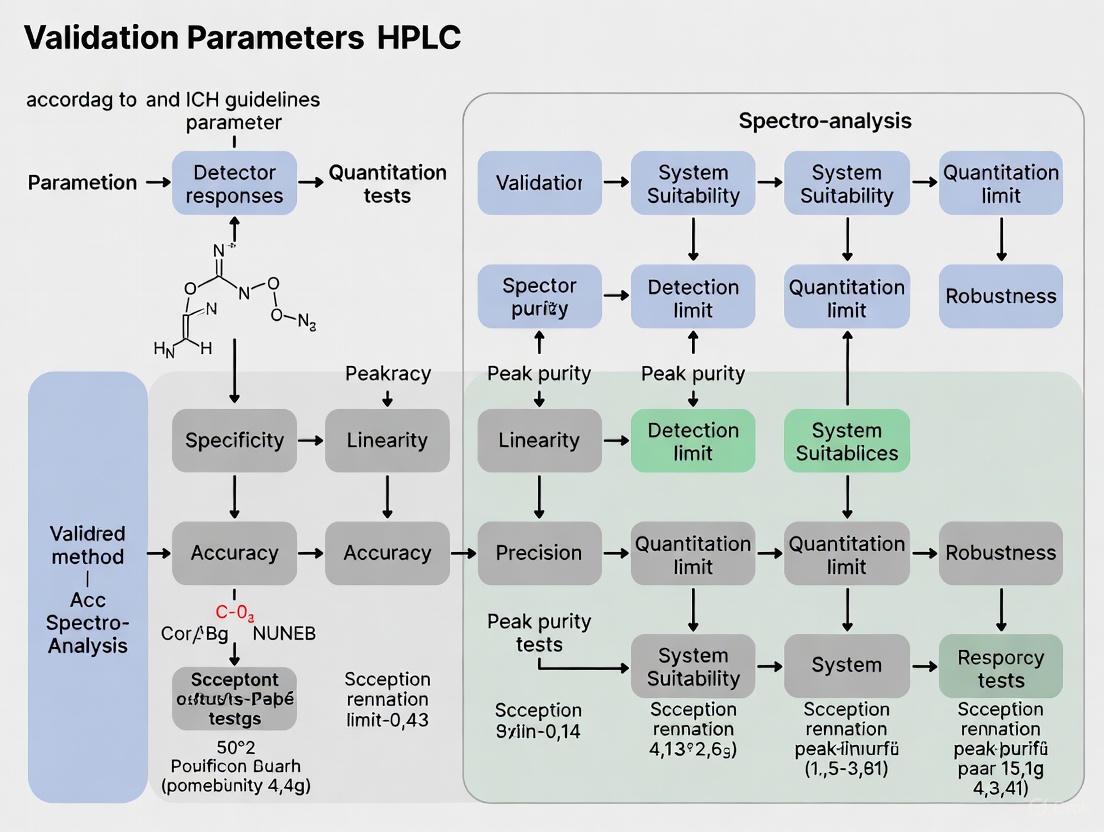
This article provides a comprehensive guide for researchers, scientists, and drug development professionals on validating High-Performance Liquid Chromatography (HPLC) methods in accordance with the modernized ICH Q2(R2) and Q14 guidelines.
HPLC Method Validation per ICH Q2(R2): A Complete Guide to Parameters, Procedures, and Lifecycle Management
Abstract
This article provides a comprehensive guide for researchers, scientists, and drug development professionals on validating High-Performance Liquid Chromatography (HPLC) methods in accordance with the modernized ICH Q2(R2) and Q14 guidelines. It covers foundational principles, from defining core validation parameters like specificity, accuracy, and precision to implementing a science- and risk-based lifecycle approach. Readers will find practical methodologies for developing stability-indicating methods, strategies for troubleshooting and optimization, and a clear framework for executing validation studies that meet global regulatory standards for pharmaceutical quality control.
Understanding ICH Q2(R2) and Q14: The New Foundation for HPLC Method Validation
The International Council for Harmonisation (ICH) Q2(R2) guideline, formally adopted in November 2023, represents a significant evolution in the validation of analytical procedures, including High-Performance Liquid Chromatography (HPLC) [1] [2]. This updated guideline expands upon its predecessor, ICH Q2(R1), to address modern analytical technologies and promote a more robust, science-based approach to method validation [3] [4]. For researchers and drug development professionals utilizing HPLC, understanding and implementing Q2(R2) is crucial for ensuring regulatory compliance, data integrity, and the reliability of analytical results throughout the method lifecycle. This guide explores the key changes introduced in Q2(R2), their specific implications for HPLC method validation, and provides practical experimental protocols for compliance.
The Evolution from ICH Q2(R1) to Q2(R2): Key Changes for HPLC
The original ICH Q2(R1) guideline had been in place for nearly two decades before the update to Q2(R2) [4] [5]. This revision reflects the substantial technological advancements in analytical science and addresses gaps in the original guidance [2] [5].
Core Enhancements in Q2(R2):
- Expanded Scope: While Q2(R1) primarily focused on chromatographic techniques, Q2(R2) explicitly includes validation requirements for a broader range of analytical procedures, including spectroscopic methods and bioanalytical assays [4]. This provides a more harmonized framework for laboratories employing multiple technique types.
- Lifecycle Management: Q2(R2) aligns with the principles of ICH Q14 ("Analytical Procedure Development"), promoting an integrated approach to the entire lifecycle of an analytical procedure, from development through validation and ongoing routine use [6] [4]. This encourages continuous monitoring and improvement of HPLC methods.
- Risk-Based Approach: The updated guideline encourages a more dynamic risk assessment during method validation [4]. This allows laboratories to focus validation efforts on the most critical aspects of their HPLC methods, ensuring they are fit for their intended purpose.
- Clarification of Terms: Q2(R2) provides more precise definitions and guidance on validation parameters, such as clearly differentiating between the reportable range (range with established accuracy and precision) and the working range (range where the method generates meaningful data) [5].
Table 1: Core Comparison of ICH Q2(R1) vs. ICH Q2(R2)
| Feature | ICH Q2(R1) | ICH Q2(R2) |
|---|---|---|
| Scope | Primarily chromatographic methods | Includes biological assays, spectroscopic methods (NMR, ICP-MS), and multivariate analyses [4] [5] |
| Lifecycle Approach | Not explicitly covered | Integrated with ICH Q14 for development and lifecycle management [6] [4] |
| Foundation | Primarily prescribed validation | Encourages risk-based validation strategy [4] |
| Range Definition | Single range concept | Distinguishes between reportable range and working range [5] |
| Robustness | General requirements | More specific requirements for different method types [5] |
Critical Validation Parameters for HPLC under ICH Q2(R2)
The fundamental validation parameters for HPLC remain consistent, but Q2(R2) provides enhanced guidance on their application and evaluation [1] [4].
Accuracy, Precision, and Specificity
- Accuracy should demonstrate that the method yields results close to the true value. For HPLC assay of drug substances, recovery rates are typically expected to be within 98-102%, and for drug products, 95-105% [4].
- Precision encompasses repeatability (same operating conditions), intermediate precision (different days, analysts, equipment), and reproducibility (between laboratories). For HPLC assays, Relative Standard Deviation (RSD) is typically ≤2.0% for the drug substance and product, while for impurity testing, it may be ≤5.0% [4].
- Specificity is the ability to assess the analyte unequivocally in the presence of components that may be expected to be present, such as impurities, degradants, and matrix. The guideline emphasizes that when specificity is challenging (e.g., for complex molecules), confirmation by a second, orthogonal method is recommended [5].
Linearity, Range, and Robustness
- Linearity is the ability of the method to obtain test results proportional to the concentration of the analyte. Q2(R2) acknowledges that not all response curves are linear (e.g., immunoassays) and provides guidance for validating such methods [5].
- Range is the interval between the upper and lower concentrations for which suitability has been demonstrated. The new distinction between reportable and working range provides greater clarity for setting system suitability criteria and understanding the method's operational limits [5].
- Robustness evaluates the method's capacity to remain unaffected by small, deliberate variations in method parameters. For HPLC, this includes testing the impact of changes in mobile phase pH (±0.2 units), composition (±2-5%), column temperature (±2-5°C), and flow rate (±10-20%) [4] [5]. The results help establish system suitability tests and control strategies.
Table 2: Summary of Key HPLC Validation Parameters and Typical Acceptance Criteria under ICH Q2(R2)
| Validation Parameter | Experimental Focus for HPLC | Typical Acceptance Criteria (Example) |
|---|---|---|
| Accuracy | Recovery of known amounts of analyte spiked into matrix | Drug Substance: 98-102% [4] |
| Precision (Repeatability) | Multiple injections of a homogeneous sample | RSD ≤ 2.0% for Assay [4] |
| Specificity | Resolution from potential interferents (impurities, degradants) | No interference; Peak purity confirmed |
| Linearity | Response across a range of concentrations (e.g., 50-150% of target) | Correlation coefficient (r) > 0.999 |
| Range | Established from linearity, accuracy, and precision data | Encompasses 80-120% of test concentration (for assay) |
| Robustness | Deliberate variation of chromatographic conditions | Resolution ≥ 2.0; Tailing Factor ≤ 2.0 |
Experimental Protocols for HPLC Method Validation
The following protocols outline a standardized approach for validating an HPLC method according to ICH Q2(R2) principles.
Protocol for Specificity and Forced Degradation Studies
This protocol is designed to demonstrate that the HPLC method can accurately measure the analyte in the presence of other components.
Methodology:
- Sample Preparation:
- Standard Solution: Prepare a high-purity reference standard of the analyte at the target concentration.
- Placebo/Blank Solution: Prepare a sample of the formulation matrix without the active ingredient.
- Forced Degradation Samples: Stress the drug substance and product under various conditions:
- Acidic Hydrolysis: Treat with 0.1M HCl at room temperature for several hours.
- Basic Hydrolysis: Treat with 0.1M NaOH at room temperature for several hours.
- Oxidative Degradation: Treat with 3% H₂O₂ at room temperature for several hours.
- Thermal Degradation: Expose solid sample to 60°C for 1-2 weeks.
- Photolytic Degradation: Expose to UV/Visible light as per ICH Q1B.
- Chromatographic Analysis:
- Inject the standard, placebo, and each degradation sample into the HPLC system.
- Use a photodiode array (PDA) detector to assess peak purity of the main analyte peak in all stressed samples.
- Data Evaluation:
- Specificity: The chromatogram of the placebo should show no peaks co-eluting with the analyte. The peak purity angle should be less than the peak threshold for the analyte in all stressed samples, confirming no co-eluting degradants.
- Forced Degradation: The method should be able to separate and resolve degradation products from the main peak, demonstrating stability-indicating properties.
Protocol for Establishing Accuracy and Precision
This protocol combines the assessment of method correctness (accuracy) and variability (precision).
Methodology:
- Sample Preparation:
- Prepare a minimum of nine determinations across a specified range (e.g., 80%, 100%, 120% of label claim) with at least three concentrations and three replicates each [4].
- For a drug product, this involves spiking the placebo with known quantities of the drug substance.
- Chromatographic Analysis:
- Analyze all samples using the validated HPLC method.
- For intermediate precision, repeat the entire procedure on a different day, with a different analyst, and on a different HPLC system to assess the impact of these variables.
- Data Evaluation:
- Accuracy: Calculate the percentage recovery for each sample. The mean recovery across all levels should meet predefined criteria (e.g., 98-102%).
- Precision: Calculate the Relative Standard Deviation (RSD%) for the replicate measurements at each concentration level (repeatability) and for the total data set from the intermediate precision study. The RSD should typically be ≤2.0% for an assay.
The following workflow diagram visualizes the key stages and decision points in the HPLC method validation lifecycle under ICH Q2(R2).
The Scientist's Toolkit: Essential Research Reagents and Materials
Successful HPLC method validation under ICH Q2(R2) requires high-quality materials and a clear understanding of their function.
Table 3: Essential Research Reagents and Materials for HPLC Validation
| Item | Function & Importance in Validation |
|---|---|
| Certified Reference Standard | High-purity analyte used to prepare calibration standards; critical for establishing method accuracy, linearity, and precision [5]. |
| Placebo Formulation | The drug product matrix without the active ingredient; essential for demonstrating specificity and absence of interference. |
| Forced Degradation Reagents | Acids (HCl), bases (NaOH), oxidants (H₂O₂) used in stress studies to generate degradants and prove method stability-indicating capability [5]. |
| HPLC-Grade Solvents | High-purity mobile phase components (water, acetonitrile, methanol) to minimize baseline noise and prevent system contamination. |
| Buffering Salts | For preparing pH-controlled mobile phases (e.g., phosphate, acetate buffers); crucial for achieving robust and reproducible separation. |
| Characterized Impurities | Isolated or synthesized impurities/degradants; used to confirm specificity, determine relative response factors, and establish quantification limits. |
The adoption of ICH Q2(R2) marks a pivotal shift towards a more holistic, risk-based, and scientifically rigorous framework for analytical method validation. For professionals relying on HPLC, this updated guideline provides a modernized pathway to ensure methods are not only validated for initial use but are also maintained as robust, reliable tools throughout the product lifecycle. By integrating the principles of Q2(R2) with those of Q14, pharmaceutical scientists can develop higher quality methods, facilitate more efficient regulatory reviews, and implement more agile post-approval change management, ultimately contributing to the consistent delivery of safe and effective medicines to patients.
For nearly two decades, ICH Q2(R1) served as the foundational guideline for validating analytical procedures in the pharmaceutical industry, providing a standardized set of parameters to demonstrate that a method is fit for its intended purpose [7]. However, significant advancements in analytical technologies and the increasing complexity of biological products revealed limitations in the original guideline, which was primarily designed around traditional small-molecule drugs and lacked specific guidance for modern analytical challenges [7] [8].
The recently implemented ICH Q2(R2) and the complementary ICH Q14 guideline represent a substantial shift in regulatory philosophy, moving from a prescriptive, "check-the-box" approach to a scientific, risk-based framework that encompasses the entire analytical procedure lifecycle [8] [9]. This evolution aligns with the principles of ICH Q8 (Pharmaceutical Development), Q9 (Quality Risk Management), and Q10 (Pharmaceutical Quality System), creating a more integrated and holistic approach to analytical quality [8]. The update not only includes guidance for contemporary analytical techniques but also formalizes the connection between method development and validation, emphasizing a proactive approach to quality rather than a reactive one [10] [8].
Core Conceptual Shift: From One-Time Validation to Lifecycle Management
The most significant change in the transition from ICH Q2(R1) to Q2(R2) is the fundamental shift in perspective regarding what constitutes analytical procedure validation. The traditional model treated validation as a discrete event—a series of experiments conducted to confirm a method was suitable before its operational use [11]. In contrast, the modern framework introduced in Q2(R2) and detailed in ICH Q14 embraces a continuous lifecycle approach, viewing method validation as an ongoing process that begins with initial development and continues throughout the method's operational use [7] [9].
This lifecycle model consists of three interconnected stages:
- Procedure Design and Development: Derived from an Analytical Target Profile (ATP) and employing enhanced development approaches [11]
- Procedure Performance Qualification: Corresponding to the traditional method validation, but now informed by development knowledge [11]
- Procedure Performance Verification: The ongoing monitoring of the method's performance during routine use to ensure it remains in a state of control [11]
The introduction of the Analytical Target Profile (ATP) is a cornerstone of this new paradigm [9]. The ATP is a prospective summary that defines the intended purpose of the analytical procedure and its required performance criteria [8] [9]. By establishing the ATP at the outset, development efforts are directed toward creating a method that is designed for its specific purpose from the very beginning, rather than having performance criteria applied retrospectively after development is complete [9].
Table 1: Comparison of Traditional vs. Lifecycle Approaches to Analytical Procedures
| Aspect | Traditional Approach (Q2(R1)) | Lifecycle Approach (Q2(R2)/Q14) |
|---|---|---|
| Core Philosophy | Validation as a one-time event | Continuous validation throughout the method's life |
| Starting Point | Method development completion | Analytical Target Profile (ATP) definition |
| Development Approach | Empirical, linear process | Systematic, risk-based, science-driven |
| Regulatory Flexibility | Limited flexibility for changes | Enhanced approach allows more flexible post-approval changes |
| Focus | Verifying performance | Building quality into the method design |
| Documentation | Focus on validation protocol and report | Extensive knowledge management throughout lifecycle |
Detailed Comparison of Key Changes and Additions
Structural and Philosophical Enhancements
The revised guideline introduces several structural changes that reflect its updated philosophical approach. ICH Q2(R2) now explicitly incorporates risk management principles throughout the validation process, aligning with ICH Q9 and encouraging a more scientific justification for validation strategies [8]. This risk-based approach allows laboratories to focus their validation efforts on the most critical aspects of their analytical procedures, potentially reducing unnecessary testing while strengthening control over high-risk parameters [9].
Another significant enhancement is the formal recognition of different analytical technologies. While Q2(R1) was primarily focused on chromatographic methods, Q2(R2) provides guidance for a broader range of techniques, including multivariate methods and other advanced analytical technologies that have emerged since the original guideline was published [8] [9]. This expansion ensures the guideline remains relevant and applicable to modern analytical laboratories working with complex modalities such as biologics [7].
Specific Validation Parameter Updates
While the core validation parameters from Q2(R1) are maintained in Q2(R2), the revised guideline provides enhanced guidance on their application and evaluation, particularly for more complex analytical procedures.
Accuracy and Precision: The updated guideline includes more comprehensive requirements for demonstrating accuracy and precision, with an emphasis on studies that evaluate intra- and inter-laboratory reproducibility to ensure method reliability across different settings [7].
Linearity and Range: The assessment of linearity and range has been refined, with a strengthened requirement to link the method's validated range directly to its ATP, ensuring the range is appropriate for the method's intended use [7].
Detection Limit (LOD) and Quantitation Limit (LOQ): Methodologies for determining LOD and LOQ have been expanded and clarified, with recognition of additional statistical approaches beyond the signal-to-noise ratio method that was commonly (sometimes inappropriately) applied under Q2(R1) [11] [7].
Robustness: Under Q2(R2), robustness testing has evolved from an often informal evaluation to a compulsory, systematic assessment [7]. The guideline now explicitly connects robustness to the lifecycle approach, requiring continuous evaluation to demonstrate a method's stability against expected operational variations [7].
Table 2: Comparison of Validation Parameter Requirements Between Q2(R1) and Q2(R2)
| Validation Parameter | ICH Q2(R1) Requirements | Key Updates in ICH Q2(R2) |
|---|---|---|
| Accuracy | Recovery studies using spiked samples | More comprehensive requirements; inter-laboratory reproducibility emphasized |
| Precision | Repeatability and intermediate precision | Enhanced statistical evaluation; expanded reproducibility expectations |
| Specificity | Ability to measure analyte unequivocally | Enhanced guidance for complex matrices (e.g., biologics) |
| Linearity | Direct proportionality of response to concentration | Statistical methods more explicitly defined; stronger link to ATP |
| Range | Interval where linearity, accuracy, precision are demonstrated | Direct linkage to ATP required; justification more explicitly required |
| LOD/LOQ | Signal-to-noise or standard deviation approaches | Additional statistical approaches recognized and detailed |
| Robustness | Often informal testing of parameter variations | Formalized as compulsory; integrated with lifecycle management |
Implementation Framework: The Enhanced Approach
The Analytical Procedure Lifecycle Workflow
The implementation of the analytical procedure lifecycle involves a systematic workflow that begins with defining requirements and continues through development, validation, and ongoing monitoring. The following diagram illustrates this continuous process:
This workflow demonstrates the continuous nature of the lifecycle approach, with feedback loops enabling method improvement based on operational experience and a foundation of knowledge management supporting all stages [11].
Analytical Quality by Design (AQbD) in Practice
The enhanced approach endorsed by ICH Q14 incorporates Analytical Quality by Design (AQbD) principles, which involve a systematic understanding of the method based on sound science and quality risk management [12] [8]. A practical example of this approach can be seen in the development of an RP-HPLC method for favipiravir, where a risk assessment identified critical factors (solvent ratio, buffer pH, and column type) that significantly impacted method performance [12].
Using a d-optimal experimental design, researchers systematically studied the impact of these factors on multiple responses (peak area, retention time, tailing factor, and theoretical plates) [12]. Through Monte Carlo simulation, they established a Method Operable Design Region (MODR), defining the parameter space where the method consistently meets its performance criteria [12]. This AQbD approach resulted in a more robust and well-understood method compared to what traditional one-factor-at-a-time development could achieve [12].
The Scientist's Toolkit: Essential Elements for HPLC Method Validation
Implementing the enhanced approach for HPLC methods requires specific materials and strategic approaches. The following table details key research reagent solutions and their functions within the context of modern method validation:
Table 3: Essential Research Reagent Solutions for HPLC Method Validation
| Reagent/Material | Function in Validation | Application Example |
|---|---|---|
| Reference Standards | Provide known purity substance for accuracy, linearity, and precision studies | Certified reference material for active pharmaceutical ingredient (API) |
| System Suitability Solutions | Verify chromatographic system performance before and during validation | Mixture of key analytes and degradation products at specified concentrations |
| Forced Degradation Samples | Demonstrate specificity against degradation products | Samples of drug substance subjected to acid, base, oxidative, thermal, and photolytic stress |
| Placebo/Matrix Blanks | Establish specificity against excipients or matrix components | Pharmaceutical formulation without active ingredient or biological matrix |
| Mass Spectrometry Compatible Buffers | Enable hyphenated techniques for structural identification | Volatile buffers like ammonium formate for LC-MS methods |
Experimental Protocols for the Enhanced Approach
Protocol 1: Establishing the Analytical Target Profile
Objective: To define the ATP for an analytical procedure before initiating development activities.
Methodology:
- Define Measurand: Precisely identify the analyte(s) of interest and any required separations from potential interferents [9]
- Establish Performance Requirements: Define the required level of accuracy, precision, range, and other performance characteristics based on the intended use of the method [9]
- Document ATP: Create a formal ATP document containing:
- The analyte and matrix of interest
- Required measurement range
- Target accuracy (as % bias or recovery)
- Target precision (as %RSD)
- Specificity requirements
- Required limits of detection and quantitation, if applicable [9]
Protocol 2: Risk-Based Robustness Testing
Objective: To systematically identify and evaluate the impact of critical method parameters on performance.
Methodology:
- Parameter Identification: Identify all method parameters that may impact performance (e.g., mobile phase pH, column temperature, flow rate) [12]
- Risk Assessment: Use a structured tool (e.g., Failure Mode Effects Analysis) to prioritize high-risk parameters [7]
- Experimental Design: Apply a structured design (e.g., fractional factorial or Plackett-Burman) to efficiently evaluate multiple parameters [12]
- Data Analysis: Statistically analyze results to determine which parameters significantly impact method outcomes [12]
- Control Strategy: Define appropriate controls for critical parameters to ensure robust method performance [7]
Protocol 3: Ongoing Procedure Performance Verification
Objective: To continuously monitor method performance during routine use to ensure it remains in a state of control.
Methodology:
- Control Chart Establishment: Implement control charts for critical performance attributes (e.g., system suitability parameters, reference standard results) [11]
- Trend Analysis: Regularly review control data for statistically significant trends that may indicate method deterioration [11]
- Periodic Review: Conduct formal annual reviews of method performance data, out-of-specification results, and deviations [7]
- Continuous Improvement: Use monitoring data to identify opportunities for method refinement and optimization [11]
The transition from ICH Q2(R1) to Q2(R2) represents a significant evolution in how analytical procedures are developed, validated, and maintained. By embracing the lifecycle approach and implementing the enhanced methodologies outlined in ICH Q14, pharmaceutical companies and analytical laboratories can develop more robust, reliable, and scientifically sound analytical procedures [10] [9].
This shift requires a change in mindset from viewing validation as a regulatory hurdle to approaching it as an integral part of continuous quality assurance [8]. While the initial implementation may require more extensive development activities and documentation, the long-term benefits include more resilient methods, reduced investigations, and more efficient management of post-approval changes [7] [9].
For researchers and drug development professionals, successfully navigating this transition will require investment in training, process reevaluation, and potentially enhanced documentation systems [7]. However, the result will be analytical methods that are not merely validated, but are truly designed for quality throughout their operational life, ultimately contributing to more reliable pharmaceutical quality control and enhanced patient safety [8].
For researchers, scientists, and drug development professionals, high-performance liquid chromatography (HPLC) methods serve as critical tools for analyzing drug substances and products. The reliability of these methods hinges on a rigorous validation process conducted according to international standards. The International Council for Harmonisation (ICH) provides the definitive framework for this process through its ICH Q2(R2) guideline, which defines the core validation parameters essential for demonstrating that an analytical procedure is fit for its intended purpose [1]. This guide explores these parameters—specificity, accuracy, precision, linearity, range, LOD, LOQ, and robustness—within the context of HPLC method validation, providing a comparative analysis of their definitions, experimental protocols, and acceptance criteria.
Core Principles of ICH Analytical Method Validation
The ICH Q2(R2) guideline, officially titled "Validation of Analytical Procedures," outlines a harmonized approach to validation for registration applications submitted to regulatory authorities [1]. It applies to new or revised analytical procedures used for the release and stability testing of commercial drug substances and products, both chemical and biological [1]. The guideline's primary objective is to establish documented evidence that provides a high degree of assurance that a specific analytical process will consistently produce results that meet its predefined criteria and are suitable for their intended use [10].
A fundamental principle in modern analytical development is the integration of Quality by Design (QbD). Framed by ICH Q8, Q9, and Q10, and further supported by the recent ICH Q14 guideline on analytical procedure development, the QbD approach emphasizes a deep, science-based understanding of the method [13] [14]. It begins with defining an Analytical Target Profile (ATP), which outlines the required quality of the analytical data. Through risk assessment and systematic experimentation, Critical Method Attributes (CMAs) and Critical Process Parameters (CPPs) are identified and controlled. This proactive methodology ensures the development of more robust and rugged methods and establishes a Method Operable Design Region (MODR) or design space—a multidimensional combination of parameter ranges within which the method provides reliable results without the need for revalidation [14].
The following workflow outlines the lifecycle of an analytical method, from initial planning to continual improvement, integrating both QbD principles and core validation activities.
Comparative Analysis of Core Validation Parameters
The table below summarizes the purpose, key experimental protocols, and typical acceptance criteria for each of the core validation parameters as defined by ICH Q2(R2) [1] [10] [15].
Table 1: Core HPLC Validation Parameters and Acceptance Criteria
| Validation Parameter | Purpose and Definition | Key Experimental Protocol | Typical Acceptance Criteria |
|---|---|---|---|
| Specificity [15] | Ability to measure the analyte unequivocally in the presence of other components like impurities, degradants, or matrix [10]. | Analyze samples containing the analyte along with potential interferents (degradation products, impurities, excipients). Compare chromatograms to those of blank samples [15]. | The analyte peak is resolved from all other peaks. Peak purity tests confirm a single component [15]. |
| Accuracy [10] [15] | Closeness of agreement between the measured value and a true or accepted reference value [15]. | Analyze a minimum of 9 determinations across at least 3 concentration levels covering the specified range. Compare results to a known reference standard [15]. | Recovery: 98-102% for assay of drug substance [15]. Expressed as percent recovery or bias. |
| Precision [10] [15] | Degree of agreement among individual test results when the procedure is applied repeatedly to multiple samplings. Includes repeatability and intermediate precision. | Repeatability: Multiple measurements of a homogeneous sample under identical conditions.Intermediate Precision: Different days, analysts, or equipment within the same lab [15]. | %RSD ≤ 2.0% for assay of drug substance. Intermediate precision should show no significant statistical difference between sets [15]. |
| Linearity [15] | Ability of the method to produce results directly proportional to analyte concentration in a defined range. | Analyze at least 5 concentration levels spanning the declared range. Plot response vs. concentration and apply linear regression [15]. | Correlation coefficient (r) ≥ 0.995 [15]. Visual inspection of the residual plot for lack of bias. |
| Range [15] | The interval between the upper and lower concentration levels over which linearity, accuracy, and precision are demonstrated. | Established from the linearity study. The range must cover the intended use of the method [15]. | Assay: 80-120% of test concentration.Impurity Quantification: LOQ to 120% of specification [15]. |
| LOD (Detection Limit) [15] | The lowest amount of analyte that can be detected, but not necessarily quantified. | Signal-to-Noise: Typically 3:1 ratio.Standard Deviation: LOD = 3.3σ/S, where σ is SD of response, S is slope of calibration curve [15]. | The analyte peak should be discernible from the baseline noise with the defined ratio or confidence level. |
| LOQ (Quantitation Limit) [15] | The lowest amount of analyte that can be quantified with acceptable accuracy and precision. | Signal-to-Noise: Typically 10:1 ratio.Standard Deviation: LOQ = 10σ/S [15]. | At the LOQ, accuracy and precision (e.g., %RSD) should meet predefined criteria for reliable quantification. |
| Robustness [16] [10] | A measure of the method's capacity to remain unaffected by small, deliberate variations in procedural parameters. | Deliberately vary method parameters (e.g., mobile phase pH, flow rate, column temperature) using a structured design (e.g., factorial design) and measure impact on results [16]. | System suitability criteria are met despite variations. No significant impact on critical quality attributes like resolution or tailing factor. |
Experimental Protocols for Key Parameters
Robustness Testing via Experimental Design
While traditional one-factor-at-a-time (OFAT) approaches are informative, modern robustness testing leverages multivariate experimental designs to efficiently study multiple parameters and their interactions simultaneously [16]. The most common screening designs include:
- Full Factorial Design: Examines all possible combinations of factors at their high and low levels. For k factors, this requires 2^k runs (e.g., 4 factors = 16 runs) [16].
- Fractional Factorial Design: A carefully selected subset of the full factorial design, used when investigating a larger number of factors to save time and resources while still estimating main effects [16].
- Plackett-Burman Design: An highly efficient screening design for identifying the most critical factors from a large set, using a number of runs that is a multiple of four [16].
For an HPLC method, typical factors to vary include mobile phase pH (±0.2 units), organic solvent composition (±2-5%), flow rate (±0.1 mL/min), column temperature (±5°C), and detection wavelength (±2-3 nm) [16]. The outputs (responses) measured are critical quality attributes like resolution, tailing factor, and theoretical plates. A robustness study not only confirms the method's reliability but also helps establish meaningful system suitability test limits [16].
Accuracy and Precision Evaluation
The protocol for assessing accuracy involves spiking a blank matrix (or placebo) with known quantities of the analyte at levels covering the range of the method, typically 80%, 100%, and 120% of the target concentration [15]. Each level should be prepared and analyzed in triplicate, for a total of nine determinations. The mean recovery value at each level is calculated and should fall within the predefined acceptance criteria (e.g., 98-102%) [15].
Precision encompasses both repeatability and intermediate precision. Repeatability is demonstrated by analyzing six independent preparations of a homogeneous sample at 100% of the test concentration and calculating the %RSD of the results [15]. Intermediate precision evaluates the method's performance within the same laboratory under varied conditions, such as a different analyst, instrument, or day. The results from both sets of experiments are compared statistically, and the %RSD for each set and the combined data should meet the acceptance criteria (e.g., %RSD ≤ 2.0%) [15].
Essential Research Reagent Solutions for HPLC Method Validation
The following table details key materials and reagents required for the development and validation of a robust HPLC method.
Table 2: Essential Research Reagent Solutions for HPLC Validation
| Item | Function in HPLC Analysis |
|---|---|
| Reference Standard | A highly characterized substance of known purity and identity used as the benchmark for quantifying the analyte and determining method accuracy [13]. |
| High-Purity Solvents (HPLC Grade) | Used for mobile phase and sample preparation. High purity is critical to minimize baseline noise, ghost peaks, and column contamination [13]. |
| Buffer Salts & pH Modifiers | Used to prepare mobile phase buffers for controlling pH, which is often a critical parameter for achieving adequate separation, peak shape, and robustness [13]. |
| Chemicals for Forced Degradation | Strong acids, bases, oxidants, and exposure to light/heat are used in stress studies to generate degradation products, which are essential for demonstrating method specificity [15]. |
| Characterized Chromatographic Column | The stationary phase is central to the separation. Using a well-characterized column from a reliable supplier and evaluating different column lots is part of robustness testing [16]. |
The core validation parameters defined in ICH Q2(R2)—specificity, accuracy, precision, linearity, range, LOD, LOQ, and robustness—form an interdependent framework that guarantees the quality, reliability, and regulatory acceptability of HPLC methods [1] [10]. Adherence to these parameters is non-negotiable for generating defensible data in drug development. The contemporary shift towards an Analytical Quality by Design (AQbD) approach, supported by ICH Q14, further strengthens this framework by building method understanding and robustness directly into the development phase [13] [14]. This involves systematic risk assessment and experimental design to define a Method Operable Design Region (MODR), providing greater regulatory flexibility and ensuring the method remains fit-for-purpose throughout its entire lifecycle [14]. For scientists, mastering these principles and protocols is not merely about regulatory compliance; it is about instilling confidence in every data point that supports the safety, efficacy, and quality of a pharmaceutical product.
The Role of ICH Q14 in Analytical Procedure Development and the Analytical Target Profile (ATP)
The International Council for Harmonisation (ICH) Q14 guideline, titled "Analytical Procedure Development," represents a significant evolution in the regulatory landscape for pharmaceutical analysis. Finalized and adopted in November 2023, this guideline provides a harmonized, science- and risk-based framework for developing and maintaining analytical procedures used to assess the quality of drug substances and drug products [17] [18]. ICH Q14 works in conjunction with the revised ICH Q2(R2) guideline on "Validation of Analytical Procedures," with both documents designed to be applied together throughout the analytical procedure lifecycle [19] [20]. The primary objectives of ICH Q14 are to enhance the robustness and reliability of analytical methods, facilitate more efficient science-based post-approval change management, and improve regulatory flexibility and efficiency [20] [21].
A fundamental shift introduced by ICH Q14 is its emphasis on the analytical procedure lifecycle, recognizing that methods must evolve in response to new technologies, scientific knowledge, and manufacturing changes [21] [22]. This lifecycle approach helps address the challenge that many quality control laboratories face when using outdated analytical procedures developed decades ago, which often lag behind advances in instrumentation and sample preparation technologies [21]. By providing a structured framework for continual improvement, ICH Q14 enables manufacturers to keep analytical procedures current with state-of-the-art technologies while maintaining regulatory compliance.
Analytical Target Profile (ATP): The Foundation of Analytical Quality
Definition and Purpose of the ATP
The Analytical Target Profile (ATP) is a cornerstone concept of the ICH Q14 enhanced approach, defined as "a prospective summary of the quality characteristics of an analytical procedure" [23]. The ATP articulates what the analytical procedure needs to achieve by defining the intended purpose of the analysis and establishing the required performance characteristics and associated acceptance criteria [24] [23]. Similar to how the Quality Target Product Profile (QTPP) guides drug product development, the ATP serves as the foundation for analytical procedure development, ensuring the method remains fit-for-purpose throughout its lifecycle [23].
The ATP captures the essential requirements that an analytical procedure must fulfill to reliably measure specific product quality attributes, translating analytical needs into measurable performance criteria [24]. By defining these requirements prospectively, the ATP guides the selection of appropriate technologies, establishes the foundation for method validation, and provides the basis for evaluating the impact of future changes to the analytical procedure [23] [18]. A well-constructed ATP ensures that the analytical procedure is designed with the end in mind, focusing on what needs to be measured rather than how to measure it, thereby allowing flexibility in technology selection and method design [18].
Key Components of an Effective ATP
A comprehensive ATP should include several essential components that collectively define the analytical requirements. The core elements of an ATP are summarized in the table below, which provides a structured framework for documenting analytical procedure requirements.
Table 1: Essential Components of an Analytical Target Profile (ATP)
| ATP Component | Description | Example |
|---|---|---|
| Intended Purpose | Clear statement of what the analytical procedure should measure | "Quantitation of the active ingredient in drug product" [23] |
| Technology Selection | Appropriate analytical technique with rationale for selection | HPLC, SDS-PAGE, cell-based assay, with justification [23] [25] |
| Link to CQAs | Connection to relevant Critical Quality Attributes | "Measure of biological potency linked to drug's mechanism of action" [23] |
| Performance Characteristics | Specific metrics for method validation | Accuracy, precision, specificity, range, robustness [19] [23] |
| Acceptance Criteria | Predefined thresholds for performance characteristics | "Acceptable accuracy level based on linearity experiment" [23] |
| Reportable Range | Range over which the method provides reliable results | "Reporting threshold of x% of specification limits" [23] |
In addition to these core components, a robust ATP should prioritize requirements based on their impact on product quality and decision-making [24]. The ATP should remain independent of specific techniques initially to allow for unbiased technology selection, with the rationale for the最终 selected technology documented based on development studies, prior knowledge, or literature evidence [23]. The performance characteristics and their acceptance criteria should be derived from the intended purpose of the analysis, considering the relevant critical quality attributes and their specification limits [24] [23].
Comparison of Minimal and Enhanced Approaches
The Minimal Approach: Traditional Methodology
ICH Q14 describes two distinct approaches to analytical procedure development: the minimal approach and the enhanced approach. The minimal approach represents the traditional methodology that has been standard practice in the pharmaceutical industry [18]. This approach requires identification of the attributes of the drug substance or drug product that need to be tested, selection of appropriate technology and instruments, evaluation of performance characteristics through development studies, and definition of the analytical procedure description including the analytical procedure control strategy [25].
While the minimal approach remains acceptable under ICH Q14, it offers less flexibility for post-approval changes [23] [18]. Changes to analytical procedures developed using the minimal approach typically require prior regulatory approval, as there is limited understanding of the method's design space and the impact of parameter variations on method performance [21] [18]. This can lead to time-consuming and complex regulatory submissions for even minor changes to analytical procedures, potentially delaying improvements and technological updates [21].
The Enhanced Approach: Systematic QbD Principles
The enhanced approach under ICH Q14 incorporates Analytical Quality by Design (AQbD) principles, providing a more systematic framework for analytical procedure development [24] [25]. This approach includes all elements of the minimal approach plus additional components such as defining an ATP, conducting formal risk assessments, performing multivariate experiments to investigate parameter interactions, and establishing a comprehensive control strategy with defined method operable design regions (MODR) or proven acceptable ranges (PAR) [25] [18].
The enhanced approach offers significant advantages in terms of regulatory flexibility, particularly for post-approval changes [21] [22]. When sufficient understanding of the method is demonstrated through enhanced development studies, changes within the defined design space often only require regulatory notification rather than prior approval [21] [18]. This facilitates continual improvement and adaptation of analytical procedures throughout their lifecycle, allowing manufacturers to incorporate new technologies and scientific advancements more efficiently [21].
Table 2: Comparison of Minimal vs. Enhanced Approaches in ICH Q14
| Aspect | Minimal Approach | Enhanced Approach |
|---|---|---|
| Regulatory Requirement | Required | Optional (can include some or all elements) [25] |
| ATP Definition | Not required | Foundation of development [24] [23] |
| Risk Assessment | Informal or not required | Formal, structured process [18] |
| Experimental Design | Typically univariate | Design of Experiments (DoE) encouraged [24] [18] |
| Knowledge Management | Limited documentation | Comprehensive knowledge capture [22] [25] |
| Control Strategy | Fixed parameters | MODR/PAR with defined ranges [25] [18] |
| Post-approval Changes | Typically prior approval required | Reduced reporting categories for some changes [21] [18] |
| Lifecycle Management | Reactive | Proactive with continuous monitoring [22] [18] |
Implementation Tools and Experimental Protocols
Practical Workflow for ICH Q14 Implementation
Implementing ICH Q14 and AQbD principles requires a structured workflow that spans the entire analytical procedure lifecycle. The following diagram illustrates the key steps in this process, from initial method conception through lifecycle management:
Diagram 1: Analytical Procedure Lifecycle Workflow
This workflow begins with a method request that clearly defines the analytical need [24]. The subsequent definition of the Analytical Target Profile (ATP) is critical, as it establishes the foundation for all development activities [24] [23]. A comprehensive risk assessment using tools such as Ishikawa diagrams or Failure Mode and Effects Analysis (FMEA) helps identify critical method parameters that require further investigation [18]. Design of Experiments (DoE) approaches are then employed to systematically evaluate these parameters and their interactions, leading to the establishment of a Method Operable Design Region (MODR) and control strategy [24] [25]. The method is then validated according to ICH Q2(R2) requirements, followed by implementation for routine use [19] [23]. Continuous monitoring and lifecycle management ensure the method remains fit-for-purpose, with data from routine use informing potential improvements [22] [18].
Essential Research Reagent Solutions and Materials
Successful implementation of ICH Q14 requires various specialized reagents, materials, and software tools. The following table details key solutions essential for conducting analytical development studies following ICH Q14 principles:
Table 3: Essential Research Reagent Solutions for ICH Q14 Implementation
| Category | Specific Examples | Function in Analytical Development |
|---|---|---|
| Chromatographic Columns | C18 (USP L1) [21] | Separation mechanism critical for specificity in HPLC methods |
| Electrophoresis Reagents | Dimethyl-β-cyclodextrin, Sulfated γ-cyclodextrin [24] | Background electrolytes for capillary electrophoresis methods |
| Design of Experiments Software | Various statistical packages | Enables efficient multivariate experimentation and MODR definition [24] [25] |
| Method Development Software | AutoChrom and similar platforms [25] | Supports QbD implementation, knowledge management, and robustness testing |
| Reference Standards | Chemical Reference Substances (CRS) [24] | Essential for method qualification and validation |
| System Suitability Test Materials | SST samples with defined characteristics [24] [18] | Verifies method performance before routine use |
| Knowledge Management Systems | Electronic lab notebooks, LIMS [25] [18] | Captures and manages prior knowledge for future development |
Experimental Protocol for ATP Definition and Method Development
Defining a robust ATP requires a systematic experimental approach. The following protocol outlines the key steps for establishing an ATP and developing an analytical method according to ICH Q14 principles:
Define Analytical Needs: Clearly articulate the purpose of the analysis and its connection to critical quality attributes (CQAs). This includes specifying what needs to be measured, required sensitivity, and the decision context for the results [24] [23].
Establish Performance Criteria: Based on the analytical needs, define specific performance characteristics (accuracy, precision, specificity, range, robustness) and their acceptance criteria. These should be derived from the product's CQAs and their specification limits [23].
Technology Selection: Evaluate multiple analytical technologies that could potentially meet the ATP requirements. Based on prior knowledge, literature review, or scouting experiments, select the most appropriate technology and document the rationale for this selection [23] [18].
Risk Assessment: Conduct a formal risk assessment using tools such as FMEA or Ishikawa diagrams to identify critical method parameters that may impact method performance. This assessment should consider factors such as sample preparation, instrumental parameters, and environmental conditions [18].
DoE Studies: Design and execute multivariate experiments to investigate the identified critical parameters and their interactions. Response surface methodology or other appropriate DoE approaches should be used to efficiently characterize the method response across the parameter space [24] [18].
MODR Definition: Based on the DoE results, establish the Method Operable Design Region (MODR) - the multidimensional combination of analytical procedure parameter ranges within which the method meets the ATP requirements [25].
Control Strategy Implementation: Define the analytical procedure control strategy, including system suitability tests, sample suitability criteria, and specific controls to ensure the method performs as expected during routine use [18].
Knowledge Documentation: Comprehensively document all development studies, decisions, and their rationales in searchable formats to support future method changes and lifecycle management [25].
Lifecycle Management and Change Control
Post-Approval Change Management
ICH Q14 introduces a structured framework for post-approval change management of analytical procedures, leveraging concepts from ICH Q12 on Pharmaceutical Product Lifecycle Management [21] [18]. This framework enables a more efficient approach to implementing changes while maintaining regulatory compliance and ensuring continuous method improvement. The change management process under ICH Q14 involves several key steps:
First, a risk assessment is conducted to evaluate the significance of the proposed change, considering factors such as test complexity, extent of modification, and relevance to product quality [21]. The change is then classified as high-, medium-, or low-risk based on this assessment. Next, analytical performance criteria according to the ATP are confirmed to ensure the modified method remains fit-for-purpose [21]. Appropriate validation studies are conducted, followed by bridging studies designed to compare the new procedure against the existing one [21]. Finally, the regulatory reporting requirements are assessed based on the risk classification and the established conditions defined during method development [21].
This structured approach to change management is particularly valuable for common scenarios such as technology upgrades, reagent or column discontinuation, and continuous improvement initiatives [21] [22]. By defining established conditions and their reporting categories during initial method development and registration, manufacturers can implement many changes with reduced regulatory burden, potentially moving from prior approval requirements to notification-based reporting [21].
Comparability and Equivalency Studies
When modifying analytical procedures, ICH Q14 emphasizes the importance of demonstrating either comparability or equivalency between the original and modified methods [22]. Understanding the distinction between these concepts is essential for proper lifecycle management:
Comparability evaluates whether a modified method yields results sufficiently similar to the original, ensuring consistent product quality decisions. Comparability studies typically confirm that modified procedures produce expected results, and these changes usually do not require regulatory filings or commitments [22].
Equivalency involves a more comprehensive assessment to demonstrate that a replacement method performs equal to or better than the original. Such changes require regulatory approval prior to implementation and typically include side-by-side testing of representative samples using both methods, statistical evaluation using tools such as paired t-tests or ANOVA, and predefined acceptance criteria based on method performance attributes and CQAs [22].
The choice between comparability and equivalency depends on the risk and scope of the change. For low-risk procedural changes with minimal impact on product quality, a comparability evaluation is often sufficient [22]. For high-risk changes such as complete method replacements, a comprehensive equivalency study is required [22].
ICH Q14, together with ICH Q2(R2), represents a fundamental shift in how analytical procedures are developed, validated, and managed throughout their lifecycle. By emphasizing a systematic, science- and risk-based approach centered on the Analytical Target Profile, these guidelines enable the development of more robust, reliable, and fit-for-purpose analytical methods [19] [24]. The enhanced approach under ICH Q14, while requiring greater initial investment in development studies, offers significant long-term benefits through increased regulatory flexibility, more efficient post-approval change management, and improved method robustness [21] [18].
For researchers, scientists, and drug development professionals, adopting ICH Q14 principles means shifting from a reactive to a proactive approach to analytical development [22]. This involves defining clear analytical targets prospectively, systematically investigating method parameters and their interactions, establishing well-defined control strategies, and implementing continuous monitoring throughout the method lifecycle [22] [18]. As the pharmaceutical industry continues to evolve with increasingly complex molecules and advanced analytical technologies, the framework provided by ICH Q14 will be essential for ensuring that analytical procedures remain capable of reliably assessing product quality while adapting to scientific and technological advancements [21].
Applying a Risk-Based Approach to HPLC Method Validation
The pharmaceutical industry is increasingly adopting systematic, risk-based approaches for analytical method development and validation to ensure drug quality and patient safety. A traditional method development approach, often referred to as Quality by Testing (QbT) or trial-and-error, typically involves varying one factor at a time (OFAT) to establish working conditions [26]. This unstructured approach has significant limitations: it often requires numerous experiments, may lead to false optimum conditions, fails to study interactions between variables, and provides limited knowledge about the method's operational boundaries [26]. Most importantly, QbT does not facilitate a thorough understanding and control of risk throughout the method's life cycle.
In contrast, the risk-based approach to High-Performance Liquid Chromatography (HPLC) method validation embodies the principles of Analytical Quality by Design (AQbD), which emphasizes building quality into the analytical procedure from the outset through method understanding and control based on sound science and quality risk management [26]. Regulatory bodies like the International Council for Harmonisation (ICH) strongly recommend this systematic approach, as defined in guidelines such as ICH Q9 on quality risk management and ICH Q2(R2) on validation of analytical procedures [26] [1]. This paradigm shift moves the focus from merely testing quality at the end of development to designing and understanding the method to consistently deliver reliable performance throughout its entire life cycle.
Core Principles of Risk-Based HPLC Method Validation
Fundamental Concepts and Terminology
The risk-based approach to HPLC method validation is grounded in several key concepts that differentiate it from traditional methods:
Risk: Defined by ICH as "the combination of the probability of occurrence of harm and the severity of that harm" [26]. In the context of HPLC method validation, this translates to the potential for the method to fail in accurately measuring the analyte of interest, potentially compromising product quality decisions.
Analytical Quality by Design (AQbD): A systematic approach to development that begins with predefined objectives and emphasizes method understanding and control based on sound science and quality risk management [26]. AQbD incorporates prior knowledge, risk management, and structured experimentation throughout the analytical method life cycle.
Method Operability Design Region (MODR): A multidimensional region of method parameters where the method can meet its intended purpose with an established probability of success [26]. Operating within this region ensures method robustness despite small, intentional variations in parameters.
Critical Method Attributes (CMAs) and Critical Method Parameters (CMPs): CMAs are the performance characteristics critical for the method to fulfill its intended purpose, while CMPs are the variables that significantly impact these attributes [26].
The Method Life Cycle Perspective
A fundamental principle of the risk-based approach is viewing HPLC method validation as part of a comprehensive method life cycle rather than a one-time event [26]. This life cycle consists of three interconnected stages:
Method Design and Development: Establishing method requirements based on intended purpose and designing experiments to understand method behavior.
Method Validation: Qualifying the method for its intended use, demonstrating it meets predefined acceptance criteria.
Continued Method Performance Verification: Ongoing monitoring to ensure the method remains in a state of control throughout its operational life [27].
This life cycle perspective acknowledges that methods may require adjustments over time and provides a structured framework for managing such changes while maintaining validated status.
Risk-Based Versus Traditional Approach: A Comparative Analysis
The differences between traditional and risk-based approaches to HPLC method validation extend beyond philosophical principles to practical implementation and outcomes. The table below summarizes key distinctions:
Table 1: Comparison of Traditional vs. Risk-Based HPLC Method Validation Approaches
| Aspect | Traditional Approach (QbT) | Risk-Based Approach (AQbD) |
|---|---|---|
| Development Strategy | One Factor At a Time (OFAT) | Multivariate experiments (DoE) |
| Quality Assurance | Quality tested at the end | Quality built into the design |
| Knowledge Building | Limited, focused on working point | Comprehensive, exploring knowledge space |
| Robustness Assessment | Evaluated after development | Built into development process |
| Risk Management | Reactive, often incomplete | Proactive, systematic throughout life cycle |
| Regulatory Flexibility | Working point fixed, changes require approval | Method Operability Design Region allows adjustments |
| Method Understanding | Limited understanding of interactions | Deep understanding of parameter effects |
The risk-based approach fundamentally changes how methods are developed, validated, and managed throughout their life cycle. Where the traditional approach establishes a single working point, the risk-based approach defines an operable region within which method parameters can be adjusted while maintaining validated status [26]. This provides significant operational flexibility while maintaining control.
Experimental data demonstrates the advantages of this approach. One study reported that a systematic strategy using screening experiments followed by optimization studies enabled efficient evaluation of multiple method variables (11 variables studied in 24 runs), identifying the most significant factors for further optimization [27]. This structured approach reduces the risk of missing critical method factors that could affect performance later in the method life cycle.
Implementing the Risk-Based Framework: A Step-by-Step Methodology
Defining the Analytical Target Profile (ATP)
The foundation of risk-based HPLC method validation is establishing a clear Analytical Target Profile (ATP) - a prospective summary of the required quality characteristics of the method [26]. The ATP defines what the method is intended to measure and under what conditions, serving as the foundation for all subsequent development and validation activities. For an HPLC content determination method, the ATP typically includes criteria for specificity, accuracy, precision, linearity, range, detection and quantification limits, and robustness [28].
Risk Assessment and Identification of CMAs/CMPs
A systematic risk assessment is conducted to identify potential factors that could impact the method's ability to meet the ATP. Tools such as Fishbone diagrams and Failure Mode Effects Analysis (FMEA) are commonly employed to structure this assessment. Through risk assessment, Critical Method Attributes (CMAs) such as specificity, accuracy, and precision are linked to Critical Method Parameters (CMPs) that may affect them [26]. For HPLC methods, typical CMPs include mobile phase composition, pH, column temperature, flow rate, and detection wavelength.
Table 2: Common Risk Assessment Factors in HPLC Method Development
| Category | Examples of Factors | Potential Impact on Method Performance |
|---|---|---|
| Chromatographic Parameters | Mobile phase composition, pH, buffer concentration, flow rate | Retention time, resolution, peak shape |
| Column Characteristics | Stationary phase chemistry, column dimensions, particle size, age | Separation efficiency, back pressure, selectivity |
| Sample Preparation | Extraction method, solvent composition, filtration | Recovery, interference, matrix effects |
| Instrumental Factors | Detector wavelength, temperature stability, injection volume | Sensitivity, precision, accuracy |
| Environmental Conditions | Room temperature, humidity | Retention time stability, baseline noise |
Structured Experimentation Using Design of Experiments (DoE)
A key differentiator of the risk-based approach is the application of Design of Experiments (DoE) to systematically study the relationship between CMPs and CMAs [26]. Unlike OFAT approaches, DoE allows efficient exploration of multiple factors and their interactions simultaneously. The typical experimentation strategy involves:
- Screening experiments to identify factors with significant effects on method performance [27].
- Optimization experiments to characterize the relationship between critical factors and method responses [27].
- Verification experiments to confirm method performance at the selected operational conditions.
For example, in developing an HPLC method for bromophenols in red algae, researchers tested multiple stationary phases with different mobile phase systems to achieve optimal separation [29]. Similarly, method development for trans-resveratrol quantification involved comparing different columns and mobile phases to identify optimal chromatographic conditions [30].
Establishing the Method Operable Design Region (MODR)
The culmination of the risk-based development process is the definition of the Method Operable Design Region (MODR) - the multidimensional combination and interaction of input variables that have been demonstrated to provide assurance of quality [26]. Operating within the MODR provides flexibility while maintaining method robustness. If method adjustments are needed (e.g., to address column obsolescence or changing sample matrices), changes within the MODR can be implemented without full revalidation, requiring only notification to regulatory bodies rather than prior approval [26].
The following diagram illustrates the complete workflow for implementing a risk-based approach to HPLC method validation:
Key Risk Mitigation Tools and Their Applications
Addressing Critical Risks in HPLC Method Validation
The risk-based approach employs specific tools to mitigate common risks throughout the method life cycle. The table below identifies six critical risks and their corresponding mitigation tools:
Table 3: Risk Mitigation Tools for HPLC Method Validation
| Critical Risk | Risk Mitigation Tool | Application in HPLC Method Validation |
|---|---|---|
| Missing important method design factors | Screening + Optimization Experiments | Systematically evaluate multiple chromatographic parameters using DoE |
| Poor quality measurements | Gage Repeatability & Reproducibility (R&R) Studies | Quantify method variation components using multiple analysts, instruments, days |
| Method not robust to deviations | Robustness Studies | Deliberately vary key parameters (e.g., mobile phase ±5%, flow rate ±10%) |
| Performance deterioration over time | Continued Method Performance Verification | Periodic testing of control samples alongside routine analysis |
| Poor sampling performance | Nested Sampling Studies | Evaluate contribution of sampling variation to total measurement variation |
| Lack of management attention | Management Review | Regular review of method performance data as part of quality system |
Gage R&R Studies for Measurement System Analysis
Gage Repeatability and Reproducibility (R&R) studies are essential for quantifying the precision of an HPLC method [27]. These studies typically involve multiple analysts performing repeated measurements of samples covering the method range. The output provides quantitative measures of:
- Repeatability: Variation under identical conditions (same analyst, instrument, day)
- Reproducibility: Variation under different conditions (different analysts, instruments, days)
- Measurement Resolution: The ability of the method to detect meaningful differences
For HPLC content determination methods, precision is typically considered acceptable when the relative standard deviation (RSD) of peak areas is less than 2% [28].
Robustness Testing
Robustness testing evaluates a method's capacity to remain unaffected by small, deliberate variations in method parameters [26]. For HPLC methods, this typically involves varying parameters such as:
- Mobile phase composition (±2-5% absolute)
- pH of aqueous phase (±0.1-0.2 units)
- Column temperature (±2-5°C)
- Flow rate (±10%)
- Detection wavelength (±2-3 nm)
One documented robustness study for a dissolution method examined eight variables including acid concentration, polysorbate concentration, stir speed, temperature, degassing, filter position, operator, and apparatus using a Plackett-Burman design [27]. The method was deemed robust when none of the factors showed statistically significant effects on the results.
Experimental Protocols for Key Validation Parameters
Specificity and Forced Degradation Studies
Specificity is the ability to measure the analyte accurately in the presence of potential interferents [28]. For HPLC methods, this is typically demonstrated through forced degradation studies under various stress conditions:
- Acidic and Basic Hydrolysis: Treatment with 1M HCl or NaOH at elevated temperatures [28] [30]
- Oxidative Degradation: Exposure to 3-10% hydrogen peroxide [28] [30]
- Thermal Degradation: Heating at 40-60°C [30]
- Photolytic Degradation: Exposure to UV light (4500 lux for 48 hours) [28] [30]
An optimal degradation level of 5-15% is recommended to generate meaningful degradation products without excessive destruction of the active compound [28]. Peak purity assessment using photodiode array detection is critical to demonstrate specificity by showing no co-eluting peaks [28] [30].
Detection and Quantification Limits
The Limit of Detection (LOD) and Limit of Quantification (LOQ) are determined using the signal-to-noise ratio method:
- LOD: The concentration where signal-to-noise ratio (S/N) ≥ 3 [28] [30]
- LOQ: The concentration where S/N ≥ 10 [28] [30]
For LOQ verification, six injections at the LOQ concentration should demonstrate precision with RSD typically <2-5% [28]. Documentation should include chromatograms of blank solvent, concentrated solution, and diluted solutions [28].
Linearity and Range
Linearity is demonstrated through 5-7 point calibration curves covering the specified range [28]. For content determination methods, typical ranges extend from LOQ to 160-200% of the target concentration [28]. The correlation coefficient (r) should typically be >0.999 [28] [29]. Critical to this assessment is ensuring that all test concentrations (including recovery studies) fall within the demonstrated linear range [28].
Precision and Accuracy
Precision and accuracy are evaluated at multiple levels:
- Precision: Six consecutive injections of the same sample with RSD <2% [28]
- Repeatability: Two reference solutions and six test solutions from the same batch with content RSD <2% [28]
- Intermediate Precision: Different analyst, instrument, and day with combined RSD (repeatability + intermediate precision) <2% [28]
- Accuracy: Recovery testing at 80%, 100%, and 120% levels with recovery range 98-102% and RSD <2% [28]
Solution Stability
Solution stability is critical for methods used in high-throughput environments. Testing should include planned time points (e.g., 0, 4, 6, 8, 10, 12, 18, 24 hours) with RSD of peak areas across time points <2% [28]. Documentation of at least 16-hour stability is typically recommended [28].
The Scientist's Toolkit: Essential Research Reagent Solutions
Successful implementation of risk-based HPLC method validation requires specific reagents, materials, and tools. The following table details essential components of the risk-based validation toolkit:
Table 4: Essential Research Reagent Solutions for Risk-Based HPLC Method Validation
| Tool/Reagent | Function | Application Example |
|---|---|---|
| Design of Experiments Software | Plans efficient experiments and models responses | Identifying critical method parameters and their optimal ranges |
| Quality Reference Standards | Provides known purity materials for method calibration | Establishing method linearity, accuracy, and precision |
| Forced Degradation Reagents | Induces controlled degradation for specificity studies | Acid, base, oxidants, and light sources for stress testing |
| Multiple Column Brands | Evaluves method robustness to column variations | Testing 3 different column brands for separation consistency |
| Mobile Phase Modifiers | Adjusts selectivity and improves separation | Trifluoroacetic acid, ammonium formate, buffer salts |
| Sample Preparation Solvents | Extracts and dissolves analytes with appropriate stability | Selecting solvents that dissolve sample well and are miscible with mobile phase |
| System Suitability Reference | Verifies system performance before validation testing | Reference solution with known characteristics to confirm chromatography |
Regulatory Framework and Life Cycle Management
The risk-based approach to HPLC method validation aligns with regulatory expectations outlined in ICH Q2(R2) for validation of analytical procedures [1] and ICH Q9 for quality risk management [26]. This alignment provides significant benefits in regulatory submissions and post-approval method management.
When methods are developed using AQbD principles with demonstrated MODR, post-approval changes within this region are considered lower risk [26]. Regulatory agencies may permit notification rather than prior approval for such changes, significantly reducing the regulatory burden for method improvements [26].
Continued Method Performance Verification through periodic testing of control samples provides ongoing assurance of method performance throughout its operational life [27]. This aligns with the life cycle approach to method validation and provides data-driven insights into method stability over time.
The risk-based approach to HPLC method validation represents a fundamental shift from traditional compliance-focused validation to a science-based, systematic approach that emphasizes method understanding and control. By implementing risk assessment tools, structured experimentation, and life cycle management, organizations can develop more robust methods, reduce regulatory burden, and maintain data quality throughout the method's operational life.
The initial investment in comprehensive method understanding pays significant dividends in reduced method failures, easier troubleshooting, and more efficient method improvements over time. As regulatory expectations evolve toward these principles, adopting risk-based approaches positions organizations for success in an increasingly complex analytical landscape.
Practical Application: Developing and Validating Stability-Indicating HPLC Methods
Designing an Effective Validation Protocol with Predefined Acceptance Criteria
Analytical method validation is a mandatory process in the pharmaceutical industry, required by law and regulatory guidelines to ensure the reliability, accuracy, and reproducibility of test methods used in quality assessments of drug substances (DS) and drug products (DP) [31]. The fundamental objective of validation is to demonstrate that an analytical procedure is suitable for its intended purpose, providing assurance that the data generated accurately reflects the quality of the material being tested [31] [3]. For High-Performance Liquid Chromatography (HPLC) methods, which are widely used for release and stability testing of commercial drug substances and products, a well-designed validation protocol with predefined acceptance criteria is essential for regulatory compliance and product quality assurance [1] [31].
The International Council for Harmonisation (ICH) Q2(R2) guideline provides a comprehensive framework for the principles of analytical procedure validation, covering analytical uses across pharmaceutical development and manufacturing [3]. This guidance, along with regional regulatory requirements, establishes the foundation for designing validation protocols that demonstrate method robustness, precision, and accuracy throughout the product lifecycle [1] [31] [3]. The validation process confirms that an HPLC method can execute reliably and reproducibly, ensuring accurate data generation for monitoring critical quality attributes of DS and DP [31].
Core Validation Parameters and Regulatory Framework
Essential Validation Elements
Analytical method validation for HPLC procedures encompasses multiple performance characteristics that must be evaluated through structured experimental protocols. According to ICH guidelines and pharmacopeial standards, the core validation parameters include specificity, accuracy, precision, linearity, range, detection limit (LOD), quantitation limit (LOQ), and robustness [1] [31] [32]. Each parameter serves a distinct purpose in establishing the method's suitability for its intended application, whether for assay/potency testing, impurity quantification, identity confirmation, or other quantitative and qualitative measurements [1].
The specific validation requirements vary depending on the type of analytical procedure. As outlined in USP general chapter <1225>, methods are categorized into four types with differing validation expectations [31]. For instance, Category I methods (e.g., assay for drug substance) require testing for accuracy, precision, specificity, linearity, and range, while Category IV (identification tests) primarily need demonstration of specificity [31]. Most modern stability-indicating HPLC methods are "composite" reversed-phase liquid chromatography (RPLC) gradient methods with UV detection that simultaneously determine both potency (active pharmaceutical ingredient) and impurities/degradation products, thus requiring validation elements across multiple categories [31].
Phase-Appropriate Validation Approach
Method validation is an evolving process throughout the product development lifecycle, with requirements becoming more rigorous as the product advances toward commercialization [31]. Early-phase methods (Phase 1) require cursory validation efforts to verify "scientific soundness," typically with laboratory notebook documentation only [31]. In contrast, late-phase methods (Phase 3) require full validation in compliance with ICH guidelines with an approved validation protocol and predetermined method performance acceptance criteria [31]. This phase-appropriate approach allows for method optimization during development while ensuring rigorous validation before regulatory submission and commercial implementation.
Experimental Protocols for Key Validation Parameters
Specificity and Selectivity Assessment
Specificity is the ability of a method to discriminate between the critical analytes and other interfering components in the sample [31]. For HPLC methods, specificity is demonstrated by the physical separation (baseline resolution) of the APIs from other components such as process impurities, degradants, or excipients [31].
Experimental Protocol: Forced degradation studies are conducted under various stress conditions to generate samples with sufficient degradation products for evaluating method specificity [31]. Typical stress conditions include:
- Acidic degradation: Incubation with 1 N HCl at elevated temperature (e.g., 80°C for 1 hour) [33]
- Alkaline degradation: Treatment with 1 N NaOH at elevated temperature (e.g., 80°C for 1 hour) [33]
- Oxidative degradation: Exposure to 3% H₂O₂ at room temperature for 3 hours [33]
- Thermal degradation: Heating at 80°C for 6 hours [33]
- Photolytic degradation: Exposure to light at 5000 lx + 90 μW for 24 hours [33]
The stressed samples are then analyzed using the HPLC method, and chromatographic separation is evaluated to ensure that the API peak is pure and resolved from degradation products. Peak purity should be confirmed using a photo-diode array detector (PDA) or mass spectrometry (MS) to demonstrate that the API peak is homogeneous and free from co-eluting impurities [31].
Accuracy Evaluation
The accuracy of an analytical procedure expresses the closeness of agreement between the value which is accepted as either a conventional true value or an accepted reference value and the value found [31]. Accuracy studies are typically evaluated by determining the recovery of spiked analytes to the sample matrix.
Experimental Protocol: Accuracy is assessed using a minimum of nine determinations over a minimum of three concentration levels covering the specified analysis range [31]. The typical range is 80-120% of the target concentration for assay methods, and from the reporting threshold to at least 120% of the proposed specification limits for impurities [31].
For drug products, accuracy is determined by spiking the placebo with known quantities of the analyte at different concentration levels (e.g., 50%, 100%, and 150% of the target concentration) [31]. Each concentration level is prepared in triplicate, and the recovery is calculated by comparing the measured value to the theoretical added amount. If a placebo is not available, the technique of standard addition is used instead [31].
Precision Assessment
Method precision is a measure of the ability of a method to generate reproducible results and includes repeatability, intermediate precision, and reproducibility [31].
Experimental Protocol:
- Repeatability (Intra-assay precision): Evaluated by analyzing multiple preparations of the same homogeneous sample by one analyst using the same instrument on the same day [31]. System repeatability is determined by multiple injections (at least five replicates) of the same reference solution [31].
- Intermediate precision: Assessed by comparing the results obtained by different analysts on different days using different instruments within the same laboratory [31].
- Reproducibility: Represents precision between laboratories, typically assessed during method transfer [31].
For assay methods, precision must be evaluated at 100% of the test concentration, while for impurity methods, precision should be assessed at specific levels, including the reporting threshold and specification limit [31].
Linearity and Range Determination
Linearity is the ability of the method to obtain test results proportional to the concentration of the analyte, while range is the interval between the upper and lower concentrations for which suitable levels of accuracy, precision, and linearity have been demonstrated [31] [32].
Experimental Protocol: Linearity is evaluated by preparing a series of standard solutions at different concentration levels (typically 5-8 concentrations) across the specified range [32]. For assay methods, the range is usually 80-120% of the target concentration [31]. The solutions are analyzed, and the peak responses are plotted against the concentrations. Linear regression analysis is performed, and the correlation coefficient (r), y-intercept, and slope of the regression line are calculated [32]. The residual plot or studentized residuals should be examined for any systematic patterns, and there should be no statistically significant quadratic effect in the regression evaluation [34].
Robustness Testing
Robustness is a measure of the method's capacity to remain unaffected by small, deliberate variations in method parameters, indicating its reliability during normal usage [35].
Experimental Protocol: Robustness is evaluated by varying key chromatographic parameters within a realistic range and examining the effect on method performance [35]. Typical variations include:
- Flow rate: ±0.1 mL/min from the nominal value [33]
- Column temperature: ±2-5°C from the specified temperature [33]
- Mobile phase pH: ±0.1-0.2 units [33]
- Organic modifier composition: ±2-3% absolute change [33]
The effects of these variations on critical method attributes (resolution, tailing factor, retention time, etc.) are evaluated, and the method's system suitability criteria are verified under the modified conditions [35].
Acceptance Criteria Establishment
Defining Validation Acceptance Criteria
Establishing appropriate acceptance criteria is critical for demonstrating that an analytical method is fit for its intended purpose [34]. While regulatory guidelines describe what to evaluate during validation, they generally do not specify universal acceptance criteria, as these should be established based on the method's intended use and the analytical tolerance required for the specific application [34] [35].
Traditional approaches have relied on fixed percentage criteria (e.g., %RSD for precision, % recovery for accuracy), but modern quality-by-design principles recommend setting acceptance criteria relative to the product specification tolerance or design margin [34]. This ensures the method is appropriately validated for the specific product quality attributes it will monitor.
Comparative Acceptance Criteria Tables
Table 1: Acceptance Criteria for HPLC Method Validation Parameters Based on ICH Q2(R2) and Industry Practices
| Validation Parameter | Experimental Design | Recommended Acceptance Criteria | Application Notes |
|---|---|---|---|
| Accuracy | Minimum 9 determinations over 3 concentration levels [31] | Assay: 98.0-102.0% recovery for API; 95.0-105.0% for finished dosage forms [35].Impurities: 90-110% or 80-120% at low levels (e.g., 0.1%) [35] | Criteria should be based on % of tolerance: ≤10% of tolerance for analytical methods [34] |
| Precision (Repeatability) | Minimum 6 injections of standard solution or multiple sample preparations [31] | System Precision: RSD ≤ 2.0% for peak areas [31]Method Precision: RSD ≤ 2.0% for assay [33] [31] | Repeatability should be ≤25% of tolerance for analytical methods [34] |
| Specificity | Forced degradation studies; resolution from closest eluting peak [31] | No interference from blank, placebo, or degradation products; peak purity ≥ 990 [31] | Resolution ≥ 2.5 between critical pairs [32] |
| Linearity | 5-8 concentration levels across specified range [31] [32] | Correlation coefficient (r) ≥ 0.999 for assay [33] [32] | No systematic pattern in residuals; studentized residuals within ±1.96 [34] |
| Range | From LOQ to 120% of specification for impurities; 80-120% for assay [31] | Established where linearity, accuracy, and precision are demonstrated [31] | Should be ≤120% of USL and demonstrated to be linear, accurate, and repeatable [34] |
| LOQ | Signal-to-noise ratio of 10:1 or based on precision/accuracy at low levels [32] | RSD <5% for precision; 80-120% accuracy at LOQ level [32] | LOQ/Tolerance*100 ≤20% is acceptable [34] |
Table 2: Industry Examples of Validation Acceptance Criteria from Recent Studies
| Analytical Application | Linearity (R²) | Precision (RSD) | Accuracy (% Recovery) | Reference |
|---|---|---|---|---|
| Carvedilol HPLC Method | >0.999 for all analytes [33] | <2.0% [33] | 96.5-101% [33] | [33] |
| Cardiovascular Drugs in Plasma | Not specified | Intraday: 0.22-0.52%; Interday: 0.20-0.61% [36] | Average bias ≤5% for all concentrations [36] | [36] |
| Ga-68-DOTATATE HPLC | ≥0.99 [32] | CV% <2 [32] | Bias% >95 [32] | [32] |
Validation Workflow and Decision Process
The following workflow diagram illustrates the systematic process for designing and executing an effective HPLC method validation protocol with predefined acceptance criteria:
HPLC Method Validation Decision Workflow
The Scientist's Toolkit: Essential Research Reagents and Materials
Successful implementation of an HPLC validation protocol requires specific reagents, materials, and instrumentation. The following table details essential components for conducting validation experiments:
Table 3: Essential Research Reagents and Materials for HPLC Method Validation
| Item Category | Specific Examples | Function in Validation | Quality/Standard Requirements |
|---|---|---|---|
| Chromatographic Columns | Inertsil ODS-3 V column (4.6 mm ID × 250 mm, 5 μm) [33]; Thermo Hypersil BDS C18 (150 mm × 4.6 mm, 5 μm) [36]; Symmetry C18 column [32] | Stationary phase for separation of analytes | HPLC grade; specified dimensions and particle size |
| Mobile Phase Components | Potassium dihydrogen phosphate [33]; Acetonitrile (HPLC grade) [33]; Trifluoroacetic Acid (TFA) [32]; Phosphoric acid [33] | Creates elution gradient for separation | HPLC grade; specified pH and concentration |
| Reference Standards | Carvedilol reference standard (99.6%) [33]; Impurity C (96.8%) [33]; N-formyl carvedilol (100.0%) [33] | Provides known concentration for accuracy, linearity, and precision studies | Certified purity; traceable to primary standards |
| Sample Preparation Materials | Volumetric flasks; pipettes; syringes; filters (0.45 μm) [33] | Precise preparation of standards and samples | Appropriate accuracy class; chemically compatible |
| Forced Degradation Reagents | Hydrochloric acid (1N); Sodium hydroxide (1N); Hydrogen peroxide (3%) [33] | Generates degradation products for specificity studies | Analytical grade; specified concentration |
| Instrumentation | HPLC system with auto-sampler, column oven, and detector (UV/PDA/FLD) [33] [36]; pH meter; analytical balance [33] | Executes chromatographic separation and detection | Qualified and calibrated; controlled temperature |
Designing an effective validation protocol with predefined acceptance criteria requires a systematic approach based on regulatory guidelines, scientific rationale, and practical implementation considerations. The framework presented in this article, built upon ICH Q2(R2) principles and supplemented with real-world experimental data and acceptance criteria, provides researchers and pharmaceutical scientists with a comprehensive roadmap for developing robust HPLC methods that are fit for their intended purpose. By establishing scientifically justified, phase-appropriate acceptance criteria before initiating validation studies, organizations can ensure regulatory compliance, enhance product quality, and facilitate efficient method implementation throughout the product lifecycle.
In the realm of pharmaceutical analysis, demonstrating the specificity of an analytical method is a fundamental requirement of the International Conference on Harmonisation (ICH) guidelines. It confirms that a method can accurately measure the analyte of interest without interference from other components, such as impurities, degradation products, or excipients [37]. Two complementary experimental approaches form the cornerstone of demonstrating specificity: forced degradation studies and peak purity assessment. Forced degradation deliberately stresses a drug substance to create degradation products, while peak purity assessment uses spectroscopic tools to detect co-eluting substances during analysis. Together, they provide compelling evidence that a method is stability-indicating—capable of reliably monitoring the active ingredient and its degradation products throughout the product's shelf life [37] [38]. This guide compares the application of these techniques, providing standardized protocols and data to support robust high-performance liquid chromatography (HPLC) method validation.
Forced Degradation Studies: A Proactive Approach
Core Principles and Regulatory Basis
Forced degradation studies, also known as stress testing, involve exposing a drug substance or product to severe environmental conditions to intentionally induce degradation [37]. This proactive approach is mandated by ICH Q1A(R2) and serves several critical functions:
- Identifying Degradation Products: Reveals potential impurities that could form under long-term storage.
- Elucidating Degradation Pathways: Helps understand the intrinsic stability of the molecule and its chemical behavior.
- Validating Analytical Methods: Generates samples containing degradants to prove the method can separate and accurately quantify the active ingredient amidst its degradation products [37].
The goal is to achieve 5–20% degradation of the active pharmaceutical ingredient (API). This range provides sufficient degradants to challenge the method without creating secondary degradation products that are not relevant to real-world conditions [37].
Experimental Design and Protocols
A well-designed forced degradation study covers the major stress conditions outlined in the table below, with parameters tailored to the chemical properties of the API.
Table 1: Standard Stress Conditions for Forced Degradation Studies
| Stress Condition | Typical Parameters | Purpose | Case Study Example |
|---|---|---|---|
| Acid Hydrolysis | 0.1-1 M HCl, at elevated temperature (e.g., 60°C) for several hours or days [37]. | Assess susceptibility to acidic conditions. | Velpatasvir solid dispersion refluxed in 5M HCl for 4-8 hours [39]. |
| Base Hydrolysis | 0.1-1 M NaOH, at elevated temperature for several hours or days [37]. | Assess susceptibility to alkaline conditions. | Velpatasvir solid dispersion refluxed in 1M NaOH for 4-8 hours [39]. |
| Oxidative Stress | 0.3%-3% H₂O₂, at room or elevated temperature for several hours [37]. | Evaluate susceptibility to oxidative degradation. | Velpatasvir solid dispersion in 10% H₂O₂ at room temperature for 4-8 hours [39]. |
| Thermal Stress | 40–80°C for days to weeks (solid state) [37]. | Evaluate the effect of heat on the API. | Furosemide oral solutions stored at 30°C and 40°C for 90 days [40]. |
| Photolytic Stress | Exposed to UV and visible light per ICH Q1B [37]. | Determine photosensitivity of the drug. | Drug substance exposed to 200 W hm² UV and 1.2 million lux hours of visible light [39]. |
The following workflow provides a systematic protocol for executing a forced degradation study.
Figure 1: Forced Degradation Study Workflow
Data Interpretation and Application
After analysis, the data is evaluated to confirm that the method is stability-indicating. A successful study shows that the API peak is resolved from all degradation peaks, with no interference at its retention time [37]. The results from a furosemide study demonstrate how quantitative data is applied.
Table 2: Quantitative Degradation Data from a Furosemide Oral Solution Study [40]
| Storage Condition | Duration | Furosemide Assay (%) | FUR-B (Degradant) Formation (%) | Preservative Degradation |
|---|---|---|---|---|
| Refrigeration (2–8 °C) | 90 days | Remained within initial specifications | Minimal increase | Minimal degradation |
| Elevated Temperature (30 °C) | 90 days | Decreased | Increased to 6.84% | Greater MP and PP degradation |
| Elevated Temperature (40 °C) | 90 days | Decreased further | Increased beyond 6.84% | Significant MP and PP degradation |
This data proves the method's ability to track the main component and its key degradant (FUR-B) under relevant storage conditions, fulfilling the regulatory requirement for a stability-indicating method [40].
Peak Purity Assessment: In-Analysis Specificity Check
Core Principles and Technological Basis
While forced degradation is a preparatory study, peak purity assessment is an in-line technique performed during chromatographic analysis. Its primary purpose is to ensure that the peak identified as the API is not co-eluting with any other compound, such as an impurity or degradant [38]. This is most commonly assessed using a Photodiode Array (PDA) detector, which collects full UV spectra across the peak [41] [42]. The fundamental principle is that a chromatographically pure peak will have identical UV spectra at every point across its width (from start to apex to end). If an impurity is co-eluting, the spectrum will change across the peak [38].
Assessment Technique and Workflow
PDA-based assessment relies on calculating a purity angle and a purity threshold [41].
- Purity Angle: A numerical value representing the spectral variation across the peak. A higher angle indicates greater spectral difference.
- Purity Threshold: A reference value determined from the baseline noise, representing the maximum allowable spectral variation for a peak to be considered pure.
The peak is deemed spectrally pure if the Purity Angle is less than the Purity Threshold [41]. The process for conducting this assessment is streamlined in modern software.
Figure 2: Peak Purity Assessment Workflow with PDA
Advantages, Limitations, and Troubleshooting
A key advantage of peak purity assessment is its real-time application to stability samples without needing extensive pre-treatment. However, it has critical limitations:
- Structural Similarity: Co-eluting impurities that are structurally similar to the API (e.g., isomers) will have nearly identical UV spectra, making them difficult for a PDA to distinguish [38].
- Concentration Dependence: Low-level impurities may not have a significant enough spectral contribution to be detected.
- Baseline Noise: High baseline noise can interfere with purity calculations, leading to false positives or negatives [42].
Best practices require manual review of spectral overlays rather than relying solely on software-generated metrics [42]. For definitive confirmation, orthogonal techniques like Liquid Chromatography-Mass Spectrometry (LC-MS) are used, as they separate and identify compounds based on mass, which is unaffected by spectral similarity [42].
Comparative Analysis: Strategic Implementation
Forced degradation and peak purity assessment are not mutually exclusive but are most powerful when used together.
Table 3: Direct Comparison of Forced Degradation Studies and Peak Purity Assessment
| Parameter | Forced Degradation Studies | Peak Purity Assessment |
|---|---|---|
| Primary Objective | Predictive identification of degradation pathways and products [37]. | Real-time verification of chromatographic peak homogeneity [38]. |
| Regulatory Basis | ICH Q1A(R2) [37]. | ICH Q2(R1) for demonstrating specificity [37]. |
| Experimental Scope | Broad, investigating multiple stress conditions (hydrolysis, oxidation, etc.) [37]. | Narrow, focused on individual chromatographic peaks from a single analysis. |
| Key Outcome | Provides samples to validate that the method is stability-indicating [37]. | Provides spectral evidence that a peak is uncontaminated by co-eluting substances [41]. |
| Technology Used | HPLC with various detectors (UV, MS). | HPLC with Photodiode Array (PDA) detector or MS [42]. |
| Limitations | Over-stressing can create irrelevant degradation products [37]. | Cannot reliably detect impurities with identical or similar UV spectra [38]. |
The Scientist's Toolkit: Essential Reagents and Materials
Successful implementation of these studies requires high-quality materials and reagents. The following table lists key solutions used in the featured experiments.
Table 4: Key Research Reagent Solutions for Specificity Studies
| Reagent / Material | Function in Specificity Studies | Example from Literature |
|---|---|---|
| Symmetry C18 Column | A widely used stationary phase for achieving high-resolution separation of APIs from their degradants [40] [39]. | Used for simultaneous analysis of Furosemide and its degradant FUR-B [40]. |
| Hydrochloric Acid (HCl) | Standard reagent for acid hydrolysis stress testing, typically used at 0.1-5 M concentrations [39] [37]. | Used at 5 M concentration for forced degradation of Velpatasvir [39]. |
| Hydrogen Peroxide (H₂O₂) | Standard oxidizing agent used to simulate oxidative degradation, typically at 0.3-10% concentrations [39] [37]. | Used at 10% concentration for oxidative stress testing of Velpatasvir [39]. |
| Photodiode Array (PDA) Detector | Enables collection of full UV spectra during analyte elution for peak purity assessment [41] [38]. | Critical for determining peak purity by comparing spectra across a peak [42]. |
| Methanol & Acetonitrile (HPLC Grade) | High-purity organic solvents used as components of the mobile phase to ensure reproducible chromatography and low background noise. | Used in the mobile phase for separation of furosemide, its degradant, and preservatives [40]. |
Forced degradation studies and peak purity assessment are both indispensable, yet distinct, tools for demonstrating HPLC method specificity per ICH guidelines. Forced degradation is a comprehensive, predictive exercise that validates a method's stability-indicating capability by proving it can resolve the API from forced degradants. Peak purity assessment is a targeted, analytical check that provides real-time spectral evidence of peak homogeneity during routine analysis. A robust validation strategy does not choose between them but integrates both to build a complete and defensible scientific case for method specificity, ultimately ensuring drug product safety, efficacy, and quality.
In the realm of high-performance liquid chromatography (HPLC) method validation, accuracy and precision are foundational pillars for ensuring reliable and reproducible analytical results. Framed within the comprehensive requirements of the International Council for Harmonisation (ICH) Q2(R2) guideline, this guide provides a detailed comparison of experimental methodologies for assessing these parameters through recovery and repeatability studies. We objectively present experimental designs and supporting data from diverse pharmaceutical and natural product applications, offering a structured framework for researchers and drug development professionals to validate analytical procedures for intended purposes.
The validation of analytical procedures is a mandatory requirement for the quality control of drug substances and products, ensuring that the generated data is scientifically sound and reliable [31] [1]. According to ICH guidelines, accuracy and precision are critical validation parameters that demonstrate a method's suitability for its intended purpose [10]. Accuracy, defined as the closeness of agreement between a test result and the true value, is typically demonstrated through recovery studies. Precision, the closeness of agreement between a series of measurements from multiple sampling, is evaluated through repeatability (intra-day precision) and intermediate precision (inter-day, inter-analyst, inter-instrument) studies [31] [10]. For researchers developing stability-indicating methods or quantifying active ingredients, designing robust experiments to measure these parameters is paramount. This guide delves into the specific experimental protocols and acceptance criteria applied across different contexts, providing a direct comparison of methodologies and outcomes.
Experimental Designs for Accuracy (Recovery) and Precision (Repeatability)
The experimental designs for evaluating accuracy and precision are interconnected, often allowing for simultaneous execution. The following protocols are synthesized from validated methods reported in the literature.
Core Experimental Protocol for Accuracy via Recovery Studies
The accuracy of an analytical method expresses the closeness of agreement between the reference (or true) value and the found value [10]. For HPLC assays, it is established by spiking a known amount of the pure analyte into a sample matrix.
- Sample Preparation: The design involves preparing a minimum of nine determinations over a minimum of three concentration levels covering the specified range (e.g., 80%, 100%, and 120% of the target concentration) [31]. The sample matrix depends on the application: for drug substances (DS), the diluent is used, while for drug products (DP), a placebo (a mock formulation without the active ingredient) is employed [31].
- Calculation: The recovery is calculated as a percentage, comparing the measured concentration to the expected (spiked) concentration. The results from all nine determinations must fall within the predefined acceptance criteria.
Table 1: Experimental Designs for Accuracy Assessment from Case Studies
| Application Context | Spiking Levels & Concentrations | Number of Replicates | Reported Recovery (%) | Key Material/Matrix |
|---|---|---|---|---|
| Quercitrin in Pepper Extract [43] | Low (3.15 µg/mL), Medium (6.30 µg/mL), High (9.45 µg/mL) | 3 at each level | 89.02 – 99.30 | Capsicum annuum L. cultivar Dangjo extract |
| Tonabersat in Formulations [44] | Across range (80-120% of specification) | Minimum of 9 total | 98.25 – 101.58 | Lipid-based pharmaceutical formulations |
| Apocynin in Nanoparticles [45] | 10, 50, 100 µg/mL | 3 at each level | Percent recovery calculated | Placebo nanoparticles (without drug) |
| Carvedilol and Impurities [46] | Not Explicitly Detailed | Not Explicitly Detailed | 96.5 – 101.0 | Pharmaceutical samples |
Core Experimental Protocol for Precision via Repeatability Studies
Precision is a measure of the scatter of a series of measurements from the same homogeneous sample and is usually expressed as the relative standard deviation (RSD or %RSD) [31] [10].
- Repeatability (Intra-day Precision): This is assessed by analyzing a minimum of five independent preparations of a homogeneous sample at 100% of the test concentration, or by multiple preparations at three different concentrations (e.g., low, medium, high) by one analyst using the same equipment on the same day [31] [45]. The %RSD for the measured content (e.g., peak area) is calculated.
- System Repeatability: A foundational test involves making at least five replicate injections of a single reference solution [31]. This verifies the performance of the instrumental system itself before proceeding with analysis of sample preparations.
Table 2: Experimental Designs and Results for Precision Assessment
| Application Context | Precision Type | Experimental Design | Acceptance Criterion / Reported %RSD |
|---|---|---|---|
| General Industry Standard [31] | System Repeatability | 5 replicate injections of a reference solution | %RSD < 2.0% for peak area |
| Quercitrin in Pepper Extract [43] | Precision (Repeatability) | Analysis at 80%, 100%, 120% of target (n=5) | %RSD ≤ 8% (per AOAC criteria) |
| Tonabersat in Formulations [44] | Precision | Not Explicitly Detailed | %RSD < 2.5% |
| Carvedilol and Impurities [46] | Precision | Not Explicitly Detailed | %RSD < 2.0% |
| Apocynin in Nanoparticles [45] | Intra-day Precision | 3 concentrations (10, 50, 100 µg/mL) analyzed on the same day | Reported as %RSD and Standard Deviation (SD) |
Workflow Diagram: Integrated Assessment of Accuracy and Precision
The diagram below illustrates the logical workflow for designing and executing a combined study to validate the accuracy and precision of an HPLC method.
The Scientist's Toolkit: Essential Research Reagent Solutions
The successful execution of recovery and repeatability studies depends on the use of specific, high-quality materials. The following table details key reagents and their critical functions in the experimental workflow.
Table 3: Essential Materials and Reagents for Recovery and Precision Studies
| Item | Function & Importance in Validation | Example from Literature |
|---|---|---|
| High-Purity Analytic Reference Standard | Serves as the known "truth" for spiking in recovery studies and for preparing calibration standards. Purity is critical for accurate quantification. | Quercitrin (≥98% purity) [43]; Tonabersat reference material [44]. |
| Placebo or Blank Matrix | Used to assess specificity and to prepare spiked samples for accuracy studies in drug products. Ensures excipients do not interfere. | Placebo nanoparticles for apocynin study [45]; mock drug product without API [31]. |
| Chromatography-Grade Solvents | Used for mobile phase and sample preparation. High purity ensures low background noise, stable baselines, and reproducible retention times. | Methanol and water from Fisher Scientific; formic acid from Sigma-Aldrich [43]. |
| Characterized Forced-Degradation Samples | Used in specificity and stability-indicating studies to confirm the method can accurately and precisely measure the analyte in the presence of degradation products. | Acid, base, oxidative, and photolytic stressed samples [44] [45]. |
Cross-Study Comparison and Discussion
The data from the case studies reveal a consistent, harmonized approach to validating accuracy and precision, albeit with context-specific acceptance criteria.
- Harmonized Experimental Framework: Despite the diversity of analytes—from natural compounds like quercitrin [43] to synthetic drugs like tonabersat [44] and carvedilol [46]—the core experimental design is remarkably consistent with ICH Q2(R2) recommendations. All studies employ multiple concentration levels with several replicates to establish accuracy and precision [10].
- Variability in Acceptance Criteria: Acceptance criteria for precision (%RSD) are more stringent for synthetic drug analysis (e.g., <2.5% for tonabersat) compared to natural product analysis (e.g., ≤8% for quercitrin per AOAC guidelines) [43] [44]. This likely reflects differences in matrix complexity and the stage of method validation. The industry standard for system precision is typically <2.0% RSD [31].
- Criticality of Specific Materials: The case studies underscore that the use of a well-defined placebo is indispensable for accurately determining recovery in formulated products [31] [45]. Without it, accurately assessing the method's capability to recover the analyte from the complex matrix is challenging.
The experimental designs for evaluating accuracy and precision in HPLC method validation are well-established and critical for demonstrating method reliability. Recovery studies for accuracy require a minimum of nine determinations across three concentration levels, while precision is rigorously demonstrated through repeatability studies with multiple sample preparations. The data from various applications confirm that while the underlying principles are harmonized under ICH Q2(R2), acceptance criteria must be justified based on the method's intended purpose, the complexity of the sample matrix, and the required level of control. By adhering to these detailed experimental protocols and understanding the nuances presented in comparative data, scientists can effectively validate analytical methods, ensuring the generation of high-quality, reliable data for pharmaceutical development and quality control.
Establishing the Linearity Range and Determining LOD/LOQ
In the pharmaceutical industry, the validation of analytical methods is a regulatory requirement to ensure the reliability, accuracy, and precision of test procedures used in the quality control of drug substances and products. Under the ICH Q2(R2) guideline, which provides a comprehensive framework for method validation, parameters such as linearity, range, detection limit (LOD), and quantitation limit (LOQ) are critically evaluated to demonstrate that an analytical procedure is suitable for its intended purpose [1]. These parameters form the bedrock of method validation for High-Performance Liquid Chromatography (HPLC), a cornerstone technique in pharmaceutical analysis. This guide objectively compares established protocols for defining the linearity range and determining LOD/LOQ, providing supporting experimental data to aid researchers, scientists, and drug development professionals in selecting the most appropriate methodology for their specific application.
The assessment of linearity and range provides the foundation for accurate quantitation, confirming that the analytical method can produce results directly proportional to the concentration of the analyte within a specified range [47]. Concurrently, the determination of LOD and LOQ defines the sensitivity boundaries of the method, establishing the lowest levels of an analyte that can be reliably detected or quantified [1]. A thorough understanding and precise determination of these parameters are therefore indispensable for developing robust HPLC methods that meet stringent regulatory standards.
Theoretical Foundations and Regulatory Framework
Defining Linearity and Range
In analytical chemistry, linearity is defined as the ability of a method to elicit test results that are directly, or through a well-defined mathematical transformation, proportional to the concentration of analyte in samples within a given range [48] [47]. For HPLC analysis, this translates to a proportional relationship between the detector response and the concentration of the analyte across the specified concentration range. This relationship is typically demonstrated through a calibration curve, where the detector response is plotted against known standard concentrations [48].
The range of an analytical method is the interval between the upper and lower concentration (including these levels) of analyte for which it has been demonstrated that the analytical procedure has a suitable level of precision, accuracy, and linearity [47]. The range is derived from the linearity evaluation and is critical for defining the operational boundaries of the method. It is imperative to distinguish between several related terms:
- Linear Range or Linear Dynamic Range: The specific range of concentrations over which the instrument's signal response remains directly proportional to the analyte concentration [49].
- Working Range: This may extend beyond the strictly linear range and is defined as the interval where the method provides results with an acceptable level of uncertainty [49]. A working range can be wider than a linear range, but it must still demonstrate sufficient reliability for its intended use.
ICH Guidelines and Acceptance Criteria
The ICH Q2(R2) guideline serves as the primary regulatory standard for the validation of analytical procedures, including those used for the release and stability testing of commercial drug substances and products (both chemical and biological/biotechnological) [1]. While the guideline outlines the fundamental principles for validation, it typically does not prescribe universal numerical acceptance criteria, allowing for some flexibility based on the specific method and its application.
For linearity, the guideline emphasizes the need to evaluate a minimum of five concentration levels over the intended range [1]. Although not explicitly stated in the searched guidelines, industry practice for HPLC methods, as reflected in the search results, often targets a correlation coefficient (r²) of 0.995 or higher, with many laboratories striving for 0.999 in rigorous pharmaceutical applications to demonstrate a strong linear relationship [48]. The range should normally cover 50-150% of the expected analyte concentration for assay of finished products, or 0-150% for content uniformity testing or impurity quantification [49] [47].
Establishing the Linearity Range
Experimental Protocol for Linearity Assessment
A standardized experimental approach is crucial for reliably determining the linearity of an HPLC method. The following protocol outlines the key steps:
- Preparation of Standard Solutions: Prepare a set of not less than five standard solutions containing the analyte at different concentrations. A typical progression includes 10%, 25%, 50%, 75%, 100%, and 120% of the target assay concentration [47]. This ensures adequate coverage of the potential range.
- Instrumental Analysis: Analyze the prepared standard solutions using the optimized HPLC conditions. The injections should be performed in a randomized sequence to minimize the impact of instrumental drift. Consistent injection volumes and stable chromatographic conditions are paramount.
- Data Collection: Record the peak areas or heights (the detector response) corresponding to each standard concentration.
- Calibration Curve Construction: Plot the analyte concentration on the x-axis against the instrument response on the y-axis.
- Statistical Analysis: Perform linear regression analysis on the data to fit a straight line (y = mx + b) and calculate the correlation coefficient (r²), slope (m), and y-intercept (b). The r² value quantifies the strength of the linear relationship [48] [47].
Data Analysis and Troubleshooting
A high r² value (e.g., >0.995) alone is not a definitive indicator of linearity. A more thorough examination includes:
- Residual Plot Analysis: Plotting the residuals (the difference between the observed response and the response predicted by the regression line) against the concentration. A random scatter of residuals around zero indicates a good fit, while a patterned distribution suggests potential non-linearity [48].
- Evaluation of the Y-intercept: The y-intercept should be statistically close to zero. A significant offset may indicate a systematic error, such as interference or an issue with the sample preparation [48].
Common pitfalls in linearity assessment include using too few calibration points, ignoring outliers without proper investigation, and relying solely on the r² value without examining residual plots [48]. If linearity fails, investigators should consider recalibrating the instrument, reevaluating the sample preparation process, adjusting the concentration range, or optimizing the analytical conditions (e.g., mobile phase composition or detector settings) [47].
The following workflow diagrams the complete process from experimental setup to the final analytical outcome, highlighting the critical decision points.
Quantitative Data Comparison of Linearity Parameters
The table below summarizes key experimental and regulatory aspects of linearity assessment based on the gathered information.
Table 1: Comparison of Linearity Assessment Protocols and Data
| Aspect | Protocol from General HPLC Guidance [48] [47] | Regulatory Context (ICH Q2(R2)) [1] | LC-MS Specific Considerations [49] |
|---|---|---|---|
| Minimum Concentration Levels | Not explicitly stated, but example uses 6 levels [47] | At least 5 concentration levels [1] | Implied to follow ICH, but narrow range may require more levels |
| Typical Range | Covers, for example, 10% to 120% of target concentration [47] | Should cover, for example, 50-150% or 0-150% of expected concentration [49] | Linear range is often fairly narrow and compound-dependent |
| Key Acceptance Criterion | Correlation coefficient (r²) > 0.995 [48] | Guidance on derivation/evaluation, not fixed universal values [1] | Linearity of signal-concentration ratio when using ILIS |
| Common Statistical Metrics | r², slope, y-intercept, residual plots [48] | Not specified in the excerpt | Signal-concentration dependence, ratio of signals with ILIS |
| Strategies to Widen Range | Optimize injection volume, prevent column overload [48] | Not applicable | Use of Isotopically Labeled Internal Standard (ILIS); sample dilution; nano-ESI to reduce charge competition [49] |
Determining the Limit of Detection (LOD) and Limit of Quantitation (LOQ)
Conceptual Definitions
The Limit of Detection (LOD) is the lowest concentration of an analyte that can be detected, but not necessarily quantified, under the stated experimental conditions. It represents a level that produces a signal significantly different from the blank, typically with a signal-to-noise ratio of 2:1 or 3:1. The Limit of Quantitation (LOQ) is the lowest concentration of an analyte that can be quantitatively determined with acceptable precision and accuracy. The signal-to-noise ratio for LOQ is typically 10:1 [1]. These parameters are fundamental to establishing the sensitivity of an analytical method, particularly for impurity profiling and trace analysis.
Experimental and Calculation Methodologies
Several approaches can be used to determine LOD and LOQ:
- Signal-to-Noise Ratio (S/N): This is a common and practical approach, especially during method development. The LOD is defined as the concentration that yields a S/N of 3:1, and the LOQ as the concentration yielding a S/N of 10:1. This involves analyzing samples with known low concentrations of the analyte and measuring the noise from a blank region of the chromatogram.
- Standard Deviation of the Response and the Slope: This is a more statistical approach and is often preferred for formal validation. The LOD and LOQ can be calculated based on the standard deviation of the response (σ) and the slope (S) of the calibration curve.
- LOD = 3.3 σ / S
- LOQ = 10 σ / S The standard deviation (σ) can be determined in two ways:
- Based on the standard deviation of the blank: Multiple injections of a blank sample are analyzed, and the standard deviation of the measured response is calculated.
- Based on the standard deviation of the calibration curve: The residual standard deviation of the regression line, or the standard deviation of the y-intercepts, can be used.
The following diagram illustrates the logical relationship between the blank signal, LOD, and LOQ, and the methodologies used for their determination.
Comparison of LOD/LOQ Determination Methods
The choice of methodology depends on the specific requirements of the analysis, the stage of method development, and regulatory expectations.
Table 2: Comparison of Methods for Determining LOD and LOQ
| Method | Basis of Calculation | Typical Application Context | Advantages | Limitations |
|---|---|---|---|---|
| Signal-to-Noise Ratio | Visual measurement or instrument software calculation of the ratio of analyte signal to background noise. | Routine method development, quick assessment, chromatographic techniques. | Simple, fast, intuitive, and directly related to the chromatographic trace. | Can be subjective, depends on the chosen blank region, may not be sufficiently rigorous for formal validation in some cases. |
| Standard Deviation of Response and Slope | Statistical calculation using the standard deviation (σ) of the response (from blank or calibration curve) and the slope (S) of the calibration curve. | Formal method validation, regulatory submissions, provides a statistical foundation. | More objective and statistically sound; aligns well with ICH recommendations for a validated procedure. | Requires more data (multiple blank injections or a full low-concentration calibration curve); calculation is slightly more complex. |
The Scientist's Toolkit: Essential Research Reagents and Materials
The following table details key reagents and materials essential for conducting experiments to establish linearity range and determine LOD/LOQ in HPLC method validation.
Table 3: Essential Research Reagent Solutions for HPLC Method Validation
| Item | Function / Purpose |
|---|---|
| High-Purity Analyte (API) | To prepare the primary standard stock solution, which is the foundation for all subsequent dilutions for calibration standards. |
| HPLC-Grade Solvents | (e.g., Methanol, Acetonitrile, Water). Used for preparing mobile phases and standard solutions to minimize UV absorbance background noise and prevent column damage. |
| Volumetric Flasks | For accurate preparation and dilution of standard solutions to precise volumes, ensuring concentration accuracy for the calibration curve. |
| Analytical HPLC System | Equipped with a suitable pump, autosampler, column oven, and detector (e.g., UV-Vis/PDA). Essential for performing the separation and generating the detection signal. |
| Appropriate HPLC Column | The stationary phase (e.g., C18, C8) selected based on the chemical properties of the analyte, which is critical for achieving a stable and reproducible retention time and peak shape. |
| Isotopically Labeled Internal Standard (ILIS) | Specifically for LC-MS applications, used to correct for matrix effects and signal variability, helping to widen the linear range and improve accuracy [49]. |
The establishment of a scientifically sound linearity range and the accurate determination of LOD and LOQ are critical pillars in the validation of HPLC methods compliant with ICH Q2(R2) guidelines. While the fundamental principles are consistent—assessing the proportionality of response across a range and defining the limits of sensitivity—the optimal protocols can vary. The choice between relying primarily on signal-to-noise ratios versus statistical calculations for LOD/LOQ, or the decision to employ techniques like internal standardization in LC-MS to extend the linear range, must be guided by the specific analytical problem, the nature of the sample matrix, and the required regulatory rigor. By applying the compared experimental data and methodologies outlined in this guide, scientists and drug development professionals can make informed decisions to develop, optimize, and validate robust, reliable, and fit-for-purpose HPLC methods, thereby ensuring the quality, safety, and efficacy of pharmaceutical products.
Implementing System Suitability Tests as Part of the Analytical Control Strategy
In the pharmaceutical industry, ensuring the quality, safety, and efficacy of drug substances and products requires a robust analytical control strategy. System Suitability Tests (SSTs) serve as a critical component within this framework, providing assurance that the analytical system functions correctly and generates reliable data at the time of testing. Unlike method validation, which demonstrates that a procedure is suitable for its intended purpose over its entire lifecycle, system suitability confirms that the system performs adequately for a specific analysis on a specific day [31]. According to regulatory guidelines, SSTs involve numerical limits for predefined chromatographic parameters such as theoretical plates, tailing factor, and injector reproducibility to verify that different chromatographic systems are capable of generating valid results [50] [51]. For laboratories operating under ICH Q6A specifications, which provide guidelines for establishing acceptance criteria for new drug substances and products, integrating well-designed SSTs is essential for demonstrating ongoing analytical control and compliance [52] [53].
Key System Suitability Parameters and Regulatory Expectations
Core System Suitability Parameters
System suitability testing evaluates key chromatographic performance characteristics to ensure the analytical method's integrity during execution. The specific parameters monitored depend on the method's purpose (e.g., assay, impurities testing, identification).
Table 1: Core System Suitability Parameters and Their Definitions
| Parameter | Definition | Typical Acceptance Criteria | Purpose in Control Strategy |
|---|---|---|---|
| Theoretical Plates (N) | A measure of column efficiency. | Varies by method; often >2000 | Ensures adequate separation power of the chromatographic system. |
| Tailing Factor (T) | A measure of peak symmetry. | Typically ≤ 2.0 | Indicates proper column condition and absence of active sites that could cause adsorption. |
| Repeatability (Precision) | The precision of multiple injections of a standard preparation, expressed as %RSD. | Often ≤ 2.0% for assay; may be higher for impurities [31] | Confirms the instrument's injector and detection system provide reproducible results. |
| Resolution (Rs) | The degree of separation between two adjacent peaks. | Typically > 1.5 between critical pairs | Demonstrates the method's ability to separate analytes of interest, a core aspect of specificity. |
| Signal-to-Noise Ratio (S/N) | A measure of detectability, comparing the analyte signal to background noise. | S/N ≥ 10 for LOQ [50] [51] | Ensures the system has sufficient sensitivity to detect and quantify low-level impurities. |
Linking SST to ICH Validation Parameters
System suitability parameters are directly derived from the method's validation data and are designed to ensure the system performs consistent with the validated state. The relationship between key ICH validation parameters and corresponding SST checks is foundational to a strong control strategy.
Table 2: Relationship Between ICH Q2(R1) Validation Parameters and System Suitability Tests
| ICH Validation Parameter | Related System Suitability Test | Purpose of the Linkage |
|---|---|---|
| Specificity | Resolution (Rs) between critical analyte pairs. | Verifies the method can discriminate between analytes and interfering components at the time of analysis [31]. |
| Precision (Repeatability) | Injection repeatability (%RSD) of a standard solution. | Confirms the instrumental precision aligns with the method's validated repeatability [31]. |
| Detection Limit (LOD)/ Quantitation Limit (LOQ) | Signal-to-Noise (S/N) ratio for a standard at or near the LOQ. | Ensures the system maintains the sensitivity demonstrated during validation for detecting/quantifying low-level analytes [50] [51]. |
Advanced SST Strategies: Beyond Traditional Chromatographic Parameters
Statistical Approaches for Detectability
While a Signal-to-Noise (S/N) ratio of 10 is a common definition for the Limit of Quantitation (LOQ), the traditional height-based S/N can be difficult to relate to quantitative results based on peak area. An advanced strategy involves using statistical tolerance intervals to establish a system suitability criterion based on the peak area-to-noise ratio. This approach uses data gathered during method validation to calculate a one-sided lower tolerance limit for this ratio. This calculated limit then becomes the SST criterion, assuring that any system used for the method can adequately measure low-level components for the lifetime of the method, independent of the specific instrument [50] [51].
Dynamic Range Assessment in LC-MS Methods
For complex analyses like the characterization of therapeutic proteins using LC-MS, traditional SSTs such as protein sequence coverage can be insufficient. A more comprehensive approach involves using a protein digest standard spiked with synthetic peptides at varying known concentrations (e.g., 0.1% to 100%) to simulate the detection of low-abundance impurities. This allows for the development of SST metrics focused on detection limit, sensitivity, and dynamic range. Key metrics derived from this experimental setup include [54]:
- Limit of Detection (LOD): Defined as a signal-to-noise ratio (S/N) greater than 3 from the extracted ion chromatogram.
- Intra-scan Dynamic Range: Assessed using pairs of isotopically labeled peptides that co-elute, testing the system's ability to detect a low-abundance species in the presence of a high-abundance interference.
- Inter-scan Dynamic Range: Assessed using a set of synthetic peptide variants to simulate label-free quantitation across a wide concentration range.
Experimental Protocols for SST Development
Protocol for Establishing S/N-Based SST Using Tolerance Intervals
This protocol outlines the procedure for creating a robust, statistically based SST for detectability, as described by Coleman et al. [50] [51].
- Sample Preparation: Prepare a sample at the validated Limit of Quantitation (LOQ) concentration.
- Data Collection: Perform replicate injections (e.g., n=6) of the LOQ sample on the system used for method validation.
- Calculate Area-to-Noise Ratio: For each injection, calculate the ratio of the peak area to the baseline noise.
- Transform Data: Apply a natural log transformation to the area-to-noise ratios to stabilize variance, if necessary.
- Compute Tolerance Limit: Calculate the one-sided lower tolerance limit for the (log-transformed) area-to-noise ratio using appropriate statistical methods. This establishes the system suitability criterion.
- Routine Application: For any future system, a single injection of the LOQ sample is made. The calculated log(area-to-noise ratio) must meet or exceed the pre-defined lower tolerance limit for the system to be considered suitable.
Protocol for Assessing Dynamic Range in LC-MS System Suitability
This protocol, derived from the work on therapeutic proteins, is designed to evaluate an LC-MS system's sensitivity and dynamic range for detecting low-abundance species [54].
Standard Preparation:
- Obtain a digested protein standard (e.g., Bovine Serum Albumin (BSA) tryptic digest).
- Spike in "Intra-scan" peptide standards: four pairs of unlabeled and isotopically labeled peptides designed to co-elute. The "light" peptides are spiked at 0.1%, 1%, 10%, and 100% of the corresponding "heavy" peptide concentration.
- Spike in "Inter-scan" peptide standards: a set of synthetic peptide sequence variants spiked at 0.1%, 1%, 10%, and 100% relative to the most abundant BSA peptides.
LC-MS Analysis: Analyze the spiked sample using the standard LC-MS/MS bottom-up workflow and data-dependent acquisition.
Data Analysis and Metric Calculation:
- Intra-scan Dynamic Range: For each co-eluting peptide pair, calculate the peak area ratio of light to heavy peptides. Determine the LOD (S/N > 3) for the lowest detectable light peptide.
- Inter-scan Dynamic Range: Calculate the peak area ratio of the lower concentration inter-scan peptides (0.1%, 1%, 10%) to the 100% inter-scan peptide.
- Establish acceptance criteria for LOD and the accuracy of relative quantitation at the various spike levels.
The Scientist's Toolkit: Essential Reagents and Materials
The following table details key reagents and materials required for implementing the advanced system suitability tests described in this guide.
Table 3: Research Reagent Solutions for System Suitability Testing
| Reagent/Material | Function in System Suitability Testing | Application Example |
|---|---|---|
| Chromatographic Reference Standard | A well-characterized compound used to assess core parameters like theoretical plates, tailing, and injection repeatability. | Used in the SST for a small-molecule HPLC assay to verify system precision and column efficiency before sample analysis [31]. |
| LOQ Sample | A sample prepared at the validated limit of quantitation concentration. | Used to verify the system's sensitivity meets the pre-defined area-to-noise ratio criterion based on statistical tolerance intervals [50]. |
| BSA Tryptic Digest | A complex protein digest standard used to benchmark LC-MS system performance. | Provides a background matrix for spiked peptide experiments to evaluate system suitability for protein therapeutic characterization [54]. |
| Synthetic Isotopically Labeled Peptides | "Heavy" peptide partners that co-elute with their "light" counterparts but are distinguishable by mass. | Used as "Intra-scan" standards in LC-MS SST to evaluate the system's dynamic range and ability to detect low-abundance species in the presence of high-abundance interferences [54]. |
| System Suitability Test (SST) Solution / Cocktail | A mixture of the API and available impurities or degradation products. | Serves as a retention marker solution and is used in the SST to verify resolution and peak identity before sample analysis [31]. |
Implementing a well-designed system suitability test is a non-negotiable element of a modern analytical control strategy. Moving beyond a basic check of chromatographic parameters to include advanced, application-specific tests—such as statistical S/N assessments for HPLC methods or dynamic range evaluations using spiked peptides for LC-MS—provides a higher level of confidence in data quality. By rigorously linking SST parameters to the foundational data generated during method validation per ICH Q2(R1) and aligning with the principles of ICH Q6A, pharmaceutical scientists can ensure that their analytical systems are consistently "fit-for-purpose," thereby safeguarding product quality and meeting regulatory expectations throughout the drug product lifecycle.
Troubleshooting Common HPLC Validation Challenges and Implementing AQbD
High-Performance Liquid Chromatography (HPLC) is a cornerstone analytical technique in pharmaceutical development, environmental monitoring, and clinical diagnostics. Its reliability hinges on the meticulous control of variability, which directly impacts data integrity, regulatory submissions, and ultimately, patient safety. Within the framework of International Council for Harmonisation (ICH) guidelines, particularly ICH Q2(R2) on validation of analytical procedures, understanding and controlling sources of variability is not merely good scientific practice but a regulatory requirement for method validation [9]. This guide objectively compares how different instrumental approaches, column technologies, and data processing solutions mitigate specific sources of variability, providing a structured, data-driven resource for scientists dedicated to enhancing the robustness of their HPLC methods.
Understanding and Quantifying HPLC Variability
The precision of an HPLC method—defined as the closeness of agreement between a series of measurements obtained from multiple sampling of the same homogeneous sample—is a direct reflection of its total variability [9] [55]. According to ICH guidelines, precision must be assessed at multiple levels, and the statistical quantification of this variability is foundational to method validation.
Statistical Frameworks for Precision Assessment
Table 1: Statistical Methods for Quantifying HPLC Precision
| Precision Level | Statistical Method | Typical Acceptance Criteria (RSD) | Purpose |
|---|---|---|---|
| Repeatability | Standard Deviation (SD), Relative Standard Deviation (RSD) | Often < 1-2% for assay [55] | Measures intra-assay variability under identical, short-term conditions. |
| Intermediate Precision | Analysis of Variance (ANOVA) | Criteria defined during method validation [9] | Assesses the impact of random events on results (e.g., different days, analysts, instruments). |
| Reproducibility | ANOVA, Reproducibility Standard Deviation | Set based on inter-laboratory study objectives [9] | Measures precision between different laboratories, typically for method standardization. |
Advanced statistical tools are increasingly employed for ongoing monitoring. Control charts, such as Shewhart and CUSUM (Cumulative Sum) charts, are powerful statistical process control tools that help distinguish between random variation and systematic errors, enabling proactive maintenance and troubleshooting [55].
Variability in HPLC methods can originate from every step of the analytical process. The table below synthesizes experimental data from recent studies and product evaluations to compare the performance of different strategies and technologies in mitigating these key sources of error.
Table 2: Comparative Mitigation of Instrumental and Methodological Variability
| Variability Source | Impact on Data | Conventional Approach (Limitations) | Advanced Mitigation Strategy (Performance Data) | Supporting Experimental Evidence |
|---|---|---|---|---|
| Pump Flow Rate & Mobile Phase Composition | Retention time drift, peak area variation [55]. | Isocratic elution with manual proportioning (susceptible to fluctuation). | Automated Solvent Delivery & Method Transfer Tools: New systems like the Shimadzu i-Series and Agilent Infinity III incorporate system suitability and method transfer calculators, automatically adjusting for dwell volume differences [56]. | Agilent's instrument intelligence features are designed to boost efficiency and reduce common errors, directly enhancing reproducibility [56]. |
| Sample Introduction & Carryover | Inaccurate quantification, cross-contamination. | Manual injection (high variability). | Advanced Autosamplers: The Knauer Analytical Liquid Handler LH 8.1 reports an injection cycle time of 7 seconds and a carryover of < 0.005%, critical for high-throughput MS/MS workflows [56]. | The system supports six sample racks and achieves an injection volume precision of < 0.15% RSD [56]. |
| Column Temperature | Changes in retention factor (k), selectivity (α), and peak shape. | Passive air-based heating (poor heat transfer, slow equilibration). | Forced-Air Circulation & Peltier Heat Exchangers: Modern column ovens like the Hitachi Chromaster PLUS 5310 provide precise, active temperature control, stabilizing retention times [56]. | A study on cardiovascular drugs highlighted the importance of carefully regulating the column oven temperature between 25–35°C to ensure precise separation [36]. |
| Sample Preparation | Extraction efficiency, matrix effects, and recovery [55]. | Manual Liquid-Liquid Extraction (prone to human error). | Automated Liquid Handling & Robotic Systems: Automation ensures consistent solvent volumes, mixing times, and extraction steps. | A 2025 method for quantifying cardiovascular drugs used a two-step LLE with vortexing and centrifugation, achieving a precise and reproducible sample clean-up [36]. The global lab automation market is projected to grow from $5.2B (2022) to $8.4B (2027), driven by demands for higher throughput and accuracy [57]. |
Chromatographic Column and Detection
Table 3: Comparative Mitigation of Separation and Detection Variability
| Variability Source | Impact on Data | Conventional Approach (Limitations) | Advanced Mitigation Strategy (Performance Data) | Supporting Experimental Evidence |
|---|---|---|---|---|
| Column Chemistry & Batch-to-Batch Variability | Shifting selectivity, resolution loss. | Single-source column procurement. | Column Characterization with QbD Principles: Use of columns from vendors providing extensive batch-to-batch qualification. Bio-inert columns (e.g., Waters Alliance iS Bio HPLC) with MaxPeak HPS technology minimize analyte-surface interactions for sensitive biomolecules [56]. | The Waters Alliance iS Bio HPLC System is specifically tailored for biopharmaceutical QC labs, featuring a bio-inert design to reduce variability in analyzing complex biological samples [56]. |
| Detection Sensitivity & Specificity | Inaccurate integration, poor LOD/LOQ for trace analysis. | Single-wavelength UV detection (vulnerable to co-elution). | Multi-Detection & Advanced Detectors: Using a fluorescence detector (FLD) in tandem with UV or a Vacuum Ultraviolet (VUV) detector enhances specificity. The Hydra VUV detector acquires data across 12 bands, offering unique spectral selectivity and universal detection [56]. | A 2025 study on cardiovascular drugs used dual HPLC-FLD detection, optimizing excitation/emission wavelengths for each drug. This provided enhanced specificity and sensitivity, with LLOQ as low as 0.1 ng/mL for Telmisartan [36]. |
Experimental Protocols for Variability Assessment
Adhering to a structured experimental protocol is essential for objectively identifying and quantifying sources of variability. The following workflow, grounded in ICH Q2(R2) and Quality by Design (QbD) principles, provides a roadmap for these assessments.
Diagram 1: HPLC Method Lifecycle Workflow
Protocol 1: Assessing Intermediate Precision and Robustness
This protocol is designed to systematically evaluate the impact of multiple varying factors on method performance, as required by ICH Q2(R2) [9].
- Step 1: Sample Preparation: Prepare a minimum of six independent sample preparations of a homogeneous test sample at the 100% concentration level of the assay.
- Step 2: Experimental Design: Analyze the samples using two different, calibrated HPLC systems. The analysis should be performed by two different analysts and on two different days.
- Step 3: Data Analysis: Calculate the Relative Standard Deviation (RSD%) for the peak areas and retention times of the analyte across all results. Utilize Analysis of Variance (ANOVA) to dissect the total variance into components attributable to the analyst, day, and instrument effects.
- Step 4: Robustness Testing: Introduce small, deliberate variations in method parameters (e.g., flow rate ±0.1 mL/min, column temperature ±2°C, mobile phase pH ±0.1 units) as part of an enhanced approach to method development, as encouraged by ICH Q14 [9]. Monitor the impact on critical resolution and tailing factor.
Protocol 2: Evaluating System Suitability and Carryover
System suitability testing (SST) is a fundamental quality control measure to ensure the analytical system is performing adequately at the time of analysis [55].
- Step 1: SST Sample Injection: Inject a standard solution or a system suitability mixture a minimum of five times.
- Step 2: Data Collection: For these injections, record the retention time, peak area, peak width, and tailing factor for the analyte peak(s). Calculate the RSD% for retention time and peak area.
- Step 3: Carryover Assessment: Following the last SST injection, inject a blank solution (e.g., the mobile phase).
- Step 4: Data Analysis: Check the blank chromatogram for any peaks eluting at the same retention time as the analyte. Calculate carryover as a percentage:
(Peak Area in Blank / Average Peak Area of SST Injections) * 100%. Acceptance criteria, such as RSD < 1% for retention time and carryover < 0.1%, should be predefined based on the ATP [9].
The Scientist's Toolkit: Essential Reagents and Materials
Table 4: Key Research Reagent Solutions for Robust HPLC Methods
| Item | Function & Importance | Technical Considerations |
|---|---|---|
| HPLC-Grade Solvents | Low UV absorbance and minimal particulate matter to reduce baseline noise and prevent system blockages. | Essential for achieving low LOD/LOQ and preserving column lifetime. |
| High-Purity Buffer Salts | Control mobile phase pH, which critically affects analyte ionization, retention, and selectivity. | Must be HPLC-grade; solutions should be freshly prepared and filtered through a 0.45 µm or 0.22 µm membrane to prevent microbial growth and salt precipitation [58]. |
| Stable Reference Standards | Used for instrument calibration, method development, and validation to ensure accuracy and identity of results. | Certified reference materials with documented purity and stability are required for regulatory compliance. |
| Characterized Chromatographic Columns | The heart of the separation; different stationary phases (C18, phenyl-hexyl, HILIC) offer distinct selectivity. | Select a column with demonstrated batch-to-batch reproducibility. Use a column from a manufacturer that provides extensive qualification data [59]. |
| Quality Control Materials | Used to monitor method performance over time, verifying continued system suitability and precision. | Can be a stable, well-characterized sample or a certified reference material. Its results are tracked using control charts [55]. |
Mitigating variability in HPLC is not a single action but an integrated strategy that spans the entire method lifecycle. The comparative data presented in this guide demonstrates that a combination of technological investment and sound scientific practice yields the most significant improvements in method robustness. The core tenets of this strategy include:
- A Proactive, QbD-Informed Approach: Beginning with a clear Analytical Target Profile (ATP) and employing Design of Experiments (DoE) for development, as outlined in ICH Q14, builds robustness into the method from the start, rather than discovering vulnerabilities during validation [9].
- Strategic Technology Adoption: As evidenced by the performance of modern UHPLC systems, advanced autosamplers, and specific detectors, investing in instrumentation designed for reproducibility and automation directly addresses key variability sources like pump fluctuation, injection inaccuracy, and carryover [57] [56].
- Rigorous Lifecycle Management: Validation per ICH Q2(R2) is the baseline. Maintaining method performance requires ongoing vigilance through statistical quality control, system suitability testing, and a structured approach to managing post-approval changes [9] [55].
By adopting this holistic framework, scientists and drug development professionals can develop and maintain HPLC methods that are not only precise and reliable but also resilient to the inevitable variations of a working laboratory, thereby ensuring the generation of high-quality, defensible data throughout the product lifecycle.
Optimizing Method Robustness Through Deliberate Parameter Variations
Method robustness is defined as a measure of a method's capacity to remain unaffected by small, deliberate variations in procedural parameters listed in its documentation, providing an indication of its reliability during normal use [16]. This characteristic serves as a critical indicator of an analytical procedure's suitability and reliability throughout its normal application, acting as a foundation for successful method implementation and transfer within quality control laboratories. Within the pharmaceutical industry, robustness evaluation has evolved from an informal development activity to a structured component of the analytical procedure validation lifecycle, receiving increased emphasis in recent regulatory guidelines such as ICH Q2(R2) [60] [3].
The distinction between robustness and related terms is essential for proper study design. Ruggedness typically refers to the degree of reproducibility of test results under a variety of normal operational conditions, such as different laboratories, analysts, instruments, and reagent lots [16]. In contrast, robustness specifically evaluates the method's resilience to intentional, controlled variations in parameters explicitly defined within the method protocol. A practical rule of thumb distinguishes these concepts: if a parameter is written into the method specification (e.g., 30°C, 1.0 mL/min, 254 nm), its variation constitutes a robustness issue, while parameters external to the method documentation fall under ruggedness or intermediate precision assessment [16].
Regulatory Framework and Experimental Design Approaches
Regulatory Context and Guidelines
The evaluation of method robustness operates within a well-defined regulatory framework, primarily guided by the International Council for Harmonisation (ICH) and United States Pharmacopeia (USP). ICH Q2(R2), which underwent a complete revision and was adopted in 2023, provides contemporary guidance on validation principles, embracing both traditional and modern analytical techniques [60] [3]. This revised guideline aligns with ICH Q14 on Analytical Procedure Development, creating a cohesive framework that spans the entire analytical procedure lifecycle [60]. The regulatory focus has shifted toward science- and risk-based approaches, where data derived from development studies, including robustness evaluations, can be incorporated into the overall validation package [60].
Experimental Design Strategies
Robustness studies systematically investigate the impact of varying method parameters on analytical results. For liquid chromatography, typical variations include mobile phase composition (buffer concentration, pH, organic solvent ratio), column parameters (different lots, temperature), flow rate, and detection wavelength [16]. Three primary experimental design approaches facilitate efficient robustness testing:
Full Factorial Designs: These evaluate all possible combinations of factors at predetermined levels (typically high and low values). For k factors, this requires 2k runs, making it comprehensive but potentially cumbersome for complex methods [16]. For example, investigating four factors would require 16 design points.
Fractional Factorial Designs: These examine a carefully chosen subset of factor combinations, significantly reducing the number of experimental runs. This approach leverages the "scarcity of effects principle," which posits that while many factors may be investigated, only a few are typically significant [16]. A fractional factorial design can reduce a 512-run experiment (for nine factors) to as few as 32 runs.
Plackett-Burman Designs: These highly efficient screening designs are particularly suitable for robustness testing where the primary interest lies in identifying significant main effects rather than detailed interaction effects [16]. These designs are economical, structured in multiples of four runs rather than powers of two.
Table: Comparison of Experimental Design Approaches for Robustness Studies
| Design Type | Number of Runs | Key Advantages | Limitations | Best Application |
|---|---|---|---|---|
| Full Factorial | 2k (k = number of factors) | Identifies all interaction effects; comprehensive | Becomes impractical beyond 5 factors | Methods with limited critical parameters |
| Fractional Factorial | 2k-p (p = degree of fractionation) | Balanced approach; manages complexity | Effects may be confounded (aliased) | Most robustness studies with multiple factors |
| Plackett-Burman | Multiples of 4 | Highly efficient for screening many factors | Only evaluates main effects | Initial screening of methods with many potential variables |
Case Study: Robustness Evaluation of an RP-HPLC Method for Metoclopramide and Camylofin
A recent study developed and validated a reversed-phase high-performance liquid chromatography (RP-HPLC) method for the simultaneous estimation of metoclopramide (MET) and camylofin (CAM) in combined dosage forms [58]. This case study exemplifies the practical application of robustness principles within pharmaceutical analysis. The method optimization employed Response Surface Methodology (RSM) using Design Expert Software, considering the distinct physicochemical properties of both compounds: MET as a moderately polar molecule (pKa 9.5) and CAM as a less polar, hydrophobic molecule (pKa 8.7) [58].
Chromatographic separation was achieved on a phenyl-hexyl column under isocratic conditions using methanol and 20 mM ammonium acetate buffer (pH 3.5) in a 35:65 ratio [58]. The optimization models demonstrated excellent predictive capability, with R² values of 0.9968 for resolution and 0.9527 for symmetry, confirming the robustness of the developed method prior to formal validation [58].
Robustness Testing Protocol
The robustness of the MET/CAM method was verified through deliberate variations in three critical method parameters [58]:
- Flow rate: Variations of ±0.1 mL/min from the nominal value of 1.0 mL/min
- Column temperature: Variations between 35-45°C from the nominal 40°C
- Mobile phase composition: Adjustments to the organic ratio
For each modified condition, system suitability parameters including resolution, tailing factor, and theoretical plates were evaluated to ensure the method remained unaffected [58]. The results demonstrated that the method provided consistent performance across these variations, confirming its robustness for routine laboratory use.
Experimental Results and Method Validation
The robustness evaluation formed part of a comprehensive validation study following ICH guidelines. The method demonstrated excellent linearity (R² > 0.999) across specified concentration ranges, with precision values below 2% RSD for both intra-day and inter-day measurements [58]. Accuracy, measured through recovery studies, ranged between 98.2%-101.5%, while limits of detection were established at 0.23 μg/mL for MET and 0.15 μg/mL for CAM [58].
Table: Validation Parameters for the RP-HPLC Method of MET and CAM
| Validation Parameter | MET Results | CAM Results | Acceptance Criteria |
|---|---|---|---|
| Linearity (R²) | >0.999 | >0.999 | R² ≥ 0.995 |
| Precision (% RSD) | <2% | <2% | RSD ≤ 2% |
| Accuracy (% Recovery) | 98.2-101.5% | 98.2-101.5% | 98-102% |
| LOD (μg/mL) | 0.23 | 0.15 | S/N ≥ 3 |
| LOQ (μg/mL) | 0.35 | 0.42 | S/N ≥ 10 |
| Robustness | System suitability parameters within acceptable limits under varied conditions | System suitability parameters within acceptable limits under varied conditions | Consistent performance with deliberate variations |
Implementation Strategies and Industry Best Practices
Systematic Approach to Robustness Testing
Implementing an effective robustness assessment requires a structured methodology. The process begins with identifying critical method parameters through risk assessment, drawing upon knowledge gained during method development [16]. Subsequently, appropriate experimental designs are selected based on the number of factors to be investigated. The experimental phase involves executing the designed experiments, followed by statistical analysis of the resulting data to identify significant effects. Finally, system suitability criteria are established based on the robustness study outcomes to ensure the method's reliable application during routine use [16].
The Scientist's Toolkit: Essential Research Reagent Solutions
Table: Essential Materials and Reagents for Robustness Studies
| Item | Function in Robustness Assessment | Application Example |
|---|---|---|
| HPLC-grade solvents | Ensure reproducible mobile phase composition; minimize detector noise | Methanol, acetonitrile for mobile phase preparation [58] |
| Buffer salts | Maintain consistent pH; impact selectivity and retention | Ammonium acetate for mobile phase buffering [58] |
| pH adjustment reagents | Evaluate method sensitivity to pH variations | Glacial acetic acid for pH adjustment [58] |
| Certified reference standards | Provide quantitative benchmarks for system suitability | Caffeine, uracil, theophylline for PQ testing [61] |
| Prequalified chromatographic columns | Ensure consistent stationary phase performance; assess column-to-column variability | Base-deactivated C8 columns for qualification [61] |
| System suitability test mixtures | Verify instrument performance under varied conditions | Resolution test mixtures containing multiple analytes [61] |
The strategic implementation of deliberate parameter variations represents a fundamental component of modern analytical quality by design. Through structured experimental designs and systematic evaluation, robustness testing provides assurance that analytical methods will perform reliably across the range of conditions encountered in routine laboratory practice. The case study examining simultaneous determination of metoclopramide and camylofin demonstrates how robustness assessment, when integrated within a comprehensive validation framework, contributes to the development of reproducible, transferable, and reliable analytical procedures.
As regulatory expectations continue to evolve, with ICH Q2(R2) and Q14 emphasizing science- and risk-based approaches, the role of robustness evaluation in the analytical procedure lifecycle becomes increasingly important [60] [3]. By investing in thorough robustness assessment during method development and validation, laboratories can avoid costly method failures, facilitate successful technology transfer, and ultimately ensure the consistent quality of pharmaceutical products throughout their lifecycle.
Leveraging Analytical Quality by Design (AQbD) for Robust Method Development
Analytical Quality by Design (AQbD) is a systematic, risk-based approach to analytical method development that begins with predefined objectives and emphasizes thorough understanding and control of critical method parameters [62]. Modeled after the Quality by Design (QbD) principles outlined in ICH Q8(R2) for pharmaceutical development, AQbD aims to build quality into analytical methods from the outset rather than relying on traditional retrospective validation [62] [63]. This paradigm shift aligns with the broader ICH quality guidelines—Q8 (Pharmaceutical Development), Q9 (Quality Risk Management), and Q10 (Pharmaceutical Quality System)—that work cohesively to ensure the highest standards of pharmaceutical quality and safety [63].
The fundamental outcome of implementing AQbD is the establishment of a Method Operable Design Region (MODR), which represents the multidimensional combination of critical method parameters where satisfactory, robust method performance is guaranteed [64]. This scientific, data-driven framework delivers methods that are consistently fit-for-purpose over the entire product lifecycle, offering superior robustness, reliability, and flexibility for continuous improvement compared to traditional one-factor-at-a-time (OFAT) approaches [62].
AQbD vs. Traditional Approach: A Comparative Analysis
The following comparison delineates the fundamental differences between the traditional analytical method development approach and the AQbD paradigm.
Table 1: Core Differences Between Traditional and AQbD Approaches to Analytical Method Development
| Aspect | Traditional Approach | AQbD Approach |
|---|---|---|
| Philosophy | Retrospective; quality tested into final method [62] | Prospective; quality built into method from design [62] |
| Development Process | Empirical, often one-factor-at-a-time (OFAT) [62] | Systematic, based on risk assessment and DoE [65] [64] |
| Primary Focus | Method validation at the end of development [62] | Method understanding and control throughout lifecycle [62] |
| Robustness | Evaluated after method development [62] | Built into the method through MODR definition [64] |
| Regulatory Flexibility | Limited; changes require revalidation [66] | Enhanced within the approved MODR [66] |
| Knowledge Management | Limited data documentation | Comprehensive, science-based knowledge space |
The AQbD framework provides a structured pathway for developing more robust and reliable analytical methods. The workflow is summarized in the following diagram.
Figure 1: The AQbD Method Development Workflow. This systematic process begins with defining the Analytical Target Profile (ATP) and proceeds through risk assessment, experimental design, and establishment of a robust Method Operable Design Region (MODR) for continuous lifecycle management [65] [64] [62].
Experimental Evidence: Quantitative Comparison of AQbD Performance
Recent pharmaceutical research provides compelling experimental data demonstrating the superior performance of AQbD-developed methods. The following table summarizes key validation parameters from three independent studies implementing the AQbD approach for different HPLC applications.
Table 2: Experimental Performance Data from AQbD-Based HPLC Method Development
| Drug Substance / Formulation | Method Details | Key Validation Results | Reference |
|---|---|---|---|
| Fixed-Dose Polypill (Acetylsalicylic acid, Ramipril, Atorvastatin) | RP-HPLC, C18 column, 10 mM phosphate buffer (pH 2.3) and methanol gradient | Linearity: R² > 0.9939Precision: RSD < 7.7%Accuracy: 91.4-106.7% recoveryStatus: Stability-indicating | [65] |
| Favipiravir | Green RP-HPLC (isocratic), Inertsil ODS-3 C18 column, ACN:phosphate buffer (18:82 v/v), pH 3.1 | Precision: RSD < 2%Eco-Scale Score: > 75 (Excellent)Flow Rate: 1 mL/minDetection: DAD at 323 nm | [64] |
| Picroside II | RP-HPLC, Waters XBridge C18 column, 0.1% formic acid:ACN (77:23 v/v) | Linearity: 6-14 μg/mLPrecision: RSD < 2%Robustness: RSD < 1%Drug Assay: 99.46 ± 0.86%Run Time: 10 min | [62] |
Case Study: AQbD for Fixed-Dose Combination Polypill
A 2025 study developed a stability-indicating HPLC method for the simultaneous determination of three active ingredients in a fixed-dose polypill using AQbD principles [65]. The systematic approach included:
- Risk Assessment and Screening: Initial risk assessment identified buffer pH, gradient slope, and initial methanol content as Critical Method Parameters (CMPs) significantly impacting method performance [65].
- DoE Optimization: A Box-Behnken Response Surface Methodology was employed to optimize these CMPs, establishing their quantitative relationship with critical method attributes [65].
- MODR Establishment: The Method Operable Design Region was verified using Monte Carlo simulation and capability analysis, creating a robust zone for method operation [65].
This AQbD-based method successfully separated and quantified all three APIs—acetylsalicylic acid, ramipril, and atorvastatin—in commercial Trinomia capsules, demonstrating the approach's effectiveness for complex formulations [65].
Case Study: Green AQbD for Favipiravir Analysis
Another 2025 study highlights the synergy between AQbD and green analytical chemistry principles [64]. Researchers developed an eco-friendly isocratic RP-HPLC method for favipiravir quantification using AQbD:
- Risk-Based Parameter Selection: A risk assessment identified solvent ratio, buffer pH, and column type as high-risk factors, studied using a d-optimal experimental design [64].
- MODR Calculation: Monte Carlo simulation defined the MODR, establishing method robustness while minimizing environmental impact [64].
- Green Metrics: The method achieved an excellent Analytical Eco-Scale score >75, demonstrating that AQbD can simultaneously enhance method reliability and sustainability [64].
This case demonstrates how AQbD facilitates the development of environmentally conscious methods without compromising analytical performance, addressing the growing demand for sustainable analytical practices in the pharmaceutical industry [67].
The Regulatory and Quality Framework: ICH Guidelines
AQbD implementation is firmly grounded in the ICH quality guidelines, which form an interconnected system for ensuring pharmaceutical product quality and safety [63]. The relationship between these guidelines is illustrated below.
Figure 2: The Interrelationship of ICH Guidelines Supporting AQbD. AQbD draws from fundamental ICH guidelines: Q8 (Pharmaceutical Development) provides the QbD foundation, Q9 (Quality Risk Management) offers the risk assessment tools, and Q10 (Pharmaceutical Quality System) enables effective lifecycle management [63].
The FDA's guidance on Q8, Q9, and Q10 emphasizes that "the protection of the patient by managing the risk to quality should be considered of prime importance" [66]. This patient-focused philosophy directly aligns with the AQbD approach, where method development begins with defining the Analytical Target Profile (ATP) based on the method's intended purpose in assessing Critical Quality Attributes (CQAs) that impact patient safety and efficacy [66].
A key distinction in this framework is between critical and non-critical quality attributes. According to regulatory guidance, "Quality attribute criticality is primarily based upon severity of harm and does not change as a result of risk management," whereas "Process parameter criticality is linked to the parameter's effect on any critical quality attribute" and can change with risk management [66]. This understanding guides effective control strategy development throughout the method lifecycle.
Essential Research Reagent Solutions for AQbD Implementation
Successful AQbD implementation requires specific tools and reagents. The following table catalogues essential solutions mentioned in the research.
Table 3: Essential Research Reagent Solutions for AQbD-Based HPLC Method Development
| Tool/Reagent Category | Specific Examples | Function in AQbD |
|---|---|---|
| Chromatography Columns | Waters XBridge RP C18 [62], Inertsil ODS-3 C18 [64] | Stationary phase selection identified as critical method parameter through risk assessment |
| Buffer Components | 10 mM phosphate buffer (pH 2.3-3.1) [65] [64], 0.1% formic acid [62] | Mobile phase components whose pH and concentration are optimized via DoE |
| Organic Modifiers | HPLC-grade methanol [65] [62], acetonitrile [64] | Solvent selection and ratio optimization critical for achieving separation |
| Design & Modeling Software | Design Expert [62], MODDE 13 Pro [64] | Enables experimental design, response surface modeling, and MODR establishment |
| HPLC Instrumentation | Waters HPLC systems with UV-Vis/PDA detectors [62] | Provides precise control over critical parameters (flow rate, temperature, injection volume) |
The experimental evidence and regulatory framework presented demonstrate that Analytical Quality by Design represents a fundamental advancement in analytical science. By replacing empirical, one-factor-at-a-time development with a systematic, risk-based approach, AQbD delivers HPLC methods with demonstrated superior robustness, reliability, and sustainability. The establishment of a Method Operable Design Region provides scientific justification for regulatory flexibility while enabling continuous improvement throughout the method lifecycle. As the pharmaceutical industry faces increasing complexity in drug molecules and growing demands for sustainability, AQbD offers a structured pathway for developing analytical methods that are truly fit-for-purpose in the modern quality paradigm.
Defining the Method Operable Design Region (MODR) for Enhanced Flexibility
A systematic approach to achieving robust and adaptable HPLC methods.
Method Operable Design Region (MODR) is a multidimensional combination of analytical method parameters that provides consistent, high-quality results without the need for revalidation when parameters change within this defined region [14]. This article compares the traditional One-Factor-at-a-Time (OFAT) approach with the systematic Analytical Quality by Design (AQbD) paradigm, demonstrating how MODR enhances flexibility and robustness in HPLC method development for pharmaceutical analysis.
Traditional vs. Enhanced Analytical Development
Adopting the MODR concept represents a fundamental shift from traditional compliance-driven methods to a modern, science-based framework focused on deep process understanding.
The table below compares the core characteristics of each approach.
| Feature | Traditional Approach (OFAT) | Enhanced AQbD Approach (with MODR) |
|---|---|---|
| Core Philosophy | Compliance-driven; quality by testing [14] | Science and risk-based; Quality by Design (QbD) [14] |
| Development Method | One-Factor-at-a-Time (OFAT), often trial-and-error [14] | Systematic, using multivariate experiments and modeling [23] [14] |
| Validation Focus | Meeting regulatory requirements at a single operating point [14] | Demonstrating suitability across a multidimensional region (MODR) [14] |
| Parameter Control | Fixed, with tight operational ranges | Flexible within the established MODR |
| Regulatory Flexibility | Low; changes often require prior approval and revalidation | High; changes within the MODR do not require revalidation [14] |
| Robustness | May be insufficiently explored, leading to method failure | Built-in; MODR ensures performance despite normal parameter variations [14] |
Figure 1: The AQbD workflow for establishing an MODR, moving from definition to lifecycle management.
Establishing the MODR: A Practical Workflow
Building a method with a reliable MODR involves a structured, science-based process centered on the Analytical Target Profile (ATP). The ATP is a prospective summary of the requirements an analytical procedure must meet [23].
From ATP to MODR: A Step-by-Step Guide
- Define the Analytical Target Profile (ATP): The ATP is the foundation, describing what the method needs to achieve. It defines the intended purpose, links to Critical Quality Attributes (CQAs), and sets target criteria for performance characteristics like accuracy, precision, and specificity [23].
- Conduct Risk Assessment: Identify all method parameters that could potentially impact the ATP. Tools like Ishikawa diagrams are used to prioritize High-Risk Factors (e.g., mobile phase pH, column type, temperature) for experimental investigation [12].
- Design Multivariate Experiments: Instead of OFAT, use Design of Experiments (DoE) to efficiently study the interaction effects of multiple high-risk factors simultaneously on key outputs (responses) like retention time, peak area, and resolution [14].
- Analyze Data and Build Models: Statistical analysis of the DoE data helps build mathematical models that predict method performance across the entire experimental space [14].
- Establish the MODR and Control Strategy: The MODR is the multidimensional region where the predicted method performance meets all ATP criteria. A control strategy is implemented to ensure the method remains within the MODR during routine use [14].
Case Study: MODR in Action for an RP-HPLC Method
A study on developing a reversed-phase HPLC method for Favipiravir using an AQbD approach clearly illustrates the process [12].
Experimental Protocol and Research Toolkit
Objective: To develop and validate a robust, eco-friendly RP-HPLC method for quantifying Favipiravir.
Key Reagent Solutions and Materials:
| Material/Reagent | Function in the Experiment |
|---|---|
| Inertsil ODS-3 C18 Column | The stationary phase for chromatographic separation [12]. |
| Acetonitrile & 20mM Disodium Hydrogen Phosphate Buffer (pH 3.1) | Components of the mobile phase; their ratio is a critical factor [12]. |
| D-optimal Experimental Design | A type of DoE used to efficiently study the impact of multiple factors with a minimal number of experimental runs [12]. |
| Monte Carlo Simulation | A statistical technique used to model probability and define the robust MODR based on the experimental data [12]. |
Methodology:
- Risk Assessment: Identified three high-risk factors: solvent ratio (X1), buffer pH (X2), and column type (X3) [12].
- DoE Execution: A D-optimal design was used to study the effect of these factors on four critical responses: Peak Area (Y1), Retention Time (Y2), Tailing Factor (Y3), and Theoretical Plates (Y4) [12].
- MODR Establishment: Monte Carlo simulations were applied to the experimental data to map out the combination of factor levels (the MODR) where all responses consistently met the desired criteria [12].
- Validation: The method was validated at the set point within the MODR per ICH guidelines, confirming excellent linearity, precision (RSD < 2%), and accuracy [12].
Figure 2: Relationship between experimental factors, the MODR, and output responses.
Quantitative Results and Comparative Data
The application of AQbD successfully created a robust and validated method. The table below summarizes the key validation results achieved at the set point within the defined MODR [12].
| Validation Parameter | Result | Acceptance Criteria Met? |
|---|---|---|
| Linearity | R² > 0.999 | Yes (Typically requires R² ≥ 0.99) [68] |
| Precision (RSD) | < 2% | Yes (Typically requires RSD ≤ 2%) [31] [68] |
| Accuracy (Recovery) | 98% - 102% | Yes (Typically requires 98%-102%) [68] |
| Robustness | RSD < 2% under varied conditions | Yes (Validated within the MODR) |
The primary advantage of the MODR was demonstrated post-validation: any deliberate variation of method parameters within the MODR continued to provide suitable performance without requiring revalidation [12] [14]. This offers significant operational flexibility and regulatory leverage.
Implementing MODR for Regulatory Success
The MODR, established via an AQbD approach, provides a documented, science-based justification for analytical method parameters. This facilitates smoother interactions with regulatory agencies, as the development activities and change management processes are clearly defined and justified by the ATP [23].
Regulatory guidelines like ICH Q14 (Analytical Procedure Development) and ICH Q2(R2) (Validation of Analytical Procedures) endorse this enhanced, systematic approach [23] [14]. By adopting MODR, pharmaceutical scientists can create more robust and adaptable HPLC methods, ensuring product quality while enhancing efficiency and regulatory flexibility.
Strategies for Continuous Method Monitoring and Lifecycle Management
The field of High-Performance Liquid Chromatography (HPLC) method management is undergoing a significant paradigm shift, moving from static, one-time validation to dynamic, science-based lifecycle approaches. This transformation is largely driven by updated regulatory guidelines, including the ICH Q14 guideline on analytical procedure development and the revised ICH Q2(R2) on validation, which came into effect in June 2024 [69] [10]. These guidelines align with the Analytical Procedure Lifecycle Management (APLM) framework, emphasizing enhanced development, robust validation, and continuous monitoring to ensure methods remain fit-for-purpose throughout their operational lifetime [11].
For researchers, scientists, and drug development professionals, this shift represents both a challenge and an opportunity. It demands greater upfront investment in method understanding but offers increased flexibility and reduced regulatory burden for post-approval changes [69]. This article objectively compares traditional and modern methodologies for HPLC method monitoring and lifecycle management, providing experimental protocols and data to guide implementation within the current ICH framework.
Core Principles: From Traditional Validation to Lifecycle Management
The Traditional Approach vs. The Lifecycle Model
The conventional approach to HPLC method management has been largely discrete and sequential, focusing primarily on the validation phase after minimal development [11]. The modern lifecycle model, as outlined in draft USP <1220>, encompasses three integrated stages: Procedure Design and Development, Procedure Performance Qualification, and Procedure Performance Verification [11].
Key Differentiating Factors:
- Proactive vs. Reactive: The lifecycle model proactively builds robustness into methods during development using Quality by Design (QbD) principles, whereas the traditional approach often reacts to problems during validation or routine use [69].
- Knowledge-Driven: The modern approach systematically captures and utilizes knowledge, defining an Analytical Target Profile (ATP) upfront to specify required performance characteristics [69] [10].
- Regulatory Flexibility: A defined Method Operable Design Region (MODR) or design space allows for movement within proven acceptable ranges without regulatory re-approval, a concept absent in the traditional model [12] [69].
The Role of ICH Q14 and Q2(R2)
ICH Q14 provides the formal framework for the science- and risk-based development of analytical procedures, while ICH Q2(R2) offers updated guidance on their validation [10]. Together, they encourage a more holistic understanding of method variability and its impact on reportable results, facilitating the establishment of a more effective control strategy throughout the method's life [69].
Implementation Framework: Strategies and Tools
Establishing the Analytical Target Profile (ATP)
The ATP is the cornerstone of the lifecycle approach. It is a predefined objective that outlines the intended purpose of the analytical procedure, specifying the required performance criteria (e.g., accuracy, precision, specificity) without being prescriptive about the specific technique to be used [69]. For an HPLC assay method, the ATP would quantitatively define the acceptable measurement uncertainty for the reportable value.
Systematic Method Development and Optimization
Modern method development employs structured tools to understand the interaction of critical method parameters and their impact on performance.
- Design of Experiments (DoE): This is a central tool for systematically assessing multiple parameters (e.g., pH, column temperature, gradient profile) and their interactions to create a robust mathematical model [69]. This model helps identify the MODR.
- Automated Method Scouting: Advanced LC systems can automate the screening of multiple columns, solvent compositions, and pH conditions. One study demonstrated testing 24 different chromatographic conditions in under 20 hours, dramatically accelerating development [70].
- Risk-Based Approaches: Tools like risk assessment are used to identify factors with the highest potential impact on method performance, allowing resources to be focused effectively [12].
The Method Operable Design Region (MODR)
The MODR is the multidimensional combination of analytical procedure parameter ranges within which the method performance criteria, as defined in the ATP, are fulfilled [12] [69]. Operating within the MODR provides flexibility and ensures robustness. The MODR can be established using experimental data and statistical modeling, often verified via Monte Carlo simulation [12].
Continuous Monitoring and Verification
The lifecycle does not end with validation. The Procedure Performance Verification stage involves ongoing assessment to ensure the method remains in a state of control [11]. This involves:
- Statistical Process Control (SPC): Monitoring system suitability test (SST) results and quality control (QC) sample data over time for trends.
- Periodic Reviews: Re-evaluating the method's performance against the ATP, incorporating knowledge gained from routine use.
Comparative Analysis: Traditional vs. Modern Lifecycle Approaches
The following table summarizes a direct comparison between the two paradigms, highlighting key differences in philosophy, execution, and outcomes.
Table 1: Objective Comparison of Traditional and Modern Lifecycle Approaches for HPLC Methods
| Aspect | Traditional Approach | Modern Lifecycle Approach (APLM) |
|---|---|---|
| Core Philosophy | "One-time" validation; static method | Dynamic, continuous improvement; knowledge-driven [69] |
| Regulatory Basis | ICH Q2(R1) | ICH Q2(R2) & ICH Q14, USP <1220> [11] [10] |
| Development Focus | Minimal, linear optimization | Systematic, risk-based using QbD, DoE, and MODR [12] [69] |
| Validation Emphasis | Ritualistic, parameter-checking | Science-based, demonstrating robustness within MODR [11] |
| Post-Approval Changes | Often requires regulatory notification | Flexible within pre-defined MODR [69] |
| Knowledge Management | Limited documentation | Comprehensive, from development through monitoring [69] |
| Resource Allocation | Lower upfront, higher long-term (troubleshooting) | Higher upfront investment, lower long-term operational cost [69] |
Experimental Data and Case Studies
Case Study: AQbD for Favipiravir Quantification
A study developing an RP-HPLC method for Favipiravir (FAV) using an Analytical Quality by Design (AQbD) approach provides compelling experimental data contrasting with traditional development [12].
Experimental Protocol:
- Risk Assessment: Identified high-risk factors (buffer pH, solvent ratio, column type).
- DoE Implementation: A d-optimal experimental design was used to study the impact of these factors on responses (peak area, retention time, tailing factor, theoretical plates).
- MODR Establishment: The MODR was calculated using Monte Carlo simulations.
- Method Validation: The optimized method was validated as per ICH guidelines.
Table 2: Experimental Outcomes of AQbD-based Favipiravir HPLC Method [12]
| Parameter | Experimental Outcome | Significance |
|---|---|---|
| Optimal Conditions | Inertsil ODS-3 C18 column; ACN:pH 3.1 buffer (18:82) | Robust set point within the MODR |
| Precision (RSD) | < 2% | Demonstrates high reliability |
| Analytical Eco-Scale | > 75 (Excellent) | Incorporates environmental impact |
| Validation Success | All parameters met USP/ICH criteria | Method fit-for-purpose |
The study concluded that the AQbD approach resulted in a more robust, green, and well-understood method suitable for routine quality control, replacing traditional, less systematic development techniques [12].
Case Study: Automated Method Validation
A study utilizing advanced LC software with predefined eWorkflow templates for the validation of an acetaminophen assay demonstrates the efficiency gains of modern tools [70].
Experimental Protocol:
- Automated Sequence Setup: Used software extensions with templates based on ICH guidelines to create injection sequences for accuracy, precision, and robustness.
- Data Processing: The data management system automatically adapted processing methods for specific evaluation criteria.
- Report Generation: The system automatically generated a compliance report, indicating pass/fail status for each validation parameter.
The automated process achieved significant time savings compared to conventional manual validation processes, reducing both effort and the potential for human error [70].
Essential Research Reagent Solutions and Materials
Successful implementation of a lifecycle strategy requires specific tools and reagents. The following table details key materials and their functions based on the cited research.
Table 3: Essential Research Reagent Solutions for HPLC Method Lifecycle Management
| Item | Function / Purpose | Example from Research |
|---|---|---|
| AQbD Software | Statistical modeling, DoE, MODR simulation, data analysis | MODDE 13 Pro software used for Monte Carlo simulation [12] |
| Chromatography Data System (CDS) | Instrument control, data acquisition, processing, and reporting | Advanced systems with eWorkflow templates automate validation [70] |
| Method Scouting System | Automated screening of columns, buffers, and solvents | Systems with column and solvent selection valves [70] |
| Phosphate Buffer | Provides buffering capacity in mobile phase to control pH | Disodium hydrogen phosphate anhydrous buffer (20 mM, pH 3.1) [12] |
| C18 Stationary Phases | Reverse-phase separation; different selectivities to be scouted | Inertsil ODS-3 C18 column; scouting of 4 columns with different selectivities [12] [70] |
| Advanced Thermostatting | Precise control of column temperature for selectivity optimization | Investigation of sub-ambient (10°C) temperature for improved resolution [70] |
Workflow Visualization: The Analytical Procedure Lifecycle
The following diagram illustrates the integrated, cyclical nature of the modern analytical procedure lifecycle, as defined by regulatory guidelines, showing the key stages and feedback loops.
The evidence from regulatory updates and experimental case studies clearly indicates that strategies for HPLC method management are evolving toward a more holistic, knowledge-driven lifecycle paradigm. The traditional approach, while familiar, often leads to less robust methods and higher long-term costs due to troubleshooting and re-validation [11] [69].
The modern Analytical Procedure Lifecycle Management framework, underpinned by ICH Q14/Q2(R2) and enabled by tools like AQbD, DoE, and automated platforms, provides a superior path. It emphasizes proactive development, establishes a flexible MODR, and incorporates continuous verification [12] [69] [70]. For pharmaceutical researchers and scientists, adopting these strategies is no longer optional but essential for developing robust, compliant, and efficient HPLC methods that ensure product quality throughout their lifecycle.
Executing Validation and Comparing Approaches for Regulatory Compliance
This guide provides a structured comparison of the traditional and modern approaches for validating High-Performance Liquid Chromatography (HPLC) methods in pharmaceutical development, framed within the broader context of implementing International Council for Harmonisation (ICH) guidelines.
Analytical method validation is a mandatory, documented process that provides evidence a test procedure is fit for its intended purpose, ensuring the reliability, accuracy, and reproducibility of data for drug quality control [31]. The International Council for Harmonisation (ICH) provides the harmonized framework for this validation, with guidelines that, once adopted by regulatory bodies, become the global standard [9]. For HPLC methods, which are paramount for assessing drug potency, purity, and stability, adherence to these guidelines is critical for regulatory submissions and ensuring patient safety [1] [31].
The recent simultaneous introduction of ICH Q2(R2) "Validation of Analytical Procedures" and ICH Q14 "Analytical Procedure Development" marks a significant evolution from a prescriptive, "check-the-box" model to a more scientific, lifecycle-based approach [9] [6] [2]. ICH Q2(R2) modernizes validation principles by expanding its scope to include modern technologies and emphasizing a science- and risk-based foundation. ICH Q14 complements this by providing a structured framework for analytical procedure development, introducing foundational concepts like the Analytical Target Profile (ATP) [9]. This guide compares the workflow under this modernized paradigm against traditional practices, providing a clear roadmap for compliance.
The core validation parameters defined in ICH Q2(R2) form the basis for demonstrating an HPLC method's reliability. The specific parameters required depend on the method's purpose (e.g., identification, assay, impurities testing) [9] [31]. The following table summarizes these key parameters, their definitions, and typical acceptance criteria for quantitative HPLC assays.
Table 1: Core Validation Parameters for Quantitative HPLC Assays as per ICH Q2(R2)
| Parameter | Definition | Typical Acceptance Criteria (Example) |
|---|---|---|
| Accuracy | The closeness of test results to the true value. [9] | Recovery of 90-110% for the API at target concentration. [71] [31] |
| Precision | The degree of agreement among individual test results from repeated samplings. [9] | %RSD ≤ 2.0% for assay repeatability. [71] [31] |
| Specificity | The ability to assess the analyte unequivocally in the presence of other components. [9] | Baseline resolution (Resolution ≥ 2.0) from known impurities and no interference from placebo. [31] [72] |
| Linearity | The ability to obtain test results proportional to the analyte concentration. [9] | Correlation coefficient (r²) > 0.998. [71] |
| Range | The interval between upper and lower analyte concentrations for which linearity, accuracy, and precision are demonstrated. [9] | Typically 80-120% of test concentration for assay. [31] |
| LOD / LOQ | The lowest amount of analyte that can be detected (LOD) or quantified (LOQ) with acceptable accuracy and precision. [9] | LOQ with accuracy of 80-120% and precision of ±20% RSD. [71] [31] |
| Robustness | A measure of the method's capacity to remain unaffected by small, deliberate variations in method parameters. [9] | %RSD ≤ 2.0% for system suitability under varied conditions. [13] |
The Validation Workflow: Traditional vs. Modern Lifecycle Approach
The process of method validation can be broken down into three main stages. The modern ICH Q2(R2)/Q14 framework introduces critical enhancements at each stage, moving from a one-time event to a continuous lifecycle management model.
Diagram 1: Analytical Procedure Lifecycle Workflow
Step 1: Protocol & Planning
- Traditional Approach: Method development and validation were often sequential and discrete activities. Validation began with creating a protocol based on a pre-defined checklist of parameters from ICH Q2(R1) [2].
- Modern ICH Q2(R2)/Q14 Enhanced Approach: This stage is fundamentally proactive. It starts with defining an Analytical Target Profile (ATP), a prospective summary of the method's intended purpose and required performance criteria [9]. This ATP, a key introduction in ICH Q14, drives a risk-based development process, often employing Quality by Design (QbD) principles and Design of Experiments (DoE) to understand method variables and build robustness into the method from the outset [13]. The validation protocol is then designed specifically to demonstrate that the developed method meets the ATP.
Step 2: Validation & Execution
- Traditional Approach: This involved a linear execution of the validation protocol, testing parameters like accuracy, precision, and specificity according to a fixed experimental design [31].
- Modern ICH Q2(R2)/Q14 Enhanced Approach: The execution is more integrated. The enhanced knowledge from development allows for a more targeted validation. ICH Q2(R2) provides expanded guidance for validating more complex methods, including multivariate or bioanalytical procedures [9] [2]. The data is documented and compared against the pre-defined acceptance criteria established in the ATP-informed protocol.
Step 3: Reporting & Maintenance
- Traditional Approach: A final validation report was issued, and the method was considered "validated." Post-approval changes were managed through often rigid regulatory pathways [73].
- Modern ICH Q2(R2)/Q14 Enhanced Approach: Validation reporting now feeds into a continuous lifecycle management system. A control strategy, including System Suitability Tests (SSTs), is implemented for routine monitoring [31] [13]. The enhanced approach advocated in ICH Q14 and linked to ICH Q12 allows for more flexible, science-based post-approval change management. Knowledge gained during routine use (ongoing monitoring) is fed back into the method's knowledge base, enabling continual improvement without extensive regulatory filings [9] [2].
Experimental Protocols & Case Study Data
To illustrate the application of validation parameters, here are detailed methodologies from two published studies.
Case Study 1: Determination of Diclofenac Sodium Impurities
This study developed a rapid, robust HPLC method for quantifying diclofenac sodium in pharmaceuticals, validated per ICH guidelines [71].
- Chromatographic Conditions:
- Column: Symmetry C18 (4.6 mm × 150 mm, 3 µm)
- Mobile Phase: 0.05 M orthophosphoric acid (pH 2.0) : Acetonitrile (35:65 v/v)
- Flow Rate: 2.0 mL/min
- Detection: UV at 210 nm
- Run Time: 2 minutes
- Sample Preparation: Twenty tablets were powdered. A portion equivalent to 50 mg of diclofenac sodium was dissolved in methanol, sonicated, centrifuged, and the supernatant was analyzed [71].
- Key Validation Results:
- Linearity: Range 10–200 µg/mL, r² > 0.998
- Accuracy: Recovery within 90-110%
- Precision: %RSD ≤ 2.0%
Case Study 2: Determination of Acetylsalicylic Acid Impurities
This work validated a pharmacopoeial method for quantifying salicylic acid and unknown impurities in low-dose acetylsalicylic acid and glycine tablets [72].
- Chromatographic Conditions:
- Column: Waters Symmetry C18 (250 mm × 4.6 mm, 5 µm)
- Mobile Phase: Orthophosphoric acid : Acetonitrile : Water (2:400:600 v/v/v)
- Flow Rate: 1.0 mL/min
- Detection: UV at 237 nm
- System Suitability: Resolution between acetylsalicylic acid and salicylic acid peaks was not less than 2.0 [72].
- Key Validation Results:
- Linearity: For salicylic acid, range 0.0005–0.040 mg/mL.
- Specificity: Method demonstrated specificity by separating salicylic acid from the API and other potential components.
Table 2: Comparison of Experimental Data from HPLC Validation Case Studies
| Validation Parameter | Diclofenac Sodium Study [71] | Acetylsalicylic Acid Study [72] |
|---|---|---|
| Analytical Technique | Reverse-Phase HPLC-UV | Reverse-Phase HPLC-UV |
| Linearity Range | 10 - 200 µg/mL | 0.0005 - 0.040 mg/mL (SA) |
| Correlation Coefficient (r²) | > 0.998 | Demonstrated (Exact value not stated) |
| Accuracy (% Recovery) | 90 - 110% | Confirmed for dosage forms |
| Precision (%RSD) | ≤ 2.0% | Conformed to ICH requirements |
| Specificity / Resolution | No interference from excipients | Resolution ≥ 2.0 (ASA and SA) |
| Key Application | Routine quality control and drug assay | Impurity profiling in a new product |
The Scientist's Toolkit: Essential Reagents & Materials
Successful execution of an HPLC validation study requires high-quality materials and reagents. The following table lists key items and their functions.
Table 3: Essential Research Reagent Solutions for HPLC Method Validation
| Item / Reagent | Function / Purpose | Example from Case Studies |
|---|---|---|
| Certified Reference Standards | Serves as the benchmark for quantifying the analyte; essential for accuracy and linearity studies. | Pharmaceutical secondary standards (CRM) of acetylsalicylic acid and salicylic acid [72]. |
| HPLC-Grade Solvents | Used for mobile phase and sample preparation; high purity minimizes baseline noise and ghost peaks. | Acetonitrile - gradient grade, orthophosphoric acid [72]. |
| Chromatographic Column | The stationary phase where chemical separation occurs; critical for achieving specificity. | Waters Symmetry C18 column [71] [72]. |
| Sample Filtration Units | Removes particulate matter from samples to protect the HPLC column and system. | 0.45 µm syringe nylon filters [72]. |
| Placebo / Matrix Blanks | Used in specificity testing to confirm no interference from excipients or sample matrix. | Mock drug product without the API [31]. |
| Forced Degradation Samples | Stressed samples (e.g., acid/base, heat, light) used to demonstrate the stability-indicating nature of the method. | Samples from forced degradation studies to demonstrate specificity [31]. |
The transition from the traditional validation model to the integrated, lifecycle approach outlined in ICH Q2(R2) and ICH Q14 represents a significant advancement in pharmaceutical analytics. The core principles of validating accuracy, precision, and specificity remain, but the framework is now more flexible, scientific, and robust.
The critical differentiator of the modern workflow is the upfront definition of the Analytical Target Profile (ATP) and the application of risk-based principles throughout the method's life. This paradigm shift, supported by tools like QbD and DoE, empowers scientists to build quality into methods from the start, leading to more reliable and rugged procedures. Furthermore, the formalized link to post-approval change management under ICH Q12 facilitates continual improvement, ensuring that analytical methods can evolve with technology and scientific understanding while maintaining regulatory compliance. For researchers and drug development professionals, mastering this structured workflow is essential for ensuring product quality and navigating the global regulatory landscape efficiently.
The validation of analytical methods is a cornerstone of pharmaceutical development, ensuring that analytical procedures yield results that are reliable, accurate, and suitable for their intended purpose. For the quantification of Active Pharmaceutical Ingredients (APIs), High-Performance Liquid Chromatography (HPLC) remains the most widely deployed technique. This case study provides a detailed examination of the full validation of a specific HPLC assay for a small molecule API, conducted in strict accordance with the International Council for Harmonisation (ICH) guideline Q2(R2) [1]. The objective is to offer a practical, data-driven blueprint that illustrates the execution and evaluation of all key validation parameters, providing a model for researchers and drug development professionals.
The validation process was designed to demonstrate that the method is precisely fitted for the purpose of quantifying the API in a drug substance. We present summarized experimental data for each validation parameter, detailed protocols for critical experiments, and a comparison of the performance of different modern HPLC systems suitable for such rigorous analytical control.
Validation Parameters & Experimental Results
The validation of the HPLC assay for the small molecule API was conducted by assessing the parameters mandated by ICH Q2(R2). The following sections detail the experimental approach and summarize the quantitative results for each parameter.
Specificity
Specificity is the ability of the method to assess the analyte unequivocally in the presence of components that may be expected to be present, such as impurities, degradation products, and matrix components [1].
- Experimental Protocol: Forced degradation studies were performed on the API under various stress conditions, including acid (1 mol/L HCl) and base (1 mol/L NaOH) hydrolysis, oxidative (10% H₂O₂) conditions, thermal, and photolytic stress, to generate degraded samples [28]. The samples, along with blank solvent and a standard solution, were analyzed. Peak purity of the API peak in all stressed samples was assessed using a Photodiode Array (DAD) detector to confirm the absence of co-eluting peaks.
- Results: The method successfully resolved the API peak from all degradation products. The peak purity index for the API peak in all chromatograms was greater than 999, confirming the method's specificity. Resolution (Rs) between the API and the closest eluting degradation product was found to be > 2.0, which is acceptable.
Limits of Detection (LOD) and Quantitation (LOQ)
The LOD and LOQ represent the lowest amount of analyte that can be detected and quantified, respectively, with acceptable precision and accuracy.
- Experimental Protocol (Signal-to-Noise): A blank injection (mobile phase) was analyzed to determine the baseline noise. A known concentration of a standard solution was then injected, and the LOD and LOQ were determined as the concentrations yielding signal-to-noise ratios (S/N) of 3:1 and 10:1, respectively [28].
- Advanced Protocol (Uncertainty Profile): An alternative, more rigorous graphical approach based on the "uncertainty profile" was also evaluated [74]. This method uses β-content tolerance intervals derived from reproducibility data and compares the uncertainty intervals to pre-defined acceptability limits (λ). The LOQ is defined as the concentration where the uncertainty interval intersects the acceptability limit.
- Results: The table below compares the LOD and LOQ values obtained from both the classical S/N method and the advanced uncertainty profile method.
Table 1: Comparison of LOD and LOQ Values from Different Assessment Approaches
| Parameter | Signal-to-Noise Method | Uncertainty Profile Method |
|---|---|---|
| LOD | 0.05 µg/mL | 0.07 µg/mL |
| LOQ | 0.15 µg/mL | 0.20 µg/mL |
The S/N method provided slightly underestimated values compared to the uncertainty profile, which is recognized as providing a more realistic and reliable assessment of these limits by incorporating measurement uncertainty directly into the validation strategy [74].
Linearity and Range
Linearity is the ability of the method to obtain test results that are directly proportional to the concentration of the analyte within a given range.
- Experimental Protocol: A seven-point calibration curve was prepared from LOQ to 200% of the target assay concentration (e.g., 0.2 µg/mL to 200 µg/mL for a 100 µg/mL target). Each concentration level was prepared in duplicate and injected once. The peak area was plotted against the known concentration, and the data was evaluated by linear regression analysis [28].
- Results: The method demonstrated excellent linearity over the specified range. The correlation coefficient (r) was > 0.999. The residual plot showed random scatter, confirming the suitability of the linear model.
Table 2: Linearity and Range Data Summary
| Parameter | Result |
|---|---|
| Concentration Range | LOQ to 200% |
| Number of Levels | 7 |
| Correlation Coefficient (r) | > 0.999 |
| Y-Intercept (% of target response) | < 2.0% |
Accuracy
Accuracy expresses the closeness of agreement between the value found and the value accepted as a true or reference value.
- Experimental Protocol (API Recovery): Accuracy was determined by analyzing the API at three concentration levels (80%, 100%, and 120% of the target concentration) with three preparations per level. The recovery was calculated by comparing the measured concentration to the theoretical concentration [28].
- Results: The mean recovery across all levels was 99.8%, with an RSD of 0.5%, which is well within the acceptable range of 98–102%.
Table 3: Accuracy (Recovery) Data
| Spike Level (%) | Mean Recovery (%) | RSD (%) |
|---|---|---|
| 80 | 99.5 | 0.6 |
| 100 | 99.9 | 0.4 |
| 120 | 100.0 | 0.5 |
Precision
Precision, comprising repeatability and intermediate precision, expresses the closeness of agreement between a series of measurements obtained from multiple sampling of the same homogeneous sample under the prescribed conditions.
- Experimental Protocol:
- Repeatability: Six independent sample preparations from a single homogeneous batch of API were analyzed by the same analyst, on the same day, using the same instrument [28].
- Intermediate Precision: The repeatability study was repeated on a different day, by a different analyst, using a different HPLC system and a different column batch [28].
- Results: The RSD for the six assays in the repeatability study was 0.3%. The combined RSD for all 12 results from the repeatability and intermediate precision studies was 0.5%, demonstrating the method's ruggedness.
Table 4: Precision Data Summary
| Precision Type | RSD of Content (%) |
|---|---|
| Repeatability (n=6) | 0.3 |
| Intermediate Precision (n=12) | 0.5 |
System Suitability and Modern HPLC Instrument Comparison
System suitability tests are integral to the method, ensuring that the chromatographic system is performing adequately at the time of analysis. Parameters such as plate count (efficiency), tailing factor, and repeatability of standard injections are monitored.
The choice of HPLC instrument can impact the performance and reproducibility of a validated method. The following table compares several modern HPLC systems introduced between 2024–2025, highlighting features relevant to method validation and routine QC analysis [56].
Table 5: Comparison of Modern HPLC/UHPLC Systems (2024-2025)
| Vendor & System | Max Pressure | Key Features | Suitability for API Assay |
|---|---|---|---|
| Agilent 1290 Infinity III | 1300 bar | Level sensing, maintenance software, bio-inert options | Excellent for high-pressure methods and high-throughput labs. |
| Shimadzu i-Series | 70 MPa (≈10,150 psi) | Compact, eco-friendly, integrated detectors, LabSolutions software | Ideal for labs needing a compact, flexible, and robust system for validated methods. |
| Waters Alliance iS Bio HPLC | 12,000 psi | MaxPeak HPS technology, bio-inert design, built-in intelligence | Excellent for APIs, especially those prone to surface adsorption. |
| Thermo Fisher Vanquish Neo | UHPLC pressures | Tandem direct injection workflow for parallel analysis | Superior for ultra-high throughput, such as in stability studies. |
| Knauer Azura HTQC | 1240 bar | Configured for high-throughput QC, short cycle times | Designed specifically for fast, repetitive QC testing. |
The Scientist's Toolkit: Essential Research Reagents and Materials
Successful method development and validation rely on high-quality materials and informatics tools.
Table 6: Essential Research Reagents and Informatics Tools
| Item / Tool | Function / Purpose |
|---|---|
| Chemicalize.org | Online tool for predicting key analyte physicochemical properties (LogP, LogD, pKa) to guide method development [75]. |
| MarvinSketch | Chemical drawing software with plugins to calculate molecular properties for novel or unsynthesized analogs [75]. |
| HPLCColumns.org Database | Public database characterizing hundreds of reversed-phase columns based on the Hydrophobic Subtraction Model, aiding in column selection and understanding selectivity [75]. |
| StableBond (SB-C18) Column | A non-endcapped C18 phase offering increased shape selectivity, useful for separating structurally similar impurities [75]. |
| Polar Embedded Bonus RP Column | A stationary phase with an embedded polar group, often providing different selectivity for polar ionizable analytes [75]. |
| High-Purity Mobile Phase Solvents & Buffers | Essential for achieving low baseline noise, crucial for sensitive LOD/LOQ determination, and for ensuring method robustness. |
Workflow and Data Analysis Diagrams
HPLC Method Validation Workflow
The following diagram illustrates the logical sequence and key decision points in a comprehensive HPLC method validation workflow, from initial specificity testing to the final determination of the method's validity.
Uncertainty Profile for LOQ Determination
This diagram outlines the advanced graphical strategy for determining the Limit of Quantitation (LOQ) using the uncertainty profile method, which integrates tolerance intervals and acceptability limits.
This case study successfully demonstrates the full validation of an HPLC assay for a small molecule API. The experimental data confirms that the method is specific, accurate, precise, linear, and robust over the intended range. The comparison of LOD/LOQ determination methods underscores the value of advanced graphical tools like the uncertainty profile, which provides a more realistic assessment of the method's lower limits by incorporating measurement uncertainty [74].
The validation exercise was framed within the requirements of ICH Q2(R2), proving its suitability for regulatory submission [1]. The comparison of modern HPLC systems provides a snapshot of the technology available to analysts, highlighting features that can enhance efficiency, throughput, and data reliability in both R&D and quality control environments [56]. By leveraging informatics tools for predicting analyte properties and column selectivity, the method development and validation process can be made significantly more efficient and scientifically sound [75].
In conclusion, a meticulously planned and executed method validation, supported by modern instrumentation and data analysis strategies, is fundamental to ensuring the integrity of data used to assess the quality, safety, and efficacy of pharmaceutical products.
The landscape of analytical science in pharmaceutical development is defined by a constant pursuit of greater precision, efficiency, and reliability. The introduction of ICH Q2(R2) and ICH Q14 guidelines marks a significant evolution in this journey, formally recognizing two distinct methodologies: the Traditional Approach and the Enhanced Approach [6]. The Traditional Approach is characterized by its fixed, linear procedure development and validation, often relying on established technologies like High-Performance Liquid Chromatography (HPLC). In contrast, the Enhanced Approach embraces a more holistic, knowledge-driven lifecycle management of analytical procedures, frequently leveraging advanced technologies such as Ultra-High-Performance Liquid Chromatography (UHPLC) to achieve superior performance [76] [6]. This comparative analysis examines these frameworks within the context of HPLC method validation, providing a structured evaluation to guide researchers, scientists, and drug development professionals in their strategic decisions.
Theoretical Foundations: HPLC, UHPLC, and Regulatory Guidelines
Chromatographic Technologies: HPLC vs. UHPLC
The choice of analytical instrumentation is foundational to method performance. HPLC has been a workhorse in laboratories for decades, utilizing column particles typically between 3 to 5 micrometers and operating at pressures up to 6,000 psi (approximately 400 bar) [76] [77] [78]. Its enduring relevance stems from proven reliability, robustness, and wide accessibility.
UHPLC represents a technological evolution, designed to overcome HPLC limitations. It employs significantly smaller particles (often less than 2 micrometers) and operates at much higher pressures—up to 15,000 psi (over 1,000 bar) [76] [77] [78]. This fundamental difference in engineering enables dramatic improvements in separation efficiency, speed, and sensitivity.
Regulatory Framework: ICH Q2(R2) and Q14
The ICH Q2(R2) guideline provides the core validation requirements for analytical procedures, defining key parameters such as accuracy, precision, specificity, detection limit, quantitation limit, linearity, and range [1]. ICH Q14 complements this by outlining principles for analytical procedure development and introducing the concept of the Analytical Target Profile (ATP) as a foundational element [6]. Together, they provide a structured framework for both Traditional and Enhanced Approaches, with the Enhanced Approach explicitly encouraging greater understanding of method parameters and their interactions through structured studies and risk assessment [6].
Performance Comparison: Separation Efficiency and Speed
Quantitative Performance Metrics
The theoretical advantages of UHPLC translate into measurable performance gains. The following table summarizes the key operational differences and their impact on analytical outcomes, directly influencing method validation parameters.
Table 1: Direct Comparison of HPLC and UHPLC System Performance
| Performance Parameter | Traditional HPLC | Enhanced UHPLC |
|---|---|---|
| Typical Particle Size | 3–5 µm [76] [78] | < 2 µm [76] [77] [78] |
| Operating Pressure | Up to 6,000 psi (~400 bar) [76] [78] | Up to 15,000 psi (~1,000 bar) [76] [77] |
| Analysis Speed | Baseline for comparison | 5-10x faster [78] |
| Chromatographic Resolution | Lower, broader peaks [77] | Superior, sharper peaks [76] [77] |
| Detection Sensitivity | Lower due to band broadening [76] | Enhanced due to reduced band broadening [76] [78] |
| Solvent Consumption | Higher volume per analysis [78] | Reduced consumption (up to 80-90% less) [78] |
Visualizing the Performance Trade-Off: The Kinetic Plot
The relationship between separation efficiency (expressed as Plate Number, N) and analysis time (t₀) is best visualized using a kinetic plot. This method transforms Van Deemter curve data to show the ultimate separation speed for any required efficiency at a system's maximum pressure [79]. The following diagram illustrates this core trade-off.
This kinetic relationship demonstrates that UHPLC's technological advancements provide a superior performance envelope, particularly for high-throughput or high-resolution applications where time is a critical factor [79].
Validation Parameters: A Comparative View
Adherence to ICH Q2(R2) validation parameters is mandatory. The capabilities of UHPLC can positively impact the results of these validation tests, as evidenced by a stability-indicating method for Tonabersat.
Table 2: Impact of Analytical Approach on Key ICH Q2(R2) Validation Parameters
| Validation Parameter (per ICH Q2(R2)) | Traditional Approach (HPLC) | Enhanced Approach (UHPLC) |
|---|---|---|
| Specificity | Good separation under standard conditions [44]. | Superior potential for resolving complex mixtures and closely eluting peaks due to higher efficiency [76] [78]. |
| Linearity & Range | Demonstrated linearity (e.g., R² = 0.99994) over a specified range is achievable [44]. | Enhanced sensitivity can extend the lower end of the quantifiable range for trace analysis [76]. |
| Accuracy & Precision | High accuracy (98-102% recovery) and precision (%RSD < 2.5%) are achievable [44]. | Reduced band broadening can contribute to more consistent integration and improved precision [76]. |
| Detection/Quantitation Limit | Higher limits due to broader peaks and lower signal-to-noise [76]. | Lower LOD/LOQ due to sharper peaks and improved signal-to-noise ratio [76] [78]. |
| Robustness | Well-established, defined operational ranges. | May be more sensitive to parameter variations due to higher operating pressures and smaller particle sizes, requiring careful evaluation [76]. |
Experimental Protocols and Essential Workflows
Detailed Methodology: Stability-Indicating Assay
The development of a stability-indicating method for Tonabersat via RP-HPLC provides a concrete example of a Traditional Approach protocol [44]:
- Column: Kinetex C18 (2.6 µm, 150 x 3 mm, 100 Å)
- Temperature: 50 °C
- Injection Volume: 20 µL
- Mobile Phase: Linear gradient of acetonitrile in water (5 – 33.5% in 1 min, then to 100% over 26 min)
- Flow Rate: 0.5 mL/min
- Detection: UV at 275 nm (Tonabersat) and 210 nm (degradation products)
- Validation: Per ICH guidelines, including forced degradation studies under acid, base, and oxidative stress [44].
Workflow Comparison: Traditional vs. Enhanced Method Development
The fundamental difference between the two approaches lies in the depth of understanding and control. The Enhanced Approach, as outlined in ICH Q14, incorporates a more structured knowledge management and risk assessment process [6].
The Scientist's Toolkit: Essential Research Reagent Solutions
The execution of robust chromatographic methods relies on specific materials and reagents. The following table details key components used in the featured Tonabersat study and their critical functions.
Table 3: Essential Materials and Reagents for Stability-Indicating HPLC Methods
| Item / Reagent Solution | Function / Role in Analysis | Example from Protocol |
|---|---|---|
| C18 Reverse-Phase Column | The stationary phase for compound separation based on hydrophobicity. | Kinetex C18 column, 2.6 µm, 150 x 3 mm [44]. |
| Acetonitrile (HPLC Grade) | Organic modifier in the mobile phase; controls elution strength. | Used in gradient elution with water [44]. |
| Ultra-Pure Water (HPLC Grade) | Aqueous component of the mobile phase. | Used in gradient elution with acetonitrile [44]. |
| Reference Standard | Highly pure substance used to identify and quantify the target analyte. | Tonabersat reference standard for quantification [44]. |
| Forced Degradation Reagents | To intentionally degrade the sample and demonstrate method specificity. | Acid (e.g., HCl), Base (e.g., NaOH), Oxidant (e.g., H₂O₂) [44]. |
The choice between Traditional and Enhanced Approaches is not a matter of superiority but of strategic alignment with project goals, regulatory requirements, and resource constraints.
The Traditional Approach with HPLC remains a valid and powerful choice for routine analysis, well-understood molecules, and laboratories with budget constraints or existing HPLC infrastructure. Its strengths are proven robustness, lower initial investment, and extensive historical data [76] [78].
The Enhanced Approach with UHPLC is the clear choice for high-throughput environments, development of complex molecules (e.g., biologics), and when method agility and maximum performance are critical. While requiring a higher initial investment and more sophisticated method development, it offers significant long-term operational savings and superior performance [76] [78].
Ultimately, the convergence of modern regulatory science (ICH Q2(R2)/Q14) and advanced instrumentation (UHPLC) provides a clear pathway for an enhanced analytical procedure lifecycle, ensuring higher quality, more efficient, and more reliable data for drug development.
Setting and Justifying Acceptance Criteria for Regulatory Submissions
The establishment of acceptance criteria for analytical procedures is a fundamental requirement in the pharmaceutical industry to ensure the identity, strength, quality, purity, and potency of drug substances and products. These criteria must be scientifically justified and aligned with the International Council for Harmonisation (ICH) guidelines, specifically ICH Q2(R2), which provides a harmonized framework for the validation of analytical procedures [3] [10]. For High-Performance Liquid Chromatography (HPLC) methods, which are extensively used for everything from assay and purity testing to dissolution profiling, setting appropriate acceptance criteria is critical for regulatory submissions to agencies like the FDA and EMA [10]. The validation process demonstrates that the analytical method is fit for its intended purpose, providing reliable and reproducible results throughout its lifecycle.
The principles outlined in ICH Q2(R2) apply to analytical procedures used for the release and stability testing of commercial drug substances and products, both chemical and biological [1] [3]. The guideline is directed at the most common purposes of analytical procedures, including assay/potency, purity, impurities, identity, and other quantitative or qualitative measurements. A science- and risk-based approach, as encouraged by the complementary ICH Q14 guideline on analytical procedure development, ensures that acceptance criteria are not arbitrarily set but are instead based on a thorough understanding of the method's capabilities and the product's requirements [10]. This article provides a structured comparison of different HPLC detection techniques within this regulatory framework, presenting experimental data to justify acceptance criteria that ensure robust and compliant analytical methods.
Core Validation Parameters and Acceptance Criteria According to ICH Q2(R2)
ICH Q2(R2) defines the core validation characteristics that must be considered when establishing an analytical procedure. For chromatographic methods like HPLC, these parameters form the basis for setting and justifying specific acceptance criteria in regulatory submissions [10]. A thorough understanding of each parameter is essential for developing a robust control strategy.
Definitions and Regulatory Expectations
The key validation parameters and their typical acceptance criteria for HPLC methods are summarized in the table below.
Table 1: Core HPLC Method Validation Parameters and Typical Acceptance Criteria per ICH Q2(R2)
| Validation Parameter | Definition | Typical Acceptance Criteria (Quantitative Assay) |
|---|---|---|
| Specificity | Ability to measure the analyte unequivocally in the presence of other components [10]. | The analyte peak is resolved from all other peaks (e.g., Resolution > 1.5). No interference from blank, placebo, or degradation products. |
| Linearity | Direct proportionality of analytical response to analyte concentration across a defined range [10]. | Correlation coefficient (r) > 0.999. Visual inspection of the plot and high coefficient of determination (R²). |
| Accuracy | Closeness of agreement between the measured value and a reference value (true value) [10]. | Recovery of 98–102% for drug substance; 98–102% for drug product (depending on complexity). |
| Precision | Repeatability: Precision under the same operating conditions over a short interval [10]. | Repeatability: RSD ≤ 1.0% for assay of drug substance/product.Intermediate Precision: RSD ≤ 1.5–2.0% (incorporating variations from different analysts, instruments, or days). |
| ↳ Repeatability | Intermediate Precision: Precision within-laboratory variations (different days, analysts, equipment) [10]. | |
| ↳ Intermediate Precision | ||
| Range | Interval between the upper and lower concentration of analyte for which linearity, accuracy, and precision have been demonstrated [10]. | Typically 80–120% of the target concentration for assay. |
| Detection Limit (LOD) | Lowest amount of analyte that can be detected, but not necessarily quantified [10]. | Signal-to-noise ratio ≥ 3:1. |
| Quantitation Limit (LOQ) | Lowest amount of analyte that can be quantified with acceptable accuracy and precision [10]. | Signal-to-noise ratio ≥ 10:1. Accuracy and Precision (RSD) within ±20%. |
| Robustness | Capacity of a method to remain unaffected by small, deliberate variations in procedural parameters [10]. | The method meets system suitability criteria despite variations (e.g., in flow rate (±0.1 mL/min), temperature (±2°C), or mobile phase pH (±0.1)). |
Justification of Acceptance Criteria
The acceptance criteria are not one-size-fits-all; they must be justified based on the intended purpose of the method. For instance, an assay method for a drug substance requires tighter precision (e.g., %RSD ≤ 1.0%) compared to an impurity method quantifying a minor component at the 0.1% level, where an RSD of 5-10% might be acceptable [10]. The justification should be grounded in experimental data generated during method development and validation, prior knowledge, and the analytical procedure's role in the overall control strategy. Regulatory expectations are dynamic and require a science- and risk-based approach with thorough documentation to justify the set criteria [10].
Comparative Experimental Data: HPLC with Different Detection Systems
The choice of detection system in HPLC is critical and depends on the analyte's chemical properties and the method's required sensitivity. The following comparison is based on an experimental study quantifying xylitol in various food matrices, which provides a clear model for understanding detector performance in a regulated environment [80].
Methodology for Detector Comparison
In the cited study, xylitol was quantified using three representative HPLC detection approaches: Ultraviolet Detector (UVD) with pre-column derivatization, Evaporative Light Scattering Detector (ELSD), and Refractive Index Detector (RID) [80]. The sample preparation and analytical conditions for each method were as follows:
- HPLC-UVD: The sample was extracted with 30% ethanol, derivatized with p-nitrobenzoyl chloride (PNBC) to produce a UV-absorbing derivative, and purified using a silica Sep-Pak cartridge. Analysis was performed on a C18 column (4.6 × 250 mm, 5 µm) at 40°C with an isocratic mobile phase of acetonitrile:water (77:23, v/v) at a flow rate of 1 mL/min. Detection was at 260 nm [80].
- HPLC-ELSD & HPLC-RID: The sample was extracted with water, centrifuged, filtered, and diluted. Analysis for both was performed on an amino column (4.6 × 250 mm, 5 µm) at 30°C with an isocratic mobile phase of acetonitrile:water (78:22, v/v). The ELSD drift tube was set to 85°C with a nitrogen flow of 2.5 L/min, while the RID temperature was set to 30°C [80].
Performance Comparison and Quantitative Data
The three methods were validated, and their key performance characteristics are summarized in the table below. This data is crucial for selecting the right detector and setting corresponding acceptance criteria.
Table 2: Experimental Performance Comparison of HPLC Detectors for Xylitol Quantification [80]
| Performance Characteristic | HPLC-UVD | HPLC-ELSD | HPLC-RID |
|---|---|---|---|
| Limit of Detection (LOD) | 0.01 mg/L | 1.37 mg/L | 1.04 mg/L |
| Limit of Quantification (LOQ) | 0.04 mg/L | 4.16 mg/L | 3.16 mg/L |
| Relative Expanded Uncertainty | 1.12–3.98% | Not specified | Not specified |
| Linearity | Demonstrated | Demonstrated | Demonstrated |
| Applicability to Trace Analysis | Excellent | Limited | Limited |
| Gradient Elution Compatibility | Compatible | Compatible | Not compatible |
| Sample Preparation Complexity | High (requires derivatization) | Low | Low |
The experimental data clearly demonstrates the superior sensitivity of the HPLC-UVD method after derivatization, with an LOD and LOQ orders of magnitude lower than ELSD and RID [80]. This makes UVD the preferred choice for quantifying trace amounts of analytes. ELSD and RID, while simpler and avoiding complex derivatization, are less sensitive and more suited to analyzing major components. The study also noted that the HPLC-UVD method showed a low range of relative expanded uncertainty (1.12–3.98%), indicating high measurement reliability [80].
Diagram 1: HPLC Method Validation Workflow. This flowchart outlines the sequential process of validating an HPLC method according to ICH Q2(R2), from initial specificity assessment to final validation.
The Scientist's Toolkit: Essential Reagents and Materials
The development and validation of a robust HPLC method require specific, high-quality reagents and materials. The following table details key items used in the featured experimental study, which can serve as a guide for similar analytical procedures [80].
Table 3: Essential Research Reagent Solutions for HPLC Method Development and Validation
| Item | Function / Purpose | Example from Experimental Data |
|---|---|---|
| HPLC-Grade Solvents | Used as the mobile phase to ensure reproducibility and prevent system damage or baseline noise. | Water (JT Baker), Acetonitrile (JT Baker) [80]. |
| p-Nitrobenzoyl Chloride (PNBC) | Derivatizing agent for compounds lacking a chromophore, enabling UV detection. | Used at 10% concentration to derivative xylitol for HPLC-UVD analysis [80]. |
| Solid-Phase Extraction (SPE) Cartridges | For sample clean-up and purification to remove interfering matrix components. | Silica Sep-Pak cartridge used in HPLC-UVD sample preparation [80]. |
| Analytical Reference Standards | Highly purified analyte used for peak identification, calibration, and determining accuracy. | Xylitol (100% purity from Sigma-Aldrich) [80]. |
| HPLC Columns | The stationary phase where chromatographic separation occurs. | UVD: C18 column (Imtakt); ELSD/RID: Amino column (Shodex Asahipak) [80]. |
| Syringe Filters | Removal of particulate matter from samples prior to injection into the HPLC system. | 0.45-μm syringe filter used in all three methods [80]. |
Setting and justifying acceptance criteria is a foundational activity in pharmaceutical development that directly impacts product quality and regulatory approval. As demonstrated by the experimental comparison, the choice of analytical technique profoundly influences method capabilities like sensitivity, which in turn dictates the appropriate acceptance criteria for parameters like LOD and LOQ [80]. A successful regulatory submission seamlessly integrates this validation data, clearly demonstrating a science- and risk-based approach as advocated by ICH Q2(R2) and Q14 [3] [10].
The justification must be clear, concise, and data-driven, linking every acceptance criterion directly to experimental results and the method's intended use. By following a structured validation workflow and utilizing high-quality materials, scientists can build a compelling case for their analytical procedures, ensuring they are not only compliant but also robust and reliable throughout the product lifecycle. This rigorous approach provides regulatory agencies with the confidence that the method is truly fit for purpose, safeguarding public health.
Navigating Post-Approval Changes and Method Transfers
In the pharmaceutical industry, post-approval changes and method transfers are inevitable processes that ensure analytical methods remain robust, compliant, and technologically current throughout a product's lifecycle. For researchers and drug development professionals working with HPLC methods under ICH guidelines, navigating these transitions effectively is crucial for maintaining product quality and regulatory compliance. This guide examines the regulatory frameworks, practical methodologies, and experimental data essential for successfully managing these complex processes, with particular focus on recent guidance documents including ICH Q14 and ICH Q12 that provide science- and risk-based approaches for analytical procedure changes [21].
Regulatory Framework for Post-Approval Changes
Understanding Post-Approval Change Categories
Regulatory agencies classify post-approval changes based on their potential impact on product quality, safety, and efficacy. Understanding these categories is essential for determining the appropriate submission pathway and documentation requirements.
Table 1: Categories of Post-Approval Changes and Regulatory Pathways
| Change Category | Potential Impact | Regulatory Pathway | Examples | Product Distribution |
|---|---|---|---|---|
| Prior-Approval | Significant adverse effects | Prior-Approval Supplement | Adding/omitting drug components; Changes affecting dissolution profile | After FDA approval |
| CBE (Changes Being Effected) | Moderate adverse effects | CBE-0 or CBE-30 Supplement | Certain manufacturing process modifications | CBE-0: Upon FDA receipt; CBE-30: 30 days after FDA receipt |
| Minor | Minimal impact | Annual Report | Minor equipment changes within same class; Documentation updates | No delay |
The categorization of changes directly influences implementation timelines and resource allocation. Prior-approval changes represent the most substantial regulatory burden, often requiring extensive data submission and review periods before implementation [81]. These changes typically affect critical quality attributes and may include significant modifications to drug composition or manufacturing processes. In contrast, CBE changes offer more flexibility, allowing implementation either immediately upon FDA receipt (CBE-0) or after a 30-day waiting period (CBE-30) [81]. Minor changes documented in annual reports provide the least regulatory burden but still require proper documentation and justification.
ICH Q14 and Modernized Change Management
The recently finalized ICH Q14 guideline revolutionizes analytical procedure development and change management by emphasizing science- and risk-based approaches. This guidance facilitates a more flexible framework for post-approval changes to analytical procedures, which often lag behind technological advancements due to the complexity and cost of regulatory compliance [21]. Historically, approximately 43% of post-approval changes (approximately 38,700 variations) were related to analytical procedures, highlighting the significance of this updated guidance [21].
ICH Q14 introduces key concepts that streamline the change management process:
- Analytical Target Profile (ATP): A predefined objective that defines the required quality of analytical results
- Established Conditions (ECs): The critical elements necessary to assure product quality
- Post-Approval Change Management Protocols (PACMPs): Prospective plans for assessing the effect of changes
The implementation of ICH Q14 concepts enables more efficient management of analytical procedure changes, from minor modifications to complete technology replacements, while maintaining regulatory compliance and product quality assurance [21].
Analytical Method Transfer: Processes and Protocols
Regulatory Foundation for Method Transfers
Method transfers involve the formal handover of analytical methods from one laboratory to another, whether between internal sites or to external partners. The FDA's 510(k) Transfer Guidance (June 2025) clarifies that when a 510(k) clearance is transferred, the holder status shifts to the transferee, who assumes responsibility for the device and its associated regulatory obligations [82]. Importantly, a transferee generally does not need to submit a new 510(k) if the underlying device remains unchanged in design, components, manufacturing method, or intended use [82]. This principle similarly applies to analytical method transfers for pharmaceutical products, where the fundamental methodology remains unchanged.
Post-transfer administrative obligations are critical for compliance. The new holder must update registration and listing information in the FDA establishment registration database and ensure proper maintenance of the Global Unique Device Identification Database (GUDID) when information such as the labeler's name changes [82]. Failure to properly maintain these records may render a device adulterated or misbranded, emphasizing the importance of comprehensive transfer documentation and communication.
Experimental Protocols for Method Validation
Successful method transfers require rigorous experimental protocols to demonstrate that the receiving laboratory can execute the method with the same reliability and precision as the transferring laboratory. Key validation parameters must be established and verified during transfer activities.
Determination of Limit of Detection (LOD) and Limit of Quantitation (LOQ)
A 2025 comparative study examined approaches for assessing LOD and LOQ in bioanalytical HPLC methods for sotalol in plasma [74] [83]. The research demonstrated that classical statistical approaches often provide underestimated values of LOD and LOQ, while graphical strategies like uncertainty profile and accuracy profile offer more realistic assessments [74] [83].
Uncertainty Profile Methodology: The uncertainty profile is a decision-making graphical tool that combines uncertainty intervals with acceptability limits. The methodology involves:
- Calculating β-content tolerance intervals for each concentration level
- Determining measurement uncertainty using the formula:
u(Y) = (U-L)/(2t(ν))where U and L represent the upper and lower tolerance intervals [74] - Constructing uncertainty profiles by comparing mean results ± expanded uncertainty against acceptance limits
- Establishing LOQ as the intersection point of the uncertainty profile with acceptability limits
This approach provides precise estimate of measurement uncertainty while simultaneously validating the bioanalytical procedure [74]. The implementation of such advanced statistical tools enhances the robustness of method transfer activities and provides greater confidence in analytical results.
Comparative Experimental Data: Traditional vs. Modern Approaches
Performance Comparison of LOD/LOQ Determination Methods
Table 2: Comparison of LOD and LOQ Determination Approaches for HPLC Bioanalytical Methods
| Methodology | Theoretical Basis | LOD/LOQ Results | Measurement Uncertainty Estimation | Practical Reliability |
|---|---|---|---|---|
| Classical Statistical Approach | Parameters of calibration curve | Underestimated values | Not provided | Low reliability |
| Accuracy Profile | Tolerance interval | Relevant and realistic assessment | Indirect estimation | High reliability |
| Uncertainty Profile | Tolerance interval and measurement uncertainty | Relevant and realistic assessment | Precise estimate | High reliability |
The comparative data clearly demonstrates the superiority of graphical validation approaches over classical statistical methods. The uncertainty profile methodology stands out by providing both realistic assessment of detection and quantitation limits while offering precise measurement uncertainty estimates [74] [83]. This comprehensive approach aligns with the principles of ICH Q14, which emphasizes enhanced method development and understanding throughout the analytical procedure lifecycle [21].
Case Study: Change in Endpoint Detection Technology
A practical example from current industry practice illustrates the application of ICH Q14 principles to a dissolution testing procedure for a solid oral dosage form [21]. In this case, the manufacturer sought to change the end-analysis technology from HPLC to UV spectroscopy to enable a greener technique and fully automated dissolution.
The risk assessment classified this change as medium risk rather than high risk due to:
- Understanding that levels of drug impurities and potential degradation products would not interfere with accurate quantitation
- Existence of well-defined performance characteristics
- Capability to design appropriate bridging studies
Through enhanced understanding of the product and analytical principles, the parameters of the end analysis were established as Established Conditions (ECs) with a lower reporting category, facilitated by adherence to an Analytical Target Profile (ATP) [21]. This case demonstrates how proper justification and risk assessment can streamline post-approval changes while maintaining regulatory compliance.
Visualization of Method Transfer and Change Management Workflows
Analytical Method Transfer Process
Method Transfer Workflow
This workflow outlines the systematic process for transferring analytical methods between laboratories. The process begins with a formal transfer initiative, followed by comprehensive planning and protocol development. The execution phase involves method implementation at the receiving laboratory, with subsequent comparative data analysis against predefined success criteria. If criteria are met, the transfer is approved and documented; if not, root cause analysis and remediation are required before retesting.
Post-Approval Change Management Process
Change Management Process
This diagram illustrates the decision-making process for managing post-approval changes to analytical procedures. The process initiates with a proposed change, followed by risk assessment and classification. Based on risk level, the appropriate regulatory pathway is determined, followed by development of implementation and validation strategies. The change is then executed according to protocol, with final verification against the Analytical Target Profile (ATP) to ensure continued method suitability.
The Scientist's Toolkit: Essential Research Reagent Solutions
Table 3: Key Research Reagents and Materials for HPLC Method Validation and Transfer
| Reagent/Material | Function/Purpose | Application Context |
|---|---|---|
| Reference Standards | Provides quantitative basis for method calibration; ensures accuracy and traceability | System suitability testing; method qualification and transfer |
| Chromatography Columns | Stationary phase for compound separation; critical method component | Method development, validation, and transfer; specified in ECs |
| Quality Control Samples | Monitors method performance; assesses precision and accuracy | Daily system suitability; inter-laboratory comparison during transfer |
| Sample Preparation Reagents | Enables analyte extraction, purification, and concentration | Sample processing; method robustness evaluation |
| Mobile Phase Components | Creates separation environment; impacts selectivity and efficiency | Method optimization; transfer verification |
Successfully navigating post-approval changes and method transfers requires a comprehensive understanding of regulatory frameworks, robust experimental protocols, and strategic implementation of modern guidance documents. The introduction of ICH Q14 provides a transformative opportunity to streamline analytical procedure changes through science- and risk-based approaches, potentially reducing the significant regulatory burden associated with the approximately 38,700 analytical procedure variations submitted globally [21].
The comparative data presented demonstrates that modern graphical validation approaches like uncertainty profiles provide more realistic assessment of critical method parameters compared to classical statistical methods [74] [83]. Furthermore, proper planning through tools like Comparability Protocols and Post-Approval Change Management Protocols can reduce regulatory burden by justifying lower reporting categories for appropriate changes [21] [81].
As the regulatory landscape continues to evolve, professionals must remain current with emerging guidelines and technological advancements. The integration of these principles and methodologies provides a solid foundation for maintaining regulatory compliance while embracing innovation in analytical science throughout the product lifecycle.
Conclusion
The modernization of analytical procedures through ICH Q2(R2) and Q14 marks a pivotal shift from a static, one-time validation event to a dynamic, science- and risk-based lifecycle management system for HPLC methods. The key takeaways underscore the necessity of a foundational understanding of core parameters, their practical application through robust methodologies, proactive troubleshooting using AQbD principles, and rigorous validation for regulatory compliance. This holistic approach ensures the development of reliable, stability-indicating methods that are not only fit-for-purpose but also adaptable, enhancing pharmaceutical quality control, accelerating drug development, and ultimately safeguarding patient safety. Future directions will likely see greater integration of multivariate and real-time analysis, further embedding continuous improvement and knowledge management into the analytical lifecycle.
References
- 1. ICH Q2(R2) Validation of analytical procedures [https://www.ema.europa.eu/en/ich-q2r2-validation-analytical-procedures-scientific-guideline]
- 2. Navigating ICH Q2(R2) compliance in analytical method ... [https://www.sciencedirect.com/science/article/abs/pii/S0022354925002072]
- 3. Q2(R2) Validation of Analytical Procedures March 2024 [https://www.fda.gov/regulatory-information/search-fda-guidance-documents/q2r2-validation-analytical-procedures]
- 4. What Is ICH Q2R2 Method Validation and Its Importance? [https://altabrisagroup.com/ich-q2r2-method-validation/]
- 5. Validation of analytical procedures – ICH Q2(R2) [https://www.europeanpharmaceuticalreview.com/article/217349/validation-of-analytical-procedures-ich-q2r2/]
- 6. ICH publishes Training Materials on Q2(R2) and Q14 [https://www.gmp-compliance.org/gmp-news/ich-publishes-training-materials-on-q2r2-and-q14]
- 7. Navigating the Biopharmaceutical Method Validation [https://synergbiopharma.com/navigating-the-evolution-from-ich-q2r1-to-ich-q2r2-and-implementation-of-ich-q14-in-biopharmaceutical-method-validation/]
- 8. New ICH Q2 (R2) and ICH Q14: a Step Forward Towards the Validation of Analytical Methods [https://blog.pqegroup.com/ra-phv/new-ich-q2-r2-and-ich-q14]
- 9. ICH and FDA Guidelines for Analytical Method Validation [https://www.labmanager.com/ich-and-fda-guidelines-for-analytical-method-validation-34252]
- 10. ICH Guidelines for Analytical Method Validation Explained | AMSbiopharma [https://amsbiopharma.com/ich-guidelines-analytical-method/]
- 11. Understanding the Lifecycle Approach for Analytical ... [https://www.chromatographyonline.com/view/understanding-lifecycle-approach-analytical-procedures]
- 12. Development and validation of a novel isocratic RP-HPLC ... [https://www.sciencedirect.com/science/article/pii/S092809872500274X]
- 13. QbD approach to HPLC method development and validation ... [https://fjps.springeropen.com/articles/10.1186/s43094-021-00286-4]
- 14. Design Space of Robust Analytical Methods in the ... - SEQENS [https://www.seqens.com/knowledge-center/design-space-of-robust-analytical-methods-in-the-pharmaceutical-environment/]
- 15. Key ICH Method Validation Parameters to Know [https://altabrisagroup.com/ich-method-validation-parameters/]
- 16. Method Validation and Robustness [https://www.chromatographyonline.com/view/method-validation-and-robustness]
- 17. ICH Q14 Analytical procedure development - Scientific guideline [https://www.ema.europa.eu/en/ich-q14-analytical-procedure-development-scientific-guideline]
- 18. Challenges in Developing Analytical Procedures with the ... [https://www.pharmoutsourcing.com/Featured-Articles/621016-Challenges-in-Developing-Analytical-Procedures-with-the-New-ICH-Q14-Guideline/]
- 19. What You Need to Know About ICH Q14 and ICH Q2(R2) ... [https://premier-research.com/perspectives/what-you-need-to-know-about-ich-q14-and-ich-q2r2-part-2/]
- 20. Q14 Analytical Procedure Development March 2024 [https://www.fda.gov/regulatory-information/search-fda-guidance-documents/q14-analytical-procedure-development]
- 21. Streamlining Post-Approval Changes Industry Insights on ... [https://ispe.org/pharmaceutical-engineering/september-october-2025/streamlining-post-approval-changes-industry]
- 22. A New Era for Analytical Procedure Lifecycle Management [https://synergbiopharma.com/navigating-analytical-method-comparability-and-equivalency-under-ich-q14-a-new-era-for-analytical-procedure-lifecycle-management/]
- 23. Applying ICH Q14 in Pharmaceuticals Part 1 [https://premier-research.com/perspectives/applying-ich-q14-in-pharmaceuticals-part-1-the-application-of-analytical-target-profile-in-analytical-method-development/]
- 24. A Practical Approach to Implementing ICH Q14 [https://pmc.ncbi.nlm.nih.gov/articles/PMC12449753/]
- 25. Implement ICH Q14 Guidelines More Easily with Method ... [https://www.acdlabs.com/blog/implement-ichq14-guidelines-more-easily-with-method-development-software/]
- 26. Review Risk-based approach for method development in ... [https://www.sciencedirect.com/science/article/abs/pii/S0731708518312147]
- 27. Risk-Based Test Method Development, Validation and Life ... [https://www.americanpharmaceuticalreview.com/Featured-Articles/517625-Risk-Based-Test-Method-Development-Validation-and-Life-Cycle/]
- 28. HPLC Content Determination Method Validation [https://www.welch-us.com/blogs/knowleage-base/hplc-content-determination-method-validation-a-comprehensive-guide]
- 29. Development and Validation of an HPLC Method for the ... [https://pmc.ncbi.nlm.nih.gov/articles/PMC6950000/]
- 30. Development and Validation of a Stability-Indicating HPLC ... [https://pmc.ncbi.nlm.nih.gov/articles/PMC8605923/]
- 31. Validation of Stability-Indicating HPLC Methods for ... [https://www.chromatographyonline.com/view/validation-of-stability-indicating-hplc-methods-for-pharmaceuticals-overview-methodologies-and-case-studies]
- 32. Validation of the HPLC Analytical Method for ... [https://pmc.ncbi.nlm.nih.gov/articles/PMC10171759/]
- 33. Optimization and Validation of an HPLC Method ... [https://pmc.ncbi.nlm.nih.gov/articles/PMC12409534/]
- 34. Establishing Acceptance Criteria for Analytical Methods [https://www.biopharminternational.com/view/establishing-acceptance-criteria-analytical-methods]
- 35. Analytical Method Validation Acceptance Criteria [http://www.chromforum.org/viewtopic.php?t=88905]
- 36. Development and validation of a highly sensitive HPLC ... [https://www.nature.com/articles/s41598-025-94907-0]
- 37. Forced Degradation Study as per ICH Guidelines [https://resolvemass.ca/forced-degradation-study-ich-guideline/]
- 38. Peak Purity in Liquid Chromatography, Part I: Basic ... [https://www.chromatographyonline.com/view/peak-purity-liquid-chromatography-part-i-basic-concepts-commercial-software-and-limitations]
- 39. Forced Degradation Studies and Development ... [https://pmc.ncbi.nlm.nih.gov/articles/PMC9311562/]
- 40. Simultaneous Development and Validation of an HPLC ... [https://pmc.ncbi.nlm.nih.gov/articles/PMC12526389/]
- 41. Calculation of Peak Purity in HPLC - Industrial Pharmacist [https://industrialpharmacist.com/2025/01/calculation-of-peak-purity-in-hplc/]
- 42. Peak Purity in HPLC: Assessment, Troubleshooting, and ... [https://www.sepscience.com/peak-purity-in-hplc-assessment-troubleshooting-and-best-practices-11506]
- 43. Validation of the High-Performance Liquid ... [https://pmc.ncbi.nlm.nih.gov/articles/PMC11699575/]
- 44. Development and validation of a stability-indicating HPLC ... [https://www.sciencedirect.com/science/article/pii/S1046202324002184]
- 45. 2.5. Method validation [https://bio-protocol.org/exchange/minidetail?id=289308&type=30]
- 46. Optimization and Validation of an HPLC Method ... [https://pubmed.ncbi.nlm.nih.gov/40918375/]
- 47. Linearity and Range in Analytical Method Validation by HPLC [https://industrialpharmacist.com/2023/09/linearity-and-range-in-analytical-method-validation-by-hplc/]
- 48. What Is Linearity in HPLC Analysis and Its Importance? [https://altabrisagroup.com/linearity-in-hplc-analysis/]
- 49. 3.3. Estimating the linear range [https://sisu.ut.ee/lcms_method_validation/33-estimating-linear-range/]
- 50. Setting system suitability criteria for detectability in high- ... [https://www.sciencedirect.com/science/article/abs/pii/S0021967301006690]
- 51. Setting system suitability criteria for detectability in high- ... [https://pubmed.ncbi.nlm.nih.gov/11403474/]
- 52. ICH Q6A specifications: test procedures and acceptance ... [https://www.ema.europa.eu/en/ich-q6a-specifications-test-procedures-acceptance-criteria-new-drug-substances-new-drug-products-chemical-substances-scientific-guideline]
- 53. ICH Q6A: PHARMACEUTICAL QUALITY ... [https://www.linkedin.com/pulse/ich-q6a-pharmaceutical-quality-specifications-guide-asolkar-ziy1c]
- 54. Performance metrics for evaluating system suitability in ... [https://pmc.ncbi.nlm.nih.gov/articles/PMC4966392/]
- 55. Quantifying Precision in HPLC: Statistical Methods [https://eureka.patsnap.com/report-quantifying-precision-in-hplc-statistical-methods]
- 56. New HPLC, MS, and CDS Products from 2024–2025 [https://www.chromatographyonline.com/view/new-hplc-ms-and-cds-products-from-2024-2025-a-brief-review]
- 57. HPLC 2025 Day 1: Automating The Analytical Laboratory [https://www.chromatographyonline.com/view/hplc-2025-day-1-automation]
- 58. Developing and Validating a Robust RP-HPLC Method for ... [https://pmc.ncbi.nlm.nih.gov/articles/PMC12543500/]
- 59. Recent HPLC-UV Approaches for Cannabinoid Analysis [https://www.mdpi.com/1424-8247/18/6/786]
- 60. ICH Q2(R2) Validation of Analytical Procedures [https://www.qbdgroup.com/en/blog/ich-q2r2-validation-of-analytical-procedures-an-overview-of-the-revised-guideline/]
- 61. Performance Qualification of HPLC Instrumentation in ... [https://www.chromatographyonline.com/view/performance-qualification-hplc-instrumentation-regulated-laboratories-0]
- 62. Analytical quality by design (AQbD) assisted RP-HPLC ... [https://fjps.springeropen.com/articles/10.1186/s43094-025-00885-5]
- 63. Understanding ICH Q7, Q8, Q9 & Q10: Guide for pharma ... [https://www.ideagen.com/thought-leadership/blog/difference-between-ich-q7-ich-q8-ich-q9-ich-q10]
- 64. Development and Validation of a Novel Isocratic RP-HPLC ... [https://pubmed.ncbi.nlm.nih.gov/40962072/]
- 65. Application of AQbD principles on the development ... [https://pubs.rsc.org/en/content/articlelanding/2025/ay/d5ay00021a]
- 66. Q8, Q9, & Q10 Questions and Answers -- Appendix [https://www.fda.gov/regulatory-information/search-fda-guidance-documents/q8-q9-q10-questions-and-answers-appendix-qas-training-sessions-q8-q9-q10-points-consider]
- 67. HPLC 2025 Preview: The Road To Sustainable Analytical ... [https://www.chromatographyonline.com/view/hplc-2025-preview-the-road-to-sustainable-analytical-chemistry]
- 68. HPLC Method Validation: Ensuring Accuracy and Regulatory ... [https://www.mastelf.com/hplc-method-validation-ensuring-accuracy-and-regulatory-compliance/]
- 69. ICH Q14 and the Paradigm Shift in Pharmaceutical Analytics [https://www.gmp-journal.com/current-articles/details/ich-q14-and-the-paradigm-shift-in-pharmaceutical-analytics.html]
- 70. Tools and Technologies for Robust Method Lifecycle ... [https://www.biopharminternational.com/view/tools-and-technologies-for-robust-method-lifecycle-management-in-liquid-chromatography]
- 71. Development and validation of a new HPLC analytical ... [https://pmc.ncbi.nlm.nih.gov/articles/PMC6323142/]
- 72. Management of validation of HPLC method for ... [https://www.nature.com/articles/s41598-021-99269-x]
- 73. Analytical Method Comparability in Registration and Post ... [https://www.pharmtech.com/view/analytical-method-comparability-registration-and-post-approval-stages-risk-based-approach]
- 74. Comparison of approaches for assessing detection and ... [https://www.nature.com/articles/s41598-024-83474-5]
- 75. Useful free tools for HPLC method development [https://www.elementlabsolutions.com/uk/chromatography-blog/post/useful-free-tools-for-hplc-method-development]
- 76. Difference Between UHPLC and Traditional | Danaher Life... HPLC [https://lifesciences.danaher.com/us/en/products/chromatography-columns/topics/uhplc-vs-hplc-columns.html]
- 77. LC vs . HPLC . UHPLC: Tracing the Evolution of... - MetwareBio vs [https://www.metwarebio.com/lc-vs-hplc-vs-uhplc-evolution-chromatography/]
- 78. and UPLC: Which Analytical Technique is Right for... Comparing HPLC [https://www.sepscience.com/comparing-hplc-and-uplc-which-analytical-technique-is-right-for-your-lab-8286]
- 79. Techniques for Comparison Column HPLC Performance [https://www.chromatographyonline.com/view/comparison-techniques-hplc-column-performance]
- 80. Comparison of three HPLC analytical methods: ELSD, RID ... [https://pmc.ncbi.nlm.nih.gov/articles/PMC11364729/]
- 81. What You Need To Know About Post-Approval Change ... [https://lgmpharma.com/blog/what-you-need-to-know-about-post-approval-change-pathways/]
- 82. FDA Issues Draft Guidance on Premarket Notification ... [https://natlawreview.com/article/fda-requesting-comments-proposed-guidance-regarding-510k-transfers]
- 83. Comparison of approaches for assessing detection and ... [https://pubmed.ncbi.nlm.nih.gov/39952988/]