HPLC vs. UV-Vis: A Definitive Guide to Accuracy, Precision, and Method Selection for Scientists
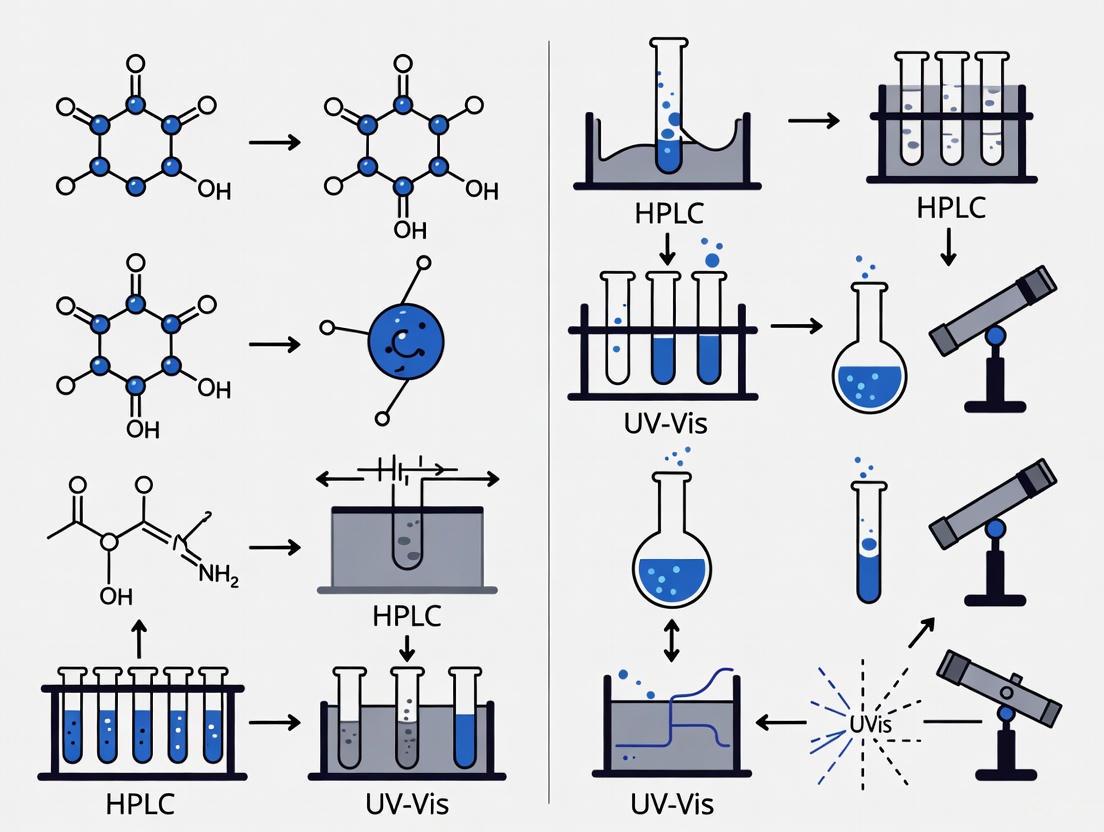
This article provides a comprehensive comparison of High-Performance Liquid Chromatography (HPLC) and UV-Vis spectroscopy, focusing on their accuracy, precision, and applicability in pharmaceutical and biomedical research.
HPLC vs. UV-Vis: A Definitive Guide to Accuracy, Precision, and Method Selection for Scientists
Abstract
This article provides a comprehensive comparison of High-Performance Liquid Chromatography (HPLC) and UV-Vis spectroscopy, focusing on their accuracy, precision, and applicability in pharmaceutical and biomedical research. We explore the fundamental principles of each technique, detail methodological approaches for different analytes, and offer practical troubleshooting guidance. Drawing on recent comparative studies and validation guidelines, we present a clear framework to help researchers, scientists, and drug development professionals select the optimal method based on their specific needs for sensitivity, selectivity, speed, and regulatory compliance.
Core Principles: Understanding the Fundamental Strengths and Limits of HPLC and UV-Vis
In modern laboratories, from pharmaceutical development to environmental monitoring, samples are rarely simple. They typically constitute a complex symphony of thousands of components, many of which can interfere with the accurate measurement of target analytes [1]. The ability to precisely separate, identify, and quantify individual compounds within this intricate matrix is a fundamental challenge. This guide objectively compares two predominant analytical techniques—High-Performance Liquid Chromatography (HPLC) and UV-Vis Spectroscopy—within the critical context of analytical accuracy and precision for complex mixture analysis. While UV-Vis spectroscopy is a widely used quantitative technique, its application is often limited to pure solutions or simple mixtures. In contrast, HPLC's core strength lies in its powerful separation capability, which provides a foundation for high specificity, accuracy, and precision when dealing with multifaceted samples [1] [2] [3]. We will explore the principles, experimental data, and methodological protocols that underscore this performance difference.
Fundamental Principles and Mechanisms
How HPLC Achieves Separation and Specificity
High-Performance Liquid Chromatography (HPLC) is an analytical technique that separates, identifies, and quantifies components in a liquid mixture. It operates by pumping a pressurized liquid solvent (the mobile phase) through a column packed with a solid adsorbent material (the stationary phase) [1] [4].
- Separation Mechanism: The components of the sample interact differently with the stationary phase due to variations in their physical and chemical properties (e.g., hydrophobicity, charge, size). This causes them to move through the column at varying velocities and elute at different times, resulting in physical separation before detection [4].
- The Role of the Chromatogram: The detector generates a chromatogram, a graphical representation of signal intensity versus time. Each separated component appears as a peak at its characteristic retention time, which serves as an initial identification marker. The area under the peak is proportional to the compound's concentration, enabling quantification [1] [4].
- Key Performance Metrics: The three pillars of HPLC performance are selectivity (the ability to distinguish between different analytes), resolution (the degree of separation between adjacent peaks), and efficiency (the sharpness of the peaks) [1].
The Direct Measurement Approach of UV-Vis Spectroscopy
Ultraviolet-visible (UV-Vis) spectroscopy is an analytical technique that measures the amount of discrete wavelengths of UV or visible light that are absorbed by or transmitted through a sample in comparison to a reference or blank sample [2].
- Absorption Principle: Molecules containing chromophores (functional groups that absorb light) can undergo electronic transitions, promoting electrons from a ground state to an excited state. The specific wavelength of absorbed light and the intensity of absorption provide a characteristic signature [2] [3].
- Quantification via Beer-Lambert Law: The absorbance (A) is directly proportional to the concentration (c) of the absorbing species in the solution, as described by the Beer-Lambert Law: A = εlc, where ε is the molar absorptivity and l is the path length [2].
- Critical Limitation: UV-Vis spectroscopy measures the total absorbance of a sample at a chosen wavelength. In a complex mixture, multiple compounds may absorb at the same wavelength, leading to signal overlap and making it impossible to distinguish or quantify individual components without prior separation [2] [5].
Technique Selection Workflow
The following diagram illustrates the decision-making process for selecting an analytical technique based on sample complexity and analytical goals.
Experimental Comparison: HPLC vs. UV-Vis in Practice
Case Study: Quantification of Bakuchiol in Cosmetic Products
A 2025 study directly compared HPLC, UV-Vis, and NMR for the quantification of bakuchiol, a retinoid alternative, in various commercial cosmetic serums. This provides an excellent dataset for a direct performance comparison [6] [5].
- Sample Complexity: The cosmetic formulations were complex mixtures, including oil solutions and oil-in-water emulsions containing ingredients like squalene, various plant oils, and glycerin [5].
- HPLC Methodology: The researchers used reversed-phase HPLC with a C18 column and isocratic elution with acetonitrile containing 1% formic acid. Detection was via a diode array detector (DAD) at 260 nm [5].
- UV-Vis Methodology: Samples and standard were analyzed in ethanol. The wavelength of 262 nm, corresponding to bakuchiol's maximum absorbance, was chosen for quantification using a standard curve [5].
The experimental results from this study are summarized in the table below.
Table 1: Comparative Performance in Bakuchiol Quantification [6] [5]
| Analytical Technique | Sample 1 (Declared 1%) | Sample 2 (Declared ~1%) | Sample 3 (Declared 1%) | Sample 4 (No Declared %) | Samples 5 & 6 (Emulsions) |
|---|---|---|---|---|---|
| HPLC-DAD | 0.51% | Not Detected | 1.0% | 3.6% | Bakuchiol detected and quantifiable |
| UV-Vis Spectroscopy | ~0.5%* | Not Detected | ~1.0%* | ~3.6%* | Bakuchiol suspected but not quantifiable |
*Values estimated from UV-Vis data, which showed correlation but were compromised by matrix effects.
Case Study: Analysis of Metformin Hydrochloride in Tablets
A separate study comparing UHPLC (an advanced form of HPLC) and UV-Vis for the quantification of metformin hydrochloride in pharmaceutical tablets further highlights the precision advantage of chromatographic methods [7].
Table 2: Metformin Hydrochloride Method Validation Data [7]
| Validation Parameter | UHPLC Method | UV-Vis Spectrophotometric Method |
|---|---|---|
| Repeatability (RSD%) | < 1.578% | < 3.773% |
| Reproducibility (RSD%) | < 2.718% | < 1.988% |
| Percentage Recovery | 98 - 101% | 92 - 104% |
Detailed HPLC Protocol for Complex Mixtures
The following workflow details a generalized HPLC protocol for the analysis of a complex mixture, reflecting methodologies from the cited studies [1] [5].
Step-by-Step Protocol:
- Sample Preparation & Cleanup: For complex samples like biological fluids or plant extracts, a cleanup step is crucial. Solid Phase Extraction (SPE) is a powerful technique for this. It uses a cartridge with a stationary phase to selectively retain target analytes while washing away unwanted matrix components. The analytes are then eluted with a stronger solvent [1]. This step is vital for removing interferences and protecting the HPLC column.
- Column Selection: The column is the heart of the separation. While C18 columns are the industry standard for a wide range of analytes, specialized columns (e.g., HILIC for highly polar compounds, chiral for enantiomers) can dramatically improve selectivity [1].
- Mobile Phase & Gradient Elution: For complex mixtures, gradient elution is essential. The mobile phase's solvent strength is gradually increased over time (e.g., from 5% acetonitrile to 95% acetonitrile). This expands the separation window, allowing for the elution of both strongly and weakly retained compounds in a reasonable time with good resolution [1] [4].
- Detection: After separation, a detector is required. A UV-Vis Diode Array Detector (DAD) is common and can capture the full spectrum of each peak, aiding in identification and purity assessment. For ultimate specificity and sensitivity, Mass Spectrometry (MS) is used. An MS detector provides an unambiguous molecular signature based on mass-to-charge ratio (m/z), enabling high-confidence identification even for co-eluting peaks [1].
- Data Analysis and Quantification: Components are identified by their retention time and, when using DAD or MS, their spectral signature. Quantification is achieved by measuring the integrated area of each peak and comparing it to a calibration curve. The use of an internal standard—a carefully chosen compound added in a known amount to all samples and standards—is a best practice that significantly improves precision by correcting for injection volume variations and sample preparation losses [8].
The Scientist's Toolkit: Essential Research Reagents and Materials
Table 3: Key Reagents and Materials for HPLC Analysis of Complex Mixtures
| Item | Function & Importance |
|---|---|
| HPLC-Grade Solvents | High-purity water, acetonitrile, and methanol are used to prepare the mobile phase. Their purity is critical to minimize baseline noise and prevent column contamination [1] [4]. |
| Stationary Phases (Columns) | The separation medium. C18 is the most common for reversed-phase HPLC. Choice of column chemistry (e.g., C8, phenyl, HILIC) is the primary tool for manipulating selectivity [1]. |
| Buffers and Additives | Acids (e.g., formic, trifluoroacetic) or buffer salts are added to the mobile phase to control pH and ionic strength, which improves peak shape and resolution for ionizable compounds [1] [4]. |
| Internal Standards | A compound, structurally similar to the analyte but chromatographically resolvable, added in a known amount to all samples and calibration standards. It corrects for random errors, dramatically improving precision and accuracy [8]. |
| Solid Phase Extraction (SPE) Cartridges | Used for sample cleanup and analyte pre-concentration. Available in various chemistries (reverse-phase, ion-exchange) to selectively isolate target analytes from a complex matrix [1]. |
| Certified Reference Materials | High-purity analytes with a certified concentration, used to prepare calibration standards. Their accuracy is fundamental to the accuracy of the entire quantitative method [9]. |
The experimental data and protocols presented herein clearly demonstrate the superior capability of HPLC for achieving specificity, accuracy, and precision in the analysis of complex mixtures. While UV-Vis spectroscopy is a valuable tool for simple, well-defined solutions, its fundamental limitation is the lack of a separation mechanism, leading to unresolved matrix interferences in complex samples, as seen in the bakuchiol and metformin studies [5] [7]. HPLC's unparalleled separation power, especially when coupled with advanced detection like mass spectrometry or optimized sample preparation, makes it the indispensable technique for researchers and drug development professionals who require confident identification and reliable quantification of individual components within intricate matrices. The choice between these techniques should be guided by the sample complexity and the analytical goal, with HPLC being the unequivocal choice for unraveling complex molecular puzzles.
Ultraviolet-Visible (UV-Vis) spectroscopy remains a cornerstone technique for quantitative analysis in pharmaceutical and research laboratories. Its operational simplicity, cost-effectiveness, and rapid analysis capabilities make it particularly valuable for routine quantification where appropriate. This guide objectively compares the quantitative performance of UV-Vis spectroscopy against High-Performance Liquid Chromatography (HPLC), framing the comparison within the broader thesis of accuracy and precision in analytical science. The fundamental principle enabling UV-Vis quantification is the Beer-Lambert Law (also known as Beer's Law), which establishes a linear relationship between the absorbance of light and the concentration of an analyte in solution [10] [11]. While HPLC offers superior separation power for complex mixtures, UV-Vis provides a direct and uncomplicated path to quantification for many applications, a critical trade-off for scientists to consider when selecting an analytical method.
Theoretical Foundation: The Beer-Lambert Law
The Beer-Lambert Law is the fundamental principle that enables direct quantification with UV-Vis spectroscopy. It states that the absorbance of light by a solution is directly proportional to the concentration of the absorbing species and the path length the light takes through the solution [10].
The law is mathematically expressed as: A = εlc Where:
- A is the Absorbance (a dimensionless quantity) [10] [11].
- ε is the Molar Absorptivity (or molar extinction coefficient), a constant that is a measure of how strongly a chemical species absorbs light at a particular wavelength (typically with units of L mol⁻¹ cm⁻¹) [10] [2].
- l is the Path Length, the distance the light travels through the solution (typically in cm) [10].
- c is the Concentration of the analyte (typically in mol L⁻¹) [10].
Absorbance itself is defined as the logarithm of the ratio of the incident light intensity (I₀) to the transmitted light intensity (I): A = log₁₀ (I₀/I) [10] [11] [2]
This logarithmic relationship means that absorbance has a direct, linear relationship with concentration, which is the key to its utility in quantification. The following table shows how transmitted light decreases as absorbance increases.
Table 1: Relationship between Absorbance and Transmittance
| Absorbance (A) | Transmittance (T) | % Transmittance (%T) |
|---|---|---|
| 0 | 1 | 100% |
| 1 | 0.1 | 10% |
| 2 | 0.01 | 1% |
| 3 | 0.001 | 0.1% |
For accurate quantification, it is standard practice to measure a set of standard solutions of known concentration to create a calibration curve—a plot of absorbance versus concentration. If the system obeys the Beer-Lambert Law, this plot will be linear, and the concentration of an unknown sample can be determined from its absorbance [11]. It is generally recommended to keep absorbance values below 1 to stay within the instrument's ideal dynamic range and maintain linearity [2].
Experimental Comparison: UV-Vis vs. HPLC
To objectively compare the performance of UV-Vis and HPLC, we can examine validation data from a study quantifying the antidiabetic drug Repaglinide [12]. The following table summarizes the key quantitative metrics obtained for both techniques.
Table 2: Quantitative Method Validation Data for Repaglinide Analysis [12]
| Validation Parameter | UV-Vis Spectroscopy | HPLC Method |
|---|---|---|
| Linearity Range | 5 - 30 μg/mL | 5 - 50 μg/mL |
| Correlation Coefficient (r²) | > 0.999 | > 0.999 |
| Precision (% R.S.D.) | < 1.50% | < 1.50% (More precise) |
| Accuracy (% Recovery) | 99.63 - 100.45% | 99.71 - 100.25% |
| Limit of Detection (LOD) | Not specified in study | Not specified in study |
| Limit of Quantification (LOQ) | Not specified in study | Not specified in study |
A separate study on Metformin hydrochloride provides further insight, showing that while both methods achieved good accuracy, the percentage recovery for UV-Vis (92-104%) was wider than for UHPLC (a type of HPLC) (98-101%), indicating potentially greater variability for the spectroscopic method [7]. The precision, expressed as Relative Standard Deviation (% R.S.D.), was also higher for UV-Vis (< 3.773%) than for UHPLC (< 1.578%) in this study [7].
Detailed Experimental Protocols
The following workflows detail the general experimental procedures for drug quantification using UV-Vis and HPLC, as exemplified in the repaglinide study [12].
Figure 1: UV-Vis Quantification Workflow. The process leverages the direct relationship between absorbance and concentration defined by the Beer-Lambert Law [12].
Figure 2: HPLC Quantification Workflow. This process involves a separation step that adds complexity but also selectivity [12].
The Scientist's Toolkit: Essential Research Reagents and Materials
The following table details key materials and reagents required for quantitative analysis using UV-Vis spectroscopy, based on the cited experimental protocols.
Table 3: Key Research Reagent Solutions for UV-Vis Quantification
| Item | Function & Importance |
|---|---|
| Spectrophotometer | Instrument with a light source, wavelength selector, and detector to measure light absorption. Modern versions offer intuitive interfaces and faster scanning [2] [13]. |
| Cuvettes | Sample holders with a defined path length (typically 1 cm). Quartz is required for UV range analysis, as glass and plastic absorb UV light [2]. |
| Reference Standard | A highly pure form of the analyte used to prepare calibration standards, ensuring accurate concentration assignment [12]. |
| Solvent | A high-purity solvent (e.g., methanol, water, buffer) in which the analyte is dissolved. It must be transparent at the wavelengths used for analysis [12]. |
| Volumetric Glassware | Precise flasks and pipettes for accurate preparation and dilution of standard and sample solutions [12]. |
Objective Performance Comparison
The choice between UV-Vis and HPLC hinges on the specific requirements of the analysis. The following table provides a consolidated, objective comparison of the two techniques to guide this decision.
Table 4: Overall Comparison of UV-Vis Spectroscopy and HPLC
| Aspect | UV-Vis Spectroscopy | HPLC |
|---|---|---|
| Principle | Direct measurement of light absorption [10] [2] | Separation followed by detection [14] |
| Cost & Equipment | Low cost; simple setup [14] | High cost; complex instrumentation [14] |
| Speed & Throughput | Fast analysis; ideal for high-throughput routine analysis [14] [13] | Moderate speed; run time depends on method [14] |
| Selectivity/Specificity | Limited; prone to interference from other absorbing compounds [14] [12] | High; excellent separation of mixture components [14] |
| Sensitivity | Good for simple assays with strong chromophores [14] | Superior; can detect low-level impurities [14] |
| Sample Preparation | Minimal; often just dissolution and dilution [14] [12] | Can be complex; may require extraction, filtration, and use of optimized mobile phases [14] |
| Best Use Cases | Routine QC of simple, single-component samples; compound stability studies (with limitations) [14] [12] | Complex formulations; impurity profiling; stability-indicating methods [14] [12] |
UV-Vis spectroscopy, grounded in the robust Beer-Lambert Law, offers a straightforward, cost-effective, and rapid path to quantification for appropriate applications. Its simplicity is its greatest strength, making it an indispensable tool for the routine analysis of single-component samples in quality control environments [14] [12]. However, this simplicity comes with inherent limitations in selectivity, as it cannot distinguish the target analyte from other absorbing substances in a mixture [14].
HPLC, in contrast, delivers superior specificity, precision, and the ability to analyze complex mixtures through physical separation prior to detection [14] [7]. This capability makes it the unequivocal choice for demanding applications such as impurity profiling, method development for regulatory compliance, and analysis of multi-component formulations.
The decision between these techniques is not a matter of which is universally better, but of which is fit-for-purpose. For researchers and drug development professionals, this guide underscores that UV-Vis remains a powerful and efficient tool for direct quantification, provided its operational boundaries are respected and the analytical question aligns with its core capabilities.
In pharmaceutical research and quality control, the selection of an appropriate analytical technique is fundamental to generating reliable and meaningful data. Ultraviolet-visible (UV-Vis) spectroscopy and high-performance liquid chromatography (HPLC) represent two pillars of modern analysis, yet they possess distinctly different capabilities and inherent limitations. UV-Vis spectroscopy measures the absorption of ultraviolet or visible light by a sample, providing a simple and rapid means of quantification [2]. HPLC, in contrast, separates the components of a mixture before detection, offering powerful resolution for complex samples [15]. This guide objectively compares the performance of these two techniques, with a specific focus on the sensitivity limits of UV-Vis and its specific solvent and sample requirements, framing the discussion within the critical context of accuracy and precision for drug development professionals. Understanding these constraints is not merely an academic exercise; it is a practical necessity for developing robust analytical methods that ensure drug safety, efficacy, and regulatory compliance [15].
Quantitative Performance Comparison: Sensitivity and Accuracy
Direct comparisons of UV-Vis and HPLC for analyzing specific pharmaceutical compounds reveal measurable differences in their analytical figures of merit. The following table synthesizes experimental data from research studies to illustrate these distinctions.
Table 1: Performance Comparison of HPLC and UV-Vis for Pharmaceutical Analysis
| Analyte | Technique | Linear Range | Limit of Detection (LOD) / Limit of Quantification (LOQ) | Accuracy (Mean Recovery %) | Key Findings |
|---|---|---|---|---|---|
| Repaglinide (Antidiabetic) [12] | UV-Vis | 5-30 μg/mL | Not Specified | 99.63 - 100.45% | Both methods were found reliable for the tablet dosage form. |
| HPLC | 5-50 μg/mL | Not Specified | 99.71 - 100.25% | HPLC demonstrated a wider linear range and slightly higher precision (%RSD < 1.5). | |
| Levofloxacin (Antibiotic) [16] | UV-Vis | 0.05-300 μg/mL | Not Specified | 96.00 - 99.50% | Accuracy was compromised in complex drug-delivery scaffold; not accurate for this application. |
| HPLC | 0.05-300 μg/mL | Not Specified | 96.37 - 110.96%Medium/High conc. recovery outside ideal range | HPLC is the preferred method for complex samples due to superior specificity, separating the drug from impurities. |
The data demonstrates that while UV-Vis can perform comparably to HPLC for simple formulations (e.g., Repaglinide tablets), its inherent lack of specificity becomes a critical limitation in complex matrices. For the analysis of Levofloxacin released from a mesoporous silica scaffold, UV-Vis could not accurately distinguish the drug from other components released from the scaffold, leading to potentially unreliable concentration data [16]. HPLC's separation power makes it the definitive method for such challenging applications, ensuring that the detected signal originates solely from the analyte of interest.
Exploring the inherent limitations of UV-Vis spectroscopy
The Sensitivity Ceiling and Detection Limits
The sensitivity of UV-Vis is fundamentally governed by the Beer-Lambert Law (A = εbc), which relates absorbance (A) to the concentration (c) of the analyte [17]. This relationship sets practical boundaries for its use. The molar absorptivity (ε) of the compound is a fixed physical constant; for a given analyte, sensitivity can only be improved by increasing the path length (b). In practice, to maintain accurate quantitation, absorbance values should be kept below 1, as higher values mean very little light reaches the detector, resulting in poor signal-to-noise ratios and unreliable data [2]. This effectively places an upper limit on the measurable concentration for a given cell path length.
Furthermore, UV-Vis struggles with trace-level analysis. While specific LODs are compound-dependent, the technique is generally less sensitive than HPLC for detecting low-abundance components, especially in the presence of a complex background. The limit of detection (LOD) and limit of quantitation (LOQ) are therefore highly variable and can be significantly adversely affected by the sample matrix [15].
Solvent and Sample Requirements
The utility of UV-Vis is critically dependent on the nature of the sample and the solvent used, imposing several key restrictions:
- Sample Clarity: UV-Vis spectroscopy works best on true solutions. If the sample is a suspension of solid particles, light will be scattered more than it is absorbed, leading to skewed and inaccurate data [17].
- Solvent Transparency: The solvent used must be transparent in the spectral region where the analyte absorbs. For example, plastic cuvettes are inappropriate for UV analysis as plastic absorbs UV light. Standard glass cuvettes absorb most UVB and UVC light, necessitating the use of quartz cuvettes for UV work below ~350 nm [2].
- Matrix Interference: This is the most significant limitation. UV-Vis measures the total absorbance of the sample at a chosen wavelength. If other components in the sample (excipients, impurities, degradation products) absorb at the same wavelength, they will contribute to the total signal, leading to a positive bias and overestimation of the analyte concentration [16]. This lack of inherent separation is the core reason for its failure in complex analyses like the Levofloxacin scaffold study.
Experimental protocols for comparative analysis
To illustrate how the comparative data in this guide can be generated, the following are detailed methodologies for the analysis of repaglinide and levofloxacin.
This protocol is designed for the quantitative determination of repaglinide in a conventional tablet dosage form.
UV-Vis Method:
- Instrumentation: Double-beam UV-Vis spectrophotometer with 1.0 cm quartz cells.
- Wavelength: 241 nm.
- Standard Preparation: Prepare a stock solution of repaglinide (1000 μg/mL) in methanol. Dilute aliquots with methanol to create standard solutions in the range of 5-30 μg/mL.
- Sample Preparation: Weigh and powder 20 tablets. Transfer a portion equivalent to 10 mg of repaglinide to a 100 mL volumetric flask, add 30 mL methanol, sonicate for 15 minutes, dilute to volume with methanol, and filter. Dilute the filtrate further with methanol to a concentration within the linear range.
- Validation: The method was validated for linearity, precision, and accuracy (recovery) as per ICH guidelines.
HPLC Method:
- Instrumentation: HPLC system with UV detector and C18 column (250 mm x 4.6 mm, 5 μm).
- Mobile Phase: Methanol and water (80:20 v/v, pH adjusted to 3.5 with orthophosphoric acid).
- Flow Rate: 1.0 mL/min.
- Detection: 241 nm.
- Sample Preparation: Prepare the sample as above, but dilute the final filtrate with the mobile phase.
- Injection Volume: 20 μL.
This protocol is for evaluating the sustained release of Levofloxacin from a complex composite scaffold, highlighting a scenario where HPLC is required.
- HPLC Method:
- Instrumentation: HPLC system with C18 column (250 mm x 4.6 mm, 5 μm).
- Column Temperature: 40°C.
- Mobile Phase: A mixture of 0.01 mol/L KH₂PO₄, methanol, and 0.5 mol/L tetrabutylammonium hydrogen sulphate (75:25:4).
- Flow Rate: 1 mL/min.
- Detection: 290 nm.
- Sample Preparation: Place the drug-loaded scaffold in Simulated Body Fluid (SBF) to release the drug. The release medium is then processed with an internal standard (Ciprofloxacin), liquid-liquid extraction with dichloromethane, and drying under nitrogen before reconstitution.
- Analysis: The reconstituted sample is injected (10-20 μL) for analysis.
The experimental workflow for these comparative analyses, from sample preparation to data interpretation, is summarized in the diagram below.
Comparative Analysis Workflow
The scientist's toolkit: Essential research reagent solutions
The following table details key reagents and materials essential for conducting the experiments described in this guide, along with their critical functions.
Table 2: Essential Research Reagents and Materials for HPLC and UV-Vis Analysis
| Item | Function / Purpose | Key Considerations |
|---|---|---|
| HPLC-Grade Methanol | Common organic component of mobile phases; solvent for standards and samples. | High purity is essential to minimize UV-absorbing impurities and background noise [12] [16]. |
| HPLC-Grade Water | Aqueous component of mobile phases. | Must be ultra-pure (e.g., from Milli-Q system) to prevent column contamination and baseline drift [16]. |
| Buffer Salts (e.g., KH₂PO₄, Tetrabutylammonium salts) | Modify mobile phase to control pH and ionic strength, improving peak shape and separation. | pH must be adjusted accurately and mobile phase filtered to protect the HPLC column [16]. |
| C18 Chromatography Column | Stationary phase for reverse-phase HPLC separation of non-polar to medium polarity analytes. | The most common column type; selection of dimensions and particle size affects resolution and run time [12] [16]. |
| Quartz Cuvettes | Sample holder for UV-Vis spectroscopy. | Required for UV range analysis as quartz is transparent down to ~200 nm; plastic/glass are not [2]. |
| Standard Compounds (e.g., Repaglinide, Levofloxacin) | Used to prepare calibration standards for quantitative analysis. | High-purity reference standards are critical for accurate method development and validation [12] [16]. |
| Simulated Body Fluid (SBF) | Release medium for drug delivery studies, mimicking physiological conditions. | Used in pharmacokinetic and sustained-release model studies [16]. |
The choice between UV-Vis and HPLC is not a matter of which technique is universally superior, but which is fit-for-purpose. UV-Vis spectroscopy offers an excellent combination of speed, simplicity, and cost-effectiveness for the analysis of pure substances or simple mixtures where matrix interference is negligible. However, its inherent limitations—a relatively low sensitivity ceiling governed by the Beer-Lambert Law and a stringent requirement for clear, non-interfering solutions—define its appropriate application scope [2] [17].
For pharmaceutical researchers and drug development professionals, this comparison underscores a critical rule of thumb: HPLC is the unequivocal choice for applications demanding high specificity, accuracy, and precision in complex matrices. Whether the goal is quantifying a drug in a sophisticated delivery scaffold [16], profiling impurities, or conducting stability-indicating assays, HPLC's power to separate the analyte from interferences is indispensable. The experimental data clearly shows that while UV-Vis can produce excellent results for standard formulations, its value diminishes as sample complexity increases. Therefore, a thorough understanding of these limitations is fundamental to designing robust analytical methods that ensure product quality and meet stringent regulatory standards [15].
In the pursuit of accurate and precise analytical results, the choice of technique is often dictated by the chemical structure of the target analyte. Ultraviolet-Visible (UV-Vis) spectroscopy and High-Performance Liquid Chromatography (HPLC) with various detectors represent two foundational pillars in modern analytical chemistry, particularly in pharmaceutical research and drug development [18] [19]. The fundamental difference in their operational principles creates a significant divergence in their reliance on specific structural features within the analyte molecules.
For UV-Vis spectroscopy, the presence of a chromophore—a structural moiety that absorbs light in the ultraviolet or visible region (typically 190–800 nm)—is an absolute prerequisite for detection [20] [21]. In contrast, HPLC paired with derivatization strategies can transform compounds lacking native chromophores into detectable species, effectively making the chromophore requirement a non-issue [22]. This guide objectively compares these approaches, providing experimental data and methodologies that underscore their respective capabilities and limitations in ensuring analytical accuracy and precision.
Fundamental Principles: How UV-Vis and HPLC Detection Work
UV-Vis Spectroscopy and the Essential Chromophore
UV-Vis spectrophotometry measures the absorption of ultraviolet or visible light by a sample. The underlying mechanism involves the promotion of electrons in the chromophore from ground state to higher energy molecular orbitals when exposed to specific wavelengths [20]. The Beer-Lambert Law establishes the linear relationship between absorbance (A), concentration (c), path length (b), and the compound-specific molar absorptivity (ε): A = εbc [20].
Common chromophores include:
- π-π* transitions: Found in conjugated systems like dienes, polyenes, and aromatic compounds.
- n-π* transitions: Occur in compounds with heteroatoms bearing non-bonding electrons, such as carbonyls, nitro groups, and azo compounds [20].
The detection limit for UV-Vis is typically in the nanogram range, but this is highly dependent on the molar absorptivity of the specific chromophore [23]. Compounds lacking these structural features, such as aliphatic hydrocarbons, many carbohydrates, and inorganic salts, demonstrate negligible absorption and are essentially "invisible" to conventional UV-Vis detection [18].
HPLC Detection Modalities
HPLC separates components of a mixture based on their differential partitioning between a mobile and stationary phase. The critical differentiator from direct UV-Vis is the variety of available detection methods, each with distinct mechanisms and analyte requirements [23].
Table 1: Common HPLC Detector Types and Their Characteristics
| Detection Method | Analyte Requirements | Detection Limit | Chromophore Dependent? |
|---|---|---|---|
| UV-Vis | Absorbs UV-Vis light (190-800 nm) | Nanograms | Yes |
| Fluorescence (FLD) | Native fluorescence or can be tagged with fluorophore | Femtograms | No (requires fluorophore) |
| Refractive Index (RID) | Difference in refractive index from mobile phase | Micrograms | No |
| Evaporative Light Scattering (ELSD) | Non-volatile and semi-volatile analytes | Nanograms | No |
| Charged Aerosol (CAD) | Non-volatile and semi-volatile analytes | Picograms | No |
| Mass Spectrometry (MS) | Capable of forming gas-phase ions | Picograms | No |
| Electrochemical (ECD) | Undergoes redox reaction | Femtograms | No |
As evidenced in Table 1, most HPLC detectors operate independently of chromophore presence, with UV-Vis detection being the notable exception [23]. This detector diversity provides the flexibility to analyze a vast spectrum of compounds regardless of their optical properties.
The Derivatization Solution: Circumventing Structural Limitations
Principles of Chemical Derivatization
Chemical derivatization is a sample preparation technique that chemically modifies an analyte to enhance its detectability or chromatographic behavior [22]. For compounds lacking chromophores, derivatization creates a covalent derivative containing a strong chromophore or fluorophore, thereby enabling their detection with highly sensitive and specific HPLC detectors.
The primary objectives of derivatization include:
- Introducing a chromophore for UV-Vis detection
- Attaching a fluorophore for enhanced sensitivity with FLD
- Improving chromatographic separation by modifying polarity
- Enhancing stability of the analyte
Experimental Case Study: Sulforaphane Quantification in Rat Plasma
A recent study demonstrates the power of derivatization for analyzing compounds with weak native chromophores. Sulforaphane (SFN), a naturally occurring isothiocyanate with anti-carcinogenic properties, lacks a strong chromophore, making direct UV-Vis detection challenging for pharmacokinetic studies [22].
Table 2: HPLC-UV/Vis Method Validation Data for Derivatized Sulforaphane
| Validation Parameter | Result | Acceptance Criteria |
|---|---|---|
| Linear Range | 10–2000 ng/mL | R² > 0.999 |
| Limit of Detection (LOD) | 0.0028 | Signal-to-noise > 3 |
| Limit of Quantification (LOQ) | 0.0091 | Signal-to-noise > 10 |
| Intra-assay Accuracy | ±10% of nominal value | Within ±15% |
| Inter-assay Precision | <15% RSD | <15% |
| Retention Time (SFN) | 7.5 min | - |
| Retention Time (IS) | 8.4 min | - |
Experimental Protocol:
- Derivatization Reagent: 2-Naphthalenethiol (2-NT) at 0.3 M in acetonitrile
- Reaction Conditions: Phosphate buffer (pH 7.4), 37°C incubation for 60 minutes
- HPLC Conditions:
- Column: Kinetex C18 (150 mm × 4.6 mm, 5 μm)
- Mobile Phase: 0.1% formic acid (A) and acetonitrile/0.1% formic acid (B)
- Flow Rate: 1 mL/min with gradient elution
- Detection Wavelength: 234 nm
- Sample Matrix: Rat plasma
- Internal Standard: Structurally similar isothiocyanate [22]
This method successfully applied to in vivo pharmacokinetic studies following oral administration of SFN at 10 and 20 mg/kg doses, demonstrating its practical utility in real-world research scenarios [22].
Diagram 1: Experimental workflow for HPLC analysis of non-chromophoric compounds via derivatization, using sulforaphane as a case study.
Comparative Experimental Data: Detection Techniques for Challenging Analytes
Analysis of Weak Chromophores in Pharmaceutical Compounds
The limitation of direct UV-Vis detection becomes particularly evident when analyzing pharmaceutical compounds with weak chromophores. A comprehensive review of HPLC methods for determining the purity of such drugs highlighted the necessity of alternative detection strategies [18].
Table 3: Comparison of Detection Methods for Compounds with Weak Chromophores
| Detection Method | Key Advantages | Limitations | Typical Applications |
|---|---|---|---|
| UV-Vis without derivatization | Simple, inexpensive, widely available | Limited to compounds with chromophores; poor sensitivity for weak chromophores | Quality control of chromophore-containing pharmaceuticals |
| HPLC with derivatization + UV-Vis | Enables detection of non-chromophoric compounds; good sensitivity | Additional sample preparation step required; method development more complex | Sulforaphane, amino acids, carbohydrates, aliphatic compounds |
| Fluorescence Detection (FLD) | Exceptional sensitivity (femtomolar range); high selectivity | Limited to native fluorophores or derivatized compounds | Trace analysis; biological samples; environmental monitoring |
| Charged Aerosol Detection (CAD) | Universal for non-volatile analytes; uniform response | Destructive; requires volatile mobile phases | Sugars; lipids; polymers; impurities without standards |
| Evaporative Light Scattering (ELSD) | Universal detection; compatible with gradient elution | Non-linear response; less sensitive than CAD | Natural products; carbohydrates; synthetic polymers |
| Mass Spectrometry (MS) | Structural information; high specificity and sensitivity | Expensive; requires technical expertise; matrix effects | Metabolite identification; impurity profiling; biomarker discovery |
The data in Table 3 illustrates how derivatization expands the application range of HPLC-UV/Vis to encompass compounds that would otherwise be undetectable, while alternative detectors offer complementary approaches with their own advantages and limitations [18] [23].
Advanced UV-Vis Techniques for Complex Samples
Recent advancements in UV-Vis technology have addressed some limitations for specific applications. Scatter-Free Absorption Spectroscopy (SFAS) represents an innovative approach to overcome light scattering interference in nanoparticle formulations, particularly for RNA-based therapeutics [24].
In a comparative study evaluating diverse RNA nanoparticle formulations (lipid NPs, polymer-dendrimer hybrids, and cyclodextrin nanocomplexes), SFAS demonstrated superior accuracy, precision, and reproducibility compared to fluorescence-based methods like RiboGreen and SYTO 9 dyes [24]. This technology eliminates scattered light interference by placing the sample within an integrating sphere, effectively correcting path length modifications and enabling accurate quantification despite challenging sample matrices.
The Scientist's Toolkit: Essential Reagents and Materials
Successful implementation of derivatization strategies requires specific reagents and materials tailored to the analytical challenge.
Table 4: Key Research Reagent Solutions for Derivatization Protocols
| Reagent/Material | Function | Application Example |
|---|---|---|
| 2-Naphthalenethiol (2-NT) | Derivatizing agent that introduces strong chromophore | Sulforaphane quantification; reacts with isothiocyanates to form UV-absorbing derivatives |
| C18 Chromatographic Columns | Reverse-phase separation of derivatized compounds | Kinetex C18 (150 mm × 4.6 mm, 5 μm) for sulforaphane separation |
| Deuterium Lamps | UV light source for HPLC-UV/Vis detectors | Provides continuous emission in 190-600 nm range |
| Photodiode Array Detectors | Simultaneous multi-wavelength detection with spectral scanning | Peak purity assessment; method development for unknown mixtures |
| Integrating Spheres | Scatter-free absorption measurements | SFAS for nanoparticle formulations; removes light scattering artifacts |
| Mercaptoethanol Derivatives | Alternative derivatizing agents for specific compound classes | Thiol-reactive compounds; alternative to 2-NT for specific applications |
The structural prerequisite of chromophores remains a fundamental differentiator between direct UV-Vis spectroscopy and modern HPLC with derivatization capabilities. While UV-Vis provides a straightforward, cost-effective solution for chromophore-containing compounds, its utility diminishes significantly when analyzing molecules lacking these structural features.
HPLC with derivatization strategically eliminates this limitation, transforming non-chromophoric compounds into detectable species through chemical modification. The experimental data presented demonstrates that this approach provides robust quantification with excellent linearity, precision, and accuracy, as evidenced by the sulforaphane case study achieving validation across a 10-2000 ng/mL range [22].
For researchers and drug development professionals, the choice between these techniques should be guided by the chemical nature of the target analytes, required sensitivity, and available resources. When analytical accuracy and precision are paramount for compounds lacking native chromophores, HPLC with appropriate derivatization protocols offers a powerful solution that effectively makes chromophore requirements a non-issue in modern analytical methodology.
In the landscape of pharmaceutical analysis, the selection of an appropriate analytical technique is paramount to ensuring drug quality, safety, and efficacy. High-Performance Liquid Chromatography (HPLC) and Ultraviolet-Visible (UV-Vis) Spectroscopy represent two foundational pillars in this field, each with distinct principles, capabilities, and limitations. This guide provides an objective, side-by-side comparison of these techniques, framed within the critical context of accuracy and precision for researchers, scientists, and drug development professionals. The evaluation is supported by contemporary experimental data and a detailed examination of the underlying methodologies, offering a practical resource for informed analytical decision-making.
Core Principles and a Direct Comparison
The fundamental difference between these techniques lies in their operation: HPLC is a separation method that can individually quantify multiple components in a mixture, whereas UV-Vis is a direct measurement technique that typically assesses the total chromophoric content of a sample without separation [14] [25].
HPLC separates analytes based on their differential partitioning between a mobile phase (liquid solvent pushed at high pressure) and a stationary phase (packed column). The separated components then pass through a detector, most commonly a UV-Vis detector, which generates a chromatogram showing each compound as a distinct peak with a specific retention time [25]. This separation power is its key advantage.
UV-Vis Spectroscopy operates on the principle of the Beer-Lambert law. Molecules containing chromophores absorb light in the ultraviolet-visible range (typically 190-800 nm). The instrument measures the absorbance of a sample at a specific wavelength, which is directly proportional to the concentration of the absorbing species in the solution [14]. Its simplicity and speed are its primary benefits.
Table 1: Foundational Comparison of HPLC and UV-Vis Spectroscopy
| Aspect | HPLC | UV-Vis Spectroscopy |
|---|---|---|
| Fundamental Principle | Separation based on differential partitioning between mobile and stationary phases [25]. | Measurement of light absorption by chromophores in a sample (Beer-Lambert Law) [14]. |
| Key Strength | High selectivity; can separate, identify, and quantify multiple components in a complex mixture [26] [14]. | Rapid, cost-effective quantification of a target analyte in a simple matrix [14]. |
| Typical Cost | High (instrumentation often exceeds $100,000) [26]. | Low cost; simple setup [14]. |
| Analysis Speed | Moderate to slow; includes run time and column re-equilibration [14]. Time per sample can be several minutes. | Very fast; measurements can be taken in seconds to minutes [14]. |
| Precision (Repeatability) | Excellent (e.g., RSD < 0.2% for quality control) [26]. RSD for specific APIs can be <1.578% [7]. | Good, but generally lower than HPLC. RSD for specific APIs can be <1.988% [7]. |
| Accuracy in Complex Matrices | High; separation minimizes interference from excipients, impurities, or degradation products [16]. | Limited; susceptible to interference from any other absorbing substances in the sample [14] [16]. |
| Sensitivity (LLOQ) | Very high; can quantify analytes at very low concentrations (e.g., 0.625 μg/mL for metformin) [7]. | Lower than HPLC; suitable for higher concentrations (e.g., 2.5 μg/mL for metformin) [7]. |
| Sample Preparation | Often complex and labor-intensive; may involve filtration, extraction, and dilution [26] [25]. | Typically minimal; often just dissolution and dilution [14]. |
| Data Output | Chromatogram (signal vs. time) allowing for peak identification and integration [25]. | Absorbance value or spectrum (absorbance vs. wavelength) [14]. |
| Best Use Cases | Impurity profiling, stability-indicating methods, assay of complex formulations [26] [14]. | Routine quality control of simple, single-component samples, fast concentration checks [14]. |
Experimental Data on Accuracy and Precision
Direct comparative studies underscore the practical implications of the differences outlined in Table 1, particularly concerning accuracy and precision.
Case Study 1: Quantification of Metformin Hydrochloride
A 2025 study directly compared UHPLC (a modern variant of HPLC) and UV-Vis for quantifying metformin hydrochloride in commercial tablets. Both methods showed a linear range of 2.5–40 μg/mL [7].
Table 2: Performance Data for Metformin Hydrochloride Analysis [7]
| Parameter | UHPLC Method | UV-Vis Method |
|---|---|---|
| Repeatability (RSD) | < 1.578% | < 3.773% |
| Reproducibility (RSD) | < 2.718% | < 1.988% |
| LLOQ | 0.625 μg/mL | 2.5 μg/mL |
| % Recovery (across 5 brands) | 98 - 101% | 92 - 104% |
The data reveals that the UHPLC method provided superior accuracy, as evidenced by the tighter and more centered recovery range (98-101%) compared to the wider range for UV-Vis (92-104%). The UHPLC method also demonstrated a significantly lower Limit of Quantitation (LLOQ), indicating higher sensitivity. The precision, measured by Relative Standard Deviation (RSD), was comparable and excellent for both techniques in this study [7].
Case Study 2: Analysis of Levofloxacin in a Drug-Delivery System
A study investigating levofloxacin released from a complex composite scaffold highlights the critical importance of selectivity. While both methods showed excellent linearity (R² > 0.999), a clear divergence was observed in recovery rates when analyzing the drug in a complex matrix [16].
Table 3: Recovery Rate Data for Levofloxacin from a Complex Scaffold [16]
| Spiked Concentration | HPLC Recovery Rate | UV-Vis Recovery Rate |
|---|---|---|
| Low (5 μg/mL) | 96.37 ± 0.50% | 96.00 ± 2.00% |
| Medium (25 μg/mL) | 110.96 ± 0.23% | 99.50 ± 0.00% |
| High (50 μg/mL) | 104.79 ± 0.06% | 98.67 ± 0.06% |
The study concluded that UV-Vis was not accurate for measuring drug concentration in this complex system due to interference from other scaffold components that also absorbed UV light. HPLC's separation power was necessary to isolate the levofloxacin signal, making it the "preferred method" for such applications [16]. The anomalous recovery values for HPLC at medium and high concentrations in this specific experimental context suggest a potential matrix effect, but nonetheless demonstrate HPLC's ability to differentiate the analyte from interferents.
Detailed Experimental Protocols
To illustrate the practical application of both techniques, here are detailed methodologies for a drug assay, adapted from the cited literature.
Detailed HPLC Protocol for Drug Substance Assay
This protocol is based on validated methods for compounds like metformin and levofloxacin [7] [16].
1. Instrument and Reagents:
- HPLC System: Equipped with quaternary or binary pump, autosampler, column oven, and UV-Vis or DAD detector [7].
- Column: C18 reversed-phase column (e.g., 250 mm x 4.6 mm, 5 μm particle size) [16].
- Mobile Phase: Prepared from HPLC-grade solvents and buffers. For example: a mixture of 0.05 M phosphate buffer (pH adjusted) and methanol (35:65, v/v) [7].
- Standard Solution: Accurately weigh and dissolve the API reference standard in a suitable solvent (e.g., mobile phase or diluent) to prepare a primary standard solution. Further dilute to the required working concentrations.
- Sample Solution: Accurately weigh and dissolve the pharmaceutical product (e.g., powdered tablet) in diluent, extract the API, and filter to obtain a clear sample solution.
2. Method Parameters:
- Flow Rate: 1.0 mL/min [16].
- Column Temperature: 40 °C [16].
- Detection Wavelength: As per the analyte's λmax (e.g., 234 nm for metformin, 290 nm for levofloxacin) [7] [16].
- Injection Volume: 10-20 μL [16].
- Run Time: As determined during method development to elute all components of interest.
3. Procedure:
- System Equilibration: Prime the system with mobile phase and run until a stable baseline is achieved.
- System Suitability Test: Inject the standard solution to confirm parameters like theoretical plates, tailing factor, and RSD of peak area meet predefined criteria [26] [14].
- Calibration: Inject a series of standard solutions to create a calibration curve.
- Sample Analysis: Inject the prepared sample solutions.
- Data Analysis: Use the CDS software to identify the API peak by its retention time and quantify its concentration by comparing the peak area to the calibration curve.
Detailed UV-Vis Protocol for Drug Substance Assay
This protocol outlines the general steps for a single-component assay, as used in comparative studies [7] [14].
1. Instrument and Reagents:
- UV-Vis Spectrophotometer: Modern instrument with a touchscreen interface and guided workflows [27].
- Standard Solution: Accurately weigh and dissolve the API reference standard to prepare a stock solution. Serially dilute to working concentrations within the validated linear range.
- Sample Solution: Accurately weigh and dissolve the pharmaceutical product in the same solvent to a concentration within the linear range. Filter if necessary.
2. Method Parameters:
- Wavelength: Set to the λmax of the API (e.g., 234 nm for metformin) [7].
- Solvent/Buffer: Use the same solvent for blank, standards, and samples to avoid interference.
3. Procedure:
- Instrument Calibration: Zero (blank) the instrument with the solvent.
- Wavelength Verification: Scan the standard solution to confirm the λmax.
- Calibration Curve: Measure the absorbance of the series of standard solutions and plot absorbance vs. concentration.
- Sample Measurement: Measure the absorbance of the prepared sample solution.
- Data Analysis: Calculate the concentration of the API in the sample solution using the linear regression equation from the calibration curve.
Workflow and Decision Pathway
The following diagram visualizes the experimental workflows for HPLC and UV-Vis, highlighting the key steps and critical decision points that influence the reliability of the final result.
The Scientist's Toolkit: Essential Research Reagents and Materials
Successful implementation of either analytical technique requires the use of specific, high-quality materials. The following table details key items used in the featured experiments and their general functions.
Table 4: Essential Materials and Reagents for HPLC and UV-Vis Analysis
| Item | Function/Application |
|---|---|
| Chromatographic Column (C18) | The core of HPLC separation; a reversed-phase column used for a wide range of small molecule APIs [7] [16]. |
| API Reference Standard | A highly pure characterized material used to prepare calibration standards, ensuring accurate and traceable quantification [26] [16]. |
| HPLC-Grade Solvents | High-purity solvents (e.g., methanol, acetonitrile) used for mobile phase and sample preparation to minimize baseline noise and detect interference [7] [16]. |
| Volumetric Glassware | Class A volumetric flasks and pipettes are critical for accurate preparation and dilution of standard and sample solutions [26]. |
| Mobile Phase Buffers/Additives | Compounds like phosphate buffers or tetrabutylammonium salts are used to control pH and ionic strength, optimizing analyte retention and separation [7] [16]. |
| Syringe Filters | Used to clarify sample solutions by removing particulate matter that could damage the HPLC column or cause light scattering in UV-Vis [25]. |
HPLC and UV-Vis spectroscopy are complementary, not competing, techniques in the pharmaceutical scientist's arsenal. HPLC is the unequivocal choice for methods requiring high specificity, accuracy in complex matrices, and sensitivity, such as stability-indicating assays, impurity profiling, and analysis of novel drug-delivery systems. Its superior performance comes at the cost of higher instrument expenditure, operational complexity, and longer analysis times. In contrast, UV-Vis spectroscopy remains a powerful tool for rapid, cost-effective, and precise quantification of single analytes in simple, non-complex samples, making it ideal for high-throughput routine quality control checks. The decision between them must be rooted in a clear understanding of the analytical requirement, the sample matrix, and the required level of data integrity, guided by the foundational principles and comparative data presented in this overview.
From Theory to Practice: Method Development and Real-World Application Scenarios
Selecting the appropriate detector is a critical decision in High-Performance Liquid Chromatography (HPLC) method development, directly impacting the sensitivity, selectivity, and overall reliability of analytical results. This guide provides a detailed comparison of three common detectors: Diode Array Detection (DAD), Refractive Index Detection (RID), and Evaporative Light Scattering Detection (ELSD). The choice of detector is primarily governed by the chemical properties of the analyte, particularly its chromophore presence and volatility.
The performance of these detectors is objectively evaluated based on key analytical validation metrics, including Limit of Detection (LOD), Limit of Quantification (LOQ), linearity, and measurement uncertainty. Furthermore, this comparison is framed within ongoing research that contrasts HPLC methodologies with UV-Vis spectroscopy, highlighting the superior specificity of HPLC for complex mixtures while acknowledging the utility of UV-Vis for simpler, rapid analyses.
Detector Comparison: Principles, Applications, and Performance Data
The table below summarizes the core principles, advantages, limitations, and ideal applications for DAD, RID, and ELSD to guide the initial selection process.
Table 1: Core Characteristics of HPLC Detectors
| Detector | Principle of Detection | Key Advantages | Main Limitations | Ideal For |
|---|---|---|---|---|
| DAD (UV-Vis) | Measures absorption of UV or visible light by analytes with chromophores [28]. | High sensitivity and selectivity for absorbing compounds; provides spectral confirmation; compatible with gradient elution [28]. | Only suitable for analytes with chromophores; mobile phase must be transparent at detection wavelength [29]. | Pharmaceuticals (e.g., Favipiravir [28]), vitamins, aromatics, and any UV-absorbing compounds. |
| RID | Measures the change in refractive index of the eluent caused by the analyte [30]. | Universal detection for non-UV absorbing compounds; simple and reliable [30]. | Low sensitivity; not compatible with gradient elution; sensitive to temperature and flow changes [29] [30]. | Sugars, alcohols, organic acids, polymers (any compound that differs in RI from the mobile phase). |
| ELSD | Nebulizes the column effluent, evaporates the mobile phase, and detects the scattered light from the remaining analyte particles [30]. | Universal detection for non-volatile analytes; compatible with gradient elution [30]. | Non-linear response; destructive detection; requires volatile mobile phase additives [30]. | Lipids, carbohydrates, synthetic polymers, and any non-volatile or semi-volatile compound. |
Quantitative Performance Comparison
A direct comparison of validated performance parameters for a specific analyte—xylitol—clearly demonstrates the practical differences between these detectors. The following table summarizes data from a study that quantified xylitol in food products using all three detection methods [30].
Table 2: Quantitative Performance Comparison for Xylitol Analysis [30]
| Performance Parameter | HPLC-DAD (with Derivatization) | HPLC-ELSD | HPLC-RID |
|---|---|---|---|
| Limit of Detection (LOD) | 0.01 mg/L | 1.50 mg/L | 2.50 mg/L |
| Limit of Quantification (LOQ) | 0.04 mg/L | 5.00 mg/L | 8.00 mg/L |
| Relative Expanded Uncertainty | 1.12 – 3.98% | Not specified (higher than DAD) | Not specified (higher than DAD) |
| Gradient Elution Compatibility | Yes | Yes | No |
| Sample Preparation | Complex (requires derivatization with PNBC) | Simple (dilution) | Simple (dilution) |
Key Insights from Experimental Data:
- HPLC-DAD demonstrated superior sensitivity (LOD) and precision (uncertainty) for xylitol analysis, but this required a complex derivatization step using p-nitrobenzoyl chloride (PNBC) to introduce a chromophore [30].
- HPLC-ELSD and HPLC-RID offered simpler sample preparation but were significantly less sensitive.
- The study concluded that HPLC-DAD was the most applicable for quantifying a wide range of xylitol content in foods, even at trace levels, despite the more involved sample preparation [30].
Detector Selection and Method Development Workflow
The following diagram illustrates the logical decision process for selecting an appropriate HPLC detector based on the analyte's properties.
HPLC vs. UV-Vis Spectroscopy: A Context of Accuracy and Precision
While HPLC is often compared to standalone UV-Vis spectroscopy, they serve different purposes. HPLC separates complex mixtures before detection, providing high specificity, whereas UV-Vis gives a total absorption measurement of a sample without separation.
A study on the antiviral drug Favipiravir provides a direct performance comparison [28]. Both HPLC-DAD and UV-Vis spectrophotometry were validated for quantifying the drug in pharmaceutical formulations. The HPLC method proved more specific because it could distinguish Favipiravir from excipient peaks, ensuring the accuracy of the measurement. The UV-Vis method, while simpler and faster, was susceptible to interference from formulation additives, potentially compromising precision in complex matrices [28].
However, UV-Vis retains value for rapid, simple analyses. In the quality control of bakuchiol in cosmetics, UV-Vis spectroscopy was a effective initial screening tool. For samples with a simple matrix (oil solutions), results were comparable to HPLC. However, for complex matrices (oil-in-water emulsions), HPLC was necessary for accurate quantification due to its separation power [5]. This underscores that HPLC's primary advantage is not just detection, but its coupling with separation to achieve superior specificity in complex mixtures.
Essential Research Reagent Solutions
The table below lists key reagents and materials used in the experimental protocols cited in this guide, along with their specific functions in HPLC analysis.
Table 3: Key Research Reagents and Materials
| Reagent / Material | Function / Application | Example Use Case |
|---|---|---|
| p-Nitrobenzoyl Chloride (PNBC) | Derivatization agent to introduce a chromophore for UV detection in non-absorbing compounds [30]. | Xylitol analysis in foods by HPLC-DAD [30]. |
| Sodium Octanesulfonate | Ion-pairing reagent used in the mobile phase to modulate retention of ionic analytes on reversed-phase columns [31]. | Analysis of paracetamol, phenylephrine, and pheniramine [31]. |
| Aminex HPX-87C Column | A dedicated sugar analysis column using cation-exchange mechanism with water as mobile phase [29]. | Determination of glucose and its impurities in pharmaceutical products [29]. |
| Zorbax SB-Aq Column | Aqueous-stable C18 column designed for highly aqueous mobile phase conditions [31]. | Quality control of combined powder formulations [31]. |
| Nicotinamide | Used as an internal standard in quantitative NMR (qNMR) for cosmetic analysis [5]. | Quantification of bakuchiol in cosmetics via 1H qNMR [5]. |
Selecting an HPLC detector involves balancing the analyte's properties, required performance, and practical laboratory constraints. DAD is the detector of choice for analytes with chromophores, offering high sensitivity and spectral confirmation. For compounds lacking chromophores, ELSD is suitable for non-volatile analytes and enables gradient elution, while RID provides a universal but less sensitive alternative where gradients are not required.
The experimental data confirms that while derivatization for DAD can yield the highest sensitivity, simpler methods with ELSD or RID are viable for less demanding applications. The comparison with UV-Vis spectroscopy highlights that HPLC's core strength is its separation power, which provides unmatched accuracy and precision for the analysis of complex samples, a critical requirement in drug development and rigorous scientific research.
In the pharmaceutical sciences, the choice of an analytical technique is fundamentally guided by the required balance between speed, cost, and data integrity. Ultraviolet-Visible (UV-Vis) spectroscopy remains a cornerstone for quantitative analysis of active pharmaceutical ingredients (APIs) due to its straightforward operation, rapid analysis time, and cost-effectiveness [14]. The technique's utility, however, is heavily dependent on two critical aspects of method development: the scientifically sound selection of optimal wavelengths and the meticulous management of solvent effects. These factors directly determine the accuracy, sensitivity, and reliability of the resulting analytical method.
This guide objectively positions UV-Vis spectroscopy against High-Performance Liquid Chromatography (HPLC) within a broader thesis on analytical accuracy and precision. While UV-Vis excels in routine quality control of simple mixtures, HPLC offers superior specificity for complex formulations, impurity profiling, and stability-indicating assays [14]. We will explore this comparison through experimental data, detailing how proper UV-Vis method development can yield robust results for its intended applications, while also clarifying the scenarios where HPLC becomes the necessary alternative.
Fundamental Principles of UV-Vis Spectroscopy
Light Absorption and Chromophores
UV-Vis spectroscopy measures the absorption of discrete wavelengths of ultraviolet or visible light by a sample. The fundamental principle is that electrons in molecules can be promoted to higher energy states by absorbing light of a specific energy, which corresponds to a particular wavelength [2]. The probability and magnitude of this absorption are governed by the presence of chromophores—functional groups within the molecule that contain pi-electrons or heteroatoms with non-bonding valence-shell electron pairs [32].
Common chromophores include carbon-carbon double bonds, carbonyl groups, and aromatic rings. The presence of conjugation—a system of alternating single and double bonds—shifts the absorption to longer wavelengths and typically increases the intensity of absorption. This is quantified as the molar absorptivity (ε), a characteristic that reflects both the size of the chromophore and the probability of the light absorption event [32]. Molar absorptivities can range from over 10,000 for strongly absorbing chromophores to just 10-100 for weak absorbers.
The Beer-Lambert Law
The relationship between the amount of light absorbed and the concentration of the analyte is described by the Beer-Lambert Law:
A = ε * c * l
Where:
- A is the Absorbance (a unitless quantity)
- ε is the Molar Absorptivity (L·mol⁻¹·cm⁻¹)
- c is the Concentration of the analyte (mol·L⁻¹)
- l is the Path length of the light through the sample (cm) [2]
This linear relationship is the foundation of quantitative UV-Vis analysis. For accurate results, the absorbance values should ideally be kept below 1.0 to remain within the instrument's dynamic range and to avoid deviations from linearity [2].
Core Experimental Protocol for UV-Vis Method Development
Workflow for Wavelength Selection and Solvent Optimization
The following diagram outlines the critical decision points in developing a validated UV-Vis method.
Step-by-Step Experimental Methodology
Based on published protocols for drug analysis such as Dexibuprofen [33] and Levofloxacin [16], the following steps are essential for developing a UV-Vis method.
- Standard Solution Preparation: Accurately weigh a reference standard of the target analyte (e.g., 100.0 mg of Dexibuprofen) and transfer it to a 100 mL volumetric flask. Dissolve and make up to volume with a suitable solvent, typically a mixture of water and methanol (1:1 v/v) or a buffer like simulated body fluid, to create a primary stock solution [33] [16].
- Wavelength Selection (λmax Determination): Dilute the stock solution to an appropriate concentration (e.g., 5-25 µg/mL). Using a quartz cuvette and a spectrophotometer, scan this solution across the UV-Vis range (e.g., 200-400 nm) against a blank of the pure solvent. The wavelength at which maximum absorption occurs (λmax) is identified for subsequent quantitative work. For Dexibuprofen, this was found to be 222.0 nm [33].
- Linearity and Calibration Curve: From the stock solution, prepare a series of standard solutions at at least five different concentrations (e.g., for Dexibuprofen: 2.0, 4.0, 6.0, 8.0, 10.0, and 12.0 µg/mL for UV-Vis) [33]. Measure the absorbance of each at the predetermined λmax. Plot absorbance versus concentration and perform linear regression analysis. A correlation coefficient (r) > 0.995 is generally expected for a valid method.
- Specificity and Interference Check: Analyze the prepared pharmaceutical dosage form (e.g., tablet powder) and any potential interferents (excipients, degradation products) using the same method. The absence of significant absorption from excipients at the chosen λmax confirms the method's specificity for the analyte [33]. If interferences are detected, a different wavelength or technique (like HPLC) may be required.
The Scientist's Toolkit: Essential Research Reagent Solutions
The following table details key materials and reagents required for successful UV-Vis method development and analysis.
Table 1: Essential Research Reagent Solutions for UV-Vis Analysis
| Item | Function / Purpose | Critical Considerations |
|---|---|---|
| Reference Standard | Serves as the primary standard for calibration curve construction; ensures accuracy and traceability. | High purity (>98%) is essential. Must be stored under appropriate conditions to prevent degradation. |
| HPLC-Grade Solvents | Used to dissolve the analyte and prepare mobile phases or sample solutions. | High purity minimizes UV-absorbing impurities that can cause high background noise. |
| UV-Transparent Cuvettes | Hold the sample solution in the light path of the spectrophotometer. | Quartz is required for UV range (<300 nm); glass or plastic may be used for visible light only [2]. |
| Buffer Salts | Control the pH of the solution, which can critically affect the absorption spectrum of ionizable analytes. | pH and buffer concentration must be optimized and kept consistent. |
| Volumetric Flasks & Pipettes | Ensure accurate and precise preparation of standard and sample solutions. | Proper calibration is fundamental for achieving reliable quantitative results. |
Comparative Analysis: UV-Vis vs. HPLC in Pharmaceutical Analysis
Direct comparisons in scientific literature highlight the performance characteristics of UV-Vis and HPLC methods for specific drug compounds.
Case Study: Analysis of Levofloxacin
A 2019 study directly compared HPLC and UV-Vis for determining Levofloxacin released from a composite scaffold, with key quantitative results summarized below [16].
Table 2: Method Comparison for Levofloxacin Analysis [16]
| Parameter | HPLC Method | UV-Vis Method |
|---|---|---|
| Linear Range | 0.05 - 300 µg/mL | 0.05 - 300 µg/mL |
| Regression Equation | y = 0.033x + 0.010 | y = 0.065x + 0.017 |
| Coefficient (R²) | 0.9991 | 0.9999 |
| Recovery (Low Conc.) | 96.37 ± 0.50% | 96.00 ± 2.00% |
| Recovery (Medium Conc.) | 110.96 ± 0.23% | 99.50 ± 0.00% |
| Recovery (High Conc.) | 104.79 ± 0.06% | 98.67 ± 0.06% |
The study concluded that while both methods showed excellent linearity, the UV-Vis method demonstrated more consistent and accurate recovery rates across different concentration levels, particularly at medium and high concentrations where the HPLC method showed recovery outside the ideal 90-110% range [16]. This underscores that a well-developed UV-Vis method can be highly reliable for specific applications.
Case Study: Analysis of Dexibuprofen
Another study developed and validated both methods for Dexibuprofen in tablets, providing further insight into their comparative performance [33].
Table 3: Validation Parameters for Dexibuprofen Analysis [33]
| Parameter | HPLC Method | UV-Vis Method |
|---|---|---|
| Concentration Range | 10 - 60 µg/mL | 2 - 12 µg/mL |
| Regression Equation | y = 0.0186x + 0.044 | y = 0.1117x + 0.0095 |
| Correlation Coefficient (r) | 0.9915 | 0.9973 |
| Application | Determination in pharmaceutical dosage form | Determination in pharmaceutical dosage form |
Both methods were successfully applied to commercial tablets with no interference from excipients, demonstrating that either can be fit-for-purpose [33]. The UV method required a lower concentration range, suggesting high sensitivity for this particular API.
Strategic Method Selection: When to Use UV-Vis vs. HPLC
The choice between UV-Vis and HPLC is not a matter of one being universally superior, but rather of selecting the right tool for the specific analytical question, sample matrix, and required data integrity.
Table 4: Strategic Comparison of UV-Vis and HPLC
| Aspect | UV-Vis Spectroscopy | HPLC |
|---|---|---|
| Cost & Equipment | Low cost; simple instrument setup [14] | High cost; complex instrumentation [14] |
| Selectivity/Specificity | Limited; spectral overlaps are common in mixtures [14] | High; excellent separation of components prior to detection [14] |
| Sensitivity | Good for simple assays of major components [14] | Superior; capable of detecting low-level impurities and trace analysis [14] |
| Sample Preparation | Typically minimal [14] | Often more complex; requires optimized mobile phase and column [14] |
| Analysis Speed | Very fast (seconds to minutes) [14] | Moderate to slow (minutes to tens of minutes) [14] |
| Ideal Use Cases | Routine QC of simple APIs, dissolution testing, teaching labs [34] [14] | Complex formulations, impurity profiling, stability-indicating methods [14] |
UV-Vis spectroscopy remains a powerful, cost-effective tool for pharmaceutical analysis when methods are developed with rigorous attention to wavelength selection and solvent effects. Its strengths in speed, simplicity, and cost make it ideal for routine quality control of simple drug substances and formulations where specificity is not a primary concern.
However, the comparative data and instrumental capabilities clearly delineate its limitations. For complex matrices, methods requiring high specificity, or analyses where impurity profiling is critical, HPLC is the unequivocally preferred technique due to its superior separation power [16] [14]. The evolving landscape of analytical science, with trends toward automation, miniaturization, and increased connectivity, will further refine the roles of both techniques, ensuring they continue to serve as complementary pillars of pharmaceutical analysis [34] [14].
The increasing use of bakuchiol as a natural retinoid alternative in anti-aging cosmetics has created an urgent need for reliable quality control methods in cosmetic development [6] [5]. For researchers and analytical scientists, selecting the optimal quantification technique involves careful consideration of accuracy, precision, sensitivity, and analytical efficiency. This case study provides a direct experimental comparison of High-Performance Liquid Chromatography (HPLC) and UV-Visible Spectroscopy (UV-Vis) methodologies for quantifying bakuchiol in commercial cosmetic products, delivering critical performance data to inform analytical decision-making.
Methodologies and Experimental Protocols
Sample Preparation
The comparative analysis examined six commercial cosmetic serums with varying compositions (oil solutions and oil-in-water emulsions) and price points [5]. Sample preparation differed significantly between techniques:
- For UV-Vis Analysis: Samples and bakuchiol standard were dissolved in ethanol for analysis. Complete dissolution was achieved only for oil-based formulations (Samples 1, 3, 4). Oil-in-water emulsions (Samples 5, 6) could not be fully dissolved, permitting only qualitative detection, not reliable quantification [5].
- For HPLC Analysis: A more robust extraction utilized tetrahydrofuran (THF) as the preferred solvent, with optimized sample-to-solvent ratio of 1:4 and 5-minute extraction time followed by centrifugation at 25°C [35]. This effectively handled various cosmetic matrices.
Instrumental Parameters and Analytical Conditions
HPLC Method Details:
- Column: Reverse-phase C18 column with endcapping [5]
- Mobile Phase: Isocratic elution with acetonitrile containing 1% formic acid [5]
- Detection: DAD detector set at λ = 260 nm [5]
- Run Time: Approximately 30 minutes [36]
UV-Vis Method Details:
- Solvent: Ethanol [5]
- Detection Wavelength: 262 nm (maximum absorption for bakuchiol) [5]
- Measurement: Direct absorbance reading of prepared solutions [5]
Performance Comparison: Quantitative Results
The following table summarizes the key performance metrics for both analytical techniques based on experimental data:
Table 1: Direct Performance Comparison of HPLC and UV-Vis for Bakuchiol Quantification
| Performance Parameter | HPLC Method | UV-Vis Method |
|---|---|---|
| Accuracy (vs. declared content) | Identified Sample 1 contained only 50% of declared bakuchiol (0.51% vs 1% claimed) [5] | Limited to products forming clear solutions; unable to quantify emulsions [5] |
| Matrix Tolerance | High tolerance; handled oils and emulsions with THF extraction [35] | Low tolerance; failed with emulsion-type cosmetics [5] |
| Specificity | High; peak resolution at RT 31.8 min without interference [5] | Low; spectral overlaps in complex mixtures [5] |
| Analysis Time | ~30 minutes per sample [36] | Several minutes (after sample preparation) [5] |
| Sample 1 Result | 0.51% bakuchiol content [5] | Results consistent with HPLC for soluble samples [5] |
| Sample 4 Result | 3.6% bakuchiol content (highest concentration) [5] | Results consistent with HPLC for soluble samples [5] |
Additional validation data demonstrates the reliability of the HPLC method, with recovery values of 93.37–106.39% and relative standard deviations <6% for bakuchiol quantification in cosmetics [35].
Method Selection Workflow
The diagram below illustrates the decision-making process for selecting the appropriate analytical method based on research objectives and sample characteristics:
The Scientist's Toolkit: Essential Research Reagents and Materials
Table 2: Key Research Reagents and Materials for Bakuchiol Analysis
| Item | Function/Purpose | Application Notes |
|---|---|---|
| Bakuchiol Standard | Quantitative calibration reference | Essential for constructing calibration curves in both methods [5] |
| Tetrahydrofuran (THF) | Extraction solvent | Superior extraction efficiency for diverse cosmetic matrices [35] |
| HPLC-grade Acetonitrile | Mobile phase component | With 1% formic acid for optimal separation [5] |
| Ethanol (HPLC-grade) | Solvent for UV-Vis analysis | Suitable for standard solutions and simple matrices [5] |
| C18 Reverse-Phase Column | Stationary phase for separation | Endcapped columns recommended for better resolution [5] |
| Nicotinamide | Internal standard for qNMR | Suitable solubility and non-reactivity [5] |
This performance comparison demonstrates that HPLC provides superior accuracy, specificity, and matrix tolerance for bakuchiol quantification in complex cosmetic formulations, despite longer analysis times. UV-Vis spectroscopy offers rapid analysis but suffers from significant limitations in specificity and matrix compatibility that restrict its application to quality control of simple formulations or pure standards. For research requiring definitive identification and precise quantification across diverse product types, HPLC remains the more reliable and versatile analytical technique, particularly when paired with optimized tetrahydrofuran extraction protocols.
Xylitol, a five-carbon polyol, has gained significant popularity as a sucrose substitute in low-calorie foods due to its sweetness similar to sucrose but with 33% fewer calories [30]. As a common sweetener found in products ranging from chewing gum to beverages, accurate quantification of xylitol is essential for nutritional labeling, quality control, and compliance with food regulations. However, the analysis of sugar alcohols like xylitol presents particular challenges for analytical chemists because these compounds lack chromophores, which are necessary for direct detection with conventional ultraviolet (UV) detectors [30]. This case study examines how high-performance liquid chromatography with ultraviolet detection (HPLC-UVD) coupled with pre-column derivatization addresses these challenges and provides a robust solution for xylitol analysis in complex food matrices, positioning this methodology within the broader context of accuracy and precision comparisons between HPLC and UV-Vis spectroscopy techniques.
HPLC Detection Alternatives for Xylitol Analysis
Available Technical Approaches
For the quantification of xylitol in food products, several HPLC detection approaches are available, each with distinct advantages and limitations. The three most representative methods include ultraviolet detection (UVD), evaporative light scattering detection (ELSD), and refractive index detection (RID) [30]. While UV-Vis spectrophotometry alone is generally unsuitable for direct xylitol analysis due to the compound's lack of chromophores, it becomes highly effective when combined with HPLC separation and appropriate derivatization techniques [30]. This combination effectively transforms the analytical challenge, enabling precise quantification that leverages the separation power of HPLC with the detection capability of UV spectroscopy.
Refractive Index Detection (RID) has been widely used for sugar alcohol analysis but suffers from limitations including lack of sensitivity and selectivity, and incompatibility with gradient elution [30]. Evaporative Light Scattering Detection (ELSD) offers compatibility with gradient elution but provides non-linear response to analyte mass due to its detection mechanism involving atomization, evaporation, and scattered light measurements [30]. Ultraviolet Detection (UVD) with pre-column derivatization overcomes the inherent detection limitation for xylitol by introducing chromophores through chemical derivation, enabling highly sensitive and selective quantification [30].
Comparative Performance Data
The following table summarizes the validated performance parameters for the three HPLC detection methods for xylitol analysis, based on a comprehensive comparison study analyzing 160 food items [30]:
Table 1: Comparison of HPLC detection methods for xylitol analysis
| Parameter | HPLC-UVD | HPLC-ELSD | HPLC-RID |
|---|---|---|---|
| Limit of Detection (LOD) | 0.01 mg/L | Not specified | Not specified |
| Limit of Quantification (LOQ) | 0.04 mg/L | Not specified | Not specified |
| Relative Expanded Uncertainty | 1.12-3.98% | Not specified | Not specified |
| Linear Range | Good linearity | Non-linear response | Limited linear range |
| Gradient Elution Compatibility | Compatible | Compatible | Not compatible |
| Selectivity | High | Moderate | Low |
The superior performance of HPLC-UVD with derivatization is evident in its significantly lower detection and quantification limits, as well as its minimal measurement uncertainty [30]. This enhanced sensitivity enables the quantification of even trace amounts of xylitol across a wide range of sample matrices, from chewing gum and candy to beverages and tea [30].
Experimental Protocol: HPLC-UVD with Pre-column Derivatization
Sample Preparation Workflow
The critical innovation in the HPLC-UVD method involves the pre-column derivatization step that enables UV detection of xylitol. The detailed protocol is as follows [30]:
Extraction: Precisely weigh approximately two grams of homogenized sample and add to 30 mL of 30% ethanol. Subject the mixture to ultrasonic extraction for 10 minutes, then adjust the volume to 50 mL with 30% ethanol.
Centrifugation: Centrifuge the extract at 4435×g for 10 minutes to separate solid particulates.
Dilution: Appropriately dilute the separated supernatant with 30% ethanol based on expected xylitol concentration.
Derivatization: Take 1 mL of the diluted solution and concentrate using a nitrogen gas evaporator. Add 2 mL of 10% p-nitrobenzoyl chloride (PNBC) solution and react at 50°C for 60 minutes. The derivatization reaction introduces chromophores to the xylitol molecule, enabling UV detection.
Reaction Termination: Stop the reaction by adding 5-6 drops of methanol, followed by concentration under nitrogen gas.
Dissolution and Purification: Dissolve the derivative in 5 mL of chloroform and pass through a silica Sep-Pak cartridge activated with 10 mL of n-hexane and 10 mL of 10% ethyl acetate/n-hexane.
Elution and Concentration: Elute the column with 25 mL of ethyl acetate solution, concentrate using a rotary evaporator, and dissolve in 10 mL of acetonitrile.
Filtration: Filter the final solution through a 0.45-μm syringe filter prior to HPLC analysis.
Instrumentation and Chromatographic Conditions
The HPLC analysis employs the following optimized parameters [30]:
- HPLC System: UltiMate 3000 HPLC system (Thermo Fisher Scientific)
- Column: Unison Imtakt US C18 column (4.6 × 250 mm, 5 µm)
- Column Temperature: 40°C
- Mobile Phase: Acetonitrile and water (77:23, v/v) under isocratic conditions
- Flow Rate: 1 mL/min
- Run Time: 40 minutes
- Injection Volume: 10 µL
- Detection Wavelength: 260 nm
The following diagram illustrates the complete experimental workflow from sample preparation to analysis:
Figure 1: Experimental workflow for xylitol analysis using HPLC-UVD with derivatization
Broader Context: HPLC vs. UV-Vis Spectroscopy in Analytical Research
Method Reliability and Comparative Performance
The superior performance of HPLC-based methods compared to standalone UV-Vis spectroscopy is consistently demonstrated across multiple analytical domains. In pharmaceutical analysis, a comparison of HPLC and UV-Vis methods for repaglinide quantification found that while both methods showed good linearity (r² > 0.999), the HPLC method demonstrated significantly better precision (%R.S.D. < 1.50 vs. < 2.0 for UV) [12]. Similarly, for levofloxacin analysis, HPLC provided more accurate measurement of drug concentrations released from composite scaffolds compared to UV-Vis, with recovery rates of 96.37-110.96% for HPLC versus 96.00-99.50% for UV-Vis [16].
The fundamental advantage of HPLC methodologies lies in their separation capability prior to detection, which minimizes interference from complex matrices. This is particularly valuable in food analysis, where sample compositions can be highly variable and complex. As demonstrated in the xylitol case study, the combination of chromatographic separation with selective derivatization and detection provides an analytical approach that outperforms either separation or detection alone [30].
Detection Limit Comparisons
The remarkable sensitivity achieved by the HPLC-UVD method for xylitol (LOD: 0.01 mg/L) [30] significantly exceeds typical performance metrics reported for other compound analyses using alternative detection approaches. For instance, in the analysis of metformin hydrochloride, UHPLC achieved an LOD of 0.156 μg/mL [7], while for thaumatin analysis in food, HPLC-UVD provided an LOD ranging from 1.28 to 2.00 mg/L [37]. This demonstrates that properly optimized HPLC methods with appropriate derivatization can achieve exceptional sensitivity, even for challenging analytes like sugar alcohols.
The Scientist's Toolkit: Essential Research Reagents
Successful implementation of the HPLC-UVD method for xylitol analysis requires specific reagents and materials, each serving a distinct function in the analytical process:
Table 2: Essential research reagents for HPLC-UVD analysis of xylitol
| Reagent/Material | Function | Specific Application in Protocol |
|---|---|---|
| p-Nitrobenzoyl chloride (PNBC) | Derivatizing agent | Introduces chromophores for UV detection by reacting with hydroxyl groups of xylitol |
| Pyridine | Catalyst and acid scavenger | Facilitates the derivatization reaction |
| Acetonitrile (HPLC grade) | Mobile phase component | Provides optimal separation efficiency in reversed-phase chromatography |
| C18 Chromatographic Column | Stationary phase | Separates xylitol derivative from other compounds in the sample matrix |
| Silica Sep-Pak Cartridge | Purification medium | Removes interfering compounds and byproducts from the derivatization reaction |
| Chloroform | Solvent | Dissolves the derivatized xylitol prior to purification |
| Ethyl Acetate | Elution solvent | Elutes the purified xylitol derivative from the solid-phase extraction cartridge |
The HPLC-UVD method with pre-column derivatization represents a robust, sensitive, and reliable approach for xylitol quantification in diverse food matrices. By overcoming the inherent detection limitations of sugar alcohols through derivatization with PNBC, this method achieves exceptional sensitivity (LOD: 0.01 mg/L) and low measurement uncertainty (1.12-3.98%) [30]. The comprehensive comparison of detection techniques clearly demonstrates the advantages of HPLC-UVD over alternative approaches such as ELSD and RID, particularly for trace-level analysis in complex samples.
Within the broader context of analytical methodology comparisons, this case study reinforces the superior performance of HPLC-based techniques over standalone UV-Vis spectroscopy for quantitative analysis in complex matrices. The separation power of HPLC coupled with selective detection provides accuracy and precision that cannot be matched by direct spectroscopic methods, especially for compounds lacking native chromophores. For researchers and analytical laboratories requiring precise xylitol quantification in food products, the HPLC-UVD method with pre-column derivatization represents the current state-of-the-art approach, combining reliability, sensitivity, and practical applicability across a wide range of food products.
In the pharmaceutical sciences, ensuring the quality, safety, and efficacy of medicinal products hinges on robust analytical methods for quantifying active pharmaceutical ingredients (APIs). Metformin hydrochloride, a first-line biguanide antidiabetic medication, requires precise quantification in both bulk and pharmaceutical dosage forms. This case study objectively compares two principal analytical techniques—Ultra-High Performance Liquid Chromatography (UHPLC) and UV-Vis Spectrophotometry—for determining metformin hydrochloride in tablet formulations. The comparison is framed within a broader thesis on accuracy and precision, evaluating these methodologies through a complete validation process according to established guidelines. The study aims to provide drug development professionals and researchers with critical insights for selecting appropriate analytical techniques based on required sensitivity, precision, and operational considerations.
Methodologies and Experimental Protocols
UHPLC Method
The UHPLC analysis was performed using an Agilent 1290 Infinity system equipped with a quaternary pump, autosampler, thermostatted column compartment, and variable wavelength detector [38]. Data acquisition and recording were managed by Openlab EZChrom software version A.01.05 [38].
- Mobile Phase: A mixture of 0.05 M phosphate buffer and methanol in a ratio of 35:65 (v/v) was prepared. The phosphate buffer was made by dissolving 6.8 g of potassium dihydrogen phosphate in HPLC-grade water. The final pH of the mobile phase was adjusted to 3.6 using concentrated phosphoric acid. Before use, the mobile phase was filtered through a 0.45 µm membrane filter and degassed in an ultrasonic bath for 10 minutes [38].
- Standard Preparation: A stock standard solution of metformin hydrochloride (1.00 mg/mL) was prepared in a mixture of methanol and water (50:50, v/v). Calibration standard solutions were then prepared over the concentration range of 2.5–40 µg/mL by diluting the stock solution with the same diluent [7] [38].
- Chromatographic Conditions: The analysis employed isocratic elution with the prepared mobile phase. The detection wavelength was set at 234 nm [38].
UV-Vis Spectrophotometry Method
The UV-Vis analysis was conducted using a Shimadzu UV-1800 spectrophotometer. The data were processed using UV Probe software version 2.34 [38].
- Preparation of Solutions: The same stock standard solution (1.00 mg/mL) in methanol:water (50:50, v/v) was used. Calibration standards were prepared identically to the UHPLC method, covering the range of 2.5–40 µg/mL [7] [38].
- Analysis Procedure: The absorbance of the standard and sample solutions was measured directly at 234 nm against a reagent blank composed of a mixture of methanol and water [7] [38].
Sample Preparation for Pharmaceutical Tablets
For the analysis of commercial tablets, twenty tablets of each brand were accurately weighed and powdered. A portion of the powder equivalent to the declared amount of metformin hydrochloride was transferred to a volumetric flask, dissolved in the methanol:water (50:50, v/v) solvent mixture, and sonicated to ensure complete dissolution. The solution was then filtered, and the filtrate was diluted to the target concentration range for analysis by both methods [38].
The following workflow diagram illustrates the parallel paths of the two analytical processes:
Key Reagents and Instrumentation
The Scientist's Toolkit: Essential materials and reagents used in the featured experiments.
Table 1: Research Reagent Solutions and Instrumentation
| Item | Function/Role | Specifications/Details |
|---|---|---|
| Metformin Standard Powder | Reference standard for calibration and quantification | Metformin base (e.g., Molekula) [38] |
| Potassium Phosphate Monobasic | Component of the buffer in UHPLC mobile phase | ≥98.0% purity; forms 0.05 M phosphate buffer [38] |
| Methanol | Organic solvent in mobile phase and sample preparation | CHROMASOLV for HPLC, ≥99.9% [38] |
| Phosphoric Acid | Mobile phase pH adjustment | ≥85.0%; used to adjust mobile phase to pH 3.6 [38] |
| HPLC-Grade Water | Aqueous component for mobile phase and solutions | Obtained from ultra-pure water system (e.g., Milli-Q) [38] |
| UHPLC System | High-resolution separation and quantification | Agilent 1290 Infinity with VWD detector [38] |
| UV-Vis Spectrophotometer | Direct absorbance measurement for quantification | Shimadzu UV-1800 spectrophotometer [38] |
Results and Validation Data Comparison
The methods were rigorously validated per ICH guidelines, assessing parameters including linearity, precision, accuracy, and sensitivity [7] [38]. The quantitative results from the validation study are summarized in the table below.
Table 2: Comparative Validation Parameters for UHPLC and UV-Vis Methods
| Validation Parameter | UHPLC Method | UV-Vis Spectrophotometry Method |
|---|---|---|
| Linearity Range | 2.5 – 40 µg/mL [7] | 2.5 – 40 µg/mL [7] |
| Repeatability (RSD) | < 1.578% [7] | < 3.773% [7] |
| Reproducibility (RSD) | < 2.718% [7] | < 1.988% [7] |
| Accuracy (% Recovery) | 98 – 101% [7] | 92 – 104% [7] |
| LLOQ (Lower Limit of Quantification) | 0.625 µg/mL [7] | Not explicitly stated, but linear from 2.5 µg/mL [7] |
| LLOD (Lower Limit of Detection) | 0.156 µg/mL [7] | Not explicitly stated [7] |
| Specificity | High (Separation-based) [38] | Potential for excipient interference [38] |
The following diagram visually summarizes the core performance characteristics of each method, highlighting their comparative strengths:
Discussion
Interpretation of Comparative Data
The data reveals a clear performance differential between the two techniques. UHPLC demonstrates superior precision, evidenced by its significantly lower repeatability RSD (<1.578%) compared to UV-Vis (<3.773%) [7]. This is attributed to the chromatographic separation process, which isolates the analyte from potential interferents. Conversely, the high reproducibility of the UV-Vis method indicates it is a robust technique for transfer between laboratories or analysts when analyzing metformin in formulated products [7].
Regarding accuracy, quantified through percentage recovery, UHPLC again shows a tighter and more optimal range (98-101%) compared to the wider range of UV-Vis (92-104%) [7]. The broader recovery range for spectrophotometry can be influenced by spectral interference from tablet excipients, a challenge that is mitigated in UHPLC through physical separation [38].
In terms of sensitivity, UHPLC provides a distinct advantage with a lower limit of quantification (LLOQ) of 0.625 µg/mL and a lower limit of detection (LLOD) of 0.156 µg/mL [7]. This makes UHPLC the unequivocal choice for applications requiring trace-level analysis, such as stability studies or bioanalytical monitoring. A separate bioanalytical study using UHPLC-HRMS achieved an even lower LLOQ of 5 ng/mL for metformin in human plasma, underscoring the potential of UHPLC platforms for ultra-sensitive assays [39].
Strategic Selection of an Analytical Method
The choice between UHPLC and UV-Vis spectrophotometry hinges on the specific analytical requirements and context.
- UHPLC is the recommended technique for methods requiring high specificity, superior precision, and low detection limits. It is indispensable for stability-indicating assays, analysis of complex mixtures (e.g., fixed-dose combinations like Galvus Met containing vildagliptin) [38] [40], and bioanalytical applications where plasma concentration monitoring is necessary [39].
- UV-Vis Spectrophotometry serves as an excellent, cost-effective alternative for the routine quality control of metformin in simple tablet formulations where high sensitivity is not critical. Its speed, simplicity, and lower operational cost make it ideal for high-throughput environments analyzing products with well-characterized and non-interfering excipients. The development of green chemistry-based UV methods that use water as a solvent further enhances its appeal by reducing environmental impact [41].
This case study provides a clear, data-driven comparison of UHPLC and UV-Vis spectrophotometry for the assay of metformin hydrochloride. UHPLC is unequivocally the more powerful and reliable technique, offering superior specificity, precision, accuracy, and sensitivity. It is the method of choice for method development, regulatory submission, and analysis in complex matrices. UV-Vis spectrophotometry, while less precise and potentially susceptible to interference, remains a valuable and efficient tool for routine quality control of finished pharmaceutical products, particularly when resources are constrained. Ultimately, the selection of an analytical method should be a strategic decision aligned with the predefined objectives of the analysis, balancing performance needs with practical and economic constraints.
In the realm of analytical chemistry, the pursuit of accurate and precise data is paramount, particularly in pharmaceutical research and drug development where results directly impact product quality and patient safety. The choice of analytical technique, whether UV-Vis spectroscopy or High-Performance Liquid Chromatography (HPLC), dictates a critical but often underappreciated part of the analytical workflow: sample preparation. This guide objectively contrasts the extensive sample pre-treatment required for robust HPLC analysis against the relatively minimal requirements for UV-Vis spectroscopy. This distinction is not merely procedural but fundamentally influences the accuracy, precision, and reliability of experimental outcomes, framing sample preparation as a key variable in methodological selection for scientific research.
Fundamental Principles and Technical Contrast
UV-Vis spectroscopy and HPLC operate on different physical principles, which inherently dictates their sample preparation demands. UV-Vis measures the absorption of light by a sample at specific wavelengths, providing a bulk property measurement. In contrast, HPLC is a separation technique that physically resolves individual components within a complex mixture before detection, often using a UV-Vis detector itself. This core difference is the source of their disparate sample needs.
UV-Vis Spectroscopy: As a non-destructive, bulk analysis technique, its primary requirement is that the sample must be optically transparent and free of particulates that could scatter light. The sample path length and concentration must be adjusted to remain within the linear range of the Beer-Lambert law [42]. The matrix can often be tolerated as long as it does not absorb significantly at the wavelength of interest, allowing for minimal preparation.
High-Performance Liquid Chromatography (HPLC): HPLC is a chromatographic technique designed to separate, identify, and quantify individual components in a complex mixture. Its goals are more ambitious than UV-Vis, requiring not just detection but also resolution of analytes from each other and from the sample matrix. The sample is introduced into a sophisticated system containing a pump, an injector, a chromatographic column, and a detector. To protect this system and ensure a successful separation, the sample must be compatible with the column chemistry and mobile phase, and be free of materials that could cause column clogging, degradation, or high backpressure [43] [44].
The table below summarizes the core technical differences that drive the sample preparation disparity.
Table 1: Foundational Technical Contrast Between UV-Vis and HPLC
| Feature | UV-Vis Spectroscopy | High-Performance Liquid Chromatography (HPLC) |
|---|---|---|
| Primary Principle | Absorption of ultraviolet or visible light | Separation of components in a mixture followed by detection |
| Nature of Measurement | Bulk property measurement | Individual component analysis |
| Key Sample Requirement | Optical transparency (minimal light scattering) | Chemical and physical compatibility with the HPLC system |
| Main Goal of Preparation | Ensure correct absorbance reading | Achieve separation, protect instrument, and enable quantification |
| Tolerance to Matrix | Generally high, if non-absorbing | Very low; matrix components can co-elute and interfere |
Sample Preparation Workflows: A Step-by-Step Comparison
The following workflows visualize the stark contrast in the number and complexity of steps involved in preparing samples for UV-Vis and HPLC analyses.
Minimalist Preparation for UV-Vis Spectroscopy
The workflow for UV-Vis is characterized by a limited number of straightforward steps, primarily focused on ensuring optical clarity [42].
- Sample Collection & Homogenization: A representative sample is collected. If it is heterogeneous, it is homogenized to ensure uniformity.
- Dissolution/Dilution: The sample is dissolved or diluted in a suitable solvent that does not absorb in the spectral region of interest. Methanol and water are common choices. The concentration is adjusted to fall within the instrument's linear working range (typically an absorbance between 0.1 and 1.0) [12] [42].
- Filtration (If Necessary): If the solution is turbid or contains particulates, it is filtered to reduce light scattering.
- Transfer to Cuvette: The prepared solution is transferred into a clean cuvette of an appropriate path length for measurement.
Multi-Step Pre-Treatment for HPLC Analysis
HPLC sample preparation is a multi-faceted clean-up and pre-concentration process essential for protecting the instrument and obtaining valid data [43] [44].
- Sample Collection & Homogenization: As with UV-Vis, this is the critical first step.
- Extraction: This is a cornerstone of HPLC preparation. Techniques like Solid-Phase Extraction (SPE) or Liquid-Liquid Extraction (LLE) are used to isolate the target analytes from the complex sample matrix (e.g., plasma, food, environmental water). For instance, one method for clomipramine in plasma used LLE with heptane:isoamyl alcohol, followed by back-extraction into orthophosphoric acid [45].
- Sample Clean-up: Specific clean-up steps are used to remove particular interferents. Protein Precipitation with organic solvents like acetonitrile is standard for biological samples to remove proteins that could precipitate in the HPLC system [46] [44].
- Derivatization (If Required): Some analytes with poor detectability are chemically modified to enhance their chromatographic behavior or detection properties [43].
- Concentration & Solvent Exchange: The extracted analytes are often in a large volume of solvent or a solvent incompatible with the HPLC mobile phase. Techniques like nitrogen evaporation are used to concentrate the analytes and exchange the solvent, thereby improving detection sensitivity [44].
- Filtration: This is a mandatory final step before injection. Samples are filtered through a 0.45 µm or 0.22 µm membrane filter to remove any remaining particulate matter that could clog the expensive HPLC column [44].
- Transfer to HPLC Vial: The final prepared sample is placed in a vial compatible with the autosampler.
Experimental Data: A Direct Comparison of Performance
The direct impact of these preparation protocols on analytical performance is evident in validation data from pharmaceutical analysis. The following table summarizes method validation parameters for the determination of repaglinide in tablets using both UV-Vis and HPLC, illustrating how more extensive sample preparation for HPLC contributes to superior performance in key metrics like linear range and precision [12].
Table 2: Quantitative Comparison of UV-Vis and HPLC Methods for Repaglinide Analysis [12]
| Validation Parameter | UV-Vis Spectroscopy | HPLC Method |
|---|---|---|
| Linearity Range | 5 - 30 μg/mL | 5 - 50 μg/mL |
| Regression Coefficient (r²) | > 0.999 | > 0.999 |
| Precision (% R.S.D.) | < 1.50% | Better than UV method |
| Accuracy (% Recovery) | 99.63 - 100.45% | 99.71 - 100.25% |
| Sample Preparation Summary | Powdered tablets dissolved and diluted in methanol [12] | Powdered tablets extracted, sonicated, filtered, and diluted in mobile phase [12] |
Detailed Experimental Protocols
To illustrate the practical application of these principles, here are detailed methodologies for typical assays using each technique.
UV-Vis Protocol for Drug Assay in Tablets
This protocol is adapted from a study quantifying repaglinide [12].
- Objective: To determine the content of repaglinide (2 mg label claim) in a conventional tablet formulation.
- Materials: Repaglinide standard, methanol (solvent), volumetric flasks, cuvettes, UV-Vis spectrophotometer.
- Method:
- Standard Solution: Prepare a 1000 μg/mL stock solution of repaglinide in methanol. Dilute aliquots to concentrations between 5-30 μg/mL for the calibration curve.
- Sample Solution: Weigh and finely powder 20 tablets. Transfer a portion equivalent to 10 mg of repaglinide to a 100 mL volumetric flask. Add about 30 mL of methanol, sonicate for 15 minutes to dissolve the drug, then make up to volume with methanol. Filter the solution and further dilute an aliquot with methanol to a concentration within the 5-30 μg/mL range.
- Measurement: Measure the absorbance of both standard and sample solutions at 241 nm against a methanol blank. Calculate the drug content using the calibration curve.
HPLC Protocol for Drug in Human Plasma
This protocol is adapted from methods for metformin and clomipramine, representing a complex biological matrix requiring extensive preparation [45] [46].
- Objective: To quantify a drug (e.g., metformin) in human plasma.
- Materials: Drug standard, internal standard, human plasma, acetonitrile (for protein precipitation), HPLC system with C18 column, UV detector, centrifugal filters, vortex mixer, centrifuge.
- Method:
- Sample Pretreatment: Pipette 1 mL of plasma sample into a test tube.
- Protein Precipitation: Add 1-2 mL of acetonitrile to precipitate plasma proteins. Vortex mix vigorously for 1 minute.
- Centrifugation: Centrifuge the mixture at high speed (e.g., 2000-3000 g) for 10-15 minutes to pellet the precipitated proteins.
- Filtration: Carefully collect the supernatant and pass it through a 0.45 μm or 0.22 μm syringe filter.
- Chromatography: Inject the filtered supernatant into the HPLC system. A typical method uses a C18 column, a mobile phase of acetonitrile and aqueous buffer (e.g., pH 5.2), isocratic elution at a flow rate of 1.3 mL/min, and UV detection at 233 nm [46].
The Scientist's Toolkit: Essential Reagents and Materials
Successful sample preparation relies on specific reagents and materials. The following table details essential items for both techniques, with a particular focus on the more demanding requirements of HPLC.
Table 3: Essential Research Reagent Solutions for Sample Preparation
| Item | Primary Function | Application Notes |
|---|---|---|
| Methanol / Acetonitrile (HPLC Grade) | Solvent for dissolution, dilution, and mobile phase; Acetonitrile is a common protein precipitant. | HPLC: High-purity grade is mandatory to avoid ghost peaks and baseline noise. UV-Vis: Suitable purity for optical clarity. |
| Solid-Phase Extraction (SPE) Cartridges | Selective extraction and clean-up of analytes from complex matrices. | HPLC: Critical for plasma, environmental, and food samples. C18 is common for non-polar analytes [44]. |
| Syringe Filters (0.45 µm, 0.22 µm) | Removal of particulate matter to protect instrumentation and columns. | HPLC: Mandatory pre-injection step. UV-Vis: Used only if solution is turbid. |
| Standard Quartz Cuvettes | Holder for liquid samples during spectral measurement. | UV-Vis: Essential. Path length (e.g., 1 cm) must be consistent [42]. |
| Buffers (e.g., Phosphate, Acetate) | Control pH for stability and optimized chromatographic separation. | HPLC: Critical for ionizable analytes to control retention and peak shape. UV-Vis: Less common, used for pH-sensitive analytes. |
| Nitrogen Evaporator | Rapid concentration of samples by solvent removal. | HPLC: Essential for trace analysis to pre-concentrate analytes and increase sensitivity [44]. |
Discussion: Implications for Accuracy, Precision, and Efficiency
The data and workflows presented lead to a clear discussion on the trade-offs between analytical simplicity and rigorous capability.
Accuracy and Precision: The multi-step clean-up process in HPLC preparation directly mitigates matrix effects—a phenomenon where co-eluting components alter the analyte's detection response. This is a major source of inaccuracy in complex samples [44]. By removing interferents, HPLC preparation enhances method specificity, leading to more accurate and precise quantification, as reflected in the excellent recovery and precision data in Table 2 [12]. UV-Vis, lacking a separation step, is highly susceptible to such interferences, limiting its accuracy to relatively simple, well-defined matrices.
Analysis Time and Efficiency: The "sample preparation bottleneck" is a well-known challenge in analytical chemistry, with preparation consuming over two-thirds of the total analysis time for techniques like HPLC [47]. The minimalist workflow of UV-Vis is a key advantage for high-throughput analyses where rapid, qualitative or semi-quantitative results are sufficient. The trend in HPLC is toward automation and integration (e.g., online SPE-HPLC) to reduce manual handling, improve reproducibility, and accelerate this time-consuming phase [47] [48].
Cost and Resource Implications: The extensive use of high-purity solvents, SPE cartridges, filters, and other consumables makes HPLC sample preparation significantly more expensive than that for UV-Vis. Furthermore, the sophisticated equipment and technical expertise required represent a higher investment in both capital and human resources.
The contrast in sample preparation for UV-Vis spectroscopy and HPLC is not a matter of degree but of fundamental purpose. UV-Vis requires minimal, simplicity-focused preparation to ensure a reliable optical measurement. In contrast, HPLC demands critical, multi-step pre-treatment designed to manage complexity, protect instrumentation, and achieve selective quantification. The choice between these techniques is a trade-off: UV-Vis offers speed and economy for simple matrices, while HPLC, with its requisite extensive preparation, delivers the specificity, accuracy, and precision required for the analysis of complex samples in advanced research and regulatory environments. Within the broader thesis of analytical comparison, sample preparation emerges not as a mere preliminary step, but as a defining factor in the capabilities and limitations of each methodological approach.
Solving Common Problems: A Practical Guide to Enhancing Accuracy and Precision
In the realm of pharmaceutical analysis, the precision of High-Performance Liquid Chromatography (HPLC) is often benchmarked against simpler techniques like UV-Vis spectroscopy. A core tenet of this comparison is that HPLC's superior resolving power and specificity fundamentally enhance analytical accuracy and precision, especially for complex mixtures. However, this analytical performance is critically dependent on one key factor: peak shape. Ideal chromatographic peaks are perfectly symmetrical and Gaussian. In practice, abnormalities like tailing, fronting, and splitting are common and can severely compromise data integrity, leading to inaccurate quantification, degraded resolution, and false conclusions. This guide provides a systematic approach to diagnosing and resolving these peak shape issues, underscoring why HPLC, when properly optimized, remains the gold standard for quantitative analysis.
The Critical Importance of Peak Shape in HPLC
In a well-behaved chromatographic method, peak shape should remain consistent over hundreds of injections. A sudden or gradual change in the symmetry of one or more peaks is a primary indicator of a problem [49].
Why Poor Peak Shape is Problematic:
- Inaccurate Integration: The gradual transition from baseline to peak and back makes it difficult for data systems to accurately define peak start and end points, leading to errors in area calculation [49] [50].
- Reduced Resolution: Tailing or fronting peaks take a larger time window to elute, increasing the risk of co-elution and failing to achieve baseline separation from neighboring peaks [49].
- Compromised Detection Limits: As tailing increases, peak height decreases for the same peak area. Since detection limits are often based on peak height, method sensitivity can suffer [49].
- Longer Run Times: To achieve baseline resolution between distorted peaks, method run times often must be extended, reducing throughput [49].
Quantifying Peak Shape: Two common metrics are used:
- Tailing Factor (Tf): Used widely in the pharmaceutical industry. It is the entire peak width at 5% of the peak height divided by twice the front half-width [49] [50].
- Asymmetry Factor (As): More common in non-pharmaceutical labs. It is the back half-width divided by the front half-width at 10% of the peak height [49]. A value of 1.0 indicates perfect symmetry, values less than 1 indicate fronting, and values greater than 1 indicate tailing. While a perfectly symmetric peak is rare, for many applications, a tailing factor of ≤ 1.5 is acceptable. Corrective action is typically required when the tailing factor reaches 2 or more [49].
A Systematic Guide to Diagnosing and Fixing Peak Shape Problems
The pattern of peak distortion across the chromatogram is the most critical clue for diagnosing the root cause. The following table provides a structured troubleshooting guide.
Troubleshooting Poor Peak Shape
| Affected Peaks | Problem Type | Common Causes | Diagnostic Steps & Fixes |
|---|---|---|---|
| One or a Few Peaks [49] | Tailing | - Secondary Chemical Interactions: Basic analytes interacting with acidic silanol groups on the silica stationary phase [50].- Column Overload: Sample mass exceeds column capacity [49]. | - For Silanol Interactions: Use a lower pH mobile phase (e.g., pH < 3) to protonate silanols; use a highly deactivated, end-capped column; add buffer to mobile phase (5-10 mM is often sufficient for reversed-phase) [49] [50].- For Column Overload: Dilute the sample or inject a smaller volume; use a column with higher capacity [49]. |
| All Peaks [49] [50] | Tailing | - Column Void or Channel: A void or channel has formed in the packing bed at the column inlet [50].- Blocked Inlet Frit: Particulates from the sample block the frit [50].- Mass Overload: The total sample mass exceeds column capacity [50].- Excessive System Dead Volume [50]. | - Check for Void/Frit: Substitute the column. If problem is fixed, the original column is faulty. For a void, reverse the column and flush; for a blocked frit, replace the frit or column [50].- Use in-line filters and guard columns to prevent frit blockage [50].- Dilute the sample to check for mass overload [50]. |
| All Peaks [49] [50] | Splitting or Doubling | - Blocked Inlet Frit or a Void in the column packing [50]. This causes part of the sample to be delayed or travel a different path. | - Follow the same diagnostics as for "All Peaks Tailing." A blocked frit or void is the most common cause for all peaks splitting [50]. |
| One or More Peaks [50] | Fronting | - Column Overload (sample mass or volume) [50].- Poor Sample Solubility in the mobile phase [50].- Column Collapse: Sudden physical degradation of the silica bed from aggressive conditions (e.g., high pH, high temperature) [49] [50]. | - Reduce injection volume or concentration [50].- Ensure sample is soluble in the mobile phase; consider a different solvent [50].- Replace column and operate within the column's specified pH and temperature limits [49]. |
This workflow outlines the logical decision-making process for diagnosing peak shape issues based on the patterns observed in your chromatogram.
HPLC vs. UV-Vis Spectroscopy: A Data-Driven Comparison of Accuracy and Precision
While UV-Vis spectroscopy is a valuable, low-cost tool for simple, single-analyte assays, HPLC provides superior specificity and accuracy, particularly for complex samples. The following table summarizes a direct comparison based on published methodological studies [14].
Comparison of Analytical Techniques
| Parameter | UV-Vis Spectroscopy | High-Performance Liquid Chromatography (HPLC) |
|---|---|---|
| Selectivity & Specificity | Limited; prone to interference from excipients, impurities, or other chromophores [14]. | High; excellent separation capabilities physically isolate the analyte, preventing interference [14]. |
| Sensitivity | Good for simple assays with strong chromophores [14]. | Superior; can detect and quantify low-level impurities and degradants [14]. |
| Analysis of Complex Mixtures | Not suitable without separation; results represent the sum of all absorbing compounds [14]. | The established technique; can separate, identify, and quantify multiple components in a single run [14]. |
| Sample Preparation | Minimal, often just dissolution [14]. | Can be more complex; may require optimization of mobile phase, column, and sample clean-up [14]. |
| Cost & Operation | Low cost; simple instrumentation and operation [14]. | High cost; complex instrumentation requiring skilled operation [14]. |
| Best Use Cases | Routine quality control of simple, single-component APIs [14]. | Complex formulations, impurity profiling, stability-indicating methods, and regulatory compliance [14]. |
Supporting experimental data comes from a study comparing methods for estimating Voriconazole. Both UV and HPLC methods were validated and found to be linear, precise, and accurate. However, the HPLC method provided a sharp peak with a short retention time of 2.841 minutes, demonstrating excellent efficiency and specificity for the analyte in a formulated product [51]. This inherent specificity of HPLC, when free from peak shape issues, is what underpins its superior accuracy in quantifying target analytes without interference.
Essential Research Reagents and Materials for HPLC Method Development
Successful HPLC analysis and troubleshooting rely on a suite of high-quality reagents and materials. The following toolkit is essential for any lab.
HPLC Research Reagent Solutions
| Item | Function & Importance |
|---|---|
| High-Purity Solvents & Water | Mobile phase constituents. Impurities can cause high background noise, ghost peaks, and column degradation. |
| Chromatography Columns | The heart of the separation. Selection (C18, C8, phenyl, etc.) depends on analyte chemistry. A "highly deactivated" column is key for reducing tailing of basic compounds [50]. |
| Buffer Salts & Additives | Control mobile phase pH and ionic strength, critical for reproducible retention and peak shape of ionizable compounds. Common examples are phosphate and acetate buffers [49] [50]. |
| Guard Columns & In-Line Filters | Protect the expensive analytical column from particulate matter and strongly adsorbed sample components, extending its lifetime [49] [50]. |
| Vials & Vial Inserts | Ensure proper sample introduction and prevent contamination or evaporation. |
| Certified Reference Standards | Essential for method development, calibration, and verifying system suitability and peak identity. |
The journey from a distorted, problematic chromatogram to one with sharp, symmetrical peaks is fundamental to achieving reliable analytical data. While UV-Vis spectroscopy has its place for simple, cost-effective assays, the resolving power of HPLC is unmatched for complex analyses. This precision, however, is contingent on maintaining optimal peak shape. By systematically diagnosing issues based on the patterns of tailing, fronting, and splitting—and applying the correct chemical or physical fixes—researchers can ensure their HPLC methods deliver on the promise of accuracy and precision. A robust, well-troubleshot HPLC method not only guarantees data integrity but also stands as a testament to the technique's indispensable role in modern pharmaceutical research and development.
In the field of pharmaceutical analysis, the choice between High-Performance Liquid Chromatography (HPLC) and UV-Vis spectroscopy represents a fundamental trade-off between selectivity and practicality. UV-Vis spectroscopy offers a straightforward and economical approach for routine quality control of simple formulations, making it particularly suitable for small businesses and high-throughput environments where cost-effectiveness is paramount [52]. In contrast, HPLC provides superior specificity, sensitivity, and separation capabilities for complex mixtures, stability-indicating studies, and impurity profiling, serving as the gold standard for regulatory compliance and method development [52]. This comparative guide objectively examines how three critical HPLC system components—autosamplers, pumps, and columns—impact analytical precision, with direct implications for method selection in drug development contexts where accuracy and reliability are non-negotiable.
The precision requirements for pharmaceutical analysis continue to escalate as regulatory standards evolve and drug compounds become increasingly complex. Modern HPLC systems must deliver exceptional reproducibility while contending with multiple potential failure points that can compromise data integrity. By systematically comparing performance issues across these critical subsystems and presenting validated experimental approaches for their mitigation, this guide provides researchers with a structured framework for optimizing analytical workflows and making informed decisions about instrumentation investments.
Experimental Protocols for Precision Assessment
Method Validation Framework
To ensure reliable comparison between analytical techniques, researchers should implement a standardized validation protocol based on International Council for Harmonisation (ICH) guidelines [52]. The following parameters must be quantitatively assessed for both HPLC and UV-Vis methods:
- Specificity/SELECTIVITY: Evaluate method capability to accurately measure analyte amidst potential interferents.
- LINEARITY & RANGE: Prepare minimum five concentration levels across method scope; correlation coefficient (R²) should exceed 0.999 for HPLC and 0.995 for UV-Vis.
- PRECISION: Determine via repeatability (intra-day, n=6) and intermediate precision (inter-day, different analysts).
- ACCURACY: Conduct recovery studies at three concentration levels (80%, 100%, 120%).
- SENSITIVITY: Calculate Limit of Detection (LOD) and Limit of Quantification (LOQ) using signal-to-noise ratios.
- ROBUSTNESS: Deliberately introduce minor method variations to assess resilience.
For comparative studies between HPLC and UV-Vis methods, favipiravir quantification provides an excellent model system, with experimental data demonstrating comparable precision between techniques when properly optimized [28].
Autosampler Precision Testing Protocol
Objective: Quantify autosampler injection volume precision and carryover effects.
Materials: Standard solution (e.g., favipiravir at 30 μg/mL in appropriate solvent), HPLC system with autosampler, appropriate analytical column, validated method.
Procedure:
- Perform system suitability tests following USP/EP guidelines.
- Make six replicate injections of standard solution.
- Calculate %RSD of peak areas/heights.
- For carryover: Inject blank solvent following highest standard.
- Calculate carryover as percentage of target concentration.
Acceptance Criteria: Injection precision ≤0.5% RSD; carryover ≤0.1% [53].
Pump Pulsation Evaluation Protocol
Objective: Quantitatively assess pump-induced flow variations and their impact on chromatographic performance.
Materials: HPLC system with pressure transducer, data acquisition system, isocratic mobile phase.
Procedure:
- Set flow rate to 1.0 mL/min with mobile phase compatible with detector.
- Record baseline pressure at 100 Hz sampling frequency for 10 minutes.
- Analyze pressure data for:
- Average pressure
- Pressure oscillation amplitude
- Frequency components (FFT analysis)
- Correlate pressure fluctuations with retention time stability and baseline noise.
Acceptance Criteria: Pressure oscillations ≤2% of set pressure; retention time RSD ≤0.5% [54] [55].
Comparative Data: HPLC vs. UV-Vis Spectroscopy
Table 1: Performance comparison between HPLC and UV-Vis methods for drug analysis
| Parameter | HPLC Method | UV-Vis Method | Acceptance Criteria |
|---|---|---|---|
| Precision (%RSD) | 0.3-0.8% [28] | 0.5-1.5% [52] | ≤1.0% |
| Accuracy (%Recovery) | 98-102% [28] | 97-103% [52] | 98-102% |
| Linearity (R²) | >0.999 [28] | >0.995 [52] | >0.995 |
| Analysis Time | 5-20 minutes [28] | <1 minute [52] | - |
| Sample Preparation | Moderate to extensive [52] | Minimal [52] | - |
| Selectivity | Excellent [52] | Limited [52] | - |
| Sensitivity (LOQ) | ng-μg levels [52] | μg levels [52] | - |
| Equipment Cost | High [52] | Low [52] | - |
Table 2: Troubleshooting HPLC precision issues: Causes and solutions
| Component | Problem | Root Causes | Corrective Actions | Preventive Measures |
|---|---|---|---|---|
| Autosampler | Injection volume variability | - Worn syringe/seals [56]- Air bubbles in sample [56]- Partial loop filling [53] | - Replace consumables [56]- Degas samples [56]- Optimize method parameters [56] | - Regular maintenance [56]- Use standardized vials [56]- Routine calibration [53] |
| HPLC Pump | Pressure pulsations | - Air in pump heads [55]- Worn check valves [55]- Faulty pump seals [57] | - Purge pump thoroughly [55]- Clean/replace check valves [55]- Replace seals [57] | - Proper mobile phase degassing [55]- Use pulse dampeners [54]- Multi-head pump design [58] |
| Chromatography Column | Peak tailing/broadening | - Column void formation [57]- Frit blockage [57]- Active sites [57] | - Reverse/flush column [57]- Replace guard column [59]- Use appropriate mobile phase pH [57] | - Inert column hardware [59]- Proper sample preparation [52]- Column temperature control [57] |
Autosampler Errors: Impact and Resolution
Mechanical Failure Modes
Autosamplers represent one of the most complex electromechanical subsystems in HPLC instrumentation, with precision vulnerabilities arising from multiple potential failure points. Gripper or robotic arm malfunctions caused by wear, deformation, or insufficient grip force can lead to vial handling failures and mispositioning [56]. Sample tray misalignment from loose trays or improperly placed vials represents another common mechanical failure point that introduces random error into the sampling process [56]. Perhaps most critically, syringe and needle assembly issues including bent needles, clogged syringes, or worn sealing rings directly impact injection volume accuracy, producing systematic errors in quantitative analysis [56].
The precision of modern autosamplers depends heavily on their design philosophy. Split-loop autosamplers incorporate the sampling needle as part of the sample loop and aspire an exact sample aliquot for introduction, providing exceptional precision for variable volume injections [53]. Full-loop mode operation, where the entire sample loop is filled, typically delivers superior precision—particularly for small-volume injections—though it requires more sample solution to ensure complete loop filling [53]. Each design presents distinct advantages that must be matched to specific analytical requirements.
Carryover Minimization Strategies
Carryover performance represents a critical precision parameter, particularly for methods with wide dynamic range or when analyzing compounds with strongly retained structural characteristics. Needle wash optimization is fundamental to reducing carryover, with most modern autosamplers providing both internal and external wash capabilities using solvents matched to the analyte's solubility characteristics [53]. Surface material selection also significantly impacts carryover, with inert materials like polyether ether ketone (PEEK) demonstrating superior performance for problematic compounds compared to traditional stainless steel [53]. The geometric design of the needle and flow path similarly influences carryover, with minimal dead volume connections and optimized fluid dynamics substantially reducing the tendency for sample retention.
For method development and validation, carryover assessment should be incorporated into the precision evaluation protocol. This involves injecting a high concentration standard followed by a blank injection, with the blank response expressed as a percentage of the target concentration. For regulated bioanalytical methods, carryover should typically not exceed 0.1% of the lower limit of quantification [53], though specific acceptance criteria should be established based on method requirements.
Pump Pulsation: Causes and Dampening Solutions
Pulsation Generation Mechanisms
HPLC pump pulsation originates from the fundamental mechanical operation of reciprocating pumps, which create discrete fluid packets rather than a truly continuous flow. In a single-piston pump, the intake stroke creates zero output flow while the discharge stroke generates a pressure surge, producing a characteristic "push-pause" pulsation pattern [58]. Dual-piston pumps with pistons operating out of phase significantly reduce this pulsation by ensuring that as one piston finishes its discharge stroke, the other is beginning its own, creating overlapping flow periods that minimize pressure variations [54]. The check valve operation represents another pulsation source, as the brief delay between pressure differential reversal and valve opening/closing creates minor flow discontinuities that manifest as high-frequency pressure noise [55].
The analytical consequences of pump pulsation extend beyond simple baseline noise to fundamentally impact quantitative precision. Retention time drift directly correlates with flow rate inaccuracies caused by inconsistent pump output [55]. Baseline oscillations in UV detectors result from flow cell path length variations induced by pressure cycling [57]. Perhaps most insidiously, peak area integration variability increases with pulsation severity, directly compromising the primary quantitative metric in chromatographic analysis. In extreme cases, abrupt pressure changes from severe pulsation can disturb the packed bed within columns, creating channeling that permanently degrades column efficiency and reduces operational lifespan [54].
Advanced Pulsation Mitigation Technologies
Contemporary HPLC systems employ multiple engineering strategies to minimize pulsation effects. Pulse dampeners represent the most direct approach, functioning as hydraulic shock absorbers that incorporate a compressible gas chamber to absorb pressure spikes and release stored energy during pressure troughs [54] [58]. For optimal effectiveness, dampeners should be installed as close to the pump discharge as possible to intercept pressure waves before they propagate through the system [58]. Multi-head pump designs with three or more pistons provide intrinsically smoother flow by further overlapping discharge strokes, with three-head designs offset by 120 degrees delivering superior performance compared to dual-piston configurations [58].
Tubing selection and system design also significantly influence pulsation transmission. Rigid materials like PTFE or PEEK with short lengths and minimal internal diameter reduce compliance effects that can amplify pulsation [58]. Active electronic compensation represents another advanced approach, where pump motor control algorithms adjust piston velocity profiles to compensate for inherent flow irregularities, though this requires sophisticated pressure feedback systems and control logic. When evaluating pump performance, researchers should examine baseline noise characteristics under isocratic conditions with high UV detection sensitivity as this provides the most sensitive indicator of residual pulsation after implementation of dampening strategies.
Column Degradation: Monitoring and Maintenance
Degradation Mechanisms and Detection
Chromatographic column degradation represents a progressive precision challenge that manifests through multiple performance indicators. Stationary phase degradation occurs through chemical processes such as hydrolysis of siloxane bonds at extreme pH values, dissolution of silica supports at alkaline conditions beyond their stability range, and loss of bonded phase ligands through cleavage or masking [59]. Physical degradation includes void formation at the column inlet from pressure shocks or particulate accumulation, frit blockage from injected particulate matter, and channeling from bed disturbance due to sudden pressure changes or thermal stress [54] [57]. Surface activity changes represent another degradation mode, particularly for basic compounds that can interact with residual silanols, with these interactions changing as the stationary phase ages.
The chromatographic signatures of column degradation follow predictable patterns. Increasing backpressure typically indicates particulate accumulation or frit blockage [57]. Peak tailing, particularly for early eluting compounds, suggests active site development or void formation [57]. Loss of resolution results from reduced plate counts as the column ages, while retention time drift indicates changing stationary phase characteristics [57]. For quality control laboratories, tracking system suitability parameters across the column lifetime provides objective data on degradation rates, with 15-20% reduction in plate count typically signaling the need for replacement.
Innovative Column Technologies
Recent advancements in column technology specifically address common degradation mechanisms. Inert hardware utilizing titanium, MP35N alloy, or specialized polymer components minimizes surface interactions for metal-sensitive analytes like phosphorylated compounds and chelating molecules, significantly improving peak shape and analyte recovery [59]. Extended pH stability through hybrid particle technology incorporating organic bridges within the silica matrix enables operation across pH 1-12 ranges, dramatically expanding method development flexibility while reducing degradation at extreme pH conditions [59]. Superficially porous particles (SPP) with fused-core designs provide enhanced mass transfer characteristics and reduced backpressure compared to fully porous particles, while also demonstrating improved durability under high-pressure operation [59].
Guard column implementation represents the most cost-effective strategy for extending analytical column lifetime. Modern guard cartridges feature bioinert properties, exceptional recovery characteristics, and compatibility with pressures up to 1000 bar, providing robust protection for the more expensive analytical column while minimally impacting chromatographic performance [59]. For methods analyzing complex matrices, inline filters installed before the guard column provide additional protection by trapping particulate matter that would otherwise accelerate frit blockage [55]. The economic justification for comprehensive column protection becomes compelling when calculating the cost per injection and method reliability across hundreds or thousands of analyses.
The Scientist's Toolkit: Essential Research Reagents and Materials
Table 3: Essential research reagents and materials for HPLC precision maintenance
| Item | Function | Selection Criteria | Performance Impact |
|---|---|---|---|
| Inert HPLC Columns | Separation of metal-sensitive analytes | Metal-free hardware (titanium, MP35N) [59] | Enhanced peak shape, improved recovery for phosphorylated compounds [59] |
| Guard Cartridges | Protect analytical column from matrix components | Bioinert properties, pressure compatibility [59] | Extends column lifetime, maintains efficiency [59] |
| Standardized Vials/Caps | Sample container consistency | Manufacturer-approved dimensions, chemical compatibility [56] | Prevents autosampler handling failures, reduces evaporation [56] |
| Pulse Dampeners | Reduce pump-generated fluctuations | Compatibility with mobile phase, pressure rating [54] | Smoother baseline, improved retention time precision [54] |
| Degassing Systems | Remove dissolved air from mobile phase | Inline membrane design, efficiency [55] | Prevents bubble formation, reduces pump cavitation [55] |
| Check Valves | Direct flow in pump heads | Material compatibility, pressure rating [55] | Consistent flow delivery, reduced pulsation [55] |
| Pump Seals | Prevent mobile phase leakage | Chemical compatibility, pressure rating [57] | Maintains flow accuracy, prevents leaks [57] |
| Needle Wash Solvents | Reduce autosampler carryover | Solvent strength matched to analytes [53] | Minimizes cross-contamination between samples [53] |
The comparative data presented in this guide demonstrates that both HPLC and UV-Vis spectroscopy offer distinct advantages within a comprehensive pharmaceutical analysis strategy. UV-Vis methods provide exceptional utility for high-throughput routine analysis of simple formulations where cost-effectiveness and rapid results are prioritized, delivering adequate precision for quality control applications with minimal method development and operational complexity [52]. HPLC techniques remain indispensable for complex separations, impurity profiling, and stability-indicating methods where superior selectivity and sensitivity justify the increased operational costs and methodological complexity [52].
Strategic method selection should consider the complete analytical lifecycle rather than isolated performance metrics. For drug development applications requiring rigorous regulatory submission, HPLC's ability to separate and quantify multiple components simultaneously provides undeniable advantages despite longer analysis times [28]. For routine quality control of established products with well-characterized stability profiles, UV-Vis spectroscopy may deliver sufficient precision with dramatically improved throughput and operational economy [52]. By understanding the precision limitations of each technique and implementing robust troubleshooting protocols for HPLC subsystem failures, researchers can make informed decisions that balance analytical rigor with practical efficiency across the drug development continuum.
In the field of analytical chemistry, the choice between High-Performance Liquid Chromatography (HPLC) and Ultraviolet-Visible (UV-Vis) spectroscopy is fundamental, with significant implications for the accuracy and precision of quantitative analysis. While UV-Vis spectroscopy offers notable advantages in speed, cost-effectiveness, and operational simplicity, its susceptibility to analytical interference presents substantial challenges in complex matrices. The foundational principle of UV-Vis spectroscopy, the Beer-Lambert law, establishes a linear relationship between absorbance and analyte concentration; however, this relationship can be compromised by factors including sample turbidity, stray light, and chemical deviations [60]. Navigating these challenges is essential for researchers and drug development professionals who require reliable data for critical decisions.
This guide provides a systematic framework for troubleshooting common UV-Vis limitations, objectively compares its performance with the gold-standard separation capabilities of HPLC, and presents experimental data to guide appropriate method selection. Within the broader thesis of accuracy and precision comparison, the evidence consistently demonstrates that while HPLC provides superior specificity for complex samples, informed troubleshooting can significantly enhance the reliability of UV-Vis for appropriate applications.
Performance Comparison: HPLC vs. UV-Vis Spectroscopy
A direct comparison of analytical performance reveals fundamental differences between these techniques, primarily stemming from HPLC's separation power versus UV-Vis's reliance on spectral characteristics.
Table 1: Comparative Analytical Performance of HPLC and UV-Vis Spectroscopy
| Performance Metric | HPLC | UV-Vis Spectroscopy |
|---|---|---|
| General Principle | Physical separation followed by detection | Direct measurement of light absorption |
| Specificity | High (separation eliminates most interferents) | Low to Moderate (susceptible to spectral overlaps) |
| Precision (Repeatability RSD) | Typically <1.5–2.7% [7] | Typically <1.9–3.8% [7] |
| Accuracy (Recovery in Drugs) | 98–101% (for metformin) [7] | 92–104% (for metformin) [7] |
| Linear Concentration Range | Demonstrated from 0.05–300 µg/mL (for Levofloxacin) [16] | Demonstrated from 0.05–300 µg/mL (for Levofloxacin) [16] |
| Analysis Time | Longer (minutes to tens of minutes) | Shorter (seconds to minutes) |
| Cost & Operational Complexity | High | Low |
Experimental Evidence from Direct Comparisons
Controlled studies quantifying the same analytes with both techniques provide the most insightful performance data.
Levofloxacin Analysis: A 2019 study compared HPLC and UV-Vis for quantifying Levofloxacin released from a composite scaffold. While both methods showed excellent linearity (R²=0.9991 for HPLC and R²=0.9999 for UV-Vis), the accuracy differed significantly. HPLC provided more consistent recovery rates across low, medium, and high concentrations (96.37%, 110.96%, and 104.79%, respectively), whereas UV-Vis showed greater deviation at the medium concentration (99.50%) compared to its low and high recoveries (96.00% and 98.67%). The study concluded that UV-Vis is not accurate for measuring drugs loaded on biodegradable composites due to impurity interference, and that HPLC is the preferred method for evaluating sustained release characteristics [16].
Metformin Hydrochloride Analysis: A more recent comparison of UHPLC (Ultra-High Performance LC) and UV-Vis for quantifying metformin in pharmaceutical products found that while both were successfully employed, UHPLC demonstrated superior precision. The repeatability and reproducibility for UHPLC were ≤1.578% and ≤2.718%, respectively, compared to ≤3.773% and ≤1.988% for UV-Vis [7].
Troubleshooting Common UV-Vis Challenges
Sample Turbidity
Turbidity, caused by suspended particles, leads to light scattering rather than pure absorption, resulting in erroneously high absorbance readings and a non-specific background that obscures the analyte's true absorption spectrum [60].
Troubleshooting Protocol:
- Physical Clarification: The first approach should be sample filtration (e.g., using a 0.2 µm or 0.45 µm membrane filter) or centrifugation (e.g., 7,155 × g for 5-10 minutes) to remove particulate matter [16].
- Mathematical Compensation: For samples that cannot be physically clarified, a novel turbidity compensation method can be applied. This involves simultaneous determination of turbidity using scattered light measurement at 850 nm. This data is used to generate a turbidity-compensation curve, which corrects the absorption spectrum across the entire UV-Vis range (250-900 nm) according to the Lambert-Beer law. This method has been shown to drastically reduce the root mean square error (RMSE) in predicting rhodamine B concentration from 0.5935 mg/L to 0.0218 mg/L in turbid water [61].
- Method Validation: If turbidity persists, validate the UV-Vis method against a reference technique like HPLC for critical quantitative work [16].
Deviations from the Beer-Lambert Law
Deviations from the linear Beer-Lambert relationship can occur due to high analyte concentrations, chemical associations, or the use of polychromatic light [60].
Troubleshooting Protocol:
- Verify Linearity Range: Empirically determine the linear range for your specific analyte-solvent system. Prepare a series of dilutions to ensure the target concentration falls within the validated linear range. For instance, linearity for Levofloxacin was confirmed from 0.05 to 300 µg/mL [16].
- Investigate Scattering Effects: Be aware that scattering media (e.g., whole blood, serum) can introduce non-linear effects that may necessitate the use of more complex, non-linear machine learning models for accurate prediction, as has been observed in NIR spectroscopy of lactate [60].
- Instrument Check: Ensure the spectrophotometer is calibrated and that the slit width is appropriately set to minimize stray light, which can cause deviations at high absorbances.
Stray Light and Instrument-Related Issues
Stray light, defined as light reaching the detector at wavelengths outside the intended band, is a common instrumental flaw that reduces absorbance at high concentrations and causes negative deviations from the Beer-Lambert law.
Troubleshooting Protocol:
- Preventative Maintenance: Regularly maintain and calibrate the instrument according to the manufacturer's specifications.
- Stray Light Check: Use suitable cut-off filters to test for stray light. A significant drop in expected absorbance indicates a potential stray light problem.
- Clean Optics: Ensure that the sample compartment, cuvette surfaces, and optical components are clean and free from dust or fingerprints.
Table 2: UV-Vis Troubleshooting Guide: Symptoms and Solutions
| Challenge | Impact on Analysis | Recommended Solution |
|---|---|---|
| Sample Turbidity | Inflated absorbance readings, poor baseline stability, inaccurate quantification. | Sample filtration or centrifugation [16]; Advanced scattering correction algorithms [61]. |
| Beer-Lambert Deviation (High Concentration) | Non-linear calibration curve, reduced accuracy. | Sample dilution to within validated linear range [16]; Use of non-linear regression for scattering media [60]. |
| Stray Light | Negative deviation from linearity at high absorbance, reduced maximum reportable absorbance. | Instrument maintenance and calibration; Use of high-quality matched cuvettes. |
| Spectral Interferences | Inaccurate quantification of target analyte due to overlapping signals. | Method transition to a separation-based technique like HPLC [16]; Application of derivative spectroscopy. |
Experimental Workflow for UV-Vis Method Validation and Troubleshooting
The following diagram illustrates a systematic workflow for validating a UV-Vis method and troubleshooting common issues, incorporating decision points that may lead to the selection of HPLC for superior accuracy.
The Scientist's Toolkit: Essential Reagents and Materials
Successful UV-Vis analysis, particularly when troubleshooting complex samples, requires a set of key research reagents and materials.
Table 3: Essential Research Reagent Solutions for UV-Vis Analysis
| Reagent/Material | Function/Application | Example Use Case |
|---|---|---|
| Membrane Filters (0.2 µm, 0.45 µm) | Removal of particulate matter to reduce scattering and turbidity. | Clarification of samples from biological or environmental matrices prior to analysis [16] [62]. |
| Centrifuge | High-speed separation of suspended particles from a liquid sample. | Removing silica microspheres or cellular debris from a drug release medium [16] [63]. |
| Cuvettes (Matched Set) | High-quality optical cells for holding samples and blanks. | Ensuring accurate absorbance measurements by minimizing pathlength and reflective losses. |
| Potassium Dichromate Solution | Standard for verifying spectrophotometer performance and stray light. | Instrument validation and performance qualification. |
| SLS (Sodium Lauryl Sulfate) Reagent | Lysing agent and chromogen for specific quantification assays. | Used in the SLS-Hb method for specific, safe, and accurate hemoglobin quantification [63]. |
| Cyanmethemoglobin (CN-Hb) Reagents | Converts various Hb forms to stable CN-Hb for specific detection. | Traditional, specific method for hemoglobin quantification (note: involves toxic cyanide) [63]. |
| BCA or Bradford Assay Kits | General protein quantification methods based on color change. | Rapid, non-specific protein quantification; requires confirmation of target protein purity [63]. |
In the context of analytical research comparing High-Performance Liquid Chromatography (HPLC) and UV-Vis spectroscopy, understanding the optimization of UV-Vis methodology is crucial for assessing its appropriate applications and limitations. While HPLC offers superior separation capabilities for complex mixtures, UV-Vis spectroscopy remains an indispensable technique for pharmaceutical analysis due to its rapid analysis time, cost-effectiveness, and non-destructive nature. It provides exceptional utility in drug stability testing, allowing researchers to evaluate key quality parameters and determine active pharmaceutical ingredient (API) potency through accelerated and forced aging studies [64]. However, the accuracy of UV-Vis measurements is highly dependent on proper instrument calibration, appropriate sample preparation, and effective correction for baseline artifacts that can compromise data integrity. This guide systematically compares optimization approaches to enhance UV-Vis accuracy, providing experimental protocols and supporting data to empower researchers in making informed decisions about technique selection based on their specific analytical needs.
Fundamentals of UV-Vis Instrumentation and Measurement Principles
UV-Vis spectroscopy operates on the principle of measuring the absorption of discrete wavelengths of ultraviolet or visible light by analytes in solution. The fundamental relationship governing quantitative analysis is the Beer-Lambert Law, which states that absorbance (A) is proportional to the concentration (c) of the absorbing species, the path length (L) of the sample, and the molar absorptivity (ε) of the compound [2]. This relationship enables the quantification of substances across diverse applications, from bacterial culturing and drug identification to nucleic acid purity checks and quality control in the beverage industry [2].
A UV-Vis spectrophotometer consists of several key components: a stable light source capable of emitting across a broad wavelength range (typically deuterium and tungsten/halogen lamps), a wavelength selection system (monochromators or filters), a sample compartment, and a detector (such as photomultiplier tubes or photodiodes) to convert light intensity into measurable signals [2]. Modern instruments incorporate sophisticated software for data acquisition and processing, including automated baseline correction routines that are essential for accurate measurements. Understanding these fundamental components and their operation is prerequisite to implementing effective optimization strategies, as each element introduces potential variables that must be controlled to ensure measurement accuracy and precision.
Critical Challenges in UV-Vis Accuracy and Precision
Light Scattering Artifacts
Rayleigh and Mie light scattering from particulates, soluble protein aggregates, or large proteins represents a significant source of inaccuracy in UV-Vis concentration measurements using Beer's Law [65] [66]. These scattering effects cause upward baseline shifts that lead to overestimation of analyte concentration, particularly problematic in biopharmaceutical characterization where accurate protein quantification is essential. Traditional correction equations often prove inadequate when samples vary in particulate or soluble aggregate levels, necessitating more robust correction approaches that account for these fundamental scattering phenomena [65].
Dynamic Range Limitations
The Beer-Lambert relationship maintains linearity only within specific concentration ranges, with absorbance values typically below 1.0 recommended for accurate quantification [2]. When samples exceed this range, significant errors can occur as the instrument struggles to detect minimal light transmission reliably. This limitation frequently challenges researchers working with highly concentrated biological samples or compounds with high molar absorptivity, requiring either sample dilution or path length adjustment to maintain measurements within the optimal dynamic range.
Instrument-Related Baseline Artifacts
Instrument noise, lamp instability, and cuvette imperfections can introduce systematic errors that compromise measurement accuracy. These artifacts manifest as baseline offsets that vary between measurements and instruments, necessitating rigorous calibration and correction protocols. The selection of appropriate reference measurements is critical, as improper blank correction can propagate errors throughout an entire experimental dataset [2] [67].
Calibration Protocols for Enhanced Measurement Accuracy
Wavelength Accuracy Verification
Regular verification of wavelength accuracy is fundamental to reliable UV-Vis measurements. Holmium oxide or didymium filters provide characteristic absorption peaks at known wavelengths, allowing researchers to confirm instrument calibration and detect wavelength drift that may occur over time. This verification should be performed according to a scheduled maintenance protocol, with documentation maintained for quality assurance purposes.
Table 1: Wavelength Standards for UV-Vis Calibration
| Standard Material | Characteristic Peaks (nm) | Tolerance | Verification Frequency |
|---|---|---|---|
| Holmium Oxide | 241.5, 287.5, 361.0 | ±1 nm | Quarterly |
| Didymium Filter | 573, 586 | ±2 nm | Quarterly |
| Holmium in Perchloric Acid | 241.1, 361.5 | ±0.5 nm | For critical measurements |
Photometric Accuracy Calibration
Photometric accuracy ensures that reported absorbance values truly represent the sample's light absorption properties. Neutral density filters with certified absorbance values at specific wavelengths provide reliable reference standards for this calibration. Potassium dichromate solutions in perchloric acid also serve as well-characterized photometric standards traceable to national measurement institutes.
Experimental Protocol: Photometric Accuracy Verification
- Prepare potassium dichromate standard solution (0.0400 g/L) in 0.005 M perchloric acid
- Measure absorbance at 235, 257, 313, and 350 nm using 1 cm pathlength quartz cuvette
- Compare measured values to certified reference values (e.g., 0.751 at 257 nm)
- Calculate percent deviation from certified values
- Document results and perform corrective action if deviations exceed ±1.5%
Stray Light Detection and Correction
Stray light, defined as detected light outside the intended wavelength band, represents a significant source of error at high absorbance values. Stray light reduction enhances the useful dynamic range of UV-Vis measurements and improves linearity at elevated absorbance values.
Table 2: Stray Light Testing Solutions
| Solution | Wavelength | Expected Absorbance | Tolerance |
|---|---|---|---|
| Potassium Chloride (12 g/L) | 200 nm | >2.0 | Acceptable: <0.1% stray light |
| Sodium Nitrite (50 g/L) | 340 nm | >3.0 | Ideal: <0.01% stray light |
| Acetone (1%) | 320 nm | >2.5 | Acceptable: <0.05% stray light |
Strategic Dilution Approaches for Optimal Absorbance Range
Determining Optimal Dilution Factors
Strategic dilution represents the most straightforward approach to maintaining measurements within the optimal absorbance range (0.1-1.0 AU). The required dilution factor can be estimated from preliminary measurements or calculated based on the molar absorptivity of the target analyte and the expected concentration range.
Experimental Protocol: Systematic Dilution Strategy
- Perform initial scan of undiluted sample to identify λmax and approximate absorbance
- If A > 1.0 at λmax, calculate dilution factor: DF = Ameasured / Aideal (where A_ideal ≈ 0.5)
- Prepare serial dilutions spanning the calculated dilution factor
- Measure absorbance of diluted samples, selecting the dilution yielding 0.2-0.8 AU
- Account for dilution factor in final concentration calculation: Coriginal = Cmeasured × DF
Path Length Optimization for Concentrated Samples
Reducing path length provides an effective alternative to dilution for concentrated samples. Microvolume spectrophotometers employ path lengths as short as 0.2 mm, extending the measurable concentration range without modifying sample composition. This approach is particularly valuable for precious samples with limited volume or those where dilution may disrupt molecular interactions.
Diagram 1: Sample Optimization Workflow (Max Width: 760px)
Validation of Dilution Linearity
Linearity validation confirms that dilution does not alter the spectral characteristics of the analyte or introduce matrix effects that compromise quantification accuracy.
Experimental Protocol: Dilution Linearity Assessment
- Prepare stock solution of analyte at known concentration
- Create serial dilutions covering expected working range (e.g., 1:2, 1:5, 1:10, 1:20)
- Measure absorbance at λmax for each dilution
- Plot absorbance versus dilution-adjusted concentration
- Calculate correlation coefficient (R² > 0.995 indicates acceptable linearity)
- Verify spectral shape consistency across dilutions
Advanced Baseline Correction Methods
Fundamentals of Baseline Correction
Baseline correction addresses offset artifacts caused by instrument noise and light-scattering particulates in samples [67]. Proper implementation involves subtracting the absorbance value at a specific wavelength where the analyte of interest exhibits minimal absorption from all wavelengths across the sample spectrum. This correction is particularly critical for samples exhibiting significant shift from baseline, as uncorrected measurements can report absorbance values up to 20% higher than the true value [67].
Wavelength Selection for Baseline Correction
The optimal baseline correction wavelength varies by application and should be empirically determined for each sample type. General guidelines recommend 340 nm for UV-only wavelength ranges (190-350 nm) and 750 nm for methods extending into visible ranges [67]. For nucleic acid and protein applications, the traditional baseline correction at 320 nm has largely been replaced by 340 nm in modern microvolume spectrophotometers capable of reading highly concentrated samples [67].
Table 3: Baseline Correction Wavelength Recommendations
| Application | Recommended Wavelength | Alternative Options | Considerations |
|---|---|---|---|
| Nucleic Acids | 340 nm | 320 nm | Standard for dsDNA, ssDNA, RNA apps |
| Proteins (A280) | 340 nm | 320 nm | Default for Protein A280 apps |
| Labeled Proteins | 750 nm | 800-840 nm | For dyes with absorbance >700 nm |
| General UV-Vis | 340 nm (UV), 750 nm (Vis) | Empirically determined | Sample-dependent selection |
| Colorimetric Assays | Preconfigured | Not adjustable | Assay-specific defaults |
Rayleigh-Mie Scattering Correction
For samples exhibiting significant light scattering, advanced correction methods based on fundamental Rayleigh and Mie scattering equations provide superior accuracy compared to traditional baseline subtraction approaches [65] [66]. This curve-fitting baseline subtraction method specifically addresses artifacts caused by particulates, soluble protein aggregates, or large proteins that conventional correction equations may mishandle, particularly when samples vary in particulate levels or depart from ideal conditions [65].
Experimental Protocol: Rayleigh-Mie Correction Implementation
- Collect sample spectrum across relevant wavelength range (240-400 nm)
- Measure blank solution containing buffer/scattering particles without analyte
- Apply curve-fitting algorithm based on Rayleigh (1/λ⁴) and Mie (1/λⁿ) scattering models
- Optimize fit parameters using positive and negative controls (protein standards, aggregates)
- Subtract fitted baseline from sample spectrum
- Validate correction using standardized materials (polystyrene nanospheres, lentivirus preparations)
Diagram 2: Baseline Correction Decision Framework (Max Width: 760px)
Comparative Experimental Data: Optimization Impact on Accuracy
Impact of Baseline Correction on Concentration Measurements
The implementation of appropriate baseline correction significantly improves the accuracy of concentration determination, particularly for samples with elevated scattering components.
Table 4: Effect of Baseline Correction on Protein Concentration Accuracy
| Sample Type | Uncorrected A260 (AU) | Standard Correction (AU) | Rayleigh-Mie Correction (AU) | Reference Value (AU) | % Error (Standard) | % Error (R-M) |
|---|---|---|---|---|---|---|
| Protein Standard | 0.853 | 0.801 | 0.794 | 0.789 | 1.5% | 0.6% |
| Aggregated Sample | 1.142 | 0.972 | 0.883 | 0.861 | 12.9% | 2.6% |
| Lentivirus Prep | 1.056 | 0.894 | 0.812 | 0.798 | 12.0% | 1.8% |
| Nanosphere Suspension | 1.225 | 1.101 | 0.917 | 0.905 | 21.7% | 1.3% |
Comparison of Dilution Strategies
Different approaches to managing high-concentration samples yield varying degrees of success in maintaining measurement accuracy and preserving sample integrity.
Table 5: Performance Comparison of Concentration Management Strategies
| Method | Optimal Range Extension | Sample Consumption | Risk of Manipulation Error | Time Requirement | Cost Impact |
|---|---|---|---|---|---|
| Standard Dilution | 10-100x | High | Moderate | High | Low |
| Serial Dilution | 100-1000x | High | High | High | Low |
| Path Length Reduction | 5-50x | Minimal (<2 μL) | Low | Low | Medium |
| Microvolume Direct | 10-100x | Minimal (0.5-2 μL) | Low | Low | High |
The Scientist's Toolkit: Essential Research Reagent Solutions
Table 6: Key Research Reagents and Materials for UV-Vis Optimization
| Reagent/Material | Function | Application Example | Considerations |
|---|---|---|---|
| Potassium Dichromate | Photometric Accuracy Standard | Wavelength and absorbance verification | Traceable to NIST standards |
| Holmium Oxide Filter | Wavelength Calibration | Instrument validation | Characteristic sharp peaks |
| Neutral Density Filters | Stray Light Verification | Performance validation | Certified values at specific wavelengths |
| High-Purity Quartz Cuvettes | Sample Containment | UV range measurements | Transparent down to 190 nm |
| Disposable Methacrylate Cuvettes | Routine Visible Measurements | Cost-effective operations | Not suitable for UV <300 nm |
| Potassium Chloride Solution | Stray Light Testing | Low-wavelength performance | 12 g/L for 200 nm check |
| NIST-Traceable Standards | Method Validation | GMP/GLP compliance | Documentation chain required |
Integrated Workflow for Optimal UV-Vis Analysis
Implementing a systematic approach to UV-Vis analysis ensures consistent, accurate results across diverse sample types and experimental conditions. The following integrated workflow combines the optimization strategies detailed in previous sections:
Comprehensive Protocol: Optimized UV-Vis Analysis Workflow
- Instrument Verification
- Confirm wavelength accuracy using holmium oxide standard
- Verify photometric accuracy with potassium dichromate
- Check stray light performance with KCl solution at 200 nm
Sample Preparation
- Perform initial scan to identify λmax and approximate concentration
- Apply appropriate dilution or path length adjustment to achieve A = 0.2-0.8
- Prepare matched blank solution using identical buffer/matrix
Baseline Correction Selection
- Assess sample for light scattering (visual inspection, spectral shape)
- Apply standard baseline correction (340 nm/750 nm) for clear solutions
- Implement Rayleigh-Mie correction for turbid samples or protein aggregates
Measurement and Validation
- Acquire sample spectrum with appropriate replicates
- Verify spectral features match expected profile for analyte
- Check for saturation or excessive noise in critical regions
Data Analysis and Documentation
- Apply relevant correction factors (dilution, path length)
- Calculate concentration using established calibration curve
- Document all optimization steps for reproducibility
This comprehensive approach to UV-Vis analysis, incorporating strategic calibration, dilution, and baseline correction protocols, enables researchers to achieve accuracy comparable to more resource-intensive techniques for appropriate applications, while understanding the limitations that necessitate complementary techniques like HPLC for complex separations.
In the rigorous world of pharmaceutical analysis, the choice between High-Performance Liquid Chromatography (HPLC) and Ultraviolet-Visible (UV-Vis) spectroscopy is not merely a technical decision but a strategic one, fundamentally influencing the accuracy, precision, and efficiency of drug development and quality control. HPLC is a chromatographic technique used to separate, identify, and quantify each component in a mixture, while UV-Vis spectroscopy measures the absorption of light by a sample to determine the concentration of specific analytes. The selection hinges on a clear understanding of their complementary strengths: HPLC offers high specificity and sensitivity for complex mixtures, whereas UV-Vis provides a rapid, cost-effective solution for simpler assays [14].
This guide provides a systematic, side-by-side comparison of the optimization parameters for both techniques. It is structured to serve as a practical checklist for researchers and scientists, enabling them to fine-tune their analytical methods and ensure data reliability that meets the stringent demands of modern pharmaceutical research.
Fundamental Principles
- HPLC: Operates on the principle of separating components in a mixture by distributing them between a stationary phase (the column) and a mobile phase (the solvent). The differential migration of analytes results in distinct retention times, allowing for individual quantification. Its primary strength lies in its ability to physically separate and thus independently measure multiple components, even in complex matrices [14] [68].
- UV-Vis Spectroscopy: Based on the Beer-Lambert law, which states that the absorbance of light by a solution is directly proportional to the concentration of the absorbing species. It is a bulk analysis technique that measures the total absorbance of a sample without separation, making it susceptible to interference from other absorbing compounds [14].
Comparative Technique Profiles
Table 1: Fundamental Comparison of HPLC and UV-Vis Spectroscopy
| Aspect | UV-Vis Spectroscopy | HPLC |
|---|---|---|
| Principle | Absorption of light by molecules | Separation followed by detection |
| Selectivity | Limited; overlaps common without processing | High; excellent separation capabilities |
| Best Use Cases | Routine QC, simple API assays, single-component analysis | Complex formulations, impurity profiling, stability-indicating methods [14] |
| Cost & Equipment | Low cost; simple setup | High cost; complex instrumentation [14] |
| Sample Preparation | Minimal | Often requires optimized and rigorous protocols [14] |
The HPLC Optimization Checklist
Developing a robust HPLC method requires the systematic optimization of multiple interdependent parameters. The following checklist outlines the critical steps and factors to consider.
Pre-Optimization Strategy
- Define Analytical Goal: Clearly establish the method's purpose—whether for identity testing, purity testing, assay, related substance testing, or chiral purity [69].
- Understand Sample Properties: Collect detailed information on the chemical and physical properties of the analyte and its potential impurities. This includes solubility, pKa, logP/logD, UV absorbance, and stability under various conditions (pH, temperature, light) [70] [69].
- Literature Review: Consult pharmacopoeias (USP, EP, JP) and scientific literature for existing methods that can be adapted or improved upon [69].
Key Parameters to Fine-Tune
- Stationary Phase Selection: The choice of column is paramount.
- Column Chemistry: Begin with a C18 column for reversed-phase HPLC unless analyte properties suggest otherwise (e.g., HILIC for polar compounds) [70] [69].
- Particle Size and Dimensions: Smaller particles (e.g., 1.8-5 µm) improve resolution but increase backpressure. Common column dimensions are 150 mm or 250 mm in length with a 4.6 mm internal diameter [69].
- Mobile Phase Optimization: The composition of the mobile phase directly controls selectivity and retention.
- pH and Buffer Selection: The pH of the mobile phase should be at least 2 units away from the pKa of ionizable analytes to ensure a single, stable charge state and achieve symmetric peak shapes. Use buffers like phosphate or acetate to control pH [70] [69].
- Organic Solvent and Gradient: Select solvents like acetonitrile or methanol based on elution strength and UV cutoff. Optimize the gradient profile (slope, time) to balance resolution and analysis time [71] [68].
- Instrumental Parameters:
- Flow Rate: Optimize to maximize resolution; typically 1.0 mL/min for a 4.6 mm column, but adjust based on column dimensions and separation needs [68].
- Column Temperature: Control temperature to improve retention time reproducibility and peak shape. Elevated temperatures can also reduce backpressure [71] [68].
- Detection Wavelength: For UV/Vis detectors, select a wavelength that provides optimal absorbance for the target analytes, typically at or near the absorbance maximum [68].
- Sample Preparation:
- Implement consistent protocols for dilution, extraction, and filtration to remove particulates and ensure the analyte is stable and soluble in the injection solvent [71].
Validation and Suitability Testing
After optimization, the method must be validated to ensure it is fit for its purpose. Key validation parameters include accuracy, precision, specificity, linearity, and robustness [14] [71]. Before each analytical run, perform System Suitability Testing (SST) to verify the system's performance. Key SST parameters include [71]:
- Resolution (Rs): Typically >2.0 between critical peak pairs.
- Tailing Factor: Between 0.8-2.0, indicating good peak symmetry.
- Theoretical Plates: A measure of column efficiency.
- Precision of Retention Time and Peak Area: Relative Standard Deviation (RSD) should be <1-2% [71].
The following workflow diagram summarizes the systematic approach to HPLC method development and optimization:
Figure 1: HPLC Method Development Workflow
The UV-Vis Optimization Checklist
While often perceived as simpler, obtaining accurate and precise results with UV-Vis spectroscopy requires careful attention to several parameters, especially when dealing with complex samples or multi-component analysis.
Pre-Optimization Strategy
- Define Analytical Goal and Feasibility: Confirm that the analyte has a suitable chromophore and that the sample matrix is not overly complex. For multi-component analysis with overlapping spectra, plan for chemometric modeling from the outset [72].
- Understand Spectral Properties: Acquire and analyze the individual UV-Vis spectra of all target analytes and potential interferents to identify regions of maximum absorbance and overlap [72].
Key Parameters to Fine-Tune
- Wavelength Selection:
- For single-component analysis, select the wavelength of maximum absorbance (λmax) for the highest sensitivity.
- For multi-component analysis, use full-spectrum data and chemometric models, or select multiple wavelengths where each analyte has a significant and unique absorption [72].
- Solvent and Diluent Selection:
- Choose a solvent that adequately dissolves the analyte and is transparent in the analytical wavelength range. Common choices include ethanol, methanol, and water [72].
- The solvent can affect the spectrum's shape and λmax, so consistency is critical.
- Solution Conditions:
- pH Control: For ionizable compounds, pH can dramatically shift the absorption spectrum. Use buffers to maintain a consistent pH that provides a stable and distinct spectral profile for the analyte [70].
- Dilution Factor: The analyte concentration must fall within the linear range of the Beer-Lambert law. Optimize the dilution to ensure absorbance readings are typically between 0.2 and 1.0 Absorbance Units (AU) for best accuracy [72].
- Instrument Parameters:
- Spectral Bandwidth: Set appropriately to resolve fine spectral features without losing signal-to-noise ratio.
- Scan Speed/Signal Averaging: Adjust to improve the signal-to-noise ratio for low-concentration analytes.
Advanced Applications and Validation
For the simultaneous quantification of multiple analytes with severely overlapping spectra, advanced chemometric models are required. A recent study demonstrated the use of machine learning-assisted multivariate models like Partial Least Squares (PLS) and Principal Component Regression (PCR) to successfully quantify a nasal spray combination and its genotoxic impurities without a physical separation step [72].
Validation of UV-Vis methods, like HPLC, involves assessing linearity, accuracy, precision, LOD, and LOQ. For chemometric methods, the use of algorithms like the Kennard-Stone Clustering for creating robust validation sets is recommended over random splitting, as it ensures the validation set adequately represents the entire calibration space [72].
The following workflow diagram illustrates the key steps for UV-Vis method optimization:
Figure 2: UV-Vis Method Development Workflow
Side-by-Side Comparison of Optimization Parameters
Table 2: Detailed Optimization Checklist for HPLC and UV-Vis Methods
| Parameter | HPLC Fine-Tuning Actions | UV-Vis Fine-Tuning Actions |
|---|---|---|
| Selectivity & Specificity | Adjust stationary phase (column), mobile phase pH/organic %, gradient profile, and temperature [70] [68]. | For single analytes, choose λmax. For mixtures, apply chemometric models (e.g., PLS, PCR) on full-spectrum data [72]. |
| Sensitivity (LOD/LOQ) | Concentrate sample, reduce noise in detector, optimize wavelength, and/or increase injection volume. | Pre-concentrate sample, use pathlength cuvettes, and optimize signal averaging to improve signal-to-noise ratio. |
| Linearity & Range | Verify over at least 50-150% of target concentration. Ensure correlation coefficient (R²) >0.999 [71]. | Verify across the working concentration range (e.g., Abs ~0.2-1.0 AU). Prepare calibration standards across the range [72]. |
| Accuracy | Perform recovery studies using spiked samples with known concentrations. Target recovery of 98-102% [71]. | Perform recovery studies by spiking the analyte into the sample matrix and comparing measured vs. actual values. |
| Precision | Assess repeatability (same day/analyst) and intermediate precision (different days/analysts). Target RSD <2% for retention time and peak area [14] [71]. | Assess repeatability of sample measurements. Target RSD <1-2% for absorbance readings. |
| Robustness | Deliberately vary critical parameters (e.g., mobile phase pH ±0.2, temperature ±2°C, flow rate ±10%) and monitor impact on results [14] [71]. | Vary parameters like instrument bandwidth, scanning speed, and solution pH to assess the method's resilience. |
The Scientist's Toolkit: Essential Research Reagents and Materials
Table 3: Key Reagents and Materials for HPLC and UV-Vis Analysis
| Item | Function | Application Notes |
|---|---|---|
| C18 Chromatographic Column | The stationary phase for reversed-phase separation, interacting with analytes based on hydrophobicity. | The most common starting point for HPLC method development; suitable for a wide range of non-polar to moderately polar compounds [69]. |
| HPLC-Grade Solvents (ACN, MeOH) | Components of the mobile phase; dissolve and transport analytes through the system. | Low UV absorbance and high purity are critical to minimize baseline noise and prevent system damage [69]. |
| Buffer Salts (e.g., K₂HPO₄, KH₂PO₄) | Control the pH of the mobile phase, ensuring consistent ionization states for reproducible retention times. | Essential for analyzing ionizable compounds; concentration typically 10-50 mM. Volatile salts are preferred for LC-MS [69]. |
| UV-Transparent Solvents (e.g., Ethanol) | Serve as the sample diluent for UV-Vis analysis. | Must be transparent (have low absorbance) in the analytical wavelength range to avoid interference with the analyte signal [72]. |
| Quartz Cuvettes | Hold the liquid sample in the spectrophotometer's light path. | Required for UV range analysis; have high transmission of UV light. |
| Internal Standards | A compound added in a constant amount to all samples and standards in HPLC. | Used to normalize results and correct for variations in injection volume, extraction efficiency, or detector response [71]. |
The journey to an optimized analytical method is a deliberate and detailed process. For HPLC, the path is paved with parameters governing separation—column chemistry, mobile phase pH, and gradient elution. For UV-Vis, the focus shifts to parameters affecting absorption—wavelength selection, solvent compatibility, and solution conditions. As the field advances, the integration of machine learning with UV-Vis spectroscopy is enhancing its capability to solve complex analytical challenges sustainably [72], while fundamental research continues to refine our understanding of HPLC adsorption processes for more predictive method development [73].
By systematically applying the checklists and comparisons provided in this guide, scientists can make informed decisions, efficiently troubleshoot methods, and ultimately generate the high-quality, reliable data that underpins drug safety and efficacy. The choice between HPLC and UV-Vis is not about which technique is superior, but about which is the most fit-for-purpose in the relentless pursuit of precision.
Making the Informed Choice: Validation Protocols and a Direct Performance Comparison
In the highly regulated pharmaceutical environment, analytical method validation provides documented evidence that a test method is suitable for its intended purpose, ensuring the identity, purity, potency, and performance of drug products [74]. The International Council for Harmonisation (ICH) guidelines establish a harmonized framework for validating analytical procedures, with key parameters including specificity, linearity, limits of detection and quantitation, accuracy, and precision [74] [75]. For researchers and scientists engaged in method development, selecting between High-Performance Liquid Chromatography (HPLC) and UV-Vis Spectroscopy requires careful consideration of these validation parameters against application requirements.
This guide objectively compares HPLC and UV-Vis spectroscopy through the lens of ICH compliance, providing experimental data and protocols to inform selection for drug development applications. Both techniques serve vital roles in quality control, but their performance characteristics differ significantly, impacting their suitability for specific analytical challenges such as bulk drug substance analysis versus impurity profiling.
UV-Vis Spectroscopy
UV-Vis spectroscopy operates on the principle of measuring the absorption of ultraviolet or visible light by analyte molecules, following the Beer-Lambert law which establishes a relationship between concentration and absorbance [12]. The technique is predominantly used for the quantitative analysis of chromophore-containing compounds in solution. It offers simplicity, rapid analysis, and cost-effectiveness, making it particularly valuable for high-throughput routine analysis of active pharmaceutical ingredients (APIs) in quality control settings where specificity is not a primary concern.
High-Performance Liquid Chromatography (HPLC)
HPLC separates complex mixtures using a stationary phase and mobile phase under high pressure, followed by detection (typically UV) of individual components [76]. Unlike UV-Vis spectroscopy which analyzes the entire sample, HPLC provides both separation and quantification capabilities. This separation power makes it indispensable for analyzing multi-component samples, performing impurity profiling, and validating methods where excipients or degradation products may interfere with analysis. The technique's versatility allows for method development tailored to specific separation challenges through adjustments to column chemistry, mobile phase composition, and gradient profiles.
Comparative Experimental Data: Validation Parameters in Practice
The following tables consolidate quantitative validation data from controlled studies comparing HPLC and UV-Vis methods for pharmaceutical compounds, demonstrating their performance across key ICH parameters.
Table 1: Comparison of Validation Parameters for Repaglinide Analysis
| Validation Parameter | UV-Vis Spectroscopy | HPLC Method |
|---|---|---|
| Analytical Range | 5-30 μg/mL | 5-50 μg/mL |
| Linearity (r²) | >0.999 | >0.999 |
| Precision (% RSD) | <1.50% | <1.50% |
| Accuracy (% Recovery) | 99.63-100.45% | 99.71-100.25% |
| LOD | Not specified | Not specified |
| LOQ | Not specified | Not specified |
Data sourced from repaglinide method validation study [12]
Table 2: Method Performance in Piperine Quantification
| Validation Parameter | UV-Vis Spectroscopy | HPLC-UV Method |
|---|---|---|
| Linearity (R²) | Good | Good |
| LOD | 0.65 (unit not specified) | 0.23 (unit not specified) |
| LOQ | Not specified | Not specified |
| Accuracy (% Recovery) | 96.7-101.5% | 98.2-100.6% |
| Precision (% RSD) | 0.59-2.12% | 0.83-1.58% |
| Measurement Uncertainty | 4.29% (at 49.481 g/kg) | 2.47% (at 34.819 g/kg) |
Data sourced from piperine method validation study [77]
Detailed Validation Parameter Analysis
Specificity
Specificity refers to the ability of a method to measure the analyte accurately and specifically in the presence of other components that may be expected to be present in the sample matrix [75].
HPLC delivers superior specificity through chromatographic separation, effectively resolving the analyte from impurities, degradation products, and excipients. In a repaglinide study, HPLC demonstrated adequate peak symmetry (tailing factor: 1.22) and resolution from potentially interfering compounds [12]. Specificity in HPLC is typically documented through resolution factors, peak purity assessments using photodiode array detectors (PDA), and in advanced applications, mass spectrometric detection [75].
UV-Vis Spectroscopy has limited specificity as it measures total absorbance of all chromophores in solution without separation. For repaglinide analysis, specificity was ensured by verifying the absence of interfering bands at 241 nm through spectral evaluation [12]. While suitable for analyzing pure substances or simple formulations, UV-Vis may yield inaccurate results in complex matrices where multiple compounds absorb at similar wavelengths.
Linearity and Range
Linearity is the ability of the method to obtain test results directly proportional to analyte concentration within a given range, while range defines the interval between upper and lower concentration levels that demonstrate acceptable precision, accuracy, and linearity [75].
Both techniques demonstrate excellent linearity when properly validated. The repaglinide study showed both methods achieved correlation coefficients (r²) greater than 0.999 [12]. However, HPLC typically offers a wider working range (5-50 μg/mL for repaglinide) compared to UV-Vis (5-30 μg/mL for the same analyte), extending its utility across broader concentration ranges without requiring sample dilution [12].
ICH guidelines recommend establishing linearity using a minimum of five concentration levels, with specific range requirements depending on the application type [75]. For assay determination, typical minimum ranges are 80-120% of the target concentration.
Limits of Detection (LOD) and Quantitation (LOQ)
The LOD represents the lowest concentration of analyte that can be detected, while the LOQ is the lowest concentration that can be quantified with acceptable precision and accuracy [75].
HPLC consistently demonstrates superior sensitivity, with lower LOD and LOQ values compared to UV-Vis spectroscopy. In the piperine study, HPLC achieved an LOD of 0.23 compared to 0.65 for UV-Vis [77]. This enhanced sensitivity makes HPLC particularly valuable for impurity profiling and trace analysis.
LOD and LOQ can be determined based on standard deviation of the response and the slope of the calibration curve using the formulas: LOD = (3.3 × σ)/S and LOQ = (10 × σ)/S, where σ is the standard deviation of the response and S is the slope of the calibration curve [12]. Alternatively, signal-to-noise ratios of 3:1 for LOD and 10:1 for LOQ are commonly employed in chromatographic methods [75].
Accuracy
Accuracy expresses the closeness of agreement between an accepted reference value and the value found in a sample, typically reported as percent recovery of known, added amounts of analyte [75].
Both methods can achieve excellent accuracy when properly validated. Recovery studies for repaglinide showed 99.63-100.45% for UV-Vis and 99.71-100.25% for HPLC [12]. For piperine analysis, accuracy ranged from 96.7-101.5% for UV-Vis and 98.2-100.6% for HPLC [77].
ICH guidelines recommend that accuracy be established using a minimum of nine determinations across a minimum of three concentration levels covering the specified range [75]. For drug products, accuracy is typically assessed through spike recovery experiments where known quantities of analyte are added to placebo.
Precision
Precision describes the closeness of agreement between individual test results from repeated analyses of a homogeneous sample, typically expressed as relative standard deviation (% RSD) [75].
Precision includes three components:
- Repeatability (intra-assay precision): Precision under the same operating conditions over a short time interval
- Intermediate precision: Variation within laboratories (different days, analysts, equipment)
- Reproducibility: Precision between laboratories [75]
Both techniques demonstrate acceptable precision, though HPLC generally offers slightly better reproducibility. In the repaglinide study, both methods showed % RSD values below 1.50% [12]. The piperine study reported precision of 0.59-2.12% for UV-Vis and 0.83-1.58% for HPLC [77]. The higher consistency of HPLC results from its separation capability, which minimizes matrix effects.
Figure 1: Analytical Method Selection Workflow for Pharmaceutical Analysis
Experimental Protocols for Key Validation Studies
HPLC Method Protocol for Repaglinide Analysis
Instrumentation: Agilent 1120 Compact LC system with binary pump, manual injector, and UV detector [12].
Chromatographic Conditions:
- Column: Agilent TC-C18 (250 mm × 4.6 mm i.d., 5 μm particle size)
- Mobile Phase: Methanol and water (80:20 v/v, pH adjusted to 3.5 with orthophosphoric acid)
- Flow Rate: 1.0 mL/min
- Detection Wavelength: 241 nm
- Injection Volume: 20 μL
- Sample Temperature: Ambient
Standard Preparation: Prepare stock solution at 1000 μg/mL in methanol. Dilute aliquots with mobile phase to obtain working standards in the range of 5-50 μg/mL [12].
Sample Preparation: Weigh and finely powder 20 tablets. Transfer portion equivalent to 10 mg repaglinide to 100 mL volumetric flask, add 30 mL methanol, sonicate for 15 minutes, dilute to volume with methanol, and filter. Dilute filtrate with mobile phase to obtain final concentration within linearity range [12].
UV-Vis Spectroscopy Protocol for Repaglinide Analysis
Instrumentation: Shimadzu 1700 Double beam UV-Vis spectrophotometer with 1.0-cm quartz cells [12].
Analytical Conditions:
- Wavelength: 241 nm
- Solvent: Methanol
- Scan Range: 200-400 nm for spectrum identification
- Blank: Methanol
Standard Preparation: Prepare stock solution at 1000 μg/mL in methanol. Dilute aliquots with methanol to obtain working standards in the range of 5-30 μg/mL [12].
Sample Preparation: Weigh and finely powder 20 tablets. Transfer portion equivalent to 10 mg repaglinide to 100 mL volumetric flask, add 30 mL methanol, sonicate for 15 minutes, dilute to volume with methanol, and filter. Dilute filtrate with methanol to obtain final concentration within linearity range [12].
The Scientist's Toolkit: Essential Research Reagents and Materials
Table 3: Essential Materials for HPLC and UV-Vis Analysis
| Material/Reagent | Function/Purpose | Technical Specifications |
|---|---|---|
| HPLC Grade Methanol | Mobile phase component; sample solvent | Low UV absorbance; high purity to prevent column contamination and baseline noise [12] |
| HPLC Grade Water | Mobile phase component | Purified (18.2 MΩ cm) to remove ions and organic contaminants [77] |
| Orthophosphoric Acid | Mobile phase pH adjustment | Adjusts pH to 3.5 for optimal separation and peak shape [12] |
| Reference Standard | Method calibration and quantification | High-purity characterized material for accurate quantification [12] |
| C18 Chromatography Column | Stationary phase for separation | Agilent TC-C18 (250 mm × 4.6 mm, 5 μm); provides hydrocarbon chain for reverse-phase separation [12] |
| Volumetric Glassware | Precise solution preparation | Class A for accurate volume measurements in standard and sample preparation [12] |
| Syringe Filters | Sample clarification | 0.45 μm HVLP filters for particulate removal before injection [77] |
Technique Selection Guidelines
The choice between HPLC and UV-Vis spectroscopy depends on specific analytical requirements:
Select UV-Vis Spectroscopy when:
- Analyzing pure substances or simple formulations with no interfering compounds
- High-throughput analysis is prioritized
- Equipment budget is limited
- Method development time is constrained
- Specificity concerns are addressed through sample preparation
Select HPLC when:
- Analyzing complex mixtures requiring separation
- Specificity toward impurities or degradation products is critical
- Lower detection and quantitation limits are required
- Method robustness and reproducibility are paramount
- Regulatory submission requires comprehensive validation data
Figure 2: Comparative Advantages and Limitations of HPLC and UV-Vis Spectroscopy
Both HPLC and UV-Vis spectroscopy offer validated paths to ICH compliance, with distinct advantages for specific pharmaceutical applications. HPLC provides superior specificity, sensitivity, and robustness for complex analyses, while UV-Vis offers simplicity, speed, and cost-effectiveness for routine quality control of simple matrices.
The experimental data presented demonstrates that both techniques can meet validation requirements for linearity, accuracy, and precision when properly developed and controlled. Selection should be guided by the specific analytical challenge, with HPLC preferred for impurity profiling, dissolution testing, and complex formulations, and UV-Vis appropriate for raw material identification, assay of pure substances, and manufacturing process controls where specificity is assured through other means.
As regulatory expectations evolve, the fundamental validation parameters decoded in this guide remain essential for demonstrating method suitability, regardless of the analytical technique selected.
In the demanding fields of pharmaceutical research and drug development, the choice of analytical technique is pivotal to the reliability of data supporting critical decisions. High-Performance Liquid Chromatography (HPLC) and Ultraviolet-Visible (UV-Vis) Spectroscopy represent two foundational techniques employed for quantitative analysis. While both methods utilize UV-Vis absorption principles for detection, their fundamental operational mechanisms confer dramatically different capabilities for analyzing target analytes within complex matrices. Specificity—the ability to unequivocally assess the analyte in the presence of potential interferences like excipients, degradation products, or co-formulated drugs—is a paramount validation parameter. This guide objectively compares the inherent specificity of HPLC against the susceptibility of UV-Vis to interferences, framing the discussion within the broader thesis of accuracy and precision in analytical research. Evidence from controlled studies and experimental data reveals that HPLC's separation power provides a definitive advantage in complex mixtures, whereas UV-Vis, despite its simplicity and cost-effectiveness, is often vulnerable to spectral overlaps from interfering components.
Fundamental Principles and Comparative Mechanisms
The core distinction in specificity between HPLC and UV-Vis spectroscopy stems from their basic operational principles. UV-Vis spectroscopy is a non-separative technique that measures the collective absorption of ultraviolet or visible light by all chromophores in a sample solution. When a sample contains multiple absorbing species, their individual spectra overlap and combine into a single, composite absorbance measurement. This makes it impossible to distinguish between the target analyte and any interfering substance with a similar chromophore, leading to potential inaccuracies in concentration determination [2] [78].
In contrast, HPLC is a separative technique that combines a separation mechanism (liquid chromatography) with a detection method (often UV-Vis). The process involves injecting the sample into a mobile phase, which is pumped through a column containing a stationary phase. Components in the mixture interact differently with the stationary phase and thus elute at different retention times, physically separating them before they reach the detector. This temporal separation allows the UV-Vis detector to measure individual components one after another, even if their absorption spectra are identical [16] [12]. The specificity is derived from both the retention time and the spectral information.
The logical relationship between technique selection and analytical outcome is summarized below:
Experimental Evidence: A Data-Backed Comparison
Direct comparative studies across various pharmaceuticals consistently demonstrate the specificity challenge for UV-Vis and the robust performance of HPLC.
Key Comparative Studies
| Analyte | Technique | Linear Range | R² | Recovery (%) | Interference Impact | Source |
|---|---|---|---|---|---|---|
| Levofloxacin in composite scaffolds | HPLC | 0.05–300 µg/ml | 0.9991 | 96.37–110.96% | Low: Specific detection post-separation | [16] |
| UV-Vis | 0.05–300 µg/ml | 0.9999 | 96.00–99.50% | High: Inaccurate measurement of drug release noted | [16] | |
| Repaglinide in tablets | HPLC | 5–50 µg/ml | >0.999 | 99.71–100.25% | Low: Accurate quantification in formulation | [12] |
| UV-Vis | 5–30 µg/ml | >0.999 | 99.63–100.45% | Potential: Specificity relies on clean spectrum | [12] | |
| Metformin HCl in tablets | UHPLC | 2.5–40 µg/ml | N/R | 98–101% | Low: High specificity and precision | [7] |
| UV-Vis | 2.5–40 µg/ml | N/R | 92–104% | High: Wider recovery range suggests matrix susceptibility | [7] |
A pivotal study on Levofloxacin released from a mesoporous silica microspheres/nano-hydroxyapatite composite scaffold underscores this dichotomy. While both methods demonstrated excellent linearity (R² > 0.999), the recovery rates revealed a critical weakness in the UV-Vis method. The study concluded that "it is not accurate to measure the concentration of drugs loaded on the biodegradable composite composites by UV-Vis" and designated HPLC as the "preferred method to evaluate sustained release characteristics" in such complex systems [16]. The broader recovery ranges for UV-Vis seen in the Metformin study further highlight its vulnerability to sample matrix effects [7].
Detailed Experimental Protocols
To illustrate how this specificity is validated in practice, here are the detailed methodologies from the cited repaglinide and levofloxacin studies.
- Sample Preparation (UV-Vis and HPLC):
- Standard stock solution of repaglinide (1000 µg/mL) was prepared in methanol.
- For the assay, 20 tablets were weighed and powdered. A portion equivalent to 10 mg of repaglinide was dissolved in methanol, sonicated for 15 minutes, and diluted to volume. The solution was then filtered, and the filtrate was further diluted to a concentration within the linearity range.
- UV-Vis Spectroscopy Conditions:
- Instrument: Shimadzu 1700 Double beam UV-Vis spectrophotometer.
- Cells: 1.0-cm quartz cells.
- Wavelength: 241 nm.
- Solvent: Methanol was used as the blank and diluent.
- HPLC Conditions:
- Instrument: Agilent 1120 Compact LC system with UV detector.
- Column: Agilent TC-C18 (250 mm × 4.6 mm, 5 µm particle size).
- Mobile Phase: Methanol and water (80:20 v/v, pH adjusted to 3.5 with orthophosphoric acid).
- Flow Rate: 1.0 mL/min.
- Detection: 241 nm.
- Injection Volume: 20 µL.
- Chromatography Conditions:
- Column: Sepax BR-C18 (250 × 4.6 mm, 5 µm).
- Mobile Phase: 0.01 mol/L KH₂PO₄, methanol, and 0.5 mol/L tetrabutylammonium hydrogen sulphate (75:25:4).
- Flow Rate: 1 mL/min.
- Detection: 290 nm.
- Injection Volume: 10 µL for assay.
- Sample Preparation for Recovery:
- Levofloxacin standard solutions at low, medium, and high concentrations (5, 25, and 50 µg/mL) were prepared in simulated body fluid (SBF).
- For HPLC analysis, an internal standard (Ciprofloxacin) was added. The solution was vortex-mixed, extracted with dichloromethane, centrifuged, and the supernatant was dried under nitrogen before reconstitution.
The Scientist's Toolkit: Essential Reagents and Materials
The following table catalogues key materials and reagents essential for conducting the HPLC and UV-Vis experiments described in this guide.
| Item Name | Function / Description | Relevant Experiment |
|---|---|---|
| C18 Reverse-Phase Column | The stationary phase for separating analytes based on hydrophobicity. Common dimensions: 150-250 mm x 4.6 mm, 5 µm particle size. | HPLC analysis of Repaglinide [12], Levofloxacin [16], Favipiravir [28]. |
| Methanol / Acetonitrile (HPLC Grade) | Used as the organic component of the mobile phase to elute analytes from the column. | Universal for HPLC mobile phase preparation [16] [12] [28]. |
| Buffers (e.g., Phosphate, Formate) | Aqueous component of the mobile phase; controls pH and ionic strength to optimize separation (e.g., KH₂PO₄, Ammonium Formate). | Levofloxacin (KH₂PO₄) [16], 21MAT (Ammonium Formate) [79]. |
| Standard Analytical Balance | For precise weighing of drug standards and sample powders (e.g., sensitivity to 0.1 mg). | Critical for all quantitative preparation [16] [12] [28]. |
| Ultrasonic Bath | To degas mobile phases and ensure complete dissolution of samples in volumetric flasks. | Sample preparation for Repaglinide [12]. |
| Syringe Filters (0.22 µm or 0.45 µm) | For removing particulate matter from samples prior to injection into the HPLC system, protecting the column. | Favipiravir sample prep [28]. |
| Quartz Cuvette | Sample holder for UV-Vis spectroscopy; transparent to UV and visible light. | Required for UV-Vis analysis [2] [12]. |
| Internal Standard (e.g., Ciprofloxacin) | A compound added in a fixed amount to samples and standards to correct for variability in sample preparation and injection. | Used in Levofloxacin HPLC assay [16]. |
Overcoming UV-Vis Limitations: Advanced Strategies and Derivatization
Recognizing the inherent limitations of UV-Vis, strategies have been developed to enhance its specificity. The most significant advancement is the coupling of chemometrics with UV-Vis spectroscopy [78]. This involves using multivariate calibration algorithms to extract specific analyte information from the complex, overlapping spectral data of a mixture. However, this approach requires sophisticated data processing and extensive calibration sets.
For analytes lacking a chromophore, chemical derivatization is often necessary to make them detectable. This process involves reacting the target analyte with a derivatizing agent to produce a compound with strong UV-Vis absorption. A novel method for quantifying Sulforaphane in rat plasma effectively demonstrates this. Sulforaphane naturally has no chromophore, but it was derivatized with 2-Naphthalenethiol (2-NT) to form a dithiocarbamate ester with strong absorbance at 234 nm, enabling specific detection by HPLC-UV/Vis [22]. This workflow, while enhancing detectability, adds complexity and is summarized below:
The experimental data and fundamental principles presented in this guide unequivocally demonstrate that HPLC holds an inherent advantage in specificity over UV-Vis spectroscopy for pharmaceutical analysis in complex matrices. HPLC's core strength lies in its ability to physically separate analytes from interferents before detection, providing a two-dimensional identifier (retention time and spectrum) that ensures reliable quantification [16] [12]. UV-Vis spectroscopy, while invaluable for its speed, cost-effectiveness, and simplicity in analyzing pure substances or simple mixtures, is fundamentally vulnerable to inaccuracies caused by spectral interferences from the sample matrix [16] [2] [7].
The choice between these techniques should be guided by the nature of the analytical problem:
- Use HPLC when specificity is critical—for analyzing drugs in complex formulations, biological fluids, stability studies tracking degradation products, or any situation where interfering compounds are present.
- Use UV-Vis for rapid, economical quality control of raw materials or simple formulations where the matrix is well-understood and non-interfering, or when the analyte's high concentration and unique chromophore make separation unnecessary.
For researchers, this confirms that within the broader thesis on accuracy and precision, HPLC is the definitive tool for generating specific and reliable data in drug development, while UV-Vis remains a valuable but context-dependent alternative.
In the fields of pharmaceutical development, environmental monitoring, and clinical diagnostics, the ability to detect and quantify trace-level analytes is paramount. Limit of Detection (LOD) and Limit of Quantification (LOQ) are two fundamental figures of merit that define the sensitivity and utility of any analytical method [80]. The LOD represents the lowest concentration of an analyte that can be reliably detected from a blank sample, while the LOQ is the lowest concentration that can be quantitatively measured with acceptable precision and accuracy [81]. According to the International Council for Harmonisation (ICH) guideline Q2(R2), the typically accepted signal-to-noise ratios are 3:1 for LOD and 10:1 for LOQ, though real-world applications often demand stricter values of 3-10:1 for LOD and 10-20:1 for LOQ to ensure reliable results [81].
The pursuit of lower LODs and LOQs stems from increasingly stringent regulatory requirements and scientific necessities across industries. Regulatory bodies worldwide continue to lower acceptable limits for contaminants, residues, and impurities, pushing laboratories to enhance their detection capabilities [82]. This technical review objectively compares how High-Performance Liquid Chromatography (HPLC) achieves superior sensitivity compared to Ultraviolet-Visible (UV-Vis) spectroscopy, focusing on experimental data, methodological approaches, and practical applications in trace analysis.
Fundamental Principles: How HPLC and UV-Vis Spectrophotometry Work
HPLC Detection Mechanisms
HPLC separates complex mixtures before quantification, typically using reversed-phase C18 columns with mobile phases such as methanol-water or acetonitrile-water combinations [12] [83]. This separation step prior to detection is crucial—it isolates the target analyte from interfering matrix components that would otherwise elevate baseline noise and obscure detection [82]. HPLC systems commonly employ UV detection, diode array detection (DAD), or more advanced mass spectrometric detection [82] [76]. The concentration-sensitive nature of UV detectors in HPLC means peak areas are inversely proportional to flow-rate, making operational stability critical for precision [76].
UV-Vis Spectrophotometry Fundamentals
UV-Vis spectroscopy measures the absorption of light by analytes in solution without prior separation. The technique relies on the Beer-Lambert Law, which relates absorbance to concentration, path length, and molar absorptivity [12]. Measurements are typically taken at the wavelength of maximum absorption (λmax) for the target compound—for instance, 241 nm for repaglinide and 304 nm for mycophenolic acid in documented studies [12] [83]. Unlike HPLC, UV-Vis analyzes the entire sample matrix simultaneously, making it susceptible to spectral interferences from co-dissolved substances [16].
Head-to-Head Comparison: Experimental Data Reveals Performance Differences
Direct Method Comparison Studies
Recent scientific investigations have provided quantitative data directly comparing HPLC and UV-Vis performance for the same analytes:
Table 1: Comparison of HPLC and UV-Vis Performance for Pharmaceutical Compounds
| Analyte | Method | Linear Range | LOD | LOQ | Recovery (%) | Reference |
|---|---|---|---|---|---|---|
| Repaglinide | HPLC-UV | 5-50 μg/mL | - | - | 99.71-100.25% | [12] |
| Repaglinide | UV-Vis | 5-30 μg/mL | - | - | 99.63-100.45% | [12] |
| Mycophenolic Acid | HPLC-UV | 0.2-10 μg/mL | 0.05 μg/mL | 0.2 μg/mL | 95.24% | [83] |
| Levofloxacin | HPLC | 0.05-300 μg/mL | - | - | 96.37-110.96% | [16] |
| Levofloxacin | UV-Vis | 0.05-300 μg/mL | - | - | 96.00-99.50% | [16] |
A study on levofloxacin quantification demonstrated that while both methods showed excellent linearity (HPLC: R²=0.9991; UV-Vis: R²=0.9999), HPLC provided more accurate recovery rates across concentration levels, especially in complex matrices like simulated body fluid [16]. The researchers concluded that "it is not accurate to measure the concentration of drugs loaded on the biodegradable composite composites by UV-Vis" when analyzing drug release from composite scaffolds, highlighting HPLC's superiority for complex samples [16].
Precision and Sensitivity Analysis
Precision data reveals another dimension of HPLC's performance advantages:
Table 2: Precision Comparison Between HPLC and UV-Vis Methods
| Performance Parameter | HPLC Performance | UV-Vis Performance | Context |
|---|---|---|---|
| Repeatability (RSD) | <1.5% RSD | <1.5% RSD | Repaglinide analysis [12] |
| Intra-day Precision | 4.78% RSD | - | Mycophenolic acid [83] |
| Inter-day Precision | 7.81% RSD | - | Mycophenolic acid [83] |
| Detection Capability | pg/mL range (with MS) | Limited to μg/mL | Technology potential [82] |
While both techniques can demonstrate excellent precision for main component analysis, HPLC maintains better precision at trace levels. This advantage becomes particularly evident when comparing signal-to-noise ratios at low concentrations. As one study noted, "LC–APCI–MS gave more accurate, more specific and higher precision results than fluorescence analysis," with similar advantages applying to comparisons with UV-Vis [76].
Technical Strategies: How HPLC Achieves Lower LOD/LOQ
Sample Preparation and Pre-concentration
HPLC methods frequently incorporate advanced sample preparation techniques that simultaneously purify and concentrate analytes, directly improving LOD/LOQ values. For mycophenolic acid determination in plasma, researchers employed protein precipitation with a mixture of acetonitrile, perchloric acid, and methanol (75:5:20 v/v/v), which effectively removed interfering matrix components while concentrating the analyte [83]. Solid-phase extraction (SPE) methods offer even greater purification and pre-concentration capabilities, with recovery rates typically ranging from 70-95% [82].
Chromatographic Optimization Strategies
Several technical adjustments to the chromatographic system itself can significantly enhance sensitivity:
- Reduced Column Internal Diameter: Decreasing column ID from 4.6 mm to 2.1 mm increases analyte concentration at the detector approximately fourfold due to reduced dilution effects [84]
- Advanced Stationary Phases: Columns packed with superficially porous particles (SPP) or core-shell technology provide higher efficiency than fully porous particles, yielding narrower, taller peaks and improved S/N ratios [84]
- Miniaturized System Components: Using smaller I.D. connection capillaries and reduced detector cell volumes minimizes extra-column band broadening, preserving peak height and concentration [84]
Detector Optimization and Noise Reduction
HPLC sensitivity depends heavily on maximizing the signal-to-noise ratio through both signal enhancement and noise reduction:
Diagram 1: HPLC sensitivity optimization pathways
Baseline noise reduction begins with mobile phase quality—HPLC-grade solvents with minimal UV absorbance, especially at lower wavelengths (<220 nm) [84]. Methanol exhibits higher absorption at low wavelengths compared to acetonitrile, making the latter preferable for high-sensitivity work [80]. Regular system maintenance, including cleaning of detector flow cells, replacement of aging UV lamps, and elimination of air bubbles from the system, further reduces noise [80].
Experimental Protocols: Methodologies for Sensitivity Comparison
Standard HPLC Protocol for Trace Analysis
A validated HPLC method for mycophenolic acid determination exemplifies a robust approach to low LOD/LOQ analysis [83]:
- Column: C8 analytical column (250×4.6mm, 5μm particle size) with guard column
- Mobile Phase: 0.1M triethylammonium phosphate (pH=5.4)-acetonitrile (65:35, v/v)
- Flow Rate: 1.5 mL/min
- Detection: UV at 304 nm
- Injection Volume: 100μL
- Sample Preparation: Protein precipitation with acetonitrile:perchloric acid:methanol (75:5:20 v/v/v), centrifugation at 15,000×g for 20 minutes
- Linearity: 0.2-10 μg/mL with regression equation y = 8.5523x + 0.094 (r = 0.9816)
Comparative UV-Vis Methodology
The UV-Vis method for the same compound utilized [83]:
- Instrument: Standard UV-Vis spectrophotometer with 1.0cm quartz cells
- Wavelength: 304 nm (determined from wavelength scanning)
- Solvent: Methanol or appropriate solvent matching HPLC mobile phase
- Linearity: Established across concentration range matching HPLC
Key Research Reagent Solutions
Table 3: Essential Reagents and Materials for Sensitive HPLC Analysis
| Reagent/Material | Function in Analysis | Performance Consideration |
|---|---|---|
| HPLC-Grade Solvents | Mobile phase components | Low UV absorbance, especially at low wavelengths |
| C8/C18 Columns | Analytical separation | Different selectivity for various compound classes |
| Buffer Salts | Mobile phase modifiers | Volatile buffers preferred for MS compatibility |
| Solid-Phase Extraction Cartridges | Sample pre-concentration | Improve sensitivity through analyte enrichment |
| Derivatization Reagents | Analyte detection enhancement | Improve detectability for poor UV-absorbing compounds |
Discussion: Practical Implications for Analytical Scientists
The experimental evidence consistently demonstrates that HPLC achieves superior sensitivity and specificity compared to UV-Vis spectroscopy for trace analysis, particularly in complex matrices. While UV-Vis offers advantages in simplicity, cost-effectiveness, and rapid method development for high-concentration samples, its fundamental limitation lies in the lack of separation prior to detection [16]. This makes it vulnerable to matrix interferences that elevate effective LOD/LOQ values.
HPLC's separation step effectively isolates target analytes from interfering substances, while the ability to incorporate sample pre-concentration techniques and employ advanced detection principles provides additional sensitivity benefits [82]. The evolution toward UHPLC with sub-2μm particles and the coupling with mass spectrometric detection push detection limits even further, currently achieving pg/mL ranges for many analytes [82].
For researchers and drug development professionals, the choice between these techniques should be guided by:
- Required sensitivity levels - HPLC for trace analysis, UV-Vis for major components
- Sample complexity - HPLC for complex matrices, UV-Vis for clean solutions
- Regulatory requirements - HPLC typically required for impurity profiling
- Available instrumentation and expertise - UV-Vis offers broader accessibility
As regulatory requirements continue to tighten across pharmaceutical, environmental, and food safety sectors, the demand for lower LOD/LOQ values will further establish HPLC as the technique of choice for reliable trace analysis [82].
The selection of an appropriate analytical method is a cornerstone of reliable data in pharmaceutical research and quality control. High-Performance Liquid Chromatography (HPLC) and UV-Visible Spectroscopy (UV-Vis) represent two foundational techniques routinely employed for drug quantification. This guide provides an objective comparison of their performance, focusing on the critical metrics of accuracy, often expressed as % Recovery, and precision, represented by the Relative Standard Deviation (% RSD). Interpreting these values correctly is essential for scientists making informed decisions in method development and validation, ensuring the quality and efficacy of pharmaceutical products.
Theoretical Foundations: HPLC vs. UV-Vis Spectroscopy
Fundamental Principles
UV-Visible Spectroscopy: This technique operates on the principle of the Beer-Lambert law, measuring the absorption of ultraviolet or visible light by a analyte in solution. The amount of light absorbed at a specific wavelength is directly proportional to the concentration of the substance. It provides a simple, rapid, and cost-effective means of quantification [85]. However, its primary limitation is its lack of inherent separation capability; it measures the total absorbance of all components in the sample that absorb at the selected wavelength.
High-Performance Liquid Chromatography (HPLC): HPLC is a chromatographic technique that separates the components of a mixture before quantification. The sample is carried by a mobile phase through a column packed with a stationary phase. Components interact differently with the stationary phase and elute at different retention times, allowing for physical separation. The eluted compounds are then detected, often by a UV-Vis detector. This separation step is the key differentiator, enabling the selective quantification of individual analytes even in complex mixtures [85].
Detector Characteristics and Their Impact on Data
A crucial technical difference lies in how the detectors respond to the analyte. The UV detector in a UV-Vis spectrometer or an HPLC-UV system is a concentration-sensitive detector. Its response (peak area) is inversely proportional to the mobile phase flow-rate. In contrast, a mass spectrometric detector, sometimes coupled with HPLC, is a mass-flux sensitive detector, where the peak area is independent of the flow-rate [76]. This fundamental difference can influence the precision of measurements, especially in systems with fluctuating flow rates.
The following diagram illustrates the core operational workflows of both techniques and their relationship to the obtained accuracy and precision metrics.
Performance Comparison: Accuracy and Precision Data
The efficacy of an analytical method is quantitatively assessed through validation parameters as per ICH guidelines. The table below summarizes typical data for HPLC and UV-Vis methods from comparative studies.
Table 1: Comparison of HPLC and UV-Vis Method Performance from Validation Studies
| Drug Analyzed | Method | Linearity Range (µg/mL) | Accuracy (Mean % Recovery) | Precision (% RSD) | Reference |
|---|---|---|---|---|---|
| Repaglinide [12] | UV-Vis | 5 - 30 | 99.63 - 100.45% | < 1.50% | [12] |
| Repaglinide [12] | HPLC | 5 - 50 | 99.71 - 100.25% | < 1.50% | [12] |
| Levofloxacin [16] | UV-Vis | 0.05 - 300 | 96.00 - 99.50% | Data not specified | [16] |
| Levofloxacin [16] | HPLC | 0.05 - 300 | 96.37 - 110.96% | Data not specified | [16] |
| Dexlansoprazole [86] | UV-Vis | 1 - 25 | 98 - 102% (Intra-day) | 1.31 - 2.00% (Intra-day) | [86] |
| Ciprofloxacin [87] | UV-Vis | 2.5 - 15 | 100.10 - 100.83% | < 2% | [87] |
Interpreting the Data: Recovery % and RSD
Accuracy (% Recovery): This measures the closeness of the test results to the true value. It is typically assessed by spiking a pre-analyzed sample with a known amount of standard and calculating the percentage of the added analyte that is recovered. Both HPLC and UV-Vis can achieve excellent accuracy (98-102%) in simple matrices, as seen with Repaglinide and Dexlansoprazole [12] [86]. The wider recovery range for Levofloxacin via HPLC (up to 110.96%) in a complex scaffold matrix highlights how accuracy can be influenced by sample composition [16].
Precision (% RSD): This indicates the closeness of agreement between a series of measurements under the same conditions. The Relative Standard Deviation (RSD) is the standard deviation expressed as a percentage of the mean. A lower % RSD signifies higher repeatability. For well-developed methods, both techniques can demonstrate high precision, with % RSD values often below 2% [12] [86] [87]. HPLC generally offers superior precision, especially in complex mixtures, due to the separation step that minimizes interference.
Detailed Experimental Protocols from Key Studies
Case Study 1: Analysis of Repaglinide in Tablets
This study provides a direct, side-by-side comparison of UV-Vis and HPLC methods for the same drug product [12].
UV-Vis Method Protocol:
- Instrument: Double beam UV-Vis spectrophotometer.
- Solvent: Methanol.
- Wavelength: 241 nm.
- Sample Preparation: Twenty tablets were powdered. A portion equivalent to 10 mg of Repaglinide was dissolved in methanol, sonicated, diluted to volume, and filtered. The filtrate was further diluted with methanol to a concentration within the linear range (5-30 µg/mL).
- Validation: The method showed a correlation coefficient (r²) > 0.999, mean recovery of 99.63-100.45%, and precision (% RSD) < 1.50%.
HPLC Method Protocol:
- Instrument: Agilent 1120 Compact LC with UV detector.
- Column: Agilent TC-C18 (250 mm × 4.6 mm, 5 µm).
- Mobile Phase: Methanol:Water (80:20 v/v, pH adjusted to 3.5 with orthophosphoric acid).
- Flow Rate: 1.0 mL/min.
- Detection: 241 nm.
- Sample Preparation: Similar to the UV method, but the final dilution was made with the mobile phase.
- Validation: The method demonstrated a correlation coefficient (r²) > 0.999, mean recovery of 99.71-100.25%, and precision (% RSD) < 1.50%. The run time was short with adequate peak symmetry (tailing factor: 1.22).
Case Study 2: Analysis of Levofloxacin in a Complex Scaffold
This study highlights the impact of a complex sample matrix on method selection [16].
- Objective: To compare HPLC and UV-Vis for determining Levofloxacin release from mesoporous silica microspheres/nano-hydroxyapatite (n-HA) composite scaffolds.
- HPLC Protocol:
- Column: Sepax BR-C18 (250 × 4.6 mm, 5 µm).
- Mobile Phase: 0.01 mol/L KH₂PO₄: Methanol: 0.5 mol/L Tetrabutylammonium hydrogen sulphate (75:25:4).
- Flow Rate: 1 mL/min.
- Detection: 290 nm.
- Internal Standard: Ciprofloxacin.
- UV-Vis Protocol:
- The maximum absorption wavelength was determined by scanning the standard solution.
- Concentrations were measured against a calibration curve.
- Key Finding: The study concluded that UV-Vis was not accurate for measuring drug concentration in this complex, multi-component scaffold system due to likely interference. HPLC was identified as the preferred method for this specific drug-delivery system due to its superior selectivity and accuracy in challenging matrices [16].
The Scientist's Toolkit: Essential Research Reagents and Materials
The following table lists key materials and reagents commonly used in developing and applying these analytical methods, based on the cited studies.
Table 2: Key Reagents and Materials for HPLC and UV-Vis Analysis
| Item | Function / Description | Example from Studies |
|---|---|---|
| HPLC-Grade Methanol / Acetonitrile | Organic modifier in the mobile phase; solvent for preparing standard and sample solutions. | Used in mobile phase for Repaglinide (Methanol) [12] and Antihypertensive drugs (Acetonitrile) [88]. |
| Buffer Salts (e.g., KH₂PO₄) | Adjusts and maintains the pH of the mobile phase, controlling ionization and improving separation. | Used in Levofloxacin analysis (KH₂PO₄) [16] and with orthophosphoric acid for pH adjustment [12]. |
| C18 Reverse-Phase Column | The stationary phase for separation; most widely used column type in RP-HPLC. | Agilent TC-C18 column [12]; Sepax BR-C18 column [16]; ZORBAX Eclipse XDB-C18 [89]. |
| Standard Reference Compound | Highly purified analyte used to prepare calibration standards for quantifying the target substance. | Obtained from certified suppliers like National Institutes for Food and Drug Control or as gift samples from manufacturers [12] [16]. |
| Ultrapure Water | Used for preparing aqueous components of mobile phases and solutions, minimizing background interference. | Purified using systems like Millipore's Milli-Q [16]. |
| UV-Vis Cuvettes / Flow Cell | Containers for holding the sample solution during spectral measurement in a spectrophotometer or HPLC detector. | 1.0-cm quartz cells for UV-Vis [12]; specific flow-cell volume in HPLC-UV detector [76]. |
Both HPLC and UV-Vis spectroscopy are capable of delivering high levels of accuracy and precision when properly validated, as evidenced by recovery rates close to 100% and % RSD values below 2%.
- Choose UV-Vis Spectroscopy when: The analyte is in a relatively simple matrix (e.g., bulk drug, formulated tablets with no interfering excipients), cost and speed are primary concerns, and the method has been proven to be selective for the specific sample type [12] [86] [87].
- Choose HPLC when: Analyzing complex mixtures (e.g., combination drugs, biological samples, complex delivery systems), where selectivity is paramount. HPLC is indispensable for separating the target analyte from degradation products, impurities, or other components in the sample, thereby providing more reliable and accurate results [88] [16].
The decision ultimately hinges on the sample complexity and the required level of selectivity. UV-Vis offers a simple and cost-effective solution for straightforward analyses, while HPLC provides the powerful separation necessary for challenging matrices, ensuring data integrity in critical pharmaceutical applications.
In the pursuit of precise and accurate analytical data, researchers and drug development professionals continually face a critical methodology selection challenge: High-Performance Liquid Chromatography (HPLC) versus Ultraviolet-Visible Spectroscopy (UV-Vis). This decision transcends mere instrument availability; it fundamentally influences data reliability, resource allocation, and project outcomes. Within the broader thesis of accuracy and precision comparison, evidence consistently demonstrates that HPLC generally provides superior specificity and accuracy for complex matrices, while UV-Vis offers exceptional efficiency and cost-effectiveness for simpler analyses [16] [77]. The optimal choice emerges from a careful balance of three core dimensions: project goals, sample complexity, and available resources. This guide provides a structured decision matrix, supported by comparative experimental data and detailed protocols, to empower scientists in selecting the most appropriate analytical technique for their specific context.
Core Differentiators: How HPLC and UV-Vis Work
Technical Principles and Capabilities
The fundamental difference between these techniques lies in their operational mechanics and the type of information they yield.
UV-Vis Spectroscopy: This technique measures the absorption of ultraviolet or visible light by a sample. The fundamental principle is the Beer-Lambert law, which relates absorbance to the concentration of an analyte. UV-Vis is primarily used for the quantitative determination of chromophores (molecules that absorb light in the UV-Vis range) in a solution. It provides a single spectrum for the entire sample but cannot distinguish between multiple absorbing compounds if they are present together. Its simplicity is both its greatest strength and its primary limitation. [12]
High-Performance Liquid Chromatography (HPLC): HPLC is a separation technique that first resolves a complex mixture into its individual components. The sample is carried by a mobile phase (liquid) through a column packed with a stationary phase. Components interact differently with the stationary phase and thus elute at different times. A detector (often a UV-Vis detector) then quantifies each separated compound. This two-step process—separation followed by detection—confers a significant advantage in analyzing complex mixtures. [16] [79]
The following workflow illustrates the fundamental operational differences between the two techniques:
Performance Comparison: Quantitative Data Analysis
Direct comparative studies provide the most compelling evidence for the performance differential between HPLC and UV-Vis. The data below, synthesized from multiple validation studies, highlights key metrics for accuracy, precision, and sensitivity.
Table 1: Direct Method Comparison for Drug Analysis
| Analyte/Matrix | Method | Linear Range | Accuracy (%) | Precision (%RSD) | LOD/LOQ | Key Finding | Source |
|---|---|---|---|---|---|---|---|
| Levofloxacin (Scaffold SBF) | HPLC | 0.05-300 µg/mL | 96.37-110.96% | <0.5% | Not Specified | Preferred for sustained-release characterization; accurate with impurities. | [16] |
| UV-Vis | 0.05-300 µg/mL | 96.00-99.50% | <2.0% | Not Specified | Less accurate for drug-loaded composites due to impurity interference. | [16] | |
| Piperine (Black Pepper) | HPLC-UV | Not Specified | 98.2-100.6% | 0.83-1.58% | LOD: 0.23 | More sensitive and accurate; lower measurement uncertainty (2.47%). | [77] |
| UV-Vis | Not Specified | 96.7-101.5% | 0.59-2.12% | LOD: 0.65 | Good performance but inferior sensitivity and accuracy vs. HPLC. | [77] | |
| Repaglinide (Tablet) | RP-HPLC | 5-50 µg/mL | 99.71-100.25% | RSD < 1.5% | Not Specified | Highly precise and accurate for formulation quality control. | [12] |
| UV-Vis | 5-30 µg/mL | 99.63-100.45% | RSD < 1.5% | Not Specified | Reliable for quality control but with a narrower linear range. | [12] | |
| Xylitol (Foods) | HPLC-UVD | Wide Range | High Accuracy | High Precision | LOD: 0.01 mg/L LOQ: 0.04 mg/L | Most sensitive among HPLC detectors; quantifies trace amounts. | [30] |
Table 2: Applicability and Resource Requirement Comparison
| Parameter | UV-Vis Spectroscopy | HPLC |
|---|---|---|
| Analysis Speed | Very Fast (seconds/minutes) | Slow to Moderate (minutes/hours) |
| Sample Throughput | High | Low to Moderate |
| Sample Purity | Requires Pure Solutions | Tolerates Complex Mixtures |
| Specificity | Low (unless chromophore is unique) | Very High (separation + detection) |
| Equipment Cost | Low | High (instrument & columns) |
| Operational Cost | Low | High (solvents, columns) |
| User Skill Level | Low to Moderate | High (method development) |
| Maintenance | Low | High |
| Environmental Impact | Low (small solvent volume) | High (organic solvent waste) |
Experimental Protocols: Methodologies for Comparison
To ensure the reliability and reproducibility of the data presented in the comparison tables, the following detailed experimental protocols were employed in the cited studies.
Protocol 1: Quantification of Levofloxacin in Composite Scaffolds
This protocol highlights the application of both techniques for analyzing a drug within a complex, multi-component biomaterial, a scenario common in drug delivery research. [16]
HPLC Method:
- Equipment: Shimadzu liquid chromatograph with LC-2010AHT pump and UV-Vis detector.
- Column: Sepax BR-C18 (250 × 4.6 mm, 5 µm).
- Mobile Phase: 0.01 mol/L KH₂PO₄, methanol, and 0.5 mol/L tetrabutylammonium hydrogen sulphate (75:25:4 ratio).
- Flow Rate: 1.0 mL/min.
- Detection Wavelength: 290 nm.
- Injection Volume: 10 µL.
- Sample Preparation: Levofloxacin extracted from composite scaffolds into simulated body fluid (SBF). An internal standard (Ciprofloxacin) was added. The solution was vortex-mixed, extracted with dichloromethane, centrifuged, and the supernatant was dried under nitrogen before reconstitution.
UV-Vis Method:
- Equipment: UV-2600 UV-Vis spectrophotometer.
- Wavelength Selection: Standard solutions of Levofloxacin were scanned from 200–400 nm to determine the maximum absorption wavelength.
- Procedure: Samples were dissolved in SBF and measured directly against a blank. The recovery was calculated for low, medium, and high concentrations (5, 25, and 50 µg/mL). The study concluded that UV-Vis was inaccurate for this complex matrix due to interference from other scaffold components. [16]
Protocol 2: Analysis of Piperine in Black Pepper
This protocol outlines a validation study for a natural product analysis, a common task in food and herbal medicine quality control. [77]
- Sample Preparation: Black pepper samples were ground, sieved (60-mesh), and extracted.
- HPLC-UV Method:
- Validation Parameters: Specificity, LOD, LOQ, linearity, accuracy, and precision were assessed according to ICH and AOAC guidelines.
- Accuracy & Precision: Evaluated using recovery studies, spiking samples with 0.5, 2, and 5% piperine. Repeatability (RSDr) and reproducibility (RSDR) were calculated.
- Uncertainty: Measurement uncertainty was rigorously evaluated by combining all uncertainty sources according to the Eurachem Guide and NIST guidelines. HPLC showed a lower relative expanded uncertainty (2.47%) compared to UV-Vis (4.29%), confirming its superior accuracy. [77]
- UV-Vis Method: The specificity was evaluated by ensuring no interfering bands were present at the analytical wavelength for piperine.
Protocol 3: Chemical Derivatization for HPLC-UV/Vis
For analytes lacking a chromophore (e.g., Sulforaphane, Xylitol), a derivatization step is required for UV-based detection. This adds complexity but enables analysis without mass spectrometry. [30] [22]
- Derivatization Agent: 2-Naphthalenethiol (2-NT) for Sulforaphane; p-nitrobenzoyl chloride (PNBC) for Xylitol.
- Typical Derivatization Procedure:
- Reaction: The analyte is reacted with the derivatization agent under controlled conditions (e.g., 0.3 M 2-NT in acetonitrile with phosphate buffer, pH 7.4, at 37°C for 60 min). [22]
- Separation: The resulting UV-absorbing derivative is separated using reversed-phase HPLC (e.g., C18 column with a gradient of 0.1% formic acid in water and acetonitrile).
- Detection: The effluent is monitored at a specific wavelength (e.g., 234 nm for the 2-NT derivative of Sulforaphane). [22]
- Advantage: This approach provides much higher sensitivity and selectivity for non-UV-absorbing compounds compared to direct UV-Vis analysis, bridging the gap between simple UV-Vis and complex LC-MS. [30] [22]
The Scientist's Toolkit: Essential Research Reagent Solutions
The following reagents and materials are critical for executing the experimental protocols described above.
Table 3: Key Reagents and Materials for HPLC and UV-Vis Analysis
| Reagent/Material | Function/Application | Example from Protocols |
|---|---|---|
| C18 Reverse-Phase Column | The workhorse stationary phase for separating moderately polar to non-polar compounds. | Sepax BR-C18 (Levofloxacin), Agilent TC-C18 (Repaglinide), Kinetex C18 (Sulforaphane). [16] [12] [22] |
| HPLC-Grade Solvents | High-purity methanol, acetonitrile, and water used as mobile phase components to ensure low UV background and prevent column damage. | Used in all cited HPLC protocols as the primary mobile phase constituents. [16] [79] [12] |
| Buffering Salts | Control the pH of the mobile phase, which is critical for separating ionizable compounds and achieving peak symmetry. | KH₂PO₄, tetrabutylammonium hydrogen sulphate, orthophosphoric acid for pH adjustment. [16] [12] |
| Derivatization Reagents | Chemicals that react with non-UV-absorbing analytes to introduce a chromophore for detection. | 2-Naphthalenethiol (for Sulforaphane), p-nitrobenzoyl chloride (for Xylitol). [30] [22] |
| Internal Standards | A compound added in a constant amount to samples and calibrants to correct for losses during sample preparation and instrument variability. | Ciprofloxacin (for Levofloxacin), a structural analogue (19MAT for 21MAT). [16] [79] |
Decision Matrix: Selecting the Right Tool for the Job
The following decision pathway synthesizes the comparative data and experimental insights into a practical guide for method selection. It accounts for primary project goals, sample complexity, and resource constraints to recommend the most suitable analytical technique.
Application of the Decision Matrix
Scenario A: Quality Control of a Pure Active Pharmaceutical Ingredient (API)
- Path: Start → A (No: Sample is pure) → B (Yes: High concentration, pure) → UV-Vis.
- Justification: For verifying the concentration of a single, pure compound like Repaglinide in a standard solution, UV-Vis provides sufficient accuracy (99.63-100.45%) and precision (RSD <1.5%) with minimal time and resource investment. [12]
Scenario B: Quantifying a Drug in a Sustained-Release Scaffold
- Path: Start → A (Yes: Complex matrix) → HPLC.
- Justification: As with Levofloxacin in silica microsphere/n-HA composite scaffolds, the complex matrix causes significant interference in UV-Vis, leading to inaccurate recovery rates. HPLC's separation power is essential for accurate quantification. [16]
Scenario C: Analyzing a Natural Product Extract with Interfering Compounds
- Path: Start → A (Yes: Complex mixture) → HPLC.
- Justification: For determining Piperine in black pepper, where other extractives may absorb at similar wavelengths, HPLC's specificity is required to achieve accurate results and lower measurement uncertainty. [77]
Scenario D: High-Throughput Screening of Simple Formulations with Budget Constraints
- Path: Start → A (No) → B (No: Analyte concentration may be low/variable) → C (No: Speed/cost are primary) → D (No) → Re-evaluate Priorities.
- Justification: This path highlights a conflict. While UV-Vis might seem attractive for throughput and cost, its limitations in accuracy for non-ideal samples could yield misleading data. The project scope may need adjustment, or a strategic compromise (e.g., using UV-Vis for initial screening with HPLC confirmation) should be considered.
Conclusion
The choice between HPLC and UV-Vis spectroscopy is not a matter of one technique being universally superior, but of selecting the right tool for the specific analytical question. HPLC stands out for its unmatched specificity, sensitivity, and ability to handle complex mixtures, making it the gold standard for regulatory submission, impurity profiling, and stability-indicating methods. UV-Vis offers unparalleled speed, simplicity, and cost-effectiveness for routine quality control of well-characterized, chromophore-containing compounds. The future of analytical science lies not in the displacement of one technique by the other, but in their strategic integration—using UV-Vis for rapid screening and HPLC for definitive quantification—and in the adoption of advanced hybrid systems like LC-MS and UHPLC that push the boundaries of accuracy and precision even further. A deep understanding of the comparative strengths and validation requirements of both methods is fundamental for efficient and reliable drug development and biomedical research.
References
- 1. High-Performance Liquid Chromatography (HPLC) for ... [https://www.labmanager.com/high-performance-liquid-chromatography-hplc-for-complex-mixtures-34238]
- 2. UV-Vis Spectroscopy: Principle, Strengths and Limitations ... [https://www.technologynetworks.com/analysis/articles/uv-vis-spectroscopy-principle-strengths-and-limitations-and-applications-349865]
- 3. UV Detection for HPLC – Fundamental Principle, Practical ... [https://www.chromatographyonline.com/view/lcgc-blog-uv-detection-hplc-fundamental-principle-practical-implications]
- 4. High-performance liquid chromatography [https://en.wikipedia.org/wiki/High-performance_liquid_chromatography]
- 5. Comparison of Quantification Using UV-Vis, NMR, and ... [https://www.mdpi.com/1422-0067/26/14/6638]
- 6. Comparison of Quantification Using UV-Vis, NMR, and ... [https://pubmed.ncbi.nlm.nih.gov/40724887/]
- 7. Comparative performance of liquid chromatography and ... [https://www.sciencedirect.com/science/article/pii/S2405844024085827]
- 8. Precision of Internal Standard and External ... [https://www.chromatographyonline.com/view/precision-internal-standard-and-external-standard-methods-high-performance-liquid-chromatography-0]
- 9. Accuracy, Precision, and Reliability of Chemical ... [https://pmc.ncbi.nlm.nih.gov/articles/PMC3026088/]
- 10. The Beer-Lambert Law [https://chem.libretexts.org/Bookshelves/Physical_and_Theoretical_Chemistry_Textbook_Maps/Supplemental_Modules_(Physical_and_Theoretical_Chemistry)/Spectroscopy/Electronic_Spectroscopy/Electronic_Spectroscopy_Basics/The_Beer-Lambert_Law]
- 11. Beer-Lambert Law | Transmittance & Absorbance [https://www.edinst.com/resource/the-beer-lambert-law/]
- 12. Comparison of UV spectrophotometry and high ... [https://pmc.ncbi.nlm.nih.gov/articles/PMC3658086/]
- 13. How UV-Vis is Evolving in 2025 for Better Lab Efficiency [https://www.richmondscientific.com/how-uv-vis-is-evolving-in-2025-for-better-lab-efficiency?srsltid=AfmBOoputnb3m3IFtFWNqSJFlQnw-IRrN4MD_T46S2PnYBjGVNVhe1gA]
- 14. Comparative Study of UV And HPLC Methods for ... [https://www.ijsrtjournal.com/article/Comparative+Study+of+UV+And+HPLC+Methods+for+Estimation+of+Drug]
- 15. Understanding Analytical Method Development and ... [https://www.upm-inc.com/understanding-analytical-method-development-and-validation]
- 16. Comparison of high-performance liquid chromatography ... [https://pmc.ncbi.nlm.nih.gov/articles/PMC6425260/]
- 17. 4.4: UV-Visible Spectroscopy [https://chem.libretexts.org/Bookshelves/Analytical_Chemistry/Physical_Methods_in_Chemistry_and_Nano_Science_(Barron)/04%3A_Chemical_Speciation/4.04%3A_UV-Visible_Spectroscopy]
- 18. High-Performance Liquid Chromatography Methods for ... [https://pubmed.ncbi.nlm.nih.gov/38180794/]
- 19. Ultraviolet Detectors: Perspectives, Principles, and Practices [https://www.chromatographyonline.com/view/ultraviolet-detectors-perspectives-principles-and-practices]
- 20. Ultraviolet–visible spectroscopy [https://en.wikipedia.org/wiki/Ultraviolet%E2%80%93visible_spectroscopy]
- 21. Chromophore - an overview | ScienceDirect Topics [https://www.sciencedirect.com/topics/chemistry/chromophore]
- 22. A Newly Developed HPLC-UV/Vis Method Using Chemical ... [https://www.mdpi.com/1420-3049/26/18/5473]
- 23. How HPLC Detectors Work [https://www.thermofisher.com/us/en/home/industrial/chromatography/chromatography-learning-center/liquid-chromatography-information/hplc-system-components/how-hplc-detectors-work.html]
- 24. Scatter-Free UV–Visible Spectroscopy for Accurate and ... [https://pmc.ncbi.nlm.nih.gov/articles/PMC12631730/]
- 25. Advantages, Limitations, And Future Trends Of High- ... [https://www.alwsci.com/news/advantages-limitations-and-future-trends-of-85237687.html]
- 26. The Good, the Bad, and the Ugly of HPLC ... [https://www.chromatographyonline.com/view/reflections-on-hplc-in-pharma-analysis]
- 27. How UV-Vis is Evolving in 2025 for Better Lab Efficiency [https://www.richmondscientific.com/how-uv-vis-is-evolving-in-2025-for-better-lab-efficiency?srsltid=AfmBOopCbHzbJcoTHEViFTuiqPgOk86TXhAzcopbEJLh_7g_AsagD03C]
- 28. Comparison of HPLC and UV Spectrophotometric Methods ... [https://brieflands.com/journals/ijpr/articles/124310]
- 29. Analytical method development and validation study [https://www.sciencedirect.com/science/article/abs/pii/S1570023225002715]
- 30. Comparison of three HPLC analytical methods: ELSD, RID ... [https://pmc.ncbi.nlm.nih.gov/articles/PMC11364729/]
- 31. Optimization of HPLC methods for the development ... [https://pmc.ncbi.nlm.nih.gov/articles/PMC12105191/]
- 32. UV-Visible Spectroscopy [https://www2.chemistry.msu.edu/faculty/reusch/virttxtjml/spectrpy/uv-vis/spectrum.htm]
- 33. Development and Validation of a HPLC and an UV ... [https://pmc.ncbi.nlm.nih.gov/articles/PMC3263711/]
- 34. How UV-Vis is Evolving in 2025 for Better Lab Efficiency [https://www.richmondscientific.com/how-uv-vis-is-evolving-in-2025-for-better-lab-efficiency?srsltid=AfmBOopb42o1KI9A8HcVm9aSizNzlETUCD3LsjaGLNbmv4J-ehn2HqWm]
- 35. Development of a new chromatographic method for the ... [https://www.nature.com/articles/s41598-023-41076-7]
- 36. HPLC Method for Simultaneous Quantification of Bakuchiol ... [https://pubmed.ncbi.nlm.nih.gov/26268970/]
- 37. Optimization, validation, and measurement uncertainty of ... [https://link.springer.com/article/10.1007/s10068-025-01823-0]
- 38. Comparative performance of liquid chromatography and ... [https://pmc.ncbi.nlm.nih.gov/articles/PMC11233872/]
- 39. Bioanalytical Method Using Ultra-High-Performance Liquid ... [https://pmc.ncbi.nlm.nih.gov/articles/PMC7587192/]
- 40. High-performance liquid chromatography method for ... [https://www.sciencedirect.com/science/article/pii/S0928098725002660]
- 41. Green Chemistry-Based Development and Validation of a ... [https://www.ijsrtjournal.com/article/Green+ChemistryBased+Development+and+Validation+of+a+UVSpectrophotometric+Method+for+the+Estimation+of+Metformin+Hydrochloride+in+Bulk+and+Tablet+Dosage+Form]
- 42. Sample Preparation for UV-Vis Spectroscopy [https://www.ossila.com/pages/preparing-samples-uv-vis-spectroscopy]
- 43. Sample Preparation for HPLC Analysis: Step Guides and ... [https://www.drawellanalytical.com/sample-preparation-for-hplc-analysis-step-guides-and-common-techniques/]
- 44. HPLC Sample Preparation [https://www.organomation.com/hplc-sample-preparation]
- 45. A Simple Sample Preparation with HPLC-UV Method for ... [https://pmc.ncbi.nlm.nih.gov/articles/PMC3863438/]
- 46. Simple HPLC-UV method for the quantification of ... [https://www.sciencedirect.com/science/article/pii/S1319016413001229]
- 47. Accelerating Sample Preparation for the Analysis of ... [https://www.chromatographyonline.com/view/accelerating-sample-preparation-for-the-analysis-of-complex-samples]
- 48. HPLC 2025 Preview: Functionalized Monoliths as ... [https://www.chromatographyonline.com/view/functionalized-monoliths-as-selective-sample-preparation-materials]
- 49. Troubleshooting Basics, Part IV: Peak Shape Problems [https://www.chromatographyonline.com/view/troubleshooting-basics-part-iv-peak-shape-problems]
- 50. An Introduction to Peak Tailing, Fronting and Splitting in ... [https://www.acdlabs.com/blog/an-introduction-to-peak-tailing-fronting-and-splitting-in-chromatography/]
- 51. Comparative UV Spectrophotometric and HPLC Method for ... [https://rjptonline.org/AbstractView.aspx?PID=2025-18-9-25]
- 52. Comparative Study of UV And HPLC Methods for ... [https://www.ijsrtjournal.com/article/Comparative-Study-of-UV-And-HPLC-Methods-for-Estimation-of-Drug]
- 53. HPLC Autosamplers: Perspectives, Principles, and Practices [https://www.chromatographyonline.com/view/hplc-autosamplers-perspectives-principles-and-practices]
- 54. How Pulsations from an HPLC Pump Can Impact Column ... [https://www.mtc-usa.com/kb-article/aa-02373/category/8]
- 55. HPLC Pump Troubleshooting: Resolve Pressure & ... [https://www.labx.com/resources/hplc-pump-troubleshooting-resolve-pressure-performance-issues-in-hplc-systems/27]
- 56. Common Causes And Solutions Of Autosampler Failures in ... [https://www.alwsci.com/news/common-causes-and-solutions-of-autosampler-fai-85227838.html]
- 57. Common HPLC Problems & How to Deal With Them - SCIENCE UNFILTERED [https://phenomenex.blog/2022/01/04/hplc_problems/]
- 58. How to Minimize Pulsation in Liquid Diaphragm Pumps [https://bodenpump.com/minimize-pulsation-liquid-diaphragm-pumps/]
- 59. Innovations in Liquid Chromatography: 2025 HPLC ... [https://www.chromatographyonline.com/view/innovations-in-liquid-chromatography-2025-hplc-column-and-accessories-review]
- 60. An empirical investigation of deviations from the Beer ... [https://pmc.ncbi.nlm.nih.gov/articles/PMC8253732/]
- 61. A novel turbidity compensation method for water ... [https://ui.adsabs.harvard.edu/abs/2025Meas..23915447P/abstract]
- 62. Spectroscopy-Based Methods for Water Quality Assessment [https://www.mdpi.com/2073-4441/17/16/2488]
- 63. Comparative Evaluation of UV-Vis Spectroscopy-Based ... [https://pmc.ncbi.nlm.nih.gov/articles/PMC11430504/]
- 64. Using UV-Vis Spectrophotometry In Drug Stability Testing ... [https://www.hunterlab.com/blog/using-uv-vis-spectrophotometry-in-drug-stability-testing-can-predict-commercial-viability/]
- 65. Correcting Ultraviolet-Visible Spectra for Baseline Artifacts [https://www.sciencedirect.com/science/article/pii/S0022354923003350]
- 66. Correcting Ultraviolet-Visible Spectra for Baseline Artifacts [https://pubmed.ncbi.nlm.nih.gov/37619816/]
- 67. Baseline Correction | Technical Note 119 [https://www.denovix.com/tn-119-baseline-correction/]
- 68. Key Parameters in HPLC Method Optimization [https://www.linkedin.com/pulse/key-parameters-hplc-method-optimization-sansa-grandir-hxnvf]
- 69. Learn HPLC Method Development With Expert Tips, 4 ... [https://pharmaguru.co/hplc-method-development/]
- 70. Get Smoother Separations, Faster: Troubleshoot Method ... [https://www.acdlabs.com/blog/method-development/]
- 71. Ensuring HPLC Method Accuracy and Precision: A Step-by ... [https://altabrisagroup.com/hplc-method-accuracy-and-precision/]
- 72. Application of machine learning assisted multi-variate UV ... [https://bmcchem.biomedcentral.com/articles/10.1186/s13065-025-01391-8]
- 73. HPLC 2025 Preview: Fundamentally Speaking (Part 1) [https://www.chromatographyonline.com/view/hplc-2025-preview-fundamentally-speaking-part-1-]
- 74. ICH Q2(R2) Validation of analytical procedures [https://www.ema.europa.eu/en/ich-q2r2-validation-analytical-procedures-scientific-guideline]
- 75. Analytical Method Validation: Back to Basics, Part II [https://www.chromatographyonline.com/view/analytical-method-validation-back-basics-part-ii]
- 76. Journal of Chromatography A [https://www.sciencedirect.com/science/article/abs/pii/S0021967399013278]
- 77. Comparison study of validation parameters and ... [https://pmc.ncbi.nlm.nih.gov/articles/PMC9339058/]
- 78. How Chemometrics Revives the UV-Vis Spectroscopy ... [https://www.mdpi.com/2227-9040/11/1/8]
- 79. Development and validation of HPLC-UV and LC-MS ... [https://pmc.ncbi.nlm.nih.gov/articles/PMC11546340/]
- 80. Increasing the sensitivity in case of LOD / LOQ ... - Lösungsfabrik [https://mpl.loesungsfabrik.de/en/english-blog/high-performance-liquid-chromatography/increase-of-sensitivity]
- 81. Why Signal-to-Noise Ratio Determines Limit of Detection [https://www.thermofisher.com/blog/analyteguru/hplc-troubleshooting-tips-why-signal-to-noise-ratio-determines/]
- 82. How to Achieve Low LOD in HPLC—Key Methods [https://eureka.patsnap.com/report-how-to-achieve-low-lod-in-hplc-key-methods]
- 83. Simple and Sensitive High-Performance Liquid ... [https://pmc.ncbi.nlm.nih.gov/articles/PMC4729343/]
- 84. HPLC Tips & Tricks: Increase Your HPLC/UHPLC Method ... [https://www.sigmaaldrich.com/US/en/technical-documents/technical-article/analytical-chemistry/small-molecule-hplc/increase-your-hplc-uhplc-method-sensitivity?srsltid=AfmBOoo341HvKf77h-kp600u1duv-XMPi1JJoKVqzNJY3prWzbujNpuo]
- 85. Review on method development and validation of ... [https://journalwjbphs.com/content/review-method-development-and-validation-pharmaceutical-dosage-form-using-uv-visible]
- 86. Development and Validation of UV-Visible ... [https://jddtonline.info/index.php/jddt/article/view/7332]
- 87. The development and validation of an UV-Vis ... [https://www.orapuh.org/ojs/index.php/orapj/article/view/e1213]
- 88. Development of an HPLC-UV Method for the Analysis of ... [https://pmc.ncbi.nlm.nih.gov/articles/PMC3619551/]
- 89. A NEW STABILITY INDICATING METHOD ... [https://wjpsonline.com/index.php/wjps/article/view/1876]