Low-Pressure Plasma Cleaning of Optical Components: A Comprehensive Guide for Researchers and Scientists
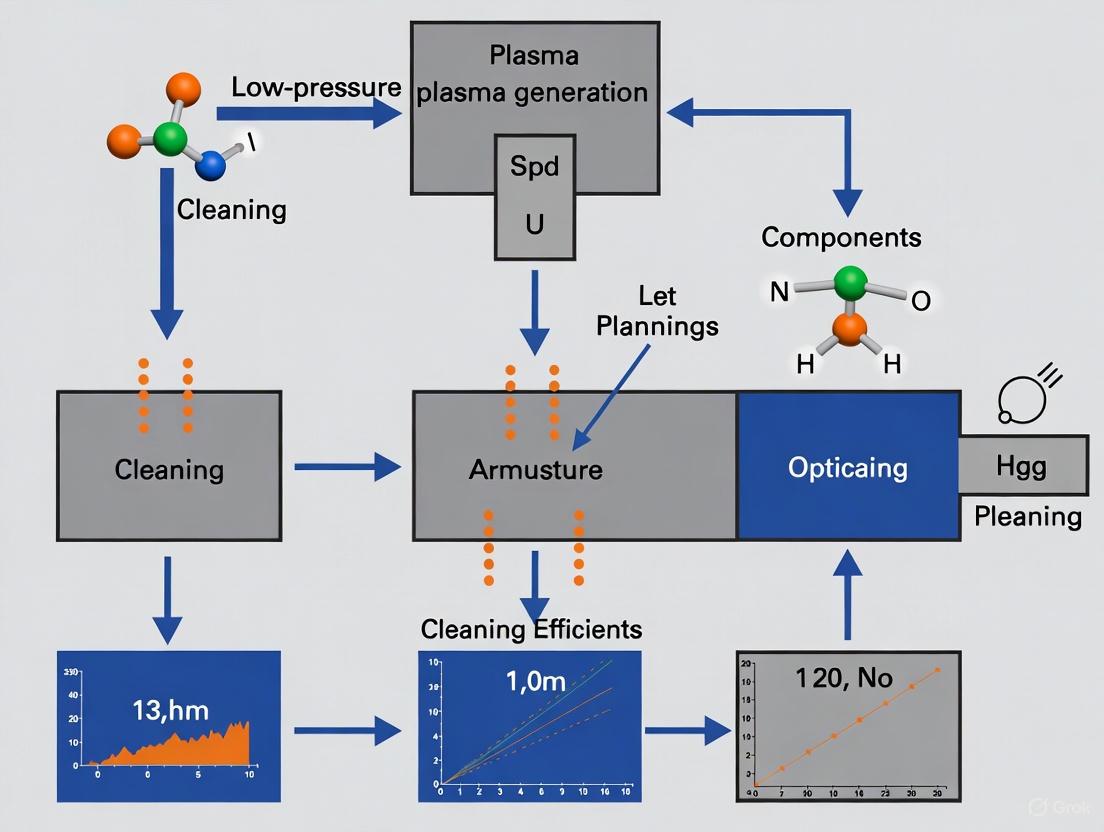
This article provides a thorough examination of low-pressure plasma cleaning for optical components, a critical technology for maintaining performance in intense laser systems, biomedical instrumentation, and scientific research.
Low-Pressure Plasma Cleaning of Optical Components: A Comprehensive Guide for Researchers and Scientists
Abstract
This article provides a thorough examination of low-pressure plasma cleaning for optical components, a critical technology for maintaining performance in intense laser systems, biomedical instrumentation, and scientific research. It explores the foundational science behind plasma-contaminant interactions, details practical methodologies and applications for various optical elements, addresses common troubleshooting and process optimization challenges, and presents rigorous validation data comparing performance outcomes. Aimed at researchers, scientists, and development professionals, this guide synthesizes recent experimental findings and simulation studies to offer a complete resource for implementing and optimizing this non-destructive, precision cleaning technique.
The Science of Plasma: Understanding the Fundamentals of Low-Pressure Plasma Cleaning
Plasma, widely recognized as the fourth state of matter, is an ionized gas consisting of a complex mixture of electrons, positively charged ions, neutral atoms, and molecules, alongside various reactive species and photons [1] [2]. Unlike the other three states of matter (solid, liquid, and gas), plasma is characterized by its quasi-neutrality, meaning the overall density of positive and negative charges is approximately equal, and it exhibits a collective behavior in response to electromagnetic fields [2]. This state of matter can occur naturally, as observed in lightning and auroras, or be generated artificially under controlled electric or electromagnetic fields [1].
In the context of industrial and research applications, low-pressure plasma cleaning has emerged as a critical technology for the ultra-precise cleaning of sensitive surfaces, particularly optical components. During prolonged service within vacuum-based intense laser systems, the surface chemical coatings of large-aperture optical components are inevitably contaminated by organic residues. This contamination leads to irreversible damage and a rapid degradation of optical performance under laser irradiation [3]. Plasma cleaning presents a non-contact, highly effective solution for removing these contaminants at a molecular level without damaging the delicate substrate, offering a significant advantage over conventional chemical cleaning methods [3] [2].
Fundamental Plasma Physics and Generation of Reactive Species
The Plasma State
A plasma is formed when a gas is energized to the point where its atoms begin to break apart, separating electrons from their nuclei. This process creates the unique, dynamic environment of the plasma state [2]. The generation of plasma for cleaning applications is typically achieved through capacitive-coupling discharge or similar methods within a low-pressure (vacuum) environment [3] [4]. In such a system, a pair of electrodes applies a strong electric field, accelerating free electrons. These high-energy electrons then collide with neutral gas molecules (e.g., oxygen, argon) in events known as inelastic collisions [1].
During these collisions, electrons transfer their kinetic energy to the internal energy of the gas molecules, elevating them from a ground state to an excited state and turning them into chemically reactive species. This can lead to further dissociation, ionization, and the generation of a rich soup of active particles, including [1]:
- Radicals: Hydroxyl radicals (·OH), hydrogen radicals (·H), oxygen radicals (·O), hydroperoxyl radicals (HO₂·), nitric oxide radicals (NO·).
- Charged Particles: Positive ions (e.g., Ar⁺), negative ions, and free electrons (e⁻).
- Neutral excited molecules and atoms.
- Reactive Molecules: Ozone (O₃), hydrogen peroxide (H₂O₂), atomic oxygen (O).
The collective action of these reactive species, particularly Reactive Oxygen Species (ROS) and Reactive Nitrogen Species (RNS), is responsible for the potent cleaning action of plasma, as they possess high oxidation potential and can break down stubborn organic contaminants [1] [5].
Low-Pressure Plasma Systems
Low-pressure plasma cleaners operate under reduced pressure, which allows for a more uniform and controlled plasma treatment compared to atmospheric pressure systems. This makes them ideal for high-precision applications like cleaning optical components [4] [2]. These systems require specialized vacuum chambers, sealing systems, and pumps, but their superior efficiency and effectiveness in removing surface contamination make them the predominant choice in semiconductor and optics manufacturing [2].
Table: Key Reactive Species in Low-Pressure Plasma and Their Roles in Cleaning
| Reactive Species | Type | Primary Role in Cleaning Process |
|---|---|---|
| Oxygen Radicals (·O) | Radical (ROS) | Highly efficient oxidation of organic hydrocarbons, converting them to volatile CO₂ and H₂O [2]. |
| Hydroxyl Radicals (·OH) | Radical (ROS) | Potent oxidizer; attacks carbon-carbon bonds in organic contaminants [1] [5]. |
| Ozone (O₃) | Molecule (ROS) | Strong oxidizing agent; effective in breaking down organic matter [5]. |
| Atomic Oxygen (O) | Atom (ROS) | Participates in surface reactions to remove organic residues [1]. |
| Hydrogen Ions (H⁺) | Ion | Used in reducing atmospheres to remove metal oxides and other inorganic contaminants [2]. |
| Argon Ions (Ar⁺) | Ion | Physical sputtering of surface atoms via momentum transfer; effective for non-organic residues [2]. |
| Nitric Oxide Radicals (NO·) | Radical (RNS) | Participates in complex chemical reactions that can lead to the formation of acids that etch surfaces [1]. |
Quantitative Analysis of Reactive Species and Process Parameters
The efficacy of plasma cleaning is governed by precise control over the plasma parameters. Understanding the quantitative relationships between these parameters and the resulting reactive species is crucial for process optimization.
Table: Core Parameters in Low-Pressure Plasma Cleaning and Their Impact
| Process Parameter | Typical Range/Options | Impact on Cleaning Efficiency & Reactive Species |
|---|---|---|
| Working Gas | O₂, Ar, H₂, N₂, CF₄, or mixtures | O₂: Generates oxygen radicals for chemical etching of organics. Ar: Promotes physical sputtering. H₂: Used for reducing metal oxides [2]. |
| Process Pressure | Low-pressure/Vacuum (e.g., 10⁻² to 10² Pa) | Lower pressure increases mean free path, leading to more uniform treatment and reduced particle collisions [2]. |
| Power Input | Varies by system (e.g., 50-1000 W) | Higher power generally increases electron density and energy, leading to greater dissociation and generation of reactive species [3]. |
| Treatment Time | Seconds to minutes | Longer exposure increases the dose of reactive species, enhancing cleaning until a point of saturation or substrate damage [3]. |
| Gas Temperature | 298 K, 323 K, 348 K | Increased temperature reduces the surface residence time of reactive species, favoring absorption and desorption over adsorption [6]. |
Recent molecular dynamics simulations have quantified the behavior of key reactive species at the plasma-water interface, which is analogous to the plasma-solid interface in cleaning processes. These studies categorize species based on their surface residence time, which directly influences their cleaning effectiveness [6]:
- Short-residence group (< 100 ps): O₃, N₂O, NO₂, NO. These species have a high probability of desorption.
- Long-residence group (> 200 ps): OH, H₂O₂, HNO₂, HNO₃, N₂O₅. These species show a higher probability of absorption into the surface or adsorption onto it.
The data indicate that tuning the plasma chemistry toward the production of long-residence species like HNO₃ can increase the uptake rate of reactive nitrogen species by a factor of 250% [6].
Experimental Protocol: Low-Pressure Plasma Cleaning of Optical Components
Objective
To remove organic contamination from the surface chemical coatings of large-aperture optical components using low-pressure oxygen plasma, thereby restoring optical transmittance without damaging the sensitive substrate [3].
Materials and Equipment
- Plasma System: Low-pressure plasma cleaner with a capacitive-coupled discharge chamber.
- Gas Supply: High-purity (99.99%) oxygen gas.
- Vacuum System: Mechanical and turbo-molecular pump stack.
- Diagnostic Tools: Langmuir probe, Optical Emission Spectrometer (OES).
- Characterization Tools: Spectrophotometer (for transmittance measurement), Scanning Electron Microscope (SEM) with Energy Dispersive X-ray Spectroscopy (EDS).
Step-by-Step Procedure
- Sample Loading: Place the contaminated optical component securely on the electrode within the plasma chamber. Ensure the surface to be cleaned is facing the plasma generation region.
- Chamber Evacuation: Seal the chamber and initiate the vacuum pump sequence. Evacuate the chamber to a base pressure of ≤ 1.0 x 10⁻³ Pa to minimize the presence of interfering atmospheric gases.
- Gas Introduction: Introduce high-purity oxygen gas into the chamber in a controlled manner using a mass flow controller. Stabilize the chamber pressure to the desired process setpoint (e.g., 10-50 Pa).
- Plasma Ignition: Apply RF power (e.g., 13.56 MHz) to the electrode to ignite the plasma. Maintain a stable power density (e.g., 0.5-1.5 W/cm²) as observed via the matching network.
- In-situ Monitoring (Optional but Recommended):
- Use a Langmuir probe to measure electron temperature and plasma density.
- Use an OES to monitor the intensity of key species, such as the 777 nm atomic oxygen line and the 309 nm hydroxyl radical line, to confirm the presence of potent oxidizers [3].
- Process Execution: Maintain the plasma discharge for the predetermined treatment time (e.g., 30-600 seconds, optimized based on contamination thickness).
- Process Termination: Sequentially turn off the RF power, close the gas inlet, and vent the chamber with an inert gas like nitrogen or clean dry air.
- Post-treatment Analysis:
- Measure the optical transmittance of the component using a spectrophotometer and compare it to pre-treatment values.
- Analyze surface chemistry and morphology using SEM/EDS to confirm contaminant removal and assess surface integrity.
Low-Pressure Plasma Cleaning Workflow
The Scientist's Toolkit: Research Reagent Solutions
Table: Essential Reagents, Gases, and Materials for Plasma Cleaning Research
| Item | Function/Application | Research Context |
|---|---|---|
| High-Purity Oxygen (O₂) | Primary gas for generating oxygen radicals (·O, ·OH) that chemically oxidize organic contaminants into volatile compounds [2]. | Standard gas for removing hydrocarbon-based residues from optical surfaces. |
| High-Purity Argon (Ar) | Inert gas used to generate argon ions (Ar⁺) for physical sputter cleaning, effectively ejecting surface atoms via momentum transfer [2]. | Used for removing non-organic particulates or for surface activation. |
| Hydrogen (H₂) or Forming Gas (H₂/N₂) | Creating a reducing plasma atmosphere effective for removing oxide layers from metal surfaces without oxidation [2]. | Cleaning of metallic components within optical assemblies. |
| Tetrafluoromethane (CF₄) | Feedstock gas for generating fluorine radicals, which are highly effective for etching silicon-based compounds [2]. | Not typically used for optical glass cleaning due to etching risk; used for specific substrate types. |
| Langmuir Probe | An electrical diagnostic tool inserted into the plasma to measure fundamental parameters like electron temperature (Te) and ion density (ni) [3]. | Critical for correlating plasma conditions with cleaning efficacy. |
| Optical Emission Spectrometer (OES) | A non-intrusive diagnostic tool that analyzes the light emitted by the plasma to identify and monitor the concentration of specific reactive species [3]. | Used for real-time process monitoring and endpoint detection. |
| Silicon Wafer Witness Samples | Clean, standardized substrates placed in the chamber alongside the optical component. | Used to quantitatively measure cleaning uniformity and efficiency via surface analysis techniques (e.g., XPS, AFM). |
Low-pressure plasma cleaning represents a sophisticated and highly effective method for decontaminating sensitive optical components. Its power lies in the controlled generation and application of reactive oxygen and nitrogen species (RONS), which interact with contaminants through complex physical and chemical mechanisms. The successful implementation of this technology requires a deep understanding of plasma physics, precise control over process parameters, and robust diagnostic and characterization methods. As optical systems continue to advance, the role of precision cleaning via low-pressure plasma will remain indispensable in ensuring optimal performance and longevity.
The Critical Role of Vacuum Environments in Plasma Generation and Control
In the field of low-pressure plasma cleaning of optical components, the vacuum environment serves as a critical enabling technology that fundamentally dictates plasma characteristics and surface interaction dynamics. Operating at sub-atmospheric pressures—typically between 1 to 1000 Pa—creates the necessary conditions for sustaining large-volume, uniform non-equilibrium plasma crucial for delicate cleaning applications [7]. This controlled environment drastically reduces molecular density, allowing electrons to be heated efficiently by electric fields while maintaining low gas temperature, thus preventing thermal damage to sensitive optical surfaces [7].
For optical components in intense laser systems, where organic contamination in vacuum environments inevitably leads to performance deterioration, low-pressure plasma cleaning has emerged as a vital solution [8] [9]. The vacuum environment enables the generation of highly reactive species while providing precise control over their interaction with contaminated surfaces, allowing for complete restoration of optical performance without secondary contamination or substrate damage [10]. This application note examines the scientific principles, experimental protocols, and practical implementation of vacuum-based plasma systems specifically for optical component cleaning applications.
Scientific Principles: Plasma Dynamics Under Vacuum Conditions
Fundamental Plasma Physics in Low-Pressure Regimes
Low-pressure non-equilibrium plasma technologies operate on the principle of selective electron heating. In vacuum environments, the reduced particle density enables electrons to gain substantial energy (10,000-100,000 K) from applied electric fields while the heavier ions and neutral particles remain near ambient temperature [7]. This creates a highly reactive environment where high-energy electrons drive dissociation and ionization processes through inelastic collisions, generating reactive species essential for cleaning—radicals, ions, and vacuum ultraviolet radiation—while maintaining the bulk material at safe temperatures [7].
The vacuum environment fundamentally alters the energy transfer mechanisms compared to atmospheric operation. At low pressure, the majority of discharge power transfers to surfaces rather than gas heating, making it exceptionally suitable for temperature-sensitive optical components [7]. Additionally, the reduced collision frequency in vacuum allows charged particles to gain greater energy between collisions, enhancing the production of reactive species while enabling uniform plasma distribution across large-area optical components [10] [7].
Comparative Advantages for Optical Component Cleaning
The transition from atmospheric to low-pressure operation provides several decisive advantages for optical cleaning applications. Plasma uniformity, essential for homogeneous contaminant removal across large-aperture optics, becomes achievable only under vacuum conditions where streamer formation and filamentary discharges—characteristic of atmospheric plasmas—are suppressed [7]. The spatial homogeneity of low-pressure plasma ensures consistent cleaning efficacy across the entire optical surface, preventing localized over- or under-treatment [10].
Furthermore, the vacuum environment permits precise control over plasma chemistry by regulating gas composition and partial pressures. For organic contaminant removal from optical surfaces, oxygen-containing plasmas generate reactive oxygen species that efficiently volatilize hydrocarbon contaminants through oxidation processes [10]. The vacuum chamber acts as a controlled environment where specific chemical reactions can be promoted while excluding unwanted atmospheric contaminants such as water vapor or airborne particulates that could compromise optical surfaces [8].
Quantitative Analysis: Process Parameters and Performance
Table 1: Critical Plasma Parameters and Their Impact on Cleaning Efficacy
| Parameter | Typical Range | Effect on Plasma Characteristics | Impact on Cleaning Performance |
|---|---|---|---|
| Pressure | 1-1000 Pa | Determines mean free path and electron energy distribution | Lower pressure increases ion energy but may reduce radical density; optimal range identified at 10-100 Pa for optical components [7] |
| Discharge Power | 10-1000 W | Controls electron density and temperature | Higher power increases reactive species generation but risks surface damage; 100-500 W typical for optical cleaning [10] |
| Gas Composition | O₂, Ar, O₂/Ar mixtures | Determines dominant reactive species and reaction mechanisms | Oxygen plasma effective for organic contaminant removal; argon provides physical sputtering component [10] |
| Treatment Duration | 1-60 minutes | Determines total fluence of reactive species | Must be optimized to complete contaminant removal without substrate damage; over-cleaning causes nano-defects on fused silica [11] |
| Ion Energy | 1-100 eV | Controls physical sputtering component | Critical parameter for damage threshold; significant fused silica damage observed above 33 eV [11] |
Table 2: Performance Metrics for Optical Components After Plasma Cleaning
| Performance Indicator | Contaminated State | After Plasma Cleaning | Measurement Method |
|---|---|---|---|
| Water Contact Angle | Increased hydrophobicity due to organic coverage | Restored hydrophilicity | Contact angle goniometry [8] |
| Surface Roughness | Altered due to contaminant layer | Returns to baseline substrate morphology | Atomic Force Microscopy [8] |
| Transmittance | Reduced due to light scattering/absorption | Completely restored | Spectrophotometry [8] [10] |
| Laser-Induced Damage Threshold | Reduced by ~60% [10] | Fully recovered | Laser damage testing [8] |
| Organic Contaminant Coverage | Complete surface coverage | Complete removal confirmed | AFM and molecular dynamics simulations [10] [11] |
Experimental Protocols: Vacuum Plasma System Operation
System Configuration and Calibration
Apparatus: Low-pressure plasma system with vacuum chamber, RF power supply (typically 13.56 MHz), gas flow controllers, pressure regulation system, and pumping system capable of reaching base pressure below 1 Pa [10] [7].
Sample Preparation: Optical components (fused silica, chemical-coated surfaces, or multilayer dielectric coatings) are mounted in the vacuum chamber ensuring uniform exposure to plasma. For contaminated samples, standardized organic contaminants may be applied via dip-coating or vapor deposition to create reproducible test surfaces [10].
Protocol:
- Initial Pump Down: Evacuate chamber to base pressure (<1 Pa) to remove atmospheric contaminants and water vapor
- Process Gas Introduction: Admit high-purity process gases (oxygen, argon, or mixtures) with precise flow control (typically 10-100 sccm)
- Pressure Stabilization: Adjust throttle valve and gas flow to achieve target process pressure (10-100 Pa)
- Plasma Ignition: Apply RF power using controlled ramp-up sequence to establish stable plasma
- Process Monitoring: Monitor plasma parameters (power, pressure, reflected power) throughout treatment duration
- System Venting: After process completion, shut off RF power and carefully vent chamber with dry nitrogen or clean dry air
In-situ Plasma Characterization
Langmuir Probe Measurements: Insert Langmuir probe into plasma discharge to measure electron temperature, ion density, and plasma potential. These parameters directly correlate with cleaning efficacy and must be recorded for process reproducibility [10].
Optical Emission Spectroscopy: Collect plasma emission spectra to identify reactive species present and monitor plasma stability during treatment. Specific spectral lines indicate concentration of key reactive species (atomic oxygen for organic contaminant removal) [10].
Process End-point Determination: For optical component cleaning, process duration should be carefully controlled to prevent substrate damage. Molecular dynamics simulations indicate that continuous plasma exposure after complete contaminant removal creates nano-defects on fused silica surfaces [11]. Real-time monitoring of contaminant removal can be achieved through mass spectrometry or optical monitoring of surface characteristics.
Visualization of Core Principles
The Researcher's Toolkit: Essential Materials and Reagents
Table 3: Research Reagent Solutions for Plasma Cleaning of Optics
| Reagent/Material | Specifications | Function in Research Context |
|---|---|---|
| High-Purity Oxygen | 99.999% purity, moisture <0.5 ppm | Primary reactive gas for organic contaminant oxidation; generates atomic oxygen radicals for efficient hydrocarbon removal [10] |
| Research-Grade Argon | 99.999% purity | Inert gas for plasma stabilization; provides physical sputtering component; used in mixture with oxygen for controlled reactivity [10] |
| Sol-Gel SiO₂ Coating | 29 nm particle size, dip-coated at 85 mm/min | Standardized test substrate representing anti-reflective coatings on optical components; enables reproducible contamination and cleaning studies [10] |
| Fused Silica Substrates | Optical grade, λ/10 surface flatness | Benchmark substrate material for plasma cleaning studies; allows evaluation of laser damage threshold restoration [8] [11] |
| Langmuir Probe System | RF compensated, computer-controlled | Critical diagnostic for measuring electron temperature (1-5 eV typical), ion density (10⁹-10¹¹ cm⁻³), and plasma potential [10] [7] |
| Hexamethyldisilazane (HMDS) | Semiconductor grade, ≥99.9% | Surface treatment agent for preparing reproducible hydrophobic surfaces; enables controlled contamination studies [10] |
Molecular Dynamics Insights: Atomic-Level Interactions
Recent advances in computational modeling have enabled unprecedented insight into the atomic-scale processes occurring during plasma cleaning of optical components. Reactive Molecular Dynamics (RMD) simulations using the ReaxFF force field reveal detailed reaction mechanisms between plasma species and organic contaminants [10] [11]. These simulations demonstrate how oxygen plasma disrupts molecular bonds in hydrocarbon contaminants, leading to their volatilization and removal from optical surfaces.
Critical findings from molecular dynamics studies indicate that plasma parameters must be carefully controlled to balance cleaning efficacy against potential substrate damage. Simulations show that oxygen plasma bombardment of fused silica surfaces causes significant damage when ion energy exceeds 33 eV, with the quantity of sputtered silicon atoms demonstrating a linear correlation with irradiation time [11]. This provides crucial guidance for establishing safe operating windows in experimental protocols, particularly regarding the importance of process endpoint detection to prevent "over-cleaning" and subsequent formation of nano-scale surface defects [11].
The vacuum environment serves as the foundational element enabling precise control over plasma generation and surface interactions for optical component cleaning. Through careful management of pressure regimes, gas composition, and power parameters, researchers can achieve complete restoration of optical performance—including transmittance, laser-induced damage threshold, and surface morphology—while preventing substrate damage [8] [10] [11]. The experimental protocols and parameter ranges outlined in this application note provide a validated framework for implementing low-pressure plasma cleaning techniques that effectively address the persistent challenge of organic contamination in high-value optical systems.
In the context of research on low-pressure plasma cleaning of optical components, understanding the fundamental mechanisms of contaminant removal is paramount. These mechanisms can be broadly categorized into chemical pathways, dominated by reactive species, and physical pathways, driven by energetic ion bombardment. The efficacy of plasma cleaning for restoring the performance of sensitive optical components in intense laser systems hinges on the precise control and balance of these interactions [10] [9]. This document details the core mechanisms, supported by quantitative data and experimental protocols, to guide researchers in optimizing plasma cleaning processes.
Core Removal Mechanisms
Plasma cleaning operates through two primary, often synergistic, mechanisms for removing organic contaminants and other residues from surfaces.
Radical-Driven Chemical Pathways
Chemical removal is predominantly facilitated by reactive species generated within the plasma discharge. In an oxygen (O₂) plasma, for instance, highly reactive oxygen radicals (O•) are created. These radicals react with organic contaminants (often carbon-based films), breaking the carbon-carbon and carbon-hydrogen bonds through chemical sputtering. This reaction converts the solid contaminant into volatile byproducts such as carbon dioxide (CO₂) and water vapor (H₂O), which are then evacuated by the vacuum system [10] [2].
This pathway is highly effective for removing organic residues and is characterized by its isotropic nature and high selectivity. The reaction mechanisms can be simulated using Reactive Force Field Molecular Dynamics (ReaxFF MD), which provides atomic-scale insights into the bond-breaking and volatile product formation processes [10].
Physical Sputtering
Physical sputtering is a momentum-driven, anisotropic process. Inert gases like argon (Ar) are commonly used, where they are ionized in the plasma to form Ar⁺ ions. These ions are then accelerated by the electric fields in the plasma sheath toward the substrate surface. Upon impact, they transfer kinetic energy to atoms within the contaminant layer or the substrate itself. If the transferred energy exceeds the surface binding energy, atoms are ejected from the material [2].
This mechanism is particularly effective for removing non-volatile inorganic contaminants and oxides. However, it requires careful optimization of parameters like ion energy to prevent excessive physical bombardment and potential surface damage [2].
Table 1: Comparison of Core Contaminant Removal Mechanisms
| Feature | Radical-Driven Chemical Pathway | Physical Sputtering |
|---|---|---|
| Primary Reactive Species | Oxygen radicals (O•), other reactive neutrals |
Argon ions (Ar⁺), other energetic ions |
| Contaminant Target | Organic residues (e.g., hydrocarbons) | Inorganic oxides, non-volatile residues |
| Removal Byproducts | Volatile gases (CO₂, H₂O) |
Ejected solid atoms and clusters |
| Process Nature | Isotropic, selective | Anisotropic, directional |
| Key Controlling Parameters | Radical flux and density, gas chemistry | Ion energy, ion flux, bombardment angle |
Quantitative Data and Process Windows
The cleaning effectiveness is governed by key plasma parameters, which influence both chemical and physical mechanisms. The tables below summarize critical quantitative relationships and performance data.
Table 2: Effect of Plasma Parameters on Cleaning Performance for Optical Components [10] [9]
| Plasma Parameter | Effect on Plasma Discharge & Reactive Species | Impact on Cleaning Efficacy |
|---|---|---|
| Discharge Power | Increases electron temperature, ion density, and radical generation [10]. | Enhances cleaning rate; excessive power may risk surface damage. |
| Gas Pressure | Affects plasma uniformity and ion energy distribution; lower pressure increases mean free path [10] [2]. | Optimizes balance between radical diffusion and ion bombardment energy. |
| Gas Chemistry | O₂: Generates oxygen radicals for chemical etching. Ar: Generates ions for physical sputtering. H₂: Can be used for reducing metal oxides [2]. |
Determines the dominant removal mechanism (chemical vs. physical). |
| Exposure Time | Directly controls the total fluence of reactive species and ions delivered to the surface. | Must be sufficient for complete contaminant removal; overexposure may etch sensitive coatings. |
Table 3: Performance Recovery of Optical Components After Low-Pressure Plasma Cleaning [9]
| Optical Component Performance Metric | Status After Organic Contamination | Status After Low-Pressure Plasma Cleaning |
|---|---|---|
| Surface Cleanliness (Water Contact Angle) | Increased hydrophobicity due to organic film [9]. | Restored to near-baseline hydrophilicity [9]. |
| Surface Morphology (Atomic Force Microscopy) | Presence of contaminant layer [9]. | Effective removal of contaminants, clean surface restored [9]. |
| Optical Transmittance | Degraded due to light scattering/absorption [10] [9]. | Completely restored to original performance [9]. |
| Laser-Induced Damage Threshold (LIDT) | Reduced by ~60% [10]. | Fully recovered, critical for intense laser system operation [9]. |
Experimental Protocols
Protocol: Low-Pressure Plasma Cleaning of Chemically Coated Optics
This protocol is adapted from studies on cleaning sol-gel SiO₂ anti-reflective coatings on fused silica substrates [10].
1. Sample Preparation and Contamination:
- Use fused silica substrates with a sol-gel SiO₂ chemical coating prepared via dip-coating.
- Artificially contaminate or use optics with known organic contamination from service in a vacuum environment.
2. Plasma System Setup:
- Use a low-pressure radio frequency (RF) capacitive coupling plasma system.
- Ensure the chamber is clean and leak-tight before introducing the process gas.
3. Cleaning Process:
- Gas Selection: Introduce high-purity oxygen (O₂) or an oxygen-argon (O₂/Ar) mixture into the chamber.
- Pressure Regulation: Stabilize the chamber pressure to a low-pressure regime (e.g., 200-500 mTorr).
- Power Ignition: Ignite the plasma with an RF power source. A typical power setting is 30-100 W, depending on the system and sample size.
- Processing Time: Treat the samples for a defined duration (e.g., 5-30 minutes).
- Ventilation: After processing, vent the chamber with pure nitrogen or dry air to prevent re-adsorption of contaminants.
4. Post-Processing and Analysis:
- Characterize cleaning efficacy using:
- Water Contact Angle: To assess surface energy and cleanliness.
- Atomic Force Microscopy (AFM): To directly image surface morphology and confirm contaminant removal.
- Spectrophotometry: To measure optical transmittance recovery.
- Laser-Induced Damage Threshold (LIDT) Testing: To verify the restoration of laser resistance.
Protocol: In-Situ Plasma Diagnostics using a Langmuir Probe and Optical Emission Spectroscopy (OES)
Monitoring plasma parameters is crucial for process reproducibility and understanding the active mechanisms [10] [12].
1. Langmuir Probe Measurements for Plasma Characterization:
- Objective: To measure fundamental plasma parameters like ion density (
n_i), electron temperature (T_e), and plasma potential (V_p). - Procedure:
- Insert a single or double Langmuir probe into the plasma discharge.
- Sweep a voltage bias across the probe and measure the collected current.
- Analyze the current-voltage (I-V) characteristic curve to extract
n_i,T_e, andV_p.
- Data Application: Correlate ion density and electron temperature with cleaning rates. Higher ion density often correlates with a faster cleaning process.
2. Optical Emission Spectroscopy (OES) for Species Identification:
- Objective: To identify and monitor the concentration of key reactive species in the plasma.
- Procedure:
- Couple an optical fiber to a viewport on the plasma chamber, connected to a spectrometer.
- Collect the light emitted from the plasma. The spectrum consists of discrete lines and molecular bands corresponding to electronic transitions of excited species.
- Identify spectral lines using known databases (e.g.,
Oat 777 nm,Arat 750 nm).
- Data Application: Use the intensity of specific lines (e.g., oxygen radicals) as a qualitative indicator of the concentration of chemically active species. Actinometry can be used for semi-quantitative analysis by adding a small, known amount of an inert gas like argon as a reference [12].
The Scientist's Toolkit: Research Reagent Solutions
Table 4: Essential Materials and Reagents for Plasma Cleaning Research
| Item | Function / Purpose | Example Use Case |
|---|---|---|
Oxygen Gas (O₂), High Purity |
Source for generating oxygen radicals for chemical etching of organic contaminants. | Primary gas for removing hydrocarbon-based films from optical coatings [10]. |
Argon Gas (Ar), High Purity |
Source for generating energetic ions for physical sputtering; also used as an actinometer in OES. | Sputtering of inorganic residues; O₂/Ar mixtures for balanced chemical/physical cleaning [2]. |
| Fused Silica Substrates | Model substrate and base material for high-power optical components. | Standard test coupon for evaluating cleaning efficacy and LIDT recovery [10] [9]. |
| Sol-Gel SiO₂ Coating | A representative, sensitive chemical coating used on optics in intense laser systems. | Sample preparation to study cleaning on coated, not just bare, optics [10]. |
| Langmuir Probe System | Diagnostic tool for in-situ measurement of ion density and electron temperature. | Correlating plasma parameters with cleaning performance [10]. |
| Optical Emission Spectrometer | Diagnostic tool for identifying and monitoring reactive species in the plasma. | Verifying the presence and relative concentration of key species like atomic oxygen [10] [12]. |
| Hexamethyldisilazane (HMDS) | Used for post-treatment (hydrophobization) of sol-gel silica coatings during sample prep. | Preparing chemically coated samples with specific surface properties [10]. |
Visualizing Mechanisms and Workflows
Plasma Contaminant Removal Mechanisms
Plasma Cleaning Experimental Workflow
Organic contamination on optical components is a critical reliability challenge in high-power laser systems, vacuum environments, and space-based optics. This application note details the severe detrimental effects of hydrocarbon-based contaminants, quantifying their impact on Laser-Induced Damage Threshold (LIDT) and outlining validated protocols for contamination mitigation and surface cleaning. The context is framed within research on low-pressure plasma cleaning techniques, which offer promising pathways for in-situ contamination management without component disassembly.
The presence of trace organic compounds—often originating from outgassing of adjacent polymers, plastics, or handling residues—initiates a cascade of degradation mechanisms under laser irradiation. These include photo-deposition of carbonaceous films, enhanced electric field intensification, and thermal-optical coupling effects that collectively degrade transmission, reflectance, and ultimately trigger catastrophic component failure [13]. Understanding these mechanisms and implementing rigorous contamination control protocols is therefore essential for optical systems deployed in mission-critical applications including inertial confinement fusion, space laser systems, and semiconductor lithography.
Quantitative Impact of Organic Contamination on Optical Performance
Laser-Induced Damage Threshold Reduction
Organic contamination dramatically reduces the ability of optical components to withstand high-power laser irradiation. The tabulated data below summarizes experimental findings from multiple studies measuring LIDT degradation under controlled contamination conditions.
Table 1: LIDT Reduction Due to Organic Contamination
| Contamination Condition | LIDT Value | Reference Condition | Reduction | Laser Parameters | Study |
|---|---|---|---|---|---|
| With organic contamination in vacuum | 8.6 J/cm² | Clean surface in atmosphere | ~60% | 1064 nm, ns pulse [14] | Applied Surface Science (2008) |
| Vacuum with O₂ protective gas | 12.7 J/cm² | Same as above | ~40% | 1064 nm, ns pulse [14] | Applied Surface Science (2008) |
| Vacuum with N₂ protective gas | 17.1 J/cm² | Same as above | ~15% | 1064 nm, ns pulse [14] | Applied Surface Science (2008) |
| Intentionally contaminated silica | Significant increase in damage density at 10 J/cm² | Clean silica (0.1 damage/cm²) | >10x damage density increase | 351 nm, 3 ns [15] | Optical Express (2009) |
| Contaminated optical components | Not specified | Clean components | ~60% reduction | Intense laser systems [10] | RSC Advances (2025) |
Optical Performance Degradation Metrics
Beyond LIDT reduction, organic contamination induces multiple forms of optical performance degradation through various physical mechanisms.
Table 2: Optical Performance Degradation Mechanisms
| Degradation Mechanism | Effect on Optical Performance | Quantitative Impact | Study |
|---|---|---|---|
| Laser-Induced Molecular Contamination (LIMC) | Deposit formation on optical surfaces | Transmission loss, reflectance degradation, wavefront distortion [13] | SPIE Proceedings |
| Electric Field Enhancement | Coupling between defects and contamination | Local electric field intensification up to 1.5× [16] | Micromachines (2022) |
| Carbonization & Polymerization | Transformation of volatiles to solid deposits | Formation of absorbing, non-fluorescent carbonaceous layers [13] | SPIE Proceedings |
| Contamination-Induced Damage | Damage spot formation | Spots 5× larger than contaminants, ~60% LIDT reduction [10] | RSC Advances (2025) |
Theoretical Framework: Damage Mechanisms
Electric Field Intensification Through Defect-Contamination Coupling
Finite-difference time-domain (FDTD) simulations reveal that the coupling between nano-scale defects inherent in optical coatings and organic contamination droplets creates localized electric field enhancement that initiates damage.
Diagram 1: Electric Field Enhancement Mechanism. This pathway illustrates how organic contamination droplets and intrinsic defects collectively enhance local electric fields, leading to damage initiation under laser irradiation.
The simulation results demonstrate that the coupling effect intensifies with decreasing distance between defects and contamination droplets, and with increasing droplet diameter [16]. When defects are in direct contact with contamination droplets, the peak electric field reaches maximum values, creating preferential sites for damage initiation.
Laser-Induced Molecular Contamination Process
Laser-Induced Molecular Contamination (LIMC) occurs through a three-stage process that transforms volatile outgassed compounds into solid, light-absorbing deposits firmly adhered to optical surfaces.
Diagram 2: LIMC Formation Process. The sequential stages of laser-induced molecular contamination begin with outgassing and culminate in solid deposit formation on optical surfaces.
Analytical characterization using Energy Dispersive X-ray (EDX) and X-ray Photoelectron Spectroscopy (XPS) confirms that LIMC deposits primarily consist of carbon with chemical bonds including C-C, C-H, C=O, and O-C=O, indicating oxidation processes during the transformation from volatile contaminants to solid deposits [13].
Experimental Protocols
Controlled Contamination and LIDT Testing Protocol
This protocol details methodology for quantitatively evaluating the impact of specific organic contaminants on laser damage threshold of optical components.
Table 3: Research Reagent Solutions for Contamination Studies
| Reagent/Material | Function/Application | Experimental Role |
|---|---|---|
| Natural Polypropylene (NPP) Pieces | Source of organic contaminants | Outgassing species representative of storage materials [15] |
| Toluene (C₆H₅CH₃) | Model organic contaminant | Representative outgassing compound for fundamental studies [13] [16] |
| Sol-gel SiO₂ coated fused silica | Test substrate with chemical coating | Standardized optical component with controlled surface properties [10] |
| Oxygen & Nitrogen Gas | Protective atmosphere studies | Evaluation of mitigation through environmental control [14] |
| Quartz Crystal Microbalance (QCM) | Contamination mass deposition monitoring | In-situ quantification of contamination rates [13] |
Procedure:
Sample Preparation: Utilize plano-parallel Corning 7980 fused silica polished samples. Clean using an automated spray system with RBS 50 soap followed by ethanol drag wiping to establish baseline LIDT of approximately 0.1 damage/cm² at 351 nm, 10 J/cm², 3 ns pulse length [15].
Contamination Process: Place sample in clean glass container with 60g of Natural Polypropylene (NPP) pieces. Heat in oven using a programmed cycle: 6-hour ramp to 70°C, 24-hour dwell at 70°C, then rapid cooling to ambient temperature over 15 minutes to promote condensation on optical surfaces [15].
LIDT Testing: Employ tripled Nd:YAG laser (355 nm) with Gaussian spatial profile (1/e² diameter: 600 µm) and temporal pulse characteristics (τ = 2.5 ns). Implement rasterscan test procedure with 300 µm scanning step to achieve complete irradiation of defined component area [15].
Data Collection: Record energy, spatial profile, and beam position for each shot at 10 Hz repetition rate. Construct accurate fluence map corresponding to scan. Perform post-mortem observation of irradiated areas using long focal length microscope to map damage sites [15].
Analysis: Plot damage site density as function of peak fluence to quantitatively compare contaminated versus reference samples.
Low-Pressure Plasma Cleaning Efficiency Protocol
This protocol evaluates the effectiveness of low-pressure plasma cleaning for removing organic contaminants from optical component surfaces.
Procedure:
Sample Preparation: Prepare chemical-coated fused silica samples using dip-coating method with sol-gel SiO₂ at 355 nm wavelength. Maintain particle size of 29 nm SiO₂, pull speed of 85 mm/min at 25°C. Perform post-treatment with ammonia and hexamethyldisilazane (HMDS) in sealed glass container for 24 hours [10].
Contamination Assessment: Establish quantitative relationship between number of typical functional groups in organic contaminants and transmittance of optical components using spectroscopic methods [3] [10].
Plasma System Characterization: Construct capacitive-coupling discharge model for low-pressure plasma cleaning device using finite element simulations. Characterize spatial distribution of plasma discharge characteristics. Conduct Langmuir probe and emission spectrometer experiments to determine plasma parameters (plasma potential, ion density, electron temperature) and reactive particle types in oxygen and argon gas plasma [3] [10].
Plasma Cleaning Experiments: Perform single-factor and orthogonal experiments adjusting core plasma parameters (discharge power, gas pressure, treatment duration). Measure cleanliness of optical component surface and recovery of optical performance (transmittance, LIDT restoration) [3] [10].
Molecular Dynamics Modeling: Construct Reactive Force Field (ReaxFF) molecular dynamics model of interaction between plasma and organic contaminants. Simulate cleaning process under different bombardment energies and ion fluxes to determine effect on cleaning efficiency [3] [10].
Validation: Compare simulation results with experimental outcomes to validate microscopic mechanisms of plasma cleaning.
Implementation Guidelines for Optical Systems
Storage and Handling Recommendations
Material Selection: Avoid polypropylene and polycarbonate storage containers in direct proximity to optical components. These materials outgas significant quantities of alkanes, alkenes, dibutylphthalate, and diethylphthalate when exposed to elevated temperatures [15].
Environmental Control: Implement protective atmospheres with nitrogen when optics must operate in vacuum environments. Experimental data demonstrates N₂ provides superior protection compared to O₂, with LIDT values of 17.1 J/cm² versus 12.7 J/cm² for contaminated optics [14].
Cleanroom Protocols: Establish automated cleaning procedures with verified efficacy. Spray systems with RBS 50 soap followed by ethanol drag wiping have demonstrated capability to achieve baseline LIDT performance on fused silica substrates [15].
Low-Pressure Plasma Cleaning Optimization
Parameter Control: Optimize discharge power and gas pressure to maximize contaminant removal while minimizing substrate damage. Electron temperature and ion density directly influence cleaning efficiency [3] [10].
Process Monitoring: Utilize in-situ monitoring techniques including Langmuir probes and emission spectroscopy to maintain plasma parameters within optimal operational windows [3] [10].
Damage Prevention: Limit plasma exposure duration after organic contaminant removal to prevent nano-defect formation on fused silica surfaces. Molecular dynamics simulations indicate damage onset occurs beyond 33 eV energy thresholds [17].
Organic contamination presents a severe threat to optical performance and laser damage resistance, with experimental data demonstrating up to 60% reduction in LIDT and order-of-magnitude increases in damage density. The coupling between surface defects and organic contaminants creates localized electric field enhancement that initiates damage at fluences significantly below intrinsic thresholds. Low-pressure plasma cleaning emerges as a promising in-situ mitigation technology, with optimized protocols enabling efficient contaminant removal while preserving optical surface integrity. Implementation of rigorous contamination control protocols—including proper material selection, environmental management, and plasma cleaning procedures—is essential for maintaining optical performance in high-power laser systems operating in vacuum environments.
For high-power laser systems, where even nanometer-scale organic contamination can reduce the laser-induced damage threshold (LIDT) by approximately 60%, achieving atomic-level cleanliness on optical components is not just desirable—it is imperative [10]. Low-pressure plasma cleaning has emerged as a leading non-contact, in situ method for restoring the surface integrity of these critical components without the secondary contamination risks associated with wet chemical or mechanical methods [10] [18]. However, the fundamental processes that govern the removal of contaminants occur on picosecond timescales and at the atomic spatial scale, making them virtually impossible to observe directly through experimental means alone [10].
This is where Reactive Molecular Dynamics (RMD) simulations, particularly those utilizing the Reactive Force Field (ReaxFF), have become an indispensable tool. By enabling scientists to track every bond breaking and formation event in a simulated system, RMD provides a virtual microscope into the complex physico-chemical interplay between plasma species and organic contaminants [19]. This Application Note details how RMD simulations are unraveling the microscopic mechanisms of plasma cleaning, offering quantitative insights and protocols that are guiding the development of more efficient and non-destructive cleaning processes for high-value optical components.
Atomic-Scale Cleaning Mechanisms Revealed by RMD
RMD simulations have successfully decoupled the complex synergy of physical and chemical effects in plasma cleaning, revealing that the core removal mechanism is chemical, but is profoundly enhanced by kinetic energy.
The Synergy of Kinetic and Chemical Effects
The interaction between reactive oxygen species (ROS) from a plasma and a model organic contaminant, dibutyl phthalate (DBP), elegantly demonstrates this synergy. The primary removal mechanism involves the chemical decomposition of DBP into small, volatile molecular groups by ROS [19]. However, the initial kinetic energy of the incident ROS plays a critical role in promoting these chemical reactions.
Simulations comparing ROS with thermal energy (0.0083 eV) to those with kinetic energy (75 eV) show a dramatic difference. The kinetically assisted bombardment can enhance the contaminant decomposition rate by up to 1310% and reduce the final residue ratio by 81.13% compared to a pure chemical reaction scenario [19]. This kinetic energy facilitates the cleaning process through several key mechanisms [19]:
- Enhanced Transport and Penetration: Higher kinetic energy allows ROS to overcome diffusion barriers and penetrate deeper into the contaminant layer.
- Selective Pathway Activation: Kinetic energy selectively provides the energy needed to overcome specific reaction energy barriers, favoring certain cleavage pathways.
- Efficient Energy Transfer: The kinetic energy from bombarding particles is transferred to the contaminant molecules, elevating the system's potential energy and driving endothermic dissociation reactions.
Table 1: Quantitative Impact of Reactive Oxygen Species (ROS) Kinetic Energy on Contaminant Decomposition
| Initial Kinetic Energy of ROS | DBP Residue Ratio | Enhancement in Decomposition Rate | Key Activated Pathways |
|---|---|---|---|
| 0.0083 eV (Thermal) | High | Baseline | Limited side-chain reactions |
| 75 eV | Reduced by 81.13% | Up to 1310% | Butyl chain cleavage & Benzene ring cleavage |
Dominant Reaction Pathways
RMD simulations allow for the precise tracking of reaction intermediates and products, identifying two dominant reaction pathways for a contaminant like DBP [19]:
- Butyl Chain Cleavage: The simulation reveals that C–O and C–C bonds in the aliphatic side chains are the most vulnerable. They are progressively oxidized, leading to the breakage and detachment of the butyl groups from the phthalate core.
- Benzene Ring Cleavage: The aromatic benzene ring is more stable but can be destroyed under sufficient flux of ROS or at elevated ambient temperatures. The ring-opening reaction is a key indicator of the contaminant's complete dissociation into volatile end-products like CO₂ and H₂O.
The diagram below illustrates the stepwise decomposition of an organic contaminant via these two dominant pathways under plasma exposure.
Optimizing Cleaning and Mitigating Substrate Damage
A primary challenge in plasma cleaning is achieving complete contaminant removal without damaging the underlying optical substrate, such as fused silica. RMD simulations provide critical insights into this balancing act by identifying the energy thresholds and conditions that lead to the formation of surface nano-defects.
Fused Silica Surface Damage Threshold
Studies simulating oxygen plasma bombardment on fused silica reveal that significant surface damage, characterized by the breaking of Si-O bonds and sputtering of silicon and oxygen atoms, has a clear onset. No significant damage occurs below 33 eV [17]. Beyond this threshold, the following damage evolution is observed [17]:
- Pit Defect Formation: Continuous plasma irradiation leads to the formation of pit defects on the fused silica surface, increasing its porosity and roughness.
- Linear Sputtering Correlation: The quantity of sputtered silicon atoms demonstrates a linear correlation with plasma irradiation time.
- Protective Layer Effect: Interestingly, prolonged irradiation leads to the injection of oxygen atoms into the substrate, which can form a layer that offers some protection to the underlying Si-O bonds from subsequent bombardment.
Table 2: RMD-Derived Parameters for Optimal Cleaning vs. Substrate Damage
| Parameter | Effect on Cleaning Efficiency | Effect on Substrate Damage | Optimized Operational Window |
|---|---|---|---|
| ROS Kinetic Energy | Increases with energy up to a point; enhances decomposition rate. | Significant damage onset beyond 33 eV; linear increase in sputtering with energy. | Below 33 eV for delicate optics; higher energies may be used with extreme caution. |
| Ambient Temperature | Improves cleaning ability; increases mobility and reaction rates. | A crucial factor; higher temperatures significantly accelerate surface damage. | Moderate temperature; requires careful balance. |
| Plasma Flux & Dose | Higher flux/irradiation time increases contaminant removal. | Damage depth plateaus with time; sputtering amount stabilizes. | Avoid "over-cleaning"; process should be stopped once contaminants are removed. |
| Reactive Species Concentration | Dominates cleaning efficiency; higher concentration is beneficial. | Not a direct damage factor, but enables faster cleaning, reducing required dose. | Use high concentration to minimize necessary exposure time. |
Essential Protocols for RMD Simulations in Plasma Cleaning
To harness the power of RMD for investigating plasma cleaning mechanisms, researchers can follow the protocols outlined below. The first diagram provides a high-level overview of the complete workflow, from model preparation to analysis.
Protocol 1: Model System Construction and Simulation Setup
Contaminant Model Preparation
- Objective: To create an atomistically accurate model of the organic contaminant layer on a substrate.
- Procedure:
- Select Representative Molecules: Use a representative organic contaminant for the study. Dibutyl phthalate (DBP) is a common choice as a model compound [19]. Other complex hydrocarbons representing soot have also been used [20].
- Build Molecular Layer: Use molecular builder software (e.g., Packmol [19]) to create an amorphous cell containing multiple DBP molecules, forming a contaminant layer of desired thickness on a substrate plane.
- Energy Minimization: Perform a geometry optimization on the constructed model to eliminate unrealistic steric clashes and achieve a stable initial configuration.
- Objective: To simulate the bombardment of the contaminant layer by plasma-generated species.
- Procedure:
- Define ROS Parameters: Determine the type (e.g., atomic oxygen O(³P)), initial kinetic energy (e.g., 0.1 eV to 100 eV), flux (number of particles per ps), and irradiation dose (total number of particles) based on experimental plasma conditions [17] [19].
- Create Source Zone: Define a virtual source zone above the contaminant layer from which ROS are introduced into the simulation box at defined intervals.
Protocol 2: Simulation Execution and Data Analysis
Running the RMD Simulation
- Objective: To observe the dynamic interaction between ROS and the contaminant layer over time.
- Software: LAMMPS is a widely used MD engine that supports the ReaxFF force field [17] [19].
- Procedure:
- Input Deck Configuration: Prepare the input file specifying the ReaxFF force field parameters (e.g., parameterized for C/H/O systems [19]), thermodynamic ensemble (typically NVE or NVT), temperature (300K - 500K [21] [17]), and simulation duration (tens to hundreds of picoseconds).
- Trajectory Recording: Set the trajectory output frequency to capture atomic positions and velocities at fine time intervals (e.g., every 10-100 femtoseconds) for subsequent analysis.
Trajectory Analysis for Mechanism Insight
- Objective: To extract quantitative and qualitative data from the simulation trajectory.
- Procedure:
- Molecular Fragmentation Analysis: Write scripts to track the number of specific molecules (e.g., DBP) over time and identify the formation of signature decomposition products (e.g., CO₂, H₂O, C₂H₄) [19].
- Reaction Pathway Identification: Use bond-order analysis from the trajectory to identify the sequence of bond breaking and formation. This reveals dominant pathways like butyl chain cleavage versus benzene ring opening [19].
- Damage Quantification (for substrate): For substrate damage studies, track the number of sputtered substrate atoms (e.g., Si and O from fused silica) and visualize the evolution of surface morphology (pit formation) [17].
The Scientist's Toolkit: Key Research Reagent Solutions
The following table details the essential computational and conceptual "reagents" required for conducting RMD studies in plasma cleaning.
Table 3: Essential Research Reagent Solutions for RMD Simulations of Plasma Cleaning
| Category | Item / Software / Model | Function & Application Note |
|---|---|---|
| Reactive Force Fields | ReaxFF | A bond-order-based force field that dynamically describes bond breaking and formation; must be parameterized for the specific system (e.g., C/H/O for organics, Si/O for silica) [17] [19]. |
| Simulation Software | LAMMPS | A widely used, open-source molecular dynamics simulator that supports ReaxFF and is capable of running large-scale parallel computations [17] [19]. |
| Model Contaminants | Dibutyl Phthalate (DBP) | A common plasticizer used as a representative model for complex organic contaminants in validation studies [19]. |
| Soot (Carbonaceous Particles) | A model for carbon-based particulate contamination found in industrial and cultural heritage settings [20]. | |
| Reactive Species | Atomic Oxygen (O(³P)) | The primary ground-state oxygen atom used to simulate the chemical effect of oxygen plasma, responsible for oxidation and volatilization of hydrocarbons [21] [17] [19]. |
| Substrate Models | Fused Silica (a-SiO₂) | An amorphous model of a typical optical component material, used to study substrate damage thresholds and cleaning efficacy [17]. |
| Analysis & Visualization | OVITO / VMD | Software tools for visualizing the atomic trajectory, identifying defects, and analyzing structural changes over time [17]. |
Reactive Molecular Dynamics simulations have transitioned from a niche computational technique to a cornerstone of modern plasma process development. By providing unparalleled, atomic-scale visibility into the femtosecond-scale events that define cleaning efficiency and substrate damage, RMD offers a powerful alternative to trial-and-error experimentation. The insights gained—into kinetic energy promotion, reaction pathway selection, and damage thresholds—are directly translating into optimized plasma cleaning protocols. For the field of high-power laser optics and other precision manufacturing sectors, this means the ability to achieve and maintain pristine surfaces, thereby ensuring the operational longevity and performance stability of some of the world's most advanced technological systems.
From Theory to Practice: Implementing Plasma Cleaning for Diverse Optical Components
Within the context of research on low-pressure plasma cleaning for optical components, this document provides a standardized protocol for the removal of organic contamination. In intense laser systems, optical components such as fused silica, chemical coatings, and multilayer dielectric coatings are susceptible to organic contamination in vacuum environments, leading to significantly reduced laser-induced damage thresholds (LIDT) and transmittance [3] [22] [8]. Low-pressure plasma cleaning is an efficient, non-contact, and in-situ compatible method that utilizes reactive species and ion bombardment to remove contaminants without causing secondary pollution or significant subsurface damage [3] [10] [8]. This procedure outlines the steps for effective plasma cleaning, from sample preparation to post-treatment validation, ensuring the restoration of optical performance.
Principle of the Method
The efficacy of low-pressure plasma cleaning stems from the synergistic action of its constituents. The process begins with a vacuum environment, which creates a uniform, diffuse plasma and removes atmospheric interference [3] [10]. Applying a radio-frequency (RF) electrical field to a low-pressure gas (e.g., oxygen, argon, or air) ionizes the gas, generating a plasma rich in reactive oxygen species (ROS) such as atomic oxygen (O), ozone (O₃), and ions (O₂⁺, O₂⁻) [3] [10] [23]. Simultaneously, ultraviolet (UV) radiation from the plasma breaks the chemical bonds (C-H, C-C, C-O) of long-chain organic contaminants [23].
The removal mechanism is twofold. For oxygen-based plasmas, the primary action is chemical conversion; reactive species oxidize organic hydrocarbons into volatile byproducts like carbon dioxide (CO₂) and water vapor (H₂O), which are then evacuated by the vacuum system [3] [23]. Argon plasma, in contrast, operates mainly through physical sputtering or "micro-sandblasting," where energetic argon ions physically dislodge contaminants from the surface through momentum transfer [23]. In practice, a combination of these chemical and physical mechanisms efficiently cleans the surface, restoring its original hydrophilicity and optical properties [8].
The diagram below illustrates the logical sequence and decision points within the standard plasma cleaning workflow.
Equipment and Reagents
The Scientist's Toolkit: Essential Research Reagents and Materials
The following table details key materials and reagents required for the plasma cleaning process as described in the research context.
Table 1: Essential Research Reagents and Materials for Plasma Cleaning Optical Components
| Item Name | Function/Description | Research Context & Examples |
|---|---|---|
| Low-Pressure Plasma System | A vacuum chamber with RF power supply, electrodes, gas injection, and vacuum pump. | Capacitive-coupling discharge device; enables large-area (e.g., 0.18 m²), uniform plasma for in-situ cleaning of large-aperture optics [3] [8]. |
| Process Gases | Source of reactive species and ions for contaminant removal. | Oxygen (O₂): For chemical oxidation of organics [3] [23]. Argon (Ar): For physical sputtering of inorganic contaminants [24] [23]. Air: A cost-effective alternative for organic removal [8]. |
| Optical Component Samples | Substrates to be cleaned. | Fused Silica (e.g., Corning 7980): Uncoated substrate [8]. Sol-Gel Chemical Coatings: Porous anti-reflective coatings [3] [8]. Multilayer Dielectric Coatings (e.g., SiO₂/HfO₂): High-reflective mirrors [8]. |
| Organic Contaminant Standard | For controlled contamination of samples in research. | Dibutyl Phthalate (DBP): A typical organic contaminant identified in intense laser systems, used for validating cleaning efficacy [8]. |
| Characterization Tools | For pre- and post-cleaning analysis of surface properties. | Spectrophotometer: Measures transmittance recovery [22] [8]. LIDT Tester: Quantifies laser damage threshold restoration [22] [8]. Contact Angle Goniometer: Assesses cleanliness via wettability [22] [8]. Atomic Force Microscope (AFM): Measures surface roughness changes [22] [8]. |
Step-by-Step Procedure
Pre-Cleaning Sample Preparation and Contamination
- Initial Cleaning: Begin with rigorously clean optical components. For fused silica substrates, this involves a multi-step process: high-temperature soaking, ultrasonic cleaning in a suitable solvent, rinsing with high-purity deionized water, and drying with a nitrogen gas purge [8].
- Sample Storage: Store the cleaned components in clean polytetrafluoroethylene (PTFE) sealed containers to prevent pre-procedural contamination [8].
- Contamination (For Research Validation): To experimentally simulate service conditions and test the cleaning protocol, intentionally contaminate samples. Place the optical component in a sealed chamber alongside a beaker containing a volatile organic contaminant standard, such as Dibutyl Phthalate (DBP). Evacuate the chamber to a high vacuum (e.g., 10⁻³ Pa) to mimic the operational environment of an intense laser system and maintain this state for a defined period (e.g., 176 hours) to allow for contaminant deposition [8].
System Setup and Plasma Ignition
- Load Sample: Place the optical component securely within the plasma chamber, ensuring it is appropriately positioned relative to the electrodes. The sample can be placed on the anode, cathode, or between them, as the position influences the intensity of ion/electron bombardment and can be used to tune the process [23].
- Chamber Evacuation: Seal the chamber and initiate the vacuum pump. Evacuate the chamber to a base pressure sufficient to establish a stable plasma discharge, typically on the order of 10⁻³ Pa or better, as used in experimental studies [8].
- Process Gas Introduction: Introduce the selected process gas into the chamber. Maintain a constant gas flow and stabilize the pressure to the desired set point. Typical low-pressure operating pressures range from 1 Pa to 100 Pa [3] [23].
- Plasma Ignition: Apply the RF power to the electrodes to ignite the plasma. Standard parameters reported for effective cleaning of optical components include a pressure of 20 Pa, a voltage of 150 V, and a frequency of 20 kHz [8].
In-Process Monitoring and Control
- Parameter Stability: Monitor and record key plasma parameters throughout the cleaning cycle, including discharge power, chamber pressure, and gas flow rate. These parameters directly influence plasma characteristics such as ion density and electron temperature, which govern cleaning efficiency [3] [10].
- Optical Emission Spectroscopy (Optional): For advanced process monitoring, use an emission spectrometer to characterize the plasma and identify the types and relative densities of reactive particles (e.g., atomic oxygen radicals) excited in the low-pressure plasma [3] [10].
- Process Duration: Maintain the plasma discharge for the predetermined cleaning time. A cleaning time of 5 minutes has been demonstrated as effective for removing organic contaminants from typical optical components [8]. The required duration may be optimized based on the contaminant load and specific plasma parameters.
Post-Cleaning Sample Handling and Validation
- System Shutdown: After the cleaning cycle is complete, turn off the RF power to extinguish the plasma.
- Chamber Venting: Vent the chamber to atmospheric pressure using dry, clean air or an inert gas like nitrogen to prevent recontamination.
- Sample Unloading: Carefully remove the cleaned optical component from the chamber.
- Immediate Validation: Perform post-cleaning characterization promptly to assess the success of the procedure. Key validation methods include:
- Water Contact Angle Measurement: A successful cleaning process will result in a significant decrease in the water contact angle, often resulting in a hydrophilic or even super-hydrophilic surface (e.g., contact angles as low as 7°), indicating the removal of hydrophobic organic contaminants [8].
- Transmittance Measurement: Use a spectrophotometer to measure the transmittance of the component and confirm restoration to its pre-contamination baseline [22] [8].
- Laser-Induced Damage Threshold (LIDT) Testing: Employ a Nd:YAG laser (e.g., at 355 nm or 1064 nm) to verify that the LIDT has been restored, confirming the removal of contamination that could cause damage under intense laser irradiation [22] [8].
- Surface Morphology Analysis: Use Atomic Force Microscopy (AFM) to evaluate changes in surface roughness (Rq) and ensure the cleaning process has not adversely altered the surface topography of the sensitive optical coating [22] [8].
Expected Results and Data Interpretation
Successful application of this SOP will lead to the complete restoration of the optical component's performance. The following table summarizes quantitative outcomes from research studies that employed low-pressure plasma cleaning under similar parameters.
Table 2: Expected Experimental Outcomes from Plasma Cleaning of Optical Components
| Performance Metric | Pre-Cleaning (Contaminated) | Post-Cleaning (Expected Result) | Measurement Technique |
|---|---|---|---|
| Surface Wettability | Increased hydrophobicity; Higher water contact angle [8] | Hydrophilic surface; Contact angle reduced to as low as 7° [8] | Contact Angle Goniometer |
| Optical Transmittance | Deteriorated transmittance due to contaminant layer [3] | Restored to near-original baseline transmittance (e.g., ~99.9% at 355 nm for sol-gel coatings) [3] [8] | Spectrophotometer |
| Laser-Induced Damage Threshold (LIDT) | Significantly reduced (up to ~60% degradation) [10] | Completely restored to component's intrinsic LIDT [22] | Nd:YAG Laser Test System |
| Surface Roughness (Rq) | Varies; may increase or fill porous structures [8] | Returns to near-baseline; may slightly increase if porous coating is slightly etched [8] | Atomic Force Microscopy (AFM) |
| Surface Chemistry | High carbon content from organic contaminants [23] | Drastic reduction of surface carbon content [23] | X-ray Photoelectron Spectroscopy (XPS) |
Troubleshooting and Optimization
Researchers can optimize the cleaning process by adjusting core plasma parameters based on the specific type of optical component and contaminant. The table below provides a guide for parameter optimization and common issues.
Table 3: Troubleshooting and Parameter Optimization Guide
| Issue | Potential Cause | Suggested Remediation |
|---|---|---|
| Incomplete Contaminant Removal | Insufficient reactive species density; Low ion energy; Short cleaning time. | Increase RF power to boost plasma density [3]; Optimize gas composition (e.g., use pure O₂ for organics) [3] [23]; Extend cleaning duration. |
| Damage to Sensitive Coating | Excessive ion bombardment energy; Over-etching of porous structures. | Reduce RF power and process pressure [3]; Shorten cleaning time; Place sample on anode or use a bias to reduce ion energy [23]. |
| Increased Surface Roughness | Overly aggressive physical sputtering, especially with argon plasma. | Switch from Ar to O₂ for a more chemical-based removal [23]; Optimize pressure and power to reduce physical etching component [24]. |
| Non-Uniform Cleaning | Non-uniform plasma distribution over large apertures; Incorrect sample placement. | Ensure a capacitive-coupling discharge model designed for large-area uniformity [3]; Reposition sample within the plasma chamber to ensure even exposure [23]. |
Method Validation and Experimental Protocols
Detailed Protocol: Validating Cleaning Efficacy via Surface Wettability
This protocol details the method for using water contact angle measurements to characterize surface cleanliness, as referenced in Step 4.4 of the SOP [22] [8].
- Objective: To quantitatively assess the removal of hydrophobic organic contaminants by measuring the change in water contact angle before and after plasma cleaning.
- Materials:
- Contact angle goniometer
- Deionized water (HPLC grade or higher purity)
- Microliter syringe
- Plasma-cleaned optical component sample
- Procedure:
- Place the sample on the goniometer stage, ensuring the surface is level.
- Using the microliter syringe, carefully dispense a 2-5 µL droplet of deionized water onto the sample surface.
- Use the goniometer's camera and software to capture a high-contrast image of the water droplet immediately after deposition.
- Use the instrument's software to analyze the image and calculate the static contact angle (typically via the Young-Laplace method).
- Perform measurements on at least five different locations on the sample surface and calculate the average value.
- Data Interpretation: A significant decrease in the average water contact angle after plasma cleaning indicates successful removal of organic contamination. For a chemically coated optical component, the angle may drop from a contaminated hydrophobic state to a super-hydrophilic state as low as 7° [8].
Workflow Visualization
The end-to-end experimental workflow for a research project validating a plasma cleaning process, from sample preparation to final analysis, is summarized below.
In the low-pressure plasma cleaning of optical components, the selection of process gas is a critical determinant of cleaning efficacy and surface preservation. Plasma is generated by applying a high-frequency electrical field to a low-pressure gas, creating a reactive environment of ions, electrons, and other active species that interact with surface contaminants [25] [26]. The chemical and physical mechanisms of contamination removal are directly governed by gas chemistry, making strategic gas selection fundamental to achieving optimal cleaning outcomes without compromising delicate optical surfaces. This strategy balances chemical reactivity with physical bombardment effects to address specific contaminant profiles while maintaining the stringent surface integrity requirements of optical components used in intense laser systems [8] [10].
For optical components, even minimal organic contamination can significantly degrade performance by reducing transmittance and lowering laser-induced damage thresholds [8]. Low-pressure plasma cleaning has emerged as an essential technique for restoring optical surfaces due to its ability to efficiently remove organic contaminants without causing secondary contamination or damage to delicate chemical coatings [10]. The process can be precisely controlled through parameter adjustment including gas composition, power input, pressure regulation, and treatment duration, enabling researchers to tailor the cleaning process to specific optical materials and contamination types [25] [27].
Fundamental Cleaning Mechanisms by Gas Chemistry
The interaction between plasma-generated species and surface contaminants occurs through distinct chemical and physical pathways that vary significantly with gas selection. Understanding these fundamental mechanisms is essential for developing targeted cleaning protocols for optical components.
Chemical Reaction Mechanisms with Oxygen Plasma
Oxygen plasma operates primarily through chemical reaction pathways that efficiently degrade organic contaminants. When oxygen gas (O₂) is subjected to a high-frequency electrical field in a vacuum chamber, it dissociates into highly reactive species including oxygen atoms (O), ions (O₂⁺, O₂⁻, O⁺, O⁻), ozone (O₃), and metastable excited oxygen [25] [28]. These species react with organic contaminants through two primary mechanisms:
Vacuum Ultraviolet (VUV) Radiation Effect: The plasma emits short-wave ultraviolet (VUV) radiation that effectively breaks most organic bonds (C-H, C-C, C=C, C-O, and C-N) of surface contaminants [25]. This bond breaking disrupts the molecular structure of high molecular weight contaminants, making them more susceptible to chemical attack.
Oxidative Chemical Reaction: Reactive oxygen species combine with fragmented organic molecules to form volatile compounds including H₂O, CO, and CO₂, which have relatively high vapor pressures and are evacuated from the chamber during processing [25] [28]. This reaction pathway completely removes organic contaminants from optical surfaces, leaving an ultra-clean surface without residual carbonaceous material.
The chemical dominance of oxygen plasma makes it particularly effective for removing hydrocarbon-based contaminants from optical components without aggressive physical bombardment that might damage delicate chemical coatings [8] [10].
Physical Sputtering Mechanisms with Argon Plasma
Argon plasma functions primarily through physical sputtering mechanisms driven by momentum transfer. As a noble gas, argon does not participate in significant chemical reactions but generates plasma consisting of positively charged argon ions (Ar⁺) and free electrons when ionized [26] [2]. The cleaning mechanism involves:
Energetic Bombardment: Ar⁺ ions are accelerated by electrical fields toward the target surface, gaining sufficient kinetic energy to physically dislodge contaminants upon impact [26] [2]. This process resembles "molecular sandblasting" at the atomic level, effectively breaking apart contaminant molecules through inelastic collisions [25].
Momentum Transfer: Upon collision with the surface, argon ions transfer kinetic energy to atoms within contaminant materials, enabling them to overcome surface binding energy and be ejected from the surface [2]. The efficacy of this physical sputtering process depends on ion mass, acceleration energy, and the binding energy of contaminants to the substrate.
The physical nature of argon plasma cleaning makes it suitable for contaminants that are not readily oxidized and for materials that might be adversely affected by the chemical reactivity of oxygen, including easily oxidized metals such as silver or copper [25].
Synergistic Effects of Mixed Gas Approaches
Mixed gas plasmas combine chemical and physical cleaning mechanisms to address complex contamination scenarios. Common mixtures include:
Argon-Oxygen Mixtures: These blends combine the physical sputtering capability of argon with the chemical reactivity of oxygen, creating a synergistic effect that can enhance cleaning rates for certain contaminants [25] [28]. The physical bombardment by argon ions can break through surface layers or disrupt contaminant structures, allowing oxygen species better access for chemical reaction.
Hydrogen-Nitrogen and Other Mixtures: Specialized gas mixtures target specific contaminant types, such as hydrogen-based plasmas for carbon-tungsten mixed materials [29]. These mixtures generate unique reactive species that can be tailored to particular cleaning challenges.
Mixed gas approaches provide researchers with a versatile tool for optimizing cleaning efficacy while minimizing potential damage to sensitive optical surfaces, allowing precise tuning of the plasma chemistry for specific applications [27].
Quantitative Gas Performance Comparison
The efficacy of different plasma gases can be quantitatively compared across multiple performance parameters relevant to optical component cleaning. The table below summarizes key characteristics of oxygen, argon, and mixed gas approaches based on experimental findings from optical cleaning applications.
Table 1: Comparative Performance of Plasma Gases in Optical Component Cleaning
| Gas Type | Primary Mechanism | Optimal Contaminant Targets | Typical Process Parameters | Efficacy Metrics | Optical Surface Impact |
|---|---|---|---|---|---|
| Oxygen (O₂) | Chemical oxidation | Organic residues, hydrocarbons, fingerprints | Power: 500W, Pressure: 0.2-0.6 mbar, Time: 1-5 min [30] | Removes 100% organic contaminants; converts to CO, CO₂, H₂O [25] | Restores transmittance & LIDT*; minimal surface damage [8] |
| Argon (Ar) | Physical sputtering | Inorganic particles, non-volatile residues, materials prone to oxidation | Pressure: 150-400 mTorr; RF power: >10MHz [25] | Erosion rate: 0.3 nm/s for C-W films [29] | Can increase roughness; suitable for oxidation-sensitive coatings |
| Argon/Oxygen Mixture | Combined physical & chemical | Mixed organic/inorganic contaminants, stubborn deposits | Varying ratios (e.g., 4:1) to balance mechanisms [28] | Enhanced rate vs. pure gases for specific contaminants [25] | Tunable to minimize damage while maintaining efficacy |
| Hydrogen (H₂) | Chemical reduction | Carbon-based films, C-W mixed materials [29] | RF: 13.56 MHz; specific to reactor configuration [29] | Effective for tritium recovery from carbon co-deposits [29] | Specialized application for specific contamination types |
*LIDT: Laser-Induced Damage Threshold
The performance data reveals that oxygen plasma consistently demonstrates superior efficacy for removing organic contaminants from optical surfaces, with experimental studies confirming its ability to completely restore the performance of contaminated optical components [8]. For uncoated fused silica, chemical coatings, and multilayer dielectric coatings—typical optical components in intense laser systems—oxygen plasma cleaning effectively removed organic contaminants and restored baseline transmittance and laser-induced damage thresholds [8].
Argon plasma, while less effective for bulk organic contamination, provides unique advantages for specific scenarios. Research on ultra-high molecular weight polyethylene (UHMWPE) demonstrated that argon plasma produces increasing surface roughness with treatment time, which may be beneficial for enhancing adhesion in some applications but requires careful consideration for optical surfaces [28]. The same study found oxygen plasma initially reduced surface roughness before longer treatments caused gradual increases, highlighting the importance of process duration control for optical components.
Experimental Protocols for Optical Component Cleaning
Standardized Cleaning Procedure for Organic Contaminant Removal
This protocol outlines a systematic approach for removing organic contamination from optical components with chemical coatings, based on validated methodologies from recent research [8] [10].
Preparation and Baseline Characterization
- Surface Inspection: Visually inspect optical components under controlled lighting conditions to identify visible contamination areas.
- Contact Angle Measurement: Measure water contact angles using a standardized goniometer to obtain quantitative cleanliness assessment. Clean surfaces typically exhibit contact angles below 10° after effective plasma treatment [8].
- Transmittance Measurement: Establish baseline transmittance values using spectrophotometry at relevant wavelengths (e.g., 355 nm for sol-gel SiO₂ coatings) [10].
- Surface Morphology Analysis: Characterize initial surface topography using atomic force microscopy (AFM) to obtain baseline roughness parameters [8] [28].
Plasma System Configuration
- Chamber Preparation: Place optical component in vacuum chamber ensuring secure positioning and electrical isolation.
- System Parameters:
- Process Timing: Set treatment duration between 2-20 minutes based on contamination severity [25].
Cleaning Execution and Post-Treatment Analysis
- Process Initiation: Evacuate chamber to base pressure, introduce process gas at controlled flow rate, and ignite plasma.
- In-situ Monitoring: Observe plasma color and uniformity—light blue emission indicates proper oxygen plasma formation [25].
- Post-treatment Venting: After process completion, evacuate chamber to remove volatile reaction products before venting to atmosphere.
- Efficacy Validation:
- Repeat contact angle measurements—successful cleaning typically reduces angles to 10° or less [8].
- Measure transmittance recovery using spectrophotometry.
- Perform AFM analysis to confirm contaminant removal and assess surface preservation.
- Evaluate laser-induced damage threshold restoration for critical applications [8].
Specialized Protocol for Oxidation-Sensitive Optical Components
For optical components with oxidation-sensitive coatings or substrates, this argon-based protocol provides effective cleaning while minimizing chemical alteration.
System Preparation and Parameter Setting
- Component Handling: Implement strict gloves-only protocol to prevent additional contamination.
- Gas Selection: Use high-purity argon (99.99% or higher) to minimize reactive species formation.
- Parameter Configuration:
- Operating pressure: 150-400 mTorr (approximately 0.2-0.53 mbar) [25]
- RF Power: 300-500W for moderate cleaning intensity
- Treatment duration: 5-15 minutes based on contamination level
- Temperature Control: Implement active cooling if available to maintain substrate temperature below 40°C.
Process Execution and Validation
- Plasma Ignition: Establish stable argon plasma, indicated by characteristic pink/purple glow [25].
- Process Monitoring: Monitor system parameters for stability throughout treatment duration.
- Post-treatment Analysis:
- Conduct X-ray photoelectron spectroscopy (XPS) when possible to verify absence of surface oxidation.
- Perform AFM to assess potential roughness changes from physical sputtering.
- Validate cleaning efficacy using transmission electron microscopy (TEM) for nanoscale contamination assessment.
Figure 1: Strategic Gas Selection Workflow for Optical Component Cleaning
Advanced Research Methodologies
Plasma Diagnostics and Process Optimization
Advanced plasma cleaning research employs sophisticated diagnostic techniques to characterize plasma parameters and their relationship to cleaning efficacy:
- Langmuir Probe Measurements: Determine plasma potential, ion density, and electron temperature by inserting a conductive probe into the plasma and analyzing current-voltage characteristics [10]. These parameters directly influence cleaning rates and surface interactions.
- Optical Emission Spectroscopy: Identify reactive species present in the plasma by analyzing characteristic emission spectra, enabling correlation between specific species and cleaning effectiveness [10].
- Mass Spectrometry: Monitor reaction products in the gas phase during cleaning processes to understand contaminant removal mechanisms and identify endpoint detection signatures.
Molecular Dynamics Simulation of Cleaning Mechanisms
Reactive molecular dynamics (RMD) simulations provide atomic-scale insights into plasma-surface interactions, complementing experimental research:
- Model Construction: Develop atomic-scale models of optical surfaces with representative organic contaminants, typically hydrocarbon chains or fingerprint residues.
- Interaction Simulation: Simulate bombardment by various plasma species (oxygen radicals, argon ions) at different energies to observe bond-breaking mechanisms and contaminant removal pathways [10].
- Parameter Optimization: Use simulation results to identify optimal particle energies and fluxes that maximize contaminant removal while minimizing substrate damage, guiding experimental parameter selection.
Table 2: Essential Research Reagents and Materials for Plasma Cleaning Studies
| Category | Item | Specification Guidelines | Research Application |
|---|---|---|---|
| Process Gases | Oxygen (O₂) | High purity (99.95%+) | Primary chemical cleaning agent [25] |
| Argon (Ar) | High purity (99.99%+) | Physical sputtering applications [26] | |
| Gas mixtures | Certified calibration standards | Mechanism studies & process optimization [28] | |
| Optical Substrates | Fused silica | Laser grade, λ/10 surface quality | Primary test substrate [8] |
| Sol-gel SiO₂ coatings | 355 nm AR specifications | Coating preservation studies [10] | |
| Multilayer dielectric coatings | High LIDT specification | Laser damage threshold research [8] | |
| Characterization Tools | Contact angle goniometer | 0.1° measurement precision | Quantitative cleanliness assessment [8] |
| Spectrophotometer | UV-VIS range, integrating sphere | Transmittance/reflectance measurement [10] | |
| Atomic force microscope | Tapping mode, <1 nm resolution | Surface morphology analysis [8] [28] | |
| Contaminant Standards | Hydrocarbon mixtures | Analytical grade purity | Controlled contamination studies |
| Fingerprint solution | Synthetic composition | Realistic contaminant simulation |
Figure 2: Experimental Setup for Plasma Cleaning Research
Gas selection strategy fundamentally determines the efficacy and appropriateness of low-pressure plasma cleaning for optical components. Oxygen plasma provides superior chemical cleaning of organic contaminants through oxidative reaction pathways, while argon plasma offers physical sputtering capabilities suitable for oxidation-sensitive materials. Mixed gas approaches enable fine-tuning of cleaning mechanisms for specific contamination challenges. Through systematic implementation of the protocols and methodologies outlined in this document, researchers can effectively address contamination issues in optical systems while preserving the critical surface properties required for optimal performance. The continued advancement of plasma cleaning techniques, supported by sophisticated diagnostic and simulation approaches, promises enhanced capabilities for maintaining optical component performance in demanding applications including intense laser systems.
Within the broader research on low-pressure plasma cleaning of optical components, this application note details specific protocols and quantitative findings for restoring the performance of high-value optics in intense laser systems. Prolonged service in vacuum environments leads to the inevitable accumulation of organic contamination on optical surfaces, causing irreversible damage to chemical coatings and a rapid degradation of optical performance under laser irradiation [3] [10]. This note synthesizes recent experimental and simulation studies that establish low-pressure plasma cleaning as a non-destructive, in-situ technique capable of effectively removing organic contaminants and fully restoring optical transmittance and laser-induced damage thresholds [9]. The following sections provide structured quantitative data, detailed experimental methodologies, and visualizations of the underlying mechanisms to guide implementation for researchers and scientists.
Quantitative Analysis of Plasma Parameters and Cleaning Efficacy
The effectiveness of low-pressure plasma cleaning is governed by core parameters such as discharge power, gas pressure, and process gas composition. These parameters directly influence plasma characteristics like ion density and electron temperature, which in turn determine cleaning rates and outcomes [3] [10]. The following tables summarize key quantitative relationships established through experimental studies.
Table 1: Impact of Plasma Process Parameters on Optical Component Performance
| Plasma Parameter | Optical Performance Metric | Quantitative Improvement | Experimental Conditions |
|---|---|---|---|
| Discharge Power | Transmittance at 355 nm | Restored to within 99.5% of baseline [9] | Fused silica with sol-gel SiO₂ coating [10] |
| Gas Pressure | Laser-Induced Damage Threshold (LIDT) | Restored to pre-contamination levels [9] | Uncoated fused silica, chemical coatings, multilayer dielectric coatings [9] |
| O₂/Ar Gas Ratio | Surface Cleanliness (Water Contact Angle) | Effective organic removal, surface activation [31] | Capacitively-coupled RF discharge [3] |
| Treatment Duration | Contaminant Layer Thickness | ~35% reduction in carbon coating thickness after 6000s treatment [10] | Remote ICP source (GV10x DownStream Asher) [10] |
Table 2: Low-Pressure Plasma Gas Chemistries and Their Applications in Optics Cleaning
| Process Gas | Primary Cleaning Mechanism | Target Contaminants | Key Advantages |
|---|---|---|---|
| Oxygen (O₂) | Chemical reaction (oxidation); Radical-driven pathways convert C/H to volatile CO₂, CO, H₂O [10] [32] | Hydrocarbons, oils, greases [31] [32] | High efficiency for organics; produces gaseous by-products; no secondary contamination [10] [33] |
| Hydrogen (H₂) | Chemical reaction (reduction) | Oxide layers | Effective for reducing oxide films; low-temperature process [31] |
| Argon (Ar) | Physical sputtering ("micro-sandblast"); Momentum transfer ejects atoms [31] [2] | Non-organic residues, for surface activation | Enhances adhesion via nanoscale roughening; can be combined with reactive gases [31] |
| O₂/Ar Mixtures | Combined chemical & physical | Stubborn or mixed contamination | Synergistic effect; argon bombardment disrupts contaminant structure, enhancing oxygen radical penetration [3] |
Experimental Protocols for Plasma Cleaning of Optical Components
Protocol: Performance Restoration of Chemically Coated Fused Silica
This protocol is adapted from a comprehensive study that combined Langmuir probe diagnostics, optical performance characterization, and molecular dynamics simulations [3] [10].
1. Sample Preparation: - Substrate: Use clean fused silica substrates. - Coating Application: Employ a dip-pull coater to apply a sol-gel SiO₂ chemical coating at 355 nm wavelength. Submerge the sample three-quarters of its height in the colloid, hold for 2 minutes for full contact, and then withdraw at a constant speed of 85 mm/min [10]. - Post-treatment: Place the coated sample in a sealed container with ammonia and hexamethyldisilazane (HMDS) vapors for 24 hours to complete the coating process [10]. - Contamination: Artificially contaminate or use optics that have been contaminated during prolonged service in a vacuum environment to simulate real-world conditions [3].
2. Plasma System Setup: - System Type: Low-pressure radio-frequency (RF) capacitive coupling plasma system [3]. - Vacuum: Achieve a base low-pressure environment as required by the system. - Process Gas: Introduce high-purity oxygen (O₂) or oxygen-argon (O₂/Ar) mixtures. Control gas flow rates using mass flow controllers [10] [31]. - Power: Apply RF power, typically at 13.56 MHz. The specific power level (e.g., a few hundred watts) should be optimized based on diagnostic feedback [3] [31].
3. In-Situ Plasma Diagnostics (Critical for Process Validation): - Langmuir Probe: Insert a Langmuir probe into the plasma discharge to measure key parameters: - Plasma Potential (Vp): Determines the energy of ions bombarding the surface. - Ion Density (nᵢ): Correlates with the concentration of reactive species and the cleaning rate. - Electron Temperature (Tₑ): Influences the generation rate of reactive radicals [3] [10]. - Optical Emission Spectrometer (OES): Use OES to identify the types of reactive particles (e.g., oxygen radicals) excited in the plasma and monitor plasma stability during the process [3].
4. Cleaning Process Execution: - Place the contaminated optical component in the plasma chamber. - Evacuate the chamber and stabilize the gas flow. - Initiate the RF discharge and maintain the plasma for a predetermined duration, which can range from several minutes to hours depending on the contaminant thickness and plasma parameters [10]. - Monitor plasma parameters in real-time to ensure process consistency.
5. Post-Cleaning Analysis and Validation: - Surface Cleanliness (Water Contact Angle): Measure the water contact angle on the optical surface. A significant reduction indicates the successful removal of organic contaminants and increased surface energy [9]. - Surface Morphology (Atomic Force Microscopy - AFM): Use AFM to directly image the surface topography before and after cleaning, confirming the removal of contaminant layers and assessing for any potential surface modification [9]. - Optical Performance: - Transmittance: Measure the optical transmittance across relevant wavelengths (e.g., 355 nm). Successful cleaning restores transmittance to near-baseline levels [3] [9]. - Laser-Induced Damage Threshold (LIDT): Test the LIDT to ensure the cleaning process has restored the component's resistance to high-power laser irradiation [9].
Protocol: Validation on Diverse Optical Components
A complementary study investigated the application of low-pressure plasma across three types of optics common in intense laser systems [9]. The protocol is similar to section 2.1, with the following emphasis:
- Test Components: The experiment should include:
- Uncoated fused silica.
- Fused silica with a chemical coating (e.g., sol-gel SiO₂).
- Optics with a multilayer dielectric coating.
- Unified Cleaning Process: Apply a standardized low-pressure plasma process (e.g., based on O₂ gas) to all three component types.
- Comparative Analysis: Perform identical pre- and post-cleaning analyses (water contact angle, AFM, transmittance, LIDT) on all components to directly compare the influence of contamination and the effectiveness of plasma cleaning across different optical surfaces [9].
Mechanisms of Plasma-Surface Interactions
The cleaning mechanism involves a complex interplay between reactive species in the plasma and the organic contaminant layer. Molecular dynamics simulations using the Reactive Force Field (ReaxFF) have provided atomic-scale insights into this process [3] [10].
- Chemical Reaction (Oxygen Plasma): Energetic oxygen radicals (O•) and other excited species in the plasma bombard the hydrocarbon-based contaminant layer. These radicals break strong C-C and C-H bonds, reacting with carbon and hydrogen atoms to form small, volatile molecules such as carbon dioxide (CO₂), carbon monoxide (CO), and water (H₂O) [10] [32]. These gaseous products are then evacuated by the vacuum pumping system [34].
- Physical Sputtering (Argon Plasma): Comparatively heavy argon ions (Ar⁺) are accelerated from the plasma toward the surface. Upon impact, they transfer kinetic energy, physically ejecting contaminant atoms via a momentum transfer process akin to a "micro-sandblast" [31] [2]. This mechanism is particularly effective for non-organic residues and can synergistically enhance chemical cleaning by breaking apart contaminant matrices [31].
- UV Radiation: The plasma glow discharge emits ultraviolet (UV) radiation, which can break the chemical bonds of polymers and other hydrocarbons, facilitating their removal by other plasma species [31].
The Scientist's Toolkit: Essential Research Reagents and Materials
Table 3: Key Reagents and Materials for Plasma Cleaning Research
| Item | Function/Application | Research Context |
|---|---|---|
| Sol-Gel SiO₂ Coating | Forms the chemical coating on fused silica substrates, serving as a representative test surface for contamination and cleaning studies [10]. | Sample preparation for model optical components. |
| Hexamethyldisilazane (HMDS) | Used as a post-treatment vapor to modify and stabilize the sol-gel chemical coating [10]. | Sample preparation and coating functionalization. |
| High-Purity O₂, Ar, H₂ Gases | Source gases for generating plasma; O₂ for organic removal, Ar for physical sputtering, H₂ for oxide reduction [31] [32]. | Core reagent for creating reactive plasma medium. |
| Langmuir Probe | An in-situ diagnostic tool for measuring critical plasma parameters (plasma potential, ion density, electron temperature) [3] [10]. | Process monitoring and parameter optimization. |
| Optical Emission Spectrometer (OES) | Identifies and monitors reactive species present in the plasma (e.g., excited oxygen atoms) [3]. | Process monitoring and mechanism validation. |
| Goniometer | Measures water contact angle on optical surfaces to quantitatively assess surface cleanliness and energy [9]. | Post-process analysis and validation. |
| Atomic Force Microscope (AFM) | Characterizes nanoscale surface morphology and directly images contaminant removal and surface integrity [9]. | Post-process analysis and validation. |
| Spectrophotometer | Measures the transmittance and reflectance of optical components before and after cleaning to quantify performance recovery [3] [9]. | Post-process analysis and validation. |
In the context of a broader thesis on low-pressure plasma cleaning for optical components, the optimization of core process parameters is a critical research focus. Low-pressure plasma cleaning technology has emerged as a promising solution for removing organic contaminants from the chemical coatings of large-aperture optical components used in intense laser systems, including those relevant to scientific and pharmaceutical laser applications [10] [35]. This non-destructive, efficient technique operates via low-pressure radio-frequency (RF) capacitive coupling discharge, generating uniform, diffuse plasma that effectively removes contaminants without secondary contamination [10].
The fundamental scientific principle underpinning this technology lies in non-equilibrium plasma physics. At low pressures (typically 1-1000 Pa), free electrons are heated by electrical discharge and create reactive species through inelastic collisions with source gas molecules. The reduced collision frequency at low pressure allows for a high flux of these reactive species toward surfaces, where they drive the desired cleaning reactions without significant gas heating [7]. This makes the technology particularly suitable for delicate optical components where thermal and mechanical stress must be minimized.
Despite its demonstrated effectiveness, the relationships between plasma-discharge process parameters and cleaning effectiveness remain incompletely understood [10] [35]. This application note addresses this knowledge gap by providing structured experimental protocols and data-driven guidance for optimizing three critical parameters: discharge power, gas pressure, and treatment time.
Parameter Optimization Guidelines
Quantitative Effects of Process Parameters
Based on experimental studies using Langmuir probes, emission spectroscopy, and cleaning efficacy tests, the following relationships between process parameters and cleaning outcomes have been established for oxygen and argon plasma systems [10] [35]:
Table 1: Effects of Individual Process Parameters on Plasma Characteristics and Cleaning Efficacy
| Parameter | Effect on Plasma Characteristics | Effect on Cleaning Efficacy | Typical Optimization Range |
|---|---|---|---|
| Discharge Power | Increase in electron temperature, ion density, and plasma potential | Enhanced contaminant removal rate; risk of coating damage at excessive levels | 100-500 W (RF) |
| Gas Pressure | Determines mean free path; affects plasma uniformity and radical density | Optimal window for efficient reaction kinetics; too low reduces radical density, too high promotes recombination | 10-100 Pa |
| Treatment Time | Determines total flux of reactive species to surface | Must be sufficient for complete contaminant removal; over-treatment provides no benefit | 30-600 seconds |
Interactive Effects and Optimization Windows
The parameters do not operate independently, and their interactive effects must be considered for process optimization. Orthogonal experimental designs have revealed that the parameters should be tuned in sequence: first establishing appropriate gas pressure to create stable, uniform plasma, then optimizing discharge power to achieve sufficient reactive species density, and finally determining the minimum treatment time required for complete cleaning [10].
Table 2: Parameter Interdependence and Optimization Priorities
| Parameter Pair | Interactive Effect | Optimization Guidance |
|---|---|---|
| Power & Pressure | Higher pressure requires higher power to maintain equivalent radical density; low pressure with high power increases ion bombardment energy | Fix pressure in optimal range first, then adjust power for desired cleaning rate |
| Power & Time | Higher power enables shorter treatment times; non-linear relationship with diminishing returns | Establish minimum power threshold, then determine time for complete removal |
| Pressure & Time | Optimal pressure minimizes required treatment time; deviation from optimum increases time requirement | Pressure should be optimized first as it establishes fundamental reaction kinetics |
Experimental Protocols
Workflow for Systematic Parameter Optimization
The following workflow provides a systematic methodology for establishing optimized plasma cleaning parameters for specific optical component applications:
Detailed Methodological Specifications
Sample Preparation and Contamination Protocol
- Substrate Selection: Use fused silica substrates with sol-gel SiO₂ chemical coatings designed for 355 nm laser applications [10] [35]. Coatings should be prepared via dip-coating method at 25°C with constant pull speed of 85 mm/min.
- Post-treatment: Treat chemical coatings with ammonia and hexamethyldisilazane (HMDS) in sealed containers for 24 hours [10].
- Contamination Method: Apply controlled organic contamination in vacuum environment to simulate real-world operating conditions of intense laser systems [10].
- Control Samples: Maintain uncontaminated reference samples for baseline performance comparison.
Plasma System Configuration
- Discharge Type: Capacitively-coupled RF plasma system [10].
- Electrode Configuration: Parallel plate configuration for uniform plasma distribution.
- Gas System: High-purity oxygen and argon sources with mass flow controllers.
- Vacuum System: Capable of maintaining pressure range of 10-100 Pa.
- Monitoring: Langmuir probe for plasma potential, ion density, and electron temperature measurements; optical emission spectrometer for reactive species identification [10].
Parameter Optimization Experiments
Phase 1: Pressure Optimization (Constant Power: 300W, Constant Time: 300s)
- Test pressures: 10, 25, 50, 75, 100 Pa
- Record plasma characteristics (potential, ion density, electron temperature)
- Assess cleaning efficacy via water contact angle measurement and transmittance recovery
- Identify pressure yielding optimal cleaning with stable plasma
Phase 2: Power Optimization (Constant Pressure: Optimal from Phase 1, Constant Time: 300s)
- Test power levels: 100, 200, 300, 400, 500 W
- Monitor plasma parameters and cleaning rate
- Identify threshold for diminished returns and potential coating damage
Phase 3: Time Optimization (Constant Pressure & Power: Optimal from Phases 1-2)
- Test treatment durations: 30, 60, 120, 300, 600 seconds
- Determine minimum time for complete contaminant removal
- Assess potential over-treatment effects
Performance Assessment Methods
- Surface Cleanliness: Water contact angle measurements (indirect characterization) [9].
- Surface Morphology: Atomic force microscopy (AFM) for direct assessment of contamination status and cleaning effectiveness [9].
- Optical Performance: Spectrophotometric transmittance measurements at relevant wavelengths [9] [35].
- Laser Damage Threshold: LIDT testing to evaluate recovery of laser resistance [9].
- Chemical Analysis: X-ray photoelectron spectroscopy (XPS) when available for surface chemistry characterization [35].
The Scientist's Toolkit: Research Reagent Solutions
Table 3: Essential Materials and Equipment for Plasma Cleaning Research
| Item | Specification/Type | Function/Application |
|---|---|---|
| Substrate Material | Fused silica with sol-gel SiO₂ chemical coating | Primary test substrate simulating real optical components |
| Plasma Gases | High-purity oxygen (O₂) and argon (Ar) | Source of reactive species for contaminant removal |
| Characterization Gases | High-purity nitrogen for contact angle measurements | Controlled environment for surface energy assessment |
| Cleaning Solvents | Acetone, methanol, isopropyl alcohol (optical grade) | Pre-cleaning and comparison for traditional methods |
| Langmuir Probe | RF-compensated single or double probe | Plasma parameter measurement (potential, density, temperature) |
| Optical Emission Spectrometer | UV-VIS range with fiber optic input | Identification and monitoring of reactive species in plasma |
| Contact Angle Goniometer | Automated liquid dispensing system | Quantitative assessment of surface energy and cleanliness |
| Atomic Force Microscope | Tapping mode capability | Nanoscale surface morphology before and after cleaning |
| Spectrophotometer | UV-VIS-NIR range | Optical transmittance measurement for performance recovery |
Practical Implementation and Troubleshooting
Parameter Interrelationship Visualization
The complex relationships between process parameters and cleaning mechanisms can be visualized as follows:
Common Optimization Challenges and Solutions
- Incomplete Cleaning: Increase discharge power incrementally (50W steps) or extend treatment time; verify plasma uniformity across optical surface.
- Coating Damage: Reduce discharge power or treatment time; consider using argon-oxygen gas mixtures rather than pure oxygen to reduce chemical reactivity.
- Non-uniform Cleaning: Optimize pressure to improve plasma uniformity; ensure proper electrode configuration and spacing.
- Inconsistent Results Between Batches: Implement strict process control on chamber conditioning; pre-clean with argon plasma to standardize initial surface state.
The optimization of discharge power, gas pressure, and treatment time in low-pressure plasma cleaning represents a critical research area with significant implications for maintaining optical component performance in intense laser systems. Through systematic experimentation following the protocols outlined herein, researchers can establish parameter sets that maximize contaminant removal while preserving the integrity of delicate optical coatings. The quantitative relationships and methodological frameworks presented provide a foundation for advancing this promising cleaning technology toward broader application in research and industrial settings, including pharmaceutical laser systems where optical performance is paramount.
Future research directions should focus on real-time monitoring of cleaning endpoints, advanced process control systems, and extension of these principles to more complex optical coating architectures. The integration of molecular dynamics simulations with experimental validation, as demonstrated in recent studies [10] [35], offers particular promise for deepening our understanding of the fundamental mechanisms involved and further refining process parameter optimization strategies.
Plasma surface treatment is an advanced method for modifying the surface properties of materials to dramatically improve their adhesion characteristics. This process utilizes a partially ionized gas, consisting of ions, electrons, and neutral species, to interact with material surfaces at the molecular level without affecting the bulk material properties [36]. For optical components, where surface integrity and cleanliness are paramount, low-pressure plasma cleaning has emerged as a critical pre-treatment technology that efficiently and non-destructively removes organic contaminants and activates surfaces for subsequent coating processes [10].
The fundamental principle involves the generation of reactive species that interact with the surface to achieve several key objectives: removal of organic contamination, increase of surface energy, and incorporation of functional chemical groups that promote stronger bonding with coatings [37]. The technology is particularly valuable for optical components in intense laser systems, where even nanometer-scale contamination can reduce laser damage thresholds by approximately 60% and lead to irreversible damage under irradiation [10]. Unlike wet cleaning methods that may leave residues or cause secondary contamination, plasma treatment offers a dry, controllable, and environmentally friendly alternative that aligns with the stringent requirements of high-precision optical applications.
Scientific Mechanisms of Plasma-Surface Interactions
Fundamental Interaction Mechanisms
Plasma treatment modifies surfaces through multiple simultaneous mechanisms that collectively enhance coating adhesion. The primary interactions can be categorized into three core processes:
Surface Cleaning and Contaminant Removal: Plasma effectively removes weak boundary layers including organic contaminants, moisture, oligomers, and other adsorbed species through a combination of physical sputtering and chemical reactions. The reactive species in plasma break down hydrocarbon contaminants into volatile byproducts such as water vapor and carbon dioxide, which are then evacuated from the treatment chamber [38] [10]. This process is crucial for optical components, where sub-nanometer contamination can significantly impact performance.
Surface Activation and Functionalization: Plasma exposure introduces polar functional groups onto the material surface, dramatically increasing surface energy and wettability. The specific functional groups depend on the process gas used; oxygen plasma generates carbonyl (C=O) and hydroxyl (-OH) groups, while nitrogen plasma introduces amine functionalities [36]. This activation creates chemically active sites that form strong covalent bonds with coating materials.
Morphological Modification: While primarily a chemical process, plasma treatment also produces nanoscale etching that increases surface roughness and effectively enlarges the surface area available for adhesion [36]. This micro-roughening creates mechanical interlocking sites that further enhance coating adhesion without compromising optical surface integrity.
Material-Specific Considerations for Optical Components
The effectiveness of plasma treatment varies significantly based on the substrate material and its inherent properties. For optical components, particularly those with chemical coatings such as anti-reflective or high-reflective coatings, the treatment parameters must be carefully optimized:
Polymer-Based Optical Components: Materials like polyetheretherketone (PEEK) used in optical mounts and fixtures present particular challenges due to their high chemical resistance and low surface energy (typically ~36 mN/m). Successful adhesive bonding requires increasing the surface energy to approximately 60 mN/m through plasma treatment to enable proper wetting of adhesives [38].
Fused Silica and Glass Substrates: These materials benefit significantly from plasma activation through the removal of organic contaminants and the introduction of silanol groups that enhance bonding with subsequent coatings. Studies have demonstrated that low-pressure oxygen plasma effectively removes carbonaceous contamination from silica-based optical components, restoring their optical transmittance and laser damage resistance [10].
The treatment depth of atmospheric plasma discharges typically extends only several angstroms into the surface, ensuring that the bulk material properties remain unchanged while providing sufficient surface modification to dramatically improve adhesion performance [38].
Experimental Protocols for Optical Components
Low-Pressure Plasma Cleaning Protocol for Optical Coatings
This protocol details the procedure for removing organic contamination from sol-gel SiO₂ chemical coatings on fused silica substrates, as used in high-power laser systems [10].
Materials and Equipment:
- Low-pressure plasma system with radio-frequency (RF) capacitive coupling discharge capability
- Langmuir probe for plasma characterization
- Optical emission spectrometer
- Fused silica substrates with chemical coatings
- High-purity oxygen (99.95%) and argon (99.95%) gases
- Contact angle goniometer
- UV-Vis spectrophotometer for transmittance measurements
Procedure:
- Sample Preparation: Mount chemical-coated fused silica samples in the plasma chamber using dedicated holders that ensure uniform exposure. Record initial transmittance measurements at relevant wavelengths (e.g., 355 nm for high-power laser applications).
System Setup and Parameters: Configure the plasma system with the following baseline parameters [10]:
- Discharge Power: 100-500 W
- Operating Pressure: 10-100 Pa
- Process Gas: Oxygen or argon-oxygen mixtures
- Treatment Time: 5-30 minutes
- Gas Flow Rate: 10-50 sccm
Plasma Characterization: Use Langmuir probes to measure plasma potential, ion density, and electron temperature. Confirm plasma uniformity across the sample surface.
Surface Treatment: Initiate plasma discharge according to established parameters. Monitor plasma stability throughout the process using optical emission spectroscopy.
Post-Treatment Analysis:
- Measure water contact angles to quantify surface energy changes
- Quantify transmittance recovery using UV-Vis spectroscopy
- Analyze surface chemistry changes via X-ray photoelectron spectroscopy (XPS) if available
Optimization Notes: Orthogonal experimental designs are recommended to determine optimal parameter combinations for specific contamination types and coating materials. Reactive molecular dynamics simulations can provide insights into atomic-scale interaction mechanisms between plasma and organic contaminants [10].
Surface Activation Protocol for Enhanced Coating Adhesion
This protocol describes the surface activation of high-performance optical polymers, such as PEEK components used in optical assemblies, to improve adhesion of protective coatings and adhesives [38].
Materials and Equipment:
- Atmospheric pressure plasma system with non-thermal, glow-discharge capability
- High-precision plasma nozzle system for targeted treatment
- PEEK substrates or optical components
- Process gases: argon, oxygen, and argon/oxygen mixtures
- Epoxy adhesives or optical coatings for bonding validation
- Surface tension test inks or solutions
Procedure:
- Surface Preparation: Clean substrates with isopropyl alcohol to remove gross contamination. Ensure surfaces are completely dry before plasma treatment.
System Configuration: Set up atmospheric plasma system with the following typical parameters [38]:
- Power Density: 0.5-2.0 W/cm²
- Treatment Distance: 1-10 mm from substrate surface
- Process Gas: Argon with 0.1-2.0% oxygen additive
- Treatment Speed: 1-10 mm/s (for scanning systems)
- Gas Flow Rate: 10-30 slm
Surface Activation: Treat surfaces using overlapping passes to ensure uniform coverage. Maintain consistent nozzle-to-substrate distance throughout the process.
Wettability Verification: Apply surface tension test inks to verify achievement of target surface energy (≥60 mN/m for PEEK). Alternatively, measure water contact angles, with successful activation typically yielding angles <30°.
Adhesion Testing: Apply relevant coatings or adhesives within 15 minutes of plasma treatment to maximize adhesion benefits. Cure according to manufacturer specifications.
Bond Strength Evaluation: Perform lap shear testing per ASTM D1002 or appropriate standard for the application. Compare results with non-treated controls.
Critical Parameters: The most significant factors affecting treatment effectiveness are process gas composition, power density, and treatment speed. For PEEK substrates, the addition of small percentages of oxygen to argon significantly enhances the formation of polar functional groups that improve adhesion to epoxy-based adhesives [38].
Quantitative Data and Performance Metrics
Plasma Treatment Parameters and Outcomes
Table 1: Optimization of Low-Pressure Plasma Parameters for Optical Component Cleaning [10]
| Parameter | Range Tested | Optimal Value | Impact on Cleaning Efficiency |
|---|---|---|---|
| Discharge Power | 100-500 W | 300 W | Higher power increases ion density and reaction rates, but excessive power may damage coatings |
| Operating Pressure | 10-100 Pa | 50 Pa | Moderate pressure balances plasma density and mean free path for optimal surface interactions |
| Oxygen Concentration | 0-100% | 100% | Pure oxygen generates maximum reactive oxygen species for organic contaminant removal |
| Treatment Duration | 5-30 min | 15 min | Sufficient time for complete contaminant removal without excessive surface modification |
| Gas Flow Rate | 10-50 sccm | 30 sccm | Adequate reactant replenishment while maintaining stable plasma conditions |
Table 2: Adhesion Improvement on Plasma-Treated High-Performance Polymers [38]
| Material | Treatment Type | Contact Angle Reduction | Lap Shear Strength Improvement | Failure Mode |
|---|---|---|---|---|
| PEEK | Atmospheric Ar/O₂ Plasma | 107° to 8° [36] | 7-10x increase | Cohesive failure in adhesive |
| PMMA | Atmospheric Ar/O₂ Plasma | Not specified | 7-10x increase | Cohesive failure in adhesive |
| Polyolefins | Atmospheric Plasma | Not specified | >65% increase in interfacial shear strength | Mixed mode failure |
Optical Performance Recovery Data
Table 3: Optical Transmittance Recovery After Plasma Cleaning [10]
| Contamination Level | Initial Transmittance at 355 nm | Post-Treatment Transmittance | Treatment Duration | Plasma Parameters |
|---|---|---|---|---|
| Light organic film | 90.5% | 99.2% | 10 min | 300 W, 50 Pa, O₂ |
| Moderate hydrocarbon | 87.3% | 98.8% | 15 min | 300 W, 50 Pa, O₂ |
| Heavy carbonaceous | 82.1% | 97.5% | 25 min | 400 W, 50 Pa, O₂ |
Visualization of Plasma Treatment Processes
Plasma Treatment Workflow for Optical Components
Plasma Treatment Workflow for Optical Components
Plasma-Surface Interaction Mechanisms
Plasma-Surface Interaction Mechanisms
Research Reagent Solutions and Materials
Table 4: Essential Research Materials for Plasma Surface Treatment Studies
| Item | Specifications | Research Function |
|---|---|---|
| Low-Pressure Plasma System | RF capacitive coupling, 13.56 MHz, vacuum capability <10 Pa | Generate uniform plasma for controlled surface treatment experiments |
| Process Gases | High-purity O₂ (99.95%), Ar (99.95%), N₂ (99.95%), and mixtures | Provide reactive species for surface modification; different gases yield different functional groups |
| Langmuir Probe System | Single or double probe, computer-controlled data acquisition | Characterize plasma parameters (electron temperature, ion density, plasma potential) |
| Optical Emission Spectrometer | 200-800 nm range, fiber optic input | Monitor reactive species in plasma and process stability during treatment |
| Contact Angle Goniometer | 0.1° resolution, automated dispensing system | Quantify surface energy changes via water contact angle measurements |
| Sol-Gel Coated Substrates | Fused silica with SiO₂ chemical coatings, 29 nm particle size | Standardized test substrates for optical component cleaning studies |
| X-Ray Photoelectron Spectrometer | Monochromatic Al Kα source, ultra-high vacuum capability | Analyze surface chemical composition and functional groups before/after treatment |
Plasma surface treatment represents a sophisticated and highly effective methodology for enhancing coating adhesion on optical components. The technology offers significant advantages over traditional cleaning and surface preparation methods, including superior contamination removal, controlled surface functionalization, and preservation of bulk material properties. For optical components used in demanding applications such as high-power laser systems, low-pressure plasma treatment not only restores optical performance but also provides an ideal surface condition for subsequent coating processes.
The experimental protocols and data presented in these application notes provide researchers with validated methodologies for implementing plasma surface activation in optical component research and development. As plasma technology continues to evolve, with ongoing refinements in process control and scalability, its implementation is expected to expand further within optical manufacturing and research environments where precision, reliability, and performance are paramount.
Troubleshooting and Process Optimization for Peak Plasma Performance
Identifying and Resolving Common Plasma Cleaning Equipment Issues
Low-pressure plasma cleaning is a critical, non-destructive technique for maintaining the ultra-high cleanliness of optical components in intense laser systems, such as those used in inertial confinement fusion and scientific research [3] [22]. During prolonged service in a vacuum, the surface chemical coatings of large-aperture optical components inevitably accumulate organic contamination, leading to irreversible damage and rapid degradation of optical performance under laser irradiation [10]. Plasma cleaning technology efficiently removes these contaminants through a low-pressure radio-frequency (RF) capacitive coupling discharge, generating a large-area, uniform plasma that operates without causing secondary contamination or damaging heat-sensitive materials [10] [39]. However, the advanced application of in-situ cleaning apparatus is often limited by equipment-related issues that can compromise cleaning efficacy and optical component performance [40]. This application note details common plasma cleaning equipment problems, provides diagnostic protocols, and offers evidence-based solutions to ensure optimal operational reliability and cleaning performance within optical research and pharmaceutical development environments.
Common Equipment Issues and Diagnostic Protocols
Electrode Sputtering and Metallic Re-deposition
Issue Description: A predominant issue in extended (>180 minutes) or repetitive (>20 cycles) low-pressure plasma cleaning is electrode sputtering contamination [40]. The process involves the physical ejection of electrode material (e.g., copper) due to bombardment by energetic ions in the plasma. These sputtered metallic particles subsequently re-deposit onto the surface of the optical components being cleaned.
Impact: This metallic re-deposition severely diminishes the long-duration and cyclic cleaning effectiveness [40]. It acts as a form of secondary contamination that increases laser beam scattering and can induce thermal and electric field-related damage to the component's film layer under laser irradiation, initiating a detrimental cycle of performance degradation [40].
Diagnostic Protocol:
- X-ray Photoelectron Spectroscopy (XPS) Analysis:
- Methodology: Periodically characterize the surface of witness samples or the actual optical components after cleaning cycles. XPS survey scans are performed to detect the presence of elemental peaks corresponding to the electrode material (e.g., Cu 2p peaks) that are not present on the untreated surface [40].
- Measurement: Quantify the atomic percentage of the sputtered metal on the surface over multiple cleaning cycles to track contamination buildup.
- Laser-Induced Damage Threshold (LIDT) Testing:
- Methodology: Measure the LIDT of optical components that have undergone cleaning cycles with suspected sputtering contamination. Compare the results to the LIDT of a pristine, uncontaminated component [22] [40].
- Measurement: A reduction in LIDT is a quantitative indicator of performance degradation caused by sputtered particles.
Resolution Strategies:
- Electrode Material Selection: Substitute standard electrode materials with those exhibiting lower sputtering rates (e.g., certain alloys) to minimize particle generation [40].
- Sputter Protection Screens: Install protective screens around the RF electrode to physically intercept sputtered particles before they reach the optical component [40].
- Process Parameter Optimization: Reduce discharge power, as higher power increases ion energy and intensifies electrode sputtering [40]. Finite element simulations show that modulating input power alters the spatial distribution of electric fields, which in turn controls the energy of particles impacting the electrode surface [40].
Non-Uniform Plasma Discharge
Issue Description: An unstable or non-uniform plasma glow discharge within the chamber, often observed as localized bright or dark spots, streaks, or an overall diffuse and weak plasma. This results in uneven cleaning across the optical surface [3].
Impact: Inhomogeneous cleaning fails to completely remove organic contaminants from certain areas of the optical component, leaving performance-degrading residues. This can cause localized reductions in transmittance and create weak spots with a lower LIDT [22].
Diagnostic Protocol:
- Langmuir Probe Characterization:
- Methodology: Use a Langmuir probe to map spatial variations in key plasma parameters, including plasma potential, ion density, and electron temperature, across the volume of the chamber [3] [10].
- Measurement: Correlate areas of low ion density with observed visual non-uniformities and post-cleaning performance tests.
- Emission Spectroscopy:
Resolution Strategies:
- Electrode Configuration Check: Ensure electrodes are clean, properly aligned, and securely connected. Asymmetric or dirty electrodes disrupt the uniform electric field required for stable plasma [3].
- Gas Pressure and Flow Optimization: Systematically adjust the gas pressure and ensure laminar gas flow. Low-pressure plasma cleaning typically operates around 1/1000 of atmospheric pressure, and deviations can lead to non-uniformities [41] [39].
- Power Coupling Inspection: Verify the integrity of RF power connections and matching network settings to ensure efficient and stable power transfer into the plasma [39].
Inefficient Contaminant Removal
Issue Description: The plasma cleaning process fails to restore the optical performance of the component, as indicated by insufficient recovery of transmittance or LIDT after treatment [22] [10].
Impact: Organic contaminants persist on the surface, leading to continued performance degradation and potential laser-induced damage during system operation [10].
Diagnostic Protocol:
- Water Contact Angle Measurements:
- Methodology: Place a sessile water droplet on the optical surface and measure the contact angle. The presence of organic contaminants typically results in a high contact angle [22] [41].
- Measurement: Successful plasma cleaning reduces the contact angle to a value characteristic of the clean, hydrophilic substrate. This provides an indirect, rapid assessment of surface cleanliness [22] [41].
Atomic Force Microscopy (AFM) and XPS:
Spectrophotometry and LIDT Testing:
- Methodology: Perform direct transmittance measurements before and after cleaning. Conduct LIDT tests to quantify the restoration of the component's laser damage resistance [22].
Resolution Strategies:
- Optimize Reactive Gas Composition: Use oxygen-based plasmas for organic contaminants. The vacuum ultraviolet (VUV) energy and reactive oxygen species (O, O+) effectively break C-H and C-C bonds, converting contaminants into volatile CO, CO2, and H2O [10] [41].
- Calibrate Core Plasma Parameters: Adjust discharge power and gas pressure based on Langmuir probe data and orthogonal experiments. These parameters directly control ion density and radical generation, which drive the cleaning efficiency [3] [10].
- Ensure Adequate Process Duration: Verify that the cleaning time is sufficient for complete reaction and removal of the contaminant layer.
Table 1: Diagnostic Techniques for Plasma Cleaning Issues
| Issue | Primary Diagnostic Tool | Measured Parameters | Acceptance Criteria |
|---|---|---|---|
| Electrode Sputtering | X-ray Photoelectron Spectroscopy (XPS) | Atomic % of electrode material (e.g., Cu) on optical surface | No detectable electrode material peaks [40] |
| Laser-Induced Damage Threshold (LIDT) Test | Fluence (J/cm²) at which damage occurs | LIDT restored to ≥90% of pristine component value [22] [40] | |
| Non-Uniform Plasma | Langmuir Probe | Plasma potential, Ion density, Electron temperature (spatial maps) | Spatial variation in ion density < ±5% across component area [3] |
| Emission Spectroscopy | Relative intensity of key reactive species (e.g., O radical emission lines) | Uniform spatial distribution of key species [3] [10] | |
| Inefficient Cleaning | Water Contact Angle | Contact angle of sessile water droplet (°) | Contact angle reduced to value of clean substrate (e.g., <10° for silica) [22] [41] |
| Atomic Force Microscopy (AFM) | Surface roughness (Rq, Ra) and topography | Removal of contaminant islands; surface morphology matches clean baseline [22] | |
| Spectrophotometry | Transmittance / Reflectance at operational wavelength | Transmittance restored to ≥99.5% of original value [22] |
Experimental Protocol for System Performance Validation
This protocol provides a methodology to validate the performance of a low-pressure plasma cleaning system, integrating the diagnostics above.
Objective: To verify the cleaning efficacy and ensure the process does not harm the optical components.
Materials and Reagents:
- Sample: Chemically coated fused silica optical component (e.g., sol-gel SiO₂ anti-reflective coating) [10].
- Plasma System: Low-pressure RF capacitive coupling plasma cleaner [3] [39].
- Gases: High-purity oxygen (O₂) and/or argon (Ar) [3] [10].
- Diagnostic Equipment: Langmuir probe system, emission spectrometer, contact angle goniometer, spectrophotometer, XPS instrument, AFM, LIDT test setup [3] [22] [40].
Procedure:
- Baseline Characterization: Perform AFM, XPS, contact angle, transmittance, and LIDT measurements on the pristine optical component to establish a baseline [22].
Contamination (if required): For controlled experiments, artificially contaminate the surface using a dip-coating method or by introducing a known organic contaminant in a vacuum environment to simulate service conditions [10].
Pre-Cleaning Characterization: Repeat the contact angle and transmittance measurements on the contaminated sample.
Plasma System Setup:
In-situ Plasma Monitoring:
Cleaning Process: Initiate the plasma discharge for the predetermined cleaning time.
Post-Cleaning Characterization: After venting the chamber, retrieve the sample and repeat the full suite of analytical measurements (step 1). Compare the results directly to the baseline data.
Data Analysis:
- Successful cleaning is confirmed by:
- Reduction of water contact angle to the baseline value.
- Restoration of transmittance and LIDT to ≥95-99% of baseline.
- XPS survey shows a significant reduction of the C 1s peak and no new contaminant elements (e.g., from electrode sputtering).
- AFM shows no residual contaminant layers and no induced surface roughness.
The workflow for this validation protocol is summarized in the following diagram:
Figure 1: Workflow for plasma cleaning system performance validation.
The Scientist's Toolkit: Essential Research Reagents and Materials
Table 2: Key Research Reagent Solutions for Low-Pressure Plasma Cleaning
| Item | Function / Role | Application Note |
|---|---|---|
| High-Purity Oxygen (O₂) | Primary reactive gas. Generates oxygen radicals and VUV photons that break organic C-H/C-C bonds via oxidation, forming volatile products [10] [41]. | Standard for removing hydrocarbon contamination. Avoid for easily oxidized substrates (e.g., silver) [41]. |
| High-Purity Argon (Ar) | Inert physical sputtering gas. Energetic ions bombard the surface, physically dislodging contaminants via momentum transfer (like "molecular sandblasting") [41] [39]. | Used for non-reactive contaminants or on oxidation-sensitive materials. Can cause physical surface damage at high power [41]. |
| O₂/Ar Gas Mixtures | Combines chemical reactivity of oxygen with physical sputtering of argon, often leading to synergistic cleaning effects [3] [10]. | Allows fine-tuning of the cleaning mechanism between chemical and physical removal. |
| Langmuir Probe | Diagnostic tool inserted into the plasma to measure fundamental parameters like ion density, electron temperature, and plasma potential [3] [10]. | Critical for optimizing and reproducing plasma conditions, linking process parameters to cleaning efficacy. |
| Sol-Gel SiO₂ Coated Optics | Representative test substrate. Chemically coated fused silica optics mimic the sensitive surfaces found in high-power laser systems [10]. | Essential for realistic, application-specific testing of cleaning protocols and damage thresholds. |
| Hexamethyldisilazane (HMDS) | Used in the post-treatment of sol-gel chemical coatings to promote adhesion and stability during sample preparation [10]. | A key reagent in the preparation of standardized, contaminated samples for controlled cleaning experiments. |
Proactive identification and resolution of plasma cleaning equipment issues are paramount for ensuring the reliability and performance of optical components in critical research applications. The most significant challenges, such as electrode sputtering contamination, non-uniform plasma discharge, and inefficient contaminant removal, can be systematically diagnosed and mitigated through the protocols outlined herein. By employing a combination of advanced diagnostics—including XPS, Langmuir probes, and contact angle measurements—and adhering to rigorous experimental validation workflows, researchers can maintain optimal plasma system performance. This disciplined approach ensures the non-destructive, in-situ cleaning of large-aperture optics, thereby supporting the advancement of high-power laser systems and other precision technologies.
In the field of high-energy laser systems, such as those used in inertial confinement fusion, the performance and longevity of large-aperture optical components are critically limited by organic contamination accumulated during prolonged service in vacuum environments [10]. This contamination leads to irreversible damage of surface chemical coatings and rapid degradation of optical performance under laser irradiation, reducing laser damage thresholds by approximately 60% [10] [8]. Low-pressure plasma cleaning has emerged as a superior technical approach for in situ, efficient, and non-destructive removal of organic contaminants from optical components without causing secondary contamination [10] [42]. Unlike traditional wet cleaning methods, plasma cleaning operates under low-pressure and low-temperature conditions, making it ideal for delicate optical components with complex structures and high cleanliness requirements [10].
The efficiency of low-pressure plasma cleaning is governed by three fundamental parameters: discharge power, gas pressure, and gas composition. These parameters directly control the plasma discharge characteristics, including plasma potential, ion density, electron temperature, and the types of reactive particles generated, which ultimately determine cleaning effectiveness and potential surface damage [10] [11]. This application note provides a comprehensive framework for optimizing these core parameters through experimental protocols and data interpretation guidelines, specifically framed within research on optical component preservation.
Core Parameters and Their Optimization
Discharge Power
Discharge power directly influences the energy supplied to the plasma, affecting ionization rates, ion density, and the kinetic energy of reactive species. Optimal power settings ensure efficient contaminant removal while preventing surface damage to optical coatings.
Table 1: Effect of Discharge Power on Plasma Parameters and Cleaning Efficiency
| Discharge Power (W) | Plasma Potential (V) | Ion Density (cm⁻³) | Electron Temperature (eV) | Cleaning Rate | Surface Damage Risk |
|---|---|---|---|---|---|
| Low (e.g., <50) | Low | Low | Moderate | Slow | Minimal |
| Medium (e.g., 50-100) | Moderate | Medium | Optimized | Efficient | Low |
| High (e.g., >100) | High | High | Elevated | Very Fast | Elevated |
Higher discharge power increases ion density and energy, accelerating the removal of organic contaminants through enhanced physical bombardment and chemical reactions [10]. However, excessive power can lead to increased electron temperature and plasma potential, raising the risk of surface damage through ion bombardment. Studies have shown that significant damage to fused silica surfaces occurs when oxygen plasma energy exceeds 33 eV [11]. Continuous irradiation after complete contaminant removal can create nano-defects, pit defects, and increase surface roughness, degrading optical performance [11]. Therefore, power should be optimized to balance cleaning efficiency and surface preservation.
Gas Pressure
Gas pressure determines the density of reactive species and their mean free path, influencing plasma uniformity and the dominant cleaning mechanism (chemical vs. physical).
Table 2: Effect of Gas Pressure on Plasma Characteristics
| Gas Pressure Range | Plasma Uniformity | Mean Free Path | Dominant Cleaning Mechanism | Recommended Application |
|---|---|---|---|---|
| Low (e.g., 2-10 Pa) | High | Long | Physical Sputtering | Localized, precise cleaning |
| Medium (e.g., 10-100 Pa) | Good | Moderate | Balanced Chemical/Physical | Large-area, uniform cleaning |
| High (e.g., >100 Pa) | Reduced | Short | Chemical Reaction | Bulk organic contamination |
Low-pressure plasma cleaning typically operates between 2-200 Pa [43]. At lower pressures, the ion mean free path increases, leading to more direct physical bombardment, which is effective for stubborn contaminants but may increase surface damage risk [10]. At higher pressures, chemical reactions dominated by radicals become more prevalent, which is suitable for uniform cleaning over large areas [10] [42]. Research indicates that pressure interacts with discharge power; optimizing this combination is crucial for achieving a stable, uniform plasma discharge for cleaning large-aperture optical components [10].
Gas Composition
Gas composition defines the reactive species generated in the plasma, directly determining the chemical pathways for contaminant removal. The choice of gas is critical for selectively removing organic layers without damaging the underlying optical substrate.
Table 3: Common Process Gases and Their Applications in Optical Component Cleaning
| Gas Composition | Reactive Species Generated | Primary Removal Mechanism | Ideal Contaminant Type | Etching Selectivity Notes |
|---|---|---|---|---|
| Oxygen (O₂) | O atoms, O⁺ ions | Chemical oxidation to volatile CO, CO₂, H₂O | Organic hydrocarbons, polymers | High for organics; can form oxide layers on Si. |
| Argon (Ar) | Ar⁺ ions | Physical sputtering | Weakly-bound surface layers | Non-selective; can cause physical damage. |
| CF₄ / O₂ Mixtures | F radicals, O atoms | Chemical reaction to volatile SiF₄, CO, CO₂ | Silicon-based contaminants, mixed organics | Selective; ratio controls Si/SiC etching balance [44]. |
| Hydrogen (H₂) | H atoms, H⁺ ions | Chemical reduction | Metal oxides, certain carbon allotropes | Effective for reducing AgO, AgS to Ag [43]. |
Optimizing Gas Ratios: The ratio of gases in a mixture is critical for achieving uniform etching on multi-component materials. For example, when cleaning reaction-sintered silicon carbide (RS-SiC), which contains both Si and SiC phases, an optimized CF₄/O₂ ratio is essential. The maximum etching rate for Si occurs at about 10% O₂ concentration, while SiC etching peaks at about 40% O₂ [44]. To achieve a smooth surface on RS-SiC, the gas composition must be tuned so that the etching rates of the Si and SiC components are equal [44]. Excessive oxygen leads to the formation of a persistent oxide layer (e.g., SiO₂) on the surface, which passivates the surface and inhibits further etching [44].
Experimental Protocols for Parameter Optimization
Protocol: Establishing a Plasma Parameter Baseline
This protocol outlines the procedure for characterizing the fundamental relationships between discharge parameters (power, pressure) and the resulting plasma properties using a Langmuir probe.
1. Equipment and Reagent Setup:
- Low-Pressure Plasma System: A capacitive-coupled RF plasma system with a vacuum chamber.
- Langmuir Probe: For measuring plasma potential, ion density, and electron temperature.
- Gas Supply: High-purity oxygen and argon gases.
- Pressure Control System: To accurately regulate and monitor chamber pressure.
- RF Power Supply: With tunable output power.
2. Step-by-Step Procedure:
- Step 1: Place the Langmuir probe at a designated position inside the plasma chamber.
- Step 2: Evacuate the chamber to a base pressure (e.g., <1 Pa).
- Step 3: Introduce the process gas (e.g., O₂) at a fixed flow rate and stabilize the pressure at a pre-set value (e.g., 10 Pa).
- Step 4: Set the RF discharge power to a starting value (e.g., 50 W) and ignite the plasma.
- Step 5: Use the Langmuir probe to record data for plasma potential (V), ion density (cm⁻³), and electron temperature (eV). Allow the plasma to stabilize for several minutes before recording measurements.
- Step 6: Repeat Step 5 while incrementally increasing the discharge power (e.g., 50, 75, 100, 125, 150 W) while maintaining constant pressure.
- Step 7: Repeat the entire process for a series of different pressure settings (e.g., 5, 20, 50, 100 Pa) to map the parameter space.
3. Data Analysis:
- Plot plasma potential, ion density, and electron temperature as functions of discharge power for each pressure.
- Identify the "sweet spot" where ion density is sufficiently high for efficient cleaning, but electron temperature and plasma potential remain below thresholds known to cause damage to the specific optical coating being treated.
Protocol: Optimizing Gas Composition via Etching Rate Analysis
This protocol describes a method for determining the optimal gas composition for cleaning a specific optical component by measuring etching rates and resulting surface roughness.
1. Equipment and Reagent Setup:
- Plasma System: As described in Protocol 3.1.
- Mass Flow Controllers: For precise control of individual gas flow rates (e.g., Ar, CF₄, O₂).
- Sample Materials: Substrates of the optical component material (e.g., fused silica with chemical coating, Si, SiC) [10] [44].
- Surface Profiler: Scanning White-Light Interferometer (SWLI) or Atomic Force Microscope (AFM) for measuring etching depth and surface roughness.
2. Step-by-Step Procedure:
- Step 1: Prepare samples of identical size and initial surface condition.
- Step 2: For a
CF₄/O₂mixture, set a fixed total flow rate for the process gases. Vary the[O₂/(O₂ + CF₄)]ratio (e.g., 0%, 10%, 20%, 40%, 60%, 80%) across different experimental runs [44]. - Step 3: For each gas ratio, process a sample for a fixed duration (e.g., 60 seconds) using predetermined power and pressure settings.
- Step 4: Use the surface profiler to measure the etching depth at multiple locations on the sample. Calculate the average etching rate (nm/min).
- Step 5: Measure the surface roughness (e.g., Sa or Ra) of the processed area for each sample.
3. Data Analysis:
- Plot etching rate and final surface roughness against the oxygen ratio.
- For multi-component materials like RS-SiC, the optimal gas composition is identified where the etching rates of all components are balanced, resulting in the lowest post-cleaning surface roughness [44].
Visualization of Workflows and Relationships
Plasma Cleaning Optimization Workflow
The following diagram illustrates the logical sequence for optimizing the core parameters in low-pressure plasma cleaning.
Gas Composition Optimization Logic
This diagram outlines the specific decision process for optimizing gas composition, particularly for multi-component substrates.
The Scientist's Toolkit: Research Reagent Solutions
Table 4: Essential Research Reagents and Materials for Plasma Cleaning Studies
| Item Name | Function/Application | Key Considerations |
|---|---|---|
| High-Purity Oxygen (O₂) | Primary gas for oxidizing organic contaminants into volatile CO, CO₂, and H₂O [10] [43]. | Standard for hydrocarbon removal; can form oxide layers on some substrates. |
| High-Purity Argon (Ar) | Inert gas used for physical sputtering or as a carrier gas in plasma generation [10] [44]. | Useful for removing weakly-bound contaminants; can be mixed with reactive gases. |
| Carbon Tetrafluoride (CF₄) | Feedstock gas for generating fluorine radicals in the plasma [44]. | Essential for etching silicon-containing materials; often mixed with O₂ to control radical balance. |
| Sol-Gel SiO₂ Coating | Represents a typical anti-reflective chemical coating on fused silica optics for experiments [10]. | Model substrate for contamination and cleaning studies; particle size (e.g., 29 nm) affects porosity and contamination retention. |
| Hexamethyldisilazane (HMDS) | Used for post-treatment of sol-gel chemical coatings to enhance stability [10]. | Modifies the coating surface chemistry, which can influence both contamination adsorption and plasma cleaning efficiency. |
| Langmuir Probe | Diagnostic tool for measuring internal plasma parameters (plasma potential, ion density, electron temperature) [10] [45]. | Critical for establishing the relationship between external parameters (power/pressure) and internal plasma state. |
In advanced optical systems, from high-energy laser facilities to space-based detectors, the performance and longevity of large-aperture optical components are critically dependent on surface cleanliness. Organic contamination on surface chemical coatings leads to irreversible damage and rapid degradation of optical performance under laser irradiation, reducing laser damage thresholds by approximately 60% [10]. Low-pressure plasma cleaning has emerged as an efficient, non-destructive technology for removing these contaminants without causing secondary contamination [10] [46].
This application note details specialized strategies to achieve uniform cleaning efficacy across complex geometrical surfaces and large-aperture optics, a paramount requirement for maintaining optimal optical performance in research and industrial applications.
The Challenge of Uniformity in Plasma Cleaning
Achieving uniform plasma cleaning presents distinct challenges across different optical geometries:
For large-aperture optics: Components such as those exceeding 1 meter in grating size present difficulties in maintaining consistent plasma density and reactant distribution across the entire surface [10] [47]. This can result in variable contaminant removal rates and potential residual contamination zones.
For complex geometries: Optics with non-planar surfaces (e.g., concave/convex lenses, patterned surfaces) experience non-uniform ion bombardment and reactive species flux due to shadowing effects and field concentration [46].
The consequences of non-uniform cleaning include localized performance degradation, reduced laser-induced damage threshold (LIDT), and stray light generation under high-power laser irradiation [10].
Quantitative Process Parameters for Uniform Cleaning
Optimizing plasma parameters is essential for achieving uniform cleaning. The table below summarizes key parameters and their quantitative effects on cleaning uniformity and efficacy.
Table 1: Low-Pressure Plasma Parameters for Uniform Cleaning of Optical Components
| Parameter | Optimal Range | Effect on Uniformity | Impact on Cleaning Efficacy |
|---|---|---|---|
| Discharge Power | 50-500 W | Higher power increases plasma density uniformity across large areas | Increased power enhances reactive species generation and contamination removal rate [10] |
| Gas Pressure | 0.1-10 Pa | Lower pressure improves plasma diffusion into complex features | Optimal pressure balances radical density and ion bombardment energy [10] |
| Gas Composition | O₂, Ar, or mixtures | Gas selection affects plasma stability across large volumes | Oxygen plasma effectively removes organics via oxidative pathways; argon enhances physical sputtering [10] [46] |
| Treatment Duration | 5-60 minutes | Longer exposure compensates for geometrical non-uniformities | Duration must be optimized to prevent substrate damage while ensuring complete contaminant removal [10] |
| Electrode Configuration | Parallel plate, RF capacitive | Determines electric field distribution across the component | Proper configuration ensures uniform ion flux across complex geometries [10] |
Strategic Approaches by Optical Geometry
Large-Aperture Optics Strategy
For optical components with apertures exceeding 0.5m, implement these strategies:
Multi-zone electrode systems with independent power control to compensate for edge effects in large-volume plasma chambers [10]
Dynamic substrate positioning that gradually moves the optic through regions of highest plasma uniformity during treatment [46]
Real-time plasma monitoring using Langmuir probes at multiple positions to map spatial distribution of plasma potential, ion density, and electron temperature [10]
Experimental results demonstrate that these approaches can achieve cleaning uniformities of approximately 80% across meter-scale optics [10].
Complex Geometry Strategy
For optics with non-planar surfaces:
Rotational fixturing that continuously presents all surfaces to the plasma source, eliminating shadowed regions [46]
Remote plasma sources that generate activated species separately from the process chamber, allowing uniform filling of complex geometrical volumes [10]
Pressure optimization to increase the mean free path of reactive species, enabling better penetration into microscopic surface features and trenches [46]
Molecular dynamics simulations confirm that these approaches enhance the interaction between plasma species and contaminants in hard-to-reach surface features [10].
Experimental Protocol: Uniform Plasma Cleaning Validation
Sample Preparation and Contamination
Materials Required:
- Sol-gel SiO₂ coated fused silica substrates (29 nm particle size) [10]
- Standardized organic contaminants (fingerprint analogues, pump oils)
- Plasma cleaning system with RF capacitive coupling (13.56 MHz)
- Langmuir probe diagnostic system
- Spectroscopic ellipsometer for thickness measurement
- UV-Vis spectrophotometer for transmittance measurement
Procedure:
- Prepare chemical-coated fused silica samples using dip-coating method at 85 mm/min pull speed [10]
- Artificially contaminate samples by controlled application of standardized organic compounds
- Characterize initial contamination level via transmittance measurement and surface analysis
Plasma System Setup and Optimization
Table 2: Research Reagent Solutions for Plasma Cleaning Optics
| Material/Equipment | Function/Specification | Application Notes |
|---|---|---|
| RF Capacitive Coupling Plasma System | 13.56 MHz generator, impedance matching network | Provides controlled ionization of process gases; suitable for large-area treatment [10] |
| High-Purity Oxygen (O₂) | Reactive gas source (99.999% purity) | Generates oxygen radicals for oxidative removal of organic contaminants [10] [46] |
| High-Purity Argon (Ar) | Inert gas source (99.999% purity) | Enhances physical sputtering component; can be mixed with O₂ for synergistic effects [10] |
| Langmuir Probe System | Plasma diagnostic tool | Measures spatial distribution of plasma potential, ion density, and electron temperature [10] |
| Optical Emission Spectrometer | Reactive species monitoring | Identifies excited species in plasma (atomic oxygen, OH radicals) to monitor cleaning process [10] |
Protocol:
- Install optical component in plasma chamber using appropriate fixture
- Evacuate chamber to base pressure (<0.1 Pa)
- Introduce process gas (O₂ or O₂/Ar mixture) at controlled flow rate (10-50 sccm)
- Set initial pressure according to Table 1 guidelines
- Apply RF power and tune impedance matching for minimal reflected power
- Monitor plasma uniformity using Langmuir probe at multiple positions
- Adjust electrode configuration or gas pressure based on uniformity measurements
- Process for predetermined duration based on contamination level
- Vent chamber and remove sample for analysis
Figure 1: Experimental workflow for uniform plasma cleaning process optimization
Uniformity Assessment and Characterization
Quantitative Analysis:
- Measure transmittance recovery at multiple positions (>9 points for large optics)
- Calculate cleaning uniformity using coefficient of variation (standard deviation/mean)
- Perform XPS analysis to verify complete organic contaminant removal
- Assess surface morphology changes via AFM
- Validate laser damage threshold recovery according to ISO 21254
Molecular Dynamics Insights into Cleaning Mechanisms
Reactive molecular dynamics (RMD) simulations provide atomic-scale insight into the plasma cleaning process [10]. These simulations reveal that:
- Oxygen plasma radicals interact with organic contaminants through hydrogen abstraction and carbon oxidation pathways
- The cleaning efficiency depends critically on the bombardment energy and ion flux of plasma species
- Different functional groups on optical surfaces (–CHO, –COOH, –NH₂) exhibit varying interactions with plasma species, affecting the final cleanliness [47]
Simulation results correlate with experimental findings, confirming that optimized plasma parameters enhance the reaction mechanisms between plasma and organic contaminants at the molecular level [10].
Achieving uniform plasma cleaning for complex geometries and large-aperture optics requires a systematic approach combining proper fixturing, spatially-resolved plasma monitoring, and parameter optimization based on quantitative metrics. The strategies outlined in this application note enable researchers to achieve >80% cleaning uniformity across meter-scale optics while completely removing organic contaminants without damaging sensitive optical coatings. Implementation of these protocols ensures optimal optical performance and enhanced laser damage resistance in high-value optical systems.
Routine Maintenance and System Checks for Reliable Long-Term Operation
Maintaining the reliable long-term operation of low-pressure plasma cleaning systems is paramount within high-power laser facilities and other research environments utilizing precision optics. Organic contamination on large-aperture optical components, such as those made of fused silica or coated with multilayer dielectric (MD) films, can reduce laser-induced damage thresholds (LIDT) and compromise system performance [8] [10]. Low-pressure plasma cleaning offers an efficient, in-situ method for removing these contaminants [8]. However, the performance of the cleaning process itself is contingent upon the stability and reliability of the plasma system. This application note details the essential routine maintenance and system checks required to ensure consistent plasma cleaning efficacy and protect valuable optical components.
Core Plasma System Components and Monitoring
A low-pressure plasma system for optical cleaning typically consists of a vacuum chamber, a pumping system, gas delivery components, a radio frequency (RF) power supply and matching network, and electrodes [8] [2]. The plasma is generated by ionizing a process gas (e.g., oxygen, argon, or air) via RF capacitive coupling discharge, creating reactive species that remove organic contaminants [10] [2].
Critical Monitoring Parameters: To ensure consistent cleaning performance and prevent surface damage, the following parameters must be regularly monitored and logged:
- Plasma Parameters: Discharge power, frequency, and process gas pressure directly influence the density and energy of reactive species [8] [10].
- Vacuum Integrity: Base pressure and leak-up rate are critical indicators of vacuum system health. Contamination from atmospheric leaks or backstreaming from pumps can introduce impurities and affect plasma chemistry.
- Optical Component Validation: Surface cleanliness should be verified through water contact angle measurements, which shift from hydrophobic to hydrophilic after successful organic contaminant removal [8]. The recovery of optical transmittance and LIDT are the ultimate performance metrics [8] [10].
Routine Maintenance Protocols
Daily and Pre-Operation Checks
Before initiating any plasma cleaning process, a series of basic checks must be performed:
- Visual Inspection: Examine the chamber interior for any visible particulate contamination, arcing marks, or discoloration.
- Leak Check: Perform a leak-up rate test after the chamber reaches base pressure (e.g., 10⁻³ Pa) [8]. A stable pressure over time indicates good vacuum integrity.
- Gas System Check: Verify that process gas lines are securely connected and that mass flow controllers are functioning correctly.
- Safety Interlocks: Confirm that all safety interlocks for the vacuum system, RF power, and gas supply are operational.
Weekly and Monthly Maintenance
Table 1: Scheduled Maintenance Activities
| Frequency | Component | Activity | Purpose & Acceptance Criteria |
|---|---|---|---|
| Weekly | Vacuum Chamber | Clean interior with lint-free cloth and isopropyl alcohol. | Remove particulate contaminants that can act as discharge initiation points or re-deposit on optics. |
| Electrodes & Surfaces | Inspect for discoloration, pitting, or coating buildup. | Ensure uniform plasma generation. Electrode erosion can lead to process drift and particulation. | |
| Monthly | Vacuum Pump | Check oil level and color in rotary vane pumps; replace per manufacturer's schedule. | Maintain pumping speed and prevent backstreaming of contaminated oil into the chamber. |
| RF Matching Network | Inspect for signs of overheating; verify automatic matching is functioning. | Protect the RF generator from reflected power and ensure efficient power coupling into the plasma. | |
| O-rings & Seals | Clean and lightly apply high-vacuum grease. Inspect for nicks or flattening. | Maintain vacuum integrity and prevent atmospheric leaks that disrupt process gas chemistry. |
Quarterly and Annual Maintenance
Table 2: Advanced System Checks and Calibration
| Frequency | Task | Protocol & Measurement Tools |
|---|---|---|
| Quarterly | Plasma Characterization | Use a Langmuir probe to measure electron temperature and ion density [10]. Use optical emission spectroscopy (OES) to monitor reactive species (e.g., oxygen radicals) [10] [7]. |
| Mass Flow Controller Calibration | Calibrate against a standard to ensure accurate process gas composition and flow rates. | |
| Annually | Full System Calibration | Calibrate all pressure gauges (e.g., Pirani, Baratron), thermocouples, and the RF power meter. |
| Comprehensive Leak Check | Perform a helium leak test using a mass spectrometer leak detector to identify minute leaks. |
Diagnostic Protocols for Process Verification
Plasma Uniformity and Stability Check
Objective: To verify that the plasma discharge is uniform and stable across the entire volume used for treating optical components.
Materials:
- Low-pressure plasma system
- Process gas (e.g., oxygen)
- Optical emission spectrometer (OES) [10]
Methodology:
- Establish standard cleaning parameters (e.g., 20 Pa pressure, 150 V voltage, 20 kHz frequency) [8].
- Ignite the plasma and allow it to stabilize for 5 minutes.
- Use OES to measure the intensity of key radical emissions (e.g., oxygen at 777 nm) at multiple points within the chamber, particularly near the edges and center of the electrode area [10].
- Monitor the plasma visually and via OES for flickering or arcing over a 30-minute period.
Acceptance Criteria: The emission intensity should be uniform (variation < ±5%) across the measurement points, and the plasma should remain stable without visible filaments or temporal fluctuations.
Cleaning Efficacy and Surface Damage Assessment
Objective: To quantitatively confirm the removal of organic contaminants and ensure the cleaning process does not damage the optical surface.
Materials:
- Contaminated test samples (e.g., fused silica with deposited Dibutyl Phthalate - DBP) [8]
- Contact angle goniometer
- Spectrophotometer
- Atomic Force Microscope (AFM)
- Laser-Induced Damage Threshold (LIDT) test setup [8]
Methodology:
- Measure the initial water contact angle and transmittance of a contaminated sample.
- Subject the sample to a standard plasma cleaning cycle (e.g., 5 minutes).
- Re-measure the water contact angle. A successful clean will result in a hydrophilic surface (contact angle < 10°) [8].
- Measure the post-cleaning transmittance to verify recovery of optical performance.
- Use AFM to quantify changes in surface roughness (Rq). For fused silica, the roughness should remain at the sub-nanometer level [8].
- Perform LIDT testing to ensure the cleaning process has not degraded the component's resistance to laser damage [8].
Acceptance Criteria:
- Water contact angle after cleaning: < 10°.
- Surface roughness (Rq) change: < 0.1 nm for fused silica.
- No reduction in LIDT compared to a clean, untreated baseline.
The Scientist's Toolkit: Essential Research Reagents and Materials
Table 3: Key Reagents and Materials for Plasma Cleaning Research
| Item | Function/Description | Example Application in Research |
|---|---|---|
| Dibutyl Phthalate (DBP) | A typical organic contaminant used to simulate real-world contamination on optical surfaces [8]. | Creating standardized contaminated samples for cleaning efficacy tests [8]. |
| Sol-Gel SiO₂ Coated Optics | Optical components with porous chemical coatings prepared via dip-coating for anti-reflective properties [10]. | Studying plasma cleaning effectiveness and potential infiltration into porous nanostructures [8] [10]. |
| Langmuir Probe | A diagnostic tool inserted into the plasma to measure internal parameters like electron temperature and ion density [10]. | Correlating plasma discharge conditions (power, pressure) with density of reactive species [10]. |
| Optical Emission Spectrometer (OES) | Instrument to detect the light emitted by specific radicals and ions in the plasma, providing a fingerprint of the active species [10]. | Monitoring the concentration of key reactive species like oxygen radicals during the cleaning process [10]. |
| Contact Angle Goniometer | Measures the wettability of a surface by analyzing the shape of a water droplet, which indicates surface cleanliness and energy [8]. | Quantifying the removal of hydrophobic organic contaminants; a low contact angle indicates a clean, hydrophilic surface [8]. |
Visual Workflows for System Operation and Monitoring
Plasma Maintenance and Diagnostic Workflow
Low-Pressure Plasma System Schematic
A disciplined and systematic approach to the routine maintenance and monitoring of low-pressure plasma cleaning systems is non-negotiable for research facilities relying on high-performance optics. By adhering to the scheduled checks, diagnostic protocols, and validation procedures outlined in this document, researchers and technicians can ensure the long-term reliability of their equipment, the efficacy of the cleaning process, and, most importantly, the protection of valuable optical components from performance degradation or plasma-induced damage. Consistent logging of all maintenance activities and process parameters is strongly recommended to establish a historical record for troubleshooting and continuous process improvement.
Low-pressure plasma cleaning is an indispensable, non-abrasive method for achieving the pristine surface conditions required for high-performance optical components such as lenses, laser optics, and mirrors [18]. This process effectively removes molecular contaminants, organic residues, and particles that can lead to signal loss, reduced transmission, and light deviation [18]. The efficacy of this cleaning process is governed by specific plasma parameters, primarily electron temperature (Te) and electron density (ne), which determine the concentration and energy of the reactive species responsible for surface treatment [2] [48]. For process control and repeatability in a research environment, accurate measurement of these parameters is essential. The simultaneous use of Langmuir probes and Optical Emission Spectrometry (OES) provides a powerful diagnostic combination, enabling real-time, in-situ characterization that overcomes the individual limitations of each technique [48]. This application note details the protocols for integrating these tools to optimize and control low-pressure plasma cleaning processes for optical applications.
Fundamental Principles
Langmuir Probe Theory
A Langmuir probe is a fundamental plasma diagnostic tool consisting of a conductive wire or electrode inserted into the plasma discharge [49]. By applying a sweeping voltage bias (V) to the probe and measuring the resulting current (I), one obtains a current-voltage (I-V) characteristic curve. This curve is analyzed to extract key plasma parameters as shown in the table below [48] [49].
Table 1: Key Parameters Derived from a Langmuir Probe I-V Characteristic
| Parameter | Symbol | Description | Derivation from I-V Curve |
|---|---|---|---|
| Floating Potential | Vf | The potential at which the net current to the probe is zero (ion and electron currents are equal). | The voltage where the measured current crosses zero. |
| Plasma Potential | Vp | The electric potential of the bulk plasma itself. | The voltage at the onset of the electron saturation region. |
| Electron Temperature | Te | The average kinetic energy of electrons in the plasma, typically reported in electronvolts (eV). | Determined from the slope of the ln(I) vs. V plot in the electron retardation region [48]. |
| Electron Density | ne | The number density of free electrons in the plasma, crucial for determining the density of reactive species. | Calculated from the ion saturation current (Isat) and the derived Te [48]. |
| Electron Energy Distribution Function (EEDF) | EEDF | Provides a detailed profile of electron energies, beyond a simple average. | Obtained from the second derivative of the I-V characteristic [49]. |
The ion saturation current (Isat), a critical value for density calculations, is approximately given by:
Isat = 0.605 * A * ne * e * (kTe/mi)1/2
Where A is the probe surface area, e is the electron charge, k is Boltzmann's constant, and mi is the ion mass [48].
Optical Emission Spectrometry (OES) Principles
Optical Emission Spectrometry is a non-intrusive diagnostic technique that analyzes the light emitted by a plasma. As electrons within the plasma collide with atoms and molecules, they can excite them to higher energy states. When these species relax to their ground states, they emit photons of characteristic wavelengths [25]. OES detects this light, separating it into its constituent wavelengths to form an emission spectrum. The intensity ratios of specific spectral lines can be correlated with the electron temperature (Te) of the plasma, providing a complementary measurement to the Langmuir probe that is completely unaffected by surface contamination [48].
The Synergy of Combined Diagnostics
The principal advantage of combining these techniques lies in mitigating the key weakness of the Langmuir probe: surface contamination. In prolonged processes, especially in Plasma-Enhanced Chemical Vapor Deposition (PECVD) or cleaning with specific gas chemistries, insulating layers can form on the probe, distorting the I-V characteristic and leading to an overestimation of Te [48]. However, research indicates that this contamination has a minimal effect on the ion saturation current (Isat) measurement [48]. Therefore, by using OES to provide a reliable, uncontaminated measurement of Te, the Langmuir probe's Isat value can still be accurately used to calculate ne. This hybrid approach extends the useful operational period of the Langmuir probe between cleanings and enhances the overall reliability of the diagnostic data [48].
Experimental Protocols
Research Reagent Solutions and Essential Materials
Table 2: Essential Materials and Equipment for Plasma Diagnostic Experiments
| Item | Function / Description | Example Application in Protocol |
|---|---|---|
| Vacuum Chamber | A sealed vessel capable of maintaining low pressure (e.g., 10-1000 Pa) for plasma generation. | Serves as the main reactor for plasma cleaning and diagnostic measurement. |
| Plasma Source | A system (RF, Microwave, DC) to energize gas into a plasma state. | A 2.45 GHz microwave magnetron or a 13.56 MHz RF generator are common choices [48]. |
| Gas Supply System | Provides controlled flow of process gases (e.g., Ar, O₂) into the chamber. | Argon is often used for physical sputtering; Oxygen is used for chemical removal of organics [25]. |
| Langmuir Probe System | A system including a probe tip, voltage sweep circuit, and data acquisition software. | A tungsten probe tip (e.g., 1 mm diameter, 8 mm long) is positioned near the sample [48]. |
| Optical Spectrometer | An instrument to collect plasma light and resolve its wavelength spectrum. | Positioned at a viewport to collect light from the plasma bulk for Te measurement. |
| Optical Components | Samples to be cleaned, such as lenses, mirrors, or laser optics. | Mounted on a holder within the plasma chamber, ensuring direct exposure to the plasma. |
Protocol: Combined Langmuir Probe and OES Measurement for Process Control
Objective: To characterize low-pressure argon plasma for the cleaning of optical glass components by simultaneously determining electron temperature (Te) and electron density (ne) using a Langmuir probe and OES.
Step 1: System Setup and Preparation
- Mount the optical component on the sample holder within the vacuum chamber.
- Install the Langmuir probe ensuring it is positioned in the plasma bulk, close to the sample surface but without obstructing the process. Ensure the probe holder has a ceramic shield to minimize capacitive coupling in RF plasmas [49].
- Position the OES fiber optic cable at a chamber viewport to collect light from the same plasma region as the probe.
- Close and evacuate the chamber to a base pressure (e.g., < 10 Pa) [48].
Step 2: Plasma Ignition and Stabilization
- Introduce the process gas (e.g., Argon) at a controlled flow rate to achieve the desired working pressure (e.g., 40-80 Pa) [48].
- Ignite the plasma by applying power from the plasma source (e.g., 400-800 W for microwave) [48].
- Allow the plasma to stabilize for several minutes to ensure steady-state conditions.
Step 3: Data Acquisition
- Langmuir Probe I-V Sweep:
- Program the probe system to sweep a voltage range that fully captures the ion saturation region, the transition region, and the electron saturation region (e.g., -60 V to +60 V) [48].
- Execute the voltage sweep and record the high-fidelity I-V characteristic curve.
- OES Spectrum Acquisition:
- Simultaneously, acquire the optical emission spectrum from the plasma using the spectrometer.
- Ensure sufficient integration time to achieve a high signal-to-noise ratio for the relevant spectral lines (e.g., Ar I lines).
Step 4: Data Analysis and Cross-Validation
- Analyze the OES Data: Calculate the electron temperature (Te,OES) from the ratio of the intensities of two or more argon spectral lines using established methods [48].
- Analyze the Langmuir Probe Data (Initial/Clean State):
- Plot the I-V curve and the natural log of the electron current (ln(Ie)) versus probe voltage (Vp).
- In the transition region, the slope of the ln(Ie)-Vp plot is 1/Te,LP (in eV). Calculate Te,LP from this slope [48].
- Determine the ion saturation current (Isat) from the flat portion of the I-V curve at high negative bias.
- Calculate the electron density (ne) using Isat, Te,LP, and the probe area in the formula provided in Section 2.1.
- Cross-Validation: Compare Te,OES and Te,LP. If they are in close agreement, the probe is likely clean, and the Langmuir data is self-consistent.
Step 5: Monitoring with a Contaminated Probe
- As the process continues, monitor for probe contamination. Signs include a growing hysteresis in the I-V curve and a decreasing measured current [48].
- When contamination is suspected, employ the hybrid method:
- Use the reliable Te,OES value obtained from OES.
- Use the measured Isat from the (now contaminated) Langmuir probe's I-V curve. The ion saturation current remains relatively unaffected by contamination [48].
- Calculate the electron density (ne) by inserting Te,OES and Isat into the ion saturation current formula.
Data Interpretation and Application
Quantitative Parameter Ranges for Optical Cleaning
The following table summarizes typical plasma parameter values for effective low-pressure plasma cleaning, particularly in the context of optical components, as observed in diagnostic studies.
Table 3: Typical Plasma Parameters in Low-Pressure Cleaning Processes
| Process Parameter | Typical Range | Context and Impact on Cleaning |
|---|---|---|
| Electron Temperature (Te) | ~0.4 eV – 5 eV | Reported values of ~0.4 eV indicate "cold" plasma characteristics, where chemical surface reactions dominate over physical sputtering [50]. Higher Te (a few eV) is common in low-pressure RF/microwave argon plasmas [48]. |
| Electron Density (ne) | 1015 – 1017 m-3 | Measured in coaxial microwave argon plasma at 80 Pa [48]. Higher density generally correlates with a higher flux of reactive species, potentially increasing cleaning rate. |
| Operating Pressure | 150 – 400 mTorr (Low-Pressure) | Common range for low-pressure plasma cleaning systems; allows for a uniform, volumetric plasma glow [25]. |
| Process Gas | Ar, O₂, Ar/O₂ mix, air | Oxygen chemically removes organics; Argon sputters inorganics; mixtures combine both effects [25]. |
Correlating Plasma Parameters with Cleaning Efficacy
For optical component cleaning, the goal is to remove contaminants without damaging the delicate surface. The parameters measured by the Langmuir probe and OES directly influence the cleaning mechanism:
Low Te / High ne (Chemical Cleaning): A plasma with a low electron temperature but high density is rich in reactive radicals (e.g., oxygen radicals from O₂ plasma) but has lower energy ions. This is ideal for gently breaking carbon-hydrogen and carbon-carbon bonds in organic residues without causing surface damage through physical bombardment, converting contaminants into volatile gases like H₂O, CO, and CO₂ [25]. This is often the desired regime for precision optical cleaning.
Higher Te / Physical Sputtering: A higher electron temperature can lead to a higher plasma potential, accelerating ions (such as Ar⁺) towards the surface with greater energy. This momentum transfer physically ejects atoms from the surface, effectively removing inorganic contaminants and oxides [2]. This must be carefully controlled to avoid surface roughening, which can scatter light and degrade optical performance.
The integration of Langmuir probe and OES diagnostics provides a robust framework for the scientific understanding and precise control of low-pressure plasma cleaning processes for optical components. While the Langmuir probe offers direct measurement of critical parameters like electron density and temperature, its vulnerability to surface contamination is a significant drawback in long-duration processes. The complementary use of OES to provide a contamination-free measurement of electron temperature effectively mitigates this weakness. This hybrid approach enables researchers to maintain accurate, real-time monitoring of plasma conditions, ensuring that the cleaning process remains within the optimal parameter window for effective contaminant removal while preserving the integrity of sensitive optical surfaces. By adopting these protocols, researchers can systematically optimize plasma cleaning recipes, improve process repeatability, and ultimately enhance the performance and longevity of high-value optical components.
Proving Efficacy: Performance Validation and Comparative Analysis of Plasma Cleaning
Within the broader research on low-pressure plasma cleaning of optical components, quantifying the resulting surface cleanliness is a critical challenge. Contamination, particularly from organic compounds, can severely degrade the performance of optical components in intense laser systems, leading to reduced laser damage thresholds and operational efficiency [10]. This application note details standardized protocols for two key analytical techniques used to quantitatively assess surface cleanliness and the efficacy of plasma cleaning processes: Water Contact Angle (WCA) analysis and Atomic Force Microscopy (AFM). WCA provides a rapid measure of surface wettability and chemical state, while AFM delivers high-resolution topographical data and nanomechanical properties, together offering a comprehensive picture of surface cleanliness and functionality [51].
Analytical Technique 1: Water Contact Angle (WCA)
Principle and Application
The water contact angle is a quantitative measure of the wettability of a solid surface by a liquid, typically water. It is defined geometrically as the angle formed at the three-phase boundary where a liquid, gas, and solid intersect [52] [53]. The measurement is fundamentally based on Young's Equation, which describes the balance of interfacial tensions at this contact point [52]. In the context of plasma cleaning research, WCA is an indispensable tool. Organic contaminants are often hydrophobic, leading to high water contact angles. Successful plasma cleaning, which removes these organics and often introduces hydrophilic polar functional groups, results in a significant decrease in WCA, providing a direct, quantitative measure of cleaning efficacy and surface energy modification [52] [10].
The following table summarizes key WCA values and their interpretation, crucial for assessing plasma cleaning outcomes.
Table 1: Water Contact Angle Values and Their Interpretation in Surface Analysis
| Contact Angle Range (°) | Wettability Classification | Surface Chemical State Indication | Typical Observation Post-Plasma Cleaning |
|---|---|---|---|
| CA < 10° | Superhydrophilic | High surface energy, pristine state | Achieved on optimally cleaned, functionalized surfaces |
| CA < 90° | Hydrophilic | Dominant polar chemical groups | Significant decrease from pre-cleaned state |
| CA = 90° | Intermediate | Balance of polar/dispersive forces | - |
| CA > 90° | Hydrophobic | Dominant non-polar, organic groups | Characteristic of contaminated surfaces |
| CA > 150° | Superhydrophobic | Low surface energy, micro-roughness | - |
Experimental Protocol: Advancing and Receding Contact Angles via Needle-In Method
This protocol describes measuring dynamic contact angles using an optical tensiometer, which provides more comprehensive information than a single static measurement, including contact angle hysteresis [52] [54].
1. Pre-Measurement Sample Preparation: - Plasma-Treated Optics: Handle samples with powder-free gloves and clean tweezers to prevent recontamination. - Control: Measure a contaminated or non-plasma-treated sample as a baseline. - Environment: Perform measurements in a stable, draft-free environment to minimize droplet evaporation effects [54].
2. Instrument Setup and Calibration: - Tensiometer: Use an optical tensiometer (also known as a contact angle goniometer or drop shape analyzer) equipped with a motorized syringe system and a high-resolution camera [52] [53]. - Calibration: Calibrate the system by capturing an image of the needle tip and setting the pixel-to-millimeter ratio. Ensure the camera is level and focused on the sample stage. - Probe Liquid: Use high-purity deionized water (or other probe liquids as required). The liquid's surface tension should be known if calculating surface free energy.
3. Measurement Procedure: - Step 1: Place the sample securely on the stage. Position the dispensing needle close to the surface. - Step 2: Dispense a small initial droplet (e.g., 2-5 µL) onto the surface, ensuring the needle tip is inside the droplet. - Step 3: Advancing Contact Angle (ACA) Measurement: - Initiate continuous, slow pumping of the liquid (e.g., 0.2 µL/s) while recording the contact angle and baseline width. - Initially, the contact angle will increase while the baseline remains pinned. - The Advancing Contact Angle (ACA) is recorded once the baseline begins to advance steadily and the contact angle value stabilizes at its maximum [52] [54]. - Step 4: Receding Contact Angle (RCA) Measurement: - After ACA measurement, reverse the pump to slowly withdraw liquid from the droplet. - Initially, the contact angle will decrease while the baseline remains stable. - The Receding Contact Angle (RCA) is recorded once the baseline begins to recede steadily and the contact angle value stabilizes at its minimum [52] [54]. - Step 5: Repeat steps 2-4 for at least five different locations on the sample to account for surface heterogeneity.
4. Data Analysis: - Contact Angle Hysteresis (CAH): Calculate as CAH = ACA - RCA. - Interpretation: A large hysteresis indicates significant surface heterogeneity (chemical or topographical) and high droplet adhesion. A successful, uniform plasma clean should ideally result in a low CAH, indicating a homogeneous surface [52].
Analytical Technique 2: Atomic Force Microscopy (AFM)
Principle and Application
Atomic Force Microscopy (AFM) is a powerful technique for high-resolution surface characterization that does not rely on optical imaging. It operates by scanning a sharp tip attached to a flexible cantilever across the sample surface. Interactions between the tip and the surface cause cantilever deflections, which are measured using a laser spot reflected from the cantilever onto a photodetector [55]. For plasma cleaning research, AFM provides:
- Nanoscale Topography: High-resolution 3D imaging to visualize pinholes, nanoparticles, and surface roughness before and after cleaning [51].
- Quantitative Roughness Parameters: Metrics like Ra (average roughness) and Rq (root mean square roughness) to quantify changes in surface morphology induced by plasma treatment or contamination [51].
- Mechanical Property Mapping: Measures local properties such as adhesion force and cell stiffness (Young's modulus), which can be correlated with contamination levels or coating integrity [55].
The table below outlines key AFM measurements relevant to assessing the surface quality of optical components.
Table 2: Key AFM Measurements for Surface Cleanliness and Morphology Assessment
| Measurement Parameter | Description | Significance in Plasma Cleaning Research |
|---|---|---|
| Ra (Arithmetic Average Roughness) | The average of absolute height deviations from a mean plane. | A decrease may indicate the removal of particulate or film-like contaminants; an increase could suggest slight surface etching. |
| Rq (Root Mean Square Roughness) | The standard deviation of height distribution. | More sensitive to peak and valley extremes than Ra. |
| Rsk (Skewness) | Measure of the symmetry of the height distribution. | Rsk ~0: balanced peaks and valleys. Rsk <0: predominantly valleys (porous). Rsk >0: predominantly peaks (rough peaks) [51]. |
| Rku (Kurtosis) | Measure of the "peakedness" or "sharpness" of the height distribution. | Rku = 3: normal distribution. Rku < 3: broadly distributed heights. Rku > 3: inlier data with extreme peaks/valleys [51]. |
| Adhesion Force | The force required to separate the AFM tip from the surface. | Can indicate the presence of sticky organic contaminants; effective cleaning should yield a reproducible, material-specific adhesion force. |
| Young's Modulus | A measure of the surface's stiffness or elasticity. | Can reveal changes in the mechanical properties of a chemical coating or the substrate itself after plasma exposure. |
Experimental Protocol: AFM Topographical Imaging and Force Measurement
This protocol covers standard contact mode imaging and force-distance measurements on optical coating samples.
1. Sample and Substrate Preparation: - Sample: Fused silica with sol-gel SiO₂ chemical coating, prepared via dip-coating and potentially contaminated under controlled vacuum conditions to simulate service [10]. - Cleaning: If measuring post-plasma cleaning, no further preparation is needed. For ex-situ samples, use a clean, dry gas duster to remove any loose particulates. Avoid ultrasonic cleaning or swabbing, which can damage sensitive coatings [56].
2. AFM Instrument Configuration: - Microscope: A commercial AFM system with an inverted optical microscope is recommended for locating areas of interest on the optical component [55]. - Vibration Isolation: Place the AFM on an active or passive vibration isolation table. - Cantilever Selection: - For Topographical Imaging: Use a sharp, silicon nitride tip with a nominal spring constant of ~0.4 N/m for soft contact mode or ~40 N/m for tapping mode. - For Force Measurements: Use a tip with a well-calibrated spring constant (e.g., MLCT-AUHW, Bruker). A stiffer cantilever may be necessary for hard coatings [55].
3. Measurement Procedure: - Step 1: Mounting. Secure the sample to the magnetic or adhesive AFM sample puck. - Step 2: Cantilever Engagement. Approach the tip to the surface using the microscope's video camera for coarse positioning, then initiate the automated engagement routine. - Step 3: Topographical Imaging. - Set scan parameters: typically a 1 µm x 1 µm to 10 µm x 10 µm scan size with 512 x 512 pixels resolution. - Optimize feedback gains to ensure stable tracking without oscillation. - Acquire images of at least three different locations on both contaminated/control and plasma-cleaned samples. - Step 4: Force-Distance Curve Acquisition. - Retract the tip from the surface to a set distance (e.g., 500 nm). - Program the tip to approach the surface at a constant velocity (e.g., 100 nm/s), make contact, and then retract. - Acquire a grid of force curves (e.g., 16x16 or 32x32) over a selected area (e.g., 1 µm x 1 µm) to map adhesion and mechanical properties. - Perform this on multiple locations.
4. Data Analysis: - Topography: Use the AFM software to level the images (flatten) and calculate roughness parameters (Ra, Rq, Rsk, Rku). - Force Curves: Analyze the retraction portion of the force curve. The minimum force value corresponds to the adhesion force (F_ad). To calculate Young's modulus, fit the approaching (indentation) curve with an appropriate contact mechanics model (e.g., Hertz, Sneddon, or Oliver-Pharr).
The Scientist's Toolkit: Research Reagent Solutions
Table 3: Essential Materials and Reagents for Surface Cleanliness Quantification
| Item | Function/Application | Example Use Case |
|---|---|---|
| High-Purity Deionized Water | Standard probe liquid for contact angle measurements; ensures consistent surface tension. | Sessile drop measurements for wettability assessment [54]. |
| Silicon Nitride AFM Cantilevers | Standard probes for topographical imaging and force measurements in air/liquid. | Mapping nanoscale surface morphology of optical coatings [55]. |
| Sol-Gel SiO₂ Coating Solution | For preparing chemical coatings on fused silica substrates that mimic real optical components. | Creating experimental samples with controlled surface chemistry [10]. |
| Oxygen and Argon Gas Cylinders | Source for low-pressure plasma generation; oxygen is highly effective for removing organic contaminants via oxidation. | Plasma cleaning process in a capacitive-coupling discharge device [10]. |
| UV/Ozone Cleaner | Alternative or complementary cleaning method for removing organic contaminants from sensitive surfaces. | Pre-cleaning or final cleaning of AFM calibration samples and optical components [56]. |
Experimental Workflow and Data Integration
The following diagram illustrates the integrated workflow for using plasma cleaning and analytical techniques to quantify the cleanliness of an optical component.
Integrated Workflow for Cleanliness Quantification
The following diagram illustrates the key mechanisms involved in the plasma cleaning process itself, as revealed by molecular dynamics simulations.
Plasma Cleaning Molecular Mechanisms
In intense laser systems, such as those used for inertial confinement fusion and high-energy physics research, the optical performance of large-aperture components is critically limited by organic contamination accumulated during prolonged operation in vacuum environments [10]. This contamination leads to irreversible damage of surface chemical coatings and rapid degradation of optical performance under laser irradiation, reducing laser damage thresholds by approximately 60% and inducing damage spots five times the size of the contaminants themselves [10]. Low-pressure plasma cleaning has emerged as an efficient, non-destructive, and in-situ technique for removing organic contaminants without causing secondary contamination or damaging delicate optical coatings [10] [8]. This application note quantifies the effectiveness of low-pressure plasma cleaning in restoring two key optical performance parameters: transmittance and laser-induced damage threshold (LIDT).
Quantitative Performance Restoration
Experimental results demonstrate that low-pressure plasma cleaning effectively removes organic contaminants and restores the optical performance of various optical components. The tables below summarize measured improvements in transmittance and LIDT following plasma treatment.
Table 1: Transmittance Recovery After Low-Pressure Plasma Cleaning
| Optical Component Type | Contamination Level | Plasma Treatment Parameters | Transmittance Before Cleaning | Transmittance After Cleaning | Reference |
|---|---|---|---|---|---|
| Chemical-coated fused silica (355 nm) | Realistic organic films | Low-pressure oxygen plasma | Significantly reduced | Near-baseline optical performance restored | [10] |
| Uncoated fused silica | Organic contaminants | Low-pressure plasma | Impaired | Completely restored | [8] |
| Multilayer dielectric coating | Organic contaminants | Low-pressure plasma | Impaired | Completely restored | [8] |
Table 2: Laser-Induced Damage Threshold (LIDT) Improvement After Plasma Cleaning
| Optical Component Type | Contamination Effect | Plasma Treatment | LIDT Improvement | Key Factors | Reference |
|---|---|---|---|---|---|
| Large-aperture optical components | 60% reduction in LIDT | Low-pressure oxygen plasma | Significant recovery towards baseline | Plasma parameters, exposure duration | [10] |
| Optical components with chemical coatings | Induced damage spots 5x contaminant size | Optimized low-pressure plasma | Enhanced laser-damage resistance | Restoration of surface morphology | [10] |
| Three typical optical components* | Gradual performance deterioration | Low-pressure plasma | Completely restored performance | Effective contaminant removal | [8] |
*Uncoated fused silica, chemical coating, and multilayer dielectric coating
Experimental Protocols
Sample Preparation Protocol
Materials: Fused silica substrates, sol-gel SiO₂ coating solution, ammonia solution, hexamethyldisilazane (HMDS)
Procedure:
- Substrate Cleaning: Begin with clean fused silica substrates to ensure no initial contamination [10]
- Chemical Coating Application: Use a dip-coating method with sol-gel SiO₂ nanoparticles (29 nm particle size) at 355 nm wavelength [10]
- Coating Parameters: Maintain temperature at 25°C with a pull-coating machine operating at 85 mm/min pull speed [10]
- Post-treatment: Place coated samples in sealed container with ammonia and HMDS for 24 hours for surface stabilization [10]
- Contamination Simulation: Expose samples to vacuum environment to simulate realistic organic contamination encountered during laser system operation [10]
Plasma Cleaning Protocol
Equipment: Low-pressure plasma system with vacuum chamber, gas input and control system, RF power supply (typically 40 kHz to 13.56 MHz), electrode system, and control system [57] [31]
Procedure:
- System Setup: Place contaminated optical component in vacuum chamber ensuring proper positioning [10]
- Pressure Reduction: Evacuate chamber to low-pressure conditions (typically 1-100 Pa) [7]
- Gas Introduction: Introduce process gas (oxygen, argon, hydrogen, or mixtures) using mass flow controllers [10] [31]
- Plasma Generation: Apply RF power to generate capacitive-coupling discharge
- Cleaning Process: Maintain plasma exposure for predetermined duration
- Process time varies with contamination level and component type
- Avoid extended durations (>180 min) to prevent electrode sputtering contamination [40]
- Process Monitoring: Use Langmuir probes and emission spectroscopy to characterize plasma parameters and reactive species [10]
- Component Removal: Vent chamber and remove cleaned optical component for characterization
Performance Characterization Protocol
Surface Cleanliness Assessment:
- Water Contact Angle Measurement: Indirect characterization of surface cleanliness and energy [8]
- Atomic Force Microscopy: Direct assessment of surface contamination status and cleaning effectiveness at nanoscale [8]
Optical Performance Characterization:
- Transmittance Measurement: Quantify optical transmission before and after cleaning using spectrophotometry [10] [8]
- Laser-Induced Damage Threshold Testing:
- Expose cleaned surfaces to intense laser irradiation
- Measure fluence levels at which damage initiates
- Compare pre- and post-cleaning damage thresholds [8]
Visualization of Plasma Cleaning Mechanisms
Figure 1: Mechanisms of low-pressure plasma cleaning for optical performance restoration
Figure 2: Experimental workflow for plasma cleaning and performance validation
The Scientist's Toolkit: Essential Research Reagents and Materials
Table 3: Essential Research Reagents and Equipment for Plasma Cleaning Studies
| Item | Function/Application | Specifications/Examples |
|---|---|---|
| Low-pressure Plasma System | Generating and controlling plasma environment | Vacuum chamber, RF power supply (40 kHz-13.56 MHz), gas flow controllers [57] [31] |
| Optical Sample Types | Representative test substrates | Uncoated fused silica, chemical-coated silica, multilayer dielectric coatings [8] |
| Process Gases | Plasma medium and reactive species source | Oxygen (O₂), Argon (Ar), Hydrogen (H₂), or mixtures [10] [31] |
| Langmuir Probe | Plasma parameter characterization | Measuring plasma potential, ion density, electron temperature [10] |
| Emission Spectrometer | Reactive species identification and monitoring | Determining types of reactive particles in plasma [10] |
| Spectrophotometer | Transmittance measurement | Quantifying optical transmission pre- and post-cleaning [10] [8] |
| Laser Damage Test System | LIDT quantification | Measuring damage thresholds under intense laser irradiation [8] |
| Atomic Force Microscope | Surface morphology assessment | Direct characterization of nanoscale surface changes [8] |
| Contact Angle Analyzer | Surface energy and cleanliness assessment | Indirect characterization of cleaning effectiveness [8] |
Technical Considerations and Limitations
While low-pressure plasma cleaning effectively restores optical performance, several technical constraints require consideration:
Electrode Sputtering Contamination: Extended cleaning durations (>180 minutes) or repetitive cleaning cycles (>20 times) can cause electrode material sputtering (e.g., copper), depositing metal particles on optical surfaces that diminish cleaning effectiveness and potentially damage optical coatings [40]. Mitigation strategies include using electrode materials with lower sputtering rates and implementing sputter protection screens [40].
Process Parameter Optimization: The relationship between plasma discharge parameters and cleaning effectiveness requires careful optimization. Key factors include discharge power, gas pressure, process gas composition, and exposure duration, which significantly influence the density and energy of reactive species [10].
Material Compatibility: While effective for most optical materials, plasma compatibility with specialized coatings and delicate substrates should be verified through controlled testing prior to full-scale implementation [8].
Low-pressure plasma cleaning represents a scientifically validated and technologically robust method for restoring the optical performance of contaminated components. Through radical-driven pathways and controlled surface interactions, this technique effectively removes organic contaminants while restoring both transmittance and laser-induced damage threshold to near-baseline levels. The experimental protocols and quantitative data presented in this application note provide researchers with validated methodologies for implementing this cleaning technology while emphasizing critical parameters for success and potential limitations requiring consideration. As optical systems continue to advance in power and precision, low-pressure plasma cleaning offers a sustainable, efficient, and effective solution for maintaining optimal performance in demanding applications.
Within the context of advanced optical systems, such as vacuum-based intense laser facilities, the performance and longevity of large-aperture optical components are critically dependent on surface cleanliness. Organic contamination adsorbed on chemical coatings inevitably leads to irreversible damage and rapid degradation of optical performance under high-power laser irradiation [3] [10]. The control of this contamination represents a significant challenge for researchers and engineers. This application note provides a comparative analysis of low-pressure plasma cleaning against traditional wet cleaning methods, focusing on cleaning effectiveness and substrate safety for optical components. The data and protocols presented herein are framed within ongoing thesis research on optimizing plasma processes for high-value optics, providing actionable intelligence for scientists and drug development professionals working with sensitive instrumentation.
The following tables synthesize quantitative data on cleaning performance and process characteristics, derived from experimental studies and market analyses.
Table 1: Cleaning Performance and Surface Restoration Metrics
| Performance Metric | Low-Pressure Plasma Cleaning | Traditional Wet Cleaning |
|---|---|---|
| Reduction in Surface Contamination | >99% removal of organic residues [46] | Variable; dependent on contaminant solubility and mechanics |
| Surface Roughness Change (SiC example) | Improved from 1.090 nm to 0.055 nm [10] | Potential for increase due to chemical etching or abrasion [58] |
| Laser Damage Threshold Recovery | Restored to near-baseline performance [10] [59] | Up to ~60% reduction possible due to residual contaminants [10] |
| Cleaning Process Uniformity | ~80% achieved on complex geometries (e.g., ITER mirrors) [10] | Highly dependent on manual skill and fluid dynamics; risk of streaks and spots |
| Post-Cleaning Transmittance Recovery | Quantitative relationship established with contaminant functional groups; significant recovery achieved [3] | Risk of haze or residue deposition impairing transmittance |
Table 2: Process, Economic, and Safety Parameters
| Parameter | Low-Pressure Plasma Cleaning | Traditional Wet Cleaning |
|---|---|---|
| Typical Cycle Time | Seconds to minutes [58] | Minutes to hours (including rinsing/drying) |
| Energy Consumption | Up to 50% reduction compared to conventional methods [60] | High for methods requiring heated baths or ultrasonic systems |
| Water Consumption | Minimal (dry process) [58] | High volumes for rinsing stages |
| Chemical Consumption & Waste | Negligible; converts contaminants to H₂O and CO₂ [58] | Significant; generates hazardous solvent waste streams [61] |
| Upfront Investment (System Cost) | High (~$50,000 to >$500,000) [62] | Relatively Low |
| Operational Labor Requirements | Low (high automation potential) [63] [58] | High (manual handling, monitoring) |
Experimental Protocols for Low-Pressure Plasma Cleaning of Optical Components
Protocol: Plasma Cleaning for Restoration of Optical Transmittance
This protocol outlines a method for removing organic contaminants from sol-gel SiO₂ coated fused silica optics, based on experimental research that combines Langmuir probe diagnostics with cleaning efficacy tests [3] [10].
- Objective: To quantitatively evaluate the effectiveness of low-pressure oxygen plasma in restoring the optical transmittance of contaminated optical components.
- Materials & Equipment:
- Low-pressure plasma system with RF (13.56 MHz) capacitive coupling discharge [10].
- Langmuir probe system for plasma diagnostics.
- Emission Spectrometer.
- Spectrophotometer for transmittance measurements.
- Sol-gel SiO₂ coated fused silica samples (e.g., 355 nm AR coatings) [10].
- High-purity oxygen (O₂) and argon (Ar) gases.
- Procedure:
- Sample Preparation & Contamination: Artificially contaminate coated optics using a validated protocol to simulate service conditions. Establish a baseline transmittance measurement using a spectrophotometer.
- Plasma System Setup: Place the sample in the vacuum chamber. Pump down to a base pressure. Introduce oxygen gas at a controlled flow rate, maintaining a constant pressure (e.g., 50-200 mTorr).
- Plasma Characterization & Process Optimization: Ignite the plasma at a set RF power (e.g., 100-500 W). Use the Langmuir probe to map spatial distributions of plasma potential, ion density, and electron temperature. Use emission spectroscopy to identify reactive species (e.g., atomic oxygen radicals). Correlate plasma parameters with cleaning results to define an optimal process window.
- Plasma Cleaning Process: Expose the contaminated sample to the optimized oxygen plasma for a predetermined time.
- Post-Cleaning Analysis: Remove the sample and measure its transmittance. Calculate the percentage recovery. Analyze the surface morphology via techniques like AFM to confirm the absence of substrate damage.
Protocol: Assessing Substrate Safety via Surface Morphology
This protocol is designed to ensure the non-destructive nature of the plasma cleaning process on delicate optical coatings.
- Objective: To verify that low-pressure plasma cleaning does not alter the surface morphology or damage the chemical coating of the optical component.
- Materials & Equipment:
- Atomic Force Microscope (AFM).
- Plasma system as in Protocol 3.1.
- Coated optical samples.
- Procedure:
- Baseline Characterization: Perform AFM scanning on a pristine, cleaned sample area to establish baseline surface roughness (Ra, Rq).
- Plasma Exposure: Subject the sample to the plasma cleaning process as defined in Protocol 3.1.
- Post-Treatment Characterization: Re-measure the surface roughness of the treated area using AFM under identical settings.
- Analysis: Compare pre- and post-treatment roughness values. A non-destructive process will show no significant increase in surface roughness or the creation of etch pits.
Workflow and Mechanism Visualization
The following diagrams illustrate the experimental workflow and the hypothesized microscopic mechanism of plasma cleaning, derived from combined experimental and molecular dynamics studies [3] [10].
Plasma Cleaning Experimental Workflow
Microscopic Mechanism of Plasma Cleaning
The Scientist's Toolkit: Essential Research Reagents and Materials
Table 3: Key Research Reagent Solutions for Plasma Cleaning Studies
| Item | Function/Description | Application Note |
|---|---|---|
| Sol-Gel SiO₂ Coating | Chemically coated fused silica substrate; serves as a model optical component with specific laser damage threshold and transmittance properties [10]. | Prepared via dip-coating; particle size ~29 nm; post-treated with ammonia and HMDS for stability [10]. |
| High-Purity Oxygen (O₂) | Primary process gas for oxidative plasma cleaning. Generates reactive oxygen radicals that chemically convert organic contaminants into volatile products [3] [10]. | Enables radical-driven cleaning pathways. Essential for removing carbon-based contamination without toxic chemical waste. |
| High-Purity Argon (Ar) | Inert process gas used for physical sputtering (etching) of contaminants or as a diluent gas [10]. | Useful for removing inorganic contaminants via physical bombardment. Can be combined with O₂ for hybrid cleaning mechanisms. |
| Langmuir Probe | Diagnostic tool for in-situ measurement of plasma parameters (ion density, electron temperature, plasma potential) [3] [10]. | Critical for correlating plasma discharge conditions (power, pressure) with cleaning efficacy and substrate safety. |
| Reactive Force Field (ReaxFF) | Molecular dynamics simulation model for studying atomic-scale interactions between plasma species and organic contaminants [3] [10]. | Provides theoretical explanation of reaction mechanisms and etch rates on nanosecond timescales, complementing experimental data. |
In high-power laser systems, such as those used in inertial confinement fusion (ICF) and other scientific applications, the performance and longevity of optical components are critically limited by laser-induced damage and organic contamination [64] [10]. Fused silica optics and chemical coatings are particularly susceptible to performance degradation under prolonged service in vacuum-based intense laser systems [10]. Surface contaminants, especially organic compounds, continuously deposit onto optical surfaces in vacuum environments, leading to irreversible damage to chemical coatings and rapid degradation of optical performance under laser irradiation [10]. Experimental results demonstrate that surface contamination can induce damage spots five times the size of the contaminants themselves, reducing the laser damage threshold of optical components by approximately 60% [10]. This case study examines advanced restoration methodologies, with particular emphasis on low-pressure plasma cleaning within the context of optical component research, to address these critical performance challenges.
Performance Degradation Mechanisms
Types and Origins of Contamination
Optical components in intense laser systems face multiple contamination challenges throughout their operational lifecycle. The primary contaminants include:
- Organic Contaminants: Resulting from outgassing in vacuum environments, these form thin films on optical surfaces that strongly absorb laser radiation, leading to thermal damage [10].
- Particulate Contaminants: Including dust and debris introduced during handling or operation [10].
- Moisture: Water vapor that condenses on optical surfaces, particularly problematic in varying environmental conditions [10].
While effective control of particulate and moisture contamination has been largely achieved through methods such as negative-pressure cycling, air-knife purging, and temperature-regulated techniques, organic contamination remains a critical unresolved issue during prolonged system operation [10].
Laser-Induced Damage and Surface Defects
Fused silica optics develop micro-damage sites under high-power laser irradiation, which can grow with subsequent laser exposure. Once damage sites exceed ∼300 μm in diameter, repairing becomes necessary to avoid further damage progression [64]. In ICF applications, large aperture fused silica optical components including wedge lenses, grating debris shields, and vacuum windows are particularly susceptible to such damage [64].
Mechanical polishing introduces surface and subsurface defects (SSDs) that act as damage precursors, significantly reducing the practical laser-induced damage threshold (LIDT) of fused silica optics [65]. These SSDs include chemical structural defects such as oxygen-deficient centers (ODCs) and non-bridging oxygen hole centers (NBOHCs), which serve as initiation points for laser damage [65].
Table 1: Common Defects in Fused Silica Optics and Their Impact
| Defect Type | Characteristics | Impact on Optical Performance |
|---|---|---|
| Oxygen-Deficient Center (ODC) | Shows fluorescence peak at 2.7 eV in cathodoluminescence spectra | Reduces laser damage threshold, acts as damage precursor |
| Non-Bridging Oxygen Hole Center (NBOHC) | Shows fluorescence peak at 1.9 eV in cathodoluminescence spectra | Decreases transmission, initiates laser-induced damage |
| Subsurface Damage (SSD) | Micro-cracks and fractures from mechanical polishing | Scatters light, reduces damage resistance below theoretical limits |
| Fluorine Contamination | Introduced during reactive ion etching processes | Creates absorption sites, compromises structural integrity |
Restoration Methodologies
Low-Pressure Plasma Cleaning Technology
Low-pressure plasma cleaning has emerged as a highly effective technique for removing organic contaminants from optical components without inducing secondary damage. This method ionizes working gas via low-pressure radio-frequency (RF) capacitive coupling discharge, generating a large-area, uniform, diffuse plasma with randomly directed ion bombardment under relatively low pressure and temperature conditions [10].
The technology offers several distinct advantages for cleaning optical components with chemical coatings:
- Non-destructive Cleaning: Efficiently cleans optical components with large dimensions, complex structures, and high cleanliness requirements without causing damage [10].
- Process Controllability: Plasma parameters can be precisely controlled to optimize cleaning effectiveness for different contamination types [10].
- In Situ Operation: Can be implemented without disassembling optical components, which is particularly beneficial for large-aperture optics in ICF facilities that are difficult to disassemble and transport [10].
- No Secondary Contamination: The process leaves no residual contaminants on treated surfaces [10].
Experimental results confirm that low-pressure plasma cleaning can effectively remove organic contaminants from the surfaces of various optical components, including uncoated fused silica, chemical coatings, and multilayer dielectric coatings, completely restoring their optical performance [9].
Additive Laser Repair of Fused Silica
For addressing micro-damage sites on fused silica surfaces, researchers have developed an additive repair method using localized CO₂ laser processing. This technique involves:
- Applying a coating of fused silica nano-powder solution to damage sites
- Preparing the solution using a homogeneous mixture of nano-silicon dioxide powders (30 nm particle size) and deionized water [64]
- Adding Hydroxypropyl Methyl Cellulose (HPMC) to enhance adhesion and promote uniform particle distribution [64]
- Irradiating the coated area with a continuous wave CO₂ laser to fuse the material into the damage sites [64]
This approach achieves a repair depth of approximately 35% of the original damage, significantly improving the remaining useful life of fused silica optical components compared to subtractive or re-melting repair techniques [64].
Reactive Ion Etching with Modified Feedstock
Reactive ion etching (RIE) with fluorocarbon plasma represents another approach for tracelessly removing the subsurface damage layer of fused silica. However, conventional RIE with CHF₃/Ar feedstock induces secondary defects that limit improvement in laser damage resistance [65].
A modified approach incorporates O₂ into the CHF₃/Ar feedstock, which significantly suppresses the formation of secondary defects. The addition of oxygen reduces both chemical structural defects (ODC and NBOHC) and impurity element defects (fluorine), resulting in substantially improved laser-induced damage resistance [65].
Table 2: Performance Comparison of Restoration Techniques
| Restoration Method | LIDT Improvement | Key Advantages | * Limitations* |
|---|---|---|---|
| Low-Pressure Plasma Cleaning | Restores to baseline performance [9] | Non-contact, in situ capability, no secondary contamination | Requires specialized equipment |
| Additive CO₂ Laser Repair | Extends component lifetime [64] | Addresses macroscopic damage sites, ~35% depth repair | Limited to specific damage geometries |
| O₂-Modified RIE | 121% increase in 0% probability damage threshold vs. original; 41% increase vs. conventional RIE [65] | Anisotropic etching, traceless SSD removal | Introduces minimal fluorine contamination |
| Conventional RIE (CHF₃/Ar) | 57% increase in 0% probability damage threshold [65] | Simple implementation, safe process | Induces secondary defects |
Experimental Protocols
Low-Pressure Plasma Cleaning Procedure
Materials and Equipment:
- Low-pressure plasma cleaning system with RF capacitive coupling
- Optical components with chemical coatings
- Oxygen and argon gas sources
- Langmuir probe for plasma characterization
- Water contact angle measurement system
- Atomic force microscope (AFM)
- Spectrophotometer for transmittance measurements
- Laser damage test system
Step-by-Step Protocol:
Sample Preparation:
- Prepare chemical-coated fused silica samples using sol-gel SiO₂ at 355 nm wavelength via dip-coating method [10].
- Use a pull-coating machine at 85 mm/min pull speed with SiO₂ particle size of 29 nm [10].
- Perform post-treatment with ammonia and hexamethyldisilazane (HMDS) by placing reagents and samples in a sealed glass container for 24 hours [10].
Plasma System Setup:
- Construct capacitive-coupling discharge model for the low-pressure plasma cleaning device using finite element simulations [10].
- Use Langmuir probe and emission spectrometer experiments to characterize plasma discharge laws and determine effects of plasma parameters on discharge characteristics [10].
- Establish spatial distribution of plasma discharge characteristics.
Plasma Cleaning Process:
Cleaning Validation:
Additive Laser Repair Protocol
Materials and Equipment:
- Fused silica nano-powder (Evonik Industries, German, 30 nm particle size, 350 m²/g specific area) [64]
- Deionized water
- Hydroxypropyl Methyl Cellulose (HPMC) for enhanced adhesion
- Continuous wave CO₂ laser with 680-790 μm diameter spots [64]
- 3D profilometer for surface topography assessment
Step-by-Step Protocol:
Solution Preparation:
Damage Site Preparation:
- Identify micro-damage sites on fused silica surface using microscopic inspection.
- Clean damage sites to remove loose debris and contaminants.
Solution Application:
- Apply fused silica nano-powder solution to damage sites using precision coating techniques.
- Control solution content based on damage site dimensions.
Laser Processing:
- Irradiate coated areas with continuous wave CO₂ laser.
- Optimize laser parameters (power, exposure time, spot size) based on damage characteristics.
- Ensure complete fusion of nano-powder into damage pits.
Post-Repair Assessment:
Data Analysis and Results
Quantitative Performance Metrics
Low-pressure plasma cleaning has demonstrated exceptional effectiveness in restoring optical performance. Experimental results show that this technology can completely restore the performance of optical components to their baseline state after organic contamination [9]. The cleaning process efficiently removes organic contaminants from the surfaces of all three typical optical components tested (uncoated fused silica, chemical coating, and multilayer dielectric coating), with performance verification through multiple characterization methods [9].
For reactive ion etching with modified feedstock, quantitative results show substantial improvements in laser-induced damage threshold:
Table 3: LIDT Improvement with O₂-Modified RIE
| Sample Treatment | 0% Probability Damage Threshold (J/cm²) | Improvement vs. Original | 100% Probability Damage Threshold (J/cm²) | Improvement vs. Original |
|---|---|---|---|---|
| Original Polished | 8.9 | Baseline | 11.5 | Baseline |
| Conventional RIE (CHF₃/Ar) | 14.0 | 57% | 24.5 | 113% |
| O₂-Modified RIE | 19.7 | 121% | - | - |
Cathodoluminescence spectra analysis confirmed that the modified RIE process with oxygen added to the source gas significantly reduces chemical structural defects compared to conventional RIE, explaining the enhanced laser damage resistance [65].
Molecular Dynamics of Plasma Cleaning
Reactive molecular dynamics (RMD) simulations provide insights into the atomic-scale mechanisms of plasma cleaning:
Diagram 1: Plasma cleaning molecular mechanism
The simulation reveals that the cleaning process follows radical-driven pathways, where reactive oxygen species from the plasma interact with organic contaminants, breaking chemical bonds and forming volatile reaction products that desorb from the surface [10]. The RMD model simulates the cleaning process of organic contaminants under different bombardment energies and ion fluxes, providing theoretical explanations for the plasma reaction mechanisms and factors influencing cleaning efficiency [10].
The Researcher's Toolkit
Table 4: Essential Research Reagents and Materials
| Item | Specification | Function/Application |
|---|---|---|
| Fused Silica Nano-Powder | 30 nm particle size, 350 m²/g specific area (e.g., Evonik Industries) [64] | Additive repair of micro-damage sites |
| Hydroxypropyl Methyl Cellulose (HPMC) | Reagent grade | Enhances adhesion in nano-powder solutions [64] |
| Oxygen Gas | High purity (plasma grade) | Primary reactive gas for plasma cleaning [10] |
| Argon Gas | High purity (plasma grade) | Carrier gas for plasma processes [10] |
| CHF₃ Gas | Electronic grade | Fluorine source for reactive ion etching [65] |
| Hexamethyldisilazane (HMDS) | Reagent grade | Post-treatment for chemical coatings [10] |
| Sol-Gel SiO₂ | 29 nm particle size, for 355 nm coatings | Chemical coating preparation [10] |
| Reagent-Grade Isopropyl Alcohol | Optical grade | Solvent for precision cleaning [66] |
| Webril Wipes | Pure cotton | Non-abrasive optical cleaning [67] |
| Lens Tissue | Lint-free | Handling and cleaning delicate optics [66] |
The restoration of fused silica and chemically-coated optics for intense laser systems requires sophisticated approaches tailored to specific damage mechanisms and contamination types. Low-pressure plasma cleaning technology has emerged as a particularly promising solution for organic contamination removal, offering complete performance restoration through efficient, non-destructive, and controllable processes that can be implemented in situ without secondary contamination [10] [9]. For addressing laser-induced surface damage, additive CO₂ laser repair provides effective mitigation of micro-damage sites, while oxygen-modified reactive ion etching successfully eliminates subsurface damage with significantly reduced secondary defect formation compared to conventional RIE [64] [65]. These advanced restoration methodologies collectively address the critical performance limitations facing high-power laser systems, enabling enhanced operational efficiency and component longevity in demanding applications including inertial confinement fusion and advanced scientific research.
Low-pressure plasma cleaning has emerged as a critical technology for maintaining the performance and longevity of optical components in intense laser systems, such as those used in inertial confinement fusion and scientific research [10]. The technology efficiently removes organic contaminants that inevitably accumulate on surfaces during prolonged operation, which can significantly reduce the laser-induced damage threshold (LIDT) of optical components and limit system output [10] [19]. This application note assesses the long-term operational benefits of low-pressure plasma cleaning, focusing on three critical aspects: process durability, the avoidance of secondary contamination, and operational cost-effectiveness. The analysis provides application protocols and quantitative data to guide researchers and engineers in implementing optimized plasma cleaning processes for optical components.
Quantitative Benefit Analysis
Table 1: Quantitative Assessment of Long-Term Plasma Cleaning Benefits
| Benefit Category | Key Metric | Performance Data | Experimental Conditions |
|---|---|---|---|
| Contamination Removal Efficiency | Reduction in organic contaminants | >99% surface contamination reduction [46] | Low-pressure oxygen plasma |
| Optical Performance Restoration | Transmittance recovery | Restores near-baseline optical performance [10] | Coated fused silica samples |
| Laser Damage Threshold | Damage threshold improvement | Prevents ~60% reduction in LIDT [10] | Intense laser irradiation |
| Process Durability | Electrode sputtering onset | >180 min or >20 cycles [40] | Low-pressure air plasma, copper electrodes |
| Economic Impact | Semiconductor yield improvement | Up to 15% yield increase [62] | RF plasma vs. wet cleaning methods |
| Market Validation | Projected market growth | 9.4% CAGR (2025-2032) [4] | Global plasma cleaner market |
Experimental Protocols for Benefit Validation
Protocol for Assessing Cleaning Durability and Electrode Sputtering
Objective: To evaluate the long-term stability of plasma cleaning performance and quantify electrode sputtering contamination during extended operational cycles.
Materials & Equipment:
- Low-pressure plasma cleaning device (e.g., capacitive-coupling RF discharge) [10]
- Copper electrodes [40]
- Large-aperture optical components (430 mm × 430 mm) [40]
- X-ray Photoelectron Spectroscopy (XPS) system [40]
- Laser-Induced Damage Threshold (LIDT) test setup [40]
Methodology:
- Sample Preparation: Prepare chemical-coated fused silica samples using sol-gel SiO₂ dip-coating methods, consistent with coatings used in intense laser systems [10].
- Plasma Cleaning Parameters: Set discharge power to 120-150 W, pressure to 45-60 Pa, and use air as the process gas [40].
- Extended Operation Testing: Conduct cleaning cycles for durations exceeding 180 minutes or perform repeated cleaning cycles (>20 cycles) to simulate long-term use [40].
- Sputtering Contamination Analysis:
- Performance Impact Assessment: Quantify LIDT changes on contaminated surfaces compared to clean references [40].
Expected Outcomes: This protocol characterizes the temporal and spatial distribution of sputter contamination, enabling the determination of optimal cleaning durations before electrode maintenance is required [40].
Protocol for Verifying Absence of Secondary Contamination
Objective: To confirm that plasma cleaning effectively removes organic contaminants without introducing secondary surface contamination.
Materials & Equipment:
- Low-pressure oxygen or argon plasma system [10]
- Langmuir probe for plasma characterization [10]
- Optical emission spectrometer [10]
- XPS for surface composition analysis [19]
- Atomic Force Microscopy (AFM) for surface morphology [19]
Methodology:
- Plasma Parameter Characterization: Use Langmuir probes and optical emission spectroscopy to determine plasma potential, ion density, electron temperature, and reactive species composition [10].
- Controlled Cleaning Experiments: Perform cleaning using optimized parameters: oxygen gas, pressure 10-100 Pa, power 50-200 W, treatment time 10-30 minutes [10].
- Post-Cleaning Surface Analysis:
- Optical Performance Validation: Measure transmittance and reflectance before and after cleaning to verify restoration of optical properties [10].
Expected Outcomes: Validation of contaminant removal without introducing secondary contamination, confirming the non-contact advantage of plasma cleaning over traditional wet methods [10] [46].
The Scientist's Toolkit: Essential Research Reagents and Materials
Table 2: Key Research Reagents and Materials for Plasma Cleaning Studies
| Item Name | Function/Application | Technical Specifications |
|---|---|---|
| Sol-Gel SiO₂ Coating | Simulates anti-reflective coatings on optical components | 29 nm particle size, dip-coated at 85 mm/min [10] |
| Dibutyl Phthalate (DBP) | Model organic contaminant for mechanism studies | Representative pollutant for ReaxFF molecular dynamics simulations [19] |
| Langmuir Probe | Characterizes plasma parameters during cleaning | Measures plasma potential, ion density, electron temperature [10] |
| Optical Emission Spectrometer | Identifies reactive species in plasma | Detects excited oxygen atoms, ions, and radicals [10] |
| ReaxFF Force Field | Molecular dynamics simulations of cleaning mechanisms | Models bond breaking/formation during plasma-contaminant interactions [19] |
| Hexamethyldisilazane (HMDS) | Post-treatment for chemical coatings | Surface modification in sealed container for 24 hours [10] |
Mechanisms and Workflow Visualization
Plasma Cleaning Reaction Mechanism
Plasma Cleaning Reaction Pathways
Experimental Workflow for Benefit Assessment
Benefit Assessment Workflow
Economic and Operational Considerations
The operational cost-effectiveness of low-pressure plasma cleaning is demonstrated by both direct economic benefits and long-term performance advantages. The global plasma surface cleaner market, valued at approximately USD $1.5 billion in 2023, is projected to reach USD $3.4 billion by 2032, reflecting a compound annual growth rate (CAGR) of 9.4% [4]. This growth is largely driven by the semiconductor industry, where plasma cleaning improves yield rates by up to 15% compared to traditional wet cleaning methods [62].
While the initial investment for industrial-grade plasma systems can be substantial (ranging from $50,000 to over $500,000), the long-term operational benefits include reduced chemical solvent consumption, minimized hazardous waste disposal costs, and decreased labor requirements [62]. The technology's environmental compliance further enhances its cost-effectiveness, particularly as regulations like the EU's REACH restrictions continue to limit the use of traditional chemical solvents [62].
For optical applications, the most significant economic benefit comes from extended component lifetime and maintained performance. Organic contaminants can reduce the laser damage threshold of optical components by approximately 60%, necessitating costly replacements [10]. Regular plasma cleaning maintains optimal performance and prevents irreversible damage, representing substantial cost savings in systems where optical components represent major capital investments.
Low-pressure plasma cleaning offers compelling long-term benefits for optical component maintenance, combining effective contaminant removal with operational durability and cost-effectiveness. The technology successfully eliminates >99% of organic contaminants without secondary contamination when properly optimized, and restores near-baseline optical performance [10] [46]. While electrode sputtering presents a durability limitation during extended operations (>180 minutes or >20 cycles), this can be managed through proper parameter optimization and electrode material selection [40]. The economic case is strengthened by yield improvements in semiconductor manufacturing (up to 15%) and alignment with increasingly stringent environmental regulations [62]. These benefits collectively establish low-pressure plasma cleaning as an essential maintenance technology for ensuring the performance longevity and operational efficiency of high-value optical systems.
Conclusion
Low-pressure plasma cleaning stands as a superior, non-destructive technology for decontaminating optical components, capable of fully restoring their optical performance and laser damage resistance by effectively removing organic contaminants. The synthesis of foundational science, optimized methodologies, and rigorous validation confirms its critical advantages over traditional cleaning techniques, including precision, lack of secondary contamination, and the ability to handle large, delicate components in situ. For biomedical and clinical research, the implications are profound. This technology ensures the reliability and longevity of high-precision optical systems in diagnostic equipment, imaging devices, and laser-based therapies. Future directions should focus on the integration of real-time process monitoring, the development of tailored plasma chemistries for novel optical materials, and the exploration of its applications in cleaning and sterilizing optical components within sensitive biomedical devices, thereby enhancing both research capabilities and clinical outcomes.
References
- 1. Effects of chemically reactive species generated in plasma ... [https://www.sciencedirect.com/science/article/abs/pii/S0144861724005873]
- 2. A Comprehensive Review of Plasma Cleaning Processes ... [https://www.mdpi.com/2076-3417/15/13/7361]
- 3. Low-pressure plasma cleaning of organic contamination ... [https://pubs.rsc.org/en/content/articlelanding/2025/ra/d5ra05699c]
- 4. Surface Plasma Market Report | Global Forecast From Cleaner ... 2025 [https://dataintelo.com/report/plasma-surface-cleaner-market]
- 5. Identification of Plasma-Generated Reactive Species in ... [https://www.mdpi.com/1422-0067/26/19/9385]
- 6. Kinetic processes of interfacial transport of reactive species ... [https://pubs.rsc.org/en/content/articlehtml/2025/cp/d4cp04272g]
- 7. Low-pressure non-equilibrium plasma technologies [https://link.springer.com/article/10.1007/s41614-025-00201-x]
- 8. Research on low-pressure plasma cleaning of typical ... [https://www.spiedigitallibrary.org/conference-proceedings-of-spie/13511/135112U/Research-on-low-pressure-plasma-cleaning-of-typical-optical-components/10.1117/12.3056828.full]
- 9. Research on low-pressure plasma cleaning of typical ... [https://ui.adsabs.harvard.edu/abs/2025SPIE13511E..2UL/abstract]
- 10. Low-pressure plasma cleaning of organic contamination from ... [https://pmc.ncbi.nlm.nih.gov/articles/PMC12624504/]
- 11. Molecular Dynamics Simulation of Nano-Defects on Fused ... [https://www.mdpi.com/1420-3049/30/16/3418]
- 12. Optical emission spectroscopy | Plasma Medicine Class ... [https://fiveable.me/plasma-medicine/unit-10/optical-emission-spectroscopy/study-guide/tJViw0HWcOAsrvpf]
- 13. Laser-induced molecular contamination on space optics [https://www.spiedigitallibrary.org/conference-proceedings-of-spie/13699/136994Y/Laser-induced-molecular-contamination-on-space-optics--comparison-of/10.1117/12.3072757.full]
- 14. Impact of organic contamination on laser-induced damage ... [https://www.sciencedirect.com/science/article/abs/pii/S0169433208006697]
- 15. Impact of storage induced outgassing organic ... [https://opg.optica.org/oe/abstract.cfm?uri=oe-17-21-18703]
- 16. Light Field Intensification in Optical Films Induced by ... [https://pmc.ncbi.nlm.nih.gov/articles/PMC8952370/]
- 17. Molecular Dynamics Simulation of Nano-Defects on Fused ... [https://pmc.ncbi.nlm.nih.gov/articles/PMC12388477/]
- 18. Optimizing Optical Components Using Plasma Cleaning [https://www.fariplasma.com/optical-components-using-plasma-cleaning/]
- 19. Insights from ReaxFF Molecular Dynamics Simulations [https://www.mdpi.com/1420-3049/30/19/4010]
- 20. Microscopic investigation for the evaluation of atmospheric ... [https://www.sciencedirect.com/science/article/abs/pii/S1296207422001340]
- 21. Influence of reactive oxygen species concentration and ... [https://www.sciencedirect.com/org/science/article/abs/pii/S2046206922033812]
- 22. Research on low-pressure plasma cleaning of typical ... [https://www.spiedigitallibrary.org/conference-proceedings-of-spie/13511/135112U/Research-on-low-pressure-plasma-cleaning-of-typical-optical-components/10.1117/12.3056828.short]
- 23. Plasma Cleaning | 5 Critical Factors In Plasma Cleaners [https://vaccoat.com/blog/plasma-cleaning/]
- 24. Evaluation of plasma parameters' impact on MRR and ... [https://www.sciencedirect.com/science/article/abs/pii/S0042207X24003099]
- 25. Explanation of Low Pressure Plasma Cleaning [https://www.inseto.com/explanation-of-low-pressure-plasma-cleaning-ikb-014/]
- 26. The Use Of Argon In Plasma Cleaning [https://www.sciplasma.com/post/argon-in-plasma-cleaning]
- 27. How To Optimize Your Plasma Cleaning Process For ... [https://www.fariplasma.com/plasma-cleaning-process-for-maximum-efficiency/]
- 28. Mechanism of oxygen and argon low pressure plasma ... [https://www.sciencedirect.com/science/article/abs/pii/S025789721930979X]
- 29. Plasma cleaning technique for the removal of mixed ... [https://www.sciencedirect.com/science/article/abs/pii/S0920379611004212]
- 30. Low-pressure plasma: Cleaning, activation, coating, etching [https://www.plasma.com/en/low-pressureplasma/]
- 31. Plasma Cleaning Systems & Applications [https://www.thierry-corp.com/plasma-cleaning]
- 32. Effective Applications Of Plasma Cleaning In Industrial ... [https://www.fariplasma.com/plasma-cleaning-in-industrial-products/]
- 33. Mirrors - PVA TePla America, LLC [https://www.pvateplaamerica.com/application/industrial/mirrors/]
- 34. Low-pressure plasma cleaning: a process for precision ... [https://www.sciencedirect.com/science/article/abs/pii/S0257897297001436]
- 35. Low-pressure plasma cleaning of organic contamination from ... [https://pubs.rsc.org/en/content/articlehtml/2025/ra/d5ra05699c?page=search]
- 36. The Role of Plasma Treatment in Optimizing Surface ... [https://www.plasmaxtek.com/blog-news-12911/the-role-of-plasma-treatment-in-optimizing-surface-properties-in-2025-11940143.html]
- 37. surface activation with plasma technology to improve ... [https://www.relyon-plasma.com/plasma-technology/surface-activation/?lang=en]
- 38. Plasma Treatment for Adhesion Promotion of High ... [https://www.enerconind.com/plasma-treating/library-resource/plasma-treatment-for-adhesion-promotion-of-high-performance-materials-used-in-aerospace-manufacturing/]
- 39. Safety Considerations and Best Practices in Handling ... [https://www.sciplasma.com/post/safety-considerations-plasma-cleaning]
- 40. Contamination Law of Electrode Sputtering in Plasma In ... [https://www.sciencedirect.com/science/article/abs/pii/S2468023025014233]
- 41. Plasma cleaning [https://en.wikipedia.org/wiki/Plasma_cleaning]
- 42. Understanding the Basics of Plasma Surface Treatment [https://www.plasmatreat.com/en/what-is-plasma/faq/understanding-the-basics-of-plasma-surface-treatment]
- 43. Surface cleaning by plasma-enhanced desorption of ... [https://www.sciencedirect.com/science/article/abs/pii/S0257897298007774]
- 44. Optimization of Gas Composition Used in Plasma ... [https://www.nature.com/articles/s41598-018-20849-5]
- 45. Characterization of a versatile low-pressure plasma ... [https://www.sciencedirect.com/science/article/pii/S0257897225010667]
- 46. Why Plasma Cleaning Is Essential In The Optics Industry [https://www.fariplasma.com/plasma-cleaning-in-the-optics-industry/]
- 47. Long-lasting antifogging mechanism for large-aperture ... [https://www.sciencedirect.com/science/article/abs/pii/S016943322103378X]
- 48. Langmuir Probe Diagnostics with Optical Emission ... [https://www.mdpi.com/2076-3417/10/22/8117]
- 49. Langmuir Probe - Theory of Operation [https://www.impedans.com/langmuir-probe-system-theory-of-operation/]
- 50. Langmuir analysis of electron beam induced plasma in ... [https://www.sciencedirect.com/science/article/pii/S0304399122001486]
- 51. Utilization of profilometry, SEM, AFM and contact angle ... [https://www.sciencedirect.com/science/article/abs/pii/S0039602805003687]
- 52. Contact Angle Measurements and Wettability [https://www.nanoscience.com/techniques/tensiometry/contact-angle-measurements-and-wettability/]
- 53. Contact Angle | Measurements [https://www.biolinscientific.com/measurements/contact-angle]
- 54. Surface-wetting characterization using contact-angle ... [https://www.nature.com/articles/s41596-018-0003-z]
- 55. Atomic Force Microscopy Protocol for Measurement of ... [https://pmc.ncbi.nlm.nih.gov/articles/PMC4854888/]
- 56. Methods for Cleaning AFM Reference & Calibration Samples [https://www.afmworkshop.com/newsletter/methods-for-cleaning-afm-reference-calibration-samples?srsltid=AfmBOorYg-6R1vqi5a4_kYJ6H12Voa1_njw7H_U3uhctA8F5edBsd9nY]
- 57. Low Pressure Plasma System: Benefits and Applications [https://www.keylinktech.com/plasma-surface-technology/type/low-pressure-plasma-system/]
- 58. The Ultimate Comparison Plasma Cleaning Glass vs Old Ways [https://www.plasmaxtek.com/blog-news-12911/the-ultimate-comparison-plasma-cleaning-glass-vs-old-ways-11951935.html]
- 59. Low-pressure plasma cleaning of organic contamination ... [https://www.sciencedirect.com/org/science/article/pii/S2046206925033583]
- 60. Exploring the Superiority of Plasma Cleaning Against ... [https://www.plasmaxtek.com/blog-news-12911/exploring-the-superiority-of-plasma-cleaning-against-traditional-methods-11948869.html]
- 61. Plasma cleaning vs chemical cleaning: Efficiency and ... [https://eureka.patsnap.com/article/plasma-cleaning-vs-chemical-cleaning-efficiency-and-safety-comparison]
- 62. Plasma Surface Cleaner Market:Insights and Future ... [https://www.linkedin.com/pulse/plasma-surface-cleaner-marketinsights-future-projections-zrzdf]
- 63. The Advantages Of Plasma Cleaning Over Traditional ... [https://www.fariplasma.com/plasma-cleaning-over-traditional-cleaning/]
- 64. A novel method to additively repair micro-damaged fused ... [https://www.sciencedirect.com/science/article/abs/pii/S0167577X23010868]
- 65. Improvement of Laser Damage Resistance of Fused Silica ... [https://www.mdpi.com/2304-6732/11/8/726?]
- 66. Cleaning Optics [https://www.edmundoptics.com/knowledge-center/application-notes/optics/cleaning-optics/?srsltid=AfmBOorIro2mnOdW16yYyxLxYNiPclMXryktn8MfHrfhekvbS4HQgjv1]
- 67. Application Note: Handling & Cleaning Optical Components [https://wavelength-oe.com/handling-and-cleaning-procedures-for-optical-components/]