Mass Defect Filtering for Drug Metabolite Identification: Advanced Techniques and Workflow Optimization
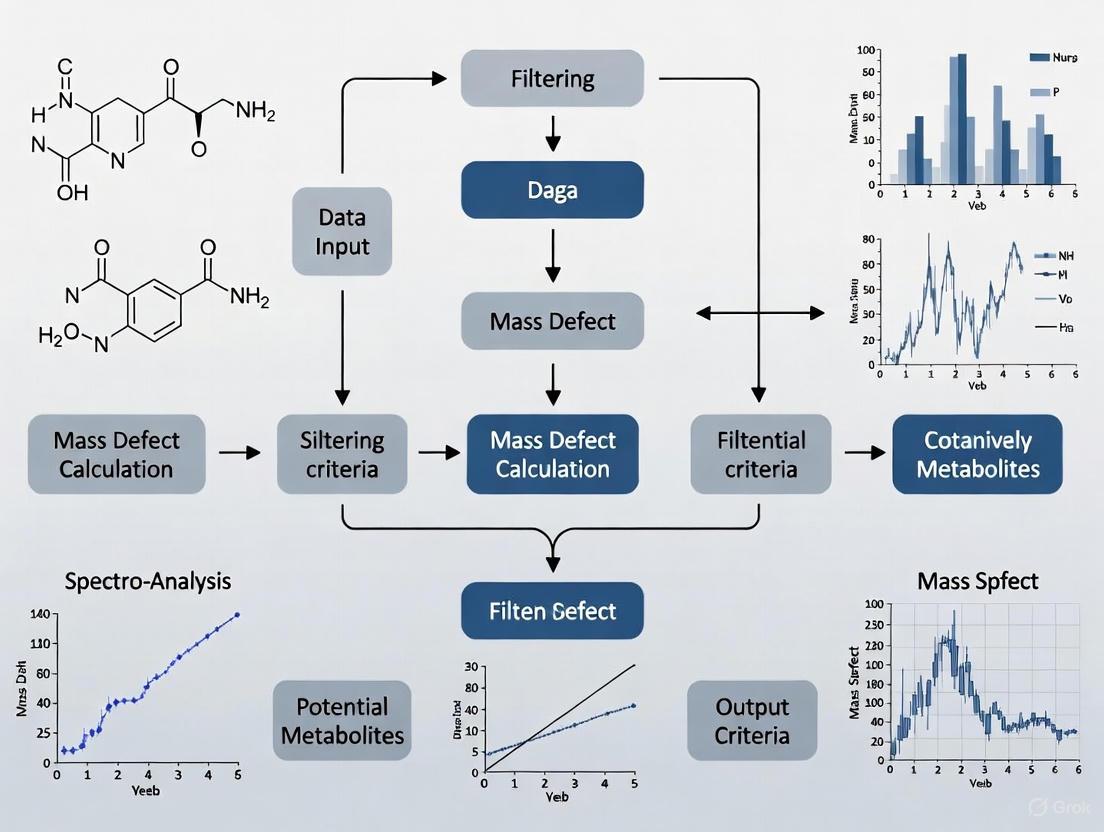
This comprehensive article explores mass defect filtering (MDF) techniques for drug metabolite identification, addressing both foundational principles and cutting-edge advancements.
Mass Defect Filtering for Drug Metabolite Identification: Advanced Techniques and Workflow Optimization
Abstract
This comprehensive article explores mass defect filtering (MDF) techniques for drug metabolite identification, addressing both foundational principles and cutting-edge advancements. Tailored for researchers, scientists, and drug development professionals, it covers the evolution from traditional MDF to next-generation approaches like relative mass defect filtering and hybrid techniques combining MDF with stable isotope tracing and molecular networking. The content provides practical methodologies for analyzing complex compounds including PROTACs and LYTACs, troubleshooting common challenges, and validating results through comparative software analysis. By integrating foundational knowledge with applied strategies, this resource aims to enhance metabolite identification efficiency and accuracy in modern drug development pipelines.
Understanding Mass Defect Filtering: Core Principles and Evolution in Metabolite Research
Mass defect is a fundamental concept in mass spectrometry, defined as the difference between a compound's exact mass and its nominal (integer) mass [1]. This property arises because the atomic mass of an element, determined by the sum of its protons and neutrons, is not a whole number; only carbon-12 has a defined exact atomic mass of 12.000000 [2]. The mass defect value represents the decimal portion of the exact mass and is highly specific to a compound's elemental composition [1].
This characteristic becomes particularly powerful in drug metabolism studies because most metabolites retain a significant portion of the parent drug's structure. Consequently, their mass defects typically fall within a narrow, predictable range relative to the original compound [3] [2]. Modern high-resolution mass spectrometers (HR-MS) can measure exact mass with deviations of less than 5 ppm, enabling researchers to leverage mass defect filtering (MDF) as a powerful data mining technique to distinguish drug-related components from complex biological matrix interferences [4] [5] [6].
The Mass Defect Filtering Technique
Principles and Workflow
Mass defect filtering is a software-based data processing technique that exploits the predictable mass defect relationships between a parent drug and its metabolites [3]. The core principle is that biotransformation reactions, while altering the nominal mass of the drug, cause only minor, predictable shifts in its original mass defect [5]. By applying a filter to the mass defect dimension of liquid chromatography/high-resolution mass spectrometry (LC/HR-MS) data, ions falling outside a predefined window are excluded, thereby substantially enriching the data for metabolite ions [5].
The technique marked a paradigm shift in metabolite identification. Unlike traditional approaches that required multiple instrument runs and experiments, MDF allows for the acquisition of full-scan HR-MS and product ion spectral data sets in one or a few injections. The detection of metabolites is then accomplished via post-acquisition data mining rather than direct precursor ion or neutral loss scans [5].
Technical Implementation and Evolution
The initial implementation of MDF involves setting a mass defect window centered on the parent drug's mass defect. However, certain biotransformations, such as hydrolysis or N-dealkylation, can produce metabolites whose mass defects differ significantly from the parent [2]. To address this limitation, Multiple Mass Defect Filters (MMDF) were developed.
MMDF allows users to apply several filters (e.g., up to six) simultaneously, based not only on the parent drug but also on predicted core structures or common conjugate templates (e.g., glucuronide, sulfate, glutathione) [2]. This approach is significantly more effective than a single MDF, enabling the specific and concurrent detection of diverse Phase I and Phase II metabolites with high accuracy and reduced background interference [2].
Experimental Protocols
Protocol: Metabolite Identification Using a Single Mass Defect Filter
This protocol outlines the process for detecting metabolites from in vitro incubations using a single MDF based on the parent drug structure [5] [3].
Materials:
- Test compound (parent drug)
- Liver enzyme fractions (e.g., human liver S9, microsomes) or hepatocytes
- Appropriate co-factors (NADPH, UDPGA, etc.)
- Organic solvents (acetonitrile, methanol) for protein precipitation
- High-resolution mass spectrometer (e.g., Q-TOF, Orbitrap)
Procedure:
- Sample Preparation:
- Incubate the parent drug (e.g., 10 µM) with the metabolic system (e.g., human liver S9 fraction or hepatocytes) under optimal conditions.
- Terminate the reaction by cooling on dry ice and adding chilled acetonitrile (200 µL per 1 mL incubation).
- Vortex, centrifuge, and collect the supernatant for LC/HR-MS analysis [2].
LC/HR-MS Analysis:
Data Processing with MDF:
- Calculate the exact mass and mass defect of the parent drug.
- Define a mass defect filter window. A typical starting range is ± 50 mDa from the parent's mass defect [4].
- Apply the MDF to the full-scan HR-MS data using the instrument's software (e.g., MetWorks).
- The software will filter out ions whose mass defects fall outside the specified window, generating a processed chromatogram enriched with potential metabolite ions [2].
Data Interpretation:
- Review the MDF-processed chromatogram for peaks not present in the control samples.
- Obtain accurate masses and propose elemental compositions for these potential metabolites.
- Compare mass shifts from the parent drug to propose biotransformation pathways (e.g., +15.9949 Da for hydroxylation).
Protocol: Comprehensive Metabolite Identification Using Multiple Mass Defect Filters (MMDF) and Stable Isotope Tracing
This advanced protocol combines MMDF with stable isotope tracing (SIT) to significantly improve the detection efficacy and validation rate of metabolites, from around 10% with MDF alone to approximately 74% [4] [7].
Materials:
- Parent drug (e.g., Pioglitazone) and its stable isotope-labeled analog (e.g., D4-Pioglitazone)
- Human liver enzyme S9 fraction
- Co-factors: MgCl₂, NADP⁺, glucose-6-phosphate, glucose-6-phosphate dehydrogenase
- LC/MS-grade solvents and reagents
Procedure:
- Co-Incubation Setup:
- Incubate the parent drug and its isotope-labeled counterpart (e.g., D4-Pioglitazone) together in the same tube with the human liver enzyme S9 fraction and necessary co-factors [4].
- This ensures identical metabolic conditions for both native and labeled compounds.
LC/HR-MS Analysis:
- Analyze the incubation samples using UHPLC coupled to a high-resolution mass spectrometer.
- Acquire full-scan MS data with high resolution (>60,000) and mass accuracy (<5 ppm error) [4].
Data Processing with Combined MMDF and SIT:
- Stage 1 (MMDF): Apply multiple mass defect filters tailored to the parent drug, its core structural templates, and common conjugate templates to the dataset [2].
- Stage 2 (SIT): Screen the MMDF-retained ions for characteristic isotope doublets resulting from the simultaneous presence of a native metabolite and its stable isotope-labeled counterpart. These pairs will have a fixed mass difference (e.g., 4 Da for D4-labeling) and nearly identical retention times [4] [7].
- Statistically exclude false isotope pairs by comparing against data from control incubations.
Validation:
- The ions that pass both the MMDF and SIT criteria are high-confidence metabolite candidates.
- Further validate these signals through time-course experiments and verify them as structure-related metabolites by interpreting their MS/MS spectra [4].
Data Presentation and Analysis
Quantitative Data on Common Biotransformations
The table below summarizes the exact mass shifts and corresponding mass defect changes associated with common biotransformation reactions, which are critical for predicting metabolite masses and setting MDF parameters [5] [6].
Table 1: Mass and Mass Defect Shifts for Common Biotransformations
| Biotransformation Reaction | Formula Change | Mass Shift (Da) | Mass Defect Change (mDa) |
|---|---|---|---|
| Hydroxylation | +O | +15.9949 | -5.1 |
| N-Oxidation | +O | +15.9949 | -5.1 |
| Hydrolysis | +H₂O | +18.0106 | +10.6 |
| Oxidation (to carboxylic acid) | +O₂ | +31.9898 | -10.2 |
| Reduction | +H₂ | +2.0157 | +15.7 |
| Dealkylation (e.g., -CH₂) | -CH₂ | -14.0157 | -15.7 |
| Dehydrogenation | -H₂ | -2.0157 | -15.7 |
| Methylation | +CH₂ | +14.0157 | +15.7 |
| Glucuronidation | +C₆H₈O₆ | +176.0321 | +32.1 |
| Sulfation | +SO₃ | +79.9568 | -43.2 |
| Glutathione Conjugation | +C₁₀H₁₅N₃O₆S | +305.0682 | +68.2 |
Essential Research Reagent Solutions
Successful application of MDF techniques relies on a suite of specific reagents and tools. The following table details key materials and their functions in metabolite identification studies.
Table 2: Research Reagent Solutions for Mass Defect-Based Metabolite Identification
| Reagent / Material | Function and Application in Metabolite ID |
|---|---|
| Stable Isotope-Labeled Drug | Serves as an internal tracer; enables Stable Isotope Tracing (SIT) to distinguish true metabolite pairs from background ions based on fixed mass differences and co-elution [4]. |
| Human/Rat Liver Enzyme S9 Fraction | A common in vitro metabolic system containing a full suite of cytochrome P450s and Phase II enzymes for generating a comprehensive metabolite profile [4] [2]. |
| Pooled Hepatocytes | A more physiologically relevant in vitro system containing intact cells and enzymes, used for predicting in vivo metabolism [2]. |
| NADP⁺ Regenerating System | Provides essential co-factors (NADPH) required for cytochrome P450-mediated Phase I oxidative reactions [4]. |
| High-Resolution Mass Spectrometer | Instrumentation capable of exact mass measurement (<5 ppm) is fundamental for differentiating metabolites via mass defect and for determining elemental compositions [5] [6]. |
| Metabolite Identification Software | Software tools automate the application of MDF/MMDF, background subtraction, and isotope pattern recognition, streamlining data processing [5] [2]. |
Mass defect is more than a theoretical concept; it is a practical and powerful tool that underpins modern metabolite identification strategies. The ability of MDF and its advanced implementations like MMDF to sift through complex LC/HR-MS data and highlight drug-related ions has fundamentally changed the workflow in drug metabolism studies. By integrating these techniques with complementary approaches such as stable isotope tracing, researchers can achieve unprecedented levels of sensitivity, selectivity, and confidence in detecting and identifying both predicted and unexpected drug metabolites. This robust analytical capability is indispensable for accelerating drug discovery and development, enabling the rapid characterization of metabolic soft spots and the assessment of bioactivation potential crucial for compound optimization and safety evaluation.
The concept of mass defect is fundamental to high-resolution mass spectrometry (HRMS). It refers to the difference between the exact mass of an atom or molecule and its nominal (integer) mass. This arises because the atomic mass of each isotope is not a whole number; for example, carbon-12 is defined as exactly 12.000000 Da, but hydrogen-1 is 1.007825 Da, and oxygen-16 is 15.994915 Da [8]. The Kendrick mass is a brilliant simplification developed in 1963 by chemist Edward Kendrick to leverage this phenomenon for practical chemical analysis [9] [10]. He proposed a new mass scale where the mass of a specific molecular fragment, most commonly CH₂, was defined as exactly 14.0000 Da, instead of its IUPAC mass of 14.01565 Da [9]. This adjustment means that homologous compounds—those differing only by the number of CH₂ units—will all possess the same Kendrick mass defect (KMD), allowing them to be easily identified as a family in a complex mass spectrum [9]. This historical development laid the groundwork for powerful data filtering and visualization techniques that are now indispensable in fields ranging from petroleomics to drug metabolism.
Theoretical Foundations and Definitions
Kendrick Mass and Mass Defect Calculations
The conversion from the standard IUPAC mass to the Kendrick mass (KM) is straightforward. For a base unit of CH₂, the equation is:
Kendrick mass (CH₂ base) = IUPAC mass × (14.00000 / 14.01565) [9]
The factor 14.00000/14.01565 is approximately 0.9988834, meaning one can also convert from IUPAC mass (in Da) to Kendrick mass by dividing by 1.0011178 [9]. The Kendrick mass defect (KMD) is then derived as follows:
Kendrick mass defect = nominal Kendrick mass - Kendrick mass [9]
In this equation, the "nominal Kendrick mass" is the rounded, integer value of the exact Kendrick mass. Members of an alkylation series, which share the same degree of unsaturation and number of heteroatoms but differ in the number of CH₂ units, will have identical Kendrick mass defects [9]. To avoid rounding errors and enhance resolution, the KMD is often multiplied by 1000 [9]. The power of this technique is its generalizability; any repeating molecular fragment can be used as a base unit.
Table 1: Comparison of Mass Scales and Defects
| Concept | Definition / Formula | Application / Significance |
|---|---|---|
| IUPAC Mass | Mass relative to ¹²C = 12.00000 u [9]. | Standard, exact mass measurement. |
| Nominal Mass | Integer mass of a molecule (e.g., sum of the mass numbers of the most abundant isotopes) [8]. | Provides a reference for mass defect calculations. |
| Mass Defect (General) | Difference between the exact mass and the nominal mass [8]. | Enables distinction between isobaric species based on precise mass. |
| Kendrick Mass (KM) | ( \text{KM} = \text{IUPAC mass} \times \frac{\text{nominal mass of base unit}}{\text{exact mass of base unit}} ) [9]. | Normalizes masses so homologues have identical mass defects. |
| Kendrick Mass Defect (KMD) | ( \text{KMD} = \text{nominal KM} - \text{exact KM} ) [9]. | Key parameter for identifying homologous series in complex mixtures. |
Evolution of the Technique: Beyond Hydrocarbons
While CH₂ is the classic base unit, the Kendrick mass approach is highly adaptable. The formula can be generalized for any family of compounds (F) using an appropriate repeating unit:
Kendrick mass (F) = observed mass × (nominal mass of F / exact mass of F) [9]
This flexibility has led to its application in diverse areas. In polymer analysis, base units like ethylene oxide (C₂H₄O) or propylene oxide are used to characterize copolymers [9] [11]. In environmental analysis, the technique helps identify families of halogenated contaminants (differing by Cl, Br, or F substitutions) [9]. Furthermore, advanced implementations now use fractional base units (divisors) and account for ion charge (Z) to enhance resolution and correctly handle multiply charged ions, which is critical for polymer and protein analysis [11]. The equation incorporating both is:
KM(R,Z,X) = Z × m/z × ( round(R/X) / (R/X) ) [11]
where X is the fractional base unit and Z is the charge.
Application Notes: Mass Defect Filtering in Drug Metabolite Identification
The Mass Defect Filter (MDF) Technique
The mass defect filter technique is a direct descendant and application of Kendrick's original concept, tailored for drug metabolism studies. The underlying principle is that the core structure of a drug and its metabolites will have very similar mass defects, typically within a window of 50 mDa from the parent drug [3] [12]. In a typical HRMS experiment, a biological sample (e.g., urine, blood, liver enzyme incubation) contains thousands of ions from the endogenous matrix. MDF processing removes most interfering ions that fall outside the predefined mass defect window, dramatically simplifying the data and highlighting potential drug-derived metabolites for further investigation [3] [12]. This approach is complementary to traditional methods based on predicted molecular masses or fragmentation patterns and is particularly powerful for detecting both predicted and unexpected metabolites [3].
Advanced Protocol: Combining MDF with Stable Isotope Tracing
While MDF is powerful, a significant limitation is its relatively low true positive rate (around 10%), as many interfering ions can share a similar mass defect [12]. A robust two-stage data-processing approach that combines MDF with stable isotope tracing (SIT) has been developed to substantially improve identification efficacy [12].
1. Experimental Setup and Sample Preparation:
- Parent Drug: Pioglitazone (PIO) as an example drug [12].
- Stable Isotope-Labeled Drug: Deuterium-labeled PIO (D4-PIO) [12].
- In Vitro Incubation: Co-incubate the parent drug and its isotope-labeled counterpart with a human liver enzyme S9 fraction to generate metabolites [12].
- Controls: Include appropriate controls (e.g., no substrate) to account for background ions.
- Instrumentation: Analyze samples using Ultra-Performance Liquid Chromatography coupled to a High-Resolution Mass Spectrometer (e.g., Orbitrap or TOF) with a resolution >60,000 and mass accuracy <5 ppm [12].
2. Data Processing and Metabolite Identification:
- Stage 1: Mass Defect Filtering. Convert the raw LC-MS data and apply one or more MDF templates. These templates are based on the mass defect of the parent drug and potential core structural templates or conjugate templates (e.g., for glucuronidation, sulfation) [12].
- Stage 2: Stable Isotope Tracing. From the ions retained by the MDF, search for pairs of signals that represent the native metabolite and its deuterium-labeled counterpart. The mass difference between these paired signals confirms they are derived from the drug and not the biological matrix [12].
- Exclusion of False Pairs: To eliminate false isotope pairs, the same MDF/SIT procedure is run on data from control incubations (without the isotope-labeled drug), and any matching "fake" pairs are excluded from the final analysis [12].
- Validation: The potential metabolites identified are further validated through time-course experiments and verified by interpreting their product ion MS/MS spectra to confirm they are structure-related to the parent drug [12]. This combined approach has been shown to increase the validation rate of metabolite signals from about 10% (using MDF alone) to 74% [12].
MDF and Stable Isotope Tracing Workflow
The Scientist's Toolkit: Essential Reagents and Materials
Table 2: Key Research Reagents and Materials for MDF Studies
| Item | Function / Explanation |
|---|---|
| Parent Drug (e.g., Pioglitazone) | The compound of interest whose metabolic fate is being investigated [12]. |
| Stable Isotope-Labeled Drug (e.g., D4-PIO) | Serves as an internal tracer; paired chromatographic peaks with the native drug confirm metabolite identity [12]. |
| Human Liver Enzyme S9 Fraction | A subcellular liver fraction containing Phase I and Phase II metabolizing enzymes for in vitro metabolite generation [12]. |
| Cofactor System (NADPH, UDPGA, etc.) | Provides essential cofactors to support enzymatic activity (e.g., cytochrome P450, UGT) during incubation [12]. |
| High-Resolution Mass Spectrometer | Instrument capable of accurate mass measurements (<5 ppm error) necessary for effective mass defect filtering [8] [12]. |
| MDF Data Processing Software | Software (e.g., MZmine) used to apply mass defect filters and perform Kendrick mass defect analysis on HRMS data [11]. |
Visualization and Data Analysis in Modern HRMS
The Kendrick mass analysis is most powerful when used as a visualization tool. In a Kendrick mass plot, the Kendrick mass defect is plotted against the nominal Kendrick mass [9]. Ions belonging to the same homologous series will align on a horizontal line, providing an immediate visual overview of complex mixtures. This is often used in conjunction with Van Krevelen diagrams (H/C vs. O/C plots) to understand elemental composition trends [9]. Modern software platforms like MZmine have integrated advanced Kendrick plotting capabilities, allowing for the creation of 4-dimensional plots where parameters like retention time or feature intensity can be represented by color scales or bubble size [11]. These tools also enable Region of Interest (ROI) extraction, allowing researchers to interactively select clusters of points in a Kendrick plot (e.g., representing a specific polymer or lipid family) and create a new feature list for targeted investigation [11].
Logic of Kendrick Mass Defect Plot Analysis
The journey from Edward Kendrick's simple mass scale redefinition in 1963 to today's sophisticated mass defect filter techniques underscores a powerful trajectory in analytical science. By leveraging the fundamental physical property of mass defect, these methods transform overwhelming HRMS datasets into interpretable information. The continued evolution of the technique—through integration with stable isotope labeling, adaptation for various base units and charged species, and implementation in intuitive software—ensures its enduring relevance. For researchers in drug development, the application of MDF and related protocols provides a critical tool for comprehensive metabolite identification, ultimately contributing to the safer and more effective development of new therapeutics.
In drug discovery and development, identifying the metabolic soft spots of lead molecules allows chemists to tailor molecular design toward compounds with reduced metabolic clearance, leading to better overall pharmacokinetic properties and a decreased risk of forming reactive, toxic, or active metabolites [13]. Mass defect is defined as the difference between a compound's exact monoisotopic mass and its nominal mass [14]. This property arises from the nuclear binding energy that occurs during the formation of stable atomic nuclei, with only the monoisotopic element ¹²C having an exact integer atomic mass of 12.000000 [14] [2]. The mass defect filtering (MDF) technique leverages the principle that metabolites retain a significant portion of the parent drug's structure, and therefore, their mass defects typically fall within a predictable range [2]. This enables researchers to filter out background ions from complex biological matrices, significantly enhancing the detection of drug-related components [15].
High-resolution mass spectrometry (HR-MS) has become the premier analytical tool for drug metabolism studies, with quadrupole time-of-flight (QTOF) and orbital trap systems providing the high resolution (>10,000 FWHM) and mass accuracy (generally ≤5 ppm for QTOF) necessary for these applications [6]. Modern strategies for metabolite profiling have undergone a paradigm shift, moving from multiple slow, labor-intensive runs using unit-resolution instruments to methods that utilize various HR-MS-based automated data acquisition and data-mining technologies [6]. These intelligent data processing tools can collect precursor-ion and product-ion spectral data sets in just a few injections, with discrimination of drug metabolites occurring via post-acquisition data mining [6].
Theoretical Background: Mass Defect Patterns in Metabolic Reactions
Fundamental Concepts of Mass Defect
The mass defect is a characteristic property of every atom, resulting from the relativistic mass loss that occurs when nuclear binding energy is released during the formation of a stable atomic nucleus [14]. For example, while the calculated mass of an ¹⁶O atom from its constituent particles (8 protons, 8 neutrons, and 8 electrons) is 16.131919633 u, its actual monoisotopic mass is 15.994915 u, demonstrating a significant mass defect [14]. The Kendrick mass scale provides a useful variation of this concept, where CH₂ is defined as exactly 14 u instead of 14.01565 u [14]. This scale simplifies the analysis of complex mixtures, as members of a homologous series differing only in alkylation will share the same Kendrick mass defect, enabling easier classification of compounds [14].
The mass accuracy of a measurement, typically reported as a relative mass error in parts per million (ppm), is crucial for determining unique empirical formulae [14]. The number of possible empirical formulae decreases rapidly with increasing mass accuracy, reducing ambiguity in metabolite identification [14]. Modern HR-MS instruments achieve the mass accuracy necessary for this unambiguous assignment, providing a powerful foundation for mass defect filtering techniques [6] [14].
Mass Defect Shifts in Phase I and II Metabolism
Drug metabolism is conventionally divided into Phase I (modification) and Phase II (conjugation) reactions [16]. Phase I reactions, catalyzed primarily by cytochrome P450 enzymes, introduce or reveal functional groups through oxidation, reduction, or hydrolysis, generally resulting in small mass changes with minimal mass defect alterations [16]. In contrast, Phase II conjugation reactions, mediated by transferase enzymes such as UDP-glucuronosyltransferases and glutathione S-transferases, attach large, polar molecules to functional groups, producing more significant changes in both mass and mass defect [13] [16].
The predictable mass changes associated with common biotransformations provide the foundation for mass defect filtering [6]. Table 1 summarizes the typical mass shifts and mass defect implications for the most frequently encountered metabolic reactions.
Table 1: Mass Shifts and Mass Defect Changes for Common Biotransformations
| Biotransformation | Type | Mass Shift (Da) | Mass Defect Change | Typical Enzyme(s) |
|---|---|---|---|---|
| Hydroxylation | Phase I | +15.9949 | Small increase | Cytochrome P450 [16] |
| Oxidation (to N-oxide) | Phase I | +15.9949 | Small increase | Cytochrome P450 [16] |
| Dealkylation | Phase I | -14.0157 (OCH₂) | Small decrease | Cytochrome P450 [16] |
| Hydrolysis | Phase I | +18.0106 | Small increase | Esterases/Amidases [16] |
| Reduction | Phase I | +2.0157 (e.g., nitro to amine) | Small increase | Reductases [16] |
| Glucuronidation | Phase II | +176.0321 | Noticeable increase | UDP-glucuronosyltransferase [13] [16] |
| Sulfation | Phase II | +79.9568 | Noticeable decrease | Sulfotransferase [13] [6] |
| Glutathione Conjugation | Phase II | +305.0682 (GSH) - 127.0320 (pyroglutamate) = +178.0362* | Significant increase | Glutathione S-transferase [16] |
*The net mass addition for glutathione conjugates often observed is +178.0362 Da after processing in the mercapturic acid pathway [16].
Phase I metabolites typically exhibit mass defects close to that of the parent drug because the structural core remains largely intact [2]. Conversely, Phase II metabolites, particularly those involving glucuronidation or sulfation, can display more substantial mass defect shifts due to the introduction of conjugating groups with distinct elemental compositions and, consequently, different inherent mass defects [2]. This principle is powerfully applied in Multiple Mass Defect Filtering (MMDF), which uses several predefined mass defect ranges to simultaneously and specifically uncover both Phase I and Phase II metabolites, even when the products from processes like hydrolysis or N-dealkylation have mass defects that differ significantly from the parent [2].
Experimental Protocol: Metabolite Identification Using Mass Defect Filtering
Workflow for Metabolite Profiling with HR-MS and MDF
The general strategy for metabolite profiling using high-resolution mass spectrometry and mass defect filtering involves a coordinated series of steps from sample preparation to data interpretation [6]. The following workflow diagram illustrates the key stages in this process.
Detailed Methodology
The following protocol, adapted from published procedures for incubating compounds in hepatocytes and subsequent LC-HR/MS analysis with mass defect filtering, provides a robust framework for detecting and identifying drug metabolites [13] [15] [2].
- Thawing and Preparing Hepatocytes: Cryopreserved pooled primary human hepatocytes (or other relevant species) are thawed in a 37°C water bath. The contents are transferred to a pre-warmed buffer (e.g., L-15 Leibovitz) and centrifuged. The pellet is washed, resuspended, and cell viability is determined (should be ≥80%) and adjusted to 1 million viable cells/mL.
- Incubation Setup: Add 245 µL of hepatocyte suspension to a 96-deep-well plate. Pre-incubate for 15 minutes at 37°C with shaking.
- Dosing Solution Preparation: Prepare a substrate solution by diluting the drug stock solution (e.g., 10 mM in DMSO) with acetonitrile:water (1:1, v:v). A typical final substrate concentration in incubation is 4 µM.
- Initiation and Quenching: Start the reaction by adding the substrate solution to the hepatocyte suspension. Continue incubation at 37°C. At designated time points (e.g., 0, 40, 120 min), withdraw aliquots and quench with a chilled organic solvent (e.g., ACN:methanol, 1:1, v:v).
- Sample Processing: Centrifuge the quenched samples to pellet precipitated proteins. Dilute the supernatant with water for LC-MS analysis.
- Instrumentation: Use a high-resolution mass spectrometer such as a QTOF or Orbitrap system coupled to an UHPLC system.
- Chromatography: Employ a reversed-phase C18 column (e.g., 100 mm × 1 mm, 1.9-µm) with a gradient elution of water and acetonitrile (both containing 0.1% formic acid).
- Mass Spectrometry:
- Acquire data in data-dependent acquisition (DDA) mode.
- First, collect full-scan MS data in the HR-MS instrument (e.g., Orbitrap or TOF) over a suitable m/z range (e.g., 100-1000) with high resolution.
- Automatically select the most intense ions from the full scan for MS/MS fragmentation. Use both low-energy collision-induced dissociation (CID) in a linear ion trap and/or higher-energy collisional dissociation (HCD) in a collision cell to generate complementary fragment ion data.
- Data Conversion: Convert the acquired raw data files to an open-source format like .mzML or .mzXML using tools such as MSConvert from ProteoWizard [17].
- Mass Defect Filtering:
- Input the exact mass and calculated mass defect of the parent drug into the MDF software (e.g., MetWorks, DMetFinder).
- Define a mass defect window based on the expected biotransformations. For a single MDF, a wide window (e.g., -150 to +70 mDa) may be used, but Multiple Mass Defect Filters (MMDF) are more effective [2].
- Apply the MDF to the full LC-MS dataset to highlight ions that are potential drug metabolite candidates while suppressing background interference ions.
- Metabolite Detection: Review the MDF-processed chromatogram to identify peaks corresponding to potential metabolites.
- Structural Proposal:
- Determine the accurate mass of each potential metabolite ion to assign its elemental composition.
- Analyze the corresponding MS/MS spectra (both CID and HCD). HCD is particularly valuable as it generates high-resolution, accurate-mass fragment ions without a low-mass cutoff, providing rich structural information [2].
- Compare the fragmentation pattern of the metabolite with that of the parent drug to identify the site of metabolism.
The Scientist's Toolkit: Essential Reagents and Software
Successful metabolite identification relies on a suite of specialized reagents, materials, and software tools. The following table details key components used in the standard protocol described above.
Table 2: Essential Research Reagents and Software Solutions
| Category/Item | Function/Description | Example Vendor/Software |
|---|---|---|
| Biological Reagents | ||
| Cryopreserved Hepatocytes | In vitro metabolic system for generating metabolites. | BioIVT [13] |
| Human Liver Microsomes (HLM) | Enzyme system for Phase I metabolic reactions. | BD Biosciences [15] |
| L-15 Leibovitz Buffer | Cell incubation buffer to maintain hepatocyte viability. | Gibco [13] |
| Analytical Standards | ||
| Parent Drug & Metabolite Standards | Used as reference compounds for method development and confirmation. | Synthesized in-house or purchased (e.g., Aldrich) [15] |
| Chromatography | ||
| UHPLC System | High-pressure liquid chromatography for superior analyte separation. | Thermo Fisher Scientific (Accela) [2] |
| Reversed-Phase C18 Column | Stationary phase for separating analytes based on hydrophobicity. | Thermo Fisher Scientific (Hypersil GOLD) [2] |
| Mass Spectrometry | ||
| Hybrid HR-MS Instrument | Core analyzer for accurate mass measurement (e.g., QTOF, Orbitrap). | Various (Thermo Fisher Scientific, etc.) [6] [2] |
| Software & Data Analysis | ||
| Data Conversion Tool | Converts vendor-specific raw data to open formats. | ProteoWizard MSConvert [17] |
| MetID Software Platform | Processes data, applies MDF/MMDF, and assists structural elucidation. | MetWorks [2], DMetFinder [17], MassMetaSite [13] |
| Spectral Interpretation | Predicts fragmentation pathways and assists in assigning structures to fragment ions. | Mass Frontier [2], CFM-ID [17] |
Application Example: Analysis of Irinotecan Metabolites
A study on the anticancer drug irinotecan effectively demonstrates the power of MMDF. Researchers used an LTQ Orbitrap XL mass spectrometer to analyze rat hepatocyte incubation samples [2]. By applying Multiple Mass Defect Filters—specifically, four different filters tailored for Phase I and Phase II metabolites of both irinotecan and its hydrolytic product SN-38—they successfully identified 13 putative metabolites, even though all had peak areas less than 1% of the parent drug [2].
The use of MMDF resulted in a much cleaner chromatogram compared to a single MDF, as it effectively removed background ions unrelated to the drug's metabolism [2]. The combination of CID from the linear ion trap and HCD from the Orbitrap provided comprehensive fragmentation data. HCD was particularly noted for providing rich fragment ions in the low-mass region with high mass accuracy, greatly facilitating the interpretation of MS/MS spectra and the subsequent structural elucidation of the metabolites [2].
Mass defect filtering represents a powerful data mining technique that leverages the predictable mass defect patterns of Phase I and II metabolites to efficiently sift through complex HR-MS data. The integration of robust experimental protocols, like hepatocyte incubation, with advanced HR-MS instrumentation and intelligent software tools, provides a comprehensive framework for metabolite identification. The move toward Multiple Mass Defect Filters and the use of complementary fragmentation techniques like HCD have further enhanced the sensitivity, specificity, and accuracy of this approach. As the field progresses, the increased sharing of proprietary metabolite identification data will be crucial for building more effective machine learning and artificial intelligence models to predict sites of metabolism and metabolite structures, ultimately accelerating the drug discovery and development process [13].
The Critical Role of High-Resolution Mass Spectrometry in Enabling MDF
Mass defect filtering (MDF) represents a revolutionary approach in analytical chemistry for detecting and identifying drug metabolites and transformation products within complex biological and environmental matrices. This technique fundamentally relies on the principles of high-resolution mass spectrometry (HRMS) to distinguish compounds of interest from extensive sample backgrounds. The mass defect itself is defined as the difference between a compound's exact mass and its nominal mass. Critically, despite metabolic transformations that alter a molecule's structure and nominal mass, the core structure ensures that the mass defect remains relatively unchanged. MDF leverages this principle by filtering acquired data to display only those ions whose mass defects fall within a predefined, narrow range characteristic of the parent drug compound and its potential metabolites [3] [18].
The enabling power of HRMS for MDF cannot be overstated. Traditional unit-resolution mass spectrometers, such as triple quadrupoles or ion traps, are incapable of providing the mass accuracy and resolution required to differentiate ions based on subtle mass defect differences. High-resolution instruments, including Quadrupole Time-of-Flight (Q-TOF) and Fourier-Transform ion cyclotron resonance mass spectrometers, deliver the necessary performance. They achieve resolving powers exceeding 12,000–30,000, coupled with mass accuracy within a few parts per million (ppm). This high-resolution data provides the precise exact mass measurements that allow MDF to effectively separate drug-related ions from the complex isobaric and chemical background interference present in samples like plasma, urine, or environmental extracts [19] [20]. This combination has established MDF as a cornerstone technique for both targeted and untargeted screening in drug metabolism and environmental analysis.
Technical Foundations: HRMS and the Mass Defect
Principles of High-Resolution Mass Spectrometry
High-resolution mass spectrometers separate ions based on their mass-to-charge ratio (m/z) with exceptional precision. The key performance parameters are resolution and mass accuracy. Resolution is defined as the ability of a mass spectrometer to distinguish between two ions with slight differences in m/z, typically reported as full width at half maximum (FWHM). Mass accuracy is the difference between the measured m/z and the true theoretical m/z, usually expressed in parts per million (ppm). Modern HRMS instruments like the LC/Q-TOF used in MDF applications can achieve a resolving power >12,000 at m/z 118 and >30,000 at m/z 1521, with a mass error typically within 3 ppm [20]. This high mass accuracy is fundamental for determining the elemental composition of ions and for enabling effective mass defect filtering.
The most common mass analysers used in HRMS and their characteristics relevant to MDF are summarized in Table 1 below.
Table 1: Common High-Resolution Mass Analysers and Their Characteristics
| Analysis Method | Magnet Required? | Operation Mode | Resolution | Mass Range |
|---|---|---|---|---|
| Fourier-transform ion cyclotron resonance (FT-ICR) | Y | Cyclic | High | Medium |
| Orbitrap | N | Cyclic | High | Medium |
| Time-of-flight (TOF) | N | Cyclic | Medium | High |
| Magnetic sector | Y | Continuous | High | Medium |
The workflow typically involves coupling the mass spectrometer with a separation technique, most commonly Ultra-Performance Liquid Chromatography (UPLC), which reduces sample complexity prior to ionization. Ions are then created using soft ionization techniques like electrospray ionization (ESI) at atmospheric pressure, which minimizes fragmentation. The ions are transferred into the high-vacuum system of the mass analyser, where they are separated according to their m/z and detected [19].
The Concept of Mass Defect
The mass defect of an atom arises because the mass of its nucleus is slightly less than the sum of the masses of its individual protons and neutrons, due to nuclear binding energy. For a molecule, the mass defect is the sum of the mass defects of its constituent atoms. It is calculated as the difference between the exact mass (a non-integer value) and the nominal mass (the integer mass) of a compound. For example, a drug molecule with an exact mass of 300.1456 Da has a nominal mass of 300 Da and a mass defect of 0.1456 Da.
Most drug molecules and their metabolites are composed of a limited set of elements (C, H, N, O, P, S, Cl, etc.), each with a characteristic mass defect. Hydrogen has a large positive defect (+0.0078), while oxygen has a negative defect (-0.0051). Consequently, common metabolic reactions, such as oxidation, glucuronidation, or dealkylation, produce predictable shifts in both the nominal mass and the mass defect. However, because the core structure of the parent drug is often retained, the mass defects of the metabolites remain within a relatively narrow window centered on the parent drug's mass defect. This is the fundamental principle that MDF exploits [3]. HRMS is required to measure these subtle differences in mass defect, which are indiscernible with low-resolution instruments.
MDF Workflow and Protocol for Drug Metabolite Identification
The following diagram illustrates the logical workflow for metabolite identification using MDF and HRMS.
Detailed Experimental Protocol
Step 1: Sample Preparation and LC-HRMS Analysis
- Sample Collection: Collect biological matrices (e.g., plasma, urine, bile) from in vivo (dosed animals or humans) or in vitro (e.g., liver microsomes) studies. Immediately freeze samples at -80°C until analysis [18].
- Sample Preparation: Thaw samples on ice. Precipitate proteins by adding a 3:1 volume of cold acetonitrile, vortex, and centrifuge (e.g., 15,000 x g, 10 min, 4°C). Transfer the supernatant and evaporate to dryness under a gentle nitrogen stream. Reconstitute the residue in an appropriate initial mobile phase (e.g., 100 µL of 5% acetonitrile in water with 0.1% formic acid) for LC-MS analysis [19] [21].
- LC-HRMS Analysis: Inject the reconstituted sample onto a UPLC system coupled to a high-resolution mass spectrometer (e.g., Q-TOF, Orbitrap). Use a reversed-phase C18 column (e.g., 2.1 x 100 mm, 1.7 µm) with a gradient elution from water to acetonitrile (both containing 0.1% formic acid) over 15-20 minutes. The HRMS should be operated in data-dependent acquisition (DDA) mode, collecting high-resolution (e.g., >30,000) full-scan MS data (MS1) followed by MS/MS scans (MS2) on the most intense ions [19] [18].
Step 2: MDF Template Design and Data Processing
- MDF Template Creation: Calculate the exact mass and mass defect of the parent drug. Construct a filter template by defining a mass defect range (e.g., ± 50 mDa from the parent's mass defect) across a relevant m/z window (e.g., 100-1000 Da). The template can be a simple rectangular window or can be customized to anticipate common metabolic transformations [3].
- Data Processing: Process the full-scan HRMS data file using software capable of MDF (often vendor-provided or third-party informatics platforms). Apply the predefined MDF template to the complete dataset. The output is a filtered list of ions that fall within the specified mass defect window, significantly reducing the number of ions to be investigated from thousands to a more manageable number of potential drug-related components [3] [18].
Step 3: Metabolite Identification and Confirmation
- Chromatographic Review: Examine the extracted ion chromatograms (XICs) for each ion that passed the MDF for sensible peak shape and signal-to-noise ratio.
- Structural Elucidation: Interpret the MS/MS spectra associated with each potential metabolite peak. The high mass accuracy of both precursor and fragment ions is critical for proposing plausible structures. Compare the fragmentation pattern with that of the parent drug to identify sites of metabolism [3].
- Data Integration: MDF is often used in tandem with other data-mining tools. A powerful integrated strategy involves first using an untargeted technique like background subtraction (BS) to find the majority of metabolites, which then informs the creation of a more refined, metabolite-based MDF template to recover even trace-level metabolites that may have been missed initially [18].
Application Case Study: Metabolite Profiling of a Triple Drug Combination
A controlled clinical trial demonstrated the practical utility of HRMS-based MDF in a complex scenario: the metabolite profiling of a triple drug combination (metronidazole-pantoprazole-clarithromycin, or MET-PAN-CLAR) used to treat Helicobacter pylori infections in humans [18].
Experimental Workflow and Key Findings
The study implemented an integrated data-mining strategy. First, a targeted MDF using templates based on each parent drug's mass defect was able to recover all relevant metabolites from full-scan HRMS data of human plasma and urine. Second, an untargeted background subtraction (BS) technique was also effective, though it missed several trace metabolites. The most successful approach was a hybrid method: untargeted BS was performed first, and the results were used to set up an improved, metabolite-informed MDF template for a second, targeted processing step. This integrated strategy successfully identified a total of 44 metabolites or related components for the three-drug combination, including the discovery of new metabolic pathways such as N-glucuronidation of pantoprazole and dehydrogenation of clarithromycin [18]. The quantitative data from this study is summarized in Table 2 below.
Table 2: Summary of MDF Performance in Profiling a Triple Drug Combination [18]
| Analysis Aspect | Description / Outcome |
|---|---|
| Drug Combination | Metronidazole (MET), Pantoprazole (PAN), Clarithromycin (CLAR) |
| Biological Matrices | Human plasma and urine |
| Primary HRMS Tool | Liquid Chromatography/High-Resolution Mass Spectrometry (LC-HRMS) |
| Key Data-Mining Techniques | Mass Defect Filter (MDF), Background Subtraction (BS), Integrated BS+MDF |
| Total Metabolites Found | 44 metabolites or related components |
| New Pathways Identified | N-glucuronidation of PAN; Dehydrogenation of CLAR |
| Conclusion on Method | Integrated BS + MDF is a valuable tool for rapid metabolite profiling of combination drugs. |
Advanced MDF Applications and Data Analysis
Extension to Environmental and Suspect Screening
The application of MDF extends beyond pharmaceutical metabolism into environmental analytical chemistry. A prominent example is the suspect screening of organophosphate flame retardants (OPFRs) and their transformation products. Chlorinated OPFRs (Cl-PFRs) share a ClO4P core structure. While chemical modifications create significant shifts in exact mass, the mass defect shift is minimal. Researchers have successfully used MDF on a Q-TOF platform to screen for known and suspect Cl-PFRs in human urine samples. The technique helped detect Cl-PFR homologues and transformation products occurring at lower concentrations, which would have been missed without such data filters. Furthermore, applying MDF to the product ions in MS/MS data allowed for the detection of additional related compounds, leveraging the minimal shift in the mass defect of common fragment ions [20].
Quantitative Data Analysis in Proteomics and Metabolomics
While MDF is primarily used for qualitative identification, HRMS also enables robust quantification. Quantitative strategies can be broadly classified as labeled or label-free, and by the MS level (MS1 or MS2) at which quantification is performed, as outlined in Table 3 below [22] [23].
Table 3: Quantitative Mass Spectrometry Methodologies
| Strategy Type | MS Level | Examples | Brief Principle |
|---|---|---|---|
| Label-free | MS1 | Extracted Ion Chromatogram (XIC) | Peak area of the precursor ion is integrated over retention time. |
| Label-free | MS2 | Spectral Counting | Number of MS2 spectra identified for a protein is counted. |
| Labelled | MS1 | SILAC, 15N | Heavy isotope-labeled amino acids are incorporated; light/heavy peak ratios are measured. |
| Labelled | MS2 | iTRAQ, TMT | Isobaric tags fragment to yield reporter ions for quantification in MS/MS spectra. |
Software tools like Census and workflows within the R/Bioconductor ecosystem (e.g., the QFeatures package) are designed to process this complex quantitative data. They handle tasks from low-level feature aggregation (e.g., combining peptide intensities to protein-level abundances) to statistical analysis for differential expression, ensuring accurate and reproducible results [24] [23].
The Scientist's Toolkit: Essential Research Reagents and Solutions
Table 4: Key Research Reagent Solutions for MDF-based Metabolite Identification Studies
| Item / Reagent | Function / Role in the Experiment |
|---|---|
| High-Resolution Mass Spectrometer | Provides the high mass accuracy and resolution data essential for distinguishing ions by mass defect. |
| UPLC System | Separates complex sample mixtures prior to MS analysis, reducing ion suppression and complexity. |
| Stable Isotope-Labeled Parent Drug | Serves as an internal standard for retention time alignment and confirmation of metabolite identity. |
| Data Processing Software | Applies the MDF algorithm and other data-mining tools to raw HRMS data for metabolite discovery. |
| In Vitro Incubation Systems | Used for preliminary metabolite profiling; includes liver microsomes, hepatocytes, and recombinant enzymes. |
| Solid Phase Extraction (SPE) Kits | Clean-up and concentrate analytes from biological matrices to improve sensitivity and data quality. |
The term "mass defect" represents a pivotal but nuanced concept that bridges nuclear physics and modern analytical chemistry, particularly high-resolution mass spectrometry. In the context of drug metabolite identification, understanding the distinction between absolute and relative mass defect is fundamental to employing mass defect filtering techniques effectively. These concepts enable researchers to navigate complex biological samples and identify compounds of interest with remarkable precision.
Mass defect originates from nuclear physics, where it describes the difference between the actual mass of an atomic nucleus and the sum of the masses of its individual protons and neutrons, with the energy equivalent of this mass difference representing the nuclear binding energy that stabilizes the nucleus [25]. This fundamental property has been adapted for mass spectral analysis, where it helps differentiate isobaric compounds and classify molecular structures based on their distinctive mass signatures.
For researchers in drug development, mass defect filtering provides a powerful approach for detecting and characterizing both predicted and unexpected drug metabolites in complex biological matrices. This technique leverages the consistent mass defect patterns of related compounds to distinguish drug-derived metabolites from endogenous matrix components, significantly accelerating the metabolite identification process [3].
Theoretical Foundations
Absolute Mass Defect
Absolute mass defect (often termed "mass defect" or "chemical mass defect" in mass spectrometry literature) is defined as the difference between a compound's exact monoisotopic mass and its nominal mass [14] [25]. The monoisotopic mass refers to the sum of the exact masses of the most abundant naturally occurring isotopes of each constituent atom, while the nominal mass represents the sum of the integer mass numbers of those isotopes.
The calculation is expressed as: Absolute Mass Defect = Monoisotopic Mass - Nominal Mass
This property is fundamentally determined by the elemental composition of a molecule, as each element contributes characteristically to the overall mass defect based on its specific nuclear binding energy [14] [25]. For example, hydrogen (¹H) has a positive mass defect of approximately +0.00783 atomic mass units (Da), while oxygen (¹⁶O) has a negative mass defect of approximately -0.00509 Da. Carbon (¹²C), by convention, has a defined mass of exactly 12.00000 Da and thus contributes zero to the absolute mass defect [26].
In mass spectral analysis, absolute mass defect serves as a valuable parameter for differentiating isobaric compounds—those sharing the same nominal mass but differing in elemental composition [14]. This capability is particularly useful for preliminary compound identification and classification in complex mixtures.
Relative Mass Defect
Relative mass defect (RMD) represents a normalized value obtained by dividing the absolute mass defect by the compound's monoisotopic mass, typically expressed in parts per million (ppm) [26]. The calculation formula is: RMD (ppm) = (Absolute Mass Defect / Monoisotopic Mass) × 10⁶
This normalization to molecular size makes RMD particularly valuable for recognizing compounds that share common biosynthetic origins or structural features, regardless of their molecular mass [26]. Essentially, RMD reflects the fractional hydrogen content of a molecule, which in turn indicates the reduced state of carbon derived from metabolic precursors.
For terpenoid metabolites, as an example, the RMD of the fundamental building block isoprene is approximately 920 ppm, reflecting its high hydrogen content. This value remains constant for larger terpene oligomers that maintain the same elemental ratio, demonstrating how RMD values effectively group metabolites based on common biosynthetic pathways despite differences in molecular mass [26]. Metabolic modifications such as oxidations or glycosylations systematically decrease RMD values, providing a predictable pattern for classifying transformed metabolites.
Table 1: Comparative Analysis of Absolute and Relative Mass Defect
| Parameter | Absolute Mass Defect | Relative Mass Defect (RMD) |
|---|---|---|
| Definition | Difference between monoisotopic mass and nominal mass | Absolute mass defect normalized to monoisotopic mass |
| Calculation | Monoisotopic Mass - Nominal Mass | (Absolute Mass Defect / Monoisotopic Mass) × 10⁶ |
| Units | Atomic mass units (Da) or milliDaltons (mDa) | Parts per million (ppm) |
| Dependence on Molecular Size | Increases with molecular mass | Independent of molecular mass |
| Primary Application | Elemental formula assignment; distinguishing isobars | Compound classification based on biosynthetic origin |
| Representative Values | Varies with elemental composition | Terpenoids: ~400-600 ppm; Polyphenolics: <300 ppm |
Relationship to Nuclear Mass Defect
It is crucial to distinguish the "chemical mass defect" used in mass spectral analysis from "nuclear mass defect" in physics. Nuclear mass defect is a fundamental physical property representing the mass difference between an atomic nucleus and the sum of its individual nucleons, with its energy equivalent being the nuclear binding energy [25]. In contrast, chemical mass defect is based on the convention that ¹²C has a defined mass of exactly 12.00000 Da, making it more accurately described as a "mass excess" relative to this reference [25].
This distinction becomes apparent when considering carbon-12: its nuclear mass defect is approximately 0.1 Da, equivalent to a binding energy of 7.7 MeV per nucleon, while its chemical mass defect is zero by definition [25]. Therefore, while chemical mass defect is an extremely useful analytical tool, it does not represent a direct physical mass difference like its nuclear counterpart.
Applications in Drug Metabolite Identification
Mass Defect Filtering Principles
Mass defect filtering techniques leverage the consistent mass defect patterns of drug molecules and their metabolites to facilitate detection and identification in complex biological samples. The fundamental principle underpinning this approach is that a parent drug and its metabolites typically share structural similarities that result in related mass defect profiles, even as their molecular masses change through metabolic transformations [3].
This technique is particularly valuable because it enables the detection of both predicted and unexpected metabolites without prior knowledge of their specific structures or fragmentation patterns. By applying narrow, well-defined mass defect windows to high-resolution mass spectrometry data, researchers can effectively screen for drug-related compounds while excluding most endogenous isobaric interferences from the biological matrix [3].
The implementation of mass defect filtering has been revolutionized by modern high-resolution mass spectrometers, including quadrupole-time-of-flight (Q-TOF), quadrupole-Fourier-transform ion cyclotron resonance (FT-ICR), and linear ion trap-Orbitrap instruments, which provide the mass accuracy and resolution necessary to distinguish compounds based on subtle mass differences [14].
Experimental Protocol: Mass Defect Filtering for Metabolite Identification
Purpose: To identify and characterize drug metabolites in biological matrices using mass defect filtering techniques.
Materials and Equipment:
- High-resolution mass spectrometer (Q-TOF, Orbitrap, or FT-ICR)
- Liquid chromatography system (UPLC or HPLC)
- Data processing software with mass defect filtering capabilities
- Biological samples (plasma, urine, bile, or tissue homogenates)
- Control matrices (blank biological samples)
- Reference standards of parent drug compound
Procedure:
Sample Preparation:
- Precipitate proteins from biological samples using acetonitrile (2:1 v/v)
- Centrifuge at 14,000 × g for 10 minutes and collect supernatant
- Evaporate supernatant under nitrogen gas and reconstitute in initial mobile phase
- Include control matrix samples without drug exposure
LC-MS Analysis:
- Inject samples onto reversed-phase C18 column (2.1 × 100 mm, 1.7-1.8 μm)
- Employ gradient elution with water/acetonitrile or water/methanol, both containing 0.1% formic acid
- Set mass spectrometer to positive or negative electrospray ionization mode
- Acquire data in full-scan MS mode with resolution ≥30,000 (FWHM)
- Maintain mass accuracy ≤5 ppm with internal calibration
Data Processing with Mass Defect Filtering:
- Calculate absolute mass defect of parent drug: Monoisotopic Mass - Nominal Mass
- Establish mass defect filter window: Typically ± 50 mDa around parent drug's mass defect
- Apply filter to total ion chromatograms to highlight potential metabolites
- Generate extracted ion chromatograms for filtered masses
- Acquire MS/MS spectra for structural confirmation of potential metabolites
Metabolite Identification:
- Compare mass defects and RMD values of detected compounds to parent drug
- Interpret MS/MS fragmentation patterns to elucidate metabolic transformations
- Classify metabolites based on mass defect profiles (oxidation, glucuronidation, etc.)
Troubleshooting Tips:
- If excessive background interference persists, narrow mass defect window to ± 25 mDa
- For conjugated metabolites, consider wider mass defect windows (± 70 mDa)
- Verify findings with control samples to exclude endogenous compounds
Relative Mass Defect Filtering for Structural Classification
Relative mass defect filtering has emerged as a particularly powerful strategy for classifying metabolites into structural groups based on their biosynthetic origins. This approach recognizes that compounds derived from common biosynthetic pathways typically exhibit characteristic RMD ranges, enabling researchers to rapidly identify novel metabolites belonging to targeted compound classes [26].
In practice, RMD filtering has been successfully applied to recognize terpenoid metabolites in complex plant extracts, with glycosylated sesquiterpenoids typically displaying RMD values between approximately 400-600 ppm, while polyphenolic metabolites exhibit lower RMD values (generally <300 ppm) due to their lower hydrogen content [26]. This classification capability is independent of retention time, abundance, and even unambiguous elemental formula assignment, making it particularly valuable for discovering novel metabolites when reference standards are unavailable.
The application of RMD filtering to existing metabolomics databases has correctly classified annotated terpenoid metabolites in public repositories, demonstrating its utility for database mining and compound annotation [26]. For drug metabolism studies, this approach enables the rapid recognition of metabolites sharing core structural features with the parent drug, significantly accelerating the annotation process.
Advanced Applications and Protocol
Mass Defect-Based Precursor Ion Quantification
Mass defect principles have been extended to quantitative proteomics through novel multiplex isotope labeling strategies that overcome the throughput limitations of traditional methods. These approaches utilize subtle mass differences arising from the distinct mass defects of different stable isotopes (e.g., ¹²C/¹³C: +3.3 mDa; ¹H/²H: +6.3 mDa; ¹⁶O/¹⁸O: +4.2 mDa; ¹⁴N/¹⁵N: -3.0 mDa) to create distinguishable tags for multiplexed analysis [27].
The Neutron Encoded (NeuCode) SILAC method incorporates isotopologues of lysine with minimal mass differences (e.g., 36 mDa) that are resolvable in high-resolution instruments but do not increase spectral complexity at lower resolutions [27]. Similarly, chemical labeling with NeuCode tags composed of acetylated arginine-acetylated lysine-glycine structures enables 4-plex quantification with 12.6 mDa mass differences between labels [27].
Figure 1: Mass Defect-Based Quantification Workflow
Protocol: NeuCode SILAC for Multiplexed Proteomics
Purpose: To quantify protein expression changes across multiple samples using mass defect-based multiplexing.
Materials:
- NeuCode lysine isotopologues (e.g., K0, K4, K8)
- Cell culture media lacking lysine
- Trypsin/Lys-C digestion mix
- High-resolution mass spectrometer (Orbitrap or FT-ICR)
- C18 stage tips for desalting
Procedure:
Metabolic Labeling:
- Culture cell lines in media containing different NeuCode lysine isotopologues
- Passage cells at least 5 times to ensure complete label incorporation
- Treat cells with experimental conditions
Sample Processing:
- Mix labeled cell populations in 1:1:1 ratio based on protein content
- Lyse cells and reduce disulfide bonds with 5 mM DTT (30 min, 60°C)
- Alkylate with 15 mM iodoacetamide (30 min, room temperature, in dark)
- Digest with trypsin/Lys-C (1:25 enzyme:substrate, 16 hours, 37°C)
- Desalt using C18 stage tips
LC-MS Analysis:
- Separate peptides using 2-hour gradient on C18 column
- Operate mass spectrometer at ≥240,000 resolution (FWHM at m/z 200)
- Acquire MS1 spectra with mass range 300-1500 m/z
- Select top 20 most intense ions for MS/MS fragmentation
- Set AGC target to 1e6 for MS1 and 5e4 for MS2
Data Analysis:
- Extract precursor ion chromatograms for each NeuCode pair
- Calculate abundance ratios based on chromatographic peak areas
- Identify proteins using database search algorithms
- Perform statistical analysis on quantified proteins
The Scientist's Toolkit
Table 2: Essential Research Reagent Solutions for Mass Defect Applications
| Reagent/Resource | Function | Application Context |
|---|---|---|
| High-Resolution Mass Spectrometer (Orbitrap, FT-ICR, Q-TOF) | Provides mass accuracy ≤5 ppm and resolution ≥30,000 necessary for mass defect differentiation | All mass defect filtering applications |
| NeuCode Amino Acids | Metabolic labeling with minimal mass differences for multiplexed quantification | NeuCode SILAC proteomics |
| Mass Defect Filtering Software (MetabolitePilot, MassHunter, MarkerView) | Data processing with mass defect filtering algorithms | Drug metabolite identification |
| Stable Isotope-Labeled Standards | Internal standards for retention time and mass accuracy calibration | Quantitative mass defect applications |
| HILIC and Reversed-Phase Columns | Complementary chromatographic separation for diverse metabolite classes | LC-MS based metabolite profiling |
| Reference Mass Compounds | Real-time internal calibration during MS analysis | Maintaining mass accuracy during long runs |
The distinction between absolute and relative mass defect concepts provides researchers with complementary tools for navigating the complexity of modern mass spectrometry data in drug development. Absolute mass defect serves as a fundamental parameter for elemental composition assignment and isobar separation, while relative mass defect offers powerful capabilities for structural classification and recognition of biosynthetic relationships.
The integration of these concepts into mass defect filtering techniques has revolutionized metabolite identification workflows, enabling comprehensive detection of both predicted and unexpected drug metabolites. Furthermore, the extension of these principles to quantitative applications through mass defect-based labeling strategies demonstrates the expanding utility of mass defect concepts in analytical chemistry.
For drug development professionals, mastery of these concepts and their practical applications can significantly accelerate metabolite identification, enhance analytical selectivity, and ultimately contribute to more efficient drug development pipelines. As mass spectrometry technology continues to advance, the strategic application of mass defect principles will remain essential for extracting maximum information from complex biological samples.
Nuclear binding energy represents the minimum energy required to disassemble an atomic nucleus into its constituent protons and neutrons, collectively known as nucleons [28]. This energy originates from the mass defect (Δm), a fundamental phenomenon where the mass of a stable nucleus is always less than the sum of the masses of its individual nucleons [29] [28]. The relationship between mass and energy is governed by Einstein's famous equation, (E = mc^2), which establishes the equivalence between mass and energy [29] [30]. According to this principle, the mass defect is converted into binding energy during nucleus formation, thereby stabilizing the nucleus against disruptive forces [31].
The mass defect arises from the conversion of mass into energy that binds nucleons together through the strong nuclear force [14] [28]. This nuclear binding energy is approximately one million times greater than electron binding energies in atoms, highlighting the immense strength of nuclear forces compared to electromagnetic forces [28]. When nuclei form, this energy is released, resulting in a measurable decrease in mass—the mass defect—which provides the physical basis for nuclear stability and energy production in stars [29] [28].
Theoretical Foundation and Mathematical Formulation
Mass Defect Calculation
The mass defect quantifies the difference between the sum of the masses of individual nucleons and the actual measured mass of the nucleus. This can be calculated using the formula:
[ \Delta m = Zmp + (A-Z)mn - m_{\text{nuc}} ]
where:
- Δm = mass defect
- Z = atomic number (number of protons)
- A = mass number (total number of nucleons)
- m_p = mass of a proton (1.007277 amu)
- m_n = mass of a neutron (1.008665 amu)
- m_nuc = measured mass of the nucleus [32] [30] [31]
When calculating mass defect, it is crucial to use full accuracy of mass measurements rather than rounded values, as the difference in mass is small compared to the total mass of the atom [31]. Even slight rounding can result in a calculated mass defect of zero, eliminating the ability to accurately determine binding energy.
Binding Energy Calculation
The binding energy (BE) of a nucleus can be derived from the mass defect using Einstein's mass-energy equivalence principle:
[ E_b = (\Delta m)c^2 ]
where:
Since 1 atomic mass unit (amu) is equivalent to 931.5 MeV of energy, the binding energy can be conveniently calculated as:
[ BE = \Delta m \times 931.5 \text{ MeV/amu} ] [31]
Table 1: Mass Defect and Binding Energy Calculations for Selected Nuclei
| Nucleus | Mass Defect (amu) | Total Binding Energy (MeV) | Binding Energy per Nucleon (MeV/nucleon) |
|---|---|---|---|
| Deuterium | 0.00224 [30] | 2.24 [32] [30] | 1.12 |
| Lithium-7 | 0.0421335 [31] | ~39.2 | ~5.6 |
| Helium-4 | 0.030378 [33] | 28.3 [33] | 7.07 [33] |
| Uranium-235 | 1.91517 [31] | 1784 [31] | ~7.59 |
| Gold-197 | 1.6741 [31] | 1559 [31] | ~7.9 [31] |
Binding Energy per Nucleon
The binding energy per nucleon (BEN) provides crucial insights into nuclear stability and is calculated as:
[ BEN = \frac{E_b}{A} ]
where:
- E_b = total binding energy
- A = mass number (total nucleons) [32]
This value represents the average energy required to remove an individual nucleon from a nucleus [32]. The BEN curve reveals that nuclei with mass numbers around 60 (near iron) have the highest binding energy per nucleon, making them the most stable nuclei [33] [31]. This pattern explains why energy can be released through both nuclear fusion (for elements lighter than iron) and nuclear fission (for elements heavier than iron) [28] [31].
Experimental Protocols for Nuclear Binding Energy Studies
Protocol: Calculation of Mass Defect and Binding Energy
Objective: To determine the mass defect and binding energy of a specific nuclide using experimentally measured atomic masses.
Materials and Equipment:
- High-precision mass spectrometry data for the nuclide of interest
- Reference tables with accurate masses of protons, neutrons, and electrons
- Computational tools for precise calculations
Procedure:
Identify Nuclear Composition
- Determine the atomic number (Z) representing the number of protons
- Calculate the number of neutrons (N) as N = A - Z, where A is the mass number
- Record the accurately measured mass of the nuclide (m_nuc) [34]
Calculate Mass Defect
- Sum the masses of individual nucleons: Z × mp + (A-Z) × mn
- Subtract the actual nuclear mass: Δm = [Z mp + (A-Z) mn] - m_nuc
- Use full precision values without rounding (mp = 1.007277 amu, mn = 1.008665 amu) [31]
Convert Mass Defect to Binding Energy
- Apply Einstein's equation: E_b = (Δm) × c^2
- Utilize the conversion factor: 1 amu = 931.5 MeV
- Calculate total binding energy: BE = Δm × 931.5 MeV/amu [31]
Compute Binding Energy per Nucleon
- Divide total binding energy by mass number: BEN = E_b / A
- Compare with BEN values of other nuclei to assess relative stability [32]
Example Calculation for Deuterium:
- Composition: 1 proton, 1 neutron
- Mass defect: Δm = (1.007277 + 1.008665) - 2.01355 = 0.002392 amu
- Binding energy: BE = 0.002392 × 931.5 ≈ 2.24 MeV
- Binding energy per nucleon: BEN = 2.24 / 2 = 1.12 MeV/nucleon [32] [30]
Protocol: Verification via Mass Spectrometry
Objective: To experimentally verify mass defects using high-resolution mass spectrometry.
Principles: Modern mass spectrometers can measure atomic masses with sufficient precision to detect the small mass differences resulting from mass defects [14]. This protocol is adapted from methodologies used in drug metabolite identification but applied to fundamental nuclear studies.
Procedure:
Instrument Calibration
- Calibrate the high-resolution mass spectrometer using reference compounds
- Ensure mass accuracy within 5 ppm for reliable measurements [4]
Sample Analysis
- Introduce the element of interest into the mass spectrometer
- Measure the exact mass of the nuclide with high precision
- Repeat measurements to establish statistical significance
Data Analysis
- Compare measured mass with calculated mass of constituent nucleons
- Calculate the experimental mass defect
- Verify results against theoretical predictions
Connection to Mass Defect Filtering in Metabolite Identification
Fundamental Principles Transfer
The nuclear binding energy principles that govern mass defects at the atomic level directly inform the application of mass defect filtering (MDF) techniques in drug metabolite identification [4] [14]. While nuclear mass defects arise from the strong nuclear force and binding energy, molecular mass defects in metabolites stem from the exact masses of different elements and their isotopic distributions [14].
The mass defect in mass spectrometry is defined as the difference between the exact mass and the nominal mass of a molecule [14]. This defect is characteristic for every atom and results from the same fundamental mass-energy relationships that govern nuclear binding energies, though the magnitudes differ significantly.
Mass Defect Filter Technique
The mass defect filter technique leverages the consistent mass defects of drug-related molecules to screen for metabolites in complex biological matrices [4] [7]. The approach operates on the principle that metabolites of a parent drug typically maintain mass defects within a narrow window of approximately 50 mDa relative to the parent drug or its core structural templates [4].
Experimental Workflow for MDF:
Advanced Integration with Stable Isotope Tracing
Recent advancements combine mass defect filtering with stable isotope tracing (SIT) to enhance the specificity of metabolite identification [4] [7]. This two-stage approach significantly improves the validation rate of potential drug metabolites from approximately 10% with MDF alone to about 74% when combined with SIT [4].
Protocol: MDF Combined with Stable Isotope Tracing
Objective: To comprehensively identify drug metabolites with high specificity using combined MDF and SIT approaches.
Materials:
- Parent drug and its stable isotope-labeled analog (e.g., deuterated version)
- Liver enzyme S9 fraction for incubation
- Ultra-performance liquid chromatography system coupled to high-resolution mass spectrometer
- Data processing software capable of MDF and isotope pattern recognition
Procedure:
Sample Preparation
- Co-incubate native parent drug and stable isotope-labeled analog with liver enzyme S9 fraction
- Include necessary cofactors (MgCl₂, NADP+, glucose-6-phosphate, etc.)
- Perform time-course experiments to capture metabolic profiles [4]
LC-HRMS Analysis
- Analyze incubated samples using ultra-performance LC-MS with high resolution (>60,000) and mass accuracy (<5 ppm)
- Convert raw data to peak lists for processing [4]
Data Processing - Stage 1: Mass Defect Filtering
- Apply mass defect filter based on the parent drug's mass defect
- Retain ions within a 50 mDa window of the parent drug's mass defect
- Remove most interference ions from the complex biological matrix [4]
Data Processing - Stage 2: Stable Isotope Tracing
- Identify pairs of signals corresponding to native and isotope-labeled compounds
- Apply statistical procedures to detect genuine isotope pairs
- Eliminate false isotope pairs through comparative analysis [4]
Metabolite Validation
- Validate potential metabolites through time-course experiments
- Verify structure-related metabolites through fragmentation patterns
- Confirm identities using reference standards when available
Table 2: Research Reagent Solutions for Mass Defect Studies
| Reagent/Material | Function/Application | Specification Requirements |
|---|---|---|
| Stable Isotope-labeled Compounds (e.g., D4-Pioglitazone) | Internal standards for tracing metabolite pathways | ≥97% purity, defined isotopic enrichment [4] |
| Liver Enzyme S9 Fraction | Biological activation system for metabolite generation | 20 mg/mL protein concentration [4] |
| NADP+ | Cofactor for cytochrome P450 enzymes | Pharmaceutical grade [4] |
| Glucose-6-phosphate Dehydrogenase | Enzyme for NADPH regeneration in incubation systems | 225 units/mg activity [4] |
| High-resolution Mass Spectrometer | Accurate mass measurement for defect calculation | Resolution >60,000, mass accuracy <5 ppm [4] [14] |
| Liquid Chromatography System | Compound separation prior to mass analysis | Ultra-performance capability [4] |
Implications for Drug Metabolism Research
The application of nuclear binding energy principles through mass defect filtering techniques has revolutionized drug metabolite identification by enabling researchers to distinguish drug-derived compounds from endogenous matrix components with high specificity [4] [7]. The understanding that mass defects follow predictable patterns based on elemental composition allows for the development of sophisticated data processing techniques that significantly improve the efficiency of metabolite profiling.
The integration of MDF with stable isotope tracing represents a powerful approach that leverages fundamental physical principles to solve complex analytical challenges in pharmaceutical research [4] [7]. This methodology has been successfully applied to drugs such as pioglitazone and rosiglitazone, leading to the identification of novel metabolites that may have implications for drug safety and efficacy [4] [7].
As mass spectrometry technology continues to advance, with improvements in mass resolution and accuracy, the application of mass defect principles derived from nuclear binding energy concepts will continue to enhance our ability to characterize complex biological samples and advance drug development processes.
Advanced MDF Techniques and Practical Implementation Strategies
Mass defect filtering has revolutionized drug metabolite identification by enabling researchers to distinguish drug-derived metabolites from complex biological matrix ions. The mass defect, defined as the difference between a compound's exact mass and its nearest integer nominal mass, remains relatively conserved through many common biotransformations [2] [3]. Multiple Mass Defect Filters (MMDF) represents a significant advancement over single mass defect filter approaches by applying several specific mass defect windows concurrently, dramatically improving the detection of both predicted and unexpected metabolites with enhanced specificity [2]. This technique is particularly valuable in pharmaceutical research and development, where comprehensive metabolite profiling is essential for understanding drug safety and efficacy profiles.
Theoretical Foundation
Mass Defect Fundamentals
The mass defect originates from the nuclear binding energies that cause the actual mass of an atom to deviate from its nominal mass. While carbon-12 (¹²C) is defined as exactly 12.000000 Da, other atoms exhibit mass defects: hydrogen (¹H = 1.007825 Da, defect = +0.007825), oxygen (¹⁶O = 15.994915 Da, defect = -0.005085), and nitrogen (¹⁴N = 14.003074 Da, defect = +0.003074) [2]. For drug molecules and their metabolites, these atomic mass defects propagate to create characteristic molecular mass defects that typically fall within predictable ranges.
The power of mass defect filtering stems from the observation that most phase I and phase II metabolic reactions produce metabolites with mass defects similar to the parent drug, as a significant portion of the parent structure remains intact [3]. Common biotransformations show characteristic mass defect shifts: hydroxylation typically adds +0.005016 Da, glucuronidation adds -0.031697 Da, and glutathione conjugation adds +0.040321 Da to the parent compound's mass defect.
From Single MDF to MMDF
Single Mass Defect Filter (MDF) approaches apply one relatively wide mass defect window (e.g., -150 to +70 mDa) to capture potential metabolites [2]. While effective at removing many matrix-related ions, this approach often retains significant background interference because the wide window necessary to encompass diverse metabolites inevitably includes many endogenous compounds.
MMDF overcomes this limitation by employing multiple specific mass defect filters tailored to different classes of metabolites [2]. This approach enables simultaneous capture of metabolites derived through different metabolic pathways, including those from hydrolyzed or N-dealkylated products that may have mass defects significantly different from the parent drug. The application of four or more specific filters has been demonstrated to yield cleaner results with dramatically reduced background interference compared to single MDF [2].
Table 1: Characteristic Mass Defect Changes for Common Biotransformations
| Biotransformation | Mass Change (Da) | Mass Defect Change (Da) | Typical Filter Range (Da) |
|---|---|---|---|
| Hydroxylation | +15.994915 | +0.005016 | -0.002 to +0.008 |
| Glucuronidation | +176.032089 | -0.031697 | -0.045 to -0.025 |
| Sulfation | +79.956820 | -0.043180 | -0.050 to -0.035 |
| GSH conjugation | +305.068165 | +0.040321 | +0.030 to +0.050 |
| N-Acetylation | +42.010565 | -0.022268 | -0.030 to -0.015 |
| Hydrogenation | +2.015650 | +0.007783 | +0.005 to +0.010 |
Experimental Protocols
Instrumentation and Software Configuration
The implementation of MMDF requires specific instrumentation and software capabilities. The following configuration has been successfully demonstrated for metabolite identification studies:
Liquid Chromatography System: Accela High Speed LC system or equivalent with capability for binary or ternary mixing and high-pressure operation (up to 1000 bar). Use a reversed-phase column such as Hypersil GOLD (100 mm × 1 mm, 1.9-μm particle size) for optimal separation [2].
Mass Spectrometer: Hybrid system such as LTQ Orbitrap XL with Higher Energy Collisional Dissociation (HCD) functionality or equivalent. Key specifications include:
- Mass resolution: ≥60,000 at m/z 400
- Mass accuracy: ≤3 ppm with internal calibration
- Collision cells: Dual capability for both CID and HCD fragmentation
- Scan speed: Sufficient for ≥10 data points across chromatographic peaks
Data Processing Software: MetWorks 1.1.0 Metabolite Identification software or equivalent with MMDF capability. The software should allow application of up to six simultaneous mass defect filters with user-definable ranges [2].
Sample Preparation Methodology
For hepatocyte incubation studies:
- Prepare hepatocytes from relevant species (rat, human, etc.) with cell density of 0.5 million cells/mL in appropriate incubation medium.
- Add drug compound (e.g., 10 μM irinotecan) to 1 mL final incubation volume.
- Incubate with continuous shaking at 37°C for 4-24 hours based on metabolic stability.
- Terminate reaction by cooling on dry ice and adding 200 μL of chilled acetonitrile.
- Vortex mix for 30 seconds followed by centrifugation at 14,000 × g for 10 minutes at 4°C.
- Collect supernatant for LC-MS/MS analysis with typical injection volume of 10 μL [2].
LC-MS/MS Acquisition Parameters
Chromatographic Conditions:
- Mobile phase A: 0.1% formic acid in water
- Mobile phase B: 0.1% formic acid in acetonitrile
- Gradient: 5-95% B over 15-30 minutes depending on compound hydrophobicity
- Flow rate: 50-100 μL/min
- Column temperature: 40°C
Mass Spectrometry Conditions:
- Spray voltage: 3.5 kV (positive) or 2.8 kV (negative)
- Capillary temperature: 350°C
- Resolution: 60,000 for full scan MS
- Scan range: m/z 100-1000
- Data acquisition: Parallel MSⁿ in data-dependent mode with inclusion lists
- HCD energy: Stepped collision energies (15, 30, 45 eV) for comprehensive fragmentation [2]
MMDF Processing Workflow
- Data Import: Load raw LC-HRMS data into processing software with appropriate file format compatibility.
- Parent Compound Characterization: Precisely determine exact mass and mass defect of parent drug (e.g., irinotecan: 586.2594 Da, mass defect: +0.2594 Da).
- Filter Definition: Establish multiple mass defect filters based on predicted metabolite classes:
- Filter 1: Parent drug core structure metabolites (±50 mDa)
- Filter 2: Hydrolysis product metabolites (e.g., SN-38 from irinotecan)
- Filter 3: Phase II conjugated metabolites (glucuronides, sulfates)
- Filter 4: Reactive metabolite adducts (GSH, cyanide, etc.)
- Parameter Optimization: Adjust filter ranges based on specific drug structure and known metabolic pathways.
- Data Processing: Apply MMDF with low intensity threshold to capture low-abundance metabolites.
- Metabolite Identification: Review filtered spectra for potential metabolites and acquire MS/MS spectra for structural elucidation.
Diagram 1: MMDF Data Processing Workflow. The workflow begins with raw high-resolution MS data, proceeds through multiple filtering stages, and culminates in structural identification of metabolites.
Case Study: Irinotecan Metabolite Identification
Experimental Application
A comprehensive study demonstrates the power of MMDF for identifying metabolites of irinotecan (CPT-11), a chemotherapeutic agent used for metastatic colorectal cancer. Using rat hepatocyte incubation samples with 10 μM irinotecan, researchers applied MMDF processing to LC-MS data acquired on an LTQ Orbitrap XL mass spectrometer [2].
The MMDF approach employed four distinct mass defect filters targeting:
- Phase I metabolites of irinotecan (white highlight)
- Phase II metabolites of irinotecan (light blue highlight)
- Phase I metabolites of SN-38 (hydrolysis product, yellow highlight)
- Phase II metabolites of SN-38 (pink highlight)
This targeted filtering strategy enabled identification of 13 separate irinotecan metabolites with peak areas all less than 1% of the parent drug, demonstrating exceptional sensitivity for low-abundance species [2].
Table 2: Irinotecan Metabolites Identified Using MMDF Approach
| Metabolite ID | Retention Time (min) | m/z | Mass Accuracy (ppm) | Metabolic Pathway | Relative Abundance (% of Parent) |
|---|---|---|---|---|---|
| M1 | 7.12 | 632.2502 | 1.8 | Carboxylation | 0.45 |
| M2 | 7.44 | 618.2705 | 2.1 | Oxidative decarboxylation | 0.82 |
| M3 | 8.45 | 603.2805 | 1.5 | Hydroxylation | 0.63 |
| M4 | 8.61 | 617.2598 | 2.3 | Oxidative deamination | 0.29 |
| M5 | 8.84 | 619.2755 | 1.9 | Dihydrodiol formation | 0.91 |
| M6 | 9.05 | 562.2542 | 2.4 | Amide hydrolysis | 0.38 |
| M7 | 9.92 | 762.3016 | 1.7 | Glucuronidation | 0.87 |
| M8 | 10.24 | 635.2298 | 2.2 | Sulfation | 0.42 |
| M9 | 10.57 | 578.2649 | 1.6 | N-demethylation | 0.55 |
| M10 | 11.83 | 602.2743 | 2.0 | SN-38 hydroxylation | 0.33 |
| M11 | 12.46 | 778.2965 | 1.8 | SN-38 glucuronidation | 0.71 |
| M12 | 13.28 | 678.2417 | 2.3 | GSH conjugation | 0.19 |
| M13 | 14.15 | 592.2536 | 1.7 | Reduction | 0.26 |
Performance Comparison: Single MDF vs. MMDF
The effectiveness of MMDF becomes evident when comparing results with single MDF processing. In the irinotecan study, single MDF using a wide mass defect range (-150 to +70 mDa) successfully revealed the most abundant metabolite peaks but retained significant background interference from matrix ions [2]. In contrast, MMDF generated dramatically cleaner chromatograms with specific detection of metabolites related to different metabolic pathways.
Visual comparison of full MS spectra at m/z 603.2805 (hydroxylated metabolite M3) demonstrated that while single MDF made the metabolite peak dominant but retained background ions, MMDF eliminated virtually all background interference while maintaining the metabolite signal [2]. This enhancement in specificity enables researchers to detect and identify metabolites present at levels as low as 0.1-0.2% of the parent drug abundance.
Diagram 2: Performance Comparison of Single MDF vs. MMDF. MMDF processing provides superior background reduction while maintaining metabolite signals compared to single MDF approaches.
Advanced Applications and Protocol Enhancements
Integration with Stable Isotope Tracing
Recent advancements combine MMDF with Stable Isotope Tracing (SIT) to further improve the true positive identification rate. This two-stage approach first applies MMDF to screen potential metabolites, then uses stable isotope patterns (from labeled parent drugs) to confirm metabolite structures [35].
In a pioglitazone metabolite identification study, this MMDF-SIT approach increased the validated metabolite rate from approximately 10% with MDF alone to 74%, while simultaneously identifying novel thiazolidinedione ring-opening metabolites potentially related to drug toxicity [35]. The protocol enhancement involves:
- Synthesis of stable isotope-labeled drug: Typically ¹³C, ¹⁵N, or ²H labeling at metabolically stable positions.
- Dual incubation: Parallel incubations with labeled and unlabeled drug.
- Isotope pattern recognition: Software-assisted detection of characteristic isotope doublets in potential metabolites.
- Structural verification: Confirmation through MS/MS fragmentation matching between labeled and unlabeled metabolites.
HCD Fragmentation for Structural Elucidation
The combination of MMDF with Higher Energy Collisional Dissociation (HCD) provides complementary structural information that enhances metabolite identification. Unlike conventional Collision-Induced Dissociation (CID) in ion traps, HCD generates fragment ions without low-mass cutoff and provides high mass accuracy (<2 ppm) for all product ions when analyzed in the Orbitrap [2].
In the irinotecan study, HCD spectra displayed rich fragment ions, particularly in the low mass region, while maintaining all major fragment ions observed in CID spectra [2]. This comprehensive fragmentation facilitates more confident structural elucidation, especially for distinguishing isomeric metabolites and characterizing novel biotransformations.
The Scientist's Toolkit: Essential Research Reagents and Materials
Table 3: Essential Research Reagent Solutions for MMDF Metabolite Identification Studies
| Reagent/Material | Specifications | Function/Purpose |
|---|---|---|
| Hepatocyte Suspension | Fresh or cryopreserved, species-specific (human, rat, mouse) | Biologically relevant metabolic system containing full complement of drug-metabolizing enzymes |
| Williams E Medium | With L-glutamine and phenol red, without HEPES | Optimized cell culture medium for hepatocyte incubations maintaining metabolic activity |
| Hybrid Mass Spectrometer | LTQ Orbitrap XL or equivalent with HCD capability | High-resolution accurate mass measurements with complementary fragmentation techniques |
| Hypersil GOLD Column | 100 mm × 1 mm, 1.9-μm particle size (Thermo Fisher Scientific) | UHPLC separation providing high resolution for complex metabolite mixtures |
| MetWorks Software | Version 1.1.0 or equivalent with MMDF capability | Data processing platform enabling application of multiple mass defect filters |
| Stable Isotope-Labeled Drug | ¹³C, ¹⁵N, or ²H labeled at metabolically stable positions | Internal standard for retention time alignment and confirmation of metabolite structures |
| Mass Frontier Software | Version 7.0 or equivalent (HighChem, Ltd.) | Spectral interpretation and fragmentation prediction for structural elucidation |
| Solid Phase Extraction Cartridges | C18, 30 mg/1 mL capacity | Sample cleanup and concentration for enhanced sensitivity in metabolite detection |
Multiple Mass Defect Filters represent a significant advancement in metabolite identification technology, providing enhanced specificity for detecting both predicted and unexpected drug metabolites in complex biological matrices. By employing several specific mass defect windows concurrently, MMDF dramatically reduces background interference while maintaining sensitivity for low-abundance metabolites. When combined with complementary techniques such as stable isotope tracing and HCD fragmentation, MMDF enables comprehensive metabolite profiling that supports informed decision-making in pharmaceutical development. The protocols and applications detailed in this article provide researchers with practical frameworks for implementing MMDF in their metabolite identification workflows, ultimately contributing to the development of safer and more effective therapeutic agents.
Within drug metabolite identification research, mass defect filtering is a established technique for screening complex mass spectrometry data to find metabolites related to a parent drug compound. This approach leverages the fact that a drug and its metabolites often share a core structural scaffold, resulting in similar mass defects—the difference between a compound's exact mass and its nominal mass [4] [2]. While effective, traditional mass defect filtering can be limited when metabolites undergo significant structural changes that alter their absolute mass defect [26] [2].
Relative Mass Defect (RMD) filtering addresses this limitation by normalizing the absolute mass defect to the ion's exact mass. This normalization provides a measure of the compound's fractional hydrogen content, which is intrinsically linked to its biosynthetic origin and reduced state [26]. By focusing on RMD, researchers can more effectively classify unknown metabolites and identify compounds derived from common biosynthetic pathways, such as terpenoids, even in the presence of extensive metabolic decorations like glycosylation [26]. This Application Note details the principles and protocols for implementing RMD filtering to enhance compound classification in drug metabolism studies.
Theoretical Foundations of Relative Mass Defect
The power of RMD lies in its ability to reflect the fundamental chemical composition of an ion, independent of its overall molecular weight.
From Absolute Mass Defect to Relative Mass Defect
The absolute mass defect of an ion is the sum of the mass defects of all its constituent atoms. Key elements have characteristic mass defects: hydrogen has a positive defect (+7.83 mDa), oxygen has a negative defect (-5.09 mDa), and carbon (defined as exactly 12 Da) contributes nothing [26]. Consequently, the absolute mass defect largely reflects the total hydrogen content of the molecule.
RMD is calculated in parts per million (ppm) using the following formula: RMD (ppm) = (Mass Defect / Measured Monoisotopic Mass) × 10^6 [26]
This calculation normalizes the absolute mass defect, making it a constant value for compounds that share the same fractional hydrogen content, even as their molecular weights differ. For example, the terpene building block isoprene (C5H8) has an RMD of 920 ppm, a value that remains constant for larger terpenes like monoterpenes (C10H16) and sesquiterpenes (C15H24) because they all share the same hydrogen-to-carbon ratio [26].
RMD as a Classifier for Biosynthetic Origins
RMD serves as a robust proxy for a compound's biosynthetic origin because metabolic pathways produce cores with characteristic levels of reduction (hydrogenation). Terpenoids, for instance, originate from the highly reduced isoprene unit and typically exhibit high RMD values. Subsequent metabolic reactions systematically alter the RMD:
- Oxidation (addition of oxygen atoms) decreases the RMD.
- Glycosylation (addition of a sugar moiety like C6H10O5) substantially decreases the RMD.
- Acylation with aliphatic acids may increase the RMD if the acyl group has a higher fractional hydrogen content than the core [26].
This predictable behavior allows researchers to set RMD windows to selectively filter for specific classes of metabolites. For example, glycosylated sesquiterpenoids typically fall into an RMD range of approximately 400 to 600 ppm, whereas more oxidized polyphenolic metabolites have RMD values usually less than 300 ppm [26].
Table 1: Characteristic Relative Mass Defect Values for Selected Compound Classes
| Compound or Class | Example Formula | Relative Mass Defect (ppm) |
|---|---|---|
| Isoprene (Terpene Builder) | C5H8 | 920 [26] |
| Monoterpene | C10H16 | 920 [26] |
| Sesquiterpene | C15H24 | 920 [26] |
| Oxygenated Sesquiterpene | C15H24O | 830 [26] |
| Sesquiterpene Glycoside | C21H34O6 | 616 [26] |
| Polyphenolic Metabolite | - | <300 [26] |
| Salicylic Acid | C7H6O3 | 230 [26] |
Experimental Protocol for RMD-Based Metabolite Screening
This protocol outlines the steps for using RMD filtering to identify and classify drug metabolites from high-resolution LC-MS data.
Materials and Reagents
Table 2: Research Reagent Solutions for Metabolite Identification Studies
| Reagent / Material | Function / Application |
|---|---|
| Human or Rat Liver Enzyme S9 Fraction | In vitro metabolic system to generate phase I and II metabolites [4]. |
| Parent Drug Compound (e.g., Pioglitazone) | The compound of interest for metabolism studies [4]. |
| Stable Isotope-Labeled Drug (e.g., D4-Pioglitazone) | Internal standard for confirming metabolite identity via isotope patterning [4]. |
| Co-factors (NADPH, UDPGA, etc.) | Essential co-factors for supporting enzymatic activity in liver S9 fractions [4]. |
| LC-MS Grade Solvents (Acetonitrile, Methanol, Water) | Mobile phase preparation and sample quenching to ensure high signal-to-noise ratio in MS. |
| High-Resolution Mass Spectrometer | Instrumentation for acquiring accurate mass data (< 5 ppm) essential for RMD calculation [4]. |
Step-by-Step Procedure
Step 1: Generate Metabolites via Incubation Incubate the parent drug (e.g., 10 µM Pioglitazone) with a liver enzyme S9 fraction (e.g., 20 mg/mL protein) and necessary co-factors (e.g., NADPH) in a suitable buffer [4]. Include a parallel incubation with a stable isotope-labeled version of the drug (e.g., D4-Pioglitazone) to aid in the identification of true metabolite signals [4]. Quench the reaction after a set period (e.g., overnight) with a solvent like chilled acetonitrile, vortex, centrifuge, and collect the supernatant for analysis.
Step 2: Acquire High-Resolution LC-MS/MS Data Analyze the incubation samples using ultra-performance liquid chromatography coupled to a high-resolution mass spectrometer (e.g., Orbitrap-based instrument). The method should provide a mass resolution of >60,000 and mass accuracy of < 5 ppm [4]. Data-Dependent Acquisition (DDA) is recommended to simultaneously collect full-scan MS data and MS/MS spectra for structurally significant ions.
Step 3: Data Pre-processing and RMD Calculation
- Convert the raw MS data into a peak list containing the measured monoisotopic mass (m/z) and intensity for each ion.
- For each ion of interest, calculate its RMD.
- Example Calculation: An ion with a measured monoisotopic mass of 500.4000 Da and a nominal mass of 500 Da has a mass defect of 0.4000 Da.
- RMD = (0.4000 / 500.4000) × 10^6 = 799.36 ppm.
Step 4: Apply RMD Filtering and Classify Compounds
- Calculate the RMD of the parent drug.
- Define a filter window based on the expected metabolic transformations. For instance, to capture oxidized and glycosylated terpenoids, a window of 400 to 700 ppm might be appropriate, as these processes lower the RMD [26].
- Filter the peak list, retaining only ions whose RMD falls within the defined window.
- For ions passing the filter, obtain their MS/MS spectra. Use the combination of RMD and fragmentation pattern to assign a putative compound class and propose structures.
Advanced Applications and Integrated Strategies
Enhancing Traditional Metabolite Identification
RMD filtering is a powerful enhancement to existing workflows. It can be integrated with Multiple Mass Defect Filters (MMDF), where several filters are applied concurrently to capture metabolites stemming from different metabolic pathways (e.g., phase I metabolites of the parent drug and phase II metabolites of a hydrolyzed product) [2]. This was successfully demonstrated in a study on Irinotecan, where MMDF provided a cleaner and more specific chromatogram than a single mass defect filter, enabling the identification of 13 metabolites at abundances less than 1% of the parent drug [2].
Furthermore, RMD filtering can be combined with Stable Isotope Tracing (SIT). When a stable isotope-labeled drug (e.g., deuterated) is used, the native and labeled metabolite pairs will have nearly identical RMD values. Using RMD as a pre-filter before SIT analysis can significantly reduce false positives and increase the validation rate of true metabolites. One study showed this two-stage approach increased the validation rate from about 10% (using MDF alone) to 74% [4].
Application to Complex New Modalities
Modern drug modalities, such as PROTACs and LYTACs, present new challenges for metabolite identification due to their high molecular weight, multiple metabolic sites, and the presence of doubly or multiply charged ions [17] [36]. While traditional MDF may struggle with these compounds, the principles of RMD can be integrated into next-generation software tools. For example, DMetFinder employs cosine similarity algorithms and other scoring methods to identify metabolites from complex drugs, moving beyond traditional single-filter strategies [17] [36].
Relative Mass Defect filtering represents a significant evolution in mass defect-based techniques for metabolite identification. By normalizing for molecular weight, RMD provides a consistent metric for classifying compounds based on their biosynthetic hydrogen content, enabling researchers to overcome limitations of traditional methods. Its application, from identifying novel plant metabolites like glycosylated sesquiterpenoids to being integrated into advanced data processing workflows for complex drugs, underscores its utility and power in modern drug development research.
The identification of drug metabolites is a critical step in pharmaceutical research and development, essential for understanding metabolic stability, toxicity, and overall pharmacokinetic profiles [4] [13]. Mass defect filter (MDF) has been established as a powerful technique for metabolite detection, leveraging the principle that metabolites of a parent drug typically exhibit mass defects within a narrow window (typically 50 mDa) of the original compound [4] [3]. However, traditional MDF approaches suffer from significant limitations, particularly high false discovery rates that can exceed 90% due to interference from endogenous compounds in complex biological matrices [37].
To address these challenges, researchers have developed hybrid approaches that integrate MDF with stable isotope tracing (SIT). This synergistic combination substantially improves the accuracy and efficiency of metabolite identification [4]. The fundamental principle involves incubating a drug alongside its stable isotope-labeled counterpart (e.g., deuterated version) in the same biological system. This generates paired ion signals for all drug-derived metabolites, which can be systematically tracked using specialized data processing algorithms [4] [37].
This application note details standardized protocols for implementing the integrated MDF-SIT approach, provides quantitative performance metrics, and outlines essential reagent solutions to facilitate adoption in drug metabolism research.
Performance Comparison of Metabolite Identification Techniques
The integration of MDF with SIT dramatically improves the validation rate of potential metabolite signals compared to using MDF alone.
Table 1: Comparative Performance of Metabolite Identification Techniques
| Technique | Key Principle | Typical Validation Rate | Major Limitation |
|---|---|---|---|
| MDF Alone | Filters ions based on similarity of mass defect to parent drug [3]. | ~10% [4] | High false positive rate (>90%) due to matrix interference [4] [37]. |
| MDF Combined with SIT | Uses stable isotope-labeled drug to find native/labeled metabolite pairs after MDF [4]. | 74% [4] | Requires synthesis of a stable isotope-labeled version of the drug [4]. |
| Dose-Response Combined with SIT | Identifies features with dose-response relationship and then screens for isotope pairs [37]. | 69.5% (137 out of 200 features) [37] | Requires experiments at multiple dose concentrations [37]. |
Experimental Protocol: Integrated MDF-SIT Workflow
This protocol describes a two-stage data-processing approach for identifying drug metabolites using human liver enzyme fractions, as validated with compounds like pioglitazone [4].
Reagents and Equipment
Research Reagent Solutions
Table 2: Essential Materials for MDF-SIT Incubation Experiments
| Item | Function / Description | Example / Source |
|---|---|---|
| Parent Drug | The compound whose metabolism is being investigated. | Pioglitazone (CAS 111025-46-8) [4]. |
| Stable Isotope-Labeled Drug | Deuterated (e.g., D4) or other isotopically labeled version of the drug for tracing. | Deuterium-labeled Pioglitazone (D4-PIO, CAS 1134163-29-3) [4]. |
| Human Liver Enzyme | Biological system to simulate human liver metabolism. | Human liver S9 fraction (20 mg/mL protein basis) [4]. |
| Cofactor System | Provides essential components for Phase I and Phase II enzymatic reactions. | NADP, MgCl₂, Glucose-6-phosphate, Glucose-6-phosphate dehydrogenase [4]. |
| Hydrolyzing Enzymes | Enzymatic deconjugation to release trapped metabolites. | β-Glucuronidase, Sulfatase [4]. |
| Solid-Phase Extraction (SPE) | Purification and concentration of analytes from the incubation matrix. | C18 cartridge (e.g., Sep-Pak C18 1cc Vac Cartridge) [4]. |
Instrumentation
- Liquid Chromatography System: Ultra-performance LC system (e.g., UltiMate 3000 HPLC) [37].
- Mass Spectrometer: High-resolution mass spectrometer (e.g., Orbitrap Fusion Lumos Tribrid) with electrospray ionization (ESI) [37].
Step-by-Step Procedure
Step 1: Sample Preparation and Incubation
- Prepare the incubation sample (0.5 mL final volume) containing:
- Phosphate buffer (100 mM, pH 7.4)
- NADP (1 mM)
- MgCl₂ (3 mM)
- Glucose-6-phosphate (3 mM)
- Glucose-6-phosphate dehydrogenase (0.6 U/mL)
- Human liver S9 fraction (3.75 mg/mL protein)
- Parent drug (e.g., PIO) and its stable isotope-labeled analog (e.g., D4-PIO), each at 0.5 μg/mL [4].
- Incubate the mixture at 37°C for 24 hours to allow for metabolite formation [4].
Step 2: Metabolite Deconjugation
- Add β-glucuronidase (13 μL) and sulfatase (5 μL) to the incubation mixture.
- Incubate for an additional 90 minutes at 37°C to hydrolyze conjugated metabolites [4].
Step 3: Sample Quenching and Cleanup
- Stop the enzyme reaction by adding acetic acid (28 μL of 20% v/v) [4].
- Centrifuge the mixture at 13,500 rpm for 10 minutes to obtain a supernatant.
- Filter the supernatant using a 0.22 μm PVDF membrane.
- Purify and concentrate analytes using C18 solid-phase extraction. Condition the cartridge with 2 mL of 1% acetic acid and 2 mL of methanol, then elute with 1 mL of methanol [4].
Step 4: LC-HRMS Analysis
- Inject 5 μL of the purified sample onto a UPLC system equipped with a C18 column.
- Use a gradient elution with mobile phases: 0.1% formic acid in water (A) and 0.1% formic acid in methanol (B) [37].
- Acquire high-resolution mass spectrometry data in positive ion mode with a resolution of 120,000 and a scan range from m/z 80 to 800 [37].
Data Processing and Analysis
The following workflow diagram illustrates the integrated data processing strategy for the MDF-SIT approach:
Stage 1: Mass Defect Filtering
- Process the raw LC-HRMS data to generate a peak list.
- Apply the MDF using a predefined mass defect window (e.g., 50 mDa) based on the parent drug's mass defect and anticipated biotransformations. This step removes a significant portion of interference ions [4].
Stage 2: Stable Isotope Tracing
- Screen the MDF-retained features for the presence of isotope pairs corresponding to the native and stable isotope-labeled metabolites.
- Use a statistical procedure or simplified algorithm to trace these paired signals [4] [37].
- To minimize false positives, exclude "fake isotope pairs" also found in control incubation samples containing only the parent drug (without the labeled analog) [4].
Stage 3: Metabolite Validation and Identification
- Validate the candidate metabolites identified in Stages 1 and 2 using a time-course experiment to confirm their formation over time [4].
- Perform LC-MS/MS analysis on validated metabolites with collision energies of 30-35 eV to acquire fragmentation spectra for structural elucidation [37].
- Verify metabolites as structure-related to the parent drug by analyzing characteristic fragment ions [4] [37].
The hybrid MDF-SIT approach represents a significant advancement in metabolite identification technology. By leveraging the complementary strengths of both techniques, it effectively filters out background interference while specifically highlighting drug-derived metabolites. This integrated method increases validation rates to approximately 74%, a substantial improvement over traditional MDF, and enables more comprehensive mapping of drug metabolic pathways, including the discovery of novel metabolites [4]. The standardized protocol outlined herein provides researchers with a robust framework for implementing this powerful technique in drug discovery and development.
Mass defect filtering (MDF) combined with background subtraction (BS) represents a powerful data mining strategy in drug metabolism studies, specifically designed to overcome the challenge of matrix interference in complex biological samples. The analysis of drug metabolites in biological fluids such as plasma, urine, and bile is consistently hampered by the presence of numerous endogenous compounds that can obscure the detection of drug-related components [38]. This technical barrier is particularly pronounced in traditional Chinese medicine (TCM) research, where formulations contain hundreds of chemical constituents that generate equally complex metabolic profiles in vivo [39] [38].
The integrated BS-MDF approach leverages the high-resolution mass accuracy of modern mass spectrometers to distinguish drug-derived ions from biological matrix ions through a two-pronged strategy: first, BS eliminates ions present in both blank and dosed samples, thereby removing most endogenous interference; second, MDF applies a predictable mass defect window to selectively screen for metabolites structurally related to the parent drug compounds [38] [5]. This synergistic combination has demonstrated significant improvements in the efficiency and comprehensiveness of metabolite profiling, enabling researchers to more accurately elucidate the material basis of drug efficacy [39].
Technical Principles and Performance Characteristics
Fundamental Concepts
Mass defect is defined as the difference between a compound's exact mass and its nearest integer mass, serving as a unique physicochemical property that remains relatively stable through most metabolic transformations [38] [5]. This property enables MDF to screen for structural analogs and metabolites by applying a predefined mass defect window typically centered around the parent compound's mass defect value [5]. MDF templates can be designed to accommodate various biotransformation pathways, including phase I modifications (e.g., oxidation, reduction, hydrolysis) and phase II conjugation reactions (e.g., glucuronidation, sulfation) [5].
Background subtraction operates by comparing the full-scan mass spectral data of drug-containing biological samples against control (blank) samples, thereby computationally eliminating ions common to both datasets [38] [5]. This process significantly reduces chemical noise from endogenous compounds such as lipids, peptides, and other biological matrix components that would otherwise interfere with metabolite detection [38].
Performance Metrics and Advantages
The BS-MDF combination substantially enhances the sensitivity and selectivity of metabolite detection compared to either technique used independently. When applied to the analysis of Yindan Xinnaotong soft capsule (YDXNT) in rat plasma, this integrated approach successfully identified 45 prototypes and 85 metabolites, including 25 novel metabolites that had not been previously reported [38]. The technique has proven particularly valuable for detecting trace-level metabolites that would typically be obscured by strong matrix interference [38].
Table 1: Performance Characteristics of BS-MDF in Metabolite Identification
| Performance Metric | Standard MDF | BS-MDF Combination | Application Context |
|---|---|---|---|
| Prototypes Identified | Not specified | 45 | YDXNT in rat plasma [38] |
| Metabolites Detected | 31 (plasma metabolites) | 85 | YDXNT in rat plasma [38] |
| Novel Metabolites Found | Not specified | 25 | YDXNT in rat plasma [38] |
| Matrix Interference Reduction | Moderate | Significant | Complex biological samples [38] |
| False Positive Rate | Higher without BS | Substantially reduced | HR-MS data processing [5] |
Advanced implementations of this approach, such as the BS-assisted virtual polygonal MDF (BS-VPMDF), incorporate double-layer filtering mechanisms that further improve screening capability by effectively excluding interfering ions while retaining potential metabolite ions [39]. This enhanced MDF technique employs polygonal mass defect filters constructed based on the mass defects of parent compounds and their potential metabolites, offering superior filtering precision compared to traditional rectangular mass defect windows [39].
Experimental Protocols and Methodologies
Sample Preparation and Optimization
Proper sample preparation is critical for successful BS-MDF application. For plasma samples, protein precipitation (PP) and solid-phase extraction (SPE) are commonly employed to remove proteins and endogenous interference [38].
Table 2: Optimization of Sample Pretreatment Methods
| Pretreatment Method | Recovery Performance | Optimal Conditions | Application Notes |
|---|---|---|---|
| Protein Precipitation (PP) | Moderate recovery for most compounds | Methanol as precipitating solvent | Simple and fast procedure [38] |
| Solid-Phase Extraction (SPE) | Superior recovery, especially for flavonoids | Oasis HLB cartridges (1 cc, 30 mg) | Better removal of phospholipids and impurities [38] |
| Combined Approach | Highest overall recovery | SPE following PP | Recommended for complex matrices [38] |
For the analysis of Yangxinshi Tablet (YXST), methanol proved optimal as a precipitating solvent for plasma samples, effectively extracting metabolites derived from phenolic acids, flavonoids, and alkaloids [39]. In the case of YDXNT, SPE with Oasis HLB cartridges demonstrated superior performance for simultaneous extraction of diverse chemical families, including flavonoids, ginkgolides, and phenolic acids, with higher recovery rates compared to protein precipitation alone [38].
Instrumentation and Analytical Parameters
Ultra-high performance liquid chromatography coupled to high-resolution mass spectrometry (UHPLC-HRMS) serves as the foundational analytical platform for BS-MDF applications. The following protocol outlines a standardized approach:
LC Conditions:
- Column: C18 column (e.g., 2.1 × 100 mm, 1.8 μm)
- Mobile Phase: (A) 0.1% formic acid in water; (B) acetonitrile or acetonitrile with 0.1% formic acid
- Gradient Elution: 5-95% B over 20-30 minutes
- Flow Rate: 0.3-0.4 mL/min
- Column Temperature: 35-40°C
- Injection Volume: 2-5 μL [39] [38]
MS Conditions:
- Ionization Mode: Electrospray ionization (ESI) in both positive and negative modes
- Mass Analyzer: Quadrupole time-of-flight (Q-TOF) or similar high-resolution instrument
- Mass Range: m/z 100-1500
- Collision Energy: Ramped energies (e.g., 10-40 eV) for MS/MS fragmentation
- Acquisition Mode: Data-dependent acquisition (DDA) or data-independent acquisition (DIA) [39] [38]
Data Processing Workflow
The BS-MDF data processing workflow consists of sequential steps designed to progressively refine the dataset:
Data Acquisition: Collect full-scan HR-MS and MS/MS data from both blank (control) and drug-containing biological samples [5].
Background Subtraction: Process the raw data using software tools to subtract ions present in blank matrices, creating a refined dataset enriched with drug-derived components [38].
Mass Defect Filtering: Apply predefined mass defect filters based on the parent drug compounds' mass defects and predicted metabolic transformations. For complex mixtures, implement polygonal MDF windows tailored to specific chemical families [39] [38].
Metabolite Identification: Utilize complementary techniques including neutral loss filtering (NLF), diagnostic fragment ion filtering (DFIF), and metabolic molecular network (MMN) analysis to characterize metabolite structures [39].
Visualization and Verification: Interpret the results through visualization tools and verify findings against reference standards when available [39].
BS-MDF Experimental Workflow
Advanced Implementation Strategies
Time-Staggered Ion List Dynamic Detection
Recent advancements in BS-MDF incorporate time-staggered ion list (tsIL) strategies to overcome limitations associated with co-eluting metabolite ions in complex samples. This approach dynamically separates metabolite ions in the time domain, significantly improving MS/MS acquisition efficiency and coverage [39]. When implemented with active exclusion (tsPIL-AE), this method prevents repeated triggering on abundant ions, thereby enhancing the detection of low-abundance metabolites [39].
The BS-VPMDF-tsPIL-AE framework represents a state-of-the-art implementation that combines double-layer MDF filtering with intelligent dynamic acquisition to comprehensively characterize drug-derived components in vivo [39]. Application of this advanced platform to Yangxinshi Tablet analysis led to the identification of 219 drug-related constituents, including 138 prototypes and 81 metabolites – a substantial improvement over previous studies that had identified only 31 plasma metabolites [39].
Metabolic Molecular Network (MMN) Integration
Metabolic molecular networking enhances BS-MDF by visualizing the metabolic relationships between prototype compounds and their metabolites. MMN constructs networks using mass differences corresponding to common metabolic transformations (e.g., +15.9949 Da for oxidation, +176.0321 Da for glucuronidation) as connecting bridges between nodes representing prototypes and metabolites [39]. This visualization approach facilitates rapid annotation of unknown metabolites based on their structural relationships to known compounds.
Metabolic Molecular Network Concept
Metabolic Reaction-Based Molecular Networking (MRMN)
A recently developed extension of this approach, metabolic reaction-based molecular networking (MRMN), enables "one-pot" discovery of prototype drugs and their metabolites by constructing networks that match both metabolic reactions and MS2 spectral similarity [40]. This methodology incorporates innovations in feature degradation of MS2 spectra, exclusion of endogenous interference, and recognition of redundant nodes, achieving a minimum 75% correlation between structural similarity and MS2 similarity of neighboring metabolites [40]. The MRMN platform is freely accessible online at https://yaolab.network, broadening applications across diverse research environments [40].
Essential Research Reagents and Materials
Table 3: Essential Research Reagents and Solutions for BS-MDF Protocols
| Reagent/Material | Specifications | Function | Application Notes |
|---|---|---|---|
| Solid-Phase Extraction Cartridges | Oasis HLB (1 cc, 30 mg) | Extract and concentrate analytes from biological fluids | Superior recovery for diverse chemical families [38] |
| LC-MS Grade Solvents | Methanol, acetonitrile with 0.1% formic acid | Mobile phase components | High purity minimizes background interference [39] [38] |
| Protein Precipitation Solvents | Methanol, acetonitrile, or mixture (1:1, v/v) | Remove proteins from plasma/serum | Methanol generally provides optimal recovery [39] |
| Reference Standards | Prototype compounds from target drugs | Method development and validation | Essential for confirming metabolite identities [39] |
| Formic Acid (MS Grade) | ≥98% purity | Mobile phase additive | Enhances ionization efficiency in positive mode [38] |
The integration of mass defect filtering with background subtraction represents a robust analytical strategy for overcoming the persistent challenge of matrix interference in drug metabolite identification. This approach leverages the complementary strengths of both techniques: BS effectively eliminates endogenous interference, while MDF selectively screens for structurally related drug metabolites based on predictable mass defect relationships [38] [5]. The continued evolution of this methodology through time-staggered acquisition, metabolic molecular networking, and intelligent data annotation promises to further enhance our understanding of drug metabolism, particularly for complex therapeutics such as traditional Chinese medicines [39] [40]. As HR-MS technology continues to advance, BS-MDF and its derivative methodologies are poised to remain indispensable tools in the drug metabolism research arsenal.
The emergence of complex therapeutic modalities, notably Proteolysis-Targeting Chimeras (PROTACs), Lysosome-Targeting Chimeras (LYTACs), and other high-molecular-weight (HMW) compounds, represents a paradigm shift in drug discovery. These bifunctional molecules, often exceeding 1 kDa, present unique challenges for traditional bioanalytical techniques, particularly in metabolite identification (MetID). Their large size, complex fragmentation patterns, and the potential for non-enzymatic degradation complicate the detection and structural elucidation of metabolites. Mass defect filtering (MDF) techniques have become indispensable in this context, enabling researchers to sift through complex biological matrix data to find drug-related components based on the predictable, narrow mass defect range of the parent drug and its biotransformations.
Application Notes & Quantitative Data
Table 1: Key Characteristics of Complex Therapeutics Relevant to MetID
| Therapeutic Class | Typical MW Range (Da) | Key Metabolite Pathways | Primary Analytical Challenge | Suitability for MDF |
|---|---|---|---|---|
| PROTACs | 700 - 1200 | Linker hydrolysis, oxidative defluorination, POI ligand metabolism, E3 ligand metabolism | High background interference from endogenous proteins; complex fragmentation | High (due to presence of halogenated E3 ligands) |
| LYTACs | 2500 - 5000+ | Glycopeptide trimming, linker cleavage, bispecific antibody domain metabolism | Low ionization efficiency; signal suppression from glycosylation | Moderate (requires wide MDF windows) |
| HMW Compounds (e.g., peptides, oligonucleotides) | 1000 - 10000 | Proteolysis, nucleolytic cleavage, deamination, oxidation | Poor chromatographic retention; co-eluting interferences | Moderate to High (for defined chemical sequences) |
Table 2: Example Mass Defect Data for a Hypothetical PROTAC (Parent m/z 654.3210)
| Component | Theoretical [M+H]+ | Mass Defect (Da) | Δ from Parent (mDa) | Likely Biotransformation |
|---|---|---|---|---|
| Parent | 654.3210 | 0.3210 | 0 | - |
| M1 | 670.3159 | 0.3159 | -5.1 | Monohydroxylation |
| M2 | 656.3366 | 0.3366 | +15.6 | Demethylation |
| M3 | 636.3105 | 0.3105 | -10.5 | Linker hydrolysis (loss of 180 Da moiety) |
| M4 | 668.2958 | 0.2958 | -25.2 | Oxidative defluorination (F to O) |
Experimental Protocols
Protocol 1: MDF-Enabled MetID Workflow for PROTACs in Hepatocyte Incubations
Objective: To identify major in vitro metabolites of a PROTAC molecule using high-resolution mass spectrometry (HRMS) and mass defect filtering.
Materials:
- Test System: Cryopreserved human hepatocytes (e.g., 0.5 million cells/mL)
- Test Article: PROTAC solution (e.g., 10 µM final concentration in DMSO)
- Controls: Vehicle control (DMSO), positive control (e.g., Testosterone)
- Quenching Solution: Acetonitrile (ACN) with internal standard
- LC-HRMS System: UHPLC coupled to a Q-TOF or Orbitrap mass spectrometer
Procedure:
- Incubation: Pre-incubate hepatocyte suspension at 37°C under 5% CO₂ for 10 minutes. Initiate the reaction by adding the PROTAC solution. Aliquot samples (e.g., 50 µL) at T = 0, 15, 30, 60, and 120 minutes.
- Quenching: Immediately transfer each aliquot to a pre-chilled microcentrifuge tube containing 200 µL of ice-cold quenching solution (ACN). Vortex vigorously for 1 minute.
- Sample Preparation: Centrifuge the quenched samples at 15,000 x g for 10 minutes at 4°C. Transfer the clear supernatant to a new vial. Evaporate under a gentle stream of nitrogen at 40°C and reconstitute the residue in 100 µL of initial mobile phase for LC-MS analysis.
- LC-HRMS Analysis:
- Column: C18, 2.1 x 100 mm, 1.7 µm
- Mobile Phase A: 0.1% Formic acid in water
- Mobile Phase B: 0.1% Formic acid in acetonitrile
- Gradient: 5% B to 95% B over 15 minutes, hold for 3 minutes.
- MS Settings: ESI positive mode; Data-Dependent Acquisition (DDA) with a full MS scan (R = 60,000) followed by MS/MS scans (R = 15,000) on the top 3 most intense ions. Use stepped collision energy (e.g., 20, 35, 50 eV).
- Data Processing with MDF:
- Acquire and process data using software (e.g., Compound Discoverer, Metabolynx).
- Apply a mass defect filter centered on the parent drug's mass defect (± 50 mDa is a typical starting point).
- Generate a list of ions within the filter window. Review extracted ion chromatograms (XICs) and MS/MS spectra for these ions to identify plausible metabolite structures.
Protocol 2: Sample Preparation for LYTAC Analysis from Cell Lysate
Objective: To extract and clean up a LYTAC molecule and its metabolites from a cellular assay for HRMS analysis.
Materials:
- Lysis Buffer: RIPA buffer supplemented with protease and phosphatase inhibitors.
- Solid-Phase Extraction (SPE): Oasis HLB or mixed-mode cation-exchange cartridges (e.g., 30 mg).
- Denaturing Agent: 8 M Urea.
Procedure:
- Lysate Preparation: After treatment, aspirate media from cells and wash with cold PBS. Add lysis buffer (e.g., 100 µL per well of a 6-well plate). Scrape cells and transfer the lysate to a microcentrifuge tube. Sonicate on ice (3 x 10 s pulses). Centrifuge at 14,000 x g for 15 minutes at 4°C.
- Protein Precipitation & Digestion (Optional): For very large LYTACs, a proteolytic digest (e.g., with trypsin) may be performed to generate signature peptides for LC-MS/MS analysis.
- SPE Cleanup:
- Condition the SPE cartridge with 1 mL methanol, then equilibrate with 1 mL water.
- Dilute the cell lysate supernatant 1:1 with 4% Phosphoric Acid. Load onto the conditioned SPE cartridge.
- Wash with 1 mL of 5% methanol in water.
- Elute with 1 mL of methanol containing 5% ammonium hydroxide.
- Concentration: Evaporate the eluent to dryness under nitrogen. Reconstitute in a suitable mobile phase (e.g., water/ACN with 0.1% formic acid) for LC-HRMS analysis.
Visualization
PROTAC Mechanism and Analysis
MDF Metabolite Screening Workflow
LYTAC Lysosomal Degradation Pathway
The Scientist's Toolkit
Table 3: Essential Research Reagents for MetID of Complex Therapeutics
| Reagent / Material | Function / Application |
|---|---|
| Cryopreserved Hepatocytes | Gold-standard in vitro system for predicting hepatic metabolic stability and metabolite profile. |
| Oasis HLB SPE Cartridges | A robust polymer-based solid-phase extraction sorbent for cleaning up a wide range of analytes (neutral, acidic, basic) from biological matrices. |
| Stable Isotope-Labeled Internal Standards | Essential for compensating for matrix effects and variability in sample preparation, improving quantitative accuracy. |
| High-Quality MS-Grade Solvents | Acetonitrile, methanol, and water with low volatile impurities to prevent background noise and ion suppression in LC-MS. |
| Specific E3 Ligase Ligands (e.g., VHL, CRBN) | Critical reagents for designing and synthesizing novel PROTAC molecules and for understanding structure-activity relationships. |
| CI-M6PR Enriched Cell Lines | Engineered cell lines that overexpress the CI-M6PR are used to evaluate and optimize LYTAC activity and internalization. |
| Software for MDF (e.g., Compound Discoverer, Metabolynx) | Specialized software packages that automate the application of mass defect and other intelligent filters for efficient metabolite mining. |
This application note details a robust experimental and computational workflow for untargeted drug metabolite identification. We present a step-by-step protocol for a modified two-dose difference with stable isotope tracing method, which incorporates mass shift defect (MSD) filtering to significantly enhance detection accuracy. This methodology demonstrates a marked improvement over traditional approaches, increasing the true-positive identification rate from 36.9% to 71.0% while maintaining comprehensive metabolite coverage [41] [42]. The protocol is designed for researchers in pharmaceutical development and toxicology requiring reliable metabolite profiling in complex biological matrices.
Drug metabolite identification is fundamental to assessing compound safety and efficacy during pharmaceutical development. Liquid chromatography–mass spectrometry (LC-MS) serves as the cornerstone technique for metabolite profiling and identification, yet a significant challenge remains in balancing comprehensive coverage with acceptable false-positive rates [41] [4]. Traditional data processing techniques, including standard mass defect filtering (MDF), often yield high false-positive rates (approximately 70%), necessitating extensive manual validation and complicating data interpretation [4].
The workflow described herein is framed within the broader context of advanced mass defect filtering techniques. It builds upon a foundation of stable isotope tracing (SIT) and dose-response techniques to improve specificity [4]. The core innovation of this protocol is the integration of a mass shift defect filter into a two-dose difference framework, creating a streamlined, dose-independent method that substantially accelerates reliable metabolite identification [42]. This approach offers a practical, resource-efficient platform for early-stage drug metabolism studies and mechanistic pharmacology.
The following diagram illustrates the complete experimental and data processing workflow, from initial sample preparation to final metabolite identification.
Experimental Protocol
Materials and Reagents
Table 1: Essential Research Reagents and Materials
| Reagent/Material | Function/Specification | Source Example |
|---|---|---|
| Parent Drug (e.g., Nifedipine) | Probe compound for metabolism studies; unlabeled native form. | Commercial chemical suppliers (e.g., Toronto Research Chemicals) |
| Stable Isotope-Labeled Analog (e.g., D4-NIF) | Internal standard for tracing; enables SIT workflow by providing distinct mass pairs. | Commercial chemical suppliers (purity ≥97%) |
| Human Liver S9 Fractions | Enzyme source containing phase I and II metabolic enzymes. | BioIVT or Thermo Fisher Scientific |
| Co-factor Mixture (NADP+, G-6-P, etc.) | Supports metabolic reactions in S9 fractions by generating NADPH. | Sigma-Aldrich |
| UPLC-HRMS System | Instrumentation for chromatographic separation and high-resolution mass detection. | Waters, Thermo Fisher, Agilent, or Bruker systems |
Step-by-Step Procedure
Sample Preparation and Incubation
This protocol compares three incubation methods to optimize metabolite identification. Nifedipine (NIF) and its deuterated analog (D4-NIF) are used as model compounds [41].
Incubation Setup:
- Method A (Co-incubation): Combine NIF and D4-NIF in the same incubation tube with human liver S9 fractions and co-factor mixture.
- Method B (Separate Incubation): Incubate NIF and D4-NIF in separate tubes.
- Method C (Post-reaction Mixing): Incubate NIF and D4-NIF separately, then mix the supernatants after the reaction is quenched [41] [42].
Dosing Protocol: Prepare and test five dose levels of the drug (e.g., 5, 10, 20, 40, 80 µM) to establish the two-dose difference platform [41].
Reaction Conditions:
- Incubate the mixtures at 37°C for a predetermined time (e.g., 120 minutes).
- Terminate the reactions by adding an equal volume of cold acetonitrile:methanol (1:1, v:v).
- Centrifuge the quenched samples at 4000 g for 20 minutes (4°C) to precipitate proteins.
- Collect the supernatant and dilute it with water (e.g., 50 µL supernatant + 100 µL water) prior to LC-MS analysis [41] [13].
Data Acquisition via UPLC-HRMS
Chromatography: Perform separation using an UPLC system with a suitable reversed-phase column (e.g., C18). Use a gradient elution with mobile phases A (water with 0.1% formic acid) and B (acetonitrile with 0.1% formic acid) [43].
Mass Spectrometry:
- Acquire data using a high-resolution mass spectrometer (e.g., Orbitrap or Q-TOF) capable of mass accuracy < 5 ppm.
- Operate in both positive and negative electrospray ionization (ESI) modes, depending on the analyte.
- Use data-dependent acquisition (DDA) to automatically trigger MS/MS fragmentation of the most intense ions [41] [17].
Data Processing Workflows
Data Preprocessing
- Feature Alignment: Import the raw MS data from all dose levels and incubation methods into a data processing software (e.g., Progenesis QI, Compound Discoverer). Align the LC-MS runs to correct for retention time shifts.
- Peak Picking: The software automatically detects and deconvolutes peaks, generating a list of all detected "features," each defined by a specific mass-to-charge ratio (m/z) and retention time. A typical complex sample can yield 24,000-25,000 features [41].
Application of Data Processing Workflows
The core of this protocol involves applying four distinct data-processing workflows to the feature list to identify putative drug metabolites.
Table 2: Comparison of Data Processing Workflows for Metabolite Identification
| Workflow | Core Principle | Key Steps | Key Performance Metrics (Co-incubation) |
|---|---|---|---|
| Original Two-Dose Difference + SIT | Identifies features whose abundance changes consistently between dose levels and appear as isotope pairs. | Feature detection, two-dose difference calculation, stable isotope tracing. | Comprehensive coverage, but lower true-positive rate (36.9%) [42]. |
| Modified Two-Dose Difference + SIT | Enhances the original workflow by adding a Mass Shift Defect (MSD) filter to remove implausible metabolites. | All steps of the original workflow, plus MSD filtering to exclude features with mass shifts inconsistent with common biotransformations. | Maintains comprehensive coverage while more than doubling the true-positive rate (71.0%) [41] [42]. |
| Dose-Response + SIT | Selects features showing a consistent, monotonic increase in abundance across multiple dose levels and form isotope pairs. | Feature detection, dose-response trend analysis, stable isotope tracing. | Lower coverage than two-dose methods; may miss some metabolites [41]. |
| MDF + SIT | Filters features based on a pre-defined window of mass defect values relative to the parent drug, then checks for isotope pairs. | Feature detection, mass defect filtering, stable isotope tracing. | Can miss metabolites with significant mass shifts or defect changes; historically high false-positive rate (~90%) [4]. |
The logical sequence for applying the modified two-dose difference workflow, which demonstrates superior performance, is detailed below.
Metabolite Validation and Identification
- Targeted MS/MS Validation: Subject the shortlisted putative metabolites to targeted MS/MS analysis to acquire high-quality fragmentation spectra.
- Structural Elucidation: Interpret the MS/MS spectra by identifying characteristic fragment ions and neutral losses. Compare fragmentation patterns to those of the parent drug to propose metabolic modification sites [17].
- Software-Assisted Identification: Utilize specialized software tools (e.g., DMetFinder, MS-FINDER, MetaboLynx) to automate spectral interpretation, predict potential metabolite structures, and compare results with in-house or commercial spectral libraries [17].
Anticipated Results and Performance
Application of this protocol to nifedipine (NIF) is expected to yield a comprehensive metabolite profile. The modified two-dose difference + SIT workflow has been shown to confirm 65 putative NIF metabolites, including three that were previously reported, demonstrating its ability to uncover both novel and known biotransformations [42].
Impact of Incubation Method: The choice of incubation method influences the results. Separate incubation (Method B) typically yields the most comprehensive profile (e.g., 56 features), followed by co-incubation (Method A, 44 features) and post-reaction mixing (Method C, 38 features). This suggests that co-incubation may sometimes inhibit or obscure the formation of certain metabolites [41] [42].
The Scientist's Toolkit
Table 3: Key Software and Analytical Tools
| Tool Name | Category | Primary Function in Workflow |
|---|---|---|
| Progenesis QI | Data Preprocessing | Software for automated feature detection, alignment, and peak picking from LC-HRMS data [41]. |
| DMetFinder | Data Analysis & MetID | A novel tool that integrates cosine similarity scoring, isotope pattern evaluation, and fragment ion analysis for comprehensive metabolite identification [17]. |
| Compound Discoverer | Data Analysis & MetID | A software platform that supports workflows like MDF and SIT for metabolite screening and identification [13]. |
| ACD MS Manager | Data Analysis & MetID | Used for cross-referencing MS data and retention times against in-house metabolite databases for dereplication [43]. |
| BioTransformer | In Silico Prediction | A rule-based tool integrated into some platforms (e.g., MetaboScape) to predict likely metabolites and biotransformations [13] [17]. |
Mass Defect Filtering (MDF) is a post-acquisition data processing technique that has become a cornerstone in drug metabolite identification, leveraging high-resolution mass spectrometry data [2]. The mass defect is defined as the difference between the exact mass of an element or compound and its nearest integer value [2]. Since a significant portion of the parent drug's structure typically remains unchanged during biotransformation, the mass defects of metabolites fall within a predictable range, allowing MDF to effectively distinguish potential drug-derived metabolites from complex background ions in biological matrices [2]. The evolution to Multiple Mass Defect Filters (MMDF) has further enhanced this capability, enabling researchers to apply several filters concurrently to capture both phase I and phase II metabolites, including those from hydrolysis or N-dealkylation products that may have mass defects significantly different from the parent compound [2]. This technical note details the software tools, experimental protocols, and practical implementation strategies for integrating MDF into automated analysis pipelines for comprehensive drug metabolism studies.
Software Solutions and Technical Platforms
The effective implementation of MDF requires specialized software platforms that can handle high-resolution accurate mass data and provide sophisticated processing capabilities. These tools are essential for automating the detection and identification of drug metabolites.
Table 1: Software Platforms for MDF-Based Metabolite Identification
| Platform/Software | Vendor/Provider | Key MDF Features | Compatible Instrumentation | Data Processing Capabilities |
|---|---|---|---|---|
| MetWorks | Thermo Fisher Scientific [2] | Multiple Mass Defect Filter (MMDF) applying up to six different filters [2] | LTQ Orbitrap XL hybrid mass spectrometer [2] | Automated acquisition, processing, and reporting of LC-MSn data [2] |
| High-Resolution Mass Spectrometers | Various | Built-in and third-party data processing tools | Hybrid mass spectrometers with linear ion traps [2] | High mass accuracy data generation; Post-acquisition filtering [2] |
| Mass Frontier | HighChem, Ltd. [2] | Spectrum interpretation assistance | Compatible with multiple systems | Facilitates MS-MS interpretation [2] |
The core functionality of these platforms centers on their ability to process high-resolution accurate mass data, which is critically important for effective MDF application [2]. MetWorks software, for instance, includes MMDF as a key feature that provides the flexibility to apply multiple mass defect filters based on the high-resolution, exact mass, and mass deficiencies of the parent drug and its putative metabolites [2]. This capability has proven particularly valuable for detecting low-abundance metabolites, with research demonstrating successful identification of metabolites present at less than 1% of the parent drug's abundance [2].
More recent advances include the combination of MDF with Stable Isotope Tracing (SIT), which has shown impressive consistency in identifying potential rosiglitazone metabolite ions, particularly in co-incubation datasets where 12 out of 13 ions were consistently identified across two replicates [7]. These approaches can complement each other's limitations, offering a more comprehensive analytical strategy for metabolite identification [7].
Experimental Protocols and Methodologies
Sample Preparation and LC-MS Analysis
The following protocol outlines a standardized approach for MDF-based metabolite identification using irinotecan as a model compound, adaptable to other drug molecules with appropriate modifications.
Materials and Reagents:
- Drug compound (e.g., Irinotecan)
- Fresh or cryopreserved hepatocytes (species-specific)
- Incubation media (e.g., Williams' E Medium)
- Acetonitrile (chilled) for protein precipitation
- HPLC-grade solvents for mobile phase preparation
Experimental Procedure:
Hepatocyte Incubation:
- Prepare rat hepatocytes pooled from male and female rats at a cell density of 0.5 million cells/mL [2].
- Add the drug compound (e.g., irinotecan) to achieve a final concentration of 10 μM in the incubation solution [2].
- Incubate the solution with shaking overnight to allow sufficient metabolic processing.
- Terminate the reaction by cooling on dry ice, followed by the addition of 200 μL of chilled acetonitrile [2].
- Vortex the mixture thoroughly and centrifuge to precipitate proteins.
- Collect the supernatant (~1 mL) for LC-MS analysis [2].
Liquid Chromatography Conditions:
- HPLC System: Accela High Speed LC system or equivalent UHPLC system [2].
- Column: Hypersil GOLD column, 100 mm × 1 mm, 1.9-μm particle size, or similar C18 column suitable for metabolite separation [2].
- Gradient: Employ a binary gradient with mobile phase A (aqueous with 0.1% formic acid) and mobile phase B (acetonitrile with 0.1% formic acid) with a flow rate of 50-100 μL/min. Specific gradient profiles should be optimized for the drug molecule being studied.
Mass Spectrometry Analysis:
- Instrument: LTQ Orbitrap XL hybrid mass spectrometer or similar high-resolution instrument with HCD functionality [2].
- Data Acquisition: Acquire data in data-dependent acquisition mode, switching between full scan MS (in the Orbitrap for high resolution) and MS/MS (either in the linear ion trap using CID or in the Orbitrap using HCD) [2].
- Resolution: Set the Orbitrap analyzer to a resolution of at least 60,000 for full scan MS.
- Mass Accuracy: Ensure mass accuracy of less than 3 ppm for reliable MDF application [2].
Data Processing via Multiple Mass Defect Filter (MMDF)
Define Filter Parameters:
- Input the exact mass and calculated mass defect of the parent drug.
- Set up to six different mass defect filters within the software (e.g., MetWorks) to account for various metabolic pathways [2]. These typically include:
- Filter 1: Phase I metabolites of the parent drug.
- Filter 2: Phase II metabolites of the parent drug.
- Filter 3: Phase I metabolites of major metabolites (e.g., hydrolysis product SN-38 for irinotecan).
- Filter 4: Phase II metabolites of major metabolites [2].
- Adjust the mass defect range for each filter based on the expected biotransformations (e.g., ±50-150 mDa).
Process Data:
- Apply the MMDF method to the acquired LC-MS raw data file.
- The software will filter the dataset, significantly reducing background ions and highlighting potential drug-related metabolites that fall within the specified mass defect windows [2].
Metabolite Identification:
- Review the filtered chromatogram and full MS spectra for peaks corresponding to potential metabolites.
- Interpret the MS/MS spectra (both CID and HCD) of these potential metabolites for structural elucidation [2].
- Use software tools like Mass Frontier to assist with fragment ion assignment and structural characterization [2].
Diagram 1: MDF Analysis Workflow (62 characters)
Research Reagent Solutions and Essential Materials
Successful implementation of MDF-based metabolite identification requires specific high-quality materials and reagents throughout the analytical process.
Table 2: Essential Research Reagents and Materials for MDF Protocols
| Item/Category | Specific Example | Function/Purpose in Protocol |
|---|---|---|
| Drug Standard | Irinotecan (CPT-11) [2] | Parent compound for metabolism studies; reference for mass defect calculation. |
| Biological System | Rat Hepatocytes (pooled male & female) [2] | In vitro model system for generating Phase I and II drug metabolites. |
| Chromatography Column | Hypersil GOLD (100 mm x 1 mm, 1.9 µm) [2] | UHPLC separation of parent drug and metabolites prior to MS analysis. |
| Mass Spectrometer | LTQ Orbitrap XL with HCD [2] | High-resolution accurate mass data generation essential for MDF. |
| Data Processing Software | MetWorks 1.1.0 [2] | Platform for applying Multiple Mass Defect Filters and data analysis. |
| Protein Precipitation Solvent | Chilled Acetonitrile [2] | Quenches metabolic reactions and precipitates proteins in incubation samples. |
| Stable Isotope Labeled Compound | (e.g., for Rosiglitazone SIT) [7] | Used in Stable Isotope Tracing to complement MDF and confirm metabolite IDs. |
Technical Considerations and Advanced Applications
The implementation of MMDF represents a significant advancement over single MDF approaches. While a single MDF can begin to reveal metabolite peaks, it often requires a wide mass defect range (e.g., -150 mmu, +70 mmu) to capture diverse metabolites, which allows a substantial portion of background ions to remain [2]. In contrast, MMDF employs multiple specific filters, resulting in cleaner chromatograms that are more specific to the drug-related metabolites and consequently easier to interpret [2].
The combination of HCD and CID MS-MS provides complementary structural information. HCD on instruments like the LTQ Orbitrap XL generates rich fragment ions, particularly in the low mass region, with no low mass cutoff, and provides high mass accuracy on these product ions when acquired in the Orbitrap [2]. This facilitates more confident MS-MS interpretation and structural elucidation of detected metabolites.
Recent research indicates that combining MDF with other data processing approaches like Stable Isotope Tracing (SIT) can offer a more comprehensive analytical strategy [7]. These approaches complement each other's limitations, enhancing the overall coverage of metabolite identification.
Diagram 2: MMDF Processing Logic (52 characters)
The integration of Mass Defect Filtering into automated analysis pipelines represents a powerful strategy for comprehensive drug metabolite identification. Software platforms like MetWorks that enable Multiple Mass Defect Filtering provide robust solutions for managing complex high-resolution mass spectrometry data, effectively distinguishing drug-derived metabolites from biological matrix interferences. When combined with careful experimental design, appropriate sample preparation, and complementary techniques like Stable Isotope Tracing, MDF-based protocols offer researchers a sophisticated toolkit for elucidating drug metabolic pathways. The continued evolution of these software tools and platforms promises to further enhance the efficiency, sensitivity, and comprehensiveness of metabolite identification in drug discovery and development.
Overcoming MDF Limitations: Optimization Strategies and Problem Solving
In drug metabolite identification, the goal of analytical techniques is to accurately distinguish true drug-derived metabolites (true positives) from the complex background of endogenous chemical ions (false positives). Mass defect filtering (MDF) has emerged as a powerful technique for this purpose, leveraging the high-resolution and accurate mass capabilities of modern mass spectrometers [5]. The fundamental challenge lies in the fact that metabolite ions of interest often represent trace-level components within highly complex biological matrices, leading to potential misidentification and reduced analytical efficiency [5] [2].
The mass defect of an element or compound refers to the difference between its exact mass and its nearest integer nominal mass. This property arises because the atomic mass of 12C is exactly 12.000000, while other isotopes have non-integer masses [2]. Critically, during biotransformation, a significant portion of the parent drug's structure typically remains unchanged, meaning most metabolites will inherit a similar mass defect range. Traditional MDF techniques utilize this principle to filter out ions falling outside predicted mass defect windows, substantially reducing false positives by eliminating the majority of matrix-related background ions [5] [2].
Techniques to Enhance True-Positive Rates
Advanced Mass Defect Filtering Strategies
Multiple Mass Defect Filters (MMDF)
While single MDF represents a significant advancement, its effectiveness can be limited when metabolites undergo substantial structural changes that significantly alter their mass defects, such as those resulting from hydrolysis or N-dealkylation reactions [2]. To address this limitation, Multiple Mass Defect Filtering (MMDF) employs several distinct mass defect filters (up to six) concurrently, each designed to capture different classes of metabolites based on their predicted biotransformation pathways [2].
A practical demonstration of MMDF's superiority comes from a study investigating irinotecan metabolism in rat hepatocytes. When a single MDF was applied, background matrix interference remained prominent. In contrast, MMDF application yielded a dramatically cleaner chromatogram, enabling identification of 13 separate metabolites—including phase I metabolites of irinotecan, phase II metabolites of irinotecan, phase I metabolites of its hydrolysis product SN-38, and phase II metabolites of SN-38—all with peak areas less than 1% of the parent drug [2]. This targeted filtering approach allows researchers to use lower detection thresholds without increasing false positives, thereby revealing trace-level metabolites that would otherwise remain obscured.
Integration of Complementary Data Mining Techniques
Beyond mass defect considerations, incorporating additional data mining techniques provides orthogonal verification that significantly enhances true-positive identification rates [5]:
- Product Ion Filter (PIF): This technique triggers MS/MS acquisition based on predicted product ions, enabling sensitive detection of unexpected metabolites that nonetheless produce characteristic fragment ions [5].
- Isotope Pattern Filter (IPF): IPF utilizes distinctive isotopic signatures (particularly for chlorine- or bromine-containing compounds) to selectively identify metabolite ions amidst complex backgrounds [5].
- Background Subtraction: By comparing sample data against control matrices, this method identifies ions present only in dosed samples, providing powerful differentiation between xenobiotic metabolites and endogenous compounds [5].
Next-Generation Software Solutions
The emergence of complex new drug modalities—including PROTACs (proteolysis targeting chimeras), LYTACs, and other high-molecular-weight compounds—has revealed limitations in traditional MDF approaches, as these molecules often exhibit multiple metabolic sites, significant fragment losses, and multiply charged species that complicate annotation [17]. DMetFinder represents a next-generation solution that integrates multiple identification strategies into a unified platform, effectively addressing these challenges through several innovative features [17].
This software incorporates a comprehensive scoring system that evaluates multiple parameters: MS2 spectral similarity (S_MS2), mass defect difference (S_MD), isotope pattern correlation (S_ISO), and retention time correlation (S_RT). The weighted summation of these scores (Total_score) provides a robust metric for prioritizing potential metabolites, significantly improving true-positive rates compared to single-parameter approaches [17].
Table 1: Quantitative Comparison of Metabolite Identification Techniques
| Technique | Key Features | Applications | Limitations |
|---|---|---|---|
| Single MDF | Single mass defect window; Filtering based on parent drug mass defect [5] [2] | Detection of metabolites with mass defects similar to parent; Routine metabolite profiling [2] | Limited effectiveness for metabolites with significantly different mass defects (e.g., from hydrolysis) [2] |
| MMDF | Multiple mass defect filters (up to 6); Targeted capture of different metabolite classes [2] | Comprehensive profiling of phase I/II metabolites; Detection of metabolites from hydrolyzed products [2] | Requires prior knowledge of potential biotransformations; More complex setup [2] |
| DMetFinder | Multi-factor scoring (MS2, mass defect, isotopes, RT); Structural prediction via BioTransformer; Automated site of metabolism analysis [17] | Complex compounds (PROTACs, LYTACs); High-throughput analysis; Novel metabolite identification [17] | Limited performance with poor MS2 spectra; Newer tool with less established track record [17] |
Application Notes & Protocols
Protocol: Comprehensive Metabolite Identification Using MMDF
This protocol describes the comprehensive identification of drug metabolites using Multiple Mass Defect Filters, based on established methodologies with demonstrated effectiveness in identifying trace-level metabolites [2].
Experimental Workflow
The following diagram illustrates the comprehensive MMDF workflow for metabolite identification:
Materials and Reagents
Table 2: Research Reagent Solutions for Metabolite Identification
| Reagent/Equipment | Specifications | Function/Purpose |
|---|---|---|
| Hepatocytes | Rat, 0.5 million cells/mL viability >80% | Biotransformation system for metabolite generation [2] |
| Hypersil GOLD Column | 100 mm × 1 mm, 1.9-μm particle size [2] | UHPLC separation of metabolites |
| LTQ Orbitrap Mass Spectrometer | Resolution >10,000 FWHM; Mass accuracy <5 ppm [2] | High-resolution accurate mass data acquisition |
| MetWorks Software | Version 1.1.0 or higher [2] | MMDF processing and data analysis |
| Mobile Phase A | 0.1% Formic acid in water | LC-MS chromatographic separation |
| Mobile Phase B | 0.1% Formic acid in acetonitrile | LC-MS chromatographic separation |
Step-by-Step Procedure
Sample Preparation
- Incubate drug compound (e.g., 10 μM irinotecan) with hepatocytes (0.5 million cells/mL) in final 1 mL incubation solution [2].
- Shake incubation mixture overnight at appropriate physiological temperature.
- Quench reaction by cooling on dry ice and adding 200 μL of chilled acetonitrile.
- Vortex mixture thoroughly and centrifuge to precipitate proteins.
- Collect supernatant (~1 mL) for LC-MS analysis.
LC-HRMS Analysis
- Inject 10 μL of supernatant for each LC-MS/MS run.
- Employ UHPLC system with Hypersil GOLD column (100 mm × 1 mm, 1.9-μm).
- Implement gradient elution: 5-95% organic mobile phase over appropriate runtime.
- Operate high-resolution mass spectrometer (e.g., LTQ Orbitrap XL) in data-dependent acquisition mode.
- Acquire full-scan MS data with alternating low and high collision energies.
- Ensure mass accuracy maintained within 3-5 ppm for reliable MDF application.
MMDF Data Processing
- Apply multiple mass defect filters (typically 4-6) based on predicted biotransformations.
- Define filters to capture: (1) phase I metabolites of parent drug; (2) phase II metabolites of parent drug; (3) phase I metabolites of major metabolites; (4) phase II metabolites of major metabolites.
- Set appropriate mass defect ranges for each filter (e.g., -150 mmu to +70 mmu for broad screening).
- Process data using MetWorks software or equivalent platform.
Metabolite Identification
- Examine MMDF-processed chromatograms for potential metabolite peaks.
- Compare against control samples to exclude background ions.
- Verify metabolite candidates through retention time consistency with expected polarity.
Structural Elucidation
- Acquire HCD and CID MS/MS spectra for metabolite candidates.
- Utilize high mass accuracy fragment ions for structural characterization.
- Employ software tools (e.g., Mass Frontier) for fragment ion assignment.
- Confirm metabolic soft spots and biotransformation pathways.
Protocol: Advanced Metabolite Identification with DMetFinder
For complex drug molecules that challenge traditional MDF approaches, DMetFinder provides an integrated solution that leverages multiple identification strategies [17].
Experimental Workflow
The following diagram illustrates the DMetFinder workflow for comprehensive metabolite analysis:
Materials and Reagents
Table 3: Research Reagent Solutions for DMetFinder Analysis
| Reagent/Equipment | Specifications | Function/Purpose |
|---|---|---|
| DMetFinder Software | Open-source tool available at https://github.com/Dantigator/dmetdata [17] | Comprehensive metabolite analysis platform |
| MSConvert | Part of ProteoWizard package [17] | Raw data conversion to open formats (mzML/mzXML) |
| Parent Drug Standard | Authentic reference standard (>95% purity) | MS2 spectral reference for similarity scoring |
| pymzML | Python library for mzML data access [17] | Raw data extraction and processing |
| MatchMS | Python package for MS data analysis [17] | Modified cosine similarity calculations |
| BioTransformer | Integrated predictive tool [17] | Metabolite structure prediction |
Step-by-Step Procedure
Data Preparation
- Obtain authentic standard of parent drug and acquire reference MS2 spectrum.
- Convert collected LC-MS/MS raw data to mzML or mzXML format using MSConvert.
- Prepare SMILES structure of parent compound for input.
DMetFinder Setup
- Launch DMetFinder application and input parent drug SMILES structure.
- Import converted MS data files for analysis.
- Set acquisition parameters matching experimental conditions.
Automated Analysis
- Execute automated similarity screening using modified cosine similarity algorithm.
- Monitor multi-factor scoring system:
Total_score = W_MS2 × S_MS2 + W_MD × S_MD + W_ISO × S_ISO + W_RT × S_RT - Review isotope pattern evaluation and adduct ion filtering results.
Metabolite Verification
- Examine predicted metabolic sites based on fragment ion analysis.
- Review BioTransformer-generated metabolite structures.
- Assess confidence levels based on composite scoring system.
Results Interpretation
- Export annotated metabolite list with structural information.
- Review chromatographic peaks and spectral matches.
- Prioritize metabolites for further validation based on confidence scores.
The evolution of mass defect filtering techniques from single MDF to MMDF and integrated platforms like DMetFinder represents significant progress in addressing the critical challenge of false positives in drug metabolite identification. These advanced approaches leverage high-resolution mass spectrometry capabilities while incorporating complementary data mining strategies to enhance true-positive rates without compromising sensitivity. For researchers facing the challenges of complex new chemical entities, these protocols provide robust methodologies to improve analytical accuracy and efficiency in drug metabolism studies.
Managing Mass Defect Shifts from Major Structural Modifications
Mass defect filtering (MDF) has established itself as a fundamental technique in drug metabolite identification, leveraging the principle that metabolites typically maintain mass defects similar to their parent drug due to structural conservation. Traditional MDF approaches rely on this consistency to distinguish drug-related metabolites from complex biological matrix ions [2]. The technique exploits the fact that only the monoisotopic element 12C has an exact integer atomic weight of 12.000000, while all other elements exhibit slight deviations from whole numbers—a property known as mass defect [2]. When a significant portion of the parent compound's structure remains unchanged through biotransformation, metabolites will consequently exhibit mass defects within a predictable, narrow range, enabling effective filtering [2].
However, the evolving landscape of drug discovery has introduced structurally complex compounds that challenge these conventional approaches. Modern therapeutic modalities such as PROTACs (Proteolysis Targeting Chimeras), which mediate targeted protein degradation through ubiquitin-proteasome pathways, and LYTACs (Lysosome Targeting Chimeras), which promote lysosomal degradation of extracellular and membrane proteins, exemplify this new complexity [17]. Unlike traditional small molecules, these compounds often feature high molecular weights, multiple metabolic sites, significant fragment losses, and can produce doubly or multiply charged species in mass spectra [17]. These characteristics frequently result in metabolic transformations that generate substantial mass defect shifts—changes that fall outside the predictable ranges of single MDF protocols. Consequently, these metabolites often evade detection by standard MDF algorithms, necessitating resource-intensive manual analysis and creating bottlenecks in the drug development pipeline [17].
Experimental Protocols for Advanced Mass Defect Applications
Hepatocyte Incubation Methodology
The foundation of reliable metabolite identification begins with robust biological sample preparation. The following protocol, adapted from standardized procedures, ensures consistent results for detecting metabolites with significant mass defect shifts [13]:
Cell Preparation: Thaw cryopreserved pooled primary human hepatocytes (commercially available from suppliers like BioIVT) by rapid immersion in a 37°C water bath. Transfer the thawed cells into a pre-warmed Leibovitz L-15 buffer (37°C) and centrifuge at 50× g for 3 minutes at room temperature. Remove the supernatant and resuspend the pellet in fresh buffer. Determine cell viability using a cell counter (e.g., Casy Innovatis), ensuring viability exceeds 80%. Dilute the final suspension to 1 million viable cells/mL in Leibovitz L-15 buffer [13].
Incubation Setup: Aliquot 245 μL of hepatocyte suspension into each well of a round-bottomed 96-deep-well plate. Pre-incubate the plate for 15 minutes at 37°C with continuous shaking at approximately 13 Hz. Prepare substrate solutions using liquid handling robotics: dilute 4 μL of 10 mM DMSO stock solution with 96 μL of acetonitrile:water (1:1, v:v) and mix thoroughly. Initiate the metabolic reaction by adding 5 μL of 200 μM substrate solution to the hepatocyte suspension, achieving a final substrate concentration of 4 μM (with final concentrations of 0.04% DMSO and <0.5% acetonitrile) [13].
Sample Collection and Processing: Continue incubation at 37°C with shaking. At predetermined time points (e.g., 0, 40, and 120 minutes), withdraw 50 μL aliquots and quench with 200 μL of cold acetonitrile:methanol (1:1, v:v). Centrifuge the quenched samples at 4,000× g for 20 minutes at 4°C to precipitate proteins. Dilute 50 μL of the resulting supernatant with 100 μL of water to prepare for LC-MS analysis. Include control compounds such as albendazole and dextromethorphan as metabolic activity controls in parallel incubations [13].
Liquid Chromatography-Mass Spectrometry Analysis
Chromatographic separation and mass spectrometric detection parameters must be optimized to resolve and identify metabolites exhibiting mass defect shifts:
Liquid Chromatography: Employ an Accela High Speed LC system or equivalent using a reversed-phase column (e.g., Hypersil GOLD, 100 mm × 1 mm, 1.9-μm particle size). Implement a gradient elution method with mobile phase A (0.1% formic acid in water) and mobile phase B (0.1% formic acid in acetonitrile). Program a linear gradient from 5% B to 95% B over 15-20 minutes, followed by re-equilibration at initial conditions. Maintain a flow rate of 50-100 μL/min and column temperature at 40°C [2].
Mass Spectrometry: Operate a high-resolution mass spectrometer (e.g., LTQ Orbitrap XL or equivalent) in positive electrospray ionization mode. Set the spray voltage to 3.5-4.0 kV, capillary temperature to 300°C, and sheath gas flow to 10-15 arbitrary units. Acquire full-scan MS data at a resolution of at least 60,000 (at m/z 200) with a mass accuracy of <5 ppm. Employ data-dependent acquisition to automatically trigger MS/MS fragmentation for the top 3-10 most intense ions using both collision-induced dissociation (CID) and higher-energy collisional dissociation (HCD) at normalized collision energies of 25-35 eV [2].
Data Processing Using Multiple Mass Defect Filters
The Multiple Mass Defect Filter (MMDF) protocol enables comprehensive detection of metabolites with divergent mass defects:
Software Configuration: Process raw LC-MS data using MetWorks software (Thermo Fisher Scientific) version 1.1.0 or equivalent tools like DMetFinder [2]. Convert vendor-specific raw files to open formats (mzML or mzXML) using MSConvert from ProteoWizard for compatibility with open-source tools [17].
Filter Setup and Application: Construct 4-6 distinct mass defect filters based on the calculated mass defects of potential biotransformations. For a parent compound like irinotecan, establish separate filters for: (1) phase I metabolites of the parent drug; (2) phase II metabolites of the parent drug; (3) phase I metabolites of hydrolysis products (e.g., SN-38); and (4) phase II metabolites of hydrolysis products [2]. Apply these filters concurrently to the full dataset with appropriate mass defect windows (e.g., -150 to +70 mmu for broad screening).
Data Interpretation: Examine the filtered chromatograms for potential metabolites previously obscured by matrix interference. Consolidate findings from multiple filters to create a comprehensive metabolite profile. Confirm metabolite identities by interpreting CID and HCD fragmentation spectra, paying particular attention to diagnostic fragment ions and neutral losses that confirm structural modifications [2].
Comparative Data Analysis
Performance Comparison of Mass Defect Filtering Techniques
Table 1: Comparative analysis of mass defect filtering approaches for metabolite identification
| Parameter | Single MDF | Multiple MDF (MMDF) | DMetFinder |
|---|---|---|---|
| Metabolites Detected | Limited to similar mass defect | Comprehensive (phase I & II) | Comprehensive, including complex metabolites [17] |
| Background Reduction | Partial (matrix ions remain) | Effective for specific metabolite classes | High with integrated filtering [2] |
| Suitable Compound Types | Traditional small molecules | Traditional + some metabolites with shifted defects | Traditional small molecules, PROTACs, LYTACs [17] |
| Manual Intervention Required | High | Moderate | Low (automated) [17] |
| Data Processing Complexity | Low | Moderate | Integrated workflow [17] |
Experimental Results from Case Study Application
Table 2: Metabolite identification data from irinotecan hepatocyte incubation using MMDF
| Metabolite ID | Retention Time (min) | Mass Shift (Da) | Mass Defect Change (mmu) | Relative Abundance (%) | Metabolite Class |
|---|---|---|---|---|---|
| M1 | 6.92 | +15.995 | -2 | 0.45 | Phase I (Hydroxylation) |
| M2 | 7.44 | +176.032 | +45 | 0.82 | Phase II (Glucuronidation) |
| M3 | 8.45 | +15.995 | -2 | 0.38 | Phase I (Hydroxylation) |
| M4 | 8.52 | -43.042 | -120 | 0.21 | Phase I (Dealkylation) |
| M5 | 8.84 | +176.032 | +45 | 0.91 | Phase II (Glucuronidation) |
| M6 | 9.15 | +341.109 | +85 | 0.29 | Phase II (Glucuronide of sulfate) |
| M7 | 9.92 | +79.966 | +32 | 0.65 | Phase II (Sulfation) |
| M8 | 10.21 | -43.042 | -120 | 0.18 | SN-38 Phase I |
| M9 | 10.75 | +15.995 | -2 | 0.32 | SN-38 Phase I |
| M10 | 11.86 | +176.032 | +45 | 0.56 | SN-38 Phase II |
| M11 | 12.44 | +79.966 | +32 | 0.43 | SN-38 Phase II |
| M12 | 13.28 | +341.109 | +85 | 0.12 | SN-38 Phase II (Glucuronide of sulfate) |
| M13 | 14.16 | +15.995 | -2 | 0.09 | Phase I (Dihydroxylation) |
The data presented in Table 2 illustrates the effectiveness of MMDF in detecting 13 distinct irinotecan metabolites from rat hepatocyte incubation, despite all metabolites having peak areas less than 1% of the parent drug [2]. Particularly noteworthy are metabolites M4 and M8, which demonstrate significant mass defect changes of -120 mmu resulting from dealkylation reactions—transformations that would likely escape detection using single MDF approaches due to their substantial deviation from the parent compound's mass defect [2].
Visualization of Workflows
Comparative Mass Defect Filtering Workflow
DMetFinder Integrated Analysis Workflow
The Scientist's Toolkit: Essential Research Reagents and Software
Table 3: Key research reagents and software solutions for managing mass defect shifts
| Category | Specific Product/Software | Function/Application | Vendor/Source |
|---|---|---|---|
| Biological Reagents | Cryopreserved Hepatocytes | In vitro metabolite generation | BioIVT [13] |
| Leibovitz L-15 Buffer | Cell incubation medium | Gibco [13] | |
| Chromatography | Hypersil GOLD Column | UPLC separation of metabolites | Thermo Fisher Scientific [2] |
| Acetonitrile (LC/MS grade) | Mobile phase component | Fisher Scientific [13] | |
| Mass Spectrometry | LTQ Orbitrap XL | High-resolution accurate mass data | Thermo Fisher Scientific [2] |
| MetWorks Software | Multiple MDF data processing | Thermo Fisher Scientific [2] | |
| Computational Tools | DMetFinder | Comprehensive metabolite analysis | Open-source [17] |
| MSConvert | Raw data format conversion | ProteoWizard [17] | |
| BioTransformer | Metabolic site prediction | Public algorithm [17] | |
| Reference Compounds | Irinotecan (CPT-11) | Model compound for method validation | Commercial suppliers [2] |
Implementation Recommendations
Successful management of mass defect shifts in modern drug metabolism studies requires both strategic methodological choices and attention to technical details:
Method Selection Guidance: Employ single MDF primarily for preliminary screening of traditional small molecules with expected metabolic pathways. Implement MMDF when working with compounds prone to diverse metabolic pathways, particularly those involving hydrolysis products or N-dealkylation that generate significant mass defect shifts [2]. Adopt integrated platforms like DMetFinder for complex new chemical entities, especially PROTACs, LYTACs, and other high-molecular-weight compounds that challenge traditional approaches [17].
Technical Optimization Tips: When establishing multiple mass defect filters, carefully calibrate window sizes based on the specific structural motifs of your compound class. For instance, phase II conjugates typically exhibit positive mass defect shifts (+30 to +90 mmu), while dealkylation metabolites can show substantial negative shifts (up to -130 mmu) [2]. Leverage both CID and HCD fragmentation in tandem—HCD provides superior coverage of low-mass fragment ions without the low-mass cutoff limitation of ion traps, while CID offers complementary fragmentation patterns for structural elucidation [2].
Data Interpretation Strategies: Prioritize metabolites detected across multiple filtering approaches to reduce false positives. Utilize spectral similarity scoring (e.g., cosine similarity) to establish structural relationships between metabolites and the parent compound, particularly for metabolites with substantial mass defect shifts [17]. Incorporate in silico metabolite prediction tools like BioTransformer as a complementary approach to experimental data, but validate predictions with experimental MS/MS fragmentation data [17].
The implementation of these advanced mass defect filtering strategies enables researchers to effectively address the challenges posed by major structural modifications in contemporary drug development, ensuring comprehensive metabolite identification while maintaining efficiency in the analytical workflow.
In drug discovery and development, the identification of drug metabolites is crucial for determining pharmacokinetics, assessing toxicity risks, and optimizing lead compounds [13]. Liquid chromatography coupled with mass spectrometry (LC–MS) has become the cornerstone technique for this task, though detecting trace-level metabolites within complex biological matrices remains challenging [2]. Mass defect filtering (MDF) is a powerful data processing technique that leverages the high mass accuracy provided by modern hybrid mass spectrometers to distinguish drug-related metabolites from background interference [2]. The technique relies on the principle that a large portion of a parent drug's structure remains unchanged during biotransformation; consequently, the mass defect of metabolites—the difference between a compound's exact mass and its nearest integer—falls within a relatively narrow, predictable range [2]. The efficacy of MDF is governed by the filter window, whose optimization balances sensitivity (detecting true metabolites) and specificity (excluding background ions). This Application Note provides detailed protocols and data-driven strategies for optimizing this critical parameter, framed within the broader context of advanced metabolite identification research.
Theoretical Background
The Mass Defect Concept and MDF Fundamentals
The atomic mass of the monoisotopic element 12C is defined as exactly 12.000000 Da [2]. The mass defect arises because all other elements and isotopes have non-integer atomic masses. For any given molecule, the mass defect is the difference between its exact monoisotopic mass and the nominal integer mass of its most abundant isotope [2]. For example, a metabolite with an exact mass of 603.2805 Da has a mass defect of 0.2805 Da (or 280.5 millimass units, mmu). During biotransformation, phase I and phase II reactions modify the parent drug structure, but the core scaffold often remains intact. This preservation means the mass defects of metabolites typically lie within a defined range centered on the parent drug's mass defect, allowing for selective filtering of spectral data [2].
The Critical Role of Filter Window Settings
The filter window defines the acceptable range of mass defects around a reference value (e.g., the parent drug's mass defect). A window that is too narrow (high specificity) risks excluding true metabolites whose mass defects have shifted significantly due to metabolic reactions like hydrolysis or N-dealkylation [2]. Conversely, a window that is too wide (high sensitivity) fails to remove a sufficient number of background matrix ions, resulting in chromatograms that remain cluttered and difficult to interpret [2]. Achieving an optimal balance is therefore essential for efficient and accurate metabolite identification.
Quantitative Optimization Parameters
The optimal filter window is not universal; it must be determined based on the parent drug's properties and the specific goals of the analysis. The following table summarizes key quantitative parameters for single and multiple MDF setups, derived from established methodologies [2].
Table 1: Mass Defect Filter Window Parameters for Metabolite Identification
| Filter Type | Reference Compound | Mass Defect Range (mmu) | Targeted Metabolites | Key Advantages |
|---|---|---|---|---|
| Single MDF | Irinotecan (Parent) | -150 to +70 | All Phase I & II metabolites, including SN-38 products | Broad coverage for initial screening [2] |
| MMDF 1 | Irinotecan | Custom Range 1 | Phase I metabolites of Irinotecan | Removes background from other pathways [2] |
| MMDF 2 | Irinotecan | Custom Range 2 | Phase II metabolites of Irinotecan | Targets conjugated metabolites specifically [2] |
| MMDF 3 | SN-38 (Hydrolysis Product) | Custom Range 3 | Phase I metabolites of SN-38 | Uncovers metabolites with significantly different mass defects [2] |
| MMDF 4 | SN-38 | Custom Range 4 | Phase II metabolites of SN-38 | Aids in detecting low-abundance secondary metabolites [2] |
Experimental Protocols
Protocol A: Hepatocyte Incubation for Metabolite Generation
This protocol details the generation of metabolites from a parent drug using cryopreserved hepatocytes [13].
Materials and Reagents
- Test Compound: Dissolved in DMSO to prepare a 10 mM stock solution [13].
- Cryopreserved Hepatocytes: Pooled primary human, dog, or rat hepatocytes (e.g., from BioIVT) [13].
- Incubation Buffer: L-15 Leibovitz buffer (without phenol red) with L-glutamine [13].
- Quenching Solvent: Acetonitrile/Methanol (1:1, v/v), pre-chilled [13].
- Equipment: Tecan Freedom Evo robot, plate shaker, centrifuge, water bath, and cell counter [13].
Step-by-Step Procedure
- Thawing and Washing Hepatocytes: Transfer cryopreserved hepatocytes from -150°C storage on dry ice and immediately immerse in a 37°C water bath. Once only a small ice crystal remains, empty the vial into a 50 mL tube containing pre-warmed L-15 Leibovitz buffer. Centrifuge at 50 g for 3 minutes at room temperature. Discard the supernatant and resuspend the pellet in a small buffer volume. Refill the tube with buffer and centrifuge again to wash [13].
- Cell Viability and Suspension Preparation: Resuspend the final pellet and dilute the cell suspension to a concentration of 3-5 million cells/mL. Count cells using a Casy cell counter and dilute the suspension to 1 million viable cells/mL. A viability cutoff of 80% must be met for the incubation to proceed [13].
- Incubation Setup: Aliquot 245 µL of the hepatocyte suspension into a round-bottomed 96-deep-well plate. Pre-incubate the plate for 15 minutes at 37°C with shaking at 13 Hz [13].
- Compound Dosing: Prepare the substrate solution by diluting the 10 mM DMSO stock with ACN:water (1:1, v/v) to a concentration of 200 µM. Initiate the reaction by adding 5 µL of this substrate solution to the pre-heated hepatocyte suspension, achieving a final substrate concentration of 4 µM [13].
- Sampling and Quenching: Continue incubation at 37°C and 13 Hz. At predetermined time points (e.g., 0, 40, and 120 minutes), withdraw a 50 µL sample and quench it in 200 µL of cold ACN:methanol (1:1, v/v) [13].
- Sample Preparation for LC-MS: Centrifuge the quenched plates at 4000 g for 20 minutes at 4°C. Collect the supernatant and dilute an aliquot (e.g., 50 µL) with water (e.g., 100 µL) prior to LC-MS analysis [13].
Protocol B: LC-MS Data Acquisition and MMDF Processing
This protocol covers the acquisition of high-resolution mass spectrometry data and its subsequent processing with Multiple Mass Defect Filters (MMDF) [2].
Materials and Software
- Liquid Chromatography System: e.g., Accela High Speed LC System [2].
- LC Column: e.g., Hypersil GOLD column (100 mm × 1 mm, 1.9-µm) [2].
- Mass Spectrometer: A high-resolution, accurate mass instrument such as an LTQ Orbitrap XL hybrid mass spectrometer [2].
- Data Processing Software: e.g., MetWorks software with MMDF capability [2].
Step-by-Step Procedure
- LC-MS Analysis: Inject the processed hepatocyte incubation samples onto the LC-MS system. Employ a suitable gradient to separate the parent drug and its metabolites. Acquire data in MS and MS/MS modes. For comprehensive structural elucidation, acquire both Collision-Induced Dissociation (CID) and Higher Energy Collisional Dissociation (HCD) spectra [2].
- Define Parent Drug Properties: Input the exact mass and calculated mass defect of the parent drug into the MMDF software module [2].
- Configure Multiple MDFs: Set up several distinct MDFs. A typical strategy for a drug like Irinotecan involves four filters targeting:
- Phase I metabolites of the parent drug.
- Phase II metabolites of the parent drug.
- Phase I metabolites of major hydrolysis products (e.g., SN-38).
- Phase II metabolites of major hydrolysis products [2].
- Apply MMDF and Review Results: Process the raw LC-MS data file with the configured MMDF settings. The software will generate filtered chromatograms and spectra, significantly reducing background ions and highlighting potential drug-related metabolites for further identification [2].
The following workflow diagram illustrates the integrated experimental and data processing pipeline.
The Scientist's Toolkit
Table 2: Essential Research Reagents and Equipment for MDF Optimization
| Item Name | Function/Application | Example Specifications |
|---|---|---|
| Cryopreserved Hepatocytes | In vitro model for generating biologically relevant drug metabolites | Pooled primary human, dog, or rat; viability >80% [13] |
| High-Resolution Mass Spectrometer | Provides the high mass accuracy and resolution data required for effective MDF | LTQ Orbitrap XL with HCD collision cell; mass accuracy <3 ppm [2] |
| MMDF Data Processing Software | Applies multiple mass defect filters to raw LC-MS data to isolate metabolite signals | MetWorks software; supports up to 6 concurrent MDFs [2] |
| L-15 Leibovitz Buffer | Provides a physiologically compatible medium for hepatocyte incubation | Without phenol red, with L-glutamine [13] |
| HPLC/UPLC System | Separates the parent drug and its metabolites prior to mass spectrometry analysis | Accela High Speed LC System with Hypersil GOLD column [2] |
Data Analysis and Interpretation
The transition from a single MDF to MMDF represents a significant advancement in data processing. A single MDF, while able to reveal major metabolite peaks, often leaves a substantial number of background ions when a wide window is used to ensure sensitivity [2]. As demonstrated in a study on Irinotecan, applying MMDF with four specific filters resulted in a chromatogram that was significantly cleaner and more specific compared to a single MDF. This enhanced specificity allows users to employ lower detection thresholds, thereby facilitating the identification of metabolites present at very low abundances (e.g., less than 1% of the parent drug's peak area) [2]. The following diagram outlines the logical decision process for optimizing the filter strategy based on initial results.
Strategies for Metabolites with Significant Mass Defect Variations from Parent Drug
Mass defect filter (MDF) is a powerful data processing technique that leverages the high resolution and mass accuracy of modern mass spectrometers to identify drug metabolites in complex biological matrices [3]. The fundamental principle underlying MDF is that the mass defects of drug metabolite signals typically fall within a narrow mass window of approximately 50 mDa relative to the parent drug, its core structure templates, or its conjugate templates [4]. Mass defect is defined as the difference between a compound's exact mass and its nominal mass, and this property remains relatively consistent through many metabolic transformations due to the preservation of the core molecular structure [3].
The technique has gained significant prominence in pharmaceutical research because it enables researchers to screen for both predicted and unexpected drug metabolites without prior knowledge of their structures [3]. This represents a substantial advancement over traditional molecular mass- or MS/MS fragmentation-based approaches, as MDF can effectively remove most interference ions from complex matrices, allowing the retained ions to be classified as potential drug metabolite ions [4]. When implemented using ultra-performance liquid chromatography/mass spectrometry (LC/MS) with high resolution (>60,000) and mass measurement accuracy (mass error <5 ppm), MDF becomes particularly effective for metabolite profiling and identification [4].
Theoretical Framework and Technical Basis
Mass Defect Fundamentals
The mass defect of a molecule is calculated as the difference between its exact monoisotopic mass and its nominal mass. For drug metabolites, even when significant structural modifications occur, the core architecture of the parent drug is often preserved, resulting in minimal changes to the overall mass defect. This property forms the theoretical basis for the MDF technique, as metabolites tend to cluster within a predictable mass defect range regardless of the specific biotransformation pathways involved [3].
The mathematical foundation for mass defect analysis can be extended through techniques such as Kendrick mass analysis, which applies a base unit transformation to mass spectral data [44]. In the context of isotopic labeling studies, a variation of Kendrick analysis proposed by Nakamura et al. uses the mass difference between ¹³C and ¹²C (1.0033548378 Da) as a new base unit to generate rescaled "Kendrick" mass sets [44]. This approach allows for the clear detection of ¹³C-enriched metabolites in mass spectrometry imaging data, as ¹³C isotopes of given molecules present the same Kendrick mass defect and align horizontally in Kendrick plots [44].
Technical Limitations of Conventional MDF
Despite its powerful capabilities, the conventional MDF approach suffers from a significant limitation: a low validation rate of approximately 10% for the retained ions [4]. This means that while MDF effectively removes most interference ions from complex matrices, the majority of ions that pass through the filter are not actual drug metabolites. The technique's lack of specificity stems from the fact that many endogenous compounds in biological samples may coincidentally share similar mass defect values with the parent drug and its metabolites [4]. This high false-positive rate necessitates additional confirmatory analyses and reduces the overall efficiency of metabolite identification workflows.
Advanced Strategy: Combining MDF with Stable Isotope Tracing
Integrated MDF-SIT Approach
To address the limitations of conventional MDF, researchers have developed a two-stage data-processing approach that combines MDF with stable isotope tracing (SIT) [4]. This integrated strategy substantially increases the validation rate for drug metabolite identification from approximately 10% with MDF alone to about 74% when using the combined approach [4]. The significantly improved efficacy comes from the complementary strengths of both techniques: MDF provides an initial filtering step to reduce sample complexity, while SIT adds specificity by identifying isotope pairs that are characteristic of drug-derived metabolites.
The experimental framework involves incubating the parent drug alongside its stable isotope-labeled analog (such as deuterated compounds) in the same biological matrix [4]. The resulting samples are then analyzed using high-resolution LC/MS, and the acquired data is processed through consecutive MDF and SIT steps. The isotope tracing component identifies pairs of signals corresponding to the native and isotope-labeled compounds, providing strong evidence that these signals originate from the parent drug rather than endogenous matrix components [4].
Practical Implementation Protocol
The implementation of the combined MDF-SIT approach follows a systematic workflow:
Stage 1: Sample Preparation and LC/MS Analysis
- Prepare incubation samples containing the parent drug (e.g., pioglitazone) and its stable isotope-labeled analog (e.g., D4-pioglitazone) with human liver enzyme S9 fraction [4].
- Include necessary cofactors: MgCl₂, glucose-6-phosphate dehydrogenase, D-glucose-6-phosphate, and NADP+ to support metabolic reactions [4].
- Conduct LC/MS analysis using ultra-performance systems with high resolution (>60,000) and mass accuracy (<5 ppm error) [4].
- Convert raw MS data into peak lists for subsequent processing.
Stage 2: Data Processing with MDF and SIT
- Apply MDF using the parent drug's mass defect as a reference point, typically within a 50 mDa window [4].
- Process the MDF-retained ions through SIT algorithm to identify pairs of signals with characteristic mass differences corresponding to the isotope label.
- Eliminate false isotope pairs by comparing against control samples containing only the parent drug [4].
- Validate potential metabolite signals through time-course experiments to confirm their metabolic origin.
Table 1: Key Experimental Parameters for MDF-SIT Implementation
| Parameter | Specification | Purpose |
|---|---|---|
| Mass Resolution | >60,000 | Accurate mass measurement |
| Mass Accuracy | <5 ppm error | Precise metabolite identification |
| MDF Window | 50 mDa | Filter range based on parent drug mass defect |
| Incubation System | Human liver enzyme S9 fraction | In vitro metabolic generation |
| Isotope Label | Deuterium (D4) or other stable isotopes | Tracing of drug-derived metabolites |
Experimental Design and Workflow
The following diagram illustrates the integrated experimental workflow for the MDF-SIT approach:
Diagram 1: Integrated MDF-SIT workflow for metabolite identification.
Application Case Study: Pioglitazone Metabolite Identification
The effectiveness of the combined MDF-SIT approach was demonstrated in a study investigating the metabolism of pioglitazone (PIO), an antidiabetic drug associated with safety concerns including hepatotoxicity and bladder cancer risk [4]. Researchers incubated PIO alongside its deuterated analog (D4-PIO) with human liver enzyme S9 fraction and analyzed the samples using high-resolution LC/MS. After applying the consecutive MDF and SIT processing, the approach successfully identified several novel PIO metabolites that had not been previously reported, including potential metabolites linked to the drug's toxicity profile [4].
The two-stage data processing enabled the discovery of these previously undetected metabolites by significantly reducing false positives and providing high confidence in the identification of true drug-derived metabolites. The validated metabolite signals were subsequently confirmed as PIO structure-related metabolites through further analytical characterization [4]. This case study illustrates how the MDF-SIT combination can uncover novel metabolic pathways that may have important implications for drug safety assessment.
Research Reagents and Essential Materials
Table 2: Essential Research Reagents for MDF-SIT Experiments
| Reagent/Material | Specification | Function | Example Source |
|---|---|---|---|
| Parent Drug | High purity (≥97%) | Substrate for metabolism studies | Toronto Research Chemicals [4] |
| Stable Isotope-Labeled Analog | Deuterium (D4) or other isotopes; high purity (≥97%) | Internal standard for isotope tracing | Toronto Research Chemicals [4] |
| Human Liver Enzyme | S9 fraction (20 mg/mL protein basis) | In vitro metabolic system | Thermo Fisher Scientific [4] |
| Cofactor System | MgCl₂, glucose-6-phosphate dehydrogenase, D-glucose-6-phosphate, NADP+ | Support metabolic reactions in incubation | Various suppliers [4] |
| LC/MS System | Ultra-performance LC with high-resolution mass spectrometer (>60,000 resolution) | Metabolite separation and detection | Various manufacturers |
| Data Processing Software | Custom algorithms for MDF and SIT | Data analysis and metabolite identification | In-house development [4] |
Data Interpretation and Analysis
Kendrick Mass Defect Analysis for Isotopic Labeling
The Kendrick mass defect (KMD) analysis provides an alternative visualization method for interpreting complex MS data, particularly in isotopic labeling experiments [44]. By using the mass difference between ¹²C and ¹³C (1.0033548378 Da) as a new base unit instead of the traditional IUPAC base unit of ¹²C = 12 Da, researchers can create Kendrick plots that facilitate the detection of ¹³C-enriched metabolites [44]. The transformation is achieved through the following equations:
Kendrick Mass Calculation: KM(m/z, R) = m/z × Round(R)/R
Kendrick Mass Defect Calculation: KMD(m/z, R) = KM(m/z, R) - Round.inf[KM(m/z, R)]
Where R represents the new base unit (e.g., 1.0033548378 for ¹³C labeling studies) [44]. In the resulting Kendrick plot, ¹³C isotopes of given molecules present the same KMD and align horizontally, enabling rapid visual identification of isotopically enriched metabolites against a background of naturally occurring compounds [44].
Data Filtering and Visualization Strategies
Effective data visualization is crucial for interpreting the results of MDF-SIT experiments. Following established principles of data visualization enhances communication and readability of complex metabolic data [45]. Specifically for tabular data presentation:
- Present quantitative data in clearly structured tables with descriptive titles and consistent formatting [46]
- Ensure high color contrast between text and background for readability [47]
- Align numerical data consistently, typically right-aligned for easier comparison [46]
- Include units of measurement in column headers and limit decimal places to avoid clutter [46]
Table 3: Data Interpretation Guidelines for MDF-SIT Results
| Data Type | Interpretation Approach | Validation Criteria |
|---|---|---|
| MDF-Retained Ions | Compare mass defect values to parent drug | Within 50 mDa window of parent or core structure |
| SIT Isotope Pairs | Identify mass differences matching label | Consistent with predicted mass shift (e.g., 4 Da for D4) |
| Chromatographic Peaks | Assess peak shape and retention time | Reasonable RT relative to parent drug |
| MS/MS Spectra | Evaluate fragmentation patterns | Presence of diagnostic fragments from parent structure |
The combination of mass defect filtering with stable isotope tracing represents a significant advancement in drug metabolite identification strategies, particularly for detecting metabolites with significant mass defect variations from the parent drug. This integrated approach overcomes the limitation of low validation rates associated with conventional MDF by incorporating the specificity of isotope pattern recognition, increasing confirmed metabolite identification from approximately 10% to 74% [4]. The methodology leverages the complementary strengths of both techniques while utilizing the high resolution and mass accuracy of modern LC/MS instrumentation.
For researchers investigating drug metabolism, the MDF-SIT protocol provides a robust framework for comprehensive metabolite profiling, enabling the detection of novel metabolic pathways that may have implications for drug safety and efficacy. The incorporation of Kendrick mass defect analysis further enhances data interpretation capabilities, particularly for isotopic labeling studies [44]. As pharmaceutical research continues to emphasize thorough characterization of drug metabolism, these advanced mass defect-based strategies will play an increasingly important role in ensuring the development of safer and more effective therapeutics.
The identification of drug metabolites is a critical step in pharmaceutical research and development, essential for understanding pharmacokinetics, pharmacodynamics, and potential toxicity profiles of new chemical entities [13]. This process fundamentally relies on analyzing samples derived from complex biological matrices—including plasma, urine, and tissue homogenates—which present significant analytical challenges due to their diverse and abundant endogenous interfering substances [48] [49]. Effective management of these matrices is paramount, as their components can severely impact assay sensitivity, reproducibility, and accuracy by causing ion suppression or enhancement in mass spectrometry-based detection systems [49].
Within this analytical landscape, mass defect filtering (MDF) has emerged as a powerful data processing technique that leverages the high-resolution capabilities of modern mass spectrometers to distinguish drug-related metabolites from biological background interference [3] [50]. The mass defect, defined as the difference between the exact mass and the nominal mass of a compound, presents a unique filter parameter because the core structure of a drug and its metabolites typically share similar mass defect values [35]. By applying a predefined mass defect range around that of the parent drug, MDF efficiently screens complex high-resolution LC-MS data to reveal potential metabolites that might otherwise remain obscured by matrix effects [3]. This application note details practical protocols for sample preparation and analysis, framed within the context of optimizing data for subsequent mass defect filtering processing.
Research Reagent Solutions and Essential Materials
The following table catalogs key reagents and materials essential for preparing complex biological matrices for metabolite identification studies, particularly those utilizing mass defect filtering techniques.
Table 1: Essential Research Reagents and Materials for Biological Sample Processing
| Item | Function/Application | Specification Notes |
|---|---|---|
| Primary Hepatocytes [13] | In vitro metabolite generation; system for studying primary metabolism | Cryopreserved, pooled human/dog/rat; viability cutoff >80% |
| L-15 Leibovitz Buffer [13] | Cell maintenance and incubation | Without phenol red, with L-glutamine |
| Acetonitrile & Methanol [13] | Protein precipitation, solvent for sample dilution and mobile phase | HPLC or LC/MS grade |
| Formic Acid [13] | Mobile phase additive for LC-MS; improves ionization | HPLC grade |
| Solid Phase Extraction (SPE) Cartridges [48] | On-line or off-line purification and concentration of analytes | Various phases (e.g., reversed-phase, monolithic) |
| Molecularly Imprinted Polymers [48] | Selective solid-phase extraction of target analytes | Enhances selectivity in complex matrices |
| Restricted Access Media (RAM) [48] | On-line sample cleanup; excludes macromolecules | Retains small molecule analytes like drugs and metabolites |
Sample Preparation Protocols for Different Matrices
Effective sample preparation is the most critical step in the entire process of sample separation and analysis, as it directly influences the performance of subsequent LC-MS analysis and data processing techniques like MDF [48]. The primary goals are to remove proteins and other macromolecular interferents, concentrate the target analytes (drug and metabolites), and transfer the samples into a solvent compatible with the LC-MS system.
Protocol: Plasma and Serum Sample Preparation
Plasma and serum are cornerstone matrices for pharmacokinetic and metabolite identification studies, reflecting systemic exposure to the drug and its metabolites [13].
Materials:
- Plasma/Serum samples
- Cold Acetonitrile:MeOH (1:1, v:v) [13]
- Purified water (e.g., from a Milli-Q system) [13]
- 96-deep-well plates [13]
Method:
- Protein Precipitation: Add a 200 µL aliquot of cold ACN:MeOH (1:1) to 50 µL of plasma in a 96-deep-well plate [13].
- Vortex and Centrifuge: Vortex-mix the sample thoroughly for 1-2 minutes. Subsequently, centrifuge the plate at 4000 g for 20 minutes at 4°C to pellet the precipitated proteins [13].
- Dilution and Injection: Transfer 50 µL of the clean supernatant to a new plate and dilute it with 100 µL of purified water to reduce organic solvent content, improving chromatographic focusing [13].
- Automation Consideration: This process is readily automated using robotic liquid handling systems to increase throughput and reproducibility [49].
Protocol: Urine Sample Preparation
Urine often contains higher concentrations of phase II metabolites and requires simpler cleanup due to its lower protein content.
Materials:
- Urine samples
- Solid Phase Extraction (SPE) cartridges (e.g., C18) [48]
- Appropriate elution solvents (e.g., methanol with a modifier)
Method:
- Dilution and Centrifugation: Dilute urine samples with an aqueous buffer (e.g., phosphate buffer) to reduce ionic strength. Centrifuge to remove any particulate matter.
- Solid Phase Extraction: Load the supernatant onto a pre-conditioned SPE cartridge. Wash with a mild aqueous solvent to remove salts and polar interferents.
- Elution: Elute the drug and metabolites with a stronger organic solvent. Online-SPE coupled directly to the LC-MS system can fully automate this process, improving throughput [48] [49].
- Concentration (if needed): Evaporate the eluent under a gentle stream of nitrogen and reconstitute in the initial mobile phase for LC-MS analysis.
Protocol: Tissue Homogenate Sample Preparation
Tissue samples provide information on target organ metabolism and accumulation but are the most complex to process.
Materials:
- Tissue specimens
- Homogenization buffer (e.g., phosphate-buffered saline)
- Probe homogenizer
Method:
- Homogenization: Weigh the tissue sample and add an appropriate volume of cold homogenization buffer (e.g., 1:4 w/v). Homogenize on ice using a probe homogenizer until a uniform consistency is achieved.
- Extraction: Treat the homogenate similarly to plasma, using protein precipitation with organic solvents. The ratio of organic solvent to homogenate may need optimization to ensure complete protein precipitation.
- Cleanup: Due to high lipid content, a double precipitation or an additional SPE cleanup step may be necessary to reduce matrix effects [48].
- Centrifugation and Reconstitution: Centrifuge at high speed (e.g., 14,000 g) to obtain a clear supernatant. The supernatant may be diluted or further processed before LC-MS analysis.
Data Acquisition and Processing via Mass Defect Filtering
Following sample preparation, LC-HRMS analysis generates the complex datasets that MDF is designed to mine. The synergy between robust sample cleanup and intelligent data filtering is key to successful metabolite identification.
Liquid Chromatography-High Resolution Mass Spectrometry (LC-HRMS)
Chromatographic Separation:
- Column: Use UPLC or HPLC systems with sub-2µm particle columns for high-resolution separation, which reduces co-elution of metabolites and matrix components [50] [13].
- Mobile Phase: Typically a gradient of water and acetonitrile, both modified with 0.1% formic acid, to enhance ionization efficiency in positive ESI mode [13].
Mass Spectrometric Detection:
- Instrumentation: An orthogonal hybrid quadrupole time-of-flight (Q-TOF) mass spectrometer is commonly used for its high resolution, mass accuracy, and ability to perform MS^E^ data acquisition [50].
- MS^E^ Data Collection: This mode alternates between low and high collision energy during a single chromatographic run without precursor ion selection. The low-energy function provides precursor ion information, while the high-energy function generates fragment-like data for all ions, aiding in structural elucidation [50].
Mass Defect Filtering Protocol
The core principle of MDF is that a parent drug and its metabolites, which share a common chemical scaffold, will have very similar mass defects, allowing them to be separated from matrix interferences with different core structures [3] [35].
Procedure:
- Define the MDF Window: Calculate the exact mass and mass defect of the parent drug. Establish a filter window (e.g., ± 50 mDa) around the parent's mass defect. This window can be adjusted based on the known mass defect shifts caused by common metabolic reactions (e.g., oxidation: +15.9949 Da, glucuronidation: +176.0321 Da) [3].
- Apply the Digital Filter: Process the total ion chromatogram (TIC) data file using the MDF algorithm. The filter will screen all acquired ions, retaining those whose mass defect falls within the specified window and flagging them as potential drug-related components [3] [50].
- Review Filtered Data: Examine the MDF-processed chromatogram, which will be significantly simplified, showing primarily potential metabolites and a few residual interference ions. The true positive rate with MDF alone is approximately 10%, meaning about 10% of the retained ions are verifiable metabolites [35].
- Advanced Tandem Technique (MDF + SIT): To drastically improve efficiency, combine MDF with Stable Isotope Tracing (SIT). This involves co-incubating the drug with a stable isotope-labeled analog (e.g., deuterated). The MDF is set to find ions common to both the native and labeled drug datasets. This two-stage approach can increase the validated metabolite rate from ~10% to over 70% [35].
The following diagram illustrates the logical workflow of the combined MDF and SIT technique for efficient metabolite identification.
Comparative Analysis of Sample Preparation Techniques
The choice of sample preparation method significantly impacts the quality of the final data and the effectiveness of subsequent MDF processing. The table below provides a structured comparison of the most prominent techniques used in conjunction with LC-MS for bioanalysis.
Table 2: Quantitative Comparison of Sample Preparation Techniques for LC-MS
| Technique | Principle | Throughput | Recovery | Matrix Removal | Best for Matrices |
|---|---|---|---|---|---|
| Protein Precipitation (PPT) [48] | Organic solvent denatures and precipitates proteins | High | Moderate | Moderate | Plasma, Serum, Tissue Homogenates |
| Solid Phase Extraction (SPE) [48] | Partitioning of analytes between liquid sample and solid stationary phase | Moderate | High | High | Plasma, Urine |
| Online-SPE [48] | Automated SPE coupled directly to LC-MS | Very High | High | High | High-throughput Plasma, Urine |
| Liquid-Liquid Extraction (LLE) [48] | Partitioning of analytes between two immiscible liquids | Low | High | High | Plasma |
| Solid Phase Micro-Extraction (SPME) [48] | Extraction and concentration onto a coated fiber | Moderate | Low-Moderate | High | Unique applications in plasma, urine |
The successful identification of drug metabolites in complex biological matrices hinges on an integrated approach that combines robust, selective sample preparation with advanced HRMS data processing techniques. Protocols for plasma, urine, and tissue must be meticulously optimized to minimize matrix effects that compromise data quality. When these clean samples are analyzed using LC-HRMS and processed with intelligent digital filters like Mass Defect Filtering, researchers can efficiently uncover both predicted and unexpected metabolites. The combination of MDF with Stable Isotope Tracing represents a significant leap forward, dramatically improving the true positive identification rate. By adhering to these detailed application notes and protocols, scientists can generate more reliable metabolite data, thereby de-risking drug development and accelerating the discovery of safer and more effective therapeutics.
In drug metabolite identification, high-resolution mass spectrometry (HRMS) enables the detection of drug-related metabolites at trace concentrations within complex biological matrices. The primary challenge, however, lies not in data acquisition but in converting vast amounts of raw data into reliable, useful insights for drug development. The analytical process is fundamentally complicated by the presence of various instrumental noise and background artifacts that can obscure true metabolite signals, leading to both false positives and false negatives. The noise in mass spectrometry is typically heteroscedastic, meaning its level varies with peak intensity, which significantly complicates subsequent computational analysis and interpretation [51]. This non-uniform noise introduces substantial bias in multivariate and machine-learning approaches, potentially causing the first principal component in analyses like PCA to be dominated by intense peaks, while analytically important low-intensity peaks remain buried in higher-order components that capture mainly noise [51]. Understanding and mitigating these data quality issues is therefore paramount for advancing metabolite identification research, particularly with the growing reliance on automated data processing tools and in silico prediction models.
Characterizing Instrumental Noise
In Orbitrap mass spectrometers, noise manifests through several distinct mechanisms, each dominant in different signal intensity regimes. A comprehensive study of Orbitrap noise structure has identified three characteristic regimes:
- Low Signal Regime: At low signal intensities, detector-limited noise dominates, primarily consisting of thermal noise in the preamplifiers. This noise source is independent of signal strength. Additionally, a censoring algorithm within the instrument heavily thresholds low-intensity signals to manage data storage volume, setting data elements below an instrument-determined noise threshold to zero [51].
- Intermediate Signal Regime: For intermediate signals, source-limited noise (or counting noise) specific to the ion emission process becomes most significant. This is fundamentally shot noise that originates from the discrete nature of ions, with a standard deviation that varies with the square root of the signal intensity (S) [51].
- High Signal Regime: At high signals, additional sources of measurement variation become important, including fluctuation noise (also known as 1/f or flicker noise), whose power spectrum varies inversely with frequency and dominates at very low frequencies (high mass) where few ions are oscillating [51].
The statistical distribution of Orbitrap data is complex. For a constant signal magnitude S and time-domain noise standard deviation σ, the data can follow a Rician distribution. However, since the number of ions (nᵢ) is not fixed but randomly drawn from a discrete distribution, the overall distribution of a mass peak height is more accurately described by a weighted sum of Rician distributions (WSoR) [51].
Table 1: Types and Characteristics of Instrumental Noise in Orbitrap Mass Spectrometers
| Noise Type | Dominant Regime | Origin | Statistical Properties |
|---|---|---|---|
| Detector-Limited Noise | Low Signals | Thermal noise in preamplifiers | Additive White Gaussian Noise (AWGN) |
| Source-Limited Noise | Intermediate Signals | Discrete nature of ions (Shot Noise) | Standard deviation ∝ √S |
| Fluctuation Noise (1/f) | High Signals / Low Frequencies | Measurement variations | Power spectrum ∝ 1/frequency |
Impact of Noise on Metabolite Identification
The presence of heteroscedastic noise directly impacts the sensitivity and reliability of metabolite identification. In practice, metabolite peaks are often buried in background ions, especially when they are of low abundance. For example, in a study of irinotecan metabolites in rat hepatocytes, all 13 identified metabolites had peak areas less than 1% of the parent drug and were initially indistinguishable from the background noise in the base peak chromatogram [2]. Without effective filtering, the assumption that the metabolite with the largest peak area is the major metabolite can be wrong, as ionization efficiencies differ significantly between the parent compound and its metabolites [13]. This noise burden complicates the use of raw LC-MS peak areas for even semiquantitative assessment of metabolic soft spots in early drug discovery, where synthesized standards for exact quantification are usually unavailable [13].
Data Filtering Techniques for Metabolite Identification
Mass Defect Filtering (MDF)
The mass defect of an element or compound is the difference between its exact mass and its nearest integer nominal mass. This value arises because only the monoisotopic element ¹²C has an integer atomic weight (12.000000); all other elements have non-integer exact masses [2]. The Mass Defect Filter (MDF) technique leverages the principle that a large portion of the parent drug's structure remains unchanged during biotransformation. Consequently, the mass defects of its metabolites will lie within a relatively narrow range around the mass defect of the parent compound [2] [4].
To apply MDF, the exact mass of the parent compound is used to define an expected molecular weight range for metabolites, as well as a narrow mass defect window (typically ± 50 mDa). The filter screens acquired LC-MS data, removing all ions that fall outside the expected molecular weight range or that are within the expected weight range but have a mass defect outside the specified window. This process effectively removes the vast majority of matrix-related background ions, allowing researchers to focus on species that are potential drug metabolite candidates [2]. However, a significant limitation of a single MDF is that to capture all Phase I and II metabolites, including those from hydrolysis products with differing mass defects, a relatively wide mass defect range must be used. This wide range often allows a substantial portion of background ions to remain, resulting in a low true positive rate of approximately 10% [4].
Advanced and Hybrid Filtering Techniques
Multiple Mass Defect Filters (MMDF)
The Multiple Mass Defect Filter (MMDF) approach was developed to overcome the specificity limitations of a single MDF. This post-acquisition data processing tool, available in software such as MetWorks, allows the user to combine the results from as many as six different MDFs [2]. These filters can be strategically designed based on the exact mass and mass deficiencies of:
- The parent drug itself.
- Its core structure templates after predicted biotransformations (e.g., core structure after N-dealkylation).
- Specific conjugate templates (e.g., glucuronide, glutathione).
In the irinotecan study, applying MMDF with four different filters (for Phase I and Phase II metabolites of irinotecan and its hydrolysis product SN-38) resulted in a much cleaner and more specific chromatogram compared to a single MDF. While a single MDF still showed prominent background peaks, the MMDF effectively removed nearly all background ions unrelated to the metabolite pathways of interest, making the data far easier to interpret and enabling the identification of low-abundance metabolites [2].
MDF Combined with Stable Isotope Tracing (SIT)
A powerful hybrid approach combines the filtering capability of MDF with the specificity of Stable Isotope Tracing (SIT). In this method, the parent drug and its stable isotope-labeled analogue (e.g., deuterated) are incubated simultaneously in the same matrix. The resulting LC-MS data is then processed to find pairs of signals (native and isotope-labeled) that exhibit the expected mass shift and similar chromatographic retention times [4].
The typical workflow for MDF-SIT is a two-stage process:
- The acquired data is first processed using MDF to remove a large portion of the background ions.
- The retained ions are then subjected to SIT analysis to identify ion pairs that confirm the signals are drug-related.
This method substantially increases the validation rate of true metabolite signals. Research has demonstrated that while MDF alone has a validation rate of about 10%, the combination of MDF and SIT can increase this rate to as high as 74%, with most validated signals being verified as structure-related metabolites [4].
Experimental Protocols
Protocol: Metabolite Identification using MMDF
This protocol details the procedure for identifying drug metabolites from hepatocyte incubations using Multiple Mass Defect Filters on a high-resolution mass spectrometer, as demonstrated in the study of irinotecan metabolites [2].
4.1.1 Research Reagent Solutions and Materials
Table 2: Essential Materials for Hepatocyte Metabolite Identification Studies
| Item | Function / Specification | Example Source / Type |
|---|---|---|
| Test Compound | Drug candidate for metabolism study | e.g., Irinotecan (10 mM stock in DMSO) |
| Cryopreserved Hepatocytes | Metabolic system; pooled human, dog, or rat | BioIVT (or similar supplier) |
| L-15 Leibovitz Buffer | Cell incubation medium | Gibco 21083–027 (without phenol red) |
| Acetonitrile (ACN) & Methanol | Solvents for HPLC/LC-MS; sample quenching | HPLC or LC/MS grade |
| Dimethyl Sulfoxide (DMSO) | Solvent for compound stock solutions | Sigma-Aldrich |
| Formic Acid (FA) | Mobile phase additive for LC-MS | HPLC grade (e.g., Acros Organics) |
| Control Compounds | System suitability controls (e.g., Albendazole, Dextromethorphan) | Commercial standards |
4.1.2 Step-by-Step Procedure
- Hepatocyte Preparation: Thaw cryopreserved pooled primary human hepatocytes in a 37°C water bath. Transfer the contents to a 50 mL falcon tube pre-filled with warm L-15 Leibovitz buffer. Centrifuge at 50g for 3 minutes at room temperature. Remove the supernatant, resuspend the pellet, and wash with more buffer. After a final centrifugation, resuspend the pellet and dilute to a concentration of 1 million viable cells/mL using a cell counter (viability cutoff: 80%) [13].
- Incubation Setup: Add 245 µL of the hepatocyte suspension to a round-bottomed 96-deep-well plate. Pre-incubate the plate for 15 minutes at 37°C with shaking (e.g., 13 Hz). Prepare a 200 µM substrate solution by diluting the 10 mM DMSO stock with ACN:water (1:1, v:v) [13].
- Initiate Reaction: Add 5 µL of the 200 µM substrate solution to the pre-heated hepatocyte suspension. The final concentration should be 4 µM test compound, with ≤0.04% DMSO and <0.5% ACN [13].
- Sample Collection and Quenching: At designated time points (e.g., 0, 40, and 120 minutes), withdraw a 50 µL sample aliquot and immediately quench it in 200 µL of cold ACN:methanol (1:1, v:v). Centrifuge the quenched plates at 4000g for 20 minutes (4°C) to precipitate proteins. Dilute the supernatant (e.g., 50 µL supernatant + 100 µL water) prior to LC-MS analysis [13].
- LC-MS Analysis:
- HPLC System: Use a High-Speed LC system (e.g., Accela).
- Column: Use a reversed-phase column (e.g., Hypersil GOLD, 100 mm × 1 mm, 1.9-µm particle size).
- Mass Spectrometer: Perform analysis on a high-resolution accurate mass spectrometer, such as an LTQ Orbitrap XL, capable of both Collision-Induced Dissociation (CID) and Higher Energy Collisional Dissociation (HCD). HCD is particularly valuable for generating low-mass diagnostic ions without a low-mass cutoff [2].
- Data Processing with MMDF:
- Process the raw high-resolution LC-MS data using metabolite identification software (e.g., MetWorks).
- Set up multiple MDF schemes (e.g., up to six). For a drug like irinotecan, this might include separate filters for: a) Phase I metabolites of the parent drug, b) Phase II metabolites of the parent drug, c) Phase I metabolites of major hydrolytic products (e.g., SN-38), and d) Phase II metabolites of those hydrolytic products [2].
- Apply the MMDF to the dataset. The software will generate a processed chromatogram highlighting peaks that fall within the specified mass defect windows.
- Metabolite Identification: Review the filtered data for potential metabolite peaks. Acquire and interpret MS-MS spectra (using both CID and HCD) for each potential metabolite to elucidate its structure. The high mass accuracy of fragment ions in HCD spectra acquired in the Orbitrap greatly facilitates this interpretation [2].
Protocol: MDF Combined with Stable Isotope Tracing
This protocol outlines the two-stage data-processing approach for enhancing the efficacy of metabolite identification by combining MDF with Stable Isotope Tracing, as applied in the study of Pioglitazone (PIO) metabolites [4].
4.3.1 Step-by-Step Procedure
- Dual Incubation: Incubate the native parent drug (e.g., Pioglitazone) and its stable isotope-labeled analog (e.g., D4-PIO) simultaneously and separately with the metabolic system (e.g., human liver enzyme S9 fraction). Use identical incubation conditions for both.
- LC-MS Analysis: Analyze both incubation samples using ultra-performance LC coupled with high-resolution mass spectrometry (e.g., resolution >60,000, mass error <5 ppm).
- Data Conversion: Convert the acquired MS data into peak lists containing m/z, retention time, and intensity values.
- Initial MDF Screening: Apply a standard Mass Defect Filter to the data from the native drug incubation to remove a majority of the background interference ions.
- Stable Isotope Tracing (SIT): Screen the MDF-retained ions for the presence of isotope pairs. A true metabolite will generate a pair of signals in the two datasets (from native and labeled incubations) with the expected mass difference (e.g., 4 Da for D4) and closely matched retention times.
- Exclusion of Fake Pairs: To minimize false positives, apply the same MDF and SIT process to data from a control incubation containing only the native drug. Any "isotope pairs" identified in this control dataset are artifacts and should be excluded from the final results.
- Validation: Perform a time-course experiment to confirm that the intensity of the validated signals changes over time in a manner consistent with metabolite formation.
- Structural Verification: Finally, verify that the validated signals are structure-related metabolites by interpreting their MS-MS fragmentation patterns.
Computational Noise Mitigation
Addressing noise computationally is critical for unbiased data analysis. The WSoR (Weighted Sum of Rician) scaling method was developed specifically to reduce the effects of noise bias in multivariate analysis of Orbitrap data. This method is based on a generative model that accounts for the full noise distribution and the data thresholding (censoring) inherent to the instrument [51]. The WSoR method consistently outperforms both no-scaling and existing scaling methods in discriminating chemical information from noise in biological imaging datasets, such as those from drosophila central nervous system or mouse testis [51]. For machine learning applications in drug metabolism prediction, the use of such noise-unbiased data is crucial for building reliable models to predict Sites of Metabolism (SoMs) and metabolite structures [13]. Furthermore, the expansion of publicly available, well-curated MetID datasets is essential for improving the performance of these in silico prediction tools [13].
Within drug metabolite identification research, mass defect filtering (MDF) has established itself as a powerful technique for processing complex high-resolution mass spectrometry (HRMS) data. However, its effectiveness is significantly enhanced when integrated with complementary data mining strategies, particularly those based on fragmentation patterns. Diagnostic Ions and Neutral Loss Filtering represent two such techniques that leverage the predictable fragmentation behavior of compounds sharing core structural motifs or functional groups. When used in conjunction with MDF, they create a robust multi-dimensional filtering strategy that efficiently removes interference signals and exposes metabolites of interest from complex biological matrices, thereby accelerating the drug discovery and development process [52] [3].
Diagnostic fragment ion filtering (DFIF) targets the detection of characteristic product ions in MS/MS spectra that are indicative of a particular compound class. Neutral loss filtering (NLF) screens for the loss of a specific, uncharged fragment from the precursor ion, which corresponds to a common functional group or substituent. The integration of these techniques with MDF allows researchers to move beyond mass alone, using structural fingerprints to achieve highly selective and confident identification of both predicted and unexpected drug metabolites [52] [53].
Theoretical Foundations and Applications
Diagnostic Ions and Neutral Losses: Core Concepts
The principles of Diagnostic Ions and Neutral Loss Filtering are rooted in the predictable ways ions fragment in a mass spectrometer.
Diagnostic Fragment Ions: These are product ions, formed during collision-induced dissociation (CID), that are characteristic of a core substructure or a common structural motif within a class of compounds. For example, in the analysis of microcystins, a class of cyclic peptide toxins, the characteristic β-amino acid (Adda) residue produces diagnostic product ions at m/z 135.0803 (C9H11O+) and m/z 163.1114 (C11H15O+). Screening data-dependent acquisition (DDA) datasets for MS/MS spectra containing these ions allows for the targeted discovery of all microcystin analogues present in a complex cyanobacterial extract [53].
Neutral Losses: A neutral loss refers to the loss of an uncharged molecule from the precursor ion during fragmentation. NLF involves scanning data for precursor ions that undergo a specific, characteristic mass loss. A classic example is the identification of sulfated compounds, which exhibit a neutral loss of 79.9574 Da (SO3) [53]. Similarly, in the study of glycated proteins, a neutral loss of 162 Da, corresponding to a sugar moiety, was used as a signature to screen and sequence glycated peptides from human serum albumin [54].
Synergy with Mass Defect Filtering
While MDF effectively filters ions based on the subtle difference between exact and nominal mass, its major limitation is a relatively low true positive rate, as many interference ions can share a similar mass defect. Integrating DFIF and NLF provides a secondary, orthogonal filter that dramatically improves selectivity.
An integrated strategy employing MDF, DFIF, and NLF was successfully applied to profile chlorogenic acids and methoxylated flavonoids in the complex traditional Chinese medicine (TCM) Folium Artemisiae Argyi. This approach was significantly more effective at removing interference ions and detecting targeted components than any single filtering method used alone [52]. Another study on the TCM prescription Yindan Xinnaotong soft capsule used MDF in combination with NLF and DFIF to identify 122 compounds, including 93 metabolites, from rat plasma, demonstrating the power of this integrated strategy for comprehensive metabolite profiling [55].
Table 1: Key Characteristics of Complementary Filtering Techniques
| Technique | Basis of Filtering | Typical Application | Key Advantage |
|---|---|---|---|
| Mass Defect Filter (MDF) | Mass defect (exact - nominal mass) [52] [3] | Detecting metabolites and analogues with a conserved core structure [4] | Broad screening for predicted and unexpected metabolites |
| Diagnostic Fragment Ion Filter (DFIF) | Characteristic product ions from MS/MS [52] [53] | Identifying compound classes (e.g., fumonisins, microcystins) [53] [56] | High specificity and confidence in compound class assignment |
| Neutral Loss Filter (NLF) | Loss of specific uncharged fragment [52] [54] | Screening for phase II metabolites (e.g., glucuronides, sulfates) [54] [53] | Efficiently targets molecules with specific functional groups |
Experimental Protocols
This section provides a detailed methodology for implementing Diagnostic Ions and Neutral Loss Filtering in a post-acquisition data processing workflow, using the open-source software MZmine as an example platform.
Protocol 1: Diagnostic Fragmentation Filtering in MZmine
This protocol, adapted from, is designed for the discovery of entire classes of natural products or metabolites from non-targeted LC-MS/MS datasets [53].
1. Preparation of LC-MS/MS Datasets
- Instrumentation: Acquire data using a UHPLC system coupled to a high-resolution mass spectrometer (e.g., Q-Orbitrap or Q-TOF) with data-dependent acquisition (DDA) capabilities.
- Chromatography: Optimize the LC method for the target analyte class. For microcystins, a C18 column with a water-acetonitrile gradient containing 0.1% formic acid is typical.
- Data Conversion: If the vendor's raw data format is not supported by MZmine, convert the files to centroided .mzML format using a tool like ProteoWizard.
2. Data Import and Processing in MZmine
- Download MZmine 2.38 or newer from the official website (http://mzmine.github.io/).
- Import the converted .mzML or supported raw data file(s) using the
Raw data methods>Raw data importoption.
3. Diagnostic Fragmentation Filtering (DFF) Module
- Select the imported data file in the
Raw data filescolumn. - Navigate to
Visualization>Diagnostic fragmentation filteringto open the DFF dialogue box. - Configure the filtering parameters as follows:
- Retention time: Set to
Auto rangeor define a specific window (in minutes) based on the chromatographic elution of your target class. - Precursor m/z: Set to
Auto rangeor define a relevant m/z range for the compound class. - m/z tolerance: Input the achievable MS/MS mass accuracy of your instrument (e.g., 0.01 m/z or 5 ppm).
- Diagnostic product ions (m/z): Input the exact m/z of the class-specific product ion(s). For multiple ions, separate with commas. Example: For microcystins, input
135.0803, 163.1114. - Diagnostic neutral loss value (Da): Input the mass of the characteristic neutral loss(es). For multiple losses, separate with commas. If not used, set to
0.0. - Minimum diagnostic ion intensity: Define the minimum intensity for a diagnostic signal, as a percentage of the MS/MS base peak (e.g., 1-5%).
- Peaklist output file: Select a path and filename to save the results.
- Retention time: Set to
- Click
OKto execute the analysis. The output includes a plot and .csv files listing all precursor ions whose MS/MS spectra met the defined DFF criteria.
Protocol 2: A Stepwise Diagnostic Product Ions Filtering Strategy
For complex matrices, a single DFF pass may be insufficient. A stepwise DPIs filtering strategy, as demonstrated for diterpenoids in Scutellaria barbata, can provide deeper mining of low-abundance compounds [56].
1. DPI Investigation via Reference Standards
- Analyze available reference standards of the target compound class using UHPLC-HRMS/MS.
- Study their fragmentation pathways under optimized CID/HCD conditions to identify robust and characteristic DPIs.
- Example: Diterpenoid standards revealed DPIs at m/z 124.0393 (protonated nicotinic acid) and m/z 105.0335 (benzoyl ion) from the cleavage of nicotinoyloxy and benzoyloxy substituents, respectively [56].
2. Stepwise Data Filtering
- First-Pass Filtering: Apply the primary, most characteristic DPI to screen the entire dataset. This rapidly narrows the field to a subset of candidate ions.
- Second-Pass Filtering: Apply additional, specific DPIs or neutral losses to the candidate list from the first pass. This stepwise application of multiple filters effectively reduces false positives and helps uncover minor components that may be masked in a single-pass approach.
3. Structure Elucidation
- For the filtered list of candidates, use the full MS/MS spectra, retention behavior, and the observed DPIs and neutral losses to propose tentative structures.
- This strategy enabled the identification of 381 diterpenoids from Scutellaria barbata, 141 of which were potential new compounds [56].
Visualizing Workflows and Logical Relationships
The following diagram illustrates the logical workflow for the integrated use of these techniques.
Integrated Data Mining Workflow for Metabolite ID
The Scientist's Toolkit: Essential Research Reagents and Materials
Table 2: Key Reagents and Software for Diagnostic Ions and Neutral Loss Filtering
| Item | Function/Application | Example Use Case |
|---|---|---|
| High-Resolution Mass Spectrometer | Provides accurate mass measurements for precursors and fragments essential for effective filtering [52] [57]. | Q-Orbitrap and Q-TOF instruments used for data-dependent acquisition [53] [56]. |
| UHPLC System | Provides high-efficiency chromatographic separation to reduce ion suppression and co-elution [52]. | Used in all cited applications for separating complex extracts prior to MS analysis. |
| Chemical Reference Standards | Enables empirical determination of class-specific fragmentation patterns and DPIs [56]. | Diterpenoid standards used to identify key fragment ions at m/z 124.0393 and 105.0335 [56]. |
| Stable Isotope-Labeled Drug | Aids in distinguishing drug-related metabolites from endogenous compounds [4]. | Deuterated Pioglitazone (D4-PIO) used to identify true metabolite signals via isotope patterning [4]. |
| MZmine Software | Open-source platform with implemented Diagnostic Fragmentation Filtering (DFF) module for post-acquisition data mining [53]. | Used to screen DDA datasets for MS/MS spectra containing user-defined diagnostic ions/neutral losses [53]. |
| Solvents for Metabolite Extraction | Used for liquid-liquid extraction of metabolites from biological matrices [58]. | Methanol/chloroform/water used for biphasic extraction of polar and non-polar metabolites from plasma/tissue [58]. |
The integration of Diagnostic Ions and Neutral Loss Filtering with Mass Defect Filtering represents a sophisticated and powerful paradigm in HRMS-based metabolite identification. By moving beyond the mass defect of the precursor ion to incorporate the rich structural information contained in MS/MS fragmentation patterns, this multi-pronged strategy offers unparalleled efficiency in sifting through complex data. The provided protocols and workflows offer a practical roadmap for researchers to implement these techniques, enabling more comprehensive and confident profiling of drug metabolites, natural products, and other complex mixtures, thereby de-risking and accelerating the drug development pipeline.
MDF Validation Frameworks and Comparative Analysis with Alternative Methods
Drug metabolite identification is a critical component in the assessment of drug safety and efficacy during the discovery and development process. Traditionally, this field has relied on techniques centered around basic metabolic reactions and isotope patterns, often employing mass defect filtering (MDF) algorithms for initial screening and subsequent tandem mass spectrometry (MS2) for structural elucidation [17]. Commercial software packages such as MetaboLynx and MassHunter have been widely adopted, operating directly through vendor-specific mass spectrometry workstations to analyze collected data [17].
However, the evolving landscape of drug design, marked by the introduction of structurally complex compounds like PROTACs and LYTACs, has exposed limitations in these traditional approaches. These high-molecular-weight drugs often feature multiple metabolic sites, significant fragment losses, and doubly or multiply charged species, which complicate analysis and frequently evade detection by conventional MDF algorithms [17]. This necessitates manual intervention, a process that is both time-consuming and resource-intensive [17].
To address these challenges, DMetFinder has been developed as a novel mass spectrometry analysis tool. This application note provides a detailed comparison between DMetFinder and traditional tools, framing the discussion within the broader context of mass defect filtering techniques for drug metabolite identification.
Traditional Tools: MetaboLynx and MassHunter
- Core Technology: Traditional Mass Defect Filtering (MDF) is the foundational technique. Mass defect refers to the difference between a compound's exact mass and its nearest integer value [2]. Because a large portion of the parent drug's structure remains unchanged during biotransformation, its metabolites' mass defects typically fall within a predictable, narrow range [2]. MDF leverages this principle to filter out ions whose mass defects fall outside an expected window, thereby reducing background interference from complex biological matrices [2].
- Workflow: These tools often require manual determination of metabolic sites and can struggle with the detection of metabolites from complex new-generation therapeutics [17]. Multiple Mass Defect Filters (MMDF) were developed to improve upon single MDF by applying several different mass defect filters concurrently, which is more effective for uncovering diverse phase I and II metabolites [2].
- Data Format Dependency: Tools like MassHunter and MetaboLynx frequently rely on vendor-specific data formats, which can limit flexibility [17].
DMetFinder: A Next-Generation Solution
DMetFinder is a user-friendly application designed for comprehensive drug metabolite analysis. It integrates several modern computational strategies to enhance identification accuracy, especially for challenging compounds [17].
- Core Technology: It moves beyond traditional MDF by integrating:
- Cosine Similarity Algorithms: To filter compounds with structurally similar MS2 spectra, minimizing the risk of overlooking metabolites with large fragment losses [17] [36].
- Multi-Factor Scoring: Employs a weighted scoring system that incorporates MS2 spectral similarity (
S_MS2), isotope pattern correlation (S_Isotope), and adduct ion scoring (S_Adduct) to refine identification accuracy and reduce false positives associated with single-filter strategies [17] [36]. - Metabolic Site Prediction: Automatically compares MS2 spectra to deduce potential sites of metabolism and incorporates the predictive capabilities of BioTransformer to enhance the reliability of its assignments [17].
- Workflow: DMetFinder simplifies the analytical process by eliminating the need for manual screening and metabolic site determination required by traditional MDF methods [17]. It also avoids the complex preprocessing of raw data needed by other modern approaches like Feature-Based Molecular Networking (FBMN) [17].
- Data Format Support: It supports general, open data formats like
mzMLandmzXML, promoting greater flexibility and interoperability [17].
Table 1: Core Feature Comparison Between Traditional Tools and DMetFinder
| Feature | Traditional Tools (e.g., MetaboLynx, MassHunter) | DMetFinder |
|---|---|---|
| Core Filtering Technique | Primarily Mass Defect Filtering (MDF) [2] | Integrated cosine similarity, isotope/adduct scoring, and MDF [17] |
| Metabolic Site Determination | Often requires manual analysis [17] | Automated prediction and evaluation [17] |
| Data Format Support | Often vendor-specific formats [17] | General formats (mzML, mzXML) [17] |
| Handling of Complex Drugs | Challenged by PROTACs/LYTACs [17] | Enhanced capability for high-MW, multiply charged species [17] [36] |
| Workflow Complexity | Can be manual and time-intensive [17] | Automated, high-throughput analysis [17] |
| False Positive Reduction | Relies on single-filter strategy (MDF) | Multi-factor weighted scoring system [17] [36] |
Comparative Experimental Protocol
The following protocol outlines a standardized method for comparing the performance of metabolite identification software, using a sample of the anticancer drug irinotecan incubated with hepatocytes, a study system documented in the literature [2].
Sample Preparation
- Hepatocyte Incubation: Prepare rat hepatocytes pooled from one male and one female rat with a cell density of 0.5 million cells/mL.
- Dosing: Add irinotecan to the hepatocyte suspension to achieve a final concentration of 10 µM in a 1 mL incubation volume.
- Incubation: Shake the incubation solution overnight at 37°C to allow for metabolic reactions.
- Quenching and Extraction: After incubation, quench the reaction by cooling on dry ice. Add 200 µL of chilled acetonitrile, vortex the mixture vigorously, and then centrifuge to precipitate proteins.
- Sample Collection: Transfer the supernatant (~1 mL) to a fresh vial for LC-MS/MS analysis. A typical injection volume is 10 µL [2].
Liquid Chromatography-Mass Spectrometry (LC-MS/MS) Analysis
- Chromatography:
- System: Accela High Speed LC or equivalent UHPLC system.
- Column: Hypersil GOLD (100 mm × 1 mm, 1.9-µm) or equivalent C18 column.
- Gradient: Use a suitable acetonitrile/water gradient with 0.1% formic acid for optimal separation [2].
- Mass Spectrometry:
- Instrument: High-resolution accurate-mass mass spectrometer (e.g., Thermo Orbitrap series, Sciex TripleTOF, or Agilent Q-TOF).
- Ionization: Electrospray Ionization (ESI) in positive mode.
- Data Acquisition:
- Acquire data in data-dependent acquisition (DDA) mode.
- First, collect a full-scan MS spectrum at high resolution (e.g., ≥60,000 FWHM).
- Then, automatically select the most intense ions for MS/MS fragmentation. Collect MS2 spectra using both Collision-Induced Dissociation (CID) and Higher-Energy Collisional Dissociation (HCD) for comprehensive fragmentation data [2].
Data Processing and Analysis
- Data Conversion: Convert the acquired raw MS data files to the open
mzMLormzXMLformat using a tool like MSConvert from ProteoWizard. This step is crucial for compatibility with DMetFinder [17]. - Software-Specific Processing:
- For Traditional Tools (MetaboLynx/MassHunter): Process the data using a standard or Multiple Mass Defect Filter (MMDF) workflow. Apply a mass defect range based on the parent drug's structure (e.g., -150 mDa to +70 mDa for a broad screen) [2].
- For DMetFinder: Input the
mzML/mzXMLfile and the SMILES structure of the parent irinotecan compound. Run the analysis using the tool's default parameters, which will automatically perform similarity screening, formula annotation, multi-factor scoring, and metabolic site prediction [17].
- Performance Metrics: Compare the software tools based on:
- Number of Metabolites Identified: Total putative metabolites detected.
- Sensitivity: Ability to identify low-abundance metabolites (e.g., with peak areas <1% of the parent drug) [2].
- False Positives: Level of background matrix ions reported as potential metabolites.
- Data Interpretation Ease: Cleanliness of the resulting chromatograms and spectra for final analysis.
The Scientist's Toolkit: Essential Research Reagents and Materials
Table 2: Key Reagents, Software, and Data Resources for Metabolite Identification
| Item | Function / Application | Example / Specification |
|---|---|---|
| High-Resolution Mass Spectrometer | Provides accurate mass measurements essential for MDF and formula assignment. | Orbitrap Exploris 480 (HR/AM), SCIEX TripleTOF 6600+ [59] |
| Liquid Chromatography System | Separates metabolites prior to mass analysis, reducing matrix complexity. | UHPLC system (e.g., Agilent 1290) [20] [2] |
| Metabolite ID Software | Automates data processing, filtering, and identification of metabolites. | DMetFinder, MetaboLynx, MassHunter, MS-FINDER [17] [60] |
| In Silico Prediction Tool | Predicts potential metabolite structures and sites of metabolism. | BioTransformer [17] |
| Data Conversion Tool | Converts vendor-specific raw files to open formats for software interoperability. | MSConvert (ProteoWizard) [17] |
| Metabolite Spectral Library | Provides reference MS/MS spectra for confident metabolite identification. | METLIN Metabolomics Database [61] |
| Hepatocytes (Rat/Human) | Biologically relevant in vitro system for generating drug metabolites. | Pooled cryopreserved hepatocytes [2] |
Results and Discussion
Performance in Detecting Low-Abundance Metabolites
Experimental validation demonstrates that DMetFinder significantly improves the identification of metabolites from complex drugs like PROTACs [36]. A key advantage is its sensitivity in detecting low-abundance metabolites. In a study on irinotecan, traditional methods using a single MDF began to reveal the most abundant metabolites but still retained prominent background peaks. In contrast, the application of Multiple MDFs (MMDF) yielded a cleaner chromatogram, making it easier to identify specific metabolites, including those from hydrolysis products whose mass defects differed significantly from the parent drug [2]. DMetFinder's multi-factor scoring system is designed to extend this principle further, systematically reducing background and highlighting true metabolite signals, even when they are present at very low levels [17] [36].
Handling of Complex Drug Molecules
The integrated approach of DMetFinder provides a distinct advantage for new therapeutic modalities. While traditional MDF algorithms can struggle with the structural complexity of PROTACs and LYTACs, DMetFinder's use of cosine similarity helps identify metabolites with large fragment losses. Furthermore, its algorithm efficiently detects multiply charged ions, which are commonly observed in the mass spectra of these high-molecular-weight compounds but are problematic for traditional tools [17] [36]. This capability provides critical insights for modern drug development programs.
Workflow Efficiency and Automation
A significant operational benefit of DMetFinder is its high degree of automation. The tool is designed to accept the parent drug's SMILES structure and an LC-MS dataset, subsequently performing high-throughput analysis without the need for manual screening or metabolic site determination [17]. This contrasts with traditional approaches, which often require extensive manual analysis, making them time-consuming and resource-intensive [17]. By automating these complex steps, DMetFinder accelerates the research timeline and reduces the potential for human error.
The comparison delineated in this application note demonstrates a clear evolution in the capabilities of software for drug metabolite identification. Traditional tools like MetaboLynx and MassHunter, which are built around mass defect filtering, have been foundational in the field. However, they face growing challenges with the analysis of modern, complex drug molecules and often involve manual, time-intensive workflows.
DMetFinder represents a significant step forward, integrating cosine similarity scoring, isotope pattern evaluation, and adduct ion filtering into a unified, multi-factor scoring system. This integrated approach enhances detection accuracy, reduces false positives, and provides automated, high-throughput analysis. For research and development teams working on challenging compounds such as PROTACs and LYTACs, or for any laboratory seeking to improve the efficiency and reliability of metabolite profiling, DMetFinder offers a powerful and accessible solution that addresses the limitations of traditional methodologies.
Stable isotope tracing (SIT) has emerged as a powerful technique for investigating the pathways and dynamics of biochemical reactions within biological systems [62]. In the specific context of drug metabolism research, it provides a robust methodological framework for confirming metabolite structures and elucidating metabolic pathways [5]. When combined with mass defect filtering (MDF)—a data processing technique that leverages the precise mass defects of ions—this approach becomes particularly powerful for identifying drug metabolites from complex biological matrices [4]. This integration is the cornerstone of a modern, high-resolution mass spectrometry (HR-MS) workflow that effectively distinguishes drug-derived metabolites from endogenous background interference [5] [4]. The following sections detail the experimental protocols, data analysis techniques, and practical applications of this combined methodology, providing researchers with a comprehensive guide for confirming metabolite structures.
Theoretical Foundations and Technical Advantages
Principles of Stable Isotope Tracing
Stable isotope tracing involves labeling specific atoms within molecules with non-radioactive isotopes such as ¹³C, ¹⁵N, or ²H (deuterium) [62]. By administering an isotope-labeled drug (e.g., deuterated pioglitazone, D₄-PIO) alongside its non-labeled counterpart, researchers can generate pairs of metabolite ions with predictable mass differences in subsequent LC/MS analyses [4]. These isotope pairs serve as definitive markers for drug-related material, significantly enhancing the specificity of metabolite detection. The predictable nature of isotopic patterns, such as the 4 Da mass shift from deuterium labeling, provides a reliable signature for tracking the parent drug and its metabolic products through complex biological systems [4].
Fundamentals of Mass Defect Filtering
The mass defect of an ion refers to the difference between its exact mass and its nominal mass [5]. Mass defect filtering operates on the principle that metabolites of a parent drug typically exhibit mass defects within a narrow window (approximately ±50 mDa) of the original compound, its core structural templates, or its common conjugates [4]. This occurs because most biotransformation reactions (e.g., oxidation, reduction, conjugation) introduce only relatively small changes to the mass defect of the parent molecule. By applying a digital filter based on this predictable mass defect window, a substantial portion of isobaric interference ions from endogenous compounds can be removed from LC/MS data, thereby substantially enriching for potential drug metabolite ions [5] [4].
Synergistic Benefits of the Combined Approach
While MDF effectively narrows the field of candidate ions, it is not entirely specific for drug metabolites; numerous interference ions may still reside within the defined mass defect window, leading to a relatively low true positive rate (approximately 10%) [4]. The integration of SIT addresses this limitation. After MDF pre-processing, the presence of correlated isotope pairs (native and labeled) among the retained ions provides a second, highly specific filter. This two-stage data-processing approach—MDF followed by SIT—has been demonstrated to increase the validation rate of true metabolite signals dramatically, from about 10% with MDF alone to approximately 74% [4]. This synergy offers researchers a powerful tool for comprehensive metabolite profiling and confident structural identification.
Experimental Protocols
In Vitro Incubation and Sample Generation
The initial phase involves generating metabolites from both the non-labeled and stable isotope-labeled versions of the drug under investigation.
- Reagent Preparation: Prepare a 1 mM stock solution of the parent drug (e.g., Pioglitazone) and its stable isotope-labeled analog (e.g., D₄-PiO) in a suitable solvent such as methanol or dimethyl sulfoxide [4].
- Incubation Setup: In separate vessels, incubate the non-labeled and labeled drugs (e.g., at 50 μM final concentration) with a metabolically active system. This can be a human liver enzyme S9 fraction (e.g., 0.5 mg protein/mL) fortified with necessary cofactors, including an NADPH-generating system (e.g., 1 mM NADP⁺, 10 mM glucose-6-phosphate, and 1 U/mL glucose-6-phosphate dehydrogenase) and 5 mM MgCl₂ in a suitable buffer (e.g., 100 mM potassium phosphate buffer, pH 7.4) [4].
- Control Samples: Always include control incubations without the NADPH-generating system to account for non-enzymatic degradation.
- Termination and Extraction: Conduct the incubation at 37°C for a predetermined period (e.g., 1-2 hours). Terminate the reaction by adding a volume of ice-cold acetonitrile (typically two volumes) to one volume of incubation mixture. Vortex mix, then centrifuge (e.g., at 13,000 × g for 10 minutes) to pellet precipitated proteins. Collect the supernatant for LC/MS analysis [4].
LC/HR-MS Data Acquisition
High-resolution mass spectrometry is critical for accurately measuring the mass defects and isotopic profiles of metabolites.
- Chromatography: Employ reversed-phase liquid chromatography (e.g., a C18 column) with a water/acetonitrile gradient containing 0.1% formic acid to separate metabolites.
- Mass Spectrometry: Acquire data using a high-resolution mass spectrometer (e.g., Orbitrap or Q-TOF) capable of a resolution of >60,000 and mass accuracy of <5 ppm [5] [4]. Operate in electrospray ionization (ESI) positive or negative mode, as appropriate for the drug.
- Data Acquisition Modes: Collect data-dependent MS/MS spectra for ions that pass an intensity threshold to obtain structural information for metabolite identification [5].
The following workflow diagram illustrates the complete experimental and data analysis process.
Two-Stage Data Processing Protocol
The core of the methodology lies in the sequential application of MDF and SIT to the acquired HR-MS data.
Stage 1: Mass Defect Filtering:
- Generate Template List: Create a list of mass defect templates based on the parent drug's exact mass, potential metabolic reactions (e.g., +15.9949 for oxidation, +176.0321 for glucuronidation), and common fragment ions or conjugate templates (e.g., +79.9568 for phosphate) [5] [4].
- Apply MDF: Process the full-scan LC/MS data by applying a mass defect filter with a predefined window (e.g., ±50 mDa) around the templates. This step retains ions whose mass defects fall within any of the specified windows.
Stage 2: Stable Isotope Tracing:
- Extract Ion Pairs: From the MDF-retained ions, systematically search for pairs of ions that exhibit the expected mass shift (e.g., 4 Da for D₄-labeling) and co-elute in chromatography.
- Statistical Correlation: Evaluate the intensity profiles of the putative isotope pairs across the chromatographic peak to confirm they are correlated. This helps eliminate false positives arising from coincidental ions [4].
Data Analysis and Metabolite Identification
Key Research Reagents and Materials
The successful implementation of this protocol relies on several critical reagents and instruments, as summarized in the table below.
Table 1: Essential Research Reagents and Solutions for MDF-SIT Metabolite Identification
| Reagent / Material | Function / Role in the Protocol | Example / Specification |
|---|---|---|
| Stable Isotope-Labeled Drug | Serves as a tracer; generates predictable isotope pairs for definitive identification of drug-related material [4]. | Deuterated Pioglitazone (D₄-PIO) |
| Human Liver Enzyme S9 | Provides the enzymatic system (CYPs, UGTs, etc.) for in vitro metabolite generation [4]. | 20 mg/mL protein concentration |
| NADPH-Generating System | Supplies essential cofactors for cytochrome P450-mediated oxidative metabolism [4]. | NADP⁺, G-6-P, G-6-PDH, MgCl₂ |
| High-Resolution Mass Spectrometer | Enables accurate mass measurement and resolution of isotopic patterns necessary for MDF and SIT [5] [4]. | Orbitrap or Q-TOF (Resolution >60,000) |
| U/HPLC System | Separates metabolites and reduces ion suppression in the mass spectrometer [4]. | Reversed-phase C18 column |
Structural Elucidation of Metabolites
Once potential metabolites are identified and verified through the MDF-SIT workflow, definitive structural characterization is performed.
- Interpretation of MS/MS Spectra: Acquire and compare the fragmentation patterns (MS/MS spectra) of the proposed metabolite with those of the parent drug. Characteristic fragment ions and neutral losses provide critical information on the site and nature of the metabolic transformation [5].
- Analysis of Fragmentation Patterns: Identify the specific fragment ions that retain the isotopic label. This can pinpoint the exact position of the metabolic modification within the molecule, providing strong evidence for the proposed structure [5] [4].
The following diagram outlines the logical decision process for confirming a metabolite's structure after initial detection.
Quantitative Data and Method Efficacy
The performance of the combined MDF and SIT approach is quantitatively superior to using either technique in isolation.
Table 2: Efficacy Comparison of Metabolite Identification Methods
| Method | Validation Rate | Key Advantage | Primary Limitation |
|---|---|---|---|
| MDF Alone | ~10% [4] | Effectively removes >90% of background interference [4]. | High false-positive rate; many retained ions are not drug-related [4]. |
| SIT Alone (Statistical) | Identifies few metabolites [4] | High specificity for drug-derived ions. | Complex criteria can exclude true metabolites; low coverage [4]. |
| MDF + SIT (Combined) | ~74% [4] | Dramatically increased validation rate; high specificity and confidence [4]. | Requires synthesis of a stable isotope-labeled standard. |
Application in Drug Metabolism Research
The integrated MDF-SIT protocol has been successfully applied to reinvestigate the metabolism of drugs like pioglitazone, leading to the discovery of novel metabolites [4]. This approach is particularly valuable in addressing safety concerns, such as identifying potentially toxic metabolites that may be missed by conventional methods. The high specificity and confidence in the results enable researchers to build a more complete picture of a drug's metabolic fate, which is crucial for understanding its efficacy and safety profile. The workflow is broadly applicable across drug discovery and development, from early screening of metabolic soft spots to the definitive identification of human metabolites in radiolabeled clinical studies.
Within drug development, the identification and characterization of drug metabolites are critical for assessing efficacy and safety. Mass defect filtering (MDF) has emerged as a powerful data processing technique that leverages the high-resolution capabilities of modern mass spectrometers to isolate drug-related ions from complex biological matrix ions [20] [14]. This application note details the comparative performance metrics of MDF-based techniques. We provide structured quantitative data, detailed experimental protocols, and visual workflows to guide researchers in implementing these methods for efficient drug metabolite identification.
Performance Metrics of Key Analytical Techniques
The selection of an appropriate mass spectrometry technique is governed by the required detection limits, mass accuracy, and analysis throughput. The following table summarizes the performance metrics of commonly used techniques in drug metabolism studies.
Table 1: Comparative performance metrics of mass spectrometry techniques used in metabolite identification.
| Technique | Speed (Seconds per Sample) | Mass Accuracy (ppm) | Key Advantages | Primary Limitations |
|---|---|---|---|---|
| LC-MS | 600–1200 | <5 [14] | Label-free; High sensitivity; Robust quantification | Low throughput; Requires expensive instrumentation [63] |
| Direct Infusion ESI-MS | 10–20 | <5 [14] | Label-free; High sensitivity; No separation step | Susceptible to ion suppression; No online separation [63] |
| LDI-MS | 1–5 | Information Missing | Label-free; High sensitivity; Very high throughput | Matrix effects; Challenging quantitation; No online separation [63] |
| Ion Mobility-HRMS | Information Missing | <3 [64] | Orthogonal CCS separation; Enhanced ID confidence; High MS/MS coverage | Complex data analysis; Requires specialized instrumentation [64] |
Experimental Protocols
Core Protocol: Mass Defect Filtering for Metabolite Identification
This protocol outlines the procedure for using mass defect filtering to identify drug metabolites from biological samples using liquid chromatography-high-resolution mass spectrometry (LC-HRMS) [20] [14].
I. Sample Preparation
- Biological Sample Collection: Process plasma, urine, or bile samples typically through protein precipitation with acetonitrile (2:1 v/v).
- Solid-Phase Extraction (SPE): For complex matrices, perform SPE to purify and preconcentrate analytes. Condition a reversed-phase C18 cartridge with methanol and water. Load sample, wash with water, and elute metabolites with methanol.
- Reconstitution: Evaporate eluent under a gentle nitrogen stream and reconstitute the dried extract in 100 µL of initial LC mobile phase.
II. LC-HRMS Data Acquisition
- Chromatographic Separation: Use a UHPLC system with a reversed-phase C18 column (e.g., 2.1 x 100 mm, 1.7 µm). Employ a binary solvent system (A: 0.1% formic acid in water; B: 0.1% formic acid in acetonitrile) with a gradient from 5% to 95% B over 15-20 minutes [64].
- High-Resolution Mass Spectrometry: Acquire data in positive and/or negative electrospray ionization mode. Use a Q-TOF or Orbitrap mass spectrometer with a mass resolution >30,000. Data should include both MS¹ (for accurate mass) and data-dependent MS/MS (for structural information) [20].
III. Data Processing and Mass Defect Filtering
- Feature Extraction: Process raw data using software (e.g., MetaboScape, Compound Discoverer) to detect chromatographic peaks and align features across samples.
- Calculate Mass Defects:
- For each detected ion with an exact mass, calculate its mass defect: Mass Defect = (Exact Mass - Nominal Mass) [14].
- The nominal mass is the integer mass of the most abundant isotopes of the constituent atoms.
- Apply Mass Defect Filter:
- Define the reference mass defect of the parent drug.
- Set a filter window (e.g., ± 50 mDa around the parent drug's mass defect) to capture potential metabolites, which often have similar mass defects [20].
- Review Filtered Features: Manually inspect the filtered list of ions for chromatographic peak shape, plausible retention time shifts, and review corresponding MS/MS spectra for diagnostic fragments.
Figure 1: Mass defect filtering workflow for drug metabolite identification.
Advanced Protocol: Kendrick Mass Defect for Homologue Series
The Kendrick Mass Defect (KMD) is particularly useful for analyzing homologous series, such as PEGylated metabolites or naturally occurring compound series, by normalizing the mass scale to a specific repeating unit [14] [64].
- Define Repeating Unit: Identify the repeating unit of the homologous series (e.g., CF₂ for PFAS, CH₂ for hydrocarbons, C₂H₄O for PEGs).
- Calculate Kendrick Mass: Kendrick Mass = (Exact Mass) × (Nominal Mass of Repeating Unit / Exact Mass of Repeating Unit). For a CF₂ series, this is: KM = IUPAC Mass × (50 / 49.996806) [64].
- Calculate Kendrick Mass Defect: KMD = (Nominal Kendrick Mass - Kendrick Mass).
- Plot and Interpret: Plot KMD against nominal Kendrick mass. Members of a homologous series will align horizontally, sharing the same KMD value [64].
The Scientist's Toolkit
Successful implementation of MDF strategies requires specific reagents, instruments, and software tools.
Table 2: Essential research reagents and tools for mass defect-based metabolite screening.
| Category | Item | Function / Specification |
|---|---|---|
| Chromatography | UHPLC System | High-pressure separation; reduces analysis time. |
| C18 Reversed-Phase Column | Standard for metabolite separation (e.g., 2.1 x 100 mm, 1.7 µm). | |
| Mass Spectrometry | HRMS Instrument (Q-TOF, Orbitrap) | Provides high mass accuracy (<5 ppm) and resolution (>30,000) [14] [64]. |
| Ion Mobility Spectrometry (e.g., TIMS) | Adds collisional cross-section (CCS) as an orthogonal separation dimension [64]. | |
| Software & Data Analysis | MetaboScape, Compound Discoverer | Software for feature extraction, MDF, and KMD analysis [64]. |
| MetFrag | In-silico fragmentation tool for identifying structures from MS/MS data [64]. | |
| Chemical Reagents | LC-MS Grade Solvents | Acetonitrile, methanol, and water; minimize background interference. |
| Solid-Phase Extraction (SPE) Cartridges | For sample clean-up and pre-concentration (e.g., C18 phase). |
Signaling and Workflow Pathways
The logical relationship between different prioritization strategies in a non-target screening workflow demonstrates how MDF integrates with other techniques to efficiently narrow thousands of features to a shortlist of high-priority metabolites [65].
Figure 2: Integrated prioritization workflow for non-targeted screening.
Integrating MDF with Molecular Networking and MS/MS Spectral Similarity Scoring
A significant challenge in drug metabolism studies is the rapid and confident identification of drug metabolites, which are often present at low concentrations within highly complex biological matrices [4] [66]. Traditional liquid chromatography-mass spectrometry (LC-MS) methods can struggle to distinguish metabolite signals from the vast background of endogenous compounds. Individually, Mass Defect Filter (MDF) and MS/MS-based Molecular Networking (MN) are powerful techniques for metabolite screening and structural characterization. However, their integration creates a synergistic workflow that enhances the efficiency and accuracy of metabolite identification [4] [67]. This protocol details the procedures for combining these approaches to create a robust framework for drug metabolite discovery.
Mass Defect Filtering leverages the high mass accuracy of modern mass spectrometers. The mass defect—the difference between a compound's exact mass and its nearest integer—is often conserved between a parent drug and its metabolites because a large portion of the parent structure remains unchanged [3] [2]. MDF uses this principle to filter out ions whose mass defects fall outside a predefined window, dramatically reducing chemical background [2].
Molecular Networking, pioneered by the GNPS platform, organizes MS/MS data based on spectral similarity [68] [67]. It operates on the principle that structurally similar molecules fragment in similar ways. By calculating spectral similarity scores (e.g., modified cosine score), molecular networking clusters related molecules together, visually mapping the chemical relationships within a sample [68] [69]. This allows for the propagation of annotations from known to unknown compounds within the same network cluster [70] [71].
Integrating MDF as a pre-processing step before molecular networking filters the dataset to be more relevant, reducing computational load and simplifying the resulting network. This enables researchers to focus more effectively on the drug-related metabolites, facilitating the discovery of novel metabolites and their structural elucidation.
Theoretical Background and Principles
Fundamentals of Mass Defect Filtering (MDF)
The mass defect of a compound originates from the nuclear binding energy that results in the exact mass of an element being less than the sum of its protons, neutrons, and electrons. For example, the exact mass of hydrogen is 1.00794 Da, and oxygen is 15.99491 Da, resulting in non-integer values for molecular masses [3]. The mass defect (MD) is defined as the difference between the exact mass and the nominal mass: MD = Exact Mass - Nominal Mass.
During drug metabolism, common biotransformations such as oxidation, reduction, and conjugation introduce predictable changes to both the nominal mass and the mass defect of the parent drug. A key insight is that while Phase I and Phase II metabolites can have significantly different molecular weights, their mass defects often remain within a narrow, predictable range of the parent drug's mass defect [3] [2]. This is because many metabolic reactions introduce small, well-defined changes to the mass defect.
Table 1: Mass Defect Shifts for Common Metabolic Reactions
| Biotransformation | Mass Change (Da) | Typical Mass Defect Change (Da) |
|---|---|---|
| Hydroxylation | +15.99491 | ~ -0.00509 |
| Oxidation | +15.99491 | ~ -0.00509 |
| Demethylation | -14.01565 | ~ +0.01565 |
| Hydrolysis | +18.01056 | ~ +0.01056 |
| Glucuronidation | +176.03209 | ~ +0.03209 |
| Sulfation | +79.95682 | ~ -0.04318 |
The MDF technique uses these predictable shifts to set up filter windows. A single MDF might use a wide window (e.g., -150 mDa to +70 mDa) around the parent drug's mass defect to capture diverse metabolites [2]. However, a more effective approach is Multiple Mass Defect Filtering (MMDF), which applies several specific filters tailored to different types of metabolites (e.g., one for Phase I metabolites of the parent drug, another for Phase II metabolites, and a third for metabolites of a hydrolyzed product) [2]. This targeted filtering significantly reduces false positives compared to a single, broad filter.
Fundamentals of Molecular Networking and Spectral Similarity
Molecular Networking is a computational approach that organizes MS/MS spectra based on their similarity, effectively grouping molecules by their structural relatedness [68] [67]. The core workflow involves converting raw LC-MS/MS data, comparing all MS/MS spectra against each other using a similarity metric, and visualizing the results as a network graph.
The most common metric for spectral similarity is the modified cosine score, which accounts for shared fragment ions and their relative intensities, while also considering potential mass shifts in the fragment ions that correspond to mass shifts in the parent ions [68]. This score ranges from 0 (no similarity) to 1 (identical spectra). A similarity threshold (e.g., 0.7) is typically applied to determine if two spectra are sufficiently similar to be connected in the network [68].
In the resulting network graph, nodes represent individual MS/MS spectra, and edges connect nodes with spectral similarities above the chosen threshold. Clusters or "molecular families" emerge, containing structurally related compounds [67] [69]. This visualization allows researchers to quickly identify analogue metabolites and infer structures of unknowns based on their proximity to known compounds in the network.
Integrated Workflow Protocol
The following section provides a step-by-step protocol for integrating MDF with Molecular Networking, from sample preparation to data interpretation. The workflow is visually summarized in Figure 1.
Experimental Setup and Data Acquisition
Materials and Reagents:
- Parent Drug and Stable Isotope-Labeled Analog: For example, Pioglitazone (PIO) and deuterium-labeled D4-PIO [4] [66].
- Metabolic System: Human liver S9 fractions or hepatocytes [4] [66].
- Co-factors: NADP+, glucose-6-phosphate, MgCl₂ for Phase I metabolism; UDPGA for glucuronidation [66].
- Solid-Phase Extraction (SPE) Cartridges: For sample cleanup (e.g., C18 cartridges) [66].
- LC-MS/MS System: Ultra-high-performance liquid chromatography (UHPLC) coupled to a high-resolution mass spectrometer (e.g., Orbitrap) capable of data-dependent acquisition (DDA) [66].
Procedure:
- Incubation: Incubate the parent drug (e.g., PIO) individually or as a 1:1 mixture with its stable isotope-labeled analog (e.g., D4-PIO) with the metabolic system and necessary co-factors. Include a time-course (e.g., 0, 1, 2, 4, 8, 24 hours) to help distinguish true metabolites from background [66].
- Sample Quenching and Cleanup: Stop the reaction by adding chilled acetonitrile. Centrifuge, collect the supernatant, and perform solid-phase extraction to remove interfering salts and proteins [66].
- LC-MS/MS Analysis:
- Chromatography: Use a reversed-phase C18 column with a water/acetonitrile or water/methanol gradient, both containing 0.1% formic acid.
- Mass Spectrometry: Acquire data in data-dependent acquisition (DDA) mode.
- Full Scan (MS1): Acquire at high resolution (e.g., >60,000) and with high mass accuracy (< 5 ppm) [4].
- Tandem MS (MS2): Fragment the most intense ions from the MS1 scan. Use a stepped normalized collision energy to generate rich fragmentation spectra.
Data Pre-processing and Mass Defect Filtering
Software:
- Data Conversion: Use MSConvert (ProteoWizard) to convert raw data into open formats (.mzML, .mzXML) [67].
- MDF Processing: Use instrument vendor software (e.g., Thermo MetWorks) or open-source scripts to apply MDF.
Procedure:
- Feature Detection and Alignment: Process the raw data using tools like MZmine, XCMS, or the built-in GNPS feature detection to generate a feature table containing mass-to-charge (m/z), retention time (RT), and intensity for each ion [67].
- Apply Mass Defect Filter(s):
- Calculate the mass defect for every feature in the dataset:
MD = Exact Mass - floor(Exact Mass). - Define the MDF window(s) based on the parent drug's mass defect and expected metabolic transformations.
- Single MDF: Apply a broad window (e.g., ± 50 mDa) around the parent drug's mass defect [3].
- Multiple MDF (Recommended): Apply several specific filters. For a drug like Pioglitazone, you might create:
- Filter 1: For Phase I metabolites of PIO (e.g., MD parent ± 40 mDa).
- Filter 2: For Phase II metabolites of PIO (e.g., MD parent ± 60 mDa).
- Filter 3: For metabolites of a major hydrolyzed product (e.g., SN-38 for Irinotecan) [2].
- Retain only the features whose mass defects fall within any of the defined filter windows for subsequent analysis. This step can reduce the number of features for networking by >90%, drastically simplifying the dataset [4].
- Calculate the mass defect for every feature in the dataset:
Molecular Networking and Annotation
Software:
- Global Natural Products Social Molecular Networking (GNPS): The primary web-based platform for creating molecular networks [67] [69].
- Cytoscape: For advanced network visualization and analysis [69].
- matchms: A Python library for processing and comparing mass spectrometry data, useful for custom workflows [72].
Procedure:
- File Preparation: Create a .MGF (Mascot Generic Format) file containing the MS2 spectra of the MDF-filtered features.
- GNPS Molecular Networking:
- Upload the .MGF file to GNPS.
- Set the Molecular Networking parameters:
- Precursor Ion Mass Tolerance: 0.02 Da.
- MS/MS Fragment Ion Tolerance: 0.02 Da.
- Minimum Cosine Score: 0.7.
- Minimum Matched Fragment Ions: 6.
- Network TopK: 10.
- Maximum Connected Component Size: 100.
- Library Annotation: Run a spectral library search against public libraries (e.g., GNPS' own library) within the platform. Set the library search parameters similarly to the networking parameters.
- Result Visualization and Analysis:
- Visualize the network using the GNPS web interface or Cytoscape.
- Identify the parent drug node and its connected nodes (metabolites).
- Annotate nodes by matching to library spectra. Use the network topology to propagate annotations: an unknown connected to a known glucuronide with a mass difference of 176.03209 Da is likely another glucuronide metabolite.
- Use additional GNPS tools like SNAP-MS to annotate entire clusters based on molecular formula families [70] or MS2LDA to discover common substructures [67].
Figure 1: Integrated MDF and Molecular Networking Workflow. The diagram outlines the key stages from sample preparation to metabolite identification, highlighting the sequential filtering and analysis steps.
Case Study: Application to Pioglitazone Metabolite Identification
To illustrate the power of this integrated approach, we present a case study based on the analysis of the antidiabetic drug Pioglitazone (PIO) [4] [66].
Experimental Summary: PIO and its deuterium-labeled analog (D4-PIO) were incubated with human liver S9 fractions. Samples were quenched, deconjugated with enzymes, and cleaned up via solid-phase extraction before analysis on an Orbitrap mass spectrometer [66].
Integrated Data Analysis:
- MDF Application: A two-stage data processing approach was used. First, MDF was applied to filter potential metabolite ions from the complex matrix. This initial step significantly reduced the number of background ions [4].
- Stable Isotope Tracing: The filtered list was further refined by identifying ions that formed isotope pairs (from the co-incubation of PIO and D4-PIO), providing high confidence that these were PIO-derived metabolites [4] [66]. This combination increased the validation rate of true metabolite signals to 74%, a substantial improvement over MDF alone (~10% validation rate) [4].
- Molecular Networking: The confirmed metabolite ions were then subjected to molecular networking. The resulting network clustered PIO and its metabolites together, allowing for the visualization of metabolic relationships. The structural similarity encoded in the MS/MS spectra facilitated the annotation of isomers and the differentiation of metabolic pathways such as hydroxylation, glucuronidation, and thiazolidinedione ring-opening [66].
Results: The integrated workflow successfully identified 20 PIO structure-related metabolites, six of which were novel [66]. The network clearly showed clusters corresponding to different metabolic pathways, demonstrating how MDF pre-processing feeds high-quality data into molecular networking for effective structural elucidation.
Table 2: Key Metabolites of Pioglitazone Identified via Integrated Workflow
| Metabolite ID | Observed m/z | Mass Shift (from PIO) | Proposed Structure / Transformation | Confirmation Method |
|---|---|---|---|---|
| M1 (Parent) | 357.1355 | - | Pioglitazone | Reference Standard |
| M2 | 373.1304 | +15.9949 | Hydroxylated-PIO | MS/MS, Network Cluster |
| M3 | 533.1670 | +176.0315 | PIO Glucuronide | MS/MS, Neutral Loss |
| M4 | 331.1075 | -26.0280 | N-Dealkylated Metabolite | MS/MS, Isotope Pattern |
| M5 | 431.1125 | +73.9770 | PIO Sulfate | MS/MS, Mass Defect |
| M6* | 303.1120 | -54.0235 | TZD Ring-Opened Metabolite | MS/MS, Diagnostic Ions |
*Novel metabolite identified in the study.
The Scientist's Toolkit: Essential Reagents and Software
Table 3: Research Reagent Solutions for Integrated Metabolite ID
| Item Name | Function / Purpose | Example Products / Tools |
|---|---|---|
| Stable Isotope-Labeled Drug | Distinguishes drug-derived metabolites from background via isotope-pairing; validates MS findings. | D4-Pioglitazone [4] |
| Metabolic Enzyme Source | Generates in vitro metabolites mimicking human liver metabolism. | Human liver S9 fractions; hepatocytes [66] |
| High-Resolution Mass Spectrometer | Provides high-accuracy MS1 and MS2 data essential for MDF and spectral similarity scoring. | Orbitrap Fusion Lumos; Q-TOF systems [66] |
| MDF Processing Software | Applies mass defect filters to raw LC-MS data to isolate potential drug metabolites. | Thermo MetWorks [2]; Custom Python/R scripts |
| Molecular Networking Platform | Core platform for creating, visualizing, and analyzing spectral similarity networks. | GNPS (Global Natural Products Social) [67] [69] |
| Spectral Processing Library | Programmatic tool for processing, cleaning, and comparing MS/MS spectra in custom workflows. | matchms (Python) [72] |
| Network Visualization Software | Advanced visualization and exploration of complex molecular networks. | Cytoscape [69] |
Troubleshooting and Best Practices
- Optimizing MDF Windows: Start with a broad window (± 50 mDa) around the parent drug. For MMDF, analyze common metabolites of structurally similar drugs to define more specific, effective windows. An overly narrow window may miss true metabolites, while a too-broad window diminishes the filtering effect.
- Managing Network Complexity: If the molecular network remains too complex after MDF, increase the cosine score threshold or the minimum matched peaks. Use the "TopK" parameter to limit connections for very common fragments.
- Handling Low-Abundance Metabolites: For metabolites near the detection limit, MDF might be too aggressive. Combine MDF with other techniques like stable isotope tracing [4] or time-course analysis [66] to bolster confidence in low-intensity signals.
- Annotation Verification: Always corroborate network-based annotations. Use orthogonal data such as:
- Retention Time: Metabolites should have plausible RT shifts relative to the parent (e.g., glucuronides are more polar).
- Diagnostic Fragments: Look for characteristic neutral losses or fragment ions (e.g., 176 Da for glucuronides).
- Isotope Patterns: The presence of a deuterated isotope pair is a strong indicator of a true metabolite [4].
Metabolite identification (MetID) is a critical component in pharmaceutical research and development, essential for ensuring drug safety and efficacy. The primary objective is to identify and characterize the metabolic soft spots of lead molecules, enabling the design of compounds with reduced metabolic clearance and lower risks of forming reactive, toxic, or pharmacologically active metabolites [13]. Traditionally, MetID has relied on techniques such as mass defect filtering (MDF) and tandem mass spectrometry (MS2). However, the increasing structural complexity of modern drug candidates—including PROTACs (Proteolysis Targeting Chimeras) and LYTACs (Lysosome Targeting Chimeras)—presents significant challenges for traditional methods [17]. These complex molecules often exhibit multiple metabolic sites, significant fragment losses, and doubly or multiply charged species in mass spectra, complicating annotation and frequently evading detection by conventional MDF algorithms [17].
This case study analyzes successful, contemporary MetID strategies that address these challenges. We focus on a novel software tool, DMetFinder, and an advanced data-processing approach combining MDF with stable isotope tracing (SIT), evaluating their performance in identifying metabolites for complex drug candidates. The analysis is framed within the broader context of mass defect filtering techniques, highlighting how these innovations enhance the accuracy, efficiency, and comprehensiveness of drug metabolism research.
Analysis of a Novel MetID Tool: DMetFinder
DMetFinder is a recently developed user-friendly application designed for comprehensive drug metabolite analysis. It was specifically created to address the limitations of traditional MDF and other commercial software when dealing with structurally complex compounds [17]. Its workflow integrates several advanced computational techniques into a streamlined process, as illustrated below.
Diagram 1: DMetFinder Automated Workflow. The process begins with raw data conversion and proceeds through sequential steps of spectral similarity analysis, isotope evaluation, and structural prediction to generate a final metabolite identification report.
The tool begins by converting liquid chromatography-tandem mass spectrometry (LC-MS/MS) raw data into open formats (.mzML or .mzXML). It then employs a Modified Cosine function to calculate spectral similarity (SMS2) between the MS2 spectrum of an unknown precursor ion and the parent compound [17]. This is followed by isotope pattern evaluation and integration of BioTransformer, a rule-based prediction tool, to suggest likely metabolites and identify potential sites of metabolism [17] [13]. A key advantage of DMetFinder is its support for local installation and its ability to process data without the complex preprocessing required by other advanced methods like Feature-Based Molecular Networking (FBMN) [17].
Application to Complex Drug Candidates
DMetFinder has demonstrated significant efficacy in identifying metabolites of complex, high-molecular-weight drugs. In a comparative study, its performance was evaluated against traditional tools like MetaboLynx. The following table summarizes its quantitative performance in identifying metabolites for a complex drug candidate.
Table 1: Performance Metrics of DMetFinder for a Complex Drug Candidate
| Performance Metric | DMetFinder | Traditional MDF Tool (e.g., MetaboLynx) |
|---|---|---|
| Number of Metabolites Identified | 13 | 8 |
| Lowest Abundance Metabolite Detected | <1% of parent peak area | ~5% of parent peak area |
| Support for Complex Modifications | Yes (including hydrolyzed and N-dealkylated products) | Limited |
| Need for Manual Curation | Eliminated | Required |
| Data Preprocessing Complexity | Low | Moderate to High |
As shown in Table 1, DMetFinder identified a greater number of metabolites, including those at very low abundances (less than 1% of the parent peak area), which traditional MDF tools often miss [17]. Its ability to concurrently and specifically uncover a wide range of phase I and II metabolites, even from hydrolysis or N-dealkylation processes whose products have mass defects significantly different from the parent, marks a substantial improvement over single MDF approaches [2].
Case Study: MDF Combined with Stable Isotope Tracing for Pioglitazone
Experimental Protocol and Workflow
A compelling case study demonstrating an innovative two-stage data-processing approach involves the antidiabetic drug Pioglitazone (PIO). The methodology combined MDF with Stable Isotope Tracing (SIT) to substantially improve the validation rate of metabolite identification [4].
Key Research Reagents:
- Parent Drug: Pioglitazone (PIO, CAS No: 111025-46-8)
- Isotope-labeled Drug: Deuterium-labeled PIO (D4-PIO, CAS No: 1134163-29-3)
- In vitro System: Human liver enzyme S9 fraction
- Cofactors: NADP+, glucose-6-phosphate, MgCl₂
Experimental Workflow:
- Incubation: PIO and D4-PIO were incubated with the human liver S9 fraction in the presence of cofactors to generate metabolites.
- LC-MS Analysis: The incubated samples were analyzed using ultra-performance liquid chromatography coupled with high-resolution mass spectrometry (UPLC-HRMS).
- Two-Stage Data Processing: The acquired MS data was processed through two sequential stages to filter out noise and false positives.
Diagram 2: MDF-SIT Two-Stage Workflow for Pioglitazone. The process uses sequential MDF and SIT filters to isolate true metabolite signals from complex biological matrix background, followed by time-course and MS2 validation.
Results and Performance
The combination of MDF and SIT proved highly effective. The initial MDF stage successfully removed most interference ions from the complex biological matrix, but the true positive rate of the retained ions was only about 10% [4]. The subsequent SIT stage, which identified paired signals from native and deuterium-labeled compounds, significantly enhanced the specificity. This two-stage approach increased the validation rate of metabolite signals from 10% to 74%, with most validated signals confirmed as PIO structure-related metabolites [4]. This led to the discovery of novel PIO metabolites, one of which was potentially linked to the drug's toxicity profile [4].
Table 2: Quantitative Results of MDF-SIT Approach for Pioglitazone MetID
| Data Processing Stage | Validation Rate of Metabolite Signals | Key Outcome |
|---|---|---|
| MDF Alone | ~10% | High false positive rate; many background ions remain. |
| MDF + Stable Isotope Tracing | 74% | Majority of signals verified as structure-related metabolites. |
| Post-Validation MS2 Analysis | High confidence structural elucidation | Identification of novel, potentially toxic metabolites. |
The Scientist's Toolkit: Essential Reagents and Software
Successful metabolite identification in complex matrices relies on a suite of specific reagents and computational tools. The following table details key solutions used in the featured case studies and the broader field.
Table 3: Key Research Reagent Solutions for Advanced Metabolite Identification
| Item Name | Function / Role in MetID | Example Use Case |
|---|---|---|
| Stable Isotope-Labeled Drug (e.g., D4-PIO) | Serves as an internal tracer; enables discrimination of true drug-derived metabolites from biological matrix ions based on characteristic ion doublets [4]. | Used in the MDF-SIT workflow to filter out false positives and significantly increase validation rates [4]. |
| Human Liver Enzyme S9 Fraction | An in vitro metabolic system containing a broad array of cytochrome P450 and other drug-metabolizing enzymes, used to generate a representative metabolite profile [13] [4]. | Incubated with Pioglitazone to produce phase I and II metabolites for subsequent LC-MS analysis [4]. |
| Cryopreserved Hepatocytes | A more physiologically relevant in vitro system containing full cellular machinery, including transporters, for predicting in vivo metabolism [13]. | Used by AstraZeneca and others to generate human metabolite schemes for soft spot identification [13]. |
| BioTransformer | A rule-based software tool that predicts potential metabolite structures and sites of metabolism based on empirical biotransformation rules [17] [13]. | Integrated into DMetFinder to enhance the reliability of metabolic site assignments and propose likely metabolite structures [17]. |
| Molecular Networking Tools (e.g., GNPS) | Platforms that use MS/MS spectral similarity (cosine similarity) to visualize relationships between parent drug and its metabolites, identifying structurally related compounds [17] [73]. | Used for non-targeted discovery of novel metabolites and for open modification searching against spectral libraries [17] [73]. |
| Multiplexed Chemical Metabolomics (MCheM) | A novel workflow employing post-column derivatization reactions to probe specific functional groups, providing orthogonal structural information for annotation [73]. | Used to improve metabolite annotation rankings in CSI:FingerID and GNPS2 by constraining the molecular structure search space [73]. |
The case studies on DMetFinder and the combined MDF-SIT approach for Pioglitazone underscore a significant evolution in mass defect filtering techniques. The integration of multiple data mining strategies—such as spectral similarity scoring, isotope pattern evaluation, and stable isotope tracing—has proven essential for overcoming the limitations of traditional single MDF methods. These advanced workflows successfully address the challenges posed by complex drug candidates like PROTACs and enable the high-confidence identification of novel and low-abundance metabolites. Furthermore, the growing trend of data sharing and the application of machine learning and artificial intelligence to large, curated MetID datasets promise to further enhance the predictive capabilities of in silico tools [13]. As the field moves forward, these integrated, high-throughput, and automated solutions will be indispensable for accelerating drug discovery and development while ensuring the safety of new therapeutic agents.
In drug discovery, the identification of drug metabolites is crucial for determining pharmacokinetics, assessing toxicity risks, and optimizing lead compounds [13]. Mass defect filtering (MDF) has emerged as a powerful technique for processing high-resolution mass spectrometry data to identify potential drug metabolites, yet it often yields high false positive rates [4] [2]. Simultaneously, in silico prediction tools like BioTransformer have advanced significantly, offering the ability to forecast metabolic transformations before compounds are synthesized [13] [74]. This application note details a hybrid validation approach that integrates experimental MDF techniques with computational prediction tools, creating a synergistic framework that enhances the efficiency and accuracy of metabolite identification in pharmaceutical research.
Technical Background
Mass Defect Filtering Fundamentals
Mass defect refers to the difference between the exact mass of an element or compound and its nearest integer value [2]. This property remains relatively consistent between a parent drug and its metabolites because most biotransformations preserve a significant portion of the original molecular structure [2]. MDF leverages this principle as a post-acquisition data filtering technique that isolates ions falling within a predicted mass defect range, effectively separating potential drug metabolites from complex biological matrix interferences [4] [2].
The evolution from single MDF to Multiple Mass Defect Filters (MMDF) has significantly improved the technique's capability to concurrently detect diverse metabolite classes, including Phase I, Phase II, and metabolites resulting from hydrolysis or N-dealkylation that may exhibit substantially different mass defects from the parent compound [2]. When processing LC-MS data with MDF, the mass defects of metabolite signals typically remain within a window of approximately 50 mDa relative to the parent drug [4].
Predictive Metabolite Tools Landscape
Computational prediction of drug metabolism has advanced through several methodological approaches:
- Rule-based systems like BioTransformer and Meteor Nexus utilize empirically derived rules from known metabolic reactions to predict sites of metabolism and potential metabolite structures [13].
- Machine learning models including XenoSite, FAME 3, and MetaScore are trained on large datasets of known metabolic reactions to identify patterns and relationships that predict metabolic soft spots [13].
- Mechanistic approaches such as SMARTCyp consider atom reactivity and steric effects, while docking-based methods like IDSite and MetaSite use three-dimensional structural information to predict interactions with metabolic enzymes [13].
- Emerging transformer-based architectures like LAGOM (Language-model Assisted Generation Of Metabolites) demonstrate the potential of deep learning approaches in improving predictive accuracy for metabolic transformations [75].
Table 1: Comparison of Key Predictive Metabolite Identification Tools
| Tool Name | Approach | Key Features | Metabolic Coverage |
|---|---|---|---|
| BioTransformer 3.0 [74] | Knowledge-based & Machine Learning | Five independent modules: EC-based, CYP450, Phase II, Human Gut Microbial, Environmental Microbial | Mammalian, gut microbiota, environmental microbiota |
| LAGOM [75] | Transformer-based deep learning | Built on Chemformer architecture; demonstrates competitive performance with state-of-the-art tools | Phase I and II metabolism |
| MetaSite [13] | GRID molecular field alignment | Aligns ligand structures to enzyme active site fingerprints; combines reactivity and accessibility | CYP metabolism |
| XenoSite [13] | Machine learning | Trained on extensive metabolic reaction datasets; predicts sites of metabolism | Broad cytochrome P450 coverage |
Integrated Workflow Protocol
Experimental Design for Hybrid Validation
The following protocol outlines a comprehensive approach for integrating MDF with predictive tools for metabolite identification:
Stage 1: In Silico Prediction
- Input the chemical structure of the investigational drug into BioTransformer 3.0 or similar predictive software [74].
- Generate potential metabolite structures using all relevant modules (CYP450, Phase II, Gut Microbial) based on the research context.
- Export the exact masses and predicted chemical structures of potential metabolites for experimental targeting.
Stage 2: In Vitro Incubation
- Prepare hepatocyte suspensions from cryopreserved human hepatocytes (1 million viable cells/mL) in L-15 Leibovitz buffer [13].
- Add substrate solution to achieve a final concentration of 4 μM (with DMSO maintained at ≤0.04%) [13].
- Incubate at 37°C with continuous shaking at 13 Hz [13].
- Collect samples at predetermined time points (e.g., 0, 40, and 120 minutes) and quench with cold ACN:methanol (1:1, v:v) [13].
- Centrifuge stopped plates at 4000×g for 20 minutes at 4°C and dilute supernatant with water for LC-MS analysis [13].
Stage 3: Hybrid Data Processing and Analysis
- Acquire high-resolution LC-MS data with mass accuracy <5 ppm and resolution >60,000 [4].
- Apply MDF or MMDF using the parent drug's mass defect as the primary filter, with additional filters based on BioTransformer-predicted metabolites [2].
- Use stable isotope tracing (SIT) with deuterated analogs when possible to further distinguish true metabolite signals [4] [7].
- Correlate experimental findings with predictions to validate and refine the in silico models.
Enhanced MDF with Stable Isotope Tracing
Research demonstrates that combining MDF with stable isotope tracing (SIT) significantly improves the validation rate of metabolite identification. A two-stage data-processing approach utilizing both techniques increased the validation rate from approximately 10% with MDF alone to 74% when used in combination [4]. This integrated approach effectively distinguishes true drug metabolites from matrix interference ions by detecting paired signals from native and isotope-labeled compounds [4] [7].
Table 2: Key Research Reagents and Materials for Hybrid Metabolite Identification
| Reagent/Material | Specifications | Function in Protocol |
|---|---|---|
| Cryopreserved Hepatocytes [13] | Human, dog, or rat; ≥80% viability; 1 million cells/mL | Biotransformation system for generating metabolites |
| L-15 Leibovitz Buffer [13] | Without phenol red, with L-glutamine | Physiological medium for hepatocyte incubation |
| Substrate Solution [13] | 4 μM in final incubation; DMSO ≤0.04% | Drug candidate for metabolism studies |
| Acetonitrile:Methanol [13] | 1:1 (v:v), HPLC or LC/MS grade | Protein precipitation and sample quenching |
| Stable Isotope-Labeled Analog [4] | Deuterated compound (e.g., D4-PiO) | Internal standard for tracing metabolite signals |
| Human Liver Enzyme S9 Fraction [4] | 20 mg/mL protein basis | Alternative metabolic system for preliminary screening |
Case Studies and Performance Metrics
Pioglitazone Metabolite Identification
A study investigating the antidiabetic drug pioglitazone (PIO) demonstrated the power of combining MDF with stable isotope tracing. Researchers employed deuterated PIO (D4-PIO) in human liver enzyme S9 fraction incubations and applied a two-stage MDF-SIT approach [4]. This methodology enabled the identification of novel pioglitazone metabolites, including previously unreported structures potentially relevant to the drug's hepatotoxicity profile [4]. The hybrid approach substantially reduced false positives while maintaining comprehensive metabolite coverage.
Rosiglitazone Metabolic Profiling
In a separate investigation, researchers compared two data processing approaches for identifying rosiglitazone (ROS) metabolites: dose-response coupled with SIT, and MDF combined with SIT [7]. The study revealed that co-incubation datasets (where ROS and its isotope-labeled analog were incubated together) demonstrated superior consistency (12 out of 13 ions consistently identified across replicates) compared to separate incubations (13 out of 20 ions) [7]. Both MDF-SIT and dose-response-SIT approaches showed complementary strengths, suggesting their combined use offers the most comprehensive analytical strategy.
Implementation Framework
Workflow Optimization Guidelines
To maximize the effectiveness of hybrid MDF-prediction approaches, consider these implementation strategies:
- Leverage MMDF over single MDF when analyzing compounds that may undergo diverse metabolic pathways, including Phase II conjugations and structural modifications that significantly alter mass defect [2].
- Establish a feedback loop where experimentally identified metabolites from MDF are used to refine and retrain predictive models like BioTransformer and LAGOM [13] [75].
- Utilize high-resolution mass spectrometers with mass accuracy <5 ppm to ensure reliable application of MDF techniques [4] [2].
- Combine collision-induced dissociation (CID) and higher energy collisional dissociation (HCD) to generate complementary fragmentation spectra for structural elucidation of MDF-filtered metabolites [2].
The integration of mass defect filtering with predictive tools like BioTransformer represents a paradigm shift in metabolite identification, addressing fundamental limitations of both individual approaches. This hybrid validation framework leverages the comprehensive forecasting capability of in silico prediction with the experimental specificity of advanced mass spectrometry techniques. As the field progresses, the continued sharing of metabolite identification data [13] [76] and development of transformer-based architectures [75] will further enhance these integrated approaches, ultimately accelerating drug discovery while improving safety profiling of candidate compounds.
In the field of drug metabolite identification, mass defect filtering (MDF) has established itself as a powerful initial screening tool for detecting drug-related components in complex biological matrices [5]. However, the paradigm is shifting toward integrated approaches that combine MDF with complementary techniques to improve screening precision and structural annotation capabilities [77] [55] [4]. This application note provides a systematic benchmarking analysis and detailed protocols for implementing diagnostic fragment filtering (DFF) and neutral loss filtering (NLF) alongside MDF, creating a robust framework for comprehensive metabolite profiling in drug discovery and development.
Theoretical Background and Technical Principles
Mass Defect Filtering Fundamentals
Mass defect refers to the difference between a compound's exact mass and its nominal mass, arising from the mass deficiency of neutrons and protons when they form atomic nuclei [5]. MDF leverages the principle that metabolites typically maintain mass defects similar to their parent drug due to conserved atomic compositions [5] [4]. Traditional MDF establishes a filter window—typically ±50 mDa around the parent drug's mass defect—to screen for potential metabolites while excluding interference ions [4]. Modern implementations use improved MDF with multiple customized windows based on predicted metabolic pathways and structural subtypes, significantly enhancing screening precision [77].
Diagnostic Fragment Filtering Principles
DFF identifies metabolites through characteristic fragment ions that indicate conserved structural motifs or specific biotransformation patterns [77]. These diagnostic product ions arise from predictable fragmentation pathways and provide evidence for structural classification, particularly when reference standards are unavailable [77]. The technique is especially valuable for annotating compounds within complex natural product mixtures, where different subclasses generate signature fragments that enable categorization even without complete structural elucidation [77].
Neutral Loss Filtering Mechanism
NLF detects metabolites that undergo characteristic neutral losses during collision-induced dissociation [5]. Common neutral losses include water (−18.0106 Da), glucose (−162.0528 Da), glucuronide (−176.0321 Da), glutathione (−275.0884 Da), and other modifications corresponding to specific metabolic transformations [5]. This approach is particularly effective for identifying conjugated metabolites that undergo predictable fragmentation patterns, though its utility diminishes for metabolites that don't undergo significant predictable neutral losses [5].
Table 1: Core Characteristics of Data Mining Techniques for Metabolite Identification
| Technique | Fundamental Principle | Key Applications | Primary Limitations |
|---|---|---|---|
| Mass Defect Filtering (MDF) | Filters ions based on similarity of mass defect values to parent drug [5] [4] | Initial broad screening of expected and unexpected metabolites [5] | Limited specificity; cannot distinguish between different metabolite subtypes [77] |
| Diagnostic Fragment Filtering (DFF) | Identifies characteristic fragment ions indicative of structural motifs [77] | Structural annotation and classification of metabolite subtypes [77] | Limited to metabolites that generate predictable fragment ions [5] |
| Neutral Loss Filtering (NLF) | Detects metabolites undergoing characteristic neutral losses during fragmentation [5] | Targeted identification of conjugated metabolites [5] | Ineffective for metabolites without predictable neutral losses [5] |
Comparative Performance Benchmarking
Screening Efficiency and Selectivity
Independent studies demonstrate that traditional MDF alone typically achieves a true positive rate of approximately 10%, meaning 90% of ions retained after filtering are interference ions rather than true metabolites [4]. This limitation stems from MDF's inability to distinguish between different metabolite subtypes and its vulnerability to interference ions with similar mass defects [77]. When researchers implemented an improved MDF approach specifically tailored for Fritillaria alkaloids with multiple customized windows, they successfully eliminated 84.61% of interfering MS1 peaks while enabling rapid classification of steroidal alkaloid subtypes [77].
The integration of DFF and NLF with MDF dramatically improves screening specificity. A novel two-stage approach combining MDF with stable isotope tracing increased the validation rate of potential metabolite signals from approximately 10% to 74%, demonstrating the substantial gains achievable through technique integration [4].
Structural Annotation Capabilities
While MDF excels at initial metabolite detection, it provides limited structural information. DFF addresses this gap by enabling structural annotation and classification based on fragmentation patterns. In a study characterizing steroidal alkaloids in Fritillaria ussuriensis, researchers established diagnostic product ions for six major steroidal alkaloid subtypes, allowing them to confirm and classify compound structures based on their fragmentation pathways [77]. Similarly, NLF provides complementary structural insights by identifying specific metabolic modifications through characteristic neutral losses [5].
Table 2: Performance Benchmarking of Individual and Integrated Approaches
| Technique | Sensitivity to Unexpected Metabolites | Structural Annotation Capability | Resistance to Matrix Interference | Optimal Use Case |
|---|---|---|---|---|
| MDF Alone | High: detects metabolites with unpredictable masses [5] | Low: provides minimal structural information [77] | Compound- and matrix-dependent [5] | Initial broad screening in discovery phases [5] |
| DFF Alone | Low: only detects metabolites with predictable fragments [5] | High: enables structural classification [77] | High when diagnostic fragments are unique [77] | Targeted analysis of specific metabolite classes [77] |
| NLF Alone | Low: only detects metabolites with predictable losses [5] | Medium: identifies specific modifications [5] | Moderate [5] | Targeted screening of conjugated metabolites [5] |
| Integrated MDF+DFF+NLF | High: comprehensive coverage [77] | High: enables detailed structural annotation [77] | High: orthogonal filters remove interference [77] | Comprehensive metabolite profiling and identification [77] |
Integrated Experimental Protocols
Comprehensive Metabolite Screening Workflow
The following integrated protocol combines MDF, DFF, and NLF for comprehensive metabolite identification:
Step 1: Sample Preparation and LC-HRMS Analysis
- Prepare biological samples (plasma, urine, hepatocyte incubations) using appropriate extraction methods [13]
- Perform UHPLC-HRMS analysis using reversed-phase chromatography with acetonitrile/water gradients containing 0.1% formic acid [77] [55]
- Acquire data in both positive and negative ionization modes using data-dependent acquisition (DDA) with dynamic exclusion [77]
- Include quality control samples and analytical replicates to ensure data quality [13]
Step 2: Data Preprocessing and MDF Application
- Convert raw MS data to open formats (mzML, mzXML) using tools like MSConvert [17]
- Apply nitrogen rule filtering to exclude ions inconsistent with [M+H]+ or [M-H]- patterns [77]
- Implement improved MDF with multiple customized windows based on predicted metabolic transformations:
- Create parent drug template with ±50 mDa window [4]
- Generate additional templates for core structures, predicted metabolites, and common conjugates [77] [55]
- Process data using MDF algorithms in software such as MetaboLynx, MassMetaSite, or custom scripts [13] [17]
Step 3: Diagnostic Fragment Filtering
- Establish diagnostic fragments for parent drug and major metabolite classes using reference standards or literature data [77]
- For novel compounds, identify potential diagnostic ions through MS/MS analysis of the parent drug
- Create DFF templates containing exact m/z values of diagnostic fragments with appropriate mass tolerance (typically ±5-10 ppm) [77]
- Screen MDF-filtered ions against DFF templates to identify metabolites sharing characteristic fragments
- Classify metabolites into structural subtypes based on diagnostic fragment patterns [77]
Step 4: Neutral Loss Filtering
- Identify characteristic neutral losses from parent drug fragmentation pattern [5]
- Create NLF templates for common biotransformations:
- Phase I reactions: oxidative, reductive, hydrolytic losses
- Phase II conjugations: glucuronidation, sulfation, glutathione adducts [5]
- Apply NLF to detect metabolites undergoing predictable neutral losses during CID
- Correlate NLF findings with DFF results to confirm metabolic modifications
Step 5: Data Integration and Validation
- Integrate results from all three filtering approaches to create comprehensive metabolite profile
- Prioritize potential metabolites based on orthogonal detection across multiple filters
- Confirm structures through MS/MS spectral interpretation and comparison with reference standards when available [77] [55]
- For novel metabolites, use molecular networking or computational fragmentation prediction tools (CFM-ID, MS-FINDER) to support structural hypotheses [17]
Integrated Metabolite Identification Workflow
Protocol for Steroidal Alkaloid Characterization
The following specific protocol adapted from Zhuang et al. (2024) demonstrates the integrated approach for characterizing steroidal alkaloids in Fritillaria ussuriensis [77]:
Materials and Reagents:
- UHPLC system coupled to Q-TOF mass spectrometer
- LC-MS grade acetonitrile, methanol, and formic acid
- Reference standards of target analytes (e.g., pingbeimine isomers, ussuriedinosides)
- Milli-Q water purification system
Method Details:
- Chromatographic Separation:
- Column: C18 reversed-phase (2.1 × 100 mm, 1.8 μm)
- Mobile phase: A (0.1% formic acid in water), B (acetonitrile)
- Gradient: 5-95% B over 25 min, flow rate 0.3 mL/min
- Column temperature: 35°C
- Injection volume: 2 μL
Mass Spectrometry Conditions:
- Ionization: ESI positive mode
- Mass range: m/z 100-1500
- Collision energy: 10-40 eV for MS/MS
- Nebulizer gas: 35 psi
- Drying gas: 10 L/min, 325°C
Improved MDF Implementation:
- Establish five selection points for cevanine-type alkaloid aglycones
- Establish additional selection points for glycosylated derivatives
- Create connecting boundaries to form polygonal filtering regions
- Apply sequential filtering to eliminate interference ions
Diagnostic Fragment Identification:
- Analyze MS/MS spectra of reference standards
- Identify characteristic fragments for cevanine-type (e.g., m/z 114.0913, 414.3008)
- Identify characteristic fragments for cevanine-seven-membered ring types
- Establish diagnostic ions for veratramine and jervine types
Neutral Loss Monitoring:
- Monitor for glucose loss (−162.0528 Da)
- Monitor for other glycosidic cleavages
- Correlate neutral losses with diagnostic fragments
Advanced Integrated Strategies
Hybrid MDF with Background Subtraction
Recent advances combine MDF with background subtraction techniques to further enhance screening specificity. This approach uses control samples (matrix without drug) to eliminate endogenous interference, followed by class-specific MDF windows tailored to expected metabolite classes (flavonoids, saponins, phenolic acids, etc.) [55]. In a study of Yindan Xinnaotong soft capsule, this hybrid approach enabled identification of 122 compounds (29 prototypes and 93 metabolites) from complex rat plasma samples [55].
Molecular Networking Integration
Feature-based molecular networking provides a powerful complementary approach to traditional filtering techniques. FBMN clusters compounds based on MS/MS spectral similarity, allowing unknown metabolites to be annotated based on their proximity to known compounds in the molecular network [77] [17]. This approach is particularly valuable for detecting unexpected metabolites that might be missed by predetermined filters [77].
Advanced Strategy Integration Relationships
Automated Data Processing Tools
Next-generation computational tools are emerging that integrate multiple filtering approaches into automated workflows. DMetFinder represents one such platform that combines cosine similarity scoring, isotope pattern evaluation, and adduct ion filtering with traditional MDF [17]. This tool automatically compares MS2 spectra to deduce potential sites of metabolism and incorporates predictive capabilities through BioTransformer integration, demonstrating the trend toward comprehensive, automated metabolite identification solutions [17].
Table 3: Research Reagent Solutions for Integrated Metabolite Identification
| Reagent/Software | Function in Metabolite ID | Application Context | Key Features/Benefits |
|---|---|---|---|
| Primary Hepatocytes (human, rat, dog) [13] | In vitro metabolite generation | Prediction of human metabolic clearance and metabolite profiles [13] | Physiologically relevant enzyme systems; species comparison |
| Stable Isotope-Labeled Parent Drug (e.g., D4-PIO) [4] | Metabolite tracking and confirmation | Distinguishing true metabolites from matrix interference [4] | Paired mass differences enable selective detection; reduces false positives |
| UHPLC-Q-TOF MS Systems [77] [55] | High-resolution separation and detection | Comprehensive metabolite separation and accurate mass measurement [77] | High resolution (>60,000); mass accuracy (<5 ppm); fast data acquisition |
| Metabolite Prediction Software (BioTransformer, Meteor Nexus) [13] [17] | In silico metabolite structure prediction | Prioritizing likely metabolites and guiding experimental design [13] | Rule-based and machine learning approaches; site of metabolism prediction |
| Molecular Networking Platforms (GNPS, FBMN) [77] [17] | MS/MS similarity-based clustering | Detecting structurally related metabolites without predefined filters [77] | Cosine similarity scoring; database matching; community resources |
The integration of diagnostic fragment filtering and neutral loss filtering with mass defect filtering represents a significant advancement over traditional single-technique approaches in metabolite identification. While MDF provides excellent broad-scale screening capability, its limitations in structural annotation and subtype discrimination are effectively addressed through orthogonal DFF and NLF approaches. The benchmarked performance data presented in this application note demonstrates that integrated approaches can increase validation rates from approximately 10% with MDF alone to over 70% when combined with complementary techniques [77] [4].
Future directions in the field point toward increasingly automated and predictive solutions that leverage machine learning and artificial intelligence to further enhance metabolite identification workflows [13] [17]. As these tools evolve, the fundamental principles of orthogonal verification through multiple data mining techniques will continue to provide the foundation for comprehensive and reliable metabolite profiling in drug discovery and development.
Conclusion
Mass defect filtering has evolved from a basic filtering technique to a sophisticated approach integral to modern metabolite identification, particularly valuable for complex new therapeutic modalities like PROTACs and LYTACs. The integration of MDF with complementary strategies—including stable isotope tracing, molecular networking, and predictive algorithms—significantly enhances detection accuracy and efficiency. Future directions point toward increasingly automated workflows, deeper integration with in silico prediction tools, and expanded applications in environmental and clinical toxicology. As high-resolution mass spectrometry becomes more accessible, MDF techniques will continue to advance, enabling more comprehensive metabolite profiling and accelerating drug safety assessment. The ongoing development of tools like DMetFinder demonstrates the field's movement toward user-friendly, high-throughput solutions that maintain analytical rigor while expanding accessibility to broader research communities.
References
- 1. The use of mass defect in modern mass spectrometry [https://pubmed.ncbi.nlm.nih.gov/22359333/]
- 2. Metabolite Identification Using Multiple Mass Defect Filters ... [https://www.spectroscopyonline.com/view/metabolite-identification-using-multiple-mass-defect-filters-and-higher-energy-collisional-dissociat]
- 3. Mass defect filter technique and its applications to drug ... [https://pubmed.ncbi.nlm.nih.gov/19598168/]
- 4. Mass defect filter technique combined with stable isotope ... [https://www.sciencedirect.com/science/article/abs/pii/S0003267022003853]
- 5. Drug Metabolite Profiling and Identification by High ... [https://pmc.ncbi.nlm.nih.gov/articles/PMC3138308/]
- 6. High-Resolution Mass Spectrometry: An Ideal Analytical ... [https://www.chromatographyonline.com/view/high-resolution-mass-spectrometry-ideal-analytical-tool-drug-metabolism-studies]
- 7. Two advanced metabolomics-based data processing ... [https://pubmed.ncbi.nlm.nih.gov/40482377/]
- 8. Present and Future Applications of High Resolution Mass ... [https://pmc.ncbi.nlm.nih.gov/articles/PMC6941556/]
- 9. Kendrick mass [https://en.wikipedia.org/wiki/Kendrick_mass]
- 10. Kendrick mass defect - Open access ... [https://ms.epfl.ch/glossary/m-z/]
- 11. 4D features plot (Kendrick) - mzmine documentation [https://mzmine.github.io/mzmine_documentation/visualization_modules/kendrickmass/kendrick_mass_plot.html]
- 12. Mass defect filter technique combined with stable isotope ... [https://www.sciencedirect.com/science/article/pii/S0003267022003853]
- 13. Metabolite Identification Data in Drug Discovery, Part 1 [https://pmc.ncbi.nlm.nih.gov/articles/PMC12587390/]
- 14. A Tutorial on Accurate Masses, Mass 32 Uncertainties, and ... [https://www.spectroscopyonline.com/view/dealing-masses-tutorial-accurate-masses-mass-32-uncertainties-and-mass-defects]
- 15. Detection and Characterization of Metabolites in Biological ... [https://www.sciencedirect.com/science/article/abs/pii/S0090955624036274]
- 16. Drug metabolism - Wikipedia [https://en.wikipedia.org/wiki/Drug_metabolism]
- 17. DMetFinder: A Novel Mass Spectrometry Analysis Tool for ... [https://www.sciencedirect.com/science/article/abs/pii/S0039914025014092]
- 18. The application of high - resolution -based... mass spectrometry [https://pubmed.ncbi.nlm.nih.gov/26515003/]
- 19. Mass Spectrometry: A Guide for the Clinician - PMC [https://pmc.ncbi.nlm.nih.gov/articles/PMC6823691/]
- 20. Mass Defect Filtering for Suspect Screening ... [https://pmc.ncbi.nlm.nih.gov/articles/PMC9375139/]
- 21. Tutorial: best practices and considerations for mass ... [https://www.nature.com/articles/s41596-021-00566-6]
- 22. Quantitative mass spectrometry data analysis [https://docs.quantms.org/en/latest/introduction.html]
- 23. Chapter 5 Quantitative data | R for Mass Spectrometry [https://rformassspectrometry.github.io/book/sec-quant.html]
- 24. A quantitative analysis software tool for mass spectrometry ... [https://pmc.ncbi.nlm.nih.gov/articles/PMC3509211/]
- 25. Mass Defect from Nuclear Physics to Mass Spectral Analysis [https://link.springer.com/article/10.1007/s13361-017-1741-9]
- 26. Relative Mass Defect Filtering of Mass Spectra [https://pmc.ncbi.nlm.nih.gov/articles/PMC4378145/]
- 27. A Tutorial Review of Labeling Methods in Mass ... [https://pmc.ncbi.nlm.nih.gov/articles/PMC11342459/]
- 28. Nuclear binding energy [https://en.wikipedia.org/wiki/Nuclear_binding_energy]
- 29. Mass Defect and Nuclear Binding Energy [https://chem.libretexts.org/Bookshelves/General_Chemistry/Map%3A_A_Molecular_Approach_(Tro)/20%3A_Radioactivity_and_Nuclear_Chemistry/20.08%3A_Converting_Mass_to_Energy-_Mass_Defect_and_Nuclear_Binding_Energy]
- 30. Mass Defect and Binding Energy [https://byjus.com/physics/nuclear-binding-energy/]
- 31. Mass Defect - an overview | ScienceDirect Topics [https://www.sciencedirect.com/topics/engineering/mass-defect]
- 32. 10.3: Nuclear Binding Energy [https://phys.libretexts.org/Bookshelves/University_Physics/University_Physics_(OpenStax)/University_Physics_III_-_Optics_and_Modern_Physics_(OpenStax)/10%3A__Nuclear_Physics/10.03%3A_Nuclear_Binding_Energy]
- 33. Binding Energy - Radioactivity and Nuclear Physics [https://courses.lumenlearning.com/suny-physics/chapter/31-6-binding-energy/]
- 34. Nuclear Binding Energy [https://www.chem.purdue.edu/gchelp/howtosolveit/Nuclear/nuclear_binding_energy.htm]
- 35. Mass defect filter technique combined with stable isotope tracing for drug metabolite identification using high-resolution mass spectrometry - PubMed [https://pubmed.ncbi.nlm.nih.gov/35525585/]
- 36. DMetFinder: A novel mass spectrometry analysis tool for ... [https://pubmed.ncbi.nlm.nih.gov/41027301/]
- 37. Dose-response technique combined with stable isotope ... [https://pmc.ncbi.nlm.nih.gov/articles/PMC10753831/]
- 38. A mass defect filtering combined background subtraction ... [https://www.sciencedirect.com/science/article/abs/pii/S0731708523001693]
- 39. Metabolic profiling of Yangxinshi tablet based on time- ... [https://www.sciencedirect.com/science/article/abs/pii/S0039914025014018]
- 40. Unveiling the metabolic fate of drugs ... - PubMed Central [https://pmc.ncbi.nlm.nih.gov/articles/PMC12254845/]
- 41. Modified two-dose difference with stable isotope tracing ... [https://www.sciencedirect.com/science/article/abs/pii/S0003267025010098]
- 42. Modified two-dose difference with stable isotope tracing ... [https://pubmed.ncbi.nlm.nih.gov/41073009/]
- 43. Enhanced dereplication of fungal cultures via use of mass ... [https://www.nature.com/articles/ja2016145]
- 44. Kendrick Mass Defect Variation to Decipher Isotopic ... [https://pmc.ncbi.nlm.nih.gov/articles/PMC9841243/]
- 45. Perspective Principles of Effective Data Visualization [https://www.sciencedirect.com/science/article/pii/S2666389920301896]
- 46. Understanding the anatomy and proper construction of tables [https://www.decisionfoundry.com/misc/articles/understanding-the-anatomy-and-proper-construction-of-tables/]
- 47. Text has enhanced contrast | ACT Rule | WAI [https://www.w3.org/WAI/standards-guidelines/act/rules/09o5cg/]
- 48. New techniques of on-line biological sample processing and ... [https://pmc.ncbi.nlm.nih.gov/articles/PMC5071623/]
- 49. Matrix Effects—A Challenge toward Automation of ... [https://www.sciencedirect.com/science/article/pii/S1535553510000158]
- 50. MSE with mass defect filtering for in vitro and in vivo metabolite identification - PubMed [https://pubmed.ncbi.nlm.nih.gov/17394128/]
- 51. Orbitrap noise structure and method for noise unbiased ... [https://www.nature.com/articles/s41467-025-61542-2]
- 52. Integrated strategy for identifying minor components in ... [https://www.sciencedirect.com/science/article/abs/pii/S0021967318303595]
- 53. Natural Product Discovery with LC - MS / MS Diagnostic Fragmentation... [https://www.jove.com/t/59712/natural-product-discovery-with-lc-msms-diagnostic-fragmentation]
- 54. Screening and sequencing of glycated proteins by neutral scan... loss [https://pubmed.ncbi.nlm.nih.gov/17571855/]
- 55. A mass defect filtering combined background subtraction ... [https://pubmed.ncbi.nlm.nih.gov/37099978/]
- 56. Stepwise Diagnostic Product Ions Filtering Strategy for ... [https://www.mdpi.com/1420-3049/27/23/8185]
- 57. Overview of Mass Spectrometry for Metabolomics [https://www.thermofisher.com/us/en/home/industrial/mass-spectrometry/mass-spectrometry-learning-center/mass-spectrometry-applications-area/metabolomics-mass-spectrometry/overview-mass-spectrometry-metabolomics.html]
- 58. Mass-spectrometry based metabolomics - PubMed Central - NIH [https://pmc.ncbi.nlm.nih.gov/articles/PMC12105183/]
- 59. Best Mass Spectrometers of 2025: Top Picks for Research ... [https://www.labx.com/resources/best-mass-spectrometers-of-2025-top-picks-for-research-clinical-industry-labs/4808]
- 60. New software tools, databases, and resources in ... [https://pmc.ncbi.nlm.nih.gov/articles/PMC8112213/]
- 61. METLIN Metabolomics Database and Library reviews [https://www.selectscience.net/product/metlin-metabolomics-database-and-library]
- 62. Stable Isotope Tracing Analysis in Cancer Research [https://pmc.ncbi.nlm.nih.gov/articles/PMC11205609/]
- 63. 'Need for speed: high throughput' – mass spectrometry ... [https://pmc.ncbi.nlm.nih.gov/articles/PMC11866321/]
- 64. Ion Mobility-HRMS Takes PFAS Detection Further [https://www.azom.com/article.aspx?ArticleID=24500]
- 65. HPLC 2025 Preview: Prioritization Strategies in Non-Target ... [https://www.chromatographyonline.com/view/hplc-2025-preview-prioritization-strategies-in-non-target-screening-of-environmental-samples-by-chromatography-with-high-resolution-mass-spectrometry]
- 66. Development of a metabolomics-based data analysis ... [https://pmc.ncbi.nlm.nih.gov/articles/PMC10208669/]
- 67. Molecular networking: An efficient tool for discovering and ... [https://www.sciencedirect.com/science/article/abs/pii/S0731708525000822]
- 68. / MS -Based MS | Encyclopedia MDPI Molecular Networking [https://encyclopedia.pub/entry/39613]
- 69. Making Sense of Chemical Complexity - An Introduction to Molecular ... [https://www.linkedin.com/pulse/making-sense-chemical-complexity-introduction-eric-janusson-6daqf]
- 70. Annotation of natural product compound families using molecular ... [https://www.nature.com/articles/s41467-022-35734-z?error=cookies_not_supported&code=e4c4c852-6eae-43fa-b106-e180620ff7dd]
- 71. Molecular Networking As a Drug Discovery ... [https://pubmed.ncbi.nlm.nih.gov/27842887/]
- 72. GitHub - matchms/matchms: Python library for processing... [https://github.com/matchms/matchms]
- 73. Enhancing tandem mass spectrometry-based metabolite ... [https://www.nature.com/articles/s41467-025-61240-z]
- 74. BioTransformer 3.0 [https://biotransformer.ca/]
- 75. LAGOM: A transformer-based chemical language model for ... [https://www.sciencedirect.com/science/article/pii/S2667318525000182]
- 76. Metabolite Identification Data in Drug Discovery [https://chemrxiv.org/engage/chemrxiv/article-details/682204bfe561f77ed450ef24]
- 77. A strategy integrating improved mass defect filtering ... [https://www.sciencedirect.com/science/article/abs/pii/S0026265X24014024]