Nature's Molecular Masterpiece
The Discovery of Dinardokanshones
In the high Himalayas, a humble plant conceals chemical secrets that defy simple classification, challenging our very understanding of natural product architecture.
Explore DiscoveryIntroduction: The Himalayan Treasure Chest
For centuries, Nardostachys chinensis has been a prized component in traditional medicine systems across Asia. This unassuming plant, thriving in the harsh Himalayan environment at elevations of 3000-5000 meters, has been traditionally used to treat conditions ranging from mental disorders and epilepsy to heart palpitations and skin diseases 2 .
Yet, its true chemical wealth remained largely unexplored until modern science began unraveling its complex molecular secrets.
In 2015, researchers made a remarkable discovery—two extraordinary compounds unlike anything seen before in this species. Dubbed Dinardokanshones A and B, these unique sesquiterpene dimers represent a fascinating class of natural products with complex molecular architecture that has captured the attention of natural product chemists and pharmacologists alike 1 .
The Himalayan environment where Nardostachys chinensis thrives at elevations of 3000-5000 meters.
The Intricate World of Sesquiterpene Hybrids
What Are Sesquiterpenes?
Sesquiterpenes are a large class of organic compounds consisting of three isoprene units, often forming the core aromatic and medicinal components of essential oils from plants. Nardostachys species are particularly rich in these compounds, which primarily appear as aristolane-type and nardosinane-type sesquiterpenoids 2 .
What makes Dinardokanshones A and B so extraordinary is their status as sesquiterpene dimers—two sesquiterpene units joined together to form a more complex molecular structure 1 . Prior to this discovery, only ordinary sesquiterpenes had been identified in the plant, making these dimers a significant breakthrough in understanding the plant's chemical diversity.
Molecular Structure Visualization
Schematic representation of sesquiterpene dimer formation
Isoprene Unit
Basic building block (C5H8)
Sesquiterpene
Three isoprene units (C15H24)
Sesquiterpene Dimer
Two sesquiterpene units joined (C30H48)
The Broader Family of Unique Hybrids
The discovery of Dinardokanshones A and B fits into a broader pattern of unusual hybrid molecules found in Nardostachys species. Subsequent research has revealed:
Additional sesquiterpenoid dimers
Including Dinardokanshones C-E discovered in 2018, comprising unusual nornardosinane-type sesquiterpenoid cores coupled with aristolane-type units 8 .
Sesquiterpene-monoterpenoid hybrids
Such as nardostachysin 8 .
Types of Unique Hybrid Molecules in Nardostachys Species
| Molecule Type | Components | Discovery Year |
|---|---|---|
| Dinardokanshones A & B | Sesquiterpene dimers | 2015 |
| Nardokanshone A | Sesquiterpene-chalcone hybrid | 2013 |
| Dinardokanshones C-E | Sesquiterpene dimers | 2018 |
| Nardostachysin | Sesquiterpene-monoterpenoid hybrid | 2000 |
The Discovery Experiment: Unraveling Nature's Complexity
Isolation and Purification Process
The journey to isolate Dinardokanshones A and B began with the collection of roots and rhizomes from Nardostachys chinensis. Researchers employed a multi-step purification process to separate these complex compounds from the crude plant extract 1 .
Purification Steps
- Extraction using non-aqueous solvents to obtain the sesquiterpene-rich fraction
- Chromatographic separation techniques to fractionate the complex mixture
- Advanced purification methods to isolate the individual dimeric compounds
- Structural elucidation using spectroscopic methods
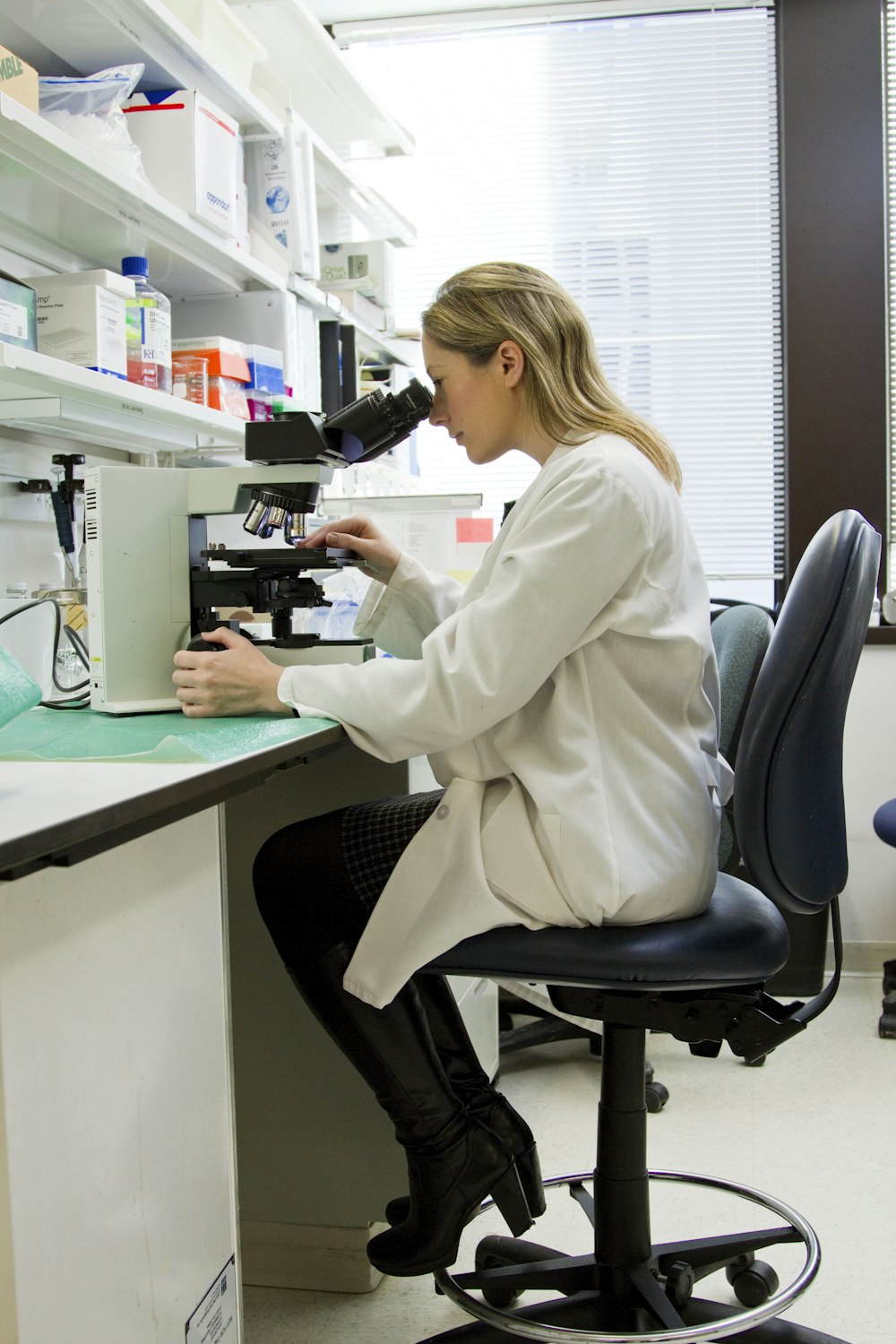
Advanced laboratory techniques were essential for isolating and characterizing the complex Dinardokanshone molecules.
Determining Molecular Architecture
Establishing the exact structures of these novel dimers required sophisticated analytical techniques. Researchers employed:
NMR Spectroscopy
Structural analysis to determine molecular framework and atom connectivity
Electronic Circular Dichroism (ECD)
Configuration determination to establish absolute stereochemistry
Quantum Chemical DFT
Computational validation for energy-minimized structure verification
Mass Spectrometry
Molecular weight determination and fragmentation pattern analysis
Key Analytical Techniques for Natural Product Discovery
| Technique | Application | Information Gained |
|---|---|---|
| NMR Spectroscopy | Structural analysis | Molecular framework, atom connectivity |
| Electronic Circular Dichroism (ECD) | Configuration determination | Absolute stereochemistry |
| Quantum Chemical DFT | Computational validation | Energy-minimized structure verification |
| Mass Spectrometry | Molecular weight | Mass and fragmentation pattern |
The ECD experiment and calculation for Dinardokanshones were accomplished by Dr. Li Li at the Institute of Materia Medica, Chinese Academy of Medical Science Peking Union Medical College, highlighting the collaborative nature of this complex structural determination 1 .
Significance and Implications: Beyond Structural Novelty
Chemical Diversity and Biosynthesis
The discovery of Dinardokanshones A and B significantly expanded our understanding of the chemical diversity within Nardostachys species. These compounds represent new skeletal types that challenge our understanding of sesquiterpene biosynthesis in plants 1 .
Recent transcriptome studies have identified key genes involved in sesquiterpene synthesis in Nardostachys jatamansi, including NjTPS-49, NjTPS-54, NjTPS-56, NjTPS-57 and NjTPS-59, which were positively regulated following methyl jasmonate treatment 7 . This genetic insight helps explain how these complex molecules might be assembled in the plant.
Key Sesquiterpene Synthesis Genes
NjTPS-49
NjTPS-54
NjTPS-56
NjTPS-57
NjTPS-59
These terpene synthase genes are regulated by methyl jasmonate and play key roles in sesquiterpene biosynthesis 7 .
Potential Therapeutic Applications
While specific pharmacological testing on Dinardokanshones A and B wasn't detailed in the original discovery paper, related compounds from Nardostachys species have demonstrated significant bioactivities:
Anti-neuroinflammatory Effects
Observed in compounds like nardostachin, which works through TLR4/MyD88-related suppression of NF-κB and JNK MAPK signaling pathways .
Serotonin Transporter Modulation
By related sesquiterpenoids, with some compounds inhibiting and others enhancing SERT activity 8 .
Broad Biological Activities
Including anti-inflammatory, hypolipidemic, myocardial protective, and antioxidant effects documented in Nardostachys extracts 2 .
Bioactivities of Related Compounds from Nardostachys Species
| Compound/Extract | Biological Activity | Potential Therapeutic Application |
|---|---|---|
| Nardostachin | Anti-neuroinflammatory | Neurodegenerative disorders |
| Dinardokanshone D | SERT enhancement | Neurological conditions |
| Isonardoeudesmol D | SERT inhibition | Neurological conditions |
| Nardosinone | Nerve growth factor enhancement | Neural stem cell differentiation |
The Scientist's Toolkit: Key Research Reagents and Methods
Natural products chemistry relies on specialized reagents and methodologies to isolate and characterize novel compounds like the Dinardokanshones:
Chromatography resins and solvents
For fractionation and purification of plant extracts
Deuterated solvents (e.g., CDCl₃)
Essential for NMR spectroscopy analysis
Computational software
For quantum chemical DFT calculations and ECD spectrum prediction
Crystallization reagents
For X-ray diffraction studies when possible
Cell-based assay systems
For initial biological activity screening
Spectroscopic reference standards
For instrument calibration and method validation
Conclusion: A Continuing Story of Discovery
The identification of Dinardokanshones A and B from Nardostachys chinensis represents more than just the addition of two new entries to the chemical registry. It underscores the incredible molecular creativity of nature and the continued relevance of natural products research in an era dominated by synthetic chemistry.
These discoveries highlight how much remains to be learned from traditional medicinal plants, particularly those like Nardostachys that have been used for centuries in Ayurvedic, Chinese, and Islamic medicine 2 . As research continues, each new hybrid molecule or dimeric sesquiterpenoid discovered adds another piece to the complex puzzle of plant chemical ecology and potential therapeutic application.
The ongoing scientific investigation into Nardostachys—from the molecular level of gene expression regulating terpenoid biosynthesis 7 to the pharmacological assessment of individual compounds—ensures that this Himalayan treasure will continue to yield scientific insights and potentially, future medicines for years to come.