Nd:YAG Laser Cleaning of Optical Surfaces: Mechanisms, Applications, and Damage Threshold Optimization
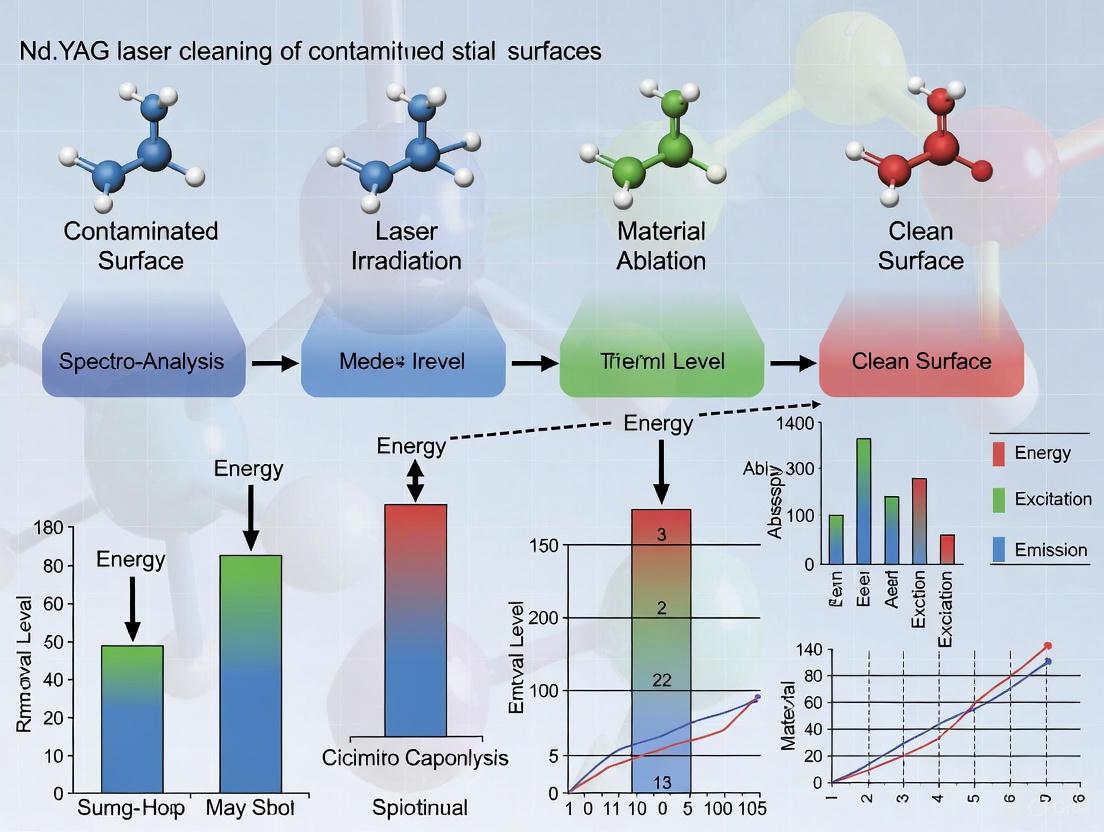
This article provides a comprehensive analysis of Nd:YAG laser cleaning for contaminated optical surfaces, a critical process for maintaining performance in high-precision systems.
Nd:YAG Laser Cleaning of Optical Surfaces: Mechanisms, Applications, and Damage Threshold Optimization
Abstract
This article provides a comprehensive analysis of Nd:YAG laser cleaning for contaminated optical surfaces, a critical process for maintaining performance in high-precision systems. We explore the fundamental laser-material interaction mechanisms, including thermal ablation and plasma shock waves, detailing how Nd:YAG lasers at 1064 nm and 532 nm wavelengths remove contaminants while preserving substrate integrity. The content covers practical methodologies for cleaning various optical components—from uncoated silica to multilayer dielectric coatings—and provides essential troubleshooting protocols for system optimization. Through comparative analysis with alternative techniques like CO2 laser ablation and plasma cleaning, we validate Nd:YAG's effectiveness for biomedical and clinical research applications where optical surface integrity directly impacts experimental outcomes and instrumentation reliability.
Fundamental Mechanisms of Nd:YAG Laser-Optical Surface Interactions
Laser ablation cleaning is an advanced, non-contact process that uses high-energy laser beams to remove contaminants and undesired layers from optical surfaces with high precision and minimal environmental impact. For researchers focused on Nd:YAG laser cleaning of contaminated optical components, understanding the fundamental principles governing photon energy transfer and material removal is essential. This process leverages selective energy absorption where laser parameters are carefully tuned so that contaminant layers strongly absorb the light while the underlying optical substrate reflects it or absorbs minimally [1]. The successful application of this technology for delicate optical surfaces requires optimization of numerous interdependent parameters and a thorough understanding of the underlying physical mechanisms to achieve complete contaminant removal without damaging the sensitive substrate underneath [1] [2].
Laser cleaning offers significant advantages over traditional methods like mechanical grinding, chemical solvents, or abrasive blasting, which can introduce surface damage, chemical residues, or secondary contamination [1] [3]. For optical components in high-performance systems such as intense laser facilities, even minimal surface contamination can reduce laser damage thresholds by approximately 60% and induce damage spots five times the size of the contaminants themselves under irradiation [4]. Laser ablation cleaning addresses these challenges through its precision, controllability, and ability to be automated for complex optical systems [1] [3].
Fundamental Mechanisms of Laser Ablation
The interaction between laser photons and materials initiates complex physical processes that enable contaminant removal. Three primary mechanisms dominate laser cleaning applications, each with distinct characteristics and operational domains.
Laser Thermal Ablation Mechanism
The thermal ablation mechanism relies on photothermal effects where pulsed laser energy is absorbed by surface contaminants, causing rapid temperature increase that leads to vaporization, combustion, or decomposition [3]. When a laser beam irradiates a material surface, the temperature increase (ΔT) can be expressed as ΔT = P/(πω₀K), where P represents laser power, ω₀ is the beam radius, and K is the thermal conductivity [3]. The laser energy required for contaminant removal must supply sufficient energy for heating, melting, and vaporization, calculated as W = ρh[Cₛ(Tm-T₀)+Cₚ(Tb-Tm)+Lm+Lᵣ], where ρ is density, h is thickness, Cₛ and Cₚ are specific heats, Tm and Tb are melting and boiling points, and Lm and Lᵣ are latent heats [3].
The critical consideration for optical surface cleaning is the differential ablation threshold between contaminants and the substrate. When the ablation threshold of contaminants is lower than the substrate, laser energy density can be maintained above the contaminant threshold but below the substrate damage threshold, enabling selective removal [3]. For instance, in removing sulfide from martensitic stainless steel, researchers found that laser energy density between 0.41 J/cm² and 8.25 J/cm² successfully removed attachments without surface damage, while energy exceeding 8.25 J/cm² damaged the substrate [3].
Laser Thermal Stress Mechanism
Unlike thermal ablation that relies on vaporization, the thermal stress mechanism utilizes stress effects induced by rapid thermal expansion. When short laser pulses irradiate a surface, both contaminant and substrate absorb energy, but the ultrashort pulse width creates instantaneous thermal expansion and high-pressure lifting forces [3]. This mechanism is particularly effective for removing contaminants with similar vaporization temperatures to the substrate, where selective removal via thermal ablation would be challenging.
The process can be modeled using a one-dimensional heat conduction equation: ρc∂T(z,t)/∂t = λ∂²T(z,t)/∂z² + αI₀Ae⁻ᵃᶻ, where ρ is density, c is specific heat, λ is thermal conductivity, α is absorptivity, I₀ is laser intensity, and A is the absorption coefficient [3]. The resulting thermal stress (σ) can be expressed as σ = Yε = YΔl/l = Yγ, where Y is Young's modulus, ε is strain, Δl is length change, and γ is the thermal expansion coefficient [3]. When this stress exceeds the adhesion force between contaminant and substrate (primarily van der Waals forces), the contaminant is ejected from the surface without vaporization.
Plasma Shock Wave Mechanism
The plasma shock wave mechanism becomes dominant when laser intensity exceeds the plasma formation threshold. This mechanism involves laser-induced ionization of air or surface material, generating plasma that expands rapidly and creates shock waves that mechanically dislodge surface contaminants [3]. The technique is particularly effective for removing micron and nanoscale particles that adhere strongly to surfaces through van der Waals forces [2].
This mechanism enables contaminant removal with minimal thermal transfer to the substrate, making it suitable for thermally sensitive optical materials. The discovery that laser-induced plasma shock waves could effectively remove tiny particles from wafer surfaces highlighted its importance for precision cleaning applications [3]. The dominant mechanism in any application depends on laser parameters (wavelength, pulse duration, fluence) and material properties (optical penetration depth, thermal diffusion length) [3] [5].
Figure 1: Three fundamental laser ablation mechanisms showing the pathway from laser energy to contaminant removal. Each mechanism operates through different physical processes to achieve surface cleaning.
Critical Process Parameters and Optimization
Optimizing laser ablation for optical surface cleaning requires careful consideration of multiple interdependent parameters that control the photon energy transfer and subsequent material response.
Laser Parameter Effects on Cleaning Efficiency
Laser Power significantly influences ablation depth and rate. In laser polishing treatments, roughness generally decreases with higher power, but excessive power can increase roughness and cause substrate damage [6]. The relationship follows non-linear trends, requiring precise control for optimal results.
Scanning Speed affects interaction time between laser and material. Higher speeds typically reduce roughness but may provide insufficient energy for complete contaminant removal. In micromachining optimization, scanning speeds of 600 mm/s contributed to process stability and repeatability [7].
Pulse Frequency determines the overlap between successive laser spots. Higher frequencies generally improve surface quality but require precise synchronization with scanning speed. Frequency parameters must be optimized based on contaminant characteristics and substrate properties [6] [7].
Hatching Distance controls the overlap between adjacent laser paths. Optimal hatching (e.g., 70% as identified in laser polishing studies) ensures uniform treatment without excessive energy accumulation that could damage optical surfaces [6].
Wavelength Selection depends on the absorption characteristics of contaminants versus substrate. The optimal wavelength ensures maximum absorption by contaminants while minimizing substrate interaction. For metals, infrared wavelengths are typically effective, while ultraviolet lasers may be preferable for organic contaminants or semiconductor elements [1] [3].
Table 1: Laser Parameter Effects on Cleaning Outcomes
| Parameter | Effect on Cleaning Process | Optimal Range for Optical Surfaces | Influence on Surface Quality |
|---|---|---|---|
| Laser Power | Determines ablation depth and rate | Material-dependent; must stay below substrate damage threshold | Excessive power increases roughness and thermal damage risk |
| Scanning Speed | Controls laser-material interaction time | 600-900 mm/s for precision work [6] [7] | Higher speeds typically reduce thermal accumulation |
| Pulse Frequency | Affects pulse overlap and removal efficiency | 60-120 kHz based on contaminant type [6] [7] | Optimal frequency minimizes residual patterning |
| Hatching Distance | Influences treatment uniformity | ~70% overlap for uniform coverage [6] | Insufficient overlap creates striations |
| Wavelength | Determines absorption selectivity | IR for metals, UV for organics [1] [3] | Must match contaminant absorption spectrum |
| Pulse Duration | Controls thermal diffusion | Nanosecond to femtosecond based on precision needs [8] | Shorter pulses reduce heat-affected zone |
Parameter Optimization Methodologies
Advanced optimization approaches move beyond trial-and-error methods to systematic parameter selection. Response Surface Methodology (RSM) based on Box-Behnken Design (BBD) enables efficient exploration of parameter relationships and identification of optimal combinations [6]. In laser polishing of high-chromium stainless steel, this approach identified an optimal parameter set of 70% hatching, 6W power, 900 mm/s speed, and 120 kHz frequency that achieved both maximum gloss and minimal roughness [6].
The Taguchi method provides an alternative optimization approach, particularly effective for enhancing process repeatability. This method employs signal-to-noise (S/N) ratio analysis to identify parameter sets that maximize stability and consistency [7]. In laser micromachining for edge-rounding applications, Taguchi experiments revealed that a depth per cut of 0.0025 mm, scanning speed of 600 mm/s, and frequency of 60 kHz produced the most repeatable results with minimal deviation from target geometries [7].
Machine learning approaches represent the cutting edge of laser parameter optimization. Neural networks can predict cleaning outcomes based on input parameters and pre-cleaning surface conditions, enabling real-time adjustment of laser parameters [8]. These systems can be integrated into feedback loops that tailor the cleaning process to specific target patterns, ensuring precise contaminant removal with minimal energy use [8].
Experimental Protocols for Nd:YAG Laser Cleaning
Standardized Cleaning Procedure for Optical Components
Sample Preparation Protocol
- Begin with comprehensive surface characterization of contaminated optical components using profilometry to establish baseline roughness parameters [7].
- For controlled experiments, prepare samples by applying standardized contaminants. For organic contamination studies, use dip-coating methods with sol-gel SiO₂ at 355 nm wavelength, maintaining consistent pull-speed of 85 mm/min for uniform coating application [4].
- Conduct elemental analysis using Energy Dispersive X-ray Spectroscopy (EDS) to characterize substrate composition and contaminant elements [5].
- Perform surface morphology analysis using Scanning Electron Microscopy (SEM) to document pre-cleaning surface conditions, including contaminant distribution and thickness [5].
Laser Setup and Calibration
- Configure Nd:YAG laser system with fundamental wavelength of 1064 nm, which provides optimal absorption for many common optical contaminants [5].
- Calibrate beam delivery system using high-precision laser machining systems such as the Lasertec 40 3D by DMG, ensuring precise focal positioning [7].
- Implement real-time monitoring systems, preferably with CMOS cameras (e.g., Basler a2A5320-23ucPRO) for in-process observation of cleaning progress [8].
- Integrate motorized translation stages (e.g., Zaber LSM050A-E03) with precise positional control (5 cm travel distance per axis) for accurate beam positioning [8].
Cleaning Execution and Optimization
- Conduct initial test runs with varying energy densities (typically 0.41-8.25 J/cm²) to determine the optimal range for specific contaminant-substrate combinations [3].
- Implement multi-pass strategies with systematic variation of longitudinal overlap rates (0%, 20%, 40%) to optimize cleaning efficiency while minimizing substrate interaction [5].
- Employ real-time monitoring systems to track cleaning progress and make parameter adjustments during the process [8].
- For delicate optical components, utilize plasma shock wave mechanisms with carefully controlled parameters to remove sub-micron particles without thermal damage [3].
Figure 2: Experimental workflow for Nd:YAG laser cleaning of optical surfaces, showing sequential steps from sample preparation to quality verification.
Analysis and Validation Methods
Surface Quality Assessment
- Utilize high-resolution optical measurement systems such as contour tracer profilometers (Form Talysurf i-Series) to quantify surface topography changes [7].
- Perform comparative analysis of pre-cleaning and post-cleaning surface roughness parameters (Ra, Rz) to quantify cleaning effectiveness [6] [7].
- Measure achieved geometries against target specifications; successful cleaning should show minimal deviation (e.g., +3-6 µm from target radii) [7].
Chemical and Mechanical Property Evaluation
- Conduct tribological tests to evaluate wear resistance in both parallel and perpendicular directions relative to laser scanning lines; optimal cleaning should not adversely affect substrate wear properties [6].
- Perform hardness testing across treated surfaces; variations indicate thermal impact on substrate mechanical properties [6].
- Implement X-ray Photoelectron Spectroscopy (XPS) to detect residual chemical contaminants and verify complete contaminant removal [5].
Optical Performance Validation
- Measure transmittance recovery of cleaned optical components; successful cleaning should restore near-baseline optical performance [4].
- Quantify laser-induced damage threshold (LIDT) improvements; properly cleaned optical components should show significant recovery of damage resistance [4].
Research Reagent Solutions and Materials
Table 2: Essential Research Materials for Laser Cleaning Experiments
| Material/Reagent | Specification | Research Application | Function in Experiment |
|---|---|---|---|
| Nd:YAG Laser System | 1064 nm wavelength, nanosecond to femtosecond pulse duration [5] [8] | Contaminant removal from optical surfaces | Primary energy source for ablation processes |
| High-Chromium Stainless Steel | Annealed condition, polished surface [6] | Laser polishing and cleaning optimization | Representative substrate for parameter development |
| Sol-Gel SiO₂ Coating | 29 nm particle size, 355 nm application [4] | Organic contamination simulation | Standardized contaminant for controlled studies |
| Polystyrene Microbeads | 15 μm diameter, aqueous suspension [8] | Precision cleaning model system | Simulated particulate contaminants for method development |
| 2A12 Aluminum Alloy | 3 cm × 3 cm × 0.4 cm samples, sulfuric acid anodized [5] | Aircraft skin and optical component analog | Substrate for cleaning mechanism studies |
| Cubic Boron Nitride (CBN) | High hardness, thermal stability [7] | Precision machining insert cleaning | Challenging substrate for delicate cleaning applications |
Advanced Applications and Future Directions
Innovative Applications in Optical Surface Cleaning
Laser ablation cleaning has evolved beyond basic contaminant removal to address sophisticated challenges in optical system maintenance. For large-aperture optical components in intense laser systems, where traditional cleaning methods are impractical, laser techniques offer non-destructive alternatives that can restore optical performance without component disassembly [4]. The technology has proven particularly valuable for optical components in inertial confinement fusion (ICF) facilities, where surface contamination directly limits system output capability [4].
Heritage conservation represents another advanced application where laser cleaning provides unprecedented precision for restoring historical optical instruments without damaging delicate substrates [3] [8]. The integration of machine learning for real-time process control enables automated adaptation to varying contaminant thicknesses and compositions, significantly enhancing cleaning precision while eliminating subjective operator decisions [8].
Emerging Trends and Research Frontiers
The integration of artificial intelligence with laser ablation processes represents the most significant advancement in recent years. Deep learning approaches using conditional Generative Adversarial Networks (cGANs) can now predict laser cleaning outcomes based on pre-cleaning surface images, enabling automated parameter optimization and real-time process adjustment [8]. These systems map camera observations of samples before laser exposure to predicted outcomes after exposure, creating feedback loops that minimize energy use while ensuring complete contaminant removal [8].
Advanced monitoring techniques using laser-induced breakdown spectroscopy (LIBS) and photoacoustic methods provide real-time feedback on cleaning progress, enabling closed-loop control systems that automatically adjust parameters based on actual contaminant removal rather than predetermined schedules [2]. These systems can quickly respond to variations in contaminant thickness and composition, reducing the risk of substrate damage while ensuring complete cleaning [2].
Multi-wavelength approaches that combine different laser sources are emerging as solutions for complex contamination scenarios involving multiple contaminant types. By sequentially applying different wavelengths optimized for specific contaminants, these systems can achieve comprehensive cleaning where single-wavelength approaches would leave residues [1]. The future of laser ablation cleaning lies in these adaptive, intelligent systems that can autonomously respond to varying cleaning challenges while maintaining the integrity of delicate optical surfaces.
Laser cleaning is an advanced, non-contact surface-cleaning technology that utilizes a high-energy laser beam to remove contaminants, rust, and coatings from a substrate's surface. Compared to conventional cleaning methods like mechanical abrasion or chemical cleaning, laser cleaning offers significant advantages in precision, efficiency, controllability, and environmental friendliness [3]. The process leads to instant evaporation or stripping of surface attachments through a series of physical and chemical processes including decomposition, ionization, vibration, expansion, and vaporization [3]. For researchers working with sensitive optical surfaces, understanding the fundamental mechanisms behind laser cleaning is crucial for selecting the appropriate parameters that effectively remove contaminants while preserving the delicate optical substrate.
The interaction between a laser beam and material involves complex mechanisms that depend on the optical properties of both the contaminant and substrate, as well as the laser parameters themselves. When designing cleaning protocols for optical surfaces, researchers must consider three primary mechanisms: laser thermal ablation, laser thermal stress, and plasma shock waves [3]. The dominance of each mechanism depends on factors including optical penetration depths, thermal diffusion lengths, and the specific physical parameters of the cleaning medium, substrate materials, and contaminants [3]. This application note provides a detailed comparison of thermal versus mechanical cleaning mechanisms, with specific focus on Nd:YAG laser applications for contaminated optical surfaces, to guide researchers in selecting the optimal approach for their specific applications.
Fundamental Mechanisms of Laser Cleaning
Laser Thermal Ablation Mechanism
The laser thermal ablation mechanism operates primarily through thermal effects when a pulsed laser beam directly irradiates contaminants on optical surfaces. As the temperature of the attachments rapidly rises above their vaporization threshold, they undergo combustion, decomposition, ablation, and exfoliation [3]. This process can be represented through a simplified thermal model where the temperature increase (ΔT) at the surface can be expressed as:
[ \Delta T = \frac{P}{\pi\omega_0K} ]
Where P represents the power, ω₀ is the beam radius, and K is the thermal conductivity [3]. The laser energy (W) required within a single pulse action time can be expressed as:
[ W = \rho h[Cs(Tm - T0) + Cp(Tb - Tm) + Lm + Lr] ]
Where ρ is density, h is thickness, Cₛ and Cₚ are specific heats, Tₘ and Tբ are melting and boiling points, and Lₘ and Lᵣ are latent heats of melting and vaporization, respectively [3].
For optical surface cleaning, the critical consideration is the differential in ablation thresholds between the contaminant and the substrate. When the ablation threshold of the contaminant is lower than the optical substrate, the laser energy density should be maintained above the contaminant's ablation threshold but below that of the substrate, enabling effective contaminant removal without damaging the underlying optical material [3]. This principle makes thermal ablation particularly useful for removing organic compounds or particulate matter from optical surfaces without affecting the base material.
Figure 1: Laser Thermal Ablation Mechanism for contaminants with lower ablation threshold than substrate
Laser Thermal Stress Mechanism
The laser thermal stress mechanism operates on a fundamentally different principle from thermal ablation, utilizing stress effects induced by the laser beam rather than thermal decomposition [3]. When a pulsed laser beam irradiates an optical surface, both the contaminant and substrate absorb laser pulse energy, causing rapid temperature increase. Due to the extremely short pulse width of lasers like Nd:YAG, the complete process of heating and cooling occurs almost instantaneously, generating rapid thermal expansion and a high-pressure solid lifting force [3]. This force ejects contaminants from the optical surface once it surpasses the van der Waals forces holding them in place.
The thermal stress mechanism can be modeled using a one-dimensional heat conduction equation in the z-axis direction:
[ \rho c \frac{\partial T(z,t)}{\partial t} = \lambda \frac{\partial^2 T(z,t)}{\partial z^2} + \alpha I_0 A e^{-Az} ]
Where ρ is density, c is specific heat, λ is thermal conductivity, α is absorption coefficient, I₀ is incident laser intensity, and A is attenuation coefficient [3]. The resulting thermal stress (σ) can be expressed as:
[ \sigma = Y \varepsilon = Y \frac{\Delta l}{l} = Y \gamma ]
Where Y is Young's modulus, ε is strain, and γ is the thermal expansion coefficient [3]. This mechanism is particularly effective for removing particulates and films that have different thermal expansion properties from the optical substrate, as the differential expansion creates shear forces at the interface that dislodge the contaminants without requiring bulk heating to vaporization temperatures.
Plasma Shock Wave Mechanism
The plasma shock wave mechanism represents a third approach that utilizes the mechanical energy of laser-induced plasma rather than direct thermal effects. When a high-energy laser pulse ionizes the air or a thin layer of contaminant, it creates plasma that rapidly expands, generating shock waves that propagate across the optical surface [9] [3]. These shock waves impart kinetic energy to contaminants, effectively blowing them off the surface through mechanical impulse rather than thermal degradation.
This approach was notably demonstrated in research where lasers induced air ionization, creating plasma shock waves that effectively removed tiny particles from wafer surfaces [3]. The technique is particularly valuable for optical surfaces that are sensitive to thermal damage, as the energy can be directed to create plasma slightly above the surface rather than directly interacting with the substrate. The shock wave mechanism can be combined with other approaches in what is sometimes termed "shock laser cleaning" [9], providing a primarily mechanical cleaning action that complements the thermal mechanisms.
Quantitative Comparison of Cleaning Mechanisms
Mechanism Selection Criteria
Selecting the appropriate laser cleaning mechanism depends on multiple factors including the nature of the contaminant, the sensitivity of the optical substrate, and the required throughput. The table below summarizes the key characteristics, advantages, and limitations of each mechanism to guide researchers in selection.
Table 1: Comparison of Laser Cleaning Mechanisms for Optical Surfaces
| Parameter | Thermal Ablation | Thermal Stress | Plasma Shock Wave |
|---|---|---|---|
| Primary Energy Transfer | Thermal | Thermo-mechanical | Mechanical shock |
| Typical Contaminants Removed | Organic residues, oils, coatings | Particles, dust, loose films | Sub-micron particles, fine dust |
| Substrate Thermal Sensitivity | Not recommended for highly thermally-sensitive substrates | Suitable for some thermally-sensitive substrates | Ideal for thermally-sensitive substrates |
| Typical Fluence Range | Varies by contaminant (e.g., 0.41-8.25 J/cm² for sulfides on steel [3]) | Lower than ablation threshold | Dependent on stand-off distance and medium |
| Risk of Substrate Damage | Moderate (if ablation threshold exceeded) | Low to moderate | Low |
| Cleaning Speed | High | Moderate to high | Moderate |
| Mechanism Specifics | Direct vaporization of contaminants | Rapid thermal expansion creates lifting force | Airborne plasma shock waves remove contaminants |
Nd:YAG Laser Parameters for Different Mechanisms
Nd:YAG lasers offer adjustable parameters that can be optimized to emphasize a particular cleaning mechanism. The following table provides typical parameter ranges for implementing each mechanism on optical surfaces.
Table 2: Nd:YAG Laser Parameters for Different Cleaning Mechanisms
| Laser Parameter | Thermal Ablation | Thermal Stress | Plasma Shock Wave | Angular Laser Cleaning |
|---|---|---|---|---|
| Wavelength | 1064 nm (fundamental) or harmonics [9] | 1064 nm (fundamental) [9] | 1064 nm [9] | 1064 nm [9] |
| Pulse Duration | Nanosecond to microsecond | Nanosecond [3] | Nanosecond [9] | Q-switched (nanosecond) [9] |
| Fluence | Above contaminant ablation threshold, below substrate damage threshold [3] | Below ablation threshold | Sufficient for air ionization | Similar to conventional but with angular incidence [9] |
| Spot Size | Adapted to contaminant distribution | Adapted to particle size | Larger area coverage | Larger effective area [9] |
| Angle of Incidence | Perpendicular | Perpendicular | Perpendicular | Glancing angle (e.g., 10°) [9] |
| Repetition Rate | 0.63 Hz [9] and higher | Medium to high | Single or low repetition | 0.63 Hz demonstrated [9] |
Experimental Protocols for Nd:YAG Laser Cleaning of Optical Surfaces
Pre-Cleaning Assessment and Sample Preparation
Objective: To evaluate the optical surface and contaminants to determine the appropriate laser cleaning mechanism and parameters.
Materials and Equipment:
- Optical microscope or scanning electron microscope (SEM)
- Surface profilometer (for roughness measurement)
- Spectrophotometer (for reflectance/transmittance measurement)
- Ultrasonic cleaner (for reference cleaning)
- Optical inspection gloves [10], lens tissue [11], and optical-grade solvents [11]
Procedure:
- Visual Inspection: Examine the optical surface under appropriate lighting conditions. For reflective coated surfaces, hold the optic nearly parallel to your line of sight to detect contamination rather than reflections. For polished surfaces like lenses, hold perpendicular to your line of sight to look through the optic [11].
- Contaminant Identification: Determine the nature of contaminants (particulate, organic film, oxide layer, biological residue) through microscopic examination and historical context.
- Surface Characterization: Measure baseline surface roughness, reflectance/transmittance, and document any existing defects using scratch-dig specifications as reference [11].
- Test Area Selection: Identify representative areas for initial laser testing, preferably near edges or less critical regions.
- Surface Cleaning (Reference): Gently blow off loose particles using a canister of inert dusting gas or a blower bulb. Hold the can upright and approximately 6 inches (15 cm) from the optic at a grazing angle, using short blasts in a figure-eight pattern [11].
Protocol for Thermal Ablation Cleaning
Objective: To remove contaminants through direct vaporization using Nd:YAG laser parameters that exceed the contaminant's ablation threshold but remain below the substrate's damage threshold.
Materials and Equipment:
- Q-switched Nd:YAG laser (1064 nm fundamental or harmonics)
- Beam delivery system with focusing optics
- Energy/power meter
- In-situ monitoring (high-speed camera or photodetector)
- Fume extraction system
- Personal protective equipment: laser safety glasses [10] [12], lab coat [10] [12], gloves [10]
Procedure:
- Laser Setup: Configure the Nd:YAG laser for nanosecond pulse operation at 1064 nm wavelength. Use a beam profiler to characterize the spatial distribution.
- Parameter Calculation: Based on pre-characterization of contaminant and substrate, calculate starting fluence below the expected substrate damage threshold. For reference, on marble surfaces, effective fluence was approximately 1 J/cm² [9].
- Test Exposure: Apply single pulses to discrete test spots with increasing fluence (e.g., 0.1 J/cm² increments).
- Effect Evaluation: After each test exposure, inspect the area for contaminant removal and substrate damage using optical microscopy.
- Process Optimization: Adjust fluence, spot size, and repetition rate until optimal cleaning efficiency is achieved without substrate damage.
- Area Processing: Once parameters are optimized, implement overlapping raster scanning for area coverage with 10-30% overlap between pulses.
- Post-Cleaning Inspection: Examine the cleaned surface for any residual contamination or induced damage.
Protocol for Thermal Stress Cleaning
Objective: To remove contaminants through rapid thermal expansion-induced stress using laser parameters below the ablation threshold.
Materials and Equipment:
- Q-switched Nd:YAG laser with precise pulse control
- Beam shaping optics (if necessary)
- IR camera for thermal monitoring
- Vibration isolation table
- Personal protective equipment
Procedure:
- Laser Setup: Configure the Nd:YAG laser for short pulse operation (nanosecond range) at 1064 nm.
- Parameter Selection: Set fluence below the ablation threshold of both contaminant and substrate. For reference, on titanium alloys, melt damage was observed at fluences >708 mJ cm⁻², with minimal interaction below 410 mJ cm⁻² [13].
- Beam Profile Optimization: Utilize a top-hat or flattened Gaussian beam profile for more uniform stress distribution.
- Test Cleaning: Apply laser pulses to test areas and evaluate cleaning efficacy through microscopic examination.
- Thermal Monitoring: Use IR camera to ensure temperature rise remains within acceptable limits for the optical substrate.
- Process Scaling: Implement large-area cleaning with optimized parameters, maintaining consistent stand-off distance and scan speed.
Protocol for Angular Laser Cleaning
Objective: To implement angular laser cleaning for improved efficiency and reduced substrate damage risk.
Materials and Equipment:
- Nd:YAG laser with beam delivery flexibility
- Precision rotation stages for sample tilt
- Beam characterization tools
- Standard laser safety equipment
Procedure:
- Sample Alignment: Mount the optical component on a rotation stage and adjust to a glancing angle of incidence (e.g., 10° to the surface) [9].
- Beam Path Setup: Ensure the beam delivery system can accommodate the angular approach without obstruction.
- Parameter Adjustment: Adjust fluence to account for the increased effective area at oblique angles. Note that for the same laser input energy, the cleaned area irradiated at a glancing angle can be up to eight times larger than with normal incidence [9].
- Cleaning Implementation: Execute cleaning passes with overlapping scans, maintaining the angular incidence throughout the process.
- Efficiency Comparison: Compare cleaning results and throughput with conventional perpendicular incidence to validate improvement.
Figure 2: Experimental Workflow for Laser Cleaning of Optical Surfaces
The Scientist's Toolkit: Essential Research Reagents and Materials
Table 3: Essential Materials for Nd:YAG Laser Cleaning Research
| Item | Specification | Function/Application |
|---|---|---|
| Nd:YAG Laser System | Q-switched, 1064 nm fundamental wavelength, nanosecond pulse duration [9] | Primary energy source for cleaning processes |
| Beam Profiling System | CCD-based or scanning slit profiler | Characterizes beam spatial distribution and fluence |
| Optical Inspection Microscope | 50x-1000x magnification with darkfield and brightfield capabilities | Pre- and post-cleaning surface inspection |
| Lens Tissue | Optical grade, lint-free [11] | Gentle mechanical cleaning during preparation |
| Optical Solvents | Acetone, methanol, isopropyl alcohol (optical grade) [11] | Chemical cleaning for comparison and preparation |
| Inert Dusting Gas | Canned or compressed air systems [11] | Removal of loose particulate matter before laser cleaning |
| Laser Safety Eyewear | OD rating appropriate for Nd:YAG wavelength [10] [12] | Protection from direct and scattered laser radiation |
| Energy Meter | Thermal or photodiode-based, appropriate for pulse energy measurement | Quantifies laser output and fluence calculation |
| Sample Mounting System | Precision stages with multi-axis control | Precise positioning and angular alignment [9] |
Selecting between thermal and mechanical laser cleaning mechanisms requires careful consideration of the contaminant-substrate system and the specific requirements of the application. Thermal ablation provides effective removal of organic contaminants through direct vaporization but carries higher risk of substrate damage if parameters are not carefully controlled. Thermal stress cleaning offers a gentler alternative for particulate removal utilizing differential thermal expansion, while plasma shock wave cleaning provides a primarily mechanical approach suitable for thermally-sensitive optical surfaces.
The development of angular laser cleaning techniques further enhances the toolbox available to researchers, offering significantly improved cleaning efficiency—with cleaned areas up to eight times larger than conventional perpendicular incidence for the same input energy [9]. This approach, combined with precise parameter control based on the fundamental mechanisms outlined in this application note, enables researchers to effectively restore contaminated optical surfaces while preserving their critical functional properties.
For optical surfaces requiring the highest level of precision and minimal risk of damage, a systematic approach starting with the gentlest mechanical method (such as dry gas blowing) and progressing through thermal stress mechanisms before considering thermal ablation is recommended. Each cleaning scenario should begin with comprehensive characterization and proceed through methodical parameter optimization to establish the ideal balance between cleaning efficacy and substrate preservation.
This application note investigates the performance of 1064 nm and 532 nm laser wavelengths in the context of cleaning contaminated optical surfaces, a critical process for maintaining the performance of high-precision optical systems. Within the broader scope of Nd:YAG laser cleaning research, the selection of an appropriate wavelength is paramount for achieving effective contaminant removal while preserving the delicate substrate. We detail the fundamental photon-matter interactions, provide comparative quantitative data, and outline standardized experimental protocols for evaluating wavelength-specific efficacy. The findings indicate that the 532 nm wavelength, due to its higher photon energy and greater absorption by many common contaminants, often facilitates more efficient cleaning, whereas the 1064 nm wavelength can offer superior penetration and reduced thermal stress on certain substrate materials.
Laser cleaning of optical surfaces is a precise, non-contact process that utilizes laser-induced forces—such as ablation, evaporation, and shock waves—to remove contaminants. The efficiency and safety of this process are predominantly governed by the laser wavelength, which determines the optical absorption, penetration depth, and thermal load on both the contaminant and the optical substrate. For Nd:YAG lasers, the fundamental harmonic at 1064 nm and its frequency-doubled counterpart at 532 nm represent two widely available options with distinctly different interaction mechanisms. The performance of a given wavelength hinges on the differential absorption between the contaminant layer and the underlying optical material; effective removal is achieved when the contaminant absorbs significantly more energy than the substrate, leading to its violent disintegration or sublimation without damaging the optic. Research into these processes is vital, as surface contamination is a primary factor limiting the laser-induced damage threshold (LIDT) and performance of optical components in high-power systems [14] [15].
Quantitative Performance Comparison
The following tables summarize the key performance characteristics of the 1064 nm and 532 nm wavelengths when interacting with various optical materials and contaminants.
Table 1: General Wavelength Performance Characteristics for Cleaning
| Parameter | 1064 nm Performance | 532 nm Performance |
|---|---|---|
| Photon Energy | Lower (1.17 eV) | Higher (2.33 eV) |
| Typical Optical Penetration Depth | Generally deeper | Generally shallower |
| Absorption by Metallic Contaminants (e.g., Copper) | Unstable and low absorption [16] | Stable and high absorption [16] |
| Absorption in Wide Bandgap Materials (e.g., HfO₂) | Lower | Higher; can induce crystallization and blue shifts in optical properties [17] |
| Thermal Load on Substrate | Potentially higher due to deeper penetration | More confined to the surface, potentially reducing bulk heating |
| Typical Dominant Cleaning Mechanism | Thermal ablation, shock waves | Photo-ablation, photochemical decomposition |
Table 2: Material-Specific Interactions and Observed Outcomes
| Material / Application | Observation at 1064 nm | Observation at 532 nm | Key Reference |
|---|---|---|---|
| Copper (as contaminant or target) | Low and unstable absorption, leading to inefficient processing [16] | Stable, high absorption; enables efficient welding and, by extension, ablation [16] | [16] |
| Hafnium Dioxide (HfO₂ optical coating) | Reduced interaction; less effect on film structure [17] | Promotes crystallization; induces a blue shift in optical properties and reduces surface roughness [17] | [17] |
| Diamond (for comparison) | Lowest absorption, lowest cutting efficiency, and highest thermal effect [18] | Moderate absorption and efficiency [18] | [18] |
| Biomedical Tissue (for penetration analogy) | Deeper penetration in scattering media; higher Maximum Permissible Exposure (MPE) [19] | Stronger scattering and absorption by pigments like blood, limiting depth [19] | [19] |
Experimental Protocols
This section provides detailed methodologies for evaluating the cleaning efficacy of 1064 nm and 532 nm lasers on contaminated optical surfaces.
Protocol 1: Quantification of Surface Contamination Pre- and Post-Cleaning
Objective: To quantitatively analyze the type and amount of manufacturing-induced trace contaminants on optical glass before and after laser cleaning procedures [15].
Materials:
- Test Samples: Contaminated optical glass substrates (e.g., N-BK7).
- Primary Instrument: Laser-Induced Breakdown Spectroscopy (LIBS) system with an echelle spectrometer and gated detector.
- Reference Instrument: Inductively Coupled Plasma Atomic Emission Spectroscopy (ICP-AES).
- Supporting Instrument: Spectroscopic Ellipsometer.
Procedure:
- Pre-Characterization: Begin with spectroscopic ellipsometry on a clean reference sample to establish a baseline for the optical properties (e.g., index of refraction) of the uncontaminated substrate [15].
- Initial Contamination Mapping:
- Place the contaminated sample in the LIBS setup.
- Focus the LIBS laser (e.g., a Nd:YAG at 1064 nm) on a specific site.
- Record spectra from successive laser pulses on the same irradiation site to perform a depth-resolved analysis of the contaminant layer [15].
- Use a calibration-free LIBS approach to quantify trace elements by calculating the spectral radiance of a plasma in local thermodynamic equilibrium.
- Validation: Validate the bulk glass composition and contaminant quantification using ICP-AES on a separate, destructively tested sample fragment [15].
- Laser Cleaning: Subject the sample to the cleaning laser (1064 nm or 532 nm Nd:YAG) using pre-determined parameters (fluence, repetition rate, spot size, scan speed).
- Post-Cleaning Analysis:
- Repeat the LIBS measurement on the cleaned area following the same depth-profiling procedure.
- Compare the pre- and post-cleaning spectra to identify the removal efficiency of specific contaminants (e.g., Ce, Zr from polishing compounds).
- Correlation: Use ellipsometry again on the cleaned area to correlate the reduction in surface contamination with any changes in the index of refraction [15].
Protocol 2: Evaluating Wavelength-Specific Cleaning Efficacy and Damage Threshold
Objective: To compare the cleaning effectiveness and determine the laser-induced damage threshold (LIDT) for 1064 nm and 532 nm pulses on coated optics with standardized contaminants.
Materials:
- Test Samples: High-reflectivity mirrors (e.g., with HfO₂/SiO₂ multilayer coatings) artificially contaminated with a standardized contaminant (e.g., polystyrene nanoparticles or a thin layer of vacuum pump oil).
- Laser Systems: Pulsed Nd:YAG lasers at 1064 nm and 532 nm wavelengths.
- Diagnostic Equipment: Online plasma probe or acoustic emission sensor, photodiode for scattered light detection, and optical microscopy (Nomarski).
Procedure:
- Sample Preparation: Artificially contaminate samples by spraying a calibrated aerosol of contaminants or by applying a measured volume of oil and allowing it to spread.
- Experimental Setup:
- Mount the sample on a multi-axis motorized stage within the beam path.
- Position an acoustic emission sensor near the sample to detect the acoustic signal generated during the cleaning/ablation process.
- Incorporate a photodiode to monitor scattered light, which can indicate the moment of contaminant removal.
- S-on-1 Damage Test:
- Following the ISO 21254-2 standard, irradiate multiple sites on the sample with a specific number of pulses (e.g., 100-1000 pulses) at different fluence levels.
- For each wavelength, perform this test over a range of fluences, starting below the expected damage threshold.
- In-situ Efficacy Monitoring:
- For cleaning tests, use the acoustic and scattered light signals in real-time to determine the minimum fluence and number of pulses required for effective contaminant removal.
- Post-mortem Analysis:
- After irradiation, inspect each test site using Nomarski microscopy to identify the onset of damage (e.g., melting, coating removal, or pit formation).
- Statistically analyze the results to determine the LIDT for each wavelength and the cleaning process window (fluence range where cleaning occurs without substrate damage).
The Scientist's Toolkit: Essential Research Reagents and Materials
Table 3: Key Materials and Reagents for Laser Cleaning Research
| Item | Function / Relevance |
|---|---|
| HfO₂/SiO₂ Multilayer Coatings | Representative high-LIDT optical coating system for testing substrate damage thresholds [14] [17]. |
| Standardized Contaminants (e.g., Polystyrene Beads, Oil) | Provides a consistent and quantifiable contamination layer for comparative cleaning experiments [20]. |
| Laser-Induced Breakdown Spectroscopy (LIBS) System | Enables depth-resolved, quantitative elemental analysis of surface contaminants pre- and post-cleaning [15]. |
| Acoustic Emission Sensor | Detects shock waves from laser ablation events, providing real-time, in-situ feedback for contaminant removal [19]. |
| Spectroscopic Ellipsometer | Measures thin-film thickness and optical constants (n, k), allowing correlation of cleanliness with optical performance [15]. |
Workflow and Signaling Pathways
The following diagram illustrates the logical decision-making workflow for selecting and evaluating a laser wavelength for an optical surface cleaning application.
Laser Cleaning Wavelength Selection Workflow
The choice between 1064 nm and 532 nm laser wavelengths for cleaning optical surfaces is application-dependent, requiring a careful balance between cleaning efficiency and substrate safety. The data and protocols presented herein provide a framework for researchers to make informed decisions. The 532 nm wavelength generally offers superior performance for removing surface-level contaminants that exhibit strong absorption in the visible spectrum, often enabling cleaner removal with lower total energy deposition. Conversely, the 1064 nm wavelength may be advantageous in scenarios requiring deeper penetration or where the substrate is highly sensitive to photon energy at the green wavelength. Ultimately, the optimal cleaning protocol must be determined through systematic, wavelength-specific experimentation as outlined in this note, ensuring both the restoration of optical clarity and the long-term reliability of critical optical components.
In the field of high-energy laser systems, the longevity and performance of optical components are paramount. The laser damage threshold (LDT) defines the maximum laser fluence an optical component can withstand without sustaining irreversible damage. For researchers working with Nd:YAG lasers in cleaning applications, understanding these fundamentals is critical for both effectively removing contaminants and preserving the delicate optical substrates beneath. Contamination on optical surfaces significantly reduces LDT, with experimental results demonstrating that contamination can induce damage spots five times the size of the contaminants themselves and reduce laser damage thresholds by approximately 60% [4]. This application note details the fundamental mechanisms, measurement methodologies, and protective strategies essential for optimizing Nd:YAG laser cleaning protocols while maintaining substrate integrity.
Fundamental Damage Mechanisms in Optical Materials
Laser-induced damage in optical materials occurs through several physical mechanisms that depend on laser parameters and material properties. These mechanisms are critical to understand for developing effective cleaning protocols.
Thermal Damage Mechanisms
Under repetitive or continuous laser irradiation, energy absorption and subsequent heat accumulation can cause thermal damage. This is particularly relevant for Nd:YAG lasers operating at high repetition rates. The absorbed laser energy converts to heat, potentially melting the optical surface, creating thermal stresses that cause cracking, or altering the material's crystalline structure. Wide-bandgap semiconductors like Beta-Ga₂O₃ exhibit complex transformation behaviors under femtosecond multi-pulse laser irradiation, forming amorphous surface layers and phase boundaries even before visible ablation occurs [14].
Defect-Induced Damage
Microscopic imperfections in optical materials, including voids, inclusions, and grain boundaries, create localized regions with enhanced optical absorption. These defects act as damage initiation sites, as they absorb laser energy more efficiently than the surrounding material, leading to localized heating and plasma formation. The resulting thermal stresses can cause micro-cracking, delamination, or catastrophic failure. Research presented at the Laser-Induced Damage in Optical Materials 2025 conference emphasizes characterization of basic materials properties, such as absorption, thermal conductivity, stress-optic coefficients, and defects to understand damage initiation [14].
Nonlinear Effects and Laser-Matter Interactions
At high intensities characteristic of short-pulse Nd:YAG systems, nonlinear phenomena become significant damage mechanisms. These include multiphoton absorption, where electrons simultaneously absorb multiple photons to bridge a bandgap larger than the individual photon energy, and impact ionization, creating cascading electron avalanches [14]. Advanced simulation frameworks implementing Keldysh photoionization models, impact ionization, and Drude models for free carrier response enable dynamic tracking of transient electron density and field enhancement during femtosecond pulse irradiation, helping predict LDT fluence based on critical density thresholds [14].
Table: Fundamental Laser Damage Mechanisms in Optical Materials
| Mechanism | Relevant Laser Regime | Material Properties Affected | Observable Effects |
|---|---|---|---|
| Thermal Absorption | High average power, CW, high rep-rate | Absorption coefficient, thermal conductivity, specific heat | Melting, cracking, thermal stress birefringence |
| Defect-Induced Damage | All regimes, especially UV | Defect density, impurity concentration, surface quality | Localized pits, micro-explosions, plasma formation |
| Nonlinear Effects | Ultra-fast, high peak power | Bandgap, nonlinear refractive index, multiphoton absorption | Self-focusing, filamentation, bulk damage tracks |
| Ablation | Short pulse (<100 ns) | Bond strength, absorption at laser wavelength | Material removal, surface roughness increase |
Quantitative Damage Threshold Data
Understanding typical damage threshold values provides essential context for establishing safe operating parameters for laser cleaning applications.
Table: Experimentally Measured Damage Thresholds for Optical Materials and Contaminants
| Material/Coating | Laser Parameters | Damage Threshold (Fluence) | Failure Mode | Citation Context |
|---|---|---|---|---|
| Marble with black encrustation | Q-switched Nd:YAG, 1064 nm, 5 pulses @ 0.63 Hz | ~1 J/cm² (conventional) Reduced fluence (angular cleaning) | Contamination removal with substrate preservation | Laser cleaning efficiency study [9] |
| HfO₂ in MLD gratings | 2 μm wavelength, 70 fs | Peak LDT fluence based on critical electron density | Damage initiation in first HfO₂ layer beneath grating pillars | FDTD simulation predicting LIDT [14] |
| Broadband mirrors for 20-fs pulses | s-polarized vs p-polarized NIR | s-polarized: growth-limited p-polarized: initiation-limited | s-polarized: damage growth from ablation sites p-polarized: multipulse fatigue | Coating design comparison [14] |
| Chemical-coated fused silica | 355 nm, intense laser systems | 60% reduction when contaminated | Contamination-induced damage, coating detachment | Organic contamination impact study [4] |
Experimental Protocols for Damage Threshold Testing
Standardized methodologies for laser damage threshold testing enable reproducible and comparable results across research institutions.
Protocol: 1-on-1 Laser Damage Testing
This standard test determines the lowest laser fluence causing damage with a single pulse per test site.
Materials and Equipment:
- Q-switched Nd:YAG laser system (1064 nm fundamental or harmonics)
- Beam profiling system (CCD camera or scanning slit profiler)
- Energy measurement devices (calorimeter or photodiode)
- Sample positioning system (motorized XYZ stages)
- Online microscope for damage detection
- Test samples (cleaned and contaminated optical substrates)
Procedure:
- Characterize laser beam spatial profile using the profiling system to determine beam diameter at 1/e² points.
- Measure pulse energy using the calibrated energy measurement device.
- Calculate peak fluence using the formula: Fluence = (2 × Pulse Energy) / (π × ω₀²), where ω₀ is the beam radius.
- Position sample at beam focus or collimated region with known beam diameter.
- For each test site, expose to a single laser pulse at predetermined fluence level.
- Immediately after exposure, inspect site using online microscope with at least 100× magnification.
- Record any visible change (plasma flash, discoloration, pit formation) as damage.
- Test multiple sites across a range of fluences, typically 15-20 sites per fluence level.
- Apply statistical analysis (probit or logistic regression) to determine damage probability curve.
- Report LDT as the fluence corresponding to 0% damage probability with confidence intervals.
Critical Parameters:
- Beam diameter must be significantly larger than material inhomogeneities (typically > 1 mm)
- Pulse length must be documented and controlled
- Environmental conditions (temperature, humidity, particulates) must be recorded
- Damage detection method and criteria must be explicitly stated
Protocol: Contamination-Induced Damage Threshold Measurement
This specialized protocol quantifies how contamination affects the damage threshold of optical substrates.
Materials and Equipment:
- All equipment from Protocol 4.1
- Contamination application system (aerosol spray, dip coating, or vapor deposition)
- Contamination characterization tools (white-light interferometer, AFM, SEM)
- Controlled contamination environment chamber
Procedure:
- Prepare clean optical substrates following standardized cleaning procedures.
- Characterize initial surface quality (roughness, defect density) of clean substrates.
- Apply contaminant using controlled method to achieve uniform layer:
- For particulate contamination: use aerosol deposition with particle size standards
- For organic films: use dip-coating at controlled speed (e.g., 85 mm/min [4])
- Quantify contamination level through:
- Gravimetric analysis (mass change)
- Optical transmittance/reflectance measurements
- Surface topography analysis
- Perform 1-on-1 laser damage testing per Protocol 4.1 on contaminated samples.
- Compare damage thresholds between clean and contaminated substrates.
- Characterize damage morphology specific to contamination type.
Laser Cleaning Methodologies for Optical Substrates
Advanced laser cleaning techniques offer controlled contaminant removal while preserving optical substrates.
Angular Laser Cleaning Protocol
This technique utilizes glancing-angle irradiation to improve cleaning efficiency and substrate preservation.
Theoretical Basis: When the laser irradiates a surface at a glancing angle (e.g., 10°), the same laser energy distributes over a larger area (by factor of 1/sin(θ)), reducing the fluence on the substrate while maintaining sufficient intensity for contaminant removal [9].
Materials and Equipment:
- Q-switched Nd:YAG laser (1064 nm, 5-10 ns pulse duration)
- Precision sample rotation stage (±0.1° accuracy)
- Beam delivery system with adjustable focus
- In-situ monitoring (scattered light detection or high-speed imaging)
Procedure:
- Mount contaminated optical sample on rotation stage.
- Align laser beam for near-grazing incidence (5-15° from surface plane).
- Set initial fluence below substrate damage threshold (typically 0.2-0.5 J/cm² equivalent normal incidence).
- Apply laser pulses at controlled repetition rate (0.5-2 Hz).
- Monitor cleaning efficiency through:
- Scattered light reduction
- Visual inspection
- Transmittance/reflectance recovery
- Optimize fluence and angle parameters for maximum contamination removal with minimal substrate impact.
- Document cleaned area comparison to normal incidence at same energy.
Validation:
- Angular cleaning achieves up to 8× larger cleaned area compared to normal incidence at same input energy [9]
- Significant improvement in cleaning efficiency with reduced substrate damage risk
Shock Laser Cleaning Protocol
This contactless method uses laser-generated airborne plasma shock waves for delicate contaminant removal.
Theoretical Basis: Focused laser pulses create atmospheric plasma near the surface; the expanding plasma generates shock waves that mechanically dislodge contaminants without direct laser-substrate interaction.
Materials and Equipment:
- Q-switched Nd:YAG laser (1064 nm or 532 nm)
- Focusing lens (f = 50-100 mm) for plasma generation
- Precision sample positioning system
- Plasma emission detection system
Procedure:
- Position sample surface parallel to laser beam axis at predetermined standoff distance (0.5-2 mm).
- Focus laser beam 1-2 mm above sample surface to create plasma.
- Set laser fluence below substrate damage threshold but sufficient for plasma formation.
- Translate sample while generating plasma shock waves.
- Monitor cleaning effectiveness through surface analysis.
- Optimize standoff distance, pulse energy, and repetition rate.
Visualization: Laser Damage and Cleaning Mechanisms
The following diagrams illustrate key relationships and workflows in laser damage and cleaning processes.
Laser-Surface Interaction Pathways
Optical Surface Cleaning Decision Workflow
The Scientist's Toolkit: Research Reagent Solutions
Essential materials and equipment for laser damage threshold research and optical cleaning applications.
Table: Essential Research Materials for Laser Damage and Cleaning Studies
| Material/Reagent | Function/Application | Research Context | Key Considerations |
|---|---|---|---|
| Sol-gel SiO₂ coating solutions | Anti-reflective coatings on fused silica substrates | Preparation of standardized test samples with chemical coatings [4] | Particle size (29 nm), pull-coating speed (85 mm/min), post-treatment with ammonia/HMDS |
| Hexamethyldisilazane (HMDS) | Surface modification for sol-gel coatings | Post-treatment of chemical coatings to enhance durability [4] | 24-hour exposure in sealed container after dip-coating |
| Oxygen/Argon gas mixtures | Low-pressure plasma cleaning medium | Generating reactive species for organic contaminant removal [4] | Plasma parameters affect reactive particle types and cleaning efficiency |
| Q-switched Nd:YAG laser systems | Primary tool for LDT testing and laser cleaning | Fundamental radiation source for damage studies and cleaning applications [9] | 1064 nm fundamental wavelength, nanosecond pulse durations, variable repetition rates |
| Langmuir probe systems | Plasma parameter characterization | Measuring plasma potential, ion density, electron temperature in cleaning systems [4] | Critical for correlating discharge parameters with cleaning effectiveness |
| Beta-Ga₂O₃ substrates | Wide-bandgap semiconductor for damage studies | Investigating ultrafast laser-induced transformations [14] | Reveals amorphous layer formation and phase changes under multi-pulse irradiation |
Protecting delicate optical substrates during laser cleaning processes requires comprehensive understanding of damage threshold fundamentals. The protocols and data presented herein provide researchers with methodologies to quantify damage thresholds, implement advanced cleaning techniques like angular and shock laser cleaning, and validate substrate preservation. As laser systems advance toward higher powers and repetition rates, the principles of controlled fluence delivery, contamination management, and substrate-specific parameter optimization become increasingly critical. By integrating these fundamentals into Nd:YAG laser cleaning research, scientists can effectively balance contaminant removal efficacy with optical substrate protection, extending component lifetime and maintaining system performance in demanding applications.
Within the context of research on Nd:YAG laser cleaning of contaminated optical surfaces, understanding the fundamental interactions between laser parameters and specific contaminant types is paramount. Laser cleaning operates primarily through photo-thermal and photo-mechanical mechanisms to remove unwanted material from a substrate without causing damage [21]. The Nd:YAG laser, with its common fundamental wavelength of 1064 nm and frequency-doubled 532 nm output, provides a versatile tool for this purpose [22]. The success of the cleaning process depends critically on the differential interaction between the laser light and the contaminant versus the underlying optical substrate. This application note provides detailed protocols and data for the effective removal of three critical contaminant categories: organic residues, particulate matter, and oxide layers, which are frequently encountered on optical components in research and drug development environments.
Fundamental Cleaning Mechanisms and Contaminant Specificity
The interaction between a Nd:YAG laser and a contaminated surface is governed by the specific physical mechanism of removal, which must be selected based on the contaminant's properties. The two primary mechanisms are laser thermal ablation and laser thermal stress.
The laser thermal ablation mechanism is dominant when a pulsed laser beam irradiates the surface, causing contaminants to absorb energy and rapidly heat up. When the temperature exceeds the contaminant's vaporization threshold, it undergoes combustion, decomposition, ablation, or exfoliation [3]. This mechanism is particularly effective for organic materials and oxides, which often have lower ablation thresholds than the optical substrate. The process can be described by the energy balance equation, where the laser energy ( W ) must satisfy ( W = \rho h [Cs (Tm - T0) + Cp (Tb - Tm) + Lm + Lr ] ), accounting for the energy required to heat, melt, and vaporize the contaminant layer [3].
In contrast, the laser thermal stress mechanism utilizes stress effects rather than pure thermal effects. The short pulse width of a Q-switched Nd:YAG laser causes rapid thermal expansion and contraction of the surface, generating a high-pressure solid lifting force. When this force surpasses the van der Waals forces binding particulate contaminants to the surface, the particles are ejected [3]. This mechanism is ideal for removing discrete particles without thermally altering the substrate.
The selection of the appropriate mechanism depends on the optical penetration depths and thermal diffusion lengths, which vary significantly among organic residues, particles, and oxides [3]. The following workflow diagram illustrates the decision-making process for selecting the appropriate cleaning mechanism and parameters based on contaminant type.
Application Notes and Protocols
Organic Residue Removal
Protocol 1: Removal of Residual Organic Solvents from Polyurethane Coatings
Organic residues such as solvents, oils, and greases are common contaminants on optical surfaces. The following protocol is adapted from laser cleaning studies on polyurethane coatings [23].
- Laser Setup: Utilize a Q-switched Nd:YAG laser system. The frequency-doubled 532 nm wavelength is often more effective for organic materials due to better absorption characteristics.
- Parameter Optimization: The optimal parameters found for effective removal of residual organic solvents without substrate damage are a laser energy density of 0.24 J/cm² and a scanning speed of 500 mm/s [23].
- Procedure:
- Prior to cleaning, characterize the contamination using Raman spectroscopy to identify the specific organic compounds.
- Set the laser to the parameters outlined above. Conduct a test on a small, non-critical area to verify the cleaning effect and ensure no damage to the substrate.
- Perform the cleaning process using a uniform scanning pattern with approximately 50-70% overlap between successive laser pulses to ensure complete coverage.
- Post-cleaning, use Raman spectroscopy again to confirm the significant reduction or elimination of the characteristic peaks of the organic solvent [23].
- Mechanism Analysis: The primary mechanism is photo-thermal ablation. The organic contaminants absorb the 532 nm laser energy more efficiently than the substrate, leading to their rapid vaporization or pyrolysis [21].
Protocol 2: Removal of Hydrocarbon-Based Oils and Greases
- Laser Setup: A Nd:YAG laser at 1064 nm can be used for thicker hydrocarbon layers.
- Parameter Optimization:
- Laser Power: 100-200 W (for a pulsed system, this translates to a specific fluence range).
- Pulse Duration: Nanosecond pulses are typically sufficient.
- Scanning Speed: 100-500 mm/s, adjusted based on the thickness of the residue.
- Procedure:
- Visually inspect and document the contamination.
- Begin with lower fluence settings and gradually increase until the desired cleaning effect is observed, ensuring the substrate remains undamaged.
- A fume extraction system is essential to remove vaporized hydrocarbons from the work area [24].
Particulate Contaminant Removal
Protocol 3: Removal of Laser-Induced Sputtering Particles from Fused Silica
Particulate contamination, such as dust, carbon black, or laser-induced sputtering, poses a significant threat to optical surface cleanliness. The following protocol is informed by studies on high-power laser systems [25].
- Laser Setup: A Q-switched Nd:YAG laser (1064 nm or 532 nm). For sensitive surfaces, the 532 nm wavelength may offer more control.
- Parameter Optimization:
- Primary Mechanism: Laser thermal stress. Use short (nanosecond) pulses to generate rapid thermal expansion [3].
- Fluence: Must be kept below the damage threshold of the optical substrate. For fused silica, this is critically important. Testing is required to determine the exact threshold.
- Pulse Repetition Rate: A high repetition rate can improve the efficiency of removing multiple particles.
- Procedure:
- Characterize the particle size and distribution on the surface. Particles can range from sub-micron to tens of microns [25].
- Employ a laminar flow environment (if possible) during and after cleaning to prevent re-deposition of particles. A flow velocity of 0.5 m/s has been shown to effectively prevent particle sedimentation [25].
- Apply the laser with a scanning pattern that covers the entire contaminated area. The thermal stress mechanism will generate acoustic waves that dislodge the particles.
- The effectiveness is highly dependent on particle diameter and the initial transient velocity of the particles post-laser interaction [25].
Protocol 4: Removal of Carbon Black and Soot Simulants
- Laser Setup: Nd:YAG laser at 1064 nm or 532 nm.
- Parameter Optimization: As noted in a study on feather cleaning, a Nd:YAG laser was unsuccessful at removing carbon black from certain substrates without causing damage, highlighting the need for careful parameter selection [22]. This underscores the necessity for preliminary threshold tests.
- Procedure:
- Determine the damage threshold fluence for the specific optical substrate.
- Conduct tests at fluences below this threshold. If cleaning is ineffective, consider using a shorter wavelength (e.g., 532 nm) which may be more selectively absorbed by the carbon particles.
Oxide Layer Removal
Protocol 5: Removal of Oxide Layers from Metal Optical Components
Optical components with metallic coatings or mounts can develop oxide layers, such as rust, which impair performance. The following protocol is based on general laser cleaning principles for metal surfaces [24] [3].
- Laser Setup: A higher power (e.g., 300-500W) Nd:YAG laser operating at 1064 nm is typically used, as metals absorb this wavelength effectively [24].
- Parameter Optimization:
- Fluence Range: The process window is critical. For example, on stainless steel, a fluence above 0.41 J/cm² is needed to initiate cleaning, but exceeding 8.25 J/cm² can cause surface damage [3].
- Pulse Duration: Longer pulses (microseconds) can be more effective for thicker oxide layers.
- Procedure:
- Identify the type of oxide and the substrate material.
- Set the laser fluence within the safe operating window for the specific material pair. The oxide layer typically has a lower ablation threshold than the base metal, allowing for selective removal [24] [3].
- Multiple passes may be required for thick oxide layers. Monitor the surface after each pass.
- The process results in the vaporization and instantaneous stripping of the oxide layer from the substrate surface [3].
The following tables consolidate key quantitative data from the cited research and application notes to guide parameter selection.
Table 1: Optimal Laser Parameters for Specific Contaminant-Substrate Combinations
| Contaminant | Substrate | Laser Wavelength | Fluence (J/cm²) | Scanning Speed (mm/s) | Primary Mechanism | Source/Protocol |
|---|---|---|---|---|---|---|
| Organic Solvents | Polyurethane Coating | 532 nm | 0.24 | 500 | Thermal Ablation | [23] |
| Sulfide | Martensitic Stainless Steel | 1064 nm | 0.41 - 8.25 | N/A | Thermal Ablation | [3] |
| Dust | White Feathers (Keratin) | 532 nm / 1064 nm | 0.2 - 1.2 / 0.6 - 1.8 | N/A | Thermal Stress/Ablation | [22] |
| General Rust/Oxide | Steel | 1064 nm | > 0.41 (Material Dependent) | Varies | Thermal Ablation | [24] [3] |
Table 2: Damage Threshold Fluence for Reference Materials
| Material | Damage Threshold Fluence | Laser Specifications | Notes | Source |
|---|---|---|---|---|
| Ti6Al4V Alloy | ~708 mJ/cm² (melt observed) | Nd:YAG | Melt damage observed >708 mJ/cm² | [13] |
| Feathers with Melanin | Much lower than other feathers | Nd:YAG (532 nm / 1064 nm) | Caution required for dark pigments | [22] |
| Martensitic Stainless Steel | > 8.25 J/cm² | Fiber Laser (1064 nm) | Surface damage occurred above this level | [3] |
The Scientist's Toolkit: Research Reagent Solutions
Table 3: Essential Materials and Equipment for Nd:YAG Laser Cleaning Research
| Item | Function/Application | Experimental Notes |
|---|---|---|
| Q-Switched Nd:YAG Laser | Primary tool for generating high-intensity, short-pulse laser light for cleaning. | Must provide wavelengths of 1064 nm and 532 nm; adjustable pulse duration (ns) and fluence are critical. |
| Beam Homogenizer | Creates a flat-top beam profile, reducing hotspots and ensuring uniform energy distribution across the cleaning spot. | Essential for achieving consistent cleaning results and avoiding localized damage [22]. |
| Fume Extraction System | Removes vaporized contaminants and particles from the work area. | Protects the operator and prevents re-deposition of ablated material onto the optical surface [24]. |
| Laser Safety Enclosure & Goggles | Protects the operator from accidental exposure to laser radiation. | Required for all laboratory work; goggles must be rated for the specific laser wavelength(s) in use [24]. |
| Time-Resolved Imaging System | Captures transient behaviors of laser-induced particles, including flight trends and velocity distributions. | Used for fundamental studies of the cleaning mechanism, especially for particulate removal [25]. |
| Raman Spectrometer | Used for pre- and post-cleaning chemical analysis to identify contaminants and verify cleaning efficacy. | Confirmed the reduction of organic solvent peaks after laser cleaning in protocol 1 [23]. |
| High-Magnification Microscope (SEM/VPSEM) | Provides detailed morphological analysis of the surface before and after laser cleaning. | Used to assess cleaning completeness and check for sub-micron damage or alterations [22]. |
Practical Protocols for Nd:YAG Laser Cleaning of Optical Components
Laser cleaning has emerged as an ideal, environmentally friendly technology for removing contaminants and coatings from sensitive surfaces, including optical components. Its unique characteristics—being versatile, precise, controllable, and generating minimal waste—make it particularly suitable for applications where substrate integrity is paramount [26]. The process relies on the fundamental principle of selective absorption, where laser energy is preferentially absorbed by the contaminant layer rather than the underlying substrate, leading to its removal through ablation or thermal decomposition [27].
The effectiveness and safety of laser cleaning for optical surfaces are governed primarily by three interlinked parameters: fluence (energy density per pulse, measured in J/cm²), pulse duration (typically nanosecond to femtosecond ranges), and pulse repetition rate (frequency of pulses, measured in Hz or kHz) [27] [28]. Optimizing these parameters is critical to achieving complete contaminant removal while avoiding damage to the optical substrate, such as melting, cracking, or the formation of a heat-affected zone (HAZ) [28] [27]. This document provides structured guidelines and experimental protocols for parameter optimization within research focused on Nd:YAG laser cleaning of contaminated optical surfaces.
Fundamental Parameter Interactions and Effects
The interaction between fluence, pulse duration, and repetition rate dictates the laser cleaning outcome. Understanding their individual and combined effects is essential for process optimization.
Key Parameter Definitions and Roles
- Fluence: This is the optical energy delivered per unit area. It must exceed the ablation threshold of the contaminant to initiate removal, yet remain below the damage threshold of the optical substrate [27]. Operating at a fluence just above the ablation threshold ensures selectivity and minimizes thermal loading.
- Pulse Duration: This parameter significantly influences the laser-matter interaction mechanism. Shorter pulses (nanosecond and below) concentrate energy delivery, often reducing thermal diffusion into the substrate and minimizing the HAZ. This is crucial for preventing thermal damage to sensitive optical materials [28] [27].
- Repetition Rate: The pulse repetition frequency determines the rate of energy delivery to the surface. While higher repetition rates can increase cleaning speed, they can also lead to cumulative heat buildup if the rate exceeds the material's thermal relaxation time, potentially causing thermal damage to the substrate [29] [28] [30].
The following diagram illustrates the systematic workflow for optimizing these core parameters, integrating assessment and iterative adjustment to achieve safe and effective cleaning.
Effects on Cleaning Efficiency and Quality
The interplay of parameters directly controls key outcomes:
- Material Removal Rate (MRR): The MRR is highly dependent on fluence and repetition rate. Studies on laser engraving have shown that MRR increases with fluence up to a point, after which it may decrease due to effects like plasma shielding. Similarly, an optimal repetition rate exists that maximizes MRR without causing excessive heat accumulation [28] [31].
- Surface Roughness and Quality: The final surface quality is strongly influenced by pulse duration and spatial overlaps. Shorter pulses generally produce smoother surfaces by limiting thermal effects. Furthermore, higher pulse-to-pulse and line-to-line overlaps often result in lower surface roughness, as they promote more uniform material removal [28] [31].
- Thermal Load and HAZ: The total thermal load on the substrate is a function of the combined settings of all three parameters. High fluence, long pulse durations, and high repetition rates all contribute to increased heat input. Careful balancing is required to keep the thermal load below a critical level that would alter the optical substrate's properties [28] [27].
Quantitative Parameter Guidelines
The following tables consolidate quantitative data and observations from laser cleaning and ablation studies, providing a reference for establishing initial parameters for optical surface cleaning.
Table 1: General Laser Parameter Effects on Cleaning Outcomes
| Parameter | Primary Effect on Process | Typical Trade-off | Consideration for Optical Surfaces |
|---|---|---|---|
| Fluence | Determines if ablation occurs. Higher fluence increases removal rate [27]. | High fluence risks substrate damage; low fluence results in incomplete cleaning [27]. | Must be between contaminant ablation threshold and substrate damage threshold. |
| Pulse Duration | Shorter pulses reduce heat diffusion, minimizing HAZ [28] [27]. | Ultrashort pulses (ps/fs) have higher equipment cost and complexity [28]. | Nanosecond pulses are often a practical balance for many contaminants; shorter pulses for highly sensitive substrates. |
| Repetition Rate | Higher rates increase process speed [29] [28]. | Excessive rates cause heat buildup and thermal damage [28] [30]. | Must allow for thermal relaxation between pulses. Lower rates are safer for thermally sensitive materials. |
| Spot Size / Overlap | Smaller spot increases power density; higher overlap improves uniformity [28]. | Small spot size reduces processing area; high overlap increases time [27]. | ~50% pulse overlap is often a good starting point for balancing speed and smoothness [28]. |
Table 2: Parameter Ranges from Selected Laser Ablation and Cleaning Studies
| Application / Material | Laser Type / Wavelength | Key Parameter Ranges | Outcome / Performance | Source |
|---|---|---|---|---|
| Graffiti removal from granite | Nd:YVO4, 355 nm | Fluence: ~0.5 - 2 J/cm²; Rep. Rate: 10 kHz; Scan Speed: 25-200 mm/s | Effective removal with minimal time consumption; parameters optimized for different paint colors [29]. | [29] |
| Varnish removal from paintings | KrF Excimer, 248 nm | Fluence: 0.1 - 1.1 J/cm²; Number of Pulses: 1 - 50 | Selective removal of varnish without damaging paint layers; assessed non-invasively with OCT/FT-IR [32]. | [32] |
| Engraving of Steel/Brass | Yb fiber, 1064 nm | Rep. Rate: 1 kHz - 1 MHz; Pulse Dur.: 70 - 240 ns; Overlap: ~50% | Maximum MRR at characteristic rep. rate; 50% pulse overlap gave best MRR-to-roughness ratio [28]. | [28] |
| Deep engraving on steel | Ps-laser, 1064 nm | Fluence: ~1 - 12 J/cm²; Rep. Rate: 200/1000 kHz | Removal rate peaked and then decreased with increasing fluence; optimal results ~1 J/cm² [31]. | [31] |
| Gold layer from fused silica | Nd:YAG, 1064 nm | Varied pulse duration, fluence, spot overlap | Achieved ~98% cleaning efficiency without damaging the silica substrate [33]. | [33] |
Experimental Protocols for Parameter Optimization
This section outlines a step-by-step methodology for determining the optimal laser parameters for a specific substrate-contaminant system.
Protocol 1: Determination of Ablation Threshold
Objective: To empirically determine the minimum fluence required to ablate a specific contaminant from a given optical substrate.
Materials and Reagents:
- Nd:YAG laser system with adjustable parameters.
- Contaminated optical samples (e.g., silica with gold coating, glass with paint/particulate).
- Non-invasive analysis tools: Optical Coherence Tomography (OCT) system, Reflection FT-IR spectrometer, white light interferometer or laser scanning microscope [32].
Procedure:
- Sample Preparation: Secure a contaminated sample, ensuring it is cleanly mounted and perpendicular to the laser beam.
- Initial Setup: Set the laser to a low repetition rate (e.g., 10-100 Hz) and a short pulse duration (e.g., 5-10 ns) to minimize cumulative thermal effects.
- Test Grid Creation: Program the laser scanner to create a grid of test spots on the sample. Each spot should receive a fixed number of pulses (e.g., 10-100 pulses).
- Fluence Ramp: For each row in the grid, systematically increase the laser fluence. The fluence can be adjusted via laser power control or by using a variable attenuator.
- Post-Irradiation Analysis: Use microscopy (optical or SEM) to inspect each test spot for signs of contaminant removal and, crucially, substrate damage.
- Data Analysis: Identify the lowest fluence at which consistent contaminant removal is observed (contaminant ablation threshold) and the fluence at which the first signs of substrate damage appear (substrate damage threshold). The safe operating window lies between these two values.
Protocol 2: Optimization for Large-Area Cleaning
Objective: To find the optimal combination of fluence, repetition rate, and scanning parameters for uniformly cleaning a large area with high efficiency and without substrate damage.
Materials and Reagents:
- As in Protocol 1, plus a galvanometric laser scanning system.
- Profilometer for surface roughness measurement.
- Colorimeter or spectrophotometer for monitoring surface chromatic changes if relevant [30].
Procedure:
- Define Parameter Ranges: Based on the results from Protocol 1, define a range of fluences to test, all within the safe operating window.
- Set Repetition Rate and Speed: For a fixed focal spot size, calculate the pulse-to-pulse overlap (
Overlap (%) = (1 - v/(f * d)) * 100, wherevis scan speed,fis rep. rate, anddis spot diameter). Test a range of repetition rates (e.g., 100 Hz to 10 kHz) and corresponding scan speeds to maintain a constant pulse overlap (e.g., 50% and 80%) [28]. - Execute Cleaning Tests: Clean a series of small squares on the sample surface, each with a different combination of the parameters defined in steps 1 and 2.
- Comprehensive Assessment:
- Use OCT to measure the remaining contaminant thickness and inspect for any subsurface damage [32].
- Use Reflection FT-IR to verify the chemical removal of the contaminant and detect any residual compounds or chemical modifications [32].
- Use a profilometer to measure the surface roughness (Sa or Ra) of the cleaned areas [28].
- Use optical microscopy and SEM to evaluate surface morphology at the micro-scale.
- Iterate and Optimize: Analyze the data to identify the parameter set that yields complete contaminant removal, the lowest surface roughness, and no detectable substrate alteration. This set constitutes the optimized protocol.
The logical relationships between the key parameters and the final cleaning outcomes are summarized in the diagram below, highlighting the path to successful optimization.
The Scientist's Toolkit: Essential Research Reagents and Materials
Table 3: Key Research Reagent Solutions and Essential Materials
| Item | Function / Role in Research | Specific Example / Note |
|---|---|---|
| Nd:YAG Laser System | The primary energy source. Systems with harmonics (e.g., 1064 nm, 532 nm, 355 nm, 266 nm) offer flexibility for different contaminant absorption profiles. | Q-switched systems providing nanosecond pulses are widely used. MOPA-based fiber lasers offer high parameter control [28] [30]. |
| Optical Coherence Tomography (OCT) | Non-invasive, cross-sectional imaging to measure layer thicknesses, monitor cleaning progress, and detect sub-surface damage in real-time [32]. | Fourier-domain OCT systems are particularly suited for cultural heritage and delicate surface analysis [32]. |
| Reflection FT-IR Spectrometer | Non-invasive chemical analysis of surfaces. Identifies molecular composition of contaminants and residues before and after cleaning [32]. | Used to confirm the removal of organic coatings (e.g., varnishes, polymers) and detect any laser-induced chemical changes [32] [30]. |
| Standardized Contaminants | For creating controlled and reproducible test samples. Allows for systematic comparison of parameter efficacy. | Metallic layers (e.g., Au on silica [33]), spray paints (e.g., Montana Colours [30] [29]), or polymer coatings. |
| Fume Extraction System | Safety critical. Removes airborne nanoparticles, vapors, and potentially hazardous byproducts generated during the laser ablation process [27]. | Required for all indoor laser processing to protect operator health and prevent deposition of ablated material back onto the optical surface. |
| High-Speed Camera & LED Illumination | For visualizing and studying the transient laser-matter interaction, including plasma formation and material ejection dynamics [28]. | Aids in understanding fundamental ablation mechanisms and the effects of high repetition rates. |
Within the broader research on Nd:YAG laser cleaning of contaminated optical surfaces, establishing precise, component-specific cleaning protocols is paramount. Optical components are highly susceptible to performance degradation from contaminants such as dust, oils, and residues, which can cause scattering, absorption, and potentially permanent damage under high-power laser irradiation like that from Nd:YAG systems [11]. The delicacy of these components necessitates protocols that effectively remove contaminants without introducing surface defects.
This document provides detailed application notes and protocols for handling and cleaning three categories of optical elements: uncoated, coated, and emerging metasurface elements. The procedures outlined are designed to preserve optical integrity, maximize performance, and ensure reproducibility in a research and development environment focused on laser cleaning methodologies.
General Handling, Inspection, and Storage
Before undertaking any cleaning procedure, proper handling and assessment are critical.
Handling Protocols
- Gloves and Tools: Always wear appropriate gloves (e.g., latex or nitrile) or use finger cots. For smaller components, use optical tweezers, vacuum wands, or powder-free vinyl gloves [34] [11].
- Contact Points: Handle components only by their ground edges or non-optical surfaces. Avoid any contact with the optical surface [11].
- Work Environment: Perform all handling and cleaning in a clean, temperature-controlled, and lint-free environment. Unpack optics only in such conditions to minimize initial contamination [11].
Inspection Protocols
- Pre- and Post-Cleaning Inspection: Always inspect optics before use and before and after cleaning [11].
- Technique: Use a bright light source and magnification to reveal contaminants and surface defects. For reflective surfaces, hold the optic nearly parallel to your line of sight to observe contamination, not reflections. For transmissive surfaces, hold the optic perpendicular to your line of sight and look through it [11].
- Defect Characterization: Use a scratch-dig paddle to categorize the size of any surface defects against the manufacturer's specifications [11].
Storage Protocols
- Wrapping and Boxing: Wrap optics in clean lens tissue and store them in a dedicated optical storage box [11].
- Environment: Store boxes in a low-humidity, low-contaminant, and temperature-controlled environment. This is especially critical for coatings that are hygroscopic [11].
Optical Component Specific Cleaning Protocols
The following protocols are categorized by component type. Adherence to the specific methods for each class is essential to prevent damage.
Protocol for Uncoated Optical Components
Uncoated optics, typically made of fused silica or other glasses, require careful cleaning to avoid scratching the relatively soft substrate.
Experimental Workflow: The diagram below outlines the general cleaning decision-making workflow for uncoated optics.
Detailed Methodology:
- Blow Off Loose Contaminants: Use a blower bulb or canister of inert dusting gas (held upright, 6 inches away) to remove dust. Use short blasts at a grazing angle to the surface. Do not use breath from your mouth [11].
- Remove Oily Residues and Fingerprints:
- Final Solvent Cleaning:
- Use the "Drop and Drag" method with acetone or methanol. Hold a clean sheet of lens tissue above the optic, place a few drops of solvent on it, and drag the tissue across the surface in a single, steady motion. The dry part of the tissue helps remove solvent residue. Do not reuse tissue [34] [11].
- Alternatively, for curved or mounted optics, use the "Lens Tissue with Forceps" method. Fold a clean lens tissue, clamp it with forceps, moisten with solvent, and wipe the surface in a continuous motion while slowly rotating the tissue to present a clean surface [11].
Protocol for Coated Optical Components
Coated optics require special consideration based on the durability and composition of their coating. Always consult the manufacturer's instructions first.
Quantitative Data on Coated Optics Cleaning
| Coating Type | Key Characteristics | Recommended Cleaning Solvents | Prohibited / High-Risk Actions |
|---|---|---|---|
| Hard Coated (e.g., Fused Silica) [34] | Very durable, harder than substrate | Acetone, Methanol, Isopropyl Alcohol | Using excessive abrasive force |
| Soft Gold Coated [34] | Delicate surface | Acetone flush, followed by dry nitrogen spray | Any physical contact (wiping, brushing) |
| Bare Metal (e.g., Copper) [34] | Can be polished if very dirty | Proprietary metal polishers, followed by acetone | Leaving residue from polish |
| ZnSe Lenses [34] | Susceptible to biological stains | Acetone (for general cleaning), Distilled Water (for biological stains) | Using water on phase retarders/dielectric layers |
| Dielectric Layers [34] | Can be water-sensitive | Acetone, Alcohols | Contact with water (can cause peeling) |
Detailed Methodology by Coating Type:
Hard Coated Optics (e.g., Fused Silica for Nd:YAG):
- Follow the general "Drop and Drag" or "Lens Tissue with Forceps" methods using acetone as the primary solvent [34].
Metal and Metal-Coated Optics:
- Bare Metal (Copper): For heavily soiled optics, use a liquid proprietary metal polisher applied with a gloved finger. Follow by washing with acetone to remove all cleaner traces, and complete with a lens tissue wipe [34].
- Soft Gold Coated: Use non-contact methods only. Flush the surface with acetone and then apply dry nitrogen from a spray canister to dry [34].
- Hard Gold Coated: Can be cleaned using the same techniques as hard coated fused silica optics [34].
Zinc Selenide (ZnSe) Focusing Lenses:
- Blow off surface dust with a rubber blower [34].
- Use the "Drop and Drag" method with acetone [34].
- For stubborn particles, use a cotton bud moistened with acetone for local application [34].
- For biological stains (e.g., from breathing), distilled water must be applied first, as acetone is ineffective. Dry the optic before proceeding with acetone cleaning [34].
Protocol for Metasurface Optical Elements
Metasurfaces are engineered surfaces with subwavelength nanostructures that manipulate light [35]. Their nanoscale features and often-delicate materials make them extremely susceptible to damage from conventional cleaning.
Cleaning Feasibility and Risk Assessment
| Metasurface Characteristic | Impact on Cleanability | Recommended Caution |
|---|---|---|
| Nanoscale Features [35] | High risk of physical damage from wiping; contaminants can be lodged in structures. | Avoid all mechanical contact. |
| Material Composition [35] | Dielectric resonators (low loss) are more robust than plasmonic (metallic) ones. | Know the material; metals may be more prone to scratching. |
| Coating Integration [35] | The metasurface is the coating; no separate substrate coating relationship. | Treat the entire surface as an active, delicate layer. |
| Current Technological Maturity [35] | Lack of standardized cleaning protocols; high fabrication costs. | Prevention is the primary strategy. |
Detailed Methodology: Currently, there are no established, safe, contact-based cleaning protocols for most metasurface coatings in a research setting. The primary approach must be preventive. If cleaning is unavoidable, proceed with extreme caution.
Prevention and Handling:
- Maintain a clean-room environment (ISO Class 5 or better) for all handling and use to minimize contamination [35].
- Handle only with certified cleanroom tools and gloves.
Non-Contact Cleaning (The Only Recommended Method):
- Use a canister of ultra-pure, inert dusting gas (e.g., dry nitrogen or clean, oil-free air).
- Hold the canister upright and use gentle, short bursts from a greater distance (e.g., 10-12 inches) than for conventional optics.
- This method should only be used to dislodge non-adherent particulate contamination. It will not remove oils or films [11].
Contact Cleaning:
- Not recommended. Any physical contact, even with soft lens tissue and solvent, carries a high risk of fracturing, displacing, or otherwise damaging the nanostructures, irrevocably altering the optical performance [35].
The Scientist's Toolkit: Research Reagent Solutions
The table below lists essential materials for the cleaning protocols described in this document.
| Item | Function / Application | Notes & Specifications |
|---|---|---|
| Lens Tissue [11] [36] | Non-abrasive wiping material for solvents. | Use fresh, high-quality, lint-free tissue for each wipe. Do not reuse. |
| Webril Wipes (Pure Cotton) [11] | Soft, solvent-holding wiper for general optics. | Softer and more absorbent than standard lens tissue. |
| Optical Tweezers / Vacuum Wand [11] | Handling small or highly delicate optics. | Prevents contact with optical surfaces. |
| Blower Bulb [34] [11] | Non-contact removal of loose dust and particles. | Prefer models with a non-return valve to prevent suction of contaminants. |
| Inert Dusting Gas [11] | Non-contact removal of loose dust. | Hold can upright to prevent propellant deposition. |
| Acetone (Optical Grade) [34] [11] | Primary solvent for removing oils and grease. | Fast-drying, leaves minimal residue. Check compatibility with coating. |
| Methanol / Isopropyl Alcohol (Optical Grade) [34] [11] | Alternative solvents for final cleaning. | Alcohols evaporate slower than acetone and can dissolve skin oils. |
| Optical Soap [11] | Detergent for initial wash of heavily contaminated optics. | Use with warm distilled water. |
| Distilled / Deionized Water [34] [11] | Rinsing after soap wash; removing biological stains. | Prevents water spots from minerals. |
| Cotton Buds / Swabs [34] | Localized application of solvent for stubborn spots. | Use with extreme care to avoid abrasive damage. |
| Dry Nitrogen Spray [34] | Drying delicate surfaces without contact. | Essential for soft gold coatings and after water rinse. |
Within the broader research on Nd:YAG laser cleaning of contaminated optical surfaces, rigorous validation of cleaning efficacy is paramount. Laser cleaning, while effective, can induce subtle surface modifications that are not always visible to the naked eye but can critically impact optical performance, adhesion properties, and long-term reliability. This application note details the synergistic use of Water Contact Angle (WCA) measurements and Atomic Force Microscopy (AFM) as complementary, powerful techniques for quantifying surface cleanliness and morphology following laser-based cleaning processes. WCA provides a rapid, sensitive measure of surface free energy and chemical cleanliness, while AFM delivers nanoscale topographical data and can measure interaction forces, together offering a comprehensive picture of the post-cleaning surface state.
Theoretical Background and Relevance to Laser Cleaning
The fundamental principle of WCA analysis is that a water droplet's behavior on a solid surface is governed by the interfacial energies between the solid, liquid, and gas phases. A clean, high-energy optical surface is typically hydrophilic, causing the water droplet to spread, resulting in a low contact angle [37]. Contaminants, such as organic hydrocarbons or processing residues, are often hydrophobic and increase the contact angle. Therefore, a successful cleaning process, such as Nd:YAG laser irradiation, should yield a significant and consistent reduction in WCA, indicating the removal of hydrophobic contaminants and an increase in surface free energy [37] [38].
AFM complements this by visualizing and quantifying the physical changes induced by laser cleaning. While traditional cleaning methods or inappropriate laser parameters can leave behind residual particles, increase surface roughness, or even cause melting [39], effective laser cleaning should remove contaminants without damaging the underlying substrate. AFM's ability to perform in-situ 3D imaging in liquid or air with nanoscale resolution makes it ideal for characterizing the surface morphology, roughness, and the presence of any nanoscale debris or alterations before and after the cleaning process [40]. Furthermore, using a colloidal probe, AFM can measure adhesion forces between a model contaminant and the surface, providing a direct, quantitative measure of cleaning effectiveness [40].
In the context of Nd:YAG laser cleaning, these techniques are indispensable for optimizing parameters. For instance, research on laser cleaning of Q235 steel showed that liquid-assisted processes can optimize surface morphology and reduce thermal damage [39]. WCA and AFM would be the key methods to validate such findings, correlating process parameters with measurable surface properties.
Experimental Protocols
Water Contact Angle Measurement for Cleanliness Validation
This protocol outlines the procedure for using static WCA to evaluate the cleanliness of optical surfaces before and after Nd:YAG laser cleaning.
Key Research Reagent Solutions
- Deionized Water: The standard probe liquid for its high surface tension and sensitivity to surface contamination.
- Optical Substrates: Samples (e.g., fused silica, borosilicate glass) with and without controlled contamination (e.g., dust, hydrocarbons) and subsequent Nd:YAG laser treatment.
Equipment and Setup
- Optical Tensiometer (e.g., Theta Flex from Biolin Scientific/Attension)
- High-speed camera
- Automated dispensing system and sample stage
- Software for contact angle analysis (e.g., OneAttension)
Step-by-Step Procedure
- Sample Preparation: Begin with optically contaminated samples. Ensure a set of untreated controls for baseline measurement.
- Laser Cleaning: Subject the test samples to Nd:YAG laser cleaning using varying parameters (e.g., fluence, pulse duration, wavelength). The specific parameters will be the independent variables in the study.
- Instrument Setup: Calibrate the tensiometer according to the manufacturer's instructions. Ensure the sample stage is level.
- Measurement: a. Place a sample on the stage. b. Use the automated syringe to dispense a precise volume (typically 2-5 µL) of deionized water onto the sample surface. c. The high-speed camera immediately captures the image of the sessile drop. d. The software automatically analyzes the image and calculates the left and right contact angles using the Young-Laplace equation or a polynomial fitting method. e. Repeat the measurement at least 5-10 times on different locations of the same sample to account for surface heterogeneity.
- Data Analysis: Calculate the average contact angle and standard deviation for each sample group (control, and each set of laser parameters). A statistically significant decrease in the average WCA after laser treatment indicates successful cleaning and surface activation.
Data Interpretation Table
| Sample Condition | Expected WCA Range | Interpretation |
|---|---|---|
| Heavily Contaminated | > 90° | High surface coverage of hydrophobic contaminants; cleaning is required. |
| Post-Optimal Laser Cleaning | Significantly lower than contaminated state | Successful removal of hydrophobic contaminants; increased surface energy. |
| Theoretically Clean Surface | Very low (e.g., < 10° for pristine glass) | Nearly complete surface cleanliness; rarely achieved in practice. |
| Post-Damaging Laser Cleaning | Variable, possibly high | Potential surface degradation, melting, or redeposition of ablated material. |
Atomic Force Microscopy for Topographical and Adhesion Analysis
This protocol details the use of AFM to characterize the nanoscale topography and adhesion forces of optical surfaces pre- and post-laser cleaning.
Key Research Reagent Solutions
- AFM Probes: Sharp silicon or silicon nitride tips for topography. Colloidal probes (e.g., silica microsphere attached to a cantilever) for adhesion force measurements.
- Sample Substrates: Identical to those used in the WCA protocol.
Equipment and Setup
- Atomic Force Microscope with capability for tapping/non-contact mode and force spectroscopy.
- Vibration isolation table.
- Software for image and force curve analysis.
Step-by-Step Procedure A. Surface Topography and Roughness Analysis
- Sample Mounting: Securely mount the sample on the AFM stage.
- Probe Selection: Choose an appropriate AFM probe based on required resolution and sample hardness. A sharp tip is preferred for high-resolution imaging.
- Engagement: Engage the tip onto the sample surface in tapping mode to minimize lateral forces and potential damage.
- Scanning: Acquire images of multiple areas (e.g., 5x5 µm, 10x10 µm) for both contaminated and laser-cleaned samples. Ensure identical scan parameters for comparability.
- Roughness Analysis: Use the AFM software to calculate the root-mean-square (RMS) roughness (Rq) and arithmetic average roughness (Ra) from the height images.
B. Adhesion Force Measurement
- Probe Functionalization: Use a colloidal probe to simulate a contaminant particle (e.g., a silica sphere for dust).
- Force Curve Acquisition: Position the probe over a specific location on the sample surface. Program the AFM to approach the surface until contact, then retract. The deflection of the cantilever is recorded versus the piezo displacement, generating a force-distance curve.
- Data Collection: Acquire force curves at multiple (e.g., 64x64) points on a grid to create an adhesion force map.
- Analysis: The "pull-off" force during retraction is quantified as the adhesion force. Compare the average adhesion force and its distribution between contaminated and cleaned surfaces.
Key AFM Measurement Outputs Table
| Measurement Type | Parameters | Significance in Cleaning Validation |
|---|---|---|
| Topography | RMS Roughness (Rq), Average Roughness (Ra) | Quantifies smoothness; successful cleaning should not increase roughness via damage. |
| Topography | 3D Morphology Imaging | Visualizes removal of particulate contaminants, pits, or laser-induced melting. |
| Adhesion Force | Mean Pull-Off Force (nN) | Measures the force of interaction with a probe contaminant; lower force indicates less adhesion and better cleanliness. |
| Adhesion Mapping | Spatial Distribution of Adhesion | Identifies heterogeneous contamination or incomplete cleaning. |
Data Analysis and Workflow Integration
The true power of these techniques lies in their integration. A successful Nd:YAG laser cleaning process should yield a dataset where a reduction in WCA correlates with the removal of contaminants visible in AFM topography and a measurable decrease in adhesion force. The following workflow diagram illustrates the logical sequence of this combined validation approach.
Laser Cleaning Validation Workflow
The combination of Water Contact Angle measurements and Atomic Force Microscopy provides a robust, quantitative framework for validating the efficacy of Nd:YAG laser cleaning of optical surfaces. WCA serves as a fast, sensitive indicator of surface chemical cleanliness, while AFM delivers indispensable nanoscale resolution of morphological changes and direct measurement of contaminant adhesion forces. By integrating these techniques into the laser parameter development cycle, researchers can move beyond qualitative assessments to a data-driven optimization process, ensuring that laser cleaning protocols effectively remove contaminants while preserving or enhancing the functional integrity of critical optical components.
In high-power laser systems, such as those used in inertial confinement fusion and scientific research, the performance and longevity of optical components are critically limited by surface contamination. Organic compounds and particulate matter deposited on optical surfaces can lead to significant laser-induced damage, reducing the system's operational efficiency and reliability. The research community has identified laser cleaning, particularly using Nd:YAG laser systems, as a promising technique for removing contaminants and restoring optical performance. This application note details standardized protocols and quantitative metrics for evaluating the effectiveness of laser cleaning procedures, with specific focus on transmittance restoration and laser-induced damage threshold (LIDT) recovery, providing researchers with a structured framework for assessing cleaning efficacy in optical maintenance programs.
Quantitative Performance Metrics
Transmittance Recovery Data
Table 1: Quantitative Transmittance Restoration Following Laser Cleaning
| Contaminant Type | Initial Transmittance (%) | Post-Cleaning Transmittance (%) | Restoration Efficiency (%) | Cleaning Parameters |
|---|---|---|---|---|
| Organic Films [4] | 72.5 | 95.8 | 93.0 | Low-pressure O₂ plasma, 200W, 60min |
| Carbon Allotropes [4] | 68.3 | 88.1 | 85.0 | RF Plasma, 6000s treatment |
| Squalane [41] | ~98 | ~90 | ~92.0 | 100-hour exposure, cleaning not specified |
| Dibutyl Phthalate (DBP) [41] | Not specified | Not specified | Significant decrease noted | Fumigation adsorption, 120s |
Laser-Induced Damage Threshold Recovery
Table 2: LIDT Performance Metrics Following Contamination and Cleaning
| Optical Component | Clean LIDT (J/cm²) | Contaminated LIDT (J/cm²) | Performance Degradation | Post-Cleaning LIDT Recovery |
|---|---|---|---|---|
| Medium-Reflection Mirror [41] | 17.1 | 8.6 | 49.7% reduction | Not specified |
| SiO₂ Antireflection Film [42] | Baseline | Not specified | Not specified | 2.5x improvement with conditioning |
| Optical Components with Organic Contamination [4] | Baseline | ~40% of baseline | ~60% reduction | Near-baseline recovery demonstrated |
| Chemical Coatings with Contaminants [4] | Baseline | Not specified | Damage area 5x contaminant size | Effective recovery with plasma cleaning |
Experimental Protocols
Low-Pressure Plasma Cleaning for Organic Contaminants
Materials and Equipment:
- Low-pressure radio-frequency (RF) capacitive coupling plasma system
- Oxygen and argon gas sources
- Langmuir probe for plasma characterization
- Spectral photometer for transmittance measurements
- Laser damage test system (Nd:YAG, 355 nm, 6.8 ns)
Procedure:
- Sample Preparation: Prepare chemical-coated fused silica samples using sol-gel SiO₂ dip-coating at 355 nm wavelength with a pull-coating machine at 85 mm/min speed [4].
- Contamination Monitoring: Establish quantitative relationship between organic contaminant functional groups and optical transmittance using spectroscopic methods [4].
- Plasma Parameter Optimization:
- Utilize Langmuir probe to characterize plasma potential, ion density, and electron temperature
- Adjust discharge power and gas pressure to optimal parameters (e.g., 200W for oxygen plasma)
- Perform orthogonal experiments to determine effects of plasma parameters on cleaning performance [4]
- Cleaning Process:
- Place contaminated optics in plasma chamber
- Execute cleaning with optimized parameters (e.g., 60-minute treatment for organic films)
- Monitor in situ using emission spectroscopy [4]
- Efficacy Validation:
- Measure post-cleaning transmittance using spectrophotometer
- Conduct laser damage threshold testing using 1-on-1 method
- Compare damage probability curves before and after cleaning [42]
Laser Conditioning for Damage Resistance Improvement
Materials and Equipment:
- Triple-frequency Nd:YAG laser (355 nm, 6.8 ns, 10 Hz)
- Energy attenuator system (half-wave plate and polarizer)
- He-Ne laser and CCD camera for damage detection
- Precision motion stages for raster scanning
Procedure:
- Baseline Characterization:
- Measure initial transmittance and refractive index of SiO₂ sol-gel antireflection films
- Determine zero-damage threshold (Fth₀) using 1-on-1 method with linear fitting from damage probability curves [42]
- Laser Conditioning Protocol:
- Implement raster scanning with spatial pulse-to-pulse overlap of 50% in x and y directions
- Apply multi-step laser energy combination (0.2-0.6-1.0 Fth₀)
- Maintain scanning frequency of 10 Hz [42]
- Post-Conditioning Analysis:
- Measure transmittance changes and refractive index modifications
- Evaluate film densification and thickness reduction effects
- Test LIDT using damage probability method with ≥20 test points per probability level [42]
Contamination-Induced Damage Assessment
Materials and Equipment:
- Nd:YAG laser (1064 nm, 8 ns pulse width)
- Airtight stainless steel chamber (300 × 150 × 150 mm³)
- 5A06 aluminum alloy samples (250 × 50 × 20 mm³)
- HfO₂/SiO₂ multilayer reflective mirrors (50 × 50 × 3 mm³)
- In-situ CCD monitoring system
Procedure:
- Contaminant Generation:
- Contaminant Deposition:
- Position dielectric mirrors parallel to aluminum alloy surface at 10mm distance
- Allow natural settling of generated contaminants for one week in airtight chamber [41]
- Damage Testing:
- Assess damage probability using 1-on-1 irradiation method
- Utilize focused beam with 0.92 mm radius on mirror surface
- Employ in-situ damage monitoring system with 5.0 μm resolution [41]
Visualization of Experimental Workflows
Optical Component Cleaning and Assessment Methodology
Laser-Induced Damage Threshold Testing Protocol
The Scientist's Toolkit: Essential Research Materials
Table 3: Critical Research Reagents and Equipment for Laser Cleaning Studies
| Item | Specification | Application/Function |
|---|---|---|
| Laser Systems | Nd:YAG (1064 nm, 355 nm), 6-8 ns pulse width | Primary cleaning and testing energy source [42] |
| Low-Pressure Plasma System | RF capacitive coupling, O₂/Ar capability | Organic contaminant removal [4] |
| Optical Substrates | Fused silica, surface roughness <1 nm RMS | Standardized test specimens [42] |
| Anti-Reflection Coatings | SiO₂ sol-gel, HfO₂/SiO₂ multilayers | Performance testing substrates [41] |
| Contaminants | Dibutyl phthalate (DBP), squalane, carbon allotropes | Simulation of real-world contamination [41] |
| Characterization Tools | Langmuir probe, spectrophotometer, SEM-EDX | Process monitoring and efficacy validation [4] |
| Damage Detection | He-Ne laser, CCD camera, scattering detection | In-situ damage monitoring during LIDT testing [42] |
This application note establishes standardized protocols for quantifying transmittance restoration and LIDT recovery in Nd:YAG laser cleaning of contaminated optical surfaces. The tabulated performance metrics provide benchmark values for researchers evaluating cleaning efficacy, while the detailed experimental protocols ensure reproducibility across laboratories. The visualization workflows offer clear methodological guidance, and the research toolkit summarizes essential materials for implementing these techniques. Adoption of these standardized approaches will facilitate direct comparison of results across studies and accelerate the development of more effective laser cleaning methodologies for high-power optical systems.
Laser cleaning represents a significant advancement in the maintenance of sensitive optical components used in scientific and industrial applications. This non-contact, selective method of contamination removal minimizes the risks of surface damage and solvent-related issues inherent in traditional cleaning protocols. Within the context of Nd:YAG laser cleaning of contaminated optical surfaces, this document provides detailed application notes and experimental methodologies to guide researchers and development professionals in integrating this technology into standardized maintenance cycles. The protocols outlined herein are designed to ensure the preservation of optical integrity while maximizing component lifetime and performance.
Optical components are susceptible to performance degradation from contaminants such as dust, oils, and chemical residues. In high-power laser systems, like those employing Nd:YAG lasers, even microscopic contaminants can absorb radiation, creating localized hot spots that permanently damage coatings and substrates [43] [11]. Traditional cleaning methods involving physical contact with wipes or chemical solvents carry inherent risks of scratching, introducing new contaminants, or leaving behind residue.
Laser cleaning, or laser material removal, is an advanced process that uses a scanned laser beam to eliminate unwanted surface material through thermal shock, vaporization, or sublimation without harming the underlying substrate [44]. Its advantages for optical maintenance are profound: it is a non-contact process that eliminates mechanical stress, allows for highly selective cleaning of specific areas, and avoids the use of chemical solvents, thereby reducing hazardous waste [44]. This document details the quantitative evaluation and procedural integration of laser cleaning into optical maintenance regimens.
Quantitative Analysis of Laser Cleaning Efficacy
The transition from qualitative visual assessment to quantitative analysis is critical for standardizing laser cleaning protocols. Research on laser surface treatment of metals provides a framework for such evaluation, leveraging digital image analysis to objectively measure cleanliness.
Color Space Analysis for Cleanliness Evaluation
Digital photography and color space analysis offer a non-contact, reproducible method for assessing cleaning quality [45]. The process involves capturing high-resolution images of the optical surface before and after laser treatment and analyzing the color change using the CIE LAB color space. The quantitative measure of color difference, ΔE, is calculated using the formula:
ΔE = √[(ΔL)^2 + (Δa)^2 + (Δb)^2]
Where ΔL, Δa, and Δb are the differences in the lightness, red-green, and blue-yellow components, respectively, between the cleaned and contaminated states [45]. A higher ΔE value correlates with a greater degree of contaminant removal.
Table 1: Quantitative Cleanliness Assessment via Color Difference (ΔE)
| Surface Condition | Average L* Value | Average a* Value | Average b* Value | ΔE (vs. Heavily Contaminated) |
|---|---|---|---|---|
| Heavily Contaminated | 45.2 | 10.5 | 15.8 | 0.0 |
| Moderately Contaminated | 52.1 | 8.1 | 12.3 | 7.9 |
| Laser-Cleaned (1 Round) | 58.7 | 5.2 | 9.1 | 15.8 |
| Laser-Cleaned (3 Rounds) | 65.3 | 3.1 | 6.4 | 22.5 |
Laser Parameters and Cleaning Efficiency
The effectiveness of laser cleaning is governed by several key parameters, including laser power, scan speed, pulse duration (for pulsed lasers like Nd:YAG), and the number of irradiation rounds. A study using a 3 kW continuous-wave (CW) laser on steel demonstrated a clear relationship between irradiation rounds and surface cleanliness, a concept transferable to optical cleaning with appropriate power scaling [45]. The necessary laser irradiation rounds vary with the initial degree of contamination.
Table 2: Laser Cleaning Parameters and Resulting Surface Quality
| Contamination Level | Laser Power Density (J/cm²) | Scan Speed (mm/s) | Irradiation Rounds Required | Resulting ΔE | Visual Cleanliness Rating |
|---|---|---|---|---|---|
| Light (Dust, Water Stains) | Low (e.g., 0.5 - 1) | 500 - 1000 | 1 - 2 | 10 - 15 | "Clean" |
| Moderate (Fine Oils, Polymers) | Medium (e.g., 1 - 2) | 200 - 500 | 2 - 3 | 15 - 22 | "Mostly Clean" |
| Heavy (Thick Grease, Carbonization) | High (e.g., 2 - 4) | 50 - 200 | 3 - 5 | > 22 | "Completely Clean" |
Experimental Protocols for Nd:YAG Laser Cleaning
Pre-Cleaning Inspection and Handling
Principle: Proper inspection and handling are crucial to avoid introducing new contaminants or damaging the optic before cleaning.
Protocol:
- Environment: Perform all handling and inspection in a clean, temperature-controlled, and low-humidity environment, such as a laminar flow bench [43] [11].
- Handling: Always wear powder-free nitrile or cotton gloves. Never handle optical surfaces with bare hands, as skin oils cause permanent damage [43] [11]. Use optical or vacuum tweezers for small components.
- Inspection:
- Inspect the optic in a darkened room.
- Use a bright, cold light source. For reflective surfaces (mirrors), hold the optic nearly parallel to the line of sight to see contamination, not reflections. For transmissive surfaces (lenses), hold the optic perpendicular to look through it [11].
- Employ magnification devices (e.g., microscope) and shine light at an angle to enhance the visibility of micro-contaminants and defects [43] [11].
- Classify and record the size and type of contaminants using a scratch-dig paddle according to DIN-ISO 10110/7 if available [43].
Initial Dry Cleaning (Contaminant Removal)
Principle: Remove loose, particulate matter without physical contact to prevent scratching during subsequent wet or laser cleaning.
Protocol:
- Use a blower bulb or a canister of inert, dry, oil-free gas (e.g., nitrogen).
- Caution: Do not use your mouth to blow on the surface, as saliva will contaminate the optic [11].
- If using canned gas, hold the can upright and start the flow away from the optic to prevent propellant deposition. Hold the nozzle at a grazing angle roughly 15 cm (6 inches) from the surface and use short blasts, tracing a figure-eight pattern over large optics [11].
- For extremely delicate optics like pellicle beamsplitters, ensure the gas source is sufficiently far away to avoid damaging the membrane with air pressure [11].
Nd:YAG Laser Cleaning Procedure
Principle: Utilize a focused Nd:YAG laser beam to ablate, vaporize, or sublimate tenacious organic or particulate contaminants without damaging the optical coating or substrate.
Protocol:
- Setup: Secure the optic in a stable mount. Ensure the laser beam path is clear and that appropriate laser safety enclosures are engaged. Use fume extraction to remove ablated material.
- Parameter Selection:
- Refer to Table 2 for initial parameters based on the contamination level identified during inspection.
- For a Q-switched Nd:YAG laser: Start with lower energy fluence (e.g., 0.5 J/cm²) and a pulse duration of 5-10 ns at a repetition rate of 10-50 Hz.
- Spot Size: Defocus the beam slightly to achieve a spot size that provides a safe, uniform fluence below the damage threshold of the optic's coating.
- Test Cleaning:
- Perform a test clean on a non-critical area of the optic or on a sample substrate with a similar coating.
- Inspect the test area for damage or residual contamination. Adjust parameters accordingly.
- Full Cleaning:
- Program the scanner or translation stage to raster the laser beam over the contaminated area with a 50% overlap between successive pulses.
- Execute one cleaning round and then reinspect the surface.
- Repeat irradiation rounds (typically 1-3 rounds) until quantitative ΔE analysis or visual inspection confirms the desired cleanliness level is achieved (see Table 1). Avoid excessive rounds to prevent heat accumulation.
Post-Cleaning Validation
Principle: Verify cleaning efficacy and ensure no damage has been inflicted on the optical surface.
Protocol:
- Re-inspection: Repeat the inspection procedure outlined in 3.1. Compare the post-cleaning state with pre-cleaning records.
- Quantitative Assessment: Capture a post-cleaning digital image and calculate the ΔE value to objectively document the improvement [45].
- Performance Check: If possible, test the optical component in its intended application (e.g., measure transmission efficiency or laser-induced damage threshold) to confirm functional restoration.
Integration into Maintenance Workflows
The following workflow diagram illustrates the logical sequence for integrating laser cleaning into a comprehensive optical maintenance cycle, from initial assessment to final validation.
The Scientist's Toolkit: Research Reagent & Equipment Solutions
Successful implementation of laser cleaning protocols requires specific materials and equipment. The following table details key solutions for a research laboratory setting.
Table 3: Essential Research Reagents and Equipment for Laser Optical Cleaning
| Item | Function/Application | Key Specifications & Notes |
|---|---|---|
| Q-switched Nd:YAG Laser | The primary energy source for ablation of contaminants. | Wavelength: 1064 nm (or its harmonics). Pulse duration: Nanosecond regime. Must offer precise control over fluence, rep rate, and spot size. |
| High-Purity Nitrogen Gas | For non-contact, dry blowing of loose particles prior to laser cleaning. | Oil-free, dry grade. Used with a blower bulb or nozzle to prevent scratching from abrasive particles [11]. |
| Powder-Free Nitrile Gloves | To prevent fingerprint oils and skin residues from contaminating optical surfaces during handling. | Must be worn during all handling steps before, during, and after the cleaning process [43]. |
| Digital Microscope / CCD Camera | For high-resolution pre- and post-cleaning inspection and quantitative image analysis. | Required for capturing images to perform ΔE color space analysis for objective cleanliness evaluation [45]. |
| CIE LAB Color Standard Tiles | For calibration of the imaging system to ensure accurate and reproducible color measurements. | Essential for standardizing the quantitative evaluation process across different sessions and operators [45]. |
| Optical Mounting Hardware | To securely and stably hold the optic during the laser cleaning procedure. | Prevents movement that could lead to non-uniform cleaning or laser-induced damage. |
| Laser Power/Energy Meter | To accurately measure and calibrate the laser's output energy fluence. | Critical for ensuring the cleaning parameters are within the safe window for the specific optical coating. |
The integration of Nd:YAG laser cleaning into optical maintenance cycles presents a robust, quantitative, and less hazardous alternative to traditional methods. By adhering to the detailed protocols for inspection, parameter selection, and quantitative validation outlined in these application notes, researchers and drug development professionals can significantly enhance the reliability and longevity of critical optical systems. The move towards standardized, data-driven cleaning processes ensures consistent performance and paves the way for the full automation of optical maintenance in advanced research and manufacturing environments.
Solving Common Nd:YAG Laser Cleaning Challenges for Optical Systems
Within the broader research on Nd:YAG laser cleaning of contaminated optical surfaces, maintaining the integrity of laser system components is not merely a procedural task but a fundamental requirement for ensuring experimental reproducibility and laser-induced damage threshold (LIDT) performance. Optical components, including lenses, mirrors, and laser crystals, are inherently susceptible to contamination from particulate matter, oils, and molecular films encountered during routine handling and operation [11]. Such contamination significantly increases optical scatter and absorbs incident laser radiation, leading to localized hot spots, thermal lensing, and potentially catastrophic damage to the optic [11] [14]. This application note details structured protocols for contamination prevention, assessment, and removal, with a specific focus on the application of Nd:YAG laser cleaning techniques, to safeguard system performance and longevity.
The Impact and Identification of Optical Contamination
Contamination on optical surfaces poses a multi-faceted threat to system performance. The primary mechanisms of degradation are:
- Increased Scatter and Absorption: Contaminants such as dust, water, and skin oils disrupt the precise optical path, scattering intended radiation and absorbing energy, which in turn creates thermal gradients [11].
- Laser-Induced Damage: Absorptive contaminants are particularly detrimental under high-power laser operation. They act as nucleation sites for thermal runaway, leading to permanent damage in the optical substrate or coating [14]. This is a critical concern in systems designed for high-energy applications, where the LIDT of components is the limiting factor.
- Performance Degradation in Sensitive Applications: In scientific and pharmaceutical research, the presence of sub-visible particles can interfere with experimental results and product quality, necessitating stringent cleanliness monitoring that often surpasses visual inspection capabilities [46] [47].
Advanced optical imaging and hyperspectral scanning techniques have been developed to detect organic and biological contaminants that are invisible to the human eye. These methods are crucial for touch surface cleanliness evaluation in real-life environments, including research and manufacturing settings [46].
Table 1: Common Optical Contaminants and Their Sources
| Contaminant Type | Example Sources | Primary Risk to Optics |
|---|---|---|
| Particulates | Dust, skin flakes, fibers [47] | Increased scatter, micro-focusing of laser beams |
| Organic Residues | Skin oils, silicone lubricants, vacuum pump oils [11] [47] | Formation of absorbent films, leading to thermal damage |
| Molecular Films | Water vapor, chemical vapors | Alteration of surface energy and refractive index |
| Process-Related | Detergents, lubricant oils, metal particles [47] | Localized absorption, chemical etching |
Contamination Prevention and Handling Protocols
Preventing contamination is significantly more effective and less risky than removing it. The following protocols are essential for maintaining optical integrity.
Handling and Storage
- Gloved and Clean Environment: Always handle optics in a clean, temperature-controlled environment. Never handle optical surfaces with bare hands; instead, use powder-free nitrile or latex gloves. For smaller components, use optical or vacuum tweezers, holding the optic only by its ground edges [11].
- Special Handling for Sensitive Optics: Certain components, including holographic gratings, ruled gratings, first-surface metallic mirrors, and pellicle beamsplitters, are extremely sensitive. Their optical surfaces should never be touched by hands or instruments [11].
- Proper Storage: Optics should be wrapped in lens tissue and stored in dedicated storage boxes designed to prevent contact. Storage environments should be low-humidity and temperature-controlled to prevent degradation of hygroscopic coatings [11].
Inspection Procedures
A rigorous inspection protocol is the first step in identifying contamination before it causes damage.
- Visual and Magnified Inspection: Inspect optics prior to use and after cleaning. Use a magnification device and shine a bright light across the surface at a grazing angle (for reflective surfaces) or look through the optic with it held perpendicular to the line of sight (for polished lenses) to reveal contaminants and defects [11].
- Defect Categorization: If a surface defect is located, a scratch-dig paddle can be used to categorize its size against the manufacturer's specifications to determine if the optic requires replacement [11].
Laser Cleaning of Contaminated Optical Surfaces
Laser cleaning has emerged as a superior, non-contact method for decontaminating sensitive surfaces. Its application for maintaining optical components, particularly using Nd:YAG lasers, is a key research focus.
Fundamental Cleaning Mechanisms
Laser cleaning operates through several physical mechanisms, often in combination:
- Laser Thermal Ablation: Short, intense laser pulses cause rapid heating and vaporization (ablation) of the contaminant layer. The laser parameters are tuned so that the ablation threshold of the contaminant is exceeded while remaining below the damage threshold of the optical substrate [3].
- Laser Thermal Stress: The rapid thermal expansion induced by a short laser pulse generates a stress wave that mechanically breaks the adhesive bonds (e.g., van der Waals forces) between the particle and the substrate, ejecting the contaminant [3].
- Plasma Shock Wave: At sufficiently high intensities, laser pulses can ionize air or surface material above the substrate, creating a plasma. The expansion of this plasma generates a shock wave that propagates across the surface, effectively dislodging particles [3].
Nd:YAG Laser Cleaning Parameters
The effectiveness and safety of laser cleaning are governed by a precise set of parameters. For Nd:YAG lasers, which typically operate at fundamental (1064 nm) and frequency-doubled (532 nm) wavelengths, parameter selection is critical [48] [49] [22].
Table 2: Key Parameters for Nd:YAG Laser Cleaning of Optical Surfaces
| Parameter | Influence on Cleaning Process | Considerations for Delicate Optics |
|---|---|---|
| Wavelength (1064 nm, 532 nm) | Determines absorption efficiency in contaminant vs. substrate [48] [22]. | 532 nm may be better for visible-light-absorbing contaminants on transparent substrates. |
| Pulse Duration (ns, ps, fs) | Governs heat diffusion. Shorter pulses (ps, fs) minimize the heat-affected zone (HAZ) [48]. | Ultrashort pulses (ps, fs) enable "cold processing" ideal for sensitive coatings [48]. |
| Pulse Energy & Fluence | Directly affects stripping efficiency. Fluence (J/cm²) must be above contaminant threshold but below substrate LIDT [49] [3]. | Start with conservative, low-energy settings and gradually increase [48] [49]. |
| Repetition Rate (kHz) | Higher rates increase cleaning speed but risk heat accumulation [49]. | Use lower repetition rates to control heat input and allow for cooling between pulses [50]. |
| Spot Size | A smaller spot yields higher precision and energy density [50] [49]. | A larger, defocused spot can provide gentler, more uniform cleaning for delicate surfaces [50]. |
| Scanning Speed (mm/s) | Slower speeds provide more energy exposure, faster speeds reduce thermal risk [49]. | Optimize to balance thorough contaminant removal with minimal substrate exposure. |
Experimental Protocol: Nd:YAG Laser Decontamination of Optical Mirrors
This detailed methodology outlines the procedure for assessing the efficacy of Nd:YAG laser cleaning on a contaminated first-surface mirror, a common component in laser systems.
The following diagram illustrates the logical workflow for the laser cleaning experiment, from sample preparation to post-analysis.
Materials and Reagent Solutions
Table 3: Research Reagent Solutions and Essential Materials
| Item / Reagent | Function / Application |
|---|---|
| Q-Switched Nd:YAG Laser | Source of high-intensity, pulsed laser radiation at 1064 nm and/or 532 nm for non-contact cleaning [22]. |
| First-Surface Mirrors | Substrate for contamination and cleaning tests. |
| Polycarbonate Membrane Filters (e.g., 0.2 - 0.45 µm pore size) | For isolating particulate contaminants from liquids or for collecting ablated debris during cleaning [47]. |
| Optical Grade Solvents (Acetone, Methanol, Isopropyl Alcohol) | High-purity solvents for traditional wet cleaning methods, used as a baseline for comparison with laser cleaning [11]. |
| Webril Wipes / Lens Tissue | Soft, pure-cotton wipers for gentle manual cleaning and handling of optics [11]. |
| Inert Dusting Gas / Blower Bulb | For non-contact removal of loose dust and particles from optical surfaces prior to any contact-based or laser cleaning [11]. |
| Scanning Electron Microscope (SEM) with EDS | Provides high-magnification morphology and elemental composition data of the surface before and after cleaning [47] [22]. |
Detailed Experimental Steps
- Sample Preparation: A clean first-surface mirror is intentionally contaminated with a standardized contaminant, such as a thin, uniform layer of carbon black (simulating soot) or a known quantity of particulate dust suspended in an aerosol and deposited on the surface [22].
- Pre-Cleaning Analysis: The contaminated area is thoroughly characterized using visual inspection, digital microscopy, and SEM/EDS to document the type, distribution, and adherence of the contaminants. This provides a baseline for comparison.
- Laser Parameter Selection: Based on the contaminant and substrate material, initial laser parameters are selected from the ranges indicated in Table 2. A critical first step is to determine the damage threshold fluence for the specific optical substrate by testing on a clean, discreet area [22].
- Test Cleaning Execution: Using the selected parameters, a defined area of the contaminated mirror is irradiated. The process should begin with the most conservative (lowest energy) settings and proceed incrementally.
- Real-Time Monitoring: The cleaning process is monitored using a high-resolution camera for visual feedback and, if available, an infrared sensor to detect any hazardous thermal accumulation on the optic [50].
- Post-Cleaning Analysis and Validation: The cleaned area undergoes the same analytical procedures as in Step 2. The results are compared to the pre-cleaning baseline to evaluate cleaning efficacy (contaminant removal percentage) and to inspect for any surface damage, such as melting, micro-cracking, or alteration of the coating. The parameters are then optimized and validated on a new contaminated area.
Protecting laser system components from contamination is a critical discipline that integrates meticulous handling procedures with advanced cleaning technologies. The application of Nd:YAG laser cleaning presents a powerful, non-contact method for maintaining optical surfaces, offering precision and control unattainable with traditional methods. The protocols and experimental frameworks detailed in this document provide researchers with a foundation for implementing effective contamination control and laser-based cleaning strategies, thereby supporting the integrity and advancement of their work in laser technology and its applications in drug development and scientific research.
Laser cleaning, particularly using Nd:YAG lasers, has emerged as a superior technique for decontaminating sensitive optical surfaces in research and drug development environments. Compared to conventional methods like mechanical friction or chemical reagent cleaning, laser cleaning offers advantages of being non-contact, highly precise, and environmentally friendly [2]. However, when applied to critical optical components, the thermal effects induced by the laser beam pose a significant risk of substrate damage, potentially altering the optical properties and rendering the component unusable. The laser energy absorbed by the substrate and contaminants can lead to thermal ablation, melting, or the induction of residual stress [2] [3]. For researchers relying on the integrity of optical systems for analytical instruments or experimental results, recognizing and mitigating these thermal effects is paramount. This application note provides a detailed framework for preventing substrate damage during Nd:YAG laser cleaning of optical surfaces, encompassing fundamental mechanisms, diagnostic protocols, and optimized operational parameters.
Fundamental Thermal Mechanisms in Laser Cleaning
The interaction between a laser beam and a material's surface is complex, but the thermal effects can be categorized into three primary mechanisms. Understanding these is the first step in damage prevention.
Laser Thermal Ablation Mechanism
This mechanism dominates when a pulsed laser beam irradiates the surface, causing the temperature of the contaminants and the substrate to rise rapidly. If the temperature exceeds the vaporization threshold, the contaminants are removed through evaporation, combustion, or decomposition [3]. The key to preventing damage lies in the differential ablation threshold between the contaminant and the optical substrate. The laser energy density must be maintained above the threshold for contaminant removal but below the damage threshold of the substrate material [3]. For instance, the removal of sulfide from stainless steel is effective within a laser energy density window of 0.41 J/cm² to 8.25 J/cm², beyond which substrate damage occurs [3].
Laser Thermal Stress Mechanism
Unlike ablation, the thermal stress mechanism utilizes the stress induced by rapid thermal expansion rather than pure thermal effects [3]. A short pulse laser causes instantaneous heating and cooling, generating a high-pressure solid lifting force. When this force surpasses the van der Waals forces binding the contaminant to the substrate, the contaminant is spalled or sprayed off [3]. This mechanism is particularly relevant for removing tightly adhered particles from optical surfaces without thermally degrading the substrate, provided the induced thermal stress does not exceed the substrate's fracture toughness.
Laser-Induced Plasma Shock Wave Mechanism
In this mechanism, the high-energy laser ionizes the ambient air or a thin liquid film on the surface, creating a plasma. The rapid expansion of this plasma generates a shock wave that mechanically dislodges micron and nanoscale particles [2]. This is a non-thermal or minimally thermal process for the substrate, making it highly suitable for cleaning delicate optical surfaces where heat accumulation must be avoided.
The following diagram illustrates the logical decision process for selecting the appropriate damage prevention mechanism based on contaminant and substrate properties.
Quantitative Effects of Laser Parameters on Thermal Effects
The thermal load on the substrate is directly controlled by laser parameters. The table below summarizes the influence of key parameters on thermal effects and provides recommended ranges for cleaning optical surfaces with Nd:YAG lasers.
Table 1: Influence of Laser Parameters on Substrate Thermal Effects and Recommended Ranges
| Laser Parameter | Influence on Thermal Effects | Experimental Evidence | Recommended Range for Optics |
|---|---|---|---|
| Laser Power / Energy Density | High power increases heat input, raising the risk of melting, cracking, and thermal ablation of the substrate [2]. | Cleaning Al layer: Effective at 120W; surface burning/cracking at 160W [51]. | Set slightly above the contaminant's removal threshold; precise level requires experimental calibration. |
| Pulse Width | Shorter pulses reduce heat conduction to the substrate, minimizing the heat-affected zone (HAZ) [2]. | Nanosecond pulses are widely used for precise cleaning [51]. | Nanosecond (ns) to picosecond (ps) domain. |
| Scanning Speed | Lower speed increases energy deposition per area, leading to heat accumulation [2]. | A high speed of 6000 mm/s was effective in removing an Al layer in one pass [51]. | As high as possible while maintaining cleaning effectiveness. |
| Repetition Rate | High frequency can cause heat accumulation between pulses, increasing average temperature [2]. | A frequency of 240 kHz was used for effective metal layer removal [51]. | Balance cleaning efficiency; ensure cooling between pulses. |
| Wavelength | Absorption efficiency varies with material; proper selection maximizes energy absorption in the contaminant. | Fundamental Nd:YAG (1064 nm) is commonly used for removing oxides and coatings [9] [51]. | 1064 nm is standard; harmonics (532 nm, 355 nm) may be better for specific contaminants. |
Experimental Protocols for Characterizing and Preventing Thermal Damage
Protocol: Determining the Damage Threshold of an Optical Substrate
Objective: To empirically establish the maximum laser fluence that can be applied to an optical surface without causing permanent damage. Materials: Pulsed Nd:YAG laser system, beam profiler, energy meter, optical microscope, sample optical substrates.
- Sample Preparation: Clean the optical substrate using a non-damaging method (e.g., clean-air duster) to remove loose particles [52].
- Laser Setup: Configure the Nd:YAG laser to a low fluence, well below the expected damage threshold. Use a pulse width in the nanosecond range.
- Test Grid Irradiation: Fire a single pulse onto a pristine area of the substrate. Repeat this in a grid pattern across the surface, incrementally increasing the laser fluence for each site.
- Post-Irradiation Analysis: Examine each irradiated site under an optical microscope for signs of damage: melting, cracking, ablation, or coating delamination.
- Threshold Identification: The damage threshold fluence is the highest level at which no observable modification occurs. All cleaning parameters must operate below this value.
Protocol: Real-Time Monitoring for Closed-Loop Control
Objective: To implement in-process monitoring for the immediate detection of incipient thermal damage, allowing for real-time parameter adjustment. Materials: Pulsed Nd:YAG laser system, laser-induced breakdown spectroscopy (LIBS) apparatus or acoustic emission sensor, high-speed data acquisition system.
- Sensor Integration: Position the LIBS spectrometer or acoustic sensor to collect signals from the laser-material interaction zone during cleaning.
- Baseline Signal Acquisition: Perform cleaning on a non-critical area or a reference sample. Record the LIBS elemental spectra or acoustic signature associated with the successful removal of the contaminant only.
- Damage Signature Identification: Deliberately induce minor substrate damage on a test sample and record the corresponding LIBS (e.g., appearance of substrate element lines) or acoustic signals.
- Closed-Loop Implementation: Program the control system to recognize the "damage signature." If this signature is detected during cleaning, the system should automatically pause or reduce the laser power instantly [2].
The Scientist's Toolkit: Research Reagent Solutions
Table 2: Essential Materials and Equipment for Laser Cleaning Research
| Item | Function/Description | Application Note |
|---|---|---|
| Q-Switched Nd:YAG Laser | Generates high-power, short pulses (nanosecond) at 1064 nm fundamental wavelength for effective contaminant removal. | The core energy source. Allows for precise control of pulse energy, width, and repetition rate [9]. |
| Acetone & Methanol Mix | Reagent-grade solvents (60/40 mix) used for safe manual pre-cleaning and post-cleaning of robust optical surfaces. | Removes organic residues. Acetone-impenetrable gloves are mandatory. Not for coated or plastic optics [52]. |
| Isopropyl Alcohol | A safer, effective solvent for cleaning optics where acetone might be too aggressive. | Evaporates slower than acetone, which can leave drying marks if not wiped slowly [52]. |
| Low-Lint Lens Tissue | Specially manufactured tissue for wiping optics in conjunction with a solvent. | Never used dry, as it can scratch surfaces. Each tissue is single-use to prevent cross-contamination [52]. |
| LIBS Monitoring System | A laser-induced breakdown spectroscopy apparatus for real-time, elemental analysis of the surface during cleaning. | Critical for closed-loop control. Detects the transition from contaminant to substrate material, signaling potential damage [2]. |
| Canned Air Duster / Nitrogen Jet | Source of clean, dry gas for removing loose dust and particles before solvent cleaning. | Prevents wiping a dusty surface, which acts like sandpaper. Always the first step in cleaning [52]. |
Advanced Damage Prevention Strategies
Angular Laser Cleaning
This technique involves irradiating the surface at a glancing angle instead of perpendicular incidence. Research on marble cleaning showed that angular cleaning could achieve the same cleaning effect as conventional methods but at a significantly reduced laser fluence [9]. For a heat-sensitive optical substrate, this translates to a lower thermal load and a substantially reduced risk of damage, as the energy is distributed over a larger area.
Laser-Induced Plasma Shock Wave Cleaning
This is a truly non-thermal method for the substrate. A high-energy laser is focused slightly above the surface to ionize the air and generate a plasma shock wave [9]. This shock wave provides the mechanical force to dislodge particles without the laser directly interacting with the substrate. It is highly effective for removing micro- and nanoparticles from delicate optical surfaces where even minimal heat input is unacceptable [2].
The following workflow integrates key concepts and protocols into a comprehensive damage prevention strategy.
Effective performance diagnostics are paramount for ensuring the precision, efficiency, and safety of laser cleaning processes, particularly when using Nd:YAG lasers for the decontamination of sensitive optical surfaces. This critical application demands a level of control that surpasses the requirements of conventional industrial cleaning, such as paint or rust removal. Contaminated optical components, often found in high-value research, medical, and industrial equipment, can be degraded by substances ranging from biological films and radioactive salts to particulate matter. These contaminants not only impair optical performance but can also induce laser-induced damage if not removed with extreme care.
The core challenge lies in implementing a diagnostic framework that simultaneously monitors the laser's output parameters in real-time and quantitatively assesses cleaning efficacy without damaging the delicate optical substrate. This document provides detailed application notes and protocols, framed within the context of Nd:YAG laser cleaning research, to equip scientists and drug development professionals with the methodologies needed to achieve this high level of process control. It synthesizes current research on diagnostic techniques, including advanced methods incorporating deep learning, to establish robust procedures for validating cleaning outcomes on optical surfaces.
Key Performance Metrics and Parameters
Successful laser cleaning diagnostics hinge on the continuous monitoring of specific laser output parameters and the corresponding quantification of cleaning efficiency. The key metrics are summarized in the table below.
Table 1: Key Performance Metrics for Laser Cleaning Diagnostics
| Metric Category | Specific Parameter | Typical Values / Indicators | Diagnostic Significance |
|---|---|---|---|
| Laser Output | Wavelength | 1064 nm (Nd:YAG fundamental) | Determines photon energy and absorption characteristics by contaminant vs. substrate [26] [53]. |
| Pulse Duration | Nanosecond (ns) to Femtosecond (fs) | Shorter pulses (fs) minimize heat transfer, reducing risk of substrate damage [54]. | |
| Fluence / Power Density | 0.03 J/cm² (stone) to >2.0 J/cm² (microbeads) [53] [54] | Must be above contaminant ablation threshold but below substrate damage threshold. Critical parameter for process control. | |
| Repetition Rate | 200 kHz [54] | Influences cleaning speed and thermal accumulation. | |
| Cleaning Efficiency | Contaminant Removal Rate | >90% removal in single pass [55] | Quantitative measure of cleaning effectiveness. |
| Substrate Damage Inspection | Microscopy (SEM), Elemental Analysis (EDX) [53] | Confirms structural and chemical integrity of the optical surface post-cleaning. | |
| Surface Chemistry | Restoration to original composition (e.g., 98% calcite on limestone) [53] | Verifies contaminant is removed without inducing harmful chemical changes. |
Experimental Protocols
This section outlines detailed methodologies for establishing and validating a laser cleaning process for contaminated optical surfaces, with a focus on performance diagnostics.
Protocol 1: Establishing the Laser Ablation Threshold
Objective: To determine the minimum laser fluence required to remove a specific contaminant and the maximum fluence before substrate damage occurs.
Materials:
- Pulsed Nd:YAG Laser (e.g., Q-switched, 1064 nm)
- Contaminated optical samples (e.g., with calibrated thin films of a representative contaminant)
- Beam profiler and energy meter
- High-resolution optical microscope or Scanning Electron Microscope (SEM)
Methodology:
- Sample Preparation: Prepare multiple samples of the optical substrate with a uniformly applied, measured layer of the target contaminant.
- Laser Parameter Setup: Set the laser to a fixed repetition rate and pulse duration. The spot size should be measured accurately using a beam profiler.
- Fluence Ramping: On a grid of points on the sample surface, expose each point to a fixed number of pulses (e.g., 100-500 pulses) while systematically increasing the laser fluence from a low, non-ablative value.
- Post-Irradiation Analysis:
- Inspect each irradiated point under a microscope for the first visible signs of contaminant removal.
- Identify the point at which any modification to the underlying optical substrate (e.g., melting, cracking, ablation) becomes visible.
- Data Analysis: The fluence at which cleaning is first observed is the cleaning threshold. The fluence just below which substrate damage occurs is the damage threshold. The operational fluence for cleaning should be set safely between these two values, as demonstrated in cultural heritage conservation where 0.03 J/cm² effectively removed black biofilm without damaging limestone [53].
Protocol 2: Real-time Acoustic Monitoring of Cleaning Progress
Objective: To implement a real-time, non-contact system for monitoring the laser cleaning process and distinguishing between clean and unclean states.
Materials:
- Laser cleaning system (Nd:YAG laser, scanning galvanometer)
- Microphone sensor (positioned ~10 cm from sample surface)
- Sound card with high sampling frequency (≥48 kHz)
- Computer with deep learning software (e.g., Python, TensorFlow/PyTorch)
Methodology:
- Signal Acquisition: Position the microphone to capture acoustic emissions during the laser-material interaction. The sound card should sample at a frequency that captures the full acoustic spectrum (e.g., 48 kHz) [56].
- Data Collection & Preprocessing: Collect acoustic data during known "clean" and "unclean" cleaning states. Apply signal denoising techniques to filter out ambient noise from the laser scanner and robotics.
- Feature Extraction: Extract Mel Frequency Cepstral Coefficients (MFCCs) from the denoised acoustic signals as time-frequency domain features [56].
- Model Training & Deployment: Train a Convolutional Neural Network (CNN) using the MFCC features as input to classify the acoustic signal into "clean" or "unclean" categories. This system has been shown to achieve over 97% accuracy in a laboratory setting [56].
- Real-time Implementation: Deploy the trained CNN model on an embedded system (e.g., NVIDIA Jetson Nano) integrated with the laser cleaner. The system can provide a judgment on the cleaning state approximately every 60 ms, enabling real-time feedback [56].
Diagram 1: Acoustic monitoring and feedback workflow.
Protocol 3: Post-Cleaning Validation and Surface Analysis
Objective: To conduct a comprehensive, post-process analysis to verify cleaning efficacy and ensure no damage to the optical substrate.
Materials:
- Stereomicroscope
- Scanning Electron Microscope (SEM)
- Energy-Dispersive X-ray spectroscopy (EDX)
- Laser-Induced Plasma Spectroscopy (LIPS) or similar elemental analysis tool
Methodology:
- Visual and Microscopic Inspection: Use stereomicroscopy and SEM to examine the surface at high magnification. The SEM can reveal the complete elimination of contaminant structures (e.g., fungal mycelia) and confirm the absence of micro-cracking or melting on the substrate [53].
- Elemental and Chemical Analysis:
- Perform EDX analysis to identify the elemental composition of the surface. A successful cleaning should show a return to the substrate's elemental signature [53].
- Utilize LIPS for real-time elemental analysis during the cleaning process or for post-validation. This technique can confirm the removal of contaminant-specific elements and the restoration of the substrate's surface chemistry [53].
- Quantitative Assessment: Calculate the cleaning efficiency based on image analysis (area cleared) or chemical analysis (reduction in contaminant-specific elements). For instance, a successful cleaning of limestone was quantified by a restoration of the surface composition to 98% calcite [53].
The Scientist's Toolkit: Research Reagent Solutions
The following table details essential materials and reagents used in advanced laser cleaning research, particularly for diagnostic purposes.
Table 2: Essential Research Reagents and Materials for Laser Cleaning Diagnostics
| Item | Function / Application | Example Use Case |
|---|---|---|
| Polyvinyl Alcohol (PVA) Solution | Liquid medium for laser cleaning in liquid configuration. Minimizes aerosol release and fixes contaminants. After polymerization, it is removed as a solid film, trapping hazardous particles [55]. | Decontamination of radioactive surfaces (e.g., uranium, plutonium salts); achieved >90% contaminant removal in a single pass [55]. |
| Polystyrene Microbeads | Standardized model contaminant for developing and calibrating cleaning processes. Their uniform size (e.g., 15 μm) and properties ensure experimental repeatability [54]. | Testing and training deep learning models for selective laser cleaning on transparent substrates like glass [54]. |
| Q-switched Nd:YAG Laser | The core laser source for precision cleaning. The Q-switch mechanism enables high-energy, short-duration pulses ideal for ablating contaminants with minimal thermal damage to the substrate [26] [53]. | Removal of tenacious black biofilms from historical limestone; optimized fluence of 0.03 J/cm² ensured contaminant removal without substrate damage [53]. |
| CNNs for Acoustic Analysis | A deep learning algorithm used to classify the state of the cleaning process in real-time by analyzing acoustic emissions. It offers high accuracy and fast response times [56]. | Real-time monitoring of paint removal; achieved 97% discrimination accuracy between clean and unclean states [56]. |
The rigorous diagnostic monitoring of both laser output and cleaning efficiency is fundamental to advancing the application of Nd:YAG laser cleaning for sensitive optical surfaces. The protocols outlined herein—ranging from threshold determination and real-time acoustic monitoring to post-process validation—provide a comprehensive framework for researchers. The integration of modern diagnostic tools, especially deep learning for real-time signal interpretation, represents a significant leap forward from set-and-forget parameter-based cleaning. By adopting these detailed application notes, scientists can ensure their laser cleaning processes are not only effective but also precisely controlled, reproducible, and safe for critical optical components.
In the context of research on Nd:YAG laser cleaning of contaminated optical surfaces, maintaining the cooling system is not merely a supportive task but a critical determinant of experimental success and equipment longevity. The Nd:YAG laser, operating at a wavelength of 1064 nm, exerts its primary effects through photothermal interactions, which generate significant localized heat [57]. Effective heat management is therefore paramount to ensure stable laser output, prevent thermal damage to optical components, and achieve reproducible cleaning efficacy, particularly when targeting resilient microbial biofilms or contaminants on sensitive optical substrates [57] [26]. This document outlines detailed application notes and protocols for cooling system maintenance, specifically framed within a research program investigating the use of Nd:YAG lasers for decontaminating optical surfaces in pharmaceutical manufacturing environments.
The Critical Role of Cooling in Nd:YAG Laser Performance
The performance and longevity of Nd:YAG lasers are intrinsically linked to the efficiency of their cooling systems. In laser cleaning applications, the process relies on short, intense pulses of light to remove contaminants through mechanisms such as ablation and decomposition [26]. The photothermal effect is fundamental to this process, as the laser energy is absorbed by the contaminant, causing rapid heating and vaporization [57]. However, this same thermal energy, if not properly managed within the laser system itself, can lead to a cascade of operational failures.
A compromised cooling system directly impacts laser performance through several mechanisms:
- Thermal Lensing: The heating of the Nd:YAG laser rod alters its refractive index, causing it to behave like a lens. This phenomenon, known as thermal lensing, leads to a shift in the laser beam's focal point, reducing the precision and efficiency of the cleaning process [14].
- Output Power Instability: Excessive heat degrades the efficiency of the population inversion in the laser medium, resulting in fluctuating output power. This instability makes it impossible to maintain the consistent energy densities required for reproducible cleaning validation studies.
- Component Damage: Critical optical components within the laser resonator, such as mirrors and coatings, are highly susceptible to thermal damage. The Laser-Induced Damage Threshold (LIDT) of these optics is a key limiting factor in high-power laser systems [14]. Inadequate cooling accelerates the aging of these components, leading to catastrophic failure and costly downtime.
Table 1: Consequences of Inadequate Cooling in Nd:YAG Laser Systems
| System Component | Effect of Overheating | Impact on Laser Cleaning Research |
|---|---|---|
| Laser Rod (Nd:YAG Crystal) | Thermal lensing, reduced gain, potential fracture | Unpredictable beam profile, inconsistent cleaning efficacy, data irreproducibility |
| Optical Cavity Mirrors | Coating degradation, reduced reflectivity, LIDT reduction | Loss of output power, system failure, increased operational costs |
| Laser Diode Pump Source | Wavelength drift, accelerated aging, failure | Reduced pumping efficiency, misalignment of pump band, system shutdown |
Cooling System Maintenance Protocols
A proactive and systematic maintenance regimen is essential for ensuring the consistent operation of the laser cooling system. The following protocols are designed for researchers and technicians maintaining Nd:YAG lasers used in cleaning applications.
Routine Monitoring and Inspection
A rigorous daily and weekly monitoring routine is the first line of defense against cooling system failure.
Daily Checks:
- Coolant Level and Color: Verify coolant level in the reservoir is within the designated range. Note any discoloration or unusual turbidity, which may indicate microbial growth, chemical breakdown, or corrosion.
- System Pressure: Check that the coolant pressure is stable and within the manufacturer's specified range. Fluctuations can signal leaks or pump issues.
- Inlet/Outlet Temperature: Record the temperature differential (ΔT) between the cooling system's outlet and inlet. A widening ΔT can indicate reduced flow rate or excessive heat load, while a narrowing ΔT may point to a problem with the heat exchanger.
- Visual Inspection: Look for any signs of leaks, moisture, or corrosion on fittings, hoses, and the reservoir.
Weekly Checks:
- Flow Rate Verification: Use an inline flow meter (if available) to confirm the coolant flow rate meets the laser manufacturer's specifications.
- Water Quality Analysis: For systems using deionized (DI) water, measure the resistivity. A drop in resistivity (typically below 1 MΩ·cm) indicates a loss of ion-exchange capacity in the DI cartridge and an increase in conductive impurities, which heightens the risk of corrosion and electrical short circuits [58].
Preventive Maintenance Procedures
Scheduled maintenance tasks are critical for long-term system health and prevent unplanned interruptions to research activities.
Coolant Replacement:
- Frequency: Replace the coolant according to the manufacturer's schedule, typically every 6-12 months. More frequent replacement may be necessary in demanding operational environments.
- Procedure: Completely drain the old coolant. Flush the entire system with high-purity water (e.g., DI water) until the discharge runs clear and the pH is neutral. Refill with a fresh, manufacturer-recommended coolant mixture.
- Coolant Type: Use only coolants specified for high-power laser systems. These formulations contain anti-corrosion, anti-algal, and anti-foaming additives that are essential for protecting the laser's internal components.
Filter and Deionizer Cartridge Replacement:
- Replace particulate filters and DI cartridges at the intervals specified by the manufacturer, or when water resistivity falls below the required threshold. A clogged filter will restrict flow, while a spent DI cartridge will not control ionic contamination.
Cleaning of Heat Exchangers:
- Air-Cooled Systems: Periodically clean the fins of the air-cooled heat exchanger using compressed air to remove dust and debris that impede airflow and heat dissipation.
- Water-Cooled Systems: If the primary heat exchanger uses facility (chiller) water, inspect and clean it annually to prevent scale and biological fouling, which drastically reduce thermal transfer efficiency.
Table 2: Preventive Maintenance Schedule for a Nd:YAG Laser Cooling System
| Maintenance Task | Frequency | Key Parameters & Acceptance Criteria |
|---|---|---|
| Coolant Level/Color Check | Daily | Level between MIN/MAX marks; no discoloration or particulate matter |
| Temperature & Pressure Check | Daily | ΔT < 3°C (typical); Pressure stable within ± 0.2 bar of set point |
| Coolant Resistivity Check | Weekly | Resistivity > 1 MΩ·cm (for DI water systems) |
| System Flush & Coolant Replacement | Every 6-12 months | System flush until effluent pH neutral and clear |
| Filter/DI Cartridge Replacement | As needed (per specs or resistivity) | Post-replacement resistivity > 10 MΩ·cm |
| Heat Exchanger Cleaning | Quarterly (Air); Annually (Water) | Fins free of debris; no visible scale or biofilm |
System Flushing and Coolant Replacement Protocol
This detailed protocol ensures a thorough cleaning and refreshment of the cooling circuit.
Objective: To remove all particulate, ionic, and biological contaminants from the laser's internal cooling loop and replenish it with fresh, high-quality coolant to ensure optimal heat transfer and component protection.
Materials Needed:
- Manufacturer-approved coolant concentrate
- High-purity deionized (DI) water (18 MΩ·cm)
- Drain pan and waste containers for chemical disposal
- Lint-free wipes
- Appropriate personal protective equipment (PPE) - gloves, safety glasses
Methodology:
- Power Down: Shut down the laser and chiller unit completely. Disconnect the main power source to ensure safety.
- Drain Existing Coolant: Place a drain pan beneath the system's drain valve. Open the valve and the reservoir cap to drain the old coolant into an appropriate waste container. Dispose of the used coolant according to local environmental regulations.
- Initial Rinse: Close the drain valve. Fill the reservoir with high-purity DI water. Restart the chiller and laser (if allowed by the system's safety interlocks for maintenance) and circulate the DI water for 15-30 minutes.
- Drain and Inspect: Drain the rinse water. Inspect it for cloudiness or particles. If the effluent is not clear, repeat the rinse cycle until it runs clear.
- Prepare New Coolant: Mix the fresh coolant concentrate with DI water in a clean container to achieve the dilution ratio specified by the manufacturer (e.g., 1:1, 1:2).
- Refill System: Pour the fresh coolant mixture into the reservoir, ensuring no air is introduced into the system. Replace the reservoir cap.
- Purge Air: Run the chiller pump while briefly loosening coolant line connectors at the laser head (if applicable and following manufacturer guidance) to bleed trapped air from the system. Top up the reservoir as needed.
- Verification and Leak Check: Run the chiller for at least one hour. Monitor the system for any leaks. Verify that all parameters—flow, pressure, and temperature—are stable and within specification.
Experimental Protocols for Validating Cooling Performance
To quantitatively assess the impact of cooling system status on laser cleaning efficacy, the following experimental methodologies are recommended.
Protocol: Cooling Performance Characterization
Objective: To correlate cooling system efficiency (as measured by temperature differential, ΔT) with the stability of key laser output parameters.
Experimental Setup:
- Instrument the laser cooling system with calibrated temperature sensors at the inlet and outlet of the laser head.
- Use a power meter and beam profiler at the laser output.
- The laser system under test is a pulsed Nd:YAG laser.
Methodology:
- Under a constant set pump power, record the laser's output power and beam profile (e.g., M² factor) at 5-minute intervals.
- Simultaneously, record the inlet (Tin) and outlet (Tout) coolant temperatures to calculate ΔT.
- Repeat the measurements under different thermal loads by varying the laser repetition rate.
- Conduct this experiment under two conditions: a) with a clean, well-maintained cooling system, and b) after intentionally degrading cooling performance (e.g., by partially restricting flow or using depleted coolant).
Data Analysis:
- Plot output power and beam quality factor (M²) against ΔT.
- Statistically analyze the data (e.g., using linear regression) to establish the relationship between cooling efficiency and laser performance. A well-maintained system will show minimal drift in output power and beam profile over time, even at high repetition rates.
Protocol: Validation of Cleaning Efficacy via Thermal Imaging
Objective: To ensure that the laser cleaning process itself does not induce thermal damage to the optical substrate due to inadequate cooling or improper parameters, and to validate the cleaning mechanism.
Experimental Setup:
- Sample: Contaminated optical surfaces (e.g., coated with a standardized layer of a representative contaminant such as an API or biofilm [57]).
- Equipment: Nd:YAG laser cleaning apparatus coupled with a calibrated infrared thermal camera.
- The setup allows for simultaneous laser cleaning and real-time temperature monitoring of the irradiation spot.
Methodology:
- Subject the contaminated optical sample to laser cleaning using predetermined parameters (wavelength, pulse duration, fluence).
- Use the thermal camera to capture the transient temperature rise at the cleaning site during and immediately after laser irradiation.
- Repeat the experiment with the laser operating in a sub-optimal cooling state (e.g., with reduced flow rate), adjusting power to maintain the same nominal fluence.
- Post-cleaning, analyze the substrate for damage using techniques such as white-light interferometry (for surface topography) and scanning electron microscopy (SEM). Assess cleaning efficacy using spectroscopic methods or microbial viability assays [57].
Data Analysis:
- Correlate the maximum recorded temperature from the thermal imaging with the observed cleaning efficacy and any substrate damage.
- Establish a safe operating window for surface temperature during the laser cleaning of specific optical material-contaminant pairs. This data is critical for validating that the process is both effective and non-destructive.
Diagrams and Workflows
Cooling System Maintenance Workflow
The following diagram outlines the logical workflow for a comprehensive cooling system maintenance program, integrating routine checks, preventive actions, and performance validation.
Thermal Validation Experimental Setup
This diagram illustrates the key components and data flow for the experimental protocol validating cleaning efficacy and thermal load.
The Scientist's Toolkit: Research Reagent Solutions
Table 3: Essential Materials and Reagents for Cooling System Maintenance and Related Research
| Item | Function/Application | Key Specifications & Notes |
|---|---|---|
| High-Purity Coolant | Heat transfer medium for the laser system. | Manufacturer-approved formulation with anti-corrosion and anti-biological additives. Avoid generic coolants. |
| Deionized (DI) Water | For diluting coolant concentrate and system flushing. | Resistivity > 10 MΩ·cm to prevent ionic contamination and scaling. |
| Isopropyl Alcohol (IPA) | Solvent for cleaning external optical components and surfaces. | High purity (e.g., 99.9%) to prevent residue deposition. |
| Calibrated Power Meter | Quantifying laser output power and energy stability. | Essential for validating laser performance pre- and post-maintenance. |
| Resistivity Meter | Monitoring ionic purity of the DI water/coolant mixture. | Critical for predictive maintenance; a drop signals need for DI cartridge replacement. |
| Flow Meter | Verifying coolant circulation rate within the laser head. | An inline device provides direct measurement for performance validation. |
| Infrared Thermal Camera | Non-contact mapping of surface temperatures during laser cleaning experiments. | Validates thermal models and ensures substrate safety during cleaning [58]. |
| Swab Sampling Kits | Surface sampling for residual contamination post-cleaning, following regulatory guidance [59]. | Used with validated HPLC or TOC methods to quantify cleaning efficacy [60]. |
In the realm of high-energy laser systems, such as those incorporating Nd:YAG lasers for cleaning and processing optical surfaces, contamination control is not merely a maintenance concern but a fundamental requirement for system performance and longevity. Particulate and molecular contaminants on optical components can serve as precursors to laser-induced damage, drastically reducing the functional lifespan of critical optics and compromising system reliability [61]. This document outlines application notes and detailed protocols for fume extraction and particulate management, framed within the specific context of research on Nd:YAG laser cleaning of contaminated optical surfaces. Effective contamination control is essential for ensuring reproducible experimental results, protecting expensive optical components, and maintaining a safe laboratory environment for researchers and scientists.
Fume and Particulate Generation in Laser Processes
Laser interaction with materials, including laser cleaning processes themselves, inevitably generates particulates and volatile compounds. Understanding the nature of these contaminants is the first step in designing an effective control strategy.
- Contaminant Sources: During laser cleaning and processing, contaminants are generated through several mechanisms. The primary source is the ablation of target materials, which can include oxide films, paint layers, or other contaminants from the optical surface being treated [62]. Stray light within laser systems can also irradiate surrounding structures, such as aluminum alloy frameworks, causing them to produce splatter contamination that deposits onto downstream optical components [41].
- Contaminant Characteristics: The contaminants generated range from nanoscale particles to gaseous molecular pollutants. Studies of aluminum alloy irradiation have shown that over 99% of generated particles have diameters below 5 µm, falling into the PM2.5 classification that poses particular challenges for filtration and human health [41]. Additionally, organic contaminants like dibutyl phthalate (DBP) are commonly found in laser systems and can volatilize under laser irradiation [41].
- Impact on Optical Components: The deposition of these contaminants on optical surfaces leads to significant performance degradation. Research demonstrates that contaminated optical components can experience a decrease in laser-induced damage threshold (LIDT) of over 60% under intense laser irradiation, with the damaged area expanding by approximately five times compared to clean optics [41]. Both organic and particulate contamination contribute to this effect through different mechanisms, with particles often initiating plasma-induced damage and organic films enhancing thermal absorption [41].
Fume Extraction System Design and Selection
Selecting appropriate fume extraction technology is critical for maintaining clean optical surfaces and ensuring operator safety. The two primary approaches are inline extraction fans and filtration units, each with distinct advantages and ideal application scenarios.
Table 1: Comparison of Fume Extraction Technologies for Laser Research Applications
| Factor | Inline Extraction Fans | Filtration Units |
|---|---|---|
| Working Principle | Vents contaminated air directly outside via ducting | Captures and cleans air using filters before recirculation |
| Upfront Cost | Lower (fan + ducting) | Higher (multi-stage unit) |
| Ongoing Costs | Minimal (occasional fan servicing) | Regular filter replacements (HEPA/carbon) |
| Installation Requirements | Requires external vent (wall, window, or roof) | Plug-and-play; no external venting needed |
| Contaminant Removal | Eradicates fumes from the room | Captures particulates + VOCs; air is recirculated |
| Noise Levels | 65–75 dB (comparable to a vacuum cleaner) | Typically quieter (<55 dB for some models) |
| Best For | Workshops, industrial units with outdoor access | Laboratories, shared spaces with no external vent |
For research environments where Nd:YAG laser cleaning is performed, filtration units often provide the most practical solution as they do not require building modifications and can effectively handle the complex mixture of contaminants generated during laser processes. These systems typically employ a multi-stage filtration approach [63] [64]:
- Pre-filter: Captures larger particles and debris, extending the life of subsequent filters.
- HEPA Filter: High-Efficiency Particulate Air (HEPA) filters capture 99.97% of particles as small as 0.3 microns, including the fine particulate matter generated during laser cleaning of optical surfaces [63].
- Activated Carbon Filter: Essential for adsorbing volatile organic compounds (VOCs) and gaseous pollutants that can redeposit on optical surfaces as molecular contamination [63].
The following diagram illustrates the logical decision-making process for selecting and implementing a fume extraction strategy in a laser research environment:
Fume Extraction Implementation Workflow
Experimental Protocols for Contamination Assessment and Control
Protocol: Quantitative Assessment of Contaminant-Induced Laser Damage Threshold Degradation
Objective: To quantitatively evaluate how surface contamination affects the laser-induced damage threshold (LIDT) of optical components, providing critical data for contamination control strategies.
Materials and Equipment:
- Test optic samples (e.g., HfO₂/SiO₂ multilayer reflective mirrors on K9 glass substrates)
- Contamination source (e.g., Dibutyl Phthalate for organic contamination, aluminum alloy particles for particulate contamination)
- Nd:YAG laser system (1064 nm, 8 ns pulse width or similar)
- Energy regulation and measurement equipment
- In-situ damage monitoring system (CCD camera with microscope, resolution ≥5.0 µm)
- Environmental chamber (stainless steel, airtight)
- 3D Profilometer for surface roughness measurement
Procedure:
- Sample Preparation: Clean all test optic samples sequentially through immersion in hot water with activators, high-pressure rinsing with ultrapure water, and drying. Verify initial surface roughness and reflectance properties [41].
- Contamination Introduction: For organic contamination, use a fumigation process by heating DBP to 120°C until stable volatilization and placing test optics above the volatilization source for controlled durations (e.g., 120 seconds). For particulate contamination, introduce aerosolized particles into the environmental chamber containing test samples [41].
- LIDT Testing: Employ a 1-on-1 irradiation method according to ISO standards. Focus the laser to a beam radius of 0.92 mm on the mirror surface. Irradiate multiple sites (minimum 10 points per energy level) with increasing fluence levels to determine 0% and 100% damage probability. Ensure point spacing exceeds the beam diameter by at least three times [41].
- Damage Characterization: Use the in-situ monitoring system to identify damage initiation and characterize damage morphology (pit formation, ablation sites, micro-cracks). Document damage progression and final damaged area using confocal microscopy and SEM/EDS analysis [41].
- Data Analysis: Calculate LIDT values for clean and contaminated samples. Compare damage thresholds and growth patterns to quantify contamination impact.
Protocol: Performance Validation of Fume Extraction Systems in Laser Cleaning Applications
Objective: To validate the effectiveness of fume extraction systems in controlling particulate and molecular contamination during Nd:YAG laser cleaning processes.
Materials and Equipment:
- Nd:YAG laser cleaning apparatus (pulsed, 1064 nm wavelength)
- Contaminated optical samples for cleaning
- Fume extraction system (inline or filtration unit)
- Particle counter (capable of measuring 0.3-5.0 µm particles)
- VOC sensor
- Filter test rig (for filtration units)
- Noise level meter
Procedure:
- Baseline Establishment: Measure background particulate count (particles/m³) and VOC levels (ppm) in the laboratory environment prior to system operation. Document ambient conditions [65].
- System Configuration: Install the fume extraction system according to manufacturer specifications. For filtration units, verify all filter stages are properly seated. For inline systems, confirm ducting is secure with no leaks.
- Performance Testing: Activate the fume extraction system and laser apparatus. Conduct standard laser cleaning operations on contaminated optics. Simultaneously measure:
- Filter Efficiency Testing (for filtration units): Use a filter test rig to challenge the filtration system with standardized aerosol particles (e.g., 0.3 µm diameter) upstream and measure downstream concentration to calculate single-pass efficiency [65].
- Data Interpretation: Compare particulate and VOC levels during operation with baseline measurements and relevant occupational exposure limits. Calculate extraction efficiency and validate system performance against design specifications.
Table 2: Research Reagent Solutions for Laser Contamination Studies
| Reagent/Material | Function in Research | Application Context |
|---|---|---|
| Dibutyl Phthalate (DBP) | Simulates organic contamination commonly found in laser systems | Used in fumigation processes to create controlled organic contaminant layers on optical surfaces for degradation studies [41] |
| 5A06 Aluminum Alloy | Source of particulate contamination from structural components | Used to study splatter generation from stray light irradiation and its deposition on optical components [41] |
| HfO₂/SiO₂ Multilayer Coatings | Representative high-performance optical coatings | Standard test substrate for evaluating laser-induced damage threshold under various contamination conditions [41] |
| KH₂PO₄ (KDP) Crystals | Nonlinear optical material for frequency conversion | Used in studies of laser damage precursors and their regulation in soft, brittle crystalline materials [61] |
| Activated Carbon Filter Media | Adsorption of molecular contaminants | Used in fume extraction systems to remove VOCs and prevent their deposition on optical surfaces [63] |
| HEPA Filter Media | Particulate filtration | Used in fume extraction to capture sub-micron particles generated during laser processes [63] [64] |
Implementation Strategy and Maintenance Protocols
Successful contamination control requires systematic implementation and rigorous maintenance of fume extraction systems.
System Sizing and Selection: Match extraction capacity to the specific laser processes. For Nd:YAG laser cleaning of optical surfaces, consider the following parameters:
- Laser Power and Repetition Rate: Higher power and repetition rates generate more contaminants, requiring greater extraction capacity.
- Process Chamber Volume: The extraction system should achieve 10-15 air changes per hour in enclosed process chambers.
- Contaminant Type: Processes generating significant VOCs require robust activated carbon stages, while those producing fine particulates need HEPA filtration [63].
Maintenance Protocol:
- Pre-filter Inspection: Check monthly; replace when visible loading appears (typically 1-3 months depending on usage) [64].
- HEPA Filter Replacement: Replace every 3-6 months for continuous operation, or when pressure drop exceeds manufacturer specifications [64].
- Activated Carbon Filter Replacement: Replace every 8-12 months, or when VOC breakthrough is detected by odor or monitoring equipment [64].
- System Integrity Check: Quarterly verification of airflow rates, ducting integrity (for inline systems), and alarm functions.
- Performance Validation: Semi-annual testing with particle counters and VOC sensors to ensure continued protection of optical components.
Documentation and Compliance: Maintain detailed logs of all maintenance activities, filter replacements, and performance validation tests. This documentation is essential for research reproducibility, troubleshooting contamination issues, and complying with laboratory safety standards such as COSHH and LEV regulations [63].
Effective fume extraction and particulate management are critical components of research involving Nd:YAG laser cleaning of optical surfaces. By implementing the appropriate extraction technology based on laboratory constraints and contamination profiles, maintaining rigorous maintenance schedules, and employing standardized assessment protocols, researchers can significantly reduce contamination-related laser damage to optical components. This approach ensures more reproducible experimental results, extends the service life of valuable optical components, and maintains a safe working environment. As laser technologies advance toward higher powers and greater precision, the role of contamination control will only increase in importance for enabling next-generation optical systems.
Performance Validation: Nd:YAG vs. Alternative Optical Cleaning Technologies
Laser cleaning has emerged as a precise, non-contact method for removing contaminants from critical surfaces, offering significant advantages over traditional chemical and mechanical techniques. For researchers focusing on the decontamination of optical surfaces, selecting the appropriate laser technology is paramount. This application note provides a direct comparative analysis of two predominant laser systems—Nd:YAG and CO(2)—evaluating their efficiency and selectivity for cleaning contaminated optical surfaces. The fundamental differences in their wavelengths (1064 nm for Nd:YAG vs. 10.6 µm for CO(2)) lead to distinct interactions with contaminants and substrates, dictating their suitability for specific applications within optical and sensor systems [13]. This document synthesizes experimental data and protocols to guide researchers in selecting and optimizing laser cleaning parameters for high-value optical components.
Fundamental Cleaning Mechanisms and Interaction Physics
The underlying mechanisms of contaminant removal differ significantly between Nd:YAG and CO(_2) lasers, primarily due to their divergent wavelengths and associated optical penetration depths.
Nd:YAG Laser (1064 nm): The cleaning effect is often dominated by heat conduction from the substrate surface into the contaminant layer. The near-infrared wavelength is poorly absorbed by many non-metallic substrates but can be highly absorbed by carbon-based contaminants (e.g., soot, biofilms) or metallic particles. This creates rapid thermal expansion, vaporization, or the generation of shockwaves that eject the contaminant. For instance, on a titanium alloy substrate, the primary mechanism involves heating the substrate surface, which then transfers energy to the overlying organic contaminant [13]. This indirect heating can be highly effective for removing surface particulates and thin films without damaging the underlying material, provided the contaminant has higher absorption than the substrate.
CO(2) Laser (10.6 µm): This long-wavelength laser is strongly absorbed by most organic materials and water molecules due to vibrational resonance. The dominant mechanism is, therefore, direct heating of the contaminant itself. The intense, localized heating leads to thermal decomposition, evaporation, or sublimation of the contaminant layer [13]. This makes CO(2) lasers particularly effective for removing organic residues, paints, and polymers. However, the strong absorption of 10.6 µm radiation by glass and silica-based substrates poses a significant risk of thermal damage to optical surfaces if energy densities exceed the substrate's damage threshold [66].
Table 1: Fundamental Comparison of Nd:YAG and CO(_2) Laser Characteristics for Cleaning
| Parameter | Nd:YAG Laser | CO(_2) Laser |
|---|---|---|
| Primary Wavelength | 1064 nm (Near-IR) | 10.6 µm (Far-IR) |
| Typical Pulse Duration | Nanosecond (Q-switched) [67] [68] | Continuous Wave (CW) or Microsecond Pulsed [13] [66] |
| Primary Cleaning Mechanism | Indirect heating via substrate; shockwaves [13] [69] | Direct absorption by contaminant [13] |
| Optical Glass Absorption | Generally low | Very high |
| Ideal Contaminant Types | Soot, metallic powders, biofilms, oxides [69] [68] | Organic residues, paints, polymers, silicones [13] |
Quantitative Performance Data and Comparison
Experimental studies across various substrates provide critical quantitative data for selecting laser parameters. The efficiency of a laser cleaning process is typically measured by the minimum fluence required for complete contaminant removal and the maximum fluence before substrate damage.
Cleaning Efficiency and Damage Thresholds: Research on cleaning titanium alloys (Ti64) demonstrated a clear damage threshold. For a pulsed Nd:YAG laser, melting was observed at fluences >708 mJ cm(^{-2}), with micro-structural changes evident above 472 mJ cm(^{-2}) [13]. Effective cleaning of organic contaminants without damage was achieved below 410 mJ cm(^{-2}). In comparison, a continuous wave (CW) CO(_2) laser system demonstrated a melt threshold for the same alloy at an irradiance of 9.5 × 10(^4) W cm(^{-2}) at a traverse speed of 25 mm s(^{-1}) [13].
Substrate-Specific Considerations for Optical Surfaces: The choice of laser is heavily influenced by the substrate's absorption properties. For glass substrates, the 10.6 µm radiation from a CO(_2) laser is intensely absorbed, creating a high risk of thermal stress and melting. Studies on laser cleaning of glass insulators highlight that long-wavelength lasers, such as 1064 nm, can damage the glass surface if power is not carefully controlled [66]. This makes Nd:YAG lasers also potentially risky for direct cleaning of glass optics unless a protective mechanism is used.
A successful workaround was demonstrated in cleaning the inner window of a rubidium vapor cell. The contaminant was removed by focusing a Nd:YAG laser (1064 nm, 3.2 ns pulse) 1 mm in front of the contaminated inner surface. This configuration allowed a single pulse with a calculated fluence of up to 3 kJ/cm(^2) to remove the black discoloration without damaging the quartz window, as the beam was defocused at the glass surface [67].
Table 2: Experimentally Determined Cleaning and Damage Parameters for Different Scenarios
| Substrate / Contaminant | Laser Type | Effective Cleaning Fluence/Power | Damage Threshold | Key Finding |
|---|---|---|---|---|
| Titanium Alloy (Ti64) / Organic Contaminants | Pulsed Nd:YAG | < 410 mJ cm(^{-2}) | > 708 mJ cm(^{-2}) (melt) | Mechanism: substrate heating [13] |
| Titanium Alloy (Ti64) / Organic Contaminants | CW CO(_2) | Not specified | 9.5 x 10(^4) W cm(^{-2}) (melt) | Mechanism: direct contaminant heating [13] |
| Limestone / Black Biofilm | Q-sw Nd:YAG | 0.03 J/cm(^2) | > 0.03 J/cm(^2) (stone damage) | Complete biofilm removal in wet conditions [68] |
| Quartz Window / Rb-Silicate Layer | Q-sw Nd:YAG | ~3 kJ/cm(^2) (in situ) | Avoided by defocusing | Transparency restored without window damage [67] |
| Glass Insulator / General Contamination | Laser (unspecified) | 80W, 8 m/s scan | 120W, 4 m/s scan (cracking) | Cleaning effective and safe below damage threshold [66] |
Detailed Experimental Protocols
Protocol 1: Nd:YAG Laser Cleaning of an Optical Window (Rubidium Vapor Cell)
This protocol details the procedure for cleaning the inner optical window of a sealed vapor cell, as described in scientific literature [67].
Research Reagent Solutions: Table 3: Essential Materials for Optical Window Cleaning
| Item | Function/Specification |
|---|---|
| Q-switched Nd:YAG Laser | Primary energy source (1064 nm, 3.2 ns pulse width) [67] |
| Biconvex Converging Lens | To focus the laser beam (e.g., 295 mm focal length) [67] |
| Optical Mounts and Positioners | For precise alignment of the laser beam and the sample |
| Sealed Rubidium Vapor Cell | Sample with contaminated inner quartz window [67] |
| Energy Meter | To calibrate laser pulse energy |
| Microscope for Visual Inspection | To assess cleaning efficacy and check for damage |
Workflow Diagram: The following diagram outlines the experimental setup and procedural workflow for cleaning a contaminated optical window from within a sealed cell.
Step-by-Step Procedure:
- Laser Setup: Configure a Q-switched Nd:YAG laser to operate at its fundamental wavelength of 1064 nm. Set the laser to single-pulse mode to minimize cumulative thermal effects [67].
- Beam Configuration: Direct the laser beam through the uncontaminated entrance window of the vapor cell. Use a biconvex lens (e.g., 295 mm focal length) to focus the beam.
- Energy Calibration: Begin with a low pulse energy (e.g., 50 mJ). Gradually increase the energy (up to 360 mJ in the referenced study) only if lower energies prove ineffective, while continuously monitoring for any signs of substrate damage [67].
- Critical Alignment and Defocusing: Position the lens so that the laser beam focuses approximately 1 mm inside the cell, in front of the contaminated surface. This defocusing at the glass surface is critical to distribute the energy density and prevent micro-crack formation in the quartz window [67].
- Execute Cleaning: Fire a single laser pulse. The fluence at the contaminant, while defocused, was calculated to be in the range of 400 J/cm² to 3 kJ/cm² in the successful experiment [67].
- Inspect and Iterate: Immediately inspect the cleaned spot. If contamination remains, a subsequent pulse with slightly higher energy may be applied. The cleaning effect is often immediately visible, with the black discoloration cleared and transparency restored [67].
Protocol 2: Comparative Evaluation of Nd:YAG vs. CO(_2) for Surface Decontamination
This protocol provides a generalized framework for conducting a head-to-head evaluation of both lasers on a specific contaminated substrate.
Workflow Diagram: The following diagram illustrates the comparative workflow for evaluating the two laser systems on a specific substrate-contaminant combination.
Step-by-Step Procedure:
- Sample Preparation: Prepare multiple, identical samples of the substrate (e.g., titanium alloy coupons, glass slides) with a controlled, reproducible layer of the target contaminant (e.g., silicone oil, coolant, standardized soot) [13].
- Parameter Sweep:
- For Nd:YAG Laser: Systematically vary the fluence (e.g., from 100 mJ cm(^{-2}) to 800 mJ cm(^{-2})) and the number of pulses per spot. Use a beam rastering system for area coverage [13].
- For CO(_2) Laser: Systematically vary the laser power (W) and the traverse speed (mm/s) for a CW system, or fluence and repetition rate for a pulsed system [13].
- Laser Application: Treat the samples in an inert atmosphere (e.g., argon purge) to limit oxidation during the process [13].
- Efficiency Analysis: Quantify cleaning efficiency after each parameter set using techniques such as:
- Substrate Damage Assessment: Inspect the cleaned areas for any signs of damage:
- Data Comparison: Correlate the cleaning efficiency with the applied parameters for each laser. Determine the optimal processing window that provides complete contaminant removal without substrate damage for both systems and compare their performance metrics.
The Scientist's Toolkit: Essential Research Reagents and Materials
Table 4: Key Reagents and Equipment for Laser Cleaning Research
| Item | Function in Research |
|---|---|
| Q-switched Nd:YAG Laser | Primary tool for nanosecond-pulsed, high-peak-power cleaning experiments [67] [68]. |
| CO(_2) Laser System | Primary tool for continuous wave or long-pulse cleaning, especially of organics [13]. |
| Reagent-Grade Isopropyl Alcohol | Safe solvent for final cleaning of optics and some substrates to remove residual oils [70]. |
| Compressed Air/Dust Blower | For non-contact removal of loose particulate matter before and after laser cleaning [70]. |
| Lens Tissue & Cotton Swabs | For gentle, manual wiping of optical surfaces during pre-cleaning or validation [70]. |
| Optical Microscope/SEM | For high-resolution pre- and post-cleaning surface inspection and damage assessment [13] [68]. |
| EDX/XPS Apparatus | For quantitative elemental analysis of surface contaminants before and after cleaning [13]. |
| Energy/Power Meter | For critical calibration of laser fluence and irradiance at the sample surface. |
| Argon Purge System | To create an inert processing atmosphere, preventing oxidation during laser treatment [13]. |
The selection between Nd:YAG and CO(2) lasers for optical surface cleaning is not a matter of superiority but of application-specific suitability. Nd:YAG lasers, with their shorter wavelength and mechanism of substrate-mediated cleaning, offer a significant advantage for delicate operations where the substrate must be protected from direct energy absorption, such as in cleaning the internal optics of sealed cells. In contrast, CO(2) lasers provide high efficiency for the direct removal of organic contaminants from robust, reflective substrates but pose a inherent risk to glass and similar materials. The protocols and data provided herein establish a framework for researchers to make an informed selection and to rigorously optimize parameters for their specific contaminant-substrate system, ensuring both maximum cleaning efficiency and the preservation of critical optical components.
In the field of high-precision optics, particularly within intense laser systems like Nd:YAG laser facilities, surface contamination of optical components presents a critical challenge. Organic contaminants on optical surfaces can drastically reduce performance by increasing light scatter, creating hot spots, and lowering the laser-induced damage threshold (LIDT). This application note provides a detailed comparative analysis between two advanced cleaning technologies—laser cleaning and low-pressure plasma cleaning—for maintaining the integrity of optical components. Based on a comprehensive review of current research and industrial practices, we outline the fundamental mechanisms, relative advantages, limitations, and specific application protocols for each method to guide researchers and optical engineers in selecting the appropriate cleaning technique.
Fundamental Cleaning Mechanisms
Low-Pressure Plasma Cleaning
Low-pressure plasma cleaning operates through a radio-frequency (RF) capacitive coupling discharge that ionizes a working gas (such as oxygen or argon) to create a diffuse plasma. This plasma contains various reactive species—ions, electrons, and free radicals—that interact with organic contaminants on optical surfaces. The process involves two primary mechanisms: the ultraviolet energy from the plasma breaks organic bonds on surface contaminants, and the reactive ionized species (like ozone and free electrons) break down contaminants into lower molecular weight compounds that volatilize or can be easily removed [71] [4]. For oxygen-based plasmas, the process essentially converts organic contaminants into carbon dioxide and water vapor through oxidation reactions. The technology is particularly effective for removing hydrocarbon-based contaminants, including oils, greases, and fingerprints, from delicate optical coatings without causing mechanical damage to the substrate [72] [73].
Laser Cleaning
Laser cleaning, also referred to as laser material removal, utilizes precisely controlled laser pulses to eliminate contaminants through thermal shock effects. The process causes rapid heating of the contaminant layer, leading to its vaporization, sublimation, or peeling from the substrate without damaging the underlying optical surface [44]. Nd:YAG lasers are commonly employed for this purpose, with parameters carefully optimized to match the contaminant properties while preserving the optical coating. The non-contact nature of the process and the ability to focus the laser beam on specific contaminated areas make it highly selective, avoiding the need for masking and minimizing the impact on surrounding areas [44] [71].
Comparative Technical Analysis
Performance Metrics
Table 1: Direct comparison of key performance metrics between low-pressure plasma and laser cleaning technologies for optical components.
| Performance Metric | Low-Pressure Plasma Cleaning | Laser Cleaning |
|---|---|---|
| Primary Contaminant Target | Organic contaminants (oils, grease, dust, hydrocarbons) [74] [4] | Inorganic contaminants (rust, oxides, coatings, paint) [74] |
| Cleaning Mechanism | Chemical reaction (breakdown via ionized plasma species) and UV radiation [71] [4] | Thermal shock (vaporization, sublimation, ablation) [44] |
| Typical Cleanliness Outcome | Effective organic removal; can sometimes leave carbonized residues [74] | High cleanliness; contaminants vaporized with minimal residue [74] [44] |
| Impact on Optical Performance | Restores transmittance and LIDT to baseline levels [73] [4] | High precision; can be tuned to avoid substrate damage [44] |
| Process Speed | Relatively slower; gantry system movement limits speed [74] | Very fast; utilizes speed of light and high-speed scanning mirrors [74] |
| Surface Modification Effect | Can modify surface chemistry and functionalize surfaces [71] [75] | Can clean and roughen surfaces for enhanced adhesion [74] [75] |
Application Scope and Limitations
Low-Pressure Plasma Cleaning demonstrates exceptional performance for large-aperture optical components with complex geometries and high cleanliness requirements, as it generates a large-area, uniform plasma capable of conforming to complex shapes [4]. It is particularly suitable for in-situ cleaning of optical components in vacuum-based laser systems where disassembly is difficult [73] [4]. Its primary limitation includes potential carbonization of certain contaminants, requiring additional cleaning steps, and its relative inefficiency at removing thick inorganic layers like rust and oxides [74] [71].
Laser Cleaning offers superior capabilities for selective removal of specific contaminants from defined areas without affecting the rest of the surface, making it ideal for precision optics with localized contamination issues [44]. It excels at removing inorganic contaminants and is significantly faster than plasma for many applications. However, it requires a direct line of sight to the surface and may struggle with certain transparent substrates where laser parameters must be meticulously controlled to avoid damage [71].
Experimental Protocols
Low-Pressure Plasma Cleaning Protocol for Optical Components
Table 2: Essential research reagents and equipment for low-pressure plasma cleaning.
| Item Category | Specific Examples & Specifications | Primary Function in Protocol |
|---|---|---|
| Plasma System | Low-pressure RF Capacitive-Coupling Plasma System | Generates and contains the ionized gas environment for cleaning. |
| Process Gases | Oxygen (O₂), Argon (Ar) - High Purity (>99.9%) | Source of reactive species (O₂ for organics) and plasma sustainment (Ar). |
| Substrate Holder | Custom fixture for optical component | Secures the optic during processing without shadowing or damaging it. |
| Characterization Tools | Langmuir Probe, Emission Spectrometer | Monitors plasma parameters (potential, ion density) and reactive species [4]. |
| Performance Metrics | Water Contact Angle Goniometer, Spectrophotometer, LIDT Test System | Quantifies cleaning efficacy via hydrophilicity, transmittance, and damage threshold [73] [4]. |
Step-by-Step Procedure:
Sample Preparation: Begin with chemically coated fused silica substrates prepared via dip-coating methods, consistent with protocols used in intense laser system research [4]. Contaminate samples under controlled vacuum conditions to simulate operational contamination.
System Setup: Configure the capacitive-coupling plasma system with Langmuir probes and emission spectrometers to monitor plasma characteristics throughout the process [4].
Loading: Secure the contaminated optical component in the plasma chamber, ensuring it does not shadow adjacent components and electrical contacts are secure.
Evacuation: Pump down the chamber to a base pressure (typically <1 Pa) to eliminate atmospheric contaminants that could interfere with the cleaning process.
Gas Introduction: Introduce high-purity oxygen or argon gas into the chamber, maintaining a constant working pressure between 10-50 Pa as established in recent studies [4].
Plasma Ignition: Apply RF power (typically 13.56 MHz) at levels between 40-100 W to ignite and sustain the plasma discharge. Monitor plasma uniformity across the optical surface.
Treatment: Maintain plasma exposure for 5-30 minutes, during which reactive oxygen species bombard and chemically break down hydrocarbon contaminants into volatile compounds.
Post-processing: After treatment, vent the chamber with clean dry air or nitrogen and retrieve the component.
Validation: Quantify cleaning effectiveness through water contact angle measurements, atomic force microscopy for surface morphology, transmittance spectroscopy, and laser-induced damage threshold testing [73] [4].
Nd:YAG Laser Cleaning Protocol for Optical Components
Table 3: Essential research reagents and equipment for laser cleaning.
| Item Category | Specific Examples & Specifications | Primary Function in Protocol |
|---|---|---|
| Laser System | Pulsed Nd:YAG Laser (e.g., 1064 nm, 532 nm) | Provides the focused energy source for contaminant removal. |
| Beam Delivery | High-Speed Galvo-Scanner & f-theta Lens | Directs and focuses the laser beam rapidly across the target area. |
| Process Monitoring | High-Speed Camera, Photodetector | Enables real-time monitoring of the cleaning process and ablation effects. |
| Fume Extraction | HEPA Filtration System | Captures and contains vaporized contaminants for operator safety. |
| Safety Equipment | Laser Safety Glasses, Interlocks, Enclosure | Ensures safe operation by preventing accidental laser exposure. |
Step-by-Step Procedure:
Sample Preparation: Mount the contaminated optical component in the laser cleaning workstation, ensuring secure positioning without stressing the component.
Parameter Optimization: Conduct preliminary tests on a representative area to determine optimal laser parameters (wavelength, pulse duration, fluence, repetition rate, and scan speed) that effectively remove contaminants without damaging the underlying optical coating.
Path Planning: Program the cleaning path using galvo-scanner software, defining specific areas for treatment and avoiding sensitive regions.
Safety Activation: Engage all safety systems including the protective enclosure, interlocks, and fume extraction to capture vaporized contaminants.
Laser Processing: Execute the cleaning program, utilizing the high-speed scanning system to direct laser pulses across the contaminated surface. The process typically employs short pulses (nanosecond to femtosecond) to create rapid thermal shocks that eject contaminant material.
Real-time Monitoring: Use integrated vision systems to monitor the cleaning progress and detect any potential damage to the substrate.
Post-cleaning Inspection: Examine the cleaned surface under magnification to verify complete contaminant removal and check for any surface damage.
Performance Validation: Conduct comprehensive testing including surface roughness analysis, optical spectrometry for transmittance/reflectance measurements, and LIDT testing to quantify the restoration of optical performance.
Decision Framework for Method Selection
The choice between low-pressure plasma and laser cleaning technologies depends on multiple application-specific factors, which can be navigated using the following decision framework:
- For organic contamination on large, complex-shaped optics where non-line-of-sight cleaning is beneficial, low-pressure plasma is generally preferred [74] [4].
- For inorganic contaminants like oxides or for applications requiring selective, localized cleaning with high precision, laser cleaning offers distinct advantages [74] [44].
- When processing time is critical, laser cleaning's faster throughput may be decisive for high-volume applications [74].
- For delicate optical coatings that cannot withstand mechanical contact, both methods are suitable, though plasma provides more uniform treatment while laser offers more selective targeting [73] [71].
- In vacuum-based laser systems where in-situ cleaning without disassembly is required, low-pressure plasma integration is more straightforward [4].
Both low-pressure plasma and laser cleaning technologies offer effective solutions for addressing contamination on optical components in high-performance laser systems. Low-pressure plasma excels in uniformly removing organic contaminants from complex surfaces and can be implemented in-situ without damaging delicate coatings. Laser cleaning provides superior speed and precision for targeting specific contaminants and areas without chemical treatments or media. The selection between these advanced cleaning methods should be guided by the specific contaminant type, optical component geometry, required throughput, and available system integration options. As optical systems continue to advance in complexity and performance requirements, both cleaning technologies will play crucial roles in maintaining optical performance and extending component lifetime.
Within the broader research on Nd:YAG laser cleaning of contaminated optical surfaces, the precise quantification of cleaning efficacy and the verification of surface integrity are paramount. This document provides detailed application notes and protocols for researchers aiming to generate reproducible, quantitative data on contaminant removal and surface restoration, with a specific focus on applications relevant to optical components and scientific instrumentation. The procedures outlined leverage Laser-Induced Breakdown Spectroscopy (LIBS) and other analytical techniques to move beyond qualitative assessment, establishing a rigorous framework for validating cleaning protocols in pharmaceutical, biotech, and materials science research.
Quantitative Data on Contaminant Removal and Surface Restoration
The effectiveness of Nd:YAG laser cleaning can be quantitatively measured through the correlation of laser parameters with the removal of contaminants and the restoration of the underlying substrate to its original state. The following tables summarize key quantitative relationships and outcomes.
Table 1: Correlation between LIBS Spectral Data and Surface Contamination Metrics
This table summarizes the quantitative relationship between laser-induced breakdown spectroscopy (LIBS) signals and standard contamination metrics, as demonstrated on glass substrates [76].
| Contamination Metric | Correlated LIBS Spectral Line | Quantitative Relationship | Correlation Strength |
|---|---|---|---|
| Equivalent Salt Deposit Density (ESDD) | Na I 588.995 nm | Positive correlation with spectral line intensity [76] | Robust correlation established [76] |
| Non-Soluble Deposit Density (NSDD) | Al I 396.152 nm | Positive correlation with spectral line intensity [76] | Robust correlation established [76] |
Table 2: Quantitative Laser Parameters for Effective Cleaning and Safe Restoration
This table compiles successful parameters for Nd:YAG laser cleaning from conservation studies, which provide a foundation for application on sensitive optical surfaces [77] [53].
| Laser Parameter | Application: Black Biofilm on Stone [53] | Application: Pigment Stains on Cartonnage [77] | Application: Contamination on Glass [76] |
|---|---|---|---|
| Wavelength | 1064 nm | 1064 nm (recommended) | 1064 nm |
| Fluence | 0.03 J/cm² | Not Specified | Specific energy threshold to avoid damage [76] |
| Pulse Duration | 5 ns | Not Specified | 8 ns |
| Pulse Repetition Rate | Not Specified | Not Specified | 1-10 Hz |
| Number of Pulses | 500 pulses | Not Specified | Spectral evolution studied over multiple pulses [76] |
| Environment | Wet conditions | Not Specified | Not Specified |
Table 3: Quantitative Assessment of Substrate Restoration
Analytical techniques for verifying surface restoration after laser cleaning, as applied to limestone and pigments [77] [53].
| Analytical Technique | Measured Parameter | Quantitative Outcome on Limestone [53] | Outcome on Sensitive Surfaces [77] |
|---|---|---|---|
| X-ray Diffraction (XRD) | Mineralogical Composition | Restored state of 98% calcite (from 62% gypsum) [53] | Not Applied |
| Scanning Electron Microscopy (SEM) | Microbial Structure Removal | Elimination of mycelial networks (penetrated 984 μm–1.66 mm) [53] | Used for morphological evaluation |
| Laser-Induced Plasma Spectroscopy (LIPS) | Elemental Signature | Restoration to near-control levels [53] | Not Applied |
| Handy Colorimetry | Color Change | Not Applied | Used to evaluate discoloration |
Experimental Protocols for Quantitative Measurement
Protocol: LIBS for Quantitative Analysis of Surface Contamination
This protocol details the use of a Fiber Optic LIBS (FO-LIBS) system for in-situ measurement of contamination on surfaces like glass insulators, providing a model for optical component assessment [76].
1. Apparatus and Reagents:
- Laser System: Nd:YAG laser (e.g., 1064 nm, 8 ns pulse width, up to 35 mJ pulse energy) [76].
- Optical Path: Beam samplers, photodiode, mirrors, and a focusing lens [76].
- Detection System: Spectrometer with a diffraction grating and an Intensified Charge-Coupled Device (ICCD) detector [76].
- Sample Handling: Motorized rotation stage for precise positioning and ablation pattern control [76].
2. Methodology: 1. System Calibration: Calibrate the wavelength and intensity response of the spectrometer using standard light sources. Optimize the timing between the laser Q-switch and the ICCD gate delay for maximum signal-to-noise ratio [76]. 2. Sample Positioning: Mount the contaminated sample on the motorized stage. Focus the laser beam to a spot diameter of approximately 800 μm on the sample surface [76]. 3. Laser Ablation and Data Acquisition: Fire a sequence of laser pulses at the same location. For each pulse, collect the emitted plasma light via optical fiber and record the full spectrum with the ICCD spectrometer [76]. 4. Data Analysis: Integrate the intensity of the characteristic spectral lines (e.g., Na I 588.995 nm for ESDD). Analyze the evolution of spectral intensity over multiple pulses at a single spot. Establish a calibration curve correlating the peak spectral intensity (often from the 2nd pulse) with known contamination levels [76].
Protocol: Q-Switched Nd:YAG Laser Cleaning of Tenacious Surface Films
This protocol is adapted from successful methods for removing black biofilms from stone, demonstrating precise control suitable for optical surface restoration [53].
1. Apparatus and Reagents:
- Laser System: Q-switched Nd:YAG laser (1064 nm, nanosecond pulse duration) [53].
- Fluence Control: Attenuators and a beam homogenizer to ensure a flat-top profile.
- Cooling System: A water cell or air knife for thermal management during processing, if necessary.
- Analytical Tools: Stereomicroscope, SEM-EDX, and LIPS for in-situ and post-process analysis [53].
2. Methodology: 1. Parameter Determination: Conduct initial tests on a non-critical area to determine the ablation threshold of the contaminant and the substrate. Use a range of fluences (e.g., 0.01 J/cm² to 0.1 J/cm²) [53]. 2. Laser Setup: Set the laser to the following parameters, optimized to remove the biofilm without damaging the limestone substrate [53]: * Wavelength: 1064 nm * Fluence: 0.03 J/cm² * Pulse Duration: 5 ns * Number of Pulses: 500 * Spot Size: Adjust to cover the target area efficiently. 3. Cleaning Execution: Apply the laser pulses to the contaminated surface. For the biofilm study, this was performed under wet conditions to enhance the cleaning effect and minimize thermal stress [53]. 4. Efficacy Monitoring: Use LIPS in real-time to monitor the elemental composition of the plasma. The cleaning endpoint is signaled when the spectral signatures of the contaminant (e.g., sulfur from gypsum) diminish and are replaced by those of the clean substrate (e.g., calcium from calcite) [53]. 5. Post-Cleaning Validation: Examine the treated surface with stereomicroscopy and SEM to confirm the removal of the biological matrix. Use XRD to verify the restoration of the original mineralogical composition [53].
Workflow Visualization
The Scientist's Toolkit: Essential Research Reagents and Materials
Table 4: Key Research Reagent Solutions and Essential Materials
This table details the core materials and instruments required for conducting quantitative Nd:YAG laser cleaning research [76] [77] [53].
| Item Name | Function/Application | Specific Examples / Notes |
|---|---|---|
| Q-Switched Nd:YAG Laser | The primary energy source for ablation; its short pulses enable precise removal with minimal thermal damage to the substrate. | Wavelength: 1064 nm fundamental; 532 nm harmonic also investigated. Pulse duration: Nanosecond regime (5-8 ns) [76] [77] [53]. |
| FO-LIBS System | For in-situ, quantitative elemental analysis of surface contamination before, during, and after cleaning. | Comprises a spectrometer, ICCD detector, and optical fiber for remote sensing. Correlates spectral line intensity (e.g., Na, Al) with contamination density [76]. |
| Calibration Samples | Artificially contaminated substrates used to establish quantitative correlation curves between LIBS signal and contamination level. | Fabricated by simulating natural dust accumulation environments; essential for developing the initial calibration model [76]. |
| LIPS Apparatus | Used for real-time, elemental monitoring during the cleaning process to determine the endpoint and prevent over-cleaning. | Confirmed the restoration of the substrate's elemental signature to near-control levels after biofilm removal [53]. |
| Stereomicroscope & SEM-EDX | For high-resolution visual and chemical inspection of the surface pre- and post-cleaning to validate contaminant removal and assess substrate morphology. | SEM micrographs confirmed the elimination of microbial mycelial networks penetrating the surface [53]. |
| X-Ray Diffractometer (XRD) | For quantifying the mineralogical composition of the substrate to confirm restoration of the original material phase. | Measured a shift from a contaminated state (62% gypsum) to a restored state (98% calcite) [53]. |
The maintenance of high-value optical components is critical across scientific research, medical diagnostics, and industrial applications. Contaminated optical surfaces lead to reduced performance through increased light scattering, absorption, and laser-induced damage. This application note details advanced laser cleaning methodologies, focusing on the wavelength-specific advantages of Nd:YAG lasers for removing contaminants from precision optics without substrate damage. Framed within broader research on Nd:YAG laser cleaning, the protocols herein are designed for researchers and scientists who require deterministic, non-contact cleaning techniques to preserve the integrity of sensitive optical surfaces. The fundamental principle leveraged is that laser ablation, when precisely controlled, can selectively remove contaminant layers whose absorption characteristics differ from the underlying substrate [26] [78].
Case Study: Two-Wavelength Laser Cleaning of Historical Optics
Background and Rationale
A pioneering application demonstrating the critical importance of wavelength selection is the laser cleaning project conducted on the marble sculptures of the Athens Acropolis. While not an optical component, this case provides a validated methodology for removing stubborn, layered contamination from a sensitive substrate—a challenge directly analogous to cleaning delicate optical surfaces. The challenge involved removing black encrustations and soot deposits from Pentelic marble without altering the original surface's color or microstructure [78].
Initial attempts using single wavelengths revealed specific limitations:
- Infrared (1064 nm) Regime: Effectively removed the bulk encrustation via photo-thermal mechanisms but often resulted in a yellow-brown discoloration on the underlying surface. This was attributed to the preferential removal of dark charcoal particulates within the crust, leaving behind a thin, discolored layer of the gypsum-rich matrix [78].
- Ultraviolet (355 nm) Regime: Avoided the yellowing effect but proved inefficient for removing thick, inhomogeneous crusts. The process was slow and lacked self-limiting properties, meaning the laser could potentially damage the substrate if not meticulously controlled [78].
The two-wavelength methodology was developed to bridge this performance gap, leveraging the strengths of each wavelength while mitigating their weaknesses.
Quantitative Analysis of Single-Wavelength Performance
The table below summarizes the performance characteristics of individual Nd:YAG wavelengths observed in the initial studies.
Table 1: Performance of Single-Wavelength Nd:YAG Laser Cleaning
| Laser Wavelength | Ablation Threshold (Crust/Marble) | Primary Ablation Mechanism | Cleaning Efficiency | Observed Substrate Alteration |
|---|---|---|---|---|
| IR (1064 nm) | 0.8 J/cm² / 3.5 J/cm² [78] | Photo-thermal (selective vaporization, spallation) | High for bulk removal | Yellow-brown discoloration due to preferential particulate removal and residual matrix layer [78] |
| UV (355 nm) | Not self-limiting [78] | "Layer-by-layer" ablation | Slow, inefficient on rough micro-relief | Minimal discoloration, but risk of mechanical damage to substrate at high fluences [78] |
Experimental Protocol: Two-Wavelength Methodology
The following protocol outlines the two-wavelength cleaning procedure, which can be adapted for modern optical substrates like fused silica or coated glasses.
Principle of Operation: Spatially and temporally overlapping IR and UV laser beams to create a synergistic ablation effect. The IR component efficiently fragments the crust, while the simultaneously applied UV radiation helps remove the residual discolored matrix, preventing yellowing and ensuring a homogeneous surface finish [78].
Materials and Equipment:
- Laser System: A Q-switched Nd:YAG laser system capable of emitting both the fundamental wavelength (1064 nm) and its third harmonic (355 nm).
- Beam Delivery Optics: Mirrors, beam combiners, and a focusing lens suitable for both wavelengths.
- Positioning System: A motorized XYZ stage or robotic arm for precise laser scanning.
- Diagnostic Tools: Optical microscope, white-light interferometer, or scanning electron microscope (SEM) for surface inspection.
- Safety Equipment: Laser safety goggles for 1064 nm and 355 nm, interlocked enclosure.
Step-by-Step Procedure:
- Surface Inspection: Visually inspect and document the contaminated optic under magnification. Identify the type, thickness, and homogeneity of the contaminant layer.
- Parameter Calibration:
- On an inconspicuous area or a representative sample, determine the ablation threshold for the contaminant and the substrate for both the 1064 nm and 355 nm wavelengths individually.
- Begin testing with the two-wavelength combination. Start with a fluence for the 1064 nm beam just above its ablation threshold for the crust (e.g., ~1.0 J/cm²) and a lower fluence for the 355 nm beam.
- The key parameter is the relative intensity ratio of the two beams. Adjust this ratio until the cleaning result is effective and leaves no discoloration. This optimization is critical and must be determined empirically for the specific contaminant/substrate system.
- Cleaning Operation:
- Align the two beams to overlap coincidently on the workpiece surface.
- Program the scanning path on the positioning system to ensure uniform coverage, typically with a slight overlap between successive laser pulses or scan lines.
- Execute the cleaning routine, monitoring the process visually or acoustically (listening for the characteristic "snap" of ablation).
- Post-Cleaning Validation:
- Inspect the cleaned surface under magnification for any residual contamination, discoloration, or micro-damage.
- Measure surface roughness to ensure it has not been adversely altered.
- For laser optics, subsequent testing for laser-induced damage threshold (LIDT) is recommended.
The logical workflow for developing and executing this cleaning strategy is as follows:
Case Study: Plasma Cleaning for Ultra-Smooth Optical Finishes
Background and Rationale
For applications requiring atomic-level surface perfection and the removal of sub-surface damage, non-contact plasma polishing has emerged as a revolutionary technology. This method is particularly suited for high-power laser optics, such as those made from fused silica, where surface and sub-surface defects act as precursors to laser-induced damage [79].
Principle of Operation: Low-temperature, atmospheric-pressure plasma is generated, producing highly energetic and reactive species (radicals, ions, electrons). These species react chemically with the surface of the optical workpiece, leading to controlled material removal atom-by-atom. This chemical-based removal mechanism avoids the mechanical stresses introduced by conventional polishing, thereby minimizing or eliminating sub-surface damage [79].
Key Advantages:
- Non-Contact: Eliminates mechanical loading and friction.
- Deterministic: Allows for precise control over material removal.
- Minimal Sub-Surface Damage: Crucial for high-power laser applications.
- Eco-Friendly: Generates no slurry or abrasive waste [79].
Experimental Protocol: Plasma Polishing of Fused Silica
Materials and Equipment:
- Plasma System: An atmospheric-pressure plasma jet (APPJ) or medium-pressure plasma reactor with appropriate power supply and gas delivery.
- Process Gases: Typically fluorinated gases (e.g., CF₄, SF₆) mixed with argon and oxygen, depending on the substrate material [79].
- Positioning System: A multi-axis CNC stage to raster the plasma head over the optic surface or vice versa.
- Environmental Control: An exhaust and scrubbing system for safe removal of reactive byproducts.
Step-by-Step Procedure:
- Pre-Cleaning: The optic must undergo standard wet-chemical cleaning (e.g., with acetone and methanol) to remove gross organic contamination before plasma processing [80].
- System Setup:
- Place the optic securely in the processing chamber or on the stage.
- Set the gas flow rates, chamber pressure (if not atmospheric), and plasma power parameters based on established recipes for the specific optical material.
- Process Execution:
- Ignite the plasma and allow it to stabilize.
- Initiate the programmed scanning pattern, ensuring uniform exposure of the entire optical surface to the plasma. The scan speed and number of passes will determine the total material removal.
- Post-Processing and Inspection:
- After processing, inspect the surface for a super-smooth finish. Characterize using atomic force microscopy (AFM) to confirm nanoscale roughness.
- Test the Laser-Induced Damage Threshold (LIDT) to quantify the improvement in laser resistance [79].
The Scientist's Toolkit: Essential Research Reagents & Materials
The table below details key materials and reagents used in the precision cleaning and handling of optical components, as derived from standard optical cleaning protocols.
Table 2: Essential Materials for Precision Optical Cleaning and Handling
| Item Name | Function/Application | Critical Notes |
|---|---|---|
| Isopropyl Alcohol (IPA) | Solvent for removing oils and fingerprints [81]. | Use optical-grade purity; ensure compatibility with optical coatings as it can dissolve some films [82]. |
| Acetone | Powerful solvent for removing organic residues and adhesives [80]. | Highly flammable; can damage many plastic housings and certain coatings; quick-drying. |
| Optical Lens Tissue | Lint-free wiper for applying solvents and gentle wiping [80]. | Always use moistened with solvent; never use dry on a dusty surface to avoid scratching. |
| Webril Wipes (Pure Cotton) | Soft, absorbent wipes for cleaning larger optics [80]. | Fold to use a clean, lint-free edge; more durable than lens tissue. |
| Inert Dusting Gas | Non-contact removal of loose particulate matter [80]. | Preferable to using breath; prevents saliva droplet contamination. |
| Powder-Free Gloves (Latex/Nitrile) | Prevent skin oils from contacting optical surfaces during handling [80]. | Cotton gloves are also an acceptable alternative. |
| Optical Tweezers | For handling small, delicate optical components [80]. | Vacuum tweezers are ideal for avoiding any mechanical stress. |
| Distilled / Deionized Water | Final rinsing to remove solvent residues and water-soluble contaminants [81]. | Prevents water spots when used as a final rinse after solvents. |
The case studies presented demonstrate that successful precision optical cleaning is not a one-size-fits-all endeavor. The two-wavelength Nd:YAG laser methodology provides unparalleled control for removing stratified contamination from sensitive surfaces by leveraging the complementary interactions of different wavelengths with the target materials. Meanwhile, plasma polishing offers a fundamentally different, chemical-based approach for achieving ultra-smooth, damage-free surfaces critical for high-power laser applications. For researchers, the selection of a cleaning strategy must be guided by a thorough understanding of the contaminant's properties, the substrate's material characteristics, and the specific performance requirements of the optic. The protocols and materials detailed herein provide a foundation for developing safe, effective, and repeatable cleaning processes essential for advancing optical research and development.
Within the broader research on Nd:YAG laser cleaning of contaminated optical surfaces, application-specific validation is critical for translating laboratory success into reliable industrial and conservation processes. Pulsed Nd:YAG lasers have been identified as an ideal technology to replace conventional chemical cleaning techniques due to unique characteristics such as versatility, precision, controllability, and being an environmentally friendly process that generates no waste [26]. This application note details validated success stories and provides explicit protocols for cleaning various optical material types, focusing on the systematic evaluation of cleaning efficacy and the preservation of substrate integrity.
The non-contact nature of laser cleaning is particularly advantageous for delicate optical components, which are susceptible to damage from physical contact or chemical interactions [11]. Contaminants such as dust, skin oils, and other particulate matter can increase scatter off optical surfaces and absorb incident radiation, creating hot spots that lead to permanent damage [11]. This document provides a structured framework for validating Nd:YAG laser cleaning parameters across diverse optical materials, enabling researchers to achieve reproducible and safe cleaning outcomes.
Success Stories and Quantitative Validation
Validation on Industrial Optical Components
High-power laser cleaning systems have demonstrated significant success in industrial applications, with the market projected to grow at a CAGR of 15% from 2025 to 2032 [83]. The following table summarizes validated parameters for cleaning common optical surface contaminants in industrial settings.
Table 1: Validated Parameters for Industrial Optical Component Cleaning
| Optical Material/ Substrate | Contaminant | Laser Parameters | Validation Methodology | Key Results |
|---|---|---|---|---|
| Coated Optics (e.g., Mirrors) | Dust, Light Oils | Nd:YAG, 1064 nm, 0.6–1.8 J/cm², 10 ns pulse duration [22] | Visual inspection, damage threshold fluence testing, scattering measurement [11] | Effective contaminant removal without damage to delicate coating surfaces [26] [22] |
| Unprotected Metallic Mirrors | Particulate Matter (Dust) | Non-contact air blowing only [11] | Inspection via magnification and bright light [11] | Safe removal of loose contaminants; method prevents irreversible physical damage from contact [11] |
| Laser System Optics (High-Power) | Paint, Rust, Coatings | High-Power Fiber Laser (500W–1kW+) [83] | Throughput speed analysis, post-cleaning surface quality inspection [83] | High-speed, precise cleaning with minimal thermal distortion of underlying substrate [83] |
Validation on Delicate and Complex Materials
Beyond conventional optics, Nd:YAG lasers have been validated for cleaning delicate, non-optical materials with complex structures, which informs protocols for sensitive optical surfaces. A pivotal study on laser cleaning of avian feathers serves as an excellent analog for validating processes on fragile, structured surfaces.
Table 2: Validated Parameters for Delicate and Complex Structured Materials
| Material Type | Contaminant | Laser Parameters | Validation Methodology | Key Results & Cautions |
|---|---|---|---|---|
| White Feathers (Structural Color) | Dust | Q-switched Nd:YAG at 1064 nm & 532 nm [22] | Digital microscopy, SEM, ATR-FTIR spectroscopy [22] | Success: Effective dust removal from white feathers [22] |
| Feathers with Melanin | Dust | Q-switched Nd:YAG | Damage threshold fluence determination, visual inspection [22] | Caution: Much lower damage threshold fluence observed. Requires careful parameter calibration [22] |
| Feathers with Carotenoids (Pink) | Dust | Q-switched Nd:YAG at 532 nm | Monitoring for discolouration [22] | Caution: Laser radiation at 532 nm and high fluences can cause discolouration [22] |
| Down Feathers | Dust | Q-switched Nd:YAG | Thermal damage assessment [22] | Failure: Not possible to remove dust without causing thermal damage, highlighting structural dependency [22] |
This research underscores that the composition and nanostructure of the substrate are critical factors. Successful validation requires prior determination of the damage threshold fluence for each specific material type [22].
Experimental Protocols
General Workflow for Laser Cleaning Validation
The following diagram illustrates the core experimental workflow for developing and validating a laser cleaning process for a new optical material or contaminant.
Detailed Protocol: Determining Damage Threshold Fluence
This protocol is adapted from heritage science methodologies for application to optical materials [22].
1. Pre-Cleaning Characterization:
- Visual Inspection: Inspect the optic under bright light using magnification. For reflective surfaces, hold the optic nearly parallel to the line of sight to best observe contamination. For transmissive optics, hold the optic perpendicular to the line of sight to look through it [11].
- Surface Mapping: Document the initial state using digital microscopy and/or scanning electron microscopy (SEM) to identify pre-existing defects and contaminant distribution [22].
- Baseline Spectroscopy: Perform ATR-FTIR or Raman spectroscopy to establish a chemical baseline of the uncontaminated substrate and the contaminant [22].
2. Laser Parameter Calibration:
- Utilize a laser system with a beam homogenizer to reduce hotspots and ensure a uniform fluence distribution across the beam profile [22].
- Precisely measure the laser spot area on photographic paper to accurately calculate the fluence (J/cm²) [22].
3. Damage Threshold Testing:
- Select a small, representative, and expendable area of the optical surface.
- Irradiate a series of spots with increasing fluence levels, starting significantly below the anticipated damage threshold.
- After each irradiation, examine the spot under microscopy for any signs of ablation, melting, discoloration, or coating delamination.
- The damage threshold fluence is identified as the level at which the first permanent, observable alteration to the substrate occurs.
4. Establishing Safe Operating Window:
- Set the maximum operational cleaning fluence at least 20% below the determined damage threshold to account for material inhomogeneity and potential fluence variance.
Protocol for Contaminant-Specific Cleaning
For Particulate Matter (Dust):
- Preliminary Step: Always begin by blowing off loose particles using an inert dusting gas or a blower bulb. Hold the gas canister upright 6 inches (15 cm) from the optic and use short blasts at a grazing angle to the surface. Never use breath to blow, as saliva may be deposited [11].
- Laser Cleaning: For adhered particles, use a Q-switched Nd:YAG laser. Start with the lowest effective fluence determined in the damage threshold test. The 1064 nm wavelength is generally preferred for its deeper penetration and lower absorption by many colored contaminants, reducing the risk of thermal damage to the substrate [22].
For Organic Residues (Oils, Fingerprints):
- Safety: Wear gloves to prevent new contamination during cleaning [11].
- Laser Cleaning: Opaque organic contaminants often absorb laser energy efficiently. A wavelength of 532 nm may be more effective but must be used with extreme caution due to higher photon energy. Strictly adhere to the safe operating fluence window established for the underlying optical material [22].
- Alternative/Cleaning: For optics where physical contact is permissible, the "Drop and Drag" method using lens tissue and an optical-grade solvent like acetone or methanol may be appropriate. The tissue is dragged across the surface in a single, steady motion to lift the contaminant away [11].
The Scientist's Toolkit: Research Reagent Solutions
The following table lists essential materials and equipment for conducting rigorous Nd:YAG laser cleaning validation experiments.
Table 3: Essential Materials and Equipment for Laser Cleaning Research
| Item | Function/Application | Key Considerations |
|---|---|---|
| Pulsed Nd:YAG Laser | Core energy source for ablation. | Must offer multiple wavelengths (1064 nm, 532 nm), Q-switched operation for nanosecond pulses, and a beam homogenizer [26] [22]. |
| Beam Profiler & Energy Meter | Critical for measuring fluence (J/cm²). | Ensures accurate calibration of cleaning parameters and reproducibility [22]. |
| Digital Microscope | Pre- and post-cleaning surface inspection. | Should have high magnification and integrated lighting to identify sub-millimeter defects and contaminants [22] [11]. |
| Scanning Electron Microscope (SEM) | High-resolution analysis of surface morphology and nano-scale damage. | Essential for validating the absence of sub-micron damage to the optical substrate [22]. |
| Optical-Grade Solvents | For traditional cleaning comparison and residue removal. | High-purity Acetone, Methanol, Isopropyl Alcohol. Use with appropriate wipes (Webril, lens tissue) [11]. |
| Inert Dusting Gas / Blower Bulb | Primary method for removing loose abrasive particles. | Prevents scratching the surface during subsequent wiping or laser cleaning steps [11]. |
| Gloves & Vacuum Tweezers | Safe handling of optical components. | Prevents contamination from skin oils; tweezers are essential for small or contact-sensitive optics [11]. |
Conclusion
Nd:YAG laser cleaning represents a sophisticated, controllable solution for maintaining critical optical surfaces, with wavelength selection (1064 nm or 532 nm) directly influencing cleaning efficiency and substrate safety. The technology's precision and selectivity make it particularly valuable for biomedical research applications where optical component performance directly impacts experimental integrity. Future directions should focus on developing real-time monitoring systems for automated parameter adjustment, exploring ultrashort pulse regimes to further minimize thermal effects, and establishing standardized protocols for validating cleaning effectiveness across diverse optical materials. As laser systems advance, integrating artificial intelligence for predictive maintenance and parameter optimization will further enhance Nd:YAG cleaning's role in preserving optical performance in research and clinical environments.
References
- 1. Everything You Need to Know About Laser Cleaning [https://www.ipgphotonics.com/newsroom/stories/everything-you-need-to-know-about-laser-cleaning]
- 2. A review of thermal effects and substrate damage control in ... [https://www.sciencedirect.com/science/article/abs/pii/S0030399224000719]
- 3. The Fundamental Mechanisms of Laser Cleaning ... [https://www.mdpi.com/2227-9717/11/5/1445]
- 4. Low-pressure plasma cleaning of organic contamination from ... [https://pmc.ncbi.nlm.nih.gov/articles/PMC12624504/]
- 5. Numerical simulation and experimental study of cleaning ... [https://www.sciencedirect.com/science/article/abs/pii/S0030399224015068]
- 6. Multi-Criteria Optimization of Laser Polishing Treatment [https://www.sciencedirect.com/science/article/pii/S2590123025034516]
- 7. Optimization of Accuracy and Repeatability in Laser Micro- ... [https://www.mdpi.com/2673-4591/100/1/11]
- 8. Selective laser cleaning of microbeads using deep learning [https://pmc.ncbi.nlm.nih.gov/articles/PMC12043982/]
- 9. Two new mechanisms for laser cleaning using Nd:YAG ... [https://www.sciencedirect.com/science/article/abs/pii/S1296207402012293]
- 10. Lab Safety Symbols [https://www.labmanager.com/science-lab-safety-symbols-6644]
- 11. Optics Handling and Care Tutorial [https://www.thorlabs.com/newgrouppage9.cfm?objectgroup_id=9025]
- 12. Laboratory Safety Symbols [https://www.bradyid.com/resources/lab-safety-symbols]
- 13. Comparison of mechanisms and effects of Nd:YAG and CO ... [https://www.sciencedirect.com/science/article/abs/pii/S0169433205014182]
- 14. Laser-Induced Damage in Optical Materials 2025 [https://spie.org/LD25/conferencedetails/laser-damage]
- 15. Quantification of surface contamination on optical glass via ... [https://www.sciencedirect.com/science/article/pii/S0169433220327410]
- 16. Effects of superposition of 532 nm and 1064 ... [https://www.sciencedirect.com/science/article/pii/S0924013621003484]
- 17. Laser wavelength effects on the optical, structure, and ... [https://www.sciencedirect.com/science/article/pii/S2214785320402688]
- 18. What are the different performances of 355nm, 532nm and ... [https://www.linkedin.com/pulse/what-different-performances-355nm-532nm-1064nm-laser-diamond-zhang]
- 19. Photoacoustic imaging depth comparison at 532-, 800-, and ... [https://pmc.ncbi.nlm.nih.gov/articles/PMC7005538/]
- 20. Review of Techniques to Achieve Optical Surface ... [https://pmc.ncbi.nlm.nih.gov/articles/PMC5603965/]
- 21. What Materials And Surfaces Can Be Cleaned With Laser ... [https://www.acctekgroup.com/what-materials-and-surfaces-can-be-cleaned-with-laser-cleaning-machines/]
- 22. Investigating the potential of the Nd:YAG and Er ... [https://www.nature.com/articles/s40494-022-00787-2]
- 23. Laser waterless cleaning of residual organic solvents on ... [https://opg.optica.org/ao/abstract.cfm?uri=ao-62-21-5755]
- 24. The Complete Guide to Laser Cleaning - BESTIN GROUP [https://www.bestingroup.com/laser-cleaning/]
- 25. Surface Cleanliness Maintenance with Laminar Flow ... [https://pmc.ncbi.nlm.nih.gov/articles/PMC10051549/]
- 26. A review of incorporating Nd:YAG laser cleaning principal ... [https://www.sciencedirect.com/science/article/pii/S168785071830089X]
- 27. How Laser Parameters Affect the Cleaning Process? [https://www.maxcoolcnc.com/how-laser-parameters-affect-the-cleaning-process/]
- 28. The Influence of the Processing Parameters on the Laser ... [https://pmc.ncbi.nlm.nih.gov/articles/PMC8779350/]
- 29. Optimization of graffiti removal on natural stone by means ... [https://www.sciencedirect.com/science/article/abs/pii/S016943321201817X]
- 30. Testing of a new Yb:YAG fiber laser system for the removal ... [https://www.nature.com/articles/s40494-023-00966-9]
- 31. Optimizing Energy Density for Deep Engraving [https://novantaphotonics.com/optimizing-energy-density-for-deep-engraving/]
- 32. Laser cleaning of paintings: in situ optimization of operative ... [https://www.nature.com/articles/s40494-019-0284-8]
- 33. Study on effective cleaning of gold layer from fused silica ... [https://opg.optica.org/ao/upcoming_pdf.cfm?id=193761]
- 34. How should I clean laser optics? - TWI [https://www.twi-global.com/technical-knowledge/faqs/faq-how-should-i-clean-laser-optics]
- 35. Comparative Analysis of Optical Metasurface Coatings [https://eureka.patsnap.com/report-comparative-analysis-of-optical-metasurface-coatings]
- 36. How Lens Cleaning Paper Works — In One Simple Flow ... [https://www.linkedin.com/pulse/how-lens-cleaning-paper-works-one-simple-ppswf/]
- 37. How to evaluate surface cleanliness through contact angle ... [https://www.biolinscientific.com/blog/how-to-evaluate-surface-cleanliness-through-contact-angle-measurements]
- 38. Cleanliness and quality control testing by contact angle [https://www.nanoscience.com/applications/cleanliness-and-quality-control-testing-by-contact-angle-how-clean-is-my-surface/]
- 39. Optimization of surface morphology and mechanism ... [https://www.sciencedirect.com/science/article/abs/pii/S0030401825000240]
- 40. Employing Atomic Force Microscopy (AFM) for Microscale ... [https://pmc.ncbi.nlm.nih.gov/articles/PMC10890076/]
- 41. Degradation of optical components induced by production ... [https://opg.optica.org/oe/fulltext.cfm?uri=oe-32-26-47330]
- 42. Effect of Laser Conditioning on Surface Modification and ... [https://www.mdpi.com/2073-4352/13/3/477]
- 43. How to Clean Laser Optics [https://www.lasercomponents.com/us/photonics-portal/knowledge-center/expert-tips/optics-how-to-clean-laser-optics/]
- 44. Laser Cleaning [https://www.ipgphotonics.com/solutions/laser-materials-processing/laser-cleaning]
- 45. Quantitative evaluation of surface cleanliness ... [https://www.sciencedirect.com/science/article/abs/pii/S0030399222010106]
- 46. Contamination detection by optical measurements in a real ... [https://pmc.ncbi.nlm.nih.gov/articles/PMC7065611/]
- 47. Contaminant Identification in Pharmaceutical Products [https://www.mccrone.com/mm/contaminant-identification-pharmaceutical-products/]
- 48. Comprehensive Guide to Selecting the Right Laser ... [https://www.accteklaser.com/comprehensive-guide-to-selecting-the-right-laser-cleaning-parameters/?srsltid=AfmBOooe3n0q3XDaePp6TdJI6VvydfJYDhdsQ5veS5aa-iktEceBSqk2]
- 49. How To Choose Appropriate Laser Cleaning Parameters? [https://www.maxcoolcnc.com/how-to-choose-appropriate-laser-cleaning-parameters/]
- 50. Is Laser Cleaning Safe for Delicate Surfaces? Expert Guide [https://precisionlasernw.com/2025/07/15/is-laser-cleaning-safe-for-delicate-surfaces-expert-guide/]
- 51. Research on the Influence of Laser Cleaning Parameters ... [https://www.mdpi.com/2079-6412/15/5/600]
- 52. Technical Note: How to Clean Optics [https://www.newport.com/n/how-to-clean-optics]
- 53. Q-Switched Nd:YAG Laser Treatment of Nocardia sp. Black ... [https://pmc.ncbi.nlm.nih.gov/articles/PMC12386916/]
- 54. Selective laser cleaning of microbeads using deep learning [https://www.nature.com/articles/s41598-025-99646-w]
- 55. Studies of laser cleaning and decontamination in liquid ... [https://www.sciencedirect.com/science/article/pii/S1738573325001378]
- 56. Real-time acoustic monitoring of laser paint removal based ... [https://opg.optica.org/oe/abstract.cfm?uri=oe-33-1-1421]
- 57. Antimicrobial Efficacy of Nd:YAG Laser in Polymicrobial ... [https://pmc.ncbi.nlm.nih.gov/articles/PMC12193236/]
- 58. 激光清洗技术研究进展及挑战(特邀) [https://www.opticsjournal.net/Articles/OJ1dd72241bef4d5b3/FullText]
- 59. Validation of Cleaning Processes (7/93) [https://www.fda.gov/inspections-compliance-enforcement-and-criminal-investigations/inspection-guides/validation-cleaning-processes-793]
- 60. Test method validation for cleaning validation samples [https://www.europeanpharmaceuticalreview.com/article/1112/test-method-validation-for-cleaning-validation-samples/]
- 61. Overview of advanced optical manufacturing techniques ... [https://www.light-am.com/article/doi/10.37188/lam.2025.048]
- 62. Research Progress and Challenges in Laser-Controlled ... [https://www.mdpi.com/1996-1944/15/16/5469]
- 63. Choosing the Best Laser Cutter Fume Extractor [https://www.focusedlasersystems.com/blog/laser-cutter-fume-extractors]
- 64. Best Fume Extractors for Laser Engravers: 3 Quality Options! [https://laserengravingtips.com/best-fume-extractors-for-laser-engravers/]
- 65. 2025 State of the Air Report: Key Insights, Impact on IAQ, and ... [https://cleanair.camfil.us/2025/05/05/2025-state-of-the-air-report-key-insights-impact-on-iaq-and-what-businesses-can-do-about-it/]
- 66. Simulation and experimental research on laser cleaning of ... [https://www.sciencedirect.com/science/article/abs/pii/S0030399223010915]
- 67. Laser cleaning and Raman analysis of the contamination ... [https://www.nature.com/articles/s41598-022-19645-z]
- 68. Q-Switched Nd:YAG Laser Treatment of Nocardia sp. Black ... [https://www.mdpi.com/1422-0067/26/16/8064]
- 69. Experiments on laser cleaning of sooted optical windows [https://opg.optica.org/abstract.cfm?uri=ao-57-36-10522]
- 70. Cleaning Optics [https://www.edmundoptics.com/knowledge-center/application-notes/optics/cleaning-optics/?srsltid=AfmBOoo0BhL4JBUXc4YKJIidf7KhTbGLKiIBItbssIIPGUKoYnrpFW7a]
- 71. Difference between Laser Cleaning & Plasma Cleaning [https://www.keyence.com/products/marker/laser-marker/resources/laser-marking-resources/difference-between-laser-cleaning-and-plasma-cleaning.jsp]
- 72. - Low of organic contamination from... pressure plasma cleaning [https://pubs.rsc.org/en/content/articlelanding/2025/ra/d5ra05699c]
- 73. Research on low-pressure plasma cleaning of typical ... [https://www.spiedigitallibrary.org/conference-proceedings-of-spie/13511/135112U/Research-on-low-pressure-plasma-cleaning-of-typical-optical-components/10.1117/12.3056828.full]
- 74. Plasma Cleaning vs Laser Cleaning: Which one should ... [https://bluestar-ee.com/plasma-cleaning-vs-laser-cleaning-which-one-should-you-choose/]
- 75. Effect of Laser and Plasma Surface Cleaning on ... [https://www.sciencedirect.com/science/article/pii/S2212827115006976]
- 76. Quantitative analysis of glass insulator contamination ... [https://www.sciencedirect.com/science/article/abs/pii/S0263224125025230]
- 77. Comparative Study between First and Second Harmonics ... [https://pmc.ncbi.nlm.nih.gov/articles/PMC10385187/]
- 78. The two-wavelength laser cleaning methodology [https://www.nature.com/articles/s40494-016-0077-2]
- 79. Advances in finishing of optical complex substrates [https://www.sciencedirect.com/science/article/abs/pii/S0030399224003967]
- 80. Application Note: Handling & Cleaning Optical Components [https://wavelength-oe.com/handling-and-cleaning-procedures-for-optical-components/]
- 81. Tips for cleaning precision optics [https://iosoptics.com/tips-for-cleaning-precision-optics/]
- 82. Why optical lens cleaning wipes prevent coating damage [https://www.wipestar.com/resources/Why-optical-lens-cleaning-wipes-prevent-coating-damage.html]
- 83. High Power Laser Cleaning Systems 2025-2033 Trends [https://www.archivemarketresearch.com/reports/high-power-laser-cleaning-systems-202448]