NIR Spectroscopy for Raw Material Identification: A Comprehensive Guide for Pharmaceutical Professionals
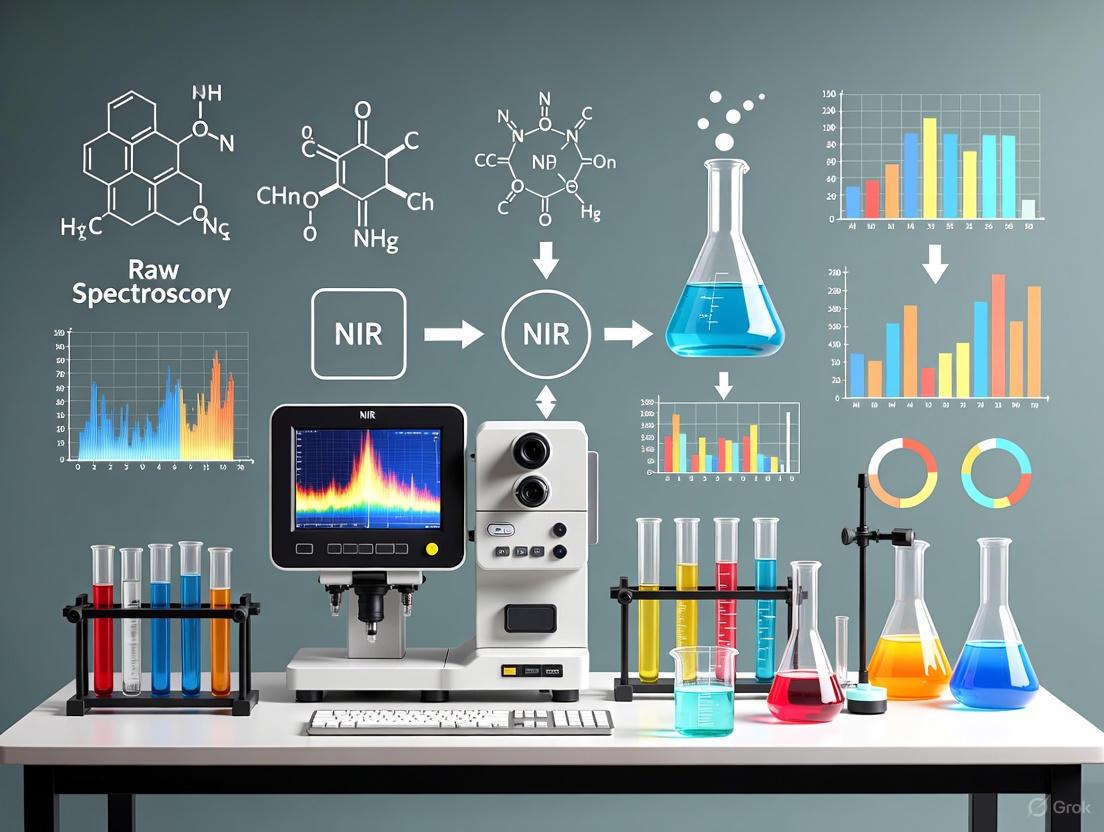
This article provides a comprehensive overview of Near-Infrared (NIR) spectroscopy as a rapid, non-destructive tool for raw material identification in the pharmaceutical industry.
NIR Spectroscopy for Raw Material Identification: A Comprehensive Guide for Pharmaceutical Professionals
Abstract
This article provides a comprehensive overview of Near-Infrared (NIR) spectroscopy as a rapid, non-destructive tool for raw material identification in the pharmaceutical industry. Tailored for researchers, scientists, and drug development professionals, it covers foundational principles, methodological workflows, and advanced applications aligned with PIC/S GMP guidelines. The content explores practical implementation strategies, troubleshooting for complex materials, and comparative analysis with techniques like Raman spectroscopy. Furthermore, it addresses critical aspects of method validation, regulatory compliance with USP, Ph. Eur., and JP, and data integrity under 21 CFR Part 11, offering a complete resource for optimizing quality control processes.
The Fundamentals of NIR Spectroscopy in Pharmaceutical Raw Material ID
Near-infrared (NIR) spectroscopy has emerged as a revolutionary analytical technique in pharmaceutical research and development, particularly for the critical task of raw material identification [1]. Unlike traditional wet chemical methods, NIR spectroscopy provides a rapid, non-destructive tool that requires no sample preparation and can analyze materials directly through packaging [2] [3]. The foundation of this technology lies in its detection of molecular overtones and combination bands, which are subtle vibrational transitions that provide a unique fingerprint for organic materials [4] [5]. For drug development professionals and scientists, understanding these core principles is essential for leveraging NIR spectroscopy to ensure raw material quality, combat counterfeit medications, and streamline quality control processes in compliance with modern PAT and QbD initiatives [6] [7].
Theoretical Foundations
Fundamental Vibrational Transitions
In molecular spectroscopy, vibrational energy levels are quantized, meaning molecules can only possess specific, discrete vibrational energies [8]. When a molecule absorbs infrared radiation, it undergoes a transition from a lower to a higher vibrational energy level. The most probable and intense of these transitions is the fundamental transition, which occurs between the ground state (v=0) and the first excited state (v=1) [4] [8]. These fundamental vibrations occur in the mid-infrared (MIR) region (approximately 4000-400 cm⁻¹) and provide the richest chemical information for spectral interpretation.
The energy of fundamental transitions can be approximated using the harmonic oscillator model, where vibrational energy levels are equally spaced according to the equation: [ E{v} = \left (v + \frac{1}{2} \right) \omega{e} ] where ( v ) is the vibrational quantum number, and ( \omega_{e} ) is the fundamental vibrational frequency [4]. However, this model represents an oversimplification, as real molecular bonds behave as anharmonic oscillators.
Overtones: Beyond the Fundamental Transition
Overtones are vibrational transitions that skip over one or more energy levels, such as from v=0 to v=2, v=0 to v=3, etc. [4] [8]. The first overtone (v=0 → v=2) has approximately twice the energy of the fundamental transition, while the second overtone (v=0 → v=3) has approximately three times the energy [8]. Consequently, overtone bands appear at higher energies (shorter wavelengths) compared to their fundamental counterparts, primarily in the NIR region of the electromagnetic spectrum (800-2500 nm or 12500-4000 cm⁻¹) [5] [3].
The probability of overtone transitions is significantly lower than that of fundamental transitions due to anharmonicity, making overtone bands typically 10-100 times less intense than fundamental bands [8] [5]. This reduced intensity allows for deeper light penetration into samples, enabling the analysis of thicker samples without dilution—a key advantage of NIR spectroscopy [5] [3].
Combination Bands: Complex Vibrational Interactions
Combination bands arise when a molecule simultaneously undergoes two or more different vibrational transitions upon absorbing a single photon [8]. The energy of a combination band equals approximately the sum of the energies of the individual fundamental vibrations involved. For example, if a molecule has fundamental vibrations at frequencies ω₁ and ω₂, the combination band would appear near ω₁ + ω₂ in the NIR spectrum [8].
Like overtones, combination bands are much weaker than fundamental bands due to their lower transition probability. Both overtone and combination bands involve non-fundamental transitions that become allowed due to the anharmonic nature of molecular vibrations [4].
The NIR Region: A Landscape of Overtones and Combinations
The NIR region (800-2500 nm or 12500-4000 cm⁻¹) is dominated by overtones and combination bands of fundamental molecular vibrations involving hydrogen atoms, particularly those of C-H, O-H, and N-H bonds [5] [3]. This is because hydrogen's low atomic mass results in high vibrational frequencies, whose overtones and combinations fall conveniently within the NIR range [5].
Table: Characteristic Molecular Bands in the NIR Region
| Bond Type | Vibration Mode | Typical Wavelength Range (nm) | Spectral Significance |
|---|---|---|---|
| C-H | 1st Overtone | 1650-1850 | Hydrocarbon characterization |
| O-H | 1st Overtone | 1390-1450 | Moisture content, hydration state |
| N-H | 1st Overtone | 1490-1550 | Protein analysis, amine groups |
| C-H | Combination | 2100-2500 | Molecular structure elucidation |
| O-H | Combination | 1900-2100 | Hydrogen bonding studies |
The resulting NIR spectra are characterized by broad, overlapping peaks that form complex, fingerprint-like patterns unique to each material [5] [3]. While this complexity makes visual interpretation challenging, it provides a rich information source that can be decoded using multivariate analysis techniques such as partial least squares (PLS) regression and principal component analysis (PCA) [9] [5].
Experimental Protocols
Raw Material Identification Protocol
Principle: This protocol utilizes the unique overtone and combination band signatures of pharmaceutical raw materials for rapid identification and verification, serving as a crucial first step in quality assurance [6] [7].
Materials and Equipment:
- FT-NIR spectrometer equipped with a reflectance module [6]
- Disposable glass vials (borosilicate) [6] [7]
- Reference standards of target raw materials
- Computer with multivariate analysis software
Procedure:
- Instrument Preparation: Power on the FT-NIR spectrometer and allow it to warm up for at least 30 minutes. Establish a stable instrument environment with controlled temperature and humidity [6].
Background Measurement: Collect a background spectrum using an empty glass vial placed on the reflectance module. This corrects for instrumental and environmental contributions [6].
Reference Library Development:
- Obtain 3-5 authenticated batches of each raw material to be included in the identification library [7].
- For each batch, fill a glass vial approximately two-thirds full with the powder.
- Collect NIR spectra using the following typical parameters [6]:
- Wavenumber range: 12000-4000 cm⁻¹
- Resolution: 8-16 cm⁻¹
- Number of scans: 32-64
- Measurement time: 10-60 seconds
- Repeat measurements for multiple samples from the same batch to account for inherent variability.
Unknown Sample Analysis:
- Place the unknown raw material in a glass vial with identical filling protocol.
- Collect spectrum using the same instrumental parameters.
- Use correlation algorithms (e.g., COMPARE) to measure spectral similarity between the unknown and reference library [6].
- Apply pass/fail thresholds (typically correlation value ≥0.98) for material identification [6].
Data Interpretation: A perfect match yields a correlation score of 1.0, while scores below the established threshold indicate non-identity. This method can successfully distinguish between chemically different raw materials such as APIs, excipients, and lubricants [6].
Quality Verification of Physically Variant Materials
Principle: This protocol extends beyond chemical identification to detect physical variations in raw materials—including particle size differences and polymorphic forms—that significantly impact manufacturing performance [7].
Materials and Equipment:
- FT-NIR spectrometer with reflectance module
- Disposable glass vials
- 10-30 batches of each material grade/variant for robust calibration [7]
- Chemometric software with SIMCA and PCA capabilities
Procedure:
- Spectral Acquisition:
- For each batch of material, fill glass vials consistently (avoiding probe compression which introduces variability) [7].
- Collect triplicate spectra from each batch, repacking between measurements.
- Ensure samples cover the expected physical variability (different particle sizes, polymorphs, moisture content).
Multivariate Model Development:
- Use Soft Independent Modeling by Class Analogy (SIMCA) to create distinct statistical models for each material class [6].
- Apply principal component analysis (PCA) to reduce spectral dimensionality while retaining physically relevant information [7].
- For particle size discrimination, employ distance matching algorithms with threshold values typically set between 3-6 standard deviations [7].
Quality Assessment:
- Test unknown samples against established models.
- Evaluate both chemical identity (correlation to reference) and physical properties (position in PCA space) [7].
Data Interpretation: This approach can distinguish between different grades of chemically identical materials, such as various particle sizes of microcrystalline cellulose or lactose polymorphs, which exhibit baseline shifts and subtle spectral differences despite chemical similarity [7].
Table: NIR Spectral Responses to Physical Variations in Raw Materials
| Physical Property | Spectral Manifestation | Analytical Approach | Application Example |
|---|---|---|---|
| Particle Size | Baseline shift (larger particles → higher baseline) | Distance matching, PCA | Microcrystalline cellulose grades [7] |
| Polymorphic Form | Peak sharpness changes (crystalline → sharper features) | SIMCA, correlation | Lactose polymorph identification [7] |
| Moisture Content | O-H combination band intensity (~5150 cm⁻¹) | PLS regression | Hydration state determination [7] |
| Source Variation | Peak position and intensity differences | SIMCA, distance matching | API from different geographical sources [7] |
Research Reagent Solutions
Table: Essential Materials for NIR Spectroscopy of Pharmaceutical Raw Materials
| Item | Function | Application Notes |
|---|---|---|
| FT-NIR Spectrometer | Measures overtone and combination band absorption | Fourier Transform systems provide superior wavelength accuracy and precision compared to dispersive instruments [3] |
| NIR Reflectance Module | Enables non-destructive analysis of powders | Ideal for direct measurement of solid raw materials without preparation [6] |
| Disposable Glass Vials | Sample container for consistent presentation | Glass is transparent in NIR region; provides reproducible surface and minimizes operator-dependent compression effects [6] [7] |
| Reference Standards | Authentic materials for library development | 3-5 batches needed for identification; 10-30 batches for quality verification [7] |
| Fiber Optic Probes | Remote sampling capability | Enables analysis through packaging; useful for large containers [2] [3] |
| Chemometric Software | Extracts information from complex spectra | Essential for interpreting overlapping overtone and combination bands [6] [5] |
Workflow Visualization
NIR-Based Raw Material Verification Workflow
Advanced Applications in Pharmaceutical Research
Counterfeit Drug Detection
The World Health Organization estimates that approximately 10% of medicines in low- and middle-income countries are substandard or falsified [1]. NIR spectroscopy has emerged as a powerful tool for combating this public health crisis due to its ability to non-destructively analyze pharmaceutical products through packaging [2] [1]. The technique detects inconsistencies in overtone and combination band patterns that indicate incorrect APIs, improper excipient ratios, or non-compliant manufacturing processes. Portable NIR devices now enable field screening of medications without opening blister packs or bottles, providing a rapid first line of defense against counterfeit drugs [1].
Polymorph Characterization and Monitoring
Different polymorphic forms of pharmaceutical compounds exhibit distinct physicochemical properties that significantly impact bioavailability, stability, and manufacturability [5] [7]. NIR spectroscopy sensitively detects polymorphic variations through subtle differences in crystal lattice vibrations manifested in overtone and combination regions. For example, crystalline forms typically display sharper spectral features in the 4000–4500 cm⁻¹ region, while amorphous forms show broader, less defined bands due to their disordered structure [7]. This capability allows researchers to verify the correct polymorphic form of incoming APIs and monitor for unwanted solid-form transitions during storage and processing.
Supplier Qualification and Geographic Sourcing
Global pharmaceutical supply chains introduce variability in raw material quality due to different manufacturing processes, purification methods, and storage conditions across geographic regions [7]. NIR spectroscopy can discriminate between materials from different sources, even when they are chemically identical according to compendial standards. In one documented case, NIR analysis revealed significant differences between an API sourced from Asia compared to traditional European supplies, showing both particle size variations and potential polymorphic differences that affected manufacturing performance [7]. This application is particularly valuable for quality-by-design (QbD) initiatives and supplier qualification programs.
Molecular overtones and combination bands form the fundamental physical basis for NIR spectroscopy's analytical capabilities in pharmaceutical raw material identification [4] [5]. While these transitions are inherently weaker than fundamental vibrations, they create unique spectral fingerprints that can be decoded through modern multivariate analysis techniques [9] [6]. The protocols outlined herein provide researchers and drug development professionals with robust methodologies to implement NIR spectroscopy for both chemical identification and physical characterization of raw materials [6] [7]. As the pharmaceutical industry continues to embrace PAT and QbD principles, the understanding and application of these core spectroscopic principles will remain essential for ensuring product quality, manufacturing efficiency, and patient safety [1] [7].
Near-Infrared (NIR) spectroscopy operates in the electromagnetic spectrum ranging from approximately 780 nm to 2500 nm, a region situated between the visible and mid-infrared spectra [10] [11]. This analytical technique functions by measuring the interaction between NIR radiation and chemical bonds in a sample, specifically targeting molecular vibrations from overtones and combinations of fundamental vibrations, particularly those involving hydrogen atoms in functional groups like C-H, O-H, and N-H [10] [7]. The resulting spectral patterns serve as unique molecular fingerprints, enabling the identification and quantification of material composition.
In the pharmaceutical industry, the application of NIR spectroscopy for raw material identification has become well-established, serving as a cornerstone for quality control and a critical component of Process Analytical Technology (PAT) and Quality by Design (QbD) initiatives [7]. Its utility extends beyond simple identification; NIR is highly sensitive to both the chemical and physical properties of materials, including polymorphism and particle size distribution, which are critical factors influencing manufacturing processes and final product quality [7]. The technique is valued for its speed, non-destructive nature, and minimal sample preparation requirements, allowing for analysis to be completed in seconds with samples presented in disposable glass vials or directly via fiber optic probes [10] [7].
Critical Applications in Raw Material Identification
The application of NIR spectroscopy within the context of pharmaceutical raw material identification is multifaceted, providing critical data for quality assurance and process control. Its non-destructive nature allows for the rapid verification of material identity and quality upon receipt and before release for manufacturing.
Polymorph and Crystalline Form Identification
The physical form of an Active Pharmaceutical Ingredient (API), particularly its polymorphic state, can significantly impact the bioavailability, stability, and processability of the final drug product. NIR spectroscopy is exceptionally sensitive to these morphological changes. For instance, lactose, a common excipient, exists in multiple forms including anhydrous, monohydrate, and amorphous states. As shown in Figure 1, NIR spectra of these polymorphs reveal distinct patterns; the hydrated form displays a characteristic peak at around 1940 nm (5150 cm⁻¹), while the amorphous form shows fewer spectral features compared to the crystalline forms, particularly in the 2200–2500 nm (4000–4500 cm⁻¹) region [7]. This sensitivity allows researchers to not only identify the material as lactose but also to qualify it as the correct morphology required for a specific manufacturing process, thereby de-risking unit operations such as blending and tableting.
Particle Size Distribution and Physical Attribute Analysis
The physical properties of raw materials, especially particle size, directly influence flow properties, blend uniformity, and compression behavior. NIR spectra can effectively track these attributes through baseline shifts and scattering effects. Reflectance spectra of microcrystalline cellulose of different particle sizes demonstrate that larger particles scatter more light, resulting in a higher spectral baseline than smaller particles [7]. This scattering is not uniform across the spectrum, being more pronounced at shorter wavelengths (longer wavenumbers). Monitoring these spectral changes enables the detection of variations in particle size between batches, which might otherwise lead to poor content uniformity in the final product.
Supplier Qualification and Source Verification
Global sourcing of APIs and excipients introduces variability that can disrupt validated manufacturing processes. NIR spectroscopy provides a powerful tool for qualifying new suppliers and monitoring batch-to-batch consistency from existing ones. A practical example involved an API sourced from a new supplier in Asia causing blending problems. NIR spectral analysis revealed that the Asian-sourced API had a significantly smaller particle size and less defined peaks compared to batches from the traditional European source [7]. Further analysis using the second derivative of the spectra indicated potential polymorphic differences. This combination of physical and chemical disparities, easily detected by NIR, explained the poor performance in production and underscored the technology's value in supplier qualification and quality oversight.
Experimental Protocols
The following protocols detail the standard methodologies for employing NIR spectroscopy in the identification and qualification of pharmaceutical raw materials.
Protocol 1: Raw Material Identity Testing
This protocol describes the procedure for establishing identity through spectral matching.
- Objective: To verify the identity of an incoming raw material against a validated spectral library.
- Sample Preparation:
- Present the sample in a disposable glass vial to ensure a consistent and reproducible surface for analysis. This method is preferred over a fiber optic probe, which can introduce variability due to differences in operator pressure and sample compression [7].
- Ensure the sample is representative of the entire batch.
- Instrumentation:
- Use a Fourier Transform-NIR (FT-NIR) spectrometer or a comparable instrument.
- Ensure the instrument is qualified and calibrated according to standard operating procedures.
- Data Acquisition:
- Collect the spectrum of the unknown sample over the standard NIR range (780-2500 nm).
- Average multiple scans to improve the signal-to-noise ratio.
- Data Analysis:
- Compare the unknown sample's spectrum to a pre-established library of reference spectra using a correlation or match percentage algorithm [7].
- A threshold value (typically ≥95% match) is used to confirm identity. Materials with a match percentage below the threshold are flagged for further investigation.
- Quality Control:
- The spectral library should be built using 3-5 representative batches of each material to capture natural variability [7].
Protocol 2: Quality Suitability and Supplier Discrimination
This protocol is used for advanced qualification of raw materials, assessing their suitability for a specific manufacturing process.
- Objective: To discriminate between different physical grades of a material or to qualify a new supplier.
- Sample Preparation:
- As in Protocol 1, use a standardized presentation method such as a glass vial.
- Instrumentation:
- Same as Protocol 1.
- Data Acquisition:
- Collect spectra for a larger set of calibration samples, typically 10-30 batches for each material or quality attribute to be modeled [7].
- Data Analysis:
- Employ more advanced chemometric algorithms such as:
- Principal Component Analysis (PCA): For visualizing natural clustering and outliers in the spectral data.
- Spectral Distance Matching (Conformity Index): To quantify the distance of an unknown sample from a reference population in standard deviation units. A threshold of 3 to 6 standard deviations is typically used for discrimination [7].
- Employ more advanced chemometric algorithms such as:
- Model Validation:
- Validate the model using an independent set of samples not used in the calibration model.
The following workflow summarizes the key steps for a raw material identification and qualification analysis:
Data Presentation and Chemometric Analysis
The interpretation of NIR spectra relies heavily on chemometrics, which applies mathematical and statistical methods to extract meaningful information from complex spectral data.
Quantitative Data on NIR Spectral Ranges
Table 1: The Near-Infrared Spectral Range and Associated Vibrations
| Spectral Region | Wavelength Range (nm) | Wavenumber Range (cm⁻¹) | Primary Molecular Vibrations |
|---|---|---|---|
| Short-Wavelength NIR | 780 - 1100 | 12,820 - 9,090 | Combination bands |
| Long-Wavelength NIR | 1100 - 2500 | 9,090 - 4,000 | Overtone bands (C-H, N-H, O-H) |
| Key Functional Groups | O-H, C-H, N-H, S-H | [10] [11] |
Essential Chemometric Techniques
The following table outlines the key chemometric methods used in NIR spectral analysis for raw material identification.
Table 2: Key Chemometric Methods for NIR Analysis of Raw Materials
| Method Category | Specific Technique | Primary Function in Analysis |
|---|---|---|
| Data Preprocessing | Standard Normal Variate (SNV), Multiplicative Scatter Correction (MSC), Savitzky-Golay Smoothing & Derivatives | Reduces noise, corrects for light scattering, and removes baseline shifts to enhance spectral features. [11] |
| Qualitative Analysis | Principal Component Analysis (PCA), Spectral Correlation / Distance Matching | Identifies patterns, clusters, and outliers; used for identity confirmation and material discrimination. [7] |
| Quantitative Modeling | Partial Least Squares Regression (PLSR) | Builds models to predict physical or chemical properties (e.g., particle size, moisture content) from spectral data. [11] |
The process of transforming raw spectral data into a reliable analytical result involves a logical sequence of steps, as visualized below:
The Scientist's Toolkit
A successful NIR-based raw material identification program requires more than just a spectrometer. The following table details the essential research reagent solutions and key materials.
Table 3: Essential Research Reagents and Materials for NIR Analysis
| Item | Function / Explanation |
|---|---|
| FT-NIR Spectrometer | The core analytical instrument. Fourier Transform systems provide high spectral resolution and wavelength accuracy, which is critical for identifying subtle spectral differences between materials. |
| Disposable Glass Vials | Provides a standardized and reproducible method for sample presentation. This minimizes variability introduced by operator technique, a common issue when using fiber optic probes directly on powders. [7] |
| Certified Reference Materials | Well-characterized materials used for building and validating spectral libraries and chemometric models. They are the foundation for all subsequent qualitative and quantitative analyses. |
| Chemometric Software | Software packages that perform essential data processing (SNV, derivatives) and analysis (PCA, PLS, classification). These are indispensable for interpreting complex NIR spectra. [10] [11] |
| Spectral Library | A curated database of reference spectra from authenticated raw material batches. This library is the benchmark against which unknown samples are compared for identity confirmation. [7] |
The NIR spectral range from 780 nm to 2500 nm provides a powerful foundation for a robust, non-destructive analytical technique that is indispensable in modern pharmaceutical research and development. Its application in raw material identification extends far beyond simple verification, enabling deep qualification of physical and chemical attributes critical to ensuring manufacturing process robustness and final product quality. By integrating standardized experimental protocols with advanced chemometric analysis, scientists and drug development professionals can leverage NIR spectroscopy to manage supply chain risk, adhere to PAT and QbD principles, and guarantee the integrity of the pharmaceutical production pipeline from the very first step.
Near-Infrared (NIR) spectroscopy has emerged as a cornerstone technique for the rapid, non-destructive identification and verification of raw materials, particularly within the highly regulated pharmaceutical industry. The technique's effectiveness hinges on the interaction between NIR light (780–2500 nm) and specific chemical bonds in a molecule, primarily those involving hydrogen [5] [12]. Unlike mid-infrared spectroscopy, which probes fundamental vibrational transitions, NIR spectroscopy deals with overtones and combination bands, resulting in complex spectra that are rich in chemical and physical information [5] [13].
The analysis of these spectra for positive identification relies significantly on the characteristic absorption patterns of O-H, N-H, and C-H functional groups. These hydrogen-containing groups are the dominant absorbers in the NIR region and serve as primary markers for differentiating between chemically similar and physically distinct materials [5] [10] [13]. This application note, framed within broader research on NIR for raw material identification, details the specific absorption characteristics of these key groups and provides validated experimental protocols for their analysis in a pharmaceutical context, supporting compliance with international pharmacopeia and PIC/S GMP guidelines [14].
Fundamental Principles of O-H, C-H, and N-H Absorption
The absorption bands in the NIR region arise from the overtone and combination vibrations of fundamental mid-IR modes. The anharmonicity of the molecular vibrations allows for these transitions, with the X-H bonds (where X is O, N, or C) being particularly prominent due to their large anharmonicity constants and strong dipole moments [5] [15].
The following table summarizes the characteristic absorption wavelengths and their corresponding vibrational assignments for the O-H, C-H, and N-H groups.
Table 1: Characteristic NIR Absorption Bands for O-H, C-H, and N-H Groups
| Functional Group | Bond Type | Approximate Wavelength (nm) | Approximate Wavenumber (cm⁻¹) | Vibrational Assignment | Band Characteristics |
|---|---|---|---|---|---|
| O-H | O-H (Water, Alcohols) | 1400-1450 | 7140-6900 | 1st Overtone Stretch | Strong, Broad |
| O-H (Water) | 1900-1950 | 5260-5130 | Combination (Stretch & Bend) | Very Strong, Broad | |
| N-H | N-H (Primary Amine) | 1450-1550 | 6900-6450 | 1st Overtone Stretch | Medium, Sharp |
| N-H (Amide) | 1900-2000 | 5260-5000 | Combination (Stretch & Bend) | Medium | |
| C-H | C-H (Aromatic, sp²) | 1140, 1660-1680 | 8770, 6020-5950 | 2nd & 1st Overtone Stretch | Sharp [15] |
| C-H (Aliphatic, sp³) | 1210, 1700-1780 | 8260, 5880-5620 | 2nd & 1st Overtone Stretch | Sharp [15] | |
| C-H (Methyl) | ~2330 | ~4290 | Combination Mode | Intensity proportional to CH number [15] |
The O-H group, particularly from water and alcohols, produces very broad and intense bands due to strong hydrogen bonding. The combination band around 1900-1950 nm is one of the most dominant features in the NIR spectra of hydrous or hydroxylic compounds and is extensively used for moisture analysis [5].
The N-H group, found in amines and amides, exhibits sharper bands compared to O-H. Primary amines show a characteristic doublet in the first overtone region (~1500 nm) due to symmetric and asymmetric stretching, which can be a key diagnostic feature for identification [5].
The C-H group vibrations are highly sensitive to their chemical environment. Research has demonstrated that the absorption frequency of a C-H group attached to an sp²-hybridized carbon (e.g., in benzene) is higher than that of an sp³-hybridized carbon (e.g., in cyclohexane) [15]. Furthermore, the intensity of specific combination bands (e.g., at ~2330 nm) in methyl-substituted benzenes has been shown to have a linear relationship with the number of substituted methyl C-H bonds, providing a theoretical basis for quantification [15].
Experimental Protocols for Raw Material Identification
This section outlines a standardized workflow for the identification of pharmaceutical raw materials using FT-NIR spectroscopy, with a focus on leveraging the spectral features of O-H, C-H, and N-H groups.
Instrumentation and Sample Presentation
- Instrument: Fourier Transform Near-Infrared (FT-NIR) spectrometer. FT-based instruments are preferred for their high wavelength accuracy and signal-to-noise ratio, which are critical for building robust identification methods [6] [13].
- Sampling Accessory: A NIR reflectance module or an integrating sphere is ideal for analyzing diverse sample types without preparation [14] [6].
- Sample Presentation: Solid powders can be analyzed in glass vials or directly in their sealed plastic bags (e.g., polyethylene). The use of glass vials is recommended for method development to minimize spectral variability from packaging [14] [6].
- Instrument Settings:
Method Development Workflow
The process for developing a raw material identification method follows a structured path from spectral acquisition to validation, as illustrated below.
Diagram 1: Workflow for developing an NIR identification method, showing the critical decision point for algorithm selection based on material complexity.
Step 1: Collect Reference Spectra
- Library Creation: Acquire NIR spectra for all raw materials to be identified. It is critical to include multiple batches (recommended: 3-5) for each material to capture natural spectral variations arising from differences in particle size, density, or moisture content [6].
- Spectral Acquisition: For each batch, perform at least triplicate measurements, repacking the sample between scans if in a loose powder form, to account for sampling reproducibility [6].
Step 2: Select Identification Algorithm
The choice of algorithm depends on the analytical goal and the similarity of the materials in the library.
- For Chemically Distinct Materials: Use a correlation algorithm (e.g., COMPARE). This algorithm calculates a correlation coefficient (where 1 is a perfect match) between the unknown spectrum and each reference spectrum in the library. It is fast and effective for distinguishing materials with gross spectral differences, such as diclofenac versus talc [6].
- For Physically Variant or Similar Materials: Use a chemometric-classification algorithm like SIMCA (Soft Independent Modeling of Class Analogy). SIMCA creates a principal component model for each material class, accounting for both the variations within a class and the differences between classes. This is essential for discriminating between different grades of the same chemical (e.g., Avicel PH101 vs. PH102, which differ in particle size and moisture) [6].
Step 3: Define Pass/Fail Thresholds
Establish correlation or distance thresholds to determine a "pass" or "fail" result.
- For Correlation Algorithms: Set a minimum correlation threshold (e.g., 0.98) and a discrimination threshold (e.g., 0.05) to ensure the unknown not only matches the best hit but is also sufficiently different from the second-best hit to prevent false positives [6].
- For SIMCA: Set critical limits based on model distance and residual variance to determine class membership.
Step 4: Validate the Method
- Independent Test Set: Use a set of validation samples not included in the original library. These should include different batches and, if applicable, samples from different suppliers [6].
- Challenge the Method: Test the method's ability to correctly identify all validation samples and to reject wrong or unknown materials (e.g., a material not in the library should unambiguously fail) [6].
The Scientist's Toolkit
Successful implementation of NIR methods requires more than just a spectrometer. The following table lists key solutions and their functions in developing a raw material identification protocol.
Table 2: Key Research Reagent Solutions for NIR Raw Material Identification
| Item | Function/Description | Application Note |
|---|---|---|
| FT-NIR Spectrometer | High-performance instrument with a NIR reflectance module for versatile sampling of solids, liquids, and gels through packaging. | Essential for compliance with pharmacopeial standards requiring high wavelength accuracy [14] [6]. |
| Chemometrics Software | Software package capable of performing multivariate analysis, including algorithms like COMPARE, SIMCA, and PLS. | Required for developing classification models and interpreting complex spectral data from O-H, C-H, and N-H groups [5] [6]. |
| Standard Reference Materials | Certified materials for instrument qualification and performance verification (e.g., polystyrene, rare earth oxides). | Ensures instrumental precision and aids in transferring methods between instruments [5]. |
| Pharmaceutical Spectral Libraries | Commercial databases containing over 1,300 spectra of excipients, APIs, and other chemicals for unknown identification. | Critical for investigating unexpected failures by searching spectra of unlabeled or suspect materials [6]. |
Critical Considerations for Implementation
- Particle Size Effects: NIR spectra are highly sensitive to the physical properties of solids, especially particle size. Changes in particle size can cause significant baseline shifts and intensity variations. Using multiple batches in the reference library and algorithms like SIMCA that model internal variation is crucial to mitigate this effect [14] [6].
- Container Interference: While NIR can measure through packaging, the container material (e.g., polyethylene, glass) contributes its own spectral signature. For robust methods, standard data must be registered for each specific container type and thickness [14]. Raman spectroscopy may be less affected by certain containers if this proves to be a significant limitation [14].
- Handling Inorganic Compounds: Inorganic materials typically exhibit weak and broad absorptions in the NIR region, making them less suitable for identification via this technique compared to Raman spectroscopy [14].
Near-infrared (NIR) spectroscopy has emerged as a cornerstone analytical technique for quality control (QC) in regulated industries, particularly pharmaceuticals. Its utility stems from three fundamental advantages: it is non-destructive, rapid, and requires no sample preparation. These characteristics make it exceptionally suitable for the identification and verification of raw materials, aligning with the international trend toward more efficient and quality-assured manufacturing processes as mandated by PIC/S GMP guidelines [14]. This application note details the experimental protocols and presents quantitative data demonstrating these advantages within the context of a research thesis on NIR spectroscopy for raw material identification.
The principle of NIR spectroscopy involves shining near-infrared light (approximately 780 to 2500 nm) on a sample and measuring how this light is absorbed and reflected [16] [17]. The resulting absorption patterns, generated by molecular vibrations (overtones and combinations of fundamental vibrations, particularly of C-H, O-H, and N-H bonds), serve as a unique molecular fingerprint for the material [10]. This non-destructive interaction forms the basis for a rapid and preparation-free analysis.
Comparative Advantages of NIR Spectroscopy in QC
The following table summarizes how the core advantages of NIR spectroscopy translate into practical benefits for quality control, specifically in contrast to traditional analytical methods.
Table 1: Advantages of NIR Spectroscopy for Quality Control
| Advantage | Description | Impact on QC and Research |
|---|---|---|
| Non-Destructive | The sample is not altered or destroyed during analysis [16] [18]. | Allows for further testing on the same sample, preserves valuable raw materials, and enables 100% inspection if needed [19]. |
| Rapid Analysis | Analysis can be performed in a matter of seconds to minutes [19] [10]. | Enables real-time, in-line, or at-line process monitoring and control (Process Analytical Technology, PAT), drastically reducing cycle times [19]. |
| No Sample Preparation | Eliminates the need for dissolution, dilution, filtration, or the use of KBr pellets [16] [19]. | Reduces analysis time, minimizes the risk of human error, and lowers costs by eliminating solvents and reagents [19] [20]. |
| Versatility | Can analyze solids, liquids, and powders directly, often through translucent packaging like plastic bags or glass bottles [14] [19]. | Streamlines the raw material acceptance process in a warehouse setting without the need to unseal containers, enhancing safety and efficiency [14]. |
Experimental Protocol for Raw Material Identification
This protocol is designed for the qualitative identification of pharmaceutical raw materials received in a warehouse or QC laboratory setting, utilizing a handheld or benchtop NIR spectrometer.
Research Reagent Solutions and Equipment
Table 2: Essential Materials and Equipment
| Item | Function/Description |
|---|---|
| NIR Spectrometer | A portable (handheld) or benchtop instrument covering the wavelength range of 780-2500 nm. For pharmaceutical compliance, ensure it meets regulatory requirements (e.g., USP, EP, FDA 21 CFR Part 11) [19]. |
| Reference Standards | Certified raw material samples for building a spectral library. These must be of high and verified purity. |
| Software | Chemometric software for spectral collection, library creation, and method development. Must include algorithms for Principal Component Analysis (PCA) and Spectral Matching [21]. |
| Sample Containers | Glass vials or polyethylene/polypropylene bags that are transparent to NIR light. Consistent container type and thickness are critical for reproducible results [14]. |
Step-by-Step Methodology
Step 1: System Setup and Qualification
- Verify the NIR spectrometer's performance according to the manufacturer's procedures, including checks for wavelength accuracy and photometric noise [19].
- Ensure the instrument's environment is stable and free from fluctuating ambient light or temperature.
Step 2: Spectral Library Development
- Collect NIR spectra from a minimum of 20-30 independent batches of each known reference standard to capture natural variability [19].
- Acquire spectra in reflectance mode for solids and powders, or transflectance mode for liquids.
- Apply standard spectral pre-processing techniques such as Standard Normal Variate (SNV), Detrending, and first- or second-derivative treatments to minimize the effects of light scattering and baseline offset.
- Use the chemometric software to create a validated spectral library, employing techniques like PCA to define the acceptable spectral space for each material.
Step 3: Analysis of Unknown Raw Materials
- Present the unknown sample to the spectrometer. This can be done directly in its container if the container is NIR-transparent [14].
- Collect the sample's spectrum using the same acquisition parameters and pre-processing methods established during library development.
- The software compares the unknown sample's spectrum against the reference library.
- An identification is confirmed based on a pre-defined spectral match threshold (e.g., correlation coefficient or Mahalanobis distance).
Step 4: Data Integrity and Reporting
- The software automatically generates a report, and all data and user actions are recorded in an audit trail to comply with regulatory standards [19].
Workflow Visualization
The following diagram illustrates the logical workflow for the NIR-based raw material identification protocol.
Quantitative Analysis and Performance Data
Beyond identification, NIR spectroscopy is a powerful tool for the quantitative analysis of raw materials and finished pharmaceutical forms, such as content uniformity testing.
Protocol for Quantitative Analysis of an Active Ingredient
Objective: To determine the content uniformity of Active Pharmaceutical Ingredient (API) 'X' in a solid dosage form with a target concentration of 80% w/w [19].
Methodology:
- Calibration Set: A set of calibration samples (recommended n ≥ 20) with a sufficient variability in API concentration (e.g., 72% - 96% w/w) is prepared.
- Reference Method: The actual concentration of these samples is determined using a primary reference method, such as High-Performance Liquid Chromatography (HPLC).
- Spectral Acquisition & Model Building: NIR spectra are collected from all calibration samples. A partial least squares (PLS) regression model is built, correlating the spectral data to the reference concentration values.
- Model Validation: The model is validated using an independent set of samples not used in the calibration. Advanced algorithms like Competitive Adaptive Reweighted Sampling (CARS) can be employed to select the most informative wavelengths and improve model performance [22].
- Routine Analysis: Unknown samples are measured, and their spectra are analyzed by the validated PLS model to predict the API concentration.
Representative Quantitative Results
The following table summarizes performance data from a typical quantitative application, demonstrating the technique's accuracy and precision.
Table 3: Performance Data for Quantitative Analysis of API 'X' [19]
| Parameter | Value | Description |
|---|---|---|
| Concentration Range | 72 - 96% w/w | Range of the calibration model. |
| Correlation Coefficient (R²) | 0.99 | Indicates the strength of the linear relationship between NIR-predicted and reference values. |
| Root Mean Squared Error of Prediction (RMSEP) | ± 0.1% | A measure of the model's prediction accuracy. |
| Analysis Time | Seconds | Time required for a single measurement, compared to hours for traditional methods like HPLC. |
The empirical evidence and protocols outlined in this application note substantiate the title's claim: the primary advantages of NIR spectroscopy for quality control are its non-destructive nature, rapid analysis speed, and requirement for no sample preparation. These attributes collectively address the pressing needs of modern drug development and manufacturing for efficient, cost-effective, and quality-focused analytical methods. By enabling real-time raw material identification and quantitative analysis directly through packaging, NIR spectroscopy aligns perfectly with the objectives of a research thesis focused on advancing raw material identification, offering a robust framework for ensuring supply chain integrity and compliance with international regulatory standards.
In the pharmaceutical industry, Near-Infrared (NIR) spectroscopy has become a cornerstone technique for the rapid and non-destructive identification and analysis of raw materials. Its widespread adoption is guided by stringent regulatory frameworks outlined in key pharmacopeias. The United States Pharmacopeia (USP) general chapter 〈856〉, the European Pharmacopoeia (Ph. Eur.) chapter 2.2.40, and the Japanese Pharmacopoeia (JP) provide the foundational principles, procedural requirements, and best practices for implementing NIR analytical procedures. Compliance with these standards is not merely a regulatory hurdle; it is a critical component of a modern quality assurance system, enabling the efficient verification of incoming raw materials while supporting the principles of Process Analytical Technology (PAT). Adherence ensures that NIR methods are scientifically sound, robust, and capable of providing reliable data for decision-making throughout the drug development and manufacturing lifecycle [14] [23] [24].
Comparative Analysis of Pharmacopeial Standards
The USP, Ph. Eur., and JP chapters on NIR spectroscopy share the common goal of ensuring analytical validity, but they differ in their specific emphases and structural approaches. The following table provides a detailed comparison of these foundational documents.
Table 1: Comparison of Key Pharmacopeial Standards for NIR Spectroscopy
| Feature | USP 〈856〉 | Ph. Eur. 2.2.40 | Japanese Pharmacopoeia (JP) |
|---|---|---|---|
| Status & Focus | Mandatory chapter; focuses on instrument qualification, validation, and verification of NIR systems [25]. | Mandatory chapter; provides a comprehensive overview of the technique, apparatus, and data treatment [24] [26]. | Prescribes NIR spectroscopy for identification; specific details and focus areas are aligned with international harmonization trends [14]. |
| Key Content Areas | Qualification of instruments, validation and verification of NIR analytical procedures, establishment of spectral libraries [25]. | Apparatus, measurement methods, sample presentation, data pre-treatment, qualitative/quantitative analysis, and model transfer [24]. | Acceptance testing for raw material identification, aligning with international GMP trends such as PIC/S guidelines [14]. |
| Measurement Modes | Discusses transmission and reflectance modes [24]. | Explicitly describes transmission and reflectance measurement methods [24]. | Information available in the respective JP chapter. |
| Data Analysis & Chemometrics | Establishes a link to the new USP chapter 〈1039〉 on Chemometrics for multivariate calibrations [25]. | Includes sections on pretreatment of spectral data and ongoing model evaluation [24]. | Methodologies are developed in line with pharmacopeial support and practical application needs [14]. |
Experimental Protocols for Raw Material Identification
The following section details a standardized protocol for developing and validating a NIR method for raw material identification, designed to meet the requirements of the referenced pharmacopeias.
Instrumentation and Software Setup
- FT-NIR Spectrometer: Utilize a Fourier-Transform NIR spectrometer qualified in accordance with USP 〈1058> (Analytical Instrument Qualification). The instrument should be equipped with a NIR reflectance module for analyzing solid powders directly in glass vials or Petri dishes [6].
- Software: Employ instrument control software capable of collecting spectra, building spectral libraries, and applying chemometric algorithms. The software should have enhanced security and audit trail functionalities for work in regulated environments (e.g., compliance with 21 CFR Part 11) [6] [27].
- Instrumental Conditions: Typical initial parameters are listed below. These may require optimization for specific instruments and samples [6].
- Resolution: 16 cm⁻¹
- Number of Scans/Accumulations: 20-32
- Spectral Range: 4000 - 10000 cm⁻¹
- Apodization Function: Sqr Triangle or similar
Spectral Library Development and Validation
A robust spectral library is the core of a reliable qualitative identification method. The workflow for its development and validation is outlined in the following diagram.
Diagram 1: Spectral Library Development Workflow
Step 1: Sample Selection and Preparation
- Collect a representative set of reference materials that encompasses the expected natural variability. This includes multiple independent batches (e.g., 3-5 or more) and, if applicable, materials from different suppliers [6] [24].
- For raw material identification, samples are typically analyzed as neat powders. Pack the sample into a standard glass vial to a consistent depth (e.g., 1-2 cm) and tap to ensure a uniform surface. No further sample preparation (dilution, drying) is required, which is a key advantage of NIR [6].
Step 2: Spectral Acquisition and Data Pre-processing
- Acquire spectra for all reference samples using the established instrumental conditions. For each batch, collect multiple spectra (e.g., triplicates) by rotating or repacking the vial to account for sampling heterogeneity [6].
- Apply appropriate data pre-processing techniques to minimize the impact of light scattering and baseline shifts. Common methods include:
Step 3: Model Building and Validation
- For identifying chemically distinct materials, a correlation algorithm (e.g., COMPARE) can be used. The model compares the spectrum of an unknown sample against the library and reports a correlation score (1.0 is a perfect match) [6].
- For discriminating between chemically similar materials or different grades of the same excipient (e.g., Avicel PH101 vs. PH102), a more powerful chemometric approach like SIMCA (Soft Independent Modeling of Class Analogy) is required. SIMCA models the variation within each class of material and is sensitive to small spectral differences caused by physical properties like particle size or moisture [6].
- Validate the model using an independent set of samples not used in the model building. The validation should demonstrate that the method can correctly identify true positives and reject false positives (discrimination from other materials in the library) [6] [24].
Experimental Data and Application Examples
Algorithm Performance in Practical Scenarios
The choice of algorithm is critical and depends on the analytical challenge. The following table summarizes experimental data from model development and validation exercises, illustrating the performance of different algorithmic approaches.
Table 2: Performance of NIR Algorithms in Raw Material Testing
| Experiment Objective | Algorithm Used | Key Parameters & Results | Interpretation & Compliance Link |
|---|---|---|---|
| Identification of 34 chemically different raw materials [6] | COMPARE (Correlation) | Pass/Fail Criteria: Correlation ≥0.98, Discrimination ≥0.05. Result: All validation samples (Povidone, Avicel, etc.) passed. | Suitable for gross differentiation. Aligns with Ph. Eur. 2.2.40 on qualitative analysis for ID of distinct materials. |
| Discrimination of 7 grades of Avicel (Microcrystalline Cellulose) [6] | SIMCA (Chemometric) | Result: COMPARE failed to discriminate; SIMCA successfully separated all 7 grades based on particle size/moisture. | Essential for quality attributes beyond chemical ID. Demonstrates compliance with USP 〈856〉/〈1039> on multivariate calibration for complex tasks. |
| Troubleshooting an unidentified powder [6] | Spectral Library Search | Result: COMPARE failed (best hit: dextrose, score 0.48). Library Search correctly identified the material as D-mannitol (score 0.99). | Highlights the need for comprehensive libraries and powerful search tools, as required for thorough method validation per FDA guidance [24]. |
The Scientist's Toolkit: Essential Research Reagents and Materials
A successful NIR method relies on both the instrumentation and the quality of the reference materials used to build the model.
Table 3: Essential Materials for NIR Method Development
| Item | Function/Description | Regulatory & Practical Consideration |
|---|---|---|
| Pharmaceutical Raw Materials | High-purity Active Pharmaceutical Ingredients (APIs) and excipients used to build the spectral library. | Must be from qualified suppliers and represent the true variability of the material (multiple batches, if possible) to ensure model robustness as per FDA guidance [24]. |
| Certified Reference Standards | NIST-traceable standards, such as polystyrene, used for instrumental performance qualification. | Critical for demonstrating instrument compliance with Ph. Eur. 2.2.40 and USP 〈856〉, ensuring wavelength and photometric accuracy [26]. |
| Standardized Sample Containers | Consistent glass vials or Petri dishes with known spectral properties. | Using consistent containers minimizes spectral variance. Ph. Eur. 2.2.40 notes that sample presentation is a key factor affecting spectral response [6] [24]. |
| Chemometric Software | Software capable of performing algorithms like COMPARE, SIMCA, PCA, and data pre-processing. | The software must be validated for its intended use. USP 〈1039> and FDA guidance emphasize the role of chemometrics in developing and validating NIR methods [25] [6] [24]. |
Critical Regulatory Considerations and Methodology
Navigating Method Validation and Lifecycle Management
Validation of an NIR identification method goes beyond instrumental qualification. It requires a holistic approach that encompasses the entire analytical procedure, from sampling to the reporting of the result.
- Validation Parameters: For qualitative identification, key validation parameters include specificity (the ability to discriminate between different materials and reject imposters), robustness (resilience to minor changes in operational parameters), and repeatability [24].
- Lifecycle Management: Once implemented, the NIR procedure must be maintained. This includes ongoing model evaluation by periodically testing the model with new reference samples and model updating to incorporate new material sources or process changes, as described in both USP and Ph. Eur. chapters [24].
- Regulatory Submission: The FDA draft guidance on NIR analytical procedures recommends that submissions include a detailed description of the NIR model development, validation protocols, and the procedures in place for maintaining the model throughout its lifecycle [24].
Advantages, Limitations, and Strategic Selection
Understanding the strengths and weaknesses of NIR is crucial for its appropriate application.
- Advantages: NIR spectroscopy is non-destructive and requires no sample preparation, allowing for rapid analysis. It can analyze samples directly through certain packaging materials like glass vials and plastic bags, making it ideal for warehouse and on-site testing [14] [27]. Its ability to provide information on both chemical and physical properties is a significant advantage for PAT [23].
- Limitations and Challenges: NIR spectra consist of broad, overlapping overtone and combination bands, making them complex to interpret without chemometrics. The technique can be affected by physical sample properties like particle size and packing density, which must be accounted for in the model [28] [14] [23]. It is also generally unsuitable for identifying materials with weak NIR absorption, such as many inorganic compounds [14].
The following diagram illustrates the decision-making process for choosing between NIR and other techniques, considering its pros and cons.
Diagram 2: Decision Logic for Spectroscopic Technique Selection
Implementing NIR Methods: From Workflow to Real-World Applications
Building a Robust Identification Library with Reference Spectra
Near-infrared (NIR) spectroscopy has become a cornerstone technique for the rapid, non-destructive identification of raw materials in regulated industries such as pharmaceuticals [6]. The core of this analytical approach is a robust library of reference spectra, which serves as the definitive source for verifying material identity and ensuring quality. This application note details the methodologies for building, validating, and deploying such a spectral library, framed within the broader research context of enhancing raw material identification protocols. We provide detailed experimental protocols and data to guide researchers and drug development professionals in implementing a system that meets stringent regulatory requirements while improving operational efficiency.
Principles of NIR Spectroscopy for Identification
NIR spectroscopy operates in the electromagnetic region of 780 nm to 2500 nm (approximately 12,820 cm⁻¹ to 4000 cm⁻¹) [11]. The spectral bands observed are combination and overtone bands derived from fundamental molecular vibrations in the mid-infrared region, primarily involving hydrogen-containing groups such as C-H, O-H, and N-H [6] [11]. These bands create a unique "fingerprint" for a material, allowing for its unambiguous identification.
A critical advantage of NIR spectroscopy is its sensitivity to both chemical and physical properties. As shown in Figure 1, it can distinguish not only between different chemical entities but also between different polymorphs, particle sizes, and moisture contents of the same chemical compound [7]. This makes it exceptionally powerful for detecting subtle variations in raw materials that could impact downstream manufacturing processes.
Algorithm Selection for Spectral Matching
The successful identification of a material depends on the algorithm used to compare an unknown spectrum against the reference library. The choice of algorithm should be based on the complexity of the analysis and the nature of the materials in the library. The following table summarizes the primary algorithms used.
Table 1: Key Algorithms for Spectral Identification
| Algorithm | Principle | Best Use Cases | Key Metrics |
|---|---|---|---|
| Correlation (e.g., COMPARE) | Measures the correlation (similarity) between an unknown spectrum and reference spectra [6]. | Identifying chemically distinct materials [6]. | Correlation Score: 1 (perfect match) to 0 (no correlation). Pass threshold typically ≥ 0.98 [6]. |
| Spectral Distance/Difference Matching | Calculates the distance of an unknown spectrum from a reference class in multidimensional space [7]. | Quality checking; detecting variations in physical properties like particle size [7]. | Standard Deviations (SD): Thresholds typically set between 3 to 6 SD from the reference mean [7]. |
| Soft Independent Modeling of Class Analogy (SIMCA) | A chemometric approach that builds a principal component analysis (PCA) model for each material class, accounting for both intra-class variation and inter-class differences [6]. | Discriminating between chemically similar materials (e.g., different grades of an excipient) or detecting impurities [6]. | Inter-Material Distance: Larger distances indicate better discrimination. Coomans Plot: Visually confirms class separation [6]. |
Experimental Protocols
Protocol 1: Building the Core Reference Library
This protocol outlines the steps for creating a foundational library for the identification of chemically distinct raw materials.
- Objective: To create a library of reference spectra for 20+ chemically diverse solid raw materials (APIs and excipients) suitable for use with a correlation algorithm [6].
- Materials & Equipment:
- Methodology:
- Sample Presentation: Place powdered samples in disposable glass vials. Using vials provides a more repeatable surface and minimizes spectral variations caused by inconsistent sample compression from direct probe contact [7].
- Instrument Conditions: Configure the spectrometer as shown in Table 2.
- Spectral Acquisition: For each batch of each material, collect spectra in triplicate, repacking the sample between measurements to account for sampling reproducibility errors [6].
- Library Creation: Average the replicate spectra for each batch and save them in the library, labeled with the material name and batch identifier.
Table 2: Example Instrument Operating Conditions for Library Building [6]
| Parameter | Setting |
|---|---|
| Spectral Range | 4000 - 10000 cm⁻¹ |
| Resolution | 8 or 16 cm⁻¹ |
| Number of Scans | 32 - 64 |
| Sampling Accessory | NIR Reflectance Module |
Protocol 2: Method Validation
- Objective: To validate the identification method using independent samples not used in the initial library build [6].
- Methodology:
- Validation Set: Obtain new samples of the library materials from different suppliers or production batches.
- Testing: Run the identification method against these samples using the COMPARE algorithm.
- Acceptance Criteria: Set pass-fail thresholds, for example, a correlation value of 0.98 and a discrimination value of 0.05. All validation samples must exceed these thresholds to confirm the method's robustness [6].
Protocol 3: Discrimination of Closely Related Materials
- Objective: To develop a method capable of distinguishing between seven different grades of Avicel (e.g., PH101, PH102, PH103), which are chemically identical but differ in physical properties like particle size and moisture content [6].
- Methodology:
- Spectral Acquisition: For each grade, collect three samples and measure each in triplicate, generating a total of 63 spectra for the seven grades [6].
- Model Development: Input all spectra into a SIMCA model. The algorithm will create a unique PCA model for each grade of Avicel.
- Validation: Use a scores plot and Coomans plot to visually confirm the separation between the different grades. The model distances between classes should show no overlap to prevent misclassification [6].
The following workflow diagram summarizes the process of building and deploying a robust identification library.
The Scientist's Toolkit: Essential Research Reagent Solutions
The following table details key equipment, software, and consumables required to establish a NIR identification system.
Table 3: Essential Materials for Building a NIR Spectral Library
| Item | Function / Explanation |
|---|---|
| FT-NIR Spectrometer | Fourier Transform NIR instruments provide high wavelength accuracy and reproducibility, which are critical for building reliable spectral libraries. Interchangeable sampling modules offer versatility [6]. |
| NIR Reflectance Module | A non-contact accessory for measuring solid powdered samples. Allows for measurement directly through glass vials, minimizing sample preparation and operator-induced variability [6] [7]. |
| Disposable Glass Vials | Provides a consistent and reproducible surface for measuring powders, reducing spectral variance due to packing density and particle orientation [7]. |
| Chemometrics Software | Software capable of running algorithms like COMPARE, SIMCA, and PCA is essential for method development, data modeling, and validation. Workflow software enhances ease of use in regulated environments [6]. |
| Commercial Spectral Libraries | Libraries containing thousands of spectra of excipients and APIs (e.g., from ST Japan) are invaluable for investigating unexpected failures or identifying unknown materials [6]. |
Troubleshooting and Advanced Applications
Even with a robust library, identification failures can occur and require investigation.
- Unexpected Failure Analysis: If a sample fails the identification test against the internal library (e.g., best hit has a correlation score of 0.48, well below the 0.98 threshold), its spectrum should be searched against a large commercial pharmaceutical spectral library. This can correctly identify the material, such as D-mannitol, which may not be in the initial internal library [6].
- Quality Verification: Beyond identification, NIR can be used to verify if a material's physical properties (e.g., particle size distribution, polymorphic form) from a new supplier fall within the expected range of variability of the existing library. A significant spectral distance or PCA outlier signal can flag a material that, while chemically correct, may not be suitable for the manufacturing process [7].
The following diagram illustrates the decision-making process for handling a failed identification result.
Within pharmaceutical development, the rapid and accurate identification of raw materials is a critical quality control step. Near-Infrared (NIR) spectroscopy has emerged as a cornerstone technique for this purpose, prized for its speed, non-destructive nature, and minimal sample preparation requirements [6] [29]. However, the complex, overlapping spectral data produced by NIR requires robust chemometric algorithms for interpretation. The selection of an appropriate algorithm is not trivial; it is dictated by the specific analytical challenge. This application note delineates the distinct roles of two fundamental algorithms—the COMPARE (correlation) algorithm and the Soft Independent Modeling of Class Analogy (SIMCA)—in the context of pharmaceutical raw material identification (RMID). We provide a structured framework, supported by experimental data and protocols, to guide scientists in selecting the optimal algorithm based on material similarity, thereby enhancing the accuracy and efficiency of drug development workflows.
Algorithm Fundamentals and Selection Criteria
The COMPARE algorithm and SIMCA represent two philosophically different approaches to spectral classification. Understanding their core principles is essential for correct application.
COMPARE Algorithm: This is a distance-based method that functions by measuring the global spectral similarity between an unknown sample and a library of reference spectra. It typically uses a correlation coefficient, where a score of 1 indicates a perfect match and 0 indicates no correlation [6]. Pass/fail thresholds are set based on this correlation and the discrimination from the second-best match. It is a powerful, straightforward tool for identifying chemically distinct materials but is less sensitive to subtle physical or polymorphic differences.
SIMCA Algorithm: This is a class-modeling technique. Instead of comparing an unknown to all references, SIMCA builds a separate principal component analysis (PCA) model for each class of material in the library. This model captures the natural variation within each class. An unknown sample is then checked to see if it fits within the boundaries of any of these class models [6]. SIMCA is exceptionally powerful for discriminating between chemically similar but physically distinct materials (e.g., different particle sizes or moisture content) because it is sensitive to the intra-class variance.
The decision-making process for algorithm selection is summarized in the workflow below.
Experimental Comparison: COMPARE vs. SIMCA
To empirically demonstrate the appropriate application of each algorithm, we outline three critical experiments derived from the literature [6].
Experiment 1: Identification of Chemically Distinct Raw Materials
Objective: To verify the capability of the COMPARE algorithm to identify chemically diverse raw materials from a large spectral library.
Protocol:
- Instrumentation: FT-NIR Spectrometer (e.g., PerkinElmer Spectrum Two N) with NIR reflectance module.
- Sample Preparation: Present powdered raw materials in standard 14 mm borosilicate glass vials. No sample preparation or dilution is required.
- Spectral Acquisition:
- Collect reference spectra for a library of 34 chemically different solid raw materials (APIs and excipients).
- Collect validation spectra from nine independent samples (including povidone and Avicel from different batches and suppliers).
- Parameters: 8 cm⁻¹ resolution, 64 scans, 1200 - 2400 nm range.
- Data Analysis:
- Analyze validation spectra using the COMPARE algorithm against the reference library.
- Set pass/fail criteria: correlation threshold of 0.98 and discrimination threshold of 0.05.
Results: All nine validation samples were correctly identified, exceeding the pass thresholds. This confirms COMPARE's reliability for identifying chemically distinct materials, even with batch-to-batch variation.
Table 1: COMPARE Algorithm Validation Results
| Validation Material | Correlation Score | Pass/Fail |
|---|---|---|
| Povidone (Batch 1) | >0.98 | Pass |
| Povidone (Batch 2) | >0.98 | Pass |
| Povidone (Batch 3) | >0.98 | Pass |
| Avicel (Batch 1) | >0.98 | Pass |
| Avicel (Batch 2) | >0.98 | Pass |
| Avicel (Batch 3) | >0.98 | Pass |
| Calcium Ascorbate | >0.98 | Pass |
| HPMC | >0.98 | Pass |
| Magnesium Stearate | >0.98 | Pass |
Experiment 2: Discrimination of Closely Related Material Grades
Objective: To demonstrate the superiority of SIMCA in discriminating between different physical grades of the same chemical compound (Avicel microcrystalline cellulose).
Protocol:
- Instrumentation and Sample Prep: As described in Experiment 1.
- Spectral Acquisition:
- Collect spectra for seven different grades of Avicel (PH101, PH102, PH103, PH105, PH113, PH301, PH302).
- For each grade, analyze three samples, each measured in triplicate (total 63 spectra).
- Data Analysis:
- First, attempt discrimination using the COMPARE algorithm.
- Then, build a SIMCA model using the 63 spectra. Evaluate the separation using a principal component scores plot and a Coomans plot.
Results: The COMPARE algorithm correctly identified all materials as "Avicel" but failed to differentiate between the grades. In contrast, the SIMCA model successfully separated all seven grades with no overlap between classes, as visualized in the Coomans plot.
Table 2: Algorithm Performance in Grade Discrimination
| Algorithm | Correct Identification as Avicel? | Successful Grade Discrimination? |
|---|---|---|
| COMPARE | Yes | No |
| SIMCA | Yes | Yes |
Experiment 3: Investigation of Unexpected Failures
Objective: To establish a protocol for identifying materials that fail routine COMPARE or SIMCA analysis, which may indicate an unexpected or mislabeled substance.
Protocol:
- Initial Test: When a sample fails the standard RMID test, re-measure to confirm the result.
- Library Search: Analyze the failed sample's spectrum using a Search algorithm against a large commercial pharmaceutical NIR spectral library (e.g., containing >1300 spectra of excipients and APIs) [6].
- Identification: The algorithm will report the best matches with search scores, allowing for the correct identification of the unknown material.
Results: In a documented case, a sample failed COMPARE analysis, with the best hit (dextrose) scoring only 0.48. Subsequent library search correctly identified the material as D-mannitol with a search score of 0.99 [6].
The Scientist's Toolkit: Essential Research Reagents and Materials
Table 3: Key Materials and Reagents for NIR-based Raw Material Identification
| Item | Function / Application |
|---|---|
| FT-NIR Spectrometer with NIR Reflectance Module | Core instrument for rapid, non-destructive spectral acquisition of solid samples [6]. |
| Borosilicate Glass Vials (14 mm diameter) | Standard containers for presenting powdered samples; NIR measurements can be taken directly through the glass [6] [29]. |
| 99% Diffuse Reflectance Panel | Essential for collecting the 100% reference value during instrument calibration [29]. |
| Pharmaceutical Raw Materials (APIs & Excipients) | High-purity reference materials for building spectral libraries. Must include multiple lots and suppliers to capture natural variability [29]. |
| Commercial Pharmaceutical Spectral Library | A extensive collection of reference spectra (e.g., >1300 items) for identifying unknown or unexpected materials [6]. |
Advanced Applications and Future Directions
For highly complex scenarios, such as managing very large spectral libraries (>250 materials) or addressing model transferability between multiple instruments, advanced machine learning techniques are emerging. Support Vector Machines (SVM), particularly with a linear kernel, have demonstrated excellent performance in these areas, maintaining high discrimination power even as the number of classes increases and showing robust transferability between different miniature NIR spectrometers [29]. The ongoing development of miniature and portable NIR spectrometers further expands the potential for on-site and in-situ testing, making robust algorithm selection even more critical for decentralized quality control [30] [29].
The strategic selection of chemometric algorithms is paramount for effective raw material identification in pharmaceutical development. This application note provides a clear, evidence-based protocol:
- Employ the COMPARE algorithm for the definitive identification of chemically distinct materials.
- Utilize SIMCA when the challenge requires discrimination between closely related materials that differ in physical properties such as particle size or moisture content.
- Leverage library searching and advanced methods like SVM for troubleshooting failures and handling large-scale or multi-instrument applications.
By adhering to this structured approach, scientists and drug development professionals can significantly enhance the reliability, efficiency, and accuracy of their quality control processes, ensuring the integrity of the pharmaceutical supply chain.
Near-infrared (NIR) spectroscopy has emerged as a transformative technique for raw material identification (RMID) in pharmaceutical manufacturing and related fields. A particularly significant advantage is its capacity for direct measurement through packaging materials such as glass vials and Petri dishes, enabling non-destructive, rapid analysis without compromising sample integrity [6]. This capability is paramount in regulated environments, like pharmaceutical quality control, where maintaining sample sterility and avoiding contamination are critical [6].
This application note details the protocols and underlying principles for employing direct measurement techniques through packaging. Framed within broader thesis research on NIR spectroscopy for RMID, it provides researchers and drug development professionals with detailed methodologies to implement these efficient and compliant sampling strategies.
Principles of Direct Measurement via NIR Spectroscopy
The foundation of this technique lies in the interaction between NIR radiation and packaging materials. Glass vials are particularly suitable because glass is NIR-transparent and does not exhibit significant absorption across the entire NIR wavelength range [31]. This property allows the NIR light to pass through the container, interact with the sample, and return to the detector with minimal interference from the packaging itself [6] [31].
The spectral information collected from raw materials consists of combination and overtone bands derived from fundamental molecular vibrations (C-H, O-H, N-H), creating unique spectral fingerprints for each compound [6]. Consequently, the resulting spectrum is characteristic of the sample alone, enabling unambiguous identification even when measured through container walls.
Experimental Protocols
The following section outlines specific experimental workflows for direct measurement of raw materials in different physical states.
Protocol 1: Direct Analysis of Solid Powders in Glass Vials
This protocol is designed for the verification of powdered raw materials, such as active pharmaceutical ingredients (APIs) and excipients, sealed in glass vials [6].
Research Reagent Solutions & Essential Materials
Table 1: Essential materials and reagents for direct measurement through packaging.
| Item | Function |
|---|---|
| FT-NIR Spectrometer with NIR Reflectance Module | Instrumentation for spectral acquisition and analysis [6]. |
| Glass Vials (e.g., 20-50 mL) | NIR-transparent containers for solid, liquid, or gel-based samples [6] [31]. |
| Powdered Raw Materials (e.g., Diclofenac, Avicel) | Samples for identification and verification [6]. |
| 3D-Printed Quartz Glass Liquid Cell (0.5 mm path length) | Specialized sealable container for safe analysis of hazardous or low-volatility liquids [31]. |
| Polytetrafluoroethylene (PTFE) Spacer/Insert | Chemically inert material acting as a seal and reflector within the liquid cell [31]. |
Step-by-Step Procedure
- Sample Preparation: Transfer a representative portion of the powdered raw material into a clean, dry glass vial. A consistent sample fill volume and packing density should be maintained for reproducible results.
- Instrument Setup: Initialize the FT-NIR spectrometer and allow the lamp to stabilize. Configure the instrumental parameters as specified in Table 2.
- Background Measurement: Place an empty glass vial of the same type on the NIR reflectance module and collect a background spectrum.
- Sample Measurement: Replace the background vial with the sample vial. Ensure the vial is positioned correctly on the module.
- Spectral Acquisition: Acquire the sample spectrum. For improved signal-to-noise ratio, multiple scans can be co-added.
- Data Analysis: Compare the acquired sample spectrum against a validated reference spectral library using an appropriate algorithm (e.g., COMPARE or SIMCA).
Protocol 2: Specialized Cell for Hazardous Liquid Analysis
This protocol utilizes a custom 3D-printed glass liquid cell for the safe analysis of hazardous, low-volatility liquids, such as chemical warfare agent simulants or toxic solvents [31].
Step-by-Step Procedure
- Cell Assembly: Disassemble the liquid cell, which consists of a 3D-printed quartz glass body, a PTFE spacer, and a PTFE insert [31].
- Sample Loading: Carefully pipette 100 μL of the liquid sample into the glass body [31].
- Sealing: Slowly place the PTFE insert back into the cell, ensuring the sample spreads evenly. The PTFE spacer defines a fixed path length (e.g., 0.5 mm) and seals the container. Tighten the lid to secure the assembly [31].
- Instrument Setup: Configure the NIR spectrometer for reflectance or transmission measurement, as applicable.
- Spectral Acquisition: Position the sealed liquid cell in the sample holder and collect the NIR spectrum.
- Safe Disposal or Storage: The sealed cell can be safely transported or disposed of after analysis, minimizing handler exposure to hazardous contents [31].
Instrumental Operating Conditions
Consistent instrumental parameters are crucial for method reproducibility and reliability. The conditions below are adapted from established pharmaceutical RMID methods [6].
Table 2: Standard instrumental operating conditions for NIR analysis through packaging.
| Parameter | Setting |
|---|---|
| Spectral Range | 4000 - 10000 cm⁻¹ |
| Resolution | 8 - 16 cm⁻¹ |
| Number of Scans | 16 - 32 (per spectrum) |
| Sampling Accessory | NIR Reflectance Module |
| Detector | PbS or InGaAs |
Data Analysis and Algorithm Selection
The choice of data analysis algorithm is critical and depends on the complexity of the identification task.
COMPARE Algorithm for Chemically Distinct Materials
The COMPARE algorithm, typically based on a spectral correlation calculation, is highly effective for identifying chemically distinct raw materials [6]. It measures the correlation between an unknown spectrum and reference spectra, reporting a score from 0 (no correlation) to 1 (perfect match) [6].
Table 3: Performance of COMPARE algorithm for validation materials from different suppliers [6].
| Validation Material | Correlation Score | Discrimination Value | Result |
|---|---|---|---|
| Povidone (Batch 1) | 0.995 | 0.02 | Pass |
| Povidone (Batch 2) | 0.993 | 0.01 | Pass |
| Avicel PH103 | 0.991 | 0.03 | Pass |
| Calcium Ascorbate | 0.998 | 0.01 | Pass |
| HPMC | 0.986 | 0.04 | Pass |
SIMCA Algorithm for Physically Variant Materials
For discriminating between chemically identical but physically different materials (e.g., various grades of an excipient), a more powerful chemometric approach is required. Soft Independent Modeling of Class Analogies (SIMCA) is a classification algorithm that models the variation within each class of material and the differences between classes [6].
This capability allows SIMCA to distinguish between different grades of microcrystalline cellulose (e.g., Avicel PH101, PH102, PH103) which differ only in particle size and moisture content—subtleties that the COMPARE algorithm cannot reliably differentiate [6]. The separation is visualized in a principal component scores plot or a Coomans plot, where clear clustering of grades and no overlaps indicate a low chance of misclassification [6].
Troubleshooting and Advanced Applications
Handling Analysis Failures
If a sample fails the identification test, further investigation is necessary. This may involve using a broader, commercial pharmaceutical NIR spectral library (containing >1300 spectra) to identify the unknown material [6]. A failure could indicate an incorrect material was supplied, necessitating a library search to correctly identify the substance, such as distinguishing D-mannitol from dextrose [6].
Broader Research Applications
The principle of direct measurement extends beyond pharmaceutical RMID. In biomedical research, specialized NIR systems are being developed for minimally invasive surgery, utilizing NIR-optimized endoscopes for simultaneous color and fluorescence imaging [32]. Furthermore, the development of NIR-II bioluminescence probes (emitting at 1029 nm) allows for high-contrast in vivo imaging with significantly higher signal-to-noise ratios and spatial resolution compared to visible light imaging [33].
Near-Infrared (NIR) spectroscopy has become a cornerstone technique for raw material identification in pharmaceutical research and development. Its utility spans the analysis of Active Pharmaceutical Ingredients (APIs), excipients, and even challenging inorganic compounds. Operating in the 800–2500 nm region of the electromagnetic spectrum, NIR spectroscopy probes molecular vibrations, primarily combinations and overtones of fundamental C-H, O-H, and N-H stretches, to create a unique spectral fingerprint for each material [10] [34]. This application note details specific protocols and data for researchers and drug development professionals, providing a framework for implementing NIR spectroscopy within a quality-by-design framework for raw material verification.
Analysis of Active Pharmaceutical Ingredients (APIs)
Quantitative Analysis of API Content
NIR spectroscopy enables rapid, non-destructive quantification of API content in solid dosage forms, serving as a valuable Process Analytical Technology (PAT) tool. A study demonstrates the quantification of dexketoprofen in pharmaceutical tablets using a reflectance NIR method [35].
Table 1: Calibration Model Performance for API Quantification
| Sample Form | Spectral Pre-treatment | Calibration Range (mg/g) | Error of Prediction (%) | Number of PLS Factors |
|---|---|---|---|---|
| Granulate | Second Derivative | 75–120 | 1.01% | Not Specified |
| Coated Tablets | Second Derivative | 75–120 | 1.63% | Not Specified |
Experimental Protocol: API Content Uniformity in Tablets
1. Principle: A Partial Least Squares (PLS) calibration model is developed to correlate spectral data with reference API concentration values. The model is then used to predict the API content in unknown production samples [35].
2. Materials and Equipment:
- FT-NIR Spectrometer (e.g., Foss NIRSystems Model 5000)
- Quartz sample cell (for granulate) or tablet holder
- Software for multivariate analysis (e.g., Unscrambler v. 9.2)
- Milled production tablets, pure API, and excipient mixtures
3. Procedure:
- Calibration Set Preparation: Prepare laboratory samples by milling production tablets and creating underdosed and overdosed samples by adding precise amounts of excipients or pure API, respectively. The concentration range should be wider than the expected production range (e.g., 75–120 mg/g) [35].
- Reference Method Analysis: Determine the true API concentration of all calibration samples using a validated primary method (e.g., HPLC).
- Spectral Acquisition: Acquire NIR spectra in reflectance mode. For powders, fill the quartz cell and record triplicate spectra with sample turnover between measurements. For intact tablets, record spectra from both sides and average them.
- Model Development: Import spectra and reference values into chemometric software. Apply spectral pre-treatments such as Standard Normal Variate (SNV) and 2nd derivative (Savitzky–Golay, 11 points). Develop a PLS1 calibration model and use cross-validation to determine the optimal number of factors.
- Model Validation: Validate the model using an independent set of samples not included in the calibration. Assess performance using the Relative Standard Error of Prediction (RSEP).
Identification of Pharmaceutical Excipients
High-Accuracy Excipient Classification
NIR spectroscopy combined with powerful machine learning algorithms can achieve perfect classification of common pharmaceutical excipients. A study successfully differentiated eight different excipients from four categories [36].
Table 2: Excipient Identification Results using Machine Learning
| Excipient Category | Specific Excipients Tested | Number of Spectra | Best-Performing Algorithm | Classification Accuracy |
|---|---|---|---|---|
| Starches | Corn Starch, Potato Starch, Sweet Potato Starch, Pregelatinized Starch | 150 each | Support Vector Machine (SVM) | 100% |
| Lactose | Lactose Monohydrate | 150 | SVM | 100% |
| Cellulose | Microcrystalline Cellulose | 150 | SVM | 100% |
| Phosphates | Magnesium Stearate | 150 | SVM | 100% |
Experimental Protocol: Raw Material Identity Testing
1. Principle: A qualitative classification model is built by recording NIR spectra of known, verified raw materials. Unknown samples are identified by comparing their spectrum to this library [37] [38].
2. Materials and Equipment:
- NIR spectrometer with an integrating sphere or fiber optic probe
- Computer with chemometric software capable of cluster analysis
3. Procedure:
- Library Development: Collect NIR spectra from multiple batches of each excipient to be included in the library. Ensure they are representative of typical physical and chemical variability (e.g., particle size, supplier).
- Spectral Acquisition: For incoming raw materials, present the sample in its container (if transparent to NIR) or in a standard sample cup. Acquire the spectrum.
- Data Analysis (Model Building): Use the library spectra to create a cluster calibration. The software will project the high-dimensional spectral data into a 2D or 3D space where each material forms a distinct cluster.
- Identification: The spectrum of an unknown sample is projected into the same model. If it falls within the confidence limits of a pre-defined cluster, it is identified as that material.
Analysis of Inorganic Compounds
The Challenge and Indirect Approach
Most inorganic compounds and ions do not possess chemical bonds that directly absorb NIR radiation effectively [39] [37]. The analytical strategy involves measuring their interaction with the matrix, most commonly water.
Table 3: Analysis of Inorganic Acids via Water Band Perturbation
| Analyte | pKa | Key Finding | Accuracy Dependency |
|---|---|---|---|
| Hydrochloric Acid (HCl) | -6.3 | Strongest perturbation of water H-bond network | Highest accuracy |
| Sulfuric Acid (H₂SO₄) | -3.0 | Strong perturbation of water bands | High accuracy |
| Nitric Acid (HNO₃) | -1.4 | Moderate perturbation of water bands | Moderate accuracy |
| Phosphoric Acid (H₃PO₄) | 2.1 | Weakest perturbation of water bands | Lowest accuracy |
Experimental Protocol: Quantifying Inorganic Acids in Aqueous Solution
1. Principle: The concentration of an inorganic acid is determined by measuring its dissociated ions' (H₃O⁺ and anion) perturbation of the O-H combination bands of water (~1900–2000 nm) [39].
2. Materials and Equipment:
- FT-NIR Spectrometer with high sensitivity (e.g., ABB FT-NIR)
- Thermostatted vial holder
- Glass vials with consistent optical quality
3. Procedure:
- Sample Preparation: Prepare standard solutions of the inorganic acid across the desired concentration range (e.g., 0.1 M to 2.0 M). Use high-purity reagents.
- Spectral Acquisition: Place the sample in a glass vial and load it into the temperature-controlled holder. Collect spectra at a resolution of 8 cm⁻¹. Maintain a constant temperature to minimize spectral variance from H-bonding changes.
- Data Analysis: Use a PLS regression model. The Y-matrix contains the known acid concentrations, and the X-matrix consists of the pre-processed NIR spectra of the water band region. Multiple PLS components are typically required due to the non-specific nature of the spectral changes. Model performance is highly dependent on the acidity (pKa) of the analyte.
The Scientist's Toolkit
Table 4: Essential Research Reagent Solutions and Materials
| Item | Function / Purpose | Example Use Case |
|---|---|---|
| Microcrystalline Cellulose | Common pharmaceutical excipient; represents a class of cellulose-based materials. | Used as a model excipient for building identification libraries [36]. |
| Magnesium Stearate | Common lubricant; represents inorganic salt-based excipients. | Used to test the ability to distinguish inorganic compounds in mixtures [36]. |
| Dexketoprofen Trometamol | Model Active Pharmaceutical Ingredient (API). | Used in developing quantitative methods for API content in granules and tablets [35]. |
| Inorganic Acid Standards (HCl, H₂SO₄, etc.) | High-purity reference materials for calibration. | Essential for creating models to quantify acids via water band perturbation [39]. |
| Underdosed/Overdosed Samples | Laboratory-prepared samples with varied API/excipient ratios. | Critical for expanding the concentration range of PLS calibration models [35]. |
Near-Infrared (NIR) spectroscopy has emerged as a cornerstone analytical technique within the pharmaceutical industry, enabling rapid, non-destructive analysis crucial for maintaining quality and efficiency from raw material receipt to final product release. This technology aligns with the Process Analytical Technology (PAT) initiative and quality-by-design (QbD) principles, facilitating real-time quality control [40] [41]. The technique's versatility allows for deployment in offline, at-line, online, and inline configurations, making it indispensable for modern pharmaceutical manufacturing [41] [38]. This application note details the implementation of NIR spectroscopy, providing structured protocols and data for researchers and drug development professionals.
The Core Advantages of NIR Spectroscopy
NIR spectroscopy offers significant advantages over traditional wet chemistry methods like chromatography and titrations. Its primary benefits include:
- Rapid Analysis: Provides results in seconds to minutes, enabling real-time decision-making [40] [38].
- Non-Destructive Testing: Preserves sample integrity, allowing for further testing and reducing material waste [42] [40].
- No Sample Preparation: Eliminates time-consuming steps and the use of hazardous chemicals [41] [38].
- Versatility: Capable of identifying raw materials, monitoring blend homogeneity, and quantifying Active Pharmaceutical Ingredient (API) in finished tablets through various sampling interfaces [6] [38].
NIR Applications Across the Pharmaceutical Supply Chain
NIR spectroscopy can be integrated at multiple critical points in the pharmaceutical manufacturing process, as outlined in [38]. Key applications with associated quantitative performance data are summarized in the table below.
Table 1: Key NIR Applications and Quantitative Performance in Pharmaceutical Manufacturing
| Application Area | Specific Use Case | Typical Parameters Measured | Reported Performance | Citation |
|---|---|---|---|---|
| Incoming Material Inspection | Identity verification of 34 different solid raw materials | Spectral correlation to reference library | Pass/fail correlation threshold of 0.98 successfully applied | [6] |
| Incoming Material Inspection | Large-scale library verification of 253 pharmaceutical compounds | Chemical identity | Excellent performance using Support Vector Machine (SVM) modeling | [42] |
| Blending | Monitoring blend homogeneity of APIs and excipients | Standard deviation between consecutive spectra | Homogeneity endpoint determined by convergence of spectral difference | [38] |
| Tablet Analysis | Content uniformity of intact tablets | API concentration, hardness | Analysis of up to 30 tablets in <5 minutes using diffuse transmission | [41] [38] |
| Lyophilized Products | Moisture content determination | Water content (typical range 0.5-3.0%) | Rapid, non-destructive alternative to Karl Fischer titration | [38] |
Advanced Capabilities: Discrimination of Physically Variant Materials
A powerful application of NIR spectroscopy is its ability to discriminate between chemically identical materials that differ in physical properties. [6] demonstrated this by analyzing seven different grades of Avicel (microcrystalline cellulose), which vary in particle size and moisture content. While a simple correlation algorithm (COMPARE) could not distinguish between grades, the Soft Independent Modeling of Class Analogy (SIMCA) algorithm successfully separated all seven grades in a principal component scores plot, ensuring the correct excipient grade is used for specific formulation needs [6].
Detailed Experimental Protocols
Protocol 1: Raw Material Identity Verification
This protocol is adapted from the methodology described in [42] and [6] for the identification of pharmaceutical raw materials using a portable NIR spectrometer.
1. Equipment and Reagents:
- Miniature or benchtop NIR spectrometer (e.g., MicroNIR Pro 1700, Spectrum Two N).
- Reflectance probe or module.
- 14 mm borosilicate glass vials.
- Vial holder.
- Reference standards: 99% diffuse reflectance panel for 100% reference, dark current for 0% reference.
- Pharmaceutical raw material samples (APIs, excipients).
2. Spectral Collection Procedure: 1. Turn on the spectrometer and allow the lamps to stabilize for approximately 15 minutes. 2. Collect a reference spectrum using the 99% reflectance panel. 3. Collect a dark reference spectrum with the lamps on but the vial holder empty. 4. Place the powdered sample in a glass vial and present it to the spectrometer using the vial holder, maintaining a consistent distance (e.g., 3 mm) from the spectrometer window. 5. For each sample, collect multiple scans (e.g., 50 collections) with a short integration time (e.g., 10 ms) and average them into a single spectrum. 6. Rotate the vial approximately 10–15° between replicate measurements to account for sampling heterogeneity. 7. Save the averaged spectrum for chemometric analysis.
3. Data Analysis and Identification: 1. Preprocess the spectra using standard normal variate (SNV) or derivative filters to minimize baseline shifts and scattering effects [42] [6]. 2. Use a correlation algorithm (e.g., COMPARE) to measure the similarity between the unknown spectrum and a library of reference spectra. 3. Apply a pass/fail threshold (e.g., correlation value ≥ 0.98 and a discrimination value ≥ 0.05) to confirm identity [6]. 4. For large libraries (>250 materials) or challenging discriminations, employ advanced classifiers like Support Vector Machine (SVM) or SIMCA for enhanced performance [42] [6].
Protocol 2: Monitoring Blend Homogeneity
This protocol outlines the use of NIR for determining the endpoint of a powder blending process [38].
1. Equipment:
- NIR spectrometer with an inline or at-line probe.
- Blender containing the powder mixture of API and excipients.
2. Procedure: 1. Install the NIR probe into the blender to allow direct measurement of the powder bed. 2. Begin collecting spectra at regular intervals (e.g., every 30 seconds) once blending starts. 3. Continue the blending process and spectral collection.
3. Data Analysis and Endpoint Determination: 1. Calculate the standard deviation or moving block standard deviation (MBSD) of consecutive spectra. 2. As the blend becomes homogeneous, the difference between successive spectra will decrease. 3. The blending endpoint is reached when the standard deviation between spectra stabilizes at a minimum, pre-determined value. This indicates that the composition is no longer changing significantly.
Validation and Regulatory Compliance
For implementation in a regulated environment, NIRS systems must undergo rigorous validation.
Table 2: Essential Validation Steps for a Compliant NIRS System
| Validation Area | Key Requirements | Guidance/Standard |
|---|---|---|
| Software | Electronic records & signatures, unique user log-ins, audit trails | FDA 21 CFR Part 11, EU Annex 11 [41] [38] |
| Instrument Qualification | Installation (IQ), Operational (OQ), and Performance (PQ) Qualification | USP <1058> [41] |
| Method Validation | Specificity, precision, accuracy, robustness | ASTM E1655 (Quantitative), ASTM E1790 (Qualitative) [38] |
| Pharmacopoeial Compliance | Wavelength precision, reproducibility, photometric noise | USP <856>, Ph. Eur. 2.2.40 [41] [38] |
The Scientist's Toolkit
Table 3: Essential Research Reagent Solutions for NIR-Based Raw Material Identification
| Item | Function in the Experiment |
|---|---|
| Pharmaceutical Raw Materials (APIs & Excipients) | Serve as the analytical targets for identity verification and method development. |
| NIR Spectral Library | A curated database of reference spectra for known good materials, enabling identification via pattern matching. |
| Chemometric Software | Provides algorithms (e.g., SVM, SIMCA, PLS) for building classification and quantification models from complex spectral data. |
| Reference Standards (e.g., 99% Reflectance Panel) | Essential for instrument calibration and ensuring consistent, reproducible spectral collection across instruments and time. |
| Standardized Sample Containers (e.g., Glass Vials) | Provide a consistent and reproducible sampling path length and geometry for reflectance measurements. |
Workflow and Decision Pathways
The following diagram illustrates the logical workflow for raw material identity verification using NIR spectroscopy, incorporating the decision points and algorithmic choices discussed in the protocols.
Integrating NIR spectroscopy into the pharmaceutical supply chain, from incoming material inspection to final product release, represents a paradigm shift in quality control. The technology's speed, non-destructive nature, and compliance with regulatory standards make it a powerful tool for enhancing efficiency, reducing costs, and ensuring patient safety. The protocols and data provided herein offer a foundation for researchers and scientists to develop robust NIR methods that align with modern pharmaceutical manufacturing paradigms.
Overcoming Challenges and Optimizing NIR Performance
Addressing Spectral Complexity with Chemometrics
Near-infrared (NIR) spectroscopy has become a cornerstone technique for raw material identification in the pharmaceutical industry due to its speed, non-destructive nature, and minimal sample preparation requirements [6] [7]. However, NIR spectra contain complex, overlapping bands originating from molecular overtone and combination vibrations, presenting significant interpretive challenges [6]. Chemometric techniques provide the essential mathematical and statistical tools needed to extract meaningful information from this spectral complexity, enabling precise material identification, qualification, and quantitative analysis.
The application of chemometrics transforms NIR spectroscopy from a simple fingerprinting technique into a powerful analytical tool capable of distinguishing between chemically similar compounds and different physical forms of the same compound [7]. For pharmaceutical raw material identification, this capability is crucial for ensuring product quality, safety, and efficacy, while aligning with Process Analytical Technology (PAT) and Quality by Design (QbD) initiatives [7].
Theoretical Foundation
The Nature of NIR Spectral Complexity
NIR spectroscopy encompasses the spectral range from 700 to 3000 nm, containing primarily overtone and combination bands of fundamental molecular vibrations occurring in the mid-infrared region [6] [7]. These bands arise from C-H, O-H, N-H, and S-H chemical bond vibrations, producing spectra with broad, overlapping features that are difficult to interpret through traditional spectroscopic analysis [6].
The complexity of NIR spectra is further compounded by their sensitivity to both chemical composition and physical properties of samples. Variations in particle size, polymorphism, moisture content, and density can significantly alter spectral features, as illustrated in Figure 1, which shows how different particle sizes of microcrystalline cellulose affect baseline characteristics due to light scattering differences [7].
Figure 1: NIR spectra of microcrystalline cellulose with different particle sizes, demonstrating baseline shifts caused by light scattering variations [7].
Fundamental Chemometric Approaches
Chemometrics applies multivariate statistical methods to extract meaningful information from complex chemical data. For NIR spectral analysis, several fundamental algorithms serve distinct purposes in raw material identification:
The COMPARE algorithm (spectral correlation) measures the correlation between an unknown spectrum and reference spectra, reporting the closest match with a score from 0 (no correlation) to 1 (perfect match) [6]. This approach works well for distinguishing chemically different materials but has limitations with closely related compounds or when encountering sampling reproducibility issues, varying baselines, and non-uniform noise distribution [6].
Soft Independent Modeling of Class Analogies (SIMCA) is a more sophisticated chemometric approach that models the variation within collections of reference spectra for given materials while accounting for differences between spectra of different materials [6]. This method is particularly valuable for discriminating between different grades of the same chemical compound that vary in physical properties such as particle size or moisture content [6].
Partial Least Squares Regression (PLSR) establishes relationships between spectral data and quantitative properties of interest, making it suitable for predicting component concentrations or physical parameters [43] [44]. Advanced variations like Synergy Interval PLS (Si-PLS) enhance performance by selectively using optimal spectral subintervals rather than full-spectrum data [43].
Table 1: Key Chemometric Algorithms for NIR Spectral Analysis
| Algorithm | Primary Function | Strengths | Limitations |
|---|---|---|---|
| COMPARE | Material identification via spectral correlation | Simple implementation; effective for chemically distinct materials | Limited ability to discriminate similar materials; sensitive to sampling variations |
| SIMCA | Classification and discrimination | Models within-class variation; discriminates similar materials; handles batch-to-batch variation | Requires more reference samples; complex model development |
| PLSR | Quantitative analysis | Correlates spectral features with component concentrations; handles collinear variables | Requires extensive calibration data; models can be complex to interpret |
| Si-PLS | Enhanced quantitative analysis | Improves performance using optimal spectral intervals; reduces model complexity | Adds variable selection step to workflow |
Experimental Protocols
Raw Material Identification Method
Purpose: To establish a protocol for verifying the identity of incoming pharmaceutical raw materials using FT-NIR spectroscopy and chemometric analysis [6].
Materials and Equipment:
- FT-NIR spectrometer with reflectance module
- Disposable glass vials or Petri dishes
- Reference standards of all raw materials to be identified
- Chemometric software with COMPARE and SIMCA algorithms
Procedure:
- Instrument Preparation: Ensure the NIR spectrometer is properly qualified and calibrated according to manufacturer specifications and regulatory requirements [45].
Reference Library Development:
- Collect spectra from 3-5 batches of each reference material to be included in the identification library [7].
- For each batch, acquire multiple spectra (typically 3-5 replicates) to capture normal spectral variations.
- Present samples in consistent manner, using glass vials to minimize sampling variability caused by different operator techniques [7].
- Store all reference spectra in a secure database with appropriate metadata.
Method Development:
- For chemically distinct materials, implement the COMPARE algorithm with appropriate mathematical filters to reduce contributions from unreliable spectral regions [6].
- Set pass-fail thresholds based on both correlation with reference materials (typically ≥0.98) and discrimination from second-best matches (typically ≤0.05 difference) [6].
- For closely related materials or those requiring physical property discrimination, develop SIMCA models using 10-30 batches to adequately capture material variability [7].
Validation:
- Test method with independent validation samples not used in model development.
- Include samples from different suppliers and batches to verify robustness.
- Challenge the method with chemically similar materials to verify discrimination capability.
Routine Analysis:
- Present unknown samples in standardized manner (consistent vial type, fill volume).
- Acquire sample spectrum using same instrumental parameters as reference library.
- Compare unknown spectrum against reference library using established algorithms and thresholds.
- Document results with correlation scores and pass/fail determination.
Discrimination of Closely Related Materials
Purpose: To distinguish between different grades of the same chemical compound that vary in physical properties such as particle size or polymorphism [6] [7].
Materials and Equipment:
- FT-NIR spectrometer with reflectance module
- Multiple batches (10-30) of each grade to be discriminated
- Chemometric software with SIMCA algorithm
Procedure:
- Sample Collection: Obtain representative samples of each grade from multiple production batches (minimum 3 batches per grade, 3 samples per batch) [6].
Spectral Acquisition:
- For each sample, collect triplicate spectra using consistent presentation technique.
- For the Avicel example cited in the literature, 63 total spectra were collected across seven grades [6].
- Randomize measurement order to avoid systematic bias.
SIMCA Model Development:
- Input all spectra into SIMCA algorithm, ensuring proper class assignment for each spectrum.
- The algorithm will develop principal component models for each class of material.
- Evaluate separation between classes using score plots and Coomans plots [6].
- Establish appropriate classification thresholds based on inter-class distances.
Model Validation:
- Use cross-validation techniques to assess model performance.
- Test with independent validation samples not used in model development.
- Verify discrimination capability by challenging with closely related materials.
Implementation:
- Deploy validated model for routine quality checking of incoming raw materials.
- Establish procedures for model maintenance and updates as new batches become available [45].
Figure 2: Experimental workflow for developing NIR chemometric methods for raw material identification, incorporating algorithm selection pathways.
Results and Data Analysis
Performance of Chemometric Algorithms
The application of appropriate chemometric algorithms enables effective raw material identification and discrimination, as demonstrated in controlled experiments from the literature [6].
In one study investigating the identification of 34 chemically different solid raw materials, the COMPARE algorithm successfully identified all validation samples with correlation scores exceeding the 0.98 threshold [6]. The method demonstrated robustness across different batches of the same material, with Avicel PH103 samples from three different batches all correctly identified with minimal spectral variation (standard deviation of 0.0004 for within-batch measurements and 0.0006 for between-batch measurements) [6].
For more challenging discriminations, SIMCA outperformed COMPARE in distinguishing between seven different grades of Avicel microcrystalline cellulose that varied primarily in particle size and moisture content [6]. While COMPARE correctly identified all samples as Avicel, it could not discriminate between grades, as all exceeded the pass-fail correlation limit [6]. In contrast, SIMCA successfully separated all seven grades by modeling both within-grade variability and between-grade differences, with clear separation observed in principal component score plots and Coomans plots [6].
Table 2: Quantitative Performance of NIR Chemometric Models in Various Applications
| Application | Algorithm | Performance Metrics | Reference |
|---|---|---|---|
| Raw material identification (34 materials) | COMPARE | Correlation ≥0.98; Discrimination ≤0.05; All validation samples correctly identified | [6] |
| Avicel grade discrimination (7 grades) | SIMCA | Clear separation in PCA score plots; No misclassification between grades | [6] |
| Total acidity prediction in grapes | Si-PLS | Rc=0.915, RMSEC=0.584 g/L (calibration); Rp=0.835, RMSEP=0.788 g/L (prediction); RPD=1.815 | [43] |
| Quality prediction in goji berries | PLSR (NIR) | Vitamin C: R²pred=0.91; TA: R²pred=0.84 (VIS-NIR) | [44] |
Advanced Chemometric Applications
Synergy Interval PLS (Si-PLS) has demonstrated enhanced performance for quantitative analysis compared to full-spectrum PLS. In a study predicting total acidity in Seedless White grapes, researchers applied various spectral preprocessing techniques before developing Si-PLS models [43]. The first derivative combined with Savitzky-Golay smoothing emerged as the most effective preprocessing approach [43]. The optimal Si-PLS model achieved a correlation coefficient (Rc) of 0.915 and root mean square error (RMSEC) of 0.584 g/L for the calibration set, and Rp of 0.835 with RMSEP of 0.788 g/L for the prediction set, yielding a residual predictive deviation (RPD) of 1.815 [43].
The selection of appropriate spectral preprocessing techniques significantly impacts model performance. In the grape total acidity study, the combination of first derivative processing with Savitzky-Golay smoothing before Si-PLS application proved most effective [43]. Similarly, conversion of NIR spectra to second derivative form enhanced the detection of polymorphic changes in APIs from different sources, revealing significant differences in peak positions that were not readily apparent in the original spectra [7].
The Scientist's Toolkit
Table 3: Essential Research Reagent Solutions for NIR Chemometric Analysis
| Item | Function | Application Notes |
|---|---|---|
| FT-NIR Spectrometer | Spectral data acquisition | Systems with reflectance modules enable direct analysis through glass vials or packaging [6] [2] |
| Disposable Glass Vials | Standardized sample presentation | Provide consistent surface and minimize variability from operator technique [7] |
| Reference Standards | Method development and validation | 3-5 batches for identification; 10-30 batches for quality checking [7] |
| Chemometric Software | Data analysis and model development | Must include COMPARE, SIMCA, PLS algorithms with preprocessing capabilities [6] |
| Spectral Databases | Method development and failure investigation | Commercial libraries (e.g., 1300+ spectra) aid in identifying unknown materials [6] |
| Mathematical Filters | Spectral preprocessing | Reduce contributions from unreliable spectral regions; enhance material-specific features [6] |
Regulatory and Life Cycle Considerations
The U.S. Food and Drug Administration has published specific guidance for the development and submission of NIR analytical procedures, emphasizing proper validation and life cycle management [45]. According to FDA recommendations, applicants should provide comprehensive information concerning the purpose of the procedure, analyzer and software specifications, sample analysis steps, and validation data demonstrating specificity, linearity, accuracy, precision, and robustness [45].
Throughout a drug product's life cycle, manufacturers must establish procedures to appropriately maintain hardware, monitor calibration model predictions and diagnostics to detect changes (including trends and shifts), recognize circumstances that may warrant revision of the calibration model, and properly revise and revalidate models as needed [45]. The FDA guidance distinguishes between major, moderate, and minor changes to NIR procedures, with corresponding reporting mechanisms [45].
Figure 3: Chemometric algorithm selection pathway for addressing different analytical challenges in NIR spectroscopy of raw materials.
Chemometric techniques provide essential solutions to the inherent spectral complexity of NIR spectroscopy, enabling reliable raw material identification and qualification in pharmaceutical applications. The selection of appropriate algorithms—whether COMPARE for straightforward identification, SIMCA for discriminating closely related materials, or PLSR/Si-PLS for quantitative analysis—must be guided by the specific analytical requirements and material characteristics.
Successful implementation requires careful attention to experimental design, including proper sample presentation, comprehensive reference library development, robust validation protocols, and ongoing life cycle management. When properly developed and maintained, NIR chemometric methods offer significant advantages for pharmaceutical raw material verification, including rapid analysis, non-destructive testing, and simultaneous assessment of both chemical identity and physical properties relevant to manufacturing performance.
As the field advances, the integration of more sophisticated algorithms, miniaturized spectrometers, and enhanced spectral libraries will further expand the capabilities of NIR spectroscopy in pharmaceutical raw material identification, continuing to balance analytical sophistication with practical implementation requirements.
Managing the Effects of Particle Size and Moisture Content
Near-infrared (NIR) spectroscopy has emerged as a revolutionary tool for the non-destructive, rapid identification and analysis of raw materials in pharmaceutical research and development [1]. However, the accuracy and robustness of NIR spectroscopic methods are significantly influenced by two critical physical sample parameters: particle size and moisture content [46] [47]. For researchers and drug development professionals, effectively managing these variables is paramount to developing reliable calibration models and ensuring compliant raw material identification as per international guidelines like PIC/S GMP [14]. This Application Note provides detailed protocols and data-driven strategies to control and compensate for these effects, thereby enhancing the precision of NIR spectroscopic analysis in pharmaceutical raw material identification.
Background and Challenges
The Fundamental Challenge of Physical Variability
NIR spectroscopy measures the interaction of near-infrared light with a sample's molecular bonds. While it is highly effective for qualitative and quantitative analysis, its signals are susceptible to physical perturbations. Scattering phenomena, caused by variations in particle size and shape, and strong absorption bands from water, can alter spectral baselines and intensities, potentially overshadowing crucial chemical information [47] [14]. This can lead to inaccurate identification of Active Pharmaceutical Ingredients (APIs) or excipients and flawed quantitative results, directly impacting drug quality and safety.
Regulatory Context
The PIC/S GMP guidelines mandate the acceptance testing of all raw materials [14]. NIR spectroscopy is a pharmacopeia-recognized method (JP, USP, EP) for this purpose, but its validation requires demonstrating that methods are robust to expected variations in sample physical properties [14]. A method that fails to account for particle size and moisture effects will not meet these stringent regulatory standards.
Quantitative Effects on Spectral Analysis
The following tables summarize key quantitative findings from recent studies on how particle size and moisture content influence NIR model performance.
Table 1: Influence of Particle Size on PLSR Model Performance for Sorghum Biomass Composition Data adapted from a study analyzing 113 sorghum accessions, ground and sieved to different particle sizes [46].
| Component | Optimal Particle Size (µm) | Key Model Performance Metrics (External Validation) | Notes |
|---|---|---|---|
| Moisture | 600-850 | R: 0.85, RPD: 2.2, RMSE: 0.46% | Best model used only 9 selected bands & 4 latent variables. |
| Ash | < 250 | Model performance varied with component. | Smaller particle sizes generally provided better model performance. |
| Extractive | < 250 | Model performance varied with component. | No single particle size was optimal for all components. |
| Glucan | 250-600 | Model performance varied with component. | Size reduction effectively improved analysis. |
| Xylan | < 250 | Model performance varied with component. | -- |
Table 2: Effects of Moisture and Particle Size on Soil TOC (Total Organic Carbon) Prediction Data synthesized from a study evaluating 46 soil samples under different pretreatment conditions [47].
| Sample Pretreatment Set | Description | Influence on NIR Prediction of TOC |
|---|---|---|
| WS (Wet Samples) | Unprocessed, moist soil. | No significant difference in prediction quality compared to dried/sieved sets (p < 0.05). |
| DS (Dried Samples) | Oven-dried overnight at 55°C. | No significant difference in prediction quality compared to wet/ground sets (p < 0.05). |
| GSS (Ground & Sieved Samples) | Dried, ground, and sieved (< 2 mm). | Robust PLSR model (with SNV+DV2 pretreatment) could be built combining all data sets. |
Experimental Protocols
Protocol 1: Systematic Evaluation of Particle Size Effects
This protocol provides a methodology to determine the optimal particle size range for a specific raw material to maximize NIR model accuracy.
1. Objective: To investigate the impact of particle size distribution on the NIR spectral profile and to establish the optimal particle size for developing a robust quantitative or qualitative model for a given pharmaceutical raw material.
2. Materials and Equipment:
- Test raw material (e.g., lactose, microcrystalline cellulose, API)
- Analytical balance
- Mechanical grinder (e.g., ball mill)
- Sieve shaker with a set of standardized test sieves (e.g., <250 µm, 250-600 µm, 600-850 µm, >850 µm) [46]
- NIR spectrometer (Benchtop or portable)
- Sample cups or cells compatible with the spectrometer
- Chemometric software (e.g., equipped with PLSR, PCA, preprocessing algorithms)
3. Procedure: Step 1: Sample Preparation.
- Take a homogeneous, large batch of the raw material.
- Split it into several representative sub-lots.
- Grind the sub-lots to different degrees of fineness.
- Sieve the ground materials using the sieve shaker to obtain distinct, narrow particle size fractions (e.g., <250 µm, 250-600 µm, etc.). Store each fraction separately [46].
Step 2: Spectral Acquisition.
- For each particle size fraction, prepare at least 15-20 samples for analysis to ensure statistical significance.
- Load the sample into the cup consistently, ensuring a uniform and reproducible packing density.
- Acquire NIR spectra of all samples across all particle size fractions using consistent instrument parameters (e.g., resolution, number of scans) [46] [14].
Step 3: Data Analysis and Modeling.
- Apply necessary spectral pretreatments (e.g., Standard Normal Variate (SNV), Detrending, Derivatives) to minimize scattering effects [47].
- For each particle size fraction, develop a separate PLSR model to predict the property of interest (e.g., API concentration, moisture content).
- Use cross-validation and an external validation set to assess model performance for each fraction.
- Compare key performance metrics (R², RMSEP, RPD) across the different particle size fractions to identify the optimal range [46].
Protocol 2: Managing Moisture Content Variability
This protocol outlines the steps to assess and mitigate the influence of moisture on NIR spectra for raw material identification.
1. Objective: To evaluate the effect of moisture content on the NIR spectra of a raw material and to develop a calibration model that is either robust to natural moisture variation or requires a defined moisture specification.
2. Materials and Equipment:
- Test raw material
- Environmental chamber or oven for controlled drying
- Hygroscopic chambers or containers for humidity equilibration
- Moisture analyzer or oven for reference moisture values
- NIR spectrometer
- Chemometric software
3. Procedure: Step 1: Generation of Moisture Variability.
- Start with a single, well-mixed batch of the raw material.
- Split the batch into multiple sub-lots.
- Artificially create a moisture gradient: some sub-lots can be dried (e.g., at 55°C), others can be hydrated with a known amount of water vapor and equilibrated, and some can be left at ambient conditions [47].
Step 2: Reference Analysis and Spectral Acquisition.
- For each sub-lot, determine the reference moisture content using a primary method (e.g., loss-on-drying, Karl Fischer titration).
- Immediately after reference analysis, acquire NIR spectra for all sub-lots, ensuring consistent environmental conditions and sample presentation [47].
Step 3: Model Development and Robustness Testing.
- Build a global PLSR model using spectra from all moisture levels to predict the chemical property of interest.
- Incorporate the reference moisture value as an additional variable in the model to assess if it improves robustness.
- Apply spectral pretreatments like derivatives to minimize the baseline offset caused by moisture, or use wavelength selection to avoid the strong water absorption bands at 1450 nm and 1940 nm [48] [47].
- Test the model's performance on validation samples with varying, known moisture levels to determine its practical applicability range.
The logical workflow for managing these parameters, from problem identification to solution implementation, is summarized in the following diagram:
The Scientist's Toolkit: Key Research Reagent Solutions
Table 3: Essential Materials and Reagents for Method Development
| Item | Function/Application in NIR Analysis |
|---|---|
| Standard Test Sieves | To generate defined, narrow particle size fractions for method optimization and calibration [46]. |
| Mechanical Grinder (e.g., Ball Mill) | For controlled and reproducible size reduction of raw materials to a desired fineness [46]. |
| Microcrystalline Cellulose | A common pharmaceutical excipient used as a model substance for developing and testing NIR methods due to its consistent properties. |
| Laboratory Oven / Moisture Analyzer | To dry samples and create a moisture gradient for assessing water's impact on spectra or determining reference moisture values [47]. |
| Humidity Control Chambers | For equilibrating samples to specific relative humidity levels, simulating real-world storage conditions [47]. |
| Chemometric Software Packages | Essential for spectral preprocessing, feature selection, and developing classification (PCA) and regression (PLSR, SVM) models [49] [50]. |
Successfully managing the effects of particle size and moisture content is not merely a technical exercise but a fundamental requirement for developing robust, regulatory-compliant NIR spectroscopy methods for raw material identification in drug development. The data and protocols presented herein demonstrate that a systematic approach—involving controlled sample preparation, strategic experimental design, and advanced chemometric processing—can effectively mitigate these challenges. By adopting these practices, scientists and researchers can harness the full potential of NIR spectroscopy as a rapid, non-destructive, and reliable cornerstone of modern pharmaceutical quality control.
Strategies for Fluorescent or Weakly Absorbing Samples
Within the framework of research on Near-Infrared (NIR) spectroscopy for raw material identification, analyzing fluorescent or weakly absorbing samples presents a significant challenge. These samples can compromise data quality, leading to inaccurate identification and quantification, which is critical in pharmaceutical raw material testing as mandated by PIC/S GMP guidelines [14]. This application note details targeted strategies and protocols to overcome these obstacles, ensuring reliable and compliant results for scientists and drug development professionals.
The core issue with weakly absorbing samples, such as inorganic compounds (e.g., titanium dioxide, calcium carbonate), is that they exhibit minimal absorption in the NIR region, producing broad, featureless spectra that are difficult to interpret [14]. Conversely, fluorescent samples, when illuminated with NIR or visible laser light, can emit light at a different wavelength, causing a rising baseline that obscures the true Raman spectrum and impairs peak identification [14]. Factors such as particle size, sample homogeneity, and container type further influence the spectral quality and must be controlled [51] [14].
Core Challenges and Strategic Solutions
The table below summarizes the primary challenges and the corresponding strategic approaches for handling problematic samples in NIR spectroscopy.
Table 1: Core Challenges and Strategic Solutions for Problematic Samples
| Challenge | Underlying Cause | Recommended Strategy | Key Mechanism |
|---|---|---|---|
| Weak NIR Absorption | Lack of functional groups with strong NIR overtone/combination bands (e.g., in inorganic compounds) [14]. | Switch to Raman Spectroscopy or use NIR Fluoro-phores [14] [52]. | Raman relies on inelastic scattering, effective for inorganics; NIR fluorophores provide strong, distinct emission [14] [52]. |
| Sample Fluorescence | Emission of light by samples under laser excitation, interfering with Raman signals [14]. | Use NIR Laser Excitation (e.g., 785 nm) or Shift to NIR Spectroscopy [14]. | Longer wavelength lasers minimize fluorescence excitation; NIR spectroscopy measures absorption, not scattering [14]. |
| Poor Signal-to-Noise Ratio | Inhomogeneous sample preparation and suboptimal particle size [51]. | Optimized Sample Grinding and Homogenization [51]. | Increases homogeneity and light scattering efficiency, reducing statistical error [51]. |
| Fluorophore Low QY | Non-radiative energy dissipation pathways (e.g., TICT) in NIR fluorophores [53] [54]. | Molecular Engineering of Fluorophores [53] [54]. | Rigidifying molecular structure (e.g., with pyrrolidine rings) to suppress non-radiative decay [54]. |
Experimental Protocols
Protocol 1: Sample Preparation for Homogeneous Analysis
This protocol is critical for mitigating light scattering issues and ensuring reproducible results for powdered raw materials, especially those that are weakly absorbing [51].
- Equipment: Analytical mill (e.g., Retsch TWISTER), NIR spectrometer (e.g., Bruker TANGO), balance, sample vials.
- Procedure:
- Weighing: Obtain a representative sample of the raw material (e.g., wheat, pharmaceutical powder).
- Grinding: Process the sample using the analytical mill. The TWISTER mill utilizes a combination of friction and impact with a grinding ring to achieve a fine, homogeneous powder. The cyclone configuration ensures a short processing time, preserving moisture content and allowing for sequential sample processing without cross-contamination [51].
- Presentation: Transfer the homogenized powder to a consistent, transparent sample container (e.g., glass vial) for analysis.
- Measurement: Analyze the prepared sample immediately using the NIR spectrometer. For a valid comparison, always replicate this preparation method for both calibration and unknown samples.
- Notes: A study on wheat samples demonstrated that grinding significantly reduced statistical errors and systematic deviations in NIR measurements compared to unground samples [51].
Protocol 2: Method Development for Quantitative Analysis of APIs
This protocol outlines the steps for developing a quantitative NIR method to determine the content uniformity of an Active Pharmaceutical Ingredient (API) in a solid dosage form, using the Visum Palm NIR analyzer as an example [19].
- Equipment: Visum Palm NIR Analyser (900-1700 nm), Visum Master software, calibration sample set.
- Procedure:
- Calibration Set Preparation: Assemble a set of calibration samples (recommended n=20) with known API concentrations that span the expected range (e.g., 72% to 96% w/w). Ensure these samples are prepared homogeneously as per Protocol 1.
- Spectral Acquisition: Collect NIR spectra for all calibration samples using the Visum Palm analyzer.
- Model Building: Use the Visum Master software to generate a predictive model. The software will typically perform an automatic 80/20 split of the data for calibration and internal validation [19].
- Outlier Management: The software will automatically run a quality routine to detect and remove spectral outliers from the modeling set. A model with more than 10% outliers requires a review of the sample preparation and spectral acquisition process [19].
- Model Validation: The software employs a Fisher-Pitman permutation test to guard against overfitting and ensure the model's robustness with future samples [19].
- Method Deployment: Once validated, the predictive model can be used for the quantitative analysis of unknown samples in routine testing.
- Notes: A well-developed method for API 'X' achieved a correlation coefficient (R²) of 0.99 and a Root Mean Squaled Error of Prediction (RMSEP) of ± 0.1, demonstrating high accuracy [19].
Protocol 3: Container Selection for Non-Destructive Testing
A key advantage of NIR and Raman spectroscopy is the ability to analyze samples through containers, but the container choice is crucial to avoid spectral interference [14].
- Equipment: NIR or Raman spectrometer, various sample containers (e.g., glass vials, plastic bags).
- Procedure:
- Container Evaluation: For NIR spectroscopy, register standard reference data for each specific container type and thickness, as these factors significantly alter the spectral baseline and introduce interference fringes [14].
- Raman Spectroscopy: If fluorescence is not an issue, Raman spectroscopy is preferred for samples in containers. It is generally less affected by the material or thickness of the container, provided the material is transparent to the laser light [14].
- Material Suitability Testing: Prior to large-scale implementation, test the suitability of different containers with your specific samples. The table below provides a general guide.
Table 2: Suitability of Containers for Non-Destructive Spectroscopy
| Container Type | NIR Spectroscopy | Raman Spectroscopy |
|---|---|---|
| Glass bottle (colorless) | Good | Good * |
| Glass bottle (brown) | Good | Good * |
| Plastic bag (PE, PP, PET) | Good (with calibration) | Good |
| Plastic container | Fair | Good |
| Paper container | Poor | Poor |
| Metal container | Poor | Poor |
Note: Some glass components may prohibit measurements in Raman spectroscopy [14].
Visualization of Workflows
Sample Analysis Decision Pathway
The following diagram outlines the logical decision process for selecting the appropriate technique and preparation method based on sample characteristics.
Quantitative NIR Method Development Workflow
This diagram illustrates the key steps involved in developing and validating a quantitative NIR spectroscopy method for content uniformity.
The Scientist's Toolkit: Essential Research Reagents and Materials
Table 3: Key Reagents and Materials for NIR Analysis of Challenging Samples
| Item | Function/Application | Example & Notes |
|---|---|---|
| NIR Fluorophores | Provides strong, distinct emission in the NIR range (700-1400 nm) to overcome autofluorescence and weak absorption [52]. | Alexa Fluor NIR dyes (e.g., Alexa Fluor 750), Cyanine dyes (e.g., Cy7). Used as tags or labels [52]. |
| Washington Red (WR) Dyes | A class of engineered NIR xanthene dyes with large Stokes shifts (>110 nm) and high quantum yields, suitable for probe development [54]. | WR3-WR6; high fluorescence quantum yields (~0.20) and excellent photostability in aqueous solutions [54]. |
| Analytical Mill | Grinds and homogenizes solid samples to a consistent analytical fineness, critical for reducing light scattering and statistical error [51]. | Retsch TWISTER mill; designed for fast processing and minimal cross-contamination [51]. |
| NIR Spectrometer | Instrument for acquiring absorption spectra in the 750-2500 nm range for qualitative and quantitative analysis [14] [55]. | Visum Palm (900-1700 nm), Bruker TANGO. Select wavelength range based on application [51] [19]. |
| Raman Spectrometer | Instrument for analyzing samples via inelastic light scattering, ideal for inorganics and samples where NIR absorption is weak [14]. | Typically uses a 785 nm laser to minimize fluorescence. Can measure through transparent containers [14]. |
| Standard Reference Materials | Used for calibration and validation of NIR methods, ensuring accuracy and compliance with pharmacopeial standards (USP, Ph. Eur.) [19]. | Certified materials with known concentrations of API and excipients. |
Within pharmaceutical raw material identification, Near-Infrared (NIR) spectroscopy offers the significant advantage of enabling non-destructive analysis through various containers, thereby streamlining quality control processes and upholding the integrity of samples [6]. However, the physical and chemical properties of the container itself can introduce spectral interference, posing a critical challenge for method development and validation [14]. This application note details the specific effects of common containers like plastic bags and glass bottles on NIR spectra and provides targeted experimental protocols to navigate these interferences effectively.
The Impact of Common Containers on NIR Spectra
The capability of NIR light to penetrate container materials is a double-edged sword; while it allows for non-invasive measurement, it also means that the container's signal can become convoluted with the sample's spectrum. The extent of this interference is highly dependent on the container's material composition and physical properties.
Plastic Bags
Plastic bags, often used for storing powdered raw materials, present a variable and often significant source of spectral interference.
- Material-Dependent Interference: The polymer composition of the bag directly influences the NIR spectrum. For instance, polyethylene (PE), polypropylene (PP), and polyethylene terephthalate (PET) bags all produce distinct spectral features [14]. Figure 5 in the search results demonstrates that the spectral shape of a talc sample changes measurably depending on which of these plastic bags it is contained within [14].
- Thickness and Physical State: The thickness of the plastic film can alter the spectral baseline and intensity. Furthermore, physical properties like how the bag is stretched or folded can create interference fringes, which manifest as sharp, periodic patterns in the spectrum that can obscure the sample's own absorption bands [14].
- Pigmentation: Dark-colored plastic bags, especially those containing carbon black pigments, absorb a substantial amount of the NIR beam, potentially rendering the measurement of the underlying sample impossible [56].
Glass Bottles
Glass bottles, particularly those used in vial-based spectroscopic sampling, generally present fewer challenges than plastic bags.
- Spectral Transparency: Colorless glass is largely transparent in the NIR region, making it an ideal material for sample cells and allowing for clear measurement of the sample's spectrum with minimal interference [14].
- Potential Limitations: While most glass types are suitable, some specific components in certain glasses (e.g., brown glass) may prohibit measurements, though they are generally considered a good container for both NIR and Raman spectroscopy [14].
Table 1: Suitability of Common Containers for NIR Spectroscopy-Based Identification
| Container Type | Suitability for NIR | Key Considerations and Sources of Interference |
|---|---|---|
| Glass Bottle (colorless) | Good [14] | Highly transparent to NIR light; minimal interference [14]. |
| Glass Bottle (brown) | Good [14] | Generally suitable, though some components may rarely interfere [14]. |
| Plastic Bag | Good [14] | Spectral features depend on polymer type (PE, PP, PET); thickness and physical state can cause interference fringes [14]. |
| Plastic Container | Fair [14] | Interference is likely and must be characterized for each container type. |
| Paper Container | Poor [14] | Opaque to NIR light, preventing measurement. |
| Metal Container | Poor [14] | Opaque to NIR light, preventing measurement. |
Experimental Protocols for Managing Container Interference
To ensure reliable raw material identification (RMID), a systematic approach to method development is essential. The following protocols outline the key steps for both qualitative and quantitative analysis when dealing with container interference.
Protocol 1: Building a Robust Library for Qualitative Identification
This protocol is designed for creating a spectral library that can correctly identify a raw material through its container.
- Container Selection and Documentation: Define and document the specific container type(s) to be used in routine analysis (e.g., "Clear Type I glass 20mL vial" or "50μm thick polyethylene bag"). Consistency is critical [6].
- Reference Spectrum Collection:
- For each raw material in the library, collect NIR spectra from multiple batches (recommended: ≥3 batches) to capture natural product and processing variability [6].
- For each batch, prepare multiple samples (recommended: ≥3) in the designated container.
- For each sample container, collect multiple spectra (recommended: 3-5), repacking or repositioning the container between scans if applicable, to account for sampling reproducibility errors [6].
- Data Preprocessing: Apply mathematical filters to the spectral data to minimize the impact of varying baselines, noise, and minor sampling errors. This enhances the material-specific spectral features [6].
- Algorithm Selection and Modeling:
- For chemically distinct materials, a correlation-based algorithm (COMPARE) is often sufficient. It measures the similarity of an unknown spectrum to reference spectra and reports the closest match [6].
- For discriminating between chemically similar materials or different physical grades (e.g., microcrystalline cellulose with varying particle size), a more powerful chemometric algorithm like Soft Independent Modeling of Class Analogies (SIMCA) is required. SIMCA models the variation within a class and the differences between classes, making it sensitive to subtle spectral differences [6].
- Set Pass/Fail Criteria: Establish thresholds for correlation and discrimination. For example, a method may require a correlation score of ≥0.98 and a discrimination value of ≤0.05 to the next-best match to ensure no false positives [6].
Protocol 2: A Workflow for Routine Analysis and Troubleshooting
The following workflow diagram outlines the steps for daily operation and how to handle identification failures that may be related to container interference.
Diagram: RMID Analysis and Troubleshooting Workflow.
The Scientist's Toolkit: Essential Research Reagents and Materials
Successful implementation of container-agnostic NIR methods relies on the use of specific materials and computational tools.
Table 2: Key Reagents and Materials for NIR Raw Material Identification
| Item | Function / Rationale | Examples / Specifications |
|---|---|---|
| Standardized Containers | To minimize spectral variability; using a consistent container type and thickness is fundamental for building a reliable library. | Clear glass vials, pre-defined polyethylene bags of specified thickness. |
| Chemical Reference Standards | To provide the ground truth for spectral library building and method validation. | USP/EP/JP reference standards for active ingredients and excipients. |
| Spectral Library | A curated collection of reference spectra for identification via pattern matching. | Can be built in-house [6] or purchased commercially (e.g., NIR pharma databases [6]). |
| Correlation Algorithm (e.g., COMPARE) | For rapid identification of chemically distinct raw materials by calculating spectral similarity. | Provides a pass/fail result based on correlation and discrimination thresholds [6]. |
| Chemometric Algorithm (e.g., SIMCA) | For advanced discrimination of materials with similar chemistry but different physical properties (particle size, moisture) by modeling class variation. | Essential for separating different grades of the same excipient [6]. |
Navigating container interference is not an obstacle to be eliminated but a variable to be controlled. As the field advances with trends in explainable machine learning and deep chemometrics, the fundamental principles of consistent container selection, comprehensive library development, and appropriate algorithm choice remain the bedrock of reliable NIR-based raw material identification [57]. By adhering to the detailed protocols and guidelines outlined in this document, researchers and scientists can confidently deploy NIR spectroscopy for efficient and accurate verification of pharmaceutical raw materials through their containers, ensuring both product quality and regulatory compliance.
Leveraging AI and Machine Learning for Enhanced Spectral Analysis
Near-infrared (NIR) spectroscopy has established itself as a powerful, non-destructive analytical technique for raw material identification in the pharmaceutical industry and beyond. Its ability to provide rapid molecular insights without extensive sample preparation makes it ideal for quality control workflows. However, the full potential of NIR spectroscopy has been historically limited by the complexity of interpreting its data, which often contains broad, overlapping absorption bands [49].
The integration of artificial intelligence (AI) and machine learning (ML) is now transforming this field, turning NIR from a qualitative tool into a robust, quantitative, and predictive technology. By autonomously learning complex patterns from large spectral datasets, ML algorithms can deconvolute overlapping signals, reduce noise, and extract meaningful chemical information in real-time [49]. This evolution is critical for advancing raw material identification research, enabling not only faster analysis but also more accurate and reliable results that support the stringent requirements of modern drug development.
The AI and ML Landscape in Spectral Analysis
Machine learning applications in spectroscopy can be broadly categorized into supervised and unsupervised learning. Supervised learning is primarily used for regression tasks (e.g., predicting concentration) and classification (e.g., identifying material type), while unsupervised learning techniques like Principal Component Analysis (PCA) are vital for exploring data and reducing its dimensionality [58].
When applied to NIR data, ML algorithms address several core challenges:
- Pattern Recognition in Overlapping Bands: ML models trained on extensive datasets can "deconvolute" overlapping bands, revealing the specific spectral signatures of different components within a sample [49].
- Feature Extraction and Dimensionality Reduction: Techniques like PCA and Partial Least Squares (PLS) condense vast spectral information into its most informative features, streamlining the analysis [49] [59].
- Noise Reduction and Data Filtering: Algorithms can filter out environmental noise and correct for sample variability, significantly enhancing the reliability of data derived from real-world settings [49].
- Quantitative Analysis: ML empowers NIR to deliver precise quantitative measurements of chemical purity, composition, and concentration, which is essential for regulatory compliance in pharmaceuticals [49].
Table 1: Key Machine Learning Techniques for NIR Spectral Analysis
| Technique | Primary Function | Application in NIR Spectroscopy |
|---|---|---|
| Convolutional Neural Network (CNN) [60] | Adaptive feature optimization & quantitative analysis | Accurately predicts component concentrations in complex organic mixtures from raw spectral data. |
| Principal Component Analysis (PCA) [59] [49] | Unsupervised dimensionality reduction & exploratory analysis | Compresses spectral data, filters redundant information, and highlights trends and clusters in datasets. |
| Partial Least Squares (PLS) [59] | Supervised regression | Builds robust models for predicting continuous variables (e.g., API concentration) from spectral data. |
| Autoencoder (AE) [60] | Non-linear feature compression & transformation | Adaptively optimizes and compresses spectral features based on the learning target, improving model performance. |
Recent research demonstrates the superior performance of advanced deep learning models. For instance, a novel CNN model incorporating an autoencoder module (Res-AE-CNN) demonstrated exceptional accuracy in quantitative analysis, achieving R² values of 0.965, 0.975/0.948, and 0.922 on three public datasets, outperforming other state-of-the-art models [60].
Application Note: Quantitative Analysis of Organic Compounds using Deep Learning
Background and Objective
Quantitative analysis of organic mixtures using NIR spectroscopy is challenging due to the severe overlapping of spectral peaks from multiple components. Traditional machine learning models often struggle with the high-dimensional and non-linear nature of this data. This application note details a protocol using an adaptive feature-optimized Convolutional Neural Network (CNN) to perform quantitative analysis with high accuracy and universality, minimizing the need for strict data pre-processing [60].
Experimental Protocol
Step 1: Data Collection and Preparation
- Instrumentation: Use a benchtop or handheld NIR spectrophotometer. The protocol is adaptable across devices.
- Datasets: The model was validated on public datasets, including the
Tabletsdataset (NIR spectra of pharmaceutical tablets with API, lactose, and cellulose) [60]. - Data Splitting: Divide the spectral data into training, validation, and test sets using a 5-fold cross-validation approach to ensure model robustness.
Step 2: Data Preprocessing and Dimensionality Reduction
- Primary Preprocessing: Apply Standard Normal Variate (SNV) or Savitzky-Golay smoothing if necessary, though the model is designed to minimize pre-processing dependencies.
- Dimensionality Reduction: Perform Principal Component Analysis (PCA) on the raw spectral data. This critical step compresses the feature dimensions, filtering out redundant information and improving the subsequent feature extraction efficiency of the CNN. The principal components that explain the majority of the variance in the data should be retained for model input.
Step 3: Model Architecture and Training
The core innovation is embedding an Autoencoder (AE) as a feature mapping module into the CNN after PCA.
- Strategy 1: EN-CNN Model: Use only the encoding part of the AE to adaptively adjust the feature encoding based on the regression task's loss function.
- Strategy 2: AE-CNN Model: Use the entire AE structure (both encoding and decoding parts) to adaptively optimize features. Variants like Res-AE-CNN (with residual blocks) and ATT-AE-CNN (with attention modules) can be explored for enhanced performance.
- Training: Train the model using the pre-processed spectral data and known reference values (e.g., concentrations determined by HPLC). The loss function is a combination of regression error and, for the AE-CNN model, feature reconstruction error.
Step 4: Model Validation and Prediction
- Validate the trained model on the held-out test set.
- Evaluate performance using metrics such as the Coefficient of Determination (R²) and Root Mean Square Error (RMSE).
- The finalized model can then be deployed to predict the concentrations of unknown samples from their NIR spectra.
The following workflow diagram illustrates the complete experimental protocol:
Key Findings and Data
The Res-AE-CNN model demonstrated state-of-the-art performance in quantitative analysis across different datasets, proving its robustness and high application value, especially for small sample spectral analysis [60].
Table 2: Performance of Res-AE-CNN Model on Public Datasets
| Dataset | Description | R² Value | Performance Implication |
|---|---|---|---|
| Dataset 1 | Pharmaceutical tablets | 0.965 | Excellent accuracy for quantifying API in a complex matrix. |
| Dataset 2 | Organic compounds | 0.975 / 0.948 | Highly reliable for analyzing different organic components. |
| Dataset 3 | Organic compounds | 0.922 | Strong performance, indicating good model generalizability. |
Application Note: Non-Destructive Detection of Mycotoxins in Oat Grains
Background and Objective
T-2 and HT-2 toxins in oats pose serious health risks and are unevenly distributed, making conventional detection methods destructive and inadequate for individual grain screening. This protocol uses Visible-Near Infrared (Vis-NIR) spectroscopy and NIR Hyperspectral Imaging (NIR-HSI) to non-destructively identify contaminated individual oat grains, enabling pre-emptive sorting to enhance food safety [61].
Experimental Protocol
Step 1: Spectral Acquisition
- Instrumentation: Use a Vis-NIR spectrometer or a NIR-HSI system.
- Sample Presentation: Scan at least 200 individual oat grains non-destructively.
- Data Capture: For HSI, collect a hypercube of data, capturing both spatial and spectral information for each grain.
Step 2: Reference Analysis and Labeling
- After spectral acquisition, quantify the actual T-2+HT-2 toxin content in each individual grain using a reference method, typically liquid chromatography-tandem mass spectrometry (LC-MS/MS).
Step 3: Model Development
- Classification Models: Develop ML classification models (e.g., PLS-DA or CNN) to categorize grains based on toxin thresholds. Common thresholds include the EU legal limit (1250 μg/kg) and a higher risk level (10,000 μg/kg).
- Wavelength Selection: Identify key wavelengths most correlated with toxin contamination (e.g., 1203, 1419, 1424, and 1476 nm in the NIR range; 440–455 nm in the Vis range). Model performance can be preserved while simplifying computation by reducing the model to 20 key wavelengths.
Step 4: Integration and Sampling Simulation
- Conduct sampling simulations to determine the optimal number of grains that need to be scanned in a batch to reliably detect contamination. The study found that analyzing 30% of grains guarantees detection above legal limits, whereas a 0.5% sampling rate yields only a 25–33% detection chance [61].
The logical workflow for this screening process is outlined below:
Key Findings and Data
This application demonstrates the powerful synergy of NIR-HSI and ML for critical food safety challenges, offering a feasible path for industrial integration.
Table 3: Performance and Impact of Vis-NIR/NIR-HSI for Mycotoxin Detection
| Parameter | Result | Practical Significance |
|---|---|---|
| Classification Accuracy | Up to 94.5% | Highly accurate identification of grains exceeding safety thresholds. |
| Toxin Reduction via Sorting | >95% reduction by removing 21.5% of grains | Effectively cuts overall toxin levels to safe limits by discarding a small fraction. |
| Key Wavelengths | 1203, 1419, 1424, 1476 nm (NIR) | Provides insight into chemical changes associated with mycotoxin contamination. |
The Scientist's Toolkit: Essential Research Reagent Solutions
Implementing AI-driven NIR analysis requires both hardware and software components. The following table details key materials and their functions.
Table 4: Essential Research Reagents and Materials for AI-Enhanced NIR Spectroscopy
| Item | Function / Application |
|---|---|
| FT-NIR Spectrometer [62] [2] | The core instrument for acquiring high-quality near-infrared spectra. Modern platforms like the Bruker Vertex NEO can incorporate advanced accessories (e.g., vacuum ATR) to remove atmospheric interference. |
| Portable/Handheld NIR Devices [62] [49] | Enable real-time, on-site analysis for raw material verification, even through some types of packaging, decentralizing analysis from the central lab. |
| NIR Hyperspectral Imaging (NIR-HSI) System [61] | Combines spatial and spectral information, enabling the analysis of heterogeneity and the detection of contaminants in individual items, such as grains. |
| Chemometrics Software [59] | Software platforms (e.g., with integrated MATLAB toolboxes) are essential for data preprocessing, exploratory analysis (PCA), and building regression (PLS) and classification (PLS-DA) models. |
| AI/ML Model Development Environment [60] [63] | A programming environment (e.g., Python with TensorFlow/PyTorch) is required for developing and training advanced models like the adaptive AE-CNN for quantitative analysis. |
| Reference Analytical Standards | Certified reference materials are crucial for building and validating ML models, ensuring predictions are accurate and traceable to standard methods. |
| Quantum Chemistry Simulation Software [63] [58] | Used to generate synthetic spectral libraries for training ML models, which is particularly valuable when experimental data is limited. |
The fusion of AI and NIR spectroscopy is rapidly advancing towards fully autonomous analytical systems. Pioneering platforms like IR-Bot exemplify this trend, combining robotics, IR spectroscopy, and machine learning to perform real-time chemical mixture analysis without human intervention [63]. This closes the loop in autonomous experimentation, allowing robots to not only perform experiments but also understand and optimize them in real-time.
Furthermore, the push for explainable AI (XAI) in spectroscopy is growing, helping to build user trust by clarifying which vibrational features (e.g., carbon-boron or carbonyl stretches) are driving the model's predictions [63]. From a regulatory standpoint, guidelines like the EMA's "Guideline on the use of near infrared spectroscopy by the pharmaceutical industry" are evolving to facilitate the continuous improvement and lifecycle management of AI-enhanced NIR procedures, ensuring their robustness and reliability in regulated environments [64].
In conclusion, the integration of AI and ML with NIR spectroscopy is fundamentally enhancing spectral analysis. It moves the technology beyond simple identification to powerful quantitative prediction and automated decision-making. For researchers in raw material identification, these tools offer unprecedented capabilities to ensure quality, accelerate development, and safeguard product integrity, marking a significant leap forward in analytical science.
Ensuring Accuracy: Validation, Compliance, and Technique Comparison
Method Validation According to ICH Q2(R2) and ASTM E1655 Guidelines
The application of Near-Infrared (NIR) spectroscopy for raw material identification represents a rapid, non-destructive analytical technique that has gained significant traction within the pharmaceutical industry. This application note details the validation of such methods according to both the International Council for Harmonisation (ICH) Q2(R2) guideline on validation of analytical procedures [65] and the ASTM E1655 standard practices for infrared multivariate quantitative analysis [66] [67]. The convergence of these frameworks ensures that analytical procedures are not only robust and reliable but also suitable for their intended purpose in a regulated environment. The global NIR spectroscopy market, projected to grow significantly, underscores the technique's expanding role in quality control and material identification [30].
For raw material identification, which is a qualitative method, the validation approach focuses on demonstrating the method's ability to correctly identify target materials based on their spectral characteristics. This document provides a comprehensive framework, including specific experimental protocols and acceptance criteria, to validate NIR spectroscopic methods for the identification of pharmaceutical raw materials, framed within the context of advanced research on this topic.
Regulatory Framework and Harmonization
The ICH Q2(R2) guideline, titled "Validation of Analytical Procedures," provides a comprehensive discussion of the validation elements for procedures included in regulatory submissions [65]. It is applicable to analytical procedures used for the release and stability testing of commercial drug substances and products, and by extension, to raw material identification as part of a control strategy. The guideline outlines key validation characteristics that must be demonstrated based on the type of analytical procedure (e.g., identification, testing for impurities, assay). For qualitative identification methods like raw material screening, the primary validation characteristics are Specificity and Robustness.
The ASTM E1655 standard provides detailed practices for the multivariate calibration of spectrometers used in the near-infrared (NIR, roughly 780 to 2500 nm) and mid-infrared (MIR, roughly 4000 to 400 cm⁻¹) spectral regions [66] [67]. It outlines procedures for collecting and treating data for developing infrared calibrations, describes definitions and calibration techniques, and provides criteria for validating the performance of the calibration model. Its practices are intended for all users of infrared spectroscopy and are essential for establishing the validity of results obtained from an IR spectrometer at the time the calibration is developed [66].
Synergistic Application
For a NIR raw material identification method, these two guidelines are applied synergistically. ICH Q2(R2) defines the what—the essential validation characteristics that must be demonstrated to regulatory authorities. ASTM E1655 defines the how—the specific technical and mathematical procedures for developing and validating the multivariate calibration model that forms the heart of the identification method. A risk-based approach, as suggested in ICH Q2(R2), should be used to determine the extent of validation required [65].
Validation Characteristics and Experimental Protocols
For a qualitative NIR identification method, the following validation characteristics, derived from ICH Q2(R2) and ASTM E1655, must be established. The table below summarizes the core validation characteristics and their corresponding objectives for a raw material identification method.
Table 1: Summary of Validation Characteristics for a Qualitative NIR Identification Method
| Validation Characteristic | Objective for Raw Material Identification | Primary Guideline Reference |
|---|---|---|
| Specificity | To demonstrate the method's ability to unequivocally identify the target raw material and to distinguish it from other similar materials and potential interferents. | ICH Q2(R2) [65] |
| Robustness | To demonstrate the reliability of the identification result when influenced by small, deliberate variations in method parameters (e.g., sample presentation, environmental conditions). | ICH Q2(R2) [65] |
| Model Development & Validation | To develop a multivariate calibration model (e.g., using PCA, PLS-DA, etc.) and validate its predictive ability and statistical soundness. | ASTM E1655 [66] [67] |
| Instrument Performance | To verify that the instrument is operating within specified performance criteria at the time of calibration and validation. | ASTM E1655 [66] |
Protocol for Specificity/Separative Capacity
1. Purpose: To confirm that the NIR method can correctly identify the target raw material and can discriminate between the target and other pharmacopoeial grades, chemically similar compounds, and common excipients.
2. Experimental Procedure: a. Sample Preparation: Obtain a minimum of 3 independent batches of the target raw material. Also, procure a set of challenge materials, including: - Structurally similar compounds (e.g., different particle sizes, hydrates/anhydrous forms). - Other materials processed on the same equipment. - Common pharmaceutical excipients. b. Spectral Acquisition: Acquire NIR spectra of all samples in a randomized sequence. For each batch of the target material, collect a minimum of 10 spectra from different sample orientations to account for physical variability. c. Data Analysis: The acquired spectra of the challenge materials are projected onto the established identification model (e.g., a principal component analysis - PCA - model built from the target material spectra). The model's output (e.g., distance to model, match value) is recorded.
3. Acceptance Criteria:
- All spectra from the target material batches must provide a positive identification (e.g., meet or exceed the predefined similarity threshold or fall within the defined model space).
- All spectra from the challenge materials must be rejected (e.g., fail the similarity threshold or be flagged as outliers to the model).
Protocol for Robustness/Ruggedness
1. Purpose: To evaluate the method's capacity to remain unaffected by small, deliberate variations in analytical procedure parameters.
2. Experimental Procedure: a. Factor Selection: Identify critical method parameters that may vary, such as: - Sample temperature (± 2°C) - Sample packing density/particle size - Instrument drift (measured over 8 hours) - Operator (different trained analysts) b. Experimental Design: A structured approach, such as a full or fractional factorial design, should be used to efficiently study the effects of these parameters and their interactions. c. Spectral Acquisition: A standard sample (e.g., a validated reference standard of the raw material) is analyzed under the nominal conditions and at the extremes of the selected parameters. d. Data Analysis: The identification result (e.g., match value) for each experimental run is recorded. The data is analyzed to determine if any parameter causes the result to fall outside the acceptance criteria.
3. Acceptance Criteria: The identification result must remain unequivocally positive (e.g., match value remains above the acceptance threshold) despite all deliberate variations in method parameters.
Protocol for Multivariate Calibration Model Development & Validation (per ASTM E1655)
1. Purpose: To build and validate a statistical model that correlates the spectral data of raw materials to their identity.
2. Experimental Procedure: a. Calibration Set Design: The calibration set must encompass the expected variability of the raw material. This includes multiple production batches, different particle sizes, and environmental conditions (e.g., humidity) expected during routine use [66] [67]. b. Spectral Collection: Collect spectra for all samples in the calibration set using a standardized procedure. c. Model Building: Use appropriate multivariate algorithms. For identification, common techniques include: - Principal Component Analysis (PCA): Used to define a "model space" for the target material. - Soft Independent Modelling of Class Analogy (SIMCA): A classification technique based on PCA. - Partial Least Squares-Discriminant Analysis (PLS-DA): A regression-based technique used for classification. d. Model Validation: Validate the model using an independent set of validation samples not used in the calibration model. This tests the model's predictive ability.
3. Acceptance Criteria:
- The model should correctly classify a high percentage (e.g., ≥95%) of the validation samples.
- Statistical parameters such as root mean square error of calibration (RMSEC) and root mean square error of prediction (RMSEP) should be evaluated and deemed fit-for-purpose [67].
The following workflow diagram illustrates the integrated method validation process combining requirements from both ICH Q2(R2) and ASTM E1655.
The Scientist's Toolkit: Essential Research Reagents and Materials
The successful development and validation of a NIR identification method require specific materials and tools. The following table details the key components of the research toolkit.
Table 2: Essential Research Reagent Solutions and Materials for NIR Method Validation
| Item | Function/Description | Application in Protocol |
|---|---|---|
| Certified Reference Materials (CRMs) | High-purity, well-characterized materials with documented traceability. | Used as the primary standard for building the calibration model and for system suitability testing. |
| Representative Sample Set | Multiple batches of the target raw material from different production lots, encompassing natural variability (e.g., particle size, density). | Forms the foundation of the calibration and validation sets to ensure the model is robust [66]. |
| Challenge Materials | Structurally similar compounds, different polymorphs, and common contaminants or adulterants. | Used in specificity testing to prove the method can discriminate the target from interferents. |
| Chemical Standards | Materials for instrument performance verification (e.g., polystyrene, rare earth oxides). | Used to validate wavelength accuracy, photometric linearity, and signal-to-noise of the NIR spectrometer per ASTM E1655 [66]. |
| Multivariate Software | Chemometrics software capable of PCA, SIMCA, PLS-DA, and other classification algorithms. | Required for developing the calibration model, projecting test spectra, and calculating statistical metrics (e.g., Mahalanobis distance, Hotelling's T²) [67]. |
| Sample Cells & Accessories | Appropriate vials, cups, or fiber optic probes compatible with the raw material (powder, liquid) and spectrometer. | Ensures consistent and reproducible sample presentation, a critical factor for method robustness. |
Advanced Lifecycle Management
The implementation of ICH Q2(R2) in conjunction with ICH Q14 promotes an Analytical Procedure Lifecycle Management (APLM) approach [68]. This means that method validation is not a one-time event but an ongoing process. For a validated NIR identification method, this involves:
- Continuous Monitoring: The performance of the method should be monitored routinely. This includes tracking the model's statistics (e.g., distance to model for routine samples) to detect drift.
- Model Maintenance: The calibration model should be periodically updated and re-validated to incorporate data from new raw material batches, ensuring it remains representative of the manufacturing process variability.
- Change Management: Any planned changes to the method or the raw material specification should be assessed for impact and handled through a formal change control process, which may require supplemental validation.
The following diagram illustrates this continuous lifecycle management process.
The validation of a NIR spectroscopy method for raw material identification, following the integrated framework of ICH Q2(R2) and ASTM E1655, ensures the development of a scientifically sound, robust, and regulatory-compliant analytical procedure. By adhering to the detailed experimental protocols for specificity, robustness, and multivariate model validation outlined in this document, researchers and drug development professionals can confidently implement this non-destructive technique. This not only enhances efficiency in the quality control laboratory but also strengthens the overall control strategy for pharmaceutical manufacturing, ultimately contributing to patient safety and product efficacy. The transformative potential of NIR spectroscopy, especially with advancements in miniaturized devices, continues to unfold, offering promising solutions for real-time analysis and global healthcare initiatives [1].
Within pharmaceutical raw material identification (RMID), selecting the appropriate analytical technique is critical for ensuring quality, safety, and regulatory compliance. Near-Infrared (NIR) and Raman spectroscopy have emerged as powerful, non-destructive Process Analytical Technology (PAT) tools for this purpose. The core of this research is framed within an investigation of NIR spectroscopy's application for RMID. However, a comprehensive understanding requires a direct comparison with its complementary technique, Raman spectroscopy. This application note provides a detailed, head-to-head comparison of these two vibrational spectroscopy methods, summarizing their fundamental principles, advantages, limitations, and practical performance in a structured format to guide researchers and drug development professionals. The PIC/S GMP guidelines mandate acceptance testing on all raw materials, making this comparison particularly relevant for modern pharmaceutical laboratories [14].
NIR Spectroscopy
NIR spectroscopy operates in the electromagnetic spectrum range of 780 to 2500 nm [12] [14]. It is an absorption technique that measures the overtone and combination vibrations of molecular bonds, particularly those involving hydrogen (e.g., O-H, N-H, and C-H) [10]. As a secondary technique, it requires a prediction model developed using chemometric software and spectra from reference samples analyzed by a primary method (e.g., titration) [12]. Its absorption intensity is lower than in the mid-infrared region, allowing for minimal sample preparation and the use of glass or quartz cells [14].
Raman Spectroscopy
Raman spectroscopy is based on the inelastic scattering of monochromatic light, typically from a visible or near-infrared laser [14] [69]. It measures the energy loss (Stokes lines) or gain (Anti-Stokes lines) of the scattered photons due to interactions with molecular vibrations, providing a chemical fingerprint of the material [69]. The resulting spectrum is plotted as the Raman shift (cm⁻¹) against intensity. A key advantage is its sensitivity to symmetrical covalent bonds and the molecular backbone, often providing sharp, well-resolved peaks [70] [71].
Table 1: Core Technical Principles
| Feature | NIR Spectroscopy | Raman Spectroscopy |
|---|---|---|
| Fundamental Principle | Absorption of light | Inelastic scattering of light |
| Typical Wavelength | 780 - 2500 nm [12] [14] | Visible or NIR laser light (e.g., 785 nm) [14] |
| Spectral Information | Overtone & combination bands (C-H, N-H, O-H) [10] | Fundamental molecular vibrations [71] |
| Spectral Appearance | Broad, overlapping peaks [14] | Sharp, distinct peaks [14] |
| Pharmacopoeia Support | JP, USP, EP [14] | USP, EP [14] |
Diagram 1: A generalized workflow for raw material identification using NIR or Raman spectroscopy, highlighting the shared steps of sample presentation and data analysis.
Comparative Analysis: Advantages, Limitations, and Applications
Structured Comparison of Techniques
The choice between NIR and Raman spectroscopy is application-dependent, as each technique possesses distinct strengths and weaknesses. The following table summarizes their key characteristics.
Table 2: Comprehensive Comparison of Pros and Cons
| Aspect | NIR Spectroscopy | Raman Spectroscopy |
|---|---|---|
| Quantitative Analysis | Excellent for quantification (e.g., API, moisture) [12] [71] | Possible, but can be affected by fluorescence and sampling [70] [72] |
| Speed | Very rapid (2-5 seconds) [71] | Generally slower (e.g., ~1 minute) [71] |
| Sample Preparation | Typically none required [10] [12] | Typically none required [73] |
| Destructive/Nondestructive | Non-destructive [10] [12] | Non-destructive [69] [74] |
| Safety | Very safe; low-energy radiation [71] | Potential safety risks from high-power lasers [71] |
| Effect of Water | Highly sensitive to water (O-H bonds) [70] | Relatively insensitive to water [70] |
| Effect of Fluorescence | Little to no effect [71] | Significant interference; can obscure signal [70] [71] |
| Sensitivity to Particle Size | Highly sensitive; requires separate models for different sizes [14] | Minimal sensitivity [14] |
| Container/Probe Interference | Affected by container type & thickness [14] | Minimal effect if container is transparent to laser [14] |
| Ideal For | Organic compounds; quantitative analysis of H-containing bonds; moisture content [12] [14] | Inorganic compounds; structured organic molecules; analysis through transparent packaging [14] [69] |
| Challenging For | Inorganic compounds; samples with very similar chemical structures [14] | Fluorescent samples; deeply colored samples that absorb laser light [14] [71] |
Performance in Practical Scenarios
Recent studies provide direct, quantitative comparisons of NIR and Raman performance under real-world conditions, such as varying sample physical properties.
- Robustness Towards Sample Physical Characteristics: A 2024 study analyzing paracetamol tablets with different packing densities found that Raman spectroscopy using a wide-area illumination (WAI-6) probe was significantly less sensitive to density variations compared to NIR spectroscopy. The NIR spectra showed increased band intensity and baseline shifts with increasing density, leading to greater prediction errors for paracetamol concentration. The WAI-6 Raman scheme averaged out photon propagation differences over a larger area, providing more robust compositional analysis [72].
- Model Complexity and Interpretability: A 2025 study on food quality highlighted that Raman-based calibration models were generally less complex (requiring fewer PLSR components) and offered more interpretable regression vectors than NIR models. This inherent advantage in chemometric modeling can lead to more robust and transferable calibrations, though the robustness can depend on the specific sample texture and heterogeneity [70].
Experimental Protocols for Raw Material Identification
Protocol 1: NIR Spectroscopy for Powdered Raw Material ID
This protocol is designed for the identification of a powdered pharmaceutical raw material, such as microcrystalline cellulose or lactose, using a diffuse reflection measurement [12].
Research Reagent Solutions:
- NIR Spectrometer: Equipped with a diffuse reflection sampler and a tungsten lamp source [14].
- Chemometric Software: For model development and spectral matching (e.g., Metrohm Vision, OPUS) [12].
- Reference Standards: High-purity certified raw materials for library development.
- Sample Cup: A standardized glass vial or cup for consistent powder presentation.
Procedure:
- Instrument Preparation: Power on the NIR spectrometer and allow the lamp to stabilize for the manufacturer-recommended time (typically 15-30 minutes).
- Background Measurement: Collect a background (reference) spectrum using an empty sample cup or a certified background reference tile.
- Sample Loading: Place the powdered raw material into a clean, dry sample cup. For consistent results, ensure a uniform and reproducible packing density. Do not compact the powder unnecessarily [72].
- Spectral Acquisition: Position the sample cup on the instrument's window. Acquire the spectrum with the following typical parameters, which may be adjusted based on the specific instrument and application:
- Spectral Range: 10000 - 4000 cm⁻¹
- Resolution: 8 - 16 cm⁻¹
- Number of Scans: 32 - 64 co-additions to ensure a high signal-to-noise ratio [12].
- Data Analysis: Process the acquired spectrum using the instrument's software. For qualitative identification, compare the sample spectrum against a validated spectral library using a suitable algorithm (e.g., correlation, Euclidean distance). A match score above a pre-defined threshold confirms the identity of the raw material.
Protocol 2: Raman Spectroscopy for Raw Material ID Through Packaging
This protocol leverages Raman's ability to analyze samples through transparent packaging, such as plastic bags, ideal for rapid incoming raw material verification [14].
Research Reagent Solutions:
- Raman Spectrometer: A solid-state spectrometer with a 785 nm laser is often preferred to reduce fluorescence [74].
- Spectral Library: A validated library of raw material spectra.
- Container: Ensure the sample is in a container transparent to the laser wavelength (e.g., polyethylene bag).
Procedure:
- Laser Safety: Put on appropriate laser safety glasses before powering on the instrument.
- Instrument Initialization: Power on the Raman spectrometer and the laser. Allow the system to initialize and stabilize according to the manufacturer's instructions.
- Background Measurement: Collect a background spectrum with the laser focused on an empty area of the packaging material to be used, to check for any interfering signals.
- Sample Presentation: Place the sealed bag containing the raw material in front of the Raman probe. Ensure the probe window is flush against the bag's surface and the laser is focused on the material inside.
- Spectral Acquisition: Acquire the Raman spectrum with typical parameters:
- Data Analysis: Perform any necessary preprocessing (e.g., cosmic ray removal, baseline correction) on the acquired spectrum. Search the processed spectrum against the validated spectral library. A high-quality match, considering both peak position and relative intensity, confirms the raw material's identity.
Diagram 2: The decision-making workflow for raw material identification, common to both NIR and Raman methods, culminating in a pass/fail result.
NIR and Raman spectroscopy are not competing but rather complementary techniques for raw material identification in pharmaceutical research and quality control. NIR spectroscopy excels in rapid, quantitative analysis of organic functional groups, particularly those involving hydrogen bonds, and is exceptionally well-suited for determining parameters like moisture content and hydroxyl value. Raman spectroscopy offers superior chemical specificity with sharp spectral peaks, is less affected by water and sample physical properties like particle size, and can easily analyze samples through transparent packaging.
The choice between them should be guided by the specific analytical problem: the chemical nature of the raw materials, the need for quantification, the sample presentation, and the prevailing regulatory environment. For a robust PAT strategy, especially in a GMP-compliant environment, having access to both techniques provides the most comprehensive and reliable approach to ensuring the identity and quality of raw materials.
Meeting GMP and 21 CFR Part 11 Requirements for Data Integrity
International Good Manufacturing Practice (GMP) guidelines, particularly those from the Pharmaceutical Inspection Co-operation Scheme (PIC/S), mandate that pharmaceutical manufacturers perform acceptance testing on all incoming raw materials [14]. In this regulated environment, Near-Infrared (NIR) spectroscopy has emerged as a premier analytical technique for the rapid and non-destructive identification of raw materials, offering significant advantages over traditional methods that are often time-consuming and require sample preparation [6] [38]. The technique's compliance with major pharmacopoeias, including the United States Pharmacopeia (USP), European Pharmacopoeia (Ph. Eur.), and Japanese Pharmacopoeia, further solidifies its position as a trusted method for raw material verification [38].
The implementation of any analytical method in a regulated environment must extend beyond technical competence to encompass rigorous data integrity standards. For pharmaceutical manufacturers operating in the United States, this means adherence to 21 CFR Part 11, which sets forth the criteria for electronic records and electronic signatures [75]. The core principles of data integrity are encapsulated in the ALCOA+ framework, requiring that all data be Attributable, Legible, Contemporaneous, Original, and Accurate, with the additional aspects of being Complete, Consistent, Enduring, and Available [75]. This application note details a comprehensive protocol for employing FT-NIR spectroscopy in raw material identification, demonstrating how to seamlessly integrate analytical excellence with uncompromising data integrity to meet PIC/S GMP and 21 CFR Part 11 requirements.
Regulatory Framework and the Role of NIR Spectroscopy
PIC/S GMP Guidelines for Raw Material Testing
The PIC/S GMP guidelines represent an internationally harmonized standard for pharmaceutical quality assurance, demanding that every single package unit of raw material arriving at a warehouse be verified [14] [38]. This "100% testing" requirement creates a need for analytical methods that are not only reliable but also highly efficient. NIR spectroscopy fulfills this need perfectly, allowing for the rapid identification of materials—often in less than a minute—without any sample preparation, through sealed glass vials or plastic bags [14] [6]. This capability makes it an ideal tool for efficient on-site identification testing as envisioned by the PIC/S guidelines [14].
Comparison with Raman Spectroscopy
While both NIR and Raman spectroscopy are vibrational techniques suitable for raw material identification, understanding their key differences is critical for selecting the appropriate method.
Table 1: Comparison of NIR and Raman Spectroscopy for Raw Material Identification
| Aspect | NIR Spectroscopy | Raman Spectroscopy |
|---|---|---|
| Pharmacopoeia Support | JP, USP, EP [14] | USP, EP [14] |
| Spectral Features | Broad, overlapping peaks; sensitive to physical properties [14] | Sharp, distinct peaks; excellent for component identification [14] |
| Unsuitable Samples | Materials with weak NIR absorption (e.g., inorganic compounds) [14] | Fluorescent samples, materials that decompose under laser light [14] |
| Particle Size Effect | Significant effect; requires separate reference data for different sizes [14] | Negligible effect [14] |
| Container Effect | Affected by material and thickness; requires separate reference data [14] | Minimal effect if the container is transparent to the laser [14] |
Data Integrity and 21 CFR Part 11
The FDA's 21 CFR Part 11 regulation provides the framework for using electronic records and signatures in place of paper records. Compliance is built upon the ALCOA+ principles, which can be operationalized through specific software functionalities [75].
Table 2: Implementing ALCOA+ Principles with Compliant Software
| ALCOA+ Principle | Requirement | Software Implementation Example |
|---|---|---|
| Attributable | Who performed the action and when? | Unique user login with timestamps for all measurements [75]. |
| Legible | Can data be read throughout its lifecycle? | Data export to enduring formats (PDF, CSV) and automatic database backups [75]. |
| Contemporaneous | Was the record created at the time of the activity? | Immediate storage of data in an SQL database upon acquisition [75]. |
| Original | Is this the first recorded observation? | Storage of raw, unprocessed spectra with a clear audit trail of any post-processing [75]. |
| Accurate | Are modifications documented? | Two-level electronic signatures for configuration changes and a transparent change history [75]. |
| Complete | Is all data properly stored? | Use of an SQL database to prevent data loss or unauthorized manipulation [75]. |
| Consistent | Can the workflow be reconstructed? | Use of predefined "Operating Procedures" within the software to guide the user [75]. |
| Enduring & Available | Is data permanently available and accessible? | Automated backup schedules and robust audit trails with filter functions [75]. |
Experimental Protocol: Raw Material Identification by FT-NIR
Research Reagent Solutions and Essential Materials
The following table lists the key materials and instrumentation required for establishing an FT-NIR method for raw material identification.
Table 3: Essential Materials and Instrumentation for FT-NIR Raw Material Verification
| Item | Function/Description |
|---|---|
| FT-NIR Spectrometer | The primary instrument; must be qualified and validated for use in a GMP environment. |
| NIR Reflectance Accessory | Enables non-destructive measurement of solid samples in glass vials or through plastic bags [6]. |
| Glass Vials | Chemically inert and transparent to NIR light, ideal for containing powdered samples during measurement [14] [6]. |
| Solid Raw Materials | Includes Active Pharmaceutical Ingredients (APIs) and excipients of known identity and purity for building a spectral library. |
| Compliant Software | Software (e.g., Vision Air Pharma) that is validated and designed to meet 21 CFR Part 11 requirements, including audit trails and electronic signatures [75] [38]. |
Method Creation and Spectral Library Building
- Instrument Preparation: Power on the FT-NIR spectrometer and allow it to stabilize. Using compliant software, verify the instrument's performance against predefined spectral specifications (wavelength precision, photometric noise, etc.) as required by pharmacopoeias [38]. The user must log in with unique credentials, making the session Attributable.
- Sample Presentation: Place a representative sample of the raw material (e.g., Avicel PH101) into a clean, dry glass vial. Ensure a consistent packing density and fill level for all measurements to minimize physical variability. The vial can be sealed to prevent moisture uptake.
- Spectral Acquisition: Define and save an "Operating Procedure" within the software that specifies all measurement parameters (e.g., resolution: 8-16 cm⁻¹, accumulations: 20-32, wavelength range: 4000-10000 cm⁻¹) [14] [6]. This ensures workflow Consistency.
- Library Population: Collect spectra from multiple batches of each raw material to be included in the library. This captures natural batch-to-batch variation. Save all spectra with complete metadata (user, timestamp, sample ID) to the secure SQL database, fulfilling Contemporaneous and Complete requirements.
Data Analysis and Algorithm Selection
The choice of algorithm is critical for reliable identification.
- Correlation Algorithm (e.g., COMPARE): This is often used for identifying chemically distinct materials. It calculates a correlation coefficient (0 to 1) between the unknown spectrum and each reference spectrum in the library. Pass/fail criteria are set using both a correlation threshold (e.g., ≥ 0.98) and a discrimination threshold (e.g., ≥ 0.05 difference between the best and second-best match) to prevent false positives [6].
- Chemometric Algorithm (e.g., SIMCA): For discriminating between chemically similar materials with different physical properties (e.g., various grades of microcrystalline cellulose), Soft Independent Modeling of Class Analogies (SIMCA) is more powerful. It creates a principal component analysis (PCA) model for each class of material, accounting for internal variation. The classification is based on the distance of the unknown spectrum to these class models [6].
Diagram 1: Spectral analysis decision workflow.
Handling of Identification Failures
When a sample fails the identification test against the internal library, further investigation is required.
- Library Search: Use a commercial pharmaceutical NIR spectral library (containing >1300 spectra) and a search algorithm to identify the unknown material [6].
- Root Cause Analysis: The audit trail should be used to investigate the failure, checking for anomalies in the measurement process, sample mix-up, or a potential issue with the supplied material.
Integrating Data Integrity into the NIR Workflow
A holistic approach is required to ensure data integrity throughout the entire analytical process. The following workflow integrates the technical steps of raw material testing with the critical electronic checks and controls mandated by 21 CFR Part 11.
Diagram 2: Data integrity workflow for NIR analysis.
Fourier Transform-Near-Infrared (FT-NIR) spectroscopy is a robust, pharmacopoeia-recognized technique that is ideally suited for the rapid and non-destructive identification of pharmaceutical raw materials as required by PIC/S GMP guidelines. Its ability to analyze samples through containers without preparation offers unparalleled efficiency for 100% incoming material inspection.
However, the analytical result is only as trustworthy as the data that supports it. Successful implementation requires that the entire system—from the spectrometer to the software—be designed and validated to meet the data integrity principles of ALCOA+ as enforced by 21 CFR Part 11. By following the detailed protocols outlined in this application note, which emphasize the use of compliant software with secure audit trails, electronic signatures, and robust data management, researchers and drug development professionals can confidently deploy NIR spectroscopy. This ensures not only the quality and identity of raw materials but also the integrity and reliability of the electronic records generated, fully satisfying the demands of modern regulatory standards.
Near-infrared (NIR) spectroscopy has emerged as a powerful analytical tool for combating the global challenge of substandard and falsified (SF) medicines. The World Health Organization estimates that approximately 10% of medicines globally are substandard or falsified, posing significant risks to patient safety and public health through treatment failure, antimicrobial resistance, and even death [76]. The application of NIR spectroscopy, particularly using portable and handheld devices, offers a rapid, non-destructive solution for on-site screening of pharmaceutical products, enabling regulatory authorities and pharmaceutical companies to efficiently identify counterfeit medicines within the supply chain [77] [78]. This case study examines the performance of various NIR spectroscopy approaches for detecting SF medicines, with particular focus on their implementation within a raw material identification framework.
Performance Evaluation of Handheld NIR Spectrometers
Comparative Device Performance
Recent studies have systematically evaluated the capabilities of different NIR spectroscopic devices for pharmaceutical authentication. A comprehensive assessment of handheld spectrometers demonstrated their effectiveness for field detection of counterfeit pharmaceutical tablets [77]. The research evaluated two types of handheld NIR spectrometers: one low-cost sensor providing a short wavelength NIR range (swNIR) and one classical handheld NIR spectrometer (cNIR). Using a large database containing nearly all tablets produced by a pharmaceutical firm (29 product families representing 53 different formulations), researchers optimized classification models for each device, achieving excellent identification rates for genuine products [77].
Table 1: Performance Metrics of Handheld NIR Spectrometers for Tablet Authentication
| Spectrometer Type | Spectral Range | Optimal Classification Model | Correct Identification (Calibration) | Correct Identification (Validation) | Challenging Sample Identification |
|---|---|---|---|---|---|
| swNIR (low-cost sensor) | Short wavelength NIR | Support Vector Machine (SVM) | 100% | 96.0% | 100% |
| cNIR (classical handheld) | Classical NIR | Linear Discriminant Analysis (LDA) | 99.9% | 91.1% | 100% |
Another study evaluated five portable spectroscopic devices, including three NIR spectrometers with different technological approaches [78]. The performance was assessed based on the ability to quantify active pharmaceutical ingredient (API) concentrations and formulation accuracy in simulated authentic, falsified, and substandard medicines, including antimalarial, antiretroviral, and anti-tuberculosis drugs.
Table 2: Performance of Portable Spectroscopic Devices for API Quantification
| Spectral Modality | Device Technology | Spectral Range | Cost (USD) | API Quantification Performance | Formulation Accuracy Error |
|---|---|---|---|---|---|
| NIR (Silicon PDA) | Consumer Physics SCiO | 740–1070 nm | $250 | Variable | >6% |
| NIR (DLP) | Innospectra NIR-S-G1 | 900–1700 nm | ~$1,200 | Excellent | <6% |
| NIR (MEMS FT-NIR) | Siware NeoSpectra-Micro | 1350–2500 nm | ~$2,500 | Good | <6% |
| Raman | Metrohm Raman LCR | 400–2200 cm⁻¹ | $5,000–7,500 | Excellent | <6% |
| MIR (DRIFT) | Bruker Alpha | 500–4000 cm⁻¹ | ~$30,000 | Good | <6% |
The digital light processing (DLP) NIR spectrometer and handheld Raman device consistently matched or exceeded the API quantification performance of other devices, including a scientific grade mid-infrared (MIR) spectrometer [78]. For formulation accuracy tests, all devices except the silicon photodiode array NIR spectrometer created regression models with less than 6% error, demonstrating the potential of certain portable NIR devices as cost-effective screening tools [78].
Advanced Chemometric Strategies
The successful implementation of NIR spectroscopy for SF medicine detection relies heavily on advanced chemometric tools for spectral analysis. The "One vs Rest" classification strategy has proven particularly effective, combining a class name check with correlation distance measurement to achieve 100% identification of challenging samples (counterfeits and generics) [77]. This approach enables rapid comparison of suspected counterfeit spectra against comprehensive reference databases of genuine products.
Additional algorithms commonly employed in raw material identification include:
COMPARE Algorithm: Suitable for chemically different materials, this algorithm measures spectral correlation between unknown samples and reference spectra, with perfect matches scoring 1 and no correlation scoring 0 [6]. Pass-fail criteria are typically set with a correlation threshold of 0.98 and discrimination value of 0.05.
SIMCA (Soft Independent Modeling of Class Analogies): This chemometric approach models variation within reference spectra collections and differences between different materials, enabling discrimination of chemically similar substances with different physical properties [6]. SIMCA has successfully separated seven different grades of Avicel microcrystalline cellulose that differ only in particle size and moisture content.
Experimental Protocols for SF Medicine Detection
Sample Preparation and Measurement
Standardized protocols are essential for obtaining reproducible and reliable NIR spectroscopy results in pharmaceutical authentication:
Table 3: Standardized Sample Preparation Protocol
| Step | Procedure | Considerations |
|---|---|---|
| Sample Selection | Include 5 independent batches per formulation with 3-5 tablets per batch | Cover different manufacturing sites and production dates |
| Spectral Acquisition | Collect 10 spectra per batch on each spectrometer | Ensure representative sampling of different tablet surfaces |
| Sample Presentation | Measure directly through packaging or place in glass vials | NIR penetration depth of 1-5mm enables through-package analysis [76] |
| Environmental Control | Maintain consistent temperature and humidity | Minimize atmospheric interference on spectra |
| Reference Standards | Include authentic samples from verified sources | Establish baseline spectral libraries |
For raw material verification, samples can be measured directly in glass vials or through translucent packaging using an NIR reflectance module [6]. Operating conditions typically include a resolution of 16 cm⁻¹ with 20 accumulations per spectrum, though these parameters may be adjusted based on the specific instrument and sample characteristics [6].
Data Analysis Workflow
The data analysis process follows a systematic workflow to ensure accurate identification of substandard and falsified medicines:
Figure 1: Analytical workflow for NIR spectroscopy-based detection of substandard and falsified medicines, showing the sequence from sample collection to result reporting, with key preprocessing and modeling options.
The Scientist's Toolkit: Essential Research Reagents and Materials
Table 4: Essential Research Reagents and Materials for NIR-Based SF Medicine Detection
| Category | Item | Specification/Function |
|---|---|---|
| Reference Standards | Authentic Pharmaceutical Products | Verified genuine medicines for spectral library development |
| USP/EP Reference Standards | Pharmacopeial standards for method validation | |
| Excipient Libraries | Common pharmaceutical excipients for interference studies | |
| Sample Presentation | Glass Vials | Chemically inert containers for powder samples |
| Reflectance Module | Hardware for diffuse reflectance measurements | |
| Sample Cells | Standardized containers for reproducible measurements | |
| Data Analysis | Chemometric Software | Spectral processing and multivariate analysis |
| Spectral Libraries | Database of reference spectra (e.g., 1300+ pharmaceutical materials) | |
| Validation Samples | Independent sample sets for model performance assessment | |
| Quality Control | White Reference Standard | Instrument calibration for reflectance measurements |
| Background Materials | Consistent backing for transmission measurements | |
| Moisture Standards | Monitor and control for humidity effects |
Technical Considerations and Method Optimization
Comparative Spectroscopy Techniques
NIR spectroscopy offers distinct advantages and limitations compared to other vibrational spectroscopy techniques for pharmaceutical authentication:
Table 5: Comparison of Vibrational Spectroscopy Techniques for Medicine Verification
| Parameter | NIR Spectroscopy | Raman Spectroscopy | MIR Spectroscopy |
|---|---|---|---|
| Spectral Information | Overtone and combination bands | Molecular vibrations (non-polar bonds) | Fundamental vibrations (polar bonds) |
| Sample Preparation | Minimal; direct measurement through packaging | Minimal; non-contact measurement possible | Often requires powdering or KBr dilution |
| Through-Package Analysis | Yes (1-5mm penetration) | Yes (translucent packaging) | Limited |
| Water Interference | Significant | Minimal | Significant |
| Particle Size Effects | Strong influence | Minimal influence | Moderate influence |
| Spectral Features | Broad, overlapping peaks | Sharp, distinct peaks | Sharp, distinct peaks |
| Quantitative Performance | Excellent with proper modeling | Good to excellent | Good |
| Cost Range | $250-$30,000 | $5,000-$7,500 | ~$30,000 |
NIR spectroscopy's deep penetration depth (1-5mm) enables bulk characterization of pharmaceutical formulations, providing a more representative analysis than surface-sensitive techniques like MIR spectroscopy [76]. However, NIR spectra exhibit broad, overlapping peaks that require sophisticated chemometric analysis for interpretation, unlike the more distinct spectral features obtained with Raman and MIR spectroscopy [14] [79].
Method Validation and Quality Assurance
Robust method validation is essential for regulatory acceptance of NIR spectroscopy methods for SF medicine detection. Key validation parameters include:
- Specificity: Ability to discriminate between different pharmaceutical products and identify falsified products through library searching algorithms [6]
- Accuracy: Demonstrated through 96-100% correct identification rates for validation samples [77]
- Precision: Evaluation of spectral reproducibility across different instruments, operators, and environmental conditions
- Robustness: Resistance to minor variations in sample presentation, particle size, and moisture content
For raw material identification, methods must successfully analyze diverse physical forms including powders, pills, liquids, and pastes, often through primary packaging such as plastic bags or glass bottles [14] [6]. Method transfer between instruments requires careful calibration standardization to ensure consistent performance across different platforms.
This case study demonstrates that NIR spectroscopy, particularly using handheld and portable devices, provides a robust, rapid, and cost-effective solution for detecting substandard and falsified medicines. The technology achieves excellent performance when combined with appropriate chemometric tools, with validation studies showing correct identification rates exceeding 96% for genuine products and 100% for counterfeit samples [77]. The successful implementation of NIR spectroscopy for pharmaceutical authentication requires careful consideration of sampling protocols, instrument selection, and data analysis strategies, but offers significant advantages for supply chain security and patient safety. As technology advances and costs decrease, these methods show tremendous promise for expanded use in resource-limited settings where the burden of SF medicines is most severe.
Within pharmaceutical quality control and raw material identification, the demand for rapid, non-destructive, and high-throughput analytical techniques is paramount. Near-Infrared (NIR) spectroscopy has emerged as a powerful tool for these applications, operating in the electromagnetic spectrum range of approximately 750 to 2500 nanometers [10]. It analyzes overtones and combinations of molecular vibrations (e.g., O-H, N-H, C-H) to provide a unique spectral fingerprint for materials [10]. Conversely, High-Performance Liquid Chromatography (HPLC) is a well-established, separation-based workhorse for quantitative analysis, mandated for stability-indicating methods in drug substances and products [80]. This application note provides a structured comparative analysis of NIR spectroscopy and HPLC, focusing on sensitivity, specificity, and throughput, to guide researchers and drug development professionals in selecting the appropriate technique for raw material identification within a rigorous quality control framework.
Comparative Performance Data
The selection between NIR and HPLC is guided by their fundamental operational strengths and weaknesses. The following table summarizes their core characteristics, while subsequent data delves into quantitative performance.
Table 1: Fundamental Characteristics of NIR Spectroscopy and HPLC
| Feature | NIR Spectroscopy | HPLC |
|---|---|---|
| Principle | Molecular vibration overtones/combinations [10] | Physico-chemical separation followed by detection [80] |
| Sample Preparation | Minimal to none; non-destructive [14] [10] | Typically required (e.g., dissolution, extraction); destructive [80] |
| Analysis Speed | Seconds to minutes [10] | Minutes to tens of minutes [81] [82] |
| Throughput | Very High | Moderate to High |
| Sensitivity | Lower; suitable for major component identification [83] | High; capable of detecting and quantifying trace impurities [80] |
| Quantification | Requires robust chemometric models [10] | Direct, inherently quantitative with high accuracy [80] [82] |
A recent independent study in Nigeria quantitatively compared a handheld NIR spectrometer against HPLC for detecting substandard and falsified (SF) medicines, providing critical performance data on sensitivity and specificity [83] [84]. The results are summarized below.
Table 2: Performance of a Handheld NIR Spectrometer vs. HPLC for SF Medicine Detection [83] [84]
| Drug Category | HPLC Failure Rate | NIR Sensitivity | NIR Specificity |
|---|---|---|---|
| All Medicines | 25% | 11% | 74% |
| Analgesics | Not Specified | 37% | 47% |
This data indicates that while SF medicines are a significant problem, the tested NIR device showed low sensitivity, meaning it failed to detect a large proportion of HPLC-confirmed failing samples. Its specificity was moderate, correctly passing most authentic medicines. This highlights that while NIR holds great potential for rapid screening, its performance can be formulation-dependent, and sensitivity must be improved to ensure no SF medicines reach patients [83] [84].
Experimental Protocols
Protocol for Raw Material Identification using FT-NIR Spectroscopy
This protocol is adapted for use with an FT-NIR spectrometer equipped with a reflectance module [6].
1. Instrument and Software:
- Instrument: FT-NIR Spectrometer (e.g., PerkinElmer Spectrum Two N).
- Accessory: NIR Reflectance Module.
- Software: Instrument control and chemometric analysis software (e.g., with COMPARE or SIMCA algorithms).
2. Sample Presentation:
- Solid powdered samples can be analyzed in glass vials or directly on a sampling stage [14] [6]. For liquids or gels, ensure use of an appropriate sealed container transparent to NIR light [14].
3. Data Acquisition:
- Spectral Range: 10000 - 4000 cm⁻¹ (approx. 1000 - 2500 nm) [14].
- Resolution: 16 cm⁻¹ [14].
- Number of Scans/Accumulations: 20-30 scans per spectrum to ensure a high signal-to-noise ratio [14].
- Background Measurement: Collect a background spectrum with an empty vial or a certified reference standard (e.g., Teflon whiteboard) before sample analysis [85].
4. Data Analysis and Identification:
- Library Creation: Build a reference spectral library using authenticated raw material standards. For each material, collect spectra from multiple batches to account for natural variance [6].
- Algorithm Selection:
- Use the COMPARE (correlation) algorithm for chemically distinct materials (e.g., identifying diclofenac vs. talc) [6].
- Use the SIMCA (Soft Independent Modeling of Class Analogy) algorithm for discriminating between different grades of the same chemical (e.g., Avicel PH101 vs. PH102), as it is sensitive to subtle physical and spectral differences [6].
- Pass/Fail Criteria: Set appropriate thresholds (e.g., correlation ≥ 0.98) for library matching. The result should not only show a high correlation with the target reference but also sufficient discrimination from the second-best match [6].
Protocol for API Potency and Purity using HPLC
This protocol outlines a stability-indicating HPLC method for quantifying an Active Pharmaceutical Ingredient (API) and its related impurities, following ICH validation guidelines [80] [82].
1. Instrumentation and Conditions:
- HPLC System: Agilent 1100/1200/1260/1290 series or equivalent, with quaternary pump, autosampler, column thermostat, and Diode Array Detector (DAD) or Variable Wavelength Detector (VWD) [84] [82].
- Column: C18 reversed-phase column (e.g., 150 mm x 4.6 mm, 3.5 µm or 5 µm particle size) [82].
- Mobile Phase: Variable. Example: A mixture of 0.05 M orthophosphoric acid (pH 2.0) and acetonitrile (35:65, v/v) [82].
- Flow Rate: 1.0 - 2.0 mL/min [82].
- Detection: UV, typically at 210 nm or other API-specific λmax [82].
- Injection Volume: 10 - 20 µL [82].
- Column Temperature: 25 - 40°C.
- Run Time: Method-dependent (e.g., 2 - 30 minutes) [81] [82].
2. Sample and Standard Preparation:
- Standard Solution: Accurately weigh and dissolve the API reference standard in an appropriate solvent (e.g., methanol or mobile phase) to prepare a stock solution. Dilute serially to obtain working standards covering the range of 80-120% of the target test concentration [80] [82].
- Test Solution: For a tablet, weigh and powder not less than 20 tablets. Accurately weigh a portion of the powder equivalent to the label claim of the API into a volumetric flask. Add diluent, sonicate for ~30 minutes to extract the API, dilute to volume, and mix. Centrifuge or filter (0.45 µm membrane filter) before injection [82].
- Placebo/Blank Solution: Prepare a placebo solution containing all excipients in the same proportion as the test formulation, excluding the API.
3. System Suitability Test (SST): Prior to sample analysis, inject the standard solution to ensure the system is performing adequately. Typical SST criteria include [80]:
- Relative Standard Deviation (RSD): ≤ 2.0% for peak area from five replicate injections.
- Theoretical Plates (N): > 2000.
- Tailing Factor (T): ≤ 2.0.
4. Analysis and Calculation:
- Inject the blank, placebo, standard, and test solutions.
- Ensure the chromatogram shows no interference from the blank or placebo at the retention time of the API and any known impurities.
- Identify the API peak in the test solution by comparing its retention time with that of the standard.
- Calculate the API potency using the formula:
% Potency = (A_U / A_S) x (C_S / C_U) x 100WhereA_UandA_Sare the peak areas of the test and standard solutions, andC_UandC_Sare their concentrations, respectively.
The Scientist's Toolkit
The following table lists essential reagents, materials, and software solutions critical for implementing the NIR and HPLC protocols described in this document.
Table 3: Key Research Reagent Solutions for NIR and HPLC Analysis
| Item | Function / Application | Technical Notes |
|---|---|---|
| FT-NIR Spectrometer | Acquisition of near-infrared spectral data from raw materials. | Should be equipped with a reflectance module for solid samples [6]. |
| NIR Spectral Libraries | Reference database for material identification and verification. | Commercial libraries are available (e.g., >1300 spectra); in-house libraries should be built with authenticated standards [6]. |
| Chemometric Software | Data analysis using algorithms like COMPARE and SIMCA for identification and discrimination. | Essential for interpreting complex NIR spectra and building classification models [6] [10]. |
| HPLC System with DAD | Separation, detection, and quantification of APIs and impurities. | DAD is critical for peak purity assessment and method specificity [80]. |
| C18 HPLC Column | The stationary phase for reversed-phase chromatographic separation. | A common choice for pharmaceutical analysis; dimensions and particle size affect resolution and speed [82]. |
| API Reference Standards | Primary standard for HPLC method calibration, qualification, and system suitability. | Must be of high and certified purity for accurate quantitative results [80]. |
| HPLC Grade Solvents | Used for mobile phase and sample preparation. | High purity is necessary to minimize baseline noise and ghost peaks [82]. |
The comparative analysis reveals a clear trade-off: NIR spectroscopy offers superior speed and operational efficiency for identity verification, while HPLC provides unmatched quantitative rigor and sensitivity for impurity detection.
NIR's strengths lie in its high throughput and non-destructive nature, allowing for the rapid identification of raw materials without sample preparation, directly through glass vials [14] [6]. However, its performance is highly dependent on robust calibration models and a comprehensive spectral library. The low sensitivity (11%) reported in field studies for detecting substandard drugs is a significant limitation, suggesting it may be best suited for identity confirmation rather than quantitative purity analysis in its current form [83] [84]. Its specificity can also be affected by physical sample properties like particle size, though advanced algorithms like SIMCA can mitigate this [14] [6].
In contrast, HPLC is the definitive standard for specificity and sensitivity. Its ability to physically separate the API from impurities and degradation products provides unambiguous quantification at low concentration levels, a requirement for stability-indicating methods [80]. The drawbacks are slower analysis times, consumption of solvents and samples, and the need for skilled operators.
In conclusion, the choice between NIR and HPLC is not a matter of superiority but of application. For rapid, on-site identity checks of raw materials within a GMP environment, NIR spectroscopy is an powerful and efficient technique. For quantitative analysis, impurity profiling, and regulatory method submission, HPLC remains indispensable. A synergistic approach, using NIR for rapid screening and HPLC for confirmatory quantitative analysis, represents an optimal strategy for modern, efficient, and compliant pharmaceutical quality control.
Conclusion
NIR spectroscopy stands as a powerful, versatile, and regulatory-endorsed pillar for raw material identification in the pharmaceutical industry. Its non-destructive nature and rapid analysis capability significantly enhance efficiency in quality control labs, from incoming material inspection to final product release. While challenges such as spectral complexity and matrix effects exist, they are surmountable through robust chemometric models and proper method development. The comparative analysis with techniques like Raman spectroscopy and HPLC highlights NIR's unique balance of speed, cost-effectiveness, and non-invasiveness. Future directions point toward the deeper integration of artificial intelligence for automated analysis, the proliferation of portable and miniaturized devices for at-line and field testing, and expanded roles in continuous manufacturing and real-time release, solidifying its critical position in the advancement of pharmaceutical quality assurance.
References
- 1. Unveiling the transformative power of near-infrared ... [https://www.sciencedirect.com/science/article/pii/S0928098725001745]
- 2. How to Verify Incoming Raw Materials Using FT-NIR ... [https://galaxy-scientific.com/how-to-verify-incoming-raw-materials-using-ft-nir-spectroscopy/]
- 3. Why FT-NIR spectroscopy? [https://www.bruker.com/en/products-and-solutions/infrared-and-raman/ft-nir-spectrometers/what-is-ft-nir-spectroscopy.html]
- 4. Combination Bands, Overtones and Fermi Resonances [https://chem.libretexts.org/Bookshelves/Physical_and_Theoretical_Chemistry_Textbook_Maps/Supplemental_Modules_(Physical_and_Theoretical_Chemistry)/Spectroscopy/Vibrational_Spectroscopy/Vibrational_Modes/Combination_Bands_Overtones_and_Fermi_Resonances]
- 5. NIR Spectroscopy - an overview [https://www.sciencedirect.com/topics/chemistry/nir-spectroscopy]
- 6. Verification of Pharmaceutical Raw Materials Using FT-NIR ... [https://www.spectroscopyonline.com/view/verification-pharmaceutical-raw-materials-using-ft-nir-spectroscopy]
- 7. Ensuring raw material quality [https://www.pharmtech.com/view/ensuring-raw-material-quality]
- 8. The Benzene Fingers, Part I: Overtone and Combination ... [https://www.spectroscopyonline.com/view/benzene-fingers-part-i-overtone-and-combination-bands]
- 9. Varied performance of PLS calibration using different ... [https://www.sciencedirect.com/science/article/abs/pii/S0169743905001437]
- 10. The Power of NIR Spectroscopy in Material Analysis [https://www.nirlab.com/the-science-behind-nir-how-it-helps-in-material-identification/]
- 11. Research progress on the application of near-infrared ... [https://bjbas.springeropen.com/articles/10.1186/s43088-025-00660-8]
- 12. NIR Spectroscopy: What It Is, Principles, Advantages, and ... [https://www.azom.com/article.aspx?ArticleID=23386]
- 13. A Review of Machine Learning for Near-Infrared ... [https://www.mdpi.com/1424-8220/22/24/9764]
- 14. Raw Materials Identification Testing by NIR Spectroscopy ... [https://www.shimadzu.com/an/service-support/technical-support/ftir/tips_and_tricks/raman.html]
- 15. Systematic discovery about NIR spectral assignment from ... [https://www.nature.com/articles/s41598-019-45945-y]
- 16. An Inside Look at Near-infrared (NIR) Spectroscopy [https://www.spectroscopyonline.com/view/an-inside-look-at-near-infrared-nir-spectroscopy]
- 17. How does Near-infrared spectroscopy work? [https://www.nirlab.com/nir-spectroscopy-nutshell/]
- 18. Characterization of connective tissues using... | Nature Protocols [https://www.nature.com/articles/s41596-020-00468-z?error=cookies_not_supported&code=b66f253b-98a7-4a80-b72e-61eace2ed724]
- 19. Quantitative analysis of pharmaceutical forms [https://www.iris-eng.com/quantitative-analysis-of-pharmaceutical-forms/]
- 20. Testing by Vis-NIR Spectroscopy for Paint and Coatings [https://www.azom.com/article.aspx?ArticleID=22644]
- 21. NIR Spectroscopy // Craig Roberts // University of Missouri [https://cafnrfaculty.missouri.edu/roberts/research/nir-spectroscopy/]
- 22. Quantitative analysis of near infrared spectroscopic data ... [https://pubmed.ncbi.nlm.nih.gov/36208577/]
- 23. Review Application of the near-infrared spectroscopy in ... [https://www.sciencedirect.com/science/article/abs/pii/S073170851200132X]
- 24. Quo Vadis Regulated NIR Analytical Procedures? [https://www.spectroscopyonline.com/view/quo-vadis-regulated-nir-analytical-procedures]
- 25. Revision of USP chapter on NIR [https://www.gmp-compliance.org/gmp-news/revision-of-usp-chapter-on-nir]
- 26. European Pharmacopoeia 9.7 2.2.40 Compliance [https://knowledge1.thermofisher.com/Molecular_Spectroscopy/Fourier_Transform_FT_Infrared_IR_and_Near_Infrared_NIR/FT-IR_and_FT-NIR_Knowledge/European_Pharmacopoeia_9.7_2.2.40_Compliance]
- 27. Near-Infrared Spectroscopy Applications [https://www.thermofisher.com/us/en/home/industrial/spectroscopy-elemental-isotope-analysis/molecular-spectroscopy/near-infrared-spectroscopy/applications.html]
- 28. 〈856〉 Near-Infrared Spectroscopy [https://doi.usp.org/USPNF/USPNF_M8189_03_01.html]
- 29. Pharmaceutical Raw Material Identification Using Miniature ... [https://pmc.ncbi.nlm.nih.gov/articles/PMC4871175/]
- 30. Near-Infrared (NIR) Spectroscopy Market Size 2025-2029 [https://www.technavio.com/report/near-infrared-spectroscopy-market-industry-analysis]
- 31. Rapid On-Site NIR Spectroscopic Characterization of CWA ... [https://pmc.ncbi.nlm.nih.gov/articles/PMC12489889/]
- 32. Design and characterization of an optimized simultaneous ... [https://pmc.ncbi.nlm.nih.gov/articles/PMC3875528/]
- 33. NIR-II bioluminescence for in vivo high contrast imaging ... [https://www.nature.com/articles/s41467-020-18051-1]
- 34. Raw Materials Identification Testing by NIR Spectroscopy ... [https://www.ssi.shimadzu.com/service-support/technical-support/analysis-basics/tips-ftir/raman.html]
- 35. API Determination by NIR Spectroscopy Across ... [https://pmc.ncbi.nlm.nih.gov/articles/PMC2628264/]
- 36. Near-infrared spectroscopy for rapid identification of ... [https://www.spiedigitallibrary.org/conference-proceedings-of-spie/12307/1230702/Near-infrared-spectroscopy-for-rapid-identification-of-pharmaceutical-excipients/10.1117/12.2643483.full]
- 37. | Buchi.com NIR [https://www.buchi.com/en/knowledge/technologies/nir]
- 38. NIR spectroscopy: a 21 CFR Part 11 compliant tool for QC ... [https://www.metrohm.com/en/discover/blog/20-21/nir-spectroscopy--a-21-cfr-part-11-compliant-tool-for-qc-and-pro.html]
- 39. Concentration determination of inorganic acids that do not ... [https://www.sciencedirect.com/science/article/abs/pii/S0026265X18301371]
- 40. Safeguarding product quality in drug manufacturing with ... [https://galaxy-scientific.com/ensuring-product-integrity-drug-manufacturing-nir-spectroscopy/]
- 41. Near Infrared Spectroscopy in Compliance with Pharma ... [https://blog.metrohmusa.com/near-infrared-spectroscopy-compliance-pharma-regulations]
- 42. Pharmaceutical Raw Material Identification Using Miniature Near-Infrared (MicroNIR) Spectroscopy and Supervised Pattern Recognition Using Support Vector Machine - PMC [https://www.ncbi.nlm.nih.gov/pmc/articles/PMC4871175/]
- 43. Feasibility quantitative analysis of NIR spectroscopy ... [https://www.maxapress.com/article/doi/10.48130/fia-0025-0018]
- 44. Comparison Performance of Visible-NIR and Near-Infrared ... [https://www.mdpi.com/2304-8158/10/7/1676]
- 45. FDA Publishes New Near Infrared (NIR) Guidance [https://www.gmp-compliance.org/gmp-news/fda-publishes-new-near-infrared-nir-guidance]
- 46. Influence of particle size on NIR spectroscopic ... [https://www.sciencedirect.com/science/article/pii/S2211715624007124]
- 47. Effects of Moisture and Particle Size on Quantitative ... [https://pmc.ncbi.nlm.nih.gov/articles/PMC5677457/]
- 48. NIR Spectroscopy in Moisture Content Measurements [https://www.avantes.com/news/nir-spectroscopy-in-moisture-content-measurements/]
- 49. How NIR Spectroscopy and Machine Learning are ... [https://www.nirlab.com/how-nir-spectroscopy-and-machine-learning-are-transforming-material-analysis-across-industries/]
- 50. New NIR-Based Technique Promises Rapid, Accurate ... [https://www.spectroscopyonline.com/view/new-nir-based-technique-promises-rapid-accurate-analysis-of-flavonoid-and-protein-content-in-buckwheat]
- 51. Sample Preparation for NIR Analysis [https://www.spectroscopyonline.com/view/sample-preparation-nir-analysis]
- 52. Near-Infrared Fluorophores For Fluorescence Imaging [https://fluorofinder.com/infrared-fluorophores/]
- 53. Enhancing the fluorescence emission of the NIR-II ... [https://www.sciencedirect.com/science/article/abs/pii/S0010854525000815]
- 54. A General Strategy for Development of Near-Infrared ... [https://pmc.ncbi.nlm.nih.gov/articles/PMC5773255/]
- 55. NIR spectroscopy principle and selection guidelines [https://www.auroraprosci.com/nir-spectroscopy-principle-and-selection-guidelines?srsltid=AfmBOoql19FPS8wos14XaWMbz88zL-ndAledl8ZvI32h2BGNXiBUOKOf]
- 56. NIR Plastic Sorting & its Impact on Packaging [https://www.paramountglobal.com/knowledge/nir-plastic-sorting/]
- 57. Interpretability in near-infrared (NIR) spectroscopy: Current ... [https://www.sciencedirect.com/science/article/pii/S0165993625001220]
- 58. Machine learning spectroscopy to advance computation ... [https://pmc.ncbi.nlm.nih.gov/articles/PMC12590498/]
- 59. Exploring NIR spectroscopy data: A practical chemometric ... [https://www.sciencedirect.com/science/article/pii/S0169743924002314]
- 60. Quantitative analysis of near-infrared spectroscopic data ... [https://www.sciencedirect.com/science/article/abs/pii/S0263224125001769]
- 61. Visible-near infrared spectroscopy and ... [https://www.sciencedirect.com/science/article/pii/S0956713525005456]
- 62. 2025 Review of Spectroscopic Instrumentation [https://www.spectroscopyonline.com/view/2025-review-of-spectroscopic-instrumentation]
- 63. AI-Powered 'IR-Bot' Brings Real-Time Spectrochemical ... [https://www.spectroscopyonline.com/view/ai-powered-ir-bot-brings-real-time-spectrochemical-analysis-to-autonomous-labs]
- 64. Use of near infrared spectroscopy (NIRS) by the ... [https://www.ema.europa.eu/en/use-near-infrared-spectroscopy-nirs-pharmaceutical-industry-data-requirements-new-submissions-variations-scientific-guideline]
- 65. ICH Q2(R2) Validation of analytical procedures [https://www.ema.europa.eu/en/ich-q2r2-validation-analytical-procedures-scientific-guideline]
- 66. Standard Practices for Infrared Multivariate Quantitative ... [https://www.astm.org/e1655-17.html]
- 67. ASTM E1655 [https://eralytics.com/standards/astm-e1655/]
- 68. ICH Q2(R2) & Q14 for biologics: Best practices [https://www.biophorum.com/download/best-practices-for-the-development-validation-and-registration-of-analytical-procedures-implementation-of-ich-q2-r2-and-q14-for-biologics/]
- 69. Advantages and developments of Raman spectroscopy for ... [https://www.nature.com/articles/s43246-023-00400-4]
- 70. Raman and NIR spectroscopy: A discussion of calibration ... [https://www.sciencedirect.com/science/article/abs/pii/S0003267025010529]
- 71. NIR vs. Raman Spectroscopy in Substance Analysis [https://www.nirlab.com/unlocking-the-secrets-nir-vs-raman-spectroscopy-in-substance-analysis/]
- 72. Comparative evaluation of accuracy in near-infrared and ... [https://www.sciencedirect.com/science/article/abs/pii/S0003267024011115]
- 73. Exploring the Versatility of Raman Spectroscopy in Material ... [https://www.thermofisher.com/blog/materials/exploring-the-versatility-of-raman-spectroscopy-in-material-characterization/]
- 74. Raman Spectroscopy for Identification of Contaminant ... [https://www.spectroscopyonline.com/view/raman-spectroscopy-identification-contaminant-materials-pharmaceuticals]
- 75. Near-Infrared Spectroscopy, Data Integrity Requirements [https://www.azom.com/article.aspx?ArticleID=17363]
- 76. Substandard and falsified medicine screening technologies [https://aapsopen.springeropen.com/articles/10.1186/s41120-019-0031-y]
- 77. Performance of NIR handheld spectrometers for the ... [https://www.sciencedirect.com/science/article/abs/pii/S0039914016310153]
- 78. Evaluating Low-Cost Optical Spectrometers for the Detection ... [https://pmc.ncbi.nlm.nih.gov/articles/PMC7066480/]
- 79. Near-Infrared Spectroscopy in Bio-Applications - PMC [https://pmc.ncbi.nlm.nih.gov/articles/PMC7357077/]
- 80. Validation of Stability-Indicating HPLC Methods for ... [https://www.chromatographyonline.com/view/validation-of-stability-indicating-hplc-methods-for-pharmaceuticals-overview-methodologies-and-case-studies]
- 81. A Development of High-Throughput HPLC Method for the ... [https://pubmed.ncbi.nlm.nih.gov/31731219/]
- 82. Development and validation of a new HPLC analytical ... [https://pmc.ncbi.nlm.nih.gov/articles/PMC6323142/]
- 83. A comparative study between Near-Infrared (NIR) ... [https://pmc.ncbi.nlm.nih.gov/articles/PMC11936202/]
- 84. A comparative study between Near-Infrared (NIR ... [https://journals.plos.org/plosone/article?id=10.1371/journal.pone.0319523]
- 85. High-throughput near-infrared spectroscopy for detection of ... [https://pmc.ncbi.nlm.nih.gov/articles/PMC11663664/]