Portable Mass Spectrometry Systems: A Guide for Researchers and Drug Development Professionals
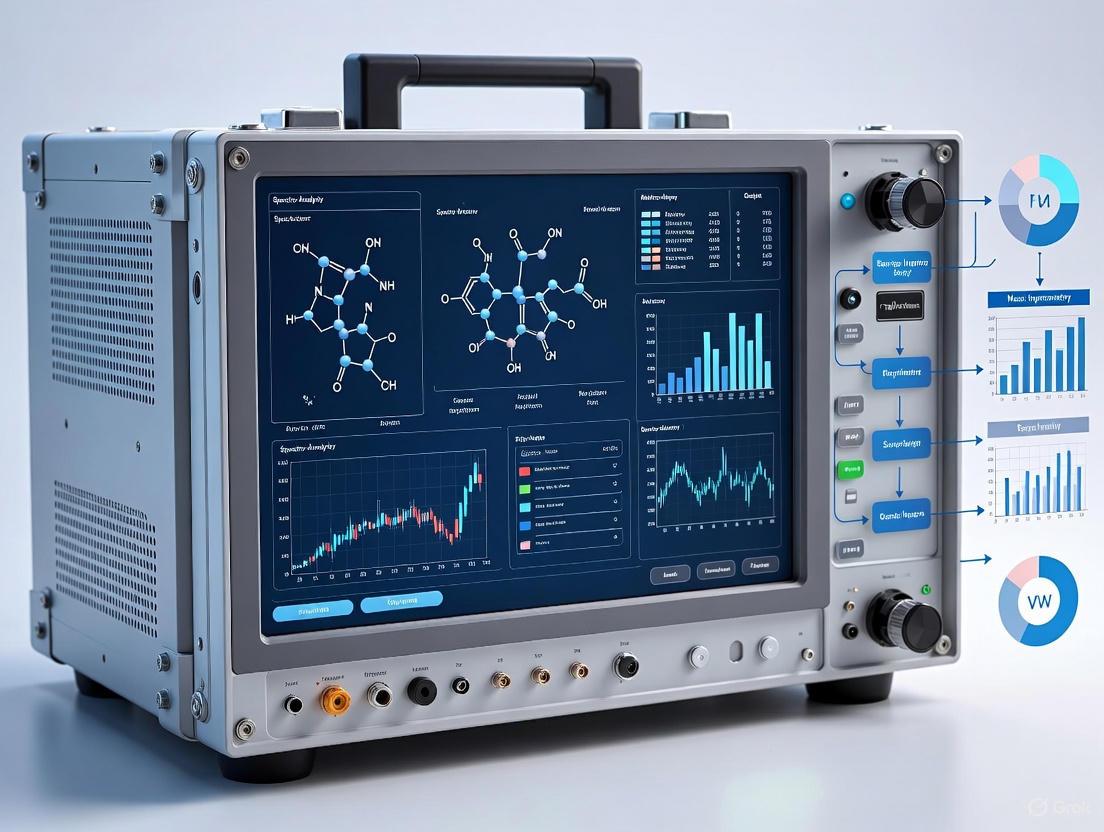
Portable mass spectrometry (MS) systems are compact, field-deployable instruments that bring powerful analytical capabilities directly to the sample source, revolutionizing workflows in biomedical research and drug development.
Portable Mass Spectrometry Systems: A Guide for Researchers and Drug Development Professionals
Abstract
Portable mass spectrometry (MS) systems are compact, field-deployable instruments that bring powerful analytical capabilities directly to the sample source, revolutionizing workflows in biomedical research and drug development. This article explores the foundational technology behind portable MS, including key components like miniature mass analyzers and ambient ionization sources. It details methodological approaches and diverse applications, from on-site herbal medicine authentication to in-situ environmental monitoring. The content also provides best practices for optimizing performance with complex samples and validates portable MS capabilities through comparative analysis with traditional laboratory systems, offering a comprehensive resource for scientists integrating this transformative technology into their research.
What is a Portable Mass Spectrometer? Core Technology and Components Explained
Mass spectrometry (MS) is an information-rich analytical technique that reveals qualitative and quantitative information about analytes based on their mass-to-charge ratios (m/z) and abundances [1]. For decades, this powerful technology has served as an indispensable tool in diverse areas including 'omics analyses, pharmaceutical development, forensics, and environmental monitoring [1]. However, traditional mass spectrometers are typically bulky, require high vacuum conditions and peripheral support systems, and carry substantial acquisition costs, all of which have limited their accessibility and applicability beyond conventional laboratory settings [1]. The field of portable mass spectrometry has emerged to address these limitations by developing compact, robust instruments that deliver laboratory-grade analytical capabilities in field-deployable packages.
The evolution of miniaturized MS instrumentation began in the 1970s but has witnessed rapid acceleration over the past two decades, driven by advancements in microfabrication techniques, precise machining, integrated circuits, and computational modeling [1]. This technical progression, combined with growing demand from expanding MS user communities, has catalyzed increased investment in developing portable systems that can be deployed in vehicles, carried in backpacks, or even operated as handheld devices [2]. These instruments are revolutionizing analytical science by enabling rapid, on-site analysis remote from traditional laboratories, with analysis times as low as several seconds and minimal sample preparation requirements [2].
This whitepaper provides a comprehensive technical examination of portable mass spectrometry systems, detailing their fundamental principles, key technological components, current applications, and experimental methodologies. For researchers, scientists, and drug development professionals, understanding these systems' capabilities and limitations is crucial for leveraging their potential in both research and applied settings.
Core Technological Components of Portable MS Systems
The ionization source is a critical component that determines which analytes can be detected and how samples are introduced to the mass spectrometer. For portable systems, ionization sources must balance performance with constraints of size, power consumption, and operational complexity [1].
Electron Ionization (EI) remains an attractive option for portable mass spectrometers despite being largely superseded by softer techniques in laboratory settings. EI systems are relatively simple and compact, allowing easy integration with ion optics in portable configurations [1]. A significant advantage of EI is its propensity to produce fragment ions, which facilitates compound identification—a crucial feature given the often limited resolving power of portable mass analyzers [1]. Recent innovations have focused on improving EI efficiency while reducing power consumption, including the use of carbon nanotube (CNT) filaments as cold cathode emitters. These CNT filaments offer high power efficiency, high current density, and stable long-term performance, making them particularly suitable for field-portable systems [1].
Electrospray Ionization (ESI) and its derivatives represent another important ionization family for portable MS. While standard ESI sources can be coupled with miniature mass spectrometers, their requirement for nebulization gas and flow control systems increases operational complexity and system bulk [1]. Nanoelectrospray Ionization (nESI) has emerged as a preferred alternative for portable systems because it eliminates the need for nebulization gas and offers improved ionization efficiency [1]. This technique has been successfully coupled with various portable mass spectrometers for applications including monitoring amino acids in urine, detecting HIV therapeutic drugs in whole blood, and analyzing nonpolar pesticides in oil samples [1].
Paper Spray Ionization (PSI) represents a particularly significant advancement for portable MS applications. First reported in 2010, PSI is a simple, rapid, low-cost, and flexible electrospray platform that has become a popular ionization technique among portable mass spectrometers [1]. The technique involves applying solid or liquid samples to a triangular piece of paper with a macroscopically sharp point. Analytes are transported to the sharp point by solvent wicking through the porous material, and ions are generated by applying a high electric voltage [1]. PSI has been used in numerous Mini-series portable mass spectrometers for diverse applications including dry blood spot analysis, detection of therapeutic drugs and synthetic cannabinoids in blood samples, fungicide analysis on fruits, and identification of alkyl quaternary ammonium salts in complex oil matrices [1] [2]. Recent innovations include three-dimensional paper cone spray ionization (PCSI) and 3D-printed cone structures that maintain the necessary sharp tip for efficient ionization while providing sufficient rigidity to scoop bulk samples directly [1].
Mass Analyzers and Vacuum Systems
Mass analyzers represent the core analytical component of any mass spectrometer, responsible for separating ions based on their mass-to-charge ratios. In portable systems, the challenge lies in balancing performance with constraints of size, weight, and power consumption.
Time-of-Flight (TOF) analyzers are commonly used in portable configurations due to their relatively simple design and ability to capture full mass spectra rapidly. Quadrupole mass analyzers offer robustness and selectivity, making them suitable for targeted analysis in field applications. Ion trap analyzers provide capabilities for tandem MS experiments within compact footprints, enabling structural elucidation in the field [2]. The continuing evolution of所有这些分析器benefits from advancements in microfabrication techniques and precision machining, allowing for smaller dimensions without catastrophic losses in performance [1].
Vacuum systems represent a particular engineering challenge for portable MS, as traditional high-vacuum pumps are typically bulky and power-intensive. Recent developments have focused on creating miniature pumping systems that can maintain the necessary vacuum conditions (typically 10⁻⁵ to 10⁻⁸ Torr for most mass analyzers) while consuming less power and occupying reduced space [1]. Some commercial portable systems now incorporate built-in diaphragm pumps that function as complete vacuum solutions within single units, significantly enhancing deployability, though sometimes with tradeoffs in sensitivity compared to rotary pump alternatives [2].
Comparative Analysis: Portable vs. Benchtop Systems
Table 1: Technical Comparison Between Portable and Benchtop Mass Spectrometers
| Parameter | Portable Systems | Traditional Benchtop Systems |
|---|---|---|
| Size/Weight | Backpack-sized or smaller; <30 kg | Laboratory footprint; 100-500 kg |
| Power Consumption | <500 W; battery-operated options | >1 kW; requires stable mains power |
| Analysis Time | Seconds to minutes | Minutes to hours (with chromatography) |
| Sample Preparation | Minimal; often direct analysis | Extensive; may include extraction, derivatization |
| Ionization Sources | EI, PSI, nESI, DESI | ESI, MALDI, APCI, EI |
| Mass Resolution | Low to moderate (varies by analyzer) | Moderate to very high |
| Operational Environment | Field-deployable; various temperatures/humidity | Controlled laboratory conditions |
| Cost | $50,000 - $150,000 | $100,000 - $1,000,000+ |
The fundamental principles of mass spectrometry remain consistent between portable and benchtop systems—both techniques determine chemical identity through mass-to-charge ratio measurements [3]. However, as illustrated in Table 1, their implementation differs significantly. Portable mass spectrometers represent substantial reductions in size, weight, and power requirements compared to standard instruments, though this often comes with compromises in ultimate performance specifications [1] [2]. It should be noted that the term "portable" in scientific literature often encompasses instruments that might be more accurately described as "transportable," but all represent significant miniaturization compared to conventional systems [1].
The operational advantages of portable systems extend beyond mere size reduction. Their capacity for rapid, on-site analysis eliminates the need for sample transport and associated preservation requirements, enabling real-time decision-making in field settings [2]. Additionally, by leveraging ambient ionization techniques that function in atmospheric conditions, many portable systems eliminate the need for hefty vacuum pumps, further enhancing their field deployability [2].
Applications of Portable Mass Spectrometry
Pharmaceutical and Clinical Applications
Portable mass spectrometry is revolutionizing pharmaceutical analysis and clinical testing by enabling rapid on-site therapeutic drug monitoring, illicit substance detection, and point-of-care diagnostics. The combination of ambient ionization sources with portable mass analyzers creates a powerful toolkit for analyzing complex biological samples with minimal preparation [2].
Paper spray ionization mass spectrometry (PSI-MS) has demonstrated particular utility for therapeutic drug monitoring, enabling rapid detection of various medicinal compounds in dried blood spots [2]. This application potentially allows clinicians to monitor drug concentrations in patients' bloodstreams in near-real-time, facilitating personalized dosage adjustments. Similar approaches have been used to detect synthetic cannabinoids in blood samples and analyze anti-doping compounds in raw urine, with detection limits potentially lower than those required by regulatory agencies like the World Anti-Doping Agency (WADA) [1] [2].
Probe electrospray ionization (PESI), which incorporates a solid needle that is dipped into a sample and positioned before the mass spectrometer inlet, has proven valuable for direct analysis of raw biological fluids and tissue samples [2]. Research has demonstrated its capability to differentiate between cancerous and healthy tissue samples, suggesting potential for intraoperative margin assessment during surgical procedures [2].
Environmental and Forensic Applications
The portability and rapid analysis capabilities of miniature MS systems make them ideally suited for environmental monitoring and forensic investigations where on-site analysis provides significant advantages over laboratory-based testing.
In environmental applications, portable mass spectrometers have been deployed for direct analysis of pesticides on fruits, fungicides in agricultural settings, and per- and polyfluoroalkyl substances (PFAS) in soil samples [1] [2]. The ability to perform rapid screening in the field enables more comprehensive environmental assessments and immediate identification of contamination hotspots.
Forensic applications leverage the same technological advantages for crime scene investigation and security screening. Portable systems have been demonstrated for detection of illicit drugs, chemical warfare agent simulants on fabrics, and explosives residues [1] [2]. The capability to analyze samples directly at incident scenes can significantly accelerate criminal investigations, providing investigators with immediate analytical results to guide evidence collection and investigative direction.
Table 2: Application-Specific Methodologies in Portable Mass Spectrometry
| Application Domain | Preferred Ionization | Sample Introduction | Key Analytes |
|---|---|---|---|
| Therapeutic Drug Monitoring | PSI, nESI | Dried blood spots, raw urine | Pharmaceuticals, metabolites |
| Anti-Doping Analysis | ASAP, PSI, DART | Raw urine, bulk materials | Anabolic steroids, diuretics, stimulants |
| Forensic Toxicology | PSI, PESI, CBS | Raw biofluids, tissue | Illicit drugs, toxins, pharmaceuticals |
| Environmental Monitoring | PSI, EI | Direct surface analysis, solid samples | Pesticides, PFAS, industrial chemicals |
| Food Safety | PSI, DESI | Direct fruit/vegetable analysis | Fungicides, pesticides, adulterants |
| Security/Defense | PSI, EI | Fabric, soil, surface wipes | Chemical warfare agents, explosives |
Emerging Application Areas
As portable mass spectrometry technology continues to evolve, new application areas are emerging. In anti-doping control, the atmospheric pressure solids analysis probe (ASAP) has demonstrated promise for rapid screening of anabolic steroid esters, with automated data processing enabling operation by non-experts [2]. The Waters Radian ASAP-MS system represents a commercially available implementation of this approach, incorporating efficient ASAP functionality with a compact transportable mass analyzer in a single unit requiring only an external nitrogen gas source [2].
Coated blade spray (CBS) represents another innovative sampling and ionization approach that utilizes coated stainless steel blades for analyte enrichment and ionization [2]. Recent developments include universal serial bus (USB)-powered CBS sources coupled with transportable MS systems, further enhancing deployment flexibility for on-site analysis [2].
Experimental Protocols and Methodologies
Standardized Workflow for Portable MS Analysis
The experimental workflow for portable mass spectrometry typically follows a structured process from sample collection to data interpretation. The diagram below illustrates this generalized workflow:
Detailed Methodologies for Key Applications
Paper Spray Ionization for Biofluid Analysis
Principle: PSI utilizes paper substrates for direct ionization of samples applied to the paper surface [1] [2]. Liquid samples are directly applied to the paper, while solid samples may require preliminary extraction.
Protocol:
- Prepare a triangular piece of chromatography paper (typically 5-10 mm base width).
- Apply 5-20 μL of biological fluid (blood, urine) to the paper substrate.
- Allow sample to absorb into paper matrix (30-60 seconds).
- Apply extraction solvent (typically 20-50 μL methanol with 0.1% formic acid) to facilitate analyte transport.
- Position paper tip 3-5 mm from mass spectrometer inlet.
- Apply high voltage (3-5 kV) to the paper while simultaneously applying solvent.
- Initiate mass spectrometer data acquisition.
Optimization Notes: Paper geometry significantly affects performance; sharper tips generally provide more stable spray. Solvent composition should be optimized for specific analyte properties [1].
Coated Blade Spray for Trace Analysis
Principle: CBS utilizes coated stainless steel blades for both sample enrichment via solid-phase microextraction and subsequent ionization [2].
Protocol:
- precondition coated blade in appropriate solvent.
- Immerse blade in sample solution or wipe across surface for 1-5 minutes for extraction.
- Rinse blade briefly with purified water to remove matrix interferences.
- Position blade in specialized holder before MS inlet.
- Apply spray solvent (typically 20-40 μL methanol/water with 0.1% formic acid).
- Apply high voltage (3.5-4.5 kV) to initiate electrospray.
- Acquire mass spectral data.
Optimization Notes: Coating chemistry should be selected based on target analyte properties. Extraction time should be optimized to balance sensitivity and throughput [2].
The Scientist's Toolkit: Essential Research Reagents and Materials
Table 3: Essential Research Reagents and Materials for Portable MS
| Item | Function | Application Examples |
|---|---|---|
| Chromatography Paper | Substrate for sample application/ionization | Paper spray ionization |
| Coated Blades | Sample enrichment and ionization | Coated blade spray (CBS) |
| NanoESI Emitters | Nanoelectrospray ionization | Liquid sample introduction |
| Extraction Solvents | Analyte extraction/transport | Methanol, acetonitrile with modifiers |
| Carbon Nanotube Filaments | Electron emission source | Miniaturized EI sources |
| Portable Gas Supplies | Nebulization/purge gas | ESI, DESI operation |
| Standard Solutions | Calibration and quality control | Instrument calibration |
| Solid-Phase Microextraction Fibers | Sample pre-concentration | Trace analysis |
Technical Pathways in Portable MS Systems
The functional relationships between key components in a portable mass spectrometer can be visualized through the following technical pathway:
Portable mass spectrometry represents a paradigm shift in analytical science, transforming mass spectrometry from a laboratory-bound technique to a field-deployable tool for rapid, on-site analysis. While current portable systems may not yet match the ultimate performance specifications of high-resolution benchtop instruments, their capability to deliver laboratory-grade analytical data in field settings opens new possibilities across diverse application domains [2].
The ongoing development of more robust, sensitive, and user-friendly portable MS systems will continue to expand their applicability. Future directions likely include increased automation, improved connectivity for data transmission, enhanced sensitivity through novel ion manipulation techniques, and further miniaturization toward truly handheld devices [1] [2]. For researchers, scientists, and drug development professionals, understanding and leveraging these powerful analytical tools will become increasingly important as the technology continues to mature and find new applications in both research and applied settings.
As the field evolves, portable mass spectrometry promises to democratize access to sophisticated analytical capabilities, potentially bringing mass spectrometry to new user communities and application areas that were previously inaccessible with traditional laboratory-based instruments [1]. This expansion of analytical accessibility aligns with broader trends in analytical science toward more decentralized, rapid, and field-deployable measurement technologies.
Portable mass spectrometry represents a transformative advancement in analytical science, enabling laboratory-grade chemical analysis to be performed directly in the field. Mass spectrometry operates by ionizing chemical compounds and separating the resulting ions based on their mass-to-charge ratio (m/z), providing both qualitative and quantitative information about the sample composition [1]. While conventional mass spectrometers are bulky, require high vacuum systems, and depend on laboratory infrastructure, portable mass spectrometers have undergone significant miniaturization through developments in microfabrication techniques, precise machining, and integrated circuits [1]. The evolution of these instruments has expanded the application scope of MS to include on-site environmental monitoring, forensic investigations, emergency response, and clinical diagnostics at the point of care [1] [4].
The core of any portable mass spectrometry system is its mass analyzer—the component responsible for separating ions based on their m/z ratios. Among the various types of analyzers, ion traps, time-of-flight (TOF), and sector instruments have been successfully miniaturized while maintaining sufficient analytical performance for field applications. These miniature analyzers represent different engineering compromises between size and capability. Their selection dictates key instrument parameters including mass resolution, mass range, sensitivity, and tandem MS capabilities [1] [5]. Understanding the operating principles, technical specifications, and performance characteristics of these analyzer technologies is essential for researchers and professionals selecting appropriate portable MS systems for specific application requirements in drug development and other fields.
Fundamental Principles of Miniature Mass Analyzers
Ion Trap Mass Analyzers
Ion trap mass analyzers function by confining ions in a three-dimensional space using electromagnetic fields, allowing for sophisticated manipulation including sequential isolation and fragmentation experiments [5]. The working principle involves applying oscillating electric fields to ring and end-cap electrodes, creating a potential well that traps ions with specific m/z values [6] [5]. By systematically varying the applied voltages, ions of different mass-to-charge ratios can be selectively ejected toward the detector [6].
A significant advantage of ion trap technology for portability is its relatively low vacuum requirement compared to other mass analyzers. This allows for smaller, more energy-efficient vacuum systems, contributing to overall system compactness [6]. Additionally, ion traps can perform tandem mass spectrometry (MSⁿ) within the same physical device by isolating precursor ions, inducing fragmentation through collision-activated dissociation, and then analyzing the resulting product ions [5]. This capability for multiple stages of mass analysis is invaluable for structural elucidation of unknown compounds in complex samples.
A characteristic phenomenon in ion traps is the formation of M+1 ions (molecular weight + 1) due to ion-molecule interactions within the trap. The abundance of these M+1 ions relative to other ions varies with concentration and can complicate spectral matching against standard libraries, particularly for quantitative applications [6]. The scan range of a typical portable ion trap mass spectrometer is approximately one order of magnitude (e.g., m/z 40-400), which is sufficient for many small molecule applications but may be limiting for larger biomolecules [6].
Time-of-Flight (TOF) Mass Analyzers
Time-of-flight mass analyzers separate ions based on velocity differences acquired through acceleration by an electric field [5]. The fundamental principle involves measuring the time required for ions to travel a fixed distance through a field-free drift region after being accelerated by a pulsed electric field. Lighter ions with the same charge achieve higher velocities and reach the detector sooner than heavier ions, according to the relationship m/z = 2eVt²/L², where e is the electron charge, V is the acceleration voltage, t is the flight time, and L is the flight length [5].
A significant advancement in TOF technology for portable applications is the multi-reflecting TOF (MR-TOF) configuration, which utilizes multiple reflection stages within the flight tube to extend the ion path length without increasing the physical dimensions of the instrument [5]. This innovation dramatically improves mass resolution while maintaining a compact form factor suitable for field-portable systems. The reflection design incorporates electrostatic mirrors that fold the ion path, enabling path lengths of several meters within a significantly smaller physical package [5].
TOF analyzers are particularly valued for their high-resolution capabilities and rapid analysis speed, making them ideal for applications requiring accurate mass determination and the analysis of complex mixtures [5]. Unlike scanning instruments like ion traps, TOF systems can simultaneously measure all m/z values, improving sensitivity and throughput—critical advantages for time-sensitive field applications.
Sector Mass Analyzers
Sector mass analyzers, particularly magnetic sectors, represent one of the earliest types of mass analyzers but have seen limited application in portable instrumentation due to challenges in miniaturizing the essential magnetic and electrostatic components. These instruments separate ions based on their momentum and kinetic energy using a combination of magnetic and electric fields [5]. A magnetic sector applies a perpendicular magnetic field that bends ion trajectories, with the radius of curvature depending on the m/z ratio. The addition of an electrostatic sector provides energy focusing, improving overall resolution.
While not extensively covered in the current portable MS literature, miniaturization efforts for sector instruments have focused on developing compact permanent magnets and optimized ion optics to reduce size and power requirements. Their potential value lies in potentially higher resolution compared to other miniature analyzers, though this typically comes at the cost of increased size, weight, and power consumption—critical considerations for field-portable systems.
Comparative Analysis of Miniature Mass Analyzers
The selection of an appropriate mass analyzer technology depends heavily on the specific requirements of the intended application. The table below provides a systematic comparison of the key performance characteristics of the three miniature mass analyzer technologies discussed in this review.
Table 1: Technical Comparison of Miniature Mass Analyzer Technologies
| Parameter | Ion Trap | Time-of-Flight (TOF) | Sector |
|---|---|---|---|
| Mass Resolution | Low to Moderate | High to Very High (especially MR-TOF) | Moderate to High |
| Mass Range (m/z) | ~50-1000 (typical for portable systems) [7] | Typically wider range | Variable, can be limited in miniature systems |
| Tandem MS Capability | Excellent (MSⁿ in same device) [5] | Limited without hybrid design | Limited without hybrid design |
| Analysis Speed | Moderate (sequential scanning) | Very Fast (parallel detection) | Moderate (sequential scanning) |
| Size & Portability | Excellent (lower vacuum requirements) [6] | Good (compact MR-TOF designs) [5] | Fair (magnet size challenges) |
| Sensitivity | High | High (especially with reflectron) | Moderate to High |
| Quantitative Performance | Good (linear dynamic range can be limited by space charging) | Excellent | Excellent |
| Spectral Library Matching | May require specialized libraries (M+1 ions) [6] | Excellent (high resolution) | Excellent |
| Power Requirements | Low to Moderate | Moderate | Moderate to High (especially with electromagnets) |
This comparison reveals that no single analyzer technology excels across all performance metrics. Ion traps offer unparalleled capabilities for structural elucidation through multiple stages of tandem MS in a compact format, making them ideal for identifying unknown compounds in the field. TOF analyzers provide superior resolution and rapid analysis speed, beneficial for complex mixture analysis and high-throughput applications. Sector instruments, while less common in portable configurations, may offer a balance of resolution and quantitative performance for specific application niches.
Experimental Protocols for Portable MS Analysis
Protocol 1: Ambient Sampling Analysis Using DESI-MS
Objective: To directly analyze trace levels of controlled substances and related compounds from surfaces using desorption electrospray ionization (DESI) coupled with a portable ion trap mass spectrometer [8].
Materials and Equipment:
- Portable ion trap mass spectrometer (e.g., Griffin AI-MS 1.2, MT Explorer 50, or equivalent) [8] [6]
- DESI ionization source with positioning guide
- Polyurethane foam transfer swabs (e.g., Berkshire Corporation) [8]
- High-purity solvents: methanol, water, formic acid
- Nitrogen nebulizing gas source
- Standard solutions of target analytes (e.g., cocaine, MDMA, methamphetamine prepared in methanol) [8]
Methodology:
- Instrument Preparation: Power on the portable mass spectrometer and allow approximately 15 minutes for startup and stabilization [6]. Initialize the DESI source with the following parameters: spray solvent of 1:1 water-methanol with 0.1% (v/v) formic acid at 3 μL/min flow rate, spray voltage of 4 kV, and nebulizing gas pressure of 100 psi [8].
Sample Collection: Lightly moisten a polyurethane foam transfer swab with approximately 5 μL of methanol. Swab the surface of interest using a zigzag motion while slowly rotating the swab to expose the entire sampling surface. For improved collection efficiency, use the opposite face of the swab to sample the surface along the perpendicular axis [8].
Sample Analysis: Position the swab in the DESI source using the positioning guide. Initiate data acquisition over an m/z range of 70-450. Rotate the swab slowly during analysis to expose the entire swab surface to the DESI spray. Typical analysis time is 30-60 seconds per sample [8].
Data Interpretation: The instrument software automatically searches for protonated molecules corresponding to target compounds. When a potential hit is detected based on predefined criteria (minimum number of scans and intensity threshold), the system automatically performs MS/MS analysis for confirmation against an onboard spectral library [8].
Applications: This protocol is particularly valuable for forensic evidence screening at crime scenes, analysis of suspected clandestine drug laboratories, and security screening at ports of entry [8].
Protocol 2: Vapor Analysis Using APCI-MS
Objective: To detect and identify volatile organic compounds, including solvents and chemical precursors, in air samples using atmospheric pressure chemical ionization (APCI) with a portable mass spectrometer [8].
Materials and Equipment:
- Portable mass spectrometer with custom APCI source
- Diaphragm pump (e.g., KNF Neuberger) [8]
- Chemically inert sampling tube (PFA polymer)
- Tungsten needle electrode
- High-voltage power supply
Methodology:
- System Configuration: Configure the custom APCI source by connecting the sampling tube to the diaphragm pump. Position the tungsten needle approximately 1-2 mm from the MS inlet capillary and apply 4 kV to generate a stable corona discharge [8].
Sampling: Place the inlet of the sampling tube in proximity to the area of interest (e.g., headspace of a container, ventilation system, or suspected source of volatile emissions). Activate the diaphragm pump to draw ambient air at a controlled flow rate (typically 100-500 mL/min) past the corona discharge region and into the MS inlet [8].
Ionization Mechanism: The corona discharge generates reagent ions from naturally occurring atmospheric components (primarily N₂, O₂, and H₂O). These reagent ions undergo charge-exchange reactions with analyte molecules in the sampled air, producing molecular ions that are subsequently analyzed by the mass spectrometer [8].
Data Acquisition and Analysis: Acquire mass spectra continuously over a predetermined time period (typically 1-5 minutes). Monitor for persistent signals corresponding to target compounds. For confirmation, utilize tandem MS capabilities if available to compare fragmentation patterns with reference standards [8].
Applications: This method is particularly useful for detecting volatile solvents used in clandestine drug manufacturing, screening for chemical threats in security applications, and monitoring industrial emissions in environmental field studies [8].
Table 2: Research Reagent Solutions for Portable MS Analysis
| Reagent/Category | Specific Examples | Function/Application | Technical Notes |
|---|---|---|---|
| Ionization Solvents | Methanol, Water with 0.1% Formic Acid [8] | DESI spray solvent for efficient ionization | 1:1 ratio improves desorption and ionization for diverse compounds |
| Transfer Materials | Polyurethane Foam Swabs [8] | Sample collection from surfaces | Low background interference, efficient particle retention |
| Calibration Standards | Tuning Mix, Drug Standards (e.g., Cocaine, Methamphetamine) [8] | Mass axis calibration, method development | Cerilliant Corporation recommended for certified reference materials |
| Sample Substrates | Paper Spray Tips, 3D Printed Cones [1] [7] | Direct ionization from solid samples | Paper cone serves as extraction chamber and emitter |
| Gas Supplies | High-Purity Nitrogen [8] | Nebulizing gas for spray-based ionization | 100 psi typical pressure for DESI applications |
Instrument Workflow and System Integration
The operation of a portable mass spectrometry system involves a coordinated sequence of steps from sample introduction to data interpretation. The following diagram illustrates the complete workflow for a typical analysis using a portable MS system with ambient ionization capabilities:
Diagram 1: Portable MS System Workflow
This workflow highlights the integrated nature of portable MS systems, where each component must be optimized for field deployment. The vacuum system represents a critical engineering challenge in miniaturization, with different mass analyzer technologies imposing varying demands on vacuum performance. Similarly, power management is essential for field operation, with portable systems typically utilizing lithium battery packs capable of supporting several hours of operation [6].
For ion trap systems, the workflow includes the capability for automatic MS/MS analysis when a target compound is detected. This automated tandem MS capability enables non-technical users to obtain confirmatory data without specialized expertise in mass spectrometry [8]. The entire process—from sample collection to result reporting—can be completed in under two minutes for many applications, providing near-real-time chemical information for field decision-making [9] [8].
Applications in Drug Development and Forensic Science
The implementation of portable mass spectrometry has created transformative opportunities across multiple domains, particularly in drug development and forensic science. These applications leverage the on-site analysis capabilities of portable MS to accelerate decision-making, improve field investigations, and enhance public safety.
In pharmaceutical development, portable MS systems support multiple stages of the drug lifecycle. During early discovery, they enable rapid analysis of synthetic compounds and reaction monitoring in laboratory settings [10]. For clinical development, applications include therapeutic drug monitoring and point-of-care diagnostics [7] [4]. The Cell Mini MS system, for example, has demonstrated capabilities for intraoperative diagnosis of IDH mutations in glioma tissue with results obtained in just 1.5 minutes, achieving both sensitivity and specificity exceeding 90% [7]. Similarly, therapeutic drug monitoring of voriconazole—an antifungal with a narrow therapeutic window—can be completed within 5 minutes from sample collection to report acquisition [7].
In forensic science and toxicology, portable MS systems address critical limitations of traditional colorimetric field tests, which are prone to false positives and subjective interpretation [8]. The superior specificity of mass spectrometry eliminates ambiguous results, while the ability to detect multiple compounds simultaneously provides comprehensive chemical intelligence from a single analysis. Field testing of the VaporID system at the U.S.-Mexico border successfully demonstrated detection of fentanyl, MDMA, methamphetamine, ketamine, and cocaine at trace levels with analysis times of just seconds compared to 5-30 minutes required by laboratory methods [9]. This rapid, specific detection capability is particularly valuable for identifying emerging synthetic analogs and novel psychoactive substances, which continually challenge traditional analytical approaches [8] [4].
The environmental and security applications of portable MS further demonstrate its versatility. Systems like the VaporID can detect explosives such as TNT alongside narcotics, providing multi-threat detection capability for security screening at ports of entry, airports, and public venues [9]. With sensitivity reaching parts-per-trillion levels for fentanyl, these systems can identify the faintest airborne traces of target compounds, enabling non-contact sampling that preserves evidence integrity and reduces analyst exposure [9].
The field of portable mass spectrometry continues to evolve rapidly, driven by advances in miniaturization technologies, ionization methods, and data processing capabilities. Current market analyses project significant growth in the benchtop and portable MS segment, with these systems expected to exhibit the highest compound annual growth rate in the coming years [4]. This trend reflects increasing recognition of the value that field-deployable analytical capabilities provide across diverse sectors.
Future developments will likely focus on several key areas. Further miniaturization while maintaining analytical performance remains an ongoing challenge, particularly for high-resolution systems. Ambient ionization techniques continue to evolve, with methods like paper spray ionization (PSI) and leaf spray ionization expanding the range of sample types that can be analyzed with minimal preparation [1]. Artificial intelligence integration promises to enhance data interpretation, enabling automated compound identification and reducing the need for specialized operator expertise [4]. Additionally, hybrid analyzer designs may combine the strengths of different technologies to overcome individual limitations, though these approaches present additional engineering challenges for portable implementation.
In conclusion, miniature mass analyzers—including ion traps, time-of-flight, and sector instruments—form the analytical core of portable mass spectrometry systems. Each technology offers distinct advantages and compromises in terms of size, performance, and applicability. Ion traps provide exceptional tandem MS capabilities in compact formats, TOF analyzers deliver high resolution and rapid analysis, while sector instruments offer potential for high precision in niche applications. Understanding these fundamental technologies empowers researchers and professionals to select appropriate systems for specific field applications, ultimately extending the powerful capabilities of mass spectrometry beyond the traditional laboratory environment to where chemical answers are needed most.
Ambient ionization mass spectrometry (AI-MS) represents a revolutionary advancement in analytical chemistry, defined as "the ionization of unprocessed or minimally modified samples in their native environment, and it typically refers to the ionization of condensed phase samples in air." [11] Since its inception in 2004 with the introduction of desorption electrospray ionization (DESI) and direct analysis in real time (DART), the field has expanded dramatically, pushing these technologies far beyond their original conceptions and integrating them into the broader scientific community through creative and stimulating applications [11]. This technological shift is fundamentally transforming mass spectrometry from a laboratory-bound technique to a versatile tool for direct, on-site analysis, enabling researchers to obtain rapid, in-situ chemical information without complex sample preparation [1] [12].
The drive toward portability is supported by market data indicating robust growth. The miniaturized spectrometer market is expected to grow from $1.18 billion in 2025 to $1.91 billion by 2029, demonstrating a compound annual growth rate (CAGR) of 12.8% [13]. Similarly, the mobile mass spectrometers market is projected to reach $2.72 billion by 2029, growing at a CAGR of 12.5% [14]. This growth is fueled by increasing demands for field-based chemical analysis, point-of-care diagnostics, food safety testing, and environmental monitoring [13] [14]. For researchers and drug development professionals, ambient ionization techniques coupled with portable mass spectrometry offer unprecedented capabilities for real-time decision-making in field applications, from forensic investigations to therapeutic drug monitoring [1] [15].
Fundamentals of Ambient Ionization in Portable MS Systems
Ambient ionization techniques can be broadly categorized into three main classes based on their desorption mechanisms: liquid extraction, plasma desorption, and laser ablation [11]. These techniques share the common characteristic of allowing direct analysis of samples in their native state with minimal or no preparation, making them ideally suited for integration with portable mass spectrometers [1].
The miniaturization of mass spectrometers has been facilitated by developments in microfabrication techniques, precise machining, integrated circuits, and improved computational modeling tools [1]. A portable mass spectrometer typically consists of four key components: an ionization source, a mass analyzer, a detector, and a vacuum system [1]. The choice of ionization source is particularly critical for portable systems, as it must balance analytical performance with constraints of size, power consumption, and operational simplicity [1] [12].
Table: Comparison of Major Ambient Ionization Techniques for Portable MS
| Technique | Acronym | Desorption Mechanism | Ionization Mechanism | Spatial Resolution | Key Applications |
|---|---|---|---|---|---|
| Desorption Electrospray Ionization | DESI | Liquid Extraction | Electrospray | 30-200 μm | Pharmaceuticals, Forensics, Tissue Imaging [11] |
| Direct Analysis in Real Time | DART | Plasma Desorption | Corona Discharge | N/A | Food Contaminants, Forensic Analysis [11] [12] |
| Paper Spray Ionization | PSI | Liquid Extraction | Electrospray | N/A | Therapeutic Drug Monitoring, Blood Analysis [1] |
| Low Temperature Plasma | LTP | Plasma Desorption | Dielectric Barrier Discharge | 150 μm | Food Safety, Explosives Detection [11] [12] |
| Nano-DESI | N/A | Liquid Extraction | Electrospray | 12-150 μm | Surface Analysis, Single-Cell Studies [11] |
| MasSpec Pen | N/A | Liquid Extraction | Solvent Vaporization/Ionization | 0.5-5 mm | Tissue Diagnosis, Clinical Applications [11] |
| Ambient Flame Ionization | AFI | Thermal Desorption | Chemical/Thermal Evaporation | N/A | Organic Compounds, Pharmaceutical Tablets [16] |
For portable systems, techniques that require minimal supporting equipment (gases, high-voltage supplies, or lasers) are particularly advantageous. Recent innovations have focused on developing simplified approaches such as matrix-assisted inlet ionization (MAI), which requires no voltages, gases, or lasers, making it especially suitable for compact MS systems [12].
Technical Deep Dive: Major Ambient Ionization Techniques
Liquid Extraction-Based Techniques
Liquid extraction techniques utilize solvent to extract or desorb molecules from a sample surface, typically employing electrospray ionization (ESI) or related mechanisms for ion generation [11]. These techniques are particularly effective for analyzing polar molecules that ionize well through ESI-based mechanisms [11].
Desorption Electrospray Ionization (DESI) uses a plume of charged solvent droplets to desorb and ionize molecules from a surface [11]. The primary mechanism involves charged droplets impacting the sample surface, dissolving analytes, and then launching secondary droplets into the mass spectrometer inlet [11]. DESI typically achieves spatial resolution of 30-200 μm, making it suitable for imaging applications [11].
Paper Spray Ionization (PSI) has emerged as a particularly valuable technique for portable MS systems due to its simplicity and minimal infrastructure requirements [1]. In PSI, solid or liquid samples are loaded onto a porous substrate (typically paper) with a sharp point. Analytes are transported to the sharp point by solvent wicking, and ions are generated by applying a high voltage [1]. This technique has been successfully implemented in Mini-series portable mass spectrometers for applications including dry blood spot analysis, detection of therapeutic drugs in blood samples, fungicides on fruits, and chemical analysis in complex matrices [1]. Recent innovations include 3D printed paper cone spray ionization (PCSI), which creates a rigid triangular-pyramidal paper substrate that functions as both a sample container and electrospray emitter, enabling analysis of bulk solid samples [1].
Coated Blade Spray (CBS) represents another significant advancement that combines solid-phase microextraction (SPME) with direct electrospray ionization [12]. This technique uses a conductive metal strip coated with a stationary phase for selective sample enrichment, followed by direct spray into a mass spectrometer by applying high voltage [12]. CBS has demonstrated exceptional sensitivity, achieving detection at low μg/L levels in urine samples when coupled with tandem mass spectrometry [12].
Plasma-Based Desorption Techniques
Plasma-based techniques utilize electrical discharges to generate excited-state species or metastable atoms that desorb and ionize analytes from surfaces [11].
Direct Analysis in Real Time (DART) was one of the first ambient ionization techniques developed and remains widely used [11]. DART operates by creating a plasma in nitrogen or helium gas, producing excited-state atoms and ions that interact with the sample to desorb and ionize analytes through complex mechanisms including Penning ionization and proton transfer [11]. While traditional DART requires a supply of helium gas, recent developments have demonstrated successful operation with ambient air, albeit with some sensitivity trade-offs [12]. Transmission-mode DART (TM-DART) represents a significant innovation, where samples are spotted on a metal grid fitted in a cardboard card and resistively heated before plasma ionization [12]. This approach simplifies sample handling and improves reproducibility for solid and liquid samples.
Low Temperature Plasma (LTP) utilizes a dielectric barrier discharge to generate a plasma at low temperatures, making it suitable for thermally labile compounds [11] [12]. LTP achieves spatial resolution of approximately 150 μm and has been applied to various applications including food safety analysis and explosives detection [11]. Recent developments include prototype battery-operated handheld DAPCI (desorption atmospheric pressure chemical ionization) probes that simply aspirate ambient air with a built-in miniaturized membrane pump, significantly enhancing portability [12].
Laser Ablation and Thermal Desorption Techniques
Laser ablation techniques use focused laser beams to desorb material from surfaces, which is then ionized through secondary processes [11].
Laser Ablation Electrospray Ionization (LAESI) combines mid-infrared laser ablation with electrospray post-ionization [11]. The laser desorbs analyte molecules, which then interact with charged electrospray droplets to form ions [11]. LAESI typically achieves spatial resolution of approximately 70 μm, making it suitable for biological imaging applications [11].
Rapid Evaporative Ionization Mass Spectrometry (REIMS) utilizes thermal desorption achieved through electrical heating or laser irradiation, followed by chemical/thermal ionization [11]. This technique has found significant application in real-time tissue characterization during surgical procedures [11].
Ambient Flame Ionization (AFI) represents an extremely simplified approach that uses a small n-butane flame (height approximately 1 cm, temperature about 500°C) to accomplish rapid desorption and ionization [16]. Remarkably, AFI requires no voltages, laser beams, or spray gases, and can be implemented using an ordinary lighter with n-butane fuel [16]. This technique has demonstrated high sensitivity with a limit of detection of 1 picogram for propyphenazone, and has been applied to direct analysis of pharmaceuticals, xenobiotics in fruit peels and vegetable surfaces, and even pork fat [16]. The ionization mechanism primarily involves protonation by reactive species such as CHO+ and H3O+ generated in the n-butane flame [16].
Experimental Protocols and Methodologies
Standardized Workflows for Forensic Drug Analysis
The National Institute of Standards and Technology (NIST) has developed comprehensive protocols for implementing ambient ionization MS in forensic drug analysis through its Rapid Drug Analysis and Research (RaDAR) program [15]. The standard workflow involves:
- Sample Collection: Minute quantities (sub-milligram) of suspect materials are collected using swabs or picks.
- Direct Introduction: Samples are introduced directly into the ambient ionization source without extraction or purification.
- Rapid Analysis: Full qualitative analysis is completed in under one minute using non-chromatographic MS.
- Data Interpretation: AI-MS-specific algorithms and libraries are used for compound identification.
- Quality Assurance: Implementation of validation packages including method parameters, standard operating procedures, and data templates [15].
This approach enables near real-time drug checking for public health and safety entities, with critical information on the drug landscape delivered to partner agencies in under 48 hours [15].
Food Safety Screening Protocols
For food contaminant analysis, simplified protocols have been developed for techniques including matrix-assisted inlet ionization (MAI), desorption atmospheric pressure chemical ionization (DAPCI), transmission-mode DART, and coated blade spray (CBS) [12]:
Matrix-Assisted Inlet Ionization (MAI) Protocol:
- Sample is mixed with a matrix (e.g., 3-nitrobenzonitrile or 2,5-dihydroxybenzoic acid).
- The mixture is tapped against the atmospheric inlet (heated capillary or sample cone) of the MS.
- Ionization occurs without applied voltage or laser assistance [12].
Transmission-Mode DART (TM-DART) Protocol:
- Samples are spotted on a metal grid fitted in a cardboard card.
- The card is positioned in the TM-DART source.
- Resistive heating desorbs the sample, which is then ionized by the plasma.
- Helium gas is typically used, though ambient air operation is possible with sensitivity trade-offs [12].
Coated Blade Spray (CBS) Protocol:
- A conductive SPME blade is exposed to the sample for enrichment.
- The blade is rinsed to remove matrix interferences.
- A small volume of spray solvent is added.
- High voltage is applied to the blade to initiate electrospray ionization [12].
Validation and Standardization Frameworks
A critical component of implementing ambient ionization techniques is method validation. NIST has developed comprehensive Validation and Implementation packages that include [15]:
- Method parameters and standard operating procedures
- Excel templates for housing validation data
- Protocols for specificity, sensitivity, precision, and accuracy assessments
- Guidelines for limit of detection and limit of identification determination
- Procedures for robustness testing under variable conditions
These packages are designed to ensure that validations are suitable and standardized across laboratories, addressing one of the significant barriers to technology adoption in forensic and analytical laboratories [15].
Research Toolkit: Essential Materials and Reagents
Table: Essential Research Reagents and Materials for Ambient Ionization MS
| Item | Function/Purpose | Application Examples |
|---|---|---|
| 3-Nitrobenzonitrile (3-NBN) | Matrix for MAI ionization | Enables voltage/laser-free ionization when mixed with samples [12] |
| Paper Spray Substrates | Porous medium for sample wicking and ESI | Blood analysis, therapeutic drug monitoring [1] |
| Coated Blades (CBS) | SPME enrichment and direct spray ionization | Trace analysis in complex matrices (urine, food) [12] |
| n-Butane Fuel | Fuel for ambient flame ionization | AFI-MS analysis of pharmaceuticals, organic compounds [16] |
| Polar Solvents (MeOH, ACN, H₂O) | Extraction and spray solvents | Liquid extraction techniques (DESI, PSI, EASI) [11] |
| Helium/Nitrogen Gas | Plasma generation and ion transport | DART, LTP, and other plasma-based techniques [11] [12] |
| Metal Grid Cards (TM-DART) | Sample substrate for transmission mode | Solid sample analysis with DART [12] |
| Reference Standard Materials | Method validation and compound identification | Creating spectral libraries, quality control [15] |
Applications in Research and Industrial Settings
Forensic Science and Public Safety
Ambient ionization MS has revolutionized forensic drug analysis by enabling rapid screening of seized materials with minimal sample preparation. The NIST RaDAR program demonstrates how AI-MS can provide near real-time information on emerging drug threats, including synthetic opioids and novel psychoactive substances [15]. Key advantages include:
- Rapid Response to Emerging Threats: Internal spectral databases are continuously updated as new reference materials become available, enabling retrospective data mining to identify when new compounds first appeared in the drug supply [15].
- Sensitivity for Potent Compounds: Synthetic opioids like fentanyl analogs and nitazenes are typically potent and present at low concentrations in street drugs. AI-MS provides the necessary sensitivity for detection while understanding limitations to avoid reporting background signals as false positives [15].
- Field-Deployable Solutions: Recent method optimization and validation efforts focus on portable devices suitable for field use by public safety personnel, addressing limitations of traditional field testing such as difficulties identifying components in mixtures and lack of sensitivity [15].
Food Safety and Environmental Monitoring
The application of ambient ionization techniques to food contaminant analysis addresses the growing trend toward on-site testing of quality and safety parameters [12]. Key applications include:
- Pesticide Residue Analysis: Techniques like CBS and TM-DART enable rapid screening of fruits and vegetables for pesticide residues at regulatory levels [12].
- Veterinary Drug Detection: Methods have been developed for antibiotics and other veterinary drug residues in animal products [12].
- Natural Toxin Identification: Emerging applications include detection of mycotoxins and marine toxins in food products [12].
The simplicity of techniques like MAI and handheld DAPCI makes them particularly suitable for field deployment in food safety applications, requiring minimal sample preparation while maintaining acceptable sensitivity and robustness [12].
Clinical and Point-of-Care Applications
Portable mass spectrometers coupled with ambient ionization techniques are finding increasing application in clinical settings:
- Therapeutic Drug Monitoring: PSI and CBS enable rapid analysis of drug concentrations in blood and other biofluids, facilitating personalized medication approaches [1] [12].
- Infectious Disease Diagnostics: Recent developments focus on rapid detection of biomarkers associated with chronic diseases, allowing for prompt detection and real-time tracking to enhance patient outcomes [14].
- Surgical Guidance: Techniques like REIMS and the MasSpec Pen are being developed for real-time tissue characterization during surgical procedures, enabling rapid intraoperative decision-making [11].
Current Challenges and Future Perspectives
Technical Limitations and Research Frontiers
Despite significant advancements, several challenges remain in the widespread implementation of ambient ionization techniques for portable MS:
- Spectral Complexity and Mixture Analysis: Complex mixtures present significant challenges for non-separative techniques, requiring advanced data processing algorithms and sometimes complementary techniques like ion mobility spectrometry [15].
- Software and Data Processing Limitations: Many non-targeted analysis platforms are designed for omics applications and don't always translate well to small molecule analysis. Proprietary software formats present additional challenges for data merging and batch processing across platforms [15].
- Quantitation and Matrix Effects: Most ambient ionization techniques are primarily qualitative, with quantitation remaining challenging due to matrix effects and variations in ionization efficiency [12].
- Standardization and Validation: Implementation barriers in forensic laboratories include the need for rigorous validation to demonstrate methods are fit-for-purpose, with challenges in obtaining authentic samples for validation studies [15].
Emerging Trends and Future Directions
The field of ambient ionization MS continues to evolve rapidly, with several promising trends shaping its future:
- Enhanced Portability and Miniaturization: Ongoing developments focus on reducing the size, weight, and power requirements of portable MS systems while maintaining analytical performance [1] [14].
- Integration of Artificial Intelligence: AI and machine learning algorithms are being increasingly applied to spectral interpretation, mixture deconvolution, and pattern recognition [13] [14].
- Wireless Connectivity and Data Sharing: Advances in wireless data transmission enable real-time data sharing and remote expert consultation, enhancing the utility of field-deployable systems [14].
- Novel Ionization Sources: Continued development of simplified ionization sources that eliminate requirements for gases, high voltages, or complex supporting infrastructure [12] [16].
- Multimodal Integration: Combining multiple ionization techniques or complementary analytical methods in a single platform to address the limitations of individual techniques [11] [15].
As ambient ionization techniques continue to evolve alongside advancements in portable mass spectrometry, their impact on scientific research and applied analysis will undoubtedly expand. The convergence of simplified ionization methods with compact, robust instrumentation is creating unprecedented opportunities for real-time chemical analysis across diverse fields—from forensic science and public health to environmental monitoring and clinical diagnostics. For researchers and drug development professionals, these technologies offer powerful new capabilities for addressing complex analytical challenges in both laboratory and field settings, fundamentally transforming how chemical information is acquired and utilized.
Mass spectrometry (MS) is a powerful analytical technique that serves as the gold standard for chemical detection and identification due to its high sensitivity, good selectivity, and high-resolution power [17]. Traditionally, mass spectrometers are bulky, benchtop instruments that require high vacuum conditions, substantial power consumption, and controlled laboratory environments, which inherently limits their application scope [1] [17]. The growing demand for on-site, real-time chemical analysis in fields such as environmental monitoring, forensic science, security, pharmaceutical development, and clinical diagnostics has catalyzed intense research and development efforts aimed at miniaturizing these sophisticated systems [1] [17]. A portable mass spectrometer is fundamentally defined by the successful miniaturization of its three core subsystems—the ionization source, the mass analyzer, and the detector—all of which must operate within a compact, integrated vacuum system [17]. The engineering of these miniature vacuum systems and their associated electronics represents the most significant hurdle in the journey toward high-performance, truly portable MS. Overcoming these challenges is not merely a matter of scaling down components; it requires innovative approaches to materials, design, and power management to maintain analytical performance while drastically reducing the instrument's footprint and power demands [18].
Performance Metrics of Miniature Vacuum Systems
The creation and maintenance of a high vacuum are non-negotiable prerequisites for mass spectrometry, as they ensure ions can travel from the source to the detector without colliding with gas molecules. In miniature systems, the vacuum system's size, weight, and power consumption (SWaP) become critical limiting factors. The performance of a mass spectrometer is often a trade-off between these SWaP constraints and desired analytical capabilities such mass range, resolution, and sensitivity.
The table below summarizes the specifications of several documented portable mass spectrometers, highlighting the relationship between their physical parameters and performance metrics.
Table 1: Performance Metrics of Various Portable Mass Spectrometers
| Instrument Type / Reference | Weight | Size (mm) | Power Consumption | Mass Range (m/z) | Reported Resolution |
|---|---|---|---|---|---|
| Palm Portable MS (PPMS) [17] | 1.48 kg | 82 x 77 x 245 | 5 W (avg. battery) | Not Specified | Not Specified |
| Miniature Magnetic Sector [17] | 15 kg | 330 x 240 x 220 | 60 W | 1 - 100 | 100 - 150 |
| Portable GC-MS System [1] | Not Specified | Not Specified | 15 W (EI source only) | Not Specified | Not Specified |
| Portable MS (General) [17] | ~4 kg | Not Specified | Not Specified | Not Specified | Not Specified |
Core Engineering Challenges and Methodological Solutions
The miniaturization of vacuum and electronic systems for portable MS presents a set of interconnected engineering challenges. Addressing these requires targeted experimental approaches and rigorous validation protocols. The following methodologies are central to the field's development.
Miniature Vacuum Pumping Systems
Challenge: The vacuum pump is often one of the largest and most power-hungry components in a traditional MS. Scaling it down without compromising ultimate vacuum level and pumping speed is a primary challenge.
Experimental Protocol for Characterization:
- System Integration: A miniature pumping system, such as a hybrid combination of a diaphragm pump (for roughing) and a turbomolecular or getter pump (for high vacuum), is integrated with a miniature mass analyzer (e.g., a ion trap or quadrupole) within a custom-designed vacuum chamber.
- Pressure Monitoring: A miniature, low-power vacuum gauge (e.g., a Pirani or capacitance manometer) is installed to monitor pressure within the chamber.
- Power Profiling: The power consumption of the entire pumping system is measured during the pump-down phase and during steady-state operation using a digital power meter.
- Performance Validation: The system's performance is validated by measuring the base pressure achieved and the pump-down time from atmospheric pressure to an operational vacuum level (typically 10⁻⁵ Torr or better). The stability of the mass analyzer's signal (e.g., peak width and centroid stability) over time is used as a proxy for vacuum stability.
Challenge: Traditional ionization sources like Electron Ionization (EI) can consume significant power, primarily through the filament heater.
Experimental Protocol for Evaluation:
- Source Fabrication: A miniature ionization source is fabricated. For EI, this involves testing alternative filament materials like Carbon Nanotubes (CNTs) as cold cathode emitters, which eliminate the need for a heating current and can operate with lower overall power [1].
- Power Measurement: The voltage and current supplied to the ionization source are measured to calculate total power consumption.
- Ionization Efficiency Testing: The source's efficiency is evaluated by introducing a standard calibration compound (e.g., perfluorotributylamine) and measuring the resulting ion current at the detector. The signal-to-noise ratio for a specific ion fragment at a given sample concentration is a key metric.
- Lifetime and Stability Testing: The source is operated continuously to assess the long-term stability of the ion current and the operational lifetime of the filament or emitter.
Advanced Electronics Assembly and Integration
Challenge: As the size of the mass spectrometer shrinks, the density of electronic components increases, leading to potential issues with signal integrity, heat dissipation, and electromagnetic interference.
Experimental Protocol for System Integration:
- Component Selection and PCB Design: Miniaturized components are selected, including Ball Grid Array (BGA) packages for integrated circuits and chip-scale packages to maximize functional density [18]. A multi-layer Printed Circuit Board (PCB) is designed with careful attention to high-frequency signal routing, power plane design, and thermal vias for heat dissipation.
- Signal Integrity Testing: High-speed digital signals (e.g., the RF drive for a quadrupole) are probed using an oscilloscope to check for signal integrity issues like ringing, overshoot, and crosstalk.
- Thermal Profiling: The assembled system is operated under full load, and the temperature of critical components (e.g., RF power amplifiers, microprocessor, vacuum pump interface) is monitored using thermal imaging to identify hotspots.
- Electromagnetic Compatibility (EMC) Testing: The instrument is tested in a shielded chamber to ensure that emitted electromagnetic interference (EMI) is within regulatory limits and that the system is immune to external noise, which is critical for maintaining mass spectral fidelity.
Enabling Technologies and Material Solutions
The advancement of portable MS relies on a suite of key technologies and materials that address the core challenges of miniaturization. These solutions often draw from the broader field of advanced electronics and microfabrication.
Table 2: Key Research Reagent Solutions for Miniaturization
| Item / Technology | Category | Function in Miniaturization |
|---|---|---|
| Carbon Nanotube (CNT) Filaments [1] | Ionization Source | Serves as a cold cathode electron emitter for EI sources, reducing power consumption and improving longevity compared to heated metal filaments. |
| Ball Grid Array (BGA) [18] | Electronics Assembly | An integrated circuit packaging technique that allows for a high density of connections to the PCB, enabling more processing power in a smaller area and improving thermal dissipation. |
| Wafer-Level Chip-Scale Packaging (WLCSP) [18] | Electronics Assembly | A process where the integrated circuit package is nearly the same size as the semiconductor die itself, drastically reducing the footprint of core electronic components. |
| Chip-on-Board (CoB) [18] | Electronics Assembly | A technology where a bare semiconductor die is directly attached and wired to the PCB, saving the space and weight of a traditional package. |
| Low-Temperature Co-Fired Ceramic (LTCC) [1] | Enclosure/Scaffold | A material and process used to create robust, three-dimensional miniaturized scaffolds for components like EI sources, offering excellent thermal and mechanical stability. |
| ESD-Safe Materials (e.g., NBR-ESD) [19] | Materials Science | Specialized polymers used for components like suction cups in automated handling; in MS, similar principles can be applied to internal components to prevent damage from electrostatic discharge during assembly and operation. |
System Workflow and Logical Architecture
A portable mass spectrometer is a tightly integrated system where the performance of the vacuum and electronic subsystems directly dictates the analytical outcome. The logical flow from sample introduction to data acquisition, and the interdependence of all components, can be visualized in the following diagram.
The miniaturization of vacuum systems and electronics is the pivotal endeavor that unlocks the potential of portable mass spectrometry, transforming it from a specialized niche into a broadly accessible analytical platform. While significant progress has been made—evidenced by instruments weighing less than 2 kg and consuming mere watts of power—the fundamental engineering challenge of balancing severe SWaP constraints with high analytical performance remains [1] [17]. The path forward is deeply interdisciplinary, relying on continued innovation in materials science (e.g., CNT filaments), advanced electronics assembly (e.g., BGA, WLCSP), and novel vacuum system design [1] [18]. As these technologies mature, portable mass spectrometers are poised to become indispensable tools, moving chemical analysis out of the central laboratory and directly into the field, the clinic, and the factory, thereby accelerating discovery and decision-making across a vast spectrum of scientific and industrial disciplines.
Portable mass spectrometry represents a significant technological evolution, transforming a traditionally laboratory-bound technique into a tool for on-site analysis. Unlike standard mass spectrometers, which are bulky and operate at high vacuum, portable mass spectrometers are designed to be compact, lightweight, and operable in various field conditions, thereby greatly expanding the application scope and user base of mass spectrometry [1]. The core principle of mass spectrometry involves ionizing chemical compounds to generate charged molecules and then separating these ions based on their mass-to-charge ratio (m/z). This process allows for the precise identification and quantification of molecules within a sample [4].
The drive for miniaturization, however, introduces unique engineering challenges, primarily involving the balance between analytical performance and practical requirements like size, weight, and power consumption. As noted in research, a key challenge for portable systems is that the resolving power is often limited compared to benchtop counterparts, sometimes making fragmentation necessary for confident compound identification [1]. This paper provides an in-depth examination of the three cornerstone performance metrics—resolution, sensitivity, and mass range—within the context of portable mass spectrometry systems, serving as a technical guide for researchers and drug development professionals engaged in field-based analytical science.
Core Performance Metrics in Portable MS
The performance of a portable mass spectrometer is quantified through a set of key metrics that determine its applicability for specific tasks. Understanding the interplay between these metrics is crucial for selecting the right instrument and correctly interpreting its data.
Resolution
Resolution, in mass spectrometry, defines the ability of an instrument to distinguish between two ions with slight differences in their mass-to-charge ratios (m/z). It is a critical parameter for identifying compounds in complex mixtures. High resolution allows for the separation of isobaric species (ions with nearly identical nominal mass but different exact mass), which is essential in applications like proteomics and metabolomics.
In portable systems, achieving high resolution is particularly challenging due to physical constraints on the size of the mass analyzer and the flight path length. For example, in a Time-of-Flight (TOF) analyzer, resolution is directly related to the length of the flight tube; longer flight paths allow for better separation of ions with different m/z. Portable systems necessarily have shorter flight tubes, which can limit resolution. Innovations like the Multi-Reflecting TOF (MR-TOF) have been developed to counter this. An MR-TOF system uses multiple reflection stages within a compact flight tube to effectively extend the pathlength of ions, thereby improving mass resolution and accuracy without significantly increasing the instrument's physical size [5]. Similarly, advances in ion trap design, such as the use of sinusoidal frequency scanning techniques, have helped improve the performance of miniature mass spectrometers [20].
Sensitivity
Sensitivity refers to the instrument's ability to detect and measure low abundances of an analyte. It is often defined by the limit of detection (LOD)—the lowest concentration of a substance that can be reliably distinguished from a blank sample. High sensitivity is paramount for detecting trace-level compounds in applications such as forensic toxicology, environmental monitoring of pollutants, and therapeutic drug monitoring.
For portable mass spectrometers, sensitivity is heavily influenced by the efficiency of the ionization source and the transmission efficiency of ions through the miniaturized system. Ambient ionization techniques like Desorption Electrospray Ionization (DESI) and Direct Analysis in Real Time (DART) are particularly valuable for portable MS as they allow for rapid, direct analysis of samples with minimal preparation, facilitating on-site detection [5] [4]. Furthermore, the development of nano-electrospray ionization (nano-ESI) and related techniques like Paper Spray Ionization (PSI) has enhanced sensitivity for portable systems. These techniques work with very small sample volumes and generate highly charged droplets, improving ionization efficiency and enabling the detection of low-abundance biomolecules that might otherwise be missed [5] [1]. The discontinuous atmospheric pressure interface (DAPI) is another key technology that has been implemented in portable systems to maintain good vacuum levels with smaller pumps, which helps preserve system sensitivity while reducing power consumption and size [1] [20].
Mass Range
The mass range of a mass spectrometer specifies the span of mass-to-charge ratios (m/z) over which it can operate and detect ions. This metric determines the size of molecules that can be analyzed, from small volatile organics to large biomolecules like proteins and oligonucleotides.
The mass range in portable instruments is often constrained by the physics of the miniaturized mass analyzer. For instance, the mass range of a miniature ion trap can be limited by the maximum radio-frequency (RF) voltage that can be applied or by the onset of electrical discharge in a compact space. Technological innovations are continuously pushing these boundaries. The advent of sinusoidal frequency scanning techniques for driving ion traps, for example, has enabled an extended mass range while simultaneously lowering the required RF driving voltage, a crucial advancement for portable instrumentation [20]. While some portable systems are optimized for small molecules (e.g., drugs of abuse, chemical warfare agents), others are increasingly capable of analyzing larger species. For example, one study demonstrated the analysis of peptides and alkaloids with masses exceeding 600 Da on a handheld ion trap instrument [20].
Table 1: Key Performance Metrics and Technological Advances in Portable Mass Spectrometry
| Performance Metric | Definition & Importance | Challenges in Portable Systems | Enabling Technologies & Solutions |
|---|---|---|---|
| Resolution | Ability to distinguish between ions of similar m/z. Critical for identifying compounds in complex mixtures. | Limited by shorter ion flight paths (TOF) and smaller analyzer dimensions. | Multi-Reflecting TOF (MR-TOF) [5]; Sinusoidal frequency scanning (Ion Trap) [20]. |
| Sensitivity | Lowest detectable amount of an analyte (Limit of Detection). Essential for trace analysis. | Reduced ion transmission in miniaturized ion paths; smaller vacuum systems. | Ambient Ionization (DESI, DART) [5]; Nano-ESI and Paper Spray Ionization [5] [1]; Discontinuous Atmospheric Pressure Interface (DAPI) [1] [20]. |
| Mass Range | The range of mass-to-charge ratios (m/z) an instrument can measure. Determines the size of analyzable molecules. | Limited by max RF voltage in ion traps and physical size constraints of analyzers. | Sinusoidal frequency scanning technique [20]; Advanced ion trap designs. |
Table 2: Example Performance Data from a Handheld Mass Spectrometer Development Study [20]
| Analyte | Molecular Weight (Da) | Key Performance Observation | Implication for Portable MS |
|---|---|---|---|
| TMP (Trimethyl phosphate) | 140 | Used for system tuning and characterization. | Demonstrates capability for small molecule analysis. |
| Cocaine | 303 | Successfully detected and identified. | Relevant for forensic and law enforcement applications. |
| Aconitine | 646 | Representative of a larger, complex natural product. | Shows an extended mass range for a handheld device. |
| MRFA (Tetrapeptide) | 524 | Detection of a peptide standard. | Indicates potential for analysis of small peptides. |
Experimental Protocols for Performance Validation
To ensure the reliability of data generated by portable mass spectrometers, rigorous experimental protocols are used to validate their performance metrics. The following methodologies are commonly cited in the literature for characterizing these key parameters.
Protocol for Measuring Resolution
The resolution of a mass spectrometer is typically calculated using a known standard that produces a single, well-defined peak.
- Sample Preparation: Introduce a standard reference material that generates a known, isolated ion peak. A common example is the use of a solution of caffeine or the MRFA tetrapeptide, which produces a protonated molecule ([M+H]⁺) at a specific m/z [20].
- Data Acquisition: Tune the instrument to optimize transmission for the selected ion. Acquire a mass spectrum with the standard, ensuring the peak of interest is well-defined and has a high signal-to-noise ratio.
- Calculation: Resolution is calculated using the formula R = m/Δm, where:
- m is the mass-to-charge ratio of the ion peak.
- Δm is the full width of the peak at half its maximum height (FWHM). The value of Δm is determined directly from the acquired mass spectrum. For a portable system, a higher R value indicates a greater ability to distinguish between ions of similar mass.
Protocol for Determining Sensitivity (Limit of Detection)
The limit of detection (LOD) is determined by analyzing a series of diluted standard solutions.
- Sample Preparation: Prepare a serial dilution of a target analyte (e.g., a drug molecule like cocaine or a pesticide) in a suitable solvent. The concentration range should span from where the signal is easily detectable down to where it approaches the noise level of the instrument [20].
- Data Acquisition: Analyze each dilution in replicate (e.g., n=3 or more) using the portable MS system coupled with its appropriate ionization source (e.g., PSI, nano-ESI). The analysis conditions (voltage, gas flow, etc.) should be kept constant throughout.
- Calculation: The LOD can be determined as the concentration that yields a signal-to-noise ratio (S/N) of 3. The noise is measured in a blank region of the spectrum adjacent to the analyte peak. This protocol validates the system's capability for detecting low-abundance compounds, which is vital for applications like therapeutic drug monitoring or environmental contaminant screening.
Protocol for Verifying Mass Range
The mass range of an instrument is verified by analyzing a set of standard compounds whose masses span the lower and upper limits of the claimed range.
- Sample Selection: Select a mixture of standard compounds with known molecular weights that cover the entire specified mass range of the instrument. For example, a test mixture might include a small molecule like TMP (140 Da), a drug molecule like atenolol (266 Da), a peptide like MRFA (524 Da), and a larger molecule like aconitine (646 Da) [20].
- Data Acquisition and Analysis: Introduce the standard mixture to the portable MS system. The mass spectrum is then examined to confirm that ions are detected for all standards across the specified range. The ability to generate a stable and detectable signal for the highest mass standard confirms the upper limit of the operable mass range. This is crucial for ensuring the instrument is fit for its intended application, whether it's for small molecule analysis or for more complex biomolecules.
Performance Trade-offs and the Portable MS Ecosystem
The design of a portable mass spectrometer involves inherent engineering trade-offs between its key performance metrics and its physical attributes like size, weight, power consumption, and ruggedness. A fundamental challenge is that analytical performance is often compromised to achieve portability [1]. For instance, a system optimized for a very wide mass range might have reduced resolution, or a design focused on extreme sensitivity for trace-level detection might consume more power, limiting battery life. Therefore, selecting a portable MS requires a clear understanding of which performance metrics are most critical for the specific application.
The following diagram illustrates the interconnected relationship between the core components of a portable MS system and how design choices impact its final performance and application suitability.
System Performance Trade-offs Diagram
The Scientist's Toolkit: Essential Research Reagent Solutions
The experiments and applications discussed rely on a suite of essential reagents and materials. The following table details key components of a portable MS research toolkit.
Table 3: Essential Research Reagent Solutions for Portable MS
| Item / Solution | Function & Application |
|---|---|
| Standard Mixtures (e.g., Caffeine, MRFA, TMP) | Used for instrument calibration, performance validation, and determination of resolution and mass range. |
| Serial Dilutions of Target Analytes | Critical for establishing calibration curves and determining the limit of detection (LOD) and limit of quantification (LOQ) to define system sensitivity. |
| Paper Spray Substrates (Triangular Chromatography Paper) | Acts as a disposable sample carrier, extraction medium, and electrospray emitter for Paper Spray Ionization, enabling rapid analysis of complex raw samples like blood and urine [1]. |
| Specialized Solvents (e.g., Methanol, Water, Acidified Mixtures) | Used for sample preparation, extraction, and as the spray solvent in ESI and PSI. The choice of solvent affects ionization efficiency and overall sensitivity. |
| Chemical Standards for Mass Range Verification | A set of compounds with known molecular weights (e.g., small molecules, peptides, lipids) used to verify the instrument's operable mass range. |
The field of portable mass spectrometry is advancing rapidly, driven by innovations in ionization sources, mass analyzer design, and vacuum system technology. While inherent trade-offs exist between the key performance metrics of resolution, sensitivity, and mass range in portable systems, the gaps with traditional benchtop instruments are steadily narrowing. The development of techniques like multi-reflecting TOF, sinusoidal frequency scanning for ion traps, and ambient ionization methods like paper spray and DESI are pivotal to this progress. For researchers and drug development professionals, a deep understanding of these metrics is no longer a luxury confined to the core laboratory but a necessity for effectively deploying and leveraging these powerful analytical tools in the field. As portable systems continue to improve in performance and become more integrated with AI-driven data analysis [21], their role in enabling real-time, on-site decision-making in clinical diagnostics, environmental monitoring, and pharmaceutical development will only become more profound.
Portable MS in Action: Methodologies and Real-World Applications in Science and Industry
In the evolving field of portable mass spectrometry (MS) research, the demand for rapid, on-site analysis has catalyzed a paradigm shift toward streamlined workflows with minimal sample preparation. Traditional, labor-intensive preparation methods often necessitate dedicated offline instrumentation, introduce costly reagents, and prolong turnaround times, thereby limiting the practicality of MS in field applications [22]. The core challenge lies in purifying complex biological samples sufficiently to ensure analytical accuracy while simultaneously reducing procedural complexity to align with the portability and speed mandates of field-deployable systems.
This technical guide explores established and emerging methodologies that minimize sample preparation without compromising data integrity. We focus on techniques that enhance throughput, reduce operator error and variability, and protect analytical instruments—key considerations for researchers, scientists, and drug development professionals working at the interface of laboratory analysis and point-of-need testing. The adoption of these streamlined workflows is fundamental to realizing the full potential of portable mass spectrometry systems in diverse environments, from clinical diagnostics to environmental monitoring and forensic investigation.
Key Methodologies for Streamlined Sample Preparation
Dilute-and-Shoot Approaches
The dilute-and-shoot method represents the most straightforward approach to minimal sample preparation. It involves simply diluting an unpurified sample with an internal standard or a compatible diluent (e.g., methanol, acetonitrile, or water) followed by direct injection into the liquid chromatography-tandem mass spectrometry (LC-MS/MS) system [22]. This method is perceived as rapid and inexpensive, often requiring only a minimal volume of sample.
However, this approach carries significant drawbacks. The absence of purification steps means that samples can contain interfering substances such as lipids, proteins, and salts. These can cause matrix effects that suppress or enhance the signal response of the target analytes, ultimately affecting the accuracy and precision of the test results [22]. Furthermore, these impurities can be introduced into the MS instrument, potentially reducing its service life and increasing the frequency of costly maintenance and repairs. Therefore, while dilute-and-shoot offers maximum speed, it is best suited for relatively clean samples or when the potential for matrix effects has been thoroughly characterized and mitigated.
Automated Tip-Based Sample Preparation
A more robust alternative that maintains a high degree of automation is automated tip-based dispersive solid-phase extraction (dSPE) [22]. This patented technology incorporates loose sorbent material within a specialized pipette tip designed for use with automated liquid-handling workstations. The process involves aspirating the liquid sample mixed with a solvent from a microplate into the tip. As the sample passes through the sorbent, turbulent mixing promotes the binding of analytes or matrix interferents. Subsequent wash steps remove interfering compounds, and a clean extract is then eluted for analysis [22].
This method presents several advantages for streamlined workflows:
- Throughput and Automation: It enables the full automation of sample preparation, increasing throughput and freeing laboratory personnel to focus on high-value activities like data analysis.
- Reduced Error and Variability: By automating repetitive pipetting steps, it eliminates operator error and performance variability [22].
- Miniaturization and Cost Efficiency: The tip-based format allows for miniaturization of assays, dramatically reducing the consumption of costly reagents.
- Instrument Protection: It produces purified extracts that minimize matrix effects, protecting the LC-MS/MS instrumentation from contamination and costly downtime [22].
- Equipment Simplification: The technology eliminates the need for dedicated offline equipment like centrifuges and vacuum manifolds [22].
This methodology is compatible with a wide range of biological specimens, including oral fluid, plasma, serum, urine, and whole blood, making it highly versatile for various clinical and toxicology applications [22].
Integrated Robotic Workflows for Ultra-Low Input Samples
For applications requiring the highest sensitivity, such as spatial proteomics or single-cell analysis, integrated robotic systems offer a streamlined, loss-minimized workflow. An exemplar is the use of the cellenONE robotic system for processing laser microdissected tissue samples [23]. This system automates lysis, formalin de-crosslinking (for FFPE samples), and tryptic digestion directly in specialized chips (e.g., proteoCHIP EVO 96), with the capacity to process 192 samples in just 3 to 4 hours [23].
A key feature of this workflow is its seamless integration with downstream analysis. The proteoCHIP EVO 96 can be directly integrated with the Evosep ONE LC system via centrifugation, enabling on-the-fly sample clean-up and eliminating additional transfer steps that could lead to sample loss [23]. This end-to-end automation and integration is critical for achieving high-throughput, reproducible analysis of ultra-low input samples, profiling up to ~2000 proteins from spatially defined microregions of tissue as small as 4000 μm² [23].
Table 1: Comparison of Streamlined Sample Preparation Methods
| Method | Key Procedural Steps | Throughput | Key Advantages | Key Limitations |
|---|---|---|---|---|
| Dilute-and-Shoot [22] | 1. Dilute sample with solvent/internal standard.2. Direct injection into LC-MS/MS. | Very High | Speed; minimal steps; low reagent cost. | High matrix effects; potential for instrument contamination; less robust data. |
| Automated Tip-Based dSPE [22] | 1. Aspirate sample/solvent mix into specialized tip.2. Turbulent mixing with sorbent.3. Wash steps.4. Elute clean extract. | High | Automated; high-quality data; reduced reagent use; minimal operator error. | Requires initial investment in automated liquid handler and specialized tips. |
| Integrated Robotic Workflow [23] | 1. Laser microdissection into chip.2. Automated lysis/digestion on robotic platform.3. Direct LC-MS integration. | Medium-High | Minimal sample loss; ideal for ultra-low inputs; high reproducibility. | Higher complexity; specialized, sophisticated equipment required. |
Experimental Protocols for Minimal Preparation Workflows
Protocol for Open Access MS of Small Molecules
This protocol is designed for the analysis of small molecules on open-access LC-MS systems, emphasizing the removal of non-volatile components [24].
- Initial Dissolution: Dissolve the sample in any volatile organic solvent (e.g., DCM, CHCl₃, EtOAc, MeCN, MeOH) or water to a concentration of approximately 1 mg/mL.
- Critical Note: Avoid low vapour pressure solvents like DMSO, or ensure they are diluted >20-fold in a volatile solvent [24].
- Working Dilution: Take 100 μL of the initial solution and dilute it with 900 μL of methanol, acetonitrile, water, or a combination of these solvents. The target analyte concentration for open-access instruments is typically in the range of 10 μg/mL [24].
- Particulate Removal: Inspect the final solution. If any precipitate is present, filter the solution to prevent line blockages in the LC-MS system.
- Vialing: Transfer the solution to a standard 2 mL MS sample vial equipped with a soft septum on the screw cap lid.
- Blanks and Run Order: For LC/MS analysis, submit an extra blank sample (e.g., isopropanol or the sample's solvent) before and after your sample set to clean the column and prevent carry-over [24].
- Additive Restrictions: Do not use Trifluoroacetic acid (TFA); use formic acid if acidification is needed. Strictly avoid Tetrabutyl ammonium (TBA) and other ion-pairing agents, as they can contaminate the instrument for all subsequent users [24].
Protocol for Automated Tip-Based dSPE of Biological Fluids
This protocol utilizes automated liquid handling and specialized dSPE tips for the purification of analytes from biological matrices like plasma or urine [22].
- Sample Collection and Plate Setup: Aliquot the biological sample (e.g., plasma, serum, urine) into a 96-well microplate.
- Internal Standard Addition: Add the appropriate internal standard solution to each sample well.
- Liquid Handler Programming: Load the dSPE tips onto the automated liquid handler and program the method with the following key steps:
- Aspiration/Mixing: Aspirate and dispense the sample and solvent mixture through the tip multiple times. The flow is disrupted by air drawn into the tip and internal baffles, creating turbulent mixing that promotes analyte binding to the sorbent [22].
- Washing: Aspirate and dispense a wash solvent through the tip to remove interfering compounds and matrix components.
- Elution: Aspirate and dispense an appropriate organic elution solvent to release the purified analytes from the sorbent into a clean collection plate or assay plate.
- Analysis: The clean extract in the assay plate is now ready for direct automatic transfer to the LC-MS/MS system for analysis.
Protocol for Automated, Low-Input Spatial Tissue Proteomics
This protocol describes an automated workflow for processing laser microdissected tissue samples using the cellenONE system, enabling proteomic analysis from spatially defined regions [23].
- Tissue Staining and Imaging: Perform immunofluorescence or H&E staining on formalin-fixed paraffin-embedded (FFPE) or frozen tissue sections mounted on frame slides. Acquire high-resolution whole-slide images.
- Region Annotation and LMD: Annotate regions of interest (e.g., specific cell types) in imaging software. Translate these annotations for laser microdissection (LMD). Use a Leica LMD7 system with custom 3D-printed adapters to collect tissue contours directly into the wells of a proteoCHIP LF 48 or EVO 96.
- Post-Collection Concentration (Optional): To ensure tissue is at the bottom of the chip well, add 10 μL of acetonitrile to each well after LMD collection and vacuum dry (e.g., 15 min at 60°C).
- Automated Sample Preparation on cellenONE:
- Lysis and De-crosslinking: Dispense 2 μL of lysis buffer (e.g., containing 0.2% n-dodecyl β-D-maltoside) into each well. The robotic system then performs all subsequent steps, including incubation for formalin de-crosslinking in FFPE samples [23].
- Digestion: Add trypsin and perform automated digestion under controlled temperature and humidity.
- Direct LC-MS Integration: Centrifuge the entire proteoCHIP EVO 96 to transfer and concentrate the peptides for direct coupling with the Evosep ONE LC system. This step provides on-the-fly clean-up without manual transfer [23].
- LC-MS Analysis: Analyze the peptides using a sensitive LC-MS/MS setup, such as a Bruker timsTOF SCP with dia-PASEF acquisition, to achieve deep proteome coverage from minimal input [23].
Visualization of Workflows
Dilute-and-Shoot and Automated dSPE Workflows
Diagram 1: A comparison of Dilute-and-Shoot and Automated dSPE Workflows.
Integrated Robotic Workflow for Spatial Proteomics
Diagram 2: Integrated Automated Workflow for Spatial Tissue Proteomics.
The Scientist's Toolkit: Essential Reagents and Materials
Successful implementation of minimal preparation workflows relies on a set of key reagents and specialized materials. The following table details essential components for the experiments and methodologies cited in this guide.
Table 2: Research Reagent Solutions for Streamlined MS Workflows
| Item Name | Function/Description | Application Context |
|---|---|---|
| Volatile Solvents (Methanol, Acetonitrile) [24] | Solubilize and dilute samples; compatible with ESI ionization as they evaporate readily. | General sample reconstitution and dilution for Dilute-and-Shoot and Open Access MS. |
| Internal Standard [22] | A known compound added to the sample to correct for variability during sample preparation and instrument analysis. | Quantitative analysis in Dilute-and-Shoot and Automated dSPE workflows. |
| dSPE Pipette Tips [22] | Specialized tips containing a loose, dispersive solid-phase sorbent for binding analytes or interferents within an automated workflow. | Automated purification of complex biological samples (plasma, urine) on liquid handlers. |
| proteoCHIP EVO 96 [23] | A specialized chip with 96 nano-wells designed to minimize surface adsorption, allowing for automated processing and direct LC-MS coupling. | Low-input and spatial proteomics using the cellenONE and Evosep ONE systems. |
| Lysis Buffer (e.g., with n-dodecyl β-D-maltoside) [23] | Reagents designed to break open cells and solubilize proteins, often optimized for specific sample types (e.g., FFPE tissue). | Protein extraction in automated and low-input proteomic workflows. |
| Trypsin [25] | An endoproteinase that digests proteins into peptides at specific amino acid residues (lysine and arginine), making them amenable to LC-MS/MS analysis. | Bottom-up proteomics in all workflows analyzing proteins. |
| Formic Acid [24] | A volatile acid used to acidify samples, which improves peptide ionization in positive ESI mode and suppresses silica dissolution in LC columns. | LC-MS mobile phase additive; alternative to non-volatile TFA. |
The radix of Angelica sinensis (Oliv.) Diels (AS), known as Danggui or Dong Quai, is one of the most important traditional medicinal plants, widely used in health foods, dietary supplements, and herbal medicine across Asian countries for thousands of years [26] [27]. Beyond its traditional uses, AS has gained global recognition and is now included in major pharmacopeias including the United States Pharmacopeia and the European Pharmacopoeia, reflecting its established safety and therapeutic profile [26]. The plant's bioactive constituents—including ferulic acid, ligustilide, polysaccharides, and volatile oils—demonstrate diverse pharmacological activities such as anti-inflammatory, antioxidant, hematopoietic, neuroprotective, and immunomodulatory effects [26]. These properties support its clinical applications in treating anemia, regulating menstruation, relieving dysmenorrhea, promoting blood circulation, and protecting against neurodegenerative disorders [26].
The growing global demand for AS, coupled with its high market value, has led to widespread adulteration practices that undermine product efficacy and pose significant risks to consumer health [26] [28]. Unscrupulous suppliers frequently substitute or dilute authentic AS with cheaper botanicals from related species, including Angelica pubescens (AP), Ligusticum chuanxiong (LC), Notopterygium incisum (NI), Levisticum officinale, Angelica acutiloba, and Angelica gigas [26] [28] [29]. These adulterants often share similar morphological characteristics with authentic AS but differ substantially in their chemical compositions and therapeutic properties [26]. Market research indicates that at least a quarter of commercially available AS products contain such adulterants, creating an urgent need for reliable detection methods to ensure product safety, quality, and efficacy [29].
Portable Mass Spectrometry: Technical Fundamentals
Instrumentation and Components
Portable mass spectrometry (PMS) represents a significant technological advancement that brings laboratory-grade analytical capabilities to field applications. Unlike conventional mass spectrometers, which are bulky, require high vacuum systems, and depend on laboratory infrastructure, portable systems integrate miniaturized components into compact, field-deployable units [1]. A typical portable mass spectrometer consists of several key subsystems: an ionization source for generating gas-phase ions, a mass analyzer for separating ions based on their mass-to-charge ratios (m/z), a detector for quantifying the separated ions, a vacuum system for maintaining appropriate pressure conditions, and a data system for processing and interpreting results [1] [30].
The evolution of PMS has been accelerated by developments in microfabrication techniques, precise machining, integrated circuits, and computational modeling [1]. These advances have enabled the production of laptop-sized instruments that maintain strong analytical performance while offering unprecedented portability [26] [1]. For herbal medicine authentication, PMS devices equipped with pulsed direct current electrospray ionization (Pulsed-DC-ESI) have proven particularly valuable, as they eliminate the need for carrier gases, consume minimal sample, provide fast response times, and enable direct analysis with little to no sample preparation [26] [31].
Ionization Techniques for Herbal Analysis
The selection of appropriate ionization techniques is critical for successful field analysis of herbal materials. Portable mass spectrometers have adopted various ionization strategies to accommodate different sample types and analytical requirements:
Electrospray Ionization (ESI) applies high voltage to a liquid sample to produce charged droplets that evaporate to yield gas-phase ions. ESI is particularly effective for polar compounds and thermally labile molecules [1]. For portable systems, nanoelectrospray ionization (nano-ESI) has emerged as a preferred option due to its improved ionization efficiency, reduced sample consumption, and elimination of nebulization gas requirements [1].
Paper Spray Ionization (PSI) represents a simplified ESI approach where samples are loaded onto paper substrates with sharp points. When solvent and voltage are applied, analytes are transported to the sharp point where ionization occurs [1]. This technique has gained popularity for portable applications due to its simplicity, rapid analysis, low cost, and flexibility [1]. Recent innovations include 3D printed paper cone spray ionization (PCSI), which creates rigid structures capable of scooping bulk samples while maintaining the sharp tip necessary for efficient ionization [1].
Ambient Ionization Techniques such as desorption electrospray ionization (DESI) and direct analysis in real time (DART) enable direct analysis of samples in their native state without extensive preparation [5]. These techniques have expanded field applications by allowing rapid, non-destructive analysis of solid and liquid samples under ambient conditions [5].
Mass Analyzers in Portable Systems
The mass analyzer is the core component responsible for separating ions based on their m/z ratios. Portable systems typically employ one of several analyzer technologies:
Ion Trap Mass Analyzers utilize electric fields to confine ions in a three-dimensional space, allowing for sequential isolation and fragmentation experiments (MSn) that provide detailed structural information [5] [30]. Their compact size and capability for tandem MS make them well-suited for portable applications requiring compound identification in complex mixtures [5].
Quadrupole Mass Analyzers consist of four parallel rods that create oscillating electric fields to filter ions based on their m/z ratios [5]. These robust and versatile analyzers are commonly used in quantitative analysis and can be configured in tandem arrangements for enhanced specificity [5].
Time-of-Flight (TOF) Analyzers measure the time ions take to travel through a flight tube, with lighter ions reaching the detector faster than heavier ones [5]. TOF systems offer high resolution and rapid analysis capabilities, making them valuable for applications requiring accurate mass determination [5]. Recent advancements include multi-reflecting TOF (MR-TOF) designs that extend the flight path without increasing instrument size, thereby improving mass resolution [5].
Experimental Protocol for Angelica Sinensis Authentication
Sample Collection and Preparation
Robust experimental design begins with comprehensive sample collection representing both authentic materials and common adulterants. For AS authentication studies, researchers typically acquire numerous batches of authentic AS from known growing regions such as Gansu and Qinghai in China, alongside samples of known adulterants including NI, AP, and LC from reputable markets [26]. This approach ensures representative sampling and facilitates development of models that can distinguish authentic from adulterated materials across geographical variations.
Sample preparation protocols for PMS analysis emphasize simplicity and rapid processing to maintain field applicability. For solid AS samples, the standard approach involves:
- Weighting: Accurately weigh 200.0 mg of each sample [27].
- Extraction: Add 10.00 mL of methanol and sonicate for 30 minutes at room temperature [27].
- Clarification: Centrifuge at 5,000 g for 10 minutes to precipitate particulate matter [27].
- Filtration: Pass the supernatant through 0.22 μm PVDF syringe filters before analysis [27].
For liquid formulations, volumes equivalent to 200.0 mg of solid AS are pipetted and brought to 10 mL with methanol, followed by the same sonication, centrifugation, and filtration steps [27]. This standardized preparation ensures consistent extraction of bioactive compounds while maintaining compatibility with subsequent MS analysis.
Mass Spectrometric Analysis
The analytical workflow employs portable MS systems equipped with appropriate ionization sources. Key instrumental parameters typically include:
- Ionization Mode: Positive ion mode generally provides more informative spectra for AS compounds compared to negative mode [32].
- Mass Range: m/z 100-1000 to cover the majority of relevant phytochemicals [27].
- Scan Time: Approximately 2 minutes per sample without chromatographic separation [27].
- Ionization Voltage: 4.5 kV for ESI-based techniques [27].
- Sheath Gas Flow: Optimized between 80 arbitrary units for standard ESI, though may be eliminated for nano-ESI or PSI [27].
For non-targeted analysis, full-scan MS data are collected without precursor selection to comprehensively capture the chemical fingerprint of each sample [26]. This approach generates multidimensional data that reflect the complex metabolite profile of the herbal material, providing a rich dataset for subsequent chemometric analysis.
Data Processing and Chemometric Analysis
The raw MS data undergo several preprocessing steps to enhance signal quality and facilitate meaningful pattern recognition:
- Spectral Summing: Summing spectra across the analysis period (e.g., 0-2.0 minutes) to improve signal-to-noise ratio [27].
- Normalization: Adjusting intensity values to account for variations in total ion current [27].
- Alignment: Correcting for minor mass shifts between analyses using algorithms such as fast Fourier transform (FFT)/peak matching [27].
- Feature Selection: Applying variable selection algorithms including Least Absolute Shrinkage and Selection Operator (LASSO) to identify the most discriminative ions and reduce data dimensionality [26].
Following preprocessing, the data are subjected to multivariate statistical analysis using machine learning algorithms. Both unsupervised and supervised approaches are employed:
- Unsupervised Methods: Principal Component Analysis (PCA) is widely used to explore inherent clustering patterns without a priori sample classification [27] [32]. PCA reduces data dimensionality while preserving variance, allowing visualization of sample groupings and identification of potential outliers [27].
- Supervised Methods: Algorithms including Support Vector Machines (SVM), Random Forest, and k-Nearest Neighbors (k-NN) are trained using known authentic and adulterated samples to develop classification models [26] [28]. These models can then predict the class membership of unknown samples based on their MS profiles.
Table 1: Key Instrumental Parameters for Portable MS Analysis of Angelica Sinensis
| Parameter | Setting | Rationale |
|---|---|---|
| Ionization Mode | Positive | Enhanced detection of major phytochemicals [32] |
| Mass Range | m/z 100-1000 | Covers relevant bioactive compounds [27] |
| Scan Time | 2 minutes | Rapid analysis suitable for high-throughput [27] |
| Ion Source | Pulsed-DC-ESI or PSI | Minimal sample prep, no carrier gas required [26] [1] |
| Resolution | Unit mass | Sufficient for fingerprinting approaches [27] |
Case Study: Authentication of Angelica Sinensis
Experimental Design and Model Development
A comprehensive study demonstrated the application of PMS combined with machine learning for detecting AS adulteration [26] [28]. The research analyzed 180 batches of authentic ASR alongside samples of three common adulterants: NI, AP, and LC [26]. After MS analysis using a portable instrument, the team constructed and optimized multiple classification models using machine learning algorithms including Random Forest, k-Nearest Neighbors, and a Snake Optimization-Support Vector Machine (SO-SVM) [26] [28].
The study systematically compared different preprocessing techniques and evaluated model performance using both full-scan MS data and datasets refined via feature selection algorithms [26]. This approach allowed researchers to identify the most efficient variable reduction strategies while maintaining classification accuracy. The SO-SVM model based on features selected by LASSO achieved remarkable performance with a classification accuracy of 0.99, successfully distinguishing authentic AS from all tested adulterants [26] [28].
Identification of Discriminative Markers
Variable importance analysis calculated by the Random Forest model identified three ions (m/z 132.56, 114.42, and 164.58) as the most critical features for authenticity identification [28]. These discriminative ions represent chemical components that differ significantly between authentic AS and adulterants, potentially corresponding to known bioactive compounds or species-specific metabolites.
Further investigation using loading plots from PCA can pinpoint additional discriminatory ions responsible for chemical differences between samples [27]. By identifying these marker ions, researchers can transition from non-targeted fingerprinting approaches to targeted methods that focus on specific, chemically informative features, thereby streamlining future analyses and enhancing interpretation.
Detection Limits and Practical Sensitivity
The methodology demonstrated exceptional sensitivity in adulteration detection, with studies reporting the ability to identify AS samples containing as little as 3% adulteration [29]. This detection limit surpasses the capabilities of traditional morphological identification and approaches the sensitivity of sophisticated laboratory-based techniques, making it sufficient for practical quality control applications where adulteration levels typically exceed this threshold for economic fraud.
Table 2: Performance Metrics of Machine Learning Models for AS Authentication
| Model | Preprocessing | Feature Selection | Accuracy | Key Advantages |
|---|---|---|---|---|
| SO-SVM | Spectral Summing | LASSO | 0.99 | Highest accuracy, effective variable selection [26] [28] |
| Random Forest | Standard Normalization | Embedded | 0.96 | Provides variable importance metrics [26] [28] |
| k-NN | Standard Normalization | None | 0.93 | Simple implementation, minimal parameter tuning [28] |
Advanced Applications and Integration with Complementary Techniques
Data Fusion with Portable NIR Spectroscopy
Recent research has explored the integration of PMS with other portable analytical techniques to enhance classification accuracy and provide more comprehensive sample characterization. One innovative study combined portable MS with portable Near-Infrared (NIR) spectroscopy for geographical traceability of AS [31]. This multi-source data fusion strategy compensates for the limitations of individual techniques by leveraging their complementary strengths—NIR provides rapid, non-destructive analysis of bulk compositional properties, while MS offers molecular-level specificity and sensitivity [31].
The study implemented three fusion strategies with increasing levels of integration [31]:
- Low-Level Data Fusion (LLDF): Concatenating raw data from both instruments before model development.
- Mid-Level Data Fusion (MLDF): Combining features selected from each technique separately.
- High-Level Data Fusion (HLDF): Integrating classification results from separate models.
The fusion approaches, particularly LLDF, significantly improved classification accuracy compared to single-technique models, correctly identifying AS geographical origin with higher confidence [31]. This demonstrates the potential of integrated portable analytical platforms for comprehensive material authentication in field settings.
Workflow Visualization
The following diagram illustrates the complete experimental workflow for AS authentication using portable mass spectrometry:
The Scientist's Toolkit: Essential Research Reagents and Materials
Table 3: Essential Research Materials for Portable MS Analysis of Herbal Medicines
| Category | Specific Items | Function/Purpose |
|---|---|---|
| Reference Materials | Authentic Angelica sinensis samples from known growing regions (Gansu, Qinghai) [26] | Establish baseline chemical profiles and ensure method accuracy |
| Adulterant Specimens | Angelica pubescens, Ligusticum chuanxiong, Notopterygium incisum [26] | Train classification models to recognize adulterant patterns |
| Solvents & Reagents | Methanol (Optima-grade), acetonitrile, formic acid [27] | Sample extraction and mobile phase preparation |
| Consumables | 0.22 μm PVDF syringe filters, paper substrates for PSI [1] [27] | Sample clarification and ionization media |
| MS Calibration Standards | Tuning mix for mass accuracy verification | Ensure instrumental performance and data reliability |
| Data Analysis Tools | Chemometrics software (SOLO, SpecAlign), custom machine learning scripts [26] [27] | Process MS data and develop classification models |
Implications for Quality Control and Future Directions
The integration of portable MS with advanced machine learning algorithms represents a paradigm shift in quality control for herbal medicines. This approach addresses critical limitations of traditional methods—such as macroscopic identification and thin-layer chromatography—which often lack the specificity and sensitivity needed to detect sophisticated adulteration practices [26]. Similarly, while DNA-based techniques offer high specificity for species identification, they face limitations related to cost, technical complexity, and DNA degradation in processed products [26]. Laboratory-based chromatographic methods (HPLC, LC-MS/MS) provide excellent performance but are unsuitable for field applications due to their size, cost, and operational requirements [26].
Portable MS systems overcome these limitations by enabling rapid, on-site analysis with minimal sample preparation while maintaining analytical performance comparable to laboratory-based instruments [26] [1]. The technology's portability facilitates deployment at multiple points along the supply chain—from raw material inspection to final product verification—creating opportunities for comprehensive quality assurance systems that can detect adulteration at its source.
Future developments in portable MS technology will likely focus on several key areas. First, the ongoing miniaturization of components, particularly vacuum systems, will further reduce instrument size, weight, and power requirements [1]. Second, the integration of ambient ionization sources will continue to simplify sample introduction and expand the range of analyzable sample types [1] [5]. Third, advances in battery technology and power management will extend field operating times, while improved data systems will enable more sophisticated on-instrument data processing and interpretation [1]. Finally, the development of standardized spectral libraries and validated methods for specific herbal medicines will facilitate technology transfer and implementation by quality control laboratories.
As these technological advances converge with growing regulatory emphasis on herbal product quality and safety, portable MS systems are poised to become indispensable tools for ensuring the authenticity, safety, and efficacy of herbal medicines in global markets.
Portable mass spectrometry (MS) represents a transformative advancement in analytical chemistry, enabling the precise, on-site determination of pollutants across diverse environmental matrices. Traditional laboratory-based mass spectrometry, while highly accurate, often involves time-consuming processes for sample collection, transport, and preparation, which can compromise sample integrity and delay critical decision-making [33]. The development of compact, field-deployable MS instruments has fundamentally addressed these limitations by moving the laboratory directly to the sample location. This capability is particularly crucial for environmental monitoring, where understanding the composition, distribution, and transformation of pollutants in air, water, and soil is essential for effective remediation, regulatory compliance, and public health protection [33].
The market growth for these instruments underscores their increasing adoption. The portable mass spectrometer market is projected to grow from $1.70 billion in 2025 to $2.72 billion by 2029, reflecting a compound annual growth rate (CAGR) of 12.5% [34]. Similarly, the broader portable spectrometer market, which includes various spectroscopic technologies, is expected to reach $4.07 billion by 2030 [35]. This growth is driven by stringent environmental regulations, the need for rapid, on-site analysis in forensic and industrial settings, and continuous technological innovations in miniaturization [35] [34].
Core Portable Mass Spectrometry Technologies
Portable mass spectrometers are characterized by their miniaturized design, lightweight construction, and capability for battery or vehicle-powered operation, allowing them to be deployed in remote field locations [33]. These systems integrate various sampling methods, ionization techniques, and mass analyzers, each optimized for specific environmental applications.
Table 1: Key Portable Mass Spectrometry Technologies for Environmental Monitoring
| Technology Approach | Technical Principle | Example Environmental Pollutants Analyzed | Advantages & Limitations |
|---|---|---|---|
| Portable GC-MS [33] | Couples gas chromatography (GC) for compound separation with MS detection. | Volatile Organic Compounds (VOCs), BTEX (benzene, toluene, ethylbenzene, xylenes) from petroleum spills [33]. | High selectivity and sensitivity; well-established libraries. Sample introduction can be a bottleneck for some complex matrices. |
| Membrane Inlet MS (MI-MS) [33] | Uses a semi-permeable membrane for direct, selective introduction of gaseous or dissolved analytes into the ionization source. | Dissolved gases (e.g., methane, carbon dioxide), VOCs in water [33]. | Near real-time analysis of volatile species; minimal sample preparation. |
| Ambient Ionization MS (AI-MS) [33] | Ionizes samples directly in their native state under atmospheric pressure with little to no preparation. | A wide range of organics; demonstrated for forensic evidence and soil screening [33]. | Extremely rapid analysis (seconds); truly minimal sample preparation. Can struggle with complex mixtures without prior separation. |
| Micro-Electromechanical System MS (MEMS-MS) [33] | Leverages microfabrication to create extremely small, lightweight mass analyzers (e.g., miniature quadrupoles). | Designed for deployment on drones or robots for airborne VOCs and other gases [33]. | Ultimate portability and low power consumption. Technology is still advancing in terms of resolution and sensitivity. |
The choice of technology depends on the specific application requirements, including the need for sensitivity, selectivity, speed, and the complexity of the sample matrix. Techniques like GC-MS offer high separation power for complex mixtures, while ambient ionization methods provide the fastest possible analysis for targeted compounds.
Applications in Environmental Monitoring
The application of portable MS spans the major environmental compartments—air, water, and soil—providing actionable data for monitoring and emergency response.
Air Quality and Atmospheric Analysis
Portable MS systems are adept at monitoring volatile organic compounds (VOCs), greenhouse gases, and other airborne pollutants in real-time. This is critical for assessing industrial emissions, vehicle exhaust, and indoor air quality. Portable GC-MS systems have been effectively used for the on-site detection of VOCs and the rapid investigation of underground petroleum pipeline leaks, enabling immediate risk assessment and remediation actions [33]. The ability to provide real-time data on pollutant composition and concentration gradients allows for a dynamic understanding of atmospheric processes and source apportionment.
Water Quality Monitoring
From surface waters to groundwater, portable MS enables the detection of a wide array of contaminants. A significant application is the screening for per- and polyfluoroalkyl substances (PFAS), persistent "forever chemicals" of major health concern. Mobile laboratories, often configured as "lab-in-a-van" or "lab-in-a-ute" systems, have been deployed with portable LC-MS instrumentation to analyze water and soil extracts on-site, providing results in minutes and eliminating the delays and potential sample degradation associated with traditional lab shipment [36]. Beyond PFAS, portable ion chromatography systems coupled with absorbance detectors are used for the simultaneous, on-site determination of nutrients—ammonium, nitrite, and nitrate—in water bodies, providing crucial data for understanding eutrophication and the nitrogen cycle [36].
Soil and Solid Matrix Analysis
The analysis of contaminated land and solid waste is another key application. Portable MS, particularly when coupled with ambient ionization techniques, allows for the rapid screening of soils for pollutants like petroleum hydrocarbons, pesticides, and PFAS [33] [36]. This capability supports site characterization, helps delineate contamination plumes, and guides excavation and remediation efforts. For instance, the aforementioned mobile LC-MS platforms have been successfully used to analyze over 200 environmental soil samples during extensive field campaigns, demonstrating the robustness and practicality of this approach for large-scale site investigations [36].
Integrated Workflow for On-Site Analysis
Successfully deploying portable mass spectrometry in the field requires a structured workflow that integrates planning, on-site operations, and data management. The following diagram visualizes this integrated process, from initial mission planning to final reporting.
Experimental Protocol: On-Site PFAS Screening in Soil and Water via Portable LC-MS
The following detailed protocol is adapted from recent field demonstrations of a mobile "lab-in-a-van" platform [36].
1. Objective: To rapidly screen and quantify 10 prevalent PFAS compounds in soil and natural water samples on-site using a portable capillary LC-MS system.
2. Equipment & Reagents:
- Portable capillary LC system (with gradient capability and ~5000 psi back pressure)
- Compact single quadrupole mass spectrometer
- Mobile platform (e.g., van or ute) with power supply (battery, generator, or vehicle power)
- Centrifuge for sample preparation
- Syringe filters (0.2 µm, compatible with solvents)
- Solvents: Methanol, Acetonitrile, Ammonium Acetate (HPLC grade)
- PFAS analytical standards for calibration
3. Step-by-Step Procedure:
- Step 1: Sample Collection. Collect water samples in pre-cleaned polypropylene bottles. Collect soil samples using a stainless-steel trowel, and place them in wide-mouth glass jars. Label all samples immediately.
- Step 2: On-site Extraction.
- For Water Samples: Filter a known volume (e.g., 1 mL) of water through a 0.2 µm syringe filter directly into an LC vial.
- For Soil Samples: Weigh a sub-sample (e.g., 1 g) of wet soil. Add a known volume (e.g., 2 mL) of extraction solvent (e.g., 50:50 Methanol:Water) and vortex/shake vigorously for 1-2 minutes. Centrifuge the mixture to separate solids. Filter the supernatant through a 0.2 µm syringe filter into an LC vial.
- Step 3: Instrumental Analysis.
- LC Method: Inject 1 µL of the filtered extract. Use a reversed-phase capillary column. Employ a 6.5-minute binary gradient with mobile phases A (Water with 5mM Ammonium Acetate) and B (Methanol with 5mM Ammonium Acetate). A typical gradient may run from 20% B to 95% B over 5 minutes, followed by a re-equilibration step.
- MS Detection: Use electrospray ionization (ESI) in negative ion mode. Monitor specific precursor ions for the 10 target PFAS compounds using Selected Ion Monitoring (SIM) for enhanced sensitivity.
- Step 4: Quality Control. Run a solvent blank and a calibration standard at known concentrations at the beginning of the sequence and periodically throughout the analysis to check for instrumental drift and cross-contamination.
- Step 5: Data Analysis. Integrate the peaks for each target PFAS compound. Use the calibration curve to quantify the concentration in the original sample, applying any necessary dilution factors from the extraction process.
4. Challenges & Mitigations:
- Power Stability: Ensure a stable power supply from the vehicle or generator; use uninterruptible power supplies (UPS) for critical components to prevent data loss.
- Communication Errors: Have a remote support plan in place. The field team reported that having a home laboratory team available for remote troubleshooting was essential when system errors occurred far from the base lab [36].
- Client Reporting: Focus on delivering results in a client-friendly format (e.g., µg/kg of soil) rather than complex analytical data [36].
The Scientist's Toolkit: Essential Research Reagents & Materials
Table 2: Key Research Reagent Solutions for Portable MS-Based Environmental Analysis
| Item | Function in On-Site Analysis | Application Example |
|---|---|---|
| Portable GC-MS System [33] | Separates and identifies volatile and semi-volatile organic compounds in complex environmental samples. | On-site analysis of VOCs from an industrial spill for immediate risk assessment [33]. |
| Portable LC-MS System [36] | Separates and identifies non-volatile and thermally labile compounds, such as PFAS and pharmaceuticals. | Rapid, on-site screening of PFAS in soil and water extracts during a field survey [36]. |
| Membrane Inlet (MI) [33] | Allows for direct, continuous introduction of gaseous or dissolved analytes from air or water into the MS, enabling near real-time monitoring. | Continuous measurement of dissolved methane or CO₂ in a lake or industrial wastewater. |
| Solid Phase Microextraction (SPME) Fibers [33] | A needle-mounted, solvent-free sampling tool that absorbs and pre-concentrates analytes from air, water, or headspace, directly introducible into a portable GC-MS. | Pre-concentration of trace-level BTEX compounds from groundwater prior to GC-MS analysis. |
| Post-column Reactor [36] | A miniaturized, often 3D-printed device that mixes column effluent with a reagent to enable detection of otherwise non-detectable species. | Simultaneous detection of nitrate (by UV) and ammonium (via post-column reaction) in a portable ion chromatograph [36]. |
The field of portable mass spectrometry is evolving rapidly, driven by technological advancements and a growing demand for decentralized, real-time analytical data. Key trends shaping its future include the continued miniaturization of components, such as the development of Micro-Electromechanical Systems (MEMS), which will lead to even smaller, lighter, and more power-efficient devices [33]. The integration of artificial intelligence (AI) and machine learning is poised to revolutionize data analysis by improving peak detection, compound identification in complex mixtures, and even predictive modeling of environmental processes [4] [37]. Furthermore, the development of more robust and intuitive user interfaces will make these powerful tools accessible to a broader range of operators beyond mass spectrometry experts [37] [34].
In conclusion, portable mass spectrometry has emerged as a cornerstone technology for modern environmental science. Its ability to deliver laboratory-grade analytical data directly in the field transforms our approach to monitoring and managing pollutants in air, water, and soil. By providing immediate insights, it empowers researchers, regulatory agencies, and industries to make faster, more informed decisions regarding environmental protection, public health, and remediation strategies. As the technology continues to mature, its role in building a more sustainable and data-driven framework for environmental stewardship will only become more profound.
Mass spectrometry (MS) has emerged as a powerful analytical tool in clinical chemistry, offering unparalleled capabilities for qualitative and quantitative analyses of biomolecules [38]. Portable mass spectrometers are compact, mobile devices designed to identify and quantify chemical compounds on-site by measuring the mass-to-charge ratio of ions, enabling rapid and precise molecular analysis outside traditional laboratory settings [39]. Unlike traditional lab-based systems, these portable units are designed for field use, often configured as handheld devices, vehicle-mounted systems, or backpack-portable units [40]. This technological evolution is transforming how chemical analysis is performed outside the laboratory by enabling rapid, on-site detection and molecular-level characterization across a spectrum of mission-critical applications [41].
The miniaturization of mass spectrometry represents a paradigm shift in analytical science, moving chemical analysis from centralized laboratories directly to the point of need. Recent advances in ion optics, detector technology, and microfabrication have improved sensitivity and dynamic range while reducing size and power requirements, enabling field-capable instruments to approach laboratory-grade performance for many targeted analyses [41]. The global market for mobile mass spectrometers is experiencing rapid growth, with the market size expected to grow from $1.70 billion in 2025 to $2.72 billion by 2029 at a compound annual growth rate (CAGR) of 12.5% [39], reflecting the accelerating adoption of this technology across healthcare sectors.
Technological Foundations of Portable MS Systems
Core Components and Operational Principles
At its core, a portable mass spectrometer operates on the same fundamental principles as conventional laboratory systems but incorporates miniaturized components optimized for field deployment. The basic workflow involves sample introduction, ionization, mass analysis, and detection. Sample introduction systems in portable MS are often simplified versions of their laboratory counterparts, focusing on robustness and ease of operation. For volatile organic compound (VOC) analysis, systems may use direct air probes or headspace sampling, while for less volatile compounds, simplified chromatography interfaces may be incorporated [42].
The ionization source converts analyte molecules into gas-phase ions. Portable systems most commonly employ electron ionization (EI) or chemical ionization (CI) techniques, though some systems also implement electrospray ionization (ESI) for less volatile compounds when coupled with liquid introduction systems [40]. The choice of ionization method depends on the target analytes and required sensitivity, with EI providing extensive fragmentation for library-based identification and CI offering softer ionization with more molecular ion information.
Mass analyzers separate ions based on their mass-to-charge ratio (m/z). Portable systems primarily utilize:
- Quadrupole mass analyzers: Offering robust performance with selective ion monitoring capabilities
- Ion trap systems: Providing tandem MS capabilities for structural elucidation
- Time-of-flight (TOF) analyzers: Delivering high mass accuracy and rapid acquisition speeds [41]
Miniaturized detection systems then measure the separated ions, converting their presence into measurable signals that are processed by integrated data systems [43].
Key Technological Advancements Enabling Portability
Several critical technological innovations have enabled the development of high-performance portable mass spectrometers:
Low Thermal Mass (LTM) GC technology has been instrumental for portable GC-MS systems, permitting faster heating and cooling rates while significantly reducing power consumption [42]. This technology enables rapid chromatographic separations in field-deployable systems without excessive power requirements.
Advances in miniaturized vacuum systems have addressed one of the most significant challenges in portable MS design. Traditional vacuum systems are bulky and power-hungry, but innovative approaches including miniaturized turbomolecular pumps, non-evaporable getter pumps, and membrane-based interfaces have enabled adequate vacuum conditions in compact form factors [41].
Embedded computing and software capabilities represent another critical advancement. Modern portable mass spectrometers incorporate sophisticated onboard data processing, including chemometric models, adaptive acquisition routines, and secure telemetry [41]. These capabilities enable instruments to provide decision-quality output at the point of need rather than raw spectra requiring offline processing.
The integration of wireless communications and edge computing facilitates real-time collaborative workflows, allowing field operators to receive guidance while central teams perform retrospective validation or trend analysis [41]. This connectivity transforms portable MS from standalone analyzers into nodes in distributed analytical networks.
Table 1: Comparison of Portable Mass Spectrometer Technologies
| Technology | Key Strengths | Typical Applications | Limitations |
|---|---|---|---|
| Portable GC-MS | High separation power, excellent for complex mixtures | VOC biomarker detection, environmental monitoring | Analysis time limited by chromatography |
| Ion Mobility Spectrometry-MS | Rapid analysis, high sensitivity | Security screening, breath analysis | Reduced resolution compared to GC-MS |
| Ambient Ionization MS | Minimal sample prep, direct analysis | Tissue imaging, pharmaceutical analysis | Matrix effects can be significant |
| Triple Quadrupole MS | High sensitivity for targeted analysis, quantitation | Therapeutic drug monitoring, targeted biomarker analysis | Limited scanning speed |
Applications in Point-of-Care Diagnostics
Infectious Disease Detection
Portable mass spectrometers are revolutionizing infectious disease diagnostics through rapid pathogen identification and antimicrobial resistance profiling. During the COVID-19 pandemic, point-of-care testing technologies demonstrated the critical importance of rapid, accessible diagnostics for outbreak management [44]. Portable MS systems can detect pathogen-specific volatile organic compounds (VOCs) in breath, saliva, or other biological samples, potentially identifying infections before traditional symptoms appear. For respiratory infections, specific VOC profiles in breath have been identified that distinguish between viral and bacterial etiologies, enabling more appropriate antibiotic stewardship [42].
The analysis of salivary biomarkers represents a particularly promising application for point-of-care infectious disease diagnostics. Saliva is easily collected non-invasively and contains a rich array of biomarkers, including proteins, metabolites, and volatile organic compounds that can indicate systemic infections [44]. Recent research has demonstrated that specific antimicrobial peptides in saliva, such as lantibiotics, may serve as indicators of oral health status and potentially systemic infections [44].
Chronic Disease Monitoring and Management
The rising prevalence of chronic diseases is expected to propel the growth of the mobile mass spectrometers market, as these devices enable rapid, on-site analysis of biomarkers and metabolites related to chronic conditions [39]. Portable MS systems facilitate early detection, real-time monitoring, and personalized treatment decisions that improve patient outcomes and disease management.
In oncology, portable mass spectrometers enable detailed analysis of cancer-specific metabolic alterations. The Warburg effect (altered glucose metabolism in cancer cells) produces distinct metabolic signatures that can be detected in blood or tissue samples [43]. Portable MS systems can monitor these metabolic changes, potentially enabling earlier cancer detection and tracking of treatment response. For example, specific VOC profiles in urine have been investigated as potential biomarkers for different cancer types, including lung, breast, and colorectal cancers [42].
Cardiovascular disease management is another area where portable MS shows significant promise. The technology enables detailed analysis of lipid profiles and metabolic markers associated with heart disease, helping identify patients at risk before symptoms develop [43]. Point-of-care lipid profiling could transform preventive cardiology by making sophisticated metabolic assessment accessible in primary care settings.
Therapeutic Drug Monitoring
Portable mass spectrometry has significant applications in therapeutic drug monitoring (TDM), enabling precise dosage adjustments based on individual pharmacokinetics and pharmacodynamics [38]. This personalized approach to drug administration enhances treatment efficacy and reduces adverse effects, particularly for drugs with narrow therapeutic windows such as antiepileptics, immunosuppressants, and chemotherapeutic agents.
The implementation of portable MS for TDM represents a particular advancement over traditional immunoassay methods due to superior specificity and the ability to simultaneously monitor multiple drugs and metabolites [38]. Isotope dilution mass spectrometry (IDMS) provides highly accurate quantification by compensating for matrix effects, a significant advantage over traditional immunoassays [38]. This approach significantly enhances the precision and accuracy of quantitative measurements in complex biological matrices such as plasma, serum, and urine.
Advancements in Biomarker Discovery
Volatile Organic Compound (VOC) Biomarkers
Volatile organic compounds in non-invasive biological samples represent a promising frontier for biomarker discovery. Portable GC-MS systems have been successfully repurposed for identifying urinary VOC biomarkers, demonstrating the potential for point-of-care disease screening [42]. VOCs are relatively low-molecular-weight molecules with high vapor pressures that exist in the gas phase at room temperature. In humans, VOCs are expressed in non-invasive biological sample types, including breath, sweat, and urine [42].
Research has shown that canines can detect disease-specific VOCs, inspiring scientists to develop instrumental methods for VOC analysis [42]. The HAPSITE ER portable GC-MS system, initially designed for environmental monitoring, has been effectively repurposed for medical VOC analysis [42]. In experimental studies, this system demonstrated the ability to detect VOC signals with adequate reproducibility and distinguish VOC profiles from different volunteers with 100% accuracy [42].
VOC analysis offers several advantages for point-of-care diagnostics:
- Non-invasive sample collection (breath, urine headspace)
- Rapid analysis without extensive sample preparation
- Potential for continuous monitoring through breath analysis
- High patient compliance due to painless sampling procedures
Proteomic and Metabolomic Biomarkers
Portable mass spectrometers are increasingly capable of comprehensive proteomic and metabolomic analyses, enabling the discovery of protein and metabolite biomarkers for various diseases. Mass spectrometry-based proteomics enables the comprehensive analysis of protein expressions and post-translational modifications, which are crucial for understanding disease mechanisms and developing targeted therapies [38].
In metabolomics, portable MS provides detailed metabolic profiles that can reveal insights into metabolic disorders and potential therapeutic targets [43]. The ability to perform these analyses at the point of care represents a significant advancement over traditional approaches that require sample transport to centralized laboratories. Portable systems can now detect and quantify thousands of metabolite features simultaneously, revolutionizing the field of metabolomics and allowing for in-depth characterization of complex biological samples [38].
Multiplexing capabilities are particularly valuable in biomarker discovery, as diseases often manifest as coordinated changes in multiple biomarkers rather than alterations in single molecules. Mass spectrometry techniques, especially when coupled with liquid chromatography (LC-MS), have emerged as powerful tools for simultaneously analyzing multiple analytes in a single run, enabling comprehensive metabolomic and proteomic profiling [38].
Table 2: Biomarker Classes Accessible to Portable Mass Spectrometry
| Biomarker Class | Representative Analytes | Sample Types | Clinical Applications |
|---|---|---|---|
| Volatile Organic Compounds | Ketones, aldehydes, sulfur compounds | Breath, urine headspace | Infectious disease, cancer detection |
| Proteins and Peptides | Cytokines, acute phase proteins, peptide hormones | Blood, saliva, tissue | Inflammation, endocrine disorders, cancer |
| Metabolites | Amino acids, lipids, organic acids | Blood, urine, CSF | Inborn errors of metabolism, cancer |
| Lipids | Phospholipids, cholesterol esters, eicosanoids | Plasma, tissue | Cardiovascular disease, metabolic syndrome |
| Drug Metabolites | Phase I and II metabolites | Plasma, urine | Therapeutic drug monitoring, toxicology |
Experimental Protocols and Methodologies
Protocol for Urinary VOC Analysis Using Portable GC-MS
The following detailed methodology for repurposing portable GC-MS systems to identify urinary VOC biomarkers is adapted from published research [42]:
Materials and Instrumentation:
- Portable GC-MS system (e.g., HAPSITE ER with DB-1 miniaturized GC column)
- Urine collection and storage materials (polypropylene cups, headspace vials)
- Sodium chloride (99.85% pure) and sodium hydroxide for pH adjustment
- Water bath with temperature control and magnetic stirrer
- Tri-Bed Concentrator Tube for VOC collection
Sample Preparation Protocol:
- Collection: Collect first-morning urine samples in sterile containers
- Storage: Immediately aliquot samples into headspace vials and store at -80°C until analysis
- Thawing: Thaw frozen urine samples at room temperature
- Salt Saturation: Add sodium chloride to the urine sample to enhance VOC partitioning into headspace
- pH Adjustment: Correct urine pH to 7.0 using 1.9 M NaOH to standardize VOC profiles
- Incubation: Transfer 10 mL of prepared urine to a headspace vial and incubate in a water bath at optimized temperature (typically 40-60°C) with continuous agitation for 30-60 minutes
Instrumental Analysis:
- Sampling: Use the portable GC-MS air probe to sample 100 mL of headspace gas over one minute, collecting VOCs on the Tri-Bed Concentrator Tube
- Desorption: Desorb captured VOCs into the system for 2.5 minutes at optimal pressure
- Chromatographic Separation: Implement temperature programming (e.g., 40°C for 2 minutes, ramp to 150°C at 10°C/minute) for compound separation
- Mass Spectrometric Detection: Operate mass spectrometer in full scan mode (e.g., m/z 35-300) with electron ionization at 70 eV
- Data Analysis: Process acquired data using integrated software, including peak identification, alignment, and statistical analysis
Quality Control Measures:
- Analyze n=10 replicates of standard urine for intra-day reproducibility assessment
- Conduct inter-day performance studies with n=12 aliquots from multiple volunteers over several days
- Use internal standards to monitor instrumental drift and maintain quantification accuracy
Protocol for Salivary Biomarker Analysis
Saliva represents an increasingly important biofluid for point-of-care diagnostics due to non-invasive collection and rich biomarker content [44]. The following protocol outlines salivary biomarker analysis using portable MS systems:
Sample Collection and Preparation:
- Collection: Collect saliva using appropriate devices (passive drool, salivettes, or specialized collection kits)
- Stabilization: Immediately mix with appropriate stabilizers to prevent biomarker degradation
- Processing: Centrifuge at high speed (10,000-14,000 × g) to remove debris and cells
- Extraction: Employ solid-phase extraction or protein precipitation to concentrate analytes of interest
- Derivatization: For certain metabolite classes, implement chemical derivatization to enhance detection sensitivity
Analysis Approaches:
- Direct Injection MS: For high-abundance biomarkers, use direct injection with ambient ionization
- LC-MS Interfaces: For complex analyses, employ miniaturized LC interfaces before MS detection
- Multiplexed Assays: Develop targeted methods for simultaneous quantification of multiple biomarker classes
Integrated Workflow Visualization
Diagram 1: Portable MS Workflow for Point-of-Care Biomarker Discovery. This diagram illustrates the integrated workflow from sample preparation through data interpretation in portable mass spectrometry-based biomarker discovery.
The Scientist's Toolkit: Essential Research Reagents and Materials
Table 3: Essential Research Reagents for Portable MS-Based Biomarker Discovery
| Reagent/Material | Function | Application Examples | Technical Notes |
|---|---|---|---|
| Tri-Bed Concentrator Tubes | VOC collection and pre-concentration | Urine headspace analysis, breath VOC studies | Carbon-based sorbent material for efficient VOC capture |
| Stable Isotope-Labeled Internal Standards | Quantitative accuracy through isotope dilution | Therapeutic drug monitoring, metabolic biomarker quantification | Corrects for matrix effects and recovery variations |
| DB-1 GC Columns | Chromatographic separation of volatile compounds | Portable GC-MS applications | 15m length, 0.25mm ID with 1-micron film thickness optimal for portable systems |
| pH Adjustment Reagents | Standardization of sample pH | Urine VOC studies (optimal at pH 7) | 1.9 M NaOH for basification, dilute HCl for acidification |
| Salt Solutions | Enhancement of VOC partitioning | Headspace analysis of biological fluids | Sodium chloride saturation increases volatile release |
| Solid-Phase Extraction Cartridges | Sample clean-up and analyte concentration | Salivary hormone analysis, metabolomic studies | Various chemistries (C18, mixed-mode) for specific analyte classes |
| Derivatization Reagents | Enhancement of detection sensitivity | Metabolite analysis, particularly for polar compounds | MSTFA for silylation, chloroformates for esterification |
| Quality Control Materials | Method validation and quality assurance | Inter-day performance monitoring | Commercial quality control samples or pooled biological samples |
Current Challenges and Limitations
Despite significant advancements, portable mass spectrometry for point-of-care diagnostics faces several technical and implementation challenges:
Technical Limitations include sensitivity constraints compared to laboratory-grade instruments, particularly for low-abundance biomarkers. While portable systems have improved dramatically, they may still lack the detection limits required for certain trace-level biomarkers in complex matrices [43]. Resolution constraints and matrix effects can also complicate analysis, particularly in direct sampling modes without chromatographic separation [43].
Data processing and interpretation represent significant bottlenecks in portable MS implementation. Modern portable mass spectrometers can generate substantial datasets, but extracting meaningful biological insights from this data remains challenging [43]. The lack of standardized data processing workflows means that different laboratories may arrive at different conclusions from the same raw data. Furthermore, the field lacks robust automated solutions for complete metabolite identification—many compounds detected in biological samples remain unidentified or tentatively identified at best [43].
Operational complexity requires skilled professionals and extensive training to ensure accurate analysis, which can limit widespread adoption in point-of-care settings [4]. Lengthy sample preparation procedures can also limit throughput and efficiency, particularly in high-volume clinical environments [4].
Regulatory and integration challenges include stringent regulatory requirements that can delay approvals and restrict use in certain applications [4]. Integration into existing healthcare workflows requires careful planning to ensure compatibility with healthcare information systems and clinical decision processes.
Future Directions and Emerging Trends
The future of portable mass spectrometry in point-of-care diagnostics is being shaped by several converging technological trends:
Artificial Intelligence Integration: AI-powered algorithms are enhancing data analysis, interpretation, and overall efficiency in mass spectrometry [4]. Machine learning models can improve peak detection, compound identification, and quantification, reducing human error and analysis time. AI can also aid in predictive modeling, enabling faster drug discovery, biomarker detection, and clinical decision-making [4]. The integration of AI-driven platforms is making diagnostic tools more intelligent, precise, and efficient, allowing for the analysis of vast amounts of data including genetic and molecular profiles [44].
Advanced Miniaturization: Ongoing developments in compact instrumentation continue to push the boundaries of portability without sacrificing performance. Emerging technologies including chip-based MS systems and field-asymmetric ion mobility spectrometry (FAIMS) are further reducing the size and power requirements of portable analytical systems [41]. The benchtop and portable MS segment is estimated to be the fastest-growing in the market due to increasing demand for compact, easy-to-use, and on-site analytical solutions [4].
Wearable Mass Spectrometers: The development of wearable formats, such as clothing-integrated or wrist-mounted systems, represents an emerging frontier for continuous monitoring or personal exposure assessment [41]. These systems require ultra-low-power designs and novel interfaces but offer the potential for truly continuous physiological monitoring.
Multi-Omics Integration: The convergence of portable MS with other analytical modalities is enabling comprehensive multi-omics profiling at the point of care. The integration of "omics" technologies, like genomics and proteomics, with portable MS platforms is enabling more personalized diagnostic approaches [44]. By identifying unique biomarkers in the body, these technologies are enabling doctors to make more precise diagnoses and create tailored treatment plans.
Diagram 2: Emerging Technological Convergence in Portable MS Diagnostics. This diagram illustrates how multiple advancing technologies are converging to create the future point-of-care diagnostic ecosystem.
Portable mass spectrometry represents a transformative technology for point-of-care diagnostics and biomarker discovery, offering the potential to shift sophisticated analytical capabilities from centralized laboratories directly to clinical settings, field deployments, and even patient homes. The continued advancement of portable MS systems, coupled with integration of artificial intelligence, enhanced connectivity, and improved miniaturization, promises to revolutionize how diseases are detected, monitored, and managed.
The rising prevalence of chronic diseases, increasing demand for personalized medicine, and growing emphasis on preventive healthcare are powerful drivers accelerating the adoption of portable mass spectrometry in clinical practice [39]. As these technologies become more accessible, reliable, and user-friendly, they have the potential to democratize advanced diagnostic capabilities, making sophisticated biomarker analysis available at the point of need rather than restricted to specialized laboratories.
While challenges remain in sensitivity, standardization, data interpretation, and integration into clinical workflows, the rapid pace of innovation in portable mass spectrometry suggests these limitations will be progressively addressed. The convergence of portable MS with other emerging technologies including IoT connectivity, wearable sensors, and artificial intelligence promises to create a new paradigm in healthcare—one centered on real-time, personalized, and predictive medicine that fundamentally transforms patient care and clinical outcomes.
Integration with Machine Learning for Enhanced Data Analysis and Pattern Recognition
Portable mass spectrometry (MS) represents a paradigm shift in analytical science, enabling on-site analysis across diverse fields such as environmental monitoring, food safety, pharmaceutical development, and clinical diagnostics. The miniaturization of mass spectrometers has moved these powerful analytical tools from centralized laboratories directly to sampling sites, providing real-time analytical capabilities [35]. However, this transition presents significant challenges, including complex data interpretation, management of high-volume spectral data, and the need for robust pattern recognition in field conditions. The integration of machine learning (ML) addresses these challenges by transforming portable MS from a data collection tool into an intelligent analytical system capable of automated decision-making.
The synergy between portable MS and machine learning creates a powerful framework for enhanced data analysis. Mass spectrometry generates complex, high-dimensional data that often exceeds human interpretation capabilities, particularly for non-experts operating portable devices in field settings [45]. Machine learning algorithms excel at identifying subtle patterns within these complex datasets, enabling accurate compound identification, classification of samples, and prediction of material properties. This technical guide explores the fundamental principles, methodologies, and applications of ML-enhanced portable MS systems, providing researchers and drug development professionals with a comprehensive framework for implementing these advanced analytical capabilities within the broader context of portable mass spectrometry research.
Fundamental Machine Learning Approaches for MS Data
Core Machine Learning Paradigms
Machine learning applications in portable mass spectrometry primarily utilize three fundamental paradigms: supervised learning, unsupervised learning, and deep learning. Each approach offers distinct advantages for specific analytical challenges in MS data interpretation.
Supervised learning requires labeled datasets where both input features (mass spectral data) and corresponding output labels (compound identities, sample classifications) are known. This approach establishes predictive models that map input data to known outcomes, making it ideal for classification tasks (e.g., authentic vs. adulterated products) and quantitative analysis (e.g., concentration prediction). As noted by Will Fondrie of Talus Bio, "In a supervised learning task, we are given a dataset with features (the model input) and their associated labels (the model output). Our goal is to find the rules that transform our input features into the output label" [45]. Common supervised algorithms include Support Vector Machines (SVM), Random Forest (RF), Logistic Regression, and ensemble methods that combine multiple models to improve predictive accuracy and robustness [26] [46].
Unsupervised learning operates without pre-existing labels, exploring inherent structures and patterns within mass spectral data. This approach is particularly valuable for exploratory data analysis, clustering similar samples, and discovering previously unknown patterns or outliers in complex datasets. Fondrie explains that "For an unsupervised learning task, we are given features but no labels. Instead, there is some relationship between the examples in the dataset that we want to learn" [45]. Principal Component Analysis (PCA), t-distributed Stochastic Neighbor Embedding (t-SNE), and k-means clustering represent widely employed unsupervised techniques in MS data analysis, enabling dimensionality reduction and sample grouping based on spectral similarities without prior knowledge of sample categories [47].
Deep learning utilizes multi-layered neural networks to automatically learn hierarchical feature representations directly from raw or minimally processed spectral data. Unlike traditional ML requiring manual feature engineering, deep learning models can extract relevant features automatically, making them particularly effective for handling raw MS data with high dimensionality and complex patterns. Convolutional Neural Networks (CNNs), DenseNet architectures, and specialized frameworks like DeepMSProfiler exemplify this approach, offering end-to-end analysis from raw data to actionable insights while effectively managing batch effects and unknown spectral features [46].
Comparative Analysis of Machine Learning Algorithms
Table 1: Machine Learning Algorithms for MS Data Analysis
| Algorithm Category | Representative Models | Primary Applications in MS | Key Advantages | Limitations |
|---|---|---|---|---|
| Supervised Learning | SVM, Random Forest, Logistic Regression, XGBoost | Sample classification, concentration prediction, quality assessment | High accuracy with sufficient labeled data, interpretable models | Requires extensive labeled datasets, prone to overfitting without proper validation |
| Unsupervised Learning | PCA, t-SNE, k-means, HCA | Exploratory analysis, clustering, outlier detection, batch effect identification | No labeled data required, reveals intrinsic data structures | Limited predictive capability, results often require expert interpretation |
| Deep Learning | CNN, DenseNet, DeepMSProfiler, U-net | Raw data analysis, complex pattern recognition, batch effect correction | Automatic feature extraction, handles high-dimensional data effectively | "Black box" nature, requires large datasets, computationally intensive |
| Ensemble Methods | Stacking, RF, XGBoost | Improving predictive accuracy, feature importance ranking | Enhanced robustness and generalization, reduces overfitting | Increased model complexity, computationally expensive |
Technical Framework for ML Integration
Comprehensive Workflow Architecture
The integration of machine learning with portable mass spectrometry follows a systematic workflow encompassing data acquisition, preprocessing, model development, and validation. This framework ensures that chemical information contained within mass spectra is effectively transformed into actionable insights for field applications.
Diagram 1: ML-MS Integration Workflow. The comprehensive pipeline from sample preparation to validated results.
Data Acquisition and Preprocessing Protocols
Sample Preparation and MS Analysis: Effective ML integration begins with optimized sample preparation to ensure analytical reproducibility while maximizing compound recovery. For portable MS applications, streamlined preparation techniques such as magnetic solid-phase extraction (MSPE) have demonstrated particular utility, enabling rapid analyte enrichment and matrix interference removal without extensive laboratory infrastructure [48]. Subsequent MS analysis utilizing portable instruments equipped with ambient ionization sources (e.g., pulsed-DC-ESI) generates spectral data with minimal sample pretreatment, making these approaches ideal for field-based applications [26].
Data Preprocessing Pipeline: Raw mass spectral data requires extensive preprocessing before ML analysis to ensure data quality and analytical robustness. Key preprocessing steps include:
- Peak Detection and Alignment: Identifying true spectral signals while distinguishing chemical noise, followed by retention time correction and m/z recalibration to align features across multiple samples [47].
- Missing Value Imputation: Addressing incomplete data points through methods such as k-nearest neighbors (KNN) imputation to maintain dataset integrity [47].
- Normalization: Applying total ion current (TIC) or probabilistic quotient normalization to correct for technical variations, enabling valid cross-sample comparisons [47] [46].
- Data Transformation: Implementing scaling techniques (e.g., Pareto, Unit Variance) to minimize dominance of high-abundance features and enhance contribution of biologically relevant compounds [26].
These preprocessing steps transform raw spectral data into a structured feature-intensity matrix suitable for machine learning analysis, where rows represent samples and columns correspond to aligned chemical features with their respective abundances [47].
Experimental Implementation and Case Studies
Detailed Experimental Protocols
Case Study 1: Automated Therapeutic Drug Monitoring A recent groundbreaking study demonstrated a fully integrated miniature blood processing and mass spectrometry system (imBPMS) combining automated sample preparation, miniature MS, and deep learning for therapeutic drug monitoring. The experimental protocol encompassed:
- Sample Preparation: Implementation of automated magnetic solid-phase extraction (MSPE) using C18-functionalized magnetic nanoparticles for selective analyte extraction from serum samples. This approach effectively minimized matrix effects while enriching target psychoactive drugs (venlafaxine, desvenlafaxine, risperidone, and 9-hydroxyrisperidone) [48].
- MS Analysis: Utilization of a self-aspiration sampling miniature ion trap mass spectrometer coupled directly to the automated pretreatment module, enabling high-throughput analysis without chromatographic separation. The system incorporated a novel dual-target ion parallel tandem MS (MS²) technique for enhanced selectivity [48].
- Data Processing: Development of a U-net deep learning algorithm for automated peak area recognition and quantitative analysis, achieving over 98% identification accuracy with less than 0.2% area prediction deviation. The model demonstrated high correlation coefficients (>0.99) across medically relevant concentration ranges [48].
- Performance Metrics: The integrated system processed 8 samples in 30 minutes (including pretreatment) with 15-second MS acquisition per sample, showcasing the unprecedented throughput achievable through ML-MS integration [48].
Case Study 2: Botanical Adulteration Detection Another illustrative protocol addressed the detection of Angelica sinensis adulteration using portable MS combined with machine learning:
- Sample Analysis: A portable mass spectrometer with pulsed direct current electrospray ionization (pulsed-DC-ESI) analyzed 180 batches of authentic Angelica sinensis and common adulterants without chromatographic separation [26].
- Data Processing: After preprocessing and normalization, the researchers compared multiple machine learning algorithms including Support Vector Machine (SVM), Random Forest (RF), and a novel SS-LASSO-SO-SVM model [26].
- Feature Selection: Implementation of variable selection algorithms to identify minimal ion panels capable of distinguishing authentic from adulterated samples, enhancing model interpretability while maintaining classification accuracy [26].
- Validation: The optimized model successfully differentiated authentic samples from adulterants with high accuracy, demonstrating the practical field applicability of portable MS-ML systems for rapid quality control [26].
Essential Research Reagent Solutions
Table 2: Key Research Reagents and Materials for Portable MS-ML Studies
| Reagent/Material | Specification | Application Function | Example Use Case |
|---|---|---|---|
| C18 Magnetic Nanoparticles | Functionalized with C18 alkyl chains | Magnetic solid-phase extraction for analyte enrichment and matrix cleanup | Automated therapeutic drug monitoring from serum [48] |
| CHCA Matrix | α-Cyano-4-hydroxycinnamic acid | Matrix for MALDI-MS analysis, enabling laser desorption/ionization | Vaccine authentication profiling [49] |
| HLB SPE Cartridges | Hydrophilic-lipophilic balanced sorbent | Broad-spectrum extraction of diverse compound classes | Environmental contaminant non-target analysis [47] |
| Stable Isotope Standards | Deuterated or ¹³C-labeled analogs | Internal standards for quantitative accuracy and signal normalization | Psychoactive drug quantification in clinical samples [48] |
| Mobile Phase Additives | LC-MS grade formic acid, ammonium salts | Enhancing ionization efficiency and chromatographic separation | Portable LC-MS applications in field settings [26] |
Advanced Data Processing and Model Optimization
Machine Learning-Oriented Data Processing
The transition from preprocessed MS data to trained predictive models involves several critical computational steps that significantly impact analytical outcomes:
Feature Selection and Dimensionality Reduction: High-dimensional MS data often contains thousands of detected features, many of which may be irrelevant to the classification task. Feature selection algorithms such as recursive feature elimination (RFE) and LASSO (Least Absolute Shrinkage and Selection Operator) identify the most discriminative ions, reducing model complexity while maintaining or even improving predictive accuracy [26] [47]. Dimensionality reduction techniques including Principal Component Analysis (PCA) and t-distributed Stochastic Neighbor Embedding (t-SNE) further simplify data structure, enabling visualization of sample clustering and identification of underlying patterns [47].
Model Training and Hyperparameter Optimization: The selection of appropriate machine learning algorithms depends on specific research objectives, dataset characteristics, and performance requirements. For structured MS data with clear feature relationships, Random Forest and SVM algorithms often provide excellent performance with relatively modest computational requirements [26]. For more complex pattern recognition tasks involving raw or minimally processed spectral data, deep learning architectures such as Convolutional Neural Networks (CNNs) and specialized frameworks like DeepMSProfiler demonstrate superior capability in automatically learning relevant features directly from data [46]. Hyperparameter optimization through grid search, random search, or Bayesian optimization ensures models achieve optimal performance for specific analytical challenges.
Model Interpretability and Explainability: The "black box" nature of complex ML models, particularly deep learning systems, presents significant challenges for scientific validation and regulatory acceptance. Model interpretation techniques such as permutation feature importance, SHAP (SHapley Additive exPlanations), and LIME (Local Interpretable Model-agnostic Explanations) help identify which mass spectral features most strongly influence model predictions, providing chemically plausible rationale for classification outcomes [47] [46]. This interpretability is essential for building scientific trust and facilitating the translation of ML-MS systems from research tools to routine analytical applications.
Validation Strategies and Performance Metrics
Rigorous validation represents a critical component of any ML-MS workflow, ensuring model reliability and real-world applicability:
Analytical Validation: Confirming compound identities through certified reference materials (CRMs) or spectral library matches establishes foundational analytical confidence [47]. For quantitative applications, establishing linearity, accuracy, precision, and limits of detection/quantification using spiked samples validates methodological performance [48].
Model Validation: Implementing cross-validation techniques (e.g., k-fold, leave-one-out) assesses model stability and guards against overfitting [47]. External validation using completely independent datasets provides the most robust evaluation of model generalizability and real-world performance [46].
Environmental Plausibility Assessment: Correlating model predictions with contextual information (e.g., geospatial data, known source signatures) ensures results demonstrate environmental or biological relevance beyond statistical correlation [47].
Diagram 2: ML Data Analysis Pipeline. Detailed workflow from raw data to field deployment.
The integration of machine learning with portable mass spectrometry represents a transformative advancement in analytical science, creating intelligent systems capable of sophisticated pattern recognition and decision-making in field settings. This technical guide has outlined the fundamental principles, methodologies, and implementation frameworks that enable researchers and drug development professionals to leverage these powerful capabilities. As portable MS technology continues to evolve toward greater miniaturization, sensitivity, and accessibility [35] [50], and as machine learning algorithms become increasingly sophisticated and automated, the synergy between these domains will undoubtedly expand the boundaries of on-site analytical science.
Future developments will likely focus on several key areas: increased automation through end-to-end deep learning systems that minimize manual intervention [46], enhanced model interpretability to build scientific trust and regulatory acceptance [47], and adaptive learning capabilities that allow systems to continuously improve based on new data. Furthermore, as portable MS devices become more widespread and standardized, shared data repositories and transfer learning approaches will accelerate model development across diverse application domains. For drug development professionals specifically, these advancements promise to revolutionize field-based analysis, quality control, and therapeutic monitoring, ultimately contributing to more efficient and effective pharmaceutical research and development pipelines.
Maximizing Performance: Best Practices for Troubleshooting and Optimizing Portable MS
Matrix effects (MEs) pose a significant challenge in liquid chromatography-mass spectrometry (LC-MS) analysis, particularly when examining complex biological samples. These effects can detrimentally impact the accuracy, sensitivity, and reproducibility of analytical results, making their understanding and management crucial, especially in the context of developing portable mass spectrometry systems for field-based applications [51] [52]. This guide provides a comprehensive overview of strategies to detect, minimize, and compensate for matrix effects.
Understanding Matrix Effects in LC-MS
Definition and Causes
In analytical chemistry, a matrix effect is defined as the combined influence of all components of the sample other than the analyte on the measurement of the quantity [53]. When a specific component is identified as causing an effect, it is termed an "interference" [53]. In LC-MS, matrix effects occur when compounds co-eluting with the analyte interfere with the ionization process in the MS detector, leading to ion suppression or enhancement [51] [52].
The mechanisms behind matrix effects are complex. One theory suggests that co-eluting interfering compounds, particularly basic compounds, may deprotonate and neutralize the analyte ions, reducing the formation of protonated analyte ions [51]. Another postulates that less-volatile compounds can affect droplet formation efficiency and reduce the ability of charged droplets to convert into gas-phase ions [51]. Matrix effects may also be caused by high-viscosity interfering compounds that increase the surface tension of charged droplets [51].
Impact on Analytical Performance
Matrix effects can negatively affect several critical analytical parameters [52]:
- Accuracy: Results may not reflect the true concentration of the analyte.
- Reproducibility: Variability between samples and analyses increases.
- Sensitivity: Detection and quantification limits may be compromised.
- Linearity: The calibration curve may deviate from the ideal relationship.
The extent of ME is widely variable and unpredictable, depending on interactions between the analyte and co-eluting interferents [52]. The same analyte can produce different MS responses in different matrices, and the same matrix can affect different target analytes differently [52].
Detection and Evaluation of Matrix Effects
Several established methods are available for detecting and evaluating matrix effects, each with distinct advantages and limitations.
Table 1: Methods for Detecting and Evaluating Matrix Effects
| Method Name | Description | Output | Key Limitations |
|---|---|---|---|
| Post-Column Infusion [52] | Continuous infusion of analyte into the LC eluent while injecting a blank sample extract. | Qualitative identification of retention time zones affected by ion suppression/enhancement. | Only qualitative; time-consuming; inefficient for highly diluted samples [52]. |
| Post-Extraction Spike Method [51] [52] | Comparison of analyte response in neat solution versus response when spiked into a blank matrix extract. | Quantitative assessment of matrix effect at a specific concentration. | Requires blank matrix, which may not be available for endogenous analytes [51] [52]. |
| Slope Ratio Analysis [52] | Comparison of calibration curve slopes from standard solutions and matrix-matched standards over a concentration range. | Semi-quantitative evaluation of matrix effects across a concentration range. | Only semi-quantitative results [52]. |
The following workflow illustrates the typical process for evaluating matrix effects during method development:
Strategies to Minimize Matrix Effects
When method sensitivity is crucial, the primary approach should be to minimize matrix effects before they occur [52]. The following diagram outlines the strategic decision-making process for addressing matrix effects:
Sample Preparation Optimization
Improving sample cleanup is one of the most effective ways to minimize matrix effects. The goal is to remove interfering compounds while maintaining high analyte recovery [52]. However, most sample cleanup methods struggle to remove impurities similar to the analyte, which are likely to co-elute with it [51]. Recent developments in Molecular Imprinted Technology (MIP) promise selective extraction with high recovery percentage and low matrix effects, though this technology is not yet commercially available [52].
Chromatographic Separation Enhancement
Modifying chromatographic conditions can help separate analytes from interfering compounds [51]:
- Adjusting retention times: Changing the mobile phase composition or gradient program to shift the analyte's retention time away from regions of ion suppression/enhancement.
- Chromatographic additives: Using additives to improve separation, though some may suppress electrospray signal [51].
- Extended run times: Allowing more time for separation to reduce co-elution.
While effective, modifying chromatographic conditions can be time-consuming, and some mobile phase additives may themselves suppress the electrospray signal [51].
MS Parameter Adjustment
Optimizing mass spectrometry parameters can reduce susceptibility to matrix effects:
- Ion source selection: Atmospheric Pressure Chemical Ionization (APCI) is generally less prone to matrix effects than Electrospray Ionization (ESI) because ionization occurs in the gas phase rather than the liquid phase [52].
- Source conditions: Adjusting desolvation temperature, gas flows, and other source parameters to improve ionization efficiency.
- Divert valve: Using a divert valve to switch the flow from the column to waste during periods of high matrix interference, reducing ion source contamination [52].
Strategies to Compensate for Matrix Effects
When matrix effects cannot be sufficiently minimized, compensation strategies during calibration and quantification become essential [52].
Internal Standardization
Internal standards are among the most effective approaches for compensating for matrix effects [51].
Table 2: Internal Standard Approaches for Compensating Matrix Effects
| Internal Standard Type | Description | Advantages | Limitations |
|---|---|---|---|
| Stable Isotope-Labeled Internal Standards (SIL-IS) | Isotopically labeled versions of the analyte (e.g., deuterated, ^13^C, ^15^N). | Co-elutes with analyte, experiences nearly identical matrix effects; considered the "gold standard." [51] [52] | Expensive; not always commercially available [51]. |
| Structural Analogues | Compound with structure similar to the analyte. | More readily available and affordable than SIL-IS [51]. | May not experience identical matrix effects if not co-eluting precisely [51]. |
| Co-eluting Internal Standard | Structural analogue that co-elutes with the analyte. | Better compensation than non-co-eluting analogues [51]. | May still not perfectly match analyte's response to matrix effects [51]. |
Calibration Techniques
Various calibration approaches can help compensate for matrix effects:
Standard Addition Method: This method involves spiking known amounts of the analyte into the sample itself [51]. It doesn't require a blank matrix and is particularly appropriate for endogenous compounds [51]. While widely used in atomic spectroscopy, it's less documented in LC-MS but has shown promise for compensating matrix effects [51].
Matrix-Matched Calibration: This technique uses calibration standards prepared in a blank matrix that matches the sample composition [51]. The major challenge is obtaining appropriate blank matrices, which is particularly difficult for endogenous analytes [51]. It's also impossible to exactly match the matrix of each sample, as each has unique co-eluting compounds [51].
Echo-Peak Technique: This approach uses a standard that elutes very close to the analyte peak [51]. However, it doesn't completely compensate for matrix effects since standard and analyte peaks don't elute at exactly the same retention time [51].
Essential Research Reagents and Materials
Successful analysis of complex biological samples while managing matrix effects requires specific reagents and materials.
Table 3: Essential Research Reagents and Materials for Managing Matrix Effects
| Reagent/Material | Function/Application | Examples/Specifications |
|---|---|---|
| Stable Isotope-Labeled Standards | Internal standards for compensation; ideal for quantification. | Deuterated, ^13^C, or ^15^N labeled versions of analytes [51]. |
| Structural Analogues | More affordable internal standards when SIL-IS unavailable. | Cimetidine used as internal standard for creatinine analysis [51]. |
| Blank Matrix | For matrix-matched calibration and post-extraction spike methods. | Blank plasma, urine, or tissue homogenates; often difficult to obtain [51] [52]. |
| Surrogate Matrix | Alternative matrix for calibration when blank matrix unavailable. | Artificial fluids like bovine serum albumin solution [52]. |
| Sample Preparation Materials | Extraction and clean-up to remove interfering compounds. | SPE cartridges, phospholipid removal plates, filtration units [52]. |
| Chromatographic Materials | Separation of analytes from matrix interferents. | HPLC columns (e.g., Cogent Diamond-Hydride), mobile phase additives [51]. |
Application in Portable Mass Spectrometry
The growing field of portable mass spectrometry presents both challenges and opportunities for managing matrix effects. The global portable mass spectrometer market is projected to reach $6 billion by 2030, growing at a CAGR of 12.8% [50]. This growth is driven by increasing demand in pharmaceutical and biomedical R&D, point-of-care testing, environmental monitoring, and food safety [50].
Portable systems benefit from advancements in benchtop and portable MS designs, which represent the fastest-growing segment in the mass spectrometry market [4] [50]. These systems are particularly valuable for field applications such as forensic analysis, environmental monitoring, and on-site clinical testing [35] [50].
However, portable systems face unique challenges for matrix effect management:
- Limited sample preparation capabilities due to size constraints
- Reduced chromatographic separation in miniaturized systems
- Simplified ionization sources with fewer adjustable parameters
These limitations make compensation strategies, particularly internal standardization, increasingly important in portable MS applications.
Matrix effects remain a significant challenge in LC-MS analysis of complex biological samples, but multiple strategies exist for their detection, minimization, and compensation. A systematic approach that begins with early evaluation during method development is essential for generating reliable, accurate data. As mass spectrometry continues to evolve toward more portable and field-deployable formats, understanding and managing matrix effects becomes even more critical for ensuring analytical quality in diverse application environments.
In portable mass spectrometry systems, the sample introduction system is the critical gateway between the external sample and the analytical heart of the instrument. Its function is to reliably convert a raw sample—whether solid, liquid, or gas—into a form suitable for ionization and mass analysis. The nebulizer, a key component of this system, transforms liquid samples into a fine aerosol, directly influencing the stability, sensitivity, and reproducibility of the entire analysis [54] [55]. In the context of portable mass spectrometry, where instruments are designed for field deployment and on-site analysis, the challenges of miniaturization, power constraints, and varied operating environments make robust and easy-to-maintain nebulizers even more crucial [1]. This guide provides an in-depth examination of nebulizer selection criteria and maintenance protocols to ensure consistent sample introduction, a foundational requirement for generating reliable data in field-portable mass spectrometry research, including applications in drug development and forensic analysis [56].
Nebulizer Fundamentals and Selection Criteria
Operating Principles and Types
A nebulizer works by using gas energy to break a liquid stream into a spray of fine droplets. The efficiency of this process, known as transport efficiency, is a key performance metric. In conventional systems, this is often low (1-3%), as the subsequent spray chamber filters out larger droplets to ensure only a fine mist reaches the plasma or ionization source [57]. The design of the nebulizer directly impacts the droplet size distribution, which in turn affects signal stability and analytical performance [54] [58].
Common Nebulizer Types include:
- Concentric Nebulizers: Feature a central sample capillary surrounded by a concentric gas orifice. They generate a dense aerosol with fine droplets, typically offering high sensitivity and excellent precision but are more prone to clogging with high-solid or particulate-laden samples [54] [58]. They are commonly made of glass, quartz, or inert polymers like PFA [58] [59].
- Cross-Flow Nebulizers: The sample and gas capillaries are aligned at right angles. This design is more rugged and tolerant of dissolved solids but generally produces a less efficient aerosol than concentric designs, potentially resulting in lower sensitivity [54] [58].
- Babington-Type Nebulizers (e.g., V-Groove): The sample is pumped over a small gas orifice. This design is highly resistant to clogging and can handle samples with very high salt content and even particulates [58].
- Micro-Flow Nebulizers: A subcategory of concentric designs that operate at very low sample uptake rates (e.g., 50-200 µL/min). They offer high transport efficiency, making them ideal for sample-limited applications or when waste disposal is a concern [58].
- Flow Blurring Nebulizers: A high-efficiency pneumatic nebulizer that creates a two-phase flow, generating a very fine aerosol. It has been shown to be particularly effective for analyzing organic solvents and complex matrices like lubricating oils [60].
Selection Criteria for Portable MS Applications
Selecting the appropriate nebulizer requires balancing multiple factors against the analytical requirements and the constraints of portable instrumentation [1]. The table below summarizes key selection criteria.
Table 1: Nebulizer Selection Guide for Analytical Applications
| Criterion | Concentric Glass | Concentric PFA | Cross-Flow | Babington/V-Groove | Micro-Flow |
|---|---|---|---|---|---|
| Typical Sensitivity & Precision | High | High | Moderate | Moderate | High (at low flow) |
| Tolerance to Dissolved Solids | Low | Low | Moderate | High | Low |
| Tolerance to Particulates | Low | Low | Moderate | High | Low |
| Resistance to Clogging | Low | Low | Moderate | High | Low |
| Compatibility with HF | No | Yes | Yes | Varies | Varies |
| Compatibility with Organic Solvents | Good | Excellent | Good | Good | Good |
| Sample Consumption | Moderate (~1 mL/min) | Moderate (~1 mL/min) | Moderate (~1 mL/min) | Moderate (~1 mL/min) | Low (< 0.2 mL/min) |
For portable mass spectrometers, the choice of ionization source dictates the nebulizer interface. Electrospray Ionization (ESI) and its variants are commonly used [1]. Standard ESI can be coupled with concentric or micro-flow nebulizers but may require nebulization gas. Nano-electrospray (nESI) is often preferred for portability as it eliminates the need for nebulization gas and offers improved ionization efficiency, though it can be less robust [1]. Paper Spray Ionization (PSI) represents a highly simplified and robust alternative, where a paper substrate acts as both the sample medium and the electrospray emitter, making it exceptionally suitable for non-laboratory settings [1].
Essential Maintenance and Troubleshooting Protocols
Routine maintenance is not optional; it is a critical practice to ensure data integrity, maximize instrument uptime, and extend the lifetime of costly components [54] [55]. A neglected nebulizer is a primary source of drift, poor precision, and signal loss.
Routine Maintenance Schedule and Procedures
Adhering to a regular maintenance schedule is the most effective way to prevent analytical problems.
Table 2: Routine Nebulizer Maintenance Schedule and Procedures
| Maintenance Task | Recommended Frequency | Detailed Procedure & Precautions |
|---|---|---|
| Visual Inspection of Aerosol | Daily | Aspirate deionized water and observe the spray pattern. An erratic spray or large droplets indicate a partial blockage or damage [54]. |
| Flow Rate Verification | Weekly or when precision degrades | Use a digital thermoelectric flow meter to check the actual sample uptake rate. A change indicates worn pump tubing or a blocked nebulizer [54]. |
| Routine Cleaning | Weekly [61] or after high-matrix samples | Soak the nebulizer in a 5% nitric acid bath (10 minutes for glass, several hours for PFA) [59]. Rinse thoroughly with deionized water. |
| Deep Cleaning for Stubborn Deposits | Monthly or as needed | Soak in 25% detergent solution overnight for salts, or in methanol for organics [61] [55]. For PFA nebulizers, a 10% nitric acid soak can be used [61]. |
| Pump Tubing Inspection & Replacement | Every few days (high workload) or when worn | Check for stretching, cracking, or discoloration. Manually stretch new tubing before use, ensure proper tension, and release pressure when the instrument is not in use [54]. |
Troubleshooting Common Nebulizer Problems
The workflow below provides a systematic approach to diagnosing and resolving common nebulizer-related issues.
Critical Maintenance Warnings:
- Never use a wire or metal probe to clear a blocked nebulizer tip, as this will cause permanent damage [61] [59].
- Do not clean glass or quartz nebulizers in an ultrasonic bath, as the vibrations can cause chipping or cracking [61] [55].
- Always wear appropriate personal protective equipment (PPE) when handling acids and detergents [61].
- Avoid using hydrofluoric acid (HF) with glass or quartz components [61] [55].
The Researcher's Toolkit: Key Materials and Reagents
A well-stocked toolkit is essential for effective nebulizer maintenance and troubleshooting.
Table 3: Essential Research Reagent Solutions for Nebulizer Maintenance
| Item | Function / Application | Notes & Precautions |
|---|---|---|
| Digital Thermoelectric Flow Meter | Verifies actual sample uptake rate to diagnose blocked nebulizers or worn pump tubing [54]. | Ensures day-to-day reproducibility. |
| 5% Nitric Acid Solution | General-purpose cleaning solution for removing inorganic residues and metal deposits [59]. | Standard concentration for routine cleaning. |
| 25% Detergent Solution (e.g., Fluka, RBS) | Effective for breaking down and removing salt deposits and biological residues [61] [55]. | Soak nebulizer overnight for stubborn salt blockages. |
| Methanol or Ethanol | Solvent for cleaning and removing organic contaminants from sample capillaries [61]. | |
| Nebulizer Cleaning Tool | Allows safe back-flushing of the sample capillary to dislodge particulate blockages without damage [54] [59]. | Prevents the need for dangerous "wire cleaning". |
| Peristaltic Pump Tubing (Various IDs) | Consumable item for sample delivery. Keep a large supply of appropriate materials (PVC, Solvaflex, Viton) [54] [58]. | Replace frequently; a common source of instability. |
| Deionized Water (18 MΩ·cm) | Final rinsing agent after any cleaning procedure to remove all traces of cleaning solutions [61]. | Prevents contamination and memory effects. |
In portable mass spectrometry research, consistent and reliable sample introduction is the foundation of high-quality analytical data. The selection of the correct nebulizer, tailored to the sample matrix and analytical goals, is the first critical step. This must be followed by a disciplined and proactive maintenance regimen, as outlined in this guide. By understanding the principles of nebulizer operation, implementing rigorous cleaning protocols, and systematically troubleshooting issues, researchers can ensure their portable mass spectrometers perform optimally in the demanding environments of field deployment and drug development, delivering the sensitivity, precision, and reliability required for groundbreaking research.
The analysis of samples with high levels of total dissolved solids (TDS) presents a significant challenge in mass spectrometry, particularly as the technique expands into new field-based applications. Samples such as brine solutions, environmental digests, and biological matrices can contain dissolved salt concentrations exceeding 25%, creating operational hurdles that compromise analytical accuracy and instrument reliability [62]. In inductively coupled plasma mass spectrometry (ICP-MS), the widely accepted maximum tolerance for dissolved solids is typically 0.2% (2000 ppm), a limitation formally recognized in standard methods including EN-ISO 17294-2 for water quality and US-EPA 6020 for water and wastes [62]. When this threshold is exceeded, analysts face issues including matrix deposition on interface cones, ionization suppression affecting key analytes, and potentially catastrophic instrument clogging that necessitates unscheduled maintenance and creates substantial downtime [62] [63].
Within the context of portable mass spectrometry research, these challenges become particularly acute. Field-deployable systems must operate with greater autonomy and reliability, often in environments where technical support is unavailable. The fundamental conflict between the need for minimal maintenance in portable systems and the demanding nature of high-TDS samples represents a critical research frontier. Advancements in sample introduction technology and matrix tolerance are therefore essential to expanding the application scope of portable mass spectrometers across environmental monitoring, pharmaceutical development, and clinical diagnostics [64] [1].
Fundamental Mechanisms: How High TDS Causes Instrumentation Issues
Interface Cone Blockage and Signal Instability
In ICP-MS, the interface region serves as the critical gateway between the high-temperature plasma (approximately 6000-10000 K) and the high-vacuum mass analyzer. This interface consists of two cones—sampling and skimmer—fabricated with precision orifices typically less than 1 mm in diameter [65] [62]. When samples with elevated dissolved solids are introduced, the rapid evaporation and dissociation of matrix salts within the plasma leads to progressive accumulation on these cone surfaces. The skimmer cone, operating at lower temperatures than the sampling cone, is particularly susceptible to clogging from accumulated solids [65]. This deposition progressively constricts the ion path, resulting in signal degradation, instability characterized by elevated %RSD values, and potentially complete instrument failure. This vulnerability represents a fundamental limitation for portable MS systems, where component miniaturization further reduces absolute tolerance to particulate matter [1] [62].
Ionization Suppression and Space Charge Effects
High-TDS matrices introduce significant spectral and non-spectral interferences that compromise analytical accuracy. Easily ionized elements (EIEs) such as sodium, potassium, and calcium flood the plasma with free electrons, creating ionization suppression that disproportionately affects analytes with higher ionization potentials including arsenic, selenium, cadmium, and mercury [62]. Simultaneously, space charge effects occur in the interface region when the high density of matrix ions defocuses the ion beam, steering analyte ions away from the optimal transmission path and resulting in significant sensitivity loss [62]. These effects collectively undermine the quantitative precision of mass spectrometric analysis, particularly affecting trace-level detection critical to environmental and pharmaceutical applications.
Table 1: Quantitative Effects of High-TDS Matrices on ICP-MS Performance
| Performance Parameter | Effect of High TDS | Typely Affected Analytes | Impact on Data Quality |
|---|---|---|---|
| Signal Stability | Increased %RSD (>2-3%) | All elements, particularly at trace levels | Poor precision, failed QC checks |
| Sensitivity | Signal suppression up to 50% or more | As, Se, Cd, Hg (high ionization potential) | Elevated detection limits |
| Long-term Drift | Progressive signal decline over analysis batch | Internal standards (Sc, Y, Li, Lu) | Compromised quantification accuracy |
| Background Levels | Elevated due to polyatomic interferences | Elements overlapping with ArNa+, ClO+, ArCl+ | False positives, inaccurate results |
Additional Complications in Portable MS Systems
The miniaturized components essential to portable mass spectrometers exhibit reduced tolerance to high-TDS samples compared to their laboratory counterparts. While techniques like paper spray ionization (PSI) and miniaturized electrospray ionization (ESI) enable direct analysis of complex samples with minimal preparation, they simultaneously increase vulnerability to source contamination and capillary clogging [1] [66]. The limited pumping capacity of portable vacuum systems further exacerbates these issues, as insufficient gas load management can lead to rapid pressure increases when analyzing challenging matrices [1]. These technical constraints highlight the critical importance of robust sample preparation and introduction strategies specifically tailored to field-portable instrumentation.
Systematic Prevention Strategies: From Sample Preparation to Instrument Configuration
Sample Preparation and Clean-up Techniques
Effective management of high-TDS samples begins with strategic sample preparation to reduce matrix loading before introduction to the mass spectrometer.
Targeted Dilution Approaches: Conventional liquid dilution remains the most straightforward approach for managing moderate TDS levels, but introduces analytical trade-offs including dilution errors, contamination risks, and degraded method detection limits [62]. For optimal precision, dilution should be performed by weight rather than volume, particularly for organic samples where viscosity and density variations significantly affect volumetric accuracy [67].
Advanced Matrix Removal: For complex biological matrices, innovative solid-phase extraction technologies such as Agilent's Captiva EMR-Lipid cartridges provide selective lipid removal through a combined mechanism of size exclusion and hydrophobic interaction [66]. This approach significantly improves reproducibility, with demonstrated reductions in RSD values from over 25% to approximately 3% for analyses of 25-hydroxyvitamin D metabolites in serum samples [66]. The pass-through design of these systems minimizes clogging risk while effectively removing phospholipids that otherwise accumulate in LC-MS systems.
Filtration and Contamination Control: Implementing rigorous filtration protocols using 0.2 μm membranes effectively removes particulate matter that contributes to nebulizer and capillary clogging [68]. Beyond sample filtration, analysts should address potential contamination sources including plasticware, with particular attention to vial caps that can introduce aluminum, zinc, nickel, and copper contaminants [65]. Pre-rinsing all plasticware with dilute nitric acid and conditioning peristaltic pump tubing with acidic solutions minimizes these contamination risks [65].
Specialized Instrument Configurations for High-TDS Analysis
Instrument parameter optimization and hardware selection critically impact tolerance to high-TDS samples across MS platforms.
Aerosol Dilution Technology: For ICP-MS applications, aerosol dilution represents a revolutionary approach to high matrix analysis. This technique reduces the nebulizer gas flow to decrease aerosol production while introducing a diluent argon stream between the spray chamber and torch [62]. The UHMI (Ultra High Matrix Introduction) system enables direct analysis of samples containing up to 25% NaCl—more than 100 times the conventional limit—without liquid dilution [62]. While sensitivity decreases proportionally with dilution factor, method detection limits often remain unaffected due to reduced matrix suppression and background interference [62].
Nebulizer and Spray Chamber Selection: Concentric nebulizers provide excellent sensitivity for clean samples but demonstrate poor tolerance to suspended particles and high dissolved solids [63] [67]. Parallel-path and cross-flow nebulizer designs, with larger capillary diameters and greater distance between liquid and gas tips, offer superior reliability for challenging matrices despite modest sacrifices in sensitivity [63] [67]. Similarly, cyclonic spray chambers provide higher sampling efficiency, while baffled designs reduce plasma loading for organic samples [63] [67].
Interface Conditioning and Maintenance: Systematic conditioning of ICP-MS interface cones is essential for signal stability when analyzing high-TDS samples. This process involves running a matrix-matched dummy sample for approximately 30 minutes before analytical sequences, allowing cones to develop a consistent coating that stabilizes ion signals and minimizes drift [65]. Regular cleaning protocols using appropriate acidic solutions prevent cumulative matrix deposition, with inspection frequency determined by sample workload and matrix complexity [63].
Diagram 1: Comprehensive workflow for managing high-TDS samples in mass spectrometry, spanning sample preparation, instrument configuration, and quality monitoring stages.
Experimental Protocols for High-TDS Sample Analysis
ICP-MS Method for High-Salt Matrix Analysis Using Aerosol Dilution
This protocol enables direct analysis of samples containing up to 25% total dissolved solids using aerosol dilution technology, validated for environmental samples including hypersaline lake water and brine solutions [62].
Instrumentation and Reagents:
- Agilent 7900 ICP-MS system or equivalent with UHMI capability
- Standard nickel sampling and skimmer cones
- Quartz spray chamber with temperature control (2°C)
- Quartz torch with 2.5 mm injector
- ORS4 collision-reaction cell operating in helium mode
- High-purity NaCl for matrix-matching
- Custom mixed calibration standards (Inorganic Ventures)
- Internal standard solution (Sc, Y, Ge, Rh, Bi, Tb, Lu)
Sample Preparation Procedure:
- Stabilize all samples and standards in 0.5% HNO₃ and 0.6% HCl to prevent precipitation and ensure analyte stability
- Prepare calibration standards in the same acid matrix as samples without added NaCl to enable matrix-agnostic calibration
- Add internal standards on-line via mixing tee at a consistent concentration to all blanks, standards, and samples
Instrument Parameters:
- UHMI setting: 100× aerosol dilution for maximum robustness
- Nebulizer gas flow: Reduced to approximately 0.65 L/min to minimize aerosol production
- Diluent gas flow: Activated between spray chamber and torch
- RF power: 1550 W
- Sampling depth: 8-10 mm
- Data acquisition: 3 points per peak, 0.9-1.0 sec integration time
Quality Control Measures:
- Monitor internal standard recoveries throughout analysis sequence
- Accept samples with internal standard recovery between 75-120%
- Condition interface cones for 30 minutes with matrix-matched solution after cleaning
- Perform stability checks (%RSD) over 10-minute period before sample analysis
LC-MS/MS Method for Complex Biological Matrices Using Lipid Removal
This protocol utilizes Captiva EMR-Lipid cartridges for effective phospholipid removal from serum and plasma samples, addressing matrix effects and source contamination in clinical research applications [66].
Materials and Reagents:
- Captiva EMR-Lipid cartridges (1 mL or 3 mL capacity)
- Protein precipitation solvent (acetonitrile with 1% formic acid)
- Equilibrium buffer (water or mild aqueous buffer)
- Wash solvent (water or water/organic mixture)
- Elution solvent (appropriate organic solvent for target analytes)
- 0.2 μm filtration membranes
Procedure:
- Transfer 100-200 μL of biological sample to EMR-Lipid cartridge
- Add protein precipitation solvent (3:1 v/v) directly to cartridge and vortex mix
- Allow protein precipitation to proceed for 1-2 minutes within cartridge
- Apply positive pressure or vacuum to pass eluent through EMR-Lipid sorbent
- Collect purified eluent for direct LC-MS/MS analysis
- Wash cartridge with appropriate solvent between samples if reusing
LC-MS/MS Parameters:
- Column: C18 reversed-phase (50 × 2.1 mm, 1.8-2.7 μm)
- Mobile phase: Water/acetonitrile or water/methanol with 0.1% formic acid
- Injection volume: 1-10 μL
- Ionization mode: ESI positive/negative with switching as needed
- Source temperature: 300-350°C
Validation Metrics:
- Matrix effects: <15% ion suppression/enhancement
- Process efficiency: >85% for target analytes
- Precision: RSD <10% for replicated samples
- Carryover: <0.5% between consecutive injections
Essential Research Reagents and Materials for High-TDS Analysis
Table 2: Key Research Reagent Solutions for High-TDS Sample Management
| Reagent/Material | Function | Application Specifics |
|---|---|---|
| Captiva EMR-Lipid Cartridges | Selective lipid removal through size exclusion and hydrophobic interaction | Serum/plasma samples; enables in-situ protein precipitation and lipid clean-up in single step [66] |
| High-Purity Nitric Acid | Sample acidification for analyte stabilization and contamination control | Prevents precipitation of elements like Al and Fe; typical concentration 0.5-1% [65] [67] |
| Internal Standard Mix | Correction for matrix suppression and physical transport effects | Online addition via mixing tee; should include elements covering mass range (Sc, Y, Ge, Rh, Bi, Tb, Lu) [62] |
| Sodium Borohydride Solution | Hydride generation for sensitive toxic element detection | Volatile hydride formation for As, Hg, Sb, Se; reduces interference and improves sensitivity [67] |
| HF-Resistant Sample Introduction System | Analysis of samples containing hydrofluoric acid | Essential for total digestion of soils/silicate materials; includes HF-resistant nebulizer, spray chamber, and torch [67] |
| Certified Matrix-Matched Standards | Calibration accuracy for high-TDS samples | Commercially available or custom-mixed standards with appropriate matrix mimicry [62] |
Implications for Portable Mass Spectrometry System Research
The challenges and solutions associated with high-TDS samples directly inform critical development pathways for portable mass spectrometry systems. As these compact instruments transition from laboratory curiosities to field-deployable analytical tools, their ability to handle complex, minimally processed samples becomes paramount [1]. Recent innovations in portable MS design directly address matrix tolerance limitations through fundamental reengineering of core components.
Miniaturized ionization sources represent a particularly active research frontier. Paper spray ionization (PSI) and related ambient ionization techniques enable direct analysis of complex samples with minimal preparation, ideal for field applications [1]. The development of three-dimensional printed paper cone spray ionization (PCSI) sources further enhances robustness, creating rigid structures capable of scooping bulk solid samples while maintaining efficient ionization characteristics [1]. These sources have demonstrated effectiveness for diverse applications including cannabinoid detection in tobacco, chemical warfare agent simulants on fabrics, and per- and polyfluoroalkyl substances in soil [1].
Vacuum system design constitutes another critical research dimension for portable MS. Traditional turbomolecular pumps impose significant size, weight, and power constraints incompatible with true field portability. Recent advances in non-traditional pumping technologies, including scroll pumps and getter-based capture pumps, offer promising alternatives despite reduced pumping capacity [1]. This fundamental engineering compromise necessitates creative approaches to gas load management, particularly when analyzing high-TDS samples that may release significant gaseous species during desolvation and ionization.
The recent commercialization of systems like the PNNL/BaySpec VaporID platform demonstrates practical progress in field-ready MS technology. This portable air sampling system incorporates a miniaturized mass spectrometer capable of detecting trace levels of fentanyl, methamphetamine, cocaine, and explosives with sensitivity as low as six parts per trillion [9]. The system's specialized atmospheric flow tube extends molecular interaction times, enhancing signal clarity despite complex atmospheric matrices [9]. Such innovations highlight the growing convergence between matrix tolerance and field portability in mass spectrometry.
Future development will likely focus on integrated sample introduction systems specifically engineered for portable platforms, incorporating built-in dilution capabilities, enhanced contamination resistance, and simplified maintenance protocols. These advances will progressively narrow the performance gap between portable and laboratory-grade instrumentation while expanding the application of mass spectrometry to previously inaccessible field scenarios.
The evolution of mass spectrometry (MS) from a bulky laboratory technique to a field-deployable tool represents a paradigm shift in analytical science. Portable mass spectrometers empower researchers to perform on-site analysis, moving the laboratory directly to the sample for real-time, informed decision-making [35]. However, achieving ultra-trace detection in field environments presents formidable challenges, primarily from contamination and background noise that can compromise sensitivity, reproducibility, and accuracy. This technical guide examines the core principles and advanced methodologies for mitigating these interferents within the broader context of portable mass spectrometry system research.
The fundamental components of a portable mass spectrometer—including the ionization source, mass analyzer, detector, and vacuum system—each present unique contamination control challenges [1]. Unlike controlled laboratory environments, field applications expose instruments to complex matrices and variable conditions that introduce interfering substances. For researchers and drug development professionals, mastering contamination control is not merely beneficial but essential for generating reliable data from these sophisticated analytical tools.
Core Challenges in Portable MS Analysis
In portable mass spectrometry, interference originates from multiple sources throughout the analytical workflow. Understanding these sources is the first step toward effective mitigation.
- Sample Matrix Effects: Complex biological (e.g., blood, hair, tissue) and environmental samples contain salts, lipids, and proteins that can suppress ionization or generate chemical noise [1] [69].
- Reagent Purity: Solvents, additives, and gases introduce contaminants if not of sufficient quality. LC/MS-grade solvents are essential, as impurities can co-elute with analytes and cause false positives or elevated baselines [70].
- Instrumental Background: Column bleed, outgassing from polymers, and memory effects from previous samples contribute consistently to background noise, particularly problematic in high-sensitivity analyses.
- Ambient Interference: Field analysis introduces unpredictable challenges, including particulate matter and environmental vapors that may enter the ionization region [69].
Impact on Analytical Performance
Contamination and noise directly degrade key performance metrics essential for ultra-trace detection. Elevated background noise decreases the signal-to-noise ratio, impairing detection capabilities and raising the limits of detection for target analytes. Ion suppression from matrix components reduces ionization efficiency, leading to poor reproducibility and inaccurate quantification. Furthermore, cumulative contamination on ion optics, lenses, and the mass analyzer ultimately diminishes instrument sensitivity and mass accuracy over time, increasing the frequency of required maintenance and system downtime.
Instrumentation and Ionization Source Design
The selection and design of the ionization source critically influence a portable MS system's susceptibility to contamination and noise. Different ionization techniques offer distinct advantages and limitations for handling complex samples.
Table 1: Comparison of Ionization Techniques for Portable Mass Spectrometers
| Technique | Principle | Contamination/Noise Considerations | Best For |
|---|---|---|---|
| Paper Spray Ionization (PSI) | Electrospray from paper substrate; minimal prep [1] | Cellulose matrix can introduce background; simple setup reduces contamination points | Raw biological fluids, fast screening |
| Solvent-Assisted Thermal Desorption Ionization (SATDI) | Thermal desorption with solvent enhancement; closed chamber [69] | Reduced salt/solvent interference; minimized environmental contamination | Solid samples, complex matrices (e.g., hair) |
| Ambient Ionization (e.g., ASAP, SESI) | Direct ionization from ambient surfaces or air [71] | Susceptible to environmental interferents; no sample prep introduces matrix | Explosives, security screening, volatile compounds |
| Nanoelectrospray Ionization (nESI) | Electrospray from fine emitters; no nebulization gas [1] | Emitter clogging risk; improved ionization efficiency reduces required sample load | Low-volume liquid samples, high-efficiency analysis |
Recent innovations in source design specifically target contamination reduction. The Solvent-Assisted Thermal Desorption Ionization (SATDI) source, for instance, incorporates a closed chamber design that prevents environmental contaminants from entering the ionization region during analysis [69]. This is particularly valuable for ultra-trace drug detection in hair matrices, where environmental cross-contamination could significantly impact results. Additionally, thermal desorption-based techniques like TD-CDI (Thermal Desorption Corona Discharge Ionization) mitigate salt interference by separating and evaporating organic analytes from the inorganic matrix, which is a common challenge in biological sample analysis [69].
Strategic Experimental Protocols for Contamination Mitigation
Effective contamination control begins before the sample enters the mass spectrometer. The following protocols are critical for reliable ultra-trace analysis.
- Enhanced Sample Cleanup: Incorporate solid-phase extraction (SPE) or centrifugal filtration into the workflow. Centrifuging samples at 21,000 x g for 15 minutes effectively pellets particulate matter, preventing it from entering and contaminating the system [70].
- Optimized Injection Volume: Lower the injection volume to reduce the introduction of neutral contaminants and matrix components. This simple adjustment can significantly decrease source fouling without substantially impacting detection limits when combined with sensitive ionization techniques [70].
- In-Situ Processing Techniques: For portable systems using PSI or related techniques, employ pre-cut, cleaned paper substrates. For SATDI-MS, the solvent-assisted large volume injection with a guided gas flow has been demonstrated to enhance sensitivity while minimizing cross-contamination between samples [69].
Instrumental Configuration and Method Optimization
Strategic instrument configuration creates barriers against contamination throughout the analytical workflow.
- Divert Valve Implementation: A divert valve is crucial for preventing neutrals and contaminants from entering the mass spectrometer during periods when analytes are not eluting. It redirects effluent to waste, substantially reducing the contamination load on the ion source and analyzer [70].
- Scheduled Ionization: Using scheduled ionization (available in software such as Analyst 1.7 or later) applies the ion spray voltage only during the elution window of target analytes. This technique reduces the continuous introduction of contaminants from the matrix that elute at other time points [70].
- Curtain Gas Optimization: The curtain gas setting should be optimized to the highest possible level that does not detrimentally impact signal intensity. This creates a barrier that prevents neutral particles and solvent clusters from entering the vacuum system [70].
The following workflow diagram illustrates how these strategies integrate into a comprehensive contamination control protocol for portable MS analysis.
Case Study: SATDI-MS for Illicit Drug Detection in Hair
A recent development in portable mass spectrometry, Solvent-Assisted Thermal Desorption Ionization Mass Spectrometry (SATDI-MS), demonstrates a comprehensive approach to tackling contamination and background noise in complex sample analysis [69]. This methodology is particularly relevant for drug development professionals requiring ultra-trace detection in biological matrices.
Experimental Protocol
- Sample Preparation: Hair samples were washed with water and methanol to remove surface contaminants, then pulverized. Approximately 10 mg of pulverized hair was incubated with 1 mL of methanol containing internal standards for 2 hours to extract target analytes [69].
- SATDI-MS Analysis: The extract was directly introduced into the SATDI source via a large-volume injection (up to 20 µL) with solvent assistance. The source operated with a closed chamber design, preventing environmental contamination. Thermal desorption occurred at an optimized temperature, and ionization proceeded via proton transfer reactions in the gas phase, minimizing salt interference common in biological samples [69].
- Solvent Optimization: Methanol was identified as the optimal solvent due to its high proton affinity and efficient proton transfer capability, which significantly enhanced sensitivity for drugs like ketamine, cocaine, and morphine [69].
Performance Metrics
The SATDI-MS method achieved impressive detection limits of 0.05-0.1 ng/mg for illicit drugs in hair, with linearity (R²) greater than 0.99 across a concentration range of 0.1-50 ng/mg. The technique exhibited precision with relative standard deviations (RSD) below 12.5%, demonstrating excellent reproducibility for a portable platform [69].
Table 2: SATDI-MS Analytical Performance for Drug Detection in Hair
| Analyte | Linear Range (ng/mg) | Limit of Detection (ng/mg) | Precision (RSD%) |
|---|---|---|---|
| Ketamine | 0.1-50 | 0.05 | 8.7% |
| Cocaine | 0.1-50 | 0.08 | 12.5% |
| Morphine | 0.1-50 | 0.10 | 10.3% |
The Scientist's Toolkit: Essential Research Reagent Solutions
Successful ultra-trace analysis requires not only sophisticated instrumentation but also high-quality reagents and materials. The following table details essential components for contamination-controlled portable MS research.
Table 3: Essential Research Reagent Solutions for Ultra-Trace Portable MS
| Item | Function | Specification & Quality Control |
|---|---|---|
| LC/MS-Grade Solvents | Mobile phase preparation; sample reconstitution | Total organic content <5 ppb; freshly prepared weekly to prevent bacterial growth [70] |
| High-Purity Water | Aqueous mobile phases; sample dilution | Resistivity of 18.2 MΩ·cm; purchased as bottled LC/MS-grade or rigorously filtered [70] |
| In-Situ Ionization Substrates | Sample presentation for PSI and related techniques | Pre-cut, cleaned paper or 3D-printed cones with consistent geometry to minimize background [1] |
| Solid-Phase Extraction Cartridges | Sample clean-up; analyte pre-concentration | Select sorbent phases matched to target analyte chemistry (e.g., C18 for hydrophobic compounds) |
| Certified Reference Materials | Instrument calibration; method validation | Traceable to national standards; stored separately from laboratory chemicals to prevent contamination [70] |
Achieving ultra-trace detection with portable mass spectrometry requires a systematic, multifaceted approach to contamination and background noise control. By integrating specialized ionization sources like SATDI, optimized sample preparation protocols, and strategic instrumental configurations, researchers can overcome the inherent challenges of field-based analysis. The continuing evolution of portable MS technology—driven by innovations in miniaturization, ambient ionization, and contamination-resistant designs—promises to further enhance detection capabilities. For drug development professionals and field researchers, mastery of these techniques enables reliable, sensitive analysis where it matters most: at the point of need. As these technologies become increasingly ubiquitous beyond the laboratory, robust contamination control will remain the cornerstone of analytical validity in portable mass spectrometry.
Preventative Maintenance Schedules for Rugged, High-Throughput Operation
Portable mass spectrometry (MS) represents a paradigm shift in analytical chemistry, moving powerful laboratory capabilities directly to the field for applications ranging from environmental monitoring to forensic science and pharmaceutical development [1]. The global portable spectrometer market, valued at $1,675.7 million in 2020, is projected to reach $4,065.7 million by 2030, reflecting a compound annual growth rate of 9.1% [35]. This rapid adoption underscores the critical need for robust maintenance protocols that ensure data integrity and instrument reliability under demanding conditions.
Rugged, high-throughput operations present unique challenges for portable MS systems, including exposure to variable environmental conditions, physical stresses during transport, and extended operation between service intervals. Unlike their laboratory counterparts, portable instruments cannot rely on stable environmental conditions or immediate technical support, making preventative maintenance not merely advantageous but essential for research validity [1]. A well-structured preventative maintenance schedule directly supports the core thesis of portable MS research: delivering laboratory-quality analytical capabilities in field settings without compromising data quality or operational reliability.
This technical guide establishes evidence-based maintenance protocols specifically tailored to the demands of portable mass spectrometry systems operating in rugged, high-throughput environments. By integrating manufacturer specifications with empirical data from field applications, we provide a comprehensive framework for maintaining instrument performance, extending operational lifespan, and ensuring the reproducibility of research outcomes across diverse operating conditions.
Fundamental Concepts of Preventative Maintenance Scheduling
Defining Preventative Maintenance for Portable MS Systems
A preventative maintenance (PM) schedule is a strategic, proactive plan that outlines specific maintenance tasks and their execution frequency based on time or usage triggers [72]. For portable mass spectrometry systems, this extends beyond simple calibration to encompass comprehensive care of mechanical, electrical, and vacuum subsystems that are particularly vulnerable to field conditions. Unlike reactive maintenance that addresses failures after they occur, preventative maintenance systematically prevents unexpected downtime through planned interventions, thereby maintaining instrument readiness and data quality [73].
The fundamental objective of a PM schedule for portable MS is to preserve the instrument's analytical capabilities despite exposure to non-laboratory conditions. This involves regular inspections, cleaning, calibration, and component replacements conducted at predetermined intervals to avert performance degradation or catastrophic failure. These schedules form the operational backbone of field-deployable analytical systems, ensuring that critical maintenance activities are performed automatically, downtime is minimized to an absolute minimum, and resource efficiency is maximized [72].
Strategic Advantages of Systematic Maintenance
Implementing a structured preventative maintenance program for portable mass spectrometry systems yields multiple strategic advantages that directly impact research outcomes and operational efficiency:
- Enhanced Data Integrity: Regular maintenance ensures consistent instrument response, minimizing calibration drift and maintaining detection sensitivity essential for reliable qualitative and quantitative analysis [1].
- Reduced Operational Costs: Proactive maintenance reduces the likelihood of abrupt equipment failures and minimizes expenditures associated with emergency repairs, express shipping, and unplanned overtime [72] [73].
- Extended Asset Lifespan: Systematic care of critical components including ionization sources, mass analyzers, and vacuum systems prolongs service life of portable MS assets, protecting capital investments [72].
- Operational Reliability: Scheduled maintenance increases equipment availability and reduces unexpected downtime, particularly crucial for time-sensitive applications such as environmental emergency response or clinical diagnostics [33].
- Predictable Resource Allocation: A well-defined schedule allows for efficient planning of personnel, parts, and instrument downtime, optimizing resource utilization in research operations [73].
Developing a Comprehensive Maintenance Schedule for Portable MS
Inventory and Criticality Assessment
The development of an effective preventative maintenance schedule begins with a comprehensive inventory of all portable MS systems and their critical components. This process should document manufacturer specifications, model designations, unique identifiers, locations, and maintenance histories for each instrument [72] [73]. For portable mass spectrometers, this inventory must extend to major subsystems including:
- Ionization sources (EI, ESI, PSI, etc.)
- Mass analyzers (quadrupole, ion trap, etc.)
- Vacuum systems
- Detectors
- Sampling interfaces
- Data systems and software
Following inventory compilation, a criticality analysis identifies which assets and components require prioritized maintenance focus based on their impact on operations, research outcomes, and potential safety implications [72]. Critical components are those whose failure would directly compromise analytical capabilities, result in significant repair costs, or pose safety risks. This prioritization ensures efficient allocation of maintenance resources to preserve the functionality of vital equipment [73].
Maintenance Triggers and Task Identification
Preventative maintenance for portable MS systems can be initiated through three primary trigger mechanisms, each with distinct advantages for different operational contexts:
- Time-based scheduling: Maintenance performed at predetermined calendar intervals (e.g., daily, weekly, monthly) regardless of usage. This approach provides predictability and is ideal for assets where reliability is vital and usage patterns are consistent [72].
- Usage-based scheduling: Maintenance triggered by operational metrics such as analysis cycles, operating hours, or sample throughput. This method aligns maintenance with actual wear and is particularly effective for portable MS systems experiencing fluctuating usage levels [72] [73].
- Condition-based monitoring: Maintenance initiated by performance indicators or direct measurement of component wear. This approach maximizes component utilization while preventing failures but requires appropriate monitoring capabilities [73].
For each maintenance trigger, specific tasks must be identified based on manufacturer recommendations, historical performance data, and empirical field experience [73]. These tasks encompass inspections, servicing, calibrations, and replacements tailored to each portable MS subsystem.
Maintenance Schedule for Portable Mass Spectrometry Systems
Table 1: Comprehensive Preventative Maintenance Schedule for Portable Mass Spectrometry Systems
| Component | Maintenance Task | Frequency | Criticality | Reference Standard |
|---|---|---|---|---|
| Ionization Source | Clean ion source assembly | Weekly (high-use) | High | [1] |
| Replace filament (EI systems) | 1,000 operating hours | High | [1] | |
| Inspect emitter tips (nESI/PSI) | 200 samples | Medium | [1] | |
| Vacuum System | Check oil level (mechanical pumps) | Daily (operation) | High | [1] |
| Replace pump oil | 3 months/500 hours | High | [1] | |
| Leak testing | Monthly | High | [1] | |
| Mass Analyzer | Calibrate mass scale | Weekly | High | [1] |
| Clean ion optics | Monthly | Medium | [1] | |
| Detector | Performance verification | Monthly | High | [1] |
| General System | Battery performance check | Weekly | Medium | [35] |
| Software updates | As released | Low | [35] | |
| Exterior cleaning/decontamination | After field deployment | Medium | [33] |
Implementation and Continuous Improvement
Successful implementation of a preventative maintenance schedule requires clear assignment of responsibilities, effective communication channels, and appropriate tools [72]. Maintenance tasks should be allocated to specific team members with the requisite expertise, ensuring ownership and optimized task execution [73]. Computerized Maintenance Management Systems (CMMS) significantly streamline this process through automated scheduling, work order management, and historical tracking [72] [73].
The maintenance program should incorporate continuous improvement through the Plan-Do-Check-Act (PDCA) model [73]:
- Plan: Develop maintenance strategies based on usage patterns, historical data, and equipment inspections
- Do: Execute the maintenance plan as designed, with documentation of any deviations
- Check: Regularly review performance metrics including Mean Time Between Failures (MTBF) and overall equipment effectiveness to evaluate maintenance effectiveness
- Act: Implement corrective actions and schedule adjustments to address identified issues and improve future performance
Regular review and adjustment of the maintenance schedule based on performance data and operational feedback ensures ongoing optimization and adaptation to changing research requirements [72].
Experimental Protocols for Maintenance Validation
Performance Verification Methodology
Regular performance verification is essential to validate maintenance effectiveness and ensure analytical reliability of portable MS systems. The following protocol establishes a standardized approach for quantifying instrument performance following maintenance activities:
Materials and Reagents:
- Certified reference standards appropriate to target analytes (e.g., PFAS mixtures for environmental applications [74])
- Calibration solution with known concentrations across operational mass range
- High-purity solvents compatible with ionization method
- Standardized tuning compound recommended by manufacturer
Procedure:
- Allow instrument to warm up for manufacturer-specified duration following maintenance
- Introduce calibration solution via appropriate sampling interface
- Acquire mass spectra across designated mass range using standardized parameters
- Evaluate key performance metrics:
- Mass accuracy (ppm deviation from theoretical values)
- Signal intensity for specified concentration
- Mass resolution at multiple points across mass range
- Signal-to-noise ratio for low-abundance standards
- Compare results against established baseline performance criteria
- Document all results in maintenance log with particular attention to deviations from expected performance
Acceptance Criteria:
- Mass accuracy within ±0.1 Da or manufacturer specifications
- Signal intensity within 15% of established baseline
- Resolution meeting manufacturer specifications for instrument class
- Signal-to-noise ratio ≥10:1 for low-abundance standards
This protocol should be performed after significant maintenance activities and at regular intervals (monthly recommended) to establish performance trends and detect gradual degradation.
Contamination Assessment and Decontamination Protocol
Field deployments expose portable MS systems to potential contamination that can compromise analytical performance. The following protocol provides a systematic approach for contamination assessment and decontamination:
Materials:
- High-purity solvents (methanol, acetonitrile, isopropanol)
- Certified clean sampling surfaces (e.g., filters, membranes)
- System suitability test mixture
- Manufacturer-approved cleaning materials
Procedure:
- Following field deployment, perform blank analysis using high-purity solvent
- Document any background ions, elevated baseline, or carryover signals
- If contamination is detected:
- Disassemble accessible sampling components according to manufacturer guidelines
- Clean components using appropriate solvents and techniques
- Replace consumable components (filters, membranes, emitters) as needed
- Reassemble and verify proper alignment
- Run multiple blank analyses to confirm reduction of contaminant signals
- Perform system suitability test to verify analytical performance recovery
Documentation:
- Record contamination observations and remediation actions
- Track frequency of contamination events by deployment type
- Update maintenance protocols based on recurring contamination issues
This protocol is particularly critical for portable MS systems transitioning between different sample matrices or operating in contaminated environments [33].
Visualization of Maintenance Workflows
Preventative Maintenance Workflow for Portable MS
Performance Verification Protocol Flowchart
Table 2: Essential Research Reagent Solutions for Portable MS Maintenance
| Category | Item | Specification | Application in Maintenance |
|---|---|---|---|
| Calibration Standards | Tuning Mixture | Manufacturer-specified compounds | Mass scale calibration and performance verification |
| PFAS Reference Standards | Certified reference materials [74] | System suitability testing for environmental applications | |
| Volatile Organic Mix | EPA Method 624/8260 standards | Performance validation for environmental monitoring | |
| Cleaning Solutions | High-Purity Solvents | LC-MS grade methanol, acetonitrile, water | Source cleaning and system flushing |
| Detergent Solutions | MS-compatible detergents | Component cleaning and decontamination | |
| Compressed Gas | Ultra-high purity nitrogen, zero air | System purge and drying | |
| Vacuum System | Pump Oil | Manufacturer-specified grade | Vacuum pump maintenance and replacement |
| Grease & Lubricants | High-vacuum compatible formulations | Lubrication of appropriate components | |
| Seal Kits | Manufacturer-specific O-rings and gaskets | Vacuum system maintenance | |
| Consumables | Filaments | Model-specific replacements | EI source maintenance [1] |
| Emitter Tips | Specific to ionization source | nESI/PSI source maintenance [1] | |
| Filters | Inlet, pump exhaust, and gas line | Fluid system protection | |
| Documentation | Maintenance Logs | Standardized digital templates | Activity tracking and compliance [72] |
| CMMS Software | Enterprise asset management system | Schedule management and resource planning [73] |
Implementing a rigorous, scientifically grounded preventative maintenance schedule is fundamental to achieving reliable performance from portable mass spectrometry systems in rugged, high-throughput research environments. The protocols and frameworks presented in this guide provide a comprehensive approach to maintaining analytical integrity while extending operational lifespan of these sophisticated field-deployable instruments. As portable MS technology continues to evolve and find new applications across diverse scientific domains, the principles of systematic maintenance will remain essential for generating reproducible, high-quality data outside traditional laboratory settings. By integrating these evidence-based maintenance strategies into research operations, scientists can ensure that their portable mass spectrometry systems deliver on the promise of laboratory-grade analytical capabilities in field deployments, thereby advancing the core thesis of portable MS research.
Portable vs. Laboratory MS: A Comparative Analysis of Capabilities and Data Validation
The benchtop mass spectrometer has become a cornerstone of the modern analytical laboratory, representing a critical convergence of performance, footprint, and workflow efficiency. This technical guide provides an in-depth comparison of the sensitivity and resolution of contemporary benchtop systems, framed within broader research into what constitutes a portable mass spectrometry system. For researchers and drug development professionals, the choice of instrument is pivotal. The industry has witnessed a remarkable shift where size reduction no longer necessitates a compromise in performance [75]. Instead, advanced engineering is pushing the boundaries of speed, sensitivity, and resolution within compact footprints, enabling more complex experiments in proteomics, metabolomics, and therapeutic drug analysis [76]. This document synthesizes quantitative data and detailed methodologies to guide the selection of benchtop mass spectrometers, focusing on the core metrics that define analytical power: sensitivity and resolution.
Core Performance Metrics: Sensitivity and Resolution
In mass spectrometry, sensitivity refers to the instrument's ability to detect low abundances of an analyte, often measured by the signal-to-noise (S/N) ratio for a standard sample at a specific concentration [77]. Resolution, also known as mass resolution, describes the instrument's capacity to distinguish between two ions with slight mass differences [77]. For benchtop systems, the balance between these two metrics, along with robustness and throughput, dictates their suitability for specific applications.
The performance of these new mass spectrometers is amazing. They enable deep analysis of molecules, cells, and materials [76]. A key trend is the evolution towards top-down proteomic approaches to solve intact protein size and complexity, moving beyond the incremental advancements in bottom-up proteomics [75]. This demands instruments with high resolution and sensitivity to characterize proteoforms and post-translational modifications directly [75].
Head-to-Head Instrument Comparison
The following sections and tables provide a detailed, data-driven comparison of recently launched and established benchtop mass spectrometers, summarizing their key specifications and performance characteristics.
Table 1: Key performance indicators for selected benchtop mass spectrometers.
| Instrument | Mass Analyzer Type | Key Sensitivity Metric | Resolution | Best Use Cases |
|---|---|---|---|---|
| Waters Xevo TQ Absolute XR [76] | Tandem Quadrupole | Up to 15x more sensitive than previous models; >20,000 injections with no performance drop [76]. | N/A (Non-scanning) | Targeted quantification, high-throughput bioanalysis, clinical assays [76]. |
| Agilent InfinityLab ProiQ Plus [76] | Single Quadrupole | 5x the sensitivity of previous products; detection levels comparable to some triple quads [76]. | Competitive with some TOF instruments [76]. | Routine LC detection, trace-level analysis for small molecules to intact proteins [76]. |
| Bruker timsUltra AIP [76] | Trapped Ion Mobility - TOF | Improved sensitivity for bottom-up proteomics; 35% more peptide coverage [76]. | Ultra-high sensitivity and improved proteome depth at 300 Hz speeds [76]. | High-sensitivity proteomics, biomarker discovery [76]. |
| Thermo Orbitrap Astral Zoom [76] | Orbitrap + Astral | 50% better multiplexing [76]. | 35% faster scan speeds [76]. | High-throughput biopharma, large-scale patient cohorts (up to 300 samples/day) [76]. |
| Agilent 6540 UHD Q-TOF [77] | Quadrupole + TOF | High sensitivity with Jet Stream ESI [77]. | High mass accuracy [77]. | Small molecule ID, metabolomics, fast screening [77]. |
| Q Exactive Plus [77] | Quadrupole + Orbitrap | High sensitivity (e.g., 500 fg S/N 100:1) [77]. | Up to 280,000 [77]. | Quantitative proteomics, DIA workflows, complex mixture analysis [77]. |
Technology and Application Comparison
Table 2: Strengths, limitations, and core technologies of compared systems.
| Instrument | Key Strengths | Limitations / Trade-offs | Core Technology Highlights |
|---|---|---|---|
| Waters Xevo TQ Absolute XR | Extreme robustness; 6x increased robustness; 50% less power, gas, and footprint [76]. | Lower resolution; less suited for unknown identification [77]. | StepWave XR ion guide for contamination removal [76]. |
| Agilent InfinityLab ProiQ Plus | High-end performance in a small footprint; expansive mass range (2 - 3,000 u) [76]. | Single quad design less suited for complex ID. | Most advanced Agilent quadrupole mass analyzer to date [76]. |
| Bruker timsUltra AIP | Enhanced proteome depth; high acquisition speed (300 Hz) [76]. | Higher cost and complexity. | Trapped Ion Mobility Spectrometry (TIMS) for 4D separations [76] [75]. |
| Thermo Orbitrap Astral Zoom | High throughput (40% greater); fast scan speeds; robust multiplexing [76]. | Platform suited for large-scale studies. | Combination of Orbitrap mass analysis and Astral analyzer [76]. |
| Agilent 6540 UHD Q-TOF | Good resolution and accurate mass; fast MS/MS acquisition [77]. | Slightly lower sensitivity vs. Orbitrap systems [77]. | Jet Stream ESI; Ion Beam Compression (IBC) [77]. |
| Q Exactive Plus | Excellent for both quantification and identification; high dynamic range [77]. | No MSn capability compared to tribrid systems [77]. | Advanced Quadrupole Technology (AQT); HCD collision cell [77]. |
Experimental Protocols for Performance Validation
To ensure fair and reproducible comparisons between benchtop systems, standardized experimental protocols are essential. The following methodologies are commonly cited in the literature for evaluating sensitivity and resolution.
Protocol for Sensitivity and Robustness Testing
This protocol is based on tests described for the Waters Xevo TQ Absolute XR, which demonstrated extreme robustness through thousands of injections [76].
- 1. Sample Preparation: Prepare a complex matrix, such as crashed human plasma, spiked with a series of target analytes (e.g., pharmaceuticals, metabolites) at known concentrations spanning a wide dynamic range (e.g., from pg/mL to µg/mL).
- 2. LC-MS/MS Analysis:
- Instrument Setup: Configure the tandem quadrupole mass spectrometer for Selected Reaction Monitoring (SRM) or Multiple Reaction Monitoring (MRM) for each analyte.
- Chromatography: Use a reproducible liquid chromatography (LC) method with a suitable column and gradient.
- Long-term Run: Program the autosampler to make over 20,000 repeated injections of the spiked plasma sample. This tests the system's endurance and resistance to matrix buildup [76].
- 3. Data Analysis:
- Sensitivity: Calculate the signal-to-noise (S/N) ratio for the lowest concentration analytes across the injection series. A system with high sensitivity will maintain a high S/N.
- Robustness: Monitor the peak area, retention time, and chromatographic peak shape for all analytes over the entire sequence. A robust system will show minimal deviation (e.g., <15% RSD) in these parameters with no drop in performance after thousands of injections [76].
Protocol for Proteomic Depth and Resolution Assessment
This methodology is derived from applications of high-resolution systems like the Bruker timsUltra AIP and Thermo Orbitrap Astral for bottom-up proteomics [76].
- 1. Sample Digestion: A standard protein digest, such as from a HeLa cell lysate, is prepared using a protease like trypsin to break proteins into peptides [78].
- 2. LC-MS/MS Analysis:
- Instrument Setup: The mass spectrometer is operated in data-dependent acquisition (DDA) or data-independent acquisition (DIA) mode.
- Chromatography: Peptides are separated using nano-flow or capillary-flow LC.
- MS Scans: The method includes a full MS1 scan at a specified resolution (e.g., 120,000 at m/z 200) to measure peptide precursor ions.
- MS/MS Scans: The most abundant precursors from the MS1 scan are isolated and fragmented (e.g., via HCD or CID), and the product ions are analyzed in the MS2 scan.
- 3. Data Processing and Interpretation:
- Database Search: The resulting MS/MS spectra are searched against a protein sequence database using software like MaxQuant or Spectronaut to identify peptides and proteins.
- Performance Metrics:
- Peptide/Protein Identifications: The total number of unique peptides and proteins identified is a key metric. For example, the timsUltra AIP reports delivering 35% more peptide and 20% more protein coverage [76].
- Sequence Coverage: The percentage of a protein's amino acid sequence covered by the identified peptides, as visualized in coverage plots [78].
- Post-Translational Modification (PTM) Identification: The number and confidence of localized PTMs, such as phosphorylation or acetylation, are assessed [78].
Workflow Visualization: From Sample to Result
The following diagram illustrates the core workflow of a liquid chromatography-mass spectrometry (LC-MS) experiment, a standard setup for benchtop systems, highlighting the key components and processes that impact sensitivity and resolution.
The Scientist's Toolkit: Essential Research Reagent Solutions
Successful mass spectrometry analysis relies on more than just the instrument. The following table details key reagents and consumables that are critical for achieving high sensitivity and resolution in experiments.
Table 3: Essential research reagents and materials for mass spectrometry workflows.
| Item | Function / Purpose | Application Example |
|---|---|---|
| Trypsin (Protease) | Enzyme used to digest proteins into smaller peptides for bottom-up proteomics analysis [78]. | Protein identification and quantification in complex biological samples like cell lysates [78]. |
| LC Columns (C18) | Chromatographic medium that separates peptides based on hydrophobicity, reducing sample complexity before MS analysis [78]. | Essential for all LC-MS workflows to resolve thousands of peptides, improving sensitivity and quantification accuracy [78]. |
| Stable Isotope-Labeled Standards | Internal standards with heavy isotopes (e.g., 13C, 15N) used for precise quantification by compensating for sample loss and ion suppression [77]. | Absolute quantification of target analytes in pharmacokinetic studies or biomarker validation [77]. |
| Mobile Phase Solvents | High-purity solvents (e.g., water, acetonitrile, methanol) and additives (e.g., formic acid) used to create the LC gradient for peptide separation [78]. | Creating a reproducible chromatography gradient to elute peptides from the column into the mass spectrometer [78]. |
| OptiSpray Ion Source [76] | An intelligent electrospray ionization (ESI) interface designed for easy, plug-and-play operation and consistent ion generation. | Democratizes ESI use, enabling both novices and experts to obtain reliable data in proteomics and metabolomics with minimal downtime [76]. |
The current generation of benchtop mass spectrometers delivers unprecedented analytical power, effectively balancing high performance with compact footprints and enhanced workflow efficiency. As evidenced by the quantitative data, instruments like the Waters Xevo TQ Absolute XR and Thermo Orbitrap Astral Zoom push the boundaries of robustness and throughput, while platforms from Bruker and Agilent expand capabilities in top-down proteomics and intact protein analysis. The choice of system must be guided by the specific application demands—whether for high-throughput targeted quantification, deep proteome discovery, or sensitive metabolomic profiling. Future developments will continue to be driven by integration of AI/ML for data analysis, further miniaturization, and a growing emphasis on sustainability, ensuring benchtop MS remains at the forefront of scientific discovery in drug development and biomedical research.
Portable mass spectrometry (MS) represents a significant shift in analytical capabilities, bringing laboratory-grade analysis directly to the field. While traditional laboratory instruments remain the gold standard for ultimate sensitivity and comprehensive data analysis, portable MS offers unparalleled advantages in speed, mobility, and operational flexibility for specific applications. This guide provides a technical framework to help researchers and drug development professionals make informed decisions based on analytical requirements, operational constraints, and project objectives, particularly within the context of environmental monitoring, on-site emergency response, and rapid screening in pharmaceutical manufacturing.
Technical Comparison: Portable vs. Laboratory Mass Spectrometers
The decision between portable and laboratory MS hinges on a clear understanding of their technical capabilities and limitations. The following table summarizes the key performance characteristics.
Table 1: Technical and Operational Comparison of Portable and Laboratory Mass Spectrometers
| Parameter | Portable Mass Spectrometers | Traditional Laboratory Mass Spectrometers |
|---|---|---|
| Primary Strength | Mobility, speed, on-site decision-making [79] [33] | Highest accuracy, comprehensive data, regulatory compliance [79] [80] |
| Typical Configurations | Portable GC-MS, Membrane Inlet MS (MI-MS), Ambient Ionization MS (AI-MS), Micro-electromechanical systems (MEMS-MS) [33] | LC-MS/LC-MS/MS systems, Triple-quadrupole, Q-TOF, Ion Traps [4] [81] |
| Sensitivity & Resolution | Lower than lab-grade instruments [79] | High to very high; essential for detecting trace-level metabolites and contaminants [81] |
| Analysis Speed | Real-time to minutes [82] [33] | Minutes to hours (including sample prep) [79] |
| Operational Costs | Lower upfront cost (pre-owned options available); reduced sample transport costs [79] [80] | High upfront investment and operational costs [79] [83] |
| Data Comprehensiveness | Targeted analysis; may have a restricted testing range [79] | Wide range of tests; provides detailed molecular information and structural details [79] [4] |
| Regulatory Compliance | Evolving; may not suit all GMP/GLP requirements [80] | Designed for strict FDA, EMA, USP compliance [80] [83] |
| Skill Requirement | Operator error potential in field conditions [79] | Requires skilled professionals for operation and data interpretation [79] [83] |
Decision Framework for Instrument Selection
The following workflow provides a structured methodology for evaluating the appropriate mass spectrometry platform based on project-specific needs. This framework is particularly relevant for applications in drug development and environmental analysis.
Figure 1: Decision Workflow for MS Platform Selection
Detailed Rationale for Decision Nodes
- Node 1: Real-Time/On-Site Data Critical: Portable MS is indispensable when immediate results drive decision-making, such as in hazardous material incidents, emergency environmental monitoring, or rapid process checks in manufacturing. It eliminates delays from sample transport and lab queue times [79] [33].
- Node 2 & 5: Remote Location or Unstable Samples: For field sites or unstable analytes (e.g., volatile organics, reactive compounds), on-site analysis via portable MS preserves sample integrity and avoids degradation during shipment [82].
- Node 3 & 6: Maximum Sensitivity and Regulatory Compliance: Choose laboratory MS for applications demanding the highest sensitivity (e.g., microdosing studies, biomarker verification, toxic impurity testing) and when full compliance with FDA, EMA, and USP guidelines (e.g., USP <1132.1>) is mandatory [80] [83] [81].
- Node 4 & 7: Rapid Screening and Budget: Portable MS is ideal for rapid initial screening and when capital expenditure is a constraint. Pre-owned portable instruments can offer a cost-effective entry point [80] [84].
Experimental Protocols for Portable MS Deployment
Protocol 1: On-Site Volatile Organic Compound (VOC) Analysis in Air and Water
1. Objective: To rapidly identify and quantify VOCs (e.g., Benzene, Toluene, Ethylbenzene, Xylenes - BTEX) at a suspected contamination site using a portable GC-MS system.
2. Materials & Reagents: - Portable GC-MS with ambient air sampling inlet or membrane inlet (MI-MS) [33] - Internal standard solution (e.g., deuterated toluene-D8) - Zero-grade air or nitrogen gas cylinder - Gas-tight syringes - On-field calibration standards
3. Procedure: - Step 1: Instrument Calibration. Perform a quick calibration on-site using a syringe injection of a standard gas mixture or a liquid standard evaporated in a calibrated volume [33]. - Step 2: Sample Introduction. For air analysis, use the instrument's built-in pump for direct aspiration. For water analysis, use a membrane inlet that allows VOCs to permeate directly into the MS, or employ headspace sampling [33]. - Step 3: Data Acquisition. Initiate the analysis cycle. A typical portable GC-MS run for BTEX is completed in under 5 minutes [33]. - Step 4: Data Interpretation. Automated library searching (e.g., NIST) built into the instrument's software provides compound identification. Quantification is achieved via the calibration curve.
4. Data Analysis: Results are reported in parts-per-billion (ppb) or parts-per-million (ppm) concentrations, enabling immediate mapping of contaminant plumes.
Protocol 2: Rapid Screening of Pharmaceutical Raw Materials
1. Objective: To verify the identity of incoming raw materials at a pharmaceutical manufacturing facility using a portable mass spectrometer with ambient ionization (e.g., DART) [85].
2. Materials & Reagents: - Portable MS with ambient ionization source (e.g., DART, DESI) - Solid-phase microextraction (SPME) fibers (if pre-concentration is needed) - Solvent wipes (e.g., methanol) for cleaning - Reference standards of expected raw materials
3. Procedure: - Step 1: System Check. Analyze a reference standard to ensure instrument performance. - Step 2: Direct Analysis. Present the solid or liquid raw material to the ionization source. For DART, this often involves holding a sample stick between the ion source and the MS inlet [85]. - Step 3: Spectral Acquisition. The mass spectrum is acquired in seconds, providing a characteristic fingerprint. - Step 4: Confirmatory Identification. The acquired spectrum is automatically compared against a pre-loaded library of validated reference spectra.
4. Data Analysis: A pass/fail result is generated based on spectral match criteria, allowing for immediate release or quarantine of the material.
The Scientist's Toolkit: Key Research Reagent Solutions
Successful implementation of portable MS methods relies on a suite of specialized reagents and consumables.
Table 2: Essential Reagents and Materials for Portable MS Workflows
| Reagent/Material | Function/Application | Technical Notes |
|---|---|---|
| Calibration Standard Gas Mixtures | On-site instrument calibration for gas analysis [33] | Traceable to NIST standards; required for quantitative accuracy in environmental air monitoring. |
| Deuterated Internal Standards (e.g., Toluene-D8) | Data quality control and quantification [33] | Corrects for matrix effects and instrument variability; spiked into every sample. |
| Solid-Phase Microextraction (SPME) Fibers | Pre-concentration of trace analytes from air/water [33] | Increases sensitivity; allows for time-weighted average sampling in the field. |
| Mobile Phase Solvents (HPLC Grade) | For portable LC-MS systems | High-purity solvents are critical to minimize background noise and contamination. |
| Mass Spectrometric Tuning Solution | Performance verification and calibration | Used to verify mass accuracy and resolution at the start of an analytical campaign. |
Emerging Innovations
The portable MS landscape is rapidly evolving, driven by several key trends:
- Miniaturization and Integration: The benchtop & portable MS segment is the fastest-growing product type, with ongoing development of more compact, robust, and user-friendly systems [4] [85].
- Ambient Ionization Techniques: Methods like Direct Analysis in Real Time (DART) and other ambient/novel ionization techniques are simplifying workflows and enabling high-throughput analysis without complex sample preparation [4] [85].
- AI Integration: Artificial intelligence is being integrated to enhance data analysis, interpretation, and predictive modeling, making portable MS more accessible to non-expert users [4] [83].
- Multi-Modal Systems: The future points towards hyphenated portable systems (e.g., Raman-MS) that provide complementary data from a single platform [84].
Portable mass spectrometry is a transformative technology that extends analytical capabilities beyond the traditional laboratory. The choice between portable and laboratory-based systems is not a matter of superiority, but of application fit. Portable MS excels in providing rapid, on-site answers for time-sensitive field applications, while laboratory MS remains unchallenged for ultimate sensitivity, comprehensive data, and stringent regulatory compliance. As technological advancements in miniaturization, ambient ionization, and AI continue to mature, portable MS is poised to become an even more integral and powerful tool in the analytical scientist's arsenal.
The deployment of portable mass spectrometry (MS) systems in field-based regulated environments—such as border security, pharmaceutical manufacturing, and environmental monitoring—demands rigorous validation protocols to ensure data reliability. Unlike traditional laboratory settings, on-site applications introduce variables including environmental fluctuations, sample heterogeneity, and operational simplicity requirements. The core challenge lies in demonstrating that results from portable systems are legally and scientifically defensible, meeting the stringent criteria of regulatory bodies like the FDA, EPA, and international standards organizations.
Portable MS systems are characterized by their miniaturized components, including mass analyzers (e.g., quadrupole, ion trap, time-of-flight), compact ionization sources, and onboard data processing capabilities. The market for these instruments is growing rapidly, with the global portable mass spectrometer market projected to reach $6 billion by 2030, expanding at a CAGR of 12.8% [50]. This growth is driven by their application in drug discovery research, environmental monitoring, and clinical analysis [50]. Recent advancements, such as the VaporID system developed by Pacific Northwest National Laboratory (PNNL) and commercialized by BaySpec, demonstrate the field-ready capability of portable MS for detecting trace levels of narcotics and explosives with accuracy comparable to laboratory systems [9]. This guide details the methodologies for validating results from such systems, ensuring they produce data that is accurate, precise, reproducible, and fit-for-purpose within regulated contexts.
Key Validation Parameters and Methodologies
Validating a portable mass spectrometer for use in a regulated environment requires a systematic approach to assess key performance parameters. The following structured methodology provides a framework for this evaluation, with acceptance criteria tailored to the specific application and regulatory requirements.
Table 1: Key Validation Parameters for Portable Mass Spectrometry
| Validation Parameter | Experimental Methodology | Typical Acceptance Criteria |
|---|---|---|
| Specificity | Analyze blank matrix and fortified samples to confirm the method distinguishes the analyte from interferents [42]. | No significant interference at the analyte's retention time and mass transition. |
| Accuracy | Prepare and analyze replicate samples (n ≥ 5) at multiple concentrations (Low, Mid, High) across the calibration range. | Mean recovery of 80-120% with RSD ≤15-20% depending on regulatory guidance. |
| Precision (Repeatability) | Analyze a minimum of 5 replicates at a single concentration within the same day, using the same operator and instrument conditions. | Relative Standard Deviation (RSD) ≤15-20%. |
| Limit of Detection (LOD) / Limit of Quantitation (LOQ) | Analyze progressively diluted samples and measure signal-to-noise (S/N). LOD is typically S/N ≥ 3, LOQ is S/N ≥ 10 with accuracy and precision ≤20% RSD [42]. | LOD: S/N ≥ 3; LOQ: S/N ≥ 10, with accuracy and precision meeting pre-defined criteria. |
| Linearity & Range | Analyze a minimum of 5 calibration standards, evenly spaced across the proposed range. Plot analyte response vs. concentration. | Correlation coefficient (R²) ≥ 0.990, and visual inspection of residual plots for non-random patterns. |
| Robustness | Deliberately introduce small, deliberate variations in critical method parameters (e.g., ambient temperature, humidity, analysis time). | The method should maintain compliance with accuracy and precision criteria despite variations. |
Application in the Field: A Case Study
The VaporID portable MS system, tested at the U.S.-Mexico border for narcotics detection, offers a real-world validation example. Its method was validated for specificity by successfully distinguishing fentanyl from other chemicals in the air at a limit of detection (LOD) of 6 parts per trillion [9]. The accuracy was demonstrated through successful identification of trace amounts of fentanyl, MDMA, methamphetamine, and other narcotics in a complex, real-world environment [9]. The system's robustness was proven through its operation in a non-laboratory setting (a border crossing), maintaining performance despite environmental variables [9].
Experimental Protocol for VOC Biomarker Analysis Using Portable GC-MS
Repurposing portable systems for new applications requires a detailed and optimized experimental protocol. The following workflow, adapted from a study on detecting Volatile Organic Compound (VOC) biomarkers in urine headspace using a HAPSITE ER portable GC-MS, provides a template for developing and validating similar methods [42].
The diagram below illustrates the logical workflow for method development and validation of a portable GC-MS protocol for VOC analysis in a regulated on-site context.
Materials and Instrumentation
Table 2: Research Reagent Solutions and Essential Materials
| Item | Function / Rationale |
|---|---|
| HAPSITE ER Portable GC-MS (INFICON) | A field-portable system with a DB-1 miniaturized GC column and a Tri-Bed Concentrator Tube for VOC analysis [42]. |
| Drug-Free Urine Standard (e.g., UTAK) | Serves as a consistent, controlled matrix for method development and quality control [42]. |
| Headspace Vials (10 mL) with Screw Caps | Containers for sample aliquots, crucial for maintaining volatile compound integrity prior to analysis [42]. |
| Sodium Chloride (NaCl), 99.85% pure | Salt added to saturate the urine sample, which reduces the solubility of VOCs and enhances their partitioning into the headspace (salting-out effect) [42]. |
| Sodium Hydroxide (NaOH), 1.9 M Solution | Used for pH correction of urine samples to a neutral pH (pH 7), as variations in pH can significantly alter the VOC profile detected [42]. |
| Hot Magnetic Stir Plates & Micro-Stir Bars | Used to heat and agitate the sample during incubation, promoting the release of VOCs from the liquid into the headspace [42]. |
| -80 °C Freezer | For long-term storage of urine samples and aliquots to preserve sample integrity and prevent degradation of volatile biomarkers [42]. |
Step-by-Step Procedure
- Sample Acquisition and Storage: Collect first-morning urine into a polypropylene storage cup. For method development and quality control, use a commercial drug-free urine standard. Immediately store samples at -80 °C to preserve VOC integrity [42].
- Sample Thawing and Aliquoting: Thaw frozen samples and aliquot an optimized volume (e.g., 1-5 mL) into 10 mL headspace vials. Re-seal and return unused aliquots to -80 °C storage [42].
- Sample Pretreatment (Critical for Reproducibility):
- Salt Saturation: Add sodium chloride (NaCl) to the urine aliquot in the headspace vial to saturate the solution [42].
- pH Correction: Using a pre-determined volume of 1.9 M NaOH, adjust the sample to a neutral pH of 7.0, confirmed with pH paper. This step is vital for generating a consistent and reproducible VOC profile [42].
- Headspace Generation: Seal the vial and incubate it in a water bath at an optimized temperature (e.g., 40-60 °C) with constant magnetic agitation for a set time (e.g., 10-30 minutes). This allows VOCs to equilibrate in the headspace [42].
- Portable GC-MS Analysis:
- Remove the vial from the water bath and unscrew the cap.
- Immediately position the vial under the instrument's air probe, which is clamped in place [42].
- Initiate the analysis sequence. The HAPSITE ER system will automatically draw the headspace sample, pre-concentrate the VOCs, and perform the GC-MS separation and detection according to the pre-programmed method [42].
- Data Collection and Validation Metrics: The system software will generate chromatograms and mass spectra. For validation, track the following for target analytes: retention time reproducibility, peak area, signal-to-noise ratio, and spectral quality [42].
Performance Assessment
- Intra-Day Validation: Analyze a large number of replicates (e.g., n=10) of the standard urine sample in a single day to establish method repeatability for precision and accuracy [42].
- Inter-Day Validation: To establish reproducibility, analyze multiple samples from different volunteers (and the standard) over several days (e.g., n=48 samples over 4 days). This assesses the method's robustness against day-to-day instrumental and environmental variations [42]. A successful validation should be able to distinguish VOC profiles from different volunteers with high accuracy [42].
Data Management and Regulatory Compliance
In regulated environments, the integrity of the data generation process must be matched by the integrity of data management. Adherence to the FAIR principles (Findable, Accessible, Interoperable, and Reusable) is increasingly becoming a benchmark for high-quality data in research and regulation [74].
Database Infrastructure: Utilizing structured, portable databases is critical for data validation and sharing. The Database Infrastructure for Mass Spectrometry (DIMSpec) project provides an open-source toolkit for creating portable databases that store high-resolution mass spectra alongside essential sample and methodological metadata [74]. This infrastructure allows for:
- Contextual Metadata: Storing critical information about how data were generated, including sample properties, instrumental parameters, and data provenance, which is essential for audit trails and reassessment [74].
- Peer-to-Peer Sharing: Enabling the distribution of smaller, focused datasets between collaborators or from one lab to a regulatory body, enhancing verification and transparency [74].
- Quality Control Integration: The DIMSpec toolkit includes a quality control application (DIMSpec-QC) that screens spectral annotations for common data entry errors, with the results attached directly to the spectra for a complete quality record [74].
Governance and Data Integrity: Governance factors heavily influence the portable MS market by emphasizing compliance and data integrity. Regulatory bodies demand transparent and traceable data management systems within portable devices. Companies that prioritize robust governance frameworks—covering quality assurance, cybersecurity, and ethical sourcing—are better positioned to gain regulatory approval and customer trust [86]. This includes features like audit trails, electronic signatures, and secure data transfer protocols to prevent data falsification and ensure the complete traceability of the analytical process from sample to report.
Portable mass spectrometry represents a paradigm shift in analytical chemistry, moving powerful molecular analysis from the central laboratory directly to the sample source. These systems are defined as compact, transportable instruments that perform mass-based analysis outside traditional laboratory settings, enabling real-time, on-site decision-making across diverse fields [1]. The global portable spectrometer market, valued at $1,675.7 million in 2020, is projected to reach $4,065.7 million by 2030, registering a compound annual growth rate of 9.1% [35]. This growth is fueled by technological advancements that have transformed portable mass spectrometers from specialized tools to accessible analytical platforms.
The fundamental components of a portable mass spectrometer include an ionization source, mass analyzer, detector, and vacuum system, all miniaturized into a compact, often ruggedized package [1]. Unlike their laboratory counterparts, portable systems prioritize speed, ease of use, and field-deployment capabilities while maintaining sufficient analytical performance for targeted applications. The continuing miniaturization effort has enabled these instruments to address critical needs in pharmaceutical research, environmental monitoring, forensics, and clinical diagnostics by providing laboratory-quality data at the point of need [1].
Core Components & Technical Specifications
The ionization interface is critical for portable mass spectrometer performance, determining which analytes can be detected and how samples are introduced. Several ionization techniques have been adapted for portable systems, each with distinct advantages and limitations.
Electron Ionization (EI) remains prevalent in portable systems due to its relatively simple and compact design. EI utilizes the interaction between electrons and gas phase molecules to ionize molecules, often generating informative fragment ions that aid compound identification. Recent innovations include using carbon nanotubes (CNTs) as filament materials, offering higher power efficiency, increased current density, and stable long-term performance—particularly advantageous for field-portable systems [1]. Researchers have developed miniature EI sources with power consumption as low as 15W while maintaining analytical performance, making them suitable for battery-operated field applications [1].
Electrospray Ionization (ESI) and its derivatives provide soft ionization ideal for liquid samples and larger molecules. While standard ESI requires nebulization gas and flow control systems that complicate portability, nanoelectrospray Ionization (nESI) and Paper Spray Ionization (PSI) offer simplified alternatives. nESI uses smaller emitter tips (typically <50μm) without requiring nebulization gas, offering improved ionization efficiency [1]. PSI represents an even more field-adaptable approach where samples are loaded onto paper substrates with a sharp point, with analytes transported via solvent wicking and ionized under high voltage [1]. This technique has been successfully implemented in portable "Mini-series" mass spectrometers for diverse applications including therapeutic drug monitoring in blood samples and fungicide detection on fruits [1].
Mass Analyzer Technologies
The mass analyzer represents the core differentiating component of portable MS systems, with different technologies offering distinct trade-offs between resolution, mass range, and size constraints.
Quadrupole mass analyzers provide a cost-effective option for routine targeted analysis, commonly used in environmental testing and pharmaceuticals. These systems typically offer unit mass resolution and are valued for their affordability and reliability in field applications [87]. Time-of-flight (TOF) analyzers deliver higher resolution and faster data acquisition, making them suitable for untargeted screening and complex sample analysis, though at higher cost and power requirements [87]. Ion trap mass spectrometers offer excellent capabilities for structural analysis through tandem MS experiments, providing versatility for small molecule characterization in drug discovery applications [87].
Recent advancements in Orbitrap technology have enabled even higher resolution capabilities in some portable configurations, though these systems remain at the premium end of the portability spectrum [87]. The choice of mass analyzer fundamentally determines the application scope of a portable MS system, with different technologies offering complementary strengths for specific use cases.
Vacuum and Detection Systems
Maintaining appropriate vacuum pressures represents a particular engineering challenge for portable mass spectrometers. Traditional high-vacuum systems have been miniaturized through innovative pumping technologies, with some portable systems implementing simplified vacuum interfaces that reduce power requirements while maintaining sufficient performance for field applications [1]. Similarly, detection systems have been optimized for portability, with contemporary portable mass spectrometers incorporating compact detectors that offer sufficient sensitivity for most field applications while minimizing size and power consumption.
Quantitative Cost Analysis
Initial Acquisition Costs
The initial purchase price of portable mass spectrometers varies significantly based on their analytical capabilities, performance specifications, and technological complexity. The market offers options across multiple price segments to address different application requirements and budget constraints.
Table 1: Portable Mass Spectrometer Price Ranges by Technology
| Technology Type | Price Range | Primary Applications | Key Performance Characteristics |
|---|---|---|---|
| Quadrupole MS | $50,000 - $150,000 | Environmental testing, pharmaceuticals, quality control | Unit mass resolution, targeted analysis |
| Ion Trap MS | $100,000 - $300,000 | Drug discovery, structural analysis | MS/MS capabilities, structural elucidation |
| Time-of-Flight (TOF) MS | $200,000 - $500,000 | Proteomics, metabolomics, untargeted analysis | High resolution, fast acquisition |
| Orbitrap MS | $400,000 - $1,000,000+ | Advanced life science research | Ultra-high resolution, accurate mass |
| Portable GC-MS Systems | $40,000 - $300,000+ | Environmental monitoring, forensics, volatile compounds | Separation prior to analysis, targeted |
Entry-level portable mass spectrometers, typically based on quadrupole technology, offer affordable solutions for routine analysis where ultra-high resolution isn't required [87]. Mid-range systems ($150,000-$500,000) often include more advanced technologies like ion traps or time-of-flight analyzers, providing higher sensitivity, faster data acquisition, and improved resolution for more demanding applications [87]. High-end portable mass spectrometers ($500,000+) incorporate technologies such as Orbitrap or FT-ICR systems, delivering unparalleled precision and resolution for cutting-edge research applications, though these represent the premium segment of portable instrumentation [87].
Total Cost of Ownership (TCO)
The acquisition price represents only a portion of the total financial investment required for portable mass spectrometry systems. A comprehensive TCO analysis must account for numerous ongoing operational expenses that accumulate throughout the instrument's lifecycle.
Table 2: Total Cost of Ownership Components for Portable Mass Spectrometers
| Cost Category | Estimated Annual Cost | Frequency | Impact on Operations |
|---|---|---|---|
| Service Contracts & Warranties | $10,000 - $50,000 | Annual | Ensures system reliability, covers repairs |
| Consumables & Reagents | $5,000 - $20,000 | Ongoing | Varies with sample throughput |
| Software Licensing & Updates | $2,000 - $15,000 | Annual | Critical for data processing & compliance |
| Gas Supplies | $1,000 - $10,000 | Ongoing (quarterly/monthly) | Carrier gases for GC-MS applications |
| Training Expenses | $3,000 - $8,000 | Initial + periodic | Essential for effective field use |
| Sample Preparation & Automation | $5,000 - $25,000 | Initial + occasional | Improves throughput & reproducibility |
Service contracts represent one of the most significant recurring expenses, typically ranging from $10,000 to $50,000 annually depending on system complexity and service level agreements [87]. These contracts cover routine maintenance, emergency repairs, calibration services, and software updates—all essential for maintaining analytical reliability in field settings. Consumables and reagents—including ionization sources, vacuum pump oil, calibration standards, and solvents—constitute another substantial ongoing expense that scales with operational intensity [87].
Additional hidden costs that impact TCO include installation and infrastructure modifications (reinforced benches, dedicated ventilation), staff training expenses (particularly for non-expert operators), and sample preparation systems (autosamplers, liquid handling) [87]. Laboratories must also consider the opportunity cost associated with instrument downtime versus the value of rapid, on-site analysis when evaluating the true financial impact of portable MS deployment.
Accessibility & Operational Workflows
User Experience and Training Requirements
Modern portable mass spectrometers are designed with accessibility as a core principle, enabling operation by non-specialists across diverse field conditions. Commercial systems from manufacturers like BaySpec require "minimal maintenance, no consumables or sample preparation, and can be fully operated by those with no scientific background or instrumentation experience" [88]. This democratization of mass spectrometry represents a fundamental shift from traditional laboratory-based MS operations, which require extensive technical expertise.
The implementation of simplified user interfaces, automated calibration routines, and integrated method packages has significantly reduced the training burden for portable systems. Where traditional laboratory mass spectrometers might require weeks of specialized training for proficient operation, contemporary portable systems can often be operated effectively after just days of instruction. This accessibility expansion has opened mass spectrometry to new user groups including first responders, field technicians, and point-of-care medical staff who can now perform sophisticated analytical measurements without deep technical backgrounds in mass spectrometry.
Experimental Protocols for Field Deployment
Protocol 1: Paper Spray Mass Spectrometry for Therapeutic Drug Monitoring
Paper spray ionization (PSI) has emerged as a powerful sampling and ionization technique for portable mass spectrometry, particularly in pharmaceutical and clinical applications. The experimental workflow involves:
Sample Collection: A small volume of biological fluid (typically 10-20μL of blood, plasma, or urine) is spotted onto a specialized paper substrate and allowed to dry for storage and transport [1].
Sample Introduction: The dried sample card is positioned in a paper spray holder integrated with the portable mass spectrometer. A small volume of extraction solvent (typically methanol-water mixtures with 0.1% formic acid) is applied to the paper, wicking the sample toward the spray tip [1].
Ionization and Analysis: A high voltage (3-5kV) is applied to the wet paper tip, generating a stable electrospray of charged droplets containing the extracted analytes. The portable mass spectrometer acquires data in selected reaction monitoring (SRM) mode for targeted quantification or full-scan mode for untargeted screening [1].
Data Processing: Integrated software automatically processes the mass spectral data, comparing results against built-in libraries for compound identification and performing quantitative analysis using pre-established calibration curves [1].
This protocol has been successfully implemented for monitoring various therapeutic drugs including antibiotics, anticonvulsants, and immunosuppressants, with analysis times under 30 seconds per sample and limits of detection in the ng/mL range suitable for clinical decision-making [1].
Protocol 2: High-Throughput Analysis Using Automated Paper Spray Platforms
For higher-throughput applications, automated paper spray systems like the Open SprayBot platform have been developed, enabling rapid analysis of dozens to hundreds of samples with minimal manual intervention [89]. The methodology includes:
Sample Array Preparation: Dried biofluid samples are pre-loaded into multi-well plates containing paper substrates, compatible with standard 96-well or 384-well formats [89].
Automated Sequential Analysis: A robotic positioning system automatically moves each sample into the ionization position, applies solvent, initiates the spray, and triggers MS data acquisition [89].
Continuous Operation: The system operates continuously without user intervention, achieving analysis times as short as 10 seconds per sample and enabling complete 96-well plate analysis in approximately 30 minutes [89].
This high-throughput approach has been applied to large-scale disease screening studies and epidemiological surveys, demonstrating the potential of portable mass spectrometry for population-scale analytical campaigns [89].
Portable MS Analysis Workflow
Throughput and Analytical Performance
Comparative Throughput Metrics
Throughput represents a critical differentiator between portable and laboratory mass spectrometry systems, with each offering distinct advantages for specific application scenarios. Portable mass spectrometers typically excel in rapid, on-site analysis where sample transportation and preparation bottlenecks are eliminated.
Table 3: Throughput Comparison: Portable vs. Laboratory Mass Spectrometers
| Performance Metric | Portable MS Systems | Laboratory MS Systems |
|---|---|---|
| Sample-to-Answer Time | Minutes to hours | Days to weeks |
| Sample Preparation Requirements | Minimal to moderate | Extensive |
| Automation Potential | Limited to moderate | Extensive |
| Daily Sample Capacity | 10-100 samples | 100-1000+ samples |
| Operator Time per Sample | Low (minimal training) | High (specialized expertise) |
| Multi-User Operation | Excellent (shared access) | Limited (dedicated operators) |
The most significant throughput advantage of portable systems lies in dramatically reduced "sample-to-answer" timeframes. Where traditional laboratory analysis may require days or weeks due to sample transport, queue times, and complex preparation workflows, portable systems can deliver results in minutes to hours [35]. This accelerated timeline enables rapid decision-making in time-sensitive scenarios such as crime scene investigation, environmental spill assessment, or clinical point-of-care testing.
Analytical Performance Considerations
While portable mass spectrometers offer compelling advantages in accessibility and speed, their analytical performance must be evaluated relative to application requirements. Modern portable systems typically provide sufficient sensitivity for targeted analysis at ng/mL to μg/mL concentrations, adequate for many field applications including environmental monitoring, food safety testing, and therapeutic drug monitoring [1]. Mass resolution generally ranges from unit mass resolution for quadrupole-based systems to high resolution (15,000-30,000) for more advanced portable platforms, sufficient for many but not all analytical scenarios.
The specific application context ultimately determines whether portable MS performance is fit-for-purpose. In forensic analysis, for example, portable systems have demonstrated sufficient capability to identify explosives, narcotics, and chemical warfare agents at forensically relevant concentrations [1]. For pharmaceutical applications, portable systems effectively monitor therapeutic drugs and biomarkers at clinically actionable levels [1]. However, applications requiring ultra-high sensitivity (pg/mL or below) or extreme mass resolution may still necessitate laboratory-based instrumentation.
Research Reagent Solutions for Portable MS
Successful implementation of portable mass spectrometry requires appropriate selection of reagents and consumables tailored to field-based operation.
Table 4: Essential Research Reagents for Portable Mass Spectrometry
| Reagent/Category | Function | Field Considerations |
|---|---|---|
| Paper Spray Substrates | Sample collection, storage, and ionization | Pre-cut, chemically modified papers enhance specific analyses |
| Extraction Solvents | Analyte liberation from complex matrices | Pre-mixed, stabilized formulations for field use |
| Calibration Standards | Instrument calibration and quantification | Stable, concentration-verified solutions with long shelf life |
| Internal Standards | Signal normalization and quantification improvement | Isotopically-labeled analogs of target analytes |
| Mobile Phase Additives | Enhance ionization efficiency in ESI-based systems | Volatile buffers (ammonium acetate, formate) and modifiers |
| Quality Control Materials | Verify analytical performance | Stable, characterized reference materials for periodic verification |
Paper spray substrates have emerged as particularly versatile tools for portable MS, serving simultaneously as sample collection media, storage platforms, and ionization sources [1]. These substrates can be chemically modified with embedded internal standards, extraction enhancers, or selective binding agents to improve analytical performance for specific applications. Solvent systems for portable MS prioritize volatility, stability, and safety for field deployment, with pre-mixed formulations eliminating measurement errors and reducing handling requirements in non-laboratory environments.
Calibration and quality assurance materials represent another critical component, with contemporary portable MS systems often implementing automated calibration protocols using integrated standard reservoirs. These systems ensure analytical reliability while minimizing the technical burden on field operators, making sophisticated mass spectrometric analysis accessible to non-specialists.
Application-Specific Cost-Benefit Analysis
Pharmaceutical and Clinical Applications
Portable mass spectrometry offers compelling value propositions for pharmaceutical research and clinical applications, particularly in scenarios where rapid analysis directly impacts decision-making or patient outcomes.
In therapeutic drug monitoring, portable MS systems enable point-of-care quantification of drug concentrations in patient blood samples, allowing immediate dosage adjustments instead of waiting days for central laboratory results [1]. The cost-benefit analysis must account for both the instrument costs and operational expenses against the clinical benefits of optimized dosing, including improved therapeutic efficacy, reduced side effects, and shorter hospital stays.
For clinical trials, portable MS systems facilitate decentralized pharmacokinetic studies where samples can be collected and analyzed at multiple sites without the logistical challenges of sample shipping and stability concerns. The economic assessment should consider reduced monitoring costs, improved patient retention through convenient local testing, and accelerated trial timelines against the capital and operational costs of deploying multiple portable systems across study sites.
Environmental and Forensic Applications
In environmental monitoring and forensic science, the cost-benefit justification for portable mass spectrometry often centers on the value of rapid, on-site analysis for time-sensitive decision-making.
Environmental monitoring applications including water quality assessment, soil contamination mapping, and air pollution tracking benefit from the immediate data provided by portable MS systems. The economic analysis should compare the costs of portable instrumentation against the consequences of delayed decision-making, including continued environmental contamination, expanded remediation requirements, and public health impacts. Studies have demonstrated the effectiveness of portable MS for on-site detection of pesticides, petroleum hydrocarbons, and industrial chemicals at environmentally relevant concentrations [1].
In forensic science, portable mass spectrometers enable rapid identification of drugs of abuse, explosives, and chemical threats at crime scenes, preventing the destruction of evidence through transport and storage while accelerating investigative processes [1]. Handheld systems like portable GC-MS and paper spray MS have been successfully deployed for narcotics identification, explosive residue detection, and ignitable liquid analysis [1]. The cost-benefit calculation must weigh instrumentation expenses against investigative efficiency gains, including reduced laboratory backlogs, more effective resource allocation, and faster case resolution.
Cost-Benefit Decision Factors for Portable MS
Emerging Technological Trends
The portable mass spectrometry landscape continues to evolve rapidly, with several emerging technologies poised to further enhance accessibility, performance, and application scope. Miniaturization advances continue to reduce the size, weight, and power requirements of portable systems while maintaining or improving analytical capabilities [1]. Novel ionization sources including ambient ionization techniques like paper spray, desorption electrospray ionization (DESI), and direct analysis in real time (DART) are expanding the range of amenable samples and simplifying sample introduction [1]. Integration with complementary technologies including microfluidics, 3D printing, and artificial intelligence is creating new opportunities for automated sample processing, improved data interpretation, and enhanced system reliability [4].
The portable MS market segment is projected to be the fastest-growing category within the mass spectrometry industry, reflecting increasing adoption and technological advancement [4]. This growth is fueled by continuing innovation across all system components, from ionization sources and mass analyzers to vacuum systems and detectors. As these technologies mature, portable mass spectrometers will likely expand further into new application areas and user communities, continuing the democratization of mass spectrometry.
Portable mass spectrometry represents a transformative approach to chemical analysis, offering compelling advantages in accessibility, throughput, and operational flexibility relative to traditional laboratory-based systems. The comprehensive cost-benefit analysis reveals that while portable systems involve significant capital investment and ongoing operational costs, these expenses are frequently justified by accelerated analysis timelines, expanded application scope, and reduced logistical complexities.
The decision to implement portable mass spectrometry should be guided by specific application requirements, with particular consideration for scenarios involving time-sensitive decisions, remote locations, or non-expert operators. As technological advancements continue to enhance the capabilities and accessibility of these systems, portable mass spectrometry is positioned to play an increasingly central role across diverse fields including pharmaceutical research, clinical diagnostics, environmental monitoring, and forensic science.
Mass spectrometry (MS) is a powerful analytical technique that has become indispensable in diverse areas, including 'omics analyses, pharmaceutical analysis, forensics, environmental monitoring, and defense [1]. Traditionally, mass spectrometers have been bulky, sophisticated devices reserved for controlled laboratory environments. Their high cost, requirement for specialized infrastructure, and operational complexity rendered them impractical for field-based research or point-of-care applications [90]. The drive to expand the accessibility and applicability of MS analysis has fueled a wave of innovation aimed at instrument miniaturization. The past two decades, in particular, have witnessed rapid acceleration in the evolution of portable mass spectrometers, facilitated by advances in microfabrication, precise machining, and integrated circuits [1]. This evolution is now pushing into the domain of omics research, promising to move complex analyses from the central laboratory directly to the field, the clinic, or the production line. This technical guide explores the core technologies, current capabilities, and detailed methodologies that are bridging the gap between portable mass spectrometry and demanding omics research applications.
Core Technologies in Portable Mass Spectrometry
The miniaturization of a mass spectrometer involves re-engineering its core components—the ionization source, mass analyzer, detector, and vacuum system—to achieve a compact and portable form factor without a catastrophic loss of performance [1].
The choice of ionization source is critical for portable systems, as it dictates sample preparation requirements and the types of analytes that can be studied.
Electron Ionization (EI): EI utilizes a filament to produce electrons that interact with gas-phase molecules. It is a robust and compact ionization method, making it attractive for portable systems, especially those coupled with gas chromatography (GC). Its primary limitation is the inability to study non-volatile or thermally labile compounds, which restricts its utility for many biomolecules [1]. Recent developments have focused on using carbon nanotubes (CNTs) as cold cathode emitters, which offer higher power efficiency, stable long-term performance, and reduced power consumption [1].
Electrospray Ionization (ESI) and NanoESI: ESI is a soft ionization technique ideal for liquid samples and large biomolecules. While standard ESI can be adapted to portable systems, its need for nebulization gas and flow control adds complexity. Nanoelectrospray ionization (nESI), which uses emitter tips with diameters smaller than 50 µm, is often preferred. nESI does not require nebulization gas and offers improved ionization efficiency, making it more suitable for portable platforms [1].
Ambient Ionization Techniques: These techniques allow for direct sample analysis with minimal or no preparation. Paper Spray Ionization (PSI), for instance, uses a paper substrate with a sharp point. A sample is loaded onto the paper, and a solvent wicks the analytes to the tip, where a high voltage generates ions. PSI is simple, rapid, low-cost, and has been successfully used with portable MS for analyzing therapeutic drugs in blood and pesticides on food surfaces [1]. Innovations like 3D-printed paper cone spray ionization (PCSI) sources have further enhanced robustness and the ability to handle solid samples directly [1].
Mass Analyzer Technologies for Portable Platforms
Different mass analyzer technologies have been successfully miniaturized, each offering a unique balance of performance, size, and cost.
Table 1: Comparison of Miniaturized Mass Analyzer Technologies
| Analyzer Type | Key Principles | Advantages for Portability | Limitations for Omics Research |
|---|---|---|---|
| Quadrupole (Q/QqQ) | Filters ions using oscillating electric fields [91]. | Robust, cost-effective, compact design, lower power consumption [91]. | Limited resolution (~2000) and mass range (~3000 m/z), struggles with complex mixtures [91]. |
| Ion Trap (IT) | Traps and ejects ions sequentially using electric fields [91]. | Compact, can perform MS/MS (tandem MS) in a single device, good sensitivity [91]. | Lower resolution than TOF or Orbitrap, limited mass range (~2000 m/z), can be prone to space-charge effects [91]. |
| Time-of-Flight (TOF) | Measures the time ions take to travel a fixed distance [91]. | Fast analysis, high mass accuracy, theoretically unlimited mass range [91]. | Can be more expensive and require higher maintenance than quadrupole systems [91]. |
| Orbitrap | Measures ion frequency in an electrostatic field [91]. | High resolution and mass accuracy, excellent for complex molecule analysis [91]. | High cost, significant space and power requirements, challenging to miniaturize fully [91]. |
While full laboratory-grade Orbitrap systems are not yet portable, their performance is the benchmark for omics. The industry is driving towards this benchmark with new, more compact systems. For example, at the 2025 ASMS conference, Thermo Fisher Scientific unveiled the Orbitrap Astral Zoom MS, which delivers 35% faster scan speeds and 40% higher throughput for proteomics, enabling the analysis of up to 300 samples per day [92] [76]. Similarly, Bruker's timsTOF platforms, which combine ion mobility separation with TOF analysis, provide an additional dimension of separation (collisional cross-section) that increases confidence in metabolite and peptide identification [76].
Portable MS Applications in Omics: Protocols and Workflows
The integration of portable MS into omics workflows is still emerging, but promising applications and protocols are being established, particularly in metabolomics and proteomics.
Experimental Protocol: Direct Metabolite Profiling from Biofluids using Paper Spray Ionization
Aim: To perform rapid, on-site metabolomic screening of blood or urine samples for targeted biomarkers. Materials:
- Portable Mass Spectrometer (e.g., equipped with a mass analyzer such as a quadrupole or ion trap).
- PSI Cartridge: Comprising a triangular piece of chromatography paper mounted in a holder.
- Solvent System: Methanol:water (9:1, v/v) with 0.1% formic acid.
- Micropipettes and disposable tips.
- High Voltage Power Supply (integrated into the portable MS system).
Procedure:
- Sample Collection and Loading: Using a micropipette, spot 1-10 µL of the biofluid (e.g., blood, urine) onto the center of the paper substrate in the PSI cartridge. Allow the sample to dry partially or completely.
- Solvent Application: Add 20-50 µL of the extraction/ionization solvent to the sample spot. The solvent will wick through the paper, dissolving and transporting analytes to the sharp tip of the paper.
- Ionization and Data Acquisition: Apply a high voltage (typically 3-5 kV) to the paper cartridge while positioning it a few millimeters from the MS inlet. The electric field induces a spray of charged droplets, leading to the formation of gas-phase ions. Initiate mass spectral data acquisition.
- Data Analysis: The resulting mass spectrum can be analyzed in real-time. For targeted analysis, extract ion chromatograms for specific m/z values of interest. Untargeted analysis requires software to align features and perform statistical comparisons against control samples [1].
Experimental Protocol: On-site Environmental Metabolomics using Solid Phase Microextraction (SPME) Coupled with Portable GC-MS
Aim: To monitor and quantify volatile organic compounds (VOCs) from water or soil samples as indicators of environmental metabolic activity. Materials:
- Portable GC-MS System with an Electron Ionization (EI) source.
- SPME Fiber (e.g., coated with Divinylbenzene/Carboxen/Polydimethylsiloxane).
- Sample Vials with pierceable caps.
- Portable Heated Agitator (optional, for enhancing extraction).
Procedure:
- Headspace Sampling: Place the environmental sample (e.g., water, soil) in a sealed vial. Introduce the SPME fiber through the septum and expose it to the headspace above the sample. Heat and agitate if possible to improve VOC partitioning into the fiber coating.
- Thermal Desorption and GC-MS Analysis: After a predetermined extraction time (e.g., 10-30 minutes), retract the fiber and immediately insert it into the heated injection port of the portable GC-MS. The trapped VOCs are thermally desorbed and carried by the carrier gas onto the GC column for separation.
- Compound Identification: The separated compounds are ionized by EI, and their mass spectra are acquired. The resulting fragmentation patterns are highly reproducible and can be searched against commercial libraries (e.g., NIST) for tentative identification [33] [93].
- Quantitation: While semi-quantitative, the method can be calibrated using internal standards added to the sample prior to extraction [33].
Diagram 1: Generalized workflow for portable MS in omics analysis, showing multiple sample introduction paths converging on mass analysis.
The Scientist's Toolkit: Essential Reagents and Materials
Successful implementation of portable MS in omics research relies on a suite of specialized reagents and consumables.
Table 2: Key Research Reagent Solutions for Portable MS-based Omics
| Item | Function | Example Use-Case in Protocols |
|---|---|---|
| Paper Spray Cartridges | Acts as a substrate for sample storage, transport, in-situ extraction, and as an electrospray emitter. | Profiling metabolites from dried blood or urine spots [1]. |
| SPME Fibers | Extracts and pre-concentrates volatile and semi-volatile analytes from environmental or biological headspace. | Trapping VOCs from soil or water for environmental metabolomics [33]. |
| NanoESI Emitters | Provides a stable electrospray for liquid samples without the need for nebulization gas, enhancing sensitivity. | Direct infusion analysis of purified protein or metabolite extracts [1]. |
| Ionization Solvents | A solvent mix (e.g., MeOH/H2O with acid/base) to extract analytes from a sample matrix and facilitate spray formation. | Extracting and ionizing phospholipids from tissue swabs in PSI [1]. |
| Internal Standards (Isotope-Labeled) | Compounds with known properties added to a sample to correct for variations in sample preparation and instrument response. | Quantifying specific drugs in blood or amino acids in urine [1]. |
| Calibration Solutions | A mixture of compounds with known m/z values used to calibrate the mass scale of the instrument. | Ensuring mass accuracy before and during a sequence of analyses. |
Current Challenges and Future Perspectives
Despite significant progress, portable mass spectrometers for omics research still face several challenges. A primary trade-off of miniaturization is a reduction in sensitivity and mass resolution compared to their benchtop counterparts [90]. This can limit the depth of proteomic or metabolomic coverage. Furthermore, maintaining and calibrating these instruments in the field often demands significant expertise, and their operation can be hampered by the limited battery life and the need for portable vacuum systems [1] [90].
The future of portable omics is bright, driven by several convergent technologies. Micro-Electromechanical Systems (MEMS) are enabling the fabrication of entire mass spectrometers on a chip, drastically reducing size, weight, and power requirements [90]. The integration of Artificial Intelligence (AI) and machine learning is streamlining data processing, enabling real-time, complex decision-making from the rich datasets generated by MS [94]. Finally, the drive towards multi-omics—the integration of genomic, transcriptomic, proteomic, and metabolomic data—creates a powerful use case for portable technologies that can provide rapid, on-site molecular profiles to complement central laboratory data [95] [96]. As one AstraZeneca scientist noted, multi-omics instrumentation is advancing every one to two years, "and each time we achieve 25% more than we could before, like zooming in on a Google map" [95].
Diagram 2: Key drivers, enabling technologies, and persistent challenges shaping the future of portable MS for omics.
The evolution of portable mass spectrometry systems is steadily bridging the gap to omics research. While these compact instruments may not yet match the ultimate performance of high-field benchtop Orbitrap or FT-ICR systems, their capabilities are now sufficient to address a growing range of real-world problems. The development of robust, user-friendly ambient ionization sources, coupled with continuous improvements in the miniaturization of mass analyzers, is enabling scientists to perform sophisticated proteomic and metabolomic analyses outside the traditional laboratory. As technologies like MEMS and AI continue to mature, portable mass spectrometers are poised to become an integral part of the omics toolkit, transforming fields from clinical diagnostics and precision medicine to environmental science and security by providing immediate, actionable molecular insights.
Conclusion
Portable mass spectrometry represents a paradigm shift, moving powerful analytical capabilities from the central laboratory directly to the field, the clinic, and the production line. For researchers and drug development professionals, these systems offer unparalleled speed, accessibility, and the potential for real-time decision-making. While performance trade-offs exist compared to the largest benchtop systems, continuous advancements in miniaturized components, ambient ionization, and data analysis are rapidly closing this gap. The future of portable MS is deeply intertwined with artificial intelligence and omics research, promising to unlock new frontiers in precision medicine, from the rapid discovery of biomarkers at the bedside to the on-site verification of pharmaceutical quality, ultimately accelerating the pace of scientific discovery and therapeutic development.
References
- 1. Portable Mass Spectrometry System: Instrumentation ... [https://pmc.ncbi.nlm.nih.gov/articles/PMC10278091/]
- 2. Deployable Mass Spectrometry for Rapid On-Site Bioanalysis [https://www.chromatographyonline.com/view/deployable-mass-spectrometry-for-rapid-on-site-bioanalysis]
- 3. A mass spectrometry primer for mass spectrometry imaging [https://pmc.ncbi.nlm.nih.gov/articles/PMC3072072/]
- 4. Mass Spectrometry Market to Rise USD 13.33 Bn by 2035 [https://www.towardshealthcare.com/insights/mass-spectrometry-market-sizing]
- 5. Advancements and Emerging Techniques in Mass ... [https://www.chromatographyonline.com/view/advancements-and-emerging-techniques-in-mass-spectrometry-a-comprehensive-review]
- 6. Ion Trap Mass Spectrometry (IONTRAPMS) [https://www.cbrnetechindex.com/Chemical-Detection/Application-CD/Emergency-Response-CD-A/Ion-Trap-Mass-Spectrometry-CD-ER]
- 7. Portable & Handheld Mass Spectrometer | Cell Mini MS ... [http://www.lifesct.com/Portable-Mass-Spectrometer]
- 8. Application of Ambient Sampling Portable Mass ... [https://www.spectroscopyonline.com/view/application-ambient-sampling-portable-mass-spectrometry-toward-site-screening-clandestine-drug-opera]
- 9. PNNL and BaySpec Launch Compact Mass Spectrometry ... [https://www.spectroscopyonline.com/view/pnnl-and-bayspec-launch-compact-mass-spectrometry-system-for-rapid-narcotics-detection]
- 10. Mass Spectrometry in Small Molecule Drug Development [https://www.americanpharmaceuticalreview.com/Featured-Articles/179230-Mass-Spectrometry-in-Small-Molecule-Drug-Development/]
- 11. Ambient ionization Mass Spectrometry: Recent Developments ... [https://pmc.ncbi.nlm.nih.gov/articles/PMC7444024/]
- 12. Potential of Recent Ambient for Future Food... Ionization Techniques [https://link.springer.com/article/10.1007/s12161-019-01666-6]
- 13. Miniaturized Spectrometer Market Trends 2025-2029 [https://natlawreview.com/press-releases/miniaturized-spectrometer-market-trends-2025-2029-regional-outlook-and]
- 14. Global Mobile Mass Spectrometers Market Projected to Grow [https://www.openpr.com/news/4164763/global-mobile-mass-spectrometers-market-projected-to-grow]
- 15. How Mass Spectrometry and Ambient Ionization ... [https://www.chromatographyonline.com/view/how-mass-spectrometry-and-ambient-ionization-techniques-are-improving-drug-detection-in-forensics]
- 16. and Convenient Direct with Mass ... Spectrometry Sampling Ambient [https://pmc.ncbi.nlm.nih.gov/articles/PMC4652273/]
- 17. Review and prospect on portable mass spectrometer for recent applications - ScienceDirect [https://www.sciencedirect.com/science/article/abs/pii/S0042207X22000239]
- 18. Miniaturizing devices: How advanced electronics assembly ... [https://www.violintec.com/custom-cable-assemblies/miniaturizing-devices-how-advanced-electronics-assembly-makes-it-happen/]
- 19. Vacuum technology for electronic components [https://www.schmalz.com/en/solutions/industries-and-applications/electronics]
- 20. Development of a handheld mass spectrometer driven by the sinusoidal frequency scanning technique - ScienceDirect [https://www.sciencedirect.com/science/article/abs/pii/S1387380622001208]
- 21. Next-Generation Mass Spectrometer Market Size 2025 to ... [https://www.precedenceresearch.com/next-generation-mass-spectrometer-market]
- 22. Streamlining Sample Preparation [https://clpmag.com/diagnostic-technologies/mass-spectrometry/streamlining-sample-preparation/]
- 23. An Automated and Fast Sample Preparation Workflow for ... [https://pmc.ncbi.nlm.nih.gov/articles/PMC11067455/]
- 24. Sample Preparation Protocol for Open Access MS [https://massspec.chem.ox.ac.uk/sample-preparation-protocol-for-open-access-ms]
- 25. Protein Sample Preparation for Mass Spectrometry [https://www.thermofisher.com/us/en/home/life-science/protein-biology/protein-biology-learning-center/protein-biology-resource-library/pierce-protein-methods/sample-preparation-mass-spectrometry.html]
- 26. Portable mass spectrometry and machine learning for ... [https://www.sciencedirect.com/science/article/abs/pii/S0889157525009305]
- 27. Chromatographic and mass spectrometric fingerprinting ... [https://pmc.ncbi.nlm.nih.gov/articles/PMC3633737/]
- 28. Portable mass spectrometry and machine learning for detecting ... [https://colab.ws/articles/10.1016%2Fj.jfca.2025.108115]
- 29. Adulteration Identification of Angelica Sinensis Radix ... [https://pubmed.ncbi.nlm.nih.gov/40941121/]
- 30. Mobile Mass Spectrometers Market Analysis and Forecast ... [https://www.globalinsightservices.com/reports/mobile-mass-spectrometers-market/]
- 31. A case study on the geographical traceability of Angelica ... [https://www.sciencedirect.com/science/article/abs/pii/S0026265X25019186]
- 32. Metabolic fingerprinting of Angelica sinensis during growth ... [https://pmc.ncbi.nlm.nih.gov/articles/PMC3599347/]
- 33. Onsite environmental analysis by portable mass spectrometry [https://www.sciencedirect.com/science/article/abs/pii/S0165993625003292]
- 34. Mobile Mass Spectrometers Market Anticipated to Grow at ... [https://www.einpresswire.com/article/845962015/mobile-mass-spectrometers-market-anticipated-to-grow-at-12-5-cagr-through-2029-industry-report]
- 35. Portable and Wearable Spectrometers in Our Future [https://www.spectroscopyonline.com/view/portable-and-wearable-spectrometers-in-our-future]
- 36. HPLC 2025 Preview: On The Road With Your ... [https://www.chromatographyonline.com/view/hplc-2025-preview-on-the-road-with-your-chromatograph-]
- 37. Special Edition: Mass Spectrometry in 2025 [https://conexiant.shorthandstories.com/special-edition-mass-spectrometry-in-2025/index.html?md5=6d79680d26013ca8ea211b489d05ef32&mktId=23247493&utm_medium=email&utm_campaign=eNews&utm_source=TEX-MASSSPEC-ASMS-NEWSLETTER-20-08-25&mkt_tok=ODI0LVhPRy0wNTQAAAGcZppBA9W3N27e5LX8aMnTPZFbHPuqfHx-O539U-0Tb18q5HmzFVAbbLZ_mI-havCQAMdsg2wqljyxmxP3vauDdIZ76NZF3JEtXRg0GsUf6LbilLxb]
- 38. Mass Spectrometry Advancements and Applications for ... [https://pmc.ncbi.nlm.nih.gov/articles/PMC11432749/]
- 39. Mobile Mass Market Size, Share | Forecast Spectrometers [https://www.thebusinessresearchcompany.com/report/mobile-mass-spectrometers-global-market-report]
- 40. Mobile Mass in the Real World: 5 Uses You'll Actually... Spectrometer [https://www.linkedin.com/pulse/mobile-mass-spectrometer-real-world-5-uses-youll-ehvje]
- 41. Mobile Mass Market Size & Forecast to 2030 Spectrometers [https://www.researchandmarkets.com/report/mobile-mass-spectrometers]
- 42. Repurposing Portable Gas Chromatograph–Mass ... [https://www.mdpi.com/2297-8739/12/5/118]
- 43. Mass Spectrometry in Metabolomics: Advanced LC-MS & ... [https://www.arome-science.com/metabolomics/mass-spectrometry-in-metabolomics-advanced-methods-for-biomarker-discovery-and-personalized-medicine/]
- 44. Transforming healthcare: Point - of - care and... | EurekAlert! diagnostics [https://www.eurekalert.org/news-releases/1072979]
- 45. Machine Learning in Mass Spectrometry Data Analysis [https://www.sepscience.com/machine-learning-in-mass-spectrometry-data-analysis-9942]
- 46. An end-to-end deep learning method for mass spectrometry ... [https://pmc.ncbi.nlm.nih.gov/articles/PMC11335749/]
- 47. Integrating non-target analysis and machine learning [https://www.nature.com/articles/s41545-025-00504-z]
- 48. Fully Automated Deep Learning Enabled Miniature Mass ... [https://pmc.ncbi.nlm.nih.gov/articles/PMC12407256/]
- 49. Using matrix assisted laser desorption ionisation mass ... [https://www.nature.com/articles/s41541-024-00946-5]
- 50. Portable Mass Spectrometer Market - Forecast(2025 - 2031) [https://www.industryarc.com/Research/portable-mass-spectrometer-market-research-800198]
- 51. Strategies for the Detection and Elimination of Matrix ... [https://www.chromatographyonline.com/view/strategies-detection-and-elimination-matrix-effects-quantitative-lc-ms-analysis]
- 52. Compensate for or Minimize Matrix Effects? Strategies ... [https://pmc.ncbi.nlm.nih.gov/articles/PMC7412464/]
- 53. Challenges and strategies of matrix effects using ... [https://www.sciencedirect.com/science/article/abs/pii/S0165993620302971]
- 54. The Importance of Routine Maintenance in ICP-MS [https://www.spectroscopyonline.com/view/the-importance-of-routine-maintenance-in-icp-ms]
- 55. How to Care for Your ICP Sample Introduction System [https://www.labcompare.com/518666-How-to-Care-for-Your-ICP-Sample-Introduction-System/]
- 56. MX908 | Handheld Mass Spec for Chemical Identification [https://908devices.com/products/mx908/]
- 57. Field-Portable Sampling for ICP Spectrometry [https://www.spectroscopyonline.com/view/field-portable-sampling-icp-spectrometry-bringing-part-lab-sample]
- 58. Selecting the Best ICP Sample Introduction System [https://www.spectroscopyonline.com/view/selecting-best-icp-sample-introduction-system]
- 59. Removing ICP-MS MicroMist and PFA Concentric Nebulizers [https://community.agilent.com/knowledge/icp-ms-portal/kmp/icp-ms-articles/kp1459.removing-icp-ms-micromist-and-pfa-concentric-nebulizers]
- 60. Evaluation of different nebulizers performance on ... [https://www.sciencedirect.com/science/article/abs/pii/S0584854720301336]
- 61. Cleaning the ICP-OES Nebulizer - Articles [https://community.agilent.com/knowledge/icp-oes-portal/kmp/icp-oes-articles/kp323.cleaning-the-icp-oes-nebulizer]
- 62. Improving ICP-MS Analysis of Samples Containing High ... [https://www.spectroscopyonline.com/view/improving-icp-ms-analysis-samples-containing-high-levels-total-dissolved-solids]
- 63. Approaches to Maximize Performance and Reduce the ... [https://www.spectroscopyonline.com/view/approaches-maximize-performance-and-reduce-frequency-routine-maintenance-icp-ms]
- 64. Mass Spectrometry Market Analysis 2025 – Trends, Growth ... [https://www.marketbusinessinsights.com/mass-spectrometry-market]
- 65. Understanding the Fundamental Components of Sample ... [https://www.spectroscopyonline.com/view/understanding-the-fundamental-components-of-sample-introduction-for-icp-oes-and-icp-ms]
- 66. Streamline your sample processing - Wiki - Consumables [https://community.agilent.com/technical/consumables/w/wiki/4874/streamline-your-sample-processing]
- 67. ICP-OES Sample Preparation [https://www.thermofisher.com/us/en/home/industrial/spectroscopy-elemental-isotope-analysis/spectroscopy-elemental-isotope-analysis-learning-center/trace-elemental-analysis-tea-information/icp-oes-information/icp-oes-sample-preparation.html]
- 68. LC and LC-MS Column Clogging: Common Causes and ... [https://www.sepscience.com/lc-and-lc-ms-column-clogging-common-causes-and-proven-prevention-strategies-12010]
- 69. Portable solvent-assisted thermal desorption ionization ... [https://www.sciencedirect.com/science/article/abs/pii/S0039914025002590]
- 70. Top 10 Things Users Can Do to Minimize Contamination of ... [https://sciex.com/support/knowledge-base-articles/the-top-10-things-users-can-do-to-minimize-contamination_en_us]
- 71. Ambient ionisation mass spectrometry for the trace ... [https://www.sciencedirect.com/science/article/pii/S1387380621002165]
- 72. Ultimate Guide for Creating a Preventive Maintenance ... [https://worktrek.com/blog/ultimate-guide-for-creating-a-preventive-maintenance-schedule/]
- 73. Create a Preventive Maintenance Schedule (8 Steps) [https://www.camcode.com/blog/create-the-ideal-preventive-maintenance-schedule/?srsltid=AfmBOooSB_9Cs1w7NFCDpkMP7e3wiXcJ5tHBtwHPeiGRbrLMYgUdatYP]
- 74. A Portable and Reusable Database Infrastructure for Mass ... [https://pmc.ncbi.nlm.nih.gov/articles/PMC11153045/]
- 75. 2025 ASMS: New Mass Spectrometry Technologies to ... [https://www.labx.com/resources/2025-asms-new-mass-spectrometry-technologies-to-confront-the-next-wave-of-complex-challen/5428]
- 76. Powerful New Products from ASMS 2025 Drive Mass ... [https://www.labmanager.com/powerful-new-products-from-asms-drive-mass-spectrometry-performance-34073]
- 77. Top Mass Spectrometry Instruments Compared: Features, ... [https://www.metwarebio.com/top-mass-spectrometry-technologies-comparison/]
- 78. A Practical Guide to Interpreting Proteomics Data Visualization [https://aiinbioinformatics.com/a-practical-guide-to-interpreting-proteomics-data-visualization/]
- 79. Lab Vs Portable Analysis: Pros And Cons [https://www.portableas.com/news/lab-vs-portable-analysis-pros-and-cons/]
- 80. The Pros and Cons of Purchasing a New Versus a Pre- ... [https://www.labx.com/resources/the-pros-and-cons-of-purchasing-a-new-versus-a-pre-owned-mass-spectrometer/5542]
- 81. A New Perspective on the Challenges of Mass Spectrometry [https://www.spectroscopyonline.com/view/new-perspective-challenges-mass-spectrometry]
- 82. Advantages and limitations of the use of field portable ... [https://www.sciencedirect.com/science/article/abs/pii/S0013935115001632]
- 83. Demand for AI-integration propelling mass spectrometry ... [https://www.europeanpharmaceuticalreview.com/news/265163/demand-for-ai-integration-propelling-mass-spectrometry-market-growth/]
- 84. The Future of Portable Spectroscopy [https://www.spectroscopyonline.com/view/future-portable-spectroscopy]
- 85. Mass Spectrometry Innovations at ASMS 2025 [https://www.technologynetworks.com/analysis/blog/emerging-innovations-in-analytical-science-technology-402627]
- 86. Global Portable Mass Spectrometers Market Impact of ... [https://www.linkedin.com/pulse/global-portable-mass-spectrometers-market-impact-mkddc/]
- 87. Mass Spectrometer Costs: How Much Should You Budget? [https://www.excedr.com/blog/mass-spectrometer-pricing-guide]
- 88. Portable Mass Spectrometers [https://www.bayspec.com/product-category/mass-spectroscopy/]
- 89. The Open SprayBot: A high-throughput paper spray mass ... [https://www.sciencedirect.com/science/article/pii/S2468067224000452]
- 90. Innovations in Portable Mass Spectrometers [https://www.linkedin.com/pulse/portable-powerhouses-revolution-miniaturized-mass-spectrometers-ozuxf]
- 91. Advantages vs Disadvantages of Mass Analyzers [https://americanlaboratorytrading.com/a-buyers-guide-to-mass-spectrometry-platforms-pros-and-considerations/?srsltid=AfmBOooBM8Nf83NHEqTVVg6uiKt0My1A_sE3U6qcSjksqgnkpgGNtGdI]
- 92. News Details - Investors - Thermo Fisher Scientific [https://ir.thermofisher.com/investors/news-events/news/news-details/2025/Thermo-Fisher-Scientific-Unveils-Next-generation-Mass-Spectrometers-at-ASMS-2025-to-Revolutionize-Biopharma-Applications-and-Omics-Research/default.aspx]
- 93. Mass Spectrometry for Natural Products Research [https://www.chromatographyonline.com/view/mass-spectrometry-natural-products-research-challenges-pitfalls-and-opportunities]
- 94. AI-powered omics-based drug pair discovery for pyroptosis ... [https://www.nature.com/articles/s41467-024-51980-9]
- 95. Multi-omics [https://www.astrazeneca.com/r-d/our-technologies/multi-omics.html]
- 96. Advances and Trends in Omics Technology Development - PMC [https://pmc.ncbi.nlm.nih.gov/articles/PMC9289742/]