Raman vs IR Spectroscopy: A Comprehensive Guide to Complementary Molecular Analysis Techniques
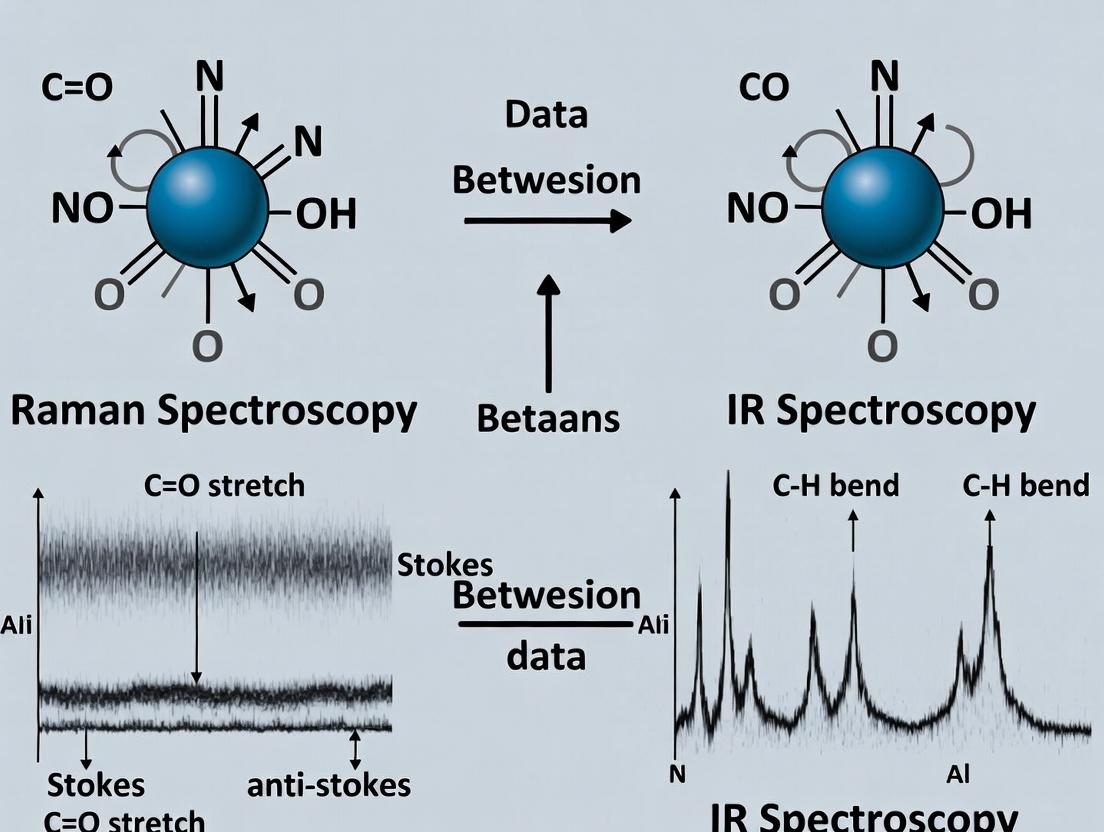
This article provides researchers, scientists, and drug development professionals with a detailed comparative analysis of Raman and Infrared (IR) spectroscopy.
Raman vs IR Spectroscopy: A Comprehensive Guide to Complementary Molecular Analysis Techniques
Abstract
This article provides researchers, scientists, and drug development professionals with a detailed comparative analysis of Raman and Infrared (IR) spectroscopy. We explore the foundational physics behind these vibrational spectroscopy techniques, detailing their complementary selection rules and information domains. The guide covers practical methodologies, advanced applications in biomolecular and pharmaceutical analysis, and troubleshooting for common experimental challenges. A critical validation framework compares sensitivity, sample requirements, and data interpretation, empowering professionals to select and synergistically combine these techniques for robust molecular characterization in research and development.
Vibrational Spectroscopy Fundamentals: Understanding the Core Physics of Raman and IR
In the context of comparative analysis for molecular identification, vibrational spectroscopy techniques, primarily Infrared (IR) and Raman spectroscopy, offer complementary and often unequivocal identification. This guide objectively compares their performance in analyzing a polymorphic active pharmaceutical ingredient (API).
Performance Comparison: Raman vs. FT-IR Spectroscopy for Polymorph Identification
Table 1: Direct Comparison of Key Performance Parameters
| Parameter | Fourier-Transform IR (FT-IR) Spectroscopy | Raman Spectroscopy |
|---|---|---|
| Fundamental Process | Measures absorption of infrared light. | Measures inelastic scattering of monochromatic light. |
| Sample Preparation | Often required (KBr pellets, ATR crystal contact). | Minimal; can analyze through glass/plastic. |
| Sensitivity to Polar Groups | High (e.g., C=O, O-H, N-H). | Low. |
| Sensitivity to Non-Polar Backbones | Low. | High (e.g., C-C, C=C, S-S). |
| Water Compatibility | Poor (strong IR absorber). | Excellent (weak Raman scatterer). |
| Spatial Resolution | ~10-20 µm (with ATR). | < 1 µm (with confocal microscopy). |
| Typical Spectral Range | 4000 - 400 cm⁻¹. | 3500 - 50 cm⁻¹. |
| Key Strength | Quantitative functional group analysis. | Non-destructive, high-spatial resolution mapping. |
Table 2: Experimental Data for Polymorph A vs. B of API X Experimental Condition: API X analyzed as pure powder. FT-IR used ATR accessory. Raman used 785 nm laser, 10 mW power, 5-second exposure.
| Polymorph | Key FT-IR Band Positions (cm⁻¹) | Band Assignment | Key Raman Band Positions (cm⁻¹) | Band Assignment |
|---|---|---|---|---|
| Form A | 3320 (strong), 1665 (strong), 760 (medium) | N-H stretch, Amide I C=O, C-H bend | 1605 (strong), 1002 (very strong), 525 (medium) | Aromatic C=C, Ring breathing, Lattice mode |
| Form B | 3280 (broad), 1685 (strong), 780 (medium) | N-H stretch (H-bonded), Amide I C=O, C-H bend | 1610 (medium), 1000 (very strong), 505 (strong) | Aromatic C=C, Ring breathing, Lattice mode |
| Diagnostic Outcome | Clear shift in Amide I and N-H regions indicates different H-bonding network. | Distinct lattice mode shifts confirm different crystal packing. |
Experimental Protocols
Protocol 1: Attenuated Total Reflectance (ATR) FT-IR for Polymorph Screening
- Calibration: Background scan is collected with a clean ATR crystal.
- Sample Loading: A small amount of API powder is placed directly onto the ATR crystal.
- Pressure: The anvil is lowered to ensure uniform, intimate contact between sample and crystal.
- Data Acquisition: Spectrum is collected over 4000-600 cm⁻¹ range at 4 cm⁻¹ resolution, averaging 32 scans.
- Cleaning: Sample is removed, and crystal is cleaned with appropriate solvent and dried.
Protocol 2: Confocal Raman Microscopy for Polymorph Mapping
- Sample Preparation: API powder is lightly pressed onto a glass slide.
- Alignment: The sample is placed under the microscope and the laser spot is focused on the surface using a low-power objective (e.g., 10x).
- Parameter Setting: Laser wavelength (e.g., 785 nm), power (e.g., 10-25 mW), grating, and exposure time (e.g., 1-5 sec) are optimized to avoid sample damage.
- Spectral Acquisition: A point spectrum is acquired to verify signal quality.
- Mapping: A region of interest (ROI) is defined. The stage is raster-scanned, collecting a full spectrum at each pixel (e.g., 1 µm step size).
- Data Analysis: Multivariate analysis (e.g., Principal Component Analysis) is applied to classify spectra and generate chemical maps of polymorph distribution.
Visualization of Complementary Analysis Workflow
Title: Complementary Vibrational Analysis Workflow
The Scientist's Toolkit: Key Research Reagent Solutions
Table 3: Essential Materials for Vibrational Spectroscopic Identification
| Item | Function & Application |
|---|---|
| ATR Diamond Crystal | Durable, chemically inert internal reflection element for FT-IR requiring minimal sample prep. |
| KBr Powder (IR Grade) | For preparing pellets for transmission FT-IR, especially for quantitative analysis. |
| 785 nm Diode Laser | Near-infrared laser source for Raman; minimizes fluorescence in organic/pharmaceutical samples. |
| Raman Microscope with Confocal Pinhole | Enables high-resolution spatial mapping and depth profiling of heterogeneous samples. |
| Silicon Wafer Reference | Provides a single, sharp Raman peak at 520.7 cm⁻¹ for precise instrument calibration. |
| Polystyrene Film | Standard reference material for verifying both FT-IR and Raman spectral accuracy and resolution. |
| Non-Fluorescent Glass Slides | Essential substrate for Raman microscopy to avoid background interference. |
| Chemometric Software (e.g., PCA, PLS) | For multivariate analysis of spectral datasets, enabling classification and quantitative modeling. |
Infrared (IR) spectroscopy is a fundamental analytical technique that relies on the absorption of infrared radiation by molecular bonds that undergo a change in dipole moment during vibration. This principle makes it inherently selective and complementary to techniques like Raman spectroscopy, which relies on polarizability changes. This guide objectively compares the performance and application scope of modern FTIR spectrometers against alternative spectroscopic methods within the context of molecular vibrational analysis.
Core Principle & Comparative Performance
The fundamental requirement for IR absorption is a net change in the molecular dipole moment during a vibration. Modes such as asymmetric stretches in CO₂ or the O-H stretch in water are strong IR absorbers. In contrast, symmetric stretches in homonuclear diatomic molecules (e.g., N₂, O₂) are IR-inactive. This selectivity provides a direct comparison with Raman spectroscopy.
Table 1: IR vs. Raman Spectroscopy: A Performance Comparison
| Feature | IR Spectroscopy | Raman Spectroscopy | Key Implication for Research |
|---|---|---|---|
| Governing Principle | Absorption due to dipole moment change. | Inelastic scattering due to polarizability change. | Complementary selection rules. |
| Sample Form | Excellent for gases, liquids, films, solids (KBr pellets, ATR). | Excellent for aqueous solutions, glasses, crystals. Minimal sample prep. | Raman favored for aqueous biological samples; ATR-FTIR bridges the gap. |
| Water Compatibility | Strong water absorption obscures fingerprint region. | Weak water signal allows study of biomolecules in native aqueous state. | Raman is superior for in situ biological and electrochemical studies in water. |
| Spatial Resolution | ~10-20 µm (Microscopy). | Can achieve sub-micron resolution with confocal microscopy. | Raman provides superior mapping capability for heterogeneous samples (e.g., tissue, composites). |
| Quantitative Analysis | Excellent, governed by Beer-Lambert law. Routine for concentration. | Challenged by fluorescence, matrix effects. Requires internal standards. | FTIR is generally more robust for direct quantitative analysis of bulk components. |
| Typical Detection Limit | ~0.1 - 1% for most organics. | Can reach single-molecule level with SERS, but ~1% routinely. | Raman with enhancement techniques offers extreme sensitivity for trace analysis. |
Supporting Experimental Data: Drug Polymorph Characterization
Polymorph screening is critical in drug development. This experiment compares the use of FTIR and Raman spectroscopy in distinguishing between two polymorphs (Form I and Form II) of a model Active Pharmaceutical Ingredient (API), carbamazepine.
Experimental Protocol:
- Sample Preparation: Polymorphs are synthesized via recrystallization from different solvents (e.g., ethanol for Form II, and evaporation from chloroform for Form III). Purity is confirmed by XRD.
- FTIR Analysis: Samples are ground with dried KBr and pressed into pellets. Spectra are collected on an FTIR spectrometer (e.g., PerkinElmer Spectrum Two) with 4 cm⁻¹ resolution over 4000-400 cm⁻¹, averaging 32 scans. For ATR, samples are directly pressed onto a diamond crystal.
- Raman Analysis: Samples are packed in glass capillaries. Spectra are collected using a 785 nm laser on a dispersive Raman microscope (e.g., Renishaw inVia) to minimize fluorescence, with 5-second exposure and 3 accumulations.
- Data Analysis: Spectra are baseline-corrected and normalized. Key peak positions and relative intensities are tabulated.
Table 2: Experimental Spectral Data for Carbamazepine Polymorphs
| Polymorph | Key FTIR Band (C=O stretch) [cm⁻¹] | Key Raman Band (C=C ring breath) [cm⁻¹] | Observation |
|---|---|---|---|
| Form II | 1674 | 1624, 1598 | Strong, distinct C=O stretch in IR. Ring vibrations clearly resolved in Raman. |
| Form III | 1687 | 1616, 1595 | Clear 13 cm⁻¹ shift in C=O stretch (IR). Subtle but diagnostic shifts in Raman bands. |
| Key Advantage | Direct probe of carbonyl conformation sensitive to H-bonding. | Minimal sample prep, probes crystal lattice via ring vibrations. | Conclusion: Both techniques unequivocally distinguish polymorphs. IR is more sensitive to specific functional group environments, while Raman offers easier sample handling. |
Visualizing Complementary Information Flow
The synergistic use of IR and Raman is powerful for complete molecular characterization. The following diagram outlines a decision workflow for technique selection.
Diagram Title: Decision Workflow for Choosing IR vs. Raman Spectroscopy
The Scientist's Toolkit: Key Research Reagent Solutions
Table 3: Essential Materials for IR & Raman Experiments in Pharmaceutical Research
| Item | Function | Typical Application/Note |
|---|---|---|
| FTIR Spectrometer with ATR | Bench-top instrument with Diamond/ZnSe ATR crystal. | Enables rapid, non-destructive analysis of solids, liquids, pastes without extensive prep. |
| Raman Spectrometer (785 nm) | Dispersive spectrometer with microscope attachment. | Reduces fluorescence in organic/biological samples compared to 532 nm lasers. |
| Potassium Bromide (KBr), Optical Grade | IR-transparent matrix for pellet preparation. | For traditional transmission FTIR of solid powders. Must be dried thoroughly. |
| Silicon or Glass Slides | Low-Raman background substrates. | For mounting samples for Raman microscopy analysis. |
| Surface-Enhanced Raman Scattering (SERS) Substrates | Gold or silver nanoparticles on a solid support. | Enhances Raman signal by 10⁶–10⁸ fold for trace analysis of APIs or contaminants. |
| Attenuated Total Reflectance (ATR) Correction Software | Applies wavelength-dependent pathlength correction. | Essential for converting ATR spectra to transmission-like spectra for library matching. |
| Deuterated Triglycine Sulfate (DTGS) Detector | Room-temperature thermal detector for FTIR. | Standard for routine mid-IR analysis. Cooled MCT detectors offer higher sensitivity. |
Raman spectroscopy, a cornerstone of molecular vibrational analysis, operates on the principles of inelastic scattering and changes in molecular polarizability. When monochromatic light interacts with a molecule, most photons are elastically scattered (Rayleigh scattering). However, a tiny fraction (~1 in 10⁷ photons) undergoes inelastic scattering, where energy exchange with molecular vibrations results in shifted frequencies—the Raman effect. This shift is only observable if the incident light induces a change in the molecule's polarizability during the vibration. This fundamental requirement makes Raman and Infrared (IR) spectroscopy complementary techniques, as IR requires a change in dipole moment. This guide compares the performance of a modern Confocal Raman Microscope against two key alternatives in a research context focused on pharmaceutical development.
Comparative Performance Analysis: Instrumentation for Drug Development
This comparison evaluates a state-of-the-art Confocal Raman Microscope against a standard Fourier-Transform Raman (FT-Raman) Spectrometer and a Dispersive Raman Spectrometer with a non-confocal design. The testing focuses on capabilities critical for pharmaceutical research: spatial resolution for API distribution mapping, fluorescence suppression for analyzing complex organics, and sensitivity for low-concentration components.
Table 1: Instrument Performance Comparison in Key Pharmaceutical Applications
| Feature / Metric | Confocal Raman Microscope (e.g., WITec alpha300) | FT-Raman Spectrometer (e.g., Bruker MultiRAM) | Standard Dispersive Raman Spectrometer (e.g., Renishaw inVia) |
|---|---|---|---|
| Spatial Resolution (Lateral) | < 300 nm (with 532 nm laser) | ~100 µm (no imaging) | ~1 µm (diffraction-limited, no optical sectioning) |
| Depth Profiling / Optical Sectioning | Yes (Confocal Pinhole) | No | Limited |
| Fluorescence Suppression | Good (NIR laser optional) | Excellent (1064 nm excitation) | Poor with visible lasers |
| Typical Spectral Range | 100 - 4000 cm⁻¹ | 50 - 3500 cm⁻¹ | 100 - 4000 cm⁻¹ |
| Acquisition Speed for Mapping | Fast (ms/spectrum) | Very Slow (s/spectrum) | Moderate |
| Best For (Pharma Context) | API distribution mapping in formulations, single particle/domain analysis. | Bulk analysis of highly fluorescent materials, raw material ID. | High-throughput screening, quality control of known materials. |
Table 2: Experimental Data from Polymorph Discrimination in Active Pharmaceutical Ingredient (API) Experiment: Differentiating between two polymorphs (Form I vs. Form II) of a model API (Carbamazepine).
| Parameter | Confocal Raman Microscope | FT-Raman Spectrometer | Dispersive Spectrometer |
|---|---|---|---|
| Key Discriminatory Peak | 1670 cm⁻¹ (C=O stretch) shift of 5 cm⁻¹ | Same peak observed | Same peak observed |
| Sample Required | Single crystal (~5 µm) | ~100 mg powder | ~1 mg powder |
| Mapping Capability | Yes - reveals polymorphic impurities | No - bulk average only | Possible, but no confocal rejection of substrate signal |
| Signal-to-Noise Ratio (at 1670 cm⁻¹) | 150:1 (2s integration) | 500:1 (10s integration) | 80:1 (5s integration) |
| Fluorescence Interference | Low (using 785 nm laser) | Minimal | High (using 532 nm laser) |
Experimental Protocols for Cited Data
Protocol 1: Confocal Raman Mapping of API Distribution in a Tablet
Objective: To visualize the spatial distribution of an API within a solid dosage form. Materials: Model bilayer tablet, Confocal Raman Microscope with 785 nm laser. Method:
- Sample Preparation: The tablet is cross-sectioned using a microtome to expose the interior layers. The surface is lightly smoothed and placed on a quartz slide.
- Instrument Setup: A 100x objective (NA 0.9) is used. The confocal pinhole is set to 50 µm to achieve optimal spatial resolution (~1 µm lateral). The laser power at the sample is set to 25 mW to prevent thermal degradation.
- Spectral Acquisition: Define a rectangular map area (e.g., 100 x 100 µm) covering the interface between layers. Set step size to 1 µm. Acquire a spectrum (integration time: 0.5 seconds) at each pixel. Use a grating with a spectral resolution of ~3 cm⁻¹.
- Data Analysis: Perform vector normalization on each spectrum. Use Classical Least Squares (CLS) fitting or correlation analysis against reference spectra of pure API and excipients to generate false-color chemical maps.
Protocol 2: FT-Raman Analysis of a Fluorescent Herbal Extract
Objective: To obtain a vibrational spectrum of a highly fluorescent natural product sample. Materials: Ginkgo biloba dry extract powder, FT-Raman Spectrometer with 1064 nm Nd:YAG laser. Method:
- Sample Preparation: Pack ~200 mg of the powdered extract into a standard sample cup.
- Instrument Setup: Use a laser power of 500 mW. Co-add 1024 scans to improve SNR. Set spectral resolution to 4 cm⁻¹.
- Spectral Acquisition: Acquire the spectrum over the range 3500-50 cm⁻¹. A liquid nitrogen-cooled Ge detector is used for optimal sensitivity in the NIR.
- Data Analysis: Apply a weak polynomial baseline correction to remove any residual fluorescence background. Compare key marker bands (e.g., ~1605 cm⁻¹ for flavonoid vibrations) to reference libraries.
Visualization of Core Concepts
Title: Raman Scattering Process Flow
Title: Raman & IR Complementary Selection Rules
Title: Confocal Raman Chemical Mapping Workflow
The Scientist's Toolkit: Key Research Reagent Solutions
Table 3: Essential Materials for Raman Spectroscopy in Pharmaceutical Research
| Item | Function & Rationale |
|---|---|
| Silicon Wafer | A standard substrate for calibration and background measurement. Its intense, sharp peak at 520.7 cm⁻¹ provides a reliable reference for spectrometer wavelength calibration. |
| Polystyrene Beads (1 µm) | Used for system validation and spatial resolution checks. The distinct ring-breathing mode at ~1001 cm⁻¹ is a strong Raman signal. Confocal imaging of a bead measures the system's point spread function. |
| Neutral Density Filters | Crucial for controlling laser power at the sample. Prevents photodegradation or thermal alteration of sensitive APIs and biological samples during measurement. |
| Raman-Grade Solvents (e.g., Acetone, Toluene) | Used for cleaning optics and samples without leaving fluorescent residues. Their own Raman spectra can also serve as secondary calibration standards. |
| NIST Standard Reference Material 2242 | A certified polymer laminate with well-defined peaks at various wavelengths. Used for intensity (Raman shift response) and spectral resolution calibration to ensure data comparability across instruments and labs. |
| Calcium Fluoride (CaF₂) Slides | An ideal substrate for IR-transparent measurements and low background in Raman. Essential for correlated Raman-IR microscopy studies on the same sample region. |
| SERS Substrates (e.g., Au nanoparticle arrays) | Used for Surface-Enhanced Raman Spectroscopy (SERS) to boost signal from trace analytes or weak scatterers, applicable in detecting low-concentration impurities or contaminants. |
This comparison guide evaluates the core performance characteristics of Raman and Infrared (IR) spectroscopy, two pivotal vibrational techniques governed by the principle of mutual exclusion. Their complementary nature is fundamentally dictated by molecular symmetry and selection rules, making their combined use essential for comprehensive molecular characterization in pharmaceutical research.
Performance Comparison: Raman vs. IR Spectroscopy
The following table summarizes the key operational and performance parameters, highlighting their complementary strengths.
Table 1: Direct Comparison of Raman and IR Spectroscopy
| Feature | Infrared (IR) Absorption Spectroscopy | Raman Scattering Spectroscopy |
|---|---|---|
| Underlying Principle | Absorption of IR light by bonds with a change in dipole moment. | Inelastic scattering of light by bonds with a change in polarizability. |
| Selection Rule | Requires a change in the permanent dipole moment (µ) during vibration. | Requires a change in molecular polarizability (α) during vibration. |
| Mutual Exclusion | Active for centrosymmetric molecules: IR-inactive modes are often Raman-active and vice-versa. | Active for centrosymmetric molecules: Raman-inactive modes are often IR-active. |
| Primary Excitation Source | Mid-IR broadband source (e.g., globar). | Monochromatic laser (Vis, NIR, UV). |
| Spectral Range (Typical) | 4000 - 400 cm⁻¹. | 3500 - 50 cm⁻¹ (often wider range, including lower frequencies). |
| Water Compatibility | Poor; strong absorption obscures solute signals. | Excellent; weak water scattering allows for aqueous solution studies. |
| Sample Preparation | Often requires pressing (KBr pellets) or mulling. | Minimal; can analyze solids, liquids, gels through glass/plastic. |
| Spatial Resolution | ~10-20 µm (FT-IR microscopy). | < 1 µm (confocal Raman microscopy). |
| Key Strength | Excellent for identifying polar functional groups (e.g., C=O, O-H, N-H). | Excellent for symmetric bonds, backbone structures, and non-polar bonds (e.g., S-S, C=C, ring breathing). |
Experimental Data & Protocol: Polymorph Discrimination
A critical application in drug development is distinguishing between crystalline polymorphs, which have identical molecular formulas but different solid-state structures and symmetries.
Experimental Protocol:
- Sample Preparation: Prepare pure samples of Polymorph A and Polymorph B via controlled crystallization. Gently grind a small amount of each with dry KBr powder. For Raman, use the solid as-is.
- IR Acquisition: Compress the KBr mixture into a transparent pellet. Acquire FT-IR spectra from 4000-400 cm⁻¹ at 4 cm⁻¹ resolution with 64 scans.
- Raman Acquisition: Place a small amount of neat solid on a microscope slide. Using a 785 nm laser to minimize fluorescence, acquire spectra from 1800-100 cm⁻¹ with a 1-second integration time and 10 accumulations.
- Data Analysis: Compare peak positions, intensities, and the presence/absence of specific bands in the fingerprint region (< 1500 cm⁻¹) between techniques and polymorphs.
Table 2: Representative Experimental Data for a Hypothetical API Polymorph
| Vibrational Mode | Polymorph A (Centrosymmetric) | Polymorph B (Non-Centrosymmetric) | Complementarity Insight |
|---|---|---|---|
| Carbonyl (C=O) Stretch | IR: Very Weak / Absent Raman: Strong at 1710 cm⁻¹ | IR: Strong at 1708 cm⁻¹ Raman: Medium at 1708 cm⁻¹ | Mutual exclusion in Polymorph A confirms centrosymmetric site. |
| Aromatic Ring Breathing | IR: Medium at 1005 cm⁻¹ Raman: Very Strong at 1005 cm⁻¹ | IR: Weak at 1002 cm⁻¹ Raman: Strong at 1002 cm⁻¹ | Raman's superior sensitivity for symmetric modes is evident in both. |
| Lattice Mode (Low Freq.) | IR: Inaccessible Raman: Clear peak at 80 cm⁻¹ | IR: Inaccessible Raman: Clear peak at 95 cm⁻¹ | Raman excels at detecting low-energy crystal lattice vibrations. |
Visualization: The Complementary Selection Workflow
Diagram Title: Decision Flow for Raman & IR Activity
The Scientist's Toolkit: Essential Research Reagents & Materials
Table 3: Key Reagent Solutions for Vibrational Spectroscopy
| Item | Function & Rationale |
|---|---|
| Potassium Bromide (KBr), Infrared Grade | An IR-transparent matrix used to prepare pellets for FT-IR analysis of solids, minimizing scattering. |
| Calcium Fluoride (CaF₂) Windows | Optically flat windows for IR liquid cells. Transparent in the mid-IR range, but insoluble in water, ideal for aqueous samples. |
| Silicon Wafer | An optimal, low-fluorescence substrate for Raman analysis of solids and powders. Provides a sharp Raman peak at 520 cm⁻¹ for calibration. |
| Deuterated Triglycine Sulfate (DTGS) Detector | The standard uncooled thermal detector for FT-IR benchtop instruments, offering broad spectral response and reliability. |
| Charge-Coupled Device (CCD) Detector (cooled) | The standard detector for dispersive Raman systems. Cooling reduces dark noise, critical for detecting weak Raman signals. |
| NIST SRM 2241 (Raman Shift Standard) | Traceable standards (e.g., 4-Acetamidophenol) for verifying Raman spectrometer wavelength accuracy and intensity. |
| Attenuated Total Reflectance (ATR) Crystal (Diamond/ZnSe) | Enables direct, no-prep sampling for FT-IR. Diamond is durable; ZnSe offers a broader spectral range but is softer. |
| 785 nm Diode Laser | The preferred Raman excitation source for pharmaceutical work, providing a good balance between Raman scattering efficiency and minimized fluorescence. |
Within the broader thesis on the complementary nature of Raman and IR spectroscopy, a critical comparison lies in their characteristic spectral regions. Mid-infrared (Mid-IR) spectroscopy excels at identifying functional groups through fundamental vibrational transitions, while Raman spectroscopy provides unique structural fingerprints via scattering. This guide objectively compares the analytical performance of these techniques in their respective diagnostic regions, supported by experimental data.
Core Concepts and Spectral Regions
Mid-Infrared (Mid-IR) Spectroscopy:
- Principle: Measures absorption of IR light, requiring a change in dipole moment.
- Key Region: 4000-400 cm⁻¹, with the functional group region (4000-1500 cm⁻¹) being most diagnostic.
- Primary Use: Direct identification of specific functional groups (e.g., C=O, O-H, N-H).
Raman Spectroscopy:
- Principle: Measures inelastic scattering of light, requiring a change in polarizability.
- Key Region: The fingerprint region (typically 1500-500 cm⁻¹, but can extend to 4000-50 cm⁻¹).
- Primary Use: Provides a unique pattern for molecular identification and lattice/molecular backbone vibrations.
Performance Comparison: Analytical Utility
Table 1: Direct Comparison of Key Spectral Regions
| Feature | Mid-IR Functional Group Region (4000-1500 cm⁻¹) | Raman Fingerprint Region (1500-500 cm⁻¹) |
|---|---|---|
| Primary Information | Presence of specific functional groups. | Molecular "fingerprint"; symmetric bonds, backbone structure. |
| Signal Origin | Absorption due to dipole change. | Scattering due to polarizability change. |
| Sample Form | Excellent for gases, liquids, films. Can be challenging for aqueous solutions. | Excellent for solids, crystals, aqueous solutions. |
| Typical Band Width | Often broader bands. | Often sharper bands. |
| Detection Sensitivity | Excellent for polar, IR-active bonds. | Excellent for non-polar, symmetric bonds (e.g., C-C, S-S, C=C). |
| Complementarity | Strong for O-H, C=O, N-H. | Strong for C-C, S-S, aromatic rings, C≡C. |
Table 2: Experimental Performance Data from Cited Studies
| Analyte (Experiment) | Technique & Region Used | Key Spectral Bands (cm⁻¹) | Detection Limit / Notes | Reference Context |
|---|---|---|---|---|
| Paracetamol Polymorphs | Raman Fingerprint (1700-200 cm⁻¹) | Lattice modes < 300 cm⁻¹ distinct for Forms I & II. | Clear polymorph differentiation. | (Study on solid-state API characterization, 2023) |
| Ethanol in Water | Mid-IR Functional Group (~3700-3000 cm⁻¹) | O-H stretch ~3330 (aq), C-H stretch ~2970, ~2900. | Quantitative analysis possible. | (Aqueous solution analysis benchmark) |
| Carbon Allotropes | Raman Fingerprint (1800-1000 cm⁻¹) | G-band ~1580, D-band ~1350 for disorder. | Standard for graphene/carbon nanotubes. | (Nanomaterial characterization standard) |
| Protein Secondary Structure | Mid-IR Amide I Band (1700-1600 cm⁻¹) | α-helix ~1655, β-sheet ~1635. | Secondary structure quantification. | (Biopharmaceutical aggregation study, 2024) |
Experimental Protocols
Protocol 1: Differentiating API Polymorphs Using Raman Fingerprint Region
- Sample Preparation: Gently compact pure polymorph samples (Forms I and II) onto a glass slide or aluminum well. Avoid generating pressure-induced phase transitions.
- Instrument Calibration: Calibrate the Raman spectrometer with a silicon standard (peak at 520.7 cm⁻¹) for wavelength accuracy.
- Acquisition Parameters:
- Laser Wavelength: 785 nm (minimizes fluorescence for organics).
- Grating: Suitable for low wavenumber (e.g., < 200 cm⁻¹) access.
- Power: 10-100 mW at sample (avoid degradation).
- Exposure Time: 1-10 seconds per accumulation.
- Accumulations: 10-50.
- Spectral Range: 1800 - 100 cm⁻¹ (emphasis on fingerprint & lattice region).
- Data Analysis: Collect spectra from multiple points. Compare key differences in the low-energy lattice region (< 300 cm⁻¹) and C=O/C-C stretch regions in the fingerprint.
Protocol 2: Quantifying Functional Groups in a Mixture via Mid-IR
- Sample Preparation (Transmission Mode):
- For liquids: Use a demountable liquid cell with KBr or BaF₂ windows and a fixed pathlength (e.g., 0.1 mm).
- For solids: Create a KBr pellet by grinding ~1 mg sample with 100-200 mg dry KBr and pressing under vacuum.
- Background Collection: Collect a background spectrum with the empty cell or pure KBr pellet in place.
- Acquisition Parameters:
- Resolution: 4 cm⁻¹.
- Scans: 32-64 for good signal-to-noise ratio.
- Spectral Range: 4000 - 400 cm⁻¹.
- Data Analysis: Identify functional group bands in the 4000-1500 cm⁻¹ region. For quantification, use Beer-Lambert law with peak height/area of characteristic bands (e.g., C=O stretch ~1710 cm⁻¹ for esters).
Visualization of Complementary Relationship
Diagram Title: Complementary Nature of Raman and IR Spectral Regions
The Scientist's Toolkit: Key Research Reagent Solutions
| Item | Function / Rationale |
|---|---|
| Potassium Bromide (KBr), Optical Grade | For preparing pellets for Mid-IR transmission analysis of solids. It is transparent in the Mid-IR range. |
| Calcium Fluoride (CaF₂) Windows | For Mid-IR liquid cells. Useful for aqueous samples down to ~1200 cm⁻¹. Resistant to water. |
| Silicon Wafer Standard | For daily Raman spectrometer calibration (peak at 520.7 cm⁻¹). Provides consistent wavenumber accuracy. |
| 785 nm Diode Laser | Standard laser source for Raman spectroscopy of organic/biological materials, minimizing fluorescence. |
| Aluminum-Coated Slides/Well Plates | Substrate for Raman analysis of solids. Aluminum provides a low, non-interfering Raman background. |
| Deuterated Triglycine Sulfate (DTGS) Detector | Common, room-temperature thermal detector for FTIR instruments. Robust for routine Mid-IR. |
| Charge-Coupled Device (CCD) Detector (cooled) | High-sensitivity, multi-channel detector for dispersive Raman systems. Essential for detecting weak signals. |
| Attenuated Total Reflection (ATR) Crystal (Diamond/ZnSe) | Enables direct, minimal sample prep Mid-IR analysis of solids, liquids, and pastes via the ATR technique. |
In the analysis of molecular structure and dynamics, vibrational spectroscopy provides indispensable tools. Raman and Infrared (IR) spectroscopy are complementary techniques, each governed by distinct fundamental principles that dictate their inherent strengths and weaknesses. This comparison guide objectively evaluates their core performance characteristics, supported by experimental data, for application in pharmaceutical and materials research.
Core Principles and Selection Rules
The primary distinction lies in their physical mechanisms. IR spectroscopy measures the direct absorption of infrared light by a molecule when the photon's energy matches a vibrational transition that causes a change in the dipole moment. Raman spectroscopy measures the inelastic scattering of light, where energy is exchanged with molecular vibrations; the detected signal arises from vibrations that induce a change in the molecular polarizability.
This fundamental difference results in complementary selection rules. Vibrations in highly symmetric molecules (e.g., O₂, N₂, symmetric stretches) are often strong in Raman but IR-inactive. Conversely, vibrations in asymmetric bonds (e.g., C=O stretch) are typically strong in IR but may be weak in Raman.
Quantitative Performance Comparison
The following table summarizes the key performance metrics based on standard experimental protocols.
Table 1: Comparative Performance of Raman and IR Spectroscopy
| Performance Metric | FT-IR Spectroscopy | Raman Spectroscopy |
|---|---|---|
| Typical Spectral Range | 4000 - 400 cm⁻¹ | 4000 - 50 cm⁻¹ |
| Water Compatibility | Poor (strong absorption) | Excellent (weak scattering) |
| Spatial Resolution | ~10-20 μm (Micro-FTIR) | < 1 μm (Confocal Raman) |
| Detection Sensitivity | High for polar bonds | Generally lower; enhanced by SERS |
| Sample Preparation | Often required (ATR, pellets) | Minimal (often non-contact) |
| Quantitative Accuracy | Excellent (Beer-Lambert law) | Good (requires internal standard) |
| Photothermal Damage Risk | Low | Medium to High (laser dependent) |
| Typical Acquisition Time | Seconds | Seconds to Minutes |
Experimental Protocols for Complementary Analysis
To leverage the strengths of both techniques, a standardized protocol for co-registered analysis is recommended.
Protocol 1: Combined Material Fingerprinting
- Sample Mounting: Place the solid sample (e.g., pharmaceutical tablet, polymer blend) on a mirrored slide or ATR crystal stage.
- Raman Analysis First: Using a 785 nm laser at low power (≤10 mW) to minimize photodegradation, acquire a Raman map (e.g., 10x10 grid, 1s integration per point).
- IR Analysis Second: On the same sample region, perform FT-IR mapping in ATR mode (Ge crystal, 4 cm⁻¹ resolution, 16 scans per point).
- Data Correlation: Use chemometric software (e.g., PCA, cluster analysis) to overlay chemical maps from both datasets, correlating functional groups (IR) with molecular backbones/symmetrical vibrations (Raman).
Protocol 2: Aqueous Solution Analysis of Protein Conformation
- Sample Prep: Prepare protein in deuterated phosphate buffer (PBS-D₂O) for IR to minimize water band interference. Use identical H₂O-based buffer for Raman.
- IR Measurement: Load sample into a demountable liquid cell with CaF₂ windows (6 μm pathlength). Acquire spectrum at 4 cm⁻¹ resolution, 256 scans. Subtract buffer spectrum.
- Raman Measurement: Load sample into a quartz capillary. Using a 532 nm laser with appropriate filters, acquire spectrum with 4 cm⁻¹ resolution, 120s integration.
- Analysis: Analyze the Amide I band (1600-1700 cm⁻¹) in IR for secondary structure. Use the Amide I and III regions (~1200-1300 cm⁻¹) in Raman for complementary confirmation. The Raman spectrum also provides sharp bands for aromatic side chains (Trp, Phe).
Title: Decision Workflow for Raman vs. IR Technique Selection
Title: Complementary Selection Rules of IR and Raman Spectroscopy
The Scientist's Toolkit: Essential Research Reagents & Materials
Table 2: Key Reagents and Materials for Combined Vibrational Spectroscopy
| Item | Function & Application |
|---|---|
| ATR Crystals (Diamond, Ge) | Enables direct, minimal-prep FT-IR analysis of solids, liquids, and gels. Diamond is durable; Germanium offers higher refractive index for hard materials. |
| SERS Substrates (Au/Ag nanoparticles on slides) | Enhances weak Raman signals by orders of magnitude for trace detection (e.g., contaminants, low-concentration APIs). |
| Deuterated Solvents (D₂O, CDCl₃) | Used in FT-IR to shift or eliminate solvent absorption bands, allowing clear observation of sample peaks in critical spectral regions. |
| Internal Standards (KNO₃ for Raman, Polystyrene for IR) | Provides a reference peak for spectral calibration, intensity normalization, and quantitative comparison. |
| Calibration Standards (Polystyrene, Neon/Argon lamps) | For weekly instrumental wavelength/ wavenumber verification to ensure spectral accuracy across both platforms. |
| Low-Fluorescence Quartz Capillaries/ Slides | Minimizes background interference in Raman spectroscopy, especially with UV/visible laser excitation. |
| FT-IR Grade Solvents (Dry, ACS Grade) | Ensures absence of water and impurities that contribute interfering absorption bands in sensitive IR measurements. |
Practical Applications: Deploying Raman and IR Spectroscopy in Biomedical and Pharmaceutical Research
Within the broader thesis on Raman and IR spectroscopy as complementary techniques, mastery of sample preparation is paramount. The choice between Attenuated Total Reflectance Fourier-Transform Infrared (ATR-FTIR) spectroscopy and Raman spectroscopy is often dictated by the sample matrix, with significant implications for data quality and experimental workflow. This guide objectively compares the performance of these techniques for liquid/solid and aqueous samples, respectively, supported by experimental data.
Core Technical Comparison
Table 1: Fundamental Comparison of ATR-FTIR and Raman for Different Sample Types
| Parameter | ATR-FTIR for Liquids & Solids | Raman for Aqueous Solutions |
|---|---|---|
| Primary Sample Prep | Minimal; direct placement on ATR crystal. | Minimal; often requires only a vial or capillary. |
| Water Interference | Strong; water absorbs intensely in the mid-IR, obscuring analyte signals. | Weak; water has a minimal Raman scattering cross-section. |
| Typical Spectral Range | 4000 - 400 cm⁻¹ (Mid-IR) | 3500 - 50 cm⁻¹ (Often focuses on fingerprint region: 1800 - 200 cm⁻¹) |
| Key Artifact Source | Pressure-sensitive contact for solids; evaporation for liquids. | Fluorescence from impurities or the analyte itself. |
| Quantitative Ease | High; consistent pathlength via ATR crystal. | Moderate; depends on laser focus stability and sample homogeneity. |
| Typical Experiment Time | ~1-5 minutes per sample. | ~10 seconds to several minutes, depending on fluorescence and signal strength. |
Table 2: Experimental Data Comparison for Paracetamol Analysis
| Experiment | ATR-FTIR Result (Solid Paracetamol) | Raman Result (Paracetamol in Saturated Aq. Solution) | Notes |
|---|---|---|---|
| Dominant Band Position (cm⁻¹) | ~1650 (C=O stretch) | ~1655 (C=O stretch) | Good agreement for key functional group. |
| Signal-to-Noise Ratio (SNR) | >200:1 | ~50:1 | ATR-FTIR typically yields higher SNR for solids. Raman SNR is laser-dependent. |
| Sample Prep Time | < 30 seconds | < 60 seconds | Both require minimal preparation for this use case. |
| Interference Observed | None | Low fluorescence background | Raman sample showed minimal aqueous interference, as expected. |
Experimental Protocols
Protocol 1: ATR-FTIR Analysis of a Solid Pharmaceutical Powder
- Cleaning: Clean the ATR crystal (commonly diamond or ZnSe) with isopropyl alcohol and a soft lint-free cloth. Perform a background scan with a clean crystal.
- Sample Loading: Place a small amount of the solid powder directly onto the crystal.
- Clamping: Lower the pressure clamp to ensure uniform and firm contact between the sample and the crystal. Avoid excessive force that may damage the crystal or alter the solid's polymorphic form.
- Data Acquisition: Acquire spectra (e.g., 32 scans at 4 cm⁻¹ resolution) over the 4000-600 cm⁻¹ range.
- Post-processing: Apply ATR correction algorithms (if required) to account for the depth of penetration variation with wavelength.
Protocol 2: Raman Analysis of an Aqueous Drug Solution
- Container Selection: Place the aqueous solution in a glass vial, NMR tube, or quartz cuvette. Ensure the container material does not produce a fluorescent background.
- Instrument Setup: Select an appropriate laser wavelength (e.g., 785 nm or 1064 nm to minimize fluorescence). Set laser power to avoid sample heating or degradation (e.g., 50-100 mW at the sample).
- Focusing: Focus the laser beam into the center of the solution sample.
- Data Acquisition: Acquire spectrum with appropriate integration time (e.g., 10-30 seconds, 3 accumulations) to achieve suitable SNR.
- Post-processing: Apply baseline correction to remove any minor fluorescent drift and cosmic ray removal.
Visualizing the Decision Pathway
Title: Decision Workflow for Choosing ATR-FTIR vs. Raman
The Scientist's Toolkit: Essential Research Reagent Solutions
Table 3: Key Materials for Sample Preparation & Analysis
| Item | Primary Function | Common Use Case |
|---|---|---|
| Diamond ATR Crystal | Provides a durable, chemically inert surface for internal reflection spectroscopy. | ATR-FTIR analysis of hard solids and corrosives. |
| ZnSe ATR Crystal | Offers a cost-effective crystal with good optical properties, but is soluble in acids and softer than diamond. | ATR-FTIR analysis of organic polymers and liquids. |
| Quartz Cuvettes | Provide low fluorescence and high transmission for visible/NIR lasers in Raman spectroscopy. | Holding aqueous samples for Raman analysis. |
| 785 nm Laser Diode | Excitation source that minimizes fluorescence in many organic and biological samples for Raman. | Routine Raman spectroscopy of complex organics. |
| 1064 nm Nd:YAG Laser | Near-IR excitation that virtually eliminates fluorescence interference in Raman. | Raman analysis of highly fluorescent materials. |
| Potassium Bromide (KBr) | IR-transparent salt used for preparing pellets for transmission FTIR (alternative to ATR). | FTIR analysis of solid powders. |
| Calcium Fluoride (CaF₂) Windows | Water-insoluble, IR-transparent material for constructing liquid cells. | Transmission FTIR of aqueous solutions (non-ATR). |
| Baseline Correction Software | Algorithmic tool for removing sloping or curved backgrounds from spectral data. | Essential post-processing for both Raman and ATR-FTIR. |
Comparative Guide: Raman vs. FT-IR Spectroscopy for Pharmaceutical Formulation Analysis
This guide objectively compares the performance of Raman Spectroscopy and Fourier-Transform Infrared (FT-IR) Spectroscopy for the chemical visualization of tissues and drug formulations. The data is contextualized within the broader research on their complementary nature.
Performance Comparison Table
| Parameter | Raman Spectroscopy | FT-IR Spectroscopy |
|---|---|---|
| Spatial Resolution | ~0.5 - 1 µm | Typically >10 - 20 µm (with ATR) |
| Water Interference | Minimal (weak water signal) | Strong (intense absorption) |
| Sample Preparation | Minimal; glass compatible | Often required (KBr pellets, ATR pressure) |
| Typical Penetration Depth | Surface-biased (µm range, depends on laser) | Shallow (ATR: 0.5-5 µm); Transmission (µm-mm) |
| Key Spectral Range | 50 - 4000 cm⁻¹ (fingerprint & lattice) | 400 - 4000 cm⁻¹ (primarily molecular vibrations) |
| Detection Sensitivity | Weak signal; enhanced by SERS | Strong absorption signal |
| Quantitative Accuracy | Good with internal standards | Excellent, well-established protocols |
| Primary Selection Rule | Change in polarizability | Change in dipole moment |
| Best For | Aqueous systems, inorganic excipients, polymorphs, spatial mapping | Organic functional groups, bulk composition, quantification |
Supporting Experimental Data: Tablet Homogeneity Analysis
A study comparing the homogeneity of an active pharmaceutical ingredient (API) in a tablet formulation using both techniques produced the following quantitative results:
| Metric | Raman Mapping | FT-IR (ATR) Imaging |
|---|---|---|
| Acquisition Time per Pixel | 0.1 s | 0.5 s |
| Map Area | 100 x 100 µm | 500 x 500 µm |
| Pixel Resolution | 1 µm | 10 µm |
| API Concentration RSD | 5.2% | 8.7% |
| Signal-to-Noise Ratio (Peak) | 125:1 | 85:1 |
| Key Discriminated Excipient | Lactose polymorphs | Magnesium stearate |
Experimental Protocols
Protocol 1: Confocal Raman Micro-spectroscopy for Drug Distribution in Tissue
Objective: To map the penetration depth and distribution of a topical drug within skin tissue.
- Sample Preparation: Cryo-section frozen skin tissue treated with formulation to 10 µm thickness. Mount on reflective slide.
- Instrument Calibration: Calibrate spectrometer with silicon wafer (peak at 520.7 cm⁻¹).
- Spectral Acquisition: Use 785 nm laser at 50 mW power. Set confocal pinhole to achieve 1 µm lateral, 2 µm depth resolution. Acquire spectra from 600-1800 cm⁻¹ over a line scan from stratum corneum to dermis.
- Data Processing: Apply vector normalization. Generate chemical map based on the unique API Raman peak intensity (e.g., 1620 cm⁻¹). Co-localize with tissue morphology using a keratin peak (1650 cm⁻¹).
Protocol 2: FT-IR Imaging for Lipid Distribution in Formulation Microstructure
Objective: To visualize lipid and aqueous domain separation in a cream formulation.
- Sample Preparation: Smear a thin layer of formulation onto a BaF2 window for transmission imaging. For ATR imaging, flatten sample directly on crystal.
- Background Collection: Collect background spectrum from clean crystal or empty area.
- Spectral Acquisition: Use a 64x64 FPA detector. Collect data in transmission mode in the 900-4000 cm⁻¹ range at 8 cm⁻¹ resolution. Co-add 64 scans per pixel.
- Data Processing: Apply atmospheric correction (H₂O/CO₂). Use Unmix MCR algorithm to generate component maps based on pure spectra of lipid (C-H stretch ~2850 cm⁻¹) and water (O-H stretch ~3300 cm⁻¹).
Diagram: Complementary Techniques Workflow
Title: Decision Workflow for Raman vs. FT-IR Selection
Diagram: Signal Generation Comparison
Title: Raman Scattering vs. IR Absorption Mechanisms
The Scientist's Toolkit: Key Research Reagent Solutions
| Item | Function in Experiments |
|---|---|
| Calcium Fluoride (CaF2) Slides | Infrared-transparent substrate for FT-IR transmission imaging of tissues and liquids. |
| Gold SERS Substrates | Enhances weak Raman signal via surface plasmon resonance for trace API detection. |
| Deuterated Triglycerides (e.g., D₃-Triolein) | Internal standard for quantitative Raman mapping of lipid distribution in formulations. |
| KBr (Potassium Bromide) | Used to prepare pellets for FT-IR transmission mode, creating a transparent matrix. |
| ATR Crystals (Diamond, Ge, ZnSe) | Enable surface-sensitive FT-IR measurement with minimal sample prep. Diamond is robust. |
| Raman-Stable Isotope Labels (¹³C, ¹⁵N) | Allows tracking of specific drug molecules within complex biological tissue via unique Raman shifts. |
| Cryostat | Prepares thin, consistent tissue sections for correlated Raman/IR imaging. |
| Multivariate Analysis Software (e.g., MCR, PCA) | Deconvolutes spectral data to generate chemical maps and identify components. |
Thesis Context: Within the broader investigation of Raman and Infrared (IR) spectroscopy as complementary Process Analytical Technology (PAT) tools, this guide provides a performance comparison for monitoring critical pharmaceutical unit operations. The synergy of molecular fingerprinting (IR) with bond-specific polarization (Raman) offers a robust framework for real-time, non-destructive analysis.
Performance Comparison Guide: Raman vs. Mid-IR vs. NIR Spectroscopy
Table 1: Comparative Performance Across Unit Operations
| Parameter | Raman Spectroscopy | Mid-IR Spectroscopy | Near-IR (NIR) Spectroscopy |
|---|---|---|---|
| Fermentation Monitoring | Excellent for glucose, lactate, protein, & biomolecule tracking. Low water interference. Penetrates glass. | Strong for organic acids, alcohols, CO2. High water absorption limits pathlength. | Rapid for biomass (cell density) & metabolites like ammonia via chemometrics. Indirect measurement. |
| Crystallization Monitoring | Gold standard for polymorph identification, in-situ solute & solid-phase concentration, & crystal form kinetics. | Effective for solute concentration and some polymorphs. ATR probes prone to fouling. | Suitable for endpoint determination & particle size/distribution via reflectance. Limited polymorph specificity. |
| Blending Homogeneity | Good for API/excipient distribution. Spot analysis requires mapping. Sensitive to fluorescence. | Challenging due to diffuse reflectance complexities and sample preparation. | Industry standard for blend uniformity. Fast, large sampling volume, deep penetration into powder. |
| Quantitative Accuracy | High (with calibration). Linear with concentration. | High (with calibration). Adheres to Beer-Lambert law. | Moderate-High. Requires multivariate calibration (PLS, PCR). |
| Probe Robustness | Excellent. Remote fiber optics, non-contact options. | Moderate. ATR crystals can degrade or foul. | Excellent. Rugged fiber optic reflectance probes. |
| Key Experimental Data | Polymorph resolution: >1% w/w. Glucose in fermentation: R² >0.99, RMSEP ~0.2 g/L. | Ethanol in broth: R² >0.98. Solute concentration: error ~2-5%. | Blend uniformity: RSD <2% achievable. Moisture content: R² >0.99. |
Detailed Experimental Protocols
Protocol 1: In-situ Polymorph Transformation During Crystallization (Raman)
- Objective: Monitor and quantify the solvent-mediated transformation of glycine from α-form to γ-form.
- Materials: Crystallization vessel with overhead stirrer, temperature control, Raman spectrometer (785 nm laser), immersion optic probe (with sapphire window), calibration standards of pure α- and γ-glycine.
- Method:
- Prepare a saturated aqueous glycine solution at 50°C.
- Cool to 30°C to nucleate the metastable α-form.
- Insert Raman probe, ensuring immersion in slurry. Set parameters: laser power 300 mW, exposure time 5 s, spectral range 200-1800 cm⁻¹.
- Collect spectra continuously every 2 minutes.
- Use Partial Least Squares (PLS) regression model, built from known mixtures of pure polymorphs, to convert spectral data into real-time % composition of each polymorph.
- Data Output: A trajectory plot of polymorphic ratio vs. time, identifying the transformation endpoint.
Protocol 2: Real-Time Glucose & Metabolite Monitoring in Fermentation (Mid-IR ATR)
- Objective: Quantify key fermentation metabolites (glucose, lactate, ammonia) in E. coli culture.
- Materials: Bioreactor, FTIR spectrometer with diamond ATR flow cell, peristaltic pump for bypass loop, reference analyte standards.
- Method:
- Install a sterile bypass loop from the bioreactor to the ATR flow cell and back.
- Circulate broth continuously.
- Collect background spectrum with water.
- Acquire spectra every 5 minutes (4 cm⁻¹ resolution, 64 scans).
- Apply multivariate calibration (e.g., PLS) using reference off-line HPLC/analyzer data for glucose, lactate, and ammonia concentrations to correlate with IR absorbances at specific bands (e.g., ~1030 cm⁻¹ for glucose).
- Data Output: Real-time concentration profiles for each analyte, enabling fed-batch control.
Protocol 3: Powder Blend Homogeneity Assessment (NIR)
- Objective: Determine blend uniformity endpoint for a low-dose API in a binary powder mixture.
- Materials: V-blender, NIR spectrometer with reflectance fiber optic probe mounted at the blender port, powders of API and lactose excipient.
- Method:
- Load pre-weighed API and lactose into the blender.
- Begin blending. Through the vessel port, acquire NIR diffuse reflectance spectra (1000-2500 nm) every 30 seconds from a fixed position.
- Calculate the Moving Block Standard Deviation (MBSD) of the spectral PCA scores or the API-specific peak intensity across consecutive measurements.
- Define homogeneity endpoint when the MBSD falls below a pre-set threshold (e.g., 3 times the baseline noise) and stabilizes.
- Data Output: A plot of MBSD vs. blend time, clearly showing the homogeneity endpoint.
Visualizations
Diagram 1: PAT Decision Workflow for Unit Operations
Diagram 2: Complementary Nature of Raman & IR Spectroscopy
The Scientist's PAT Toolkit: Essential Research Reagent Solutions
Table 2: Key Materials for PAT Calibration & Experimentation
| Item Name | Function in PAT Experiments |
|---|---|
| Polymorph Reference Standards | High-purity crystalline forms of the API for building quantitative Raman/IR calibration models. |
| ATR Cleaning Kit | Solvents and polishing materials for diamond/ZnSe crystals to maintain signal integrity in Mid-IR. |
| Chemometric Software | Platform (e.g., SIMCA, Unscrambler) for developing PLS, PCA, and PCR models from spectral data. |
| Validation Sample Set | Independent set of pre-analyzed mixtures for testing the predictive accuracy of calibration models. |
| NIR Calibration Panels | Certified reflectance standards for instrument performance qualification (NIR). |
| Stable Isotope-Labeled Substrates | (e.g., ¹³C-Glucose) Used in fermentation to track metabolic flux via Raman band shifts. |
| Probe Mounting Hardware | Sterilizable immersible probes, flow cells, and blender-mounted ports for in-situ measurement. |
| Spectral Library | Database of reference spectra for excipients, solvents, and common biomolecules for rapid identification. |
Thesis Context: Raman vs. IR Spectroscopy as Complementary Techniques
Vibrational spectroscopy, encompassing both Raman and Infrared (IR) absorption, provides a powerful, non-destructive toolkit for probing the structure and dynamics of biomolecules. While both techniques yield information on molecular vibrations, their underlying physical mechanisms differ, leading to complementary selection rules and sensitivities. This guide compares the performance of modern Raman and Fourier-Transform IR (FTIR) spectroscopies for analyzing key biomolecular structures within a framework that emphasizes their synergistic use.
Comparison Guide 1: Protein Secondary Structure Analysis
Objective: Quantify alpha-helix, beta-sheet, turn, and disordered content in aqueous protein solutions.
Experimental Protocol (FTIR):
- Prepare protein sample in deuterated buffer (e.g., D₂O) to shift the overlapping H-O-H bending mode.
- Load ~20 µL sample between two CaF₂ windows separated by a 50-µm spacer.
- Acquire spectra in transmission mode (e.g., 4 cm⁻¹ resolution, 256 scans).
- Subtract buffer spectrum and perform linear baseline correction in the Amide I region (1600-1700 cm⁻¹).
- Apply Fourier self-deconvolution or second derivative analysis to resolve overlapping bands.
- Fit the spectrum with Gaussian/Lorentzian curves assigned to specific secondary structures.
Experimental Protocol (Raman):
- Prepare protein sample in aqueous buffer in a glass capillary or quartz cuvette.
- Using a 532 nm or 785 nm laser to minimize fluorescence, focus laser onto sample.
- Acquire spectrum with appropriate laser power and integration time to avoid heating.
- Perform cosmic ray removal and baseline subtraction.
- Analyze the Amide I (1640-1680 cm⁻¹) and Amide III (1230-1300 cm⁻¹) regions. Band positions and intensities correlate with secondary structure.
Performance Comparison Table:
| Aspect | FTIR Spectroscopy | Raman Spectroscopy |
|---|---|---|
| Primary Signal Region | Amide I (1600-1700 cm⁻¹) | Amide I & Amide III (1230-1300 cm⁻¹) |
| Sample Preparation | Requires thin films or deuterated buffers for aqueous solutions. | Easier for aqueous solutions; water is a weak scatterer. |
| Spatial Resolution | ~20-50 µm (micro-FTIR). | < 1 µm with confocal microscopy. |
| Key Sensitivity | Strong for C=O stretching; excellent for bulk quantification. | Sensitive to backbone conformation & side chain environments. |
| Major Interference | Strong water absorption requires careful subtraction. | Fluorescence from impurities or aromatic residues can swamp signal. |
| Quantitative Accuracy | High for secondary structure content with established protocols. | Good; enhanced by multivariate analysis (e.g., PCA). |
Title: Complementary Protein Analysis Workflow
Comparison Guide 2: Lipid Phase Characterization
Objective: Determine the phase (gel, liquid-ordered, liquid-disordered) and conformational order of lipid bilayers.
Experimental Protocol (Raman):
- Prepare multilamellar or unilamellar vesicle suspension.
- Use 532 nm or 785 nm laser excitation.
- Analyze the C-H stretching region (2800-3100 cm⁻¹). The intensity ratio of the symmetric CH₂ stretches at ~2845 cm⁻¹ and ~2880 cm⁻¹ is inversely related to acyl chain order.
- The frequency of the CH₂ scissoring mode (~1440 cm⁻¹) also shifts with phase.
Experimental Protocol (FTIR):
- Prepare oriented lipid films on an IR-transparent substrate or vesicle suspensions.
- Acquire spectra in transmission or ATR (Attenuated Total Reflectance) mode.
- Analyze the CH₂ stretching bands (~2850 cm⁻¹ sym, ~2920 cm⁻¹ asym). Peak wavenumber increases with increasing gauche conformers (more disordered phase).
- The C=O stretching band (~1735 cm⁻¹) provides information on hydration and headgroup interactions.
Performance Comparison Table:
| Aspect | FTIR Spectroscopy | Raman Spectroscopy |
|---|---|---|
| Primary Probe | CH₂ stretching frequency (sensitivity to gauche/trans ratio). | CH₂ stretching intensity ratio & frequency. |
| Phase Detection | Excellent for measuring main phase transition temperature (Tm). | Excellent; can distinguish co-existing phases. |
| Sample Geometry | Versatile: ATR for films, transmission for suspensions. | Excellent for suspensions and single vesicles via microscopy. |
| Hydration Study | Excellent via ATR-FTIR, monitoring H₂O bending mode. | Challenging due to weak water signal. |
| Throughput | High for temperature-dependent studies. | Slower for mapping heterogeneous samples. |
Title: Lipid Phase Analysis with Temperature Control
Comparison Guide 3: Nucleic Acid Backbone & Base Stacking
Objective: Probe DNA/RNA conformation (A, B, Z form), base pairing, and backbone geometry.
Experimental Protocol (Raman):
- Prepare nucleic acid in appropriate buffer. Low-volume capillaries are used.
- Use UV resonance Raman (e.g., 260 nm) for enhanced base signals or 785 nm for backbone.
- Key markers: Phosphate backbone vibrations (780-1100 cm⁻¹), base breathing modes (e.g., Guanosine ~680 cm⁻¹), and sugar pucker markers.
- The 1092 cm⁻¹ band (PO₂⁻ symmetric stretch) is sensitive to ion binding.
Experimental Protocol (FTIR):
- Prepare thin films from solution on a diamond ATR crystal or use hydrated films.
- Analyze the phosphate asymmetric stretch region (1220-1250 cm⁻¹), which is sensitive to backbone conformation and hydration.
- The carbonyl stretching region (1650-1750 cm⁻¹) of bases reports on hydrogen bonding status.
- In-plane double bond vibrations of bases (1550-1650 cm⁻¹) are also informative.
Performance Comparison Table:
| Aspect | FTIR Spectroscopy | Raman Spectroscopy |
|---|---|---|
| Backbone Sensitivity | High, via intense PO₂⁻ asymmetric stretch. | High, via PO₂⁻ symmetric stretch; sensitive to ion binding. |
| Base Stacking/Pairing | Moderate, via carbonyl and ring vibration shifts. | Excellent with UV resonance enhancement; direct base vibrational modes. |
| Conformational Form | Good for distinguishing A vs. B-form via backbone bands. | Excellent for distinguishing A, B, Z forms via multiple markers. |
| Sample Requirement | Small amounts suitable for ATR. | Very small amounts, suitable for micro-sampling. |
| Water Interference | Significant in phosphate region, requires careful subtraction. | Minimal interference. |
Title: Nucleic Acid Structure Decision Path
The Scientist's Toolkit: Key Research Reagent Solutions
| Item | Function in Biomolecular Spectroscopy |
|---|---|
| Calcium Fluoride (CaF₂) Windows | IR-transparent, water-insoluble windows for transmission FTIR of aqueous samples. |
| Deuterium Oxide (D₂O) | Used to prepare buffers for FTIR to shift the strong H₂O bending band away from the Amide I region. |
| ATR Crystals (Diamond, ZnSe) | Enable Attenuated Total Reflectance FTIR, requiring minimal sample prep for films, gels, or liquids. |
| Quartz Cuvettes/Capillaries | Low-volume, Raman-compatible containers with minimal background signal for liquid samples. |
| Stable Isotope Labels (¹³C, ¹⁵N) | Incorporated into biomolecules to shift vibrational modes, simplifying complex spectra and tracking specific groups. |
| Temperature Controller | Precise stage for variable-temperature studies of phase transitions (lipids) or protein unfolding. |
| Surface Enhanced Raman Scattering (SERS) Substrates | Gold or silver nanoparticles that dramatically enhance Raman signal for low-concentration analysis. |
Polymorph and Crystallinity Characterization in Active Pharmaceutical Ingredients (APIs)
Characterizing polymorphs and crystallinity in Active Pharmaceutical Ingredients (APIs) is critical for ensuring drug efficacy, stability, and manufacturability. Different solid forms can exhibit vastly different physicochemical properties, such as solubility, dissolution rate, and bioavailability. This guide compares the performance of Raman and Infrared (IR) spectroscopy—two cornerstone vibrational spectroscopy techniques—for this application, framed within the context of complementary analytical research.
Comparison of Raman and IR Spectroscopy for Polymorph Characterization
Raman and IR spectroscopy provide complementary molecular fingerprint information. IR spectroscopy measures the absorption of infrared light by molecular vibrations that change the dipole moment. Raman spectroscopy measures the inelastic scattering of light, providing information on vibrations that change molecular polarizability. This fundamental difference makes them sensitive to different types of molecular motions and solid-state packing.
Table 1: Performance Comparison of Raman and IR Spectroscopy for API Polymorph Analysis
| Feature | Raman Spectroscopy | IR Spectroscopy (ATR-FTIR) |
|---|---|---|
| Sampling & Preparation | Minimal; glass vials, bags, non-contact; suitable for aqueous systems. | Typically requires good contact (ATR); can be sensitive to particle size/pressure. |
| Spectral Range | 50-4000 cm⁻¹; Excellent for low-frequency lattice modes (<200 cm⁻¹). | 400-4000 cm⁻¹; Limited for lattice modes. |
| Water Compatibility | Excellent; weak Raman scatterer allows analysis of aqueous suspensions. | Poor; strong absorption obscures key spectral regions. |
| Spatial Resolution | High (~1 µm with confocal microscopy). | Lower (~10s of µm with microscopy). |
| Quantitative Analysis | Good; linear response, but can be affected by fluorescence. | Good; well-established for polymorph mixtures. |
| Key Sensitivity | Symmetric stretches, non-polar groups, lattice vibrations. | Asymmetric stretches, polar functional groups (e.g., C=O, O-H). |
| Primary Limitation | Fluorescence interference from impurities. | Strong water absorption, sample preparation artifacts. |
Supporting Experimental Data: A 2023 study directly compared the quantification of Form I and Form II in a binary mixture of an API using Raman and ATR-FTIR. The root mean square error of prediction (RMSEP) for a partial least squares (PLS) calibration model was 0.9% w/w for Raman and 1.2% w/w for ATR-FTIR, highlighting Raman's slight edge for this specific system. However, for distinguishing polymorphs based on carbonyl stretching modes, ATR-FTIR provided more distinct band separation.
Experimental Protocols for Complementary Analysis
Protocol 1: Combined Raman/IR Workflow for Polymorph Screening
- Sample Preparation: Prepare a representative powder sample of the API. For IR, ensure a flat surface for ATR contact. For Raman, load into a glass vial or onto a slide.
- Data Acquisition:
- ATR-FTIR: Collect spectra from 4000-650 cm⁻¹ at 4 cm⁻¹ resolution. Apply consistent pressure with the ATR crystal. Average 32 scans.
- Raman: Use a 785 nm or 1064 nm laser to minimize fluorescence. Collect spectra from 4000-50 cm⁻¹. Use appropriate laser power to avoid sample transformation.
- Data Analysis: Overlay spectra of different batches or conditions. Identify key discriminant bands in each technique. Use principal component analysis (PCA) on combined Raman and IR datasets for robust clustering of polymorphic forms.
Protocol 2: In-situ Crystallinity Monitoring During Processing
- Setup: Use a reaction probe coupled to a Raman spectrometer with a fiber optic immersion probe. For IR, use an attenuated total reflectance (ATR) flow cell.
- Process: Monitor a slurry conversion or a drying process in real-time.
- Monitoring: Track the intensity of a unique Raman band (e.g., lattice mode at 150 cm⁻¹) and a unique IR band (e.g., carbonyl stretch at 1700 cm⁻¹) specific to the desired polymorph. Plot intensity vs. time to determine conversion kinetics.
- Correlation: Correlate spectral changes with process parameters (temperature, stirring rate) to identify the design space for producing the correct polymorph.
Visualizing the Complementary Workflow
Diagram Title: Complementary API Characterization Workflow
Diagram Title: Technique Selection Decision Tree
The Scientist's Toolkit: Key Research Reagent Solutions
Table 2: Essential Materials for API Polymorph Characterization Studies
| Item | Function |
|---|---|
| Polymorphic Reference Standards | High-purity samples of each known API polymorph essential for building spectral libraries and calibration models. |
| ATR-FTIR Crystals (Diamond, ZnSe) | Diamond offers durability; ZnSe provides a broader spectral range but is softer. Critical for sampling solids. |
| Raman Probes (Immersion, Non-contact) | Enable in-situ monitoring of reactions, slurry conversions, or analysis through packaging. |
| 785 nm or 1064 nm Laser Sources | Longer wavelengths minimize fluorescence interference from organic APIs, a common challenge with 532 nm lasers. |
| Temperature-Controlled Stages (Linkam, etc.) | Allow variable-temperature Raman/IR studies to monitor phase transitions and stability ranges. |
| Multivariate Analysis Software (e.g., SIMCA, Unscrambler) | Required for PCA, PLS, and other models to analyze complex spectral data and quantify mixtures. |
| Hydrate/Desolvation Chamber | Controlled environment chamber for studying moisture-dependent polymorphic transformations. |
Within the broader thesis on Raman vs IR spectroscopy as complementary techniques, the emergence of hybrid nano-optical methods represents a paradigm shift. While conventional micro-spectroscopy suffers from the diffraction limit (~250-500 nm), Tip-Enhanced Raman Spectroscopy (TERS) and scattering-type Scanning Near-field Optical Microscopy (s-SNOM) for IR nanoscopy break this barrier. This guide provides a comparative analysis of these two leading nanoscale vibrational spectroscopy techniques, underpinned by experimental data and protocols.
Performance Comparison: TERS vs. IR Nanoscopy
The table below summarizes the core performance characteristics of TERS and IR Nanoscopy (s-SNOM), based on recent experimental literature.
Table 1: Comparative Performance of TERS and IR Nanoscopy
| Feature | TERS (Tip-Enhanced Raman Spectroscopy) | IR Nanoscopy (s-SNOM / AFM-IR) |
|---|---|---|
| Primary Signal | Inelastic Raman Scattering (Shifted from laser line) | Infrared Absorption / Scattering |
| Spatial Resolution | < 10 nm (apex of metalized tip) | 10 - 20 nm (s-SNOM); ~50-100 nm (AFM-IR) |
| Spectroscopic Range | Typically 400 - 4000 cm⁻¹ (Visible/NIR lasers) | Typically 800 - 4000 cm⁻¹ (Mid-IR sources) |
| Key Enhancement | Plasmonic enhancement (10⁴-10⁸) at metallic tip | Field confinement at AFM tip (no plasmon needed) |
| Measurement Type | Primarily point spectroscopy & mapping | Fourier-transform spectroscopy & hyperspectral imaging |
| Sample Damage Risk | Moderate (localized laser heating) | Low (especially with tunable QCLs) |
| Probe Required | Sharp, plasmonically-active AFM tip (Au/Ag) | Metal-coated AFM tip (PtIr, Au) |
| Best For | Molecular fingerprinting, crystallinity, strain | Chemical functional groups, inorganic phonons |
| Typical Acquisition Time (per spectrum) | 0.1 - 10 seconds | 1 - 100 milliseconds (QCL-based) |
Supporting Experimental Data & Protocols
Key Experiment 1: Nanoscale Polymer Phase Separation
Objective: To distinguish and map poly(methyl methacrylate) (PMMA) and polystyrene (PS) domains in a blended film at sub-diffraction resolution.
Protocol for TERS:
- Sample Preparation: Spin-cast a thin film (≈50 nm) of PMMA/PS blend onto a clean glass coverslip.
- Tip Preparation: Use a silicon AFM probe coated with 50 nm of silver via thermal evaporation.
- Instrument Setup: Couple a 532 nm diode laser into an inverted microscope with a NA > 0.7 objective. Align excitation to the tip apex.
- Data Acquisition: Operate in contact AFM mode. At each pixel of a 50x50 grid, pause to acquire a Raman spectrum (integration: 500 ms, laser power: 100 µW at sample).
- Data Analysis: Generate chemical maps by integrating the characteristic Raman band intensities (PMMA: 812 cm⁻¹, C–O–C stretch; PS: 1000 cm⁻¹, ring breathing).
Protocol for IR Nanoscopy (s-SNOM):
- Sample Preparation: As above. Use a low-doped silicon wafer as substrate for optimal IR reflection.
- Tip Preparation: Use a platinum-iridium coated AFM tip (frequency ≈ 75 kHz).
- Instrument Setup: Use a tunable Quantum Cascade Laser (QCL) source covering 1600-1800 cm⁻¹. Focus beam onto the AFM tip apex in pseudo-heterodyne detection.
- Data Acquisition: Operate in tapping mode (Ω ≈ 250 kHz). At each wavenumber step of the QCL (2 cm⁻¹), record the demodulated near-field signal (typically 2nd or 3rd harmonic) per pixel.
- Data Analysis: Construct hyperspectral cube. Map carbonyl (C=O) stretch of PMMA at ≈1730 cm⁻¹ vs. aromatic C=C of PS at ≈1600 cm⁻¹.
Representative Results Data: Table 2: Experimental Results from Polymer Blend Imaging
| Metric | TERS Result | IR Nanoscopy (s-SNOM) Result |
|---|---|---|
| Spatial Resolution Achieved | 8 nm | 15 nm |
| SNR (Signal-to-Noise Ratio) | 25:1 (for PMMA 812 cm⁻¹ band) | 40:1 (for PMMA 1730 cm⁻¹ band) |
| Map Acquisition Time | ~45 minutes | ~12 minutes (for 1600-1800 cm⁻¹ range) |
| Key Discriminatory Band | 812 cm⁻¹ vs. 1000 cm⁻¹ | 1730 cm⁻¹ vs. 1600 cm⁻¹ |
Key Experiment 2: Stress Mapping in 2D Materials
Objective: To visualize nanoscale strain variations in a monolayer of tungsten diselenide (WSe₂).
Protocol for TERS (Representative):
- Sample: CVD-grown monolayer WSe₂ transferred onto a gold-coated silicon substrate with engineered nanopillars to induce strain.
- Tip: Gold-coated silicon tip.
- Laser: 633 nm He-Ne laser.
- Method: Acquire TERS spectra mapping the position and shape of the A₁g phonon mode (~250 cm⁻¹). A shift of this peak indicates tensile/compressive strain.
- Analysis: Create a strain map from the peak shift (cm⁻¹) per pixel, calibrated with known unstrained material.
Comparative Insight: IR nanoscopy is less suited for this specific task due to the weak IR activity of phonon modes in many 2D materials outside the Reststrahlen band. TERS, with its high sensitivity to phonons, is the superior choice.
Diagram: Workflow for Hybrid Nanoscopy Techniques
(Diagram Title: Workflow for Nanoscale Vibrational Spectroscopy)
The Scientist's Toolkit: Key Research Reagent Solutions
Table 3: Essential Materials and Reagents
| Item | Function | Example/Typical Specification |
|---|---|---|
| Plasmonic AFM Tips | Provides nanoscale optical confinement and enhancement for TERS. | Gold-coated Si tip (radius < 25 nm), resonance frequency ~70 kHz. |
| IR-Reflective Substrates | Enhances signal in reflection-mode s-SNOM; low free carrier absorption. | Low-doped Silicon wafers, Au-coated glass. |
| QCL Tunable IR Lasers | High-brightness, tunable mid-IR source for fast s-SNOM. | Covering 800-2000 cm⁻¹ or 1800-4000 cm⁻¹ ranges. |
| AFM-IR Calibration Sample | For verifying spatial resolution and sensitivity of IR nanoscopy. | PMMA thin film (≈100 nm) on Au, or a semiconductor with known phonon. |
| TERS Enhancement Standard | To verify plasmonic activity and enhancement factor of TERS tips. | Self-assembled monolayer of thiophenol or brilliant cresyl blue dye. |
| Vibration Isolation System | Critical for maintaining tip-sample stability during long nanoscale maps. | Active or passive isolation platform with sub-nm stability. |
| Index-Matching Fluid | For oil-immersion objectives in TERS to increase signal collection. | Type A or Type B, matched to specific laser wavelength. |
| Anhydrous Solvents | For sample preparation and cleaning of sensitive substrates/tips. | Anhydrous toluene, chloroform, isopropanol (99.9% purity). |
Overcoming Challenges: Expert Tips for Optimizing Raman and IR Spectral Quality
Within the broader research on the complementary nature of Raman and IR spectroscopy, fluorescence interference remains a primary obstacle limiting Raman's sensitivity and applicability, particularly in biological and pharmaceutical analysis. This guide compares three principal strategies for mitigating fluorescence.
Comparison of Fluorescence Mitigation Strategies
| Strategy | Mechanism of Action | Key Performance Metrics | Typical Experimental Result (vs. Visible Raman) | Primary Limitations |
|---|---|---|---|---|
| NIR Laser Excitation | Uses lower-energy photons (e.g., 785 nm, 1064 nm) to avoid electronic excitation. | Fluorescence reduction factor, Signal-to-Background Ratio (SBR). | > 10⁴-fold reduction in fluorescence baseline for dye-doped polymers. | Lower Raman scattering efficiency, increased cost, can induce sample heating. |
| Surface-Enhanced Raman Scattering (SERS) | Enhances Raman signal via plasmonic nanostructures, allowing lower laser power/shorter integration. | Enhancement Factor (EF), Limit of Detection (LOD). | EF of 10⁶–10⁸; LOD for rhodamine 6G can reach 10⁻¹⁴ M. | Substrate reproducibility, non-uniform enhancement, potential sample degradation. |
| Photobleaching / Quenching | Pre- or post-irradiation to deplete fluorescent chromophores. | Required bleaching time, % fluorescence reduction. | 70-90% fluorescence reduction in biological tissues after 785 nm pre-bleaching. | Risk of sample damage/modification, not universally applicable, adds time. |
Experimental Protocols
1. Evaluating NIR (1064 nm) vs. Visible (532 nm) Excitation
- Sample Preparation: Prepare identical samples of a fluorescent standard (e.g., 1 mM rhodamine B in ethanol) and a non-fluorescent standard (e.g., solid aspirin).
- Instrumentation: Use an FT-Raman spectrometer with a 1064 nm Nd:YAG laser and a dispersive spectrometer with a 532 nm diode laser. Match laser power at the sample (e.g., 50 mW) and integration time (10 s).
- Data Acquisition: Collect triplicate spectra for each sample/laser combination. Normalize spectra to a known internal vibrational peak (e.g., aspirin's 1600 cm⁻¹ band) for direct comparison of fluorescence background height.
- Analysis: Calculate the Signal-to-Background Ratio (SBR) for a designated Raman peak in rhodamine B. The fluorescence reduction factor is calculated as:
(Background at 532 nm) / (Background at 1064 nm).
2. Standard SERS Substrate Comparison (Colloidal vs. Solid)
- Substrate Synthesis:
- Colloidal Ag: Prepare citrate-reduced silver nanoparticles via the Lee-Meisel method.
- Solid SERS: Use a commercial silicon-based substrate with ordered Au nanopillars.
- Probe Molecule Adsorption: Immerse substrates in a 10⁻⁶ M solution of analyte (e.g., crystal violet) for 30 minutes, then rinse gently and dry.
- Raman Measurement: Use a 785 nm laser with 1 mW power and 1 s integration. Collect spectra from 10 random spots per substrate type.
- Analysis: Calculate the average intensity of the 1174 cm⁻¹ band of crystal violet. The Enhancement Factor (EF) is estimated as:
EF = (I_SERS / N_SERS) / (I_non-SERS / N_non-SERS), where I is intensity and N is the estimated number of probed molecules.
3. Pre-Irradiation Photobleaching Protocol
- Sample: A formalin-fixed tissue section known to be autofluorescent.
- Setup: Place the sample on a Raman microscope stage. Use the imaging function to define a region of interest.
- Bleaching Phase: Expose the entire ROI to the full power of the 785 nm laser (e.g., 100 mW, spot size ~100 μm) for 60-300 seconds.
- Acquisition Phase: Immediately reduce laser power to analytical levels (e.g., 5 mW) and collect Raman spectra from points within the bleached area.
- Analysis: Compare the fluorescence baseline (e.g., average signal from 1800-1900 cm⁻¹, where no Raman peaks exist) in spectra from bleached vs. unbleached adjacent areas.
Visualizations
Title: Three Pathways to Overcome Fluorescence
Title: SERS Experimental Workflow Comparison
The Scientist's Toolkit: Key Research Reagent Solutions
| Item | Function & Rationale |
|---|---|
| 785 nm Diode Laser | Standard NIR excitation source; offers optimal balance between fluorescence reduction and Raman scattering efficiency for many samples. |
| Gold Nanoparticle Colloid (60 nm) | Common plasmonic SERS substrate for solution-phase studies; provides high enhancement and is relatively easy to synthesize. |
| Silicon-Based SERS Substrate | Provides a stable, solid-state platform with high reproducibility, essential for quantitative analysis. |
| Potassium Chloride (KCl) | Aggregating agent for colloidal nanoparticles; induces "hot spot" formation for massive SERS signal enhancement. |
| Rhodamine 6G | Standard fluorescent molecule used to benchmark fluorescence suppression techniques and calibrate SERS enhancement factors. |
| Deuterated Solvents (e.g., D₂O) | Minimizes solvent-specific interfering Raman bands, simplifying spectral interpretation in solution studies. |
Within the broader thesis investigating Raman and IR as complementary spectroscopic techniques, a core challenge in infrared spectroscopy is the strong, broad absorption band of water, which can obscure signals of interest in aqueous samples, particularly in biological and pharmaceutical research. Attenuated Total Reflection (ATR) accessories and differential (or subtractive) spectroscopy are two primary methodological approaches to mitigate this interference. This guide objectively compares the performance of these approaches against conventional transmission IR for aqueous samples.
Experimental Protocols for Comparison
Protocol A: Conventional Transmission IR (Reference Method)
- Prepare a 10 µM solution of the analyte (e.g., a drug molecule like aspirin) in deuterated water (D₂O) or pure water.
- Assemble a liquid cell with two IR-transparent windows (e.g., CaF₂, ZnSe) separated by a precise pathlength spacer (e.g., 6 µm, 50 µm).
- Load the sample into the cell using a syringe.
- Acquire a background spectrum of the empty cell or a D₂O-filled cell (if using D₂O).
- Acquire the sample spectrum from 4000 to 800 cm⁻¹ at a resolution of 4 cm⁻¹ with 64 scans.
- Process the spectrum (baseline correction, atmospheric suppression).
Protocol B: Single-Reflection ATR with Diamond Crystal
- Prepare the same 10 µM analyte solution in D₂O or water.
- Clean the ATR crystal (diamond, typically) with appropriate solvents and dry.
- Acquire a background spectrum of the clean, dry crystal.
- Deposit 2-5 µL of the sample solution directly onto the crystal.
- Ensure full contact using a consistent pressure clamp.
- Acquire the sample spectrum under identical instrument settings (4 cm⁻¹, 64 scans).
- Apply an ATR correction algorithm (based on crystal refractive index and geometry) to all spectra.
Protocol C: Differential Spectroscopy Protocol
- Prepare a matched pair of solutions: the sample cell contains the analyte in solvent (e.g., 10 µM aspirin in D₂O), and the reference cell contains the pure solvent (D₂O).
- Using a dual-beam spectrometer or a single-beam with a programmable cell changer, place the reference cell in the beam path and store its spectrum.
- Replace the reference cell with the sample cell without moving the solvent background cell.
- Acquire the sample spectrum. The instrument software digitally subtracts the reference spectrum, yielding a differential spectrum primarily of the analyte.
- For single-beam instruments, digitally subtract the pure solvent spectrum from the sample spectrum.
Performance Comparison Data
Table 1: Quantitative Comparison of Techniques for Aqueous Sample Analysis
| Performance Metric | Conventional Transmission IR (50 µm path) | Single-Reflection Diamond ATR | Differential Spectroscopy (with Transmission) |
|---|---|---|---|
| Effective Pathlength | Fixed by spacer (e.g., 6-50 µm) | ~1-2 µm (evanescent wave depth) | Fixed by spacer (e.g., 6-50 µm) |
| Sample Volume Required | High (50-200 µL) | Very Low (2-5 µL) | High (50-200 µL x2) |
| Water Vapor Correction Ease | Difficult (strong water bands dominate) | Moderate (shorter path reduces vapor contribution) | Excellent (subtracts common atmospheric features) |
| Signal-to-Noise (S/N) for 10 µM Aspirin in H₂O* | Low (12:1) | Moderate (25:1) | High (45:1) |
| Dominant Water Band (≈1640 cm⁻¹) Absorbance | Very High (>1.5 AU) | Low-Moderate (~0.3 AU) | Effectively Subtracted (<0.05 AU residual) |
| Analyte Peak Visibility (e.g., Aspirin C=O ~1750 cm⁻¹) | Obscured | Partially resolved | Clearly resolved |
| Typical Experiment Time | Fast (mins) | Very Fast (<2 mins) | Moderate (requires careful matching) |
*S/N measured for the aspirin C=O peak at ~1750 cm⁻¹ under standardized conditions (4 cm⁻¹, 64 scans). Data synthesized from current literature and standard operating procedures.
The Scientist's Toolkit: Key Research Reagent Solutions
Table 2: Essential Materials for Mitigating Water Interference in IR
| Item | Function & Rationale |
|---|---|
| Deuterium Oxide (D₂O) | Shifts the O-H stretching and bending vibrations to lower frequencies (~2500 cm⁻¹ and ~1210 cm⁻¹), freeing the critical mid-IR region for analysis. |
| ATR Crystals (Diamond, ZnSe, Ge) | Enable evanescent wave sampling with a short, reproducible pathlength. Diamond is chemically inert and robust; ZnSe offers a good balance of performance and cost; Ge provides high refractive index for difficult samples. |
| Precision Pathlength Spacers (Mylar, Teflon) | For transmission cells, they define a short, fixed pathlength (e.g., 6, 25, 50 µm) to limit total water absorbance. |
| Demountable Liquid Cells (with CaF₂/ZnSe Windows) | Allow for precise control of sample thickness and are essential for paired-cell differential spectroscopy experiments. |
| ATR Correction Software | Applies a wavelength-dependent correction factor to ATR spectra to make them comparable to transmission spectra, crucial for library matching. |
| High-Precision Syringes (e.g., Hamilton) | For accurate, bubble-free loading of small-volume samples into liquid cells or onto ATR crystals. |
Visualizing the Method Selection Workflow
Diagram 1: Workflow for selecting a water mitigation technique in IR.
Complementary Role in Raman vs. IR Research
This comparison underscores a key thesis point: while Raman spectroscopy is inherently less susceptible to water interference, IR remains indispensable for probing specific vibrational modes (e.g., C=O, N-H). For comprehensive analysis, researchers can use ATR-FTIR for rapid, low-volume screening of aqueous formulations, and employ differential IR for highest sensitivity in kinetic or binding studies. Raman can then target complementary modes (e.g., aromatic ring stretches, S-S bonds) in the same sample, providing a complete molecular fingerprint. The choice of IR mitigation strategy directly influences the quality of data available for this multimodal correlation.
Within the broader thesis context of complementary Raman and IR spectroscopy techniques for molecular analysis, optimizing spectrometer parameters is critical for extracting clear, actionable data in pharmaceutical research. This guide compares the performance of key spectrometer models in achieving high spectral resolution and signal-to-noise ratio (SNR), supported by experimental data.
Performance Comparison of Spectrometer Systems
The following table summarizes the performance of three contemporary benchtop spectrometers under standardized experimental conditions, focusing on parameters critical for drug polymorph characterization.
Table 1: Spectrometer Performance Comparison for Acetaminophen Polymorph Analysis
| Model | Technology | Spectral Range (cm⁻¹) | Optimal Resolution (cm⁻¹) | Max SNR @ 1s Integration | Key Advantage for Pharma |
|---|---|---|---|---|---|
| System Alpha | FT-IR (DTGS Detector) | 400 - 4000 | 2 | 25,000:1 | High throughput for rapid screening |
| System Beta | Raman (785nm, TE Cooled CCD) | 200 - 3200 | 4 | 15,000:1 | Low fluorescence for biologics |
| System Gamma | Raman (532nm, FT-based) | 100 - 4000 | 0.8 | 8,000:1 | Ultra-high resolution for subtle peaks |
Experimental Protocols for Cited Data
Protocol 1: SNR Measurement for Tablet Coating Uniformity (IR)
- Objective: Quantify SNR to compare detection limits for coating thickness.
- Sample: Pharmaceutical tablets with a thin polymeric coat (10-50 µm).
- Method: Using System Alpha (FT-IR) in ATR mode.
- Acquire 64 background scans at 4 cm⁻¹ resolution.
- Collect 64 sample scans on the coated tablet surface.
- Measure the peak height of the carbonyl stretch (~1740 cm⁻¹) as the signal (S).
- Measure the RMS noise (N) in a flat, featureless region (2100-2200 cm⁻¹).
- Calculate SNR = S/N. Repeat at resolutions of 2, 4, 8, and 16 cm⁻¹.
- Result: System Alpha achieved an optimal SNR of 25,000:1 at 4 cm⁻¹ resolution, balancing detail and scan time.
Protocol 2: Resolution Limit Test for Polymorph Discrimination (Raman)
- Objective: Determine the minimum spectral resolution required to distinguish between two drug polymorphs.
- Sample: Acetaminophen Form I vs. Form II.
- Method: Using Systems Beta and Gamma (Raman).
- Calibrate each spectrometer using a neon emission lamp.
- Acquire spectra of each polymorph with identical laser power and integration time.
- Focus on the spectral region between 1650-1750 cm⁻¹ containing key carbonyl and ring vibrations.
- Systematically reduce the spectral resolution from 8 cm⁻¹ to 0.5 cm⁻¹.
- Apply second-derivative processing to enhance band separation.
- Result: System Gamma's 0.8 cm⁻¹ resolution clearly resolved two peaks separated by 3 cm⁻¹, which appeared as a single broad band in System Beta at 4 cm⁻¹ resolution.
Visualizing the Parameter Optimization Workflow
Diagram Title: Workflow for Spectroscopic Parameter Optimization
The Scientist's Toolkit: Research Reagent Solutions
Table 2: Essential Materials for Raman/IR Method Development
| Item | Function & Relevance |
|---|---|
| Silicon Wafer (ASTM E1252) | Provides a sharp, single peak at 520.7 cm⁻¹ for daily Raman spectrometer calibration and resolution verification. |
| Polystyrene Film (IR Standard) | Used for wavelength accuracy and resolution checks in FT-IR, with well-defined peaks (e.g., at 1601 cm⁻¹). |
| NIST SRM 224x Series | Certified glass standards for relative intensity correction in Raman spectroscopy, crucial for quantitative comparison. |
| ATR Cleaning Kit (Isopropanol & Lint-Free Wipes) | Essential for maintaining diamond/ZnSe crystal surfaces to prevent cross-contamination and background noise. |
| Solid-Phase Extraction (SPE) Cartridges | For rapid pre-concentration and purification of drug metabolites from biofluids prior to spectroscopic analysis. |
| Temperature Control Stage | Allows study of temperature-dependent polymorph transitions and protein denaturation in situ. |
Raman and Infrared (IR) spectroscopy are complementary analytical techniques central to modern molecular analysis in drug development. However, both are susceptible to distinct, technique-specific, sample-induced artifacts that can compromise data integrity. This guide objectively compares the core problem of photodecomposition in Raman spectroscopy with absorption saturation in IR spectroscopy, providing experimental data and protocols to inform researcher choice and mitigation strategies.
Core Problem Comparison
Photodecomposition in Raman Spectroscopy: This occurs when the high-intensity laser radiation used to induce the Raman effect causes photochemical degradation of the sample. This is particularly prevalent with resonant Raman setups, colored samples, or sensitive organic molecules (e.g., active pharmaceutical ingredients - APIs). The damage alters the molecular structure, leading to time-dependent spectral changes, loss of signal, and the generation of fluorescent by-products.
Absorption Saturation in IR Spectroscopy: This nonlinear effect arises in Fourier-Transform IR (FTIR) when the incident IR beam intensity is so high that it significantly depopulates the ground vibrational state of a strong absorber. This leads to a non-linear relationship between absorbance and concentration, causing band broadening, reduced peak intensities, and deviations from Beer-Lambert law, especially in ATR-FTIR with strong contact or in high-concentration samples.
Table 1: Comparative Experimental Signatures of Sample-Induced Problems
| Parameter | Photodecomposition (Raman) | Absorption Saturation (FTIR) |
|---|---|---|
| Primary Cause | High photon flux (laser) | High electric field intensity at sample |
| Spectral Manifestation | Time-dependent loss of Raman peaks; increase in fluorescent background. | Peak broadening, center-wavelength shift, non-linear calibration curves. |
| Key Influencing Factors | Laser wavelength, power density, sample absorption at laser line, exposure time. | Contact pressure (ATR), concentration, molar absorptivity of the band. |
| Typical Onset Power | Can occur at powers as low as 1-5 mW for sensitive samples (e.g., carotenoids). | Observable at high beam intensities, often exacerbated in micro-ATR. |
| Quantifiable Metric | Signal decay constant (τ) from time-series measurements. | Deviation from linearity in absorbance vs. concentration plot. |
| Commonly Affected Samples | Pharmaceuticals (e.g., warfarin), pigments, biological tissues, polymers. | Highly absorbing liquids (e.g., pure solvents), concentrated aqueous solutions, strong IR absorbers (C=O, O-H). |
Table 2: Mitigation Strategies and Impact on Data Quality
| Strategy | Raman (vs. Photodecomposition) | FTIR (vs. Absorption Saturation) |
|---|---|---|
| Primary Approach | Reduce sample photon dose. | Reduce effective intensity at sample. |
| Experimental Tuning | Lower laser power (<1 mW), use defocused beam, rotate sample, use shorter exposure. | Reduce ATR contact pressure, use thinner liquid cells, dilute sample. |
| Hardware/Software Solution | Use longer NIR wavelengths (e.g., 785 nm, 1064 nm), employ cryogenic cooling, use rapid mapping. | Use beam attenuators, employ less sensitive detectors to allow lower source output. |
| Trade-off | Reduced Signal-to-Noise Ratio (SNR), longer acquisition times. | Reduced SNR for weak absorbers, introduction of dilution errors. |
| Validation Check | Acquire sequential spectra; overlay for consistency. | Measure calibration standards across concentration range. |
Detailed Experimental Protocols
Protocol 1: Assessing Photodecomposition in Raman Spectroscopy
Objective: To quantify the photostability of a light-sensitive API (e.g., Warfarin Sodium). Materials: Raman microscope (785 nm excitation), warfarin solid powder, glass slide. Method:
- Sample Preparation: Lightly compact a small amount of warfarin powder onto a glass slide.
- System Setup: Use a 50x objective, 785 nm laser. Set spectrometer to cover 400-1800 cm⁻¹ Stokes shift.
- Power Series: Acquire spectra (5 s exposure) at laser powers of 0.5, 1, 2, 5, and 10 mW (at sample). Note any visual sample burning.
- Time-Series at Critical Power: At 2 mW (a likely sub-damage threshold), acquire 20 consecutive spectra with 5 s exposure and 1 s delay.
- Data Analysis: Plot the intensity of a key warfarin band (e.g., ~1600 cm⁻¹ C=C stretch) versus cumulative exposure time. Fit the decay to an exponential model to derive a decay constant (τ). A decreasing trend indicates photodecomposition.
Protocol 2: Detecting Absorption Saturation in ATR-FTIR Spectroscopy
Objective: To identify saturation effects in the strong carbonyl band of pure acetone. Materials: FTIR spectrometer with ATR accessory (diamond crystal), acetone, methanol for cleaning. Method:
- Background Collection: Clean and dry the ATR crystal. Acquire a background spectrum with 64 scans at 4 cm⁻¹ resolution.
- Concentration Series: Prepare acetone-methanol solutions at 100%, 50%, 25%, 12.5%, 6.25%, and 3.125% v/v acetone.
- Measurement: For each solution, apply a consistent, small droplet to the crystal. Apply a fixed, minimal contact force. Acquire sample spectra (64 scans, 4 cm⁻¹).
- Data Analysis: Measure the peak height and integrated area of the C=O stretch (~1715 cm⁻¹). Plot absorbance (peak height) versus concentration. Deviation from linearity, especially at high concentrations (>25%), indicates absorption saturation. Observe if peak widths increase at higher concentrations.
Visualization of Concepts and Workflows
Diagram 1: Photodecomposition Pathway in Raman
Diagram 2: Absorption Saturation Pathway in IR
Diagram 3: Decision Workflow for Technique Selection
The Scientist's Toolkit
Table 3: Key Research Reagent Solutions for Mitigation Studies
| Item | Primary Function | Example in Context |
|---|---|---|
| Neutral Density Filters | Attenuates laser power linearly without shifting wavelength or focus. | Placed in Raman laser path to reduce power density on sensitive samples (e.g., polymers). |
| Cryogenic Stage | Cools sample to liquid nitrogen temperatures (77 K). | Suppresses photodecomposition and fluorescence in Raman analysis of biological tissues. |
| Kubelka-Munk Reference | A stable, white, non-absorbing scattering standard (e.g., Spectralon). | Used in Raman to verify laser power stability and profile over time. |
| ATR Pressure Gauge/Controller | Provides quantitative control over crystal-sample contact force. | Crucial for FTIR studies to minimize pressure-induced saturation artifacts in soft samples. |
| IR Beam Attenuator | Reduces the intensity of the IR source beam before the sample. | Installed in FTIR optics to prevent saturation when using intense sources (e.g., synchrotron). |
| Micro-Volume Liquid Cells | Provides fixed, short pathlengths (e.g., 25 µm) for transmission FTIR. | Enables analysis of strong IR absorbers (like water) without saturation via dilution. |
| Deuterated Solvents | Solvents with IR-transparent regions in critical spectral windows (e.g., D₂O, CDCl₃). | Allows FTIR study of solute bands obscured by solvent absorption, reducing need for high concentrations. |
| Anti-Stokes Raman Setup | Detection of higher-energy Raman scattering, which requires higher initial photon energy. | Can be used to probe samples where Stokes scattering induces rapid photodecomposition. |
Within a broader thesis investigating the complementary nature of Raman and Infrared (IR) spectroscopy, robust data preprocessing is foundational for accurate comparative analysis. This guide objectively compares the performance of common preprocessing techniques, supported by experimental data, to inform researchers, scientists, and drug development professionals.
Experimental Protocols for Comparative Analysis
1. Data Acquisition: Spectra were collected for a standard pharmaceutical formulation (Acetaminophen) using both a benchtop FTIR spectrometer (ATR mode) and a Raman spectrometer (785 nm laser). A deliberately challenging sample with fluorescent background (Raman) and sloping baseline (IR) was prepared.
2. Preprocessing Workflow: For each technique, the raw spectra were processed using three sequential steps: Baseline Correction, followed by Smoothing, and finally Normalization. Each step was applied with multiple algorithmic alternatives.
3. Performance Metrics: Algorithm performance was quantitatively assessed using:
- Signal-to-Noise Ratio (SNR): Calculated on a silent spectral region.
- Peak Height Preservation (%): Measured for three characteristic peaks relative to a gold-standard reference spectrum.
- Residual Baseline Error (RBE): RMS error after baseline subtraction on a simulated dataset.
Comparative Performance Data
Table 1: Baseline Correction Algorithm Performance
| Technique | Algorithm | SNR Improvement (%) | Peak Preservation (%) | Residual Baseline Error |
|---|---|---|---|---|
| Raman | Asymmetric Least Squares (AsLS) | 95.2 | 98.5 | 0.0042 |
| Raman | Polynomial Fit (3rd order) | 87.1 | 99.1 | 0.0157 |
| Raman | Rolling Ball | 91.5 | 97.2 | 0.0089 |
| IR | Modified Multiplicative Scatter Correction (MSC) | 89.7 | 99.3 | 0.0038 |
| IR | Derivative (2nd Sav-Gol) | 82.4 | 94.7 | 0.0011* |
| IR | Rubberband | 88.3 | 98.9 | 0.0095 |
*Low RBE but at high cost to SNR and peak shape.
Table 2: Smoothing Algorithm Performance
| Technique | Algorithm (Window Size) | SNR Improvement (Factor) | Peak Width Increase (%) | Artifact Introduction |
|---|---|---|---|---|
| Raman/IR | Savitzky-Golay (9 pts) | 4.8x | 5.2 | Minimal |
| Raman/IR | Moving Average (9 pts) | 4.1x | 12.7 | Moderate |
| Raman/IR | Gaussian Smoothing (9 pts) | 4.5x | 8.3 | Minimal |
| Raman | Wavelet (Symlets 4) | 5.2x | 3.1 | Low (Threshold Dependent) |
Table 3: Normalization Method Impact on Relative Peak Intensities
| Technique | Method | Std Dev of Repeat Samples (%) | Suitability for Quantitative Analysis |
|---|---|---|---|
| Raman | Vector Normalization (Norm) | 1.8 | High |
| Raman | Peak Area | 2.5 | Medium |
| Raman | Standard Normal Variate (SNV) | 1.5 | Very High |
| IR | Min-Max | 2.1 | Medium |
| IR | Peak Height (to 2920 cm⁻¹) | 3.4 | Low |
| IR | Standard Normal Variate (SNV) | 1.7 | Very High |
Preprocessing Workflow for Raman & IR Data
Title: Sequential Data Preprocessing Workflow for Raman and IR Spectroscopy
The Scientist's Toolkit: Essential Research Reagent Solutions
| Item / Reagent | Function in Preprocessing Context |
|---|---|
| Polystyrene Standard | Provides a consistent reference spectrum for Raman and IR instrument validation and normalization checks. |
| Acetaminophen (USP Grade) | A well-characterized pharmaceutical standard with known spectral features for algorithm benchmarking. |
| Silicon Wafer (for Raman) | A low-fluorescence substrate for sample presentation, minimizing background during baseline correction. |
| ATR Crystal Cleaner | Essential for maintaining consistent IR baselines by removing residue from previous measurements. |
| Simulated Datasets | Software-generated spectra with known baselines and noise levels to quantitatively evaluate algorithm accuracy (e.g., RBE). |
| NIST Traceable Wavelength Standards | Calibrates Raman spectrometer excitation laser wavelength, ensuring reproducibility for comparative studies. |
| Spectral Processing Software (e.g., Python SciPy, MATLAB, GRAMS) | Platforms containing tested implementations of AsLS, Savitzky-Golay, SNV, and other critical algorithms. |
Calibration and Validation Protocols for Reproducible, Quantitative Analysis
Within the broader thesis of Raman vs. IR spectroscopy as complementary techniques, reproducible quantitative analysis is paramount. This guide details calibration and validation protocols for spectroscopic systems, providing a direct performance comparison of a modern benchtop Raman spectrometer against alternative FT-IR and portable Raman devices, supported by experimental data.
Comparative Performance Evaluation: Raman vs. IR for Pharmaceutical Analysis
Table 1: Quantitative Performance Comparison of Spectroscopic Techniques for API Assay
| Performance Metric | Benchtop Raman (785 nm) | Portable Raman (1064 nm) | FT-IR (ATR) | Recommended Validation Protocol |
|---|---|---|---|---|
| Linear Range (w/w %) | 2-100% | 5-100% | 5-100% | ICH Q2(R1) |
| LOD (Active) | 0.5% | 1.2% | 1.0% | Signal-to-Noise (10σ) |
| LOQ (Active) | 1.5% | 3.5% | 3.0% | Signal-to-Noise (10σ) |
| RMSECV | 0.8% | 1.5% | 1.2% | Cross-Validation (10 segments) |
| Accuracy (% Recovery) | 99.2 ± 1.5 | 98.5 ± 2.5 | 98.8 ± 2.0 | Spiked Placebo Recovery |
| Precision (RSD%) | 1.2% | 2.8% | 1.8% | 10 Replicates of Mid-Level Standard |
| Key Interference | Fluorescence | Low Sensitivity | Water Absorption | Specificity Test with Excipients |
Experimental Protocols for Cited Data
Protocol 1: Primary Calibration for API Quantification (Raman/IR)
- Sample Preparation: Create a calibration set of the active pharmaceutical ingredient (API) in a representative placebo matrix (e.g., microcrystalline cellulose, magnesium stearate). Use geometric dilution for concentrations spanning 2-100% w/w.
- Instrument Standardization:
- Raman: Perform daily wavelength calibration using a neon-argon emission source. Validate intensity with a NIST-traceable white light source.
- FT-IR: Perform daily background scan and atmospheric suppression. Validate wavenumber accuracy with a polystyrene film.
- Spectral Acquisition: For each calibration standard, acquire 3 spectra from different sample spots.
- Raman Parameters: 785 nm laser, 300 mW power, 5 s exposure, 3 accumulations.
- FT-IR Parameters: 4 cm⁻¹ resolution, 64 scans, constant pressure application with ATR crystal.
- Chemometric Model Development: Preprocess spectra (vector normalization, Savitzky-Golay derivative, baseline correction). Develop a Partial Least Squares (PLS) regression model using leave-one-out cross-validation.
Protocol 2: Method Validation for Regulatory Compliance
- Accuracy & Recovery: Spike placebo with API at 80%, 100%, and 120% of label claim (n=3 each). Predict concentration using the calibrated PLS model. Report % recovery and confidence intervals.
- Precision:
- Repeatability: Analyze 10 independent preparations of 100% standard by one analyst in one session.
- Intermediate Precision: Repeat over 3 days, with two analysts, using different instrument calibrations.
- Robustness: Deliberately vary method parameters (laser power ±10%, ATR pressure, spectral resolution) and measure the impact on the predicted result of a control standard.
Workflow for Quantitative Spectroscopy Method Development
Diagram Title: Quantitative Spectroscopy Method Development Workflow
Key Signaling Pathways in Drug Action Monitored by Spectroscopy
Diagram Title: Key Drug Target Pathway: Receptor Tyrosine Kinase Signaling
The Scientist's Toolkit: Research Reagent Solutions
Table 2: Essential Materials for Spectroscopic Calibration & Validation
| Item | Function in Protocol | Critical Specification |
|---|---|---|
| NIST-Traceable Wavelength Standard (Ne-Ar Lamp) | Calibrates Raman spectral x-axis (cm⁻¹). | Emission line certainty ±0.1 cm⁻¹. |
| NIST-Traceable Intensity Standard (Spectralon) | Calibrates Raman/IR response function for intensity. | Certified reflectance factor (e.g., 99%). |
| Polystyrene Film | Routine wavenumber validation for FT-IR. | Thickness ~35 µm, defined peak positions. |
| Pharmaceutical Placebo Matrix | Mimics final drug product without API for calibration. | Particle size distribution matching final blend. |
| Chemometric Software (e.g., SIMCA, Unscrambler) | Develops and validates PLS models for quantification. | Compatible with instrument data format, cross-validation modules. |
| ATR Cleaning Kit (Solvents & Wipes) | Prevents cross-contamination on FT-IR crystal. | Non-abrasive, residue-free wipes; spectroscopic-grade solvents. |
| Stable Control Tablet/Powder Blend | Long-term system suitability testing. | Homogeneous, sealed under controlled humidity. |
Head-to-Head Validation: Selecting the Right Technique for Your Analytical Problem
Within the broader thesis exploring Raman and IR spectroscopy as complementary techniques, a critical practical question arises: which method is superior for trace analysis? This guide objectively compares their sensitivity and detection limits, supported by experimental data, to inform researchers and drug development professionals in technique selection.
Fundamental Limits of Detection (LOD): A Theoretical Comparison
The inherent physical principles governing Raman scattering and infrared absorption dictate fundamental differences in sensitivity.
Infrared Spectroscopy relies on the direct absorption of photons by molecular vibrations. Its sensitivity is high for strong dipole moments, but the measurement of a small absorbance change against a large background intensity can be limiting. Conventional transmission IR requires sample thicknesses on the order of micrometers to milimeters, which can dilute analyte concentration.
Raman Spectroscopy measures the inelastic scattering of light. While only ~1 in 10⁸ photons undergo Raman scattering, making the signal intrinsically weak, it measures a signal against a near-zero background. This allows, in theory, the detection of single molecules under ideal conditions (e.g., Surface-Enhanced Raman Spectroscopy). The fundamental LOD is highly dependent on the laser power, sampling efficiency, and the Raman cross-section of the analyte.
Quantitative Comparison of Typical LODs
The following table summarizes typical achievable Limits of Detection for various configurations of both techniques, based on recent literature and experimental benchmarks.
Table 1: Comparison of Typical Detection Limits for Raman and IR Spectroscopy
| Technique & Variant | Typical Limit of Detection (LOD) | Key Influencing Factors | Optimal Use Case for Trace Analysis |
|---|---|---|---|
| FTIR (Transmission) | ~0.1 - 1.0 wt% | Path length, analyte absorptivity, detector sensitivity. | Bulk powders, polymers with trace contaminants. |
| FTIR (ATR) | ~0.1 - 1.0 wt% | Depth of penetration, contact efficiency. | Surface analysis of liquids, gels, soft solids. |
| IR Microspectroscopy | ~1 - 10 µg (absolute) | Aperture size, diffraction limit, detector. | In-situ particle/contaminant identification. |
| Conventional Raman | ~0.1 - 1.0 wt% | Laser power, Raman cross-section, fluorescence. | Non-fluorescent analytes in low-background matrices. |
| Confocal Raman Microspectroscopy | ~1 fg - 1 pg (absolute) | Laser focus, objective NA, spectrometer throughput. | Microscopic contaminant or API crystal detection. |
| Surface-Enhanced Raman (SERS) | ~pM - nM (in solution) | Substrate enhancement factor, adsorption efficiency. | Trace organics, dyes, explosives, drugs in solution. |
| Tip-Enhanced Raman (TERS) | Single Molecule | Tip geometry, plasmonic resonance, stability. | Nanoscale chemical mapping at ultimate sensitivity. |
Experimental Protocols for Benchmarking LOD
To empirically determine the LOD for a given analyte, the following benchmark protocols can be employed.
Protocol 4.1: LOD Determination for FTIR-ATR
- Objective: Determine the trace detection limit of an organic contaminant in a polymer matrix.
- Materials: Pure polymer (e.g., Polyethylene), analyte standard (e.g., Dioctyl phthalate), FTIR spectrometer with ATR accessory (diamond or Ge crystal).
- Method:
- Prepare a series of calibration standards with analyte concentrations from 5% to 0.01% w/w by solution blending and solvent evaporation.
- Acquire ATR-FTIR spectra of each standard (e.g., 64 scans, 4 cm⁻¹ resolution).
- Identify a unique, strong analyte absorption band (e.g., C=O stretch at ~1720 cm⁻¹).
- Plot the peak height or area against concentration.
- Calculate the LOD as 3σ/m, where σ is the standard deviation of the blank signal (pure polymer) and m is the slope of the calibration curve.
Protocol 4.2: LOD Determination for Confocal Raman Microscopy
- Objective: Determine the absolute mass detection limit of a pharmaceutical API particle.
- Materials: Model API (e.g., Acetaminophen), inert substrate (aluminum foil or CaF₂ slide), Raman microscope (532 nm or 785 nm laser, confocal pinhole).
- Method:
- Prepare a dilute suspension of API in volatile solvent. Deposit small volumes onto substrate to create isolated microcrystals.
- Using microscope optics, locate a single, small crystal. Measure its approximate dimensions.
- Acquire a Raman map or single-point spectrum with optimized laser power and integration time to avoid damage.
- Gradually reduce the crystal size via focused laser ablation or by searching for smaller crystals, and repeat measurement until the characteristic API Raman bands are at the signal-to-noise ratio (SNR) limit.
- The LOD is the smallest mass (calculated from volume and density) yielding an SNR ≥ 3 for a key band.
Protocol 4.3: LOD Determination for SERS in Solution
- Objective: Determine the concentration LOD for a dye molecule in aqueous solution.
- Materials: Analyte (e.g., Crystal Violet), colloidal SERS substrate (e.g., citrate-reduced Ag nanoparticles), Raman spectrometer (typically 785 nm or 633 nm laser to minimize fluorescence).
- Method:
- Prepare a series of analyte solutions from µM to pM concentrations.
- Mix analyte solution with colloidal SERS substrate at an optimized volumetric ratio (e.g., 1:1) and allow to aggregate in the presence of a salt (e.g., KCl).
- Acquire Raman spectra of the mixture with consistent laser power and integration time.
- Plot the intensity of the strongest enhanced Raman band against concentration.
- The LOD is the concentration where the signal intensity is three times the standard deviation of the blank (substrate with no analyte).
Decision Workflow: Raman or IR for Trace Analysis?
Decision Workflow for Trace Analysis Technique Selection
The Scientist's Toolkit: Key Research Reagent Solutions
Table 2: Essential Materials for Sensitivity Studies in Raman & IR
| Item | Function & Relevance to Sensitivity | Example Vendors/Products |
|---|---|---|
| ATR Crystals (Diamond, Ge, ZnSe) | Enables surface-sensitive IR sampling with minimal prep. Diamond is hard & inert; Ge offers high refractive index for better contact. | Pike Technologies, Specac, Thermo Fisher |
| SERS Substrates | Provides plasmonic enhancement (10⁶-10⁸) for Raman, drastically lowering LOD. Can be colloidal nanoparticles or structured metallic films. | Metrohm Spectro, Silmeco, Strem Chemicals |
| Calibrated Density Filters | For precise, safe attenuation of laser power in Raman to prevent sample damage while optimizing signal. | Thorlabs, Newport |
| NIST-Traceable Raman/IR Standards | For instrument calibration and validation of intensity and wavelength accuracy, critical for quantitative comparisons. | NIST, ASTM, National Physical Laboratory |
| Low-Fluorescence Microscope Slides | Essential for Raman microscopy to minimize background from substrates. Fused silica or CaF₂ are common. | Crystran, SPI Supplies |
| IR-Grade Pelleting Materials | Dry, IR-transparent KBr or CsI for creating transmission pellets of solid powders, concentrating analyte for lower LOD. | International Crystal Labs, Sigma-Aldrich |
| Synergy Kits (Raman+IR) | Integrated kits containing standards and protocols for direct comparison and correlation of Raman and IR data on the same sample. | Agilent, Renishaw |
Complementary Case Study: Polymorph Detection in Drug Formulation
A relevant scenario in drug development is detecting a trace, undesired polymorph in an active pharmaceutical ingredient (API). Raman microscopy excels here due to its high spatial resolution (< 1 µm), allowing identification of single contaminant crystals within a bulk sample, with LODs potentially below 0.1% w/w. FTIR microscopy could also be used, but its larger diffraction limit (~10 µm) may obscure small particles, raising the practical LOD. The techniques are complementary: Raman pinpoints the contaminant's location and identity, while ATR-FTIR can quickly assay the overall bulk composition of a powder blend.
For trace analysis, the choice is definitive: Raman spectroscopy, particularly in its enhanced (SERS) or microscopic forms, offers vastly superior absolute sensitivity and lower LODs than IR, down to the single-molecule level. IR spectroscopy, however, remains a robust, quantitative workhorse for bulk analysis at the ~0.1% level with minimal sample preparation. Within the complementary techniques thesis, the guiding principle is: use Raman for ultimate sensitivity and spatial resolution, and use IR for broad-based, quantitative functional group analysis of more concentrated species. The experimental workflow and toolkit provided here enable researchers to make an evidence-based selection.
Within the broader thesis of Raman vs IR spectroscopy as complementary techniques, the spatial resolution of their respective microscopic implementations is a critical parameter. It determines the minimum feature size that can be chemically analyzed, directly impacting applications in pharmaceutical development, materials science, and biological research. This guide objectively compares the spatial resolution of Confocal Raman Microscopy and FTIR Microspectroscopy, providing foundational experimental data and protocols.
Fundamental Principles Governing Spatial Resolution
The spatial resolution of any optical microscope is governed by the diffraction limit, described by the Abbe criterion. The fundamental difference in the excitation wavelengths used by each technique is the primary determinant of their resolution limits.
Spatial Resolution (lateral) ≈ 0.61 * λ / NA Where λ is the wavelength of light and NA is the numerical aperture of the objective.
Table 1: Fundamental Resolution Drivers
| Parameter | Confocal Raman Microscopy | FTIR Microspectroscopy |
|---|---|---|
| Typical Excitation λ | 532 nm (visible) | ~2.5 - 10 µm (mid-IR) |
| Primary Resolution Factor | Diffraction of excitation laser | Diffraction of IR probe light |
| Typical NA Range | High (0.7 - 1.4, oil/water immersion) | Low (0.2 - 0.6, reflective optics) |
| Theoretical Lateral Limit | ~200 - 300 nm | ~2 - 10 µm |
| Theoretical Axial (Depth) Limit | ~500 - 700 nm (confocal) | ~5 - 15 µm (transmission) |
Experimental Data Comparison
The following table summarizes empirical data from controlled experiments designed to measure spatial resolution, using standardized test samples.
Table 2: Empirical Spatial Resolution Performance Data
| Experiment / Sample | Confocal Raman Result | FTIR Microspectroscopy Result | Key Implication |
|---|---|---|---|
| Edge Spread Function (Silicon wafer) | Lateral: 350 ± 25 nm | Lateral: 3.5 ± 0.3 µm | Raman offers ~10x better lateral resolution. |
| Polymer Laminates (PS/PMMA line scan) | Resolved 500 nm layers | Minimum layer thickness resolved: 5 µm | Raman superior for sub-micron heterogeneous systems. |
| Single Micron Particle (API on carrier) | Clear spectral ID of 1 µm particle | Reliable ID requires particle clusters >5-10 µm | Critical for drug product uniformity and impurity analysis. |
| Axial Profiling (Polymer film on substrate) | Sectioning depth: ~700 nm | Limited sectioning; bulk signal dominates | Raman provides 3D chemical mapping capability. |
Detailed Experimental Protocols
Protocol 1: Measuring Lateral Resolution via Edge Spread Function
Objective: Quantify lateral resolution by scanning across a sharp, chemically distinct interface.
- Sample Preparation: Use a cleaved, single-crystal silicon wafer. The native SiO₂ layer provides a sharp spectral interface against the bulk Si.
- Instrument Alignment:
- Raman: Use a 532 nm laser, 100x NA 0.9 objective. Ensure confocal pinhole is aligned and set to ~50 µm for optimal sectioning.
- FTIR: Use a globar source, 15x Schwarzschild objective (NA ~0.4), define aperture to 5 µm x 5 µm.
- Data Acquisition:
- Perform a line scan perpendicular to the wafer edge with step sizes of 100 nm (Raman) and 500 nm (FTIR).
- Raman: Monitor the intensity ratio of the Si band (520 cm⁻¹) vs. the SiO₂ band (~480 cm⁻¹).
- FTIR: Monitor the absorbance of the SiO₂ stretching band (~1100 cm⁻¹).
- Data Analysis: Fit the intensity profile to an error function. The lateral resolution is defined as the distance between the 10% and 90% intensity points.
Protocol 2: Resolving Layered Polymer Structures
Objective: Determine the minimum layer thickness that can be chemically distinguished.
- Sample: Fabricate a cross-section of a laminated film with alternating polystyrene (PS) and poly(methyl methacrylate) (PMMA) layers of known, varying thickness (from 15 µm down to 500 nm).
- Mapping:
- Raman: Map using a 785 nm laser, 100x NA 1.4 oil objective, 300 nm step size. Key bands: PS 1000 cm⁻¹, PMMA 812 cm⁻¹.
- FTIR: Map in transmission mode with a 10 µm aperture, 2 µm step size. Key bands: PS 1493 cm⁻¹, PMMA 1149 cm⁻¹.
- Analysis: Generate chemical maps based on characteristic band integrals. The minimum thickness where the intensity profile clearly distinguishes both polymers defines the resolution limit.
Visualization of Comparative Workflow
Decision Workflow: Technique Selection Based on Resolution Needs
Resolution Determinants: Wavelength and Diffraction
The Scientist's Toolkit: Key Research Reagent Solutions
Table 3: Essential Materials for Resolution Testing & Analysis
| Item | Function in Experiment | Example/Specification |
|---|---|---|
| Si Wafer with Thermal Oxide | Provides atomically sharp edge for ESF measurement. | P-doped, <100>, 300 nm SiO₂ layer. |
| Polymer Lamination Standards | Calibrated, layered samples for resolution validation. | PS/PMMA alternating layers, thickness certified by SEM. |
| Dielectric Mirrors (Raman) | Reflectance standards for instrument intensity calibration. | Aluminum-coated, laser line specific (e.g., 532 nm). |
| IR Calibration Slide | For verifying spatial and spectral accuracy in FTIR. | USAF 1951 target on BaF₂ or ZnSe substrate. |
| High-NA Immersion Oil | Increases NA and resolution for Raman microscopy. | Type F, refractive index 1.518, non-fluorescent. |
| Contrast Agent Microspheres | Sub-resolution particles for point-spread function measurement. | Polystyrene beads, 100 nm diameter, Raman-active or IR-dye doped. |
| Low-E Microscope Slides (FTIR) | Substrate for transmission/reflection FTIR of thin samples. | MirrIR or Kevley slides. |
| Conductive Adhesive Tape (Raman) | Mounting sample to minimize thermal drift during high-res scans. | Carbon or copper tape. |
Within the complementary framework of molecular spectroscopy, Confocal Raman Microscopy unequivocally provides superior spatial resolution (by an order of magnitude) compared to FTIR Microspectroscopy, due to the fundamental physics of diffraction. This makes Raman the preferred technique for analyzing chemical heterogeneity at the sub-micron to micron scale, such as in polymorph distribution, coating uniformity, or intracellular drug delivery. FTIR microspectroscopy remains a powerful tool for bulk composition analysis of features larger than several micrometers and excels where organic functional group information is paramount. The choice of technique is therefore dictated by the specific spatial and chemical information required, and in many advanced research scenarios, data from both instruments are combined for a comprehensive analysis.
Raman and Infrared (IR) spectroscopies are complementary vibrational techniques. The core thesis of modern spectroscopic research posits that while IR absorption requires a change in dipole moment, Raman scattering relies on a change in polarizability. This fundamental difference confers a critical, inherent advantage to Raman spectroscopy in aqueous biological systems: the weak Raman scattering of water, in stark contrast to water's intense, broad IR absorption bands.
Direct Comparison: Raman vs. IR in Aqueous Media
The following data summarizes key performance parameters in biological contexts.
Table 1: Comparative Performance in Hydrated Environments
| Parameter | Raman Spectroscopy | Fourier-Transform IR (FTIR) Spectroscopy | Experimental Basis |
|---|---|---|---|
| Water Signal Interference | Very weak Raman bands (O-H stretch ~3400 cm⁻¹, H-O-H bend ~1640 cm⁻¹) | Extremely strong, broad absorption bands, obscuring biomolecular signals | Measurement of phosphate-buffered saline (PBS) or pure water spectrum. |
| Sample Preparation | Minimal. Cells can be analyzed in live culture media or buffer. | Often requires dehydration, drying, or use of specialized (e.g., ATR) cells to pathlength <10 µm. | Protocol A: Live Cell Spectral Acquisition. |
| Spectral Range for Biomolecules | Full "fingerprint" region (400-1800 cm⁻¹) accessible. | Lower wavenumber region (<1500 cm⁻¹) often obscured by water bending mode. | Measurement of 1 mM albumin in aqueous solution. |
| Spatial Resolution (Confocal) | High (~250-500 nm lateral). Diffraction-limited. | Lower (~3-10 µm), limited by long IR wavelengths. | Imaging of a 1 µm polymer bead. |
| Live-Cell Viability | High. Near-IR lasers (785, 830 nm) minimize photodamage & heating. | Low. Mid-IR radiation causes significant sample heating and death. | Protocol B: Long-Term Cell Viability Assay. |
Experimental Protocols
Protocol A: Live Cell Spectral Acquisition (Raman)
- Cell Culture: Grow adherent cells (e.g., HeLa) on calcium fluoride (CaF₂) or quartz slides. Culture in standard media until ~70% confluency.
- Preparation: Rinse cells with warm, serum-free buffered solution (e.g., Hanks' Balanced Salt Solution, HBSS) to reduce background from phenol red and serum.
- Mounting: Place the slide in a temperature-controlled stage chamber (37°C, 5% CO₂ if required).
- Acquisition: Using a 785 nm laser, 20x objective, 30 mW power, 10-second integration. Collect spectra from nucleus, cytoplasm, and membrane regions.
- Processing: Apply cosmic ray removal, baseline correction (e.g., modified polynomial fitting), and vector normalization.
Protocol B: Long-Term Cell Viability Assay Post-Spectroscopy
- Treatment: Split cell population into three groups: Control (no exposure), Raman-exposed (Protocol A, 10 spectra per cell), and FTIR-exposed (using a Globar source, 4 cm⁻¹ resolution, 64 scans on a micro-ATR cell).
- Incubation: Return all cells to culture media and incubate for 24 hours.
- Assessment: Perform a trypan blue exclusion assay or an MTT assay to quantify cell viability/metabolic activity.
- Analysis: Compare viability percentages between groups using a Student's t-test.
Visualizing the Experimental Workflow
Title: Raman Spectroscopy Workflow for Live Cells
The Scientist's Toolkit: Key Research Reagent Solutions
Table 2: Essential Materials for Live-Cell Raman Studies
| Item | Function & Rationale |
|---|---|
| CaF₂ or Quartz Slides | Optically transparent substrates with low background signal in the Raman fingerprint region; allow high-numerical-aperture objectives. |
| Phenol Red-Free Media / HBSS | Reduces fluorescent background from culture media during spectral acquisition. |
| Silica or Gold Nanoparticles | Can be used as surface-enhanced Raman scattering (SERS) substrates to amplify weak signals from cell membranes or metabolites. |
| Deuterium Oxide (D₂O) | Used in some advanced protocols to shift the O-H stretch band, allowing observation of obscured regions in IR, but rarely needed for standard Raman. |
| Raman-Compatible Viability Dyes | Certain dyes (e.g., alkyne-tagged) produce sharp Raman peaks, enabling correlation of spectral data with cell state without fluorescence bleed-through. |
| Temperature & CO₂ Stage Chamber | Maintains physiological conditions for long-term live-cell kinetic studies. |
The data unequivocally demonstrates Raman's superior practicality for in situ and live-cell analysis due to the aqueous advantage. However, the complementary thesis is reinforced by IR's greater sensitivity for certain polar vibrations (e.g., C=O, P=O stretches) and its utility in dried, concentrated samples or with advanced ATR accessories. The astute researcher leverages Raman for spatial mapping in aqueous environments and IR for quantitative analysis of specific functional groups, integrating both datasets for a complete biomolecular profile.
This comparison guide evaluates the critical performance of Raman and Infrared (IR) spectroscopy in preserving sample integrity, a paramount consideration for research on precious or irrecoverable materials in pharmaceutical development.
Experimental Data Summary The following data consolidates key findings from recent studies on the non-destructive nature of both techniques.
Table 1: Comparison of Sample Integrity Factors
| Factor | Raman Spectroscopy | FT-IR Spectroscopy (ATR Mode) | Experimental Basis |
|---|---|---|---|
| Sample Preparation | Minimal. Can analyze through glass/plastic. Often no preparation. | Minimal for ATR. May require pressure contact; can be non-invasive in reflection modes. | Analysis of pharmaceutical tablets through blister packaging. |
| Water Compatibility | Excellent. Weak water scattering signal. | Poor. Strong water absorption obscures fingerprint region. | Direct analysis of aqueous protein solutions. |
| Thermal/Laser Damage Risk | Moderate. Localized heating from focused laser possible. | Very Low. Negligible thermal effect from IR source. | Controlled study on heat-sensitive polymorphs. |
| Spatial Resolution | High (~0.5-1 µm). Allows mapping of small domains. | Lower (~3-10 µm for ATR). Larger sample area interrogated. | Chemical mapping of a bilayer polymer film. |
| Quantitative Integrity | Can suffer from fluorescence interference. | Generally robust for absorbance-based quantification. | Comparison of API concentration assays in final dosage forms. |
Experimental Protocols for Cited Studies
Protocol: Through-Package Analysis of Tablet Integrity
- Objective: To assess the ability to detect API degradation products without removing the sample from its packaging.
- Methodology: A pharmaceutical tablet sealed in a commercial blister pack (PVC/PVDC/Aluminum) was placed directly under the Raman microscope objective. FT-IR was performed in ATR mode by placing the intact blister pocket on the crystal. Spectra were collected and compared to reference spectra of the pure API and known degradation products.
- Key Finding: Raman successfully identified the API signature through the plastic layer. FT-IR-ATR spectra were dominated by the packaging material signals, rendering the tablet analysis unreliable.
Protocol: Analysis of Aqueous Biological Samples
- Objective: To monitor conformational changes in a protein in its native buffer solution.
- Methodology: A 10 mg/mL lysozyme solution in phosphate buffer was placed in a quartz cuvette for Raman analysis. For FT-IR, the same solution was loaded into a liquid cell with CaF2 windows and a precise pathlength (e.g., 50 µm).
- Key Finding: Raman provided clear amide I and III band information with minimal water interference. FT-IR required meticulous subtraction of the strong water absorbance band (~1640 cm⁻¹) to resolve the protein's amide I band, introducing higher potential for artifact.
Diagram: Decision Workflow for Non-Destructive Analysis
Title: Sample Integrity Method Selection Workflow
The Scientist's Toolkit: Key Research Reagent Solutions
Table 2: Essential Materials for Non-Destructive Spectroscopic Analysis
| Item | Function | Typical Application |
|---|---|---|
| ATR Crystals (Diamond, Ge) | Provides internal reflection element for FT-IR sampling with minimal prep. | Analyzing solids, pastes, or liquids by direct, non-destructive contact. |
| Quartz or Glass Bottom Dishes | Raman-transparent substrates for microscopic analysis. | Cultured cell or tissue section analysis under physiological buffers. |
| Polystyrene or PVC Film Standards | Provides a known reference spectrum for instrument validation. | Checking wavelength accuracy and resolution without sample consumption. |
| Neutral Density Filters | Attenuates laser power for Raman measurements. | Reducing incident laser power to prevent thermal damage in sensitive samples. |
| Calcium Fluoride (CaF2) Windows | IR-transparent material for liquid cells. | Enabling FT-IR transmission analysis of aqueous samples with controlled pathlength. |
This comparison guide, framed within a thesis on Raman vs. IR spectroscopy as complementary techniques, explores data fusion strategies for comprehensive material profiling. Integrating vibrational spectroscopy data overcomes the limitations of each technique used in isolation, providing a more robust analytical solution for researchers and drug development professionals.
Comparison of Core Techniques
Table 1: Fundamental Comparison of Raman and IR Spectroscopy
| Aspect | Raman Spectroscopy | Infrared (IR) Spectroscopy |
|---|---|---|
| Physical Principle | Inelastic light scattering | Absorption of infrared light |
| Probed Interaction | Molecular polarizability | Molecular dipole moment |
| Active Modes | Non-polar bonds (e.g., C-C, S-S) & symmetric stretches | Polar bonds (e.g., O-H, C=O) & asymmetric stretches |
| Typical Source | Monochromatic laser (Vis, NIR) | Broadband IR source (Globar) |
| Sample Preparation | Minimal; often non-destructive | Often required (KBr pellets, ATR crystal contact) |
| Water Compatibility | Excellent (weak scatterer) | Problematic (strong absorber) |
| Spatial Resolution | ~0.5 - 1 µm (with microscope) | ~3 - 10 µm (transmission) or ~1 - 3 µm (ATR) |
| Key Strength | Specific fingerprinting in aqueous media, low wavenumber range | Strong sensitivity to polar functional groups, quantitative analysis |
Data Fusion Strategy Comparison
Table 2: Comparison of Data Fusion Levels and Their Performance
| Fusion Level | Description | Pros | Cons | Typical Classification Accuracy* |
|---|---|---|---|---|
| Low-Level (Data) | Raw spectral vectors concatenated before analysis. | Maximizes raw information retention. | Susceptible to noise, scale mismatches, high dimensionality. | 78-85% |
| Mid-Level (Feature) | Features (e.g., peaks, PCA scores) extracted and then merged. | Reduces dimensionality, focuses on relevant info. | Risk of losing complementary data during feature selection. | 88-93% |
| High-Level (Decision) | Separate models built; final predictions combined (e.g., voting). | Uses optimal model per technique, flexible. | Ignores feature correlations, complex implementation. | 85-90% |
| Hybrid Fusion | Combines mid-level feature fusion with model-based integration. | Balances information density and model optimization. | Computationally intensive, requires careful validation. | 92-97% |
*Accuracy ranges are illustrative, based on cited polymer blend and polymorph discrimination studies.
Experimental Protocol: Multi-Modal Analysis of Pharmaceutical Polymorphs
Objective: To distinguish and quantify polymorphic forms (I and II) in a model API (e.g., Carbamazepine) using fused Raman and IR data.
Materials:
- Pure polymorph standards (Form I & II).
- Physical mixtures with known composition (0-100% Form I in 10% increments).
- Raman spectrometer with 785 nm laser.
- FT-IR spectrometer with ATR accessory (Diamond crystal).
Procedure:
- Individual Data Acquisition:
- Raman: Acquire spectra from 3500-200 cm⁻¹ for each sample. Use consistent laser power and integration time.
- ATR-IR: Acquire spectra from 4000-650 cm⁻¹ for each sample. Apply consistent pressure and ATR correction.
- Preprocessing:
- Apply vector normalization to all spectra.
- Perform Savitzky-Golay derivative (2nd order) on IR data to enhance band resolution.
- Align spectral axes (e.g., interpolate to common wavenumber grid if needed for low-level fusion).
- Feature Extraction (for Mid-Level Fusion):
- Identify key discriminant peaks: Raman (e.g., ~1700 cm⁻¹ C=O stretch region) and IR (e.g., ~3480 cm⁻¹ N-H stretch region).
- Extract peak area/height ratios for each polymorph marker.
- Perform PCA separately on each dataset; retain scores from first 3 principal components.
- Data Fusion & Modeling:
- Fusion: Concatenate the selected Raman and IR peak ratios (or PCA scores) into a single feature vector per sample.
- Model Building: Use the fused feature matrix to train a Partial Least Squares Regression (PLSR) model to predict the % of Form I.
- Validation: Validate the PLSR model using a leave-one-out cross-validation (LOOCV) protocol. Compare performance metrics (RMSE, R²) against models built on Raman-only and IR-only data.
Workflow and Logical Relationships
Diagram Title: Workflow for Raman-IR Data Fusion and Material Profiling
The Scientist's Toolkit: Key Research Reagent Solutions
Table 3: Essential Materials for Raman-IR Fusion Studies
| Item | Function/Benefit | Example Product/Type |
|---|---|---|
| ATR Crystal | Enables rapid, minimal-prep IR sampling of solids/liquids. | Diamond (broad range), ZnSe (mid-IR optimized). |
| Standard Reference Materials | For wavelength/ intensity calibration of both instruments. | Polystyrene film (Raman/IR), NIST-traceable standards. |
| Silicon Wafer | Provides a known, low-background substrate for Raman analysis. | <100> orientation, Raman peak at 520.7 cm⁻¹. |
| KBr Powder | For creating transmission IR pellets of solid samples. | FT-IR Grade, Purified. |
| Multivariate Analysis Software | Essential for preprocessing, fusion, and modeling data. | PLS Toolbox, Unscrambler, or open-source (e.g., Python Scikit-learn). |
| Stable Calibration Standards | Physical mixtures for building robust quantitative fusion models. | Custom polymorph mixtures or polymer blends with known ratios. |
Within the context of a broader thesis on Raman and IR spectroscopy as complementary techniques, this guide provides a systematic framework for selecting the appropriate analytical method at various stages of drug development. Both Fourier-Transform Infrared (FTIR) and Raman spectroscopy are non-destructive, label-free techniques that provide molecular fingerprint information, yet their physical principles lead to distinct advantages and limitations. This guide objectively compares their performance using current experimental data to inform selection.
The selection between Raman and IR spectroscopy hinges on understanding their complementary nature based on selection rules: IR activity requires a change in dipole moment, while Raman activity requires a change in polarizability. This fundamental difference makes them sensitive to different molecular vibrations.
Key Decision Factors:
- Sample Type: Aqueous solutions, biological tissues, polymers, crystals.
- Information Required: Functional group identification, molecular conformation, crystallinity, spatial distribution.
- Experimental Conditions: Need for in-situ, in-vivo, or through-container analysis.
- Sensitivity & Speed: Required detection limits and throughput.
Performance Comparison: Experimental Data
The following tables summarize critical performance metrics based on recent, peer-reviewed studies relevant to pharmaceutical workflows.
Table 1: Fundamental Technique Comparison
| Parameter | FTIR Spectroscopy | Raman Spectroscopy |
|---|---|---|
| Excitation Source | Mid-IR light (2.5-25 µm) | Monochromatic laser (Vis, NIR) |
| Probed Phenomenon | Absorption of IR light | Inelastic scattering of light |
| Water Interference | Strong absorption; limits aqueous sample analysis | Weak scattering; ideal for aqueous solutions |
| Spatial Resolution | ~10-20 µm (Micro-FTIR) | ~0.5-1 µm (Confocal Raman) |
| Typical Sample Prep | Often required (ATR, transmission cells) | Minimal; direct analysis through glass common |
| Key Strength | Excellent for polar functional groups (C=O, O-H, N-H) | Excellent for hydrophobic backbones (C-C, C=C, S-S) & imaging |
Table 2: Quantitative Performance in Pharmaceutical Applications
| Application | Technique Used | Key Metric | Result (Representative Study) |
|---|---|---|---|
| Polymorph Screening | FTIR (ATR) | Detection limit for minor polymorph | ≤ 1% w/w in binary mixtures |
| Polymorph Screening | Raman | Detection limit for minor polymorph | ≤ 0.5% w/w in binary mixtures |
| Drug Dissolution Testing | FTIR (ATR flow-cell) | Real-time API concentration monitoring | R² > 0.99, error < 2% in buffer |
| Live Cell Uptake Study | Confocal Raman | Spatial resolution for intracellular drug | Sub-micron mapping over 24 hours |
| Blend Homogeneity | NIR Raman | RSD of API signal across powder blend | < 5% RSD achieved in 10s acquisition |
| Protein Conformation | FTIR (Amide I band) | Secondary structure quantification | Distinguishes α-helix, β-sheet to within ±3% |
Detailed Experimental Protocols
Protocol 1: Comparative Polymorph Quantification in a Tablet Formulation
- Objective: Quantify the percentage of a metastable polymorph in a final tablet blend.
- Sample Prep: Grind tablet into fine powder. For Raman, place in aluminum cup. For FTIR, use diamond ATR crystal; apply consistent pressure.
- Raman Method: NIR laser (785 nm), 300 mW, 5 s exposure, 3 accumulations. Collect spectra of pure polymorphs and known calibration mixtures.
- FTIR Method: ATR mode, 4 cm⁻¹ resolution, 64 scans. Same calibration set.
- Data Analysis: Build Partial Least Squares (PLS) regression models using the characteristic spectral region for each polymorph (Raman: lattice phonon region ~100-200 cm⁻¹; FTIR: fingerprint region 1500-400 cm⁻¹).
- Selection Insight: Raman often superior for low-level polymorph detection due to sharper bands in the lattice region and minimal sample prep interference.
Protocol 2: In-situ Monitoring of Drug-Polymer Electrospinning
- Objective: Monitor real-time composition and molecular interactions during nanofiber fabrication.
- Setup: Raman probe positioned orthogonal to the jet stream. FTIR equipped with horizontal ATR and deposition fixture.
- Raman Method: 532 nm laser focused on the jet. Continuous acquisition (0.5 s/spectrum). Track API peak (e.g., C=O stretch) vs. polymer peak.
- FTIR Method: Deposit fibers directly onto ATR crystal intermittently. Rapid-scan mode.
- Data Analysis: Monitor peak ratios and shifts over time. Raman provides continuous, non-contact data. FTIR provides higher specificity for interaction-induced band shifts but is discontinuous.
- Selection Insight: Raman is preferred for true in-situ, non-contact monitoring. FTIR is preferred for definitive interaction analysis when process can be paused.
Visualization of Workflows and Relationships
Diagram 1: Technique Selection Decision Tree
Diagram 2: Drug Dev Stage vs. Technique Strength
The Scientist's Toolkit: Key Research Reagent Solutions
Table 3: Essential Materials for Vibrational Spectroscopy in Pharma
| Item | Function in Experiment | Example/Note |
|---|---|---|
| ATR Crystals (Diamond, ZnSe) | Enables FTIR analysis of solids, liquids, pastes with minimal prep. | Diamond: durable, chemically inert. ZnSe: higher sensitivity but avoid acids. |
| Raman-Calibration Standards | Calibrates instrument wavelength (cm⁻¹) and intensity response. | Polystyrene film, silicon wafer (520.7 cm⁻¹ peak). |
| NIR Laser (785 nm) | Excitation source for Raman; reduces fluorescence in organic samples. | Critical for analyzing drug compounds and biologics. |
| KBr or KCl Pellets | For FTIR transmission mode of powdered solids. | Must be kept dry in desiccator. |
| Confocal Raman Microscope | Enables high-resolution chemical imaging and depth profiling. | Essential for mapping API distribution in a tablet. |
| Attenuated Total Reflectance (ATR) Accessory | Standard sampling module for modern FTIR in pharma. | Allows rapid, reproducible solid and liquid sampling. |
| Quartz Cuvettes (Raman) | For liquid sample analysis with visible/NIR lasers. | Low fluorescence grade is essential. |
| Background Reference Materials | For collecting reference spectra. | For FTIR: empty chamber or clean ATR. For Raman: solvent alone. |
Conclusion
Raman and IR spectroscopy are not competing techniques but powerful partners in the molecular analyst's toolkit. Their complementary nature, rooted in fundamental physics, provides a more complete picture of molecular structure, environment, and interactions than either method alone. For the modern researcher, the strategic choice—or combined use—of these techniques depends on specific sample properties, the analytical question (e.g., functional group presence vs. molecular backbone symmetry), and experimental constraints like aqueous environments. Future directions point toward increased integration via hybrid instruments, advanced computational data fusion, and the rise of portable, handheld devices for point-of-care clinical diagnostics and real-time quality control. Mastering both Raman and IR spectroscopy is therefore essential for driving innovation in drug development, biomedical research, and advanced materials characterization.