Spectroscopic Analysis: Principles, Techniques, and Cutting-Edge Applications in Drug Development
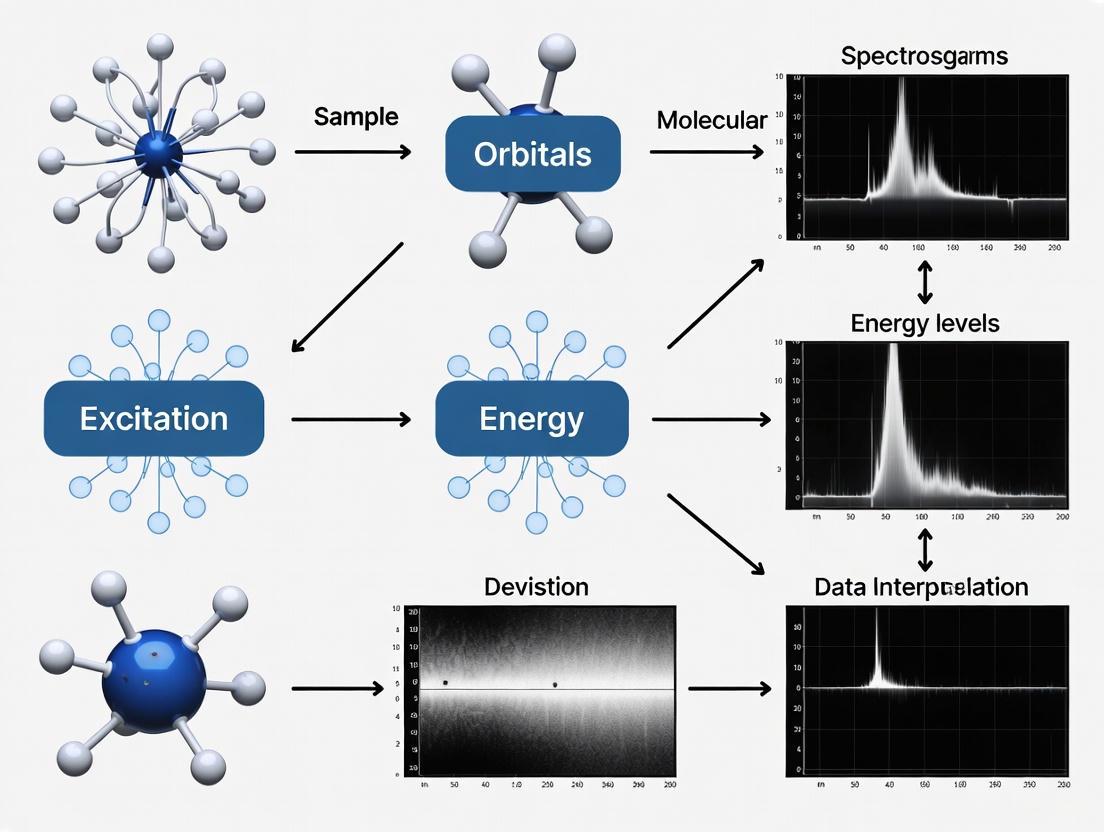
This article provides a comprehensive overview of spectroscopic analysis, a fundamental technique in scientific research and industrial applications.
Spectroscopic Analysis: Principles, Techniques, and Cutting-Edge Applications in Drug Development
Abstract
This article provides a comprehensive overview of spectroscopic analysis, a fundamental technique in scientific research and industrial applications. It explores the core principles of how light interacts with matter to reveal chemical composition, structure, and concentration. Tailored for researchers, scientists, and drug development professionals, the content covers foundational theories, diverse methodological approaches, and practical applications—from quality control in pharmaceuticals to advanced biomedical imaging. It also addresses troubleshooting, optimization strategies, and the integration of new technologies like AI and Quantum Cascade Lasers, offering insights into future trends shaping biomedical and clinical research.
The Science of Light and Matter: Core Principles of Spectroscopic Analysis
Spectroscopic analysis represents a cornerstone of modern analytical science, enabling researchers to determine the composition, structure, and properties of matter through its interaction with radiative energy. Within this field, the terms spectroscopy and spectrometry describe complementary aspects of the science, with the former representing the theoretical study of interactions between matter and radiated energy, and the latter concerning the practical measurement of these interactions to obtain quantitative data [1]. This distinction, while subtle, is fundamental to understanding the application of these techniques across scientific disciplines.
In pharmaceutical and biopharmaceutical development, these methodologies have become indispensable tools for drug discovery, process monitoring, and quality control [2]. The evolution of these techniques from Isaac Newton's initial prism experiments in the 1600s to today's sophisticated AI-enhanced instruments demonstrates their enduring scientific value [1] [3]. This technical guide examines the theoretical underpinnings, methodological applications, and experimental protocols that define contemporary spectroscopic and spectrometric practice, with particular emphasis on their crucial role in advancing pharmaceutical sciences.
Theoretical Framework: Core Principles and Definitions
Fundamental Concepts and Terminology
The theoretical foundation of spectroscopic analysis rests on the principle that atoms and molecules exhibit characteristic interactions with electromagnetic radiation, producing unique spectral "fingerprints" that reveal their identity and concentration [4]. When electromagnetic radiation passes through or interacts with a substance, atoms and molecules respond by absorbing specific wavelengths and emitting others, creating a spectrum that can be measured and interpreted [4].
According to the International Union of Pure and Applied Chemistry (IUPAC), spectroscopy is formally defined as "the study of physical systems by the electromagnetic radiation with which they interact or that they produce" [5]. This establishes spectroscopy as the theoretical science investigating how matter behaves when subjected to radiative energy. In contrast, spectrometry refers specifically to "the measurement of such radiations as a means of obtaining information about the systems and their components" [5], positioning it as the practical measurement component of the field.
The Spectroscopy-Spectrometry Distinction
The relationship between spectroscopy and spectrometry represents a paradigm of complementary scientific domains:
Spectroscopy encompasses the theoretical framework for understanding energy-matter interactions, the quantum mechanical principles governing these interactions, and the interpretation of resulting spectral patterns [1] [4]. It provides the scientific basis for predicting how substances will respond to electromagnetic radiation across different regions of the spectrum.
Spectrometry comprises the methodological approaches, instrumental techniques, and quantitative procedures for acquiring spectral measurements [1] [5]. This includes the design of spectrometers, development of measurement protocols, and implementation of calibration methodologies that transform theoretical principles into actionable analytical data.
This distinction explains why techniques such as mass spectrometry are classified under spectrometry rather than spectroscopy, as they measure mass-to-charge ratios of ions rather than directly measuring the interaction of matter with electromagnetic radiation [5].
Technical Classification of Methodologies
Classification by Type of Radiative Energy and Interaction
Spectroscopic techniques can be systematically categorized according to the specific form of radiative energy employed in the analysis and the nature of the interaction between this energy and the material under investigation [3]. This classification framework provides researchers with a logical structure for selecting appropriate methodologies for specific analytical challenges.
Table 1: Classification of Spectroscopic Techniques by Radiative Energy and Interaction Mechanism
| Technique Category | Radiative Energy Source | Interaction Mechanism | Primary Information Obtained |
|---|---|---|---|
| Atomic Spectroscopy | Visible/UV light [3] | Electronic transitions of outer shell electrons [3] | Elemental composition and concentration [3] |
| Molecular Spectroscopy | Visible/UV/IR radiation [3] | Molecular rotations, vibrations, and electronic states [3] | Molecular structure, functional groups, bonding [3] |
| Magnetic Resonance Spectroscopy | Radio waves [3] [4] | Nuclear spin transitions in magnetic field [2] [3] | Molecular structure, conformational details [2] |
| Mass Spectrometry | Ionizing energy [1] [5] | Ionization and mass-to-charge separation [1] [5] | Molecular mass, structural fragments [1] |
| X-ray Spectroscopy | X-rays [3] | Excitation of inner shell electrons [3] | Elemental composition, crystal structure [3] |
| Scattering Spectroscopy | Visible/IR/NIR light [3] | Elastic or inelastic scattering [3] | Molecular structure, crystallinity [3] |
Spectral Regions and Corresponding Analytical Techniques
The electromagnetic spectrum encompasses a broad range of energies, each providing unique information about molecular and atomic structure. Different spectroscopic techniques exploit specific regions of this spectrum to probe particular aspects of chemical systems.
Table 2: Electromagnetic Spectrum Regions and Corresponding Spectroscopic Techniques
| Spectral Region | Wavelength Range | Associated Techniques | Information Revealed |
|---|---|---|---|
| Gamma-ray | <0.01 nm [4] | Gamma-spectrometry [6] | Nuclear structure [7] |
| X-ray | 0.01 nm - 10 nm [4] | X-ray diffraction (XRD) [2] | Crystal structure, elemental analysis [3] |
| Ultraviolet (UV) | 10 nm - 400 nm [4] | UV-Vis spectroscopy [2] [4] | Electronic transitions, concentration [2] [4] |
| Visible | 400 nm - 700 nm [4] | UV-Vis, Colorimetry [7] [4] | Electronic structure, color measurement [7] |
| Infrared (IR) | 700 nm - 1 mm [4] | FT-IR, NIR [2] [4] | Molecular vibrations, functional groups [2] [4] |
| Microwave | 1 mm - 1 m [4] | Electron spin resonance [7] | Molecular rotations, unpaired electrons [7] |
| Radio wave | 1 m and above [4] | NMR, MRI [6] [4] | Molecular structure, tissue composition [4] |
Experimental Protocols and Methodologies
Protocol: Size Exclusion Chromatography with Inductively Coupled Plasma Mass Spectrometry (SEC-ICP-MS) for Protein-Metal Interaction Studies
Purpose: To differentiate between ultra-trace levels of metals interacting with proteins and free metals in solution during monoclonal antibody development [2].
Principle: SEC-ICP-MS combines separation of molecular species by size with highly sensitive elemental detection, enabling researchers to study metal-protein interactions that can affect therapeutic protein efficacy, safety, and stability [2].
Materials and Reagents:
- Size Exclusion Chromatography System: High-performance liquid chromatography (HPLC) system with SEC column for biomolecular separation [2]
- ICP-MS Instrument: Mass spectrometer with inductively coupled plasma ionization source for trace metal detection [2]
- Mobile Phase Buffer: Aqueous buffer compatible with both protein stability and ICP-MS requirements (typically ammonium acetate or ammonium bicarbonate) [2]
- Metal Standards: Certified reference materials for calibration (cobalt, chromium, copper, iron, nickel) [2]
- Protein Samples: Monoclonal antibodies co-formulated and stored under controlled conditions [2]
Procedure:
- Sample Preparation: Reconstitute protein samples in appropriate mobile phase buffer at concentrations typically ranging from 0.1-1.0 mg/mL [2].
- Chromatographic Separation: Inject samples onto SEC column equilibrated with mobile phase. Use flow rate of 0.5-1.0 mL/min with column temperature maintained at 4-25°C depending on protein stability requirements [2].
- Elemental Detection: Direct column effluent to ICP-MS nebulizer. Monitor specific metal isotopes (e.g., ⁵⁹Co, ⁵²Cr, ⁶³Cu, ⁵⁶Fe, ⁶⁰Ni) with time-resolved analysis [2].
- Data Analysis: Correlate retention times of metal signals with protein elution profile. Metals co-eluting with protein peaks indicate metal-protein interactions, while earlier eluting peaks represent free metals [2].
- Quantification: Use external calibration curve method with serial dilutions of metal standards for quantification of both protein-bound and free metal concentrations [2].
Applications in Pharmaceutical Research: This protocol provides critical insights for biopharmaceutical development by characterizing metal-protein interactions that may impact drug stability and efficacy, particularly for monoclonal antibodies and other protein therapeutics [2].
Protocol: Inline Raman Spectroscopy with Machine Learning for Real-Time Bioprocess Monitoring
Purpose: To enable real-time measurement of product aggregation and fragmentation during clinical bioprocessing using hardware automation and machine learning [2].
Principle: Raman spectroscopy measures inelastic scattering of monochromatic light, providing molecular vibration information that serves as a chemical fingerprint. When combined with machine learning algorithms, it enables real-time monitoring of critical quality attributes during biomanufacturing [2] [8].
Materials and Reagents:
- Raman Spectrometer: Instrument with laser source (typically 785 nm for biological applications), diffraction grating, and CCD detector [2] [8]
- Immersion Probe: Fiber-optic probe suitable for inline insertion into bioreactors, with compatible optical window materials [2]
- Calibration Standards: Polystyrene standards for wavelength calibration, Raman shift calibration standards [2]
- Cell Culture Media: Appropriate media for specific cell line (e.g., Chinese hamster ovary (CHO) cell culture media) [2]
- Data Analysis System: Computer with machine learning algorithms (e.g., convolutional neural networks, principal component analysis) [8]
Procedure:
- System Configuration: Install Raman immersion probe directly into bioreactor vessel, ensuring proper orientation and aseptic installation [2].
- Instrument Calibration: Perform wavelength calibration using polystyrene standard. Verify intensity response with appropriate Raman standards [2].
- Spectral Acquisition: Collect Raman spectra continuously or at predetermined intervals (e.g., every 38 seconds) throughout bioprocess cycle [2].
- Spectral Preprocessing: Apply preprocessing algorithms to remove cosmic rays, correct baseline drift, and normalize spectral intensity [2] [8].
- Machine Learning Analysis: Process spectra through trained algorithms to identify and eliminate anomalous spectra. Apply chemometric models for 27 critical components in cell culture including nutrients, metabolites, and product quality attributes [2].
- Real-Time Monitoring: Generate control charts to detect normal and abnormal conditions (e.g., bacterial contamination). Implement feedback control loops for process adjustment when critical parameters deviate from specifications [2].
Applications in Pharmaceutical Research: This protocol enables real-time monitoring of biopharmaceutical manufacturing processes, allowing for improved process understanding, reduced calibration efforts, and enhanced product quality control through measurement of critical quality attributes including aggregation and fragmentation [2].
Experimental Workflows and Signaling Pathways
The relationship between theoretical spectroscopy and practical spectrometry, along with their implementation in pharmaceutical research, can be visualized through the following workflow:
Spectroscopy to Spectrometry Workflow
The implementation of specific spectroscopic techniques in pharmaceutical analysis follows standardized experimental pathways:
Spectroscopic Analysis Experimental Pathway
Advanced Applications in Pharmaceutical Research
AI-Enhanced Raman Spectroscopy in Drug Development
The integration of artificial intelligence with Raman spectroscopy represents a significant advancement in pharmaceutical analysis, particularly for drug development and quality control applications. Deep learning algorithms including convolutional neural networks (CNNs), long short-term memory networks (LSTM), and Transformer models are revolutionizing the interpretation of Raman spectral data by automatically identifying complex patterns in noisy data sets and reducing the need for manual feature extraction [8].
Implementation Protocol:
- Spectral Acquisition: Collect high-resolution Raman spectra using instrumentation equipped with quantum cascade lasers tuned for specific molecular vibrations (e.g., amide I band from 1700-1600 cm⁻¹ for protein analysis) [8].
- Data Preprocessing: Apply noise reduction algorithms, baseline correction, and spectral normalization to standardize input data [8].
- Model Training: Implement deep learning architectures using training datasets of known compounds with associated spectral signatures. Employ data augmentation techniques to enhance model robustness [8].
- Pattern Recognition: Deploy trained models to identify spectral features correlated with critical quality attributes, including drug aggregation states, conformational changes, and impurity profiles [8].
- Real-Time Monitoring: Integrate AI models with inline Raman systems for continuous monitoring of biopharmaceutical manufacturing processes, enabling automatic detection of process deviations and quality anomalies [8].
This approach has demonstrated particular utility in monitoring mAb (monoclonal antibody) aggregation and fragmentation during clinical bioprocessing, with measurements achievable every 38 seconds, significantly enhancing process control and product quality assurance [2].
Spectroscopic Techniques in Pharmaceutical Quality Control
Table 3: Spectroscopic Quality Control Applications in Pharmaceutical Development
| Technique | QC Parameter Measured | Application Example | Regulatory Relevance |
|---|---|---|---|
| ICP-MS [2] | Trace metal impurities | Monitoring transition metals in therapeutic proteins [2] | ICH Q3D Elemental Impurities [2] |
| FT-IR [2] | Protein secondary structure | Stability testing of protein drugs under varying conditions [2] | ICH Q1A(R2) Stability Testing [2] |
| UV-Vis Spectroscopy [2] | Concentration, purity | Protein A affinity chromatography monitoring at 280 nm [2] | USP <857> UV-Vis Spectrophotometry [2] |
| NMR Spectroscopy [2] | Molecular structure, conformation | Higher-order structure analysis of biologics [2] | ICH Q6B Specifications [2] |
| Fluorescence Spectroscopy [2] | Protein denaturation, aggregation | In-vial monitoring of heat-induced BSA denaturation [2] | Non-invasive quality control [2] |
Essential Research Reagents and Materials
The implementation of spectroscopic and spectrometric methodologies requires specific research reagents and materials designed to ensure analytical accuracy, precision, and reproducibility.
Table 4: Essential Research Reagents for Spectroscopic Analysis
| Reagent/Material | Technical Function | Application Context | |
|---|---|---|---|
| Quantum Cascade Lasers [1] | Mid-infrared light source with precisely tunable wavelength | FT-IR spectroscopy, particularly for amide I band analysis (1700-1600 cm⁻¹) [1] | |
| Size Exclusion Chromatography Columns [2] | Biomolecular separation by hydrodynamic volume | SEC-ICP-MS analysis of metal-protein interactions [2] | |
| Atomic Spectrometry Standards [2] | Calibration and quantification reference materials | Trace metal analysis by ICP-MS and ICP-OES [2] | |
| Raman Calibration Standards [2] | Wavelength and intensity calibration | Validation of Raman spectrometer performance [2] | |
| Chiral Derivatization Reagents | Enantiomeric separation and analysis | Chiral spectroscopic analysis of pharmaceutical compounds | |
| Deuterated Solvents [2] | NMR spectroscopy without interfering proton signals | High-resolution NMR analysis of pharmaceutical compounds [2] | |
| Surface-Enhanced Raman Substrates [2] | Signal amplification for low-concentration analytes | SERS detection of trace impurities and contaminants [2] |
Emerging Trends and Future Directions
The field of spectroscopic analysis continues to evolve through technological innovations and methodological advancements. The integration of artificial intelligence and machine learning represents the most significant trend, with deep learning algorithms increasingly applied to spectral interpretation, pattern recognition, and predictive modeling [8]. These approaches address traditional challenges including background noise, complex data sets, and model interpretation while enhancing analytical accuracy and efficiency [8].
Miniaturization and portability constitute another major trend, with the development of handheld spectrometers enabling field-based analysis and point-of-care diagnostic applications [5]. Advancements in detector technologies, particularly in previously challenging spectral regions such as terahertz spectroscopy, have expanded the practical application of spectroscopic techniques across wider electromagnetic ranges [5].
In pharmaceutical analysis, the movement toward real-time process monitoring and control using inline spectroscopic techniques aligns with Quality by Design (QbD) principles and Process Analytical Technology (PAT) initiatives [2]. The continued development of interpretable AI methods, including attention mechanisms and ensemble learning techniques, addresses the "black box" challenge of deep learning models and enhances regulatory acceptance of these advanced analytical approaches [8].
The distinction between spectroscopy as the theoretical science investigating energy-matter interactions and spectrometry as the practical measurement of these interactions provides a fundamental framework for understanding modern analytical methodology. This complementary relationship enables the continuous advancement of pharmaceutical research and development, from initial drug discovery through manufacturing and quality control.
The integration of sophisticated spectroscopic techniques with artificial intelligence and automation represents the future trajectory of the field, promising enhanced analytical capabilities, improved process understanding, and accelerated therapeutic development. As these technologies continue to evolve, the synergy between theoretical spectroscopy and practical spectrometry will undoubtedly yield increasingly powerful tools for scientific discovery and pharmaceutical innovation.
Spectroscopic analysis is a scientific methodology that involves the study of the interaction between matter and electromagnetic radiation [9]. This field is fundamental to modern science, enabling researchers to determine the arrangement of atoms and electrons in molecules based on the amounts of energy absorbed or emitted during changes in molecular structure or motion [10]. The technique operates on the principle that when electromagnetic radiation passes through or reflects off a substance, atoms and molecules respond by absorbing specific wavelengths and emitting others, creating a unique spectral "fingerprint" that reveals information about the substance's composition and properties [4]. This analytical approach provides exceptional sensitivity, capable of detecting single atoms among 10²⁰ atoms of a different species and measuring frequency shifts as small as one part in 10¹⁵ [9].
The foundation of all spectroscopic techniques lies in the electromagnetic spectrum, which spans an immense range of frequencies and wavelengths [11]. By measuring how samples interact with different regions of this spectrum—from high-energy gamma rays to low-energy radio waves—scientists can extract detailed information about molecular structure, chemical composition, and physical properties across diverse fields including pharmaceutical development, materials science, and clinical diagnostics [4].
Fundamental Principles of the Electromagnetic Spectrum
Wave-Particle Relationships
Electromagnetic radiation exhibits both wave-like and particle-like properties, with its behavior described by several fundamental relationships. The radiation is composed of oscillating electric and magnetic fields that propagate through space at the constant speed of light (c = 2.9979 × 10¹⁰ cm/s in vacuum) [11]. The distance between successive wave crests is defined as the wavelength (λ), while the frequency (ν) represents the number of wave cycles that pass a given point per second, measured in hertz (Hz) [12] [9].
These parameters are interrelated through the equation: c = νλ [12]
where the speed of light (c) is constant, establishing an inverse relationship between frequency and wavelength: as frequency increases, wavelength decreases, and vice versa [12].
In particle terms, electromagnetic radiation consists of photons, discrete packets of energy quantized according to the equation: E = hν
where E is the energy of a single photon, h is Planck's constant (6.6261 × 10⁻²⁷ erg·s in cgs units), and ν is the frequency [11]. This relationship demonstrates that photon energy increases proportionally with frequency, meaning that higher frequency (shorter wavelength) radiation carries more energy per photon [12] [11].
The Electromagnetic Spectrum Ranges
The electromagnetic spectrum encompasses all possible frequencies of electromagnetic radiation, traditionally divided into regions based on how the radiation interacts with matter. Table 1 provides the definitive wavelength, frequency, and energy ranges for these regions, illustrating the tremendous span of over 21 decades in wavelength that characterizes the full spectrum [11].
Table 1: Electromagnetic Spectrum Regions and Their Characteristic Ranges
| Band | Wavelength Range | Frequency Range | Energy Range | Decades Covered |
|---|---|---|---|---|
| Radio Waves | > 100 cm | < 300 MHz | --- | > 3.0 |
| Microwave | 1 mm - 1 m | 0.3 - 300 GHz | --- | 3.0 |
| Infrared (IR) | 1 - 100 μm | 3 - 300 THz | 0.01 - 1.2 eV | 3.0 |
| Visible Light | 400 - 700 nm | 430 - 750 THz | 1.8 - 3.9 eV | 0.3 |
| Ultraviolet (UV) | 10 - 400 nm | 750 THz - 30 PHz | 3.9 - 124 eV | 1.5 |
| X-Ray | 0.25 - 100 Å | 30 - 12,000 PHz | 0.12 - 50 keV | 3.0 |
| Gamma-ray (γ) | < 0.25 Å | > 12,000 PHz | > 50 keV | > 8.5 |
The optical band (combined UV, visible, and near-IR) covers only a trivial portion of the complete electromagnetic spectrum, yet it is particularly significant for spectroscopic analysis due to its interaction with valence electrons in molecules [11]. Each spectral region probes different aspects of molecular and atomic structure, making specific regions suitable for particular analytical applications [4].
Spectroscopic Techniques by Energy Region
High-Energy Spectroscopy (Gamma-Ray and X-Ray)
High-energy spectroscopic techniques utilize photons with sufficient energy to probe nuclear and core-electron structures. Gamma-ray spectroscopy, dealing with the highest energy photons (>50 keV), primarily investigates nuclear energy transitions and is employed in nuclear physics, radiology, and nuclear medicine [11] [4]. The extremely short wavelengths of gamma-rays (<0.25 Å) enable study of nuclear properties and high-energy physical processes [11].
X-ray spectroscopy operates in the 0.12-50 keV energy range (approximately 0.25-100 Å) and is divided into soft X-ray (0.12-5 keV) and hard X-ray (5-50 keV) regions [11]. This technique probes the inner-shell electrons of atoms and is particularly valuable for elemental analysis and structural determination. X-ray photoelectron spectroscopy (XPS) measures the kinetic energy of electrons ejected from core atomic orbitals when samples are irradiated with X-rays, providing quantitative information about elemental composition and chemical states [13]. The NIST X-ray Photoelectron Spectroscopy Database contains critical evaluations of over 22,000 photoelectron and Auger-electron spectral lines for reference purposes [13].
Ultraviolet-Visible (UV-Vis) Spectroscopy
UV-Vis spectroscopy encompasses the ultraviolet (10-400 nm) and visible (400-700 nm) regions of the electromagnetic spectrum [11] [4]. This technique measures electronic transitions where molecules absorb energy, promoting electrons from ground state to higher energy molecular orbitals [14]. For organic chromophores, these typically involve π–π, n–π, σ–σ, and n–σ transitions, while transition metal complexes exhibit color due to multiple electronic states associated with incompletely filled d orbitals [14].
The fundamental principle governing quantitative UV-Vis analysis is the Beer-Lambert law: A = log₁₀(I₀/I) = εcL
where A is the measured absorbance, I₀ and I are the incident and transmitted intensities, ε is the molar absorptivity (in M⁻¹·cm⁻¹), c is the concentration of the absorbing species, and L is the path length through the sample [14]. This relationship enables the determination of analyte concentrations in solution by measuring absorbance at specific wavelengths.
UV-Vis instrumentation typically operates between 175-3300 nm, with technical specifications requiring controlled beam sizes (2-12 mm diameter) and specific sample volumes (>0.2 mL for liquids) or solid sample dimensions (0.5×0.5 cm to 10×10 cm) [15]. Modern UV-Vis spectrophotometers incorporate monochromators to select specific wavelengths, with spectral bandwidth being a critical parameter affecting resolution and measurement accuracy [14].
Infrared (IR) and Raman Spectroscopy
Infrared spectroscopy operates in the 1-100 μm wavelength range (3-300 THz), corresponding to energies of 0.01-1.2 eV [11]. This technique probes molecular vibrations, including stretching, bending, and rotational modes, which are characteristic of specific functional groups within molecules [4]. Fourier Transform Infrared (FTIR) spectroscopic analysis, conducted using instruments like the Bruker-EQUINOX55 with resolution of 4 cm⁻¹, provides high-quality vibrational spectra for compound identification and structural elucidation [16].
Raman spectroscopy is a complementary technique to IR spectroscopy that measures inelastic scattering of monochromatic light, typically from a laser in the visible, near-infrared, or near-ultraviolet range [13]. The Raman effect occurs when photons interact with molecular vibrations, resulting in energy shifts that provide information about vibrational modes in the system. Databases such as the Raman Spectroscopic Library of Natural and Synthetic Pigments contain reference spectra for 56 common pigments known to have been used before 1850, organized by color for easy identification [13].
Microwave and Radio Wave Spectroscopy
Microwave spectroscopy (1 mm - 1 m wavelength, 0.3-300 GHz frequency) investigates rotational transitions in molecules [4]. The energy in this region is sufficient to cause changes in the rotational energy levels of gas-phase molecules, providing information about molecular geometry, bond lengths, and angles [9].
Nuclear Magnetic Resonance (NMR) spectroscopy utilizes the radio frequency region (1 m and above) [4]. This technique exploits the magnetic properties of certain atomic nuclei when placed in a strong magnetic field. NMR measures the absorption of radio frequency radiation that matches the energy difference between nuclear spin states, providing detailed information about molecular structure, dynamics, and chemical environment [4]. The Biological Magnetic Resonance Data Bank provides quantitative data derived from NMR spectroscopic investigations of biological macromolecules, while databases like NMRShiftDB offer web-based resources for organic structures and their NMR spectra, including spectrum prediction capabilities [13].
Experimental Protocols and Methodologies
UV-VIS/NIR Spectroscopy Protocol for Liquid Samples
UV-VIS/NIR analysis of liquid samples follows a standardized methodology for determining analyte concentrations or monitoring chemical conversions in solution [15]. The experimental workflow begins with sample preparation, where the analyte is dissolved in an appropriate solvent that does not significantly absorb in the spectral region of interest (e.g., water for water-soluble compounds or ethanol for organic-soluble compounds) [14]. The solution is then dispensed into a clean cuvette with a known path length, typically 1 cm.
The cuvette is placed in the spectrophotometer sample compartment in the path between the optical light source and detector [15]. The instrument scans across the desired wavelength range (typically 175-3300 nm), measuring the absorption of light by the sample [15]. For quantitative analysis, measurements are taken at wavelengths where the analyte exhibits maximum absorption, and concentrations are determined using the Beer-Lambert law with previously established calibration curves [14] [15].
Critical experimental parameters that must be controlled include spectral bandwidth (which affects resolution and linearity of response), wavelength accuracy (measurements should be taken near absorbance peaks to minimize errors), and stray light (which can cause significant measurement errors, especially at high absorbances) [14]. For pharmaceutical applications, regulatory requirements from pharmacopoeias such as the USP and Ph. Eur. demand strict instrument validation for factors including stray light and wavelength accuracy [14].
Diagram 1: UV-VIS Spectroscopy Workflow for Liquid Samples
Atomic Absorption Spectrometry Protocol
Atomic absorption spectrometry (AAS) is a widely used technique for elemental analysis, particularly for metallic elements in solution [10]. The methodology begins with sample preparation, which may involve acid digestion or extraction to dissolve the analyte into solution. The solution is then aspirated into an atomizer, typically a flame (acetylene-air or acetylene-nitrous oxide) or electrothermal atomizer, which vaporizes the sample and breaks molecular bonds to produce free ground-state atoms [10].
A hollow cathode lamp emitting light characteristic of the element being determined passes this light through the atomized sample. Ground-state atoms of the analyte absorb light at specific wavelengths, reducing its intensity [10]. The monochromator selects the appropriate wavelength and isolates it from other spectral lines, while the detector measures the attenuated light intensity [10].
The quantity of radiation absorbed is proportional to the concentration of atoms in the flame and, consequently, to the total concentration of that element in the sample [10]. Quantitative analysis typically employs a calibration curve method using standards of known concentration. The technique is exceptionally sensitive for many metallic elements, with detection limits often in the parts-per-million range or lower [10].
Fourier Transform Infrared (FTIR) Spectroscopy Protocol
FTIR spectroscopy provides molecular fingerprinting through vibrational transitions [16]. Sample preparation varies by physical state: solid samples may be ground with potassium bromide (KBr) and pressed into pellets, liquid samples can be analyzed as thin films between salt plates, and gaseous samples require specialized gas cells with extended path lengths.
The experimental protocol involves collecting a background spectrum without the sample to account for atmospheric absorption (primarily CO₂ and H₂O). The sample is then placed in the instrument beam path, and an interferogram is collected using a Michelson interferometer with a moving mirror [16]. The Fourier transformation of this interferogram converts the data from the time domain to the frequency domain, producing the infrared absorption spectrum [16].
Modern FTIR instruments like the Bruker-EQUINOX55 typically operate with a resolution of 4 cm⁻¹, with higher resolution available for specialized applications [16]. Spectral interpretation involves identifying characteristic functional group frequencies and comparing against reference databases such as the SDBS (Integrated Spectral Database System) which includes FT-IR spectra for organic compounds [17] [13].
Table 2: Essential Spectral Databases for Analytical Spectroscopy
| Database/Resource | Scope and Coverage | Key Features | Access |
|---|---|---|---|
| SDBS [17] [13] | Organic compounds; 6 spectral types including MS, NMR, IR, Raman | Integrated system; search by name, formula, CAS RN | National Institute of Advanced Industrial Science, Japan |
| NIST Chemistry WebBook [17] [13] | Chemical and physical property data; IR, mass, UV/Vis spectra | Evaluated data; search by multiple parameters | National Institute of Standards and Technology |
| SpectraBase [13] | Hundreds of thousands of IR, NMR, Raman, UV, MS spectra | Original BioRad-Sadtler data; spectrum comparison | Wiley (free account limited to 10 searches/month) |
| Biological Magnetic Resonance Data Bank [13] | NMR spectroscopic data for biological macromolecules | Quantitative data for proteins, nucleic acids | University of Wisconsin |
| RRUFF [17] [13] | Raman and IR spectra of well-characterized minerals | Includes crystal data and chemistry | University of Arizona |
| NIST Atomic Spectra Database [13] | Radiative transitions and energy levels in atoms and ions | Data from 20 pm to 60 m wavelengths | National Institute of Standards and Technology |
| HITRAN [13] | High-resolution transmission molecular absorption database | Atmospheric gas spectroscopy; fundamental parameters | Harvard-Smithsonian Center for Astrophysics |
Essential Research Reagent Solutions
Table 3: Key Research Reagents and Materials for Spectroscopic Analysis
| Reagent/Material | Function and Application | Technical Specifications |
|---|---|---|
| Spectroscopic-Grade Solvents [14] | Sample preparation for UV-Vis and IR spectroscopy; minimal UV absorption | Water, ethanol, hexane, acetonitrile with low UV cutoffs |
| Potassium Bromide (KBr) [16] | Matrix for solid sample preparation in FTIR; transparent in IR region | FTIR grade; for pellet preparation with solid samples |
| Hollow Cathode Lamps [10] | Light source for atomic absorption spectrometry; element-specific | Single-element or multi-element configurations |
| Deuterated Solvents [13] | Solvent for NMR spectroscopy; minimal interference with sample signals | D₂O, CDCl₃, DMSO-d₆ with specified isotopic purity |
| Reference Standards [10] | Calibration and quantitative analysis; known purity compounds | Certified reference materials with documented purity |
| Cuvettes [15] | Sample containers for liquid spectroscopy; defined path length | Quartz (UV-Vis), glass (Vis), NaCl/KBr (IR); various path lengths |
| Integrating Spheres [15] | Accessory for diffuse reflectance and transmittance measurements | For solid sample analysis; internal reflective coating |
Applications in Drug Development and Pharmaceutical Research
Spectroscopic techniques play indispensable roles throughout the drug development pipeline, from discovery through quality control. UV-Vis spectroscopy provides a rapid, inexpensive method for quantifying analyte concentrations in solution, monitoring reaction kinetics, and determining chemical conversions [15]. Its simplicity and speed make it particularly valuable for high-throughput screening during early drug discovery phases [15].
Infrared and Raman spectroscopy contribute significantly to polymorph screening and characterization, a critical aspect of pharmaceutical development as different crystal forms can dramatically affect drug bioavailability and stability [16]. These techniques identify functional groups, monitor solid-state transformations, and characterize API-excipient interactions [16].
Nuclear Magnetic Resonance (NMR) spectroscopy serves as a powerful tool for structural elucidation of novel compounds, reaction monitoring, and impurity profiling [4] [13]. Advanced NMR techniques provide information about molecular dynamics, conformation, and intermolecular interactions in solution [13].
Mass spectrometry, while strictly speaking a form of spectrometry rather than spectroscopy, is often grouped with spectroscopic techniques and provides essential capabilities for determining molecular weight, structural characterization, and metabolite identification in drug development [4] [13]. Databases such as the Metabolomics Workbench facilitate metabolite identification through tandem mass spectrometry data [13].
Regulatory compliance in pharmaceutical spectroscopy demands careful method validation and instrument qualification. Pharmacopoeial standards (USP, Ph. Eur.) specify requirements for spectrophotometer performance including wavelength accuracy, stray light limits, and resolution [14]. For medical device characterization, techniques like UV/VIS/NIR support chemical safety assessment according to ISO 10993-18 standards [15].
Diagram 2: Spectroscopy in Drug Development Pipeline
Spectroscopic analysis represents a cornerstone of modern analytical science, providing unparalleled insights into molecular structure and composition across the entire electromagnetic spectrum. From high-energy gamma rays probing nuclear structure to radio waves revealing molecular dynamics through NMR, each spectral region offers unique analytical capabilities that researchers can harness for specific applications.
The continuing evolution of spectroscopic techniques, coupled with expanding spectral databases and improved instrumentation, ensures that these methods will remain essential tools for scientific advancement. In pharmaceutical research and drug development specifically, spectroscopy provides critical support at every stage, from initial discovery through final quality control, enabling researchers to understand molecular interactions, optimize formulations, and ensure product safety and efficacy.
As technology advances, spectroscopic techniques continue to evolve toward higher sensitivity, resolution, and automation, opening new possibilities for analytical characterization across scientific disciplines. The integration of spectroscopic data with computational analysis and machine learning approaches promises to further enhance the power and application of these fundamental analytical tools in addressing complex research challenges.
Spectroscopic analysis is a fundamental scientific technique that investigates the interaction between electromagnetic radiation and matter to determine the composition, structure, and properties of substances [18] [7]. This methodology forms the cornerstone of analytical chemistry, enabling researchers to perform both qualitative and quantitative measurements across diverse sample types, from simple elements to complex polymers and biomolecules [7]. The technique's nondestructive character and ability to detect substances at concentrations as low as parts per billion make it indispensable for research and industrial applications, including pharmaceutical development, environmental monitoring, and medical diagnostics [7] [19].
At its core, spectroscopy involves measuring the intensity of light as a function of its wavelength, frequency, or energy after interaction with a sample [18]. The information contained in these measurements provides detailed insights into atomic and molecular behavior, allowing scientists to identify specific elements or compounds, determine their concentrations, and elucidate structural characteristics [7]. The electromagnetic spectrum utilized in these analyses spans multiple regions, from high-energy gamma rays to low-energy radio waves, with each region providing unique information about the sample being studied [7] [20].
Foundational Principles of Light-Matter Interactions
The theoretical framework for spectroscopy rests on the principles of electromagnetic radiation, characterized by its wavelength (λ) and frequency (ν), which relate through the speed of light (c) in the equation c = νλ [21]. When electromagnetic radiation encounters matter, it can undergo several fundamental interaction processes that form the basis for all spectroscopic techniques [22] [21].
The primary interactions include absorption, where matter takes in electromagnetic radiation; emission, involving the release of electromagnetic radiation by excited matter; and scattering, which redirects incident radiation in multiple directions [21]. These processes originate from energy exchanges between photons and atoms or molecules, resulting in electronic transitions, vibrational excitations, or rotational changes [22]. The specific wavelengths at which these interactions occur create characteristic spectral patterns that serve as molecular "fingerprints" for material identification [22].
Quantitative descriptions of these interactions employ well-established physical laws and parameters. The Beer-Lambert law governs absorption phenomena, relating absorbance to sample concentration and path length [18] [22]. Cross-section quantifies the probability of light-matter interactions, while quantum yield measures the efficiency of photochemical processes [22]. Selection rules, derived from quantum mechanical principles, determine allowed spectroscopic transitions based on changes in quantum numbers and symmetry considerations [22].
Absorption Spectroscopy
Theoretical Framework and Quantitative Analysis
Absorption spectroscopy measures the attenuation of light as it passes through a sample, with atoms or molecules absorbing photons to transition to higher energy states [18] [22]. The analytical utility of this technique stems from the relationship between light absorption and sample properties, quantitatively described by the Beer-Lambert law: A = ε·c·l, where A represents absorbance (unitless), ε is the molar absorptivity coefficient (L·mol⁻¹·cm⁻¹), c denotes concentration (mol/L), and l is the path length (cm) [18] [22] [21]. This fundamental equation enables quantitative analysis by establishing the direct proportionality between absorbance and the concentration of absorbing species in a sample [18].
Absorbance itself is defined as the negative logarithm of transmittance (A = -log₁₀T = -log₁₀(I/I₀)), where I represents transmitted intensity and I₀ incident intensity [22]. For multiple absorbing species in a sample, absorbance values are additive, expanding the law's application to complex mixtures [22]. The technique assumes monochromatic light and no interactions between absorbing species, with deviations from these assumptions potentially requiring more sophisticated calibration approaches [22].
Experimental Methodology for Absorption Measurements
Instrumentation and Setup: Absorption spectroscopy instruments typically consist of a broad-spectrum radiation source, a sample holder, and a detector [7] [21]. For ultraviolet-visible (UV-Vis) spectroscopy, which covers wavelengths from 190-780 nm, common light sources include deuterium lamps (UV region) and tungsten-halogen lamps (visible region) [20]. The light passes through a monochromator or wavelength selector, typically containing a diffraction grating that disperses light into its component wavelengths, allowing selective transmission of specific wavelengths to the sample [19].
Sample Preparation and Measurement: Liquid samples are contained in cuvettes with precise path lengths, with material selection (e.g., quartz for UV, glass or plastic for visible light) critical for minimizing interference [19]. Solid samples may be prepared as thin films or pressed pellets, while gaseous samples require specialized cells with extended path lengths to enhance sensitivity [7]. The sample is placed between the radiation source and detector in transmission mode, and the instrument measures the intensity of light before (I₀) and after (I) passing through the sample to calculate absorbance [19].
Data Collection and Analysis: The spectrophotometer scans across a predetermined wavelength range, measuring absorbance at discrete intervals [19]. For quantitative analysis, a calibration curve is constructed by measuring absorbance values of standard solutions with known concentrations [7]. The resulting plot of absorbance versus concentration should yield a linear relationship, with the slope providing the molar absorptivity (ε) for the specific analyte [18]. Unknown sample concentrations are then determined by interpolating their absorbance measurements onto this calibration curve [7].
Research Reagent Solutions for Absorption Spectroscopy
Table: Essential Materials for Absorption Spectroscopy
| Item | Function | Application Notes |
|---|---|---|
| Cuvettes | Transparent containers for liquid samples | Material (quartz, glass, plastic) must be compatible with wavelength range [19] |
| Standard Reference Materials | Calibration and quantitative analysis | Certified concentrations for accurate calibration curves [7] |
| Solvents | Sample dissolution and dilution | High purity, transparent in spectral region of interest [7] |
| Buffer Solutions | pH control for biological samples | Maintain biomolecular structure and activity [7] |
Emission Spectroscopy
Theoretical Principles and Energy Transitions
Emission spectroscopy analyzes light emitted by atoms or molecules when they transition from excited states to lower energy states [18] [7]. The process begins with excitation, where an external energy source (heat, electrical field, or laser) promotes electrons to higher energy orbitals [18]. As these excited electrons return to ground states or lower energy levels, they release excess energy as photons of specific wavelengths characteristic of the elements or compounds involved [18]. The emitted radiation may fall within visible, ultraviolet, or infrared regions, depending on the energy differences between electronic states [18].
Two specialized emission processes include fluorescence and phosphorescence, both involving light absorption followed by re-emission [7]. Fluorescence occurs when emission happens almost instantaneously after absorption (nanosecond timescale), while phosphorescence involves a significant time delay due to forbidden transitions between electronic states of different multiplicities [7]. The efficiency of emission processes is quantified by quantum yield (Φ), defined as the ratio of photons emitted to photons absorbed [22].
Experimental Protocol for Emission Measurements
Instrumentation Configuration: Emission spectroscopy systems require an excitation source, sample compartment, wavelength separation components, and a detection system [18] [7]. Common excitation sources include flames, electrical discharges (for atomic emission), and lasers (for molecular fluorescence) [18]. The detection path is typically positioned at 90° to the excitation beam to minimize interference from the excitation source, particularly in fluorescence measurements [7].
Sample Preparation and Excitation: Samples are prepared appropriately for the excitation method—solutions for flame emission, solid samples for arc/spark excitation, or gaseous forms for plasma techniques [18]. The excitation energy must be carefully controlled to avoid sample decomposition while achieving sufficient emission intensity [18]. In atomic emission spectroscopy, samples are often vaporized and atomized in high-temperature sources like inductively coupled plasma (ICP) to produce free atoms in excited states [19].
Spectral Acquisition and Analysis: The emitted radiation is dispersed using a monochromator or polychromator with diffraction gratings to separate wavelengths [19]. Detectors, such as photomultiplier tubes or CCD arrays, capture the intensity at specific wavelengths [19]. The resulting emission spectrum displays intensity versus wavelength, with peak positions identifying specific elements or molecules and peak intensities correlating with concentration [18]. For quantitative analysis, calibration curves are constructed using standard reference materials [7].
Research Reagent Solutions for Emission Spectroscopy
Table: Essential Materials for Emission Spectroscopy
| Item | Function | Application Notes |
|---|---|---|
| Excitation Sources | Sample energy excitation | Lasers, plasma torches, or flame systems depending on application [18] |
| Reference Standards | Spectral calibration and quantification | Certified materials with known emission characteristics [7] |
| Sample Introduction Systems | Controlled delivery to excitation source | Nebulizers for liquid samples, laser ablation for solids [19] |
| Quartz Windows/Containers | UV-transparent sample containment | Essential for UV emission measurements [19] |
Scattering Spectroscopy
Theoretical Basis of Scattering Phenomena
Scattering spectroscopy measures changes in the direction, frequency, or polarization of radiation after interaction with matter [18]. Unlike absorption or emission processes, scattering involves the redirection of incident light by particles, molecules, or atoms within a sample [18]. The analytical utility of scattering techniques lies in their ability to provide information about sample properties such as particle size, molecular structure, and composition through analysis of the scattered light [18].
Two primary categories of scattering exist: elastic scattering, where the scattered radiation maintains the same energy (wavelength) as the incident radiation, and inelastic scattering, where energy exchange occurs between photons and molecules [22]. Rayleigh scattering represents the dominant elastic process, occurring when particles are much smaller than the excitation wavelength and resulting in scattered light at the same frequency [18]. Raman spectroscopy, the most widely used inelastic scattering technique, involves small frequency shifts (Raman shifts) corresponding to molecular vibrational energies that provide structural information complementary to infrared spectroscopy [20].
Experimental Approach for Scattering Measurements
Instrument Configuration for Raman Spectroscopy: Modern Raman systems consist of a monochromatic laser source (typically in visible or near-infrared regions), sample illumination optics, collection optics, a wavelength analyzer, and a sensitive detector [20] [19]. The laser wavelength is selected based on sample properties to avoid fluorescence interference while maintaining acceptable scattering efficiency [20]. The collection optics gather scattered light at 90° or 180° (backscattering) geometry, with notch or edge filters removing the intense elastically scattered Rayleigh component before spectral dispersion [19].
Sample Preparation and Presentation: Raman spectroscopy requires minimal sample preparation, with solids, liquids, and gases analyzed directly without special containment [20]. Glass containers are typically suitable since silica exhibits weak Raman scattering, and water produces a relatively weak Raman signal, enabling analysis of aqueous solutions [20]. For surface-enhanced Raman spectroscopy (SERS), samples are deposited on nanostructured metal surfaces (gold or silver) to enhance signal intensity by several orders of magnitude [19].
Spectral Acquisition and Processing: The collected scattered radiation is dispersed using a high-resolution monochromator with a diffraction grating and detected with CCD arrays optimized for low-light detection [19]. Multiple scans are often accumulated to improve signal-to-noise ratios for weak signals [19]. The resulting Raman spectrum plots intensity versus Raman shift (cm⁻¹), with peak positions indicating specific molecular vibrations and bond types [20]. Spectral interpretation identifies functional groups and molecular structures through comparison with reference databases [20].
Research Reagent Solutions for Scattering Spectroscopy
Table: Essential Materials for Scattering Spectroscopy
| Item | Function | Application Notes |
|---|---|---|
| Laser Sources | Monochromatic excitation | Various wavelengths (UV, Vis, NIR) to avoid fluorescence [20] |
| SERS Substrates | Signal enhancement | Nanostructured gold or silver surfaces [19] |
| Reference Compounds | Instrument calibration | Materials with known Raman shifts (e.g., silicon) [20] |
| Microscope Objectives | Spatial resolution in micro-Raman | Focus excitation and collect scattered light [19] |
Comparative Analysis of Spectroscopic Techniques
Technical Specifications and Application Fit
Table: Comparative Analysis of Absorption, Emission, and Scattering Techniques
| Parameter | Absorption Spectroscopy | Emission Spectroscopy | Scattering Spectroscopy |
|---|---|---|---|
| Fundamental Process | Radiation absorption with electron transitions [22] | Radiation emission from excited states [18] | Radiation redirection by sample [18] |
| Quantitative Basis | Beer-Lambert Law (A = ε·c·l) [18] | Intensity proportional to excited state population [7] | Intensity related to polarizability changes [20] |
| Detection Limits | ~10⁻⁶ to 10⁻⁹ M (UV-Vis) [7] | ~10⁻⁹ to 10⁻¹² M (fluorescence) [19] | Variable; SERS to single molecule [19] |
| Information Obtained | Concentration, electronic structure [7] | Element identity, energy states [18] | Molecular vibrations, structure [20] |
| Sample Compatibility | Solutions, gases, solids [7] | Primarily solutions, vapors [18] | Solids, liquids, gases; minimal preparation [20] |
| Key Applications | Concentration measurement, reaction monitoring [21] | Elemental analysis, trace metal detection [18] | Molecular identification, surface analysis [18] |
Relationship Visualization
Diagram 1: Fundamental spectroscopic techniques and their primary applications.
Complementary Information for Material Characterization
The three fundamental spectroscopic interaction types provide complementary information that, when combined, offer comprehensive material characterization [20]. Absorption techniques, particularly UV-Vis and infrared spectroscopy, excel at identifying functional groups and quantifying concentrations through well-established relationships like the Beer-Lambert law [18] [22]. Emission methods provide exceptional sensitivity for trace element detection and are invaluable for analyzing energy states and electronic transitions [18] [7]. Scattering approaches, especially Raman spectroscopy, offer distinctive capabilities for studying aqueous solutions, investigating symmetric vibrational modes, and performing non-destructive analyses with minimal sample preparation [20].
This complementary relationship is particularly evident in the pairing of infrared absorption and Raman scattering spectroscopies, which both probe molecular vibrations but through different selection rules [20]. While IR absorption requires a change in dipole moment during vibration, Raman scattering depends on polarizability changes [20]. Consequently, homonuclear diatomic molecules like N₂ that are invisible to IR spectroscopy produce strong Raman signals, making the techniques powerfully complementary for complete molecular vibrational analysis [20].
Advanced Applications in Drug Development and Research
Structural Characterization and Quality Control
Spectroscopic techniques play indispensable roles throughout pharmaceutical development, from initial compound identification to final product quality assurance [7]. Nuclear magnetic resonance (NMR) spectroscopy, while not covered in detail herein, provides comprehensive structural information about drug molecules through analysis of atomic environments [19]. Infrared absorption spectroscopy identifies functional groups and verifies compound identity through characteristic vibrational fingerprints, with attenuated total reflectance (ATR) accessories enabling rapid solid and liquid analysis without extensive sample preparation [7] [21].
UV-Vis absorption spectroscopy serves as a workhorse for quantitative analysis in pharmaceutical applications, often coupled with high-performance liquid chromatography (HPLC) systems to detect and quantify drug compounds as they elute from separation columns [20]. This combination provides both separation capability and specific detection based on ultraviolet absorption characteristics, creating a powerful analytical system for complex mixture analysis [20]. Raman scattering spectroscopy has gained prominence for its ability to analyze aqueous formulations nondestructively, identify polymorphic forms, and map drug distribution in solid dosage forms through hyperspectral imaging [20] [19].
Biomolecular Interaction Studies and Kinetic Monitoring
The high sensitivity of fluorescence emission spectroscopy makes it invaluable for studying biomolecular interactions, including protein-ligand binding, protein folding, and enzyme kinetics [19]. Intrinsic fluorophores (tryptophan, tyrosine) or extrinsic fluorescent labels provide signals that change with molecular environment, conformation, and interaction status [19]. These changes in fluorescence intensity, polarization, or energy transfer efficiency enable researchers to quantify binding constants, thermodynamic parameters, and reaction rates critical to understanding drug mechanisms [19].
Absorption spectroscopy in the UV-Vis region facilitates real-time reaction monitoring by tracking appearance or disappearance of chromophores during chemical and biological processes [21]. The technique's rapid data acquisition capabilities allow researchers to determine kinetic parameters and elucidate reaction mechanisms [21]. Similarly, IR absorption spectroscopy monitors reaction progress through changes in functional group vibrations, providing insights into reaction pathways and intermediate formation [21]. These applications demonstrate how fundamental light-matter interactions translate into practical tools for advancing pharmaceutical research and development.
Experimental Workflow for Drug Analysis
Diagram 2: Spectroscopic techniques applied throughout the drug development pipeline.
Spectroscopic analysis, a cornerstone of modern analytical science, is the study of the interaction between matter and electromagnetic radiation [3]. This field measures and interprets electromagnetic spectra to investigate the composition, physical structure, and electronic structure of matter at atomic, molecular, and macroscopic scales [3]. The journey of spectroscopy from a fundamental observation of light to a sophisticated tool underpinning quantum theory and revolutionizing industries like pharmaceutical development represents a remarkable synthesis of empirical observation and theoretical innovation. This progression demonstrates how technological advances continuously refine our understanding of fundamental physical principles, enabling precise qualitative and quantitative measurement of substances from simple elements to complex biomolecules [7]. The non-destructive character, high-throughput capability, and applicability to a wide range of samples make spectroscopy indispensable in contemporary research and industrial quality control [23] [7].
Historical Foundations: From Light to Lines
The foundational discoveries in spectroscopy emerged through cumulative work by scientists building upon each other's observations, with Isaac Newton's prism experiments between 1666 and 1672 representing a pivotal starting point [24]. Newton used a prism to disperse white sunlight into colored components, which he named the "spectrum" [24] [3]. His work, documented in "Optics," was built upon earlier investigations by Athanasius Kircher (1646), Jan Marek Marci (1648), Robert Boyle (1664), and Francesco Maria Grimaldi (1665) [24].
In 1802, William Hyde Wollaston created the first spectrometer by improving upon Newton's model with a lens that focused the Sun's spectrum onto a screen [24]. He observed that the spectrum was missing sections of color but mistakenly attributed these lines to natural boundaries between colors [24]. This error was corrected by Joseph von Fraunhofer in 1815, who replaced Newton's prism with a diffraction grating, achieving improved spectral resolution [24]. The dark lines he observed and quantified are still known as Fraunhofer lines, earning him the distinction as the father of spectroscopy [24].
Throughout the mid-1800s, scientists including Anders Jonas Ångström, George Stokes, and William Thomson made important connections between emission spectra and absorption and emission lines [24]. The critical breakthrough came in the 1860s when Robert Bunsen and Gustav Kirchhoff discovered that Fraunhofer lines correspond to emission spectral lines observed in laboratory light sources, establishing the fundamental connection between chemical elements and their unique spectral patterns [24] [3].
Table 1: Key Historical Milestones in Early Spectroscopy
| Year(s) | Scientist | Contribution | Impact |
|---|---|---|---|
| 1666-1672 | Isaac Newton | Prism experiments dispersing white light | Established "spectrum" concept and foundational optics |
| 1802 | William Hyde Wollaston | Built first spectrometer with focusing lens | Noted missing color sections in solar spectrum |
| 1815 | Joseph von Fraunhofer | Used diffraction grating for dispersion | Discovered and quantified dark absorption lines (Fraunhofer lines) |
| 1860s | Robert Bunsen & Gustav Kirchhoff | Systematic spectral examinations | Established link between elements and unique spectral patterns |
The following workflow diagrams the key historical developments in early spectroscopy:
The Quantum Revolution: Spectroscopy as a Foundation
The development of quantum mechanics in the early 20th century is inextricably linked with spectroscopic observations that challenged classical physics. Spectroscopy provided the critical experimental evidence that necessitated a radical rethinking of atomic structure and energy transitions [3]. The discrete spectral lines observed by Fraunhofer, Bunsen, and Kirchhoff found their explanation in quantum theory, which posits that atoms and molecules exist in discrete energy states and transitions between these states result in the absorption or emission of specific frequencies of electromagnetic radiation [3].
Spectroscopic studies were central to developing quantum mechanics because the first useful atomic models described the hydrogen spectrum [3]. Niels Bohr's atomic model, Erwin Schrödinger's wave equation, and matrix mechanics all successfully predicted the discrete hydrogen spectrum, providing crucial validation for quantum theory [3]. Further, Max Planck's explanation of blackbody radiation involved comparing light wavelength using a photometer to black body temperature, establishing the quantum nature of energy [3]. The Lamb shift observed in the hydrogen spectrum, a subtle deviation from theoretical predictions, played a pivotal role in developing quantum electrodynamics [3].
Table 2: Spectroscopic Contributions to Quantum Mechanical Concepts
| Quantum Concept | Spectroscopic Evidence | Scientific Impact |
|---|---|---|
| Quantized energy levels | Discrete atomic emission/absorption lines | Invalidated classical continuous energy prediction |
| Wave-particle duality | Atomic spectral line patterns | Supported de Broglie hypothesis of matter waves |
| Quantum jumps | Hydrogen spectrum discrete transitions | Validated Bohr model of electron transitions |
| Quantum electrodynamics | Lamb shift in hydrogen spectrum | Refined understanding of electron-photon interactions |
The theoretical framework underlying all spectroscopic techniques is that each element has a unique light spectrum described by the frequencies of light it emits or absorbs, consistently appearing in the same part of the electromagnetic spectrum when diffracted [3]. This atomic spectral signature enables the identification and quantification of elements across various phases and conditions [3]. The National Institute of Standards and Technology maintains a public Atomic Spectra Database that is continually updated with precise measurements, facilitating modern spectroscopic analysis [3] [13].
Methodological Framework: Techniques and Applications
Classification of Spectroscopic Methods
Spectroscopy encompasses numerous techniques classified by the type of radiative energy involved, the nature of the energy-matter interaction, and the material being studied [3]. The primary classification based on interaction type includes:
- Absorption spectroscopy: Measures radiation absorbed by the material, decreasing transmitted energy [7] [3]
- Emission spectroscopy: Measures radiative energy released by the material, either spontaneously or after energy stimulation [7] [3]
- Vibrational spectroscopy: Studies molecular vibrations through infrared or Raman techniques [3]
- Electron spin resonance: Utilizes microwave radiation to study systems with unpaired electrons [7]
- Nuclear magnetic resonance (NMR): Uses radio waves to examine atomic nuclei in magnetic fields [7] [25]
The following workflow illustrates the fundamental spectroscopic processes based on energy-matter interactions:
Modern Technical Implementations
Contemporary spectroscopy utilizes various regions of the electromagnetic spectrum, each providing unique information about atomic and molecular structures:
Nuclear Magnetic Resonance (NMR) spectroscopy: Exploits magnetic properties of atomic nuclei (e.g., hydrogen-1, carbon-13) that absorb and re-emit electromagnetic radiation at characteristic frequencies when placed in a strong magnetic field [25]. Parameters like chemical shifts, coupling constants, and signal intensities reveal electronic environments, atomic connectivity, and spatial arrangement [25].
Infrared (IR) spectroscopy: Analyzes molecular vibrations in the infrared region, particularly useful for identifying functional groups and bonding patterns [26]. Characteristic signals include O-H bonds (2400-3400 cm⁻¹), carbonyl C=O bonds (around 1700 cm⁻¹), and unsaturated hydrocarbons (slightly above 3000 cm⁻¹ for sp² hybridized carbon atoms) [26].
Ultraviolet-Visible (UV-Vis) spectroscopy: Studies electronic transitions in molecules using ultraviolet and visible light, commonly applied to concentration measurements [7] [2].
Mass spectrometry: While not strictly spectroscopic, often combined with spectroscopic techniques to provide comprehensive molecular characterization [13].
Table 3: Spectroscopic Techniques Across the Electromagnetic Spectrum
| Spectral Region | Wavelength Range | Primary Information | Common Techniques |
|---|---|---|---|
| γ-ray | < 0.01 nm | Nuclear structure | Mössbauer spectroscopy |
| X-ray | 0.01-10 nm | Inner shell electrons | X-ray spectroscopy, X-ray fluorescence |
| Ultraviolet-Visible | 10-400 nm (UV), 400-750 nm (Vis) | Electronic transitions | UV-Vis spectroscopy, fluorescence |
| Infrared | 750 nm-1 mm | Molecular vibrations | FTIR, NIR, Raman spectroscopy |
| Microwave | 1 mm-1 m | Molecular rotations | Rotational spectroscopy, electron spin resonance |
| Radio wave | > 1 m | Nuclear spin states | NMR spectroscopy |
Contemporary Applications: Spectroscopy in Drug Discovery and Development
NMR in Pharmaceutical Research
Nuclear magnetic resonance spectroscopy has revolutionized drug discovery, particularly through its ability to target biomolecules and observe chemical compounds directly [25]. Recent advancements include high-field NMR spectrometers providing unprecedented resolution and sensitivity, cryoprobes improving measurement efficiency, and advanced pulse sequences enhancing data accuracy [25]. NMR-based fragment screening has emerged as a powerful strategy for identifying small molecules that bind to target proteins, enabling optimization into potent drug candidates [25]. Paramagnetic NMR spectroscopy studies protein-ligand interactions by leveraging metal ions to enhance NMR signals of nearby nuclei, providing insights into spatial arrangements within complexes [25].
Vibrational Spectroscopy in Quality Control
Infrared spectroscopy has become indispensable in pharmaceutical quality control and herbal medicine analysis due to its rapid, non-destructive nature [27]. FT-IR coupled with chemometric techniques enables quantitative analysis of compounds in complex matrices like plant-based medicines and supplements [27]. Spectral preprocessing and variable selection significantly enhance the accuracy and precision of infrared spectroscopy methods for quantifying phytochemicals and detecting adulterants [27]. The success of these applications is evaluated through root mean square error of calibration (RMSEC), root mean square error of prediction (RMSEP), root mean square error of cross-validation (RMSECV), and determination coefficient (R²) values [27].
Advanced Spectroscopic Integration
Modern pharmaceutical research increasingly combines multiple spectroscopic techniques for comprehensive analysis. Recent developments include:
- Raman spectroscopy enhancements: Surface-enhanced Raman spectroscopy (SERS) and tip-enhanced Raman spectroscopy (TERS) enable molecular imaging, fingerprinting, and detection of low-concentration substances [2].
- Process Analytical Technology (PAT): Integration of inline Raman spectroscopy for real-time monitoring of biopharmaceutical manufacturing processes, enabling measurement of product aggregation and fragmentation every 38 seconds [2].
- Multi-technique correlation: Combining NMR with cryo-electron microscopy and X-ray crystallography to obtain complementary structural information for therapeutic design [25].
Table 4: Essential Research Reagent Solutions in Spectroscopic Analysis
| Reagent/Equipment | Function/Purpose | Application Examples |
|---|---|---|
| High-field NMR spectrometers | Provides high resolution and sensitivity for biomolecular analysis | Protein-ligand interaction studies, drug candidate optimization |
| Cryoprobes | Enhances signal-to-noise ratio in NMR measurements | Structure-based drug discovery, metabolite identification |
| Fourier-transform infrared (FTIR) spectrometers | Identifies chemical bonds and functional groups through infrared absorption | Herbal medicine authentication, polymer characterization |
| Diffraction gratings | Disperses light into component wavelengths for precise spectral analysis | Atomic emission spectroscopy, laser spectroscopy |
| Chemometric software | Processes complex spectral data through multivariate analysis | Quantitative spectral analysis, pattern recognition in mixtures |
Experimental Protocols: Methodologies in Practice
Infrared Spectroscopic Analysis Protocol
Standard FT-IR analysis for organic compound characterization follows this workflow:
Sample Preparation: Prepare samples as solutions, vapor, powders, thin films, or pressed pellets depending on material properties and analytical requirements [27]. For solid samples, the KBr pellet method is commonly employed.
Instrument Calibration: Perform background scan and instrument calibration using standard reference materials to ensure wavelength accuracy and intensity linearity.
Spectral Acquisition: Acquire spectra typically in the range of 4000-400 cm⁻¹ with 4 cm⁻¹ resolution, accumulating 64 scans to improve signal-to-noise ratio [23].
Spectral Preprocessing: Apply preprocessing techniques such as multiplicative scatter correction (MSC), standard normal variate (SNV), Savitzky-Golay derivatives, or wavelet transforms to remove scattering effects and enhance spectral features [27].
Data Analysis: For qualitative analysis, identify characteristic functional group absorptions (O-H at 2400-3400 cm⁻¹, C=O at ~1700 cm⁻¹) [26]. For quantitative analysis, employ chemometric methods like partial least squares (PLS) regression with variable selection techniques (CARS, iPLS-GA) to build calibration models [27].
NMR Spectroscopy in Drug Discovery Protocol
The application of NMR in structure-based drug discovery involves:
Sample Preparation: Prepare protein target (0.1-1 mM) in appropriate buffer with 5-10% D₂O for lock signal. For ligand observations, typically use 0.01-1 mM compound concentration.
Ligand Screening: Employ NMR-based fragment screening using libraries of low-molecular-weight compounds (200-300 Da). Monitor chemical shift perturbations, line broadening, or transferred NOE to identify binders [25].
Binding Affinity Determination: Measure chemical shift perturbations as a function of ligand concentration to determine dissociation constants (K_D) using titration experiments.
Structure Determination: For protein-ligand complexes, collect multidimensional NMR spectra (NOESY, HSQC, TROSY) to determine binding mode and structural constraints [25].
Lead Optimization: Use structural information to guide medicinal chemistry efforts, optimizing fragments into potent drug candidates through iterative synthesis and NMR validation [25].
The following diagram illustrates the decision process for structural determination using combined spectroscopy and chemical tests:
Spectroscopic analysis continues to evolve, driven by technological innovations in optics, electronics, and computational methods [23] [7]. Ongoing miniaturization of spectrometers enhances on-site capabilities for environmental monitoring, while airborne drones equipped with spectrometers enable remote monitoring of large land, sea, and air areas [23]. In pharmaceutical research, the integration of spectroscopy with machine learning and artificial intelligence promises to further accelerate drug discovery and quality control processes [2]. The historical journey from Newton's prism to modern quantum-mechanical applications demonstrates how fundamental scientific inquiries mature into essential analytical tools that continue to expand their capabilities and applications across diverse scientific disciplines.
Spectroscopic analysis is a cornerstone of modern scientific research, enabling the detailed examination of materials based on their interaction with light. For researchers, scientists, and drug development professionals, these techniques provide indispensable tools for determining chemical composition, identifying molecular structures, and quantifying substances with exceptional precision. The fundamental principle underlying all spectroscopic methods is that when matter interacts with electromagnetic radiation, it absorbs, emits, or scatters this radiation in ways that are characteristic of its specific chemical properties [4]. This interaction produces a unique "spectral fingerprint" that can be measured and interpreted to reveal critical information about the sample's composition and structure [4].
The widespread adoption of spectroscopic techniques across pharmaceutical, biopharmaceutical, and materials research stems from their ability to deliver rapid, non-destructive analysis with high sensitivity and specificity. From ensuring drug purity and stability to characterizing novel compounds and monitoring industrial processes, spectrometers and spectrophotometers have become essential instruments in the researcher's toolkit [2]. This technical guide examines the fundamental operating principles, components, and applications of these critical analytical instruments, with a specific focus on their implementation in research and development environments.
Fundamental Principles of Spectroscopy
The Electromagnetic Spectrum and Molecular Interactions
Spectroscopy utilizes various regions of the electromagnetic spectrum to probe different aspects of molecular structure. The specific type of information obtained depends on the energy of the radiation used, which corresponds to different molecular processes [20]. Ultraviolet (UV) spectroscopy (190-360 nm) primarily examines electronic transitions involving non-bonding electrons and those in double and triple bonds, making it particularly useful for detecting chromophores such as ketones, aldehydes, and aromatic compounds [20] [28]. Visible spectroscopy (360-780 nm) also probes electronic transitions, specifically those that produce colored compounds, with applications in color measurement and quantitative analysis of transition metal complexes and highly conjugated organic molecules [20]. Infrared (IR) spectroscopy (700 nm-1 mm) investigates molecular vibrations, including stretching and bending motions of chemical bonds, providing information about functional groups present in organic compounds, polymers, and pharmaceuticals [20] [4].
When electromagnetic radiation passes through a sample, the amount of light absorbed follows a precise mathematical relationship fundamental to quantitative analysis. The Beer-Lambert Law establishes that absorbance (A) is directly proportional to the concentration (c) of the absorbing species, the path length (l) of the sample container, and the molar absorptivity (ε) of the substance [29]. This relationship is expressed as:
A = ε × c × l
Where:
- A = Absorbance (no units)
- ε = Molar absorptivity (L·mol⁻¹·cm⁻¹)
- c = Concentration of the solution (mol·L⁻¹)
- l = Path length of the cuvette (cm) [29]
This linear relationship between absorbance and concentration enables researchers to determine unknown concentrations by measuring absorbance and comparing it to standards of known concentration, forming the basis for quantitative analysis across countless applications in chemistry, biology, and pharmaceutical science [29].
Signal Detection and Measurement
The measurement of light interaction with matter involves two primary quantitative parameters. Transmittance (T) represents the fraction of incident light that passes through a sample, calculated as T = P/P₀, where P₀ is the initial light intensity and P is the transmitted light intensity [30]. Absorbance (A) is the logarithm of the reciprocal of transmittance (A = log₁₀(1/T)) and provides the linear relationship with concentration described by the Beer-Lambert Law [30]. Modern instruments automatically convert transmittance measurements to absorbance values, which are then used for quantitative calculations [30].
The following diagram illustrates the fundamental workflow of a spectroscopic measurement, from light source to detection:
Instrumentation and Components
Core Components of Spectrometers and Spectrophotometers
Despite variations in design for different spectroscopic techniques, most instruments share common fundamental components that work together to produce precise measurements [31] [29] [32].
Light Source: Provides the initial electromagnetic radiation for the measurement. Common sources include tungsten or halogen lamps for visible light, deuterium lamps for UV regions, and specialized sources such as globars for IR spectroscopy [29] [32]. The source must generate sufficient intensity across the required wavelength range with stable output.
Monochromator: This critical component isolates specific wavelengths from the broad-spectrum output of the light source [29]. Monochromators typically employ diffraction gratings or prisms to spatially separate different wavelengths, with slit mechanisms to select the desired narrow band of radiation [31] [30]. In modern instruments, monochromators may be located before the sample (to illuminate it with monochromatic light) or after it (to analyze the emitted or transmitted light).
Sample Holder: The container or area where the sample is placed for analysis. For liquid samples, this is typically a cuvette with a defined path length (commonly 1 cm) made of material appropriate for the wavelength range (glass for visible, quartz for UV) [29]. Solid samples may use specialized holders, integrating spheres, or be analyzed through reflectance attachments.
Detector: Converts the light signal into an electrical signal that can be measured and processed [31] [29]. Modern detectors include photodiodes, photomultiplier tubes, and charge-coupled device (CCD) arrays, chosen for their sensitivity, wavelength range, and signal-to-noise characteristics [30]. The detector measures either the light transmitted through the sample or, in some configurations, light emitted or scattered by it.
Signal Processor and Display: The electrical signal from the detector is amplified, digitized, and processed by specialized software [31] [32]. This system converts raw data into interpretable spectra or quantitative measurements, displaying absorbance, transmittance, or concentration values. Modern instruments often include data storage, advanced processing capabilities, and connectivity to laboratory information systems [32].
Instrument Classification and Specifications
Understanding instrument specifications is crucial for selecting appropriate equipment and interpreting results accurately. The following table outlines key performance parameters and their significance in analytical applications:
Table: Key Instrument Specifications and Their Analytical Significance
| Specification | Definition | Analytical Significance | Typical Values/Ranges |
|---|---|---|---|
| Wavelength Range | Spectral region over which measurements can be made | Determines types of analyses possible; must match absorption characteristics of analytes | UV-Vis: 190-700 nm; IR: 700 nm-1 mm [20] [4] |
| Spectral Bandwidth | Width of wavelength selection (in nm) | Affects resolution and adherence to Beer-Lambert Law; narrower bandwidth provides better resolution | 1-5 nm for routine analyses; <1 nm for high-resolution work |
| Photometric Accuracy | Accuracy of absorbance or transmittance measurements | Critical for quantitative accuracy; affects reliability of concentration determinations | Typically ±0.001 A to ±0.005 A |
| Stray Light | Light reaching detector at wavelengths outside selected band | Causes deviation from Beer-Lambert Law, especially at high absorbance; limits usable absorbance range | <0.05% at specified wavelength |
In industrial and research settings, instruments can be classified according to their operational principles and technological sophistication. Dispersive instruments use monochromators to separate wavelengths, while Fourier Transform (FT) instruments employ interferometers to collect spectral data across all wavelengths simultaneously, providing higher signal-to-noise ratios and faster measurements, particularly in IR spectroscopy [33]. From a control perspective, instruments may be categorized as analog devices (providing 4-20 mA output signals), smart analog devices (with sensor characterization and self-diagnosis capabilities), or digital devices (transmitting multiple values and supporting advanced diagnostics through digital protocols) [34].
Spectrometer Working Principle
Optical Configuration and Light Path
The fundamental operation of a spectrometer involves precisely controlling the path of light from source to detector while maintaining spectral integrity. In a typical configuration, light enters the instrument through an entrance slit, which defines the optical aperture and helps reduce stray light [31]. The light then encounters a collimating mirror that renders the divergent beams parallel before they strike the diffraction grating [31]. This grating disperses the light into its constituent wavelengths through either transmission or reflection phenomena, with the angular dispersion depending on the groove density of the grating and the wavelength of the light.
After dispersion, the separated wavelengths are focused by a camera mirror onto the detector array [31]. In modern miniature fiber optic spectrometers, these optical components may be integrated into compact assemblies, with some designs using a single concave holographic grating that combines the functions of collimation, dispersion, and focusing [31]. The detector, typically a CCD or CMOS array, captures the intensity of light at each wavelength position simultaneously, enabling rapid spectral acquisition [31] [33].
The following diagram illustrates the optical path and component arrangement in a typical spectrometer:
Detection and Data Processing
Once light reaches the detector, the photons are converted into electrons through the photoelectric effect [31]. The resulting electrical charge is digitized through an analog-to-digital converter, creating a numerical representation of the spectral intensity [31]. Instrument software then interpolates this data using calibration information specific to the optical system (including detector pixel characteristics and diffraction grating properties) to generate a plot of intensity versus wavelength across the spectral range of interest [31]. This calibrated spectrum serves as the fundamental data set for subsequent analysis, whether for qualitative identification, quantitative determination, or advanced chemometric processing.
Advanced spectrometer designs incorporate specialized configurations for specific applications. Fourier Transform spectrometers replace the dispersive element with an interferometer, measuring an interferogram that is subsequently converted to a spectrum through mathematical transformation, offering advantages in speed and sensitivity for IR measurements [33]. Time-of-Flight mass spectrometers measure the time ions take to travel a certain distance, with this time being directly related to mass-to-charge ratio, enabling high-accuracy identification of ionic species in organic chemistry and molecular biology applications [33]. Double-focusing spectrometers combine electric and magnetic fields to separate ions with extreme precision, providing high-resolution analysis essential for geochemistry and nuclear research [33].
Spectrophotometer Working Principle
Instrument Design for Quantitative Measurement
While spectrometers measure the distribution of light across wavelengths, spectrophotometers are specifically optimized for quantitative measurements of light absorption at specific wavelengths [29] [32]. These instruments typically employ a single-beam or double-beam optical design. In a single-beam configuration, all light follows the same path through the sample, requiring measurement of a reference blank prior to sample measurement [29]. Double-beam instruments split the light into two paths—one passing through the sample and the other through a reference—allowing simultaneous measurement and compensation for source fluctuations [32].
The operational sequence of a spectrophotometer follows a precise workflow to ensure accurate and reproducible results. The process begins with instrument initialization, allowing the light source and electronics to stabilize for consistent operation [32]. The operator then selects the analytical wavelength based on the absorption characteristics of the analyte, typically corresponding to its maximum absorbance [29] [32]. Calibration with a blank solution establishes the 0% absorbance (100% transmittance) reference point, accounting for solvent absorption and reflection losses [29] [30]. The sample is placed in a clean cuvette with a defined path length and inserted into the sample holder [32]. The instrument then measures the transmittance or absorbance, with modern digital instruments automatically converting between these values and often providing direct concentration readouts based on pre-established calibration curves [30] [32].
Quantitative Analysis Protocols
The application of the Beer-Lambert Law in spectrophotometry enables precise quantitative analysis through several established methodologies [29]. The standard curve method involves preparing a series of standards with known concentrations, measuring their absorbances, and constructing a calibration curve of absorbance versus concentration [29] [30]. The absorbance of the unknown sample is then measured and its concentration determined by interpolation from this curve [30]. For single-component analysis where the molar absorptivity is known, the direct calculation method applies the Beer-Lambert Law (A = εcl) directly to determine concentration from a single absorbance measurement [29]. In multi-component analysis, absorbances are measured at multiple wavelengths and solved using simultaneous equations, provided the components have distinct absorption spectra and their molar absorptivities are known at each wavelength [29].
The following experimental protocol outlines the standard procedure for quantitative analysis using a spectrophotometer:
Table: Standard Experimental Protocol for Spectrophotometric Analysis
| Step | Procedure | Purpose | Critical Parameters |
|---|---|---|---|
| 1. Instrument Preparation | Power on instrument and allow warm-up (typically 15-30 minutes) | Ensure stable light source and detector response | Follow manufacturer's recommended stabilization time |
| 2. Wavelength Selection | Set appropriate wavelength based on analyte's absorption maximum | Maximize sensitivity and minimize interference | Check analyte's absorption spectrum beforehand |
| 3. Blank Measurement | Fill cuvette with solvent/blank solution and calibrate to 0 absorbance | Establish baseline, accounting for solvent and cuvette effects | Use same solvent batch as sample solutions |
| 4. Standard Preparation | Prepare series of standards covering expected concentration range | Create calibration curve for quantitative analysis | Use precise volumetric techniques for accuracy |
| 5. Sample Measurement | Measure absorbance of unknown samples following same procedure | Determine concentration through interpolation | Ensure samples fall within linear range of calibration |
Comparative Analysis: Spectrometers vs. Spectrophotometers
Functional Differences and Applications
While the terms are sometimes used interchangeably, spectrometers and spectrophotometers represent distinct classes of instruments with different design priorities and applications. Understanding these differences is essential for selecting the appropriate tool for specific analytical needs.
Table: Comparison of Spectrometers and Spectrophotometers
| Feature | Spectrometer | Spectrophotometer |
|---|---|---|
| Primary Function | Measures light intensity over a range of wavelengths to obtain spectral data [32] | Measures absorbance or transmittance of light at specific wavelengths for quantitative analysis [32] |
| Typical Output | Spectral plot (intensity vs. wavelength) [31] [32] | Absorbance/transmittance values or concentration [29] [32] |
| Light Source Usage | Broad-range wavelengths for comprehensive spectral analysis [32] | Specific, selected wavelengths optimized for target analytes [32] |
| Primary Applications | Material identification, elemental analysis, astronomical observations [33] [32] | Concentration determination, quality control, clinical diagnostics [29] [32] |
| Quantitative Focus | Qualitative analysis with some quantitative capabilities | Primarily quantitative analysis with established protocols |
| Example Applications | Analyzing emission spectra of stars, identifying unknown compounds [32] | Measuring chemical concentration in solution, enzyme activity assays [29] [32] |
Research Applications and Technique Selection
The selection between spectroscopic techniques depends on the specific analytical requirements, sample characteristics, and information needed. The following table outlines major spectroscopic methods and their research applications:
Table: Spectroscopic Techniques and Their Research Applications
| Technique | Spectral Range | Information Obtained | Research Applications |
|---|---|---|---|
| UV-Vis Spectroscopy | 190-700 nm [20] | Electronic transitions in molecules | Drug purity assessment, protein quantification, chemical kinetics [29] [2] |
| Fluorescence Spectroscopy | 190-780 nm (excitation and emission) [28] | Emission from excited molecules | Protein folding studies, drug interactions, cellular imaging [2] [28] |
| Infrared (IR) Spectroscopy | 700 nm-1 mm [4] | Molecular vibrations and functional groups | Polymer characterization, organic compound identification [20] [4] |
| Raman Spectroscopy | Varies (laser-dependent) | Molecular vibrations (complementary to IR) | Aqueous sample analysis, crystal form identification [20] [2] |
| Nuclear Magnetic Resonance (NMR) | Radio frequency [4] | Molecular structure and dynamics | Protein structure determination, metabolite identification [4] [2] |
| Mass Spectrometry (MS) | Not applicable (mass-to-charge ratio) | Molecular mass and structure | Proteomics, metabolomics, drug metabolite identification [2] [33] |
Advanced Applications in Pharmaceutical Research
Drug Development and Quality Control
Spectroscopic techniques play indispensable roles throughout the pharmaceutical development pipeline, from initial discovery to final quality assurance. Ultraviolet-visible (UV-vis) spectroscopy serves as a workhorse technique for concentration determination of protein solutions, with the bicinchoninic acid (BCA) and Bradford assays representing standard methods for protein quantification during biopharmaceutical development [29] [2]. High-performance liquid chromatography (HPLC) systems routinely incorporate UV-vis detectors for compound identification and purity assessment, providing critical data for drug substance characterization and release testing [20] [2].
Fourier Transform Infrared (FTIR) spectroscopy provides essential information about chemical bonds and functional groups within drug molecules and excipients [2]. Recent advances have demonstrated the utility of FTIR coupled with hierarchical cluster analysis for stability assessment of protein therapeutics, enabling rapid evaluation of structural integrity under various storage conditions [2]. Raman spectroscopy has emerged as a powerful tool for real-time monitoring of bioprocesses, with applications in measuring product aggregation and fragmentation during clinical manufacturing [2]. The integration of machine learning with Raman spectroscopy has enabled remarkable advances in process analytical technology, allowing for real-time measurement of critical quality attributes every 38 seconds during bioprocessing [2].
Material Characterization and Imaging Techniques
Advanced spectroscopic imaging techniques combine spatial and chemical information for comprehensive material characterization. Hyperspectral imaging creates a data cube with two spatial dimensions and one spectral dimension, enabling visualization of component distribution within solid dosage forms [28]. This approach has been successfully applied to tablet homogeneity assessment, counterfeit drug detection, and understanding drug-excipient distribution in formulations [28].
Nuclear Magnetic Resonance (NMR) spectroscopy provides detailed information about molecular structure and conformational dynamics through the interaction of nuclear spins with magnetic fields [2]. In biopharmaceutical development, solution NMR techniques monitor monoclonal antibody structural changes and protein-excipient interactions, providing critical insights for formulation optimization [2]. Two-dimensional NMR methods, such as heteronuclear multiple-quantum correlation (HMQC), detect higher-order structural changes that may impact drug stability and efficacy [2].
Essential Research Reagents and Materials
Successful spectroscopic analysis requires appropriate standards, reagents, and materials to ensure accurate and reproducible results. The following table outlines essential items for spectroscopic experiments:
Table: Essential Research Reagents and Materials for Spectroscopic Analysis
| Item | Specifications | Function/Purpose | Application Notes |
|---|---|---|---|
| Cuvettes | Quartz (UV-Vis), glass (Vis only), path length typically 1 cm [29] | Sample container with defined path length | Quartz required for UV measurements; handle by frosted sides to avoid fingerprints [29] |
| Solvents | Spectroscopic grade, low UV absorbance | Dissolve samples without interfering absorbances | Use HPLC-grade solvents for UV work; check solvent cutoff wavelengths |
| Standard Reference Materials | Certified purity, traceable to standards | Calibration and method validation | Use USP/PhEur standards for pharmaceutical analysis |
| Buffers | Appropriate pH control, minimal absorbance | Maintain sample integrity and stability | Check buffer absorbance at analytical wavelength |
| Enzymes/Proteins | Purified, characterized activity | Biochemical assays and kinetic studies | Aliquot and store appropriately to maintain activity |
Future Directions and Innovations
The field of spectroscopy continues to evolve with emerging technologies that enhance analytical capabilities and accessibility. Miniaturization represents a significant trend, with researchers developing spectrometer prototypes as small as a smartphone chip capable of analysis in less than a millisecond across UV to near-infrared wavelengths [33]. These advances support field-deployable analysis and point-of-care diagnostic applications. Portable and wearable spectrometers extend analytical capabilities outside traditional laboratory settings, enabling real-time environmental monitoring, food safety testing, and personal health tracking [33].
The integration of advanced data analytics with spectroscopic instrumentation continues to transform research applications. Machine learning algorithms enhance the interpretation of complex spectral data, enabling rapid identification of spectral patterns that might elude conventional analysis [2]. Process Analytical Technology (PAT) initiatives in pharmaceutical manufacturing increasingly incorporate spectroscopic methods for real-time monitoring and control, supporting quality-by-design principles and reducing production cycle times [2]. As these technologies mature, spectroscopic analysis will continue to provide critical insights across scientific disciplines, from fundamental research to industrial applications.
A Practical Guide to Spectroscopic Techniques and Their Real-World Applications
Atomic Spectroscopies (AAS, ICP-MS) for Elemental Analysis
Spectroscopic analysis encompasses a range of laboratory techniques that measure the interaction between matter and electromagnetic radiation to determine the composition, concentration, and structural characteristics of substances [7]. These techniques are fundamental in analytical chemistry, providing both qualitative and quantitative data for elements and compounds across diverse sample types [7]. The underlying principle involves measuring how atoms or molecules absorb, emit, or scatter light at specific energies corresponding to transitions between discrete energy levels [35] [7].
Atomic spectroscopy specifically focuses on the elemental composition of samples by examining the behavior of free atoms in the gas phase [35] [36]. When atoms absorb energy, their electrons transition to higher energy levels (excited states); as they return to lower energy states, they emit light at characteristic wavelengths [35]. The intensity of this absorbed or emitted radiation relates directly to the concentration of the element present, enabling quantitative measurement according to the Beer-Lambert law for absorption techniques [35] [37].
Fundamental Principles of Atomic Spectroscopy
Core Physical Principles
Atomic spectroscopy techniques share common foundational principles based on atomic structure and energy transitions:
- Electronic Transitions: Free atoms in the ground state can absorb specific wavelengths of light, causing electrons to transition to higher energy levels. Each element has a unique set of characteristic absorption/emission wavelengths corresponding to its electronic structure [35].
- Atomization Requirement: Samples must be converted to free atoms in the gas phase before analysis, typically achieved through high-temperature sources like flames, furnaces, or plasmas that break molecular bonds and volatilize the sample [35].
- Quantitative Relationship: The intensity of absorbed or emitted radiation is proportional to the number of atoms present, enabling concentration measurements. For absorption techniques, this relationship follows the Beer-Lambert law: A = εbc, where A is absorbance, ε is the molar absorptivity constant, b is the optical path length, and c is the concentration of the analyte [35].
Beer-Lambert Law
The Beer-Lambert law forms the mathematical foundation for absorption spectroscopy techniques like AAS [35] [37]. It establishes that absorbance (A) is directly proportional to the concentration (c) of the absorbing species when the path length (b) and molar absorptivity (ε) are constant:
A = log₁₀(I₀/I) = εbc
Where:
- A = absorbance (unitless)
- I₀ = intensity of incident light
- I = intensity of transmitted light
- ε = molar absorptivity constant (L·mol⁻¹·cm⁻¹)
- b = optical path length (cm)
- c = concentration of analyte (mol·L⁻¹)
In practical AAS applications, ε and b remain fixed for a given element and instrumental setup, making absorbance directly proportional to analyte concentration [35]. Although Beer-Lambert law assumes ideal conditions, real-world analyses must account for deviations caused by factors such as high analyte concentrations, instrumental limitations, and chemical interferences [37].
Atomic Absorption Spectroscopy (AAS)
Instrumentation and Components
AAS instruments consist of four main components that work together to measure elemental concentrations [35]:
- Radiation Source: Typically a hollow cathode lamp (HCL) constructed with a cathode made of the target element, which emits characteristic wavelengths when excited. Electrodeless discharge lamps (EDLs) provide higher intensity for some elements [35].
- Atomizer: Converts the sample into free atoms in the gas phase. Common atomization systems include:
- Flame atomizers (air-acetylene or nitrous oxide-acetylene)
- Graphite furnace electrothermal atomizers
- Vapor generation systems for specific elements like mercury and hydride-forming elements [35]
- Monochromator: Isolates the specific analytical line from other emission lines and stray light. Diffraction gratings select the wavelength of interest [35].
- Detector: Typically a photomultiplier tube or solid-state detector that converts light intensity into electrical signals for measurement [35].
AAS Techniques and Applications
AAS encompasses several specialized techniques tailored to different analytical needs:
- Flame AAS (FAAS): Uses a nebulizer to create aerosol and a flame to atomize the sample. Suitable for samples with moderate to high analyte concentrations (ppm range), offering simplicity and relatively low cost [35] [38].
- Graphite Furnace AAS (GFAAS): Employs electrothermal heating in a graphite tube for atomization. Provides approximately 100-1000 times lower detection limits (ppb to ppt) than FAAS and requires smaller sample volumes (5-50 µL) [35] [38].
- Vapor Generation AAS: Includes cold vapor technique for mercury and hydride generation for elements like As, Sb, Se, and Te. Offers exceptional sensitivity for these specific elements at ppb-ppt levels [35].
AAS finds extensive application in environmental monitoring (water analysis), clinical chemistry (biological fluids), food safety, pharmaceutical analysis, and industrial quality control [35] [39] [38]. Its high selectivity for specific elements and relatively low operational cost maintain its popularity despite the development of multi-element techniques [35].
Inductively Coupled Plasma Mass Spectrometry (ICP-MS)
Principles and Instrumentation
ICP-MS represents a more advanced elemental analysis technique that combines high-temperature plasma ionization with mass spectrometric detection [40] [41]. The instrument consists of several key components:
- Sample Introduction System: Typically a nebulizer that creates aerosol from liquid samples, sometimes coupled with spray chambers and desolvation systems [41].
- Inductively Coupled Plasma: Argon plasma sustained by radiofrequency energy reaches temperatures of approximately 10,000°C, efficiently atomizing and ionizing sample components [40] [41].
- Interface Region: Transfers ions from the high-temperature plasma at atmospheric pressure to the mass spectrometer vacuum system [41].
- Mass Analyzer: Separates ions based on their mass-to-charge ratio (m/z), most commonly using a quadrupole mass filter [41].
- Detector: Measures separated ions, typically using an electron multiplier or similar detection system [41].
Analytical Capabilities and Applications
ICP-MS offers exceptional analytical performance with several distinct advantages [40] [41]:
- Multi-element Capability: Simultaneous detection and quantification of a broad range of elements
- Ultra-trace Sensitivity: Detection limits in the parts per trillion (ppt) to parts per quadrillion (ppq) range for many elements
- Wide Dynamic Range: Typically 8-9 orders of magnitude, allowing measurement of concentrations from sub-ppb to hundreds of ppm
- Isotopic Analysis: Capability to measure isotopic ratios for geochemical, environmental, and clinical applications
ICP-MS has become indispensable in environmental analysis (trace metal speciation), clinical research (nutrient and toxic element monitoring in biological fluids), pharmaceutical development (metal impurities in drugs), geochemistry, and materials science [39] [2] [41]. The technique's extreme sensitivity and multi-element capability make it particularly valuable for comprehensive elemental characterization, despite higher instrument costs and operational complexity [40] [41].
Comparative Analysis of Techniques
Technical Performance Comparison
Table 1: Comparison of Key Analytical Techniques for Elemental Analysis [35] [40] [38]
| Parameter | Flame AAS | Graphite Furnace AAS | ICP-OES | ICP-MS |
|---|---|---|---|---|
| Detection Limits | ppm-ppb | ppb-ppt | ppm-ppb | ppb-ppt |
| Multi-element Capability | Low | Low | High | High |
| Sample Throughput | High | Low | High | High |
| Sample Volume | 1-5 mL | 5-50 µL | 1-5 mL | <1 mL |
| Linear Dynamic Range | 2-3 orders | 2-3 orders | 4-5 orders | 8-9 orders |
| Operational Cost | Low | Moderate | Medium | High |
| Interference Potential | Moderate | Moderate | Low | Moderate (manageable) |
Technique Selection Criteria
Choosing the appropriate atomic spectroscopy technique depends on multiple factors related to analytical requirements and operational constraints [40] [39]:
- Elemental Coverage: For single-element analysis, AAS provides cost-effective performance. For multi-element analysis, ICP-OES or ICP-MS are necessary [40].
- Concentration Levels: Flame AAS suits ppm-level analyses, GF-AAS extends to ppb-ppt range, while ICP-MS offers the highest sensitivity for ultra-trace analysis [35] [40].
- Sample Throughput: Flame AAS and ICP techniques offer high sample throughput, while GF-AAS has slower analysis times [35] [41].
- Sample Matrix Complexity: ICP-MS handles complex matrices more effectively with fewer interferences, while AAS may require extensive sample preparation [40].
- Budget Considerations: AAS systems have lower acquisition and operational costs compared to ICP-based techniques [40].
Table 2: Technique Selection Guide Based on Application Needs [35] [40] [39]
| Application Requirement | Recommended Technique | Rationale |
|---|---|---|
| Routine single-element analysis | Flame AAS | Cost-effective, simple operation |
| Trace element analysis in small samples | Graphite Furnace AAS | High sensitivity, small sample volumes |
| Multi-element screening | ICP-OES or ICP-MS | Simultaneous multi-element capability |
| Ultra-trace element determination | ICP-MS | Exceptional sensitivity (ppt-ppq) |
| Elemental speciation studies | ICP-MS with chromatography | Coupling with separation techniques |
| Isotopic ratio measurements | ICP-MS | Mass discrimination capability |
Experimental Protocols and Methodologies
Sample Preparation for Biomedical Samples
Proper sample preparation is critical for accurate elemental analysis of biomedical specimens, which include liquids (blood, urine), soft tissues (organs), and hard tissues (bone, hair) [38]. Common preparation methods include:
- Dilution: Biological fluids are typically diluted 10- to 50-fold with acidic (nitric acid) or alkaline (ammonium hydroxide) diluents to reduce matrix effects and total dissolved solids below 0.2% [41].
- Acid Digestion: Solid samples require complete dissolution using strong acids (nitric, hydrochloric) with heating in water baths, heating blocks, or microwave digestion systems [38] [41].
- Chemical Modification: For GF-AAS, chemical modifiers like palladium or magnesium salts are added to stabilize volatile analytes during heating cycles [38].
Quality Assurance and Validation
Reliable elemental analysis requires rigorous quality control procedures [38]:
- Calibration Approaches:
- External calibration with matrix-matched standards
- Standard addition method to compensate for matrix effects
- Internal standardization (particularly for ICP-MS)
- Method Validation Parameters:
- Precision (typically 1-2% RSD for AAS, <5% for ICP-MS)
- Accuracy determined through reference materials
- Detection limits calculated based on 3× standard deviation of blank measurements
- Recovery studies for evaluation of sample preparation efficacy [38]
Current Research and Applications in Drug Development
Atomic spectroscopy techniques continue to evolve with significant applications in pharmaceutical research and development:
- ICP-MS in Biopharmaceuticals: Size exclusion chromatography coupled with ICP-MS (SEC-ICP-MS) differentiates between ultra-trace metals interacting with proteins and free metals in solution, providing insights into metal-protein interactions during drug development [2].
- Metal Impurity Testing: Regulatory requirements for metal impurities in pharmaceuticals (ICH Q3D) drive the use of ICP-MS for comprehensive elemental characterization of drug substances and products [2] [36].
- Process Analytical Technology: ICP-OES and ICP-MS monitor metal content in cell culture media during biopharmaceutical production, ensuring optimal process conditions and critical quality attributes [2].
- Nanomedicine Characterization: ICP techniques quantify elemental components in nanomedicines, such as bismuth in nanoparticles for targeted cancer therapy and diagnostic imaging [2].
Essential Research Reagents and Materials
Table 3: Key Research Reagent Solutions for Atomic Spectroscopy [35] [38] [41]
| Reagent/Material | Function | Application Examples |
|---|---|---|
| Hollow Cathode Lamps | Element-specific light source | AAS measurement of target elements |
| High-Purity Acids | Sample digestion/dilution | Nitric acid for biological sample preparation |
| Chemical Modifiers | Stabilize volatile analytes | Pd, Mg salts for GF-AAS analysis of elements like As, Se |
| Certified Reference Materials | Quality assurance | Method validation and accuracy assessment |
| ICP Tuning Solutions | Instrument optimization | Sensitivity, resolution, and mass calibration for ICP-MS |
| High-Purity Gases | Instrument operation | Argon for ICP; Acetylene, Nitrous Oxide for AAS flames |
| Surfactants | Improve sample dispersion | Triton-X100 for biological fluid dilution |
Visual Guides to Technique Selection and Workflows
Figure 1: Atomic spectroscopy technique selection workflow for elemental analysis.
Figure 2: ICP-MS instrumental workflow from sample introduction to detection.
Atomic absorption spectroscopy and inductively coupled plasma mass spectrometry represent complementary analytical approaches for elemental analysis, each with distinct advantages and applications. AAS provides cost-effective, specific determination of individual elements at concentrations ranging from percentage to sub-ppb levels, while ICP-MS offers unparalleled sensitivity, multi-element capability, and isotopic information for comprehensive elemental characterization. The continued advancement of these techniques, particularly through automation, interference reduction methods, and hyphenated approaches, ensures their ongoing critical role in pharmaceutical research, environmental monitoring, clinical diagnostics, and material sciences. Understanding the fundamental principles, performance characteristics, and practical methodologies of these powerful analytical tools enables researchers to select optimal techniques for their specific analytical challenges.
Molecular Spectroscopies (UV-Vis, IR, NIR) for Functional Group and Bond Identification
Spectroscopic analysis is a fundamental category of laboratory techniques used for the qualitative and quantitative measurement of various substances by analyzing the interaction between light and matter [7]. These techniques are indispensable in modern chemical research and industrial applications, enabling scientists to determine molecular composition, concentration, and structural characteristics [7]. The underlying principle of spectroscopy involves measuring how materials absorb, emit, or scatter electromagnetic radiation across different energy ranges, with each region of the electromagnetic spectrum providing unique insights into molecular and elemental properties [42] [7].
In the context of molecular analysis, spectroscopy reveals how elements are bonded to one another through characteristic patterns of absorption or emission [7]. The energy transfer between electromagnetic radiation and a material is most efficient when the wave frequency resonates with specific transitions within the material, such as vibrational motions of bonds or electronic promotions between molecular orbitals [42]. This technical guide focuses specifically on three complementary spectroscopic methods—UV-Vis, IR, and NIR—that together form a powerful toolkit for identifying functional groups and chemical bonds in organic compounds and materials.
Ultraviolet-Visible (UV-Vis) Spectroscopy
Fundamental Principles and Instrumentation
Ultraviolet-Visible (UV-Vis) spectroscopy analyzes the absorption of electromagnetic radiation in the approximately 200 nm to 800 nm range [43] [44]. This technique primarily probes electronic transitions involving the promotion of electrons from the highest occupied molecular orbital (HOMO) to the lowest unoccupied molecular orbital (LUMO) [44]. Specifically, UV-Vis spectroscopy detects transitions of non-bonding n-electrons and π-electrons, resulting in either n→π* or π→π* transitions [44]. The perception of color in pigmented compounds arises from this selective absorption of visible light energies [42] [44].
Modern UV-Vis spectrometers operate as dual-beam instruments that compare light intensities between reference and sample paths while scanning through wavelengths [45]. These systems measure transmittance, reflectance, and absorbance of liquids and solids using integrating spheres and specialized accessories for different sample types [43] [15] [45]. The resulting spectrum plots absorbance versus wavelength, with characteristic absorption maxima (λ-max) providing structural information about chromophores—the light-absorbing components in molecules [42] [44].
Table 1: UV-Vis Spectroscopy Characteristics and Applications
| Parameter | Specifications | Analytical Applications |
|---|---|---|
| Wavelength Range | 175-3300 nm (instrument dependent) [43] [15] [45] | Identification of conjugated π-systems and carbonyl groups [44] |
| Electronic Transitions | n→π* and π→π* transitions [44] | Quantitative analysis via Beer-Lambert law [15] [44] |
| Key Parameter | λ-max (wavelength of maximum absorption) [44] | Chromophore identification and empirical prediction using Woodward-Fieser rules [44] |
| Sample Types | Solutions, films, powders, monolithic solids [43] [15] | Concentration determination of transition metal ions and conjugated organic compounds [44] |
Experimental Protocol for UV-Vis Analysis
Sample Preparation:
- Liquid Samples: For quantitative analysis, prepare solutions of known concentration using appropriate solvents transparent in the spectral region of interest. Transfer to quartz cuvettes (200-2,500 nm range) or polystyrene cuvettes (320-780 nm range) with standard path lengths [43] [15]. Minimum sample volume is typically 0.2 mL [15].
- Solid Samples: Prepare as thin films, pressed pellets, or powders. Sample size can range from 2×2 mm up to several cm, depending on instrument accessories [43] [15] [45]. For transmittance measurements, ensure uniform thickness and transparency.
Instrument Operation:
- Initialize spectrometer and allow lamp sources to stabilize (typically 15-30 minutes).
- Select appropriate wavelength range based on analytical needs (typically 200-800 nm for electronic transitions).
- Collect baseline spectrum with reference solvent or blank cuvette.
- Load sample and measure transmittance or absorbance spectrum.
- For reflectance measurements, use integrating sphere accessory with sample placed behind the sphere [15].
Data Interpretation:
- Identify λ-max values corresponding to absorption maxima.
- For quantitative analysis, apply Beer-Lambert law: A = εlc, where A is absorbance, ε is molar absorptivity, l is path length, and c is concentration [15].
- Compare λ-max with empirical databases or apply Woodward-Fieser rules for conjugated systems to identify chromophores [44].
Infrared (IR) Spectroscopy
Fundamental Principles and Instrumentation
Infrared spectroscopy measures the absorption of electromagnetic radiation in the typically 4000-500 cm⁻¹ range, causing covalent bonds to vibrate through stretching and bending motions [46] [44]. The technique is particularly valuable for identifying functional groups in organic molecules, as different bond types absorb characteristic wavelengths of infrared radiation [46] [44]. IR spectroscopy primarily targets the mid-infrared region (approximately 2.5-15 μm), where the fundamental vibrations of molecular bonds occur [46].
In a typical FTIR instrument, a broadband infrared source is directed through an interferometer before passing through or reflecting off the sample [44]. The detected signal undergoes Fourier transformation to produce an infrared absorption spectrum, which is plotted as percent transmittance versus wavenumber (cm⁻¹) [44]. The resulting spectrum is divided into two main regions: the functional group region (1500-4000 cm⁻¹) where characteristic stretching vibrations appear, and the fingerprint region (500-1500 cm⁻¹) that provides a unique pattern for compound verification [44].
Table 2: Characteristic Infrared Absorption Frequencies of Common Functional Groups
| Bond Type | Functional Group | Wavenumber Range (cm⁻¹) | Absorption Intensity |
|---|---|---|---|
| O-H | Carboxylic Acids | 2500-3300 [44] | Broad, strong |
| O-H | Alcohols | 3230-3670 [44] | Broad (H-bonded) to sharp (free) |
| N-H | Amines, Amides | 1580-1650 & 3300-3500 [44] | Medium to strong |
| C-H | Alkanes | 2850-3000 [44] | Medium to strong |
| C-H | Alkenes | 3050-3150 [44] | Medium |
| C=O | Aldehydes, Ketones, Acids, Esters, Amides | 1650-1760 [44] | Strong, sharp |
| C=C | Alkenes | 1610-1680 [44] | Variable |
| C-O | Alcohols, Esters | 1000-1300 [44] | Strong |
Experimental Protocol for IR Analysis
Sample Preparation Techniques:
- Solid Samples (KBr Pellet Method): Grind 1-2 mg of dry sample with 100-200 mg of potassium bromide (KBr) in a mortar until finely powdered and homogeneous. Transfer to a die set and apply pressure (approximately 10,000 psi) under vacuum for 1-2 minutes to form a transparent pellet.
- Solid Samples (ATR Accessory): Place powder or solid directly on the ATR crystal and apply consistent pressure using the anvil mechanism. This method requires minimal sample preparation and is non-destructive.
- Liquid Samples (Neat): Place a drop of liquid between two potassium bromide plates to form a thin film, or use a demountable liquid cell with defined path length.
- Solution Samples: Prepare solution in appropriate IR-transparent solvent (e.g., CHCl₃, CCl₄) and use sealed liquid cell with known path length.
Instrument Operation:
- Allow instrument to initialize and purge with dry air or nitrogen to minimize atmospheric CO₂ and water vapor interference.
- Collect background spectrum with appropriate reference (empty ATR crystal, KBr pellet without sample, or solvent-filled cell).
- Load prepared sample and collect sample spectrum with adequate scanning time and resolution (typically 4 cm⁻¹ resolution).
- Process spectrum by baseline correction and atmospheric suppression.
Data Interpretation:
- Examine the functional group region (1500-4000 cm⁻¹) for characteristic stretching vibrations.
- Analyze the fingerprint region (500-1500 cm⁻¹) for pattern matching with reference spectra.
- Identify key absorption bands and correlate with specific functional groups using reference tables.
- For unknown identification, compare entire spectrum with digital library entries.
Near-Infrared (NIR) Spectroscopy
Fundamental Principles and Instrumentation
Near-Infrared spectroscopy occupies the electromagnetic region from approximately 800 nm to 2500 nm (12,500-4000 cm⁻¹), situated between the visible and mid-infrared regions [43] [7]. NIR spectroscopy primarily measures overtone and combination bands of fundamental mid-infrared vibrational modes, particularly those involving C-H, O-H, and N-H bonds [43] [7]. While these transitions are weaker and more complex than fundamental IR absorptions, they enable deep penetration into samples and minimal preparation, making NIR ideal for rapid analysis of complex materials [7].
Modern UV-Vis-NIR spectrometers cover extended ranges from 175 nm to 3300 nm, incorporating tungsten-halogen visible/NIR sources and PbS or InGaAs detectors for enhanced NIR sensitivity [43] [15] [45]. These systems utilize integrating spheres for diffuse reflectance measurements of powders and solids, and transmittance accessories for liquid samples [43] [15]. The multivariate nature of NIR spectra typically requires chemometric analysis for quantitative applications, making it particularly valuable for pharmaceutical quality control and agricultural product analysis [7].
Table 3: NIR Spectroscopy Applications and Methodologies
| Application Domain | Sample Types | Measured Parameters | Advantages |
|---|---|---|---|
| Pharmaceutical Analysis | Powders, tablets, capsules [7] | Active ingredient concentration, polymorphism, water content | Non-destructive, minimal sample preparation |
| Food Quality Control | Intact solids, emulsions, powders [7] | Protein, lipid, carbohydrate, moisture content | Rapid analysis, suitable for process monitoring |
| Polymer Characterization | Pellets, films, monolithic solids [43] [15] | Hydroxyl number, composition, crystallinity | Deep sample penetration, no extraction needed |
| Medical Diagnostics | Tissue, blood, bodily fluids [7] | Oxygenation, analyte concentrations | Non-invasive in vivo measurements |
Experimental Protocol for NIR Analysis
Sample Presentation:
- Reflectance Mode: For powders and solids, present samples in consistent geometry using sample cups or holders. Ensure uniform packing density and particle size distribution for reproducible results.
- Transmittance Mode: For liquids and thin films, use cuvettes with path lengths optimized for strong NIR absorptions (typically 1-10 mm).
- Fiber Optic Probes: For process monitoring, employ fiber optic probes with appropriate immersion or reflectance tips for direct measurement in reaction vessels or process streams.
Instrument Operation:
- Initialize NIR spectrometer and allow temperature stabilization if required.
- Collect reference spectra using appropriate standards (e.g., ceramic tile for reflectance, empty cuvette holder for transmittance).
- Acquire sample spectra with sufficient scans to achieve adequate signal-to-noise ratio.
- For quantitative applications, develop calibration models using reference methods and chemometric software.
Multivariate Analysis:
- Preprocess spectra using techniques such as multiplicative scatter correction (MSC), standard normal variate (SNV), or derivative filters.
- Develop quantitative models using partial least squares (PLS) regression or principal component regression (PCR).
- Validate models with independent test sets not used in calibration development.
- Implement routine analysis with ongoing quality control using validation samples.
Comparative Analysis and Complementary Applications
Technique Selection Guide
The three spectroscopic methods provide complementary information for comprehensive molecular characterization. UV-Vis spectroscopy is most sensitive to electronic transitions in conjugated systems and chromophores, while mid-IR provides detailed information about functional groups through fundamental vibrational modes, and NIR offers practical advantages for quantitative analysis of complex matrices through overtone and combination bands [42] [7] [44].
Table 4: Comparative Analysis of UV-Vis, IR, and NIR Spectroscopies
| Parameter | UV-Vis Spectroscopy | Mid-IR Spectroscopy | NIR Spectroscopy |
|---|---|---|---|
| Spectral Range | 175-800 nm [43] [44] | 4000-500 cm⁻¹ (approx. 2.5-15 μm) [46] [44] | 800-2500 nm (12500-4000 cm⁻¹) [43] [7] |
| Molecular Transitions | Electronic (n→π, π→π) [44] | Fundamental vibrations [46] [44] | Overtone and combination bands [43] [7] |
| Primary Applications | Chromophore identification, quantitative analysis of conjugated systems [44] | Functional group identification, compound verification [46] [44] | Quantitative analysis of complex matrices, process monitoring [7] |
| Sample Preparation | Solution dilution to optimal absorbance, cuvette selection [15] | KBr pellets, ATR, thin films [44] | Minimal preparation, often direct analysis [7] |
| Strengths | High sensitivity for conjugated systems, quantitative accuracy [15] [44] | Detailed structural information, extensive spectral libraries [46] [44] | Rapid analysis, deep penetration, minimal sample preparation [7] |
| Limitations | Limited to chromophores, solvent transparency constraints [44] | Strong water absorption, sample preparation requirements [44] | Complex spectra requiring multivariate analysis, indirect measurements [7] |
Integrated Workflow for Molecular Characterization
A comprehensive approach to molecular characterization often employs multiple spectroscopic techniques in tandem. UV-Vis spectroscopy can rapidly screen for conjugated systems and chromophores, guiding subsequent analysis by IR and NIR methods. Mid-IR provides definitive functional group identification, while NIR enables rapid quantification and process monitoring in industrial applications [7] [44].
The Scientist's Toolkit: Essential Research Reagents and Materials
Table 5: Essential Research Reagents and Materials for Molecular Spectroscopy
| Item | Specifications | Function and Application |
|---|---|---|
| Quartz Cuvettes | 3 mL volume, 200-2500 nm range [43] | UV-Vis sample containment for liquids with transmission down to 200 nm |
| Potassium Bromide (KBr) | Optical grade, purified powder [44] | IR-transparent matrix for solid sample pellet preparation |
| Integrating Sphere | 150 mm diameter, 250-2500 nm range [43] [15] | Diffuse reflectance and transmittance measurements of solid samples |
| ATR Accessory | Diamond, ZnSe, or Ge crystal materials [44] | Minimal-prep surface analysis of solids and liquids by multiple internal reflection |
| NIR Calibration Standards | Certified reference materials with known properties | Development of quantitative chemometric models for specific applications |
| Solvent Kits | Spectral grade solvents (CHCl₃, CCl₄, acetonitrile, water) | Sample preparation with minimal interfering absorptions in spectral regions of interest |
| Wavelength Standards | Holmium oxide, didymium filters [15] | Instrument wavelength accuracy verification and validation |
| Background Reference Materials | Spectralon, ceramic tiles, gold mirrors [15] | Reflectance baseline correction and instrument performance validation |
Molecular spectroscopies encompassing UV-Vis, IR, and NIR regions provide a comprehensive toolkit for identifying functional groups and chemical bonds across diverse sample types and applications. UV-Vis spectroscopy excels in characterizing electronic transitions in chromophores and conjugated systems, while mid-IR spectroscopy delivers detailed vibrational information for definitive functional group identification. NIR spectroscopy bridges these techniques with practical advantages for quantitative analysis of complex matrices with minimal sample preparation. Together, these complementary methods enable researchers to elucidate molecular structure, quantify components, and monitor processes across pharmaceutical development, materials science, and quality control applications. The continued advancement of spectroscopic instrumentation and computational analysis promises enhanced sensitivity, resolution, and accessibility for solving increasingly complex analytical challenges in molecular characterization.
Vibrational Spectroscopies (IR, Raman) for Molecular Fingerprinting
Vibrational spectroscopy, encompassing Infrared (IR) and Raman spectroscopy, serves as a cornerstone technique for obtaining the unique "molecular fingerprint" of a sample. These fingerprints are crucial for identifying chemical bonds, functional groups, and molecular structures in fields ranging from chemistry and biology to pharmaceuticals and materials science [47]. The underlying principle involves the probing of molecular vibrations, which are characteristic of a molecule's chemical composition and structure. When a molecule interacts with electromagnetic radiation, it can absorb energy (as in IR spectroscopy) or scatter light inelastically (as in Raman spectroscopy), resulting in a spectrum that provides a definitive identifier for the molecule [47] [48]. In physical chemistry and biochemistry, studying these molecular fingerprints offers invaluable insights into disease mechanisms by tracking structural changes in biological samples during disease development or treatment [47]. The clinical world shows great interest in developing rapid, non-invasive methodologies based on these techniques for real-time monitoring of biochemical modifications, such as those occurring during carcinogenesis, thereby overcoming the limitations of standard biomedical techniques [47].
Core Principles and Complementary Nature
Although both IR and Raman spectroscopy probe molecular vibrations, they are based on fundamentally different physical processes. This difference is the source of their complementary nature, and understanding their distinct selection rules is key to applying them effectively.
Infrared (IR) Spectroscopy
IR spectroscopy is an absorption technique. It measures how much infrared light is absorbed by a sample when the energy of the incident photons matches the energy required to excite a molecular vibration. Crucially, for a vibration to be IR-active, it must result in a change in the dipole moment of the molecule [49] [50]. This makes IR spectroscopy exceptionally sensitive to polar functional groups, such as hydroxyl groups (-OH), carbonyl groups (C=O), and amine groups (-NH₂) [51].
Raman Spectroscopy
Raman spectroscopy, in contrast, is a light scattering technique. It relies on the inelastic scattering of monochromatic light, typically from a laser in the visible, near-infrared, or near-ultraviolet range [47] [49]. During this process, a tiny fraction of the scattered photons (approximately 1 in 10 million) gains or loses energy corresponding to the vibrational energies of the molecule [47]. For a vibration to be Raman-active, it must involve a change in the polarizability of the electron cloud around the molecule [49] [50]. Raman scattering is therefore generally more sensitive to symmetric, non-polar bonds, such as carbon-carbon double bonds (C=C), sulfur-sulfur (S-S) bonds, and aromatic rings.
The following diagram illustrates the fundamental scattering processes involved in Raman spectroscopy.
The Complementarity of IR and Raman
The different selection rules mean that some vibrations that are strong in IR may be weak in Raman, and vice versa. For instance, the O-H stretch of water is intensely strong in IR but very weak in Raman. This makes Raman ideal for analyzing aqueous solutions [49] [51]. Conversely, the symmetric stretch of a homonuclear diatomic molecule like O₂ is Raman-active but IR-inactive. Using IR and Raman together often provides a complete picture of a sample's molecular vibrations, enabling comprehensive characterization [47] [50].
Comparative Analysis: IR vs. Raman
The choice between IR and Raman spectroscopy depends on the sample type, the information required, and practical experimental considerations. The following table provides a structured comparison of the two techniques based on the information from the search results.
Table 1: Comparative analysis of FTIR and Raman spectroscopy
| Feature | Fourier Transform Infrared (FTIR) Spectroscopy | Raman Spectroscopy |
|---|---|---|
| Fundamental Principle | Measures absorption of infrared light [51] | Measures inelastic scattering of monochromatic light [47] [51] |
| Selection Rule | Change in dipole moment [49] [50] | Change in polarizability [49] [50] |
| Sensitivity to Water | High (strong absorption) - problematic for aqueous samples [49] [51] | Low (weak scatterer) - ideal for aqueous samples [49] [51] |
| Spatial Resolution | Diffraction-limited, typically several to ~15 μm [50] | Higher, can achieve submicron resolution with microscopy [49] [50] |
| Sample Preparation | Can be minimal with ATR (Attenuated Total Reflectance); may require thin sections for transmission [51] [50] | Generally minimal; can analyze through glass containers and in aqueous solutions [49] [51] |
| Key Strengths | Excellent for identifying polar functional groups; well-established, sensitive technique [49] [51] | Excellent for covalent structures, aqueous samples, and spatial mapping; minimal sample prep [49] [51] |
| Major Limitations | Strong water interference, poor spatial resolution compared to Raman, potential for spectral artifacts in reflection mode [51] [50] | Inherently weak signal, susceptible to fluorescence interference, can be expensive, laser may damage sensitive samples [49] [50] |
Advanced Methodologies and Protocols
Beyond the standard techniques, several advanced methodologies have been developed to overcome limitations and enhance sensitivity.
Key Experimental Protocol: Analysis of Chlorogenic Acid in Protein Matrices
A recent study demonstrated the use of both FTIR and Raman spectroscopy for the rapid, non-destructive monitoring of chlorogenic acid (CGA) in sunflower meal, a protein-rich matrix [48]. The detailed methodology is as follows:
Objective: To determine the content of chlorogenic acid in a protein matrix (Bovine Serum Albumin - BSA) and real sunflower meal without prior extraction.
Sample Preparation:
- Calibration Curves: A series of model samples were prepared by mixing and grinding 2, 4, 10, 14, and 20 mg of CGA standard with 198, 196, 190, 186, and 180 mg of BSA, respectively, to achieve CGA concentrations of 1%, 2%, 5%, 7%, and 10% (w/w) [48].
- Tableting: The powdered mixtures were compacted into tablets using a pressure mold with a single-axis pressure of approximately 2 atm (200 kPa) for 1.5 minutes [48].
- Real Sample: Sunflower meal was analyzed directly, both pure and mixed with CGA standard [48].
Instrumentation and Data Acquisition:
- Raman Spectroscopy:
- Instrument: Confocal Raman microscope (Horiba LabRAM HR Evolution).
- Laser Wavelength: 532 nm.
- Method: Mapping of the tablets was performed on a 10 × 10 grid with a step size of 555 μm. The signal accumulation time was 10 seconds with 2 accumulations per spectrum [48].
- FTIR Spectroscopy:
- Instrument: FTIR spectrometer (Perkin Elmer Spectrum 3).
- Mode: Transmission.
- Method: 2 mg of sample was mixed with 148 mg of potassium bromide (KBr) and pressed into a pellet for analysis [48].
Results:
- The Limit of Detection (LOD) for CGA was 1.0 wt% using Raman spectroscopy and 0.75 wt% using FTIR spectroscopy [48].
- The CGA content in the sunflower meal sample was determined to be 5.6 wt%, which was validated by UV-spectroscopy and HPLC [48].
This protocol highlights the feasibility of using vibrational spectroscopy for direct, quantitative analysis in complex biological matrices with minimal sample preparation. The overall workflow for such an analysis is summarized below.
Enhanced Techniques
- Surface-Enhanced Raman Spectroscopy (SERS): This technique uses metallic nanostructures (e.g., gold or silver nanoparticles) to enhance the Raman scattering signal by factors as large as 10⁸ to 10¹¹, enabling the detection of single molecules [47] [52]. This is particularly valuable for detecting low-abundance biomolecules, such as protein biomarkers in bodily fluids for early cancer diagnosis [47].
- Fourier-Transform Infrared (FTIR) Spectroscopy: Modern IR spectroscopy typically uses an interferometer and Fourier Transform algorithm, which provides a significant advantage in signal-to-noise ratio and allows for rapid data acquisition [51]. The Attenuated Total Reflectance (ATR) sampling accessory has further simplified sample preparation, allowing for the direct analysis of solids and liquids without complex preparation [51].
- Spatially Offset Raman Spectroscopy (SORS): This variant can probe deeper (>2 mm) into diffusely scattering samples, such as biological tissue, making it useful for non-invasive diagnosis of deep tissue diseases [47].
- Simultaneous IR and Raman: Emerging technologies, like Optical Photothermal IR (O-PTIR), overcome the diffraction limit of traditional IR and allow for the collection of IR and Raman data from the exact same submicron spot at the same time, providing a perfectly co-registered chemical profile [50].
Essential Research Reagent Solutions
The following table lists key reagents and materials commonly used in vibrational spectroscopic experiments, along with their specific functions.
Table 2: Key research reagents and materials for vibrational spectroscopy
| Reagent/Material | Function in Experiment | Example Use Case |
|---|---|---|
| Potassium Bromide (KBr) | A transparent matrix for creating pellets for transmission FTIR analysis; it is IR-transparent and allows for homogeneous distribution of the sample [48]. | FTIR analysis of chlorogenic acid in sunflower meal [48]. |
| Bovine Serum Albumin (BSA) | A model protein used to create a standardized protein matrix for developing calibration curves and studying drug-protein or compound-protein interactions [48]. | Preparing model samples of chlorogenic acid in a protein matrix for quantitative analysis [48]. |
| Metallic Nanoparticles (Au, Ag) | Used as substrates in SERS to generate localized surface plasmon resonance, which dramatically enhances the Raman scattering signal [47] [52]. | Detecting low-concentration biomarkers in blood or other biofluids for diagnostic purposes [47]. |
| Chlorogenic Acid Standard | A high-purity chemical standard used for quantitative calibration to identify and measure the amount of this compound in an unknown sample [48]. | Quantifying chlorogenic acid in sunflower meal [48]. |
| Deuterated Triglycine Sulfate (DTGS) Detector | A common, uncooled thermal detector used in FTIR spectrometers for measuring the intensity of transmitted IR light across a wide spectral range. | Standard detection in mid-IR FTIR spectroscopy. |
Applications in Biomedical and Pharmaceutical Sciences
The application of vibrational spectroscopy in biomedicine and pharma is vast and growing, driven by its label-free, non-destructive nature.
- Cancer Diagnosis: Both Raman and IR spectroscopy have demonstrated the capability to accurately diagnose various types of cancer by tracking biochemical changes in tissues, cells, and biofluids during carcinogenesis. Raman spectroscopy, for instance, has been used in real-time during brain tumour operations to assess tumour margins [47] [52].
- Drug Development and High-Throughput Screening (HTS): Vibrational spectroscopy is emerging as a powerful tool for monitoring drug-cell interactions in vitro. It provides a label-free method that reveals detailed biochemical information on how a drug alters cellular biochemistry, potentially revealing its mode of action. This can be used to screen drug candidates in a high-throughput manner, overcoming some limitations of fluorescence-based assays [52].
- Biopharmaceutical Analysis: In the pharmaceutical industry, these techniques are used for polymorph identification, drug formulation analysis, quality control of raw materials, and monitoring of product aggregation and fragmentation during clinical bioprocessing [51] [2]. FTIR is particularly useful for studying the secondary structure of proteins in biotherapeutic drugs [2].
- Process Analytical Technology (PAT): Raman spectroscopy is increasingly implemented for inline monitoring in biopharmaceutical manufacturing. One study showcased real-time measurement of product aggregation and fragmentation every 38 seconds using automation and machine learning, ensuring consistent product quality [2].
The future of vibrational spectroscopy is oriented towards higher sensitivity, faster acquisition, and greater integration. Nonlinear Raman techniques like Coherent Anti-Stokes Raman Spectroscopy (CARS) and Stimulated Raman Spectroscopy (SRS) are gaining traction as they overcome the inherent weakness of spontaneous Raman scattering, enabling much faster video-rate imaging, which is vital for high-throughput screening and live-cell imaging [52]. The drive for portability continues with the development of handheld FTIR and Raman devices, which allow for on-site chemical identification in fields like forensics and environmental monitoring, and potentially point-of-care medical diagnostics [51]. Finally, as demonstrated in the protocol above, the combination of spectroscopic data with advanced multivariate analysis and machine learning is crucial for interpreting the complex datasets and building robust predictive models for disease diagnosis or material classification [52] [48].
In conclusion, IR and Raman spectroscopy provide powerful, complementary avenues for molecular fingerprinting. While IR excels in identifying functional groups and polar bonds, Raman offers superior performance for aqueous samples, spatial mapping, and analyzing symmetric structures. The ongoing development of enhanced techniques like SERS and O-PTIR, coupled with advanced data analysis, is pushing the boundaries of these techniques, making them indispensable tools for researchers and scientists across biomedical and pharmaceutical disciplines.
Spectroscopic analysis encompasses a suite of analytical techniques that investigate the interaction between light and matter to determine the composition, structure, and dynamics of molecules [7]. These methods are fundamental across scientific disciplines, from elucidating complex molecular structures in drug discovery to monitoring environmental pollutants. The core principle involves measuring the absorption, emission, or scattering of electromagnetic radiation by atoms or molecules, yielding unique spectral signatures that serve as molecular fingerprints [7]. This technical guide provides an in-depth examination of three advanced spectroscopic techniques—Nuclear Magnetic Resonance (NMR) spectroscopy, Mass Spectrometry (MS), and Fluorescence spectroscopy—detailing their theoretical foundations, methodological considerations, and cutting-edge applications in biomedical research.
Nuclear Magnetic Resonance (NMR) Spectroscopy
Fundamental Principles and Methods
NMR spectroscopy exploits the magnetic properties of certain atomic nuclei, such as ^1H, ^13C, and ^15N. When placed in a strong external magnetic field, these nuclei absorb and re-emit electromagnetic radiation in the radiofrequency range [53]. The resulting spectrum provides detailed information on molecular structure, dynamics, reaction state, and chemical environment [54]. Key parameters include the chemical shift (δ, measured in ppm), which reflects the electronic environment of a nucleus; the coupling constant (J, in Hz), which quantifies spin-spin interactions between neighboring nuclei; and signal intensity, which is directly proportional to metabolite concentration [53].
A significant advancement in the field is Two-Dimensional (2D) NMR, which spreads spectral information into a second frequency dimension to resolve overlapping signals and uncover correlations between nuclei [55]. The basic framework of a 2D NMR experiment consists of four stages [55]:
- Preparation: Establishment of initial magnetization equilibrium.
- Evolution (t₁): Nuclei precess freely, encoding chemical shift information.
- Mixing: Magnetization transfer between nuclei through bonds or space.
- Detection (t₂): Acquisition of the signal as it decays.
Key 2D NMR Methods and Experimental Protocols
1. COSY (Correlation Spectroscopy)
- Principle: A homonuclear experiment that identifies pairs of J-coupled protons (typically over 2-3 bonds) within a molecule [55] [53].
- Protocol: A standard pulse sequence (e.g., 90°–t₁–90°–acquire) is used. The resulting spectrum is symmetric about the diagonal, with cross-peaks indicating coupled spins.
- Application: Used to identify spin systems and proton connectivity in organic molecules and proteins [55].
2. NOESY (Nuclear Overhauser Effect Spectroscopy)
- Principle: A homonuclear experiment that detects through-space dipole-dipole interactions between protons (typically within 5 Å), providing crucial information for determining three-dimensional molecular structures [53].
- Protocol: The pulse sequence includes a mixing time during which the nuclear Overhauser effect (NOE) develops. The optimal mixing time must be determined experimentally.
- Application: Essential for studying protein folding, macromolecular complexes, and conformational dynamics [55].
3. HSQC (Heteronuclear Single Quantum Coherence)
- Principle: A heteronuclear experiment that correlates a sensitive nucleus (e.g., ^1H) with a less sensitive, directly bonded heteronucleus (e.g., ^13C or ^15N) [55].
- Protocol: Magnetization is transferred from ^1H to the heteronucleus (e.g., ^13C) and back to ^1H for detection, providing high resolution by dispersing proton signals along the heteronuclear dimension.
- Application: Widely used in metabolomics for resolving complex mixtures and in protein NMR for backbone assignment [55].
NMR in Metabolomics: Applications and Workflow
NMR spectroscopy is a cornerstone of metabolomics due to its unique advantages. It is non-destructive, requires minimal sample preparation, is inherently quantitative, and provides high experimental reproducibility [56] [57]. Although its sensitivity is lower than mass spectrometry, typically detecting metabolites at concentrations >1 μM, it excels in profiling polar compounds like sugars, organic acids, and alcohols that are challenging for LC-MS analysis [57].
Sample Preparation Protocol for Biofluid NMR Metabolomics:
- Collection: Collect biofluid (e.g., blood, urine) using standardized protocols.
- Preparation: Centrifuge blood at 4°C to isolate plasma or serum.
- Mixing: Combine 300 μL of biofluid with 300 μL of deuterated phosphate buffer (pH 7.4) containing 0.1% sodium trimethylsilylpropanesulfonate (DSS) as an internal chemical shift and quantification reference [56].
- Loading: Transfer 550 μL of the mixture to a 5 mm NMR tube.
- Data Acquisition: Acquire 1D ^1H NMR spectra using a standard one-dimensional pulse sequence with water suppression (e.g., presat) on a spectrometer operating at 500 MHz or higher [56] [57].
- Processing: Process data (Fourier transformation, phasing, baseline correction, chemical shift referencing) using automated software like Bayesil or MagMet [56].
Table 1: Quantitative Comparison of NMR and MS Platforms in Metabolomics [57]
| Parameter | NMR Spectroscopy | Mass Spectrometry |
|---|---|---|
| Sensitivity | 1 μM – 1 M (Typical) | 10–100 nM (Typical) |
| Reproducibility | High (CV <5%) | Moderate (CV often >20%) |
| Sample Preparation | Minimal; no derivatization | Extensive; often requires extraction, chromatography, derivatization |
| Quantitation | Inherently quantitative | Requires internal standards; ionization efficiency affects quantitation |
| Throughput | High (>100 samples/day) | Moderate (20–30 samples/day) |
| Structural Insight | Atomic-level molecular structure | Molecular mass and fragmentation pattern |
| Metabolite Coverage | 50–200 metabolites (per run) | 1000+ metabolites (with multiple methods) |
| In Vivo Capability | Yes (MRS, MRI) | Limited |
Fluorescence Spectroscopy
Principles and Protein Conformational Analysis
Fluorescence spectroscopy measures the emission of light from a molecule after photon absorption and excitation to a higher electronic state [58]. The emitted light is of longer wavelength (lower energy) than the absorbed light, a phenomenon known as the Stokes Shift [58]. In protein studies, intrinsic fluorophores—primarily tryptophan (Trp), but also tyrosine (Tyr) and phenylalanine (Phe)—are exploited. The fluorescence emission maximum (λ~em~) and intensity of Trp are highly sensitive to its local nano-environment, making it an ideal probe for monitoring conformational changes, folding, and intermolecular interactions [58].
A blue shift in λ~em~ indicates the fluorophore is moving to a more hydrophobic environment, while a red shift suggests increased exposure to a polar solvent [58]. For example, a study on cellular retinoic acid-binding protein I (CRABP I) demonstrated that anion-induced conformational changes altered the local environment of Trp residues, leading to salt-enhanced fluorescence (SEF) [58].
Key Fluorescence Methods
1. Tryptophan Intrinsic Fluorescence for Ligand Binding
- Application: Study protein-ligand interactions and associated conformational changes.
- Experimental Protocol:
- Prepare a protein solution (e.g., 5 μmol/L gliadin in buffer) [58].
- Excite at 295 nm (to selectively excite Trp residues) and record the emission spectrum from 300–500 nm.
- Titrate with increasing concentrations of ligand (e.g., quercetin, 0–50 μmol/L).
- Monitor changes in fluorescence intensity and λ~em~. A blue shift of ~10 nm upon quercetin binding to gliadin indicated relocation of Trp to a more hydrophobic environment [58].
- Data can be analyzed using the Stern-Volmer equation to determine binding constants and quenching mechanisms.
2. Fluorescence Anisotropy/Polarization
- Principle: Measures the change in the rotation of a fluorophore between absorption and emission. A larger molecule (or complex) rotates more slowly, resulting in higher anisotropy [58].
- Application: Ideal for studying protein-protein interactions and biomolecular binding.
- Protocol: Label a protein or small molecule with a fluorophore. Use polarized light for excitation and measure the intensity of emitted light parallel and perpendicular to the excitation plane. An increase in anisotropy upon mixing components indicates binding and complex formation.
3. Advanced Fluorescent Proteins (FPs) and Microscopy
- Photoswitchable/Convertible FPs: Enable super-resolution microscopy techniques (e.g., STORM, PALM) that surpass the diffraction limit of light, allowing visualization of subcellular structures at nanoscale resolution [58].
- Large Stokes Shift (LSS) FPs: Allow greater separation between excitation and emission wavelengths, reducing background noise [58].
Table 2: Research Reagent Solutions for Fluorescence Spectroscopy
| Reagent/Material | Function | Example Application |
|---|---|---|
| Intrinsic Tryptophan | Native fluorophore for monitoring conformational changes | Protein folding/unfolding studies |
| External Fluorophore (e.g., Alexa Fluor dyes) | Labeling biomolecules for detection | Fluorescence anisotropy binding assays |
| Green Fluorescent Protein (GFP) & Variants | Genetically encoded tag for in vivo protein labeling | Live-cell imaging and tracking |
| Quenchers (e.g., Acrylamide, Iodide) | Dynamically collides with fluorophores to quench emission | Probing solvent accessibility of Trp residues (Stern-Volmer quenching) |
| Polarized Light Filters | Select specific polarization planes for excitation and emission | Fluorescence anisotropy/polarization measurements |
Mass Spectrometry in Spectroscopic Analysis
While the search results provided limited specific technical details on mass spectrometry, it is a pivotal analytical technique that measures the mass-to-charge ratio (m/z) of ionized molecules. It is frequently coupled with separation techniques like liquid chromatography (LC-MS) or gas chromatography (GC-MS) and is extensively used in metabolomics and proteomics [57].
Comparative Role in Metabolomics
In the context of metabolomics, MS platforms offer distinct advantages and limitations compared to NMR [57]:
- Advantages: Superior sensitivity (detecting metabolites at nanomolar concentrations), broader metabolite coverage (often >1000 compounds), and powerful capabilities for unknown identification via tandem MS [57].
- Disadvantages: Lower reproducibility, destructive analysis, complex data analysis, and the quantitative signal is influenced by ionization efficiency, requiring careful calibration with internal standards [57].
The synergistic application of NMR, MS, and Fluorescence spectroscopy provides a comprehensive toolkit for modern scientific research. NMR delivers unparalleled atomic-level structural information and quantitative analysis for abundant metabolites, fluorescence offers exquisite sensitivity for probing dynamics and interactions in real-time, and MS provides broad coverage and high sensitivity for detecting low-abundance species.
This multi-technique approach is indispensable in fields like drug discovery, where NMR can characterize the 3D structure of a lead compound and its target interaction, fluorescence can monitor binding kinetics and cellular uptake in real-time, and MS can identify and quantify drug metabolites and their distribution. Together, these advanced spectroscopic techniques form an integrated analytical platform that continues to drive innovation across scientific disciplines.
Spectroscopic analysis is a fundamental laboratory technique that investigates the interaction between matter and a particle beam, which can be photons (electromagnetic radiation), neutrons, electrons, or ions [16]. The core principle involves monitoring a sample's response as a function of the energy of incoming or outgoing beams, providing rich information about composition, concentration, and structural characteristics [7]. In pharmaceutical development, this versatile methodology enables researchers to determine everything from protein secondary structure to the shelf-life of final drug products, making it an indispensable tool throughout the drug discovery and development pipeline.
The widespread adoption of spectroscopic techniques in the pharmaceutical industry stems from their wide applicability range, nondestructive character, and ability to detect substances at concentrations down to parts per billion [7]. From quality control in manufacturing plants to fundamental research on protein function, spectroscopic analysis has become the "workhorse" of analytical methods, with technological advancements continuously enhancing its speed, accuracy, and ease of use [59] [7].
Spectroscopic Techniques for Protein Characterization
Proteins represent a critical class of therapeutic agents and drug targets, making their thorough characterization essential in drug development. A range of spectroscopic tools is available to study protein properties in both solution and crystalline states, each providing complementary information about structure and function [60].
Core Techniques for Secondary Structure and Folding
For determining protein secondary structure and monitoring folding states, several spectroscopic methods provide rapid analysis without requiring complex sample preparation.
Table 1: Core Spectroscopic Techniques for Protein Secondary Structure Analysis
| Technique | Principle | Information Obtained | Sample Requirements |
|---|---|---|---|
| Circular Dichroism (CD) | Differential absorption of left and right-handed circularly polarized light | Secondary structure composition (α-helical, β-sheet), folding/unfolding transitions | Dilute solutions, small volumes |
| Fourier Transform IR (FTIR) | Absorption of IR radiation by molecular vibrations | Secondary structure composition through amide band analysis | Small volumes, can study solutions or solids |
| Raman Spectroscopy | Inelastic scattering of monochromatic light | Vibrational properties of peptide backbone and side chains | Small volumes, various physical states |
| NMR Spectroscopy | Absorption of radiofrequency radiation by atomic nuclei in magnetic field | Atomic-level structure, positions of secondary structure elements | Highly soluble protein, isotopic labeling often needed |
These techniques are particularly valuable for monitoring conformational changes resulting from ligand binding or environmental perturbations [61]. CD and Raman spectroscopies are especially useful for measuring protein stability over a range of temperatures, providing thermodynamic parameters such as midpoint melting transition temperatures and energies of unfolding [60].
Advanced Applications for Chromophore-Containing Proteins
When proteins contain chromophore cofactors or metal centers, more specialized spectroscopic methods can provide deeper insights into functional mechanisms.
UV-Visible Absorption Spectroscopy is routinely applied to proteins with chromophores such as haem, flavins, or metal ions. This method is highly sensitive to chromophore electronic states related to ligation, redox state, and pH, typically monitoring the wavelength range of 250–700 nm [60]. For example, enzymatic kinetics can be studied when coupled with stopped-flow rapid mixing apparatus or through continuous time course measurement of spectra [60].
Resonance Raman Spectroscopy enhances the study of chromophore-containing proteins by tuning the excitation laser to an electronic absorption maximum of the chromophore. This resonance effect leads to strong amplification of chromophore-related peaks, allowing detailed study of metalloproteins such as haem proteins when exciting into the Soret absorption band [60].
X-ray Absorption Spectroscopy (XAS) provides direct metrical information for metal co-ordination shells and geometry, with elemental selectivity that allows different metal centers within a protein to be separately studied [60]. This technique has been successfully applied to characterize the structure and different redox states of the Mn cluster in photosystem II and the iron-molybdenum cofactor in nitrogenase [60].
Electron Paramagnetic Resonance (EPR) Spectroscopy offers a powerful probe of the spin properties and environment around paramagnetic metal or radical sites relevant to functional mechanisms [60]. EPR can identify specific amino acid residues serving as radical sites through comparison with density functional theory simulations based on crystal structures [60].
Experimental Protocol: Protein Folding Analysis by Circular Dichroism
Objective: Determine the secondary structure composition and thermal stability of a purified protein sample.
Materials and Reagents:
- Purified protein solution (>0.1 mg/mL)
- Appropriate buffer for the protein (e.g., phosphate buffer, Tris-HCl)
- Quartz CD cuvette with short path length (0.1-1 mm)
- CD spectrophotometer with temperature control
Procedure:
- Dialyze or dilute the protein sample into the desired buffer to ensure consistent conditions.
- Equilibrate the CD spectrophotometer to the starting temperature (typically 20°C).
- Place the protein solution in the quartz cuvette and insert into the instrument.
- Collect CD spectra from 260 nm to 180 nm (far-UV region) with appropriate averaging time.
- For thermal stability studies, incrementally increase temperature (e.g., 2°C steps) and collect spectra at each temperature.
- Continue heating until the protein is fully denatured (evident by loss of spectral features).
- Analyze data for secondary structure content using reference datasets and algorithms such as SELCON3 or CONTIN.
- Plot molar ellipticity at a specific wavelength (e.g., 222 nm for α-helices) versus temperature to determine the melting temperature (Tm).
Data Interpretation: The characteristic spectra for different secondary structures allow quantification of α-helical, β-sheet, and random coil content. The thermal denaturation profile provides the Tm, where 50% of the protein is unfolded, offering a quantitative measure of protein stability [60] [61].
Figure 1: Workflow for protein structural characterization using spectroscopic techniques
Spectroscopic Methods in Drug Stability Testing
Stability testing is crucial in pharmaceutical development to ensure the long-term efficacy, safety, and quality of drug products. It evaluates how a product changes over time under various environmental conditions such as temperature, humidity, and light exposure, helping manufacturers determine shelf life, identify degradation pathways, and ensure regulatory compliance [62].
Key Spectroscopic Techniques in Stability Assessment
Table 2: Spectroscopic Methods in Pharmaceutical Stability Testing
| Technique | Key Applications in Stability Testing | Detection Capabilities | Regulatory Considerations |
|---|---|---|---|
| UV-Vis Spectroscopy | API degradation monitoring, kinetic studies of degradation reactions, quantification of oxidation-sensitive compounds | Changes in absorption spectra, shifts in UV absorbance | ICH Q1A(R2), Q1B for photostability testing |
| IR Spectroscopy | Detection of structural modifications in APIs, identification of degradation products through changes in IR absorption bands | Functional group changes, molecular vibrations | ICH Q1A(R2), often used as complementary technique |
| NMR Spectroscopy | Determining chemical composition of degradation products, monitoring structural changes in active ingredients over time | Molecular structure, quantitative degradation extent | ICH Q1A(R2), primarily for structural elucidation |
| Mass Spectrometry | Identification of degradation products, quantification of trace impurities, structural characterization of unknowns | Molecular weight, fragmentation patterns, mass-to-charge ratio | ICH Q3A/B, M10 for bioanalytical method validation |
HPLC-Spectroscopy Hybrid Approaches
While not purely spectroscopic, High-Performance Liquid Chromatography (HPLC) coupled with spectroscopic detectors is one of the most frequently used techniques in stability testing due to its high sensitivity, accuracy, and versatility [62]. HPLC with UV or photodiode array (PDA) detection allows for the separation, identification, and quantification of active pharmaceutical ingredients (APIs) and their degradation products [62] [63].
The coupling of Mass Spectrometry with HPLC (LC-MS) provides both separation and structural identification in a single analysis, making it invaluable for characterizing unknown degradation substances in stability testing [62]. MS helps determine the chemical structure of degradation byproducts, offering critical insights into stability concerns and supporting the identification of low-concentration impurities that might impact product quality [62].
Experimental Protocol: Forced Degradation Studies with LC-UV/PDA
Objective: Conduct forced degradation studies to predict real-world degradation pathways and demonstrate specificity of stability-indicating methods.
Materials and Reagents:
- Drug substance (API) and drug product
- Appropriate solvents (water, acetonitrile, methanol)
- Acid (e.g., 0.1N HCl)
- Base (e.g., 0.1N NaOH)
- Oxidizing agent (e.g., 3% hydrogen peroxide)
- Thermal chamber
- Light source (ICH Option 1 or 2)
- HPLC system with PDA detector and validated method
Procedure:
- Prepare stock solutions of the API in appropriate solvent.
- Acidic degradation: Expose API solution to 0.1N HCl at elevated temperature (e.g., 60°C) for specified time.
- Basic degradation: Expose API solution to 0.1N NaOH at room temperature for specified time.
- Oxidative degradation: Treat API solution with 3% H₂O₂ at room temperature for specified time.
- Thermal degradation: Expose solid API to dry heat (e.g., 70°C) in thermal chamber.
- Photolytic degradation: Expose solid API to appropriate light source per ICH Q1B guidelines.
- Analyze all stressed samples using the HPLC-PDA method alongside unstressed controls.
- Perform peak purity assessment using PDA detector to ensure no co-eluting impurities.
- Identify major degradation products using LC-MS if available.
Data Interpretation: The forced degradation studies should demonstrate significant degradation (typically 5-20%) to properly evaluate the method's ability to separate degradation products from the main peak. Peak purity tests should confirm that the API peak is pure without hidden impurities, demonstrating method specificity [63].
Figure 2: Stability-indicating method development workflow for pharmaceuticals
Method Validation for Stability-Indicating Assays
Regulatory authorities require validation of analytical procedures used in stability testing to ensure they are suitable for their intended purpose [63]. Key validation parameters for stability-indicating methods include:
- Specificity: Ability to discriminate between the critical analytes and other interfering components in the sample, demonstrated through forced degradation studies [63].
- Accuracy: Closeness of test results to the true value, typically assessed using a minimum of nine determinations over three concentration levels covering the specified range [63].
- Precision: Measure of the method's ability to generate reproducible results, including repeatability (same analyst, same instrument, same day) and intermediate precision (different days, different analysts, different equipment) [63].
The Scientist's Toolkit: Essential Research Reagent Solutions
Table 3: Key Research Reagents and Materials for Spectroscopic Analysis in Drug Development
| Reagent/Material | Function | Application Examples |
|---|---|---|
| Stable Isotope-Labeled Compounds (¹⁵N, ¹³C, ²H) | NMR spectral enhancement, metabolic studies | Protein structure determination, metabolic pathway tracing |
| Chromophore Reference Standards | Instrument calibration, method validation | UV-Vis and fluorescence spectroscopy quantification |
| FTIR Sample Preparation Materials (KBr pellets, ATR crystals) | Sample presentation for IR analysis | Solid and liquid sample analysis for functional group identification |
| HPLC/MS Grade Solvents | Mobile phase preparation, sample dilution | LC-MS analysis to minimize background interference |
| Stability Testing Reagents (acids, bases, oxidizing agents) | Forced degradation studies | Predictive stability assessment, method validation |
| Buffer Systems (phosphate, Tris, acetate) | pH control and biomolecule stabilization | Protein spectroscopy, maintaining native conformation |
| Chemical Denaturants (urea, guanidine HCl) | Protein unfolding studies | Thermodynamic stability measurements |
| Protease Inhibitor Cocktails | Sample preservation | Preventing protein degradation during analysis |
Spectroscopic analysis provides an indispensable toolkit throughout the drug development pipeline, from initial protein characterization to final product stability assessment. The diverse range of available techniques allows researchers to extract detailed structural and compositional information at both molecular and elemental levels, supporting critical decisions in pharmaceutical development.
As technology advances, emerging spectroscopic approaches continue to enhance the precision and efficiency of drug development. The integration of spectroscopic data with other analytical methods and computational modeling represents the future of comprehensive drug characterization, ensuring the development of safe, effective, and stable pharmaceutical products that meet rigorous regulatory standards.
Optimizing Results: Overcoming Challenges in Spectroscopic Analysis
Spectroscopic analysis is a cornerstone of modern chemical analysis, enabling the identification and quantification of substances based on their interaction with electromagnetic radiation. However, the accuracy of these techniques can be compromised by various interference effects that alter the analytical signal. Within the broader context of understanding how spectroscopic analysis works, recognizing and mitigating these interferences is fundamental to obtaining reliable data. This technical guide provides an in-depth examination of the two primary categories of interference—spectral overlap and matrix effects—that researchers encounter across multiple spectroscopic methods, including atomic absorption spectroscopy (AAS), inductively coupled plasma optical emission spectroscopy (ICP-OES), and mass spectrometry.
Interferences present a well-documented challenge across analytical techniques, potentially causing false positive or negative results, erroneous concentration calculations, and compromised data integrity [64]. For researchers in drug development and other scientific fields, understanding these phenomena is not merely academic but essential for ensuring the validity of experimental results, particularly when working with complex sample matrices such as biological fluids, environmental samples, or pharmaceutical formulations.
Spectral Interferences
Definition and Origins
Spectral interferences occur when signals from non-analyte components in a sample overlap with or obscure the signal of the target analyte. This phenomenon arises from the fundamental principles of spectroscopic analysis, where elements and molecules produce characteristic signals when interacting with specific energy sources. The narrowness of absorption lines and specificity of emission wavelengths generally minimize overlap, but certain conditions can create significant analytical challenges [65].
In ICP-OES and ICP-MS, spectral interferences manifest as either direct or partial emission wavelength overlaps on the signals of target analytes from other elements or molecular species in the sample [64]. For ICP-MS specifically, spectral interferences from other elements appear as either direct overlaps from singly charged ions or half-mass overlaps from doubly charged ions on the target ion isotope signals [64].
Specific Manifestations by Technique
Table: Types of Spectral Interferences Across Spectroscopic Techniques
| Technique | Interference Type | Cause | Effect |
|---|---|---|---|
| ICP-OES | Direct/Emission Wavelength Overlap | Other elements or molecular species emitting at similar wavelengths | Falsely high or low results [64] |
| ICP-MS | Isobaric Overlap | Singly charged ions or doubly charged ions with same mass-to-charge ratio | False positive signals [64] [66] |
| AAS | Molecular Absorption & Scattering | Undissociated molecules, flame gases, or particulate matter | Overestimation of analyte concentration [65] |
| LC/MS/MS | Metabolite Interference | Isobaric metabolites with identical precursor/product ions | Inaccurate quantification [66] |
In atomic absorption spectroscopy (AAS), a much more common problem is molecular absorption caused by flame gases/combustion products, undissociated sample-derived molecules, and scattering by particles generated from the sample [65]. This is particularly problematic in electrothermal atomization or when the aspirated sample has high dissolved solids content. Unless corrected for, this erroneously measured high absorbance can lead to a gross overestimation of the analyte concentration [65].
Liquid chromatography/tandem mass spectrometric (LC/MS/MS) analysis faces specific spectral challenges, as documented in a study where an unexpected interfering peak was observed in the extracted ion chromatogram of an internal standard [66]. The investigation revealed this was due to an N-desmethyl metabolite of the parent analyte, where an isobaric relationship between the 13C-isotope of the metabolite and the internal standard, coupled with a metabolite product ion having identical mass to the product ion used in the MRM transition of the internal standard, created the interference [66].
Detection and Correction Methodologies
The most common approach for correcting background absorption in AAS utilizes a continuum source such as a D₂ lamp [65]. This method exploits the difference between broad background absorption and narrow atomic absorption lines:
- Sequential Measurement: The absorbance is measured first with the primary light source (hollow cathode lamp), which captures both atomic absorption and background absorption.
- Background Measurement: A rotating mirror switches the light source to the D₂ lamp, which measures primarily the background absorption across the wavelength passband.
- Difference Calculation: The difference between the two signals electronically generates the corrected atomic absorption signal [65].
For techniques like ICP-OES, spectral interferences can often be avoided by selecting alternative analytical lines when available. For example, a vanadium line at 3082.11 Å interferes in aluminum determination at 3082.15 Å, but this can be circumvented by using the aluminum line at 3092.7 Å instead [65].
High-resolution mass spectrometry (HRMS) has emerged as a powerful tool for investigating unexpected spectral interferences, particularly in complex matrices like biological samples [66]. The enhanced mass resolution enables distinction between isobaric compounds that would be indistinguishable at lower resolution.
Figure 1: Continuum Source Background Correction Workflow
Matrix Effects
Understanding Matrix Effects
Matrix effects represent a broader category of interferences where the sample matrix—everything except the analyte—influences the analytical signal. These effects can be particularly insidious because they may not be immediately apparent and can vary between samples with different matrix compositions. Atomic methods are among the most sensitive of all analysis methods to matrix effects [67].
Matrix effects are typically categorized into three main types:
Chemical Interferences: Caused by differences in how sample and calibration solution matrices behave in the excitation source, resulting in changes in atomization and ionization dependent on matrix composition [64]. An example is the enhancement effect observed on both atom and ion signals for elements such as arsenic and selenium when carbon is present in the samples but not the calibration solutions [64].
Physical Interferences: Caused by matrix differences between samples and calibration solutions that affect physical properties, including signal suppression due to high amounts of easily ionized elements, drift, and signal variability from changes in nebulization efficiency resulting from viscosity differences [64].
Ionization Interferences: Substances that alter the ionization of the analyte, such as when the presence of an easily ionized element (e.g., potassium) alters the extent of ionization of a less easily ionized element (e.g., calcium) [65].
Specific Chemical Interference Mechanisms
In AAS, chemical interferences often involve the formation of compounds of low volatility [65]. For example, the reaction between calcium and sulfate ions (Ca²⁺ + SO₄²⁻ → CaSO₄(s)) decreases the amount of analyte atomized, thereby reducing the absorbance signal [65]. Similarly, the formation of oxides and hydroxides (M + O → MO; M + 2OH → M(OH)₂) can sequester the analyte in molecular forms that do not contribute to the atomic absorption signal.
Another significant chemical interference mechanism is solute volatilization interference, which occurs in the conversion of the solid or molten particle after desolvation into free atoms or elementary ions [65]. Constituents that influence the volatilization of analyte particles cause this type of interference. For example, the presence of phosphate in a sample can alter the atomic concentration of calcium in the flame due to the formation of relatively nonvolatile complexes [65].
Mitigation Strategies for Matrix Effects
Table: Research Reagent Solutions for Addressing Matrix Effects
| Reagent/Solution | Type | Function | Example Application |
|---|---|---|---|
| Releasing Agents (Sr²⁺, La³⁺) | Chemical | Preferentially react with interferent | Minimizes phosphate interference on calcium [65] |
| Protective Agents (EDTA, 8-hydroxyquinoline) | Chemical | Form stable but volatile species with analyte | Prevents silicate, phosphate, sulfate interference on calcium [65] |
| Ionization Suppressants (K, Na, Cs, Rb) | Chemical | Produce electrons to shift ionization equilibrium | Suppresses ionization of less easily ionized elements [65] |
| Standard Addition Solutions | Methodological | Account for unknown matrix effects | Quantitative assessment of matrix effects [67] |
Several effective strategies exist for mitigating chemical interferences:
Temperature Increase: Raising the atomization temperature can often prevent the formation of interfering oxides and hydroxides by increasing atom production [65].
Releasing Agents: These are species (cations) that react preferentially with the interferent, preventing its interaction with the analyte. For example, adding excess strontium or lanthanum minimizes phosphate interference on calcium because these cations form stronger phosphate compounds than calcium and release the analyte [65].
Protective Agents: These prevent interference by preferentially forming stable but volatile species with the analyte. Common reagents include EDTA, 8-hydroxyquinoline, and APDC (the ammonium salt of 1-pyrrolidinecarbodithioic acid) [65]. For instance, the presence of EDTA has been shown to minimize or eliminate interferences by silicate, phosphate, and sulfate in the determination of calcium [65].
Ionization Suppressants: The addition of easily ionized elements (K, Na, Li, Cs, or Rb) in relatively large amounts addresses ionization interferences. When ionized in the flame, these elements produce electrons that shift the ionization equilibrium of the analyte to favor neutral atoms [65].
Figure 2: Matrix Effects and Mitigation Strategies
Experimental Protocols for Interference Management
Standard Addition Methodology
The standard addition method is particularly valuable for assessing and correcting for matrix effects when they cannot be eliminated. This approach involves adding a series of small increments of the analyte to the sample and measuring the signal, with the assumption that the additional analyte experiences the same matrix effects as the species already in the sample [67].
Protocol for Standard Addition Method:
- Sample Preparation: Divide the sample into at least four aliquots of equal volume.
- Spike Addition: To all but one aliquot, add known and varying concentrations of the analyte standard solution. Keep one aliquot unspiked as the baseline.
- Dilution Adjustment: Dilute all aliquots to the same final volume to maintain consistent matrix effects.
- Signal Measurement: Analyze all aliquots and record the analytical signal for each.
- Data Plotting: Plot the measured signal against the concentration of analyte added to each aliquot.
- Extrapolation: Extrapolate the linear plot back to the x-intercept, which indicates the concentration of analyte in the original sample.
The standard addition procedure provides a more accurate measurement of analyte concentration in the presence of matrix effects than a standard curve alone because it accounts for the influence of the sample matrix on the analytical signal [67]. The additional increments must be kept small to minimize the chance that they swamp out the matrix and no longer experience the same matrix effects [67].
High-Resolution Mass Spectrometry for Interference Investigation
When unexpected interferences occur during LC/MS/MS analysis, high-resolution mass spectrometry (HRMS) provides a powerful tool for identification and resolution.
Experimental Protocol for HRMS Interference Investigation:
- Chromatographic Separation: Perform liquid chromatography separation under optimized conditions to partially resolve the interfering peak from the analyte if possible.
- High-Resolution Mass Analysis: Analyze the sample using high-resolution mass spectrometry to obtain accurate mass measurements of both the analyte and the interfering species.
- Elemental Composition Determination: Use the accurate mass data to determine potential elemental compositions of the interfering species.
- Fragmentation Study: Perform MS/MS fragmentation studies to obtain structural information about the interfering compound.
- Metabolite Identification: Compare the accurate mass and fragmentation pattern with potential metabolites or degradation products of the analyte.
- Method Adjustment: Based on identification, adjust the analytical method to eliminate the interference, potentially by changing the chromatographic conditions, selecting different MRM transitions, or modifying sample preparation.
This approach was successfully used to identify an N-desmethyl metabolite as the source of interference during LC/MS/MS quantification of a small molecule in toxicokinetic study samples [66].
Spectral overlap and matrix effects represent significant challenges in spectroscopic analysis that can compromise data accuracy and reliability if not properly addressed. Understanding the fundamental mechanisms behind these interferences—whether spectral interferences from direct wavelength overlaps or matrix effects from chemical, physical, and ionization phenomena—enables researchers to select appropriate mitigation strategies.
The comprehensive approach to managing these interferences involves multiple strategies: instrumental corrections like background correction with continuum sources, chemical solutions such as releasing and protective agents, and methodological approaches including standard addition and high-resolution mass spectrometry. For researchers in drug development and other fields relying on spectroscopic analysis, implementing systematic protocols for identifying and correcting these interferences is essential for generating valid, reproducible data that can withstand scientific and regulatory scrutiny.
As analytical techniques continue to advance, particularly with the growing implementation of high-resolution mass spectrometry and machine learning approaches for interference prediction, the ability to identify and compensate for these effects will further improve, enhancing the reliability of spectroscopic analysis across its many applications in scientific research and industrial practice.
Spectroscopic analysis is a fundamental technique used to determine the composition, concentration, and structural characteristics of substances by analyzing their interaction with light [7]. This interaction produces spectra that serve as molecular fingerprints, enabling identification and quantification of materials across diverse fields including pharmaceutical development, environmental monitoring, and food quality control [7]. The reliability of these spectroscopic measurements hinges entirely on rigorous calibration and validation processes, which ensure that instruments provide accurate, precise, and reproducible data [68] [69].
For researchers and drug development professionals, proper calibration establishes traceability to reference standards. Meanwhile, comprehensive validation provides confidence that methods will consistently perform within predefined parameters under specified conditions. These processes transform spectroscopic instruments from merely qualitative tools into robust quantitative analytical systems capable of meeting stringent regulatory requirements.
Fundamentals of Spectroscopic Instrument Calibration
The Critical Role of Calibration
Calibration is the process of configuring a spectroscopic instrument to provide results for a quantitative test that are accurate, reproducible, and traceable to reference standards [68] [69]. In spectroscopic analysis, this involves adjusting the instrument to ensure it correctly measures wavelength/frequency and intensity/absorbance responses [69]. Without proper calibration, even the most sophisticated spectrometer cannot deliver reliable quantitative data, potentially leading to incorrect conclusions in research or quality control decisions in manufacturing.
The fundamental relationship that calibration seeks to establish can be expressed as:
[ \text{Accuracy} = \frac{\text{Measured Value}}{\text{True Value}} \times 100\% ]
This equation highlights how calibration directly impacts the accuracy of spectroscopic measurements [68]. Regular calibration also corrects for instrument drift, a phenomenon where an instrument's response gradually changes over time due to environmental factors, component aging, or usage patterns [68].
Calibration Standards and Materials
Calibration relies on certified reference materials with well-characterized spectroscopic properties. These standards provide known reference points against which instrument response can be adjusted. The selection of appropriate standards depends on the spectroscopic technique being used and the specific analytical requirements.
Table: Common Spectroscopic Calibration Standards and Their Applications
| Standard Type | Common Examples | Primary Application | Key Characteristics |
|---|---|---|---|
| Wavelength Standards | Polystyrene film, rare earth oxides, lasers | IR, NIR, and Raman spectroscopy | Known absorption/emission peaks at precise wavelengths |
| Intensity/Absorbance Standards | Neutral density filters, ethylene glycol | UV-Vis and IR spectroscopy | Certified attenuation properties or absorbance values |
| Complex Matrix Standards | Certified reference materials (CRMs) | Quantitative analysis validation | Known analyte concentrations in representative matrices |
Polystyrene film represents one of the most common standards for infrared spectroscopy calibration, providing numerous sharp absorption peaks at precisely known wavelengths across the IR spectrum [69]. These characteristic peaks allow analysts to verify and adjust the wavelength accuracy of their instruments. Similarly, specialized materials with certified attenuation properties serve as intensity standards to ensure accurate absorbance measurement [69].
The Calibration Process: Methodologies and Protocols
Wavelength Calibration
Wavelength calibration ensures the instrument accurately measures the frequency of light, which is fundamental for correct peak assignment and compound identification [69]. This process typically employs a source with known emission or absorption features, such as a laser or certified standard reference material.
Experimental Protocol: Wavelength Calibration for IR Spectroscopy
- Preparation: Acquire and document a certified wavelength standard (e.g., polystyrene film) with known uncertainty values.
- Baseline Collection: Collect a background spectrum with no sample present.
- Standard Measurement: Place the standard in the sample compartment and acquire its spectrum using the same instrumental parameters used for sample analysis.
- Peak Identification: Identify the observed peaks in the sample spectrum and compare their positions to the certified reference values.
- Adjustment/Verification: Either adjust the instrument until measured peaks align with reference values, or create a correction curve if the instrument software supports this functionality.
- Documentation: Record all calibration results, including date, analyst, standard used, and any corrections applied.
Discrepancies between observed and certified peak positions indicate the need for instrumental adjustment. The tolerance for wavelength accuracy depends on the application but typically should not exceed ±1 cm⁻¹ for mid-IR spectroscopy [69].
Intensity Calibration
Intensity calibration, sometimes called photometric calibration, ensures the instrument accurately measures the amplitude of spectroscopic signals, which is critical for quantitative analysis [69]. This process verifies that absorbance or reflectance readings correspond to true values across the working range of the instrument.
Experimental Protocol: Intensity Calibration for UV-Vis Spectroscopy
- Standard Selection: Select a set of intensity standards with certified absorbance/transmittance values at specific wavelengths (e.g., neutral density filters, potassium dichromate solutions).
- Instrument Setup: Configure the instrument according to manufacturer specifications for quantitative analysis.
- Standard Measurement: Measure each standard across the relevant wavelength range, using appropriate solvent blanks.
- Calibration Curve: Plot the measured absorbance values against the certified values to generate a correction function.
- Validation: Measure additional certified standards to verify the accuracy of the calibration without further adjustment.
- Establishment of Performance Limits: Define action limits for routine quality control checks based on the uncertainty of the calibration.
Intensity calibration is particularly important when spectroscopic results are used for quantitative determination of analyte concentrations, as in the pharmaceutical industry where HPLC with UV-Vis detection is used for drug potency testing [20].
Validation of Spectroscopic Methods
Key Validation Parameters
Method validation provides documented evidence that an analytical procedure is suitable for its intended purpose. For spectroscopic methods in regulated environments like drug development, validation encompasses several key parameters:
Table: Key Validation Parameters for Spectroscopic Methods
| Parameter | Definition | Typical Acceptance Criteria | Experimental Approach |
|---|---|---|---|
| Accuracy | Closeness between measured and true value | Recovery of 98-102% for certified reference materials | Analysis of certified reference materials with known concentrations |
| Precision | Agreement between repeated measurements | RSD ≤ 2% for intra-day precision | Multiple measurements of homogeneous sample under same conditions |
| Linearity | Ability to obtain proportional responses to analyte concentration | R² ≥ 0.998 for calibration curve | Analysis of standards across specified concentration range |
| Range | Interval between upper and lower analyte concentrations | Demonstrates accuracy, precision, and linearity across range | Verification of performance at range extremes |
| Robustness | Capacity to remain unaffected by small method variations | Consistent results with deliberate parameter changes | Intentional, small changes to key parameters (e.g., temperature) |
Validation in Pharmaceutical Applications
In pharmaceutical development, spectroscopic method validation follows established regulatory guidelines (e.g., ICH Q2(R1)). A typical validation protocol for a quantitative UV-Vis spectroscopic method to determine drug concentration would include:
Experimental Protocol: Validation of a Quantitative UV-Vis Method
- Specificity: Demonstrate that the method can unequivocally assess the analyte in the presence of potential impurities, excipients, or degradation products.
- Linearity and Range: Prepare and analyze standard solutions at a minimum of five concentration levels across the specified range (e.g., 80-120% of target concentration). Plot absorbance versus concentration and determine correlation coefficient, y-intercept, and slope of the regression line.
- Accuracy: Prepare recovery samples at three concentration levels (80%, 100%, 120%) in triplicate using placebo matrix. Calculate percentage recovery for each sample.
- Precision:
- Repeatability: Analyze six independent samples at 100% concentration by the same analyst on the same day.
- Intermediate Precision: Perform analysis on different days, with different analysts, or different instruments.
- Detection and Quantitation Limits: Determine LOD and LOQ based on signal-to-noise ratio (typically 3:1 for LOD and 10:1 for LOQ) or standard deviation of the response and slope.
- Robustness: Intentionally vary method parameters (e.g., wavelength setting ±2 nm, dilution volume ±5%) to evaluate impact on results.
This systematic approach ensures the spectroscopic method will generate reliable data throughout the drug development lifecycle from research through commercial quality control.
Advanced Calibration Techniques and Chemometrics
As spectroscopic applications grow more complex, advanced calibration techniques have emerged to handle challenging analytical scenarios. Multivariate calibration methods utilize mathematical models to analyze complex datasets, significantly enhancing predictive performance when analyzing mixtures with overlapping spectral features or matrix effects [69].
These chemometric approaches are particularly valuable for near-infrared (NIR) spectroscopy, where spectra consist of overlapping overtones and combination bands [20]. Techniques such as Principal Component Regression (PCR) and Partial Least Squares (PLS) regression can correlate subtle spectral variations with analyte concentrations even in the presence of interfering substances. The integration of artificial intelligence and machine learning further advances these capabilities, enabling models that can adapt to complex sample matrices and potentially identify patterns beyond human perception [70].
The development of a robust multivariate calibration model follows a structured process:
Advanced calibration transfer techniques allow models developed on one instrument to be applied to others, facilitating method implementation across multiple laboratories or sites—a critical capability for multisite pharmaceutical companies.
The Scientist's Toolkit: Essential Materials for Spectroscopic Calibration
Successful calibration and validation require specific materials and reagents. The following toolkit outlines essential items needed for spectroscopic calibration procedures:
Table: Essential Research Reagent Solutions for Spectroscopic Calibration
| Item | Function | Technical Specifications | Application Notes |
|---|---|---|---|
| Polystyrene Film | Wavelength verification | Certified peak positions with uncertainties | Standard for IR spectroscopy; handle with gloves to avoid contamination |
| Neutral Density Filters | Photometric accuracy verification | Certified transmittance/absorbance values | Used for UV-Vis and NIR intensity calibration |
| Holmium Oxide Solution | Wavelength calibration | Sharp emission/absorption peaks | Common standard for UV-Vis spectrophotometers |
| Potassium Dichromate | Photometric linearity verification | Known molar absorptivity at specific wavelengths | For verifying absorbance accuracy in UV-Vis |
| NIST-Traceable Standards | Establishing measurement traceability | Certified with documented uncertainty | Required for regulated laboratory applications |
| Certified Reference Materials | Method validation | Matrix-matched with certified analyte levels | Verify method accuracy for specific sample types |
Proper storage and handling of calibration standards is essential for maintaining their integrity. Standards should be stored according to manufacturer recommendations, with careful attention to temperature, humidity, and light exposure conditions that could degrade their certified properties [68]. Documentation should include expiration dates and storage conditions to ensure standard validity.
Calibration and validation form the foundation of reliable spectroscopic analysis in research and drug development. Through systematic implementation of the protocols outlined in this guide—from basic wavelength verification to advanced multivariate calibration—scientists can ensure their spectroscopic methods generate accurate, precise, and defensible data. As spectroscopic technologies continue to evolve, with emerging applications in areas such as terahertz spectroscopy [71] and wearable spectroscopic sensors [70], the fundamental importance of rigorous calibration and validation remains constant. By establishing and maintaining these quality assurance practices, researchers and drug development professionals can have full confidence in their analytical results, supporting robust scientific conclusions and regulatory decision-making.
Spectroscopic analysis, characterized by its ability to rapidly and non-destructively generate chemical fingerprints of samples, has become indispensable across scientific disciplines, particularly in pharmaceutical research and development. These techniques, including Near-Infrared (NIR), Fourier-Transform Infrared (FTIR), Raman, and fluorescence spectroscopy, produce complex, high-dimensional data profiles rich in chemical information [72] [73]. The true power of these spectroscopic methods is unlocked through the application of chemometrics—multivariate mathematical and statistical techniques designed to extract meaningful chemical information from complex instrumental data [73]. The integration of chemometrics with spectroscopy has revolutionized pharmaceutical quality control, enabling effective, high-performing, and sometimes online methods for verifying product quality and compliance with pharmacopeia standards [72].
The fundamental challenge addressed by chemometrics lies in the nature of spectroscopic data itself. Spectra typically contain hundreds to thousands of correlated variables (wavelengths or wavenumbers), making direct interpretation difficult. Chemometric methods provide the mathematical framework to compress data dimensionality, identify patterns, and build predictive models that relate spectral features to chemical properties or sample classifications [72] [73]. This partnership between spectroscopy and chemometrics has become particularly crucial for addressing modern analytical challenges, including the detection of substandard and counterfeit medicines, real-time process monitoring, and the analysis of complex biological samples [72] [74].
Core Chemometric Methodologies
Exploratory Data Analysis with Principal Component Analysis (PCA)
Principal Component Analysis (PCA) serves as the fundamental starting point for most chemometric analyses, providing an unsupervised approach to explore the underlying structure of spectroscopic data [72] [73]. PCA operates by identifying new, uncorrelated variables called principal components (PCs) that successively capture the maximum variance present in the original dataset [73]. Mathematically, PCA decomposes the data matrix X according to the equation:
X = TPᵀ + E
where T represents the scores matrix (containing sample coordinates in the new PC space), P denotes the loadings matrix (containing the contributions of original variables to the PCs), and E contains the residuals or unexplained variance [72] [73]. This dimensionality reduction allows for the visualization of complex datasets in two or three dimensions through scores plots, which can reveal natural clustering of samples, detect outliers, and identify trends or patterns that might not be apparent from the original spectra [73].
The interpretation of PCA models relies on both scores and loadings. While scores plots show sample relationships, loadings plots indicate which spectral variables contribute most significantly to the observed patterns [73]. For spectral data, loadings are often plotted in a "spectral-like" fashion, enabling direct interpretation of important spectral regions [73]. For instance, in a study analyzing tablets containing ibuprofen or ketoprofen, PCA clearly separated the two drug types along the first principal component, and inspection of the PC1 loadings revealed the specific spectral regions responsible for this discrimination [73].
Predictive Modeling with Partial Least Squares Regression (PLSR)
Partial Least Squares Regression (PLSR) represents a powerful supervised learning technique that combines features from principal component analysis and multiple linear regression [75]. Unlike PCA, which focuses solely on explaining variance in the predictor variables (spectral data), PLSR specifically identifies latent variables that maximize the covariance between the predictor variables and response variables (chemical or physical properties) [75]. This characteristic makes PLSR particularly effective for building calibration models that predict analyte concentrations or material properties from spectral measurements.
The mathematical foundation of PLSR involves simultaneous decomposition of both the predictor matrix (X) and response matrix (Y):
X = TPᵀ + E
Y = UQᵀ + F
where T and U represent score matrices, P and Q are loading matrices, and E and F are residual matrices [75]. The model establishes an internal linear regression between the X- and Y-scores, enabling prediction of response variables from new spectral measurements [75].
PLSR offers significant advantages over traditional regression techniques for spectral analysis, including the ability to handle high-dimensional, collinear data and provide robust predictions even when the number of variables far exceeds the number of samples [75]. These characteristics have made PLSR the method of choice for quantitative spectroscopic analysis across numerous applications, from predicting active pharmaceutical ingredient (API) concentration in tablets to determining polymer composition in paint formulations [75] [76].
Table 1: Comparison of Multivariate Regression Techniques in Spectroscopy
| Technique | Description | Advantages | Disadvantages |
|---|---|---|---|
| PLSR (Partial Least Squares Regression) | Identifies latent variables maximizing covariance between X (spectra) and Y (properties) | Handles collinear data; robust predictions; models multiple responses | Requires careful model validation; potentially complex interpretation |
| PCR (Principal Component Regression) | Regression on principal components from PCA | Handles high-dimensional data; reduces collinearity | Components may not be relevant for prediction |
| MLR (Multiple Linear Regression) | Classical least-squares regression | Simple implementation; interpretable results | Fails with correlated variables; unsuitable for high-dimensional data |
Classification Methods
Beyond quantitative analysis, chemometrics provides powerful tools for qualitative analysis and classification of samples based on their spectral fingerprints. Two commonly employed methods include Partial Least Squares Discriminant Analysis (PLS-DA) and Soft Independent Modeling of Class Analogy (SIMCA) [73]. PLS-DA represents a variant of PLSR where the response variable becomes a categorical class membership indicator, effectively transforming the regression model into a classifier that finds the directions in the spectral space that best separate predefined classes [75]. In contrast, SIMCA takes a fundamentally different approach by building separate PCA models for each class and classifying new samples based on their similarity to these class models [73].
Classification methods find extensive application in pharmaceutical analysis for tasks such as authenticating drug products, detecting counterfeit medicines, identifying raw materials, and monitoring manufacturing processes [72] [73]. For example, PLS-DA models can rapidly distinguish between legitimate APIs and substituted alternatives based on their NIR spectra, providing a powerful tool for combating drug fraud [72]. The choice between classification techniques depends on factors such as the number of classes, similarity between classes, and desired level of model interpretability.
Experimental Protocols and Implementation
Standard Workflow for Spectroscopic Analysis
Implementing chemometric methods follows a systematic workflow that ensures robust, reliable, and interpretable results. The following protocol outlines the key stages for developing multivariate calibration models in spectroscopic applications:
Sample Selection and Preparation: Assemble a representative set of calibration samples covering the expected chemical and physical variability of the system under study. For API quantification, this includes samples with varying concentrations of the target analyte and expected matrix components [76]. Ensure proper sample presentation to the spectrometer (e.g, consistent pathlength, particle size, packing density).
Spectral Acquisition: Collect spectra using appropriate instrument parameters (resolution, scan number, measurement mode) that balance signal-to-noise with acquisition time [76]. Incorporate quality control measures, including replicate measurements and control samples, to monitor instrument performance.
Data Preprocessing: Apply spectral preprocessing techniques to remove unwanted variation not related to the property of interest. Common methods include:
Exploratory Data Analysis: Perform PCA on the preprocessed data to assess data quality, identify outliers, observe natural clustering, and understand major sources of variance [73].
Model Development: Split data into calibration and validation sets using appropriate methods (e.g., Kennard-Stone, random selection). Develop PLSR or other multivariate models on the calibration set, determining the optimal number of latent variables through cross-validation to avoid overfitting [75].
Model Validation: Evaluate model performance using the independent validation set, reporting relevant figures of merit such as Root Mean Square Error of Calibration (RMSEC), Root Mean Square Error of Prediction (RMSEP), and coefficient of determination (R²) [76]. For classification models, report classification accuracy, sensitivity, and specificity.
Model Deployment: Implement the validated model for routine prediction of new samples, establishing procedures for ongoing model maintenance and monitoring of model performance over time.
Example Protocol: Quantitative Analysis of Polymeric Components in Paint via FTIR-PLSR
A practical implementation of PLSR demonstrates the quantitative analysis of three polymeric components (rheology modifier, organic opacifier, and styrene acrylic binder) in paint using FTIR spectroscopy [76]:
Sample Preparation: Prepare calibration samples with known concentrations of the three target components spanning the expected concentration range in commercial products. Use a consistent substrate and ensure homogeneous mixing.
Spectral Collection: Acquire FTIR spectra in absorbance mode using an attenuated total reflectance (ATR) accessory. Collect 32 scans per spectrum at 4 cm⁻¹ resolution across the mid-infrared region (4000-600 cm⁻¹).
Data Preprocessing: Apply second-derivative transformation (Savitzky-Golay, 13 points) to minimize baseline variations and enhance spectral features. Mean-center the data prior to model development.
Model Development: Develop a PLSR model using the full spectral range, reserving 30% of samples for external validation. Determine the optimal number of latent factors (LVs) through leave-one-out cross-validation, selecting the number where the predicted residual error sum of squares (PRESS) statistic minimizes.
Performance Assessment: The validated PLSR model achieved high correlation coefficients (R² close to 1) and low prediction errors (RMSEC and RMSEP below 5%) for all three polymeric components across multiple analysis trials [76]. Notably, including water spectral features significantly improved prediction accuracy, highlighting the importance of comprehensive spectral information.
Figure 1: Chemometric Analysis Workflow. This diagram outlines the standard workflow for implementing chemometric methods in spectroscopic analysis.
The Scientist's Toolkit: Essential Research Reagents and Materials
Successful implementation of chemometric methods requires appropriate analytical instrumentation, software tools, and reference materials. The following table details essential components of the spectroscopic chemometrics toolkit:
Table 2: Essential Research Tools for Spectroscopic Chemometric Analysis
| Tool Category | Specific Examples | Function/Role in Analysis |
|---|---|---|
| Spectroscopic Instruments | FTIR, NIR, Raman, UV-Vis, Fluorescence Spectrometers [78] | Generate spectral fingerprints containing chemical information about samples |
| Software Platforms | OMNIC Paradigm, Security Suite Software [78] | Collect, process, and analyze spectral data; ensure data integrity and regulatory compliance |
| Multivariate Analysis Algorithms | PCA, PLSR, PLS-DA, SIMCA [75] [73] | Extract meaningful information from complex spectral data through dimensionality reduction, regression, and classification |
| Reference Materials | Certified Standards, Control Samples [76] | Provide known references for instrument calibration and method validation |
| Data Preprocessing Tools | Savitzky-Golay Filters, Derivative Methods, Scatter Correction [77] | Enhance spectral quality by removing unwanted variability and noise |
| Validation Metrics | R², RMSEC, RMSEP, Sensitivity, Specificity [76] | Quantify model performance and predictive capability |
Modern spectroscopic systems often incorporate integrated chemometric software suites that provide comprehensive tools for data acquisition, preprocessing, model development, and validation [78]. These platforms increasingly include compliance features designed to meet regulatory requirements such as 21 CFR Part 11, particularly important for pharmaceutical applications [78]. When selecting tools, researchers should consider factors such as instrument performance characteristics, software capabilities for advanced chemometric modeling, compatibility with existing systems, and support for regulatory compliance.
Advanced Topics and Future Directions
Emerging Trends: AI and Machine Learning in Chemometrics
The field of chemometrics is currently undergoing a significant transformation with the integration of artificial intelligence (AI) and machine learning (ML) techniques [79]. While traditional chemometric methods like PLSR remain powerful tools, ML algorithms such as support vector machines (SVMs), random forests (RFs), and neural networks (NNs) offer enhanced capabilities for capturing complex, non-linear relationships in spectral data [79]. Deep learning approaches, particularly convolutional neural networks (CNNs), have demonstrated remarkable performance in automatically extracting relevant features from raw spectral data, potentially identifying subtle patterns that might be overlooked by conventional methods [79].
The recent advent of transformer architectures with self-attention mechanisms presents particularly promising opportunities for advanced chemometric analysis [79]. Originally developed for natural language processing, these architectures can potentially revolutionize spectral data analysis through their ability to weigh the importance of different spectral regions adaptively and capture long-range dependencies within spectra [79]. These AI-enhanced systems offer potential for adaptive calibration models that can self-correct for instrument drift or changing sample conditions, maintaining accuracy over time without requiring complete recalibration [79].
Specialized PLSR Variations and Advanced Methodologies
As chemometric applications have diversified, numerous specialized variants of PLSR have emerged to address specific analytical challenges:
- PLS-1 and PLS-2: Handling single versus multiple response variables [79]
- Nonlinear PLSR (NL-PLSR): Capturing nonlinear relationships between spectra and properties [75]
- Orthogonal PLSR (O-PLS): Separating predictive and non-predictive variation to improve interpretability [79]
- Sparse PLSR (sPLS): Incorporating feature selection for high-dimensional data [79]
- Multiblock PLSR (MB-PLSR): Integrating data from multiple sources or analytical techniques [75]
For particularly complex data structures, such as excitation-emission matrices (EEMs) in fluorescence spectroscopy, advanced approaches like Multivariate Functional Mixed Models (MFMM) have been developed [80]. These methods can jointly model multiple functional variables while accounting for intricate correlation structures and multi-level experimental designs, enabling sophisticated analyses such as identifying spectral regions with differential expressions between normal and pre-cancerous tissues [80].
Methodological Considerations and Best Practices
Despite the power of chemometric methods, several critical considerations ensure their appropriate application:
Data Quality and Representation: The foundational principle of "garbage in, garbage out" applies particularly to chemometrics. Models built on unrepresentative or poor-quality data will inevitably produce unreliable predictions [79].
Model Validation: Robust validation using independent test sets is essential to avoid overfitting and ensure model generalizability [75]. Cross-validation techniques must be appropriately implemented, with care taken to avoid data leakage between calibration and validation sets.
Interpretability and Transparency: As models become more complex, maintaining interpretability becomes increasingly challenging yet remains crucial, particularly in regulated industries like pharmaceuticals [79]. Methods that provide insight into which spectral features drive predictions are generally preferable to "black box" approaches.
Preprocessing Optimization: While spectral preprocessing can significantly improve model performance, excessive or inappropriate preprocessing can distort data and lead to models that perform well on calibration data but poorly on new samples [77]. The graphical method proposed by [77] provides a valuable approach for evaluating preprocessing effects on model adaptability.
Figure 2: PLSR Method Variants and Applications. This diagram illustrates specialized variations of PLSR and their targeted applications in spectroscopic analysis.
Chemometrics and multivariate regression represent indispensable tools in modern spectroscopic analysis, transforming complex spectral data into actionable chemical information. From fundamental techniques like PCA and PLSR to advanced approaches incorporating machine learning and functional data analysis, these methods continue to expand the capabilities of spectroscopic characterization across diverse application domains. In pharmaceutical research and quality control specifically, the integration of spectroscopy with chemometrics provides powerful solutions for challenges ranging from API quantification to counterfeit drug detection [72] [73].
As the field advances, the convergence of classical chemometric principles with emerging AI technologies promises to further enhance our ability to extract meaningful information from increasingly complex chemical systems [79]. However, these technological advancements must be balanced with rigorous validation practices and critical methodological evaluation to ensure the continued reliability and interpretability of chemometric models [77]. By adhering to established best practices while embracing innovative approaches, researchers can fully leverage the power of multivariate methodology to advance scientific understanding and address real-world analytical challenges.
Instrument Maintenance and Performance Verification
Spectroscopic analysis is a fundamental technique used to identify and quantify the chemical composition of a sample by measuring its interaction with light [7]. The reliability of this analysis is paramount, especially in critical fields like drug development, where results inform decisions affecting product quality and patient safety. This reliability is directly dependent on the consistent performance of the spectroscopic instrument, which can only be ensured through a rigorous program of maintenance and performance verification [81].
Instrument maintenance and performance verification form the cornerstone of quality assurance in the analytical laboratory. These procedures are designed to prevent instrument drift, minimize operational errors, and ensure that data remains accurate, precise, and reproducible over time. For researchers and scientists in drug development, adhering to a structured maintenance protocol is not merely a best practice but often a regulatory requirement, forming an integral part of a broader thesis on ensuring data integrity in spectroscopic analysis [81] [82].
Foundational Principles of Performance Verification
Performance verification is the process of confirming that an instrument operates within its specified performance parameters. This involves checking key metrics against predefined acceptance criteria to ensure the instrument is fit for its intended analytical purpose.
Key Performance Parameters
The essential parameters verified for spectroscopic instruments include [81] [82]:
- Signal-to-Noise Ratio (SNR): A measure of the strength of the analytical signal relative to the background noise. A high SNR is critical for detecting low-concentration analytes and is defined as
SNR = P_signal / P_noise, whereP_signalis the power of the signal andP_noiseis the power of the noise [81]. - Spectral Resolution: The ability of the instrument to distinguish between two adjacent spectral features. Higher resolution allows for more precise identification of chemical compounds.
- Wavelength/Wavenumber Accuracy: The correctness of the instrument's wavelength scale, ensuring that spectral peaks appear at their known, characteristic positions.
- Photometric Accuracy (Absorbance/Intensity): The correctness of the intensity or absorbance values reported by the instrument, which is essential for quantitative analysis.
Establishing a Verification Baseline
A successful verification program requires well-defined acceptance criteria derived from the instrument manufacturer's specifications, regulatory guidelines (such as those from the USP or ICH), and historical performance data from the specific instrument when it was known to be functioning optimally. This baseline performance should be documented upon instrument installation and after any major repair or servicing.
Detailed Verification Protocols by Spectroscopic Technique
The specific protocols for performance verification vary depending on the spectroscopic technique. The following section provides detailed methodologies and acceptance criteria for common techniques used in pharmaceutical development.
Fourier Transform Infrared (FT-IR) Spectroscopy
FT-IR spectroscopy measures molecular vibrations, providing both qualitative and quantitative data through the absorption of IR light [82]. Its advantages include high signal-to-noise ratios, superior spectral resolution, and faster data collection compared to dispersive instruments [82].
Experimental Protocol for Performance Verification:
- Instrument Preparation: Purge the interferometer and sample compartment with dry, CO₂-free nitrogen for at least 20 minutes to minimize spectral interference from atmospheric water vapor and carbon dioxide [82].
- Background Measurement: Collect a background spectrum with the same number of scans and resolution that will be used for the sample.
- Polystyrene Film Analysis: Place a certified polystyrene film standard in the sample compartment, typically using an Attenuated Total Reflectance (ATR) accessory. Ensure even and firm contact with the ATR crystal.
- Data Acquisition: Acquire the sample spectrum with a resolution of 4 cm⁻¹ (typically sufficient for most analyses) and 32 scans [82].
- Data Analysis: Examine the resulting spectrum for key peak positions and absorbance values. Compare the measured values against the certified values provided with the standard.
Table 1: Acceptance Criteria for FT-IR Performance Verification Using a Polystyrene Standard
| Parameter | Standard Peak Position (cm⁻¹) | Acceptance Tolerance (± cm⁻¹) | Absorbance Repeatability (RSD Max) |
|---|---|---|---|
| Wavenumber Accuracy | 3027.1 (Aromatic C-H stretch) | ± 0.2 cm⁻¹ | N/A |
| 1601.4 (C-C ring stretch) | ± 0.2 cm⁻¹ | N/A | |
| 1028.0 (C-H in-plane bend) | ± 0.2 cm⁻¹ | N/A | |
| Photometric Accuracy | Peak at 1601.4 cm⁻¹ | Absorbance value as per certificate | ≤ 1.0% |
Ultraviolet-Visible (UV-Vis) Spectroscopy
UV-Vis spectroscopy involves the excitation of electrons in molecules by ultraviolet or visible light, and is frequently used with HPLC in pharmaceutical quality control [20] [28].
Experimental Protocol for Performance Verification:
- Wavelength Accuracy:
- Using a holmium oxide or didymium (holmium and dysprosium in glass) filter standard, acquire an absorbance spectrum from 200 nm to 800 nm.
- Identify the characteristic peak maxima of the standard and record their wavelengths.
- Photometric Accuracy:
- Prepare a series of potassium dichromate (K₂Cr₂O₇) solutions in 0.005 M sulfuric acid, or use a certified neutral density filter.
- Measure the absorbance at specific wavelengths (e.g., 235, 257, 313, 350 nm for potassium dichromate).
- Compare the measured absorbance values to the known standard values.
- Stray Light Check:
- Measure the absorbance of a potassium iodide or sodium iodide solution (e.g., 12 g/L) at a wavelength such as 220 nm. The high concentration should absorb all light; any signal detected by the instrument is stray light.
Table 2: Acceptance Criteria for UV-Vis Performance Verification
| Parameter | Verification Standard | Acceptance Criteria |
|---|---|---|
| Wavelength Accuracy | Holmium Oxide Filter | Peaks within ± 0.5 nm of certified values (e.g., 241.1 nm, 287.1 nm) |
| Photometric Accuracy | Potassium Dichromate Solution | Absorbance values within ± 0.01 A of the certified value |
| Stray Light | Potassium Iodide Solution (12 g/L) | Absorbance at 220 nm > 3.0 A |
| Spectral Resolution | Toluene in Hexane | Resolution of fine structure in the 265-270 nm region |
Near-Infrared (NIR) and Raman Spectroscopy
NIR spectra consist of overtones and combination bands of fundamental molecular vibrations, requiring chemometric data processing for analysis [20]. Raman spectroscopy is complementary to IR and is particularly useful for aqueous samples as water is a weak scatterer [20].
Performance Verification Considerations:
- NIR Spectroscopy: Verification often involves measuring a certified reflectance standard and checking for the correct intensity and wavelength position. System suitability tests using validated chemometric models for known samples are also critical.
- Raman Spectroscopy: Verification typically uses a silicon wafer standard to check the instrument's spectral resolution and the accuracy of the Raman shift. The intensity of the 520.7 cm⁻¹ peak from silicon is measured to confirm photometric stability.
Routine Maintenance Procedures and Workflows
Proactive and preventive maintenance is crucial for minimizing instrument downtime and ensuring consistent performance. The following workflow outlines a systematic approach to instrument care.
Maintenance Workflow
The Scientist's Toolkit: Essential Maintenance Materials
A well-stocked toolkit is essential for effective instrument maintenance. The following table details key reagents and materials used in the maintenance and verification of spectroscopic instruments.
Table 3: Essential Research Reagent Solutions for Spectroscopic Maintenance
| Item Name | Function / Purpose | Technical Explanation |
|---|---|---|
| Certified Polystyrene Film | FT-IR Wavenumber & Photometric Standard | Provides a spectrum with sharp, well-defined peaks at known wavenumbers and absorbance values for calibrating the instrument's spatial and intensity scales [82]. |
| Holmium Oxide Filter | UV-Vis Wavelength Accuracy Standard | A solid-state filter with sharp absorption peaks at certified wavelengths, used to verify the accuracy of the spectrometer's wavelength scale [20]. |
| Potassium Dichromate | UV-Vis Photometric Accuracy Standard | A solution of known concentration and absorptivity used to verify the accuracy of the instrument's absorbance readings according to the Beer-Lambert law [20]. |
| High-Purity Solvents (e.g., Methanol, Hexane) | Optics and Sample Compartment Cleaning | Used to dissolve sample residues from ATR crystals, transmission cells, and other optics without leaving streaks or deposits that could scatter light [82]. |
| Dry, CO₂-free Nitrogen Gas | FT-IR Purge Gas | Reduces spectral interference from atmospheric water vapor and CO₂ by displacing ambient air in the optical path, which is critical for obtaining a clean background spectrum [82]. |
| Silicon Wafer | Raman Spectroscopy Standard | Used to calibrate the Raman shift axis (using its characteristic peak at ~520.7 cm⁻¹) and to check the spectral resolution of Raman systems. |
Advanced Strategies: Predictive Maintenance and Data Analytics
The field of instrument maintenance is evolving with the integration of digital tools and advanced analytics. Emerging trends focus on moving from preventive to predictive maintenance strategies [81].
- Automated Calibration and Predictive Maintenance: Modern systems can use sensor data and machine learning algorithms to automate calibration routines and predict component failure before it occurs, thereby improving instrument reliability and uptime [81].
- Leveraging Machine Learning: Machine learning algorithms, including neural networks and deep learning, are increasingly being applied to spectroscopic data analysis. These tools can also monitor instrument health by identifying subtle shifts in performance data that may precede a failure [81].
The following diagram illustrates the logical flow of a predictive maintenance system, where continuous performance data enables proactive intervention.
Predictive Maintenance Logic
A disciplined and well-documented approach to instrument maintenance and performance verification is non-negotiable in a modern research and development environment. It is the foundation upon which reliable, high-quality spectroscopic data is built. By implementing the detailed protocols for verification, adhering to structured maintenance workflows, and embracing emerging predictive technologies outlined in this guide, scientists and drug development professionals can ensure their spectroscopic instruments operate at peak performance. This, in turn, safeguards the integrity of analytical results, supports regulatory compliance, and ultimately contributes to the development of safe and effective pharmaceutical products.
Techniques for Low-Concentration Analysis and Trace Detection
Spectroscopic analysis provides powerful tools for identifying and quantifying substances based on their interaction with electromagnetic radiation. When analyzing samples at low concentrations or trace levels, specialized techniques and methodologies are required to overcome sensitivity limitations and matrix effects. In pharmaceutical and biopharmaceutical applications, these analyses are crucial for ensuring drug safety, efficacy, and compliance with regulatory standards, particularly for highly potent therapeutics with low expected clinical doses often in the µg/mL range [2] [83] [84].
The fundamental challenge in low-concentration analysis lies in reliably distinguishing the signal of the target analyte from background noise and interference. This requires not only sophisticated instrumentation but also careful method development, qualification, and often the integration of complementary analytical approaches. This guide explores the key spectroscopic techniques, methodological considerations, and experimental protocols that enable researchers to push the boundaries of detection in pharmaceutical analysis [83] [85] [84].
Foundational Concepts and Performance Metrics
Key Figures of Merit for Trace Analysis
To properly characterize analytical performance at low concentrations, specific metrics must be understood and applied. The Clinical and Laboratory Standards Institute (CLSI) guideline EP17 provides standardized methods for determining and verifying these critical parameters [85].
- Limit of Blank (LoB): The highest apparent analyte concentration expected to be found when replicates of a blank sample containing no analyte are tested. Calculated as: LoB = meanblank + 1.645(SDblank), assuming a Gaussian distribution where 95% of blank values fall below this threshold [85].
- Limit of Detection (LoD): The lowest analyte concentration likely to be reliably distinguished from the LoB. Determined using both the measured LoB and test replicates of a sample containing a low concentration of analyte: LoD = LoB + 1.645(SD_low concentration sample). This ensures that 95% of low concentration samples produce signals distinguishable from the blank [85].
- Limit of Quantitation (LoQ): The lowest concentration at which the analyte can not only be reliably detected but also meet predefined goals for bias and imprecision. The LoQ may be equivalent to the LoD or higher, depending on the required precision [85].
The relationship between these parameters and their determination from analytical signals is illustrated below.
Challenges in Low-Concentration Pharmaceutical Analysis
Analyzing low-concentration in-use samples of biotherapeutics presents unique challenges. Protein therapeutics diluted in IV bags (e.g., with 0.9% saline or 5% dextrose) can result in very low concentrations (µg/mL) in sub-optimal matrices. The dilution reduces the concentration of stabilizing excipients, potentially leading to protein instability, aggregation, or adsorption to container surfaces. Furthermore, high salt concentrations and potential leachables from IV bags can interfere with analytical measurements, complicating accurate characterization of product quality attributes [83] [84].
Core Spectroscopic Techniques
Atomic Spectroscopic Techniques
Atomic spectroscopy techniques provide exceptional sensitivity for elemental analysis, crucial for detecting trace metals in pharmaceuticals.
- Inductively Coupled Plasma Mass Spectrometry (ICP-MS): Offers ultra-trace elemental detection. A recent advancement uses size exclusion chromatography coupled with ICP-MS (SEC-ICP-MS) to differentiate between ultra-trace levels of metals (cobalt, chromium, copper, iron, nickel) interacting with proteins and free metals in solution. This is vital for understanding protein-metal interactions during biotherapeutic development [2].
- Inductively Coupled Plasma Optical Emission Spectroscopy (ICP-OES): Applied for trace element analysis in complex formulations. For example, it has been used to characterize liquid crystalline nanoparticles (LCNPs) co-encapsulating Bi₂O₃ and doxorubicin for targeted cancer theranostics [2].
Molecular and Vibrational Spectroscopic Techniques
These techniques probe molecular structure and interactions, providing complementary information to atomic methods.
- Raman Spectroscopy: Provides molecular fingerprinting and is valuable for inline process monitoring. Advanced variants enhance its sensitivity:
- Surface-Enhanced Raman Spectroscopy (SERS): Enhances signal for low-concentration analysis, enabling study of protein dynamics and aggregation mechanisms under physiological conditions [2].
- Tip-Enhanced Raman Spectroscopy (TERS): Offers nanoscale spatial resolution for probing heterogeneous samples [2].
- Fourier-Transform Infrared (FT-IR) Spectroscopy: Identifies chemical bonds and functional groups. When coupled with hierarchical cluster analysis (HCA), it can assess the similarity of secondary protein structures in stability studies of protein drugs stored under varying conditions [2].
- Nuclear Magnetic Resonance (NMR) Spectroscopy: Provides detailed information about molecular structure and conformation. Solution NMR, including 1D and 2D methods (e.g., XL-ALSOFAST-[1H–13C]-heteronuclear multiple-quantum correlation (HMQC)), can monitor monoclonal antibody (mAb) structural changes and excipient interactions, even in formulated products [2].
- Molecular Rotational Resonance (MRR) Spectroscopy: An emerging technique that provides unambiguous structural information on compounds and isomers within mixtures, without requiring pre-analysis separation. Its high resolution and specificity to small changes in molecular structure make it valuable for quantifying isometric and chiral impurities in pharmaceutical raw materials directly in mixtures [86].
Emerging and Hybrid Techniques
- UV-vis Imaging: A porous agarose bead matrix compatible with UV-vis imaging has been developed to mimic transport within human tissue, like subcutaneous tissue. This technique can illustrate diffusive and convective transport dynamics of biotherapeutics and assess electrostatic interactions [2].
- Fluorescence Polarization: A non-invasive in-vial fluorescence method can monitor heat- and surfactant-induced protein denaturation without sample removal, eliminating the risk of compromising sterility and product integrity. This offers a cost-effective, portable solution for assessing biopharmaceutical stability from production to patient administration [2].
- Mass Spectrometry Coupled with Microfluidics: While not a spectroscopic technique, MS is often coupled with spectroscopic methods. Next-generation MS systems integrated with microfluidic devices enable trace-level analysis by minimizing sample and reagent volumes, increasing analysis speed, and enhancing sensitivity. Applications include detecting heavy metals in single cells and analyzing chemical warfare agents [87].
Quantitative Comparison of Techniques
Table 1: Comparison of Key Analytical Techniques for Low-Concentration Analysis
| Technique | Typical LoD Range | Key Applications in Pharma | Strengths | Limitations |
|---|---|---|---|---|
| ICP-MS [2] | ppt-ppb (elemental) | Trace metal analysis in biologics, protein-metal interaction studies | Ultra-high sensitivity, multi-element capability | Requires sample digestion, complex instrumentation |
| SEC-ICP-MS [2] | Varies with coupling | Speciation of metal-protein interactions in mAbs | Differentiates bound vs. free metals | Method development can be complex |
| Raman/SERS [2] | µM-pM (molecular) | Inline bioprocess monitoring, protein aggregation studies | Non-destructive, minimal sample prep | Fluorescence interference in some samples |
| Fluorescence Polarization [2] | Varies with analyte | In-vial protein stability, denaturation monitoring | Non-invasive, preserves sterility | Requires fluorophore or intrinsic fluorescence |
| MRR Spectroscopy [86] | ppm-ppb (varies) | Chiral analysis, raw material impurity screening | No separation needed, identifies isomers | Limited to volatile/volatilized molecules |
| UV-Vis Spectroscopy [84] | µg/mL (protein) | Protein concentration in in-use studies | Simple, rapid, cost-effective | Less specific, susceptible to interference |
Table 2: Analytical Method Suitability for Low-Concentration In-Use Studies (Adapted from [84])
| Method | Analyte | Key Modifications for Low Concentration | Qualification Results |
|---|---|---|---|
| Cary UV-Vis | Protein Concentration | Validated for platform application across multiple molecules and diluents | Accuracy 85-115% for Proteins 1-8, precision <15% RSD |
| Size Exclusion Chromatography (SEC) | Size Variants (Aggregates) | Optimized sample loading volume and injection concentration | Precision <10% RSD, robustness to matrix effects demonstrated |
| imaged Capillary Isoelectric Focusing (iCIEF) | Charge Variants | Capillary conditioning and sample stacking improved sensitivity | Precision <10% RSD for main peaks, <15% RSD for acidic/basic variants |
| Surface Plasmon Resonance (SPR) | Relative Binding Affinity | Dual-binding format, low ligand density surfaces | Precision <15% RSD, accurate detection of active concentration |
Detailed Experimental Protocols
Objective: To accurately determine protein concentration in low-concentration (µg/mL) in-use samples diluted in 0.9% saline.
Materials and Equipment:
- Cary UV-Vis 4000 spectrophotometer or equivalent
- Low-volume quartz cuvettes (pathlength as appropriate)
- Drug product reference standard
- Appropriate diluent (e.g., 0.9% saline)
- Micropipettes and certified volumetric glassware
Procedure:
- Instrument Preparation: Power on the spectrophotometer and allow the lamp to warm up for the manufacturer-specified time. Set the target temperature to 25°C and allow the compartment to equilibrate.
- Blank Measurement: Fill a cuvette with the diluent (0.9% saline). Place it in the sample holder and run a blank correction at the predetermined wavelength (e.g., 280 nm).
- Standard Curve Preparation: Prepare a series of standard solutions from the reference standard material at concentrations spanning the expected range of the in-use samples (e.g., 0.5 - 50 µg/mL). Use the same diluent as the samples.
- Sample Preparation: Thaw in-use samples if frozen and mix gently by inversion. Centrifuge if necessary to remove particulates. No further dilution is typically required.
- Absorbance Measurement: Measure the absorbance of each standard and unknown sample against the blank. Perform each measurement in triplicate.
- Data Analysis: Generate a standard curve by plotting the average absorbance of each standard against its known concentration. Perform linear regression. Use the resulting equation to calculate the concentration of unknown samples from their measured absorbance.
Validation Parameters:
- Accuracy: 85-115% of known value for quality control samples.
- Precision: ≤15% relative standard deviation (RSD).
- Linearity: R² ≥ 0.98 across the working range.
Objective: To monitor protein unfolding and aggregation at low concentrations under physiological conditions.
Materials and Equipment:
- Raman spectrometer with SERS capability (laser source, spectrometer, detector)
- SERS-active substrate (e.g., gold or silver nanoparticles)
- Protein sample of interest
- Buffer for control measurements
- Temperature control unit (if studying thermal unfolding)
Procedure:
- Substrate Preparation: If not using pre-fabricated plates, synthesize and characterize colloidal metal nanoparticles (e.g., citrate-reduced gold nanospheres). Ensure consistency in size and shape.
- Sample Preparation:
- Control: Mix nanoparticles with buffer.
- Protein Sample: Incubate nanoparticles with the protein solution at the desired concentration (may require low µM range). Optimize the protein-to-nanoparticle ratio.
- Data Acquisition: Place a droplet of the sample mixture on a slide or in a well. Focus the laser on the sample. Collect spectra with appropriate integration time and laser power to maximize signal-to-noise while avoiding sample degradation.
- Data Processing: Pre-process spectra (cosmic ray removal, baseline correction, normalization). Use multivariate analysis (e.g., Principal Component Analysis - PCA) or monitor specific biomarker band shifts (e.g., amide I band ~1650-1660 cm⁻¹ for α-helix, ~1670-1680 cm⁻¹ for β-sheet aggregation) to track conformational changes.
Workflow for Low-Concentration Method Development
The general process for developing and qualifying an analytical method for low-concentration samples, integrating elements from multiple protocols, is summarized below.
Essential Research Reagent Solutions
Table 3: Key Reagents and Materials for Low-Concentration Analysis
| Reagent/Material | Function in Analysis | Application Example |
|---|---|---|
| High-Purity Diluents (0.9% Saline, 5% Dextrose) [84] | Simulate clinical in-use conditions for stability and dosing studies | Preparation of simulated in-use samples for IV bag compatibility studies |
| SERS-Active Substrates (Gold/Silver Nanoparticles) [2] | Enhance Raman signal via plasmonic effects for low-concentration detection | Enabling detection of protein conformational changes at physiologically relevant low concentrations |
| Certified Reference Standards [85] [84] | Calibrate instruments and validate method accuracy and precision | Used in establishing standard curves for UV-Vis protein concentration assays |
| Size Exclusion Chromatography (SEC) Columns [2] [84] | Separate protein aggregates and fragments from monomeric species | Assessing size variants in stability samples of low-concentration protein therapeutics |
| Chiral Tag Molecules [86] | Form transient diastereomeric complexes for MRR analysis | Enable determination of enantiomeric excess (EE) without chromatographic separation |
| Stable Isotope-Labeled Internal Standards | Correct for matrix effects and signal suppression/enhancement in MS | Improving quantitative accuracy in ICP-MS analysis of trace metals in complex biologics |
Choosing the Right Tool: A Comparative Analysis of Spectroscopic Methods
Spectroscopic analysis is a vital laboratory technique widely used in both research and industrial applications for the qualitative and quantitative measurement of various substances. This method involves the interaction of light with matter, enabling chemists to determine the composition, concentration, and structural characteristics of samples [7]. It encompasses numerous techniques that utilize different regions of the electromagnetic spectrum, from radio waves to gamma rays, each providing unique insights into molecular and elemental properties [7].
The fundamental principle of spectroscopy involves measuring how matter interacts with or emits electromagnetic radiation. When atoms or molecules absorb energy, they transition to higher energy states; as they return to lower states, they may emit radiation. The pattern of absorption or emission provides characteristic information about the sample's chemical identity and structure, while the intensity of the signal relates to the concentration of the species present [7].
Fundamental Modes of Spectroscopic Interaction
There are four primary modes by which light interacts with samples in spectroscopic analysis:
- Emission Spectroscopy: Samples are stimulated by adding energy from a secondary source, causing them to emit electromagnetic radiation that is then analyzed [7].
- Absorption Spectroscopy: Light containing all frequencies of analytical interest is focused on the sample, and the frequencies absorbed by the sample are measured [7].
- Fluorescence Spectroscopy: After absorbing light, samples return to their normal state by emitting light with a very short time delay [7].
- Phosphorescence Spectroscopy: Similar to fluorescence but with a significant time delay between absorption and emission of light [7].
Spectroscopic Techniques Across the Electromagnetic Spectrum
Table 1: Spectroscopic Techniques by Spectral Region and Information Obtained
| Spectral Region | Energy Range | Technique Examples | Primary Information Obtained | Typical Applications |
|---|---|---|---|---|
| Radio Waves | Lowest Energy | Nuclear Magnetic Resonance (NMR) | Placement of active atoms (H, C, N, O, P, S) in molecules [7] | Molecular structure determination of organic chemicals [7] |
| Microwaves | Low Energy | Electron Spin Resonance (ESR) | Behavior of atoms, ions, and molecules with unpaired electrons [7] | Study of chemical, photochemical, and electrochemical reactions [7] |
| Infrared (IR) | Medium Energy | Fourier Transform IR (FTIR), Raman | Vibrational states of atoms and molecular bonds [16] [88] | Molecular identification, functional group analysis, tissue characterization [88] |
| Visible/Ultraviolet | Medium-High Energy | UV-Vis Spectroscopy | Electronic states of electrons in chemical bonds [7] | Quantitative analysis, concentration measurements, "chem twenty" blood tests [7] |
| X-rays | High Energy | X-ray Spectroscopy | Behavior of electrons in shells closest to the nucleus [7] | Elemental analysis, surface characterization |
| Gamma Rays | Highest Energy | γ-ray Spectroscopy | Structure of the nucleus itself [7] | Nuclear studies, elemental analysis |
The choice of spectral region depends directly on the type of information required. The low-energy radio-wave end of the spectrum primarily provides information about molecular structure, while the high-energy gamma-ray end yields information about elemental composition [7]. Both molecular and elemental information can be obtained in the visible and ultraviolet regions [7].
Criteria for Method Selection
Analytical Question and Information Requirements
Selecting the appropriate spectroscopic technique begins with precisely defining the analytical question. Key considerations include:
- Qualitative vs. Quantitative Needs: While most techniques provide both types of information, FTIR and Raman excel at molecular identification, while atomic absorption/emission techniques better suit elemental quantification [88] [7].
- Structural Requirements: For determining molecular structure and connectivity, NMR provides the most comprehensive information, particularly for organic molecules [7].
- Sensitivity and Detection Limits: The required detection limit significantly influences technique selection, with capabilities ranging from percentage levels down to parts-per-billion depending on the method and analyte [7].
- Sample Compatibility: Consider whether the technique requires specific sample forms (solutions, vapors, powders, thin films, or pressed pellets) [7].
Sample Characteristics and Preparation
The physical and chemical properties of the sample directly influence method selection:
- Destructive vs. Non-destructive: Most spectroscopic methods are non-destructive, allowing sample recovery, though some preparation (e.g., pellet formation for FTIR) may alter the sample [7].
- State of Matter: Techniques vary in their ability to analyze solids, liquids, and gases directly. For instance, Raman spectroscopy can characterize cells and tissues with minimal preparation [88].
- Complexity: For heterogeneous samples, techniques with spatial resolution like Raman microscopic imaging or FTIR imaging with focal plane array detectors provide distinct advantages [88].
Technical and Practical Considerations
Practical constraints often dictate technique selection:
- Time Requirements: Some methods provide rapid results (seconds to minutes), while others require extensive data collection and processing.
- Equipment Availability and Cost: Access to specialized instrumentation like NMR spectrometers or synchrotron sources may be limited [16].
- Expertise Requirements: Operation and data interpretation complexity varies significantly, with some techniques requiring specialized knowledge.
Table 2: Comparative Analysis of Major Spectroscopic Techniques
| Technique | Information Type | Detection Limits | Sample Requirements | Analysis Time | Key Strengths |
|---|---|---|---|---|---|
| NMR | Molecular structure, quantitative | Moderate (~mM) | Solutions, solids | Hours | Detailed structural information, non-destructive |
| FTIR | Molecular functional groups, quantitative | Low to moderate | Various forms (pellets, films, solutions) [7] | Minutes | Wide applicability, minimal preparation |
| Raman | Molecular vibrations, imaging | Moderate | Solids, liquids, tissues [88] | Minutes to hours | Minimal water interference, suitable for aqueous samples |
| UV-Vis | Quantitative, electronic structure | Very low (~ppb) | Solutions | Minutes | Excellent for quantification, simple operation |
| Atomic Emission | Elemental, quantitative | Very low (~ppb) | Solutions, solids | Minutes | Multi-element capability, high sensitivity |
Experimental Protocols for Key Techniques
Fourier Transform Infrared (FTIR) Spectroscopy Protocol
Application: Molecular identification and functional group analysis of chemical compounds [16].
Materials and Equipment:
- FTIR spectrometer (e.g., Bruker-EQUINOX55) [16]
- Hydraulic pellet press
- Anhydrous potassium bromide (KBr)
- Mortar and pestle
- Vacuum desiccator
Procedure:
- Grind approximately 1-2 mg of sample with 200 mg anhydrous KBr using mortar and pestle until homogeneous mixture achieved.
- Transfer mixture to pellet die and evacuate for 2 minutes to remove air and moisture.
- Apply pressure of approximately 8-10 tons under vacuum for 1-2 minutes.
- Carefully remove transparent pellet from die and mount in FTIR sample holder.
- Collect background spectrum with empty beam path or pure KBr pellet.
- Acquire sample spectrum with resolution of 4 cm⁻¹ over range of 4000-400 cm⁻¹ [16].
- Process data using appropriate software for baseline correction and peak identification.
Data Interpretation: Identify characteristic functional group absorptions (e.g., O-H stretch ~3300 cm⁻¹, C=O stretch ~1700 cm⁻¹) and compare to reference spectra.
Raman Microscopic Imaging Protocol
Application: Marker-free molecular contrast technique to distinguish pathological from control tissues [88].
Materials and Equipment:
- Raman spectrometer system coupled with microscope [88]
- Focal plane array detector
- Glass slides and coverslips
- Cell or tissue samples
Procedure:
- Prepare thin tissue sections (4-10 μm thickness) or cell monolayers on appropriate substrates.
- Mount sample on microscope stage and focus using low magnification.
- Define imaging area and set spatial resolution parameters (can achieve subcellular resolution) [88].
- Set laser excitation wavelength and power to optimize signal while minimizing sample damage.
- Configure spectrometer parameters: spectral resolution, acquisition time per spectrum, and wavenumber range.
- Acquire hyperspectral data cube containing spatial and spectral information.
- Validate using histopathological examinations as gold standard [88].
Data Analysis:
- Preprocess data: remove cosmic rays, correct baseline, normalize spectra.
- Apply multivariate analysis (PCA, clustering) or machine learning methods to identify spectral patterns [88].
- Generate false-color images based on molecular distribution.
UV-Vis Spectrophotometry for Quantitative Analysis
Application: Quantitative determination of analyte concentration in solution, such as in medical diagnostic "chem twenty" blood tests [7].
Materials and Equipment:
- UV-Vis spectrophotometer
- Cuvettes (quartz or appropriate material for spectral range)
- Volumetric flasks and pipettes
- Appropriate reagents for color development
Procedure:
- Prepare standard solutions of known concentrations covering expected range.
- If necessary, add color-developing reagents to samples and standards.
- Allow appropriate time for color development.
- Set spectrophotometer to appropriate wavelength (frequently in visible region) [7].
- Measure blank solution containing all components except analyte.
- Measure absorbance of standard solutions and construct calibration curve.
- Measure absorbance of unknown samples and determine concentration from calibration curve.
- Perform quality control checks with certified reference materials.
Data Analysis: Plot absorbance versus concentration, apply linear regression, and calculate unknown concentrations using regression equation.
Research Reagent Solutions and Essential Materials
Table 3: Key Research Reagents and Materials for Spectroscopic Analysis
| Reagent/Material | Technique | Function | Application Example |
|---|---|---|---|
| Deuterated Solvents | NMR | Provides solvent environment without interfering proton signals | Structural analysis of organic compounds |
| Potassium Bromide (KBr) | FTIR | Transparent matrix for pellet preparation | Solid sample analysis for molecular identification [16] |
| Silicon or Quartz Substrates | Raman, IR | Low-background substrate for microscopic analysis | Single cell diagnostics, tissue imaging [88] |
| SERS-Active Structures | Raman | Plasmonic nanostructures for signal enhancement | Quantitative drug detection in body fluids [88] |
| Color-Developing Reagents | UV-Vis | React with analytes to produce chromophores | Blood component analysis in medical diagnostics [7] |
| Quantum Cascade Lasers | IR Spectroscopy | Tunable laser source for advanced IR techniques | Optical photothermal infrared spectroscopy [88] |
| Focal Plane Array Detectors | IR Imaging | Simultaneous multi-pixel detection for rapid imaging | Fourier transform infrared imaging [88] |
Visualizations of Spectroscopic Method Selection
Spectroscopic Technique Selection Algorithm
Spectroscopic Technique Comparison
Experimental Workflow for Spectroscopic Analysis
Selecting the appropriate spectroscopic technique requires systematic consideration of multiple factors, including the specific analytical question, sample characteristics, required information type, detection limits, and available resources. By understanding the fundamental principles, capabilities, and limitations of each major spectroscopic method, researchers can make informed decisions that optimize analytical outcomes. The continued advancement of spectroscopic instrumentation and computational methods promises to further enhance the application of these powerful techniques across scientific disciplines, particularly in drug development where precise chemical characterization is paramount.
Spectroscopy constitutes a cornerstone of analytical chemistry, enabling scientists to decipher the composition, structure, and dynamics of matter by analyzing its interaction with electromagnetic radiation [89]. The fundamental principle underpinning spectroscopy is the quantized nature of energy levels in atoms and molecules. When a photon interacts with a molecule, it can induce transitions between these energy levels, and the resulting absorption or emission of energy provides a characteristic spectrum that serves as a molecular "fingerprint" [89]. This technical guide provides an in-depth comparison of four pivotal spectroscopic techniques—UV-Vis, IR, Raman, and NMR—framed within a broader thesis on how spectroscopic analysis functions. For researchers in drug development and related fields, understanding the complementary strengths and limitations of these methods is crucial for selecting the optimal analytical strategy for a given scientific challenge.
Core Principles and Measured Phenomena
Ultraviolet-Visible (UV-Vis) Spectroscopy
UV-Vis spectroscopy probes the electronic structure of molecules by measuring the absorption of ultraviolet (190–400 nm) and visible (360–780 nm) light [20] [90]. This absorption occurs when photons promote electrons from a lower energy state (typically the Highest Occupied Molecular Orbital, or HOMO) to a higher energy state (the Lowest Unoccupied Molecular Orbital, or LUMO) [44] [90]. The most common electronic transitions are of n→π* and π→π* types, which require energy corresponding to the UV-Vis range [44]. Consequently, UV-Vis is particularly sensitive to molecules containing chromophores—functional groups with conjugated π-bond systems, such as aromatic rings or carbonyl groups [89] [90]. The primary output is an absorption spectrum, from which the wavelength of maximum absorption (λmax) and its intensity (molar absorptivity) are key parameters for identification and quantification, governed by the Beer-Lambert Law [89].
Infrared (IR) Spectroscopy
IR spectroscopy investigates molecular vibrations by measuring the absorption of infrared radiation (typically 800 nm to 1 mm wavelength, or expressed as wavenumbers from 4000 to 500 cm⁻¹) [91] [92]. When IR radiation of a specific frequency matches the natural vibrational frequency of a chemical bond (e.g., stretching, bending), absorption occurs [91]. Different functional groups possess characteristic vibrational frequencies; for instance, the carbonyl (C=O) stretch appears at 1650–1760 cm⁻¹, while the O-H stretch is found at 2500–3300 cm⁻¹ for carboxylic acids [44]. For a transition to be IR-active, the vibration must result in a change in the dipole moment of the molecule [91]. Fourier Transform Infrared (FTIR) spectroscopy, which uses an interferometer and Fourier transformation to process the signal, has largely replaced dispersive IR instruments due to its higher speed, sensitivity, and resolution [90].
Raman Spectroscopy
Raman spectroscopy is also a vibrational technique but is based on a different physical principle: inelastic scattering of monochromatic light, usually from a laser in the visible, near-infrared, or ultraviolet range [91] [20]. When photons interact with a molecule, most are elastically scattered (Rayleigh scattering). A tiny fraction, however, undergoes inelastic scattering (Raman scattering), gaining or losing energy corresponding to the vibrational energy levels of the molecule [91]. The resulting spectrum shows Stokes (energy loss) and anti-Stokes (energy gain) lines relative to the laser frequency. Crucially, for a vibration to be Raman-active, it must involve a change in the polarizability of the electron cloud around the bond [91]. This makes Raman and IR spectroscopies complementary, as vibrations that are strong in one are often weak in the other.
Nuclear Magnetic Resonance (NMR) Spectroscopy
NMR spectroscopy exploits the magnetic properties of certain atomic nuclei, such as ¹H and ¹³C, when placed in a strong, static magnetic field [44] [92]. These nuclei have a quantum property called spin and can exist in one of two energy states (aligning with or against the applied magnetic field). The energy difference between these states corresponds to the radiofrequency range of the electromagnetic spectrum [44]. When irradiated with radio waves, nuclei can "flip" to the higher energy state; as they relax back, they emit radio waves that are detected and analyzed [44]. The exact resonance frequency of a nucleus is influenced by its local electronic environment ("shielding" or "deshielding" by surrounding electrons), leading to a "chemical shift" (measured in ppm) that provides detailed information about the molecular structure and atomic connectivity [44] [92].
The following diagram illustrates the fundamental interactions measured by each of these core spectroscopic techniques.
Comparative Analysis: Strengths and Limitations
The table below provides a structured, quantitative comparison of the four spectroscopic techniques, summarizing their key characteristics, primary applications, and major constraints to guide method selection.
Table 1: Comparative analysis of UV-Vis, IR, Raman, and NMR spectroscopic techniques
| Aspect | UV-Vis Spectroscopy | IR Spectroscopy | Raman Spectroscopy | NMR Spectroscopy |
|---|---|---|---|---|
| Electromagnetic Region | 190–780 nm [20] | 800 nm – 1 mm [92] (Mid-IR: ~4000–400 cm⁻¹) | Laser in Vis, NIR, or UV [91] | Radiofrequency [44] |
| Measured Transition | Electronic (π→π, n→π) [90] | Molecular Vibrations (Dipole Change) [91] | Molecular Vibrations (Polarizability Change) [91] | Nuclear Spin Flip [92] |
| Key Applications | - Quantifying concentrations [89]- Identifying chromophores & conjugation [44]- Reaction kinetics monitoring [89] | - Identifying functional groups [91]- Protein secondary structure analysis (Amide I band) [90]- Purity assessment | - Aqueous sample analysis [20]- Symmetric bond analysis (e.g., S-S, C≡C) [20]- Complementary data to IR | - Determining full molecular structure [44]- Identifying unknown organic compounds [92]- Studying molecular dynamics |
| Key Strengths | - High sensitivity for chromophores [90]- Excellent for quantification [89]- Simple instrumentation | - Standard for functional group ID [89]- Strong absorptivity [20]- Rich structural information | - Weak water interference [20]- Minimal sample prep [20]- Compatible with glass containers and fiber optics [20] | - Atomic-level structural detail [90]- Non-destructive [92]- Quantitative (without calibration) |
| Major Limitations | - Limited to chromophores [90]- Poor structural detail [90]- Overlapping spectra in mixtures | - Strong water absorption- Requires specialized windows (e.g., KBr) [20]- Incompatible with most fiber optics [20] | - Inherently weak signal [91]- Fluorescence interference- Can require enhanced techniques (SERS) [91] | - Low sensitivity [92]- Requires high concentration- High instrument cost [92] |
| Sample Form | Liquid solutions (most common) | Solids, liquids, gases | Solids, liquids, gases | Primarily liquids (solutions) [92] |
Experimental Protocols and Methodologies
UV-Vis Spectroscopy Protocol
Objective: To identify the λ-max of a chromophore and determine the concentration of an analyte in solution.
Instrumentation and Reagents:
- UV-Vis Spectrophotometer: Comprises a deuterium lamp (UV) and tungsten/halogen lamp (Vis), a monochromator (prism or diffraction grating), a sample compartment for cuvettes, and a detector (e.g., photomultiplier tube or photodiode array) [89] [90].
- Cuvettes: Quartz for UV range (below ~350 nm), glass or plastic for visible range [90].
- Solvent: A solvent transparent in the spectral region of interest (e.g., water, acetonitrile, hexane).
- Standard Solutions: Prepared by serial dilution of a stock solution of the pure analyte.
Procedure:
- Baseline Correction: Place matched cuvettes containing the pure solvent in the sample and reference beams. Record a baseline spectrum over the desired wavelength range to account for any solvent absorption [44].
- Sample Measurement: Replace the solvent in the sample cuvette with the analyte solution.
- Spectral Acquisition: Acquire the absorption spectrum from a higher wavelength to a lower wavelength (e.g., 800 nm to 200 nm). The instrument measures the intensity of light passing through the sample (I) versus the reference (I₀) and calculates absorbance (A = -log(I/I₀)) [89].
- λ-max Identification: Identify the wavelength of maximum absorption (λ-max) from the peak of the absorption band [44].
- Quantification (Beer-Lambert Law):
- Prepare a series of standard solutions of known concentrations.
- Measure the absorbance at the λ-max for each standard.
- Plot absorbance versus concentration to create a calibration curve.
- Measure the absorbance of the unknown sample and use the calibration curve to determine its concentration [89].
FTIR Spectroscopy Protocol
Objective: To identify the functional groups present in a solid compound.
Instrumentation and Reagents:
- FTIR Spectrometer: Consists of a Michelson interferometer with a moving mirror, a beam splitter, an IR source (e.g., silicon carbide globar), and a deuterated triglycine sulfate (DTGS) detector [90].
- Hydraulic Press: For preparing KBr pellets.
- Potassium Bromide (KBr): Infrared-transparent salt, purified and dried.
Procedure (KBr Pellet Method for Solids):
- Sample Preparation: Grind 1–2 mg of the solid sample with 100–200 mg of dry KBr in a mortar and pestle to a fine, homogeneous powder.
- Pellet Formation: Transfer the mixture to a die and subject it to high pressure (approximately 8-10 tons) under vacuum for a few minutes to form a transparent pellet.
- Background Measurement: Place a pure KBr pellet in the sample holder and acquire a background interferogram. This is then Fourier-transformed to create a background spectrum, which is stored in the instrument's computer [90].
- Sample Measurement: Replace the background pellet with the sample-containing pellet. Acquire the sample interferogram.
- Data Processing: The computer performs a Fourier transform on the sample interferogram and ratios it against the background spectrum to produce a transmittance spectrum (%T vs. wavenumber) [90].
- Spectral Interpretation: Identify characteristic absorption bands (e.g., C=O stretch at ~1700 cm⁻¹, O-H stretch at ~3300 cm⁻¹) and compare with reference libraries for functional group identification [44].
Raman Spectroscopy Protocol
Objective: To obtain the vibrational spectrum of a solid sample, complementary to IR.
Instrumentation and Reagents:
- Raman Spectrometer: Comprises a monochromatic laser source (e.g., 532 nm, 785 nm), a notch or edge filter to block the intense Rayleigh line, a spectrometer (monochromator), and a sensitive detector such as a charge-coupled device (CCD) [91].
- Sample Holder: Glass slide or capillary tube.
Procedure:
- Sample Mounting: Place a small amount of the solid sample on a glass microscope slide. For liquids, use a capillary tube or a cuvette.
- Laser Alignment: Focus the laser beam onto the sample. Caution: High-power lasers can degrade photosensitive samples; start with low power.
- Spectral Acquisition: The scattered light is collected and passed through a filter to remove the elastically scattered Rayleigh light. The remaining inelastically scattered (Raman) light is dispersed by a grating in the monochromator and detected by the CCD [91].
- Data Output: The instrument generates a plot of intensity versus Raman shift (cm⁻¹), which is the energy difference between the laser line and the scattered light.
- Spectral Interpretation: Identify characteristic peaks (e.g., C≡C stretch at ~2200 cm⁻¹, S-S stretch at ~500 cm⁻¹). Note that bands due to symmetric vibrations and non-polar bonds are typically more intense in Raman than in IR.
NMR Spectroscopy Protocol
Objective: To determine the structure of an organic compound via ¹H NMR.
Instrumentation and Reagents:
- NMR Spectrometer: Consists of a strong superconducting magnet, a radiofrequency transmitter, a receiver coil, and a computer for data processing. Modern spectrometers use the pulsed Fourier Transform (PFT) technique [92].
- NMR Tube: A high-precision glass tube (e.g., 5 mm outer diameter).
- Deuterated Solvent: e.g., CDCl₃, D₂O, DMSO-d₆. The deuterium atoms lock the magnetic field strength and provide a signal for the instrument's feedback system.
Procedure:
- Sample Preparation: Dissolve 2–10 mg of the pure compound in 0.5–0.7 mL of deuterated solvent. Filter the solution if necessary to remove particulates.
- Loading the Tube: Transfer the solution to a clean NMR tube, cap it, and vortex to mix.
- Data Acquisition:
- The tube is placed in the magnet and spins to average field inhomogeneities.
- The instrument applies a short, powerful pulse of radiofrequency (RF) energy covering the entire frequency range of interest (e.g., for ¹H).
- All magnetically active ¹H nuclei in the sample are excited simultaneously.
- After the pulse, the excited nuclei relax back to their equilibrium state, emitting RF signals (Free Induction Decay, or FID) that are detected by the receiver coil [92].
- Data Processing: The time-domain FID is digitized and converted into a frequency-domain spectrum via a Fourier Transform. The software applies phase and baseline corrections [92].
- Spectral Interpretation:
- Chemical Shift (δ): Reported in parts per million (ppm), identifies the electronic environment of each proton (e.g., alkyl ~0.9 ppm, aromatic ~7-8 ppm) [44].
- Integration: The area under each peak is proportional to the number of protons it represents.
- Spin-Spin Coupling: The splitting pattern of peaks (e.g., doublet, triplet) provides information about the number of neighboring protons [44].
The workflow for selecting and applying these techniques in a structural analysis pipeline is summarized below.
The Scientist's Toolkit: Essential Research Reagents and Materials
Successful spectroscopic analysis requires not only sophisticated instruments but also a suite of specific consumables and reagents. The following table details key items essential for experiments in this field.
Table 2: Essential research reagents and materials for spectroscopic analysis
| Item | Primary Function | Key Considerations |
|---|---|---|
| Quartz Cuvettes (UV-Vis) | Hold liquid samples for UV-Vis analysis. | Transparent down to ~190 nm; required for UV measurements. Glass/plastic can be used for Vis only [90]. |
| KBr (IR Spectroscopy) | Matrix for preparing solid sample pellets. | IR-transparent; must be scrupulously dry to avoid water absorption bands in the spectrum [44]. |
| Deuterated Solvents (NMR) | Dissolve samples for NMR analysis. | Provides a locking signal for the magnetic field; avoids intense solvent proton signals that would overwhelm the sample signal (e.g., CDCl₃, DMSO-d₆) [44]. |
| NMR Tubes | Hold samples inside the NMR magnet. | High-precision glass tubes; must be compatible with the spectrometer's probe size (e.g., 5 mm) and free of defects. |
| Reference Standards | Calibrate instruments and spectra. | UV-Vis/IR: Validate wavelength accuracy. NMR: Provide a known chemical shift reference (e.g., Tetramethylsilane (TMS) at 0 ppm) [44]. |
| Monochromatic Laser (Raman) | Excitation source for Raman scattering. | Wavelength choice (e.g., 532 nm vs. 785 nm) is a trade-off between scattering efficiency and minimizing fluorescence [91]. |
UV-Vis, IR, Raman, and NMR spectroscopies form an integrated analytical toolkit, each providing a unique lens through which to view molecular structure and behavior. UV-Vis excels in quantification and detecting chromophores, IR and Raman offer complementary windows into molecular vibrations and functional groups, and NMR provides unparalleled atomic-level structural resolution. The limitations of any single technique are often mitigated by the strengths of another. Therefore, the most powerful approach for modern researchers, particularly in complex fields like drug development, is a multimodal strategy that leverages the complementary data from these core spectroscopic methods to build a comprehensive and definitive understanding of their samples.
In the highly regulated pharmaceutical and biopharmaceutical industries, validation is a systematic, data-driven process to ensure that manufacturing processes, analytical methods, and equipment consistently produce results meeting pre-determined quality standards. A robust validation framework is not merely a regulatory checkbox but a fundamental component of product quality, patient safety, and regulatory compliance. These frameworks are built on a foundation of rigorous documentation and evidence, demonstrating that a process or method is fit for its intended purpose. Guidance from bodies like the International Council for Harmonisation (ICH), the U.S. Food and Drug Administration (FDA), and the European Medicines Agency (EMA) provides the core principles for these activities, with standards such as ICH Q2(R1) specifically outlining the validation of analytical procedures [93].
The role of analytical techniques is paramount within these frameworks. Spectroscopic methods, in particular, serve as critical tools for generating the high-quality, reliable data required for validation. As highlighted in recent industry reviews, techniques like Raman spectroscopy and ICP-MS are pivotal for inline product quality monitoring and understanding complex interactions, such as those between proteins and metals in biopharmaceuticals [2]. When combined with multivariate statistical analysis (chemometrics), spectroscopy provides a powerful means for qualitative and quantitative analysis, making it indispensable for modern pharmaceutical quality control [73].
Core Principles of Pharmaceutical Validation
Effective validation strategies are built upon several key principles that ensure their effectiveness and regulatory acceptance.
2.1 The Lifecycle Approach Modern validation is not a one-time event but a continuous process spanning the entire product lifecycle. This begins with process design and continues through ongoing commercial production. It involves an initial validation stage to establish process robustness, followed by ongoing monitoring and continuous verification to ensure the process remains in a state of control. This principle is embodied in Continuous Process Verification (CPV), which leverages real-time data collection and analysis to proactively maintain product quality [94].
2.2 Risk-Based Management A risk-based approach is central to modern validation frameworks. It directs resources and scrutiny to the most critical process parameters and quality attributes that impact product safety and efficacy. This ensures that validation efforts are both efficient and focused.
2.3 Data Integrity The reliability of validation data is non-negotiable. Adherence to ALCOA+ principles—ensuring data is Attributable, Legible, Contemporaneous, Original, and Accurate—is mandatory. This foundation of data integrity builds trust with regulatory bodies and is essential for making sound scientific and quality decisions [94].
2.4 Digital Transformation The integration of digital tools is transforming validation practices. Automation, Process Analytical Technology (PAT), and data analytics minimize human error, improve efficiency, and enable real-time monitoring and control. This digital shift supports more dynamic and responsive validation processes [94] [95].
Analytical Method Validation: The Role of Spectroscopy
Analytical Method Validation (AMV) provides formal evidence that a test method is suitable for its intended use. For spectroscopic methods, this involves rigorously assessing specific performance characteristics as defined by ICH Q2(R1) guidelines [93]. The applicable characteristics depend on whether the method is used for identification, testing for impurities, or assay content.
Table 1: ICH Q2(R1) Validation Characteristics for Analytical Procedures
| Validation Characteristic | Identification | Testing for Impurities | Assay Content |
|---|---|---|---|
| Accuracy | Not required | Required | Required |
| Precision (Repeatability) | Not required | Required | Required |
| Specificity | Required | Required | Required |
| Detection Limit (DL) | Not required | Required | Not required |
| Quantitation Limit (QL) | Not required | Required | Not required |
| Linearity | Not required | Required | Required |
| Range | Not required | Required | Required |
3.1 Key Performance Characteristics Explained
- Accuracy demonstrates the closeness of agreement between the value found by the method and the true value. For a spectroscopic assay, this is typically shown by spiking a known amount of a reference standard into the sample matrix (e.g., placebo) and calculating the percent recovery [93].
- Precision expresses the closeness of agreement between a series of measurements. Repeatability is assessed under identical conditions (same analyst, same instrument, same day), while Intermediate Precision evaluates the influence of normal operational variations, such as different days, analysts, or equipment [93].
- Specificity is the ability to assess the analyte unequivocally in the presence of other components. In spectroscopy, this is demonstrated by showing that the spectral signal from the analyte is not obscured or biased by signals from excipients, impurities, or the sample matrix itself [93].
- Linearity and Range establish that the spectroscopic method provides results directly proportional to the analyte concentration within a specified range. The range must bracket the intended product specifications [93].
Spectroscopic Techniques and Their Validation Applications
Spectroscopic analysis studies the interaction between matter and electromagnetic radiation, providing unique fingerprints for substances based on their molecular and elemental composition [4] [7]. This makes it a versatile tool for numerous pharmaceutical validation activities.
Table 2: Key Spectroscopic Techniques in Pharmaceutical Validation
| Technique | Principle | Pharmaceutical Application | Recent Advancement (2023-2024) |
|---|---|---|---|
| FTIR Spectroscopy | Measures vibrational modes of molecules (IR absorption) | Identification of chemical bonds, functional groups, and protein secondary structure [16] [2]. | FTIR with hierarchical cluster analysis (HCA) for automated stability testing of protein drugs [2]. |
| Raman Spectroscopy | Measures inelastic scattering of light (vibrational) | Inline process monitoring, molecular imaging, and fingerprinting [2]. | Real-time monitoring of protein aggregation/fragmentation every 38 seconds using hardware automation and machine learning [2]. |
| ICP-MS | Ionizes samples and separates ions by mass-to-charge ratio | Ultra-trace elemental analysis; studying metal-protein interactions [2]. | SEC-ICP-MS to differentiate metals bound to proteins from free metals in solution during drug development [2]. |
| NMR Spectroscopy | Explores magnetic properties of certain atomic nuclei | Detailed molecular structure and conformational analysis of biologics [2]. | 2D NMR (e.g., HMQC) to detect higher-order structural changes and excipient interactions in formulations [2]. |
| UV-Vis Spectroscopy | Measures electronic transitions in molecules | Concentration measurement of analytes; monitoring chromatography elution [2]. | Inline UV-vis monitoring at 280 nm and 410 nm to optimize mAb purification and host cell protein removal [2]. |
The following workflow illustrates the typical stages for developing and validating a spectroscopic method, from initial definition to routine use.
Experimental Protocols: Methodologies for Key Applications
This section details specific experimental protocols showcasing how validated spectroscopy is applied to solve real-world pharmaceutical problems.
5.1 Protocol: Monitoring Protein Drug Stability by FT-IR with HCA This protocol uses FT-IR spectroscopy to assess the stability of protein drugs by tracking changes in their secondary structure.
- Objective: To determine the stability of a protein drug under various storage conditions by evaluating the similarity of its secondary structure over time.
- Materials:
- Protein Drug Solution
- FT-IR Spectrometer (e.g., Bruker-EQUINOX55) [16]
- Automated Sampling System
- Software for HCA (e.g., Python with SciPy/scikit-learn libraries)
- Method:
- Sample Preparation: Aliquot the protein drug solution into vials. Store these vials under different, controlled stress conditions (e.g., 4°C, 25°C, 40°C).
- Data Acquisition: At weekly intervals, automatically inject a sample from each storage condition into the FT-IR spectrometer. Collect spectra in the mid-infrared region (e.g., 4000-400 cm⁻¹) with a resolution of 4 cm⁻¹. Accumulate multiple scans per spectrum to improve the signal-to-noise ratio.
- Data Pre-processing: Preprocess all spectra using standard techniques: subtract a buffer or background spectrum, perform atmospheric suppression (for CO₂ and H₂O vapor bands), and apply vector normalization.
- Hierarchical Cluster Analysis (HCA): Input the preprocessed spectral data (e.g., the Amide I region, 1700-1600 cm⁻¹, which is sensitive to protein secondary structure) into the HCA algorithm. Use a suitable distance metric (e.g., Euclidean distance) and linkage method (e.g., Ward's linkage).
- Interpretation: The resulting dendrogram will cluster spectra based on their similarity. Spectra from stable samples will cluster tightly, while spectra from degraded samples will form separate clusters or sub-clusters, indicating a structural change.
- Validation Data: The method's robustness is demonstrated through its consistent ability to differentiate between stressed and unstressed samples, providing a quantitative measure of spectral similarity [2].
5.2 Protocol: Real-time Monitoring of Bioprocesses using Inline Raman Spectroscopy This protocol describes the use of inline Raman spectroscopy as a Process Analytical Technology (PAT) for real-time monitoring of cell culture processes.
- Objective: To monitor critical process parameters (e.g., nutrient and metabolite concentrations) in a bioreactor in real-time to enhance process control and understanding.
- Materials:
- Bioreactor with PAT integration port
- Inline Raman Spectrometer with immersion probe
- Multivariate Calibration Model
- Data Acquisition and Modeling Software
- Method:
- Probe Installation and Calibration: Sterilize and install the Raman immersion probe into the bioreactor. A pre-developed multivariate model (e.g., Partial Least Squares regression) is loaded into the software. This model correlates the Raman spectral features to reference measurements of key components like glucose, lactate, and viable cell density.
- Spectral Acquisition: The Raman probe continuously irradiates the cell culture with a laser and collects the inelastically scattered light. Spectra are collected at high frequency (e.g., every minute).
- Automated Data Processing and Anomaly Detection: Acquired spectra are automatically pre-processed (e.g., noise filtering, fluorescence background subtraction). A machine learning algorithm screens for and excludes anomalous spectra caused by bubbles or particulates.
- Real-time Prediction: The validated multivariate model is applied to the pre-processed spectrum. The software predicts and displays the concentrations of the 27 crucial components in real-time.
- Process Control: These real-time predictions allow for immediate process adjustments. Control charts can be implemented to automatically detect deviations, such as bacterial contamination, based on unexpected spectral features [2].
- Validation Data: The model's accuracy is confirmed by high predictive R-squared (Q²) values, typically above 0.8 for key components, and low relative percent differences between predicted and reference values [2].
The Scientist's Toolkit: Essential Research Reagents and Materials
The following table details key reagents and materials essential for conducting validated spectroscopic analyses in a pharmaceutical context.
Table 3: Essential Research Reagents and Materials for Spectroscopic Analysis
| Item | Function | Application Example |
|---|---|---|
| Certified Reference Standards | Provides a benchmark with known purity and composition for calibrating instruments and validating method accuracy [93]. | Used in Accuracy studies for an ICP-MS method to quantify trace metals. |
| System Suitability Test Samples | A homogeneous sample used to verify that the entire analytical system (instrument, reagents, analyst) is performing correctly before sample analysis [93]. | A standard solution run at the start of an HPLC-UV sequence to confirm resolution and peak shape meet predefined criteria. |
| Stable Isotope-Labeled Internal Standards | Added in a constant amount to samples and standards to correct for variability in sample preparation and instrument response; essential for mass spectrometry. | ¹³C-labeled protein used in LC-MS bioanalysis to account for matrix effects and recovery losses. |
| Qualified Biological Reagents (e.g., Antibodies) | Highly specific binding agents used in spectroscopic assays like fluorescence polarization to detect and quantify specific biomolecules [2]. | Fluorescently labeled antibody (Q-body) used in a cell sorter to screen for high-producing bacterial strains [2]. |
| Characterized Cell Culture Media | A complex mixture of nutrients and growth factors whose metal speciation and concentration are critical for bioprocess consistency and product quality [2]. | Analyzed by HPLC-ICP-MS to speciate and quantify metals (Mn, Fe, Co, Cu, Zn) to ensure consistent cell growth and monoclonal antibody production [2]. |
Meeting regulatory standards in pharma and biopharma requires an integrated validation framework where robust scientific principles, advanced analytical technologies, and data-driven lifecycle management converge. Spectroscopic analysis, with its versatility, speed, and non-destructive nature, is a cornerstone of this framework. As the industry advances towards Industry 4.0, the integration of spectroscopy with chemometrics, machine learning, and real-time data analytics will further transform validation from a static documentation exercise into a dynamic, predictive system. This evolution will enable higher levels of product quality, faster release times, and greater agility in responding to process changes, ultimately ensuring the consistent delivery of safe and effective medicines to patients.
In the development and manufacturing of biotherapeutics, comparability assessment is a critical, systematic process used to demonstrate that a change in the product or its manufacturing process does not adversely impact its critical quality attributes (CQAs), and hence, its safety and efficacy. This is succinctly defined by regulatory guidance as the need to demonstrate that successive stages of formulation, manufacture, and storage result in a product that is "highly similar," with any differences having no adverse impact upon safety or efficacy [96]. For complex molecules like monoclonal antibodies (mAbs), which are inherently heterogeneous due to post-translational modifications (PTMs) such as glycosylation and charge variants, this assessment is particularly challenging [97] [98]. An end-to-end comparability study leverages a suite of powerful analytical techniques, with spectroscopic and spectrometric methods at its core, to provide a deep, multi-attribute understanding of the molecule from development through to commercial lot release.
The Analytical Foundation of Comparability
A robust comparability assessment rests on the thorough characterization of a biotherapeutic's CQAs. These are physical, chemical, biological, or microbiological properties that must be within an appropriate limit, range, or distribution to ensure the desired product quality [99]. The analytical toolbox for this characterization is built on orthogonal techniques that provide complementary data. The major analytical pillars for comparability are chromatographic, electrophoretic, spectroscopic, and mass spectrometric methods [98].
Table 1: Key Analytical Techniques for Biotherapeutic Characterization in Comparability Studies
| Analytical Pillar | Technique | Primary Application in Comparability | Key Information Provided |
|---|---|---|---|
| Mass Spectrometry | Intact Mass Analysis (HRAM MS) | Primary Structure & Variants | Confirmation of molecular weight; detection of mass variants [100] [99] |
| Peptide Mapping (LC-MS/MS) | Primary Structure & PTMs | Amino acid sequence verification; identification of oxidation, deamidation, glycosylation [100] [99] | |
| icIEF-MS | Charge Variants | pI measurement and identification of acidic/basic species (e.g., sialylation, unprocessed lysine) [97] | |
| Spectroscopy | Microfluidic Modulation Spectroscopy (MMS) | Higher-Order Structure (HOS) | Secondary structure (α-helix, β-sheet) quantification; thermal/chemical stability; aggregation [96] |
| Raman Spectroscopy | HOS & Stability | Detection of structural changes in high-concentration formulations [101] | |
| Electrophoresis | Capillary Electrophoresis (CE-MS) | Charge & Size Variants | Orthogonal separation for charge heterogeneity and peptide mapping [102] |
| cIEF | Charge Variants | Charge heterogeneity profile [97] |
Core Spectroscopic and Spectrometric Methodologies
Mass Spectrometry for Primary Structure and Modifications
Mass spectrometry (MS), particularly high-resolution accurate mass (HRAM) MS, is indispensable for comparability. Its high sensitivity, specificity, and mass accuracy allow for the direct measurement of CQAs at the individual residue level [100] [99]. A key application is peptide mapping, which is the cornerstone of the Multi-Attribute Method (MAM). MAM is a single LC-MS method that can monitor multiple CQAs simultaneously—such as oxidation, deamidation, and glycosylation—thereby reducing the number of individual assays needed for release testing [100]. Furthermore, techniques like imaged capillary isoelectric focusing coupled to MS (icIEF-MS) bridge the gap between quantitative charge variant analysis and structural identification. This hyphenated system enables the direct mass spectrometric determination of proteoforms responsible for acidic and basic shifts, such as those caused by sialic acid additions or unprocessed lysine residues, providing a far more detailed understanding of charge heterogeneity than UV detection alone [97].
Spectroscopic Techniques for Higher-Order Structure
While MS excels at primary structure analysis, spectroscopic techniques are vital for probing the higher-order structure (HOS)—the complex three-dimensional shape of a protein that directly influences its efficacy and safety [96]. Microfluidic Modulation Spectroscopy (MMS) is a recent advancement that addresses limitations of traditional Fourier-Transform Infrared (FT-IR) spectroscopy. MMS uses a high-brightness quantum cascade laser to measure the amide I band (1700–1600 cm⁻¹), which is sensitive to changes in secondary structure. Its key advantages include a wide dynamic range (0.1–200 mg/mL), high sensitivity, and drift-free operation due to continuous buffer referencing. This makes it ideal for detecting subtle structural differences, monitoring stability, and directly observing the intermolecular β-sheet structures associated with protein aggregation, a critical quality attribute [96]. Similarly, Raman spectroscopy provides a reagent-free method to assess structural changes directly in various formulations, supporting the assessment of stability, particularly for high-concentration drug products [101].
Experimental Protocols for Key Analyses
Protocol 1: Charge Variant Analysis via icIEF-MS
This protocol is used to separate, quantify, and identify charge variants of a monoclonal antibody.
- 1. Sample Preparation: Dilute the mAb sample to a concentration of approximately 1 mg/mL in a solution containing pharmalyte (e.g., 3-10), urea, and methyl cellulose.
- 2. System Setup: Utilize an imaged CIEF system equipped with a fluorescence detector and coupled via a sheath-flow interface to a high-resolution mass spectrometer (e.g., Q-TOF or Orbitrap) [97] [102].
- 3. Focusing Method: Inject the sample mixture into a fluorocarbon-coated capillary. Apply a high voltage (e.g., 1500 V) for a set time (e.g., 8-10 minutes) to achieve isoelectric focusing, creating a pH gradient and separating charge variants based on their pI.
- 4. MS Coupling & Data Acquisition: After focusing, mobilize the separated zones towards the MS interface. The sheath liquid, typically composed of a volatile solvent (e.g., water/isopropanol) with acid modifiers, ensures electrical contact and aids in electrospray ionization [102]. Acquire MS data in full-scan mode.
- 5. Data Analysis: Quantify the relative percentages of main, acidic, and basic species from the icIEF UV chromatogram. Use the exact mass data from MS to identify the modifications causing the shifts (e.g., +162 Da for hexose, +80 Da for sulfate, or mass differences corresponding to lysine variants) [97].
Protocol 2: Secondary Structure Analysis via MMS
This protocol assesses the secondary structure and structural stability of a protein therapeutic.
- 1. Sample Preparation: Prepare the protein sample in its formulation buffer at concentrations ranging from 0.1 to 200 mg/mL. Centrifuge to remove any particulates.
- 2. Buffer Reference: Prepare an identical batch of the formulation buffer without the protein for use as the reference stream [96].
- 3. Instrument Setup: Use an MMS instrument purged with dry air to minimize interference from atmospheric water vapor. Set the modulation frequency between 1-10 Hz.
- 4. Spectral Acquisition: Load the sample and reference buffer into the instrument. The microfluidic system will rapidly modulate the flow between the sample and reference streams across the IR laser path. Collect the differential absorbance spectra across the amide I band (1584 cm⁻¹ to 1714 cm⁻¹).
- 5. Data Processing & Analysis: The instrument's software converts the raw spectra into fractional contribution data for secondary structure elements (α-helix, β-sheet, turns). For stability studies, perform the analysis while applying a thermal or chemical stressor and monitor the spectral changes to determine the melting temperature (Tm) or onset of aggregation [96].
An Integrated Workflow for Comparability
A successful comparability assessment is not a single test but an integrated workflow that strategically applies the techniques above. The process begins with planning and the selection of CQAs based on risk assessment. Analytical characterization is then performed on pre-change and post-change batches using an orthogonal set of methods. The final, critical step is the statistical analysis and integration of all data to form a scientific and regulatory conclusion on product comparability.
Figure 1: Integrated Comparability Assessment Workflow. The process flows from planning through data-integrated conclusion, driven by core analytical techniques.
The Scientist's Toolkit: Essential Reagents and Materials
Table 2: Key Research Reagent Solutions for Biotherapeutic Characterization
| Reagent / Material | Function / Application | Technical Notes |
|---|---|---|
| Rapid PNGase F | Enzyme for rapid deglycosylation of N-linked glycans from antibodies and fusion proteins. | Enables complete, unbiased removal of N-glycans in minutes for subsequent glycan composition profiling [103]. |
| Volatile Buffers (e.g., Ammonium Acetate, Formic Acid) | Background electrolyte (BGE) for CE-MS and sheath liquid components. | Essential for MS compatibility; non-volatile salts can cause ion suppression and source contamination [102]. |
| Fluorescent Tags (e.g., APTS, Procainamide) | Labeling released N-glycans for sensitive detection in LC-FLD or CE. | Facilitates ionization for MS or imparts charge for CE separation. Introduced via reductive amination [103]. |
| Coated Capillaries (e.g., PVA, LPA) | Capillaries for CE and cIEF to minimize protein adsorption to silica walls. | Improves peak shape, resolution, and reproducibility by reducing solute-wall interactions [102]. |
| Exoglycosidases | Enzymes for detailed glycan sequencing as part of an array analysis. | Used in combination with LC-MS to determine the specific structure and linkages of N-glycans [103]. |
The end-to-end comparability of a biotherapeutic is a foundational element of its lifecycle management, ensuring consistent product quality despite inevitable process improvements and scale-up changes. As demonstrated, this rigorous assessment is powered by a sophisticated analytical toolkit. Spectroscopic techniques like MMS provide unparalleled insight into higher-order structure and stability, while mass spectrometry delivers definitive data on primary structure and a vast array of post-translational modifications. The integration of these techniques into a coherent workflow, supported by robust experimental protocols and high-quality reagents, allows scientists to build a compelling, data-driven case for product comparability. This ultimately ensures that safe, effective, and high-quality biologic medicines reach and continue to be available for patients.
The Role of Spectroscopy in Quality-by-Design (QbD) and Process Analytical Technology (PAT)
Spectroscopy is a scientific technique that investigates the interaction between matter and electromagnetic radiation [4]. It involves analyzing how substances absorb, emit, or scatter light at various wavelengths to reveal critical information about their composition, structure, and properties [4] [19]. The fundamental principle underlying all spectroscopic techniques is that every element or compound interacts with radiation at characteristic wavelengths, creating a unique spectral fingerprint that can be used for identification and analysis [4]. In modern pharmaceutical development and manufacturing, spectroscopy has become indispensable for implementing Quality-by-Design (QbD) and Process Analytical Technology (PAT) frameworks, enabling real-time quality assurance and deeper process understanding.
The interaction between light and matter occurs across the entire electromagnetic spectrum, with different regions providing distinct information about the sample. Table 1 outlines the primary spectroscopic regions used in pharmaceutical analysis and their specific applications.
Table 1: Spectroscopic Regions and Pharmaceutical Applications
| Spectral Region | Wavelength Range | Common Applications in Pharmaceuticals |
|---|---|---|
| Ultraviolet (UV) | 10 nm – 400 nm | Electronic transitions, chemical analysis [4] |
| Visible | 400 nm – 700 nm | Colorimetric analysis, concentration measurement [4] |
| Near-Infrared (NIR) | 700 nm – 1 mm | Molecular vibrations, blend homogeneity, moisture analysis [104] [105] |
| Infrared (IR) | 700 nm – 1 mm | Molecular fingerprinting, functional group identification [4] |
| Raman | Varies | Molecular vibrations, crystal form identification [105] |
| Nuclear Magnetic Resonance (NMR) | Radio waves | Molecular structure, dynamics [4] |
Fundamental Principles of Spectroscopy
Core Mechanisms of Light-Matter Interaction
The theoretical foundation of spectroscopy rests on quantum mechanics, where molecules and atoms exist in discrete energy states. When electromagnetic radiation interacts with matter, energy exchange occurs through three primary mechanisms: absorption, where photons promote particles to higher energy states; emission, where excited particles return to lower states and release photons; and scattering, where photons change direction after interacting with particles [4] [19]. In absorption spectroscopy, the relationship between light absorption and sample concentration is quantified by the Beer-Lambert Law, which states that absorbance (A) is proportional to concentration (c) and path length (l): A = εcl, where ε is the molar absorptivity coefficient [106].
Spectroscopic Instrumentation
A typical spectroscopic system consists of four essential components: a radiation source that emits light across the wavelength range of interest; a monochromator that disperses the light into its constituent wavelengths; a sample holder where the material under investigation is placed; and a detector that measures the intensity of light after interaction with the sample [106]. Advanced instruments often incorporate Fourier transform methods for simultaneous measurement across a broad wavelength range, significantly enhancing resolution and data collection speed [19].
Quality-by-Design (QbD) and Process Analytical Technology (PAT) Framework
Philosophical Foundations and Regulatory Context
The QbD approach is a systematic pharmaceutical development methodology that begins with predefined objectives and emphasizes product and process understanding based on sound science and quality risk management [104]. PAT is a system for designing, analyzing, and controlling manufacturing through timely measurements of critical quality and performance attributes of raw and in-process materials, with the goal of ensuring final product quality [104]. These frameworks represent a paradigm shift from traditional quality testing (quality by testing) to building quality directly into the pharmaceutical product through enhanced process understanding and control.
The U.S. Food and Drug Administration (FDA), International Council for Harmonisation (ICH), European Medicines Agency (EMA), and other regulatory bodies have provided guidance documents that encourage the adoption of QbD and PAT principles [104]. These frameworks enable pharmaceutical companies to scientifically justify post-approval process changes, increase manufacturing efficiency, and enhance the effectiveness of investigations through continuous improvement and knowledge management.
Strategic Implementation of PAT
A comprehensive PAT implementation incorporates multiple elements that work in concert to ensure product quality. Process monitoring and in-process controls demonstrate consistent or improved product quality, increased yields, and reduced rejects and scrap [104]. Real-time release testing reduces production cycle time and inventory while lowering laboratory costs and increasing batch quality assurance [104]. PAT systems typically employ multivariate data acquisition and analysis tools, process analytical chemistry tools, continuous feedback and process control strategies, and information management systems for continuous improvement [104].
Spectroscopic Techniques in PAT and QbD
Near-Infrared (NIR) Spectroscopy
NIR spectroscopy has emerged as a cornerstone technique in PAT applications due to its non-destructive nature, minimal sample preparation requirements, and capacity for both qualitative and quantitative analysis [104] [105]. In pharmaceutical manufacturing, NIR spectroscopy is extensively used for blend homogeneity analysis, moisture content determination, potency assay, and polymorph identification [104] [107]. The technique probes molecular overtone and combination vibrations, providing chemical and physical information about samples.
A prominent application of NIR spectroscopy within PAT is real-time endpoint detection for powder blending processes. As described in research from GlaxoSmithKline, implementing NIR spectroscopy for blend analysis dramatically reduces blend time while providing real-time verification of blend homogeneity for every batch [107]. This approach represents a significant advancement over traditional thief sampling methods, which are invasive, prone to error, and provide only delayed quality assessment.
Infrared and Raman Spectroscopy
Fourier Transform Infrared (FTIR) and Raman spectroscopy provide complementary molecular information valuable for pharmaceutical analysis [106]. FTIR measures fundamental molecular vibrations by detecting which wavelengths of infrared light are absorbed by the sample, while Raman spectroscopy measures light scattering resulting from molecular vibrations [19]. These techniques are particularly useful for chemical identification, polymorph characterization, reaction monitoring, and contaminant detection [106].
The combination of IR and Raman spectroscopy offers comprehensive molecular fingerprinting capabilities essential for QbD implementation. For example, these techniques can detect subtle changes in crystal structure that may affect drug product performance, enabling manufacturers to design processes that consistently produce the desired crystalline form. Additionally, they facilitate real-time monitoring of chemical reactions, providing critical data for establishing the design space and normal operating ranges required by QbD principles.
Nuclear Magnetic Resonance (NMR) Spectroscopy
NMR spectroscopy utilizes the magnetic properties of certain atomic nuclei to provide detailed information about molecular structure, dynamics, and environment [19]. While traditionally used offline for structural elucidation during drug development, recent technological advances have enabled the implementation of online NMR for process monitoring [16]. NMR provides unparalleled structural information but requires significant expertise and capital investment, making it less common than NIR or IR for routine PAT applications.
Chemometric Modeling and Data Analysis
Fundamentals of Multivariate Analysis
The extensive data generated by spectroscopic techniques require sophisticated multivariate analysis methods known as chemometrics. These mathematical and statistical approaches extract meaningful information from complex spectral data and establish relationships between process parameters and product quality attributes [104] [105]. Principal component analysis (PCA) is commonly used for exploratory data analysis and outlier detection, while partial least squares (PLS) regression is the primary method for developing quantitative calibration models [104].
The development of robust chemometric models requires careful experimental design that incorporates known sources of variability, including raw material attributes, process parameters, environmental conditions, and instrument factors [104]. Model performance is evaluated using statistical metrics such as root mean square error of calibration (RMSEC), root mean square error of prediction (RMSEP), correlation coefficients (R²), and residual prediction deviation (RPD) [104].
Model Lifecycle Management
Chemometric models are living entities that require ongoing maintenance and periodic updates to maintain predictive accuracy [104]. The model lifecycle encompasses five interrelated components: data collection, calibration, validation, maintenance, and redevelopment [104]. Vertex Pharmaceuticals has pioneered a systematic approach to PAT model lifecycle management for their triple-combination product Trikafta, which includes nine chemometric models for NIR analysis of final blend potency [104].
Model performance is continuously monitored during routine operations using spectral diagnostics such as Mahalanobis distance (measuring variation from the model center) and residual variance (indicating lack of fit to the model) [104]. When diagnostic thresholds are exceeded, results are suppressed, and the system alerts operators to potential issues [104]. This comprehensive approach ensures model reliability throughout the product lifecycle.
Experimental Protocols and Case Studies
NIR Method for Blend Uniformity Analysis
Objective: To develop and validate an NIR spectroscopic method for real-time endpoint detection of powder blending in a compliant pharmaceutical manufacturing environment [107].
Materials and Equipment:
- Near-infrared spectrometer with fiber optic probe
- Drum blender with probe interface
- Pharmaceutical powder blend (API and excipients)
- Reference analytical method (typically HPLC)
- Chemometric software for model development
Experimental Workflow:
Diagram 1: PAT Method Development Workflow
Methodology:
- Design of Experiments: Conduct blending experiments that incorporate known sources of variability, including API particle size distribution, blender rotation speed, fill level, and environmental conditions [104] [107].
- Spectral Collection: Acquire NIR spectra at regular intervals throughout the blending process using a spectrometer interfaced with the blender [107]. Ensure the spectral library encompasses the expected chemical and physical variability.
- Reference Testing: Collect parallel samples for reference analysis using HPLC to determine actual drug concentration [104] [107].
- Model Development: Apply preprocessing techniques (standard normal variate, derivatives, smoothing) to reduce non-chemical spectral variations [104]. Develop PLS regression models correlating spectral data with reference results.
- Model Validation: Challenge the model with independent test sets, including samples with classifications of typical, low, and high potency [104]. Validate using hundreds of samples analyzed by HPLC and historical production data encompassing tens of thousands of spectra [104].
- Implementation: Deploy the validated model for real-time monitoring with appropriate system suitability tests and quality controls.
Critical Parameters:
- Spectral Range: 1100–2200 nm for NIR, with specific prediction ranges (e.g., 1245–1415 nm and 1480–1970 nm) [104]
- Spectral Preprocessing: Standard Normal Variate (SNV), smoothing, mean centering [104]
- Model Type: Partial Least Squares (PLS) for quantitative analysis, PLS-Linear Discriminant Analysis (LDA) for qualitative classification [104]
- Validation Approach: Challenge sets, cross-validation, external validation [104]
PAT Implementation for Oral Solid Dosage Form
Vertex Pharmaceuticals has implemented a comprehensive PAT system for their triple-active pharmaceutical product Trikafta, which exemplifies the integration of spectroscopy within QbD and PAT frameworks [104]. The manufacturing process includes intragranular blending, dry granulation, milling, extragranular blending, tableting, and coating [104]. NIR spectroscopy is utilized for potency measurement of three active pharmaceutical ingredients in the final blend powder, with nine chemometric models deployed in the implementation [104].
The control strategy employs a two-tiered approach where loss-in-weight feeders maintain final blend potency between 90-110%, and NIR models provide tighter control with typical potency limits of 95-105% [104]. This integrated system ensures consistency and quality through real-time monitoring and immediate segregation of out-of-specification material [104].
Essential Research Reagents and Materials
Successful implementation of spectroscopic methods in QbD and PAT requires specific materials and analytical tools. Table 2 outlines key research reagent solutions and their functions in spectroscopic analysis.
Table 2: Essential Research Reagents and Materials for Spectroscopic PAT Applications
| Material/Reagent | Function | Application Examples |
|---|---|---|
| NIR Spectrometer with Fiber Optic Probe | Non-contact spectral acquisition | Blend monitoring, moisture analysis [104] [107] |
| FTIR Spectrometer | Molecular vibration measurement | Chemical identification, polymorph detection [106] |
| Raman Spectrometer | Molecular vibration via scattering | Crystal form identification, reaction monitoring [105] |
| HPLC System | Primary reference method | Model calibration and validation [104] |
| Chemometric Software | Multivariate data analysis | Model development, maintenance [104] |
| Standard Reference Materials | Instrument qualification | System suitability testing, method validation |
| PAT Compliance Software | Data integrity management | Audit trails, electronic records [104] |
Data Management and Regulatory Compliance
Lifecycle Approach to Data Integrity
The implementation of spectroscopic methods within regulated pharmaceutical environments requires meticulous attention to data management and regulatory compliance. PAT models must be thoroughly documented, including development protocols, validation results, and maintenance procedures [104]. Regulatory agencies recognize that spectroscopic models will require updates and expect companies to establish systematic approaches for model lifecycle management [104].
Vertex Pharmaceuticals employs sophisticated data management tools, including electronic laboratory notebooks, access to historical and current data, process information, and raw material attributes [104]. These systems enable comprehensive documentation and facilitate model transfers between manufacturing sites, as demonstrated when Vertex transferred PAT models to a contract manufacturer by incorporating samples from both manufacturing systems in the updated model [104].
Change Control and Model Updates
Chemometric models require periodic updates to maintain accuracy in the face of process changes, raw material variability, and equipment aging [104]. A typical model update can require up to two months, including redevelopment, validation, and implementation [104]. Changes to models that involve the algorithm or fundamental technology require prior approval from regulatory agencies, while updates incorporating new samples to capture additional variability generally require notification [104].
Spectroscopic analysis serves as the technological backbone for implementing QbD and PAT frameworks in pharmaceutical development and manufacturing. The integration of techniques such as NIR, IR, and Raman spectroscopy with chemometric modeling enables real-time quality assurance, enhanced process understanding, and more efficient manufacturing. The systematic approach to method development, validation, and lifecycle management ensures spectroscopic methods remain accurate and reliable throughout the product lifecycle. As pharmaceutical manufacturing continues to evolve toward more flexible and continuous processes, the role of spectroscopy in quality assurance will expand, driving further innovation in analytical technology and data analysis methodologies.
Conclusion
Spectroscopic analysis remains an indispensable and dynamically evolving toolset for scientific discovery and industrial quality control. Its foundational principles enable the precise interrogation of matter, while continuous methodological advancements—such as AI-enhanced data analysis, Quantum Cascade Laser-based microscopy, and novel photothermal imaging—are pushing the boundaries of what is possible. For biomedical and clinical research, the future points toward greater integration of spectroscopy for real-time, non-destructive analysis, from single-cell metabolic profiling to in-situ stability testing of advanced therapeutics like mRNA vaccines. The convergence of high-resolution instrumentation, sophisticated data science, and robust validation frameworks will further cement spectroscopy's role in accelerating drug development, personalizing medicine, and ensuring product safety and efficacy.
References
- 1. Understanding Spectrometry and Spectroscopy | ATA Scientific [https://www.atascientific.com.au/spectrometry/]
- 2. A Review of the Latest Spectroscopic Research in Pharmaceutical and Biopharmaceutical Applications | Spectroscopy Online [https://www.spectroscopyonline.com/view/review-latest-spectroscopic-research-pharmaceutical-and-biopharmaceutical-applications]
- 3. - Wikipedia Spectroscopy [https://en.wikipedia.org/wiki/Spectroscopy]
- 4. Explained: Spectroscopy , Types, and Uses Definition [https://www.vedantu.com/physics/spectroscopy]
- 5. What is the Difference Between Spectrometry and Spectroscopy? [https://www.azooptics.com/Article.aspx?ArticleID=2270]
- 6. - Wikipedia Spectrometry [https://en.wikipedia.org/wiki/Spectrometry]
- 7. | EBSCO Research Starters Spectroscopic Analysis [https://www.ebsco.com/research-starters/chemistry/spectroscopic-analysis]
- 8. AI-Powered Raman Spectroscopy Signals New Era for Drug Development and Disease Diagnosis [https://www.spectroscopyonline.com/view/ai-powered-raman-spectroscopy-signals-new-era-for-drug-development-and-disease-diagnosis]
- 9. Spectroscopy | Definition, Types, & Facts | Britannica [https://www.britannica.com/science/spectroscopy]
- 10. Spectrochemical analysis | Chemistry, Atomic Absorption & Emission Spectroscopy | Britannica [https://www.britannica.com/science/spectrochemical-analysis]
- 11. What are the Energy Definitions for EM Radiation? Range [https://heasarc.gsfc.nasa.gov/docs/heasarc/headates/spectrum.html]
- 12. 3.2 The Electromagnetic – Spectrum Methods in... Analytical [https://viva.pressbooks.pub/analyticalmethodsingeosciences/chapter/3-2-the-electromagnetic-spectrum/]
- 13. Web Sources - Spectra and Spectral Data - LibGuides at University of Texas at Austin [https://guides.lib.utexas.edu/chemistry/spectra]
- 14. Ultraviolet–visible spectroscopy - Wikipedia [https://en.wikipedia.org/wiki/Ultraviolet%E2%80%93visible_spectroscopy]
- 15. Ultraviolet/Visible/Near Infrared Spectroscopy (UV/VIS/NIR) [https://www.eag.com/techniques/spectroscopy/uv-vis-spectroscopy/]
- 16. sciencedirect.com/topics/physics-and-astronomy/ spectroscopic ... [https://www.sciencedirect.com/topics/physics-and-astronomy/spectroscopic-analysis]
- 17. Spectra & Spectral Data - Chemistry Databases - Library at University of Wisconsin-Parkside [https://libguides.uwp.edu/c.php?g=439212&p=2988686]
- 18. - Spectroscopy and Emission .pptx absorption Scattering [https://www.slideshare.net/slideshow/spectroscopy-emission-absorption-and-scattering-pptx/278313617]
- 19. What Is Spectroscopy & How Is It Used in the Lab? [https://www.excedr.com/blog/what-is-spectroscopy]
- 20. The Essentials of Analytical Spectroscopy: Theory and Applications | Spectroscopy Online [https://www.spectroscopyonline.com/view/the-essentials-of-analytical-spectroscopy-theory-and-applications]
- 21. Essentials for Inorganic Chemists Spectroscopy [https://www.numberanalytics.com/blog/spectroscopy-essentials-inorganic-chemists]
- 22. of radiation with matter | Interaction Class Notes Spectroscopy [https://fiveable.me/spectroscopy/unit-1/interaction-radiation-matter/study-guide/sYamh7OdU4KqMukp]
- 23. sciencedirect.com/topics/chemistry/ spectroscopic - analysis [https://www.sciencedirect.com/topics/chemistry/spectroscopic-analysis]
- 24. Who Discovered Spectroscopy ? - PASCO Blog | PASCO [https://www.pasco.com/resources/blog/243]
- 25. NMR Spectroscopy Revolutionizes Drug Discovery | Spectroscopy Online [https://www.spectroscopyonline.com/view/nmr-spectroscopy-revolutionizes-drug-discovery]
- 26. 6.4B: Flowcharts - Chemistry LibreTexts [https://chem.libretexts.org/Bookshelves/Organic_Chemistry/Organic_Chemistry_Lab_Techniques_(Nichols)/06:_Miscellaneous_Techniques/6.04:_Chemical_Tests/6.4B:_Flowcharts]
- 27. Infrared spectroscopy technique for quantification of compounds in plant-based medicine and supplement - PMC [https://pmc.ncbi.nlm.nih.gov/articles/PMC7832193/]
- 28. Exploring the Spectrum of Analytical Techniques for Material Characterization | Spectroscopy Online [https://www.spectroscopyonline.com/view/exploring-the-spectrum-of-analytical-techniques-for-material-characterization]
- 29. : Spectrophotometer , Formula & Applications Principle Working [https://www.vedantu.com/chemistry/spectrophotometer-principle]
- 30. | PPT SPECTROPHOTOMETER [https://www.slideshare.net/slideshow/spectrophotometer-135251889/135251889]
- 31. The Basic Working of a Principle Spectrometer [https://www.azom.com/article.aspx?ArticleID=13364]
- 32. The Ultimate Guide to Spectrophotometers : Principles , Uses, and... [https://www.prestogroup.com/articles/the-ultimate-guide-to-spectrophotometers-principles-uses-and-applications/]
- 33. : what they are, types, and main applications | Gnr Spectrometers [https://gnr.it/blog/spectrometers-what-they-are-types-and-main-applications/]
- 34. Basic Principles of Industrial Instrumentation and Control - Technical Articles [https://control.com/technical-articles/industrial-instrumentation-and-control-an-introduction-to-the-basic-principles/]
- 35. Absorption Spectrophotometry ( Atomic ): AAS ... Principles [https://www.sepscience.com/atomic-absorption-spectrophotometry-aas-principles-instrumentation-and-comparisons-with-other-as-techniques-12134]
- 36. Atomic Spectroscopy Global Market Report 2025 [https://www.giiresearch.com/report/tbrc1828184-atomic-spectroscopy-global-market-report.html]
- 37. (PDF) introduction to spectroscopic methods of analysis [https://www.academia.edu/35322551/INTRODUCTION_TO_SPECTROSCOPIC_METHODS_OF_ANALYSIS]
- 38. The assessment of the usability of selected instrumental techniques for the elemental analysis of biomedical samples | Scientific Reports [https://www.nature.com/articles/s41598-021-82179-3]
- 39. Choosing the Right Elemental Analysis Technique for Your Application [https://www.azom.com/article.aspx?ArticleID=17537]
- 40. ICP-MS vs. AAS - Which Technique to Choose - Drawell [https://www.drawellanalytical.com/icp-ms-vs-aas-which-technique-to-choose/]
- 41. Inductively Coupled Plasma Mass Spectrometry: Introduction to Analytical Aspects - PMC [https://pmc.ncbi.nlm.nih.gov/articles/PMC6719745/]
- 42. Application of UV - Vis - NIR to Gemology Spectroscopy [https://www.gia.edu/gems-gemology/winter-2024-uv-vis-nir-spectroscopy]
- 43. Ultraviolet-Visible-near-IR Spectroscopy | Characterization [https://www.mri.psu.edu/materials-characterization-lab/characterization-techniques/ultraviolet-visible-near-ir-spectroscopy]
- 44. Organic Chemistry/ Spectroscopy - Wikibooks, open books for an open... [https://en.wikibooks.org/wiki/Organic_Chemistry/Spectroscopy]
- 45. UV-Vis-NIR | Materials Characterization | Covalent Metrology [https://covalentmetrology.com/service/ultraviolet-visible-near-infrared-spectrophotometry-uv-vis-nir/]
- 46. Introduction To Spectroscopy | PPT [https://www.slideshare.net/slideshow/introduction-to-spectroscopy/1450207]
- 47. Detection Using Molecular and Fingerprint ... Raman Infrared [https://pmc.ncbi.nlm.nih.gov/articles/PMC10216688/]
- 48. Frontiers | Raman and IR as a promising approach to... spectroscopy [https://www.frontiersin.org/journals/chemistry/articles/10.3389/fchem.2025.1543663/full]
- 49. Versus IR - The Advantages and Disadvantages Raman [https://www.azooptics.com/Article.aspx?ArticleID=1291]
- 50. Traditional IR vs Raman —and How to Carry Out Both... Spectroscopy [https://www.photothermal.com/technical-article/ir-vs-raman-spectroscopy-simultaneous-analysis/]
- 51. Fourier Transform Infrared (FTIR) vs. Raman ... Spectroscopy [https://www.labx.com/resources/fourier-transform-infrared-ftir-versus-raman-spectroscopy/177]
- 52. Vibrational spectroscopy as a tool for studying drug-cell interaction: Could high throughput vibrational spectroscopic screening improve drug development? - ScienceDirect [https://www.sciencedirect.com/science/article/abs/pii/S0924203116302193]
- 53. | PPT Nmr spectroscopy [https://www.slideshare.net/slideshow/nmr-spectroscopy-13887430/13887430]
- 54. Advantages and Limitations of Nuclear ... Magnetic Resonance [https://www.azooptics.com/Article.aspx?ArticleID=2460]
- 55. 2D NMR : Spectroscopy , Methods and Fundamentals Applications [https://www.news-medical.net/life-sciences/2D-NMR-Spectroscopy-Fundamentals-Methods-and-Applications.aspx]
- 56. NMR and Metabolomics—A Roadmap for the Future - PMC [https://pmc.ncbi.nlm.nih.gov/articles/PMC9394421/]
- 57. NMR Spectroscopy for Metabolomics Research - PMC [https://pmc.ncbi.nlm.nih.gov/articles/PMC6680826/]
- 58. Applications of fluorescence spectroscopy in protein conformational changes and intermolecular contacts - PMC [https://pmc.ncbi.nlm.nih.gov/articles/PMC10189374/]
- 59. Principles and applications of Raman spectroscopy in... [https://pubmed.ncbi.nlm.nih.gov/25399993/]
- 60. Choosing the optimal spectroscopic toolkit to understand protein function - PMC [https://pmc.ncbi.nlm.nih.gov/articles/PMC5463260/]
- 61. Spectroscopic methods for analysis of protein secondary structure - PubMed [https://pubmed.ncbi.nlm.nih.gov/10625503/]
- 62. Analytical Techniques In Stability Testing - Separation Science [https://www.sepscience.com/analytical-techniques-in-stability-testing/]
- 63. Validation of Stability-Indicating HPLC Methods for Pharmaceuticals: Overview, Methodologies, and Case Studies | LCGC International [https://www.chromatographyonline.com/view/validation-of-stability-indicating-hplc-methods-for-pharmaceuticals-overview-methodologies-and-case-studies]
- 64. Explained, ICP-OES Part 1 | Interferences Online Spectroscopy [https://www.spectroscopyonline.com/view/interferences-explained-icp-oes-part-1]
- 65. AAS | PPTX Interferences in [https://www.slideshare.net/slideshow/interferences-in-aas/250836879]
- 66. Use of high-resolution mass spectrometry to investigate a metabolite interference during liquid chromatography/tandem mass spectrometric quantification of a small molecule in toxicokinetic study samples - PubMed [https://pubmed.ncbi.nlm.nih.gov/20533320/]
- 67. 6.4B: Accounting for Matrix Effects - Chemistry LibreTexts [https://chem.libretexts.org/Bookshelves/Analytical_Chemistry/Molecular_and_Atomic_Spectroscopy_(Wenzel)/6:_Atomic_Spectroscopy/6.4:_Other_Considerations/6.4B:_Accounting_for_Matrix_Effects]
- 68. Sample Prep for Spectroscopy [https://www.numberanalytics.com/blog/ultimate-guide-sample-preparation-spectroscopy]
- 69. Of Ir Calibration and application.pptx Spectroscopy [https://www.slideshare.net/slideshow/calibration-of-ir-spectroscopy-and-application-pptx/275478738]
- 70. Spectroscopy Online [https://www.spectroscopyonline.com/]
- 71. How Terahertz Spectroscopic Systems Works — In One Simple Flow... [https://www.linkedin.com/pulse/how-terahertz-spectroscopic-systems-works-one-dbydf]
- 72. Frontiers | Chemometric Methods for Spectroscopy-Based Pharmaceutical Analysis [https://www.frontiersin.org/journals/chemistry/articles/10.3389/fchem.2018.00576/full]
- 73. Chemometric Methods for Spectroscopy-Based Pharmaceutical Analysis - PMC [https://pmc.ncbi.nlm.nih.gov/articles/PMC6258797/]
- 74. to Spectroscopic metabolites | Archives of... methods analyze drug [https://link.springer.com/article/10.1007/s12272-018-1010-x]
- 75. Mastering PLSR in Spectroscopy [https://www.numberanalytics.com/blog/mastering-plsr-spectroscopy]
- 76. (PDF) Application of multivariate techniques to paint: for... regression [https://www.academia.edu/75338115/Application_of_multivariate_regression_techniques_to_paint_for_the_quantitive_FTIR_spectroscopic_analysis_of_polymeric_components]
- 77. A Graphical Method to Evaluate Spectral Preprocessing in Multivariate ... [https://opg.optica.org/as/abstract.cfm?URI=as-64-1-73]
- 78. How spectroscopy and materials characterization tools work within... [https://www.news-medical.net/whitepaper/20210824/How-spectroscopy-and-materials-characterization-tools-work-within-drug-development.aspx]
- 79. From Classical Regression to AI and Beyond: The Chronicles of Calibration in Spectroscopy: Part II | Spectroscopy Online [https://www.spectroscopyonline.com/view/from-classical-regression-to-ai-and-beyond-the-chronicles-of-calibration-in-spectroscopy-part-ii]
- 80. functional response Multivariate , with application to... regression [https://pmc.ncbi.nlm.nih.gov/articles/PMC5642121/]
- 81. Overcoming Spectroscopy Constraints [https://www.numberanalytics.com/blog/overcoming-spectroscopy-constraints]
- 82. FT-IR Spectroscopy Mini-Tutorial: Principles... | Spectroscopy Online [https://www.spectroscopyonline.com/view/ft-ir-spectroscopy-mini-tutorial-principles-practice-and-applications-across-disciplines]
- 83. Development and Qualification of Analytical Methods to Support Low Concentration Drug Product in-use Studies - PubMed [https://pubmed.ncbi.nlm.nih.gov/37758160/]
- 84. Development and Qualification of Analytical Methods to Support Low Concentration Drug Product in-use Studies - ScienceDirect [https://www.sciencedirect.com/science/article/abs/pii/S0022354923003738]
- 85. Limit of Blank, Limit of Detection and Limit of Quantitation - PMC [https://pmc.ncbi.nlm.nih.gov/articles/PMC2556583/]
- 86. MRR: A New Tool in Applied Analysis for the Pharmaceutical Industry | Spectroscopy Online [https://www.spectroscopyonline.com/view/mrr-a-new-tool-in-applied-analysis-for-the-pharmaceutical-industry]
- 87. Advanced Mass Spectrometry for Trace -Level Hazmat Analysis [https://www.azolifesciences.com/article/Next-Generation-Mass-Spectrometry-Coupled-with-Microfluidics-for-Trace-Level-Hazmat-Analysis.aspx]
- 88. Raman and IR spectroscopic - Leibniz-Institut für... analysis [https://www.leibniz-ipht.de/en/departments/spectroscopy-and-imaging/work-groups/raman-and-infrared-histopathology/]
- 89. Spectroscopy: UV-Vis, IR, NMR, and Mass Spectrometry | Solubility of Things [https://www.solubilityofthings.com/spectroscopy-uv-vis-ir-nmr-and-mass-spectrometry]
- 90. Difference Between UV, IR, and NMR Spectroscopy - Creative Biostructure [https://www.creative-biostructure.com/difference-between-uv-ir-and-nmr-spectroscopy.htm]
- 91. The Different Types of Spectroscopy for Chemical Analysis [https://www.azooptics.com/Article.aspx?ArticleID=1382]
- 92. Methods Spectroscopy [https://www.bionity.com/en/topics/spectroscopy/5/17/spectroscopy-methods.html]
- 93. Analytical Method Validation for Biopharmaceuticals: A Practical Guide | BioPharm International [https://www.biopharminternational.com/view/analytical-method-validation-biopharmaceuticals-practical-guide]
- 94. Leading Pharmaceutical Trends for Validation 2025 [https://www.ellab.com/blog/transforming-the-industry-landscape-leading-pharmaceutical-validation-trends-for-2025/]
- 95. Services in the Real World: 5 Uses You'll... Pharmaceutical Validation [https://www.linkedin.com/pulse/pharmaceutical-validation-services-real-world-5-uses-xem2e]
- 96. Enhanced Protein Structural Characterization... | Spectroscopy Online [https://www.spectroscopyonline.com/view/enhanced-protein-structural-characterization-using-microfluidic-modulation-spectroscopy]
- 97. Evaluation of an icIEF-MS system for comparable charge variant... [https://pubmed.ncbi.nlm.nih.gov/35286725/]
- 98. Analytical Techniques for the Characterization and Quantification of Monoclonal Antibodies - PMC [https://pmc.ncbi.nlm.nih.gov/articles/PMC9967501/]
- 99. Mass Spectrometry Measures Up to Analytical Challenges | BioPharm International [https://www.biopharminternational.com/view/mass-spectrometry-measures-analytical-challenges]
- 100. Mass Spectrometry in Biopharma QC | Thermo Fisher Scientific - US [https://www.thermofisher.com/us/en/home/industrial/pharma-biopharma/biopharmaceutical-analytical-testing/mass-spectrometry-biopharma-qc.html]
- 101. Assessing Biotherapeutics Stability using... | Spectroscopy Online [https://www.spectroscopyonline.com/view/assessing-biotherapeutics-stability-using-raman-spectroscopy]
- 102. Practical Considerations for Capillary Electrophoresis–Mass... [https://www.chromatographyonline.com/view/practical-considerations-capillary-electrophoresis-mass-spectrometry-analysis-biotherapeutics-1]
- 103. N-glycan Composition Profiling | NEB [https://www.neb.com/en-us/applications/glycobiology-and-proteomics/biotherapeutics-and-antibody-analysis/n-glycan-composition-profiling]
- 104. Process Analytical Technology (PAT) Model Lifecycle Management | Spectroscopy Online [https://www.spectroscopyonline.com/view/process-analytical-technology-pat-model-lifecycle-management]
- 105. Spectroscopy: Interpreting Measurement Data | Yokogawa America [https://www.yokogawa.com/us/library/resources/media-publications/spectroscopy-interpreting-measurement-data/]
- 106. and Spectrophotometry: Spectroscopy and... | IntechOpen Principles [https://www.intechopen.com/chapters/79874]
- 107. within the PAT Framework: Real-Time End Point Detection for... QbD [https://link.springer.com/article/10.1007/s12247-012-9119-9]