The Critical Role of ICP-MS in Environmental Monitoring: From Ultra-Trace Detection to Advanced Data Solutions
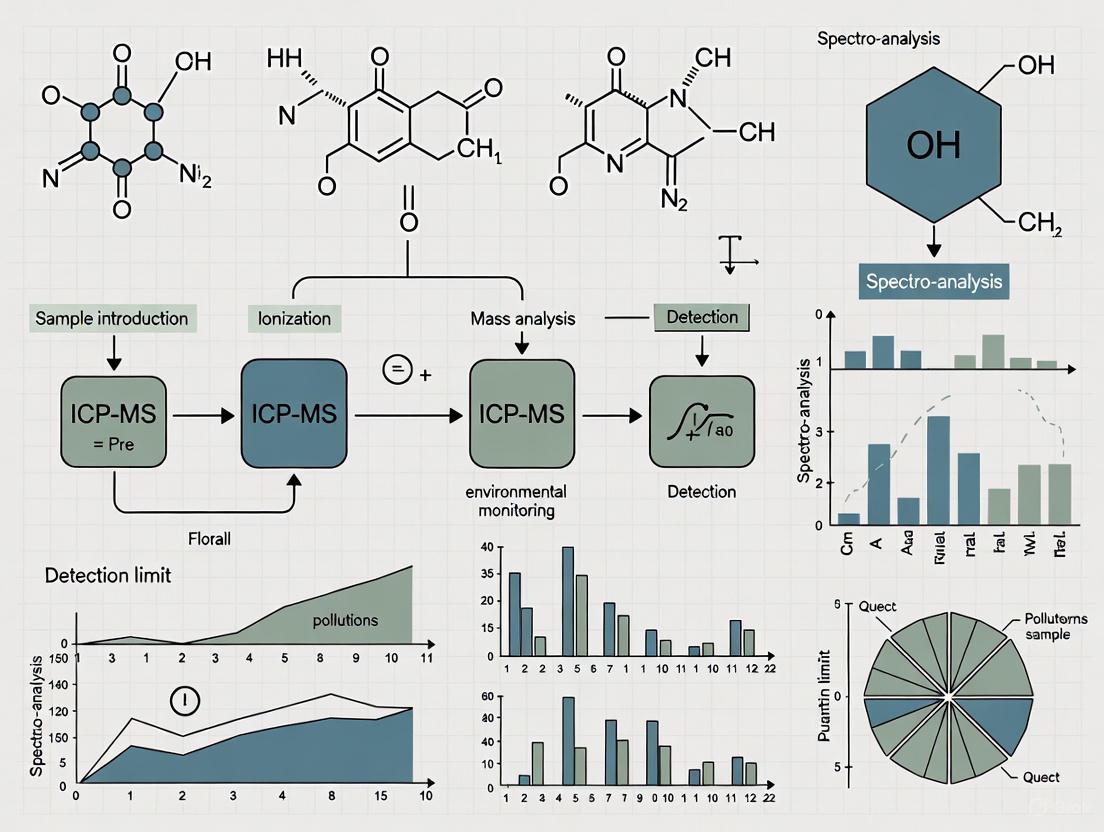
This article provides a comprehensive overview of the pivotal role Inductively Coupled Plasma Mass Spectrometry (ICP-MS) plays in modern environmental monitoring.
The Critical Role of ICP-MS in Environmental Monitoring: From Ultra-Trace Detection to Advanced Data Solutions
Abstract
This article provides a comprehensive overview of the pivotal role Inductively Coupled Plasma Mass Spectrometry (ICP-MS) plays in modern environmental monitoring. It explores the technique's foundational principles, including its exceptional sensitivity capable of detecting elements at parts-per-trillion levels and its broad multi-element capability. The scope extends to detailed methodologies for analyzing complex environmental matrices like water, soil, and air, addressing persistent challenges such as spectral interferences and matrix effects through advanced optimization and troubleshooting strategies. A critical comparison with other analytical techniques, such as XRF, is presented to guide method selection. Tailored for researchers, scientists, and analytical professionals, this review synthesizes current best practices and emerging trends, including the integration of AI and automation, to empower accurate and reliable environmental data generation for regulatory compliance and public health protection.
Understanding ICP-MS: The Gold Standard for Trace Element Analysis
Inductively Coupled Plasma Mass Spectrometry (ICP-MS) represents a pinnacle of analytical capability for trace element analysis, combining an ultra-high-temperature ionization source with the precise filtering capabilities of a mass spectrometer. This technical guide details the core principles of ICP-MS operation, with specific focus on its indispensable role in environmental monitoring research. For scientists and drug development professionals, understanding this technique is crucial for detecting contaminants at parts-per-trillion levels, performing isotopic analysis, and conducting multi-element analysis in complex environmental matrices. The fundamental strength of ICP-MS lies in its unique synergy of two powerful technologies: an argon plasma operating at temperatures exceeding 6,000 K for efficient and complete sample ionization, coupled with a mass spectrometer for high-sensitivity ion detection and quantification.
In the realm of environmental monitoring, the ability to accurately measure trace and ultra-trace levels of elements is non-negotiable for assessing pollution, ensuring regulatory compliance, and protecting public health. ICP-MS has revolutionized this field by providing exceptional sensitivity capable of detecting elements at concentrations as low as parts per trillion (ppt) [1]. This capability is vital for monitoring toxic environmental pollutants like lead, arsenic, and mercury in water, soil, and air at levels far below regulatory limits [1]. Furthermore, its multi-element capability allows for the simultaneous detection of dozens of elements in a single analysis, offering a comprehensive snapshot of a sample's elemental composition, which is particularly beneficial where diverse contaminants coexist [2] [1]. The technique's wide dynamic range, covering up to 10 orders of magnitude, enables the measurement of major and trace elements in a single run without sample dilution [3].
Compared to older techniques like atomic absorption or atomic emission spectroscopy, ICP-MS offers higher sample throughput, simpler sample preparation, and lower detection limits [4]. While other plasma-based techniques exist, such as Inductively Coupled Plasma Optical Emission Spectrometry (ICP-OES), ICP-MS provides superior sensitivity and the unique capability for isotopic analysis [5] [6]. These attributes make it an indispensable tool for modern environmental research, from tracking the fate of airborne tire particles [2] to performing in-situ isotope ratio determinations in geological samples [2].
Fundamental Principles and Instrumentation
The operational principle of ICP-MS can be divided into two main stages: 1) ionization of the sample in the inductively coupled plasma, and 2) separation and detection of the resulting ions by a mass spectrometer [3]. The sample, typically in liquid form, is introduced into the core of an argon plasma where it is subjected to extreme temperatures. This environment efficiently desolvates, vaporizes, atomizes, and ionizes the sample, creating primarily singly-charged positive ions. These ions are then extracted from the atmospheric-pressure plasma into a high-vacuum mass spectrometer, where they are separated based on their mass-to-charge ratio (m/z) and quantified by a detector [3] [7].
The Inductively Coupled Plasma Ionization Source
The inductively coupled plasma is the heart of the ionization process, generating temperatures between 6,000 K and 10,000 K—hotter than the surface of the sun [3] [7]. The plasma is formed within a series of concentric quartz tubes known as a "torch". Argon gas flows through the torch, and a radio frequency (RF) generator, typically operating at 27 MHz, supplies power to a copper coil surrounding the torch [3] [7].
- Ignition and Sustainment: A high-voltage spark initiates the process by ionizing a small fraction of the argon atoms. The resulting electrons are accelerated by the oscillating electromagnetic field created by the RF coil. These accelerated electrons collide with more argon atoms, creating a chain reaction that breaks down the gas into a sustained plasma of argon ions and electrons [3].
- Sample Introduction and Ionization: The liquid sample is converted into a fine aerosol using a nebulizer. This aerosol is transported into the center of the plasma via the innermost tube of the torch. The immense energy of the plasma sequentially:
- Desolvates the aerosol droplets, removing the solvent.
- Vaporizes the resulting solid particles.
- Atomizes the vapor into ground-state atoms.
- Ionizes these atoms by ejecting an electron, creating positively charged ions [3].
- Ionization Efficiency: The argon plasma provides energy of approximately 15.8 electronvolts (eV), which is sufficient to ionize most elements in the periodic table [3]. The plasma exhibits a "donut-shaped" structure due to the high-frequency skin effect, with the sample introduced into the relatively lower-temperature center, allowing for efficient ionization without diffusion [7].
Interface and Ion Transfer System
A critical engineering challenge in ICP-MS is transferring the positively charged ions from the plasma, which operates at atmospheric pressure, into the mass spectrometer, which requires a high vacuum for proper operation. This is accomplished by a sophisticated interface region consisting of two conically shaped metal apertures, typically water-cooled and made of nickel or platinum [3].
- Sampler Cone: This is the first cone, which contacts the plasma directly. Ions pass through a small orifice (~1 mm diameter) into a preliminary vacuum chamber [3].
- Skimmer Cone: Located immediately behind the sampler cone, the skimmer cone has an even smaller orifice. It extracts the core of the ion beam from the region behind the sampler cone and directs it into the high-vacuum region of the mass spectrometer [3].
Ion Focusing and Interference Removal
After the interface, the ion beam enters the ion optics. This is a series of electrostatic lenses with adjustable voltages that focus and guide the ion beam into the mass filter [3]. A key function of the ion optics is to remove neutral species and photons from the beam, which are significant sources of noise and signal instability. This is often achieved by steering the ion beam off-axis, allowing the heavier ions to be deflected into the mass analyzer while the uncharged species continue straight and are pumped away [3].
Many modern ICP-MS instruments also incorporate a Collision/Reaction Cell (CRC) placed between the ion optics and the mass analyzer. This cell is pressurized with a gas (e.g., helium or hydrogen) to mitigate spectral interferences, which are caused by ions or molecular ions that have the same mass-to-charge ratio as the analyte of interest [3]. Common interferences include:
- ArO+ on the major isotope of iron (⁵⁶Fe+)
- ArCl+ on the only isotope of arsenic (⁷⁵As+) [3]
The CRC operates in two primary modes:
- Collision Mode: An inert gas like helium is used. Polyatomic interferences, being larger than analyte ions, undergo more collisions and lose more kinetic energy. An energy barrier at the cell exit then filters out these lower-energy interferences (Kinetic Energy Discrimination) [3].
- Reaction Mode: A reactive gas is used that undergoes chemical reactions with the interference ions, converting them into species with different m/z ratios that no longer interfere with the analyte [3].
Mass Analysis and Detection
The final stages involve separating the ions by mass and detecting them.
- Mass Analyzer: The most common type for routine analysis is a quadrupole mass analyzer. It consists of four parallel rods to which RF and DC voltages are applied. By carefully controlling these voltages, only ions of a specific mass-to-charge ratio can traverse the length of the rods to the detector at any given moment. The quadrupole rapidly scans across a mass range, allowing all elements to be measured in sequence [4] [3].
- Detector: The ions that pass through the quadrupole strike a detector, typically an electron multiplier. This device amplifies the signal from each individual ion into a measurable electrical pulse. The number of pulses counted over a specified time is proportional to the concentration of that element in the original sample [3].
The following diagram illustrates the complete pathway of a sample through the key components of an ICP-MS instrument:
Experimental Protocols for Environmental Analysis
This section provides a detailed methodology for a representative environmental application: the determination of trace heavy metals in a water sample.
Reagents and Materials
- High-Purity Acids: Nitric acid (HNO₃), trace metal grade.
- Calibration Standards: Multi-element standard solutions at known concentrations (e.g., 1, 10, 100 ppb).
- Internal Standards: A solution of elements not present in the sample but used to correct for instrument drift and matrix effects (e.g., Scandium (Sc), Germanium (Ge), Rhodium (Rh)).
- Certified Reference Material (CRM): A water CRM with known certified concentrations of target analytes for quality control.
- High-Purity Water: Deionized water with resistivity of 18.2 MΩ·cm.
- Sample Collection Vessels: Pre-cleaned polyethylene or polypropylene bottles.
Sample Preparation Protocol
- Collection: Collect water samples in pre-cleaned bottles. Acidify to pH < 2 with high-purity nitric acid to preserve metal content.
- Digestion (if required for complex matrices): Transfer 50 mL of sample to a clean beaker. Add 1 mL of concentrated HNO₃. Heat on a hotplate at ~95°C for 1-2 hours until the volume is reduced to approximately 20 mL. Allow to cool.
- Dilution: Dilute the digested (or raw, if no digestion was performed) sample by a factor of 10-50 with high-purity water. The dilution factor is optimized to ensure the Total Dissolved Solids (TDS) content is below 0.2% to prevent nebulizer clogging and matrix effects [4].
- Internal Standard Addition: Add the internal standard solution to the diluted sample to a final concentration of 10-20 ppb.
Instrumental Analysis Protocol
- ICP-MS Instrument Setup:
- Power the instrument and allow it to stabilize (~30 minutes).
- Optimize plasma position, lens voltages, and gas flows for maximum signal and stability using a tuning solution containing Li, Y, Ce, and Tl.
- Set the data acquisition parameters: Dwell time (e.g., 50-100 ms per isotope), number of replicates (e.g., 3), and sweeps per reading.
- Calibration:
- Analyze a blank (high-purity water with acid and internal standard).
- Analyze a series of calibration standards (e.g., 0.1, 1, 10, 100 ppb) containing the analytes of interest and the internal standard.
- The software will construct a calibration curve for each element.
- Quality Control:
- Analyze the CRM after calibration. The measured values should agree with the certified values within acceptable limits (e.g., ±10%).
- Analyze a continuing calibration verification standard periodically during the sample run.
- Sample Analysis:
- Analyze the prepared samples. The internal standard response is monitored for each sample to correct for signal suppression or enhancement.
- Data Analysis:
- The software compares the ion counts for each analyte isotope in the sample to the calibration curve and reports the concentration, automatically correcting for the dilution factor.
Data Presentation and Analysis
Performance Comparison of Elemental Analysis Techniques
The following table summarizes the key characteristics of ICP-MS compared to other common elemental analysis techniques, highlighting its advantages for sensitive, multi-element analysis [4].
Table 1: Comparison of Atomic Spectrometry Techniques for Environmental Analysis
| Technique | Key Advantages | Key Disadvantages | Typical Detection Limit Range |
|---|---|---|---|
| ICP-MS | Multi-element; extremely low detection limits; large dynamic range; isotopic analysis capability [4] [3] | High equipment and operational cost; susceptible to spectral interferences; requires skilled staff [4] | Parts-per-trillion (ppt) to parts-per-billion (ppb) [1] [8] |
| ICP-OES | Multi-element; high sample throughput; good for major/trace elements [5] [4] | Higher detection limits than ICP-MS; limited isotopic capability [5] [4] | Parts-per-billion (ppb) to parts-per-million (ppm) [5] |
| Graphite Furnace AAS | Low detection limits for a single element; lower equipment cost [4] | Single-element technique; low sample throughput; requires specific lamps per element [4] | Parts-per-trillion (ppt) to parts-per-billion (ppb) [4] |
| Flame AAS | Low equipment cost; easy to operate; high throughput for single element [4] | Single-element technique; relatively high detection limits; requires flammable gases [4] | Parts-per-million (ppm) range [4] |
Exemplary Environmental Contaminant Detection
The table below provides examples of environmentally significant elements, their typical sources, and the performance of ICP-MS in their detection, underscoring the technique's critical role in monitoring and regulation.
Table 2: Key Environmental Contaminants Analyzed by ICP-MS
| Element | Primary Environmental Sources | Clinical/Toxicological Relevance | Approximate Typical Detection Limit |
|---|---|---|---|
| Lead (Pb) | Old plumbing, industrial emissions, contaminated soil [2] | Neurotoxic, especially in children [4] | < 0.01 μg/L (ppt) |
| Arsenic (As) | Natural deposits, mining, pesticide residues [4] | Carcinogen, causes skin lesions [4] | < 0.05 μg/L (ppt) |
| Cadmium (Cd) | Industrial processes, batteries, cigarette smoke [4] | Nephrotoxic, carcinogen [4] | < 0.005 μg/L (ppt) |
| Mercury (Hg) | Coal combustion, mining, industrial processes [4] | Neurotoxic, bioaccumulates in seafood [4] | < 0.1 μg/L (ppt) |
| Chromium (Cr) | Industrial plating, tannery waste, leachate | Allergen (Cr-VI), carcinogen (Cr-VI) | < 0.02 μg/L (ppt) |
The Scientist's Toolkit: Essential Reagents and Materials
Table 3: Essential Research Reagent Solutions for ICP-MS Analysis
| Reagent/Material | Function | Critical Specifications |
|---|---|---|
| High-Purity Nitric Acid (HNO₃) | Primary diluent and digesting acid; prevents precipitation of metals and keeps them in solution [4]. | Trace metal grade, low blank levels for target analytes. |
| Multi-Element Calibration Standard | Used to create the calibration curve for quantitative analysis. | Certified reference material (CRM) with uncertainty statements for accuracy. |
| Internal Standard Solution | Added to all samples, blanks, and standards to correct for instrument drift and matrix-induced signal suppression/enhancement [4]. | Contains elements (e.g., Sc, Ge, Rh, Ir) not found in the samples and that cover a range of masses. |
| Tuning Solution | Used to optimize instrument parameters (nebulizer flow, lens voltages, etc.) for sensitivity, stability, and oxide formation [4]. | Typically contains Li, Y, Ce, Tl for broad mass range optimization. |
| Certified Reference Material (CRM) | Used for method validation and ongoing quality control to ensure analytical accuracy [2]. | Matrix-matched to samples (e.g., river water, soil) with certified values for analytes of interest. |
| Collision/Reaction Cell Gases | Helium, Hydrogen, or ammonia used in the CRC to remove polyatomic spectral interferences [3]. | High-purity (e.g., 99.999%) to minimize introduction of new contaminants. |
Advanced Applications in Environmental Monitoring
The capabilities of ICP-MS extend beyond simple concentration measurements, enabling sophisticated applications that are reshaping environmental research.
Single-Particle ICP-MS for Nanomaterial and Airborne Particle Analysis: This emerging application involves introducing a highly diluted suspension of nanoparticles or airborne particles into the plasma. Each particle generates a discrete burst of signal, allowing researchers to determine the size, size distribution, and elemental composition of individual particles [2]. This is instrumental in studying emerging contaminants like nanoplastic pollution and the composition of airborne tire wear particles [2].
Laser Ablation ICP-MS (LA-ICP-MS) for Solid Sample Analysis: LA-ICP-MS allows for the direct analysis of solid samples with minimal preparation. A focused laser beam is used to ablate (vaporize) micro-scale amounts of material from a solid sample's surface (e.g., soil, rock, or biological tissue), which is then transported by a gas stream into the ICP-MS. This technique is widely used for spatial mapping of elemental distributions in geological samples and for the direct analysis of microplastics and other suspended solids [2].
Isotope Ratio Analysis for Source Apportionment: High-precision ICP-MS instruments, particularly Multi-Collector ICP-MS (MC-ICP-MS), can measure subtle variations in the natural abundances of stable isotopes (e.g., lead, strontium, copper). Since these isotopic "fingerprints" can be characteristic of a pollution source, this application is powerful for environmental forensics, allowing researchers to track the origin of contaminants in soil, water, and air [2] [6].
The following diagram illustrates the logical decision process for selecting the appropriate ICP-MS methodology based on the environmental research question:
ICP-MS stands as a cornerstone analytical technology in modern environmental science. Its core principle—the seamless integration of a high-temperature plasma for robust sample ionization with a mass spectrometer for highly sensitive and selective detection—provides an unmatched combination of sensitivity, speed, and versatility. As environmental challenges grow more complex, with concerns over ultra-trace contaminants, nanoparticle pollution, and the need for precise source tracking, the advanced capabilities of ICP-MS will become ever more critical. Ongoing technological advancements, such as the development of more portable systems for field deployment [9] [6] and more sophisticated interference removal cells [3], promise to further expand its role. For researchers and regulators dedicated to understanding and protecting our environment, a deep knowledge of ICP-MS is not just beneficial—it is essential.
Unmatched Sensitivity, Speed, and Multi-Element Capability
Inductively Coupled Plasma Mass Spectrometry (ICP-MS) has established itself as a cornerstone analytical technique in environmental research, providing the critical data required for monitoring pollution, assessing ecological risks, and ensuring regulatory compliance. Its role is increasingly vital in addressing contemporary environmental challenges, from tracking nanoscale pollutants to enabling real-time water quality monitoring. The technique's core analytical strengths—unmatched sensitivity, rapid analysis speed, and comprehensive multi-element capability—make it uniquely positioned to quantify trace and ultra-trace elements in complex environmental matrices like water, soil, and biological tissues. As global concerns over heavy metal contamination and technological critical elements grow, ICP-MS provides the precise, reliable, and actionable data necessary for protecting ecosystems and public health [10]. This whitepaper details the technical foundations of these advantages, illustrates their application through advanced methodologies, and contextualizes their significance within the broader framework of environmental science.
Core Technical Advantages of ICP-MS
The predominance of ICP-MS in high-precision environmental analysis is rooted in three fundamental technical advantages that, in combination, are not offered by any other single analytical technique.
Unmatched Sensitivity
ICP-MS achieves parts-per-trillion (ppt) to parts-per-quadrillion (ppq) detection limits for most elements in the periodic table [11]. This exceptional sensitivity stems from the highly efficient ionization process in the argon plasma, which operates at temperatures of 5,000-10,000 K and achieves nearly 100% ionization efficiency for most metals [11]. This allows for the quantification of trace elements at concentrations far below the stringent regulatory limits set for drinking water and food safety. For instance, it can easily detect lead at the U.S. EPA action level of 10 µg/L and far lower, providing a substantial safety margin for accurate monitoring [12]. This sensitivity is crucial for emerging applications such as the characterization of engineered nanoparticles (NPs) in biological and environmental systems, where single-particle ICP-MS (spICP-MS) can determine the size, concentration, and metal content of individual nanoparticles at environmentally relevant levels [13].
High Speed and Throughput
ICP-MS offers rapid analysis times, typically 2-5 minutes per sample for a full multi-element suite [11]. The speed is further exemplified by advanced automated systems, such as one developed for river water monitoring, capable of providing hourly, fully quantitative data for 56 elements [14]. This high temporal resolution is essential for capturing dynamic environmental processes, such as short-term pollution events or diurnal concentration variations, which would be missed by conventional weekly or monthly grab-sampling programs. The technique's throughput drastically outperforms traditional methods that require separate analyses for each element, streamlining workflows in environmental monitoring laboratories.
Comprehensive Multi-Element Capability
A single ICP-MS analysis can simultaneously determine a vast array of elements. Standard methods can quantify over 50 elements in one run, with research methods extending this capability even further [14]. This broad coverage is indispensable for comprehensive environmental fingerprinting, geochemical cycling studies, and screening for unknown pollutants. Unlike techniques like Atomic Absorption Spectroscopy (AAS), which is generally a single-element technique, ICP-MS provides a complete elemental profile from a single sample injection, saving time, reducing sample consumption, and giving a holistic view of the sample's composition. This capability is leveraged in monitoring "technology-critical elements" (e.g., rare earth elements, Ga, Ge, In) whose environmental impact is of growing concern [14].
Table 1: Comparison of ICP-MS with Other Elemental Analysis Techniques
| Technique | Typical Detection Limits | Multi-Element Capability | Sample Throughput | Best Suited For |
|---|---|---|---|---|
| ICP-MS | ppt – ppq [11] | Excellent (50+ elements simultaneously) [14] | High (2-5 min/sample) [11] | Ultra-trace analysis, regulatory compliance, speciation studies |
| ICP-OES | ppb – ppm | Excellent | Very High | Major/Trace elements in complex solutions, high-throughput labs [5] |
| AAS | ppb – ppm | Poor (sequential) | Moderate | Low-cost labs, routine analysis of a few elements |
| EC-MS | ppb – ppm [11] | Moderate | Very High (ms-s response) [11] | Real-time reaction monitoring, molecular species detection |
Table 2: Regulatory Limits for Selected Heavy Metals in Drinking Water, Demonstrating Need for ICP-MS Sensitivity [12]
| Element | U.S. EPA (MCL) | WHO (Guideline) | EU (Parametric Value) |
|---|---|---|---|
| Lead (Pb) | 0.010 mg/L (10 µg/L) | 0.01 mg/L (10 µg/L) | 5 µg/L (to be met by 2026) |
| Arsenic (As) | - | 0.01 mg/L (10 µg/L) | 10 µg/L |
| Cadmium (Cd) | - | 0.003 mg/L (3 µg/L) | 5 µg/L |
| Mercury (Hg) | - | 0.006 mg/L (6 µg/L) | 1 µg/L |
Advanced Experimental Protocols in Environmental Research
Protocol 1: Automated High-Temporal-Resolution River Monitoring
This protocol enables the unattended, hourly quantification of 56 elements in river water, capturing short-term pollution events and diurnal cycles [14].
1. System Configuration:
- Apparatus: ICP-QMS or ICP-QQQ-MS; custom-built, self-cleaning Fraction Collector/AuTosampler (CAT).
- Software: Python script for full instrument automation and operational sequence control.
- Sample Inlet: Online filtration system (0.45 µm) installed directly in the river.
2. Sample Collection and Introduction:
- The CAT system automatically collects and time-integrates river water over a 60-minute interval.
- The self-cleaning function activates between samples to prevent cross-contamination.
- The collected sample is presented to the autosampler of the ICP-MS.
3. ICP-MS Analysis:
- Instrument Tuning: Optimize plasma torch alignment, ion lens voltages, and gas flows for maximum sensitivity across the mass range using a multi-element tuning solution.
- Data Acquisition: Operate in full quantitative mode with external calibration. A calibration curve is automatically run at the beginning of the sequence, and quality control standards are interspersed every 10-12 samples.
- Measured Isotopes: Include major elements (²³Na, ²⁴Mg, ²⁷Al, ³⁹K, ⁴⁴Ca), trace metals (⁵²Cr, ⁵⁵Mn, ⁵⁶Fe, ⁵⁹Co, ⁶⁰Ni, ⁶³Cu, ⁶⁶Zn, ⁷⁵As, ¹¹¹Cd, ²⁰⁸Pb, ²⁰²Hg), and rare earth elements.
4. Data Processing:
- Automated software converts raw counts to concentration using the calibration curve.
- Data is output as a time-series dataset for trend analysis and event detection.
Protocol 2: Single-Particle ICP-MS (spICP-MS) for Nanoparticle Characterization
This protocol details the use of spICP-MS to characterize metal-containing nanoparticles in environmental or biological extracts, determining particle size, size distribution, and number concentration [13].
1. Sample Preparation:
- Enzymatic Extraction (for biological tissues): Homogenize tissue with a digestion solution (e.g., proteinase K, SDS, NH₄HCO₃ buffer). Incubate at 50°C for 3 hours with gentle agitation. Centrifuge and filter the supernatant [13].
- Critical Dilution: Dilute the sample extract sufficiently (e.g., 100 to 10,000-fold) in ultra-pure water to ensure that the ICP-MS detects individual nanoparticles, not a continuous signal. The optimal dilution results in a particle frequency of several hundred to thousands of particles per minute.
2. Instrument Setup and Calibration:
- ICP-MS Configuration: Use a time-resolved analysis (TRA) mode with a short dwell time (e.g., 100 µs) to resolve transient signals from single particles.
- Ionic Standard Calibration: Introduce a dissolved ionic standard of the element of interest to establish the signal intensity per unit mass concentration.
- Particle Size Calibration: Use a reference nanoparticle suspension (e.g., 60 nm gold nanoparticles) of known size and concentration to determine the transport efficiency of the sample introduction system.
3. Data Acquisition and Analysis:
- Introduce the diluted sample via pneumatic nebulization.
- The raw data consists of a time-resolved signal where each pulse corresponds to a single nanoparticle being vaporized, atomized, and ionized in the plasma.
- Data Processing: Software algorithms:
- Differentiate particle events from the dissolved ionic background signal.
- Calculate particle number concentration from the frequency of particle pulses.
- Calculate nanoparticle size from the intensity of each pulse, using the previously established calibrations.
The Scientist's Toolkit: Essential Reagents and Materials
Table 3: Key Research Reagent Solutions for ICP-MS Environmental Analysis
| Reagent/Material | Function and Critical Role | Application Example |
|---|---|---|
| Certified Reference Materials (CRMs) | To validate method accuracy and ensure data quality by comparing measured values to a certified value. | NIST Surface Water CRM for validating trace metal concentrations in river water analysis [14]. |
| Enzymatic Extraction Cocktail | To gently extract nanoparticles from biological tissues without altering their native state or causing dissolution. | Proteinase K and Lipase in HEPES buffer for extracting Ag NPs from ground beef [13]. |
| Isotopically Enriched Standards | For Isotope Dilution Mass Spectrometry (ID-MS), the gold standard for accuracy, accounting for sample loss and matrix effects. | ⁶⁵Cu, ²⁰⁷Pb for precise quantification of these elements in complex samples [15]. |
| High-Purity Tuning Solutions | To optimize instrument performance (sensitivity, resolution, and oxide levels) for consistent day-to-day operation. | Multi-element solution (e.g., containing Li, Y, Ce, Tl) at 1-10 ppb for tuning the ICP-MS prior to analysis. |
| Collision/Reaction Cell Gases | To mitigate polyatomic spectral interferences by promoting reactive or non-reactive collisions with interfering ions. | Helium (He) gas for kinetic energy discrimination; Ammonia (NH₃) gas to react with and remove Ar⁺ and ArO⁺ interferences. |
| Certified Nanoparticle Suspensions | To calibrate transport efficiency and size response in spICP-MS, enabling accurate particle size and number concentration. | 60 nm Au or 50 nm SiO₂ (with Au core) nanoparticles for calibrating the spICP-MS method [13]. |
The role of ICP-MS in environmental monitoring is not merely supportive but foundational. Its unmatched sensitivity, speed, and multi-element capability provide a powerful, unified platform for addressing a vast spectrum of analytical challenges—from profiling the classic heavy metals in water to characterizing the emerging challenge of nanoscale pollutants. As detailed in the advanced protocols, the technique's adaptability to automation and its ability to deliver high-temporal-resolution data are pushing the boundaries of environmental science, enabling a shift from static snapshots to dynamic, process-based understanding. For researchers and drug development professionals, mastering ICP-MS is not just about operating an instrument; it is about leveraging a critical capability to generate the high-fidelity data essential for informed decision-making, robust environmental stewardship, and the advancement of public health.
Inductively Coupled Plasma Mass Spectrometry (ICP-MS) has established itself as a cornerstone technique in environmental monitoring research. Its exceptional sensitivity, capable of detecting elements at trace and ultra-trace levels (from parts per million down to parts per trillion), and its ability to rapidly analyze multiple elements simultaneously make it indispensable for assessing environmental contamination [3]. In modern environmental science, ICP-MS is critical for tackling pressing challenges, from quantifying heavy metals in seafood to assessing human exposure through biomonitoring and characterizing airborne tire particles [2] [16] [17]. The power of ICP-MS in providing such precise data lies in the sophisticated orchestration of its core components, each playing a vital role in transforming a liquid sample into actionable quantitative information. This guide provides an in-depth examination of these essential components, from the nebulizer to the detector, and details their function within the context of environmental research.
Core Components of an ICP-MS System
An ICP-MS instrument is a sophisticated system that can be broken down into a series of sequential modules: the sample introduction system, the plasma source, the interface, the ion optics, the mass analyzer, and the detector. The journey of a sample begins as a liquid and ends as a digital signal proportional to its elemental concentration.
The sample introduction system is the gateway for the sample into the instrument and is critical for accuracy and stability. Its primary function is to consistently create a fine, homogeneous aerosol from a liquid sample and deliver it to the plasma.
- Nebulizer: The nebulizer is the first point of contact for the liquid sample. It uses the Venturi effect, often aided by a flow of argon gas, to break the liquid stream into a spray of fine droplets. Different nebulizer types (e.g., concentric, cross-flow) are selected based on sample properties such as dissolved solids content or viscosity [3].
- Spray Chamber: Following the nebulizer, the spray chamber acts as a selector for droplet size. It allows only the smallest droplets (typically only 1-2% of the original sample) to pass through to the plasma, while larger, inefficient droplets are drained to waste. This process ensures that the plasma is not overloaded with solvent, which would cause instability. Common designs include double-pass (Scott-type) and cyclonic spray chambers. Advanced spray chambers may include Peltier cooling to reduce solvent loading and technologies like High Matrix Introduction (HMI) to handle samples with high total dissolved solids (TDS) by using argon gas for aerosol dilution, thereby improving plasma robustness [18] [3].
Inductively Coupled Plasma: The Ionization Source
The inductively coupled plasma (ICP) serves as the high-temperature ionization source. It is generated by passing argon gas through a series of concentric quartz tubes (the torch), which is surrounded by a radio frequency (RF) coil. A powerful RF generator (typically 27 MHz) supplies energy to the coil, creating an oscillating electromagnetic field. A spark seeds the process, creating argon ions and electrons that are accelerated by the field, resulting in a cascade that forms a stable, self-sustaining plasma [19] [3].
This plasma reaches temperatures of up to 10,000 K, hotter than the surface of the sun. As the fine aerosol from the introduction system is injected into the base of the plasma, the sample droplets undergo a rapid, sequential process: vaporization (solvent evaporation), atomization (molecules broken into atoms), and ionization (atoms losing an electron to become positively charged ions). The energy required (15.8 eV) is sufficient to ionize most elements in the periodic table [3].
Interface Region: Transferring Ions from Atmosphere to Vacuum
A significant engineering challenge in ICP-MS is transferring the positively charged ions from the plasma, which operates at atmospheric pressure, into the mass spectrometer, which requires a high vacuum. This is accomplished by the interface region, which consists of two water-cooled metal cones (typically nickel or platinum) with precisely sized orifices [19] [3].
- Sampler Cone: This is the first cone, exposed directly to the plasma. It has an orifice of approximately 1.0 mm that extracts the central portion of the plasma gas, including the sample ions [3].
- Skimmer Cone: Positioned directly behind the sampler cone, the skimmer cone has a smaller orifice and is responsible for skimming the ion beam, further reducing the pressure and guiding the ions into the high-vacuum ion optics chamber [19].
Ion Optics: Focusing the Ion Beam
After passing through the skimmer cone, the ion beam is still diffuse and contains not only analyte ions but also neutral species, photons, and solid particles. The ion optics, a series of electrostatic lenses, serves to focus and steer the ion beam into the mass analyzer. By applying specific voltages to these lenses, the ion beam is shaped and collimated. A key function of many ion optics systems is to steer the ions off-axis, which effectively blocks photons and neutral species from proceeding further, drastically reducing background noise and improving detection limits [3].
Mass Analyzer: Separating Ions by Mass-to-Charge Ratio
The mass analyzer is the core of the instrument's selectivity. It separates the incoming stream of ions based on their mass-to-charge ratio (m/z). The most common type for routine environmental analysis is the quadrupole mass analyzer [19] [3].
- Quadrupole Mass Analyzer: A quadrupole consists of four parallel, precisely machined rods. By applying a combination of DC and radio frequency (RF) potentials to the rods, a dynamic electric field is created. For any given set of voltages, only ions of a specific m/z have a stable path through the quadrupole and reach the detector; all other ions have unstable trajectories and collide with the rods. The voltages can be scanned extremely rapidly, allowing the instrument to measure a wide range of elements in a matter of seconds. Quadrupoles typically provide unit mass resolution (0.7-0.85 u), which is sufficient for most applications [19].
- Magnetic Sector Analyzer: For applications requiring higher sensitivity or superior resolution, magnetic sector mass analyzers are used. These separate ions using a magnetic field, which deflects the flight path of ions based on their momentum. They are often coupled with an Electric Sector Analyzer (ESA) to focus ions of different kinetic energies, resulting in higher precision, especially for isotope ratio analysis [19].
Table 1: Comparison of Common ICP-MS Mass Analyzers
| Analyzer Type | Principle of Operation | Key Features | Common Environmental Applications |
|---|---|---|---|
| Quadrupole | Sequential filtering using DC/RF fields | Rugged, cost-effective, fast scanning | Routine multi-element analysis; water, soil, biota monitoring [16] [19] |
| Magnetic Sector | Separation by momentum in a magnetic field | High resolution, high sensitivity, precise isotope ratios | Analysis of complex matrices; geochronology; isotope dilution [19] [15] |
| Time-of-Flight (TOF) | Separation by velocity in a flight tube | Simultaneous multi-element detection, very fast acquisition | Single-particle ICP-MS (spICP-MS), transient signal analysis [13] |
Detector: Counting the Ions
The final component in the chain is the detector, which counts the ions that successfully pass through the mass analyzer. Modern ICP-MS instruments typically use an electron multiplier, which operates in a pulse-counting mode. When an ion strikes the first dynode of the detector, it releases electrons. These electrons are then amplified through a cascade across a series of dynodes, resulting in a measurable electrical pulse for each individual ion. This pulse-counting mode allows for extremely high sensitivity and a wide dynamic range, often spanning up to 9-10 orders of magnitude, enabling the simultaneous detection of major and ultra-trace elements in a single run [3].
Overcoming Analytical Challenges: Interference Removal
A major challenge in ICP-MS is spectral interference, where ions of different elements or molecules share the same nominal m/z, causing an inflated signal for the analyte. Common interferences include:
- Argon-based polyatomics: Such as ArO⁺ on ⁵⁶Fe⁺ and ArCl⁺ on ⁷⁵As⁺ [19] [3].
- Matrix-based polyatomics: Formed from combinations of sample matrix elements (e.g., Cl, S, C, N) with argon or other ions.
To mitigate these interferences, most modern ICP-MS systems are equipped with a Collision/Reaction Cell (CRC) placed before the mass analyzer. The CRC is a pressurized multipole ion guide that uses gas-phase chemistry to remove interferences [19] [3].
- Collision Mode (KED): An inert gas like helium is used. Polyatomic interferences, being larger than analyte ions, undergo more collisions and lose more kinetic energy. An energy barrier at the cell exit then filters out these lower-energy interference ions [19] [3].
- Reaction Mode: A reactive gas (e.g., hydrogen, ammonia) is used. The gas undergoes selective chemical reactions with the interference ions, either converting them into harmless species or shifting them to a different m/z, thereby allowing the analyte ion to be measured without interference [3].
Table 2: Common Interferences and Their Remedies in Environmental Analysis
| Analyte (m/z) | Common Interference | CRC Mitigation Strategy | Environmental Relevance |
|---|---|---|---|
| ⁷⁵As | ⁴⁰Ar³⁵Cl⁺ | Reaction mode with H₂ or He/H₂ mix | Toxic metalloid monitoring in water and soil [19] [3] |
| ⁵⁶Fe | ⁴⁰Ar¹⁶O⁺ | Collision mode with He (KED) | Essential and toxic element in biota and food webs [19] |
| ⁵¹V | ³⁵Cl¹⁶O⁺, ³⁷Cl¹⁴N⁺ | Collision/Reaction mode | Industrial pollutant; measured in fish tissue [16] [19] |
| ⁶³Cu | ⁴⁰Ar²³Na⁺, ³¹P³²S⁺ | Collision mode with He (KED) | Essential and toxic element; occupational exposure [19] [17] |
Advanced Applications in Environmental Monitoring
The refined design of ICP-MS components enables sophisticated applications that push the boundaries of environmental science.
Single-Particle ICP-MS (spICP-MS) leverages the extremely high sensitivity and fast data acquisition of the detector to analyze individual nanoparticles. By introducing a highly diluted suspension, particles enter the plasma one-by-one, generating a transient signal pulse. The intensity of each pulse correlates to the particle's mass and size, while the pulse frequency reveals particle number concentration. This is revolutionizing the study of engineered nanoparticles in environmental and biological systems [13].
Isotope Dilution ICP-MS (ID-ICP-MS) is considered a primary method for achieving the highest accuracy and precision. It involves adding a known amount of an isotopically enriched spike to the sample before digestion. The mass spectrometer's ability to measure isotope ratios precisely allows for exact quantification, correcting for sample loss or matrix effects. This technique is benchmark for measuring toxic elements like Hg, Cd, and Pb in complex environmental matrices [15].
Experimental Protocol: Analysis of Heavy Metals in Fish Tissue
The following detailed methodology, adapted from a recent study on fish from the Chennai coast of India, illustrates the complete workflow from sample preparation to data analysis using ICP-MS [16].
1. Sample Collection and Preparation:
- Collect fish specimens (e.g., Nemipterus japonicus, Oreochromis mossambicus) from the study area.
- Dissect to isolate target organs (liver, gills, muscle).
- Dry tissues in a hot-air oven at 40–50°C until a constant weight is achieved.
- Grind and homogenize the dried samples using a mortar and pestle.
2. Acid Digestion:
- Weigh approximately 25 mg of the dried, homogenized sample into a digestion vessel.
- Add 8 mL of high-purity 65% nitric acid (HNO₃) and 1 mL of 30% hydrogen peroxide (H₂O₂).
- Heat on a hot plate at 220°C for 8 hours in a closed vessel to mineralize the organic material.
- Cool the digestate, transfer to a 10 mL volumetric flask, and dilute to volume with 2% HNO₃.
- Perform a further 10-fold dilution with 2% HNO₃ prior to analysis.
3. ICP-MS Instrumental Analysis:
- Instrument: Perkin Elmer NexION 1000 ICP-MS.
- Calibration: Prepare multi-element calibration standards (e.g., 0.01–100 μg/L for most elements) in the same acid matrix. Ensure correlation coefficients (R²) are >0.999.
- Internal Standardization: Use elements like Indium (In) or Germanium (Ge) to correct for matrix suppression and instrument drift.
- CRC Mode: Utilize the collision/reaction cell (e.g., with He) to mitigate polyatomic interferences on key analytes like As and V.
4. Data Processing and Risk Assessment:
- Quantify element concentrations (e.g., As, Cd, Cr, Pb, Hg) against the calibration curve.
- Perform quality control using certified reference materials (CRMs).
- Calculate public health risk indices such as Estimated Daily Intake (EDI) and Target Hazard Quotient (THQ) to assess the safety of fish consumption.
The Scientist's Toolkit: Essential Reagents and Materials
Table 3: Key Research Reagents and Materials for Environmental ICP-MS Analysis
| Item | Function/Benefit | Example/Specification |
|---|---|---|
| High-Purity Acids | Sample digestion and dilution; minimizes background contamination. | Trace metal grade HNO₃, HCl [16] |
| Certified Reference Materials (CRMs) | Quality control and method validation; ensures analytical accuracy. | CRM of fish tissue, soil, or water [2] |
| Multi-Element Stock Standards | Calibration curve preparation; ensures precise quantification. | 1000 mg/L stocks from NIST or other certified suppliers [16] |
| Isotopically Enriched Spikes | High-accuracy quantification via Isotope Dilution Mass Spectrometry. | ⁶⁵Cu, ¹¹¹Cd, ²⁰²Hg for ID-MS [15] |
| Collision/Reaction Cell Gases | Removal of spectral interferences in the CRC. | High-purity Helium (He), Hydrogen (H₂) [19] [3] |
| Tuned Aperture Sampling Cones | Interface components; specific designs can enhance sensitivity for complex matrices. | Nickel, Platinum, or Platinum-tipped sampler/skimmer cones [19] |
Workflow and Component Integration Diagrams
Diagram 1: ICP-MS component workflow.
Diagram 2: ICP-MS system modules and vacuum stages.
Inductively Coupled Plasma Mass Spectrometry (ICP-MS) has established itself as a cornerstone analytical technique for environmental compliance monitoring. Its unparalleled sensitivity, ability to detect numerous elements simultaneously, and robust performance against stringent regulatory method criteria make it indispensable for modern environmental laboratories. This technical guide explores the fundamental role of ICP-MS in environmental research and monitoring, detailing its application in meeting rigorous quality standards for water quality assessment, its critical function in emerging analytical paradigms like non-target screening, and the essential protocols required for generating reliable, compliance-driven data.
The Analytical Superiority of ICP-MS in Environmental Monitoring
ICP-MS has become the dominant technique for ultra-trace elemental analysis in environmental samples due to its exceptional performance characteristics [20]. The technique offers method detection limits (MDLs) consistently in the nanogram per liter (ng/L or parts-per-trillion) range, which is essential for monitoring regulatory limits set for toxic elements in drinking and surface waters [21] [22]. Furthermore, its wide dynamic range (typically 8-9 orders of magnitude) enables the accurate quantification of elements present at vastly different concentrations within a single sample run, from trace contaminants to major constituents [20].
A key advantage for environmental monitoring is the technique's multi-element capability, allowing for the simultaneous determination of numerous elements, which significantly enhances laboratory throughput and efficiency compared to single-element techniques [12] [20]. This capability is crucial for comprehensive environmental assessment where the contaminant profile is complex. The maturity of ICP-MS as an analytical tool has led to the development of turnkey methods for various environmental matrices, reducing the required operator expertise and ensuring consistent application across laboratories [20]. Technological innovations such as collision/reaction cell (CRC) technology have further advanced the technique by effectively mitigating spectral interferences in complex sample matrices, thereby improving accuracy in challenging environmental samples like wastewater and soil digests [12].
ICP-MS in the Regulatory Compliance Framework
Environmental regulation of elemental contaminants is a global endeavor, with stringent limits established by multiple agencies to protect human health and ecological systems. ICP-MS is explicitly recognized in numerous regulatory methods due to its ability to meet required detection limits and provide robust, reproducible data.
Global Regulatory Limits for Key Elemental Contaminants
The following table summarizes maximum contaminant levels (MCLs) for selected elements in drinking water across different regulatory jurisdictions, illustrating the stringent requirements that ICP-MS is capable of addressing [12].
| Analyte | U.S. EPA (MCL, µg/L) | European Union (Parametric Value, µg/L) | WHO (Guideline Value, µg/L) |
|---|---|---|---|
| Arsenic (As) | 10 | 10 | 10 |
| Lead (Pb) | 15 | 5 (to be met by 2026) | 10 |
| Cadmium (Cd) | 5 | 5 | 3 |
| Mercury (Hg) | 2 | 1 | 6 |
adherence to Standardized Methods: EPA Method 200.8
In the United States, U.S. EPA Method 200.8 is the approved procedure for the determination of trace elements in waters and wastes by ICP-MS [21]. Compliance with this method is mandatory for drinking water monitoring under the Safe Drinking Water Act. The method stipulates rigorous quality control (QC) protocols, including calibration procedures, initial and continuing calibration verification, and analysis of blanks and duplicates. A key feature of this method is the requirement for using traditional correction equations for interference correction, rather than collision/reaction cell technology, highlighting the need for instrumental flexibility to meet specific regulatory stipulations [21].
Experimental protocols for compliance, as demonstrated in a recent application note using the Thermo Scientific iCAP MSX ICP-MS, involve careful sample preparation (filtration and acidification), instrument calibration with a series of standards, and internal standardization to correct for signal drift and matrix effects [21]. For example, Yttrium (Y) or Scandium (Sc) are often used as internal standards for environmental water samples. The analysis must demonstrate that achieved Method Detection Limits (MDLs) are significantly below the regulated MCLs which, for modern ICP-MS systems, is readily attainable. For instance, MDLs for Cadmium can be as low as 0.022 µg/L, well below the U.S. EPA MCL of 5 µg/L [21].
Essential Workflows and the Scientist's Toolkit
The reliable application of ICP-MS for environmental compliance hinges on optimized workflows and meticulous attention to contamination control throughout the analytical process.
ICP-MS Workflow for Regulatory Water Analysis
The following diagram outlines the core workflow for analyzing water samples in compliance with a standard method like EPA 200.8.
The Scientist's Toolkit: Key Reagent Solutions for ICP-MS
Achieving ultratrace detection limits requires high-purity reagents and dedicated labware to minimize background contamination [22].
| Item Category | Specific Examples | Function & Critical Specifications |
|---|---|---|
| Acids & Diluents | High-Purity Nitric Acid (HNO₃), Ultrapure Water (18 MΩ·cm) | Sample preservation and dilution; must be certified for low elemental background. |
| Calibration Standards | Multi-element stock standards, Single-element standards | Instrument calibration; require gravimetric preparation and verification. |
| Internal Standards | Solutions of Li, Sc, Y, Tb, Bi (e.g., 20 µg/L) | Compensation for instrument drift and matrix effects; should not be present in samples. |
| Quality Control Materials | Certified Reference Materials (CRMs), Continuing Calibration Verification (CCV) | Verification of method accuracy and precision throughout analysis. |
| Sample Labware | Clear polypropylene (PP) or fluoropolymer (PFA) vials/tubes | Sample storage and preparation; must be acid-cleaned to prevent contamination. |
Contamination control is a foundational aspect of the workflow. Best practices include using plastic labware instead of glass, as acid can leach metal contaminants from glassware [22]. Furthermore, establishing a clean laboratory environment, potentially using HEPA-filtered laminar flow hoods for sample preparation, is critical to minimize the introduction of airborne particulates that can compromise ultratrace analysis [22]. The practice of pre-soaking new plastic vials and pipette tips in dilute acid or ultrapure water is recommended to remove manufacturing residues [22].
The Evolving Role of ICP-MS in Environmental Research
Beyond routine compliance, ICP-MS is proving vital for advanced environmental research initiatives. A significant emerging application is its use in non-target screening (NTS) workflows for the identification of unknown chemical pollutants [23]. In this context, ICP-MS serves as an element-specific detector when coupled with chromatography. Its key advantage is the ability to provide unambiguous heteroatom information (e.g., Cl, Br, S, P, F) for unknown organic molecules, which helps narrow down possible chemical structures and enhances the confidence of identification [23]. Since ICP-MS response is based on elemental composition rather than molecular structure, it also offers a path for semi-quantification of unknowns for which authentic standards are unavailable, a major hurdle in NTS [23].
The technique's applicability is also expanding into the analysis of complex environmental solids, including soils, sediments, and biological tissues. Coupling ICP-MS with laser ablation (LA) sampling allows for direct spatial analysis of solid samples, reducing the need for extensive sample digestion and the associated contamination risks [24]. Furthermore, the development of single-cell ICP-MS enables the investigation of metal uptake and accumulation in individual biological cells, providing new insights into metal bioavailability and toxicity in environmental systems [25].
ICP-MS has firmly established its indispensability in the realm of environmental compliance and research. Its unmatched sensitivity, multi-element capability, and robustness align perfectly with the global need for monitoring toxic elements at increasingly stringent regulatory levels. As the challenges of environmental monitoring evolve, with a growing emphasis on discovering and characterizing unknown pollutants, the versatility of ICP-MS ensures it will remain at the forefront of analytical techniques, continuing to provide the critical data needed to protect public health and the environment.
ICP-MS in Action: Methodologies for Diverse Environmental Matrices
Inductively Coupled Plasma Mass Spectrometry (ICP-MS) has revolutionized environmental monitoring, establishing itself as a cornerstone technique for the detection of contaminants at ultra-trace levels in aqueous matrices. Its exceptional sensitivity, capable of detecting elements at parts per trillion (ppt) concentrations, and its multi-element capability make it an indispensable tool for assessing water quality and ensuring public and environmental health [1]. In the context of a broader thesis on the role of ICP-MS in environmental research, this guide delves into two critical, yet analytically distinct, applications: the analysis of complex, high-matrix seawater and the high-throughput direct analysis of drinking water. The technique's versatility allows it to address the unique challenges posed by these different matrices, from mitigating severe interferences in seawater to enabling rapid, regulatory-compliant monitoring of drinking water [26] [27].
This document provides an in-depth technical guide, detailing the specific challenges and advanced methodologies for both seawater and drinking water analysis. It is structured to serve researchers, scientists, and professionals by summarizing quantitative data in structured tables, providing detailed experimental protocols, and visualizing key workflows and relationships.
Analytical Challenges in Seawater Analysis
The direct analysis of seawater by ICP-MS is notoriously difficult, primarily due to its high dissolved salt content (approximately 3.5%), which leads to both spectroscopic and non-spectroscopic interferences [26].
- Spectral Interferences: Polyatomic ions formed from the seawater matrix (e.g., ArC+, ClO+, and ArNa+) can overlap with the masses of key analytes, leading to false positives and inaccurate quantification [26].
- Non-Spectral Interferences: The high total dissolved solids (TDS) cause signal suppression and instrumental instability. Salt deposits on the interface cones (sample and skimmer cones) during analysis, degrading signal stability and requiring frequent maintenance [26].
- Ultra-trace Concentrations: Many contaminants of interest, such as engineered nanoparticles (ENPs) and heavy metals, exist in seawater at concentrations that push the limits of analytical feasibility, demanding both extreme sensitivity and rigorous contamination control [28].
The analysis of engineered nanoparticles (ENPs) like silver, titanium dioxide, and zinc oxide presents an additional layer of complexity. Their low concentrations and the need to preserve their particulate nature during sample preparation make their reliable quantification "more concept than fact" without specialized approaches [28].
Overcoming Challenges: Methods for Seawater Analysis
To address the challenges of direct seawater analysis, a contamination-free, automated sample introduction system can be employed. This system uses a vacuum pump to load samples onto a PFA loop across a switching valve, allowing for high sample throughput while minimizing salt deposition on the ICP-MS interface [26]. This setup, combined with online dilution, reduces the sample's dissolved solid content before it reaches the plasma, enhancing long-term stability.
For interference control, a collision/reaction cell (CRC) is critical. Using a gas mixture of 7% hydrogen in helium in kinetic energy discrimination (KED) mode effectively suppresses polyatomic interferences, allowing for accurate determination of elements like Fe, Ni, Cu, and Zn [26]. The use of methane-enhanced plasma (2% methane in argon) has also been shown to improve ionization efficiency and stability for certain analyses [26].
Table 1: Key ICP-MS Parameters for Direct Seawater Analysis (after 1:7 online dilution) [26]
| Parameter | Configuration/Setting |
|---|---|
| Nebulizer | ESI PFA-ST |
| Spray Chamber | Quartz cyclonic |
| Injector | Demountable torch, 2.5 mm i.d. |
| Interface Cones | Ni Xs high sensitivity |
| Nebulizer Gas Flow | 0.93 L/min |
| Additional Gas | 2% CH₄ in Ar at 100 mL/min |
| Collision Cell Gas (KED) | 4.0 mL/min of 7% H₂ in He |
| RF Forward Power | 1500 W |
| Internal Standards | Ga, Y, In, Bi |
Specialized Protocol for Engineered Nanoparticles (ENPs) in Seawater
A robust protocol for analyzing ENPs in seawater must address sample preservation and preparation to prevent particle loss or transformation [28].
- In-field Sample Stabilization: Immediately after collection, seawater samples should be moderately acidified to pH 7.5 using high-purity nitric acid. This step stabilizes the ENPs without causing significant dissolution.
- Ultrafiltration and Pre-concentration: The sample is processed using commercial 3 kDa molecular weight cut-off membrane filters.
- Critical Pre-conditioning Step: To prevent adsorption of ionic metals onto the filter, the unit must be pre-conditioned with 0.1 M copper nitrate solution.
- The ENPs are separated from the bulk seawater matrix via ultrafiltration.
- Digestion and Analysis: The ENPs are digested directly in the filter unit using 30% HNO₃ with ultrasound mediation. The resulting digestate is then analyzed.
- Instrumentation and Validation: Sector-Field ICP-MS (ICP-SFMS) is preferred for its high sensitivity and resolution. The method should be validated with uncontaminated open-sea water spiked with ENPs, with acceptable recoveries ranging from 85% to 110% [28].
Table 2: Performance Data for ENP Analysis in Seawater via ICP-SFMS [28]
| Engineered Nanoparticle | Limit of Detection (LOD) | Spike Recovery Range |
|---|---|---|
| Silver (Ag) NPs | 0.06 µg L⁻¹ | 85 - 110% |
| Titanium Dioxide (TiO₂) NPs | 0.09 µg L⁻¹ | 85 - 110% |
| Zinc Oxide (ZnO) NPs | 17.5 µg L⁻¹ | 85 - 110% |
Direct Analysis of Drinking Water
In contrast to seawater, the primary challenge for drinking water analysis is high sample throughput while complying with regulatory methods like the U.S. EPA Method 200.8 [27]. The lower matrix burden allows for more direct analysis, but high throughput is essential for routine monitoring.
Advanced high-throughput sample introduction systems (e.g., PerkinElmer's NexION HTS) can deliver 3-5 times faster sample-to-sample analysis compared to conventional systems [27]. This is achieved by rapid sample flushing and switching, minimizing memory effects and cross-contamination between samples.
High-Precision Analysis of Major Elements
While trace elements are a key focus, the accurate determination of major elements (Ca, K, Mg, Na) in drinking water and freshwater is also critical. This presents a challenge for standard ICP-MS due to the high analyte concentrations that can exceed the linear dynamic range and the presence of polyatomic interferences.
A high-resolution ICP-MS (HR-ICP-MS) method using a combination of detectors (Faraday cup for high concentrations and secondary electron multiplier for trace levels) enables direct measurement [29]. The methods for calibration are crucial for accuracy:
- Isotope Dilution (ID): For elements like Mg, double isotope dilution provides superior accuracy and precision by measuring an isotope ratio instead of absolute intensity [29].
- Combined Standard Addition and Internal Standardization: For Ca, K, and Na, this combined approach, using an internal standard like Scandium (Sc), corrects for matrix effects and signal drift, significantly improving measurement precision by 3 to 33 times compared to standard addition alone [29].
This method has been validated using certified reference materials (SLRS-5, SLRS-6, SRM1640a) and achieves exceptionally high precision, with relative standard deviations (RSD) from 0.055% to 0.66% [29].
The Scientist's Toolkit: Essential Research Reagents and Materials
Table 3: Key Reagents and Materials for Reliable Water Analysis by ICP-MS
| Item | Function and Importance |
|---|---|
| High-Purity Nitric Acid | Sample preservation and digestion. Essential for maintaining low procedural blanks. [29] |
| Certified Reference Materials (CRMs) | Method validation and quality control (e.g., NASS-5, CASS-4 for seawater; SLRS series for river water). Critical for demonstrating accuracy. [26] [29] |
| Isotopically Enriched Spikes | For Isotope Dilution Mass Spectrometry (ID-MS), the most precise and accurate calibration technique. [15] [29] |
| Internal Standard Solutions | Corrects for instrument drift and matrix-induced suppression/enhancement (e.g., Sc, Ga, Y, In, Bi). [26] [29] |
| PFA Nebulizer & Cyclonic Spray Chamber | Provides stable aerosol generation for robust sample introduction, critical for high-matrix samples. [26] [29] |
| Collision/Reaction Cell Gases | Specialized gas mixtures (e.g., H₂ in He) are used to eliminate polyatomic interferences in the ICP-MS. [26] |
| Ultrafiltration Membranes (3 kDa) | For separating engineered nanoparticles from the dissolved ionic matrix in complex samples like seawater. [28] |
Advanced Applications: ICP-MS in Nontarget Screening
Beyond traditional targeted analysis, ICP-MS is emerging as a powerful tool in nontarget screening (NTS) workflows for identifying unknown organic contaminants. When coupled with liquid chromatography (LC), ICP-MS serves as an element-specific detector [23].
This approach enhances NTS by:
- Strengthening Identification Confidence: The unambiguous detection of heteroatoms (e.g., Cl, Br, S, P, F) in molecules helps narrow down possible elemental compositions and increases the confidence level in identifying unknown compounds [23].
- Enabling Semi-Quantification: LC-ICP-MS provides a direct response factor for the heteroelement, allowing for the estimation of concentrations for compounds for which no analytical standard is available, thereby addressing a major challenge in NTS [23].
- Assessing Workflow Recovery: Mass balance calculations for specific elements can help evaluate the total recovery of those elements through the entire analytical workflow, identifying potential losses during sample preparation [23].
ICP-MS has fundamentally transformed the landscape of water quality monitoring. Its unparalleled sensitivity and versatility allow it to confront a wide spectrum of analytical challenges, from the direct, high-throughput analysis of drinking water to the intricate analysis of ultra-trace contaminants and engineered nanoparticles in a complex, high-matrix environment like seawater. The ongoing development of specialized sample introduction systems, advanced interference removal techniques, and robust sample preparation protocols continues to expand the frontiers of what is analytically possible. Furthermore, the integration of ICP-MS into emerging fields like nontarget screening underscores its evolving role as a critical tool not only for quantifying known pollutants but also for discovering and characterizing the unknown chemicals in our environment, thereby providing a more comprehensive picture of environmental contamination.
Analytical Workflow for Seawater and Drinking Water
ICP-MS Role in Environmental Monitoring
Inductively Coupled Plasma Mass Spectrometry (ICP-MS) has established itself as a cornerstone technique in modern environmental monitoring, providing unparalleled capabilities for the detection and quantification of trace elements in complex matrices. Its role is particularly critical in the profiling of soils and sediments, where understanding contaminant distribution, bioavailability, and mobility is essential for assessing ecosystem health and human exposure risks [2] [1]. The technique's exceptional sensitivity, capable of detecting elements at concentrations as low as parts per trillion (ppt), its multi-element capability, and its broad dynamic range make it indispensable for tracking heavy metals and other contaminants derived from industrial, agricultural, and urban sources [1] [30]. This technical guide details the standardized methodologies—from sample digestion to instrumental analysis—that underpin precise and accurate contaminant tracking in soil and sediment profiles, framing these protocols within the broader context of ICP-MS's application in environmental research.
Fundamental Principles of ICP-MS in Environmental Analysis
The analytical power of ICP-MS for environmental samples stems from its fundamental operating principle: the ionization of a sample in a high-temperature argon plasma (~6000-10000 K), followed by the separation and detection of ions based on their mass-to-charge ratio (m/z) [31]. Liquid samples are nebulized, and the resulting aerosol is transported to the plasma torch where elements are atomized and ionized. These ions then pass through a vacuum interface into the mass spectrometer, typically a quadrupole, which filters the ions according to their m/z before they are counted by a detector [32].
This process confers several key advantages for soil and sediment analysis. High sensitivity allows for the detection of ultra-trace level contaminants, which is crucial for assessing compliance with stringent environmental regulations and for understanding baseline geochemical conditions [1]. Multi-element capability enables the simultaneous determination of dozens of elements from a single sample injection, providing a comprehensive contaminant profile essential for source apportionment and understanding geochemical pathways [31]. Furthermore, the ability to perform isotope ratio measurements and the coupling with advanced introduction systems like Laser Ablation (LA) for direct solid sampling or chromatographic separation for elemental speciation, significantly expand the application scope of ICP-MS in environmental research [2] [13] [31]. Techniques like single-particle ICP-MS (spICP-MS) further push the boundaries, allowing for the characterization of metallic nanoparticles in environmental samples, an emerging concern in contaminant studies [13].
Sample Digestion Protocols for Soils and Sediments
The accuracy of any ICP-MS analysis is heavily dependent on the complete and reproducible digestion of the sample matrix. Soils and sediments present a particular challenge due to their complex and variable composition, including silicate minerals, organic matter, and sulfides. The following section outlines standard digestion protocols.
Conventional Acid Digestion (Hotplate)
This method is robust and widely used for the general dissolution of a broad range of elements.
- Reagents: High-purity nitric acid (HNO₃), hydrochloric acid (HCl), hydrogen peroxide (H₂O₂), and hydrofluoric acid (HF) for silicates.
- Procedure:
- Homogenization and Drying: Air-dry the sample at 40-50°C and homogenize using a mortar and pestle or a mechanical grinder.
- Weighing: Accurately weigh 0.25-0.5 g of the dried, homogenized sample into a heat-resistant digestion vessel (e.g., Teflon beaker).
- Initial Digestion: Add 10 mL of concentrated HNO₃. Cover and heat on a hotplate at ~95°C for 1-2 hours.
- Oxidation: After cooling, add 5 mL of H₂O₂ to destroy organic matter, carefully as the reaction can be vigorous.
- Evaporation: Continue heating until the volume is reduced to approximately 5 mL.
- Dilution and Filtration: Cool, dilute with 2% HNO₃, filter to remove any particulates, and make up to a final volume (e.g., 50 mL) [16] [31].
Microwave-Assisted Acid Digestion
Microwave digestion is the preferred modern method, offering faster, more controlled, and safer digestion with better recovery of volatile elements.
- Reagents: The same high-purity acids as the conventional method.
- Procedure:
- Preparation: Weigh 0.1-0.5 g of sample into a dedicated microwave digestion vessel.
- Acid Addition: Add an acid mixture, typically 9 mL HNO₃ and 3 mL HCl, or for complete dissolution of siliceous matrices, 5 mL HNO₃, 2 mL HCl, and 2 mL HF. Caution: HF requires specialized PTFE vessels and must be neutralized after digestion.
- Digestion: Seal the vessels and place them in the microwave digester. Run a controlled program, for example: ramp to 200°C over 20 minutes and hold for 15 minutes.
- Post-Digestion: After cooling, carefully vent the vessels. Transfer the digestate to a volumetric flask. If HF was used, complex it with boric acid. Dilute to volume with deionized water [31].
Table 1: Comparison of Digestion Methods for Soil and Sediment Analysis
| Parameter | Conventional Hotplate Digestion | Microwave-Assisted Digestion |
|---|---|---|
| Speed | Slow (several hours to a day) | Fast (typically 30-60 minutes) |
| Control | Lower control over temperature/pressure | Precise control of temperature and pressure |
| Safety | Open system, risk of fumation and contamination | Closed system, contains hazardous fumes |
| Throughput | Lower, more manual handling | Higher, automated processing of multiple samples |
| Acid Consumption | Higher due to evaporation losses | Lower, system is closed |
| Volatile Element Recovery | Potential for loss | Superior recovery due to closed vessel |
| Applicability | Good for most routine metals; less suitable for volatile elements and full silicate dissolution | Excellent for a wide range of elements, including volatiles, and for complex matrices |
ICP-MS-Based Contaminant Tracking and Data Interpretation
Once digested, samples are analyzed via ICP-MS to quantify contaminant levels. The resulting data is then interpreted within a risk assessment and geochemical framework.
Quantitative Analysis and Risk Assessment
Quantitative analysis relies on calibration with multi-element standard solutions, with correlation coefficients (R²) typically exceeding 0.999 [16]. For ultra-precise analysis, the Isotope Dilution (ID) method is employed, where a known amount of an enriched stable isotope is added to the sample, acting as an internal standard. ID ICP-MS is recognized as a primary method for achieving the highest order of accuracy and is extensively used in geochemistry and toxicology [15].
The quantitative data feeds directly into human and ecological risk assessments. For instance, a study on fish from Chennai, India, used ICP-MS data to calculate the Target Hazard Quotient (THQ) and Hazard Index (HI). The findings, summarized in the table below, indicated that while the consumption of the studied fish was within safe limits (HI < 1), continued monitoring was essential [16]. Similar principles apply to soil and sediment data, where concentrations can be used to calculate risk-based screening levels for direct contact, groundwater leaching, or transfer into the food chain.
Table 2: Example ICP-MS Data and Risk Assessment for Heavy Metals in Environmental Matrices
| Element | Example Concentration Range in Sediment (mg/kg dry weight) | Primary Health Concern | Common Regulatory Guideline (mg/kg) |
|---|---|---|---|
| Arsenic (As) | 5 - 20 | Carcinogen, skin lesions, cardiovascular disease | 12 - 20 (varies by jurisdiction) |
| Cadmium (Cd) | 0.1 - 1.0 | Kidney damage, carcinogen | 0.5 - 1.4 |
| Chromium (Cr) | 20 - 100 | Allergic reactions, carcinogen (Cr VI) | 64 - 100 |
| Lead (Pb) | 10 - 200 | Neurotoxicant, especially in children | 85 - 200 |
| Mercury (Hg) | 0.01 - 0.5 | Neurotoxicant, developmental effects | 0.2 - 1.0 |
Note: Example concentration ranges are illustrative. Regulatory guidelines vary significantly by region and land use. Always consult local regulations.
Advanced Applications: Speciation and Single-Particle Analysis
Beyond total elemental concentration, advanced ICP-MS techniques provide deeper insights into contaminant behavior.
- Laser Ablation ICP-MS (LA-ICP-MS): This technique allows for direct micro-analysis of solid samples without digestion, preserving spatial information. It is invaluable for profiling contamination gradients across sediment cores, identifying hotspots in soil thin sections, and analyzing individual soil particles [2] [31].
- Hyphenated Techniques (HPLC-ICP-MS): Coupling ICP-MS with chromatographic separation enables speciation analysis—determining the different chemical forms of an element. This is critical because toxicity and mobility are highly species-dependent (e.g., Cr(III) is an essential nutrient, while Cr(VI) is a carcinogen; inorganic arsenic is highly toxic, while arsenobetaine in seafood is relatively harmless) [31].
- Single-Particle ICP-MS (spICP-MS): This emerging application detects and characterizes metallic nanoparticles (e.g., Ag, TiO₂, ZnO) in environmental samples. It provides information on particle size, size distribution, and number concentration, which is essential for understanding the environmental fate and impact of engineered nanomaterials [13].
Technical Workflow and The Scientist's Toolkit
Experimental Workflow for Soil and Sediment Profiling
The complete process, from field collection to final reporting, can be visualized as a sequential workflow. This integrated approach ensures data quality and traceability, which is fundamental for research and regulatory compliance.
The Scientist's Toolkit: Essential Research Reagent Solutions
Successful implementation of soil and sediment profiling protocols requires the use of high-purity reagents and specialized materials to prevent contamination and ensure analytical accuracy.
Table 3: Essential Research Reagents and Materials for ICP-MS Analysis of Soils and Sediments
| Item | Function/Application | Critical Notes |
|---|---|---|
| High-Purity Acids (HNO₃, HCl, HF) | Digest silicate matrices, oxidize organic matter, dissolve target elements. | Essential to use trace metal grade to minimize blank levels. HF requires specialized safety protocols. |
| Hydrogen Peroxide (H₂O₂) | A strong oxidizer used to destroy organic matter in the sample matrix. | |
| Multi-Element Standard Solutions | Used for external calibration of the ICP-MS instrument. | Should cover all analytes of interest and be prepared in a matrix-matched acid solution. |
| Certified Reference Materials (CRMs) | Materials with certified concentrations of elements used for method validation and quality control. | Critical for verifying the accuracy of the entire analytical process [2]. |
| Isotopically Enriched Standards | Used for Isotope Dilution MS, a primary method for achieving high accuracy [15]. | |
| Internal Standard Solution (e.g., Rh, In, Re) | Added to all samples and standards to correct for instrument drift and matrix suppression/enhancement. | |
| Microwave Digestion Vessels | Closed vessels for safe and efficient sample digestion under high pressure and temperature. | Must be made of high-purity PTFE or similar inert material. |
| PTFE Filters and Syringe Filters | For clarifying digested solutions prior to introduction to the ICP-MS. | Pore size typically 0.45 μm. |
ICP-MS stands as a powerful and versatile platform for environmental monitoring, with its capabilities in soil and sediment profiling being particularly profound. The digestion protocols and contaminant tracking strategies detailed in this guide provide a framework for generating high-quality, actionable data. The future of ICP-MS in this field points toward greater integration—of spatial analysis via LA-ICP-MS, chemical speciation via hyphenated techniques, and nanoparticle characterization via spICP-MS. Furthermore, the push for green chemistry and the development of more sustainable reagents and methods will continue to shape best practices [2]. As environmental challenges evolve, the role of ICP-MS as a critical tool for understanding and mitigating contaminant impact on our ecosystems and public health remains unequivocally central.
The characterization of airborne particulate matter (PM) has entered a transformative phase with the integration of advanced analytical and sampling technologies. Single-particle inductively coupled plasma mass spectrometry (spICP-MS) provides unprecedented capability to decipher the heterogeneity of individual particles, while unmanned aerial vehicles (UAVs) enable strategic, three-dimensional air sampling. This technical guide details the synergistic application of spICP-MS and UAV-assisted sampling for advanced environmental monitoring, framing their role within a broader thesis on the expanding capabilities of ICP-MS in environmental research. We present detailed methodologies, current applications, and practical considerations to equip researchers and scientists with the knowledge to implement these cutting-edge techniques.
Inductively Coupled Plasma Mass Spectrometry (ICP-MS) has established itself as a cornerstone of environmental analysis due to its exceptional sensitivity, capability for multi-element detection, and low limits of detection, often at parts-per-trillion levels [1]. Traditionally used for bulk elemental analysis, its role has expanded significantly with technological advancements. The development of single-particle ICP-MS (spICP-MS) has shifted the paradigm from measuring average elemental concentrations to probing the composition of individual particulate entities in a sample [33] [34]. This is crucial because airborne particulate matter is not a homogeneous mixture but a collection of discrete particles from diverse sources, each with a unique elemental fingerprint.
Concurrently, the challenge of representative air sampling is being addressed by unmanned aerial vehicles (UAVs). Recent research highlights the use of UAVs for sampling airborne particles, particularly in hard-to-reach or hazardous locations, offering remote and versatile sampling capabilities that were previously unattainable [2]. This combination of high-resolution sampling and high-resolution analysis creates a powerful framework for understanding air pollution sources, transport, and its potential impact on human health and the environment, thereby underscoring the dynamic and critical role of ICP-MS in modern environmental research.
Fundamentals of Single-Particle ICP-MS (spICP-MS)
Basic Principles and Instrumentation
spICP-MS is a technique designed to detect, quantify, and characterize individual metallic nanoparticles and fine particulate matter suspended in a liquid sample. The core principle involves introducing a highly diluted particle suspension into the plasma such that particles enter the ICP one by one [34]. Each particle is completely vaporized, atomized, and ionized in a discrete event, generating a transient signal pulse or "ion plume" that lasts approximately 300–500 microseconds [33]. This pulse is distinctly higher than the continuous signal generated by dissolved ions in the sample matrix (Figure 1).
The technique requires an ICP-MS instrument capable of operating in time-resolved analysis (TRA) mode with very short dwell times—typically 100 µs or less—to accurately capture the brief signal from a single particle without missing pulses or counting multiple particles as one [34]. The frequency of the pulses correlates directly with the particle number concentration, while the intensity (area) of each pulse is proportional to the mass of the element present in the particle [33] [34]. This mass can then be converted into a particle diameter, assuming a spherical shape and known density.
Advancements in Multi-Element and Multi-Isotope Detection
While early spICP-MS focused on single-element analysis, environmental relevance demands the detection of multiple elements simultaneously to obtain comprehensive "elemental fingerprints" of particles. Recent advancements have been driven by ICP-MS systems equipped with time-of-flight (TOF) or multi-collector (MC) mass analyzers [33]. Unlike sequential quadrupole systems, ICP-TOF-MS can record complete elemental spectra for each individual particle, allowing for the simultaneous determination of its multi-element composition [33]. This capability is vital for differentiating between engineered nanoparticles (ENPs) and natural nanoparticles (NNPs), studying complex core-shell particles, and tracing the source of particulate pollution based on unique multi-element signatures.
UAV-Assisted Sampling for Airborne Particulate Matter
The representativeness of any analysis begins with sampling. UAVs, or drones, have emerged as a powerful platform for air quality monitoring, overcoming the limitations of traditional fixed-location samplers.
- Strategic Spatial Profiling: UAVs allow for vertical and horizontal profiling of the atmosphere, enabling researchers to map pollutant concentrations in three dimensions, study plume dispersion from industrial sites, and investigate pollution gradients in complex urban environments [2].
- Access to Logistically Challenging Areas: They are particularly beneficial for sampling in hard-to-reach locations such as industrial stacks, steep terrain, or over bodies of water, and in hazardous situations where human exposure should be minimized [2].
- Sampling Payloads: UAVs can be equipped with various miniaturized sampling apparatus, including filter holders for collecting PM on membranes for subsequent laboratory analysis, and in some cases, miniaturized inertial impactors or cyclones for size-fractionated sampling.
Table 1: Key Considerations for UAV-Based Air Sampling
| Parameter | Consideration | Impact on Analysis |
|---|---|---|
| Sampling Altitude | Determined by flight plan and regulations; critical for vertical profiling. | Directly influences the concentration and type of particles collected. |
| Sampling Duration/Flow Rate | Limited by battery life and pump capacity; requires pre-calculation to ensure sufficient sample mass. | Must collect enough particle mass to be above the LOD of spICP-MS. |
| Filter Material | Typically Teflon, quartz, or polycarbonate membranes. | Must be compatible with subsequent acid digestion; low inherent metal background is critical. |
| Contamination Control | Propeller wash, engine exhaust, and platform materials can contaminate samples. | Requires careful UAV design (e.g., upwind sampling inlet) and procedural blanks. |
Integrated Methodologies: From Sampling to spICP-MS Analysis
Experimental Protocol: UAV-Based Filter Sampling
This protocol is adapted from recent research using UAVs for airborne particle sampling [2].
Pre-sampling Preparation:
- Select appropriate filter media (e.g., 0.45 µm pore size Teflon membrane) known for low trace metal backgrounds.
- Acid-clean all filter holders and sampling lines in a Class 100 clean hood by soaking in 10% (v/v) high-purity HNO₃ for 24 hours, followed by rinsing with ultra-pure water (18.2 MΩ·cm).
- Load pre-cleaned filters into filter holders in a clean environment and seal until deployment.
- Weigh filters using a microbalance (±1 µg) for gravimetric analysis if mass concentration is required.
Field Deployment and Sampling:
- Mount the sampling system securely on the UAV, ensuring the air inlet is positioned to minimize contamination from the drone's own operations (e.g., placed on a boom).
- Execute the pre-programmed flight path, activating the sampler at the target altitude/location. Record GPS coordinates and altitude throughout the flight.
- Maintain a constant flow rate (e.g., 4 L min⁻¹, as used in personal sampling studies [35]) using a calibrated battery-operated pump. Sampling time should be optimized to collect sufficient material without overloading the filter.
- Upon completion, seal the filter holder and store at 4°C until analysis.
Experimental Protocol: Sample Preparation and spICP-MS Analysis
Following sample collection, the particulate matter must be brought into a liquid suspension for spICP-MS analysis. The following protocol is based on established methodologies for analyzing PM-bound metals [35] [36].
Filter Extraction/Digestion:
- Option A (Mild Extraction): For water-soluble fractions or when preserving particle integrity is a priority, place the filter in an ultrasonic bath with 10-20 mL of a 1% (v/v) HNO₃ solution for 30-60 minutes [37].
- Option B (Total Digestion): For total elemental content, transfer the filter to a microwave digestion vessel. Add a mixture of concentrated acids, typically 5 mL HNO₃ and 1-2 mL HF [36]. Digest using a stepped program (e.g., ramp to 200°C and hold for 20 minutes [36]). After digestion, neutralize excess HF by adding 5 mL of H₃BO₃ solution [36].
- Blank Preparation: Process at least three blank filters alongside samples using the identical procedure.
spICP-MS Measurement and Calibration:
- Instrument Setup: Configure the ICP-MS for time-resolved analysis (TRA) with a dwell time of 100 µs and a total acquisition time of 60-120 seconds per sample. Ensure the instrument's transport efficiency is determined prior to analysis using a reference nanoparticle standard (e.g., 60 nm Au NPs) [34].
- Calibration:
- Dissolved Ion Calibration: Prepare a series of standard solutions from a certified multi-element stock to calibrate the dissolved ion signal and determine the instrument's mass sensitivity.
- Particle Size Calibration: Use well-characterized nanoparticle standards (e.g., NIST Au or Ag NPs) of known size and concentration to establish the relationship between signal intensity and particle mass/diameter.
- Sample Analysis: Dilute the sample digestate sufficiently (often 10- to 1000-fold) in ultrapure water to ensure that particles are introduced individually into the plasma. The ideal dilution results in a particle frequency of < 5% of the total readings to avoid particle coincidence [34]. Introduce the diluted sample and acquire data in TRA mode.
Applications and Data Interpretation in Environmental Monitoring
The integration of UAV-sampling with spICP-MS opens new avenues for environmental research and industrial regulation.
Source Apportionment and Episodic Emission Tracking: The multi-element fingerprint of individual particles obtained via spICP-TOF-MS is a powerful tool for identifying pollution sources. For example, particles rich in Fe, Mn, and Zn might be traced to industrial metallurgical processes, while those containing specific lanthanoids could be signature of catalytic converter emissions [36]. This allows researchers to not only identify the presence of a source but also track the atmospheric transport of a specific emission plume, as demonstrated in studies of episodic industrial releases [36].
Monitoring Engineered Nanoparticles (ENPs): spICP-MS is ideally suited to detect and characterize metal-based ENPs (e.g., Ag, TiO₂, ZnO) in the environment. UAVs can sample air near manufacturing sites, wastewater treatment plants, or urban areas to study the release and atmospheric behavior of these materials. The technique can distinguish ENPs from natural nanoparticles, quantify their particle size distribution, and determine their particle number concentration—all critical metrics for risk assessment [34].
Enhanced Health Risk Assessment: Conventional air monitoring provides bulk mass concentration of PM. spICP-MS, however, can identify and quantify the specific particles that may be most toxicologically relevant based on their composition (e.g., containing heavy metals like Pb, As, or Cd) or surface reactivity [35]. When combined with UAV sampling in personal spaces or specific micro-environments, this provides a much more refined picture of human exposure to harmful particulate species.
Table 2: Quantitative Performance of spICP-MS for Selected Elements in Airborne PM Analysis
| Element | Key Applications/Sources | Reported Analytical Performance/Notes |
|---|---|---|
| Fe, Mn, Zn, Pb, Cu | Industrial processes, vehicle emissions, brake wear. | Good correlation (R² ≥ 0.7) between ICP-MS and other techniques like ED-XRF in bulk analysis [35]. Easily detectable by spICP-MS. |
| Al, V, Cr, Ni | Fossil fuel combustion, refinery emissions, alloys. | Accurately quantified using dynamic reaction cell (DRC) ICP-MS to remove polyatomic interferences [36]. |
| Ag, Au, TiO₂ | Engineered Nanoparticles (from consumer products). | spICP-MS is a premier technique for detecting, counting, and sizing these particles at environmentally relevant concentrations [34]. |
| Lanthanoids (La, Ce) | Petroleum cracking catalysts, tracer for refinery emissions. | Sensitive detection by ICP-MS; used as markers for source apportionment [36]. |
The Scientist's Toolkit: Essential Reagents and Materials
Successful implementation of this integrated approach relies on high-purity reagents and well-characterized reference materials to ensure data accuracy and prevent sample contamination.
Table 3: Essential Research Reagents and Materials for UAV-spICP-MS
| Item | Function | Critical Specifications & Examples |
|---|---|---|
| High-Purity Acids | Sample digestion and extraction to dissolve particulate matter from filters. | Trace metal grade HNO₃, HCl, HF. Purity is paramount to minimize procedural blanks [36]. |
| Certified Single-Element & Multi-Element Standard Solutions | Calibration of ICP-MS for dissolved ion sensitivity and quantitative analysis. | NIST-traceable standards covering target analytes (e.g., Al, V, Cr, Fe, Ni, Cu, Zn, As, Cd, Pb). |
| Certified Nanoparticle Reference Materials | Determination of transport efficiency, particle size calibration, and method validation. | Well-characterized nanoparticles (e.g., NIST RM 8012 (Au NPs), NIST RM 8017 (Ag NPs)) [34]. |
| Ultra-Pure Water | Dilution of samples and standards, and rinsing of apparatus. | Resistivity of 18.2 MΩ·cm at 25°C, from a validated purification system. |
| Filter Media | Collection of airborne particulate matter during UAV flights. | Low trace metal background; Teflon or polycarbonate membranes (e.g., 0.45 µm pore size) are common. |
| Tuning Solutions | Optimization of ICP-MS instrument performance (sensitivity, resolution, and oxide levels). | Solutions containing key elements (e.g., Li, Y, Ce, Tl) at known concentrations [38]. |
The synergy of UAV-assisted sampling and single-particle ICP-MS represents the cutting edge of airborne particulate monitoring. This integrated approach moves beyond bulk concentration measurements to provide a high-resolution, particle-by-particle perspective on the composition, sources, and distribution of airborne PM. As the role of ICP-MS in environmental research continues to evolve from a mere concentration meter to a sophisticated particle characterization tool, it empowers scientists and regulators to tackle complex challenges related to industrial emissions, environmental contamination, and human exposure with unprecedented precision and insight. Future developments in automated data processing, standardized protocols for UAV sampling, and even more sensitive multi-element detectors will further solidify this methodology as an indispensable component of environmental analytical science.
Inductively Coupled Plasma Mass Spectrometry (ICP-MS) has revolutionized environmental monitoring by enabling the detection of contaminants at ultra-trace levels, often as low as parts per trillion [1]. This capability is indispensable for characterizing emerging contaminants such as tire wear particles (TWPs) and engineered nanomaterials, which present complex analytical challenges due to their particulate nature, low environmental concentrations, and complex chemical matrices. Modern environmental research demands techniques that can not only identify the presence of these pollutants but also quantify them, characterize their size distribution, and understand their transformation and behavior in environmental systems. ICP-MS, particularly in its advanced configurations including single-particle (SP-ICP-MS), tandem (ICP-MS/MS), and laser ablation (LA-ICP-MS) modes, has emerged as a cornerstone technique meeting these demands [2] [39]. This whitepaper provides an in-depth technical examination of how ICP-MS methodologies are being deployed to detect, characterize, and quantify two critical classes of emerging contaminants: tire wear particles and nanomaterials.
Tire Wear Particles as Ubiquitous Environmental Contaminants
Tire wear particles are a significant and growing environmental concern, generated at the interface of tires and road surfaces. These particles range in size from micrometers to millimeters, with an average size of 10–100 micrometers [40]. Human exposure primarily occurs through inhalation of airborne particles, ingestion of contaminated food and water, and dermal contact [40]. The environmental risk profile of TWPs is complexified by their intricate chemical composition, which includes metallic additives, organic compounds, and transformation products (TPs) that can be more toxic than their parent compounds [40].
Table 1: Key Metal Components in Tire Wear Particles
| Metal | Typical Mass Fraction (mg/g) | Notes |
|---|---|---|
| Zinc (Zn) | ~10 | Largest metal component, used as a tracer element [41] |
| Aluminum (Al) | < Zn | Second most abundant metal [41] |
| Iron (Fe) | < Al | [41] |
| Magnesium (Mg) | < Fe | [41] |
| Titanium (Ti) | < Mg | [41] |
| Lead (Pb) | < Ti | [41] |
| Copper (Cu) | < Pb | [41] |
| Barium (Ba) | < Cu | [41] |
| Nickel (Ni) | < Ba | [41] |
The quantitative analysis of metals in TWPs is crucial for source apportionment and emissions inventories. Recent research using ICP-MS/MS has determined that zinc is the most abundant metal in tire rubber, with a mass fraction of approximately 10 mg per gram of tire [41]. The mean mass fractions of other metals decrease in the order of Al > Fe > Mg > Ti > Pb > Cu > Ba > Ni [41]. These measurements help in benchmarking "bottom-up" annual emission rates; one study estimated that between 14 and 25 tonnes of zinc entered the atmosphere in PM10 in the UK during 2020 alone [41].
Analytical Protocol: Determining Metal Composition in Tires using ICP-MS/MS
The following protocol outlines a validated method for the traceable determination of metal composition in tire samples [41]:
- Sample Collection: Obtain tread samples from various tire makes and brands using a drill press with diamond-tipped bits, collecting material from the entire tread depth. Collect replicates for statistical analysis.
- Sample Digestion: Accurately weigh approximately 0.2 g of homogenized tire sample into microwave digestion vessels. Add 6 mL of high-purity nitric acid (HNO₃, 69%) and 2 mL of hydrofluoric acid (HF, 48–51%). Perform microwave-assisted digestion using a stepped program (e.g., ramping to 200°C over 20 minutes and holding for 20 minutes).
- Sample Dilution: After cooling, quantitatively transfer the digestate to pre-cleaned 50 mL polypropylene centrifuge tubes. Dilute to the mark with ultra-pure water (18.2 MΩ·cm). A 1:10 dilution is typically appropriate for ICP-MS/MS analysis.
- ICP-MS/MS Analysis:
- Instrument Setup: Use an ICP-MS/MS equipped with a reaction/collision cell. Employ oxygen (O₂) as the reaction gas for the determination of elements such as Ti, Fe, and Ni to eliminate polyatomic interferences.
- Calibration: Prepare external calibration standards in a matrix matching the diluted acid concentration of the samples. Use internal standards (e.g., Rh, In) to correct for instrumental drift and matrix effects.
- Data Acquisition: Operate the instrument in single-particle mode (SP-ICP-MS) if information on the particulate nature of the metals is required, or in standard mode for total metal quantification.
- Data Analysis and Uncertainty: Quantify metal concentrations against the calibration curve. Determine measurement uncertainty following established guidelines (e.g., ISO/IEC Guide 98-3), considering contributions from sample weighing, dilution, and instrumental measurement. Relative expanded uncertainties for metals in tires typically range from 4% to 21% [41].
Figure 1: Workflow for ICP-MS/MS analysis of metals in tire wear particles.
Nanomaterials and Microplastics: The Particulate Challenge
The extensive use of engineered nanoparticles (NPs) in products ranging from cosmetics and food packaging to electronics and medical devices has led to increased environmental contamination [42]. These materials, defined as having at least 50% of particles in a number distribution between 1 and 100 nanometers, present unique analytical challenges [42]. Similarly, microplastics, including those derived from tire wear, are a pervasive environmental contaminant requiring advanced characterization techniques.
Single-Particle ICP-MS (SP-ICP-MS) has rapidly evolved from a technological novelty to a well-recognized technique for the rapid, simultaneous determination of nanoparticle size distribution and number concentration in dilute liquid suspensions [39]. The fundamental principle of SP-ICP-MS involves introducing a very dilute suspension of nanoparticles into the plasma, where each particle is atomized and ionized, producing a discrete pulse of ions that is detected by the mass spectrometer. The frequency of these pulses relates to the particle number concentration, while the intensity of each pulse correlates with the particle's mass, and thus its size [39] [42].
Table 2: SP-ICP-MS Capabilities for Nanomaterial and Microplastic Analysis
| Analyte | Key SP-ICP-MS Application | Technical Notes |
|---|---|---|
| Inorganic Nanoparticles (e.g., Ag, Au, TiO₂, Pt-Pd) | Size distribution and number concentration in foods, cosmetics, and environmental samples [39] [42]. | Enforces labeling regulations; reveals undisclosed NPs in consumer products [39]. |
| Silicon-containing NPs | Analysis in agricultural soils using SP-ICP-TOF-MS and SP-SF-ICP-MS [39]. | Requires different extractants for soil; challenging analysis due to high Si background. |
| Microplastics | Detection using carbon isotopic signatures or metal tags from doped/functionalized particles [39]. | Pre-treatment with 10% HNO₃ reduces carbon background from organics/carbonates [39]. |
Analytical Protocol: Single-Particle ICP-MS for Nanomaterial Characterization
This protocol details the application of SP-ICP-MS for the characterization of inorganic nanoparticles in complex matrices [39] [42]:
- Sample Preparation:
- For liquid samples (cosmetics, suspensions), dilute sufficiently in ultra-pure water to ensure that only one particle is detected at a time (typically 100,000–500,000 particles per mL).
- For solid samples (soil, food), extract nanoparticles using appropriate extractants. For microplastics, a pre-treatment with 10% nitric acid for 24 hours at room temperature can be applied to remove dissolved carbonate and organic matter, thereby lowering the carbon background and improving detectability [39].
- Instrument Calibration:
- Size Calibration: Use monodisperse nanoparticle standards of known size and composition (e.g., 60 nm Au NPs) to establish a relationship between signal intensity and particle size.
- Transport Efficiency: Determine the transport efficiency (the fraction of sample that reaches the plasma) using the same nanoparticle standards. The particle method is preferred.
- Ionic Concentration Calibration: Use dissolved ionic standards to calibrate the background (dissolved) signal of the analyte element.
- SP-ICP-TOF-MS Analysis:
- Use a time-of-flight (TOF) mass analyzer for simultaneous detection of all isotopes, which is essential for multi-element nanoparticle analysis (e.g., core-shell NPs) and for applying isotope dilution techniques [39].
- Set the data acquisition to a high time resolution (typically 100 µs per reading) to resolve individual nanoparticle events.
- Data Processing:
- Use specialized software to differentiate between nanoparticle pulses and the dissolved phase background.
- Calculate particle size distribution based on the calibrated intensity-to-size relationship.
- Calculate particle number concentration based on the frequency of detected pulses, accounting for transport efficiency and sample flow rate.
Figure 2: SP-ICP-MS principle for differentiating dissolved ions and nanoparticles.
The Scientist's Toolkit: Essential Reagents and Materials
Table 3: Key Research Reagent Solutions for ICP-MS Analysis of Emerging Contaminants
| Item | Function | Application Example |
|---|---|---|
| High-Purity Acids (HNO₃, HF) | Digest organic matrices (tires, plastics) and dissolve metallic components without introducing trace metal contamination. | Sample preparation for total metal quantification in tire wear particles [41]. |
| Isotopically Enriched Standards | Act as internal spikes for Isotope Dilution (ID) analysis, enabling highly precise and accurate quantification by accounting for sample loss and matrix effects. | Precise determination of trace elements and radionuclides in environmental samples [15]. |
| Monodisperse Nanoparticle Standards (e.g., 60 nm Au, 80 nm Ag) | Calibrate particle size and determine transport efficiency in SP-ICP-MS; validate analytical methods. | Establishing calibration curve for determining size distribution of unknown nanoparticles [39]. |
| Certified Reference Materials (CRMs) | Validate entire analytical methods, from digestion to quantification; ensure traceability and accuracy. | Quality control for soil, sediment, and tissue analysis; currently a gap for tire-specific CRMs [2]. |
| Collision/Reaction Gases (e.g., O₂, He, H₂) | Mitigate polyatomic spectral interferences in the ICP-MS by reacting with or colliding with interfering ions. | Using O₂ to eliminate interferences on Ti, Fe, and Ni during analysis of tire digests [41]. |
ICP-MS technologies have firmly established their pivotal role in addressing new scientific and societal challenges related to emerging contaminants [39]. The ongoing development of methods for tire wear particles and nanomaterials underscores the technique's versatility, from total elemental analysis to sophisticated single-particle characterization. Future directions in this field will likely focus on several key areas: the development of standardized methods for TWP and nanomaterial characterization, increased use of isotope dilution for unparalleled accuracy especially in complex matrices, and the continued hyphenation of ICP-MS with separation and laser ablation techniques to provide a more holistic understanding of contaminant fate, transport, and transformation in the environment [2] [40] [15]. As these analytical capabilities mature, they will provide the critical data needed to inform evidence-based regulation and effective risk mitigation strategies for these pervasive environmental contaminants.
In the rigorous field of environmental monitoring, where regulatory decisions directly impact public health and ecological safety, the demand for analytical data of the highest accuracy and traceability is paramount. Among the techniques available, Isotope Dilution Inductively Coupled Plasma Mass Spectrometry (ID-ICP-MS) stands out as a primary method of measurement, offering unparalleled accuracy for the quantification of trace elements and radionuclides in complex environmental matrices [43]. The International Atomic Energy Agency (IAEA) considers ID-ICP-MS one of the most accurate methods, referencing it against International Target Values for measurement uncertainties in safeguarding nuclear materials [43]. This technique achieves its status as a primary ratio method within the International System of Units (SI) because its operation is completely described by a measurement equation and results are accompanied by a complete uncertainty statement [43]. For environmental researchers and regulators facing the challenges of quantifying contaminants at ultra-trace levels, validating new analytical workflows, and making consequential decisions based on reliable data, ID-ICP-MS provides the gold standard for analytical confidence.
Fundamental Principles and Theoretical Foundation
The Core Principle of Isotope Dilution
The principle of Isotope Dilution is elegant in its simplicity, drawing parallels to the mark-recapture method used in ecology to estimate animal population sizes [43]. The fundamental process involves:
- Spike Addition: A known amount of a spike isotope is added to the sample. The spike is an enriched isotope of the analyte element, with a known and altered isotopic composition compared to its natural abundance [43].
- Isotope Equilibrium: The sample and spike are thoroughly mixed to achieve isotopic equilibrium, ensuring the spike is homogeneously distributed throughout the sample [43].
- Isotope Ratio Measurement: The resulting isotopic ratio of the sample-spike mixture is measured using ICP-MS [43].
- Quantification: The unknown concentration of the analyte in the original sample is calculated based on the alteration of the isotopic ratio, using the fundamental isotope dilution equation [43].
This method functions as an internal standard technique, as the spike and analyte are the same element and thus exhibit nearly identical chemical and physical behaviors throughout sample preparation and analysis. This inherent property minimizes the effects of sample matrix interference, instrument drift, and analyte loss during sample preparation, which are significant challenges for external calibration methods [43] [44].
The ID-ICP-MS Workflow
The following diagram illustrates the streamlined workflow for an ID-ICP-MS analysis, from sample preparation to the final quantitative result.
Advantages for Regulatory-Grade Analysis: A Quantitative Comparison
The superiority of ID-ICP-MS over other calibration strategies becomes evident when examining its performance in mitigating common sources of analytical uncertainty. The table below summarizes its key advantages, which are critical for data intended for regulatory compliance.
Table 1: Key Advantages of ID-ICP-MS over Other Calibration Methods
| Feature | ID-ICP-MS Performance | Impact on Regulatory Data Quality |
|---|---|---|
| Control for Matrix Effects | Corrects for signal suppression/enhancement [44]. | Ensures accuracy in complex environmental matrices (e.g., brine, soil digests, wastewater) without requiring perfect matrix matching [44] [45]. |
| Control for Quantitative Losses | Compensates for analyte loss during sample preparation steps like digestion, pre-concentration, or chromatography [43]. | Yields true concentrations even with non-quantitative recoveries, eliminating the need for and uncertainty of recovery corrections. |
| Measurement Uncertainty | Provides lowest achievable uncertainty through a primary method [43]. | Creates a defensible dataset for setting and enforcing environmental regulations and standards. |
| Trueness and Precision | Recognized as a "gold standard" for nuclear safeguards and reference material characterization due to high accuracy [43]. | Establishes metrological traceability to the SI unit system, facilitating data comparability across labs and time [43]. |
Furthermore, the technique's robustness is demonstrated by its application in analyzing challenging samples. For instance, in the analysis of high-salinity brines—a matrix that typically causes severe signal suppression in conventional ICP-MS—online gas dilution via an all-matrix sampling (AMS) device can be effectively combined with ID to manage matrix effects and achieve accurate quantification of trace elements like Rb and Cs without exhaustive sample pre-treatment [45].
Detailed Experimental Protocols and Methodologies
Protocol: ID-ICP-MS for Radionuclides in Environmental Samples
This protocol is adapted from methodologies used by national and international nuclear scientific bodies for the accurate determination of radionuclides like U, Pu, and Am, which is crucial for environmental monitoring, nuclear forensics, and safeguards [43].
Spike Selection and Calibration:
- Select an isotopic spike enriched in an isotope that is minor in the sample (e.g., ^233^U for uranium analysis, ^242^Pu for plutonium analysis) [43].
- Precisely calibrate the concentration and isotopic composition of the spike solution using reverse isotope dilution or against a certified reference material.
Sample Preparation and Spike Addition:
- Accurately weigh the environmental sample (e.g., soil, sediment, filter).
- Add a precisely known mass of the isotopic spike to the sample to achieve a near-1:1 ratio of the reference isotope from the sample and the spike isotope in the final mixture. This ratio minimizes the combined uncertainty of the measurement [43].
- A script for the open-source software Octave is available in the literature to calculate the optimal sample-spike mixture parameters [43].
Digestion and Sample Decomposition:
- Digest the spiked sample using appropriate acids (e.g., HNO~3~, HCl, HF) via hotplate or microwave digestion to achieve complete dissolution and isotope equilibrium.
Chemical Separation and Purification (if required):
- Use chromatographic techniques (e.g., extraction chromatography, ion exchange) to separate the analyte element from the complex sample matrix and from other interfering elements or isobars.
ICP-MS Measurement:
- Introduce the purified sample solution into the ICP-MS.
- Measure the isotope ratios of interest (e.g., ^235^U/^233^U, ^239^Pu/^242^Pu) with high precision. The use of multi-collector or time-of-flight (ToF) ICP-MS is beneficial for simultaneous isotope detection, improving precision for transient signals or single-particle analysis [44].
Calculation and Uncertainty Budget:
Protocol: Single-Particle ID-ICP-MS for Nanoparticle Mass and Size
The analysis of metallic nanoparticles (e.g., Ag, Au) in environmental waters is an emerging application where ID provides unique advantages for overcoming matrix effects in single-particle ICP-MS (spICP-MS) [44].
Spike Preparation:
- Use a highly enriched isotopic spike (e.g., ^109^Ag enriched to ~100% for analyzing AgNPs) in an ionic form [44].
Sample-Spike Mixing and Equilibrium:
- Mix the nanoparticle suspension with the ionic spike solution. The spike does not incorporate into the particle but remains in the dissolved phase, achieving isotope equilibrium in the dissolved phase [44].
spICP-ToFMS Measurement:
- Analyze the mixture using a time-of-flight (ToF) ICP-MS, which enables quasi-simultaneous detection of all isotopes, a requirement for transient nanoparticle signals [44].
- The signal for an individual nanoparticle appears as a transient peak for the natural isotopic composition, while the dissolved spike produces a continuous background signal.
Data Processing:
- An online isotope dilution equation for transient signals is applied. The intensity of the spike isotope (^109^Ag) provides the continuous baseline, while the signal for the particle isotope (^107^Ag) is used to identify nanoparticle events [44].
- The isotope ratio for each detected nanoparticle event is calculated, allowing for the determination of the mass of the element in each individual nanoparticle, which can then be converted to a particle size distribution [44].
Table 2: Key Parameters for spICP-ToFMS with IDA for AgNP Analysis (based on NIST RM 8017) [44]
| Parameter | Description / Typical Value | Function / Implication |
|---|---|---|
| Spike Isotope | ^109^Ag (99.8% enriched) | Minimizes spectral contribution from the nanoparticle at the spike mass-to-charge ratio (m/z). |
| Transport Efficiency (TE) | Determined via particle frequency/size method | Critical for converting particle count rate to number concentration and for size calibration in standard spICP-MS. IDA can potentially reduce reliance on precise TE determination. |
| Data Acquisition Time | Several minutes per sample | Ensures a sufficient number of nanoparticle events are collected for robust statistical analysis of the size distribution. |
| Dwell Time | Micro- to milliseconds (enabled by ToF) | Must be short enough to accurately capture the transient signal of a single nanoparticle (~500 µs). |
The Scientist's Toolkit: Essential Reagents and Materials
Successful implementation of ID-ICP-MS requires high-purity, well-characterized reagents and materials.
Table 3: Essential Research Reagent Solutions for ID-ICP-MS
| Item | Function | Critical Specifications |
|---|---|---|
| Isotopically Enriched Spike | Serves as the internal standard for quantification. | Certified isotopic composition and concentration; high chemical and isotopic purity; stability in solution. |
| Certified Reference Materials (CRMs) | Used for method validation, spike calibration, and quality control. | Matrix-matched to samples where possible; certified values with stated uncertainties. |
| High-Purity Acids | For sample digestion and cleaning of labware (e.g., HNO~3~, HCl). | Trace metal grade, to minimize procedural blanks. |
| Chromatographic Resins | For matrix separation and purification of the analyte (e.g., UTEVA, TRU, TEVA resins for actinides). | High selectivity and recovery for the target element(s). |
| Polyvinyl Alcohol (PVA) Film / Gelatin | For preparing matrix-matched solid standards in LA-ICP-MS workflows, enabling standard addition or ID [46] [47]. | Homogeneity; ability to incorporate standards and samples uniformly. |
| Micro-droplet Dispensing System | For depositing pL-nL volumes of standard solutions onto tissue or filters for on-tissue ID or standard addition in LA-ICP-MS bioimaging [47]. | High precision and accuracy in droplet volume. |
Advanced Applications in Environmental Research
ID-ICP-MS has become indispensable in several advanced environmental research areas:
- Nontarget Screening (NTS): ICP-MS used as an element-specific detector (e.g., for Cl, Br, S, P) in LC or GC workflows provides unambiguous heteroatom information, helping to constrain molecular formula assignments for unknown pollutants. More importantly, ID-ICP-MS can enable accurate quantification of identified compounds even in the absence of authentic analytical standards, significantly improving the quantitative reliability of NTS [23].
- Single-Particle Analysis: As detailed in the protocol, ID-ICP-MS allows for the accurate determination of the mass and size distribution of engineered nanoparticles in complex environmental matrices, correcting for matrix-induced suppression effects that plague standard spICP-MS calibration [44].
- Bioimaging with LA-ICP-MS: The use of robotic micro-droplet dispensing to deposit isotopically enriched spikes directly onto tissue sections enables on-tissue isotope dilution. This provides a metrologically sound approach for the absolute quantification of elements in μm-sized regions of interest, such as tracking the distribution of a platinum-based drug in a tumor tissue section [47].
- Nuclear Safeguards and Forensics: ID-ICP-MS is the preferred method for the accurate assay of nuclear materials (U, Pu) and for age-dating (using parent-daughter chronometers like ^241^Pu/^241^Am) due to its high accuracy and low uncertainty, which are critical for nuclear non-proliferation and forensic investigations [43].
Isotope Dilution ICP-MS stands as a powerful analytical technique whose unmatched accuracy, robustness, and inherent traceability make it essential for generating data that supports definitive regulatory decisions. Its ability to act as a primary method of measurement, to correct for both procedural losses and matrix effects, and to deliver results with the lowest possible uncertainty solidifies its role as the gold standard in environmental monitoring research. As the challenges of environmental analysis evolve—with increasing needs to characterize nanoparticles, identify unknown pollutants, and quantify contaminants in ever-more complex samples—ID-ICP-MS will continue to be a critical tool for providing the definitive data required to protect human health and the environment.
Maximizing ICP-MS Performance: Overcoming Interferences and Matrix Effects
Spectral interferences pose a significant challenge in Inductively Coupled Plasma Mass Spectrometry (ICP-MS), potentially compromising data accuracy, particularly in ultra-trace environmental analysis. The evolution of collision/reaction cells (CRC) and tandem mass spectrometry (MS/MS) has been pivotal in overcoming these limitations. Within environmental monitoring, these technologies enable the precise detection of contaminants like heavy metals and nanoparticles, providing critical data for protecting public health and ecosystems [2] [1].
The Problem of Spectral Interferences in ICP-MS
Spectral interferences occur when ions other than the analyte have the same mass-to-charge ratio (m/z), leading to falsely elevated signals. In environmental samples with complex matrices, these interferences are frequent and can render data unreliable without effective mitigation. The primary sources of interference include:
- Polyatomic Ions: Formed from combinations of plasma gas (Ar), solvent-derived elements (O, H, N), and matrix components (Cl, S). Key examples are:
- Isobaric Overlaps: Occur from different elements with isotopes of the same nominal mass (e.g., ¹¹⁴Cd and ¹¹⁴Sn).
- Doubly Charged Ions: Elements with low second ionization potentials (e.g., Ba²⁺) can appear at half their mass.
Traditional methods like mathematical correction equations are often inadequate for variable or unknown sample matrices, creating a need for robust physical and chemical interference removal techniques [48].
Core Technologies for Interference Removal
Collision/Reaction Cell (CRC) Fundamentals
A collision/reaction cell is a multipole ion guide (e.g., a quadrupole or octopole) located between the plasma ion source and the main mass analyzer. When pressurized with a specific gas, it facilitates interactions that remove interferences before the ion beam reaches the detector [3].
The two primary operational modes are:
- Collision Mode: Uses an inert gas, typically Helium (He). Polyatomic interferences have larger cross-sectional areas than analyte ions, causing them to undergo more frequent collisions and lose kinetic energy. An energy barrier at the cell exit (Kinetic Energy Discrimination, KED) filters out these low-energy interferences, allowing the higher-energy analyte ions to pass. This mode is highly effective for a wide range of interferences and is well-suited for multielement analysis [48] [3].
- Reaction Mode: Uses a reactive gas (e.g., Ammonia (NH₃), Oxygen (O₂), Hydrogen (H₂)). Reactions between the gas and ions in the beam selectively remove interferences through processes like charge transfer or formation of new adducts. This can be achieved via:
- On-mass approach: The reactive gas removes the interference while leaving the analyte ion unchanged.
- Mass-shift approach: The analyte ion reacts to form a new adduct at a higher m/z, which is then measured free from the original interference [49].
Table 1: Common Reaction Gases and Their Applications in Environmental Analysis
| Reaction Gas | Mode | Primary Application | Example |
|---|---|---|---|
| Helium (He) | Collision (KED) | Broad polyatomic removal [48] | Removal of ArO⁺ on Fe; ArCl⁺ on As [48] |
| Ammonia (NH₃) | Reaction | Selective reactions with many polyatomics [49] | Determination of Ti, Cu, Zn, and Ag in complex matrices [49] |
| Oxygen (H₂) | Reaction | Forms oxide adducts with certain analytes [50] | Mass-shift analysis for elements like Se [50] |
| Hydrogen (H₂) | Reaction | Reductive reactions | Removal of Ar⁺ and Ar-based interferences |
The Power of Tandem Mass Spectrometry (ICP-MS/MS)
Triple quadrupole ICP-MS (ICP-MS/MS) represents a significant advancement by incorporating two mass filters with a reaction cell between them [50] [13]. This configuration provides unparalleled control.
- Q1 Function: The first quadrupole (Q1) can be set to act as a precise mass filter, allowing only the target m/z (analyte or interference) to enter the reaction cell.
- CRC Function: The cell is pressurized with a reaction gas, where controlled reactions occur.
- Q2 Function: The second quadrupole (Q2) analyzes the reaction products, providing a highly specific and interference-free signal.
This MS/MS capability is especially powerful for challenging environmental analyses, such as the direct quantification of arsenic in chloride-rich water samples (e.g., seawater or wastewater), where the ArCl⁺ interference is severe [2].
Figure 1: ICP-MS/MS analytical workflow. The sample is ionized in the plasma, and the resulting ions pass through two mass filters (Q1 and Q2) with a collision/reaction cell in between for selective interference removal.
Experimental Protocols for Environmental Analysis
Protocol 1: Multielement Analysis in Complex Matrices using Helium Collision Mode
This protocol is ideal for routine analysis of diverse environmental samples (waters, soil digests) with unknown or variable composition, providing robust interference removal for a wide range of elements like Fe, As, Cr, and Se [48].
- Instrumentation: ICP-MS equipped with a collision/reaction cell using kinetic energy discrimination (KED).
- Cell Gas: High-purity Helium (99.999%).
- Method Development:
- Use a single set of conditions for all analytes and samples.
- Optimize He flow rate and KED voltage (RPq) using a tuning solution containing the elements of interest. A typical starting point is ~5 mL/min He flow [48].
- The optimization goal is to maximize signal-to-background ratio for interfered elements (e.g., ⁵⁶Fe, ⁷⁵As) while maintaining sufficient sensitivity for others.
- Analysis:
- Analyze samples and standards under the optimized He-KED conditions.
- This mode effectively reduces multiple plasma-based (ArO⁺, Ar₂⁺) and matrix-based (ClO⁺, ArCl⁺, SO⁺) interferences simultaneously in a single run [48].
Protocol 2: Interference Removal for Specific Elements using Reaction Gases
For more demanding applications requiring lower detection limits for specific elements, reactive gas modes offer enhanced performance. The following example is adapted from a method for determining 16 trace elements in a plant matrix [50].
- Instrumentation: ICP-MS/MS.
- Sample Digestion: Plant material (e.g., Tumorous Stem Mustard) is digested using high-purity nitric acid in a microwave digestion system to create a clear solution [50].
- Dual-Mode Operation:
- Cool Plasma/NH₃ Mode: For elements Al, V, Cr, Mn, Fe, Co, Ni, Cu, Sr, Mo, Pb.
- A cool plasma condition reduces plasma-based interferences.
- NH₃ gas in the reaction cell selectively reacts with and removes residual polyatomic interferences.
- Hot Plasma/O₂/H₂ Mode: For elements Zn, As, Se, Cd, Hg.
- A hot plasma ensures efficient ionization.
- A mixture of O₂ and H₂ gases is used to facilitate mass-shift or other reaction pathways to eliminate overlaps.
- Cool Plasma/NH₃ Mode: For elements Al, V, Cr, Mn, Fe, Co, Ni, Cu, Sr, Mo, Pb.
- Validation:
Table 2: Performance Data from an ICP-MS/MS Method for Plant Analysis [50]
| Analyte Group | Cell Condition | Reaction Gas | Limit of Detection (LOD) Range | Precision (RSD) |
|---|---|---|---|---|
| Al, V, Cr, Mn, Fe, Co, Ni, Cu, Sr, Mo, Pb | Cool Plasma / Reaction Mode | NH₃ | < 1 ng g⁻¹ (for most) | 2.4% - 6.2% |
| Zn, As, Se, Cd, Hg | Hot Plasma / Reaction Mode | O₂ / H₂ | 0.026 - 4.81 ng g⁻¹ | 2.4% - 6.2% |
The Scientist's Toolkit: Key Reagents and Materials
Successful implementation of these advanced ICP-MS methods relies on high-purity reagents and specialized materials to minimize contamination and ensure accuracy.
Table 3: Essential Research Reagents and Materials for CRC/ICP-MS/MS
| Item | Function | Considerations for Use |
|---|---|---|
| High-Purity Reaction Gases | Used in the CRC to remove spectral interferences. | Helium (99.999%): For broad polyatomic removal [48].Ammonia (NH₃): For selective reactions; requires stable gas delivery [49]. |
| Certified Reference Materials (CRMs) | Essential for method validation and ensuring analytical accuracy. | Should match the sample matrix (e.g., soil, plant tissue) to verify recovery and trueness [2]. |
| Single-Element Tuning Solutions | Used to optimize instrument parameters, mass calibration, and lens voltages for maximum sensitivity. | Critical for setting up and calibrating the mass filters and lenses [51]. |
| High-Purity Acids & Reagents | Used for sample digestion and preparation to prevent contamination. | Ultrapure nitric acid (HNO₃) is standard for digesting environmental samples [20]. |
| Microwave Digestion System | Provides closed-vessel, automated digestion of solid samples. | Ensves complete dissolution of samples like soils and plant materials with minimal contamination and loss of volatile elements [20]. |
| Matrix-Matched Calibration Standards | Used for external calibration to account for matrix effects. | Prepared in a blank solution that mimics the sample matrix to improve quantitative accuracy. |
Figure 2: A decision workflow for selecting the appropriate interference removal strategy based on sample matrix and analytical goals.
Collision/reaction cell and ICP-MS/MS technologies are indispensable in modern environmental monitoring. They transform ICP-MS from a potentially interference-prone technique into a highly reliable and definitive tool for ultra-trace analysis. By enabling the accurate detection of contaminants at parts-per-trillion levels in complex matrices—from airborne tire particles to toxic metals in water—these advancements provide the data quality necessary for robust environmental risk assessment, regulatory compliance, and groundbreaking research on emerging contaminants [2] [13]. As environmental challenges evolve, these core technologies will continue to underpin the role of ICP-MS in safeguarding environmental and public health.
In the field of environmental monitoring, Inductively Coupled Plasma Mass Spectrometry (ICP-MS) has established itself as an indispensable technique for the precise and accurate detection of trace and ultra-trace elements [2]. Its applications are critical, ranging from detecting heavy metal contamination in water supplies to analyzing toxic elements in soil and airborne particulate matter [52]. However, the analytical integrity of any ICP-MS analysis is fundamentally contingent upon the first and most critical step: sample introduction.
The sample introduction system is the gateway through which environmental samples enter the instrument. Its performance directly dictates the accuracy, precision, and stability of analytical results. A poorly performing or blocked nebulizer can introduce significant analytical error, leading to inaccurate data upon which major environmental and public health decisions may be based. This guide provides an in-depth technical examination of how to manage this crucial stage, focusing on the selection of robust nebulizers and the implementation of protocols to minimize blockages, thereby ensuring the reliability of environmental monitoring data.
The sample introduction system's primary function is to efficiently transport a liquid sample from the container and transform it into a fine aerosol of ions suitable for ionization in the plasma. This process involves three core components, each playing a distinct and vital role:
- The Nebulizer: This is the heart of the introduction system. It uses mechanical energy (from gas flow or high-frequency vibration) to break the liquid sample into a fine mist or aerosol [53].
- The Spray Chamber: Acting as a selector, the spray chamber allows only the finest aerosol droplets to pass through to the plasma. Larger, inefficient droplets impact the chamber walls, condense, and are drained to waste. This process ensures that only a uniform, fine aerosol reaches the plasma, enhancing signal stability.
- The Torch: The filtered aerosol is then carried into the center of the inductively coupled plasma, a high-temperature (~6000-10,000 K) argon plasma, where the sample is desolvated, vaporized, atomized, and finally ionized.
The following diagram illustrates this sequential workflow and the logical relationship between these components.
Selecting a Rugged Nebulizer for Environmental Analysis
Environmental samples are notoriously complex and variable, often containing high dissolved solids, suspended particulates, and organic matter. Therefore, selecting a nebulizer that is both efficient and rugged enough to handle such matrices is paramount. The key performance metrics for any nebulizer are its aerosol droplet size distribution and its output rate; a higher proportion of fine droplets (< 5 µm in diameter) and a consistent output lead to higher sensitivity and better precision [54].
The table below summarizes the key parameters of several clinically used nebulizers, which provide a benchmark for performance characteristics to consider in analytical applications [54].
Table 1: Performance Parameters of Example Nebulizers (Clinical Context)
| Nebulizer | Nebulizer Type | Diameter of Aerosol | Volume of Drug Solution | Output Rate |
|---|---|---|---|---|
| Omron NE-C28 | Jet Nebulizer | Less than 5 μm | About 2–7 mL | About 0.4 mL/min |
| Omron NE-C900 | Jet Nebulizer | 3–5 μm | About 2–7 mL | About 0.4 mL/min |
| Philips Medical Ultrasonic Nebulizer | Ultrasonic Nebulizer | 4.07 ± 0.6 μm | Max storage capacity up to 8 mL | 0.55 mL/min |
| Homed 2311HD | Jet Nebulizer | 0.5–6 μm | 8 mL | > 0.25 mL/min |
For ICP-MS, the selection is primarily among three types, each with distinct advantages and limitations for environmental analysis.
Pneumatic (Jet) Nebulizers
These are the most common and versatile nebulizers. They operate by using a high-speed stream of gas (argon) to draw and shatter the liquid sample into aerosol via the Venturi effect.
- Concentric: Constructed with a capillary tube for liquid sample surrounded by a concentric tube for the gas stream. They offer high efficiency and fine aerosol but can be prone to blockage with high-solid samples.
- Cross-flow: The liquid and gas streams intersect at right angles. Generally more rugged and less prone to blockage than concentric designs, making them suitable for dirtier environmental samples like wastewater extracts or soil digests, though with slightly reduced efficiency.
- V-Groove/Babington: In these designs, the sample flows over a groove or hole through which the gas escapes. They are exceptionally rugged and are the preferred choice for samples with very high dissolved solids or suspended particulates, such as brines, undiluted wastewater, and slurry-based soil digests.
Ultrasonic Nebulizers
These use a high-frequency piezoelectric transducer to generate the aerosol. They typically offer a higher transport efficiency and output rate than pneumatic nebulizers [54] [53]. However, they are more complex, expensive, and can suffer from memory effects and stability issues with salty matrices, limiting their routine use in high-throughput environmental labs.
Micro-Mist Nebulizers
A specialized subtype of concentric pneumatic nebulizer designed with a very fine capillary and optimized geometry to produce an exceptionally fine aerosol, leading to high sensitivity. While efficient, they are more susceptible to blockage and are best suited for clean aqueous matrices, such as filtered drinking water or precipitation samples.
Nebulizer Selection Guide for Environmental Matrices
Table 2: Nebulizer Selection Guide for Common Environmental Samples
| Environmental Sample Type | Recommended Nebulizer Type | Rationale and Considerations |
|---|---|---|
| Clean Waters (Drinking Water, Rain) | Concentric, Micro-Mist | Maximizes sensitivity and precision for low-concentration analytes. |
| Fresh/Surface Waters (Rivers, Lakes) | Cross-flow, Rugged Concentric | Handles potential low levels of suspended solids and organic matter. |
| Wastewater & Brines | V-Groove / Babington | Tolerates very high dissolved solids content without clogging. |
| Soil/Sediment Digests | Cross-flow, V-Groove / Babington | Rugged enough to handle suspended fine particulates and high matrix content. |
| Biological Tissue Digests | Cross-flow | Balances efficiency with the ability to handle residual organic and particulate matter. |
Minimizing and Managing Nebulizer Blockages
Nebulizer blockages are a primary source of downtime and analytical drift in environmental ICP-MS. Blockages can be partial, causing signal drift, or complete, halting analysis. They typically arise from two sources: particulate matter and salt crystallization.
Sample Preparation: The First Line of Defense
The most effective strategy for minimizing blockages is rigorous sample preparation.
- Filtration: Always filter samples through a 0.45 µm membrane filter (or 0.2 µm for stricter requirements) to remove suspended particulates. This is crucial for surface water, wastewater, and soil digestates.
- Acidification: Acidifying samples to a 1-2% nitric acid concentration helps keep metals in solution and prevents precipitation.
- Digestion: Ensure complete digestion of organic matter in soils and biological tissues to prevent carbon buildup. For samples with high total dissolved solids (TDS), consider dilution to keep TDS below 0.2% where analytically feasible.
Robust Operational Protocols
Implementing consistent operational habits can significantly extend nebulizer life.
- Solution Uptake: After analyzing high-matrix samples, rinse the system with a 2-5% nitric acid solution for several minutes, followed by deionized water.
- Pumping System: Use a peristaltic pump with matched pump tubing to ensure a consistent and stable sample flow rate, reducing pulsation and potential for salt deposition.
- Shutdown Procedure: At the end of each sequence, rinse the system thoroughly with a dilute acid (e.g., 2% HNO3) and then deionized water for at least 5-10 minutes before switching off the gas flow. This prevents salt crystallization in the nebulizer tip upon drying.
The following workflow provides a visual guide to a comprehensive blockage management strategy.
Troubleshooting and Clearing Blockages
Even with precautions, blockages occur. A systematic approach to clearing them is essential.
- Back-Pressure Check: The first sign of a blockage is often an increase in the nebulizer gas back-pressure. Monitor this value daily to identify developing issues.
- Back-Flushing: For partial blockages, carefully disconnect the sample inlet tubing and apply gentle pressure with a syringe filled with a suitable solvent (e.g., dilute nitric acid, methanol for organic residues) in the reverse direction. Caution: This is not suitable for all nebulizer types; consult the manufacturer's guidelines.
- Sonication: Soak the nebulizer in a warm, laboratory-grade detergent solution (e.g., 5% Contrad 70 or similar) for 15-30 minutes, followed by sonication in a water bath. Rinse thoroughly with deionized water.
- Acid Soaking: For inorganic/salt blockages, soaking in a 10-20% nitric acid solution (followed by sonication if needed) can be effective. Always rinse thoroughly with deionized water afterward.
The Scientist's Toolkit: Essential Reagents and Materials
Successful management of sample introduction requires a suite of high-purity reagents and materials to ensure analytical integrity and instrument longevity.
Table 3: Essential Research Reagent Solutions for ICP-MS Sample Introduction
| Item | Function and Critical Specification |
|---|---|
| High-Purity Acids (HNO₃, HCl) | For sample digestion, preservation, and system rinsing. Must be trace metal grade to prevent contamination of ultra-trace samples. |
| Deionized Water (Type I, 18.2 MΩ·cm) | Used for preparing standards, dilutions, and as a final rinse solvent. Low total organic carbon (TOC) is beneficial. |
| Membrane Filters (0.45 µm, 0.2 µm) | For removing suspended particulates from liquid samples to prevent nebulizer and torch blockages. |
| Laboratory Detergent (e.g., Contrad 70) | For effectively cleaning and removing organic residues from nebulizers and spray chambers. |
| Peristaltic Pump Tubing | To transport sample to the nebulizer. Must be chemical-resistant (e.g., Viton, Santoprene) and regularly replaced to maintain consistent flow. |
| Certified Reference Materials (CRMs) | Environmental matrix-matched CRMs (e.g., river water, soil) are essential for validating the entire analytical method, including sample introduction efficiency [2]. |
| Isotopically Enriched Standards | For Isotope Dilution MS, which is recognized as a highly precise and accurate quantification technique [15]. |
Within the rigorous framework of environmental monitoring, the reliability of ICP-MS data is non-negotiable. This guide has established that a robust sample introduction process, centered on the strategic selection of rugged nebulizers and a proactive approach to minimizing blockages, is the foundation of this reliability. The choice of nebulizer must be a deliberate decision, tailored to the specific challenges of the environmental matrix—be it high dissolved solids, suspended particulates, or simple aqueous compositions. Furthermore, the implementation of meticulous sample preparation, consistent operational protocols, and a systematic maintenance routine transforms the nebulizer from a potential point of failure into a bastion of analytical stability. By mastering the management of sample introduction, environmental researchers and scientists can ensure that the powerful capabilities of ICP-MS are fully realized, generating the high-fidelity data essential for protecting and understanding our environment.
Inductively Coupled Plasma Mass Spectrometry (ICP-MS) has become a cornerstone technique in environmental monitoring, prized for its exceptional sensitivity, capable of detecting elements at parts per trillion (ppt) levels [1]. This sensitivity is crucial for tracking environmental pollutants like heavy metals in water, soil, and air, often at concentrations far below regulatory limits [1]. However, the analysis of real-world environmental samples is frequently complicated by matrix effects, particularly from high-salt content and organic compounds. These matrices can cause severe spectral and non-spectral interferences, leading to inaccurate quantification and compromised data integrity.
The role of ICP-MS in environmental research is expanding, with applications ranging from the study of tire particle pollution to the precise determination of technically critical elements (TCEs) in electronic waste [2] [55]. The accuracy of this research is, however, dependent on the successful mitigation of matrix effects. This guide details advanced strategies and practical protocols for overcoming the challenges posed by high-salinity and organic-rich environmental samples, ensuring the reliability of data critical for public health and environmental protection.
Overcoming High-Salt Matrix Effects
High-salt matrices, such as seawater, brines, and soil extracts, present significant challenges for ICP-MS analysis. The high total dissolved solids (TDS) can cause physical blockages in the sample introduction system, while the high concentrations of easily ionized elements (EIEs) like Na, K, Ca, and Mg can lead to signal suppression and polyatomic interferences [56] [57]. The primary interferences include isobaric overlaps and chloride complex formation, which can mask target analytes [56].
Advanced sample introduction systems that perform online dilution or matrix management are highly effective for high-salinity samples.
All-Matrix Sampling (AMS) System: A recent study demonstrated the use of an AMS device for the direct analysis of high-salinity brines (up to 35 g·L⁻¹) for trace Rb and Cs [45]. The system achieves online gas dilution by vertically introducing argon into the sample flow. This setup reduces the matrix suppression effect by diluting the high-salt matrix more than the target analytes, due to the vast difference in their absolute abundances in the aerosol [45].
- Key Parameters: The method utilizes dynamic internal standard correction (with Y and Rh) and optimized instrument parameters (RF power, nebulizer gas flow rate).
- Performance: This approach simplified pretreatment to a single-step dilution, enhanced analytical efficiency by over 70%, and achieved excellent limits of detection (0.039 μg·L⁻¹ for Rb; 0.005 μg·L⁻¹ for Cs) with high precision (RSD < 5%) [45].
Flow Injection ICP-MS (FI-ICP-MS) with Ultrasonic Nebulization: This method was developed for the direct quantification of trace metals (Cd, Co, Pb, Mn, etc.) in seawater [57]. The FI system introduces a small, discrete sample volume (e.g., 200 µL) into a continuous acid eluent stream, which minimizes the salt load delivered to the plasma.
- Key Parameters: An ultrasonic nebulizer enhances sensitivity, and a dilute nitric acid eluent (0.05%) at a flow rate of 0.70 mL/min is used, with Rh and Ir as internal standards [57].
- Performance: The method provided low procedural limits of detection (0.003 to 0.2 µg/L) and was validated using the IAEA-443 seawater certified reference material, yielding recoveries between 104%–118% [57].
Sample Preparation Techniques for Salt Removal
For laboratories without specialized introduction systems, offline sample preparation remains a viable strategy.
- Resin-Based Purification: Ion-exchange resins, such as Dowex 50 W×8, can selectively remove interfering salt ions while enriching target analytes [56]. For example, boron-specific resins can adsorb boron from high-salt matrices as H₃BO₃, allowing for accurate quantification after elution with HCl [56].
- Dilution and Filtration: While simple dilution can lower salt concentration, it can also push analyte concentrations below the detection limit. Therefore, it must be applied judiciously and is often combined with careful filtration to remove particulate matter [56].
Table 1: Summary of Strategies for High-Salt Sample Analysis
| Strategy | Mechanism | Best For | Key Considerations |
|---|---|---|---|
| All-Matrix Sampling (AMS) | Online gas dilution reduces matrix suppression; internal standard correction [45]. | Extreme high-salinity brines (>30 g/L TDS); analysis of trace elements like Rb, Cs. | Minimizes sample prep; increases throughput; requires specialized equipment. |
| Flow Injection ICP-MS | Small sample volume injection minimizes total salt load on plasma; ultrasonic nebulizer boosts sensitivity [57]. | Seawater analysis; multi-element trace metal determination. | Reduces clogging; excellent for automated, routine analysis of liquid samples. |
| Ion-Exchange Resins | Selective removal of matrix ions (e.g., Na⁺, Cl⁻) while retaining analytes [56]. | Analysis of specific elements (e.g., B) in complex salt matrices. | Can be time-consuming; may require optimization of pH and sorption kinetics. |
Mitigating Organic Matrix Effects
Organic matrices, including biofuels, oils, and biological extracts, introduce a different set of challenges. The combustion of carbon-based solvents can lead to carbon deposition on the sampler and skimmer cones, and unstable plasma conditions. Furthermore, the complex organic molecules can cause severe matrix effects, suppressing or enhancing analyte signals [58].
- High-Temperature Torch-Integrated Sample Introduction System (hTISIS): Coupled with Microwave-Induced Plasma Optical Emission Spectrometry (MIP-OES), this system has been successfully applied to the analysis of biofuels and oils [58]. The principles are directly transferable to ICP-MS.
- Mechanism: The hTISIS is a low-volume, single-pass spray chamber with electrically heated walls. Operating at high temperatures (e.g., 300 °C), it significantly improves analyte transport efficiency and helps to vaporize the organic matrix, thereby mitigating matrix effects [58].
- Key Parameters: Operation at 300 °C and a low liquid flow rate (40 μL min⁻¹). Samples are diluted 1:20 with xylene [58].
- Performance: This method achieved limits of quantification (LOQs) as low as 2 μg kg⁻¹ for Cu in oils, with recovery rates between 90-110% without an internal standard, demonstrating effective matrix effect mitigation [58].
Plasma Gas Modifications
- Introduction of Oxygen or Air: A highly effective and common strategy is to introduce small, controlled amounts of oxygen (~1-3%) into the plasma gas or using an external gas control module (EGCM) [58]. The oxygen reacts with carbon to form volatile carbon monoxide and dioxide, preventing soot buildup and stabilizing the plasma.
Standardization and Calibration Strategies
- Internal Standards: The use of internal standards (e.g., Rh, Ir, Y) is critical for correcting for signal drift and suppression/enhancement caused by the organic matrix [45] [57].
- Standard Addition Calibration: This method involves spiking the sample with known concentrations of the analyte. It is particularly useful for compensating for matrix effects in complex and variable organic samples, though it is more time-consuming.
- Matrix-Matched Calibration: Preparing calibration standards in a matrix similar to the sample (e.g., xylene for oil samples) can improve accuracy [58].
Table 2: Summary of Strategies for Organic Sample Analysis
| Strategy | Mechanism | Best For | Key Considerations |
|---|---|---|---|
| Oxygen Addition | Oxygen reacts with carbon to form CO/CO₂, preventing soot deposition and stabilizing plasma [58]. | All organic matrices (oils, fuels, biologicals); routine analysis. | Essential for long-term stability; requires gas mixing equipment. |
| High-Temperature Introduction (hTISIS) | Heated spray chamber improves transport efficiency and vaporizes the matrix, reducing effects [58]. | Viscous organic liquids (biofuels, edible oils); direct analysis. | Improves sensitivity and reduces LOQs; requires method optimization. |
| Matrix-Matched Calibration | Compensates for matrix effects by using standards in a similar organic solvent [58]. | Samples with consistent and reproducible matrix composition. | Requires high-purity matrix blanks; can be costly. |
Experimental Protocols
This protocol is adapted from the method used to analyze Cd, Co, Pb, Mn, Mo, Sn, U, and V in seawater.
1. Sample Preparation:
- Filter all seawater samples, standards, and certified reference material (e.g., IAEA-443) through 0.10 µm PVDF syringe filters.
- Acidify the eluent to 0.05% HNO₃ to ensure analyte stability and prevent precipitation.
2. Instrument Setup:
- ICP-MS: Use standard mode. Set the RF power, nebulizer gas flow, and other parameters as optimized.
- Nebulizer: Ultrasonic nebulizer (e.g., Teledyne Cetac U6000AT+).
- FI System: Configure with a 200-µL sample loop.
- Internal Standards: Prepare a mixture of 103Rh and 193Ir in the eluent acid stream for continuous online correction.
3. Flow Injection Program:
- Load (15-30 s): Fill the sample loop.
- Inject (30-60 s): Inject the sample into the carrier stream (0.05% HNO₃ at 0.70 mL/min).
- Wash (60 s): Wash the system with 1% HNO₃ between injections to minimize carryover.
4. Validation:
- Analyze a certified reference material (IAEA-443 seawater) to validate recovery (target: 90-110%).
1. Sample Preparation:
- Dilute oil or fat sample 1:20 with a suitable organic solvent (e.g., xylene).
- Prepare calibration standards by diluting a multielemental organic standard (e.g., Conostan S-21) in the same solvent.
2. Instrument Setup:
- Plasma Technique: MIP-OES or ICP-MS.
- Introduction System: High-temperature TISIS.
- hTISIS Parameters: Set chamber temperature to 300 °C.
- Gas System: If using ICP-MS, introduce oxygen (~1-2%) via a gas mixer or EGCM to prevent carbon buildup.
3. Analysis:
- Use a low liquid flow rate (e.g., 40 µL min⁻¹).
- If internal standardization is not used, verify accuracy via recovery tests on a representative sample.
The Scientist's Toolkit: Essential Reagents and Materials
Table 3: Key Research Reagent Solutions for Matrix Mitigation
| Item | Function/Benefit | Example Use Case |
|---|---|---|
| Ion-Exchange Resins | Selectively removes interfering salt ions (Na⁺, Cl⁻); enriches target analytes [56]. | Purification of brine samples prior to boron analysis. |
| Boron-Specific Resin | Adsorbs boron as H₃BO₃ from salty matrices; eluted cleanly with HCl for accurate quantification [56]. | Analysis of trace boron in high-salinity environmental waters. |
| Certified Reference Materials (CRMs) | Validates method accuracy and precision; essential for quality control [2] [57]. | Method validation using IAEA-443 seawater CRM [57]. |
| High-Purity Internal Standards | Corrects for signal drift and matrix-induced suppression/enhancement [45] [57]. | Online correction using Yttrium (Y) and Rhodium (Rh) in brine analysis [45]. |
| Ultrapure Acids & Reagents | Minimizes background contamination and blank signals, critical for ultra-trace analysis [57]. | Preparation of eluents and standards for seawater analysis. |
| Organic Multielement Standards | Ensures accurate calibration in organic solvents for direct analysis of oils and fuels [58]. | Preparation of matrix-matched calibration curves in xylene. |
Workflow and Strategy Selection Diagrams
The following diagram illustrates the decision-making workflow for selecting the appropriate matrix mitigation strategy based on sample type and analytical requirements.
The accurate determination of trace elements in complex environmental samples is fundamental to advancing research in pollution monitoring, biogeochemical cycles, and environmental health. As ICP-MS continues to be a pivotal technique in this field, managing matrix effects from high-salt and organic samples is not just a technical exercise but a necessity for data integrity. The strategies outlined here—from sophisticated online dilution and introduction systems to robust sample preparation and calibration protocols—provide a comprehensive toolkit for researchers. By adopting and optimizing these methods, scientists can leverage the full power of ICP-MS to generate reliable, ultra-trace level data, thereby reinforcing the critical role of this technique in protecting and understanding our environment.
Preventive Maintenance and Performance Monitoring for High-Throughput Labs
In environmental monitoring research, the ability to reliably detect potentially toxic elements (PTEs) at ultra-trace levels is paramount for assessing ecosystem health and human safety. Inductively Coupled Plasma Mass Spectrometry (ICP-MS) has become a foundational technique in this field due to its exceptional sensitivity, capable of detecting elements at parts per trillion (ppt) levels, and its capacity for high-throughput analysis [59] [60]. The integrity of environmental data, essential for regulatory compliance and scientific validity, depends directly on the consistent performance of the ICP-MS instrument [20]. For laboratories processing hundreds of samples daily, unplanned instrument downtime can severely impact research timelines and data quality. Implementing a rigorous, proactive regimen of preventive maintenance and performance monitoring is therefore not merely an operational detail but a scientific necessity to ensure the generation of reliable, reproducible data for environmental protection [61].
Core ICP-MS Components and Maintenance Schedules
The complex architecture of an ICP-MS system requires targeted maintenance of specific components to preserve analytical integrity, especially under high-throughput conditions which accelerate wear and contamination [62] [61].
Table 1: Routine Maintenance Schedule for High-Throughput ICP-MS Labs
| Component | Maintenance Task | Frequency | Impact of Neglect |
|---|---|---|---|
| Peristaltic Pump Tubing | Inspect for wear/stretch; Replace | Every 1-2 days (high workload) [62] | Degraded short-term stability, changed analyte intensity [62] |
| Nebulizer | Inspect aerosol pattern; Clean for blockages | Every 1-2 weeks [62] | Loss of sensitivity, poor precision, clogging [62] [20] |
| Spray Chamber | Drain and clean | Daily or per batch [62] | Signal drift, memory effects, reduced sensitivity [62] |
| Sampler & Skimmer Cones | Inspect, clean, and polish | Weekly to monthly [61] | Signal drift, reduced sensitivity, increased background [61] |
| Ion Optics | Clean or service | Quarterly or as needed [62] [61] | Loss of sensitivity, requires higher voltages [62] |
| Vacuum Pumps | Check oil levels; Change oil | As per manufacturer (more frequent under high throughput) [61] | Poor vacuum, plasma instability, instrument shutdown [61] |
The Scientist's Toolkit: Essential Maintenance Consumables and Equipment
A well-stocked laboratory is critical for minimizing downtime. The following items should be readily available.
Table 2: Essential Research Reagent Solutions and Maintenance Consumables
| Item | Function | Application Example |
|---|---|---|
| Polymer-based Pump Tubing | Delivers sample at consistent flow rate. | High-purity tubing for sample introduction; a critical, frequently replaced consumable [62]. |
| Concentric & Cross-flow Nebulizers | Generates aerosol for plasma ionization. | Concentric for clean samples (high sensitivity); cross-flow for high solids (robustness) [62] [20]. |
| Digital Thermoelectric Flow Meter | Measures actual sample uptake rate. | Diagnosing issues with blocked nebulizers or worn pump tubing [62]. |
| Nebulizer-Cleaning Devices | Safely dislodges particulate build-up. | Cleaning blocked nebulizer capillaries without causing permanent damage [62]. |
| Acid Digestion Reagents (e.g., HNO₃, HCl) | Digests samples for analysis. | High-purity "omics" grade acids for preparing environmental solid samples (e.g., soil, sludge) [60] [20]. |
| Internal Standard Solution | Corrects for instrument drift and matrix effects. | Added online or to all samples and calibrants for data normalization [61]. |
| Tuning Solution | Optimizes instrument performance. | Contains key elements (e.g., Li, Y, Ce, Tl) for daily adjustment of sensitivity, resolution, and oxide levels [61]. |
Performance Monitoring and Quality Control Protocols
Scheduled maintenance must be paired with continuous performance monitoring to verify analytical data quality.
Daily Instrument Performance Checks
A systematic check using a multi-element tuning solution should be performed daily to ensure the instrument meets specified performance criteria [61].
Table 3: Key Performance Criteria for ICP-MS
| Performance Parameter | Target Value | Monitoring Frequency |
|---|---|---|
| Sensitivity | As per method/LAB requirements (e.g., > 50,000 cps for 1 ppb Li, Y, Tl, Ce) | Daily [61] |
| Background | < 10 cps (mid-mass) | Daily [61] |
| Oxide Level (CeO+/Ce+) | < 1.0 - 3.0% | Daily [63] |
| Doubly Charged Ion (Ba++/Ba+) | < 2 - 3% | Daily [63] |
| Signal Stability (RSD) | < 2 - 3% over 4-8 hours | Daily/Per Sequence [61] |
Quantitative QC Procedures
The following quantitative protocols are essential for validating analytical runs, particularly in regulated environmental monitoring [59] [61].
- Calibration Verification: Analyze a calibration blank and a calibration verification standard immediately after initial calibration. The verification standard should recover within ±10% of the true value for the run to be considered valid [61].
- Continuing Calibration Verification (CCV): Analyze a CCV standard every 10-20 samples. Acceptance criteria are typically ±10% recovery. If failed, the analysis must be stopped, and the instrument recalibrated [61].
- Internal Standard (ISTD) Recovery: Monitor ISTD recovery in every sample. A significant deviation (e.g., ±50-80% of the expected value) indicates potential matrix interference or instrument drift, and the sample may require re-analysis [61].
Advanced Strategies for High-Throughput Laboratories
High-throughput environments, which can process 300-500 samples daily, present unique challenges including accelerated component wear, matrix effects, and signal drift [61]. Advanced strategies are required to maintain system integrity.
- Automated Maintenance Monitoring: Utilize software with predictive capabilities to monitor critical parameters like vacuum pressure, plasma stability, and detector counts. This allows for trend analysis and prediction of maintenance needs before failure occurs [61].
- Robust Sample Introduction: Employ microflow nebulizers with aerosol dilution or specialized low-flow nebulizers with larger internal diameters to enhance tolerance to high dissolved solids and minimize clogging, thereby reducing maintenance frequency [20].
- Preventive Component Replacement: For critical components like sampler and skimmer cones, a preventive replacement schedule based on sample load is more efficient than waiting for performance to degrade, as it prevents unplanned downtime [61].
In environmental monitoring research, the quality of scientific conclusions is directly tied to the reliability of instrumental data. For high-throughput ICP-MS laboratories, a disciplined, proactive approach to preventive maintenance and performance monitoring is not an optional luxury but a core component of the scientific method. By integrating systematic maintenance schedules, rigorous quality control protocols, and advanced strategies tailored for high-volume workloads, laboratories can ensure their instruments operate at peak performance. This commitment to instrument integrity guarantees the generation of accurate, reproducible data that is essential for understanding environmental contamination, assessing risks to public health, and informing sound regulatory policy.
In the field of environmental monitoring, Inductively Coupled Plasma Mass Spectrometry (ICP-MS) has established itself as an indispensable technique for trace and ultra-trace elemental analysis. Its applications span detecting pollutants in water and soil, monitoring food safety, and characterizing airborne particulate matter [64] [2]. However, the true potential of ICP-MS in addressing modern environmental challenges—such as capturing short-term pollution events and managing vast sample volumes—remains limited without sophisticated software and automation. The transition from manual laboratory analysis to automated, high-temporal-resolution monitoring represents a paradigm shift, enabling researchers to capture dynamic environmental processes previously obscured by conventional methods [14]. This whitepaper explores how advances in software automation and data processing are transforming ICP-MS into a powerful, intelligent tool for environmental research.
The Imperative for Automation in Environmental Monitoring
Traditional environmental monitoring typically relies on low-frequency sampling (weekly or monthly), which often fails to capture rapid changes and short-term pollution events occurring between sampling dates [14]. This sparse data limits our understanding of element behavior, leads to inaccuracies in mass balance calculations, and creates dangerous gaps in awareness for sudden contamination events. For instance, brief but intense runoff events or industrial discharges can introduce significant pollutants that remain undetected by conventional approaches.
Manual ICP-MS operation presents several limitations in this context:
- Labor-intensive processes: Requiring manual sampling, transport, preparation, and analysis [14]
- Temporal decoupling: Creating significant delays between pollutant occurrence and detection [14]
- Staff costs and limited throughput: Restricting the scope and frequency of monitoring campaigns [14]
Automated, high-temporal-resolution monitoring addresses these limitations by providing comprehensive datasets that improve water management, enable machine learning training, and support accurate prognosis of environmental trends [14].
Core Software Architectures for ICP-MS Automation
Instrument Control and Sequencing
Modern ICP-MS instruments rely on sophisticated software architectures that enable full automation of operational sequences. These systems allow instruments to execute complex measurement protocols without human intervention. A breakthrough example comes from researchers who developed a Python script to fully automate both ICP-QMS and ICP-QQQ-MS instruments for continuous river water monitoring [14]. This automation enabled unattended 24/7 operation, providing hourly quantitative measurements of 56 elements in the Rhine River for an entire month.
Automated Tuning and Calibration Protocols
Proper instrument tuning is fundamental to achieving accurate ICP-MS results. Automated tuning solutions utilize specific calibration standards to setup and calibrate the mass filter and lenses of spectrometers, optimizing overall instrument performance [38]. Environmental methods based on U.S. EPA 6020 or 200.8 techniques serve as foundations for developing these automated protocols, which must address:
- Application of interference check solutions [38]
- Sample preparation artifacts [38]
- Stability and compatibility of 'problem' elements [38]
Advanced systems now incorporate self-cleaning autosamplers with integrated filtration systems, such as the custom-made Collector AuTosampler (CAT) system used for continuous river monitoring [14]. These systems maintain sample integrity over extended deployment periods.
Data Processing Frameworks
The enormous amount of data generated by modern automated ICP-MS instruments, particularly in isotopic analysis, has prompted the development of specialized software tools [2]. Fortunately, most of these tools are freely available and designed specifically to streamline the processing and reduction of complex environmental data [2]. These advancements in software development significantly improve the efficiency and accuracy of data analysis in environmental research.
Table 1: Software Solutions for ICP-MS Data Processing
| Software Function | Application in Environmental Monitoring | Benefit |
|---|---|---|
| Python Scripting | Full automation of ICP-QMS and ICP-QQQ-MS | Enables 24/7 unattended operation with quantitative results [14] |
| Specialized Isotopic Data Tools | Processing and reduction of isotopic data | Improves efficiency and accuracy of environmental data analysis [2] |
| Freely Available Processing Software | Streamlining data handling from modern instruments | Makes advanced data analysis accessible to broader research community [2] |
Implementation Guide: Automated High-Temporal-Resolution Monitoring
System Configuration
Implementing automated ICP-MS monitoring requires both hardware and software integration. The following diagram illustrates the workflow for a fully automated environmental monitoring system:
Diagram 1: Automated ICP-MS Environmental Monitoring Workflow
Experimental Protocol: Automated River Water Monitoring
Based on a pioneering study of the Rhine River, the following protocol enables fully automated, high-temporal-resolution multi-element monitoring [14]:
System Setup and Integration
- Construct a self-cleaning fraction Collector/AuTosampler (CAT) system
- Connect the CAT to an online filtration system drawing water directly from the water source
- Couple the CAT to either ICP-QMS or ICP-QQQ-MS instrumentation
- Implement custom Python scripts for full instrument control
Instrument Configuration
- Develop an ICP-MS method to measure target elements (56 in the Rhine study) simultaneously
- Validate the method using certified reference materials and spiked water samples
- Cross-validate against established offline methods
- Set time resolution appropriate to system dynamics (1-hour intervals for river monitoring)
Automated Operation Sequence
- CAT system continuously collects 24 filtered water samples per day
- ICP-MS automatically performs full quantitative analysis without operator intervention
- Software manages calibration, quality control, and data processing
- System operates 24/7 for extended periods (1 month demonstrated)
Data Processing and Validation
- Automated data reduction and quality control checks
- Integration with databases for trend analysis
- Application of mathematical models for anomaly detection
Table 2: Performance Metrics of Automated ICP-MS River Monitoring
| Parameter | Specification | Environmental Application |
|---|---|---|
| Elements Measured | elements simultaneously [14] | Comprehensive pollution fingerprinting |
| Time Resolution | 1 mixed sample per hour [14] | Captures short-term pollution events |
| Operation Duration | 1 month continuous operation [14] | Provides seasonal trend data |
| Analysis Type | Fully quantitative [14] | Legal compliance and regulatory reporting |
| Data Output | Hourly concentrations for 56 elements [14] | Enables mass balance calculations |
The Scientist's Toolkit: Essential Research Reagent Solutions
Table 3: Essential Reagents for Automated ICP-MS Environmental Analysis
| Reagent/Material | Function | Application Notes |
|---|---|---|
| Certified Reference Materials | Method validation and accuracy verification | Essential for initial method development and periodic quality control [14] |
| Tuning Solutions | Instrument calibration and performance optimization | Critical for setup of mass filter and lenses; ensure precise results [38] |
| Interference Check Solutions | Identifying and correcting for polyatomic interferences | Particularly important for complex environmental matrices [38] |
| Isotopically Enriched Standards | Isotope dilution methods for superior accuracy | Required for precise and accurate trace element analysis [15] |
| Multi-element Calibration Standards | Quantitative calibration across mass range | Enable simultaneous measurement of multiple elements [14] |
| High-Purity Acids and Reagents | Sample preservation and preparation | Minimize contamination during automated processing [14] |
Advanced Applications Enabled by Automated Data Processing
Single-Particle ICP-MS for Nanoparticle Analysis
Single-particle ICP-MS (spICP-MS) has emerged as a powerful technique for characterizing engineered nanoparticles (NPs) in environmental samples [13]. The automation of data processing is particularly crucial for spICP-MS, as it generates massive datasets of transient signals from individual nanoparticles. Recent advances include:
- Rapid particle size distribution calculations: Automated processing of pulse intensity data to determine NP size, concentration, and metal content [13]
- Multi-element nanoparticle analysis: Using time-of-flight (TOF) analyzers with automated data processing for simultaneous detection of multiple particle species [13]
- Integration with separation techniques: Coupling with hydrodynamic chromatography and field-flow fractionation with automated data correlation [13]
High-Throughput Environmental Screening
Automated data processing enables screening of large sample sets for comprehensive environmental assessment:
- Tire particle pollution tracking: Single-particle ICP-MS/MS provides detailed information about individual airborne particles from tire wear [2]
- Rare earth element monitoring: Automated analysis of technology-critical elements in environmental samples [14]
- Multiple element fingerprinting: Simultaneous measurement of element patterns to identify pollution sources [14]
Future Directions in ICP-MS Software and Automation
The trajectory of ICP-MS automation points toward increasingly intelligent systems that will further transform environmental monitoring. Several key trends are emerging:
Integration with Artificial Intelligence and Machine Learning The comprehensive datasets generated by automated high-temporal-resolution monitoring provide ideal training data for machine learning algorithms [14]. Future systems will likely incorporate:
- Predictive models for pollution events based on elemental patterns
- Automated anomaly detection for early warning systems
- Adaptive sampling protocols that respond to real-time data trends
Expanded Connectivity and IoT Integration As laboratory instrumentation becomes more connected, ICP-MS systems will increasingly function as nodes in larger environmental monitoring networks:
- Direct integration with water quality sensors and meteorological stations
- Automated triggering of response actions based on detection thresholds
- Real-time data streaming to regulatory bodies and public notification systems
Advancements in Miniaturization and Portability The development of portable ICP-MS units will extend automated monitoring to remote locations and field applications [64]. These systems will require even more sophisticated software to maintain analytical performance while operating in challenging environments.
Software automation and advanced data processing have fundamentally transformed ICP-MS from a powerful analytical tool into an intelligent environmental monitoring system. The integration of custom software solutions, such as Python-controlled instrumentation, with sophisticated hardware platforms enables unprecedented capabilities in temporal resolution, data quality, and operational efficiency. These advancements allow environmental researchers to capture dynamic processes and short-term events that were previously invisible to conventional monitoring approaches. As these technologies continue to evolve, they will further enhance our ability to understand, protect, and manage environmental systems in the face of increasing human pressures and climate challenges. The future of environmental monitoring lies not merely in measuring more elements, but in generating more intelligent data through fully automated, software-driven analytical platforms.
ICP-MS Versus Other Techniques: Ensuring Data Accuracy and Validity
The accurate characterization of soil and solid samples for potentially toxic elements (PTEs) is a cornerstone of environmental monitoring, risk assessment, and remediation strategies. Inductively Coupled Plasma Mass Spectrometry (ICP-MS) and X-ray Fluorescence (XRF) represent two of the most prominent analytical techniques employed for elemental analysis. Within the broader context of environmental research, ICP-MS plays a critical role in providing the high-sensitivity, quantitative data necessary for regulatory compliance, detailed contamination mapping, and understanding the fate and transport of trace-level contaminants. Its exceptional detection capabilities make it indispensable for identifying and quantifying pollutants at ultra-trace concentrations, thereby forming the basis for informed environmental decision-making. This whitepaper provides a comparative analysis of ICP-MS and XRF, examining their fundamental principles, operational workflows, performance characteristics, and suitability for specific applications within environmental analysis of soil and solid samples.
Fundamental Principles and Instrumentation
Inductively Coupled Plasma Mass Spectrometry (ICP-MS)
ICP-MS is a highly sensitive analytical technique used for the quantitative determination of trace and ultra-trace elements. The process begins with the sample being introduced into a high-temperature argon plasma (approximately 6000–10,000 K), where it undergoes desolvation, vaporization, atomization, and ionization. The resulting singly charged ions are then separated based on their mass-to-charge ratio (m/z) by a mass spectrometer (typically a quadrupole, sector field, or time-of-flight analyzer) and detected [60] [38]. This technique is renowned for its exceptionally low detection limits, often reaching parts per trillion (ppt) levels, a wide dynamic range, and the ability to perform multi-element analysis simultaneously [60] [38].
X-Ray Fluorescence (XRF)
XRF is a non-destructive analytical technique that utilizes X-rays to excite atoms within a sample. When a primary X-ray source strikes the sample, it causes the ejection of inner-shell electrons from constituent atoms. As outer-shell electrons fall to fill these vacancies, they emit characteristic secondary (or fluorescent) X-rays. The energy of these emitted X-rays is unique to each element, allowing for qualitative identification, while the intensity of the emission is related to the element's concentration [65]. XRF instruments are primarily of two types: Energy-Dispersive XRF (EDXRF), which measures the energies of the emitted X-rays simultaneously, and Wavelength-Dispersive XRF (WDXRF), which uses a crystal to diffract the X-rays, providing higher spectral resolution [65].
Comparative Performance Data
The following tables summarize the key operational and performance characteristics of ICP-MS and XRF, based on comparative studies and technical specifications.
Table 1: Overall Technique Comparison for Soil and Solid Sample Analysis
| Feature | ICP-MS | XRF |
|---|---|---|
| Detection Limits | Parts per trillion (ppt) to parts per billion (ppb) [60] [38] | Parts per million (ppm) to percentage levels [60] |
| Analytical Range | Wide dynamic range (up to 9-12 orders of magnitude) [66] | Limited dynamic range |
| Sample Throughput | Moderate to High (after digestion) [67] | Very High (minutes per sample) [66] |
| Sample State | Requires liquid solution after acid digestion [60] [68] | Direct analysis of solids [60] [65] |
| Sample Destruction | Destructive [66] | Non-destructive [65] [66] |
| Portability | Laboratory-bound | Portable field devices available [69] |
Table 2: Performance in Element-Specific Analysis from a Comparative Soil Study [60]
| Element | Statistical Finding | Noted Bias |
|---|---|---|
| Ni & Cr | Strong linear correlation between techniques | - |
| Sr, Ni, Cr, V, As, Zn | Statistically significant differences | - |
| V | Systematic bias | XRF consistently underestimates vs. ICP-MS |
| Pb | Weaker statistical difference | - |
Table 3: Accuracy Comparison for Major Element Analysis in Solid Fuels [67]
| Sample Type | Technique | Average Relative Mean Difference vs. Reference (%) |
|---|---|---|
| Solid Biofuel | ICP-MS | 7.56% |
| XRF | 9.42% | |
| Solid Recovered Fuel | ICP-MS | 8.90% |
| XRF | 12.27% |
Experimental Protocols and Workflows
Detailed ICP-MS Methodology for Solid Samples
The accuracy of ICP-MS is critically dependent on complete sample digestion to transfer all elements into a soluble form for analysis.
- Sample Preparation: Solid samples such as soils must first be dried and homogenized, often by grinding to a fine powder (< 0.5 mm) [67]. A precisely weighed mass of the sample is then subjected to microwave-assisted acid digestion.
- Digestion Protocol: A common, though not universal, digestion method uses a mixture of strong acids. For example, one study on coal and ash used 50 mg of sample with a mixture of 7 ml HF and 2 ml HNO3 in a sealed Teflon vessel [68]. The use of Hydrofluoric Acid (HF) is essential for dissolving silicate matrices present in soils and geological materials. After digestion, HF is often neutralized with Boric Acid (H₃BO₃) to prevent precipitation of insoluble fluorides and corrosion of instrumentation [68] [67].
- Analysis: The resulting clear digestate is diluted to volume with deionized water and introduced into the ICP-MS via a pneumatic nebulizer. The instrument is calibrated using external standards, and internal standards are typically added to correct for matrix effects and instrumental drift [38].
Detailed XRF Methodology for Solid Samples
XRF analysis requires minimal sample preparation, which is one of its primary advantages.
- Sample Preparation for Screening: For qualitative or semi-quantitative screening, soils and solid samples can often be analyzed with little to no preparation, a key benefit of portable XRF (pXRF) use in the field [60].
- Preparation for Quantitative Analysis: For high-precision quantitative analysis in the laboratory, samples are typically ground to a fine, homogeneous powder (< 200 μm). They can then be presented as loose powders, pressed into pellets using a hydraulic press (often with a wax binder, e.g., 8g sample + 2g wax pressed at 20 tons), or fused into glass beads using a flux like lithium tetraborate at high temperatures to create a homogeneous glass disk [67]. Fused beads minimize particle size and mineralogical effects, providing the highest accuracy.
- Analysis: The prepared sample is irradiated by the X-ray source, and the fluorescent X-rays are detected. Quantification is achieved by comparing the intensity of the characteristic X-rays to calibration curves developed from certified reference materials (CRMs) with matrices similar to the unknown samples [65].
Workflow Visualization
The diagram below illustrates the core procedural workflows for both ICP-MS and XRF analysis of solid samples.
The Scientist's Toolkit: Key Reagent Solutions
The following table details essential reagents and materials used in the sample preparation and analysis workflows for ICP-MS and XRF.
Table 4: Essential Research Reagents and Materials
| Reagent/Material | Function in Analysis | Primary Technique |
|---|---|---|
| Hydrofluoric Acid (HF) | Dissolves silicate matrices in soils and geological samples. | ICP-MS |
| Nitric Acid (HNO₃) | Primary oxidizing acid for digesting organic matter and dissolving metals. | ICP-MS |
| Boric Acid (H₃BO₃) | Neutralizes excess HF post-digestion to prevent precipitation of fluorides. | ICP-MS |
| Certified Reference Materials (CRMs) | Calibration and quality control to ensure method accuracy and precision. | ICP-MS, XRF |
| Lithium Tetraborate | Flux used to fuse samples into homogeneous glass beads for analysis. | XRF |
| XRF Wax/Chemical Binder | Binds powdered samples into stable pellets for analysis. | XRF |
| Internal Standard Solution | Added to samples to correct for matrix effects and instrumental drift. | ICP-MS |
| Calibration Standard Solutions | Used to create calibration curves for quantitative analysis. | ICP-MS, XRF |
Applications, Challenges, and Complementary Use
Application Suitability
- ICP-MS is the preferred technique for applications demanding the highest sensitivity and accuracy. This includes regulatory compliance monitoring for toxic elements like Pb, Cd, and As at trace levels [60], detailed geochemical mapping requiring ultra-trace element data [2], and speciation analysis when coupled with chromatographic separation techniques like IC-ICP-MS to determine toxic species such as Cr(III)/Cr(VI) or As species [70].
- XRF excels in high-throughput screening, field surveys for contaminated site delineation [60] [69], quality control in industrial processes, and the analysis of precious or irreplaceable samples where non-destructiveness is paramount [65] [66].
Common Challenges and Interferences
- ICP-MS is susceptible to spectral interferences from polyatomic ions (e.g., ArCl⁺ on As⁺) [70], which can be mitigated using collision/reaction cells or high-resolution instruments. It also suffers from non-spectral matrix effects and requires careful, often hazardous, sample preparation [60] [68].
- XRF is affected by matrix absorption and enhancement effects, particle size heterogeneity, and moisture content. Its primary limitation is higher detection limits, making it unsuitable for ultra-trace analysis [60] [65].
A Complementary Workflow
The strengths of ICP-MS and XRF are often synergistic. A powerful and efficient approach involves using XRF for rapid, in-situ screening to identify areas of interest and guide representative sampling. These selected samples are then subjected to precise, confirmatory analysis by ICP-MS in the laboratory [60]. This combined strategy leverages the speed and portability of XRF with the sensitivity and accuracy of ICP-MS, providing a comprehensive and cost-effective solution for large-scale environmental monitoring projects.
Elemental analysis is a cornerstone of environmental monitoring, forming the basis for assessing contamination, ensuring public health, and complying with stringent regulations. Within this field, three principal techniques dominate: Atomic Absorption Spectroscopy (AAS), Inductively Coupled Plasma Optical Emission Spectroscopy (ICP-OES), and Inductively Coupled Plasma Mass Spectrometry (ICP-MS). Each offers distinct capabilities, with the choice of instrument profoundly influencing the accuracy, scope, and efficiency of research outcomes. This guide provides an in-depth technical comparison of these techniques, with a specific focus on the expanding and critical role of ICP-MS in modern environmental research, empowering scientists to make informed methodological decisions.
Technical Comparison: Core Principles and Performance Metrics
The fundamental differences in how AAS, ICP-OES, and ICP-MS operate directly translate into their analytical performance, dictating their suitability for various applications.
Table 1: Core Principles and Performance Comparison of AAS, ICP-OES, and ICP-MS
| Parameter | Atomic Absorption Spectroscopy (AAS) | Inductively Coupled Plasma OES (ICP-OES) | Inductively Coupled Plasma MS (ICP-MS) |
|---|---|---|---|
| Operating Principle | Measures light absorbed by ground-state atoms in a flame or graphite furnace [71] | Measures light emitted by excited atoms/ions in a high-temperature plasma [59] [72] | Measures the mass-to-charge ratio (m/z) of ions generated from the plasma [72] [1] |
| Detection Limits | Parts per million (ppm) to low parts per billion (ppb) range [73] | Parts per billion (ppb) range [59] [72] | Parts per trillion (ppt) range [59] [72] [1] |
| Dynamic Range | Relatively narrow [73] | 4–5 orders of magnitude [72] | 6–9 orders of magnitude [59] [72] |
| Multi-Element Capability | Single-element analysis [71] [73] | Simultaneous multi-element analysis [71] [72] | Simultaneous multi-element analysis [72] [73] |
| Sample Throughput | Lower (sequential analysis) [71] [74] | High [71] [73] | Very High [73] |
| Isotopic Analysis | Not applicable | Not applicable | Available [72] |
| Typical Matrix Tolerance | Good for simple matrices [73] | High; can handle samples with high total dissolved solids (TDS) [59] | Lower; requires careful sample preparation/dilution for high matrix samples [59] |
Figure 1: Fundamental workflows of AAS, ICP-OES, and ICP-MS techniques.
The Evolving Role of ICP-MS in Environmental Monitoring
ICP-MS has become a workhorse in environmental research due to its exceptional sensitivity and versatility. It is indispensable for detecting ultra-trace levels of contaminants like lead, arsenic, and mercury in drinking water, often at concentrations far below regulatory limits [1]. Its capability for isotopic analysis is crucial for advanced applications such as geochronology (U/Pb dating) and tracking the source and fate of environmental pollutants [72] [15]. Furthermore, the integration of ICP-MS with chromatography (e.g., IC-ICP-MS) enables speciation analysis, determining the different forms of an element (e.g., toxic Cr(VI) vs. less toxic Cr(III)), which is vital for accurate risk assessment [59].
Recent advancements are further solidifying its role. The development of single-particle ICP-MS (SP-ICP-MS) allows for the detailed characterization of individual airborne particles, providing unprecedented insight into the composition of particulate matter pollution [2]. The collision/reaction cell technology in modern ICP-MS instruments efficiently mitigates polyatomic interferences, ensuring high data accuracy even in complex sample matrices [59] [1].
Experimental Protocols and Methodologies
Protocol for ICP-OES Analysis of Toxic Elements in Complex Plant Matrices
The analysis of toxic elements (e.g., As, Cd, Pb) in materials like medical cannabis demonstrates how ICP-OES can be optimized to meet challenging detection limits [75].
- Step 1: Sample Digestion. Accurately weigh 1.00 g of homogenized sample into a microwave digestion vessel. Add 10 mL of concentrated trace metal grade nitric acid (HNO₃) and 0.3 mL of concentrated hydrochloric acid (HCl). Digest using a closed-vessel microwave system (e.g., MARS 6, CEM Corporation) with a controlled temperature ramp to 230 °C, holding for 15 minutes. This high-temperature step is critical for complete decomposition of the organic matrix and minimizing residual carbon content.
- Step 2: Sample Preparation. After cooling, quantitatively transfer the digestate to a pre-weighed vessel and bring the final weight to 15 g gravimetrically. This minimizes dilution and improves detection limits. Filtration is often unnecessary when using a nebulizer with a large sample channel diameter (~0.75 mm) [75].
- Step 3: Critical Matrix-Matched Calibration. Prepare calibration standards in a matching acid medium (33% HNO₃ / 2% HCl) and spike with:
- ~1150 ppm Carbon (as potassium hydrogen phthalate, KHP) to compensate for spectral interference from residual carbon on arsenic detection.
- ~600 ppm Calcium to account for background effects from this common plant component.
- Step 4: Instrumental Analysis. Use an ICP-OES system equipped with a high-efficiency sample introduction system (e.g., a Babington-type nebulizer with an impact bead) to enhance sensitivity. Analyze using axial view for lower detection limits, monitoring analytical lines such as As 189.042 nm.
Protocol for Ultra-Trace Analysis via ICP-MS
For elements requiring the utmost sensitivity, such as those in high-purity materials or clean water, ICP-MS is the definitive method.
- Step 1: Sample Preparation. Prepare samples with extreme care in a cleanroom environment to avoid contamination. For high-purity copper, digest 0.500 g with 5.0 mL of 50% (v/v) ultrapure HNO₃ and dilute to 10.0 mL, achieving a 5% (w/v) copper solution and a final dilution factor of 20 [75].
- Step 2: Calibration. Use the method of standard additions or prepare matrix-matched calibration standards from a high-purity base material to correct for non-spectral matrix effects.
- Step 3: Interference Management. Utilize the instrument's collision/reaction cell (CRC) technology with appropriate gases (e.g., He, H₂) to mitigate polyatomic interferences. Note that for strict regulatory compliance like EPA 200.8 for drinking water, collision cell technology may not be approved in all versions of the method [59].
- Step 4: Isotope Dilution (Optional). For maximum accuracy and precision, particularly for complex matrices, employ Isotope Dilution ICP-MS (ID-ICP-MS). This involves adding a known quantity of an enriched stable isotope of the analyte to the sample before digestion, which acts as an internal standard [15].
Regulatory Frameworks and Compliance
Adherence to approved methods is mandatory for environmental compliance monitoring.
Table 2: Key Regulatory Methods for Environmental Elemental Analysis
| Technique | Primary EPA Methods | Scope and Applicability |
|---|---|---|
| ICP-OES | EPA 200.5, EPA 200.7 [59] | Used for compliance under the Safe Drinking Water Act (SDWA) and Clean Water Act (CWA). Robust for wastewater, groundwater, and soil with higher regulatory limits. |
| ICP-MS | EPA 200.8 [59] | Governs compliance for ultra-trace elements in drinking water. Cannot be used for measuring minerals (Na, K, Ca, Mg) under this method. |
| ICP-MS (Speciation) | EPA 321.8 (IC-ICP-MS) [59] | Specifically for the speciation of haloacetic acids and bromate. |
| Combination of Techniques | ICP-OES (for minerals) + ICP-MS or GFAA [59] | Required for full SDWA compliance, as no single technique is sufficient for all regulated elements with low limits (e.g., As, Hg) and major minerals. |
Strategic Selection Guide
Choosing the right technique is a strategic decision based on analytical requirements and operational constraints.
Figure 2: A decision workflow for selecting the appropriate elemental analysis technique.
Essential Research Reagent Solutions
Successful environmental analysis relies on high-purity reagents and specialized materials.
Table 3: Key Reagents and Consumables for Elemental Analysis
| Item | Function | Technical Considerations |
|---|---|---|
| High-Purity Acids (HNO₃, HCl) | Sample digestion and preservation. | "Trace metal grade" acids are essential to minimize background contamination from reagent impurities [75]. |
| Certified Reference Materials (CRMs) | Quality control, method validation, and calibration. | CRMs with a matrix similar to the sample are critical for verifying analytical accuracy, a step sometimes overlooked in LIBS studies [2]. |
| Argon Gas | Plasma generation (ICP-OES, ICP-MS) and nebulization. | High-purity (e.g., 99.995% or better) is required for stable plasma operation and low background noise. |
| Isotopically Enriched Spikes | Internal standards for Isotope Dilution ICP-MS. | Essential for achieving the highest order of accuracy and precision; access can be a limiting factor in some regions [15]. |
| Matrix-Modifying Reagents | Compensate for interferences in complex samples. | E.g., Adding carbon (as KHP) and calcium to calibration standards to match digested plant matrix in ICP-OES [75]. |
AAS, ICP-OES, and ICP-MS are complementary pillars of elemental analysis in environmental research. AAS remains a reliable, cost-effective specialist for defined elemental suites. ICP-OES is a robust and efficient multi-element workhorse for a wide range of environmental matrices. However, ICP-MS has firmly established itself as the preeminent technique for pushing the boundaries of environmental monitoring, offering unmatched sensitivity, isotopic capability, and the power to perform speciation analysis. The choice is not about finding a single superior technology, but about aligning the instrument's capabilities with the specific analytical questions, regulatory demands, and operational realities of the research at hand.
The Role of Certified Reference Materials (CRMs) in Method Validation
In analytical chemistry, particularly in environmental monitoring using advanced techniques like Inductively Coupled Plasma Mass Spectrometry (ICP-MS), the validity of data is paramount. Certified Reference Materials (CRMs) are fundamental metrological tools that provide an anchor of reliability in this process. A CRM is a material sufficiently homogeneous and stable with respect to one or more specified properties, which have been established by a technically valid procedure [76]. Their primary role in method validation is to provide a benchmark of known composition and uncertainty against which the accuracy, precision, and overall performance of an analytical method can be rigorously assessed.
The process of method validation demonstrates that an analytical procedure is suitable for its intended purpose. For environmental monitoring, where data may inform regulatory compliance and public health decisions, this suitability is critical. CRMs, with their metrological traceability to the International System of Units (SI), form the highest level of quality assurance. They are indispensable for labs seeking accreditation under standards like ISO/IEC 17025, as they offer an unambiguous means to prove that a method produces accurate and traceable results [77]. Within the context of ICP-MS analysis—a technique prized for its high sensitivity and ability to detect trace elements—CRMs are used to validate methods for quantifying pollutants like heavy metals in complex environmental matrices such as water, soil, and biota.
The Metrological Hierarchy: CRMs vs. Reference Standards
It is crucial to distinguish between Certified Reference Materials (CRMs) and other reference standards, as they occupy different tiers in the metrological hierarchy and serve distinct, though complementary, purposes in the analytical laboratory.
Certified Reference Materials (CRMs) represent the highest echelon of reference materials available for routine analytical work. They are characterized by a certified property value, such as elemental concentration, accompanied by an uncertainty statement at a specified confidence level. The certification process is rigorous, often involving analysis by two or more independent, reference methods, and is performed by an accredited Reference Material Producer (RMP) following ISO 17034 [76] [77]. This process ensures high accuracy, low uncertainty, and demonstrable metrological traceability to an SI unit. CRMs are typically used for the critical final step of method validation—verifying a method's accuracy—and for periodic quality control to ensure ongoing analytical performance.
In contrast, Reference Standards (or Reference Materials, RMs) are a step down in the metrological hierarchy. While they are produced by an accredited RMP and are ISO-compliant, they do not carry the same rigorous certification. They may be provided with a certificate but lack the extensive characterization and multi-method validation of a CRM. Their advantage is cost-effectiveness, making them suitable for applications where the highest level of traceability is not mandated, such as routine system calibration, qualitative analysis, or obtaining a preliminary estimate of analyte concentration [77].
Table 1: Comparison of Certified Reference Materials and Reference Standards
| Feature | Certified Reference Materials (CRMs) | Reference Standards |
|---|---|---|
| Accuracy | Highest level of accuracy | Moderate level of accuracy |
| Uncertainty | Lower uncertainties with a defined confidence level | Larger uncertainties |
| Traceability | Unbroken chain of comparisons to SI units | ISO-compliant |
| Certification | Includes a detailed Certificate of Analysis | May include a certificate |
| Primary Use | Method validation, definitive quality control, regulatory compliance | Routine testing, method development, system calibration |
| Cost | Higher | More cost-effective |
The choice between a CRM and a reference standard depends on the specific application. For regulatory compliance, high-stakes environmental monitoring, and the final validation of a new ICP-MS method, a CRM is essential. For ongoing performance checks where the highest level of traceability is not critical, a reference standard may be a cost-effective and fit-for-purpose alternative [77].
Experimental Protocols for CRM Development and Use
Protocol for CRM Development: A Cannabis Matrix Case Study
The development of a new CRM is a meticulous process designed to ensure homogeneity, stability, and characterized property values. The preparation of a CRM for toxic elements (As, Cd, Pb) in cannabis leaf tissue (INM-040-1) provides a detailed example of this protocol [76].
1. Material Sourcing and Preliminary Processing: The process begins with sourcing 1.6 kg of cannabis vegetal material from a licensed cultivator. The leaves undergo freeze-drying (lyophilization) to preserve the matrix composition and are then ground and sieved to retain a particle size fraction below 200 µm. This step is critical for ensuring physical homogeneity. A preliminary quantification via ICP-MS confirmed no quantifiable amounts of the target elements, making the material suitable for a spiking experiment.
2. Spiking and Homogenization: To achieve mass fractions relevant to regulatory limits, the processed cannabis powder is spiked with solutions containing As, Cd, and Pb. Spiking trials are first conducted to optimize the solvent; a mixture of 30% ethanol in water (without acidification) was selected as it yielded the lowest relative standard deviation (RSD) in subsequent homogeneity tests, indicating superior incorporation of the spikes. The optimized spiking condition is then scaled up, with the slurry being shaken for 30 minutes, freeze-dried again, ground, sieved, and finally homogenized in a gyroscopic mixer for 30 minutes.
3. Bottling and Storage: The final, homogenized powder is aliquoted into amber glass bottles, with each bottle containing 5 g of the CRM. A total of 48 bottles are produced and stored at room temperature. This bottling process allows for the evaluation of between-bottle homogeneity.
4. Characterization and Value Assignment: The mass fractions of the toxic elements are certified using a combination of independent analytical techniques to mitigate method-specific biases:
- Arsenic: Quantified by ICP-MS and Hydride Generation Atomic Absorption Spectroscopy (HG-AAS).
- Cadmium and Lead: Quantified by ICP-MS and Graphite Furnace Atomic Absorption Spectroscopy (GF-AAS). Calibration for ICP-MS and GF-AAS is performed by gravimetric standard addition, while HG-AAS uses a bracketing calibration approach. Internal standard correction (e.g., using Ge, In, Rh, Tl) is applied during ICP-MS measurements to correct for signal drift and matrix effects.
5. Homogeneity and Stability Assessment: The homogeneity of the production batch is assessed by measuring the element mass fraction in multiple bottles taken at regular intervals during the bottling process. Stability under simulated transport and recommended storage conditions is evaluated using established experimental designs. The uncertainties from the characterization measurements, between-method bias, material inhomogeneity, and instability are all combined to provide the final expanded uncertainty for each certified value [76].
Protocol for Method Validation Using CRMs
The following workflow outlines the standard procedure for using a CRM to validate an analytical method, such as an ICP-MS procedure for determining heavy metals in soil.
1. CRM Selection: The first and most critical step is selecting a CRM that is as representative as possible of the routine samples to be analyzed. For validating a method to measure metals in lake sediments, a sediment CRM like KRISS CRM 109-05-002 or NIST SRM 1646a (estuarine sediment) should be used [78]. The CRM should have certified values for the elements of interest (e.g., Cd, Pb, Cr) at concentration levels similar to those expected in real samples.
2. Sample Preparation and Analysis: The CRM is carried through the entire analytical procedure as an unknown sample. For sediment analysis via ICP-MS, this typically involves a microwave-assisted acid digestion. Researchers must evaluate different digestion methods (e.g., using HNO₃, HF, HCl, H₃BO₃, or HBF₄) to ensure complete dissolution of the sample, particularly for elements trapped in a silicate matrix [78]. The digested sample is then diluted and analyzed by ICP-MS, using calibration standards prepared in a similar acid matrix.
3. Data Comparison and Statistical Evaluation: The measured value from the ICP-MS analysis is compared against the CRM's certified value. A key metric for accuracy is the percent recovery, calculated as (Measured Value / Certified Value) × 100%. The standard deviation of replicate measurements provides information on method precision.
4. Acceptance Criteria: The calculated recovery is evaluated against predefined acceptance criteria, which are often derived from the uncertainty of the CRM's certified value. For instance, a recovery of 85-115% might be acceptable for trace-level analyses. If the results fall within the acceptable range, the method is considered validated for that matrix and analyte. If not, the method must be investigated and optimized before re-validation [77].
Quantitative Data and Application in Environmental Research
The application of CRMs in environmental ICP-MS research generates robust quantitative data, as illustrated by studies in diverse matrices.
Table 2: Quantitative Data from CRM-Supported Environmental Analysis
| CRM / Sample Type | Target Elements | Analytical Technique | Key Quantitative Outcome / Certified Value |
|---|---|---|---|
| Cannabis CRM (INM-040-1) [76] | As, Cd, Pb | ICP-MS, GF-AAS, HG-AAS | Certified with relative standard uncertainties of 4.2% to 6.9%. Mass fractions: As ~0.34 mg/kg, Cd ~0.34 mg/kg, Pb ~0.66 mg/kg. |
| Lake Sediment CRM (KRISS 109-05-002) [78] | Fe, Mg, Ti, Zn, Cr, Ni, Pb, Cu, Sn, Sb, Cd, Se | ID-ICP-MS | Characterization of 14 elements. Highlighted need for element-specific digestion (e.g., HF for silicates) to achieve accurate results. |
| Cremated Bone Material [79] | Sr (in Ca-rich matrix) | HR-ICP-MS, ICP-QQQ-MS, MC-ICP-MS | Demonstrated that Ca-normalization or Sr-isolation is required to mitigate matrix effects. Data from different ICP-MS techniques showed good agreement. |
The data in Table 2 underscores the role of CRMs in generating reliable concentration data. The development of the cannabis CRM [76] shows that even for novel matrices, rigorous protocol selection and multi-technique characterization can yield values with low uncertainty (~5% RSD). The sediment study [78] emphasizes that the CRM's utility extends beyond simple validation; it is instrumental in developing and optimizing sample preparation procedures that are fit-for-purpose. Furthermore, the study on cremated bones [79] demonstrates how CRMs help analysts diagnose and correct for challenging matrix effects, such as those caused by high calcium content, ensuring accurate quantification across different instrument platforms.
The Scientist's Toolkit: Essential Reagents and Materials
The following toolkit details key materials required for the development of CRMs and the execution of validated ICP-MS methods in environmental analysis.
Table 3: Research Reagent Solutions for CRM Development and ICP-MS Analysis
| Item | Function and Importance |
|---|---|
| Primary Standard Reference Materials (SRMs) | e.g., NIST 3100 series single-element solutions. Used to establish metrological traceability during calibration of the methods for CRM characterization [76]. |
| Matrix-Matched CRMs | e.g., NIST SRM 1515 (Apple Leaves), SRM 1573a (Tomato Leaves). Used for method validation during CRM development and as a quality control check for analysis of similar plant materials [76]. |
| High-Purity Acids and Reagents | e.g., HNO₃, HF, H₂O₂ (Suprapur grade). Essential for sample digestion (e.g., microwave-assisted) to minimize procedural blanks and prevent spectral interferences in ICP-MS [76] [78]. |
| Internal Standard Solutions | e.g., mixes of Ge, In, Rh, Tl. Added online to all samples, standards, and blanks to correct for instrument drift and matrix-induced suppression or enhancement in ICP-MS [76]. |
| Tune and Calibration Solutions | Solutions containing elements like Li, Y, Ce, Tl. Used to optimize plasma torch alignment, ion lenses, and mass analyzer parameters for maximum sensitivity and stability in ICP-MS. |
| HF-Complexing Agents | e.g., H₃BO₃ (Boric Acid) or HBF₄ (Fluoboric Acid). Critical for digesting silicate-based matrices (soils, sediments) and re-dissolving fluoride precipitates that can trap analytes of interest [78]. |
The field of CRM use and ICP-MS analysis continues to evolve. A prominent trend is the growth of hyphenated ICP-MS techniques, where chromatography or separation techniques are coupled online to the spectrometer. At the recent 2025 European Winter Conference on Plasma Spectrochemistry, over 70% of presented posters featuring Agilent ICP-MS instruments involved such coupled technologies, including High-Performance Liquid Chromatography (HPLC-ICP-MS) for speciation analysis and single-particle ICP-MS (spICP-MS) for characterizing nanomaterials in the environment [80]. This necessitates the development of new CRMs that are certified not just for total element content, but for specific species or particle sizes.
Another significant trend is the application of single-particle ICP-MS (spICP-MS) and laser ablation ICP-MS (LA-ICP-MS) to detect and characterize engineered nanoparticles and map elemental distributions in solid samples, respectively [13] [80]. These techniques push the boundaries of analytical capabilities and will require novel CRMs, such as particle size standards and homogeneous solid materials, for proper validation. Furthermore, the integration of artificial intelligence (AI) and machine learning is beginning to optimize analytical workflows and data processing, promising to enhance the speed and reliability of measurements in the future [81].
In conclusion, Certified Reference Materials are the cornerstone of reliable method validation in environmental ICP-MS research. They provide the essential link between routine laboratory data and the international system of units, ensuring that measurements are accurate, comparable, and fit for purpose. As analytical techniques become more advanced to meet the challenges of monitoring emerging contaminants, the role of CRMs will only grow in importance, underpinning the generation of high-quality data that is crucial for protecting both human health and the environment.
Inductively Coupled Plasma Mass Spectrometry (ICP-MS) has established itself as a cornerstone technique in environmental monitoring research due to its exceptional sensitivity, capability for multi-element analysis, and wide dynamic range [1] [30]. It enables the detection of potentially toxic elements (PTEs) at ultra-trace concentrations (parts per trillion levels), which is crucial for assessing compliance with increasingly stringent environmental regulations and safeguarding public health [1] [82]. However, the technique's undisputed analytical power must be underpinned by robust quality control (QC) protocols to ensure that reported data are not only precise but also accurate and metrologically sound. This guide provides an in-depth technical framework for establishing such protocols, focusing on the critical pathway from defining detection capabilities to rigorously quantifying measurement uncertainty, specifically within the context of environmental research using ICP-MS.
The fundamental goal of QC in environmental analysis is to produce data that reliably characterizes contamination levels and supports valid risk assessments [82]. Regulatory frameworks, such as the European Union's water directives, increasingly demand transparent data that enables informed administrative decisions [23]. Furthermore, the integration of ICP-MS into advanced workflows like non-target screening (NTS) for identifying unknown pollutants places additional emphasis on the confidence of quantification, where traditional internal standards may be unavailable [23]. Consequently, a systematic approach to QC, encompassing detection limits, validation, and uncertainty estimation, is not optional but essential for any research or monitoring program aiming to contribute meaningfully to environmental science and policy.
Defining and Determining Detection Capabilities
The sensitivity of an analytical method is quantitatively defined by its detection and quantification limits. These parameters establish the lowest concentration of an analyte that can be reliably detected and quantified, respectively, and are foundational to any QC protocol.
Key Performance Indicators
Method Detection Limit (MDL) is the minimum concentration that can be detected with 99% confidence that the analyte is present. It is typically determined by analyzing at least seven replicates of a blank sample spiked with a low concentration of the analyte and calculating the standard deviation (s) multiplied by the appropriate Student's t-value for a 99% confidence level (MDL = t * s) [83]. Practical Quantitation Limit (PQL), or Limit of Quantification (LOQ), is the lowest concentration that can be quantitatively measured with acceptable precision and accuracy. It is often set at a multiple (e.g., 3 to 10 times) of the MDL or determined from the calibration curve as 10 times the standard deviation of the blank response divided by the slope of the calibration curve [83]. Instrument Detection Limit (IDL) is a measure of the instrument's inherent sensitivity, determined using pure standard solutions without the complicating effects of a sample matrix.
Comparative Detection Power
The following table summarizes the typical detection capabilities of ICP-MS and related techniques for key toxic elements in environmental matrices, illustrating the superior sensitivity of ICP-MS.
Table 1: Comparison of Detection Capabilities for Environmental Toxic Elements
| Technique | Typical Detection Range | Example Elements & Performance | Key Applications |
|---|---|---|---|
| ICP-MS | Parts per trillion (ppt) to parts per billion (ppb) [1] | High sensitivity for Pb, Cd, As, Hg [30] [82] | Ultra-trace analysis in water, soil, food [1] [82] |
| ICP-OES | Parts per billion (ppb) [83] [5] | Pb, Cr, Hg in wheat flour (concentrations ~0.023-0.471 μg/g) [83] | Analysis when ultra-trace sensitivity is not required [5] |
| HR-CS AAS | Parts per billion (ppb) [30] | Cost-effective for defined sets of elements [30] | Targeted analysis with budget constraints |
Method Validation and the QC Toolkit
Method validation is the process of proving that an analytical method is suitable for its intended purpose. It involves experimental demonstrations of key performance characteristics.
Core Validation Parameters
- Accuracy and Precision: Accuracy, often assessed through recovery studies using Certified Reference Materials (CRMs), should ideally yield recoveries between 90-110% for trace levels [82]. Precision, measured as repeatability (intra-day) and intermediate precision (inter-day, different analysts), is expressed as Relative Standard Deviation (RSD%). For ICP-MS, RSD% for replicate measurements should generally be ≤5% [83].
- Linearity and Range: The calibration curve should demonstrate a linear relationship between signal and analyte concentration across the intended working range. The correlation coefficient (r) is typically required to be ≥0.995.
- Specificity/Selectivity: The method must be able to unequivocally assess the analyte in the presence of other components, such as matrix interferences. The use of reaction/collision cell technology in ICP-MS is critical for mitigating polyatomic interferences [1].
The Researcher's Essential Toolkit
A robust QC protocol relies on high-quality materials and reagents. The following table details key solutions and consumables used in ICP-MS environmental analysis.
Table 2: Essential Research Reagent Solutions for ICP-MS QC
| Item | Function & Technical Role | Example Specifications |
|---|---|---|
| Certified Reference Materials (CRMs) | To verify method accuracy and precision by comparing measured values to certified values [82] [2]. | NIST soil/water CRMs, BCR materials. |
| Multi-Element Calibration Standards | To construct calibration curves for quantitative analysis, covering all target analytes [83]. | Custom mixes from accredited suppliers (e.g., Inorganic Ventures). |
| Internal Standard Solution | To correct for instrument drift and matrix-induced suppression/enhancement during sample analysis [23]. | A mix of non-analyte elements (e.g., Sc, Ge, In, Bi, Rh) added online to all samples and standards. |
| Tune Solutions | To optimize instrument parameters (nebulizer flow, lens voltages, torch alignment) for maximum sensitivity and stability [1]. | Solutions containing Li, Y, Ce, Tl at 1-10 ppg. |
| High-Purity Acids & Reagents | For sample digestion and preparation to minimize procedural blanks and contamination [83]. | HNO₃ (69%), HCl (trace metal grade), Milli-Q water (18.2 MΩ·cm). |
| Isotopically Enriched Spikes | For Isotope Dilution Mass Spectrometry (ID-MS), the primary method for achieving the highest accuracy and controlling uncertainty [15]. | Enriched isotopes (e.g., ^114^Cd, ^206^Pb) for specific analytes. |
Quantifying Measurement Uncertainty
Measurement uncertainty (MU) is a quantitative indicator of the confidence in analytical results, defining the range within which the true value is expected to lie. Its estimation is a critical component of ISO/IEC 17025 accreditation and is vital for making reliable comparisons against regulatory limits [83] [82].
The GUM Bottom-Up Approach
The "bottom-up" approach, as detailed in the Guide to the Expression of Uncertainty in Measurement (GUM), involves identifying, quantifying, and combining all significant sources of uncertainty in the analytical procedure [83]. This process begins with a clear model equation of the measurement (e.g., C = (Rs - Rb) / S * D, where C is concentration, Rs and Rb are sample and blank signals, S is sensitivity, and D is dilution factor). Each variable in this equation is a potential source of uncertainty.
Major sources of uncertainty in ICP-MS analysis include:
- Calibration Uncertainty: Arising from the preparation of standard solutions and the curve fitting process [83].
- Sample Preparation Uncertainty: Includes weighing (balance calibration), glassware volume (tolerance of pipettes and flasks), and the dilution factor [83].
- Method Precision (Repeatability): Reflects random variations observed during repeated measurements of a homogeneous sample [83] [82].
- Reference Material Uncertainty: The certified value of a CRM itself has an associated uncertainty.
These individual uncertainty components (expressed as standard uncertainties) are combined according to the rules of propagation of uncertainty to yield the combined standard uncertainty (uc). This is then multiplied by a coverage factor (k, typically k=2 for 95% confidence) to obtain the expanded uncertainty (U) [83].
Table 3: Quantifying Uncertainty Budget for Toxic Element Analysis (Example)
| Uncertainty Source | Quantification Method | Percentage Contribution (Example) |
|---|---|---|
| Balance (Mass) | From calibration certificate (rectangular distribution) [83] | ~1-2% (pm) [83] |
| Glassware (Volume) | From manufacturer tolerance (rectangular distribution) [83] | Significant, up to ~15% (pV) [83] |
| Calibration Curve (Fit) | From standard residuals of the regression [83] | Major contributor, ~20% (pcal) [83] |
| Method Repeatability | Standard deviation of repeated measurements (n=10) [83] | Largest contributor, up to ~50% (pr) [83] |
| Overall Expanded Uncertainty | Combined using GUM, k=2 [83] | 2.6% to 12.3% for elements in wheat flour [83] |
Practical Workflow and Advanced Applications
Implementing a complete QC protocol involves integrating the concepts of detection, validation, and uncertainty into a seamless workflow. Furthermore, advanced techniques like ID-MS can significantly enhance data quality.
Integrated QC Protocol for Environmental ICP-MS
The following diagram visualizes the end-to-end workflow for establishing robust QC protocols in environmental ICP-MS analysis, from initial setup to final reporting.
Isotope Dilution for Ultimate Accuracy
For the highest order of accuracy, particularly for complex matrices or when certifying CRMs, Isotope Dilution ICP-MS (ID-ICP-MS) is the preferred method [15]. This technique involves spiking the sample with a known amount of an isotopically enriched form of the target analyte. The measured shift in the natural isotope ratio of the element allows for precise and accurate quantification. ID-ICP-MS is inherently highly precise and accurate because it corrects for analyte losses during sample preparation and matrix effects, as the ratio of isotopes remains constant throughout the analytical process [15]. While it requires enriched isotopes and more complex data processing, its robustness makes it a gold standard in geochemistry, toxicology, and nuclear forensics [15].
In the context of environmental monitoring research, ICP-MS is an indispensable tool whose value is fully realized only when coupled with scientifically rigorous QC protocols. This guide has outlined a comprehensive framework, from establishing fundamental detection capabilities to implementing a full uncertainty budget. By systematically validating methods, utilizing a defined toolkit of high-quality reagents, and adopting a GUM-based approach to uncertainty quantification, researchers can ensure their data withstands technical and regulatory scrutiny. As the field evolves with techniques like non-target screening, the principles of robust QC—transparency, metrological traceability, and a thorough understanding of measurement limitations—will remain paramount in generating reliable data to address pressing environmental challenges.
Inductively Coupled Plasma Mass Spectrometry (ICP-MS) has emerged as a cornerstone technique in environmental monitoring research, offering unparalleled capabilities for trace and ultra-trace elemental analysis. This whitepaper provides a comprehensive cost-benefit analysis of ICP-MS technology investment, examining analytical advantages, financial considerations, and strategic implementation frameworks. With applications spanning regulatory compliance, pollution assessment, and advanced research, ICP-MS represents a significant capital investment that can be justified through its superior analytical performance, operational efficiency, and expanding role in addressing complex environmental challenges. Decision-makers will find detailed methodologies, cost structures, and return-on-investment calculations essential for evaluating ICP-MS implementation within environmental research and monitoring programs.
Inductively Coupled Plasma Mass Spectrometry (ICP-MS) has transformed environmental monitoring by enabling detection of contaminants at ultra-trace levels, with sensitivity down to parts per trillion (ppt) [1]. This technique combines an inductively coupled plasma source, which ionizes sample atoms at temperatures approaching 6000-10000 K, with a mass spectrometer that separates and quantifies these ions based on their mass-to-charge ratio [38]. The exceptional sensitivity and multi-element capability of ICP-MS make it indispensable for contemporary environmental research, particularly for analyzing heavy metals and other toxic elements in complex matrices including water, soil, air, and biological tissues [84].
The role of ICP-MS in environmental monitoring continues to expand with technological advancements. Recent developments include single-particle analysis for characterizing airborne particulate matter, high-temporal-resolution monitoring of river systems, and integration with nontarget screening workflows for comprehensive environmental pollutant assessment [2] [14] [85]. These applications highlight the technique's versatility and growing importance in addressing pressing environmental challenges, from water quality degradation to global pollution assessment.
Analytical Advantages of ICP-MS Technology
Technical Superiority Over Alternative Techniques
ICP-MS provides distinct advantages over other elemental analysis techniques such as Atomic Absorption Spectrophotometry (AAS) and Inductively Coupled Plasma Optical Emission Spectrometry (ICP-OES). The key differentiator is its exceptional detection limits, which are typically 3-4 orders of magnitude lower than ICP-OES, enabling measurement of trace elements at environmentally relevant concentrations [38]. Unlike AAS, which can only determine one element at a time, ICP-MS offers simultaneous multi-element analysis of dozens of elements in a single run, significantly improving laboratory throughput and efficiency [38] [14].
The technique's wide dynamic range (up to 8-9 orders of magnitude) allows for the accurate quantification of elements spanning from major constituents to ultra-trace contaminants without requiring sample dilution or preconcentration [14] [86]. Additionally, ICP-MS provides isotopic information crucial for source apportionment, geochronology, and tracing contaminant pathways in environmental systems [15]. Modern configurations including triple quadrupole (ICP-MS/MS) and time-of-flight (ICP-TOF-MS) systems further enhance analytical capabilities through improved interference removal and rapid data acquisition [2] [86].
Performance Comparison with Alternative Techniques
Table 1: Analytical Technique Comparison for Environmental Elemental Analysis
| Technique | Typical Detection Limits | Multi-Element Capability | Sample Throughput | Capital Cost Range |
|---|---|---|---|---|
| ICP-MS | ppt-ppb | Yes (50+ elements) | High | $100,000 - $600,000 |
| ICP-OES | ppb-ppm | Yes (20-30 elements) | Medium | $50,000 - $150,000 |
| Graphite Furnace AAS | ppt-ppb | No | Low | $30,000 - $80,000 |
| Flame AAS | ppb-ppm | No | Medium | $20,000 - $50,000 |
Environmental Research Applications
Water Quality Monitoring and Regulatory Compliance
ICP-MS has revolutionized water analysis by enabling simultaneous quantification of numerous regulated metals at concentrations well below regulatory limits established by the Clean Water Act and Safe Drinking Water Act [84]. Recent methodological advances include fully automated systems for high-temporal-resolution river monitoring, such as the development of a self-cleaning fraction Collector/AuTosampler system (CAT) coupled with ICP-MS that provides hourly quantitative data for 56 elements in river water [14]. This approach captures short-term pollution events and diurnal variations that conventional weekly or monthly sampling misses, fundamentally improving our understanding of element fluxes and transformation processes in aquatic systems [14].
The technique's sensitivity is particularly crucial for monitoring toxic elements like lead, arsenic, cadmium, and mercury, where stringent regulatory limits demand detection capabilities at sub-ppb levels [84] [16]. ICP-MS also plays an expanding role in assessing "technology-critical elements" including rare earth elements, gallium, germanium, and indium, whose environmental concentrations are increasingly concerning due to their use in various industries [14].
Ecological and Public Health Risk Assessment
ICP-MS enables comprehensive risk assessment through precise quantification of metal accumulation in environmental compartments and biota. A recent study from Chennai, India, exemplifies this application, where ICP-MS analysis of fish tissue (muscle, liver, and gills) provided data for calculating Estimated Daily Intake, Target Hazard Quotient, and Hazard Index values [16]. This tissue-specific approach revealed differential bioaccumulation patterns, with liver tissues generally showing highest concentrations due to their role in detoxification, while muscle tissue analysis directly informed human health risk from consumption [16].
The integration of ICP-MS with nontarget screening (NTS) workflows represents another significant advancement, where its element-specific detection enhances confidence in compound identification and improves quantification accuracy for unknown environmental pollutants [85]. This approach facilitates mass balance calculations for individual elements (e.g., F, Br, Cl), enabling researchers to assess total recovery of these elements and evaluate the comprehensiveness of NTS workflows [85].
Investment Analysis: Cost Considerations
Capital Equipment and Operational Expenses
The initial investment in ICP-MS technology varies significantly based on instrument configuration and capabilities. Current market pricing ranges from $100,000 to $200,000 for single quadrupole systems suitable for routine analysis, $200,000 to $400,000 for triple quadrupole (ICP-MS/MS) systems offering enhanced interference removal, and $300,000 to $600,000 for high-resolution magnetic sector instruments [86]. These capital costs typically include basic installation and startup training but exclude optional accessories, extended warranties, and service contracts.
Operational expenses constitute a substantial component of the total cost of ownership. Academic service centers typically charge $75-$100 per hour for instrument time, with additional analyst fees of $40-$60 per hour for training, method development, and operation [87]. Consumables including high-purity gases (particularly argon), sample introduction components, mass spectrometer cones, and tuning solutions represent recurring costs [38] [87]. Specialized methodologies such as laser ablation ICP-MS command higher rates, typically $110-$140 per hour for instrument time [87]. Refurbished systems offer a cost-effective alternative, providing access to advanced technology at reduced capital outlay while maintaining performance standards [1].
Cost-Benefit Comparison Table
Table 2: Comprehensive Cost-Benefit Analysis of ICP-MS Implementation
| Cost Component | ICP-MS | Alternative Techniques | Comments |
|---|---|---|---|
| Capital Investment | $100,000 - $600,000 | $20,000 - $150,000 | Higher initial cost offset by superior capabilities |
| Operational Cost per Sample | $75 - $160/hour | Varies by technique | Lower cost per element for multi-element analysis |
| Detection Limits | ppt-ppb range | ppb-ppm range | Essential for regulatory compliance at current limits |
| Multi-Element Capability | 50+ elements simultaneously | Single element or limited panels | Significant throughput advantage |
| Sample Throughput | High (automation compatible) | Low to moderate | Reduced labor costs per sample |
| Regulatory Compliance | Exceeds most requirements | Marginal for some contaminants | Avoids compliance risks |
| Method Development Flexibility | High (multiple configurations) | Limited | Adaptable to emerging analytical needs |
Implementation Methodologies
Experimental Workflow for Environmental Analysis
A standardized yet adaptable workflow maximizes the return on ICP-MS investment in environmental research. The following diagram illustrates a comprehensive analytical process integrating quality control measures essential for generating publishable data:
Essential Research Reagent Solutions
Table 3: Key Research Reagents and Consumables for ICP-MS Environmental Analysis
| Reagent/Consumable | Function | Application Example | Quality Requirements |
|---|---|---|---|
| High-Purity Nitric Acid | Sample digestion and preservation | Acid digestion of fish tissue [16] | Trace metal grade (≤5 ppt contaminants) |
| Tuning Solutions | Instrument performance optimization | Mass calibration and sensitivity optimization [38] | Certified multi-element mixtures |
| Certified Reference Materials | Method validation and quality control | Verification of accuracy in water analysis [2] | Matrix-matched with certificates |
| Isotopically Enriched Standards | Isotope dilution quantification | Precise quantification of toxic elements [15] | Certified isotopic purity |
| Multi-element Calibration Standards | Instrument calibration | Construction of calibration curves [16] | NIST-traceable certifications |
| Collision/Reaction Gases | Interference removal | Analysis of complex matrices [86] | High purity (≥99.995%) |
Strategic Investment Justification
Quantitative Benefits and Return on Investment
The economic justification for ICP-MS investment extends beyond its technical capabilities to measurable operational and strategic benefits. The multi-element capacity of ICP-MS dramatically reduces cost per data point compared to sequential techniques, with one study demonstrating simultaneous quantification of 56 elements in hourly collected river samples [14]. This high-throughput capability enables research scalability impossible with single-element techniques. The analytical sensitivity eliminates costly sample preconcentration steps and reduces false compliance determinations that carry potential regulatory penalties [84] [1].
The automation compatibility of modern ICP-MS systems significantly reduces labor costs, with one automated atline system operating continuously (24/7) without human intervention [14]. This uninterrupted data generation provides temporal resolution essential for understanding dynamic environmental processes and detecting transient pollution events that would be missed with conventional sampling approaches [14]. The technique's expanding application range—from traditional metal analysis to nanoparticle characterization and heteroatom-specific detection in nontarget screening—ensures long-term relevance and protects against technological obsolescence [2] [85].
Implementation Roadmap
Investment in ICP-MS technology represents a strategic decision that delivers compelling analytical and operational advantages for environmental monitoring research. The superior sensitivity, multi-element capability, and expanding application range of ICP-MS justify the substantial capital and operational costs through enhanced research capabilities, regulatory compliance assurance, and long-term methodological flexibility. As environmental challenges grow increasingly complex, ICP-MS positions research institutions and regulatory agencies at the forefront of analytical science, enabling sophisticated solutions to pressing environmental health problems. A carefully planned implementation strategy that includes thorough needs assessment, appropriate configuration selection, and comprehensive staff training maximizes return on investment and ensures the generation of high-quality, actionable environmental data.
Conclusion
ICP-MS has firmly established itself as a cornerstone of environmental monitoring, providing the unparalleled sensitivity, multi-element capability, and high-throughput analysis required to meet increasingly stringent global regulations. Its ability to deliver precise data on everything from classic heavy metals to emerging contaminants like tire particles is critical for protecting ecosystems and public health. The future of ICP-MS in environmental science is being shaped by several key trends: the rise of multi-collector systems for sophisticated isotopic fingerprinting of pollution sources, the integration of artificial intelligence for automated data analysis and predictive maintenance, and the ongoing development of more robust and user-friendly systems. For biomedical and clinical researchers, these advancements in environmental monitoring directly translate to a better understanding of human exposure pathways and the environmental determinants of health, enabling more effective toxicological risk assessments and biomonitoring studies.
References
- 1. ICP-MS in Environmental Monitoring: Detecting ... [https://conquerscientific.com/icp-ms-in-environmental-monitoring-detecting-contaminants-at-ultra-trace-levels/]
- 2. Evaluating the Impact of ICP-MS and LIBS on ... [https://www.spectroscopyonline.com/view/evaluating-the-impact-of-icp-ms-and-libs-on-environmental-monitoring]
- 3. ICP-MS: How Inductively Coupled Plasma Mass ... [https://www.spectro.com/inductively-coupled-plasma-mass-spectrometry-icp-ms-principle]
- 4. Inductively Coupled Plasma Mass Spectrometry: Introduction ... [https://pmc.ncbi.nlm.nih.gov/articles/PMC6719745/]
- 5. Characterizing complex solutions with inductively coupled ... [https://www.nature.com/articles/s44359-025-00104-7]
- 6. Inductively Coupled Plasma Mass Spectrometry (ICP-MS) ... [https://www.marketreportanalytics.com/reports/inductively-coupled-plasma-mass-spectrometry-icp-ms-instrument-333523]
- 7. What is ICP-MS (Inductively Coupled Plasma Mass ... [https://www.shimadzu.com/an/service-support/technical-support/inductively-coupled-plasma-mass-spectrometry/overview/what-is-icp-ms.html]
- 8. Inductively Coupled Plasma Mass Spectrometry (ICP-MS) [https://www.eurofins.cn/en/materials-and-engineering/technology/icp-ms/]
- 9. Development of a Field-Deployable Mass Spectrometry ... [https://pubmed.ncbi.nlm.nih.gov/41276851/]
- 10. Pollution of water resources and application of ICP-MS ... [https://www.sciencedirect.com/science/article/pii/S277288382300033X]
- 11. ICP-MS vs EC-MS: Sensitivity and Response Time for ... [https://eureka.patsnap.com/report-icp-ms-vs-ec-ms-sensitivity-and-response-time-for-chemical-detection]
- 12. Elemental Analysis Market Size, Share and Forecast, 2025 ... [https://www.coherentmarketinsights.com/industry-reports/elemental-analysis-market]
- 13. Advances in ICP‐MS‐Based Nanoparticle Characterization [https://pmc.ncbi.nlm.nih.gov/articles/PMC12423364/]
- 14. Automated high-temporal-resolution multi-element river water ... [https://enveurope.springeropen.com/articles/10.1186/s12302-025-01131-8]
- 15. A worldwide scientometric analysis of Isotope Dilution ICP- ... [https://pubmed.ncbi.nlm.nih.gov/41258450/]
- 16. ICP-MS-based quantitative analysis and risk assessment of ... [https://www.frontiersin.org/journals/public-health/articles/10.3389/fpubh.2025.1609067/full]
- 17. A simple and high-throughput ICP-MS method for the ... [https://www.sciencedirect.com/science/article/pii/S2666831925001602]
- 18. Spray Chambers for ICP-MS [https://www.agilent.com/en/product/atomic-spectroscopy/inductively-coupled-plasma-mass-spectrometry-icp-ms/icp-ms-spray-chambers-connector-tubes/quartz-spray-chambers-for-icp-ms?srsltid=AfmBOoos3vQFJWy_1B_UsPuxoybAu-RtYsLroKoHR7Qkdw1dbU8dhioc]
- 19. ICP-MS Systems and Technologies [https://www.thermofisher.com/us/en/home/industrial/spectroscopy-elemental-isotope-analysis/spectroscopy-elemental-isotope-analysis-learning-center/trace-elemental-analysis-tea-information/inductively-coupled-plasma-mass-spectrometry-icp-ms-information/icp-ms-systems-technologies.html]
- 20. Best Practices for Optimizing ICP-MS Analytical Methodology [https://www.spectroscopyonline.com/view/best-practices-for-optimizing-icp-ms-analytical-methodology-impact-of-the-evolving-application-landscape]
- 21. Reliable Water Analysis With ICP - MS | Technology Networks [https://www.technologynetworks.com/applied-sciences/application-notes/reliable-water-analysis-with-icp-ms-397412]
- 22. ICP-MS: Key Steps to Control Contamination and Achieve ... [https://www.spectroscopyonline.com/view/icp-ms-key-steps-to-control-contamination-and-achieve-low-detection-limits]
- 23. ICP-MS As a Contributing Tool to Nontarget Screening ... [https://pmc.ncbi.nlm.nih.gov/articles/PMC11271004/]
- 24. Recent advances in MC-ICP-MS applications in Earth and ... [https://www.sciencedirect.com/science/article/pii/S2772883821000194]
- 25. Top Single Cell ICP - MS Companies & How to Compare Them ( 2025 ) [https://www.linkedin.com/pulse/top-single-cell-icp-ms-companies-how-compare-them-2025-bp6te]
- 26. Overcoming the Challenges Associated with the Direct ... [https://www.spectroscopyonline.com/view/overcoming-challenges-associated-direct-analysis-trace-metals-seawater-using-icp-ms]
- 27. Drinking Water Analysis by ICP-MS using High Throughput ... [https://www.spectroscopyonline.com/view/drinking-water-analysis-icp-ms-using-high-throughput-sample-introduction]
- 28. Seawater analysis of engineered nanoparticles using ICP ... [https://www.sciencedirect.com/science/article/abs/pii/S0039914022006427]
- 29. The direct and accurate determination of major elements ... [https://www.nature.com/articles/s41598-018-34028-z]
- 30. From contamination to detection: The growing threat of ... [https://www.sciencedirect.com/science/article/pii/S2405844025000933]
- 31. Quantitative Detection of Toxic Elements in Food Samples ... [https://www.mdpi.com/2227-9717/13/10/3361]
- 32. Standard Operating Procedure for the determination of ... [https://pmc.ncbi.nlm.nih.gov/articles/PMC11316169/]
- 33. Simultaneous multi-element and multi-isotope detection in ... [https://www.sciencedirect.com/science/article/abs/pii/S0165993622002291]
- 34. The Benefits of Single-Particle ICP-MS to Better ... [https://www.chromatographyonline.com/view/benefits-single-particle-icp-ms-better-understand-fate-and-behavior-engineered-nanoparticles-environ]
- 35. Evaluation of airborne particulate matter and metals data in ... [https://www.sciencedirect.com/science/article/abs/pii/S1352231009008577]
- 36. Trace elemental analysis of airborne particulate matter ... [https://pubmed.ncbi.nlm.nih.gov/21237306/]
- 37. New Ultrasound-Assisted Extraction Sample Preparation ... [https://www.mdpi.com/2227-9717/11/8/2428]
- 38. Environmental Analysis by ICP-MS [https://www.inorganicventures.com/blog/news/environmental-analysis-by-ICP-MS]
- 39. ICP-MS-Based Characterization and Quantification of Nano [https://pmc.ncbi.nlm.nih.gov/articles/PMC11013940/]
- 40. Unveiling the environmental impact of tire wear particles ... [https://www.sciencedirect.com/science/article/pii/S0304389424027341]
- 41. Traceable determination of metal composition of tyres ... [https://pubs.rsc.org/en/content/articlelanding/2024/em/d3em00344b]
- 42. Nanoparticle measurement with SP-ICP-MS [https://www.igb.fraunhofer.de/en/analysis-and-testing-services/chemical-analysis/projects/analysis-of-nanoparticles.html]
- 43. An isotope dilution mass spectrometry overview: tips and ... [https://pubs.rsc.org/en/content/articlehtml/2024/ja/d4ja00029c]
- 44. Isotope Dilution Analysis for Particle Mass Determination ... [https://pmc.ncbi.nlm.nih.gov/articles/PMC10490542/]
- 45. A rapid method for detecting trace Rb and Cs in high- ... [https://www.nature.com/articles/s41598-025-14552-5]
- 46. Quantitative analysis using LA-ICP-MS and powder ... [https://pubmed.ncbi.nlm.nih.gov/40828290/]
- 47. Quantification in bioimaging by LA-ICPMS - Evaluation of ... [https://www.sciencedirect.com/science/article/pii/S0003267022007711]
- 48. Optimizing Performance for a Collision/Reaction Cell ICP ... [https://www.spectroscopyonline.com/view/optimizing-performance-collisionreaction-cell-icp-ms-system-operating-helium-collision-mode]
- 49. Exploiting dynamic reaction cell technology for removal of ... [https://www.sciencedirect.com/science/article/pii/S0584854721002871]
- 50. Minimizing interferences in ICP-MS/MS analysis of 16 ... [https://pubmed.ncbi.nlm.nih.gov/40549159/]
- 51. Environmental Analysis by ICP-MS [https://www.inorganicventures.com/blog/events/environmental-analysis-by-ICP-MS]
- 52. Icp Ms Spectrometer Market Report [https://dataintelo.com/report/icp-ms-spectrometer-market]
- 53. Nebulizers: Definition, Types, Uses, and Cleaning [https://www.webmd.com/asthma/home-nebulizer-therapy]
- 54. Expert consensus on nebulization therapy in pre-hospital ... [https://pmc.ncbi.nlm.nih.gov/articles/PMC6803223/]
- 55. European Winter Conference 2025 [https://www.agilent.com/en/product/atomic-spectroscopy/inductively-coupled-plasma-mass-spectrometry-icp-ms/winter-plasma-conference-report-2025?srsltid=AfmBOoqj7furb7RJ-DphB4HMGh6NamGf2mGWoYYag2FaW37Uxi4Yrac2]
- 56. Overcoming the Challenges of High-Salt Sample Analysis ... [https://aelabgroup.com/overcoming-high-salt-sample-analysis-challenges-in-icp-ms/]
- 57. Flow Injection Inductively Coupled Plasma‐Mass ... [https://pmc.ncbi.nlm.nih.gov/articles/PMC12272814/]
- 58. Enhanced direct analysis of organic samples using a high ... [https://www.sciencedirect.com/science/article/abs/pii/S0039914025009099]
- 59. Comparison of ICP-OES and ICP-MS for Trace Element ... [https://www.thermofisher.com/us/en/home/industrial/environmental/environmental-learning-center/contaminant-analysis-information/metal-analysis/comparison-icp-oes-icp-ms-trace-element-analysis.html]
- 60. Comparative Evaluation of Inductively Coupled Plasma Mass ... [https://pmc.ncbi.nlm.nih.gov/articles/PMC12030935/]
- 61. How to Maintain ICP-MS System Integrity Under High ... [https://eureka.patsnap.com/report-how-to-maintain-icp-ms-system-integrity-under-high-throughput-conditions]
- 62. The Importance of Routine Maintenance in ICP-MS [https://www.spectroscopyonline.com/view/the-importance-of-routine-maintenance-in-icp-ms]
- 63. - ICP – Inductively Coupled Plasma Mass... - Analytik Jena MS [https://www.analytik-jena.com/products/chemical-analysis/elemental-analysis/icp-ms/]
- 64. - ICP System in the Real World: 5 Uses You'll Actually See ( MS ) 2025 [https://www.linkedin.com/pulse/icp-ms-system-real-world-5-uses-youll-actually-see-2025-hfore]
- 65. X-ray Fluorescence for Environmental Monitoring [https://www.thermofisher.com/blog/materials/x-ray-fluorescence-for-environmental-monitoring/]
- 66. What Is the Difference Between ICP and XRF? [https://www.vrxrf.com/difference-between-icp-and-xrf-techniques/]
- 67. Trace and Major Elements Analysis of Alternative Solid ... [https://www.mdpi.com/2673-4591/56/1/238]
- 68. Determination of concentrations of Sr and Ba in coal and ... [https://www.sciencedirect.com/science/article/pii/S0039914023006707]
- 69. Applications Of Terras XRF Analyzer In The Alloy Field [https://www.terra-scientific.com/blog-the-future-of-xrf-analysis-in-environmental-monitoring-and-safety.html]
- 70. Application of IC–MS and IC–ICP-MS in Environmental ... [https://www.spectroscopyonline.com/view/application-ic-ms-and-ic-icp-ms-environmental-research]
- 71. How to Choose: A Guide to ICP OES vs AAS [https://qualitest.ae/blog/icp-oes-vs-aas/]
- 72. ICP-MS Vs ICP-OES: Which Technique Suits Your ... [https://www.alwsci.com/news/icp-ms-vs-icp-oes-which-technique-suits-your-85132644.html]
- 73. Atomic Absorption Spectroscopy (AAS) vs. Inductively ... [https://www.labmanager.com/atomic-absorption-spectroscopy-aas-vs-inductively-coupled-plasma-icp-spectroscopy-which-elemental-analysis-technique-is-right-for-your-lab-33663]
- 74. Atomic Absorption Spectrometry vs. ICP-OES [https://conquerscientific.com/atomic-absorption-spectrometry-vs-icp-oes-weighing-the-disadvantages/]
- 75. ICP-OES as a Viable Alternative to ICP-MS for Trace Analysis [https://www.spectroscopyonline.com/view/icp-oes-as-a-viable-alternative-to-icp-ms-for-trace-analysis-meeting-the-detection-limits-challenge]
- 76. Preparation and characterization of a certified reference ... [https://pmc.ncbi.nlm.nih.gov/articles/PMC12003579/]
- 77. What is the difference between certified reference materials ... [https://www.inorganicventures.com/blog/news/what-is-the-difference-between-certified-reference-materials-and-reference-standards]
- 78. Evaluation of microwave-assisted digestion methods for ID- ... [https://pubs.rsc.org/en/content/articlelanding/2025/ja/d5ja00211g]
- 79. Comparison of methodological strategies to determine Sr ... [https://www.sciencedirect.com/science/article/pii/S0584854725001442]
- 80. European Winter Conference 2025 [https://www.agilent.com/en/product/atomic-spectroscopy/inductively-coupled-plasma-mass-spectrometry-icp-ms/winter-plasma-conference-report-2025?srsltid=AfmBOorjhp6IkhJQ1ZNWtJ4W5ia30nxUAyj0LGlF_iT7P32OZ2T3biGa]
- 81. Harnessing the potential of artificial intelligence and 3D ... [https://www.sciencedirect.com/science/article/abs/pii/S2451910325001310]
- 82. Assessment of potentially toxic elements in agricultural and ... [https://www.nature.com/articles/s41598-025-20680-9]
- 83. Estimation of measurement uncertainty in the quantitative ... [https://www.sciencedirect.com/science/article/abs/pii/S0889157525010385]
- 84. Guide for Environmental Analysis by ICP-MS [https://www.technologynetworks.com/applied-sciences/ebooks/ensure-compliance-using-icp-ms-for-environmental-sample-analysis-386217]
- 85. ICP-MS As a Contributing Tool to Nontarget Screening ... [https://pubmed.ncbi.nlm.nih.gov/38984753/]
- 86. The Best ICP-MS Systems: A Buyer's Guide to Price and ... [https://www.labx.com/resources/the-best-icp-ms-systems-a-buyers-guide-to-price-and-features/4945]
- 87. Rate Schedule Inorganics Analysis by ICP [https://www.esf.edu/ats/rates.php]