The Spectacular Light Show Inside Your Pill
Untangling Medicine's Mixtures with Light and AI
Imagine trying to listen to three different songs playing from a single speaker at the same volume. Your brain would struggle to pick out the individual melodies, rhythms, and lyrics. Now, imagine that "speaker" is a single pill containing three life-saving drugs, and scientists need to know the exact amount of each one.
Introduction: The Problem with the Perfect Cocktail
Modern medicine often relies on combination therapies—a powerful cocktail of drugs working together to fight complex diseases like HIV, cancer, or hypertension. But with great power comes great responsibility: a slight error in the dosage of any single component can render the treatment ineffective or, worse, toxic.
The challenge? Analyzing these mixtures is incredibly difficult. Traditional methods can be slow, require complex sample preparation, or struggle to tell nearly identical drugs apart. This is where a dazzling scientific technique, Synchronous Fluorescence Spectroscopy, teams up with the brainpower of Chemometrics (essentially, the statistics and AI of chemistry) to create a fast, non-destructive, and supremely accurate analytical powerhouse.
Shedding Light on the Problem: The Science of Glowing Molecules
To understand the breakthrough, we first need to understand fluorescence. Many molecules, when hit with a specific color (wavelength) of light, absorb that energy and momentarily become "excited." They quickly release this energy by emitting light of a different, longer wavelength—they glow. This is fluorescence.
Think of a highlighter pen: the ink absorbs invisible ultraviolet light and re-emits it as a bright, visible yellow or pink glow.

Conventional Fluorescence
Scientists shine one specific color of light at a sample and record the rainbow of colors it emits. It's like using a single laser pointer and analyzing the glow with a prism.
Synchronous Fluorescence
Here, the scientist cleverly synchronizes the light they shine and the light they detect. They scan through a range of colors, but the instrument is set to maintain a fixed, small gap between the color going in and the color being measured. This simple trick produces a much sharper, cleaner signal.
The Digital Brain: Chemometrics to the Rescue
Even with Synchronous Fluorescence, the signals from three drugs will still overlap—like those three songs from one speaker. This is where chemometrics acts as the ultimate audio engineer.
Chemometrics uses complex mathematical models to deconstruct the combined signal. It's like teaching a computer the unique "musical score" (the fluorescence profile) of each pure drug. Then, when you present the computer with the "orchestra" (the mixture), it can mathematically isolate and quantify the contribution of each individual "instrument."
One of the most powerful tools for this is PARAFAC (Parallel Factor Analysis), a model exceptionally good at handling complex, multi-dimensional data, which is exactly what these fluorescence scans produce .
An In-Depth Look: The Key Experiment
Let's walk through a typical, crucial experiment designed to prove this method can accurately analyze a three-drug combination.
The Scenario: A laboratory needs to simultaneously measure the concentrations of Drug A, Drug B, and Drug C in a synthetic pill formulation. The goal is to create a method so precise it can be used for quality control in pharmaceutical manufacturing.
Methodology: A Step-by-Step Guide
The researchers followed a meticulous process:
Preparation of Stock Solutions
Highly pure samples of each drug were precisely weighed and dissolved in a solvent to create "stock solutions" of known, high concentration.
Creating the "Training Set"
A series of 25 different mixtures were prepared in the lab. Each mixture contained varying, known amounts of all three drugs, designed to cover a wide range of possible combinations that might be found in a real pill.
The Light Show
Each of these 25 mixtures was placed in the spectrofluorometer. The instrument scanned each sample, collecting its unique synchronous fluorescence spectrum.
Building the AI Model
The 25 spectra and their known concentrations were fed into a PARAFAC chemometric model. The computer "learned" the relationship between the spectral patterns and the actual concentrations of each drug .
The Real Test - Validation
A separate set of 10 new mixtures, with concentrations unknown to the model, was prepared and analyzed. The model's predictions for these "mystery samples" were then compared to their true, known values to test its accuracy and reliability.
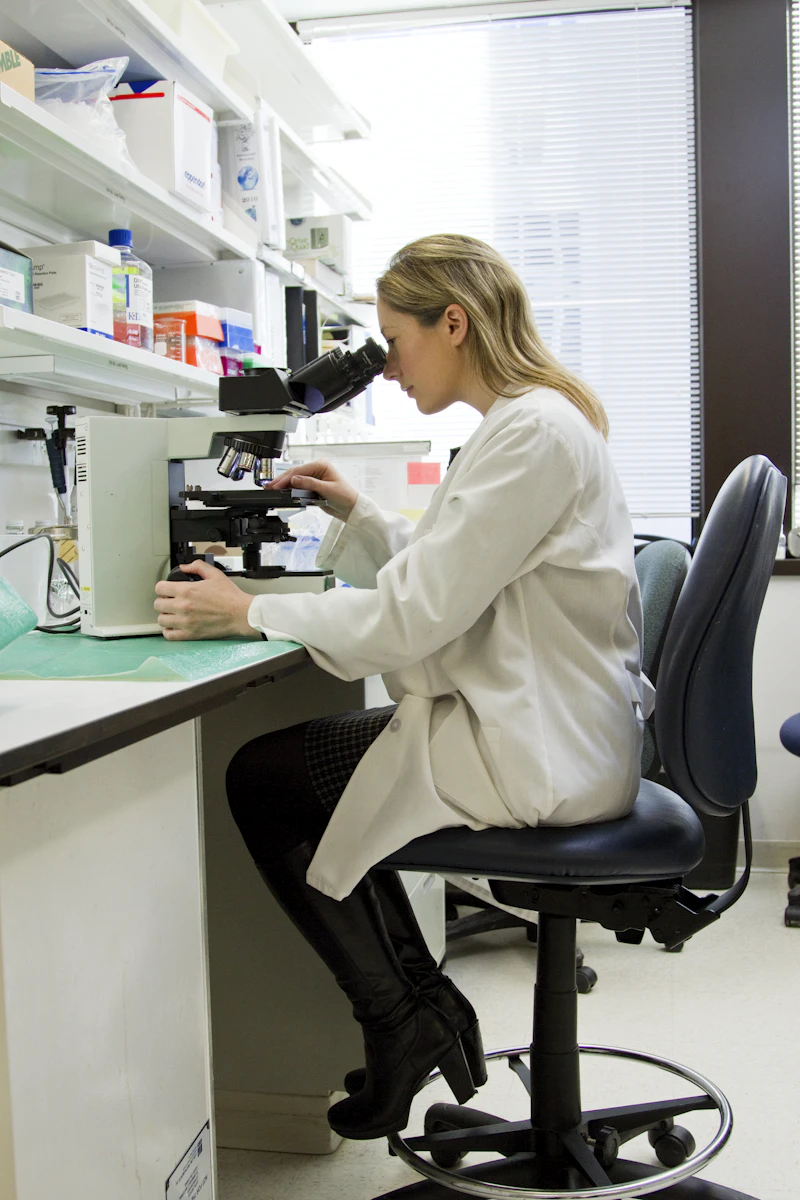
Figure 1: A spectrofluorometer used to measure synchronous fluorescence spectra of drug mixtures.
Results and Analysis: The Proof is in the Prediction
The results were resoundingly successful. The PARAFAC model, trained on the initial data, was able to predict the concentrations of the validation samples with remarkable accuracy.
Scientific Importance: This experiment demonstrated that it's possible to physically distinguish between the three drugs using synchronous fluorescence, even when their signals overlap. The chemometrics approach can mathematically resolve this overlap to provide quantitative results that are as reliable as traditional, slower methods. The model isn't just memorizing data; it can generalize and accurately analyze new, unseen samples, proving its value for real-world applications like quality control labs.
The Data Behind the Discovery
Model Prediction Accuracy for Drug A
Table 1: Accuracy Check on Validation Samples
This table shows how well the model predicted concentrations for a subset of the "mystery" validation mixtures. The "Recovery %" indicates accuracy, where 100% is a perfect prediction.
| Sample | Drug A: Actual (µg/mL) | Drug A: Predicted (µg/mL) | Recovery (%) | Drug B: Actual (µg/mL) | Drug B: Predicted (µg/mL) | Recovery (%) |
|---|---|---|---|---|---|---|
| V1 | 10.0 | 9.92 | 99.2 | 15.0 | 15.2 | 101.3 |
| V2 | 20.0 | 19.8 | 99.0 | 5.0 | 4.95 | 99.0 |
| V3 | 15.0 | 15.3 | 102.0 | 10.0 | 9.87 | 98.7 |
Table 2: Comparison with HPLC
This table demonstrates that the new method produces results comparable to the established "gold standard" technique, High-Performance Liquid Chromatography (HPLC).
| Sample | SyncFluor (µg/mL) | HPLC (µg/mL) | Difference |
|---|---|---|---|
| V1 | 5.05 | 4.98 | +0.07 |
| V2 | 12.1 | 12.3 | -0.20 |
| V3 | 7.98 | 8.05 | -0.07 |
Table 3: Performance Metrics
These statistical values confirm the method's precision and sensitivity across the board.
| Parameter | Drug A | Drug B | Drug C |
|---|---|---|---|
| LOD (µg/mL) | 0.15 | 0.08 | 0.22 |
| LOQ (µg/mL) | 0.45 | 0.25 | 0.67 |
| Precision (RSD%) | 1.2% | 0.9% | 1.5% |
LOD = Limit of Detection, LOQ = Limit of Quantification, RSD = Relative Standard Deviation
The Scientist's Toolkit: Essential Research Reagents & Materials
Here are the key components needed to perform this kind of analysis:
Pure Drug Standards
The "ground truth." Highly purified samples of each drug are used to create calibration curves and train the chemometric model.
Spectrofluorometer
The heart of the operation. This instrument emits the tunable light and precisely measures the resulting fluorescence from the samples.
Solvent
The liquid used to dissolve the drugs and create a uniform solution for analysis. Its choice is critical, as it can affect fluorescence intensity.
Chemometric Software
The "digital brain." Software packages that contain algorithms like PARAFAC to deconvolute the complex spectral data.
Volumetric Glassware
Pipettes, flasks, and cuvettes for ensuring every sample volume and concentration is prepared with extreme precision.

Figure 2: Precision laboratory equipment essential for preparing and analyzing drug mixtures.
Conclusion: A Brighter, Faster Future for Pharmaceutical Analysis
The marriage of Synchronous Fluorescence Spectroscopy and Chemometrics is more than just a laboratory curiosity; it's a paradigm shift in analytical chemistry. It offers a future where the quality of our most complex medicines can be checked with unparalleled speed and precision, without wasting costly chemicals or time. By shining a cleverly synchronized light on the problem and employing a powerful digital brain to interpret the results, scientists are ensuring that the life-saving cocktails inside our pills are mixed to perfection, every single time.