Unlocking Mercury's Toxic Secret
How a Tiny Microbial Machine Poisons Our Planet
The Invisible Threat in Our Water and Food
You've heard the warnings: limit your consumption of certain fish like tuna and swordfish. The reason? Mercury. This potent neurotoxin can cause severe developmental and neurological damage. But have you ever wondered how mercury, often released as a relatively inert substance from industrial processes, becomes the dangerous methylmercury that accumulates in seafood?
The answer lies not in chemistry labs, but in the murky, oxygen-deprived worlds of wetlands, sediments, and the deep ocean.
Here, unseen by the naked eye, certain microbes perform a dark alchemy, transforming mercury into its most toxic form. For decades, the "how" remained a mystery. Now, by turning to the vast genetic library of the environment itself, scientists have solved the puzzle, visualizing the very molecular machine responsible for this global health concern .
Mercury in Seafood
Large predatory fish like tuna and swordfish can accumulate methylmercury levels thousands of times higher than the surrounding water.
Health Impacts
Methylmercury is a potent neurotoxin that can impair neurological development in children and cause cardiovascular issues in adults.
The Microbial Culprits and the Genetic Clue
Not all microbes are created equal. While most are harmless or even beneficial, a few specialized bacteria have a unique and dangerous talent: mercury methylation. The key players were identified as certain sulfate-reducing and iron-reducing bacteria . But knowing who was doing it wasn't enough; we needed to know how.
The first major breakthrough came in 2013 when researchers discovered a pair of genes essential for the process: hgcA and hgcB. Microbes possessing these two genes could methylate mercury; those without them could not . This was a huge leap forward, allowing scientists to identify potential methylators in any environment by simply looking for these genes.
hgcA & hgcB
The genetic pair required for microbial mercury methylation
However, a big question remained: what did the proteins these genes code for—HgcA and HgcB—actually look like, and how did they work together? Understanding their structure was the key to potentially stopping them.
A Deep Dive into the Decisive Experiment
Building a Molecular Machine from Environmental Genetic Blueprints
The challenge was immense. The HgcAB proteins are fragile, membrane-bound, and difficult to produce and study in a lab. Traditional methods of growing one type of bacteria in large vats to extract its proteins were failing. So, scientists devised a clever, modern workaround using the collective genetic intelligence of entire ecosystems .
Methodology: A Step-by-Step Sleuthing Mission
Metagenomic Mining
Instead of isolating a single microbe, researchers extracted all the DNA from sediment samples in an environment known for mercury methylation—a saltmarsh in Massachusetts. This mixed bag of genes from thousands of different organisms is called a "metagenome."
The Digital Search
They sequenced this entire metagenome, creating a massive digital database of genetic codes. Using powerful computers, they then scoured this database for the tell-tale sequences of the hgcA and hgcB genes.
Gene Synthesis and Optimization
Once they identified the most promising and complete versions of these genes from the database, they didn't try to grow the original microbes. Instead, they synthesized the genes artificially in a lab. They then optimized these genetic codes to be efficiently produced inside a workhorse lab bacterium, E. coli.
Protein Production and Purification
The engineered E. coli acted as a tiny factory, churning out the HgcA and HgcB proteins. The scientists then developed a delicate process to extract these fragile proteins from the bacterial membranes and purify them.
Cryo-EM Imaging
With pure, stable complexes of HgcA and HgcB in hand, the researchers used a Nobel Prize-winning technique called cryo-electron microscopy (cryo-EM). They flash-froze the protein molecules in a thin layer of ice and fired electrons at them. By capturing thousands of 2D images and using complex computing to combine them, they generated a stunning, high-resolution 3D model of the HgcAB complex for the very first time .

Metagenomic analysis allows scientists to study genetic material recovered directly from environmental samples.
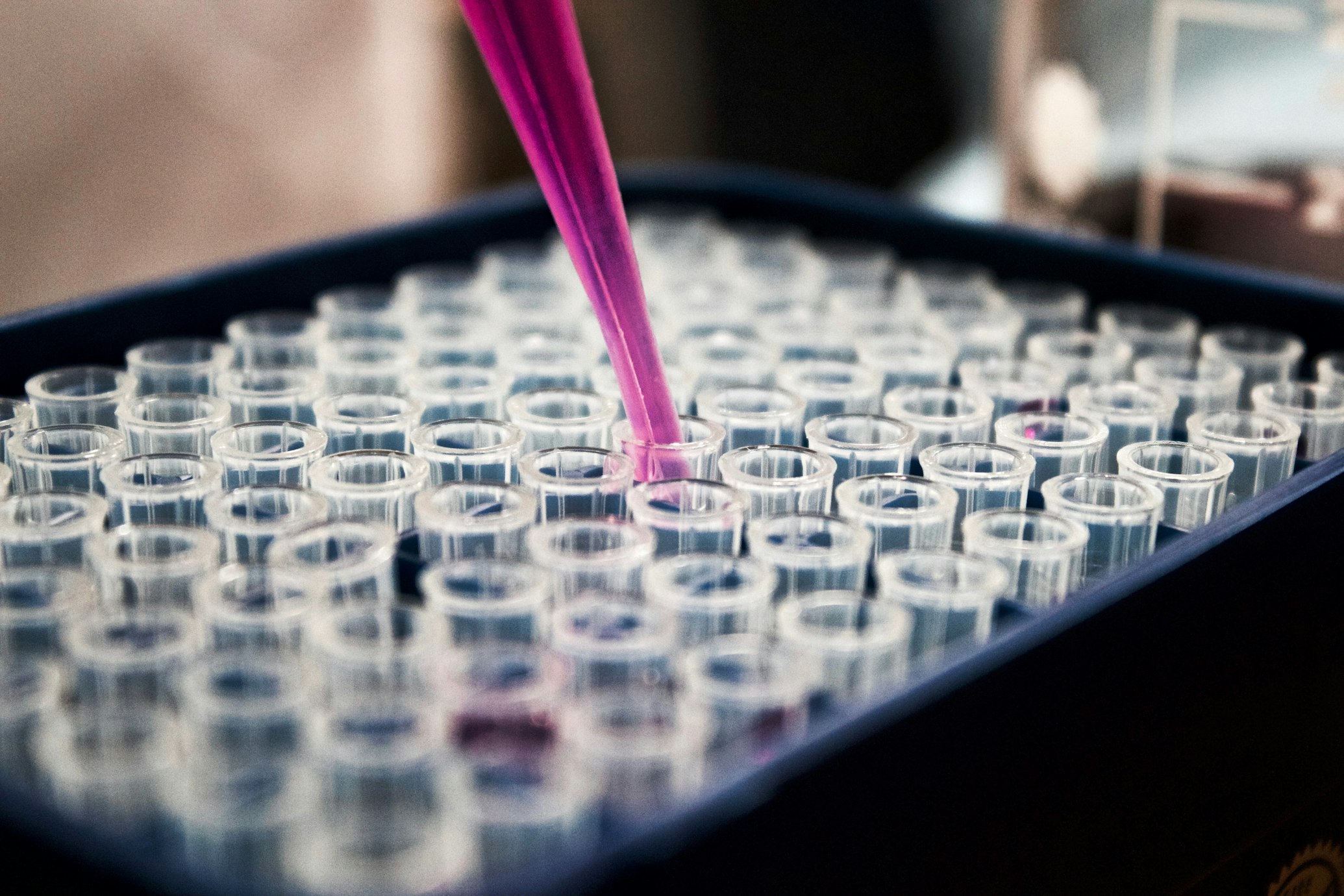
Cryo-electron microscopy enables high-resolution structural determination of biological molecules.
What the Structure Revealed: A Molecular Masterpiece of Mayhem
The 3D structure was a revelation, providing clear answers and new insights into how this toxic transformation occurs at the molecular level.
The complex showed HgcB nestled against HgcA, acting as an electron donor. HgcA is the central engine where the methylation reaction occurs.
The structure revealed a unique "cap" domain on HgcA that acts like a gatekeeper, controlling access to the active site. The path for vitamin B12 is a long, corkscrew-shaped tunnel.
| Structural Feature | Description | Proposed Function |
|---|---|---|
| HgcA Active Site | The core "engine" of the complex where mercury binds. | The location where the vitamin B12 cofactor transfers a methyl group to the mercury ion (Hg²⁺). |
| HgcB Protein | A partner protein bound tightly to HgcA. | Supplies crucial electrons to the HgcA engine, priming it for the methylation reaction. |
| Novel Cap Domain | A unique, flexible loop structure covering the active site. | Acts as a molecular gatekeeper, controlling access of mercury and release of methylmercury to ensure specificity and efficiency. |
| Corkscrew Tunnel | A long, helical pathway within the HgcA protein. | Provides a dedicated channel for the vitamin B12 cofactor to travel to the active site. |
| Experimental Finding | Scientific Implication |
|---|---|
| The complex only methylates mercury when both HgcA and HgcB are present and intact. | Confirms that the functional unit is a partnership; neither protein works alone effectively. |
| Mutations in the "Cap Domain" drastically reduce methylation activity. | Provides direct evidence that the cap is essential for the mechanism, not just a passive structural element. |
| The structure shows a clear path from the corkscrew tunnel to the active site. | Explains how the large B12 cofactor is delivered precisely to the right spot to react with mercury. |
This structural insight is like finally having the blueprint and operational manual for a dangerous factory, showing us every cog, wheel, and assembly line.
The Scientist's Toolkit
Essential Gear for Microbial Detective Work
| Tool / Reagent | Function in the Experiment |
|---|---|
| Metagenomic DNA | The starting "library" of all genetic material from an environmental sample, containing the blueprints of the target protein from uncultured microbes. |
| Heterologous Expression (E. coli) | Using a friendly, well-understood lab bacterium as a "factory" to produce large quantities of a protein from a foreign gene (like hgcAB). |
| Detergents | Chemical soap-like molecules used to gently dissolve cell membranes and extract fragile membrane proteins like HgcA and HgcB without destroying them. |
| Cryo-Electron Microscopy (Cryo-EM) | A powerful imaging technique that freezes proteins in place to capture their natural, high-resolution 3D structure without needing to grow them into crystals. |
| Vitamin B12 (Cobalamin) | A crucial cofactor or "ingredient" in the reaction. It is the ultimate source of the methyl group (-CH3) that gets transferred to mercury. |
Metagenomics
The study of genetic material recovered directly from environmental samples, bypassing the need to culture organisms.
Cryo-EM
Revolutionary imaging technique that won the 2017 Nobel Prize in Chemistry, enabling atomic-level visualization of biomolecules.
Protein Purification
Advanced biochemical techniques to isolate and purify specific proteins from complex cellular mixtures.
Why This Discovery Matters
From Basic Science to Real-World Impact
| Area of Impact | Significance of the HgcAB Structure Discovery |
|---|---|
| Environmental Science | Allows us to better predict methylation hotspots by understanding which microbial communities have the most efficient HgcAB variants. |
| Public Health | Opens the door to designing inhibitors that could block the HgcAB complex, potentially reducing methylmercury levels in fisheries. |
| Bioremediation | Provides a template for engineering bacteria to demethylate mercury, or for creating sensors to detect active methylation in the environment. |
| Basic Biochemistry | Reveals a novel and unique mechanism for methyl transfer, expanding our knowledge of the catalytic capabilities of life's molecular machines. |
Public Health Protection
Understanding the HgcAB structure enables the design of targeted inhibitors that could reduce methylmercury formation in aquatic ecosystems.
Environmental Monitoring
Knowledge of the hgcAB genes allows for genetic screening of environments to identify methylation hotspots before they become health hazards.
From Blueprint to Solution
The journey from an environmental warning about fish to a high-resolution 3D model of a microscopic protein complex is a testament to the power of modern science. By thinking outside the petri dish and harnessing the hidden genetic diversity of nature itself, researchers have moved from knowing that microbes methylate mercury to understanding exactly how they do it at the atomic level .
This knowledge is more than just a scientific curiosity; it's a powerful tool. With the structure of HgcAB in hand, we now have a clear target.
The hope for the future is to design a molecular "key" that can jam this toxic machine, potentially protecting our food webs and our health from one of the world's most pervasive poisons. The invisible war in the mud now has a visible battlefield.
The Future of Mercury Research
With the HgcAB structure solved, researchers can now work on developing targeted inhibitors, improved environmental monitoring, and innovative bioremediation strategies to combat mercury pollution.