Unlocking Spectral Data: A Comprehensive Guide to PCA Applications in Drug Discovery
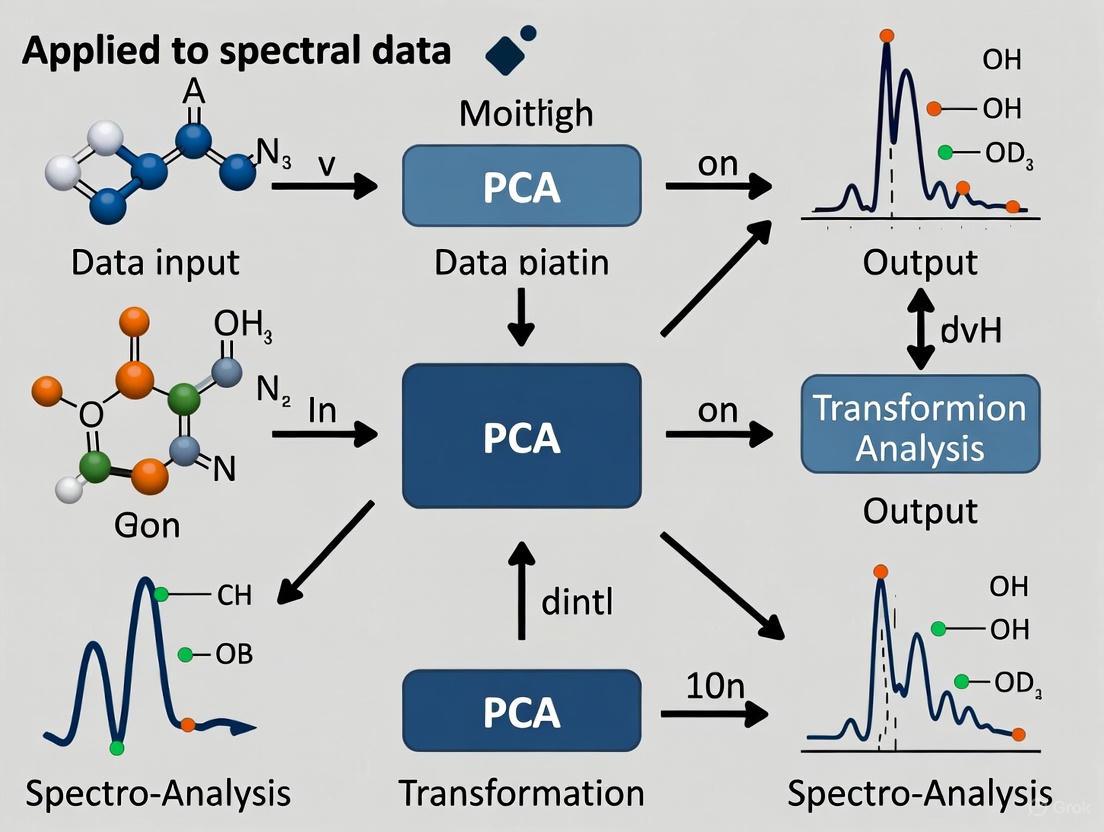
This article provides a comprehensive exploration of Principal Component Analysis (PCA) for analyzing spectral data in pharmaceutical and biomedical research.
Unlocking Spectral Data: A Comprehensive Guide to PCA Applications in Drug Discovery
Abstract
This article provides a comprehensive exploration of Principal Component Analysis (PCA) for analyzing spectral data in pharmaceutical and biomedical research. Tailored for researchers and drug development professionals, it covers foundational principles, advanced methodological applications for drug screening and biomarker discovery, practical troubleshooting for real-world data challenges, and validation techniques against other chemometric methods. By synthesizing current research and case studies, this guide serves as a critical resource for leveraging PCA to accelerate drug discovery, enhance product quality control, and decipher complex biological systems from high-dimensional spectral profiles.
Demystifying PCA: Core Concepts and Its Power in Spectral Data Exploration
Principal Component Analysis (PCA) is an unsupervised multivariate technique fundamental to exploring high-dimensional biological datasets. By reducing data complexity while preserving essential information, PCA enables researchers to identify patterns, outliers, and natural groupings within data, serving as a powerful catalyst for hypothesis generation. This Application Note details standardized protocols for implementing PCA in biological research, from experimental design and data preprocessing through interpretation and downstream hypothesis formulation, with particular emphasis on applications in genomics, pharmacogenomics, and spectral analysis.
Theoretical Foundation of PCA in Biology
Core Principles and Mathematical Basis
PCA operates by transforming potentially correlated variables into a new set of uncorrelated variables called Principal Components (PCs). These PCs are linear combinations of the original variables and are ordered such that the first PC (PC1) captures the greatest possible variance in the data, the second PC (PC2) captures the next greatest variance while being orthogonal to the first, and so on. This transformation allows for a low-dimensional projection of high-dimensional data, typically in 2D or 3D scatter plots, making it possible to visualize the dominant structure of the data.
In biological contexts, where datasets often include measurements from thousands of genes, proteins, or metabolic features, this dimensionality reduction is invaluable. The technique reveals the intrinsic data structure without prior knowledge of sample classes, making it ideal for exploratory analysis. A key advancement in interpreting PCA outputs is informational rescaling, which transforms standard PCA maps—where distances can be challenging to interpret—into entropy-based maps where distances are based on mutual information. This rescaling quantifies relative distances into information units like "bits," enhancing cluster identification and the interpretation of statistical associations, particularly in genetics [1].
PCA as a Hypothesis-Generating Engine
The primary utility of PCA in biological discovery lies in its ability to generate testable hypotheses from untargeted data exploration. Key observations from PCA plots and their corresponding hypothetical implications are summarized in the table below.
Table 1: Hypothesis Generation from PCA Plot Observations
| PCA Observation | Potential Biological Implication | Example Testable Hypothesis |
|---|---|---|
| Clear separation of sample groups along PC1 | A major experimental factor or underlying biological state drives global differences. | Samples from 'Disease' and 'Control' cohorts have distinct molecular profiles. |
| Outliers isolated from main cluster | Potential sample contamination, technical artifact, or rare biological phenomenon. | The outlier sample represents a novel subtype or a failed experiment. |
| Continuous gradient of samples along a PC | A progressive biological process (e.g., development, disease progression). | Gene expression changes continuously along a pathological trajectory. |
| Clustering by batch rather than phenotype | Strong batch effect confounding biological signal. | Technical variability (e.g., processing date) must be corrected before analysis. |
Experimental Protocol: A Standard Workflow for PCA
This protocol provides a generalized workflow for performing PCA on biological data, such as gene expression or spectral data, using tools like MATLAB or R, with specific notes for web-based applications like SimpleViz [2].
Data Preprocessing and Normalization
The validity of a PCA result is critically dependent on proper data preprocessing, which mitigates technical artifacts and enhances biological signals.
- Step 1: Data Cleaning and Imputation: Handle missing values through imputation (e.g., k-nearest neighbors) or removal. Address cosmic rays and other random noise in spectral data using specialized algorithms [3].
- Step 2: Normalization: Normalize data to correct for systematic technical variation (e.g., sequencing depth, total ion current). A common approach is linear normalization to standardize the data, transforming each feature to have a mean of 0 and a standard deviation of 1 [4]. This ensures all features contribute equally to the variance and prevents features with larger native scales from dominating the PCs.
- Step 3: Filtering and Transformation: Filter out low-variance features, as they contribute little to the separation of samples. Apply log-transformations to right-skewed data (e.g., RNA-seq counts) to stabilize variance.
Execution and Visualization
- Step 4: PCA Calculation: Input the preprocessed data matrix into a PCA algorithm. Standard functions are available in
scikit-learn(Python),stats(R), orMatlab[4]. - Step 5: Visualization Generation: Create a 2D scatter plot using the first two principal components (PC1 vs. PC2). For tools like SimpleViz, a free, web-based platform, users can upload their data file (e.g., CSV format), select the "PCA plot" visualization type, and the tool will automatically generate the publication-ready figure without requiring programming skills [2].
- Step 6: Interpretation and Output: Examine the scatter plot for clusters, gradients, and outliers. The percentage of total variance explained by each PC should be noted to gauge the reliability of the observed patterns. The analysis can be used to prioritize genes or features for further investigation.
The following diagram illustrates the logical workflow from raw data to hypothesis generation.
The Scientist's Toolkit: Research Reagent Solutions
Successful execution of a PCA-based study relies on a combination of biological reagents, data analysis tools, and computational resources.
Table 2: Essential Materials and Reagents for PCA-Driven Research
| Category / Item | Function / Application | Specific Examples / Notes |
|---|---|---|
| Biological Reagents | ||
| High-Throughput Assay Kits | Generate the primary high-dimensional data. | RNA-seq kits, Genotyping arrays, Metabolomics panels. |
| Reference Materials | Validate analytical workflows and ensure genotyping accuracy. | Genome-In-A-Bottle (GIAB), Genetic Testing Reference Material (GeT-RM) [5]. |
| Data Analysis Tools | ||
| Programming Environments | Provide flexibility for custom data preprocessing and PCA execution. | MATLAB [4], R (with factoextra), Python (with scikit-learn, scanpy). |
| Web-Based Platforms | Enable accessible, code-free analysis and visualization. | SimpleViz (for RNA-seq, PCA, volcano plots) [2]. |
| Specialized Algorithms | Perform critical preprocessing steps for specific data types. | Convolutional Neural Networks (CNN) for image-based data segmentation (e.g., ecDNA detection) [5]. Cosmic ray removal algorithms for spectral data [3]. |
| Computational Resources | ||
| High-Performance Computing | Handle large-scale data matrix computations. | University/cluster resources, cloud computing (AWS, Google Cloud). |
Case Study: ProstaMine and PCA in Prostate Cancer Subtyping
The application ProstaMine exemplifies PCA's role in a sophisticated systems biology tool for deciphering prostate cancer (PCa) complexity. This case study outlines the experimental workflow and resulting hypotheses.
- Objective: To systematically identify co-alterations of genes associated with aggressiveness in molecular subtypes of PCa, defined by high-fidelity alterations like
NKX3-1-lossandRB1-loss[5]. - Methods: ProstaMine leverages multi-omics data (genomic, transcriptomic) integrated with clinical data from multiple PCa cohorts. PCA and other integrative genomic methods are applied to this data to prioritize co-alterations enriched in metastatic disease. The tool can mine any user-selected molecular subtype to identify high-confidence alteration hotspots.
- Results and Hypothesis Generation: Application of ProstaMine to
RB1-lossPCa identified novel subtype-specific co-alterations inp53,STAT6, andMHC class Iantigen presentation pathways, which are associated with tumor aggressiveness. These findings generate a direct testable hypothesis: that the co-alteration ofRB1-losswith dysregulatedMHC class Iantigen presentation promotes immune evasion and drives disease progression in a defined PCa subtype [5].
The workflow for this integrative analysis is depicted below.
Advanced Applications and Future Directions
PCA continues to evolve, integrating with more complex AI frameworks to tackle disease complexity. Future directions include the development of context-aware adaptive processing and physics-constrained data fusion to achieve unprecedented detection sensitivity and classification accuracy [3]. A major frontier is the integration of generative AI and large language models (LLMs) with systems biology tools like PCA. This synergy promises to enhance multi-omics data integration and automate the formulation of mechanistic hypotheses regarding disease etiology and progression, ultimately accelerating discovery in pharmacological sciences and precision medicine [5].
Principal Component Analysis (PCA) is a powerful dimensionality reduction technique that simplifies complex, high-dimensional datasets into fewer dimensions while retaining the most significant patterns and trends. At its heart are the mathematical concepts of eigenvectors and eigenvalues, which respectively define the orientation of the new component axes and the amount of variance each component captures [6] [7]. This connection is fundamental: the eigenvalues of the covariance matrix directly represent the variance explained by each principal component [8].
In spectral data research, such as analyzing Raman or Near-Infrared (NIR) spectroscopy data in pharmaceutical development, PCA is invaluable. It transforms thousands of correlated spectral features into a smaller set of uncorrelated variables (principal components), preserving essential information for building robust predictive models [9] [10]. This process enhances computational efficiency and mitigates overfitting, making it a cornerstone of modern chemometric analysis.
Theoretical Foundations: Connecting Eigenproperties to Variance
The Covariance Matrix and Eigendecomposition
PCA begins by standardizing the data to ensure each feature contributes equally, followed by computing the covariance matrix [7] [11]. This symmetric matrix summarizes how every pair of variables in the dataset covaries. The entries on the main diagonal represent the variances of individual variables, while the off-diagonal elements represent the covariances between variables [7]. A positive covariance indicates that two variables increase or decrease together, whereas a negative value signifies an inverse relationship [11].
The core of PCA lies in the eigendecomposition of this covariance matrix. This process solves the equation: [ \mathbf{A}\mathbf{v} = \lambda \mathbf{v} ] Where (\mathbf{A}) is the covariance matrix, (\mathbf{v}) is an eigenvector, and (\lambda) is its corresponding eigenvalue [11]. The eigenvectors represent the directions of maximum variance in the data—the principal components themselves. The eigenvalues, being scalar coefficients, denote the magnitude of variance along each corresponding eigenvector direction [7] [8]. Ranking eigenvectors by their eigenvalues in descending order gives the principal components in order of significance [7].
Variance Explanation Geometric Interpretation
Geometrically, PCA can be visualized as fitting an ellipsoid to the data. Each axis of this ellipsoid represents a principal component. The eigenvectors define the directions of these axes, and the eigenvalues correspond to the lengths of the axes, indicating the spread of the data along that direction [6]. A longer axis (higher eigenvalue) means greater variance and more information captured along that component.
The proportion of total variance explained by a single principal component is calculated by dividing its eigenvalue by the sum of all eigenvalues. The cumulative variance explained by the first (k) components is the sum of their eigenvalues divided by the total sum of eigenvalues [6] [7]. This quantifies how well the reduced-dimensional representation approximates the original dataset.
Table 1: Key Mathematical Objects in PCA and Their Interpretation
| Mathematical Object | Role in PCA | Statistical Interpretation |
|---|---|---|
| Covariance Matrix | A symmetric matrix with variances on the diagonal and covariances off-diagonal [7]. | Summarizes the structure and relationships between all variables in the data. |
| Eigenvector | Defines the direction of a principal component axis [7] [11]. | A linear combination of original variables that defines a new, uncorrelated feature. |
| Eigenvalue | The scalar associated with an eigenvector [11]. | The amount of variance captured by its corresponding principal component [8]. |
| Proportion of Variance Explained | Ratio of an eigenvalue to the sum of all eigenvalues [6]. | The fraction of the total dataset information carried by a specific component. |
Experimental Protocols for Spectral Data Analysis
Standard PCA Workflow for Spectral Preprocessing
The following protocol, adapted from a study on polysaccharide-coated drugs, details the application of PCA for preprocessing high-dimensional spectral data before machine learning modeling [10].
Objective: To reduce the dimensionality of a Raman spectral dataset and extract principal components for subsequent regression analysis of drug release profiles. Materials: Spectral dataset (e.g., 155 samples with >1500 spectral features per sample) [10].
Data Normalization:
- Purpose: Ensure all spectral features are on a comparable scale to prevent variables with larger ranges from dominating the analysis [7] [10].
- Procedure: For each spectral feature, subtract its mean ((\mu)) and divide by its standard deviation ((\sigma)) across all samples to achieve a mean of 0 and a standard deviation of 1 [10]. The formula for a value (X) is: [ X_{\text{standardized}} = \frac{X - \mu}{\sigma} ]
Covariance Matrix Computation:
Eigendecomposition:
- Purpose: Identify the principal components (eigenvectors) and their associated variances (eigenvalues) [10].
- Procedure: Perform eigendecomposition on the covariance matrix. This yields a set of eigenvalues and their corresponding eigenvectors.
Outlier Detection (Optional but Recommended):
- Purpose: Identify and remove influential outliers that could distort the PCA model and subsequent analysis.
- Procedure: Calculate Cook’s Distance for the data projected into the principal component space. Data points with a high Cook’s Distance are considered influential outliers and should be treated with caution or removed [10].
Component Selection & Data Projection:
- Purpose: Create a lower-dimensional dataset for modeling.
- Procedure: Rank the eigenvectors by their eigenvalues in descending order. Select the top (k) eigenvectors that capture a sufficient amount of cumulative variance (e.g., >95%) to form a feature vector. Project the original standardized data onto this new subspace to obtain the final principal component scores [7] [10].
Figure 1: PCA Preprocessing Workflow for Spectral Data
Protocol for Calibration Transfer Between Spectrometers
This protocol describes an Improved PCA (IPCA) method for transferring calibration models between different types of NIR spectrometers, a common challenge in pharmaceutical spectroscopy [9].
Objective: To transfer a quantitative model from a source spectrometer to a target spectrometer with different spectral resolutions or wavelength ranges using IPCA.
Materials:
- Spectral datasets from source and target spectrometers.
- A set of standardized samples measured on both instruments (transfer set).
Source Model Establishment:
- Use the source spectrometer's spectra to establish a baseline quantitative model (e.g., PLS regression) for the analyte of interest (e.g., API content) [9].
Transfer Matrix Construction via IPCA:
- Perform PCA on the spectra from the transfer set acquired on the source instrument.
- Perform PCA on the spectra from the same transfer set acquired on the target instrument.
- Construct a transfer matrix that maps the principal component space of the target instrument to that of the source instrument, effectively associating their spectral data structures [9].
Spectrum Correction:
- For any new spectrum from the target spectrometer, use the transfer matrix to correct (or "transfer") it into the spectral space of the source instrument [9].
Prediction with Transferred Spectra:
- Use the transferred spectra with the original model built on the source instrument for prediction. Evaluate the model's performance on the transferred validation set using metrics like Root Mean Square Error of Prediction (RMSEP) [9].
Table 2: Research Reagent Solutions for Spectroscopic PCA
| Item | Function in Experiment |
|---|---|
| NIR/Raman Spectrometer | Generates high-dimensional spectral data from physical samples (e.g., pharmaceutical tablets) [9] [10]. |
| Standardized Samples (Transfer Set) | A set of samples measured on both source and target instruments; enables construction of the transfer function in calibration transfer [9]. |
| Computational Environment (e.g., Python/R) | Provides libraries for linear algebra operations (covariance matrix, eigendecomposition) and implementation of PCA [11]. |
| Spectral Database | A curated collection of historical spectral data used for model building and validation [10]. |
Application in Drug Development Research
Case Study: Predicting Drug Release from Raman Spectra
A 2025 study on colonic drug delivery showcases the practical application of this mathematical foundation [10]. Researchers used Raman spectroscopy to monitor the release of 5-aminosalicylic acid (5-ASA) from polysaccharide-coated formulations. The dataset consisted of 155 samples, each with over 1500 spectral features.
Methodology and Results: The spectral data underwent preprocessing, including standard normalization and PCA for dimensionality reduction. The principal components, derived from the eigenvectors and eigenvalues of the spectral covariance matrix, became the new input features for machine learning models. A Multilayer Perceptron (MLP) model trained on these components achieved exceptional predictive accuracy for drug release (R² = 0.9989), outperforming other models. This demonstrates how PCA effectively distills the essential information from complex spectral data, enabling highly accurate predictions critical for pharmaceutical development [10].
Advanced Application: Calibration Transfer Between Instruments
In a novel application, the principles of PCA were extended to enable calibration transfer between different types of NIR spectrometers (e.g., benchtop vs. portable) [9]. This is a significant challenge because the instruments may have different wavelengths and absorbance readings. The proposed Improved PCA (IPCA) method successfully transformed spectra from a target instrument to align with the data structure of a source instrument. The results showed that IPCA could achieve a successful bi-transfer without degrading the prediction model's ability, providing a robust solution for the practical application of NIR spectroscopy across different hardware platforms [9].
Figure 2: Logical Flow from Data to Variance Explanation
Within the framework of a broader thesis on the application of Principal Component Analysis (PCA) in spectral data research, the preprocessing of data emerges as a foundational step. PCA is a linear dimensionality reduction technique that transforms data to a new coordinate system, highlighting the directions of maximum variance through principal components [6]. For spectral data, which is often high-dimensional and complex, the raw data must be preprocessed to ensure that the PCA model captures meaningful chemical or biological information rather than artifacts of measurement scales or baseline offsets [12] [13]. This document outlines detailed protocols and application notes for mean-centering and scaling, two critical preprocessing steps for spectral analysis within drug development and scientific research.
Theoretical Foundations of PCA and Preprocessing
The Geometry of PCA and the Need for Preprocessing
The geometric interpretation of PCA provides the clearest rationale for preprocessing. A PCA model is a latent variable model that finds a sequence of principal components, each oriented in the direction of maximum variance in the data, with the constraint that each subsequent component is orthogonal to the preceding ones [6] [12].
- Mean-Centering: The first step in PCA is to move the data to the center of the coordinate system. This process, called mean-centering, removes the arbitrary bias from measurements. Geometrically, it ensures that the best-fit line (the first principal component) passes through the origin of the coordinate system, allowing the model to focus on the variance around the mean rather than the mean itself [12]. Without centering, the principal components could be heavily influenced by the mean values of the variables, providing a suboptimal approximation of the data structure [13].
- Scaling (Unit-Variance): After centering, scaling the data to unit-variance is common, especially when variables are in different units of measurement. This step ensures that each variable contributes equally to the analysis. If variables are on different scales, those with larger magnitudes and variances would dominate the first principal components simply due to their scale, not their underlying informational importance [12] [13]. For spectral data, this is crucial, as intensity readings across different wavelengths or mass-to-charge ratios can vary by orders of magnitude.
Mathematical Basis
Mathematically, PCA is solved via the Singular Value Decomposition (SVD) of the data matrix, which finds linear subspaces that best represent the data in the squared sense [13]. The principal components are the eigenvectors of the data's covariance matrix, and the eigenvalues represent the amount of variance captured by each component [6] [14].
The process begins with a data matrix X. For mean-centering, the column mean is subtracted from each value in that column. For scaling to unit variance, each mean-centered value is divided by the column's standard deviation, producing a new matrix where every variable has a mean of 0 and a standard deviation of 1 [14]. The covariance matrix of this processed data is then computed, which forms the basis for eigen decomposition [14].
Figure 1: The sequential workflow for preprocessing spectral data prior to PCA. Both centering and scaling are critical prerequisite steps.
Quantitative Comparison of Preprocessing Methods
The choice of preprocessing technique can dramatically alter the results of a PCA, as it changes the input to the covariance matrix calculation [13]. The table below summarizes the core characteristics and implications of different preprocessing approaches.
Table 1: Comparison of Data Preprocessing Techniques for PCA
| Technique | Mathematical Operation | Primary Goal | Impact on PCA | Best Suited For | ||||
|---|---|---|---|---|---|---|---|---|
| Mean-Centering | ( X_{\text{centered}} = X - \mu ) | Remove baseline offset, center data at origin. | Ensures PC directions describe variance around the mean. [12] | All PCA applications, essential first step. | ||||
| Standard Scaling (Z-Score) | ( X_{\text{scaled}} = \frac{X - \mu}{\sigma} ) | Achieve unit variance for all variables. | Prevents variables with large scales from dominating PCs. [13] | Spectral data with variables of different units/intensities. | ||||
| No Scaling | --- | Use original data scales. | PCs reflect scale differences; often undesirable. [13] | All variables are already on a comparable scale. | ||||
| Normalization (L2) | ( X_{\text{norm}} = \frac{X}{ | X | _2} ) | Scale each sample to have a unit norm. | Alters data structure; not standard for PCA. [13] | Specific use cases like spatial sign covariance. |
Failure to properly preprocess data can lead to misleading results. For example, a dataset containing a mix of binary variables (0/1) and continuous variables (0-5) will, if unscaled, produce principal components dominated by the continuous variable simply because it has a larger scale and variance. This can create illusory clusters that disappear after proper scaling [13].
Experimental Protocols for Spectral Data Preprocessing
This protocol provides a detailed, step-by-step methodology for preprocessing spectral data (e.g., from Imaging Mass Spectrometry, IMS) prior to PCA, ensuring reproducibility and robust analysis [15].
Protocol 1: Standardization of Spectral Data
Objective: To perform mean-centering and scaling on a raw spectral data matrix, preparing it for Principal Component Analysis.
Materials & Software:
- Raw Spectral Data File (e.g., Bruker .d files for IMS data) [15]
- Computing Environment: Python with NumPy, Pandas, and Scikit-learn libraries [14]
Procedure:
- Data Import and Initialization:
- Import the raw spectral data into your analysis environment (e.g., a Python script).
- Structure the data into an ( n \times p ) matrix, X, where ( n ) is the number of spectra (observations) and ( p ) is the number of variables (e.g., m/z bins, wavelengths).
Mean-Centering:
- Calculate the mean value for each variable (column) across all observations: ( \muj = \frac{1}{n} \sum{i=1}^{n} X_{ij} ).
- Subtract the respective column mean from each value in the data matrix: ( X{\text{centered}, ij} = X{ij} - \mu_j ). This results in a new matrix where every variable has a mean of zero [12].
Scaling to Unit Variance:
- Calculate the standard deviation for each mean-centered variable: ( \sigmaj = \sqrt{\frac{1}{n-1} \sum{i=1}^{n} (X_{\text{centered}, ij})^2 } ).
- Divide each value in the mean-centered matrix by the standard deviation of its column: ( X{\text{scaled}, ij} = \frac{X{\text{centered}, ij}}{\sigma_j} ). The resulting matrix has variables with a mean of 0 and a standard deviation of 1 [14] [13].
Output:
- The final output, ( X_{\text{scaled}} ), is the preprocessed data matrix ready for input into a PCA algorithm.
Protocol 2: Integration with Principal Component Analysis
Objective: To apply PCA to the preprocessed spectral data and extract principal components for visualization and analysis.
Procedure:
- Compute Covariance Matrix:
- Given the preprocessed data matrix ( X{\text{scaled}} ), compute the ( p \times p ) covariance matrix: ( C = \frac{1}{n-1} X{\text{scaled}}^T X_{\text{scaled}} ) [14]. This matrix describes how all pairs of variables covary.
Eigen Decomposition:
Select Principal Components:
- Rank the eigenvectors by their eigenvalues in descending order. The eigenvalue represents the amount of variance captured by that component.
- Choose the top ( k ) eigenvectors (e.g., the first 2 or 3 for visualization) to form a ( p \times k ) projection matrix, W [14].
Transform Data:
- Project the original preprocessed data onto the new principal component axes to obtain the scores, which are the coordinates of the data in the new subspace: ( T = X{\text{scaled}} W ) [6]. The matrix T contains the score vectors (( \mathbf{t}1, \mathbf{t}_2, ... )) and is used for downstream visualization and analysis.
Figure 2: The logical relationship between data and model components in PCA after preprocessing. The scores matrix (T) is used for visualization like scatter plots.
The Scientist's Toolkit: Essential Research Reagent Solutions
The following table details key materials and computational tools essential for executing the preprocessing and PCA protocols described herein.
Table 2: Essential Research Reagents and Tools for Spectral Data Analysis
| Item Name | Function / Role in Analysis | Example / Specification |
|---|---|---|
| Spectral Data Source | Provides the raw, high-dimensional data for analysis. | Imaging Mass Spectrometry (IMS) raw files (e.g., Bruker .d format) [15]. |
| StandardScaler | A software function that automatically performs mean-centering and scaling to unit variance. | StandardScaler from the sklearn.preprocessing library in Python [14]. |
| PCA Algorithm | The core computational tool that performs the dimensionality reduction on preprocessed data. | PCA class from the sklearn.decomposition library in Python [14]. |
| Computational Library (Python) | Provides the environment and mathematical functions for data manipulation, linear algebra, and visualization. | Libraries: NumPy, Pandas, Scikit-learn, Matplotlib [14]. |
Principal Component Analysis (PCA) is a powerful linear dimensionality reduction technique with widespread applications in exploratory data analysis, visualization, and data preprocessing. Within spectral data research and drug development, PCA provides an indispensable mathematical framework for transforming complex, high-dimensional datasets into a simplified structure that retains essential patterns. The fundamental objective of PCA is to perform an orthogonal linear transformation that projects data onto a new coordinate system where the directions of maximum variance—the principal components—can be systematically identified and interpreted [6].
In biological and spectral contexts, where datasets often contain numerous correlated variables, PCA serves to compress information while minimizing information loss. This process identifies dominant trends within one dataset by transforming correlated spectral bands or biological measurements into uncorrelated synthetic variables called principal components [16]. The technique is particularly valuable for visualizing patterns such as clusters, clines, and outliers that might indicate significant biological phenomena or spectral signatures [17]. For researchers analyzing spectral patterns from various analytical platforms, PCA offers a robust methodology for separating biologically meaningful signals from technical noise and identifying underlying structures that correlate with physiological states, therapeutic effects, or molecular subtypes.
Theoretical Foundations of PCA
Mathematical Framework
The mathematical foundation of PCA rests on linear algebra operations applied to the data matrix. Given a data matrix X of dimensions ( n \times p ), where ( n ) represents the number of observations (samples) and ( p ) represents the number of variables (spectral bands or biological measurements), PCA begins with data centering to ensure each variable has a mean of zero [6]. The core transformation in PCA can be expressed as:
T = XW
where T is the matrix of principal component scores, X is the original data matrix, and W is the matrix of weights whose columns are the eigenvectors of the covariance matrix XᵀX [6] [16]. These eigenvectors, called loadings in PCA terminology, define the directions of maximum variance in the data, while the corresponding eigenvalues indicate the amount of variance explained by each principal component [16].
The first principal component is determined by the weight vector w₍₁₎ that satisfies:
w₍₁₎ = argmax‖w‖=1 {‖Xw‖²} = argmax‖w‖=1 {wᵀXᵀXw}
This maximizes the variance of the projected data [6]. Subsequent components are computed sequentially from the deflated data matrix after removing the variance explained by previous components, with each successive component capturing the next highest variance direction orthogonal to all previous ones.
Geometric Interpretation
Geometrically, PCA can be conceptualized as fitting a p-dimensional ellipsoid to the data, where each axis represents a principal component. The principal components align with the axes of this ellipsoid, with the longest axis corresponding to the first principal component (direction of greatest variance), the next longest to the second component, and so forth [6]. When some axis of this ellipsoid is small, the variance along that axis is also small, indicating that the data can be effectively described without that dimension [6].
This geometric interpretation extends to the view of PCA as a rotation procedure that aligns the coordinate system with the directions of maximum variance [18]. In the context of spectral data, this rotation effectively identifies new composite variables (principal components) that are linear combinations of the original spectral features, often revealing underlying patterns that were obscured in the original high-dimensional space.
Practical Implementation Protocol
Data Preprocessing Workflow
Table 1: Data Preprocessing Steps for PCA on Spectral Data
| Step | Procedure | Rationale | Considerations |
|---|---|---|---|
| 1. Data Collection | Acquire raw spectral measurements | Foundation for analysis | Ensure proper instrument calibration and consistent measurement conditions |
| 2. Data Centering | Subtract mean from each variable | Ensures mean of each variable is zero | Essential for PCA on covariance matrix [18] |
| 3. Data Standardization | Divide by standard deviation (optional) | Normalizes variables to comparable scales | Use for PCA on correlation matrix; critical when variables have different units [18] |
| 4. Missing Data Imputation | Estimate missing values | Encomplete dataset for PCA | Use appropriate methods (mean, regression, KNN) based on data structure |
| 5. Data Validation | Check for outliers and inconsistencies | Ensures data quality before PCA | Use diagnostic plots and statistical tests |
The decision to center versus standardize data represents a critical choice in PCA implementation. Centering (subtracting the mean) is mandatory for PCA, while standardization (dividing by the standard deviation) is optional but recommended when variables have different units or scales, as is common in spectral datasets combining different measurement types [18]. PCA performed on standardized data (correlation matrix) gives equal weight to all variables, while PCA on centered data (covariance matrix) preserves the influence of variables with naturally larger variances [18].
PCA Computation and Visualization
Table 2: Key Outputs from PCA and Their Interpretation
| PCA Output | Description | Interpretation in Biological Context | Visualization Methods |
|---|---|---|---|
| Eigenvalues | Variance explained by each PC | Indicates importance of each pattern | Scree plot (variance vs. component number) [19] |
| Loadings | Weight of original variables in each PC | Identifies which spectral features contribute to pattern | Biplot, loading plots [6] [16] |
| Scores | Coordinates of samples in PC space | Reveals sample clustering and patterns | 2D/3D scatter plots [19] |
| Explained Variance | Cumulative variance captured | Determines how many PCs to retain | Cumulative variance plot [19] |
The following workflow diagram illustrates the complete PCA process from data preparation to interpretation:
Implementation of PCA typically proceeds through eigenvalue decomposition of the covariance matrix or singular value decomposition (SVD) of the data matrix [6]. For a practical implementation, the following protocol is recommended:
- Compute the covariance matrix of the preprocessed data (C = XᵀX/(n-1))
- Perform eigenvalue decomposition of the covariance matrix to obtain eigenvectors (loadings) and eigenvalues
- Sort components by decreasing eigenvalues (variances)
- Select the number of components to retain based on scree plots, cumulative variance, or other criteria
- Project original data onto selected components to obtain scores (T = XW)
- Visualize and interpret the results using score plots, loading plots, and biplots
The cumulative explained variance plot is particularly valuable for determining the optimal number of components to retain. A common threshold is 95% of total variance, though this may be adjusted based on specific research goals and data complexity [19].
Interpreting Principal Components in Biological Contexts
Extracting Biological Meaning from Loadings and Scores
The interpretation of PCA results represents the most critical phase for extracting biological insights from spectral data. This process involves simultaneous analysis of both loadings (which reveal how original variables contribute to components) and scores (which show how samples distribute along components) [16].
Loadings with large absolute values indicate variables that strongly influence a particular component. In spectral applications, these high-loading variables often correspond to specific spectral regions or biomarkers that drive the observed patterns. When these patterns correlate with sample groupings visible in score plots, researchers can infer biological relevance. For example, if a particular principal component separates drug-treated from control samples, and has high loadings for specific spectral frequencies, those frequencies may represent spectral signatures of drug response.
Score plots reveal sample relationships, clustering patterns, and potential outliers. Samples positioned close together in the principal component space share similar spectral profiles and potentially similar biological characteristics, while distant samples differ substantially. The following diagram illustrates this interpretative process:
Advanced Interpretation: Contrastive PCA
Standard PCA identifies dominant patterns within a single dataset, but these patterns may reflect universal variations rather than dataset-specific phenomena of interest. Contrastive PCA (cPCA) addresses this limitation by utilizing a background dataset to enhance visualization and exploration of patterns enriched in a target dataset relative to comparison data [17].
The cPCA algorithm identifies low-dimensional structures that are enriched in a target dataset {xi} relative to background data {yi}. This is achieved by finding directions that exhibit high variance in the target data but low variance in the background data, effectively highlighting patterns unique to the target dataset [17]. In biological applications, this enables researchers to visualize dataset-specific patterns that might be obscured by dominant but biologically irrelevant variations in standard PCA.
For example, when analyzing gene expression data from cancer patients, standard PCA might highlight variations due to demographic factors, while cPCA using healthy patients as background can reveal patterns specific to cancer subtypes [17]. Similarly, in spectral analysis of therapeutic responses, cPCA can help isolate spectral signatures specifically associated with treatment effects by using control samples as background.
Application Notes for Spectral Data in Drug Development
Essential Research Reagents and Computational Tools
Table 3: Essential Research Reagent Solutions for PCA-Based Spectral Analysis
| Reagent/Resource | Function in PCA Workflow | Application Context | Technical Considerations |
|---|---|---|---|
| Standardized Reference Materials | Instrument calibration and data validation | Ensures cross-experiment comparability | Use certified reference materials specific to analytical technique |
| Spectral Preprocessing Kits | Sample preparation for consistent spectral acquisition | Minimizes technical variance in spectral measurements | Follow standardized protocols for sample processing |
| Chemical Standards | Identification of spectral features | Links loadings to specific molecular entities | Use high-purity compounds relevant to biological system |
| Quality Control Samples | Monitoring analytical performance | Detects instrumental drift or batch effects | Include in every analytical batch |
| Statistical Software (R, Python) | PCA computation and visualization | Implementation of analytical algorithms | Use validated scripts and maintain version control |
Case Study: Soil Macronutrient Analysis Using PCA-Based Spectral Index
A practical example of PCA application to spectral data comes from agricultural research, where researchers developed a PCA-based standardized spectral index (SSRI) from Sentinel-2 satellite data for modeling soil macronutrients [20]. This approach demonstrates how PCA can transform raw spectral data into biologically meaningful information.
In this study, researchers first extracted six spectral bands from Sentinel-2 imagery (Blue, Green, Red, NIR, SWIR1, SWIR2) and applied PCA to these correlated spectral bands [20]. The first principal component captured the majority of spectral variance and was used to create a standardized spectral reflectance index (SSRI). This PCA-derived index showed superior performance for predicting total nitrogen (TN) compared to conventional spectral indices, achieving R² = 0.77 in linear regression models [20].
This case study illustrates key advantages of PCA for spectral analysis: (1) reduction of data dimensionality by transforming six correlated spectral bands into a single informative index, (2) minimization of noise and redundancy in spectral data, and (3) creation of a robust predictive variable that captures essential spectral patterns related to biological variables of interest (soil macronutrients) [20]. The methodology demonstrates a transferable approach for developing optimized spectral indices in various drug development contexts where spectral signatures correlate with biological outcomes.
Troubleshooting and Technical Considerations
Successful application of PCA to spectral biological data requires attention to several technical considerations. A common challenge is the interpretation of loadings when variables are highly correlated, which can lead to arbitrary sign flipping in component definitions. This can be addressed by focusing on the magnitude rather than the sign of loadings and comparing loading patterns across multiple components.
Another consideration involves missing data, which must be addressed prior to PCA implementation. While simple imputation methods may suffice for small amounts of missing data, more sophisticated approaches such as multiple imputation or maximum likelihood estimation are preferable for datasets with substantial missingness.
The choice between covariance-based and correlation-based PCA warrants careful consideration based on research objectives. Covariance-based PCA preserves the natural variance structure of the data, giving more influence to variables with larger scales, while correlation-based PCA standardizes all variables to unit variance, giving equal weight to all variables regardless of their original measurement units [18]. In spectral applications where variables represent different types of measurements or scales, correlation-based PCA is generally preferred.
Finally, researchers should be cautious against overinterpreting minor components that may represent noise rather than biologically meaningful patterns. Validation through resampling methods such as bootstrapping or permutation testing can help distinguish robust patterns from random variations.
The study of behavior involves analyzing complex, high-dimensional data to uncover the underlying structure and organization of actions. Spontaneous behavior is not a random sequence but is composed of modular elements or "syllables" that follow probabilistic, structured sequences [21]. These patterns are influenced by internal states such as motivation, arousal, and circadian rhythms, as well as external conditions [22]. The challenge for neuroscientists is to reduce the complexity of these rich behavioral datasets to identify meaningful patterns and their neural correlates.
Principal Component Analysis (PCA) serves as a powerful computational technique for addressing this challenge. By performing dimensionality reduction, PCA helps researchers identify the primary axes of variation—the principal components—that capture the most significant sources of structure in behavioral data. This case study explores the application of PCA and related spectral preprocessing techniques in neuroscience, with a specific focus on uncovering behavioral patterns. We provide detailed protocols and analytical frameworks that enable researchers to decompose complex behaviors into interpretable components, facilitating a deeper understanding of brain-behavior relationships.
Key Experiments and Quantitative Findings
Dimensionality Reduction in Spontaneous Behavior
The application of a Hierarchical Behavioral Analysis Framework (HBAF) combined with PCA in mice has revealed fundamental principles of behavioral organization. Researchers discovered that sniffing acts as a central hub node for transitions between different spontaneous behavior patterns, making the sniffing-to-grooming ratio a valuable quantitative metric for distinguishing behavioral states in a high-throughput manner [22]. These behavioral states and their transitions are systematically influenced by the animal's emotional status, circadian rhythms, and ambient lighting conditions.
Using three-dimensional motion capture combined with unsupervised machine learning, behavior can be decomposed into sub-second "syllables" that follow probabilistic rather than random sequences [21]. This hierarchical decomposition scales effectively across species and timescales, revealing conserved behavioral motifs from millisecond movements to extended action sequences like courtship or speech.
Cognitive Pattern Classification with Integrated PCA
A recent study introduced a novel PCA-ANFIS (Adaptive Neuro-Fuzzy Inference System) method for classifying cognitive patterns from multimodal brain signals. This approach achieved unprecedented classification accuracy of 99.5% for EEG-based cognitive patterns by leveraging PCA for dimensionality reduction followed by neuro-fuzzy inference for pattern recognition [23].
The methodology successfully addressed key challenges in brain signal analysis, including artifact contamination and non-stationarity, by extracting robust features from the dimensionality-reduced data. This enhanced classification performance has significant implications for diagnosing cognitive disorders and understanding the neural basis of behavior.
Table 1: Performance Comparison of Dimensionality Reduction Techniques in Behavioral Neuroscience
| Technique | Primary Application | Key Advantage | Reported Accuracy/Effectiveness |
|---|---|---|---|
| PCA + HBAF | Spontaneous behavior pattern analysis | Identifies hub transitions and behavioral states | Sniffing-to-grooming ratio effectively distinguishes states [22] |
| PCA-ANFIS | Multimodal brain signal classification | Combines dimensionality reduction with fuzzy inference | 99.5% classification accuracy for cognitive patterns [23] |
| Neural Manifold Visualization | Neural population dynamics | Reveals low-dimensional organization of neural activity | Captures dominant modes governing behavior [21] |
| Spectral Preprocessing + PCA | Spectral data analysis | Reduces instrumental artifacts and environmental noise | Enables >99% classification accuracy in complex spectra [3] |
Experimental Protocols
Comprehensive Protocol: Behavioral Pattern Analysis with PCA
Objective: To identify and characterize the principal components underlying spontaneous behavioral organization in rodent models.
Materials and Reagents:
- Experimental animals (e.g., C57BL/6 mice)
- High-speed video recording system (≥100 fps)
- Behavioral testing arena with controlled lighting
- Computational workstation with adequate processing power
- Data analysis software (Python with scikit-learn, SciPy, or MATLAB)
Procedure:
Video Acquisition and Preprocessing
- Record spontaneous behavior in the home cage or neutral arena for 60-minute sessions.
- Ensure consistent lighting conditions and minimal external disturbances.
- Extract pose information using markerless tracking software (e.g., DeepLabCut, SLEAP).
- Compile time-series data for all tracked body parts (e.g., snout, ears, paws, tail base).
Behavioral Feature Engineering
- Calculate derivative features: velocity, acceleration, and angular relationships between body parts.
- Compute dynamic features: distance between body points, relative angles, and movement trajectories.
- Generate ethological features: duration, frequency, and transitions between annotated behavioral states.
Data Preprocessing for PCA
- Standardize features by removing the mean and scaling to unit variance.
- Address missing values using appropriate imputation methods.
- For spectral data, apply necessary preprocessing: smoothing, baseline correction, and scatter correction [3].
Principal Component Analysis Implementation
- Construct a feature matrix where rows correspond to timepoints and columns to behavioral features.
- Perform PCA on the covariance matrix to identify principal components.
- Retain components explaining >90% of cumulative variance or based on the scree plot inflection point.
- Interpret component loadings to identify which behavioral features contribute most to each component.
Validation and Interpretation
- Project behavioral data onto the principal component space for visualization.
- Cluster data points in the reduced-dimensionality space to identify behavioral states.
- Validate findings by correlating component scores with independent physiological measures.
- Perform statistical testing to determine how experimental manipulations affect component expression.
Table 2: Research Reagent Solutions for Behavioral Neuroscience
| Reagent/Material | Function/Application | Specifications |
|---|---|---|
| High-speed camera system | Behavioral recording | ≥100 fps, high resolution for detailed movement capture |
| Markerless pose estimation software | Animal tracking | DeepLabCut, SLEAP for feature extraction |
| MATLAB/Python with toolboxes | Data analysis | Statistics, Machine Learning, Signal Processing toolboxes |
| Behavioral arena | Controlled testing environment | Standardized size, lighting, and sensory conditions |
| EEG/fNIRS equipment | Neural signal acquisition | Multimodal brain signal recording for correlation with behavior |
| Spectral preprocessing algorithms | Data quality enhancement | Cosmic ray removal, baseline correction, scattering correction [3] |
Supplemental Protocol: PCA-ANFIS for Cognitive Pattern Recognition
Objective: To implement a hybrid PCA-ANFIS system for classifying cognitive states from brain signals.
Procedure:
Multimodal Brain Signal Acquisition
Feature Extraction and Dimensionality Reduction
- Extract spectral, temporal, and nonlinear features (fractal dimension, entropy).
- Apply PCA to reduce feature dimensionality while retaining salient information.
ANFIS Model Development
- Design the fuzzy inference system with appropriate input membership functions.
- Train the hybrid network using backpropagation and least squares estimation.
- Validate model performance on held-out test datasets.
Cognitive State Classification
- Use the trained PCA-ANFIS model to classify cognitive states or patterns.
- Evaluate performance using accuracy, sensitivity, and specificity metrics.
Technical Specifications and Data Presentation
Spectral Preprocessing for Enhanced PCA
The effectiveness of PCA in behavioral neuroscience depends heavily on proper data preprocessing, particularly when working with spectral data. Critical preprocessing steps include:
- Cosmic Ray Removal: Eliminates high-intensity spikes from radiation events
- Baseline Correction: Removes background drift and offset variations
- Scattering Correction: Compensates for light scattering effects in spectroscopic measurements
- Spectral Normalization: Standardizes signal intensity across measurements
- Filtering and Smoothing: Reduces high-frequency noise while preserving signal features
These preprocessing techniques enable unprecedented detection sensitivity achieving sub-ppm levels while maintaining >99% classification accuracy in spectral analysis [3].
Table 3: Quantitative Results from PCA Applications in Behavioral Neuroscience
| Study/Application | Data Type | Key Quantitative Finding | Variance Explained by Top Components |
|---|---|---|---|
| Spontaneous behavior patterning [22] | 3D pose tracking | Sniffing as hub for behavioral transitions | Not specified |
| Neural population dynamics [21] | Neural firing rates | Low-dimensional manifolds structure behavior | Typically 70-90% by first 5-10 components |
| Cognitive pattern classification [23] | Multimodal EEG | 99.5% classification accuracy with PCA-ANFIS | Not specified |
| Real-world cognitive prediction [24] | Resting-state fMRI | Significant prediction of academic test scores | Not specified |
Visualization of Analytical Workflows
PCA Workflow for Behavioral Analysis
Integrated PCA-ANFIS System Architecture
Behavioral State Transition Network
From Theory to Practice: Implementing PCA in Pharmaceutical Spectral Workflows
Principal Component Analysis (PCA) serves as a powerful multivariate technique for reducing the dimensionality of complex, correlated data while preserving essential information. Within spectral data research and drug development, PCA transforms high-dimensional datasets into a new set of uncorrelated variables—the principal components (PCs)—which often reveal underlying patterns and structures that are not immediately apparent in the original data [25]. This guide provides a detailed, practical workflow for acquiring data, performing necessary pre-processing, and executing a PCA transformation, with a specific focus on applications in spectroscopic analysis and pharmaceutical research.
The application of PCA is particularly valuable in fields dealing with high-dimensional data, such as hyperspectral imaging and quantitative structure-activity relationship (QSAR) studies. For hyperspectral data, which can comprise hundreds of correlated bands, PCA acts as a spectral rotation that outputs uncorrelated data, creating a more manageable dataset for subsequent analysis without significant loss of information [26]. In drug discovery, PCA provides a "hypothesis-generating" framework, allowing researchers to approach complex biological systems from a systemic perspective rather than relying solely on reductionist approaches, thus identifying latent factors within biomedical datasets [25] [27].
Foundational Concepts
What is Principal Component Analysis?
Principal Component Analysis is a multivariate statistical technique that identifies patterns in data and expresses the data in a way to highlight their similarities and differences. The core mathematical foundation of PCA involves:
- Covariance Matrix Calculation: PCA begins with computing the covariance matrix of the data, which captures how different variables change together.
- Eigenvalue Decomposition: The eigenvectors and eigenvalues of this covariance matrix are then computed. The eigenvectors (principal components) indicate the directions of maximum variance in the data, while the eigenvalues represent the magnitude of this variance.
- Dimensionality Reduction: By projecting the original data onto the first few principal components, researchers can reduce dimensionality while retaining most of the information.
The first principal component (PC1) accounts for the largest possible variance in the data, with each succeeding component accounting for the highest possible variance under the constraint that it is orthogonal to the preceding components [26] [25]. This transformation can be expressed as:
PC = aX₁ + bX₂ + cX₃ + … + kXₙ
Where X₁-Xₙ are the original variables, and the coefficients a, b, c,...,k are determined by the eigenvectors [25].
Key Applications in Spectral Data Research and Drug Development
PCA finds diverse applications across scientific domains:
- Hyperspectral Data Analysis: For airborne or satellite hyperspectral imagery (e.g., NEON AOP hyperspectral data with ~426 bands), PCA reduces data dimensionality, facilitates visualization, and enables identification of key spectral features related to vegetation health, mineral composition, or environmental monitoring [26] [28].
- Drug Discovery and Biomedical Research: PCA helps analyze molecular descriptors in QSAR studies, identifies patterns in 'omics' data, and aids in understanding complex biological systems without strong a priori theoretical assumptions [25] [27] [29]. For instance, PCA has been applied to identify quercetin analogues with improved blood-brain barrier permeability by analyzing molecular descriptors related to solubility and lipophilicity [29].
- Solar-Induced Fluorescence (SIF) Reconstruction: Recent research demonstrates PCA's utility in reconstructing full-spectrum SIF emission from limited band measurements, supporting environmental monitoring and mission preparation for satellite missions like FLEX [28].
Experimental Workflow and Protocols
This section provides a detailed, step-by-step protocol for designing a complete workflow from data acquisition through PCA transformation, with specific examples from spectral data analysis.
Data Acquisition and Ingestion
The initial phase involves gathering high-quality data from appropriate sources.
Table 1: Data Acquisition Methods for Different Research Applications
| Research Domain | Data Source Examples | Acquisition Method | Key Considerations |
|---|---|---|---|
| Hyperspectral Imaging | NEON AOP Hyperspectral Reflectance [26], HyPlant [28] | Airborne/satellite sensors, spectral libraries | Spatial and spectral resolution, atmospheric conditions, calibration |
| Drug Discovery | Molecular descriptors, chemical libraries [25] [29] | Laboratory measurements, computational chemistry, public databases | Data standardization, descriptor selection, domain relevance |
| Biomedical Research | Metabolomic profiles, genomic data [25] | High-throughput screening, genomic sequencing | Sample preparation, normalization, ethical compliance |
Protocol 1.1: Acquiring Hyperspectral Reflectance Data
- Identify Data Source: Select an appropriate hyperspectral dataset. For example, the NEON AOP Hyperspectral Reflectance data available in Google Earth Engine provides 426 bands at 1m resolution [26].
- Filter and Import: Apply spatial, temporal, and quality filters. Example code for Google Earth Engine:
- Visual Inspection: Create a natural color composite for initial quality assessment using appropriate bands (e.g., B053 ~660nm red, B035 ~550nm green, B019 ~450nm blue) [26].
Protocol 1.2: Sourcing Molecular Data for Drug Discovery
- Define Molecular Set: Identify the compound series for analysis (e.g., quercetin and its analogues) [29].
- Compute Molecular Descriptors: Calculate relevant descriptors (e.g., logP, molecular weight, polar surface area) using computational tools like VolSurf+ or similar platforms.
- Compile Data Matrix: Create a structured dataset with compounds as rows and molecular descriptors as columns for subsequent analysis.
Data Pre-processing and Transformation
Raw data requires careful pre-processing before PCA to ensure meaningful results.
Table 2: Data Pre-processing Steps for Different Data Types
| Processing Step | Hyperspectral Data | Molecular Data | Rationale |
|---|---|---|---|
| Noise Removal | Exclude water vapor bands and noisy spectral regions [26] | Remove descriptors with near-zero variance | Enhances signal-to-noise ratio |
| Data Cleaning | Handle missing pixels or sensor errors | Address missing values, outliers | Ensures data integrity |
| Normalization | Standardize reflectance values | Scale descriptors to comparable ranges | Prevents dominance by high-variance variables |
| Data Centering | Subtract mean spectrum | Subtract mean for each descriptor | Essential for PCA covariance calculation |
Protocol 2.1: Pre-processing Hyperspectral Data
- Band Selection: Remove problematic bands (e.g., water vapor absorption regions). The NEON AOP data has approximately ~380 valid bands after exclusion [26].
- Noise Reduction: Apply spectral smoothing if necessary (e.g., Savitzky-Golay filter).
- Data Transformation: Convert data to a suitable format for analysis. Example Earth Engine code:
- Mean Centering: Calculate and subtract the mean value for each band:
Protocol 2.2: Preparing Molecular Data
- Descriptor Filtering: Remove redundant or highly correlated descriptors to reduce multicollinearity.
- Data Standardization: Scale all descriptors to have zero mean and unit variance to prevent variables with large scales from dominating the PCA.
- Data Validation: Check for normality and linear relationships, as PCA is most effective with linearly related variables.
PCA Execution and Transformation
This core phase involves performing the principal component analysis.
Protocol 3.1: Computing Principal Components
- Covariance Matrix Calculation: Compute the covariance matrix of the mean-centered data. Example implementation:
- Eigenanalysis: Perform eigenvalue decomposition of the covariance matrix:
- Project Data: Project the original data onto the eigenvectors to obtain principal component scores:
- Select Components: Choose the number of components to retain based on eigenvalues (variance explained) or scree plot analysis.
Protocol 3.2: Efficient PCA Sampling Strategy
For large datasets, compute PCA on a representative sample to reduce computational demands:
- Define Sample Strategy: Collect random samples from the dataset:
- Compute PCA on Sample: Apply the PCA algorithm to the sample rather than the full dataset.
- Project Full Dataset: Use the resulting eigenvectors to transform the entire dataset.
Results Interpretation and Validation
The final phase focuses on extracting meaningful insights from PCA results.
Protocol 4.1: Interpreting Principal Components
- Variance Explanation: Examine the proportion of total variance explained by each component. Typically, the first 2-3 components capture most of the variance.
- Component Loading Analysis: Identify which original variables contribute most to each component. High absolute loadings indicate important variables.
- Pattern Identification: Interpret the biological or physical meaning of components:
- In hyperspectral data: PC1 often represents overall brightness/albedo (typically 90%+ of variance), PC2 frequently highlights vegetation vs. non-vegetation contrasts, and PC3 may reveal subtle features not visible in original bands [26].
- In molecular data: Components might represent underlying physicochemical properties like lipophilicity, polarity, or molecular size [29].
Protocol 4.2: Validating and Exporting Results
- Visual Validation: Create scatter plots of observations in the space of the first few PCs to identify clusters, outliers, or patterns.
- Result Export: Save PCA results for further analysis:
- Downstream Analysis: Use PCA results as input for subsequent analyses like clustering, classification, or regression modeling.
Workflow Visualization
The following diagram illustrates the complete workflow from data acquisition to PCA transformation:
PCA Workflow Diagram
The Scientist's Toolkit
Table 3: Essential Research Reagents and Computational Tools
| Tool/Resource | Function/Purpose | Example Applications |
|---|---|---|
| Google Earth Engine | Cloud-based geospatial analysis | Processing NEON AOP hyperspectral data [26] |
| VolSurf+ | Computation of molecular descriptors | Calculating physicochemical properties for drug discovery [29] |
| Python/R Libraries | Statistical computing and PCA implementation | scikit-learn (Python), prcomp (R) |
| Covariance Calculator | Matrix operations for PCA | Earth Engine Reducer.centeredCovariance() [26] |
| Molecular Docking Software | Binding affinity estimation | Assessing protein-ligand interactions (e.g., for IPMK) [29] |
| Data Visualization Tools | Results interpretation and presentation | Creating score plots, loading plots, biplots |
Troubleshooting and Optimization
Even well-designed workflows may encounter challenges. This section addresses common issues and optimization strategies.
Table 4: Common PCA Challenges and Solutions
| Challenge | Symptoms | Solution Approaches |
|---|---|---|
| High Computational Demand | Long processing times, memory errors | Use representative sampling (e.g., 500 pixels) rather than full dataset [26] |
| Overfitting | Components explaining negligible variance | Retain components based on scree plot or eigenvalue >1 criterion |
| Interpretation Difficulty | Unclear meaning of principal components | Analyze component loadings to identify contributing original variables |
| Insufficient Variance Captured | First PCs explain small variance percentage | Check data pre-processing, consider non-linear methods if appropriate |
Optimization Strategy 1: Sampling Parameters
Adjust sampling based on data characteristics:
- For homogeneous landscapes: Fewer samples may suffice (100-500)
- For heterogeneous areas: Increase sample size (500-1000)
- Always set a random seed for reproducibility [26]
Optimization Strategy 2: Component Selection
Use multiple criteria for determining how many components to retain:
- Kaiser criterion (eigenvalue >1)
- Scree plot elbow point
- Cumulative variance explained (e.g., >80%)
- Cross-validation techniques
This guide has presented a comprehensive workflow for designing and executing Principal Component Analysis from data acquisition through transformation, with specific applications in spectral data research and drug development. The structured approach—encompassing careful data collection, appropriate pre-processing, efficient PCA computation, and thoughtful interpretation—ensures robust and meaningful dimensional reduction across diverse scientific domains.
The protocols and troubleshooting guidance provided here offer researchers a practical foundation for implementing PCA in their own work, whether analyzing hyperspectral imagery with hundreds of bands or identifying key molecular descriptors in pharmaceutical research. By following this workflow, scientists can effectively uncover hidden patterns in complex datasets, reduce dimensionality for subsequent analyses, and generate valuable hypotheses for further investigation.
Vibrational Painting (VIBRANT) represents a significant advancement in high-content phenotypic screening by integrating vibrational imaging, multiplexed vibrational probes, and optimized data analysis pipelines for measuring single-cell drug responses. This method was developed to overcome the limitations of existing techniques, such as low throughput, high cost, and substantial batch effects, which often hinder large-scale drug discovery efforts. Unlike traditional bulk measurements that mask cell-to-cell heterogeneity, VIBRANT provides a robust platform for assessing drug efficacy, understanding mechanisms of action (MoAs), overcoming drug resistance, and optimizing therapy at the single-cell level. Its high sensitivity, rich metabolic information content, and minimal batch effects make it a promising tool for advancing phenotypic drug discovery [30] [31].
The core principle of VIBRANT involves the use of mid-infrared (MIR) metabolic imaging coupled with specially designed IR-active vibrational probes. This coupling drastically improves metabolic sensitivity and specificity compared to label-free approaches. An advantage of Fourier-transform infrared (FTIR) spectroscopic imaging in measuring single-cell drug responses is its minimal background, as it measures MIR absorbance of cells without significant interference from autofluorescence or the added drugs themselves, which typically are at much lower concentrations [30].
Principal Component Analysis of Spectral Data
The Role of PCA in Spectral Profiling
Principal Component Analysis (PCA) is a fundamental statistical technique for reducing the dimensionality of large datasets, increasing interpretability while minimizing information loss. It operates by creating new, uncorrelated variables (principal components) that successively maximize variance. Finding these components involves solving an eigenvalue/eigenvector problem, and the resulting new variables are defined by the dataset itself, making PCA an adaptive data analysis technique [32].
In the context of VIBRANT, the spectral data collected from single cells is inherently high-dimensional, with each wavelength representing a separate variable. PCA is applied as an exploratory tool to analyze the spectral fingerprints of cells under different drug perturbations. The "variance" preserved by the principal components in this context represents the statistical information or variability in the biochemical composition of cells as captured by their vibrational spectra. This process is crucial for mapping cell phenotypes from large-scale spectral data and serves as a foundational step before further machine learning analysis [30] [32].
PCA Workflow for Spectral Data
The standard PCA workflow begins with a dataset containing observations on p numerical variables (spectral wavelengths) for each of n entities (single cells). These data values define p n-dimensional vectors or, equivalently, an n×p data matrix X. PCA seeks linear combinations of the columns of X that exhibit maximum variance. In spectroscopic applications, the data matrix is first centered, meaning the mean spectrum is subtracted from each individual spectrum. The principal components (PCs) are then obtained from the eigendecomposition of the covariance matrix of this centered data matrix or, equivalently, from the singular value decomposition (SVD) of the centered matrix itself [32].
The following diagram illustrates the core data processing and analysis pipeline, from raw spectral data to machine learning classification, with PCA playing a central role in feature reduction.
Key Reagents and Research Solutions
The VIBRANT methodology relies on a specific set of vibrational probes designed to report on distinct metabolic activities within live cells. The table below details these essential reagents and their functions.
Table 1: Key Research Reagent Solutions for VIBRANT Profiling
| Reagent Name | Type/Function | Key Spectral Features | Biological Process Monitored |
|---|---|---|---|
| ¹³C-Amino Acids (¹³C-AA) | IR-active metabolic probe | Red-shifted amide I band at 1616 cm⁻¹ (from 1650 cm⁻¹) | De novo protein synthesis [30] |
| Azido-Palmitic Acid (Azido-PA) | IR-active metabolic probe | Characteristic peak at 2096 cm⁻¹ (azide bond) | Saturated fatty acid metabolism [30] |
| Deuterated Oleic Acid (d34-OA) | IR-active metabolic probe (newly introduced) | Peaks at 2092 cm⁻¹ and 2196 cm⁻¹ (CD₂ vibrations) | Unsaturated fatty acid metabolism [30] |
Experimental Protocol for Single-Cell Drug Profiling
Cell Culture and Probe Loading
- Cell Line Selection: Begin with an appropriate cell model. The metastatic breast cancer cell line MDA-MB-231 has been used as a model for anticancer drug screening [30].
- Probe Co-culture: Culture cells in medium supplemented with the three vibrational probes (¹³C-AA, Azido-PA, and d34-OA) for 48 hours. This allows for metabolic incorporation of the probes into newly synthesized macromolecules [30].
- Drug Treatment: Prior to the main experiment, determine the half-maximal inhibitory concentration (IC₅₀) for each drug of interest using cell viability assays after 48 hours of treatment. This ensures cells across different drug categories are measured in a comparable state [30].
Spectral Image Acquisition and Preprocessing
- Image Acquisition: Perform large-area MIR metabolic imaging of the probe-loaded cells using an FTIR microscope. Ensure spatial resolution is sufficient to resolve single cells [30].
- Spectral Unmixing: Apply a linear unmixing algorithm to the acquired spectral data to separate the overlapping signals of Azido-PA and d34-OA at ~2090 cm⁻¹. The unique peak of d34-OA at 2196 cm⁻¹ is used for this purpose [30].
- Single-Cell Segmentation: Use computational methods to identify and segment individual cells within the spectral images [30].
- Spectral Profile Extraction: Extract the full IR spectrum or specific probe signals for each segmented cell. This constitutes the single-cell spectral profile used for downstream analysis [30].
Data Analysis and MoA Prediction
- PCA and Feature Reduction: Perform PCA on the preprocessed single-cell spectral data. This critical step reduces the dimensionality of the dataset, transforming the original spectral variables into a smaller set of principal components that capture the majority of the variance in the data. These components serve as the input features for subsequent machine learning models [30] [32].
- Classifier Training for MoA Identification: Train a supervised machine learning classifier (e.g., a support vector machine or random forest) using the principal components from cells treated with drugs of known MoA. The model learns to associate specific spectral phenotypes with known drug mechanisms [30].
- Novelty Detection for Drug Discovery: Implement a novelty detection algorithm. This unsupervised approach identifies drug candidates that induce spectral phenotypes distinct from those of known MoAs, flagging them as having potentially novel mechanisms of action [30].
The following diagram details the flow of data and analytical steps from raw image acquisition to final pharmacological insights.
Quantitative Profiling and Performance Metrics
The VIBRANT platform has been rigorously validated through large-scale profiling studies. The table below summarizes quantitative data from a key study, demonstrating the scale and performance of the method.
Table 2: VIBRANT Profiling Scale and Classification Performance
| Profiling Metric | Result / Value | Context & Significance |
|---|---|---|
| Single-Cell Profiles Collected | > 20,000 | Corresponding to 23 different drug treatments [30] |
| MoA Prediction Accuracy | Extremely High | Successful prediction of 10-class drug MoAs at the single-cell level [30] [33] |
| Key Advantage | Minimal Batch Effects | Overcomes a major limitation of image-based profiling methods like Cell Painting [30] [31] |
Application Notes for Drug Discovery
Mechanism of Action Identification
The application of VIBRANT for MoA identification relies on the high sensitivity of the spectral profile to drug-perturbed cell phenotypes. The protocol involves treating cells with a panel of drugs with well-annotated MoAs to create a training set. A machine learning classifier, such as the one described in Section 4.3, is then trained on the principal components derived from the spectral data of these cells. This model can subsequently predict the MoA of unknown compounds based on the spectral phenotypes they induce. The high content of the metabolic information allows the classifier to distinguish between even closely related mechanisms with high accuracy, providing a powerful tool for deconvoluting the action of new drug candidates [30].
Novelty Detection for First-in-Class Drugs
A particularly innovative application of VIBRANT is its use in discovering drug candidates with novel MoAs, which is a primary goal of phenotypic screening. This is achieved through a novelty detection algorithm that operates on the principal component-reduced data. Instead of classifying into known categories, this algorithm identifies treated cells whose spectral profiles are outliers compared to the profiles induced by any known MoA in the training set. This approach is invaluable for identifying first-in-class therapeutics that act through previously untargeted biological pathways, thereby expanding the therapeutic landscape [30] [31].
Assessing Drug Combination Therapy
VIBRANT can also be applied to evaluate combination therapies. The protocol involves treating cells with drug combinations and profiling their metabolic responses. The resulting spectral phenotypes can be compared to those of single agents via PCA and machine learning. A synergistic combination may produce a unique spectral signature not seen with either drug alone, which can be detected by the novelty detection algorithm. This provides a rational basis for selecting effective drug combinations that could overcome resistance or enhance efficacy, ultimately contributing to optimized therapeutic strategies [30].
The therapeutic potential of quercetin in treating neurodegenerative diseases is significantly limited by its poor permeability across the blood-brain barrier (BBB). This application note details an integrated protocol employing principal component analysis (PCA) of molecular descriptors to guide the optimization of quercetin analogues for enhanced brain delivery. The methodology bridges computational predictions with experimental validation, providing a structured framework for researchers in drug development to overcome BBB penetration challenges. The protocols are contextualized within a broader thesis on PCA applications in spectral and molecular data research, highlighting the cross-disciplinary utility of this analytical technique [29].
PCA serves as a powerful multivariate tool for reducing the complexity of molecular descriptor datasets, revealing latent patterns that correlate with critical pharmacokinetic properties. By transforming a large set of potentially correlated variables into a smaller set of orthogonal principal components, PCA facilitates the identification of structural features most responsible for successful BBB permeation, thereby guiding rational drug design [34] [29].
Background and Significance
Quercetin, a naturally occurring flavonoid, exhibits diverse neuroprotective effects, including antioxidant, anti-inflammatory, and anti-aggregation activity against amyloid-β proteins. It has shown promise in models of Alzheimer's disease, Parkinson's disease, and traumatic brain injury [35] [36]. Recent studies confirm that quercetin and some analogues can significantly modulate inositol phosphate multikinase (IPMK) activity, which is notably depleted in Huntington's disease striata, suggesting a broader therapeutic relevance for multiple neurodegenerative conditions [29].
However, the clinical application of quercetin for CNS disorders is hampered by its inherently low bioavailability and poor brain distribution. While strategies like novel formulations and structural modifications are being explored, the rational design of improved analogues requires a deeper understanding of the molecular characteristics governing BBB permeation [29]. This protocol addresses this need by systematically linking molecular structure to BBB penetration potential.
Computational Analysis and Protocol
Molecular Docking for Target Affinity Assessment
Objective: To evaluate and ensure that quercetin analogues retain or improve binding affinity to the molecular target IPMK despite structural modifications.
Protocol Steps:
- Protein Preparation: Obtain the 3D crystal structure of IPMK (e.g., from the Protein Data Bank). Prepare the protein by removing water molecules and co-crystallized ligands, adding hydrogen atoms, and assigning appropriate charges using molecular modeling software.
- Ligand Preparation: Draw or obtain the 3D structures of quercetin and its analogues. Optimize their geometry using energy minimization algorithms.
- Docking Simulation: Define the active site of IPMK. Perform molecular docking simulations (e.g., using MolDock) for each ligand into the IPMK active site.
- Analysis: Calculate and record the binding energy (in kcal/mol) for each ligand-protein complex. A more negative value indicates a more stable complex and higher binding affinity. Compare the binding energies of analogues against quercetin.
Calculation of Molecular Descriptors
Objective: To generate a quantitative profile of physicochemical properties for each analogue to serve as input variables for PCA and BBB prediction models.
Protocol Steps:
- Descriptor Selection: Calculate a suite of molecular descriptors known to influence bioavailability and BBB penetration. Key descriptors include:
- Lipophilicity (logP): Calculated for n-octanol/water and cyclohexane/water systems.
- Polar Surface Area (TPSA): The surface sum over all polar atoms.
- Molecular Weight (MW): The mass of the molecule.
- Intrinsic Solubility (logS): Predicted aqueous solubility.
- Blood-Brain Barrier permeation (LgBB): A specific descriptor for brain distribution.
- Software Tools: Utilize specialized software like VolSurf+ or online platforms such as SwissADME for standardized descriptor calculation [29].
In Silico Prediction of CNS Distribution
Objective: To pre-screen and prioritize analogues with a higher predicted potential for BBB permeation before experimental testing.
Protocol Steps:
- BBB Permeation Models: Input calculated molecular descriptors into validated in silico models:
- LgBB Analysis: An LgBB value > -0.5 is generally indicative of good brain permeation. Values below this threshold suggest poor penetration [29].
- BOILED-Egg Model: Use the SwissADME web tool to plot molecules in WLOGP vs. TPSA space. Molecules located in the "yolk" are predicted to passively permeate the BBB [29].
- P-gp Substrate Prediction: Use tools like the PgpRules server to assess if an analogue is a substrate for P-glycoprotein, a major efflux pump at the BBB that can limit drug accumulation in the brain [29].
Principal Component Analysis (PCA) of Molecular Descriptors
Objective: To identify the dominant molecular characteristics governing BBB permeability among quercetin analogues and to visualize clustering patterns.
Protocol Steps:
- Data Matrix Construction: Compile a data matrix where rows represent the different quercetin analogues and columns represent the calculated molecular descriptors.
- Data Standardization: Standardize the data (mean-centering and scaling to unit variance) to ensure all descriptors contribute equally to the analysis.
- PCA Execution: Perform PCA on the standardized matrix using statistical software (e.g., Python with Scikit-learn, R). This generates a new set of variables, the Principal Components (PCs).
- Result Interpretation:
- Scree Plot: Plot the eigenvalues of the PCs to determine how many components to retain (typically those explaining >80% cumulative variance).
- Loading Plot: Analyze the loadings of the original descriptors on the first few PCs. Descriptors with high absolute loadings on a PC have a strong influence on that component's variance.
- Score Plot: Plot the analogues in the space defined by the first two PCs (PC1 vs. PC2) to visualize natural groupings and identify outliers.
Connecting to Spectral Data Research: This process is methodologically identical to PCA application in spectral analysis. In spectroscopy, PCA is used to reduce thousands of spectral wavelength intensities (variables) into a few principal components that capture the main spectral variations, allowing for sample classification and identification of key spectral features [34] [37]. Here, molecular descriptors replace spectral intensities as the input variables.
Key Experimental Findings and Data
Table 1: Calculated molecular descriptors and BBB permeation potential for selected quercetin analogues. Quercetin (compound 1) is used as the reference. Adapted from [29].
| Compound Number & Name | logP (Octanol/Water) | TPSA (Ų) | LgBB | IPMK Binding Energy (kcal/mol) | BBB Permeation (BOILED-Egg) |
|---|---|---|---|---|---|
| 1. Quercetin | 1.63 | 131.36 | -1.552 | -82.233 | No |
| 30. Geraldol | 2.10 | 121.36 | -1.263 | -91.827 | No |
| 33. Quercetin 3,4'-dimethyl ether | 2.66 | 110.38 | -1.263 | -79.933 | No |
| 25. 3,5-dihydroxy-2-(4-phenyl)chromen-4-one | 2.95 | 87.74 | -1.421 | -72.415 | No |
Data Interpretation:
- Binding Affinity: 19 out of 34 tested analogues showed higher IPMK binding affinity than quercetin, with geraldol (compound 30) forming the most stable complex [29].
- Lipophilicity: The majority of analogues were more lipophilic (higher logP) than quercetin, a common strategy to improve membrane permeability [29].
- BBB Permeation Prediction: Despite increased lipophilicity, all analogues were predicted to have poor BBB permeation via passive diffusion according to both the LgBB and BOILED-Egg models [29]. This highlights the need for advanced delivery strategies.
PCA-Driven Insights for Analogue Design
The application of PCA to the molecular descriptor dataset revealed that intrinsic solubility and lipophilicity (logP) were the primary descriptors responsible for clustering the few analogues (e.g., trihydroxyflavones) that showed the highest relative BBB permeability among the set [29]. This finding provides a clear direction for lead optimization: balancing logP and solubility is critical.
Experimental Validation Protocol
Following computational screening and PCA-guided selection, top candidate analogues require experimental validation.
Objective: To confirm the BBB protective effects and permeability of selected quercetin analogues in vitro and in vivo.
Protocol Steps:
In Vitro BBB Model:
- Cell Culture: Use cerebral endothelial cells (e.g., bEnd.3 cell line) to form a confluent monolayer on a transwell insert, creating a model of the BBB [36].
- Oxidative Stress Induction: Mimic TBI or neuroinflammatory conditions by applying hydrogen peroxide (H₂O₂, e.g., 100 µM for 2 hours) to induce barrier disruption [36].
- Treatment: Apply the quercetin analogue (e.g., 100 µM, 1-hour pretreatment) to test its protective efficacy [36].
- Assessment:
- Monolayer Permeability: Use a permeability assay (e.g., measuring the flux of sodium fluorescein or Evans blue across the monolayer) [35] [36].
- Immunofluorescence: Stain for tight junction proteins (ZO-1, occludin, claudin-5) and the cytoskeleton (F-actin) to visualize structural integrity [36].
- ROS Measurement: Use fluorescent probes (e.g., H₂DCFDA) to quantify intracellular ROS levels [36].
In Vivo Validation:
- Animal Model: Employ a murine model of Traumatic Brain Injury (TBI) or neuroinflammation (e.g., LPS-induced) [36] [38].
- Drug Administration: Administer the selected quercetin analogue (e.g., 50 mg/kg, intravenously or intraperitoneally) post-injury [36].
- BBB Integrity Analysis:
- Evans Blue Extravasation: Inject Evans blue dye intravenously. After circulation, perfuse the animal and quantify the amount of dye that has leaked into the brain tissue, indicating BBB disruption [38].
- Intravital Microscopy: Directly observe pial vascular permeability in real-time in a live animal model [36].
- Tissue Analysis: Examine brain sections via transmission electron microscopy for ultrastructural assessment of the BBB and immunofluorescence for tight junction protein localization [38].
The Scientist's Toolkit
Table 2: Essential research reagents and resources for the analysis of quercetin analogues and BBB permeation.
| Reagent / Resource | Function | Application Note |
|---|---|---|
| bEnd.3 Cell Line | Murine brain microvascular endothelial cells; forms monolayers with BBB properties. | Core component for in vitro BBB models for permeability and mechanistic studies [36]. |
| BV2 Cell Line | Murine microglial cell line. | Used to study the effect of compounds on neuroinflammation, a key factor in BBB dysfunction [38]. |
| SPECIM IQ Hyperspectral Camera | Captures high-resolution spectral data cubes (x, y, λ). | In spectral research context, used for advanced material characterization; analogous to using molecular descriptors for compound analysis [39]. |
| ZO-1, Occludin, Claudin-5 Antibodies | Target-specific antibodies for immunofluorescence/Western blot. | Critical for visualizing and quantifying the integrity of tight junction complexes in BBB models [35] [36]. |
| VolSurf+ Software | Computes molecular descriptors from 3D molecular structures. | Essential for generating the physicochemical property profiles used in PCA and QSAR modeling [29]. |
| Python with Scikit-learn | Programming environment with machine learning libraries. | Platform for performing PCA, data standardization, and other multivariate analyses [39]. |
Workflow and Pathway Diagrams
Diagram 1: Integrated workflow for optimizing quercetin analogues for BBB permeation, combining computational PCA analysis with experimental validation.
Diagram 2: The core PCA workflow for analyzing molecular descriptors of quercetin analogues, from data input to result interpretation.
The integrated application of PCA and systematic experimental protocols provides a robust framework for optimizing quercetin analogues to overcome the blood-brain barrier. This approach efficiently identifies the critical molecular descriptors—primarily linked to lipophilicity and solubility—that govern brain permeation, enabling rational drug design over random screening. While in silico models indicate significant challenges for passive diffusion of current analogues, the insights gained guide the development of advanced formulations, such as lipid nanoparticles [40], or targeted prodrugs [41]. This methodology, firmly rooted in the principles of multivariate data analysis, is directly transferable to the optimization of other natural product-derived neurotherapeutics.
Near-Infrared (NIR) spectroscopy is a fast, non-destructive analytical technique that has become indispensable in modern pharmaceutical quality control and process monitoring. Its application, combined with chemometric tools like Principal Component Analysis (PCA), allows for real-time assessment of critical process parameters and quality attributes, aligning with the Process Analytical Technology (PAT) framework advocated by regulatory bodies [42] [43]. The NIR region (780–2500 nm) captures overtone and combination vibrations of hydrogen-containing groups (e.g., C-H, O-H, N-H), providing a rich chemical and physical fingerprint of samples [42] [44]. However, NIR spectra are complex and highly collinear, making direct interpretation difficult. Principal Component Analysis (PCA) is a powerful multivariate technique that resolves this complexity by reducing the data dimensionality, transforming the original spectral variables into a smaller set of uncorrelated Principal Components (PCs) that capture the greatest variance in the data [42] [45]. This synergy enables real-time, non-destructive monitoring of pharmaceutical processes, from raw material identification to final product release.
Application Case Studies and Quantitative Data
The combination of NIR spectroscopy and PCA has been successfully implemented across various unit operations in pharmaceutical manufacturing. The following table summarizes key application case studies and their reported outcomes.
Table 1: Summary of NIR-PCA Applications in Pharmaceutical Process Monitoring
| Unit Operation / Process | Quality Attribute / Target of Monitoring | Reported Outcome / Detection Capability | Source |
|---|---|---|---|
| Continuous Manufacturing (Oral Solid Dosage) | Formulation ratio deviations (API/Excipient) | Successful detection of faults and quality defects via Hotelling's T2 and Q statistics from NIR spectra. | [46] |
| Powder Blending | Blend homogeneity (Acetyl salicylic acid & Lactose) | Identification of good and poor mixing positions inside the blender; determination of blending end-point via Moving Block Standard Deviation (MBSD). | [47] |
| Tablet Compression | Blend deviation (Talc concentration: 1%, 3%, 5%) | PCA clearly differentiated three formulations and monitored intermediate transition phases in real-time. | [48] |
| Wet Granulation | Process step monitoring (e.g., water addition, mixing) | PCA model allowed monitoring of different granulation steps using only spectral data. | [49] |
| Mammalian Cell Cultivation | Batch process monitoring & contamination | Multivariate Statistical Process Control (MSPC) based on NIR spectra identified bacterial contamination and process deviations from the "golden batch" trajectory. | [50] |
Detailed Experimental Protocols
Protocol 1: In-line Monitoring of Powder Blending Homogeneity
This protocol details the use of a multi-probe NIR setup to monitor the blending of an Active Pharmaceutical Ingredient (API) with an excipient in a laboratory-scale blender [47].
- Objective: To quantitatively monitor API concentration in real-time at multiple blender positions and determine the blending end-point.
- Materials:
- API: Acetyl salicylic acid (ASA), rod-shaped crystals.
- Excipient: α-Lactose monohydrate (LM), granulated, spherical particles.
- Equipment: Stainless steel blending vessel with impeller, FT-NIR spectrometer, fiber-optic switch, six NIR optical probes with bifurcated fibers.
- Methods:
- Calibration Model Development:
- Prepare pre-mixed blends with known API concentrations (e.g., 0-100% w/w) using a tumbling blender.
- Acquire NIR spectra of these blends using a rotating disk setup to ensure sampling representativeness.
- Use Partial Least Squares (PLS) regression to build a quantitative model correlating spectral data to API concentration.
- Apply spectral pre-treatments (e.g., Standard Normal Variate (SNV), Multiplicative Scatter Correction (MSC)) to minimize physical effects like particle size and packing.
- In-line Process Monitoring:
- Load the blender with the powder components according to a defined filling order.
- Position NIR probes at strategic locations within the blender (e.g., near the impeller, at the walls, at the bottom).
- Start the blender and initiate continuous, quasi-simultaneous spectral acquisition from all probes via the fiber switch.
- Use the pre-developed PLS model to predict the API concentration in real-time from the spectra obtained at each position.
- Blending End-point Determination:
- Calculate the Moving Block Standard Deviation (MBSD) of the predicted API concentrations or spectral residuals.
- The blending end-point is identified when the MBSD value falls below a pre-defined threshold, indicating that the blend has reached a homogeneous state.
- Calibration Model Development:
Protocol 2: Real-time Statistical Process Control in Continuous Manufacturing
This protocol describes the development of a PCA-based Multivariate Statistical Process Control (MSPC) model for a continuous wet granulation and drying line [46].
- Objective: To detect process deviations and product quality defects in real-time during the continuous manufacturing of oral solid dosage forms.
- Materials:
- Formulation: Ethenzamide (API), Lactose monohydrate, L-HPC (disintegrant), HPC (binder).
- Equipment: ConsiGma-1 continuous manufacturing unit, NIR spectrometer integrated in-line for granulation and drying processes.
- Methods:
- Data Collection under Normal Operation Conditions (NOC):
- Run multiple batches under standard, validated operating conditions.
- Collect two independent data sets during operation:
- Process Variables: Data from unit operations (e.g., granulation torque, drying temperature, screw feeder rates).
- NIR Spectral Data: Continuously acquired spectra from the process stream.
- PCA Model Development:
- For the process variables, organize the data from each batch into a two-dimensional matrix (time × process variables).
- For the NIR spectra, pre-process the data (e.g., SNV, derivative) to remove scattering and baseline effects.
- Build separate PCA models for the process variable data and the NIR spectral data using data from NOC batches only.
- Select the number of Principal Components (PCs) that capture >90% of the cumulative variance in the data.
- Real-time Monitoring and Fault Detection:
- During new production batches, project new process variable data and NIR spectra onto the established PCA models.
- Calculate Hotelling's T2 and Q statistics (Squared Prediction Error) for each new data point.
- Hotelling's T2 monitors variation within the PCA model, while Q captures variation not explained by the model.
- Set control limits for these statistics based on the NOC batches. Any violation of these limits signals a significant process or product deviation.
- Data Collection under Normal Operation Conditions (NOC):
The Scientist's Toolkit: Essential Research Reagents and Materials
Table 2: Key Materials and Reagents for NIR-PCA-Based Process Monitoring Experiments
| Item Category | Specific Examples | Function / Role in the Experiment |
|---|---|---|
| Model API | Acetyl salicylic acid [47], Ethenzamide [46] | The active substance to be monitored for content uniformity and distribution. |
| Common Excipients | α-Lactose monohydrate [47], Microcrystalline Cellulose, Maize Starch [49] | Inert carriers and bulking agents that constitute the majority of the blend; their consistent interaction with the API is critical. |
| Calibration Standards | Pre-mixed blends with known API concentration (0-100%) [47] | Used to build the initial quantitative PLS regression model that converts spectral data into concentration predictions. |
| NIR Spectrometer | FT-NIR Spectrometer [47], MicroNIR PAT-U/W [48], free-beam NIR process analyzer [50] | The core instrument for acquiring spectral data. May be benchtop or portable, and configured with probes for in-line/on-line use. |
| Fiber-Optic Probes | Bifurcated fiber probes [47], Immersion probes [48] | Enable remote, in-line measurement by transmitting light to the sample and collecting the reflected signal from multiple locations. |
Workflow and Data Analysis Diagrams
PCA Fundamentals and MSPC Workflow
NIR-PCA Process Monitoring Workflow: This diagram illustrates the standard workflow for developing and deploying a PCA-based model for real-time process monitoring. The process begins with the collection of NIR spectra under Normal Operation Conditions (NOC), which are then pre-processed to remove physical artifacts. PCA is performed on this data to create a model that defines the normal process variability. Control limits for Hotelling's T² and Q statistics are established from this model. During real-time monitoring, new spectra are projected onto the model, and the calculated statistics are compared against the control limits to determine if the process is in a state of control [42] [46].
Multi-Probe Blending Monitoring Setup
Multi-Probe Blending Monitoring Setup: This diagram shows the experimental setup for monitoring powder blending homogeneity using multiple NIR probes. Several fiber-optic probes are installed at different strategic positions inside the blender (e.g., at the bottom and side walls) to capture spatial variation. These probes are connected to a single FT-NIR spectrometer via a fiber-optic switch, which allows for quasi-simultaneous measurement from all positions. The collected spectra are then used for real-time quantitative prediction of API concentration using a pre-built PLS model, and the Moving Block Standard Deviation (MBSD) is calculated to determine the blending end-point [47].
Principal Component Analysis (PCA) serves as a crucial dimensionality reduction technique in spectral imaging, transforming correlated spectral bands into a smaller set of uncorrelated principal components that capture maximum variance. For hyperspectral and multispectral datasets characterized by high dimensionality and significant band-to-band correlation, PCA enables more computationally efficient analysis while preserving essential information content. The mathematical foundation of PCA relies on eigen decomposition of the covariance matrix derived from spectral data, producing eigenvectors (principal components) and corresponding eigenvalues that quantify variance captured by each component [51] [52].
In practical terms, PCA addresses the "curse of dimensionality" frequently encountered with spectral imaging data, where traditional analysis methods struggle with hundreds of correlated bands. By rotating the original coordinate system to align with directions of maximum variance, PCA creates new orthogonal axes (principal components) where the first component captures the greatest variance, the second captures the next greatest while being uncorrelated to the first, and so on [52] [7]. This transformation is particularly valuable for visualization, noise reduction, and preparing data for subsequent classification or regression tasks in pharmaceutical research and environmental monitoring.
Comparative Performance Metrics
Table 1: Variance Explained by Principal Components Across Different Spectral Imaging Applications
| Application Domain | Data Type | PC1 Variance | PC2 Variance | PC3 Variance | Total Variance Captured (Top 3 PCs) | Source |
|---|---|---|---|---|---|---|
| NEON AOP Hyperspectral | Hyperspectral | 62.9% | 21.2% | 14.5% | 98.6% | [53] |
| Malaria Diagnostics | Multispectral | Not Specified | Not Specified | Not Specified | ~97% (Top 2 PCs) | [54] |
| Wine Quality Analysis | Spectroscopic | 28.7% | 16.0% | 13.9% | 58.6% | [55] |
Table 2: Data Dimensionality Reduction Through PCA
| Original Data Dimensions | Final Components Retained | Dimensionality Reduction | Information Preservation | Application Context |
|---|---|---|---|---|
| 64 bands | 3 components | 95.3% reduction | ~98% variance | Hyperspectral classification [56] |
| 426 bands (~380 valid) | 5 components | 98.7% reduction | Not specified | AOP hyperspectral analysis [26] |
| 13 spectral bands | 3 components | 76.9% reduction | High (qualitative) | Multispectral malaria detection [54] |
| 11 features | 7 components | 36.4% reduction | 90% variance | Wine quality dataset [55] |
Experimental Protocols
Protocol 1: PCA for Hyperspectral Image Classification
Objective: Reduce dimensionality of hyperspectral imagery for efficient land cover classification while retaining >95% of spectral information.
Materials and Equipment:
- MUUFL Gulfport Hyperspectral Dataset (325×220 pixels, 64 bands) [56]
- Python environment with NumPy, Scikit-learn
- Computational resources capable of handling 71500×64 data matrix
Methodology:
- Data Preparation: Reshape hyperspectral data from (325, 220, 64) to (71500, 64) matrix, where each row represents a pixel and each column a spectral band [56].
- Data Standardization: Apply Z-score normalization to each band to ensure equal contribution:
X_std = (X - μ) / σwhere μ is band mean and σ is standard deviation [7]. - Covariance Matrix Computation: Calculate covariance matrix of standardized data:
cov_matrix = (X_std.T @ X_std) / (n_samples - 1)[56] [7]. - Eigen Decomposition: Compute eigenvalues and eigenvectors of covariance matrix using efficient algorithms (e.g., singular value decomposition) [56].
- Component Sorting: Sort eigenvectors in descending order based on corresponding eigenvalues [56].
- Projection: Select top k eigenvectors (typically 3-5 for hyperspectral data) and project original data:
PCA_data = X_std @ eigenvectors_topk[56].
Validation:
- Plot explained variance ratio against component number
- Ensure first 3 components capture >95% of total variance [56]
- Visually inspect RGB projection of first 3 components for information retention
Protocol 2: PCA for Multispectral Medical Imaging
Objective: Detect malaria parasites in unstained blood smears using PCA-enhanced multispectral imaging microscopy.
Materials and Equipment:
- LED-illuminated microscope (13 wavelengths: 375-940 nm) [54]
- Unstained thin blood smears with Plasmodium falciparum
- 12-bit monochrome CMOS camera (Guppy GF503B)
- MATLAB software with image processing toolkit
Methodology:
- Multispectral Image Acquisition:
- Sequentially illuminate samples at 13 wavelengths (375, 400, 435, 470, 525, 590, 625, 660, 700, 750, 810, 850, 940 nm)
- Capture images in transmission, reflection, and scattering modes
- Acquire reference (I(λ)r) and dark (I(λ)d) images for calibration [54]
Intensity Calibration:
- Apply correction:
I(λ)spec = [I(λ)s - I(λ)d] / [I(λ)r - I(λ)d]where I(λ)s is sample image [54] - Convert 16-bit images to double precision for processing
- Apply correction:
PCA Implementation:
- Flatten multispectral image data to 2D matrix (pixels × wavelengths)
- Perform PCA on calibrated spectral data
- Extract first 2-3 principal components capturing >97% variance [54]
Haemozoin Identification:
- Identify 590-700 nm spectral range as key for haemozoin detection
- Utilize PCA scores to differentiate haemozoin from haemoglobin [54]
Validation:
- Compare PCA results with expert microscopic examination
- Calculate sensitivity/specificity for malaria parasite detection
- Verify haemozoin identification through spectral signature analysis
The Scientist's Toolkit
Table 3: Essential Research Reagent Solutions for Spectral Imaging PCA
| Reagent/Equipment | Specifications | Function in PCA Workflow |
|---|---|---|
| MUUFL Gulfport Dataset | 325×220 pixels, 64 bands | Benchmark hyperspectral dataset for PCA method validation [56] |
| LED Illumination System | 13 wavelengths (375-940 nm) | Provides monochromatic illumination for multispectral image acquisition [54] |
| Cassegrain Objective | ×15 Reflx, 0.28 NA | Reflective objective minimizing chromatic aberration in multispectral imaging [54] |
| Monochrome CMOS Camera | 12-bit, Guppy GF503B | High dynamic range image capture at multiple wavelengths [54] |
| NEON AOP Hyperspectral Data | 426 bands (~380 valid) | Large-scale hyperspectral dataset for environmental PCA applications [26] |
| Sentinel-2 Multispectral Data | 12 spectral bands | Satellite imagery for temporal PCA analysis of land cover [53] |
Data Visualization and Interpretation
Effective visualization is critical for interpreting PCA results from spectral data. The following approaches are recommended:
Explained Variance Plots: Bar charts displaying variance captured by each principal component, typically showing rapid decrease after first few components [55]. For hyperspectral data, the first component often explains 60-90% of variance, with subsequent components capturing significantly less [56] [53].
Cumulative Variance Plots: Line graphs showing cumulative variance explained by increasing numbers of components, used to determine optimal component retention (typically 90-95% threshold) [55].
PCA Scatter Plots: 2D or 3D visualizations of data points projected onto principal component axes, often colored by class labels to reveal clustering patterns not visible in original spectral space [55].
Loading Plots: Visualizations showing contribution of original spectral bands to each principal component, identifying influential wavelengths for specific applications [55].
Advanced Applications and Future Directions
PCA implementation in spectral imaging continues to evolve with several advanced applications emerging in research:
Temporal Analysis: Applying PCA to time-series spectral data to monitor environmental changes, vegetation health, or disease progression [53] [57]. The STATIS and AFM methods extend PCA for comparing multiple data tables from different time periods [57].
Automated Malaria Diagnosis: Combining PCA with multispectral imaging to detect haemozoin crystals in unstained blood smears, reducing diagnostic time from 30 minutes to mere minutes while maintaining accuracy [54].
Environmental Monitoring: Utilizing PCA in Google Earth Engine for large-scale analysis of NEON AOP hyperspectral data, enabling continental-scale environmental assessment through dimensionality reduction [26].
Hyperspectral-Multispectral Fusion: Developing PCA-based approaches to combine high-spectral-resolution hyperspectral data with high-spatial-resolution multispectral imagery, enhancing both spectral and spatial information content.
Future research directions include nonlinear PCA extensions, integration with deep learning architectures, and real-time PCA implementation for field-deployable spectral imaging systems in pharmaceutical development and clinical diagnostics.
Overcoming Challenges: Best Practices for Robust and Interpretable PCA Results
Principal Component Analysis (PCA) serves as a fundamental dimension reduction technique across numerous scientific disciplines, particularly in spectral data research within pharmaceutical and biomedical sciences. By transforming potentially correlated variables into a smaller set of uncorrelated principal components that retain most original information, PCA enables researchers to visualize high-dimensional data, identify trends, and reduce model complexity [58]. The central challenge in applying PCA effectively lies in determining the optimal number of components to retain—a decision that balances information preservation against model parsimony. This article explores the methodological framework and statistical considerations for this critical analytical decision, with specific application to spectral data in drug development research.
Theoretical Foundations of Component Selection
The Mathematical Basis of PCA
PCA operates by identifying new variables, known as principal components, which are linear combinations of the original variables that successively maximize variance [32]. These components are derived from the eigenvectors and eigenvalues of the covariance matrix, with the eigenvalues representing the amount of variance captured by each component [58]. The first principal component (PC1) captures the direction of maximum variance in the data, while subsequent components (PC2, PC3, etc.) capture the remaining orthogonal variance in decreasing order [58]. This process transforms the original dataset into a new coordinate system structured by the principal components, creating a lower-dimensional representation while preserving essential patterns in the data [58] [32].
The Critical Role of Component Selection
Selecting the appropriate number of principal components represents a fundamental trade-off in multivariate analysis. Retaining too few components risks losing valuable information and potentially discarding meaningful patterns in the data. Conversely, retaining too many components incorporates noise and diminishes the benefits of dimensionality reduction, potentially leading to overfitting in subsequent modeling [58]. This balance is particularly crucial in spectral data analysis, where the goal is to capture chemically or biologically meaningful variation while excluding instrumental noise and irrelevant spectral artifacts. Proper component selection ensures that the reduced dataset maintains its analytical utility while achieving the benefits of dimension reduction.
Statistical Methods for Determining Component Number
Researchers have developed multiple quantitative approaches for determining the optimal number of principal components, each with distinct theoretical foundations and practical considerations.
Traditional Heuristic Approaches
Table 1: Traditional Heuristic Methods for Component Selection
| Method | Description | Advantages | Limitations |
|---|---|---|---|
| Average Eigenvalue Criterion | Retain components with eigenvalues greater than the average eigenvalue (λ > 1 when using correlation matrix) [59] | Simple computation; intuitive interpretation | Arbitrary cutoff; may retain too many or too few components |
| Variance Explained Threshold | Retain sufficient components to account for a predetermined percentage of total variance (e.g., 90-95%) [59] | Directly addresses information preservation; widely applicable | Subjective threshold selection; may retain irrelevant variance |
| Scree Plot Analysis | Visual identification of the "elbow" point in a plot of eigenvalues in descending order [58] | Visual and intuitive; reveals natural data structure | Subjective interpretation; ambiguous with multiple breaks |
Information Criterion Approaches
Information criteria such as Akaike's Information Criterion (AIC) and Bayesian Information Criterion (BIC) provide statistically rigorous frameworks for component selection by balancing model fit with complexity [59]. These approaches formulate component selection as a model selection problem, with the number of principal components representing the model dimension.
For PCA, the number of parameters for (k) components includes the elements in the eigenvectors, the eigenvalues, and the residual variance. When selecting (k) components from (p) original variables, the total number of parameters is (pk + 1) (accounting for (k) eigenvalues, (p \times k) loadings, and one residual variance parameter) [60]. However, due to orthogonality constraints, this count requires adjustment as eigenvectors must be mutually orthogonal [60].
The AIC and BIC values are calculated as: [ \text{AIC} = -2 \log(L) + 2k ] [ \text{BIC} = -2 \log(L) + k \log(n) ] where (L) is the maximized likelihood value, (k) is the effective number of parameters, and (n) is the sample size. The optimal number of components corresponds to the minimum AIC or BIC value [59].
Recent research has established that both AIC and BIC demonstrate strong consistency in estimating the number of significant components in high-dimensional PCA, even without strict normality assumptions [61]. For functional PCA (FPCA), which is particularly relevant for spectral data, modified AIC and BIC criteria have been developed that account for the unique structure of functional observations [62].
Comparative Performance of Selection Methods
Table 2: Comparison of Component Selection Method Performance
| Method Type | Theoretical Basis | Optimal Use Case | Consistency |
|---|---|---|---|
| Heuristic Methods | Visual or rule-based | Exploratory analysis; initial assessment | Variable; context-dependent |
| AIC | Information theory; expected Kullback-Leibler divergence | Prediction-focused applications; dense functional data [62] | Consistent under high-dimensional frameworks [61] |
| BIC | Bayesian probability; marginal likelihood | Population structure identification; sparse functional data [62] | Strongly consistent with large samples [61] |
| Cross-Validation | Predictive accuracy | Machine learning pipelines; model generalization | Empirical; sample-dependent |
Research indicates that information criteria generally outperform traditional heuristic approaches, with BIC demonstrating particular strength in correctly identifying the true number of components in larger samples, while AIC may be preferred when the goal is optimal prediction rather than true structure recovery [59] [61]. For functional data observed at random, subject-specific time points, a marginal BIC approach can consistently select the number of principal components for both sparse and dense functional data [62].
Experimental Protocols for Component Selection
Standardized Workflow for PCA Component Selection
Implementing a rigorous protocol for component selection ensures reproducible and analytically sound results. The following workflow outlines a comprehensive approach:
Data Preprocessing
Covariance Matrix Computation
- Calculate the covariance matrix to identify correlations between variables [58]
- For spectral data with potentially high variable correlation, the covariance matrix effectively captures these relationships
Eigendecomposition
- Compute eigenvectors and eigenvalues of the covariance matrix [58]
- Sort eigenvectors by descending eigenvalue magnitude
Component Number Evaluation
- Apply multiple selection criteria (AIC, BIC, variance threshold, scree plot) in parallel
- Compare results across methods to identify consensus
- For spectral data, consider domain knowledge regarding expected sources of variation
Validation
- Assess stability of selected components through bootstrap resampling
- Evaluate practical utility in downstream analyses
Implementation Considerations for Spectral Data
Spectral data presents unique challenges for PCA component selection due to its high dimensionality and complex correlation structure. Special considerations include:
- Wavelength Selection: Prior to PCA, identify spectral regions with meaningful chemical information to reduce noise
- Baseline Variation: Higher components may capture baseline artifacts rather than chemical information
- Signal-to-Noise Ratio: In low signal-to-noise environments, information criteria (particularly BIC) tend to outperform variance-based rules
- Functional PCA: For time-series spectral data, FPCA approaches that account for the functional nature of spectra may be appropriate [62]
Applications in Pharmaceutical Research
Drug Discovery and Development
PCA has become an indispensable tool in pharmaceutical research, particularly in the analysis of complex spectral data. In drug discovery, PCA provides a framework for systemic approaches that can identify latent factors in complex biological and chemical datasets [25]. This application is particularly valuable in network pharmacology, which requires non-reductionist approaches to understand drug effects across multiple biological targets and pathways [25].
A specific application includes the use of PCA with near-infrared (NIR) diffuse reflectance spectroscopy to characterize pharmaceutical solid dosage forms. Research has demonstrated that PCA can successfully differentiate physical and chemical characteristics of tablets, with the first and second principal components tracking tablet hardness and chemical composition respectively [64]. For film-coated controlled release tablets, PCA can establish critical relationships between process parameters and product performance, such as identifying an information-critical coating thickness that affects drug release rates [64].
Biomedical Data Analysis
In biomedical research, PCA facilitates the analysis of high-dimensional data from various 'omics' technologies, including transcriptomics, metabolomics, and proteomics [25]. For example, in transcriptomic studies where researchers typically measure expression levels of thousands of genes across limited samples, PCA effectively reduces dimensionality while preserving biologically meaningful patterns [65]. This application is particularly valuable for identifying predominant sources of variation in gene expression data and visualizing sample relationships.
PCA has also demonstrated utility in medical diagnostics. One study applied PCA to a breast cancer dataset, using it to reduce the dimensionality of six different clinical attributes including mean radius of breast lumps, mean texture of X-ray images, and mean perimeter of lumps [58]. The principal components were then used with logistic regression to predict breast cancer diagnosis, demonstrating the clinical relevance of properly selected components [58].
The Scientist's Toolkit
Research Reagent Solutions
Table 3: Essential Computational Tools for PCA in Spectral Data Research
| Tool/Criterion | Function | Implementation Considerations |
|---|---|---|
| Akaike Information Criterion (AIC) | Model selection balancing fit and complexity | Preferred for predictive applications; suitable for dense functional data [62] |
| Bayesian Information Criterion (BIC) | Model selection with stronger penalty for complexity | Superior for identifying true data structure; consistent for sparse functional data [62] |
| Statistical Software (R, Python) | Implementation of PCA algorithms and selection criteria | Python's Scikit-learn and R's stats package provide robust implementations [63] |
| Variance Explained Threshold | Practical rule for minimum information preservation | Typically 90-95% cumulative variance; provides intuitive benchmark |
| Parallel Analysis | Comparison with random data | Determines components exceeding chance; available in R package "paran" |
Practical Recommendations
Based on methodological research and pharmaceutical applications, the following recommendations emerge for selecting optimal component numbers in spectral data research:
- Employ Multiple Criteria: No single method universally outperforms others; use AIC/BIC alongside traditional heuristics
- Consider Data Structure: For functional spectral data, use FPCA-adapted criteria [62]
- Validate with Domain Knowledge: Correlate statistical selection with chemical/biological expectations
- Assess Downstream Utility: Ultimately, component selection should enhance rather than hinder analytical goals
- Document Rationale: Transparently report all methods considered and final selection rationale
The convergence of statistical rigor with domain-specific knowledge remains essential for effective component selection in pharmaceutical spectral data research. As PCA continues to evolve through techniques like functional PCA and robust PCA, the methods for determining optimal component numbers will similarly advance, providing researchers with increasingly sophisticated tools for extracting meaningful patterns from complex spectral datasets.
Principal Component Analysis (PCA) is a cornerstone dimensionality reduction technique in spectral data research, widely used in fields ranging from hyperspectral imaging to drug discovery. However, its application to high-dimensional, complex spectral data is often challenged by several pitfalls. Overfitting occurs when models learn noise instead of underlying biological or chemical patterns, especially in high-dimensional small-sample size (HDSSS) datasets. Noise sensitivity can obscure meaningful spectral signatures, while improper scaling can distort the variance structure, leading to misinterpretation of principal components. This document outlines these common challenges and provides detailed protocols to mitigate them, ensuring robust and reliable analysis.
Pitfall 1: Overfitting in High-Dimensional Spectral Data
Understanding the Risk
Overfitting is a significant risk when applying PCA to high-dimensional spectral data where the number of features (wavelengths or spectral bands) far exceeds the number of observations. This phenomenon, known as the curse of dimensionality, leads to data sparsity, making it difficult for PCA to identify the true underlying patterns. In such HDSSS datasets, the principal components may capture random noise or artifacts rather than the genuine spectral signatures of interest [66]. In drug discovery, for instance, overfit models fail to generalize, incorrectly predicting compound activity [67].
Mitigation Strategies and Protocol
Protocol 2.2: Dimensionality Reduction and Validation for Overfitting Prevention
- Assess Data Dimensionality: Before PCA, calculate the feature-to-sample ratio. A high ratio (e.g., >5:1) signals a high risk of overfitting [68].
- Apply Initial Feature Reduction: For hyperspectral data with hundreds of bands, use prior knowledge or variance-based filtering to pre-select a relevant subset of wavelengths. This reduces the feature space before PCA is applied [69].
- Utilize Regularized PCA Variants: Implement sparse PCA (SPCA) to force loadings of less important features to zero. This enhances interpretability and mitigates overfitting by focusing on a sparse set of relevant features [39].
- Validate with Cross-Validation: Use k-fold cross-validation to assess the stability of the principal components. A robust model will show consistent components across different data subsets [67].
- Check Explained Variance: Plot the cumulative explained variance ratio. A sudden plateau indicates that subsequent components contribute little information and may represent noise.
Table 2.2: Quantitative Indicators of Overfitting Risk in Spectral PCA
| Indicator | Low Risk Profile | High Risk Profile | Diagnostic Action |
|---|---|---|---|
| Feature-to-Sample Ratio | < 5:1 | > 10:1 | Apply feature selection or SPCA |
| Variance Explained by PC1 | < 50% (for complex signals) | > 90% (may indicate dominance of a single artifact) | Investigate PC1 loadings for potential noise |
| Component Stability (CV) | > 80% consistency | < 50% consistency | Increase sample size or reduce dimensionality |
Pitfall 2: Noise Sensitivity in Spectral Acquisition
Impact of Noise on Spectral PCA
Spectral data, particularly from hyperspectral or fluorescence imaging, is inherently susceptible to noise from various sources, including sensor electronics, uneven illumination, and sample preparation variability. Noise can disproportionately influence principal components, as PCA seeks directions of maximum variance, and noise can manifest as high-variance patterns. This can severely degrade the quality of the analysis, masking biologically or chemically relevant information [39] [70].
Mitigation Strategies and Protocol
Protocol 3.2: Preprocessing for Noise Reduction in Spectral Imaging
This protocol is adapted from hyperspectral imaging workflows for plant phenotyping [39] and medical fluorescence imaging [70].
Equipment and Software Setup:
- Hyperspectral Camera: Ensure the camera is calibrated for the specific spectral range of interest (e.g., 400-1000 nm for plant phenotyping) [69].
- Consistent Lighting: Use halogen lamps in a configured setup to ensure even illumination across the sample. Avoid shadows and specular reflections [39].
- Computing Environment: Python with libraries including
scikit-learn,Spectral,OpenCV, andNumPy.
Data Acquisition and White Reference:
- Capture a white reference image (e.g., from a Teflon panel) under the exact same lighting and camera settings used for the sample. This is critical for normalization.
- Capture the sample image (e.g., plant leaf, tissue section). Carefully adjust the integration time to avoid overexposure or underexposure [39].
Image Preprocessing Steps:
- Background Masking: Isolate the region of interest from the background.
- Reflectance Normalization: Convert raw digital numbers to reflectance values using the white reference image to correct for uneven lighting.
- Smoothing with Median Filter: Apply a median filter (e.g., 3x3 or 5x5 kernel) to each spectral band to reduce salt-and-pepper noise while preserving edges [70].
Spectral Denoising with PCA:
- Reshape the hyperspectral cube from (x, y, λ) to a 2D matrix (pixel_number, λ).
- Apply Standard Scaler to center the spectral bands.
- Perform PCA on the spectral dimension. The first few components will capture the dominant spectral signals, while higher components often represent noise.
- Reconstruct the spectral data using only the top k principal components that capture the essential signal, effectively denoising the data.
Pitfall 3: Scaling and Data Preprocessing Issues
The Critical Role of Scaling
Spectral data often contains features (wavelengths) with different units or scales. Without proper scaling, variables with larger numerical ranges will dominate the variance, forcing PCA to prioritize them regardless of their true biological importance. This is a common issue in drug discovery when combining molecular descriptors of different types [67]. Proper preprocessing ensures each feature contributes equally to the analysis.
Standardization Protocol and Technique Comparison
Protocol 4.2: Data Preprocessing for Spectral PCA
- Data Inspection: Visually inspect spectra for major outliers and artifacts.
- Scaling Method Selection:
- Standard Scaler (Z-score Normalization): This is the most common method. It centers the data by removing the mean and scales to unit variance. Use this when you want all wavelengths to contribute equally, which is typical for spectral analysis [70].
X_scaled = (X - μ) / σ - Min-Max Scaler: Scales the data to a fixed range, usually [0, 1]. This can be sensitive to outliers.
- Robust Scaler: Uses the median and interquartile range (IQR). Prefer this if the data contains significant outliers.
- Standard Scaler (Z-score Normalization): This is the most common method. It centers the data by removing the mean and scales to unit variance. Use this when you want all wavelengths to contribute equally, which is typical for spectral analysis [70].
- Apply Scaling: Fit the scaler on the training data and use it to transform both training and test sets to avoid data leakage.
- Perform PCA: Run PCA on the scaled data.
Table 4.2: Comparison of Preprocessing Techniques for Spectral PCA
| Technique | Best For | Advantages | Limitations |
|---|---|---|---|
| Standard Scaler | Most spectral datasets, especially when features have different units but similar distributions. | Preserves information about outlier; results in PCs that are linear combinations of all features. | Sensitive to extreme outliers if present. |
| Contrast Limited Adaptive Histogram Equalization (CLAHE) | Image-based spectral data (e.g., hyperspectral cubes) to enhance local contrast [70]. | Improves visualization and can help reveal subtle patterns not visible otherwise. | Is an enhancement technique, not a scaling method; often used in conjunction with Standard Scaler. |
| Robust Scaler | Spectral data with heavy-tailed distributions or significant outliers. | Reduces the influence of outliers on the PCA model. | Does not ensure a standard normal distribution. |
Advanced Application: Contrastive PCA for Enhanced Specific Signal Detection
Concept and Workflow
In many real-world scenarios, the spectral variation of interest is subtle and masked by dominant, but uninteresting, background variation. Contrastive PCA (cPCA) is a powerful extension that addresses this by using a background dataset to identify low-dimensional structures enriched in the target dataset [17].
For example, in analyzing protein expression data from shocked mice, standard PCA failed to reveal subgroups related to Down Syndrome, likely because dominant components reflected natural variations like age or sex. By using a background dataset from control mice (without shock), cPCA canceled out the universal variation and successfully revealed a pattern separating mice with and without Down Syndrome [17].
The workflow involves identifying a target dataset (containing the signal of interest) and a background dataset (sharing the confounding variance but not the signal). cPCA then finds directions with high variance in the target and low variance in the background.
Protocol for Implementing cPCA
Protocol 5.2: Applying Contrastive PCA to Spectral Data
Define Datasets:
- Target Dataset: Your primary spectral data of interest (e.g., spectra from treated cells, diseased tissue).
- Background Dataset: A carefully chosen dataset that shares confounding variances (e.g., technical noise, demographic variation) but lacks the specific signal of interest (e.g., spectra from control/healthy samples) [17].
Preprocess Both Datasets: Apply the same preprocessing steps (scaling, normalization) from Protocol 4.2 to both the target and background datasets.
Compute Covariance Matrices: Calculate the covariance matrices for both the target (Σₜ) and background (Σբ) datasets.
Formulate Contrastive Eigenproblem: The core of cPCA is to find the eigenvectors
vthat maximize the contrastive objective:vᵀΣₜv - α vᵀΣբv, whereαis a tuning parameter that controls the trade-off between having high target variance and low background variance.Select Alpha and Compute cPCs: Vary
αover a range of values to find the one that reveals the most interesting structures. For eachα, solve the eigenproblem to get the contrastive principal components (cPCs).Project and Visualize: Project the target data onto the top cPCs. Visualize the results using scatter plots to explore patterns and clusters specific to the target dataset.
The Scientist's Toolkit: Essential Materials and Reagents
Table 6: Key Research Reagent Solutions for Spectral PCA Experiments
| Item Name | Function / Purpose | Example Application |
|---|---|---|
| Hyperspectral Camera (e.g., SPECIM IQ) | Captures image data across numerous narrow spectral bands, creating a 3D (x, y, λ) data cube [39]. | Acquisition of spectral signatures from plant leaves for stress detection [69]. |
| White Reference Panel | Provides a known reflectance standard for calibrating and normalizing hyperspectral images, correcting for uneven illumination [39]. | Essential preprocessing step in Protocol 3.2 to convert raw data to reflectance. |
| Fluorescent Dyes (e.g., CFDA-SE, SRB, TO-PRO-3) | Selective staining of different tissue types (e.g., cytoplasm, bone matrix, cell nuclei) for multi-fluorescence imaging [70]. | Creating multi-channel spectral data for sPCA-based analysis of complex tissues. |
| Halogen Lighting System | Provides stable, broad-spectrum illumination necessary for consistent hyperspectral image acquisition [39]. | Ensuring even lighting to minimize noise and variance from shadows during data capture. |
| Python with scikit-learn & Spectral Libraries | Provides the computational environment for implementing PCA, SPCA, data scaling, and other preprocessing steps [39] [66]. | Execution of all analytical protocols described in this document. |
The analysis of high-dimensional spectral data has become fundamental across numerous scientific disciplines, from drug discovery to hyperspectral imaging. Principal Component Analysis (PCA) serves as a cornerstone technique for reducing the dimensionality of such data while preserving essential variance patterns [51] [71]. Spectral datasets, characterized by numerous measured variables per sample (e.g., wavelengths, mass-to-charge ratios, or gene expressions), present significant computational challenges that scale non-linearly with dataset size [72] [73]. Managing this computational complexity is not merely a technical concern but a fundamental requirement for extracting biologically and chemically meaningful insights within practical research constraints.
This application note addresses the critical intersection of PCA-driven spectral analysis and computational feasibility, providing structured protocols and comparative analyses of sampling strategies that enable researchers to balance analytical precision with computational practicality. By implementing appropriate sampling techniques, scientists can overcome the "curse of dimensionality" that frequently impedes the analysis of large spectral datasets, particularly in pharmaceutical applications where rapid screening of compound libraries or transcriptomic profiles is essential for accelerating development timelines [71] [73].
Computational Challenges in Spectral Data Analysis
The Dimensionality Problem
Spectral data intrinsically possess high dimensionality, with individual measurements often comprising thousands to tens of thousands of variables. In transcriptomic studies, for instance, each profile may contain expression values for 12,328 genes [73], while hyperspectral imagery regularly encompasses hundreds of spectral bands [26]. Traditional PCA applied directly to such datasets encounters significant computational bottlenecks primarily arising from two operations: similarity matrix construction and eigen-decomposition [72].
The computational complexity of these operations follows unfavorable scaling laws. Constructing a comprehensive similarity matrix for N objects requires O(N²d) operations, where d represents the original data dimensionality [72]. Subsequent eigen-decomposition exhibits O(N³) complexity, creating an insurmountable computational barrier for large-scale datasets commonly encountered in modern drug discovery pipelines [72]. These constraints manifest practically as excessive memory requirements, extended processing times, and, ultimately, analytical paralysis when working with the expansive datasets generated by contemporary high-throughput screening platforms.
Consequences for Pharmaceutical Research
In pharmaceutical research settings, computational limitations can directly impact research outcomes. Studies evaluating dimensionality reduction methods for drug-induced transcriptomic data have demonstrated that standard parameter settings often limit optimal performance, necessitating method selection tailored to specific research questions [73]. For example, analyzing dose-dependent transcriptomic changes requires different computational approaches than classifying compounds by mechanism of action, with methods like Spectral, PHATE, and t-SNE showing stronger performance for detecting subtle gradient responses [73].
Sampling Strategies for Computational Efficiency
Divide-and-Conquer Approaches
Divide-and-conquer strategies decompose large spectral datasets into manageable subsets, process them independently, and intelligently recombine the results. The DnC-SC (Divide-and-Conquer Spectral Clustering) method exemplifies this approach by implementing a landmark selection algorithm that reduces computational complexity from O(Npdt) to O(Nαd), where α is a selection rate parameter determining computational upper bounds [72].
In practice, this method partitions the dataset, identifies representative landmarks within each partition, and constructs an approximate similarity matrix from these landmarks rather than the complete dataset [72]. This strategy achieves substantial computational savings while maintaining analytical fidelity, particularly when biological signals demonstrate intrinsic modularity or natural partitioning along experimental conditions, cell lines, or compound structures.
Table 1: Performance Comparison of Sampling Strategies for Spectral Data
| Method | Computational Complexity | Key Advantages | Ideal Use Cases |
|---|---|---|---|
| Divide-and-Conquer Spectral Clustering (DnC-SC) [72] | O(Nαd) | Balanced efficiency-effectiveness tradeoff | Large-scale clustering with limited resources |
| Cover Tree-Optimized Spectral Clustering (ISCT) [74] | O(m³ + nlogm) where m ≪ n | Hierarchical data summarization | High-dimensional data with underlying metric space |
| BC Tree-Based Spectral Sampling [75] | Linear time decomposition | Preserves graph connectivity | Network-structured spectral data |
| Nyström Method Extension [72] | O(Np) | Random or k-means landmark selection | General-purpose approximation |
| Computational Budget-Aware Data Selection (CADS) [76] | Bilevel optimization | Explicitly incorporates budget constraints | Budget-constrained research environments |
Landmark Selection and Sparsification
Landmark-based approaches identify a representative subset of data points to construct approximate similarity matrices, dramatically reducing computational demands. The Landmark-based Spectral Clustering (LSC) method utilizes k-means cluster centers as landmarks, constructing an N×p similarity sub-matrix that is subsequently sparsified by preserving only the k-nearest landmarks for each data point [72]. This approach reduces space complexity while capturing essential structural relationships within the data.
Cover tree-optimized methods provide an advanced alternative by leveraging hierarchical data structures to enable efficient exact nearest neighbor queries in high-dimensional spaces [74]. The Improved Spectral Clustering with Cover Tree (ISCT) algorithm employs cover trees for dual purposes: data reduction via tree-based summarization and efficient cluster assignment through nearest-neighbor queries [74]. This dual application shifts the computational bottleneck from O(n³) to O(m³ + nlogm), where m represents the number of representative points, delivering significant practical speedups without compromising cluster quality [74].
Graph-Based Sparsification Methods
For spectral data exhibiting inherent network structure, such as protein interaction networks or metabolic pathways, graph sparsification techniques offer targeted computational advantages. BC Tree-based spectral sampling decomposes connected graphs into biconnected components, computing effective resistance values of vertices and edges for each component independently [75]. This approach preserves connectivity patterns essential for accurate biological interpretation while enabling parallel computation that significantly reduces runtime requirements [75].
These methods are particularly valuable for pharmaceutical researchers analyzing drug-target networks or structural similarity networks among compounds, where maintaining topological fidelity is crucial for predicting mechanism of action or identifying polypharmacology profiles.
Experimental Protocols
Protocol 1: Divide-and-Conquer Spectral Clustering for Large Transcriptomic Datasets
Purpose: To efficiently cluster large-scale transcriptomic data (e.g., drug-induced transcriptome profiles from CMap) using divide-and-conquer principles to manage computational complexity.
Materials:
- Hardware: Standard computational workstation (16+ GB RAM recommended)
- Software: MATLAB or Python with scientific computing libraries
- Dataset: Transcriptomic profiles (e.g., CMap dataset comprising 2,166 profiles of 12,328 genes each [73])
Procedure:
- Data Preprocessing:
- Log-transform expression values and apply quantile normalization
- Standardize each gene to zero mean and unit variance
Landmark Selection:
- Determine landmark count (p) based on computational constraints (typically 5-15% of N)
- Apply k-means clustering (k=p) to identify p cluster centers as landmarks
- Alternative: Implement divide-and-conquer landmark selection [72] for large N:
- Randomly partition data into αN subsets (α ≈ 0.1)
- Apply k-means to each subset to select p/α landmarks
- Recursively cluster landmarks until p final landmarks identified
Similarity Matrix Approximation:
- Construct N×p similarity sub-matrix W using Gaussian kernel:
- W(i,j) = exp(-||xi - lj||² / 2σ²)
- where xi are data points, lj are landmarks
- Sparsify by retaining only k-nearest landmarks per data point (k ≈ 5-10)
- Construct N×p similarity sub-matrix W using Gaussian kernel:
Spectral Embedding:
- Form normalized graph Laplacian: L = I - D^{-1/2}WD^{-1/2}
- Compute first k eigenvectors of L (k = number of clusters)
- Form embedding matrix using eigenvectors as coordinates
Clustering:
- Apply k-means to rows of embedding matrix to obtain final clusters
- Validate using internal metrics (silhouette score) and external benchmarks (ARI with known MOAs)
Troubleshooting:
- Poor cluster separation may require landmark count adjustment
- Memory limitations may necessitate reduced landmark count or increased sparsification
Protocol 2: PCA with Budget-Aware Data Selection for Raman Spectral Analysis
Purpose: To implement computational budget-aware dimensionality reduction for Raman spectral data of pharmaceutical formulations, optimizing the tradeoff between analytical precision and computational constraints.
Materials:
- Hardware: Standard computational workstation
- Software: Python with scikit-learn, pandas, numpy
- Dataset: Raman spectral data (150+ samples, 1500+ spectral features [77])
Procedure:
- Data Preprocessing:
- Apply baseline correction to Raman spectra using asymmetric least squares
- Normalize spectra to unit area to correct for concentration variations
- Handle categorical variables (e.g., polysaccharide type, medium) using Leave-One-Out encoding [77]
Budget-Aware Sample Selection:
- Implement Computational Budget-Aware Data Selection (CADS) [76]:
- Formulate as bilevel optimization: inner loop trains model on selected subset, outer loop optimizes selection based on validation performance
- Use probabilistic reparameterization for gradient estimation
- Apply Hessian-free policy gradient estimator to avoid expensive matrix computations
- Implement Computational Budget-Aware Data Selection (CADS) [76]:
Dimensionality Reduction:
- Apply PCA to selected samples:
- Center data by subtracting mean spectrum
- Compute covariance matrix of spectral features
- Perform eigen-decomposition to obtain principal components
- Determine optimal component count using scree plot or variance threshold (e.g., 95% variance explained)
- Apply PCA to selected samples:
Regression Modeling:
Performance Validation:
- Quantify performance using R², MSE between predicted and measured drug release
- Compare against full-dataset model to evaluate efficiency-accuracy tradeoff
Troubleshooting:
- Poor generalization may indicate insufficient diversity in selected subset
- Consider source-level selection (CADS-S) for very large datasets to improve scalability [76]
Visualization and Workflow Diagrams
Diagram 1: Workflow for Sampling Strategy Selection in Spectral Data Analysis. Selection of appropriate sampling methodology depends on dataset characteristics and computational constraints.
The Scientist's Toolkit
Table 2: Essential Research Reagents and Computational Tools
| Item | Function/Application | Implementation Notes |
|---|---|---|
| Divide-and-Conquer Landmark Selection [72] | Identifies representative data points | Reduces complexity from O(Npdt) to O(Nαd) |
| Cover Tree Data Structure [74] | Efficient nearest neighbor search | Enables O(c¹²log n) query complexity in metric spaces |
| BC Tree Decomposition [75] | Graph connectivity preservation | Maintains structural fidelity in network data |
| Computational Budget-Aware Selection (CADS) [76] | Bilevel optimization for data selection | Explicitly incorporates computational constraints |
| Kernel Ridge Regression [77] | Non-linear modeling of spectral-response relationships | Compatible with PCA-reduced data |
| Sailfish Optimizer (SFO) [77] | Hyperparameter tuning | Efficient optimization for model configuration |
| Isolation Forest [77] | Outlier detection in high-dimensional data | Identifies anomalous spectra prior to analysis |
Managing computational complexity through strategic sampling approaches enables researchers to extract meaningful patterns from large spectral datasets that would otherwise be computationally intractable. Divide-and-conquer, landmark selection, and graph sparsification methods provide diverse pathways to balancing analytical precision with practical computational constraints, each with distinct advantages for specific data structures and research objectives.
The protocols and comparative analyses presented herein offer pharmaceutical researchers a structured framework for implementing these strategies within PCA-based spectral analysis workflows. By selecting appropriate sampling methodologies aligned with their specific data characteristics and computational resources, scientists can accelerate discovery timelines while maintaining analytical rigor in drug development applications. As spectral datasets continue to grow in scale and complexity, these computational strategies will become increasingly essential components of the analytical toolbox for modern pharmaceutical research.
Principal Component Analysis (PCA) is a powerful multivariate statistical technique for reducing the dimensionality of complex datasets, such as spectral data, by transforming original variables into a set of orthogonal principal components (PCs) [71]. Within spectral research, a principal challenge lies in moving beyond the mathematical transformation of data to making biologically or chemically meaningful interpretations. The true value of PCA is realized only when researchers can effectively connect the resulting principal components back to the original spectral features, thereby uncovering the latent variables that govern the observed variance [71] [78]. This protocol details a systematic methodology for enhancing the interpretability of PCA by explicitly linking principal components to the original variables in spectral datasets, with a focus on applications in pharmaceutical and biomedical research.
Theoretical Foundation: Correlation Loadings
The interpretation of principal components relies on analyzing the correlations between the original variables and the principal components, often referred to as loadings or correlation coefficients [79]. A high absolute value of the correlation loading indicates that the variable is strongly influential on that principal component. The squared correlation loading represents the proportion of the variable's variance explained by the principal component [78].
For a variable to be considered significant in interpreting a principal component, a common subjective threshold is a correlation magnitude above 0.5 [79]. However, this threshold can be adjusted based on the specific research context and data characteristics. The correlations for all original variables against the first two principal components can be visualized on a correlation circle, which provides an intuitive graphical representation of variable contributions and interrelationships [78].
Computational Protocol
Data Preprocessing and PCA Decomposition
- Input: Spectral matrix (X), dimensions (nsamples, nwavelengths).
- Standardization: Center the data by subtracting the mean of each variable. Scale the data by dividing each variable by its standard deviation to perform PCA on the correlation matrix, which is crucial when variables (wavelengths) have different variances [71].
X_std = StandardScaler().fit_transform(X) - PCA Decomposition: Perform PCA on the standardized data. The number of components for initial decomposition can be set to the number of original variables or a lower number if prior knowledge exists.
pca = PCA(n_components=2)X_pca = pca.fit_transform(X_std)
Calculating Correlation Loadings
- Objective: Compute the Pearson correlation coefficient between each original standardized spectral variable and the obtained principal component scores.
- Procedure: For each original variable (column of Xstd) and each principal component (column of Xpca), calculate the correlation.
- Output: A list or array of tuples containing the correlation loadings for each original variable against PC1 and PC2.
Workflow for Interpretation
The following diagram illustrates the sequential workflow for connecting principal components to original spectral features, from data input to final interpretation.
Visualization and Interpretation
The Correlation Circle
The correlation circle is a powerful visual tool for interpreting the first two principal components simultaneously [78].
- Construction: The x-axis represents the correlation loadings with PC1, and the y-axis represents the correlation loadings with PC2. Each original variable is plotted as a point or a vector from the origin (0,0) to its (PC1, PC2) correlation coordinates.
- Interpretation Guidelines:
- Proximity to Circle Perimeter: Variables closer to the outer circle (radius=1) are well represented by the two-component subspace.
- Proximity to Axes: A variable close to the PC1 axis is primarily correlated with PC1.
- Variable Grouping: Variables clustered together are positively correlated; those diametrically opposed are negatively correlated.
- Orthogonality: Variables positioned at a 90-degree angle are uncorrelated.
Wavelength Contribution Plot
For spectral data, it is informative to plot the correlation loadings for PC1 against the wavelength index or actual wavelength values. This directly highlights which spectral regions are most influential on the dominant principal component, often linking them to specific chemical functional groups or biological motifs.
Application Notes for Spectral Data
- Threshold Selection: The 0.5 correlation threshold is a starting point. For high-dimensional spectral data, a more stringent threshold (e.g., |r| > 0.7) may be necessary to focus on the most critical features. The scree plot can guide the number of significant components to interpret [71].
- Biological/Chemical Interpretation: Once significant wavelengths are identified for a principal component, researchers should map these back to known chemical bonds, functional groups, or biological processes. For instance, in a drug development context, a PC strongly associated with amide bond vibrations could relate to protein backbone conformation changes.
- Validation: Always validate interpretations by projecting new spectral data into the PCA model and checking if the expected correlations hold. Use domain knowledge to confirm that the story told by the PCA loadings is chemically or biologically plausible.
- Limitations: PCA is a linear technique and may not capture complex nonlinear relationships in spectral data. The orthogonality constraint of PCs may also sometimes produce components that are mathematically optimal but less interpretable than correlated original variables [71].
Essential Research Toolkit
Table 1: Key Research Reagents and Computational Tools for PCA in Spectral Analysis
| Item Name | Function/Brief Explanation | Example/Notes |
|---|---|---|
| StandardScaler | Standardizes features by removing the mean and scaling to unit variance [78]. | Essential for PCA on correlation matrix. Available in sklearn.preprocessing. |
| PCA Decomposition Module | Performs the core PCA transformation, computing eigenvectors and eigenvalues [78]. | Available in sklearn.decomposition. |
| Correlation Function | Calculates Pearson correlation coefficients between original variables and PC scores [78]. | numpy.corrcoef or scipy.stats.pearsonr. |
| Visualization Library | Generates correlation circles and loading plots for interpretation. | Matplotlib, Seaborn in Python. |
| Spectral Database | Reference databases for linking significant wavelengths to chemical structures. | E.g., NIST Chemistry WebBook, known spectral libraries for active pharmaceutical ingredients (APIs). |
Structured Data Interpretation Framework
Table 2: Framework for Interpreting Principal Components based on Correlation Loadings
| Correlation Loading Magnitude | Interpretation of Variable Influence | Recommended Action | ||
|---|---|---|---|---|
| r | ≥ 0.8 | Very Strong: The variable is a dominant driver of the PC's variance. | Primary focus for interpretation and hypothesis generation. | |
| 0.6 ≤ | r | < 0.8 | Strong: The variable is an important contributor to the PC. | Key variable for building the PC's narrative. |
| 0.5 ≤ | r | < 0.6 | Moderate: The variable has a meaningful influence on the PC. | Consider in the overall context; may support the main story. |
| r | < 0.5 | Weak: The variable has negligible influence on this PC. | Generally disregard for interpreting this specific component. |
By adhering to this detailed protocol, researchers can systematically enhance the interpretability of PCA in spectral studies, transforming abstract mathematical components into actionable insights with clear connections to original spectral features. This approach is indispensable for validating analytical models, generating hypotheses, and informing decision-making in drug development and broader scientific research.
Principal Component Analysis (PCA) is a cornerstone dimensionality reduction technique in spectral data analysis, widely valued for its ability to transform correlated spectral variables into a smaller set of uncorrelated principal components. This linear transformation preserves essential spectral variance while reducing data size and computational load. In spectral research, PCA has enabled significant advances across multiple domains, from remote sensing of soil properties to biomedical hyperspectral imaging [20] [69]. The method's computational efficiency and interpretability have made it particularly valuable for preliminary data exploration and noise reduction in high-dimensional spectral datasets.
However, the fundamental assumption of linearity inherent in conventional PCA presents critical limitations when analyzing complex spectral data with nonlinear structures. As spectral applications advance into more sophisticated domains—including drug discovery, single-cell analysis, and detailed biochemical mapping—researchers increasingly encounter data where this linearity assumption fails to capture essential patterns and relationships [80]. This application note examines these limitations through both theoretical and practical lenses, providing spectral researchers with validated alternative methodologies better suited for nonlinear spectral data encountered in pharmaceutical and biomedical research.
The Nonlinearity Challenge: Theoretical Foundations and Practical Manifestations
Theoretical Basis of PCA Limitations
The mathematical foundation of conventional PCA rests on linear algebra principles, specifically eigenvector decomposition of covariance matrices. This formulation effectively identifies directions of maximum variance in data but fundamentally assumes that these directions are linear combinations of original variables. When spectral data contains nonlinear relationships—such as those arising from complex molecular interactions, saturation effects, or multidimensional biochemical processes—PCA cannot adequately capture these structures, leading to suboptimal feature extraction and potential loss of scientifically meaningful information [80].
Functional PCA (FPCA) extensions have been developed to handle functional data but typically maintain linear constraints. As noted in recent statistical research, "this linear formulation is too restrictive to reflect reality because it fails to capture the nonlinear dependence of functional data when nonlinear features are present in the data" [80]. This limitation becomes particularly problematic in advanced spectral applications where subtle, nonlinear patterns often carry critical diagnostic or analytical significance.
Practical Manifestations in Spectral Data Analysis
In practical spectral applications, PCA's linearity assumption manifests several limitations:
- Inefficient dimensionality reduction: For nonlinear spectral manifolds, PCA may require more components to capture the same amount of variance compared to nonlinear methods, reducing its efficiency for data compression [81].
- Suboptimal feature separation: When spectral classes exhibit nonlinear separability, PCA may produce components that poorly discriminate between meaningful categories, potentially obscuring vital spectral signatures [81] [39].
- Contextual information loss: Nonlinear relationships often represent meaningful chemical or biological interactions that linear methods cannot preserve, leading to loss of scientifically relevant information [3] [80].
Table 1: Quantitative Comparison of Dimensionality Reduction Performance in Hyperspectral Imaging
| Method | Data Reduction | Classification Accuracy | Computational Demand | Interpretability |
|---|---|---|---|---|
| Standard PCA | ~70-90% | ~85-95% | Low | High |
| Standard Deviation Band Selection | Up to 97.3% | 97.21% | Very Low | High |
| Mutual Information Selection | ~80-90% | Up to 99.71% | High | Medium |
| Deep Autoencoders | ~90-99% | Up to 99.97% | Very High | Low |
| Functional Nonlinear PCA | ~80-95% | Not Reported | Medium-High | Medium |
Alternative Methodologies for Nonlinear Spectral Data
Band Selection Approaches
Band selection methods offer a compelling alternative to feature extraction techniques like PCA, particularly for nonlinear spectral data. These approaches preserve the original spectral features while selecting the most informative wavelengths, maintaining physical interpretability—a crucial advantage in pharmaceutical and clinical applications.
The standard deviation (STD) method has demonstrated remarkable effectiveness as a simple, efficient band selection criterion. Research shows that "using the standard deviation is an effective method for dimensionality reduction while maintaining the characteristic spectral features and effectively decreasing data size by up to 97.3%, achieving a classification accuracy of 97.21%" [81]. This method identifies bands with the greatest variability across samples, assuming they contain the most discriminative information. Its stability and computational efficiency make it particularly valuable for resource-constrained environments or real-time applications.
Information-theoretic selection criteria, including mutual information (MI) and Shannon entropy, provide more sophisticated alternatives. One study combined "a noise-adjusted transform—Minimum Noise Fraction (MNF) with mutual information (MI) ranking and the Minimum Redundancy Maximum Relevance (mRMR) criterion," achieving exceptional classification accuracies up to 99.71% [81]. While computationally more intensive, these methods excel at capturing nonlinear dependencies between spectral bands and class labels.
Clustering-based band selection represents another effective nonlinear approach. The Data Gravitation and Weak Correlation Ranking (DGWCR) algorithm "groups highly correlated or redundant spectral bands based on similarity metrics and selects representative bands from each cluster" [81]. This method preserves diagnostically relevant spectral content while significantly reducing data dimensionality, with the advantage of maintaining original spectral interpretability.
Deep Learning Architectures
Deep learning methods have emerged as powerful alternatives for handling nonlinear spectral relationships, automatically learning hierarchical feature representations from raw spectral data.
Convolutional Neural Networks (CNNs) can learn spatially local patterns in spectral data, making them particularly effective for hyperspectral imaging applications. Their hierarchical structure enables modeling of complex, nonlinear spectral-spatial relationships that linear methods cannot capture [81] [82].
Deep Autoencoders provide a nonlinear dimensionality reduction approach that learns compressed representations of spectral data through encoder-decoder architectures. The Deep Margin Cosine Autoencoder (DMCA) "integrates a deep autoencoder for spectral compression with a cosine-margin loss function to enhance class separability in the latent space," achieving exceptional accuracy up to 99.97% for tissue classification tasks [81]. While requiring substantial computational resources and labeled data, these methods can capture subtle, nonlinear spectral patterns critical for advanced applications.
Transformers and Attention Mechanisms are increasingly applied to spectral data, leveraging self-attention to model complex, long-range dependencies in spectral sequences. These architectures have demonstrated "unmatched accuracy in HSI classification tasks" while providing some interpretability through attention weights [81].
Functional and Manifold Learning Approaches
Functional Nonlinear PCA represents a significant theoretical advancement addressing conventional PCA limitations. This novel approach "can accommodate multivariate functional data observed on different domains, and multidimensional functional data with gaps and holes" using "tensor product smoothing and spline smoothing over triangulation" [80]. By incorporating nonlinear transformations and accommodating complex functional data structures, this method bridges the gap between traditional PCA and fully nonlinear approaches.
Spectral Component Analysis techniques, including Sparse Principal Component Analysis (SparsePCA), Non-negative Matrix Factorization (NMF), and Independent Component Analysis (ICA), provide valuable alternatives for decomposing complex spectral signals [39]. These methods are particularly effective for "revealing distinct and sometimes previously undetectable features" in spectral data, often uncovering "previously invisible features" that linear PCA misses [39].
Table 2: Spectral Preprocessing Techniques for Enhanced Nonlinear Analysis
| Technique | Primary Function | Impact on Nonlinear Analysis | Application Context |
|---|---|---|---|
| Cosmic Ray Removal | Eliminates spike artifacts | Prevents artificial nonlinear features | All spectral modalities |
| Baseline Correction | Removes background effects | Islets biologically meaningful nonlinear signals | Raman, MS, HSI |
| Scattering Correction | Corrects for light scattering effects | Reduces physically-induced nonlinearities | HSI, NIR, Raman |
| Spectral Derivatives | Enhances subtle spectral features | Amplifies meaningful nonlinear patterns | All spectral modalities |
| 3D Correlation Analysis | Maps spectral dynamics | Reveals system-level nonlinear relationships | Time-resolved studies |
Experimental Protocols for Nonlinear Spectral Analysis
Protocol 1: Standard Deviation Band Selection for Hyperspectral Data
Purpose: To implement an efficient, interpretable band selection method for nonlinear spectral data that preserves physical meaning of spectral features while reducing dimensionality.
Materials and Equipment:
- Hyperspectral imaging system with appropriate spectral range
- Computational environment (Python with NumPy, SciPy, scikit-learn)
- Sample specimens appropriate for research context
- Standardized reference materials for calibration
Procedure:
- Data Acquisition: Collect hyperspectral data cubes using standardized imaging protocols. Ensure proper calibration with white references and dark current measurements [39].
- Data Preprocessing: Apply necessary preprocessing steps including atmospheric correction (for remote sensing), noise reduction, and spectral normalization. Correct for uneven lighting that may "impact the overall reflectance intensity, potentially altering spectral patterns artificially" [39].
- Spectral Band Calculation: For each spectral band across all spatial pixels, compute the standard deviation:
STD(λ) = √[Σ(x_i(λ) - μ(λ))² / (N-1)]where x_i(λ) is the reflectance at wavelength λ for pixel i, μ(λ) is the mean reflectance across all pixels at λ, and N is the total number of pixels. - Band Ranking: Rank all spectral bands in descending order based on their calculated standard deviation values.
- Band Selection: Select the top k bands based on the desired dimensionality reduction ratio or using an elbow method on the sorted standard deviation values.
- Validation: Evaluate selected bands by performing classification tasks and comparing performance metrics against full-spectrum approaches.
Troubleshooting Tips:
- If classification performance drops significantly, consider increasing the number of selected bands or incorporating complementary selection criteria.
- For datasets with high noise levels, apply smoothing before standard deviation calculation.
- Ensure representative sampling across all experimental conditions to prevent biased band selection.
Protocol 2: Deep Margin Cosine Autoencoder for Spectral Compression
Purpose: To implement a nonlinear deep learning approach for spectral dimensionality reduction that enhances class separability in the latent space.
Materials and Equipment:
- High-performance computing resources with GPU acceleration
- Deep learning framework (PyTorch or TensorFlow)
- Large, labeled spectral dataset (>10,000 samples recommended)
- Data augmentation pipelines
Procedure:
- Data Preparation: Split spectral data into training, validation, and test sets (typical ratio: 70/15/15). Apply appropriate normalization (e.g., StandardScaler or MinMaxScaler).
- Architecture Design:
- Encoder: Design a network that progressively reduces spectral dimensionality through fully connected layers with decreasing nodes (e.g., 512 → 256 → 128 → 64 → 32).
- Bottleneck: Implement the latent space representation with cosine margin loss incorporation.
- Decoder: Create a symmetric network that reconstructs the original spectral data from the latent representation.
- Loss Function Implementation: Combine reconstruction loss (Mean Squared Error) with cosine margin loss for enhanced class separation in the latent space.
- Model Training: Train the network using adaptive moment estimation (Adam) optimizer with learning rate scheduling. Monitor reconstruction accuracy and classification performance simultaneously.
- Latent Space Extraction: Use the trained encoder to transform spectral data into the lower-dimensional latent representation for downstream analysis.
- Model Interpretation: Apply attention mechanisms or gradient-based attribution methods to identify spectral regions most influential to the latent representation.
Validation Metrics:
- Reconstruction error (MSE, MAE)
- Downstream classification accuracy using latent features
- Cluster separation metrics in latent space (silhouette score, Davies-Bouldin index)
- Visualization of latent space using t-SNE or UMAP
Research Reagent Solutions and Essential Materials
Table 3: Essential Research Tools for Advanced Spectral Analysis
| Item | Function | Application Context |
|---|---|---|
| Hyperspectral Imaging Microscope | Captures spatial-spectral data cubes | Biomedical tissue classification, pharmaceutical analysis |
| SPECIM IQ Hyperspectral Camera | Field-portable HSI acquisition | Plant phenotyping, environmental monitoring [39] |
| NanoTemper Dianthus uHTS | Spectral shift technology for binding assays | Drug discovery, protein-ligand interaction studies [83] |
| KnowItAll Spectral Software | Automated spectral analysis and database search | Forensic analysis, pharmaceutical quality control [84] |
| Python Spectral Library | Open-source spectral data processing | Algorithm development, customized analysis pipelines [39] |
| Sentinel-2 Satellite Data | Multispectral earth observation | Agricultural monitoring, soil nutrient mapping [20] |
| Mass Spectra of Designer Drugs Database | Reference spectra for novel psychoactive substances | Forensic identification, toxicological screening [84] |
Workflow Visualization
The limitations of conventional PCA in handling nonlinear spectral data present both challenges and opportunities for methodological innovation in spectral research. As this application note demonstrates, multiple robust alternatives exist—from computationally efficient band selection methods to sophisticated deep learning architectures—that can effectively capture nonlinear relationships in spectral data. The optimal choice depends on specific application requirements, including computational resources, interpretability needs, and data characteristics.
Future developments in spectral data analysis will likely focus on hybrid approaches that combine the interpretability of linear methods with the flexibility of nonlinear techniques. The emerging field of "context-aware adaptive processing" represents one such direction, potentially enabling more intelligent selection of dimensionality reduction strategies based on data characteristics [3]. Additionally, advances in explainable AI for deep learning models may address current interpretability limitations, making these powerful nonlinear approaches more accessible for regulated pharmaceutical applications where model transparency is essential. As spectral technologies continue to evolve, embracing these sophisticated analytical approaches will be crucial for unlocking the full potential of spectral data across drug development, clinical diagnostics, and pharmaceutical manufacturing.
Ensuring Reliability: Validating PCA Models and Comparative Analysis with Other Methods
In the field of spectral data research, Principal Component Analysis (PCA) serves as a fundamental dimensionality reduction technique that reveals underlying patterns in high-dimensional datasets. However, the development of a robust PCA model is only partially complete without implementing a rigorous validation framework to assess its predictive performance and generalizability. Validation protects against overfitting, where a model learns noise and idiosyncrasies of the training data instead of the true underlying structure, rendering it ineffective for new samples. Within the context of drug development, where spectral analyses (e.g., Raman, hyperspectral imaging) are used for tasks like cell response monitoring and compound characterization, the use of improper validation can lead to flawed scientific conclusions and costly decision-making [85] [86].
Two cornerstone methodologies form the basis of a sound validation strategy: cross-validation and the use of an independent test set. Cross-validation, primarily a resampling technique, is used to assess how the results of a model will generalize to an independent dataset by repeatedly partitioning the data into training and validation subsets. In contrast, an independent test set, which is held out from the entire model building process, provides a final, unbiased evaluation of the model's performance on unseen data [86] [87]. This application note details the implementation of these frameworks specifically for PCA models in spectral research, providing structured protocols, comparative analyses, and visual guides to ensure reliable and interpretable outcomes.
Core Concepts and Comparative Framework
Cross-Validation: Purpose and Typology
Cross-validation (CV) is a crucial technique for building accurate machine learning models and evaluating their performance on an independent data subset. Its primary purpose is to protect a model from overfitting, especially when the amount of data available is limited. In essence, CV is a resampling procedure used to assess the predictive capability of a model before it is deployed on real-world data [87].
The following table summarizes the common cross-validation techniques:
Table 1: Summary of Common Cross-Validation Techniques
| Validation Method | Type | Key Feature | Pros | Cons | Ideal Use Case |
|---|---|---|---|---|---|
| Holdout | Non-Exhaustive | Single split into training/test sets (e.g., 70:30, 80:20) | Simple, fast; good for large datasets | Results can vary based on split; high variance | Initial model prototyping with large data volumes |
| K-Fold | Non-Exhaustive | Data divided into k equal folds; each fold used as test set once |
Reduces bias; uses all data for training & testing | Computationally more intensive than holdout | The standard for model selection and hyperparameter tuning |
| Stratified K-Fold | Non-Exhaustive | Ensures each fold has a representative mix of class labels | Preserves class distribution; better for imbalanced data | Added complexity over standard k-fold | Classification problems with imbalanced datasets |
| Leave-One-Out (LOOCV) | Exhaustive | k is set to the number of samples (n); one sample left out each time |
Virtually unbiased; uses maximum data for training | Computationally expensive for large n |
Very small datasets where data is precious |
The Independent Test Set
An independent test set is a portion of the original dataset that is held out from the entire model building process, including any training, cross-validation, or parameter tuning steps. Its singular purpose is to provide a final, unbiased assessment of the model's performance on unseen data, simulating how the model will perform in practice [86] [87]. The fundamental workflow involves splitting the data into training and testing sets right at the beginning. All model development, including cross-validation performed on the training set, is completed before the model ever sees the test set. This ensures the test set provides a "true" estimate of generalization error [88].
Choosing the Proper Validation Strategy
The choice between different validation strategies must consider the inner and hierarchical structure of the data. A model's performance is not about achieving the best figures of merit during training, but about demonstrating robust performance during testing. If independence between samples cannot be guaranteed, researchers should perform several validation procedures to ensure the model's reliability [86].
For small datasets, cross-validation can deliver misleading models. In such cases, exhaustive methods like LOOCV might be preferable, despite their computational cost. For larger datasets, a k-fold cross-validation (with k=10 being a common choice) combined with a holdout test set offers a robust approach [87].
Table 2: Comparative Performance of PCA Models Under Different Validation Regimes
| Study Context | Model/Algorithm | Cross-Validation Performance (Metric) | Independent Test Set Performance (Metric) | Key Insight |
|---|---|---|---|---|
| Differentiated Thyroid Cancer Prediction [89] | PCA-based Logistic Regression | Balanced Accuracy: 0.86, AUC: 0.97 | Balanced Accuracy: 0.95, AUC: 0.99 | Performance on a dedicated test set can exceed CV performance, highlighting CV's conservative nature. |
| General Workflow [88] | Decision Tree Classifier | CV Score (mean): ~0.73 | Test Set Score: ~0.94 | A significant gap between CV and test set scores can indicate issues with the data split or model stability, requiring investigation. |
| Seeded PCA for Spectral Analysis [85] | Seeded K-fold CV PCA LDA | Superior to standard algorithm operation | Not explicitly reported | Seeding the dataset with known spectral profiles can enhance the differentiation power of models validated via k-fold CV. |
Experimental Protocol: Implementing Validation for a PCA Model
This protocol provides a step-by-step methodology for building and validating a PCA model, using a hypothetical example of analyzing Raman spectroscopic data from human lung adenocarcinoma cells (A549) exposed to a drug, with the goal of differentiating between control and exposed cells [85].
Phase 1: Data Preprocessing and Initial Splitting
- Data Collection: Acquire your spectral dataset (e.g., Raman spectra). Ensure the data is structured in a matrix where rows represent individual samples (spectra) and columns represent variables (spectral features like wavenumbers or wavelengths).
- Preprocessing: Apply necessary spectral preprocessing steps such as cosmic ray removal, baseline correction, and vector normalization. It is critical that these steps are fit on the training data and then applied to the test data to avoid data leakage.
- Independent Test Set Creation: Before performing any model building or PCA, split the entire dataset into a training set (e.g., 70-80%) and an independent test set (e.g., 20-30%). The split should be randomized; for classification problems, a stratified split is recommended to preserve class ratios. The test set is sealed and not used again until Phase 4.
Phase 2: Model Training and Cross-Validation on Training Set
- Dimensionality Reduction with PCA: Apply PCA to the training set only. The PCA transformation (i.e., the loadings) will be derived exclusively from this data.
- Define a Classifier: The principal component (PC) scores from the training set become the new features for a classifier, such as Linear Discriminant Analysis (LDA) or Logistic Regression (LR), to differentiate between control and exposed cells [85] [89].
- Hyperparameter Tuning via Cross-Validation: Use k-fold cross-validation (e.g., 10-fold stratified CV) on the training set to tune any hyperparameters (e.g., the number of PC components to retain, or hyperparameters of the classifier). This process identifies the best model configuration based on the average performance across the CV folds.
Phase 3: Final Model Training
Train a final model on the entire training set (without any splits) using the optimal hyperparameters identified in Phase 2. This model incorporates the full learning potential of the available training data.
Phase 4: Final Evaluation with Independent Test Set
- Apply the Model: Use the PCA loadings and the classifier model trained in Phase 3 to transform and predict the sealed independent test set.
- Evaluate Performance: Calculate performance metrics (e.g., accuracy, sensitivity, specificity, AUC-ROC) based on the predictions for the test set. This provides an unbiased estimate of the model's real-world performance [86].
The following diagram illustrates this workflow and its critical decision points:
Advanced Applications and Case Studies in Spectral Research
Seeding Multivariate Algorithms
A novel data augmentation approach known as "seeding" has been demonstrated to enhance the analytical performance of multivariate algorithms like PCA. This involves augmenting the data matrix with known spectral profiles (e.g., from a pure drug or a control cell line) to bias the analysis towards a solution of interest. For instance, when analyzing Raman spectroscopic data of human lung adenocarcinoma cells exposed to cisplatin, seeding the PCA model with the known spectral profile of the drug exposure greatly enhanced the algorithm's ability to differentiate between control and exposed cells. This improvement was quantified by subsequent LDA on the PCA scores. The validation of such seeded models still relies on robust frameworks like k-fold cross-validation to confirm their superior performance over standard algorithms [85].
Hyperspectral Imaging for Plant Stress Monitoring
In agricultural and horticultural research, hyperspectral imaging combined with PCA is a powerful tool for monitoring plant health. A study on ornamental plants subjected to water stress used PCA on hyperspectral data to identify key spectral bands (around 680 nm, 760 nm, and 810 nm) associated with stress levels. The score plots of the first two principal components showed a clear separation between different stress treatments. While the specific validation method wasn't detailed, the study underscores the importance of using PCA to distill meaningful, actionable spectral signatures from vast datasets, a process whose credibility is anchored in proper validation [69].
Differentiated Thyroid Cancer Recurrence Prediction
A comprehensive study on predicting recurrence in Differentiated Thyroid Cancer (DTC) provides a strong example of validation in a clinical context. The research employed unsupervised data engineering, specifically PCA, to improve feature quality before building classifiers like Logistic Regression. The model's performance was rigorously evaluated through bootstrapping on an independent test set and stratified 10-fold cross-validation. The PCA-based LR pipeline achieved a test set performance of 0.95 balanced accuracy and an AUC of 0.99, demonstrating the power of combining PCA with a robust validation framework to create clinically relevant predictive tools [89].
The Scientist's Toolkit
Table 3: Essential Research Reagents and Computational Tools
| Item/Tool Name | Function/Application in PCA Validation | Example/Notes |
|---|---|---|
| scikit-learn (sklearn) | A comprehensive Python library offering PCA, model splitting, CV, and classifiers. | Provides train_test_split, PCA, cross_val_score, and GridSearchCV for end-to-end workflow implementation [89]. |
| Stratified K-Fold | A cross-validation object that ensures relative class frequencies are preserved in each fold. | Critical for imbalanced datasets common in medical research, such as cancer recurrence prediction [89] [87]. |
| GridSearchCV | A tool for hyperparameter tuning that performs cross-validation for all combinations of parameters. | Used to systematically find the optimal number of PCA components and classifier parameters on the training set [88]. |
| SHAP (SHapley Additive exPlanations) | A framework for interpreting model predictions post-validation. | Used in the DTC study to provide explainability for the PCA-based model's decisions, building trust in the validated model [89]. |
| Hyperparameter Optimization | The process of tuning model settings that are not directly learned from data. | Advanced optimization algorithms (e.g., genetic algorithms) can enhance model calibration and feature selection for better predictive performance [89]. |
Principal Component Analysis (PCA) and Soft Independent Modeling of Class Analogy (SIMCA) represent two distinct philosophical approaches to multivariate classification of spectral data. PCA serves as an unsupervised dimensionality reduction technique that models the entire dataset, while SIMCA employs a supervised, class-based modeling approach that constructs separate PCA models for each class. This comparative analysis examines the theoretical foundations, application protocols, and performance characteristics of both methods across diverse spectroscopic domains, including bioimpedance spectroscopy, traditional Chinese medicine, edible salt authentication, and environmental slag identification. Evidence from multiple studies indicates that the optimal choice between PCA and SIMCA is context-dependent, influenced by data structure, class characteristics, and specific classification objectives.
The analysis of spectral data presents significant challenges due to its high-dimensional nature, with numerous correlated variables across wavelengths or frequencies. Multivariate classification techniques have become indispensable tools for extracting meaningful information from these complex datasets. Within this landscape, PCA and SIMCA have emerged as widely adopted chemometric methods with distinct operational paradigms and application domains. PCA fundamentally seeks to model the total variance within a complete dataset, making it particularly valuable for exploratory data analysis and outlier detection. In contrast, SIMCA adopts a class-centered approach, building individual PCA models for each predefined category and classifying new samples based on their analogy to these established class models. Understanding the relative strengths, implementation requirements, and performance characteristics of these techniques is essential for researchers across spectroscopic disciplines, from pharmaceutical development to food authentication and environmental analysis.
Theoretical Foundations and Methodological Differences
Principal Component Analysis (PCA) Framework
PCA operates as a dimensionality reduction technique that transforms original correlated variables into a new set of uncorrelated variables called principal components (PCs). These components are ordered such that the first PC captures the maximum variance in the data, with each subsequent component capturing the next highest variance under the constraint of orthogonality to preceding components. Mathematically, PCA decomposes the data matrix X (with m samples and n variables) into score vectors (T), loading vectors (P), and a residual matrix (E): X = TP^T + E. The score vectors represent the projection of the original data onto the new component space, while the loading vectors indicate the contribution of each original variable to the principal components. For classification tasks, the scores from the first few PCs (typically explaining >95% of cumulative variance) are often used as features for subsequent discriminant analysis methods like Linear Discriminant Analysis (LDA) or K-Nearest Neighbors (KNN) [90] [91].
SIMCA Classification Approach
SIMCA implements a supervised classification methodology based on the concept of disjoint class modeling. Unlike PCA which models the entire dataset, SIMCA develops separate PCA models for each predefined class in the training set. For a given class k, the algorithm constructs a PCA model defining a class envelope with boundaries determined by the residual variance (distance to the model) and score variance (distance within the model space). Classification of unknown samples involves two key distance calculations: the orthogonal distance (OD) measuring how far a sample deviates from the principal component space of class k, and the score distance (SD) measuring how far the sample's projection is from the center of the class model within the PC space. A sample is assigned to a class only if both distances fall below critical thresholds determined from the training data, allowing for the possibility that a sample may be rejected by all classes or assigned to multiple classes [92] [93].
Conceptual Workflow Comparison
The fundamental difference between PCA and SIMCA is visualized in their operational workflows, with PCA employing a unified model for the entire dataset while SIMCA utilizes multiple class-specific models.
Performance Comparison Across Applications
Quantitative Classification Accuracy
Empirical studies across diverse application domains reveal context-dependent performance characteristics for PCA and SIMCA classification approaches. The following table synthesizes key performance metrics from multiple research investigations:
Table 1: Performance comparison of PCA and SIMCA across different spectroscopic applications
| Application Domain | Data Type | Method | Accuracy | Sensitivity | Specificity | Reference |
|---|---|---|---|---|---|---|
| Bioimpedance Spectroscopy | Arm position classification | PCA + KNN | 93% | N/R | N/R | [90] |
| Bioimpedance Spectroscopy | Arm position classification | SIMCA | 63% | N/R | N/R | [90] |
| Edible Salt Authentication | LIBS Spectra | SIMCA | 97% | N/R | N/R | [92] |
| Rice Variety Authentication | Raman Spectroscopy | DD-SIMCA | 100% (Hashemi) | 100% | 85-100% | [94] |
| Traditional Chinese Medicine | NIR Spectroscopy | DD-SIMCA | 100% | 100% | 100% | [95] |
| Chemotherapeutic Agents | Molecular Descriptors | SIMCA | Moderate | N/R | N/R | [91] |
| Chemotherapeutic Agents | Molecular Descriptors | PCA-LDA | Lower | N/R | N/R | [91] |
N/R = Not Reported
Relative Strengths and Limitations
The comparative analysis of PCA and SIMCA reveals distinctive advantages and limitations for each method:
Data Structure Compatibility: PCA with linear classifiers performs optimally with symmetric data structures where classes are linearly separable, while SIMCA demonstrates superior capability with asymmetric (embedded) data structures where classes may not be linearly separable in the original descriptor space [91].
Model Flexibility and Scalability: SIMCA offers significant advantages when dealing with evolving classification systems, as new classes can be incorporated by adding additional PCA models without reconstructing the entire classification system. PCA-based approaches typically require complete model reconstruction when new classes are introduced [93].
Interpretability and Diagnostic Capabilities: SIMCA provides enhanced diagnostic capabilities through Coomans' plots and membership plots that visualize the distance relationships between samples and class models, facilitating the identification of outliers and ambiguous classifications [93].
Computational Complexity: PCA requires a single model construction regardless of class number, making it computationally efficient for datasets with many classes. SIMCA's computational burden increases linearly with the number of classes, as each requires a separate PCA model [92] [93].
Experimental Protocols
Protocol for PCA-Based Classification
Data Preprocessing and Model Construction
Sample Preparation and Spectral Collection: Acquire spectral measurements using appropriate instrumentation (FT-IR, NIR, Raman, or LIBS) with consistent experimental parameters. For the bioimpedance spectroscopy example, measure complex impedance across a frequency range of 5 kHz to 1 MHz using a two-electrode configuration [90].
Data Preprocessing: Apply necessary preprocessing techniques to minimize instrumental and environmental artifacts. Common methods include:
PCA Model Development:
- Construct data matrix X (m×n) with m samples and n spectral variables
- Decompose X into principal components: X = TP^T + E
- Determine optimal number of components using cross-validation or scree plot analysis
- Typically, retain components explaining >95% of cumulative variance [90]
Classification and Validation
Feature Extraction: Extract PC scores for retained components to create a reduced-dimension dataset (m×k where k << n).
Classifier Training: Apply discriminant classifier to PC scores:
Model Validation: Implement rigorous validation protocols:
Protocol for SIMCA Classification
Class Modeling Phase
Data Structure Assessment: Perform preliminary PCA on entire dataset to visualize class separability and identify potential outliers using Hotelling's T² and Q-residuals [93].
Class-Specific PCA Modeling:
- For each predefined class k, subset the training data to include only class members
- Develop separate PCA model for each class: Xk = TkPk^T + Ek
- Optimize number of components per class using cross-validation (typically 2-4 components)
- Avoid overfitting by limiting components to those with eigenvalues >1-3 [92] [93]
Class Threshold Determination:
- Calculate critical limits for orthogonal distance (OD) based on residual variance
- Establish score distance (SD) thresholds using F-statistics or chi-square distribution
- Set significance levels (typically α=0.05-0.25) for class acceptance boundaries [93]
Classification and Model Evaluation
Unknown Sample Classification:
Result Visualization and Interpretation:
- Generate Coomans' plots for pairwise class comparisons
- Create membership plots for individual class assessment
- Identify outliers and ambiguous classifications for further investigation [93]
Model Validation:
Advanced SIMCA Protocol: DD-SIMCA Implementation
The Data-Driven SIMCA (DD-SIMCA) method represents an enhancement of the traditional SIMCA approach with improved statistical foundations:
Model Optimization: Utilize a separate training set to optimize the number of components and significance level α for each class model [95] [94].
Multivariate Distance Calculation: Combine orthogonal and score distances into a single multivariate distance metric using appropriate scaling factors [95].
Threshold Determination: Establish classification thresholds based on statistical distributions (e.g., chi-square for Mahalanobis distance, gamma distribution for orthogonal distance) rather than empirical percentiles [95].
Performance Validation: Report sensitivity at fixed confidence levels (typically 95-99%) and specificity against relevant alternative classes, including potential adulterants or confusers [94].
The Scientist's Toolkit: Essential Research Reagents and Materials
Table 2: Essential research reagents, software, and instrumentation for PCA and SIMCA analysis
| Category | Item | Specification/Function | Application Examples |
|---|---|---|---|
| Instrumentation | FT-IR Spectrometer | Mid-infrared region (4000-400 cm⁻¹), ATR accessory | Slag type identification [96] |
| NIR Spectrometer | 800-2500 nm range, fiber optic probe | Traditional Chinese medicine authentication [95] | |
| Raman Spectrometer | 431-3470 cm⁻¹ range, laser source | Rice variety discrimination [94] | |
| LIBS System | Nd:YAG laser, spectrometer, sample chamber | Edible salt geographical origin [92] | |
| Bioimpedance Analyzer | 5 kHz-1 MHz frequency range, 2/4-electrode setup | Tissue classification [90] | |
| Software Tools | SIMCA | Commercial MVDA software with specialized skins | Process modeling, spectroscopy analysis [97] |
| MATLAB | Programming environment with statistics toolbox | Algorithm implementation, custom analysis [90] | |
| Python | Scikit-learn, pandas, matplotlib libraries | Custom workflow development [97] | |
| Data Processing | Savitzky-Golay Filter | Smoothing and derivative calculation | Spectral preprocessing [95] [94] |
| Standard Normal Variate | Scatter correction | NIR spectral normalization [95] | |
| Multiplicative Scatter Correction | Light scattering compensation | NIR spectral standardization [95] | |
| Kennard-Stone Algorithm | Training/validation set partitioning | Representative sample selection [94] |
SIMCA Classification Workflow
The complete SIMCA classification process involves multiple stages from data acquisition through final class assignment, with critical decision points at each stage.
The comparative analysis of PCA and SIMCA for spectral data classification reveals that neither method universally outperforms the other across all applications. The optimal selection depends on specific data characteristics, classification objectives, and practical constraints. PCA-based approaches, particularly when combined with classifiers like KNN, demonstrate superior performance in applications requiring high classification accuracy with well-separated, symmetric class structures, as evidenced by the 93% accuracy in bioimpedance arm position classification [90]. Conversely, SIMCA excels in applications with asymmetric class structures, evolving classification systems, and when enhanced diagnostic capabilities are required, achieving up to 100% accuracy in authentication tasks for traditional medicines and food products [95] [92] [94]. Future methodological developments will likely focus on hybrid approaches that leverage the strengths of both techniques, with particular emphasis on data-driven threshold optimization in DD-SIMCA and intelligent preprocessing strategies to enhance class separability prior to PCA modeling.
While Principal Component Analysis (PCA) provides an excellent starting point for exploring spectral data by identifying major sources of variance, its unsupervised nature often limits its ability to answer a fundamental question in analytical science: What spectral features robustly differentiate my sample groups? This limitation becomes critical in applications such as biomarker discovery, quality control, and sample classification, where the explicit goal is to maximize separation between predefined classes.
Partial Least Squares Discriminant Analysis (PLS-DA) addresses this need as a supervised multivariate method that leverages class label information to find the direction of maximum separation between groups [98] [99]. By focusing specifically on variance correlated with the desired classification, PLS-DA enhances the discrimination of sample classes in spectral profiling, making it particularly valuable for interpreting complex spectral datasets from techniques like NMR, IR, LIBS, and Mass Spectrometry [100] [101].
Table 1: Fundamental Comparison Between PCA and PLS-DA
| Feature | PCA | PLS-DA |
|---|---|---|
| Supervision Type | Unsupervised | Supervised |
| Use of Group Information | No | Yes |
| Primary Objective | Capture overall data variance | Maximize class separation |
| Model Output | Principal components | Latent variables + classification |
| Risk of Overfitting | Low | Moderate to High |
| Best Suited For | Exploratory analysis, outlier detection | Classification, biomarker discovery |
Theoretical Foundation: How PLS-DA Works
Core Algorithm and Mathematical Formulation
PLS-DA operates by projecting both predictor (X, spectral data) and response variables (Y, class labels) into a new latent variable space [102] [103]. Unlike PCA, which maximizes variance in X, PLS-DA maximizes the covariance between X and Y [103]. The fundamental objective at each iteration h can be expressed as:
max cov(Xₕaₕ, yₕbₕ)
where aₕ and bₕ are loading vectors for the predictor and response matrices, respectively, and Xₕ and yₕ are residual matrices after transformation with previous components [103].
The method iteratively computes latent variables that successively capture the maximum covariance between spectral data and class membership, ultimately enabling the construction of a linear classification model [102].
Key Advantages for Spectral Data
The supervised nature of PLS-DA provides several distinct advantages for spectral analysis:
- Enhanced Group Separation: By incorporating class labels, PLS-DA can reveal separations that may be obscured in PCA, even when those separations represent minor but consistent spectral variations [99].
- Noise Resilience: PLS-DA effectively filters out spectral variance unrelated to class discrimination, focusing on features most relevant for group separation [99].
- Feature Ranking: The algorithm generates Variable Importance in Projection (VIP) scores that quantify each feature's contribution to classification, enabling identification of discriminative spectral regions or biomarkers [98] [99].
Figure 1: PLS-DA Analysis Workflow. The complete analytical pipeline from raw spectral data to validated classification results and biomarker identification.
Practical Implementation: Protocols for Spectral PLS-DA
Essential Preprocessing Steps for Spectral Data
Proper preprocessing is crucial for obtaining robust PLS-DA models. The selected techniques should address specific artifacts in your spectral data:
- Scatter Correction: Apply Multiplicative Scatter Correction (MSC) or Standard Normal Variate (SNV) to correct for additive and multiplicative scattering effects, particularly in diffuse reflectance measurements [102].
- Smoothing and Filtering: Implement Savitzky-Golay filtering for noise reduction while preserving spectral peak shapes [102] [3].
- Baseline Correction: Remove nonlinear baselines using asymmetric least squares or derivative-based methods [3].
- Normalization: Apply total area normalization or probabilistic quotient normalization to correct for dilution or concentration effects [100].
Table 2: Spectral Preprocessing Methods and Their Applications
| Preprocessing Method | Primary Function | Optimal Application Scenario |
|---|---|---|
| Standard Normal Variate (SNV) | Corrects scattering effects | Diffuse reflectance spectra of powders |
| Savitzky-Golay Filter | Smoothing & derivatives | Noisy spectra with preserved peak shapes |
| Multiplicative Scatter Correction (MSC) | Path length correction | Solid samples with varying particle sizes |
| First/Second Derivative | Baseline removal | Spectra with fluctuating baselines |
| Normalization | Concentration correction | Samples with varying concentrations |
Core PLS-DA Analysis Protocol
Step 1: Data Preparation and Preprocessing
- Format spectral data into a matrix (samples × wavelengths)
- Apply appropriate preprocessing sequence based on data characteristics
- Split data into training and test sets (typical ratio: 70:30) with stratification by class
Step 2: Model Training and Component Selection
- Center and scale the spectral data (mean-centering recommended)
- Determine optimal number of latent components through cross-validation
- Select components where Q² value is maximized [98]
Step 3: Model Validation
- Perform k-fold cross-validation (typically 7-fold) to assess predictive accuracy
- Conduct permutation testing (200+ permutations) to establish statistical significance [103]
- Calculate R²Y (goodness of fit) and Q² (predictive ability) metrics
- Ensure Q² > 0.5 for a valid model; Q² > 0.9 indicates outstanding performance [98]
Step 4: Interpretation and Feature Selection
- Extract VIP scores to identify influential spectral features
- Select features with VIP > 1.0 as potentially discriminative [99]
- Examine loading plots to interpret latent variable structure
Advanced Implementation: CCARS-PLS-DA for Wavelength Selection
For high-dimensional spectral data, integrating wavelength selection algorithms can significantly enhance model performance:
Protocol: Calibrated CARS (CCARS) with PLS-DA [104]
- Initialization: Apply Competitive Adaptive Reweighted Sampling (CARS) to identify potentially informative wavelengths
- Calibration: Implement Monte Carlo sampling with calibration to refine wavelength selection
- Model Building: Construct PLS-DA model using only selected wavelengths (typically 2-5% of original features)
- Validation: Assess model robustness through permutation tests and learning curve analysis
This approach has demonstrated 97% reduction in variables while maintaining classification accuracy in lettuce stress classification using Vis-NIR spectroscopy [104].
Research Reagent Solutions for Spectral Analysis
Table 3: Essential Materials and Computational Tools for PLS-DA
| Resource Category | Specific Tools/Platforms | Primary Function |
|---|---|---|
| Computational Platforms | Metware Cloud Platform, mixOmics R package | Automated PLS-DA computation and visualization |
| Spectral Instruments | Hyperspectral Imaging Systems, FT-IR, NIR Spectrometers | Spectral data acquisition |
| Preprocessing Algorithms | SNV, MSC, Savitzky-Golay, Derivative Methods | Spectral data cleaning and enhancement |
| Variable Selection Methods | CARS, CCARS, VIP scores, sPLS-DA | Feature selection and dimensionality reduction |
| Validation Tools | Permutation testing, Cross-validation modules | Model validation and overfitting prevention |
Critical Validation Considerations
Addressing Overfitting Risks
PLS-DA's supervised nature makes it particularly susceptible to overfitting, especially with high-dimensional spectral data where features often exceed samples [103]. Essential validation strategies include:
- Cross-Validation: Always use cross-validated metrics (Q²) rather than apparent fit (R²Y) to assess model performance [98]
- Permutation Testing: Verify that model performance exceeds random chance by permuting class labels [99] [103]
- Performance Monitoring: Watch for large gaps between R²Y and Q², which indicate potential overfitting [98]
Model Interpretation Guidelines
- Component Significance: Assess statistical significance of components through permutation tests [103]
- VIP Thresholding: Use VIP scores > 1.0 as a conservative threshold for feature importance [99]
- Loading Interpretation: Examine loading plots to understand which spectral regions drive class separation
Figure 2: PLS-DA Model Validation Protocol. Essential steps for ensuring model robustness and statistical significance before biological interpretation.
Application Notes and Future Directions
Emerging Enhancements and Hybrid Approaches
Recent advances in PLS-DA methodology focus on addressing its limitations:
- Filter Learning-Based PLS (FPLS): Integrates adaptive filtering within the PLS framework to enhance noise suppression and feature extraction capabilities [102]
- Sparse PLS-DA (sPLS-DA): Incorporates L1 regularization to perform simultaneous dimension reduction and variable selection [103]
- AI-Enhanced Approaches: Combine normalization, interpolation, and peak detection with machine learning for improved classification of complex spectral data [100]
Integration in Analytical Workflows
For comprehensive spectral analysis, PLS-DA should not replace PCA but complement it:
- Initial Exploration: Use PCA for data quality assessment, outlier detection, and unbiased structure discovery [98] [101]
- Targeted Analysis: Apply PLS-DA when specific class separations are of interest and group labels are predefined [99]
- Validation: Always validate PLS-DA findings with permutation tests and independent validation sets [103]
This sequential approach leverages the strengths of both methods while mitigating their individual limitations.
In the field of spectral data research, robust assessment of model performance is paramount for ensuring the reliability and validity of analytical results. Principal Component Analysis (PCA) serves as a powerful dimensionality reduction technique that transforms large sets of correlated variables into a smaller set of uncorrelated principal components, thereby simplifying complex spectral datasets while preserving essential information [105] [58]. The integration of statistical metrics and diagnostic tools provides researchers with a comprehensive framework for evaluating model quality, identifying patterns, and making data-driven decisions in pharmaceutical development.
The application of PCA within spectral analysis enables researchers to address the challenges associated with high-dimensional data, such as multicollinearity and overfitting, while facilitating the visualization of underlying data structures [58]. When combined with appropriate performance metrics and diagnostic protocols, PCA becomes an indispensable component of the analytical workflow, particularly in drug development where accuracy and precision are critical for regulatory compliance and patient safety.
Theoretical Foundation of PCA in Spectral Analysis
Mathematical Principles
Principal Component Analysis operates on the fundamental principle of identifying directions of maximum variance in high-dimensional data through eigenvector decomposition of the covariance matrix [105]. The transformation converts potentially correlated variables into a set of linearly uncorrelated principal components (PCs), ordered such that the first component (PC1) accounts for the largest possible variance, followed by subsequent components (PC2, PC3, etc.) each capturing the next highest variance under the constraint of orthogonality to preceding components [58].
The mathematical process involves standardizing the initial variables to a mean of zero and standard deviation of one, computing the covariance matrix to identify correlations, and calculating eigenvectors and eigenvalues of this matrix [58]. The eigenvectors represent the principal components, while the eigenvalues quantify the amount of variance captured by each component, enabling researchers to determine which components retain the most significant information from the original dataset.
Applications in Spectral Research
In spectroscopic disciplines, PCA has demonstrated significant utility across multiple domains. Fourier-transform infrared (FT-IR) spectroscopy combined with PCA enables precise characterization of molecular vibrations in organic and inorganic compounds, facilitating applications in pharmaceuticals, clinical analysis, and environmental science [106]. Chemometric analysis of spectral data employing PCA helps examine chemical composition by identifying patterns and relationships within complex spectroscopic datasets [107].
Within pharmaceutical development, PCA has been successfully applied to classify quercetin analogues with respect to their structural characteristics and permeability through the blood-brain barrier [29]. Similarly, PCA facilitates the differentiation of medicinal plants in Traditional Chinese Medicine, as demonstrated by research on Asarum heterotropoides and Cynanchum paniculatum, where combined electrochemical fingerprint spectra with PCA achieved 100% classification accuracy [108].
Performance Metrics for PCA Models
Variance-Based Metrics
The performance of PCA models is primarily evaluated through variance-based metrics that quantify information retention. The fundamental metrics include:
Table 1: Key Variance Metrics for PCA Model Evaluation
| Metric | Calculation | Interpretation | Optimal Range |
|---|---|---|---|
| Eigenvalue | Diagonal values of covariance matrix | Amount of variance captured by each PC | >1.0 (Kaiser criterion) |
| Proportion of Variance Explained | (Eigenvalue of PCi / Sum of all eigenvalues) × 100 | Percentage of total variance explained by a specific PC | No universal threshold |
| Cumulative Variance Explained | Sum of proportions of variance for first k PCs | Total variance captured by first k components | Typically 70-90% of total variance |
| Scree Plot | Graphical plot of eigenvalues in descending order | Visual tool to identify "elbow" point for component selection | Point where slope markedly decreases |
These metrics enable researchers to make informed decisions about the optimal number of principal components to retain, balancing model simplicity with information preservation [58]. The cumulative variance explained is particularly valuable for determining whether the reduced dataset maintains sufficient information from the original spectral data for subsequent analysis.
Diagnostic Tools and Visualization
Visual diagnostic tools complement quantitative metrics by providing intuitive representations of PCA results and model performance:
- Scree Plots: Visualize the proportion of total variance explained by each principal component, highlighting the point of diminishing returns where additional components contribute minimally to variance explanation [58].
- PCA Plots: Scatter plots created using the first two principal components as axes reveal clustering patterns, outliers, and relationships between observations [58].
- Loadings Plots: Illustrate how original variables contribute to principal components, identifying which spectral features have the greatest influence on each component [29].
- Biplots: Combined representation of both samples and variables in principal component space, facilitating interpretation of relationships between variables and sample clusters [105].
These visualization techniques transform complex multidimensional relationships into interpretable graphics, enabling researchers to communicate findings effectively and identify potential issues with model performance.
Experimental Protocols for PCA in Spectral Research
Sample Preparation and Spectral Acquisition
Proper sample preparation and spectral acquisition form the foundation for reliable PCA modeling. The following protocol outlines a standardized approach for pharmaceutical applications:
Materials and Reagents:
- High-purity analytical reference standards
- Appropriate solvent systems (HPLC-grade)
- Attenuated Total Reflectance (ATR) crystal accessory
- Standardized sampling substrates
Procedure:
- Prepare samples using consistent methodology to minimize technical variance
- For solid samples, ensure uniform particle size distribution through controlled grinding
- Employ appropriate solvent systems that minimize spectral interference
- Maintain consistent environmental conditions (temperature, humidity) during preparation
- Apply uniform pressure when using ATR accessories to ensure reproducible contact
- Acquire spectra with sufficient resolution and scans to achieve adequate signal-to-noise ratio
- Include appropriate background references and control samples
- Randomize sample analysis order to prevent batch effects
This protocol was successfully implemented in a study analyzing suspicious illegal pharmaceutical products, where minimal sample preparation with ATR-FTIR provided consistent, reproducible results without environmental impact [108].
Spectral Preprocessing Techniques
Raw spectral data often contains artifacts and noise that can adversely affect PCA models. Preprocessing enhances meaningful information while suppressing unwanted variance:
Table 2: Essential Spectral Preprocessing Techniques
| Technique | Purpose | Application Guidelines | Impact on PCA |
|---|---|---|---|
| Cosmic Ray Removal | Eliminate sharp spikes from high-energy particles | Apply before baseline correction | Prevents distortion of principal components |
| Baseline Correction | Remove background effects and offset | Choose polynomial or asymmetric least squares | Enhances separation of meaningful spectral features |
| Scattering Correction | Compensate for light scattering effects | Multiplicative scatter correction (MSC) or derivatives | Improves model performance for turbid samples |
| Normalization | Standardize spectral intensity | Vector normalization or standard normal variate (SNV) | Ensures comparability between samples |
| Smoothing | Reduce high-frequency noise | Savitzky-Golay or moving average filters | Improves signal-to-noise ratio without losing critical information |
| Spectral Derivatives | Enhance resolution of overlapping peaks | First or second derivatives using Savitzky-Golay | Highlights subtle spectral features for improved classification |
Advanced approaches including context-aware adaptive processing, physics-constrained data fusion, and intelligent spectral enhancement have demonstrated capability to achieve classification accuracy exceeding 99% in pharmaceutical quality control applications [3].
PCA Implementation and Model Validation
The following protocol details the systematic implementation of PCA and validation of the resulting models:
Software Requirements:
- Statistical software with PCA capability (R, Python, or commercial packages)
- Specialized chemometric software for spectral analysis
- Visualization tools for generating diagnostic plots
Procedure:
- Data Standardization: Standardize continuous initial variables to a mean of zero and standard deviation of one to prevent bias toward high-magnitude features [58]
- Covariance Matrix Computation: Calculate the covariance matrix to identify correlations between spectral variables [58]
- Eigenvector and Eigenvalue Calculation: Perform eigenvalue decomposition of the covariance matrix to obtain principal components [58]
- Component Selection: Determine the optimal number of components using scree plots or cumulative variance criteria [58]
- Data Transformation: Project original data onto the selected principal components to create a reduced dataset [58]
- Model Validation: Apply cross-validation techniques such as leave-one-out or k-fold validation to assess model stability
- External Validation: Test the model on an independent dataset to evaluate predictive performance
- Leverage and Residual Analysis: Identify outliers and influential observations that may disproportionately affect the model
This methodology was effectively employed in developing the Mirror Effects Inventory, where PCA revealed three types of mirror effects (general, positive, and negative) accounting for 53.82% of the total variance with high internal consistency (Cronbach's alpha = 0.88) [109].
Application Case Study: Blood-Brain Barrier Permeability Prediction
Research Context and Objectives
A compelling application of PCA in pharmaceutical spectral research involves predicting blood-brain barrier (BBB) permeability of quercetin analogues as potential neuroprotective agents [29]. This case study demonstrates the integration of performance metrics and diagnostic tools to optimize drug design.
The research aimed to identify quercetin analogues with improved BBB permeability while preserving binding affinities toward inositol phosphate multikinase (IPMK), a target relevant to neurodegenerative disorders including Alzheimer's and Huntington's disease [29]. The limited therapeutic application of quercetin itself stems from poor water solubility, low bioavailability, and inadequate BBB penetration.
Experimental Workflow
Figure 1: Workflow for PCA-based prediction of BBB permeability. The process integrates computational chemistry and multivariate analysis to identify promising neuroprotective agents.
Key Research Reagents and Materials
Table 3: Essential Research Reagents for BBB Permeability Studies
| Reagent/Material | Specifications | Function in Research | Source/Reference |
|---|---|---|---|
| Quercetin Analogues | 34 structurally related compounds | Test compounds for BBB permeability assessment | Commercial suppliers or synthetic chemistry |
| IPMK Protein | Inositol phosphate multikinase structure (PDB) | Molecular docking target for binding affinity studies | Protein Data Bank |
| Computational Software | VolSurf+, SwissADME, Molecular docking programs | Calculate molecular descriptors and predict membrane permeability | Academic and commercial sources |
| Molecular Descriptors | logP, polar surface area, hydrogen bond donors/acceptors | Quantitative parameters for PCA modeling | Calculated from chemical structures |
| BBB Permeability Standards | Compounds with known BBB penetration | Validation of predictive models | Commercial available compounds |
Results and Performance Assessment
The application of PCA to 34 quercetin analogues successfully identified molecular descriptors critical for BBB permeability, primarily related to intrinsic solubility and lipophilicity (logP) [29]. The PCA model enabled classification of quercetin analogues with respect to their structural characteristics, revealing that four trihydroxyflavone analogues exhibited the most favorable permeability profiles.
Molecular docking identified 19 compounds with higher binding affinity to IPMK than quercetin itself, with geraldol showing the strongest binding energy (-91.827 kcal/mol) [29]. Despite these promising binding characteristics, VolSurf+ calculations predicted insufficient BBB permeation for all analogues (LgBB < -0.5), highlighting the critical challenge of achieving central nervous system delivery for these compounds.
The PCA model provided crucial structure-activity relationship information, demonstrating that while quercetin analogues showed improved lipophilicity compared to the parent compound (27 of 34 analogues had higher logP values), this alone was insufficient to guarantee adequate BBB penetration [29]. These insights guide future synthetic efforts toward quercetin-derived neuroprotective agents with optimized physicochemical properties.
Advanced Diagnostic Applications
Integration with Machine Learning
PCA serves as a powerful preprocessing step for machine learning algorithms, enhancing model performance by reducing dimensionality and mitigating multicollinearity [105]. In pharmaceutical applications, this integration has demonstrated significant utility in predicting biochemical recurrence (BCR) of prostate cancer, where machine learning models incorporating PCA-processed data achieved a pooled area under the curve (AUC) of 0.82, outperforming traditional statistical methods [110].
The combination of PCA with logistic regression has proven particularly effective for classification tasks, as demonstrated in breast cancer prediction using Wisconsin breast cancer dataset, where PCA reduced six clinical attributes (mean radius, mean texture, mean perimeter, mean area, mean smoothness, and diagnosis) into principal components that improved model performance while reducing complexity [58].
Quality Control and Pharmaceutical Analysis
In pharmaceutical quality control, PCA combined with spectroscopic techniques enables rapid authentication of raw materials and detection of counterfeit products. A comprehensive study screening 926 pharmaceutical and dietary supplement products using a handheld analytical toolkit (including FT-IR) successfully identified over 650 active pharmaceutical ingredients with reliability comparable to full-service laboratories when at least two analytical techniques confirmed identification [106].
The application of PCA to spectral data facilitates high-throughput quality assessment by identifying patterns indicative of substandard or falsified products. This approach is particularly valuable for analyzing products from the illegal market, where undeclared active ingredients, incorrect dosing, and toxic adulterants pose serious health risks to consumers [108].
The integration of statistical metrics and diagnostic tools provides a robust framework for assessing model performance in PCA-based spectral research. Through systematic application of variance-based metrics, visual diagnostics, and validation protocols, researchers can develop reliable models that extract meaningful information from complex spectral datasets. The case study on quercetin analogues demonstrates how this approach delivers actionable insights for drug development, particularly in optimizing physicochemical properties to overcome biological barriers such as the blood-brain barrier.
As spectroscopic technologies continue to advance, with innovations including portable FT-IR instruments and enhanced chemometric techniques, the role of PCA in pharmaceutical analysis will further expand. The ongoing development of context-aware adaptive processing and intelligent spectral enhancement promises to achieve unprecedented detection sensitivity and classification accuracy, reinforcing PCA's position as an indispensable tool in spectral data research and drug development.
Principal Component Analysis (PCA) is a foundational multivariate technique in chemometrics, widely used for unsupervised dimensionality reduction of complex, high-dimensional data. In spectroscopic analysis, it transforms datasets containing thousands of correlated wavelength intensities into actionable insights. The integration of artificial intelligence (AI) with classical methods like PCA represents a paradigm shift in spectroscopic analysis, enabling automated feature extraction and improved analysis of complex datasets [111]. This case study examines the application and validation of PCA for predicting the mechanism of action of cepharanthine hydrochloride (CH) in prostate cancer (PCa), demonstrating a structured framework for ensuring analytical rigor in drug discovery.
Theoretical Background: PCA in Pharmaceutical Analysis
PCA is a multidimensional data analysis technique that resolves problems of large descriptor sets, collinearity, and unfavorable descriptor-to-molecule ratios by transforming original molecular descriptors into a new reduced set of orthogonal variables called principal components (PCs). The first few PCs carry the most useful information while preserving the variability of the original set [112]. In clinical vibrational spectroscopy, diagnostically important signals can be distributed across higher-order principal components, especially in complex or heterogeneous clinical cohorts where subtle group differences may be masked by technical or biological noise [113].
Case Study: Investigating Cepharanthine Hydrochloride against Prostate Cancer
This integrated study employed network pharmacology, transcriptomic sequencing, molecular docking, and experimental validation to investigate the effects and mechanism of action of CH against PCa. The research aimed to examine CH's therapeutic role and identify its key targets and signaling pathways in prostate cancer cells [114].
Experimental Workflow and Design
The comprehensive research methodology integrated multiple computational and experimental approaches in a sequential workflow to validate PCA findings for drug mechanism prediction.
Key Experimental Findings
Network pharmacology initially identified that CH might protect against PCa by participating in phosphorylation-related biological processes. In vitro experiments demonstrated that CH inhibited the viability, proliferation, and migration of two common PCa cell lines (PC-3 and DU145) in a concentration-dependent manner. Transcriptomic analysis revealed that ERK and the dual-specificity phosphatase (DUSP) family were involved in CH's anti-tumor effects [114].
Molecular docking validated strong binding affinities between CH and ERK1/2, while experimental verification demonstrated that CH enhanced DUSP1 expression and suppressed ERK signaling to inhibit PCa cell growth. Critically, knockout and pharmacological inhibition of DUSP1 partially reversed CH's toxic effects on PCa cells, providing compelling evidence for the identified mechanism [114].
Table 1: Key Experimental Findings for CH in Prostate Cancer Models
| Experimental Approach | Key Finding | Significance |
|---|---|---|
| Network Pharmacology | CH participation in phosphorylation-related biological processes | Suggested potential mechanism of action |
| In Vitro Assays | Concentration-dependent inhibition of PC-3 and DU145 cell viability and migration | Confirmed anti-tumor activity |
| Transcriptomic Sequencing | Involvement of ERK and DUSP family | Identified key pathways and targets |
| Molecular Docking | Strong binding affinity between CH and ERK1/2 | Validated direct target engagement |
| In Vivo Studies | Significant suppression of tumorigenesis in nude mice | Confirmed efficacy in living organisms |
| Mechanistic Validation | DUSP1 knockout reversed CH effects | Established causal relationship |
PCA Application and Validation Protocols
PCA Applied to Drug Discovery Data
In the context of drug discovery, PCA was applied to identify the molecular descriptors contributing to efficient permeation through the blood-brain barrier (BBB) for quercetin analogues. Researchers evaluated 34 quercetin analogues, with PCA revealing that descriptors related to intrinsic solubility and lipophilicity (logP) were mainly responsible for clustering four trihydroxyflavone analogues with the highest BBB permeability [112].
Advanced PCA Validation Methodology
The PCA AutoExplorer framework provides a robust, statistically rigorous approach for identifying diagnostically relevant PCA subspaces. This method exhaustively evaluates all possible three-component PC subspaces ("PCA triplets"), combining Mahalanobis distance (unsupervised) and Linear Discriminant Analysis accuracy (supervised) to rank subspaces [113].
Table 2: PCA Validation Metrics and Thresholds
| Validation Metric | Description | Application in Drug Discovery |
|---|---|---|
| Mahalanobis Distance | Unsupervised measure of distance between group centroids | Identifies inherent group separability in drug response data |
| LDA Accuracy | Supervised classification accuracy | Validates predictive power for drug mechanism classification |
| Permutation Testing | Statistical significance assessment | Confirms results not due to random chance (p<0.001 threshold) |
| Explained Variance | Proportion of variance captured by PCs | Ensures sufficient data representation in reduced dimensions |
| Marker Strength Plot | Sums absolute loadings from PCs in top triplets | Prioritizes diagnostic spectral bands or molecular descriptors |
Detailed PCA Validation Protocol
Protocol Title: Validation of Principal Component Analysis for Drug Mechanism Prediction
Principle: This protocol validates PCA outcomes through statistical testing, supervised learning integration, and experimental correlation to ensure biologically meaningful dimension reduction in drug discovery applications.
Materials:
- High-dimensional drug response data (e.g., transcriptomic, spectroscopic, or molecular descriptor data)
- Computational infrastructure for multivariate analysis
- Validation datasets (hold-out or experimentally acquired)
Procedure:
Data Preprocessing
- Standardize all features to zero mean and unit variance
- Apply appropriate data transformations if necessary (log, power)
- Split data into training and validation sets (70/30 ratio)
PCA Execution and Subspace Evaluation
- Perform PCA on training data to obtain principal components
- For 50 principal components, evaluate all possible 19,600 triplets
- Calculate Mahalanobis distance between treatment and control groups for each triplet
- Compute LDA classification accuracy for each triplet with cross-validation
Statistical Validation
- Perform permutation testing (minimum 1000 iterations) to establish significance
- Compare observed Mahalanobis distances to permutation null distribution
- Retain only subspaces with p-value < 0.001
- Apply Benjamini-Hochberg correction for multiple testing where appropriate
Biological Correlation
- Generate marker strength plots by summing absolute loadings from top PCA triplets
- Identify top molecular descriptors or spectral regions contributing to separation
- Correlate PCA findings with experimental results (e.g., binding affinities, efficacy measures)
- Validate identified biomarkers through orthogonal experimental methods
Quality Control:
- Ensure dataset completeness >95% before analysis
- Verify normalization through distribution plots
- Confirm permutation tests adequately model null hypothesis
- Validate findings with independent experimental datasets
Visualization of Key Signaling Pathways
The experimental validation revealed that CH exerts its anti-tumor effects in prostate cancer through a specific molecular pathway involving DUSP1 and ERK signaling.
Research Reagent Solutions
Table 3: Essential Research Reagents for PCA-Validated Drug Mechanism Studies
| Reagent/Resource | Function in Research | Application Example |
|---|---|---|
| BioBERT Embeddings | 768-dimensional semantic embeddings from biomedical text | Capturing pharmacological relationships between drugs for DDI prediction [115] |
| Swiss Target Prediction Database | Predicting drug targets from chemical structures | Initial identification of potential protein targets for novel compounds [114] |
| STRING PPI Network | Protein-protein interaction network analysis | Identifying functional associations between drug targets and disease mechanisms [114] |
| Molecular Docking Software | Evaluating binding affinities between compounds and targets | Validating potential drug-target interactions identified through PCA [112] |
| CCK-8 Assay Kit | Measuring cell viability and proliferation | Confirming anti-tumor effects of compounds in vitro [114] |
| RNA Sequencing | Transcriptomic profiling of drug-treated cells | Identifying differentially expressed genes and pathways [114] |
This case study demonstrates that PCA, when rigorously validated through advanced statistical frameworks and integrated with experimental confirmation, provides a powerful approach for predicting drug mechanisms of action. The PCA AutoExplorer methodology, with its exhaustive subspace evaluation and permutation-based validation, sets a new standard for transparent and robust biomarker discovery in high-dimensional clinical data [113]. The successful application to cepharanthine hydrochloride illustrates how computational approaches can generate testable hypotheses about drug mechanisms that are subsequently verified through in vitro and in vivo experiments, accelerating the drug discovery process while ensuring mechanistic understanding.
Conclusion
Principal Component Analysis has firmly established itself as an indispensable multivariate tool for extracting meaningful information from complex spectral data in pharmaceutical research and drug development. By providing a systematic framework for dimensionality reduction and hypothesis generation, PCA enables researchers to uncover subtle patterns in drug responses, optimize lead compounds, and maintain rigorous quality control. The integration of PCA with emerging technologies—such as high-content single-cell spectral imaging and real-time process analytical technology—promises to further transform drug discovery paradigms. Future advancements will likely focus on overcoming current limitations through hybrid approaches combining PCA with machine learning for enhanced predictive modeling and personalized medicine applications. As spectral technologies continue to evolve, PCA will remain a foundational analytical technique, driving innovation from early discovery through clinical development and manufacturing.
References
- 1. Informational rescaling of PCA maps with application to ... [https://www.sciencedirect.com/science/article/pii/S2001037024004136]
- 2. SimpleViz: A user-friendly, web-based tool for publication- ... [https://www.sciencedirect.com/science/article/pii/S1016847825000469]
- 3. A review on spectral data preprocessing techniques for ... [https://www.sciencedirect.com/science/article/pii/S258900422501020X]
- 4. Visualization and principal component analysis (PCA) [https://bio-protocol.org/exchange/minidetail?id=2599290&type=30]
- 5. Editorial: State-of-the-art hypothesis-driven systems ... [https://www.frontiersin.org/journals/pharmacology/articles/10.3389/fphar.2025.1593164/full]
- 6. Principal component analysis [https://en.wikipedia.org/wiki/Principal_component_analysis]
- 7. Principal Component Analysis (PCA): Explained Step-by- ... [https://builtin.com/data-science/step-step-explanation-principal-component-analysis]
- 8. principal component variance given by eigenvalue for ... [https://stackoverflow.com/questions/11920264/principal-component-variance-given-by-eigenvalue-for-principal-eigenvector]
- 9. Improved Principal Component Analysis (IPCA): A Novel ... [https://www.mdpi.com/1420-3049/28/1/406]
- 10. Chemometric and computational modeling of ... [https://www.nature.com/articles/s41598-025-99823-x]
- 11. Eigenvectors, Eigenvalues, and Covariance Matrix Explained [https://codesignal.com/learn/courses/navigating-data-simplification-with-pca/lessons/mastering-pca-eigenvectors-eigenvalues-and-covariance-matrix-explained]
- 12. 6.5.2. Geometric explanation of PCA [https://learnche.org/pid/latent-variable-modelling/principal-component-analysis/geometric-explanation-of-pca]
- 13. Normalizing vs Scaling before PCA - Cross Validated [https://stats.stackexchange.com/questions/385775/normalizing-vs-scaling-before-pca]
- 14. Principal Component Analysis (PCA) [https://www.geeksforgeeks.org/data-analysis/principal-component-analysis-pca/]
- 15. IMS Data Processing [https://www.protocols.io/view/ims-data-processing-csi2wcge]
- 16. Principal Component Analysis - an overview [https://www.sciencedirect.com/topics/agricultural-and-biological-sciences/principal-component-analysis]
- 17. Exploring patterns enriched in a dataset with contrastive ... [https://www.nature.com/articles/s41467-018-04608-8]
- 18. Principal Component Analysis: a brief intro for biologists [https://www.statforbiology.com/2021/stat_multivar_pca/]
- 19. 2 Beautiful Ways to Visualize PCA [https://dataknowsall.com/blog/pcavisualized.html]
- 20. A PCA-based standardized spectral index from Sentinel-2 ... [https://www.nature.com/articles/s41598-025-25034-z]
- 21. Neuroscience of Behavior [https://www.mdpi.com/2673-4087/6/4/108]
- 22. Hierarchical behavioral analysis framework as a platform ... [https://www.sciencedirect.com/science/article/pii/S2211124725000105]
- 23. Exploiting adaptive neuro-fuzzy inference systems for ... [https://www.nature.com/articles/s41598-025-93241-9]
- 24. Predicting Real‐Life Cognitive Scores From Functional ... [https://pmc.ncbi.nlm.nih.gov/articles/PMC12358942/]
- 25. The application of principal component analysis to drug ... [https://www.sciencedirect.com/science/article/abs/pii/S1359644617300181]
- 26. Component Analysis of AOP Hyperspectral Data in GEE [https://www.neonscience.org/resources/learning-hub/tutorials/aop-gee-refl-pca]
- 27. The application of principal component analysis to drug ... [https://pubmed.ncbi.nlm.nih.gov/28111329/]
- 28. On the potential of principal component analysis for ... [https://www.sciencedirect.com/science/article/pii/S003442572500269X]
- 29. Principal Component Analysis (PCA) of Molecular ... [https://www.mdpi.com/1422-0067/25/1/192]
- 30. VIBRANT: spectral profiling for single-cell drug responses [https://pmc.ncbi.nlm.nih.gov/articles/PMC11214684/]
- 31. mapping cell phenotypes using vibrational spectroscopy [https://www.nature.com/articles/s41568-024-00749-9]
- 32. Principal component analysis: a review and recent ... [https://pmc.ncbi.nlm.nih.gov/articles/PMC4792409/]
- 33. Jian Shu - spectral profiling for single-cell drug responses [https://www.linkedin.com/posts/jian-shu_vibrant-spectral-profiling-for-single-cell-activity-7165943458212335616-nomf]
- 34. 主成分分析在光谱数据分析中的应用原创 [https://blog.csdn.net/weixin_28913879/article/details/148191552]
- 35. Investigating the impact of resveratrol and quercetin on ... [https://www.sciencedirect.com/science/article/pii/S0006899325006092]
- 36. Quercetin Protects Blood-Brain Barrier Integrity and ... [https://pubmed.ncbi.nlm.nih.gov/40739078/]
- 37. 基于主成分分析和反向传播神经网络的肝癌细胞后向散射显 ... [https://pmc.ncbi.nlm.nih.gov/articles/PMC9935417/]
- 38. 天然黄酮类化合物芦丁通过抑制小胶质细胞非经典炎症通路保护 ... [https://www.ebiotrade.com/newsf/2025-9/20250910082524250.htm]
- 39. Hyperspectral reflectance imaging and spectral component ... [https://pmc.ncbi.nlm.nih.gov/articles/PMC12166450/]
- 40. Nature子刊:西南大学李翀团队开发新型LNP系统,可突破血脑 ... [https://bydrug.pharmcube.com/news/detail/bb2a3cf865737e1cdd5312490e6f3ce7]
- 41. A brain targeting prodrug for CNS (central nervous system) ... [https://patents.google.com/patent/CN103232347A/en]
- 42. Near-infrared spectroscopy applications in pharmaceutical ... [https://www.sciencedirect.com/science/article/abs/pii/S003991400600823X?trk=public_post_comment-text]
- 43. Recent applications of near infrared to pharmaceutical ... [https://pubmed.ncbi.nlm.nih.gov/40413709/]
- 44. Research progress on the application of near-infrared ... [https://bjbas.springeropen.com/articles/10.1186/s43088-025-00660-8]
- 45. The potential of near infrared (NIR) spectroscopy coupled ... [https://www.nature.com/articles/s41598-025-17598-7]
- 46. Quality and process-performance monitoring in the ... [https://www.sciencedirect.com/science/article/abs/pii/S0921883125002961]
- 47. Monitoring Blending of Pharmaceutical Powders with ... [https://pmc.ncbi.nlm.nih.gov/articles/PMC3581660/]
- 48. Application of NIR spectroscopy for tablets manufacturing ... [https://ima.it/pharma/application-of-nir-spectroscopy-for-tablets-manufacturing-control/]
- 49. On-line monitoring of a granulation process by NIR ... [https://pubmed.ncbi.nlm.nih.gov/19492403/]
- 50. NIR Spectroscopy for Process Monitoring and Control in ... [https://www.bioprocessintl.com/chromatography/nir-spectroscopy-for-process-monitoring-and-control-in-mammalian-cell-cultivation]
- 51. 2.9. Principal Component Analysis [https://bio-protocol.org/exchange/minidetail?id=10071788&type=30]
- 52. Principal Component Analysis Guide & Example [https://statisticsbyjim.com/basics/principal-component-analysis/]
- 53. Principal component analysis for multi-spectral data [https://docs.digitalearthafrica.org/en/latest/sandbox/notebooks/Frequently_used_code/Principal_component_analysis.html]
- 54. Application of principal component analysis to multispectral ... [https://pmc.ncbi.nlm.nih.gov/articles/PMC4364660/]
- 55. 5 PCA Visualizations You Must Try On Your Next Data ... [https://darioradecic.substack.com/p/top-5-pca-visualizations]
- 56. PCA on HyperSpectral Data [https://towardsdatascience.com/pca-on-hyperspectral-data-99c9c5178385/]
- 57. 3.11 Comparing Various Tables [https://pca4ds.github.io/comparing-various-tables.html]
- 58. What Is Principal Component Analysis (PCA)? [https://www.ibm.com/think/topics/principal-component-analysis]
- 59. Using Model Selection Criteria to Choose the Number of ... [https://link.springer.com/article/10.1007/s44199-021-00002-4]
- 60. PCA model selection using AIC (or BIC) - Cross Validated [https://stats.stackexchange.com/questions/34791/pca-model-selection-using-aic-or-bic]
- 61. Consistency of AIC and BIC in estimating the number ... [https://projecteuclid.org/journals/annals-of-statistics/volume-46/issue-3/Consistency-of-AIC-and-BIC-in-estimating-the-number-of/10.1214/17-AOS1577.full]
- 62. Selecting the Number of Principal Components in Functional ... [https://pmc.ncbi.nlm.nih.gov/articles/PMC3872138/]
- 63. A Guide to Principal Component Analysis (PCA) for ... [https://www.keboola.com/blog/pca-machine-learning]
- 64. Principal Component Analysis for Pharmaceutical Process ... [https://www.aiche.org/conferences/videos/conference-presentations/principal-component-analysis-pharmaceutical-process-and-product-characterizationcase-study-immediate]
- 65. Exploring Principal Component Analysis (PCA) [https://bioinformaticamente.com/2025/03/11/exploring-principal-component-analysis-pca/]
- 66. Exploring unsupervised feature extraction algorithms [https://pmc.ncbi.nlm.nih.gov/articles/PMC12216002/]
- 67. Structure based drug design and machine learning ... [https://www.nature.com/articles/s41598-025-17708-5]
- 68. Dimensionality Reduction in Machine Learning for ... [https://www.guvi.in/blog/dimensionality-reduction-in-machine-learning/]
- 69. Using Hyperspectral Imaging and Principal Component ... [https://www.mdpi.com/2072-4292/17/2/285]
- 70. A Spectral Principal Component Analysis-Based ... [https://www.frontiersin.org/journals/physiology/articles/10.3389/fphys.2022.899626/full]
- 71. Principal Component Analysis: A Method for Determining ... [https://pmc.ncbi.nlm.nih.gov/articles/PMC4676806/]
- 72. Divide-and-conquer based large-scale spectral clustering [https://www.sciencedirect.com/science/article/abs/pii/S0925231222007238]
- 73. Benchmarking of dimensionality reduction methods to ... [https://www.nature.com/articles/s41598-025-12021-7]
- 74. Efficient Nearest Neighbor Search for Large-Scale Data ... [https://www.mdpi.com/2504-4990/7/4/139]
- 75. BC tree-based spectral sampling for big complex network ... [https://appliednetsci.springeropen.com/articles/10.1007/s41109-021-00405-3]
- 76. Computational Budget Should Be Considered in Data ... [https://arxiv.org/html/2510.16806v2]
- 77. Combination of machine learning and Raman ... [https://pmc.ncbi.nlm.nih.gov/articles/PMC12254238/]
- 78. The PCA correlation circle [https://nirpyresearch.com/pca-correlation-circle/]
- 79. 11.4 - Interpretation of the Principal Components | STAT 505 [https://online.stat.psu.edu/stat505/lesson/11/11.4]
- 80. Functional nonlinear principal component analysis [https://www.sciencedirect.com/science/article/pii/S0167947325000453]
- 81. Dimensionality reduction in hyperspectral imaging using ... [https://www.nature.com/articles/s41598-025-21738-4]
- 82. AI-Powered Raman Spectroscopy Signals New Era for ... [https://www.spectroscopyonline.com/view/ai-powered-raman-spectroscopy-signals-new-era-for-drug-development-and-disease-diagnosis]
- 83. High Throughput Spectral Shift breakthrough in drug ... [https://www.eurofins.com/biopharma-services/media/pharma-newsletters/eurofins-biopharma-services-newsletter-40-april-2025/high-throughput-spectral-shift-breakthrough-in-drug-discovery/]
- 84. Wiley releases Mass Spectra of Designer Drugs 2025 [https://www.eurekalert.org/news-releases/1079032]
- 85. Seeding multivariate algorithms for spectral analysis, a ... [https://www.sciencedirect.com/science/article/pii/S1386142525006754]
- 86. The importance of choosing a proper validation strategy in ... [https://www.sciencedirect.com/science/article/pii/S0003267023007535]
- 87. What Is Cross-Validation? Comparing Machine Learning ... [https://learn.g2.com/cross-validation]
- 88. Compare cross validation and test set results [https://datascience.stackexchange.com/questions/84971/compare-cross-validation-and-test-set-results]
- 89. Optimizing unsupervised feature engineering and ... [https://pmc.ncbi.nlm.nih.gov/articles/PMC12070754/]
- 90. A comparative study of PCA, SIMCA and Cole model for ... [https://www.sciencedirect.com/science/article/abs/pii/S0010482515001717]
- 91. Comparative study of class data analysis with PCA-LDA, ... [https://www.sciencedirect.com/science/article/abs/pii/S0169743999000349]
- 92. Soft Independent Modeling of Class Analogy (SIMCA ... [https://pubmed.ncbi.nlm.nih.gov/28374604/]
- 93. Back to basics: multivariate qualitative analysis, SIMCA [https://www.spectroscopyeurope.com/td-column/back-basics-multivariate-qualitative-analysis-simca]
- 94. Optimizing DD-SIMCA modeling for accurate classification ... [https://www.sciencedirect.com/science/article/pii/S2772502225002173]
- 95. Spectroscopic techniques combined with DD-SIMCA ... [https://www.sciencedirect.com/science/article/pii/S0926669025006867]
- 96. Application of PCA and SIMCA statistical analysis of FT-IR ... [https://pubmed.ncbi.nlm.nih.gov/22390718/]
- 97. SIMCA® - Multivariate Data Analysis Software [https://www.sartorius.com/en/products/process-analytical-technology/data-analytics-software/mvda-software/simca]
- 98. PLS-DA vs PCA: Key Differences and Use Cases in Omics ... [https://www.metwarebio.com/pca-vs-pls-da-omics-data-analysis-guide/]
- 99. Partial Least Squares Discriminant Analysis (PLS-DA) [https://www.metabolon.com/bioinformatics/pls-da/]
- 100. Conventional versus AI-based spectral data processing ... [https://pubs.rsc.org/en/content/articlelanding/2025/ay/d5ay00027k]
- 101. PCA vs PLS-DA vs OPLS-DA: Which One to Choose for ... [https://www.metwarebio.com/metabolomic-analyses-comparison-of-pca-pls-da-and-opls-da/]
- 102. Filter Learning-Based Partial Least Squares Regression ... [https://www.mdpi.com/1999-4893/18/7/424]
- 103. So you think you can PLS-DA? | BMC Bioinformatics | Full Text [https://bmcbioinformatics.biomedcentral.com/articles/10.1186/s12859-019-3310-7]
- 104. Optimizing spectral wavelength selection via CCARS and ... [https://www.sciencedirect.com/science/article/pii/S2772375525001959]
- 105. Principal Component Analysis (PCA): A Crucial Tool In ... [https://www.interactivebrokers.com/campus/ibkr-quant-news/principal-component-analysis-pca-a-crucial-tool-in-data-classification/]
- 106. A Review of the Latest Research Applications Using FT-IR ... [https://www.spectroscopyonline.com/view/a-review-of-the-latest-research-applications-using-ft-ir-spectroscopy]
- 107. Computational Chemistry & AI for Drug Development [https://www.jstar-research.com/technology-solutions/computational-chemistry-data-science-capabilities/computational-chemistry-and-data-science-approaches-for-pharmaceutical-development]
- 108. Editorial: Recent advances in pharmaceutical analysis [https://pmc.ncbi.nlm.nih.gov/articles/PMC12491238/]
- 109. Principal component analysis: development and initial ... [https://bmcpsychology.biomedcentral.com/articles/10.1186/s40359-023-01397-8]
- 110. Diagnostic systematic review and meta-analysis of ... [https://www.nature.com/articles/s41598-025-11445-5]
- 111. Recent Research in Chemometrics and AI for ... [https://www.spectroscopyonline.com/view/recent-research-in-chemometrics-and-ai-for-spectroscopy-part-i-foundations-definitions-and-the-integration-of-artificial-intelligence-in-chemometric-analysis]
- 112. Principal Component Analysis (PCA) of Molecular ... [https://pmc.ncbi.nlm.nih.gov/articles/PMC10778702/]
- 113. Automated identification of class-separating principal ... [https://www.sciencedirect.com/science/article/abs/pii/S1386142525013885]
- 114. Integration of network pharmacology, transcriptomics, and ... [https://pmc.ncbi.nlm.nih.gov/articles/PMC12103559/]
- 115. LLM-Enhanced Multimodal Framework for Drug– ... [https://www.mdpi.com/2227-9059/13/10/2355]