UV-Vis Spectroscopy in Pharma: From Core Principles to Advanced Quality Control Applications
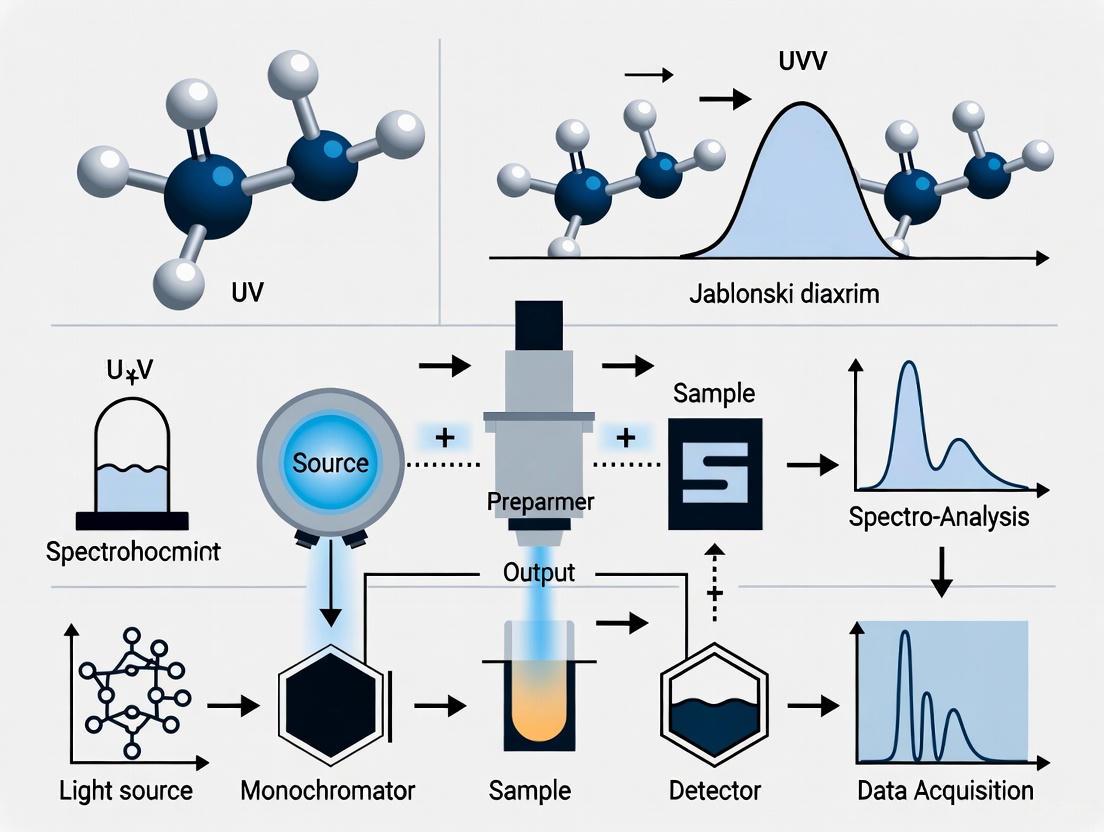
This article provides a comprehensive examination of Ultraviolet-Visible (UV-Vis) spectroscopy and its pivotal role in modern pharmaceutical analysis.
UV-Vis Spectroscopy in Pharma: From Core Principles to Advanced Quality Control Applications
Abstract
This article provides a comprehensive examination of Ultraviolet-Visible (UV-Vis) spectroscopy and its pivotal role in modern pharmaceutical analysis. Tailored for researchers, scientists, and drug development professionals, it explores the fundamental principles based on the Beer-Lambert law and instrument design. The scope spans routine quality control applications—such as drug quantification, dissolution testing, and impurity profiling—to advanced methodological uses like derivative spectroscopy and in-line Process Analytical Technology (PAT) for continuous manufacturing. It further addresses critical troubleshooting, method optimization strategies, and the rigorous validation required for regulatory compliance, offering a complete guide for employing UV-Vis spectroscopy to ensure drug safety, efficacy, and quality.
The Foundation of UV-Vis Spectroscopy: Understanding Light, Matter, and the Beer-Lambert Law
Ultraviolet-Visible (UV-Vis) spectroscopy is an indispensable analytical technique in pharmaceutical research that measures the absorption of light by molecules, providing critical insights into their electronic structure, identity, and concentration. This method operates on the fundamental principle that when matter absorbs ultraviolet or visible radiation, electrons are promoted from their ground state to higher energy excited states [1] [2]. In the context of drug development and quality control, this interaction forms the basis for quantifying active pharmaceutical ingredients (APIs), assessing purity, and validating manufacturing processes. The technique covers wavelengths from approximately 190 to 800 nm, spanning both the ultraviolet (190-400 nm) and visible (400-800 nm) regions of the electromagnetic spectrum [3] [2]. The energy carried by photons in this range corresponds precisely to the energy required to excite valence electrons to higher molecular orbitals, making UV-Vis spectroscopy particularly sensitive to the conjugated systems and chromophores commonly found in pharmaceutical compounds.
The application of UV-Vis spectroscopy in pharmaceutical laboratories represents an optimal balance of sensitivity, precision, and practical efficiency. Modern UV-Vis spectrophotometers can rapidly analyze minute sample volumes with exceptional accuracy, making them suitable for high-throughput screening during drug discovery, quality verification of raw materials, and stability testing of final dosage forms. The quantitative foundation of the technique rests on the Beer-Lambert Law, which establishes a direct proportional relationship between absorbance and analyte concentration, enabling researchers to precisely determine drug concentrations in solutions without complex sample preparation [2]. Furthermore, the non-destructive nature of UV-Vis analysis allows for recovered samples to be used in subsequent tests, a valuable feature when working with precious compounds during early-stage drug development.
Theoretical Foundations of Electronic Transitions
Molecular Orbitals and Energy States
The absorption of UV-Vis radiation by organic molecules involves the promotion of electrons from occupied molecular orbitals to vacant, higher-energy molecular orbitals. According to molecular orbital theory, when atoms combine to form molecules, their atomic orbitals merge to create molecular orbitals that belong to the entire molecule [4]. These orbitals are classified as bonding orbitals (which stabilize the molecule), antibonding orbitals (destabilizing, denoted with an asterisk), and non-bonding orbitals (lone pair orbitals with energy similar to atomic orbitals). In the ground state, electrons preferentially occupy the lowest available energy orbitals according to the Pauli exclusion principle.
The highest occupied molecular orbital (HOMO) and the lowest unoccupied molecular orbital (LUMO) are of particular significance in UV-Vis spectroscopy [5] [4]. The energy difference between these orbitals (ΔE) determines the wavelength of light that a molecule will absorb. When a photon with energy matching this HOMO-LUMO gap is absorbed, an electron is promoted from the HOMO to the LUMO, creating an excited electronic state. This transition occurs in approximately 10^-15 seconds, too rapid for any significant nuclear motion (Franck-Condon principle) [6].
Electronic Transition Pathways: This diagram illustrates the primary electronic transitions in UV-Vis spectroscopy, showing how electrons move from ground to excited states when photons with matching energy are absorbed.
Types of Electronic Transitions
Different molecular configurations give rise to distinct types of electronic transitions, each with characteristic energy requirements and probabilities. The following table summarizes the key electronic transitions relevant to pharmaceutical compounds:
Table 1: Characteristics of Electronic Transitions in UV-Vis Spectroscopy
| Transition Type | Energy Required | Wavelength Range | Molar Absorptivity (ε) | Chromophores Involved | Probability & Selection Rules |
|---|---|---|---|---|---|
| σ → σ* | Very High | <200 nm (Vacuum UV) | High (≈10,000) | C-C, C-H single bonds | Forbidden without change in symmetry |
| n → σ* | High | 150-250 nm | Low (100-300) | Saturated halides, alcohols, ethers | Allowed but weak |
| π → π* | Moderate | 200-700 nm | Very High (10,000-100,000) | Alkenes, alkynes, conjugated systems | Fully allowed, high probability |
| n → π* | Low | 250-700 nm | Low (10-100) | Carbonyls, nitro compounds, azo groups | Forbidden, weak intensity |
The π → π transition represents the most analytically useful transition in pharmaceutical analysis due to its high molar absorptivity and occurrence in the readily accessible UV region [1] [5]. These transitions occur in molecules with conjugated π-electron systems, where the energy gap between HOMO and LUMO decreases as conjugation length increases, resulting in absorption at longer wavelengths (bathochromic shift) [4]. This phenomenon explains why many pharmaceutical compounds with extensive conjugation appear colored, as their π → π transitions shift into the visible region.
The n → π transition, while weaker in intensity, provides valuable structural information about heteroatom-containing functional groups common in APIs [5] [7]. These transitions involve the promotion of a non-bonding electron (typically on oxygen, nitrogen, or sulfur) to a π antibonding orbital. They are particularly sensitive to solvent effects, generally shifting to shorter wavelengths (hypsochromic shift) with increasing solvent polarity due to enhanced solvation of the lone pair electrons in the ground state [1].
Instrumentation and Experimental Methodology
UV-Vis Spectrophotometer Components
Modern UV-Vis spectrophotometers used in pharmaceutical laboratories incorporate several essential components that work in concert to measure light absorption accurately [3] [2]:
Light Sources: Most instruments employ multiple light sources to cover the full UV-Vis range. Deuterium lamps provide intense, continuous spectrum in the UV region (190-400 nm), while tungsten-halogen lamps cover the visible range (350-800 nm) [2]. More advanced systems may use xenon flash lamps that cover the entire range but require more sophisticated power stabilization.
Wavelength Selector (Monochromator): This critical component disperses light and selects specific wavelengths using diffraction gratings with typical groove densities of 1200-2000 grooves per mm, providing optical resolution of 0.5-5 nm [2]. Holographic blazed gratings offer superior performance compared to ruled gratings due to fewer optical defects and lower stray light.
Sample Compartment: Designed to hold standard 1 cm pathlength quartz cuvettes for liquid samples, though variable pathlength cells and micro-volume platforms are available for limited-quantity samples. Quartz or fused silica is essential for UV transparency below 350 nm, where glass and plastic absorb strongly [2].
Detection System: Photomultiplier tubes (PMTs) remain the gold standard for sensitivity in research-grade instruments, capable of detecting very low light levels through electron multiplication [2]. Diode array detectors (DAD) provide simultaneous multi-wavelength detection, enabling rapid spectral acquisition and enhanced workflow efficiency in quality control environments.
Table 2: Research Reagent Solutions for UV-Vis Pharmaceutical Analysis
| Reagent/Material | Function in Analysis | Specifications & Quality Requirements |
|---|---|---|
| High-Purity Solvents | Sample dissolution and reference baseline | HPLC grade, low UV cutoff (e.g., acetonitrile <190 nm), spectrophotometric grade for trace analysis |
| Quartz Cuvettes | Sample containment for measurement | Precision 1 cm pathlength, UV-transparent, matched sets for high-accuracy work |
| Standard Reference Materials | Instrument qualification and method validation | NIST-traceable standards (e.g., holmium oxide for wavelength verification, potassium dichromate for absorbance accuracy) |
| Buffer Systems | pH control for ionization state consistency | High-purity salts, UV-transparent buffers (e.g., phosphate, borate), chelating agents to remove metal impurities |
| Concentration Standards | Calibration curve preparation | Certified reference materials with documented purity, stability-indicating properties |
Experimental Protocols for Pharmaceutical Applications
Method Development and Validation Protocol
Proper method development is essential for generating reliable, reproducible data in pharmaceutical analysis [8]:
Solvent Selection: Choose appropriate solvents based on the analyte's solubility and UV transparency. Common pharmaceutical solvents include water, methanol, acetonitrile, and buffer solutions. The solvent cutoff wavelength must be below the analyte's λmax to avoid interference [2].
Wavelength Selection: Identify the maximum absorption wavelength (λmax) by scanning standard solutions across the UV-Vis range. This wavelength provides maximum sensitivity and minimal relative error according to Beer-Lambert law principles.
Linearity and Range Determination: Prepare a minimum of five standard solutions spanning the expected concentration range (typically 80-120% of target assay concentration). The correlation coefficient (r) should be ≥0.999 for quantitative methods [8].
Method Validation: Establish key validation parameters including specificity (no interference from excipients), accuracy (recovery of 98-102%), precision (RSD <2%), and robustness (small variations in pH, temperature, instrument parameters).
Sample Analysis Workflow
The following diagram illustrates the standard workflow for quantitative pharmaceutical analysis using UV-Vis spectroscopy:
UV-Vis Analysis Workflow: This standardized protocol ensures accurate and reproducible results in pharmaceutical quality control and research applications.
Quantitative Analysis Using Beer-Lambert Law
Fundamental Principles and Mathematical Formulations
The quantitative foundation of UV-Vis spectroscopy rests on the Beer-Lambert Law (often referred to as Beer's Law), which mathematically describes the relationship between analyte concentration and light absorption [1] [2]. The fundamental equation is expressed as:
A = ε · b · c
Where:
- A is the measured absorbance (unitless)
- ε is the molar absorptivity coefficient (L·mol⁻¹·cm⁻¹)
- b is the path length of the sample cell (cm)
- c is the concentration of the absorbing species (mol·L⁻¹)
Absorbance is defined mathematically as A = log₁₀(I₀/I), where I₀ is the intensity of incident light and I is the intensity of transmitted light [2]. The relationship between absorbance and transmittance (T = I/I₀) is therefore A = -log₁₀(T). For accurate quantitative measurements, absorbance values should ideally fall between 0.3 and 1.0 absorbance units, which corresponds to 50-10% transmittance [2]. Values outside this range may introduce significant measurement error due to either too little absorption (low signal-to-noise) or too little light reaching the detector (high photometric error).
Calibration Curve Methodologies
In pharmaceutical applications, the direct application of Beer-Lambert Law requires establishment of a calibration curve using standard solutions of known concentration [8]. The step-by-step methodology includes:
Primary Standard Preparation: Precisely weigh high-purity reference standard using an analytical balance and dissolve in appropriate solvent to make stock solution.
Dilution Series Preparation: Create minimum five standard solutions spanning the expected concentration range using volumetric glassware. For a drug substance with target concentration of 50 μg/mL, appropriate standards might be 40, 45, 50, 55, and 60 μg/mL.
Absorbance Measurement: Measure absorbance of each standard solution at predetermined λmax using matched quartz cuvettes.
Linear Regression Analysis: Plot absorbance versus concentration and determine the best-fit line using least-squares regression. The slope of this line equals ε·b, enabling calculation of unknown sample concentrations.
Table 3: Molar Absorptivity Values for Common Pharmaceutical Compounds
| Pharmaceutical Compound | Class/Therapeutic Category | λmax (nm) | Molar Absorptivity (ε) | Solvent System |
|---|---|---|---|---|
| Acetaminophen | Analgesic/Antipyretic | 243 | 1.2 × 10⁴ L·mol⁻¹·cm⁻¹ | Phosphate buffer (pH 7.0) |
| Ciprofloxacin | Fluoroquinolone Antibiotic | 271 | 3.8 × 10⁴ L·mol⁻¹·cm⁻¹ | 0.1M HCl |
| Simvastatin | Cholesterol-lowering Agent | 238 | 1.5 × 10⁴ L·mol⁻¹·cm⁻¹ | Methanol |
| Diazepam | Benzodiazepine Sedative | 230 | 1.1 × 10⁴ L·mol⁻¹·cm⁻¹ | Ethanol |
| Ascorbic Acid | Vitamin C | 265 | 1.7 × 10⁴ L·mol⁻¹·cm⁻¹ | Water |
The correlation coefficient (r) for an acceptable calibration curve in pharmaceutical analysis should be ≥0.999, with residuals randomly distributed around zero [8]. The method should be periodically verified using independently prepared quality control samples to ensure ongoing accuracy and precision.
Advanced Applications in Pharmaceutical Research
Drug Discovery and Development Applications
UV-Vis spectroscopy serves multiple critical functions throughout the drug development lifecycle, from initial discovery through commercial manufacturing:
Purity Assessment and Impurity Profiling: The technique can detect and quantify impurities and degradation products based on their characteristic absorption profiles. For example, the A250/A265 ratio provides a rapid assessment of nucleic acid contamination in protein-based biopharmaceuticals [3] [2].
Dissolution Testing and Drug Release Kinetics: UV-Vis is the standard analytical technique for dissolution testing of solid dosage forms, enabling real-time monitoring of drug release through continuous flow cell systems.
Protein Quantification and Biomolecular Characterization: The Lowry, Bradford, and BCA protein assay methods all rely on UV-Vis detection principles. Direct measurement at 280 nm provides rapid protein concentration based on tryptophan and tyrosine content [2].
pKa Determination and Ionization Profiling: Monitoring absorbance changes as a function of pH enables determination of ionization constants, critical for predicting drug behavior in physiological environments.
Forced Degradation Studies: Exposure of drug substances to stress conditions (light, heat, oxidation) with subsequent UV-Vis monitoring helps identify degradation pathways and establish stability-indicating methods.
Structural Elucidation Through Spectral Interpretation
The UV-Vis absorption spectrum of a pharmaceutical compound provides valuable structural information, particularly regarding the presence of chromophores and the degree of conjugation:
Auxochrome Identification: Functional groups without significant UV absorption themselves (e.g., -OH, -NH₂) can cause bathochromic (red) shifts when attached to chromophores due to extended conjugation or mesomeric effects [7].
Solvatochromism Analysis: Shifts in absorption maxima with changing solvent polarity provide evidence for transition types. n→π* transitions typically show hypsochromic (blue) shifts with increasing solvent polarity, while π→π* transitions often exhibit bathochromic shifts [1].
Conjugation Length Determination: The Woodward-Fieser rules enable prediction of λmax for conjugated dienes and enones based on structural features, allowing verification of expected molecular structure.
The continued evolution of UV-Vis instrumentation, including the development of microarray platforms and integration with chromatographic systems, ensures this fundamental analytical technique will maintain its essential role in pharmaceutical research and quality assurance. Its unique combination of theoretical simplicity, practical robustness, and information-rich output makes UV-Vis spectroscopy an indispensable tool in the scientist's arsenal for understanding the interaction of light with matter through electronic transitions and absorption phenomena.
The Beer-Lambert Law (also known as Beer's Law) is a fundamental relationship in optical spectroscopy that forms the cornerstone of quantitative analysis across scientific disciplines, particularly in pharmaceutical research and development. This principle describes the linear relationship between the absorbance of light by a substance and its concentration, enabling scientists to determine unknown concentrations of analytes in solution with high precision [9].
In the context of UV-Vis spectroscopy, this law is indispensable for drug quality control, release testing, and bioprocess monitoring, which collectively accounted for a significant portion of the UV spectroscopy market in 2024 [10]. The pharmaceutical and biotech industries rely heavily on this principle for ensuring product quality, with the global UV spectroscopy market standing at USD 21.52 billion in 2025 and forecast to reach USD 27.62 billion by 2030 [10].
The Beer-Lambert Law establishes a mathematical relationship between the attenuation of light through a substance and the properties of that substance, providing researchers with a powerful tool for quantitative analysis that is both accurate and reproducible when applied under appropriate conditions [9] [11].
Theoretical Foundation
Fundamental Concepts and Mathematical Formulation
The Beer-Lambert Law relates the attenuation of light to the properties of the material through which the light is traveling. The fundamental concepts begin with transmittance (T) and absorbance (A). Transmittance is defined as the ratio of the transmitted intensity (I) over the incident intensity (I₀), often expressed as a percentage [9]:
[ T = \frac{I}{I0} \quad \text{or} \quad \%T = \frac{I}{I0} \times 100\% ]
Absorbance has a logarithmic relationship to transmittance and is defined as [9] [11]:
[ A = \log{10} \left( \frac{I0}{I} \right) ]
The complete Beer-Lambert Law is expressed as [9] [11] [12]:
[ A = \varepsilon c l ]
Where:
- A is the measured absorbance (dimensionless)
- ε is the molar absorptivity or molar absorption coefficient (L·mol⁻¹·cm⁻¹)
- c is the concentration of the absorbing species (mol·L⁻¹)
- l is the optical path length through the sample (cm)
The molar absorption coefficient is a sample-dependent property that measures how strong an absorber the sample is at a particular wavelength of light [9]. The relationship between absorbance and transmittance values follows a logarithmic progression, as illustrated in Table 1.
Table 1: Absorbance and Transmittance Values
| Absorbance | Transmittance |
|---|---|
| 0 | 100% |
| 1 | 10% |
| 2 | 1% |
| 3 | 0.1% |
| 4 | 0.01% |
| 5 | 0.001% |
Visualizing the Beer-Lambert Law Relationship
The following diagram illustrates the core relationships and dependencies established by the Beer-Lambert Law, which forms the theoretical foundation for quantitative UV-Vis spectroscopy in pharmaceutical analysis.
Practical Application in Pharmaceutical Analysis
Experimental Protocol for Concentration Determination
The following step-by-step protocol outlines the standard methodology for determining the concentration of an unknown pharmaceutical compound using the Beer-Lambert Law and UV-Vis spectroscopy.
Calibration Curve Method
Step 1: Preparation of Standard Solutions
- Prepare a stock solution of the reference standard with known purity and concentration
- Create a series of standard solutions (typically 5-6 concentrations) covering the expected range of the unknown samples
- Ensure all solutions are prepared using the same solvent and matrix to maintain consistent molar absorptivity
Step 2: Spectroscopic Measurement
- Using a UV-Vis spectrophotometer, measure the absorbance of each standard solution at the predetermined λmax (wavelength of maximum absorbance)
- Use matched cuvettes with standard path length (typically 1 cm) for all measurements
- Maintain constant temperature using a temperature-controlled cuvette holder if necessary
- Record triplicate measurements for each standard solution to ensure precision
Step 3: Construction of Calibration Curve
- Plot the average absorbance values against the corresponding concentrations
- Perform linear regression analysis to obtain the equation: A = εl × c + intercept
- Verify the linearity through the correlation coefficient (R²), typically requiring R² > 0.995 for pharmaceutical applications
- Ensure the absorbance values of standard solutions fall within the ideal range of 0.2-1.0 AU to minimize relative error [9]
Step 4: Analysis of Unknown Samples
- Measure the absorbance of the unknown sample under identical experimental conditions
- Calculate the concentration using the equation derived from the calibration curve
- Apply appropriate dilution factors if the sample was diluted prior to analysis
Step 5: Validation and Quality Control
- Analyze quality control samples with known concentrations to verify method accuracy
- Ensure compliance with regulatory requirements for data integrity and traceability [10]
Single Point Calibration Method
For routine analysis where the relationship is known to be linear and passes through the origin, a single-point calibration may be used:
- Measure the absorbance of a single standard solution of known concentration
- Calculate the concentration of the unknown using: cunknown = (Aunknown × cstandard) / Astandard
Experimental Parameters and Considerations
Table 2: Key Experimental Parameters for Pharmaceutical UV-Vis Analysis
| Parameter | Specification | Pharmaceutical Consideration |
|---|---|---|
| Wavelength | λmax of analyte | Must be specific and selective for the analyte; verified using certified holmium glass filters [12] |
| Path Length | Typically 1 cm | Must be precisely known and consistent; variation affects accuracy |
| Absorbance Range | 0.2-1.0 AU | Optimal for minimal error; can extend to 0.1-2.0 with modern instruments |
| Slit Width | 1-2 nm | Balance between resolution and signal-to-noise ratio |
| Temperature Control | ±0.5°C | Critical for reproducible results in kinetic studies |
| Solvent Compatibility | UV-transparent | Must not absorb significantly at analytical wavelength |
| Sample Volume | 0.1-3.0 mL | Dependent on cuvette type; microvolume techniques available |
Advanced Considerations and Limitations
Fundamental Deviations from the Beer-Lambert Law
While the Beer-Lambert Law provides an excellent foundation for quantitative analysis, several limitations and deviations must be considered in pharmaceutical applications. These deviations can be categorized as fundamental, chemical, and instrumental [14] [15] [12].
Fundamental deviations occur due to inherent limitations of the law itself, particularly at high concentrations where intermolecular distances decrease, leading to solute-solute interactions that alter the analyte's absorption characteristics [12]. Recent research has demonstrated that electromagnetic theory provides a more comprehensive framework for understanding these deviations, leading to modified equations that account for nonlinear effects at high concentrations [12]:
[ A = \frac{4\pi \nu}{\ln 10} (\beta c + \gamma c^2 + \delta c^3)l ]
Where β, γ, and δ are refractive index coefficients derived from electromagnetic theory [12].
Chemical deviations arise from changes in the chemical equilibrium of the analyte due to factors such as pH, temperature, and concentration, which can alter the absorption spectrum [12]. Association, dissociation, or complex formation can lead to non-linear Beer-Lambert behavior.
Instrumental deviations result from imperfections in spectrophotometric equipment, including the use of polychromatic light sources, stray light, and detector nonlinearity [13] [12]. Polychromatic radiation can cause significant deviations, with systematic errors up to ∼4% reported in HPLC/UV assays, even in attenuation regimes generally considered 'safe' (absorption <1) [13].
Electromagnetic and Wave Optics Effects
The wave nature of light introduces additional considerations that are not accounted for in the classical Beer-Lambert formulation. These include:
- Interference effects: In thin films or samples with parallel interfaces, interference between forward and backward traveling waves can cause intensity fluctuations [14]
- Refractive index changes: The refractive index of the solution affects light propagation and must be considered, especially for high-precision measurements [15]
- Multiple reflections: In cuvette-based measurements, multiple reflections at the interfaces can complicate the simple exponential decay assumed by the Beer-Lambert Law [14]
Table 3: Common Limitations and Mitigation Strategies in Pharmaceutical Analysis
| Limitation Type | Impact on Analysis | Mitigation Strategy |
|---|---|---|
| High Concentration | Nonlinear calibration curve | Dilute samples to linear range; use modified electromagnetic model [12] |
| Polychromatic Light Source | Negative deviation from linearity | Use narrower slit widths; ensure monochromaticity [13] |
| Chemical Equilibrium Shift | Changing molar absorptivity | Control pH, temperature, and ionic strength; use buffered solutions |
| Stray Light | Deviation at high absorbance | Use high-quality instrumentation with stray light rejection |
| Refractive Index Changes | Non-linear response at high concentration | Account for refractive index in calculations; use low concentrations |
| Particulate Matter | Light scattering | Filter samples before analysis; use clarified solutions |
The Scientist's Toolkit: Essential Materials and Reagents
Table 4: Research Reagent Solutions for Beer-Lambert Law Experiments
| Item | Function | Pharmaceutical Application |
|---|---|---|
| UV-transparent Cuvettes | Sample holder with precise path length | Must be matched for accurate comparative measurements |
| Certified Reference Standards | Known purity for calibration | Essential for method validation and regulatory compliance |
| Holmium Glass Filter | Wavelength accuracy verification | Regular instrument qualification per GMP requirements [12] |
| Appropriate Solvents | Dissolve analyte without interference | Must be UV-transparent at analytical wavelength |
| Buffer Solutions | Maintain constant pH | Critical for analytes with pH-dependent absorption |
| Volumetric Glassware | Precise solution preparation | Class A recommended for quantitative work |
| UV-Vis Spectrophotometer | Absorbance measurement | Modern systems with diode-array detectors provide better performance [10] |
Current Trends and Future Perspectives
The application of the Beer-Lambert Law in pharmaceutical analysis continues to evolve with technological advancements. Key trends include:
Integration with Advanced Detection Systems: Diode-array configurations are growing at a 7.76% CAGR, outperforming other designs and enabling rapid spectral acquisition for peak purity assessment [10]. These systems capture entire spectra in milliseconds, supporting peak-purity checks and forced-degradation profiling essential for ICH stability guidelines [10].
Miniaturization and Portability: Portable/hand-held UV-Vis devices are projected to expand at a 7.46% CAGR through 2030, driven by point-of-care testing and on-site analysis needs [10]. These instruments now achieve resolving power once limited to flagship benchtop instruments through micro-electromechanical mirrors and broadband frequency combs [10].
Bioprocess Monitoring: The application of UV spectroscopy in bioprocess monitoring is growing at an 8.56% CAGR, reflecting the biopharmaceutical sector's transition to continuous operation [10]. Inline UV monitoring of Protein A chromatography improves host-cell-protein clearance and yields, aligning with regulators' Quality by Design expectations for real-time control [10].
Advanced Data Analytics: Modern UV platforms increasingly integrate chemometrics, multivariate statistics, and cloud connectivity [10]. Software advances now embed spectral-library matching powered by machine learning, reducing manual data review by up to 40% [10].
The following workflow diagram illustrates how the Beer-Lambert Law integrates with modern pharmaceutical analysis, from method development to quality control.
The Beer-Lambert Law remains an indispensable principle in pharmaceutical analysis, providing the fundamental basis for quantitative determination of drug substances and products. While its mathematical formulation is straightforward, successful application requires careful consideration of its limitations and appropriate experimental design. The continued evolution of spectroscopic instrumentation, combined with advanced theoretical models based on electromagnetic theory, ensures that this centuries-old principle will maintain its critical role in drug development and quality control. As the pharmaceutical industry advances toward more complex biologics and continuous manufacturing processes, the Beer-Lambert Law, augmented with modern corrections and applications, will continue to be a cornerstone of analytical methodology.
Ultraviolet-Visible (UV-Vis) spectrophotometry is a cornerstone analytical technique in pharmaceutical research and development. Its ability to provide rapid, non-destructive, and quantitative analysis of molecular species makes it indispensable for tasks ranging from drug discovery to quality control [17] [2]. The principle underpinning this technique is the measurement of the absorption of light in the ultraviolet (typically 190-400 nm) and visible (400-800 nm) regions of the electromagnetic spectrum by a sample [18]. When a molecule absorbs this light, electrons are promoted from their ground state to a higher energy excited state. The resulting absorption spectrum provides a unique fingerprint that can be used for identification, purity assessment, and, crucially, concentration determination via the Beer-Lambert Law [18] [19].
This whitepaper deconstructs the core components of a modern UV-Vis spectrophotometer, framing their function and integration within the context of pharmaceutical analysis. A deep understanding of the instrument's architecture is not merely an academic exercise; it is critical for scientists to validate methods, troubleshoot issues, and ensure the generation of reliable, high-quality data that complies with regulatory standards.
Core Components and Their Function
A UV-Vis spectrophotometer is an elegant assembly of optical, mechanical, and electronic components designed to execute a precise sequence of events: generate light, isolate a specific wavelength, pass it through a sample, and measure its intensity with high accuracy. The following sections detail these key subsystems.
Light Source
The light source must provide a stable and continuous spectrum of sufficient intensity across both the UV and Visible wavelength ranges. No single lamp fulfills this requirement optimally across the entire spectrum, so most instruments use a combination of sources [18] [20].
- Deuterium Lamp: This is the standard source for the UV region (approximately 190 - 350 nm). It generates light by an electrical discharge through deuterium gas at low pressure, resulting in a continuous spectrum in the UV range [18] [21] [20].
- Tungsten-Halogen Lamp: This lamp is used for the Visible region (approximately 330 - 800 nm and beyond). It produces a continuous spectrum of light through incandescence, where the tungsten filament is heated to a high temperature [18] [21].
The instrument smoothly transitions between the two lamps, often around 300-350 nm, where their light emission profiles overlap [2] [20]. Key considerations for light sources include stability, intensity, and operational lifetime.
Wavelength Selector (Monochromator)
The broad spectrum emitted by the light source must be resolved into its constituent wavelengths to probe the specific electronic transitions of the analyte. This is the function of the monochromator, often considered the heart of the spectrophotometer [17] [21]. Its key parts are:
- Entrance Slit: Controls the width and alignment of the incident light beam, limiting stray light and defining the physical entry point into the monochromator [17].
- Collimating Mirror: Makes the diverging light beam from the slit parallel (collimated) before it hits the dispersing element [17].
- Dispersing Element: This component, typically a diffraction grating, spatially separates the white light into its component wavelengths by angular dispersion. Modern gratings, particularly blazed holographic diffraction gratings, offer high efficiency and low stray light [2] [20]. The grating is rotated to select which narrow band of wavelengths will pass through the exit slit.
- Exit Slit: Allows the selected narrow band of wavelengths to pass through to the sample, while blocking others. The width of the entrance and exit slits determines the Spectral Bandwidth (SBW) [20].
The SBW, defined as the full width at half maximum (FWHM) of the triangular intensity distribution of the transmitted light, is a critical parameter [20]. A narrower SBW provides better spectral resolution, allowing closely spaced absorption peaks to be distinguished, but at the cost of reduced light throughput and a lower signal-to-noise ratio. The optimal SBW is typically 1/10 of the natural width of the sample's absorption peak [20].
Sample Container
The sample, usually in solution, is contained in a transparent vessel called a cuvette during analysis. The choice of cuvette material is critical and depends on the wavelength region being studied [2].
- Quartz or Fused Silica: Essential for UV work (190 - 400 nm) as these materials are transparent to UV light. They are also used for visible measurements [18] [2].
- Glass or Plastic: Suitable only for visible range measurements (~350 - 800 nm), as they absorb UV light strongly [2].
Standard cuvettes have a pathlength of 1 cm, but varying pathlengths are available for specialized applications, especially when dealing with highly concentrated or scarce samples. The Beer-Lambert law explicitly includes pathlength (b in A = εbc), making it a key parameter in quantitative analysis [18] [19].
Detector
The detector converts the transmitted light intensity (I) into an electrical signal proportional to its intensity. The performance of the detector dictates the sensitivity and linear range of the instrument [17] [20]. Common detector types include:
- Photomultiplier Tube (PMT): A highly sensitive detector where photons striking a photocathode eject electrons. These electrons are then amplified through a series of dynodes, resulting in a large, measurable current. PMTs are excellent for low-light applications and are widely used in high-performance spectrophotometers [2] [20].
- Silicon Photodiode: A semiconductor device where incident light creates electron-hole pairs, generating a photocurrent. Photodiodes are robust, have a fast response time, and are less expensive than PMTs, though generally less sensitive. They are the basis for many modern and array-based detectors [2] [20].
- Photodiode Array (PDA): A linear array of hundreds of individual photodiodes on a single silicon chip. A key advantage of a PDA is that it allows all wavelengths to be measured simultaneously without the need for a scanning monochromator, enabling rapid full-spectrum acquisition [21].
Table 1: Key Components of a UV-Vis Spectrophotometer
| Component | Primary Function | Key Types & Characteristics | Pharmaceutical Analysis Consideration |
|---|---|---|---|
| Light Source | Generate continuous, stable light across UV-Vis range | Deuterium Lamp (UV: 190-350 nm); Tungsten-Halogen Lamp (Vis: 330-800+ nm) [18] [20] | Source stability is critical for quantitative accuracy and precision in dissolution testing and assay. |
| Monochromator | Isolate a narrow band of wavelengths from the source. | Contains slits, mirrors, and a diffraction grating (e.g., 1200 grooves/mm common). Spectral Bandwidth (SBW) is a key performance parameter [17] [2] [20]. | SBW must be optimized to resolve drug substance peaks from excipient or degradant peaks. |
| Sample Container | Hold the sample solution in the light path. | Quartz/Fused Silica: UV-Vis range; Glass/Plastic: Visible only. Standard pathlength is 1 cm [18] [2]. | Quartz is required for UV analysis of active pharmaceutical ingredients (APIs). Micro-volume platforms conserve scarce drug candidates. |
| Detector | Convert transmitted light intensity into an electrical signal. | Photomultiplier Tube (PMT): High sensitivity; Silicon Photodiode: Robust, fast; Photodiode Array (PDA): Simultaneous multi-wavelength detection [2] [21] [20]. | PDA detectors enable rapid kinetics studies. Detector linearity range must accommodate high absorbance in content uniformity testing. |
Instrument Configurations: Single vs. Double Beam
The optical path following the monochromator can be configured in two primary ways, each with distinct advantages:
- Single Beam Configuration: In this simpler design, a single beam of light passes sequentially through a reference blank and then the sample. The main drawback is that it cannot compensate for temporal drift in the light source intensity or detector sensitivity, requiring frequent re-zeroing with the reference [20].
- Double Beam Configuration: Here, the light beam is split into two paths: one passes through the sample and the other through a reference blank. The intensities of both beams are measured nearly simultaneously, and the instrument electronically calculates the ratio (I/I₀). This configuration actively compensates for instrumental drift, providing superior baseline stability and more reliable data over time, which is essential for lengthy analyses or in regulated environments [20].
The following diagram illustrates the logical flow of a double-beam UV-Vis instrument and the critical role of each component.
Diagram 1: Logical workflow of a double-beam UV-Vis spectrophotometer.
Critical Performance Parameters in Pharmaceutical Analysis
Understanding the instrument's components allows scientists to grasp the factors affecting data quality. Key considerations include:
- Stray Light: This is any light reaching the detector that is outside the nominal bandwidth selected by the monochromator [17] [20]. It is a primary cause of deviation from the Beer-Lambert law, especially at high absorbances, leading to inaccurate concentration readings. Sources can be scattering from optical components or imperfections in the grating. Double-monochromator designs are highly effective at minimizing stray light [20].
- Photometric Linearity and Range: This defines the range of absorbance over which the instrument's response is linearly proportional to the analyte concentration. Stray light is the primary factor that limits the upper end of this range. For reliable quantitation, absorbance values should generally be kept below 1-2 AU, depending on the instrument's specification [2] [20].
- Spectral Resolution: As discussed, this is governed by the SBW. Proper resolution is necessary to identify and quantify APIs in complex matrices, such as formulated drug products, where excipients or degradants may have overlapping spectral features [20].
Application in Pharmaceutical Analysis: Content Uniformity Testing
The principles of UV-Vis spectroscopy are being adapted for advanced manufacturing applications. A prominent example is the use of UV-Vis as a Process Analytical Technology (PAT) tool for in-line monitoring of tablet content uniformity during continuous manufacturing [22].
- Experimental Protocol for In-line Content Uniformity [22]:
- Objective: To validate UV/Vis spectroscopy for the in-line determination of API content in tablets during compression.
- Materials: A model formulation (e.g., 10% w/w Theophylline as API, Lactose Monohydrate as filler, 0.5% w/w Magnesium Stearate as lubricant).
- Instrumentation: A UV/Vis reflectance probe integrated directly into the feed frame or compression zone of a rotary tablet press.
- Method:
- The probe emits light onto the surface of the powder or tablet and collects the reflected light (R = I / I₀).
- A univariate calibration model is developed by correlating the reflectance at a specific wavelength (or the area under a specific spectral peak) to the API concentration in calibration samples.
- During continuous production, spectra are acquired in real-time for each tablet or powder aliquot.
- The acquired spectra are processed (e.g., baseline correction, normalization) and the calibration model is applied to predict the API content of each tablet.
- Validation: The method is validated according to ICH Q2(R2) guidelines, demonstrating specificity for the API, linearity (e.g., R² ~0.99 for 7-13% w/w API), precision (repeatability), and accuracy [22].
This application highlights a key advantage of UV-Vis: its ability to provide rapid, non-destructive analysis with simpler data treatment (univariate calibration) compared to other PAT tools like NIR or Raman, which often require complex multivariate data analysis (MVDA) [22].
Table 2: Essential Research Reagent Solutions for UV-Vis Pharmaceutical Analysis
| Reagent / Material | Function in Analysis | Critical Specification / Consideration |
|---|---|---|
| High-Purity Solvents (e.g., HPLC-grade Water, Methanol, Acetonitrile) | To dissolve the analyte and serve as the blank/reference solution. | Must be transparent (non-absorbing) in the spectral region of interest. UV-cutoff is a key specification. |
| Standard Reference Materials (e.g., USP API Standards) | To prepare calibration standards for quantitative methods. | Certified purity and identity are essential for method accuracy and regulatory compliance. |
| Quartz Cuvettes | To hold liquid samples in the spectrophotometer's beam path. | Must be used for all UV measurements. Clean, scratch-free optical surfaces are mandatory. |
| Buffer Salts (e.g., Phosphate Buffered Saline) | To maintain a constant pH during analysis of ionizable compounds, ensuring consistent absorbance. | Buffer should not absorb at the analytical wavelength. |
The UV-Vis spectrophotometer is a sophisticated integration of optical and electronic components, each playing a vital role in generating reliable analytical data. From the stable emission of the light source and the precise wavelength selection of the monochromator to the sensitive conversion of photons by the detector, every element contributes to the instrument's overall performance. For pharmaceutical scientists, this foundational knowledge is not static. It enables the effective application, troubleshooting, and validation of methods that ensure the safety, efficacy, and quality of drug products. As the industry evolves towards continuous manufacturing and real-time release, the principles of UV-Vis spectroscopy, embodied in robust instrument design, continue to provide critical support in the ongoing mission of drug development and quality assurance.
In the realm of pharmaceutical analysis, particularly in Ultraviolet-Visible (UV-Vis) spectroscopy, solvent selection transcends mere solute dissolution to become a fundamental parameter that directly dictates analytical accuracy, method robustness, and regulatory compliance. UV-Vis spectroscopy operates on the principle of measuring the absorption of discrete wavelengths of ultraviolet or visible light by a sample, which occurs as electrons are promoted from a lower energy orbital (ground state) to a higher energy orbital (excited state) [23] [2]. The precise energy required for this electronic transition is exquisitely sensitive to the molecular environment created by the solvent [24]. A poorly chosen solvent can obfuscate the analyte's true absorption characteristics, leading to inaccurate quantitation, compromised method validation, and ultimately, decisions based on faulty data. This technical guide provides pharmaceutical researchers and drug development professionals with a critical framework for selecting solvents that ensure the integrity, precision, and reliability of UV-Vis spectroscopic methods, contextualized within the rigorous demands of modern pharmaceutical analysis.
Core Principles: How Solvents Influence UV-Vis Spectra
The interaction between a solvent and an analyte molecule can induce significant shifts in the position, intensity, and shape of its absorption bands. Understanding these core principles is essential for predicting and interpreting solvent effects.
Electronic Transitions and Solvent-Solute Interactions
The primary electronic transitions relevant to UV-Vis spectroscopy and their interaction with solvents are summarized below [23]:
- π → π* Transitions: These occur in unsaturated compounds containing double or triple bonds (e.g., aromatic rings, carbonyls). They are typically strong transitions (high molar absorptivity). With increasing solvent polarity, the excited state is often more stabilized than the ground state, resulting in a bathochromic (red) shift.
- n → π* Transitions: These occur in molecules with non-bonding electrons and π bonds, such as carbonyl compounds. They are weak transitions (low molar absorptivity). With increasing solvent polarity, the ground state is stabilized more than the excited state due to hydrogen bonding, resulting in a hypsochromic (blue) shift.
- n → σ* Transitions: These involve the excitation of non-bonding electrons on heteroatoms (O, N, S, halogens) to an antibonding sigma orbital. They are sensitive to solvent polarity, as demonstrated by 1-iodoadamantane, which shows significant solvatochromic shifts for its n→σ* transition [24].
These shifts occur because the electric field of a polar solvent can interact with the dipole moment of the solute. The extent of stabilization of the ground versus the excited state depends on their relative polarities, leading to the observed wavelength shifts [24].
Solvent Polarity and Solvatochromism
Solvatochromism is the phenomenon where a substance changes its absorption maximum (λmax) due to a change in the polarity of the solvent [24]. This serves as a direct, observable measure of solvent-solute interaction.
- Positive Solvatochromism (Red Shift): A bathochromic shift with increasing solvent polarity indicates the excited state is more polar than the ground state.
- Negative Solvatochromism (Blue Shift): A hypsochromic shift with increasing solvent polarity indicates the ground state is more polar than the excited state, commonly observed in n→π* transitions.
The following diagram illustrates the logical decision process a scientist must follow to account for these phenomena during method development.
Critical Solvent Selection Criteria
When selecting a solvent for a pharmaceutical UV-Vis application, a multi-faceted approach is required. The following criteria are non-negotiable for developing a robust analytical method.
UV Transparency (Cut-off Wavelength)
The solvent must not absorb significantly at the wavelengths where the analyte absorbs. A solvent's "UV cut-off" is the wavelength below which the solvent itself absorbs most of the light (Absorbance > 1 in a 1 cm pathlength) [2]. For example, if an analyte absorbs at 260 nm, a solvent with a cut-off of 240 nm is suitable, whereas one with a cut-off of 280 nm is not. Common solvent cut-offs are provided in Table 1.
Solvent Polarity and Solvatochromic Effects
As detailed in Section 2.1, polarity directly impacts λmax. The dielectric constant (ε) and Kamlet-Taft parameters (α, β, π*) are key descriptors for solvent polarity [24]. The choice must be justified by the need to either maximize absorption intensity or resolve overlapping peaks from multiple analytes.
Chemical Compatibility
The solvent must not chemically react with the analyte. Incompatibility can lead to degradation products, shifting spectra, and erroneous concentration readings over time. This is a critical consideration in pre-formulation and stability studies [25].
Refractive Index
The refractive index of the solvent can slightly influence the absorbance measurement. While often a secondary consideration, it is important for highly precise quantitative work. Matching the refractive index of the sample and blank can minimize this effect.
Quantitative Data for Common Solvents
Selecting a solvent requires consulting key physicochemical properties to predict its behavior in a UV-Vis instrument. The table below summarizes critical data for common solvents used in pharmaceutical analysis.
Table 1: Properties of Common Solvents in Pharmaceutical UV-Vis Spectroscopy
| Solvent | UV Cut-off (nm) [2] | Dielectric Constant (ε) [24] | Relative Polarity [24] | Key Considerations for Pharmaceutical Use |
|---|---|---|---|---|
| Water | ~190 | ~80.1 | High | Ideal for water-soluble APIs; often used in dissolution studies [26]. |
| Acetonitrile | ~190 | ~37.5 | High | Common in HPLC-UV; high UV transparency. |
| n-Hexane | ~210 | ~1.9 | Low | Non-polar; can cause n→σ* blue shifts [24]. |
| Methanol | ~205 | ~32.7 | High | Versatile but can hydrogen bond, affecting n→π* transitions. |
| Ethanol | ~210 | ~24.6 | High | Similar to methanol. |
| Diethyl Ether | ~218 | ~4.3 | Low | Low boiling point; high fire risk. |
| Dichloromethane | ~235 | ~9.1 | Low | Good for less polar compounds; toxic. |
| Chloroform | ~245 | ~4.8 | Low | Can contain stabilizers (e.g., ethanol) that affect UV cut-off. |
| Dimethyl Sulfoxide (DMSO) | ~270 | ~46.5 | High | High boiling point; difficult to remove from cuvettes [24]. |
| Acetone | ~330 | ~20.7 | Medium | High UV cut-off limits utility; strong n→π* absorption. |
Experimental Protocols for Solvent Evaluation and Method Validation
Implementing a systematic experimental protocol is essential for justifying solvent choice and ensuring the resulting analytical method is fit-for-purpose. The following workflows are adapted from validated pharmaceutical analyses [26] [25].
Protocol 1: Initial Solvent Compatibility Screening
This protocol is designed to rapidly identify suitable solvents based on solubility and UV characteristics.
- Preparation of Stock Solutions: Accurately weigh the drug substance (Active Pharmaceutical Ingredient, API) to prepare a stock solution in each candidate solvent. A typical concentration is 100 μg/mL, prepared in a 100 mL volumetric flask [26].
- Spectrum Scanning: Dilute an aliquot of each stock solution appropriately to a concentration within the expected linear range (e.g., 5-30 μg/mL). Using a quartz cuvette and a UV-Vis spectrophotometer, scan each solution from a wavelength below the solvent's cut-off to 400 nm against a blank of pure solvent.
- Data Analysis: Identify the λmax for the analyte in each solvent. Compare the sharpness and symmetry of the absorption band. A suitable solvent will produce a single, well-defined peak with no shoulders suggesting interference or degradation.
- Beer-Lambert Law Linearity Check: From the stock solution, prepare a series of dilutions (e.g., 5, 10, 15, 20, 25, 30 μg/mL) in the candidate solvent. Measure the absorbance at the determined λmax and plot absorbance versus concentration. A correlation coefficient (R²) of ≥ 0.995 is typically required for a linear relationship, confirming the solvent does not cause concentration-dependent aggregation or dissociation [26] [2].
Protocol 2: Drug-Excipient Compatibility Study
This advanced protocol, utilizing chemometrics, is critical for pre-formulation studies to detect subtle API-excipient interactions in solution [25].
- Calibration Set Preparation: Prepare a calibration set of standard mixtures containing the API and the excipient(s) at various ratios (e.g., 1:1, 1:2, 1:0.5 w/w) across a range of API concentrations within its linear range.
- UV Scanning and Chemometric Modeling: Scan the UV spectrum of each calibration mixture. Import the spectral data into chemometric software and develop a multivariate calibration model, such as Partial Least Squares (PLS) regression.
- Test Sample Analysis: Prepare test mixtures (e.g., 1:1 w/w API:excipient) at different concentrations. Scan these test mixtures initially (time zero) and after storage under accelerated conditions (e.g., 3 and 7 days at 25°C or 40°C).
- Recvery Calculation: Use the PLS calibration model to predict the concentration of the API in the test mixtures at each time point. The recovery percentage is calculated as (Predicted Concentration / Initial Concentration) × 100%. A decrease in recovery of ≥10% is a strong indicator of an incompatibility between the drug and the polymer/excipient in that solvent system [25].
The workflow for this rigorous assessment is outlined below.
The Scientist's Toolkit: Essential Research Reagents and Materials
The following table details key materials and instruments required for executing the solvent selection and evaluation protocols described in this guide.
Table 2: Essential Research Reagents and Equipment for UV-Vis Solvent Studies
| Item | Functional Specification | Role in Solvent Selection & Analysis |
|---|---|---|
| Quartz Cuvettes | High-precision, 1 cm pathlength; transparent down to ~190 nm. | Required for UV range analysis as glass and plastic absorb UV light [2]. |
| UV-Vis Spectrophotometer | Double-beam design; equipped with D₂ (UV) and W/VIS lamps; photomultiplier tube (PMT) or PDA detector. | Core instrument for acquiring absorption spectra with high sensitivity and stability [2]. |
| Analytical Balance | Accuracy of 0.1 mg or better. | Essential for the precise weighing of API and standards for stock solution preparation [26]. |
| Volumetric Flasks | Class A glassware, various sizes (e.g., 10 mL, 100 mL). | Used for accurate preparation and dilution of standard and sample solutions [26]. |
| Reference Solvents | HPLC or Spectroscopic grade. | Used to prepare the blank/reference sample, which is critical for obtaining true absorbance values [2]. |
| Micropipettes | Variable volume, calibrated. | For accurate and precise transfer of solution aliquots during serial dilution. |
| Chemometrics Software | Capable of PLS regression and other multivariate analyses. | For deconvoluting overlapping spectra in complex mixtures like drug-excipient compatibility studies [25]. |
The selection of an appropriate solvent is a critical, scientifically rigorous decision in pharmaceutical UV-Vis spectroscopy that goes far beyond simple dissolution. It requires a deep understanding of the interplay between solvent polarity and electronic transitions, a meticulous evaluation of solvent properties against analytical requirements, and systematic experimental validation. By adhering to the principles and protocols outlined in this guide—leveraging data on solvent properties, employing systematic screening, and utilizing advanced chemometric tools for challenging scenarios—scientists can develop robust, reliable, and regulatory-compliant analytical methods. A rationally chosen solvent ensures the accuracy of data driving critical decisions in drug development, from raw material testing to stability studies and formulation optimization, thereby upholding the highest standards of pharmaceutical quality and efficacy.
From Lab to Line: Key Applications of UV-Vis Spectroscopy in Drug Development and QA/QC
Ultraviolet-Visible (UV-Vis) spectroscopy serves as a cornerstone analytical technique in pharmaceutical quality control and research, providing a reliable means for the quantitative analysis of active pharmaceutical ingredients (APIs). This method measures the absorbance of ultraviolet or visible light by compounds as they transition between electronic energy levels, typically within the 190–800 nm range [27]. The fundamental principle underlying this technique is the Beer-Lambert law, which establishes a linear relationship between absorbance, concentration, and path length, enabling precise quantification of API concentrations in various pharmaceutical formulations [28].
The pharmaceutical industry increasingly relies on UV-Vis spectroscopy for its simplicity, speed, and cost-effectiveness in routine analysis, particularly for assay determination and content uniformity testing [27] [29]. These applications are critical for ensuring that drug products contain the correct amount of API and that this amount is consistent across individual dosage units, directly impacting patient safety and therapeutic efficacy [28]. A comprehensive examination of literature from 2015-2023 reveals that 56% of UV-Vis spectrophotometric methods are applied to pharmaceutical dosage forms, with the majority of analyses conducted in the 200-300 nm wavelength range [29].
This technical guide explores the fundamental principles, methodological protocols, and advanced applications of UV-Vis spectroscopy for API quantification, with particular emphasis on its role in modern pharmaceutical analysis within the broader context of quality by design (QbD) and process analytical technology (PAT) frameworks [30].
Theoretical Foundations and Regulatory Framework
Principles of UV-Vis Spectroscopy
UV-Vis spectroscopy operates on the principle that molecules absorb specific wavelengths of light corresponding to the energy required to promote electrons from ground states to excited states. The resulting absorption spectra provide both qualitative and quantitative information about the analyte. In pharmaceutical applications, the molar absorptivity of an API at its wavelength of maximum absorption (λmax) serves as the primary basis for quantification [27]. This characteristic absorption allows for selective measurement even in complex formulations, though method development must account for potential interference from excipients or degradation products [31].
The quantitative relationship is governed by the Beer-Lambert law: A = ε × b × c Where A is absorbance, ε is the molar absorptivity coefficient (L·mol⁻¹·cm⁻¹), b is the path length of the sample cell (cm), and c is the concentration of the analyte (mol·L⁻¹). This linear relationship forms the basis for calibration curves used in pharmaceutical quantification [31].
Regulatory Considerations and Method Validation
Regulatory bodies including the FDA, EMA, and ICH recognize properly validated UV-Vis methods as compliant analytical tools for pharmaceutical quality control [27]. The ICH Q2(R1) guideline defines the validation parameters required for analytical procedures, which include accuracy, precision, specificity, linearity, and range [27] [31]. Additionally, the FDA supports the use of spectroscopy within Process Analytical Technology (PAT) frameworks for Real-Time Release Testing (RTRT), enabling more efficient manufacturing monitoring and control [27].
Method validation confirms that the analytical procedure is suitable for its intended use and provides reproducible, reliable, and consistent results throughout its application [31]. For UV-Vis methods, this typically involves establishing several key parameters as shown in Table 1 [31].
Table 1: Key Validation Parameters for UV-Vis Spectrophotometric Methods
| Parameter | Description | Acceptance Criteria |
|---|---|---|
| Accuracy (% Recovery) | Agreement between test results and true value | 98-102% recovery |
| Precision | Degree of scatter in results under normal conditions | %RSD ≤ 2.0% |
| Linearity | Ability to obtain results proportional to analyte concentration | r² > 0.999 |
| Range | Interval between upper and lower concentration levels | Demonstrated linearity throughout |
| LOD | Lowest detectable concentration of analyte | Signal-to-noise ratio ≥ 3:1 |
| LOQ | Lowest quantifiable concentration with precision and accuracy | Signal-to-noise ratio ≥ 10:1 |
| Specificity | Ability to assess analyte unequivocally in presence of components | No interference from excipients |
Experimental Protocols for API Quantification
Instrument Calibration and Qualification
Proper instrument calibration is fundamental to obtaining reliable analytical data. The following protocol outlines essential calibration procedures for UV-Vis spectrophotometers [31]:
Wavelength Accuracy Calibration: Using a potassium dichromate (K₂Cr₂O₇) solution, scan absorbance in the 200-400 nm range. The instrument should show absorbance maxima at 257 nm and 350 nm, and minima at 235 nm and 313 nm with specified tolerance limits [31].
- Acceptance Criteria: Absorbance at 235 nm (0.740-0.756), 257 nm (0.856-0.894), 313 nm (0.289-0.295), and 350 nm (0.634-0.646)
Stray Light Verification: Prepare a 1.2% w/v potassium chloride solution and measure absorbance at approximately 200 nm using water as a reference [31].
- Acceptance Criteria: Absorbance >2.0
Resolution Check: Prepare a 0.02% v/v toluene in hexane solution and record the spectrum [31].
- Acceptance Criteria: Ratio of absorbance maximum (~269 nm) to minimum (~266 nm) ≥1.5
Analytical Method Development for API Assay
The following detailed protocol applies to the quantification of APIs in finished dosage forms, using Ciprofloxacin tablets as an example [31]:
Solvent Selection and λmax Determination:
- Prepare a stock solution of the API (50 μg/mL) in different potential solvents (e.g., 0.1N HCl, phosphate buffers pH 2.5 and 7.4, distilled water)
- Prepare standard solutions of various concentrations (1-5 μg/mL) by dilution from each stock
- Scan each solution over the UV range of 190-400 nm to determine the λmax in each medium
- Select the solvent system providing the most intense and well-defined absorption peak with minimal interference
Calibration Curve Construction:
- Prepare a minimum of five standard solutions of the API across the expected concentration range (e.g., 1, 2, 3, 4, and 5 μg/mL) using the selected solvent
- Measure absorbance of each standard at the determined λmax using the solvent as blank
- Plot absorbance versus concentration and determine the regression equation and correlation coefficient (r²)
- Verify linearity through statistical analysis of the calibration data
Sample Preparation and Analysis:
- Accurately weigh and powder not less than 20 tablets
- Transfer an accurately weighed portion of the powder equivalent to one tablet dose into a volumetric flask
- Add approximately 70% of the selected solvent, shake or sonicate to dissolve the API, and dilute to volume
- Filter the solution, discard the first few mL, and dilute the filtrate appropriately to fall within the calibration range
- Measure absorbance in triplicate against the solvent blank
- Calculate the API content using the regression equation from the calibration curve
Content Uniformity Testing Protocol
Content uniformity testing ensures consistency of API content across individual dosage units. The traditional UV-Vis method involves these key steps [32]:
Sample Selection: Randomly select not less than 30 individual dosage units from the batch
Individual Unit Preparation:
- Transfer each intact dosage unit individually into a separate volumetric flask
- Add solvent, shake or sonicate to completely extract the API, and dilute to volume
- Filter if necessary and further dilute to fall within the calibrated range
Analysis and Calculation:
- Measure absorbance of each individual sample preparation
- Calculate the API content in each unit using the calibration curve
- Determine the acceptance value according to pharmacopeial standards (e.g., USP <905>)
Acceptance Criteria:
- The requirements are met if the acceptance value of the first 10 dosage units is ≤15%
- If the acceptance value is >15%, test an additional 20 units
- The requirements are met if the final acceptance value of the 30 dosage units is ≤15%, and no individual dosage unit is outside the range of 25.0% of the average content
The following workflow diagram illustrates the complete analytical procedure for API assay and content uniformity testing using UV-Vis spectroscopy:
Advanced Applications and Current Research Trends
Process Analytical Technology (PAT) Applications
The application of UV-Vis spectroscopy has expanded significantly with the adoption of Process Analytical Technology (PAT) initiatives in pharmaceutical manufacturing [30]. In-line UV-Vis systems are now employed as PAT tools for real-time monitoring of critical quality attributes during manufacturing processes. For example, research has demonstrated the successful use of in-line UV-Vis spectroscopy to monitor API concentration during hot melt extrusion (HME) processes, applying Analytical Quality by Design (AQbD) principles to ensure robust method performance [30].
These advanced applications often employ multivariate calibration models and chemometric approaches to handle complex spectral data and compensate for potential matrix effects. The integration of UV-Vis spectroscopy with PAT frameworks enables continuous quality verification and supports real-time release testing (RTRT) strategies, significantly reducing analytical testing times and improving manufacturing efficiency [30].
UV Hyperspectral Imaging for Content Uniformity
Recent advancements in UV hyperspectral imaging have demonstrated potential for rapid, non-destructive analysis of pharmaceutical tablets. This emerging technology combines conventional imaging with spectroscopy to generate a three-dimensional data matrix (hypercube) containing both spatial and spectral information [33].
A 2021 study developed a laboratory prototype for hyperspectral imaging in the UV region (225-400 nm) to characterize APIs in tablets, successfully differentiating ibuprofen, acetylsalicylic acid, and paracetamol using principal component analysis (PCA) [33]. This approach shows significant promise as a PAT tool for quality assurance of final products, with potential for integration into industrial manufacturing environments for high-throughput analysis [33].
Further research published in 2024 has demonstrated a high-throughput, in-line system utilizing UV imaging to predict API content in tablets in real-time, achieving throughput of up to 360,000 tablets per hour [34]. This approach utilizes fluorescence and absorption properties of APIs under UV illumination to determine content uniformity with minimal relative error (2.03%), making it suitable for industrial application while significantly improving patient safety through comprehensive product testing [34].
Table 2: Comparison of UV-Based Techniques for API Quantification
| Technique | Application | Throughput | Key Advantages | Limitations |
|---|---|---|---|---|
| Conventional UV-Vis | API assay, content uniformity, dissolution testing | Moderate (manual) to High (automated) | Simple, cost-effective, validated | Destructive, requires sample preparation |
| In-line UV-Vis PAT | Real-time process monitoring | Continuous | Real-time data, non-destructive for process | Complex calibration, specialized equipment |
| UV Hyperspectral Imaging | Content uniformity, API distribution | Very High (up to 360,000 tablets/hour) | Non-destructive, spatial distribution data | Complex data analysis, emerging technology |
| Multispectral UV Imaging | API visualization in dosage forms | Low (~18 s per image) | Spatial chemical information | Slow acquisition time, limited throughput |
Analytical Quality by Design (AQbD)
The application of Analytical Quality by Design (AQbD) principles to UV-Vis method development represents a significant advancement in pharmaceutical analysis [30]. This systematic approach emphasizes predefined method performance requirements, established through an Analytical Target Profile (ATP), which summarizes the performance requirements for a measurement on a quality attribute [30].
In practice, AQbD involves conducting risk assessments using tools such as Failure Mode and Effect Analysis (FMEA) to identify factors that may impact method performance [30]. This methodology enhances method robustness and promotes continuous improvement, aligning with recent ICH Q2(R2)/Q14 guidelines that encourage AQbD implementation for analytical procedure development [30].
Essential Research Reagent Solutions
Successful implementation of UV-Vis methods for API quantification requires specific reagents and materials that ensure accuracy, precision, and regulatory compliance. The following table details essential research reagent solutions used in pharmaceutical analysis:
Table 3: Essential Research Reagent Solutions for UV-Vis Pharmaceutical Analysis
| Reagent/Material | Function/Purpose | Application Example |
|---|---|---|
| High-Purity Solvents (HPLC/UV grade) | Sample dissolution, dilution; minimal UV absorption | Methanol, water, 0.1N HCl as dissolution media |
| Buffer Components | pH control for stability and consistent absorption | Phosphate buffers at pH 2.5 and 7.4 for wavelength determination |
| Potassium Dichromate | Wavelength accuracy verification | Instrument calibration standard |
| Potassium Chloride | Stray light verification | 1.2% w/v solution for checking stray light performance |
| Toluene in Hexane | Resolution check | 0.02% v/v solution for spectrometer resolution verification |
| Reference Standards | Calibration curve construction | USP/EP certified API standards for quantitative analysis |
| Filter Materials | Sample clarification | Membrane filters (0.45 μm) for removing particulate matter |
UV-Vis spectroscopy remains an indispensable analytical technique for the quantitative analysis of APIs in pharmaceutical products, particularly for assay determination and content uniformity testing. While conventional methods continue to provide reliable and validated approaches for quality control, emerging technologies including in-line PAT applications, UV hyperspectral imaging, and AQbD principles are expanding the capabilities and applications of UV-based analysis in pharmaceutical manufacturing.
The ongoing development of high-throughput, non-destructive UV imaging techniques demonstrates particular promise for the future of pharmaceutical analysis, potentially enabling comprehensive content uniformity testing of entire production batches rather than just small samples. These advancements, coupled with robust method validation and regulatory compliance, ensure that UV-Vis spectroscopy will continue to play a critical role in ensuring drug quality, safety, and efficacy in pharmaceutical development and manufacturing.
As the field evolves, integration of UV-Vis techniques with advanced data analysis approaches, including multivariate calibration and machine learning algorithms, will further enhance method capabilities and support the pharmaceutical industry's continued progression toward more efficient, quality-focused manufacturing paradigms.
Dissolution Testing and Drug Release Profiling
Dissolution testing serves as a cornerstone analytical technique in pharmaceutical development and quality control for oral solid dosage forms (OSDs) such as tablets and capsules. This process measures the rate and extent to which an Active Pharmaceutical Ingredient (API) is released from its dosage form into a solution under standardized conditions. In vivo, the disintegration and dissolution of a tablet or capsule is the critical first step toward therapeutic effect, making control of this process essential [35]. The data derived from dissolution studies provide vital information for formulation design, manufacturing quality control, stability studies, and the prediction of in vivo performance [36]. For drugs with high permeability (BCS Class II), which currently dominate development pipelines, bioavailability is often dissolution-rate limited, further elevating the importance of robust dissolution testing [35].
The fundamental principle underpinning dissolution testing is its ability to simulate the drug release process that occurs in the human gastrointestinal tract. By providing insight into the consistency of drug performance and its potential safety profile, dissolution testing becomes one of the most accessible means to evaluate critical drug product performance characteristics [35]. Throughout the evolution of this technique, a natural bond has been established between dissolution testing and spectroscopy, particularly Ultraviolet-Visible (UV-Vis) spectroscopy, which has become the predominant method for detecting and quantifying the amount of drug released into the dissolution medium [36].
Fundamental Principles of UV-Vis Spectroscopy
UV-Vis spectroscopy is an analytical technique that measures the amount of discrete wavelengths of UV or visible light that are absorbed by or transmitted through a sample in comparison to a reference or blank sample [2]. This property is influenced by the sample composition, providing information on both the identity and concentration of the analyte. The technique operates on the principle that light possesses a specific amount of energy inversely proportional to its wavelength; shorter wavelengths carry more energy while longer wavelengths carry less. A specific amount of energy is required to promote electrons in a substance to a higher energy state, which is detected as absorption [2].
The operating principle of a UV-Vis spectrophotometer involves several key components. A stable light source, such as a xenon lamp or combination tungsten/halogen and deuterium lamps, emits light across a wide wavelength spectrum. A wavelength selector, typically a monochromator featuring a diffraction grating, then isolates specific wavelengths for sample examination. The selected light passes through the sample held in a suitable container, often a quartz cuvette, before reaching a detector—such as a photomultiplier tube (PMT), photodiode, or charge-coupled device (CCD)—that converts the light intensity into an electronic signal [2].
The most critical relationship in quantitative UV-Vis spectroscopy is the Beer-Lambert Law, which states that the absorbance (A) of light by a solution is directly proportional to the concentration (c) of the absorbing species and the path length (L) of light through the solution. The mathematical expression of this law is A = εlc, where ε is the molar absorptivity or extinction coefficient, a characteristic constant for a given substance at a specific wavelength [2]. This linear relationship enables the quantification of drug concentration in dissolution media, making UV-Vis spectroscopy exceptionally valuable for pharmaceutical analysis.
Application of UV-Vis Spectroscopy in Dissolution Testing
Traditional and Advanced Approaches
UV-Vis spectroscopy has long been the traditional first option for analyzing dissolution test samples due to its cost-effectiveness, speed, and clarity of data interpretation [37]. In traditional dissolution testing, sample aliquots are withdrawn at predetermined time points, filtered to remove undissolved particles, and then analyzed for API concentration primarily using UV spectroscopy. This analysis can be performed offline by transferring aliquots to cuvettes, online by pumping aliquots through a flow cell monitored by a UV spectrophotometer, or via flow injection analysis and online HPLC with UV detectors [36].
The introduction of fiber optic technology to UV spectroscopy in 1988 revolutionized dissolution testing by enabling in-situ real-time measurement of the dissolution process [36]. Unlike discrete sampling methods that generate limited data points, UV fiber optic systems can generate frequent data points (up to 1/second), producing a more accurate and detailed dissolution profile. This approach eliminates the need for sampling consumables, reduces costs, simplifies testing and data processing, and significantly improves laboratory productivity. The resulting detailed profiles enable better comparison of dissolution behavior across different batches and formulations [36].
UV Dissolution Imaging
A significant advancement in this field is UV dissolution imaging, which generates spatially and temporally resolved absorbance maps by exploiting the UV absorbance of the analyte [38]. A commercially available UV Surface Dissolution Imaging (SDI) system enables testing similar to USP intrinsic dissolution rate testing, where a sample is compacted into a pellet in a stainless-steel sample cup or cored out of a solid dosage unit and mounted at the bottom of a quartz flow cell with the sample surface in contact with dissolution medium [36].
In this system, a single wavelength of UV light from a pulsed Xenon lamp is selected with a bandpass filter to monitor the region at or close to the interface of the sample and dissolution medium. A complementary metal oxide semiconductor (CMOS) array detector collects UV images of the interface, which are subsequently analyzed to display the drug concentration gradient and quantify the intrinsic dissolution rate of the drug [36]. This technology has been applied to study API behavior including single crystal dissolution, intrinsic dissolution of different crystal forms, drug diffusion and release from hydrogels and transdermal patches, and dissolution behaviors of solid oral dosages [38] [36].
Figure 1: UV Dissolution Imaging Workflow. This diagram illustrates the sequential process from sample preparation to results interpretation in UV dissolution imaging studies.
Advantages and Limitations of UV-Based Methods
UV spectroscopy offers distinct advantages for dissolution testing, including significant cost savings compared to HPLC by eliminating needs for organic solvents, reduced disposal costs, and lower equipment acquisition and maintenance expenses [37]. The speed of analysis is superior, as a single absorbance value determines concentration without the need for mobile phase preparation or lengthy separation processes. Method validation is typically simpler with fewer system suitability parameters to collect compared to HPLC [37].
However, limitations exist. UV spectroscopy may encounter interference from dosage form components (e.g., capsule shells) or dissolution media, particularly when excipients or degradation products absorb at the same wavelength as the API [37]. In such cases, HPLC with prior separation becomes necessary. UV dissolution imaging, while powerful, is currently limited to single wavelength analysis during a measurement acquisition and requires manual filter changes to analyze at different wavelengths [36]. Additionally, the technique is designed for testing powder compacts or tablet portions rather than whole tablets, and UV spectral features tend to be broad and information-poor compared to other spectroscopic techniques like Raman or FT-IR [36].
Methodologies for Drug Release Profiling
Standardized Compendial Methods
For conventional macro-sized dosage forms, pharmacopeias provide standardized procedures to determine in vitro release profiles using specified apparatuses (basket, paddle, continuous flow), release media, agitation speeds, sampling time points, and tolerance thresholds for released drug percentages [39]. USP Apparatus 1 (Basket) and Apparatus 2 (Paddle) represent the most common dissolution test setups for OSDs [35]. These standardized methods ensure consistency and comparability of results across different laboratories and batches, supporting quality control throughout a product's lifecycle.
Specialized Methods for Colloidal Systems
In contrast to macro-dosage forms, colloidal systems such as nano- and microcarriers lack standardized pharmacopeial procedures for in vitro drug release profiling, primarily due to difficulties in achieving efficient and rapid separation of free drug from encapsulated drug [39]. The variety of testing methods makes direct comparison among release profiles from different colloidal systems challenging. Currently, three principal technical approaches are employed:
Table 1: Comparison of Drug Release Testing Methods for Colloidal Systems
| Method Type | Basic Principle | Separation Technique | Advantages | Limitations |
|---|---|---|---|---|
| Sample and Separate | Aliquots withdrawn at time points; released drug separated from carriers | Centrifugation/Ultracentrifugation, Centrifugal Ultrafiltration, Size Exclusion Chromatography [39] | Direct measurement, adaptable to various media | Risk of continued release during separation, sediment redispersion challenges |
| Dialysis-Based Methods | Separation of donor (carrier) and acceptor (release medium) chambers by membrane [39] | Diffusion through molecular weight cutoff membrane | Continuous monitoring possible, maintains sink conditions | Membrane adsorption potential, diffusion rate limitation |
| In Situ Detection Methods | Direct monitoring without separation; uses fluorescence, UV-Vis, or pH sensors [39] | No separation required | Real-time monitoring, minimal disturbance | Signal interference from carriers, limited to specific analytes |
For sample and separate methods, centrifugation and ultracentrifugation parameters must be carefully optimized based on colloidal system characteristics. Larger microparticles may be separated at low relative centrifugal force (RCF = 2000× g), while nano-sized carriers require significantly higher forces (RCF > 20,000× g) [39]. The selection of appropriate method depends on the specific colloidal system, drug properties, and research objectives, with each approach offering distinct advantages and limitations.
Experimental Protocol: Centrifugation-Based Release Testing
The following detailed protocol outlines a standard centrifugation-based method for determining drug release from polymeric nanoparticles [39]:
Preparation of Release Medium: Select an appropriate aqueous buffer (typically phosphate-buffered saline, pH 7.4) that provides sink conditions for the drug. Add surfactants (e.g., 0.02% w/v Tween 80) if necessary to prevent particle aggregation and improve wettability.
Dispersion of Colloidal Carriers: Accurately weigh or measure a precise volume of the drug-loaded colloidal dispersion and introduce it into the release medium maintained at 37±0.5°C under constant agitation using a magnetic stirrer or shaking water bath. Maintain a sufficient volume to ensure sink conditions throughout the experiment.
Sampling: At predetermined time intervals (e.g., 0.5, 1, 2, 4, 8, 12, 24 hours), withdraw aliquots of predetermined volume from the release medium. Immediately process these aliquots to separate released drug from encapsulated drug.
Separation: Transfer the aliquots to appropriate centrifuge tubes and subject them to ultracentrifugation at optimized conditions (e.g., 22,000× g for 15 minutes for ~280 nm PLGA nanoparticles) [39]. Maintain the centrifuge temperature at 37°C to prevent temperature-induced changes in drug solubility or release kinetics.
Analysis: Carefully collect the supernatant without disturbing the sedimented nanoparticles. Analyze the supernatant for drug concentration using a validated UV-Vis spectroscopic method at the predetermined λmax of the drug. For drugs with overlapping UV signals, employ the multivariate analysis method described in Section 4.4.
Data Processing: Calculate the cumulative percentage of drug released at each time point, accounting for volume removal and replacement with fresh medium if performed. Plot the release profile as cumulative drug released (%) versus time.
Protocol for Multi-Drug Release Analysis via UV-Vis Spectroscopy
For formulations containing multiple releasing agents, such as dual-drug loaded electrospun fibers, a specialized UV-Vis spectral analysis method can be employed [40]. This approach rigorously applies the Beer-Lambert law to quantify individual drug concentrations in a mixture:
Standard Curve Generation: Prepare standard solutions of each pure drug across a concentration range expected in release studies. Acquire UV-Vis spectra (e.g., 200-400 nm) for each standard solution using a plate reader or spectrophotometer.
Determination of Absorptivity Coefficients: At each wavelength, determine the mass absorptivity (ε(λ)i) for each drug by plotting absorbance versus concentration and calculating the slope of the linear regression. Establish upper and lower detection limits for each drug.
Matrix Formulation: Construct a matrix equation representing the combined absorbance of multiple drugs:
A(λ) = l ∑ ε(λ)i ci
where A(λ) is absorbance at wavelength λ, l is pathlength, ε(λ)i is absorptivity of drug i at wavelength λ, and ci is concentration of drug i [40].
Sample Analysis: Acquire UV-Vis spectrum of the unknown sample containing multiple drugs. Select optimal wavelengths where the drugs exhibit distinct absorption profiles.
Concentration Calculation: Solve the system of equations using matrix algebra to determine the concentration of each drug in the sample. Validate the method with samples of known composition to verify accuracy.
This method provides a rapid, cost-effective alternative to chromatography for analyzing multi-drug release, particularly valuable for high-throughput screening during formulation development [40].
The Scientist's Toolkit: Essential Materials and Reagents
Table 2: Key Research Reagents and Materials for Dissolution Testing with UV Detection
| Item | Function/Application | Key Considerations |
|---|---|---|
| UV-Transparent Cuvettes/Plates | Hold samples for UV-Vis analysis [40] | Quartz for UV range below ~300 nm; plastic cuvettes inappropriate for UV [2] |
| Dissolution Media Buffers | Simulate physiological conditions (e.g., PBS, SGF, SIF) | Maintain physiological pH and ionic strength; may require surfactants [39] |
| Surfactants (Tween 80) | Added to media to prevent particle aggregation and improve wettability [39] | Concentration critical (typically 0.02% w/v); must not interfere with UV analysis |
| Filters/Membranes | Separate released drug from undissolved particles or carriers [39] | Pore size critical; potential for drug adsorption must be evaluated |
| Standard Reference Materials | Method validation and quality control | Certified reference standards with known purity and absorbance characteristics |
| Centrifugation Equipment | Separation of colloidal carriers from release medium [39] | Temperature control essential; RCF and time must be optimized for each system |
Figure 2: Method Selection Decision Tree. This diagram provides a systematic approach for selecting appropriate dissolution testing methods based on dosage form characteristics and analytical requirements.
Dissolution testing and drug release profiling represent critical analytical activities throughout pharmaceutical development and manufacturing. UV-Vis spectroscopy continues to serve as a fundamental tool in this domain, offering a combination of simplicity, cost-effectiveness, and robust quantitative capabilities. The ongoing evolution of UV-based techniques, particularly through the implementation of fiber optics and advanced imaging technologies, has significantly enhanced our ability to characterize complex drug release phenomena with unprecedented spatial and temporal resolution.
As pharmaceutical formulations grow increasingly sophisticated, particularly with the expansion of colloidal delivery systems and combination therapies, dissolution methodology must continue to advance. The integration of UV-Vis spectroscopy with complementary analytical techniques and the development of standardized approaches for complex systems will be essential to fully characterize drug release profiles and ensure product quality, safety, and efficacy. Through appropriate method selection and implementation, scientists can obtain meaningful release data that supports formulation optimization, quality control, and predictive assessment of in vivo performance.
Detecting and Quantifying Impurities and Degradation Products
Ultraviolet-Visible (UV-Vis) spectroscopy stands as a cornerstone analytical technique in pharmaceutical research and quality control, providing a robust foundation for ensuring drug safety and efficacy. This technique measures the amount of discrete wavelengths of ultraviolet or visible light (typically 190-800 nm) that are absorbed by or transmitted through a sample compared to a reference or blank sample [2] [18]. The fundamental principle hinges on the interaction between light and matter, where electrons in molecular orbitals are promoted to higher energy states upon absorbing specific amounts of energy corresponding to the wavelength of incident light [2]. The strong demand for rapid, reliable analysis is reflected in market trends, with the global spectrophotometer market projected to grow from approximately $2.8 billion in 2024 to about $4.2 billion by 2032, driven largely by pharmaceutical and biotech R&D [41].
In the critical field of impurity and degradation product profiling, even trace amounts of undesirable substances can significantly impact the safety, efficacy, and stability of pharmaceutical products [42]. Impurities can arise from various sources including synthesis processes, excipients, residual solvents, or degradation products formed during storage [42]. UV-Vis spectroscopy offers a rapid, cost-effective, and non-destructive means to identify, characterize, and quantify these impurities, making it an indispensable first-line analytical tool in both drug development and quality control laboratories [41] [27]. Its importance is further underscored by recognition from regulatory bodies such as the FDA, EMA, and ICH, which provide guidelines for its implementation in validated analytical procedures [27].
Theoretical Foundations and Instrumentation
Principle of Operation and Beer-Lambert Law
The operational principle of UV-Vis spectroscopy is governed by the Beer-Lambert Law, which forms the quantitative basis for concentration measurements. This law states that the absorbance (A) of a substance is directly proportional to its concentration (c), the path length of the sample cell (l), and a substance-specific constant known as the molar absorptivity (ε) [2] [43]. The mathematical expression of this relationship is:
A = εcl
Where absorbance (A) is defined as A = -log(T) = -log(I/I₀), with I representing the intensity of light after passing through the sample and I₀ representing the initial light intensity [2] [18]. Transmittance (T) expresses how much light has passed through a sample [2]. The linear relationship between absorbance and concentration enables the construction of calibration curves from standard solutions with known concentrations, allowing for the determination of unknown analyte concentrations in test samples [43]. For accurate quantitation, absorbance values should ideally be maintained below 1.0, within the dynamic range of the instrument, as an absorbance of 1 implies the sample absorbed 90% of the incoming light, potentially compromising measurement sensitivity with minimal light reaching the detector [2].
Instrumentation Components
A UV-Vis spectrophotometer consists of several key components that work in concert to measure light absorption:
Light Source: A stable source emitting light across a wide wavelength range is essential. Instruments often employ two lamps: a deuterium lamp for UV light (approximately 190-400 nm) and a tungsten or halogen lamp for visible light (approximately 400-800 nm) [2] [41]. The switch between sources typically occurs smoothly between 300-350 nm where their light emission is similar [2].
Wavelength Selector (Monochromator): This component isolates specific wavelengths from the broad spectrum emitted by the source. Modern instruments primarily use diffraction grating-based monochromators, which separate light into a narrow band by rotating the grating to select desired wavelengths [2]. A higher groove frequency (typically ≥1200 grooves per mm) provides better optical resolution [2].
Sample Container: Samples are typically held in cuvettes with a standard path length of 1 cm. For UV measurements, quartz cuvettes are mandatory as they are transparent to most UV light, whereas glass and plastic cuvettes absorb UV radiation and are unsuitable [2].
Detector: After light passes through the sample, the detector converts the transmitted light intensity into an electrical signal. Common detectors include photomultiplier tubes (PMT), which are highly sensitive for detecting low light levels, and semiconductor-based detectors such as photodiodes and charge-coupled devices (CCDs) [2].
Instrument designs can be single-beam or double-beam. In a single-beam instrument, all light passes sequentially through the sample, requiring a separate blank measurement for baseline correction [41]. Double-beam instruments split the light into two paths—one through the sample and one through a reference—allowing simultaneous measurement and automatic correction for lamp fluctuations and electrical noise, yielding more stable and reproducible readings preferred for quality control applications [41].
Methodologies for Impurity and Degradation Product Analysis
Sample Preparation and Analytical Procedures
Proper sample preparation is crucial for obtaining accurate and reproducible results in UV-Vis spectroscopy. The general procedure for spectrophotometric analysis involves a systematic approach [43]:
Sample Dissolution: The pharmaceutical compound is dissolved in an appropriate solvent chosen based on solubility and compatibility with the spectrophotometric method. The solvent must be transparent in the wavelength region of interest and not react with the analyte [27].
Reagent Addition: Specific reagents are often added to the sample to induce a color change or enhance the detection of the analyte, particularly for compounds that lack inherent chromophores [43]. The choice of reagent depends on the chemical nature of the drug and the desired reaction.
Complex Formation: After reagent addition, the mixture reacts to form a colored complex or undergoes a chemical reaction that alters the absorbance characteristics. Reaction conditions including time, temperature, and pH must be optimized to ensure complete complex formation [43].
Absorbance Measurement: The prepared sample's absorbance is measured at a specific wavelength, usually corresponding to the maximum absorbance (λ_max) of the complex or reaction product, which provides the highest sensitivity for detecting the analyte [43].
Calibration Curve: A calibration curve is generated by measuring the absorbance of standard solutions with known concentrations of the drug or impurity. These absorbance values are plotted against their respective concentrations to create a reference for determining unknown sample concentrations [43].
Data Analysis: The absorbance of the unknown sample is compared to the calibration curve, and the concentration is calculated. Results must be analyzed and reported according to Good Laboratory Practice (GLP) guidelines, including traceability to standards and documentation of any anomalies [27].
The following workflow diagram illustrates the generalized experimental process for impurity analysis using UV-Vis spectroscopy:
Research Reagent Solutions for Enhanced Detection
Many pharmaceutical compounds and their impurities require chemical derivatization to enhance detection sensitivity and selectivity. The following table details key reagents used in spectrophotometric methods for impurity analysis:
Table 1: Key Research Reagent Solutions for UV-Vis Spectrophotometric Analysis
| Reagent Category | Specific Examples | Primary Function | Common Analytical Applications |
|---|---|---|---|
| Complexing Agents [43] | Potassium permanganate, Ferric chloride, Ninhydrin | Form stable, colored complexes with analytes to enhance absorbance at specific wavelengths [43] | Detection of metal-containing drugs, phenolic compounds (e.g., paracetamol), and amino acids/peptides [43] |
| Oxidizing/Reducing Agents [43] | Ceric ammonium sulfate, Sodium thiosulfate | Modify the oxidation state of analytes, creating products with different absorbance properties, often in the visible range [43] | Analysis of antioxidants (e.g., ascorbic acid), drugs lacking chromophores, and stability testing for oxidation products [43] |
| pH Indicators [43] | Bromocresol green, Phenolphthalein | Change color based on solution pH, altering light-absorbing properties for detection [43] | Analysis of acid-base equilibria of drugs, formulation pH verification, and titration endpoint detection [43] |
| Diazotization Reagents [43] | Sodium nitrite with hydrochloric acid, N-(1-naphthyl)ethylenediamine | Convert primary aromatic amines into diazonium salts, which form colored azo compounds for sensitive quantification [43] | Analysis of sulfonamide antibiotics, drugs containing primary aromatic amines, and impurity profiling for aniline derivatives [43] |
Quantitative Data Analysis and Validation
For impurity quantification, the relationship between absorbance and concentration must be rigorously established and validated. The following table summarizes key parameters and typical acceptance criteria for method validation according to ICH Q2(R1) guidelines [27]:
Table 2: Key Validation Parameters for UV-Vis Spectrophotometric Methods in Impurity Analysis
| Validation Parameter | Definition | Typical Target Acceptance Criteria |
|---|---|---|
| Accuracy [27] | Closeness between measured value and true value | Recovery: 98-102% for API; 90-107% for impurities [27] |
| Precision [27] | Degree of agreement among individual test results | Relative Standard Deviation (RSD) < 2% for API [27] |
| Specificity [27] | Ability to assess analyte unequivocally in the presence of potential interferents | No interference from blank, placebo, or degradation products at analyte retention time [27] |
| Linearity [27] | Ability to obtain results directly proportional to analyte concentration | Correlation coefficient (r²) ≥ 0.998 [27] |
| Range [27] | Interval between upper and lower concentration levels with suitable precision, accuracy, and linearity | Typically 80-120% of target concentration for assay; from reporting threshold to 120% for impurities [27] |
| Detection Limit (LOD) [27] | Lowest amount of analyte that can be detected | Signal-to-noise ratio ≥ 3:1 [27] |
| Quantitation Limit (LOQ) [27] | Lowest amount of analyte that can be quantified with acceptable precision and accuracy | Signal-to-noise ratio ≥ 10:1; RSD < 5% at LOQ level [27] |
Practical Applications in Pharmaceutical Development
UV-Vis spectroscopy serves multiple critical functions throughout the pharmaceutical product lifecycle, from early development to quality control of finished products.
Drug Assay and Content Uniformity
UV-Vis is extensively used to quantify the Active Pharmaceutical Ingredient (API) in both bulk substances and formulated dosage forms such as tablets and capsules [41]. A solution of the dosage form is prepared, and its absorbance is measured at the drug's λ_max. Using a pre-established calibration curve, the API concentration and thus the content per unit dosage can be determined, which is essential for confirming dosage accuracy [41]. For content uniformity testing, which verifies that each tablet in a batch contains a uniform amount of drug, individual tablets are dissolved and assayed by UV-Vis to ensure they meet pharmacopeial criteria (typically 85-115% of label claim) [41].
Dissolution Testing
Dissolution testing measures the rate and extent of drug release from solid oral dosage forms, a critical factor for bioavailability [41]. UV-Vis spectroscopy is routinely used to analyze samples withdrawn from dissolution vessels at specified time points. The aliquots are filtered, and the absorbance of the solution is measured to quantify the amount of API dissolved [41]. Modern automated systems can integrate UV-Vis detectors directly with dissolution apparatus for real-time monitoring, providing valuable release kinetics data for regulatory submissions and bioequivalence studies [41].
Impurity Profiling and Degradation Monitoring
While hyphenated techniques like LC-MS are often employed for comprehensive impurity identification, UV-Vis spectroscopy provides a rapid and economical approach for detecting and quantifying known UV-absorbing impurities and degradation products [41] [42]. Impurity profiling involves comparing spectral shapes and identifying unexpected absorbance peaks that may flag the presence of contaminants or degradants [41]. In stability testing, UV-Vis monitors drug degradation under various stress conditions (heat, light, humidity). A decrease in the API's absorbance peak over time indicates potency loss, while the appearance of new peaks suggests the formation of degradation products, enabling the prediction of product shelf life [41].
Table 3: Applications of UV-Vis Spectroscopy in Pharmaceutical Impurity and Quality Control
| Application Area | Specific Use Case | Typical Analytical Approach |
|---|---|---|
| Identity Testing [27] [44] | Confirm molecular identity of raw materials and finished products | Compare sample absorbance spectrum (fingerprint) to reference standard [27] |
| Purity Assessment [27] | Evaluate sample purity and detect contaminants | Detect unwanted absorption peaks from impurities; measure absorbance ratios (e.g., A260/A280 for nucleic acids) [18] [27] |
| Potency Determination [27] | Measure API concentration in formulations | Quantify drugs in tablets, capsules, liquids using calibration curve at λ_max [27] |
| Colorimetric Analysis [41] | Analyze compounds without inherent chromophores | Use chemical reactions to form colored complexes measurable in visible range [41] |
| Batch Consistency [27] | Ensure manufacturing consistency and quality | Compare absorbance spectra and concentration values across production batches [27] |
Advantages, Limitations, and Regulatory Considerations
Strengths and Limitations of UV-Vis Spectroscopy
UV-Vis spectroscopy offers several distinct advantages that make it ideal for routine pharmaceutical analysis. It is a rapid, simple, and cost-effective technique with minimal sample preparation requirements [41] [27]. The method is non-destructive, preserving valuable samples for further analysis, and provides excellent quantitative capabilities with high accuracy and precision when properly validated [41] [27]. Modern instruments are user-friendly and require minimal training, while the technique itself is highly versatile with applications across various sample types including solids, liquids, and thin films [18].
However, the technique has certain limitations. It offers relatively low specificity compared to chromatographic or mass spectrometric methods, as it cannot easily distinguish between compounds with similar chromophores [41]. UV-Vis is primarily suitable for compounds possessing chromophores that absorb in the ultraviolet or visible range, requiring derivatization for non-chromophoric analytes [43]. The technique can suffer from interference from excipients, matrix effects, and other absorbing substances in the sample, potentially complicating analysis without prior separation [43]. While useful for impurity detection, it has limited capability for definitive structural elucidation of unknown impurities compared to techniques like NMR or MS [27].
Regulatory Compliance Framework
Regulatory bodies globally recognize properly validated UV-Vis methods as reliable for pharmaceutical quality control. The ICH Q2(R1) guideline defines validation parameters required for analytical procedures, including accuracy, precision, specificity, detection limit, quantitation limit, linearity, and range [27]. In the United States, FDA regulations under 21 CFR Part 211 emphasize strict controls over laboratory practices, requiring regular instrument calibration, qualification (IQ/OQ/PQ), proper documentation, and personnel training [27]. The FDA also supports the use of spectroscopy within Process Analytical Technology (PAT) frameworks for real-time monitoring of critical quality attributes during manufacturing [27]. Major pharmacopeias (USP, EP, IP) include numerous UV-Vis assay methods for drugs and provide specific chapters (e.g., USP <857>) for instrument qualification [41].
UV-Vis spectroscopy remains an indispensable analytical technique in the pharmaceutical scientist's toolkit for detecting and quantifying impurities and degradation products. Its foundation in the Beer-Lambert Law provides a robust quantitative basis, while its simplicity, speed, and cost-effectiveness make it ideal for routine analysis in both research and quality control settings. While techniques like HPLC and LC-MS may offer greater specificity for complex impurity profiles, UV-Vis spectroscopy provides an invaluable first-line approach for routine monitoring, stability studies, and compliance with rigorous regulatory standards. As pharmaceutical formulations grow increasingly complex, the continued advancement and intelligent application of UV-Vis spectroscopy will remain crucial for ensuring the safety, efficacy, and quality of medicinal products worldwide.
Ultraviolet-Visible (UV-Vis) spectroscopy represents a cornerstone analytical technique in pharmaceutical research and quality control, operating on the fundamental principle where molecules absorb specific wavelengths of light in the ultraviolet (190–400 nm) and visible (400–800 nm) ranges, causing electronic transitions to higher energy states [2] [3]. This absorption is quantitatively described by the Beer-Lambert Law, which states that absorbance is directly proportional to the concentration of the absorbing species and the path length of the light through the sample [2] [3]. Conventional UV-Vis spectroscopy, while robust for simple quantitation, faces significant challenges when analyzing complex pharmaceutical formulations where spectral overlapping occurs between multiple active ingredients or excipients [45]. This limitation can obscure accurate identification and quantification of individual components.
To overcome these analytical challenges, advanced techniques such as Derivative Spectroscopy and Area Under Curve (AUC) Spectrophotometry have been developed. These methods enhance the utility of UV-Vis spectroscopy by mathematically manipulating spectral data to improve selectivity, resolution, and accuracy [46] [45]. Their implementation is particularly valuable within the framework of Quality by Design (QbD) and Process Analytical Technology (PAT), enabling real-time, in-line monitoring of critical quality attributes during pharmaceutical manufacturing [22]. This technical guide provides an in-depth examination of these advanced methodologies, detailing their underlying principles, experimental protocols, and practical applications in modern drug development and quality assurance.
Principle and Instrumentation of UV-Vis Spectroscopy
Core Principles and Electronic Transitions
The fundamental mechanism of UV-Vis spectroscopy involves the promotion of electrons from the highest occupied molecular orbital (HOMO) to the lowest unoccupied molecular orbital (LUMO) when molecules absorb photons of specific energy [3]. The energy required for this transition corresponds to specific wavelengths of UV or visible light. Molecules containing chromophores—functional groups with π-electrons or non-bonding electrons—readily undergo these transitions, resulting in characteristic absorption spectra that serve as molecular fingerprints [3]. The Beer-Lambert Law (A = εcl) provides the quantitative foundation, where Absorbance (A) depends on the molar absorptivity (ε), concentration (c), and path length (l) [2]. This relationship enables both qualitative identification and quantitative determination of analytes.
Instrumentation Components
A typical UV-Vis spectrophotometer consists of four primary components that work in concert to measure light absorption accurately [2] [3]:
- Light Source: Provides continuous radiation across the UV and visible spectrum. Common configurations include a single xenon lamp or a combination of a deuterium lamp (for UV region) and a tungsten or halogen lamp (for visible region) [2] [3].
- Wavelength Selector: Isolates specific, narrow bands of wavelength from the broad spectrum emitted by the source. Monochromators, typically incorporating diffraction gratings with 1200+ grooves per mm, are most widely used for their versatility, though various filters (absorption, interference, bandpass) may also be employed [2].
- Sample Container: Holds the sample and reference solutions. These are typically cuvettes with a standard path length of 1 cm, constructed from quartz for UV studies (due to its transparency to UV light) or glass/plastic for visible range analyses only [2].
- Detector: Converts the transmitted light intensity into an electrical signal. Photomultiplier Tubes (PMTs) are common for their high sensitivity to low light levels, while photodiodes and Charge-Coupled Devices (CCDs) are also utilized based on semiconductor technology [2].
Modern instruments are predominantly double-beam spectrophotometers, which simultaneously measure the light intensity through the sample and a reference blank, automatically comparing them to yield highly accurate absorbance values and compensating for source fluctuations and solvent absorption [3].
Diagram 1: Basic components of a UV-Vis spectrophotometer, illustrating the sequential flow of light from source to data output.
Derivative Spectrophotometry
Fundamental Principle
Derivative Spectrophotometry is a powerful signal processing technique that converts a conventional zero-order absorption spectrum into its first- or higher-order derivative [46] [45]. This transformation is achieved by calculating the rate of change of absorbance with respect to wavelength (dA/dλ for the first derivative, d²A/dλ² for the second derivative, etc.) [45]. The fundamental advantage of this mathematical treatment lies in its ability to resolve overlapping spectral bands and enhance the visibility of subtle spectral features, such as shoulders and weak absorption peaks, which are often obscured in the zero-order spectrum [45]. In a derivative spectrum, maxima and minima in the original spectrum correspond to zero-crossing points, while the steepest portions of the original spectrum become the most intense peaks [45]. This property is exploited for quantitative analysis, particularly through the zero-crossing method, where a component is quantified at a wavelength where the derivative signal of the interfering compound is zero [45].
Experimental Protocol for First-Order Derivative Method
The following protocol, adapted from a study quantifying Saquinavir in the presence of Piperine, outlines a typical workflow for developing and applying a first-order derivative spectrophotometric method [45]:
- Standard Solution Preparation: Precisely weigh 10.00 mg of the primary analyte (e.g., Saquinavir) and 10.00 mg of the potential interferent (e.g., Piperine). Transfer each separately to 100 mL volumetric flasks, dissolve, and dilute to volume with an appropriate solvent (e.g., 70% ethanol) to create 100 mg/L stock solutions [45].
- Calibration Curve Preparation: Piper aliquots (e.g., 100, 200, 400, 600, 800, and 1000 µL) of the analyte stock solution into a series of 10 mL volumetric flasks. Dilute to volume with the solvent to prepare standard solutions covering a suitable concentration range (e.g., 1–10 mg/L) [45].
- Spectral Acquisition: Using a double-beam UV-Vis spectrophotometer, scan the standard solutions and the interferent solution across a relevant wavelength range (e.g., 220–270 nm). Use matched quartz cuvettes and the solvent as a blank [45].
- Derivative Transformation: Process the recorded zero-order spectra using the instrument's software (e.g., UV-Probe, Origin Pro) to generate the first-order derivative spectra (dA/dλ). Common settings include a ∆λ of 2–4 nm for derivation [45].
- Wavelength Selection and Quantitation: Identify a wavelength where the derivative value of the interferent is zero (a zero-crossing point), but where the analyte shows a significant derivative signal (e.g., 245 nm for Saquinavir with Piperine as interferent) [45]. Measure the derivative absorbance (dA/dλ) of the calibration standards at this wavelength.
- Method Validation: Construct a calibration curve by plotting the derivative amplitude (peak-to-trough or absolute value at the selected wavelength) against the analyte concentration. Validate the method for linearity, precision, accuracy, LOD, and LOQ according to ICH Q2(R2) guidelines [45].
Diagram 2: Workflow for a first-order derivative spectrophotometric analysis, from sample preparation to quantitation.
Applications in Pharmaceutical Analysis
Derivative spectroscopy has proven invaluable in numerous pharmaceutical analytical scenarios, as demonstrated in recent research:
- Analysis of Multi-Component Formulations: A study successfully quantified Saquinavir at 245 nm in a eutectic mixture with Piperine, where the zero-order spectra severely overlapped. The first-order derivative method demonstrated excellent linearity (0.5–100.0 mg/L), with an LOD and LOQ of 0.331 mg/L and 0.468 mg/L, respectively, without requiring costly HPLC separation [45].
- Simultaneous Estimation of Combination Drugs: The technique has been applied to the simultaneous estimation of chlorthalidone and nebivolol, as well as the determination of multiple fluoroquinolones (levofloxacin, norfloxacin, moxifloxacin) in pharmaceutical dosage forms, resolving their overlapping spectral profiles effectively [45].
- Impurity and Degradation Profiling: The enhanced resolution of derivative spectra allows for the detection and quantification of low-level impurities or degradation products that may co-elute or have adjacent absorption bands with the main active ingredient [27].
Area Under Curve (AUC) Spectrophotometry
Fundamental Principle
Area Under Curve (AUC) Spectrophotometry is an alternative advanced technique that utilizes the concept of computing the integrated area under a specific portion of the zero-order absorption spectrum, rather than measuring absorbance at a single, fixed wavelength [46]. This approach is particularly advantageous when the analyte's spectrum exhibits a broad or ill-defined peak, or when there is significant interference from other components that makes single-wavelength measurement unreliable [46]. The underlying principle is that the total area under the absorption curve across a selected wavelength range remains proportional to the concentration of the analyte, even in the presence of unspecific background absorption or minor spectral shifts [46]. By integrating over a range, the method averages out noise and provides a more robust analytical signal compared to single-point measurements.
Experimental Protocol for AUC Method
The following protocol details the steps involved in developing and validating an AUC method for pharmaceutical analysis, as exemplified by the estimation of Apremilast in bulk and tablet forms [46]:
- Selection of Wavelength Range: Carefully examine the zero-order spectrum of the pure analyte. Select two key wavelengths, λ₁ and λ₂, that define the region enclosing the major absorption band or a significant portion of it where the analyte absorbs prominently. The selection should aim to maximize the area specific to the analyte while minimizing contributions from interferents.
- Standard Solution Preparation: Accurately weigh and prepare a primary stock solution of the reference standard of the analyte. Serially dilute this stock solution to obtain a series of standard solutions spanning the expected concentration range of the sample.
- Area Measurement for Calibration: Scan the absorption spectrum of each standard solution between the selected wavelengths λ₁ and λ₂. Use the spectrophotometer's software to calculate the integrated area under the curve (AUC) for this spectral segment for each standard solution.
- Calibration Curve Construction: Plot the calculated AUC values for the standard solutions against their corresponding concentrations. This calibration curve should demonstrate a linear relationship, which is described by the regression equation Y = mX + C, where Y is the AUC, X is the concentration, m is the slope, and C is the intercept.
- Sample Analysis and Quantification: Process the sample solution (e.g., extracted from a tablet formulation) identically to the standards. Record its spectrum and calculate the AUC within the same wavelength range (λ₁ to λ₂). Determine the unknown concentration of the analyte in the sample by interpolating its AUC value from the established calibration curve.
- Method Validation: Subject the developed AUC method to full validation as per ICH guidelines, assessing parameters including linearity, range, precision (repeatability and intermediate precision), accuracy (via recovery studies), and specificity [46].
Comparative Analysis of Advanced Techniques
The table below summarizes the key characteristics, advantages, and applications of Derivative and AUC spectrophotometric methods, providing a clear guide for selecting the appropriate technique.
Table 1: Comparison of Advanced Spectrophotometric Techniques
| Feature | Derivative Spectrophotometry | AUC Spectrophotometry |
|---|---|---|
| Core Principle | Measures the rate of change of absorbance with wavelength (dA/dλ) [45] | Measures the integrated area under the absorption curve over a selected range [46] |
| Primary Advantage | Excellent for resolving overlapping spectra; enhances spectral details [45] | Robust against baseline shifts and minor wavelength drifts; suitable for broad peaks [46] |
| Typical Application | Quantification of one drug in the presence of another (e.g., in combined dosage forms) [45] | Analysis of drugs with no sharp absorption maxima or in complex matrices [46] |
| Data Processing | Requires mathematical derivation of the zero-order spectrum | Requires integration of the zero-order spectrum over a defined interval |
| Key Parameter | Zero-crossing point for quantification in mixtures [45] | Selection of wavelength range (λ₁ to λ₂) for integration [46] |
| Linearity Range | Demonstrated from 0.5 to 100.0 mg/L for Saquinavir [45] | Dependent on the analyte and selected range, e.g., valid for Apremilast [46] |
The Scientist's Toolkit: Essential Research Reagents and Materials
Successful implementation of these advanced spectrophotometric methods relies on the use of specific, high-quality materials and reagents. The following table lists essential items and their functions in the analytical workflow.
Table 2: Key Research Reagent Solutions and Essential Materials
| Item | Specification/Function |
|---|---|
| Reference Standard | High-purity (e.g., ≥98%) analyte for accurate calibration curve construction [45] |
| HPLC/UV-Grade Solvents | High-purity solvents (e.g., ethanol, methanol) to minimize UV-absorbing impurities [45] |
| Volumetric Flasks | Class A glassware for precise preparation of standard and sample solutions [45] |
| Quartz Cuvettes | For UV range measurements due to quartz's transparency; standard 1 cm path length [2] |
| Double-Beam Spectrophotometer | Instrument with derivative and integration software capabilities [45] |
| Microbalance | High-precision balance (e.g., 0.1 mg) for accurate weighing of standards [45] |
| pH Buffer Solutions | For analyses where absorption is pH-sensitive (not required in all methods) |
| Syringe Filters | (0.22 µm or 0.45 µm) for clarifying sample solutions by removing particulate matter [27] |
Regulatory and Practical Considerations in Pharmaceutical Applications
The application of advanced UV-Vis techniques in the highly regulated pharmaceutical industry necessitates strict adherence to established guidelines. Methods must be validated according to ICH Q2(R2) guidelines, which define key parameters such as specificity, linearity, accuracy, precision, range, detection limit (LOD), and quantitation limit (LOQ) [27] [45]. Furthermore, their use in quality control laboratories must comply with Good Manufacturing Practice (GMP) principles and relevant FDA regulations, such as 21 CFR Part 211, which govern laboratory controls, instrument qualification, and documentation practices [27].
A significant trend is the integration of these techniques into Process Analytical Technology (PAT) frameworks for continuous manufacturing [22]. UV/Vis spectroscopy has been successfully validated as an in-line monitoring tool for content uniformity in tablet production, offering simpler and faster data analysis without the need for complex multivariate data analysis required by other spectroscopic methods like NIR or Raman [22]. This aligns with the industry's shift towards Quality by Design (QbD), where a deep understanding of the process and real-time quality assurance are paramount [22]. By providing a reliable, economical, and simpler alternative to HPLC for specific applications—such as routine quality control, dissolution testing, and content uniformity checks—Derivative and AUC spectrophotometry contribute significantly to efficient and compliant pharmaceutical analysis [27] [45].
Derivative and Area Under Curve (AUC) spectrophotometry represent sophisticated evolutions of classical UV-Vis spectroscopy, effectively addressing its primary limitation of poor specificity in complex mixtures. By leveraging mathematical transformations of spectral data, these techniques enable the precise and accurate quantification of active pharmaceutical ingredients in the presence of overlapping spectral interferents, such as other drugs, excipients, or degradation products [46] [45]. The robust experimental protocols and validation pathways established for these methods make them fully suitable for deployment in cGMP environments for identity testing, potency determination, and impurity profiling [27] [45]. As the pharmaceutical industry continues to advance towards continuous manufacturing and enhanced process control, the role of these rapid, cost-effective, and information-rich spectroscopic techniques is poised to expand further, solidifying their status as indispensable tools in the modern pharmaceutical scientist's analytical arsenal.
Emerging Role as a Process Analytical Technology (PAT) for Continuous Manufacturing
Ultraviolet-Visible (UV-Vis) spectroscopy has emerged as a pivotal Process Analytical Technology (PAT) tool in the paradigm shift towards continuous pharmaceutical manufacturing. This whitepaper details the integration of UV-Vis spectroscopy within PAT frameworks, underscoring its principle of operation based on electronic transitions in molecules and its application for real-time monitoring of Critical Quality Attributes (CQAs). We provide a comprehensive technical guide on its implementation, including validated experimental protocols, data analysis workflows, and a detailed overview of essential reagents and materials. By enabling real-time release testing (RTRT) and ensuring adherence to Quality by Design (QbD) principles, UV-Vis spectroscopy is proving instrumental in enhancing product quality, operational efficiency, and regulatory compliance in modern drug development and manufacturing.
Process Analytical Technology (PAT) is a system for designing, analyzing, and controlling manufacturing through timely measurements of critical quality and performance attributes of raw and in-process materials [47]. The U.S. Food and Drug Administration (FDA) encourages PAT as a framework for building quality into products through enhanced process understanding and control, moving away from traditional end-product testing [48] [49]. A core objective of PAT is to enable real-time monitoring and control of Critical Process Parameters (CPPs) to ensure Critical Quality Attributes (CQAs) remain within predefined limits, thereby facilitating Real-Time Release (RTR) of the final product [50] [47].
UV-Vis spectroscopy has gained prominence as a versatile and robust PAT tool due to its ability to provide rapid, non-invasive quantitative and qualitative analysis of samples directly in the process stream [50]. The technique operates on the principle of measuring the absorption of ultraviolet (190–400 nm) and visible (400–800 nm) light by molecules in a sample [2] [3]. When light in this energy range interacts with a molecule, electrons are promoted from their ground state to a higher energy excited state. This electronic transition occurs at specific wavelengths characteristic of the molecular structure, particularly involving chromophores [3]. The amount of light absorbed at a given wavelength follows the Beer-Lambert law, which states that absorbance (A) is proportional to the concentration (c) of the absorbing species, the path length (L) of the light through the sample, and the molar absorptivity (ε) of the species [2].
Fundamental Principles and Instrumentation
Core Principles of UV-Vis Spectroscopy
The underlying mechanism of UV-Vis spectroscopy involves the excitation of electrons from the highest occupied molecular orbital (HOMO) to the lowest unoccupied molecular orbital (LUMO) upon photon absorption [3]. The specific wavelength of maximum absorption (λmax) provides a qualitative fingerprint for substance identification, while the absorbance value enables quantitative concentration determination according to the Beer-Lambert law: A = ε × c × L, where A is absorbance, ε is the molar absorptivity coefficient (L·mol⁻¹·cm⁻¹), c is concentration (mol·L⁻¹), and L is path length (cm) [2] [3]. This fundamental relationship forms the basis for most quantitative PAT applications of UV-Vis spectroscopy in continuous manufacturing.
PAT Instrumentation Configurations
For PAT applications, UV-Vis spectrophotometers can be deployed in multiple configurations depending on the specific process requirements:
- In-line: The measurement interface is directly inserted into the process stream, allowing real-time analysis without sample diversion.
- On-line: An automated system diverts a sample from the process stream to an external flow-through cell for analysis.
- At-line: The sample is manually taken from the process and analyzed at a nearby station [50] [47].
Modern UV-Vis systems for PAT applications consist of several key components as shown in Table 1.
Table 1: Key Components of a UV-Vis Spectrophotometer for PAT Applications
| Component | Types/Options | Function in PAT System |
|---|---|---|
| Light Source | Deuterium lamp (UV), Tungsten/Halogen lamp (Vis), Xenon lamp | Provides broad-spectrum illumination across UV and visible wavelengths [2] [3]. |
| Wavelength Selector | Monochromators (diffraction gratings), Absorption filters, Interference filters | Isolates specific wavelengths for targeted analysis of particular analytes [2]. |
| Sample Interface | Flow-through cells, Fiber-optic probes, Cuvettes | Enables measurement of process streams with minimal disruption to manufacturing [2]. |
| Detector | Photomultiplier Tubes (PMT), Photodiodes, Charge-Coupled Devices (CCD) | Converts transmitted light into electronic signals for data processing [2]. |
The following diagram illustrates the operational workflow of a UV-Vis spectrometer in a PAT context, from light source to data interpretation:
PAT Integration in Continuous Manufacturing
UV-Vis Spectroscopy as a PAT Tool
In continuous manufacturing, UV-Vis spectroscopy serves as a powerful PAT tool for monitoring CPPs and CQAs throughout various unit operations. Its implementation supports the QbD framework by providing real-time data that enables process understanding and control [47]. The timely measurements facilitate immediate corrective actions, reducing batch failures and ensuring consistent product quality.
The table below summarizes key applications of UV-Vis spectroscopy as a PAT tool in different pharmaceutical manufacturing stages:
Table 2: PAT Applications of UV-Vis Spectroscopy in Pharmaceutical Manufacturing
| Application Area | Measured Attribute | Benefit in Continuous Manufacturing |
|---|---|---|
| Drug Substance Synthesis | Reaction conversion, Intermediate concentration, Impurity profile | Enables real-time endpoint detection and control of reaction parameters [3]. |
| Biopharmaceutical Processing | Protein concentration (e.g., mAbs), Aggregate formation, Product titer | Facilitates continuous purification and formulation with immediate quality feedback [50]. |
| Content Uniformity | Active Pharmaceutical Ingredient (API) concentration in blends | Allows real-time monitoring of mixing efficiency and content uniformity [47]. |
| Dissolution Testing | API release rate from dosage forms | Supports real-time release testing (RTRT) by verifying dissolution performance [47]. |
PAT Implementation Framework
The successful implementation of UV-Vis spectroscopy within a PAT framework follows a systematic approach aligned with regulatory guidance [49] [47]. The process begins with defining the Quality Target Product Profile (QTPP) and identifying CQAs that impact product safety and efficacy. UV-Vis methods are then developed to monitor these CQAs, with established correlations to process parameters. The following diagram illustrates this continuous improvement cycle:
Experimental Protocols and Methodologies
Method Development and Validation
Establishing a robust UV-Vis method for PAT applications requires systematic development and validation. The following protocol outlines key steps:
- Wavelength Selection: Identify λmax for the target analyte using standard solutions. For complex mixtures, employ multivariate calibration techniques [47].
- Linearity and Range: Prepare standard solutions across the expected concentration range (typically 5-12 points). The correlation coefficient (R²) should exceed 0.995 [2].
- Precision and Accuracy: Perform replicate analyses (n≥6) at multiple concentration levels. Accuracy should be 95-105% recovery with RSD <2% for precision.
- Robustness Testing: Evaluate method performance under varied parameters (pH, temperature, flow rate) to establish operational boundaries [47].
- Chemometric Model Development: For complex samples, apply multivariate algorithms such as Principal Component Analysis (PCA) or Partial Least Squares (PLS) regression to extract meaningful information from spectral data [48] [47].
In-line Monitoring of Continuous Processes
For real-time monitoring in continuous manufacturing, the following experimental setup and procedure is recommended:
Materials and Equipment:
- UV-Vis spectrophotometer with fiber optic probes or flow-through cell
- Data acquisition and analysis software with chemometric capabilities
- Standard solutions for calibration
- Process interface appropriate for the manufacturing step (reactor, pipe, mixer)
Procedure:
- System Calibration: Develop calibration models using standards covering expected concentration ranges. For complex matrices, use samples with known reference values.
- Interface Installation: Install the UV-Vis probe or flow cell at the strategic monitoring point, ensuring representative sampling.
- Data Acquisition: Collect continuous or frequent interval spectra during process operation.
- Real-Time Analysis: Apply chemometric models to convert spectral data into CQA values (concentration, purity, etc.).
- Process Control: Implement control strategies where CQA values trigger adjustments to CPPs to maintain quality.
Implementation and Regulatory Considerations
PAT Implementation Models
UV-Vis spectroscopy can be implemented in pharmaceutical manufacturing at different levels of sophistication, from basic monitoring to fully automated control:
Table 3: PAT Implementation Models for UV-Vis Spectroscopy
| Implementation Level | Description | Typical Applications |
|---|---|---|
| Level 1: Monitoring | Real-time measurement of CQAs without automatic control | Process understanding, batch documentation, manual intervention [47]. |
| Level 2: Analysis | Data analysis with alerts for out-of-specification results | Trend analysis, early fault detection, quality assurance [48]. |
| Level 3: Control | Automated feedback control based on CQA measurements | Fully continuous manufacturing with real-time release [49] [47]. |
The Scientist's Toolkit: Essential Research Reagent Solutions
The successful implementation of UV-Vis spectroscopy as a PAT tool requires specific materials and reagents as detailed below:
Table 4: Essential Materials and Reagents for UV-Vis PAT Applications
| Item | Function/Benefit | Application Notes |
|---|---|---|
| High-Purity Solvents | Sample dissolution and dilution; minimal UV absorption | Use spectrophotometric grade solvents to avoid interference [2]. |
| Standard Reference Materials | Method calibration and validation | Certified reference materials with known purity and absorbance characteristics [3]. |
| Quartz Flow Cells/Cuvettes | Sample containment for measurement | Required for UV range; various path lengths (0.1-10 mm) for different concentration ranges [2]. |
| Stable Chromophore Solutions | System suitability testing | Verify instrument performance before analysis [3]. |
| Buffer Systems | pH control during analysis | Maintain consistent ionization state of analytes [2]. |
Regulatory Compliance
Regulatory considerations for PAT implementation are critical for successful technology adoption. The FDA's PAT framework emphasizes that "quality cannot be tested into products; it should be built-in or by design" [49]. Key regulatory aspects include:
- Method Validation: Comprehensive validation following ICH guidelines Q2(R1) demonstrating accuracy, precision, specificity, and robustness.
- System Qualification: Installation Qualification (IQ), Operational Qualification (OQ), and Performance Qualification (PQ) of the UV-Vis PAT system.
- Data Integrity: Adherence to 21 CFR Part 11 requirements for electronic records and signatures.
- Change Control: Established procedures for managing modifications to validated methods or systems [49] [47].
UV-Vis spectroscopy has firmly established its role as a critical PAT tool in continuous pharmaceutical manufacturing. Its ability to provide rapid, non-destructive quantitative analysis makes it ideal for real-time monitoring of CQAs throughout various manufacturing steps. The fundamental principle based on electronic transitions and the Beer-Lambert law provides a solid scientific foundation for its applications.
Future developments in UV-Vis spectroscopy for PAT will likely focus on several key areas. The integration of advanced machine learning algorithms for spectral analysis will enhance prediction accuracy and enable earlier detection of process deviations [48] [50]. Miniaturization of spectrophotometers and the development of more robust fiber-optic probes will expand applications in challenging process environments. Furthermore, the creation of larger, auto-generated databases of UV-Vis spectral attributes will facilitate more comprehensive method development and validation [51]. As the pharmaceutical industry continues its transition from batch to continuous manufacturing, UV-Vis spectroscopy will remain an indispensable PAT tool for ensuring product quality, regulatory compliance, and manufacturing efficiency.
Optimizing Performance and Troubleshooting Common Challenges in UV-Vis Methods
In pharmaceutical analysis research, ultraviolet-visible (UV-Vis) spectroscopy serves as a fundamental analytical technique for quantifying compounds and assessing product quality. The principle is based on the Beer-Lambert Law, which relates the absorption of light to the properties of the material through which the light is traveling: A = εbc, where A is absorbance, ε is the molar absorptivity, b is the path length, and c is the concentration [52] [8]. However, the accuracy of this relationship depends critically on sample clarity. When samples contain particulate matter or are turbid, light scattering occurs instead of pure absorption, leading to significant measurement errors, skewed baseline readings, and ultimately, compromised data integrity [8].
For pharmaceutical researchers and drug development professionals, ensuring sample clarity is not merely a procedural recommendation but a fundamental requirement for generating reliable, reproducible results. This technical guide examines the sources and impacts of scattering interference and provides detailed methodologies to overcome these challenges within the context of modern pharmaceutical analysis.
Fundamental Mechanisms of Interference
In UV-Vis spectroscopy, two primary forms of interference can deviate results from ideal Beer-Lambert behavior:
Scattering Effects: Caused by suspended particles, microcrystals, or emulsified droplets in the sample, scattering redirects light away from the detector. This manifests as anomalously high absorbance readings, particularly at shorter wavelengths, and distorts the spectral baseline [8]. The problem is particularly pronounced in biopharmaceutical suspensions and samples containing protein aggregates [53].
Absorption Effects: True molecular absorption occurs when chromophores (functional groups that absorb UV or visible light, such as conjugated pi-bond systems, carbonyl groups, or aromatic rings) promote electrons to higher energy states [52] [6] [54]. For accurate quantification, this absorption must be distinguishable from scattering artifacts.
Quantitative Impact on Analytical Data
The following table summarizes how scattering and particulate interference affect key analytical parameters in pharmaceutical research:
Table 1: Impact of Scattering and Particulate Interference on UV-Vis Data
| Analytical Parameter | Effect of Interference | Consequence for Pharmaceutical Analysis |
|---|---|---|
| Absorbance Accuracy | Falsely elevated readings due to light loss from scattering | Overestimation of API concentration; incorrect potency calculations |
| Spectral Baseline | Elevated and slanted baseline, particularly at lower wavelengths | Incorrect identification of λmax; reduced reliability for qualitative identification |
| Beer-Lambert Linearity | Deviation from linearity at lower concentrations than clear solutions | Reduced useful calibration range; inaccurate quantification in diluted samples |
| Method Reproducibility | Increased variance due to particle settling or inhomogeneity | Poor intermediate precision; failed method validation |
| Detection Limit | Higher background noise and signal variability | Impaired sensitivity for low-concentration impurities or degradants |
Methodologies for Overcoming Interference
Sample Preparation Techniques
Proper sample preparation is the most effective approach to mitigate scattering interference. The chosen method must be validated for the specific pharmaceutical matrix to ensure it does not introduce additional artifacts or remove analytes of interest.
Filtration: Use membrane filters with pore sizes typically between 0.22 μm and 0.45 μm. For proteinaceous samples or biopharmaceuticals, use low-protein-binding filters (e.g., PVDF or cellulose acetate) to prevent adsorption of the analyte [53]. Pre-rinse filters with an appropriate solvent to remove potential leachates.
Centrifugation: Optimize speed and duration based on particle size and density. For typical microcentrifuge tubes, 10-15 minutes at 10,000-15,000 × g effectively pellets most interfering particulates. Carefully pipet the supernatant without disturbing the pellet for analysis [55].
Solid-Phase Extraction (SPE): Select SPE sorbents that retain the analyte while allowing particulate matter to pass through in the waste. This simultaneously clarifies the sample and concentrates the analyte, improving sensitivity.
Sample Dilution: While dilution with an appropriate solvent can sometimes reduce scattering by decreasing particle density, it simultaneously reduces analyte concentration. This approach is only viable when the analyte's absorptivity (ε) is sufficiently high to maintain a measurable signal after dilution [2].
Instrumental and Measurement Strategies
When sample preparation alone is insufficient or impractical, instrumental approaches can help compensate for residual interference.
Baseline Correction: Measure the scattering background using a sample blank containing all matrix components except the analyte. Modern spectrophotometers automatically subtract this baseline from the sample spectrum. Ensure the blank is subjected to the same preparation procedures as the sample [2] [8].
Integration Time Adjustment: Increase detector integration time for turbid samples to improve the signal-to-noise ratio, as scattered light signals may be weaker.
Longer Pathlength Cells: Use cells with shorter path lengths (e.g., 1 mm instead of 10 mm) for highly turbid samples to reduce the overall scattering effect, as the probability of scattering increases with distance traveled through the sample [2].
Verification and Validation Protocols
Confirm that sample clarification methods do not introduce bias or remove the analyte.
Recovery Studies: Spike a known amount of analyte into the sample matrix before and after the clarification procedure. Calculate the percentage recovery; acceptable recovery typically falls between 95-105% for pharmaceutical assays [53].
Linearity Verification: After clarification, ensure the calibration curve exhibits a correlation coefficient (R²) of ≥0.995 across the working range.
Sample Stability Assessment: Monitor clarified samples over the expected analysis timeframe to confirm that no precipitate reforms.
Experimental Workflow for Sample Clarification
The following diagram illustrates a systematic decision workflow for addressing scattering and particulate interference in pharmaceutical samples:
Sample Clarification Workflow
The Scientist's Toolkit: Essential Materials and Reagents
Table 2: Research Reagent Solutions for Sample Clarification
| Item | Function | Application Notes |
|---|---|---|
| Syringe Filters (0.22/0.45 μm) | Removal of particulate matter | Choose PVDF for protein samples; nylon for organic solvents |
| Microcentrifuge Tubes | Sample containment during centrifugation | Chemical compatibility with solvents; maximum RCF rating |
| Centrifuge (Bench-top) | Particle sedimentation | Capable of ≥15,000 × g; temperature control if needed |
| UV-transparent Cuvettes | Sample holder for measurement | Quartz for UV range; ensure clean, scratch-free surfaces |
| Appropriate Solvent Blank | Baseline correction | Matches sample solvent composition exactly |
| SPE Cartridges | Sample cleanup and concentration | Select sorbent based on analyte chemistry (C18, C8, etc.) |
| Pipettes and Tips | Accurate liquid handling | Calibrated regularly; use low-retention tips for proteins |
Data Interpretation and Analysis
Recognizing Scattering Artifacts in Spectra
Proper interpretation of UV-Vis spectra is crucial for identifying residual scattering effects:
Baseline Slope: A consistently sloping baseline that decreases with increasing wavelength indicates residual scattering. The baseline can be mathematically corrected if characterized properly [8].
Peak Broadening: Scattering causes broadening of absorption peaks and can obscure fine spectral features important for qualitative analysis.
Non-Linear Calibration: At higher concentrations where scattering is more pronounced, the calibration curve may exhibit noticeable downward curvature, deviating from Beer-Lambert linearity.
Quantitative Correction Methods
For samples where scattering cannot be completely eliminated, employ mathematical corrections:
Multi-Wavelength Reference: Use absorbance values at wavelengths where the analyte does not absorb to estimate and subtract scattering contribution.
Derivative Spectroscopy: Convert spectra to first or second derivatives to minimize the effect of baseline scattering while preserving absorption peak information.
In pharmaceutical research, where regulatory compliance and product quality are paramount, controlling sample clarity is not optional. By implementing the systematic approaches outlined in this guide—appropriate sample preparation, instrumental optimization, and rigorous validation—researchers can overcome the challenges of scattering and particulate interference. These practices ensure that UV-Vis spectroscopy remains a reliable, precise tool throughout the drug development pipeline, from API quantification to final product quality control. The resulting high-quality data supports robust method validation, regulatory submissions, and ultimately, the delivery of safe and effective medicines to patients.
Resolving Spectral Overlaps in Multi-Component Formulations
Ultraviolet-Visible (UV-Vis) spectroscopy serves as a cornerstone analytical technique within pharmaceutical research and development, providing a robust framework for qualitative and quantitative analysis of drug substances and products. This technique operates on the fundamental principle that molecules containing chromophores—specific functional groups capable of absorbing electromagnetic radiation in the ultraviolet (190–360 nm) and visible (360–780 nm) regions—undergo electronic transitions when exposed to this energy [56]. The resulting absorption spectrum provides a characteristic fingerprint that can be utilized for compound identification, purity assessment, and concentration determination.
In the context of complex multi-component formulations—such as combination therapies, solid dosage forms with multiple active ingredients, or solutions containing both active pharmaceutical ingredients (APIs) and excipients—analysts frequently encounter the challenge of spectral overlaps. This occurs when the absorption bands of two or more components coincide or significantly overlap, preventing straightforward quantification using single-wavelength measurements. The pharmaceutical industry's transition toward Real-Time Release Testing (RTRT) further underscores the need for robust spectroscopic methods that can deliver accurate results despite these complexities [57]. Overcoming the hurdle of spectral overlap is therefore paramount for ensuring drug quality, safety, and efficacy throughout the development and manufacturing lifecycle.
Fundamentals of Spectral Resolution and Overlap
Spectral resolution is a critical instrumental parameter defining a spectrophotometer's ability to distinguish between two closely spaced wavelengths [58]. Higher spectral resolution yields sharper, more defined peaks, which is intrinsically advantageous for differentiating between the absorption profiles of multiple components in a mixture. The resolution is influenced by several hardware components, primarily the monochromator (which selects specific wavelengths), the slit width (where a narrower slit increases resolution but reduces light throughput), and the diffraction grating (which disperses light into its constituent wavelengths) [58].
Spectral overlap arises when the absorption bands of different analytes in a mixture coincide within the same spectral region. In UV-Vis spectroscopy, chromophores such as aromatic rings, carbonyl groups, and conjugated double bonds absorb light within characteristic, often broad, wavelength ranges [56]. In a multi-component formulation, these individual profiles can superimpose, creating a single, composite spectrum where the contribution of each constituent is indistinct. Traditional univariate calibration, which relies on a single analytical wavelength, becomes ineffective under these conditions, as the measured absorbance represents the sum of contributions from all absorbing species at that wavelength, leading to inaccurate quantification.
Table 1: Common Chromophores and Their UV Absorption Ranges Relevant to Pharmaceuticals
| Chromophore | Example Functional Group | Typical Absorption Range (nm) |
|---|---|---|
| Carbonyl | Ketones, Aldehydes | 180–280 nm [56] |
| Aromatic Ring | Benzene derivatives | ~260 nm [56] |
| Double Bond | Alkenes | ~175 nm [56] |
| Azo Group | -N=N- | ~340 nm [56] |
Methodologies for Resolving Spectral Overlaps
Derivative Spectroscopy
Derivative spectroscopy is a mathematical technique that transforms a conventional zero-order absorption spectrum into its first, second, or higher-order derivatives. This transformation helps to resolve overlapping bands by converting broad, overlapping peaks into sharper, more distinct features. The second derivative is particularly valuable, as it often generates a negative peak that coincides with the maximum of the original absorption band, effectively narrowing the spectral feature and enhancing the ability to distinguish between closely spaced absorptions.
Experimental Protocol for Second-Derivative Spectroscopy:
- Instrument Calibration: Ensure the UV-Vis spectrophotometer is calibrated for wavelength and photometric accuracy according to pharmacopeial guidelines (e.g., USP <857>, Ph. Eur. 2.2.5) [59].
- Data Acquisition: Collect high-resolution absorption spectra (e.g., from 200 nm to 400 nm) for the sample and appropriate standard solutions. A sufficiently narrow spectral bandwidth is recommended to capture fine spectral details [58].
- Smoothing: Apply a Savitzky-Golay smoothing filter to the raw absorption data to reduce high-frequency noise, which can be amplified during differentiation. Select an appropriate polynomial order and window size.
- Differentiation: Compute the second-derivative spectrum using the built-in software functions of the spectrophotometer or external data analysis packages. The Savitzky-Golay algorithm is also commonly used for this purpose as it performs smoothing and differentiation in a single step.
- Quantification: Perform quantification based on the amplitude of the second-derivative peak (or trough) corresponding to the analyte of interest. Construct a calibration curve using the derivative amplitudes of standard solutions.
Multiwavelength and Multi-Component Analysis
This approach leverages the entire spectral information rather than a single wavelength. Methods like simultaneous equation analysis rely on the additive property of absorbance in mixtures. If a formulation contains two absorbing components, X and Y, the absorbance at any given wavelength is the sum of the absorbances of X and Y at that wavelength.
Experimental Protocol for Simultaneous Equation Analysis:
- Standard Solution Preparation: Prepare individual standard solutions of each pure component (X and Y) at known concentrations.
- Absorbance Measurement: Measure the absorbance of each standard solution at two analytical wavelengths, λ1 and λ2. These wavelengths should be selected such that one component has significant absorption while the other has minimal absorption.
- Determine Absorptivity Coefficients: Calculate the molar absorptivity (ε) for each component at both wavelengths using the Beer-Lambert law (A = εcl).
- Formulate Equations: For the mixture sample, measure the absorbance at the same two wavelengths (Aλ1 and Aλ2). Set up the following simultaneous equations:
- Aλ1 = εXλ1 * cX + εYλ1 * cY
- Aλ2 = εXλ2 * cX + εYλ2 * cY
- Solve for Concentrations: Solve the two equations algebraically to find the unknown concentrations, cX and cY, in the sample.
Chemometric Modeling for Complex Mixtures
For highly complex mixtures with severe spectral overlap, advanced chemometric techniques are indispensable. These multivariate statistical methods can deconvolute the combined spectral signal into its individual components. Principal Component Analysis (PCA) is often used for exploratory data analysis to identify patterns and outliers, while Multivariate Curve Resolution (MCR) is a powerful bilinear method designed to resolve the pure spectral profile and concentration of each component in a mixture from a set of related spectra [60].
Experimental Protocol for Developing a PLS Regression Model:
- Calibration Set Design: Prepare a carefully designed set of calibration samples that encompass the expected variation in all component concentrations. This typically involves a factorial design or similar approach.
- Reference Analysis: Determine the "true" concentration of each analyte in every calibration sample using a validated reference method (e.g., HPLC).
- Spectral Acquisition: Collect UV-Vis spectra for all calibration samples under standardized, high-resolution conditions [58].
- Data Pre-processing: Pre-process the spectral data to remove unwanted variance from light scattering or baseline drift. Common techniques include Mean Centering, Standard Normal Variate (SNV), or Multiplicative Scatter Correction (MSC).
- Model Training and Validation: Use chemometric software to build the PLS model, correlating the spectral data (X-matrix) with the reference concentration data (Y-matrix). The model's performance must be rigorously validated using an independent set of test samples not included in the calibration. Key validation parameters include the Root Mean Square Error of Prediction (RMSEP) and the correlation coefficient (R²) for predicted vs. actual concentrations.
Diagram 1: Chemometric model development workflow for quantitative UV-Vis analysis.
Advanced Applications in Pharmaceutical Development
The application of these resolution techniques enables critical advancements in pharmaceutical analysis. A key area is Real-Time Release Testing (RTRT), where UV-Vis spectroscopy can be deployed directly in manufacturing processes. A pivotal consideration for solid dosage forms is the effective sample size and penetration depth of the UV-Vis probe. Research has demonstrated that the penetration depth of UV-Vis light into a tablet can be wavelength-dependent, with experimental values reaching up to 0.4 mm and theoretical models (Kubelka-Munk) suggesting a maximum depth of 1.38 mm [57]. This defines the volume of material analyzed (up to 2.01 mm³ in one study) and confirms that the sampled portion is representative of the whole, thereby justifying the use of UV-Vis for non-destructive quality verification [57].
Furthermore, these methods are perfectly suited for challenging analytical scenarios such as dissolution testing of combination products, where multiple APIs are released into the dissolution medium simultaneously. The ability to resolve and quantify each component in real-time without physical separation drastically increases analytical efficiency. This supports the industry's pursuit of streamlined workflows that adhere to global pharmacopeia standards (USP, Ph. Eur., JP) and regulatory requirements like 21 CFR Part 11 for electronic records [59].
Table 2: Comparison of Techniques for Resolving Spectral Overlaps
| Technique | Principle | Complexity | Best For | Key Considerations |
|---|---|---|---|---|
| Derivative Spectroscopy | Resolves overlaps by converting broad peaks into sharper derivative features. | Low | Formulations with 2-3 components where peaks are broad but not fully superimposed. | Amplifies high-frequency noise; requires spectral smoothing. |
| Simultaneous Equations | Uses absorbance measurements at multiple wavelengths to solve linear equations based on the Beer-Lambert law. | Medium | Simple two- or three-component mixtures with well-separated spectral maxima. | Fails if the components exhibit very similar spectra or non-linear behavior. |
| Chemometrics (e.g., PLS, MCR) | Multivariate statistical models that correlate entire spectral shapes to concentrations. | High | Complex multi-component mixtures (3+ components) with severe spectral overlap. | Requires a large, well-designed calibration set and rigorous validation [60]. |
The Scientist's Toolkit: Essential Reagents and Materials
Successful implementation of the methodologies described requires careful preparation and the use of specific, high-quality materials. The following table details key reagents and solutions central to conducting robust UV-Vis analysis of multi-component formulations.
Table 3: Essential Research Reagent Solutions for UV-Vis Analysis
| Reagent/Material | Function and Purpose | Pharmaceutical Analysis Context |
|---|---|---|
| High-Purity Solvents | To dissolve the analyte and provide a transparent medium for analysis. The solvent must not absorb significantly in the spectral region of interest. | Used for preparing standard and sample solutions. Common choices include water, methanol, and acetonitrile, selected for compatibility with the drug substance and pharmacopeial methods. |
| Standard Reference Materials | Highly purified and well-characterized samples of each active pharmaceutical ingredient (API). | Serves as the primary reference for establishing calibration curves, determining molar absorptivity, and validating analytical methods. Crucial for ensuring quantitative accuracy. |
| Buffer Salts | To maintain a constant pH in the analytical solution. | The ionization state of a molecule can affect its UV-Vis spectrum. Buffers are essential for methods where pH control is critical for spectral stability and reproducibility, e.g., in dissolution media simulation. |
| Validation Suite Mixtures | Precisely prepared mixtures of APIs and excipients at known concentrations. | Used to challenge and validate analytical methods (e.g., chemometric models) for accuracy, precision, and specificity in the presence of expected formulation components [60]. |
Resolving spectral overlaps is not merely a technical obstacle but a critical enabler for modern pharmaceutical analysis. By moving beyond single-wavelength measurements and embracing techniques ranging from derivative spectroscopy to sophisticated chemometric modeling, scientists can unlock the full potential of UV-Vis spectroscopy. This allows for the accurate quantification of complex multi-component formulations, directly supporting the industry's strategic goals of enhancing quality control, accelerating development timelines, and implementing efficient, real-time release paradigms. As a fundamental tool underpinning a broader thesis on pharmaceutical analysis, the principles and methods detailed herein provide a robust framework for ensuring drug product quality and efficacy in an increasingly complex therapeutic landscape.
Ultraviolet-visible (UV-Vis) spectroscopy serves as a cornerstone analytical technique in pharmaceutical research and quality control, providing a rapid, cost-effective, and reliable means for quantifying active pharmaceutical ingredients (APIs), assessing purity, and ensuring product consistency [27]. The technique measures the amount of discrete wavelengths of UV or visible light that are absorbed by or transmitted through a sample, providing critical information about sample composition and concentration [2]. The principles of light absorption follow well-established physical laws, where the energy carried by light is inversely proportional to its wavelength, meaning shorter wavelengths carry more energy [2]. In pharmaceutical applications, this translates to a powerful tool for identity testing, purity assessment, potency determination, and stability testing [27].
The reliability of any UV-Vis analytical method, however, hinges on the careful optimization of two fundamental parameters: the selection of the analytical wavelength and the establishment of the linearity range. These parameters directly influence the method's sensitivity, accuracy, and compliance with regulatory standards set forth by pharmacopeias (USP, Ph. Eur., JP) and ICH guidelines [59] [27]. This guide provides an in-depth examination of the strategies and experimental protocols for optimizing these critical parameters, framed within the context of developing robust pharmaceutical analytical methods.
Theoretical Foundations: The Beer-Lambert Law and Instrumentation
The Beer-Lambert Law Principle
The quantitative aspect of UV-Vis spectroscopy is governed by the Beer-Lambert law, which states that the absorbance (A) of a solution is directly proportional to the concentration (c) of the absorbing species and the path length (L) of the sample holder [2]. The mathematical expression is:
A = εlc
Where:
- A is the measured absorbance (no units)
- ε is the molar absorptivity or extinction coefficient (L mol⁻¹ cm⁻¹)
- l is the path length of the cuvette (cm)
- c is the concentration of the analyte (mol L⁻¹)
The relationship demonstrates a linear correlation between absorbance and concentration under ideal conditions, forming the basis for quantitative analysis. The absorbance is also defined as the logarithm of the ratio of the intensity of light before passing through the sample (I₀) to the intensity after passing through the sample (I), which is inversely related to transmittance (T) [2].
A UV-Vis spectrophotometer's ability to provide accurate data depends on its key components working in harmony [2] [61]:
- Light Source: Typically a deuterium lamp for UV regions and a tungsten or halogen lamp for visible regions, or a single xenon lamp for both.
- Wavelength Selector: A monochromator containing a diffraction grating (often with 1200 grooves per mm or more) is most common for isolating specific wavelengths.
- Sample Holder: Quartz cuvettes are required for UV analysis (below 350 nm) as glass and plastic absorb UV light.
- Detector: Photomultiplier tubes (PMT), photodiodes, or charge-coupled devices (CCD) convert transmitted light into an electronic signal for measurement.
The fundamental workflow within the instrument, from light source to detection, can be visualized as follows:
Strategic Wavelength Selection for Pharmaceutical Compounds
Determining the Wavelength of Maximum Absorbance (λ_max)
The primary goal of wavelength selection is to identify the wavelength of maximum absorbance (λmax) for the target analyte. Analysis at λmax provides the highest sensitivity and minimizes the relative error in concentration measurements because the rate of change of absorbance with concentration is greatest at this point [2].
The experimental protocol for determining λ_max involves:
Preparation of Standard Solution: Accurately weigh a reference standard of the API and dissolve it in an appropriate solvent that does not absorb significantly in the region of interest. For example, in the analysis of terbinafine hydrochloride, researchers prepared a stock solution of 100 μg/mL in distilled water [26].
Initial Spectral Scan: Dilute the stock solution to an intermediate concentration within the expected linear range (e.g., 5-15 μg/mL). Scan this solution across a broad UV-Vis range (e.g., 200-400 nm for UV analysis) against a blank of the pure solvent [26].
Identification of λ_max: Examine the resulting absorption spectrum to identify the wavelength at which the highest absorbance value occurs. For terbinafine hydrochloride, this was found to be 283 nm [26]. The figure below illustrates the systematic workflow for this determination:
Advanced Wavelength Selection Techniques
While λ_max is typically the preferred choice, certain analytical scenarios require alternative approaches:
Derivative Spectroscopy: First-order or second-order derivative spectra can resolve overlapping absorption bands from complex mixtures, enabling quantification of one component in the presence of another [62]. This technique transforms a typical absorbance spectrum into a plot of the rate of change of absorbance versus wavelength.
Area Under the Curve (AUC): For substances with broad or ill-defined peaks, measuring the area under the curve over a selected wavelength range can provide a more robust quantitative basis than single-wavelength measurement [62].
Establishing the Linearity and Calibration Range
Designing the Calibration Experiment
The linearity range defines the concentration interval over which the analytical method provides results that are directly proportional to the concentration of the analyte, in accordance with the Beer-Lambert law. Establishing this range is critical for accurate quantification [27].
The experimental protocol involves:
Preparation of Calibration Standards: From a primary stock solution, prepare a series of at least 5-6 standard solutions spanning a wide concentration range. For instance, in the terbinafine hydrochloride study, standards were prepared at 5, 10, 15, 20, 25, and 30 μg/mL [26].
Measurement of Absorbance: Measure the absorbance of each standard solution at the predetermined λ_max against a solvent blank.
Construction of Calibration Curve: Plot the measured absorbance values versus the corresponding concentrations. The resulting graph should produce a straight line.
Statistical Evaluation of Linearity
The calibration curve must be evaluated using statistical parameters to confirm its suitability for quantitative analysis. Key parameters include:
- Correlation Coefficient (r): Should be ≥ 0.995 for acceptance, indicating a strong linear relationship [26].
- Slope: Represents the molar absorptivity (ε) and indicates method sensitivity.
- Y-Intercept: Should not be significantly different from zero, as a substantial intercept may indicate systematic error.
Table 1: Acceptance Criteria for Method Linearity Based on ICH Guidelines
| Parameter | Target Value | Interpretation |
|---|---|---|
| Correlation Coefficient (r) | ≥ 0.995 | Indicates strength of linear relationship |
| Y-Intercept | Statistically insignificant | Ensounds proportionality |
| Residual Sum of Squares | Minimized | Confirms goodness of fit |
For tafamidis meglumine, methods demonstrated excellent linearity with R² values of 0.9980-0.9995 over a range of 3-18 μg/mL [62]. Similarly, the terbinafine hydrochloride method showed a correlation coefficient of 0.999 across 5-30 μg/mL [26].
Validation of the Optimized Method
Key Performance Parameters
Once the wavelength and linearity range are established, the overall method must be validated to ensure it is suitable for its intended purpose, particularly for regulatory submissions in pharmaceutical development [27].
Table 2: Validation Parameters for UV-Vis Spectrophotometric Methods
| Parameter | Protocol | Acceptance Criteria |
|---|---|---|
| Accuracy | Recovery studies at 80%, 100%, 120% of target concentration | 98-102% recovery [26] |
| Precision | Repeatability (intra-day) and intermediate precision (inter-day, different analysts) | %RSD < 2% [26] |
| LOD & LOQ | LOD = 3.3σ/S, LOQ = 10σ/S (σ: noise, S: slope) | LOD: 0.27-2.3 μg/mL (example) [62] |
| Ruggedness | Analysis of same samples by different analysts or instruments | %RSD < 2% [26] |
The Scientist's Toolkit: Essential Research Reagent Solutions
The following table details key reagents and materials essential for successful UV-Vis method development and optimization in pharmaceutical analysis:
Table 3: Essential Research Reagent Solutions for UV-Vis Method Development
| Reagent/Material | Function in Analysis | Technical Considerations |
|---|---|---|
| High-Purity Reference Standards | Primary standard for calibration curve construction | Should be of known purity and stability; characterizes analytical response [26] |
| HPLC-Grade Solvents | Dissolution and dilution of samples and standards | Low UV absorbance; appropriate transparency cutoff; methanol used for "green" methods [62] |
| Volumetric Glassware | Precise preparation of standard solutions and samples | Class A recommended for highest accuracy in quantitative work [26] |
| Quartz Cuvettes | Sample holder for UV range measurements | Transparent down to ~200 nm; matched pairs required; 1 cm path length standard [2] |
| Buffer Salts | Control of pH for ionizable analytes | Must have low UV absorbance; can affect λ_max and ε for ionizable compounds [27] |
Regulatory and Practical Considerations in Pharmaceutical Applications
Compliance with Pharmacopeial Standards
UV-Vis methods for pharmaceutical analysis must comply with global pharmacopeia standards (USP <857>, Ph. Eur. 2.2.5, JP <2.24>) and ICH Q2(R1) validation guidelines [59] [27]. These regulations emphasize the importance of:
- Instrument Qualification: Regular performance verification including wavelength accuracy, photometric accuracy, and stray light checks.
- Method Validation: Comprehensive documentation of all validation parameters.
- Data Integrity: Adherence to ALCOA+ principles (Attributable, Legible, Contemporaneous, Original, Accurate) and 21 CFR Part 11 compliance for electronic records [59].
Troubleshooting Common Optimization Challenges
- Non-Linearity at High Absorbance: If absorbance values exceed 1.0 AU (10% transmittance), the signal-to-noise ratio degrades significantly. Remedy by sample dilution or using a shorter path length cuvette [2].
- Irreproducible Results: Can stem from improper sample preparation, dirty cuvettes, or instrumental drift. Ensure consistent technique and proper instrument maintenance.
- Solvent Background Interference: Choose solvents with transparency windows outside the analyte's λ_max. For example, methanol and acetonitrile are preferred over many organic solvents for UV detection [62].
The optimization of wavelength selection and linearity range represents a fundamental process in developing robust UV-Vis spectroscopic methods for pharmaceutical analysis. By systematically determining λ_max, establishing a validated linear range, and adhering to regulatory requirements, researchers can ensure the generation of accurate, reproducible, and legally defensible analytical data. As the pharmaceutical industry continues to evolve with increased emphasis on quality-by-design and real-time release testing, these well-optimized UV-Vis methods will remain indispensable tools for guaranteeing drug quality, safety, and efficacy from development through commercial manufacturing.
Navigating Photoreactivity and Stability Issues of Analytes
In pharmaceutical analysis, the therapeutic efficacy and safety of a drug product are paramount, not only at the time of manufacture but throughout its shelf life. Photoreactivity—the tendency of a molecule to undergo chemical change upon absorption of light—poses a significant risk to drug stability, potentially leading to reduced potency or the formation of toxic degradants [63]. Ultraviolet-Visible (UV-Vis) spectroscopy serves as a foundational analytical technique for identifying and quantifying these risks early in the drug development process. This guide details the principles and practical applications of UV-Vis spectroscopy for evaluating analyte photoreactivity and stability, providing pharmaceutical scientists with methodologies to ensure product quality and patient safety.
Core Principles: Linking Photoreactivity to UV-Vis Spectroscopy
Fundamentals of Light-Matter Interaction
Photoreactivity begins when a drug molecule absorbs photons of ultraviolet or visible light (typically 290–700 nm), promoting electrons to a higher-energy, excited state [64]. This excited state possesses greater energy than the ground state, making the molecule more likely to undergo chemical reactions such as bond cleavage, rearrangement, or interaction with oxygen to form reactive oxygen species (ROS) [63]. The primary indicator of this propensity is the molar extinction coefficient (MEC or ε), a physicochemical constant that quantifies how strongly a chemical species absorbs light at a given wavelength [64].
Critical Wavelength Ranges and MEC Thresholds
The relevant sunlight spectrum reaching the Earth's surface (290–700 nm) is subdivided into regions of varying energy and tissue penetration [64]. A compound absorbing light within this range and present in light-exposed tissues like the skin or eyes has the potential to cause photobiological reactions.
Regulatory guidances use MEC thresholds to assess risk. While a very low trigger value of >10 L·mol⁻¹·cm⁻¹ exists, a comprehensive study of known phototoxic compounds recommends a more practical MEC threshold of 1000 L·mol⁻¹·cm⁻¹ for initial risk assessment [64]. Compounds with a maximum MEC below this value across the 290–700 nm range are generally considered to have low photoreactivity risk, while those exceeding it warrant further investigation.
Table 1: Critical Wavelength Ranges for Photosafety Assessment [64]
| Spectral Band | Wavelength Range (nm) | Significance in Photosafety |
|---|---|---|
| UVB | 290 – 320 | Higher energy, but only ~10% penetrates the epidermis. |
| UVA | 320 – 400 | Lower energy, but deeper penetration into the skin. |
| Visible Light | 400 – 700 | Can penetrate well into subcutaneous layers. |
Regulatory and Experimental Framework
Regulatory Foundation
Photosafety evaluation is a regulatory requirement for new chemical entities. Key guidelines include:
- ICH Q1B: Focuses on photostability testing of new drug substances and products, outlining standard conditions for forced degradation studies to inform handling, packaging, and labeling [64].
- CPMP/FDA Photosafety Guidelines: Emphasize that light absorption in the 290–700 nm range, combined with drug presence in the skin or eye, is a primary decision point for photosafety assessment. The CPMP specifically notes that photoinstability can reflect photoactivation, increasing phototoxic risk [64].
Essential Workflow for Photoreactivity Assessment
A systematic approach to assessing analyte photoreactivity and stability integrates UV-Vis spectroscopy with subsequent analytical techniques. The following workflow visualizes this multi-stage process:
Experimental Protocols for Photoreactivity and Stability Analysis
Protocol 1: Initial UV-Vis Spectrophotometric Screening
This protocol is used to obtain the absorption spectrum and calculate the MEC, providing the initial risk classification [64] [63].
Key Research Reagent Solutions:
- Test Compound Solution: Prepared in a suitable solvent (e.g., methanol, buffer) at a concentration of ~20 µM for initial screening [63].
- Reference Buffer/Solvent: The same solvent used to dissolve the analyte, for blank correction.
- pH Buffers (e.g., pH 5.5 and 7.4): To assess the impact of pH on absorption, as ionization state can influence photoreactivity [64] [63].
Methodology:
- Sample Preparation: Accurately weigh and dissolve the analyte to prepare a stock solution. Dilute to the final concentration for measurement (e.g., 20 µM).
- Instrument Setup: Use a double-beam UV-Vis spectrophotometer. Set the scanning range from 200 nm to 700 nm. Use a quartz cuvette with a standard 1 cm pathlength.
- Blank Measurement: Place the matched solvent or buffer in both the sample and reference cuvettes to establish a baseline.
- Sample Measurement: Replace the sample cuvette's content with the analyte solution and run the scan.
- Data Analysis: Identify all peak maxima at or above 290 nm. Calculate the MEC (ε) at each significant peak using the Beer-Lambert law (A = εcl), where A is absorbance, c is concentration in mol·L⁻¹, and l is pathlength in cm.
Protocol 2: Forced Photodegradation Study and Degradant Identification
This protocol evaluates the compound's stability under controlled light stress and identifies the resulting degradants [63].
Methodology:
- Irradiation: Prepare analyte solutions at multiple pH values (e.g., 1-13) to model different physiological or formulation microenvironments. Expose the solutions to a broad-spectrum light source (e.g., Xenon Arc lamp emitting in the 300-800 nm range) in a controlled chamber. Maintain temperature control.
- Kinetic Sampling: Withdraw samples at regular time intervals (e.g., every 5-10 minutes).
- LC-UV Quantitative Analysis:
- Use a validated Reverse-Phase LC-UV method to quantify the remaining parent compound.
- Calculate the percentage of degradation and determine reaction kinetics (often first-order) [63].
- Degradant Identification:
- Analyze samples using UPLC or LC coupled with a photodiode array detector and high-resolution tandem mass spectrometry (HRMS/MS).
- Compare chromatograms of irradiated and non-irradiated samples to identify new peaks.
- Use MS/MS fragmentation patterns to propose structures for the degradants.
- Reactive Oxygen Species (ROS) Testing: Perform chemical tests (e.g., using singlet oxygen or superoxide anion traps) with spectrophotometric measurement to confirm ROS generation during irradiation [63].
Protocol 3: Real-Time UV-Vis Spectroscopy for Kinetic Profiling
Advanced real-time spectroscopic techniques can capture rapid degradation processes, such as photocatalytic reactions, on a sub-second timescale [65].
Methodology:
- Optical Setup: A broadband light source (e.g., Xenon Arc lamp) is focused through a slit, passed through the sample, and then dispersed via a grating onto a CMOS camera, capturing the entire spectrum simultaneously without wavelength tuning.
- Data Acquisition: The integration time of the CMOS camera dictates the measurement speed. Spectra can be plotted at very short intervals (e.g., every 20 ms).
- Analysis: The evolution of absorption peaks can be monitored in real-time, allowing for the direct observation of the degradation of the parent compound and the potential appearance and disappearance of transient intermediates [65].
Table 2: Key Quantitative Parameters and Regulatory Triggers in Photostability Assessment
| Parameter | Description | Application & Threshold |
|---|---|---|
| Molar Extinction Coefficient (MEC or ε) | Measure of how strongly a compound absorbs light at a specific wavelength. | >1000 L·mol⁻¹·cm⁻¹ between 290-700 nm suggests potential photoreactivity and triggers further testing [64]. |
| UV Absorption Spectrum | Plot of absorbance versus wavelength. | Identifies the specific wavelengths of light that a compound absorbs, informing the choice of light sources for testing and protective packaging [63]. |
| Photostability Kinetics | Rate at which a compound degrades under light exposure. | Determined via LC-UV; often first-order. Used to establish safe handling procedures and shelf-life [63]. |
| ROS Generation | Production of reactive oxygen species like singlet oxygen (¹O₂) or superoxide anions (O₂⁻). | Confirmed via chemical tests; indicates a potential mechanism for phototoxicity [63]. |
From Analysis to Mitigation
Understanding a compound's photoreactivity allows for the implementation of effective risk mitigation strategies:
- Formulation Engineering: Modifying the solid-state form (e.g., creating amorphous solid dispersions with polymers like HPMC) can improve photostability [63]. Adjusting the pH of the formulation microenvironment can also reduce degradation [63].
- Protective Packaging: Integrating UV absorbers into plastic packaging (e.g., bottles, blister packs) is a primary mitigation method. These compounds absorb incident UV radiation and dissipate it as heat, preventing light from reaching the product [66]. The efficacy of such packaging is verified by measuring its UV transmittance using UV-Vis spectrophotometry, ensuring minimal light transmission, particularly in the 200-380 nm range [66].
- Product Labeling: Based on photostability data, regulators may require specific labeling instructions, such as "protect from light" or "store in original container."
UV-Vis spectroscopy is an indispensable, foundational tool in the principled assessment of pharmaceutical photoreactivity and stability. Its application, from initial MEC-based screening to advanced real-time degradation monitoring, provides critical data that guides the entire drug development workflow. By integrating UV-Vis analysis with LC-MS, chemometrics, and toxicity assessments, scientists can effectively identify photostability risks, elucidate degradation pathways, and implement robust mitigation strategies. This rigorous, science-driven approach is essential for ensuring the delivery of safe, stable, and therapeutically effective medicines to patients.
Best Practices in Sample Preparation and Cuvette Handling
Ultraviolet-visible (UV-Vis) spectroscopy is a fundamental analytical technique in pharmaceutical research, used to obtain the absorbance spectra of a compound in solution or as a solid. The technique measures the amount of discrete wavelengths of UV or visible light absorbed by or transmitted through a sample compared to a reference or blank sample. In the pharmaceutical industry, UV-Vis spectroscopy provides critical data for drug identification, nucleic acid purity checks and quantitation, bacterial culturing, and quality control, making proper technique essential for reliable analytical results [2].
The underlying principle of UV-Vis spectroscopy involves the absorption of light energy, which excites electrons from the ground state to the first singlet excited state of the compound or material. The UV-Vis region of the electromagnetic spectrum covers 1.5 - 6.2 eV, corresponding to a wavelength range of 800 - 200 nm. The Beer-Lambert Law (A = εbc) forms the fundamental principle behind absorbance spectroscopy, where A is absorbance, ε is the molar absorptivity of the compound, b is the path length, and c is the concentration [67]. The precise application of this law in pharmaceutical analysis depends heavily on proper sample preparation and cuvette handling, which this guide addresses in detail.
Fundamental Principles of UV-Vis Spectroscopy
The Beer-Lambert Law and Quantitation
The Beer-Lambert law establishes the relationship between absorbance and concentration, making it the cornerstone of quantitative UV-Vis analysis in pharmaceutical applications. The mathematical expression A = εbc shows that absorbance (A) is directly proportional to the molar absorptivity (ε), path length (b), and concentration (c) [67]. For accurate quantitation of active pharmaceutical ingredients (APIs), researchers must understand that this relationship holds true only within optimal absorbance ranges and when specific sample preparation criteria are met.
Molar absorptivities may be very large for strongly absorbing chromophores (>10,000) and very small if absorption is weak (10 to 100). The magnitude of ε reflects both the size of the chromophore and the probability that light of a given wavelength will be absorbed when it strikes the chromophore [6]. This is particularly important in pharmaceutical analysis when comparing different compounds or determining the relative strength of light-absorbing functional groups.
UV-Vis spectrophotometers consist of several key components: a light source, wavelength selector, sample holder, and detector. Instruments typically employ either a single xenon lamp or two lamps (tungsten or halogen for visible light and deuterium for UV light) to cover the full wavelength range [2]. The switch between light sources typically occurs between 300 and 350 nm where light emission is similar from both sources, ensuring smooth transitions [2].
Modern instruments may use single beam, double beam, or simultaneous detection designs. Double beam instruments provide enhanced accuracy by splitting the beam to pass through both reference and sample simultaneously, while simultaneous instruments use diode array detectors to capture all wavelengths at once, offering speed and efficiency advantages [67]. Understanding instrumentation is crucial for pharmaceutical scientists as it informs proper technique and troubleshooting approaches.
Sample Preparation Methodologies
Solution-State Sample Preparation
Preparing samples in solution is often the most straightforward approach for pharmaceutical analysis. This method involves diluting a material in an appropriate solvent to a low concentration and taking optical measurements using a standard quartz cuvette [68]. This approach confines the material within a controlled environment of known path length, which is essential for accurate quantitative analysis according to the Beer-Lambert law.
Concentration Optimization
Achieving the correct sample concentration is perhaps the most critical step in preparing for UV-Vis spectroscopy. The ideal concentration depends on the molar absorptivity of the analyte but generally should yield absorbance values between 0.1 and 1.0 for reliable quantification [68] [2].
Table: Optimizing Sample Concentration for UV-Vis Analysis
| Absorbance Value | Light Transmission | Reliability | Recommended Action |
|---|---|---|---|
| >2.0 | <1% transmitted | Unreliable | Dilute significantly |
| 1.0 - 2.0 | 1-10% transmitted | Questionable | Dilute 2-5x |
| 0.1 - 1.0 | 10-80% transmitted | Optimal | Ideal range |
| <0.1 | >80% transmitted | Low sensitivity | Concentrate |
For substances with unknown absorptivity, researchers should prepare a dilution series to identify the optimal concentration range. This is particularly important in pharmaceutical quality control when analyzing new drug compounds or formulations with varying matrix effects [68].
Solvent Selection Criteria
Selecting an appropriate solvent is crucial for accurate UV-Vis analysis in pharmaceutical applications. The solvent must dissolve the sample completely without interacting chemically or absorbing in the spectral region of interest.
Table: Solvent Compatibility Guidelines for UV-Vis Spectroscopy
| Solvent Type | UV Cutoff (nm) | Pharmaceutical Applications | Precautions |
|---|---|---|---|
| Water | 190 nm | Aqueous formulations, buffers | Check pH effects |
| Acetonitrile | 190 nm | HPLC mobile phases | High purity grade |
| Hexane | 210 nm | Lipid-soluble compounds | Volatile handling |
| Methanol | 205 nm | General extraction | Hydrogen bonding |
| Ethanol | 210 nm | Herbal extracts, tinctures | Grade selection |
| Chloroform | 245 nm | Natural product isolation | Avoid plastic |
Wherever possible, filter solutions before use to remove contaminants or undissolved particles that could scatter light [68]. For volatile solvents, work quickly to prevent concentration changes due to evaporation, or use sealed cuvettes when necessary [69].
Reference Measurements and Blank Preparation
Proper blank preparation is essential for accurate baseline correction. The reference measurement should be taken of the cuvette filled with the diluting solvent alone, ensuring the measurement accounts for any optical effects introduced by the quartz cuvette or the solvent [68]. For pharmaceutical applications involving buffered solutions, the blank should contain the same buffer composition without the analyte of interest. When examining biological samples, the sterile culture media or physiological buffer would be used as the reference [2].
Solid Sample Analysis
While solution-based analysis is most common, solid samples such as thin films or coatings are increasingly important in pharmaceutical research, particularly for transdermal drug delivery systems and coated dosage forms.
Thin Film Preparation
To prepare a thin film for UV-Vis spectroscopy, start by selecting an appropriate substrate. For measurements requiring light to pass through the sample, use quartz glass substrates due to their high transmission of both visible and UV light [68]. When spin-coating films, thickness can be controlled by varying spin speed or precursor concentration. Ensure films are as smooth and uniform as possible, as defects, pinholes, or inconsistencies can significantly affect spectroscopy measurements [68].
Film Thickness Optimization
Similar to concentration for solution samples, varying film thickness will affect measurement quality. If the sample is too thick, the transmitted light signal will be too low to measure accurately. If too thin, the sample signal may be insufficient for reliable detection [68]. Pharmaceutical researchers should prepare multiple film thicknesses when analyzing new formulations to determine the optimal range for spectroscopic analysis.
Specialized Pharmaceutical Applications
Nucleic Acid Analysis
Nucleic acid quantification represents one of the most common applications of UV-Vis spectroscopy in pharmaceutical research. The A260/A280 ratio provides crucial information about sample purity, with ideal ratios of 1.8 for DNA and 2.0 for RNA indicating minimal protein contamination. Use UV-transparent quartz cuvettes for these measurements, as plastic and glass cuvettes absorb significantly in the UV range where nucleic acids display their characteristic absorbance [69].
Protein Quantification
Protein quantification at 280 nm relies on the absorbance of tyrosine and tryptophan residues. For proteins suspended in RIPA buffers or other complex matrices, use colorimetric methods such as the Pierce 660 nm Assay for accurate quantification, as recommended by reagent manufacturers [69]. Always check buffer compatibility by measuring the buffer against a dH₂O blank to identify interfering components.
Cuvette Selection and Handling Protocols
Cuvette Material Selection
Selecting the appropriate cuvette material is essential for accurate UV-Vis measurements, particularly in pharmaceutical applications where analyses often extend into the UV range.
Table: Cuvette Material Properties and Applications
| Material | Transmission Range | Pharmaceutical Applications | Handling Considerations |
|---|---|---|---|
| Quartz (Suprasil) | 190-2500 nm | Nucleic acids, protein A280, API quantification | Compatible with UV and visible |
| Optical Glass | 360-900 nm | Visible range colorimetric assays | Lower cost, not for UV |
| Plastic (PMMA) | 380-800 nm | Educational use, disposable applications | Potential solvent incompatibility |
Quartz cuvettes are essential for measurements below 360 nm, which includes most pharmaceutical applications involving drug quantification, nucleic acid analysis, and protein characterization [70]. While more expensive than alternatives, quartz provides the broadest transmission range and durability for routine laboratory use.
Step-by-Step Cuvette Handling Protocol
Proper cuvette handling is one of the most critical factors in obtaining reproducible, accurate UV-Vis data. Follow this detailed protocol to minimize handling errors:
Inspection: Before use, visually inspect the cuvette for scratches, chips, or etching that could scatter light. Even minor imperfections can distort results [70].
Cleaning Procedure:
- Begin with a general washing procedure, ideally rinsing with the last used solvent followed by a rinsing agent such as acetone, deionized water, or isopropanol [68].
- For aqueous samples: Rinse thoroughly with distilled water followed by a final rinse with the solvent used for your sample [70].
- For organic solvents: Rinse with a compatible solvent such as acetone or ethanol [70].
- For proteinaceous or sticky samples: Soak in a mild detergent solution or use an ultrasonic bath followed by extensive rinsing [70].
Loading Technique:
- Before loading your sample, perform a final rinse with the solvent that your sample is dissolved in to remove any residual solvents from cleaning [68].
- Fill the cuvette approximately 2/3 to 3/4 full, ensuring the liquid level comfortably covers the light path [70].
- Avoid introducing bubbles when pipetting samples, as they can scatter light and cause erroneous readings [69].
Handling Orientation: Always hold cuvettes by the frosted or non-optical sides to prevent fingerprints on the optical surfaces [70]. Fingerprints are a common source of absorbance artifacts, particularly in the UV range where organic residues absorb strongly.
Cuvette Handling Workflow: Proper sequence for reliable spectroscopic measurements
Cuvette Positioning and Measurement
Correct positioning within the spectrophotometer is essential for reproducible results:
- Align the transparent windows with the light beam path, typically indicated by an arrow or label on the cuvette [70].
- Always use matching cuvettes from the same manufacturer and batch for sample and reference measurements to minimize variations [70].
- Place the blank/reference solution first and zero the instrument before replacing with your sample cuvette, ensuring identical orientation [70].
- Close the sample chamber lid completely to prevent stray light from affecting measurements [70].
After measurement, remove the cuvette immediately to prevent potential heating or evaporation effects from the light source. For quantitative work, maintain consistent orientation and do not rotate or reverse the cuvette between measurements [70].
Maintenance and Storage
Proper maintenance extends cuvette lifetime and ensures measurement consistency:
- Cleaning: Never use abrasive wipes or brushes on optical windows, as scratching permanently damages the transmission properties [70].
- Storage: Store cuvettes in protective cases, upright position, and avoid stacking to prevent physical damage [70].
- Dedication: Consider labeling dedicated cuvettes for different solvent types (aqueous, organic) to prevent cross-contamination and solvent incompatibility issues [70].
- Long-term Storage: For extended storage, use dust caps or plastic sleeves to protect optical faces from dust and scratches [70].
Quantitative Analysis and Method Validation
Calibration Curve Development
For quantitative pharmaceutical analysis, developing a proper calibration curve is essential:
Standard Solution Preparation: Prepare at least three concentrations of the standard compound, though five concentrations provide a more accurate curve [67]. The concentrations should bracket the expected unknown concentration, with the highest standard just above the estimated sample concentration and the lowest approximately an order of magnitude lower [67].
Precision Techniques: Use digital pipettes and volumetric flasks instead of graduated cylinders and beakers for maximum accuracy when preparing calibration standards [67].
Validation Parameters: The correlation coefficient (R²) of an acceptable calibration should be 0.9 or better. If the correlation is lower, repeat the solution preparation to address potential human error before investigating instrument issues [67].
Method Validation Parameters
For pharmaceutical applications, UV-Vis methods require appropriate validation including:
- Linearity: Demonstrated through calibration curves with appropriate R² values
- Accuracy: Assessed through recovery studies of known standards
- Precision: Evaluated through repeatability and intermediate precision studies
- Limit of Detection (LOD) and Limit of Quantitation (LOQ): Determined from calibration data
Troubleshooting Common Issues
Even with careful preparation, issues can arise during UV-Vis analysis. The table below outlines common problems and their solutions:
Table: Troubleshooting Guide for UV-Vis Spectroscopy
| Problem | Potential Causes | Solutions |
|---|---|---|
| Absorbance >2.0 | Sample too concentrated | Dilute sample, use shorter path length cuvette |
| Noisy baseline | Dirty cuvette, solvent evaporation | Thoroughly clean cuvette, ensure chamber closed |
| Irregular peaks | Bubbles in light path, cuvette defects | Tap cuvette gently, inspect for damage |
| Non-linear calibration | Chemical associations, instrumental issues | Verify concentration range, check lamp life |
| High blank reading | Contaminated solvent, wrong reference | Use high-purity solvents, prepare fresh blank |
The Scientist's Toolkit: Essential Materials for UV-Vis Analysis
Table: Essential Research Reagents and Materials for Pharmaceutical UV-Vis Analysis
| Item | Function | Pharmaceutical Application |
|---|---|---|
| Quartz Cuvettes (1 cm path length) | Sample containment with optimal UV transmission | General drug quantification, nucleic acid and protein analysis |
| HPLC-grade Solvents | High-purity media for sample dissolution | Mobile phase preparation, reference standards |
| Volumetric Flasks | Precise solution preparation | Standard curve development, sample dilution |
| Microvolume Pipettes | Accurate liquid handling | Sample preparation, serial dilutions |
| Certified Reference Standards | Method calibration and validation | API quantification, quality control |
| pH Buffers | Control of ionization state | Stability testing, method robustness |
| Syringe Filters (0.45 μm or 0.2 μm) | Particulate removal | Sample clarification, sterile applications |
Proper sample preparation and cuvette handling form the foundation of reliable UV-Vis spectroscopy in pharmaceutical analysis. By adhering to these best practices—selecting appropriate materials, optimizing concentration, employing meticulous technique, and implementing thorough validation procedures—researchers can ensure the generation of accurate, reproducible data critical for drug development and quality control. As pharmaceutical analyses continue to evolve in complexity, these fundamental practices remain essential for obtaining meaningful spectroscopic results that support product quality and patient safety.
Ensuring Regulatory Compliance: Method Validation and Comparative Analysis with Other Techniques
In the field of pharmaceutical analysis, the reliability of analytical data is fundamental to ensuring drug quality, safety, and efficacy. Ultraviolet-Visible (UV-Vis) spectroscopy serves as a cornerstone technique for various analyses, from raw material identification to dissolution testing and quality control assays. The International Council for Harmonisation (ICH) Q2(R2) guideline, effective since June 2024, provides the modernized, harmonized framework for validating analytical procedures to ensure they are fit for their intended purpose [71] [72]. This technical guide delves into the practical application of ICH Q2(R2) principles for validating three core parameters—Specificity, Linearity, and Precision—within the context of UV-Vis spectroscopic methods. Adherence to these guidelines is not merely a regulatory formality but a critical component of a science- and risk-based approach to analytical quality, supporting robust pharmaceutical development from R&D to commercial quality control [71] [73].
Core Principles of ICH Q2(R2) and the Analytical Lifecycle
The updated ICH Q2(R2) guideline, together with the complementary ICH Q14 on analytical procedure development, marks a significant evolution from a prescriptive, "check-the-box" validation model to a more holistic, lifecycle management approach [71]. A pivotal concept introduced in ICH Q14 is the Analytical Target Profile (ATP), a prospective summary of the method's intended purpose and its required performance characteristics [71] [72]. Defining the ATP at the outset ensures that the validation strategy, including the assessment of specificity, linearity, and precision, is explicitly designed to prove the method's fitness for that purpose.
Validation under Q2(R2) is therefore an ongoing process, integral to the method's entire lifecycle, from development and initial validation through routine use and any subsequent changes [73]. This guideline applies to analytical procedures used for the release and stability testing of both chemical and biological drug substances and products, and its principles can be applied to other procedures as part of a risk-based control strategy [74] [72].
Validation Parameter 1: Specificity/Sensitivity
Definition and Regulatory Significance
Specificity is the ability of an analytical procedure to unequivocally assess the analyte in the presence of components that may be expected to be present, such as impurities, degradation products, excipients, or matrix components [71] [72]. For UV-Vis methods, which are often based on non-specific absorption of light, demonstrating specificity is particularly critical to prove that the measured signal is indeed attributable to the target analyte.
Experimental Protocols for Demonstration
The specificity of a UV-Vis method must be demonstrated through a series of deliberate experiments that challenge the method's ability to distinguish the analyte from interferents.
- Analysis of Blank and Placebo: The first step involves analyzing a solvent blank and a placebo formulation (containing all excipients but not the active ingredient) using the same procedure as for the sample. The absorption spectrum of the placebo should show no significant interference at the wavelength used for quantifying the analyte [72].
- Forced Degradation Studies: The analyte (drug substance or product) is subjected to stress conditions (e.g., acid/base hydrolysis, oxidation, thermal degradation, and photolysis) to generate potential degradants. The spectra of the stressed samples are then compared to that of the untreated analyte. A specific method should be able to detect the degradation products and show that they do not interfere with the quantification of the main analyte [73]. As noted in cleaning validation studies, UV spectroscopy can detect residual products, including their degraded forms, which is crucial for demonstrating control over the process [75].
- Analysis of Spiked Samples: The analyte is spiked into the placebo or sample matrix at the target concentration level. The recovery of the analyte from the spiked sample is then calculated and compared to the recovery from a pure standard solution. This demonstrates the method's accuracy and confirms that the matrix does not interfere with the quantification [71].
The following diagram illustrates the key experimental workflow for establishing specificity.
Data Interpretation and Acceptance Criteria
A method is considered specific if the blank and placebo show no significant absorption at the analytical wavelength, and the forced degradation studies show a clear separation between the analyte peak and degradation peaks, or the method can otherwise account for them. For spiked samples, the recovery should typically be within 98.0% to 102.0%, proving the matrix does not interfere [72].
Validation Parameter 2: Linearity and Range
Definition and Regulatory Significance
Linearity is the ability of the method to obtain test results that are directly proportional to the concentration of the analyte within a given range [71] [72]. The Range is the interval between the upper and lower concentrations of the analyte for which the method has demonstrated suitable levels of linearity, accuracy, and precision [73]. Establishing linearity is fundamental to UV-Vis quantification, which is based on the Beer-Lambert law (A = εlc) [75].
Experimental Protocol and Statistical Evaluation
The linearity of a UV-Vis method is evaluated by preparing and analyzing a series of standard solutions of the analyte across a range of concentrations, typically from below to above the expected target concentration. A minimum of five concentration levels is recommended [72] [73].
- Preparation of Standard Solutions: A stock solution of the analyte is prepared and serially diluted to obtain the required concentrations. For example, a linearity range for a drug assay might be 50% to 150% of the target concentration [73].
- Measurement and Data Analysis: The absorbance of each standard solution is measured at the defined wavelength. The absorbance values are then plotted against the corresponding concentrations, and the data is subjected to linear regression analysis. Key statistical parameters are calculated, including the correlation coefficient (r), slope, y-intercept, and residual sum of squares [73].
Table 1: Acceptance Criteria for Linearity of a UV-Vis Assay Method
| Parameter | Acceptance Criterion | Rationale |
|---|---|---|
| Correlation Coefficient (r) | > 0.998 | Indicates strength of the linear relationship. |
| Y-Intercept (% of target response) | ≤ 2% | Ensures the line passes near the origin, as per Beer-Lambert law. |
| Residual Sum of Squares | Minimized | Confirms data points fit closely to the regression line. |
The data from a recent study on meloxicam and rizatriptan analysis, which exhibited "excellent linearity (R²=0.9980-0.9995)" over a defined range, aligns with these expectations [76].
Establishing the Validated Range
The validated range is derived from the linearity study, confirmed by demonstrating that the method provides acceptable accuracy and precision at the extremes of the range. For a drug assay, the typical range is 80-120% of the test concentration [73].
Validation Parameter 3: Precision
Definition and Hierarchical Levels
Precision expresses the closeness of agreement between a series of measurements obtained from multiple sampling of the same homogeneous sample under the prescribed conditions [71]. ICH Q2(R2) requires precision to be considered at three tiers, from most to least restrictive:
- Repeatability (Intra-assay Precision): Precision under the same operating conditions over a short interval of time.
- Intermediate Precision: Precision within the same laboratory, incorporating variations like different days, different analysts, or different equipment.
- Reproducibility (Inter-laboratory Precision): Precision between different laboratories, typically assessed during method transfer [71] [72].
Experimental Design and Methodologies
Precision is evaluated by analyzing a homogenous set of samples multiple times and calculating the standard deviation (SD) and relative standard deviation (%RSD) of the results.
- Repeatability: A minimum of six determinations at 100% of the test concentration, or nine determinations covering the full range (e.g., three each at 80%, 100%, and 120%), are recommended [72]. For example, in the development of a method for tafamidis meglumine, precision was confirmed with "%RSD values below 2%" [62].
- Intermediate Precision: The same procedure as for repeatability is performed, but with introduced variations. A robust method will have no significant statistical difference between the results obtained under different conditions. The combined standard deviation from all intermediate precision studies provides a realistic estimate of the method's routine reliability [73].
Table 2: Experimental Design for Evaluating Precision in a UV-Vis Assay
| Precision Level | Recommended Experiment | Data Analysis |
|---|---|---|
| Repeatability | 6 replicates of a single homogenous sample at 100% concentration. | Calculate Mean, SD, and %RSD. |
| Intermediate Precision | 6 replicates each by two different analysts, on two different days, or using two different instruments. | Perform analysis of variance (ANOVA) to compare means; calculate overall SD and %RSD. |
The following workflow outlines a comprehensive precision study, from sample preparation to final acceptance.
Acceptance Criteria
For a pharmaceutical assay, the %RSD for repeatability should typically be less than 1-2%, depending on the complexity of the method and the nature of the analyte [72]. For intermediate precision, the %RSD may be slightly higher, but there should be no statistically significant difference between the data sets generated under different conditions.
The Scientist's Toolkit: Essential Materials for Validation
The successful validation of a UV-Vis method relies on the use of high-quality materials and instruments. The following table lists key reagent solutions and materials essential for conducting the experiments described in this guide.
Table 3: Essential Research Reagent Solutions and Materials for UV-Vis Method Validation
| Item | Function / Purpose | Example from Literature |
|---|---|---|
| High-Purity Reference Standard | Serves as the benchmark for accuracy and for preparing calibration standards for linearity. | Certified tafamidis meglumine standard used for validation [62]. |
| Placebo Formulation | Contains all excipients except the active ingredient; critical for demonstrating specificity/selectivity. | Formulated alkaline and acid cleaners used in interference testing [75]. |
| Appropriate Solvent System | Dissolves the analyte and is used for blank measurements; should not absorb at analytical wavelength. | Water:ethanol (1:1, v/v) used as a green solvent system for meloxicam/rizatriptan analysis [76]. |
| Validated UV-Vis Spectrophotometer | Instrument used to measure absorbance; must be qualified and meet pharmacopoeial standards (e.g., USP <857>). | LAMBDA 365+ UV/Vis spectrophotometer [59]; Shimadzu UV-1800 [76]. |
| Matched Quartz Cuvettes | Hold sample and blank solutions for analysis; pathlength must be known and consistent. | 1.0 cm quartz cuvettes used in cleaning validation [75] and drug analysis [76]. |
The rigorous validation of specificity, linearity, and precision is a non-negotiable requirement for ensuring that UV-Vis spectroscopic methods generate reliable, meaningful, and regulatory-compliant data. The modernized ICH Q2(R2) guideline, with its emphasis on a science- and risk-based lifecycle approach, provides a robust framework for this critical activity. By adhering to the detailed experimental protocols and acceptance criteria outlined in this guide, pharmaceutical scientists and drug development professionals can build a solid foundation of quality into their analytical procedures. This not only guarantees regulatory compliance but, more importantly, ensures the safety and efficacy of pharmaceutical products reaching patients.
Within the framework of a broader thesis on the principles of Ultraviolet-Visible (UV-Vis) spectroscopy in pharmaceutical analysis, this whitepaper provides a comparative analysis of three foundational analytical techniques: UV-Vis spectroscopy, High-Performance Liquid Chromatography (HPLC), and Raman spectroscopy. The pharmaceutical industry relies heavily on these methods for drug development, quality control (QC), and ensuring regulatory compliance [77] [78]. UV-Vis spectroscopy serves as a cornerstone for quantitative analysis due to its simplicity and cost-effectiveness [56] [79]. However, the increasing complexity of drug formulations, including biopharmaceuticals and fixed-dose combinations, necessitates a clear understanding of the capabilities and limitations of each technique [78] [76]. This guide offers an in-depth technical comparison, structured with data tables, experimental protocols, and visual aids, to empower researchers and drug development professionals in selecting the optimal analytical method for their specific applications.
Fundamental Principles and Instrumentation
A thorough understanding of the underlying principles of each technique is crucial for evaluating their respective strengths and limitations.
UV-Visible (UV-Vis) Spectroscopy
UV-Vis spectroscopy measures the absorption of light in the ultraviolet (190–360 nm) and visible (360–780 nm) regions of the electromagnetic spectrum [56]. Absorption occurs when the energy of incoming photons matches the energy required to promote electrons in a molecule from a ground state to an excited state. The resulting spectrum provides information on chromophores, which are functional groups that absorb light, such as nitriles, alkenes, and carbonyls [56]. The technique is governed by the Beer-Lambert Law, which relates the absorbance of a solution to the concentration of the analyte, path length, and a compound-specific molar absorptivity constant [79]. This forms the basis for its powerful quantitative applications.
High-Performance Liquid Chromatography (HPLC)
HPLC is a dominant separation technique that combines a liquid mobile phase and a high-pressure pump to force the sample through a densely packed column [77]. Separation of components in a mixture is based on their differential distribution between the mobile and stationary phases. Reversed-phase HPLC (RPLC), which uses a non-polar stationary phase and a polar mobile phase, is particularly well-suited for the hydrophobic nature of many small-molecule drugs [80]. While UV-Vis detection is most common due to the chromophoric nature of most active pharmaceutical ingredients (APIs), HPLC can be coupled with more universal detectors like Mass Spectrometry (MS), providing an "invincible edge" for bioanalytical testing and trace analysis [77].
Raman Spectroscopy
Raman spectroscopy is a molecular analysis technique based on the inelastic scattering of monochromatic light, typically from a laser [81]. When light interacts with a molecule, a tiny fraction of the scattered light shifts in energy corresponding to the vibrational modes of the chemical bonds. This provides a unique "molecular fingerprint" of the analyte [82] [81]. A key advantage is that water, glass, and plastics are weak Raman scatterers, allowing for the non-destructive analysis of samples in their native state, including aqueous solutions and samples through packaging [56] [83]. Advanced forms like Surface-Enhanced Raman Spectroscopy (SERS) use metallic nanostructures to dramatically enhance the inherently weak Raman signal, enabling trace-level detection [81] [78].
The following diagram illustrates the core working principles and logical relationships between these three analytical techniques.
Comparative Analysis of Strengths and Limitations
The selection of an analytical technique is a trade-off between specificity, sensitivity, speed, and cost. The following table provides a high-level comparison of the core attributes of UV-Vis, HPLC, and Raman spectroscopy.
Table 1: Core Technical Characteristics at a Glance
| Feature | UV-Vis Spectroscopy | HPLC | Raman Spectroscopy |
|---|---|---|---|
| Analytical Principle | Electronic energy level transitions [56] | Differential partitioning & UV detection [77] | Inelastic light scattering [81] |
| Primary Application | Quantitative analysis of chromophores [79] | Purity analysis, impurity profiling, quantification [77] [80] | Molecular fingerprinting, polymorph identification, raw material verification [82] [78] |
| Key Strength | Simplicity, cost-effectiveness, excellent quantitative precision [80] [79] | High resolving power, exceptional precision and accuracy, robust quantification [77] [80] | Non-destructive, minimal sample prep, analyzes through packaging [83] [78] |
| Key Limitation | Low specificity for mixtures, requires chromophores [78] | Complex, costly, labor-intensive sample prep [80] | Weak signal, fluorescence interference, cost of instrumentation [81] [78] |
| Sample Preparation | Often requires dissolution and dilution [78] | Extensive (weighing, extraction, filtration) [80] | Typically minimal to none [56] [83] |
| Detection Limits | Nanogram levels [78] | Impurities at ~0.01% level [77] | Can reach 0.1% with SERS [78] |
Detailed Strengths and Limitations
UV-Vis Spectroscopy
- Strengths: UV-Vis is a workhorse for quantitative analysis due to its straightforward methodology, rapid results, and relatively affordable instrumentation [78]. It offers high sensitivity for quantitative analysis, capable of detecting compounds at nanogram levels, and provides a wide linear dynamic range, allowing for convenient single-point calibration in assays [80] [78]. Furthermore, the technique is being modernized through integration with chemometric models (e.g., PLS, PCR), which enable the resolution of overlapping spectra in multi-component formulations, significantly enhancing its utility [76].
- Limitations: The primary limitation is its lack of specificity when analyzing complex mixtures, as many compounds may have similar absorption profiles [78]. The technique is generally limited to chromophoric compounds and typically requires sample dissolution, which can alter the native state of the analyte and introduce preparation errors [78]. For complex samples, it lacks the separating power of chromatography.
HPLC
- Strengths: HPLC's greatest strength is its powerful separation capability, which allows for the precise quantification of APIs alongside their impurities or degradation products in complex mixtures [77] [80]. It is renowned for its exceptional precision and robustness, with relative standard deviations (RSDs) for peak areas often below 0.5%, making it indispensable for regulated quality control [77]. The coupling of HPLC with mass spectrometry (LC-MS) combines excellent separation with the unsurpassed sensitivity and specificity of MS, creating a premier platform for bioanalytical testing and trace analysis [77].
- Limitations: The technique is inherently complex, involving multiple modules (pumps, autosamplers, columns) that require significant training to master [80]. The cost of instrumentation is high, and the market is dominated by a few large manufacturers [80]. Sample preparation remains largely labor-intensive and manual, and regulatory requirements for baseline resolution of all peaks make method development challenging [80].
Raman Spectroscopy
- Strengths: Raman spectroscopy is inherently non-destructive and requires minimal to no sample preparation, allowing for the analysis of solids, liquids, and even samples inside glass containers without alteration [56] [83]. It provides highly specific molecular fingerprinting, capable of distinguishing between polymorphs, hydrates, and even stereoisomers [82] [78]. Its compatibility with fiber optics and non-invasive nature makes it ideal for real-time, in-line Process Analytical Technology (PAT) applications in pharmaceutical manufacturing [78].
- Limitations: The intrinsic Raman scattering effect is very weak, leading to low signal intensity, though this is mitigated by techniques like SERS [81] [78]. The signal can be overwhelmed by fluorescence interference, particularly from colored pharmaceuticals or fluorescent excipients [78]. Instrumentation can be relatively expensive, and the technique can suffer from poor reproducibility if not carefully controlled [81] [78].
Experimental Protocols in Pharmaceutical Analysis
UV-Vis Protocol for Simultaneous Drug Analysis
A study on the simultaneous analysis of paracetamol and ibuprofen demonstrates how chemometrics can overcome UV-Vis limitations [79].
- Objective: To simultaneously determine the concentration of paracetamol and ibuprofen in a combined dosage form using a UV-Vis spectrophotometer and a mixed solvent system.
- Materials: UV-Vis spectrophotometer, quartz cuvettes, paracetamol and ibuprofen reference standards, ethanol, sodium hydroxide (NaOH) solution, volumetric flasks.
- Methodology:
- Solvent Preparation: Prepare a mixed solvent system of ethanol and NaOH in a 3:1 ratio.
- Standard Solutions: Accurately weigh and dissolve reference standards of paracetamol and ibuprofen in the solvent mixture to prepare stock solutions.
- Sample Preparation: Powder and extract tablets using the same solvent mixture.
- Spectral Acquisition: Scan the standard and sample solutions across the 200-300 nm range to obtain absorption spectra. Paracetamol and ibuprofen exhibit distinct absorbance peaks at 243 nm and 221 nm, respectively [79].
- Chemometric Analysis: Due to spectral overlap, employ chemometric models such as Principal Component Regression (PCR) or Partial Least Squares (PLS) to deconvolute the combined spectral data and quantify each component [79] [76].
- Quantification: Use the calibrated models to predict the concentration of each drug in the sample solutions from their absorbance values.
HPLC Protocol for Stability-Indicating Assay
HPLC is the gold standard for stability-indicating methods that track drug degradation over time [77].
- Objective: To separate, identify, and quantify an active pharmaceutical ingredient (API) and its related impurities/degradants in a stability sample.
- Materials: HPLC or UHPLC system with UV/PDA detector, C18 reversed-phase column, analytical balance, methanol/acetonitrile, volatile buffers (e.g., ammonium formate), syringes, and filters.
- Methodology:
- Mobile Phase Preparation: Prepare a gradient mixture of mobile phase A (e.g., 20 mM ammonium formate buffer, pH 3.7) and mobile phase B (e.g., acetonitrile with 0.05% formic acid) [77].
- System Suitability Testing: Inject a standard solution to confirm parameters like plate count, tailing factor, and reproducibility meet predefined criteria before sample analysis [80].
- Chromatographic Separation: Inject the sample extract using a multisegment gradient (e.g., 5-15% B in 2 min, 15-40% B in 10 min) with a flow rate of 0.8 mL/min and column temperature at 40°C [77]. The high-pressure pump operates at pressures that can reach 450 bar in UHPLC [77].
- Detection & Quantification: Detect eluting compounds at the API's λmax (e.g., 280 nm). Identify peaks by comparing retention times with reference standards and quantify using peak areas, achieving limits of quantitation for impurities as low as 0.05% [77].
Raman Protocol for Non-Intrusive Quality Control
A study on elastomeric pumps filled with fluorouracil (5-FU) showcases Raman's unique application [83].
- Objective: To perform non-intrusive analytical quality control (AQC) of a complex therapeutic object to verify the identity and concentration of the API without breaching the container.
- Materials: Raman spectrometer, elastomeric portable infusion pump containing 5-FU solution.
- Methodology:
- Method Development: Establish the spectral signature of the API (5-FU) by measuring a standard solution. Select specific Raman bands for characterization and quantification, adjusting for matrix effects [83].
- Non-Intrusive Analysis: Place the sealed elastomeric pump directly in the spectrometer. The laser beam is directed through the primary packaging (e.g., the plastic of the pump) to analyze the contents within [83].
- Spectral Acquisition: Maintain a total acquisition time of one minute. Use the Raman imaging microscope (RIC) to optimize the focal length on the device [83].
- Quantitative Analysis: Use the intensity of the characteristic Raman bands of the API (e.g., the 5-FU band at 800 cm⁻¹) to determine the drug concentration within the container, demonstrating non-inferiority to the reference HPLC method [83].
The workflow for these three protocols is summarized in the following diagram.
The Scientist's Toolkit: Essential Research Reagents and Materials
Table 2: Key Reagents and Materials for Featured Experiments
| Item | Function | Example from Protocols |
|---|---|---|
| Reference Standards | Highly pure substances used to identify and quantify target analytes by comparing retention times (HPLC) or spectral features (Raman/UV-Vis). | Paracetamol and Ibuprofen standards [79]; API and impurity standards for stability testing [77]. |
| Chromatographic Columns | The heart of the HPLC system where chemical separation occurs. Reversed-phase C18 columns are most common. | 100 mm x 3.0 mm, 2-μm dp ACE Excel 2 C18 column [77]. |
| Volatile Buffers & Mobile Phases | Create the pH environment and solvent strength needed to separate compounds in HPLC without fouling MS detectors. | 20 mM ammonium formate (pH 3.7); Acetonitrile with 0.05% formic acid [77]. |
| Green Solvents | Environmentally benign solvents for sample preparation that minimize ecological impact. | Water:Ethanol (1:1, v/v) mixture for UV analysis of meloxicam and rizatriptan [76]. |
| Raman Substrates (SERS) | Metallic nanostructures (e.g., gold/silver nanoparticles) that dramatically enhance the weak Raman signal for trace analysis. | Used in SERS for detecting trace biomolecules and cancer markers [81] [78]. |
UV-Vis spectroscopy, HPLC, and Raman spectroscopy are not mutually exclusive but rather complementary tools in the pharmaceutical analyst's arsenal. UV-Vis remains a powerful, cost-effective solution for routine quantitative analysis, especially when enhanced with chemometrics. HPLC is the undisputed champion for separation-based quantification, purity assays, and stability testing in regulated environments, offering unparalleled precision and robustness. Raman spectroscopy fills a unique niche with its non-destructive, fingerprinting capabilities, enabling raw material identification, polymorph screening, and real-time process monitoring without sample preparation.
The future of pharmaceutical analysis lies in the intelligent integration of these techniques, guided by the specific analytical question at hand. The ongoing integration of artificial intelligence and machine learning with spectroscopy is further revolutionizing the field, improving the accuracy and speed of spectral analysis and interpretation [82]. For researchers framing their work within the principles of UV-Vis, understanding this broader analytical landscape is essential for developing robust, efficient, and innovative methods that accelerate drug development and ensure product quality and safety.
Ultraviolet-visible (UV-Vis) spectroscopy is an indispensable analytical technique in pharmaceutical research for quantifying substances and assessing purity in complex matrices. The technique measures the amount of discrete wavelengths of UV or visible light that are absorbed by or transmitted through a sample in comparison to a reference or blank sample [2]. This property is influenced by the sample composition, providing critical information about analyte identity and concentration. The fundamental principle relies on the absorption of specific energy amounts to promote electrons in a substance to a higher energy state, which we detect as absorption [2]. In pharmaceutical analysis, this translates to unparalleled capabilities for drug identification, quality control, and purity verification across diverse sample types.
The application of UV-Vis spectroscopy to complex matrices—specifically biological fluids and herbal materials—presents unique challenges and opportunities. These samples contain hundreds or even thousands of chemical components that can interfere with analysis [84]. Despite this complexity, UV-Vis spectroscopy remains a cornerstone technique due to its simplicity, cost-effectiveness, and ability to provide rapid, reliable results when properly implemented. For pharmaceutical researchers and drug development professionals, mastering UV-Vis applications in these challenging matrices is essential for advancing drug discovery, ensuring product quality, and understanding drug metabolism and herbal medicine standardization.
Technical Principles and Instrumentation
Fundamental Operating Principles
UV-Vis spectroscopy operates on the Beer-Lambert law, which establishes a quantitative relationship between analyte concentration and light absorption. The mathematical expression is:
[ A = \varepsilon l c ]
Where (A) is absorbance (no units), (\varepsilon) is the molar absorptivity coefficient (L·mol⁻¹·cm⁻¹), (l) is the path length of the sample cell (cm), and (c) is the concentration of the analyte (mol·L⁻¹) [2]. The absorbance value is calculated from the ratio of incident light intensity ((I0)) to transmitted light intensity ((I)), expressed as ( A = \log{10}(I_0/I) ) [2]. This linear relationship enables quantitative analysis across various pharmaceutical applications, from API concentration determination to impurity quantification.
Light energy in UV-Vis spectroscopy is inversely proportional to wavelength, with shorter wavelengths carrying more energy than longer wavelengths [2]. This energy difference is crucial for promoting electrons to higher energy states, with specific energy requirements corresponding to different bonding environments in molecules. The technique typically covers wavelengths from approximately 100 nm (UV) to 780 nm (visible), with the visible spectrum ranging from 380 nm (violet) to 780 nm (red) [2]. This broad range allows for the analysis of diverse pharmaceutical compounds with varying chromophores.
Instrumentation Components
Modern UV-Vis spectrophotometers consist of several key components that work in concert to provide accurate measurements:
Light sources: High-intensity xenon lamps are commonly used for both UV and visible ranges, though tungsten/halogen lamps (visible) combined with deuterium lamps (UV) provide a cost-effective alternative [2]. The switch between sources typically occurs between 300-350 nm where light emission is similar from both sources.
Wavelength selection: Monochromators containing diffraction gratings (typically 1200+ grooves per mm) provide versatile wavelength selection by separating light into narrow bands [2]. Absorption filters, interference filters, cutoff filters, and bandpass filters may supplement monochromators for enhanced precision.
Sample compartment: Cuvettes must be material-appropriate for the wavelength range—quartz for UV studies (transparent to most UV light) and glass or plastic for visible range only [2]. Cuvette-free systems are available for minute sample volumes, crucial for precious biological samples.
Detection systems: Photomultiplier tubes (PMT) based on the photoelectric effect provide exceptional sensitivity for low light levels [2]. Semiconductor-based detectors including photodiodes and charge-coupled devices (CCDs) offer robust alternatives [85].
Table 1: UV-Vis Spectrophotometer Components and Characteristics
| Component | Types | Key Features | Pharmaceutical Application Considerations |
|---|---|---|---|
| Light Source | Xenon lamp, Tungsten-Halogen, Deuterium | Wide spectrum, stability, intensity | Source switching at 300-350 nm for seamless scanning |
| Wavelength Selector | Monochromator, Absorption filters, Interference filters | Resolution, wavelength accuracy, stray light rejection | 1200+ groove/mm diffraction gratings for optimal resolution |
| Sample Holder | Quartz cuvettes, Glass cuvettes, Cuvette-free systems | UV transparency, path length, volume requirement | Quartz essential for UV analysis; 1 cm standard path length |
| Detector | Photomultiplier tube (PMT), Photodiode, CCD | Sensitivity, dynamic range, noise characteristics | PMT preferred for low-light applications |
Analysis of Biological Fluids
Sample Preparation and Methodologies
The analysis of biological fluids (serum, plasma, urine) requires extensive sample preparation to minimize matrix effects while maintaining analyte integrity. Protein precipitation using organic solvents (acetonitrile, methanol) or acid treatment effectively removes interfering proteins. For UV-transparent samples, dilution with appropriate buffers may suffice, though careful consideration of the dilution factor is necessary to maintain detectability. Solid-phase extraction (SPE) provides enhanced selectivity for specific analyte classes, particularly drug metabolites in pharmacokinetic studies.
For bacterial culture monitoring, UV-Vis spectroscopy measures optical density at 600 nm (OD₆₀₀) to track growth by quantifying light scattering rather than direct chemical absorbance [86]. This application is fundamental to microbiology and antibiotic development, providing a simple, rapid method to monitor bacterial proliferation and antimicrobial susceptibility.
Pharmaceutical Applications in Biological Systems
Therapeutic drug monitoring: UV-Vis spectroscopy enables quantification of drug concentrations in biological fluids, essential for establishing pharmacokinetic profiles and therapeutic windows. The technique is particularly valuable for drugs with narrow therapeutic indices, requiring precise concentration control.
Metabolite profiling: While detailed metabolite profiling often requires chromatographic separation, UV-Vis spectroscopy provides preliminary screening for characteristic metabolite chromophores, guiding further analytical approaches.
Protein binding studies: By monitoring absorbance shifts, researchers can investigate drug-protein interactions, crucial for understanding distribution, metabolism, and excretion properties of pharmaceutical compounds.
Table 2: Analytical Protocols for Biological Fluid Analysis
| Analytical Target | Sample Preparation | Wavelength (nm) | Data Interpretation | Regulatory Considerations |
|---|---|---|---|---|
| Drug Concentration in Plasma | Protein precipitation (acetonitrile), dilution | λ_max of target compound | Standard curve with spiked matrix | FDA Bioanalytical Method Validation |
| Bacterial Culture Density | Dilution in fresh media (if concentrated) | 600 | OD₆₀₀ vs. time growth curve | USP <61> Microbial Enumeration |
| Protein-Drug Binding | Equilibrium dialysis, ultrafiltration | λ_shift monitoring | Binding percentage calculation | ICH Q2(R1) Validation Guidelines |
| Urinary Metabolites | Solid-phase extraction, concentration | Compound-specific λ_max | Peak identification vs. standards | FDA Metabolite Safety Testing |
Analysis of Herbal Materials
Unique Challenges and Solutions
Herbal medicines represent extraordinarily complex multi-component systems with hundreds or even thousands of chemical constituents [84]. This complexity presents significant challenges for quality control, active constituent discovery, and efficacy verification. The "synergic effects" of multiple components further complicate mechanistic understanding of herbal medicine actions [84]. Despite these challenges, UV-Vis spectroscopy, particularly when coupled with chemometric approaches, provides powerful solutions for standardization and quality assessment.
Chromatographic fingerprinting has emerged as a characteristic representation of chemical components in herbal medicines, with many countries implementing strict standards—particularly for finished injection products [84]. This technique, combined with UV-Vis detection, creates a robust framework for evaluating herbal material quality and consistency. The World Health Organization has emphasized the need for standardized methodologies to validate traditional medicines, noting that insufficient safety and efficacy data remain a barrier to global acceptance [84].
Standardization and Quality Control Approaches
Fingerprint analysis: UV spectral fingerprints provide characteristic patterns for herbal material identification and batch-to-batch consistency verification. Sophisticated data processing techniques including local least square (LSS) and principal component analysis (PCA) enable comprehensive quality evaluation [84].
Marker compound quantification: UV-Vis spectroscopy enables quantification of known active constituents or marker compounds, essential for herbal material standardization. The direct measurement approach is efficient for quality control in manufacturing environments.
Chemometric integration: Pattern recognition techniques applied to UV spectral data facilitate the discrimination of closely related herbal materials, such as Pericarpium Citri Reticulatae and Pericarpium Citri Reticulatae Viride [84]. These approaches extract meaningful information from complex, overlapping spectral data that would be indecipherable through conventional analysis.
Experimental Protocols and Methodologies
Standard Operating Procedure for Herbal Material Analysis
Objective: To establish a standardized protocol for the quality assessment of herbal materials using UV-Vis spectroscopy and chemometric analysis.
Materials and Equipment:
- UV-Vis spectrophotometer with scanning capability
- Quartz cuvettes (1 cm path length)
- Herbal material (dried and powdered)
- Extraction solvent (methanol, ethanol, or hydroalcoholic mixtures)
- Ultrasonic bath
- Filtration apparatus (0.45 μm membrane filters)
- Reference standards (marker compounds)
Procedure:
- Sample Preparation: Accurately weigh 1.0 g of powdered herbal material and extract with 50 mL of appropriate solvent using ultrasonic assistance for 30 minutes. Centrifuge at 5000 rpm for 10 minutes and filter through 0.45 μm membrane.
Instrument Calibration: Perform instrument validation using certified reference materials according to manufacturer specifications and pharmacopeial requirements (USP, EP).
Spectral Acquisition: Dilute extract appropriately to ensure absorbance values remain within the instrument's linear range (typically <1.0 AU). Scan from 200-800 nm using matched quartz cuvettes with solvent blank as reference.
Data Preprocessing: Apply necessary corrections including baseline subtraction, smoothing, and normalization to minimize instrumental variations.
Chemometric Analysis: Process spectral data using pattern recognition techniques (PCA, hierarchical clustering) to identify characteristic patterns and outliers.
Data Interpretation: Compare spectral fingerprints to established reference standards. Identify characteristic peaks corresponding to marker compounds. Utilize multivariate analysis to classify samples based on quality parameters.
Protocol for Drug Analysis in Biological Fluids
Objective: To quantify pharmaceutical compounds in biological matrices using UV-Vis spectroscopy with minimal matrix interference.
Materials and Equipment:
- UV-Vis spectrophotometer
- Microvolume cuvettes or cuvette-free system
- Biological fluid (serum, plasma, urine)
- Protein precipitation reagents (acetonitrile, trichloroacetic acid)
- Reference drug standard
- Centrifuge and vortex mixer
Procedure:
- Sample Preparation: Add 100 μL of biological fluid to 300 μL of protein precipitation reagent. Vortex mix for 30 seconds and centrifuge at 10,000 rpm for 5 minutes. Collect supernatant for analysis.
Calibration Standards: Prepare calibration standards in drug-free matrix spanning the expected concentration range. Include quality control samples at low, medium, and high concentrations.
Analysis: Measure absorbance at λ_max of target compound against matrix blank. For unknown compounds, perform full spectral scan from 200-400 nm to identify characteristic peaks.
Quantification: Calculate concentration using pre-established calibration curve. Ensure absorbance values fall within linear range of the method; dilute samples if necessary.
Validation Parameters: Establish method linearity, precision, accuracy, limit of detection (LOD), and limit of quantification (LOQ) according to ICH Q2(R1) guidelines.
Data Analysis and Chemometric Approaches
The complexity of biological and herbal matrices necessitates sophisticated data analysis techniques to extract meaningful information from UV-Vis spectral data. Chemometric methods transform spectral data into actionable intelligence for pharmaceutical quality assessment and research.
Principal Component Analysis (PCA) reduces multidimensional spectral data to principal components that capture maximum variance, enabling sample classification and outlier detection [84]. This unsupervised pattern recognition technique identifies inherent clustering in herbal materials or biological samples without prior knowledge of sample classes.
Mass Spectral Profiling principles, while developed for GC-MS, can be adapted for UV-Vis data processing of complex mixtures [84]. The approach employs target wavelength points to extract information about pure and mixed compositions, significantly reducing data complexity while retaining critical information.
Table 3: Chemometric Methods for UV-Vis Spectral Data Analysis
| Method | Type | Application in Complex Matrices | Advantages | Limitations |
|---|---|---|---|---|
| Principal Component Analysis (PCA) | Unsupervised pattern recognition | Herbal material classification, quality consistency evaluation | No prior knowledge required, dimensionality reduction | Does not directly provide chemical identity |
| Local Least Square (LSS) | Regression method | Spectral deconvolution in overlapping peaks | Handles complex signal mixtures | Requires preliminary knowledge of components |
| Hierarchical Cluster Analysis (HCA) | Unsupervised clustering | Grouping of similar herbal samples, origin verification | Intuitive visualization (dendrograms) | Sensitive to data preprocessing methods |
| Multivariate Curve Resolution | Bilinear modeling | Extraction of pure component profiles from complex mixtures | No need for pure standard spectra | Rotational ambiguity in solutions |
The Scientist's Toolkit: Essential Research Reagents and Materials
Successful application of UV-Vis spectroscopy to complex matrices requires carefully selected reagents, reference materials, and instrumentation. The following toolkit outlines essential components for pharmaceutical researchers working with biological fluids and herbal materials.
Table 4: Essential Research Reagents and Materials for Complex Matrix Analysis
| Category | Specific Items | Function/Application | Quality Considerations |
|---|---|---|---|
| Solvents & Reagents | HPLC-grade methanol, acetonitrile, ethanol | Sample extraction, mobile phase preparation | Low UV absorbance, high purity to minimize background interference |
| Buffer salts (phosphate, acetate) | pH control, mobile phase modification | UV transparency at working wavelengths | |
| Protein precipitation reagents (TCA, perchloric acid) | Biological sample cleanup | Precipitation efficiency, compatibility with target analytes | |
| Reference Standards | Pharmacopeial reference standards (USP, EP) | Method validation, compound identification | Certified purity, proper storage and handling |
| Herbal marker compounds (e.g., flavonoids, alkaloids) | Herbal material qualification and quantification | Structural confirmation, stability assessment | |
| Consumables | Quartz cuvettes (various path lengths) | Sample containment for UV analysis | Optical clarity, cleanliness, matching pairs |
| Syringe filters (nylon, PTFE, 0.45/0.22 μm) | Sample clarification | Chemical compatibility, minimal analyte adsorption | |
| Instrumentation | UV-Vis spectrophotometer with scanning capability | Spectral acquisition | Wavelength accuracy, photometric linearity, stray light performance |
| Software with chemometric capabilities | Data processing and analysis | PCA, clustering, and classification algorithms |
Regulatory Considerations and Quality Assurance
Pharmaceutical applications of UV-Vis spectroscopy in complex matrices must adhere to rigorous regulatory standards and quality assurance protocols. Instrument performance verification is essential, with national pharmacopeias defining specific performance criteria for regulated laboratories [86]. The United States Pharmacopeia (USP), European Pharmacopoeia (EP), and Japanese Pharmacopoeia (JP) all establish validation parameters including wavelength accuracy, photometric linearity, and stray light specifications.
For herbal medicines, regulatory acceptance requires demonstrated consistency and quality control. The WHO emphasizes that traditional medicine has not been officially recognized in most countries due to insufficient safety and efficacy data [84]. Chromatographic fingerprints, which can incorporate UV-Vis detection, have emerged as an acceptable technique for quality evaluation of herbal medicines in both theory and practice [84]. In China, all finished injection products of herbal medicines must meet state standards of fingerprints, highlighting the regulatory importance of robust analytical techniques [84].
Method validation for biological fluid analysis follows ICH Q2(R1) guidelines, establishing specificity, linearity, accuracy, precision, detection and quantification limits, and robustness. For bioanalytical methods, FDA guidance requires additional demonstration of selectivity, matrix effects, and stability under various conditions. Proper documentation and data integrity measures, including 21 CFR Part 11 compliance for electronic records, are essential components of regulated UV-Vis spectroscopy applications in pharmaceutical research and quality control.
The Role of UV-Vis in a Comprehensive PAT Framework for Real-Time Release
The pharmaceutical industry is undergoing a fundamental shift from traditional batch-end quality testing toward continuous manufacturing underpinned by Process Analytical Technology (PAT). This paradigm, championed by regulatory agencies worldwide, emphasizes building quality into products through real-time process understanding and control [87]. A core objective of this framework is Real-Time Release Testing (RTRT), the ability to evaluate and ensure product quality based on process data, thereby replacing end-product testing [88]. Among the analytical techniques enabling this transition, Ultraviolet-Visible (UV-Vis) spectroscopy stands out for its unique combination of simplicity, speed, and suitability for in-line implementation. This whitepaper details the integral role of UV-Vis spectroscopy within a comprehensive PAT strategy, outlining its fundamental principles, diverse applications, and specific protocols for achieving RTRT of pharmaceutical products.
The drive for continuous processing and RTRT is fueled by the compelling benefits of improved product quality, reduced manufacturing costs, and a smaller equipment footprint [88]. UV-Vis spectroscopy serves as a powerful tool in this context, allowing for the non-invasive, rapid acquisition of real-time data on Critical Quality Attributes (CQAs) directly within the process stream [87]. While often considered a classical technique, its application is being revitalized and expanded through innovative approaches, such as transformation into the CIELAB color space for physical attribute monitoring and its use in conjunction with machine vision systems, making it a versatile and future-proof component of the PAT toolbox [88] [89].
Fundamental Principles of UV-Vis Spectroscopy in Pharmaceutical Analysis
UV-Vis spectroscopy is an analytical technique that measures the amount of discrete wavelengths of ultraviolet or visible light absorbed by or transmitted through a sample. The fundamental principle is based on the interaction of light with the electronic structure of molecules: a specific amount of energy is needed to promote electrons in a substance to a higher energy state, and this energy corresponds to specific wavelengths of light [2].
Instrumentation and the Beer-Lambert Law
A typical UV-Vis spectrophotometer consists of several key components: a stable light source (e.g., xenon, tungsten, or deuterium lamps), a wavelength selection device (such as a monochromator or diffraction grating), a sample compartment, and a detector (e.g., photomultiplier tube or photodiode) to convert light intensity into an electronic signal [2]. For in-line PAT applications, the technology is often integrated directly into process equipment using fiber-optic probes, enabling real-time analysis without the need for manual sampling.
Quantitative analysis with UV-Vis is primarily governed by the Beer-Lambert Law, which states that the absorbance (A) of a solution is directly proportional to the concentration (c) of the absorbing species and the path length (L) of the light through the sample [2] [40]. The law is mathematically expressed as:
A = ε * c * L
where ε is the molar absorptivity, a substance-specific constant. This linear relationship is the foundation for quantifying analyte concentrations, such as Active Pharmaceutical Ingredient (API) content, in real-time during manufacturing [2]. The output is an absorption spectrum, a plot of absorbance against wavelength, which provides a fingerprint of the sample's composition. For complex mixtures, the absorbances of multiple components are additive, allowing for the simultaneous quantification of several drugs using multivariate analysis, as demonstrated in the release kinetics from electrospun fibers [40].
UV-Vis as a PAT Tool: Key Applications for Real-Time Release
UV-Vis spectroscopy's attributes make it exceptionally suitable for addressing multiple CQAs within a PAT framework. The following table summarizes its core applications in pharmaceutical manufacturing.
Table 1: Key Applications of UV-Vis Spectroscopy in a PAT Framework for RTRT
| Application Area | Critical Quality Attribute (CQA) Monitored | UV-Vis Implementation & Measurable |
|---|---|---|
| Chemical Composition | API Content / Identity | In-line concentration measurement via absorbance at specific wavelengths; univariate or multivariate analysis [88] [87]. |
| Physical Attribute Monitoring | Tablet Porosity & Tensile Strength | In-line measurement of diffuse reflectance converted to CIELAB color space parameters (e.g., chroma C*); correlates with surface roughness and mechanical strength [88]. |
| Physical Attribute Monitoring | Blend Homogeneity & Drug Distribution | UV/VIS-based digital imaging and machine vision in combination with CIELAB or RGB colorspace analysis [89]. |
| Process Monitoring | Dissolution & Release Kinetics | Tracking API release via hypsochromic shift (wavelength change) or direct concentration measurement in dissolution media [90] [91]. |
| Process Monitoring | Bioprocess Monitoring (e.g., Chromatography) | In-line flow-cell probes tracking UV absorbance (e.g., at 280 nm for proteins) to monitor product concentration and impurities in real-time [10]. |
| Stability Testing | Potency and Degradation Products | Forced and accelerated aging studies; spectrophotometric determination of API levels and identification of contaminants [92]. |
Expanding Capabilities: From Chemical to Physical Attribute Monitoring
A significant advancement in UV-Vis application is its use in monitoring physical CQAs, which are crucial for RTRT but traditionally difficult to assess in-line. Research has demonstrated that the CIELAB color space, derived from the visible region (380-780 nm) of a UV-Vis spectrum, can be a powerful tool for this purpose [88].
The CIELAB model describes color in a three-dimensional space defined by L* (lightness, 0=black to 100=white), a* (green to red), and b* (blue to yellow). These can be converted to polar coordinates: chroma (C), representing color saturation, and hue (h°) [88]. During tableting, changes in compression force alter the tablet's surface roughness and porosity. A smoother surface resulting from higher compression force leads to more specular reflection, while a rougher, more porous surface causes diffuse reflection and volume scattering [88]. These changes in reflection behavior directly affect the measured chroma value (C). By implementing a UV/Vis probe in-line at the ejection position of a tablet press, researchers established a linear relationship between the C* value and key physical properties, namely porosity and tensile strength, across multiple formulations [88]. This allows for the simultaneous real-time monitoring of chemical and physical properties from a single, fast measurement.
Experimental Protocols for In-Line Monitoring and Real-Time Release
This section provides detailed methodologies for key experiments that demonstrate the application of UV-Vis in a PAT context.
Protocol 1: In-Line Monitoring of Tablet Tensile Strength and Porosity via CIELAB Color Space
This protocol is adapted from a study demonstrating the real-time release of physical tablet properties [88].
- Objective: To monitor tablet porosity and tensile strength in-line using UV/Vis diffuse reflectance spectroscopy and CIELAB color space transformation.
- Materials:
- Formulations: Various formulations (e.g., α-lactose monohydrate, microcrystalline cellulose) with differing particle sizes and deformation properties.
- Lubricant: Magnesium stearate.
- Equipment: Rotary tablet press (e.g., Fette 102i) with a UV/Vis diffuse reflectance spectroscopy probe (e.g., with a deuterium and halogen light source) integrated in-line at the tablet ejection position.
- Method:
- Preparation: Blend all powder materials, excluding the lubricant, for a set period (e.g., 12 minutes). Add the lubricant and blend for a further 1.5 minutes.
- Tableting: Process the blends on a rotary tablet press. Systematically vary the main compression force (e.g., from 3 to 18 kN in equidistant steps) to create a range of tablet porosities and tensile strengths.
- In-Line Measurement: For each tablet produced, collect the full UV-Vis diffuse reflectance spectrum (380-780 nm) in real-time as it passes the probe at the ejection station.
- Data Transformation: Convert the acquired visible spectrum into the three parameters of the CIELAB color space (L, a, b) and subsequently calculate the chroma value, C = √(a² + b²).
- Model Building & Verification: Establish a univariate linear model correlating the in-line measured C* value with off-line measured reference values for tensile strength (from a hardness tester) and porosity (e.g., calculated from weight and dimensions). Perform verification runs to confirm the model's predictive accuracy.
- Key Outcome: A linear relationship is observed between the chroma value C* and both porosity and tensile strength, enabling these physical CQAs to be monitored and released in real-time without destructive testing [88].
Protocol 2: Real-Time Release Testing of API Content in Hot Melt Extrusion
This protocol outlines the use of in-line UV-Vis for monitoring drug concentration and solubility during hot melt extrusion (HME) [87].
- Objective: To use in-line UV-Vis spectroscopy as a PAT tool for early-phase product development and real-time monitoring of API concentration and solubility in an polymeric matrix during HME.
- Materials:
- API: A model drug with UV-Vis absorption characteristics (e.g., Piroxicam).
- Polymer: A suitable matrix polymer (e.g., Kollidon VA64).
- Equipment: Co-rotating twin-screw extruder (e.g., Leistritz Nano16) with a UV-Vis spectrophotometer and reflectance probe installed in-line at the die.
- Method:
- DoE Setup: A sequential Design of Experiments (DoE) is used. Critical Process Parameters (CPPs) such as die temperature, screw speed, solid feed rate, and API concentration are varied.
- Process & Monitoring: The API-polymer mixture is fed into the extruder. The in-line UV-Vis probe acquires spectra in real-time from the molten extrudate. Critical Quality Attributes (CQAs) include absorbance at the API's λ_max and the lightness value (L) calculated from the entire spectrum.
- Identification of Solubility Threshold: The real-time absorbance and L values are monitored. A sharp change in the baseline of the visible spectrum, indicated by a significant shift in L* and increased scattering, identifies the point of API oversaturation in the polymer.
- Verification: Off-line techniques like HPLC, DSC, and XRD are used to validate the in-line findings regarding API concentration, degradation, and crystallinity.
- Key Outcome: The in-line UV-Vis system rapidly identifies the optimal process conditions and the API's solubility threshold in the polymer, facilitating real-time control and serving as a fast-working tool for RTRT strategies [87].
The following workflow diagram illustrates the logical process of implementing UV-Vis for real-time release within a PAT framework, integrating the protocols described above.
The Scientist's Toolkit: Essential Reagents and Materials
Successful implementation of UV-Vis-based PAT methods requires specific materials. The following table details key reagents and their functions based on the cited research.
Table 2: Essential Research Reagents and Materials for Featured UV-Vis PAT Experiments
| Item Name | Function / Relevance in UV-Vis PAT | Example from Literature |
|---|---|---|
| Model APIs (e.g., Theophylline, Piroxicam) | Poorly water-soluble drugs used to develop and validate in-line methods for solubility and content monitoring; chosen for specific UV-Vis absorption characteristics [88] [87]. | Piroxicam in HME for monitoring solubility in Kollidon VA64 [87]. |
| Excipients with Varying Properties (e.g., Lactose, MCC) | Formulation components with different particle sizes and deformation behaviors; used to test the robustness of UV-Vis methods across diverse product types [88]. | α-lactose monohydrate (Foremost 310, Tablettose 80) and Microcrystalline Cellulose (Emcocel 90M) [88]. |
| Polymer Carriers (e.g., Kollidon VA64, PLLA) | Matrix-forming polymers for solid dispersions (HME) or as scaffolds for drug delivery; their compatibility with the API and process is critical [87] [40]. | Kollidon VA64 in HME [87]; Poly-l-lactic acid (PLLA) in electrospun fibers [40]. |
| Lubricant (e.g., Magnesium Stearate) | Standard pharmaceutical lubricant to prevent sticking during tableting; used in standard formulations for method development [88]. | Ligamed MF-2-V (Magnesium Stearate) [88]. |
| UV-Vis Spectrophotometer with Probe | Core analytical instrument. For PAT, a system with a fiber-optic reflectance probe for in-line integration into process equipment (tablet press, extruder) is essential. | Diode-array or dual-beam configurations are common; systems must often meet pharmacopeia standards [10] [2]. |
| Process Equipment with PAT Integration | Manufacturing equipment designed for in-line sensor implementation, enabling real-time monitoring and control. | Rotary tablet press (e.g., Fette 102i) or co-rotating twin-screw extruder (e.g., Leistritz Nano16) [88] [87]. |
Market Trends, Implementation Considerations, and Future Outlook
The UV-Vis spectroscopy market is experiencing steady growth, projected to advance at a Compound Annual Growth Rate (CAGR) of 5.12%, from USD 21.52 billion in 2025 to USD 27.62 billion by 2030 [10]. This growth is significantly driven by its role in PAT, with the application segment of bioprocess monitoring and PAT forecast to grow at an impressive 8.56% CAGR to 2030 [10].
Key Market Drivers and Implementation Challenges
The adoption of UV-Vis in a GMP environment is influenced by several converging factors and constraints:
Table 3: Drivers and Challenges in UV-Vis PAT Implementation
| Drivers of Adoption | Impact & Relevance |
|---|---|
| Adoption of Continuous Manufacturing | Creates robust demand for in-line UV sensors for real-time tracking of CQAs, reducing batch failures and downtime [10]. |
| Escalating Demand for Biologics Quality Assurance | Pushes the market toward higher-sensitivity protein analytics (e.g., variable-pathlength instruments for high-concentration antibodies) [10]. |
| Regulatory Emphasis on Data Integrity | FDA guidances (e.g., Q2(R2), Q14) and pharmacopeia standards force firms to use instruments with embedded compliance software, a strength of modern UV platforms [10] [59]. |
| Growth in Clinical Research & CRO Outsourcing | CROs require state-of-the-art, high-throughput UV systems to service outsourced pharmaceutical development work [10]. |
| Implementation Challenges | Impact & Mitigation |
|---|---|
| High Capital Expenditure | Full GMP qualification and compliance software can make systems prohibitively expensive for some labs, particularly in emerging markets [10]. |
| Limited Skilled Workforce | Modern UV platforms integrating chemometrics and connectivity require hybrid skills that are not always covered by academic curricula, posing data-integrity risks [10]. |
| Technical Method Limitations | High absorbance samples can exceed the dynamic range, requiring dilution or shorter path lengths. Stray light and instrument imperfections can also affect data quality [2]. |
The Future: Portability, Advanced Analytics, and Hyperspectral Imaging
Future developments in UV-Vis for PAT are focused on several key areas. While benchtop units dominate in regulated batch-release environments, portable and hand-held devices are projected to expand at a 7.46% CAGR, driven by point-of-care diagnostics and on-site material verification [10]. Technologically, diode-array configurations are growing rapidly as they capture entire spectra in milliseconds, supporting advanced applications like peak-purity checks [10]. Furthermore, the integration of AI-enhanced spectral analytics and machine learning is improving spectral-library matching and predictive modeling, reducing manual review time [10]. Finally, the emergence of UV/VIS-based digital imaging and machine vision represents a revolutionary step, enabling not just point measurements but full-field analysis of attributes like drug content distribution and coating uniformity on solid dosage forms [89].
UV-Vis spectroscopy has evolved far beyond its traditional role as a simple quantitation tool in the quality control laboratory. As demonstrated, it is a dynamic and versatile component of a modern PAT framework, capable of delivering the real-time data necessary for RTRT. Its applications span the monitoring of chemical CQAs like API content to physical attributes like tablet porosity and tensile strength, achieved through innovative approaches such as CIELAB color space transformation. Supported by a robust market trajectory and continuous technological advancements in portability, data analytics, and imaging, UV-Vis spectroscopy is firmly established as a critical, cost-effective, and compliant technology for enabling the pharmaceutical industry's transition to more efficient, reliable, and quality-focused continuous manufacturing paradigms.
Conclusion
UV-Vis spectroscopy remains a cornerstone of pharmaceutical analysis, valued for its simplicity, cost-effectiveness, and versatility. Its applications extend from foundational drug quantification and purity assessment to cutting-edge roles in continuous manufacturing as a robust Process Analytical Technology. While techniques like HPLC may offer higher specificity for complex mixtures, the ongoing development of advanced spectrophotometric methods, such as derivative and AUC analysis, continues to expand its capabilities. Future directions will likely see deeper integration with in-line monitoring systems and chemometrics, further solidifying its indispensable role in ensuring the identity, strength, quality, purity, and potency of pharmaceutical products from development to final quality control.
References
- 1. UV-Vis Absorption Spectroscopy - Theory [https://teaching.shu.ac.uk/hwb/chemistry/tutorials/molspec/uvvisab1.htm]
- 2. UV-Vis Spectroscopy: Principle, Strengths and Limitations ... [https://www.technologynetworks.com/analysis/articles/uv-vis-spectroscopy-principle-strengths-and-limitations-and-applications-349865]
- 3. What Is the Principle of UV-Vis Spectroscopy and Why It ... [https://connect.ssllc.com/learning-center/principle-of-uv-vis-spectroscopy/]
- 4. Introduction To UV-Vis Spectroscopy [https://www.masterorganicchemistry.com/2016/09/16/introduction-to-uv-vis-spectroscopy/]
- 5. 4.4: Ultraviolet and visible spectroscopy [https://chem.libretexts.org/Courses/Oregon_Institute_of_Technology/OIT%3A_CHE_333_-_Organic_Chemistry_III_(Lund)/New_Page/4%3A_Structure_Determination_I-_UV-Vis_and_Infrared_Spectroscopy_Mass_Spectrometry/4.4%3A_Ultraviolet_and_visible_spectroscopy]
- 6. UV-Visible Spectroscopy [https://www2.chemistry.msu.edu/faculty/reusch/virttxtjml/spectrpy/uv-vis/spectrum.htm]
- 7. UV visible spectroscopy ( electronic spectroscopy) | PPTX [https://www.slideshare.net/slideshow/uv-visible-spectroscopy-electronic-spectroscopy/238527409]
- 8. 4.4: UV-Visible Spectroscopy [https://chem.libretexts.org/Bookshelves/Analytical_Chemistry/Physical_Methods_in_Chemistry_and_Nano_Science_(Barron)/04%3A_Chemical_Speciation/4.04%3A_UV-Visible_Spectroscopy]
- 9. Beer-Lambert Law | Transmittance & Absorbance [https://www.edinst.com/resource/the-beer-lambert-law/]
- 10. UV Spectroscopy Market Size & Share Analysis [https://www.mordorintelligence.com/industry-reports/uv-spectroscopy-market]
- 11. The Beer-Lambert Law [https://chem.libretexts.org/Bookshelves/Physical_and_Theoretical_Chemistry_Textbook_Maps/Supplemental_Modules_(Physical_and_Theoretical_Chemistry)/Spectroscopy/Electronic_Spectroscopy/Electronic_Spectroscopy_Basics/The_Beer-Lambert_Law]
- 12. beyond the Bouguer–Beer–Lambert law | Discover Chemistry [https://link.springer.com/article/10.1007/s44371-025-00214-y]
- 13. Modeling systematic errors: polychromatic sources of Beer ... [https://www.sciencedirect.com/science/article/abs/pii/S0731708501003429]
- 14. Understanding the Limits of the Bouguer-Beer-Lambert Law [https://www.spectroscopyonline.com/view/understanding-the-limits-of-the-bouguer-beer-lambert-law]
- 15. The Bouguer‐Beer‐Lambert Law: Shining Light on ... [https://pmc.ncbi.nlm.nih.gov/articles/PMC7540309/]
- 16. 2025 Review of Spectroscopic Instrumentation [https://www.spectroscopyonline.com/view/2025-review-of-spectroscopic-instrumentation]
- 17. What is a UV-Vis Spectrophotometer? [https://www.denovix.com/what-is-a-uv-vis-spectrophotometer/]
- 18. UV-Vis Spectroscopy: Principle, Parts, Uses, Limitations [https://microbenotes.com/uv-vis-spectroscopy/]
- 19. 2.1.5: Spectrophotometry [https://chem.libretexts.org/Bookshelves/Physical_and_Theoretical_Chemistry_Textbook_Maps/Supplemental_Modules_(Physical_and_Theoretical_Chemistry)/Kinetics/02%3A_Reaction_Rates/2.01%3A_Experimental_Determination_of_Kinetics/2.1.05%3A_Spectrophotometry]
- 20. Instrumentation of a UV-Visible Spectrophotometer - JASCO [https://jascoinc.com/learning-center/theory/spectroscopy/uv-vis-spectroscopy/instrumentation/]
- 21. What is A UV-VIS Spectrophotometer? [https://www.drawellanalytical.com/what-is-a-uv-vis-spectrophotometer/]
- 22. UV/Vis spectroscopy as an in-line monitoring tool for tablet ... [https://www.sciencedirect.com/science/article/abs/pii/S0731708523004909]
- 23. -Visible UV in modern Spectroscopy Analysis | PPT Pharmaceutical [https://www.slideshare.net/slideshow/uv-visible-spectroscopy-in-modern-pharmaceutical-analysis/281067671]
- 24. Role of the solvent polarity on the optical and electronic ... [https://pmc.ncbi.nlm.nih.gov/articles/PMC10561185/]
- 25. Investigation of Drug–Polymer Compatibility Using ... [https://pmc.ncbi.nlm.nih.gov/articles/PMC5374373/]
- 26. Development and validation of the UV-spectrophotometric ... [https://pmc.ncbi.nlm.nih.gov/articles/PMC3658052/]
- 27. Spectroscopic Methods in Pharma QA/QC: UV-Vis, IR, and ... [https://www.labmanager.com/spectroscopic-methods-in-pharma-qa-qc-uv-vis-ir-and-nmr-applications-34005]
- 28. and Qualitative Quantitative in Pharmaceuticals - Veeprho Analysis [https://veeprho.com/quantitative-and-qualitative-analysis-in-pharmaceuticals/]
- 29. A Comprehensive Examination of UV-VIS Spectrophotometric Methods in Pharmaceutical Analysis Between 2015-2023 - PubMed [https://pubmed.ncbi.nlm.nih.gov/38808707/]
- 30. Development and Validation of an in-line API ... [https://pmc.ncbi.nlm.nih.gov/articles/PMC7076712/]
- 31. Method Validation Analytical for... | Pharmaguideline Protocol [https://www.pharmaguideline.com/2013/10/analytical-method-validation-protocol-for-pharmaceuticals.html]
- 32. Analyzing Content Uniformity [https://www.pharmtech.com/view/analyzing-content-uniformity]
- 33. Characterization of Pharmaceutical Tablets Using UV Hyperspectral Imaging as a Rapid In-Line Analysis Tool - PMC [https://pmc.ncbi.nlm.nih.gov/articles/PMC8271527/]
- 34. High throughput in-line content uniformity measurement of ... [https://www.pharmaexcipients.com/news/uniformity-measurement-tablets/]
- 35. Dissolution Testing: Everything You Need to Know to Get ... [https://www.copleyscientific.com/blogs/dissolution-testing-everything-you-need-to-know-to-get-started/]
- 36. From Detection to Imaging: UV Spectroscopy for ... [https://www.americanpharmaceuticalreview.com/Featured-Articles/177714-From-Detection-to-Imaging-UV-Spectroscopy-for-Dissolution-in-Pharmaceutical-Development/]
- 37. UV Spectroscopy Gains Use in Dissolution Testing [https://www.pharmtech.com/view/uv-spectroscopy-gains-use-dissolution-testing]
- 38. Application of UV dissolution imaging to pharmaceutical ... [https://pubmed.ncbi.nlm.nih.gov/34461199/]
- 39. Assessment of In Vitro Release Testing Methods for ... [https://pmc.ncbi.nlm.nih.gov/articles/PMC10819705/]
- 40. A method to rapidly analyze the simultaneous release of ... [https://pmc.ncbi.nlm.nih.gov/articles/PMC7733704/]
- 41. Ultraviolet and Visible Spectrophotometer in ... [https://pharmaguddu.com/ultraviolet-and-visible-spectrophotometer-in-pharmaceutical-analysis/]
- 42. Advances in Impurity Profiling of Pharmaceutical ... [https://biomedres.us/fulltexts/BJSTR.MS.ID.009393.php]
- 43. Spectrophotometric Methods in Pharmaceutical Analysis [https://juniperpublishers.com/ijesnr/IJESNR.MS.ID.556391.php]
- 44. UV Spectrophotometry as a Pharmaceutical Testing Solution [https://www.hunterlab.com/blog/uv-spectrophotometry-as-a-pharmaceutical-testing-solution/]
- 45. A First-Order Derivative Spectrophotometric Method for the ... [https://www.mdpi.com/2673-4532/5/4/42]
- 46. Studies on Derivative Spectroscopy and Area Under Curve ... [https://asianjpr.com/HTMLPaper.aspx?Journal=Asian%20Journal%20of%20Pharmaceutical%20Research;PID=2018-8-1-3]
- 47. Process Analytical Technology Tools for Monitoring ... [https://pmc.ncbi.nlm.nih.gov/articles/PMC8234957/]
- 48. Trends and new process analytical technologies in ... [https://www.sciencedirect.com/science/article/abs/pii/S037851732500794X]
- 49. What is PAT? [https://www.bruker.com/en/products-and-solutions/process-analytical-technology/what-is-pat.html]
- 50. Current PAT Landscape in the Downstream Processing of ... [https://pmc.ncbi.nlm.nih.gov/articles/PMC12120361/]
- 51. Comparative dataset of experimental and computational ... [https://www.nature.com/articles/s41597-019-0306-0]
- 52. Experiment 2: UV - Vis Spectrophotometric Characterization of DOC [http://www.civil.northwestern.edu/EHE/COURSES/eac/exp2/meth2.htm]
- 53. Biopharmaceutical analysis — current analytical ... [https://link.springer.com/article/10.1007/s00216-025-06036-2]
- 54. 13.20: The Visible Spectrum and Color [https://chem.libretexts.org/Bookshelves/Organic_Chemistry/Map%3A_Organic_Chemistry_(Bruice)/13%3A_Mass_Spectrometry_Infrared_Spectroscopy_and_Ultraviolet_Visible_Spectroscopy/13.20%3A_The_Visible_Spectrum_and_Color]
- 55. Quantitative evaluation of true-to-life nanoplastics using UV -visible... [https://pubs.rsc.org/en/content/articlehtml/2025/en/d5en00502g]
- 56. The Essentials of Analytical Spectroscopy: Theory and ... [https://www.spectroscopyonline.com/view/the-essentials-of-analytical-spectroscopy-theory-and-applications]
- 57. Penetration depth and effective sample size ... [https://www.sciencedirect.com/science/article/pii/S0022354925003417]
- 58. What Is Spectral Resolution within UV-Vis Spectroscopy? [https://knowledge.cphnano.com/en/pages/what-is-spectral-resolution-within-uv-vis-spectroscopy]
- 59. Pharma-Compliant Analysis with Flexible UV-Vis [https://www.spectroscopyonline.com/view/pharma-compliant-analysis-with-flexible-uv-vis]
- 60. Quantitative analysis of NMR spectra with chemometrics [https://pubmed.ncbi.nlm.nih.gov/18029207/]
- 61. Exploring the Growing UV Visible Spectroscopy Market by 2025 [https://www.marketsandmarketsblog.com/exploring-the-growing-uv-visible-spectroscopy-market-by-2025.html]
- 62. Optimization of UV Spectrophotometric Techniques for ... [https://pubmed.ncbi.nlm.nih.gov/40825392/]
- 63. Two Small Molecule Drugs with Topical Applications ... [https://pmc.ncbi.nlm.nih.gov/articles/PMC11396828/]
- 64. Can light absorption and photostability data be used to ... [https://www.sciencedirect.com/science/article/pii/S1011134409000633]
- 65. Real-Time UV/VIS Spectroscopy to Observe Photocatalytic ... [https://www.mdpi.com/2073-4344/13/4/683]
- 66. Spectrophotometric Evaluation of UV Absorbers in ... [https://www.hunterlab.com/blog/spectrophotometric-evaluation-of-uv-absorbers-in-pharmaceutical-packaging/]
- 67. 4.12: UV-Visible Spectroscopy [https://chem.libretexts.org/Courses/University_of_Illinois_Springfield/Introduction_to_Organic_Spectroscopy/4%3A_Conjugated_Compounds_and_Ultraviolet_Spectroscopy/4.12%3A_UV-Visible_Spectroscopy]
- 68. Sample Preparation for UV-Vis Spectroscopy [https://www.ossila.com/pages/preparing-samples-uv-vis-spectroscopy]
- 69. Spectrophotometry Best Practices | Technical Note 106 [https://www.denovix.com/tn-106-spectrophotometry-best-practices/]
- 70. How to Use a Cuvette Correctly in UV-Vis Spectroscopy? [https://www.jk-sci.com/blogs/resource-center/how-to-use-cuvettes?srsltid=AfmBOoraI_DkA2WyHJHESnvBX3Xbk3nLGRiNlglYfAOz8uTxMUZjntkv]
- 71. ICH and FDA Guidelines for Analytical Method Validation [https://www.labmanager.com/ich-and-fda-guidelines-for-analytical-method-validation-34252]
- 72. ICH Guidelines for Analytical Method Validation Explained [https://amsbiopharma.com/ich-guidelines-analytical-method/]
- 73. ICH Q2(R2) — Blueprint for Method‑Validation Excellence [https://www.linkedin.com/pulse/ichq2r2-blueprint-methodvalidation-excellence-anil-s-rawat-elxzf]
- 74. ICH Q2(R2) Validation of analytical procedures [https://www.ema.europa.eu/en/ich-q2r2-validation-analytical-procedures-scientific-guideline]
- 75. In-line UV Spectrometry Monitoring in Cleaning Validation [https://www.pharmtech.com/view/in-line-uv-spectrometry-monitoring-in-cleaning-validation]
- 76. Sustainable UV–spectrophotometric analysis of meloxicam ... [https://www.sciencedirect.com/science/article/abs/pii/S0026265X25033892]
- 77. The Essence of Modern HPLC: Advantages, Limitations ... [https://www.chromatographyonline.com/view/essence-modern-hplc-advantages-limitations-fundamentals-and-opportunities]
- 78. Raman Spectroscopy vs UV-Vis: Application in Pharma [https://eureka.patsnap.com/report-comparative-analysis-of-raman-spectroscopy-versus-uv-vis-spectroscopy-applications-in-the-pharmaceutical-industry]
- 79. Simultaneous UV Spectrophotometric Analysis of Paracetamol ... [https://ijrpas.com/AbstractView.aspx?PID=2025-4-4-13]
- 80. The Good, the Bad, and the Ugly of HPLC ... [https://www.chromatographyonline.com/view/reflections-on-hplc-in-pharma-analysis]
- 81. Current Trends of Raman Spectroscopy in Clinic Settings [https://pmc.ncbi.nlm.nih.gov/articles/PMC10870035/]
- 82. AI-Powered Raman Spectroscopy Signals New Era for ... [https://www.spectroscopyonline.com/view/ai-powered-raman-spectroscopy-signals-new-era-for-drug-development-and-disease-diagnosis]
- 83. Comparison of Raman spectroscopy vs. high performance ... [https://www.sciencedirect.com/science/article/abs/pii/S0731708513006158]
- 84. An effective tool for quality control of herbal medicines - PMC [https://pmc.ncbi.nlm.nih.gov/articles/PMC7119444/]
- 85. Quantitative Infrared Database - the NIST WebBook [https://webbook.nist.gov/chemistry/quant-ir/]
- 86. UV-Vis Spectrophotometer Applications [https://www.thermofisher.com/us/en/home/industrial/spectroscopy-elemental-isotope-analysis/molecular-spectroscopy/uv-vis-spectrophotometry/applications.html]
- 87. In-Line UV-Vis Spectroscopy as a Fast-Working Process ... [https://pmc.ncbi.nlm.nih.gov/articles/PMC6321000/]
- 88. Utilization of CIELAB Color Space - PMC - PubMed Central [https://pmc.ncbi.nlm.nih.gov/articles/PMC11944359/]
- 89. Digital UV/VIS imaging: A rapid PAT tool for crushing ... [https://www.sciencedirect.com/science/article/pii/S0378517320301587]
- 90. A simple spectroscopic method for the determination of ... [https://www.sciencedirect.com/science/article/abs/pii/S0142941819317039]
- 91. Application of a UV-vis spectrometer to investigate the ... [https://www.sciencedirect.com/science/article/pii/S0022354924004131]
- 92. Using UV-Vis Spectrophotometry In Drug Stability Testing ... [https://www.hunterlab.com/blog/using-uv-vis-spectrophotometry-in-drug-stability-testing-can-predict-commercial-viability/]