UV-Vis Spectroscopy in Pharma QA/QC: Advantages, Applications, and Best Practices
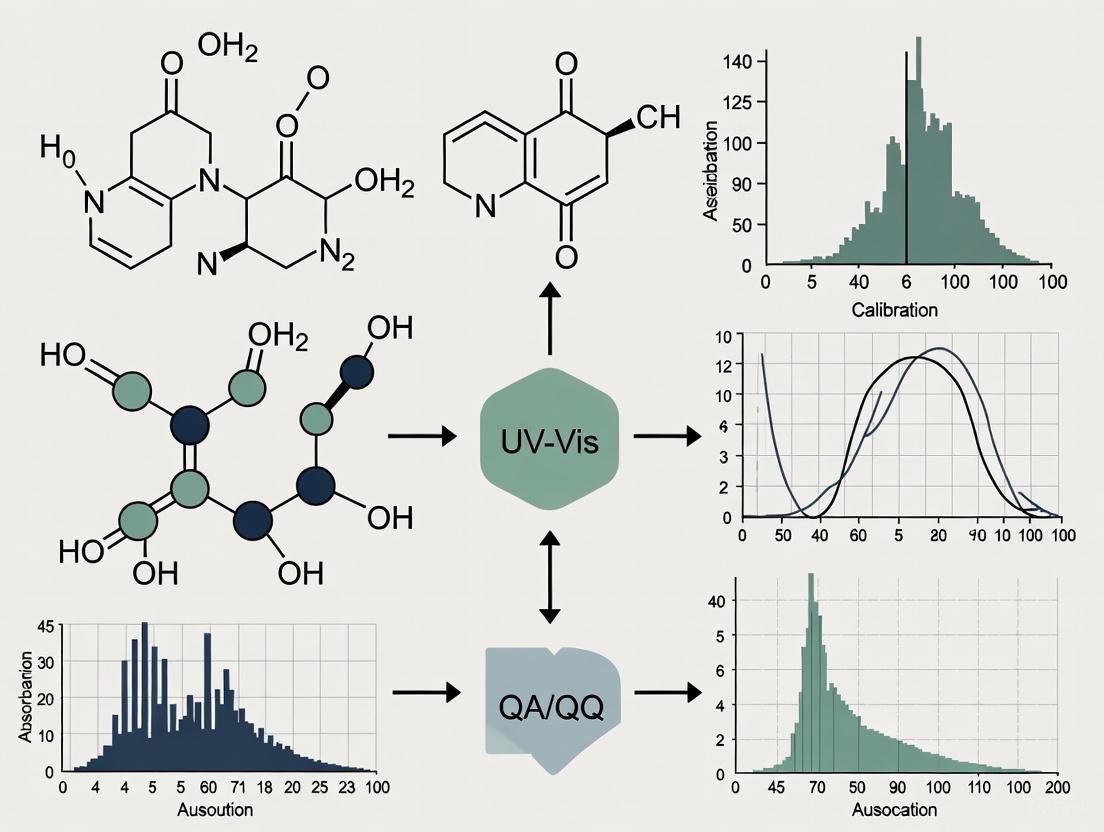
This article provides a comprehensive overview of the significant advantages of Ultraviolet-Visible (UV-Vis) spectroscopy in pharmaceutical Quality Assurance and Quality Control (QA/QC).
UV-Vis Spectroscopy in Pharma QA/QC: Advantages, Applications, and Best Practices
Abstract
This article provides a comprehensive overview of the significant advantages of Ultraviolet-Visible (UV-Vis) spectroscopy in pharmaceutical Quality Assurance and Quality Control (QA/QC). Tailored for researchers, scientists, and drug development professionals, it explores the foundational principles of UV-Vis, its critical methodological applications from raw material testing to stability studies, practical troubleshooting guidance, and its validation according to international regulatory standards. By synthesizing foundational knowledge with advanced applications and compliance strategies, this resource demonstrates how UV-Vis spectroscopy serves as a cornerstone analytical technique for ensuring drug safety, efficacy, and quality throughout the manufacturing lifecycle.
UV-Vis Spectroscopy Fundamentals: Principles and Core Strengths for Pharma Analysis
Ultraviolet-Visible (UV-Vis) spectroscopy is an analytical technique that measures the amount of discrete wavelengths of ultraviolet (UV) or visible light that are absorbed by or transmitted through a sample in comparison to a reference or blank sample [1]. This property is influenced by the sample composition, providing critical information on both the identity and concentration of analytes [1]. The technique is founded on the interaction between light and matter, specifically the ability of valence electrons in molecules to absorb energy from light, promoting them to higher energy states [2] [3]. In the context of pharmaceutical quality assurance and quality control (QA/QC), UV-Vis spectroscopy serves as a cornerstone analytical method due to its speed, simplicity, cost-effectiveness, and excellent quantitative capabilities [4]. It is routinely employed to ensure the identity, purity, potency, and stability of pharmaceutical compounds, playing a vital role in regulatory compliance and patient safety [4].
Fundamental Principles of Light Absorption
The Nature of Light and Electronic Transitions
Light possesses a specific amount of energy that is inversely proportional to its wavelength. Thus, shorter wavelengths of light carry more energy, while longer wavelengths carry less [1]. In UV-Vis spectroscopy, a specific amount of energy is needed to promote electrons in a substance to a higher energy state, which we detect as absorption [1]. The ultraviolet region of light typically spans 190–400 nm, while the visible region covers 400–800 nm, which corresponds to the range of colors humans can perceive from violet to red [1] [3].
When a molecule absorbs light energy in the UV-Vis range, electrons undergo electronic transitions from ground states to excited states [2]. For organic chromophores, four possible types of transitions occur:
- π–π* transitions: Promotion of an electron from a π bonding orbital to a π antibonding orbital
- n–π* transitions: Excitation of a non-bonding electron to a π antibonding orbital
- σ–σ* transitions: Promotion of an electron from a σ bonding orbital to a σ antibonding orbital
- n–σ* transitions: Excitation of a non-bonding electron to a σ antibonding orbital [2]
The probability and energy requirements for these transitions depend on the molecular structure and the specific orbitals involved. For instance, the n-π* transition in a carbonyl group occurs at approximately 290 nm but with low intensity, while the π-π* transition occurs at around 180 nm with high intensity, reflecting the better overlap of the π and π* orbitals [5].
The Beer-Lambert Law
The Beer-Lambert law is the fundamental principle governing quantitative analysis in UV-Vis spectroscopy [6]. It states that the absorbance of a solution is directly proportional to the concentration of the absorbing species in the solution and the path length the light travels through [2]. The mathematical expression of this law is:
A = εbc
Where:
- A is the measured absorbance (unitless)
- ε is the molar absorptivity or extinction coefficient (typically in L mol⁻¹ cm⁻¹)
- b is the path length of the sample holder (usually in cm)
- c is the concentration of the analyte (in mol L⁻¹) [1] [6]
The relationship between the intensity of incident light (I₀) and transmitted light (I) is defined as A = log₁₀(I₀/I), which is also related to transmittance (T) through A = -log₁₀T [1]. For accurate quantitative measurements, absorbance values should generally be maintained below 1 (within the dynamic range of the instrument), as an absorbance of 1 corresponds to 90% of the incoming light being absorbed, with only 10% reaching the detector [1].
Table 1: Key Parameters of the Beer-Lambert Law
| Parameter | Symbol | Units | Description |
|---|---|---|---|
| Absorbance | A | Unitless (Absorbance Units) | Measure of light absorbed by the sample |
| Molar Absorptivity | ε | L mol⁻¹ cm⁻¹ | Measure of how strongly a chemical species absorbs light at a specific wavelength |
| Path Length | b | cm | Distance the light travels through the sample |
| Concentration | c | mol L⁻¹ | Amount of the absorbing species in solution |
Instrumentation and Measurement
Components of a UV-Vis Spectrophotometer
A UV-Vis spectrophotometer consists of several key components that work together to measure light absorption [1]:
Light Source: Provides a steady source emitting light across a wide range of wavelengths. Common configurations include:
- A single xenon lamp for both UV and visible ranges
- Two lamps: a deuterium lamp for UV light and a tungsten or halogen lamp for visible light [1]
Wavelength Selector: Narrow down the broad wavelengths from the light source to specific wavelengths for sample examination. Options include:
- Monochromators (most common): Separate light into a narrow band using diffraction gratings
- Absorption filters: Colored glass or plastic designed to absorb particular wavelengths
- Interference filters: Use multiple layers of dielectric material where interference occurs
- Cutoff and bandpass filters: Allow light below/above certain wavelengths or within a specific range [1]
Sample Container: Holds the sample during analysis. For UV studies, quartz cuvettes are required as they are transparent to most UV light, unlike plastic or glass which absorb UV light [1]. Standard path lengths are typically 1 cm, though shorter path lengths are used for highly concentrated samples [1].
Detector: Converts the light that passes through the sample into a readable electronic signal. Common detectors include:
- Photomultiplier tubes (PMT): Based on the photoelectric effect, especially useful for detecting very low light levels
- Photodiodes and Charge-Coupled Devices (CCDs): Semiconductor-based detectors [1]
Modern instruments may employ different detection approaches: fixed wavelength detectors for simple, repetitive analyses; tunable/scanning wavelength detectors for flexibility in wavelength selection; and full spectrum detectors (e.g., diode array detectors) that capture all wavelengths simultaneously for comprehensive analysis [7].
Figure 1: Schematic workflow of a UV-Vis spectrophotometer showing the key components and the direction of light and signal processing.
Sample Preparation and Measurement Protocols
Proper sample preparation is crucial for accurate and reproducible UV-Vis results in pharmaceutical applications [4]. Key considerations include:
- Solvent Selection: The solvent must be transparent in the spectral region of interest and not react chemically with the analyte. Common pharmaceutical solvents include water, buffers, ethanol, and methanol [2].
- Concentration Adjustment: Sample concentration should be adjusted to give absorbance readings within the optimal linear range (typically 0.1–1.0 AU). This may require dilution with an appropriate solvent [4].
- Clarity: Samples must be optically clear and free from particulate matter to avoid light scattering effects [4].
- Reference Measurement: A blank reference containing only the solvent is essential to zero the instrument and account for any solvent absorption [1] [6].
The general measurement protocol involves:
- Preparing the sample solution at appropriate concentration
- Selecting the correct cuvette material (quartz for UV, glass or plastic for visible only)
- Measuring the blank/reference solution to establish baseline
- Measuring the sample solution and recording the absorbance
- Repeating measurements for reproducibility if necessary [1] [6]
For quantitative analysis, a calibration curve with at least three concentrations of the standard compound is required, though five concentrations provide better accuracy [6]. The calibration solutions should be spaced relatively equally apart and cover a range from just above to an order of magnitude below the estimated unknown sample concentration [6].
Applications in Pharmaceutical QA/QC
UV-Vis spectroscopy plays a critical role in multiple aspects of pharmaceutical quality assurance and control, offering fast, simple, and inexpensive analysis suitable for routine quantification with high throughput [4]. Key applications include:
Identity Testing and Purity Assessment
While UV-Vis alone may not provide definitive structural information, it serves as an important initial test for identity verification and purity assessment of pharmaceutical compounds [4]. The presence of unexpected absorbance peaks or shifts in the spectrum may indicate impurities, contaminants, or degradation products [4]. By comparing the absorption spectrum of a sample with that of a reference standard, analysts can quickly verify material identity and detect potential quality issues.
Quantitative Analysis of APIs
One of the most significant applications of UV-Vis spectroscopy in pharmaceutical QA/QC is the quantification of active pharmaceutical ingredients (APIs) [4]. The technique is extensively used for:
- Potency determination of drugs in tablets, capsules, and liquid formulations
- Content uniformity testing to ensure consistent API distribution
- Batch release testing to verify product specifications are met [4]
The high sensitivity and accuracy of modern UV-Vis instruments allow for precise measurement of API concentrations, which is essential for ensuring drug efficacy and safety [8] [9].
Dissolution Testing and Stability Studies
UV-Vis spectroscopy is routinely employed in dissolution profile monitoring during pharmaceutical stability testing [4]. By measuring the concentration of dissolved API at specific time points, researchers can evaluate drug release characteristics and assess product performance. Additionally, the technique is valuable in ongoing stability studies to track changes in molecular structure or concentration over time, helping to establish product shelf life and storage conditions [4].
Table 2: Key Pharmaceutical QA/QC Applications of UV-Vis Spectroscopy
| Application | Purpose | Typical Protocol |
|---|---|---|
| Content Uniformity | Ensure consistent distribution of active ingredient in dosage forms | Extract API from multiple dosage units, dilute appropriately, measure absorbance, calculate concentration |
| Dissolution Testing | Monitor drug release characteristics over time | Sample dissolution medium at specific intervals, measure API concentration via absorbance |
| Raw Material ID | Verify identity of incoming materials | Compare absorbance spectrum of sample against reference standard |
| Impurity Detection | Identify and quantify impurities or degradation products | Scan multiple wavelengths for unexpected absorption peaks |
| Stability Testing | Track product degradation over time | Monitor changes in absorbance at specific wavelengths during accelerated aging studies |
Advantages in Pharmaceutical Research
The implementation of UV-Vis spectroscopy in pharmaceutical QA/QC provides several distinct advantages:
- Speed and Efficiency: UV-Vis enables rapid analysis with almost immediate results, making it ideal for high-throughput environments and time-sensitive applications [8].
- Cost-Effectiveness: Compared to other analytical techniques like HPLC, GC, or NMR, UV-Vis spectrophotometers have a lower initial investment and reduced operational costs [8] [9] [4].
- Non-Destructive Testing: The technique is non-destructive, allowing repeated measurements on the same sample without degradation, which is particularly valuable for precious or limited samples [8].
- Regulatory Acceptance: UV-Vis is well-established in pharmacopoeias and recognized by regulatory bodies such as the FDA and EMA when properly validated, supporting its use in compliant environments [4].
- Ease of Use: Modern UV-Vis instruments feature user-friendly designs with intuitive interfaces, reducing training requirements and enabling seamless integration into laboratory workflows [9].
Essential Research Reagents and Materials
Successful implementation of UV-Vis spectroscopy in pharmaceutical analysis requires specific reagents and materials:
Table 3: Essential Research Reagent Solutions for UV-Vis Spectroscopy in Pharmaceutical QA/QC
| Material/Reagent | Function | Application Notes |
|---|---|---|
| High-Purity Solvents (water, ethanol, buffers) | Dissolve samples without interfering absorbance | Must be transparent in spectral region of interest; degas if necessary |
| Reference Standards | Calibration and method validation | Certified reference materials with known purity and absorbance characteristics |
| Quartz Cuvettes | Hold samples for UV analysis | Required for UV measurements due to quartz transparency; 1 cm path length standard |
| Matched Cuvette Sets | Ensure measurement consistency | For simultaneous sample and reference measurements in double-beam instruments |
| Buffer Solutions | Maintain consistent pH environment | Critical for pH-sensitive analytes; must not absorb in measurement region |
| Calibration Solutions | Establish quantitative relationship between absorbance and concentration | Series of known concentrations covering expected sample concentration range |
Method Validation and Regulatory Considerations
For UV-Vis methods to be employed in pharmaceutical QA/QC, they must undergo rigorous validation according to regulatory guidelines such as ICH Q2(R1) [4]. Key validation parameters include:
- Accuracy: The closeness of test results to the true value
- Precision: The degree of agreement among individual test results
- Specificity: The ability to assess the analyte unequivocally in the presence of other components
- Linearity: The ability to obtain results directly proportional to analyte concentration
- Range: The interval between upper and lower concentration levels with suitable precision, accuracy, and linearity [4]
Additionally, instruments require regular calibration and qualification (IQ/OQ/PQ), proper documentation, and trained personnel to ensure compliance with current Good Manufacturing Practices (cGMP) [4]. The FDA supports the use of UV-Vis spectroscopy within Process Analytical Technology (PAT) frameworks and for Real-Time Release Testing (RTRT), enabling manufacturers to monitor critical quality attributes in real time [4].
UV-Vis spectroscopy operates on the fundamental principle of measuring light absorption by molecules as their electrons transition to higher energy states, with quantification governed by the Beer-Lambert law. In pharmaceutical QA/QC research, this technique provides an indispensable tool for ensuring product quality, safety, and efficacy through applications ranging from raw material identification to dissolution testing and stability monitoring. The speed, cost-effectiveness, non-destructive nature, and regulatory acceptance of UV-Vis spectroscopy make it particularly valuable in pharmaceutical environments, while proper method validation and sample preparation ensure accurate, reproducible results. As pharmaceutical manufacturing continues to evolve toward more efficient processes and real-time monitoring, UV-Vis spectroscopy remains a cornerstone analytical technique that supports both fundamental research and quality control operations.
The Beer-Lambert Law (also known as Beer's Law) represents a fundamental principle in absorption spectroscopy, establishing a quantitative relationship between light attenuation and the properties of a material through which light passes [10]. This law serves as the cornerstone for quantitative chemical analysis across numerous scientific disciplines, with particularly critical applications in pharmaceutical quality assurance and quality control (QA/QC). By enabling precise measurement of substance concentrations, the Beer-Lambert Law provides the mathematical foundation for ensuring drug identity, potency, and purity throughout pharmaceutical development and manufacturing processes [11] [4].
In pharmaceutical research and quality systems, UV-Visible (UV-Vis) spectroscopy leverages the Beer-Lambert Law for a wide range of analyses, from active pharmaceutical ingredient (API) quantification to impurity detection and dissolution testing [4]. The technique's non-destructive nature, combined with its speed, accuracy, and reproducibility, makes it indispensable for regulatory compliance and patient safety assurance [12]. This technical guide explores both the theoretical framework of the Beer-Lambert Law and its practical implementation within modern pharmaceutical analytical workflows.
Theoretical Foundations
Fundamental Concepts: Transmittance and Absorbance
When monochromatic light passes through a sample solution, its intensity decreases from the initial incident intensity ((I_0)) to a lower transmitted intensity ((I)) [10]. This interaction is quantified through two fundamental properties:
- Transmittance (T): Defined as the ratio of transmitted to incident light intensity, (T = \frac{I}{I_0}), often expressed as a percentage (%T) [10].
- Absorbance (A): Defined as the logarithm of the reciprocal of transmittance, (A = \log{10} \left( \frac{I0}{I} \right) = -\log_{10} T) [10] [13].
This logarithmic relationship means that absorbance increases linearly with concentration, while transmittance decreases exponentially. The following table illustrates this fundamental relationship [10]:
| Absorbance | % Transmittance | Light Transmitted |
|---|---|---|
| 0 | 100% | 100% |
| 0.3 | 50% | 50% |
| 1 | 10% | 10% |
| 2 | 1% | 1% |
| 3 | 0.1% | 0.1% |
Table 1: Relationship between absorbance and transmittance values
The Beer-Lambert Equation
The Beer-Lambert Law establishes a linear relationship between absorbance and sample properties through the equation:
[A = \epsilon \cdot l \cdot c]
Where:
- (A) is the measured absorbance (dimensionless) [13]
- (\epsilon) is the molar absorptivity or molar absorption coefficient (typically in L·mol⁻¹·cm⁻¹) [13] [14]
- (l) is the path length through the sample (typically in cm) [13] [14]
- (c) is the concentration of the absorbing species (typically in mol/L) [13] [14]
This relationship holds true provided the light is monochromatic, the sample is homogeneous, and there are no chemical interactions between multiple absorbing species that would affect the absorption characteristics [13] [15].
Electronic Transitions and Molecular Basis
The physical basis for light absorption in UV-Vis spectroscopy involves electronic transitions within molecules. When photons of UV or visible light strike chromophores (light-absorbing molecules), electrons absorb specific amounts of energy corresponding to the photon energy and transition from ground state orbitals to higher-energy excited states [3].
The specific wavelength at which a molecule absorbs light depends on its electronic structure and the energy difference between molecular orbitals. Different functional groups and molecular structures create characteristic absorption patterns, enabling both identification and quantification of chemical compounds [1]. This principle forms the basis for applying UV-Vis spectroscopy in pharmaceutical analysis, where specific APIs and potential impurities exhibit unique spectral signatures.
Figure 1: UV-Vis Spectroscopy and Beer-Lambert Law Principle
Instrumentation and Methodology
UV-Vis Spectrophotometer Components
Modern UV-Vis spectrophotometers consist of several key components that work together to measure light absorption accurately [1] [3]:
Light Source: Provides broad-spectrum radiation covering UV and visible wavelengths. Common sources include:
- Deuterium lamps (UV region)
- Tungsten or halogen lamps (visible region)
- Xenon lamps (both UV and visible)
Wavelength Selector: Isolates specific wavelengths from the broad-spectrum source. Monochromators containing diffraction gratings are most common, providing narrow bandwidths for precise measurements [1]. The groove frequency of these gratings (typically 1200 grooves per mm or higher) determines the optical resolution [1].
Sample Holder: Contains the solution being analyzed. For UV measurements, quartz cuvettes are essential as they transmit UV light, while glass or plastic cuvettes may be used for visible light measurements [1]. Standard path length is 1 cm, though variations exist for specialized applications.
Detector: Converts transmitted light intensity into electrical signals. Common detectors include:
- Photomultiplier tubes (PMT) for high sensitivity
- Photodiode arrays for rapid scanning
- Charge-coupled devices (CCD) for high-resolution spectrometry [1]
Experimental Workflow for Pharmaceutical Analysis
The following diagram outlines a standard workflow for quantitative pharmaceutical analysis using UV-Vis spectroscopy based on the Beer-Lambert Law:
Figure 2: Pharmaceutical Quantitative Analysis Workflow
Essential Research Reagents and Materials
Successful implementation of the Beer-Lambert Law in pharmaceutical analysis requires specific reagents and materials to ensure accuracy and reproducibility:
| Material/Reagent | Specification | Function in Analysis |
|---|---|---|
| Reference Standard | USP/EP certified >98% purity | Provides known ε value for accurate quantification |
| HPLC-grade Solvents | Low UV absorbance, high purity | Dissolves analyte without interfering absorbance |
| Quartz Cuvettes | 1 cm path length, UV-transparent | Holds sample with minimal light scattering |
| Volumetric Flasks | Class A, appropriate volumes | Precise standard and sample preparation |
| Buffer Salts | Analytical grade | Maintains pH for stable chromophore performance |
| Filter Membranes | 0.45 μm or 0.2 μm pore size | Removes particulates that cause light scattering |
Table 2: Essential research reagents and materials for UV-Vis pharmaceutical analysis
Practical Implementation in Pharmaceutical QA/QC
Calibration Curve Generation
The primary application of the Beer-Lambert Law in pharmaceutical analysis involves creating calibration curves to quantify unknown concentrations. This process involves:
Preparation of Standard Solutions: Create a series of standard solutions with known concentrations of the analyte, typically covering at least five different concentration levels [10].
Absorbance Measurement: Measure the absorbance of each standard solution at the wavelength of maximum absorption (λ_max) [10].
Linear Regression Analysis: Plot absorbance versus concentration and determine the best-fit line using linear regression. The slope of this line corresponds to the product ( \epsilon \cdot l ) [10] [13].
An example calibration curve for Rhodamine B solutions demonstrates this linear relationship, where absorbance measurements at λ_max are plotted against known concentrations to create a quantitative standard curve [10].
Quantitative Applications in Pharmaceutical Sciences
The Beer-Lambert Law enables several critical quantitative analyses in pharmaceutical QA/QC:
Concentration Determination: Direct quantification of API concentration in raw materials, in-process samples, and finished products using the equation (c = \frac{A}{\epsilon \cdot l}) [14] [4].
Content Uniformity Testing: Verification that dosage forms contain consistent API amounts throughout a production batch, ensuring each unit delivers the specified drug quantity [4].
Dissolution Testing: Monitoring the rate and extent of drug release from solid oral dosage forms in dissolution media, critical for predicting in vivo performance [11] [4].
Impurity Quantification: Detection and measurement of impurities and degradation products that may exhibit different absorption characteristics than the main API [11] [4].
Method Validation Parameters
For regulatory compliance, UV-Vis methods based on the Beer-Lambert Law must be validated according to ICH Q2(R1) guidelines, addressing the following parameters [4]:
| Validation Parameter | Acceptance Criteria | Application to Beer-Lambert Law |
|---|---|---|
| Linearity | R² > 0.998 | Verify A vs. c linearity across specified range |
| Accuracy | 98-102% recovery | Compare measured vs. known standard concentrations |
| Precision | RSD < 2% | Repeatability of absorbance measurements |
| Range | 80-120% of test concentration | Establish validated concentration limits |
| Specificity | No interference | Confirm analyte identification at λ_max |
Table 3: Method validation requirements for UV-Vis spectroscopic methods
Advanced Considerations and Limitations
Practical Limitations of the Beer-Lambert Law
While the Beer-Lambert Law provides an excellent foundation for quantitative analysis, several practical limitations must be considered in pharmaceutical applications:
Concentration Limitations: The linear relationship between absorbance and concentration typically holds only within specific concentration ranges, usually yielding optimal results between absorbance values of 0.1-1.0 AU [1] [14]. At higher concentrations, electrostatic interactions between molecules can alter absorptivity, leading to negative deviations from linearity [15].
Chemical Deviations: Changes in solvent environment, pH, temperature, or association/dissociation equilibria can affect the molar absorptivity (ε) of compounds [15]. These factors must be controlled during method development and validation.
Instrumental Deviations: Use of polychromatic light (rather than truly monochromatic light) and stray light within the spectrophotometer can cause deviations from ideal Beer-Lambert behavior, particularly at high absorbance values [1] [15].
Physical Deviations: Light scattering due to particulates or turbidity in samples contributes to measured attenuation but does not represent true electronic absorption, potentially leading to overestimation of concentration [16].
Overcoming Limitations in Pharmaceutical Analysis
Several strategies help mitigate these limitations in practice:
Sample Dilution: For samples with high absorbance values (>1 AU), dilution brings measurements into the optimal linear range and reduces molecular interactions [1].
Background Correction: Measurement of blank solutions containing all sample components except the analyte corrects for solvent effects and cell imperfections [1].
Standard Addition Methods: For complex matrices where the sample background significantly affects absorptivity, standard addition techniques help account for matrix effects [15].
Path Length Adjustment: Using cuvettes with shorter path lengths (e.g., 1 mm instead of 1 cm) extends the measurable concentration range for highly absorbing species [1].
Regulatory Framework in Pharmaceutical Applications
Compliance Requirements
UV-Vis spectroscopic methods based on the Beer-Lambert Law must satisfy rigorous regulatory standards to be implemented in pharmaceutical QA/QC [4]:
FDA 21 CFR Part 211: Mandates strict controls over laboratory testing procedures, including instrument calibration, qualification, and documentation practices [4].
ICH Q2(R1) Validation: Defines validation parameters including accuracy, precision, specificity, detection limit, quantitation limit, linearity, and range [4].
USP/EP Monographs: Provide standardized methods for specific drug compounds, including approved wavelengths, expected absorptivity values, and acceptance criteria [12].
Documentation and Data Integrity
All spectroscopic data generated for pharmaceutical QA/QC must adhere to ALCOA+ principles: Attributable, Legible, Contemporaneous, Original, and Accurate [4]. This includes:
- Comprehensive instrument qualification (IQ/OQ/PQ) records
- Complete method validation documentation
- Routine system suitability testing
- Electronic data audit trails
- Calibration and maintenance records
The Beer-Lambert Law remains the fundamental principle underlying quantitative UV-Vis spectroscopy in pharmaceutical research and quality control. Its mathematical simplicity belies its powerful utility in determining substance concentrations with precision and accuracy. When properly implemented with attention to its limitations and regulatory requirements, this principle provides an robust analytical foundation for ensuring drug identity, strength, quality, and purity throughout the pharmaceutical development and manufacturing lifecycle.
As spectroscopic technologies advance, the core principles of the Beer-Lambert Law continue to support innovations in Process Analytical Technology (PAT), real-time release testing (RTRT), and continuous manufacturing, cementing its ongoing relevance to modern pharmaceutical quality systems.
In the highly regulated pharmaceutical industry, the advantages of Ultraviolet-Visible (UV-Vis) spectroscopy for quality assurance and quality control (QA/QC) are fundamentally tied to its robust and precise instrumentation. The technique's reliability in confirming drug identity, quantifying active pharmaceutical ingredients (APIs), detecting impurities, and performing dissolution testing hinges on the integrated performance of its core components [17] [11]. From the light source that generates probe radiation to the detector that converts transmitted light into an analyzable signal, each component must deliver exceptional stability and accuracy to meet stringent pharmacopeia standards such as those defined by the USP, EP, and JP [17]. This guide provides an in-depth examination of these key instrumentation components, detailing their principle of operation, technical specifications, and their critical role in ensuring pharmaceutical product safety and efficacy.
The Operating Principle: Beer-Lambert Law
The fundamental principle underlying all UV-Vis spectroscopic measurements is the Beer-Lambert Law. It states that the absorbance (A) of light by a solution is directly proportional to the concentration (c) of the absorbing species and the path length (L) of the light through the solution [1] [18] [2].
The law is mathematically expressed as: A = εlc Where:
- A is the measured Absorbance (dimensionless)
- ε is the Molar Absorptivity (or extinction coefficient) with units of L·mol⁻¹·cm⁻¹
- l is the Path Length of the cuvette (cm)
- c is the Concentration of the analyte (mol·L⁻¹)
Absorbance is calculated from the measured light intensities: A = log₁₀(I₀/I), where I₀ is the intensity of the incident light, and I is the intensity of the transmitted light [1] [2]. This linear relationship is the cornerstone of quantitative analysis in pharmaceutical QA/QC, enabling the precise determination of API concentration and the detection of impurities.
Core Components of a UV-Vis Spectrophotometer
A UV-Vis spectrophotometer is an integrated system where each component plays a vital role in ensuring accurate and reproducible results. The following diagram illustrates the logical sequence and relationship of these core components.
The Light Source
The light source must provide stable, continuous radiation across the entire UV-Vis wavelength range (typically ~190 to ~800 nm). No single lamp meets this requirement perfectly, so most instruments use a combination of sources [19] [20].
Table 1: Comparison of Common UV-Vis Light Sources
| Light Source Type | Typical Wavelength Range | Key Characteristics | Primary Applications in Pharma |
|---|---|---|---|
| Deuterium Lamp [19] [20] | 190 – 400 nm | Intense, continuous UV spectrum; requires preheating; ~1000-hour lifespan. | Quantification of APIs and impurities with UV absorption peaks (e.g., Ibuprofen ID test per USP) [17] [11]. |
| Tungsten-Halogen Lamp [19] [20] | 350 – 2500 nm | Bright, continuous visible/NIR spectrum; stable; ~2000-hour lifespan. | Colorimetric assays, dissolution testing endpoint analysis, and visual quality checks. |
| Xenon Arc Lamp [19] [20] | 190 – 1100 nm | Very bright, continuous spectrum from UV to NIR; higher cost and output fluctuation. | Used in high-end instruments for rapid scanning and spectrofluorometry. |
| Xenon Flash Lamp [19] [20] | 190 – 1100 nm | Pulsed operation, less heat, long life; requires output integration for stability. | Cuvette-free micro-volume nucleic acid/protein analyzers for QA/QC of biomolecules [17]. |
In modern spectrophotometers, the light sources are switched seamlessly, typically in the 300-350 nm region where the emission intensities of the deuterium and halogen lamps are approximately equal [19]. This is often achieved by rotating a reflector to direct light from the desired lamp into the monochromator.
The Wavelength Selector (Monochromator)
The monochromator isolates a narrow band of wavelengths from the broad-spectrum light source for sample interrogation. Its key components are the entrance slit, diffraction grating, and exit slit [1] [21].
- Diffraction Grating: This is the core dispersive element. It is a mirror with closely spaced parallel grooves (typically ≥1200 grooves per mm) that physically separates white light into its constituent wavelengths. Rotating the grating selects which specific wavelength band is directed toward the exit slit [1] [21].
- Spectral Bandwidth (SBW): The narrow band of wavelengths exiting the monochromator is not perfectly monochromatic. The SBW, defined as the full width at half maximum (FWHM) of the intensity profile, is a critical parameter [21]. It is controlled by the widths of the slits. A narrower SBW provides better spectral resolution, crucial for identifying compounds with sharp or closely spaced absorption peaks, but at the cost of reduced light throughput and a lower signal-to-noise ratio [21] [2]. The SBW should generally be set to 1/10 of the natural width of the sample's absorption peak for accurate measurements [21].
The Sample Container (Cuvette)
The sample, typically in solution, is held in a container called a cuvette. The choice of cuvette material is critical for UV-Vis measurements.
- Quartz or Fused Silica: Required for UV range measurements (below ~350 nm) as they are transparent down to ~190 nm. Essential for pharmaceutical analysis of most APIs [1] [18].
- Glass or Plastic: Suitable only for visible range measurements (>350 nm) as they absorb UV light [1].
- Path Length: The standard path length is 1 cm. Shorter path lengths (e.g., 1 mm) are used for highly concentrated samples to keep absorbance within the instrument's ideal linear range (below 1 AU) [1].
The Detector
The detector converts the transmitted light intensity (I) into an electrical signal, which is then processed to calculate absorbance. The two most common types for UV-Vis instruments are:
- Photomultiplier Tube (PMT): A highly sensitive detector where incident photons strike a photocathode, ejecting electrons. These electrons are amplified through a series of dynodes, resulting in a large, measurable current. PMTs offer high sensitivity, low noise, and a wide dynamic range, making them ideal for research-grade instruments [1] [21].
- Silicon Photodiode: A semiconductor device where incident light creates electron-hole pairs, generating a photocurrent. Photodiodes are less sensitive than PMTs but are more compact, have a faster response time, and are more robust and cost-effective, making them common in routine QA/QC spectrophotometers [1] [21].
Instruments using array detectors (e.g., CCD or InGaAs) can capture the entire spectrum simultaneously without the need for a scanning monochromator, enabling extremely fast analysis [20].
Critical Performance Parameters in Pharmaceutical Analysis
Stray Light and Photometric Linearity
Stray light is defined as any light reaching the detector that is outside the selected wavelength band [19] [21]. It is a critical performance parameter, especially in regulated laboratories, because it causes deviations from the Beer-Lambert law at high absorbances. When a sample absorbs nearly all the intended light, the small amount of stray light that reaches the detector becomes significant, leading to falsely low absorbance readings [21]. This can result in an underestimation of sample concentration. Stray light levels are a key specification verified during instrument qualification to ensure compliance with pharmacopeial requirements [2].
Single Beam vs. Double Beam Optics
The optical configuration of a spectrophotometer significantly impacts its stability.
- Single Beam: Uses one light path. The reference (blank) and sample are measured sequentially. This design is simpler but susceptible to errors from source intensity drift over time [21] [18].
- Double Beam: Splits the monochromatic light into two beams—one passing through the sample and the other through a reference blank. The detector measures the ratio of the two beams simultaneously. This configuration automatically compensates for source drift, electronic fluctuations, and solvent absorption, providing superior stability and more reliable data, which is essential for demanding pharmaceutical analyses [21].
The Scientist's Toolkit: Essential Research Reagent Solutions
Table 2: Key Materials and Reagents for UV-Vis Spectroscopy in Pharma QA/QC
| Item | Function/Application | Technical & Regulatory Considerations |
|---|---|---|
| High-Purity Solvents [2] | To dissolve the analyte without introducing interfering absorbances. | Solvents must be "spectroscopic grade" (e.g., HPLC grade). Water, ethanol, and hexane are common. The solvent's UV cutoff wavelength must be lower than the analyte's absorption peak. |
| Certified Reference Standards [17] [11] | To create a calibration curve for quantitative analysis as per Beer-Lambert Law. | Must be of known high purity and traceable to a pharmacopeial standard (e.g., USP Ibuprofen RS). Critical for accurate Assay and Impurity testing. |
| Quartz Cuvettes (1 cm path length) [1] [18] | To hold liquid samples for analysis. | Must be meticulously clean and matched if used in double-beam instruments. Quartz is mandatory for UV analysis. |
| Buffer Salts & pH Adjusters [2] | To maintain a constant pH, which can affect the absorption spectrum of ionizable analytes. | Must be of high purity and not absorb in the spectral region of interest. Required for dissolution testing media and stability-indicating methods. |
| Validation Kits [17] | To perform Instrument Qualification (IQ/OQ/PQ). | Include holmium oxide or didymium filters for wavelength accuracy, neutral density filters for photometric accuracy, and potassium dichromate for stray light verification, per USP <857> guidelines. |
Experimental Protocol: Drug Identity Confirmation and Assay by UV-Vis Spectroscopy
The following workflow diagram outlines a standard procedure for drug analysis, commonly employed in pharmaceutical QA/QC laboratories.
Objective: To identify an Active Pharmaceutical Ingredient (API) and determine its concentration in a powder sample, complying with pharmacopeial monographs [17] [11].
Materials: API reference standard, sample powder, spectroscopic grade solvent (as specified in monograph), volumetric flasks, quartz cuvettes, UV-Vis spectrophotometer.
Methodology:
- Preparation of Standard Solution: Accurately weigh a specified quantity (e.g., 50 mg) of the API reference standard. Transfer quantitatively to a volumetric flask, dissolve, and dilute to volume with the specified solvent to create a stock solution of known concentration (e.g., 500 µg/mL). Serially dilute this stock to prepare a series of standard solutions covering a range of concentrations (e.g., 5, 10, 15, 20 µg/mL) [11].
- Instrument Setup & Blank Measurement: Turn on the spectrophotometer and allow the lamps to warm up and stabilize (typically 15-30 minutes). Set the instrument parameters. Place the solvent (blank) in a quartz cuvette and insert it into the sample holder. Perform a blank correction to set 0% Absorbance (100% Transmittance) [1] [18].
- Scan Standard for λmax: Using an intermediate concentration standard solution, perform a scan over the appropriate wavelength range (e.g., 200-400 nm for UV). Identify the wavelength of maximum absorption (λmax). This experimentally determined λmax should conform to the value specified in the pharmacopeial monograph for identity confirmation [11] [2].
- Generate Calibration Curve: Set the instrument to the fixed λmax. Measure the absorbance of each standard solution in the concentration series. Plot a graph of Absorbance (y-axis) versus Concentration (x-axis). The software will typically generate a linear regression equation (y = mx + c) and the correlation coefficient (R²). A value of R² > 0.995 is generally expected [18].
- Prepare and Analyze Sample: Accurately weigh a portion of the unknown sample powder and prepare a solution in the same solvent, targeting a concentration within the linear range of the calibration curve. Measure its absorbance at the same λmax.
- Calculation of Concentration and Purity:
- Concentration: Use the linear regression equation from the calibration curve to calculate the concentration of the API in the sample solution.
- Purity/Assay: The percentage purity of the API in the sample is calculated as:
(Calculated Concentration / Prepared Concentration) * 100%. This result is compared against the acceptance criteria (e.g., 98.0-102.0%) to release or reject the batch [11].
Ultraviolet-Visible (UV-Vis) spectroscopy remains a cornerstone analytical technique in pharmaceutical quality assurance and quality control (QA/QC) due to its rapid analysis time, operational simplicity, and exceptional cost-effectiveness. This whitepaper details how these core advantages make UV-Vis an indispensable tool for ensuring drug identity, purity, potency, and stability from raw material testing to final product release. By examining current instrumentation, standardized methodologies, and specific pharmaceutical applications, we demonstrate how UV-Vis spectroscopy supports robust, compliant, and efficient analytical workflows, fulfilling stringent global pharmacopoeia and regulatory requirements such as 21 CFR Part 11.
In the highly regulated pharmaceutical industry, UV-Vis spectroscopy provides a reliable, versatile, and straightforward analytical method for quantitative and qualitative analysis. Its fundamental principle—measuring the absorption of light in the ultraviolet and visible range (190–800 nm) by molecules in solution—is applied to numerous critical quality attributes. The technique is well-established for confirming the identity of raw materials, quantifying active pharmaceutical ingredients (APIs), ensuring content uniformity, monitoring dissolution profiles, and detecting impurities or degradation products. The combination of speed, simplicity, and low operational cost solidifies its position as a first-line analytical technique in both research and development and quality control laboratories worldwide [4].
The Pillars of Efficiency: Speed, Simplicity, and Cost
Speed and High Throughput
The rapid analysis time of UV-Vis spectroscopy significantly accelerates pharmaceutical workflows, from research to batch release.
- Fast Scan Speeds: Modern UV-Vis instruments are engineered for high-speed operation, delivering quick and stable readings essential for labs processing dozens or hundreds of samples daily [22].
- Minimal Sample Preparation: Unlike chromatographic techniques, UV-Vis often requires only dissolution in a suitable solvent, and many modern instruments feature guided workflows that further reduce manual steps and analysis time [22].
- Routine Quantification: As a fast, simple, and inexpensive technique, UV-Vis is highly suitable for routine quantification with high throughput, directly supporting efficiency in QA/QC operations [4].
Table 1: Quantitative Speed Comparison with Other Techniques
| Analytical Technique | Typical Analysis Time per Sample | Sample Preparation Complexity |
|---|---|---|
| UV-Vis Spectroscopy | Under 5 minutes [23] | Low (often just dissolution) |
| Gas Chromatography (GC) | 30 to 45 minutes [23] | High (derivatization, complex prep) |
| High-Performance Liquid Chromatography (HPLC) | 15 to 30+ minutes | Medium to High (column equilibrium, prep) |
| Nuclear Magnetic Resonance (NMR) | 10 to 60+ minutes | Medium (requires deuterated solvents) |
Operational Simplicity and User-Friendliness
The inherent simplicity of UV-Vis spectroscopy reduces training time and minimizes user-induced errors, which is critical in multidisciplinary lab environments.
- Intuitive Interfaces: Modern instruments emphasize user-friendly interfaces with touchscreen controls, pre-programmed methods, and on-screen guided workflows that enable non-experts to produce reliable results [22].
- Minimal Training Requirements: The straightforward operational principles and automated software guidance reduce the need for extensive training, allowing a broader range of personnel to operate the equipment effectively [22].
- Standardized Methods: Compliance with global pharmacopoeia standards (USP, Eur. Ph., JP) is built into modern instruments and their software, simplifying method development and validation and ensuring regulatory compliance from the outset [24].
Cost-Effectiveness and Low Operational Overhead
UV-Vis spectroscopy offers a compelling low total cost of ownership, making it accessible for labs of all sizes.
- Low Initial Investment: Basic spectrophotometers are relatively affordable, with entry-level models significantly less costly than advanced GC, HPLC, or NMR systems [23].
- Minimal Consumable and Reagent Costs: The technique is non-destructive and does not require expensive columns, high-purity gases, or specialized deuterated solvents, leading to very low ongoing operational costs [23].
- Reduced Validation Time: Enhanced security (ES) software and client-server architecture in modern systems streamline the instrument qualification and validation process, reducing the time and cost associated with regulatory compliance [24].
Table 2: Cost Analysis and Comparison of Common Pharma QA/QC Techniques
| Technique | Relative Instrument Cost | Key Consumables (Cost Driver) | Operational Costs |
|---|---|---|---|
| UV-Vis Spectroscopy | Low to Medium | Lamps, cuvettes (Low cost) | Very Low |
| IR Spectroscopy | Medium | ATR crystals, KBr (Low) | Low |
| HPLC | High | Columns, high-purity solvents (High) | High |
| GC | High | Columns, carrier gases (High) | High |
| NMR | Very High | Deuterated solvents (Very High) | Very High |
Experimental Protocols and Methodologies in Pharma QA/QC
Protocol: API Concentration and Content Uniformity Testing
This is a standard quantitative method for determining the strength and uniformity of the API in solid dosage forms like tablets.
Principle: The concentration of an API in solution is directly proportional to its absorbance at a specific wavelength, as per the Beer-Lambert law.
Materials & Equipment:
- UV-Vis spectrophotometer (e.g., PerkinElmer LAMBDA 365+, Thermo Fisher Scientific Evolution series)
- Matched quartz cuvettes
- Volumetric flasks, pipettes
- Suitable solvent (e.g., water, buffer, hydrochloric acid, methanol)
- Reference standard of the API
Procedure:
- Standard Solution Preparation: Accurately weigh and dissolve a known quantity of the API reference standard in the chosen solvent to prepare a stock solution of known concentration. Serially dilute to create a calibration curve within the optimal absorbance range (typically 0.1–1.0 AU) [4].
- Sample Solution Preparation: For each tablet from a batch, crush and accurately weigh a portion equivalent to one dose. Dissolve in the solvent, sonicate if necessary, and filter to obtain a clear solution. Dilute to a final volume so the expected concentration falls within the calibration curve range.
- Instrumental Analysis:
- Turn on the UV-Vis spectrometer and allow the lamp to warm up.
- Set the spectrophotometer to measure absorbance at the predetermined wavelength (λ_max) for the API.
- Blank the instrument using the pure solvent.
- Measure the absorbance of each standard and sample solution.
- Data Analysis:
- Generate a calibration curve by plotting the absorbance of the standard solutions against their concentrations.
- Calculate the concentration of the API in each sample solution using the regression equation from the calibration curve.
- Determine the amount of API per tablet and calculate the content uniformity across the batch.
Protocol: Color Analysis of Pharmaceutical Products
Color measurement is critical for consumer acceptance and can indicate stability, impurity levels, or degradation.
Principle: A UV-Vis spectrophotometer quantitatively measures the percent transmittance (%T) or reflectance (%R) of a product across the visible spectrum (400–700 nm), assigning objective color coordinates in a defined color space (e.g., CIE Lab*) [12].
Materials & Equipment:
- UV-Vis spectrophotometer with color analysis software
- Transmission cuvettes (for liquids) or reflectance accessory (for solids)
- Color-matching standards as per USP monographs [12]
Procedure:
- Sample Preparation:
- Instrumental Analysis:
- Configure the software for color measurement according to ASTM, USP, or EP methodologies [12].
- For transmission measurements, use a blank cuvette filled with solvent or air. For reflectance, use the certified white reference tile.
- Scan the sample across the visible spectrum.
- Data Analysis:
- The software calculates and reports the color coordinates in the chosen color space.
- Compare the sample's coordinates to the acceptable limits defined for the product standard.
- Deviations beyond set limits can trigger further investigation into potential degradation or impurity presence.
Protocol: Instrument Qualification and System Suitability Testing
Ensuring the UV-Vis instrument itself is performing to specification is a regulatory requirement in pharmaceutical QC.
Principle: Performance verification tests are conducted according to pharmacopoeia standards (e.g., USP <857>, Ph. Eur. 2.2.5) to confirm wavelength accuracy, photometric accuracy, stray light, and resolution [24] [25].
Materials & Equipment:
- Certified reference materials (e.g., holmium oxide filter for wavelength accuracy, potassium dichromate for photometric linearity, potassium chloride or sodium iodide for stray light)
- Traceable neutral density filters
Procedure:
- Wavelength Accuracy: Using a holmium oxide filter in the light path, scan the characteristic peaks (e.g., 241.15 nm, 287.15 nm, 361.5 nm). The measured peak positions must fall within ±0.5 nm of the certified values.
- Stray Light: Measure a solution known to block all light at a specific wavelength (e.g., 12 g/L KCl in water at 200 nm). The recorded absorbance should be greater than 2.0 AU, confirming that stray light is acceptably low.
- Photometric Accuracy: Measure the absorbance of a series of certified potassium dichromate solutions at specific wavelengths. The measured values must be within a specified tolerance (e.g., ±0.01 AU) of the certified values.
- Resolution: Scan a solution of toluene in hexane and check that the resolution of the fine structure peaks meets the minimum specified depth.
All procedures, results, and acceptance criteria must be documented to provide an audit trail for regulatory compliance.
The Scientist's Toolkit: Essential Research Reagent Solutions
Table 3: Key Materials and Reagents for UV-Vis Analysis in Pharma
| Item | Function/Application | Critical Specifications |
|---|---|---|
| Quartz Cuvettes | Holding liquid samples for analysis; quartz is transparent down to the UV range. | Matched pairs (for sample and reference); pathlength (e.g., 1 cm); UV-grade silica. |
| API Reference Standards | Used to create calibration curves for accurate quantification of the active ingredient. | Certified purity and traceability to a primary standard (e.g., USP compendial standard). |
| High-Purity Solvents | To dissolve the sample and reference standards without introducing interfering absorbance. | "Spectrophotometric grade" or equivalent, low in UV-absorbing impurities. |
| Holmium Oxide Filter | A certified reference material for verifying the wavelength accuracy of the instrument. | NIST-traceable certified peak wavelengths. |
| Potassium Dichromate Solutions | Certified reference material for verifying the photometric accuracy and linearity of the instrument. | NIST-traceable certified absorbance values at specific wavelengths. |
| Stray Light Solutions | Solutions like KCl or NaI used to verify the instrument's level of stray light at a cutoff wavelength. | High purity to ensure accurate cutoff at the specified wavelength. |
Workflow Visualization
UV-Vis QA/QC Workflow: A streamlined process from sample preparation to data-driven decisions.
Core Advantages and Their Business Impact: How fundamental technical benefits translate into tangible operational value.
The enduring relevance of UV-Vis spectroscopy in pharmaceutical QA/QC is firmly rooted in its unparalleled combination of speed, simplicity, and cost-effectiveness. As demonstrated, these core advantages enable rapid and reliable decision-making for critical quality attributes, from API quantification to stability monitoring, while ensuring compliance with global regulatory standards. Modern advancements continue to enhance these strengths through intuitive software, robust client-server architectures for data integrity, and seamless integration into digital lab ecosystems. For researchers and drug development professionals, UV-Vis spectroscopy remains an essential, efficient, and economically viable analytical tool that directly contributes to the delivery of safe, effective, and high-quality medicines to the market.
The Role of UV-Vis in a GxP and Pharma-Compliant Laboratory
Ultraviolet-Visible (UV-Vis) spectroscopy is an indispensable analytical technique in pharmaceutical laboratories, providing a robust foundation for ensuring drug quality, safety, and efficacy. This technique measures the amount of discrete wavelengths of ultraviolet or visible light absorbed by a sample, offering critical insights into its composition and concentration [1]. The fundamental principle underpinning UV-Vis spectroscopy involves the promotion of electrons in a substance to a higher energy state when they absorb a specific amount of energy from light, with different molecules absorbing characteristic wavelengths due to their unique bonding environments [1] [3]. In the context of Good Practices (GxP), which encompass Good Manufacturing Practice (GMP), Good Laboratory Practice (GLP), and other quality guidelines, UV-Vis spectroscopy stands out for its ability to deliver precise, reproducible, and legally defensible data that complies with global regulatory standards [26] [4].
The technique's non-destructive nature, speed, and simplicity make it particularly valuable for pharmaceutical quality assurance and quality control (QA/QC), where it is routinely deployed for tasks ranging from raw material identification to finished product release testing [27] [4]. As regulatory demands intensify, the role of UV-Vis spectroscopy expands beyond traditional quantification to become an integral component of comprehensive quality management systems, supporting real-time release testing and continuous manufacturing oversight [4]. Its compliance with major pharmacopeias, including the United States Pharmacopeia (USP), European Pharmacopoeia (EP), and Japanese Pharmacopoeia (JP), further solidifies its status as a cornerstone of pharmaceutical analysis [24] [28].
Fundamental Principles and Instrumentation
Core Principles of UV-Vis Spectroscopy
UV-Vis spectroscopy operates on the well-established Beer-Lambert Law, which mathematically describes the relationship between light absorption and the properties of the absorbing material. The law states that absorbance (A) is directly proportional to the concentration of the analyte (c) and the path length of light through the sample (L), expressed as A = εlc, where ε is the molar absorptivity or absorption coefficient [1]. This linear relationship forms the basis for quantitative analysis, allowing scientists to determine unknown concentrations by measuring absorbance against a set of calibrated standards. The technique typically covers wavelengths from 190 nm to 800 nm, encompassing both the ultraviolet (190-400 nm) and visible (400-800 nm) regions of the electromagnetic spectrum [3]. When molecules containing chromophores—functional groups that absorb light—are exposed to this radiation, their electrons undergo electronic transitions from ground states to excited states, resulting in characteristic absorption spectra that serve as molecular fingerprints for identification and quantification [3].
Instrumentation Components and Configuration
A UV-Vis spectrophotometer consists of several key components that work in concert to deliver accurate and reliable measurements. The instrumental configuration directly impacts data quality and must be carefully controlled to maintain GxP compliance.
- Light Source: The system typically employs a combination of light sources to cover the full UV-Vis range. A deuterium lamp provides UV light, while a tungsten or halogen lamp covers the visible spectrum. Modern instruments may use xenon flash lamps that offer instant-on capability and eliminate warm-up time, supporting high-throughput laboratory environments [1] [28].
- Wavelength Selector: Monochromators containing diffraction gratings are most commonly used to isolate specific wavelengths from the broad spectrum emitted by the light source. These components are critical for achieving the optical resolution specified in pharmacopeial requirements, with groove densities typically exceeding 1200 grooves per mm for pharmaceutical-grade instruments [1].
- Sample Container: Samples are typically held in quartz cuvettes with standard path lengths of 1 cm, as quartz is transparent to most UV light. Proper selection and maintenance of cuvettes are essential, as imperfections can scatter light and compromise results [1].
- Detector: The transmitted light is converted into an electrical signal by detectors such as photomultiplier tubes (PMT), photodiodes, or charge-coupled devices (CCD). PMTs are particularly valued for detecting very low light levels, offering the sensitivity required for trace analysis in pharmaceutical applications [1].
Modern UV-Vis systems designed for regulated environments often feature double-beam optics, which provide enhanced stability during data acquisition by simultaneously measuring sample and reference pathways, thereby compensating for source fluctuations and drift [28].
Figure 1: UV-Vis Spectrophotometer Workflow. This diagram illustrates the key components and signal pathway of a double-beam UV-Vis spectrophotometer, highlighting the critical comparison between sample and reference measurements.
Regulatory Framework and Compliance Requirements
Global GxP Standards and Pharmacopeia Compliance
Pharmaceutical laboratories operating under GxP mandates must adhere to a complex framework of quality guidelines and regulations. GxP—an acronym for "Good x Practice"—encompasses standards governing manufacturing (GMP), distribution (GDP), laboratory studies (GLP), and clinical trials (GCP) to ensure product quality and patient safety [26]. Within this framework, UV-Vis instrumentation must comply with specific performance requirements outlined in globally recognized pharmacopeias. The United States Pharmacopeia (USP) general chapter <857>, European Pharmacopoeia (Ph. Eur.) chapter 2.2.5, and Japanese Pharmacopoeia (JP) chapter <2.24> establish rigorous standards for wavelength accuracy, photometric accuracy, resolution, and stray light that instruments must meet to be considered suitable for regulated pharmaceutical analysis [24] [28].
The regulatory landscape in 2025 shows a continued trend toward global harmonization, with the Pharmaceutical Inspection Convention and Pharmaceutical Inspection Co-operation Scheme (PIC/S) gaining prominence as an international benchmark for GMP standards [29]. This harmonization is particularly relevant for multinational pharmaceutical companies seeking to standardize their quality systems across different regions and regulatory jurisdictions.
Data Integrity and Computerized System Validation
In addition to instrument performance, regulatory compliance extends to data management and integrity. The FDA's 21 CFR Part 11 regulation sets forth criteria for electronic records and electronic signatures, requiring implemented controls to ensure data authenticity, integrity, and confidentiality [24] [29]. For UV-Vis systems, this typically involves:
- Access Control: Role-based user privileges with unique login credentials to prevent unauthorized system access [29].
- Audit Trails: Comprehensive, time-stamped recording of all user actions, method changes, and data processing steps that cannot be disabled by users [29].
- Electronic Signatures: Non-repudiable signing mechanisms that link user identity to specific actions or data approvals [29].
- Data Security: Protection against data tampering or deletion through secure storage architectures with regular backups [28] [29].
Computerized System Validation (CSV) is a mandatory process for UV-Vis systems operating in GxP environments, demonstrating that the software and associated computerized systems consistently produce results meeting predetermined specifications and quality attributes [30]. Regulators treat Analytical Instrument Qualification (AIQ) and CSV as separate but interconnected activities, requiring an integrated approach to ensure both the instrument and its controlling software are fit for their intended use [30].
Table 1: Global Pharmacopeia Performance Requirements for UV-Vis Spectroscopy
| Performance Parameter | USP <857> Requirements | Ph. Eur. 2.2.5 Requirements | JP <2.24> Requirements |
|---|---|---|---|
| Wavelength Accuracy | ±1 nm (UV), ±2 nm (Vis) | ±1 nm (UV), ±2 nm (Vis) | ±0.5 nm (UV), ±1 nm (Vis) |
| Photometric Accuracy | ±1.0% Absorbance | ±1.0% Absorbance | ±0.5% Absorbance |
| Stray Light | <0.1% at 220 nm (KCl) | <0.1% at 220 nm (KCl) | <0.05% at 220 nm (KCl) |
| <1.0% at 340 nm (NaNO₂) | <1.0% at 340 nm (NaNO₂) | <0.5% at 340 nm (NaNO₂) | |
| Resolution | Resolution power better than 0.5 nm | Resolution power better than 0.5 nm | Resolution power better than 0.3 nm |
| Sources: [24] [28] |
Instrument Qualification and Validation
The Integrated Qualification Lifecycle
A structured approach to qualification and validation is essential for UV-Vis systems in pharmaceutical laboratories. The traditional "4Qs" model (Design Qualification, Installation Qualification, Operational Qualification, Performance Qualification) has evolved into a more integrated lifecycle approach that combines Analytical Instrument Qualification (AIQ) with Computerized System Validation (CSV) [30]. This integrated approach addresses the fundamental interdependence between the instrument and its controlling software—each requires the other to function properly, making separate qualification and validation activities impractical and potentially creating compliance gaps [30].
The qualification process begins with defining user requirements that specify the instrument's intended use within the pharmaceutical workflow. These requirements form the basis for selection criteria and subsequent qualification protocols. For UV-Vis systems, which are classified as USP <1058> Group C equipment (complex computerized instruments), the qualification process is comprehensive and requires thorough documentation at each stage [30].
Figure 2: Integrated Qualification Lifecycle for UV-Vis Systems. This diagram outlines the interconnected stages of instrument qualification and computerized system validation in a GxP environment.
Performance Verification and Ongoing Monitoring
Regular performance verification is mandated by both regulatory requirements and quality standards to ensure continued instrument suitability. This involves periodic testing using certified reference materials to verify critical performance parameters against pharmacopeial specifications [28]. The frequency of these verifications should be risk-based, considering the instrument's criticality, usage patterns, and historical performance data.
For UV-Vis systems, performance verification typically includes:
- Wavelength Accuracy: Verified using holmium oxide solution filters for the UV region and didymium glass filters for the visible region, or alternatively with mercury lamps which serve as fundamental physical standards that never require calibration [28].
- Photometric Accuracy: Assessed using neutral density glass filters or potassium dichromate standard solutions traceable to national standards [28].
- Stray Light: Measured using potassium chloride, sodium iodide, or sodium nitrate solutions at specific wavelengths where they should theoretically transmit minimal light [28].
- Resolution: Evaluated using toluene in hexane solution to confirm the instrument's ability to distinguish closely spaced spectral features [28].
Commercially available validation packages, such as the USP and EP UV Standards Sets or Qualification Filter Kits, provide laboratories with the necessary reference materials and documentation to streamline these verification activities [28]. Additionally, software features like electronic audit trails and automated compliance logging help maintain continuous monitoring of system performance between formal verifications [29].
Pharmaceutical Applications in QA/QC
Identity Testing and Purity Assessment
UV-Vis spectroscopy serves as a primary tool for identity testing of raw materials and active pharmaceutical ingredients (APIs) in pharmaceutical QA/QC. The technique identifies compounds based on their characteristic absorption spectra, which act as molecular fingerprints. By comparing the absorption spectrum of a test sample against that of a reference standard, analysts can confirm chemical identity—a fundamental requirement for material release in GMP environments [4]. Second-derivative spectroscopy can enhance method specificity by resolving overlapping absorption bands, particularly valuable for analyzing complex mixtures or detecting subtle structural differences.
Purity assessment represents another critical application, where UV-Vis spectroscopy detects and quantifies impurities and degradation products that may compromise drug safety or efficacy. The presence of unexpected absorption peaks or deviations from the reference spectrum often indicates contamination or decomposition [4]. For known impurities with established absorption characteristics, UV-Vis provides a rapid, cost-effective quantification method that supports stability testing and shelf-life determination as part of pharmaceutical stability protocols.
Quantitative Analysis of APIs and Formulations
The quantitative capabilities of UV-Vis spectroscopy make it indispensable for determining API concentration in drug substances and products. Based on the Beer-Lambert Law, this application involves constructing calibration curves using standard solutions of known concentration, then calculating unknown concentrations from measured absorbance values [4]. Key quantitative applications include:
- Content Uniformity Testing: Ensuring consistent API distribution throughout a batch of solid dosage forms, a critical quality attribute for patient safety [4].
- Dissolution Testing: Monitoring API release from solid dosage forms over time in dissolution media, providing crucial data on drug performance in vivo [24] [4].
- Assay and Potency Determination: Quantifying the strength of drug products for batch release testing, with results supporting regulatory submissions and quality specifications [4].
Method validation for these quantitative applications must adhere to ICH Q2(R1) guidelines, establishing accuracy, precision, specificity, linearity, range, and robustness through documented experimental protocols [4]. The validation process demonstrates that the analytical method is suitable for its intended purpose—a regulatory requirement for methods used in product release decisions.
Table 2: Key UV-Vis Spectroscopy Applications in Pharmaceutical QA/QC
| Application Area | Specific Use Cases | Typical Experimental Protocol | Regulatory Reference |
|---|---|---|---|
| Identity Testing | Raw material verification, API identification | Compare sample spectrum against reference standard using specific wavelength and absorbance ratio criteria | USP <197>, ICH Q6A |
| Purity Assessment | Impurity profiling, degradation product monitoring | Scan sample solution across specified range; identify extraneous peaks vs. blank | ICH Q3B, ICH Q1A |
| Content Uniformity | Solid dosage forms, batch consistency | Extract API from dosage form, dilute to suitable concentration, measure absorbance vs. calibration curve | USP <905> |
| Dissolution Testing | Drug release profiling, comparative bioavailability | Withdraw dissolution media at specified intervals, measure API concentration without interference from excipients | USP <711> |
| Assay/Potency | Batch release testing, stability indicating methods | Prepare sample and reference standard solutions, measure at validated wavelength, calculate potency | USP <621>, ICH Q2(R1) |
| Sources: [24] [27] [4] |
Essential Materials and Research Reagent Solutions
Proper selection and qualification of materials and reagents are fundamental to obtaining reliable UV-Vis results in pharmaceutical analysis. The following table outlines essential components of the "Scientist's Toolkit" for GxP-compliant UV-Vis spectroscopy.
Table 3: Essential Research Reagent Solutions for Pharmaceutical UV-Vis Analysis
| Material/Reagent | Function/Purpose | GxP Considerations | Typical Specifications |
|---|---|---|---|
| Certified Reference Standards | Calibration, method validation, system suitability | Must be traceable to national standards with certificates of analysis | Purity ≥99.0%, expiration date monitoring, proper storage conditions |
| Pharmacopeia Qualification Kits | Instrument performance verification | Required for compliance with USP, EP, JP | Includes holmium oxide, potassium dichromate, stray light solutions |
| Spectrophotometric Grade Solvents | Sample preparation, blank measurements | Low UV absorbance, particulate-free, batch-to-batch consistency | Spectral grade with absorbance specifications, stored in amber bottles |
| Quartz Cuvettes | Sample containment for measurement | Matched pairs, cleanliness verification, structural integrity | Pathlength accuracy ±0.5%, transmittance >80% at 200 nm |
| Neutral Density Filters | Photometric accuracy verification | Certified values with uncertainty statements | Absorbance values at specific wavelengths with NIST traceability |
| Deuterium & Halogen Lamps | Light source for UV and Vis regions | Regular replacement schedule, intensity monitoring | Minimum intensity specifications, typical lifespan 1000-2000 hours |
| Sources: [1] [28] [4] |
Method Development and Validation Protocols
Analytical Method Development
Developing validated UV-Vis methods for pharmaceutical applications requires a systematic approach that addresses both technical and regulatory requirements. The process begins with comprehensive characterization of the analyte's spectral properties, identifying λmax (wavelength of maximum absorption) and establishing linear working ranges [4]. Method development must consider the pharmaceutical matrix, potential interferences from excipients or degradation products, and the method's intended purpose—whether for identity testing, assay, or impurity quantification.
For quantitative methods, establishing the calibration curve involves preparing a series of standard solutions across the expected concentration range, typically spanning 80-120% of the target concentration for assay methods [4]. The solutions should be prepared using the same solvent system as the sample solutions to minimize matrix effects. Method specificity must be demonstrated through forced degradation studies (acid/base hydrolysis, oxidative, thermal, and photolytic stress) that show the method can distinguish the analyte from potential degradation products [4].
Validation Parameters and Acceptance Criteria
Once developed, UV-Vis methods must undergo formal validation to demonstrate reliability for intended use. The International Council for Harmonisation (ICH) guideline Q2(R1) defines validation parameters and acceptance criteria for analytical procedures [4]. For a typical UV-Vis assay method, the following validation protocol would be implemented:
- Accuracy: Determined by spiking known amounts of API into placebo matrix at three concentration levels (80%, 100%, 120% of target) with recovery of 98.0-102.0% [4].
- Precision: Assessed through repeatability (six determinations at 100% concentration with RSD ≤1.0%) and intermediate precision (different days, analysts, or instruments with RSD ≤2.0%) [4].
- Linearity: Evaluated across a minimum of five concentration levels with correlation coefficient (r) ≥0.999 and y-intercept not significantly different from zero [4].
- Range: Established as the interval between upper and lower concentration levels where acceptable accuracy, precision, and linearity are demonstrated [4].
- Specificity: Verified by demonstrating no interference from blank, placebo, or known impurities at the analyte retention time [4].
- Robustness: Tested by deliberate variations in method parameters (wavelength ±1 nm, dilution volume ±5%) to ensure method reliability during normal use [4].
Documentation of method development and validation activities must comply with ALCOA+ principles (Attributable, Legible, Contemporaneous, Original, and Accurate), with complete raw data retained for regulatory inspection [4].
Future Outlook and Technological Advancements
The evolution of UV-Vis spectroscopy in pharmaceutical analysis continues to align with broader industry trends toward digital transformation, automation, and real-time monitoring. By 2025, several key developments are shaping the implementation of UV-Vis in GxP environments:
- Enhanced Integration with Laboratory Informatics: UV-Vis systems are increasingly connected to Laboratory Information Management Systems (LIMS) and electronic laboratory notebooks (ELN), enabling seamless data transfer and complete traceability from analysis to reporting [28] [27]. This integration supports data integrity initiatives and facilitates paperless laboratory environments.
- Process Analytical Technology (PAT) Applications: The FDA's PAT framework encourages real-time quality monitoring during manufacturing processes [4]. UV-Vis spectroscopy serves as a valuable PAT tool through fiber-optic probes immersed in reaction vessels, providing continuous concentration measurements that enable real-time release testing and quality-by-design approaches.
- Automation and Miniaturization: Automated sampling systems and microvolume techniques increase throughput while reducing sample volume requirements and operator intervention [27]. These advancements support the industry's efficiency goals while maintaining data quality and compliance.
- Advanced Data Analytics: Implementation of artificial intelligence and machine learning algorithms for spectral interpretation enhances method robustness and enables more sophisticated pattern recognition for complex mixture analysis [27].
As regulatory expectations continue to evolve, with particular emphasis on data integrity and lifecycle management, UV-Vis instrumentation and software will continue to adapt, maintaining its essential role in the pharmaceutical quality toolkit while offering enhanced capabilities for tomorrow's challenges.
Practical Applications: Implementing UV-Vis in Key Pharma QA/QC Workflows
Identity Testing and Raw Material Verification
In the pharmaceutical industry, ensuring the correct identity and quality of raw materials is a critical first step in guaranteeing the safety and efficacy of final drug products. Identity testing confirms that a material is what it claims to be, while raw material verification ensures that all incoming ingredients meet predefined specifications before being released into manufacturing. Within a quality assurance and quality control (QA/QC) framework, UV-Visible (UV-Vis) spectroscopy has emerged as a powerful, versatile, and reliable technique for these tasks. Its advantages of speed, accuracy, and regulatory acceptance make it an indispensable tool for pharmaceutical researchers and drug development professionals. This guide details the practical application of UV-Vis spectroscopy for identity testing and raw material verification, providing in-depth technical methodologies and contextualizing its role within modern pharmaceutical analysis.
Fundamental Principles of UV-Vis Spectroscopy in Pharmaceutical Analysis
How UV-Vis Spectroscopy Works
UV-Vis spectroscopy is an analytical technique that measures the amount of discrete wavelengths of ultraviolet or visible light that are absorbed by (or transmitted through) a sample in comparison to a reference or blank sample [1]. The fundamental principle underpinning this technique is that molecules contain electrons that can be excited from a lower energy state to a higher energy state by absorbing a specific quantum of energy, which is provided by photons of light [1].
The wavelength at which a compound absorbs light is directly related to the energy difference between its electronic states and is characteristic of its molecular structure. This results in a unique absorption spectrum, which is a plot of absorbance versus wavelength and serves as a "molecular fingerprint" [1]. The extent of absorption at a given wavelength is quantitatively described by the Beer-Lambert Law, which states that absorbance (A) is proportional to the concentration (c) of the absorbing species, the path length (L) of the light through the sample, and the molar absorptivity (ε), a compound-specific constant [1]. The mathematical expression is: A = εLc
Advantages for Pharmaceutical QA/QC
The applicability of UV-Vis spectroscopy to pharmaceutical QA/QC, particularly for identity and verification testing, stems from several key strengths:
- Accuracy and Precision: The technique is highly precise and can detect even minute quantitative differences, which is crucial for meeting regulatory standards and ensuring patient safety [31].
- Speed and Efficiency: Analyses are generally fast and require minimal sample preparation, making them both time- and cost-efficient. This speed accelerates the development cycle and streamlines quality control processes, especially for high-throughput incoming raw material inspection [31].
- Non-Destructive Testing: Many spectroscopic measurements are non-destructive, meaning samples can be analyzed without being altered or consumed. This is particularly valuable for retaining reference samples or for analyzing expensive materials [31].
- Regulatory Compliance: UV-Vis spectroscopy is a well-recognized and accepted technique in all major global pharmacopoeias (USP, Ph. Eur., JP). Modern instruments and software are designed to ensure full compliance with regulations such as 21 CFR Part 11, which governs electronic records and signatures [24] [17].
UV-Vis Spectrophotometer Instrumentation and Validation
Key Instrument Components
A UV-Vis spectrophotometer, while varying in design and capability, typically consists of several core components that work in concert [1]:
- Light Source: Provides a steady source of light across a wide range of wavelengths. Instruments often use two lamps: a deuterium lamp for UV light and a tungsten or halogen lamp for visible light [1].
- Wavelength Selector (Monochromator): This component separates the broad wavelengths from the light source into a narrow, specific band of light. This is most commonly achieved using a diffraction grating that can be rotated to select the desired wavelength [1].
- Sample Holder: The sample, typically dissolved in a suitable solvent, is placed in a container known as a cuvette. For UV measurements, quartz cuvettes are essential because quartz is transparent to most UV light, whereas glass and plastic absorb it [1].
- Detector: Converts the light that has passed through the sample into an electrical signal. Common detectors include photomultiplier tubes (PMT) and photodiodes, which are valued for their sensitivity [1].
Essential Performance Validation
To ensure the integrity of analytical data, a UV-Vis spectrophotometer must be validated periodically. Key performance parameters and their validation methods, as per pharmacopoeial standards, are summarized in the table below [32].
Table 1: UV-Vis Spectrophotometer Validation Parameters and Methods
| Validation Parameter | Purpose | Recommended Method & Standard |
|---|---|---|
| Wavelength Accuracy | Establishes the closeness of the recorded wavelength to the true value [32]. | Holmium oxide filter or solution (sharp absorption bands); Deuterium lamp emission line at 656.1 nm [32]. |
| Photometric Accuracy | Verifies the accuracy of the absorbance reading [32]. | Potassium dichromate solution in 0.005M sulfuric acid; Absorbance measured at specific wavelengths (e.g., 235, 257, 350 nm) [32]. |
| Resolution | Determines how well the instrument distinguishes between closely spaced absorbance peaks [32]. | Toluene in hexane (0.02% w/v); The ratio of the peak at 269 nm to the trough at 266 nm should be ≥ 1.5 [32]. |
| Stray Light | Checks for the presence of unwanted wavelengths of light outside the selected band, which can cause inaccurate readings, especially at high absorbance [32]. | A high-concentration potassium chloride solution (12 g/L); Absorbance at 198 nm should be ≥ 2 [32]. |
Experimental Protocols for Identity Testing and Raw Material Verification
This section provides detailed, step-by-step methodologies for using UV-Vis spectroscopy in core pharmaceutical QA/QC applications.
Protocol 1: Raw Material Identity Confirmation
Principle: This test verifies the identity of an incoming raw material, such as an Active Pharmaceutical Ingredient (API) or excipient, by matching its UV absorption spectrum to that of a qualified reference standard [11] [17].
Workflow: The following diagram illustrates the logical workflow for raw material identity confirmation.
Materials and Reagents:
- UV-Vis Spectrophotometer: Validated according to pharmacopoeial requirements [32].
- Quartz Cuvettes: A matched pair for sample and reference to ensure accurate measurements [1].
- Reference Standard: A pharmacopoeial or qualified chemical standard of the authentic material [11].
- Suitable Solvent: High-purity solvent (e.g., water, methanol, buffer) that does not absorb significantly in the spectral region of interest [1].
Procedure:
- Preparation of Standard Solution: Accurately weigh and dissolve the reference standard in the appropriate solvent to a specified concentration within the linear range of the Beer-Lambert Law.
- Preparation of Test Sample Solution: Accurately weigh and dissolve the unknown raw material sample in the same solvent and at a comparable concentration to the standard.
- Blank Measurement: Fill a quartz cuvette with the pure solvent and place it in the sample beam to establish a baseline (zero absorbance).
- Spectral Acquisition: Scan the standard solution and the test sample solution across the relevant UV wavelength range (e.g., 200-400 nm).
- Data Analysis: Overlay the absorption spectrum of the test sample onto the spectrum of the reference standard. The identity of the raw material is confirmed if the sample spectrum exhibits absorption maxima (λ_max) at the same wavelengths as the reference standard, and the overall spectral profile is congruent [11] [17].
Protocol 2: Verification of Purity and Detection of Impurities
Principle: This test assesses the purity of a raw material by evaluating its absorbance at a specific wavelength where potential impurities are known to absorb. An absorbance value below a specified limit indicates the absence of unacceptable impurity levels [11].
Materials and Reagents:
- UV-Vis Spectrophotometer (as above).
- Quartz Cuvettes (as above).
- High-Purity Solvent: The solvent must be of a grade specified to have low absorbance at the test wavelength.
Procedure:
- Sample Preparation: Prepare a solution of the raw material at the concentration specified in the relevant monograph or specification sheet. For impurity detection, this is often a relatively concentrated solution.
- Blank Measurement: Use the solvent as a blank.
- Absorbance Measurement: Measure the absorbance of the sample solution at the wavelength specified for purity testing. For example, a method might require measuring absorbance at 430 nm for a potassium dichromate solution [32].
- Acceptance Criteria: The sample passes the purity verification if its absorbance at the specified wavelength does not exceed the limit stated in the compendial method or material specification. An absorbance reading above the limit suggests the presence of impurities that must be investigated [11] [17].
The Scientist's Toolkit: Essential Research Reagent Solutions
The following table details key reagents and materials required for performing reliable identity and verification tests using UV-Vis spectroscopy.
Table 2: Essential Reagents and Materials for UV-Vis Pharmaceutical Analysis
| Item | Function/Application |
|---|---|
| Pharmacopoeial Reference Standards | Certified materials with a defined identity, purity, and potency. Used as a benchmark for comparing and confirming the identity and quality of test samples [17]. |
| High-Purity Solvents | Solvents (HPLC or spectroscopic grade) used to dissolve samples and references. They must be transparent in the UV region being analyzed to avoid interference [1]. |
| Quartz Cuvettes | Sample holders designed for UV-Vis analysis. Quartz is transparent to UV light, unlike glass or plastic, making it suitable for the full UV-Vis range [1]. |
| Validation Kits/Filters | Holmium oxide filters and potassium dichromate standards are used for the periodic performance qualification (PQ) of the instrument to ensure wavelength and photometric accuracy [32]. |
| Certified Buffer Salts | Used to prepare solutions at a constant pH, which is critical for obtaining reproducible spectra for ionizable compounds whose absorption can change with pH. |
UV-Vis spectroscopy remains a cornerstone technique in the pharmaceutical laboratory for identity testing and raw material verification. Its robust theoretical foundation, coupled with straightforward and rapid experimental protocols, provides scientists with a reliable means to ensure that only correct and high-quality materials enter the manufacturing process. The technique's strong alignment with global regulatory standards and its integration into modern Process Analytical Technology (PAT) frameworks further solidify its value. For pharmaceutical companies, investing in and mastering UV-Vis spectroscopic methods is not merely a regulatory obligation but a fundamental strategy for upholding the highest standards of product quality, patient safety, and operational excellence.
Assay and Potency Determination of Active Pharmaceutical Ingredients (APIs)
The accurate determination of the assay and potency of Active Pharmaceutical Ingredients (APIs) is a cornerstone of pharmaceutical quality assurance and control (QA/QC). These parameters are critical release criteria that confirm the identity, strength, quality, and purity of a drug substance, directly impacting its safety and therapeutic efficacy [4]. Assay refers to the quantitative measurement of the API content in a drug product, while potency confirms that the material has the intended biological activity. Within the modern pharmaceutical laboratory, Ultraviolet-Visible (UV-Vis) spectroscopy stands as a premier, well-established technique for these determinations, prized for its speed, accuracy, and compliance with regulatory standards [4] [3].
This guide details the principles and practical applications of UV-Vis spectroscopy for the assay and potency determination of APIs. It provides a comprehensive technical resource for researchers, scientists, and drug development professionals, framing the discussion within the broader advantages of UV-Vis spectroscopy in pharmaceutical QA/QC research.
The Principle of UV-Vis Spectroscopy and the Beer-Lambert Law
UV-Vis spectroscopy is based on the measurement of the interaction between ultraviolet or visible light and matter. The fundamental principle involves the absorption of specific wavelengths of light (typically between 190 and 800 nm) by molecules in a sample, which causes electronic transitions—the promotion of electrons from a ground state to a higher energy excited state [1] [5] [3].
The chromophores, or light-absorbing groups within the API, are responsible for this absorption. The extent of absorption is quantitatively described by the Beer-Lambert Law, which forms the basis for all concentration measurements in UV-Vis spectroscopy [1] [3]. The law states that the absorbance (A) of a solution is directly proportional to the concentration (c) of the absorbing species and the path length (L) of the light through the solution.
The relationship is mathematically expressed as: A = εlc Where:
- A is the measured Absorbance (no units)
- ε is the Molar Absorptivity (or extinction coefficient) with units of L·mol⁻¹·cm⁻¹
- l is the Path Length of the cuvette (cm)
- c is the Concentration of the analyte (mol/L)
The following diagram illustrates the core components and logical workflow of a UV-Vis analysis, from sample interaction to data interpretation.
Diagram 1: UV-Vis Spectroscopy Workflow and Principle. This diagram illustrates the path of light through a spectrophotometer, the critical step of blank measurement, and the final application of the Beer-Lambert law to determine analyte concentration.
Instrumentation and Key Research Reagents
A UV-Vis spectrophotometer consists of several key components that work in concert to produce reliable data [1] [3]. Understanding these, along with the essential reagents, is crucial for robust method development.
Table 1: Key Components of a UV-Vis Spectrophotometer
| Component | Function & Description | Common Types |
|---|---|---|
| Light Source | Provides a broad spectrum of UV and visible light. | Deuterium lamp (UV), Tungsten/Halogen lamp (Visible), Xenon lamp [1] [3]. |
| Wavelength Selector | Isolates a specific, narrow band of wavelengths from the source to pass through the sample. | Monochromator (using a diffraction grating), various filters [1]. |
| Sample Container | Holds the sample solution for analysis. Must be transparent to the wavelengths used. | Quartz cuvette (UV & Visible, 1 cm standard path length), glass cuvette (Visible only), microplate reader [1]. |
| Detector | Measures the intensity of the light that passes through the sample and converts it into an electrical signal. | Photomultiplier Tube (PMT), Photodiode, Charge-Coupled Device (CCD) [1]. |
Table 2: Essential Research Reagent Solutions for UV-Vis API Analysis
| Reagent / Material | Function in the Experiment |
|---|---|
| High-Purity Solvent | Dissolves the API and reference standard without interfering with absorbance at the analytical wavelength. Common choices are water, buffered solutions, methanol, or acetonitrile [4]. |
| API Reference Standard | A highly characterized, pure sample of the API with a certified concentration, used to construct the calibration curve [4]. |
| Buffer Salts | Used to prepare solutions that maintain a constant pH, which is critical for the stability and consistent absorbance of ionizable chromophores [4]. |
| Volumetric Glassware | Precise pipettes, flasks, and volumetric cylinders are essential for accurate sample and standard preparation to ensure reliable and reproducible results. |
Experimental Protocols for API Assay and Potency
The following section provides detailed methodologies for key experiments in API analysis.
Standard Calibration Curve Method for API Quantification
This is the most fundamental protocol for determining the concentration of an unknown API sample.
- Standard Solution Preparation: Precisely weigh and dissolve the API reference standard in an appropriate solvent to prepare a stock solution of known concentration (e.g., 1 mg/mL). Perform a series of serial dilutions to obtain at least 5 standard solutions covering a range of concentrations (e.g., 5, 10, 20, 40, 80 μg/mL) [4] [1].
- Blank Measurement: Fill a quartz cuvette with the pure solvent used for dilution. Place it in the sample compartment and record a spectrum to establish the baseline (0% absorption). This corrects for any light absorption or scattering by the solvent and cuvette [1].
- Standard Analysis: Replace the blank with a cuvette containing the first standard solution. Measure the absorbance at the predetermined wavelength of maximum absorption (λmax) for the API. Repeat this step for all standard solutions.
- Calibration Curve Construction: Plot the measured absorbance (y-axis) against the known concentration (x-axis) for each standard solution. Using statistical software, perform a linear regression analysis to obtain the equation of the line (y = mx + c) and the correlation coefficient (R²). A valid method typically requires an R² > 0.995 [1].
- Unknown Sample Analysis: Prepare the unknown sample (e.g., a formulated drug product extract) in the same solvent and measure its absorbance at the same λmax. Use the calibration curve equation to calculate the concentration of the API in the unknown sample.
Content Uniformity Testing
Content uniformity testing ensures that the amount of API is consistent across individual dosage units (e.g., tablets, capsules) [4]. The workflow for this critical QA test is outlined below.
Diagram 2: Content Uniformity Testing Workflow. A flowchart depicting the process of testing individual dosage units to ensure consistent API content according to pharmacopeial standards.
Forced Degradation and Stability Monitoring
UV-Vis is a key tool in stability studies to track the formation of degradation products and monitor the loss of potency over time [4] [33].
- Stress Conditions: Expose the API or drug product to stress conditions such as strong acid, strong base, oxidative stress (e.g., hydrogen peroxide), heat, and light [33].
- Sample Withdrawal and Analysis: At predetermined time intervals, withdraw samples, dilute them appropriately, and analyze them using the validated UV-Vis method.
- Data Interpretation: Monitor for changes in the absorption spectrum, including a decrease in the main API peak (indicating loss of potency) and/or the appearance of new absorption peaks (indicating the formation of degradants or impurities) [4] [33]. This provides critical data for establishing a product's shelf life.
Data Presentation and Regulatory Considerations
The development and validation of a UV-Vis method for API assay require the demonstration of several key performance parameters as per ICH Q2(R1) guidelines [4].
Table 3: Key Validation Parameters for a UV-Vis Spectroscopic Assay Method
| Parameter | Objective | Typical Acceptance Criteria |
|---|---|---|
| Linearity | To demonstrate that the absorbance is directly proportional to concentration over a specified range. | Correlation coefficient (R²) ≥ 0.995 [4] [1]. |
| Range | The interval between the upper and lower concentration levels that has been demonstrated to be linear, precise, and accurate. | Dependent on the application but must encompass the target test concentration. |
| Accuracy | To confirm that the method yields results close to the true value. | Recovery of 98–102% from spiked samples [4]. |
| Precision | To measure the degree of repeatability of the method. | Relative Standard Deviation (RSD) of ≤ 2.0% for repeatability [4]. |
| Specificity | The ability to assess the analyte unequivocally in the presence of other components like excipients or degradants. | No interference from blank or placebo at the analytical wavelength [4]. |
Regulatory Compliance
Regulatory bodies like the FDA and EMA recognize properly validated UV-Vis methods as suitable for the release and stability testing of pharmaceutical products [4]. Compliance with ICH Q2(R1) guidelines for analytical method validation is mandatory [4]. Furthermore, adherence to 21 CFR Part 211 (cGMP) for laboratory controls, including instrument qualification (IQ/OQ/PQ), calibration, and data integrity following ALCOA+ principles, is essential for regulatory inspections [4].
Advantages of UV-Vis Spectroscopy in Pharmaceutical QA/QC
The widespread adoption of UV-Vis spectroscopy for API assay and potency determination is driven by its significant advantages:
- Speed and High Throughput: Analysis times are short, often less than a minute per sample, making it ideal for routine QC testing of large numbers of samples [4] [31].
- Simplicity and Ease of Use: The technique is straightforward, requiring minimal training to operate, and method development is generally uncomplicated [1] [3].
- Cost-Effectiveness: UV-Vis spectrophotometers are relatively inexpensive to purchase and maintain compared to other analytical techniques like HPLC or NMR [4] [31].
- Non-Destructive Nature: The sample remains intact after analysis and can often be recovered for further testing if needed [4] [31].
- High Accuracy and Precision: When properly validated, UV-Vis methods provide highly reliable quantitative results suitable for regulatory submission and batch release [4] [3].
- Support for PAT Initiatives: UV-Vis probes can be integrated into manufacturing processes for real-time monitoring and control of critical quality attributes, enabling Real-Time Release Testing (RTRT) [4].
UV-Vis spectroscopy remains an indispensable analytical technique in the pharmaceutical industry for the precise and accurate determination of API assay and potency. Its foundation in the Beer-Lambert law, combined with robust instrumentation and well-defined experimental protocols, makes it a gold standard for QA/QC. The technique's inherent advantages of speed, cost-effectiveness, and regulatory compliance solidify its role as a critical tool for ensuring that every batch of medicine delivered to patients is safe, effective, and of the highest quality. As the industry evolves with a greater focus on continuous manufacturing and Process Analytical Technology, the applications of UV-Vis spectroscopy are poised to expand further, underpinning quality in modern drug development and production.
Dissolution Testing and Profiling of Solid Dosage Forms
Dissolution testing serves as a critical analytical tool in pharmaceutical development and quality control, providing essential data on the release behavior of active pharmaceutical ingredients (APIs) from solid oral dosage forms. This process involves measuring the extent and rate at which an API dissolves from a tablet, capsule, or other solid form into a liquid medium under standardized conditions of volume, temperature, agitation, and solvent composition [34] [35]. The resulting dissolution profile offers invaluable insights for formulation design, manufacturing quality control, stability studies, and predicting in vivo performance, as dissolution results correlate with the drug's bioavailability [34] [36]. As the pharmaceutical industry advances with more complex formulations, including controlled-release systems and 3D-printed personalized medicines, the role of dissolution testing has expanded beyond quality control to become an indispensable tool in formulation development and optimization.
Within modern pharmaceutical quality assurance and quality control (QA/QC) frameworks, UV-Vis spectroscopy has established itself as a cornerstone technology for dissolution analysis due to its cost-effectiveness, speed, and compliance with regulatory standards [37] [24]. This technical guide explores the fundamental principles, advanced methodologies, and practical applications of dissolution testing and profiling, with particular emphasis on the advantages offered by UV-based analytical strategies within pharmaceutical research and development.
Fundamental Principles of Dissolution Testing
Objectives and Pharmaceutical Applications
Dissolution testing serves multiple critical functions throughout the pharmaceutical development lifecycle. In quality control settings, dissolution testing is performed immediately after production to confirm critical quality parameters, ensure uniformity between production batches, and allow batches to be released for distribution [37]. The test is also conducted periodically to verify drug performance throughout the shelf life of the product. During formulation development, dissolution is the only test that measures the availability of API after ingestion, allowing scientists to accurately predict the time required for complete release of API from any given dosage form and potentially establish in vitro-in vivo correlations (IVIVC) that can predict in vivo performance [37]. Furthermore, dissolution testing plays a crucial role in optimizing a drug product's therapeutic effectiveness by providing data needed to refine release characteristics [37].
The relationship between dissolution behavior and bioavailability is particularly critical for controlled release (CR) formulations, which are designed to maintain steady drug levels, thereby improving patient adherence while reducing side effects and enhancing the safety margin for highly potent drugs [38]. For Biopharmaceutics Classification System (BCS) Class II (low solubility, high permeability) and Class IV (low solubility, low permeability) drugs, solubility becomes the rate-limiting step in drug release, making dissolution testing an indispensable tool for formulation development [38].
Regulatory Framework and Standards
Dissolution testing operates within a well-defined regulatory framework guided by pharmacopeial standards worldwide. The United States Pharmacopeia (USP) outlines standardized dissolution apparatus and methods in its general chapters, which align with international standards from the European Pharmacopoeia (Ph. Eur.) and Japanese Pharmacopoeia (JP) [24]. These standards ensure consistency and reproducibility in testing methodologies across the global pharmaceutical industry.
Modern dissolution systems must comply with stringent regulatory requirements for data integrity and security, particularly in regulated environments following 21 CFR Part 11 guidelines [24]. The implementation of Quality by Design (QbD) principles, as outlined in ICH Q8 (R2), Q9, and Q10 guidelines, has further systematized dissolution method development by emphasizing product and process understanding based on sound science and quality risk management [38]. Within the QbD framework, dissolution is recognized as a Critical Quality Attribute (CQA) that directly influences drug release mechanisms and must be carefully controlled throughout product development [38].
UV-Vis Spectroscopy in Dissolution Testing
Fundamental Advantages in Pharmaceutical Analysis
UV-Vis spectroscopy has long been the pharmaceutical chemist's traditional method and first option for analyzing dissolution testing results due to several compelling advantages [37]. The technique is highly cost-effective compared to chromatographic methods, as users avoid expenses associated with organic solvents for mobile phase solutions, disposal of unused organic solutions, and higher equipment acquisition and maintenance costs [37]. The technique offers significant speed advantages, as a single absorbance value is used to determine data, and systems coupled with sipper functions allow for quick analysis of samples immediately following dissolution experiments [37]. Unlike chromatographic methods that require preparation time for mobile phase solutions, UV methods minimize sample preparation, thereby reducing potential analyst errors associated with transferring solutions between containers [37].
Method validation is similarly streamlined with UV spectroscopy, as typically fewer data must be collected compared to HPLC system suitability parameters (e.g., column plate counts, peak symmetry), which reduces time and delivers cost benefits [37]. The clarity of data interpretation represents another advantage, as understanding data for trending or identifying potential sources of laboratory errors can be immediate, allowing issues to be resolved quickly under supervision [37].
Table 1: Comparison of UV Spectroscopy vs. HPLC for Dissolution Testing
| Parameter | UV Spectroscopy | HPLC with UV Detection |
|---|---|---|
| Cost | Lower operational cost; no organic solvents | Higher cost; organic solvents required |
| Analysis Speed | Faster; direct measurement | Slower; requires separation time |
| Sample Preparation | Minimal preparation | More extensive preparation |
| Method Validation | Simpler validation process | More complex validation parameters |
| Data Interpretation | Immediate data trending | Requires chromatographic interpretation |
| Multi-component Analysis | Limited with overlapping spectra | Excellent for complex mixtures |
Advanced UV-Based Dissolution Monitoring Technologies
Fiber Optic UV Systems
The integration of fiber optic technology with UV spectroscopy has revolutionized dissolution testing methodologies since its introduction in 1988 [34]. UV fiber optics enable in-situ measurement of the dissolution process, eliminating the need for discrete sampling [34]. Instead of obtaining a limited number of data points from traditional sampling methods, fiber optic systems can generate more frequent data points (up to 1/second), producing a more accurate real-time dissolution profile [34]. This continuous monitoring approach eliminates sampling consumables, decreases costs, simplifies testing and data processing, and significantly improves laboratory productivity [34]. Perhaps most importantly, the more detailed dissolution profile with increased data points enables better comparison of dissolution behavior across different batches and formulations [34].
UV Surface Dissolution Imaging (SDI)
A more recent advancement in UV-based dissolution monitoring is UV Surface Dissolution Imaging (SDI), which became commercially available in 2010 [34]. This system employs a sample preparation approach similar to USP intrinsic dissolution rate testing, where a sample is compacted into a pellet in a stainless steel sample cup or cored out of a solid dosage unit into the sample cup [34]. The sample cup is mounted at the bottom of a quartz flow cell with the sample surface in contact with dissolution medium, the flow of which is controlled by a programmable syringe pump [34]. A single wavelength of UV light from a pulsed Xenon lamp is selected with a band pass filter to monitor the region at or close to the interface of the sample and dissolution medium [34]. A complementary metal oxide semiconductor (CMOS) array detector collects UV images of the interface, which are analyzed to display the drug concentration gradient and quantify the intrinsic dissolution rate of the drug [34].
Table 2: Comparison of Spectroscopic Imaging Techniques for Dissolution Studies
| Technique | Measurement Principle | Spatial Resolution | Key Applications | Commercial Availability |
|---|---|---|---|---|
| UV Imaging | Direct concentration via Beer's Law | High | Intrinsic dissolution, formulation screening | Commercially available |
| Raman Imaging | Crystal form changes | High | Polymorph transformations | Primarily academic labs |
| FT-IR Imaging | Chemical state distribution | High | Water ingress, API/excipient distribution | Primarily academic labs |
| NIR Imaging | Water penetration | Moderate | Hydration processes | Early development stage |
| NMR Imaging | Water proton signal | Low | Hydration, swelling, erosion | Limited availability |
Experimental Protocols and Methodologies
Green UV-Based Analytical Methods for Combination Products
The development of environmentally friendly analytical methods has gained significant attention in pharmaceutical analysis, aligning with the principles of green chemistry. Recent research has demonstrated successful development of sustainable UV-based methods for analyzing combination products, such as candesartan cilexetil (CDS) and chlorthalidone (CTL) fixed-dose combination tablets [36]. These methods address the challenge of analyzing drugs with overlapping spectra by employing mathematical processing techniques that eliminate the need for separation or extensive sample preparation [36].
Direct Ultraviolet Wavelength (DUW) Method: This approach utilizes the direct measurement of CDS at 259.0 nm, a wavelength where CTL shows zero absorption, thereby allowing selective quantification without interference [36]. For CTL measurement, the method employs the formation of a first-order derivative spectrum of the mixture, with measurements taken at 231.6 nm where CDS exhibits zero contribution in the derivative spectrum [36]. This dual-wavelength approach enables simultaneous quantification of both components in combined dosage forms without physical separation.
First-Derivative (FOD) Method: This technique processes the absorption spectra of CDS and CTL mixtures using first-order derivative transformation with Δλ = 4 nm and a scaling factor of 20 [36]. The concentrations are determined by measuring the amplitudes at 241.0 nm for CDS (where CTL shows zero amplitude) and 226.0 nm for CTL (where CDS shows zero amplitude) [36]. This mathematical resolution of overlapping spectra provides a green alternative to chromatographic separation techniques.
Both methods have been rigorously validated according to ICH guidelines, demonstrating linearity, accuracy, precision, specificity, and robustness [36]. The greenness of these methods was evaluated using Eco Scale and AGREEprep tools, confirming their minimal environmental impact compared to conventional liquid chromatography methods [36].
UV Surface Dissolution Imaging Protocol
UV Surface Dissosition Imaging (SDI) offers a powerful approach for formulation screening and understanding drug release mechanisms. A typical protocol for co-processed API screening using UV SDI involves the following steps [34]:
Sample Preparation: Compact 3-5 mg of the co-processed slurry into a sample cup with a fixed torque of 40 cNm to ensure consistent surface properties and packing density.
Instrument Setup: Mount the sample cup at the bottom of the quartz flow cell, ensuring the sample surface is in full contact with the dissolution medium. For BCS Class II drugs with pH-dependent solubility, select appropriate dissolution media such as 0.1 N HCl based on existing tablet dissolution methods.
Image Acquisition: Select a single wavelength appropriate for the API using a band pass filter. Utilize a CMOS array detector to collect UV images of the interface between the sample and dissolution medium at predetermined time intervals.
Data Analysis: Process the acquired images to quantify drug concentration gradients near the interface and calculate intrinsic dissolution rates. Compare formulation performance based on release profiles and penetration patterns.
This methodology has proven particularly valuable for screening carriers in co-processed API formulations, enabling researchers to evaluate drug release from formulations containing different carriers such as microcrystalline cellulose/hydroxypropyl cellulose (MCC/HPC) blends, Neusilin US2, and calcium silicate [34].
Flow-Through Cell Method with X-ray Tomography
Recent advancements in dissolution monitoring have combined flow-through cell methods with X-ray computed tomography (μCT) to visualize and analyze dynamic structural changes at the pore scale level during dissolution [35]. This innovative approach involves:
Apparatus Design: Develop a flow-through cell dissolution apparatus capable of mimicking standard in vitro dissolution processes while compatible with X-ray tomography setup constraints regarding size, shape, and material selection.
Sample Preparation: Utilize 3D printed tablets with defined geometry and composition, such as Capa (polycaprolactone)-based sustained-release formulations containing 40% w/w drug load prepared via fused filament fabrication (FFF) 3D printing [35].
Contrast Enhancement: Employ contrast agents such as cesium chloride (CsCl) to increase the attenuation coefficient difference between the dissolution medium and the specimen, thereby enhancing image quality.
Image Acquisition and Processing: Capture μCT images at predetermined time points during dissolution. Process the images to visualize solution ingress into the product and correlate structural changes with drug release rates obtained from standard in vitro dissolution tests.
This technique has demonstrated good agreement with standard dissolution testing (similarity factor f₂ = 77%) while providing unprecedented insight into internal structural changes during drug release [35].
The Scientist's Toolkit: Essential Research Reagent Solutions
Table 3: Key Research Reagent Solutions for UV-Based Dissolution Testing
| Reagent/Equipment | Function/Application | Specifications/Standards |
|---|---|---|
| UV-Vis Spectrophotometer | Quantification of API concentration in dissolution media | Compliance with USP <857>; 21 CFR Part 11 software |
| Fiber Optic Probes | In-situ dissolution monitoring | Multiple pathlength options; compatible with various dissolution vessels |
| SDI Flow Cell System | Surface dissolution imaging | Quartz flow cell; programmable syringe pump; CMOS detector |
| Contrast Agents (e.g., CsCl) | Enhancement of X-ray attenuation in μCT studies | High purity (≥99.9%); compatible with dissolution media |
| Hydrophilic Polymers | Modified release formulation development | HPMC, modified starches; various viscosity grades |
| Mathematical Processing Software | Resolution of overlapping spectra | Derivative spectroscopy; multivariate calibration algorithms |
Visualizing Advanced Dissolution Testing Workflows
Advanced Dissolution Testing Methodologies
This workflow illustrates the progression from traditional dissolution testing methods to advanced techniques that provide increasingly detailed information about drug release behavior, all supporting the implementation of Quality by Design principles in formulation development.
Integration with Modern Pharmaceutical Development Trends
Alignment with Emerging Manufacturing Technologies
The pharmaceutical industry is experiencing significant transformation through advanced manufacturing technologies, with dissolution testing playing a critical role in characterizing products generated by these innovative processes. Continuous manufacturing (CM) represents one such advancement, offering improved production efficiency through real-time release testing (RTRT) and Process Analytical Technology (PAT) tools [39]. UV-based dissolution methods align perfectly with CM paradigms by providing rapid feedback on product quality attributes.
Three-dimensional printing (3DP) of pharmaceuticals has gained substantial attention for its potential to enable personalized medicine through customized doses, intricate geometries, and advanced drug-release profiles [40] [35]. Dissolution testing faces new challenges and opportunities in characterizing these novel dosage forms, particularly with the emergence of multi-drug "polypills" that combine multiple active ingredients into a single dosage form [40]. UV surface dissolution imaging has proven valuable in screening and optimizing 3D printed formulations, especially for potent BCS Class II drugs with poor processability where co-processed API strategies are employed [34].
Supporting Quality by Design (QbD) Implementation
The QbD framework systematically links formulation and process variables to patient-centric quality attributes, with dissolution testing serving as a critical tool for establishing these relationships [38]. In the development of controlled release matrix tablets, QbD identifies Critical Material Attributes (CMAs) and Critical Process Parameters (CPPs) that influence Critical Quality Attributes (CQAs) such as drug release profiles [38]. UV-based dissolution methods, particularly those providing high-resolution data like fiber optic continuous monitoring and SDI, generate the comprehensive datasets necessary for building robust design spaces and implementing effective control strategies.
The integration of artificial intelligence (AI) and machine learning further enhances the utility of dissolution data in QbD implementation. AI enables predictive modeling and data-driven optimization of drug release profiles, potentially accelerating formulation development while maintaining quality standards [38].
Dissolution testing remains an indispensable analytical tool in pharmaceutical development and quality control, evolving from a simple quality check to a sophisticated methodology supporting complex formulation strategies. UV-Vis spectroscopy continues to play a central role in dissolution analysis, offering compelling advantages in cost-effectiveness, speed, and regulatory compliance. Recent technological advancements, including fiber optic continuous monitoring, UV surface dissolution imaging, and hybrid techniques combining flow-through cells with X-ray tomography, have significantly expanded the information available from dissolution studies.
These advanced methodologies provide unprecedented insights into drug release mechanisms, enabling more effective formulation development, particularly for complex dosage forms such as controlled release systems, combination products, and 3D-printed personalized medicines. As the pharmaceutical industry continues to evolve toward more patient-centric and sustainable manufacturing approaches, UV-based dissolution testing will remain a cornerstone technology, generating critical data to ensure product quality, performance, and consistency while aligning with green chemistry principles and Quality by Design frameworks.
Stability and Forced Degradation Studies for Shelf-Life Prediction
Stability testing is a critical component of pharmaceutical development, serving to establish safe storage conditions and accurate expiration dates for drug products [33]. These studies provide essential data on how environmental factors such as temperature, humidity, and light affect drug quality over time. Within this framework, forced degradation studies represent a proactive approach to stability science, deliberately exposing drug substances to severe conditions to reveal their intrinsic stability characteristics [41]. When strategically integrated with UV-Visible (UV-Vis) spectroscopy, these studies form a powerful methodology for predicting shelf-life and ensuring drug safety and efficacy.
The pharmaceutical industry's growing reliance on UV-Vis spectroscopy is reflected in market trends, with the global spectrophotometer market projected to grow from approximately $2.8 billion in 2024 to about $4.2 billion by 2032, driven largely by pharmaceutical and biotech R&D [42]. This technique's popularity in quality assurance and quality control (QA/QC) stems from its ability to provide rapid, non-destructive, and highly quantitative analysis of drug compounds through the well-established Beer-Lambert law (A = ε·c·l), which directly relates absorbance to concentration [42] [4].
This technical guide examines the integration of stability and forced degradation studies with UV-Vis spectroscopy, providing researchers with advanced methodologies for shelf-life prediction while highlighting the strategic advantages this combination offers pharmaceutical QA/QC programs.
Fundamental Principles of UV-Vis Spectroscopy in Stability Assessment
UV-Vis spectroscopy operates on the principle of measuring the absorption of ultraviolet (190-400 nm) and visible (400-700 nm) light by chemical compounds [42]. When applied to stability and forced degradation studies, this technique enables researchers to monitor subtle changes in a drug's molecular structure through variations in its absorbance characteristics.
The electronic transitions occurring in chromophores (light-absorbing molecular components) provide distinctive spectral fingerprints that can be tracked throughout degradation studies [4]. As active pharmaceutical ingredients (APIs) undergo chemical changes in response to stressors, their UV-Vis spectra may show: decreases in primary absorbance peaks (indicating potency loss), appearance of new peaks (suggesting degradant formation), or shifts in peak wavelengths (signaling structural modifications) [42].
Modern UV-Vis instruments typically employ double-beam designs that automatically correct for lamp fluctuations and electrical noise, yielding more stable and reproducible readings essential for reliable stability data [42]. Advanced configurations may incorporate array-based detection systems that simultaneously acquire entire spectral regions, enhancing throughput for comprehensive degradation profiling [43].
Forced Degradation Studies: Design and Methodology
Objectives and Strategic Importance
Forced degradation studies serve multiple critical functions in pharmaceutical development beyond regulatory compliance. These investigations systematically expose drug substances and products to conditions more severe than those encountered during normal storage, generating representative degradation samples in a condensed timeframe [41]. Well-designed forced degradation studies enable researchers to:
- Establish comprehensive degradation pathways and mechanisms for drug substances [41]
- Identify and characterize degradation products that may form during long-term storage [44]
- Validate the stability-indicating capability of analytical methods [41]
- Guide the development of robust formulation strategies and packaging configurations [41]
- Provide critical data for shelf-life prediction through accelerated studies [33]
According to regulatory expectations, these studies should be initiated early in development (Phase I) to inform formulation strategies and analytical method development, with comprehensive data required by Phase III submissions [41].
Establishing Degradation Conditions and Limits
A scientifically sound forced degradation protocol applies sufficient stress to produce approximately 5-20% degradation of the active ingredient, as this range adequately challenges analytical methods without generating irrelevant secondary degradants [41]. Studies typically proceed through multiple stress conditions, with kinetic sampling points to distinguish primary degradation products from secondary ones [44].
Table 1: Standard Conditions for Forced Degradation Studies
| Stress Condition | Recommended Parameters | Typical Duration | Comments |
|---|---|---|---|
| Acid Hydrolysis | 0.1-1.0 M HCl or H₂SO₄ at 40-60°C [45] [41] | Up to 7 days [45] | Neutralize reaction after stress |
| Base Hydrolysis | 0.1-1.0 M NaOH or KOH at 40-60°C [45] [41] | Up to 7 days [45] | Neutralize reaction after stress |
| Oxidative Stress | 0.1-3% H₂O₂ at room temperature [45] [41] | Up to 7 days [45] | 24h may be sufficient [41] |
| Thermal Stress | 40-80°C for solid state; 40-60°C for solutions [45] [41] | 1-14 days [41] | Include humidity (75% RH) for solids |
| Photostability | Exposure to UV (320-400 nm) and visible light per ICH Q1B [45] | Minimum 1.2 million lux hours [41] | Use controlled light cabinet |
When designing degradation studies, drug concentration should be carefully considered. While 1 mg/mL is commonly used to detect minor degradation products, testing should also include the concentration expected in the final formulation, as some degradation pathways are concentration-dependent [41].
UV-Vis Spectrophotometry in Stability Testing: Experimental Protocols
Sample Preparation and Method Validation
Proper sample preparation is crucial for obtaining accurate and reproducible UV-Vis results in stability testing. Samples must be optically clear and free from particulate matter to avoid scattering effects that can interfere with absorbance measurements [4]. Key considerations include:
- Solvent selection compatible with both the analyte and the stressed conditions
- Dilution protocols to ensure absorbance readings fall within the optimal linear range (0.1-1.0 AU) [4]
- Use of matched quartz cuvettes for UV measurements and proper cleaning procedures [4]
- Blank correction using appropriate reference solutions that account for stress conditions
Method validation should establish specificity, linearity, accuracy, and precision under each stress condition, demonstrating the method's ability to detect degradation changes reliably [4].
Quantitative Analysis of Degradation Kinetics
UV-Vis spectroscopy enables precise quantification of degradation kinetics through continuous or interval-based monitoring. The fundamental approach involves:
- Establishing a calibration curve for the API at its λ_max using standard solutions of known concentration [42]
- Measuring absorbance of stressed samples at predetermined time points
- Calculating remaining API concentration using the Beer-Lambert law relationship
- Plotting concentration versus time to determine degradation rates
For reactions following pseudo-first-order kinetics, the degradation rate constant (k) can be determined from the slope of a plot of ln(concentration) versus time, which subsequently informs shelf-life predictions [33].
Color Change Quantification as a Stability Indicator
UV-Vis spectrophotometry provides objective quantification of color changes, which often correlate with chemical instability in pharmaceutical formulations [46]. Modern protocols utilize the CIE Lab* color space system, where L* represents lightness, a* represents red-green values, and b* represents blue-yellow values [46].
Table 2: UV-Vis Applications in Pharmaceutical Stability Assessment
| Application | UV-Vis Implementation | Data Output | Significance in Stability Assessment |
|---|---|---|---|
| Potency Assessment | Absorbance measurement at API-specific λ_max [42] | Concentration calculation via Beer-Lambert law | Quantifies API degradation rate |
| Degradant Detection | Full spectrum scanning (190-700 nm) [42] | Identification of new absorbance peaks | Reveals formation of degradation products |
| Color Change Analysis | CIE Lab* measurements with D65 illumination [46] | Quantitative color coordinates | Detects subtle degradation not visible to human eye |
| Dissolution Monitoring | Time-point sampling from dissolution apparatus [42] | Dissolution profile generation | Assesses performance stability of solid dosage forms |
| Diffusion Studies | Modified cuvette with diffusion slit [47] | Diffusion coefficient calculation | Evaluates formulation behavior in biological fluids |
Research demonstrates that UV-Vis spectrophotometry detects color variations significantly earlier and more precisely than visual examination. One study comparing these methods found that color changes in paracetamol solutions under light stress and parenteral nutrition solutions under thermal stress were detected earlier via spectrophotometry, highlighting its superior sensitivity for stability assessment [46].
Advanced UV-Vis Applications in Stability Science
Diffusion Coefficient Measurements
Recent methodological advances have expanded UV-Vis applications to include diffusion coefficient measurements, crucial for understanding drug release and absorption stability. By attaching a 3D-printed cover with a precisely engineered slit to a standard cuvette, researchers can measure local drug concentration changes as molecules diffuse through the slit opening [47]. This modified approach allows calculation of diffusion coefficients based on Fick's law of diffusion using both analytical and numerical solutions, providing valuable insights into how formulation changes during storage might affect drug diffusivity [47].
High-Throughput Stability Screening
Array-based UV-Vis systems enable simultaneous acquisition of entire spectral regions, significantly accelerating stability screening [43]. This capability is particularly valuable for early-stage formulation development where multiple candidate formulations must be evaluated for stability quickly. The integration of temperature-controlled sample holders with UV-Vis instrumentation (e.g., Shimadzu's Tm Analysis System) further enhances stability assessment capabilities for biomolecules like nucleic acids [43].
Advantages of UV-Vis Spectroscopy in Pharmaceutical QA/QC
The integration of UV-Vis spectroscopy into pharmaceutical stability programs offers compelling advantages for QA/QC operations:
- Speed and Efficiency: UV-Vis assays are exceptionally fast, with typical analysis times of only a few minutes per sample, enabling rapid stability assessment [42]
- Cost-Effectiveness: After the initial instrument investment, operational costs are minimal, requiring no expensive columns or consumables [42]
- Regulatory Compliance: UV-Vis is recognized as a pharmacopeial method with established guidelines (e.g., USP <857>) for instrument qualification [42]
- Non-destructive Analysis: Samples remain intact after measurement, allowing for additional testing or further stability monitoring [4]
- Quantitative Precision: Provides highly accurate concentration measurements with typical RSDs <1% and recoveries near 100% [42]
These advantages position UV-Vis spectroscopy as an indispensable tool for modern pharmaceutical stability programs, particularly when integrated with forced degradation strategies for comprehensive shelf-life prediction.
Essential Research Reagents and Materials
Table 3: Key Reagent Solutions for Forced Degradation Studies with UV-Vis Analysis
| Reagent/Material | Function in Degradation Studies | Application Notes |
|---|---|---|
| Hydrochloric Acid (0.1-1.0 M) | Acid hydrolysis stressor [45] [41] | Concentration selected based on drug stability; typically used at elevated temperatures (40-60°C) |
| Sodium Hydroxide (0.1-1.0 M) | Base hydrolysis stressor [45] [41] | Concentration tailored to drug sensitivity; reaction often requires neutralization after stress period |
| Hydrogen Peroxide (0.1-3%) | Oxidative stressor [45] [41] | Most common oxidative agent; typically applied at room temperature for up to 7 days |
| Deuterated Solvents | NMR verification of degradants [4] | Used for structural elucidation of major degradants identified by UV-Vis screening |
| Buffer Solutions (various pH) | Hydrolysis studies at specific pH [41] | pH range 2-8 typically investigated to comprehensively profile pH-dependent degradation |
| Color Reference Standards | Visual comparison method [46] | Used according to pharmacopeial methods (e.g., EP 2.2.2) though less precise than spectrophotometry |
Workflow Visualization
Stability Testing Workflow: This diagram illustrates the systematic approach to stability assessment integrating forced degradation studies with UV-Vis spectroscopy, from initial protocol design through final shelf-life prediction.
UV-Vis Analysis Process: This diagram depicts the fundamental components and workflow of UV-Vis spectrophotometric analysis of stability samples, from light source through spectral data generation.
Stability and forced degradation studies, when enhanced by UV-Vis spectroscopy, provide a robust scientific framework for predicting pharmaceutical shelf-life. The methodological approaches detailed in this guide empower researchers to design comprehensive stability assessment protocols that generate chemically meaningful data for regulatory submissions and formulation optimization. As UV-Vis technology continues to evolve with innovations in high-speed detection, miniaturization, and advanced data analytics, its role in pharmaceutical stability science will further expand, strengthening QA/QC programs and ensuring the delivery of stable, effective medications to patients.
Impurity Profiling and Detection of Contaminants
Impurity profiling is a systematic approach to identifying, characterizing, and quantifying undesirable chemical species in pharmaceutical substances and products [48]. During drug manufacturing, Active Pharmaceutical Ingredients (APIs) and excipients are rarely 100% pure, containing various components introduced from synthesis processes, excipients, residual solvents, or degradation products [48]. The presence of these impurities, even in trace amounts, can significantly impact the safety, efficacy, and stability of the final drug product, making impurity profiling an essential component of pharmaceutical quality control and regulatory compliance [48].
Stringent guidelines from regulatory bodies such as the FDA (Food and Drug Administration), EMA (European Medicines Agency), and international pharmacopeias mandate that impurity profiling be rigorously conducted during pharmaceutical development and manufacturing [48]. These regulations are designed to protect public health by setting acceptable limits for impurities and requiring robust analytical methods for their detection and quantification. Proper impurity control ensures that pharmaceutical products meet strict quality standards, preventing potential toxicological effects on patients and ensuring consistent therapeutic outcomes [48].
Fundamentals of UV-Vis Spectroscopy
Basic Principles and Instrumentation
Ultraviolet-visible (UV-Vis) spectroscopy is an analytical technique that measures the amount of discrete wavelengths of UV or visible light absorbed by or transmitted through a sample in comparison to a reference or blank sample [1]. This property is influenced by the sample composition, providing information about what is in the sample and at what concentration [1]. The technique operates on the principle that molecules absorb light energy to promote electrons from the ground state to higher energy excited states, with the energy required for these electronic transitions corresponding to the ultraviolet and visible regions of the electromagnetic spectrum (approximately 190-800 nm) [1] [49].
The fundamental relationship governing UV-Vis spectroscopy is the Beer-Lambert Law, which states that the absorbance (A) of light by a solution is directly proportional to the concentration (c) of the absorbing species and the path length (L) of the sample container [6] [1]. This relationship is expressed mathematically as:
[ A = \varepsilon \cdot c \cdot L ]
where ε is the molar absorptivity or extinction coefficient, a characteristic property of the substance at a particular wavelength [6] [1]. Absorbance is calculated from the ratio of incident light intensity (I₀) to transmitted light intensity (I), expressed as A = log₁₀(I₀/I) [1].
A UV-Vis spectrophotometer consists of several key components: a stable light source (typically deuterium and tungsten/halogen lamps), a wavelength selection device (monochromator or filters), a sample holder, and a detector (such as photomultiplier tubes or photodiodes) [1]. Modern instruments may be single-beam, double-beam, or simultaneous detection systems, with double-beam instruments providing higher accuracy by simultaneously measuring sample and reference pathways [6].
Theoretical Basis for Pharmaceutical Applications
The utility of UV-Vis spectroscopy in pharmaceutical analysis stems from the light-absorbing properties of organic molecules containing chromophores - structural components that absorb UV or visible light [5] [49]. Common chromophores include π-electron systems (C=C, C=O, aromatic rings) and heteroatoms with non-bonding electrons (N, O, S) [5]. When molecules contain conjugated systems (alternating single and multiple bonds), the energy gap between molecular orbitals decreases, resulting in absorption at longer wavelengths that may extend into the visible region, potentially imparting color to compounds [5] [49].
The probability and intensity of electronic transitions are governed by transition probabilities, with molar absorptivities (ε) ranging from >10,000 for strongly absorbing chromophores to 10-100 for weak absorbers [5]. This variation in absorption characteristics enables both qualitative identification based on spectral patterns (λmax) and quantitative determination of concentration using the Beer-Lambert Law [6] [1].
UV-Vis Spectroscopy in Impurity Profiling
Mechanisms of Impurity Detection
UV-Vis spectroscopy offers multiple mechanisms for detecting and quantifying impurities in pharmaceutical formulations through the measurement of characteristic absorption patterns. The primary approach involves direct absorbance measurement of impurities that contain chromophores different from the API, appearing as unexpected absorption peaks or shoulders in UV-Vis spectra [4]. Even impurities structurally similar to the API can be detected if they exhibit different absorption maxima or molar absorptivities, enabling their differentiation [4].
For quantification, UV-Vis spectroscopy relies on the establishment of calibration curves using standard solutions of known concentration, plotting absorbance versus concentration at the wavelength of maximum absorption (λmax) [6]. The correlation coefficient of an acceptable calibration should be 0.9 or better, with absorbance values optimally maintained between 0.1-1.0 AU for accurate quantification within the instrument's linear dynamic range [6] [1].
Stability-indicating methods represent another crucial application, where UV-Vis spectroscopy monitors the formation of degradation products under various stress conditions (heat, light, pH changes, oxidation) [33]. Chemical reactions induced by environmental stressors can affect API levels, introduce impurities, and compromise both therapeutic value and safety, with UV-Vis providing a simple, accurate method for monitoring these vital stability indicators [33].
Classification of Pharmaceutical Impurities
Table 1: Types and Characteristics of Pharmaceutical Impurities
| Impurity Type | Sources | Examples | UV-Vis Detection Approach |
|---|---|---|---|
| Organic Impurities | Starting materials, intermediates, by-products, degradation products | Process-related impurities, degradation products | Detection of unexpected absorbance peaks, shifts in λmax |
| Inorganic Impurities | Reagents, catalysts, heavy metals | Salts, metal residues, catalysts | Limited direct detection; often requires complementary techniques |
| Residual Solvents | Manufacturing process | Organic volatile chemicals | Generally not directly detectable by UV-Vis |
Organic impurities constitute the primary category detectable by UV-Vis spectroscopy and include starting materials, intermediates, by-products, and degradation products formed during storage or manufacturing [48]. Process-related impurities originate from synthetic procedures, while degradation impurities result from API decomposition under various environmental conditions [48]. Inorganic impurities typically require other analytical techniques, while residual solvents are generally not directly amenable to UV-Vis detection [48].
Experimental Methodologies
Sample Preparation Protocols
Proper sample preparation is crucial for obtaining accurate and reproducible UV-Vis results in impurity profiling. Samples must be optically clear and free from particulate matter to avoid light scattering effects that can interfere with absorbance measurements [4]. Appropriate solvent selection is essential, considering the solvent's UV cutoff wavelength to ensure it doesn't absorb significantly in the region of interest [1]. Common solvents include water for water-soluble compounds, hexane for non-polar compounds, and alcohols such as methanol or ethanol for intermediate polarity compounds [1] [5].
For solid dosage forms, extraction procedures must efficiently liberate the analyte into solution while minimizing interference from excipients. Filtration or centrifugation is typically employed to remove undissolved particles that could cause light scattering [4]. Sample concentration should be adjusted to ensure absorbance readings fall within the optimal range of 0.1-1.0 AU, which may require dilution of concentrated samples or concentration of dilute samples [1] [4]. Quartz cuvettes are necessary for UV range measurements, as glass and plastic absorb UV radiation, while matched cuvettes should be used for reference and sample measurements to minimize errors [1].
Instrument Calibration and Qualification
Instrument performance verification is essential for reliable impurity profiling in regulated laboratories. National pharmacopeias with international reach define specific performance levels for various criteria in the pharmaceutical industry [17]. Regular calibration using certified reference materials ensures measurement accuracy, with key parameters including wavelength accuracy (verified using holmium oxide or didymium filters), photometric accuracy, stray light verification, and resolution checks [17] [4].
For quantitative analysis, calibration curves must be constructed using at least three concentrations of high-purity reference standards, though five concentrations are ideal for a more accurate curve [6]. The concentrations should bracket the expected sample concentration, spaced relatively equally apart, and prepared as accurately as possible using digital pipettes and volumetric flasks to ensure precision [6]. System suitability tests should be performed daily or according to laboratory SOPs to verify the instrument's performance meets specified criteria before analytical use [17] [4].
Analytical Procedures for Impurity Assessment
Table 2: UV-Vis Spectroscopic Methods for Impurity Assessment
| Method Type | Procedure | Pharmaceutical Application |
|---|---|---|
| Direct Absorbance Measurement | Measure absorbance at specific wavelength λmax | Quantification of known impurities with characteristic absorption |
| Scanning Method | Record full spectrum from 190-800 nm | Identification of unknown impurities, degradation pattern analysis |
| Difference Spectroscopy | Measure absorbance difference between sample and reference | Detection of impurities with similar absorption to API |
| Derivative Spectroscopy | Use first or second derivative of absorption spectrum | Resolution of overlapping absorption bands |
| Kinetic Methods | Monitor absorbance changes over time | Studying degradation kinetics, impurity formation rates |
For identity testing, UV-Vis spectroscopy can confirm chemical identity by matching the absorption spectrum of a sample with that of a reference standard, including the position and shape of absorption bands [17] [11]. The technique is particularly valuable for stability testing, where forced degradation studies under conditions of heat, humidity, acid/base hydrolysis, oxidation, and photostress help identify potential degradation products and establish the inherent stability of the API [33].
Dissolution testing represents another critical application, where UV-Vis spectroscopy analyzes the concentration of drug released from solid oral dosage forms in dissolution media over time, providing crucial information about drug release kinetics and potential impurities formed during dissolution [17] [11]. Method validation for impurity profiling applications must include established parameters such as specificity, accuracy, precision, detection limit, quantitation limit, linearity, and range according to ICH Q2(R1) guidelines [4].
Visualization of Workflows
UV-Vis Impurity Profiling Workflow
UV-Vis Impurity Analysis Workflow
UV-Vis Spectrometer Components
UV-Vis Instrument Schematic
The Scientist's Toolkit
Essential Research Reagent Solutions
Table 3: Key Reagents and Materials for UV-Vis Impurity Profiling
| Item | Specifications | Function in Analysis |
|---|---|---|
| High-Purity Solvents | HPLC grade, low UV absorbance | Sample dissolution, reference blanks |
| Reference Standards | Certified purity (>99.5%) | Method calibration, identification |
| Quartz Cuvettes | UV-transparent, matched pairs | Sample holder for UV measurements |
| Syringe Filters | 0.45 μm or 0.2 μm pore size | Sample clarification, particle removal |
| Buffer Salts | Analytical grade, low impurities | pH control for stability studies |
| Volumetric Glassware | Class A, certified | Precise solution preparation |
Advantages in Pharmaceutical QA/QC Context
The integration of UV-Vis spectroscopy within pharmaceutical quality assurance and quality control frameworks offers numerous advantages that align with regulatory requirements and manufacturing efficiency. As a well-established analytical technique in the pharmaceutical industry, UV-Vis provides highly accurate measurements that meet USP, EP, and JP performance characteristics when proper instrumentation and protocols are employed [17].
One significant advantage is the technique's compliance with regulatory guidelines, including 21 CFR Part 11 when utilizing appropriate security software, facilitating audit readiness and regulatory submissions [17] [4]. UV-Vis methods can be validated according to ICH Q2(R1) guidelines, demonstrating accuracy, precision, specificity, linearity, and range suitable for their intended applications in impurity profiling [4].
From an operational perspective, UV-Vis spectroscopy offers rapid analysis times, simplicity of operation, and cost-effectiveness compared to more complex analytical techniques [4]. The non-destructive nature of the technique preserves samples for additional testing if required, while the availability of portable instruments enables at-line and in-process testing supporting Process Analytical Technology (PAT) initiatives [4].
The versatility of UV-Vis instrumentation allows for application across multiple stages of pharmaceutical development and manufacturing, from early drug discovery and formulation development to stability testing and final product release [33] [17]. This comprehensive applicability, combined with the technique's reliability and robust performance, establishes UV-Vis spectroscopy as an indispensable tool in modern pharmaceutical impurity profiling and quality control.
Ultraviolet-Visible (UV-Vis) spectroscopy has evolved beyond traditional concentration analysis into advanced pharmaceutical applications, including real-time dissolution imaging and protein quantification. This technical guide explores how these advanced applications provide critical insights into drug release mechanisms and biopharmaceutical product quality. Within pharmaceutical quality assurance and quality control (QA/QC), these techniques offer significant advantages in understanding complex dissolution phenomena, monitoring protein behavior, and ensuring product performance and stability. The integration of these methodologies supports the industry's transition toward real-time release testing and enhanced process analytical technology capabilities, ultimately strengthening quality control frameworks for both small molecules and complex biologics.
Principles and Instrumentation of UV-Vis Spectroscopy
UV-Vis spectroscopy operates on the fundamental principle that molecules absorb light in the ultraviolet (190-400 nm) and visible (400-800 nm) regions of the electromagnetic spectrum, causing electronic transitions from ground state to higher energy states [1] [3]. The amount of light absorbed follows the Beer-Lambert law (A = εlc), where absorbance (A) is proportional to the analyte's concentration (c), path length (l), and its wavelength-dependent molar absorptivity (ε) [50] [1]. This relationship forms the quantitative foundation for both dissolution imaging and protein concentration analysis.
Modern UV-Vis spectrophotometers incorporate several key components: a light source (typically deuterium and tungsten/halogen lamps), a wavelength selector (monochromator or filters), a sample compartment, and a detector (such as photomultiplier tubes or photodiodes) [1] [3]. For advanced pharmaceutical applications, instrument configurations have been specifically modified. For dissolution imaging, systems like the Sirius Surface Dissolution Imager (SDI) utilize UV area imaging to create high-resolution, real-time 2D absorbance and concentration maps at the solid-liquid interface during drug dissolution [51]. For protein analysis, the sensitivity of in-line UV systems can be enhanced by adjusting the sanitary flow path length, with longer path lengths decreasing the limit of detection and quantitation for improved monitoring of protein concentrations [50].
UV Dissolution Imaging in Drug Development
Technical Principles and Methodologies
UV dissolution imaging represents a significant advancement over traditional dissolution testing by providing spatial and temporal resolution of the dissolution process. This technique captures real-time concentration distributions of drug compounds at the solid-liquid interface, translating these measurements into detailed dissolution rate profiles and mechanisms [51]. The system operates by converting measured light intensity to absorbance, creating high-resolution, real-time 2D absorbance and concentration maps of dissolution events within a flow cell, presenting a detailed view of the dissolution process occurring on the surface of a drug compact [51].
The experimental setup typically involves a compact of the pure active pharmaceutical ingredient (API) or formulation positioned in a flow cell, through which dissolution media is passed under controlled conditions. A UV imaging system captures images of the compact and the adjacent diffusion layer at regular intervals, with the absorbance values used to calculate concentration profiles based on the Beer-Lambert law [51]. This approach enables the quantification of crucial dissolution parameters including intrinsic dissolution rate (IDR), surface concentration, boundary layer thickness, concentration gradient profiles, and surface changes from phenomena such as swelling or gelling [51].
Experimental Protocol for Formulation Dissolution Analysis
Materials and Equipment:
- Sirius Surface Dissolution Imager (SDI) or equivalent UV imaging system
- Drug compacts (pure API or formulated product)
- Biorelevant dissolution media (e.g., FaSSGF, FaSSIF-V1)
- Precision balance and compact press
- Standard volumetric equipment for media preparation
Procedure:
- Compact Preparation: Precisely weigh 4 mg of pure API or formulated product and compress into a solid compact using a hydraulic press under standardized pressure conditions [51].
Media Preparation: Prepare physiologically relevant dissolution media. For fasting state conditions:
Instrument Calibration: Calibrate the UV imaging system using appropriate standards and ensure the flow cell is properly aligned. Set the UV wavelength to an appropriate value where the API demonstrates significant absorption (typically 220-280 nm depending on the molecule) [50] [51].
Experimental Execution:
- Mount the compact in the flow cell and initiate media flow at physiologically relevant rates (typically 0.5-4 mL/min).
- Begin image acquisition, capturing UV images at regular intervals (e.g., every 30 seconds) throughout the experiment.
- For bio-predictive studies, implement media transitions (e.g., from gastric to intestinal conditions) during the experiment to simulate the in vivo environment [51].
Data Analysis:
- Convert UV absorbance maps to concentration profiles using appropriate calibration curves.
- Calculate intrinsic dissolution rates from the concentration gradients observed near the compact surface.
- Analyze spatial and temporal dissolution patterns to identify mechanisms such as swelling, convection, or diffusion-dominated release [51].
Research Reagent Solutions for Dissolution Imaging
Table 1: Essential Research Reagents for UV Dissolution Imaging Studies
| Reagent/Equipment | Function | Application Notes |
|---|---|---|
| Biorelevant Media Components | Simulate gastrointestinal environments | Sodium taurocholate (bile salt) and lecithin for FaSSIF-V1; osmolality adjustment [51] |
| Compendial Buffers | Provide pH-controlled environments | SGF (simulated gastric fluid) and SIF (simulated intestinal fluid) for compendial comparisons [51] |
| UV-Transparent Flow Cells | Contain dissolution sample during imaging | Quartz materials required for UV transmission; precise pathlength control [1] [51] |
| Reference Standards | Method validation and calibration | USP reference standards for quantification and system suitability testing [51] [52] |
| Polymer Excipients | Study formulation effects on dissolution | HPMC, PEG for investigating matrix and gelling effects on drug release [51] |
Quantitative Data from Dissolution Imaging Studies
Table 2: Quantitative Dissolution Parameters for Poorly Soluble Drugs via UV Imaging
| Drug/Formulation | Dissolution Medium | Key Dissolution Parameter | Experimental Value | Interpretation |
|---|---|---|---|---|
| Cefuroxime Axetil (CA) | SGF | Primary Mechanism | Swelling | Limited dissolution in gastric conditions [51] |
| Cefuroxime Axetil (CA) | FaSSIF-V1 | Primary Mechanism | Convective flow | Enhanced dissolution with mixed micelles [51] |
| Itraconazole (ITR) API | Biorelevant media | Dissolution Pattern | Upward diffusion | Clear diffusional movement into bulk solution [51] |
| Sporanox (ITR) | Biorelevant media | Formulation Impact | Steady diffusional pattern | PEG gelling layer and HPMC matrix control release [51] |
| Amorphous API Advantage | Various | Solubility Increment | 10-1600 folds | Amorphous forms significantly enhance dissolution rate [51] |
Protein Concentration Analysis in Biopharmaceutical Applications
Principles of Protein Analysis by UV-Vis
Protein concentration analysis using UV-Vis spectroscopy typically exploits the absorption properties of aromatic amino acids, particularly tryptophan and tyrosine, which have absorption maxima around 280 nm [50] [4]. For more specific quantification in complex matrices, derivative techniques or second derivative spectroscopy can be employed to minimize interference from light-scattering or other absorbing substances [50]. The sensitivity of these methods can be enhanced by increasing the path length according to the Beer-Lambert law - for example, increasing the pathlength from 1 cm to 10 cm increases the absorbance 10-fold, consequently decreasing the limit of detection and quantitation [50].
In biopharmaceutical manufacturing, in-line UV spectroscopy enables real-time monitoring of protein products and cleaning agents during purification processes [50]. This application is particularly valuable for ensuring removal of therapeutic proteins and cleaning agents from manufacturing equipment, where continuous monitoring provides enhanced process control aligned with Pharma 4.0 initiatives [50]. The selection of 220 nm as a monitoring wavelength provides greater specificity compared to other compounds expected in bioprocessing environments, balancing sensitivity with minimal interference [50].
Experimental Protocol for Protein Concentration Monitoring
Materials and Equipment:
- UV-Vis spectrophotometer with flow cell capability
- Appropriate deuterated solvents for background measurement
- Protein standards for calibration (BSA, mAb standards)
- Sanitary flow path with adjustable path length
- Filtration equipment for sample clarification
Procedure:
- System Configuration: Configure the UV system with an appropriate path length (typically 1-10 cm) based on the expected protein concentration range. Longer path lengths enhance sensitivity for dilute solutions [50].
Wavelength Selection: Set the detection wavelength to 220 nm for general protein detection or 280 nm for specific quantification of aromatic amino acids. For cleaning validation, 220 nm provides optimal specificity for detecting residual proteins and cleaning agents [50].
Calibration Curve: Prepare a series of protein standard solutions across the expected concentration range (e.g., 10-1000 ppm). Generate a calibration curve by measuring absorbance at the selected wavelength [50].
In-line Monitoring: Install the UV probe directly into the process stream for continuous monitoring. For cleaning validation applications, monitor the entire cleaning cycle to demonstrate removal of product residues and cleaning agents to acceptable levels [50].
Method Validation: Establish method performance characteristics including:
- Linearity: Across the working concentration range
- Precision: Repeatability of replicate measurements
- Accuracy: Comparison with known standards
- Limit of Detection (LOD) and Quantitation (LOQ): For sensitivity assessment [50]
Interference Testing: Conduct studies to demonstrate that measurement of cleaning agents and products is not enhanced or depressed by matrix components, using formulated alkaline and acid cleaners as well as common biopharmaceutical process residues [50].
Research Reagent Solutions for Protein Analysis
Table 3: Essential Research Reagents for Protein Concentration Analysis
| Reagent/Equipment | Function | Application Notes |
|---|---|---|
| Protein Reference Standards | Calibration and quantification | BSA, monoclonal antibodies for standard curves; USP standards for compliance [50] [52] |
| Formulated Cleaning Agents | Cleaning validation studies | Alkaline and acidic cleaners with chromophores for UV detection [50] |
| Biorelevant Process Residues | Interference testing | mAb drug substances, insulin products, BSA for cumulative effect studies [50] |
| Deuterated Solvents | Background reference | High-purity solvents for baseline correction in UV measurements [4] |
| Sanitary Flow Path Components | In-line monitoring | Adjustable pathlength (1-10 cm) for sensitivity optimization [50] |
Regulatory and Method Validation Considerations
The implementation of UV-based dissolution imaging and protein analysis in pharmaceutical QA/QC requires careful attention to regulatory guidelines and method validation. Regulatory bodies including the FDA, EMA, and ICH recognize spectroscopic methods as validated analytical tools when properly developed, validated, and documented [4]. The ICH Q14 guideline outlines science- and risk-based approaches for developing and maintaining analytical procedures, facilitating post-approval changes to analytical methods while maintaining regulatory compliance [53].
For method validation, UV-Vis procedures must demonstrate performance characteristics including accuracy, precision, specificity, detection limit, quantitation limit, linearity, range, and robustness according to ICH Q2(R1) guidelines [50] [4]. In pharmaceutical QA/QC environments, spectroscopic methods must comply with strict documentation practices following ALCOA+ principles (Attributable, Legible, Contemporaneous, Original, Accurate) and equipment qualification requirements (IQ/OQ/PQ) as specified in 21 CFR Part 211 [4].
The adoption of a risk-based approach for establishing reporting categories for analytical procedure changes enables more efficient lifecycle management. As demonstrated in dissolution testing applications, parameters associated with the dissolution step itself may be classified as Established Conditions (ECs) with a prior approval reporting category, while parameters related to the analytical finish may qualify for lower reporting categories when supported by appropriate performance criteria [53].
UV dissolution imaging and protein concentration analysis represent significant advancements in pharmaceutical analytical technology, providing enhanced understanding of drug release mechanisms and biopharmaceutical product quality. These techniques offer substantial advantages for pharmaceutical QA/QC, including real-time process monitoring, improved sensitivity and specificity, and enhanced predictive capability for in vivo performance. As the pharmaceutical industry continues to evolve toward more complex molecules and advanced manufacturing paradigms, these UV-Vis spectroscopy applications will play an increasingly critical role in ensuring product quality, regulatory compliance, and patient safety. The integration of these methodologies supports the industry's transition to modern quality assessment frameworks aligned with Pharma 4.0 initiatives, real-time release testing, and enhanced process analytical technology capabilities.
Optimizing Performance: Troubleshooting Common UV-Vis Challenges and Method Enhancement
Ultraviolet-visible (UV-Vis) spectroscopy is an indispensable analytical technique in pharmaceutical quality assurance and quality control (QA/QC). The technique measures the amount of discrete wavelengths of UV or visible light that are absorbed by or transmitted through a sample, providing critical information about sample composition and concentration [1]. In the highly regulated pharmaceutical industry, the accuracy and precision of these measurements are paramount, as they directly impact product quality, safety, and efficacy. Proper sample preparation and handling form the foundational basis for reliable spectroscopic results, ensuring that analytical data meets the stringent requirements of regulatory bodies. This guide details the essential best practices that researchers, scientists, and drug development professionals must implement to ensure data integrity throughout the UV-Vis analytical workflow.
The fundamental principle of UV-Vis spectroscopy is based on the Beer-Lambert law, which states that the absorbance (A) of a solution is directly proportional to the concentration (c) of the absorbing species, the path length (L) of the measurement, and the molar absorptivity (ε) of the species [1]. This relationship is mathematically expressed as A = εLc, making UV-Vis spectroscopy a powerful tool for quantitative analysis of pharmaceutical compounds, from active pharmaceutical ingredients (APIs) to excipients and final formulations.
Fundamental Principles of UV-Vis Spectroscopy
The Beer-Lambert Law and Quantitative Analysis
The Beer-Lambert law provides the theoretical foundation for quantitative UV-Vis analysis. For this relationship to hold true and yield accurate concentration measurements, several conditions must be met. The sample must be homogeneous, free of scattering particles, and not exhibit fluorescence or chemical changes during measurement [1]. Furthermore, the absorbance measurements should ideally be made within the linear range of the instrument, typically below an absorbance of 1, to ensure detector sensitivity and compliance with the law's assumptions [1]. Understanding these prerequisites is essential for proper method development and sample preparation in pharmaceutical applications.
Instrumentation Components Affecting Measurement Accuracy
A UV-Vis spectrophotometer consists of several key components that collectively influence measurement accuracy: a light source, wavelength selector, sample holder, and detector [1]. The choice of sample holder is particularly critical in sample handling. For UV measurements, quartz cuvettes are mandatory as they are transparent to most UV light, whereas glass and plastic cuvettes absorb UV radiation and are unsuitable [1]. Modern advancements include cuvette-free systems that enable analysis of very small sample volumes (as low as 2 μL), which are especially valuable for high-throughput pharmaceutical applications where sample may be limited [1] [54].
Essential Materials and Research Reagent Solutions
The reliability of UV-Vis spectroscopic analysis is heavily dependent on using appropriate materials and reagents. The following table details essential items for sample preparation and handling in pharmaceutical QA/QC.
Table 1: Essential Research Reagent Solutions and Materials for UV-Vis Spectroscopy
| Item | Function & Importance | Technical Specifications |
|---|---|---|
| Quartz Cuvettes | Sample holder for UV measurements; quartz transparency ensures accurate UV light transmission [1]. | Standard 1 cm pathlength; some methods require shorter paths (e.g., 1 mm) for highly concentrated samples [1]. |
| High-Purity Solvents | Dissolve samples and serve as blank reference; purity is critical to minimize background absorbance [55]. | Spectroscopic grade; low UV absorbance; must match the solvent used for the sample in the blank measurement [55]. |
| Volumetric Glassware | Precise dilution and sample preparation; ensures accurate and reproducible concentration data. | Class A accuracy; calibrated for traceable measurements in quantitative analysis. |
| Reference Standards | Instrument validation and method verification; ensures system suitability and data reliability [54]. | Certified Reference Materials (e.g., NISTmAb, tryptophan, uracil) [54]. |
| Microvolume Plates | Enable high-throughput, low-volume analysis; ideal for precious or limited samples in development [54]. | Fixed pathlength microcuvettes (e.g., 0.1 mm and 0.7 mm); require only 2 μL sample volume [54]. |
Sample Preparation Best Practices
Sample and Solvent Compatibility
The careful selection of solvent and assessment of sample compatibility are the first critical steps in ensuring accurate UV-Vis results. The solvent used to prepare the sample must be transparent in the spectral region of interest and must be identical to the solution used for the blank measurement [55]. Before analyzing samples, the absorbance of the buffer or solvent should be checked against a water blank to identify any components with strong absorbances that could interfere with the target analyte [55]. For volatile solvents, special care is needed as rapid evaporation can change the sample concentration during measurement [55]. In pharmaceutical applications, this is particularly relevant when analyzing organic solutions of APIs.
Concentration and Path Length Optimization
Accurate quantification requires that absorbance values fall within the instrument's validated dynamic range. For most instruments, absorbance values should be kept below 1.0 to remain within the linear range of Beer-Lambert law and avoid detector saturation [1]. An absorbance of 1 corresponds to 90% of the incoming light being absorbed, with only 10% reaching the detector, which can challenge the sensitivity limits of some spectrophotometers [1]. Two principal strategies to address high absorbance are sample dilution or reduction of the measurement path length. Microvolume instruments with fixed, short pathlengths (e.g., 0.1 mm) can accurately measure highly concentrated samples without dilution, streamlining the workflow for proteins and nucleic acids [54].
Homogeneity and Contamination Prevention
Sample homogeneity is essential for obtaining reproducible results. All sample solutions must be thoroughly mixed before measurement to ensure a uniform distribution of the analyte [55]. To prevent cross-contamination, which can significantly skew results, use a fresh aliquot for each measurement and always employ a fresh pipette tip to deliver each sample [55]. For cuvette-based systems, scrupulous cleaning between samples is mandatory, following the manufacturer's recommended protocol [55]. Microfluidic systems with disposable circuits offer an advantage by eliminating the risk of cross-contamination between samples [54].
Practical Experimental Protocols
Standard Protocol for Protein Quantification (A280 Method)
The A280 method is a standard technique for determining protein concentration based on the absorbance of aromatic amino acids.
- Blank Preparation: Prepare a blank using the same buffer the protein is suspended in. For the DS-Series instruments, clean both sample measurement surfaces prior to making the Blank measurement [55].
- Instrument Blanking: Load the blank solution into the spectrophotometer and initiate the blank measurement procedure.
- Sample Measurement: For microvolume systems, pipette a 1-2 μL aliquot of the purified protein sample onto the measurement surface. Ensure the pipette tip does not touch the measurement surface to prevent scratches [55].
- Data Collection: Execute the measurement. The instrument software will typically automatically calculate the concentration using the Beer-Lambert law, incorporating the known extinction coefficient (ε) for the protein and the path length (L) [54].
- Post-Measurement Cleaning: Immediately after measurement, use a dry lab wipe to remove the sample from both the top and bottom measurement surfaces [55].
This method provides rapid quantification with accuracy within 2% when performed correctly, as demonstrated with NIST Reference Materials [54].
Standard Protocol for Nucleic Acid Quantification (A260 Method)
Nucleic acid quantification relies on their strong absorbance at 260 nm.
- Blank with Elution Buffer: Use the same elution buffer (e.g., TE buffer or water) for the blank that was used to suspend the nucleic acid sample [55].
- Homogenization: Vortex the nucleic acid sample to ensure it is homogenous before sampling [55].
- Sample Loading: Apply a 1-2 μL aliquot to the measurement surface, taking care to avoid introducing bubbles during pipetting, as they can scatter light and cause inaccurate readings [55].
- Purity Assessment: In addition to concentration, assess sample purity by reviewing the full spectrum and calculating the A260/A280 ratio. Pure DNA typically has a ratio of ~1.8, while pure RNA is ~2.0.
Diagram 1: UV-Vis Sample Prep Workflow.
Common Pitfalls and Troubleshooting Guide
Even with careful preparation, analytical errors can occur. The following table outlines common issues, their likely causes, and corrective actions to ensure data accuracy in pharmaceutical settings.
Table 2: Troubleshooting Common UV-Vis Sample Preparation and Handling Issues
| Problem | Potential Cause | Solution |
|---|---|---|
| High Background Noise | Contaminated cuvettes or dirty measurement surfaces; impurities in solvent [55]. | Thoroughly clean cuvettes/surfaces; use high-purity solvents for blanks and samples [55]. |
| Non-Linear Calibration Curves | Sample absorbance outside linear range (A > 1); chemical associations; fluorescence [1]. | Dilute sample or use shorter pathlength cuvette to keep A < 1; verify sample stability [1]. |
| Irreproducible Results | Improper pipetting technique; bubbles in sample; incomplete mixing [55]. | Use proper pipetting technique; mix samples thoroughly; avoid introducing bubbles [55]. |
| Abnormal Spectral Peaks | Sample contamination; buffer interference; cuvette mismatch (e.g., plastic for UV) [1] [55]. | Check sample purity; use quartz cuvettes for UV; verify buffer absorbance profile [1] [55]. |
| Drifting Absorbance Readings | Sample evaporation (volatile solvents); chemical instability or precipitation [55]. | Use non-volatile buffers where possible; check sample stability; measure quickly. |
Meticulous sample preparation and handling are not merely preliminary steps but are integral to generating accurate, reliable, and reproducible UV-Vis spectroscopic data in pharmaceutical QA/QC. By adhering to the best practices outlined in this guide—including proper solvent selection, concentration optimization, rigorous cleaning protocols, and awareness of common pitfalls—researchers and scientists can ensure data integrity and maintain the highest standards of quality control. The implementation of these robust procedures supports the broader advantages of UV-Vis spectroscopy in the pharmaceutical industry, namely its reliability, compliance with regulatory standards, and efficiency in drug development and manufacturing processes. As UV-Vis technology continues to evolve with trends toward miniaturization, high-speed detection, and advanced data analytics, the fundamental principles of proper sample preparation will remain the cornerstone of analytical accuracy [43].
Managing Interferences from Excipients, Solvents, and Contaminants
Ultraviolet-visible (UV-Vis) spectroscopy is a cornerstone analytical technique in pharmaceutical quality assurance and quality control (QA/QC) due to its speed, simplicity, and cost-effectiveness [4]. However, its effectiveness can be compromised by spectral interferences from a sample's matrix. This guide provides a detailed technical overview of managing interferences from common sources such as excipients, solvents, and contaminants, ensuring the reliability of identity tests, purity assessments, and potency determinations [4].
The Nature and Impact of Interferences in UV-Vis Analysis
Interferences occur when substances other than the active pharmaceutical ingredient (API) absorb light at the same wavelength being measured. This can lead to inaccurate absorbance readings, resulting in overestimation of concentration, false positives in identity tests, or masking of impurities.
The core principle of UV-Vis spectroscopy involves the promotion of electrons to higher energy states upon absorbing specific wavelengths of light (typically 190–800 nm) [1] [3]. The absorbance (A) is quantitatively related to the concentration (c) of the analyte via the Beer-Lambert law: A = εlc, where ε is the molar absorptivity and l is the path length [1]. Any additional absorbance from the matrix violates the fundamental assumption of this law, leading to erroneous results.
A systematic approach to interference management begins with identifying potential sources. The following table summarizes the primary categories of interferents encountered in pharmaceutical analysis.
Table 1: Common Sources of Interference in UV-Vis Spectroscopy
| Interference Category | Specific Examples | Nature of Interference | Impact on Analysis |
|---|---|---|---|
| Excipients | Coloring agents (dyes), preservatives ( parabens), sweeteners (saccharin), suspending agents | Often have chromophores that absorb in the UV or visible region, leading to direct spectral overlap with the API [4]. | False elevation of API concentration; inaccurate potency results in content uniformity testing [4]. |
| Solvents | Solvents with low UV cut-offs (e.g., acetone, benzene), impurities in solvents, buffers | Strong absorbance below their specific "UV cutoff" wavelength [1]. Buffer ions may form complexes with the API, shifting its absorption spectrum. | Reduced sensitivity and linearity; inaccurate blank correction; apparent changes in the API's spectral profile. |
| Contaminants & Degradants | Process-related impurities, degradation products of the API (e.g., from oxidation, hydrolysis) [56] | Degradants may absorb at the analytical wavelength, interfering with the accurate quantification of the intact API [4]. | Overestimation of API purity; failure to detect and quantify actual degradation levels during stability studies [56]. |
Methodological Strategies for Interference Mitigation
Several well-established technical strategies can be employed to separate the signal of the API from that of the interferent.
Sample Preparation and Cleanup
Proper sample preparation is the first line of defense against interferences.
- Clarification: Samples must be optically clear and free from particulate matter to avoid scattering effects, which can be misinterpreted as absorption [4]. Techniques include filtration (using 0.45 µm or 0.2 µm filters) and centrifugation.
- Extraction: Liquid-liquid or solid-phase extraction can selectively isolate the API from interfering excipients in a solid dosage form before analysis.
- Dilution: If the interference is non-specific and at a low level, dilution with an appropriate solvent can bring the absorbance into the optimal range (0.1–1.0 AU) and potentially reduce the relative contribution of the interferent [4].
Wavelength Selection and Spectral Analysis
- Derivative Spectroscopy: Converting the zero-order absorption spectrum into its first or second derivative can resolve overlapping peaks. This technique enhances the visibility of shoulder peaks and suppresses broad, featureless background absorption from interferents.
- Multi-Wavelength Analysis: Using algorithms like simultaneous equations or absorbance ratios at multiple wavelengths allows for the quantification of two or more absorbing species in a mixture, provided their individual absorptivities are known.
Method Validation as a Tool for Specificity
Regulatory guidelines (ICH Q2(R1)) require demonstrating that an analytical procedure is specific for the analyte in the presence of potential interferences [4]. This involves:
- Forced Degradation Studies: Stressing the API and drug product under conditions of acid/base hydrolysis, oxidation, thermal stress, and photolysis [56].
- Placebo Interference Check: Analyzing a prepared mixture of all excipients (without API) to confirm the absence of signal at the analytical wavelength.
The following workflow provides a logical, step-by-step guide for diagnosing and resolving interference issues.
Detailed Experimental Protocols
Protocol for Specificity Testing via Forced Degradation
This protocol is designed to identify potential interferents from API degradation products [56].
Sample Preparation:
- Prepare a stock solution of the API at a known concentration (e.g., 100 µg/mL) in a suitable solvent.
- Subject aliquots of this solution to various stress conditions:
- Acidic Hydrolysis: Add 1M HCl and heat at 60°C for 1-8 hours.
- Basic Hydrolysis: Add 1M NaOH and heat at 60°C for 1-8 hours.
- Oxidative Degradation: Add 3% H₂O₂ and store at room temperature for 1-24 hours.
- Thermal Degradation: Expose the solid API to 70°C for 1-7 days.
- Neutralize or quench the reactions at appropriate time intervals.
Analysis:
- Dilute the stressed samples to a target absorbance within the linear range.
- Analyze using a UV-Vis spectrophotometer, recording the full spectrum from 200 nm to 400 nm.
- Compare the spectra of stressed samples with a fresh, unstressed standard.
Data Interpretation:
- The appearance of new absorption peaks or shoulders indicates the formation of degradants.
- A change in the λmax or shape of the main peak suggests interference.
- The method is considered stability-indicating if it can resolve the API from its degradants [56].
Protocol for Placebo Interference Check
This protocol verifies that excipients do not contribute to the analytical signal.
Placebo Solution Preparation:
- Weigh and mix excipients in the same proportion as in the final drug product formulation.
- Subject the placebo mixture to the same extraction or dissolution procedure used for the active product.
Analysis and Assessment:
- Scan the placebo solution against a solvent blank over the analytical wavelength range.
- The absorbance of the placebo solution at the analytical wavelength (e.g., λmax of the API) should not be significant (typically < 2-5% of the signal from a target concentration API sample).
The Scientist's Toolkit: Essential Reagents and Materials
Successful implementation of interference-free UV-Vis methods relies on the use of appropriate materials.
Table 2: Key Research Reagent Solutions for UV-Vis Analysis
| Item | Function/Purpose | Critical Considerations |
|---|---|---|
| High-Purity Solvents | To dissolve the sample and serve as a blank/reference. | Must have a UV cut-off wavelength below the analytical wavelength. Use HPLC-grade solvents to minimize absorbing impurities [4]. |
| Quartz Cuvettes | Hold the sample solution in the light path. | Quartz is transparent down to ~200 nm; plastic cuvettes absorb UV light and are unsuitable for UV analysis [1]. Path length (typically 1 cm) must be known and consistent. |
| Buffer Salts | To control pH and maintain analyte stability. | Must be UV-transparent. Phosphates and acetates are generally suitable; avoid buffers like citrate at low wavelengths [56]. |
| Filters (Syringe Filters) | To clarify samples by removing particulate matter. | Use membranes compatible with the solvent (e.g., Nylon, PVDF). Pore size of 0.45 µm is standard; 0.2 µm for critical low-wavelength work [4]. |
| Reference Standards | Highly purified API for method development and calibration. | Used to prepare calibration standards for quantitative analysis and to obtain the reference spectrum for identity confirmation [4]. |
Managing interferences is not merely a procedural step but a fundamental aspect of developing robust and reliable UV-Vis spectroscopic methods in pharmaceutical QA/QC. By understanding the sources of interference and systematically applying strategies such as careful sample preparation, spectroscopic processing techniques, and rigorous method validation, scientists can ensure the generation of accurate and meaningful data. This proactive approach solidifies the role of UV-Vis spectroscopy as a powerful, dependable tool in upholding the highest standards of drug quality and safety.
Ultraviolet-visible (UV-Vis) spectroscopy is a cornerstone analytical technique in pharmaceutical quality assurance and quality control (QA/QC) due to its reliability, simplicity, and compliance with regulatory standards. A fundamental challenge in quantitative analysis is maintaining the linearity of the Beer-Lambert law across extreme sample concentrations. This whitepaper details advanced strategies, including pathlength modulation, instrumental parameter optimization, and rigorous method validation, to ensure accurate quantification of both high-concentration and low-concentration analytes. Framed within the context of pharmaceutical QA/QC, this guide provides drug development professionals with validated experimental protocols and technical frameworks to enhance analytical accuracy, support regulatory compliance, and safeguard product quality.
In pharmaceutical QA/QC, the reliability of quantitative analysis is paramount. The Beer-Lambert Law (A = εcl) forms the theoretical basis for UV-Vis spectroscopy, establishing a linear relationship between a sample's absorbance (A) and the concentration (c) of the analyte, where ε is the molar absorptivity and l is the path length [1]. This linearity is essential for developing validated analytical methods used in drug substance and drug product testing.
However, deviations from this ideal linear relationship are frequently encountered with both high-concentration and low-concentration samples, posing a significant risk to data integrity. For high-concentration samples, excessive absorbance can lead to detector saturation and non-linear response. For low-concentration samples, the signal may approach the noise level of the instrument, resulting in poor precision and inaccurate quantification [1] [57]. Maintaining linearity is not merely a technical exercise; it is a critical requirement for ensuring the accuracy, precision, and robustness of analytical methods throughout the drug development lifecycle, from raw material testing to finished product release.
Theoretical Foundations and Challenges
The assumption of linearity in the Beer-Lambert law depends on several critical conditions: the use of monochromatic light, the absence of chemical interactions between molecules, and a uniform, non-scattering medium [57]. In practice, these conditions can be compromised.
High-Concentration Challenges: At high concentrations, analyte molecules are in close proximity, which can lead to molecular interactions (e.g., dimerization) that alter the absorption characteristics. Furthermore, at very high absorbance values (typically above 2), the intensity of light reaching the detector (I) becomes extremely small. When (I) is comparable to the inherent noise of the detection system (stray light, electronic noise), the relationship between absorbance and concentration becomes non-linear [1] [57]. Effectively, the instrument can no longer reliably distinguish the signal from the noise.
Low-Concentration Challenges: The primary challenge at low concentrations is achieving a sufficient signal-to-noise ratio (SNR). The analyte's absorbance signal may be obscured by background noise from the solvent, cuvette, or instrument electronics. This can lead to high relative uncertainty in concentration measurements, as described by the following relationship [57]: The relative concentration uncertainty (σc/c) is minimized when the absorbance (A) is near 1, and it increases significantly at very low transmittance (high A) or very high transmittance (low A).
The following diagram illustrates the logical workflow for diagnosing and addressing non-linearity in a pharmaceutical context.
Strategic Approaches for Different Concentration Ranges
High-Concentration Sample Analysis
For accurate analysis of high-concentration samples that exceed the linear range, the following strategies are recommended to reduce the effective absorbance.
3.1.1 Pathlength Reduction A fundamental approach is to reduce the pathlength of the light through the sample. The Agilent Cary 3500 Flexible UV-Vis spectrophotometer, for example, can directly measure samples with absorbance beyond 6 Abs by using a standard 1 cm pathlength cell, demonstrating excellent linearity (R² = 0.9997) for potassium permanganate solutions up to 490 mg/L [58]. For even higher concentrations, switching to a cell with a shorter pathlength (e.g., 1 mm or less) proportionally reduces the measured absorbance, bringing it back into the instrument's linear dynamic range without altering the sample composition [1].
3.1.2 Sample Dilution A straightforward and widely practiced method is the controlled dilution of the sample. This directly lowers the concentration of the analyte in the measurement cell. In pharmaceutical analysis, it is critical that the diluent is chosen to be compatible with the sample and does not cause any chemical changes or precipitation of the analyte. The dilution factor must be accurately accounted for in the final concentration calculation.
Table 1: Strategies for High-Concentration Samples
| Strategy | Mechanism | Advantages | Limitations |
|---|---|---|---|
| Pathlength Reduction | Decreases 'l' in A=εcl | Direct measurement; no sample modification | Requires specialized short pathlength cuvettes |
| Sample Dilution | Decreases 'c' in A=εcl | Simple, widely applicable; uses standard cuvettes | Introduces extra preparation step; potential for dilution error |
| Signal Averaging | Increases detector signal integration time | Improves signal-to-noise for very high A; instrument setting | Limited effectiveness for extreme absorbance values |
Low-Concentration Sample Analysis
The quantification of low-concentration analytes requires strategies to enhance the often weak absorbance signal.
3.2.1 Pathlength Extension Increasing the pathlength is the most effective technique for boosting the signal from dilute samples. According to the Beer-Lambert law, absorbance is directly proportional to pathlength. Using a long pathlength cell (e.g., 5 cm or 10 cm) can dramatically increase the absorbance reading for a given concentration, making it easily quantifiable. A study using a 10 cm pathlength cell successfully quantified potassium permanganate solutions as dilute as 0.03 mg/L, achieving a highly linear calibration curve (R² = 0.9996) [58]. Modern spectrophotometers offer cell holder bases that can accommodate various pathlengths, allowing for quick and easy switching between high- and low-concentration analysis without instrument realignment [58].
3.2.2 Signal-to-Noise Optimization Enhancing the signal relative to background noise is crucial. This can be achieved by:
- Increasing the Signal Averaging Time: This allows the detector to collect light for a longer period, improving the SNR. For instance, increasing the averaging time from 1 second to 10 seconds enabled the measurement of higher absorbance values with maintained linearity [58].
- Using Sensitive Detectors: Spectrophotometers equipped with photomultiplier tubes (PMTs) are particularly well-suited for detecting very low levels of light, making them ideal for low-concentration work [1].
Table 2: Strategies for Low-Concentration Samples
| Strategy | Mechanism | Advantages | Limitations |
|---|---|---|---|
| Pathlength Extension | Increases 'l' in A=εcl | Dramatically increases signal strength; direct measurement | Requires specialized long pathlength cuvettes; potential for solvent absorption |
| Signal Averaging | Increases measurement time | Improves signal-to-noise ratio; simple instrument setting | Increases total analysis time |
| Sensitive Detection | Uses advanced detectors (e.g., PMT) | Enhances ability to detect weak signals | Higher instrument cost |
Experimental Protocols for Method Validation
To ensure that the chosen strategies successfully maintain linearity, the analytical method must be rigorously validated. The following protocols, aligned with ICH guidelines, are essential.
Protocol for Linearity and Calibration
This protocol is used to establish the quantitative relationship between analyte concentration and instrument response.
- Preparation of Stock Solution: Accurately weigh and dissolve the reference standard (e.g., 50 mg of oxytetracycline RS) in a suitable solvent (e.g., 0.01 N HCl) in a 200 mL volumetric flask to obtain a stock solution of 250 μg/mL [59].
- Preparation of Calibration Standards: From the stock solution, prepare a series of standard solutions covering the expected concentration range. For example, pipette 1, 3, and 5 mL of stock into separate 50 mL volumetric flasks and dilute to volume to obtain 5, 15, and 25 μg/mL standards, respectively [59]. The range should demonstrate both the lower and upper limits of linearity.
- Measurement and Analysis: Measure the absorbance of each standard at the specified wavelength (λmax). Construct a calibration curve by plotting absorbance versus concentration. The method is considered linear if the correlation coefficient (R²) is ≥ 0.999 [60] [59].
Protocol for Accuracy (Recovery) Assessment
This protocol verifies the method's ability to accurately measure the analyte in the presence of excipients (the sample matrix).
- Preparation of Spiked Samples: To a pre-analyzed sample solution, add known amounts of the standard stock solution at three different levels (typically 80%, 100%, and 120% of the target concentration) [60].
- Analysis and Calculation: Reanalyze the spiked solutions by the proposed method. The percentage recovery is calculated as (Measured Concentration / Theoretical Concentration) × 100. The method is accurate if the recovery at each level is within 98-102% [60].
Uncertainty Considerations and the Scientist's Toolkit
Understanding and minimizing measurement uncertainty is critical for reliable QA/QC data. The relative uncertainty in concentration (σc/c) depends on the transmittance (T) and the source of noise [57]. The overall uncertainty is often a combination of several factors:
- Case A (Noise independent of T): Caused by limited readout resolution.
- Case B (Noise dependent on T²): Arises from photon detector shot noise.
- Case C (Noise proportional to T): Influenced by cell positioning and flicker noise. The total uncertainty is minimized when the absorbance (A) is calibrated to be near 1, which is why analytical methods are designed to target this optimal range [57].
The Scientist's Toolkit: Essential Research Reagents and Materials
Table 3: Key Materials for UV-Vis Analysis in Pharmaceutical QA/QC
| Item | Function/Description | Application Example |
|---|---|---|
| Quartz Cuvettes | Sample containers transparent to UV and visible light; available in various pathlengths (e.g., 1 mm, 1 cm, 10 cm). | High-precision absorbance measurements; pathlength modulation strategies [58] [1]. |
| Reference Standard | Highly purified analyte substance with known and documented purity. | Used for preparing calibration standards to establish the quantitative method [59]. |
| HPLC-Grade Solvents | High-purity solvents with minimal UV absorbance background. | Used for dissolving samples and standards to minimize interfering signals [60]. |
| Volumetric Glassware | High-precision flasks and pipettes (Class A). | Accurate preparation of stock solutions, calibration standards, and sample dilutions [60] [59]. |
| Analytical Balance | High-precision instrument for accurate weighing of reference standards. | Essential for preparing solutions of known concentration for calibration [59]. |
Maintaining linearity in UV-Vis spectroscopy is a critical and achievable goal in pharmaceutical QA/QC. By understanding the theoretical underpinnings of the Beer-Lambert law and its limitations, scientists can strategically employ pathlength modulation, sample preparation techniques, and instrumental optimizations to extend the dynamic range of their analyses. The experimental protocols and uncertainty considerations outlined in this guide provide a robust framework for developing and validating methods that are accurate, precise, and fit-for-purpose. The adoption of these strategies ensures the reliability of data used in critical decisions, ultimately supporting the delivery of safe and effective pharmaceutical products to the market.
In the highly regulated pharmaceutical industry, the advantages of Ultraviolet-Visible (UV-Vis) spectroscopy are fully realized only when instruments are maintained under strict control. The technique's core principle—measuring the absorption of discrete wavelengths of light by a sample to identify and quantify components—provides a critical foundation for drug quality assessment [1] [3]. This functionality supports key applications from dissolution testing and chemical identification to impurity quantification [11] [17]. However, the accuracy of these analyses is entirely dependent on the instrument's performance. Proper calibration, qualification, and routine maintenance are therefore not merely operational tasks; they are fundamental prerequisites for ensuring data integrity, regulatory compliance, and ultimately, patient safety.
Fundamentals of UV-Vis Instrument Performance
A UV-Vis spectrophotometer's operation can be broken down into four key components, each a potential source of error if not properly maintained [1] [3]:
- Light Source: Deuterium (UV) and tungsten-halogen (Vis) lamps degrade over time, even when unused. A degraded lamp is a primary cause of fluctuating readings, increased noise, and loss of sensitivity [61] [62].
- Wavelength Selector (Monochromator): This component, often containing a diffraction grating, is responsible for isolating specific wavelengths. Its accuracy can drift, leading to incorrect identification of compounds [63].
- Sample Holder: Quartz cuvettes are essential for UV analysis. Scratches, contamination, or improper cleaning can significantly impact transmittance, causing erroneous absorbance readings [61] [1].
- Detector: This component converts light into an electronic signal. Dust contamination or aging can affect its sensitivity, compromising the linearity of measurements [1].
The Beer-Lambert Law (A = εcl), which forms the basis for quantitative analysis, is only valid when the instrument is functioning correctly. Performance verification ensures that the relationship between absorbance (A) and concentration (c) remains accurate and reliable [1].
Calibration and Performance Verification
Regular performance verification is mandatory for UV-Vis spectrophotometers used in regulated laboratories. The following procedures, summarized in the table below, should be performed as per a standard operating procedure (SOP) and against established pharmacopeial standards [63] [17].
Table 1: Key Calibration and Performance Verification Tests
| Test Parameter | Standard/Solution Used | Procedure Summary | Acceptance Criteria |
|---|---|---|---|
| Wavelength Accuracy | Holmium Oxide in 1.4M Perchloric Acid [63] | Scan solution and record absorption maxima [63]. | Peaks must fall within specified tolerances (e.g., 241.15 nm ±1 nm; 361.5 nm ±1 nm) [63]. |
| Photometric Accuracy (Absorbance) | Potassium Dichromate in 0.005M Sulphuric Acid [63] | Measure absorbance of solution 'A' and 'B' at specific wavelengths [63]. | Calculated E(1%, 1 cm) values must be within tolerance (e.g., 144.0 at 257 nm, with range 142.8-145.7) [63]. |
| Stray Light | Potassium Chloride (1.2% w/v) in Water [63] | Measure absorbance of the solution at 200 nm using water as a blank [63]. | Absorbance must be greater than 2.0 [63]. |
| Resolution Power | Toluene (0.02% v/v) in Hexane [63] | Scan solution and measure absorbance at 266 nm (minima) and 269 nm (maxima) [63]. | Ratio of A269/A266 should be more than 1.5 [63]. |
The workflow for executing these verification procedures is systematic, as shown in the diagram below.
Figure 1: UV-Vis Performance Verification Workflow
Routine and Preventive Maintenance
A proactive preventive maintenance (PM) strategy is crucial for minimizing downtime, ensuring data accuracy, and extending the instrument's lifespan [61]. PM is a critical safeguard for performance and a requirement for maintaining GMP compliance and data integrity [61].
Maintenance Schedule and Activities
Table 2: Routine Preventive Maintenance Schedule and Activities
| Maintenance Task | Frequency | Key Actions & Purpose |
|---|---|---|
| Lamp Inspection & Replacement | Every 1,000-2,000 hours (Deuterium); per manufacturer specs (Tungsten) [61] [62] | Action: Log usage hours; replace proactively. Purpose: Prevents fluctuations, ensures light source stability and sensitivity [62]. |
| Optical Component Cleaning | Weekly/Monthly or as needed [61] [64] | Action: Gently clean exterior optics, mirrors, and sample compartment with lint-free wipes/swabs. Purpose: Removes dust to maintain signal-to-noise ratio and throughput [61]. |
| Cuvette Care and Inspection | Before each use [61] | Action: Clean with proper solvents; inspect for scratches or damage. Purpose: Ensures accurate light transmittance and prevents measurement errors [61]. |
| Environmental Checks | Continuous monitoring [64] | Action: Ensure stable temperature (20-25°C) and humidity (40-60%); keep area dust-free. Purpose: Prevents calibration drift and component degradation [64]. |
| Full Professional Service | Annually (Recommended) [61] [64] | Action: Certified technician performs optical bench cleaning, alignment, and comprehensive performance check. Purpose: Ensures compliance, addresses internal wear, and validates instrument lifecycle [61] [64]. |
The Maintenance Cycle
A successful maintenance program is an ongoing cycle, as visualized below.
Figure 2: Preventive Maintenance Cycle
Troubleshooting Common Problems
Even with a robust maintenance program, issues can arise. The following table lists common problems and their solutions.
Table 3: Common UV-Vis Issues and Troubleshooting Guide
| Problem | Potential Causes | Corrective Actions |
|---|---|---|
| Fluctuating or Noisy Absorbance Readings | 1. Lamp nearing end-of-life [62]. 2. Dust or contamination on optical components [62]. 3. Unstable electrical supply or temperature fluctuations [62] [64]. | 1. Check and replace lamp if necessary [62]. 2. Clean sample compartment and optics [61]. 3. Ensure stable power source and environmental controls [64]. |
| Inaccurate Photometric Values | 1. Improper instrument calibration [63]. 2. Stray light exceeding limits [63]. 3. Dirty or mismatched cuvettes [61]. | 1. Recalibrate photometric accuracy using potassium dichromate [63]. 2. Perform stray light test and identify source [63]. 3. Clean or replace cuvettes [61]. |
| Wavelength Accuracy Drift | 1. Misalignment of the optical system (monochromator) [63]. | 1. Recalibrate wavelength accuracy using holmium oxide filter or solution [63]. 2. Requires professional service if recalibration fails [64]. |
| Baseline Drift or High Blank Absorbance | 1. Contaminated blank or solvent [1]. 2. Cuvette not properly cleaned or positioned [61]. | 1. Prepare a fresh blank solution [1]. 2. Thoroughly clean and correctly position the cuvette [61]. |
The Researcher's Toolkit: Essential Materials for Calibration and Maintenance
A well-stocked toolkit is essential for effective instrument care. The following reagents and materials are critical for performance verification and routine upkeep.
Table 4: Essential Research Reagent Solutions and Materials for UV-Vis Care
| Item | Function / Purpose |
|---|---|
| Holmium Oxide (Holmium Perchlorate Solution) | Certified wavelength standard for verifying the accuracy of the spectrophotometer's wavelength scale [63]. |
| Potassium Dichromate | Certified absorbance standard for verifying the accuracy of the photometric (absorbance) scale [63]. |
| Potassium Chloride | Used for stray light verification tests, typically at a wavelength of 200 nm [63]. |
| Toluene in Hexane | Standard used for testing the resolution power of the spectrophotometer [63]. |
| Certified Quartz Cuvettes | Matched, high-quality cuvettes with known pathlengths are essential for accurate absorbance measurements and calibration [61]. |
| Deuterium & Tungsten-Halogen Lamps | Authentic OEM replacement lamps to ensure optimal light intensity and spectral output [61]. |
| Lint-Free Wipes & Swabs | For safely cleaning optical components, mirrors, and cuvettes without introducing scratches or fibers [61]. |
In the context of pharmaceutical QA/QC, the strategic advantage of UV-Vis spectroscopy is inextricably linked to instrument integrity. A comprehensive program of calibration, qualification, and preventive maintenance is what transforms this analytical technique from a simple spectrometer into a reliable pillar of drug quality assurance. By adhering to detailed SOPs, maintaining a rigorous schedule, and proactively addressing issues, researchers and scientists ensure that their data meets the highest standards of accuracy and compliance, thereby upholding the safety and efficacy of pharmaceutical products.
In the highly regulated pharmaceutical industry, ensuring data integrity is not just a regulatory requirement but a fundamental component of product quality and patient safety. This technical guide explores the critical intersection of ALCOA+ principles—Attributable, Legible, Contemporaneous, Original, Accurate, Complete, Consistent, Enduring, and Available—with UV-Vis spectroscopic analysis in pharmaceutical quality assurance and quality control (QA/QC). UV-Vis spectroscopy serves as a cornerstone analytical technique in pharmaceutical laboratories due to its simplicity, reliability, and versatility for quantifying active pharmaceutical ingredients (APIs), assessing content uniformity, and monitoring dissolution profiles. The non-destructive nature of UV-Vis, combined with its rapid analysis capabilities and minimal sample preparation requirements, makes it particularly advantageous for QA/QC environments where precision, reproducibility, and efficiency are paramount. By implementing a robust framework that aligns spectroscopic workflows with ALCOA+ criteria, pharmaceutical organizations can establish trustworthy analytical data that withstands regulatory scrutiny while accelerating drug development and release processes.
The ALCOA framework originated in the 1990s from FDA Good Laboratory Practice (GLP) inspector Stan W. Woollen as a means to evaluate data quality [65]. This acronym has since evolved into ALCOA+ and represents a global standard for data integrity expectations across regulated industries, particularly pharmaceuticals [66] [67]. Regulatory bodies including the FDA, EMA, and MHRA now recognize these principles as fundamental to GxP compliance [4] [68].
The expansion from ALCOA to ALCOA+ added four crucial attributes to the original five, creating a more comprehensive framework for modern analytical laboratories [67]. More recently, some guidance documents have introduced ALCOA++, which includes "Traceable" as a tenth principle, emphasizing the need to reconstruct the complete data lifecycle [66] [65]. For the purposes of this guide, we will focus on the widely implemented ALCOA+ framework, as traceability is largely implicit within the other nine principles [65].
Table 1: The Evolution of ALCOA Principles
| Framework | Components | Regulatory Status |
|---|---|---|
| ALCOA | Attributable, Legible, Contemporaneous, Original, Accurate | Foundational, widely referenced |
| ALCOA+ | ALCOA + Complete, Consistent, Enduring, Available | Current industry standard |
| ALCOA++ | ALCOA+ + Traceable | Emerging in recent guidance |
In pharmaceutical QA/QC, data integrity breaches represent a significant regulatory risk. Common findings during inspections include incomplete data sets, inadequate audit trails, backdating records, shared login credentials, and insufficient data backups [68]. The implementation of ALCOA+ principles directly addresses these vulnerabilities by establishing a systematic approach to data management that ensures reliability throughout the data lifecycle.
Core Principles of ALCOA+ in Spectral Analysis
The Original ALCOA Components
Attributable: Each spectral data point and any subsequent processing must be traceable to the individual who performed the analysis. In practice, this requires unique user IDs for all analysts with no shared accounts, ensuring all data generation and modifications are linked to a specific person [66] [65]. For modern UV-Vis systems, this is typically enforced through secure login credentials that create an association between the user and all acquired spectra, method parameters, and processing steps.
Legible: All spectral data and associated metadata must be readably preserved throughout the entire data retention period [67]. This includes not only the primary absorption spectrum but also instrument method parameters, integration results, and any annotations. Data must remain understandable independent of specific software or hardware, which requires careful consideration of data formats and archiving strategies to prevent obsolescence [66].
Contemporaneous: Documentation must occur at the time the activity is performed [69]. For UV-Vis analysis, this means timestamps for sample injection, spectrum acquisition, and data processing must be automatically captured by the system and accurately reflect the actual analysis sequence. Systems should synchronize to an external time standard (e.g., NTP server) rather than relying on manually-set clocks [66].
Original: The first capture of the raw spectral data must be preserved [66]. In UV-Vis spectroscopy, this constitutes the initial absorption spectrum before any smoothing, baseline correction, or other processing algorithms are applied. While derived data (such as calculated concentrations) are important, the original spectrum serves as the foundational record that must be retained in an unaltered state, either as the native file format or through a certified copy process [67].
Accurate: Spectral data must be error-free and truthfully represent the analytical results [67]. This requires proper instrument qualification and calibration, validated analytical methods, and appropriate quality controls. Any amendments to data must be documented with a clear audit trail that preserves the original entries while recording the reasons for changes [66].
The Additional ALCOA+ Components
Complete: All data generated during analysis must be included in the final record [68]. For UV-Vis spectroscopy, this encompasses not only the final reported values but also all replicate measurements, system suitability tests, method parameters, calibration curves, and any failed or invalidated runs that occurred during the analysis sequence. The data set must provide sufficient information to reconstruct the entire analysis [66].
Consistent: The sequence of all activities must be chronologically documented with permanent timestamps [68]. This applies to the entire analytical workflow from sample preparation through data reporting. Consistency requires standardized data definitions, units of measure, and analytical sequences across different instruments, analysts, and laboratory locations to ensure comparable results.
Enduring: Data must be recorded on permanent media designed for long-term retention [67]. While paper printouts of spectra were historically used, modern laboratories primarily rely on electronic storage systems with appropriate backup and disaster recovery protocols. Data formats should be selected for longevity and independence from specific software or hardware platforms.
Available: Data must be readily retrievable for review, auditing, and inspection throughout the required retention period [68]. This requires well-organized data management systems with effective indexing and search capabilities. Storage locations and archives must be properly documented to ensure timely access when requested by regulators or quality auditors [66].
UV-Vis Spectroscopy in Pharmaceutical QA/QC
Technical Fundamentals and Advantages
UV-Vis spectroscopy measures the absorption of ultraviolet or visible light by compounds as electrons transition between energy levels, typically within the 190–800 nm range [4] [1]. The technique operates on the Beer-Lambert Law, which establishes a linear relationship between absorbance and analyte concentration, making it particularly valuable for quantitative analysis in pharmaceutical applications [1].
The significant advantages of UV-Vis spectroscopy that make it indispensable for pharmaceutical QA/QC include:
- Routine Quantification: Ideal for ensuring consistent API concentration and drug product uniformity through validated, reliable quantification methods [4].
- Minimal Sample Preparation: Most samples simply require dissolution in a suitable solvent, streamlining workflow efficiency [4].
- Non-destructive Analysis: Preserves sample integrity, allowing for additional testing if required [4].
- High Throughput Capability: Enables rapid analysis of multiple samples, supporting efficient batch release testing [4].
- Dissolution Profile Evaluation: Effectively monitors drug release rates in stability studies [4].
Key Pharmaceutical Applications
Table 2: Key UV-Vis Applications in Pharmaceutical QA/QC
| Application Area | Specific Use Cases | ALCOA+ Considerations |
|---|---|---|
| Identity Testing | Raw material verification, compound identification | Original spectrum preservation, Attributable data acquisition |
| Potency Determination | API concentration measurement, content uniformity testing | Accurate calibration, Complete data recording |
| Purity Assessment | Impurity detection, degradation product monitoring | Complete spectral data, Consistent methodology |
| Dissolution Testing | Drug release profile evaluation | Contemporaneous data recording, Enduring records |
| Stability Studies | Chemical stability tracking, shelf-life determination | Consistent parameters across timepoints, Available historical data |
Implementing ALCOA+ in UV-Vis Workflows
Sample Preparation and Analysis
Proper sample preparation is crucial for obtaining accurate and reproducible UV-Vis results while maintaining data integrity [4]. Key considerations include:
- Sample Clarity: Solutions must be optically clear and free from particulate matter to prevent light scattering effects that compromise accuracy [4].
- Solvent Compatibility: The selected solvent must be transparent in the wavelength range of interest and not react with the analyte [4].
- Absorbance Optimization: Samples should be diluted to ensure absorbance readings fall within the optimal linear range (typically 0.1–1.0 AU) to maintain quantitative reliability [1].
- Cuvette Selection: Use high-quality quartz cuvettes for UV analysis, as glass and plastic absorb UV light [1].
Instrumentation and Data Management
Modern UV-Vis spectrophotometers incorporate built-in features that facilitate ALCOA+ compliance:
- Electronic Audit Trails: Automated recording of all user actions, method changes, and data processing steps [4].
- User Access Controls: Unique login credentials with role-based permissions to ensure data attributability [66].
- Automated Date/Time Stamping: Synchronization with network time servers to ensure contemporaneous recording [66].
- Electronic Signatures: Regulatory-compliant digital signatures for method authorization and result approval [25].
- Data Backup Systems: Automated backup procedures to ensure data endurance and availability [66].
For instrument qualification, regular performance verification is essential. This includes wavelength accuracy checks using holmium oxide filters, absorbance accuracy verification with neutral density filters, and stray light assessment to ensure the instrument meets specifications defined in pharmacopeial guidelines [25].
Essential Research Reagent Solutions
Table 3: Key Materials for UV-Vis Analysis in Pharmaceutical QA/QC
| Material/Reagent | Function in UV-Vis Analysis | ALCOA+ Considerations |
|---|---|---|
| High-Purity Solvents (HPLC grade) | Sample dissolution, reference blanks | Certificate of Analysis for accuracy and traceability |
| Certified Reference Standards | Calibration curve generation, system suitability | Traceable to primary standards, proper documentation |
| Quartz Cuvettes (matched pairs) | Sample containment for measurement | Cleaning logs, verification of pathlength accuracy |
| Holmium Oxide Filters | Wavelength accuracy verification | Certified reference values, calibration records |
| Neutral Density Filters | Absorbance accuracy verification | Traceable certification, handling procedures |
| Buffer Components (ACS grade) | Maintaining pH for stability | Batch documentation, expiration dating |
| Volumetric Glassware (Class A) | Precise solution preparation | Calibration certificates, unique identification |
Experimental Protocols for ALCOA+-Compliant UV-Vis Analysis
Protocol 1: API Content Uniformity Testing
Objective: To determine the concentration of active pharmaceutical ingredient in solid dosage forms while maintaining complete ALCOA+ compliance.
Materials and Equipment:
- UV-Vis spectrophotometer with validated software
- Qualified balance with calibration records
- Class A volumetric glassware
- Certified reference standard of API
- Appropriate solvents and reagents
Methodology:
- Sample Preparation:
- Weigh and record (with electronic audit trail) exactly 10 tablets from the same batch.
- Crush and homogenize the powder, then accurately weigh a portion equivalent to the target API content.
- Dissolve in appropriate solvent and dilute to mark in volumetric flask, recording all weights and volumes with timestamps.
Standard Preparation:
- Precisely weigh certified reference standard and prepare serial dilutions covering the expected concentration range (typically 50-150% of target).
- Document all preparation steps with complete metadata including analyst ID, timestamps, and instrument parameters.
Instrumental Analysis:
- Perform system suitability testing using control standards to verify method performance.
- Measure blank solution followed by standard solutions in triplicate, then sample solutions.
- Ensure all spectra are automatically saved with complete metadata including acquisition parameters.
Data Processing:
- Generate calibration curve from standard measurements.
- Calculate sample concentrations using the regression equation.
- Include all replicates, outliers, and relevant spectral data in the final report.
ALCOA+ Compliance Considerations:
- Attributable: Unique user login throughout the process with electronic signatures for critical steps.
- Complete: Retention of all standard and sample spectra, including failed injections or outliers.
- Original: Preservation of raw spectral data before any processing or smoothing.
- Consistent: Use of standardized calculation methods and reporting formats.
Protocol 2: Diffusion Coefficient Measurement Using Modified UV-Vis Method
Objective: To investigate the effect of dissolution media on drug diffusivity using a modified UV-Vis technique with enhanced data integrity controls.
Background: This innovative approach adapts standard UV-Vis instrumentation for diffusion studies by using a 3D-printed cover with an open slit attached to a standard cuvette, enabling localized concentration measurements as molecules diffuse [47].
Materials and Equipment:
- UV-Vis spectrophotometer with kinetic data acquisition capability
- Custom 3D-printed cuvette cover with precisely defined slit dimensions
- Temperature-controlled cuvette holder
- Precisely characterized API samples
- Various dissolution media (aqueous buffers, polymer solutions)
Methodology:
- System Configuration:
- Attach the customized slit cover to standard quartz cuvette, ensuring precise alignment.
- Validate slit dimensions and positioning through preliminary standardization experiments.
- Configure instrument for kinetic measurements with appropriate time intervals.
Diffusion Experiment:
- Carefully layer the dissolution media above a concentrated drug solution in the cuvette to create an initial sharp interface.
- Immediately initiate kinetic measurements, monitoring absorbance at characteristic wavelength as function of time.
- Maintain constant temperature throughout experiment with documented environmental controls.
Data Analysis:
- Apply Fick's law of diffusion using both analytical and numerical approaches to calculate diffusion coefficients.
- Perform replicate measurements (n≥6) to establish method reproducibility.
- Document all fitting parameters and assumptions in data processing.
ALCOA+ Compliance Considerations:
- Original: Preservation of raw kinetic data before application of diffusion models.
- Accurate: Comprehensive documentation of environmental conditions (temperature, vibration control) that impact diffusion measurements.
- Complete: Retention of all replicate measurements, including any failed experiments or outliers.
- Available: Structured data archiving that maintains association between raw kinetic data and calculated diffusion parameters.
Regulatory Framework and Compliance Strategy
Key Regulatory Requirements
Pharmaceutical laboratories must align UV-Vis operations with multiple regulatory frameworks:
- ICH Q2(R1): Defines validation parameters for analytical procedures including accuracy, precision, specificity, and range [4].
- 21 CFR Part 11: Establishes requirements for electronic records and electronic signatures, including access controls, audit trails, and system validation [4] [68].
- USP/Ph.Eur. General Chapters: Provide specific guidelines for spectrophotometer performance verification and analytical method implementation [25].
- FDA Process Analytical Technology (PAT) Framework: Encourages real-time quality monitoring through spectroscopic methods with appropriate data integrity controls [4].
Building a Culture of Data Integrity
Successful ALCOA+ implementation extends beyond technical controls to encompass organizational culture and quality systems:
- Management Leadership: Establish zero tolerance for data manipulation and allocate sufficient resources for system validation [67].
- Comprehensive Training: Regular data integrity education for all personnel, emphasizing both regulatory requirements and ethical responsibilities [67].
- Proactive Auditing: Conduct regular data integrity audits with particular focus on electronic audit trail reviews and metadata assessments [66].
- Continuous Improvement: Implement corrective and preventive actions (CAPA) based on audit findings and industry best practices [67].
The integration of ALCOA+ principles with UV-Vis spectroscopic analysis creates a powerful framework for ensuring data integrity in pharmaceutical QA/QC environments. The inherent advantages of UV-Vis spectroscopy—including its quantitative reliability, operational efficiency, and versatile applications—make it particularly well-suited for regulated laboratories where data quality is paramount. By implementing the technical controls, workflow designs, and cultural practices outlined in this guide, pharmaceutical organizations can generate scientifically sound and regulatorily compliant data that supports product quality decisions while withstanding regulatory scrutiny. As regulatory expectations continue to evolve toward greater transparency and data lifecycle management, the principles of ALCOA+ provide a stable foundation for maintaining data integrity excellence in UV-Vis spectroscopy and across the analytical laboratory.
Validation and Comparison: Ensuring Regulatory Compliance and Assessing UV-Vis Against Other Techniques
In the pharmaceutical industry, ensuring product quality, safety, and efficacy is paramount. Ultraviolet-Visible (UV-Vis) spectroscopy has emerged as a cornerstone analytical technique in pharmaceutical quality assurance and quality control (QA/QC) due to its precision, reproducibility, and non-destructive testing capabilities [4]. This technical guide explores the advantages of UV-Vis spectroscopy within the framework of major regulatory standards—ICH Q2(R1), USP, and FDA 21 CFR Part 11. The technique's versatility supports critical QA/QC activities, from raw material identification to dissolution testing, all while helping laboratories maintain rigorous compliance [4] [11].
Regulatory bodies recognize properly validated spectroscopic methods as reliable for ensuring the identity, purity, potency, and stability of pharmaceutical products throughout their lifecycle [4]. This guide provides a comprehensive overview of the compliance requirements, detailed methodologies, and practical implementation strategies for leveraging UV-Vis spectroscopy in pharmaceutical development and manufacturing.
ICH Q2(R1) Validation of Analytical Procedures
The ICH Q2(R1) guideline provides a framework for validating analytical procedures to ensure consistent, reliable performance. It defines key validation parameters that UV-Vis methods must meet [4]. The principles of ICH Q2(R1) apply to marketing authorization applications, ensuring that analytical methods are suitable for their intended use across the pharmaceutical industry.
United States Pharmacopeia (USP) Standards
The USP includes numerous monographs that specify UV-Vis spectroscopy as the required method for analyzing pharmaceutical compounds [70]. These monographs provide detailed procedures for identity testing, assay, and impurity detection. Furthermore, general chapters such as <857> UV-Visible Spectroscopy provide specific requirements for instrument qualification, performance verification, and methodological parameters [24]. Compliance with USP standards is mandatory for pharmaceutical products marketed in the United States under the Food, Drug, and Cosmetic Act [70].
FDA 21 CFR Part 11 Electronic Records and Signatures
FDA 21 CFR Part 11 sets forth criteria for using electronic records and electronic signatures in place of paper records [24]. It requires implemented controls including audit trails, system validation, electronic signatures, and access controls to ensure data integrity, authenticity, and confidentiality. For UV-Vis systems used in pharmaceutical QA/QC, Part 11 compliance is essential when electronic data replaces paper records [24].
UV-Vis Spectroscopy Fundamentals and Pharmaceutical Advantages
Technical Principle
UV-Vis spectroscopy measures the absorption of ultraviolet or visible light by a compound as electrons transition between electronic energy levels [4] [1]. When a molecule absorbs light energy, electrons are promoted from a ground state to a higher energy excited state. The absorbance (A) follows the Beer-Lambert Law, which states that absorbance is proportional to the concentration of the absorbing species: ( A = εlc ), where ( ε ) is the molar absorptivity, ( l ) is the path length, and ( c ) is the concentration [1] [70]. This quantitative relationship forms the basis for most pharmaceutical applications.
Core Advantages in Pharmaceutical QA/QC
- Speed and Simplicity: UV-Vis offers rapid analysis with minimal sample preparation, enabling high-throughput testing essential for manufacturing environments [4].
- Cost-Effectiveness: Compared to other analytical techniques, UV-Vis instrumentation and maintenance are relatively inexpensive, reducing operational costs [4] [70].
- Non-Destructive Analysis: Samples can be recovered after analysis for further testing, preserving valuable materials during development [4].
- Quantitative Precision: The technique provides highly accurate quantitative results for concentration determination, a critical requirement for potency assays [4] [11].
- Regulatory Acceptance: Well-established recognition in pharmacopeias and regulatory guidelines facilitates method adoption and validation [4] [24].
Compliance Implementation Strategies
Method Validation per ICH Q2(R1)
For a UV-Vis method to be considered validated under ICH Q2(R1), the following parameters must be established:
Table 1: ICH Q2(R1) Validation Parameters for UV-Vis Methods
| Validation Parameter | Experimental Approach | Acceptance Criteria |
|---|---|---|
| Accuracy | Comparison of results with a known reference standard or by spiked recovery studies | Recovery typically 98-102% for drug substance |
| Precision (Repeatability) | Multiple measurements of homogeneous sample by same analyst under same conditions | RSD typically ≤ 1% for assay |
| Intermediate Precision | Variation within same laboratory: different days, analysts, equipment | RSD typically ≤ 2% for assay |
| Specificity | Ability to assess analyte unequivocally in presence of expected impurities | No interference from blank, placebo, or degradation products |
| Detection Limit (LOD) | Signal-to-noise ratio of 3:1 | Based on analyte sensitivity requirements |
| Quantitation Limit (LOQ) | Signal-to-noise ratio of 10:1 | Based on analyte sensitivity requirements |
| Linearity | Minimum of 5 concentrations across specified range | Correlation coefficient (r) typically ≥ 0.999 |
| Range | Interval between upper and lower concentration with demonstrated precision, accuracy, and linearity | Typically 80-120% of test concentration for assay |
Instrument Qualification and System Security
Modern UV-Vis systems designed for pharmaceutical applications incorporate features that facilitate compliance with USP <857> and FDA 21 CFR Part 11 [24]. These include:
- Enhanced Security (ES) Software: Provides role-based access controls, electronic signature capabilities, and comprehensive audit trails that track all user actions and data modifications [24].
- Automated Instrument Qualification: Streamlines the Installation Qualification (IQ), Operational Qualification (OQ), and Performance Qualification (PQ) processes with built-in protocols and documentation [24].
- Client-Server Architecture: Centralizes data management, enabling better control, backup, and security of analytical results [24].
The following diagram illustrates the interconnected nature of the regulatory framework and implementation requirements:
Data Integrity and Documentation Practices
Adherence to ALCOA+ principles is essential for regulatory compliance. All spectroscopic data must be:
- Attributable: Data must clearly link to the person who acquired it and the specific analysis [4].
- Legible: Records must be permanently readable and accessible throughout the records retention period [4].
- Contemporaneous: Documentation must occur at the time of the activity [4].
- Original: The first capture of data or a certified copy must be maintained [4].
- Accurate: Data must be correct with no unauthorized modifications [4].
Pharmaceutical Applications and Experimental Protocols
Identity Testing of Raw Materials
Regulatory Basis: USP requires identity verification of all incoming raw materials, including active pharmaceutical ingredients (APIs) and excipients [11].
Experimental Protocol:
- Standard Preparation: Prepare a reference standard of the expected material in an appropriate solvent at specified concentration.
- Sample Preparation: Prepare the test sample in the same solvent at similar concentration.
- Spectral Acquisition: Scan both standard and sample from 200-400 nm (UV range) or 400-800 nm (visible range) using 1 cm quartz cuvettes.
- Data Analysis: Compare the absorption spectra of sample and standard. The sample spectrum should exhibit identical λmax (wavelength of maximum absorption) and similar spectral shape to the reference standard [4].
Acceptance Criteria: The sample spectrum must match the reference standard in both λmax and overall pattern.
Assay and Potency Determination
Regulatory Basis: FDA requires proof of correct drug strength (21 CFR 211.165) [11].
Experimental Protocol:
- Standard Curve Preparation: Prepare a series of standard solutions across the concentration range (typically 80-120% of label claim).
- Sample Preparation: Extract and dilute the drug product to fall within the standard curve range.
- Absorbance Measurement: Measure absorbance at predetermined λmax for all standards and samples.
- Calculation: Generate a standard curve by plotting absorbance versus concentration. Determine sample concentration using the linear regression equation [4] [70].
Acceptance Criteria: The method should demonstrate linearity with correlation coefficient (r) ≥ 0.999, and recovery of 98-102% of label claim [4].
Dissolution Testing
Regulatory Basis: USP dissolution testing requirements (e.g., USP <711>) to ensure drug release characteristics [4].
Experimental Protocol:
- Dissolution Media: Use specified dissolution medium (typically 500-1000 mL) at controlled temperature (37±0.5°C).
- Sampling Times: Withdraw aliquots at specified time points (e.g., 10, 20, 30, 45 minutes).
- Analysis: Measure absorbance of each time point sample against a media blank.
- Calculation: Determine drug concentration at each time point using a pre-established calibration curve. Calculate cumulative percentage released [4].
Acceptance Criteria: Meet USP dissolution specification ranges for the specific drug product.
Color Analysis of Pharmaceutical Products
Regulatory Basis: USP color standards to ensure batch-to-batch consistency and detect degradation [12].
Experimental Protocol:
- Sample Preparation: For liquids, use directly in transmission cell. For solids, use reflectance accessory.
- Spectral Acquisition: Measure percent transmittance (%T) or reflectance (%R) across visible spectrum (400-700 nm).
- Color Space Conversion: Convert spectral data to color coordinates (e.g., CIE Lab*) using established ASTM/USP mathematics.
- Comparison: Compare sample coordinates to reference standard values [12].
Acceptance Criteria: Color difference (ΔE) from standard must be within established acceptance limits.
The following workflow illustrates a generalized UV-Vis analytical procedure in a regulated environment:
Essential Research Reagent Solutions
Proper selection of reagents and materials is critical for obtaining valid, reproducible results in pharmaceutical UV-Vis spectroscopy.
Table 2: Essential Materials for Pharmaceutical UV-Vis Analysis
| Material/Reagent | Function | Compliance Considerations |
|---|---|---|
| High-Purity Solvents (HPLC-grade) | Dissolve samples and standards without introducing interfering absorbances | Must meet USP specifications for spectrophotometric use with low UV absorbance |
| Reference Standards | Calibrate instruments and quantify unknown samples | Should be USP compendial standards or certified reference materials with known purity |
| Quartz Cuvettes | Hold liquid samples for analysis | Must be matched pair with specified path length (typically 1 cm); require periodic validation of path length accuracy |
| Filter Membranes (0.45 μm or 0.2 μm) | Remove particulate matter that causes light scattering | Membrane material must be compatible with solvent and not extract interferents |
| Buffer Salts | Maintain pH in dissolution media or sample solutions | Must be high purity with low UV background; concentration must be controlled to avoid matrix effects |
UV-Vis spectroscopy remains an indispensable analytical technique in pharmaceutical QA/QC due to its robustness, regulatory acceptance, and versatility in addressing multiple analytical needs. By implementing properly validated methods according to ICH Q2(R1) guidelines, following USP methodological requirements, and maintaining data integrity in accordance with FDA 21 CFR Part 11, pharmaceutical manufacturers can leverage UV-Vis spectroscopy to ensure product quality while maintaining regulatory compliance. The technique's unique combination of simplicity, accuracy, and cost-effectiveness positions it as a valuable tool for pharmaceutical analysis throughout the product lifecycle—from raw material testing to final product release.
Within the framework of pharmaceutical Quality Assurance and Quality Control (QA/QC), the adoption of robust analytical methods is paramount for ensuring drug safety and efficacy. This whitepaper delineates the core validation parameters—Specificity, Linearity, Precision, and Accuracy—for Ultraviolet-Visible (UV-Vis) spectroscopy, a cornerstone technique in pharmaceutical analysis. Adherence to International Council for Harmonisation (ICH) guidelines provides the foundation for validating these parameters, ensuring that methods are suitable for their intended use, from raw material testing to content uniformity monitoring in finished dosage forms. The simplicity, cost-effectiveness, and reliability of UV-Vis spectroscopy make it an indispensable tool in the modern pharmaceutical laboratory, facilitating compliance with rigorous regulatory standards.
Ultraviolet-Visible (UV-Vis) spectroscopy is an analytical technique that measures the amount of discrete wavelengths of UV or visible light absorbed by or transmitted through a sample. The fundamental principle is based on the Beer-Lambert Law, which states that absorbance is proportional to the concentration of the absorbing species and the path length of the light through the sample [71] [1]. This relationship is the bedrock of quantitative analysis in pharmaceutical sciences.
In the context of pharmaceutical QA/QC, UV-Vis spectroscopy is employed for a multitude of tasks, including but not limited to:
- Assay and Purity Testing: Quantifying the active pharmaceutical ingredient (API) in bulk drugs and finished dosage forms.
- Content Uniformity: Ensuring each individual unit of a dosage form, such as a tablet, contains the API within the required range [72].
- Dissolution Testing: Monitoring the release of the API from its dosage form. The technique's strengths lie in its simplicity, speed, cost-effectiveness, and the straightforward nature of data analysis, which often does not require complex multivariate analysis [72]. Furthermore, its high sensitivity allows for the detection and quantification of analytes even at low concentrations [73]. The subsequent sections provide an in-depth examination of the critical validation parameters that underpin the reliable application of this powerful technique.
Core Principles of Method Validation
Method validation is the process of demonstrating that an analytical procedure is suitable for its intended purpose. It is a mandatory requirement for regulatory submission and product approval. The ICH guidelines provide a harmonized framework for validating analytical methods, ensuring they meet the predefined criteria for quality, reliability, and consistency.
The Role of ICH Guidelines
The ICH guidelines, specifically ICH Q2(R2) on the validation of analytical procedures, define the key parameters that must be assessed [72] [73]. This whitepaper focuses on the four fundamental parameters that form the cornerstone of any validation study for a quantitative UV-Vis method.
Detailed Analysis of Validation Parameters
Specificity
Specificity is the ability of a method to unequivocally assess the analyte in the presence of other components, such as impurities, degradants, or excipients [73]. A specific method can accurately measure the analyte response without interference.
Experimental Protocol for Demonstrating Specificity:
- Preparation of Solutions: Prepare separate solutions of the pure API, placebo (excipient mixture without API), and a synthetic mixture containing the API and placebo at the target concentration.
- Spectral Acquisition: Scan all solutions over the relevant UV-Vis wavelength range (e.g., 200-400 nm).
- Data Analysis: Overlay the obtained spectra. The method is considered specific if the API spectrum in the mixture shows no significant interference from the placebo at the wavelength of measurement (λ_max). Advanced techniques like baseline manipulation can be employed for complex mixtures. For instance, in a binary mixture, using a solution of one analyte as the blank can isolate the spectrum of the second analyte, providing a specific wavelength for its quantification [71].
Linearity
Linearity refers to the ability of the method to produce test results that are directly proportional to the concentration of the analyte within a specified range. The correlation coefficient (r) or the coefficient of determination (R²) is typically used to evaluate this relationship, with a value greater than 0.999 being ideal for high-precision work [73].
Experimental Protocol for Establishing Linearity:
- Preparation of Standard Solutions: Prepare a minimum of five concentrations of the API spanning the intended range (e.g., 50%, 75%, 100%, 125%, 150% of the target concentration) [74].
- Measurement: Measure the absorbance of each standard solution at the selected wavelength.
- Calibration Curve: Plot the average absorbance (y-axis) against the corresponding concentration (x-axis). Fit the data using linear regression to obtain the equation y = mx + b, where 'm' is the slope and 'b' is the y-intercept [74].
- Statistical Evaluation: Calculate the R² value. A value close to 1.0 indicates a perfect fit [74]. It is also recommended to perform a Fischer variance ratio (test of linearity) to statistically confirm the linear relationship [71].
Table 1: Example Linear Regression Data from a Validation Study for Rifampicin [73]
| Parameter | Value in PBS (pH 7.4) | Value in Plasma |
|---|---|---|
| Linearity Range | Not Specified | Not Specified |
| Coefficient of Determination (R²) | 0.999 | 0.999 |
Precision
Precision expresses the closeness of agreement between a series of measurements obtained from multiple sampling of the same homogeneous sample under the prescribed conditions. It is typically subdivided into three levels and reported as % Relative Standard Deviation (%RSD).
Experimental Protocol for Evaluating Precision:
- Repeatability (Intra-day Precision): Prepare six independent sample preparations from a single homogeneous sample batch at 100% of the test concentration. Analyze all six on the same day, by the same analyst, using the same instrument. Calculate the %RSD [71] [73].
- Intermediate Precision (Inter-day Precision): To assess the impact of random variations, repeat the analysis on three different days. Alternatively, have a second analyst perform the analysis in the same laboratory. The combined %RSD from all experiments reflects the intermediate precision [71].
- Reproducibility: Represents precision between different laboratories, typically required for method standardization.
Table 2: Precision Data from Two Different Pharmaceutical Validation Studies
| Precision Level | Analyte / Study | % Relative Standard Deviation (%RSD) Result | Acceptance Criteria Context |
|---|---|---|---|
| Repeatability | Rifampicin in PBS [73] | 2.06% - 13.29% | Meets regulatory requirements |
| Intermediate Precision | Theophylline in Tablets (In-line UV-Vis) [72] | Successfully validated | ICH Q2 guideline |
| Inter-day Precision | Drotaverine HCl [71] | Determined over 3 days | Conforms to ICH guidelines |
Accuracy
Accuracy, or trueness, expresses the closeness of agreement between the value found and the value accepted as a true or reference value. It is typically determined by recovery studies and reported as % Recovery or % Relative Error (%RE).
Experimental Protocol for Determining Accuracy (Recovery Study):
- Sample Preparation: Prepare a known quantity of the placebo. To this, add known quantities of the API at three different levels covering the linear range (e.g., 50%, 100%, and 150% of the label claim). Each level should be prepared and analyzed in triplicate [71].
- Analysis and Calculation: Analyze the samples and calculate the measured concentration. The recovery percentage for each level is calculated as: (Measured Concentration / Spiked Concentration) × 100.
- Interpretation: The mean recovery value should be close to 100%, indicating high accuracy.
Table 3: Accuracy (Recovery) Data for Rifampicin and a Combination Formulation
| Study / Analyte | Spiking Level | % Recovery / % Relative Error |
|---|---|---|
| Rifampicin in Biological Matrices [73] | 50%, 100%, 150% | % Relative Error: -11.62% to 14.88% |
| Drotaverine and Etoricoxib Combination [71] | 50%, 100%, 150% | Confirmed accuracy and reproducibility |
Advanced Application: In-line Monitoring of Tablet Content Uniformity
A cutting-edge application of UV-Vis spectroscopy in pharmaceutical manufacturing is its use as an in-line Process Analytical Technology (PAT) tool. In one study, a UV-Vis probe was integrated directly into a rotary tablet press to monitor the content uniformity of theophylline in tablets in real-time [72]. The method was validated according to ICH Q2, demonstrating specificity, linearity (R² ~0.99), precision, and accuracy for tablets containing 7-13% theophylline [72]. This application highlights a key advantage of UV-Vis spectroscopy: its ability to provide simple and fast data analysis without multivariate data analysis, enabling real-time release testing and enhancing quality control in continuous manufacturing [72].
The Scientist's Toolkit: Essential Materials for UV-Vis Method Validation
The following table details key reagents and equipment required for developing and validating a UV-Vis spectroscopic method.
Table 4: Essential Research Reagent Solutions and Materials for UV-Vis Validation
| Item | Function / Purpose |
|---|---|
| High-Purity API Reference Standard | Serves as the primary standard for preparing calibration solutions and determining accuracy [71]. |
| Placebo (Excipient Mixture) | Used in specificity testing to confirm the absence of interference from non-active components [71]. |
| Appropriate Solvent (e.g., Methanol, Buffer) | Used to dissolve the analyte and standards; must be transparent in the wavelength range of interest and not react with the analyte [74] [71]. |
| Volumetric Flasks & Pipettes | Essential for the accurate and precise preparation of standard and sample solutions via serial dilution [74]. |
| Quartz Cuvettes | Sample holders for UV range measurements, as quartz is transparent to UV light (glass and plastic absorb UV) [74] [1]. |
| Validated UV-Vis Spectrophotometer | The core instrument for measuring absorbance; must be qualified and calibrated to ensure data integrity [74] [1]. |
The rigorous validation of Specificity, Linearity, Precision, and Accuracy is non-negotiable for establishing UV-Vis spectroscopy as a reliable workhorse in pharmaceutical QA/QC. As demonstrated, adherence to ICH guidelines ensures that methods are fit-for-purpose, from routine quality control in the lab to advanced in-line monitoring on the manufacturing floor. The technique's inherent advantages of simplicity, high sensitivity, and cost-effectiveness, coupled with a robust validation framework, solidify its status as an indispensable asset in the ongoing pursuit of drug quality, safety, and efficacy.
In the modern pharmaceutical industry, ensuring the safety, efficacy, and quality of drug products is paramount. Spectroscopic and chromatographic techniques form the backbone of analytical methods used in drug development and quality control (QC) [31]. Among these, Ultraviolet-Visible (UV-Vis) spectroscopy and High-Performance Liquid Chromatography (HPLC) are extensively utilized for potency assays, which quantify the active pharmaceutical ingredient (API) in a formulation. The selection between these methods requires a careful evaluation of the analytical needs, with UV-Vis often presenting distinct advantages for routine QC within a structured quality framework. This whitepaper provides a comparative analysis of UV-Vis and HPLC to guide scientists and drug development professionals in selecting the appropriate technique for routine potency assays.
Fundamental Principles and Instrumentation
UV-Vis Spectroscopy: Principle and Components
The fundamental principle of UV-Vis spectroscopy involves measuring the absorption of ultraviolet or visible light by a sample. When light in the 190-800 nm range interacts with molecules, electrons are promoted from a ground state to a higher energy excited state [1] [3]. This electronic transition occurs at specific wavelengths characteristic of the molecule's chemical structure, particularly in regions with chromophores like conjugated π-systems [75].
A typical UV-Vis spectrophotometer consists of several key components [1] [3]:
- Light Source: Often a combination of deuterium (UV) and tungsten or halogen (visible) lamps.
- Wavelength Selector: A monochromator containing a diffraction grating to select specific wavelengths.
- Sample Container: Cuvettes typically made of quartz for UV and glass or plastic for visible light.
- Detector: Converts light intensity into an electrical signal, often using photomultiplier tubes (PMTs) or photodiodes.
Quantitative analysis relies on the Beer-Lambert Law, which states that absorbance (A) is proportional to the concentration (c) of the absorbing species, the path length (L) of the sample, and the molar absorptivity (ε): A = εcL [1] [3].
HPLC with UV Detection: Principle and Components
HPLC is a separation technique that distinguishes analytes based on their differential partitioning between a mobile liquid phase and a stationary phase packed in a column [76]. When coupled with a UV detector (HPLC-UV), it provides both separation and quantitative detection.
Key components of an HPLC-UV system include [75]:
- Pump: Delivers a constant flow of the mobile phase.
- Injector: Introduces the sample into the mobile phase stream.
- Column: Contains the stationary phase where separation occurs.
- UV Detector: Measures the absorbance of the eluted compounds, often using a flow cell with a minimal volume (e.g., 8 µL) to maintain separation efficiency [77].
The UV detector in HPLC operates on the same basic principle as a stand-alone UV-Vis spectrophotometer but is optimized for detecting analytes in a flowing stream after chromatographic separation [75].
Comparative Analytical Performance
Sensitivity and Detection Limits
Sensitivity is a critical parameter in analytical method selection. The following table summarizes key performance indicators for UV-Vis and HPLC-UV:
Table 1: Comparison of Sensitivity and Analytical Performance
| Parameter | UV-Vis Spectroscopy | HPLC-UV | References |
|---|---|---|---|
| Typical LOD (Concentration) | ~0.6 µg/mL for specific compounds | Low ng/mL range for specific methods | [77] |
| Typical LOQ (Concentration) | Higher than HPLC (e.g., 3-15 µg/mL) | Lower than UV-Vis (e.g., 5-25 µg/mL) | [78] |
| LOQ (Mass) | Limited by large sample volume (mL) | Excellent due to small injection volume (µL) | [77] |
| Impact of Matrix | High susceptibility to interference | Lower susceptibility due to prior separation | [79] [80] |
| Detector Noise | ~10⁻⁵ AU | ~10⁻⁵ AU for modern instruments | [77] |
HPLC-UV generally provides superior concentration-based sensitivity (lower LOD/LOQ) because the chromatographic step separates the analyte from interfering matrix components [80]. However, for mass-sensitive detection, HPLC-UV excels due to its small injection volumes (typically 10-50 µL), allowing detection of absolute amounts in the low nanogram range [77].
Specificity and Selectivity
Specificity is the ability to accurately measure the analyte in the presence of potential interferents.
- HPLC-UV: Offers high specificity through dual selectivity - chromatographic separation (based on polarity, size, etc.) followed by spectral detection at optimized wavelengths. This makes it ideal for complex matrices like combination drugs or biological samples [79] [78].
- UV-Vis: Lacks inherent separation capability. Specificity can be compromised in complex mixtures due to spectral overlap, though derivative spectroscopy or mathematical processing (e.g., absorbance ratio) can improve performance for simple mixtures [81] [78].
Precision, Accuracy, and Linear Range
Both techniques demonstrate excellent precision and accuracy when properly validated.
- Precision: HPLC-UV typically shows Relative Standard Deviations (RSD) below 2%, while UV-Vis can also achieve RSDs below 2% for intra-day variations [79] [78].
- Accuracy: Recovery rates close to 100% are achievable with both techniques. A study on levofloxacin showed HPLC recovery rates of 96.37-110.96% compared to 96.00-99.50% for UV-Vis [80].
- Linearity: Both methods exhibit wide linear dynamic ranges. For example, in the analysis of cefixime and moxifloxacin, both UV-Vis and HPLC showed excellent correlation coefficients (R² > 0.999) [78].
Operational and Practical Considerations for Routine QA/QC
Analysis Time and Throughput
- UV-Vis: Provides rapid analysis, often requiring just minutes per sample with minimal preparation. A study quantifying bakuchiol reported NMR as the fastest, but noted UV-Vis was significantly faster than HPLC [79].
- HPLC: Involves longer run times due to the chromatographic separation process, typically ranging from 10 to 60 minutes per sample, limiting throughput in high-volume environments.
Method Development and Complexity
- UV-Vis: Method development is generally straightforward, primarily involving selecting the optimal wavelength and verifying Beer-Lambert law compliance [3] [81].
- HPLC: Method development is complex and time-consuming, requiring optimization of the column chemistry, mobile phase composition, pH, gradient profile, and flow rate [76] [75].
Cost Implications
- Instrument Cost: UV-Vis spectrophotometers are significantly less expensive ($3,000-$60,000) than HPLC systems [3].
- Operational Cost: HPLC incurs higher ongoing costs for columns, high-purity solvents, and maintenance [31].
- Training Needs: HPLC requires more specialized technical expertise for both operation and troubleshooting [75].
Experimental Protocols for Method Validation
Protocol for UV-Vis Spectrophotometric Potency Assay
The following workflow details a validated approach for simultaneous API quantification using UV-Vis:
Figure 1: UV-Vis Potency Assay Workflow
Detailed Methodology [81] [78]:
- Standard Solution Preparation: Precisely weigh API reference standard and dissolve in suitable solvent (e.g., water, buffer) to prepare stock solution (e.g., 1000 µg/mL). Prepare serial dilutions for calibration.
- Wavelength Selection: Scan standard solution (200-400 nm) to identify maximum absorbance (λ_max). For binary mixtures without separation, use derivative spectroscopy or absorbance ratio methods at isosbestic points.
- Calibration Curve: Analyze standard solutions across concentration range (e.g., 3-25 µg/mL). Plot absorbance vs. concentration, determine regression equation and correlation coefficient (R² > 0.999).
- Sample Preparation: For solid dosage forms, powder and weigh representative sample. Dissolve in solvent, sonicate, filter, and dilute to target concentration.
- Analysis and Calculation: Measure sample absorbance, calculate concentration using regression equation from calibration curve.
Protocol for HPLC-UV Potency Assay
The following workflow details a validated approach for HPLC-UV potency assessment:
Figure 2: HPLC-UV Potency Assay Workflow
Detailed Methodology [79] [78]:
- Chromatographic Conditions:
- Column: Reverse-phase C18 (e.g., 150-250 mm × 4.6 mm, 5 µm)
- Mobile Phase: Binary mixture (e.g., phosphate buffer:acetonitrile, 75:25 v/v)
- Flow Rate: 1.0 mL/min
- Detection: UV at compound-specific wavelength (e.g., 260-290 nm)
- Injection Volume: 10-20 µL
- Column Temperature: 30-40°C
Standard Solution Preparation: Prepare API stock solution in mobile phase or suitable solvent. Prepare calibration standards covering the expected concentration range.
System Suitability Testing: Before analysis, verify parameters (retention time reproducibility, peak asymmetry, theoretical plates) meet acceptance criteria.
Sample Preparation: Extract and dilute sample to target concentration. Filter through 0.45 µm or 0.22 µm membrane.
Analysis and Calculation: Inject samples, record chromatograms, measure peak areas, and calculate concentration using external standard calibration.
Essential Research Reagent Solutions
The following reagents and materials are fundamental for implementing UV-Vis and HPLC methods in pharmaceutical analysis:
Table 2: Essential Research Reagents and Materials for Potency Assays
| Reagent/Material | Function/Purpose | Example Applications |
|---|---|---|
| HPLC-Grade Solvents (Acetonitrile, Methanol) | Mobile phase components; minimal UV absorbance | HPLC mobile phase preparation [80] [78] |
| Buffer Salts (Potassium Dihydrogen Phosphate, Ammonium Acetate) | Mobile phase modifiers; control pH and ionic strength | Improving chromatographic peak shape [80] [78] |
| Reference Standards | Calibration and quantification; known purity and identity | Creating calibration curves for both UV-Vis and HPLC [81] [78] |
| Volumetric Glassware | Precise solution preparation and dilution | Preparing standard and sample solutions [81] |
| Syringe Filters (0.45 µm, 0.22 µm) | Particulate removal from samples before injection | HPLC sample preparation to protect columns [80] [78] |
| Cuvettes (Quartz, Glass) | Sample holders for UV-Vis spectroscopy | Containing sample solutions during absorbance measurement [1] |
Strategic Method Selection Framework
The choice between UV-Vis and HPLC for routine potency assays depends on multiple factors:
Table 3: Method Selection Guide for Routine Potency Assays
| Application Scenario | Recommended Technique | Rationale |
|---|---|---|
| Simple Formulations (single API, no excipient interference) | UV-Vis Spectroscopy | Cost-effective, rapid, sufficient specificity [81] [78] |
| Complex Matrices (combination drugs, biological samples) | HPLC-UV | Superior separation and specificity [79] [80] |
| Stability-Indicating Methods | HPLC-UV | Ability to separate and quantify degradants [80] |
| High-Throughput Routine QC | UV-Vis Spectroscopy | Faster analysis time, higher throughput [79] |
| Methods for Low Concentration APIs | HPLC-UV | Lower detection and quantification limits [77] |
Within a structured quality framework, UV-Vis spectroscopy offers compelling advantages for routine potency assays of well-characterized pharmaceuticals. Its simplicity, speed, and cost-effectiveness make it ideal for high-volume quality control environments where analytical needs are clearly defined and matrices are simple [79] [31]. While HPLC-UV provides superior separation power and sensitivity for complex analyses, UV-Vis remains a robust, reliable, and economically viable solution for many routine pharmaceutical quality assessment applications. The strategic selection between these techniques should be guided by a clear understanding of the analytical requirements, balanced against practical operational constraints in the pharmaceutical quality control laboratory.
In the rigorous world of pharmaceutical quality assurance and quality control (QA/QC), a suite of spectroscopic techniques is employed to ensure the identity, purity, potency, and safety of drug products. While powerful techniques like Infrared (IR) spectroscopy, Nuclear Magnetic Resonance (NMR) spectroscopy, and Mass Spectrometry (MS) provide deep structural elucidation, Ultraviolet-Visible (UV-Vis) spectroscopy remains a cornerstone for rapid, reliable, and cost-effective quantitative analysis. This whitepaper details the strategic position of UV-Vis spectroscopy within the analytical ecosystem, highlighting its irreplaceable role in high-throughput pharmaceutical QA/QC. It provides a comparative technical analysis of these key techniques, supported by detailed experimental protocols for core USP/EP-compliant applications, including concentration verification, dissolution testing, and impurity limit testing.
The Analytical Landscape in Pharmaceutical QA/QC
Pharmaceutical QA/QC relies on a multi-faceted analytical approach where techniques are selected based on the specific information required. UV-Vis, IR, NMR, and MS each provide unique insights, and their combined use offers a comprehensive picture of drug substance and product quality [4].
UV-Vis Spectroscopy measures the absorption of ultraviolet or visible light (typically 190–800 nm) by a sample, resulting from electronic transitions in molecules with chromophores, such as conjugated π-systems [1] [3]. It is governed by the Beer-Lambert Law (A = εcl), which forms the basis for its exceptional quantitative capabilities [1] [82].
IR Spectroscopy probes the vibrational transitions of molecules, providing a "fingerprint" based on the absorption of infrared radiation (typically 700 nm to 1 mm) by specific functional groups [83] [84]. It is predominantly used for qualitative identity testing of raw materials and finished products [4].
NMR Spectroscopy utilizes radiofrequency radiation in a strong magnetic field to study the magnetic properties of atomic nuclei (e.g., 1H, 13C) [84]. It provides unparalleled atomic-level detail on molecular structure, stereochemistry, and dynamics, making it indispensable for structural elucidation and impurity profiling [4].
Mass Spectrometry (MS) is not a spectroscopic technique but is a pivotal part of the analytical ecosystem. It measures the mass-to-charge ratio of ionized molecules and their fragments, providing precise molecular weight and structural information [82].
Table 1: Comparative Analysis of Key Analytical Techniques in Pharma QA/QC
| Feature | UV-Vis Spectroscopy | IR Spectroscopy | NMR Spectroscopy | Mass Spectrometry (MS) |
|---|---|---|---|---|
| Fundamental Principle | Electronic transitions [84] | Molecular vibrations [84] | Nuclear spin transitions [84] | Ionization and mass analysis |
| Primary Information | Concentration, identity via λ_max [4] | Functional groups, molecular fingerprint [4] | Molecular structure, atomic environment [4] | Molecular weight, structural fragments |
| Key Strength | Excellent for quantification; fast, simple, inexpensive [4] | Excellent for qualitative identity testing [4] | High structural specificity; non-destructive [4] | High sensitivity and specificity |
| Typical Pharma QA/QC Use | Content uniformity, dissolution testing, potency [27] [4] | Raw material identification, polymorph screening [4] | Structural confirmation, impurity profiling [4] | Impurity identification, metabolite profiling |
| Sample Preparation | Requires optically clear solutions [4] | KBr pellets, ATR (minimal prep) [4] | Dissolved in deuterated solvents [4] | Complex, varies by method |
The following diagram illustrates the decision-making workflow for selecting the appropriate technique based on the primary analytical question in a pharmaceutical QA/QC context.
UV-Vis Spectroscopy: Principles and Instrumentation
A UV-Vis spectrophotometer's operation can be broken down into several key components working in sequence [1] [3]:
- Light Source: Provides broad-spectrum UV and visible light. Common sources include deuterium lamps (UV) and tungsten or halogen lamps (visible) [1] [83].
- Wavelength Selector: A monochromator containing a diffraction grating isolates specific, narrow wavelengths from the broad-spectrum source [1].
- Sample Container: The sample is held in a cuvette (e.g., quartz for UV). A reference or "blank" is measured to establish a baseline [1] [4].
- Detector: Measures the intensity of light passing through the sample (I) and converts it into an electronic signal. Photomultiplier tubes (PMTs) are common for their high sensitivity [1] [83].
The instrument calculates absorbance (A) based on the intensity of light before (I₀) and after (I) passing through the sample, where A = log₁₀(I₀/I). This absorbance is directly related to concentration via the Beer-Lambert Law [1].
Core UV-Vis Protocols in Pharmaceutical QA/QC
The following section outlines detailed, pharmacopeia-compliant methodologies for standard UV-Vis analyses in a pharmaceutical setting [85].
Protocol: Quantification of Active Pharmaceutical Ingredient (API) Concentration
This is a fundamental test for potency and content uniformity of solid oral dosage forms like tablets [4].
1. Scope and Principle: This method describes the procedure for determining the concentration of [API Name] in [Product Name] tablets using UV-Vis spectroscopy. The assay is based on the specific absorption of the API at its λ_max, applying the Beer-Lambert Law for quantification [1] [4].
2. Materials and Reagents:
- Table 2: Research Reagent Solutions for API Quantification
| Item | Function / Specification |
|---|---|
| API Reference Standard | Certified pure substance for preparing calibration standards [85]. |
| HPLC-Grade Solvent | Appropriate solvent to dissolve API and extract from tablet matrix (e.g., Methanol, Buffer) [4]. |
| Volumetric Flasks | Class A, for precise preparation of standard and sample solutions. |
| Ultrasonic Bath | To aid in the dissolution of the standard and extraction of the API from the tablet. |
| Syringe Filters | 0.45 µm, nylon or PVDF, for clarifying the sample solution before analysis [4]. |
3. Instrumentation and Parameters:
- UV-Vis Spectrophotometer with 1 cm pathlength quartz cuvettes.
- Wavelength: λ_max of API (e.g., 254 nm).
- Spectral Bandwidth: 1 nm or as per method validation.
- Absorbance Mode.
4. Step-by-Step Procedure: 1. Standard Stock Solution: Accurately weigh about 50 mg of API reference standard into a 100 mL volumetric flask. Dissolve and dilute to volume with solvent to obtain a ~500 µg/mL stock solution. 2. Calibration Standards: Pipette 1.0, 2.0, 3.0, 4.0, and 5.0 mL of the stock solution into separate 50 mL volumetric flasks. Dilute to volume with solvent to create a standard curve. 3. Sample Preparation: Weigh and finely powder not less than 20 tablets. Accurately weigh a portion of the powder equivalent to about 50 mg of API into a 100 mL volumetric flask. Add ~70 mL of solvent, sonicate for 15 minutes with intermittent shaking, cool, and dilute to volume. Filter a portion through a 0.45 µm syringe filter, discarding the first few mL. 4. Blank Preparation: Prepare a solution containing all reagents and excipients (if available) at the same concentration as in the sample solution, excluding the API. 5. Measurement: Measure the absorbance of the blank and each calibration standard and the sample solution against air or a solvent blank. Ensure sample absorbance falls within the calibrated range (typically 0.1-1.0 AU) [4]. 6. Calculation: Plot a calibration curve of absorbance versus concentration of the standards. Determine the concentration of the API in the sample solution from the linear regression equation of the calibration curve. Calculate the mg/tablet and percentage of label claim.
Protocol: Dissolution Testing
Dissolution testing is critical for evaluating the release of the API from its solid dosage form [4].
1. Scope and Principle: This procedure determines the percentage of [API Name] released from [Product Name] tablets over time using a dissolution apparatus and UV-Vis quantification. The test ensures the drug product meets specified release criteria.
2. Key Materials: Dissolution apparatus (Apparatus 1 [Baskets] or 2 [Paddles]), dissolution medium (e.g., pH 6.8 phosphate buffer), thermostated water bath, automated sampler or manual syringe with filter probe.
3. Step-by-Step Procedure: 1. Medium Preparation: Prepare a defined volume (e.g., 900 mL) of dissolution medium, degas, and equilibrate to 37.0 ± 0.5 °C. 2. System Operation: Place one tablet in each vessel of the apparatus. Start the apparatus at the specified rotation speed (e.g., 50 rpm for paddles). 3. Sampling: At specified time intervals (e.g., 10, 20, 30, 45 minutes), withdraw a specified volume (e.g., 10 mL) from each vessel using a filtered syringe or automated sampler. Replace the medium with fresh, pre-warmed medium if the sample is not returned. 4. Analysis: Immediately analyze the sample spectrophotometrically at the API's λ_max. Compare the absorbance to a standard solution of known concentration prepared in the dissolution medium. 5. Calculation: Calculate the cumulative percentage of API dissolved for each vessel at each time point.
Protocol: Stray Light Testing as Part of Instrument Qualification
Regular instrument performance verification (PV) is mandatory under pharmacopeial guidelines (USP/EP) to ensure data integrity [85].
1. Principle: Stray light is detected radiation of wavelengths outside the band selected by the monochromator. It causes deviation from the Beer-Lambert Law, especially at high absorbances.
2. Materials: Certified potassium chloride (KCl) for testing at ~200 nm [85].
3. Step-by-Step Procedure: 1. Prepare a 1.2% w/v solution of KCl in purified water. 2. Fill a quartz cuvette with the KCl solution and place it in the sample compartment. 3. Fill a matched cuvette with purified water as the blank. 4. Set the spectrophotometer to scan at 198 nm or 200 nm. 5. Measure the absorbance of the KCl solution. The absorbance should be greater than 2.0 AU, confirming stray light is within acceptable limits [85].
Table 3: USP/EP Performance Verification Standards for UV-Vis Spectrophotometers [85]
| Performance Test | Recommended Standard | Key Specification / Purpose |
|---|---|---|
| Photometric Accuracy | Potassium Dichromate Solutions (e.g., 60, 140 mg/L) | Verifies the accuracy of absorbance readings across the operational range (e.g., up to 2.0 AU). |
| Wavelength Accuracy | Holmium Oxide Filter or Solution | Verifies the instrument's wavelength scale is correct (e.g., at 241 nm, 279 nm, etc.). |
| Stray Light | Potassium Chloride (KCl), Sodium Iodide (NaI) | Confirms the instrument's ability to block unwanted light at critical wavelengths (e.g., 200 nm, 220 nm). |
| Resolution | Toluene in Hexane Solution | Checks the instrument's ability to resolve fine spectral features. |
Strategic Advantages of UV-Vis in the Pharma Workflow
Within the analytical ecosystem, UV-Vis spectroscopy offers distinct strategic advantages that ensure its continued prominence in pharmaceutical QA/QC [4]:
- Speed and High Throughput: Analyses are typically complete in seconds to minutes, enabling rapid batch release decisions and supporting high-throughput environments like content uniformity testing [4].
- Ease of Use and Minimal Training: Operational procedures are straightforward compared to NMR or MS, reducing the required operator expertise and training time [4].
- Cost-Effectiveness: Both the initial capital investment and ongoing operational costs are significantly lower than for NMR or MS, making it accessible for most quality control laboratories [4].
- Non-Destructive Nature: The sample is typically recovered unchanged after analysis, allowing it to be used for further testing if required [4].
- Regulatory Compliance: UV-Vis is well-established in pharmacopeias (USP, EP) and is readily validated per ICH Q2(R1) guidelines, making it a default choice for many compendial methods [85] [4].
In the sophisticated analytical ecosystem of pharmaceutical development and quality control, each technique holds a specific, non-overlapping role. While IR, NMR, and MS provide deep structural insights crucial for identity confirmation and impurity identification, UV-Vis spectroscopy stands out as the workhorse for routine, robust, and cost-effective quantitative analysis. Its unparalleled speed, simplicity, and compliance with global regulatory standards for assays like potency, content uniformity, and dissolution testing secure its position as an indispensable and advantageous tool in the scientist's toolkit for ensuring drug quality, safety, and efficacy.
The Role of UV-Vis in Process Analytical Technology (PAT) and Real-Time Release Testing (RTRT)
The pharmaceutical industry is undergoing a significant paradigm shift, moving away from traditional end-product testing towards a more integrated and proactive quality assurance framework based on Process Analytical Technology (PAT) and Real-Time Release Testing (RTRT) [86]. This approach relies on the continuous collection of process data and product information during manufacturing to form the basis of the release decision for drug products [86]. PAT encompasses tools and methodologies for designing, analyzing, and controlling manufacturing through timely measurements of Critical Quality Attributes (CQAs) [87]. RTRT, a key application of PAT, involves the continuous monitoring and evaluation of CQAs throughout the manufacturing process to ensure product quality and compliance, effectively replacing traditional end-product testing [86] [88].
Among the various analytical techniques employed, Ultraviolet-Visible (UV-Vis) spectroscopy has emerged as a powerful, versatile, and cost-effective tool for in-line monitoring [89] [90]. UV-Vis spectroscopy measures the amount of discrete wavelengths of UV or visible light absorbed by or transmitted through a sample, providing information on sample composition and concentration [1]. Its principle is based on the absorption of light energy, which promotes electrons in a substance to a higher energy state; since electrons in different bonding environments require different specific energy amounts, absorption occurs at distinct wavelengths for different substances [1]. This technical guide explores the fundamental principles, diverse applications, and implementation protocols of UV-Vis spectroscopy within modern pharmaceutical quality systems.
Fundamental Principles and Advantages of UV-Vis Spectroscopy in PAT
A UV-Vis spectrophotometer operates by passing light from a stable source through a wavelength selector, through the sample, and onto a detector that converts the light into an electronic signal [1]. Common light sources include xenon lamps for a wide range, or tungsten/halogen lamps for visible light combined with deuterium lamps for UV light [1]. Monochromators, typically using diffraction gratings, are the most common wavelength selectors, providing versatility by separating light into a narrow band of wavelengths [1].
The resulting data is presented as an absorption spectrum, a graph of absorbance versus wavelength [1]. The absorbance (A) is quantitatively related to the concentration (c) of the absorbing species via the Beer-Lambert Law (A = εlc, where ε is the molar absorptivity and l is the path length) [1]. This relationship is fundamental for quantitative analysis in pharmaceutical applications.
The adoption of UV-Vis spectroscopy as a PAT tool is driven by several key advantages over other spectroscopic techniques:
- Simplicity and Speed: UV-Vis allows for univariate data analysis without the need for complex multivariate data processing or statistical models that are typically required with techniques like Near-Infrared (NIR) or Raman spectroscopy [86] [90]. Data can be acquired in less time, enabling real-time decision-making [89].
- Cost-Effectiveness and Ruggedness: The instrumentation is relatively inexpensive, cost-effective to maintain, and offers reliable operation with low operational costs, contributing to a high return on investment [89] [91].
- Non-Destructive and In-Line Capable: As a non-destructive technique, it is ideal for in-line implementation using fiber-optic probes inserted directly into the process stream, such as a rotary tablet press or a bioreactor, allowing for continuous measurement without compromising the process [89] [87].
- High Sensitivity: UV-Vis is highly sensitive for detecting and quantifying substances, even at low concentrations [89].
Table 1: Comparison of Spectroscopic Techniques Used in Pharmaceutical PAT
| Technique | Key Principle | Primary Strengths | Common PAT Applications |
|---|---|---|---|
| UV-Vis Spectroscopy | Electronic transitions | Fast, simple, inexpensive, high sensitivity, univariate analysis | API content uniformity, dissolution testing, impurity quantification, concentration monitoring [90] [4] |
| Near-Infrared (NIR) | Vibrational transitions (overtone) | Non-invasive, requires little to no sample prep, multi-parametric | Monitoring of API and excipient contents, moisture content, blend uniformity [86] [87] |
| Raman Spectroscopy | Vibrational transitions (inelastic scattering) | Minimal water interference, provides detailed chemical structure | Chemical composition monitoring, polymorph identification [86] [87] |
| Fluorescence Spectroscopy | Emission from excited molecules | Extremely high sensitivity, non-invasive | Monitoring of intrinsic fluorophores (e.g., proteins, cofactors) in bioprocesses [87] |
Key Applications of UV-Vis in Pharmaceutical PAT and RTRT
In-Line Monitoring of Solid Dosage Forms
The production of tablets via continuous direct compression is a major area of application for in-line UV-Vis spectroscopy.
- API Content and Uniformity: UV-Vis has been successfully implemented on a rotary tablet press to monitor the Active Pharmaceutical Ingredient (API) content in tablets in real-time. A probe mounted at the ejection position measures the tablet sidewall, enabling validation according to ICH Q2 guidelines with respect to specificity, linearity, precision, and accuracy [90]. This provides a direct means to ensure content uniformity, a critical quality attribute, at high production rates (e.g., 20,000 tablets per hour) [90].
- Monitoring Physical Properties via CIELAB Color Space: Beyond chemical composition, UV-Vis diffuse reflectance spectroscopy can be transformed into the CIELAB color space to monitor physical tablet properties like porosity and tensile strength [86]. The CIELAB system describes colors using L* (lightness), a* (green-red), and b* (yellow-blue) parameters, which can be converted to chroma (C, color saturation) [86]. During tableting, increasing compression force decreases surface roughness and porosity, which alters the reflection behavior of radiation on the tablet surface. This change is captured by the chroma value (C), establishing a linear relationship that allows for the in-line monitoring of critical physical attributes without complex multivariate analysis [86].
Downstream Bioprocessing and Purification
In biomanufacturing, UV-Vis plays a crucial role in purifying biological products like monoclonal antibodies (mAbs).
- Chromatography Monitoring: An in-line UV-Vis monitor can be used during Protein A affinity chromatography to optimize the separation of mAbs from host cell proteins (HCPs), which are critical impurities [89]. This strategy uses absorbance at 280 nm to detect mAb concentration and absorbance at 410 nm, which is directly proportional to HCP concentration [89]. This real-time monitoring allows for precise control of the elution pooling to maximize mAb recovery while minimizing HCP content, enhancing purity without additional process steps [89].
Penetration Depth and Effective Sample Size Characterization
For RTRT, it is critical to justify that the measured sample is representative of the whole product. Studies have characterized the penetration depth and effective sample size of UV-Vis spectroscopy in tablets. Using bilayer tablets, experimental results showed a penetration depth of up to 0.4 mm, with a theoretical maximum of 1.38 mm calculated using the Kubelka-Munk model [88]. The maximum effective sample volume was determined to be 2.01 mm³, which was proven sufficient for representative API content measurement, thereby validating UV-Vis as a reliable technique for RTRT in tableting [88].
Experimental Protocols and Methodologies
Protocol 1: In-Line Monitoring of Tablet API Content Uniformity
This protocol is adapted from studies demonstrating the in-line monitoring of theophylline monohydrate in tablets on a rotary press [90].
1. Materials and Equipment:
- UV-Vis spectrophotometer with a fiber-optic reflectance probe.
- Rotary tablet press (e.g., Fette 102i).
- API: e.g., Theophylline monohydrate.
- Excipients: e.g., Lactose monohydrate, Magnesium stearate (lubricant).
- 3D shaker mixer (e.g., Turbula).
2. Method:
- Formulation: Prepare formulations with API concentrations within the desired range (e.g., 7-13 wt%).
- Blending: Blend all materials except the lubricant in a mixer for a set time (e.g., 12 min). Add the lubricant and blend again briefly (e.g., 1.5 min).
- Instrument Setup: Mount the UV-Vis probe orthogonally at the ejection position of the tablet press to measure the tablet sidewall. Set the measurement frequency to match the tablet production rate.
- Data Acquisition: Process tablets at varying throughputs (e.g., 7200 and 20,000 tablets per hour). Collect reflectance spectra from each tablet in real-time.
- Data Analysis: Convert reflectance spectra to absorbance. Use univariate analysis, correlating the absorbance at the API's λmax (e.g., 272 nm for theophylline) with the known API concentration from calibration standards.
- Validation: Validate the method according to ICH Q2(R1), assessing specificity, linearity (coefficient of determination R²), precision (repeatability and intermediate precision via coefficient of variation), accuracy (mean percent recovery), and range [90].
Protocol 2: Monitoring Physical Properties via CIELAB Color Space
This protocol describes the use of UV-Vis and CIELAB transformation for monitoring porosity and tensile strength [86].
1. Materials and Equipment:
- UV/Vis spectrometer with a diffuse reflectance probe.
- Rotary tablet press.
- Formulations with varying particle sizes and deformation behavior (e.g., different lactose qualities, microcrystalline cellulose).
- Compression tooling.
2. Method:
- Experimental Design: Process different formulations at multiple main compression forces (e.g., 3, 6, 9, 12, 15, 18 kN) to systematically alter porosity and tensile strength.
- In-Line Measurement: Implement the UV/Vis probe in-line at the ejection position. Acquire diffuse reflectance spectra across the visible range (380-780 nm) for each tablet.
- CIELAB Transformation: Transform the acquired visible spectra into the CIELAB color space coordinates (L, a, b) using standard equations. Calculate the chroma value C = √(a² + b²).
- Reference Measurements: Measure the tablet porosity (e.g., using gas displacement) and tensile strength (using a hardness tester) off-line for a subset of tablets.
- Model Building: Establish a linear correlation between the in-line measured chroma value (C*) and the off-line measured porosity and tensile strength. Use verification runs to confirm the model's predictive ability [86].
Diagram 1: Workflow for developing a UV-Vis/CIELAB model for monitoring tablet physical properties.
The Scientist's Toolkit: Essential Research Reagents and Materials
Successful implementation of UV-Vis-based PAT requires specific materials and reagents tailored to the application.
Table 2: Essential Materials for UV-Vis PAT Experiments in Pharmaceutical Development
| Item | Function / Role | Example Application |
|---|---|---|
| UV-Vis Spectrophotometer | Core instrument for measuring light absorption/transmission; can be fiber-optic coupled for in-line use. | All quantitative and qualitative analyses [17]. |
| Reflectance Probe | Enables in-line measurement of solid samples without physical removal; mounted directly on process equipment. | Monitoring API content and hardness of tablets during compression [86] [90]. |
| Quartz Cuvettes / Flow Cells | Hold liquid samples for analysis; quartz is transparent to UV light, unlike plastic or glass. | Analysis of protein solutions, monitoring chromatography eluents [89] [1]. |
| Active Pharmaceutical Ingredient (API) | The therapeutically active component; must have a chromophore that absorbs UV or Vis light. | Theophylline monohydrate, Ibuprofen [90] [17]. |
| Excipients (e.g., Lactose, MCC) | Inactive ingredients that formulate the drug product; their particle size and properties can affect reflectance. | Lactose monohydrate (Foremost 310, Tablettose 80), Microcrystalline Cellulose (Emcocel 90M) [86]. |
| Lubricant (e.g., Mg Stearate) | Prevents sticking of powder to machine tooling; used in small, controlled quantities. | Magnesium stearate (Ligamed MF-2-V) [86]. |
| Protein A Chromatography Column | Affinity resin for specific capture and purification of monoclonal antibodies and Fc-fusion proteins. | Praesto Jetted A50 MiniChrom column [89]. |
| Cell Culture Supernatant | Clarified harvest fluid containing the product of interest (e.g., mAb) and impurities (e.g., HCPs). | Clarified cell culture supernatant containing mAb [89]. |
Regulatory and Practical Implementation Considerations
Integrating UV-Vis spectroscopy into a PAT framework for RTRT requires careful attention to regulatory and validation guidelines.
- Method Validation: Analytical procedures must be validated according to international guidelines such as ICH Q2(R1). This involves demonstrating accuracy, precision, specificity, detection limit, quantitation limit, linearity, and robustness [90] [4]. For UV-Vis content uniformity methods, this includes sufficient coefficients of determination (R² > 0.98) and acceptable precision (e.g., coefficients of variation < 6.5%) [90].
- Penetration Depth Studies: As part of method validation, particularly for solid dosage forms, it is critical to characterize the penetration depth and effective sample size of the UV-Vis measurement to prove its representativeness for the entire product unit [88].
- Instrument Qualification and Compliance: Regulatory bodies like the FDA require strict controls, including regular instrument calibration and qualification (IQ/OQ/PQ) [4]. Data integrity must adhere to ALCOA+ principles (Attributable, Legible, Contemporaneous, Original, Accurate) [4]. UV-Vis systems with compliant software (e.g., supporting 21 CFR Part 11) are essential for regulated laboratories [17].
Diagram 2: Key stages for validating and implementing a UV-Vis method for PAT and RTRT.
UV-Vis spectroscopy has firmly established itself as a cornerstone analytical technique within modern PAT and RTRT strategies for pharmaceutical development and manufacturing. Its simplicity, speed, cost-effectiveness, and robustness make it an ideal choice for real-time monitoring of both chemical and physical Critical Quality Attributes. From ensuring the content uniformity of tablets to controlling the purity of complex biologics, UV-Vis spectroscopy provides the timely and reliable data necessary to enhance product quality, improve process efficiency, and ensure regulatory compliance. As the industry continues to advance towards more integrated and automated continuous manufacturing, the role of UV-Vis spectroscopy as a key enabler for real-time quality assurance is set to grow even further.
Conclusion
UV-Vis spectroscopy remains an indispensable tool in pharmaceutical QA/QC, offering an unmatched combination of speed, cost-efficiency, and reliability for a wide range of analyses from API quantification to stability monitoring. Its foundational principles provide a robust framework for accurate quantitative analysis, while its diverse applications—supported by proper troubleshooting and rigorous validation—make it essential for maintaining regulatory compliance and ensuring patient safety. As the pharmaceutical industry advances towards more integrated and real-time quality control paradigms, the role of UV-Vis is set to evolve. Future directions will likely see deeper integration with Process Analytical Technology (PAT) frameworks, increased automation, and the use of AI for data analysis, further solidifying its value in the development and manufacture of next-generation biologics and complex drug products. Its proven utility ensures it will continue to be a critical asset for biomedical research and clinical quality assurance.
References
- 1. UV-Vis Spectroscopy: Principle, Strengths and Limitations ... [https://www.technologynetworks.com/analysis/articles/uv-vis-spectroscopy-principle-strengths-and-limitations-and-applications-349865]
- 2. Ultraviolet–visible spectroscopy [https://en.wikipedia.org/wiki/Ultraviolet%E2%80%93visible_spectroscopy]
- 3. What Is the Principle of UV-Vis Spectroscopy and Why It ... [https://connect.ssllc.com/learning-center/principle-of-uv-vis-spectroscopy/]
- 4. Spectroscopic Methods in Pharma QA/QC: UV-Vis, IR, and ... [https://www.labmanager.com/spectroscopic-methods-in-pharma-qa-qc-uv-vis-ir-and-nmr-applications-34005]
- 5. UV-Visible Spectroscopy [https://www2.chemistry.msu.edu/faculty/reusch/virttxtjml/spectrpy/uv-vis/spectrum.htm]
- 6. 4.4: UV-Visible Spectroscopy [https://chem.libretexts.org/Bookshelves/Analytical_Chemistry/Physical_Methods_in_Chemistry_and_Nano_Science_(Barron)/04%3A_Chemical_Speciation/4.04%3A_UV-Visible_Spectroscopy]
- 7. What is UV-VIS absorption spectroscopy? [https://ibsen.com/technologies/uv-vis-spectroscopy/what-is-uv-vis-absorption-spectroscopy/]
- 8. Advantages of UV-Vis Spectrophotometers [https://www.acttr.com/en/en-faq/en-faq-uv-vis/134-en-faq-uv-vis-advantage-disadvantage.html]
- 9. Advantages and Applications of UV-Vis Analysis [https://www.richmondscientific.com/advantages-and-applications-of-uv-vis-analysis?srsltid=AfmBOop4YxMTAzGk_d49lQaNXjz_G5S9pIxxx0aIIbrslf1Oc-rlEuFq]
- 10. Beer-Lambert Law | Transmittance & Absorbance [https://www.edinst.com/resource/the-beer-lambert-law/]
- 11. UV Spectrophotometry as a Pharmaceutical Testing Solution [https://www.hunterlab.com/blog/uv-spectrophotometry-as-a-pharmaceutical-testing-solution/]
- 12. Color Analysis for Pharmaceutical Products using UV- ... [https://www.thermofisher.com/blog/behindthebench/color-analysis-for-pharmaceutical-products-using-uv-visible-absorption-techniques/]
- 13. The Beer-Lambert Law [https://chem.libretexts.org/Bookshelves/Physical_and_Theoretical_Chemistry_Textbook_Maps/Supplemental_Modules_(Physical_and_Theoretical_Chemistry)/Spectroscopy/Electronic_Spectroscopy/Electronic_Spectroscopy_Basics/The_Beer-Lambert_Law]
- 14. 4.1 Beer-Lambert law and absorption spectroscopy [https://fiveable.me/photochemistry/unit-4/beer-lambert-law-absorption-spectroscopy/study-guide/VEaUdAOIIsTIIqtF]
- 15. Understanding the Limits of the Bouguer-Beer-Lambert Law [https://www.spectroscopyonline.com/view/understanding-the-limits-of-the-bouguer-beer-lambert-law]
- 16. Beer–Lambert law [https://en.wikipedia.org/wiki/Beer%E2%80%93Lambert_law]
- 17. UV-Vis Spectrophotometer Applications [https://www.thermofisher.com/us/en/home/industrial/spectroscopy-elemental-isotope-analysis/molecular-spectroscopy/uv-vis-spectrophotometry/applications.html]
- 18. UV-Vis Spectroscopy: Principle, Parts, Uses, Limitations [https://microbenotes.com/uv-vis-spectroscopy/]
- 19. Light Sources for Spectrophotometers [https://www.shimadzu.com/an/service-support/technical-support/uv/essential_knowledge/lightsources.html]
- 20. Buyer's Guide: Light Sources for UV/Vis Spectrophotometry [https://www.labcompare.com/10-Featured-Articles/581180-Buyer-s-Guide-Light-Sources-for-UV-Vis-Spectrophotometry/]
- 21. Instrumentation of a UV-Visible Spectrophotometer - JASCO [https://jascoinc.com/learning-center/theory/spectroscopy/uv-vis-spectroscopy/instrumentation/]
- 22. How UV-Vis is Evolving in 2025 for Better Lab Efficiency [https://www.richmondscientific.com/how-uv-vis-is-evolving-in-2025-for-better-lab-efficiency?srsltid=AfmBOoplmiJz5_ufTGCJZ5sFtlw305Koshd-bk-5pu6LaYIYqcZdQwUc]
- 23. UV-Vis vs. Other Olive Oil Testing Methods [https://bhooc.com/blogs/articles/uv-vis-vs-other-olive-oil-testing-methods?srsltid=AfmBOooS_-kHAqkP8JjFrBJCk9fxmGKI7gU3h4hwo4gQ8A4byWxI0hVG]
- 24. Pharma-Compliant Analysis with Flexible UV-Vis [https://www.spectroscopyonline.com/view/pharma-compliant-analysis-with-flexible-uv-vis]
- 25. UV-Vis spectroscopy for validated pharmaceutical testing [https://www.selectscience.net/webinar/uv-vis-spectroscopy-for-validated-pharmaceutical-testing-1400]
- 26. GxP in 2025: Ensuring Quality in Life Sciences [https://qpsag.com/gxps-future-quality-assurance/]
- 27. UV/Visible Spectroscopy in the Real World: 5 Uses You'll ... [https://www.linkedin.com/pulse/uvvisible-spectroscopy-real-world-5-uses-youll-wmlde/]
- 28. Advanced Tools for Pharmaceuticals and High-Value QA ... [https://www.azom.com/article.aspx?ArticleID=19392]
- 29. Total Solution for PIC/S and FDA Compliance [https://www.ssi.shimadzu.com/products/software-informatics/software-option/total-solution-for-pics-and-fda-compliance/index.html]
- 30. Do We Qualify or Validate a Spectrometer? [https://www.spectroscopyonline.com/view/do-we-qualify-or-validate-a-spectrometer-]
- 31. The Role of Spectroscopy in Modern Pharmaceutical Industry [https://www.simsonpharma.com/us/blog-details/the-role-of-spectroscopy-in-modern-pharmaceutical-industry]
- 32. Validation of UV-Visible Spectrophotometer [https://lab-training.com/validation-of-the-uv-visible-spectrophotometer/]
- 33. Using UV-Vis Spectrophotometry In Drug Stability Testing ... [https://www.hunterlab.com/blog/using-uv-vis-spectrophotometry-in-drug-stability-testing-can-predict-commercial-viability/]
- 34. From Detection to Imaging: UV Spectroscopy for ... [https://www.americanpharmaceuticalreview.com/Featured-Articles/177714-From-Detection-to-Imaging-UV-Spectroscopy-for-Dissolution-in-Pharmaceutical-Development/]
- 35. Development of Flow-Through Cell Dissolution Method for ... [https://pmc.ncbi.nlm.nih.gov/articles/PMC9696340/]
- 36. Towards greener pharmaceutical quality control [https://www.sciencedirect.com/science/article/abs/pii/S2352554125001457]
- 37. UV Spectroscopy Gains Use in Dissolution Testing [https://www.pharmtech.com/view/uv-spectroscopy-gains-use-dissolution-testing]
- 38. Advances in Oral Solid Drug Delivery Systems: Quality by ... [https://www.mdpi.com/2673-6411/5/2/9]
- 39. ORAL DOSAGE FORMS - The Future of Oral Dosage [https://drug-dev.com/oral-dosage-forms-the-future-of-oral-dosage-innovations-challenges-the-path-forward-in-2025/]
- 40. Industry Leaders Weigh in on the Future of Oral Solid Dose [https://www.tabletscapsules.com/3641-Technical-Articles/617375-2025-Predictions-Industry-Leaders-Weigh-in-on-the-Future-of-Oral-Solid-Dose/]
- 41. Development of forced degradation and stability indicating studies of drugs—A review - PMC [https://pmc.ncbi.nlm.nih.gov/articles/PMC5761119/]
- 42. Ultraviolet and Visible Spectrophotometer in Pharmaceutical Analysis » Pharmaguddu [https://pharmaguddu.com/ultraviolet-and-visible-spectrophotometer-in-pharmaceutical-analysis/]
- 43. Ultraviolet-Visible Spectroscopy Global Market Report 2025 [https://www.thebusinessresearchcompany.com/report/ultravioletvisible-spectroscopy-global-market-report]
- 44. Degradation Reactions - an overview [https://www.sciencedirect.com/topics/neuroscience/degradation-reactions]
- 45. Forced Degradation Study in Pharmaceutical Stability | Pharmaguideline [https://www.pharmaguideline.com/2014/08/forced-degradation-study-in-pharmaceutical-stability.html]
- 46. Evaluation of color changes during stability studies using ... [https://pmc.ncbi.nlm.nih.gov/articles/PMC9142492/]
- 47. Application of a UV-vis spectrometer to investigate the ... [https://www.sciencedirect.com/science/article/pii/S0022354924004131]
- 48. Advances in Impurity Profiling of Pharmaceutical ... [https://biomedres.us/fulltexts/BJSTR.MS.ID.009393.php]
- 49. Introduction To UV-Vis Spectroscopy [https://www.masterorganicchemistry.com/2016/09/16/introduction-to-uv-vis-spectroscopy/]
- 50. In-line UV Spectrometry Monitoring in Cleaning Validation [https://www.pharmtech.com/view/in-line-uv-spectrometry-monitoring-in-cleaning-validation]
- 51. Surface Dissolution UV Imaging for Investigation of ... [https://link.springer.com/article/10.1208/s12249-019-1317-z]
- 52. USP-Compliant UV-Vis Drug Purity Testing [https://eureka.patsnap.com/article/pharmaceutical-qa-usp-compliant-uv-vis-drug-purity-testing]
- 53. Streamlining Post-Approval Changes Industry Insights on ... [https://ispe.org/pharmaceutical-engineering/september-october-2025/streamlining-post-approval-changes-industry]
- 54. UV/Vis Spectroscopy for DNA & Protein Analysis [https://www.unchainedlabs.com/uv-vis-spectroscopy/]
- 55. Spectrophotometry Best Practices | Technical Note 106 [https://www.denovix.com/tn-106-spectrophotometry-best-practices/]
- 56. Choices of chromatographic methods as stability indicating ... [https://pmc.ncbi.nlm.nih.gov/articles/PMC8027279/]
- 57. UV-Vis Spectroscopy | The Derivation of Chemistry [https://chem.imperialwiki.com/Degree/Year2/Analysis-of-Molecules-Materials-and-Mixtures/UV-Vis]
- 58. Enhance Your UV - Vis With... | Technology Networks Spectroscopy [https://www.technologynetworks.com/analysis/application-notes/enhance-your-uv-vis-spectroscopy-with-a-wide-dynamic-range-380613]
- 59. Development and validation of an ultraviolet-visible ... [https://www.frontiersin.org/journals/analytical-science/articles/10.3389/frans.2023.1066348/full]
- 60. Development and validation of the UV-spectrophotometric ... [https://pmc.ncbi.nlm.nih.gov/articles/PMC3658052/]
- 61. Maintenance of UV-VIS Spectrophotometer & PM Kit [https://nexusanalyticals.com/maintenance-of-uv-vis-spectrophotometer-pm-kit/]
- 62. Fluctuations in readings when using the UV-Vis Calibration ... [https://www.mtc-usa.com/kb-article/aa-01360]
- 63. SOP for Calibration of UV-Vis Spectrophotometer [https://www.pharmaguideline.com/2011/02/sop-for-calibration-of-uv-vis.html]
- 64. How do you maintain a UV spectrophotometer? [https://www.yixist.com/applictionsofyx/how-do-you-maintain-a-uv-spectrophotometer-/]
- 65. Is Traceability the Glue for ALCOA, ALCOA+, or ALCOA++? [https://www.spectroscopyonline.com/view/is-traceability-the-glue-for-alcoa-alcoa-or-alcoa-]
- 66. The ALCOA++ Principles for Data Integrity in Clinical Trials [https://www.quanticate.com/blog/alcoa-principles]
- 67. ALCOA, ALCOA+ and ALCOA++ Principles | Ensuring Data ... [https://www.pharmaguideline.com/2018/12/alcoa-to-alcoa-plus-for-data-integrity.html]
- 68. Understanding ALCOA Principles and FDA & EU Data ... [https://www.orielstat.com/blog/understanding-alcoa-principles-and-fda-eu-data-integrity-principles-for-pharma/]
- 69. What Are ALCOA+ Principles? [https://www.pion-inc.com/blog/what-are-alcoa-principles]
- 70. Benefits of UV-VIS Spectroscopy [https://ctlatesting.com/blogs/articles/benefits-of-uv-vis-spectroscopy]
- 71. Development and validation of UV-Visible ... [https://pmc.ncbi.nlm.nih.gov/articles/PMC3658078/]
- 72. UV/Vis spectroscopy as an in-line monitoring tool for tablet ... [https://www.sciencedirect.com/science/article/abs/pii/S0731708523004909]
- 73. Validation of UV-Vis spectrophotometric colorimetric ... [https://pubmed.ncbi.nlm.nih.gov/40366746/]
- 74. How to Make a Calibration Curve: A Step-by-Step Guide [https://www.labmanager.com/how-to-make-a-calibration-curve-28411]
- 75. UV Detection for HPLC – Fundamental Principle, Practical ... [https://www.chromatographyonline.com/view/lcgc-blog-uv-detection-hplc-fundamental-principle-practical-implications]
- 76. Journal of Chromatography A [https://www.sciencedirect.com/science/article/abs/pii/S0021967399013278]
- 77. Sensitivity of a UV coupled to an HPLC [http://www.chromforum.org/viewtopic.php?t=8018]
- 78. Comparative validation of UV-spectrophotometry and RP ... [https://www.sciencedirect.com/science/article/abs/pii/S0003269724002689]
- 79. Comparison of Quantification Using UV-Vis, NMR, and ... [https://www.mdpi.com/1422-0067/26/14/6638]
- 80. Comparison of high-performance liquid chromatography ... [https://pmc.ncbi.nlm.nih.gov/articles/PMC6425260/]
- 81. Comparative Study of RP-HPLC and UV Spectrophotometric ... [https://pmc.ncbi.nlm.nih.gov/articles/PMC3021696/]
- 82. Spectroscopy: UV-Vis, IR, NMR, and Mass Spectrometry [https://www.solubilityofthings.com/spectroscopy-uv-vis-ir-nmr-and-mass-spectrometry]
- 83. Difference Between UV, IR, and NMR Spectroscopy [https://www.creative-biostructure.com/difference-between-uv-ir-and-nmr-spectroscopy.htm?srsltid=AfmBOorWRGyXOWD5byFX-wae0mVItzOp0YPRPCgYDrvnpyhTliIye4ew]
- 84. Difference between UV and IR and NMR spectroscopy? [https://rockymountainlabs.com/uv-and-ir-and-nmr-spectroscopy/]
- 85. Pharmaceutical Standards for UV-Vis Spectrophotometers [https://www.azom.com/article.aspx?ArticleID=19393]
- 86. Utilization of CIELAB Color Space - PMC - PubMed Central [https://pmc.ncbi.nlm.nih.gov/articles/PMC11944359/]
- 87. Spectroscopic Advances in Real Time Monitoring of ... [https://www.mdpi.com/2813-446X/3/2/12]
- 88. Penetration depth and effective sample size ... [https://www.sciencedirect.com/science/article/pii/S0022354925003417]
- 89. UV/Vis-based process analytical technology to improve ... [https://www.sciencedirect.com/science/article/abs/pii/S1004954122002324]
- 90. UV/Vis spectroscopy as an in-line monitoring tool for tablet ... [https://pubmed.ncbi.nlm.nih.gov/37769525/]
- 91. Process Analytical Spectroscopy Monitoring [https://www.process-insights.com/process-analytical-spectroscopy-monitoring/]