Validating Hyperspectral Imaging for Soil Contamination: A 2025 Review of Methods, AI Integration, and Detection Limits
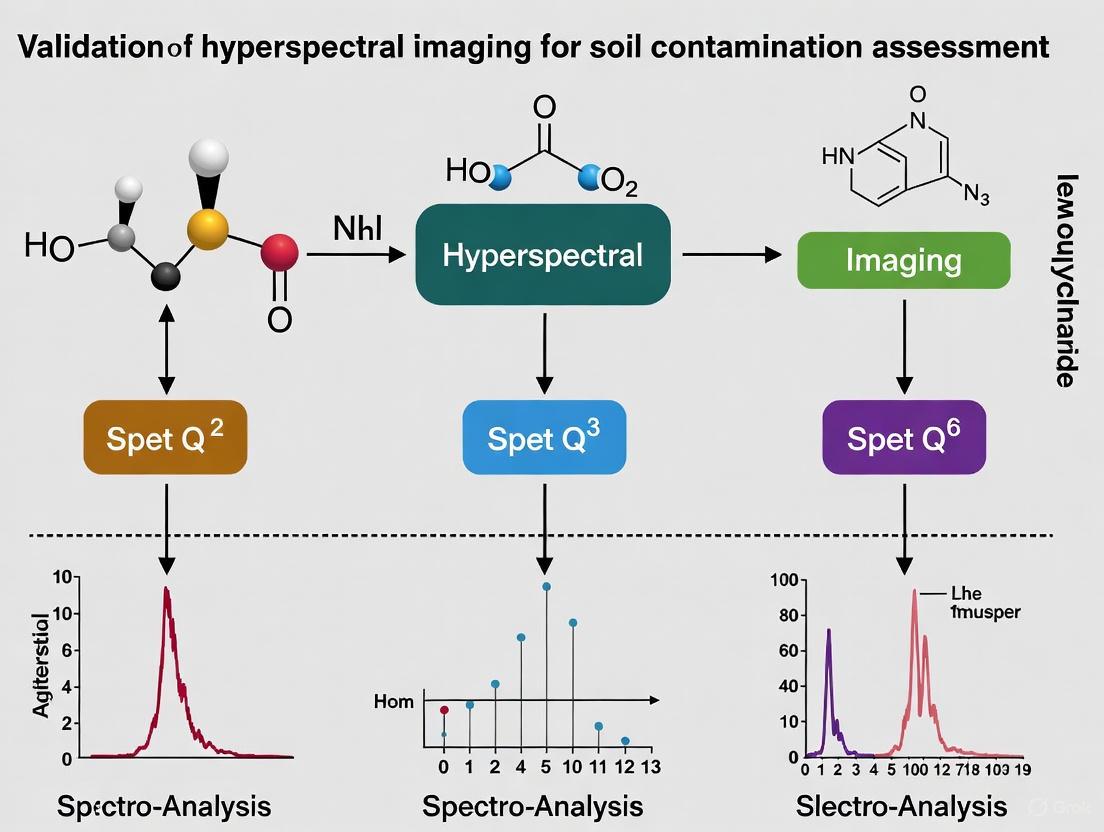
This article provides a comprehensive validation of hyperspectral imaging (HSI) as a non-invasive, rapid tool for soil contamination assessment.
Validating Hyperspectral Imaging for Soil Contamination: A 2025 Review of Methods, AI Integration, and Detection Limits
Abstract
This article provides a comprehensive validation of hyperspectral imaging (HSI) as a non-invasive, rapid tool for soil contamination assessment. Targeting researchers and environmental scientists, it explores the foundational principles of HSI in detecting diverse pollutants, including microplastics and heavy metals. We detail cutting-edge methodological approaches that integrate machine learning and deep learning, with a specific focus on overcoming key challenges like detection limits and data complexity. The scope includes a comparative analysis of sensor technologies and algorithmic performance, presenting evidence that validates HSI as a viable alternative to traditional, labor-intensive chemical methods for large-scale environmental monitoring.
The Science of Seeing the Invisible: Hyperspectral Imaging Fundamentals for Soil Contamination
Soil contamination from pollutants like microplastics, heavy metals, and hydrocarbons poses a significant threat to environmental safety and food security. Detecting these contaminants has traditionally relied on labor-intensive, costly, and destructive laboratory methods. Hyperspectral Imaging (HSI) has emerged as a powerful, non-invasive alternative. This technology operates on a core principle: every material interacts with light in a unique way, resulting in a characteristic spectral signature. This guide explores how these light-matter interactions are harnessed to detect and quantify soil pollutants, comparing the performance of HSI with established analytical techniques.
The Core Principles of Light-Pollutant Interaction
Hyperspectral imaging works by capturing the reflectance of light from a soil sample across hundreds of narrow, contiguous wavelength bands, typically from the visible (VIS) to the short-wave infrared (SWIR) spectrum [1]. When light hits the soil, pollutants within it alter its reflectance properties in predictable ways based on their molecular composition.
- Microplastics: Synthetic polymers like polyethylene (PE) and polyamide (PA) have specific chemical bonds (e.g., C-H, C-C) that vibrate at characteristic frequencies, absorbing and reflecting light in unique patterns in the near-infrared (NIR) and SWIR regions. This creates a spectral fingerprint that distinguishes them from natural soil components [2] [3].
- Heavy Metals: Unlike microplastics, heavy metals (e.g., copper, zinc, cadmium) often lack direct spectral features in the VIS-SWIR range. Instead, they are detected indirectly through their interactions with spectrally active soil constituents like organic matter, clay minerals, and iron oxides. The presence of heavy metals can alter the spectral signatures of these components, serving as a proxy for contamination [4].
- Hydrocarbons: Contaminants like crude oil and diesel have strong, direct spectral responses due to the presence of C-H bonds. These create deep absorption features in the SWIR region, which can be quantified to determine the level of contamination [5].
The following diagram illustrates the fundamental workflow of pollutant detection via hyperspectral imaging.
Hyperspectral Imaging vs. Alternative Analytical Techniques
The following table provides a quantitative comparison of Hyperspectral Imaging against other standard methods for detecting soil pollutants.
Table 1: Performance Comparison of Soil Pollutant Detection Techniques
| Technique | Typical Pollutant | Detection Limit/Accuracy | Key Advantages | Key Limitations |
|---|---|---|---|---|
| Hyperspectral Imaging (SWIR-HSI, MCT Sensor) | Microplastics (PE, PA) | >93.8% accuracy at 0.01-12% concentration [3] | Non-destructive, minimal sample prep, rapid, provides spatial distribution [2] [3] | Performance affected by soil moisture/structure [2] |
| Hyperspectral Imaging (VIS-NIR) | Microplastics (PE) | 77-84% precision for 0.5-5 mm particles [6] | Direct visualization on soil surface, no chemical digestion [6] | Lower precision for dark/black particles [6] |
| Hyperspectral Imaging with RF Model | Heavy Metals (Cu, Zn, Cd) | R² > 0.8 [4] | Non-invasive, zero chemical pollution, rapid large-scale monitoring [4] | Indirect detection via correlation with organic matter/clays [4] |
| Hyperspectral Imaging with XGBoost | Hydrocarbons (Diesel, Crude) | R² = 0.96, RMSE = 600 mg/kg [5] | Strong predictive ability for organic contaminants [5] | Lower accuracy for gasoline [5] |
| Fourier-Transform Infrared (FTIR) | Microplastics | N/A (Qualitative) | High molecular specificity, non-destructive | Struggles with organic matter interference, requires intensive sample pre-treatment [2] |
| Raman Spectroscopy | Microplastics | N/A (Qualitative) | High molecular specificity, non-destructive | Can be impeded by sample fluorescence [2] |
| Pyrolysis–Gas Chromatography-Mass Spectrometry (Py-GC-MS) | Microplastics | N/A (Quantitative) | Detailed chemical structure information | Destructive method, cannot be reused for analysis [2] |
Detailed Experimental Protocols for Hyperspectral Imaging
To ensure reproducible and reliable results, standardized experimental protocols are critical. Below are detailed methodologies for applying HSI to different pollutant types, synthesized from recent studies.
Protocol 1: Detection of Microplastics in Soil Using SWIR-HSI
This protocol is adapted from studies that achieved over 93% detection accuracy for low-concentration microplastics [3].
- Sample Preparation: Soil samples are sieved (e.g., <2 mm) and may be spiked with known types and concentrations of microplastics (e.g., 0.01% to 12% by weight). Samples are spread evenly in a container to create a uniform surface for imaging [3] [6].
- Hyperspectral Image Acquisition: A short-wave infrared hyperspectral imaging (SWIR-HSI) system is used. The study compared two sensors:
- Mercury Cadmium Telluride (MCT): Covers 1000-2500 nm, demonstrating superior performance.
- Indium Gallium Arsenide (InGaAs): Covers 800-1600 nm. The imaging system scans the soil sample, capturing a hypercube where each pixel contains a full spectral signature [3].
- Spectral Data Preprocessing: Raw spectra are preprocessed to reduce noise and enhance features. Techniques include:
- Savitzky-Golay smoothing to reduce spectral noise.
- Multiple Scattering Correction (MSC) or Standard Normal Variate (SNV) to correct for light scattering effects.
- Derivative transformations (first or second order) to resolve overlapping spectral features and highlight key absorption peaks [4].
- Machine Learning and Classification: Processed spectral data are analyzed using machine learning models.
- Pixel-wise classification algorithms like Support Vector Machine (SVM) or Logistic Regression are trained to distinguish the spectral signatures of microplastics from soil.
- The model's performance is validated, resulting in a classification map that visually identifies the spatial distribution of microplastic particles on the soil surface [3] [6].
Protocol 2: Inversion of Heavy Metal Content in Soil
This protocol outlines an indirect approach for estimating heavy metal concentrations, as used in studies of black soil farmland [4].
- Soil Sampling and Lab Analysis: A large number of soil samples (e.g., 119) are collected from the field. These samples undergo traditional laboratory chemical analysis to determine the precise concentrations of heavy metals like Copper (Cu), Zinc (Zn), and Cadmium (Cd).
- Spectral Measurement and Preprocessing: In the lab, the spectral reflectance of each soil sample is measured using a high-resolution spectrometer (e.g., ASD FieldSpec4) across the 350-2500 nm range. The spectra are then preprocessed using a combination of techniques, including first- and second-order derivatives, multiple scattering correction, and Savitzky-Golay smoothing [4].
- Feature Band Selection: The Successive Projections Algorithm (SPA) is used to identify the most informative wavelengths (characteristic bands) that are strongly correlated with the heavy metal content, reducing data dimensionality and minimizing redundancy [4].
- Inversion Model Development: Machine learning models are trained to establish the nonlinear relationship between the selected spectral features and the lab-measured heavy metal concentrations. Studies show that the Random Forest (RF) model can outperform Support Vector Machine (SVM) and Partial Least Squares (PLS) models, achieving R² values greater than 0.8 [4].
The workflow for these protocols, from sample preparation to final analysis, is summarized in the diagram below.
The Scientist's Toolkit: Key Research Reagent Solutions
Successful implementation of hyperspectral imaging for soil analysis relies on a suite of specialized tools, sensors, and computational models.
Table 2: Essential Materials and Tools for Hyperspectral Soil Analysis
| Tool / Solution | Function / Description | Example Use Case |
|---|---|---|
| SWIR-HSI with MCT Sensor | A hyperspectral camera with Mercury Cadmium Telluride detector; highly sensitive in 1000-2500 nm range. | Key for detecting microplastics at very low concentrations (0.01%) with high accuracy [3]. |
| ASD FieldSpec4 Spectrometer | A high-resolution field/lab spectrometer for measuring soil reflectance from 350-2500 nm. | Used for precise spectral measurement of soil samples for heavy metal inversion models [4]. |
| Support Vector Machine (SVM) | A supervised machine learning algorithm for classification and regression. | Effectively classifies different types and sizes of microplastic particles in soil [2] [6]. |
| Random Forest (RF) Model | An ensemble machine learning algorithm based on decision trees. | Achieves high accuracy (R² > 0.8) for predicting heavy metal concentrations in soil [4]. |
| XGBoost Regressor | An optimized gradient boosting machine learning algorithm. | Provides a robust balance of accuracy and performance for predicting hydrocarbon levels [5]. |
| Spectral Preprocessing Algorithms | Computational techniques (e.g., Savitzky-Golay, MSC, Derivatives) to clean and enhance spectral data. | Critical step for improving signal-to-noise ratio and model performance across all pollutant types [4]. |
Hyperspectral imaging technology, grounded in the precise principles of light-pollutant interaction, offers a transformative approach for soil contamination assessment. While traditional methods like FTIR and Py-GC-MS provide high specificity, HSI stands out for its rapid, non-destructive, and spatially explicit monitoring capabilities. Experimental data confirms that HSI, particularly when paired with advanced sensors like MCT and robust machine learning models like Random Forest and XGBoost, can achieve high accuracy in detecting microplastics, quantifying hydrocarbons, and estimating heavy metal content. The choice between HSI and alternative techniques ultimately depends on the specific research goals, balancing the need for minimal sample preparation and high-throughput analysis against the requirement for ultimate molecular specificity.
Hyperspectral imaging (HSI) is emerging as a powerful, non-invasive tool for environmental monitoring, capable of detecting a range of soil contaminants. This guide objectively compares the performance of HSI technologies in identifying two critical pollutant classes: microplastics and heavy metals, providing researchers with a data-driven assessment of its current capabilities and limitations.
Comparative Performance of Hyperspectral Imaging for Contaminant Detection
The efficacy of hyperspectral imaging varies significantly depending on the target contaminant, the sensor technology used, and the implemented data processing model. The table below summarizes key performance metrics from recent studies.
Table 1: Performance comparison of hyperspectral imaging for detecting different soil contaminants
| Contaminant Type | Sensor Technology | Spectral Range | Key Model(s) | Reported Performance | Detection Limit | Reference |
|---|---|---|---|---|---|---|
| Microplastics (Polyamide, Polyethylene) | Mercury Cadmium Telluride (MCT) | 1000–2500 nm | Logistic Regression, Support Vector Machine (SVM) | 93.8% accuracy | 0.01% (weight) | [3] [7] |
| Microplastics (Polyamide, Polyethylene) | Indium Gallium Arsenide (InGaAs) | 800–1600 nm | Logistic Regression, Support Vector Machine (SVM) | 68.8% accuracy | 0.01% (weight) | [3] [7] |
| Heavy Metals (Cu, Zn, Cd) | ASD FieldSpec4 Spectrometer (Lab) | 350–2500 nm | Random Forest (RF) | R² > 0.8 | Not Specified | [4] |
| Heavy Metals (Cu, Zn, Cd) | ASD FieldSpec4 Spectrometer (Lab) | 350–2500 nm | Support Vector Machine (SVM) | Lower accuracy than RF | Not Specified | [4] |
| Soil Organic Carbon (SOC) | HySpex VNIR-SWIR (Lab) | 400–2500 nm | Partial Least Squares Regression (PLSR) | R² = 0.66 | Not Specified | [8] |
Analysis of Key Findings
- Sensor Technology is Critical for Microplastics: For microplastic detection, the choice of sensor is a primary factor. The MCT sensor, with its extended range into the short-wave infrared (SWIR), significantly outperformed the InGaAs sensor, achieving over 93% accuracy compared to 69%. This is attributed to the MCT's higher sensitivity and coverage of spectral regions where plastic-specific molecular bonds are most active [3] [7].
- Machine Learning Models Must Be Matched to the Contaminant: For heavy metal inversion, which relies on indirect correlations with spectrally active soil components, non-linear models like Random Forest (RF) have demonstrated superior performance (R² > 0.8) compared to other models like Support Vector Machine (SVM) and Partial Least Squares (PLS) [4]. For microplastics, simpler models like Logistic Regression and SVM can be highly effective when paired with the correct sensor data [7].
- Detection Limits Present a Challenge: While HSI can detect microplastics at concentrations as low as 0.01%, accuracy declines markedly at these trace levels, especially for the less sensitive InGaAs sensor [7]. This highlights a significant challenge for monitoring low-level, yet environmentally relevant, contamination.
Detailed Experimental Protocols
To ensure reproducibility, this section outlines the core methodologies from the studies cited in the performance comparison.
Protocol for Microplastic Detection in Soils
This protocol is adapted from the study that demonstrated high accuracy using an MCT sensor [3] [7].
- 1. Sample Preparation: Soil samples are spiked with specific types and sizes of microplastics (e.g., polyethylene and polyamide with maximum particle sizes of 300 μm and 50 μm, respectively). The samples are prepared to represent a range of concentrations, typically from very low (0.01-0.1%) to high (1-12%) weight percentages.
- 2. Hyperspectral Image Acquisition: Prepared soil samples are scanned using two synchronized short-wave infrared HSI (SWIR-HSI) platforms for comparison:
- An MCT (Mercury Cadmium Telluride) sensor operating in the 1000-2500 nm range.
- An InGaAs (Indium Gallium Arsenide) sensor operating in the 800-1600 nm range.
- 3. Spectral Data Preprocessing: Raw spectral data is preprocessed to reduce noise and enhance features. Techniques include Principal Component Analysis (PCA) and Partial Least Squares (PLS) for dimension reduction and feature extraction.
- 4. Machine Learning Model Training: Extracted spectral features are used to train classification models. The study effectively employed Logistic Regression and Support Vector Machines (SVM) with both linear and nonlinear kernels to distinguish between microplastic particles and soil.
- 5. Validation: Model performance is validated using metrics such as overall accuracy, typically through cross-validation or a hold-out test set, reporting the mean and standard deviation across multiple runs.
Protocol for Heavy Metal Inversion in Soils
This protocol is derived from research on black soils in Jilin Province, which found success with Random Forest models [4].
- 1. Field Sampling and Lab Analysis: A large number of topsoil samples (e.g., 119 samples from a 10-20 cm depth) are collected from the study area. These samples undergo traditional laboratory chemical analysis to determine the precise concentrations of heavy metals like copper (Cu), zinc (Zn), and cadmium (Cd).
- 2. Soil Spectral Measurement: In the laboratory, the spectral reflectance of prepared (dried, crushed, and sieved) soil samples is measured using a high-resolution spectrometer like an ASD FieldSpec4, which covers the 350-2500 nm range.
- 3. Spectral Data Transformation and Preprocessing: The raw spectra are processed to improve the signal-to-noise ratio and highlight features related to heavy metal complexes. Common techniques include:
- First- and second-order derivatives.
- Multiple Scatter Correction (MSC).
- Savitzky-Golay (SG) smoothing.
- Standard Normal Variate (SNV) correction.
- 4. Feature Band Selection: The Successive Projections Algorithm (SPA) is used to identify a subset of characteristic wavelengths most correlated with the heavy metal concentrations, reducing data dimensionality.
- 5. Inversion Model Building: The transformed spectral data and selected features are used to train and compare multiple machine learning models, including Random Forest (RF), Support Vector Machine (SVM), and Partial Least Squares (PLS) regression. The model demonstrating the highest R² and lowest error on validation data is selected as the optimal inversion model.
Workflow Visualization
The following diagram illustrates the generalized experimental workflow for hyperspectral detection of soil contaminants, integrating the key steps from the protocols above.
Hyperspectral Soil Contaminant Analysis Workflow
The Scientist's Toolkit: Essential Research Reagents & Materials
Successful hyperspectral analysis requires specific tools for sample preparation, data acquisition, and processing. The following table details the key materials and their functions.
Table 2: Essential research reagents and solutions for hyperspectral soil analysis
| Item Name | Function/Application | Key Characteristics |
|---|---|---|
| ASD FieldSpec4 Spectrometer | Laboratory-grade measurement of soil spectral reflectance. | Covers 350-2500 nm range; high spectral resolution for precise heavy metal inversion [4]. |
| HySpex VNIR-1800 & SWIR-384 Sensors | Proximal sensing of soil surfaces for SOC and property mapping. | High spatial and spectral resolution; enables identification of pure soil pixels via spectral unmixing [8]. |
| MCT (Mercury Cadmium Telluride) Sensor | Short-wave infrared (SWIR) imaging for microplastic detection. | 1000-2500 nm range; high sensitivity crucial for detecting low (0.01%) microplastic concentrations [3] [7]. |
| InGaAs (Indium Gallium Arsenide) Sensor | Short-wave infrared (SWIR) imaging for comparison with MCT. | 800-1600 nm range; less accurate for trace microplastics than MCT [3] [7]. |
| Spectral Preprocessing Algorithms | Enhancing spectral data quality and feature extraction. | Includes Derivatives, MSC, SNV, and Savitzky-Golay smoothing to reduce noise and correct scatter [4] [8]. |
| Machine Learning Libraries (e.g., Scikit-learn) | Developing contaminant classification and regression models. | Provides implementations of Random Forest, SVM, and Logistic Regression for modeling spectral data [4] [7]. |
Hyperspectral imaging presents a validated, non-invasive approach for soil contamination assessment. The technology demonstrates high proficiency in detecting microplastics, with performance heavily dependent on advanced SWIR sensors like MCT. For heavy metals, its power lies in coupling indirect spectral features with robust non-linear models like Random Forest. While challenges remain in detecting contaminants at trace concentrations, the integration of advanced sensors and tailored machine learning protocols positions HSI as a transformative tool for large-scale, high-resolution soil monitoring.
Spectral Libraries and the Unique Fingerprints of Common Pollutants
The accurate identification of environmental pollutants in soil has entered a new era with the advancement of hyperspectral imaging (HSI) and the development of comprehensive spectral libraries. These technologies enable researchers to detect and quantify contaminants based on their unique molecular "fingerprints"—distinct spectral signatures that arise from the interaction of light with matter. For soil contamination assessment, this non-invasive approach provides a rapid, cost-effective alternative to traditional laboratory methods, allowing for large-scale monitoring and precise mapping of polluted areas. The validation of HSI for this purpose hinges on the existence of robust, curated spectral libraries that contain reference signatures for a wide range of common pollutants, from hydrocarbons to microplastics.
The fundamental principle underpinning this methodology is that every compound exhibits a characteristic spectral signature due to its specific chemical bonds and molecular structure. When hyperspectral sensors capture reflected light across hundreds of narrow, contiguous wavelength bands, they record these unique patterns, which can then be matched against reference entries in spectral libraries. This process transforms the complex task of chemical identification into a pattern-matching problem, facilitated by sophisticated machine learning algorithms. The integration of these technologies creates a powerful framework for environmental monitoring, particularly in the context of increasing industrial pollution and microplastic accumulation in agricultural soils.
The Role and Composition of Spectral Libraries
Spectral libraries serve as essential knowledge bases for compound annotation in untargeted analysis, functioning as curated collections of reference spectra against which unknown samples can be compared. The concept dates back to the 1950s, but has seen exponential growth in recent years with the expansion of computational resources and data sharing platforms. These libraries operate on the premise that molecules undergo reproducible fragmentation or light interaction patterns, creating distinctive spectral fingerprints that can be used for identification purposes. In mass spectrometry-based libraries, this involves matching fragmentation patterns, while in hyperspectral imaging, the focus is on matching reflectance or absorption spectra across optical wavelengths [9].
The landscape of available spectral libraries is diverse, encompassing both commercial and open-access resources. Some of the most extensive libraries include the National Institute of Standards and Technology (NIST) tandem mass spectral library, which contains over 265,000 organic compounds and is widely used across industries for chemical identification. Similarly, METLIN Gen2 spectral library and mzCloud represent significant commercial collections with extensive fragmentation data. On the open-access side, resources like the Global Natural Products Social Molecular Networking (GNPS) community spectral libraries and Massbank of North America (MoNA) aggregate reference spectra from multiple contributors, creating comprehensive knowledge bases that are freely available to the research community [9] [10].
Library Growth and Quality Considerations
The past decade has witnessed explosive growth in publicly accessible spectral libraries, with some resources expanding more than 60-fold in the past eight years alone. This expansion has dramatically improved the coverage of chemical space, enabling researchers to identify a broader range of pollutants with higher confidence. The growth isn't merely quantitative; quality curation practices ensure that library entries maintain high standards of accuracy and reliability. The NIST library, for instance, employs rigorous quality control procedures, with specialists filtering, recalibrating, and structurally annotating each spectrum to maintain consistency and reliability—a level of curation that sets it apart from other resources [9] [10].
Table 1: Major Spectral Libraries and Their Characteristics
| Library Name | Type | Approximate Size | Primary Focus | Access |
|---|---|---|---|---|
| NIST Tandem Mass Spectral Library | Mass Spectrometry | >265,000 compounds | Broad coverage, emphasis on organic compounds | Commercial |
| mzCloud | Mass Spectrometry | Millions of spectra (largest by spectra count) | Small molecules, extensive fragmentation trees | Commercial |
| GNPS Community Libraries | Mass Spectrometry | Hundreds of thousands of spectra | Natural products, environmental compounds | Open Access |
| MoNA (MassBank of North America) | Mass Spectrometry | Hundreds of thousands of spectra | Aggregated from multiple sources | Open Access |
| METLIN Gen2 | Mass Spectrometry | Tens of thousands of compounds | Lipids, dipeptides, metabolites | Commercial |
| HyperSoilNet (from research) | Hyperspectral Imaging | Framework for soil properties | Soil nutrients and contaminants | Research Framework |
The quality of spectral libraries directly impacts identification confidence. Several factors determine quality: spectral accuracy, which depends on proper calibration and instrument conditions; annotation completeness, including structural information and metadata; and coverage of relevant chemical space. For soil contamination studies, libraries must include reference spectra for common pollutants acquired under conditions similar to field applications. The emergence of standardized spectral hashes (SPLASH) helps track provenance and detect duplicates across different library resources, ensuring greater transparency and reliability in compound identification [9].
Hyperspectral Imaging for Soil Pollutant Detection
Sensor Technologies and Performance Comparison
Hyperspectral imaging systems employ different sensor technologies that significantly impact their ability to detect soil pollutants. The most common sensors for soil analysis include indium gallium arsenide (InGaAs) and mercury cadmium telluride (MCT) detectors, which operate in different spectral ranges with varying sensitivity characteristics. InGaAs sensors typically cover the 800-1600 nm range, while MCT sensors extend further into the short-wave infrared (1000-2500 nm), capturing a broader range of molecular absorption features that are critical for identifying many organic pollutants [7].
Recent comparative studies have demonstrated significant performance differences between these sensor technologies for detecting pollutants at low concentrations. In research focused on microplastic detection in soils, the MCT sensor achieved an overall accuracy of 93.8 ± 1.47% across concentration ranges of 0.01-12%, substantially outperforming the InGaAs sensor, which achieved only 68.8 ± 3.76% accuracy under the same conditions. This performance advantage was particularly pronounced at lower contamination levels (0.01-0.10%), where the MCT sensor maintained reasonable detection capability while the InGaAs sensor showed markedly reduced accuracy. The superior performance of MCT sensors is attributed to their extended spectral coverage (particularly the 1600-2500 nm range) and higher sensitivity, enabling better detection of the subtle spectral features associated with low concentrations of pollutants [7] [3].
Table 2: Sensor Performance Comparison for Microplastic Detection in Soil
| Sensor Type | Spectral Range | Overall Accuracy (0.01-12%) | Accuracy at High Concentration (1.0-12%) | Accuracy at Low Concentration (0.01-0.10%) |
|---|---|---|---|---|
| Mercury Cadmium Telluride (MCT) | 1000-2500 nm | 93.8 ± 1.47% | >94% | Significantly higher than InGaAs |
| Indium Gallium Arsenide (InGaAs) | 800-1600 nm | 68.8 ± 3.76% | >94% | Markedly reduced |
Detection Methodologies and Workflows
The process of detecting soil pollutants through hyperspectral imaging follows a structured workflow that begins with data acquisition and proceeds through multiple processing stages to final identification. A typical protocol involves collecting hyperspectral data using either laboratory-based or field-deployable systems, followed by preprocessing steps to reduce noise and correct for instrumental artifacts. The critical stage of spectral feature extraction then identifies meaningful patterns in the data, which serve as inputs for machine learning classification or regression models that correlate spectral features with pollutant identity and concentration [1] [7].
For microplastic detection, researchers have employed standardized experimental protocols wherein soil samples are spiked with known concentrations of target pollutants (e.g., polyamide and polyethylene at particle sizes of 50μm and 300μm, respectively). Hyperspectral imaging is then performed using both MCT and InGaAs sensors across multiple concentration ranges (0.01-0.10%, 0.10-1.0%, and 1.0-12%). The acquired spectral data undergoes preprocessing including normalization and dimensionality reduction via principal component analysis (PCA) or partial least squares (PLS), before being analyzed using machine learning classifiers such as logistic regression and support vector machines with both linear and nonlinear kernels [7].
For hydrocarbon contamination, a similar approach has proven effective. Studies evaluating soil contamination with crude oil, diesel, and gasoline (0-10,000 mg/kg) across different soil types (clayey, silty, sandy) employ hyperspectral imaging to capture spectral signatures, which are then correlated with reference contamination values obtained through gas chromatography-mass spectrometry (GC-MS). The models are trained and validated using various machine learning approaches, with ensemble methods like XGBoost consistently providing the best balance between accuracy and robustness, achieving R-squared values of 0.96 and root mean square error (RMSE) of 600 mg/kg on testing sets [5].
Hyperspectral Soil Analysis Workflow
Machine Learning Approaches for Spectral Data Analysis
Comparative Performance of Machine Learning Models
The analysis of hyperspectral data for pollutant detection relies heavily on machine learning algorithms capable of handling high-dimensional spectral data and capturing complex, nonlinear relationships between spectral features and pollutant concentrations. Studies systematically comparing different machine learning approaches have revealed distinct performance characteristics across model types. For hydrocarbon contamination assessment, ensemble methods like XGBoost regressors have demonstrated particularly strong performance, achieving R-squared values of 0.96 and RMSE of 600 mg/kg when predicting hydrocarbon levels in testing sets. These models consistently provide a good balance between accuracy and robustness, making them well-suited for practical spectral applications in environmental monitoring [5].
The performance variation across different pollutant types and soil matrices is significant. In hydrocarbon contamination studies, models for gasoline generally show lower accuracy due to less distinguishable spectral features compared to diesel and crude oil, which exhibit more pronounced spectral signatures. Similarly, the soil matrix itself (clayey, silty, or sandy) influences model performance, necessitating calibration across soil types or the inclusion of soil-specific models. The selection of input features—whether full spectral ranges or strategically selected spectral bands—also substantially impacts model performance, with careful feature selection reducing overfitting while maintaining predictive accuracy [5].
Advanced Hybrid Frameworks
Recent advances in soil pollutant detection have seen the development of sophisticated hybrid frameworks that combine the strengths of deep learning representation with traditional machine learning techniques. The HyperSoilNet framework exemplifies this approach, leveraging a pretrained hyperspectral-native CNN backbone integrated with an optimized machine learning ensemble. This architecture combines the feature extraction capabilities of deep neural networks with the regression performance of traditional ML models, achieving a score of 0.762 on the HyperView challenge leaderboard for predicting soil properties including contaminants [1].
The integration of self-supervised learning approaches represents another significant advancement in the field. By employing contrastive learning frameworks that pull together different augmented views of the same sample in feature space while pushing apart views of different samples, models can capture meaningful spectral patterns without extensive labeled datasets. This is particularly valuable for soil contamination studies, where obtaining large quantities of labeled training data (with precise chemical validation) is expensive and time-consuming. These self-supervised approaches enable models to develop robust spectral feature encodings that can be fine-tuned for specific pollutant detection tasks with limited labeled examples [1].
Table 3: Machine Learning Model Performance for Soil Contaminant Detection
| Model Type | Application | Key Performance Metrics | Advantages | Limitations |
|---|---|---|---|---|
| XGBoost Regressor | Hydrocarbon contamination | R² = 0.96, RMSE = 600 mg/kg | Good accuracy/robustness balance | Performance varies by petroleum type |
| Support Vector Machines (Linear/Nonlinear) | Microplastic detection | 93.8% accuracy with MCT sensor | Effective for high-dimensional data | Sensitive to parameter tuning |
| Artificial Neural Networks | Soil moisture (proxy for some contaminants) | R² = 0.9557 | Captures complex nonlinear relationships | Requires substantial data |
| HyperSoilNet (Hybrid CNN+ML Ensemble) | Multiple soil properties | Leaderboard score: 0.762 | Combines deep feature learning with ML regression | Computational complexity |
Research Reagent Solutions and Materials
Implementing hyperspectral imaging for soil contamination assessment requires specific research reagents and materials that facilitate sample preparation, data acquisition, and analysis. The following table details essential components of the experimental toolkit, drawn from methodologies described in recent research publications:
Table 4: Essential Research Reagents and Materials for Soil Contamination Analysis
| Item | Function | Example Specifications | Application Context |
|---|---|---|---|
| MCT (Mercury Cadmium Telluride) Sensor | Hyperspectral image acquisition in SWIR range | Spectral range: 1000-2500 nm | Primary sensor for microplastic detection [7] |
| InGaAs (Indium Gallium Arsenide) Sensor | Hyperspectral image acquisition in NIR range | Spectral range: 800-1600 nm | Comparison sensor for performance evaluation [7] |
| Reference Soil Samples | Validation and calibration | Clayey, silty, sandy types with characterized properties | Method validation across soil matrices [5] |
| Certified Pollutant Standards | Quantitative spike experiments | Polyethylene, polyamide, crude oil, diesel, gasoline | Creating concentration gradients for model training [7] [5] |
| GC-MS Instrumentation | Reference contamination measurements | Chromatographic separation with mass detection | Ground truth data for hydrocarbon contamination [5] |
| NIST Mass Spectral Library | Reference spectral database | >265,000 organic compounds | Compound identification and verification [9] [10] |
| mzCloud Library | Advanced spectral matching | Multi-stage MSn spectra with structural annotation | In-depth structural identification for unknowns [11] |
Experimental Protocols and Methodologies
Standardized experimental protocols are critical for generating reproducible, comparable results in soil contamination studies using hyperspectral imaging. For microplastic detection, a representative protocol involves collecting intact soil cores or preparing homogenized soil samples, which are then spiked with known concentrations of target microplastics (e.g., 0.01-12% weight/weight). The samples are stabilized in sample holders and scanned using both MCT and InGaAs hyperspectral imaging systems under controlled illumination conditions. Following image acquisition, spectral data is extracted from regions of interest, preprocessed to reduce noise and correct for scattering effects, and then analyzed using machine learning classifiers such as support vector machines with cross-validation to assess detection accuracy across concentration ranges [7] [3].
For hydrocarbon contamination assessment, the methodological approach typically involves creating synthetically contaminated soil samples across a concentration gradient (0-10,000 mg/kg) for different petroleum products (crude oil, diesel, gasoline) and soil types (clayey, silty, sandy). Hyperspectral imaging is performed under standardized conditions, with parallel samples analyzed using GC-MS to establish reference contamination values. The spectral data is then partitioned into training and testing sets, with machine learning models (including XGB regressors and neural networks) trained to predict contamination levels from spectral features. Model performance is evaluated using R-squared and RMSE metrics, with particular attention to performance variation across petroleum types and soil matrices [5].
Analysis Pathways and Decision Framework
The interpretation of hyperspectral data for pollutant identification follows a structured analytical pathway that progresses from raw data to confident identification. This pathway involves multiple decision points where analytical strategies are selected based on data quality and research objectives. The process typically begins with an assessment of spectral data quality, followed by feature extraction to reduce dimensionality while retaining diagnostically valuable information. The subsequent pattern recognition phase employs machine learning models trained to recognize characteristic spectral signatures of specific pollutants, with confidence levels assigned based on statistical measures and spectral matching scores [1] [5].
Pollutant Identification Decision Pathway
When library searching produces inconclusive matches, advanced analytical strategies come into play. The mzLogic algorithm exemplifies such an approach, using spectral similarity and sub-structural information (precursor ion fingerprinting) to rank potential candidates even when no direct library match exists. This method leverages the comprehensive fragmentation information in large spectral libraries like mzCloud to identify common sub-structural elements, which are then used to score and filter candidate compounds from chemical databases. This enables researchers to propose plausible structural hypotheses for completely unknown compounds, significantly expanding the range of identifiable pollutants beyond those represented in reference libraries [11] [9].
For validation of identifications, particularly for novel or unexpected pollutants, orthogonal analytical techniques are essential. The Metabolomics Standards Initiative outlines different levels of identification confidence, with level 1 representing confirmed structure through co-analysis with authentic standards or complementary techniques like nuclear magnetic resonance (NMR). In practice, this might involve comparing chromatographic retention times with standards, performing additional spectral analyses under different fragmentation conditions, or applying complementary spectroscopic methods. This multi-tiered validation framework ensures that hyperspectral identification of soil pollutants meets the rigorous standards required for environmental monitoring and regulatory decision-making [9].
The integration of hyperspectral imaging with comprehensive spectral libraries represents a transformative advancement in soil contamination assessment, enabling rapid, non-invasive detection and quantification of pollutants based on their unique spectral fingerprints. The comparative analysis presented in this guide demonstrates that sensor selection critically influences detection capability, with MCT sensors outperforming InGaAs alternatives for identifying low concentrations of pollutants like microplastics. Similarly, machine learning approaches, particularly ensemble methods and hybrid deep learning frameworks, have proven highly effective at extracting meaningful patterns from complex spectral data, achieving impressive accuracy in quantifying hydrocarbon contamination across diverse soil matrices.
Looking forward, several emerging trends promise to further enhance the capabilities of hyperspectral approaches for soil monitoring. The continuous expansion of spectral libraries, with both commercial and open-access resources growing at an accelerating pace, will improve coverage of pollutant diversity and increase identification confidence. Advances in sensor technology, including miniaturization and reduced costs, will make hyperspectral systems more accessible for routine environmental monitoring. Additionally, the development of more sophisticated machine learning approaches, particularly self-supervised and semi-supervised methods, will help address the challenge of limited labeled training data. As these technologies mature and integrate into environmental monitoring frameworks, hyperspectral imaging is poised to become an indispensable tool for addressing the growing challenge of soil pollution assessment and remediation on a global scale.
Hyperspectral imaging (HSI) is revolutionizing soil contamination assessment by offering distinct advantages over traditional laboratory methods. This guide objectively compares the performance of HSI against conventional techniques, supported by recent experimental data and detailed methodologies.
↳ Non-Destructive Analysis: Preserving Sample Integrity
Traditional soil analysis relies on chemical methods that are destructive, altering or consuming the sample. In contrast, HSI is a non-invasive, non-destructive technique that analyzes targets without physical or chemical alteration, preserving sample integrity for future research or archival purposes [12] [13] [14].
Experimental Evidence in Soil Science: A 2025 proximal sensing experiment demonstrated HSI's capability to quantify Soil Organic Carbon (SOC) in undisturbed soil surfaces. Researchers carefully removed contiguous topsoil pieces, air-dried them, and scanned them with HySpex VNIR-1800 and SWIR-384 hyperspectral sensors in the laboratory. This approach directly analyzed undisturbed soil structures, whereas conventional methods would have required destruction through sieving and grinding [8].
Comparative Performance Data: Table 1: Comparison of SOC Estimation Performance Using Different Spectral Data Approaches
| Method | Data Processing Approach | R² | RMSE (g kg⁻¹) | Destructive to Sample? |
|---|---|---|---|---|
| Traditional Chemical Analysis | Laboratory wet chemistry | (Reference) | (Reference) | Yes |
| HSI with Unprocessed Image Data | Mean absorbances from full image | 0.36 | 5.03 | No |
| HSI with Pure Soil Pixels | Spectral unmixing to remove non-soil materials | 0.66 | 3.68 | No |
The experimental workflow for this non-destructive analysis involved several key steps, as illustrated below:
↳ Rapid Analysis: Accelerating Data Acquisition and Processing
Traditional soil analysis methods are time-consuming, requiring extensive sample preparation, chemical processing, and skilled laboratory work. HSI combined with modern machine learning dramatically accelerates both data acquisition and analysis [12] [14].
Experimental Evidence in Food Science: While focused on food composition analysis, a 2024 study demonstrates HSI's rapid screening capability relevant to soil assessment. Researchers used HSI with Ridge regression models to rapidly predict nutritional parameters in complex food products, achieving high accuracy for protein content (R² = 0.88) and moisture (R² = 0.85) without sample homogenization [14]. This approach bypasses the lengthy chemical extraction and analysis required by conventional methods.
Comparative Performance Data: Table 2: Time Efficiency Comparison Between Traditional and HSI Methods
| Method | Sample Preparation Time | Analysis Time | Total Processing Time | Suitable for High-Throughput? |
|---|---|---|---|---|
| Traditional Chemical Analysis | Extensive (drying, grinding, chemical extraction) | Hours to days | Days to weeks | Limited |
| HSI with Machine Learning | Minimal (placement for scanning) | Minutes to hours | Hours to days | Excellent |
The rapid analysis workflow leverages machine learning for efficient prediction, as shown below:
↳ Large-Scale Analysis: From Laboratory to Field Applications
Traditional soil analysis provides point-based measurements that may not represent larger field variability, making large-scale assessment costly and time-consuming [1]. HSI enables scalable analysis from microscopic to regional levels through adaptable platforms including laboratories, field instruments, and airborne systems [12].
Experimental Evidence in Regional Assessment: A 2025 study introduced HyperSoilNet, a hybrid deep learning framework for estimating soil properties from hyperspectral imagery. This approach addresses the challenge of mapping soil characteristics like potassium oxide (K₂O), phosphorus pentoxide (P₂O₅), magnesium (Mg), and pH across large agricultural regions [1]. The model achieved a score of 0.762 on the Hyperview challenge leaderboard, demonstrating accurate large-scale soil assessment capabilities.
Platform Comparison for Scalable Analysis: Table 3: HSI Platforms for Different Spatial Scales in Soil Assessment
| Platform | Spatial Coverage | Key Applications in Soil Assessment | Considerations |
|---|---|---|---|
| Laboratory Scanners | Single samples to multiple samples | Detailed analysis of soil composition, contamination mapping | Controlled conditions, highest data quality |
| Field Portable Systems | Plot to field scale | In-situ soil monitoring, targeted contamination assessment | Affected by ambient conditions, requires calibration |
| Airborne & UAV Systems | Hundreds of square kilometers | Regional soil mapping, contamination hotspot identification | Requires ground truthing, affected by atmospheric conditions |
The integration of HSI across multiple scales creates a comprehensive soil assessment framework:
↳ The Researcher's Toolkit: Essential Solutions for HSI Soil Contamination Assessment
Table 4: Key Research Reagent Solutions for HSI Soil Contamination Research
| Solution / Material | Function in Research | Application Context |
|---|---|---|
| Hyperspectral Imaging Sensors (VNIR, SWIR) | Captures spectral-spatial data cubes from soil samples | Laboratory, field, and airborne platforms |
| Spectral Calibration Panels | Provides reference for reflectance conversion | Field and laboratory measurements |
| Spectral Unmixing Algorithms | Separates mixed pixel spectra into pure components | Data processing for improved accuracy |
| Machine Learning Frameworks (e.g., HyperSoilNet) | Analyzes high-dimensional spectral data | Soil property prediction and contamination mapping |
| Ground Truth Soil Samples | Validates and calibrates HSI models | Essential for model accuracy across all applications |
Hyperspectral imaging establishes a new paradigm for soil contamination assessment through its non-destructive nature, rapid analytical capabilities, and scalability across multiple spatial dimensions. While traditional methods remain valuable for specific calibration purposes, HSI offers researchers a powerful tool for comprehensive, efficient soil analysis that preserves sample integrity and enables monitoring at previously impractical scales.
From Data to Detection: Methodologies and Real-World Applications of HSI in Soil Analysis
The validation of hyperspectral imaging for soil contamination assessment represents a critical advancement in environmental monitoring. Short-wave infrared (SWIR) hyperspectral imaging (HSI) has emerged as a powerful, non-destructive technique for identifying and quantifying pollutants in agricultural and natural landscapes. This technology captures detailed spectral data across hundreds of contiguous bands, enabling the detection of contaminants based on their unique molecular absorption signatures. Unlike traditional methods that require time-consuming sample preparation and chemical analysis, SWIR-HSI offers rapid, in-situ assessment capabilities essential for large-scale soil health monitoring. The effectiveness of this approach hinges fundamentally on the performance of the sensor technology deployed. Among available options, mercury cadmium telluride (MCT) and indium gallium arsenide (InGaAs) detectors represent the two primary sensor technologies competing for dominance in SWIR hyperspectral imaging applications. This comparison guide objectively evaluates their performance characteristics, supported by recent experimental data, to inform researchers and scientists developing soil contamination assessment methodologies.
SWIR hyperspectral imaging typically covers wavelengths from approximately 400 nm to 2500 nm, though different sensors cover varying portions of this range. Both MCT and InGaAs are semiconductor materials engineered to detect light in this region, but they operate on different physical principles and offer distinct performance trade-offs.
Mercury Cadmium Telluride (MCT) sensors are alloy-based detectors whose spectral response can be tuned by adjusting the cadmium-to-mercury ratio. This tunability allows MCT arrays to cover a broad spectral range from the visible spectrum to over 25 µm, though for SWIR applications they typically operate between 1000-2500 nm [15] [16]. MCT detectors typically require cooling to reduce dark current, with higher operating temperature (HOT) technologies being developed to mitigate size, weight, and power requirements [15].
Indium Gallium Arsenide (InGaAs) sensors are III-V compound semiconductor detectors with a typical spectral response from 900-1700 nm, though some extended versions can reach up to 2500 nm [17] [16]. The technology benefits from more mature manufacturing processes compared to MCT, contributing to lower costs and greater availability. InGaAs sensors typically operate with thermoelectric (Peltier) cooling rather than the more complex cryogenic systems often required by MCT detectors [18].
Table 1: Fundamental Characteristics of MCT and InGaAs Sensors
| Parameter | MCT (Mercury Cadmium Telluride) | InGaAs (Indium Gallium Arsenide) |
|---|---|---|
| Typical SWIR Range | 1000-2500 nm [3] [19] | 800-1700 nm (standard); up to 2500 nm (extended) [17] [16] |
| Material Basis | Tunable II-VI semiconductor alloy | III-V compound semiconductor |
| Operating Temperature | Typically cooled (HOT developments) [15] | Thermoelectrically cooled [18] |
| Manufacturing Maturity | Less mature, specialized processes [16] | Well-established fabrication processes |
| Primary Advantage | Broad spectral coverage and high sensitivity | Lower cost and simpler cooling requirements |
Performance Comparison: Experimental Data and Technical Specifications
Recent comparative studies, particularly in environmental monitoring applications, provide compelling data on the relative performance of MCT and InGaAs sensors for hyperspectral imaging.
Detection Accuracy for Soil Contaminants
A seminal study focused on detecting microplastics in soil provides direct comparative metrics between the two technologies. Researchers evaluated the systems' abilities to identify polyethylene (PE) and polyamide (PA) particles in soil samples at concentrations ranging from 0.01% to 12% using machine learning classification [3] [19].
Table 2: Performance Comparison in Soil Microplastic Detection
| Performance Metric | MCT Sensor (1000-2500 nm) | InGaAs Sensor (800-1600 nm) |
|---|---|---|
| Overall Detection Accuracy | 93.8% [3] | 68.8% [3] |
| Low Concentration Sensitivity (0.01-0.1%) | High detection capability [3] | Significantly reduced performance [3] |
| Key Advantage | Extended spectral coverage captures molecular bond features beyond 1600 nm [3] [19] | Adequate for some applications but limited by spectral range [19] |
The superior performance of MCT systems is attributed to their extended spectral coverage into the 2000-2500 nm range, where many plastic-specific molecular bonds (particularly C-H bonds) exhibit strong overtone and combination bands that provide distinct spectral fingerprints [3]. The MCT system's higher sensitivity and reduced signal noise, particularly in these chemically informative spectral regions, enable more accurate identification and classification of contaminants [3] [19].
Spectral and Dynamic Range Considerations
The effective dynamic range of hyperspectral imaging systems significantly impacts their ability to resolve materials with varying reflectivity properties within the same scene. Research has demonstrated that the effective dynamic range of InGaAs-based systems can be extended from 43 dB to 73 dB through multi-exposure techniques that compensate for limitations in low-light sensitivity and dark current effects [18]. This approach incorporates dark current modeling and multiple exposure times to maintain adequate signal-to-noise ratio across varying illumination conditions [18].
MCT sensors inherently possess advantages for low-light imaging and applications requiring broad spectral coverage, though they typically require more sophisticated cooling systems to minimize dark current [15]. Recent developments in MCT technology have focused on improving dark current performance and operating temperature to reduce size, weight, and power requirements [15].
Experimental Protocols for Sensor Comparison
To ensure valid performance comparisons between MCT and InGaAs sensors, researchers should adhere to standardized experimental protocols that account for the unique characteristics of each technology.
Sample Preparation and Imaging Methodology
The soil contaminant detection study employed a rigorous methodology that serves as a model for comparative sensor evaluation [19]:
- Sample Preparation: Soil samples are spiked with target contaminants (e.g., polyethylene, polyamide) at precisely defined concentrations ranging from 0.01% to 12%. Samples are homogenized and presented with consistent surface texture and particle distribution.
- Imaging Setup: Both sensor systems image identical sample sets under controlled illumination conditions using halogen lamps to ensure consistent spectral characteristics. The imaging geometry is standardized at 45° illumination and 0° viewing angles to minimize specular reflections.
- Spectral Calibration: Imaging systems are calibrated using a diffuse reflectance standard (typically PTFE or Spectralon) to convert raw sensor data to relative reflectance [18].
- Data Acquisition: Hyperspectral data cubes are collected using push-broom scanning with consistent spatial resolution across samples. Multiple exposures may be employed to extend dynamic range, particularly for InGaAs systems [18].
Data Processing and Analysis
- Spectral Extraction: Mean spectra are extracted from regions of interest corresponding to homogeneous areas of each sample concentration.
- Machine Learning Classification: Supervised classification algorithms (Support Vector Machines, Logistic Regression) are trained on spectral data using cross-validation techniques. Models are evaluated based on accuracy, precision, and recall metrics [19].
- Feature Selection: Wavelength selection algorithms identify diagnostically important spectral regions for contaminant identification, highlighting the value of extended spectral ranges.
Diagram 1: Experimental workflow for comparing MCT and InGaAs sensor performance in soil contaminant detection.
The Researcher's Toolkit: Essential Materials and Methods
Table 3: Essential Research Reagents and Materials for SWIR Hyperspectral Soil Analysis
| Item | Function | Specification Notes |
|---|---|---|
| Reference Target | Spectral calibration | PTFE tile or Spectralon; provides diffuse reflectance standard [18] |
| Illumination Source | Sample illumination | Halogen lamps with continuous spectrum; consistent 45° geometry [18] |
| Hyperspectral Imagers | Data acquisition | Push-broom style; MCT (1000-2500 nm) and/or InGaAs (800-1600 nm) [19] |
| Soil Samples | Analysis matrix | Representative soils; controlled moisture content; sieved for consistency |
| Contaminant Standards | Method validation | Pure polymer powders (PE, PA); precise concentration series [19] |
| Machine Learning Algorithms | Data analysis | SVM, Logistic Regression; cross-validation implementation [19] |
Application to Soil Contamination Assessment
Within the context of soil contamination assessment research, SWIR hyperspectral imaging enables several critical capabilities:
- Microplastic Identification: Both MCT and InGaAs systems can detect common microplastics like polyethylene and polyamide, but with significantly different accuracy levels (93.8% for MCT vs. 68.8% for InGaAs) [3]. MCT's extended spectral range captures detailed molecular absorption features beyond 1600 nm, providing more definitive identification of polymer types.
- Low-Concentration Detection: MCT sensors demonstrate superior sensitivity at trace contamination levels (0.01-0.1%), enabling detection of emerging contamination before reaching critical levels [3].
- Non-Destructive Analysis: Both technologies eliminate extensive sample preparation required by conventional methods (e.g., density separation, chemical digestion), enabling rapid screening of soil samples [19].
- Spatial Mapping: Hyperspectral imaging preserves spatial distribution information, allowing researchers to visualize contamination patterns and hotspots within soil samples.
Diagram 2: Sensor-specific pathways for soil contaminant detection showing performance differential.
The comparative analysis of MCT and InGaAs sensor technologies for SWIR hyperspectral imaging reveals a clear performance-sensitivity trade-off with significant implications for soil contamination assessment research.
MCT sensors provide superior detection accuracy (93.8% vs. 68.8%), enhanced sensitivity at low contamination levels, and more definitive material identification through their extended spectral coverage to 2500 nm. These advantages come at the cost of more complex cooling requirements and higher acquisition costs. For research requiring the highest sensitivity for emerging contaminants or precise polymer differentiation, MCT technology represents the optimal choice despite its cost and complexity.
InGaAs sensors offer a more accessible entry point for hyperspectral soil analysis with adequate performance for many applications. Their limitations in spectral range (typically to 1700 nm) restrict identification capability for materials with diagnostic features beyond this cutoff. For general soil screening applications or research with budget constraints, InGaAs technology provides a viable alternative, particularly when enhanced through multi-exposure techniques to extend dynamic range.
Future developments in both technologies will likely narrow this performance gap. Higher operating temperature MCT detectors will reduce cooling requirements, while extended-range InGaAs arrays may broaden spectral coverage. For now, the selection between these sensor technologies should be guided by specific research requirements: MCT for maximum sensitivity and identification certainty, InGaAs for cost-effective screening applications. This comparative analysis provides the experimental evidence necessary for researchers to make informed decisions validating hyperspectral imaging methodologies for soil contamination assessment.
Hyperspectral imaging (HSI) has emerged as a powerful, non-destructive technique for environmental monitoring, particularly for assessing soil contamination. Its ability to capture both spatial and spectral information in a single dataset makes it uniquely suited for identifying and quantifying pollutants, such as microplastics and heavy metals, in complex soil matrices [20]. However, the high-dimensional nature of hyperspectral data, characterized by hundreds of contiguous narrow bands, presents significant analytical challenges. Effectively interpreting this data requires sophisticated machine learning algorithms that can handle spectral redundancy, noise, and non-linear relationships.
This guide provides an objective comparison of three foundational algorithms in the spectral data scientist's toolkit: Partial Least Squares Discriminant Analysis (PLS-DA), Random Forest (RF), and Support Vector Machine (SVM). We frame this comparison within the critical context of validating hyperspectral imaging for soil contamination assessment, a field where accuracy, robustness, and efficiency are paramount for researchers and environmental professionals [20] [7]. The performance of these algorithms is evaluated based on experimental data from recent peer-reviewed studies, focusing on their application to real-world analytical problems.
Experimental Protocols for Hyperspectral Classification
To ensure the reproducibility of results and provide a clear framework for comparison, this section details the standard experimental methodologies employed in the studies cited throughout this guide.
Hyperspectral Data Acquisition and Preprocessing
The foundational step in any HSI analysis involves acquiring high-quality spectral data. Common protocols include:
- Sensor Selection: Studies often compare different sensors to optimize detection. For instance, research on soil microplastics has shown that Mercury Cadmium Telluride (MCT) sensors (1000–2500 nm) significantly outperform Indium Gallium Arsenide (InGaAs) sensors (800–1600 nm) for detecting low concentrations of polymers, due to their extended spectral coverage and higher sensitivity [7] [3].
- Sample Preparation: Soil samples are typically air-dried and sieved to minimize the effects of moisture and particle size on spectral measurements [21]. For microplastic detection, samples may be spiked with specific polymer types (e.g., polyethylene, polyamide) across a range of concentrations (e.g., 0.01% to 12%) to build calibration models [7].
- Spectral Transformations: Raw spectral reflectance is often transformed to enhance features and reduce scattering effects. Standard transformations include the First Derivative (FD), Standard Normal Variate (SNV), and Continuum Removal (CR) [21].
Dimensionality Reduction and Feature Selection
To mitigate the "curse of dimensionality" and reduce computational load, dimensionality reduction is a critical preprocessing step.
- Principal Component Analysis (PCA): A linear technique that projects the data into a new coordinate system where the greatest variances lie along the first few axes (principal components) [21] [22].
- Minimum Noise Fraction (MNF): A transformation similar to PCA that orders components based on signal-to-noise ratio, which is particularly useful for hyperspectral data [23] [22].
- Feature Extraction: Algorithms like the Successive Projections Algorithm (SPA) can be used to select a subset of informative wavelengths from the full spectrum, thereby simplifying the model [20].
Model Training and Validation
Robust model validation is essential for assessing generalizability.
- Data Splitting: The dataset is typically divided into a training set (e.g., 70%) for model building and a testing set (e.g., 30%) for evaluating performance on unseen data [24].
- Cross-Validation: k-Fold cross-validation (e.g., 5-fold) is widely used to tune model hyperparameters and prevent overfitting [24].
- Performance Metrics: Common metrics include Overall Accuracy (OA), F1-score (the harmonic mean of precision and recall), and Kappa coefficient [23].
The following diagram illustrates a generalized workflow for a hyperspectral classification project, integrating the steps described above.
Hyperspectral Analysis Workflow. This diagram outlines the standard protocol from sample preparation to final classification.
Core Algorithm Performance Comparison
The following table summarizes the experimental performance of PLS-DA, Random Forest, and Support Vector Machine based on recent research in spectral classification for environmental assessment.
Table 1: Comparative Performance of PLS-DA, RF, and SVM in Spectral Classification Tasks
| Algorithm | Application Context | Reported Performance | Key Experimental Findings |
|---|---|---|---|
| PLS-DA | Microplastic detection in soil & marine environments [20] | Near 100% sensitivity/specificity for particles ≥1 mm [20] | Effective when polymer types are limited and particle sizes are large; performance drops for complex matrices and smaller particles [20]. |
| Random Forest (RF) | Identification of invasive/expansive plant species [23] | F1-score > 0.9 (with 300 training pixels/class on 30 MNF bands) [23] | Less sensitive to small training sample sizes; maintains high accuracy even with reduced samples (e.g., F1-score drop of ~13 pp for 30-pixel samples) [23]. |
| Urban forest tree species identification [22] | Overall Accuracy (OA): 82.56% (Kappa = 0.81) [22] | Achieved the highest species-level accuracy (95% for some species) when used with PCA-transformed data [22]. | |
| Support Vector Machine (SVM) | Soil free iron content estimation [21] | R²: 0.876 (Training), 0.803 (Testing) [21] | The best combination involved FD-transformed spectra and PCA for variable selection (FD + PCA + SVM) [21]. |
| Invasive species classification [23] | Comparable F1-score to RF (>0.9) with sufficient training data [23] | Noted for high stability and reliability, even with small training sets and noisy data [23]. | |
| Soil microplastic detection [7] | Key component in a model achieving 93.8% accuracy with an MCT sensor [7] | Used with linear and nonlinear kernels to analyze spectral features for detecting low-concentration microplastics [7]. |
Algorithm Strengths and Operational Characteristics
Beyond raw accuracy, the choice of an algorithm depends on its inherent characteristics and suitability for a given problem.
Table 2: Operational Characteristics and Comparative Profile of the Three Algorithms
| Characteristic | PLS-DA | Random Forest (RF) | Support Vector Machine (SVM) |
|---|---|---|---|
| Core Principle | Linear supervised dimensionality reduction and classification [20]. | Ensemble of decision trees using bagging and random feature subsets [23] [22]. | Finds an optimal hyperplane to separate classes with maximum margin [25] [23]. |
| Handling of Non-Linearity | Limited; assumes linear relationships in the data. | Excellent; inherently models complex, non-linear interactions [25]. | Very good; can model non-linearity via kernel functions (e.g., RBF) [25] [23]. |
| Robustness to Noise & Overfitting | Moderate; can be affected by irrelevant variables. | High; ensemble approach reduces variance and overfitting [23]. | High; generalization is governed by the margin, making it robust [25] [23]. |
| Training Speed | Fast for high-dimensional data. | Fast to train; parallelizable [23]. | Can be slow for large datasets, depending on the kernel. |
| Interpretability | High; provides variable importance in projection (VIP) scores. | Moderate; provides feature importance metrics, but is an ensemble "black box" [25]. | Low; the "support vectors" are interpretable, but the model itself is often a black box. |
The diagram below visualizes the fundamental operational principles of each algorithm, highlighting their distinct approaches to classification.
Algorithm Operational Principles. This diagram contrasts the core classification mechanisms of PLS-DA, Random Forest, and SVM.
Essential Research Reagent Solutions
The experimental protocols and high-performance results discussed are enabled by a suite of essential research reagents and tools. The following table details key components of a hyperspectral classification workflow.
Table 3: Key Research Reagents and Tools for Hyperspectral Soil Analysis
| Reagent / Tool | Function / Purpose | Representative Examples / Notes |
|---|---|---|
| Hyperspectral Sensors | Captures spatial and spectral data as a hypercube. Critical choice dictates detectable features. | MCT (Mercury Cadmium Telluride): 1000-2500 nm; superior for microplastic detection [7] [3]. InGaAs (Indium Gallium Arsenide): 800-1600 nm; a common alternative [7]. |
| Preprocessing Algorithms | Corrects for noise, scatter, and baseline effects to extract meaningful spectral features. | Savitzky-Golay Filter: Smoothing and derivative calculation [24]. Standard Normal Variate (SNV): Scatter correction [21]. First Derivative (FD): Enhances subtle spectral features [21]. |
| Dimensionality Reduction Tools | Reduces data redundancy and computational cost while preserving critical information. | Principal Component Analysis (PCA): A linear workhorse for compression [21] [22]. Minimum Noise Fraction (MNF): Orders components by signal-to-noise ratio [23]. |
| Machine Learning Libraries | Software frameworks providing implementations of classification algorithms. | Scikit-learn (Python), Caret (R); provide PLS-DA, RF, and SVM implementations, along with tools for validation and hyperparameter tuning. |
| Validation Metrics | Quantifies model performance and generalizability to ensure reliable results. | F1-Score: Balances precision and recall for imbalanced data [23]. Kappa Coefficient: Measures agreement between classification and ground truth, correcting for chance [22]. |
The accurate assessment of soil contamination is a critical challenge in environmental science. Advanced deep learning architectures applied to hyperspectral imaging (HSI) data are proving to be powerful tools for this task. This guide provides a comparative analysis of two prominent approaches: the specialized one-dimensional Convolutional Neural Network (1D-CNN) for spectral feature extraction, and the hybrid HyperSoilNet framework, which integrates deep learning with traditional machine learning. Performance evaluations on public benchmarks reveal that the 1D-CNN can achieve high classification accuracy, while the more complex HyperSoilNet demonstrates superior performance in the regression-based estimation of specific soil properties [26] [1].
Table 1: Architectural Comparison of 1D-CNN and HyperSoilNet
| Feature | 1D-CNN | HyperSoilNet |
|---|---|---|
| Core Architecture | One-dimensional convolutional layers [26] | Hybrid: Hyperspectral-native CNN backbone + ML ensemble [1] |
| Primary Input | Pixel-wise spectral data [26] | Hyperspectral imagery cubes [1] |
| Key Strength | Extracting deep-level spectral features [26] | Combines deep representation learning with ML robustness [1] |
| Typical Output | Land cover/contamination class [26] | Estimated values of soil properties (e.g., pH, nutrients) [1] |
| Spatial Context | Can be incorporated via augmented input vectors [26] | Inherently models spatial-spectral features [1] |
Table 2: Quantitative Performance Comparison
| Model | Dataset | Key Metric | Reported Performance |
|---|---|---|---|
| 1D-CNN with Augmented Input | Salinas Valley (Agriculture) | Overall Accuracy | 99.8% [26] |
| 1D-CNN with Augmented Input | Indian Pines (Mixed Vegetation) | Overall Accuracy | 98.1% [26] |
| HyperSoilNet | HyperView Challenge (Soil Properties) | Leaderboard Score | 0.762 [1] |
In-Depth Architectural Analysis
1D Convolutional Neural Networks (1D-CNN)
The 1D-CNN is designed to process the spectral signature of each pixel in a hyperspectral image as a one-dimensional vector. Its architecture is fundamentally geared toward extracting hierarchical spectral features [26].
A standard implementation, as demonstrated in classification tasks for agricultural and mixed vegetation terrains, involves a sequence of convolutional blocks. Each block typically contains a 1D convolutional layer (conv-1D), which applies multiple filters to the input spectrum to detect local spectral patterns. This is followed by Batch Normalization (BN), which stabilizes and accelerates the learning process by normalizing the outputs from the previous layer. A Rectified Linear Unit (ReLU) activation function then introduces non-linearity, allowing the network to learn complex relationships. Finally, a max-pooling layer downsamples the feature maps, reducing computational load and providing a form of translational invariance [26]. These blocks are followed by fully connected layers that perform the final classification, often using a softmax function [26].
To improve accuracy, the input can be augmented from a single pixel's spectrum to include spatial-spectral features. This is achieved by extracting the first few Principal Components (PCA) from the surrounding pixels of a target pixel and concatenating them with the target's original spectral vector. This augmented input provides the 1D-CNN with crucial spatial context, significantly boosting classification performance [26].
Figure 1: 1D-CNN workflow for soil classification, showing the spectral-spatial feature augmentation process and sequential convolutional blocks.
HyperSoilNet: A Hybrid Deep Learning Framework
HyperSoilNet represents a modern hybrid paradigm designed to tackle the challenges of soil property estimation from HSI. It synergistically combines the strengths of deep learning and traditional machine learning to achieve robust performance, especially with limited labeled data [1].
The framework is built on a hyperspectral-native CNN backbone. This deep learning component acts as a powerful feature extractor, processing the raw hyperspectral data to learn a compact, informative representation of the spectral-spatial patterns relevant to soil properties. To mitigate overfitting on small datasets, the CNN backbone is often pretrained using a self-supervised contrastive learning scheme. This pretraining phase allows the model to learn robust feature representations from unlabeled HSI data by pulling together different augmented views of the same sample and pushing apart views from different samples [1].
Instead of using a simple output layer for regression, HyperSoilNet employs a machine learning ensemble (e.g., carefully optimized regressors like Random Forest or Gradient Boosting) as the final predictor. The features extracted by the CNN backbone are fed into this ML ensemble, which then estimates the target soil properties such as potassium oxide (K₂O), phosphorus pentoxide (P₂O₅), magnesium (Mg), and soil pH [1]. This hybrid approach provides a form of regularization, where the deep model transforms the high-dimensional input, and the downstream ML ensemble reduces overfitting through averaging and other constraints [1].
Figure 2: HyperSoilNet hybrid framework, illustrating the combination of a CNN feature extractor with a traditional ML ensemble for regression.
Experimental Protocols and Performance
Key Experimental Setups
The performance of HSI models is highly dependent on rigorous experimental protocols. The following methodologies are derived from benchmark studies.
1D-CNN for Land Cover Classification
- Datasets: Models are frequently trained and validated on public benchmarks like the Indian Pines and Salinas Valley datasets. These contain HSI data of agricultural and mixed vegetation scenes with corresponding ground truth labels [26].
- Input Preparation: For pixel-wise classification, the spectral vector of each pixel is used. For enhanced performance, an augmented input vector is created by concatenating the pixel's spectrum with the first Q Principal Components (PCA) from an R x R pixel neighborhood around it [26].
- Training: The 1D-CNN, composed of consecutive conv-BN-ReLU-pooling blocks, is trained using the cross-entropy loss function and a mini-batch optimization algorithm (e.g., Adam). Batch Normalization is critical for stabilizing learning [26].
- Evaluation: Performance is primarily measured by Overall Accuracy (OA), which calculates the percentage of correctly classified test pixels across all classes [26].
HyperSoilNet for Soil Property Estimation
- Dataset: The model is evaluated on the HyperView Challenge dataset, which focuses on estimating key soil parameters from satellite-based HSI [1].
- Framework Training: The CNN backbone is first pretrained in a self-supervised manner on a large collection of unlabeled HSI data to learn robust spectral-spatial features. Subsequently, the backbone is integrated with the ML ensemble, and the entire hybrid pipeline is fine-tuned on the labeled soil data [1].
- Evaluation: Model performance is assessed using a specific leaderboard score (achieving 0.762 on the HyperView challenge) and validated through comprehensive ablation studies to understand the contribution of each framework component [1].
The Scientist's Toolkit: Essential Research Reagents and Materials
Table 3: Key Research Tools for Hyperspectral Soil Contamination Analysis
| Tool / Solution | Function in Research |
|---|---|
| Airborne Visible/Infrared Imaging Spectrometer (AVIRIS) | A standard sensor for acquiring research-grade hyperspectral data, used in foundational datasets like Indian Pines [26]. |
| Mercury Cadmium Telluride (MCT) Sensor | A short-wave infrared (SWIR) sensor known for high sensitivity; proven effective for detecting low-concentration soil contaminants like microplastics [7] [3]. |
| Principal Component Analysis (PCA) | A foundational feature extraction technique used to reduce data dimensionality and create augmented spatial-spectral input vectors [26]. |
| Self-Supervised Contrastive Learning | A modern pretraining strategy to learn robust HSI feature representations without extensive labeled data, overcoming data scarcity [1]. |
| Machine Learning Ensemble (e.g., Random Forest) | Used as the final predictor in hybrid models like HyperSoilNet to enhance robustness and generalization for regression tasks [1]. |
Discussion and Application in Soil Contamination Assessment
The choice between a 1D-CNN and a hybrid model like HyperSoilNet is dictated by the specific research objective. The 1D-CNN architecture is exceptionally well-suited for classification tasks, such as categorizing soil types or identifying the presence of a specific contaminant class. Its strength lies in its direct and efficient processing of spectral signatures, which can be further empowered by incorporating spatial context [26].
In contrast, HyperSoilNet and similar hybrid frameworks excel at regression tasks, which are essential for quantifying the concentration levels of specific soil contaminants or properties. The integration of a deep feature extractor with a traditional ML ensemble provides a powerful mechanism to handle the high dimensionality and complexity of HSI data while mitigating the risk of overfitting on small, labeled soil datasets [1]. This is a significant advantage in environmental research, where collecting extensive ground-truthed soil samples is often costly and time-consuming.
A compelling real-world application is the detection of microplastics in soil. Research has demonstrated that SWIR hyperspectral imaging combined with machine learning (like SVM) can accurately detect polyamide and polyethylene in soils at concentrations as low as 0.01%, with the MCT sensor achieving an accuracy of 93.8% [7] [3]. This workflow, which could be enhanced by the deep feature extraction capabilities of a 1D-CNN or HyperSoilNet, provides a rapid, non-invasive method for monitoring an emerging soil contaminant, showcasing the practical impact of these technologies.
Both 1D-CNN and hybrid HyperSoilNet architectures offer significant advancements for the assessment of soil contamination using hyperspectral imaging. The 1D-CNN provides a robust, interpretable, and highly accurate solution for spectral classification problems. HyperSoilNet, with its hybrid design, presents a more sophisticated framework for the quantitative estimation of soil properties, demonstrating state-of-the-art performance on benchmark challenges. The selection of an appropriate architecture, therefore, depends on the specific research question—whether it is identifying the "what" (classification) or the "how much" (regression)—ultimately driving forward the capabilities of environmental science in preserving soil health.
Hyperspectral imaging (HSI) is an advanced optical sensing technique that integrates spectroscopy and digital imaging to simultaneously capture spatial and spectral information from a target. This process generates a three-dimensional data cube, where each pixel contains a continuous spectral signature, or "fingerprint," enabling the identification of materials based on their chemical composition [27]. Within the context of soil contamination assessment, HSI emerges as a powerful, non-destructive, and label-free tool for monitoring and mapping pollutants. This guide provides an objective comparison of HSI's performance against other analytical techniques for detecting specific microplastics (PE, PP, PA) and heavy metals (Cu, Zn, Cd), synthesizing experimental data and protocols from recent research to validate its application in soil science.
Hyperspectral Imaging for Microplastics Detection
Experimental Protocols for MP Detection
The standard workflow for detecting microplastics in soil via HSI involves several critical stages. First, soil samples require pretreatment to reduce organic matter interference, often involving density separation, enzymatic treatment, and wet peroxidation [28]. For HSI analysis, samples are typically dried and spread on a filter substrate. Data acquisition is performed using hyperspectral imagers in the near-infrared (NIR) and shortwave infrared (SWIR) ranges (e.g., 850–2500 nm), as these regions capture molecular vibrations characteristic of polymers [2] [28].
During analysis, the pristine polymers act as endmembers, and their spectral libraries are used to classify pixels in the hyperspectral image. The process often employs machine learning classifiers like support vector machines (SVM), partial least squares discriminant analysis (PLS-DA), and convolutional neural networks (CNNs) to identify and quantify the MP particles based on their unique spectral features [2] [28]. It is critical to account for confounding factors such as soil moisture, particle size, and the color of the MPs, as these can significantly alter the spectral signatures and impact detection accuracy [2].
Performance Comparison for Microplastics Detection
The table below summarizes the performance of HSI against established spectroscopic techniques for microplastics detection.
Table 1: Performance Comparison of Techniques for Microplastics Detection
| Technique | Typical Size Range | Analysis Time | Key Advantages | Major Limitations | Reported Accuracy for PE, PP, PA |
|---|---|---|---|---|---|
| Hyperspectral Imaging (HSI) | > 50 - 300 µm [2] [28] | Rapid (full filter imaging) [28] | High-throughput; provides spatial & chemical data; minimal sample prep [2] [28] | Limited spatial resolution; affected by soil moisture and color [2] | Classification accuracy of 92.6% (CNN), 87.9% (SVM) for PE, PP, PVC in soil [2] |
| FPA-FT-IR Imaging | 10-20 µm [28] | Very Slow (4 hrs for 14x14 mm) [28] | High spatial resolution; considered a gold standard [28] | Time-consuming; requires IR-transparent filters; high cost [28] | High chemical specificity, but no specific accuracy data for PE/PP/PA in retrieved studies |
| Raman Spectroscopy | ~1 µm [28] | Slow (particle-by-particle) [28] | High spatial resolution; detects small particles [28] | Susceptible to fluorescence; slow for mixed samples [28] | High chemical specificity, but no specific accuracy data for PE/PP/PA in retrieved studies |
| Pyrolysis-GC-MS | Nanoplastics capable [28] | Moderate | High sensitivity; polymer mass quantification [28] | Destructive; loses particle shape/number information [28] | Provides mass-based data, not particle counts |
Essential Research Toolkit for Microplastics Analysis
Table 2: Essential Research Reagent Solutions for Microplastics Analysis via HSI
| Item | Function in HSI Analysis |
|---|---|
| NIR/SWIR Hyperspectral Imager | Captures spectral data in the 850-2500 nm range where polymers have distinct absorption features [2] [28]. |
| Aluminum Oxide Membrane Filters | Provide an IR-transparent, flat substrate for sample presentation, minimizing spectral interference during imaging [28]. |
| Density Separation Reagents | Solutions like sodium chloride (NaCl) or sodium iodide (NaI) are used to separate microplastics from denser soil minerals [28]. |
| Machine Learning Classifiers | Software and algorithms (e.g., SVM, CNN, PLS-DA) are essential for analyzing hyperspectral data cubes and automatically identifying polymer types [2] [28]. |
HSI Workflow for Microplastics Detection
The following diagram illustrates the logical workflow for detecting microplastics in soil using hyperspectral imaging.
Hyperspectral Imaging for Heavy Metal Detection
Experimental Protocols for Heavy Metal Detection
Detecting heavy metals with HSI is indirect, as most metals do not have unique spectral features in the VNIR-SWIR range. The method relies on establishing statistical correlations between soil spectral reflectance and heavy metal content, which is often influenced by the metals' interaction with soil constituents like organic matter and clay minerals [29].
A representative protocol involves collecting soil samples from the field (e.g., 0-20 cm depth). In the laboratory, these samples are air-dried, ground, and sieved. Their spectral reflectance (e.g., 350–2500 nm) is measured under controlled laboratory conditions to develop a model. Optimal spectral variables (e.g., specific absorption bands) sensitive to the presence of heavy metals are identified using algorithms like the Boruta algorithm combined with stepwise regression and variance inflation factor analysis [29]. Estimation models, such as partial least squares regression (PLSR) or machine learning models, are then built to predict heavy metal content.
A significant challenge is translating lab-developed models to regional-scale mapping using airborne or satellite imagery. A key innovation addresses the difference between dry soil spectra (DSSR) used in labs and moist soil spectra (MSSR) found in the field. Research has shown that establishing a stable ratio between DSSR and MSSR after 1029 nm can help correct for soil moisture effects, making regional mapping more feasible [29].
Performance Comparison for Heavy Metal Detection
The table below compares the performance of HSI with other methods for detecting heavy metals in soil.
Table 3: Performance Comparison of Techniques for Heavy Metal Detection in Soil
| Technique | Sensing Principle | Key Advantages | Major Limitations | Reported Performance (Cd, Zn, Cu) |
|---|---|---|---|---|
| Hyperspectral Imaging (HSI) | Indirect (via spectral proxies) | Rapid; cost-efficient; enables spatial mapping [29] | Indirect measurement; model accuracy varies by metal [29] | Cd: Relative RMSE ~17.4% (lab) & 17.1% (regional) [29]. As, Hg less accurate. |
| Laboratory Chemical Analysis | Direct (e.g., AAS, ICP-MS) | High accuracy and sensitivity; quantitative [30] | Destructive; time-consuming; expensive; no spatial data [29] | Considered the reference method for validation. |
| Geostatistical Interpolation | Spatial statistics | Provides spatial distribution from point data [29] | Relies on dense sampling; inaccurate for large areas [29] | Accuracy entirely dependent on sampling density. |
Essential Research Toolkit for Heavy Metal Analysis
Table 4: Essential Research Reagent Solutions for Heavy Metal Analysis via HSI
| Item | Function in HSI Analysis |
|---|---|
| Field & Lab Spectrometers | Devices for collecting ground-truthed soil spectral data (e.g., 350–2500 nm) for model calibration [29]. |
| Feature Selection Algorithms | Computational methods (e.g., Boruta algorithm, VIF) to identify the most relevant spectral bands for predicting specific metals [29]. |
| Soil Moisture Correction Model | A crucial model that establishes the relationship between dry and moist soil spectra to enable the application of lab models to field imagery [29]. |
| Airborne/Spaceborne HSI Sensors | Sensors like HJ-1A HSI used for regional-scale mapping of soil contamination, after successful model transfer [29]. |
HSI Workflow for Heavy Metal Detection
The following diagram outlines the core workflow for estimating heavy metal content in soil using hyperspectral data.
The interaction between microplastics and heavy metals in soil presents a complex analytical challenge. Studies show that MPs can alter soil physicochemical properties and affect the bioavailability of heavy metals like Cd, Cu, Zn, and Pb [31] [32]. For instance, MPs can adsorb heavy metals, potentially acting as carriers and complicating their detection and ecotoxicological impact [31]. This interplay underscores the need for analytical techniques capable of characterizing co-contamination.
Hyperspectral imaging stands as a promising tool for the simultaneous assessment of soil health, offering a non-destructive, efficient, and spatially explicit method for monitoring both microplastics and heavy metal pollution. While it may not yet match the absolute sensitivity of destructive gold-standard methods for the smallest particles or lowest concentrations, its unique advantage lies in its ability to provide comprehensive spatial maps of contamination. For researchers and environmental professionals, the selection of HSI should be guided by the specific requirements of the study: it is highly effective for large-scale screening, monitoring contamination trends, and identifying pollution hotspots, providing a validated and powerful tool for modern soil contamination assessment.
Overcoming Practical Hurdles: Optimization Strategies for Reliable Soil Contamination Screening
Hyperspectral imaging (HSI) has emerged as a promising tool for the rapid, non-destructive screening of microplastics (MPs) in soil environments. However, its efficacy is fundamentally constrained by polymer-specific detection limits and sensitivity challenges that vary significantly with MP type, particle size, and soil matrix properties. This guide objectively compares the performance of HSI against established spectroscopic alternatives, presenting experimental data that delineate its current capabilities and limitations. Within the broader context of validating HSI for soil contamination assessment, we detail standardized protocols for applying HSI to soil-MP mixtures, provide quantitative detection thresholds for common polymers, and outline the essential reagents and computational tools required for robust analysis. The evidence indicates that while HSI enables rapid screening of elevated MP levels, its sensitivity is presently insufficient for detecting common environmental background concentrations.
Hyperspectral imaging (HSI) represents a significant advancement over conventional RGB imaging by capturing hundreds or thousands of spectral bands across the electromagnetic spectrum, typically from the visible through the short-wave infrared (SWIR) regions [33]. Each pixel in a hyperspectral image contains a complete spectral profile, enabling the detection of subtle variations in material composition that are invisible to traditional cameras [33]. This capability makes HSI particularly suited for identifying synthetic polymers in complex matrices like soil.
When applied to microplastics analysis, HSI operates on the principle that different polymer types exhibit unique spectral signatures in the infrared range due to variations in their molecular bonds and chemical structures [28]. The technology has been successfully adapted from recycling industry applications where it is used to separate plastics by polymer type [28]. For soil analysis, HSI offers the potential for rapid, non-destructive screening of samples without extensive sample preparation, providing both quantitative data on particle count and size and qualitative information on polymer composition [34] [28].
Experimental Protocols for HSI-Based Microplastic Detection
Sample Preparation and Spectral Acquisition
Standardized protocols are essential for generating reproducible and comparable data on microplastic detection limits. The following methodology has been validated for soil-MP mixtures:
Soil Sampling and MP Spiking: Collect soil samples using standardized procedures (e.g., five-point sampling method, 10-20 cm depth) [4]. Air-dry samples naturally and sieve through a 2 mm mesh to remove large particles and debris. Homogenize the soil thoroughly before spiking with known concentrations of microplastics. Prepare soil-MP mixtures with concentrations spanning a relevant range (typically from 0.01 wt-% to 5.00 wt-%) to establish calibration curves and detection limits [34].
Hyperspectral Imaging Setup: Utilize a hyperspectral imaging system such as an ASD FieldSpec4 spectrometer covering the visible to near-infrared (VNIR) and short-wave infrared (SWIR) ranges (350-2500 nm) [34] [4]. For MP analysis, the SWIR range (approximately 1000-2500 nm) has proven particularly effective for polymer identification [34]. Configure the system with appropriate lighting conditions (e.g., near-sunlight incident light source probe) and maintain consistent distance and angle between the sensor and samples to ensure reproducible reflectance measurements [4].
Spectral Library Development: Establish a comprehensive spectral library by collecting pure spectra from uncontaminated soil samples and each target MP type (e.g., polyamide-PA, polyethylene-PE, polypropylene-PP) [34]. This library serves as the reference for subsequent classification algorithms.
Data Processing and Analysis Workflow
The following workflow outlines the critical steps for transforming raw hyperspectral data into validated MP identification and quantification:
Spectral Pre-processing: Apply multiple preprocessing techniques to mitigate noise and enhance spectral features. Common methods include:
- Savitzky-Golay smoothing to reduce high-frequency noise while preserving spectral shape [4]
- First- and second-order derivatives to resolve overlapping spectral features and enhance subtle absorption bands [4]
- Multiple Scatter Correction (MSC) or Standard Normal Variate (SNV) transformation to minimize light-scattering effects caused by variations in particle size and density [34] [4]
- Continuum removal to normalize reflectance spectra and isolate specific absorption features [35]
Machine Learning Classification: Implement classification algorithms to identify MP particles based on their spectral signatures:
- Random Forest (RF): An ensemble learning method that constructs multiple decision trees and outputs the mode of their classes; effective for handling high-dimensional data but may experience performance degradation when applied to independent image data [34]
- Partial Least Squares-Discriminant Analysis (PLS-DA): A dimensionality reduction technique that projects predictive variables and observable variables to a new space, followed by discriminant analysis; provides good interpretability but may struggle with complex non-linear relationships [34]
- 1D-Convolutional Neural Networks (1D-CNN): Deep learning approach that automatically learns spatial hierarchies of features from spectral data; requires substantial training data but can capture complex spectral patterns [34]
- Model Ensembles: Combine multiple classifiers (e.g., PLS-DA, RF, 1D-CNN) to suppress individual model-specific random misclassifications and improve overall accuracy [34]
MP Quantification and Detection Limit Calculation: Translate classified pixels into quantitative measures:
- Establish a non-linear relationship between the HSI-based MP area quantification and the actual concentration (wt-%) in soil samples [34]
- Determine method detection limits for each MP type by analyzing the lowest concentration that can be reliably detected above the background signal [34]
- Validate results against known spiked concentrations or complementary analytical methods such as Pyrolysis-GC-MS [28]
Comparative Performance: HSI Versus Established Alternatives
Detection Capabilities Across Polymer Types
Hyperspectral imaging exhibits significantly different detection limits depending on microplastic polymer type, as quantified in controlled soil mixture experiments:
Table 1: MP-Type Specific Detection Limits of HSI in Soil Matrices
| Polymer Type | Detection Limit (wt-%) | Key Influencing Factors | Optimal Spectral Range |
|---|---|---|---|
| Polyethylene (PE) | 0.05% | Larger particle size, distinct spectral features | SWIR |
| Polypropylene (PP) | 0.46% | Particle size distribution, spectral similarity to organics | SWIR |
| Polyamide (PA) | 1.15% | Finely dispersed particles, hydrogen bonding interference | SWIR |
The observed detection limits demonstrate that HSI sensitivity is highly polymer-dependent, with PE being detectable at concentrations nearly 20 times lower than PA [34]. This variability stems from differences in each polymer's inherent spectral characteristics, their interaction with soil components, and particle size distribution in environmental samples.
Performance Comparison with Reference Methods
When evaluated against established analytical techniques for microplastic identification, HSI demonstrates distinct advantages and limitations:
Table 2: HSI Performance Compared to Reference Analytical Techniques
| Method | Detection Limit | Analysis Time | Polymer ID | Particle Morphology | Key Limitations |
|---|---|---|---|---|---|
| Hyperspectral Imaging (HSI) | 0.05-1.15 wt-% (soil) [34] | Minutes to hours per sample [28] | Yes | Yes (size, shape) | Limited spatial resolution (>250 μm for dry MP) [28] |
| FPA-FT-IR Imaging | 10-20 μm particle size [28] | ~4 hours per 14×14 mm area [28] | Yes | Yes | Requires IR-transparent filters; expensive instrumentation [28] |
| Raman Spectroscopy | ~1 μm particle size [28] | Hours for automated analysis [28] | Yes | Limited | Fluorescence interference; slow for mixed samples [28] |
| Py-GC-MS | Nanoplastic detection [28] | Moderate | Yes (bulk) | No | Destructive; loses particle information [28] |
| Visual Identification | >500 μm [28] | Fast | No | Yes | Subjective; high error rate; no polymer confirmation [28] |
HSI's primary advantage lies in its balance of reasonable detection limits for larger particles with significantly faster analysis times compared to FT-IR and Raman techniques, especially when analyzing entire filters rather than subsets [28]. However, its spatial resolution constraints currently prevent reliable detection of MP particles smaller than 250 μm, a significant limitation given the environmental relevance of smaller MP fractions [28].
The Researcher's Toolkit: Essential Materials and Reagents
Table 3: Essential Research Reagent Solutions for HSI-Based MP Analysis
| Item | Function/Application | Technical Specifications | Critical Notes |
|---|---|---|---|
| ASD FieldSpec4 Spectrometer | Hyperspectral data acquisition | 350-2500 nm range; VNIR-SWIR capability [4] | Essential for soil-MP studies due to SWIR sensitivity to polymers |
| IR-Transparent Filters | Sample substrate for imaging | Aluminum oxide membrane filters [28] | Required for transmission-mode FT-IR; less critical for reflectance HSI |
| Density Separation Reagents | MP extraction from soil | Zinc chloride, sodium iodide solutions | Enriches MP concentration but may introduce spectral interference |
| Oxidation Reagents | Organic matter removal | Hydrogen peroxide (H₂O₂) [36] | Reduces biological interference but may affect some polymers |
| Spectralon Reference Panel | Spectral calibration | >95% reflectance | Critical for standardizing illumination conditions |
| Savitzky-Golay Algorithm | Spectral preprocessing | Polynomial order: 2; Window size: 9-17 points [4] | Reduces high-frequency noise while preserving spectral shape |
| ENVI/IDL or Python Scikit-learn | Data processing & classification | Random Forest, PLS-DA, CNN implementations | Open-source alternatives reduce cost barriers |
The experimental data presented in this comparison guide demonstrate that hyperspectral imaging occupies a specific niche in the microplastic analysis toolbox. With detection limits ranging from 0.05 wt-% for PE to 1.15 wt-% for PA, HSI shows potential for screening applications where elevated MP levels occur, such as landfill sites, industrial areas, or agricultural soils with historical plastic mulching [34]. However, these detection thresholds are substantially higher than current background concentrations reported in global soils, which typically fall below 0.01 wt-% for most environments [36]. Consequently, HSI is unlikely to detect ambient MP concentrations without significant pre-concentration of samples.
The technology's distinct advantages include rapid analysis of large sample areas, preservation of particle morphological information, and non-destructive characterization—features that make it valuable for initial screening and source identification studies. Future developments should focus on enhancing spatial resolution for smaller particles, improving algorithms for complex environmental matrices, and establishing standardized validation protocols to enable cross-study comparisons and method harmonization across the research community.
Hyperspectral imaging has emerged as a powerful, non-destructive technique for environmental monitoring, particularly in the assessment of soil contamination. This technology captures detailed spectral information across hundreds of narrow, contiguous wavelength bands for each pixel in an image, creating a continuous spectrum that can identify unique molecular signatures of contaminants [37] [38]. However, this analytical power comes with significant computational challenges. The extremely high-dimensional data generated, often comprising hundreds of spectral bands, introduces the "curse of dimensionality" – a phenomenon where data becomes sparse in the high-dimensional space, making it difficult to distinguish meaningful patterns and increasing vulnerability to noise and overfitting in predictive models [39] [40].
Within soil contamination research, these challenges are particularly acute. Soil presents a complex matrix where spectral signals from contaminants like hydrocarbons, heavy metals, and microplastics interact with and are often obscured by natural soil components including organic matter, clay minerals, and moisture [2]. Successfully extracting contaminant-specific information requires sophisticated strategies to reduce data dimensionality while preserving critical spectral features. This guide compares the predominant computational approaches for tackling hyperspectral data complexity, providing experimental data and methodologies to help researchers select appropriate strategies for their soil contamination assessment projects.
Dimensionality Reduction: Core Techniques and Comparisons
Dimensionality reduction techniques simplify high-dimensional datasets by transforming them into lower-dimensional spaces while retaining the most critical information. These methods are broadly classified into feature selection, which identifies and retains the most relevant original variables, and feature projection, which creates new, composite variables by combining the original ones [39].
Principal Component Analysis (PCA)
Principal Component Analysis (PCA) is a linear, unsupervised technique that identifies orthogonal directions of maximum variance in the data, known as principal components. It works by standardizing the data, computing the covariance matrix, and calculating its eigenvectors and eigenvalues to find these new axes. The principal components are then ranked by their explained variance, allowing researchers to discard low-variance components assumed to represent noise [39] [40] [41].
Experimental Application: A 2025 study on estimating soil arsenic contamination effectively utilized PCA to reduce the dimensionality of hyperspectral data. The method addressed issues of collinearity and redundancy between spectral bands, successfully preserving critical spectral information needed for inversion modeling while simplifying the dataset [41].
Linear Discriminant Analysis (LDA)
Linear Discriminant Analysis (LDA) is a supervised linear method that projects data onto a lower-dimensional space to maximize the separation between predefined classes. Unlike PCA, which focuses on variance, LDA specifically aims to maximize the ratio of between-class variance to within-class variance. This makes it particularly effective for classification tasks where the class labels are known [39] [40].
Manifold Learning (t-SNE, UMAP)
Manifold Learning encompasses non-linear techniques designed to uncover the intricate, low-dimensional structure of high-dimensional data. These methods assume that while data may exist in a high-dimensional space, its intrinsic dimensionality is much lower.
- t-Distributed Stochastic Neighbor Embedding (t-SNE): Converts similarities between data points into probabilities and minimizes the divergence between these probabilities in high and low-dimensional spaces. It excels at revealing local cluster structures [39] [40].
- Uniform Manifold Approximation and Projection (UMAP): Balances the preservation of both local and global data structures, offering superior speed and scalability compared to t-SNE, making it suitable for larger datasets [39].
Table 1: Comparison of Key Dimensionality Reduction Techniques
| Technique | Type | Supervision | Key Principle | Best Suited For |
|---|---|---|---|---|
| PCA | Linear | Unsupervised | Maximizes variance preserved | General-purpose noise reduction, data compression |
| LDA | Linear | Supervised | Maximizes class separation | Classification tasks with known labels |
| t-SNE | Non-linear | Unsupervised | Preserves local neighborhoods | Data visualization, cluster discovery |
| UMAP | Non-linear | Unsupervised | Preserves local & global structure | Handling large, complex datasets |
Machine Learning for Contamination Quantification: A Performance Comparison
Once dimensionality is reduced, machine learning models are deployed to quantify specific soil contaminants. The choice of model significantly impacts prediction accuracy and operational robustness.
Experimental Protocol for Hydrocarbon Contamination: A 2025 comparative study established a methodology for quantifying hydrocarbon contamination. Researchers synthetically contaminated clayey, silty, and sandy soils with crude oil, diesel, and gasoline, creating a contamination range of 0 to 10,000 mg/kg. They employed hyperspectral imaging to capture the spectral signatures of these samples, using Gas Chromatography-Mass Spectrometry (GC-MS) to obtain reference contamination values for model training and validation. Various machine learning models were then trained and tested to predict hydrocarbon levels, with performance evaluated using R-squared (R²) and Root Mean Square Error (RMSE) metrics [5].
Experimental Protocol for Heavy Metal Contamination: A separate 2025 study on soil arsenic (As) contamination introduced a multi-source data fusion approach. This methodology integrated dimensionality-reduced hyperspectral data with geochemical data (e.g., Cd, Cr, Cu, Ni, Pb, Zn, S, and total Fe₂O₃) significantly correlated with arsenic concentration. The performance of three models—Partial Least Squares Regression (PLSR), Artificial Neural Networks (ANN), and Random Forest (RF)—was assessed under four different input variable combinations to determine the optimal modeling strategy [41].
Table 2: Machine Learning Model Performance for Soil Contamination Inversion
| Model | Contaminant | Key Input Data | Performance (R²) | Advantages |
|---|---|---|---|---|
| XGBoost | Hydrocarbons | Hyperspectral signatures | 0.96 [5] | Good balance of accuracy and robustness [5] |
| Random Forest (RF) | Arsenic | PCA-reduced spectra + Soil components | 0.86 [41] | Handles complex, high-dimensional data; resistant to overfitting [41] |
| Artificial Neural Network (ANN) | Arsenic | PCA-reduced spectra + Soil components | Lower than RF [41] | Superior nonlinear fitting; requires large samples & careful regularization [41] |
| Partial Least Squares Regression (PLSR) | Arsenic | PCA-reduced spectra + Soil components | 0.75 [41] | Effective for strongly linear relationships and spectral collinearity [41] |
The Researcher's Toolkit: Essential Materials and Reagents
Successful hyperspectral analysis of soil contamination relies on a suite of specialized instruments and analytical tools.
Table 3: Essential Research Reagents and Equipment
| Item | Function / Application |
|---|---|
| Hyperspectral Imaging System (e.g., Specim FX series) | Captures high-resolution spectral data cubes; models like FX17 (900-1700 nm) are vital for features like oil signatures in almonds/shells [38]. |
| Gas Chromatography-Mass Spectrometry (GC-MS) | Provides reference contamination values for model training and validation; considered a "ground truth" method [5]. |
| Principal Component Analysis (PCA) | Software algorithm for reducing data dimensionality, addressing collinearity, and preserving critical spectral features [41]. |
| Random Forest / XGBoost Algorithms | Machine learning models for establishing the relationship between spectral data and contaminant concentration [5] [41]. |
| Standardized Soil Samples | Used for system calibration and validation across different soil matrices (e.g., clayey, silty, sandy) [5]. |
Experimental Workflow and Data Analysis Logic
The following diagram illustrates the standard end-to-end workflow for hyperspectral soil contamination assessment, integrating the core components discussed.
Selecting the optimal strategy for combating data complexity in hyperspectral soil assessment requires careful consideration of the specific contaminant, soil matrix, and project goals. The experimental data demonstrates that ensemble-based models like Random Forest and XGBoost consistently provide a strong balance between accuracy and robustness when processing high-dimensional spectral data [5] [41]. For dimensionality reduction, Principal Component Analysis (PCA) remains a versatile, efficient, and highly interpretable choice, particularly effective for linear relationships and widely supported in scientific computing packages [41].
The integration of multi-source data—combining dimensionality-reduced spectral features with relevant geochemical soil properties—has proven to be a powerful framework that overcomes the limitations of using spectral data alone, significantly boosting inversion accuracy for complex contaminants like arsenic [41]. As hyperspectral technology continues to advance, with sensor costs decreasing and AI-powered on-chip analytics becoming more prevalent, these data complexity reduction strategies will become increasingly critical for making hyperspectral imaging an accessible and reliable tool for environmental researchers and soil scientists worldwide [42].
In the field of hyperspectral imaging for soil contamination assessment, the raw data captured by sensors is often compromised by various physical and environmental factors, including light scattering, particle size effects, and instrumental noise [8] [43]. These unwanted variations can obscure the subtle spectral signatures of soil contaminants, making accurate detection and quantification challenging. Spectral preprocessing techniques serve as a critical first step to mitigate these issues, enhancing the spectral features related to soil properties while suppressing irrelevant artifacts [43] [44].
Among the numerous preprocessing methods available, derivative transforms and scatter corrections represent two fundamental approaches with distinct operating principles and applications. Derivative transforms, including first and second derivatives, primarily target the enhancement of spectral features by resolving overlapping absorption bands and eliminating baseline shifts [45] [43]. Scatter correction techniques, such as Multiplicative Scatter Correction (MSC) and Standard Normal Variate (SNV), focus on compensating for the scattering effects caused by uneven soil surfaces and particle size distributions [8] [43]. The selection and combination of these techniques significantly influence the performance of subsequent quantitative models for predicting heavy metal concentration, organic carbon content, and other key soil contamination indicators [8] [44].
This guide provides an objective comparison of these foundational preprocessing techniques, supported by experimental data from recent soil contamination assessment studies. It details their underlying mechanisms, implementation protocols, and comparative performance to inform researchers and scientists in developing robust hyperspectral analysis workflows.
Theoretical Foundations and Mechanisms
Derivative Transforms
Derivative transforms are mathematical techniques that enhance the resolution of overlapping absorption features and remove additive baseline effects in spectral data. The first derivative calculates the rate of change of reflectance with respect to wavelength, effectively highlighting the slopes and inflection points in the original spectrum. The second derivative measures the rate of change of the first derivative, emphasizing the peaks and valleys (absorption features) while effectively removing both additive and multiplicative baseline effects [43] [46]. By targeting these specific spectral regions, derivatives can isolate the subtle absorption features associated with soil contaminants like heavy metals, which are often masked by stronger water and organic matter absorptions [44].
Scatter Correction Techniques
Scatter correction methods address the physical light-soil interactions that cause light scattering, which is unrelated to the chemical composition of the soil. Multiplicative Scatter Correction (MSC) models the scattering effects by assuming that each spectrum can be considered as an arbitrary multiple of a reference spectrum (usually the mean spectrum of the dataset) plus an offset. It corrects the data by regressing each spectrum against the reference and then subtracting the offset and dividing by the slope [43]. Standard Normal Variate (SNV) is a related technique that corrects each spectrum individually by centering (subtracting the mean) and then scaling (dividing by the standard deviation) the reflectance values across all wavelengths for that specific sample [45] [43]. This process removes the multiplicative interference caused by particle size and surface roughness, which is particularly prevalent in unprepared soil samples [8].
The logical relationship between the core problems in soil hyperspectral data and the corrective functions of these preprocessing techniques is summarized in the diagram below.
Comparative Performance Analysis
Quantitative Performance in Soil Contamination Assessment
The following table summarizes the quantitative performance of derivative and scatter correction techniques as reported in recent soil contamination assessment studies. The metrics include the Coefficient of Determination (R²) and Root Mean Square Error (RMSE), which are standard for evaluating model accuracy in soil property prediction.
Table 1: Performance Comparison of Preprocessing Techniques in Soil Contamination Studies
| Study Focus | Preprocessing Technique | Model Used | Performance (R²) | Performance (RMSE) | Reference |
|---|---|---|---|---|---|
| Soil Organic Carbon (SOC) | SNV + FD | PLSR Ensemble | R² = 0.66 | RMSE = 3.68 g kg−1 | [8] |
| Soil Heavy Metals (Cu, Zn, Cd) | SG Smoothing + Derivatives | Random Forest | R² > 0.80 | N/A | [44] [4] |
| Moisture in Magnetite | SNV | PSO-LSSVR | R² = 0.648 | N/A | [46] |
| Soil Organic Carbon (SOC) | Orthogonal Signal Correction | PLSR | Improvement over unprocessed data | RMSE improvement from 5.03 to 3.68 g kg−1 | [8] |
Objective Comparison of Technique Characteristics
The table below provides a structured comparison of the core characteristics, advantages, and limitations of derivative transforms and scatter correction techniques, highlighting their suitability for different scenarios in soil contamination research.
Table 2: Technical Comparison of Derivative and Scatter Correction Techniques
| Parameter | Derivative Transforms | Scatter Corrections (MSC/SNV) |
|---|---|---|
| Primary Function | Enhances resolution of overlapping peaks; removes baseline effects | Compensates for scattering effects from particle size and surface roughness |
| Noise Impact | Amplifies high-frequency noise (requires prior smoothing) | Generally suppresses noise through normalization |
| Data Requirements | Requires high spectral resolution and signal-to-noise ratio | Effective on both high and moderate resolution data |
| Implementation Complexity | Moderate (often requires Savitzky-Golay smoothing parameters) | Low to Moderate |
| Best Use Cases | Isolating subtle absorption features of contaminants; quantifying specific soil compounds | Analyzing heterogeneous soil samples with varying particle sizes; general purpose normalization |
| Key Limitations | Signal-to-noise ratio degradation; sensitive to smoothing parameters | Assumes scatter is constant across wavelengths; may distort chemical information |
Experimental Protocols and Workflows
Standard Implementation Workflow
A standardized experimental protocol for applying and evaluating preprocessing techniques in soil contamination studies is essential for reproducible results. The workflow below, synthesized from multiple recent studies, outlines the key steps from sample preparation to model validation [8] [44] [4].
Detailed Methodological Specifications
Soil Sample Preparation and Spectral Acquisition
In a study focusing on heavy metal contamination in black soils, researchers collected 119 topsoil samples (10-20 cm depth) using a standardized five-point sampling method [44] [4]. Samples were air-dried, homogenized, and sieved through a 2 mm mesh to remove large particles. Spectral measurements were performed using an ASD FieldSpec4 spectrometer covering the 350-2500 nm range, with 10 repeated measurements per sample averaged to produce the final spectrum. Measurements were conducted in a dark environment to minimize external light interference, a critical step for ensuring data quality [44] [4].
For soil organic carbon quantification, another study employed a different approach by carefully collecting undisturbed soil surfaces (approximately 20 × 20 cm) using a spade to preserve surface structure [8]. These samples were air-dried for three weeks before hyperspectral imaging with HySpex VNIR & SWIR sensors in laboratory conditions, highlighting the variety of sample preparation methods depending on the research objectives [8].
Application of Preprocessing Techniques
Derivative Transform Protocol:
- Apply Savitzky-Golay smoothing to reduce high-frequency noise before derivative calculation [44].
- Implement first derivative using a polynomial fitting approach with typically a 2nd-order polynomial and window sizes of 5-11 points [43].
- For second derivatives, repeat the process on the first derivative spectrum to emphasize absorption features.
- The transformation can be expressed as: First Derivative: R'(λi) = (R(λi+1) - R(λ_i-1)) / (2Δλ), where R is reflectance and Δλ is wavelength interval [43].
Scatter Correction Protocol:
- For MSC: Calculate the mean spectrum of the entire calibration set as a reference [43].
- For each soil spectrum, perform linear regression against the reference spectrum: Roriginal = a + b * Rreference + e.
- Correct the spectrum by applying: RMSC = (Roriginal - a) / b [43].
- For SNV: Center each spectrum by subtracting its mean: Rcentered = Roriginal - μ.
- Scale the centered spectrum by its standard deviation: RSNV = Rcentered / σ [45] [43].
Feature Selection and Model Validation
Following preprocessing, studies typically employ feature selection algorithms to reduce data dimensionality. The Competitive Adaptive Reweighted Sampling (CARS) method is frequently used to select optimal wavelength variables based on the absolute values of regression coefficients from partial least squares regression (PLSR) [44]. Successive Projections Algorithm (SPA) is another common approach for identifying informative wavelengths while minimizing collinearity [44] [4].
For model development, researchers often compare multiple algorithms including Partial Least Squares Regression (PLSR), Random Forest (RF), and Support Vector Machines (SVM) [44] [4]. Validation is typically performed through k-fold cross-validation (often 10-fold) and external validation with independent test sets, reporting metrics such as R², RMSE, and RPD (Ratio of Performance to Deviation) to comprehensively evaluate model performance [8] [44].
The Scientist's Toolkit: Essential Research Reagents and Materials
Table 3: Essential Materials and Equipment for Hyperspectral Soil Contamination Studies
| Item | Function | Example Specifications |
|---|---|---|
| Field Spectrometer | Measures soil spectral reflectance in situ or in lab | ASD FieldSpec4 (350-2500 nm range) [44] [4] |
| Laboratory Hyperspectral Imaging System | Captures spatial and spectral data of soil samples | HySpex VNIR-1800 & SWIR-384 sensors [8] |
| Standard Soil Sieves | Homogenizes soil particle size for consistent measurements | 2 mm aperture size [44] [4] |
| Sample Preparation Equipment | Prepares soil samples for spectral analysis | Mortar and pestle for crushing, drying ovens [44] |
| Spectral Processing Software | Implements preprocessing algorithms and models | MATLAB, Python, ENVI [43] |
| Reference Materials | Validates spectrometer performance | White reference panels (e.g., Spectralon) [8] |
Derivative transforms and scatter corrections represent two complementary approaches in the spectral preprocessing workflow for soil contamination assessment. Derivative techniques excel at resolving subtle spectral features of contaminants by enhancing absorption peaks and removing baselines, while scatter correction methods effectively normalize spectra against physical interference from particle size and surface roughness.
Experimental evidence from recent studies confirms that the strategic selection and combination of these preprocessing techniques significantly enhances the performance of quantitative models for predicting soil organic carbon, heavy metal concentration, and other contamination indicators. The optimal choice depends on specific research objectives, soil characteristics, and the nature of the target contaminants. Researchers are encouraged to systematically evaluate multiple preprocessing approaches using standardized protocols to develop robust, accurate, and reliable hyperspectral models for soil contamination assessment. Future advancements may focus on developing automated preprocessing pipelines that intelligently select and parameterize these techniques based on specific soil types and contamination scenarios.
Hyperspectral imaging (HSI) has emerged as a powerful, non-destructive tool for assessing soil contamination, capturing detailed spectral information across hundreds of narrow, contiguous bands. This technology enables the identification of pollutants based on their unique spectral signatures, offering a significant advantage over traditional, labor-intensive soil analysis methods [47] [1] [8]. However, the high dimensionality of hyperspectral data presents substantial challenges, including high computational costs and an increased risk of model overfitting, which can lead to misclassification [1] [48].
To overcome these challenges, robust model optimization strategies are essential. This guide objectively compares two core methodologies: feature selection, which reduces data complexity by identifying the most informative spectral bands, and ensemble methods, which improve prediction robustness by combining multiple models. Framed within the context of soil contamination assessment, we evaluate the performance of these approaches based on experimental data, providing a clear comparison of their efficacy in minimizing misclassification.
Feature Selection Techniques for Hyperspectral Data
Feature selection is a critical pre-processing step that enhances model performance by eliminating redundant spectral information. The following experimental summaries highlight the performance of different techniques.
Table 1: Comparison of Feature Selection Methods in Soil and Crop Studies
| Feature Selection Method | Application Context | Key Outcome | Impact on Misclassification |
|---|---|---|---|
| LASSO & Ridge Regression [47] | Soil water content estimation in Chinese cabbage | Selected optimal wavelengths in the 912–1870 nm SWIR range for model development. | Reduced model complexity and noise, enhancing prediction accuracy for soil water content. |
| Recursive Feature Elimination (RFE) [48] [49] | Early crop stress detection | Optimized data-driven band selection to create novel vegetation indices (MLVI and H_VSI). | Enabled stress detection 10-15 days earlier than traditional indices; improved CNN classification accuracy to 83.4%. |
| F-test, Mutual Information, Permutation [50] | Prediction of multiple soil properties | Identified informative spectral features to mitigate redundancy and noise. | Achieved promising R² scores (e.g., 0.73 for Mg, 0.74 for CaCO₃) with low overfitting. |
| Spectral Unmixing (SU) [8] | Soil Organic Carbon (SOC) quantification | Identified and used "pure soil" pixels by removing non-soil spectral influences. | Improved SOC estimation from R²=0.36 (raw data) to R²=0.66, reducing error from spectral contaminants. |
Experimental Protocols for Key Feature Selection Methods
- Protocol for LASSO and Ridge Regression: Hyperspectral images of plant leaves are acquired in the SWIR range (912–1870 nm). The mean spectrum is extracted from regions of interest. LASSO (L1 regularization) and Ridge (L2 regularization) models are then applied to the preprocessed spectral data, selecting wavelengths where regression coefficients are non-zero (LASSO) or most significant (Ridge) for building the final prediction model [47].
- Protocol for Recursive Feature Elimination (RFE) with a Classifier: A machine learning model, such as a Support Vector Machine, is trained on the full hyperspectral dataset. The algorithm recursively removes the least important features (spectral bands) based on model coefficients or feature importance, ranks all features, and selects the optimal subset that maximizes model accuracy for tasks like stress classification [48] [49].
- Protocol for Spectral Unmixing for Pure Soil Pixel Identification: Proximal hyperspectral images of undisturbed soil surfaces are captured. Endmembers (pure spectral signatures) for soil and non-soil materials are defined, often through an unsupervised method. A linear spectral unmixing model is applied to each pixel to estimate the fractional abundance of each endmember. Pixels with a high abundance of the "pure soil" endmember are selected for subsequent spectral analysis and model calibration [8].
Figure 1: A workflow of feature selection methods for hyperspectral data.
Ensemble Methods for Robust Classification
Ensemble methods improve model generalization by aggregating the predictions of multiple base algorithms, thereby reducing the variance and bias that lead to misclassification.
Table 2: Performance of Ensemble Models in Soil and Agricultural Mapping
| Ensemble Model | Base Models | Application Context | Reported Performance |
|---|---|---|---|
| Voting-Based Ensemble Model (VEM) [51] | Random Forest (RF), Support Vector Machine (SVM), XGBoost (XGB) | Soil type mapping and evolution analysis | Demonstrated higher accuracy and robustness compared to individual base models. |
| Hybrid Deep Learning Ensemble (HyperSoilNet) [1] | Pretrained CNN, Traditional ML Regressors | Estimating soil properties (K₂O, P₂O₅, Mg, pH) from HSI | Achieved a leaderboard score of 0.762, surpassing state-of-the-art models. |
| Machine Learning Ensemble [52] | SVM, RF, Decision Trees, k-NN, Neural Networks | Soil pollution source detection | Highlighted for improved pattern recognition and prediction accuracy over single models. |
Experimental Protocols for Key Ensemble Methods
- Protocol for a Voting-Based Ensemble Model (VEM): Multiple base models, such as Random Forest, Support Vector Machine, and XGBoost, are trained independently on the same dataset. During prediction, each model's output is collected, and the final prediction is determined by a weighted or majority vote of all base models' outputs, which helps to average out individual model errors [51].
- Protocol for a Hybrid Deep Learning Ensemble (HyperSoilNet): A hyperspectral-native Convolutional Neural Network is first pretrained, often with a self-supervised contrastive learning scheme, to act as a feature extractor. The deep features extracted by the CNN backbone are then fed into an ensemble of traditional machine learning regressors, combining the strengths of deep representation learning and shallow model efficiency [1].
Figure 2: The structure of a voting-based ensemble model.
The Scientist's Toolkit: Essential Research Reagent Solutions
Table 3: Key Tools and Technologies for Hyperspectral Soil Contamination Assessment
| Tool / Solution | Function in Research | Specific Examples from Literature |
|---|---|---|
| Hyperspectral Imaging Systems | Captures spatial and spectral data across numerous narrow bands. | HySpex VNIR-1800 & SWIR-384 [8]; FX10 camera (400-1000 nm) [53]; UAV-mounted systems [48] [54]. |
| Spectral Pre-processing Algorithms | Corrects for noise, illumination effects, and non-soil components. | Orthogonal Signal Correction; Spectral Unmixing [8]; Black and White calibration [53]. |
| Feature Selection Algorithms | Identifies the most informative wavelengths to reduce data dimensionality. | LASSO, Ridge Regression [47]; Recursive Feature Elimination (RFE) [48]; F-test, Mutual Information [50]. |
| Machine Learning Libraries | Provides algorithms for classification, regression, and ensemble modeling. | Scikit-learn (SVM, RF), XGBoost, PyTorch/TensorFlow (CNN) [51] [1] [52]. |
| Validation Metrics | Quantifies model performance and generalization ability. | Root Mean Squared Error (RMSE), R², Classification Accuracy [47] [51] [8]. |
The effective application of hyperspectral imaging for soil contamination assessment is heavily dependent on sophisticated model optimization strategies. As demonstrated by the experimental data, both feature selection and ensemble methods play pivotal and complementary roles in minimizing misclassification.
Feature selection techniques, such as LASSO, RFE, and Spectral Unmixing, directly address the curse of dimensionality by isolating critical spectral bands and purifying soil signals. Concurrently, ensemble methods like VEM and HyperSoilNet enhance model stability and predictive power by leveraging the collective strength of multiple algorithms. For researchers aiming to develop robust soil contamination assessment models, an integrated approach that combines advanced feature selection with powerful ensemble modeling represents the most effective path toward achieving high accuracy and reliability.
Benchmarking Performance: A Comparative Validation of HSI Techniques and Technologies
In the advancing field of hyperspectral imaging (HSI) for environmental monitoring, the choice of sensor is critical. The competition often narrows down to two prominent technologies: Mercury Cadmium Telluride (MCT) and Indium Gallium Arsenide (InGaAs). A direct comparison of their performance in detecting soil contaminants reveals a nuanced landscape. While InGaAs detectors are a robust, often more cost-effective choice for a wide array of applications, recent rigorous scientific studies demonstrate that MCT sensors can achieve superior detection accuracy for specific challenges, such as identifying trace-level microplastics in soil. This guide provides an objective, data-driven comparison to help researchers select the optimal sensor for their specific application in soil contamination assessment.
Fundamental Sensor Technologies and Operational Ranges
Hyperspectral imaging extends vision beyond the visible light spectrum, capturing data across numerous, contiguous spectral bands to create a detailed "spectral signature" for each pixel in an image [55]. Both MCT and InGaAs sensors are engineered to operate in the short-wave infrared (SWIR) region, which is crucial for identifying molecular bonds and chemical compositions that are invisible to the naked eye or standard cameras [56] [19].
The core difference lies in their material composition and resulting operational windows:
- InGaAs Sensors: Typically composed of indium gallium arsenide, these sensors are the standard choice for the SWIR range of 800-1600 nm [56] [57] [58]. They offer a good balance of performance and cost and are widely used.
- MCT Sensors: Fabricated from mercury cadmium telluride, these sensors generally provide a broader spectral response, often from 1000-2500 nm [57] [58]. This extended range allows them to capture critical absorption features of certain materials, particularly plastics and organic compounds, that occur beyond the reach of standard InGaAs sensors.
Direct Performance Comparison in Soil Contaminant Detection
Recent research provides a direct, quantitative comparison of MCT and InGaAs sensors when applied to the critical task of detecting microplastics in soil. The following table summarizes the key findings from a 2025 study that tested both sensors under identical conditions.
Table 1: Direct Experimental Comparison of MCT and InGaAs Sensors for Microplastic Detection in Soil
| Performance Metric | MCT Sensor | InGaAs Sensor |
|---|---|---|
| Spectral Range | 1000–2500 nm [57] [3] | 800–1600 nm [57] [3] |
| Overall Detection Accuracy | 93.8% [57] [3] | 68.8% [57] [3] |
| Low Concentration Performance | Excelled at concentrations as low as 0.01% [57] [3] | Significantly lower accuracy at sub-0.1% concentrations [57] [3] |
| Key Advantage | Extended spectral coverage, higher sensitivity, reduced signal noise in the 1600-2500 nm range [57] [3] | Adequate for some applications but misses key plastic-specific spectral features [57] |
The superior accuracy of the MCT system is attributed to its extended spectral coverage and higher sensitivity, which are critical for detecting the specific molecular vibration overtone bands of common plastics like polyethylene and polyamide that are most active beyond 1600 nm [57] [3]. For context, another study focusing on nitrogen level quantification in wheat also confirmed that SWIR sensors (which include MCT) are necessary for measuring specific chemical components linked to nitrogen, as they capture spectral data from key molecular bonds [58].
Detailed Experimental Protocols and Methodologies
To ensure the reproducibility of the cited findings and provide a framework for future experiments, the methodology of the key comparative study is detailed below.
Sample Preparation and Data Acquisition
Researchers from Clemson University and the USDA Agricultural Research Service prepared soil samples spiked with precise, low concentrations (0.01% to 12%) of polyethylene (PE) and polyamide (PA) microplastics [57] [3]. The study utilized two SWIR-HSI platforms:
- An MCT-based system covering 1000–2500 nm.
- An InGaAs-based system covering 800–1600 nm. Hyperspectral images of the prepared soil samples were captured using both systems under controlled conditions to ensure a fair comparison [57] [3].
Data Processing and Machine Learning Analysis
The analysis workflow involved extracting spectral data from the captured images and applying machine learning algorithms to classify whether a given pixel contained microplastics or soil.
Algorithms such as logistic regression and support vector machines (SVM) were trained on the spectral data. The models were tasked with identifying the unique spectral fingerprints of the microplastics against the complex background of the soil [57] [3]. The study found that using the full spectrum available from the MCT sensor, rather than selecting a few key wavelengths, yielded the highest accuracy, particularly for extremely low concentrations [57].
The Scientist's Toolkit: Essential Research Reagents and Materials
For researchers aiming to replicate or build upon this sensor comparison study, the following table outlines the key materials and their functions.
Table 2: Essential Research Toolkit for Hyperspectral Soil Contamination Studies
| Item | Function / Relevance | Example Specifications / Notes |
|---|---|---|
| MCT-based HSI System | Primary sensor for high-accuracy detection; captures critical spectral data in the 1600-2500 nm range. | Spectral range: 1000-2500 nm [57]. Requires cooling (e.g., to -80°C) for optimal performance and low noise [59]. |
| InGaAs-based HSI System | Standard SWIR sensor for comparison; operational in the 800-1600 nm range. | Spectral range: 800-1600 nm [57]. Often more compact and cost-effective than MCT [56]. |
| Target Contaminants | The pollutants of interest for method validation. | Polyethylene (PE) & Polyamide (PA) microplastic powders are commonly used [57] [3]. |
| Soil Samples | The complex environmental matrix for testing. | Collected from relevant environments (e.g., farmland). Requires drying and sieving to homogenize [60]. |
| Machine Learning Software | For developing classification models to analyze hyperspectral data. | Platforms supporting algorithms like Logistic Regression, Support Vector Machines (SVM), and Convolutional Neural Networks (CNN) [57] [60]. |
Decision Framework and Future Directions
The choice between MCT and InGaAs is not about one sensor being universally "better," but about matching the sensor's capabilities to the application's specific requirements.
Future developments are focused on overcoming the current challenges. Research is ongoing to reduce the cost and improve the portability of MCT systems [56]. Furthermore, innovations in on-chip spectral filter technology are being applied to both InGaAs and MCT sensors, leading to more compact, robust, and reliable imaging systems suitable for deployment on platforms like drones and small satellites [61]. The ongoing miniaturization and integration efforts promise to make high-performance hyperspectral imaging more accessible for a wider range of environmental monitoring applications.
The accurate assessment of soil contamination is a critical challenge in environmental science, directly impacting food safety, ecosystem health, and public policy. Hyperspectral imaging (HSI) has emerged as a powerful, non-destructive technology for this task, capable of detecting pollutants like heavy metals and microplastics by capturing detailed spectral signatures across hundreds of narrow, contiguous bands [62] [1]. However, the high-dimensionality and complex nonlinear relationships within this data present significant analytical challenges, forcing researchers to choose between traditional machine learning (ML) algorithms and modern deep learning (DL) architectures.
This guide provides an objective comparison of traditional ML and DL models for hyperspectral soil contamination analysis. We evaluate their performance through quantitative metrics, detail experimental protocols from recent studies, and visualize analytical workflows to help researchers select appropriate methodologies for their specific applications.
Analytical Approaches at a Glance
Traditional Machine Learning models require significant feature engineering as a preliminary step. Techniques such as Successive Projections Algorithm (SPA), Principal Component Analysis (PCA), and various spectral transformations (e.g., derivatives, multiplicative scatter correction) are employed to reduce data dimensionality and highlight meaningful features before model training [4] [63]. These models are generally simpler and offer high interpretability.
Deep Learning models utilize complex, multi-layered neural networks to automatically learn hierarchical feature representations directly from raw or minimally preprocessed spectral data [62] [1]. This eliminates the need for manual feature engineering but demands larger datasets and greater computational resources.
Table 1: Core Characteristics of Traditional ML and Deep Learning Approaches
| Characteristic | Traditional Machine Learning | Deep Learning |
|---|---|---|
| Feature Handling | Relies on manual feature engineering and selection [4] [63] | Automatic feature extraction from raw or pre-processed data [62] [1] |
| Data Efficiency | Effective with small to medium-sized datasets (e.g., 100-200 samples) [4] [64] | Requires large datasets for training; prone to overfitting on small data [1] |
| Computational Demand | Lower computational cost and faster training times | High computational cost and longer training cycles |
| Interpretability | High model interpretability; relationships between features and outputs are clearer [64] | "Black-box" nature; lower inherent interpretability (though methods like SHAP can help) [65] |
| Typical Models | Random Forest (RF), Support Vector Machine (SVM), Partial Least Squares (PLS) [4] [64] | 1D, 2D, 3D CNNs, Autoencoders, Hybrid Frameworks [62] [1] |
Quantitative Performance Comparison
Empirical results from recent studies demonstrate the relative strengths of each approach across different contamination scenarios. Performance varies significantly depending on the target pollutant, data quality, and sample size.
Table 2: Experimental Performance Metrics for Soil Contamination Assessment
| Study Focus | Best Performing Model | Key Performance Metrics | Comparative Model Performance |
|---|---|---|---|
| Heavy Metal Inversion (Cu, Zn, Cd) [4] | Random Forest (RF) | R² > 0.8, RPIQ > 0 for all three metals [4] | RF > Support Vector Machine (SVM) > Partial Least Squares (PLS) [4] |
| Microplastic Detection (0.01-12% concentration) [3] | Machine Learning (Logistic Regression/SVM) with MCT-HSI data | 93.8% accuracy with MCT sensor [3] | Outperformed the InGaAs sensor system (68.8% accuracy) [3] |
| Soil Pollution Risk Classification [64] | XGBoost | 93% prediction accuracy for risk categories [64] | XGBoost > Random Forest > SVM > Decision Tree [64] |
| Multi-Property Estimation (K₂O, P₂O₅, Mg, pH) [1] | Hybrid DL (HyperSoilNet) | Leaderboard score of 0.762 [1] | Hybrid DL outperformed state-of-the-art models [1] |
Detailed Experimental Protocols
Traditional ML for Heavy Metal Inversion
A study on black soil in Jilin Province provides a representative protocol for traditional ML [4].
- Sample Preparation: 119 soil samples were collected, air-dried, and sieved to achieve uniformity.
- Spectral Acquisition: Laboratory spectra were measured using an ASD FieldSpec4 spectrometer across the 350–2500 nm range.
- Spectral Pre-processing: The protocol applied multiple pre-processing transformations to mitigate noise and enhance features, including First- and Second-Order Derivatives, Multiple Scattering Correction (MSC), and Savitzky–Golay smoothing.
- Feature Selection: The Successive Projections Algorithm (SPA) was used to identify characteristic wavelengths and reduce data dimensionality.
- Model Training and Validation: Inversion models for Copper, Zinc, and Cadmium were built using Support Vector Machine (SVM), Random Forest (RF), and Partial Least Squares (PLS). The models were validated with metrics like R² and the Ratio of Performance to Interquartile Range (RPIQ) [4].
Deep Learning for Multi-Property Estimation
The "HyperSoilNet" framework exemplifies a modern DL approach for estimating several soil properties simultaneously [1].
- Architecture: This hybrid framework integrates a pre-trained hyperspectral-native Convolutional Neural Network (CNN) backbone with a traditional machine learning ensemble.
- Feature Extraction: The CNN backbone processes the raw hyperspectral data to automatically learn and extract robust spectral-spatial features.
- Regression: These deep-learned features are then fed into an optimized ML ensemble (e.g., Random Forest, Gradient Boosting) for the final regression task, combining the strengths of both paradigms [1].
- Training Strategy: The model often employs self-supervised contrastive learning for pre-training. This allows the network to learn powerful feature representations from a large amount of unlabeled hyperspectral data before fine-tuning on the smaller, labeled dataset for the specific prediction task, thereby combating overfitting [1].
Workflow Visualization
The following diagram illustrates the typical workflows for both Traditional ML and Deep Learning in hyperspectral soil analysis, highlighting key differences in data processing and feature handling.
The Scientist's Toolkit: Essential Research Reagents and Materials
Successful implementation of hyperspectral imaging for soil analysis relies on a suite of specialized tools, sensors, and computational resources.
Table 3: Key Research Reagent Solutions for Hyperspectral Soil Analysis
| Tool/Category | Specific Examples | Function & Application Notes |
|---|---|---|
| Hyperspectral Sensors | Mercury Cadmium Telluride (MCT), Indium Gallium Arsenide (InGaAs) [3] | MCT sensors (1000-2500 nm) are superior for detecting specific pollutants like microplastics, offering higher sensitivity and accuracy (~93.8%) compared to InGaAs [3]. |
| Laboratory Spectrometers | ASD FieldSpec4 [4] | A standard instrument for controlled lab-based spectral measurement (350-2500 nm), crucial for building calibration models. |
| Spectral Pre-processing Tools | Savitzky-Golay Smoothing, Derivatives (1st, 2nd), Multiplicative Scatter Correction (MSC), Standard Normal Variate (SNV) [4] | Critical for removing noise, correcting scatter effects, and enhancing the spectral features related to soil contaminants before model training. |
| Feature Selection Algorithms | Successive Projections Algorithm (SPA), Principal Component Analysis (PCA) [4] [63] | Reduces the high dimensionality of hyperspectral data by selecting the most informative wavelengths, which is vital for efficient traditional ML model performance. |
| Traditional ML Algorithms | Random Forest (RF), Support Vector Machine (SVM), XGBoost [4] [64] | Provide robust, interpretable models for regression and classification tasks, especially effective with engineered features on smaller datasets. |
| Deep Learning Frameworks | Convolutional Neural Networks (CNNs), Autoencoders, Hybrid Models (e.g., HyperSoilNet) [62] [1] | Enable automatic feature learning from complex spectral-spatial data, potentially capturing subtle patterns missed by manual engineering. |
| Interpretability Tools | SHapley Additive exPlanations (SHAP) [64] [65] | Provides post-hoc explanations for model predictions, identifying which spectral features (wavelengths) were most influential. |
The choice between traditional ML and DL is not a matter of which is universally superior, but which is more appropriate for a given research context.
Optimal Domains for Traditional ML: Algorithms like Random Forest and XGBoost are highly effective when labeled data is limited, computational resources are constrained, or high model interpretability is required for regulatory compliance or scientific insight [4] [64]. Their performance relies heavily on domain knowledge for effective feature engineering.
Optimal Domains for Deep Learning: DL frameworks excel when dealing with massive, high-dimensional datasets where complex, nonlinear patterns must be discovered automatically [62] [1]. They are particularly suited for tasks integrating spatial and spectral information or when a large amount of unlabeled data is available for self-supervised pre-training. Hybrid models that combine DL's feature extraction with traditional ML's final regression offer a powerful, state-of-the-art approach [1].
In conclusion, traditional ML offers a robust, efficient, and interpretable path for well-defined problems with limited data. In contrast, deep learning provides a powerful, automated toolkit for extracting insights from complex and large-scale hyperspectral datasets. The emerging trend of hybrid modeling, which leverages the strengths of both paradigms, represents the most promising direction for advancing the field of hyperspectral soil contamination assessment.
Hyperspectral Imaging (HSI) has emerged as a powerful, non-destructive tool for assessing soil contamination, capable of quantifying pollutants like heavy metals and microplastics without the need for extensive lab-based chemical analysis. The transition of HSI from a research tool to a reliable method for environmental monitoring hinges on rigorous validation using standardized performance metrics. Among these, the Coefficient of Determination (R²) and Detection Accuracy are paramount for quantifying the success and reliability of analytical models. This guide objectively compares the performance of various HSI data processing models, supported by experimental data, to provide a framework for their validation in soil contamination assessment.
Performance Metrics in Practice: A Comparative Analysis of HSI Models
The effectiveness of an HSI model is judged by its ability to accurately predict soil properties from spectral data. The table below summarizes the performance of various models as reported in recent soil contamination studies.
Table 1: Performance Metrics of Analytical Models in Hyperspectral Soil Contamination Studies
| Soil Contaminant/Property | Analytical Model | Key Performance Metric(s) | Reported Value | Source Context |
|---|---|---|---|---|
| Heavy Metals (As, Cd, Pb) | Back Propagation Neural Network (BPNN) | R² | 0.80 (for Pb) | [66] |
| Heavy Metals (As, Cd, Pb) | Convolutional Neural Network (CNN) | R² | 0.80 (for Pb) | [66] |
| Heavy Metals (Cr, Cu) | Multiple Linear Regression (MLR) / Partial Least Squares Regression (PLSR) | R² | Best accuracy for these elements | [66] |
| Soil Moisture | Artificial Neural Network (3 hidden layers) | R² | 0.9557 | [67] |
| Soil Properties (K₂O, P₂O₅, Mg, pH) | HyperSoilNet (Hybrid CNN/ML Ensemble) | Challenge Leaderboard Score | 0.762 | [1] |
| Microplastics in Soil (0.01-12%) | Machine Learning with MCT Sensor | Detection Accuracy | 93.8 ± 1.47% | [7] |
| Microplastics in Soil (0.01-12%) | Machine Learning with InGaAs Sensor | Detection Accuracy | 68.8 ± 3.76% | [7] |
| Fruit Quality (e.g., firmness, sugar) | Deep Learning Models (ResNet, Transformer) | R² | Up to 0.96 | [68] |
Interpreting the Key Metrics
- R² (Coefficient of Determination): This metric explains the proportion of variance in the dependent variable (e.g., contaminant concentration) that is predictable from the spectral data. An R² value closer to 1.0 indicates a model that can explain most of the variance and has high predictive power. For instance, in soil moisture prediction, an R² of 0.9557 demonstrates a near-perfect correlation between the hyperspectral reflectance and the gravimetric water content [67].
- Detection Accuracy: This is a crucial metric for classification tasks, such as identifying the presence or absence of contaminants like microplastics. It represents the percentage of correct identifications out of all predictions. The significant difference in accuracy between MCT (93.8%) and InGaAs (68.8%) sensors highlights how hardware choice directly impacts performance [7].
Experimental Protocols: Methodologies for Validating HSI Performance
The high performance metrics reported in research are achieved through carefully designed experimental protocols. The following workflow is a synthesis of methodologies used in soil contamination and related HSI studies.
Diagram 1: HSI Validation Workflow
Detailed Experimental Methodology
The general workflow can be broken down into the following critical steps:
Sample Preparation and Ground Truthing: Research begins with the collection of soil samples from the field. For heavy metal studies, this can involve collecting a large number of samples (e.g., 1589 in one study [66]). A subset is then used for model building. Each sample undergoes traditional laboratory analysis (e.g., chemical testing for heavy metals, gravimetric oven-drying for moisture) to establish the "ground truth" reference data [67] [66]. This data is what the HSI model will attempt to predict.
HSI Data Acquisition: Hyperspectral images of the soil samples are captured in a controlled setting. Key parameters must be standardized for reliable results:
- Illumination: Use a stable, broadband light source (e.g., halogen lamps) to eliminate sample heating and ensure consistent spectral output [69].
- Camera Settings: Optimize exposure time to maximize signal without saturation and allow for sufficient camera warm-up time to stabilize the sensor [70].
- Spectral Calibration: The system must be calibrated using spectral sources with known emission lines (e.g., helium, neon) to map pixel indices to precise wavelengths, a process achieving residuals as low as 0.5 nm [69].
Spectral Preprocessing: Raw HSI data contains noise and artifacts. Preprocessing is essential to enhance the signal and is a common step in published protocols [68] [43]. Techniques include:
- Savitzky-Golay Filtering: For smoothing and noise reduction.
- Standard Normal Variate (SNV) / Multiplicative Scatter Correction (MSC): To correct for scattering effects caused by uneven soil surfaces.
- Derivative Methods: To enhance subtle spectral features and resolve overlapping peaks [43].
Model Development and Training: Processed spectral data from a training set of samples is linked to their ground truth values. A variety of models, from linear regressions (PLSR) to deep learning networks (CNN, ResNet), are trained to find the relationship between spectral signatures and contaminant concentration [68] [66].
Model Evaluation and Validation: The trained model's performance is tested on a separate, unseen set of validation samples. Metrics like R² and Detection Accuracy are calculated by comparing the model's predictions against the known ground truth values. Robust studies often use k-fold cross-validation to ensure results are not dependent on a single data split, providing a more reliable estimate of real-world performance [67] [71].
The Scientist's Toolkit: Essential Research Reagent Solutions
Successful HSI research relies on a combination of specialized hardware, software, and reference materials. The following table details these essential components.
Table 2: Essential Research Toolkit for Hyperspectral Imaging of Soils
| Tool Category | Specific Examples | Function in Research |
|---|---|---|
| Imaging Hardware | Hyperspectral Cameras (e.g., ImSpector V10E), MCT vs. InGaAs Sensors | Captures spatial and spectral data. Sensor choice (e.g., MCT for SWIR) greatly impacts detection capability, as shown in microplastic studies [7] [43]. |
| Calibration Standards | Spectral Tubes (Helium, Neon), Diffuse Reflectance Targets (Labsphere) | Calibrates the wavelength axis and corrects for illumination inhomogeneity, ensuring spectral accuracy and quantitative measurements [69] [70]. |
| Data Processing Software | ENVI, MATLAB, Python (with scikit-learn, TensorFlow/PyTorch) | Used for image preprocessing, spectral analysis, and building machine learning models for prediction and classification [66] [43]. |
| Preprocessing Algorithms | Savitzky-Golay (SG) Filter, Standard Normal Variate (SNV), Derivative Methods | Corrects for noise and physical light scatter in raw spectral data, which is critical for analyzing complex matrices like soil [43]. |
| Reference Materials | Erbium Oxide Target | Provides a target with complex, known reflectance peaks for validating system performance under conditions that mimic biological or complex samples [70]. |
Hyperspectral Imaging (HSI) is establishing itself as a transformative analytical technique for environmental monitoring, offering unique capabilities for the non-destructive, high-resolution analysis of soil contamination. This technology combines computer vision and classical spectroscopy to provide both spatial and spectral information, creating a powerful alternative to conventional destructive techniques [72]. The core strength of HSI lies in its ability to capture detailed spectral signatures across hundreds of narrow, contiguous spectral bands, forming a three-dimensional data structure known as a hypercube [73]. This review provides a contextual validation of HSI technology by systematically assessing its feasibility across three critical environmental contexts: agricultural lands, complex landfill/industrial sites, and background contamination monitoring. By comparing experimental protocols, data processing strategies, and performance outcomes, this guide aims to equip researchers with a practical framework for selecting and implementing HSI solutions tailored to specific contamination scenarios and regulatory requirements.
HSI Technology Fundamentals and Research Toolkit
Core Principles and System Components
Hyperspectral imaging systems capture spatial information across a wide spectrum of wavelengths, typically ranging from the visible to near-infrared (350-2500 nm) [4] [73]. Unlike conventional RGB imaging that records only three broad bands, HSI generates hundreds of narrow spectral bands, creating a detailed spectral fingerprint for each pixel in the image [73]. This detailed spectral information enables the identification of specific materials and their properties based on their unique spectral signatures.
The HSI system typically consists of an objective lens, an imaging spectrograph with a collimator lens and diffraction grating, an input slit, and a detector such as a CCD or CMOS sensor [73]. The system can operate in various modes including reflectance, transmittance, or interactance, depending on whether external, internal, or both kinds of parameters are analyzed [73]. Common scanning techniques include point scanning (pixel-by-pixel), line scanning (push-broom), and area scanning, with line scanning being particularly suitable for fast and online detection applications [73].
Essential Research Toolkit for HSI Soil Contamination Analysis
Table 1: Essential Research Toolkit for HSI Soil Contamination Analysis
| Category | Tool/Technique | Function | Example Applications |
|---|---|---|---|
| Hardware Systems | ASD FieldSpec4 Spectrometer | Measures spectral reflectance (350-2500 nm) | Soil spectral measurement in laboratory [4] |
| Hyperspectral Imaging Spectrograph | Captures spatial and spectral data simultaneously | Line scanning for rapid soil assessment [73] | |
| CCD/CMOS Sensors | Detects reflected electromagnetic energy | Image acquisition across spectral bands [73] | |
| Spectral Preprocessing | Savitzky-Golay Smoothing | Reduces spectral noise while preserving signal shape | Enhancing spectral features for heavy metal detection [4] |
| Multiplicative Scatter Correction | Corrects light scattering effects | Improving prediction model accuracy [73] | |
| Derivative Transformations | Minimizes baseline offsets and enhances absorption features | Highlighting subtle spectral features [4] | |
| Modeling Algorithms | Random Forest | Nonlinear regression modeling for concentration prediction | Heavy metal content inversion in farmland [4] |
| Convolutional Neural Networks | Deep learning for spatial-spectral feature extraction | Arsenic contamination detection in boring cores [74] | |
| Support Vector Machines | Classification and regression for high-dimensional data | Soil heavy metal prediction [4] | |
| Validation Methods | Cross-Validation | Assesses model generalizability | Evaluating prediction model robustness [4] |
| Chemical Analysis Correlation | Validates against standard laboratory methods | Establishing method reliability [4] |
Experimental Protocols Across Contamination Scenarios
Agricultural Soil Monitoring Protocol
The experimental protocol for agricultural soil heavy metal assessment involves a systematic approach combining field sampling with advanced spectral analysis. A recent study on black soils in Jilin Province demonstrates a comprehensive methodology [4]:
Sample Collection and Preparation: Researchers collected 119 topsoil samples (10-20 cm depth) using a five-point sampling method (O, A, B, C, D). Samples were homogenized, naturally dried, filtered through a 2 mm sieve, and polished to achieve consistent fineness while preventing contamination [4].
Spectral Measurement: Using an ASD FieldSpec4 spectrometer, visible to near-infrared spectra (350-2500 nm) were measured under controlled laboratory conditions with near-sunlight as the incident light source [4].
Spectral Preprocessing: Multiple preprocessing techniques were applied to enhance spectral features, including first- and second-order derivatives, multiple scattering corrections, autoscaling, and Savitzky-Golay smoothing. The successive projection algorithm was used to screen characteristic bands most relevant to heavy metal content [4].
Model Development and Validation: Researchers established feature band-based inversion models using Support Vector Machine (SVM), Random Forest (RF), and Partial Least Squares (PLS) approaches, comparing their performance for predicting copper, zinc, and cadmium concentrations [4].
Landfill and Industrial Site Assessment Protocol
The assessment of complex contamination sites such as landfill and industrial areas requires specialized approaches to address heterogeneous contamination patterns. A case study from the Pre-Dnieper Chemical Plant in Ukraine demonstrates a methodology for mapping radioactive contamination [75]:
Ground Control Point Establishment: Researchers established multiple ground control points (GCPs) for collecting contaminated soil samples, performing spectrometric measurements 10 times for each sample to ensure reliability [75].
Target and Background Spectral Separation: Known algorithms for polluting agent detection were applied, based on target and background spectral separation. This required obtaining target spectra before hyperspectral imagery analysis [75].
Spectral Unmixing and Fraction Mapping: An advanced algorithm based on the target-constrained minimal interference (TCMI)-matched filter with a nonnegative constraint was applied to determine soil contamination fractions from hyperspectral imagery [75].
Time-Series Analysis: Spatial distribution maps of soil contamination fractions were analyzed over time, generating two independent parameters: the average value for the entire observation period and the daily mean increment of soil contamination fractions [75].
Contamination Detection in Boring Cores Protocol
For detailed subsurface assessment, hyperspectral analysis of boring cores provides valuable information about contamination distribution. A study on arsenic contamination detection established this protocol [74]:
Core Sampling and Preparation: Boring cores were extracted and prepared for hyperspectral scanning, ensuring surface integrity for accurate spectral measurements.
High-Resolution Hyperspectral Imaging: Researchers utilized specialized HSI systems to capture detailed spatial and spectral information from core samples, generating comprehensive hypercubes for analysis [74].
Advanced Neural Network Processing: Convolutional Neural Networks (CNNs) were employed to process the complex hyperspectral data, leveraging their capability to extract relevant spatial and spectral features associated with arsenic contamination [74].
Validation Against Standard Methods: Results were correlated with traditional analytical methods including Handheld X-ray Fluorescence (HHXRF) and Field Emission, Electron Probe Micro Analysis (FE-EPMA) to verify accuracy [74].
Performance Comparison Across Contamination Scenarios
Quantitative Performance Metrics
Table 2: HSI Performance Comparison Across Contamination Scenarios
| Contamination Context | Target Contaminants | Optimal Model | Performance Metrics | Data Requirements | Limitations |
|---|---|---|---|---|---|
| Agricultural Soils | Copper, Zinc, Cadmium [4] | Random Forest [4] | R² > 0.8, RPIQ > 0 [4] | 119+ soil samples, lab spectra [4] | Dependent on soil organic matter and clay content [4] |
| Landfill/Industrial Sites | Radioactive fractions, Heavy metals [75] | TCMI-matched filter [75] | Qualitative fraction mapping [75] | Ground control points, time-series data [75] | Complex mixing scenarios, requires target spectra [75] |
| Boring Core Assessment | Arsenic [74] | Convolutional Neural Networks [74] | High spatial resolution detection [74] | Core samples, high-resolution scans [74] | Subsurface complexity, limited by core integrity [74] |
| General Food/Soil Safety | Mycotoxins, Heavy metals [76] [73] | SVM, PLS, CNN [76] [73] | High specificity and sensitivity [76] | Large annotated datasets [76] [73] | High computational demands, need for standardized protocols [72] |
Contextual Advantages and Limitations
Agricultural Settings: HSI demonstrates strong performance for heavy metal detection in agricultural soils, with Random Forest models achieving high prediction accuracy (R² > 0.8) for copper, zinc, and cadmium [4]. The technology offers significant advantages for large-scale monitoring of farmland, enabling rapid assessment of contamination levels without destructive sampling. However, accuracy depends on the relationship between heavy metals and spectrally active soil components like organic matter and iron oxides [4]. The presence of these components can either enhance or interfere with detection depending on their correlation with target contaminants.
Landfill and Industrial Sites: For complex contamination scenarios such as uranium mill tailings, HSI provides valuable spatial mapping capabilities but faces challenges with heterogeneous contamination patterns [75]. The technology successfully identifies and maps contamination fractions when combined with advanced unmixing algorithms, but requires extensive ground truthing and target spectra for calibration [75]. The approach is particularly valuable for monitoring temporal changes in contamination distribution, offering insights into contaminant migration pathways.
Boring Core Analysis: HSI coupled with Convolutional Neural Networks enables detailed arsenic contamination mapping in boring cores, providing high-resolution spatial distribution data that traditional methods might miss [74]. This approach is particularly valuable for understanding subsurface contamination plumes and vertical distribution patterns, though it requires specialized equipment and processing capabilities.
Implementation Workflow and Decision Framework
Model Selection Guidelines
The optimal model selection for HSI data analysis depends heavily on the specific contamination context and data characteristics:
Random Forest models demonstrate superior performance for predicting heavy metal concentrations in agricultural soils, outperforming SVM and PLS models with R² values > 0.8 [4]. Their ability to handle nonlinear relationships between spectral features and contaminant concentrations makes them particularly suitable for complex soil matrices.
Convolutional Neural Networks excel in scenarios requiring spatial feature extraction, such as analyzing boring cores or detecting localized contamination patterns [74]. Their hierarchical learning structure enables automatic feature extraction from raw hyperspectral data, reducing the need for manual feature engineering.
Support Vector Machines and Partial Least Squares Regression offer robust performance for various contamination detection tasks, particularly when dealing with high-dimensional data and limited sample sizes [4] [73].
Spectral unmixing algorithms like the TCMI-matched filter are essential for complex landfill and industrial sites where contaminants are mixed with various background materials [75]. These approaches require representative target spectra but enable quantitative mapping of contamination fractions.
Hyperspectral imaging presents a versatile and powerful approach for soil contamination assessment across diverse environmental contexts, though its implementation must be carefully tailored to specific scenarios. For agricultural heavy metal monitoring, HSI with Random Forest modeling delivers quantitative predictions with high accuracy (R² > 0.8), enabling large-scale soil quality assessment. For complex landfill and industrial sites, spectral unmixing techniques provide qualitative mapping of contamination distribution, particularly valuable for monitoring temporal changes. For detailed subsurface assessment, HSI combined with Convolutional Neural Networks enables high-resolution contamination mapping in boring cores. The technology's non-destructive nature, rapid analysis capability, and comprehensive spatial-spectral information make it a valuable tool for environmental monitoring programs, though challenges remain regarding standardization, computational demands, and model transferability across sites. Future developments in sensor technology, data processing algorithms, and AI integration will further enhance HSI's feasibility for diverse contamination assessment applications.
Conclusion
The validation of hyperspectral imaging for soil contamination assessment confirms its transformative potential as a rapid, non-destructive, and scalable screening tool. Evidence from 2025 research demonstrates that, when combined with optimized machine learning and deep learning models, HSI can accurately detect pollutants like microplastics at concentrations as low as 0.01% and reliably invert heavy metal content. Key takeaways highlight the superiority of MCT sensors for certain applications and the critical need for MP-type and context-specific model calibration. While current detection limits may challenge background concentration monitoring, the technology is already viable for sites with elevated contamination. Future directions must focus on validating these methods in real-world, diverse field conditions, expanding spectral libraries to include weathered plastics, and developing standardized, integrated AI-driven platforms to make hyperspectral imaging a cornerstone of modern environmental health and soil management.
References
- 1. A Hybrid Framework for Soil Property Estimation from ... [https://www.mdpi.com/2072-4292/17/15/2568]
- 2. Critical evaluation of hyperspectral imaging technology for ... [https://www.sciencedirect.com/science/article/abs/pii/S0304389424016200]
- 3. hyperspectral imaging reveals hidden soil pollutants [https://www.eurekalert.org/news-releases/1086426]
- 4. Hyperspectral inversion of heavy metal content in farmland ... [https://www.nature.com/articles/s41598-024-83479-0]
- 5. Quantitative evaluation of hydrocarbon contamination in ... [https://pubmed.ncbi.nlm.nih.gov/40721876/]
- 6. A novel way to rapidly monitor microplastics in soil by ... [https://pubmed.ncbi.nlm.nih.gov/29554560/]
- 7. Accurate detection of low concentrations of microplastics in ... [https://www.sciencedirect.com/science/article/pii/S2949919425000305]
- 8. Hyperspectral Imaging for the Quantification of Soil Organic ... [https://link.springer.com/article/10.1007/s41064-025-00366-7]
- 9. The critical role that spectral libraries play in capturing ... [https://pmc.ncbi.nlm.nih.gov/articles/PMC10284100/]
- 10. NIST Upgrades Widely Used Database of Molecular ' ... [https://www.nist.gov/news-events/news/2017/06/nist-upgrades-widely-used-database-molecular-fingerprints]
- 11. Mass Spectral Libraries | Thermo Fisher Scientific - US [https://www.thermofisher.com/us/en/home/industrial/mass-spectrometry/liquid-chromatography-mass-spectrometry-lc-ms/lc-ms-software/mass-spectral-libraries.html]
- 12. Benefits of hyperspectral imaging for research [https://www.specim.com/technology/benefits-of-hsi-for-research/]
- 13. Rapid nondestructive hardness detection of black highland ... [https://www.sciencedirect.com/science/article/abs/pii/S0889157523008402]
- 14. Hyperspectral imaging as a non-destructive technique for ... [https://pmc.ncbi.nlm.nih.gov/articles/PMC11261282/]
- 15. Improved MCT eSWIR modules for various demands of ... [http://ui.adsabs.harvard.edu/abs/2023SPIE12737E..06W/abstract]
- 16. Towards the Future of Ubiquitous Hyperspectral Imaging [https://www.mdpi.com/2227-7080/12/11/221]
- 17. Short-wave infrared (SWIR) polarization imaging using ... [https://www.nature.com/articles/s41598-025-06757-5]
- 18. Extending Effective Dynamic Range of Hyperspectral Line ... [https://pmc.ncbi.nlm.nih.gov/articles/PMC8915087/]
- 19. Coupling hyperspectral imaging with machine learning ... [https://www.sciencedirect.com/science/article/abs/pii/S0304389424009257]
- 20. Hyperspectral Detection of Soil Microplastics via ... [https://www.sciencedirect.com/science/article/abs/pii/S0039914025015991]
- 21. Estimation of soil free Iron content using spectral ... [https://www.nature.com/articles/s41598-025-09301-7]
- 22. Comparative evaluation of fast-learning classification ... [https://www.frontiersin.org/journals/environmental-science/articles/10.3389/fenvs.2025.1668746/full]
- 23. Comparison of Support Vector Machine and Random ... [https://www.mdpi.com/2072-4292/12/3/516]
- 24. Random Reflectance: A New Hyperspectral Data ... [https://www.mdpi.com/2624-7402/7/3/90]
- 25. A comprehensive support vector machine-based ... [https://www.sciencedirect.com/science/article/abs/pii/S0167198715001543]
- 26. Comparison of CNN Algorithms on Hyperspectral Image ... [https://pmc.ncbi.nlm.nih.gov/articles/PMC7146316/]
- 27. Hyperspectral Imaging [https://arxiv.org/html/2508.08107v1]
- 28. Hyperspectral imaging as an emerging tool to analyze ... [https://microplastics.springeropen.com/articles/10.1186/s43591-021-00014-y]
- 29. Estimation of Soil Heavy Metal Content Using ... [https://www.mdpi.com/2072-4292/11/12/1464]
- 30. Comprehensive analysis of heavy metal soil contamination in ... [https://arabjchem.org/comprehensive-analysis-of-heavy-metal-soil-contamination-in-mining-environments-impacts-monitoring-techniques-and-remediation-strategies/]
- 31. Evaluating the impacts of microplastics on agricultural soil ... [https://pmc.ncbi.nlm.nih.gov/articles/PMC11801572/]
- 32. Evaluating the impacts of microplastics on agricultural soil ... [https://journals.plos.org/plosone/article?id=10.1371/journal.pone.0304811]
- 33. Hyperspectral Imaging Is Transforming Science, Medicine, ... [https://www.spectroscopyonline.com/view/hyperspectral-imaging-is-transforming-science-medicine-and-industry]
- 34. Efficient screening of microplastics in soils using ... [https://www.sciencedirect.com/science/article/pii/S1470160X25002328]
- 35. Hyperspectral Image Classification: Potentials, Challenges ... [https://pmc.ncbi.nlm.nih.gov/articles/PMC9071975/]
- 36. Global concentrations of microplastics in soils – a review [https://soil.copernicus.org/articles/6/649/2020/]
- 37. Multispectral Vs. Hyperspectral Imaging: Differences And ... [https://eos.com/blog/multispectral-vs-hyperspectral-imaging/]
- 38. Hyperspectral vs multispectral cameras [https://www.specim.com/technology/hyperspectral-vs-multispectral-cameras/]
- 39. Top 12 Dimensionality Reduction Techniques for Machine ... [https://encord.com/blog/dimentionality-reduction-techniques-machine-learning/]
- 40. A Deep Dive into Dimensionality Reduction Methods [https://medium.com/@vipulrajderkar/reducing-the-noise-a-deep-dive-into-dimensionality-reduction-methods-6ce7a7f7b997]
- 41. Estimating Soil Arsenic Contamination by Integrating ... [https://www.mdpi.com/1424-8220/25/22/6857]
- 42. Hyperspectral Imaging Market Size & Share Analysis [https://www.mordorintelligence.com/industry-reports/hyperspectral-imaging-market]
- 43. Advances in Hyperspectral Imaging Technology for Grain ... [https://pmc.ncbi.nlm.nih.gov/articles/PMC12428264/]
- 44. Hyperspectral inversion of heavy metal content in farmland ... [https://pmc.ncbi.nlm.nih.gov/articles/PMC11696877/]
- 45. Hyperspectral Imaging for Non-Destructive Moisture ... [https://www.mdpi.com/2077-0472/15/13/1341]
- 46. Hyperspectral analysis and inversion model study of water ... [https://www.nature.com/articles/s41598-025-11127-2]
- 47. Optimized feature selection and machine learning for non- ... [https://www.sciencedirect.com/science/article/abs/pii/S0924203125000505]
- 48. MLVI-CNN: a hyperspectral stress detection framework ... [https://pmc.ncbi.nlm.nih.gov/articles/PMC12484074/]
- 49. MLVI-CNN: a hyperspectral stress detection framework ... [https://www.frontiersin.org/journals/plant-science/articles/10.3389/fpls.2025.1631928/full]
- 50. Estimation of soil properties using Hyperspectral imaging ... [https://www.sciencedirect.com/science/article/pii/S2772375525000243]
- 51. Machine learning ensemble technique for exploring soil ... [https://www.nature.com/articles/s41598-025-10608-8]
- 52. Machine Learning Algorithms for Soil Pollution Source ... [https://www.preprints.org/manuscript/202509.0279]
- 53. Multimodal deep learning with hyperspectral imaging for ... [https://pmc.ncbi.nlm.nih.gov/articles/PMC12553079/]
- 54. Advances in Hyperspectral and Diffraction Imaging for ... [https://www.mdpi.com/2077-0472/15/16/1775]
- 55. Hyperspectral and Multispectral Imaging | Edmund Optics [https://www.edmundoptics.com/knowledge-center/trending-in-optics/hyperspectral-and-multispectral-imaging/]
- 56. What Makes InGaAs the Ideal Choice for Hyperspectral Imaging? [https://www.azosensors.com/article.aspx?ArticleID=3009]
- 57. Seeing the invisible: hyperspectral imaging reveals hidden ... [https://www.wric.com/business/press-releases/ein-presswire/822683650/seeing-the-invisible-hyperspectral-imaging-reveals-hidden-soil-pollutants]
- 58. The Performances of Hyperspectral Sensors for Proximal ... [https://www.mdpi.com/1424-8220/20/16/4550]
- 59. Official release of Photon etc’s new MCT and InGaAs cameras | Photon etc. [https://www.photonetc.com/news/official-release-of-photon-etcs-new-mct-and-ingaas-cameras]
- 60. Study on detection method of microplastics in farmland soil ... [https://www.sciencedirect.com/science/article/abs/pii/S0013935123011933]
- 61. On-chip spectral imaging for Earth observation | imec hyperspectral [https://www.imechyperspectral.com/en/articles/chip-spectral-imaging-earth-observation]
- 62. Deep learning techniques for hyperspectral image analysis ... [https://www.sciencedirect.com/science/article/pii/S266739322400005X]
- 63. Machine learning techniques for analysis of hyperspectral ... [https://pmc.ncbi.nlm.nih.gov/articles/PMC7890297/]
- 64. Prediction of Soil Pollution Risk Based on Machine Learning ... [https://pmc.ncbi.nlm.nih.gov/articles/PMC12030823/]
- 65. Advanced deep learning framework for soil texture ... [https://www.nature.com/articles/s41598-025-17384-5]
- 66. a case study of Dongting lake region, south-central China [https://www.nature.com/articles/s41598-025-10313-6]
- 67. Hyperspectral Remote Sensing and Artificial Intelligence ... [https://www.mdpi.com/2073-4441/17/21/3069]
- 68. Hyperspectral Imaging based Deep Learning Benchmarks ... [https://www.sciencedirect.com/science/article/pii/S2772502225006924]
- 69. Design and Validation of a Custom-Made Laboratory ... [https://pmc.ncbi.nlm.nih.gov/articles/PMC9416268/]
- 70. Mitigating Parameters Affecting Spectral Accuracy [https://www.mdpi.com/2079-6374/15/11/738]
- 71. Hyperspectral imaging benchmark based on machine ... [https://www.nature.com/articles/s41698-023-00475-9]
- 72. Strategies for analysing hyperspectral imaging data ... [https://www.sciencedirect.com/science/article/pii/S0026265X25013487]
- 73. Hyperspectral Imaging Aiding Artificial Intelligence [https://www.mdpi.com/2076-3417/14/21/9821]
- 74. Advancing Arsenic Contamination Detection in Boring ... [https://www.sciencedirect.com/science/article/pii/S2950555025000722]
- 75. Soil Contamination Mapping with Hyperspectral Imagery: Pre [https://www.intechopen.com/chapters/58800]
- 76. Detection of Mycotoxin Contamination in Foods Using ... [https://pmc.ncbi.nlm.nih.gov/articles/PMC11507438/]