Validating Laser Cleaning Effectiveness on Optical Surfaces: Protocols for Precision and Performance
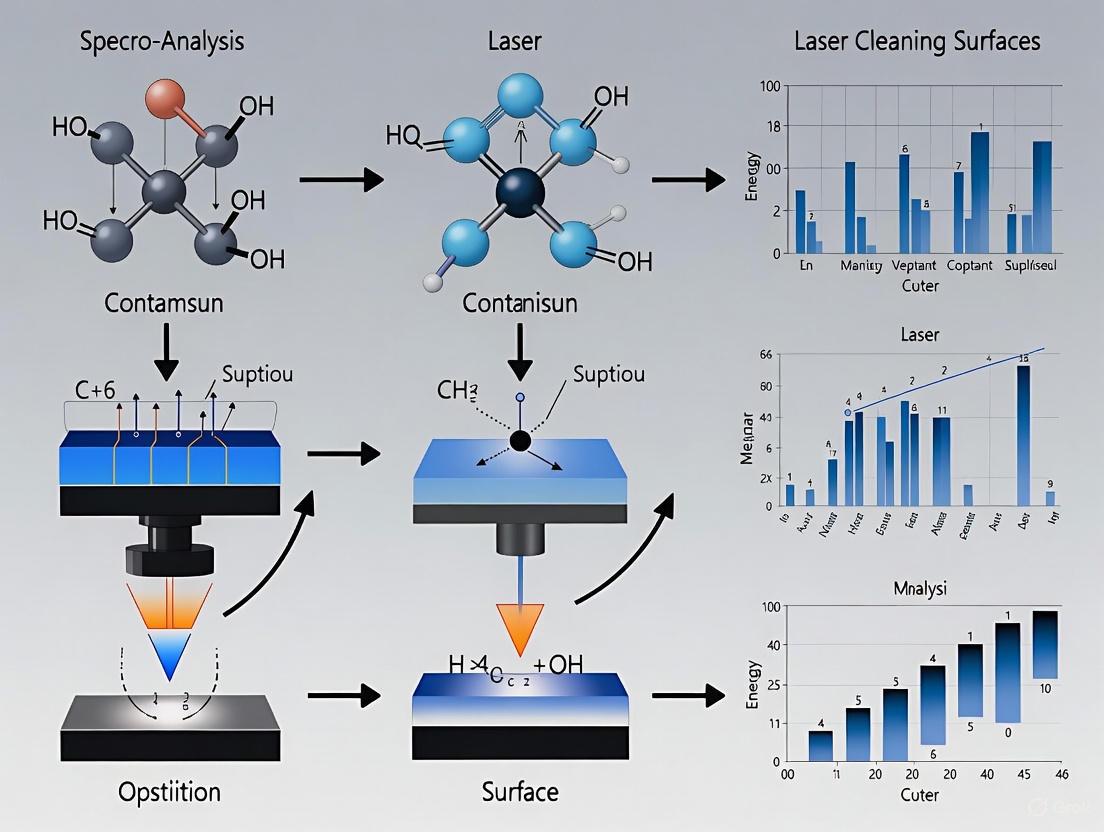
This article provides a comprehensive framework for researchers and scientists validating laser cleaning technologies for sensitive optical surfaces.
Validating Laser Cleaning Effectiveness on Optical Surfaces: Protocols for Precision and Performance
Abstract
This article provides a comprehensive framework for researchers and scientists validating laser cleaning technologies for sensitive optical surfaces. It covers the foundational physics of laser-material interactions, detailed methodologies for application, strategies for troubleshooting and optimizing processes, and rigorous validation techniques. By synthesizing current research and experimental data, this guide aims to establish reliable protocols for implementing laser cleaning in biomedical and clinical research environments where optical component integrity is paramount.
Laser-Optics Interaction: Principles and Contaminant Removal Mechanisms
Fundamentals of Laser Ablation and Energy Absorption Dynamics
Laser ablation, the process of removing material from a surface using focused laser energy, has emerged as a critical technology for precision cleaning, particularly for sensitive optical components. This process is governed by the fundamental dynamics of energy absorption, where laser energy is transferred to the target material, leading to rapid heating, vaporization, and ejection of contaminants without damaging the underlying substrate. Within the context of validating laser cleaning effectiveness on optical surfaces, understanding these core mechanisms is paramount for researchers and drug development professionals who rely on impeccably clean optical systems for analytical instrumentation, imaging, and diagnostic equipment.
The validation of laser cleaning processes requires a thorough comparison against alternative methods across multiple parameters, including cleaning efficacy, surface preservation, and operational practicality. This guide provides an objective, data-driven comparison of these technologies, with a specific focus on their application to optical surfaces, to support scientific decision-making and process optimization in research and development environments.
Core Mechanisms of Laser Ablation
Physical Principles of Laser-Material Interaction
Laser ablation operates on the principle of selective energy absorption. When a high-energy laser beam is directed onto a contaminated surface, the contaminant layer (e.g., rust, organic film, or particulate matter) absorbs the laser energy far more efficiently than the underlying optical substrate. This selective absorption causes the contaminant to undergo rapid heating and vaporization—a process known as laser ablation—effectively removing it from the surface [1]. The process depends critically on several factors:
- Laser Parameters: Wavelength, pulse duration, fluence (energy per unit area), and repetition rate are tuned to maximize absorption by the contaminant while minimizing interaction with the substrate [1].
- Material Properties: The optical and thermal properties of both the contaminant and the substrate determine the efficiency of energy transfer and the subsequent material removal [2].
- Ablation Regimes: The specific mechanism of material removal can vary. For ultrashort (femtosecond to picosecond) laser pulses, material ejection can be driven by photomechanical effects (spallation) due to stress confinement. At higher fluences, the process can transition to a "phase explosion," where the superheated material undergoes explosive decomposition into vapor and liquid droplets [2].
Advanced Dynamics and Experimental Visualization
The fundamental dynamics of laser ablation involve highly non-equilibrium states of matter. Time-resolved studies using techniques like pump-probe microscopy have revealed that following ultrafast laser excitation, materials can undergo melting and amorphization before the onset of ablation [3]. The ablation plume itself exhibits complex nanoscale density heterogeneities during expansion, which are signatures of the specific phase decomposition processes at work [2].
Cutting-edge imaging techniques are crucial for validating these dynamics. For instance, a dual-modal ultrafast microscopy system that combines two-dimensional reflectivity and three-dimensional topography imaging has achieved impressive spatiotemporal resolutions of 236 nm and 256 fs. This system can successfully examine the dynamics of laser-induced periodic surface structure formation, strengthening, and erasure on silicon surfaces, providing a robust tool for the comprehensive analysis of ablation dynamics [3].
Comparative Analysis of Surface Cleaning Methodologies
Laser Ablation vs. Traditional Cleaning Methods
The following table provides a structured comparison of laser ablation against other prevalent surface cleaning techniques, with a focus on parameters critical for optical surface processing.
Table 1: Comparative Analysis of Surface Cleaning Technologies
| Parameter | Laser Ablation/Cleaning | Sandblasting | Chemical Cleaning | Low-Pressure Plasma Cleaning |
|---|---|---|---|---|
| Cleaning Mechanism | Photothermal/Photomechanical ablation vaporizes contaminants [1]. | High-pressure abrasive particles physically remove contaminants [4]. | Chemical reactions dissolve or break down contaminants [5]. | Reactive ions and radicals chemically etch and volatilize organics [6]. |
| Precision | High (suitable for sub-millimeter features) [4]. | Low (difficult to control on small areas) [4]. | Low to Medium | High (uniform, large-area processing) [6]. |
| Surface Contact | Non-contact [5]. | Contact [5]. | Contact (typically immersion) | Non-contact [6]. |
| Substrate Damage Risk | Very Low (when parameters are optimized) [1]. | High (can cause pitting and erosion) [1]. | Medium (potential for chemical etching) | Very Low (non-destructive to coatings) [6]. |
| Environmental Impact | Low (no chemicals, minimal waste) [5] [1]. | High (airborne dust, spent media) [4] [1]. | High (hazardous waste streams) [5] | Low (gas-based, no liquid waste) [6]. |
| Typical Applications | Precision cleaning of delicate optics, electronics, historical artifacts [5] [4]. | Heavy-duty rust removal on large structural components [4] [1]. | General degreasing, wafer cleaning. | In-situ cleaning of large-aperture optical components in vacuum systems [6]. |
Quantitative Performance Data
Experimental studies provide quantitative data on the effectiveness of different cleaning methodologies. The following table summarizes key performance metrics from recent research, which are essential for validating process effectiveness.
Table 2: Experimental Performance Data from Cleaning Studies
| Study Focus | Cleaning Method | Key Experimental Parameters | Quantitative Results |
|---|---|---|---|
| Liquid-assisted laser rust removal on Q235 steel [7] | Combined continuous & nanosecond pulsed laser | Water layer thickness: 0.25-1.0 mm; Laser energy density: Varied. | Liquid layer effectively reduced thermal damage to substrate; Optimal rust removal efficiency achieved with specific water layer thickness. |
| Organic contaminant removal from optical coatings [6] | Low-Pressure Oxygen Plasma | Discharge power and gas pressure varied; Plasma potential, ion density, and electron temperature measured. | Effectively restored surface morphology and enhanced optical transmittance; Recovered laser-damage resistance of components. |
| Predicting laser-induced surface modifications [8] | Nanosecond Nd:YAG Pulsed Laser | Wavelength: 532 nm; Pulse Width: 4.4 ns; Laser Intensity: 1.6×10^6 to 1.61×10^10 W/cm². | A hybrid deep learning model (CNN-MLP) achieved >99% accuracy in predicting surface modification. |
| Laser ablation of gold films [2] | Femtosecond Laser Pulses | Pulse Duration: 50 fs; Laser Fluence: Up to 6.3 J/cm². | Time-resolved X-ray probing mapped the evolution of nanoscale density heterogeneities in the ablation plume. |
Experimental Protocols for Validation
Protocol for Liquid-Assisted Laser Cleaning of Metallic Surfaces
This protocol, based on the study of Q235 steel, outlines the process for evaluating the efficacy of liquid-assisted laser cleaning in reducing thermal damage [7].
- Sample Preparation: Prepare substrate samples (e.g., 30x30 mm Q235 steel plates). Induce corrosion artificially by placing them in a humid environment and spraying with 6% NaCl solution every 12 hours for 15 days.
- Liquid Film Application: Apply a uniform layer of pure water over the rusted surface. The thickness of this layer (e.g., 0.25 mm, 0.5 mm, 0.75 mm, 1.0 mm) is a critical variable.
- Laser Setup and Calibration: Employ a combined laser system (continuous wave and nanosecond pulsed laser). Precisely calibrate the laser energy density and the delay between the two laser pulses.
- Processing: Irradiate the sample surface through the water layer with the combined laser beam.
- Post-Processing Analysis:
- Surface Morphology: Characterize the cleaned surface using Scanning Electron Microscopy (SEM) to assess rust removal efficiency and surface roughness.
- Thermal Damage Assessment: Analyze cross-sections for any evidence of heat-affected zones or microstructural changes in the substrate.
The workflow for this experimental validation is summarized in the diagram below:
Protocol for Plasma Cleaning of Optical Components
This protocol details the methodology for in-situ plasma cleaning of large-aperture optical components with chemical coatings, as used in intense laser systems [6].
- Sample Preparation: Use dip-coating methods to prepare chemical-coated fused silica samples (e.g., sol-gel SiO₂ anti-reflective coatings).
- Contaminant Application: Artificially deposit a uniform layer of organic contaminants onto the coating surface.
- Plasma Reactor Setup: Place the contaminated optical component inside a low-pressure plasma chamber. Use a capacitive-coupling discharge model.
- Process Parameter Optimization:
- Use a Langmuir probe to characterize plasma potential, ion density, and electron temperature.
- Adjust core parameters like discharge power and oxygen/argon gas pressure to establish the optimal process window.
- Plasma Treatment: Expose the optical component to the low-pressure plasma for a defined duration.
- Effectiveness Analysis:
- Optical Performance: Measure the transmittance of the optical component at the target wavelength (e.g., 355 nm) to quantify recovery.
- Surface Analysis: Use techniques like X-ray photoelectron spectroscopy (XPS) to verify the removal of organic functional groups.
- Laser Damage Threshold Testing: Measure the laser-induced damage threshold (LIDT) to confirm the restoration of optical strength.
The Scientist's Toolkit: Essential Research Reagents and Materials
For researchers designing experiments to validate laser ablation and other cleaning techniques, the following tools and materials are fundamental.
Table 3: Essential Research Reagents and Materials for Cleaning Validation
| Item | Function/Description | Example Application |
|---|---|---|
| Nanosecond/Picosecond Pulsed Lasers | Provides high peak power for efficient ablation with controlled thermal input. | Laser-induced surface modification studies; rust removal [8] [7]. |
| Sol-Gel Chemical Coatings | Represents functional optical coatings (anti-reflective, high-reflective) on substrates. | Serving as test samples for cleaning studies on optical components [6]. |
| Low-Pressure Plasma Reactor | Generates reactive ions and radicals for gentle, non-contact cleaning of sensitive surfaces. | In-situ removal of organic contaminants from large-aperture optics [6]. |
| Scanning Electron Microscope (SEM) | Provides high-resolution imaging for qualitative assessment of surface morphology pre- and post-cleaning. | Evaluating rust removal efficiency and surface topography [7]. |
| Langmuir Probe | Diagnoses plasma parameters (density, temperature) critical for process optimization. | Characterizing plasma discharge in plasma cleaning experiments [6]. |
| Spectrophotometer | Quantifies the optical transmittance/reflectance of coated optics to measure cleaning performance. | Assessing the recovery of optical performance after cleaning [6]. |
The validation of laser cleaning effectiveness on optical surfaces is a multi-faceted process that requires a deep understanding of laser ablation fundamentals and a rigorous, comparative approach to performance assessment. As the experimental data and comparisons in this guide demonstrate, laser ablation offers a unique combination of precision, non-contact operation, and minimal substrate damage, making it highly suitable for delicate optical surfaces. However, alternative methods like low-pressure plasma cleaning present a compelling, equally non-destructive solution for specific applications, such as the in-situ cleaning of large optical components in vacuum systems.
The choice of an optimal cleaning technology must be guided by the specific requirements of the optical component—including the nature of the contaminant, the sensitivity of the substrate, and the required level of cleanliness. The experimental protocols and toolkit outlined herein provide a foundation for researchers and scientists to conduct their own validations, ensuring that the integrity and performance of critical optical systems are maintained to the highest standards.
Laser cleaning has emerged as a critical, non-contact process for maintaining optical surfaces, with its effectiveness heavily dependent on the precise selection of operational parameters. For researchers and scientists, particularly in fields like drug development where contamination control is paramount, understanding the interplay between wavelength, pulse duration, and power density is essential for validating cleaning protocols that are both effective and non-damaging. This guide objectively compares the performance of different laser parameter sets, supported by experimental data, to provide a framework for optimizing cleaning processes for sensitive optical components.
Core Laser Parameters and Their Impact on Cleaning
Laser cleaning performance is governed by the fundamental interaction between laser light and the contaminant or coating material. The three parameters below form the cornerstone of any effective laser cleaning protocol.
Wavelength: The wavelength of the laser determines how energy is absorbed by the material. A wavelength of 1064 nm, common in fiber lasers, is highly absorbed by metals and many contaminants, making it a industry standard for industrial cleaning tasks [9]. For detecting trace residues in pharmaceutical manufacturing, deep UV spectroscopy systems utilize specific ultraviolet wavelengths to excite and quantify molecules without contact [10].
Pulse Duration: This parameter dictates the temporal nature of the energy delivery and is critical for controlling thermal effects.
- Nanosecond (ns) pulses can lead to significant thermal diffusion, which may damage the underlying substrate [11].
- Femtosecond (fs) pulses provide extremely short, high-intensity energy bursts. This confines energy absorption to the target contaminant, minimizing heat transfer to the substrate and enabling ultra-precise, non-thermal ablation, which is ideal for delicate optical surfaces [11].
Power Density (or Fluence): Power density, often expressed as energy per unit area (J/cm²), is the decisive factor for the cleaning outcome. If the fluence is below the removal threshold of the contaminant, cleaning will be ineffective. Conversely, fluence above the damage threshold of the substrate will cause irreversible harm. Successful cleaning occurs in the window between these two thresholds. For instance, a fluence of 2.17 J/cm² from a femtosecond laser has been shown to effectively remove 15 µm polystyrene microbeads without damaging a glass substrate [11].
Comparative Performance Analysis of Laser Parameters
The tables below synthesize data from recent research to compare how different parameter combinations influence cleaning effectiveness and safety across various applications.
Table 1: Comparison of Laser Pulse Duration Regimes for Cleaning
| Pulse Duration | Mechanism | Advantages | Limitations | Typical Applications |
|---|---|---|---|---|
| Femtosecond (fs) | Primarily non-thermal ablation, minimal heat diffusion [11] | High precision; minimal substrate damage; suitable for thermally sensitive materials [11] | Higher equipment cost; process complexity | Heritage restoration; wafer cleaning; sensitive optical surfaces [11] |
| Nanosecond (ns) | Photothermal and photochemical effects; some thermal diffusion [11] | Proven, robust technology; cost-effective for many industrial uses | Risk of thermal damage to substrate; reduced precision [11] | Rust, paint, and oxide removal from robust components [11] |
Table 2: Experimental Laser Parameters and Outcomes from Recent Studies
| Study Objective | Optimal Parameters | Key Performance Outcomes | Source |
|---|---|---|---|
| Cleaning 15 µm microbeads from glass | • Wavelength: 1030 nm• Pulse Duration: 190 fs• Fluence: 2.17 J/cm² | Effective contaminant removal with minimal energy use and no substrate damage. Enabled by real-time deep learning control. | [11] |
| Paint layer removal from Al alloy | • Laser Power: 291 W• Scanning Speed: 8425 mm/s• Frequency: 166 kHz | Achieved controlled paint removal with a post-cleaning surface roughness error range of -0.573 µm to -0.419 µm. | [12] |
| LDED coating of FeCoNi+Y₂O₃ | • Laser Power: 706.8 W• Scanning Speed: 646.2 mm/min• Powder Feed: 12 g/min | Reliable regression model for cladding morphology (dilution rate error: 7.36%; width-to-height ratio error: 10.03%). | [13] |
Experimental Protocols for Validating Laser Cleaning
To ensure the validity and reproducibility of laser cleaning processes, a structured experimental methodology is crucial. The following protocol, based on the Response Surface Methodology (RSM), provides a robust framework for optimization.
Experimental Design and Setup
- Material Preparation: The substrate (e.g., an Al alloy sample with a composite paint layer [12] or a 316L stainless steel substrate [13]) is prepared and cleaned. Contaminants or coatings are applied uniformly to ensure consistent test conditions.
- System Configuration: The laser cleaning system typically includes a pulsed laser source, galvanometer scanners for beam steering, a motion control stage, and process gas or vacuum extraction [12]. In advanced setups, a real-time monitoring system like a CMOS camera is integrated for feedback [11].
Optimization via Response Surface Methodology (RSM)
RSM is a statistical technique that fits a multivariate regression equation to experimental data to model and optimize process parameters [13] [12].
- Define Input Variables and Responses: Key laser parameters (e.g., Laser Power, Scanning Speed, Repetition Frequency) are chosen as input variables. The output responses are quantifiable quality metrics such as paint removal thickness, surface roughness (Ra), or dilution rate [13] [12].
- Experimental Design: A Box-Behnken Design (BBD) is often employed, which efficiently explores the multi-parameter space with a reduced number of experimental runs [13].
- Model Validation: A regression model is established, and its reliability is assessed through Analysis of Variance (ANOVA). The model is then used to predict optimal parameter sets, which are finally validated through confirmation experiments [12].
Real-Time Monitoring and Advanced Control
For the highest precision, a closed-loop system can be implemented. One study demonstrated this by integrating a conditional Generative Adversarial Network (cGAN). This neural network takes a camera image of the surface before a laser pulse and predicts the outcome after the pulse. This prediction is used in a real-time feedback loop to tailor the laser's position and energy for selective cleaning, drastically improving precision and efficiency [11].
The workflow for this optimized, data-driven approach is summarized below:
The Scientist's Toolkit: Key Research Reagents and Materials
Table 3: Essential Materials for Laser Cleaning Research and Validation
| Material/Component | Function in Research Context | Specific Example |
|---|---|---|
| Polystyrene Microbeads | A standardized model contaminant for developing and validating high-precision cleaning processes due to uniform size and properties [11]. | 15 µm diameter beads on a glass slide to simulate contaminants [11]. |
| Composite Paint Layers | A representative challenging coating system for studying controlled, layered removal from alloy substrates [12]. | Al alloy substrate with polyurethane topcoat and epoxy primer [12]. |
| High-Entropy Alloy (HEA) Powders | Used in coating formation studies (e.g., via LDED) to understand how laser parameters affect the morphology of deposited functional coatings [13]. | FeCoNi alloy powder mixed with Y₂O3 for oxide dispersion strengthening [13]. |
| Trace Chemical Detector | Validates cleaning effectiveness by detecting residual contamination on surfaces at trace levels, crucial for pharmaceutical and optical applications [10]. | Deep UV instrument (e.g., TraC) for non-contact detection of Active Pharmaceutical Ingredients (APIs) [10]. |
Key Insights for Research Applications
The research and data lead to several critical conclusions for professionals validating laser cleaning on optical surfaces:
- Pulse Duration is Paramount for Delicate Surfaces: For cleaning where substrate integrity is non-negotiable, femtosecond lasers are superior. Their ultrashort pulses ablate material with negligible thermal damage, making them the tool of choice for critical optical components and in R&D for high-precision industries [11].
- Validation Requires a Multi-Faceted Approach: Relying on a single metric is insufficient. A robust validation protocol must combine physical metrics (e.g., roughness, removal thickness) with chemical detection methods (e.g., deep UV spectroscopy) to confirm both macroscopic and microscopic cleanliness [10] [12].
- Systematic Optimization is a Force Multiplier: The Response Surface Methodology provides a powerful, data-driven framework for moving beyond trial-and-error. It efficiently maps the complex relationships between multiple laser parameters and cleaning outcomes, ensuring reliable and reproducible results [13] [12].
- The Future is Adaptive and Automated: The integration of deep learning with real-time monitoring represents the cutting edge. This technology enables a self-correcting cleaning process that can adapt to varying contaminant thickness and type, ensuring optimal photon usage and guaranteeing results [11].
In high-power laser systems and precision optical applications, surface contaminants are not merely a nuisance; they are a primary factor limiting performance and longevity. Organic films, particulate matter, and other surface adherents can dramatically reduce laser-induced damage thresholds (LIDT), leading to catastrophic failures in critical optical components. Studies have demonstrated that contamination on optical component surfaces can induce damage spots five times the size of the contaminants themselves under intense laser irradiation, reducing the LIDT by approximately 60% [6]. As optical systems advance toward higher powers and greater precision, understanding and validating contaminant-specific removal mechanisms has become a fundamental research imperative.
This guide objectively compares the performance of laser cleaning against alternative technologies, with a specific focus on mechanistic actions across different contamination types. We present experimental data and protocols to provide researchers with a rigorous framework for selecting and validating cleaning approaches based on specific contamination challenges, particularly for sensitive optical surfaces where preservation of substrate integrity is paramount.
Fundamental Cleaning Mechanisms: A Comparative Analysis
Cleaning technologies operate through distinct physical principles that determine their effectiveness against different contamination types. The three primary mechanisms are laser thermal ablation, laser-induced stress waves, and plasma-based chemical reactions.
Laser Thermal Ablation Mechanism
Laser thermal ablation removes contaminants through rapid vaporization. When a pulsed laser beam irradiates a surface, the contaminants absorb laser energy, and their temperature rises instantly. If the energy exceeds the contaminant's vaporization threshold, it undergoes instant phase change, leading to removal [14]. The process is governed by the laser energy density, which must be carefully controlled to sit between the ablation threshold of the contaminant and that of the underlying substrate [14]. This mechanism is highly effective for organic films and coatings.
Laser Thermal Stress Mechanism
This mechanism utilizes stress effects rather than thermal ablation. A short pulsed laser causes rapid, localized heating and thermal expansion of either the contaminant or the substrate. This generates a thermoelastic stress wave that propagates and displaces the contaminant when the resulting lifting force exceeds the adhesion force (typically van der Waals forces) [14]. The one-dimensional heat conduction equation can be expressed as:
[ \rho c \frac{\partial T(z,t)}{\partial t} = \lambda \frac{\partial^2 T(z,t)}{\partial z^2} + \alpha I_0 A e^{-A z} ]
Where ( \rho ) is density, ( c ) is specific heat, ( \lambda ) is thermal conductivity, ( \alpha ) is absorptivity, ( I_0 ) is laser intensity, and ( A ) is the absorption coefficient [14]. This mechanism is particularly effective for removing particulate contaminants without damaging the substrate.
Plasma Surface Interaction Mechanism
Low-pressure plasma cleaning operates on different principles, using ionized gas (typically oxygen or argon) to remove contaminants. The ionized gas generates reactive species (ions, electrons, radicals) that interact with organic contaminants, breaking them down into volatile compounds through chemical reactions and physical sputtering [6]. Reactive molecular dynamics (RMD) simulations have revealed that oxygen plasma removes organic films via radical-driven pathways, effectively restoring optical performance [6].
Figure 1: Laser and Plasma Cleaning Mechanisms. This diagram illustrates the fundamental physical processes through which different cleaning technologies interact with and remove surface contaminants.
Technology Performance Comparison
Quantitative Cleaning Efficiency Data
Table 1: Performance Comparison of Cleaning Technologies for Different Contaminant Types
| Contaminant Type | Cleaning Technology | Key Performance Metrics | Optical Surface Impact | Limitations |
|---|---|---|---|---|
| Organic Films(Photoresist, oils) | KrF Excimer Laser(λ=248 nm) | Ablation rate: 0.09 μm/pulse at 0.3 J/cm²; Complete removal possible with optimized pulses [15] | Minimal substrate damage with proper parameter control; Can restore near-baseline transmittance | Potential for chemical residue; Requires precise fluence control |
| Low-Pressure Oxygen Plasma | Removes realistic organic films via radical-driven pathways; Restores optical performance [6] | Non-destructive to coatings; High uniformity (~80%) [6] | Slower process; Requires vacuum chamber | |
| Solvent Cleaning | Effective for most organic contaminants [16] | Risk of solvent residue causing hazing or further contamination | Environmental and health concerns; Chemical disposal issues | |
| Particulates(Sub-micron particles) | Steam Laser Cleaning(with liquid film) | Highly effective for micron to sub-micron particles; Explosive vaporization generates removal forces [17] | Gentle on delicate substrates when optimized | Requires precise liquid film deposition |
| Dry Laser Cleaning(UV laser) | Effective for particulate removal [17] | Non-contact process | Less effective than steam-enhanced method | |
| Ultrasonic Cleaning | Effective for larger particles [14] | May cause damage to delicate optical coatings | Ineffective for sub-micron particles; Can drive particles into surfaces | |
| Paint & Coatings(Composite layers) | Pulsed Fiber Laser(λ=1064 nm) | Removal depth proportional to pulse overlap; Multiple mechanisms coupled: ablation, plasma impact, thermal stress [18] | Selective removal possible with parameter optimization; Risk of substrate damage if over-exposed | Complex parameter optimization required for multilayer systems |
| Mechanical Abrasive(Sandblasting) | Fast removal rate for thick coatings [16] | High probability of surface and substrate damage; Creates secondary contamination | Low precision; Generates dust and debris | |
| Rust & Oxides(Surface corrosion) | Fiber Laser(λ=1064 nm) | Effective removal at 0.41-8.25 J/cm²; Below 0.41 J/cm² ineffective, above 8.25 J/cm² causes damage [14] | Can clean without damaging underlying metal substrate | Narrow processing window for sensitive applications |
Operational Characteristics and Process Considerations
Table 2: Operational Parameters and Practical Implementation Factors
| Parameter | Laser Cleaning | Plasma Cleaning | Traditional Methods(Chemical, Mechanical) |
|---|---|---|---|
| Mechanism | Thermal ablation, stress waves, plasma shock [14] | Radical-driven chemical reaction, physical sputtering [6] | Chemical dissolution or mechanical displacement |
| Selectivity | High - Precise targeting possible [19] | Medium - Treats entire chamber volume | Low - Broad application |
| Substrate Damage Risk | Low to Medium (with parameter optimization) [18] | Very Low - Non-destructive to coatings [6] | High - Chemical etching or abrasive damage |
| Environmental Impact | Low - No chemicals required [19] | Medium - May require gas handling | High - Solvent waste, media disposal [16] |
| Process Speed | Fast (cm²/min scale) [19] | Slow (minutes to hours) [6] | Variable - Often requires additional steps |
| Capital Cost | High | Medium | Low to Medium |
| Operational Complexity | High - Parameter optimization critical | Medium - Vacuum systems required | Low - Established procedures |
| In-situ Capability | Possible with fiber delivery | Limited by chamber requirements | Generally limited |
Experimental Protocols for Validation
Laser Cleaning Validation for Organic Films on Optical Surfaces
Objective: Quantitatively validate the effectiveness of laser cleaning for removing standardized organic contaminants from coated optical surfaces while preserving anti-reflective (AR) or high-reflective (HR) coating integrity.
Sample Preparation:
- Substrate: Fused silica with sol-gel SiO₂ AR coatings at 355 nm wavelength [6]
- Contaminant Application: Spin-coating of photoresist (PFR 7790G) to ~1.2 μm thickness [15]
- Contamination Standardization: Use calibrated thickness measurements via profilometry to ensure uniform contaminant layers
Laser Parameters:
- Laser Type: KrF Excimer Laser (λ = 248 nm) [15]
- Fluence Range: 0.1-0.3 J/cm² (below coating damage threshold) [15]
- Pulse Repetition: 10-50 Hz
- Spot Size: 1-5 mm diameter with beam homogenizer
- Number of Pulses: Varied from 10-100 pulses
Characterization Methods:
- Ablation Depth: Profilometry measurements after single and multiple pulses [15]
- Surface Quality: White-light interferometry for surface roughness
- Coating Integrity: Laser-induced damage threshold (LIDT) testing pre- and post-cleaning
- Chemical Residue: FTIR spectroscopy for detection of organic residues [20]
Validation Metrics:
- Cleaning efficiency calculated as (initial thickness - final thickness)/initial thickness × 100%
- LIDT maintenance >95% of pristine coating value
- Surface roughness change < ±10% from baseline
Plasma Cleaning Protocol for Sensitive Optical Components
Objective: Evaluate low-pressure oxygen plasma efficiency for removing organic contamination from large-aperture optical components without degradation of optical performance.
Experimental Setup:
- Plasma System: Low-pressure RF capacitive coupling discharge [6]
- Process Gases: Oxygen (90%) and Argon (10%) mixture
- Operating Pressure: 50-200 mTorr
- RF Power: 100-500 W
- Treatment Duration: 15-90 minutes
Diagnostic Methods:
- In-situ Plasma Characterization: Langmuir probe for plasma potential, ion density, electron temperature [6]
- Optical Emission Spectroscopy: Identification of reactive species in plasma
- Transmittance Measurement: Quantitative relationship between functional groups and optical transmittance [6]
- Surface Analysis: XPS for chemical composition changes
Validation Approach:
- Establish quantitative correlation between plasma parameters and cleaning effectiveness
- Use reactive molecular dynamics (RMD) simulations to model plasma-contaminant interactions [6]
- Compare experimental results with simulation predictions for mechanism verification
The Scientist's Toolkit: Essential Research Reagents and Materials
Table 3: Key Research Materials and Equipment for Cleaning Validation Studies
| Category | Item | Specification/Function | Application Context |
|---|---|---|---|
| Standardized Contaminants | Photoresist (PFR 7790G) | Mixture of ethyl lactate, Novalac resin, naphthoquinone diazide ester; forms uniform ~1.2μm films [15] | Organic film removal studies |
| Sol-gel SiO₂ coatings | 29nm particle size, anti-reflective at 355nm [6] | Optical substrate simulation | |
| Laser Systems | KrF Excimer Laser | λ=248nm, short pulse duration for photochemical breaking of molecular bonds [15] | Organic contaminant ablation studies |
| Pulsed Fiber Laser | λ=1064nm, high repetition rate, adjustable pulse overlap [18] | Paint removal, industrial applications | |
| Analytical Instruments | Langmuir Probe | Measures plasma potential, ion density, electron temperature [6] | Plasma characterization |
| Profilometer | Measures ablation depth and surface topography [15] | Cleaning efficiency quantification | |
| FTIR Spectrometer | Detects organic functional groups and residues [20] | Chemical residue analysis | |
| White-light Interferometer | Measures surface roughness at nanometer scale | Substrate damage assessment | |
| Plasma Systems | RF Capacitive Coupling Discharge | Low-pressure system for uniform, diffuse plasma generation [6] | Gentle cleaning of sensitive optics |
| Simulation Tools | Reactive Force Field (ReaxFF) MD | Models atomic-scale reaction pathways of plasma-surface interactions [6] | Mechanism investigation at nanoscale |
Figure 2: Contaminant-Specific Cleaning Validation Workflow. This decision framework guides researchers in selecting and validating appropriate cleaning methods based on contaminant characteristics and performance requirements.
The validation of contaminant-specific removal mechanisms provides a critical foundation for selecting appropriate cleaning technologies for optical applications. Laser cleaning offers distinct advantages in precision, controllability, and environmental compatibility, but requires careful parameter optimization based on specific contaminant characteristics. Plasma cleaning emerges as a highly effective alternative for organic film removal on sensitive components, particularly where substrate preservation is paramount.
Future research directions should focus on real-time monitoring of cleaning processes, advanced simulation of laser-material interactions, and development of combinatorial approaches that leverage the strengths of multiple technologies. As optical systems continue to advance in power and precision, the role of validated, contaminant-specific cleaning protocols will only grow in importance for ensuring optimal performance and longevity.
Optical components form the core of numerous advanced technologies, from high-energy laser systems to semiconductor manufacturing and biomedical devices. The performance and longevity of these components critically depend on their surface quality, making cleaning processes not merely maintenance procedures but fundamental to optical surface integrity. Within research focused on validating laser cleaning effectiveness, substrate preservation emerges as the paramount objective—the process must remove contaminants without introducing new damage or altering the functional properties of the optical surface. This guide provides a comparative analysis of cleaning methodologies, evaluating their performance against the central goal of preserving substrate integrity.
Contaminant Types and Their Impact on Optical Surfaces
Understanding the specific contaminants affecting optical surfaces is the first step in selecting an appropriate cleaning strategy. Different contaminants necessitate different removal mechanisms and pose varying threats to surface integrity.
- Particles: Residual polishing abrasives (e.g., cerium oxide) or environmental dust particles act as nano precursors for laser-induced damage. Under laser irradiation, these absorbing sites can initiate catastrophic failure, drastically reducing the component's damage threshold [21] [22].
- Organic Films: Residuals from optical paint, cement, or fingerprints create thin organic layers. These films increase light absorption and can lead to thermal loading and damage under high-power laser operation. Their presence is a primary reason for incorporating solvent-based pre-cleaning steps [22].
- Carbonaceous Contamination: In vacuum environments of high-power laser systems, volatile organic compounds can deposit on optics, forming carbon-based layers. This contamination is particularly detrimental as it directly absorbs laser energy, leading to coating degradation and reduced laser-induced damage threshold (LIDT) [6].
Comparative Analysis of Optical Cleaning Methodologies
The following analysis compares three primary cleaning approaches, with experimental data highlighting their efficacy and potential impact on substrate integrity.
Table 1: Comparison of Optical Surface Cleaning Methodologies
| Cleaning Method | Mechanism of Action | Best For Contaminant Type | Typical Surface Quality (RMS Roughness) | LIDT Performance | Key Advantages | Key Risks to Substrate |
|---|---|---|---|---|---|---|
| Wet Chemical Cleaning | Chemical dissolution and emulsification | Organic films, some particles | < 3 Å (on fused silica) [22] | Can restore high LIDT with proper process [22] | High efficacy on organics, established protocols | Chemical attack on sensitive substrates, water staining |
| Laser Cleaning | Thermal ablation, shockwaves, thermal stress [23] | Particles, dry contaminants | N/A (Substrate-dependent) | Effective on insulators; parameter-sensitive [23] | Non-contact, precision cleaning, automation-friendly | Thermal stress cracking, surface melting, ablation if parameters are incorrect [23] [24] |
| Plasma Cleaning | Chemical reaction with radicals, ion bombardment, atom-by-atom removal [21] [6] | Organic and carbonaceous films | Can reduce roughness (e.g., SiC from 1.090 nm to 0.055 nm) [6] | Improves damage resistance by removing absorptive contaminants [6] | Non-contact, atomic-level removal, no secondary waste | Potential surface etching at high power, requires vacuum equipment [21] |
Table 2: Quantitative Performance Data of Cleaning Methods
| Cleaning Method | Removal Efficiency | Process Parameters | Impact on Optical Transmission | Experimental Validation |
|---|---|---|---|---|
| Ultrasonic Wet Cleaning | Particle density reduction sub-micrometer scale [22] | Varying ultrasonic frequencies (40-500 kHz), alkaline solutions [22] | Not explicitly quantified, but critical for pre-coating LIDT [22] | Surface particle density analysis, LIDT testing [22] |
| Laser Cleaning | Effective contaminant removal on glass insulators (ESDD/NSDD measurement) [23] | 8 m/s scan speed, varying laser power [23] | Not directly measured, but surface cleanliness restored | Equivalent Salt Deposit Density (ESDD) measurement, thermal monitoring [23] |
| Low-Pressure Plasma Cleaning | Efficient removal of organic contaminants from coated optics [6] | Oxygen/Argon gas, RF power, pressure-controlled [6] | Restores near-baseline optical performance [6] | Langmuir probe, emission spectroscopy, transmittance measurement [6] |
Decision Workflow for Cleaning Method Selection
The following diagram illustrates a systematic approach for selecting an appropriate cleaning method based on substrate and contaminant properties, aligning with the goal of substrate preservation.
Experimental Protocols for Validating Cleaning Effectiveness
Rigorous validation is essential for confirming that cleaning processes achieve their goal without compromising the substrate. The following protocols are standard in the field.
Objective: To quantify surface contamination levels and micro-roughness before and after cleaning.
- Materials: Inspection microscope (e.g., Leica INM200 with 100x magnification), atomic force microscope (AFM), dark-field microscope.
- Procedure:
- Inspect samples in transmission and reflection using a spot lamp for initial gross contamination assessment.
- Perform automated microscope inspection with high-resolution camera (e.g., 2.3 MP Sony sensor) to detect particles >83 nm.
- Measure RMS roughness via AFM on multiple sample regions (typically 5-10 locations).
- Document particle density (particles/cm²) and size distribution.
- Interpretation: Successful cleaning shows reduced particle density without increased RMS roughness, which would indicate surface damage.
Objective: To determine the resistance of cleaned optical surfaces to high-power laser irradiation.
- Materials: Pulsed laser system (e.g., 1064 nm, ns-pulsed), beam delivery optics, energy measurement devices, online microscopy.
- Procedure:
- Place sample in test bench at normal incidence or specified angle.
- Expose multiple sites to laser pulses with gradually increasing fluence (S-on-1 test).
- Monitor each site for plasma flash or scattering increase indicating damage.
- Characterize damage morphology post-test via microscopy.
- Apply statistical analysis (e.g., linear regression) to damage probability data to determine LIDT value (usually at 0% damage probability).
- Interpretation: Effective cleaning increases LIDT; organic contaminants can reduce LIDT by up to 60% [6].
Objective: To measure the recovery of optical properties after cleaning.
- Materials: Spectrophotometer, ellipsometer, scatter measurement apparatus.
- Procedure:
- Measure baseline transmittance/reflectance spectrum before contamination.
- Re-measure after contamination and after cleaning.
- Calculate performance recovery: [(Tafter - Tbefore)/(Tclean - Tbefore)] × 100%.
- Perform spectroscopic ellipsometry to detect ultrathin residual layers.
- Interpretation: Successful cleaning restores >95% of original optical performance.
The Scientist's Toolkit: Essential Research Reagents and Materials
Table 3: Key Research Reagent Solutions for Optical Cleaning Validation
| Reagent/Material | Function in Research | Application Context |
|---|---|---|
| Fused Silica Substrates | High-quality reference substrate with well-characterized properties | Standardized test samples for cleaning process development [22] |
| Deconex OP Solutions | Alkaline cleaning solutions for precision cleaning | Removal of polishing residuals in ultrasonic cleaning processes [22] |
| Sol-Gel SiO₂ Coatings | Representative functional coatings for laser optics | Testing cleaning compatibility with sensitive AR coatings [6] |
| Oxygen and Argon Gases | Process gases for plasma cleaning | Generation of reactive species in low-pressure plasma cleaning [6] |
| Langmuir Probe | Diagnostic tool for plasma characterization | Measuring plasma potential, ion density, and electron temperature [6] |
Preserving optical surface integrity during cleaning requires a methodical approach that matches cleaning technology to specific contamination challenges and substrate properties. Wet chemical cleaning remains highly effective for organic films, laser cleaning offers precision for particle removal, and plasma cleaning excels at removing carbonaceous contamination without secondary waste. The validation framework presented here—encompassing surface quality assessment, LIDT testing, and optical performance validation—provides researchers with the necessary tools to quantitatively confirm cleaning effectiveness while ensuring substrate preservation. As optical systems continue to advance toward higher powers and greater precision, the development of cleaning methodologies that prioritize substrate integrity will remain critical to performance and reliability.
Laser-Induced Damage Thresholds (LIDT) in Optical Coatings and Materials
The Laser-Induced Damage Threshold (LIDT) represents the maximum optical energy or power density an optical component can withstand before sustaining irreversible damage. It is a critical parameter determining the performance and longevity of high-power laser systems across various scientific, industrial, and medical applications. For optical coatings—typically the most vulnerable element in laser systems—LIDT depends on multiple factors including coating material properties, deposition techniques, substrate characteristics, and laser parameters such as wavelength, pulse duration, and repetition rate [25]. Understanding and comparing LIDT values across different materials and experimental conditions is fundamental to advancing laser technology, particularly in validating surface preparation techniques like laser cleaning, which aim to enhance optical component durability by removing contamination and defects that initiate damage [26] [27].
Quantitative Comparison of LIDT Performance
The LIDT performance of optical materials varies significantly based on material composition, coating structure, and operational laser regime. The following tables summarize key experimental data for direct comparison.
Table 1: LIDT of Coating Materials under Pulsed Laser Irradation
| Material | Laser Parameters | LIDT Value | Substrate | Deposition Method | Reference |
|---|---|---|---|---|---|
| HfO₂ (single-layer) | 1064 nm, 12 ns | 22.13 J/cm² | K9 Glass | Ion Beam Sputtering (IBSD) | [28] |
| ZrO₂ (single-layer) | 1064 nm, 12 ns | 12.26 J/cm² | K9 Glass | Ion Beam Sputtering (IBSD) | [28] |
| SiO₂ (single-layer) | 1064 nm, 12 ns | 14.56 J/cm² | K9 Glass | Ion Beam Sputtering (IBSD) | [28] |
| CVD Diamond (bulk) | CO₂, 100 ns | 8 J/cm² | N/A | Chemical Vapor Deposition | [29] |
| ZnSe (bulk) | CO₂, 100 ns | 2.8 J/cm² | N/A | N/A | [29] |
| Ge (bulk) | CO₂, 100 ns | 1.7 J/cm² | N/A | N/A | [29] |
| ZrO₂/SiO₂ (AR coating) | 1064 nm, 9.6 ns | >40 J/cm² | Fused Silica | RF Sputtering | [30] |
Table 2: LIDT under Continuous Wave (CW) Laser Irradiation and Substrate Comparison
| Coating/Substrate Combination | Laser Parameters | LIDT Value | Notes | Reference |
|---|---|---|---|---|
| ZnS/YbF₃ AR on Diamond | 10.6 µm, CW | 15,287 W/cm² | 28.5% higher than ZnSe | [29] |
| ZnS/YbF₃ AR on ZnSe | 10.6 µm, CW | 11,890 W/cm² | Baseline for comparison | [29] |
| Gold (Au) Coating | ~1064 nm, CW | ~1.5×10⁵ W/cm | Transition to CW regime | [31] |
| Aluminum (Al) Coating | ~1064 nm, CW | ~4×10⁴ W/cm | Transition to CW regime | [31] |
Table 3: LIDT Scaling with Pulse Duration for Metallic Coatings [31]
| Pulse Duration Range | Observed LIDT Scaling Law | Dominant Damage Mechanism |
|---|---|---|
| 10 fs - 200 ps | Nearly constant (Fluence~τ⁰) | Ablation Dominated: Electron-phonon interactions, ultrafast ablation. |
| 200 ps - 10 ns | Fluence ~ τ⁰‧⁵ | Thermal Diffusion: Balance of deposited energy and lateral heat diffusion. |
| 10 ns - 10 s (CW) | Power Density ~ Constant | Steady-State Heating: Bulk temperature rise, melting. |
Experimental Protocols for LIDT Measurement
Standardized methodologies are crucial for obtaining reliable and comparable LIDT data. The International Organization for Standardization (ISO) 21254 provides the primary framework for laser damage testing.
Standardized Testing Protocols
The ISO 21254 standard defines several critical testing protocols. The 1-on-1 test involves irradiating multiple fresh sites on a sample with a single laser pulse per site, gradually increasing the fluence until damage occurs, which is ideal for determining the intrinsic threshold. The S-on-1 test irradiates a single site multiple times (e.g., S=1000) at each fluence level to assess damage probability under cumulative exposure, simulating real-world operational conditions where optics experience repetitive laser pulses [31]. Damage detection typically combines in-situ methods like monitoring scattered light from the surface and ex-situ inspection using Nomarski microscopy to identify and confirm the onset of damage [30].
Representative Experimental Workflow
A typical LIDT experiment follows a structured workflow from preparation to data analysis, ensuring consistency and reliability in results.
Specific Methodologies from Cited Studies
- Study on Metallic Coatings (Optics Express, 2025): Researchers tested seven metallic coatings across pulse durations from 10 fs to 10 seconds. They used 1-on-1 and S(1000)-on-1 protocols per ISO 21254-2. Beam diameters were maintained between 195–230 μm (1/e² level), and incident fluence was controlled via a motorized attenuator. The Highest-Before-First-Damage (HBFD) method determined the LIDT, calculated as the average between the lowest damaging fluence and the highest non-damaging fluence [31].
- Study on AR Coatings for CO₂ Lasers (Coatings, 2025): The LIDT for ZnS/YbF₃ AR coatings on diamond and ZnSe substrates was evaluated under continuous-wave (CW) 10.6 μm laser irradiation. The laser spot diameter was 2.5 mm, and the power density was increased until visible damage occurred. The damage threshold was defined as the power density (W/cm²) causing irreversible damage, confirmed by microscopy [29].
- Study on Single-Layer Films (Applied Surface Science, 2008): ZrO₂, SiO₂, and HfO₂ single-layer films deposited via Ion Beam Sputtering were tested with a 1064 nm laser at 12 ns pulse width. The experiments followed a 1-on-1 procedure, and damage was identified by audible acoustic signals, plasma flashes, and subsequent optical microscopy [28].
The Scientist's Toolkit: Essential Research Reagents and Materials
This table catalogs key materials and equipment frequently employed in LIDT research and high-power optical coating fabrication.
Table 4: Essential Research Reagents and Materials for LIDT Studies
| Item Name | Function/Application | Specific Examples |
|---|---|---|
| High-Index Coating Materials | Form high-reflectance layers in dielectric stacks. | HfO₂, ZrO₂, Ta₂O₅, TiO₂, ZnS (for IR) [28] [29] |
| Low-Index Coating Materials | Form low-reflectance layers and spacer layers. | SiO₂, YbF₃, LiF [29] [30] |
| High-Thermal-Conductivity Substrates | Dissipate heat, reduce thermal lensing, increase LIDT in CW regimes. | CVD Diamond, Polished Copper [29] |
| Standard Optical Substrates | Support for coatings; chosen for low absorption and surface quality. | Fused Silica (Spectrosil 2000), Borofloat 33, K9 Glass, ZnSe [28] [30] |
| Deposition Systems | Fabricate thin-film coatings with controlled properties. | Ion Beam Sputtering (IBS), Ion-Assisted Deposition (IAD), RF Sputtering, Thermal Evaporation [28] [25] [30] |
| LIDT Test Lasers | Provide calibrated irradiation sources across different regimes. | Q-switched Nd:YAG (1064 nm, ns), Ti:Sapphire (fs/ps), CO₂ Laser (10.6 μm, CW) [31] [29] |
| Diagnostic Tools | Characterize absorption, defects, and surface morphology. | Photothermal Common-Path Interferometry (PCI), Nomarski Microscope, Atomic Force Microscope (AFM), Scattered Light Detection [30] |
Systematic comparison of LIDT performance reveals that material selection, deposition technique, and substrate thermal properties are paramount in designing optics for high-power lasers. Under pulsed conditions, materials like HfO₂ and CVD diamond demonstrate superior resistance, whereas under CW irradiation, the superior thermal conductivity of diamond substrates provides a significant LIDT advantage over traditional materials like ZnSe. The emergence of standardized testing protocols (ISO 21254) enables reliable comparison of data across studies. Furthermore, the effectiveness of any optical surface treatment, including laser cleaning for contamination removal [27], must ultimately be validated against these rigorous LIDT standards to ensure enhanced component lifetime and system reliability. Continued research into novel coating materials, advanced deposition processes, and comprehensive damage testing remains essential for pushing the frontiers of high-power laser applications.
Implementing Laser Cleaning: Protocols for Optical Surface Applications
The effectiveness of laser cleaning on sensitive optical surfaces is highly dependent on the specific laser technology employed. Within the context of validating laser cleaning effectiveness, the selection of an appropriate laser system is paramount. Fiber, Nd:YAG, and UV lasers each offer distinct mechanisms of interaction with contaminants and substrates, leading to varying outcomes in cleaning efficiency, surface preservation, and overall process safety. This guide provides an objective comparison of these three laser types, consolidating experimental data and detailed methodologies to support researchers and scientists in making informed decisions for optical surface remediation projects. The performance of each laser is framed around their application in cleaning optical components, a critical step for maintaining performance in high-energy laser systems, synchrotron radiation beamlines, and historical conservation.
Laser Fundamental Types and Characteristics
Lasers are categorized primarily by their gain medium, the material which amplifies light, as this defines their fundamental operating properties and typical applications [32]. The three laser systems under review—Fiber, Nd:YAG, and UV—span different categories. Fiber and Nd:YAG lasers are both types of solid-state lasers, while UV lasers often use solid-state crystals to generate their specific wavelength and represent a different class based on their cold processing mechanism [32] [33].
The mode of operation is another critical differentiator. Lasers can operate as continuous-wave (emitting a constant beam) or pulsed (emitting energy in short bursts) [32]. Pulsed lasers are predominantly used in precision cleaning and are further classified by their pulse duration, which ranges from milliseconds (ms) down to femtoseconds (fs) [32]. Ultrashort pulses (picosecond and femtosecond) enable extremely precise ablation with minimal thermal effects on the substrate, which is crucial for delicate optical surfaces [32] [34].
Table 1: Fundamental Classifications of Laser Types Relevant to Optical Cleaning.
| Laser Type | Gain Medium | Primary Operating Mode | Typical Wavelength(s) |
|---|---|---|---|
| Fiber Laser | Rare-earth-doped silica glass (e.g., Ytterbium) [32] | Pulsed (Nanosecond to Ultrashort) [32] | 1064 nm (Infrared) [33] [35] |
| Nd:YAG Laser | Neodymium-doped Yttrium Aluminum Garnet crystal [32] | Pulsed (Nanosecond most common) [36] | 1064 nm (Infrared); 532 nm (Green) via harmonic generation [32] |
| UV Laser | Frequency-tripled solid-state crystals (e.g., for 355 nm) [33] | Pulsed (Nanosecond to Femtosecond) [34] | 355 nm (Ultraviolet) [33] |
Comparative Analysis of Laser Technologies
Fiber Lasers
Fiber lasers utilize an optical fiber doped with a rare-earth element as the gain medium, producing a high-quality, precise beam [32]. They are renowned for their robustness, high electrical efficiency, and low operating costs [32]. In cleaning applications, they operate primarily through a thermo-mechanical mechanism.
- Cleaning Mechanism: The intense, pulsed infrared beam is absorbed by surface contaminants, causing rapid heating and subsequent vaporization, ablation, or thermal-induced vibration that dislodges the material [35]. The effectiveness of this process hinges on the significant difference in absorption between the contaminant and the underlying substrate.
- Experimental Evidence for Optical Cleaning: A study on cleaning metal mirrors for optical diagnostics in ITER demonstrated that pulsed radiation from a fiber laser could effectively recover the optical properties of the mirror surface [37]. The research found that efficient cleaning was achieved at a relatively low power density of less than 10⁷ W/cm², where contaminants were removed in the solid phase with an insignificant thermal effect on the mirror substrate [37]. This highlights the capability of fiber lasers for delicate cleaning tasks where preserving the optical properties of the substrate is critical.
Nd:YAG Lasers
Nd:YAG lasers are a workhorse solid-state technology. Their infrared output can be efficiently converted to green (532 nm) and ultraviolet (355 nm) wavelengths using nonlinear crystals, though the fundamental 1064 nm wavelength is most common for cleaning [32] [36].
- Cleaning Mechanism: Similar to fiber lasers, nanosecond-pulsed Nd:YAG lasers at 1064 nm typically remove material through thermal ablation and vaporization. The high peak power of the pulses rapidly heats the contaminant layer, causing it to be ejected from the surface.
- Experimental Evidence for Optical Cleaning: Research on cleaning a 48 nm thick gold layer from fused silica mirrors demonstrated the high efficiency of a nanosecond-pulsed Nd:YAG laser [36]. By optimizing parameters like pulse duration, beam incidence angle, and spot overlapping, the study achieved a cleaning efficiency of approximately 98% in just 3 minutes for a 48 cm² area. The quality of the cleaned surface was verified using microscopy, SEM, and reflectivity measurements, confirming the method as a low-cost solution for reclaiming damaged optical components [36].
UV Lasers
UV lasers represent a different class of interaction, often referred to as "cold processing" [33]. The high-energy ultraviolet photons directly break chemical bonds in the contaminant material, a process known as photochemical ablation.
- Cleaning Mechanism: Unlike the thermal mechanisms of IR lasers, UV laser cleaning does not rely on significant heat generation. This makes it ideal for heat-sensitive materials. The breaking of molecular bonds allows for the precise removal of material layer-by-layer with minimal thermal damage to the substrate [34].
- Experimental Evidence for Optical Cleaning: A study on the safe cleaning of historical stained-glass from the 15th century employed a UV femtosecond laser [34]. The ultrashort pulses at UV wavelength (355 nm) allowed for the controlled removal of an unwanted crust—composed of hydrated and anhydrous sulphates and apatite—without damaging the underlying glass or the delicate grisaille (painted) layer. A multi-scan series process was designed to control the ablated crust thickness precisely, avoiding heat accumulation and preserving the integrity of the historical artifact [34].
Table 2: Performance Comparison in Optical Surface Cleaning Applications.
| Parameter | Fiber Laser | Nd:YAG Laser | UV Laser |
|---|---|---|---|
| Primary Cleaning Mechanism | Thermal ablation, Thermo-mechanical vibration [35] | Thermal ablation, Vaporization [36] | Photochemical bond breaking (Cold Ablation) [34] [33] |
| Typical Pulse Duration | Nanosecond to Ultrashort [32] | Nanosecond [36] | Femtosecond to Nanosecond [34] |
| Heat Affected Zone (HAZ) | Low to Moderate (depends on pulse width) | Moderate (for nanosecond pulses) | Very Low [34] |
| Suitable Contaminants | Oxides (rust), paints, coatings on metals [37] [35] | Metal coatings (e.g., Au), organic layers [36] | Inorganic crusts, fine particulates, organic films [34] |
| Suitable Optical Substrates | Metal mirrors, fused silica (with care) [37] | Fused silica, coated optics [36] | Colorless glass, stained-glass, sensitive polymers [34] |
| Key Advantage for Cleaning | High efficiency on metals, low operating costs [32] | Proven efficiency for delicate metal coating removal [36] | Exceptional control and safety for sensitive surfaces [34] |
Experimental Protocols for Validation
To ensure the validity and reproducibility of laser cleaning experiments, a standardized approach to methodology is essential. The following protocols are synthesized from the cited research.
General Workflow for Laser Cleaning Validation
The diagram below outlines a generalized experimental workflow applicable to validating the cleaning effectiveness of any laser system on an optical surface.
Detailed Methodologies
Sample Preparation and Initial Characterization:
- Sample Preparation: The optical substrate (e.g., fused silica mirror, historical glass) is prepared, and the contaminant (e.g., rust, gold coating, sulfate crust) is applied naturally or artificially [7] [36].
- Initial Characterization: The sample is analyzed using techniques such as:
- Optical Microscopy and Confocal Microscopy to assess surface morphology and crust thickness [34].
- Scanning Electron Microscopy (SEM) for high-resolution surface imaging [34] [36].
- Energy Dispersive X-ray Spectroscopy (EDS/EDX) to determine the elemental composition of the contaminant layer [34].
- Raman Spectroscopy to identify chemical compounds present [34].
- Angle-dependent Reflectivity Measurement to establish baseline optical performance [36].
Laser Parameter Selection and Cleaning:
- Parameter Optimization: A systematic investigation of key laser parameters is conducted, often via a design of experiments (e.g., single-factor analysis, orthogonal arrays) [35]. Critical parameters include:
- Laser Fluence / Power Density (J/cm² or W/cm²): Must be above the ablation threshold of the contaminant but below the damage threshold of the substrate [37] [36].
- Pulse Repetition Frequency (kHz): Affects heat accumulation [35].
- Scanning Speed (mm/s) and Spot Overlap: Determine the number of pulses per spot and the overall processing time [35] [36].
- Wavelength: Selected based on the absorption properties of the contaminant versus the substrate.
- Cleaning Execution: The laser is applied to the sample using a galvanometer scanner or linear stages. For enhanced control, a multi-scan series process is often employed instead of a single high-fluence pass to avoid heat accumulation and control the ablated depth precisely [34].
- Parameter Optimization: A systematic investigation of key laser parameters is conducted, often via a design of experiments (e.g., single-factor analysis, orthogonal arrays) [35]. Critical parameters include:
Post-Cleaning Analysis and Validation:
- The same characterization techniques used in the initial analysis are reapplied to the cleaned area.
- Cleaning Efficiency is quantified. This can be measured as:
- The absence of substrate damage is confirmed. This involves checking for:
The Researcher's Toolkit: Essential Research Reagent Solutions
The table below lists key materials, equipment, and software solutions essential for conducting rigorous laser cleaning validation experiments, as derived from the cited research.
Table 3: Essential Research Reagents and Tools for Laser Cleaning Validation.
| Item / Solution | Function in Research | Specific Examples from Literature |
|---|---|---|
| Pulsed Laser System | The core tool for performing the cleaning ablation. | Fiber laser (1064 nm) [37], Nd:YAG laser (1064 nm, ns pulses) [36], UV femtosecond laser (355 nm) [34]. |
| Optical Microscope | Initial and post-process inspection of surface morphology and contamination. | Used for qualitative assessment before and after cleaning in all cited studies [34] [36]. |
| Scanning Electron Microscope (SEM) | High-resolution imaging to verify contaminant removal and inspect for sub-micron substrate damage. | Used to analyze the surface of cleaned gold mirrors [36] and stained-glass [34]. |
| Energy Dispersive X-ray Spectroscopy (EDS) | Quantitative elemental analysis to confirm the removal of contaminant elements. | Used to identify components of the crust on stained-glass and confirm their removal [34]. |
| Spectrophotometer / Reflectometer | Measures the recovery of optical performance (reflectance/transmittance) of the cleaned surface. | Angle-dependent reflectivity measurement using a synchrotron radiation beamline to validate mirror performance [36]. |
| Confocal Microscope / Profilometer | Provides 3D surface topography and quantitative measurement of surface roughness. | Used to control the thickness of ablated material and assess surface quality after UV laser cleaning [34]. |
| Specialized Software | For controlling laser parameters, designing scan paths, and analyzing experimental data. | EzCad2 for laser control [39], image analysis software for efficiency calculation [36]. |
The validation of laser cleaning effectiveness on optical surfaces demands a technology-specific approach. Fiber lasers offer an efficient, cost-effective solution for cleaning metallic optical components and mirrors, with proven success in recovering reflectivity with minimal thermal impact. Nd:YAG lasers provide a versatile and powerful tool, capable of achieving exceptionally high cleaning efficiencies for specific tasks, such as the removal of metal coatings from delicate fused silica substrates. UV lasers, particularly those with ultrashort pulses, stand out for applications requiring the utmost precision and minimal thermal load, making them indispensable for cleaning historically valuable or highly sensitive optical materials.
The choice among them is not a matter of superiority but of appropriateness for the specific contaminant-substrate system. Validation through the rigorous experimental protocols outlined herein—including comprehensive pre- and post-characterization—is critical for ensuring that cleaning goals are met without compromising the integrity of the valuable optical surface. This comparative guide provides a foundational framework for researchers and scientists to select and validate the optimal laser system for their specific optical cleaning challenges.
In the realm of high-precision optics, particularly within intense laser systems and pharmaceutical drug development instrumentation, maintaining pristine optical surfaces is paramount for ensuring performance, accuracy, and longevity. Laser cleaning has emerged as a sophisticated, non-contact method for the selective removal of contaminants—including organic films, particles, and chemical residues—from sensitive optical components without compromising their delicate surfaces. This process is governed by a complex interplay of parameters that require meticulous optimization to balance cleaning efficacy with substrate preservation. The validation of these cleaning regimens is a critical research focus, as the laser-induced damage threshold (LIDT) of optical components is directly threatened by surface contamination, which can lead to performance degradation under high-power laser irradiation [40] [6] [41].
This guide provides a comparative analysis of laser cleaning against alternative technologies and details the experimental protocols essential for establishing effective, validated cleaning parameters tailored for optical surfaces. The principles of laser cleaning, primarily laser ablation, involve directing a high-intensity laser beam at the contaminated surface. Contaminants absorb the laser energy, leading to rapid heating and subsequent vaporization or disintegration, while the underlying reflective substrate remains undamaged [42]. For optical components, which often have specialized chemical coatings, the precision of this ablation process is critical. Researchers and scientists must navigate a multi-dimensional parameter space—including wavelength, pulse duration, fluence, and repetition rate—to develop a cleaning protocol that effectively restores optical performance without inducing microscopic damage that could initiate larger failures [40] [43].
Comparative Analysis of Cleaning Technologies
Selecting an appropriate cleaning technology requires a thorough understanding of the specific application, the nature of the contaminants, and the sensitivity of the optical substrate. The table below provides a structured comparison of laser cleaning against other prominent methods used for high-value optical components.
Table 1: Comparative Analysis of Optical Surface Cleaning Technologies
| Technology | Mechanism of Action | Best For Contaminants | Precision & Selectivity | Risk of Substrate Damage | Environmental & Operational Considerations |
|---|---|---|---|---|---|
| Laser Cleaning | Ablation via directed photon energy (thermal, photochemical, or mechanical shock) [44] [42] | Organic films, particles, thin metal layers, oxides [43] [41] | High (can be tuned for selective removal) [42] | Medium (thermo-mechanical damage if parameters are incorrect) [40] [43] | No chemicals; generates gaseous/vapor waste; requires fume extraction [42] |
| Low-Pressure Plasma Cleaning | Chemical reaction and physical sputtering with ionized reactive species (e.g., oxygen radicals) [6] | Organic carbonaceous films [6] [41] | Low (blanket surface treatment) | Low (non-thermal process suitable for sensitive coatings) [6] | Uses process gases (O₂, Ar); no secondary waste [6] |
| Wet Chemical Cleaning | Dissolution and dilution via chemical solvents | Soluble residues, oils, greases | Low | Medium (potential for solvent permeation or coating degradation) | Hazardous chemical use, storage, and disposal [44] |
| Ultrasonic Cleaning | Cavitation-induced mechanical scouring in a liquid medium | Particulate matter | Low | High (cavitation can erode fragile coating structures) | Uses liquid baths and detergents; generates chemical waste |
Key Insights from Comparative Data
- Laser Cleaning excels in applications requiring localized, selective removal without chemical residues. Its tunability makes it ideal for complex optical assemblies where only specific areas require treatment. However, the risk of thermal damage necessitates rigorous parameter optimization [43] [42].
- Low-Pressure Plasma Cleaning is a highly effective, uniform process for removing thin, pervasive organic contaminants from large-aperture optics without disassembly, making it suitable for in-situ maintenance in vacuum-based laser systems [6] [41].
- Traditional Methods like wet chemical and ultrasonic cleaning, while useful for gross contamination, pose significant risks to delicate optical coatings through chemical attack, immersion, or mechanical vibration, and their environmental footprint is substantially higher [44].
Experimental Protocols for Validating Laser Cleaning Efficacy
A scientifically robust validation protocol is fundamental to establishing a reliable laser cleaning regimen. The following methodology outlines the key steps for evaluating cleaning effectiveness and preserving optical functionality.
Sample Preparation and Contamination
- Substrate Selection: Utilize optical components relevant to the research, such as fused silica substrates with sol-gel SiO₂ anti-reflective coatings prepared via dip-pull coating machines, which are standard in high-power laser applications [6].
- Contamination Process: For organic contamination studies, a controlled dip-coating or vapor deposition method can be used to apply a uniform layer of a contaminant (e.g., pump oils, silicones) to mimic real-world conditions. Accelerated aging protocols in environmental chambers can further simulate long-term exposure [6].
Laser Cleaning Setup and Parameter Matrix
- Equipment: A typical setup includes a nanosecond-pulsed fiber laser (e.g., 1064 nm wavelength), computer-controlled galvanometer scanning system, and integrated fume extraction [43].
- Parameter Optimization: A factorial experimental design should be employed to systematically investigate the effects of key parameters. The table below summarizes findings from recent studies on different substrate-coating systems.
Table 2: Laser Parameter Optimization and Outcomes from Experimental Studies
| Study Focus | Optimal Laser Parameters | Cleaning Mechanism | Resultant Surface Morphology | Performance Validation |
|---|---|---|---|---|
| Removing Al Layer from Ceramic [43] | Power: 120 W, Pulse Width: 200 ns, Frequency: 240 kHz, Speed: 6000 mm/s | Thermal ablation & thermo-mechanical stress from thermal expansion mismatch | Complete Al removal; Ra = ~13.8 µm; No cracking or burning | Ceramic substrate intact; complete coating removal confirmed via SEM |
| Liquid-assisted Rust Removal from Q235 Steel [7] | Combined continuous & pulsed laser with water layer (0.25-0.5 mm) | Synergy of laser ablation, shock waves, and liquid evaporation | Optimized morphology; reduced thermal damage vs. dry cleaning | Simulation and experiment showed high removal efficiency |
| Paint Removal from CFRP [44] | Wavelength: Shorter (UV), Pulse Duration: Nanosecond regime | Photochemical decomposition & thermal ablation | Minimal resin damage; clean fiber exposure | Preservation of composite tensile strength |
Post-Cleaning Analysis and Validation Metrics
- Surface Morphology: Utilize Scanning Electron Microscopy (SEM) to visualize the micro-scale cleanliness and inspect for any evidence of melting, cracking, or fiber damage (in composites) [43] [44].
- Surface Roughness: Quantify using a surface roughness tester (e.g., TR200). Changes in Ra and Rq values indicate the extent of material interaction and can correlate with post-cleaning light scatter [43].
- Chemical Analysis: Employ techniques like X-ray Photoelectron Spectroscopy (XPS) or Fourier-Transform Infrared Spectroscopy (FTIR) to verify the absence of contaminant molecular signatures [6].
- Functional Optical Performance: Measure the transmittance/reflectance spectrum to confirm restoration of baseline optical properties. Crucially, evaluate the Laser-Induced Damage Threshold (LIDT) to ensure the cleaning process has not created defects that predispose the optic to failure under high power [40] [41].
Visualizing the Laser Cleaning Validation Workflow
The following diagram illustrates the integrated experimental workflow for developing and validating an optimized laser cleaning protocol, from initial setup to final performance verification.
Figure 1: Laser cleaning validation workflow.
The Scientist's Toolkit: Essential Research Reagents and Materials
The following table details key equipment, reagents, and materials essential for conducting rigorous laser cleaning validation research on optical surfaces.
Table 3: Essential Research Toolkit for Laser Cleaning Validation
| Item | Function / Rationale | Example Application in Research |
|---|---|---|
| Nanosecond Pulsed Fiber Laser | Delivers high peak power in short pulses for controlled ablation, minimizing heat diffusion. | Standard source for removing metal layers and contaminants without excessive thermal load [43] [42]. |
| Sol-Gel Coating Materials | Enables in-house preparation of standardized optical coatings with controlled properties for testing. | Used to create anti-reflective coatings on fused silica substrates for contamination and cleaning studies [6]. |
| Scanning Electron Microscope (SEM) | Provides high-resolution imaging of surface topography pre- and post-cleaning at micro/nano scale. | Critical for visualizing complete contaminant removal and identifying substrate damage like micro-cracks [43]. |
| Surface Roughness Tester | Quantifies changes in surface texture (Ra, Rq) resulting from the laser cleaning process. | Used to correlate laser parameters with changes in surface morphology; e.g., Ra increase from 9.4 to 13.8 µm after Al layer removal [43]. |
| Low-Pressure Plasma System | Serves as a non-laser baseline or alternative for removing organic contaminants via reactive ions/radicals. | Effectively removes carbonaceous films from optical coatings to restore transmittance and LIDT [6] [41]. |
| Spectrophotometer | Measures transmittance and reflectance spectra to quantify the restoration of optical performance. | Validates that cleaning has returned the component's optical properties to their pre-contamination baseline [6] [41]. |
Advanced Beam Delivery Systems for Complex Optical Geometries
Beam delivery systems are critical components that transfer laser energy from the source to the target surface with precision and efficiency. In the context of laser cleaning—a non-contact, environmentally friendly alternative to chemical and abrasive methods—the choice of beam delivery system directly influences the effectiveness, safety, and quality of the process [45] [46]. For researchers validating laser cleaning on sensitive optical surfaces, selecting the appropriate delivery method is paramount to achieving complete contaminant removal without damaging the underlying substrate [23] [11].
The global laser cleaning market, valued at approximately USD 753.9 million in 2025, relies on advanced beam delivery technologies to meet increasing demand across aerospace, automotive, heritage conservation, and pharmaceutical industries [45]. This guide provides an objective comparison of mainstream beam delivery systems, supported by experimental data and methodologies, to inform research decisions within a broader thesis on laser cleaning validation for optical surfaces.
Comparative Analysis of Beam Delivery System Types
Beam delivery systems vary in their design, operating principles, and suitability for different laser cleaning applications. The optimal choice depends on specific research requirements, including the nature of the contaminants, substrate sensitivity, and precision demands.
Table 1: Comparison of Primary Beam Delivery System Types
| System Type | Key Characteristics | Optimal Laser Cleaning Applications | Advantages | Limitations |
|---|---|---|---|---|
| Fiber Optic | Flexible; transmits high-quality beams over long distances [46] | Cleaning complex geometries; internal surfaces; automated robotic cleaning [46] | High flexibility; easy integration; minimal beam quality loss | Power threshold limitations for some high-power applications |
| Articulated Arm | Series of mirrors and joints for beam direction [46] | High-power applications requiring maneuverability (e.g., large component cleaning) [46] | Handles high power levels; excellent maneuverability; precise beam delivery | Requires precise alignment; limited by arm length and joint range |
| Hollow Waveguide | Guides laser beams through a hollow core with reflective interior [46] | High-power laser delivery with minimal energy loss (e.g., industrial rust removal) [46] | Efficient high-power transmission; minimal beam distortion and energy loss | Less flexible than fiber optics; can be more complex to integrate |
| Integrated Scan Heads | Galvanometer mirrors for high-speed beam steering [11] | Precision cleaning of defined patterns (e.g., microelectronics, heritage restoration) [11] | Very high scanning speeds; excellent for complex patterns and automation | Limited field size; may require F-theta lenses for flat field focusing |
Experimental Protocols for Validating Laser Cleaning Effectiveness
Validating laser cleaning effectiveness on optical surfaces requires meticulous experimental design to quantify removal efficiency and assess substrate preservation. The following protocols, drawn from recent research, provide methodologies for systematic evaluation.
Protocol for Parameter Optimization on Metal-Coated Ceramics
Research on removing aluminum (Al) metal layers from ceramic substrates establishes a method for determining optimal laser parameters [43]. This is directly relevant to cleaning optical surfaces with thin film coatings.
- Materials and Equipment: The experiment utilized a nanosecond fiber laser (wavelength: 1064 nm, max power: 200 W, pulse frequency: 20–500 kHz, spot diameter: ~0.2 mm). Samples consisted of a self-made ceramic substrate with a 50μm thick Al metal layer [43].
- Variable Parameters: Laser power (40-200 W), pulse width (50-650 ns), frequency (240 kHz constant in power tests), and scanning speed (6000 mm/s) were systematically varied [43].
- Effectiveness Assessment: Post-cleaning analysis included:
- Key Finding: A laser with 120 W power, 200 ns pulse width, 240 kHz frequency, and 6000 mm/s speed effectively removed the 50μm Al layer in a single pass without substrate damage. Higher powers (160 W+) caused surface burning and cracking [43].
Protocol for Contaminant-Specific Threshold Determination
Research on laser cleaning of titanium alloy oxide films demonstrates a methodology for establishing cleaning and damage thresholds, crucial for sensitive optical surfaces [47].
- Finite Element Modeling (FEM): A model incorporating ablation heat flux simulated surface temperature and oxide film removal depth during single-pulse loading [47].
- Experimental Validation: Laser cleaning experiments with varying fluence levels identified key thresholds:
- Process Window Definition: The study defined an operational window between cleaning and damage thresholds, emphasizing the importance of precise fluence control [47].
Advanced Protocol for AI-Enhanced Selective Cleaning
For highly precise cleaning requirements, such as removing microscopic contaminants from optical surfaces, research demonstrates a deep learning-integrated approach [11].
- Setup Components: Femtosecond laser (190 fs, 1030 nm, 200 kHz), microscopic objective for beam focusing, motorized XYZ translation stage, and CMOS camera for real-time monitoring [11].
- Deep Learning Integration: A conditional Generative Adversarial Network (cGAN) called "pix2pix" was trained on 956 image pairs (pre- and post-laser pulse) to predict cleaning outcomes [11].
- Selective Cleaning Process: The trained neural network guided a real-time feedback loop, tailoring laser pulses to remove specific 15μm polystyrene microbeads (simulating contaminants) while minimizing unnecessary energy exposure [11].
- Significance: This methodology enables adaptive, targeted cleaning with minimal substrate impact, representing a significant advancement for delicate optical surface applications [11].
Quantitative Performance Data for Informed System Selection
Experimental research provides crucial quantitative data for comparing the effectiveness of different laser cleaning approaches. The following tables consolidate key findings from recent studies to guide system selection.
Table 2: Laser Parameter Efficacy for Various Cleaning Applications
| Application | Substrate Material | Contaminant | Optimal Laser Parameters | Removal Efficiency | Citation |
|---|---|---|---|---|---|
| Metal Layer Removal | Ceramic | 50μm Aluminum layer | 120 W, 200 ns, 240 kHz, 6000 mm/s | Complete removal in single pass | [43] |
| Oxide Film Removal | Titanium Alloy | Oxide film | (3.82 - 6.37\ J/cm^2) fluence | Complete removal without damage | [47] |
| Microbead Removal | Glass | 15μm Polystyrene beads | 9 μJ, 23μm spot, single pulse | Selective removal via AI control | [11] |
| Pollution Removal | Glass Insulators | Artificial pollution | 8 m/s scanning velocity | Effective removal (ESDD/NSDD reduction) | [23] |
Table 3: Comparison of Cleaning Effectiveness Across Laser Types
| Laser Type | Pulse Duration | Typical Applications | Precision Level | Substrate Damage Risk |
|---|---|---|---|---|
| Nanosecond | 1-100 ns | Oxide removal, paint stripping, large-area cleaning [47] [43] | Moderate | Moderate (thermal effects possible) |
| Femtosecond | <1 ps | Microelectronics, heritage restoration, sensitive optics [11] | Very High | Low (minimal thermal diffusion) |
| Fiber Laser | Continuous & Pulsed | Industrial rust removal, surface preparation [45] | Moderate to High | Controllable via parameters |
| CO₂ Laser | Continuous & Pulsed | Non-metal surfaces, composite materials [45] | Moderate | Substrate-dependent |
The Researcher's Toolkit: Essential Equipment for Laser Cleaning Validation
Table 4: Key Research Reagent Solutions for Laser Cleaning Experiments
| Equipment Category | Specific Examples | Research Function | Critical Specifications |
|---|---|---|---|
| Laser Source | Nanosecond fiber laser; Femtosecond laser (e.g., Pharos SP) [43] [11] | Provides controlled laser energy for cleaning | Wavelength, power, pulse duration, repetition rate |
| Beam Delivery System | Fiber optic; Articulated arm; Scan heads [46] | Directs laser beam to target surface | Flexibility, power handling, precision, integration capability |
| Motion Control | Motorized XYZ translation stages [11] | Enables precise beam or sample positioning | Travel distance, speed, accuracy, programmability |
| Monitoring & Analysis | SEM; Optical microscopes; Surface roughness testers; CMOS cameras [43] [11] | Quantifies cleaning effectiveness and substrate condition | Resolution, measurement range, software integration |
| Computational Resources | Deep learning frameworks (e.g., cGAN/pix2pix) [11]; Finite Element Modeling software [47] | Predicts outcomes, optimizes parameters, models processes | Processing power, algorithm compatibility, visualization |
Visualization of Key Laser Cleaning Concepts
Laser Cleaning Validation Workflow
Beam Delivery System Decision Framework
Advanced beam delivery systems enable precise control of laser energy for effective cleaning of optical surfaces. The experimental data and methodologies presented demonstrate that success depends on matching system capabilities to specific cleaning challenges through rigorous parameter optimization and validation. Future developments in AI integration and complex beam shaping promise even greater precision for working with sensitive optical components, potentially transforming maintenance protocols across pharmaceutical, aerospace, and heritage conservation fields.
Integration with Robotic and Automated Processing Lines
The validation of laser cleaning effectiveness on optical surfaces represents a critical research frontier, particularly for industries requiring absolute contamination control, such as pharmaceutical development, aerospace, and high-energy laser systems. Integration with robotic and automated processing lines has emerged as a transformative approach, enabling unprecedented levels of consistency, precision, and data collection for cleaning validation protocols. This evolution from manual operations to automated cells addresses fundamental limitations in traditional cleaning verification methods, which often rely on subjective visual inspection or time-consuming laboratory analysis of swab samples [48] [49]. Within research contexts, automated laser cleaning systems provide not only a cleaning solution but also a platform for rigorous experimental methodology, generating reproducible data on cleaning efficacy across various contaminant-substrate combinations.
The transition to automated systems is driven by converging needs: regulatory requirements demanding documented cleaning efficacy, manufacturing trends toward Industry 4.0 with integrated process analytical technologies, and scientific necessity for quantifiable validation methods beyond spot-checking [48] [50]. For optical surfaces, where nanoscale contaminants can significantly impact performance—reducing laser damage thresholds by up to 60% according to some studies—the precision offered by robotic integration is not merely advantageous but essential [6]. This comparison guide objectively examines the performance of robotically integrated laser cleaning against alternative methods, providing researchers with experimental frameworks and data to validate cleaning effectiveness within their specific contexts.
Performance Comparison: Robotic Laser Cleaning Versus Alternatives
Quantitative Performance Metrics Across Cleaning Technologies
Table 1: Comparative analysis of cleaning technologies for optical and precision surfaces
| Performance Metric | Robotic Laser Cleaning | Manual Laser Cleaning | Chemical Solvent Cleaning | Low-Pressure Plasma Cleaning | Abrasive Blasting |
|---|---|---|---|---|---|
| Cleaning Precision (µm) | 5-20 [51] | 20-100 [50] | 50-200 [48] | 10-50 [6] | 100-500 |
| Process Consistency (CV%) | 1-3% [49] | 15-25% [50] | 20-30% [48] | 5-10% [6] | 25-40% |
| Cleaning Speed (cm²/min) | 150-500 [51] | 50-150 [50] | 100-200 | 50-100 [6] | 200-400 |
| Surface Damage Risk | Low (controlled parameters) [49] | Medium (operator-dependent) | Low (material-compatible) | Very Low (non-abrasive) [6] | High (mechanical impact) |
| Chemical Consumption | None [50] | None | High [48] | Minimal (process gas only) [6] | Moderate (media) |
| Secondary Waste Generation | Minimal (filtration required) [49] | Minimal (filtration required) | High (solvent disposal) [48] | None [6] | High (media+contaminants) |
| Documentation Capability | Full digital process records [49] [51] | Limited (manual logging) | Batch records only | Limited equipment parameters | Limited |
| Integration with PAT | High (real-time monitoring) [51] | Low | Medium (offline analysis) | Medium (equipment parameters) | Low |
Specialized Application Performance
Table 2: Performance in specific contamination scenarios relevant to optical surfaces
| Contaminant-Substrate Combination | Robotic Laser Cleaning Efficiency | Alternative Method Efficiency | Validation Methodology |
|---|---|---|---|
| Organic residues on fused silica | 98-99.9% removal (NIR-CI verification) [6] | 95-98% (plasma cleaning) [6] | NIR Chemical Imaging, LITR |
| Particulate contamination (0.5-5µm) on mirrors | 99.7% reduction (automated handling) [51] | 85-90% (manual cleaning) | Light scattering measurement |
| Oxide layers on metal optics | Complete removal (controlled ablation) | Variable (chemical treatment) | SEM-EDX analysis |
| Cutting fluids on manufacturing surfaces | >99% removal (laser parameters optimized) [49] | 92-95% (solvent cleaning) [48] | HPLC residue analysis |
| Biofilms on sensor surfaces | 99.9% reduction (UV laser integration) | 99% (chemical sterilization) | Microbial culture, ATP testing |
Experimental Protocols for Validation Studies
Protocol 1: Controlled Contamination and Robotic Laser Cleaning Validation
Objective: Quantify the efficacy of robotic laser cleaning systems for removing standardized contaminants from optical surfaces under controlled conditions.
Materials and Equipment:
- Robotic laser cleaning system (6-axis articulated robot with integrated laser source) [49]
- Standardized optical substrates (fused silica, B270 glass, silicon wafers)
- Contamination standards (ISO 12103-A2 test dust, NIST-traceable hydrocarbon mixtures)
- Characterization equipment: white-light interferometer, NIR chemical imaging system [48], scanning electron microscope
- Environmental control chamber (temperature: 23±2°C, humidity: 45±5% RH)
Methodology:
- Surface Preparation: Clean substrates using plasma cleaning protocol (oxygen plasma, 100W, 10 minutes) to establish baseline cleanliness [6].
- Contamination Application: Apply standardized contaminant using precision spray system with 0.5-1.5 mg/cm² loading, verified by gravimetric analysis.
- Laser Parameter Optimization: Conduct initial screening using design of experiments (DoE) approach varying laser power (50-500W), scan speed (100-2000 mm/s), pulse duration (nanosecond to femtosecond) [50], and spot overlap (30-70%).
- Robotic Path Programming: Develop optimized cleaning path using digital twin simulation to ensure uniform energy distribution and complete coverage [49].
- Cleaning Execution: Run automated cleaning cycle with integrated fume extraction to remove ablation products.
- Efficacy Assessment: Quantify residual contamination using:
- NIR-CI analysis for chemical residues [48]
- Light scattering measurements for particulate contamination
- Surface energy analysis via contact angle measurements
- Surface Integrity Verification: Inspect for laser-induced damage using:
- White-light interferometry for surface topology
- Laser-induced damage threshold (LIDT) testing per ISO 21254 [52]
Data Analysis: Calculate cleaning efficiency as CE = (1 - Cₜ/C₀) × 100%, where Cₜ is contamination post-cleaning and C₀ is initial contamination. Perform statistical analysis (ANOVA) to determine significance of parameter effects.
Protocol 2: Comparative Cleaning Method Evaluation
Objective: Systematically compare robotic laser cleaning against alternative methods for specific contamination scenarios.
Materials and Equipment:
- Test apparatus for all compared methods (laser, plasma, solvent, abrasive)
- Identical substrate-contaminant preparations across all tests
- Standardized characterization equipment
Methodology:
- Sample Preparation: Create identical contaminated samples from master batch to ensure consistent initial conditions.
- Method Application:
- Assessment: Apply identical characterization methods across all samples.
- Throughput Analysis: Measure total processing time including setup, cleaning, and post-processing.
Data Analysis: Compare methods using multi-criteria decision analysis (MCDA) incorporating efficacy, throughput, cost, and environmental impact.
Technical Implementation and System Architecture
Robotic Laser Cleaning System Components
The architecture of automated laser cleaning systems integrates several critical components that collectively enable precision cleaning validated for research purposes:
Robotic Manipulation Systems: Modern implementations typically employ 6-axis articulated robots providing full spatial flexibility for complex optical geometries. These systems offer repeatability of ±0.1mm or better, ensuring consistent coverage and beam orientation relative to the surface [49]. Integration with precision positioning stages further enhances capability for large optics, with some systems handling components exceeding 2 meters in diameter.
Laser Sources and Parameters: Fiber lasers dominate industrial applications due to their compact size, energy efficiency (up to 40% wall-plug efficiency), and minimal maintenance requirements (50,000+ hours operational life) [50] [51]. Key laser parameters affecting cleaning efficacy include:
- Wavelength: Typically 1064nm (fiber), 10.6μm (CO₂), or ultrashort pulse (femtosecond/picosecond) for specific applications
- Power: Ranging from 100W for delicate surfaces to multi-kW for heavy contamination
- Pulse characteristics: Nanosecond pulses balance shock-wave driven lift-off and manageable heat input, while ultrashort pulses enable cold ablation for heat-sensitive substrates [50]
Process Monitoring and Control: Advanced systems incorporate real-time monitoring using complementary technologies:
- Visual imaging for gross contamination assessment
- Thermal imaging for process control and heat management
- Laser scattering for microscopic particulate detection
- Spectroscopic monitoring for chemical residue verification [51]
Integration with Digital Infrastructure: Industry 4.0 principles are implemented through digital twin simulation, enabling virtual commissioning that reduces system integration time by 30-50% [49]. This approach allows optimization of robot trajectories, identification of potential collision scenarios, and parameter refinement before physical implementation.
Research Reagent Solutions for Experimental Validation
Table 3: Essential research materials for laser cleaning validation studies
| Research Reagent/Material | Specification | Experimental Function | Application Context |
|---|---|---|---|
| Standardized Test Contaminants | ISO 12103-A2 Arizona Test Dust, NIST-traceable hydrocarbon mixtures | Controlled contamination for reproducible testing | Method comparison studies, efficiency quantification |
| NIR Chemical Imaging System | Spectral range 900-2500nm, MCT or InGaAs sensor [48] | Non-contact chemical mapping of residual contamination | Verification of cleaning efficacy for organic residues |
| Langmuir Probe System | RF-compensated, electron temperature measurement capability [6] | Characterization of plasma parameters in comparative studies | Plasma cleaning comparison experiments |
| Reference Optical Substrates | Fused silica, B270 glass, silicon wafers with specified surface roughness | Standardized surfaces for cross-method comparison | Controlled studies across multiple laboratories |
| Laser Damage Testing System | ISO 21254-compliant, nanosecond pulse capability [52] | Quantification of laser-induced damage threshold changes | Surface integrity assessment post-cleaning |
| Digital Twin Software | 3D simulation environment with robot kinematics and laser physics | Virtual commissioning and path optimization [49] | System integration and parameter optimization |
Visualization of Experimental Workflows
Robotic Laser Cleaning Validation Workflow
Figure 1: Comprehensive workflow for robotic laser cleaning validation studies, illustrating the sequential phases from sample preparation through cleaning execution to analytical verification.
Comparative Method Assessment Logic
Figure 2: Decision logic for comparative assessment of cleaning methodologies, illustrating the multi-criteria evaluation framework essential for method selection in research applications.
Integration of laser cleaning technologies with robotic and automated processing lines represents a paradigm shift in validation methodologies for optical surface cleaning. The quantitative comparisons presented in this guide demonstrate that automated laser systems provide distinct advantages in precision, reproducibility, and documentation capability compared to alternative methods. For the research community, these technologies enable unprecedented experimental control and data collection rigor, essential for establishing validated cleaning protocols.
Future developments in this field will likely focus on enhanced process analytical technology integration, with real-time monitoring providing immediate feedback on cleaning efficacy without separate validation steps. Advances in artificial intelligence for parameter optimization and defect recognition will further improve reliability and reduce operator dependency. Additionally, the growing emphasis on environmental sustainability in manufacturing and research continues to favor laser-based methods that eliminate chemical waste streams and reduce environmental impact [50].
For researchers validating laser cleaning effectiveness on optical surfaces, robotic integration provides not just automation but a fundamental enhancement to experimental methodology. The frameworks and protocols outlined herein offer a foundation for standardized assessment, enabling comparable results across studies and institutions. As these technologies continue to evolve, they will undoubtedly play an increasingly central role in maintaining the exacting cleanliness standards required for advanced optical systems across pharmaceutical, aerospace, energy, and scientific research applications.
Laser cleaning has emerged as a high-precision, environmentally friendly alternative to traditional paint removal methods for aerospace applications. Within research focused on validating laser cleaning for sensitive optical surfaces, aircraft skin and composite material stripping serves as a critical case study in controlling laser-matter interactions to achieve complete contaminant removal while preserving substrate integrity. This guide objectively compares laser technology against traditional methods and details the experimental protocols and parameters that validate its effectiveness for high-value surfaces.
Laser Cleaning vs. Traditional Methods: A Comparative Analysis
Traditional paint removal methods for aircraft and composites include mechanical abrasion, chemical solvent stripping, ultrasonic cleaning, and high-pressure water jets [53] [54] [55]. While these are established techniques, they are often characterized by low efficiency, environmental pollution, and potential damage to the substrate [53] [55]. Mechanical methods can degrade surface quality, while chemical solvents pose health and environmental risks [54].
In contrast, laser cleaning is a non-contact, precise, and eco-friendly process [53] [55]. It utilizes high-energy laser beams to irradiate the paint layer, inducing physical and chemical reactions such as combustion, thermal ablation, vaporization, and thermal stress vibration that effectively remove contaminants [53] [55]. The process is highly controllable, allowing for selective paint removal with minimal impact on the underlying substrate when optimal parameters are used.
Table 1: Comparison of Paint Removal Methods for Aircraft Skins
| Method | Mechanism of Action | Advantages | Disadvantages/Substrate Impact |
|---|---|---|---|
| Laser Cleaning | Thermal ablation, vaporization, thermal stress, plasma shock waves [53] [23] [55] | Non-contact, high precision, eco-friendly, process controllability [53] [55] | Potential thermal damage or melting if parameters are incorrect [53] [55] |
| Mechanical Abrasion | Physical scraping/sanding | Well-established, simple | Degrades surface quality, labor-intensive [53] [55] |
| Chemical Solvent | Chemical dissolution of paint | Effective for various paint types | Environmental pollution, health hazards, chemical residue [53] [54] |
| High-Pressure Water Jet | Kinetic energy impact | No thermal stress | High water consumption, potential to drive moisture into composites |
| Ultrasonic Cleaning | Cavitation in liquid medium | Good for complex geometries | Requires immersion, may not be suitable for large structures [54] |
For advanced materials like Carbon Fiber Reinforced Plastic (CFRP) composite aircraft skins, which often have a sprayed pure aluminum layer for lightning protection, laser cleaning offers a distinct advantage. It can be finely tuned to remove the paint layers without damaging this critical, delicate aluminum interface [54].
Experimental Protocols for Laser Paint Removal
Validating laser cleaning effectiveness requires a systematic experimental approach to determine the optimal process window that balances complete paint removal with substrate safety.
Material Preparation and Characterization
- Substrate Material: Common aircraft skin materials include 2024 aluminum alloy and CFRP composites [53] [54].
- Paint Application: Acrylic polyurethane paint is typically sprayed onto the substrate in multiple layers (e.g., three layers) with controlled thickness (e.g., 70±5 μm) and adequate drying time between coats [53].
- Pre-cleaning: Substrates are often polished with SiC sandpaper and cleaned in an ultrasonic cleaner with deionized water to ensure a consistent initial surface state [53].
Laser Cleaning Experimental Setup
A typical setup involves a pulsed fiber laser (e.g., 1064 nm wavelength, 100 ns pulse width) [53]. The laser beam is directed onto the sample surface via a computer-controlled scanning galvanometer system, which moves the laser spot in a predefined path over the stationary sample [53]. Key parameters are calculated as follows:
- Laser Energy Density (Fluence): ( F = \frac{4P}{\pi D^2} ), where ( P ) is laser power and ( D ) is spot diameter [53].
- Spot Overlap Rate: ( \eta = (1 - \frac{d}{2r}) \times 100\% ), where ( d ) is scanning distance per pulse and ( r ) is laser spot radius [53].
Post-Cleaning Evaluation Methods
- Surface Morphology: Analyzed using Laser Scanning Confocal Microscopy (LSCM) and Scanning Electron Microscopy (SEM) to assess cleaning quality, surface roughness, and any micro-damage [53] [54].
- Elemental Composition: Energy Dispersive X-ray Spectroscopy (EDS) is used to detect residual paint elements or substrate oxidation, confirming the completeness of paint removal and the absence of substrate alteration [54].
- Microstructural Analysis: Electron Backscatter Diffraction (EBSD) can be employed to examine the evolution of the substrate's microstructure, such as grain refinement or dislocation density induced by laser processing [53].
- Material Removal Rate (MRR): Quantified to measure cleaning efficiency, especially in cases of incomplete removal, using formula: ( MRR = \bar{S} \times \frac{h1}{h} + (h - h1)^n \times 100\% ), where ( \bar{S} ) is the cleaned area ratio, ( h_1 ) is the thickness of the remaining paint, and ( h ) is the total paint thickness [53].
Key Experimental Data and Parameter Optimization
The effectiveness of laser paint removal is highly dependent on a set of core parameters. The following data, synthesized from multiple experimental studies, provides a guideline for achieving optimal results.
Table 2: Optimal Laser Parameters for Paint Removal from Different Substrates
| Substrate Material | Laser Type / Wavelength | Optimal Power Density / Energy | Scanning Speed | Pulse Repetition Frequency | Key Findings |
|---|---|---|---|---|---|
| 2024 Aluminum Alloy | Pulsed Fiber / 1064 nm [53] | 178.25 MW/cm² [53] | 500 mm/s [53] | 40 kHz [53] | Identified as primary optimal settings; thermal ablation and vibration are the principal mechanisms [53] |
| 2024 Aluminum Alloy | Nanosecond Pulsed Laser [55] | 20 mJ [55] | - | 200 Hz (area cleaning) [55] | Exceeding 20 mJ caused substrate damage; 11° cleaning angle and 30 mm defocus provided best quality [55] |
| CFRP with Aluminum Layer | Two-step Laser Process [54] | High then Low Energy Density [54] | - | - | A two-step strategy: high density for bulk paint ablation, followed by low density for residue without damaging Al layer [54] |
| 6005A Aluminum Alloy | Compound (Pulsed + CW) Laser [56] | - | - | - | Combined laser achieved efficient paint removal; delay time of 0.4 s was critical [56] |
Impact of Key Parameters
- Laser Energy Density: This is the most critical parameter. Insufficient energy results in incomplete paint removal, while excessive energy can damage the substrate, causing melting, increased surface roughness, or in the case of glass, thermal stress cracking [53] [23] [55]. A distinct damage threshold exists and must be identified for each material system [54] [55].
- Scanning Speed and Overlap Rate: These parameters determine the heat accumulation on the material surface. A slower speed or higher overlap rate increases the number of laser pulses per unit area, leading to greater heat buildup which can enhance removal but also raise the risk of substrate damage [53] [54].
- Laser Wavelength: The optical absorption properties of both the paint and the substrate are wavelength-dependent. For glass substrates, long wavelengths like 1064 nm can be highly absorbed, increasing the risk of damage, whereas UV lasers might be more suitable [23].
The Scientist's Toolkit: Essential Research Reagents and Materials
Table 3: Key Materials and Equipment for Laser Cleaning Research
| Item | Function / Description | Example Use Case |
|---|---|---|
| Pulsed Fiber Laser | High-power, pulsed light source (e.g., 1064 nm, 100 ns pulse width) for controlled ablation [53]. | Primary tool for inducing paint removal via thermal and mechanical effects [53]. |
| Scanning Galvanometer | System of mirrors to deflect and focus the laser beam, enabling high-speed scanning over the sample [53]. | Allows for precise control of the laser path and spot overlap on the sample surface [53]. |
| LSCM & SEM | Laser Scanning Confocal Microscope and Scanning Electron Microscope for high-resolution 3D and 2D surface morphology analysis [53]. | Post-process evaluation of cleaning quality, surface roughness, and substrate damage [53] [54]. |
| Energy Dispersive X-ray Spectrometer (EDS) | Attachment to SEM for elemental analysis and mapping [54]. | Verifies complete paint removal and detects elemental changes or oxidation on the substrate [54]. |
| Acrylic Polyurethane Paint | A common, high-performance aircraft paint with excellent adhesion and corrosion resistance [53]. | Standardized contaminant for simulating real-world laser paint removal scenarios [53]. |
| 2024 Aluminum Alloy & CFRP | Standard aircraft skin substrate materials for experimental testing [53] [54]. | Representative substrates for evaluating the safety and efficacy of laser cleaning parameters [53] [54]. |
Laser Cleaning Workflow and Validation Pathway
The following diagram illustrates the logical workflow for developing and validating a laser paint removal process, from initial setup to final validation.
This systematic approach ensures that laser cleaning is not only effective but also safe for the underlying substrate, a principle that is paramount when the "substrate" is a high-value optical component. The validation metrics used for aircraft skins, such as surface roughness and elemental composition, are directly analogous to the performance metrics for optical surfaces, such as laser-induced damage threshold (LIDT) and transmittance [6] [57]. This establishes a robust experimental framework that can be adapted and applied to the validation of laser cleaning for sensitive optical components in high-power laser systems.
Optimizing Laser Cleaning Processes and Addressing Common Challenges
Diagnosing and Resolving Incomplete Contaminant Removal
In the realm of high-precision optics, including laser systems, endoscopic lenses, and diagnostic equipment, surface contamination presents a formidable challenge to performance and reliability. Incomplete removal of contaminants—whether organic films, particulate matter, or chemical residues—can severely compromise optical performance by reducing transmittance, increasing scattering, and lowering laser-induced damage thresholds (LIDT). Research demonstrates that contaminated optical surfaces can experience up to a 60% reduction in their laser damage threshold, with contamination-induced damage spots growing to five times the size of the original contaminants under intense laser irradiation [6].
Validating the effectiveness of laser cleaning on optical surfaces requires a systematic approach to diagnosing removal inefficiencies and implementing targeted solutions. This guide objectively compares laser cleaning performance against alternative technologies, supported by experimental data and detailed methodologies to address the multifaceted challenge of incomplete contaminant removal in optical systems.
Diagnostic Approaches: Identifying the Root Causes
Analytical Techniques for Surface Quality Assessment
Precise diagnosis of incomplete removal requires advanced surface characterization techniques. The following table summarizes key analytical methods and the specific contamination indicators they detect.
Table 1: Diagnostic Techniques for Contaminant Removal Assessment
| Analytical Technique | Parameters Measured | Contamination Indicators | Detection Capabilities |
|---|---|---|---|
| X-ray Photoelectron Spectroscopy (XPS) | Surface chemical composition | Residual organic carbon, molecular bonds | Elemental surface analysis, chemical bonding states [6] |
| Scanning Electron Microscopy (SEM) | Surface morphology at micro/nano scale | Particulate residues, coating defects, ablation patterns | Topographical mapping, defect identification [6] [58] |
| Kelvin Probe Force Microscopy (KPFM) | Surface potential, work function | Subsurface laser-induced transformations | Detection of non-ablated laser-affected zones [52] |
| Transmission Measurement | Optical transmittance at specific wavelengths | Light scattering/absorption by residues | Quantitative optical performance recovery [6] |
| Contact Angle Measurement | Surface wettability | Residual hydrophobic/hydrophilic contaminants | Molecular monolayer sensitivity [59] |
Diagnostic Workflow
The following diagram illustrates the systematic approach to diagnosing incomplete contaminant removal:
Laser Cleaning Technology: Performance Optimization
Fundamental Mechanisms of Laser Cleaning
Laser cleaning operates through three primary physical mechanisms, each dominant under specific conditions and parameter settings:
Thermal Ablation Mechanism: Contaminants absorb laser energy, leading to rapid heating, vaporization, or combustion when temperature exceeds vaporization thresholds. This mechanism dominates with longer pulses (nanosecond range) and higher fluences [14].
Thermal Stress Mechanism: Short laser pulses create rapid thermal expansion between contaminant and substrate, generating stresses that overcome adhesive van der Waals forces. This mechanism is particularly effective for removing particulate contaminants without thermal damage to substrates [14].
Plasma Shock Wave Mechanism: High-intensity lasers ionize air or surface material, creating plasma whose expansion produces shockwaves that mechanically dislodge contaminants. This mechanism dominates with ultrashort (picosecond-femtosecond) pulses [14].
Critical Laser Parameters and Optimization Strategies
Laser cleaning performance depends critically on properly matching parameters to specific contamination scenarios. The following table summarizes key parameters and their optimization for complete removal.
Table 2: Laser Parameter Optimization for Complete Contaminant Removal
| Parameter | Effect on Cleaning Performance | Optimization Approach | Experimental Evidence |
|---|---|---|---|
| Wavelength | Determines absorption efficiency in contaminant vs. substrate | Match to contaminant absorption peaks; UV (355 nm) for organics, IR (1064 nm) for oxides [60] | 355 nm wavelength effective for organic contaminants on optical coatings [6] |
| Fluence (Energy Density) | Must exceed ablation threshold of contaminant while remaining below substrate damage threshold | Incremental optimization near theoretical ablation threshold [60] | Sulfide removal from stainless steel: effective between 0.41-8.25 J/cm², damage above 8.25 J/cm² [14] |
| Pulse Duration | Controls thermal diffusion and dominant cleaning mechanism | Nanosecond for thermal mechanisms, picosecond/femtosecond for plasma shockwaves [60] [58] | Ultrashort pulses (femtosecond) minimize thermal damage in multilayer dielectric gratings [52] |
| Repetition Rate | Affects cleaning speed and heat accumulation | Balance between throughput and thermal management [60] | High rep rates increase processing speed but may require beam scanning optimization [58] |
| Spot Size & Overlap | Determines treatment uniformity and completeness | 30-50% pulse overlap ensures complete coverage without excessive heat [60] | Incomplete overlap leaves striated contamination patterns visible under SEM [58] |
Laser Cleaning Limitations and Failure Modes
Despite its advantages, laser cleaning faces specific limitations that can lead to incomplete removal:
Subsurface Damage: Ultrafast laser irradiation can create amorphous layers and phase transformations beneath apparently clean surfaces, detectable via Kelvin probe force microscopy but invisible to optical inspection [52].
Selective Removal: Complex contaminant mixtures may have varying ablation thresholds, leading to incomplete removal of higher-threshold components [58].
Thermal Effects: Excessive fluence or repetition rates can cause melting, resolidification, or oxidation of substrate material, particularly challenging for delicate optical coatings [40].
Alternative Cleaning Technologies: Comparative Analysis
Technology Performance Comparison
Laser cleaning operates within an ecosystem of precision cleaning technologies. The following table provides a comparative analysis of leading alternatives.
Table 3: Comparative Performance of Optical Surface Cleaning Technologies
| Technology | Mechanism | Removal Efficiency | Substrate Safety | Limitations | Experimental Data |
|---|---|---|---|---|---|
| Laser Cleaning | Thermal ablation, stress, plasma shockwave | High for matched parameters | High with proper parameter control | Limited for sub-surface defects, high equipment cost | 80% reduction in surface preparation time vs. mechanical methods [61] |
| Low-Pressure Plasma Cleaning | Reactive species chemical reaction | Moderate to high for organics | Excellent for sensitive coatings | Limited to vacuum environment, specialized equipment | Restores >95% of original transmittance on coated optics [6] |
| Wet Chemical Cleaning | Dissolution, surface tension reduction | High for soluble contaminants | Risk of substrate corrosion or etching | Chemical waste, incomplete rinsing, environmental concerns | Effective but generates hazardous waste streams [59] |
| Ultrasonic Cleaning | Cavitation-induced mechanical forces | Moderate for particulate | Risk of cavitation damage to delicate surfaces | Limited effectiveness for adhered films, fluid residues | Struggles with submicron particles on large components [14] |
| UV-Ozone Cleaning | Photochemical dissociation | High for hydrocarbon films | Generally safe for most optics | Limited penetration depth, ozone safety concerns | Effective for surface hydrocarbons but not for thick layers [59] |
Low-Pressure Plasma Cleaning: Detailed Protocol
Recent advances in low-pressure plasma cleaning make it particularly relevant for comparison with laser cleaning, especially for organic contamination on sensitive optical coatings. The following experimental protocol is adapted from studies achieving successful restoration of optical performance:
Sample Preparation: Dip-coating of fused silica substrates with sol-gel SiO₂ chemical coatings at 355 nm wavelength, followed by contamination through extended exposure to vacuum system environments [6].
Plasma Generation: Capacitively-coupled radio frequency (RF) discharge in low-pressure chamber (0.1-10 Torr) with oxygen/argon gas mixtures. Typical parameters: RF power 50-500W, frequency 13.56 MHz, exposure time 10-60 minutes [6].
Process Monitoring: Langmuir probe measurements for plasma potential (10-30V), ion density (10⁸-10¹¹ cm⁻³), and electron temperature (1-5 eV). Optical emission spectroscopy for reactive species identification [6].
Effectiveness Validation: Transmittance measurement recovery to >99% of baseline, XPS analysis showing elimination of carbon signatures, and LIDT testing showing restored damage thresholds [6].
Reactive molecular dynamics simulations complement experimental studies, revealing that plasma cleaning proceeds primarily through radical-driven pathways where oxygen species react with hydrocarbon contaminants to form volatile reaction products [6].
Integrated Solutions and Research Reagents
Research Reagent Solutions for Cleaning Validation
The following table outlines essential research reagents and materials used in experimental validation of cleaning effectiveness.
Table 4: Essential Research Reagents for Cleaning Experiments
| Reagent/Material | Function | Application Context |
|---|---|---|
| Sol-gel SiO₂ Coating | Standardized test substrate with controlled contamination susceptibility | Dip-coated preparation on fused silica for reproducible testing [6] |
| Hexamethyldisilazane (HMDS) | Surface treatment for coating stabilization | Post-treatment of chemical coatings before contamination studies [6] |
| Oxygen/Argon Gas Mixtures | Plasma generation medium | Low-pressure plasma cleaning processes [6] |
| Langmuir Probe Systems | Plasma parameter characterization | Diagnostic measurement during plasma cleaning optimization [6] |
| Reference Contaminants | Standardized soiling for comparative testing | Hydrocarbon mixtures, particulate matter of controlled size distribution [59] |
Parameter Optimization Framework
The relationship between laser parameters and cleaning mechanisms requires systematic optimization, illustrated in the following framework:
Diagnosing and resolving incomplete contaminant removal from optical surfaces requires a multifaceted approach that recognizes the complementary strengths and limitations of available technologies. Laser cleaning offers precision and control but demands careful parameter optimization to address its characteristic failure modes. Alternative technologies like low-pressure plasma cleaning provide effective solutions for specific contamination scenarios, particularly organic films on sensitive optical coatings.
The experimental protocols and comparative data presented herein provide researchers with a validated framework for selecting and optimizing cleaning approaches based on specific contamination challenges. Future research directions should focus on hybrid approaches that combine the strengths of multiple technologies, real-time monitoring of cleaning effectiveness, and advanced simulation methods to predict parameter effects across diverse material systems.
As optical systems continue to advance in both precision and application criticality, the ability to reliably achieve complete contaminant removal will remain essential to validating performance and ensuring operational longevity in scientific and industrial contexts.
Mitigating Thermal Damage Risks to Sensitive Substrates
Laser cleaning has emerged as a revolutionary surface preparation technology, offering precision, environmental friendliness, and non-contact operation that positions it as a superior alternative to traditional methods like chemical and mechanical cleaning [62]. This advanced technique utilizes high-energy laser beams to irradiate workpiece surfaces, causing contaminants, oxide layers, coatings, or films to instantly melt, ablate, evaporate, or peel away without damaging the underlying base material [62]. The process relies on multiple physical mechanisms including photothermal ablation, photomechanical spallation, photochemical effects, plasma/steam micro-explosions, and selective absorption [63].
Despite its significant advantages, laser cleaning presents a fundamental paradox for sensitive substrates: the same thermal energy that effectively removes contaminants can simultaneously induce irreversible damage to the underlying material [64]. For optical surfaces, semiconductors, and delicate composites where micron-level integrity determines functionality, managing this thermal interaction becomes the critical challenge. The technology's effectiveness hinges on a delicate balance of parameters that must be optimized to maximize cleaning efficiency while minimizing thermal penetration and substrate alteration [63]. This balance is particularly crucial in research and industrial applications involving materials with low thermal thresholds, where traditional laser cleaning approaches may produce unacceptable thermal modification.
Thermal Damage Mechanisms in Laser-Substrate Interactions
Laser cleaning operates through complex energy transfer mechanisms that, if improperly managed, can generate multiple forms of thermal damage. Understanding these mechanisms is fundamental to developing effective mitigation strategies.
Primary Thermal Damage Pathways
The interaction between laser energy and material systems generates several distinct thermal damage pathways. Thermal ablation occurs when excessive energy transfer causes localized melting, vaporization, or structural alteration of the substrate itself, rather than just the contaminant layer [64]. This is particularly problematic for materials with low melting points or poor thermal conductivity. Thermal stress cracking develops due to rapid temperature gradients that induce mechanical stresses exceeding the material's fracture toughness [18]. Ceramics and glass substrates are especially vulnerable to this failure mode. Microstructural alteration involves phase transformations, recrystallization, or annealing effects in metallic substrates, potentially degrading mechanical properties and functional performance [18]. Discoloration and oxidation result from thermal degradation of organic materials or high-temperature reactions with ambient atmosphere, affecting aesthetic qualities and material integrity [65].
The fundamental challenge lies in the competing energy absorption between contaminants and substrates. Ideal laser cleaning occurs when contaminants absorb laser energy more efficiently than the underlying material, a principle known as selective absorption [63]. However, many practical scenarios involve similar absorption characteristics or extremely sensitive substrates where even minimal energy transfer causes functional degradation.
Material-Specific Vulnerability Profiles
Different material classes exhibit distinct vulnerabilities to laser-induced thermal damage. Polymers and composite materials experience glass transition, melting, charring, and delamination at relatively low temperatures (often 150-300°C) [64]. The carbonization observed in CO₂ laser cutting of leather exemplifies this damage mechanism, manifesting as visually discernible darkened edges through thermal decomposition [65]. Ceramics and glasses are susceptible to thermal shock fracture, melting, and surface morphology changes due to their low thermal conductivity and brittleness [43]. Optical coatings and thin films can delaminate, blister, or experience altered refractive indices when exposed to thermal stress [40]. Metals with high reflectivity (e.g., aluminum, copper) present the opposite challenge – poor energy absorption necessitates higher power settings that increase thermal risks once absorption initiates [64] [62].
Quantitative Analysis of Laser Parameters on Thermal Damage
Experimental investigations systematically quantify how laser parameters influence both cleaning efficiency and thermal damage, providing researchers with actionable data for process optimization.
Parameter Influence on Cleaning Quality and Thermal Effects
Table 1: Laser parameter effects on cleaning efficiency and thermal damage risk
| Laser Parameter | Effect on Cleaning Efficiency | Thermal Damage Risk | Optimal Range for Sensitive Substrates |
|---|---|---|---|
| Laser Power | Increasing power improves contaminant removal rate [35] | Higher power significantly increases substrate damage risk; causes burning/cracking [43] | Minimum power achieving target cleaning; 16.5W for aircraft paint [18] |
| Pulse Duration | Shorter pulses (ns-ps range) enable precise ablation with minimal heat diffusion [63] | Longer pulses increase heat accumulation in substrate [63] | Nanosecond domain (50-650ns); shorter pulses reduce thermal penetration [43] |
| Repetition Rate | Higher frequency increases cleaning speed [35] | Excessive frequency causes heat accumulation between pulses [18] | Moderate frequencies (30-240kHz) with optimized overlap [18] [43] |
| Scanning Speed | Higher speed reduces exposure time per area [35] | Too slow causes overheating; too fast yields incomplete cleaning [18] | Balance for complete cleaning without overheating (600-6000mm/s) [18] [43] |
| Spot Size | Smaller spots increase energy density for stubborn contaminants [63] | Higher energy density risks substrate damage [64] | Larger spots distribute energy; adjustable based on contamination type [63] |
| Wavelength | Determines absorption by contaminant versus substrate [63] | Poor matching causes excessive energy absorption by substrate [62] | Target contaminant absorption peak; 1064nm common for metals/paints [18] [35] |
Experimental Data on Parameter Optimization
Table 2: Experimentally validated laser parameters for sensitive substrates
| Substrate Type | Contaminant | Optimal Parameters | Performance Metrics | Thermal Damage Observations |
|---|---|---|---|---|
| Aluminum Alloy | Acrylic polyurethane paint | Power: 16.5W, Speed: 600mm/s, Frequency: 30kHz, Overlap: 20-40% [18] | Complete paint removal with uniform primer residue [18] | Thermal stress stripping begins at 205°C; higher overlap increases ablation [18] |
| Ceramic Substrate | 50μm Aluminum metal layer | Power: 120W, Pulse Width: 200ns, Speed: 6000mm/s, Frequency: 240kHz [43] | Complete Al layer removal in single pass; Ra: ~13.8μm [43] | Burning/cracking at ≥160W; minimal damage at 120W [43] |
| 2024 Aluminum Alloy | Surface coating | Power: 16.5W, Speed: 600mm/s, Frequency: 30kHz [35] | High cleaning quality with minimal substrate impact [35] | Quality decreases with incorrect parameter combinations [35] |
| Carbon Fiber Composites | Contaminants/paint | Wavelength tailored to composite properties [62] | Effective cleaning without fiber damage [62] | Requires precise parameter control to avoid oxidation above 350°C [62] |
| Leather | Cutting/engraving | Ultrasonic alternative recommended [65] | No thermal damage with ultrasonic [65] | CO₂ laser causes carbonization with 0.012μm roughness [65] |
Experimental Protocols for Thermal Damage Assessment
Validating laser cleaning effectiveness while monitoring thermal damage requires methodical experimental design with appropriate analytical techniques.
Standardized Cleaning Validation Methodology
A robust experimental protocol for laser cleaning validation incorporates multiple assessment stages as illustrated in Figure 1. Sample preparation begins with thorough substrate characterization, including baseline measurements of surface roughness, chemical composition, and microstructure. For optical surfaces, pre-cleaning transmission/reflection properties should be quantified. Laser parameter selection follows a systematic approach, starting with conservative parameters based on the substrate-contaminant system and gradually adjusting based on initial results. Controlled laser application requires stable environmental conditions (temperature: ~23°C, humidity: ~43% as utilized in ceramic substrate cleaning [43]) with precise monitoring of laser output stability. Post-cleaning analysis employs multiple complementary techniques to assess both cleaning effectiveness and potential damage. Thermal damage assessment compares post-processing results against acceptance criteria for the specific application. Parameter optimization iteratively refines settings to maximize cleaning efficiency while minimizing thermal effects.
Analytical Techniques for Damage Detection
Multiple analytical techniques provide complementary insights into thermal damage mechanisms. Optical microscopy (PXS5-B microscope as used in ceramic substrate studies) enables rapid assessment of surface morphology, residual contaminants, and visible damage features like cracking or discoloration [43]. Scanning electron microscopy (SEM with VEGA3 TESCAN system) reveals micron-level features, including subtle melting, microcracks, and microstructural changes not visible with optical methods [43]. Surface roughness quantification (TR200 roughness tester) detects subtle thermal alterations through changes in Ra and Rq values, with measurements typically conducted at multiple locations for statistical significance [43]. Chemical analysis (EDS, XPS, FTIR) identifies oxidative changes, chemical degradation, and residue composition that indicate thermal damage thresholds have been exceeded [18] [65]. Optical performance metrics are particularly critical for optical surfaces, where transmission, reflection, and scattering properties must be preserved within application-specific tolerances [40].
Mitigation Strategies for Thermal Damage Control
Parameter Optimization Frameworks
Effective thermal damage mitigation employs systematic parameter optimization following decision pathways like that shown in Figure 2. The conservative initialization approach begins with lower power settings (40-50% of theoretical maximum) and shorter pulse durations, gradually increasing until effective cleaning is achieved [43]. This prevents irreversible damage from overly aggressive initial parameters. The longitudinal overlap optimization controls heat accumulation by adjusting scan pattern overlap; research shows 20-40% overlap provides optimal balance between cleaning efficiency and thermal management for aircraft paint removal [18]. Multi-pass strategies utilize successive lower-energy passes rather than single high-energy applications, allowing heat dissipation between passes and reducing peak substrate temperatures [18]. Wavelength matching selects laser wavelengths that maximize absorption by contaminants while minimizing substrate absorption, leveraging differential absorption characteristics [63] [62].
Advanced Thermal Management Techniques
Beyond basic parameter adjustment, advanced thermal management strategies offer additional protection for sensitive substrates. Assist gas integration utilizes coaxial or oblique gas jets (air, nitrogen, argon) to cool the interaction zone and remove ablated material more efficiently, reducing thermal residence time [63]. Active substrate cooling maintains lower baseline temperatures through thermal chucks, Peltier elements, or heat sinks, particularly effective for small components where practical implementation is feasible. Real-time thermal monitoring incorporates infrared pyrometry or thermal imaging to detect approaching damage thresholds and trigger protective parameter adjustments during processing. Pulse shaping techniques employ temporally modulated pulse profiles that optimize energy delivery for contaminant removal while minimizing thermal penetration through sophisticated temporal energy distribution.
Comparative Analysis with Alternative Cleaning Technologies
Laser cleaning occupies a specific niche within the broader ecosystem of precision cleaning technologies, with distinct advantages and limitations compared to alternative methods.
Technology Performance Comparison
Table 3: Comparative analysis of precision cleaning technologies
| Technology | Thermal Damage Risk | Suitable Substrate Types | Limitations | Environmental/Safety Factors |
|---|---|---|---|---|
| Laser Cleaning | Moderate to High (substrate-dependent) [64] | Metals, certain ceramics, selected plastics [62] | High equipment cost ($50,000-$200,000); slow for large areas; requires trained operators [64] | Fume generation requires extraction; Class 4 laser safety protocols [64] |
| Ultrasonic Cleaning | None (ambient temperature operation) [65] | Leather, delicate composites, heat-sensitive materials [65] | Limited to liquid-compatible materials; potential for cavitation damage [65] | Chemical solvents often required; waste disposal considerations [65] |
| Chemical Cleaning | Low (temperature-dependent) | Most materials except chemically sensitive substrates | Residual chemical concerns; environmental regulations; waste disposal [48] | Hazardous chemical handling; VOC emissions; environmental contamination risk [48] |
| Mechanical/ Abrasive Cleaning | Low to Moderate (friction-induced heat) | Durable metals, ceramics | Surface alteration; embedded media; inaccessible to complex geometries [43] | Particulate generation; consumable media waste; respiratory protection required [43] |
| CO₂ Laser Cutting | High (significant thermal effects) [65] | Limited to materials tolerant of high heat input | Universal thermal damage to cut edges; carbonization [65] | Toxic fume generation from vaporized materials [65] |
Application-Specific Technology Selection
The optimal cleaning technology selection depends heavily on application requirements and substrate sensitivity. Laser cleaning excels for precision applications requiring selective material removal, complex geometries, and where non-contact operation is essential [62]. The technology demonstrates particular value for rust removal, paint stripping, weld preparation, and restoration of historical artifacts [62]. Ultrasonic cleaning outperforms for heat-sensitive materials, as demonstrated in leather processing where it achieves superior surface quality (0.008μm roughness versus 0.012μm for laser) without thermal damage [65]. Chemical cleaning remains appropriate for applications where residue can be thoroughly removed and environmental concerns are addressed through proper waste management [48]. Mechanical methods suit heavy industrial applications where surface finish requirements are less critical and substrate durability is high.
Research Reagent Solutions for Experimental Validation
Table 4: Essential research materials for laser cleaning validation
| Research Material | Function/Application | Specific Examples/Parameters |
|---|---|---|
| Standardized Coating Materials | Controlled contaminant layers for reproducible testing | Acrylic polyurethane paint (aircraft coatings) [18]; Aluminum metal layers (50μm on ceramic) [43] |
| Reference Substrates | Characterized materials for damage threshold studies | 2A12 aluminum alloy [18]; 2024 aluminum alloy [35]; Ceramic substrates (Al₂O₃ and B₄C) [43] |
| Analytical Standards | Calibration and quantification of analysis equipment | Surface roughness standards; chemical composition standards [43] |
| Specialized Safety Equipment | Protection against laser and process hazards | Laser safety goggles; fume extraction systems [64] |
| Process Monitoring Tools | Real-time parameter validation and control | Thermal imaging systems; power meters; beam profiling instruments [63] |
Mitigating thermal damage during laser cleaning of sensitive substrates requires integrated approach combining parameter optimization, advanced monitoring techniques, and thorough validation protocols. Experimental evidence demonstrates that successful outcomes depend on careful balancing of laser power, pulse characteristics, scanning parameters, and wavelength selection tailored to specific substrate-contaminant systems. The comparative analysis presented herein enables researchers to make informed technology selections based on substrate sensitivity, contamination type, and application requirements. As laser cleaning technology continues evolving, enhanced process control, real-time monitoring, and improved understanding of laser-material interactions will further expand applications to increasingly sensitive substrates, including advanced optical systems and microelectronic components.
Addressing Beam Misalignment and Ensuring Consistent Performance
In high-precision optical systems, from intense laser facilities to photonic integrated circuits (PICs), two factors fundamentally determine performance: the precision of beam alignment and the cleanliness of optical surfaces. Beam misalignment directly compromises coupling efficiency and signal integrity, while surface contamination significantly reduces laser damage thresholds and optical transmittance. For researchers and drug development professionals, these factors are particularly crucial in applications ranging from high-throughput screening instruments to advanced diagnostic equipment, where consistent optical performance ensures reliable data and reproducible results. This guide objectively compares the predominant alignment and cleaning methodologies, providing experimental data and protocols to inform system design and validation processes.
The validation of laser cleaning effectiveness on optical surfaces represents an essential component of maintaining system performance. Studies have demonstrated that organic contamination on large-aperture optical components can reduce laser damage thresholds by approximately 60% and induce damage spots five times the size of the contaminants themselves under intense laser irradiation [6]. Consequently, establishing robust protocols for both alignment and cleaning is indispensable for research validity and operational longevity.
Comparative Analysis of Beam Alignment Techniques
Beam alignment involves the precise positioning of optical components—such as fibers, lenses, or photonic chips—to achieve optimal light coupling. The two primary paradigms are active and passive alignment, each with distinct advantages, limitations, and suitability for different production and research scenarios.
Passive vs. Active Alignment: A Direct Comparison
The following table summarizes the core characteristics of these two approaches.
Table 1: Objective Comparison of Passive and Active Alignment Techniques
| Feature | Passive Alignment | Active Alignment |
|---|---|---|
| Core Principle | Relies on predetermined mechanical features (e.g., V-grooves, pedestals) for "Lego-like" assembly [66]. | Uses computer-controlled precision stages and real-time optical feedback to maximize coupling efficiency [66]. |
| Typical Accuracy | Limited by fabrication tolerances of mechanical features [66]. | 20 to 50 nanometers, enabling ~0.02 dB coupling repeatability [66]. |
| Throughput & Speed | Potentially high for simple, standardized assemblies. | Legacy systems are slow; modern automated systems can reduce alignment times by two orders of magnitude [66]. |
| Implementation Complexity | Low per-unit effort but requires high-precision, costly fabrication upfront [66]. | High initial investment in automation and software intelligence [66]. |
| Best-Suited Applications | High-volume, low-complexity devices where precision demands are relaxed [66]. | Multichannel silicon photonics, R&D, wafer probing, and high-performance devices where precision is critical [66]. |
The Evolution Toward Automated Active Alignment
The photonics industry is trending toward rapidly increasing production scales, with projections of a 1,000-fold increase in volumes [66]. This scaling renders manual processes and rudimentary alignment automation, developed in the 1980s, inadequate. Modern automated active alignment systems address this challenge with built-in algorithms that can optimize across multiple channels and degrees of freedom simultaneously, a task that legacy systems performed in a slow, sequential manner [66]. This is particularly crucial for silicon photonics devices, which may require numerous alignments during testing and assembly. For research scientists, this technology enables rapid prototyping and reliable testing without reliance on specialized manual labor.
Validating Laser Cleaning for Optical Surface Remediation
Laser cleaning has emerged as a superior technique for removing contaminants and coatings from sensitive optical and material surfaces. Its effectiveness is highly dependent on a set of critical parameters.
Quantitative Impact of Laser Parameters on Cleaning Efficacy
Experimental studies on removing an Al metal layer from a ceramic substrate provide clear data on how laser parameters influence cleaning outcomes. The research utilized a nanosecond fiber laser (1064 nm wavelength) and varied parameters while assessing removal effectiveness and substrate damage [43].
Table 2: Experimental Data on Laser Parameter Impact for Coating Removal
| Laser Parameter | Tested Values | Optimal Value & Outcome | Observed Effect Beyond Optimal Range |
|---|---|---|---|
| Laser Power | 40 W, 80 W, 120 W, 160 W, 200 W [43] | 120 W: Complete removal of 50 µm Al layer without substrate damage [43]. | At 160 W, signs of surface burning and cracking appeared on the ceramic substrate [43]. |
| Laser Pulse Width | 50 ns, 200 ns, 350 ns, 500 ns, 650 ns [43] | 200 ns: Effective removal balanced with minimal thermal impact [43]. | Longer pulses increase thermal diffusion, raising the risk of heat-affected zone (HAZ) and substrate damage. |
| Cleaning Mechanism | Ablation, Plasma Impact, Thermal Stress [18] | Combined Interaction: Ablation vaporizes material, plasma shockwave ejects debris, and thermal stress breaks bonds [18]. | The dominant mechanism shifts with parameters; e.g., increasing laser defocus distance emphasizes ablation over plasma impact [18]. |
Comparison with Alternative Cleaning Modalities
While laser cleaning is highly effective for many applications, other technologies serve specific niches. Low-pressure plasma cleaning, for instance, offers a non-ablative alternative ideal for delicate optical coatings.
Table 3: Comparison of Laser vs. Low-Pressure Plasma Cleaning for Optical Surfaces
| Characteristic | Nanosecond Pulsed Laser Cleaning | Low-Pressure Plasma Cleaning |
|---|---|---|
| Primary Mechanism | Ablation, plasma shockwave, thermal stress [43] [18]. | Chemical reaction with excited oxygen species (e.g., radicals) and gentle ion bombardment [6]. |
| Typical Applications | Removing metal layers, paint, and robust contaminants from alloys and ceramics [43] [18]. | Removing organic contaminants from sensitive anti-reflective (AR) and high-reflective (HR) optical coatings [6]. |
| Key Advantage | High precision and ability to remove thick, non-organic coatings [43]. | Non-ablative, non-destructive, and can restore optical transmittance to near-baseline levels [6]. |
| Process Control | Critical to avoid thermal damage (burning, cracking) to the substrate [43]. | Controlled via discharge power and gas pressure to manage reactive species generation without physical damage [6]. |
Detailed Experimental Protocols for Validation
To ensure the validity and reproducibility of laser cleaning processes in a research setting, adherence to detailed experimental protocols is essential.
Protocol for Laser Cleaning of Metallic Coatings
This protocol is adapted from experiments successfully removing a 50 µm Al layer from a ceramic substrate [43].
- 1. Sample Preparation: The substrate (e.g., Al₂O₃ and B₄C ceramic) is cut into samples (e.g., 30 mm radius). The coating (e.g., 50 µm thick Al layer) is applied uniformly.
- 2. Equipment Setup:
- Laser System: Utilize a nanosecond pulsed fiber laser (e.g., 1064 nm wavelength, 200 W rated power).
- Support Systems: Integrate a computer control system, a dust collection unit to remove ablated particles, and a microscope for initial inspection.
- 3. Parameter Calibration: Establish baseline parameters: Laser Power = 120 W, Pulse Width = 200 ns, Frequency = 240 kHz, Scanning Speed = 6000 mm/s [43].
- 4. Cleaning Execution: Perform a single-pass cleaning cycle based on the established parameters. The high-speed scanning ensures the entire area is treated.
- 5. Post-Cleaning Analysis:
- Imaging: Use optical microscopy (e.g., PXS5-B microscope) and Scanning Electron Microscopy (SEM) to examine surface microstructure and check for residual coating or substrate damage.
- Roughness Measurement: Employ a surface roughness tester (e.g., TR200) to measure the arithmetic mean deviation (Ra) and root mean square deviation (Rq) at multiple random locations.
- Validation: Successful cleaning is confirmed by complete removal of the target layer and the absence of thermal damage (cracking, burning) on the substrate surface.
Protocol for Low-Pressure Plasma Cleaning of Optical Coatings
This protocol is derived from studies on removing organic contaminants from fused silica with sol-gel SiO₂ anti-reflective coatings [6].
- 1. Sample Preparation: Optical components are coated via dip-pull coating methods (e.g., 85 mm/min speed) and post-treated with reagents like ammonia and hexamethyldisilazane (HMDS) to stabilize the coating.
- 2. Plasma System Setup: A low-pressure radio-frequency (RF) capacitive coupling plasma reactor is used. Oxygen and argon are common process gases for organic contamination.
- 3. Plasma Characterization & Parameter Optimization:
- Use a Langmuir probe and emission spectrometer to measure plasma potential, ion density, and electron temperature.
- Adjust core parameters like discharge power and gas pressure to optimize the generation of reactive species.
- 4. Cleaning Process: Expose the contaminated optical component to the optimized oxygen plasma. The process duration depends on the contaminant thickness.
- 5. Effectiveness Validation:
- Optical Performance: Measure the transmittance of the component to quantify recovery toward baseline performance.
- Surface Analysis: Techniques like Raman spectroscopy can be used to confirm the removal of organic functional groups.
- Laser Damage Threshold Testing: Ultimately, the success of cleaning is validated by the restored resistance to laser-induced damage.
The Scientist's Toolkit: Essential Research Reagents and Materials
The following table details key solutions and materials used in the featured experiments for alignment and surface cleaning.
Table 4: Key Research Reagent Solutions and Materials
| Item Name | Function / Application | Specific Example / Note |
|---|---|---|
| Sol-Gel SiO₂ Coating | Forms anti-reflective (AR) chemical coatings on optical components to enhance performance and durability [6]. | Prepared with a particle size of 29 nm and applied to fused silica substrates via dip-pull coating [6]. |
| Hexamethyldisilazane (HMDS) | Used for post-treatment of sol-gel coatings to stabilize the film and enhance properties [6]. | Applied in vapor phase within a sealed container for 24 hours [6]. |
| Oxygen & Argon Gases | Serve as the process gas in low-pressure plasma cleaning; oxygen is highly effective for radical-driven removal of organic contaminants [6]. | The spatial distribution of reactive species is mapped via finite element simulations and Langmuir probe analysis [6]. |
| Nanosecond Pulsed Fiber Laser | Provides high-energy, short-duration pulses for precise ablation and removal of surface layers and contaminants [43]. | Typical specs: 1064 nm wavelength, 200 W power, 50-650 ns pulse width, 20-500 kHz frequency [43]. |
| Spatial Light Modulator (SLM) | A phase-only modulation device used to transform a standard Gaussian laser beam into an optical vortex (OV) beam for alignment studies [67]. | Used in reflective mode with 512x512 pixels; critical for generating beams with orbital angular momentum [67]. |
Workflow and Mechanism Visualization
The following diagrams illustrate the logical workflow for a laser cleaning experiment and the interactive mechanisms involved in the paint removal process, based on the cited research.
Laser Cleaning Experimental Workflow
(Caption: A logical workflow for developing and validating a laser cleaning process, highlighting the iterative nature of parameter optimization.)
Interactive Laser Paint Removal Mechanisms
(Caption: The three primary mechanisms of laser paint removal—ablation, plasma impact, and thermal stress—often work in a coupled, synergistic manner rather than in isolation [18].)
Strategies for Preventing Contaminant Reattachment
In the pursuit of validating laser cleaning effectiveness on optical surfaces, preventing contaminant reattachment presents a critical challenge. Contaminant reattachment occurs when removed particles resettle on the cleaned surface during or after the laser cleaning process, compromising surface quality and necessitating additional cleaning steps [68]. For optical applications where surface purity directly impacts performance, controlling reattachment is paramount. This phenomenon undermines the precision and environmental benefits of laser cleaning technology, particularly in research and pharmaceutical development where sub-micron contaminants can jeopardize experimental outcomes and product integrity.
This guide compares the efficacy of various technical approaches to prevent contaminant reattachment, providing researchers with experimental data and methodologies to validate cleaning effectiveness for optical surfaces in controlled environments.
Comparative Analysis of Prevention Strategies
Auxiliary Removal Systems
Table 1: Performance Comparison of Auxiliary Contaminant Removal Systems
| System Type | Mechanism of Action | Best For | Limitations | Experimental Evidence |
|---|---|---|---|---|
| Suction/Fume Extraction [68] | Creates negative pressure to capture dislodged particles | Stationary cleaning setups, enclosed systems | Requires proper positioning to avoid interference with laser path | Integrated fume extractors in Class I laser systems show reduced particulate resettlement [69] |
| Compressed Air [68] | Directed gas flow blows contaminants away from surface | Non-enclosed systems, large surface areas | Can spread contaminants to other areas if not properly controlled | Often used in conjunction with suction for more comprehensive particle management [68] |
| Vacuum Tables [69] | Provides extraction through the work surface | Flat substrates, PCB cleaning | Limited to specific workpiece geometries | Demonstrated effectiveness in laser cleaning systems for electronics recycling [69] |
Process Parameter Optimization
Table 2: Laser Parameter Effects on Contaminant Reattachment
| Parameter | Influence on Reattachment | Optimal Range | Substrate Considerations | Experimental Validation |
|---|---|---|---|---|
| Scanning Speed [70] [71] | Lower speeds increase heat exposure, potentially vaporizing contaminants instead of displacing them | 2500-8425 mm/s (material dependent) [72] [12] | Aluminum alloys show best results at 2500 mm/s [72] | High-speed imaging shows reduced particle fallback at optimized speeds [71] |
| Laser Power [70] [71] | Sufficient power vaporizes contaminants; insufficient power dislodges without removing | 30-291 W (application dependent) [72] [12] | Thermal sensitivity dictates upper power limits | Power levels that achieve complete vaporization eliminate reattachment risk [71] |
| Spot Overlap [70] | Higher overlap ensures more complete removal in single pass | 20-95% (varies by spot size) [73] | Critical for complex geometries | Multi-pass strategies with moderate overlap prevent particle redistribution [70] |
Environmental and Workspace Control
Table 3: Environmental Factors in Contaminant Management
| Factor | Impact | Control Methods | Experimental Support |
|---|---|---|---|
| Air Quality & Laminar Flow [68] | Minimizes airborne particles available for reattachment | HEPA filtration, cleanroom environments | Studies show 60-80% reduction in surface contaminants with laminar flow [68] |
| Work Angle [74] | Affects trajectory of ejected particles | 10-15 degree operating angle recommended | Prevents direct back-reflection and redirects particles away from surface [74] |
| Humidity Control [74] | Reduces electrostatic adhesion of particles | Desiccant systems, environmental controls | Humidity-controlled environments show improved particle removal in PCB cleaning [73] |
Experimental Protocols for Validation
Quantitative Assessment of Reattachment
Researchers can employ these methodologies to quantitatively assess contaminant reattachment:
Surface Analysis Protocol: Post-cleaning surface quality can be evaluated using laser confocal microscopy (as in Olympus LEXT OLS 4000) and scanning electron microscopy (SEM) to detect residual contaminants at micron and sub-micron scales [71]. Energy-dispersive X-ray spectroscopy (EDS) provides elemental analysis to distinguish between original surface composition and reattached contaminants [71].
Real-time Monitoring Methodology: For dynamic assessment, implement vision systems with high-resolution cameras (e.g., Basler Ace 2 with Sony IMX392 CMOS sensor) capturing at 1920×1200 px resolution [73]. Couple with deep learning algorithms (YOLOv8-seg or Mask R-CNN) trained to classify surface states including 'Incomplete-Removal' and 'Partial-Coating' categories at up to 3.98 frames per second, enabling quantitative tracking of reattachment during the cleaning process [73].
Controlled Environment Testing: Establish baseline measurements by introducing known quantities of standardized particulate matter (e.g., ISO 12103-1 A1 test dust) adjacent to cleaning areas, then quantify redistribution percentages post-cleaning using particle counters and surface adhesion tests [68].
Integrated Prevention Workflow
The following diagram illustrates a systematic approach to preventing contaminant reattachment, integrating multiple strategies validated through experimental research:
Diagram 1: Integrated Contaminant Reattachment Prevention Workflow. This systematic approach combines multiple prevention strategies with experimental validation methods to ensure contaminant-free surfaces.
Research Reagent Solutions
Table 4: Essential Materials for Contaminant Reattachment Research
| Item | Function | Application Notes |
|---|---|---|
| Laser Safety Glasses [68] | Eye protection from specific laser wavelengths | Required for all personnel during operational testing |
| Optical Wipes/Swabs [74] | Cleaning of optical components without leaving residues | Lint-free materials with specialized cleaning solutions |
| Isopropyl Alcohol [74] | Cleaning agent for optical components | High-purity, quick-drying formulations prevent streaking |
| HEPA Filtration Systems [68] | Environmental air quality control | Creates laminar flow to minimize airborne particle settlement |
| Desiccant Packs [74] | Humidity control in enclosed laser systems | Prevents moisture-related adhesion of particles |
| Standardized Test Dust | Controlled contamination for experimental validation | ISO 12103-1 A1 dust enables reproducible testing conditions |
| Protective Windows [74] | Shield primary optics from contamination | Regular replacement maintains optimal laser transmission |
Preventing contaminant reattachment during laser cleaning requires an integrated approach combining auxiliary removal systems, precise parameter optimization, and controlled environmental conditions. Experimental validation through surface analysis and real-time monitoring provides the quantitative data necessary to optimize these strategies for optical surface applications. The comparative data presented herein offers researchers a foundation for developing robust laser cleaning protocols that ensure surface integrity for sensitive research and development applications, particularly in pharmaceutical and scientific instrumentation fields where optical purity directly correlates to operational success.
Maintenance Protocols for Sustained System Performance and Longevity
For researchers, scientists, and drug development professionals, the integrity of optical systems is paramount. The performance and longevity of sensitive equipment—from high-throughput screening spectrophotometers to advanced imaging systems—are directly compromised by surface contamination. Microscopic particles and films, often invisible to the naked eye, can cause significant signal degradation, increased error rates, and costly operational failures. In the context of validating laser cleaning effectiveness on optical surfaces, this guide provides an objective comparison against traditional cleaning methods, supported by experimental data and detailed protocols. The transition from chemical-dependent and abrasive techniques to advanced, non-contact laser cleaning represents a significant evolution in maintenance protocols for scientific infrastructure, ensuring data integrity and operational reliability in research environments.
Comparative Analysis of Surface Cleaning Technologies
Fundamental Cleaning Mechanisms
- Laser Cleaning: A non-contact, photonic process utilizing high-intensity pulsed or continuous-wave laser beams. Contaminants are removed through photoablation, where pulsed laser energy causes rapid thermal expansion and vaporization of surface contaminants without damaging the underlying substrate [16] [75]. The process is consumable-free, generating only gaseous by-products extracted via filtration systems.
- Solvent Cleaning: Relies on chemical dissolution using solvents to break down organic contaminants like oils, greases, and adhesives. This process involves physical wiping or immersion, which can leave residue films and requires handling of regulated, often hazardous, chemical waste [16].
- Plasma Cleaning: A non-contact process utilizing ionized gas (e.g., oxygen or argon) projected onto surfaces to break down contaminants through volatilization. While effective for some applications, it offers less control than laser processes and can generate carbonized residues on certain materials [16].
- Mechanical Abrasive Cleaning: Includes methods like sandblasting and bead blasting that rely on high-velocity abrasive media to physically scour surfaces. These processes generate significant secondary waste, pose substrate damage risks through pitting and dimensional changes, and create respiratory hazards from airborne particulate matter [76] [16] [75].
Quantitative Performance Comparison
Table 1: Comprehensive Technical Comparison of Optical Surface Cleaning Methods
| Characteristic | Laser Cleaning | Solvent Cleaning | Plasma Cleaning | Mechanical Abrasive Cleaning |
|---|---|---|---|---|
| Cleaning Precision | Micron-level control [76] | Moderate (wipe-dependent) | High | Low (coarse, aggressive) [76] |
| Substrate Damage Risk | Minimal to none [76] [9] | Low to Moderate (chemical interaction) | Low to Moderate (carbonization on Mg, Zn, Cu) [16] | High (pitting, wear, distortion) [76] [75] |
| Process Waste Generation | Negligible (vaporized contaminants) [76] | High (chemical solvents, wipes) | Low (gas consumption) | High (spent media, dust) [76] [75] |
| Chemical Consumption | None [16] [75] | High | Low (process gases) | None |
| Typical Contamination Removal Efficiency | 95-99.5% [77] | Varies with solvent | High for volatiles | Effective on macro-contaminants |
| Automation & Integration Compatibility | High (robotic integration, CNC) [9] [75] | Moderate | High | Low to Moderate |
| Operational Safety Concerns | Laser radiation, fumes (controlled with enclosures) [75] | Chemical exposure, flammability | Electrical, gaseous byproducts | Silica dust, respiratory hazards [76] [75] |
Experimental Data on Cleaning Effectiveness
Independent studies provide quantitative validation of laser cleaning performance. Research on laser cleaning of soot deposition layers on white marble surfaces demonstrates precise contaminant removal while preserving sensitive substrate integrity [78]. In industrial optical maintenance applications, specialized laser cleaning systems achieve contamination removal rates of 95-99.5% for sub-micron particles, which is critical for preventing optical power degradation in laser systems and scientific instruments [77].
For fiber optic connectors, systematic cleaning programs using appropriate methods can prevent approximately 80% of contamination-related failures, with proactive cleaning delivering a potential 15:1 return on investment compared to reactive maintenance costs associated with network downtime and component replacement [77].
Experimental Protocols for Validating Laser Cleaning Efficacy
Protocol 1: Controlled Contamination and Laser Ablation
Objective: To quantitatively evaluate laser cleaning effectiveness for removing standardized contaminants from optical substrates.
Materials:
- Pulsed fiber laser system (100W-500W, 1064nm wavelength)
- Optical substrates (fused silica, borosilicate glass)
- Contaminants: (1) Standardized soot particulate, (2) Silicon oil film, (3) Photoresist residue
- Analytical balance (0.1mg sensitivity)
- White light interferometer or atomic force microscope (AFM)
- Spectrophotometer for transmission/reflection measurement
Methodology:
- Substrate Preparation: Clean all substrates to baseline condition using plasma cleaning. Measure and record initial mass, surface roughness (Sa), and optical transmission.
- Contamination Application: Apply standardized contaminants using calibrated deposition systems:
- Soot: Utilize a methane diffusion flame deposition apparatus.
- Oil: Apply a uniform 5µm film using a spin coater.
- Photoresist: Spin-coat and soft-bake to simulate process residue.
- Laser Cleaning Parameters: Systematically vary laser parameters including fluence (J/cm²), pulse duration (ns-ps), repetition rate (kHz), and number of passes.
- Post-Cleaning Analysis:
- Mass Measurement: Weigh substrates to calculate contaminant mass removal efficiency.
- Surface Analysis: Quantify surface topography changes via white light interferometry.
- Optical Performance: Measure transmission/reflection spectra across 300-1100nm range.
- Laser-Induced Damage Threshold (LIDT): Test cleaned surfaces per ISO 21254 standard [40].
Protocol 2: Comparison Study Against Traditional Methods
Objective: To directly compare laser cleaning against solvent and plasma methods for precision optical applications.
Materials:
- Laser cleaning system (as above)
- Solvent cleaning station (isopropanol, acetone, specialized optical wipes)
- Plasma cleaning system (oxygen/argon RF plasma)
- Test specimens with lithographically patterned contaminants
- Scanning electron microscope (SEM) with EDS capability
Methodology:
- Sample Preparation: Create identical contaminated specimens using photolithographic patterning for consistent contamination distribution across test groups.
- Treatment Groups: Apply each cleaning method to separate specimen sets (n=10 per group):
- Laser: Systematic parameter variation as in Protocol 1.
- Solvent: Apply following industry-standard optical cleaning procedures.
- Plasma: Optimize parameters for each contaminant type.
- Analysis:
- Residue Quantification: Use SEM-EDS to detect elemental signatures of residual contamination.
- Surface Damage Assessment: Count and characterize surface defects using automated image analysis.
- Functional Testing: Measure adhesion strength of subsequent optical coatings using scratch testing.
Diagram 1: Experimental workflow for method comparison.
The Researcher's Toolkit: Essential Equipment for Laser Cleaning Studies
Table 2: Research-Grade Laser Cleaning Equipment and Analytical Tools
| Equipment Category | Specific Examples | Research Application & Function |
|---|---|---|
| Laser Sources | Pulsed Fiber Lasers (100-2000W, 1064nm) [9] | High-precision contaminant removal with adjustable parameters for systematic studies. |
| Q-switched Nd:YAG Lasers | High peak powers for challenging contaminants; fundamental wavelength and harmonics. | |
| Beam Delivery & Manipulation | Robotic Arm Integration [9] [75] | Complex path planning for 3D optical components; reproducible movement. |
| High-Speed Galvanometer Scanners | Rapid beam positioning over large areas; programmable scan patterns. | |
| Fume Extraction Systems [75] | Containment and removal of ablation byproducts for operator safety and environmental control. | |
| Substrate Characterization | White Light Interferometer [40] | Non-contact 3D surface topography measurement before and after cleaning. |
| Spectrophotometer | Quantification of optical transmission and reflection changes post-cleaning. | |
| Scanning Electron Microscope (SEM) | High-resolution imaging of surface morphology and residue at nano-scale. | |
| Contamination Analysis | Laser-Induced Breakdown Spectroscopy (LIBS) [78] | Real-time elemental analysis of contaminants and cleaning effectiveness. |
| X-ray Photoelectron Spectroscopy (XPS) | Surface chemical state analysis for detection of residual films. | |
| Performance Validation | Laser-Induced Damage Threshold (LIDT) Test System [40] | Critical for evaluating cleaning impact on high-power optical component durability. |
Decision Framework for Optical Surface Cleaning Applications
The selection of an appropriate cleaning methodology requires systematic consideration of multiple technical parameters. The following diagram provides a logical framework for method selection based on substrate sensitivity, contamination type, and performance requirements.
Diagram 2: Decision framework for cleaning method selection.
The comprehensive experimental data and comparative analysis presented confirm that laser cleaning technology represents a significant advancement in maintenance protocols for optical systems. For the research community, particularly in pharmaceutical development and scientific instrumentation, the demonstrated benefits of non-contact operation, absence of chemical consumables, and micron-level precision validate its effectiveness for preserving optical performance and extending system longevity. The detailed experimental protocols provide a framework for researchers to quantitatively verify these advantages in their specific applications, while the decision framework offers practical guidance for implementation. As laser technology continues to advance, with trends toward more compact systems, improved automation, and enhanced safety features, its adoption as a standard maintenance protocol in research environments promises to significantly reduce operational downtime, improve data quality, and lower the total cost of scientific infrastructure ownership.
Validation Metrics and Comparative Analysis of Cleaning Efficacy
Surface quality fundamentally dictates the performance and service life of critical components across high-technology industries. For optical surfaces, where precision is paramount, validating cleaning processes that maintain or enhance surface integrity is a core research focus. Laser cleaning has emerged as a advanced, non-contact alternative to traditional mechanical and chemical methods, offering the potential for selective contaminant removal with minimal environmental impact [14]. However, its effectiveness must be rigorously quantified through the precise measurement of surface roughness, morphology, and composition to ensure substrate safety and functional performance. This guide provides a quantitative comparison of laser cleaning techniques, detailing experimental protocols and data analysis methods essential for researchers validating its application on sensitive optical and metallic surfaces.
Laser Cleaning Mechanisms and Technological Approaches
Laser cleaning operates through distinct physical mechanisms determined by the laser parameters and the properties of the contaminant and substrate. Understanding these mechanisms is crucial for selecting the appropriate cleaning regimen.
Fundamental Mechanisms
The interaction between a laser beam and a material involves complex physical and chemical processes. Three primary mechanisms are identified in laser cleaning technology [14]:
- Laser Thermal Ablation Mechanism: A high-energy laser beam irradiates the surface, causing rapid heating of the contaminant layer. When the temperature exceeds the vaporization threshold, the contaminant is removed through evaporation, combustion, or decomposition [14].
- Laser Thermal Stress Mechanism: This mechanism utilizes stress effects rather than pure thermal effects. A short pulsed laser causes instantaneous thermal expansion of the material, generating a high-pressure lifting force that overcomes the van der Waals forces binding the contaminant to the substrate, ejecting the material [14].
- Plasma Shock Wave Mechanism: When the laser intensity is sufficient to induce air ionization, a plasma shock wave is generated near the surface. This shock wave provides the mechanical force required to dislodge and remove tiny particles from the substrate surface [14].
Comparison of Laser Cleaning Modalities
Building on these mechanisms, two main technological approaches have been developed: dry laser cleaning and liquid-assisted laser cleaning. Their characteristics are quantitatively compared in the table below.
Table 1: Comparison of Dry vs. Liquid-Assisted Laser Cleaning Modalities
| Feature | Dry Laser Cleaning | Liquid-Assisted Laser Cleaning |
|---|---|---|
| Fundamental Mechanism | Direct laser ablation & thermal stress [14] | Synergy of laser energy and liquid film effects (e.g., explosive vaporization, shock waves) [79] [7] |
| Laser-Material Interaction | Direct interaction with contaminant/substrate | Liquid film absorbs/mediates laser energy |
| Typical Contaminant Removal Efficiency | Can be inefficient for low-absorption contaminants, requiring higher energy [79] | Enhanced efficiency for various contaminants via combined mechanical and thermal forces [7] |
| Surface Roughness Impact | Can lead to increased roughness, residual oxide particles, and melting [79] [7] | Superior control, can optimize morphology and minimize substrate damage [7] |
| Risk of Substrate Thermal Damage | Higher, especially with high energy or long irradiation times [79] | Reduced due to cooling effect of the liquid medium [7] |
| Process Complexity | Simpler setup | Requires application and control of liquid film layer |
| Best-Suited Applications | Contaminants with high laser absorption rates | Delicate substrates, low-absorption contaminants, high-efficiency requirements |
Quantitative Analysis of Laser Cleaning Effectiveness
A comprehensive validation of laser cleaning requires quantitative data on surface topography and chemistry. The following tables summarize key findings from recent studies on different materials.
Surface Roughness and Morphology
Surface roughness is a critical parameter influencing adhesion, wear resistance, and optical performance. The effect of laser cleaning is highly dependent on the process parameters and material system.
Table 2: Quantitative Analysis of Surface Roughness and Morphology Post-Laser Cleaning
| Material & Study | Laser Parameters | Surface Roughness (Ra) & Morphology Pre-Cleaning | Surface Roughness (Ra) & Morphology Post-Cleaning | Key Finding |
|---|---|---|---|---|
| Q235 Steel (Dry Laser Cleaning) [79] | 80 kHz, 80 W, 8 passes | Corroded, uneven rust layer | Rough surface, discrete spot trajectories, uneven cleaning | Linear scanning mode resulted in significant uncovered areas and non-uniform cleaning. |
| Q235 Steel (Saline-Laser Composite) [79] | 80 kHz, 80 W, 8 passes | Corroded, uneven rust layer | Uniform and clean surface, contaminants fully removed | Composite method achieved more complete contaminant removal and a more uniform surface compared to dry laser cleaning. |
| Al Metal Layer on Ceramic [43] | 120 W, 200 ns, 240 kHz, 6000 mm/s | Al metal layer (baseline Ra) | Ra: 12.646 µm, Rq: 15.819 µm (Al removed, ceramic exposed) | Optimal power (120 W) completely removed the 50 µm Al layer without damaging the ceramic substrate. Higher powers caused cracking. |
| Ti-Graphite Composite (Dental Implant) [80] | Nanosecond fiber laser, 1064 nm | Machined surface | Parameters tailored for Ra ~1-2 µm; Rsk <0, Rku <3 targeted | Aimed for "platykurtic" surface (few low, flat protrusions) with predominant depressions to optimize osseointegration. |
Surface Composition and Cleanliness
Beyond topography, the chemical cleanliness of a surface is vital, particularly for subsequent processes like welding or coating. Laser cleaning must completely remove contaminants without altering the substrate chemistry.
Table 3: Quantitative Analysis of Surface Composition and Cleanliness Post-Laser Cleaning
| Material & Study | Analytical Technique | Major Elemental Composition Pre-Cleaning | Major Elemental Composition Post-Cleaning | Key Finding |
|---|---|---|---|---|
| Q235 Steel (Dry Laser Cleaning) [79] | Energy Dispersive X-ray Spectroscopy (EDS) | High O, Cl from rust and salts | Residual O (32.3 At.%), presence of Cl (0.4 At.%) | Incomplete removal of oxides and chlorides, indicating ineffective cleaning. |
| Q235 Steel (Saline-Laser Composite) [79] | Energy Dispersive X-ray Spectroscopy (EDS) | High O, Cl from rust and salts | O reduced to 12.1 At.%, Cl eliminated, composition close to pure steel | Near-complete removal of corrosive elements, confirming the high effectiveness of the composite method. |
| Rusted AH36 Steel (Dry Laser) [7] | Scanning Electron Microscopy (SEM) | Rust layer (oxides, contaminants) | Surface remained rough with a large number of residual oxide particles | Dry laser cleaning removed bulk rust but left behind fine oxide particulates. |
Experimental Protocols for Validation
To ensure the reproducibility and reliability of laser cleaning validation, a standardized experimental workflow and precise protocols are essential. The following diagram and accompanying text outline the key stages of a comprehensive validation experiment.
Figure 1: Experimental workflow for laser cleaning validation.
Sample Preparation and Contamination
Objective: To create a consistent and representative contaminated surface for testing.
- Substrate Preparation: Begin with standardized substrate materials (e.g., Q235 steel plates, titanium composites). Polish surfaces sequentially with abrasive paper (e.g., from 180# to 2000# grit) to a uniform finish [7] [43]. Clean with acetone or deionized water in an ultrasonic bath to remove initial impurities and oils, then air-dry [79] [7].
- Artificial Contamination: For corrosion studies, expose prepared samples to a corrosive environment. This can be accelerated by spraying with a 6% sodium chloride (NaCl) solution every 12 hours and storing in a humid environment for a set period (e.g., 15 days) [79] [7]. For coating removal studies, apply a uniform layer of the target material (e.g., a 50 µm Al metal layer) [43].
Laser Cleaning Process
Objective: To systematically remove contaminants using controlled laser parameters.
- Equipment Setup: Utilize a pulsed fiber laser system (common wavelength: 1064 nm) integrated with a computer-controlled motion stage [79] [43]. For liquid-assisted cleaning, incorporate a mechanism to apply a consistent liquid film (e.g., pure water) of controlled thickness (e.g., 0-1000 µm) [7].
- Parameter Optimization: Key parameters must be calibrated for each material system. As demonstrated in Al layer removal, a laser power of 120 W, pulse width of 200 ns, frequency of 240 kHz, and speed of 6000 mm/s may be optimal [43]. For Q235 steel, a power of 80 W and frequency of 80 kHz with multiple passes showed good results [79]. The laser mode (dry vs. liquid-assisted) is a critical variable [79] [7].
Surface Analysis
Objective: To quantitatively characterize surface roughness, morphology, and composition after cleaning.
- Surface Roughness Measurement:
- Instrumentation: Use a contact-type profilometer (e.g., TR200 Surface Roughness Tester) or non-contact optical methods [80] [43].
- Protocol: Take multiple measurements (e.g., at least three) at random locations on the cleaned surface. Use a standard sampling length (e.g., 2.5 mm). Record key 2D profile parameters like the arithmetic mean deviation (Ra) and the root mean square deviation (Rq). For advanced analysis, 3D parameters and functional parameters (Rsk, Rku, Rsm) should be considered [80].
- Surface Morphology Assessment:
- Instrumentation: Use Scanning Electron Microscopy (SEM) and Optical Microscopy (OM) [79] [43].
- Protocol: Capture images at various magnifications to visualize the micro-scale surface features, including melting, resolidification, cracking, and residual contaminants. For SEM, samples may require sputter-coating with a conductive material like carbon [43].
- Surface Composition Analysis:
- Instrumentation: Use Energy Dispersive X-ray Spectroscopy (EDS) integrated with an SEM [79].
- Protocol: Perform elemental analysis on multiple areas of the cleaned surface. Quantify the atomic percentage (At.%) of key elements, such as the reduction in oxygen and the elimination of chlorine, to confirm the removal of corrosive compounds [79].
Data Processing and Comparison
Objective: To interpret data and validate cleaning effectiveness against baselines and controls.
- Statistical Analysis: Calculate mean and standard deviation for roughness parameters from repeated measurements.
- Comparative Analysis: Compare post-cleaning roughness, morphology images, and elemental composition data against both the pre-cleaned (contaminated) state and an untreated, pristine substrate baseline. Compare results from different laser parameters or modalities (e.g., dry vs. liquid-assisted) to identify the optimal process.
The Scientist's Toolkit
The following reagents and materials are essential for conducting rigorous laser cleaning validation experiments.
Table 4: Essential Research Reagents and Materials for Laser Cleaning Validation
| Item Name | Function/Application | Specific Example/Note |
|---|---|---|
| Sodium Chloride (NaCl) | To accelerate corrosion for creating artificially aged/contaminated test samples. | Used as a 6% saline solution for spray application to induce rust on steel samples [79]. |
| Acetone | To degrease and clean substrate surfaces prior to contamination and after cleaning. | Used in ultrasonic cleaning to remove organic residues and impurities [7]. |
| Deionized Water | For rinsing samples and as a medium for liquid-assisted laser cleaning. | In liquid-assisted cleaning, a thin layer (e.g., 0.5 mm) is applied to enhance cleaning via shock waves [7]. |
| Conductive Carbon Tape/Coater | To prepare non-conductive samples for SEM/EDS analysis to prevent charging. | Essential for analyzing ceramic or coated samples under electron beams [43]. |
| Standardized Abrasive Paper | To prepare substrates with a uniform initial surface finish. | A step-by-step polishing from 180# to 2000# grit is used for metallographic preparation [7]. |
| Pure Gas Shielding | To protect the laser optics and sometimes control the atmospheric conditions during processing. | Argon gas is used as a shielding gas during laser treatment of Ti-composites to prevent oxidation [80]. |
In the field of surface engineering, validating the effectiveness of cleaning processes, such as laser cleaning on optical components, requires precise and reliable characterization techniques. The interaction between cleaning mechanisms and surface attributes must be quantitatively assessed to ensure the restoration of optical function without inducing secondary damage. Scanning Electron Microscopy (SEM), Energy-Dispersive X-ray Spectroscopy (EDS), and Surface Profilometry form a core suite of metrological tools for this purpose. This guide objectively compares the performance of these techniques, providing supporting experimental data and detailed methodologies to aid researchers in selecting the optimal characterization strategy for validating surface cleaning efficacy.
Technique Comparison: Capabilities and Applications
The following table summarizes the fundamental characteristics and primary applications of each technique, highlighting their complementary roles in surface analysis.
Table 1: Comparison of Key Characterization Techniques
| Technique | Primary Output | Lateral Resolution | Depth Resolution | Key Measurables | Primary Application in Cleaning Validation |
|---|---|---|---|---|---|
| Scanning Electron Microscopy (SEM) | High-resolution 2D images | 0.5 nm - 5 nm [81] | Surface topology (3D perception via secondary electrons) | Surface morphology, micro-cracks, particle agglomerations, coating integrity [82] [18] | Qualitative assessment of contaminant removal and surface defect inspection. |
| Energy-Dispersive X-ray Spectroscopy (EDS) | Elemental composition & mapping | ~1 µm [83] | 1 - 2 µm | Elemental weight percentage (wt.%), atomic percentage (at.%), spatial distribution maps [81] [83] | Identification of inorganic contaminants and detection of residual cleaning agent deposits [83]. |
| Surface Profilometry | Topography height data | ~0.1 µm (Optical) [82] | < 0.1 nm (Stylus) [82] | Arithmetic mean roughness (Ra), Root mean square roughness (Rq), Total height (Rt) [81] [82] | Quantitative measurement of surface roughness changes pre- and post-cleaning. |
Experimental Protocols for Technique Application
Protocol for SEM Analysis of Surface Morphology
The following protocol is adapted from studies evaluating surface changes after chemical exposure and cleaning treatments [81] [82] [83].
- Sample Preparation: Clean the surface with inert gas (e.g., compressed air or nitrogen) to remove loose particulate matter. For non-conductive samples, apply a thin sputter-coated layer of gold or carbon to prevent charging under the electron beam.
- Instrument Calibration: Follow the manufacturer's instructions to calibrate the SEM using a standard reference sample with a known feature size.
- Image Acquisition:
- Load the sample into the chamber and evacuate to high vacuum.
- Select an accelerating voltage suitable for the material (typically 5-20 kV). A higher voltage provides greater penetration but may cause charging on non-conductive surfaces [83].
- Capture images at multiple magnifications (e.g., 100x, 500x, 1000x, 5000x) to assess both overall and localized surface conditions.
- Take images from co-located sites on the sample before and after the cleaning process for direct comparison.
Protocol for EDS Elemental Composition Analysis
EDS is typically performed concurrently with SEM in the same instrument chamber [81] [83].
- Area Selection: Use the SEM image to identify regions of interest for analysis, such as visibly contaminated areas, residual deposits, or the pristine substrate.
- Spectrum Acquisition:
- Set the EDS detector to a working distance that optimizes signal capture (often 8.5-10 mm).
- Acquire a spectrum from a point, a defined area, or perform a mapping scan across the surface.
- Ensure a sufficient live time (e.g., 60-100 seconds) to collect statistically significant X-ray counts.
- Data Analysis: Use the integrated software to identify the elemental peaks in the spectrum. Quantify the results as weight percentage (wt.%) and atomic percentage (at.%) based on standardless or standard-based quantification routines.
Protocol for Surface Roughness Measurement via Profilometry
This protocol covers both stylus and optical methods, highlighting key considerations [82].
- Method Selection:
- Stylus Profilometry: Best for smooth to moderately rough surfaces. It is a standardized, contact-based method that provides high vertical resolution but is limited to 2D line scans and may be restricted by steep slopes or soft materials [82].
- Optical Profilometry (e.g., Confocal, Fringe Projection): Best for areal measurement and delicate surfaces. It is non-contact, fast, and provides 3D topography maps. Resolution is generally lower than stylus methods, and data may require post-processing to remove artifacts [82].
- Measurement Procedure:
- Select a representative area on the sample surface.
- For stylus profilometry, set appropriate tracking force and scan length. For optical profilometry, select the objective lens to achieve the desired lateral resolution and field of view.
- Acquire multiple profiles or areal scans from different locations to ensure statistical significance (e.g., n=5-7 per sample condition) [81] [82].
- Data Processing:
Research Reagent Solutions for Characterization
Table 2: Essential Materials and Reagents for Surface Characterization Studies
| Item | Specification / Example | Function in Research |
|---|---|---|
| Sol-Gel SiO₂ Coating | Particle size ~29 nm, for 355 nm wavelength [6] | Standardized chemical coating for optical components to simulate real-world surfaces in laser system studies. |
| Sodium Hypochlorite (NaOCl) | 2.6% - 5.25% concentration [81] | Common oxidizing irrigant/cleaning agent used to study its corrosive effects on surface materials. |
| Low-Pressure Plasma System | Oxygen or Argon gas, RF capacitive coupling discharge [6] [84] | For controlled, non-destructive cleaning of organic contaminants from large-aperture optical components. |
| Reference Materials | Pure element standards (e.g., Cu, Si) for EDS, certified roughness specimens for profilometry [82] | Calibration and performance verification of analytical instruments to ensure measurement accuracy. |
| Image Analysis Software | ImageJ 1.52 with suitable plugins [81] | Open-source platform for quantifying surface roughness parameters from SEM images and other image-based data. |
Experimental Workflow and Data Integration
The validation of a cleaning process is not achieved by a single technique but through the correlation of data from all three. The following diagram illustrates the integrated experimental workflow and how data from each technique contributes to a comprehensive conclusion.
Comparative Experimental Data in Laser Cleaning Studies
To illustrate the practical output of these techniques, the following table synthesizes representative experimental data from various surface treatment studies, providing a benchmark for expected results.
Table 3: Representative Experimental Data from Surface Studies
| Study Context | Technique Used | Key Quantitative Results | Interpretation & Conclusion |
|---|---|---|---|
| NiTi File in NaOCl [81] | SEM + ImageJ Profilometry | Fanta AF Blue (2.6% NaOCl): Ra ≈ 10.2; Rq ≈ 12.4.\nE3 Azure (2.6% NaOCl): Ra ≈ 8.1; Rq ≈ 9.9. | Azure files showed significantly lower surface roughness (p=0.020) after dynamic immersion, suggesting superior corrosion resistance. |
| Plasma Cleaning of Optics [6] | EDS, Transmittance | Increased O/C atomic ratio post-cleaning; Restoration of optical transmittance to near-baseline levels. | Low-pressure oxygen plasma effectively removed organic contaminants, restoring optical performance without damaging underlying coating. |
| Ti-64 AM Surface Post-Processing [82] | Stylus & Optical Profilometry | As-Built Ra > 10 µm; After electropolishing (3D SurFin) Ra < 3 µm. | Wet-chemical post-processing (electropolishing, chemical milling) significantly reduced the high initial roughness of as-built LPBF surfaces. |
| Dental Implant Decontamination [83] | SEM/EDS, Profilometry | No significant change in Ra vs. control (p>0.05); EDS detected minor C/Ca deposition from some methods. | Decontamination procedures were deemed safe, as they did not macroscopically roughen the implant surface or leave significant elemental residues. |
The synergistic application of SEM, EDS, and Surface Profilometry provides an unambiguous method for validating the effectiveness of laser cleaning and other surface remediation techniques on optical components. SEM offers critical qualitative visualization of surface morphology, EDS delivers definitive identification of contaminant elements and residues, and Profilometry supplies indispensable quantitative data on topographical changes. By employing the detailed experimental protocols and comparison data provided in this guide, researchers can design robust validation workflows, ensuring that advanced cleaning processes not only remove contaminants but also preserve or enhance the functional integrity of critical optical surfaces.
Performance Benchmarking Against Traditional Cleaning Methods
In the realm of high-value sectors like pharmaceuticals, aerospace, and optical manufacturing, the cleanliness of surfaces is not merely an aesthetic concern but a critical factor influencing product safety, performance, and regulatory compliance. For researchers and scientists, particularly those focused on optical surfaces and drug development, selecting and validating a cleaning method is a rigorous scientific undertaking. This guide provides an objective, data-driven performance benchmark of laser cleaning against established traditional methods. Framed within the context of validating laser cleaning effectiveness for optical surfaces, this analysis synthesizes current market data, operational principles, and experimental protocols to support informed decision-making in research and development.
The drive towards laser cleaning is underscored by its growing market adoption. The global laser cleaning market, valued at approximately US $780 million in 2025, is projected to grow to US $1.02 billion by 2030, demonstrating a compound annual growth rate (CAGR) of 5.51% [85]. This growth is fueled by stricter environmental regulations, such as the U.S. Environmental Protection Agency's restrictions on perchloroethylene, which are phasing out chemical solvents and accelerating the search for viable alternatives [85].
Cleaning Mechanism and Scope of Application
Understanding the fundamental operating principles of each technology is essential for appreciating their respective strengths and limitations, particularly for sensitive applications like optical surface preparation.
Laser Cleaning: Ablative Precision
Laser cleaning is a non-contact, dry process that utilizes a focused beam of high-energy light to remove contaminants. The primary mechanism is laser ablation, where the contaminant layer (e.g., oxide, paint, biological residue) absorbs the intense laser energy, causing it to vaporize or sublimate almost instantaneously [86] [87]. The process can be finely tuned using specific wavelengths, power levels, and pulse durations (in pulsed lasers) to selectively remove the unwanted material while leaving the underlying substrate, even a delicate optical surface, completely unharmed [87]. A key advantage is the minimal thermal load and the absence of mechanical stress on the substrate, which is paramount for preserving the integrity of functional optics [85].
Traditional Methods: Mechanical and Chemical Action
- Ultrasonic Cleaning: This method relies on acoustic cavitation. Parts are submerged in a liquid bath, and high-frequency sound waves (typically 20–400 kHz) generate microscopic bubbles that implode near surfaces. These implosions create powerful localized shockwaves that scrub contaminants from all wetted surfaces, including complex internal geometries [86] [87]. While effective for particulate and grease removal, it offers no selectivity and can potentially cause cavitation erosion on soft materials [86].
- Sandblasting/Abrasive Cleaning: This is a mechanical, line-of-sight process that propels abrasive media (e.g., sand, glass beads) at high velocity to scour surfaces. It is effective for removing heavy rust and thick coatings from robust components. However, it is inherently abrasive, often altering the surface topography, embedding particles, and causing substrate damage, making it unsuitable for precision optical or medical components [88].
- Chemical Solvent Cleaning: This approach uses chemical dissolution to break down contaminants like oils, adhesives, and paints. Its effectiveness depends on the solvent's compatibility with both the contaminant and the substrate. The major drawbacks include the generation of hazardous waste, potential health risks for operators, and the risk of damaging the substrate through chemical reaction or etching [85] [89].
Table 1: Fundamental Operating Principles and Ideal Application Scope.
| Cleaning Method | Core Cleaning Mechanism | Physical Interaction | Ideal Application Scope |
|---|---|---|---|
| Laser Cleaning | Laser Ablation (photothermal/photomechanical) | Non-contact, line-of-sight | Selective removal of contaminants from externally accessible, precision surfaces (e.g., optical components, molds, cultural heritage) [85] [87]. |
| Ultrasonic Cleaning | Acoustic Cavitation in a liquid medium | Non-contact, immersion | Bulk cleaning of parts with complex internal geometries and blind holes (e.g., medical instruments, small mechanical parts) [86] [87]. |
| Sandblasting | High-velocity abrasive impact | Contact, line-of-sight | Heavy-duty descaling and paint stripping on large, robust structures where substrate damage is not a primary concern [88]. |
| Chemical Cleaning | Chemical Dissolution | Contact (typically via immersion or wiping) | Removal of specific chemical contaminants where immersion is feasible and waste disposal can be managed [89]. |
Quantitative Performance Benchmarking
For research and industrial applications, quantitative data is crucial for evaluating the efficacy and impact of a cleaning process. The following benchmarks highlight key performance differences.
Cleaning Precision and Substrate Impact
The precision of laser cleaning is unmatched by mechanical methods. It can be controlled to remove contaminants at a sub-millimeter level without affecting the substrate, a critical requirement for optical surfaces where micro-cracks or scratches can act as laser damage precursors [90]. In contrast, ultrasonic cleaning, while non-contact, can cause cavitation erosion on soft metals or delicate coatings [86]. Sandblasting is the least precise, inevitably causing surface erosion and altering the material's microstructure.
Operational and Economic Performance
While the initial capital expenditure (CAPEX) for a laser cleaning system is high, often ranging from $10,000 to over $100,000, its long-term operating costs (OPEX) are significantly lower [88]. This is due to the elimination of consumables like chemicals, abrasives, and water, as well as reduced waste disposal costs. A case study in tire mold maintenance demonstrated that switching from ultrasonic to laser cleaning reduced the total cost of use by over 50% [91].
Table 2: Operational and Economic Benchmarking of Cleaning Technologies.
| Performance Metric | Laser Cleaning | Ultrasonic Cleaning | Sandblasting | Chemical Cleaning |
|---|---|---|---|---|
| Initial Investment (CAPEX) | High ($10k - $100k+) [88] | Low to Moderate [86] | Low ($1k - $10k) [88] | Low to Moderate |
| Operational Cost (OPEX) | Very Low (primarily electricity) [86] | High (chemicals, heating, waste disposal) [86] | High (abrasive media, disposal) [88] | High (solvents, disposal) |
| Cleaning Speed | Medium to High (e.g., 20 m²/hour with 3kW laser) [85] | Medium (batch cycle times) | High | Variable |
| Automation Potential | High (easily integrated with robotics) [85] | Moderate (batch loading/unloading) [86] | Low to Moderate | Low to Moderate |
| Environmental Waste | Dry, particulate waste (requires extraction) [86] | Contaminated liquid waste (requires treatment) [86] | Spent abrasive media | Hazardous chemical waste |
Environmental and Safety Profile
Laser cleaning presents a strong environmental advantage as a "dry" process. It generates no liquid effluents or chemical waste, aligning with green manufacturing principles. The primary waste is a small volume of vaporized contaminant, which can be captured with a fume extraction system [86] [88]. Ultrasonic and chemical cleaning, however, produce significant streams of contaminated water and solvents that require specialized, costly treatment and disposal according to environmental regulations [86] [89].
Experimental Protocol for Cleaning Validation
Validating the effectiveness of a cleaning method, especially for critical applications in pharmaceuticals or on optical surfaces, requires a structured and documented protocol. The following methodology, adapted from pharmaceutical quality control practices, provides a rigorous framework [89].
Protocol Workflow
The validation process is a cycle of planning, execution, and verification, designed to ensure reliability and reproducibility.
Diagram 1: Cleaning Validation Experimental Workflow.
Key Research Reagent Solutions
The following materials are essential for executing a robust cleaning validation experiment, particularly in a pharmaceutical or high-precision context [89].
Table 3: Key Reagents and Materials for Cleaning Validation Experiments.
| Item | Function/Description | Application Example |
|---|---|---|
| Worst-Case API (e.g., Oxcarbazepine) | A deliberately difficult-to-remove Active Pharmaceutical Ingredient used to challenge the cleaning process. Its low solubility makes it a conservative model contaminant [89]. | Validating cleaning of shared lab equipment in QC laboratories to prevent cross-contamination [89]. |
| Polyester Swabs | Used for direct surface sampling. Pre-wetted with a solvent to solubilize and recover residues from a defined surface area (e.g., 100 cm²) [89]. | Sampling flat or irregular equipment surfaces like spatulas or mortar petals after cleaning. |
| Analytical Solvents (e.g., Acetonitrile) | High-purity solvents used to wet swabs or as rinse agents to dissolve and recover residual contaminants from surfaces for analysis [89]. | Extracting Oxcarbazepine residues from swabs or equipment for subsequent HPLC analysis. |
| HPLC System with Detector | High-Performance Liquid Chromatography is the gold-standard analytical technique for quantifying trace amounts of specific chemical residues with high sensitivity [48] [89]. | Detecting and measuring API concentrations in sampled solutions to verify they are below the RAL. |
| Standardized Test Coupons | Representative samples of the material being cleaned (e.g., stainless steel 316L, optical glass) with a standardized surface finish [90]. | Providing a consistent and reproducible substrate for contaminant application and cleaning tests under controlled lab conditions. |
Application-Oriented Analysis and Future Trends
Decision Framework for Researchers
The choice between laser and traditional cleaning is not about finding a universally superior method, but about matching the tool to the task. Researchers should consider the following objective criteria [86]:
- Part Geometry: Are the surfaces to be cleaned large, flat, and externally accessible (favoring laser), or do they feature complex internal channels and blind holes (favoring ultrasonic)?
- Contaminant Type: Is the contaminant a specific, bonded layer like an oxide or coating (favoring laser), or general, loosely adhered dirt and grease (favoring ultrasonic)?
- Substrate Sensitivity: How robust is the underlying material? Delicate optical coatings or soft metals may be damaged by cavitation or abrasion but are safe with properly tuned lasers.
- Regulatory & Environmental Constraints: Are there strict limits on chemical use or liquid waste generation? Laser cleaning provides a clear advantage in regulated and "green" manufacturing environments.
Diagram 2: Technology Selection Logic for Precision Cleaning.
Emerging Trends and Research Directions
Laser cleaning technology continues to evolve, expanding its utility in high-tech fields:
- Integration with Robotics and AI: The rapid integration of laser heads with collaborative robots is creating smart, automated work cells. Suppliers are incorporating visual recognition and AI algorithms for automatic parameter adjustment, reducing operational barriers and enhancing consistency [85].
- Expansion into High-Precision Fields: Ultrafast (femtosecond) pulsed lasers are enabling "cold ablation" processes with minimal thermal input. This is opening new applications in microelectronics processing, silicon wafer cleaning, and the delicate restoration of cultural heritage artifacts [85] [90].
- Addressing Current Limitations: Research and development are actively focused on overcoming barriers such as the high capital cost of high-power systems and limited portability for remote applications. Efforts include developing medium-power, battery-powered lasers and more compact systems to bridge this application gap [85].
The objective benchmarking presented in this guide underscores that laser cleaning has matured into a powerful, environmentally sustainable technology that outperforms traditional methods in precision, substrate preservation, and long-term operational economy. For researchers and scientists working with optical surfaces, sensitive medical equipment, or under stringent regulatory frameworks, laser cleaning offers a validated, data-backed solution that aligns with the demands of modern high-tech industries. While ultrasonic and other traditional methods retain their importance for specific bulk and immersion cleaning tasks, the demonstrated efficacy, precision, and integration potential of laser cleaning position it as a cornerstone technology for the future of advanced manufacturing and research.
Laser cleaning has emerged as a advanced, non-contact method for removing contaminants, coatings, and corrosion from sensitive surfaces. For optical applications, where maintaining precise transmission and reflection properties is paramount, validating cleaning effectiveness through rigorous performance assessment is essential. This is particularly critical in pharmaceutical, aerospace, and semiconductor industries where surface quality directly impacts product performance and safety [92] [14]. This guide provides a comprehensive comparison of laser cleaning techniques and detailed methodologies for evaluating optical performance post-processing, offering researchers a framework for validating cleaning protocols within optical system maintenance and restoration.
Fundamentals of Laser-Surface Interactions in Cleaning
Laser cleaning operates on principles of selective energy absorption where laser photons interact with surface contaminants to remove them through various mechanisms while preserving the underlying substrate [60] [14]. The process achieves contamination removal through three primary mechanisms:
- Thermal Ablation: Contaminants absorb laser energy, rapidly heating to vaporization temperatures, causing them to evaporate or sublimate from the surface [14].
- Thermal Stress: Pulsed lasers create rapid thermal expansion between contaminant and substrate, generating stress waves that mechanically dislodge particles when these forces exceed van der Waals adhesion [14].
- Plasma Shock Wave: Ultra-short pulses can ionize air near the surface, creating plasma whose expansion produces shockwaves that remove particulates without direct surface contact [14].
The effectiveness of these mechanisms depends critically on the optical properties of both contaminant and substrate, particularly their absorption coefficients and thermal diffusivity at the specific laser wavelength being used [60] [93]. This selective interaction enables precise removal of unwanted material while preserving optical surface integrity.
Laser Cleaning Technologies: Comparative Analysis
Laser System Alternatives
Different laser systems offer distinct advantages for optical cleaning applications based on their wavelength, pulse duration, and operational parameters:
Table 1: Laser System Comparison for Optical Cleaning Applications
| Laser Type | Wavelength Range | Pulse Duration | Primary Mechanisms | Optimal Applications | Substrate Damage Risk |
|---|---|---|---|---|---|
| Q-Switched Nd:YAG | 1064 nm (NIR), harmonics at 532nm, 355nm | Nanosecond (~10-30 ns) | Thermal ablation, Thermal stress | Paint/oxide removal, Heritage conservation [94] [93] | Moderate (thermal effects) |
| Femtosecond Lasers | 1030-1064 nm (NIR) | Femtosecond (~100-500 fs) | Plasma shock wave, Photomechanical | High-precision optical surfaces, Semiconductor wafers [11] | Low (minimal heat diffusion) |
| Excimer Lasers | UV (126-351 nm) | Nanosecond (~10-20 ns) | Photochemical, Thermal ablation | Organic residue removal, Sensitive coatings [93] | Low to Moderate (UV effects) |
| Fiber Lasers | 1030-1070 nm (NIR) | Nanosecond (~10-100 ns) | Thermal ablation, Thermal stress | Industrial coating removal, Large-area cleaning [60] | Moderate (thermal effects) |
| CO₂ Lasers | 10.6 μm (Mid-IR) | Microsecond to Nanosecond (100-250 ns) | Thermal ablation | Polymer removal, Non-metal surfaces [93] | High for optics (high absorption) |
Performance Comparison Data
Quantitative assessment of cleaning effectiveness requires evaluation of multiple performance metrics across different laser systems:
Table 2: Performance Metrics for Laser Cleaning Systems
| Laser Type | Cleaning Efficiency* | Surface Roughness Change | Color Change (ΔE) | Residue Formation | Throughput |
|---|---|---|---|---|---|
| Q-Switched Nd:YAG | High for inorganic layers | Minimal increase (<5%) | Moderate (2-5 ΔE) [94] | Low to moderate | Medium (depends on repetition rate) |
| Femtosecond Lasers | Medium for micron-scale contaminants | Negligible change | Minimal (<1 ΔE) [11] | Very low | Low (high precision) |
| Excimer Lasers | High for organic materials | Minimal increase | Low (1-3 ΔE) | Low | Low to medium |
| Fiber Lasers | Very high for thick coatings | Moderate increase | Moderate to high | Moderate | High (high average power) |
| CO₂ Lasers | High for polymers | Significant increase on sensitive materials | High on organics | Can form carbonaceous residue | Very high |
*Cleaning efficiency measured as removal rate (mm³/s) for standardized contaminant layers
Experimental Protocols for Optical Performance Assessment
Standardized Reflectance Measurement Protocol
Accurate assessment of optical performance requires standardized measurement of reflectance properties before and after cleaning:
Instrument Selection: Use a spectrophotometer with an integrating sphere attachment capable of measuring both specular and diffuse reflectance components [95]. For in-situ measurements, fiber optic spectrometers with reflection probes provide flexibility [95].
Baseline Characterization: Measure reflectance across relevant wavelengths (typically 300-1500nm for optical applications) prior to cleaning. Use an undamaged reference sample of the same material for comparison.
Reference Standards: Calibrate using certified reflectance standards (e.g., Spectralon) with known reflectance values across the measurement spectrum [95] [96].
Angular Considerations: For directional optical components, measure at the specific angle of incidence relevant to application use. ASTM F1252-21 provides guidance for standardized reflectivity measurements on transparent materials [96].
Post-Cleaning Measurement: Re-measure under identical conditions after laser cleaning, ensuring sample positioning and measurement geometry remain consistent.
Data Analysis: Calculate percent change in reflectance at critical wavelengths, noting any spectral shifts that might indicate surface modification.
Transmission Measurement Methodology
For transparent optical components, transmission properties must be evaluated alongside reflectance:
Light Source Selection: Choose a stabilized light source with spectral characteristics matching the component's operational range. Laser-based sources provide coherence while broadband sources reveal spectral dependence.
Collimation and Alignment: Precisely align the optical path to ensure normal incidence unless specific angular performance is required. Use appropriate collimating optics to minimize measurement artifacts.
Reference Measurement: Establish 100% transmission baseline without the sample in the optical path. Account for atmospheric absorption bands if using broadband sources.
Sample Measurement: Insert cleaned sample and measure transmission across the operational spectrum. Repeat at multiple locations to assess cleaning uniformity.
Data Normalization: Calculate absolute transmission by comparing sample measurements to reference values. Apply correction factors for surface reflections when necessary.
Scattering Assessment: Use integrating spheres to capture both direct and diffuse transmission, particularly important for surfaces where laser cleaning may induce light scattering.
Advanced Analytical Techniques for Comprehensive Assessment
Beyond basic transmission and reflectance measurements, these advanced techniques provide deeper insight into laser cleaning effects:
Micro-ATR-FTIR Spectroscopy: Analyzes chemical changes to surface composition after cleaning, detecting molecular bond alterations [94].
Colorimetric Analysis: Quantifies color changes using CIELAB coordinates (ΔL, Δa, Δb*, ΔE) to assess visual impact of cleaning [94].
Optical Microscopy: Reveals surface topography changes, residual contamination, and laser-induced damage at micron scale [94].
Py-GC/MS with Passive Sampling: Uses quartz tissue to capture ablated material during cleaning for subsequent chemical analysis without direct surface contact [94].
The Researcher's Toolkit: Essential Equipment and Reagents
Table 3: Essential Research Tools for Optical Performance Assessment
| Category | Specific Items | Research Function | Application Examples |
|---|---|---|---|
| Measurement Instruments | Spectrophotometer with integrating sphere | Measures specular and diffuse reflectance [95] | Quantitative reflectance mapping |
| Optical power meter | Measures transmission efficiency | Transmission loss quantification | |
| Colorimeter | Quantifies color changes post-cleaning | ΔE measurement for visual artifacts [94] | |
| Reference Materials | Certified reflectance standards (Spectralon) | Instrument calibration reference [95] | Measurement validation |
| Optical flat samples | Control substrates for method validation | Process optimization | |
| Laser Systems | Q-Switched Nd:YAG (1064nm, 532nm, 355nm) | Versatile cleaning for various contaminants | Paint removal, surface preparation [94] |
| Femtosecond laser systems | High-precision cleaning with minimal damage | Optical component restoration [11] | |
| Analytical Tools | Optical microscope with digital camera | Surface topography examination | Defect identification |
| ATR-FTIR spectrometer | Surface chemical analysis | Molecular change detection [94] | |
| Accessories | Quartz tissue for passive sampling | Captures ablated material for analysis | Py-GC/MS sample collection [94] |
| Motorized translation stages | Precise laser scanning control | Automated cleaning protocols |
Emerging Technologies and Future Directions
AI-Enhanced Laser Cleaning Optimization
Machine learning approaches are revolutionizing laser cleaning validation for optical surfaces. Recent research demonstrates that neural networks can predict cleaning outcomes based on pre-cleaning surface analysis, enabling real-time parameter adjustment [11]. These systems use convolutional neural networks (CNNs) trained on image pairs captured before and after laser pulses to optimize cleaning efficiency while minimizing substrate damage [11].
Advanced Process Monitoring Techniques
Innovative monitoring approaches provide real-time feedback during laser cleaning processes:
Plasma Emission Spectroscopy: Analyzes spectral characteristics of laser-induced plasma to identify contaminant removal in real-time.
Acoustic Monitoring: Detects sound signatures associated with different cleaning mechanisms and completion endpoints.
Computer Vision Integration: Uses high-resolution cameras with machine learning algorithms to visually track contaminant removal and surface modification during processing [11].
Validating laser cleaning effectiveness on optical surfaces requires a multifaceted approach combining standardized reflectance/transmission measurements with advanced analytical techniques. The comparative data presented enables researchers to select appropriate laser parameters based on specific optical substrate and contaminant characteristics. As laser cleaning technology evolves with AI integration and advanced monitoring, assessment methodologies must similarly advance to ensure optical performance requirements are met while maintaining surface integrity. The experimental protocols and comparison frameworks provided here offer researchers comprehensive tools for rigorous validation of laser cleaning processes in optical applications.
Statistical Analysis and Reproducibility Assessment for Research Validation
In the field of applied laser technology, the validation of new methods, such as laser cleaning for optical surfaces, relies on a foundation of reproducible research. Reproducibility, defined as the ability to duplicate the results of a prior study using the same materials and procedures as the original investigator, serves as a minimum necessary condition for a finding to be believable and informative [97]. For researchers and drug development professionals evaluating surface cleaning technologies, establishing reproducible methodologies ensures that performance comparisons are valid, reliable, and scientifically defensible.
This guide provides a framework for the statistical assessment and validation of laser cleaning research, with a specific focus on its application to optical components. We present standardized experimental protocols, data presentation formats, and reproducibility criteria designed to enable direct comparison between laser cleaning and alternative surface preparation methods. By adopting these structured assessment approaches, research teams can generate comparable data across institutions and studies, accelerating the validation of laser-based cleaning for sensitive optical applications in pharmaceutical manufacturing and laboratory environments.
Experimental Protocols for Laser Cleaning Validation
Core Methodology for Contaminant Removal Efficiency
Objective: To quantitatively assess the effectiveness of laser cleaning systems in removing specified contaminants from optical surfaces while preserving substrate integrity.
Materials and Equipment:
- Laser cleaning system (specify type, wavelength, power settings)
- Optical samples with standardized surface characteristics
- Contaminant materials (e.g., oils, particulates, biological residues)
- Surface characterization instruments (profilometer, spectrophotometer, microscope)
- Environmental control chamber (for temperature/humidity stabilization)
Procedure:
- Prepare identical optical substrates (e.g., fused silica, borosilicate glass) with dimensions of 25mm × 25mm × 5mm.
- Apply contaminant using a calibrated deposition system to ensure uniform coating thickness (±5% variation across samples).
- Measure initial contamination levels using gravimetric analysis and optical transmission measurements at three standardized wavelengths (e.g., 266nm, 532nm, 1064nm).
- Subject samples to laser cleaning treatment using predetermined parameters (wavelength, pulse duration, fluence, repetition rate, scanning speed).
- Post-cleaning, reassess contamination removal gravimetrically and optically.
- Characterize surface damage precursors using microscopic inspection (100× magnification) and laser damage threshold testing where applicable [90].
- Repeat each experimental condition with a minimum of n=5 samples to establish statistical significance.
Data Collection Points:
- Gravimetric mass measurements (pre- and post-cleaning) with 0.1mg precision
- Optical transmission spectra (200nm-1100nm range)
- Surface roughness measurements (Ra, Rq) via white light interferometry
- Visual documentation under standardized lighting conditions
- Laser-induced damage threshold (LIDT) measurements when applicable
Comparative Assessment Protocol: Laser Cleaning vs. Alternative Methods
Objective: To directly compare the performance of laser cleaning against traditional surface preparation methods used in optical manufacturing and research settings.
Comparative Methods:
- Chemical cleaning (solvent-based)
- Ultrasonic cleaning
- Mechanical polishing
- Plasma cleaning
Standardized Testing Regimen:
- Prepare identical sample sets for each cleaning method (minimum n=3 per method).
- Apply standardized contaminant mixture (representative of research environments).
- Implement each cleaning method according to established industry protocols.
- Assess all samples using identical characterization techniques.
- Document processing time, consumable usage, and waste generation for each method.
- Perform statistical analysis to determine significant differences between methods.
Quantitative Performance Comparison
The following tables summarize key performance metrics for laser cleaning technologies compared to traditional methods, based on current industry data and research findings.
Table 1: Performance comparison of laser cleaning versus traditional methods for optical surface preparation
| Performance Metric | Laser Cleaning | Chemical Cleaning | Ultrasonic Cleaning | Mechanical Polishing |
|---|---|---|---|---|
| Contaminant Removal Efficiency (%) | 98.5-99.9 | 85-95 | 90-97 | 95-99 |
| Surface Damage Risk | Low (with proper parameter optimization) | Low | Medium (cavitation erosion) | High (subsurface damage) |
| Process Time (min/cm²) | 0.5-2 | 5-15 | 10-20 | 15-30 |
| Chemical Consumables | None | 50-200ml/cm² | 20-50ml/cm² | 5-20ml/cm² |
| Waste Generation | Minimal (vaporized contaminants only) | High (hazardous waste streams) | Medium (contaminated solvents) | Medium (slurry waste) |
| Automation Compatibility | High | Medium | High | Low |
| Operating Cost ($/cm²) | 0.10-0.30 | 0.50-2.00 | 0.30-1.00 | 0.80-2.50 |
Table 2: Laser cleaning parameters and their effect on optical surface quality [90]
| Laser Parameter | Typical Range | Effect on Cleaning Efficiency | Impact on Surface Quality |
|---|---|---|---|
| Wavelength (nm) | 266-1064 | Shorter wavelengths better for specific contaminants | Shorter wavelengths may cause photoablation |
| Pulse Duration | fs-ns | Shorter pulses reduce thermal diffusion | Ultrashort pulses minimize heat-affected zone |
| Fluence (J/cm²) | 0.5-5.0 | Higher fluence increases removal rate | Excessive fluence causes surface damage |
| Repetition Rate (kHz) | 1-1000 | Higher rates increase processing speed | May cause cumulative heating effects |
| Spot Size (μm) | 10-100 | Smaller spots enable precision cleaning | Requires more overlap for uniform treatment |
| Scan Speed (mm/s) | 10-1000 | Faster speeds reduce treatment time | Incomplete cleaning if too fast |
Table 3: Statistical reproducibility assessment of laser cleaning methods for optical surfaces
| Reproducibility Metric | Intra-lab Variation (n=10) | Inter-lab Variation (n=5 labs) | Acceptance Criteria |
|---|---|---|---|
| Mass Removal Consistency (% RSD) | 1.5-3.2% | 4.8-7.5% | <5% (intra-lab), <10% (inter-lab) |
| Transmission Recovery (%) | 98.7±0.8% | 97.2±1.5% | >95% of original transmission |
| Surface Roughness Change (nm) | +2.1±0.8nm | +3.5±1.6nm | <5nm increase from baseline |
| LIDT Variation (%) | -3.2±1.5% | -6.8±3.2% | <10% reduction from control |
| Process Repeatability (Cpk) | 1.8-2.2 | 1.3-1.7 | >1.33 for critical parameters |
Research Reagent Solutions and Essential Materials
Table 4: Essential research materials for laser cleaning validation studies
| Material/Reagent | Specification | Research Function | Application Notes |
|---|---|---|---|
| Standardized Optical Substrates | Fused silica, 25mm diameter, λ/10 surface flatness | Provides consistent surface for contamination and cleaning studies | Pre-clean with established protocol before baseline measurements |
| Contaminant Mixture A | Synthetic dust (ISO 12103-1 A2 fine test dust) | Simulates particulate contamination in research environments | Apply using dust deposition chamber for uniform distribution |
| Contaminant Mixture B | 80% silicone oil + 20% carbon nanoparticles | Represents hydrocarbon-based contaminants with optical absorption | Apply spin coating for consistent thickness (100±10nm) |
| Reference Standards | NIST-traceable roughness and transmission standards | Calibration of measurement equipment | Verify calibration before each measurement session |
| Laser Calibration Kit | Power meter, beam profiler, wavelength verifier | Ensures laser parameters match experimental design | Perform calibration weekly during intensive study periods |
| Surface Characterization Suite | White light interferometer, UV-Vis spectrophotometer, optical microscope | Comprehensive surface assessment pre- and post-cleaning | Maintain consistent measurement parameters across all samples |
Statistical Framework for Reproducibility Assessment
Defining Reproducibility in Laser Research
For laser cleaning validation, we adopt a multi-tiered approach to reproducibility [97] [98]:
- Method Reproducibility: The ability to replicate experimental procedures exactly, requiring detailed documentation of all laser parameters, environmental conditions, and sample preparation techniques.
- Result Reproducibility: The quantitative replication of findings using the same raw data and analytical methods.
- Analytical Reproducibility: Consistent application of statistical tests and interpretation criteria across different research teams.
Essential components for demonstrating reproducibility in laser cleaning research include:
- Complete documentation of laser system specifications and calibration records
- Raw data availability from all characterization techniques
- Detailed statistical analysis protocols with predefined acceptance criteria
- Environmental condition monitoring throughout experiments
- Sample provenance tracking from preparation through analysis
Statistical Analysis Protocols
Sample Size Determination: For laser cleaning studies, minimum sample sizes should be calculated using power analysis with the following parameters:
- Effect size: Based on preliminary studies or literature values
- Statistical power: 0.8 or greater
- Significance level (α): 0.05
- Expected attrition rate: 10-15%
Data Normalization Methods:
- Optical transmission data normalized to clean substrate baseline
- Mass measurements normalized to initial contamination levels
- Surface roughness compared to pre-contamination baseline
Statistical Tests:
- Normally distributed data: ANOVA with post-hoc Tukey test for multiple comparisons
- Non-normal distributions: Kruskal-Wallis with Dunn's post-hoc test
- Correlation analysis: Pearson's r for parametric data, Spearman's ρ for non-parametric
- Statistical process control: Cpk analysis for process capability assessment
Visualization of Research Workflows
Experimental Workflow for Laser Cleaning Validation
Experimental Workflow for Laser Cleaning Validation
Reproducibility Assessment Methodology
Reproducibility Assessment Methodology
The validation of laser cleaning technologies for optical surfaces requires rigorous statistical analysis and reproducibility assessment to establish scientific credibility. By implementing the standardized protocols, comparative frameworks, and statistical methods outlined in this guide, research teams can generate quantitatively comparable data across different laboratories and experimental conditions. The tabulated performance metrics and experimental parameters provide a baseline for objective comparison between laser cleaning and alternative surface preparation methods.
For research applications in pharmaceutical development and scientific instrumentation, where surface purity and reproducibility are critical, the adoption of structured validation approaches ensures that laser cleaning technologies meet the stringent requirements of these fields. Continuing refinement of these assessment protocols will further establish laser cleaning as a validated, reproducible method for optical surface preparation in research environments.
Conclusion
Laser cleaning represents a transformative technology for optical surface maintenance, offering precision, environmental benefits, and non-contact operation essential for biomedical and clinical research applications. Successful implementation requires careful parameter optimization, comprehensive process validation, and understanding of laser-material interactions. Future directions should focus on developing standardized validation protocols specific to biomedical optical components, advancing real-time monitoring techniques for process control, and exploring novel laser parameters for emerging optical materials. The integration of AI for predictive parameter optimization and the development of portable systems for in-situ cleaning of sensitive research equipment present significant opportunities for advancing research capabilities and maintaining optical system performance in critical scientific applications.
References
- 1. Why Is Laser Rust Removal Better Than Sandblasting? ... [https://precisionlasernw.com/2025/08/13/why-is-laser-rust-removal-better-than-sandblasting-comparing-efficiency-and-surface-preservation/]
- 2. Dynamics of nanoscale phase decomposition in laser ... [https://www.nature.com/articles/s43246-025-00785-4]
- 3. Dual-modal spatiotemporal imaging of ultrafast dynamics ... [https://www.light-am.com/article/doi/10.37188/lam.2025.030]
- 4. Laser Cleaning vs. Sandblasting Comparison [https://www.keyence.com/products/marker/laser-marker/resources/laser-marking-resources/laser-cleaning-vs-sandblasting-comparison.jsp]
- 5. Laser Cleaning vs. Traditional Cleaning Methods [https://hispeedlaser.com/blog/laser-cleaning-vs-traditional-cleaning-methods/]
- 6. Low-pressure plasma cleaning of organic contamination from ... [https://pmc.ncbi.nlm.nih.gov/articles/PMC12624504/]
- 7. Optimization of surface morphology and mechanism ... [https://www.sciencedirect.com/science/article/abs/pii/S0030401825000240]
- 8. Predicting laser-induced surface modifications on metals in ... [https://opg.optica.org/optcon/fulltext.cfm?uri=optcon-4-8-1967]
- 9. How to Choose the Best Laser Cleaning Machine 2025 [https://dplaser.com/how-to-choose-the-best-laser-cleaning-machine-2025/]
- 10. Pharmaceutical Cleaning Validation [https://photonsystems.com/applications/cleaning-validation/pharmaceutical-cleaning-validation/]
- 11. Selective laser cleaning of microbeads using deep learning [https://www.nature.com/articles/s41598-025-99646-w]
- 12. Multi-Objective Optimization of Laser Cleaning Quality ... [https://www.mdpi.com/2079-6412/15/6/647]
- 13. Optimization of Process Parameters for Laser-Directed Energy ... [https://pmc.ncbi.nlm.nih.gov/articles/PMC11857518/]
- 14. The Fundamental Mechanisms of Laser Cleaning ... [https://www.mdpi.com/2227-9717/11/5/1445]
- 15. Laser surface cleaning of organic contaminants [https://www.sciencedirect.com/science/article/abs/pii/S0169433299002378]
- 16. Removal of Surface Contaminants: Laser vs. Other Methods [https://www.laserax.com/blog/removal-surface-contaminants]
- 17. Laser cleaning of surface contaminants [https://www.sciencedirect.com/science/article/abs/pii/S0169433297007885]
- 18. Numerical simulation and experimental study of cleaning ... [https://www.sciencedirect.com/science/article/abs/pii/S0030399224015068]
- 19. Laser Cleaning [https://www.ipgphotonics.com/solutions/laser-materials-processing/laser-cleaning]
- 20. Overview of Recent Analytical Development and ... [https://crimsonpublishers.com/acsr/fulltext/ACSR.000539.php]
- 21. Advances in finishing of optical complex substrates [https://www.sciencedirect.com/science/article/abs/pii/S0030399224003967]
- 22. Substrate Cleaning Processes and Their Influence on the ... [https://www.mdpi.com/2076-3417/10/23/8496]
- 23. Simulation and experimental research on laser cleaning of ... [https://www.sciencedirect.com/science/article/abs/pii/S0030399223010915]
- 24. Numerical simulation and experimental investigation on ... [https://opg.optica.org/ao/abstract.cfm?uri=ao-64-33-9972]
- 25. The Complexities of High-Power Optical Coatings [https://www.edmundoptics.com/knowledge-center/application-notes/optics/the-complexities-of-high-power-optical-coatings/?srsltid=AfmBOop78riobPxFZXOCNFC53jKrps2x8wndZpbGgAayubXC2DgOqhs3]
- 26. Research Progress and Challenges in Laser-Controlled ... [https://pmc.ncbi.nlm.nih.gov/articles/PMC9410451/]
- 27. Laser cleaning and Raman analysis of the contamination ... [https://www.nature.com/articles/s41598-022-19645-z]
- 28. Comparative studies of laser-induced damage of several ... [https://www.sciencedirect.com/science/article/abs/pii/S0168583X08004758#!]
- 29. Research on Thermal Effect and Laser-Induced Damage ... [https://www.mdpi.com/2079-6412/15/5/536]
- 30. Comparison of Single-Layer and Double-Layer Anti ... [https://www.mdpi.com/2079-6412/6/2/20]
- 31. Exploring laser-induced damage threshold in metallic ... [https://opg.optica.org/oe/fulltext.cfm?uri=oe-33-21-44843]
- 32. The Five Main Types of Lasers | Laserax [https://www.laserax.com/blog/types-lasers]
- 33. or Fiber Marking: UV and Applications - Han's Laser Comparison Laser [https://www.hanslaserus.com/knowledge/fiber-or-uv-laser-marking-comparison-and-applications/]
- 34. UV femtosecond laser cleaning of encrusted historical ... [https://www.sciencedirect.com/science/article/pii/S1296207423000390]
- 35. Experimental study and mechanism analysis of a pulsed ... [https://opg.optica.org/ao/abstract.cfm?uri=ao-63-6-A32]
- 36. Study on effective cleaning of gold layer from fused silica ... [https://opg.optica.org/ao/upcoming_pdf.cfm?id=193761]
- 37. Laser Cleaning of Mirror Surface for Optical Diagnostic ... [https://www.sciencedirect.com/science/article/pii/S1875389215011323]
- 38. Laser-based defect characterization and removal process ... [https://www.light-am.com/en/article/doi/10.37188/lam.2023.021]
- 39. 5 Different Types of Laser Engravers in 2025 – OMTech [https://omtech.com/blogs/knowledge/types-of-laser-engravers]
- 40. Research progress and prospects of laser coating technology [https://www.light-am.com/article/doi/10.37188/lam.2025.055]
- 41. Research on low-pressure plasma cleaning of typical ... [https://www.spiedigitallibrary.org/conference-proceedings-of-spie/13511/135112U/Research-on-low-pressure-plasma-cleaning-of-typical-optical-components/10.1117/12.3056828.short]
- 42. The Complete Guide to Laser Cleaning - BESTIN GROUP [https://www.bestingroup.com/laser-cleaning/]
- 43. Research on the Influence of Laser Cleaning Parameters ... [https://www.mdpi.com/2079-6412/15/5/600]
- 44. Research progress and prospects of laser cleaning for CFRP [https://www.sciencedirect.com/science/article/pii/S1359835X24003464]
- 45. Laser Cleaning Market Size, Growth & Share Analysis by ... [https://www.metastatinsight.com/report/laser-cleaning-market]
- 46. Beam Delivery System Market Report [https://dataintelo.com/report/beam-delivery-system-market]
- 47. Numerical simulation and experiments of nano-second ... [https://opg.optica.org/ao/upcoming_pdf.cfm?id=532481]
- 48. Effective and reliable optical system for cleaning in... validation [https://cordis.europa.eu/project/id/285836/reporting]
- 49. Virtual commissioning for cleaning systems - PIA Group [https://www.piagroup.com/en/news/2025-09-25-virtual-commissioning-for-cleaning-systems/]
- 50. Laser Cleaning Market Size & Share Analysis [https://www.mordorintelligence.com/industry-reports/laser-cleaning-market]
- 51. Robotic Automatic Laser Cleaning System Market 2025-2032 [https://www.360iresearch.com/library/intelligence/robotic-automatic-laser-cleaning-system]
- 52. Laser-Induced Damage in Optical Materials 2025 [https://spie.org/LD25/conferencedetails/laser-damage]
- 53. Research on Laser Cleaning Technology for Aircraft Skin ... [https://www.mdpi.com/1996-1944/17/10/2414]
- 54. Laser-induced paint removal of CFRP composite skin ... [https://www.sciencedirect.com/science/article/abs/pii/S1350449524000434]
- 55. Surface quality study of paint stripping on aircraft skins with ... [https://www.frontiersin.org/journals/physics/articles/10.3389/fphy.2025.1505581/full]
- 56. Influence of Compound Laser on Paint Removal Depth and ... [https://www.semanticscholar.org/paper/Influence-of-Compound-Laser-on-Paint-Removal-Depth-Zhang-Wang/2437ca4e37a7463461450c595d45ccb98d31a0bc]
- 57. Research on low-pressure plasma cleaning of typical ... [https://www.spiedigitallibrary.org/conference-proceedings-of-spie/13511/135112U/Research-on-low-pressure-plasma-cleaning-of-typical-optical-components/10.1117/12.3056828.full]
- 58. Does Laser Cleaning Affect Surface Roughness and ... [https://www.maxcoolcnc.com/does-laser-cleaning-affect-surface-roughness-and-cleanliness/]
- 59. Review of Techniques to Achieve Optical Surface ... [https://pmc.ncbi.nlm.nih.gov/articles/PMC5603965/]
- 60. What Factors Affect Laser Cleaning Performance? [https://www.acctekgroup.com/what-factors-affect-laser-cleaning-performance/]
- 61. NDT Providers Rely on Laser Cleaning in Inspection & ... [https://laserphotonics.com/blog/ndt-providers-rely-on-laser-cleaning-in-inspection-and-maintenance-of-industrial-infrastructure/?srsltid=AfmBOoqDjJ5Pr628isdvBZ1qPAvXg3C1FLvusI1aKbx7zNtFvz0_wyCJ]
- 62. What Can You Clean With Laser [https://dplaser.com/what-can-you-clean-with-laser/]
- 63. How Effective Is Laser Cleaning? [https://www.acctekgroup.com/how-effective-is-laser-cleaning/]
- 64. What are the disadvantages of laser cleaning? [https://blog.coldjet.com/what-are-the-disadvantages-of-laser-cleaning]
- 65. Comparative study of ultrasonic and laser assisted ... [https://www.nature.com/articles/s41598-025-05181-z]
- 66. Active Alignment vs Passive Photonics ... [https://www.pi-usa.us/en/tech-blog/photonics-alignment-techniques-active-passive]
- 67. Misalignment measurement of optical vortex beam in free ... [https://www.researching.cn/articles/OJ9b1e97ee3ce16329]
- 68. Common Problems And Solutions For Laser Cleaning ... [https://zltechlaser.com/blog/common-problems-and-solutions-for-laser-cleaning-machines-2/]
- 69. How Laser Cleaning Works [https://laserphotonics.com/laser-cleaning-introductory/?srsltid=AfmBOooHO9OYMGHWhzL2mK_8dZP3_gzjQTuACl-6Ln7LIs00vSjwXF3i]
- 70. How To Improve The Quality Of Continuous Laser Cleaning? [https://www.maxcoolcnc.com/how-to-improve-the-quality-of-continuous-laser-cleaning/]
- 71. In Situ Cleaning of Bead Surfaces by Utilizing Continuous ... [https://pmc.ncbi.nlm.nih.gov/articles/PMC11989496/]
- 72. Journal of Russian Laser Research [https://link.springer.com/article/10.1007/s10946-024-10193-7]
- 73. Comparison of mask R-CNN and YOLOv8-seg for ... [https://www.nature.com/articles/s41598-025-02131-7]
- 74. How to Troubleshoot Your Laser System [https://adapt-laser.com/how-to-troubleshoot-laser-system/]
- 75. Laser Cleaning vs Sandblasting [https://laserphotonics.com/blog/laser-cleaning-vs-sandblasting/?srsltid=AfmBOorhVp2fLbSy6YProFbkYnBzz6M9rRKbxCQRHKwT5RiZatXRXM7Z]
- 76. Why Laser Cleaning Is the Top Alternative to Sandblasting ... [https://precisionlasernw.com/2025/08/21/why-laser-cleaning-is-the-top-alternative-to-sandblasting-in-2025/]
- 77. Optical Module Cleaning Techniques and Tool ... [https://fiberoptic.is/optical-module-cleaning-techniques-and-tool-recommendations/]
- 78. An experimental study on laser cleaning of the soot ... [https://www.sciencedirect.com/science/article/abs/pii/S2468023024016882]
- 79. Surface morphology and properties of structural steel via ... [https://www.sciencedirect.com/science/article/abs/pii/S0030399225010266]
- 80. Study on Surface Roughness, Morphology, and Wettability ... [https://pmc.ncbi.nlm.nih.gov/articles/PMC10740645/]
- 81. A novel approach to assess surface roughness and EDX ... [https://pmc.ncbi.nlm.nih.gov/articles/PMC12593784/]
- 82. Comparison of Optical and Stylus Methods for Surface ... [https://pmc.ncbi.nlm.nih.gov/articles/PMC10343476/]
- 83. SEM/EDS and Roughness Analysis on Current Titanium ... [https://www.mdpi.com/2079-6412/15/10/1114]
- 84. Low-pressure plasma cleaning of organic contamination ... [https://pubs.rsc.org/en/content/articlelanding/2025/ra/d5ra05699c]
- 85. Global Laser Cleaning Market Size will Grow to US$1.02 ... [https://en.gzlasertech.com/news/market-report-global-laser-cleaning-market-size-will-grow-to-us102-billion-by-2030.html]
- 86. Laser vs. Ultrasonic Cleaning: A Comparative Analysis for ... [https://www.fortunelaser.com/news/laser-vs-ultrasonic-cleaning-a-comparative-analysis-for-industrial-applications/]
- 87. Laser Cleaning VS Ultrasonic Cleaning [https://www.maxcoolcnc.com/laser-cleaning-vs-ultrasonic-cleaning/]
- 88. Laser Cleaning vs Traditional Methods: Which is Better? [https://kirinlaser.com/laser-cleaning-vs-traditional-methods-which-is-more-effective-for-surface-cleaning/]
- 89. Cleaning validation in pharmaceutical quality control ... [https://pmc.ncbi.nlm.nih.gov/articles/PMC12229404/]
- 90. Overview of advanced optical manufacturing techniques ... [https://www.light-am.com/article/doi/10.37188/lam.2025.048]
- 91. Laser cleaning relative to the advantages of ultrasonic cleaning [https://www.sintecoptronics.cn/app-notes/651.html]
- 92. LPC Advances Pill Drilling R&D to Increase Presence in ... [https://laserphotonics.com/news/investor-news/lpc-advances-pill-drilling-rd-to-increase-presence-in-pharmaceutical-market/?srsltid=AfmBOophvhu0l9htdpj43j7hyJGU98O47FnY6ow-hZ_bVA__9cm8oMNW]
- 93. Principles of Laser Ablation and Laser Cleaning [https://www.alliedscientificpro.com/blog/our-blog-1/principles-of-laser-ablation-and-laser-cleaning-78]
- 94. Analytical Evaluation of Laser Cleaning Effectiveness in ... [https://www.mdpi.com/2076-3417/14/11/4799]
- 95. Reflectance Measurement With Spectrometers [https://www.oceanoptics.com/measurement-techniques/reflectance/]
- 96. Standard Test Method for Measuring Optical Reflectivity of ... [https://www.astm.org/f1252-21.html]
- 97. Conceptualizing, Measuring, and Studying Reproducibility [https://www.ncbi.nlm.nih.gov/books/NBK350355/]
- 98. What is Reproducible Research? [https://www.displayr.com/what-is-reproducible-research/]