Wavelength and Energy in Spectroscopic Transitions: A Foundational Guide for Pharmaceutical and Biopharmaceutical Applications
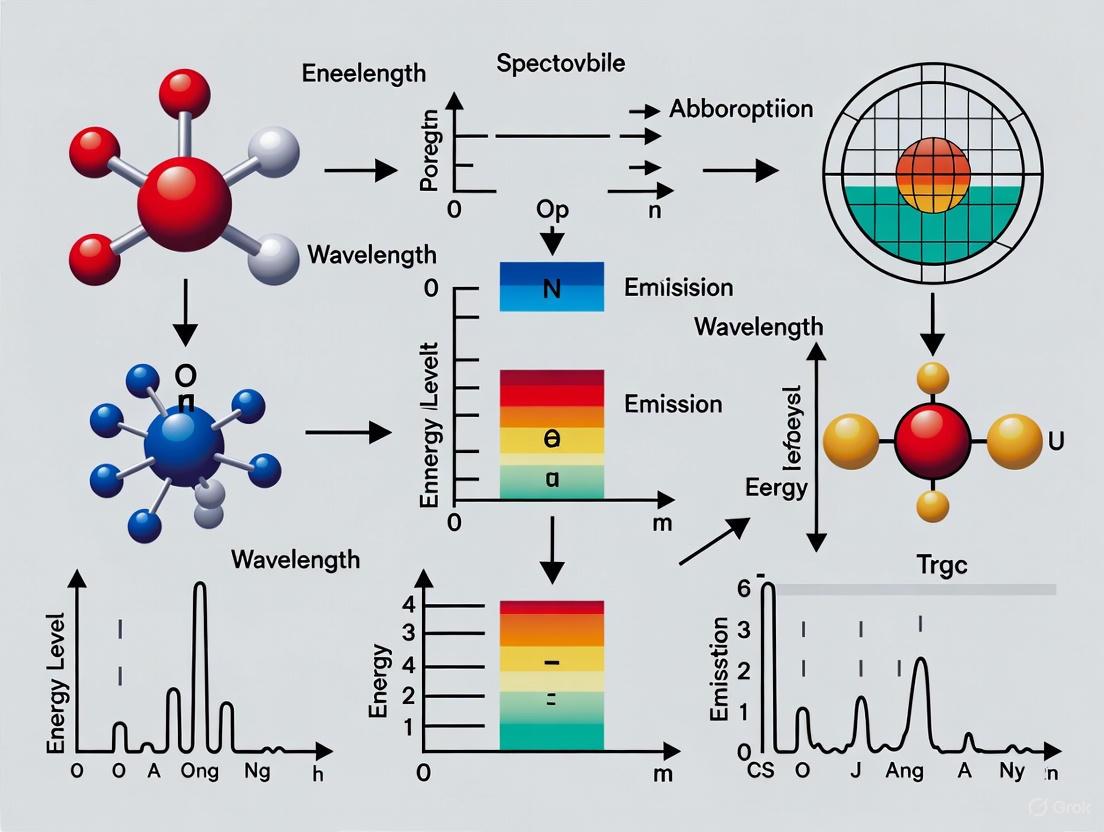
This article provides a comprehensive exploration of the fundamental relationship between wavelength, energy, and spectroscopic transitions, tailored for researchers and professionals in drug development.
Wavelength and Energy in Spectroscopic Transitions: A Foundational Guide for Pharmaceutical and Biopharmaceutical Applications
Abstract
This article provides a comprehensive exploration of the fundamental relationship between wavelength, energy, and spectroscopic transitions, tailored for researchers and professionals in drug development. It covers the core quantum mechanical principles governing how matter interacts with light, details the application of major spectroscopic techniques in pharmaceutical analysis, addresses common troubleshooting and optimization challenges, and offers a comparative analysis of method validation. By synthesizing foundational theory with cutting-edge methodological advances, this resource aims to enhance the effective application of spectroscopy in ensuring drug safety, efficacy, and quality.
The Quantum Basis of Light-Matter Interaction: Understanding Electronic Transitions
The Electromagnetic Spectrum and Energy Relationships
The relationship between the electromagnetic spectrum and energy is a foundational principle in spectroscopic analysis, directly governing the interaction of light with matter. In spectroscopic transitions research, the energy of a photon dictates its ability to induce transitions between quantum states, making the understanding of the wavelength-energy relationship critical for interpreting spectra, designing experiments, and developing new materials and sensors. This guide provides an in-depth technical examination of these core principles, framed within the context of modern research applications, including quantum memory, single-photon sources, and advanced spectroscopic techniques for probing weak transitions.
Fundamental Principles of Wavelength and Energy
The energy of a photon is inversely related to its wavelength, a relationship that is central to interpreting spectroscopic data. Light toward the red end of the visible spectrum has longer wavelengths and lower energy, while light toward the violet end has shorter wavelengths and higher energy. This relationship extends beyond the visible range: infrared light possesses even longer wavelengths and lower energy than red light, whereas ultraviolet light has shorter wavelengths and higher energy than violet light [1].
In quantitative terms, the energy ( E ) of a photon is calculated using the formula: [ E = \frac{hc}{\lambda} ] where ( h ) is Planck's constant, ( c ) is the speed of light, and ( \lambda ) is the wavelength. This inverse proportionality means that shorter wavelengths correspond to higher energy photons, which is critical for understanding whether a photon possesses sufficient energy to excite a molecule, atom, or ion to a higher energy state.
Table 1: Characteristics of the Electromagnetic Spectrum
| Spectral Region | Wavelength Range | Energy Characteristics | Common Spectroscopic Applications |
|---|---|---|---|
| Ultraviolet (UV) | Shorter than violet | Higher energy | Electronic excitation, molecular absorption |
| Visible (Violet) | ~400 nm | High energy | Colorimetric analysis, laser spectroscopy |
| Visible (Red) | ~700 nm | Lower energy | Fluorescence, Raman spectroscopy |
| Infrared (IR) | Longer than red | Lower energy (thermal) | Vibrational and rotational spectroscopy |
| Telecom Band | e.g., 1450-1530 nm | Very low energy | Quantum memory, fiber-optic communications |
The perception of this energy can vary in biological systems. For instance, far-infrared radiation is perceived by human skin as inducing a warmer sensation compared to near-infrared radiation of the same intensity, a phenomenon attributed to the optical properties of skin and the depth of thermoreceptor sites [2].
Spectroscopic Transitions in Research
Spectroscopic transitions involve the absorption or emission of a photon by an atom, molecule, or ion, resulting in a change in its internal energy state. The probability of a transition is governed by the transition matrix element, and its strength can be classified as allowed or forbidden based on selection rules. Recent research focuses on characterizing and even enhancing these transitions for technological applications.
Case Study: Excited-State Transition in Tm:YAlO₃
A recent investigation characterized the excited-state zero-phonon line (ZPL) between the ³F₄ and ³H₄ manifolds in a thulium-doped yttrium aluminum perovskite (Tm:YAlO₃) crystal at cryogenic temperatures (~1.5 K) [3]. The transition at 1451.37 nm (≈0.85 eV) is of particular interest because its wavelength falls in the telecommunication band, where optical fiber transmission loss is minimal (≈0.25 dB/km). This makes Tm:YAlO₃ a promising candidate for quantum technology applications, such as quantum memories and single-photon sources, which are building blocks for a quantum internet [3].
The research demonstrated optical coherence times of up to 1.1 µs for this excited-state transition when a 2 Tesla magnetic field was applied. This was the first demonstration of coherence for an excited-state transition in a rare-earth crystal, opening possibilities for using such transitions at new wavelengths for quantum information processing [3].
Enhancing Weak Transitions
A general concept for enhancing the spectral visibility of weak transitions was recently introduced and demonstrated in helium atoms. The method uses a stronger, laser-coupled pathway to the same excited state to boost the transition probability. In the experiment, the quasi-forbidden transitions from the ground state (1s²) to the weakly coupled doubly excited states (2p3d and sp₂,₄⁻) were enhanced by an order of magnitude [4].
This breakthrough is significant because the absorption cross-section for a weak transition scales with the absolute square of its small transition matrix element, making detection challenging. By exploiting quantum pathways, this scaling law can be broken, enabling the study of transitions that were previously too faint to observe. This has widespread applicability, from spectral diagnostics in life sciences to precision spectroscopy in the search for new physics [4].
Table 2: Quantitative Data from Cited Experimental Studies
| Experiment | Key Measured Variable | Value / Range | Conditions / Notes |
|---|---|---|---|
| Tm:YAlO₃ Coherence [3] | Wavelength of ESPL | 1451.37 nm | Between ³F₄ and ³H₄ manifolds |
| Optical Coherence Time | 1.1 µs | Maximum, with 2 T magnetic field applied | |
| Temperature | ~1.5 K | Cryogenic cooling required | |
| Weak Transition Enhancement [4] | Enhancement Factor | ~10x | Order of magnitude boost for 2p3d/sp₂,₄⁻ states |
| VIS Pulse Duration (FWHM) | 4 fs | Central wavelength 700 nm | |
| VIS Pulse Peak Intensity | 2 × 10¹² W/cm² | Used for coupling | |
| XUV Pulse Peak Intensity | 1 × 10¹¹ W/cm² | Weak broadband probe |
Experimental Protocols and Methodologies
Protocol: Characterizing an Excited-State Transition in a Rare-Earth Doped Crystal
This protocol is adapted from studies on Tm:YAlO₃ and is applicable to characterizing excited-state transitions in similar solid-state systems [3].
Sample Preparation and Mounting:
- Procure a single crystal doped with the rare-earth ion of interest (e.g., 0.1% Tm:YAlO₃).
- Orient and cut the crystal along its principal axes (e.g., to dimensions of 12.0 mm × 2.2 mm × 2.0 mm).
- Securely mount the crystal on a customized copper stage within a cryostat. Ensure optimal thermal contact using a lid and spring-tensioned screws for thermalization.
Cryogenic Cooling and Magnetic Field Application:
- Cool the crystal to its base operating temperature (e.g., ~1.5 K) using a pulse-tube cooler supplemented by an adiabatic demagnetization stage.
- Employ a superconducting solenoid to apply a homogeneous magnetic field (e.g., 0-2 T) along a desired crystal axis (e.g., the b-axis).
Optical Pumping and Population Preparation:
- To study an excited-state transition (e.g., from level ³F₄ (Y1) to ³H₄ (X1)), first populate the lower level of the transition (Y1).
- Use a continuous-wave (CW) tunable laser (e.g., at ~1680 nm) to pump ions directly from the ground state (³H₆, Z1) into the ³F₄ manifold.
- Rely on rapid intra-manifold relaxation (on the nanosecond timescale) to populate the specific crystal field level (Y1) of interest.
Absorption Spectroscopy Measurement:
- Use a second CW tunable laser (e.g., Santec TSL-550 at ~1450 nm) to probe the excited-state transition.
- Direct the probe laser light through the crystal along a defined axis (e.g., the a-axis) using a single-mode fiber and a GRIN lens for collimation.
- Employ an acousto-optic modulator (AOM) to create short pulses from the CW laser for time-resolved measurements.
- Measure the transmission of the probe laser to obtain the absorption spectrum of the transition.
Coherence Time Measurement via Spectral Hole Burning:
- Use the probe laser to burn a narrow "spectral hole" in the inhomogeneously broadened absorption line by optically pumping a subset of ions out of resonance.
- Scan the frequency of a weak probe pulse across the absorption line to measure the resulting drop in absorption (the hole).
- The lifetime of this spectral hole is related to the homogeneous linewidth. Measure this lifetime as a function of parameters like magnetic field strength.
Coherence Time Measurement via Free Induction Decay (FID):
- Apply a short, intense laser pulse at the resonance frequency to create a macroscopic polarization in the ensemble.
- After the pulse, the polarization will emit a coherent light signal, which decays over time—this is the FID.
- Detect this emitted signal using a fast photoreceiver (e.g., with a rise time of 3 ns). The decay time constant (T₂) is the optical coherence time.
- Use a gating AOM to block the initial excitation pulse and detect only the FID signal.
Protocol: Enhancing Weak Transitions via Coupled Pathways
This protocol is based on the experimental demonstration in helium atoms [4].
Experimental Setup (Attosecond Transient Absorption Spectroscopy):
- Generate extreme-ultraviolet (XUV) pulses via high-harmonic generation in a noble gas (e.g., neon). These serve as a weak, broadband probe pulse.
- Use a few-cycle, visible (VIS) pulse (e.g., centered at 700 nm) as the intense coupling pulse.
- Arrange the beam path so the VIS and XUV pulses propagate collinearly and are focused into the target gas cell (e.g., filled with helium).
- Introduce a variable time delay (τ) between the two pulses using a piezo-driven split mirror. The convention is that τ > 0 when the XUV pulse arrives first.
Data Acquisition:
- Disperse the transmitted XUV radiation using a grating and record the spectrum with a CCD camera for each time delay.
- Characterize the absorption spectrum by the optical density: ( \text{OD}(ω, τ) = -\log{10}[I(ω, τ)/I0(ω)] ), where ( I(ω, τ) ) and ( I_0(ω) ) are the transmitted and incident XUV spectra, respectively.
Measurement of Enhancement:
- Record a reference absorption spectrum (XUV-only) by measuring when the VIS pulse is absent or at large negative time delays.
- Record the transient absorption spectrum in the presence of the VIS pulse, scanning the time delay through zero (pulse overlap) to positive delays.
- Compare the spectral amplitude of the weak transition (e.g., the 2p3d/sp₂,₄⁻ states at ~64.1 eV in helium) in the XUV-only case versus the case with the VIS pulse present. The enhancement is quantified by the increase in its spectral visibility.
Visualization of Concepts and Workflows
Energy and Wavelength Relationship
Probing an Excited-State Transition
Enhancing a Weak Transition
The Scientist's Toolkit: Essential Research Reagents and Materials
Table 3: Key Research Reagents and Materials for Spectroscopic Transition Studies
| Item / Material | Function / Role | Specific Example / Note |
|---|---|---|
| Rare-Earth Doped Crystals | Solid-state host for ions with well-defined, sharp transitions; forms the basis for quantum memory and laser research. | Tm:YAlO₃ (Thulium-doped Yttrium Aluminum Perovskite) for its excited-state transition at telecom wavelength [3]. |
| Cryogenic System | Cools samples to ultra-low temperatures (e.g., 1.5 K) to reduce thermal broadening and reveal homogeneous linewidths. | Pulse-tube cooler with adiabatic demagnetization stage [3]. |
| Superconducting Solenoid | Applies a strong, homogeneous magnetic field to manipulate energy levels and extend coherence times. | 0-2 T field applied along the b-axis of a Tm:YAlO₃ crystal [3]. |
| Tunable CW Lasers | Provides precise optical pumping and probing of specific atomic transitions. | ~1680 nm laser for pumping; ~1450 nm laser for probing excited-state transitions [3]. |
| Acoust-Optic Modulator (AOM) | Quickly switches and shapes continuous-wave laser light into precise pulses for time-resolved experiments. | Used for creating short pulses from CW lasers for hole burning and FID measurements [3]. |
| Phase Modulator (PM) | Modifies the spectrum of laser light, useful for tailoring pulses for specific excitation profiles. | Used with the 1450 nm probe laser [3]. |
| Single-Photon Counter | Detects extremely weak light signals, such as photoluminescence from single ions or decay from sparse excitations. | Silicon avalanche photodiode (SPCM) for detecting 795 nm photoluminescence [3]. |
| Fast Photoreceiver | Detects rapid changes in light intensity, essential for measuring the decay of coherent signals like FID. | Photoreceiver with 3 ns rise/fall time for FID characterization [3]. |
| High-Harmonic Generation Source | Generates extreme-ultraviolet (XUV) pulses for probing high-energy transitions, such as in atoms. | XUV pulse from neon, used as a weak, broadband probe in attosecond spectroscopy [4]. |
| Few-Cycle VIS/NIR Laser | Provides an intense, ultrafast pulse for coupling quantum states and enhancing weak transition pathways. | 4 fs, 700 nm pulse with 2x10¹² W/cm² intensity used to enhance weak transitions in helium [4]. |
Within the field of spectroscopic research, the precise measurement of electronic transitions serves as a cornerstone for understanding molecular and atomic structure. These transitions, where an electron moves from a stable ground state to a higher-energy excited state by absorbing a discrete quantum of energy, provide a fundamental window into the quantum mechanical behavior of matter. The energy required for such a transition is directly related to the wavelength of light that can be absorbed, forming the critical link between electromagnetic radiation and the energy states of a system that is exploited across analytical sciences. This relationship is not only fundamental to analytical techniques like UV-Vis spectroscopy but is also pivotal in emerging fields such as quantum information processing, where the coherence of these transitions becomes a key resource [5] [6]. The investigation of these phenomena enables researchers to decode complex molecular interactions, driving innovation in areas from drug development to the creation of new materials with tailored quantum properties.
Theoretical Foundation of Electronic Transitions
Basic Principles and Energy Quantization
Electronic transitions are governed by the quantized nature of energy levels within an atom or molecule. In physics, excitation describes the process where a discrete amount of energy, termed excitation energy, is added to a system—such as an atom or molecule—resulting in its alteration from the lowest energy condition (ground state) to one of higher energy (excited state) [5]. These excited states are not continuous but exist at specific, discrete energy values. Consequently, a system can absorb external energy only in correspondingly discrete amounts. For example, in a hydrogen atom, an excitation energy of 10.2 electron volts is precisely required to promote the electron from its ground state to its first excited state [5].
The energy ((E)) of a photon is inversely related to its wavelength ((\lambda)) by the equation (E = hc / \lambda), where (h) is Planck's constant and (c) is the speed of light. For an electronic transition to occur, the energy of the incident photon must exactly match the energy difference ((\Delta E)) between the ground state and an excited state. Upon relaxing back to a lower energy state, the system emits energy, often as visible light from atoms or as gamma radiation from nuclei [5] [6].
Molecular Orbital Theory and Transition Types
In molecular systems, the picture becomes more complex. Molecular orbital theory describes how atomic orbitals combine to form molecular orbitals. In a simple molecule like hydrogen (H₂), the molecular orbitals comprise a lower-energy bonding orbital (σ) and a higher-energy antibonding orbital (σ). At the ground state, both electrons reside in the bonding orbital, designating it the Highest Occupied Molecular Orbital (HOMO). The antibonding orbital is the Lowest Unoccupied Molecular Orbital (LUMO). The promotion of an electron from the HOMO to the LUMO constitutes a σ → σ transition [7].
In molecules with double bonds, such as ethene, electrons can undergo π → π transitions. These involve exciting an electron from a bonding pi (π) orbital to an antibonding pi (π) orbital. Because the π-π* energy gap is smaller than the σ-σ* gap, ethene absorbs light at a longer wavelength (165 nm) than molecular hydrogen [7]. The most relevant transitions for organic and biological molecules, however, occur in systems with conjugated pi bonds, where alternating single and double bonds allow the pi electrons to be delocalized over the entire system. This delocalization narrows the HOMO-LUMO gap further, shifting the absorption of light into the readily measurable UV-Vis range (220–700 nm). Molecular parts that absorb light strongly in this region are termed chromophores [7].
Selection Rules and Spectral Fine Structure
Not all conceivable electronic transitions are equally probable. Selection rules, governed by principles of symmetry and spin, dictate the allowedness of a transition. The Laporte rule forbids transitions between orbitals of the same symmetry (e.g., d-d transitions in centrosymmetric complexes), though vibronic coupling can relax this restriction. Furthermore, transitions that involve a change in spin multiplicity (e.g., singlet to triplet) are formally forbidden, though they can occur with weak intensity [6].
An electronic energy level is not a single line but encompasses vibrational and rotational sub-levels. When an electron is excited, changes in vibrational and rotational states can accompany the electronic transition. This leads to the appearance of vibrational fine structure within the broader electronic absorption band. The intensity of these vibrational transitions is influenced by the Frank-Condon factor, which describes the overlap between the vibrational wavefunctions of the ground and excited electronic states. Lowering the temperature reduces thermal averaging, often making this fine structure more resolvable in absorption spectra [6].
Experimental Characterization of an Excited-State Transition
Material and Experimental Setup
Recent advanced research has demonstrated the characterization of excited-state transitions in rare-earth-doped crystals at cryogenic temperatures. A seminal study investigated the 3F₄ to ³H₄ excited-state zero-phonon line (ZPL) in a thulium-doped yttrium aluminum perovskite (Tm:YAlO₃) crystal at temperatures around 1.5 K [3]. A zero-phonon line represents a purely electronic transition between the lowest crystal field levels of two manifolds without the creation or annihilation of lattice vibrations (phonons), and it is crucial for quantum technology applications due to its potential for long coherence times [3].
The experiment utilized a 0.1% doped Tm:YAlO₃ crystal with dimensions of 12.0 mm × 2.2 mm × 2.0 mm. The crystal was mounted on a customized copper stage and cooled to approximately 1.5 K using a pulse-tube cooler supplemented by an adiabatic demagnetization stage. A superconducting solenoid provided a magnetic field of up to 2 T along the crystal's b-axis. Two primary laser systems were employed: a tunable continuous-wave (CW) laser at around 1680 nm for optical pumping and another CW laser at around 1450 nm to drive the excited-state transition. Acousto-optic modulators (AOMs) enabled the creation of short pulses, and a phase modulator modified the spectrum of the 1450 nm laser. Detection was achieved using specialized single-photon counting modules (SPCMs) and photoreceivers, depending on the specific measurement [3].
Key Experimental Protocols
Optical Pumping and Population Preparation
At 1.5 K, the Tm³⁺ ions primarily occupy the lowest crystal field level (Z1) of the ³H₆ ground-state manifold. To study the Y1 to X1 transition between the ³F₄ and ³H₄ manifolds, population must first be pumped from Z1 to Y1. Two approaches were feasible [3]:
- Direct Ground-State Pumping: Ions are pumped directly from the ³H₆ (Z1) ground state into the ³F₄ manifold. Rapid intra-manifold relaxation (on the nanosecond timescale) then populates the metastable Y1 level.
- Indirect Pumping via Higher Manifold: Ions are pumped from the ground state into the ³H₄ manifold. A fraction of these ions decay spontaneously into the ³F₄ manifold, eventually populating Y1. The first approach was chosen for its superior efficiency, as it allows continuous interaction with an empty upper atomic level and enables the use of the strongest absorption line [3].
Absorption and Lifetime Measurements
The absorption spectrum between the ³H₆ and ³F₄ manifolds was characterized by measuring the wavelength-dependent transmission of a broadband light-emitting diode (LED) using an optical spectrum analyzer. This methodology was extended to measure the absorption and inhomogeneous broadening of the excited-state ZPL at 1451.37 nm. Furthermore, the lifetimes of the relevant excited states (Y1 in ³F₄ and X1 in ³H₄) were measured to understand their dynamics [3].
Coherence and Hyperfine Interaction Measurements
- Spectral Hole Burning: This technique involves burning a narrow "hole" in the inhomogeneously broadened absorption line using a narrowband laser. The properties of this hole provide information about the homogeneous linewidth and underlying interactions. In the Tm:YAlO₃ study, spectral hole burning was performed under varying magnetic fields to probe the hyperfine and superhyperfine interactions of the Tm³⁺ ions [3].
- Optical Free Induction Decay (FID): This method directly measures the coherence time of an optical transition by applying a short resonant laser pulse and observing the free decay of the resulting polarization. A high-bandwidth photoreceiver with a rise time of 3 ns was used for these measurements. The application of a 2 T magnetic field was found to significantly extend the coherence time by decoupling the electronic spin from surrounding nuclear spins [3].
Quantitative Data and Analysis
Key Spectroscopic Parameters for Tm:YAlO₃
The experimental investigation of Tm:YAlO₃ yielded precise quantitative data on its spectroscopic properties, summarized in the table below.
Table 1: Key Spectroscopic Parameters for the Excited-State Transition in Tm:YAlO₃ [3]
| Parameter | Value | Experimental Method |
|---|---|---|
| Transition Investigated | ³F₄ (Y1) → ³H₄ (X1) | Not Applicable |
| Wavelength of ZPL | 1451.37 nm | Absorption Spectroscopy |
| Maximum Optical Coherence Time (T₂) | 1.1 μs | Free Induction Decay (with 2 T magnetic field) |
| Magnetic Field for Max T₂ | 2 T | Free Induction Decay / Spectral Hole Burning |
The energy required for excitation varies dramatically across different physical systems, highlighting the distinct scales of interactions.
Table 2: Characteristic Excitation Energies in Different Quantum Systems [5]
| System | Excitation Type | Characteristic Excitation Energy |
|---|---|---|
| Hydrogen Atom | Electronic (1st excited state) | 10.2 eV |
| Lead-206 Nucleus | Nuclear (1st excited state) | 0.80 MeV |
| Ethene (C₂H₄) | π → π* Transition | ~165 nm (photons) |
| 1,3-Butadiene | π → π* Transition in conjugated system | UV light (>165 nm) [7] |
The Scientist's Toolkit: Essential Research Reagents and Materials
This table details the key materials and instruments essential for conducting high-precision spectroscopy on electronic transitions, as exemplified by the Tm:YAlO₃ study.
Table 3: Essential Research Materials and Reagents for High-Resolution Spectroscopy
| Item / Reagent | Function / Role |
|---|---|
| Rare-Earth Doped Crystal (e.g., Tm:YAlO₃) | The solid-state quantum system under investigation; provides well-defined, isolated energy levels for study. |
| Cryostat with Adiabatic Demagnetization Stage | Cools the sample to milli-Kelvin temperatures (e.g., 1.5 K) to freeze out phonons and reduce thermal line broadening. |
| Tunable Continuous-Wave (CW) Lasers | Provides precise, monochromatic light for pumping, driving transitions, and probing spectral features. |
| Superconducting Solenoid | Applies a strong, homogeneous magnetic field to manipulate spin states and extend coherence times. |
| Acousto-Optic Modulators (AOMs) | Acts as a fast optical switch to create precise laser pulses from continuous-wave sources. |
| Single-Photon Counting Module (SPCM) | Detects extremely weak light signals, such as photoluminescence, with high sensitivity and time resolution. |
| Phase Modulator | Modifies the spectrum of the laser light for specialized techniques like spectral hole burning. |
Implications for Spectroscopic Research and Quantum Technology
The rigorous characterization of electronic transitions, particularly between excited states, has profound implications. The confirmation of a long-lived optical coherence (1.1 μs) for an excited-state transition in Tm:YAlO₃ opens new pathways for quantum technology [3]. The 1451.37 nm wavelength of this transition lies in the low-loss telecommunications band, making it a promising candidate for building quantum memories and single-photon sources that are compatible with existing fiber optic infrastructure [3]. Furthermore, the unique arrangement of energy levels in Tm:YAlO₃ forms a three-level "ring" system, which could enable novel quantum protocols such as the generation of entangled photon pairs via cascading transitions or the implementation of dipole-blockade mechanisms for quantum computing, analogous to techniques used with trapped ions [3].
From a broader spectroscopic perspective, the ability to measure and understand electronic transitions with high precision, including their vibrational fine structure and coherence properties, remains fundamental to drug development and materials science. It allows researchers to identify chemical species, elucidate molecular structure, study reaction dynamics, and develop new materials with specific optical and electronic properties. The continuous refinement of these experimental methodologies ensures that spectroscopy will remain an indispensable tool for scientific discovery.
Electronic transitions represent fundamental processes in molecular spectroscopy, wherein molecules absorb electromagnetic radiation, promoting electrons from ground state to excited state molecular orbitals. The energy required for these transitions, which correlates directly to the wavelength of absorbed light, provides critical insights into molecular structure, composition, and behavior. This whitepaper delineates the four primary types of electronic transitions—σ→σ, n→σ, π→π, and n→π—within the context of spectroscopic research, emphasizing their energy relationships, selection rules, and experimental characterization. Designed for researchers, scientists, and drug development professionals, this guide integrates quantitative spectroscopic data with advanced experimental methodologies, including emerging techniques such as Leak-Out Spectroscopy (LOS), to address contemporary challenges in material characterization and analytical pharmaceutical applications.
In molecular systems, electrons reside in quantized energy levels known as molecular orbitals (MOs), which form through the linear combination of atomic orbitals when atoms bond together [7]. These orbitals are categorized based on their bonding characteristics and energy: sigma (σ) bonding orbitals, pi (π) bonding orbitals, non-bonding (n) orbitals (often lone pairs), and their corresponding antibonding orbitals (denoted σ* and π*) [8]. The highest occupied molecular orbital (HOMO) represents the most energetic orbital containing electrons, while the lowest unoccupied molecular orbital (LUMO) is the next available orbital at higher energy [7]. The energy separation between HOMO and LUMO dictates the energy requirement for electronic excitation.
When a molecule absorbs light, electrons may transition from lower to higher energy orbitals if the photon energy matches the precise energy difference between those orbitals, according to Planck's relation: ΔE = hν, where ΔE is the energy difference, h is Planck's constant, and ν is the frequency of radiation [9] [10]. The wavelength (λ) of this light is inversely related to the transition energy through the equation c = λν, where c is the speed of light [11]. These electronic transitions form the basis for ultraviolet-visible (UV-Vis) spectroscopy, an essential analytical technique covering approximately 200-800 nm [10]. Molecules or molecular sections capable of absorbing electromagnetic radiation in this region are termed chromophores [7].
Fundamental Types of Electronic Transitions
The four principal electronic transitions in molecular systems are classified according to the orbitals involved in the excitation process. Their energy requirements follow a consistent order based on the relative stability of the originating orbital and the energy gap to the target antibonding orbital.
σ → σ* Transitions
Sigma-to-sigma star transitions involve the promotion of an electron from a bonding σ orbital to an antibonding σ* orbital [9] [8]. These transitions require substantial energy due to the significant stability of σ bonds and the large energy gap to their antibonding counterparts. Consequently, they occur in the high-energy vacuum ultraviolet region below 200 nm [7] [12]. Molecules exhibiting exclusively σ→σ* transitions, such as alkanes (e.g., ethane) and cycloalkanes, absorb only in this region and remain transparent in standard UV-Vis ranges, rendering them generally colorless [8]. These transitions typically appear weak in intensity due to the limited overlap between σ and σ* orbital wavefunctions [12].
n → σ* Transitions
Non-bonding to sigma star transitions occur when an electron from a non-bonding orbital (lone pair) on heteroatoms such as oxygen, nitrogen, or sulfur is excited to an antibonding σ* orbital [10] [8]. These transitions require relatively high energy, typically appearing in the 200-300 nm range [12]. Molecules containing both σ bonds and lone pairs, including alcohols, amines, ethers, and water, exhibit this transition type [8] [12]. For example, water undergoes n→σ* transition at approximately 167 nm [9]. These transitions generally demonstrate greater intensity than σ→σ* transitions due to the more favorable orbital overlap [12].
π → π* Transitions
Pi-to-pi star transitions involve electron excitation from a bonding π orbital to an antibonding π* orbital in molecules possessing double or triple bonds [9] [8]. These transitions occur at lower energies than σ-type transitions, typically appearing in the 180-200 nm range for isolated π systems [12]. In conjugated systems with alternating single and double bonds, such as 1,3-butadiene or aromatic compounds, the energy gap narrows significantly due to orbital delocalization, shifting π→π* transitions to longer wavelengths (lower energies) [7] [10]. These transitions are generally characterized by moderate to high intensity and represent the most common transitions observed in standard UV-Vis spectroscopy for organic compounds [12].
n → π* Transitions
Non-bonding to pi star transitions occur when a non-bonding electron on a heteroatom adjacent to a π system excites to an antibonding π* orbital [10] [8]. These transitions require the least energy among the four primary types, typically appearing in the 300-400 nm range at the boundary between near-UV and visible light [12]. Molecules requiring both lone pairs and π systems for this transition include carbonyl compounds (e.g., aldehydes, ketones) and other conjugated heteroatomic systems [8]. Despite their low energy requirement, n→π* transitions often exhibit relatively low probability and intensity compared to π→π* transitions due to poor orbital overlap between the non-bonding orbital (often approximately sp² hybridized) and the π* system [8].
Table 1: Comparative Analysis of Electronic Transitions
| Transition Type | Approximate Wavelength Range | Energy Requirement | Molar Extinction Coefficient (ε) | Example Compounds |
|---|---|---|---|---|
| σ → σ* | < 200 nm [8] [12] | Very High [8] | Low [12] | Alkanes (ethane) [8], Cycloalkanes [8] |
| n → σ* | 200-300 nm [12] | High [8] | Moderate to High [12] | Water [8], Alcohols, Amines, Ethers [12] |
| π → π* | 180-200 nm (isolated) [12]; longer with conjugation [7] | Moderate [8] | High (can reach 60,000 in aromatics) [9] | Alkenes, Alkynes [12]; Conjugated systems (1,3-butadiene) [7]; Aromatics (benzene) [9] |
| n → π* | 300-400 nm [12] | Low [8] | Low (e.g., 215 for benzene B-band) [9] | Conjugated carbonyls (acetaldehyde) [8] |
Table 2: Spectroscopic Transitions in Common Molecules
| Molecule | Electronic Transitions Present | Characteristic Absorption Features |
|---|---|---|
| Water | σ→σ, n→σ [8] | n→σ* at 167 nm [9] |
| Benzene | π→π* (aromatic) [9] | E-bands at 180 & 200 nm; B-band at 255 nm (weaker, symmetry-forbidden) [9] [10] |
| Ethane | σ→σ* [8] | Absorption at ~135 nm (vacuum UV) [9] |
| Acetaldehyde | n→σ, π→π, n→π* [8] | n→π* transition appears at longest wavelength [8] |
Energy Relationships and Spectral Characteristics
The energy hierarchy of electronic transitions follows a consistent pattern based on orbital stability: σ orbitals are most stable, followed by π orbitals, with non-bonding orbitals at intermediate energy levels, and the antibonding orbitals (π* and σ) at highest energies [8]. This establishes the energy requirement order: σ→σ > n→σ* > π→π* > n→π* [8].
The energy difference directly determines the wavelength of absorption through the fundamental relationship E = hc/λ, where shorter wavelengths correspond to higher energy transitions [11] [12]. Conjugation dramatically influences this energy relationship by delocalizing π electrons across multiple atoms, lowering the energy of both π and π* orbitals while narrowing the HOMO-LUMO gap [7] [10]. This effect produces a bathochromic shift (red shift) toward longer wavelengths and typically intensifies the absorption [10]. For example, while isolated double bonds absorb around 165-180 nm, conjugated systems like β-carotene absorb at approximately 450 nm in the visible region [7] [10].
Diagram 1: Electronic transition energy level diagram showing the relative energies of molecular orbitals and the four primary transitions. The vertical arrangement reflects energy levels, with arrows indicating electron promotions.
Selection Rules and Transition Probability
The intensity of electronic absorption bands depends on transition probability governed by quantum mechanical selection rules [10]. The spin selection rule mandates that transitions must not alter the overall spin multiplicity; singlet-to-singlet transitions are allowed, while singlet-to-triplet transitions are forbidden [10]. The Laporte selection rule (for centrosymmetric molecules) requires a change in orbital parity (gerade ungerade); thus, transitions between orbitals of the same parity (gg or uu) are forbidden [10].
Forbidden transitions may still occur with diminished intensity through vibronic coupling, where vibrational and electronic states mix to relax strict selection rules [10]. For example, benzene's symmetry-forbidden π→π* transition at ~260 nm gains weak intensity through this mechanism [10]. The n→π* transitions often appear weak because they may violate the Laporte rule and involve poor orbital overlap between the non-bonding orbital and the π* system [8].
Experimental Methodologies and Protocols
Conventional UV-Vis Spectroscopy
Standard UV-Vis spectrophotometers measure light absorption across 200-800 nm, providing spectra that reveal electronic transition patterns [10]. The Beer-Lambert law relates absorption to concentration: A = εcl, where A is absorbance, ε is molar absorptivity, c is concentration, and l is path length [10]. This enables quantitative analysis for drug development applications, including concentration determination and purity assessment [11].
Sample preparation protocols vary by state and solvent compatibility. For solution measurements, researchers typically use spectrometric-grade solvents (e.g., acetonitrile, cyclohexane, methanol) with concentrations optimized to maintain absorbance within the instrument's linear range (typically 0.1-1.0 AU) [11]. Solid samples may require diffuse reflectance accessories or specialized cuvette designs. Modern instrumentation often incorporates array detectors and tunable laser sources for rapid scanning and improved resolution [11].
Leak-Out Spectroscopy (LOS) for Gas-Phase Ions
Leak-Out Spectroscopy represents an advanced action spectroscopy technique for measuring electronic transitions in mass-selected, gas-phase ions, particularly valuable for studying photostable species relevant to interstellar chemistry and laser cooling applications [13].
Experimental workflow involves several stages: (1) Ion generation and trapping - ions are produced through electron impact or electrospray ionization, then confined in a cryogenic ion trap with a precisely controlled low potential barrier at the exit electrode; (2) Photoexcitation - trapped ions are irradiated with tunable visible or NIR light; (3) Energy transfer - photoexcited ions collide with neutral buffer gas (e.g., N₂), converting internal energy to kinetic energy through electronic-to-translation (ET) or vibrational-to-translation (VT) transfer; (4) Detection - energized ions overcome the potential barrier and "leak out" to the detector, with signal intensity plotted against laser frequency to generate absorption spectra [13].
LOS offers advantages over traditional methods by providing unshifted spectra of bare ions following single-photon absorption, avoiding complications of multiphoton processes or solvent effects [13]. The technique has successfully characterized electronic transitions in N₂⁺, diacetylene cation (HC₄H⁺), and triacetylene cation (HC₆H⁺), demonstrating particular utility for molecules with fluorescence lifetimes shorter than collision rates [13].
Diagram 2: Leak-out spectroscopy (LOS) experimental workflow for measuring electronic transitions in gas-phase ions.
Solvent Effects and Environmental Considerations
Solvent polarity significantly influences electronic transition energies, particularly for transitions involving charge separation. Polar solvents typically induce bathochromic shifts (red shifts) in π→π* transitions by stabilizing the excited state more effectively than the ground state [10]. Conversely, n→π* transitions often exhibit hypsochromic shifts (blue shifts) in polar solvents due to enhanced stabilization of the ground state through hydrogen bonding with lone pair electrons [10]. These solvent effects necessitate careful documentation of experimental conditions for reproducible results in pharmaceutical research.
The Scientist's Toolkit: Research Reagents and Materials
Table 3: Essential Research Reagents and Materials for Electronic Transition Studies
| Reagent/Material | Function/Application | Technical Considerations |
|---|---|---|
| Spectrophotometric Solvents (acetonitrile, hexane, methanol) [11] | Sample medium with minimal UV absorption | Purity grade critical; wavelength cutoff varies; degassing may be necessary |
| Deuterium Lamp | UV light source for 190-400 nm range [11] | Limited lifetime; requires stable power supply |
| Tungsten-Halogen Lamp | Visible light source for 350-800 nm range [11] | Combines with deuterium source for full UV-Vis range |
| Monochromator | Wavelength selection with defined bandwidth [11] | Grating quality determines resolution; slit width affects bandwidth |
| Photomultiplier Tube/Diode Array | Light detection and signal conversion [11] | Sensitivity varies with wavelength; cooling reduces noise |
| Cryogenic Ion Trap | Confinement and cooling of gas-phase ions (LOS) [13] | Temperature control critical; precise potential field shaping |
| Tunable Laser Systems | Narrow-bandwidth excitation source [13] | Wavelength range and resolution determine application scope |
| Neutral Buffer Gases (N₂, He) | Collision partners for energy transfer (LOS) [13] | Purity affects collision dynamics; pressure optimization required |
Research Applications and Future Directions
The analysis of electronic transitions enables diverse applications across scientific disciplines. In pharmaceutical research, UV-Vis spectroscopy facilitates drug quantification, purity assessment, and protein concentration measurements via characteristic aromatic amino acid absorptions [11]. Environmental monitoring employs these principles to detect organic pollutants and metal complexes in water systems [11]. Materials science utilizes transition analysis for characterizing conjugated polymers, nanomaterials, and catalytic systems [11].
Emerging techniques continue to advance the field. Leak-Out Spectroscopy shows particular promise for identifying carriers of diffuse interstellar bands (DIBs) - unexplained astronomical absorption features - by enabling high-resolution electronic spectroscopy of photostable molecular ions [13]. The integration of artificial intelligence and machine learning with spectroscopic data analysis accelerates pattern recognition, predictive modeling, and automated interpretation, potentially revolutionizing analytical workflows in drug development [11] [14].
Future methodological developments will likely focus on increasing spectral resolution, reducing data acquisition times, and enhancing sensitivity for trace analysis. The continuing synergy between computational prediction and experimental validation, as highlighted in recent electron spectroscopy conferences, promises to further elucidate the fundamental relationships between electronic transitions, molecular structure, and material properties [14].
Electronic spectroscopy investigates the quantized nature of energy states within molecules, where electrons can be excited to higher energy levels by absorbing photon energy and subsequently relax back to lower states by emitting energy [6]. The Jablonski diagram, named after Polish physicist Aleksander Jablonski who introduced it in the 1930s, provides a powerful visual representation of these complex photophysical processes [15] [16]. This diagram serves as an essential theoretical framework for understanding energy transitions and relaxation mechanisms that occur in molecules after light absorption, particularly explaining the mechanisms behind fluorescence and phosphorescence [16]. For researchers in spectroscopic transitions and drug development, mastering the Jablonski diagram is fundamental to interpreting absorption and emission spectra, designing fluorescent probes, and understanding molecular interactions in biological systems.
At its core, the Jablonski diagram is an energy diagram arranged with energy on the vertical axis, where electronic energy states are represented by bold horizontal lines and vibrational energy levels are shown as thinner horizontal lines within each electronic state [15] [16]. The diagram is organized into columns representing different spin multiplicities, typically with the ground electronic state (S₀) on the left, followed by singlet excited states (S₁, S₂), and triplet states (T₁) to the right [16]. This arrangement effectively illustrates the manifold of possible transitions following photon absorption, providing researchers with a predictive tool for molecular behavior under illumination.
Fundamental Components of the Jablonski Diagram
Electronic and Vibrational Energy States
The Jablonski diagram represents a molecule's complex energy structure through several key components. The electronic energy states (S₀, S₁, S₂, T₁) form the primary framework, with S₀ denoting the ground state where electrons normally reside at the lowest energy level [17]. Each electronic state contains multiple vibrational energy levels (v=0, 1, 2, 3...), represented as thinner horizontal lines, which correspond to different quantized vibrational modes of the molecule [15] [16]. The ground vibrational state within each electronic level (v₀) has the highest probability density at the equilibrium nuclear separation [18].
The diagram differentiates between singlet states (S₀, S₁, S₂), where all electron spins are paired, and triplet states (T₁), which have unpaired electrons with parallel spins [18]. In a singlet state, the paired electrons have net zero spin angular momentum, while a triplet state has a spin angular momentum of S=1 with three possible orientations in a magnetic field [18]. This distinction critically influences transition probabilities and lifetimes, with singlet-singlet transitions being "allowed" and triplet-related transitions being "forbidden" or less probable due to spin conservation rules [16] [18].
Figure 1: Electronic and Vibrational States in a Jablonski Diagram
Molecular Electronic Transitions and Chromophores
Electronic transitions occur within chromophores—molecular groups or areas that absorb electromagnetic radiation and are responsible for color [19]. These typically consist of conjugated electron systems with functional groups like –C=C–, –C=N–, –C=O, –N=N–, and –NO₂ [19]. From a quantum mechanical perspective, a chromophore can be defined as "an area of a molecule in which some properties have changed after the molecule became excited," including geometry, charge distribution, and polarizability [19].
Common molecular electronic transitions include:
- σ → σ*: Transition of electrons in sigma bonds to antibonding sigma orbitals [9]
- π → π*: Promotion of electrons from pi-bonding to pi-antibonding orbitals [9]
- n → σ*: Excitation of non-bonding electrons to sigma antibonding orbitals [9]
- n → π*: Transition of non-bonding electrons to pi antibonding orbitals [9]
- Aromatic π → Aromatic π*: Transitions in aromatic systems [9]
These transitions are central to ultraviolet-visible (UV-Vis) spectroscopy and provide critical information about molecular structure and environment [9] [6]. The absorption spectra of chromophores are sensitive to their surroundings, with solvent effects causing bathochromic (red) or hypsochromic (blue) shifts [9]. This environmental sensitivity makes chromophores valuable reporters on local conditions in complex systems like proteins [20].
Photophysical Processes and Transitions
Radiative Transitions
Absorption is the fundamental process where a photon of appropriate energy is absorbed by a molecule, promoting an electron from a lower to a higher energy state [15] [21]. This transition occurs extremely rapidly (approximately 10⁻¹⁵ seconds) and follows the Franck-Condon principle, which states that electronic transitions are essentially instantaneous compared to nuclear motion, resulting in "vertical" transitions on the diagram with no change in internuclear distance [18]. The energy of the absorbed photon must precisely match the difference between the initial and final states [15].
Fluorescence is a radiative decay process where an excited electron in the first singlet excited state (S₁) returns to the ground state (S₀) while emitting a photon [16] [21]. Since the emitted photon has less energy than the absorbed photon due to prior energy losses, fluorescence occurs at longer wavelengths (Stokes shift) [22] [21]. This spin-allowed transition (S₁ → S₀) typically occurs within 10⁻⁹ to 10⁻⁷ seconds [16].
Phosphorescence involves emission from the triplet state (T₁) to the ground state (S₀) [16] [18]. This "forbidden" transition requires a spin conversion, resulting in much longer lifetimes (10⁻⁴ to 10⁻¹ seconds or more) compared to fluorescence [16]. The emitted photons in phosphorescence have even lower energy than fluorescence emissions from similar initial excitation energies [17].
Non-Radiative Transitions
Vibrational relaxation is a non-radiative process where excess vibrational energy is lost as heat to surrounding molecular vibrational modes [15] [16]. This rapid process (10⁻¹⁴ to 10⁻¹¹ seconds) typically brings molecules to the lowest vibrational level of an electronic state before other transitions occur [15] [16].
Internal conversion involves non-radiative transition between electronic states of the same spin multiplicity, such as from S₂ to S₁ [15] [16]. This occurs when vibrational energy levels of different electronic states overlap and proceeds on a time scale of approximately 10⁻¹⁵ seconds [15] [16].
Intersystem crossing is a non-radiative transition between states of different spin multiplicities, typically from the singlet excited state (S₁) to the triplet state (T₁) [16] [18]. With time scales of 10⁻⁸ to 10⁻³ seconds, this process competes with fluorescence and is enhanced by spin-orbit coupling [16]. Intersystem crossing is a critical step preceding phosphorescence emission [16] [18].
Table 1: Characteristic Time Scales of Photophysical Processes
| Process | Time Scale (seconds) | Measurement Techniques |
|---|---|---|
| Absorption | 10⁻¹⁴ – 10⁻¹² | UV-Vis/Optical spectroscopy [16] |
| Vibrational Relaxation | 10⁻¹⁴ – 10⁻¹¹ | Time-resolved spectroscopy, IR spectroscopy, Raman spectroscopy [16] |
| Internal Conversion | ~10⁻¹⁵ | [16] |
| Fluorescence | 10⁻⁹ – 10⁻⁷ | UV-Vis/Optical spectroscopy [16] |
| Intersystem Crossing | 10⁻⁸ – 10⁻³ | [16] |
| Phosphorescence | 10⁻⁴ – 10⁻¹ | UV-Vis/Optical spectroscopy [16] |
Figure 2: Photophysical Processes in a Jablonski Diagram
Experimental Methodologies in Spectroscopic Transitions Research
Absorption and Fluorescence Spectroscopy Protocols
UV-Vis Absorption Spectroscopy measures the attenuation of light passing through a sample to determine chromophore concentration and electronic transition energies [22]. The fundamental relationship is described by the Lambert-Beer Law: A = ε × c × d, where A is absorbance (dimensionless), ε is the molar absorption coefficient (M⁻¹cm⁻¹), c is concentration (mol/L), and d is path length (cm) [22]. Measurements typically involve:
- Preparing serial dilutions of the chromophore solution
- Using a spectrophotometer to measure absorbance across relevant wavelengths (200-800 nm)
- Plotting absorbance versus wavelength to obtain the absorption spectrum
- Calculating concentration from measured absorbance using the Lambert-Beer relationship [22]
Fluorescence Spectroscopy protocols focus on measuring emission characteristics following excitation [22]. Key steps include:
- Selecting appropriate excitation wavelength based on the absorption spectrum
- Measuring emission intensity across wavelengths while maintaining constant excitation
- Correcting for inner filter effects at high concentrations (>0.1 absorption units) [22]
- Generating excitation and emission spectra to characterize fluorophore properties
- Calculating quantum yield (ratio of emitted to absorbed photons) using reference standards [22]
Advanced Gas-Phase Spectroscopic Techniques
For precise characterization of intrinsic chromophore properties without environmental influences, gas-phase spectroscopy provides invaluable data. The experimental protocol for studying isolated chromophores involves [20]:
- Sample Preparation: Designing model chromophores that mimic biological chromophores (e.g., GFP chromophore) with charged groups attached to neutral chromophore structures [20]
- Electrospray Ionization: Dissolving chromophores in methanol and electrospraying through a charged needle into an ion source, where solvent evaporation leaves gas-phase chromophore ions [20]
- Ion Storage and Preparation: Accumulating ions in a multipole ion trap with helium buffer gas cooling, followed by mass-to-charge selection using a bending magnet [20]
- Storage Ring Analysis: Injecting selected ions into an electrostatic storage ring (e.g., ELISA) where they circulate under high vacuum (∼10⁻¹¹ mbar) [20]
- Laser Excitation and Detection: Irradiating stored ions with tunable wavelength laser pulses and detecting resulting neutral fragments via microchannel plate detectors to determine absorption cross-sections [20]
This methodology enabled researchers to determine that the neutral GFP chromophore has an absorption maximum at 399 nm in vacuum, very close to its absorption in the protein (397 nm), demonstrating that the protein environment closely mimics vacuum conditions for this chromophore [20].
Table 2: Common Chromophores and Fluorophores in Research Applications
| Chromophore/Fluorophore | Absorption λ (nm) | Emission λ (nm) | Molar Extinction Coefficient (M⁻¹cm⁻¹) | Research Applications |
|---|---|---|---|---|
| p-Nitroanilide (pNA) | 405-410 | - | 8,800-9,450 (ε₄₀₅) [22] | Serine and cysteine protease assays [22] |
| Dinitrophenyl (Dnp) | 354-400 | - | 6,100-17,300 (ε₃₆₅) [22] | Quencher in FRET assays [22] |
| 7-Amido-4-methylcoumarin (AMC) | 360-380 | 440-460 | - | Fluorogenic protease substrates [22] |
| Fluorescein isothiocyanate (FITC) | 490 | 520 | - | Antibody labeling, immunofluorescence [22] |
| 2-Aminobenzoyl (Abz) | 320 | 420 | - | FRET donor in peptide substrates [22] |
The Scientist's Toolkit: Essential Research Reagents and Materials
Table 3: Key Research Reagent Solutions for Spectroscopic Studies
| Reagent/Material | Function/Application | Technical Specifications |
|---|---|---|
| p-Nitroanilide (pNA) Substrates | Chromogenic substrates for protease activity assays | Detection at 405-410 nm; ε = 8,800-9,450 M⁻¹cm⁻¹ [22] |
| Thiobenzyl Ester (SBzl) Substrates | Thioester substrates for hydrolytic enzyme assays | Detection with DTNB at 410 nm (ε = 14,000 M⁻¹cm⁻¹) or with 4,4'-dithiodipyridine at 324 nm (ε = 19,800 M⁻¹cm⁻¹) [22] |
| 7-Amido-4-methylcoumarin (AMC) | Fluorogenic substrate for various hydrolytic enzymes | Excitation: 360-380 nm; Emission: 440-460 nm [22] |
| 5-((2-Aminoethyl)-amino)naphthalene-1-sulfonyl (EDANS) | FRET donor in combination with Dabcyl quencher | Excitation: 340 nm; Emission: 490 nm [22] |
| 3-(2-Furyl)acryloyl (FA) Substrates | Continuous spectrophotometric protease assays | Blue shift in absorption upon peptide bond hydrolysis; measured at 322-345 nm [22] |
| β-Naphthylamide (βNA) Substrates | Chromogenic/Fluorogenic substrates requiring color development | Chromogenic detection requires coupling to diazonium salts (e.g., Fast Garnet) at 520-560 nm [22] |
Implications for Spectroscopic Research and Drug Development
The Jablonski diagram provides more than just a descriptive framework—it enables predictive understanding of molecular behavior that drives innovation in spectroscopic research and pharmaceutical development. The diagram's utility extends to interpreting complex spectral data, where temperature effects reveal vibrational fine structure that emerges at lower temperatures as vibrational hot bands and Fermi resonance diminish [6]. This understanding helps researchers distinguish intrinsic molecular properties from environmental influences.
In drug discovery, the principles illustrated by the Jablonski diagram facilitate the rational design of chromogenic and fluorogenic enzyme substrates [22]. These substrates enable high-throughput screening of enzyme inhibitors by monitoring changes in absorption or fluorescence upon enzymatic cleavage [22]. The extensive table of research reagents in Section 5 reflects how photophysical principles have been translated into practical research tools that accelerate pharmaceutical development.
Furthermore, the environmental sensitivity of chromophores makes them excellent reporters of local conditions in biological systems [20]. Studies comparing gas-phase and protein-embedded chromophores reveal that some protein environments provide conditions remarkably similar to vacuum, with minimal perturbation to the chromophore's intrinsic absorption properties [20]. This understanding validates computational models and simplifies the interpretation of spectroscopic data from complex biological systems.
The time scales of photophysical processes outlined in Table 1 inform the design of time-resolved spectroscopic experiments, allowing researchers to select appropriate techniques for studying specific molecular events. From ultrafast vibrational relaxation to long-lived phosphorescence, each process provides unique information about molecular structure and dynamics that underpins modern spectroscopic analysis in both basic research and applied drug development.
The Beer-Lambert Law (also known as Beer's Law) is a fundamental principle in spectroscopy that describes the quantitative relationship between the absorption of light and the properties of the material through which the light is traveling. This law forms the cornerstone for qualitative and quantitative interpretation of spectroscopic data across diverse scientific disciplines, including analytical chemistry, biochemistry, pharmaceutical research, and environmental monitoring [23] [24]. Within the broader context of spectroscopic transitions research, the Beer-Lambert Law provides the essential mathematical framework that links experimental absorbance measurements to molecular concentration, thereby enabling researchers to probe energy transitions at specific wavelengths and extract meaningful chemical information [25].
This technical guide explores the fundamental principles, practical applications, and current advancements of the Beer-Lambert Law, with particular emphasis on its critical role in wavelength-specific analysis for research and drug development.
Theoretical Foundations
Fundamental Principle and Mathematical Formulation
The Beer-Lambert Law establishes that the absorbance of light by a sample is directly proportional to the concentration of the absorbing species and the path length the light travels through the material [26]. This relationship is mathematically expressed as:
[ A = \epsilon \cdot c \cdot l ]
Where:
- ( A ) is the absorbance (also known as optical density), a dimensionless quantity defined as ( A = \log{10} \left( \frac{I0}{I} \right) ) [26] [27]
- ( \epsilon ) is the molar absorptivity or molar extinction coefficient (typically in L·mol⁻¹·cm⁻¹) [26] [28]
- ( c ) is the concentration of the absorbing species (in mol·L⁻¹) [28]
- ( l ) is the path length of the sample cell (in cm) [28]
The absorbance ( A ) is derived from the incident light intensity ( I0 ) and transmitted light intensity ( I ) [26] [27]. When ( I = I0 ), no light is absorbed and ( A = 0 ). An absorbance of 1 corresponds to 90% of the light being absorbed, with only 10% transmitted [26].
The Role of Wavelength and Energy in Spectroscopic Transitions
The molar absorptivity (( \epsilon )) is both substance-specific and wavelength-dependent, making wavelength selection critical for accurate measurements [24]. This dependency directly links to the core thesis of how wavelength and energy govern spectroscopic transitions:
- Electronic Transitions: In the UV-visible region, absorption typically corresponds to the promotion of valence electrons to higher energy orbitals [27]. The specific energy (and thus wavelength) required for these transitions depends on the molecular structure of the absorbing species.
- Quantization: Molecules absorb light at specific wavelengths corresponding to the energy differences between their discrete electronic, vibrational, and rotational states [27].
- Absorption Maxima: Quantitative analysis is ideally performed at a substance's absorption maximum where the absorbance signal is less affected by small wavelength calibration errors and sensitivity is greatest [29].
Table 1: Molar Absorptivity Examples for Common Biomolecules
| Analyte | Wavelength (nm) | Molar Absorptivity (L·mol⁻¹·cm⁻¹) | Application Context |
|---|---|---|---|
| DNA | ~260 nm | Varies by base composition | Nucleic acid quantitation [29] [30] |
| Proteins | ~280 nm | Varies by tyrosine/tryptophan content | Protein concentration determination [25] |
Experimental Methodologies
Standard Protocol for Concentration Determination
The following detailed methodology enables quantitative concentration determination of an unknown sample using the Beer-Lambert Law [27]:
Instrument Calibration
- Turn on the UV-visible spectrophotometer and allow the lamp to warm up for 15-30 minutes.
- Perform a wavelength accuracy test using a holmium oxide filter with known absorption peaks to verify instrumental precision [31].
- Run a baseline correction with the blank solution (pure solvent) to account for any solvent absorption or cell imperfections.
Preparation of Standard Solutions
- Prepare a stock solution of known concentration from the purified analyte.
- Create a series of standard solutions via serial dilution to cover a concentration range expected to yield absorbances between 0.1 and 1.0 AU (absorbance units).
- Ensure all solutions are homogeneous and free of bubbles or particulate matter.
Spectral Acquisition
- Using a fixed path length cuvette (typically 1 cm), measure the absorbance of each standard solution at the predetermined analytical wavelength (preferably at an absorption maximum).
- For each solution, first measure the incident light intensity ((I_0)) with the blank, then the transmitted intensity ((I)) with the sample [26] [27].
- Record all measurements in triplicate to ensure statistical reliability.
Calibration Curve Construction
- Plot the average absorbance values against the corresponding known concentrations for each standard.
- Perform linear regression analysis to obtain the slope, which equals ( \epsilon \cdot l ) [27].
- The correlation coefficient (R²) should exceed 0.995 for reliable quantitative work.
Analysis of Unknown Samples
- Measure the absorbance of the unknown sample under identical experimental conditions.
- Calculate the concentration using the equation derived from the calibration curve: ( c = \frac{A}{\epsilon \cdot l} ).
Nucleic Acid Quantitation Protocol
For DNA/RNA analysis, this specialized protocol applies [29] [30]:
Sample Preparation
- Dilute the nucleic acid sample appropriately to fall within the linear range of the instrument (typically 0.1-1.0 AU).
- Use Tris-EDTA buffer or nuclease-free water as the blank and diluent.
Absorbance Measurements
- Measure absorbance at 260 nm for nucleic acid concentration determination.
- Additionally measure absorbance at 280 nm and 230 nm for purity assessment.
- Use a quartz cuvette for UV measurements.
Concentration and Purity Calculations
- Calculate DNA concentration: ( c = \frac{A{260}}{\epsilon{260} \cdot l} )
- Assess purity using ratios: ( \frac{A{260}}{A{280}} ) for protein contamination, ( \frac{A{260}}{A{230}} ) for solvent contamination.
- The linear relationship between concentration and absorbance typically breaks down when absorbance exceeds ~1.5-2 AU for a 1-cm path length due to DNA-DNA interactions [29].
Advanced Applications in Pharmaceutical Research
The Beer-Lambert Law serves as an indispensable analytical tool throughout drug development pipelines:
Quantitative Analysis of Active Pharmaceutical Ingredients (APIs)
- Potency Assessment: Precisely determine API concentration in various formulations including tablets, capsules, and syrups to ensure dosage uniformity and regulatory compliance [28].
- Raw Material Testing: Verify the identity and purity of incoming raw materials against established spectroscopic fingerprints in quality control laboratories [28].
Drug Dissolution and Release Kinetics
- Dissolution Testing: Continuously monitor drug release profiles from solid dosage forms by measuring the increasing absorbance of the dissolution medium at specific time intervals [28].
- Release Kinetics: Model drug release mechanisms by correlating temporal absorbance changes with concentration profiles using the Beer-Lambert relationship.
Stability and Impurity Profiling
- Degradation Studies: Track the formation of degradation products under various stress conditions (pH, temperature, oxidation) by observing changes in absorbance spectra [28].
- Impurity Quantitation: Detect and quantify impurities or related substances that exhibit characteristic absorption signatures distinct from the main API.
Table 2: Pharmaceutical Applications of Beer-Lambert Law
| Application Area | Typical Analytical Wavelength | Key Measured Parameters | Quality Metrics |
|---|---|---|---|
| API Assay | Compound-specific λmax | Concentration, potency | Potency uniformity, content validation |
| Dissolution Testing | Compound-specific λmax | Release rate, extent | Compliance with pharmacopeial standards |
| Impurity Analysis | Wavelength specific to impurity | Impurity concentration | Threshold limits, purity specifications |
| Bioanalysis | Varies with analyte | Drug concentration in biological matrices | Pharmacokinetic parameters |
Research Reagent Solutions and Essential Materials
Successful implementation of Beer-Lambert Law principles requires specific research reagents and materials:
Table 3: Essential Materials for Spectroscopic Experiments
| Material/Reagent | Specification | Function/Purpose |
|---|---|---|
| UV-visible Spectrophotometer | Wavelength range 190-1100 nm | Primary instrument for absorbance measurements [25] |
| Quartz Cuvettes | 1 cm path length, UV-transparent | Sample holder for UV region measurements |
| Holmium Oxide Filter | Certified reference material | Wavelength accuracy verification [31] |
| Potassium Dichromate | Analytical grade | Reference standard for validation studies [31] |
| Buffer Solutions | e.g., Tris-EDTA, phosphate buffers | Sample dissolution and pH maintenance |
| Nucleic Acid Standards | e.g., Calf thymus DNA | Calibration standards for nucleic acid work [29] [30] |
| Protein Standards | e.g., Bovine serum albumin | Calibration standards for protein quantitation [25] |
Limitations and Advanced Theoretical Considerations
Fundamental Limitations and Deviations
Despite its widespread utility, the Beer-Lambert Law exhibits several important limitations that researchers must recognize:
Concentration Limitations: The linear relationship between absorbance and concentration typically holds only for dilute solutions [31] [24]. At high concentrations (typically >0.01 M), solute-solute interactions become significant, altering absorption characteristics and causing negative deviations from ideal behavior [31].
Chemical Equilibria: Shifts in chemical equilibrium due to changes in concentration, pH, or temperature can cause changes in absorption spectra, leading to apparent deviations from Beer-Lambert behavior [31].
Instrumental Factors: The use of polychromatic light, stray radiation, and detector nonlinearities can introduce significant measurement errors [31] [23].
Scattering Effects: In turbid or colloidal solutions, light scattering rather than true absorption can reduce transmitted intensity, invalidating the basic assumptions of the law [24].
Electromagnetic Theory Extensions
Recent theoretical advances have addressed fundamental limitations through electromagnetic theory:
Refractive Index Considerations: At high concentrations, the refractive index of the solution changes significantly, requiring modification of the traditional Beer-Lambert formulation [31] [23].
Complex Refractive Index: The electromagnetic model incorporates the complex refractive index ( \hat{n} = n + ik ), where the imaginary component ( k ) relates to absorption and depends on concentration [31] [23].
Extended Model: Advanced electromagnetic formulations account for higher-order concentration terms:
[ k = \beta c + \gamma c^2 + \delta c^3 ]
[ A = \frac{4\pi\nu}{\ln 10} (\beta c + \gamma c^2 + \delta c^3) d ]
where ( \beta, \gamma, \delta ) are refractive index coefficients [31].
The Beer-Lambert Law remains an essential principle in spectroscopic research, providing the fundamental link between light absorption and molecular concentration that enables quantitative analysis across diverse scientific disciplines. While the basic law serves as an excellent approximation for dilute solutions under controlled conditions, researchers must remain cognizant of its limitations in complex matrices and at higher concentrations. Contemporary electromagnetic theory extensions have enhanced the robustness of this relationship, addressing fundamental deviations through incorporation of refractive index effects and higher-order concentration terms. In pharmaceutical research and development, proper application of Beer-Lambert principles, with attention to wavelength selection, matrix effects, and method validation, continues to provide critical analytical capabilities for drug quantification, quality assessment, and regulatory compliance throughout the product lifecycle.
Spectroscopic Techniques in Action: From Characterization to Quality Control
Atomic spectroscopy stands as a cornerstone of modern analytical chemistry, providing powerful tools for qualitative and quantitative elemental analysis across diverse scientific disciplines. These techniques share a common fundamental principle: the measurement of energy transitions in atoms, which are uniquely determined by the electronic structure of each element [32]. The core of this analysis lies in the precise relationship between the wavelength of electromagnetic radiation and the energy required to promote electrons between atomic energy levels [11].
When atoms absorb specific amounts of energy, their electrons transition to higher energy states. The subsequent return to ground state results in the emission of photons with characteristic wavelengths, creating a unique spectral fingerprint for each element [33]. Unlike molecular spectra with broad bands resulting from superimposed vibrational and rotational transitions, atomic spectra consist of sharp, well-defined lines due to the absence of such energy states in free atoms [34]. This fundamental characteristic makes atomic spectroscopy exceptionally specific and sensitive for elemental detection and quantification, forming the theoretical basis for the techniques discussed in this guide.
Fundamental Principles: Wavelength and Energy in Spectroscopic Transitions
The interaction between light and matter lies at the heart of all atomic spectroscopy techniques. The energy of electromagnetic radiation is directly proportional to its frequency and inversely proportional to its wavelength, governed by the equations E = hν and c = λν, where E is energy, h is Planck's constant, ν is frequency, c is the speed of light, and λ is wavelength [11].
When a photon possesses energy exactly matching the difference between two atomic energy levels, absorption occurs, promoting the atom to an excited state [11]. These characteristic wavelengths are element-specific, allowing for unambiguous identification. In atomic emission, the process is reversed: excited atoms return to lower energy states, emitting photons of characteristic wavelengths [32]. Atomic fluorescence represents a two-step process where atoms first absorb photons and then emit radiation of the same or longer wavelength upon returning to the ground state [34].
The following diagram illustrates the fundamental energy transitions and instrumental workflows underlying these three core spectroscopic techniques:
Core Atomic Spectroscopy Techniques
Atomic Absorption Spectroscopy (AAS)
Theoretical Foundation: AAS operates on the principle that ground-state atoms can absorb light of specific wavelengths corresponding to their electronic transition energies [34]. The amount of light absorbed is directly proportional to the concentration of the absorbing atoms in the analytical volume, according to the Beer-Lambert law [32].
Instrumentation and Methodology: In AAS, a sample is first atomized in a flame or electrothermal atomizer, creating a population of ground-state atoms. These atoms are then exposed to light from a hollow cathode lamp that emits the element-specific wavelength. The reduction in transmitted light intensity due to absorption by the analyte atoms is measured by a detector [34]. For example, sodium atoms absorb radiation at 285 nm, 330 nm, and 590 nm, corresponding to promotions of the unpaired 3s electron to 3p, 4p, or 5p orbitals, respectively [34].
Applications and Strengths: AAS is particularly well-suited for determining alkali and alkaline earth metals and is widely applied in environmental monitoring, clinical analysis, and food safety testing [32]. Its key strength lies in its high sensitivity for many elements and relatively simple operation compared to other atomic techniques.
Atomic Emission Spectroscopy (AES)
Theoretical Foundation: AES relies on the measurement of light emitted when excited atoms return to lower energy states [33]. The wavelength of the emitted radiation identifies the element, while its intensity correlates with concentration [32].
Instrumentation and Methodology: Sample atomization and excitation in AES are typically achieved using high-energy sources such as flames, arcs, sparks, or inductively coupled plasmas (ICP) [33] [32]. ICP-AES, the most common variant, involves aspirating a liquid sample into a plasma torch operating at approximately 1000°C, where atoms are excited and emit characteristic radiation [33]. This emitted light is dispersed by a grating and directed to a detection system. The resulting emission spectrum provides both qualitative identification through characteristic wavelengths and quantitative data through intensity measurements [33].
Applications and Strengths: AES offers extremely high sensitivity with detection limits reaching sub-parts per billion for most elements [33]. Its multielement capability and wide linear dynamic range make it invaluable for materials characterization, geological analysis, and forensic investigations, particularly for alloy verification and trace element analysis [33].
Atomic Fluorescence Spectroscopy (AFS)
Theoretical Foundation: AFS combines elements of both absorption and emission. Ground-state atoms first absorb photons from an excitation source, promoting them to higher energy levels. Subsequently, these excited atoms decay back to the ground state, emitting fluorescence radiation [34].
Instrumentation and Methodology: In AFS, the sample is atomized in a flame or plasma, similar to other atomic techniques. A high-intensity light source, typically a laser or specialized lamp, irradiates the atom population at a characteristic absorption wavelength. The resulting fluorescence is measured by a detector positioned at a right angle to the excitation beam to minimize background interference from the source [34].
Applications and Strengths: AFS offers exceptional sensitivity for certain elements, particularly those that form hydrides (e.g., As, Se, Hg). Its primary applications include environmental monitoring of toxic trace metals and ultra-trace analysis where detection limits beyond those of AAS or AES are required.
Table 1: Comparative Analysis of Atomic Spectroscopy Techniques
| Parameter | Atomic Absorption (AAS) | Atomic Emission (AES) | Atomic Fluorescence (AFS) |
|---|---|---|---|
| Fundamental Process | Measurement of absorbed radiation by ground-state atoms | Measurement of light emitted from excited atoms | Measurement of radiation emitted after photon absorption |
| Excitation Source | Hollow cathode lamp | Flame, arc, spark, or plasma | High-intensity lamp or laser |
| Detection Limits | ppm to ppb range | ppb to sub-ppb range | Exceptional sensitivity for specific elements |
| Element Coverage | ~70 elements | Full elemental coverage without needing specific sources | Limited to elements with favorable fluorescence properties |
| Key Applications | Single-element analysis, clinical labs, food testing | Multi-element analysis, materials characterization, geology | Ultra-trace analysis, environmental monitoring |
| Major Advantages | High sensitivity for many elements, relatively simple operation | Multi-element capability, wide linear range, high sensitivity | Extremely low detection limits for specific elements |
| Primary Limitations | Generally single-element, limited dynamic range | Spectral interferences, higher instrumental cost | Limited element coverage, specialized instrumentation |
Advanced Methodologies and Hybrid Techniques
Modern atomic spectroscopy has evolved beyond the basic techniques to include sophisticated hybrid approaches that extend analytical capabilities:
Inductively Coupled Plasma Mass Spectrometry (ICP-MS) combines the excellent atomization and ionization properties of ICP with the detection power of mass spectrometry, offering exceptional sensitivity and isotopic information [35] [36]. This technique has become the gold standard for ultra-trace elemental analysis and isotope ratio measurements in applications ranging from nuclear forensics to clinical research [35].
Laser Ablation Inductively Coupled Plasma Mass Spectrometry (LA-ICP-MS) enables direct solid sampling, eliminating the need for tedious digestion procedures [35] [36]. A focused laser beam ablates microscopic amounts of material from the sample surface, which are then transported to the ICP-MS for analysis. This spatially resolved technique is particularly valuable for geological samples, forensic evidence, and nuclear material characterization [35].
Laser-Induced Breakdown Spectroscopy (LIBS) utilizes a high-energy laser pulse to generate a microplasma on the sample surface, simultaneously atomizing and exciting the material [35] [36]. The emitted light is collected and analyzed to provide elemental composition. Recent advances include handheld LIBS instruments for rapid, on-site analysis of rare earth elements in uranium matrices with detection capabilities at sub-percent levels [35].
Table 2: Advanced Atomic Spectroscopy Techniques and Applications
| Technique | Principle | Key Advantages | Representative Applications |
|---|---|---|---|
| ICP-MS | Ionizes atoms in plasma and separates by mass-to-charge ratio | Exceptional sensitivity (ppt-ppq), isotopic analysis, wide linear range | Nuclear forensics, environmental monitoring, clinical research |
| LA-ICP-MS | Laser ablation directly samples solids into ICP-MS | Minimal sample preparation, spatial resolution, reduced contamination | Geological analysis, forensic evidence, nuclear safeguards |
| LIBS | Analyzes atomic emission from laser-generated plasma | Rapid analysis, minimal sample prep, portable systems available | On-site screening, alloy verification, uranium particle analysis |
| Liquid Sampling-Atmospheric Pressure Glow Discharge (LS-APGD) | Microplasma operating at low power with liquid electrode | Low operational costs, versatile sample introduction (solutions, solids) | Elemental and molecular detection, alternative to conventional ICP [35] |
Experimental Protocols: Key Methodologies
Standard ICP-AES Analysis for Multi-Element Determination
Principle: This method utilizes inductively coupled plasma to simultaneously excite multiple elements in a sample, with emitted radiation dispersed by a spectrometer and detected by a CCD or photomultiplier system [33].
Sample Preparation:
- Dissolve solid samples (typically 0.1-1 g) using appropriate acid digestion (e.g., HNO₃, HCl, HF)
- Dilute liquid samples to appropriate concentration range (usually ppm levels)
- Filter samples if particulate matter is present
- Prepare calibration standards in matrix-matched solutions to minimize interferences
Instrumental Parameters:
- RF power: 1000-1500 W
- Plasma gas flow: 12-18 L/min Argon
- Auxiliary gas flow: 0.5-1.5 L/min Argon
- Nebulizer flow: 0.6-1.2 L/min Argon
- Sample uptake rate: 1-2 mL/min
- Integration time: 1-10 seconds per wavelength
- Observation height: 10-15 mm above load coil
Data Acquisition and Analysis:
- Select appropriate analytical wavelengths for each target element
- Establish calibration curves using at least 3 standard concentrations
- Apply background correction and interference correction algorithms
- Report results with appropriate quality control measures (blanks, duplicates, reference materials)
Laser Ablation ICP-MS for Solid Sample Analysis
Principle: A focused laser beam ablates microscopic amounts of solid material, which are transported via carrier gas to the ICP-MS for ionization and mass analysis [35].
Sample Preparation:
- Prepare polished sections or pressed pellets for heterogeneous materials
- Mount samples in laser ablation cell
- Clean surface with pre-ablation shots to remove contamination
- Use matrix-matched standards for quantitative analysis
Instrumental Parameters:
- Laser wavelength: 193 nm ArF excimer or 213 nm Nd:YAG
- Laser fluence: 2-10 J/cm²
- Spot size: 10-100 μm
- Repetition rate: 5-20 Hz
- Scan speed: 5-20 μm/s for line scans
- Carrier gas: Helium (0.7-1.0 L/min) mixed with argon before ICP
- ICP-MS parameters optimized for sensitivity and minimal oxides (CeO⁺/Ce⁺ < 0.3%)
Data Reduction:
- Use internal standardization (e.g., ¹³C, ⁴³Ca, ⁸⁹Y) to correct for ablation yield variations
- Apply time-resolved analysis to identify heterogeneous inclusions
- Utilize standardless semi-quantitative analysis or matrix-matched calibration for quantification
The following workflow diagram illustrates the key steps in laser ablation ICP-MS methodology:
The Scientist's Toolkit: Essential Research Reagents and Materials
Table 3: Essential Research Reagents and Materials for Atomic Spectroscopy
| Reagent/Material | Function | Application Notes |
|---|---|---|
| High-Purity Acids (HNO₃, HCl, HF) | Sample digestion and dissolution | Trace metal grade to minimize blank contributions; HF required for silicate matrices |
| Certified Reference Materials | Quality control and calibration | Matrix-matched to samples for accurate quantification |
| Multi-Element Standard Solutions | Instrument calibration | Commercially available or custom-mixed to target analytes |
| Internal Standards (Sc, Y, In, Lu, Rh) | Correction for instrumental drift | Added to all samples and standards; should not be present in original sample |
| Ultrapure Water (>18 MΩ·cm) | Sample dilution and reagent preparation | Produced by mixed-bed ion exchange systems |
| Argon Gas (High Purity) | Plasma gas and aerosol transport | Liquid argon source preferred for consistent purity |
| Collision/Reaction Gases (He, H₂, O₂) | Interference reduction in ICP-MS | Used in collision/reaction cell instruments to remove polyatomic interferences |
| Laser Ablation Cells | Solid sample containment | Various designs for different sample types (e.g., large format, heated) |
Atomic spectroscopy techniques provide an indispensable toolkit for elemental analysis across the scientific spectrum. From fundamental principles governed by atomic energy transitions to advanced hybrid instrumentation, these methods continue to evolve, offering increasingly sophisticated solutions for analytical challenges. The precise relationship between wavelength and energy remains the foundational concept unifying all atomic spectroscopy techniques, enabling researchers to extract detailed elemental information from diverse sample types.
Recent innovations highlighted in this guide, including real-time ultrafast spectroscopy [37] and miniaturized plasma sources [35], demonstrate the dynamic nature of this field. As instrumentation advances and methodologies refine, atomic spectroscopy continues to expand its capabilities, offering researchers powerful tools to address complex analytical problems in fields ranging from nuclear forensics to pharmaceutical development. The continued integration of atomic spectroscopy with complementary techniques ensures its enduring relevance in both fundamental research and applied analytical science.
Molecular spectroscopy serves as a foundational tool in drug analysis, providing critical insights into the identity, structure, and behavior of pharmaceutical compounds. These techniques analyze the interaction between electromagnetic radiation and matter, with the energy and wavelength of this radiation directly determining the nature of the molecular transitions observed. This guide details the application of Ultraviolet-Visible (UV-Vis), Fluorescence, and Infrared (IR) spectroscopy within the context of modern pharmaceutical research and development.
The Fundamental Principles: Wavelength and Energy in Spectroscopic Transvalsions
The specific wavelength of electromagnetic radiation used in a spectroscopic technique corresponds to a precise energy level, which in turn probes distinct molecular transitions. This relationship is governed by the equation ( E = hc / \lambda ), where ( E ) is energy, ( h ) is Planck's constant, ( c ) is the speed of light, and ( \lambda ) is wavelength. Higher energy (shorter wavelength) radiation probes electronic transitions, while lower energy (longer wavelength) radiation probes vibrational transitions.
The following diagram illustrates how different regions of the electromagnetic spectrum correspond to specific spectroscopic techniques and the molecular events they induce.
The following table provides a quantitative comparison of the three core spectroscopic techniques discussed in this guide, highlighting their fundamental parameters and primary uses in the pharmaceutical industry.
Table 1: Core Spectroscopic Techniques in Drug Analysis: A Quantitative Comparison
| Feature | UV-Vis Spectroscopy | Fluorescence Spectroscopy | Infrared (IR) Spectroscopy |
|---|---|---|---|
| Primary Transition | Electronic transitions (π→π*, n→π*) to higher energy states [38] |
Emission from excited electronic states [39] | Molecular vibrations (stretching, bending) [40] |
| Typical Wavelength Range | 190 – 800 nm [41] | Excitation: 250 – 600 nm; Emission: 280 – 750 nm [39] [42] | 2,500 – 16,000 nm (Mid-IR) [43] |
| Typical Wavenumber Range | N/A | N/A | 4,000 – 400 cm⁻¹ [40] |
| Key Measured Parameter | Absorbance (A) | Emission Intensity | Absorbance or % Transmittance |
| Key Quantitative Law | Beer-Lambert Law (A = εcl) [38] [41] |
Linear at low concentrations [42] | Beer-Lambert Law [40] |
| Primary Pharmaceutical Applications | Concentration determination, dissolution testing, kinetic studies [38] [41] | High-sensitivity quantitation, biomolecular folding/interactions (e.g., using tryptophan fluorescence) [42] | Compound identification, polymorph screening, functional group analysis [40] [43] |
Ultraviolet-Visible (UV-Vis) Spectroscopy
Principle and Instrumentation
UV-Vis spectroscopy measures the absorption of light by a molecule, which causes the promotion of electrons from the ground state to an excited electronic state [38]. These transitions occur in chromophores, which are functional groups with conjugated electron systems [38]. The basic principle of a UV-Vis spectrophotometer involves a light source, a wavelength selector, a sample holder, and a detector [41].
Experimental Protocol: Drug Concentration Assay
This is a standard protocol for determining the concentration of an active pharmaceutical ingredient (API) in a solution using UV-Vis spectroscopy.
- Instrument Calibration: Warm up the spectrophotometer for at least 15 minutes. Ensure the instrument's wavelength accuracy and stray light performance are within specified limits as per pharmacopeial requirements [38].
- Blank Measurement: Fill a quartz cuvette with the solvent used to prepare the drug sample (e.g., buffer solution). Place it in the sample holder and record a baseline spectrum to account for any solvent absorption [41].
- Standard Solution Preparation: Prepare a series of standard solutions of the pure API with known concentrations, covering the expected concentration range of the unknown sample. Ensure the absorbance values for the standards lie within the linear range of the Beer-Lambert law, typically below 1.0 AU [41].
- Sample Preparation: Dissolve the drug sample in the same solvent used for the standard solutions. If necessary, dilute the sample to bring its absorbance into the linear range of the calibration curve [38].
- Spectral Acquisition: Place each standard and the unknown sample in a quartz cuvette. Scan the absorbance across the relevant wavelength range or measure at the wavelength of maximum absorption (λ_max) [38].
- Data Analysis: Plot the absorbance of the standard solutions against their concentrations to create a calibration curve. Use the linear regression equation of this curve to calculate the concentration of the unknown sample [38] [41].
Practical Considerations
- Solvent Compatibility: The solvent must be transparent in the spectral region of interest. For UV measurements below ~300 nm, quartz cuvettes are essential, as glass and plastic absorb strongly [41].
- Stray Light and Bandwidth: High stray light or an inappropriate spectral bandwidth can lead to deviations from the Beer-Lambert law and inaccurate measurements, especially at high absorbances [38].
Fluorescence Spectroscopy
Principle and Instrumentation
Fluorescence is a photoluminescence process where a molecule absorbs a photon (excitation), undergoes rapid non-radiative relaxation to the lowest vibrational level of the excited state, and then emits a photon of lower energy (longer wavelength) as it returns to the ground state [39] [42]. This results in an emission spectrum that is typically a mirror image of the excitation spectrum but shifted to longer wavelengths (Stokes shift) [39]. Fluorometers use a specific geometry where the detector is placed at a 90° angle to the excitation beam to minimize the detection of the intense incident light [42].
Experimental Protocol: Studying Protein-Ligand Interactions via Tryptophan Fluorescence
Intrinsic protein fluorescence, primarily from tryptophan residues, is a powerful tool for monitoring conformational changes and binding events.
- Sample Preparation: Prepare a solution of the target protein in an appropriate aqueous buffer. The protein should contain tryptophan residues. Ensure the buffer and all solutions are free of fluorescent contaminants.
- Initial Spectrum: Place the protein solution in a quartz cuvette. Set the excitation monochromator to 280 nm (excites both tyrosine and tryptophan) or 295 nm (selectively excites tryptophan). Record the fluorescence emission spectrum from 300 to 450 nm [42].
- Titration: Add small, incremental volumes of a concentrated ligand solution to the protein cuvette. Mix thoroughly and allow the solution to equilibrate.
- Post-Addition Measurement: After each addition of ligand, record the fluorescence emission spectrum under the same conditions as the initial scan.
- Data Analysis: Observe changes in the fluorescence intensity (quenching or enhancement) and/or shifts in the emission maximum wavelength. A blue shift (to lower wavelengths) often indicates the tryptophan is moving to a more hydrophobic environment, while a red shift suggests a more polar environment. These changes can be used to calculate binding constants [42].
Practical Considerations
- Inner Filter Effects: At high absorbance, the excitation light intensity is not uniform throughout the sample, leading to artificially low emission intensities. This can be corrected for by measuring the absorbance at the excitation and emission wavelengths [42].
- Quenching and Photobleaching: Fluorescence can be quenched by molecular oxygen, heavy atoms, or other solutes. Prolonged exposure to the excitation beam can also destroy the fluorophore (photobleaching) [42].
Infrared (IR) Spectroscopy
Principle and Instrumentation
IR spectroscopy probes the vibrational modes of molecules. Absorption occurs when the frequency of the infrared light matches the vibrational frequency of a chemical bond, but only if the vibration causes a change in the dipole moment of the molecule [40] [44]. The mid-IR region (4000 - 400 cm⁻¹) is most useful for organic compound identification and is divided into the group frequency region (4000-1500 cm⁻¹) where specific functional groups absorb, and the fingerprint region (1500-400 cm⁻¹) which is unique for every molecule [40] [43].
Experimental Protocol: Solid-State Analysis of a Drug Polymorph
FTIR spectroscopy is crucial for identifying and distinguishing between different crystalline forms (polymorphs) of a drug compound.
- Sample Preparation (KBr Pellet Method):
- Dry approximately 1 mg of the solid drug sample and 200 mg of potassium bromide (KBr) powder in an oven to remove water.
- Finely grind the drug and KBr together using an agate mortar and pestle.
- Transfer the mixture to a die and subject it to high pressure (e.g., 5-10 tons) for a few minutes to form a transparent pellet [40].
- Background Measurement: Place a pure KBr pellet in the FTIR spectrometer's sample holder and collect a background single-beam spectrum.
- Sample Measurement: Replace the background pellet with the pellet containing the drug sample and collect its single-beam spectrum.
- Data Analysis: The instrument software generates a transmittance or absorbance spectrum by ratioing the sample single-beam spectrum against the background. Identify key functional group absorptions (e.g., C=O stretch, N-H bend) and compare the fingerprint region of the spectrum to reference spectra of known polymorphs to confirm identity [40] [43].
Practical Considerations
- Sample State: The physical state of the sample (solid, liquid, gas) dictates the best preparation method (e.g., KBr pellets for solids, thin films between salt plates for liquids) [40] [43].
- Water Absorption: Water vapor in the instrument path can cause sharp absorption peaks that interfere with the sample spectrum. Purging the instrument with dry air is essential.
The Scientist's Toolkit: Essential Research Reagents and Materials
Table 2: Key Research Reagent Solutions for Spectroscopic Drug Analysis
| Item | Function | Technical Notes |
|---|---|---|
| Quartz Cuvettes | Sample holder for UV-Vis and fluorescence spectroscopy. | Transparent down to ~200 nm; required for UV studies below ~300 nm where glass and plastic absorb [41]. |
| Deuterated Lamp | Common UV light source in UV-Vis spectrophotometers. | Provides continuous and stable emission in the ultraviolet range [41]. |
| Potassium Bromide (KBr) | Matrix for solid sample analysis in IR spectroscopy. | Hygroscopic; must be finely ground and dried to produce clear pellets and avoid spectral interference from water [40]. |
| Photomultiplier Tube (PMT) | Highly sensitive detector for low-light applications. | Used in many fluorescence and UV-Vis spectrometers for its high signal-to-noise ratio and ability to detect very low light levels [42] [41]. |
| Tryptophan | Intrinsic fluorescent amino acid probe. | Used to study protein conformation, folding, and ligand binding by monitoring changes in its fluorescence emission (λmax ~300-350 nm) [42]. |
| HPLC-grade Solvents | High-purity solvents for sample preparation. | Minimize UV absorption and fluorescent impurities that can cause high background noise and interfere with analysis [38] [42]. |
Market Context and Future Outlook
The molecular spectroscopy market is experiencing significant growth, driven by its expanding applications in pharmaceuticals and biotechnology. The market, valued between USD 3.9 billion and USD 7.15 billion in 2024/2025, is projected to reach up to USD 9.04 billion by 2034 [45] [46]. Key drivers include the increasing demand for advanced drug discovery, the growth of personalized medicines and biologics, and stringent food safety regulations [45] [46]. Notably, North America currently dominates the market, while the Asia-Pacific region is expected to witness the fastest growth [45] [46]. Recent advancements, such as the development of portable spectrometers, AI-driven data analysis, and collaborations between instrument manufacturers and research institutes, are shaping the future of this field [47] [46].
Quantitative Solid-State Nuclear Magnetic Resonance (qSSNMR) spectroscopy has emerged as a pivotal analytical technique in pharmaceutical development and quality assurance. This method provides unparalleled insights into the solid-state properties of active pharmaceutical ingredients (APIs) and complex drug formulations, ensuring they meet stringent safety and efficacy standards [48]. The technique's capability to precisely quantify and characterize solid drug forms, including polymorphic distributions, amorphous content, and drug-excipient interactions, makes it indispensable for modern pharmaceutical analysis [48].
The fundamental principle of NMR spectroscopy relies on the magnetic properties of certain nuclei, which, when exposed to an external magnetic field, exist in specific nuclear spin states and undergo transitions between these states [49]. In the context of spectroscopic transitions research, the energy required for these transitions corresponds to electromagnetic radiation in the radiofrequency wavelength range, typically between 4-900 MHz for modern NMR spectrometers, depending on the magnetic field strength [49]. The energy difference (ΔE) between nuclear spin states is quantitatively described by the equation ΔE = μBₓ/I, where μ represents the magnetic moment of the nucleus, Bₓ is the external magnetic field strength, and I is the nuclear spin quantum number [49]. This relationship forms the theoretical foundation for all NMR spectroscopic investigations, including qSSNMR.
Theoretical Foundations of qSSNMR
Nuclear Spin and Magnetic Moments
The phenomenon of nuclear magnetic resonance arises from nuclei possessing non-zero spin, described by the quantum number I ≠ 0 [49]. Such nuclei exhibit a magnetic moment (μ) proportional to their spin, as defined by μ = γ·S, where γ is the gyromagnetic ratio (a nucleus-specific constant) and S represents the spin [49]. This magnetic moment enables nuclei to interact with external magnetic fields, making them detectable via NMR spectroscopy. For pharmaceutical applications, nuclei commonly studied include ¹H, ¹³C, ¹⁵N, ¹⁹F, and ³¹P, each providing different structural and quantitative information [48] [50].
The Chemical Shift and Electronic Environment
A cornerstone of NMR spectroscopy is the chemical shift (δ), which quantifies variations in the resonant frequency of a nucleus due to its local electronic environment [49]. Electrons surrounding a nucleus generate small magnetic fields that shield or deshield the nucleus from the applied external field, causing slight shifts in resonance frequency. The chemical shift is calculated as δ = [(Href - Hsub)/Hmachine] × 10⁶, expressed in parts per million (ppm), where Href is the reference compound's resonance frequency, Hsub is the substance's resonance frequency, and Hmachine is the spectrometer's operating frequency [49]. In solid-state NMR, these chemical shifts provide critical fingerprints for identifying polymorphic forms and understanding molecular interactions in formulations.
Quantification in Solid-State NMR
The quantitative nature of SS-NMR stems from the direct proportionality between the signal intensity (ξ) and the number of spins (NS) generating that signal, expressed as ξ = k·NS, where k is a proportionality constant influenced by spectrometer parameters, probe efficiency, pulse sequence, temperature, and sample characteristics [51]. This relationship enables precise quantification of components within solid mixtures without requiring specific analytical standards, making it particularly valuable for characterizing complex pharmaceutical formulations where reference materials may be unavailable [48].
Critical qSSNMR Parameters for Pharmaceutical Analysis
Key Quantitative Parameters
Table 1: Essential qSSNMR Parameters for Formulation Analysis
| Parameter | Description | Pharmaceutical Application |
|---|---|---|
| Chemical Shift (δ) | Nucleus-specific resonance position relative to a reference standard | Polymorph identification, functional group characterization |
| Signal Intensity | Integrated area under resonance peak | Absolute quantification of API and excipients |
| Relaxation Times (T₁, T₂) | Longitudinal (T₁) and transverse (T₂) relaxation times | Molecular mobility assessment, crystallization kinetics |
| Cross-Polarization Time | Contact time for polarization transfer between nuclei | Enhancement of low-γ nuclei signals, spatial proximity studies |
| Dipolar Coupling | Through-space magnetic interactions between nuclei | Molecular structure determination, internuclear distance measurement |
Experimental Considerations for Quantification
Achieving accurate quantification in SS-NMR requires careful optimization of several experimental parameters [48]:
Relaxation Delays: Sufficient delay times (typically >5× T₁ of the slowest-relaxing nucleus) must be implemented to ensure complete longitudinal relaxation between scans, preventing signal saturation and intensity distortions [51].
Cross-Polarization Efficiency: For nuclei with low natural abundance (e.g., ¹³C), cross-polarization from abundant nuclei (e.g., ¹H) enhances sensitivity, but contact times must be optimized to ensure quantitative polarization transfer [48].
Rotor Synchronization: Magic Angle Spinning (MAS) must be synchronized with signal acquisition to eliminate spinning sidebands that could interfere with quantitative analysis of peak intensities [48].
Experimental Methodologies and Protocols
Standard qSSNMR Workflow for Pharmaceutical Analysis
Sample Preparation Protocol
Material Homogenization: Grind and blend the solid formulation to ensure a homogeneous mixture, preventing sampling bias during rotor packing.
Precise Weighing: Accurately weigh components when preparing standard mixtures for calibration curves. Use high-precision analytical balances (±0.01 mg).
Rotor Packing: Consistently pack the magic-angle spinning (MAS) rotor to ensure uniform sample density, which is critical for reproducible quantitative results.
Internal Standards: For absolute quantification, incorporate internal standards (e.g., adamantane, glycine) with known relaxation properties when necessary [48].
Data Acquisition Parameters
Table 2: Optimal Acquisition Parameters for Common Pharmaceutical Nuclei
| Nucleus | Typical Magnetic Field | Relaxation Delay | MAS Rate | Cross-Polarization Contact Time | Key Applications |
|---|---|---|---|---|---|
| ¹³C | 400-900 MHz | 1.5-5 × T₁ (30-60 s) | 10-15 kHz | 1-5 ms | Polymorph quantification, crystallinity assessment |
| ¹⁹F | 376-564 MHz | 1.5-3 × T₁ (20-40 s) | 12-14 kHz | 2-4 ms | Fluorinated API analysis, formulation distribution |
| ³¹P | 162-364 MHz | 2-4 × T₁ (25-50 s) | 8-12 kHz | 3-6 ms | Phospholipid characterization in lipid-based formulations |
| ¹⁵N | 40-91 MHz | 3-6 × T₁ (60-120 s) | 10-12 kHz | 4-8 ms | Protein-ligand interactions in biopharmaceuticals |
Pulse Sequences for Quantitative Analysis
Single-Pulse Excitation with Long Recycling Delays: The most straightforward approach for quantification, employing direct polarization with sufficiently long relaxation delays (5× T₁) to ensure complete magnetization recovery [51].
Cross-Polarization with Variable Contact Times: For sensitivity enhancement of low-γ nuclei, CP transfers polarization from abundant nuclei (¹H), but requires careful calibration to ensure quantitative reliability [48].
RAMP-CP: A variant of cross-polarization that employs ramped amplitude on the ¹H channel to compensate for Hartmann-Hahn mismatch, providing more uniform polarization transfer across the sample [48].
REDOR (Rotational Echo Double Resonance): For distance measurements between specific nuclei pairs, enabling structural constraints in formulated products [48].
The Scientist's Toolkit: Essential Research Reagents and Materials
Table 3: Key Research Reagent Solutions for qSSNMR Experiments
| Reagent/Material | Function | Application Example |
|---|---|---|
| Magic Angle Spinning Rotors | Houses sample while spinning at the magic angle (54.74°) | All solid-state NMR experiments |
| Internal Quantitative Standards | Provides reference for absolute quantification | Adamantane for ¹³C referencing, potassium hydrogen phthalate for ¹H |
| Deuterated Lock Solvents | Provides field-frequency stabilization | Deuterated acetone (acetone-d6) in sealed capillary |
| CRM (Certified Reference Materials) | Method validation and calibration | NIST standard reference materials for purity assessment |
| High-Purity Gases | Drive MAS turbines and provide temperature control | Nitrogen gas for spinning, heated/cooled for temperature studies |
Analytical Applications in Pharmaceutical Development
Polymorph Characterization and Quantification
qSSNMR provides direct quantification of polymorphic distributions in API forms, critical for ensuring consistent product performance [48]. Different crystalline forms exhibit distinct chemical shifts due to variations in molecular packing, enabling identification and quantification of polymorphic mixtures at levels as low as 0.5-1.0% w/w [48].
Amorphous Content Analysis
The enhanced molecular mobility in amorphous regions results in distinct relaxation behavior compared to crystalline domains, allowing qSSNMR to quantify low levels of amorphous content in predominantly crystalline materials—essential for stability assessment of formulations [48].
Drug-Excipient Compatibility Studies
qSSNMR characterizes interactions between APIs and excipients in solid dosage forms through changes in chemical shifts, line shapes, and relaxation times, predicting potential stability issues during formulation development [48].
Lipid-Based Formulation Analysis
For complex lipid-based formulations, ¹H-, ¹³C-, and ³¹P-NMR provide structural and quantitative information about unsaturated lipids and their oxidation products without requiring component isolation [50]. This application is particularly valuable for characterizing polyunsaturated fatty acids (PUFAs) in pharmaceutical lipid formulations [50].
Method Validation and Quality Control
Implementing qSSNMR for regulatory submissions requires rigorous method validation demonstrating:
- Specificity: Ability to distinguish between formulation components
- Linearity: Response proportionality to analyte concentration
- Accuracy: Agreement between measured and true values
- Precision: Repeatability and reproducibility across instruments and operators
- Robustness: Reliability under variations in experimental parameters [48]
Advanced Technical Developments
Emerging Methodologies
Resolution and Sensitivity Enhancements
Recent technological advancements are addressing traditional qSSNMR limitations:
High-Field Magnets: Modern spectrometers operating at 1.2 GHz and higher provide enhanced spectral resolution and sensitivity, critical for analyzing complex formulations [48].
Cryogenic Probe Technology: Reduced electronic noise through cryogenically-cooled detection systems significantly improves signal-to-noise ratios, enabling analysis of minor components or reduced measurement times [48].
Dynamic Nuclear Polarization (DNP): Signal enhancement techniques like DNP can increase sensitivity by several orders of magnitude, potentially revolutionizing qSSNMR analysis of low-abundance species [48].
Quantitative Solid-State NMR spectroscopy has evolved into a sophisticated analytical platform essential for comprehensive characterization of pharmaceutical formulations. Its ability to provide detailed structural information alongside precise quantitative data makes it uniquely valuable in the spectroscopic toolbox for drug development professionals. As instrumentation advances and methodologies continue to mature, qSSNMR is poised to play an increasingly central role in ensuring the quality, safety, and efficacy of solid dosage forms, fundamentally advancing our understanding of the relationship between molecular structure, solid-state properties, and pharmaceutical performance.
Vibrational spectroscopy encompasses a suite of analytical techniques that probe molecular structures by examining their interaction with light, providing unique molecular "fingerprints" based on vibrational energy levels. These techniques, including Fourier-Transform Infrared (FTIR), Raman spectroscopy, and Surface-Enhanced Raman Spectroscopy (SERS), operate on the fundamental principle that photons can excite molecular vibrations when their energy corresponds to the difference between vibrational quantum states. The relationship between photon energy and vibrational transitions is governed by the equation E = hν, where E represents energy, h is Planck's constant, and ν denotes frequency [11]. This energy-wavelength relationship is pivotal for selecting appropriate spectroscopic techniques, as different molecular vibrations require specific photon energies for excitation [52].
The electromagnetic spectrum provides a framework for understanding these interactions, with vibrational spectroscopy primarily utilizing the infrared and visible regions. Infrared techniques, including FTIR, rely on absorption of photons that directly match vibrational energy level differences, while Raman spectroscopy measures the inelastic scattering of photons, which results in energy shifts corresponding to molecular vibrations [11]. These complementary processes provide a comprehensive view of molecular composition and structure. The resulting spectra serve as characteristic fingerprints because the vibrational frequencies are highly sensitive to molecular symmetry, bond strengths, atomic masses, and overall chemical environment [53] [54]. This fingerprinting capability has established vibrational spectroscopy as an indispensable tool across scientific disciplines, from pharmaceutical development to food authentication and medical diagnostics.
Technical Foundations of Vibrational Spectroscopy Techniques
FTIR Spectroscopy
Fourier-Transform Infrared (FTIR) spectroscopy operates on the principle of infrared absorption, where molecules absorb specific frequencies of infrared light that correspond to the energy required to excite vibrational transitions. When the frequency of incident light matches the natural vibrational frequency of a molecular bond, energy is absorbed, promoting the molecule to a higher vibrational state [11]. FTIR simultaneously collects high-resolution spectral data across a wide spectral range, typically from 400 to 4000 cm⁻¹, using an interferometer and applying Fourier transformation to convert the raw interferogram into a recognizable spectrum [11].
The technique is particularly sensitive to polar functional groups such as C=O, O-H, and N-H, which exhibit strong absorption in the infrared region. FTIR provides exceptional sensitivity for detecting biomolecular changes in complex biological samples, as demonstrated in a study classifying dengue and chikungunya from human sera, where it revealed distinctive vibrational signatures in the Amide I and III regions indicative of protein structural changes [55]. The primary instrumentation includes a globar infrared source, a Michelson interferometer with moving and fixed mirrors, a sample compartment, and a deuterated triglycine sulfate (DTGS) or mercury-cadmium-telluride (MCT) detector. Modern FTIR systems offer rapid scanning capabilities, high signal-to-noise ratios, and excellent wavelength accuracy, making them suitable for analyzing solids, liquids, and gases across diverse applications from pharmaceutical quality control to clinical diagnostics [11].
Raman Spectroscopy
Raman spectroscopy is based on the inelastic scattering of monochromatic light, typically from a laser source in the visible or near-infrared range. When photons interact with molecules, most are elastically scattered (Rayleigh scattering) with the same energy, but approximately 1 in 10⁷ photons undergoes inelastic scattering, resulting in energy shifts that provide information about vibrational energy levels [56]. These energy shifts, known as Raman shifts, are measured in wavenumbers (cm⁻¹) and correspond to the vibrational frequencies of chemical bonds in the sample.
A significant advantage of Raman spectroscopy lies in its minimal interference from water, making it particularly valuable for analyzing biological samples in their near-physiological states [56] [57]. The technique is especially sensitive to homonuclear covalent bonds and symmetric vibrations, effectively complementing the capabilities of FTIR. However, conventional Raman scattering suffers from an inherently weak signal due to its extremely small cross-section (approximately 10⁻³⁰ cm²/molecule) [57]. Advanced variations have been developed to overcome this limitation, including coherent Raman scattering (CRS) techniques such as Coherent Anti-Stokes Raman Scattering (CARS) and Stimulated Raman Scattering (SRS), which enhance signals by several orders of magnitude through the generation of coherent optical responses from molecular vibrations [57].
Surface-Enhanced Raman Spectroscopy
Surface-Enhanced Raman Spectroscopy represents a powerful advancement that dramatically amplifies the inherently weak Raman effect. SERS employs nanostructured metallic surfaces, typically of gold, silver, or copper, to enhance Raman signals by factors ranging from 10⁴ to as high as 10¹⁴ under optimal conditions [57]. This extraordinary enhancement primarily arises from two mechanisms: the electromagnetic enhancement generated by localized surface plasmon resonance when incident light interacts with nanoscale metallic features, and the chemical enhancement resulting from charge transfer between the analyte molecules and the metal surface [58].
The SERSome platform, a recent innovation, exemplifies the cutting-edge of SERS technology. It utilizes a stable and interference-resistant SERS substrate created by synthesizing silver nanoparticles with sodium borohydride as both reducer and activator, with calcium ions inducing nanoparticle aggregation to create "hotspots" that dramatically enhance signal strength [58]. This approach has achieved detection limits as low as 100 femtograms per milliliter, enabling trace-level analysis of complex mixtures such as medicinal and edible homologs (MEHs) with 98% accuracy [58]. The ability to detect single molecules and perform label-free biochemical imaging has established SERS as a transformative tool in fields ranging from biomedical diagnostics to food safety assurance.
Table 1: Comparative Analysis of Vibrational Spectroscopy Techniques
| Parameter | FTIR | Raman | SERS |
|---|---|---|---|
| Fundamental Process | Absorption of IR light | Inelastic scattering of visible/NIR light | Enhanced inelastic scattering on metal surfaces |
| Probe Mechanism | Changes in dipole moment | Changes in polarizability | Plasmon resonance + polarizability changes |
| Spectral Range | 400-4000 cm⁻¹ | 50-4000 cm⁻¹ | 50-4000 cm⁻¹ |
| Water Compatibility | Strong interference | Minimal interference | Minimal interference |
| Detection Limit | Micromolar | Millimolar | Femtomolar to single molecule |
| Key Applications | Polymer characterization, protein secondary structure | Cellular imaging, carbon materials, pharmaceuticals | Trace analysis, pathogen detection, biomedical diagnostics |
Experimental Protocols and Methodologies
Sample Preparation Protocols
Proper sample preparation is critical for obtaining high-quality, reproducible spectra across all vibrational spectroscopy techniques. For FTIR analysis of biological fluids, such as in the dengue and chikungunya classification study, serum samples require minimal preparation: 2-3 μL of serum is deposited onto a specialized IR-transparent substrate (e.g., zinc selenide or barium fluoride crystal) and allowed to air-dry under controlled humidity conditions (40-50% RH) to form a thin, uniform film for transmission measurement [55]. For solid powder samples in FTIR, the standard KBr pellet method is employed, where 1-2 mg of sample is thoroughly mixed with 200 mg of anhydrous potassium bromide and compressed under 10 tons of pressure for 2 minutes to form a transparent pellet [11].
In Raman spectroscopy of tissue specimens, such as in the uterine disease diagnostic system, sample preparation follows a specific protocol: fresh tissue samples approximately 0.5 cm³ in size are collected during surgery, immediately flash-frozen in liquid nitrogen, and cryo-sectioned into 10-20 μm thick sections. These sections are then mounted on aluminum-coated glass slides optimized for Raman measurements [56]. This preservation method maintains molecular integrity while preventing ice crystal formation that could compromise spectral quality.
For SERS applications, substrate preparation and analyte-substrate interaction are paramount. In the SERSome platform protocol, the SERS substrate is prepared by synthesizing silver nanoparticles using sodium borohydride as both reducer and activator, with the addition of calcium ions to induce controlled nanoparticle aggregation [58]. The analyte solution (2-5 μL) is then drop-cast onto the substrate and allowed to dry before measurement, ensuring optimal proximity to electromagnetic hotspots for maximum signal enhancement.
Instrumentation and Data Acquisition Parameters
Standardized instrumentation parameters are essential for obtaining comparable, high-quality spectral data. For FTIR spectroscopy in biomedical applications, the following parameters are typically used: spectral resolution of 4 cm⁻¹, 64-128 co-added scans, and measurement in transmission mode for liquid samples or attenuated total reflection (ATR) mode for solid samples [55]. The interferometer mirror velocity is maintained at 2.5 cm/s, with apodization using the Happ-Genzel function to minimize spectral artifacts.
Conventional Raman spectroscopy of biological tissues typically employs a 785 nm or 830 nm laser excitation wavelength to minimize fluorescence background, with laser power at the sample maintained between 10-100 mW to prevent thermal damage [56]. The spectral acquisition time ranges from 1-10 seconds per spectrum, with 5-30 accumulations to improve signal-to-noise ratio. A grating with 600-1200 grooves/mm is used, providing spectral resolution of 2-4 cm⁻¹ across the fingerprint region (500-1800 cm⁻¹).
SERS measurements require optimization of both substrate and instrumental parameters. In the SERSome platform, a 633 nm laser excitation is used with power reduced to 0.1-1 mW due to the significant signal enhancement, acquisition times of 1-5 seconds, and a microscope objective with 50× magnification and NA 0.75 to focus on the SERS hotspots [58]. Instrument calibration is performed daily using a silicon wafer reference (peak at 520.7 cm⁻¹) to ensure spectral accuracy and reproducibility across measurements.
Data Processing and Analysis Workflows
Advanced data processing is indispensable for extracting meaningful information from complex vibrational spectra. A standard workflow begins with spectral preprocessing: applying cosmic ray removal, smoothing using Savitzky-Golay filters (typically 5-9 points), baseline correction using asymmetric least squares or modified polynomial fitting, and vector normalization to minimize non-chemical spectral variations [56] [55].
For multivariate analysis, principal component analysis (PCA) is often employed for dimensionality reduction and exploratory data analysis, followed by supervised pattern recognition methods such as linear discriminant analysis (LDA) or partial least squares-discriminant analysis (PLS-DA) for classification [55]. In the uterine disease study, researchers implemented an ensemble machine learning approach integrating 11 complementary algorithms—including Support Vector Machine, Random Forest, Neural Network, and Logistic Regression—within a unified model to achieve superior classification accuracy [56].
In AI-enhanced SERS analysis, the SERSome platform incorporates a deep learning framework using a K-BPNN (K = 7) model with t-SNE for dimensionality reduction, enabling automated identification of 77 different medicinal and edible homologs with 98% accuracy [58]. For hyperspectral Raman imaging data, multivariate curve resolution-alternating least squares (MCR-ALS) analysis has proven effective for extracting pure component spectra and visualizing their spatial distribution within complex biological samples [57].
Diagram 1: Vibrational Spectroscopy Data Analysis Workflow. This flowchart illustrates the integrated computational pipeline from sample preparation to spectral interpretation, highlighting the convergence of multiple spectroscopic techniques with advanced data analysis methods.
Advanced Applications in Research and Industry
Biomedical Diagnostics and Disease Classification
Vibrational spectroscopy has revolutionized biomedical diagnostics by enabling label-free, molecular-level analysis of tissues and biofluids. In uterine disease diagnosis, Raman spectroscopy has identified specific spectral biomarkers that differentiate various pathologies: uterine leiomyoma shows characteristic peaks at 1003 cm⁻¹ (phenylalanine), 1082 cm⁻¹ (DNA backbone), and 1663 cm⁻¹ (amide I), while endometrial carcinoma exhibits altered peak intensities at 752 cm⁻¹ (tryptophan), 1453 cm⁻¹ (CH₂/CH₃ bending), and 1583 cm⁻¹ (nucleic acids) [56]. These spectral patterns reflect underlying metabolic reprogramming and extracellular matrix remodeling associated with disease pathogenesis.
The integration of machine learning with vibrational spectroscopy has dramatically enhanced diagnostic capabilities. For arboviral disease classification, FTIR spectroscopy combined with support vector machine (SVM), random forest (RF), and neural network (NN) models achieved near-perfect classification (AUC = 1.000; accuracy ≥0.989) of dengue and chikungunya from human serum samples, outperforming conventional ELISA and RT-PCR methods [55]. This approach detects host biomolecular changes in response to infection, particularly in the Amide I and III regions where dengue-infected sera exhibited a marked increase in β-sheet content and loss of α-helical structures, indicative of protein structural alterations during viral pathogenesis [55].
Pharmaceutical and Food Authentication
In pharmaceutical sciences, vibrational spectroscopy serves as a powerful tool for drug development and quality control. Raman imaging enables the quantification of drug distribution and response within cells and tissues, providing spatial information about drug penetration, metabolism, and target engagement without the need for labeling [57]. The THeSeuSS (THz Spectra Simulations Software) platform has advanced pharmaceutical applications by automating the simulation of IR and Raman vibrational spectra for molecules and solids, bridging the gap between computational feasibility and experimental reliability for drug characterization [54].
Food authentication represents another significant application, where vibrational spectroscopy techniques verify origin, monitor quality, and detect fraud in food products. However, challenges remain in detecting low-level adulterants due to spectral complexity and overlapping signals from major food components like fats, proteins, and water [53]. The strong infrared absorption of water particularly obscures subtle signals of minor constituents in high-moisture products like fruits, dairy, and beverages [53]. Advanced hyperspectral imaging, which combines spectral and spatial data, has emerged as a promising solution for more comprehensive chemical visualization in complex food matrices [53].
Nanoscale and Single-Molecule Analysis
SERS has pushed the boundaries of analytical sensitivity to the nanoscale and single-molecule level. Recent advancements have enabled the probing of chemical species within living cells, allowing noninvasive, ultrasensitive detection of intracellular molecules including metabolites, ions, proteins, and drugs [57]. For instance, gold sphere-based SERS microsensors can measure pH gradients and dynamic pH changes in human-donor-derived respiratory epithelium models, providing insights into cellular physiology and metabolic processes [57].
The development of novel SERS substrates continues to expand application possibilities. Urchin-like MoSe₂ microspheres have been prepared as highly sensitive and selective SERS platforms for detecting brain-derived tau in plasma, a specific biomarker for Alzheimer's disease [57]. Dual detection methods that combine SERS with fluorescence or electrochemistry offer synergistic advantages by integrating the strengths of multiple techniques for enhanced analytical capabilities [57].
Table 2: Characteristic Spectral Peaks for Biomolecular Analysis in Vibrational Spectroscopy
| Biomolecule | FTIR Peaks (cm⁻¹) | Raman Peaks (cm⁻¹) | Spectral Assignment |
|---|---|---|---|
| Proteins | 1650-1660 (Amide I) 1540-1550 (Amide II) | 1003 (Phenylalanine) 1663 (Amide I) | C=O stretching N-H bending Aromatic ring breathing C=O stretching |
| Nucleic Acids | 1085 (PO₂⁻) 1240 (PO₂⁻) | 1082 (DNA backbone) 1583 (Nucleic bases) | Symmetric phosphate stretching Asymmetric phosphate stretching DNA backbone vibration Ring stretching modes |
| Lipids | 1740 (C=O) 2920, 2850 (CH₂) | 1440 (CH₂) 1650-1680 (C=C) | Ester carbonyl stretching CH₂ asymmetric/symmetric stretching CH₂ scissoring deformation C=C stretching |
| Carbohydrates | 1020-1040 (C-O) 1150 (C-O-C) | 1120 (C-O) 1460 (CH₂) | C-O stretching vibrations Glycosidic linkage C-O stretching CH₂ deformation |
The Scientist's Toolkit: Essential Research Reagents and Materials
Table 3: Essential Research Reagents and Materials for Vibrational Spectroscopy
| Item | Function/Application | Technical Specifications |
|---|---|---|
| FTIR Substrates | Sample support for transmission measurements | Zinc Selenide (ZnSe), Barium Fluoride (BaF₂) crystals; diamond ATR crystals for tough samples |
| KBr for Pellet Preparation | FTIR sample matrix for solid powders | Anhydrous, spectroscopic grade; hygroscopic, requires drying at 110°C before use |
| SERS Substrates | Signal enhancement for Raman spectroscopy | Noble metal nanoparticles (Au, Ag, Cu) with controlled size (20-100 nm) and aggregation |
| Raman-Calibrated Slides | Optimal substrate for tissue sections | Aluminum-coated glass slides; low fluorescence background; enhanced reflectivity |
| Spectroscopic Calibration Standards | Instrument performance verification | Polystyrene film (FTIR); silicon wafer with 520.7 cm⁻¹ peak (Raman) |
| Cryostat for Tissue Sectioning | Sample preparation for biological tissues | Precision thickness control (5-20 μm); maintains tissue integrity at -20°C |
| Nanoparticle Synthesis Reagents | Preparation of SERS substrates | Sodium borohydride (reducer/activator); calcium chloride (aggregation agent) [58] |
| HPC Resources | Spectral simulation and data analysis | Supercomputing systems (e.g., MeluXina) for large-scale vibrational frequency calculations [54] |
Current Challenges and Future Perspectives
Despite significant advancements, vibrational spectroscopy faces several persistent challenges that drive ongoing research and development. In food authentication, limitations include spectral complexity from overlapping signals, fluorescence interference in Raman spectroscopy (particularly for colored or processed foods), and the reduced resolution and reproducibility of portable spectrometers compared to benchtop systems [53]. Calibration transfer between different instruments or laboratories remains non-trivial, as differences in detector types, optical paths, and configurations lead to spectral inconsistencies that complicate method validation and standardization [53].
Sample complexity introduces additional analytical challenges, as variations in particle size, texture, temperature, and surface morphology can introduce significant scattering effects and baseline shifts that compromise analytical precision [53]. While data preprocessing methods such as multiplicative scatter correction (MSC) and standard normal variate (SNV) are employed to address these issues, no technique fully compensates for the diversity inherent in real-world samples [53]. In chemometric modeling, many published studies still rely on relatively simple models lacking external validation with independent datasets, raising concerns about real-world applicability and robustness [53].
The integration of artificial intelligence presents both opportunities and new challenges. Deep learning approaches, including convolutional neural networks (CNNs) and recurrent neural networks (RNNs), can greatly enhance classification accuracy but require large, diverse, and well-annotated datasets to avoid overfitting [53] [56]. Moreover, the black-box nature of these models raises questions about interpretability and regulatory acceptance, particularly when applied to critical areas like food safety and clinical diagnostics [53]. Future developments will likely focus on explainable AI, improved model transparency, and standardized validation protocols to facilitate regulatory approval and clinical adoption.
Diagram 2: Challenges and Future Directions in Vibrational Spectroscopy. This diagram maps current technical limitations to emerging solutions, highlighting the field's trajectory toward enhanced sensitivity, portability, and computational integration.
Future advancements in vibrational spectroscopy will likely focus on several key areas. The continued miniaturization of spectroscopic devices promises to extend laboratory-quality analysis into field applications, while advancements in computational spectroscopy, exemplified by platforms like THeSeuSS, are bridging the gap between theoretical simulations and experimental results [53] [54]. The growing integration of multi-modal approaches that combine complementary spectroscopic techniques with spatial and temporal resolution will provide more comprehensive molecular understanding of complex systems [56]. Additionally, the development of explainable artificial intelligence will address current limitations in model interpretability, potentially unlocking new applications in regulated industries and clinical diagnostics where understanding decision pathways is essential for adoption [53] [58].
As these technologies mature, vibrational spectroscopy is poised to expand its impact across diverse fields, from point-of-care medical diagnostics and real-time food safety monitoring to pharmaceutical development and environmental analysis. The fundamental principles of light-matter interaction that form the basis of these techniques continue to inspire innovation, ensuring that molecular fingerprinting through vibrational spectroscopy will remain at the forefront of analytical science for the foreseeable future.
High-Throughput and Real-Time Monitoring with Spectral Shift Technology
Spectral shift (SpS) technology represents a significant advancement in the biophysical analysis of macromolecular interactions, addressing critical limitations of traditional techniques in modern drug discovery. This method functions as an immobilization-free, mass-independent, and high-throughput platform capable of characterizing protein-ligand, protein-protein, protein-nucleic acid interactions, and even ternary complexes such as those involved in proteolysis targeting chimera (PROTAC) design [59]. The fundamental principle underpinning spectral shift technology involves detecting minute, ligand-induced changes in the fluorescence emission spectrum of an environment-sensitive fluorophore attached to a target molecule. These spectral shifts occur due to alterations in the dye's microenvironment—such as changes in polarity, hydrogen bonding, or local viscosity—when a binding event occurs nearby [60]. This technology has established its vital role within the broader context of spectroscopic transitions research by translating subtle wavelength and energy changes occurring at the molecular level into quantifiable, high-quality binding data essential for drug development.
The pressing need for such technology becomes evident when considering the challenges inherent in drug discovery, which remains a laborious and expensive process averaging 6–10 years and costing between $0.2–4.5 billion per developed drug [59]. Conventional biophysical techniques like surface plasmon resonance (SPR), isothermal titration calorimetry (ITC), and nuclear magnetic resonance (NMR) have provided invaluable insights but face substantial limitations regarding throughput, sample consumption, and applicability to challenging targets. SPR requires surface immobilization that can compromise protein function and accessibility [59], while ITC demands large sample quantities and lacks the throughput necessary for early-stage screening [59]. NMR, though highly informative, typically requires significant amounts of protein and has limited throughput capabilities [59]. Spectral shift technology effectively bridges these gaps by enabling direct binding measurements under native-like conditions with minimal material requirements, making it particularly suitable for investigating difficult targets such as intrinsically disordered proteins (IDPs) and membrane proteins [59] [60].
Fundamental Principles Linking Wavelength and Binding Events
Physical Basis of Spectral Shifts
The theoretical foundation of spectral shift technology resides in the sensitivity of fluorescent dyes to their immediate molecular environment and the consequent effect on spectroscopic transitions. When a fluorophore absorbs photons at specific wavelengths, it enters an excited state with higher energy. As it returns to the ground state, emission occurs at longer wavelengths with lower energy—a phenomenon known as the Stokes shift [60]. The precise wavelength and intensity of this emission are exquisitely sensitive to the dye's microenvironment. Factors including solvent polarity, hydrogen-bonding capacity, and local viscosity can induce bathochromic shifts (red shifts) or hypsochromic shifts (blue shifts) in the emission spectrum [60]. For instance, increased solvent exposure typically produces bathochromic shifts due to stabilization of the excited state by polar solvent molecules [60].
Environment-sensitive near-infrared dyes, particularly those with emission maxima around 660 nm (such as Cy5 and RED 2nd Generation dyes), are ideally suited for these applications [60]. Their utilization in the near-infrared spectrum minimizes interference from intrinsic compound fluorescence and reduces background signals from biological materials and dust [60]. The physical mechanism behind these spectral changes often involves cis-trans isomerization of the dye molecules, where the cis- and trans-isomers exhibit different spectroscopic properties including fluorescence lifetime, quantum yield, and absorbance maxima [60]. For example, the cis-isomer of Cy3 displays a red-shifted absorbance maximum of approximately 20 nm compared to its trans-isomer [60]. Binding-induced alterations in the local environment can restrict rotational freedom or change polarity, thereby shifting the steady-state equilibrium between these isomeric forms and producing a detectable spectral shift.
From Spectral Changes to Binding Parameters
Spectral shift technology capitalizes on these fundamental principles by employing a ratiometric dual-emission detection approach that translates subtle spectral changes into quantitative binding parameters. Instead of measuring complete emission spectra, dedicated instruments like the Monolith X and Dianthus platforms simultaneously record fluorescence at two carefully selected wavelengths—typically at 650 nm and 670 nm for near-infrared dyes [61] [60]. Calculating the ratio of fluorescence intensities at these two wavelengths (670 nm/650 nm) creates an internal reference that is largely independent of absolute fluorescence intensity, thereby minimizing artifacts from pipetting errors, concentration inaccuracies, or inner filter effects [60].
This ratiometric measurement is performed across a titration series of ligand concentrations, generating a binding curve when the ratio is plotted against ligand concentration [61]. The resulting data is fitted to appropriate binding models (e.g., a 1:1 binding model) to determine the equilibrium dissociation constant (Kd), providing a direct quantitative measure of binding affinity [60]. This methodological approach enables researchers to precisely characterize molecular interactions for diverse biomolecules, including proteins, antibodies, and nucleic acids, with typical assay concentrations between 5 and 20 nM, making it suitable for measuring affinities ranging from picomolar to millimolar [60]. The technology's ability to detect sub-nanometer spectral shifts with high sensitivity through simultaneous two-wavelength detection represents a sophisticated application of spectroscopic principles to solve practical challenges in biomolecular interaction analysis.
Experimental Protocols and Workflows
Standardized Spectral Shift Assay Protocol
Implementing spectral shift technology requires careful execution of a multi-step experimental protocol designed to ensure accurate and reproducible binding measurements. The entire procedure, from sample preparation to data acquisition, can be completed efficiently as outlined in Table 1 below, which summarizes the key steps, parameters, and experimental considerations [60]:
Table 1: Comprehensive Experimental Protocol for Spectral Shift Measurements
| Step | Parameter | Typical Conditions | Critical Considerations |
|---|---|---|---|
| 1. Target Labeling | Labeling approach | ~45 minutes incubation | Lysine- or cysteine-reactive dyes; His-tag or SNAP-tag binders [60] |
| 2. Ligand Dilution | Dilution scheme | 16-point serial dilution | Highest concentration ~20 × expected Kd; 10 μL final volume per point [60] |
| 3. Sample Mixing | Target addition | 10 μL labeled target | Mix thoroughly by pipetting; final target concentration 5-20 nM [60] |
| 4. Equilibrium | Incubation time | 5-30 minutes | Room temperature, light protection; longer for high-affinity interactions [60] |
| 5. Loading | Measurement vessel | Coated capillaries | 10 μL sample per capillary; avoid bubbles during loading [60] |
| 6. Measurement | Detection parameters | 5 seconds per capillary | Auto-excitation; simultaneous detection at 650 nm and 670 nm [60] |
| 7. Data Analysis | Binding model | 1:1 binding fit | Kd derivation from ratio (670 nm/650 nm) vs. concentration [60] |
The initial step involves fluorescently labeling the target biomolecule using environment-sensitive dyes with emission maxima around 660 nm [60]. While nucleic acids can be labeled during synthesis, proteins require covalent modification using lysine- or cysteine-reactive dyes or through specific binding tags such as His-tags or SNAP-tags [60]. Following labeling, a serial dilution of the ligand is prepared, typically consisting of 16 concentration points with the highest concentration set approximately 20-fold above the expected Kd value to ensure adequate saturation of the binding curve [60]. The labeled target is then added to each point of the ligand dilution series, with thorough mixing by pipetting to ensure homogeneous distribution. The resulting samples are incubated under light-protected conditions at room temperature to reach binding equilibrium before being loaded into specialized coated capillaries for measurement [60].
The critical measurement phase involves recording fluorescence intensities simultaneously at two predetermined wavelengths (commonly 650 nm and 670 nm) for a duration of approximately 5 seconds per capillary using automated instrumentation [60]. The ratiometric value (670 nm/650 nm) is calculated for each ligand concentration point, and these ratio values are plotted against ligand concentration to generate a binding isotherm. Nonlinear regression analysis using an appropriate binding model (typically 1:1 binding for simple interactions) yields the equilibrium dissociation constant (Kd), providing a quantitative measure of binding affinity [60]. This standardized protocol enables robust characterization of diverse molecular interactions while consuming minimal quantities of precious biological samples.
Experimental Workflow Visualization
The following diagram illustrates the complete spectral shift assay workflow, from sample preparation to data analysis:
Essential Research Reagent Solutions
Successful implementation of spectral shift assays requires specific reagents and materials optimized for this technology. The table below details the essential components of the "research reagent toolkit" for spectral shift experiments:
Table 2: Essential Research Reagents and Materials for Spectral Shift Assays
| Reagent/Material | Specifications | Functional Role |
|---|---|---|
| Environment-Sensitive Dyes | RED 2nd Generation dyes, Cy5; emission ~660 nm [60] | Fluorescent reporter; spectral properties alter with binding-induced microenvironment changes [60] |
| Labeling Chemistries | Lysine-reactive (NHS esters), cysteine-reactive (maleimides), tag-specific binders [60] | Covalent attachment of dyes to target molecules; specific labeling through protein tags [60] |
| Measurement Capillaries | Coated capillaries (e.g., MO-K025) [60] | Low-volume sample containment; minimize surface adsorption; optimized optical properties [60] |
| Assay Buffers | Phosphate-buffered saline (PBS) or other physiologically relevant buffers [60] | Maintain native protein structure and function; compatible with labeling chemistry and binding [60] |
| Reference Compounds | Known inhibitors/binders with characterized affinity (e.g., acetazolamide for bCA-II) [60] | Assay validation and quality control; establish performance benchmarks [60] |
The environment-sensitive dyes represent the most critical component, with near-infrared variants such as RED 2nd Generation dyes and Cy5 being particularly advantageous due to their reduced interference from intrinsic compound fluorescence and lower background signals from biological materials [60]. These dyes exhibit significant spectral shifts in response to minimal changes in their local environment, making them exceptionally sensitive reporters of binding events. The labeling chemistries enable specific attachment of these dyes to target biomolecules, with options including lysine-reactive N-hydroxysuccinimide (NHS) esters, cysteine-reactive maleimides, or tag-specific approaches that utilize His-tags or SNAP-tags for site-directed labeling [60].
Specialized coated capillaries are essential for housing the nanoliter-volume samples during measurement, featuring surface treatments that minimize protein adsorption and maintain optimal optical properties for fluorescence detection [60]. Appropriate assay buffers must preserve biological activity while being compatible with both the labeling chemistry and the binding interaction under investigation. Finally, well-characterized reference compounds with known binding affinities serve as crucial controls for assay validation and quality assurance, enabling researchers to verify proper assay performance before screening unknown compounds [60]. This comprehensive reagent toolkit supports the robust implementation of spectral shift technology across diverse applications in drug discovery and molecular interaction analysis.
Instrumentation Platforms and High-Throughput Implementation
Dedicated Spectral Shift Instruments
Specialized instrumentation platforms have been developed specifically to leverage the principles of spectral shift technology for drug discovery applications. The Monolith X series and Dianthus platforms (NanoTemper Technologies GmbH) represent leading implementations of this technology, featuring optimized optics for highly sensitive dual-emission detection [59] [60]. These instruments employ precision optical components, including photon-multiplier tubes for simultaneous fluorescence detection at two predetermined wavelengths, enabling resolution of sub-nanometer spectral shifts with exceptional sensitivity [60]. This dedicated instrumentation design represents a significant advancement over conventional spectrofluorometers or plate readers, which often lack the sensitivity to detect the subtle spectral changes indicative of binding events [60].
The Dianthus platform particularly addresses the growing throughput requirements in modern drug discovery by functioning as a plate-based, microfluidics-free system capable of immobilization-free high-throughput screening [59]. This platform incorporates an orthogonal detection method called temperature-related intensity change (TRIC), which provides additional verification of binding events [59]. The recent introduction of the Dianthus uHTS system has further expanded throughput capabilities, enabling screening in 1536-well format with a remarkable capacity of over 25,000 compounds per day [62]. This high-throughput implementation facilitates large-scale primary screening using direct biophysical measurements, representing a paradigm shift in hit-finding strategies where binding affinity rather than functional activity serves as the primary selection criterion [62].
Comparison with Traditional Biophysical Methods
Spectral shift technology occupies a unique position within the landscape of biophysical techniques for studying molecular interactions, offering distinct advantages compared to established methods. The following table provides a comparative analysis of spectral shift technology against traditional approaches:
Table 3: Comparative Analysis of Biophysical Techniques for Interaction Analysis
| Technique | Key Principle | Throughput | Sample Consumption | Key Limitations |
|---|---|---|---|---|
| Spectral Shift | Ligand-induced fluorescence spectral changes [60] | High (up to 25,000 compounds/day) [62] | Low (nM concentrations, 10 μL volume) [60] | Requires fluorescent labeling [60] |
| SPR | Refractive index changes near sensor surface [59] | Medium | Medium to high | Immobilization required; mass transport artifacts [59] |
| ITC | Direct measurement of binding heat [59] | Low | High (μM concentrations) | Low throughput; large sample requirements [59] |
| NMR | Chemical shift perturbations [59] | Low | High (mg quantities) | Limited throughput; high protein costs [59] |
| BLI | Interferometry on biosensor tip [59] | Medium | Medium | Immobilization required; limited for fragments [59] |
This comparative analysis highlights the distinctive advantages of spectral shift technology, particularly its combination of high throughput with minimal sample requirements [59] [62] [60]. Unlike SPR and BLI, which require immobilization of one binding partner that can potentially alter protein function or accessibility, spectral shift measurements occur entirely in solution under native conditions [59]. While ITC provides comprehensive thermodynamic profiling, its low throughput and substantial sample demands render it impractical for early-stage screening applications [59]. Similarly, NMR spectroscopy offers rich structural information but requires specialized isotope labeling and suffers from limited throughput, especially for larger proteins [59].
The immobilization-free nature of spectral shift technology makes it particularly suitable for challenging targets such as intrinsically disordered proteins, whose conformational dynamics would be constrained by surface attachment [59]. Additionally, the method's mass independence enables detection of small molecule binding, including fragment-sized compounds that produce minimal response in techniques like SPR and BLI that rely on mass changes [59]. This combination of attributes positions spectral shift technology as an ideal approach for early-stage drug discovery where rapid screening of large compound libraries against diverse targets is essential for identifying promising lead compounds.
Data Presentation and Analysis Methods
Spectral Shift Data Representation
Proper data presentation is crucial for accurate interpretation and communication of spectral shift results. The MO.Control and MO.Affinity Analysis software packages provide three distinct methods for visualizing binding data, each offering unique advantages for different analytical contexts [61]. The most fundamental representation plots the ratio (670 nm/650 nm) or normalized fluorescence (Fnorm in ‰) directly against the ligand concentration on a logarithmic scale [61]. This presentation mode displays the raw experimental measurements without additional processing, making it suitable for examining individual binding curves. However, comparing multiple curves in this format can be challenging because they may originate from different baseline ratio values and exhibit varying amplitudes [61].
Baseline correction addresses this limitation by subtracting the baseline value from all data points within a curve, resulting in a ΔRatio (Spectral Shift) or ΔFnorm (MST) representation where the unbound state is defined as zero [61]. This normalized display facilitates comparison of amplitude and Kd values across multiple experiments, as all curves share a common baseline reference. Nevertheless, when binding interactions produce substantially different response amplitudes, the smaller amplitude curves might be misinterpreted as non-binders [61]. For such scenarios, the fraction bound representation provides the most robust comparative visualization by dividing all ΔRatio or ΔFnorm values by the curve amplitude, normalizing the response from 0 (unbound) to 1 (fully bound) [61]. This approach enables direct Kd comparison for interactions with divergent amplitudes, though it necessarily eliminates information about the absolute magnitude of the spectral response [61].
Data Analysis Workflow Visualization
The following diagram illustrates the sequential process for analyzing and presenting spectral shift data:
Applications in Drug Discovery and Development
Spectral shift technology has demonstrated exceptional utility across multiple stages of the drug discovery pipeline, from initial hit finding to lead optimization. In high-throughput screening applications, the technology enables affinity-based primary screening of large compound libraries with unprecedented efficiency. Eurofins Discovery has successfully implemented this approach, screening a diverse collection of 50,000 small molecules against PIM3 kinase using the Dianthus uHTS platform with 1536-well miniaturization [62]. This implementation achieved a remarkable throughput of more than 25,000 compounds per day while consuming minimal quantities of the target protein and requiring no data deconvolution or compound multiplexing [62]. The resulting hit list showed strong correlation with activity-based screening using ADP-Glo enzymatic assays while providing the additional advantage of identifying direct binders without interference from common false positives such as luciferase inhibitors [62].
Fragment-based drug discovery represents another area where spectral shift technology provides substantial advantages. Traditional screening methods often struggle to detect the weak binding affinities (typically in the high micromolar to millimolar range) characteristic of fragment-sized molecules [59]. The exceptional sensitivity of spectral shift measurements enables robust detection of these weak interactions, facilitating the identification of fragment hits that can be developed into higher-affinity lead compounds [59]. Additionally, the technology's ability to study ternary complexes makes it particularly valuable for investigating targeted protein degradation approaches, including proteolysis targeting chimeras (PROTACs), which involve simultaneous interaction between a target protein, E3 ligase, and the bifunctional degrader molecule [59] [62].
The real-time binding monitoring capabilities of spectral shift technology further support mechanistic studies and hit-to-lead optimization by providing direct insights into binding mechanisms and facilitating early-stage mechanism of action studies [62]. This application enables researchers to distinguish between different binding modalities and identify allosteric inhibitors, which is particularly valuable for targets where orthosteric inhibition proves challenging. The technology's versatility across diverse target classes, including traditionally challenging systems such as membrane proteins and intrinsically disordered proteins, further expands its utility in modern drug discovery programs addressing increasingly complex biological targets [59] [60].
Spectral shift technology has established itself as a transformative approach for studying macromolecular interactions in drug discovery, effectively bridging the gap between traditional biophysical techniques and the demanding throughput requirements of modern screening campaigns. By leveraging fundamental principles of spectroscopic transitions—where binding-induced microenvironment changes produce detectable shifts in fluorescence emission—this technology provides a sensitive, versatile, and information-rich platform for characterizing diverse molecular interactions. Its immobilization-free nature, minimal sample requirements, and compatibility with challenging target classes address critical limitations of established methods like SPR, ITC, and NMR.
The continued evolution of spectral shift technology, particularly through platforms like the Dianthus uHTS enabling 1536-well screening at rates exceeding 25,000 compounds daily, represents a paradigm shift in hit-finding strategies [62]. This capacity for affinity-based primary screening positions direct binding assessment as a feasible first step in drug discovery workflows, potentially accelerating the identification of quality starting points for lead optimization programs. As drug discovery increasingly focuses on complex targets, including multifunctional assemblies and dynamically disordered proteins, the ability of spectral shift technology to provide quantitative binding information under native conditions will become increasingly invaluable. Through its sophisticated application of wavelength and energy transitions in spectroscopic processes, spectral shift technology continues to expand the frontiers of biomolecular interaction analysis, making essential contributions to the development of novel therapeutic agents.
Optimizing Spectroscopic Assays: Overcoming Common Pitfalls
Critical Considerations for Cuvette and Solvent Selection
Within spectroscopic analysis, the precise measurement of light absorption and transmission is foundational for determining molecular properties, concentration, and purity. The reliability of these measurements is not solely dependent on the spectrometer itself but is critically influenced by two often-overlooked factors: the selection of an appropriate cuvette and a thorough understanding of solvent effects. The energy of a photon, governed by the equation (E = hν), must match the energy gap ((ΔE)) between the ground and excited states of a molecule to be absorbed [63]. This energy gap corresponds to a specific wavelength of light, which dictates the optimal materials and methods for its measurement [63]. This guide details the critical considerations for cuvette and solvent selection, framing them within the essential context of wavelength and energy to ensure data accuracy and reproducibility in research and drug development.
Theoretical Foundation: Wavelength and Energy in Spectroscopic Transitions
The Quantized Nature of Energy States
Electronic spectroscopy relies on the quantized nature of energy states. To be excited from its initial ground state to a higher-energy excited state, an electron must absorb a photon with energy exactly equal to the difference between these states ((ΔE)) [6]. This relationship is immortalized in the equation (E = hν), where (E) is energy, (h) is Planck's constant, and (ν) is the frequency of the light [63]. The wavelength ((λ)) of this light is inversely related to its energy, meaning that higher-energy transitions occur at shorter wavelengths [63].
Electronic Transitions and the Molecular Orbital Picture
The energy required for electronic transitions is typically found in the ultraviolet (UV) and visible regions of the electromagnetic spectrum. In a simple molecular orbital diagram, such as that for hydrogen (H₂), an electron can be promoted from the highest occupied molecular orbital (HOMO), a bonding sigma (σ) orbital, to the lowest unoccupied molecular orbital (LUMO), an antibonding sigma-star (σ*) orbital [63]. The energy gap ((ΔE)) for this transition in H₂ is large, corresponding to a wavelength of 112 nm in the deep UV [63].
Most single bonds (sigma bonds) absorb in this deep UV region, making molecules like water and ethanol colorless, as visible light does not possess enough energy to excite their electrons [63]. However, pi (π) bonds, being weaker, have a smaller (ΔE) between the π (HOMO) and π* (LUMO) orbitals. For ethene, the (λ{max}) for its π→π* transition is about 170 nm [63]. When pi bonds become conjugated, this energy gap narrows further, causing the absorption wavelength ((λ{max})) to redshift into the visible spectrum and imparting color to molecules like β-carotene [63] [64].
Figure 1: A logical workflow for selecting cuvette materials and types based on experimental wavelength requirements and measurement technique.
Cuvette Selection Based on Material and Wavelength Transmission
The cuvette serves as the critical interface between the sample and the spectrometer. Its primary function is to hold the liquid sample in a fixed geometry with a defined path length while allowing the relevant wavelengths of light to pass through with minimal interference [65]. Selecting the wrong cuvette material can lead to signal absorption by the cuvette itself, resulting in weak or completely erroneous data [66].
Cuvette Materials and Their Spectral Transmission Ranges
The material of the cuvette determines its transparency across different wavelengths. A cuvette must be transparent to the wavelengths used during analysis; otherwise, it will absorb light and interfere with results [67] [65].
Table 1: Cuvette Material Properties and Selection Guidelines
| Material | Wavelength Range | Key Characteristics | Best Use Cases | Chemical Resistance | Cost & Lifespan |
|---|---|---|---|---|---|
| UV-Grade Quartz | ~190 – 2500 nm [67] [66] | Excellent UV transmission, low autofluorescence, high chemical and thermal resistance [65] [66] | UV-Vis spectroscopy, nucleic acid/protein quantification, fluorescence spectroscopy [65] [66] | High (except HF acid) [66] | High upfront cost, reusable for years [65] |
| Optical Glass | ~340 – 2500 nm [67] | Absorbs UV light below ~340 nm, moderate autofluorescence [67] [66] | Colorimetric assays, visible light applications, teaching labs [65] | Moderate [66] | Moderate cost, reusable [65] |
| Standard Plastic | ~380 – 780 nm [65] | Blocks UV light, high autofluorescence, low cost, disposable [65] [66] | Educational settings, visible-light protein assays, bacterial OD measurements [65] | Low (sensitive to organic solvents) [65] [66] | Low cost, disposable [65] |
| IR Quartz | ~230 – 3500 nm [67] | Extended transmission into infrared range [67] | Mid-IR spectroscopy, specialized laser applications [65] | High [66] | Very expensive, reusable [65] |
Cuvette Types and Experimental Geometries
Beyond material, the physical design of the cuvette is dictated by the spectroscopic technique.
- Absorption Cuvettes (2 windows): Used for UV-Vis absorbance measurements, these cuvettes have two optically clear windows opposite each other to allow light to pass linearly through the sample. The other two sides are often frosted for handling [67] [66].
- Fluorescence Cuvettes (4 windows): Fluorescence experiments require the detection of emitted light at a 90-degree angle to the excitation beam. Consequently, fluorescence cuvettes have all four sides polished to allow for successful measurements at this geometry [67] [65].
Determining Path Length and Volume
The path length is the interior distance between a cuvette's parallel optical windows that light traverses through the sample [67]. A standard path length is 10 mm, which is a global calibration standard for UV-Vis and balances sensitivity with convenience [67] [66]. It is calculated from the outer dimension minus twice the wall thickness [67]. The path length is directly related to absorbance via the Beer-Lambert law and is a critical parameter for concentration measurements.
Cuvette volume is determined by the internal dimensions and is categorized for different sample availability. A standard 10 mm macro cuvette safely holds about 3.5 mL when filled to 80% capacity [67]. Semi-micro (0.35-3.5 mL) and sub-micro (20-350 µL) cuvettes are designed with tapered interiors or specific z-heights to accommodate smaller, precious samples while often maintaining a standard 10 mm path length for data comparability [67] [66].
The Critical Role of the Solvent
The solvent in which an analyte is dissolved is not a mere spectator; it actively influences the spectroscopic output. The choice of solvent can affect the position, intensity, and even the shape of absorption bands.
Solvent Effects on Spectral Characteristics
For many aromatic molecules, the position and structure of the fluorescence spectrum are strongly dependent on the solvent [68]. These wavelength displacements can often be correlated with the solvent's dielectric constant and index of refraction [68]. The solvent can stabilize the ground and excited states of a molecule to different extents, leading to shifts in the observed absorption maximum ((λ_{max})). This is particularly pronounced for n→π* and π→π* transitions.
Solvent Compatibility and Transparency
A paramount, practical consideration is ensuring the solvent does not itself absorb significantly at the wavelengths of interest. When running a baseline or blank measurement, the solvent is placed in the reference cuvette. If the solvent absorbs strongly, it can reduce the light intensity below usable levels for the sample measurement. Therefore, the solvent must be transparent in the spectral region being studied. For example, when measuring protein quantification at 280 nm or DNA at 260 nm, water or buffer solutions are standard choices as they do not absorb in the UV range.
Integrated Experimental Protocols
Protocol 1: Quantifying Nucleic Acids Using UV Spectroscopy
This is a fundamental protocol for molecular biology and biochemistry labs.
Principle: DNA and RNA absorb UV light maximally at 260 nm due to the conjugated pi systems in their purine and pyrimidine bases [65] [66]. The absorbance value at 260 nm ((A_{260})) is used to calculate concentration using the Beer-Lambert law.
Detailed Methodology:
- Cuvette and Solvent Selection: Use a high-quality quartz cuvette due to the requirement for UV transparency at 260 nm. Plastic or glass cuvettes are unsuitable as they will absorb the UV light [65] [66]. The solvent should be the same buffer used to suspend the nucleic acids (e.g., TE buffer), and this same buffer will serve as the blank.
- Instrument and Blank Setup: Zero the UV-Vis spectrophotometer with the cuvette filled with the blank buffer solution. Ensure the instrument is set to the correct wavelength (260 nm).
- Sample Measurement: Carefully pipette the nucleic acid sample into a clean quartz cuvette, wipe the outside with a lint-free tissue, and place it in the spectrometer. Record the absorbance value ((A_{260})).
- Data Analysis and Purity Assessment:
- Concentration: For double-stranded DNA, an (A{260}) of 1.0 corresponds to approximately 50 µg/mL. For pure RNA, an (A{260}) of 1.0 corresponds to ~40 µg/mL.
- Purity: Assess sample purity using absorbance ratios. Measure the absorbance at 280 nm. A ratio of (A{260}/A{280}) between 1.8 and 2.0 is indicative of pure DNA. A significantly lower ratio suggests protein contamination (which absorbs at 280 nm). The (A{260}/A{230}) ratio is also used to check for salt or solvent contamination.
Protocol 2: Measuring Fluorescence Emission of a Protein-Bound Dye
Fluorescence measurements offer high sensitivity and are used in various assays, including protein labeling and binding studies.
Principle: A fluorescent dye, when bound to a protein, may experience a change in its local environment, leading to a shift in its fluorescence emission spectrum (wavelength and/or intensity) [68].
Detailed Methodology:
- Cuvette and Solution Preparation: Use a four-windowed quartz cuvette. Quartz is essential for low autofluorescence, which is critical for detecting weak signals, and the four clear windows are necessary for 90-degree detection [66]. Prepare a solution of the protein-dye complex in an appropriate aqueous buffer.
- Spectrofluorometer Setup: Set the excitation monochromator to the optimal excitation wavelength of the dye. Configure the detector to scan through a range of emission wavelengths.
- Execution and Data Collection: Place the sample in the spectrofluorometer. Run an emission scan, which involves fixing the excitation wavelength and scanning the emission monochromator while recording the intensity. This will produce a plot of fluorescence intensity versus emission wavelength.
- Data Interpretation: Identify the wavelength of maximum emission ((λ{em}^{max})). Compare this value, and the overall fluorescence intensity, to a control sample of the free dye in solution. A shift in (λ{em}^{max}) (a solvatochromic shift) indicates a change in the dye's polarity upon binding [68].
Table 2: The Researcher's Toolkit for Spectroscopic Analysis
| Tool / Reagent | Technical Function | Critical Consideration |
|---|---|---|
| Quartz Cuvette (4 windows) | Holds liquid sample for fluorescence spectroscopy; four polished windows allow for 90° detection of emitted light [65] [66]. | Essential for low-background fluorescence; incompatible with hydrofluoric acid [66]. |
| UV-Transparent Buffer (e.g., Tris-EDTA) | Aqueous solvent for UV-active biomolecules; maintains pH and ion concentration without absorbing in the UV range. | Must be used as the blank/reference to avoid solvent absorption obscuring the sample signal at 260-280 nm. |
| Micro-volume Cuvette | Holds small sample volumes (20-350 µL) while maintaining a standard 10 mm path length via a tapered interior [67]. | Crucial for conserving precious samples; ensure the z-height matches the spectrometer's beam height [67]. |
| Cuvette Cleaning Solution | A solution for removing contaminants from reusable cuvettes (e.g., for quartz, a mild detergent or acid bath). | Prevents cross-contamination; must be chemically compatible with the cuvette material [66]. |
Figure 2: A Jablonski diagram illustrating key electronic energy states and photophysical processes, including photon absorption (dictated by cuvette choice) and solvent-influenced relaxation pathways like fluorescence.
Managing Buffer Effects, Additives, and Non-Specific Binding
In spectroscopic research, the precise measurement of molecular interactions hinges on the ability to distinguish specific binding events from background interference. Non-specific binding (NSB) represents a significant challenge across multiple analytical techniques, including atomic force microscopy, mass spectrometry, and surface plasmon resonance, where it can obscure legitimate signals, reduce the signal-to-noise ratio, and lead to erroneous data interpretation [69] [70]. Within the context of spectroscopic transitions research, every interaction—whether specific or non-specific—involves energy exchanges that can be detected as changes in wavelength or signal intensity. The fundamental goal of managing buffer effects and additives is therefore to create experimental conditions that maximize the energy signatures of specific interactions while minimizing the spectral noise generated by non-specific binding events.
The physics underlying these interactions directly connects to the core principles of wavelength and energy in spectroscopy. When electrons transition between energy levels, they emit or absorb characteristic wavelengths of light that provide information about molecular structure and binding events [71]. Non-specific interactions create background spectral noise that can interfere with detecting these transitions, particularly in techniques with high sensitivity such as single-molecule spectroscopy [69]. Consequently, understanding and controlling NSB is not merely a procedural concern but a fundamental requirement for obtaining reliable spectroscopic data in drug discovery and development, where characterizing protein-ligand interactions, protein-protein interactions, and membrane protein dynamics is essential [72].
Theoretical Foundation: Linking Wavelength, Energy, and Molecular Interactions
Electron Transitions and Spectral Signatures
The foundation of spectroscopic analysis lies in the relationship between electron energy transitions and the resulting spectral data. When electrons undergo transitions between defined energy levels, they emit or absorb electromagnetic radiation at specific wavelengths that serve as fingerprints for molecular identification and interaction monitoring [71]. These transitions fall into two primary categories relevant to pharmaceutical research:
- Outer-shell electron transitions typically occur in the optical region (ultraviolet-visible-infrared) with wavelengths from approximately 100 to 1000 nm. These transitions involve lower energy states and are particularly useful for studying molecular conformations and binding events in biological systems [71].
- Inner-shell electron transitions produce radiation in the X-ray region with wavelengths from about 0.01 to 10 nm. These higher-energy transitions provide information about elemental composition and local atomic structure, making them valuable for characterizing metal-containing pharmaceuticals and crystalline drug forms [71] [73].
The energy required for these transitions follows the fundamental relationship E = hc/λ, where E is energy, h is Planck's constant, c is the speed of light, and λ is wavelength. This inverse relationship between energy and wavelength means that techniques investigating inner-shell electrons (such as X-ray absorption spectroscopy) utilize higher-energy, shorter-wavelength radiation compared to techniques studying outer-shell electrons (such as fluorescence spectroscopy) [71] [73].
Molecular Forces Behind Non-Specific Binding
Non-specific binding arises from the same fundamental molecular forces that govern specific interactions, but without the structural complementarity that characterizes targeted molecular recognition. The primary forces contributing to NSB include:
- Hydrophobic interactions between non-polar regions of molecules and surfaces
- Electrostatic interactions between charged residues or surfaces
- Van der Waals forces arising from transient dipoles
- Hydrogen bonding between polar groups [69] [74]
These interactions become problematic when they occur between experimental components that should not interact, such as analytes and sensor surfaces, or between biomolecules and container walls. In spectroscopic terms, these non-specific interactions generate background signals that can mask the specific transitions of interest, particularly in techniques with high sensitivity such as single-molecule force spectroscopy or native mass spectrometry [69] [70].
Diagram Title: Energy Transitions and Spectral Outcomes
Established Methods for Reducing Non-Specific Binding
Buffer Composition and Chemical Modifications
Optimizing buffer composition represents the first line of defense against non-specific binding in spectroscopic experiments. Research has established several effective approaches:
- pH Adjustment: Modifying buffer pH to approach the isoelectric point of the analyte can neutralize overall charge and reduce electrostatic non-specific interactions with charged surfaces. This approach requires knowledge of the biomolecule's isoelectric point to effectively neutralize charge-based attractions [74].
- Salt Concentration Optimization: Increasing ionic strength through addition of salts such as NaCl provides electrostatic shielding that reduces charge-based interactions between analytes and surfaces. Studies have demonstrated significant reductions in NSB with the addition of 200 mM NaCl in systems where charge interactions predominate [74].
- Surface Passivation with PEG: Grafting polyethylene glycol (PEG) to surfaces creates a hydrophilic, neutral layer that sterically hinders non-specific adsorption through formation of a hydration layer. Recent research indicates that Y-shaped PEG with two inert termini demonstrates superior performance compared to linear PEG in blocking NSB, likely due to increased surface coverage and more effective occupation of free space on substrates [69].
Protein-Based Blocking Agents and Surfactants
The strategic use of blocking proteins and surfactants provides a powerful approach to reducing NSB in spectroscopic applications:
- Protein Blockers: Bovine serum albumin (BSA) and casein are commonly used at concentrations around 1% to shield hydrophobic and charged surfaces from non-specific interactions. These proteins work by adsorbing to potential NSB sites, thereby preventing analyte attachment. BSA's effectiveness stems from its globular structure containing domains with varying charge densities [74].
- Non-ionic Surfactants: Mild detergents such as Tween 20 disrupt hydrophobic interactions that contribute to NSB. These surfactants are typically used at low concentrations (0.01-0.1%) and function by competing for hydrophobic binding sites on surfaces and container walls [74].
Table 1: Common Additives for Reducing Non-Specific Binding
| Additive | Mechanism of Action | Typical Concentration | Primary Applications |
|---|---|---|---|
| BSA | Shields hydrophobic/charged surfaces | 1% | General protein blocking, SPR, fluorescence |
| Casein | Blocks protein binding sites | 0.5-2% | Immunoassays, tissue staining |
| Tween 20 | Disrupts hydrophobic interactions | 0.01-0.1% | Surface plasmon resonance, microscopy |
| NaCl | Electrostatic shielding | 50-200 mM | Charge-dominated NSB systems |
| Y-shape PEG | Steric hindrance, hydration layer | Varies by application | Single-molecule spectroscopy, AFM |
Advanced Strategies and Mathematical Corrections
Surface Engineering with Y-Shape Polyethylene Glycol
Recent advances in surface modification have demonstrated the superior performance of Y-shaped polyethylene glycol (Y-mPEG) for reducing non-specific interactions in sensitive spectroscopic applications. The branched structure of Y-mPEG provides enhanced surface coverage compared to linear PEG at equivalent molecular densities, creating a more effective barrier against non-specific adsorption [69].
Experimental validation through single-molecule force spectroscopy (SMFS) and fluorescence staining imaging has confirmed that surfaces modified with Y-mPEG exhibit significantly reduced non-specific interaction peaks and lower background fluorescence compared to those modified with linear PEG or PEG-maleimide alone. The mechanism involves both steric hindrance from the branched polymer structure and the formation of a robust hydration layer that minimizes interaction with hydrophobic molecules [69].
Surface characterization through contact angle measurements revealed that substrates modified with Y-mPEG demonstrated superior hydrophilicity compared to those modified with linear PEG, contributing to their enhanced performance in blocking NSB. Laser confocal microscopy further confirmed more uniform distribution of fluorescent markers and reduced background fluorescence on Y-mPEG modified surfaces [69].
Mathematical Approaches for NSB Correction
In cases where complete elimination of NSB is not feasible, mathematical correction methods provide an alternative approach for extracting meaningful data. A generalized mathematical method has been developed for separating specific from nonspecific binding in non-ensemble studies, such as single-molecule techniques and mass spectrometry [70].
This approach requires two key assumptions: (1) the number of specific binding sites (Ns) is known, and (2) nonspecific binding is non-cooperative and can be described by a single binding constant. The method involves first extracting the value of the nonspecific binding constant (Kn) from intensity ratios corresponding to binding numbers larger than Ns, then using this value to determine specific binding constants from other peaks in the spectra [70].
The mathematical framework allows for correction of detected intensities by: (1) subtracting the artificial increase due to nonspecific binding, and (2) aggregating different intensities after subtraction to those corresponding to species with the same number of ligand molecules bound to specific sites. This approach has been successfully demonstrated for ADP binding to creatine kinase using mass spectroscopy data [70].
Diagram Title: Experimental Workflow with NSB Mitigation
Experimental Protocols and Technical Implementation
Surface Modification with Y-mPEG for Atomic Force Microscopy
Materials Required:
- Amino-functionalized AFM cantilevers or substrates
- NHS-PEG-maleimide (PEG-Mal)
- Y-shape PEG-SC (Y-mPEG)
- SiO2 substrates for validation
- (GB1)4-Cys engineered protein for testing
- Standard buffer solutions (e.g., phosphate buffer, Tris-HCl)
Procedure:
- Surface Activation: Clean and prepare amino-functionalized cantilevers or substrates according to standard protocols.
- PEG Modification: Incubate surfaces with a mixture of NHS-PEG-maleimide and Y-mPEG in appropriate buffer (e.g., 0.1 M phosphate buffer, pH 7.5) for 2-4 hours at room temperature. The typical molar ratio between PEG-Mal and Y-mPEG should be optimized for specific applications, starting with 1:2.
- Washing: Remove unreacted PEG by thorough washing with buffer followed by milli-Q water.
- Validation: Confirm successful modification using Raman spectroscopy, with characteristic peak at approximately 2883 cm⁻¹ indicating successful PEGylation [69].
- Hydrophilicity Assessment: Evaluate surface hydrophilicity through static contact angle measurements, comparing Y-mPEG modified surfaces with linear PEG controls.
- Functional Testing: Perform single-molecule force spectroscopy with (GB1)4-Cys protein to verify reduced nonspecific binding and improved single-molecule event resolution.
SPR Buffer Optimization Protocol
Materials:
- SPR instrument with appropriate sensor chips
- Running buffer (e.g., HBS-EP)
- Analyte and ligand solutions
- BSA fraction V
- Tween 20
- NaCl
Procedure:
- Baseline NSB Assessment: Run analyte over bare sensor surface without immobilized ligand to establish baseline NSB level.
- pH Optimization: Test running buffers at different pH values (typically spanning 2 pH units around the isoelectric point of the analyte) to identify optimal conditions for minimizing charge-based NSB.
- Additive Screening: Systematically evaluate NSB reduction additives:
- Test BSA at concentrations from 0.1% to 2% in running buffer
- Evaluate Tween 20 at 0.005% to 0.1% concentrations
- Assess NaCl at 50-250 mM concentrations
- Combination Testing: Test effective additives in combination, noting that BSA and Tween 20 are often compatible.
- Ligand Activity Validation: Confirm that optimized conditions do not interfere with specific ligand-analyte interactions by running positive control experiments.
- Signal Correction: If residual NSB persists, implement reference subtraction by measuring response on control surfaces and subtracting from specific binding signals [74].
Table 2: Troubleshooting Guide for Persistent Non-Specific Binding
| Problem | Potential Causes | Solution Approaches |
|---|---|---|
| High background in fluorescence | Hydrophobic interactions with surfaces | Increase Y-mPEG concentration; add 0.05% Tween 20 |
| Charge-based NSB | Incorrect buffer pH; low ionic strength | Adjust pH to protein pI; increase NaCl to 100-200 mM |
| Protein aggregation | Surface-induced denaturation | Use milder immobilization chemistry; add stabilizers |
| Inconsistent blocking | Uneven surface modification | Optimize modification time; ensure uniform mixing |
| Signal suppression | Over-blocking of surface | Reduce blocking agent concentration; shorten incubation |
The Scientist's Toolkit: Essential Reagents and Materials
Table 3: Research Reagent Solutions for NSB Management
| Reagent/Material | Function | Technical Considerations |
|---|---|---|
| Y-shape PEG (Y-mPEG) | Advanced surface passivation | Superior to linear PEG; provides enhanced surface coverage and reduced NSB in SMFS [69] |
| NHS-PEG-maleimide | Surface functionalization | Enables covalent attachment of biomolecules while providing baseline PEG passivation |
| BSA (fraction V) | Protein-based blocking agent | Effective at 1% concentration; may contain globulins that cause background in some applications [74] |
| Casein | Economic blocking protein | Good for immunofluorescence; economical cost [69] |
| Tween 20 | Non-ionic surfactant | Disrupts hydrophobic interactions; use at 0.01-0.1%; compatible with most proteins [74] |
| NaCl | Ionic strength modifier | Shields electrostatic interactions; typically used at 50-200 mM [74] |
| Amino-functionalized surfaces | Substrate for modification | Provides reactive groups for covalent attachment of PEG and other modifiers |
Effective management of buffer effects, additives, and non-specific binding is not merely a technical consideration but a fundamental requirement for obtaining reliable spectroscopic data in pharmaceutical research. The interplay between wavelength, energy transitions, and molecular interactions means that controlling the experimental environment directly impacts the quality and interpretability of spectral information. By implementing the strategies outlined in this guide—from basic buffer optimization to advanced surface engineering with Y-mPEG—researchers can significantly enhance the signal-to-noise ratio in their experiments, leading to more accurate characterization of molecular interactions. As spectroscopic techniques continue to evolve toward greater sensitivity and single-molecule resolution, the systematic approach to managing non-specific binding presented here will become increasingly essential for advancing drug discovery and development.
Instrument Calibration and the Importance of Blank Measurements
In spectroscopic research, the accurate measurement of wavelength and energy transitions is fundamental, spanning fields from astrophysics to quantum technology development. The integrity of this data, however, is entirely dependent on the precision and accuracy of the instrument calibration process. Calibration establishes the critical link between raw instrumental signals and meaningful, quantifiable physical phenomena. Within this framework, the blank measurement serves as an essential diagnostic tool, isolating the analyte's signal from instrumental artifacts and background interference. This guide examines the principles of instrument calibration, underscores the role of blank measurements, and details contemporary methodologies that ensure data validity in spectroscopic studies of transitions.
Fundamental Principles of Spectroscopic Calibration
The Role of Wavelength and Energy in Transitions
Spectroscopic transitions between quantum states are governed by the energy differences between those states, which correspond to specific wavelengths of electromagnetic radiation. The probability of these transitions, known as the transition probability or oscillator strength, is a fundamental property determining the intensity of a spectral line [4] [75]. In traditional spectroscopy, the absorption cross-section scales with the absolute square of the transition matrix element, as predicted by Fermi's golden rule [4]. However, this relationship can be manipulated; recent breakthroughs demonstrate that this scaling law can be broken using stronger laser-coupled pathways to enhance the spectral visibility of otherwise weak or "quasi-forbidden" transitions [4].
Core Concepts in Calibration
Calibration in spectroscopy translates instrument response (e.g., detector counts) into physically meaningful quantities (e.g., spectral radiance, concentration). This process is vital because all instruments introduce wavelength-dependent distortions due to their optical components and detectors [76]. The primary goals are:
- Wavelength Calibration: Ensuring the instrument accurately reports the energy (or wavelength) of incident radiation.
- Intensity Calibration: Ensuring the instrument accurately reports the magnitude of the signal.
- Background Subtraction: Using blank measurements to distinguish the signal of interest from spurious contributions.
The blank measurement is a foundational control experiment, performed under identical conditions to the sample measurement but without the analyte present. It captures the combined background signal from the instrument itself (dark current, stray light) and the sample matrix (solvent, impurities). Subtracting the blank yields the net analyte signal, which forms the basis for quantitative analysis.
Calibration Methodologies and Standards
Established Calibration Approaches
Table 1: Comparison of Common Calibration Techniques in Spectroscopy
| Calibration Method | Principle | Key Applications | Advantages/Limitations |
|---|---|---|---|
| External Calibration (EC) | Analyte standards of known concentration are used to build a calibration curve. | Simple matrices where sample and standard matrices are matched. | Simple but inaccurate for complex matrices due to matrix effects [77]. |
| Standard Addition (SA) | Standards are added directly to the sample matrix. | Complex matrices where matching is difficult. | Corrects for matrix effects; more labor-intensive [77]. |
| Internal Standardization (IS) | A known amount of a reference element is added to all samples and standards. | Plasma emission spectrometry (ICP-OES). | Corrects for signal drift and plasma fluctuations [77]. |
| Multi-Energy Calibration (MEC) | Uses multiple emission lines/wavelengths per element with only two calibration solutions. | Multielement analysis in complex matrices like animal feeds [77]. | Identifies interfered wavelengths, high accuracy, matrix-matching, simplified process [77]. |
Physical and Chemical Reference Standards
Calibration requires traceable standards to ensure accuracy across instruments and laboratories.
- Physical Transfer Standards: Devices like tungsten strip lamps or calibrated integrating sphere radiators provide a known spectral radiance source to determine the wavelength-dependent spectral responsivity of a spectrofluorometer's detection channel [76].
- Chromophore-Based Reference Materials (RMs): These are chemical standards with precisely known fluorescence properties. They are often simpler to use than physical standards and better match the intensity of typical samples. Certified spectral fluorescence standards, such as the BAM F001b-F005b kit, are essential for correcting instrument-specific distortions and achieving comparable data [76]. The development of novel standards like BAM F007 and BAM-F009, which cover the near-infrared region up to 940 nm, addresses a critical gap for modern applications [76].
Experimental Protocols for Calibration and Blank Measurement
Protocol: Determination of a Spectrofluorometer's Spectral Responsivity
This protocol is essential for obtaining instrument-independent fluorescence emission spectra [76].
- Instrument Setup: Configure the spectrofluorometer (e.g., Edinburgh Instruments FLS920) with the excitation and emission monochromator slits, polarizers, and detector settings (e.g., PMT R2658P) identical to those planned for sample measurements.
- Calibration with Physical Standard:
- Illuminate a Lambertian reflecting diffuser (a PTFE white standard with a calibrated spectral radiance factor) at a 45° angle using a calibrated spectral radiance standard (SRS), such as an integrating sphere radiator.
- Scan the emission monochromator to measure the instrument's response to this known source.
- Calculate the wavelength-dependent relative spectral responsivity of the detection channel from this measurement.
- Verification with Chemical RM:
- Prepare a solution of a certified spectral fluorescence standard (e.g., BAM F007) according to its documentation.
- Measure the apparent (instrument-distorted) fluorescence spectrum of the standard.
- Apply the spectral responsivity function to correct the measured spectrum.
- The corrected spectrum should match the certified spectrum provided with the RM, validating the calibration.
Protocol: Multi-Energy Calibration in Plasma Spectrometry
This protocol outlines the MEC strategy for elemental analysis via ICP-OES or MIP-OES, highlighting its inherent use of a procedural blank [77].
- Sample Preparation:
- Digest samples (e.g., swine feed) using an appropriate method (microwave-assisted or infrared radiation digestion).
- Prepare two calibration solutions per sample. These solutions contain the analytes of interest at different concentrations.
- Blank Measurement:
- A blank solution (without the analytes) is processed and measured alongside the calibration solutions and unknown samples. Its signal at all monitored wavelengths defines the baseline.
- Data Acquisition:
- Analyze the blank, calibration solutions, and unknown samples using ICP-OES or MIP-OES.
- For each element, measure the emission intensity at multiple characteristic wavelengths.
- Data Processing:
- Subtract the blank signal from all measurements to obtain net intensities.
- For each wavelength, plot the net intensity of the two calibration solutions. In the absence of interference, all data points for a given element will align.
- Outlying wavelengths affected by spectral interference are visually identified and excluded.
- The concentration in the unknown sample is calculated from the consistent, non-interfered wavelengths.
The Scientist's Toolkit: Essential Research Reagents and Materials
Table 2: Key Reagent Solutions and Materials for Spectroscopic Calibration
| Item | Function/Application |
|---|---|
| Certified Spectral Fluorescence Standards (e.g., BAM F001b-F005b, BAM F007, BAM-F009) | Chromophore-based RMs for determining the spectral responsivity of fluorometers across UV-Vis-NIR ranges [76]. |
| Spectral Radiance Standard (Integrating Sphere Radiator) | Physical source-based standard for traceable calibration of a spectrofluorometer's detection channel [76]. |
| Lanthanide-doped Crystals (e.g., Tm:YAlO₃) | Solid-state materials with sharp zero-phonon lines for studying excited-state transitions and coherence properties at cryogenic temperatures [3]. |
| Calibration Solutions for Plasma Spectrometry | Multi-element standard solutions for building calibration curves in ICP-OES/MIP-OES, used in techniques like MEC [77]. |
| High-Purity Solvents (e.g., absolute ethanol Chromosolv) | Used for preparing and diluting dye solutions for fluorescence standards to avoid contamination and spurious signals [76]. |
Visualization of Calibration Workflows
Enhancing Weak Transition Detection
The following diagram illustrates the experimental concept of enhancing weak spectroscopic transitions, a process that relies on precise calibration of synchronized laser pulses.
This diagram depicts a quantum system where a weak extreme ultraviolet (XUV) pulse couples the ground state to two excited states. The transition to state |1⟩ is inherently weak and difficult to detect. A stronger, time-synchronized visible (VIS) pulse couples states |2⟩ and |1⟩, transferring population and thereby boosting the spectral visibility of the weak transition by an order of magnitude [4]. The timing and energy of these pulses must be meticulously calibrated.
Multi-Energy Calibration Logic Flow
The MEC strategy improves accuracy by leveraging multiple analytical lines and automatically factoring in blank measurements, as shown below.
This workflow demonstrates the MEC process. After sample preparation, the blank is measured to establish a baseline. Following spectral acquisition for all solutions, the blank is subtracted. The core of MEC is plotting net intensities from the two calibration solutions for multiple wavelengths, which allows for the visual identification and rejection of interfered wavelengths (outliers), leaving only accurate signals for concentration calculation [77].
Robust instrument calibration is the cornerstone of reliable spectroscopic research into wavelength and energy transitions. As spectroscopic techniques push into new domains, such as detecting weak transitions in quantum systems or quantifying trace elements in complex matrices, the demand for sophisticated calibration strategies and traceable standards grows. The multi-energy calibration method and the development of new reference materials for the near-infrared are direct responses to these challenges. Within all these frameworks, the humble blank measurement remains a non-negotiable practice, providing the fundamental baseline that ensures the signals researchers analyze and interpret are genuine and quantifiable.
Strategies for Analyzing Weak Binders and Low-Concentration Analytes
The analysis of weak binders and low-concentration analytes represents a significant challenge in modern drug discovery and biochemical research. These interactions, often characterized by high equilibrium dissociation constants (K_D > 10 μM) and fast off-rates, frequently elude detection by conventional biophysical techniques. Within the broader context of spectroscopic research, the relationship between wavelength, energy, and molecular transitions provides the fundamental principles underlying many detection strategies. When an electron absorbs a photon with energy exactly matching the difference between two quantum states, it jumps to a higher energy level; this absorbed energy corresponds to specific wavelengths of light that form the basis for spectroscopic detection and quantification [78]. This technical guide examines advanced methodologies that leverage these principles to overcome sensitivity limitations, enabling researchers to characterize challenging molecular interactions with unprecedented throughput and accuracy.
Technical Challenges in Analyzing Weak Interactions
Weak binders and low-concentration analytes present multiple overlapping challenges that limit the effectiveness of traditional analytical approaches. The primary issues include:
- Rapid dissociation kinetics: Weak binders typically exhibit fast off-rates (k_off), causing them to dissociate from their targets during washing or separation steps in conventional assays [79].
- Low signal-to-noise ratios: At low concentrations, the specific binding signal diminishes while non-specific background interference remains constant, potentially obscuring genuine interactions.
- Limited ligand availability: Many novel targets, particularly those considered "difficult to ligand," yield only small quantities of binders, making purification impractical for high-throughput screening.
- Concentration determination challenges: Unknown concentrations of binders in crude mixtures prevent accurate calculation of association rates (k_on), limiting kinetic analysis to dissociation phases only [80].
These challenges are particularly acute in fragment-based drug discovery and when working with targets that have low "ligandability" scores, where traditional methods like size-exclusion chromatography (SEC) coupled with affinity selection mass spectrometry (AS-MS) fail to detect most moderate- and low-affinity ligands [79].
Advanced Methodological Approaches
Enantioselective Affinity Selection Mass Spectrometry (E-ASMS)
The E-ASMS platform represents a significant advancement for identifying and characterizing weak binders with unprecedented sensitivity. This method leverages the inherent chirality of molecular interactions to provide orthogonal evidence for specific binding [79].
Experimental Protocol:
- Library Preparation: Prepare pools of approximately 600 racemic compounds from an 8,210-member screening library at 0.1 μM concentration in aqueous solution.
- Protein Immobilization: Immobilize polyhistidine-tagged target proteins (1 μM concentration) on magnetic nickel beads.
- Incubation and Washing: Incubate compound pools with immobilized proteins for 30-60 minutes, followed by rapid washing steps to remove non-specifically bound compounds while retaining weak binders with fast off-rates.
- Elution and Analysis: Elute bound compounds with methanol and analyze via liquid chromatography-high-resolution mass spectrometry (LC-HRMS).
- Chiral Chromatography: Subject eluates to chiral chromatography under one of eight predetermined conditions (4 columns × 2 LC methods) to resolve enantiomers and assess enrichment ratios [79].
Key Advantages:
- Detects 20% of low-affinity ligands (K_D > 10 μM) that are missed by SEC-coupled AS-MS approaches
- Provides built-in orthogonal validation through enantiomeric enrichment
- Requires minimal protein consumption (1 μM per screen)
- Enables screening of multiple proteins in parallel for selectivity assessment
SpyBLI Cell-Free Pipeline for Binding Kinetics
The SpyBLI method combines cell-free expression with biolayer interferometry to quantify binding kinetics directly from crude samples without purification steps [80].
Experimental Protocol:
- DNA Fragment Preparation: Order linear gene fragments encoding binders of interest, incorporating T7 promoter, ribosome binding site, binder sequence, and SpyTag003.
- Cell-Free Expression: Express binders directly in E. coli-based cell-free systems without cloning or purification steps.
- Sensor Functionalization: Load streptavidin-coated BLI sensors with biotinylated SpyCatcher003-S49 fusion protein.
- Binder Capture: Immobilize SpyTag003-fused binders from cell-free expression blends onto sensors via spontaneous covalent SpyCatcher003-SpyTag003 reaction.
- Kinetic Measurement: Perform single-cycle kinetics by exposing loaded sensors to increasing concentrations of purified antigen while monitoring interference patterns in real-time [80].
Key Advantages:
- Eliminates need for binder purification and concentration determination
- Enables ordered, uniformly oriented immobilization for consistent binding site presentation
- Provides full kinetic parameters (KD, kon, k_off) from crude samples
- Reduces time from gene to binding data to under 24 hours
Performance Comparison of Advanced Techniques
Table 1: Comparative Performance of Techniques for Analyzing Weak Binders and Low-Concentration Analytes
| Technique | Affinity Range | Sample Requirements | Throughput | Kinetic Parameters | Key Applications |
|---|---|---|---|---|---|
| E-ASMS | 3-87 μM K_D | 1 μM protein, 0.1 μM compounds | High (8,210 compounds) | Semi-quantitative affinity ranking | Enantioselective binder discovery, ligandability assessment |
| SpyBLI | pM-μM K_D | 10 μL cell-free expression blend | Medium (10-20 binders/day) | Full kinetics (KD, kon, k_off) | Binder engineering, NGS library screening |
| Conventional SEC-AS-MS | <10 μM K_D | Highly purified components | Moderate | Limited to high-affinity binders | Initial library screening |
Table 2: Detection Capabilities for Different Affinity Rinders Across Methods
| Affinity Range | E-ASMS Detection Rate | SpyBLI Applicability | SEC-AS-MS Detection Rate |
|---|---|---|---|
| High (K_D < 1 μM) | Nearly 100% | Excellent | >90% |
| Moderate (1-10 μM) | ~50% | Good | <10% |
| Low (K_D > 10 μM) | ~20% | Limited | ~0% |
Research Reagent Solutions
Table 3: Essential Research Reagents for Advanced Binding Analyses
| Reagent/Category | Function | Application Examples |
|---|---|---|
| SpyTag003/SpyCatcher003 | Covalent peptide-protein pair for oriented immobilization | Uniform binder presentation in SpyBLI [80] |
| Linear DNA Gene Fragments | Minimal gene expression units for cell-free systems | Rapid binder production without cloning [80] |
| Chiral Chromatography Columns | Resolution of enantiomers for selectivity assessment | Enantiomeric ratio determination in E-ASMS [79] |
| Magnetic Nickel Beads | Solid support for His-tagged protein immobilization | Target presentation in E-ASMS screens [79] |
| Streptavidin BLI Sensors | Disposable biosensors for kinetic measurements | SpyBLI binding kinetics quantification [80] |
Integration with Spectroscopic Principles
The advanced techniques described herein fundamentally rely on the relationship between wavelength, energy, and molecular transitions. In electronic spectroscopy, electrons absorb photons of specific wavelengths that provide exactly the right energy to jump between quantum states [78]. Similarly, biolayer interferometry detects binding events by monitoring changes in interference patterns of white light reflected from sensor surfaces, which correspond to thickness changes at the biomolecular layer [80].
Mass spectrometry detection in AS-MS methods relies on precise mass-to-charge ratio determinations, which themselves depend on the energy imparted to molecules during ionization and their subsequent trajectories in electromagnetic fields. The vibrational fine structure observable in electronic absorption spectra under controlled temperature conditions [6] parallels the need for precise environmental control in both E-ASMS and SpyBLI methods to ensure reproducible detection of weak interactions.
Visualizing Method Workflows
E-ASMS Screening Workflow
SpyBLI Kinetic Analysis Workflow
The strategies outlined herein significantly advance our ability to characterize weak binders and low-concentration analytes that were previously intractable to systematic analysis. By leveraging sophisticated biochemical approaches like E-ASMS and SpyBLI, researchers can now access valuable kinetic and affinity data for molecular interactions across the affinity spectrum. These methodologies effectively address the core challenges of rapid dissociation kinetics, low signal-to-noise ratios, and limited material availability through innovative immobilization strategies, enantioselective orthogonal validation, and direct analysis of crude expression blends. As drug discovery increasingly focuses on challenging targets with low inherent ligandability, these advanced analytical strategies will play a crucial role in expanding the druggable genome and enabling the development of novel therapeutic modalities.
Automation and Machine Learning for Enhanced Data Throughput and Accuracy
The field of spectroscopy, the study of matter through its interaction with electromagnetic radiation, is undergoing a profound transformation driven by automation and machine learning (ML). Central to this evolution is the precise role of wavelength and energy, which dictate the fundamental spectroscopic transitions used to characterize materials. The energy of incident photons determines which electronic, vibrational, or rotational states of a molecule or atom are probed, creating a unique spectral fingerprint. However, interpreting these complex signatures to extract structural and compositional data has traditionally required extensive expert knowledge and has been a bottleneck in research. The integration of machine learning is now revolutionizing this process, enabling the automated, high-throughput, and accurate analysis of spectroscopic data. This guide details how these technologies are enhancing data throughput and accuracy, fundamentally advancing research across chemistry, materials science, and drug development.
Machine Learning Fundamentals in Spectroscopy
Machine learning provides a powerful set of tools for learning complex relationships within large spectroscopic datasets that are often difficult for human experts to interpret visually. In the context of spectroscopy, ML models can learn a function, f, that maps an input space X (e.g., a spectral data point) to an output space Y (e.g., a material property or structure), expressed as f:X → Y [81]. This capability allows for computationally efficient prediction of properties once the model is trained on data from expensive simulations or experiments.
ML techniques in spectroscopy generally fall into three main categories, each with distinct applications for enhancing data analysis:
Supervised Learning: This is the most common approach in spectroscopic applications. The model is trained on a dataset where the target properties are known. Training is achieved by minimizing a loss function, which calculates the error between the model's predictions and the known true values. Common tasks include:
- Regression: Used to predict continuous values, such as predicting the electronic energy or dipole moment of a molecule from its spectrum or structure [81].
- Classification: Used to categorize data, for instance, identifying the type of a biological system like an enzyme or selecting an appropriate quantum chemistry method [81].
Unsupervised Learning: This approach is used to find hidden patterns or structures in data without pre-existing labels. Techniques include:
- Dimensionality Reduction: Methods like Principal Component Analysis (PCA) or Uniform Manifold Approximation and Projection (UMAP) are used to reduce the complexity of high-dimensional spectral data, revealing essential trends and groupings [81] [82].
- Clustering: Groups similar spectra together, which can be useful for initial data exploration and analysis [81].
Reinforcement Learning: This paradigm involves an agent learning to make decisions by interacting with an environment and receiving rewards or penalties. While less common in spectroscopy, it has been used for tasks like transition state searches in computational chemistry [81].
A critical consideration when applying ML, particularly to experimental data, is overfitting. This occurs when a model becomes overly complex and learns the noise in the training data rather than the underlying relationship, leading to poor performance on new data. Overfitting can be mitigated through techniques like regularization and by ensuring the training set is sufficiently large and comprehensively covers the chemical space of interest [81].
ML Applications Across Spectroscopic Techniques
Machine learning is being applied across a diverse range of spectroscopic techniques, enhancing the throughput and accuracy of data analysis. The following table summarizes key applications for several major spectroscopic methods.
Table 1: Machine Learning Applications in Key Spectroscopic Techniques
| Spectroscopic Technique | Key ML Applications | References |
|---|---|---|
| Optical Spectroscopy (UV, vis, IR) | Prediction of electronic properties; Expansion of synthetic spectral libraries; High-throughput screening. | [81] |
| X-ray Absorption Spectroscopy (XAS) | Automated, objective material identification and analysis; Dimensionality reduction for trend identification in complex data. | [82] |
| Nuclear Magnetic Resonance (NMR) | Structure elucidation and prediction from spectral data. | [81] |
| Mass Spectrometry (MS) | Automated interpretation of complex fragmentation patterns. | [81] |
| Perovskite Solar Cell (PSC) Characterization | Prediction of current-voltage (J-V) characteristics under variable irradiance conditions, replacing costly experimental characterization. | [83] |
In-Depth Application: Automating X-Ray Absorption Spectroscopy (XAS)
The conventional analysis of XAS data, which provides vital information on a material's composition, structure, and electronic states, requires extensive expertise and manual effort. Researchers from Tokyo University of Science have developed a novel AI-based approach to automate this process [82].
Experimental Protocol: The methodology involved several key steps:
- Data Generation: Theoretical calculations based on fundamental physics were used to generate XAS data for different phases of boron nitride (BN) and their defect-containing analogues. This theoretical data was validated against experimental data.
- Dimensionality Reduction: The generated high-dimensional spectral data was processed using multiple machine learning techniques, including PCA, MDS, t-SNE, and UMAP.
- Classification and Validation: The performance of these methods was evaluated based on their ability to classify the spectral data according to atomic structure and defect type. The results were compared against experimental XAS data to confirm robustness against noise and experimental variability.
Key Outcome: The UMAP algorithm demonstrated exceptional performance, successfully classifying complex spectral data and revealing subtle differences between phases and defect types. This provides a pathway for rapid, scalable, and objective material identification, accelerating development in fields like semiconductors and energy storage [82].
In-Depth Application: Predicting Solar Cell Performance with Artificial Neural Networks (ANNs)
Accurately modeling the current-voltage (J-V) characteristics of perovskite solar cells (PSCs) under varying irradiance levels is crucial for real-world deployment but is traditionally time-consuming and expensive. A machine learning approach using an Artificial Neural Network (ANN) has been developed to overcome these limitations [83].
Experimental Protocol:
- Dataset Generation: A large-scale dataset was generated using drift-diffusion simulations to model PSC behavior under various conditions. The dataset included over two million data points covering diverse irradiance levels, layer thicknesses, carrier mobilities, and trap densities.
- ANN Model Design: A Multi-Layer Perceptron (MLP) with a Feed-Forward Back Propagation (FF-BP) architecture was implemented. The model used irradiance intensity and voltage as inputs to predict current density as the output.
- Training: The network was trained using the Levenberg-Marquardt (LM) algorithm. The dataset was divided, with 80% used for training and 20% for testing.
- Validation: The model's performance was evaluated using correlation coefficients and Mean Squared Error (MSE) between the predicted J-V curves and the simulation data.
Key Outcome: The ANN model achieved correlation coefficients above 0.9996 and very low MSE values, demonstrating a close match to the simulation data. This provides a cost-effective and scalable solution for predicting PSC performance, significantly accelerating the optimization of next-generation photovoltaic technologies [83].
Experimental Protocols and Workflow Visualization
This section outlines a generalized experimental protocol for deploying machine learning in spectroscopic analysis and provides a detailed workflow for an ANN-based application.
Generalized ML Workflow for Spectroscopy
The following diagram illustrates the core logical workflow for applying machine learning to spectroscopic problems, from data preparation to model deployment.
Generalized ML Workflow for Spectroscopy
Detailed Protocol: ANN for Spectral Prediction
For a more concrete example, the workflow for developing an Artificial Neural Network to predict properties from spectral data, as applied in perovskite solar cell research [83], can be detailed as follows:
Step 1: Data Collection & Preprocessing
- Source: Data can be generated from large-scale simulations (e.g., using drift-diffusion models) or curated from experimental high-throughput studies.
- Cleaning & Normalization: Raw data is cleaned, and input/output variables are normalized to ensure stable convergence during the learning process. The dataset is typically divided into subsets for training (e.g., 80%) and testing (e.g., 20%).
Step 2: Model Architecture Selection
- Model Type: A Feed-Forward Back Propagation (FF-BP) Multi-Layer Perceptron (MLP) is a common and effective choice.
- Layers: The network consists of an input layer, one or more hidden layers, and an output layer.
- Activation Functions: The tangent sigmoid (
tansig) function is often used in hidden layers for non-linear learning, while a linear (purelin) function is used in the output layer for regression tasks.
Step 3: Model Training
- Algorithm: The Levenberg-Marquardt (LM) algorithm is frequently used for its fast convergence on small-to-medium-sized datasets.
- Process: The model's internal parameters (weights and biases) are iteratively adjusted to minimize the difference (loss function) between the network's predictions and the known target values in the training set.
Step 4: Model Validation & Testing
- Validation: The model's performance is assessed on a separate validation set (often a portion of the training data) during training to monitor for overfitting.
- Testing: The final model is evaluated on the held-out test set using metrics like Correlation Coefficient (R²) and Mean Squared Error (MSE) to confirm its predictive accuracy and generalization capability.
The workflow for this specific ANN implementation is visualized below.
ANN for Spectral Prediction
Data Management and FAIR Principles
The increased throughput from automated and ML-driven spectroscopy generates vast amounts of data, making robust data management essential. The FAIR principles—Findable, Accessible, Interoperable, and Reusable—provide a framework for managing spectroscopic data collections [84].
Adhering to FAIR principles ensures that data is organized systematically throughout the research process, not just at publication. Key guidelines for creating a "FAIRSpec-ready" data collection include:
- Unambiguous Association: Instrument datasets must be unambiguously associated with chemical structure representations.
- Inclusion of Raw Data: The collection should include the instrument dataset itself.
- Systematic Organization: Data should be organized to enable automated or semi-automated metadata creation, which facilitates the production of a "FAIRSpec Finding Aid" for greatly enhanced discoverability and reusability [84].
The Scientist's Toolkit: Essential Research Reagents and Materials
Implementing the methodologies described requires a combination of specialized instrumentation, software, and data management tools. The following table details key components of the modern spectroscopic scientist's toolkit.
Table 2: Essential Research Reagents and Solutions for ML-Enhanced Spectroscopy
| Item Name | Function/Application | Example Use-Case |
|---|---|---|
| Spectroscopic Instrument | Generates the primary spectral data for analysis. | FT-IR, XAS, UV-Vis, or NMR spectrometers are used to collect raw spectral data from samples. |
| ML Software & Libraries | Provides the algorithms and framework for building, training, and deploying predictive models. | Python with libraries like Scikit-learn and TensorFlow is used to create ANN or dimensionality reduction models. |
| High-Performance Computing (HPC) | Supplies the computational power needed for large-scale simulations and training complex ML models. | Used for running drift-diffusion simulations to generate training data or training deep neural networks. |
| FAIRSpec-Compliant Database | A structured digital repository for spectral data that adheres to FAIR principles. | Used to store, manage, and share spectral data and associated metadata in a findable and reusable manner. |
| Ultrapure Water Purification System | Provides high-purity water essential for sample preparation and reagent making, minimizing contamination. | Used in sample preparation for techniques like NMR or MS to ensure analytical accuracy. |
Implementation Considerations and Future Outlook
Successfully implementing ML in a spectroscopic workflow requires careful consideration of several factors. The quality and quantity of training data are paramount; models require large, comprehensive datasets that cover the chemical space of interest. For experimental data, challenges include inconsistent data generation due to varying human constitution, different experimental setups, and limited data availability due to cost and time constraints [81]. The movement toward automation and miniaturization of chemical processes promises to alleviate some of these issues by enabling high-throughput, consistent data generation [81].
The field is also being shaped by emerging instrumentation. Recent trends show a clear division between laboratory instruments and field-portable/handheld devices, increasing the points at which data can be collected [85]. Furthermore, the integration of AI and machine learning directly into instrument software and hardware is a key technological trend, enhancing on-the-fly data analysis capabilities [85] [86].
The future outlook for automation and ML in spectroscopy is one of sustained growth and deeper integration. These technologies are poised to move beyond a supportive role to become central pillars of spectroscopic analysis, enabling fully autonomous workflows for material identification and characterization. This will be driven by continued innovation in algorithms, a stronger emphasis on FAIR data practices, and the seamless integration of AI into next-generation spectroscopic platforms [81] [85] [82].
Method Selection and Validation: A Comparative Analysis of Spectroscopic Tools
The study of biomolecular interactions is fundamental to advancing drug discovery and understanding disease mechanisms. Techniques that quantify these interactions rely on diverse physical principles, many of which are rooted in the interplay between electromagnetic radiation and matter. The energy of photons, determined by their wavelength according to the equation E = hc/λ (where E is energy, h is Planck's constant, c is the speed of light, and λ is wavelength), dictates how light probes molecular structure [11]. High-energy photons from the ultraviolet region can excite electronic transitions, while lower-energy photons in the infrared excite molecular vibrations, and radio waves affect nuclear spin states [11]. This relationship is central to spectroscopic techniques, which analyze these interactions to reveal information about molecular composition, structure, and dynamics. This guide provides an in-depth comparison of five prominent biophysical techniques—Surface Plasmon Resonance (SPR), Biolayer Interferometry (BLI), Isothermal Titration Calorimetry (ITC), Nuclear Magnetic Resonance (NMR) spectroscopy, and Spectral Shift (SpS)—framed within the context of how they harness specific properties of light and energy to characterize biomolecular interactions.
Core Principles and Technical Comparison
Each technique offers a unique perspective on molecular binding, with inherent strengths and limitations. The following table provides a consolidated quantitative comparison.
Table 1: Technical Comparison of Key Biophysical Techniques
| Technique | Primary Measured Parameters | Affinity Range (KD) | Throughput | Sample Consumption | Label Required? | Immobilization Required? |
|---|---|---|---|---|---|---|
| SPR | Binding kinetics (kon, koff), Affinity (KD), Thermodynamics [87] | ~500 µM - pM [59] | Medium-High [87] | Low (μg protein per experiment) [87] | No [87] | Yes (one partner) [87] |
| BLI | Binding kinetics (kon, koff), Affinity (KD) [88] | Limited for fragments [59] | High [88] | Low | No [88] | Yes (one partner) [88] |
| ITC | Affinity (KD), Enthalpy (ΔH), Entropy (ΔS), Stoichiometry (n) [89] | ~nM - mM [59] | Low (0.25-2 hours/assay) [87] | High (mg quantities) [87] [59] | No [87] [89] | No [89] |
| NMR | Binding affinity, Binding site location [59] | Covalent to 10 mM [59] | Low | Very High (10s of mg) [59] | No | No |
| Spectral Shift | Affinity (KD) [59] | High-affinity & weak interactions [59] | Very High (plate-based) [59] | Low | Yes (fluorescent label) [59] | No [59] |
Surface Plasmon Resonance (SPR)
SPR is an optical, label-free technique that measures binding kinetics and affinity in real-time. It exploits the phenomenon where incident light, at a specific angle and wavelength, excites surface plasmons (coherent electron oscillations) in a thin metal film (typically gold) [88]. The resonance angle is sensitive to the refractive index at the sensor surface; when a binding event occurs, the change in mass alters the refractive index, shifting the resonance angle [87] [88]. This shift is monitored over time to determine association (kon) and dissociation (koff) rate constants, from which the equilibrium dissociation constant (KD) is derived [87]. SPR's sensitivity is influenced by the wavelength of the incident light and the prism material, with shorter wavelengths (e.g., 635 nm) generally providing superior surface sensitivity for detecting molecular binding [90].
Biolayer Interferometry (BLI)
BLI is another label-free, optical technique that shares similarities with SPR but uses a simpler dip-and-read format. A biosensor tip is coated with one binding partner (ligand). White light is directed down the sensor, and the interference pattern of light reflected from the internal reference layer and the external ligand-binding surface is measured [87] [88]. When molecules in solution bind to the tip, the optical thickness changes, causing a shift in the interference pattern proportional to the amount of bound material [87]. This real-time response allows for the determination of kinetic and affinity parameters. While offering higher throughput and less maintenance than SPR, BLI generally has lower sensitivity [87] [59].
Isothermal Titration Calorimetry (ITC)
ITC is a unique, solution-based technique that directly measures the heat released or absorbed during a binding event, without requiring labels or immobilization [89] [91]. In a typical experiment, one binding partner (in the syringe) is titrated into the other (in the sample cell) while the instrument maintains a constant temperature. The power required to keep the sample and reference cells at the same temperature is measured precisely [91]. By integrating the heat flow over time for each injection, a binding isotherm is generated. This single experiment directly provides the binding affinity (KA/KD), stoichiometry (n), and enthalpy (ΔH), from which entropy (ΔS) and free energy (ΔG) can be calculated using the fundamental equation ΔG = -RTlnKA = ΔH - TΔS [89] [91]. A key experimental consideration is the c-value (c = n*[M]cell/KD), which should ideally be between 10-100 for accurate parameter determination [89].
Nuclear Magnetic Resonance (NMR) Spectroscopy
NMR leverages the magnetic properties of certain atomic nuclei (e.g., 1H, 13C, 15N). When placed in a strong external magnetic field, these nuclei can absorb and re-emit electromagnetic radiation in the radio frequency range [49]. The exact resonance frequency (chemical shift) of a nucleus is exquisitely sensitive to its local chemical environment. In binding studies, two main approaches are used:
- Protein-observed NMR: Requires isotope-labeled protein (e.g., 15N). Binding is detected through chemical shift perturbations in heteronuclear single quantum correlation (HSQC) spectra, which can also map the binding site [59].
- Ligand-observed NMR: Detects binding through changes in the ligand's NMR properties (e.g., relaxation, diffusion) and does not require labeled protein, making it suitable for screening [59]. NMR is powerful for characterizing weak interactions and mapping binding sites but requires significant amounts of protein and has limited throughput [59].
Spectral Shift (SpS)
Spectral Shift is a relatively recent, fluorescence-based technology that detects binding-induced changes in a fluorophore's emission spectrum. In platforms like NanoTemper's Dianthus, a fluorescently labeled molecule is excited with polarized light. Upon binding to a larger partner, its rotational diffusion slows, which can be measured as a change in fluorescence polarization or a shift in the emission spectrum (spectral shift) [59]. This method is immobilization-free, mass-independent, and compatible with high-throughput, plate-based screening. It is particularly valuable for studying difficult targets like intrinsically disordered proteins and ternary complexes such as PROTACs [59].
Experimental Protocols and Methodologies
Detailed Protocol: Isothermal Titration Calorimetry (ITC)
ITC is considered a gold standard for obtaining a complete thermodynamic profile of an interaction. The following workflow details a standard experiment.
Diagram 1: ITC Experimental Workflow
1. Sample Preparation:
- Buffer Matching: The two binding partners must be in identical buffers to minimize heats of dilution that can obscure the binding signal. Pay careful attention to matching pH, salt concentration, and especially DMSO content if used [89].
- Concentration Requirements: Typical starting concentrations are 5-50 µM for the molecule in the sample cell and 50-500 µM for the molecule in the syringe. The goal is to achieve a c-value (c = n*[M]cell/KD) between 10 and 100 for an optimal binding isotherm [89]. Accurate concentration measurement is critical, as errors directly impact the calculated stoichiometry (n) and KD [89].
- Sample Purity and Degassing: Protein samples should be centrifuged or filtered to remove aggregates. Degassing samples is recommended to prevent bubble formation during the experiment, which can cause instrumental noise [89] [91].
2. Instrument Setup and Execution:
- The sample cell is filled with the macromolecule solution (~300 µL for the ITC200), and the syringe is loaded with the ligand solution (~40-100 µL) [89].
- The experiment is configured with parameters such as temperature, reference power, stirring speed, and the number/injection volume of ligand aliquots [91].
- The titration proceeds automatically, with the instrument measuring the power required to maintain a constant temperature between the sample and reference cells after each injection [91].
3. Data Analysis:
- The raw data (heat flow vs. time) is integrated to yield the total heat effect for each injection [91].
- The heat per injection is plotted against the molar ratio of ligand to macromolecule.
- Nonlinear regression fitting of this isotherm simultaneously provides the association constant (KA), binding enthalpy (ΔH), and stoichiometry (n). The binding free energy (ΔG) and entropy (ΔS) are then calculated [89] [91].
Detailed Protocol: Surface Plasmon Resonance (SPR)
SPR is renowned for its ability to provide real-time kinetic data. The core experimental steps are outlined below.
Diagram 2: SPR Experimental Workflow
1. Immobilization:
- A sensor chip with a gold surface is functionalized, and one binding partner (the ligand) is covalently immobilized onto it. Various chemistries (e.g., amine coupling, capture methods) are available to optimize orientation and activity [59] [88].
2. Binding Cycle:
- Baseline: Running buffer is passed over the sensor surface to establish a stable baseline [88].
- Association: The analyte (the other binding partner) in solution is injected and flows over the immobilized ligand. Binding causes an increase in the SPR response (measured in Resonance Units, RU), which is monitored in real-time [88]. The slope of this curve informs the association rate constant (kon).
- Dissociation: The flow is switched back to running buffer. The decrease in the SPR signal as the complex dissociates informs the dissociation rate constant (koff) [88].
3. Regeneration and Analysis:
- The sensor surface is regenerated by injecting a solution that disrupts the binding interaction without damaging the immobilized ligand, allowing the chip to be reused for multiple analyte cycles [88].
- The resulting sensorgrams (response vs. time) for different analyte concentrations are globally fitted to a binding model to extract the kinetic parameters kon and koff, and the equilibrium constant KD = koff/kon [88].
The Scientist's Toolkit: Essential Research Reagents and Materials
Successful execution of biophysical experiments relies on key reagents and materials. The following table details essential items for the featured techniques.
Table 2: Essential Research Reagents and Materials
| Item | Primary Function | Key Technique(s) | Technical Notes |
|---|---|---|---|
| Sensor Chips (Gold) | Platform for ligand immobilization via various chemistries. | SPR, LSPR | The metal film (Au/Ag) is essential for generating surface plasmons [87] [90]. |
| Biosensor Tips | Disposable tips with functionalized surface for ligand capture. | BLI | Simplifies operation compared to SPR fluidics [87] [88]. |
| High-Purity Buffers | Maintain native state of biomolecules; minimize background signal. | ITC, SPR, BLI, NMR | Critical for ITC buffer matching to avoid heats of dilution [89]. |
| Fluorescent Dyes | Covalent label for detection of binding events. | Spectral Shift, MST | Required for Spectral Shift; labeling efficiency is critical [87] [59]. |
| Stable Isotope-Labeled Nutrients (¹⁵N, ¹³C) | Produce isotopically labeled proteins for protein-observed NMR. | NMR | Enables detection in HSQC experiments; costly for eukaryotic expression [59]. |
| Reducing Agents (e.g., TCEP) | Maintain protein thiol groups in reduced state. | ITC, others | TCEP is recommended over DTT for ITC to minimize baseline artifacts [89]. |
| Regeneration Buffers (e.g., Glycine pH 2.5) | Remove bound analyte from immobilized ligand without denaturing it. | SPR, BLI | Requires careful optimization for each specific interaction [88]. |
The selection of an appropriate biophysical technique is a critical decision that depends on the specific biological question, the molecules under investigation, and practical constraints. No single method is universally superior; rather, they provide complementary information. SPR and BLI excel in providing detailed kinetic profiles, though they require immobilization. ITC is unparalleled for its ability to deliver a complete thermodynamic picture in a label-free solution environment. NMR offers atomic-level structural insights but demands substantial resources. Emerging technologies like Spectral Shift provide powerful, high-throughput alternatives for affinity-based screening, especially for challenging targets. Understanding the fundamental principles of how these techniques harness light and energy allows researchers to make informed choices, ultimately driving forward the discovery and characterization of novel therapeutic agents.
In spectroscopic transitions research, the relationship between wavelength and energy is foundational, directly governed by the equation E=hc/λ. Within this context, orthogonal validation emerges as a critical methodological framework. It involves the use of multiple, independent analytical techniques to measure different physical or chemical properties of the same sample, thereby providing a robust and confirmatory analysis. This approach mitigates the limitations and potential biases inherent in any single method, ensuring that conclusions about protein stability, conformation, and function are reliable and reproducible. This guide details the principles and protocols for implementing orthogonal validation, with a specific focus on the biophysical characterization of therapeutic antibodies—a field where the accurate assessment of structure and stability directly impacts drug efficacy and safety [92].
Core Principles and the Role of Wavelength and Energy
Orthogonal validation is built on the principle that combining techniques with different fundamental bases provides a more complete and trustworthy picture than any single method. In biophysics, this often means integrating spectroscopic methods, which probe how matter interacts with electromagnetic radiation (light), with other analytical techniques.
The energy (E) of this radiation is inversely proportional to its wavelength (λ), as defined by E=hc/λ, where h is Planck's constant and c is the speed of light. Different spectroscopic techniques utilize different regions of the electromagnetic spectrum, interacting with molecules in unique ways [92]:
- High-Energy (Short Wavelength) Probes: Techniques like Small-Angle X-Ray Scattering (SAXS) use high-energy X-rays to investigate large-scale molecular shape, flexibility, and oligomeric state in solution.
- Low-Energy (Long Wavelength) Probes: Techniques like Circular Dichroism (CD) spectroscopy use lower-energy ultraviolet light to assess secondary and tertiary protein structure by measuring differential absorption of left- and right-handed circularly polarized light.
- Thermal Energy Probes: nano-Differential Scanning Fluorimetry (nanoDSF) monitors the intrinsic fluorescence of tryptophan residues as a sample is heated, providing a readout of the protein's thermal unfolding transition and conformational stability.
By correlating data from these spectroscopically distinct methods, researchers can achieve orthogonal validation. For instance, a change in protein conformation detected by CD (a wavelength-based technique) should be corroborated by a shift in thermal stability measured by nanoDSF (an energy-based technique) and a change in hydrodynamic radius observed by Dynamic Light Scattering (DLS) [92].
Experimental Design and Workflow
A typical orthogonal validation workflow for characterizing an antibody therapeutic candidate involves a sequential, multi-technique approach. The following diagram illustrates the logical flow from sample preparation through integrated data analysis.
Detailed Methodologies for Key Experiments
This section provides step-by-step protocols for key experiments cited in the workflow.
Conformational Stability via nano-Differential Scanning Fluorimetry (nanoDSF)
nanoDSF is a label-free technique used to determine protein thermal stability by monitoring intrinsic fluorescence as a function of temperature [92].
- 1. Principle: The fluorescence of tryptophan and tyrosine residues is sensitive to their local environment. As a protein unfolds, these residues become exposed to the solvent, causing a shift in the fluorescence spectrum. nanoDSF tracks this shift (typically the 350 nm/330 nm ratio) to characterize the unfolding transition.
- 2. Sample Preparation:
- Dialyze or dilute the purified antibody construct into a suitable buffer (e.g., PBS).
- Determine concentration by absorbance at 280 nm (A280) using a micro spectrophotometer.
- Centrifuge sample at high speed (e.g., 14,000 x g for 10 minutes) to remove any particulate matter.
- 3. Experimental Procedure:
- Load the clarified sample into premium coated glass capillaries.
- Place capillaries into the Prometheus Panta NT48 instrument (or equivalent).
- Set a temperature gradient from 20°C to 95°C with a controlled ramp rate (e.g., 1°C/min).
- The instrument automatically records the fluorescence at 330 nm and 350 nm throughout the ramp.
- 4. Data Analysis:
- The first derivative of the 350 nm/330 nm ratio is plotted against temperature.
- The inflection point of the transition is identified as the melting temperature (Tm).
- Multiple transitions (Tm1, Tm2) may be observed for complex proteins like full-length IgGs, corresponding to the unfolding of different domains.
Size and Aggregation Propensity via Dynamic Light Scattering (DLS)
DLS measures the hydrodynamic radius of particles in solution by analyzing the fluctuations in scattered laser light caused by Brownian motion [92].
- 1. Principle: Smaller particles move faster due to Brownian motion, causing faster fluctuations in scattered light intensity. The autocorrelation of these fluctuations is used to calculate the diffusion coefficient and, via the Stokes-Einstein equation, the hydrodynamic radius.
- 2. Sample Preparation:
- Purified protein should be in a clear, dust-free solution.
- Filter the buffer and protein sample through a 0.02 µm or 0.1 µm filter to remove dust.
- A typical concentration range is 0.1-1 mg/mL.
- 3. Experimental Procedure:
- Load the filtered sample into a disposable microcuvette.
- Place the cuvette into the instrument (e.g., an Anton Paar Litesizer 100).
- Set the measurement temperature (e.g., 25°C) and allow for temperature equilibration.
- Run the measurement for a minimum of 10-20 acquisitions.
- 4. Data Analysis:
- The instrument software provides a size distribution by intensity.
- A monodisperse sample will show a single, sharp peak.
- The presence of larger-sized populations indicates aggregates. The polydispersity index (PDI) is a key metric for the heterogeneity of the sample.
Higher-Order Structure via Small-Angle X-Ray Scattering (SAXS)
SAXS provides low-resolution structural information about proteins in their native, solution state by analyzing the elastic scattering of X-rays [92].
- 1. Principle: A monochromatic X-ray beam is directed at a protein solution, and the scattered intensity is recorded at very low angles. This scattering pattern is used to calculate the pair-distance distribution function, which yields parameters like the radius of gyration (Rg) and maximum particle dimension (Dmax), and can be used to generate low-resolution molecular envelopes.
- 2. Sample Preparation:
- Requires highly pure, monodisperse protein to avoid interference from aggregates or contaminants.
- The protein sample and matched buffer (from the final dialysis step) must be prepared.
- Concentrations are typically determined via a series of dilutions (e.g., 1, 2, 5 mg/mL) to check for concentration-dependent effects.
- 3. Experimental Procedure:
- Experiments are typically performed at a synchrotron beamline (e.g., B21 at Diamond Light Source).
- The protein and buffer solutions are loaded into a capillary flow cell or a multi-well plate.
- X-ray scattering data is collected for both the sample and the matched buffer in an automated fashion.
- 4. Data Analysis:
- The buffer scattering is subtracted from the sample scattering.
- Primary data analysis (Rg, Dmax) is performed using automated pipelines (e.g., ATSAS software suite).
- Ab initio modeling is used to generate molecular shapes that fit the experimental scattering data.
A Case Study in Antibody Engineering
A 2025 study systematically applied orthogonal validation to characterize a panel of antibody-derived constructs, including a full-length IgG (Ab1), a bivalent fusion antibody (Ab1-scFv1), and various single-chain variable fragments (scFvs) [92]. The following table summarizes the quantitative data obtained, demonstrating the power of this approach.
Table 1: Orthogonal Analysis of Antibody Constructs
| Construct | nanoDSF Tm (°C) | DLS Hydrodynamic Radius (nm) | SEC % Monomer | SAXS Rg (nm) | Key Findings |
|---|---|---|---|---|---|
| Full-length IgG (Ab1) | High (e.g., >65) | Monodisperse peak | >95% | Consistent with compact globular structure | High thermal and structural stability; predominantly monomeric. |
| Bivalent Fusion (Ab1-scFv1) | High (similar to Ab1) | Slight increase from Ab1 | >90% | Larger Rg, indicating extended/flexible conformations | Maintains high stability despite larger, more flexible structure. |
| Bispecific Tandem scFv (bi-scFv2-scFv1) | Reduced (e.g., <60) | Broadened peak, higher polydispersity | <80% (early elution peaks) | Extended structure with high flexibility | Increased aggregation propensity and reduced conformational stability. |
| Single-chain Fragments (scFv1, scFv3, scFv4) | Variable, often lower | Evidence of multimers/aggregates | Variable, lower % monomer | N/A for some due to aggregation | Displayed partial folding deficiencies and higher aggregation. |
The study concluded that integrating orthogonal methods was essential for a robust evaluation. While full-length antibodies were stable, engineered fragments showed increased aggregation and reduced stability, attributes that could compromise their therapeutic performance and potentially increase immunogenicity [92].
The Scientist's Toolkit: Essential Research Reagents and Materials
The following table details key reagents and equipment essential for performing the orthogonal analyses described in this guide.
Table 2: Research Reagent Solutions for Biophysical Characterization
| Item | Function / Application | Example / Specification |
|---|---|---|
| Expi293F Cells | Mammalian expression system for transient transfection and production of recombinant antibodies with human-like glycosylation. | Thermo Fisher Scientific, Cat. no. A14527 [92] |
| Protein-G Sepharose | Affinity chromatography resin for high-purity purification of IgG and IgG-fusion proteins from cell culture supernatant. | Cytiva, HiTrap Protein G HP [92] |
| ÄKTA Start | Fast Protein Liquid Chromatography (FPLC) system for automated, reproducible protein purification and size-exclusion chromatography (SEC). | Cytiva [92] |
| nanoDSF Instrument | Label-free analysis of protein thermal stability and unfolding transitions by monitoring intrinsic fluorescence. | NanoTemper Prometheus Panta [92] |
| Dynamic Light Scattering (DLS) Instrument | Measures hydrodynamic size distribution and assesses aggregation and polydispersity of protein samples in solution. | Anton Paar Litesizer 100 [92] |
| CD Spectrometer | Determines protein secondary structure (alpha-helix, beta-sheet) and monitors conformational changes. | JASCO J-1500 [92] |
| Size Exclusion Column | High-resolution separation of protein monomers from aggregates and fragments based on hydrodynamic volume. | Cytiva, Superdex Increase 10/300 [92] |
Integration and Data Correlation
The final and most critical step is the integration of data from all techniques to form a coherent and validated conclusion. The following diagram maps the logical relationships between different analytical techniques and the specific quality attributes they inform.
Effective orthogonal validation is achieved when techniques measuring similar attributes (e.g., SEC and DLS for size/aggregation) yield consistent results, and when findings across different attribute classes (e.g., stability from nanoDSF and structure from SAXS) provide a chemically and physically logical narrative about the molecule's behavior. This multi-faceted perspective is indispensable for de-risking therapeutic development and advancing robust drug candidates toward clinical applications [92].
In spectroscopic transitions research, the analytical performance of detection methodologies is quantitatively assessed through three critical figures of merit: sensitivity, specificity, and throughput. This guide details the theoretical underpinnings, calculation methodologies, and experimental protocols for evaluating these metrics, with a specific focus on how the energy and wavelength of electromagnetic radiation used in spectroscopic transitions directly influence these parameters. Designed for researchers, scientists, and drug development professionals, this document provides a framework for optimizing spectroscopic systems to enhance detection capabilities for weak transitions, screen molecular candidates efficiently, and accelerate discovery in fields ranging from fundamental physics to pharmaceutical development.
In the realm of spectroscopic transitions research, the interplay between the energy of incident photons and the resultant electronic or vibrational transitions in atoms and molecules forms the basis of analytical detection. The efficacy of these spectroscopic techniques is not merely a function of the instrumentation but is fundamentally governed by the wavelength and energy of the light used to probe matter. The figures of merit—sensitivity, specificity, and throughput—serve as the critical triad for quantifying the performance and reliability of any spectroscopic method.
Sensitivity in this context refers to a method's ability to correctly identify the presence of a target transition, minimizing false negatives. Specificity measures its capacity to distinguish the target transition from other closely spaced or interfering signals, thereby reducing false positives. Meanwhile, throughput—often quantified as the rate of data acquisition or sample processing—determines the practical feasibility of applying a technique for high-volume screening, such as in the search for new pharmaceutical compounds or the identification of interstellar molecules.
Recent advancements, such as the use of stronger laser-coupled pathways to enhance otherwise weak transition probabilities, underscore the direct role that controlled energy inputs play in boosting these figures of merit. For instance, a 2025 study demonstrated that enhancing weak transitions in helium atoms via a secondary laser pathway increased the transition probability by an order of magnitude, directly improving the sensitivity of detection for quasi-forbidden states [4]. This guide delves into the formal definitions, calculations, and experimental considerations for these metrics, framing them within the practical constraints and opportunities presented by modern spectroscopic research.
Defining the Core Figures of Merit
Sensitivity
Sensitivity, also known as the true positive rate, is a statistical measure of a test's ability to correctly identify positive results. In the specific context of spectroscopic research, a "positive" is the correct detection of a target electronic or vibrational transition. Mathematically, sensitivity is defined as the proportion of actual positive conditions that are correctly identified by the test [93].
The formula for sensitivity is: Sensitivity = Number of True Positives / (Number of True Positives + Number of False Negatives)
A test with 100% sensitivity will detect all target transitions present in a sample. In practical spectroscopic terms, this means the method reliably produces a positive signal when the specific molecular or atomic transition of interest occurs. High sensitivity is particularly crucial when failing to detect a transition has serious consequences, such as missing a key molecular signature in a complex biological sample or failing to identify a potential carrier for a diffuse interstellar band [93] [13].
Specificity
Specificity, or the true negative rate, measures a test's ability to correctly exclude conditions that are not present. In spectroscopy, this translates to correctly identifying the absence of a non-target transition and not conflating it with the signal of interest. Mathematically, specificity is the proportion of actual negatives that are correctly identified as such [93].
The formula for specificity is: Specificity = Number of True Negatives / (Number of True Negatives + Number of False Positives)
A spectroscopic method with 100% specificity will never produce a false positive signal; every positive reading unequivocally indicates the presence of the target transition. This is especially important when a positive identification may lead to extensive further testing, significant expense, or incorrect scientific conclusions [93]. High specificity allows researchers to be confident that a detected signal originates from the intended quantum transition and not from an interfering species or a different transition with a similar energy.
Throughput
Throughput, while not a binary classification metric like sensitivity and specificity, is a vital figure of merit that measures the analytical capacity of a spectroscopic system. It is generally defined as the number of analyses or measurements that can be performed per unit time. In research applications such as screening for diffuse interstellar band (DIB) carriers or potential drug molecules, high throughput is essential for evaluating large numbers of candidate compounds within a feasible timeframe [13].
The methodology employed directly impacts throughput. For example, traditional high-resolution spectroscopy across a broad wavelength range can be prohibitively time-consuming for screening purposes. This has motivated the development of rapid screening techniques like leak-out spectroscopy (LOS), which can quickly measure electronic transitions of gas-phase ions, thereby increasing the throughput for identifying potential DIB carriers [13].
Table 1: Core Figures of Merit in Spectroscopic Analysis
| Figure of Merit | Definition | Primary Concern in Spectroscopy | Ideal Scenario |
|---|---|---|---|
| Sensitivity | Probability of a positive test given the target transition is present | Failing to detect a real transition (False Negative) | 100% (All target transitions are detected) |
| Specificity | Probability of a negative test given the target transition is absent | Mistaking a non-target signal for the target (False Positive) | 100% (No false alarms from interfering signals) |
| Throughput | Number of analyses performed per unit time | Slow data acquisition or sample processing | Maximized rate without sacrificing data quality |
Quantitative Foundations and Calculations
The quantitative assessment of sensitivity and specificity begins with the construction of a confusion matrix, a table that summarizes the performance of a classification model by comparing predicted conditions against actual conditions. In spectroscopic terms, the "prediction" is the instrument's output regarding the presence or absence of a specific transition.
Table 2: The Confusion Matrix for a Spectroscopic Test
| Transition ACTUALLY Present | Transition ACTUALLY Absent | |
|---|---|---|
| Test POSITIVE for Transition | True Positive (TP) | False Positive (FP) |
| Test NEGATIVE for Transition | False Negative (FN) | True Negative (TN) |
From this matrix, sensitivity and specificity are calculated as follows [93]:
- Sensitivity = TP / (TP + FN)
- Specificity = TN / (TN + FP)
These metrics are prevalence-independent; their values are intrinsic to the test itself and do not depend on how common the target transition is within the sample population being studied [93].
The Interplay with Wavelength and Energy
The energy of the probing photon, determined by its wavelength (E=hc/λ), is the fundamental parameter that governs a spectroscopic transition. The probability of a transition occurring is encapsulated in its transition matrix element. In traditional linear spectroscopy, the absorption cross-section (and thus the strength of the detected signal) scales with the absolute square of this matrix element, |T|², as per Fermi's golden rule [4].
This direct relationship means that for inherently "weak" or "quasi-forbidden" transitions—those with small transition matrix elements—the sensitivity of classical spectroscopic methods is inherently low. The signal from these transitions can be easily lost in noise or buried by stronger, competing background processes.
However, modern techniques can break this scaling law. The core concept involves exploiting a stronger, laser-coupled pathway to the same excited state. The overall response function modifies to ã T*(T + T′ ), where T′ represents the contribution from the additional, stronger pathway. For a weak direct transition where T′ >> T, the spectral visibility and thus the effective sensitivity of detecting that transition can be enhanced by an order of magnitude or more [4]. This principle was experimentally demonstrated in helium atoms, where the weak transitions from the ground state to the 2p3d and sp2,4− doubly excited states were boosted significantly using a collinear extreme-ultraviolet (XUV) and visible (VIS) laser pulse setup [4].
Experimental Protocols for Assessment
Protocol: Enhancing Weak Transients via Laser-Coupling
This protocol is adapted from a 2025 experimental study that enhanced weak dipole-allowed transitions in helium atoms [4].
1. Objective: To significantly increase the detection sensitivity for weak, quasi-forbidden quantum transitions (e.g., 1s² → 2p3d and sp2,4− in He) by using a stronger laser-coupled pathway, thereby breaking the traditional |T|² scaling of the absorption cross-section.
2. Materials and Reagents:
- Target Sample: Helium gas cell (~200 mbar backing pressure).
- Light Sources:
- Weak Broadband Probe: Few-cycle Extreme-Ultraviolet (XUV) pulse (generated via high-harmonic generation in neon). Centered at ~60 eV.
- Strong Coupling Pulse: Few-cycle, intense Visible (VIS) pulse (central wavelength ~700 nm).
- Detection: Grating spectrometer and CCD camera for measuring transmitted XUV spectrum.
3. Methodology:
- Beam Path Alignment: The XUV and VIS pulses are made collinear and focused into the helium gas cell.
- Delay Control: A precise, variable time delay (τ) is introduced between the XUV and VIS pulses. The convention is τ > 0 when the XUV pulse arrives first.
- Data Acquisition:
- Measure the incident XUV spectrum, I₀(ω).
- For each time delay τ, measure the transmitted XUV spectrum, I(ω, τ).
- Calculate the optical density as OD(ω, τ) = -log₁₀[I(ω, τ) / I₀(ω)].
4. Data Analysis and Metric Calculation:
- Identify Weak Transitions: In the XUV-only measurement (τ << 0), note the faint spectral features of the target weak transitions (e.g., at ~64.1 eV for 2p3d/sp2,4− in He).
- Measure Enhancement: Compare the OD at the resonance energy of the weak transition in the XUV-only case versus during pulse overlap (τ ≈ 0).
- Quantify Sensitivity Gain: The enhancement factor can be calculated as the ratio of the generalized absorption cross-section with and without the coupling VIS pulse present. The 2025 experiment demonstrated an enhancement by an order of magnitude [4].
Protocol: High-Throughput Screening with Leak-Out Spectroscopy (LOS)
This protocol is based on a 2025 proof-of-concept study measuring electronic transitions of mass-selected ions using LOS [13].
1. Objective: To achieve high-throughput screening of electronic transitions for gas-phase ions (e.g., N₂⁺, HC₄H⁺, HC₆H⁺) that are potential carriers for astrophysical features like diffuse interstellar bands (DIBs).
2. Materials and Reagents:
- Ion Source: Equipment to generate and mass-select target ions.
- Cryogenic Ion Trap: A trap with a configurable, low exit potential barrier.
- Tunable Light Source: Laser tunable across the visible and NIR range (e.g., 25000 cm⁻¹ to 14000 cm⁻¹).
- Buffer Gas: Neutral gas (e.g., N₂) for collisional energy transfer.
- Detection: Ion detector to measure ions that "leak out" of the trap.
3. Methodology:
- Ion Preparation: Ions are generated, mass-selected, and stored in the cryogenic ion trap.
- Barrier Setting: The trap's exit electrode potential is set such that ions are barely confined.
- Photoexcitation: The trapped ions are irradiated with the tunable light source.
- Collisional Energy Transfer: Photoexcited ions collide with the buffer gas. Internal energy (electronic, vibrational) is converted to kinetic energy.
- Leak-Out Detection: Ions that gain sufficient kinetic energy overcome the exit barrier and are detected. The ion leak-out rate is monitored as a function of the laser's wavelength.
4. Data Analysis and Metric Assessment:
- Spectrum Generation: The LOS spectrum is a plot of the ion signal (leak-out rate) versus the laser wavelength/frequency.
- Throughput Assessment: The throughput is evaluated by the speed with which a spectrum can be acquired across a broad wavelength range compared to traditional high-resolution techniques. LOS is identified as a valuable method for rapid screening of candidate molecules [13].
- Specificity Check: The specificity of the method is confirmed by correlating detected spectral peaks with known transition energies of the ions from previous studies (e.g., using absorption spectroscopy or cavity ringdown spectroscopy) [13].
Visualization of Concepts and Workflows
Weak Transition Enhancement Pathway
The following diagram illustrates the core quantum pathways involved in the laser-enhanced detection of a weak spectroscopic transition.
Leak-Out Spectroscopy Workflow
This diagram outlines the experimental workflow for conducting high-throughput leak-out spectroscopy.
The Scientist's Toolkit: Essential Research Reagents and Materials
The following table details key components used in the advanced spectroscopic experiments cited in this guide.
Table 3: Essential Materials for Advanced Spectroscopic Experiments
| Item | Function / Rationale | Example from Research |
|---|---|---|
| Cryogenic Ion Trap | Confines mass-selected ions at low temperatures, reducing thermal noise and allowing for precise control of internal energy states. | Used in Leak-Out Spectroscopy (LOS) to store ions like N₂⁺ and polyacetylene cations with a low exit barrier [13]. |
| Tunable Light Source | Scans across a range of wavelengths (energies) to probe different quantum transitions. Essential for mapping spectroscopic features. | A continuous-wave white light fiber laser (e.g., SuperK FIANIUM) with a band-pass filter was used in LOS to scan for electronic transitions [13]. |
| High-Harmonic Generation (HHG) Source | Generates coherent, short-pulse extreme-ultraviolet (XUV) light, which can probe high-energy core-level or doubly-excited states. | A weak XUV pulse generated via HHG in neon was used as the probe in the weak transition enhancement experiment in helium [4]. |
| Few-Cycle Visible (VIS) Laser Pulse | Provides an intense, ultrafast electric field for strongly coupling quantum states and manipulating transition pathways. | A 4-fs, 700 nm VIS pulse was used to couple the 2s2p and 2p3d/sp2,4− states in helium, enhancing the weak transition [4]. |
| Neutral Buffer Gas | Serves as a collision partner for transferring internal energy (vibrational, electronic) of ions into translational (kinetic) energy. | N₂ buffer gas was used in LOS experiments. Collisions after photoexcitation provided the kinetic energy for ions to leak from the trap [13]. |
| Hyperspherical Close-Coupling Method | A computational technique for solving the time-dependent Schrödinger equation (TDSE) for multi-electron systems. | Used to model the experimental results of the laser-enhanced weak transition in helium, confirming the enhancement mechanism [4]. |
The rigorous assessment of sensitivity, specificity, and throughput is paramount for advancing spectroscopic research. As demonstrated, these figures of merit are not static properties of an instrument but can be actively optimized by intelligently manipulating the wavelength and energy of light to control quantum pathways. Techniques that enhance weak transitions or enable rapid screening of ions represent a paradigm shift, moving beyond the limitations of traditional linear spectroscopy. For researchers in drug development and fundamental science, a deep understanding of these metrics and the methodologies to improve them is essential for designing more powerful, efficient, and reliable experiments that can probe the intricacies of matter at the quantum level.
SSNMR as a Gold Standard for Solid Dosage Form Characterization
In the pharmaceutical industry, ensuring the safety, efficacy, and quality of solid dosage forms is paramount. Drug analysis rigorously evaluates active pharmaceutical ingredients (APIs) and excipients for regulatory compliance and to meet patient expectations [94]. Accurate analysis identifies the chemical composition, purity, stability, and bioavailability of formulations, which are critical factors influencing therapeutic outcomes [94]. While conventional techniques like high-performance liquid chromatography (HPLC) and mass spectrometry are widely adopted, they often require sample solvation. This process can induce significant changes in a drug's physical and chemical properties, resulting in the loss of unique spectroscopic signatures essential for accurate identification and quantification [94].
Solid-State Nuclear Magnetic Resonance (SSNMR) spectroscopy stands at the forefront of pharmaceutical analysis, offering unparalleled insights into the structural and compositional intricacies of solid drug formulations in their native state [94] [95]. SSNMR is particularly powerful because it provides detailed atomic-level information without the need for long-range order, making it highly complementary to techniques like solution-state NMR and X-ray crystallography [95]. For solid dosage characterization, SSNMR has established itself as a robust, reliable, and quantitative tool, often regarded as the "gold standard" for calibrating other orthogonal methods [94] [95]. This whitepaper details the principles, methodologies, and applications that cement SSNMR's status as an indispensable analytical technique in pharmaceutical development.
Fundamental Principles: Energy Transitions and SSNMR
The Basics of NMR Spectroscopy
Nuclear Magnetic Resonance (NMR) spectroscopy is founded on the interaction of atomic nuclei with an external magnetic field. When placed in a strong, static magnetic field (B~0), nuclei with a non-zero spin undergo Larmor precession. A net magnetization develops as the spin population differential aligns with the magnetic field. Application of radiofrequency (RF) pulses rotates this bulk magnetization into the transverse plane, where it precesses and induces a detectable voltage in a receiver coil [96].
This signal, after Fourier transformation, provides a spectroscopic signature of the chemical and magnetic environment of each atom. The chemical shift (in parts per million, ppm) is a normalized value that is independent of the magnetic field strength and provides detailed information about the local electronic structure [96]. In the context of spectroscopic transitions, the RF pulses provide the precise energy quanta (ΔE = hν) required to promote nuclei between spin states, with the resonance frequency ν being directly proportional to the magnetic field strength (ν = (γ/2π)B~0).
The Solid-State Challenge and Magic Angle Spinning
In solution-state NMR, rapid molecular motion averages out anisotropic (direction-dependent) interactions, leading to sharp spectra. In solids, the absence of this motion results in broad spectral lines due to several interactions:
- Chemical Shift Anisotropy (CSA): The chemical shift depends on the molecular orientation relative to B~0.
- Dipolar Coupling: A direct through-space magnetic interaction between nuclei.
- Quadrupolar Coupling: Affects nuclei with spin > ½, arising from interactions with electric field gradients.
Magic Angle Spinning (MAS) is the cornerstone technique for achieving high-resolution in SSNMR. It involves rotating the solid sample rapidly at an angle of 54.74° relative to the B~0 field. This specific angle, known as the magic angle, satisfies the condition 3cos^2θ - 1 = 0, which is fundamental to the spatial dependence of dipole-dipole coupling and chemical shift anisotropy. Mechanically spinning the sample at this angle averages these anisotropic interactions to their isotropic mean, dramatically narrowing the spectral lines and enabling the resolution of distinct chemical sites [95] [97] [98]. The quest for higher resolution and sensitivity drives the development of ever-faster MAS probes, including ultrafast-MAS (UF-MAS) systems capable of spinning at 60 kHz or higher [94].
Quantitative SSNMR (qSSNMR) Methodologies and Protocols
Quantitative SSNMR (qSSNMR) transforms the qualitative analytical power of SSNMR into a tool for precise measurement. The fundamental principle underpinning quantification is that the integrated intensity of an NMR signal is directly proportional to the number of nuclei giving rise to that signal [94] [99]. This section outlines the core experimental protocols for reliable quantification.
General Workflow for qSSNMR Analysis
A robust qSSNMR experiment follows a structured workflow to ensure data accuracy and reproducibility, particularly in a high-throughput pharmaceutical environment [94].
Key Experimental Parameters and Pulse Sequences
The choice of pulse sequence and careful parameter setup are critical for obtaining quantitative results where signal intensities faithfully reflect molar ratios.
Direct Polarization (DP or Bloch Decay) with Long Relaxation Delays: This is the most straightforward and often most quantitative method. A single pulse is applied, and the signal is acquired after a sufficiently long recycle delay (d1). The recycle delay must be long enough (typically ≥ 5 times the longest T~1~ longitudinal relaxation time of the observed nuclei) to allow for complete spin-lattice relaxation back to equilibrium between scans. Failure to do so leads to signal saturation and underestimated intensities [94].
Cross-Polarization (CP): CP transfers polarization from abundant, high-gyromagnetic ratio nuclei like ^1^H to less sensitive nuclei like ^13^C. While it enhances sensitivity for dilute spins and can be faster by allowing shorter recycle delays (dictated by the faster-relaxing ^1^H spins), the CP efficiency depends on the strength of the dipolar coupling and can vary between different chemical sites. CP is not inherently quantitative unless carefully calibrated for the specific system under study [94].
Spectral Editing and Relaxation Filters: Advanced pulse sequences can be employed to filter spectra based on relaxation times (T~1~, T~2~) or coupling constants. For instance, a T~2~ filter can suppress signals from rigid crystalline components to selectively observe mobile amorphous phases. These techniques are powerful for deconvoluting complex mixtures but require validation to ensure quantitative integrity [94].
Protocol for Polymorph Quantification using ^13^C qSSNMR
Objective: To determine the relative abundance of two polymorphic forms (Form I and Form II) of an API in a solid dosage form.
Sample Preparation:
- Gently grind a weighed portion of the tablet or powder to ensure a homogeneous mixture.
- Precisely pack the sample into a standard MAS rotor (e.g., 3.2 mm or 4 mm diameter). Ensure consistent and reproducible packing density to avoid spectral artifacts and ensure quantitative reliability [94].
Calibration:
- For absolute quantification, use an internal standard (e.g., glycine, adamantane). Precisely weigh and mix the standard with the API sample before packing.
- For relative quantification of polymorphs, create a calibration curve using physically mixed standards of known ratios of pure Form I and Form II [94].
Data Acquisition:
- Nucleus: ^13^C at natural abundance.
- Probe: MAS probe tuned to ^13^C.
- MAS Rate: 10-15 kHz to resolve isotropic chemical shifts.
- Pulse Sequence: Direct Polarization (DP) with high-power ^1^H decoupling (e.g., SPINAL-64) during acquisition.
- Recycle Delay (d1): Determine the longest ^13^C T~1~ in the system via inversion-recovery experiment. Set d1 ≥ 5 * T~1~,max.
- 90° Pulse Width: Accurately calibrate for the rotor and sample.
- Number of Scans: Acquire sufficient scans to achieve a good signal-to-noise ratio (SNR > 100:1 for the target signals) [94].
Data Processing and Quantification:
- Process the FID with Fourier transformation, applying minimal line-broadening (e.g., 0-3 Hz) to avoid distorting integrated intensities.
- Manually phase the spectrum and apply a baseline correction.
- Integrate the resolved, characteristic peaks for Form I and Form II.
- Calculate the relative polymorphic ratio from the integrated intensities. For absolute quantification with an internal standard, use the formula: Mass~API~ = (Mass~std~ * I~API~ * N~std~ * MW~API~) / (I~std~ * N~API~ * MW~std~) where I = Integral, N = number of nuclei, MW = molecular weight [94].
The Pharmaceutical Scientist's Toolkit: Essential Reagents and Materials
Successful SSNMR analysis relies on a suite of specialized materials and reagents. The table below details the key components of a SSNMR toolkit for pharmaceutical characterization.
Table 1: Essential Research Reagent Solutions and Materials for SSNMR
| Item | Function & Importance | Key Considerations |
|---|---|---|
| MAS Rotors | Sample holders that spin at the magic angle. | Material: Zirconia (standard, robust), Sapphire (transparent, for in situ irradiation [97]). Diameter: 0.7 mm to 7 mm; smaller rotors enable faster MAS (>60 kHz) for ^1^H resolution [94]. |
| Internal Standards | Reference compounds for absolute quantification in qSSNMR. | Must be chemically inert, stable, and possess a sharp, non-overlapping NMR signal. Examples: Glycine, sodium-3-(trimethylsilyl)-1-propanesulfonate (DSS), adamantane [99]. |
| Relaxation Agents | Paramagnetic compounds that reduce longitudinal relaxation times (T~1~). | e.g., Chromium(III) acetylacetonate (Cr(acac)~3~). Allows for shorter recycle delays, speeding up data acquisition [94]. Must be used at low, controlled concentrations. |
| Isotopically Enriched Materials | ^2^H, ^13^C, ^15^N, ^17^O-labeled compounds for specialized experiments. | Enhance sensitivity and selectivity for low-abundance or low-y nuclei. Critical for studying oxygen coordination in catalysts using ^17^O NMR [100]. |
| Cryogenic Probe Systems | NMR probes with cooled electronics and/or sample space. | Drastically reduce electronic noise, improving the signal-to-noise ratio (SNR) by a factor of 4 or more [94]. |
| In Situ Irradiation Setup | Fiber-optic systems integrated into MAS probes. | Enables real-time study of light-induced processes (e.g., photodegradation, photopolymerization) by illuminating the sample during MAS [97]. |
Key Application Areas in Solid Dosage Form Characterization
SSNMR provides critical data on multiple quality attributes of pharmaceutical solids. The following table summarizes its principal applications, many of which are challenging for other analytical techniques.
Table 2: Key SSNMR Applications in Pharmaceutical Solid Dosage Characterization
| Application Area | SSNMR Approach | Measurable Outcome & Impact |
|---|---|---|
| Polymorph Identification & Quantification | Chemical shift fingerprinting and relaxation time measurements of nuclei like ^13^C, ^19^F, ^15^N [94] [95]. | Distinguishes and quantifies different crystalline forms. Directly impacts drug solubility, bioavailability, and stability [94] [101]. |
| Crystalline-Amorphous Phase Analysis | Detection of amorphous content in crystalline solids and vice-versa via lineshape analysis and ^1^H T~1~, ^13^C T~1~ρ~ relaxation filters [94] [101]. | Quantifies phase composition critical for predicting physical stability and dissolution behavior of amorphous solid dispersions [94]. |
| Low-Level Impurity & Degradation Product Detection | High-sensitivity detection of trace components using nuclei like ^19^F or DNP-enhanced NMR [94]. | Enables detection of impurities and degradation products at very low levels (e.g., 0.04% w/w [94]) without interference from excipients. |
| Drug-Excipient Interactions | Monitoring changes in chemical shifts or relaxation times of API and excipient nuclei [95]. | Reveals incompatible excipients or formation of co-crystals/salts that can alter drug performance [95]. |
| API Potency & Content Uniformity | Quantitative NMR (qNMR) using ^1^H or ^19^F NMR with internal standard or calibration curve [99]. | Provides absolute quantification of API in final dosage form, vital for quality assurance and detecting counterfeit drugs [99]. |
Solid-State NMR spectroscopy has unequivocally earned its status as a gold standard for the characterization of solid dosage forms. Its unique capability to provide atomic-level insight into the chemical structure, dynamics, and physical form of pharmaceuticals in their native state makes it indispensable for modern drug development. By probing the specific energy transitions of nuclei like ^1^H, ^13^C, and ^19^F within the complex solid matrix, SSNMR delivers unambiguous information on polymorphism, phase composition, and stability that is simply unattainable by other methods.
The continued evolution of the technique—through advancements like ultrafast MAS, DNP, CryoProbes, and high-field magnets (e.g., 1.2 GHz)—promises to further push the boundaries of sensitivity and resolution [94] [95]. Furthermore, the development of automated, high-throughput qSSNMR workflows is making this powerful technique more accessible for routine use in pharmaceutical quality control and assurance [94]. As the industry faces ever-more complex drug formulations, SSNMR will remain a cornerstone analytical tool, ensuring the development of safe, effective, and high-quality medicines.
The investigation of protein-ligand interactions represents a fundamental aspect of molecular biology and drug discovery, providing critical insights into functional mechanisms and enabling the development of novel therapeutics. Within the broader context of spectroscopic transitions research, the relationship between wavelength and energy plays a pivotal role in determining the appropriate methodological approach. The energy of electromagnetic radiation dictates its ability to probe specific molecular transitions, while the corresponding wavelength determines the spatial resolution and information content obtainable from spectroscopic measurements. This case study examines the principal experimental techniques for studying protein-ligand interactions, with particular emphasis on how their underlying physical principles—specifically their reliance on specific energy and wavelength regimes—determine their applications, strengths, and limitations in pharmaceutical research.
Fundamental Principles: Energy and Wavelength in Spectroscopic Transitions
The interaction between electromagnetic radiation and matter forms the basis for most experimental techniques used to study protein-ligand complexes. The energy (E) of a photon is inversely related to its wavelength (λ) through the fundamental equation E = hc/λ, where h is Planck's constant and c is the speed of light. This relationship directly determines which molecular phenomena can be probed using different regions of the electromagnetic spectrum.
High-energy, short-wavelength radiation (X-rays) provides the resolution necessary to determine atomic positions but involves high-energy electronic transitions. Medium-energy radiation in the UV/visible range probes electronic transitions in chromophores and prosthetic groups, providing information on oxidation, ligation, and conformational states [102]. Lower-energy, longer-wavelength radiation in the infrared region vibrational modes of the peptide backbone and amino acid side chains [103], while radio waves in NMR spectroscopy exploit nuclear spin transitions in magnetic fields [104].
The following diagram illustrates how these energy and wavelength considerations translate into methodological selection for protein-ligand interaction studies:
Experimental Techniques: A Comparative Analysis
Spectroscopic Methods
UV/Visible Absorption Spectroscopy
Theoretical Basis: This technique probes electronic transitions in molecules using photons in the ultraviolet (180-400 nm) and visible (400-700 nm) regions. The energy at these wavelengths corresponds to promotions of electrons in chromophores from ground to excited states [102]. In heme proteins, these transitions are sensitive to the oxidation state of the central iron atom and its coordination chemistry.
Experimental Protocol:
- Prepare protein samples in appropriate buffer systems
- Record baseline spectrum of protein alone
- Titrate with ligand solution, incubating between additions
- Measure absorption spectra after each addition
- Analyze spectral changes (peak shifts/intensity changes)
- For time-resolved studies: use rapid mixing or stopped-flow apparatus with fast detection systems
Data Analysis: Binding constants are determined by monitoring absorption changes versus ligand concentration. Time-resolved data provides kinetic parameters for binding events [102].
Fourier Transform Infrared (FTIR) Spectroscopy
Theoretical Basis: FTIR utilizes mid-infrared light (typically 4000-400 cm⁻¹) to probe vibrational transitions of molecular bonds. The energy at these wavelengths corresponds to stretching and bending vibrations of specific functional groups. Protein secondary structure elements exhibit characteristic absorption bands (amide I, II, III), while ligand functional groups provide distinctive spectral signatures [103].
Experimental Protocol:
- Prepare protein and ligand in appropriate deuterated buffers
- Collect background spectrum
- Obtain protein spectrum under controlled humidity
- Acquire protein-ligand complex spectrum
- Use difference spectroscopy to identify binding-induced changes
- Employ isotope labeling (¹³C, ¹⁵N) to resolve specific vibrational modes
Data Analysis: Second derivative analysis and curve fitting of amide I region (1600-1700 cm⁻¹) reveals secondary structure composition. Ligand-induced spectral changes identify interacting groups [103].
Nuclear Magnetic Resonance (NMR) Spectroscopy
Theoretical Basis: NMR uses radiofrequency radiation (typically 300-900 MHz for ¹H) in strong magnetic fields to probe transitions between nuclear spin states. The low energy of these transitions enables studies under physiological conditions without radiation damage [104].
Experimental Protocol:
- Ligand-observed experiments:
- Prepare protein and ligand samples
- Conduct Saturation Transfer Difference (STD) experiments: selective saturation of protein resonances with monitoring of ligand signal attenuation
- Perform WaterLOGSY experiments to detect binding through water-mediated magnetization transfer
- Protein-observed experiments:
- Prepare isotopically labeled (¹⁵N, ¹³C) protein
- Record 2D ¹H-¹⁵N HSQC spectra of free protein and ligand-bound forms
- Monitor chemical shift perturbations (CSPs) upon ligand binding
Data Analysis: CSPs map binding interfaces. STD effects quantify ligand epitopes. Titration data yields dissociation constants [104] [105].
Crystallographic and Computational Methods
X-Ray Crystallography
Theoretical Basis: Utilizes high-energy X-rays (wavelengths ~0.5-1.5 Å) whose energy corresponds to the scale of atomic distances. When X-rays interact with electron clouds in crystalline proteins, diffraction occurs, producing patterns that can be transformed into electron density maps [106].
Experimental Protocol:
- Grow protein crystals using vapor diffusion or microbatch methods
- Soak crystals in ligand-containing solutions or co-crystallize protein with ligand
- Flash-freeze crystals in liquid nitrogen
- Collect diffraction data at synchrotron sources
- Solve structure by molecular replacement or other phasing methods
- Build and refine atomic model into electron density
Data Analysis: Electron density maps at the binding site reveal ligand orientation and conformation. Interaction networks (hydrogen bonds, hydrophobic contacts) are identified [106].
Computational Prediction Methods
Theoretical Basis: Computational methods leverage physical principles and machine learning to predict binding sites and affinities. These include geometry-based approaches that identify surface pockets, energy-based methods that calculate interaction potentials, and increasingly, deep learning algorithms that predict binding residues from sequence and structural data [107].
Experimental Protocol:
- Obtain protein structure from PDB or homology modeling
- Preprocess structure (add hydrogens, optimize side chains)
- For geometry-based methods: implement pocket detection algorithms (e.g., LIGSITE, SURFNET)
- For energy-based methods: perform grid-based calculations with chemical probes
- For machine learning: extract features and apply trained models
- Validate predictions against experimental data
Data Analysis: Prediction accuracy assessed using metrics like MCC, precision, and recall. Binding site characteristics (volume, hydrophobicity) are quantified [107].
Table 1: Comprehensive Comparison of Protein-Ligand Interaction Techniques
| Technique | Wavelength Range | Energy Transitions Probed | Information Obtained | Sample Requirements | Time Resolution | Key Limitations |
|---|---|---|---|---|---|---|
| UV/Vis Spectroscopy | 180-700 nm | Electronic transitions in chromophores | Ligand binding equilibria, kinetics, heme iron oxidation state | 0.1-1 mg/mL protein, clear solution | Steady-state to ns time-resolved | Requires chromophore with suitable absorbance |
| FTIR Spectroscopy | 2.5-25 μm (4000-400 cm⁻¹) | Vibrational transitions of molecular bonds | Secondary structure changes, ligand binding interactions | ~10 mg/mL, deuterated buffers for H₂O-sensitive regions | ms to s | Water interference, complex data interpretation |
| NMR Spectroscopy | 0.5-1 m (300-900 MHz) | Nuclear spin state transitions | Binding affinity, binding site mapping, protein dynamics | 50-500 μM ¹⁵N/¹³C-labeled protein, >200 μL volume | ms to s | Low sensitivity, protein size limitations |
| X-Ray Crystallography | ~0.5-1.5 Å | X-ray scattering by electrons | Atomic-resolution structure, precise binding mode | High-quality crystals, 10-100 nL crystal volume | Static snapshot | Requires crystallization, no dynamic information |
| Computational Prediction | N/A | Molecular mechanics/quantum calculations | Binding site location, affinity predictions, residue contributions | Protein structure or sequence | Varies by method | Accuracy depends on method and parameterization |
Table 2: Applications in Drug Discovery Context
| Technique | Stage in Drug Discovery | Key Applications | Information Quality | Throughput |
|---|---|---|---|---|
| UV/Vis Spectroscopy | Hit identification, mechanistic studies | Binding constant determination, kinetic characterization | Medium (equilibrium constants), High (kinetics) | Medium to High |
| FTIR Spectroscopy | Hit validation, mechanistic studies | Binding-induced conformational changes, protonation states | Medium to High (structural changes) | Medium |
| NMR Spectroscopy | Hit identification to lead optimization | Binding site mapping, fragment screening, binding affinity | High (structural, affinity) | Low to Medium |
| X-Ray Crystallography | Lead optimization | Structure-based drug design, binding mode determination | Very High (structural) | Low |
| Computational Prediction | Target identification, hit identification | Binding site prediction, virtual screening | Variable (depends on method) | Very High |
Research Reagent Solutions
Table 3: Essential Research Reagents and Materials
| Reagent/Material | Application | Function and Importance |
|---|---|---|
| Isotopically-labeled proteins (¹⁵N, ¹³C) | Protein-observed NMR | Enables detection of protein signals with minimal background; essential for 2D HSQC experiments to map binding sites [104] |
| Cryoprotectants (glycerol, ethylene glycol) | X-ray crystallography | Prevents ice formation during crystal cryocooling, maintaining diffraction quality [106] |
| Deuterated buffers (D₂O, deuterated Tris) | FTIR and NMR spectroscopy | Minimizes solvent interference in IR spectra; provides lock signal for NMR spectrometers [103] [104] |
| Chemical probes (various small molecules) | Computational prediction | Used in energy-based methods to map interaction potentials on protein surfaces [107] |
| Crystallization screens (pre-formulated solutions) | X-ray crystallography | Provides systematic matrix of conditions to identify initial crystal hits [106] |
| Paramagnetic tags (EDTA-based, nitroxide) | NMR spectroscopy | Generates paramagnetic effects (PCS, PRE) for long-range structural restraints [105] |
Integrated Workflow and Decision Framework
The selection of appropriate techniques for studying protein-ligand interactions depends on multiple factors, including the scientific question, sample characteristics, and available resources. The following diagram illustrates a strategic workflow for technique selection:
The selection of appropriate techniques for studying protein-ligand interactions requires careful consideration of the fundamental relationship between wavelength, energy, and molecular information content. No single method provides a complete picture of these complex molecular recognition events. UV/visible spectroscopy offers excellent sensitivity for monitoring binding equilibria and kinetics, particularly for chromophore-containing systems. FTIR spectroscopy provides detailed information about ligand-induced structural changes and interaction mechanisms. NMR spectroscopy stands out for its ability to study interactions under physiological conditions and provide both structural and dynamic information. X-ray crystallography remains the gold standard for high-resolution structural information but lacks dynamic perspective. Computational methods offer high-throughput prediction capabilities that complement experimental approaches.
The most powerful insights emerge from integrated approaches that combine multiple techniques, leveraging their complementary strengths to overcome individual limitations. Understanding the fundamental principles of energy and wavelength dependencies enables researchers to select optimal methodologies and interpret results within the appropriate physical context, ultimately advancing both basic science and drug discovery efforts.
Conclusion
The precise relationship between wavelength and energy is not merely an academic concept but the foundational pillar upon which modern spectroscopic analysis in pharmaceutical science is built. From ensuring the crystalline identity of an active ingredient to monitoring protein-drug interactions in real-time, the principles of electronic transitions directly inform critical quality assessments. The ongoing integration of advanced techniques like qSSNMR and high-throughput spectral shift analysis with automation and machine learning promises to further revolutionize drug development. Future directions will likely focus on increasing sensitivity for complex biologics, accelerating formulation screening, and establishing robust, validated spectroscopic methods for next-generation therapeutics, ultimately enhancing the speed and confidence with which safe and effective medicines reach patients.
References
- 1. Relationship Between Color, Wavelength, and Energy [https://science.nasa.gov/asset/webb/relationship-between-color-wavelength-and-energy/]
- 2. Quantitative analysis of wavelength dependence of thermal ... [https://www.sciencedirect.com/science/article/pii/S2950362023000036]
- 3. Spectroscopy and Coherence of an Excited-State ... [https://arxiv.org/html/2511.05370v1]
- 4. Bringing weak transitions to light [https://www.nature.com/articles/s41467-025-60701-9]
- 5. Excitation | electron transitions, energy levels & spectroscopy [https://www.britannica.com/science/excitation]
- 6. Electronic Spectroscopy - Interpretation [https://chem.libretexts.org/Bookshelves/Physical_and_Theoretical_Chemistry_Textbook_Maps/Supplemental_Modules_(Physical_and_Theoretical_Chemistry)/Spectroscopy/Electronic_Spectroscopy/Electronic_Spectroscopy_-_Interpretation]
- 7. 3.3: Electronic Transitions [https://chem.libretexts.org/Bookshelves/Organic_Chemistry/Introduction_to_Organic_Spectroscopy/03%3A_Conjugated_Compounds_and_Ultraviolet_Spectroscopy/3.03%3A__Electronic_Transitions]
- 8. Electronic transitions and types of electrons [https://www.egpat.com/blog/electronic-transitions]
- 9. Molecular electronic transition [https://en.wikipedia.org/wiki/Molecular_electronic_transition]
- 10. 9.1 UV-visible spectroscopy and electronic transitions [https://fiveable.me/molecular-physics/unit-9/uv-visible-spectroscopy-electronic-transitions/study-guide/NlR9tQyvdmu9422y]
- 11. The Role of Light in Spectroscopy [https://www.azooptics.com/Article.aspx?ArticleID=2822]
- 12. Electronic transitions in molecules - True Geometry's Blog [https://www.truegeometry.com/api/exploreHTML?query=Electronic%20transitions%20in%20molecules]
- 13. Measuring Electronic Transitions Using Leak-Out ... [https://pmc.ncbi.nlm.nih.gov/articles/PMC12400413/]
- 14. Celebrating the Legacy and Future of Electron Spectroscopy [https://als.lbl.gov/celebrating-the-legacy-and-future-of-electron-spectroscopy-highlights-from-icess-2025/]
- 15. Jablonski diagram [https://chem.libretexts.org/Bookshelves/Physical_and_Theoretical_Chemistry_Textbook_Maps/Supplemental_Modules_(Physical_and_Theoretical_Chemistry)/Spectroscopy/Electronic_Spectroscopy/Jablonski_diagram]
- 16. Jablonski Diagram Notes | Explanation | How to Draw [https://www.ossila.com/pages/jablonski-diagrams]
- 17. Jablonski Energy Diagram [https://evidentscientific.com/en/microscope-resource/tutorials/jablonski]
- 18. Electronic Spectra of Molecules [http://hyperphysics.phy-astr.gsu.edu/hbase/molecule/molelect.html]
- 19. Chromophore - an overview [https://www.sciencedirect.com/topics/chemical-engineering/chromophore]
- 20. The Gas-Phase Absorption Spectrum of a Neutral GFP ... [https://pmc.ncbi.nlm.nih.gov/articles/PMC1697863/]
- 21. Physics of Fluorescence - the Jablonski Diagram - nightsea [https://nightsea.com/articles/jablonski-diagram-for-fluorescence/]
- 22. Chromophores, Fluorophores: properties and characteristics [https://www.bachem.com/knowledge-center/technical-notes/chromophores-fluorophores-spectral-properties-and-characteristics/]
- 23. The Bouguer‐Beer‐Lambert Law: Shining Light on the ... [https://pmc.ncbi.nlm.nih.gov/articles/PMC7540309/]
- 24. Beer's Law Explained: Definition, Formula, and Applications [https://eureka.patsnap.com/blog/beers-law-explained/]
- 25. Absorption Spectroscopy [https://www.sciencedirect.com/science/article/abs/pii/B9780123851185000049]
- 26. The Beer-Lambert Law - Chemistry LibreTexts [https://chem.libretexts.org/Bookshelves/Physical_and_Theoretical_Chemistry_Textbook_Maps/Supplemental_Modules_(Physical_and_Theoretical_Chemistry)/Spectroscopy/Electronic_Spectroscopy/Electronic_Spectroscopy_Basics/The_Beer-Lambert_Law]
- 27. Quantitative Spectrophotometry and Beer's Law (Experiment) [https://chem.libretexts.org/Courses/University_of_California_Davis/Chem_4A_Lab%3A_General_Chemistry_for_Majors_I/Chem_4A%3A_Laboratory_Manual/10_7%3A_Quantitative_Spectrophotometry_and_Beer's_Law_(Experiment)]
- 28. Beer Lambert Law and its applications in pharmaceuticals [https://www.linkedin.com/posts/bhoomi-rama-krishna-76ba0981_beer-lambert-law-and-applications-in-pharmaceutical-activity-7351650498933874689-J0gf]
- 29. Concentration Determination Using Beer-Lambert Law [https://researchportalplus.anu.edu.au/en/publications/concentration-determination-using-beer-lambert-law/]
- 30. Quantitation of nucleic acids with absorption spectroscopy [https://pubmed.ncbi.nlm.nih.gov/18429085/]
- 31. beyond the Bouguer–Beer–Lambert law | Discover Chemistry [https://link.springer.com/article/10.1007/s44371-025-00214-y]
- 32. Spectrochemical analysis | Chemistry, Atomic Absorption & ... [https://www.britannica.com/science/spectrochemical-analysis]
- 33. Atomic Emission Spectroscopy - an overview [https://www.sciencedirect.com/topics/materials-science/atomic-emission-spectroscopy]
- 34. Video: Atomic Spectroscopy: Absorption, Emission, and ... [https://www.jove.com/science-education/v/14813/atomic-spectroscopy-absorption-emission-and-fluorescence]
- 35. The 2025 Emerging Leader in Atomic Spectroscopy Award [https://www.spectroscopyonline.com/view/the-2025-emerging-leader-in-atomic-spectroscopy-award]
- 36. Guide for authors - Spectrochimica Acta Part B: Atomic ... [https://www.sciencedirect.com/journal/spectrochimica-acta-part-b-atomic-spectroscopy/publish/guide-for-authors]
- 37. In situ and real-time ultrafast spectroscopy of photoinduced ... [https://www.nature.com/articles/s41467-025-60313-3]
- 38. Ultraviolet–visible spectroscopy [https://en.wikipedia.org/wiki/Ultraviolet%E2%80%93visible_spectroscopy]
- 39. What is Fluorescence Spectroscopy? [https://www.horiba.com/usa/scientific/technologies/fluorescence-spectroscopy/what-is-fluorescence-spectroscopy/]
- 40. Infrared spectroscopy [https://en.wikipedia.org/wiki/Infrared_spectroscopy]
- 41. UV-Vis Spectroscopy: Principle, Strengths and Limitations ... [https://www.technologynetworks.com/analysis/articles/uv-vis-spectroscopy-principle-strengths-and-limitations-and-applications-349865]
- 42. Fluorescence spectroscopy [https://en.wikipedia.org/wiki/Fluorescence_spectroscopy]
- 43. Infrared Spectroscopy [https://www2.chemistry.msu.edu/faculty/reusch/virttxtjml/spectrpy/infrared/infrared.htm]
- 44. 12.6: Infrared Spectroscopy [https://chem.libretexts.org/Bookshelves/Organic_Chemistry/Organic_Chemistry_(Morsch_et_al.)/12%3A_Structure_Determination_-_Mass_Spectrometry_and_Infrared_Spectroscopy/12.06%3A_Infrared_Spectroscopy]
- 45. Molecular Spectroscopy Market to Reach USD 9.04 Billion by [https://www.globenewswire.com/news-release/2025/10/28/3175584/0/en/Molecular-Spectroscopy-Market-to-Reach-USD-9-04-Billion-by-2034-Driven-by-Expanding-Healthcare-Applications-and-Research-Growth.html]
- 46. Molecular Spectroscopy Market to Reach $6.4 billion, ... [https://finance.yahoo.com/news/molecular-spectroscopy-market-reach-6-160100790.html]
- 47. Lingyan Shi of the University of California, San Diego [https://www.spectroscopyonline.com/view/the-2025-emerging-leader-in-molecular-spectroscopy-lingyan-shi-of-the-university-of-california-san-diego]
- 48. Quantitative Solid-State NMR Spectroscopy (qSSNMR) in ... [https://pubmed.ncbi.nlm.nih.gov/40417854/]
- 49. 4.7: NMR Spectroscopy [https://chem.libretexts.org/Bookshelves/Analytical_Chemistry/Physical_Methods_in_Chemistry_and_Nano_Science_(Barron)/04%3A_Chemical_Speciation/4.07%3A_NMR_Spectroscopy]
- 50. High Resolution NMR Spectroscopy as a Structural and ... [https://pmc.ncbi.nlm.nih.gov/articles/PMC6151582/]
- 51. qNMR in Solid State [https://www.sciencedirect.com/science/article/abs/pii/B9780444531735000032]
- 52. Spectroscopy 101 – Light and Matter [https://science.nasa.gov/mission/webb/science-overview/science-explainers/spectroscopy-101-light-and-matter/]
- 53. The Remaining Challenges in Using Vibrational ... [https://www.spectroscopyonline.com/view/the-remaining-challenges-in-using-vibrational-spectroscopy-for-food-authentication]
- 54. Vibrational spectra of solids and molecules [https://www.luxprovide.lu/vibrational-spectra-of-solids-and-molecules/]
- 55. FTIR-based molecular fingerprinting for the rapid ... [https://pubmed.ncbi.nlm.nih.gov/40687175/]
- 56. Raman molecular fingerprint imaging and intelligent ... [https://www.sciencedirect.com/science/article/abs/pii/S0026265X25034587]
- 57. Multiscale Molecular Insights through Raman Imaging [https://pmc.ncbi.nlm.nih.gov/articles/PMC12381706/]
- 58. AI-Powered SERS Spectroscopy Breakthrough Boosts ... [https://www.spectroscopyonline.com/view/ai-powered-sers-spectroscopy-breakthrough-boosts-safety-of-medicinal-food-products]
- 59. High-throughput investigation of macromolecular ... [https://link.springer.com/article/10.1007/s12551-025-01359-x]
- 60. A New Spectral Shift-Based Method to Characterize ... [https://pmc.ncbi.nlm.nih.gov/articles/PMC8968852/]
- 61. Data presentation [https://support.nanotempertech.com/hc/en-us/articles/19206471334673-Data-presentation]
- 62. Affinity-Based Screening Using High Throughput Spectral ... [https://www.genedata.com/resources/learn/details/poster/affinity-based-screening-using-ht-spectral-shift]
- 63. Introduction To UV-Vis Spectroscopy [https://www.masterorganicchemistry.com/2016/09/16/introduction-to-uv-vis-spectroscopy/]
- 64. 3.6: Interpreting Ultraviolet Spectra [https://chem.libretexts.org/Bookshelves/Organic_Chemistry/Introduction_to_Organic_Spectroscopy/03%3A_Conjugated_Compounds_and_Ultraviolet_Spectroscopy/3.06%3A_Interpreting_Ultraviolet_Spectra]
- 65. Selecting The Right Cuvette: A Comprehensive Guide To ... [https://cuvet.co/selecting-the-right-cuvette-a-comprehensive-guide-to-types-materials-and-usage/]
- 66. Quartz Cuvette: Complete & Essential Guide for ... [https://qvarz.com/quartz-cuvette/?srsltid=AfmBOoqQq5Jg0LHAtyRffrMJ_Rzm5yE4LbQOu4iooDI4lYUWF0IRE-0a]
- 67. Guide to Cuvettes [https://spectrecology.com/blog/guide-to-cuvettes/]
- 68. Effect of Solvent on Spectroscopic Characteristics and ... [https://ijap-iq.com/index.php/ijap/article/view/58]
- 69. Blocking Nonspecific Interactions Using Y-Shape Poly ... [https://pmc.ncbi.nlm.nih.gov/articles/PMC10419274/]
- 70. A Method for Removing Effects of Nonspecific Binding on ... [https://pmc.ncbi.nlm.nih.gov/articles/PMC2931719/]
- 71. Electron Transitions in Optical Emission and X-Ray ... [https://www.spectroscopyonline.com/view/electron-transitions-optical-emission-and-x-ray-fluorescence-spectrometry]
- 72. Native mass spectrometry-directed drug discovery [https://www.sciencedirect.com/science/article/pii/S1359644623000648]
- 73. X-Ray Absorption and Emission Spectroscopy in ... [https://www.mdpi.com/2076-3417/15/19/10784]
- 74. 4 Ways to Reduce Non-Specific Binding in SPR Experiments [https://nicoyalife.com/blog/4-ways-reduce-non-specific-binding-spr/]
- 75. Measurement of transition probabilities of La II using Laser ... [https://www.sciencedirect.com/science/article/abs/pii/S0022407324001183]
- 76. Extending certified spectral fluorescence standards for the ... [https://pmc.ncbi.nlm.nih.gov/articles/PMC12003472/]
- 77. Multi-energy calibration in plasma emission spectrometry [https://www.frontiersin.org/journals/analytical-science/articles/10.3389/frans.2025.1527110/full]
- 78. Spectroscopy 101 – How Absorption and Emission Spectra ... [https://science.nasa.gov/mission/webb/science-overview/science-explainers/spectroscopy-101-how-absorption-and-emission-spectra-work/]
- 79. Enantioselective Protein Affinity Selection Mass ... [https://pmc.ncbi.nlm.nih.gov/articles/PMC11785093/]
- 80. The SpyBLI cell-free pipeline for the rapid quantification of ... [https://pubs.rsc.org/en/content/articlehtml/2025/cb/d5cb00079c]
- 81. Machine learning spectroscopy to advance computation ... [https://pmc.ncbi.nlm.nih.gov/articles/PMC12590498/]
- 82. Researchers develop AI method to automate material ... [https://www.tradearabia.com/News/330287/Researchers-develop-AI-method-to-automate-material-analysis%2C-design]
- 83. High-accuracy machine learning approach for predicting J ... [https://www.nature.com/articles/s41598-025-25156-4]
- 84. FAIRSpec-Ready Spectroscopic Data Collections – Advice ... [https://chemrxiv.org/engage/chemrxiv/article-details/68a5603b23be8e43d6fe6e1e]
- 85. 2025 Review of Spectroscopic Instrumentation [https://www.spectroscopyonline.com/view/2025-review-of-spectroscopic-instrumentation]
- 86. Spectroscopic Reflectometers Market Automation Trends ... [https://www.linkedin.com/pulse/spectroscopic-reflectometers-market-automation-trends-qtxjc/]
- 87. SPR, ITC, MST & BLI: What's the optimal interaction ... [https://nicoyalife.com/blog/spr-vs-itc-vs-mst-vs-bli/]
- 88. Applications of Surface Plasmon Resonance and Biolayer ... [https://pmc.ncbi.nlm.nih.gov/articles/PMC9027846/]
- 89. Isothermal Titration Calorimetry (ITC) [https://cmi.hms.harvard.edu/isothermal-titration-calorimetry]
- 90. Technical Note 102: SPR Sensitivity and Detection Limit [https://biosensingusa.com/technical-notes/technical-note-102-spr-sensitivity-detection-limit/]
- 91. Isothermal titration calorimetry [https://en.wikipedia.org/wiki/Isothermal_titration_calorimetry]
- 92. Enhancing therapeutic antibody profiling: orthogonal ... [https://pmc.ncbi.nlm.nih.gov/articles/PMC12510943/]
- 93. Sensitivity and specificity [https://en.wikipedia.org/wiki/Sensitivity_and_specificity]
- 94. Quantitative Solid-State NMR Spectroscopy (qSSNMR) in ... [https://pmc.ncbi.nlm.nih.gov/articles/PMC12379110/]
- 95. Solid-state NMR: a uniquely powerful analytical tool [https://www.bruker.com/en/landingpages/bbio/resolution-in-a-new-dimension-for-solving-challenges-of-society/solid-state-nmr-uniquely-powerful-analytical-tool.html]
- 96. NMR as a “Gold Standard” Method in Drug Design and ... [https://www.mdpi.com/1420-3049/25/20/4597]
- 97. Probing photochemically-induced dynamic transitions by ... [https://pubs.rsc.org/en/content/articlehtml/2025/ta/d5ta06364g]
- 98. High resolution solid-state NMR on the desktop [https://www.sciencedirect.com/science/article/abs/pii/S0926204023000346]
- 99. API Testing: Dosage Form Characterisation [https://nmr.oxinst.com/application-detail/dosage-form-characterisation]
- 100. Revealing the structure-activity relationship of Pt 1 /CeO 2 ... [https://www.nature.com/articles/s41467-025-58709-2]
- 101. Characterizing Pharmaceutical Formulations Using Solid ... [https://www.bruker.com/en/news-and-events/webinars/2020/characterizing-pharmaceutical-formulations-using-solid-state-nmr.html]
- 102. Probing heme protein-ligand interactions by UV/visible ... [https://pubmed.ncbi.nlm.nih.gov/15940000/]
- 103. Insight into protein structure and protein-ligand recognition ... [https://pubmed.ncbi.nlm.nih.gov/11114067/]
- 104. A Practical Perspective on the Roles of Solution NMR ... [https://pmc.ncbi.nlm.nih.gov/articles/PMC7411973/]
- 105. NMR studies of ligand binding [https://www.sciencedirect.com/science/article/pii/S0959440X17301136]
- 106. Studying protein-ligand interactions using X-ray ... [https://pubmed.ncbi.nlm.nih.gov/23729263/]
- 107. Exploring the computational methods for protein-ligand ... [https://pmc.ncbi.nlm.nih.gov/articles/PMC7049599/]