Research Articles
Signal and Noise Fundamentals: Detection, Quantification, and Optimization for Biomedical Research
This article provides a comprehensive guide to the fundamentals of signal and background noise for researchers and professionals in drug development.
Advanced Strategies for Surface Plasmon Resonance (SPR) Sensitivity Improvement: From Novel Materials to AI-Driven Optimization
This article provides a comprehensive overview of cutting-edge techniques for enhancing Surface Plasmon Resonance (SPR) biosensor sensitivity, a critical factor for researchers, scientists, and drug development professionals.
Slope and Sensitivity: The Critical Link in Analytical Method Development
This article provides a comprehensive examination of the fundamental relationship between the slope of an analytical calibration curve and method sensitivity, a cornerstone concept for researchers and drug development professionals.
Sensitivity Demystified: A Guide to Analytical vs. Clinical Definitions for Research and Diagnostics
This article provides a comprehensive guide for researchers, scientists, and drug development professionals on the critical distinction between sensitivity in analytical chemistry and clinical diagnostics.
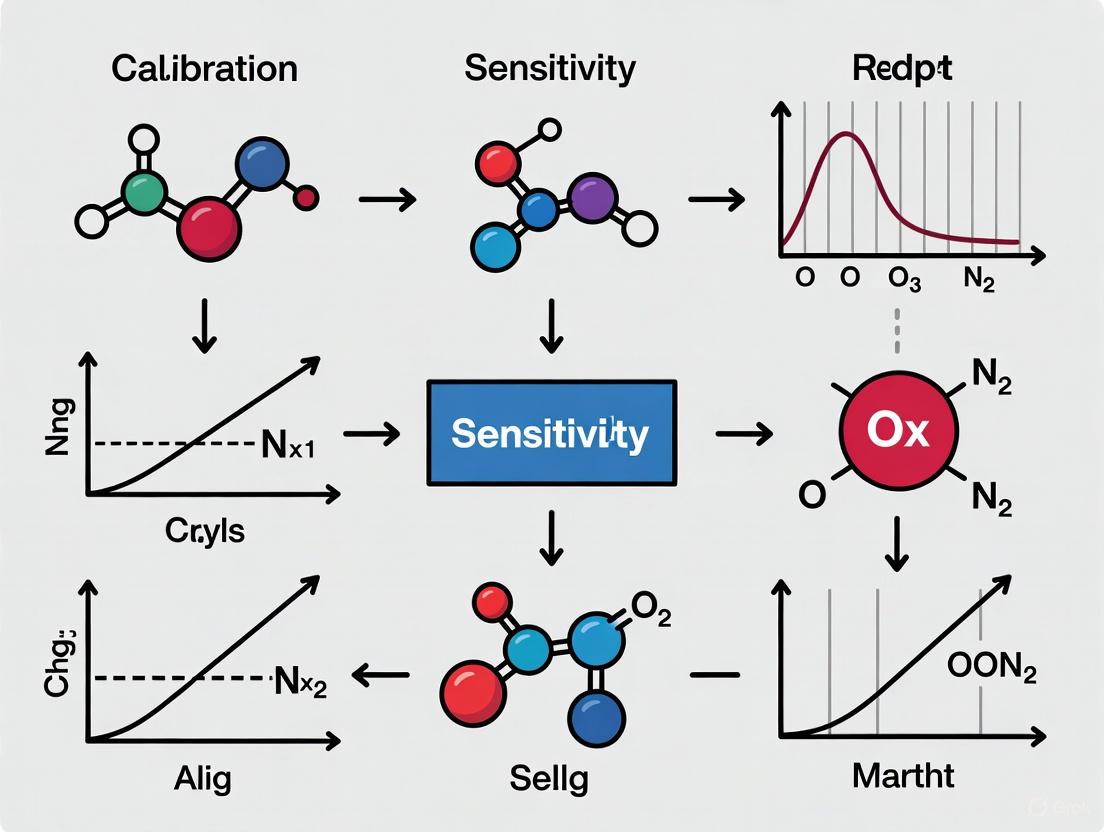
Calibration Sensitivity in Analytical Chemistry: Definition, Measurement, and Applications in Pharmaceutical Research
This article provides a comprehensive overview of calibration sensitivity, a fundamental parameter in analytical chemistry that measures how strongly an instrument's signal responds to changes in analyte concentration.
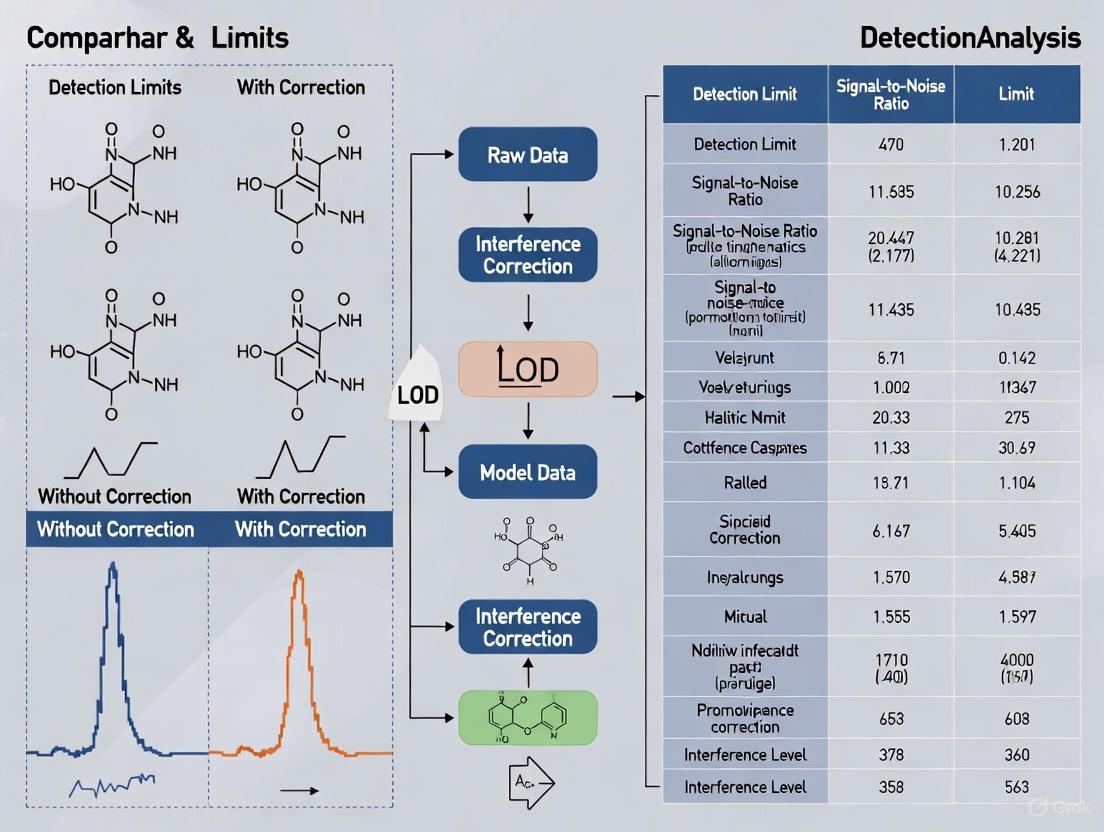
Interference Correction Methods: A Critical Comparison of Detection Limit Improvements in Bioanalysis
This article provides a comprehensive examination of how interference correction methods impact detection limits in analytical techniques crucial for drug development, including immunoassays, LC-MS/MS, and ICP-based platforms.
Accuracy Assessment of Chemometric Correction Algorithms: From Foundational Principles to Advanced Validation in Pharmaceutical Analysis
This article provides a comprehensive framework for assessing the accuracy of chemometric correction algorithms, essential for researchers and scientists in drug development.

Strategies for Reducing Chemical Interference in Spectrophotometric Analysis: A Guide for Biomedical Researchers
This article provides a comprehensive guide for researchers and drug development professionals on overcoming chemical interference in spectrophotometric analysis.
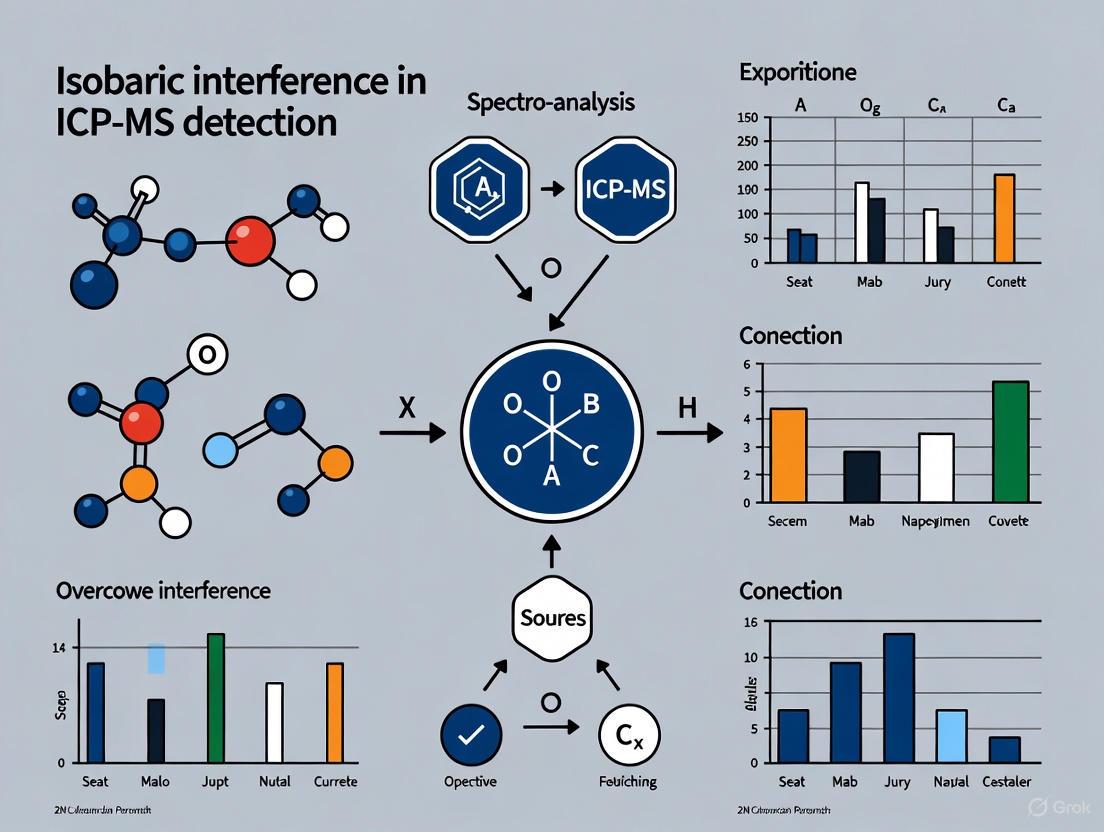
Advanced Strategies to Overcome Isobaric Interference in ICP-MS: A Comprehensive Guide for Biomedical Research
Isobaric and polyatomic interferences present significant challenges for accurate trace element and isotopic analysis in biomedical samples using Inductively Coupled Plasma Mass Spectrometry (ICP-MS).
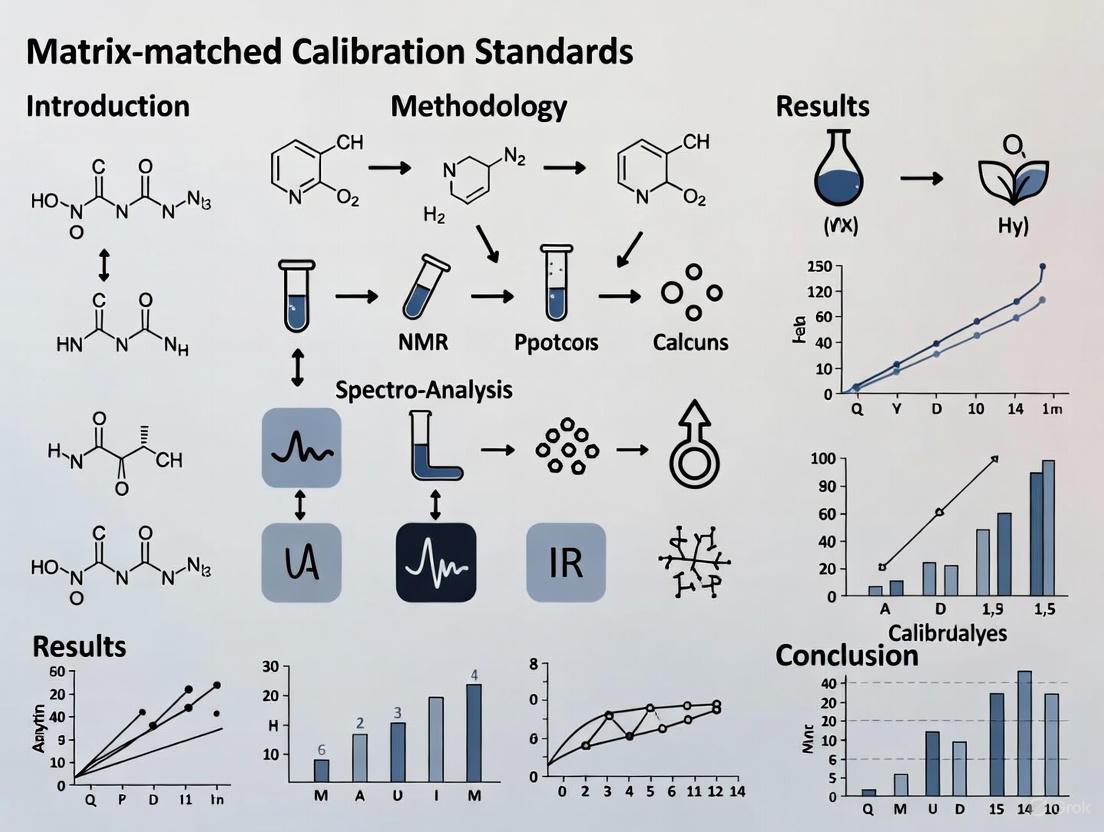
Matrix-Matched Calibration Standards: A Comprehensive Protocol for Accurate Bioanalytical Quantitation
This article provides a comprehensive protocol for developing and implementing matrix-matched calibration standards, specifically tailored for researchers and drug development professionals.