Research Articles
Advances in Homogeneous Reference Materials for LA-ICP-MS: From Geochemistry to Clinical Applications
This article explores the critical role of homogeneous, matrix-matched reference materials in achieving accurate and precise quantification for Laser Ablation Inductively Coupled Plasma Mass Spectrometry (LA-ICP-MS).
Green Chemistry in Spectroscopic Sample Preconcentration: Sustainable Strategies for Modern Analytics
This article explores the integration of Green Chemistry principles into spectroscopic sample preconcentration, a critical and often resource-intensive step in analytical workflows.
Advanced Strategies for Optimizing Calibration Curves in Quantitative Spectroscopic Analysis
This article provides a comprehensive guide for researchers and drug development professionals on optimizing calibration curves to enhance the accuracy, precision, and reliability of quantitative spectroscopic analysis.
Overcoming Spectral Artefacts in SERS for Reliable Environmental Detection: Mechanisms, Solutions, and Clinical Applications
Surface-Enhanced Raman Spectroscopy (SERS) offers revolutionary potential for sensitive environmental and biomedical analysis, yet its practical application is significantly hindered by spectral artefacts.
Breaking the Nanometer Barrier: Advanced Strategies to Improve Detection Limits in Nanoplastic Analysis
The accurate detection and quantification of nanoplastics are paramount for assessing their environmental and human health impacts, yet current methods are hindered by significant analytical challenges, particularly regarding detection limits.
Overcoming Validation Challenges in LIBS for Environmental Analysis: From Matrix Effects to Standardized Protocols
Laser-Induced Breakdown Spectroscopy (LIBS) offers rapid, on-site elemental analysis for environmental monitoring but faces significant validation hurdles for reliable quantification.
Overcoming NOM Interference in SERS Analysis: Strategies for Reliable Biomedical and Environmental Sensing
Surface-enhanced Raman spectroscopy (SERS) offers unparalleled sensitivity for pharmaceutical and environmental analysis, but its practical application is significantly hampered by interference from natural organic matter (NOM).
Laser-Induced Breakdown Spectroscopy for Contaminated Water Screening: Principles, Applications, and Analytical Advancements
This article provides a comprehensive overview of Laser-Induced Breakdown Spectroscopy (LIBS) as a rapid, versatile tool for contaminated water screening.
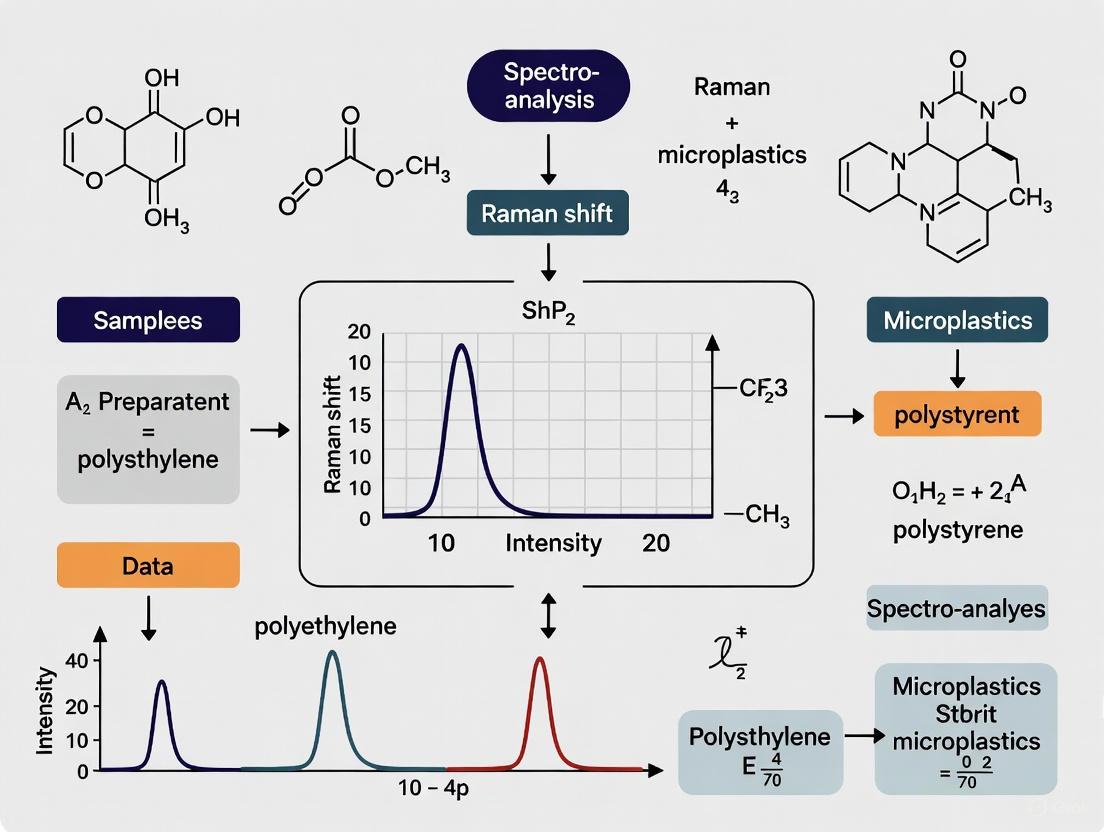
Raman Spectroscopy for Microplastic Detection in Food: A Comprehensive Guide for Researchers
This article provides a detailed analysis of Raman spectroscopy's application in detecting and characterizing microplastics in complex food matrices.
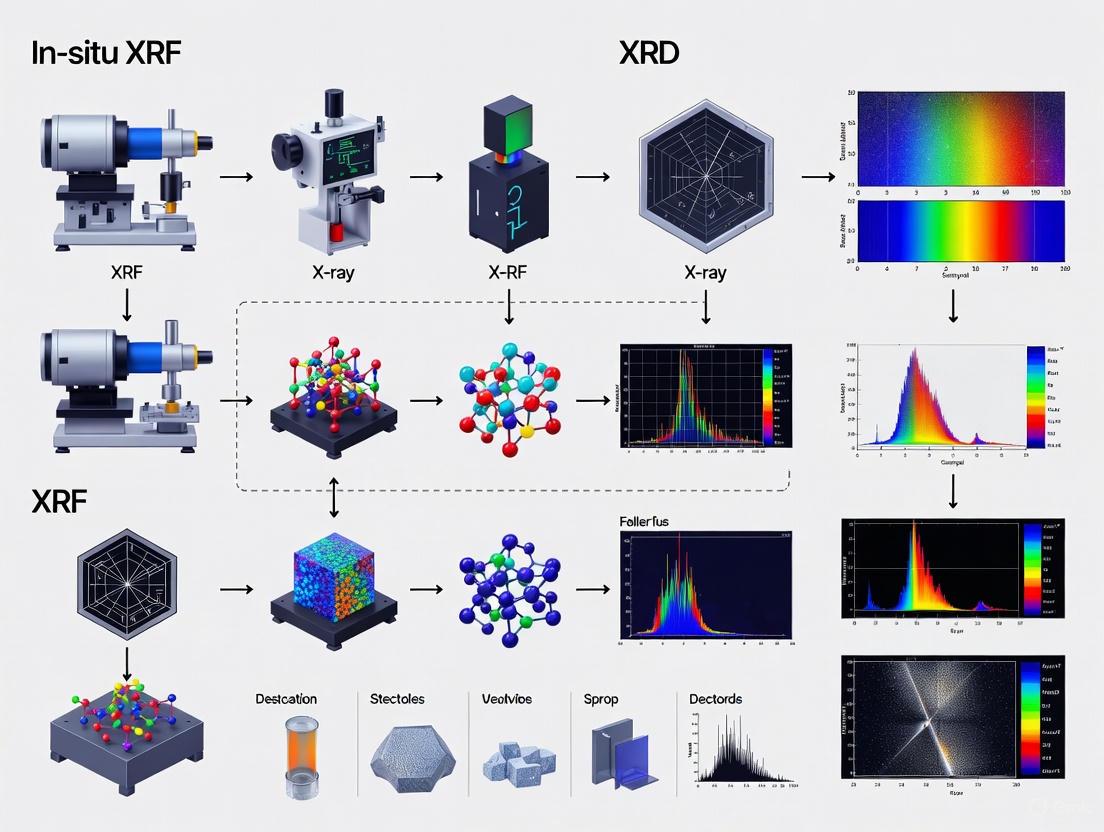
In-Situ XRF and XRD for Field Mineralogical Characterization: A Complete Guide for Research and Development
This article provides a comprehensive overview of the principles, applications, and best practices for using combined in-situ X-ray Fluorescence (XRF) and X-ray Diffraction (XRD) analysis for field-based mineralogical characterization.